
Winter workwear loses its composure when every layer asks for equal attention. The best winter outfits for work usually feel settled because one line leads – a long coat, a defined waist, a sharp shoulder, or a controlled fall of fabric – and the remaining pieces support it quietly. That kind of restraint is not about playing safe; it is about giving a busy day one less thing to negotiate in the mirror.
Rather than collecting pieces that all promise warmth, decide what shape you need to carry from commute to desk and let that answer narrow the options. A coat can frame the body, a boot can finish a long hem, and a small change in tone can make familiar neutrals feel intentional. When every additional layer has a job, the final outfit reads as calm preparation instead of emergency weather dressing.
Camel Coat Around a Crisp Dark Core
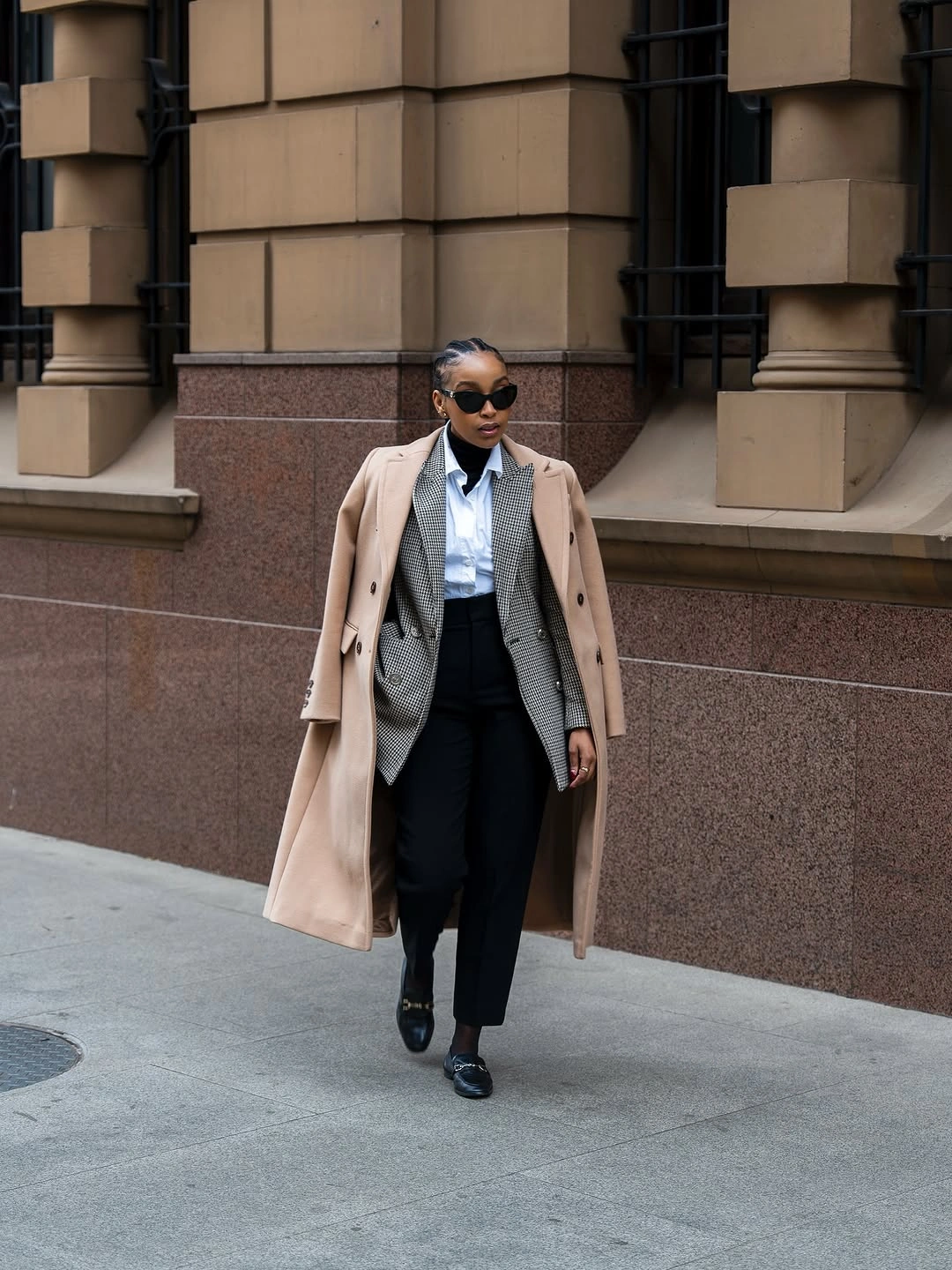
The camel long coat softens the white shirt, dark tie, and black trousers without diminishing their office-ready sharpness. Its warm outer layer creates a generous frame around the compact black-and-white center, while the dark shoes keep the trousers visually connected to the ground. Sunglasses add a small graphic note near the face, but the coat is doing the larger work by changing the temperature of a familiar formal palette.
A tie makes the inner layers more formal, so the coat benefits from a relaxed, straight fall rather than an overly decorated collar or belt. The contrast also works because the trousers stay narrow enough to maintain a clear line beneath the longer outer layer. For less formality, remove the tie and keep the pale shirt visible, but preserve the camel-over-black relationship that gives the outfit depth.
This formula is reliable for a commute because the coat does not have to come off immediately for the silhouette to make sense. A structured black tote or simple leather glove would support the darker core without adding another color family. The visual decision to protect is the warm coat surrounding a crisp, nearly monochrome base.
Deep Brown Coat With a Textured Scarf
The rich brown coat and oversized fringed scarf build a tonal outerwear story through texture rather than through contrast. Dark trousers and boots appear beneath that warm upper area, creating a useful break so the brown does not become a single uninterrupted block. The shoulder bag stays within the same family, giving the layers a collected feel while keeping the silhouette long and calm.
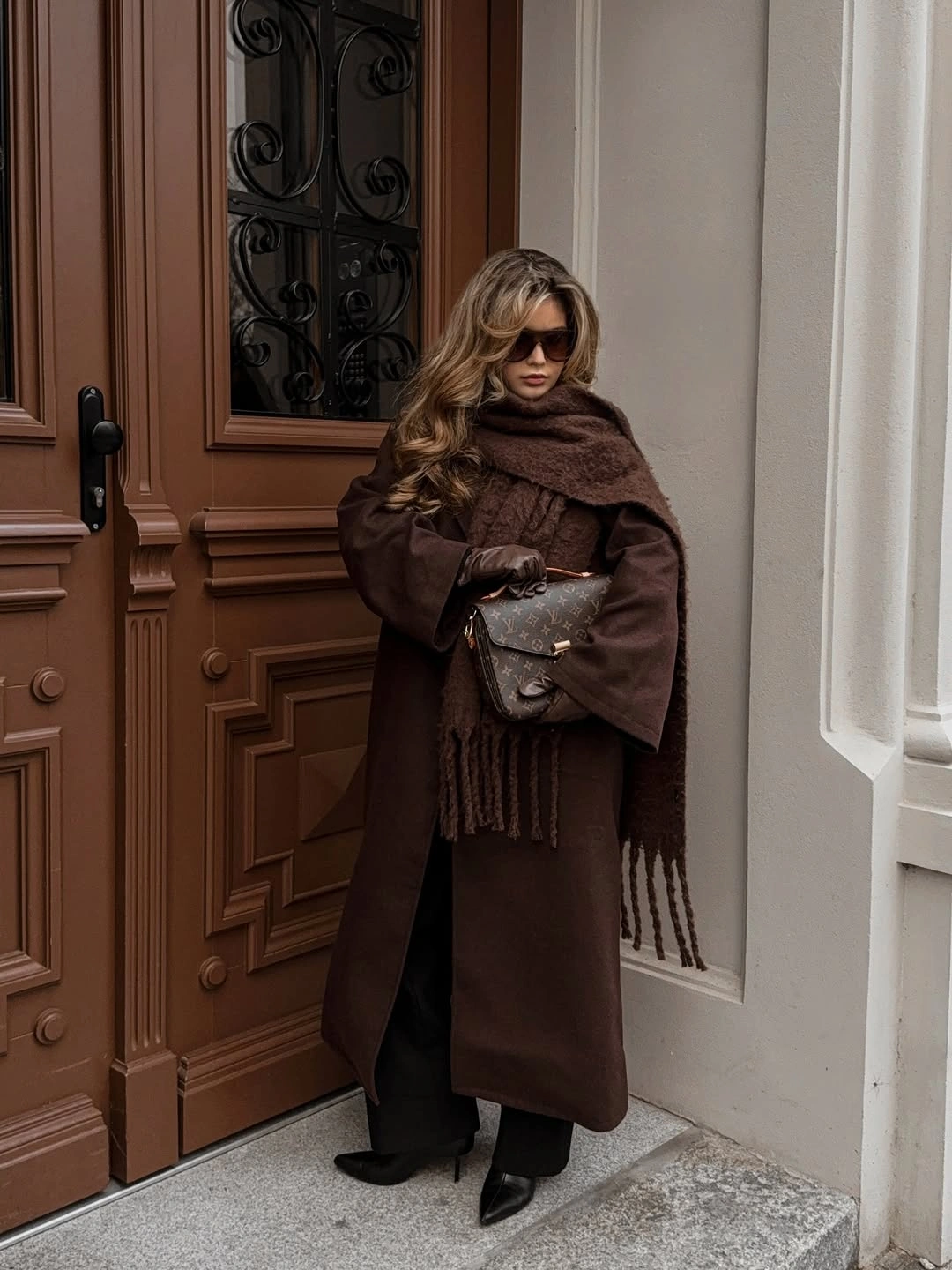
Large scarves can add volume quickly, so a long coat with a simple front is the right partner for one. Here the scarf sits high at the neck and gives the face area softness, while the dark lower half holds the outfit down. A lighter knit scarf would create more contrast, but the all-brown direction works because the changes in surface and depth are easy to notice.
Keep jewelry and visible shirt details restrained when the scarf has this much presence. A clean boot with enough sole weight will finish the long hem more effectively than a delicate shoe, especially during winter travel. The appeal comes from the measured accumulation of warm texture, not from adding more decorative elements.
Charcoal Hooded Coat With a Structured Bag
The charcoal hooded long coat creates a nearly continuous vertical line, but the compact black bag and boots give that soft outer shape sharper punctuation. The coat’s belted or wrapped middle provides enough definition to keep the length from feeling shapeless, while the muted dark tones make it appropriate for a workday without relying on a bright accent. It feels practical because the largest layer is also the most visually complete one.
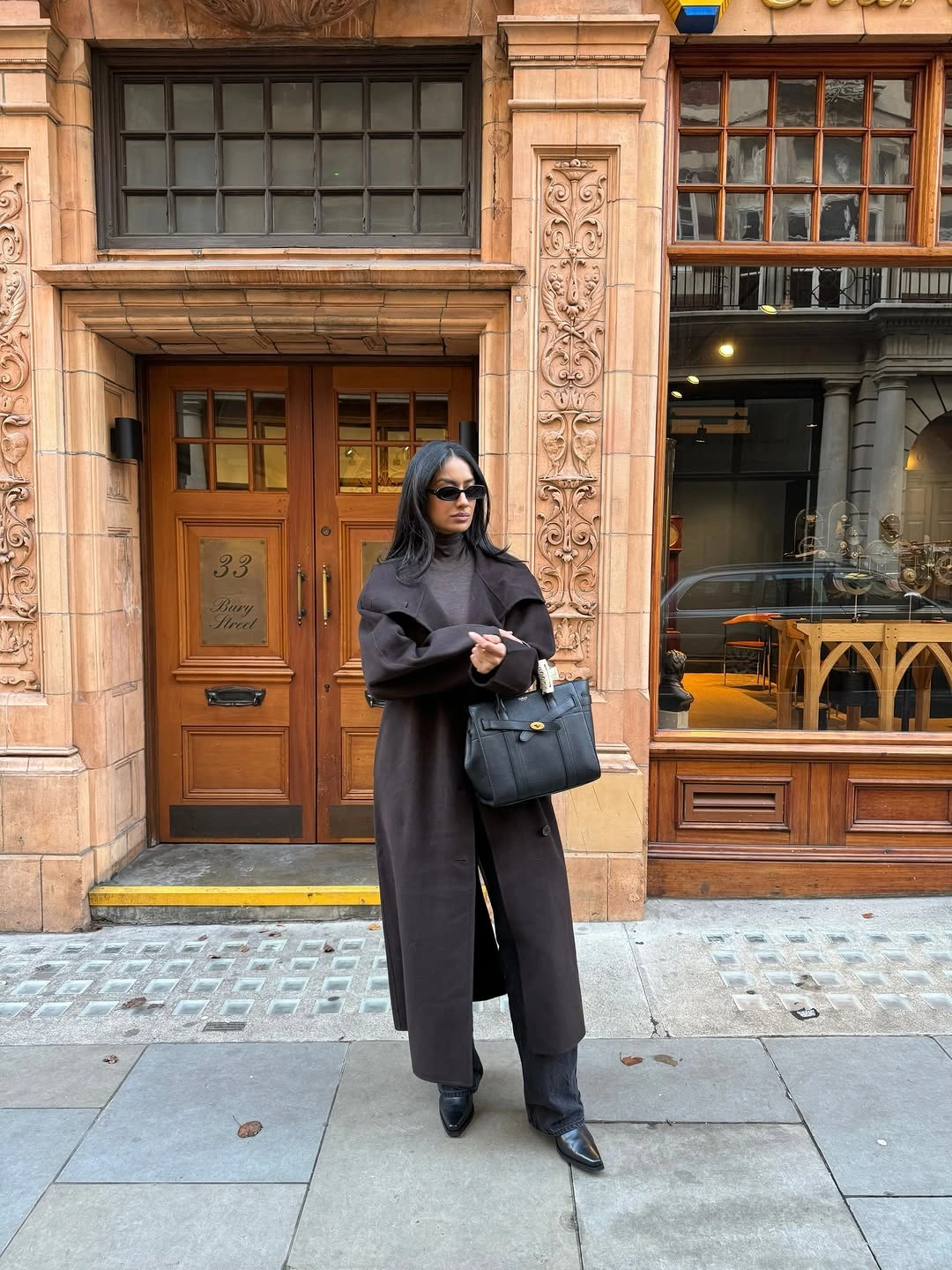
A structured bag is especially useful beside a softer coat because it introduces a cleaner edge at the side of the body. The rest of the outfit can remain very spare: dark boots, a narrow trouser line, and a quiet high neck are enough. If the hood is replaced by a scarf, choose a shade close to charcoal so the silhouette retains its uninterrupted, composed quality.
This kind of long outerwear works best when the hem and boots have enough separation to avoid dragging visually at the ankle. The practical tradeoff is movement – a belted coat should allow a comfortable stride and not pull across the hips. Once the fit is right, the dark column offers a dependable answer for days when warmth and polish need to coexist.
Ivory Coat With a Dark Neck Layer
The ivory coat gains definition from the deep brown plush-looking stole at the neck, which creates a strong vertical focal point against a pale outer layer. Black knee boots and a brown handbag repeat the darker family lower down, preventing the contrast from being confined only to the shoulders. The result is striking because the light coat remains large and quiet while the dark accessories occupy clearly separated zones.
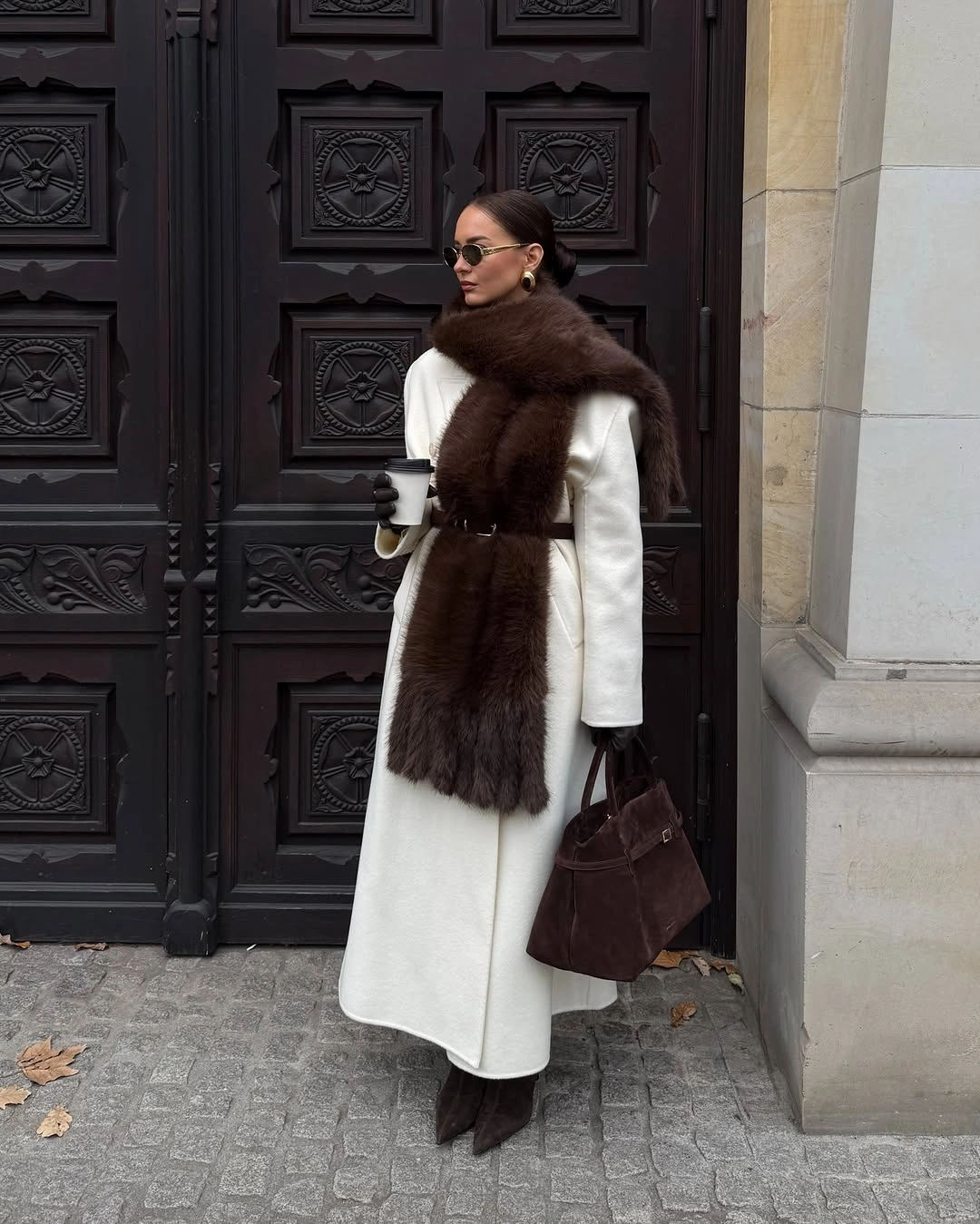
A high-contrast coat outfit like this needs fewer pieces, not more. The neck layer already supplies depth and texture, so a plain inner outfit and clean sunglasses are enough to keep the front uncluttered. If the dark stole is replaced with a knit scarf, select one with similar visual weight; a thin scarf would not create the same balanced counterpoint against the long ivory coat.
For work, this look benefits from a compact bag that can sit close to the body rather than an oversized tote that hides the coat’s line. Keep the boots dark and simple so they echo the neck layer instead of competing with it. The entire combination rests on one quiet contrast: a pale vertical field divided by a deep, tactile accent.
White Draped Knit and Brown Trousers
The oversized white high-neck knit creates a sculptural upper shape above the fluid brown trousers, while pointed dark boots give the soft layers a firmer ending. The top appears generous and draped, so the trousers need their warm, deeper value to prevent the outfit from looking too weightless. A dark bag repeats the boot color and adds a practical note without disturbing the light-over-dark progression.
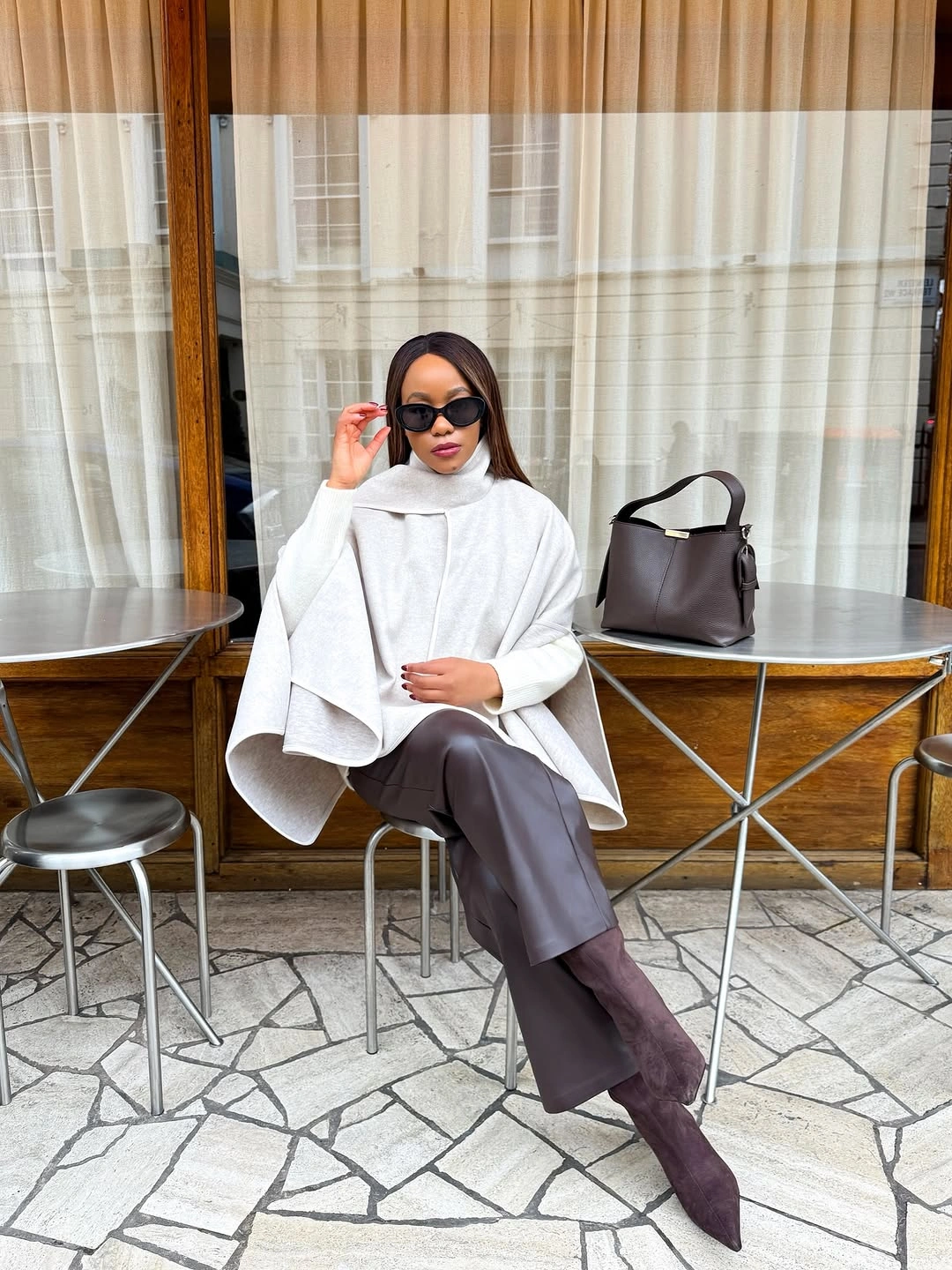
When a knit is this voluminous, the rest of the outfit must make room for its shape rather than trying to match it with another oversized layer. The wide trousers work because their fabric falls downward, not outward, and the pointed boot gives the eye a clear finishing point. A shorter jacket would interrupt the drape, so this is better worn under a long coat or as an indoor outfit with a simple outer layer.
Brown trousers make the pale knit feel warmer than black pants would, which is why the contrast looks relaxed rather than severe. The practical issue is bulk at the waist, so choose a knit that can sit comfortably over the trouser waistband without constant adjustment. Keeping the accessories dark and few lets the soft white shape remain the main visual idea.
Short Dark Jacket Over a Long Plaid Skirt
The cropped dark jacket gives the black-and-white plaid maxi skirt a clean starting point, preventing the long patterned fabric from becoming too dramatic. A dark top and boots stay close to the jacket, forming a compact upper block that lets the skirt carry all the movement below. The outfit has a strong proportion contrast, but the limited palette keeps it useful for a polished winter work setting.
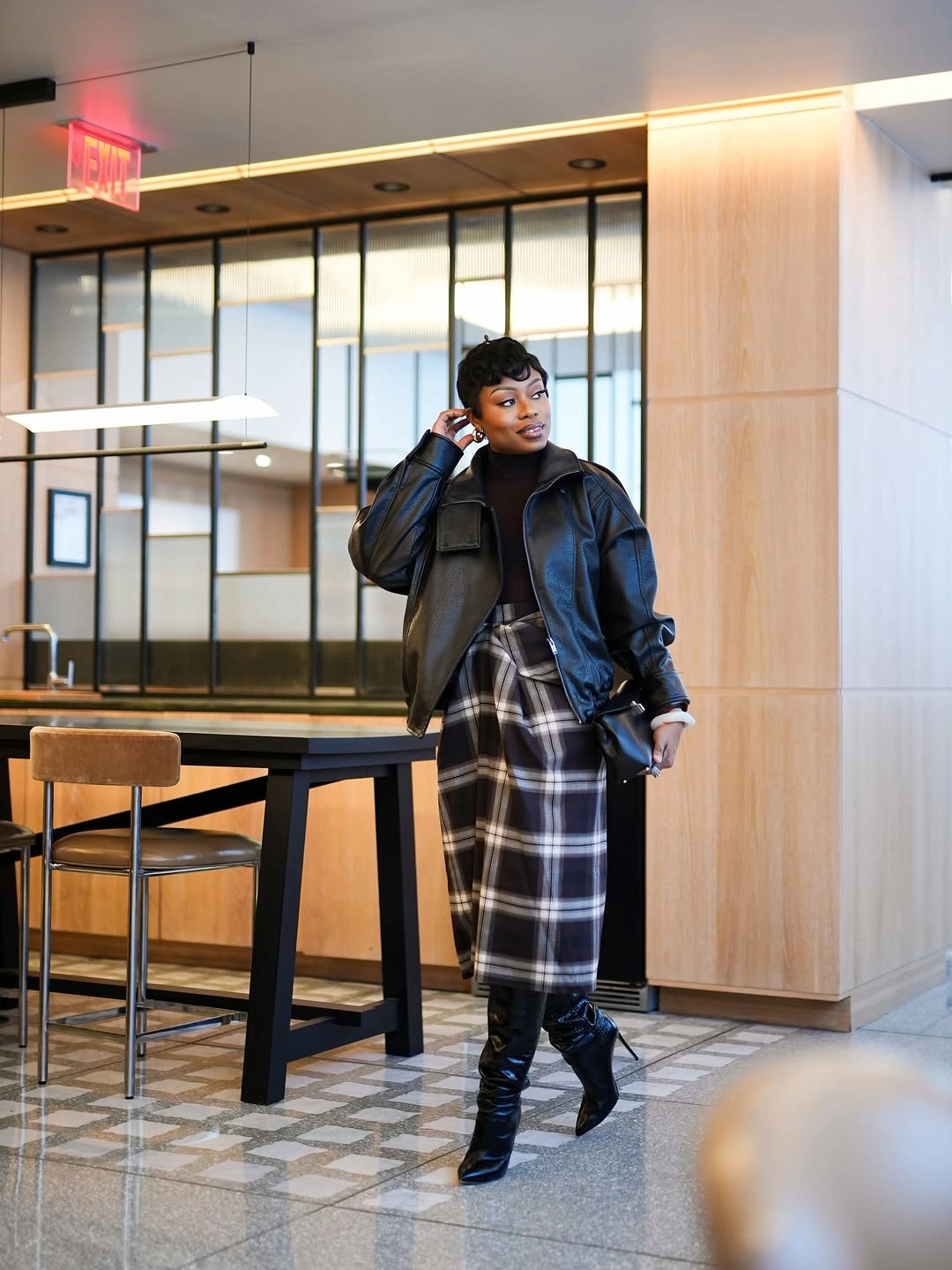
With a graphic skirt, the upper layers should remain plain and structured enough to hold their own without becoming busy. The shorter jacket length is important because it reveals where the skirt begins, while the boots give the hem a grounded finish. A long puffer over this combination could hide the best proportion, so reserve it for transit and let the cropped layer be visible indoors.
The skirt offers warmth and movement, but it may need an uncomplicated base layer underneath for comfort during a long day. A small black bag or charcoal scarf would support the pattern more quietly than a colored accessory. The outfit succeeds by letting only one item carry a visible graphic, then giving it a sharp, dark frame.
Gray Tailoring With a Black Tie
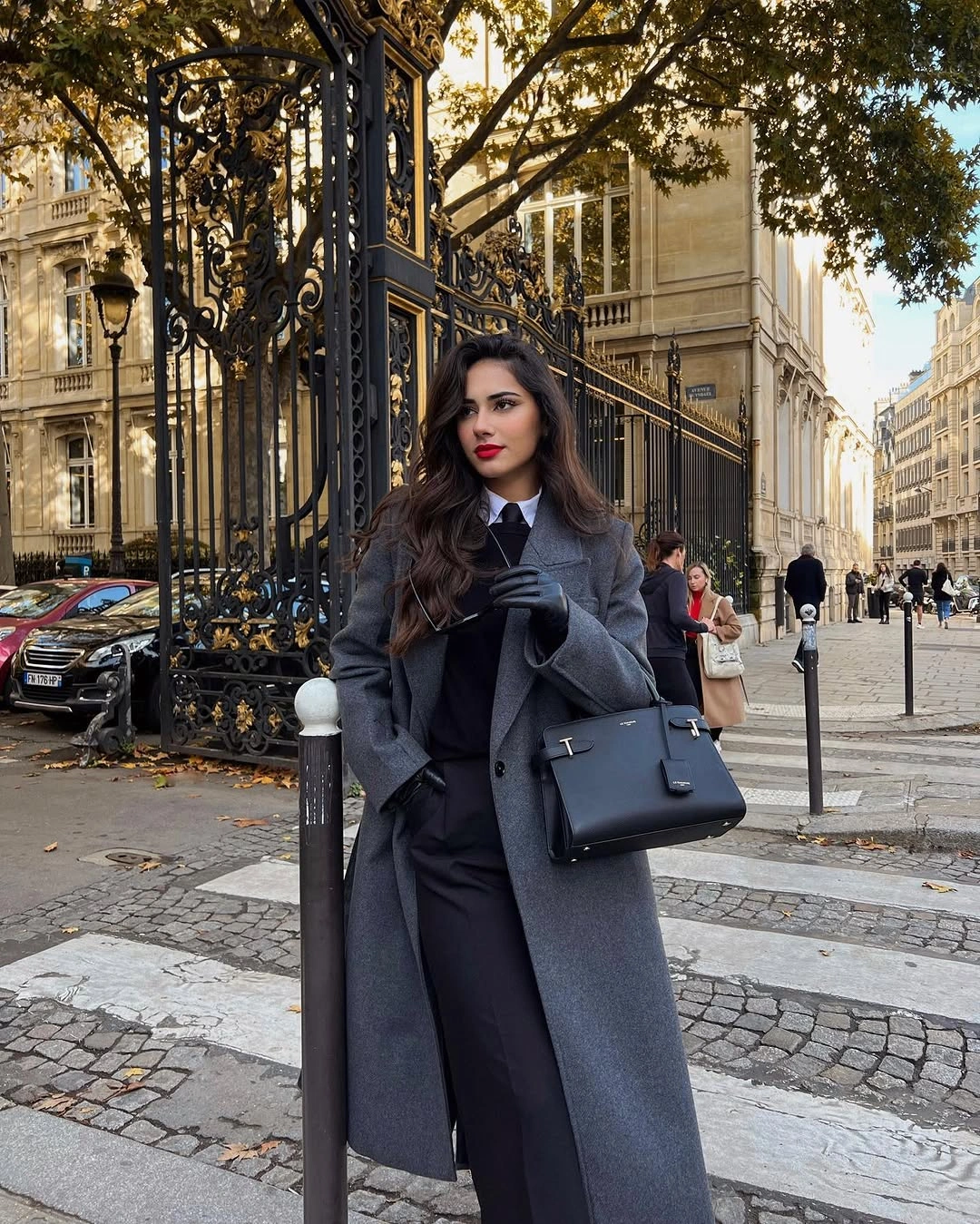
The oversized gray tailored layer becomes sharper because a white shirt and black tie create a clear dark center line. Black gloves and a structured taupe bag add practical details, but the strong collar area is what makes the silhouette read as formal rather than merely oversized. The gray softens the black-and-white contrast, leaving the outfit refined without becoming visually strict.
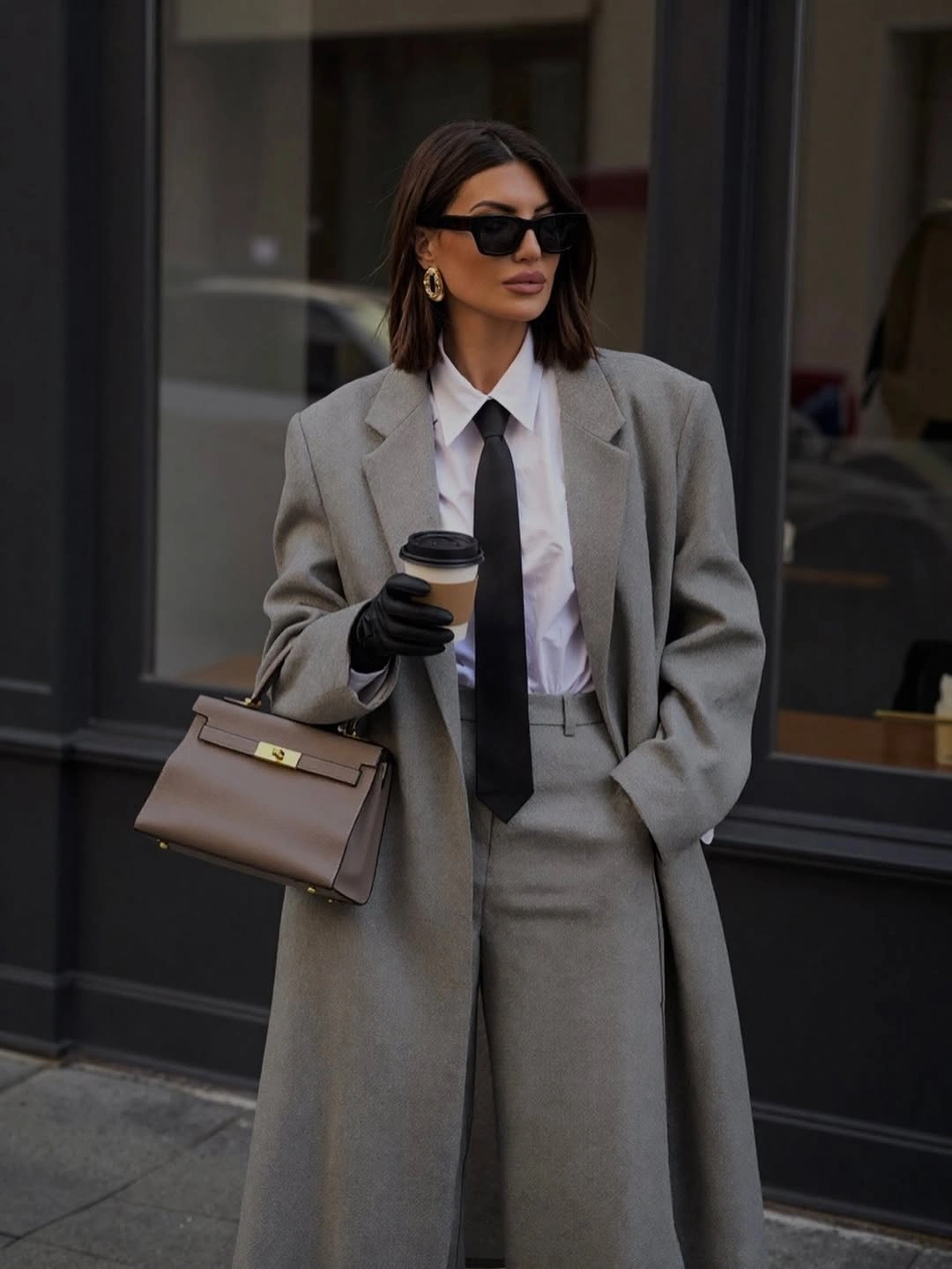
A dark tie gives soft gray tailoring a precise point of focus, so the rest of the neckline should stay clean and free from bulky scarves. The coat or blazer can remain roomy at the shoulder because the shirt front provides structure below it. If a tie is not part of your work style, a narrow black knit or a sharply buttoned collar can preserve the same vertical emphasis with less formality.
Bag choice matters here: taupe is quiet enough to relate to the gray layer but different enough to keep the look from becoming one flat neutral. The outfit is most convincing when the gloves, trousers, and footwear stay dark and simple. That leaves the gray tailoring to soften the whole composition around the crisp line of the shirt and tie.
Belted Black Jacket and Wide Trousers
The black high-neck jacket is shaped by a visible belt, which gives the wide trousers a clear waist to begin from and stops the all-black palette from looking blank. Sunglasses and a structured bag repeat the dark finish, but the outfit’s interest comes from the transition between fitted top and flowing lower half. A restrained monochrome look needs exactly that kind of structural change to stay readable.
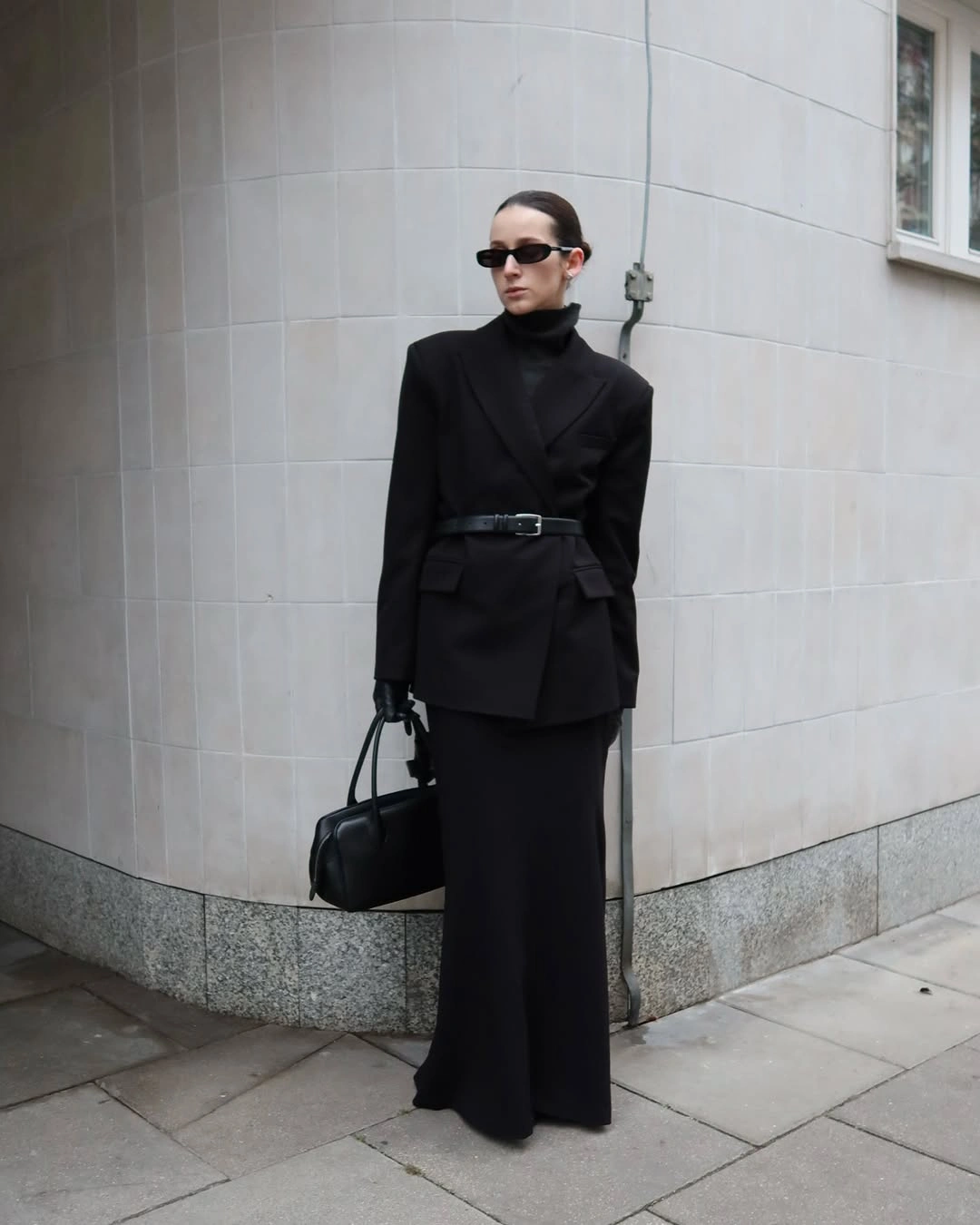
All-black dressing becomes more useful when the fabric and cut create separate zones instead of relying on shine or decoration. The belt narrows the middle, the jacket keeps the shoulders contained, and the trousers release into a longer line below. A very bulky coat would undermine that relationship, so choose a long outer layer with an open front or a similar belt placement when heading outdoors.
Black boots will extend the trouser line cleanly, while a lighter shoe would make the outfit more graphic but less uninterrupted. The practical advantage is versatility: the same base can accommodate a warm scarf or a simple coat without changing its core. The key is not the color itself, but the shape made visible within it.
Teal Suit Under a Brown Overcoat
The deep teal suit is the most unusual color in the outfit, yet the brown long coat and bag make it feel grounded rather than theatrical. A white shirt brings light to the center, and the wide-brim black hat supplies one dark silhouette detail at the top. The layers work because each color has a distinct role: teal carries tailoring, brown provides warmth, white opens the front, and black defines the edge.
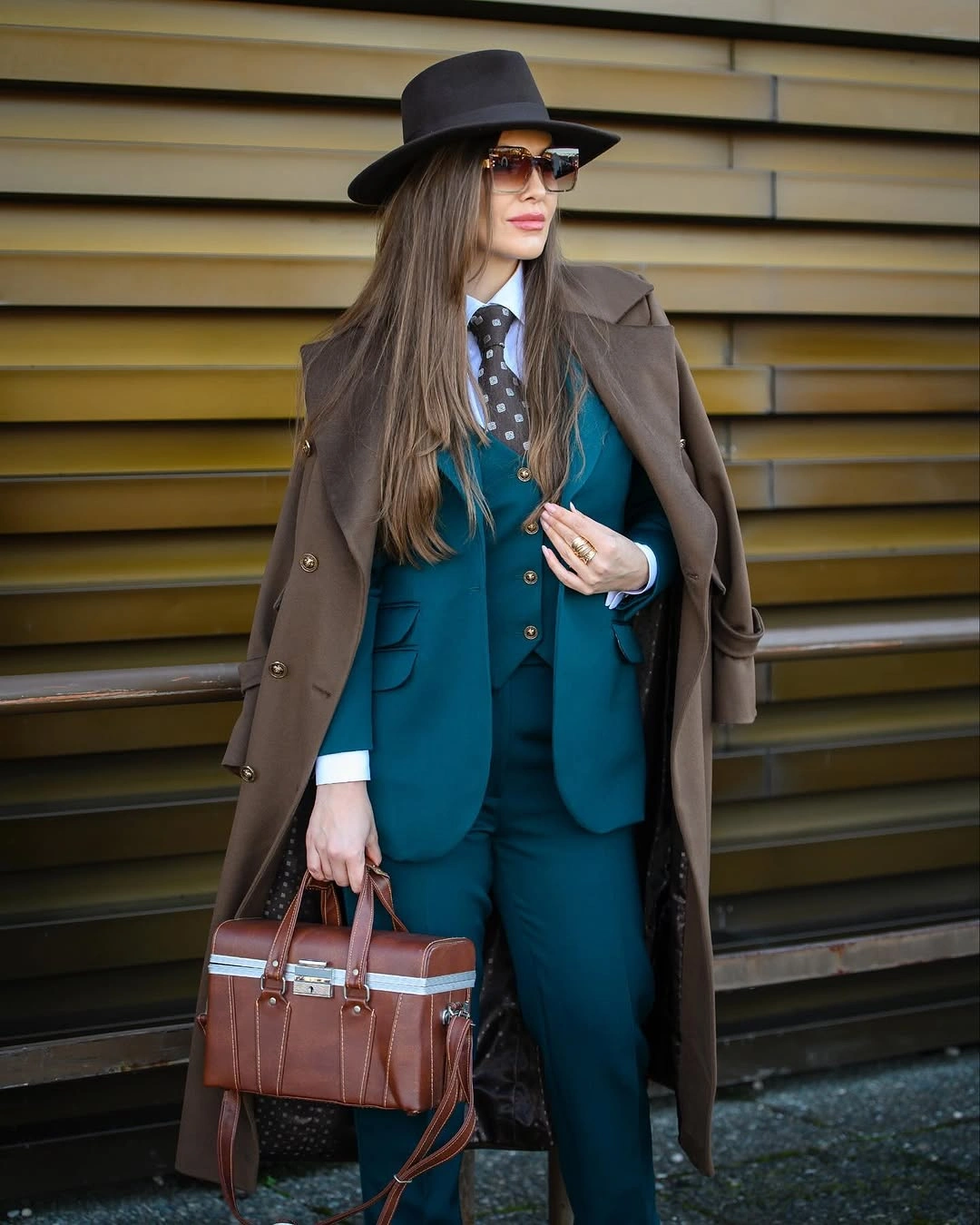
Color-rich workwear needs a limited number of large elements, so the plain shirt and clean trousers are essential here. The coat can remain open enough for the teal to show without competing with it, while the brown bag repeats the outer layer at a smaller scale. If the hat feels too dramatic for the setting, remove it and keep the same blue-green and brown relationship as the outfit’s main point.
A thoughtful version of this look avoids adding bright shoes, patterned scarves, or another jewel tone. Dark footwear will support the suit, and a simple belt will keep the trousers connected to the shirt. For a broader view of building cold-weather layers around color, the site’s winter outfit guide offers a useful companion read.
Wine Blazer With a Tonal High Neck
The burgundy double-breasted blazer and similarly toned high-neck layer create depth through subtle differences in fabric and value rather than through a sharp contrast. Dark trousers keep the lower half quiet, allowing the wine color to remain concentrated around the torso and face. The double-breasted front adds structure, which is why the tonal treatment still feels work-ready rather than soft or informal.
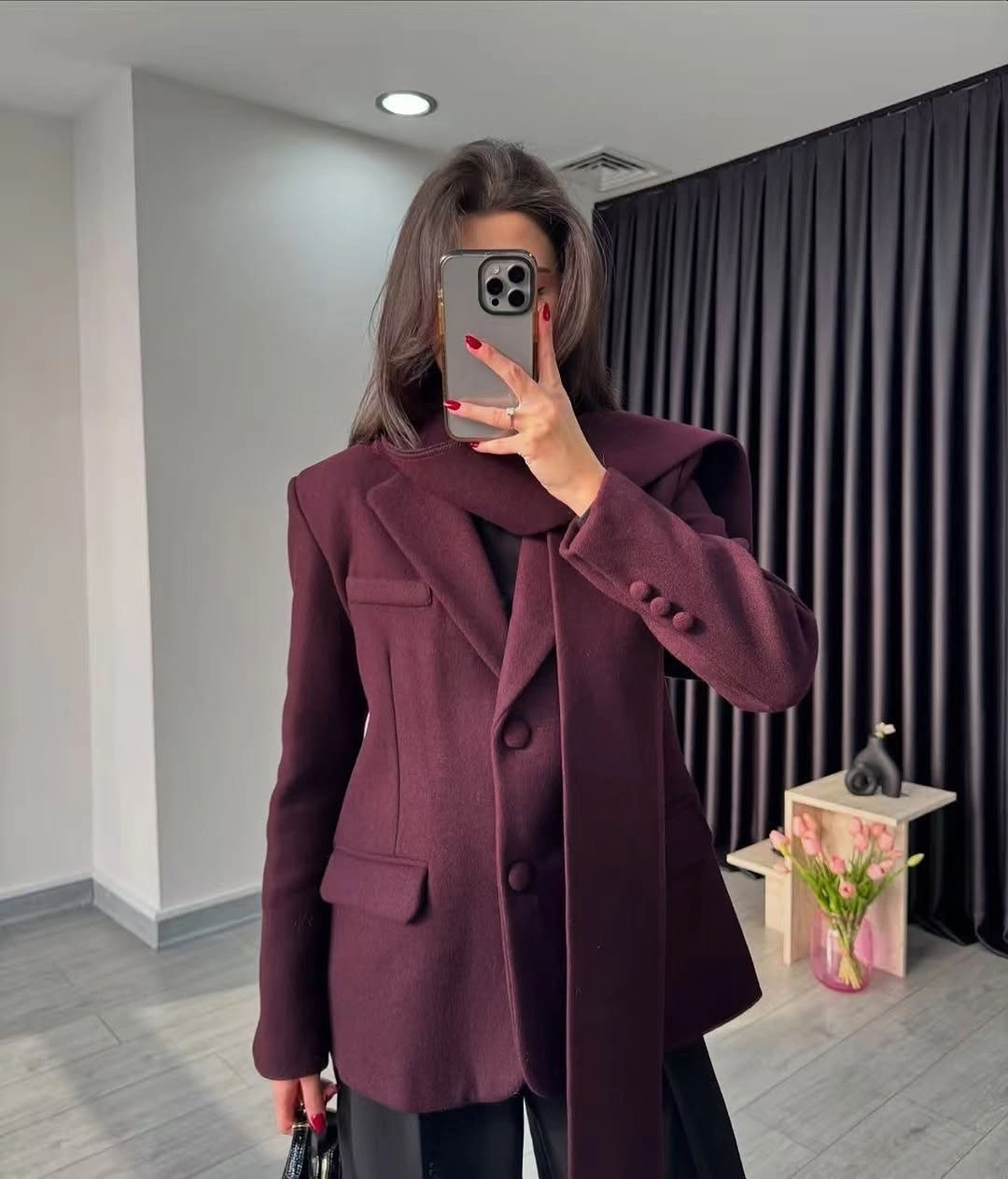
When two wine tones sit together, the silhouette needs clear lines so the color does not become visually muddy. The blazer shoulders and button placement handle that job, while the high neck fills the space at the collar without introducing a third color. A black bag and dark shoe are safer than a matching burgundy accessory because they give the tailored pieces room to lead.
This is an easy route to saturated color for someone who prefers not to wear a fully bright outfit. A muted berry knit beneath a deeper blazer would create a similar effect, provided the trousers remain simple. The balance depends on keeping the warmth concentrated in the upper body and leaving the rest of the look quiet.
Long Brown Coat With a Wide Scarf
The long dark brown coat and oversized scarf create a continuous vertical arrangement, while black boots provide a firm end point beneath the sweeping hem. The scarf drapes rather than wraps tightly, giving the outfit texture at the shoulder and neck without breaking the long line. It is understated, but the difference between soft scarf and structured coat keeps the similar dark tones from collapsing together.
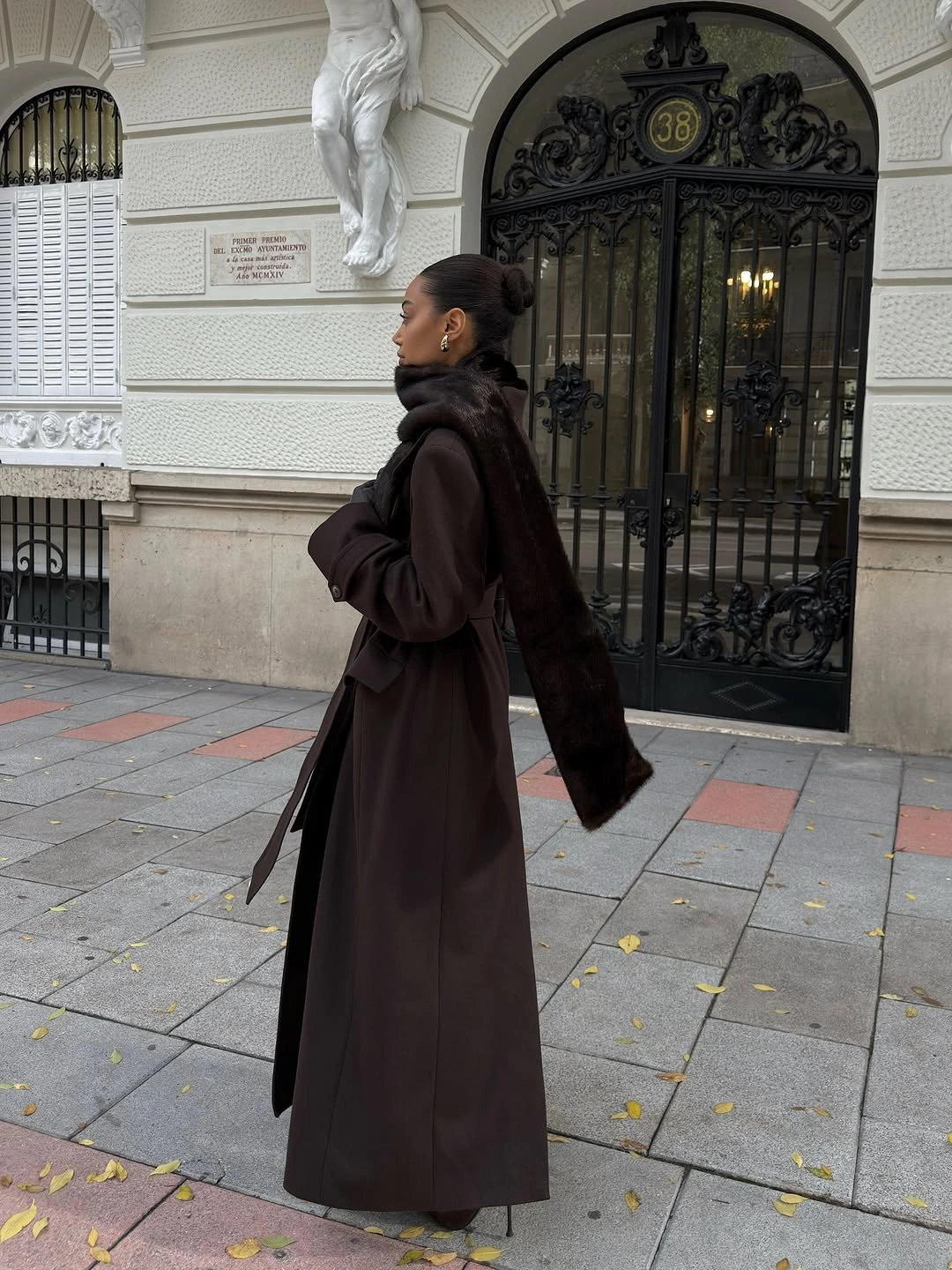
A long scarf can echo the coat’s length beautifully when it remains within the same color family, but it needs a simple inner outfit to avoid too much fabric at the front. The boots should have enough visual weight to support the hem, especially if the coat falls near the ankle. A smaller scarf would make the look cleaner, yet would lose the enveloping texture that gives this version its character.
Keep the bag compact or tucked beneath the coat line where possible, since an oversized tote can interrupt the deliberate verticality. This kind of outerwear is useful on especially cold commutes because it carries warmth through several layers without a busy palette. The composed effect comes from length, texture, and the decision not to force an accent color.
Olive Blazer Over a Long Dark Skirt
The muted olive blazer brings a softened color contrast to the black top and long charcoal skirt, while pointed black boots maintain a sharp line at the bottom. The tailored shoulder gives the fluid skirt some structure, and the dark base keeps the olive from reading too casual. It is a balanced way to introduce color into a winter work outfit without making the outer layer the only thing people notice.
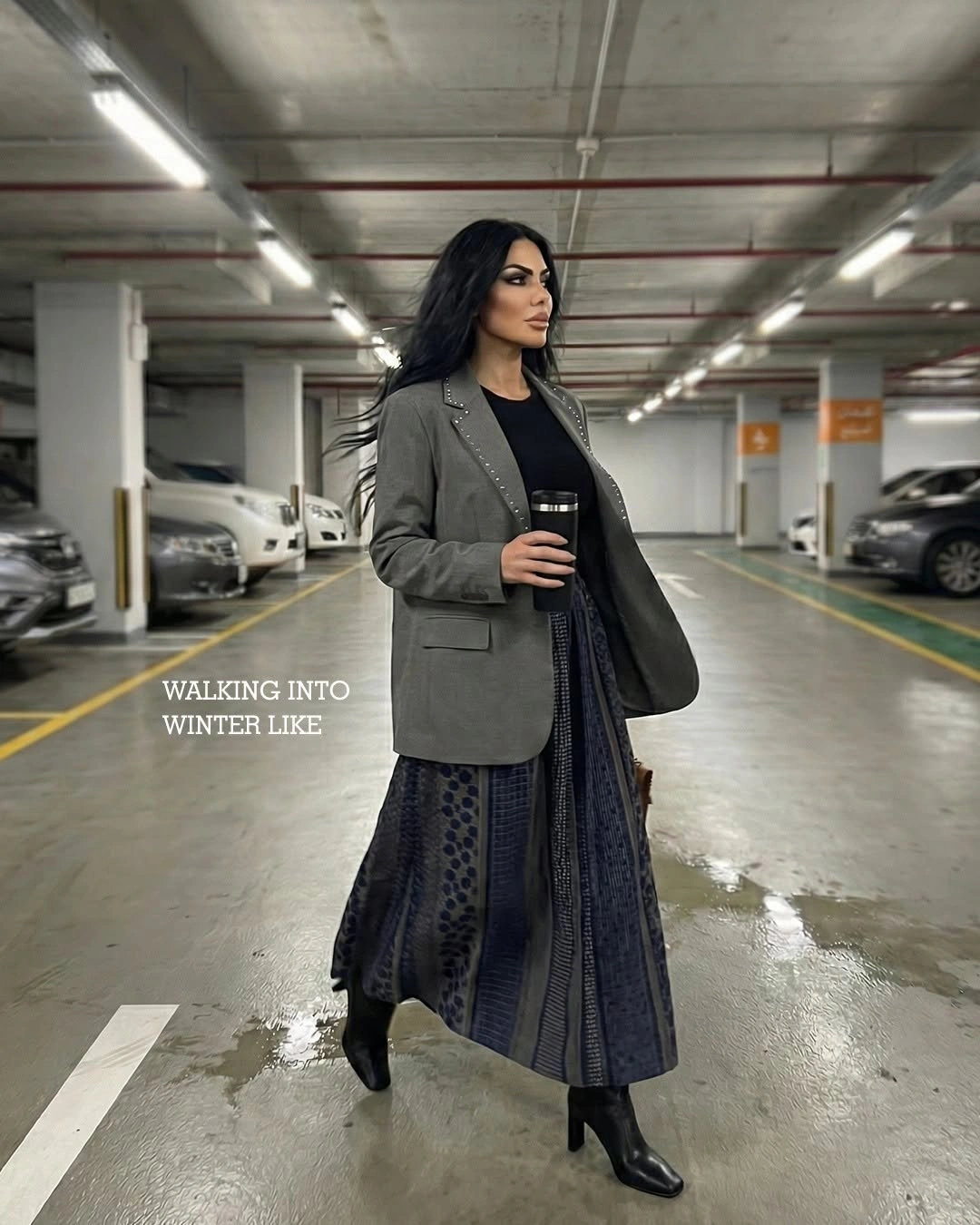
A long skirt benefits from a jacket that ends near the waist or high hip, because the eye can see where the movement begins. The olive tone looks especially calm beside charcoal and black, while a bright green would create a much stronger and less flexible contrast. Keep the bag dark and the jewelry minimal so the subtle color shift remains the point of interest.
For winter comfort, the skirt can accommodate a warm base layer without changing the exterior silhouette. A fine knit at the neck would make the outfit softer, while a crisp collar would push it more formal. In either direction, preserve the compact jacket over the long, dark lower line, since that proportion is carrying the look.
Black Coat With Green Knit Accents
The black long coat and dark trousers form a clean winter column, while the green beanie and matching scarf make the outfit feel personal without introducing a print. Repeating the same green at the head and neck is more effective than spreading small colors everywhere, because the accessories form one concentrated bright zone. Black boots and bag keep the rest of the silhouette quiet and practical.
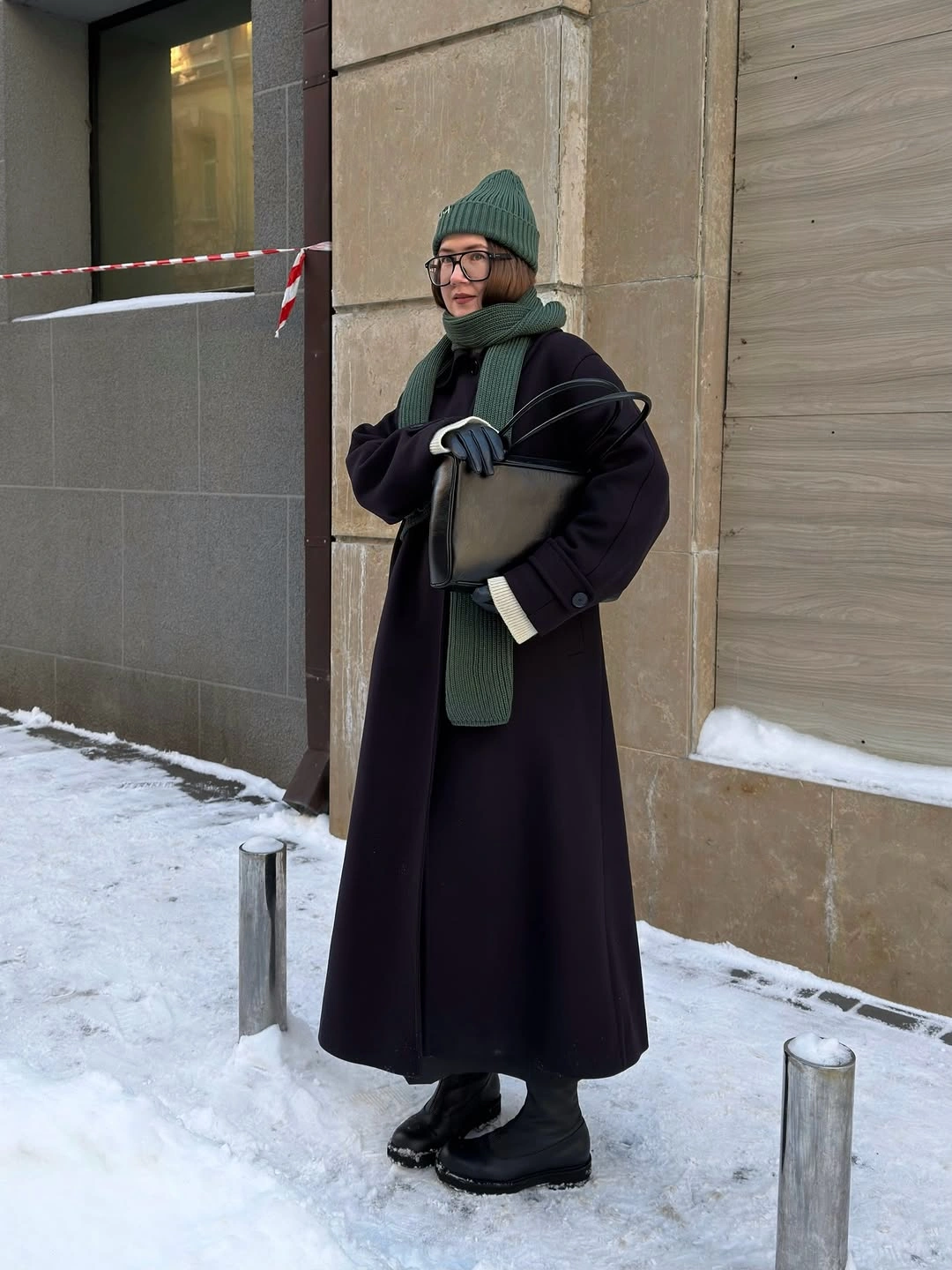
A colorful scarf works best when it is echoed once, not multiplied through gloves, shoes, and bag. The green hat provides that echo here, so the coat can remain very simple and the dark inner layers need no extra detail. If green is not the right choice, cobalt, berry, or muted mustard could use the same strategy as long as each color stays limited to two connected accessories.
The benefit of this approach is flexibility: remove the knit pieces indoors and the outfit becomes an understated black work base. Make sure the scarf has enough length to sit comfortably under the coat without crowding the collar. Its color should be the only thing asking for attention, which is exactly why it feels fresh against the dark outerwear.
White Coat Over a Black Column
The white long coat frames the black inner outfit with a high-contrast outer line, while the white knit hat and long necklace bring lightness back toward the face and center. A small brown shoulder bag softens the stark black-and-white arrangement without changing its clarity. The look appears polished because the coat is allowed to remain a large, uninterrupted pale shape around a dark interior.
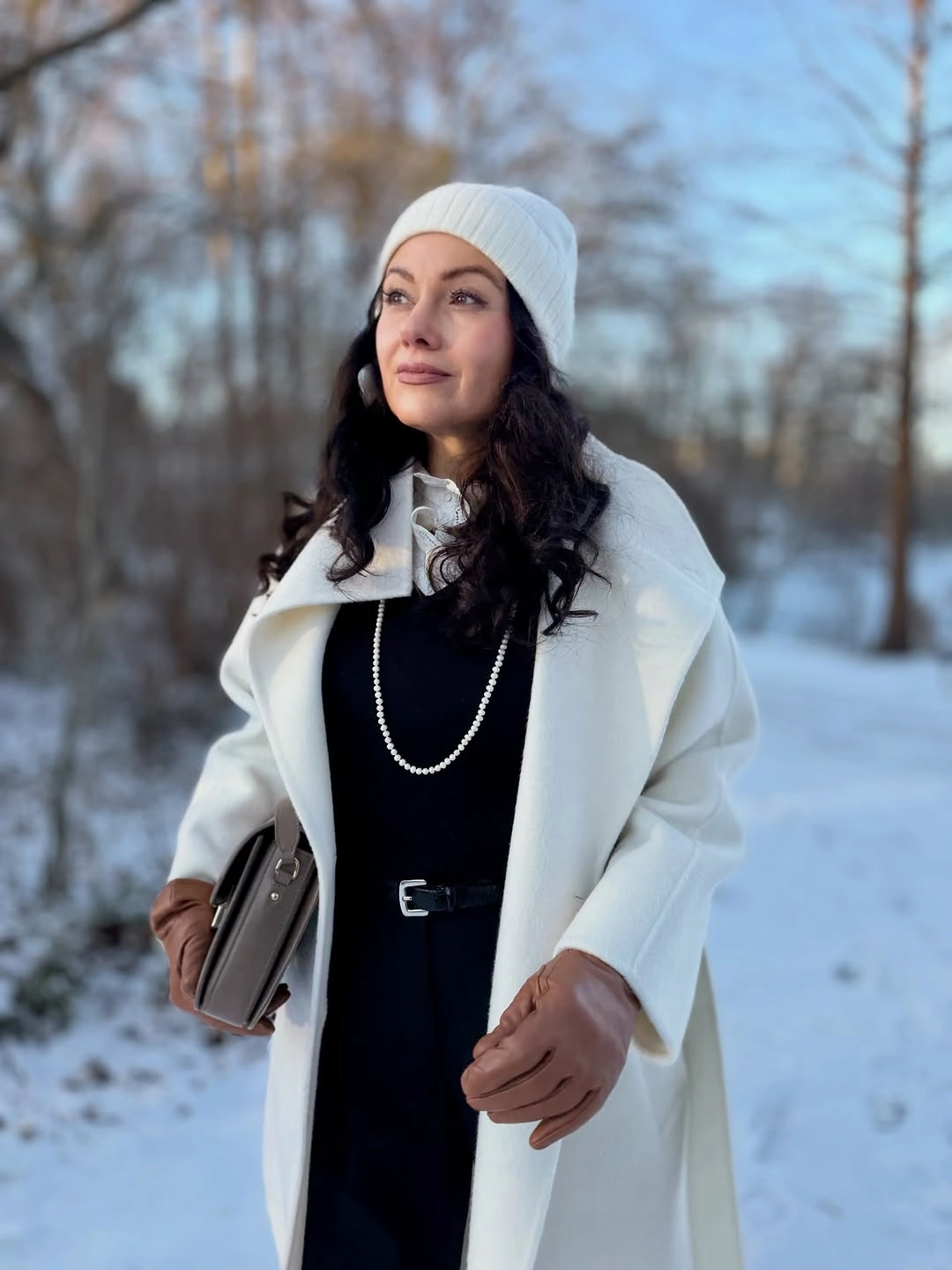
High contrast works best when the individual pieces are clean and not overly decorated. The pale hat repeats the coat without adding volume, and the small bag is contained enough not to interrupt the long front opening. A belt is unnecessary here; the open coat already creates a vertical frame, while the black inner column gives it a clear center.
For a more practical commute version, use dark boots with a similar clean line and add a warm inner layer under the black dress or separates. The necklace is optional, but if worn, it should stay narrow so the coat does not become visually crowded. The essential decision is the white frame around the black core, with only one warm accessory to soften it.
Dark Coat With a Small Pink Scarf
The long dark coat, dark trousers, and large black tote are almost monochrome, which makes the small pink scarf at the neck unusually effective. It adds warmth near the face without changing the seriousness of the silhouette, and the sunglasses maintain the polished dark line around it. The accent is modest in size, yet it gives the outfit a gentle point of difference that feels much more considered than a bright all-over color would.
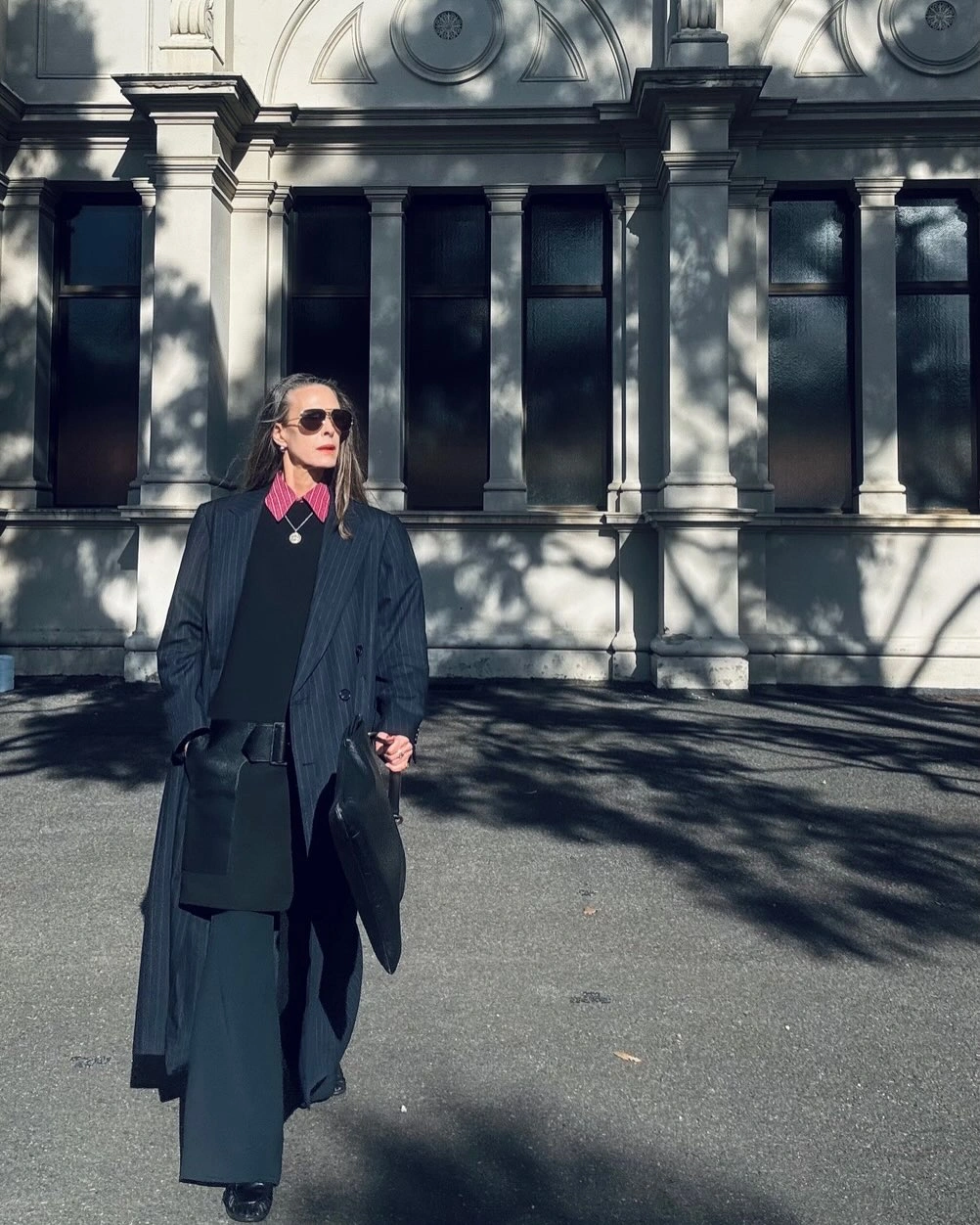
Placing the only color at the neck is a smart way to keep a work outfit formal while still making it feel personal. The scarf should be slim enough not to crowd the coat lapels, and the tote should remain matte and neutral so it does not compete with the pale pink. A berry, lilac, or soft blue scarf could create another version, but should remain the sole accent.
Dark outerwear is easy to repeat through winter, so this small-accessory approach helps refresh it without needing a new coat. Keep the shoes within the same dark family to preserve the long visual column. The effect is strongest when the scarf looks like a quiet interruption, not a second major layer fighting for attention.
Black Layers With Straight Blue Denim
The long black outer layer, black top, bag, and boots give the blue straight-leg denim a much more composed role than ordinary casual jeans. The denim supplies a cool middle value between the dark pieces, while the umbrella and practical footwear make the outfit feel ready for an unsettled winter day. The result is smart-casual because the coat and boots keep the line sharp even with a more relaxed fabric at the center.
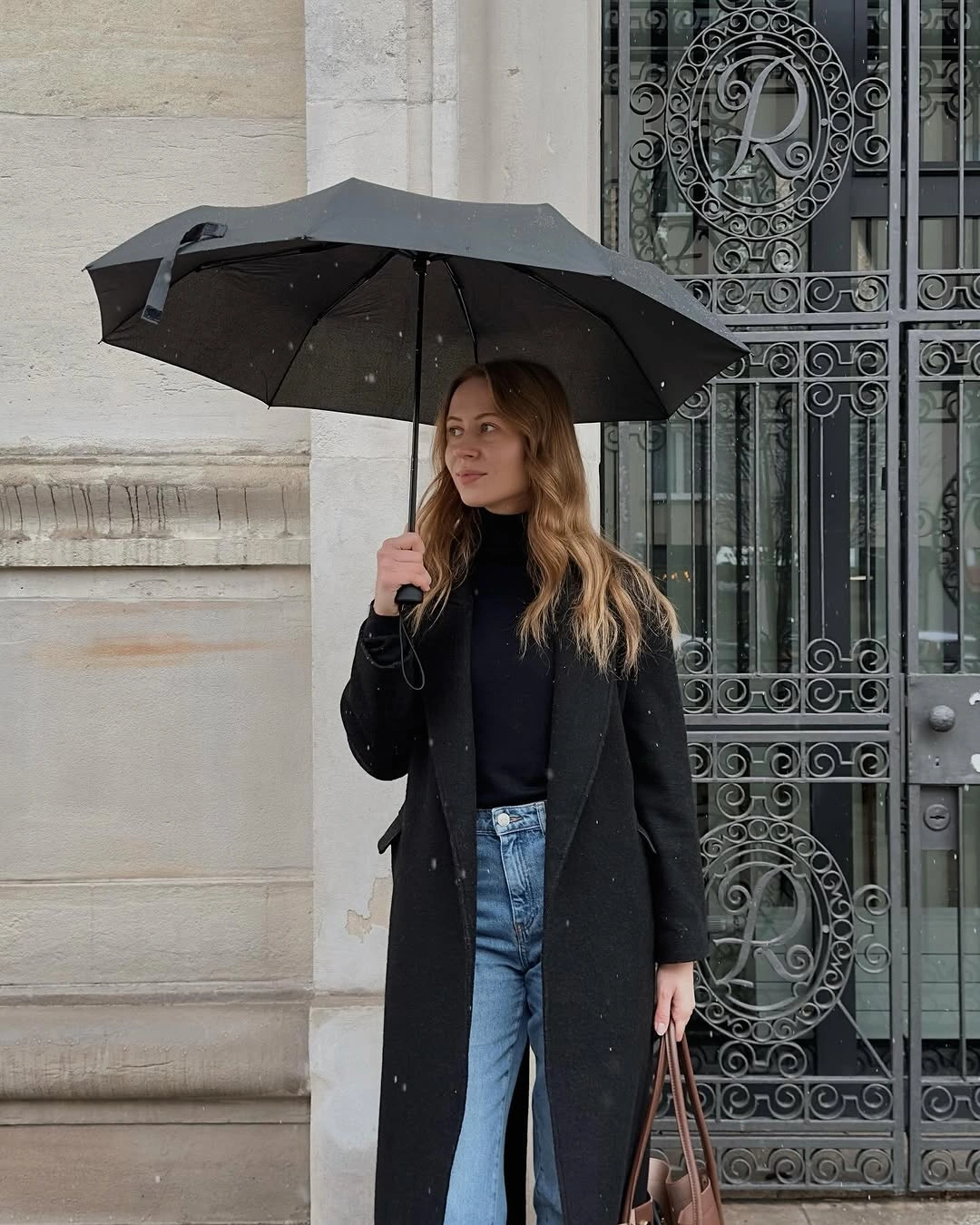
Jeans work best in a professional-leaning winter outfit when the wash is clean, the leg is straight, and the surrounding layers are structured. Here the black outerwear creates a frame, so the blue reads as a planned color change rather than an informal default. A cream knit would lighten the look further, but a black top preserves the strongest and most streamlined version of this arrangement.
Weather practicality is part of the appeal: boots, a long coat, and an umbrella are all functional without cluttering the silhouette. A small leather bag works better than a slouchy fabric tote because it mirrors the coat’s sharper mood. The important balance is casual denim held inside a dark, polished outer structure.
Long Black Coat and Taupe Wide Trousers
The long black coat creates a precise outer frame around the high-waisted taupe wide trousers, while the black fitted top keeps the center line compact. The contrast between the dark vertical coat and the lighter, expansive pants makes the proportion feel intentional rather than oversized. A black bag continues the coat color at the side, allowing the trousers to remain the lightest and broadest visual area.
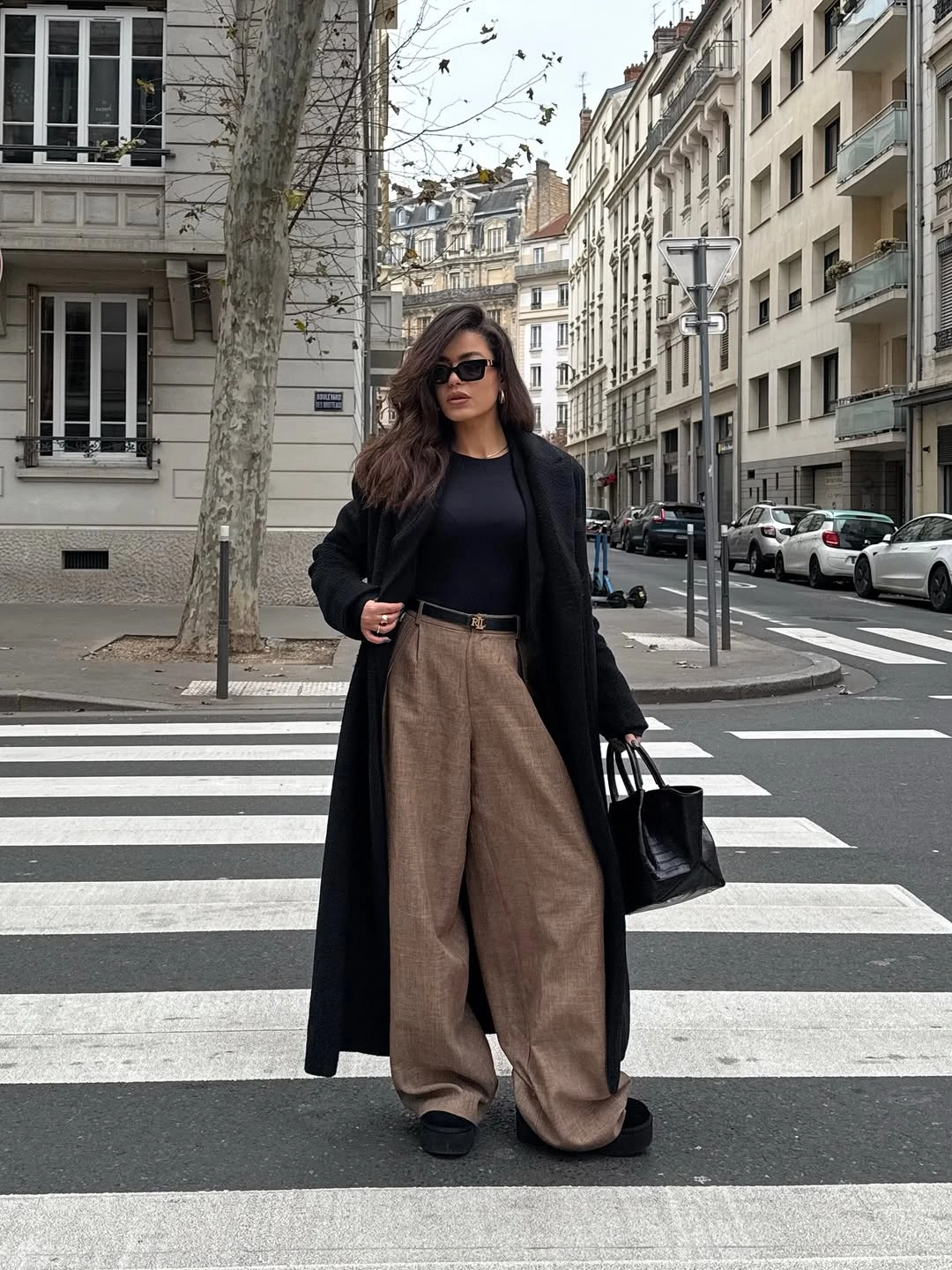
Wide trousers need a clear waist when paired with a long outer layer, which is why the fitted top and high rise matter here. The coat can stay open enough to show that transition, then close for warmth during travel without losing its structure. If a cropped top is not comfortable, a tucked black knit will create the same dark upper block with a little more coverage.
The outfit becomes more winter-ready with a long scarf in black or deep brown, but avoid adding another pale accessory near the trouser color. Dark boots will extend the coat’s line and keep the light pants from being visually cut off at the ankle. The contrast is already sufficient: a deep outer frame surrounding one soft, wide neutral base.
Brown Puffer Above a Clean Dark Base
The cropped brown puffer gives warmth and volume at the shoulders, while the black top and straight dark jeans form a narrow, uncomplicated column below it. The brown handbag relates to the puffer without becoming an exact match, and sunglasses add a small dark note near the face. This combination works because the insulation is kept short and the lower half stays streamlined.
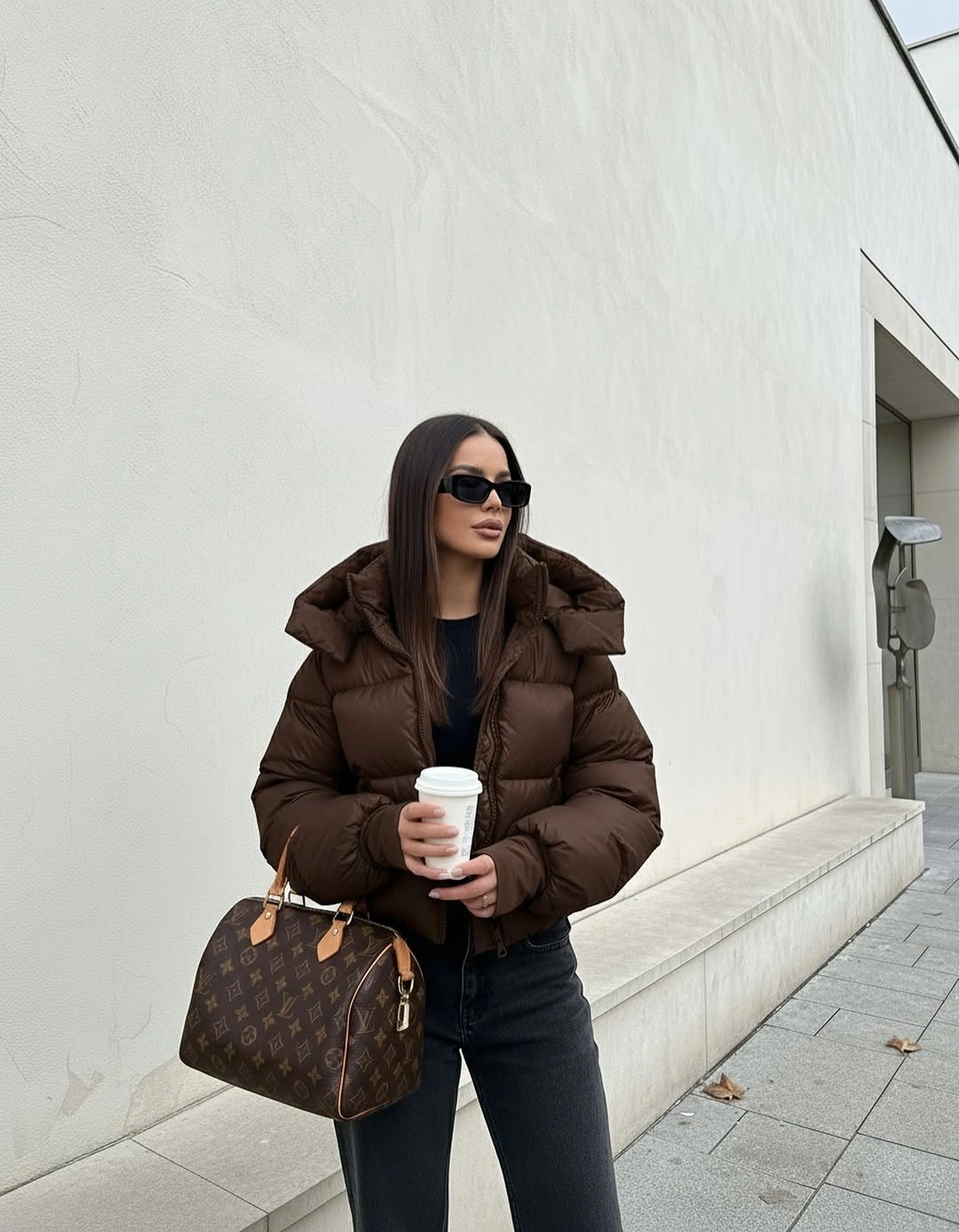
A puffer jacket can overwhelm an outfit if the trousers are also oversized or heavily detailed, so straight jeans are a useful counterweight. The black inner layer creates a continuous center line and lets the brown outerwear look warmer and more deliberate. A cream knit beneath the puffer could soften the contrast, but should remain close-fitting to avoid adding bulk under the jacket.
This is one of the most practical silhouettes for commuting because the short puffer allows easy movement while the dark base remains neat indoors. Choose shoes with enough weather protection but a simple shape, such as a streamlined boot. The quiet dark column is what keeps the padded jacket from feeling purely casual.
Brown Blazer With Burgundy Trousers
The brown blazer, white high-neck top, and burgundy trousers form a rich warm palette, yet the pale collar prevents the colors from merging into one dense mass. Tall dark boots create an uninterrupted line beneath the trousers, while the brown bag repeats the blazer at a practical scale. The combination looks composed because each warm tone has a distinct placement and the white layer gives them space.
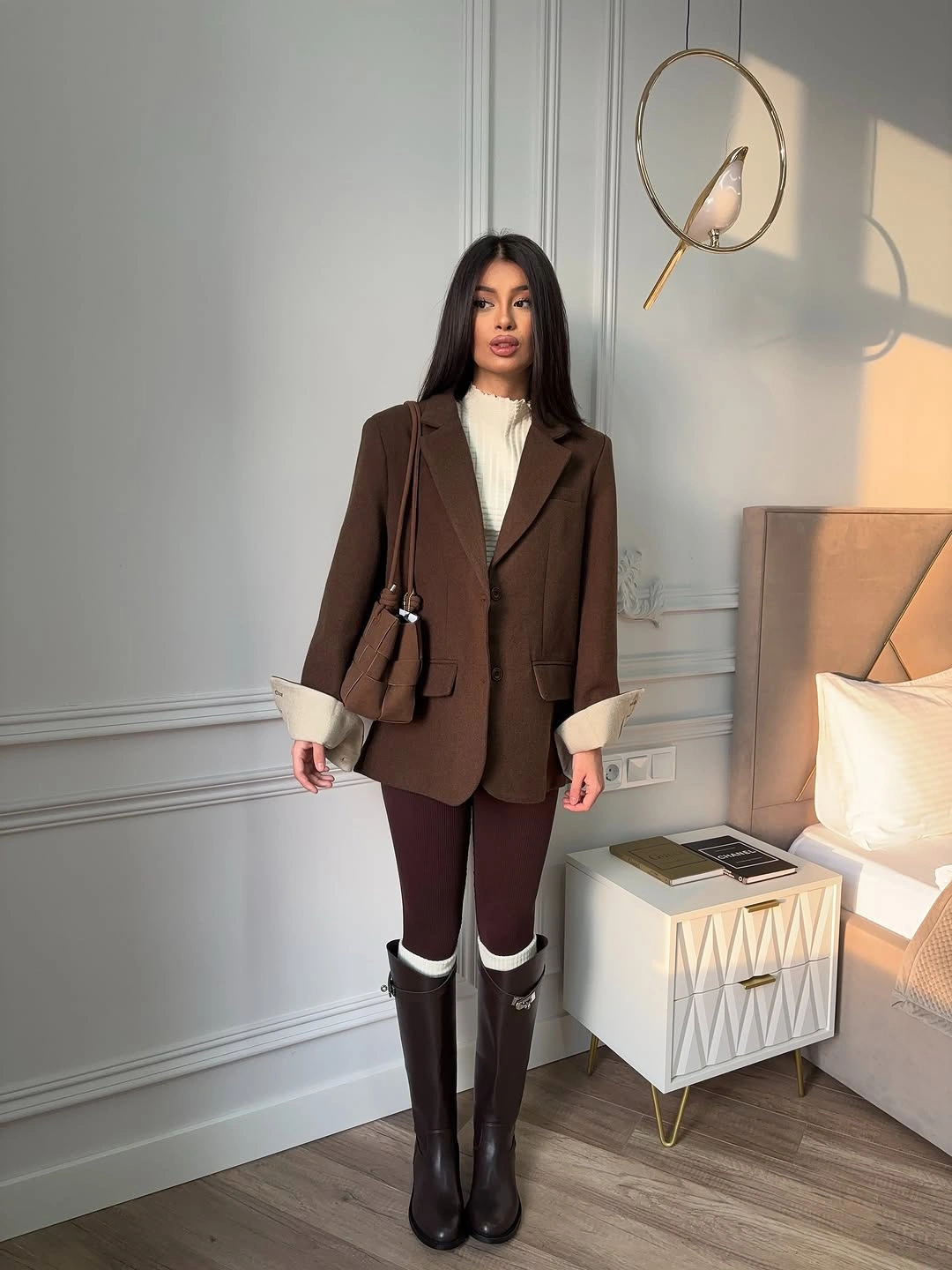
A pale high neck is especially useful under warm tailoring because it brightens the face and gives the blazer a clean internal edge. The burgundy pants remain narrow enough for the tall boots to continue their line, which makes the lower half feel polished rather than bulky. If the colors feel too deep for your wardrobe, use chocolate brown with dusty rose trousers and preserve the same light collar.
Keep jewelry and scarves minimal because the blazer, trousers, and bag already establish a full warm-toned conversation. This is an effective option for a day when ordinary black and gray feel too muted but a bright color still seems impractical. The structure comes from the white center and long boot line, not from adding extra detail.
Deep Navy Coat With Matching Wide Pants
The deep navy long coat and wide trousers share enough color depth to create a nearly tonal outer silhouette, while the black top and structured black bag give the blue layers a dark supporting frame. The coat’s length and the trousers’ volume feel aligned rather than repetitive because one falls vertically and the other moves more broadly below the waist. It is a grounded alternative to all-black winter tailoring.
Matching blue separates work best when the inner layer stays dark and simple, allowing the coat and trousers to read as one composed family. A white top would make the contrast brighter, but black preserves the understated mood and keeps the bag integrated. The shoe should also remain dark, so the long navy line is not abruptly interrupted at the hem.
For a different winter layering perspective, the site’s women’s winter streetwear guide shows how a long outer layer can shift the mood of familiar separates. Here, the restrained navy-black palette needs no extra decoration. The strongest choice is simply to let the coat and trousers share the visual stage while every other piece remains quiet.