
Braids are having a moment that refuses to end, and for good reason: they marry intricate craftsmanship with everyday practicality. The current shift favors soft face-framing layers and lived-in color, so even a classic braid feels modern, not costumey.
This collection of 21 Classy Braided Styles runs the full spectrum, from salon-level cornrow patterns to quick accent braids you can master at home. Whether your hair is fine, thick, coily, or somewhere in between, there is a style here that holds its shape and suits your length. If your fine hair tends to fall flat or your go-to updo loses grip by noon, these braids offer structure that actually lasts.
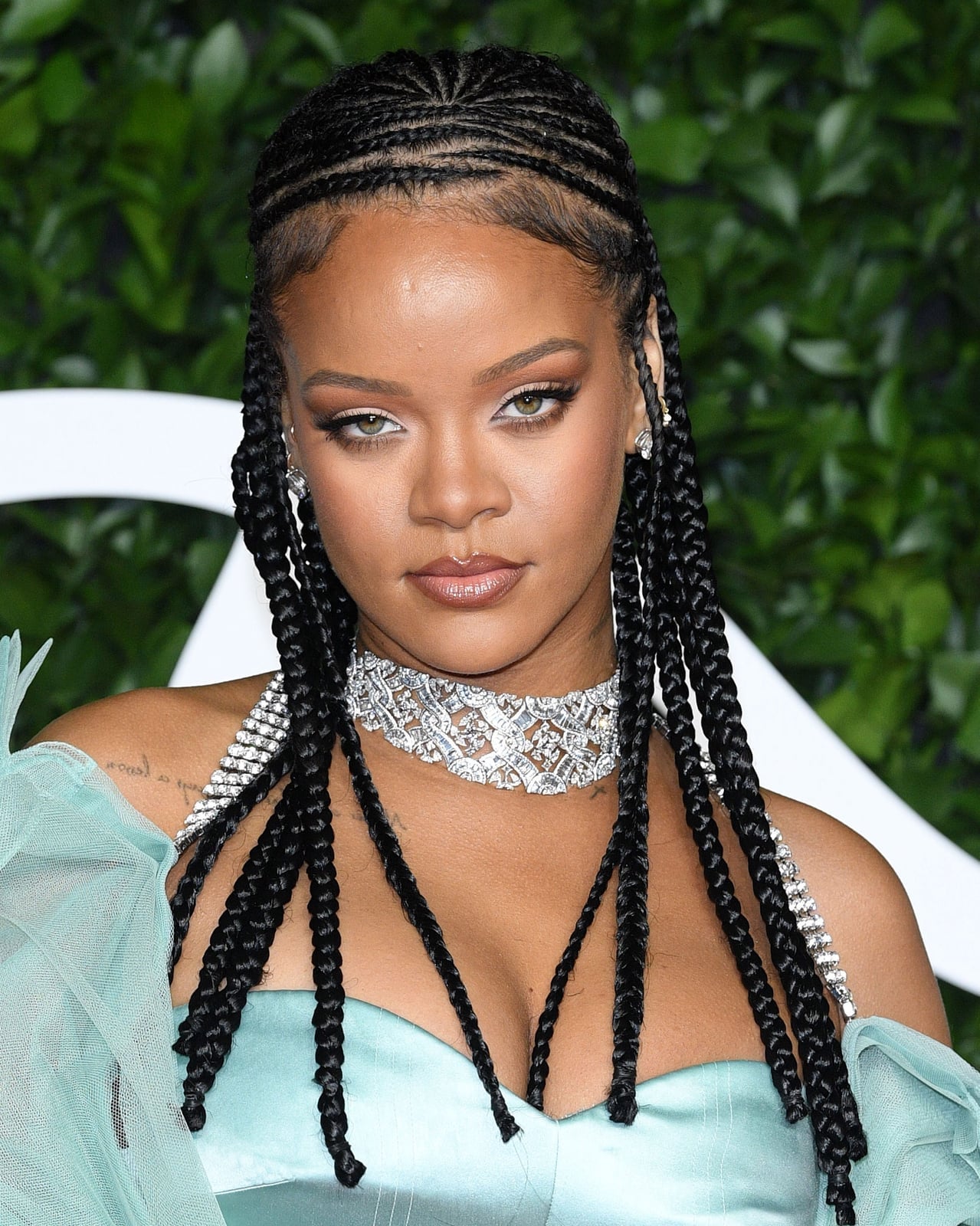
Mid-Back Black Box Braids With Cornrows
The design starts at the scalp: neat cornrows radiate from a middle parting, then transition into thick box braids that fall past the shoulders. This is a salon-only technique that requires dense, strong hair to support the weight of mid-back length braids and the tension of the cornrow base. Ask your stylist for: mid-back box braids with intricate scalp cornrows. The finished look has zero flyaways and a glossy, uniform texture that holds for weeks with proper care.
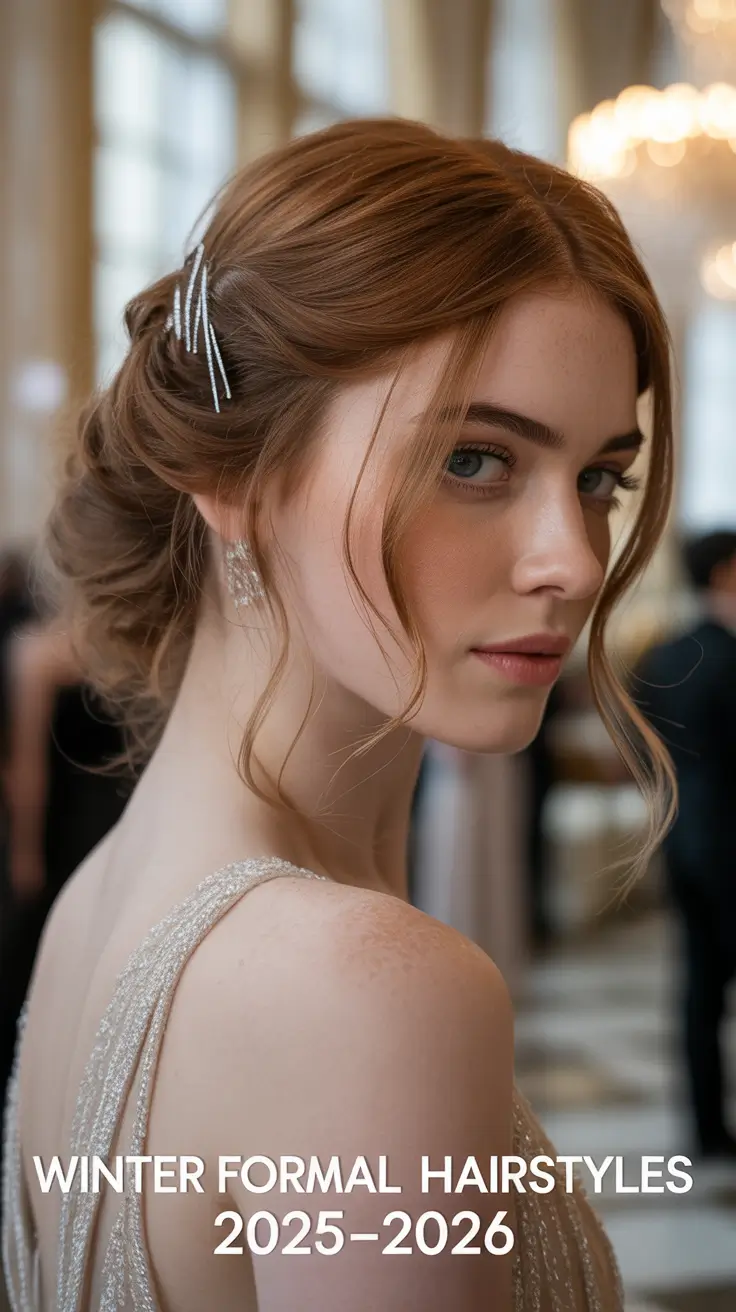
Elegant Auburn Braided Updo With Face-Framing Tendrils
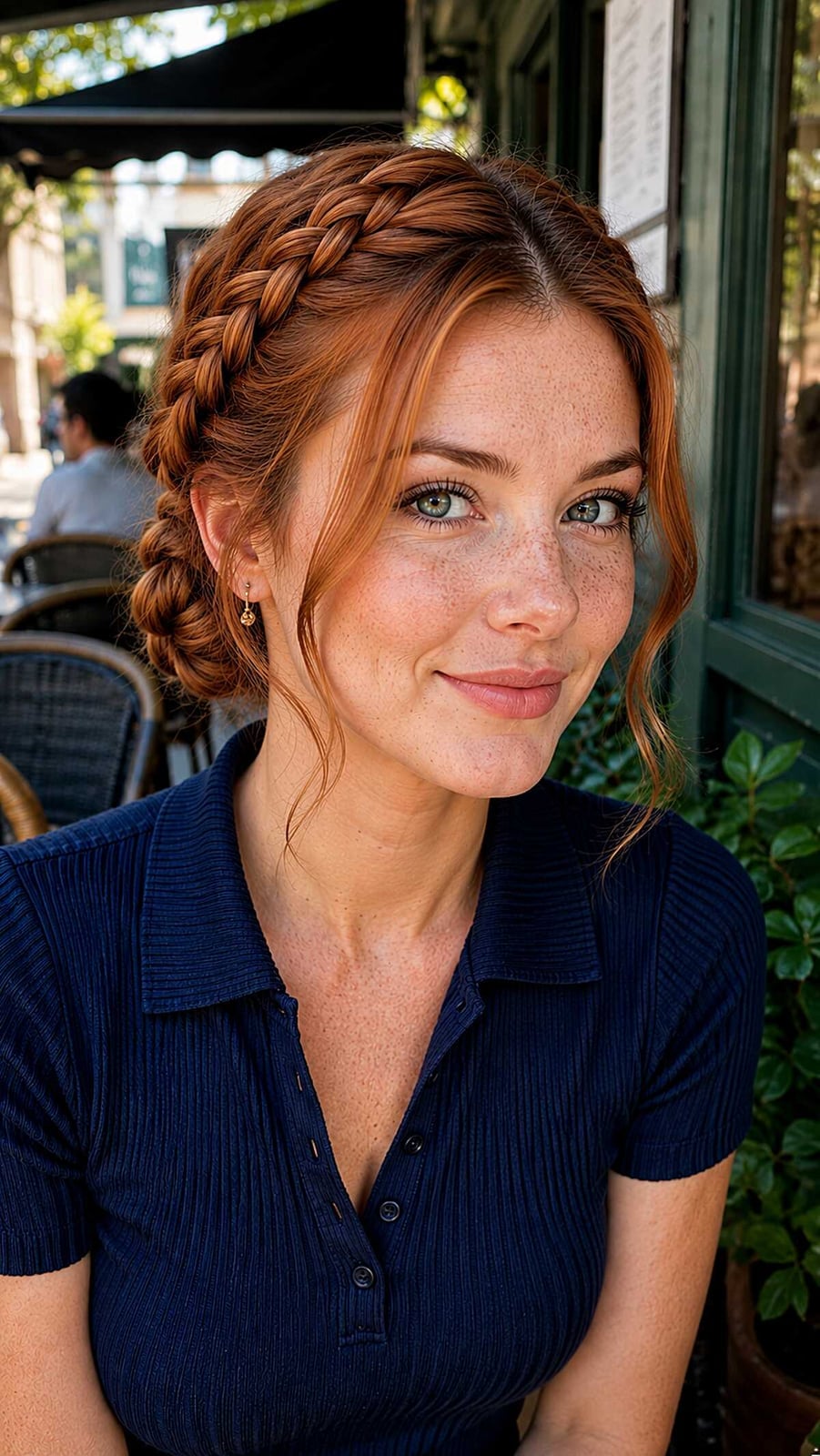
Does an updo always feel too severe? This one solves that with wispy auburn tendrils left loose around the face while a braided crown wraps the head and tucks into a low bun at the nape. Medium density hair at collarbone length or longer works best, since the braided crown needs enough weight to stay visible without deflating. Ask your stylist for: braided crown updo with face-framing wisps. The wispy bangs soften round and heart-shaped faces, and the bun keeps the style secure for hours.
Upkeep is minimal: a few bobby pins reset the tendrils, and the braided crown holds its shape through an evening without re-pinning. A light hairspray at the crown prevents the braid from loosening, but the overall structure is sturdy enough for dancing.
Ash Blonde Lob With Delicate Braided Headband
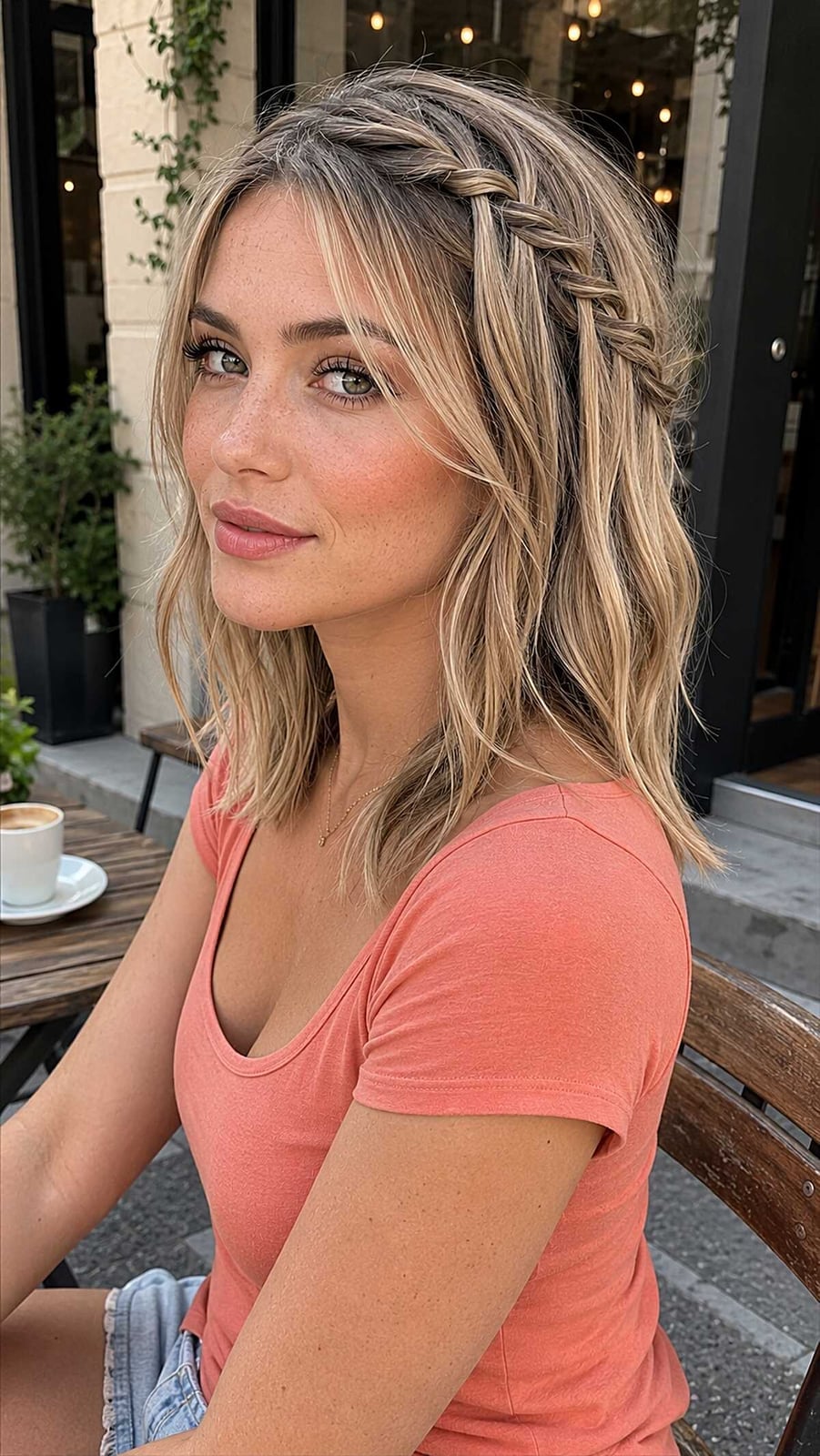
The trick is in the details: a collarbone lob with soft waves and curtain bangs gets a thin braided section that crosses the crown like a headband. This is a DIY-friendly accent for fine to medium hair; the braid uses a small section from behind the ear, leaving the ash blonde lob loose. Ask your stylist for: collarbone lob, curtain bangs, braided headband detail. A texturizing spray gives the fine texture enough grip to hold the braid in place without pins.
Neat Black Cornrows Into Low Bun
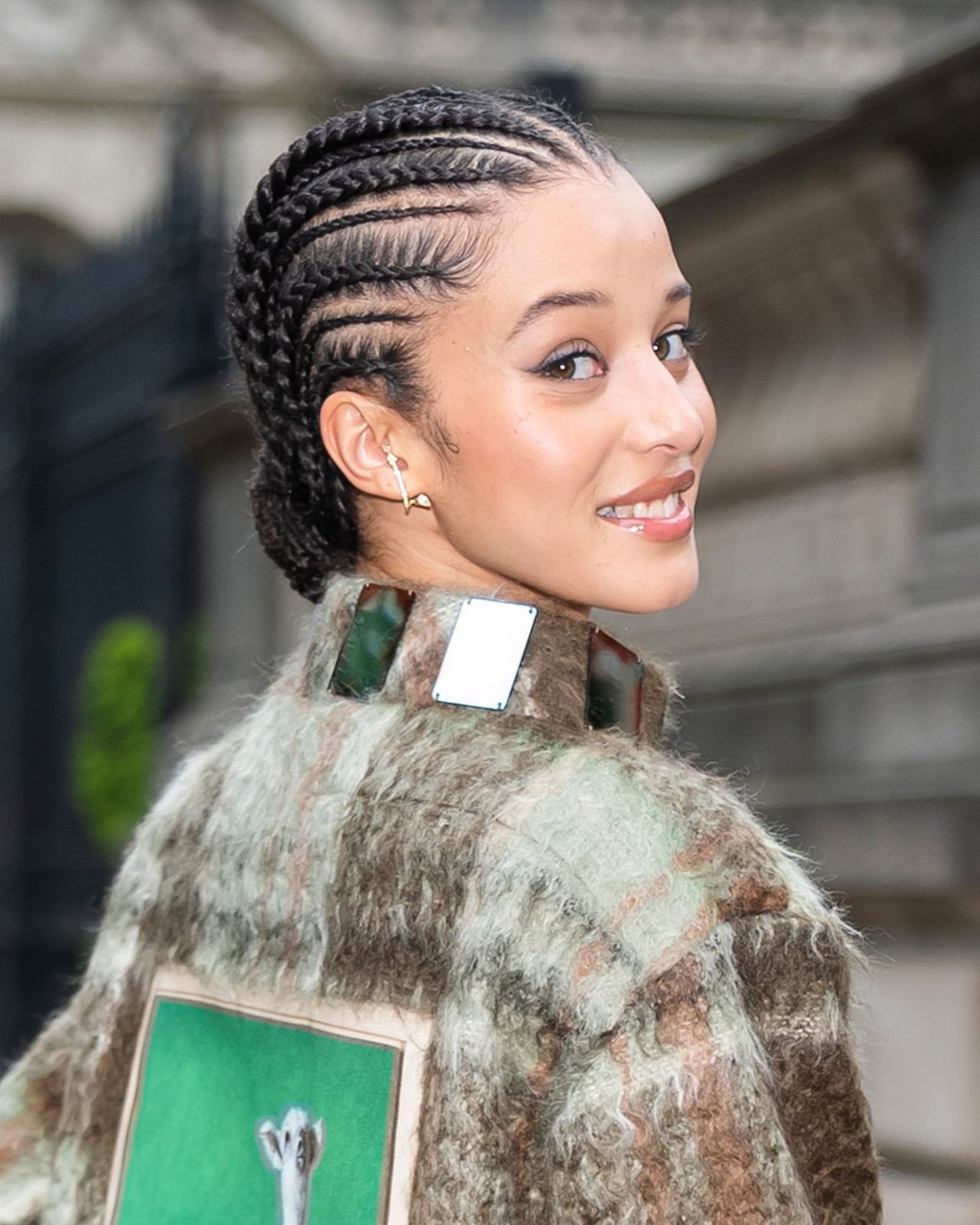
Close to a classic cornrow style, but the finish is what sets it apart: every braid meets at the nape in a sleek low bun rather than trailing loose. The cornrows are thick, uniformly sectioned, and follow the scalp from a middle parting to the bun, creating a polished and clean silhouette. Ask your stylist for: neat cornrows pulled into a low bun. The low bun keeps the weight off the hairline and makes the style wearable for long days without tension headaches.
Shoulder-Length Box Braids With Curly Ends
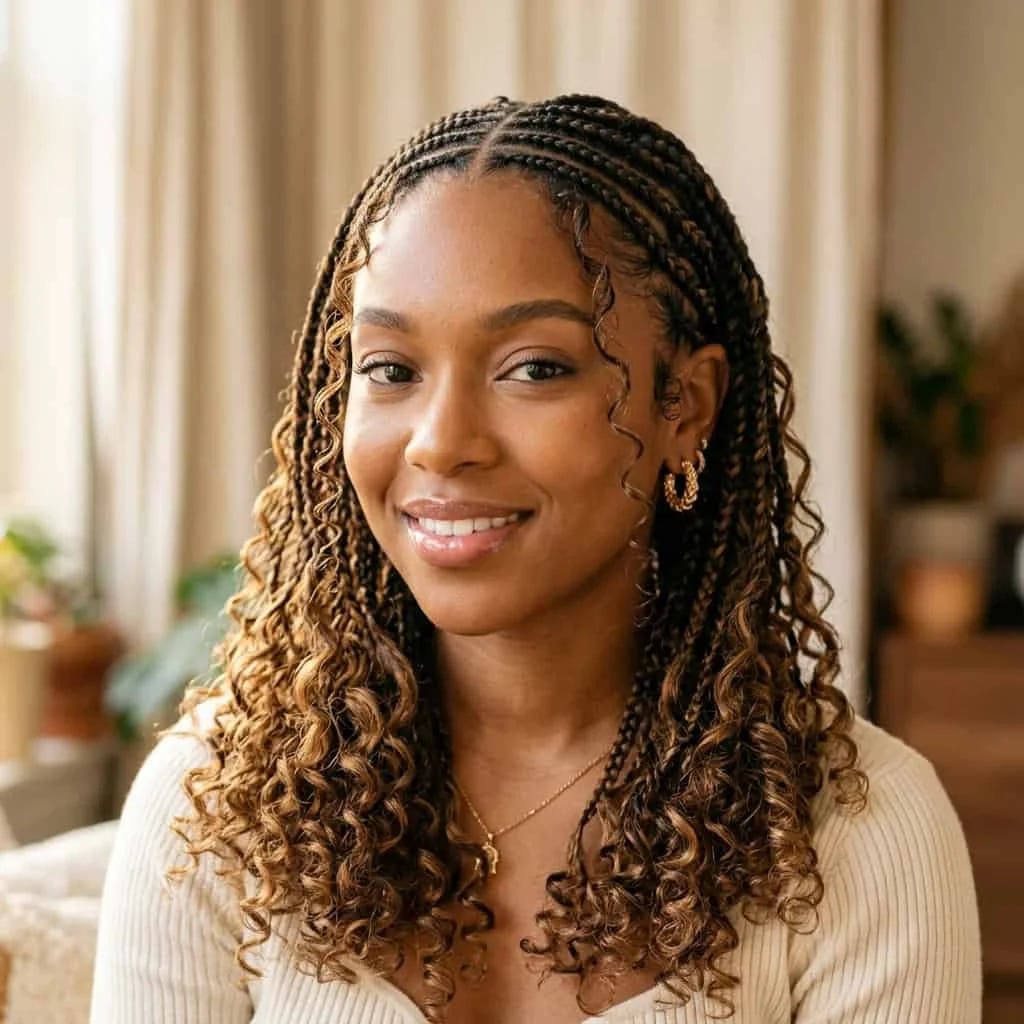
Small box braids at shoulder length get an unexpected finish: the ends are styled into loose curls instead of sealed straight. The black base is woven with subtle blonde highlights that add dimension to the dense texture. Ask your stylist for: shoulder-length small box braids with curly ends. The curly ends need a curl cream every few days to prevent frizz at the transition point, and the highlights require a touch-up every eight to ten weeks as new growth appears.
The maintenance time is longer. The blonde pieces mean a longer installation session, and the curly ends can tangle faster than sealed ones. A satin scarf at night keeps the curls defined and the braids smooth.
Collarbone Bob With Neat Black Box Braids
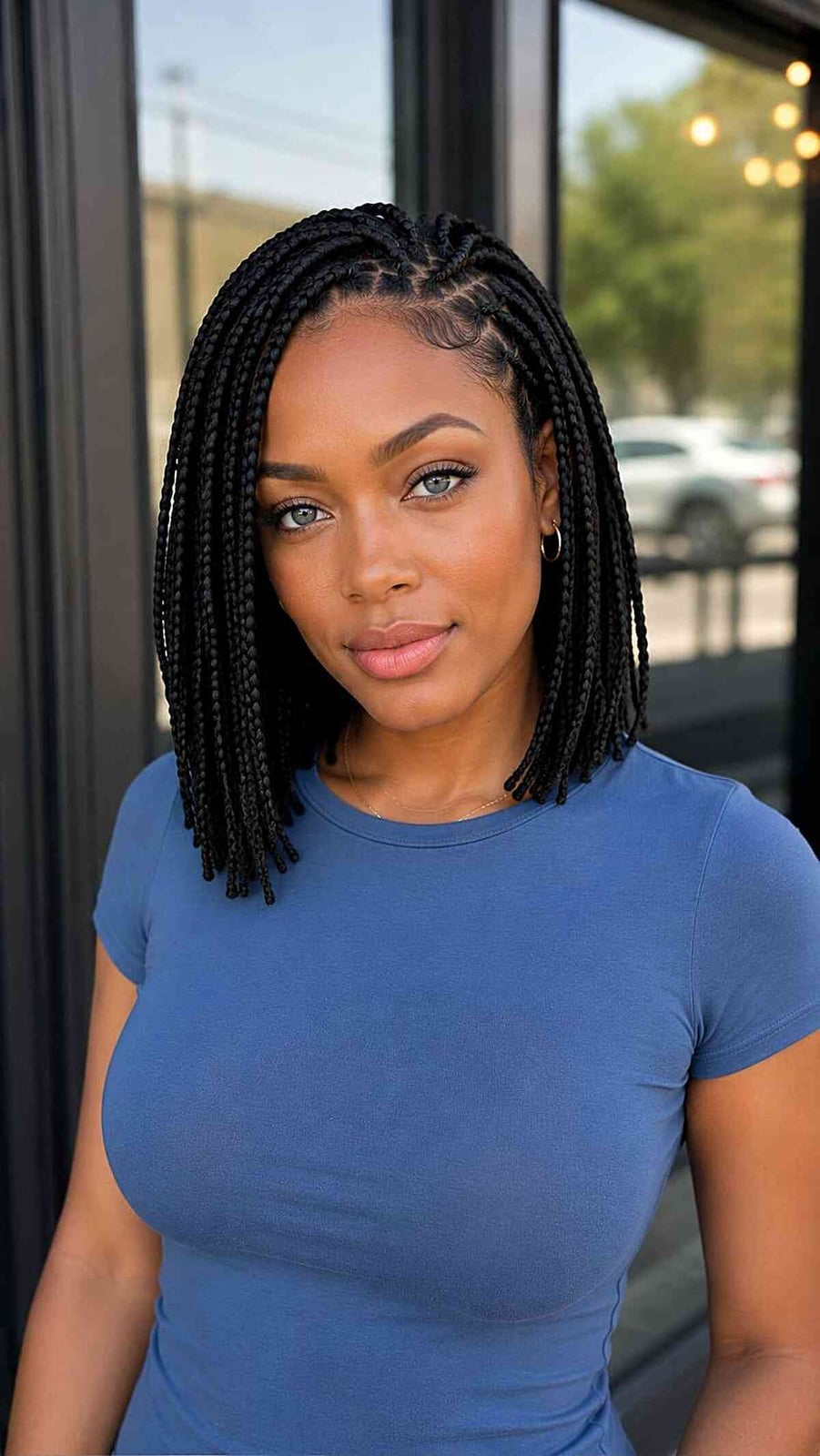
Collarbone length is a flattering threshold, but a bob this polished asks a question: should you let your natural texture show or go for the precision of box braids? The neat black braids here follow a side part and fall straight, creating a sharp, geometric silhouette that a natural bob of the same length cannot match without a lot of heat styling. Ask your stylist for: collarbone length bob with neat box braids, side part. Thick hair holds the braid structure best, and this style stays crisp from morning to evening. Keep the parts clean and run a light oil over the braids weekly to preserve the shine.
Mid-Back Cornrows Into Braids With Curls
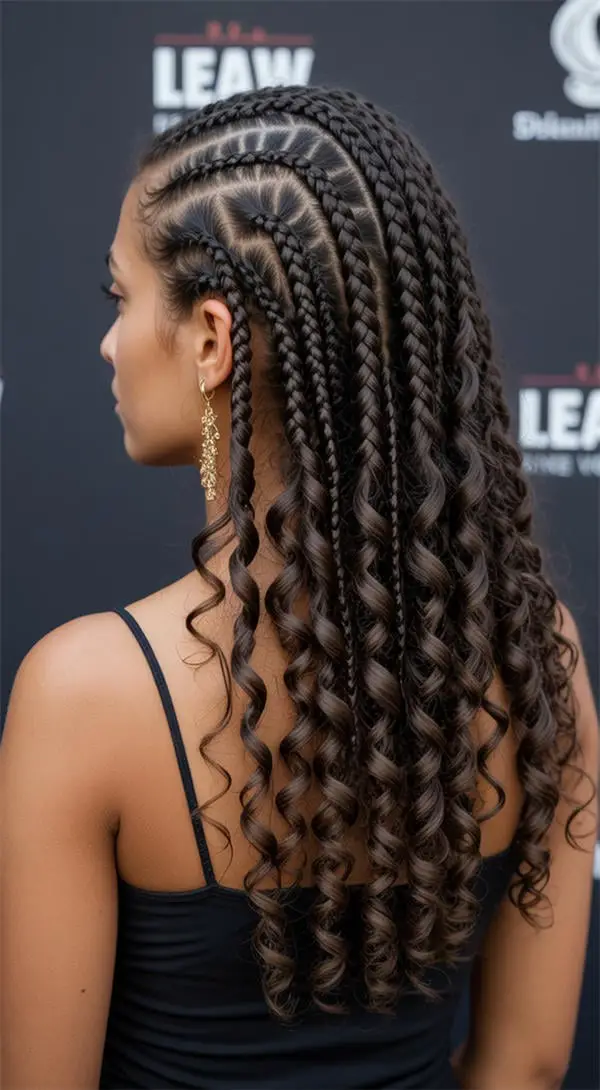
The design here moves through three distinct sections. Cornrows start at the scalp, then widen into thick three-strand braids that travel down the back, and each braid finishes in a cluster of loose, defined curls. That transition from tight scalp work to soft ends gives the style both structure and movement. Ask your stylist for: cornrows transitioning into thick braids with defined curls. The technique works best on thick, dense hair. Apply a curl cream to the ends every few days to keep the definition sharp, and gently separate the curls with your fingers if you want more volume at the bottom.
Elegant Brown Braided Bun From Side View
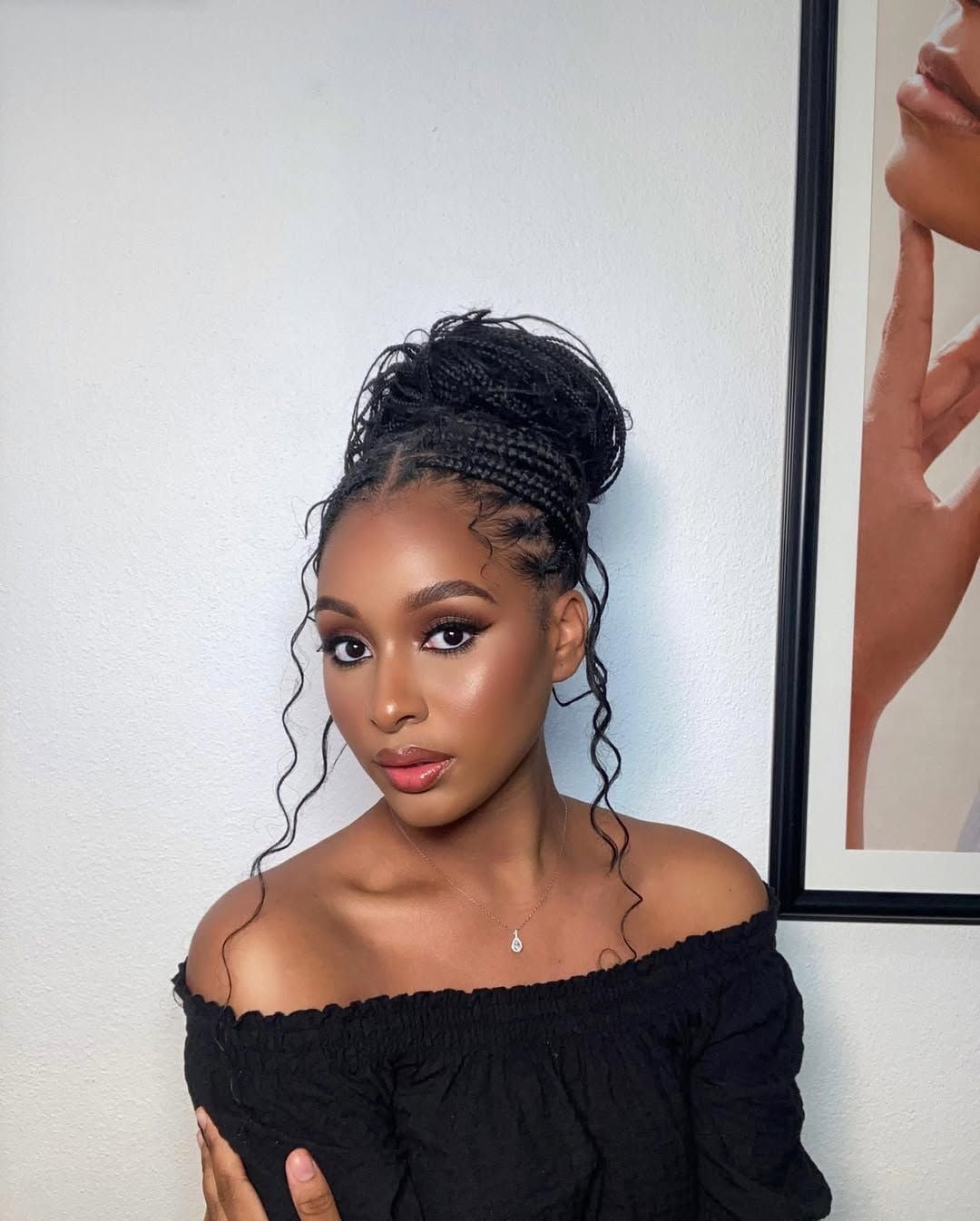
A side view of a braided bun reveals something a front view hides: the way the braid wraps around itself to create a compact, sculptural shape at the back of the head. The middle part keeps the front clean, while the brown, wavy texture adds depth to the weave. Ask your stylist for: intricate braided bun, middle part. This style genuinely flatters thick, wavy hair of mid-back length or longer, because the density gives the bun body without needing a donut or padding. It works best for formal occasions and evening events where you want the hair to stay put for hours. A spritz of hairspray over the finished bun tames any wispy pieces without stiffening the braid itself.
Textured Mid-Back Loose Braid
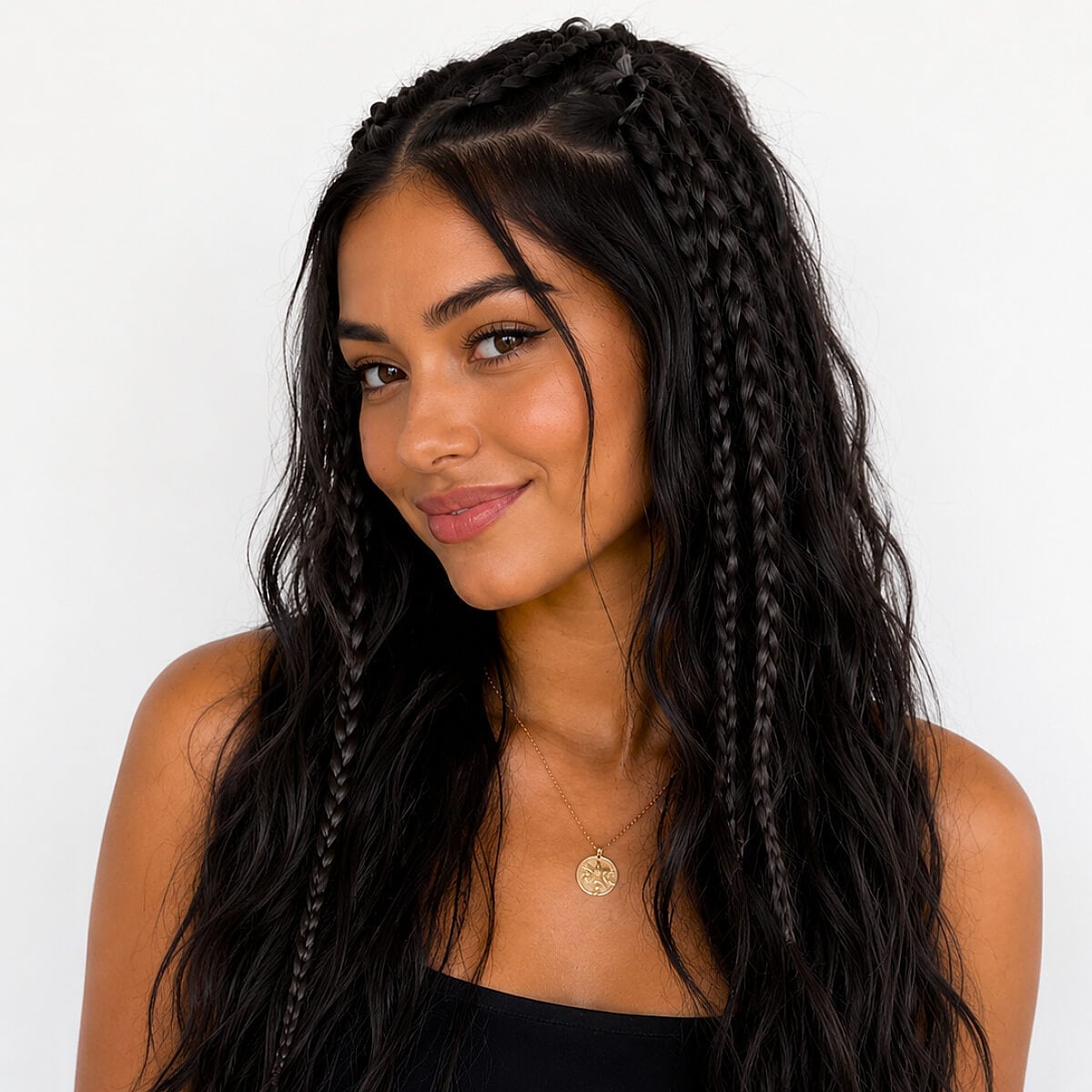
Can a braid look intentional and slightly undone at the same time? Yes, if you start with thick, wavy hair and a middle part. This loose braid hangs to mid-back with a relaxed, full shape that avoids the tightness of a traditional three-strand plait. Ask your stylist for: thick, wavy, loose braid. To recreate the texture at home, braid the hair while it is still slightly damp and air-dry it halfway, then gently tug the outer edges of the braid outward for width. Secure the end with a small elastic and let a few face-framing pieces fall free for a finish that looks casual on purpose.
Sleek Black Cornrows Into Bun
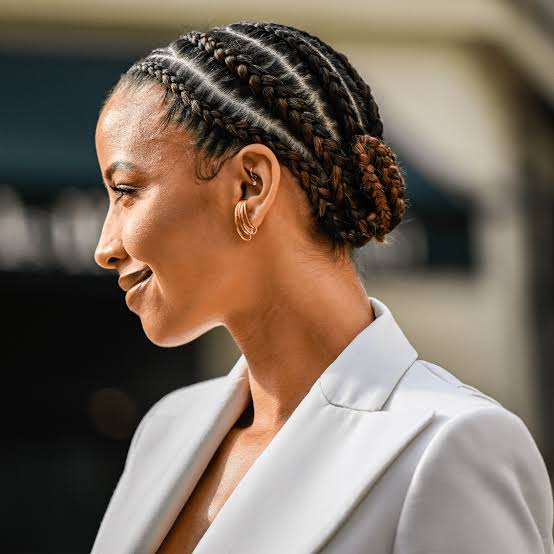
Cornrows that feed into a bun offer a different personality than a fully loose braided style. Where a braid falls and moves, this bun sits anchored at the nape, with every cornrow pulled back along a middle part and woven into a compact, neat shape. Ask your stylist for: sleek cornrows styled into a neat bun. The hold is substantial. Each cornrow is braided from root to bun, so the style stays undisturbed through a full day of work or a formal event. A non-flaking gel or pomade applied along the edges and part line keeps the finish polished without buildup. Thick, straight hair of mid-back length or longer gives the cleanest result.
Blonde Highlights Fishtail Braid With Ribbon
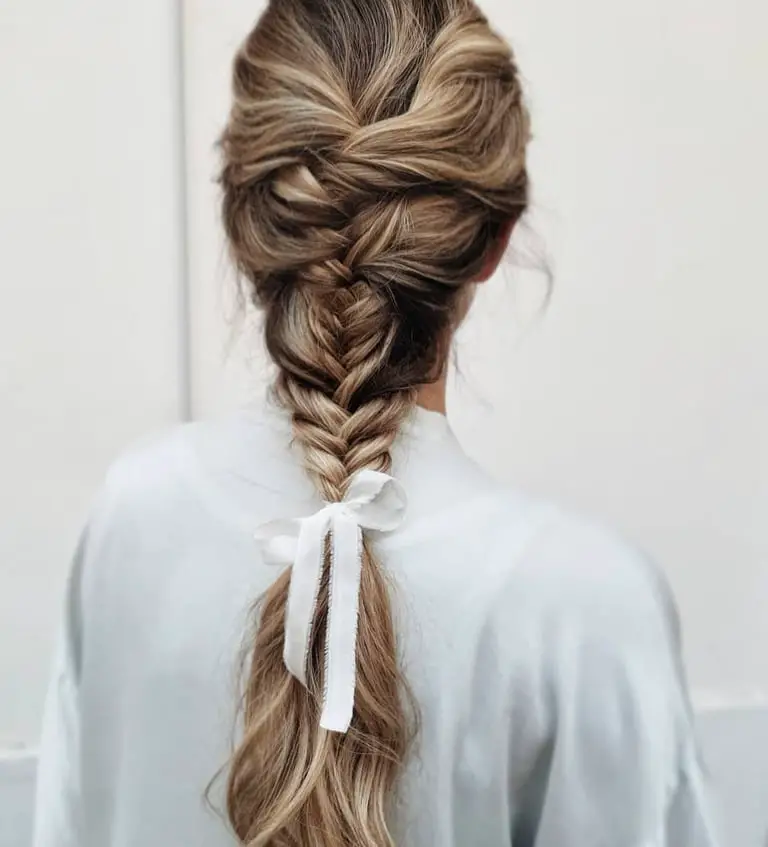
A fishtail braid weaves blonde highlights through a brown base, ending mid-back with a small white ribbon tied at the tip. The design works best on wavy, thick hair that can hold the pattern without slipping apart. Ask your stylist for: a fishtail braid with a white ribbon at the end. The ribbon adds a polished touch, but it can snag on loose strands or fray if tied too loosely. Secure it tightly against the elastic, and run a texturizing spray through the braid first. That grip keeps the ribbon in place and the fishtail visible all evening. The real drawback is the ribbon itself: it sits at the very end, so if the braid shifts, the bow tilts off-center. A small price for an elegant detail.
High Braided Bun With Blonde Highlights
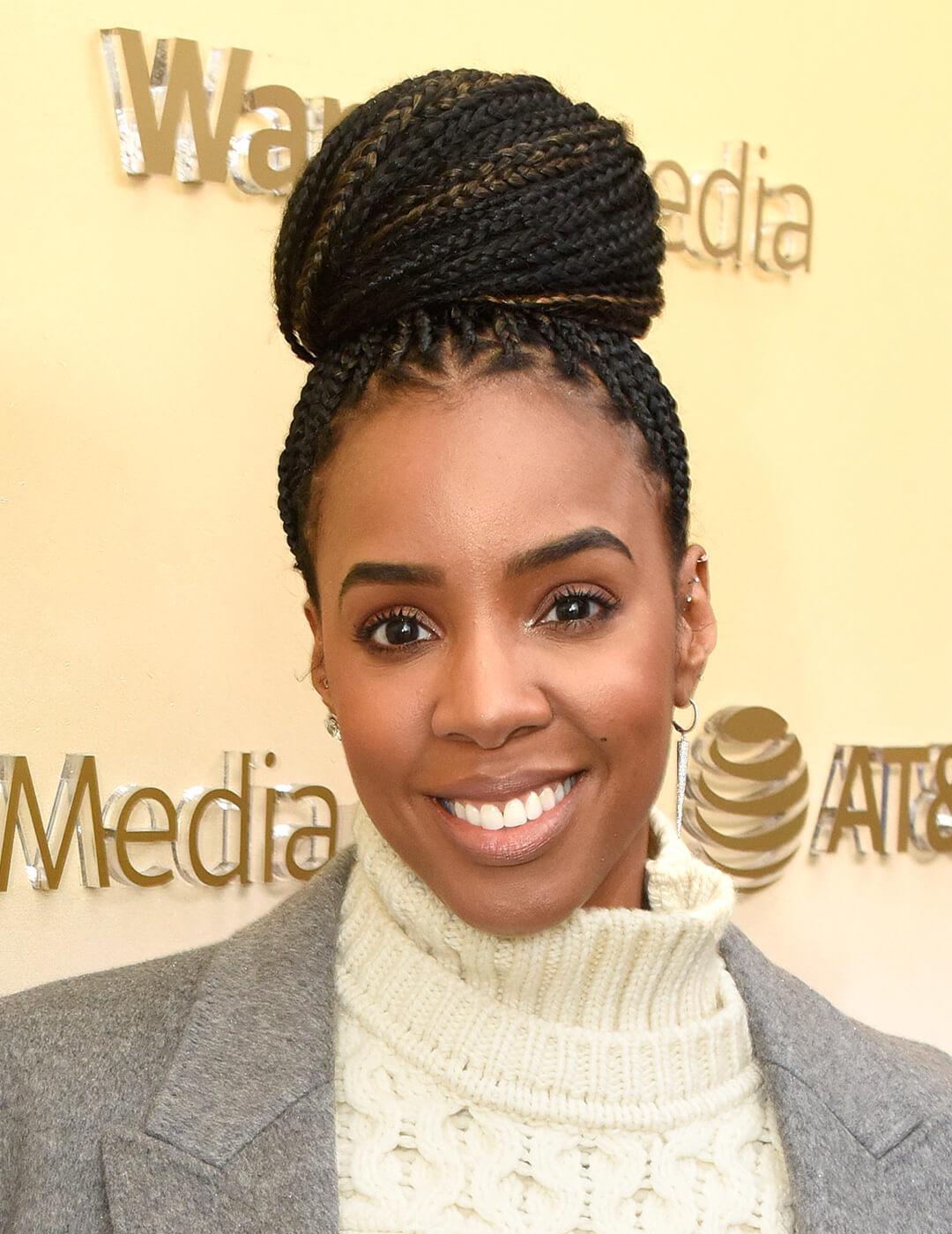
A high bun of black box braids shows subtle blonde highlights woven through the base, the style reaching mid-back when the braids are down. The fine texture of these braids means the bun sits compact rather than bulky, which works well for finer hair that can hold the shape without extra weight. Ask your stylist for: a high bun with black box braids and subtle blonde highlights. Secure the bun with bobby pins crossed at the base. A light mist of hairspray keeps any short bits from escaping. A toning appointment every six to eight weeks keeps the blonde pieces from turning brassy against the black.
Abundant Mid-Back Faux Locs
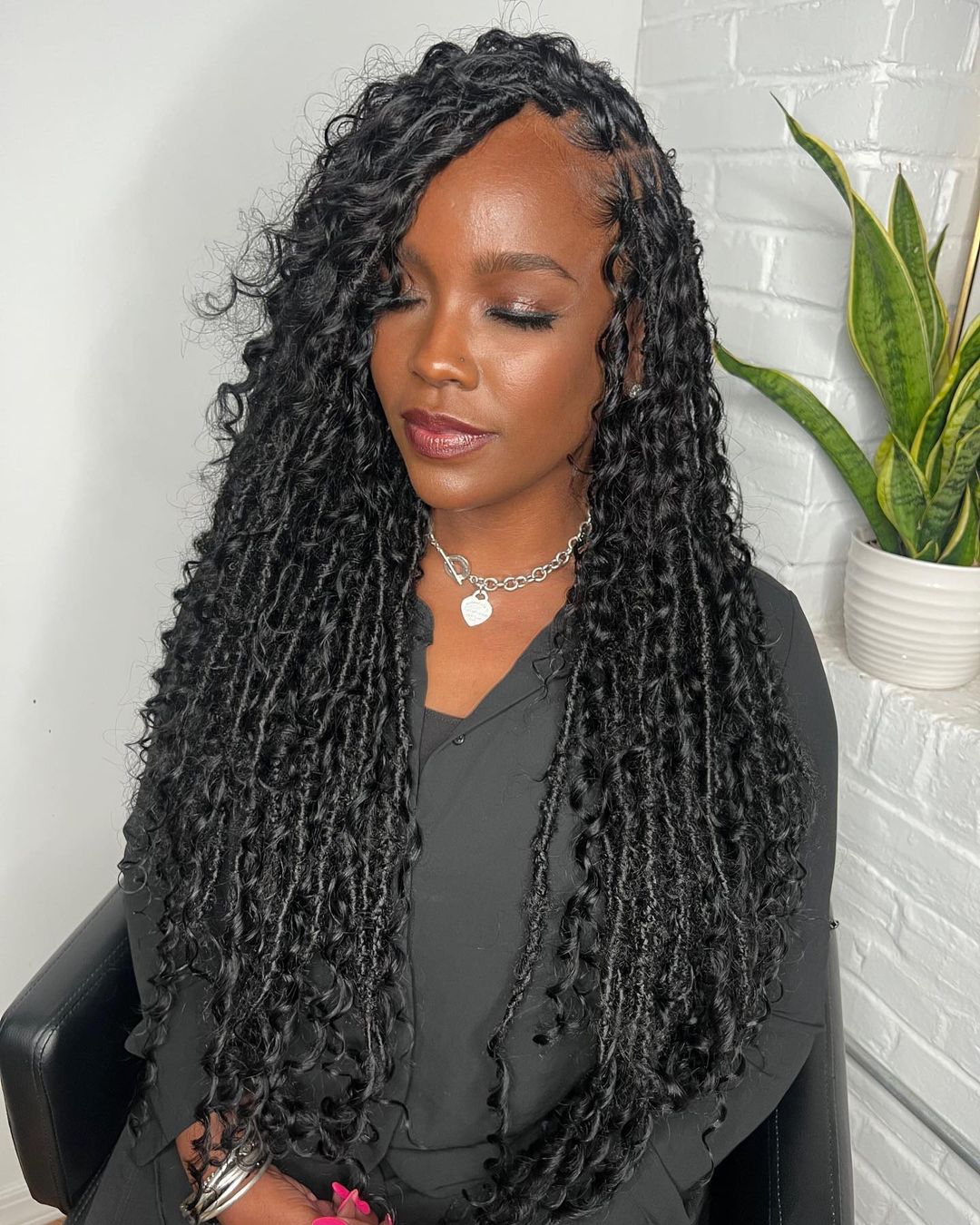
Faux locs can look full without feeling heavy when the wrapping technique is done right. Each loc is built around a thin section of natural hair, then wrapped with synthetic hair to create that thick, wavy shape. The result here reaches mid-back, parted in the middle, with a loose texture that frames the face. Ask your stylist for: abundant, loose wavy faux locs that reach mid-back. The key is the wrapping tension: too tight and the locs look skinny; too loose and they unravel within a week. A stylist who works with synthetic hair regularly will know the balance. The abundance comes from the volume of locs, not from making each one thick. The loose wave at the ends keeps the style from looking too uniform.
Black Cornrows With Decorative Scalp Braids
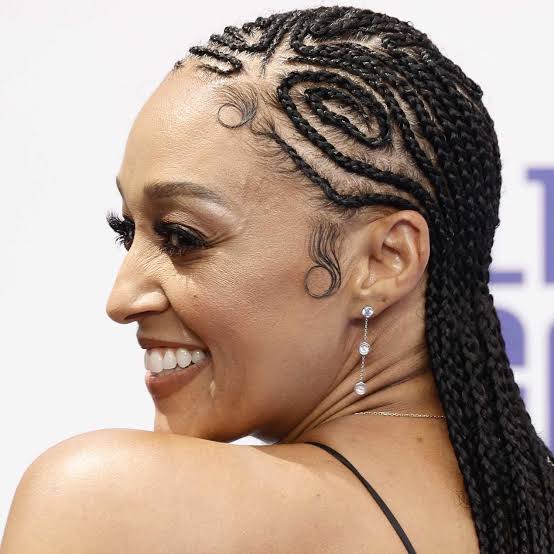
Intricate cornrows along the scalp curve into decorative swirls, then release into long, loose braids that reach mid-back. The side view shows the pattern clearly: the scalp braids are the focal point, while the loose braids add movement. Ask your stylist for: cornrows with decorative swirls and loose braids. The style holds for two to three weeks with proper care. Use a fine-tooth comb to smooth the baby hairs at the hairline each morning, and sleep with a satin scarf to keep the scalp pattern from frizzing. The decorative swirls mean more tension on those sections, so avoid keeping the style past the three-week mark to prevent traction on the edges.
Black Cornrows Into Curly Twists
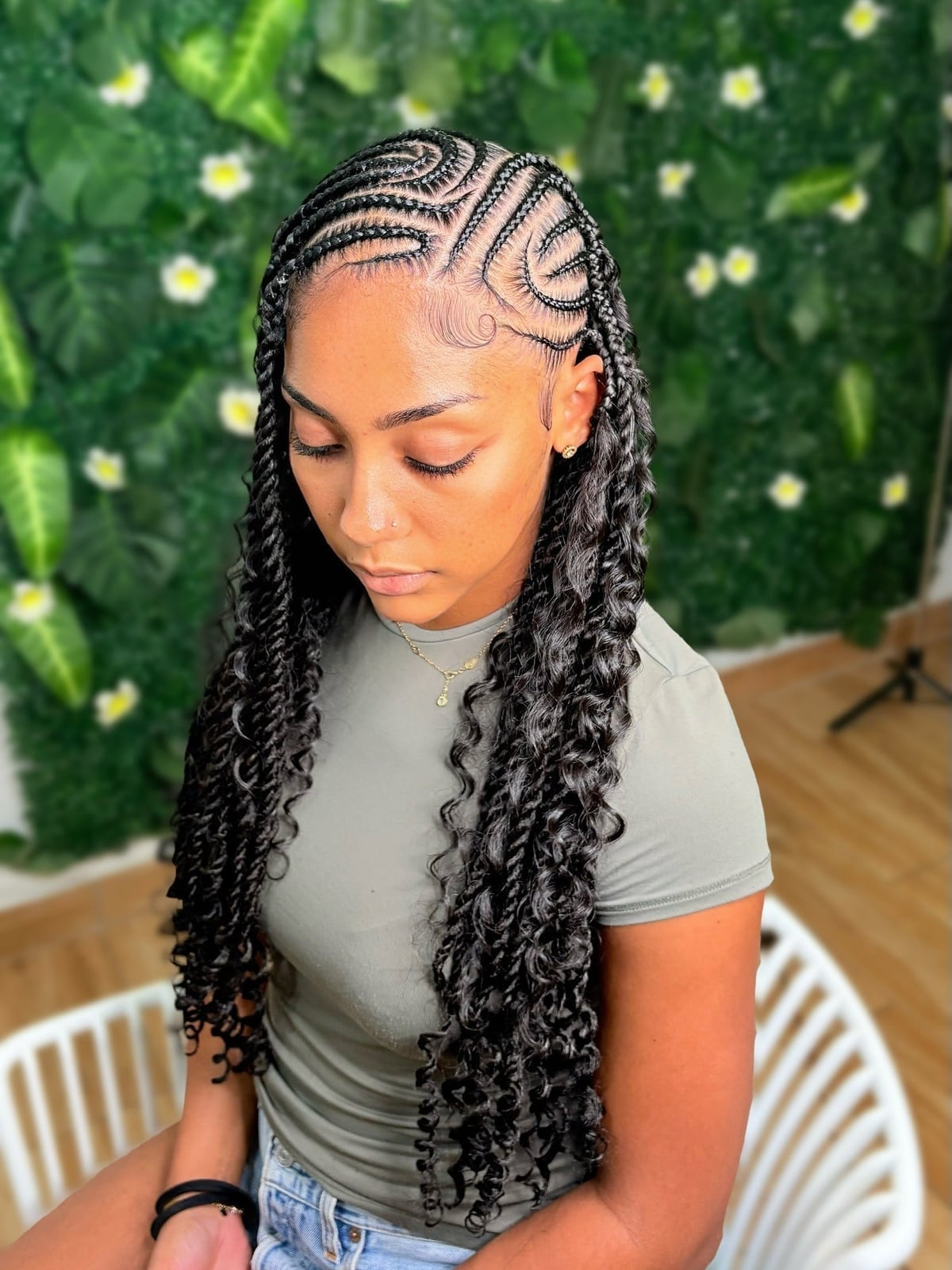
Intricate cornrows run from the scalp into long, curly twists that end at mid-back. The contrast between the flat cornrow pattern and the springy twists is what makes this style stand out. Ask your stylist for: cornrows that transition into long curly twists. The cornrows should be medium-sized so the transition to the twist sections looks intentional. This is a salon-only style: the twists require a wrapping technique that is difficult to replicate on yourself, especially at the back. A curl-defining cream applied to each twist after installation keeps the shape defined and prevents the ends from frizzing into a single mass. The middle part and black color keep the focus on the texture change.
Dense Uniform Black Box Braids
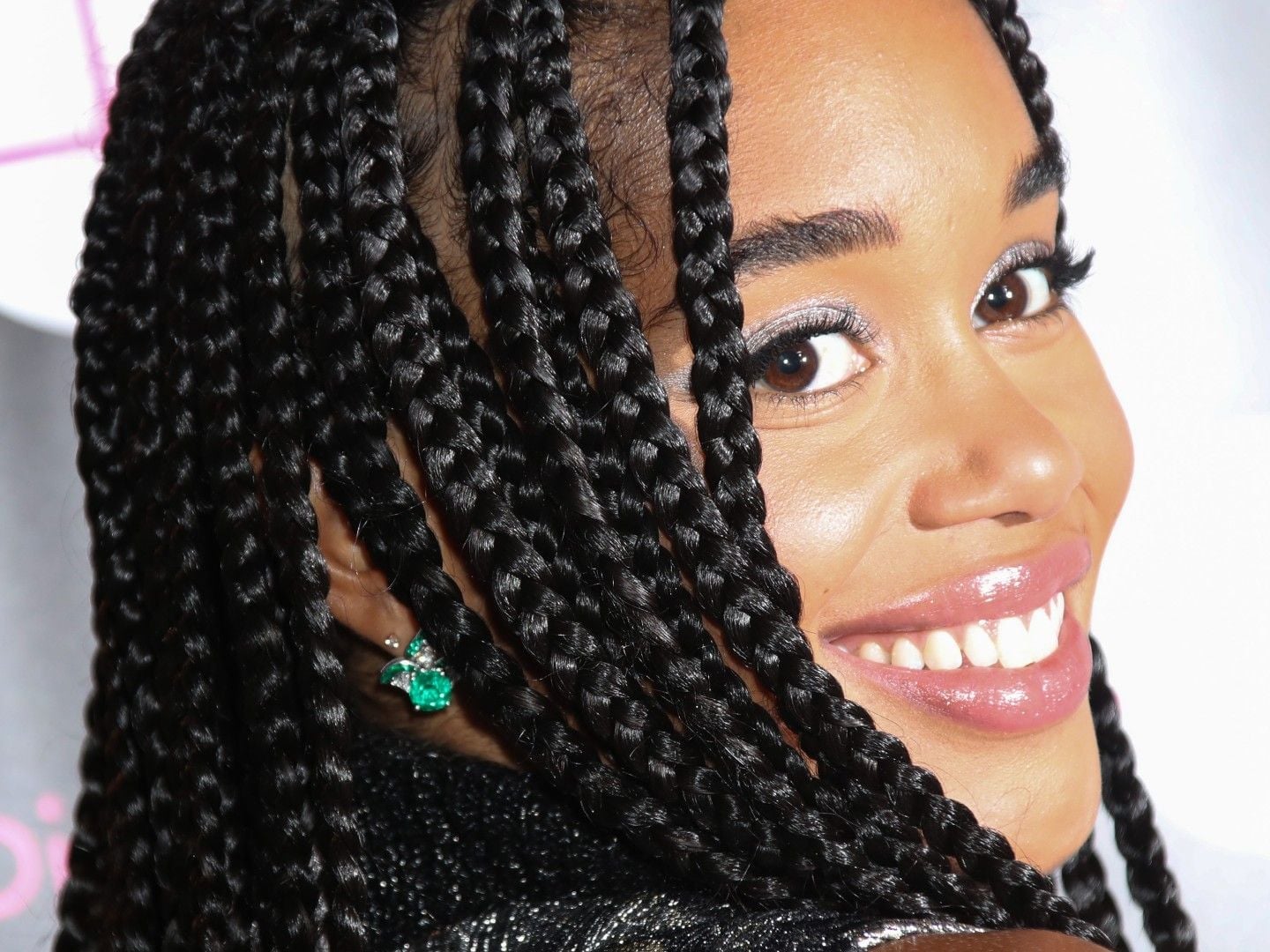
What is the difference between a style that looks salon-fresh for weeks and one that starts to frizz at the hairline? Density. These black box braids are packed tightly and evenly from root to end, with no visible scalp between the parts. Mid-back length keeps the shape symmetrical and clean. Ask your stylist for: dense, uniform mid-back box braids. This style works best on thick hair that can handle the tension of a tight install without strain around the edges.
Where a looser set of braids might look casual by day three, this dense version holds its structure like a polished accessory. The uniform thickness means every braid is clearly defined, not thrown together. A light braid spray keeps the shafts shiny and prevents dryness from creeping in between the sections.
Black Stitch Braids Into Wavy Ponytail
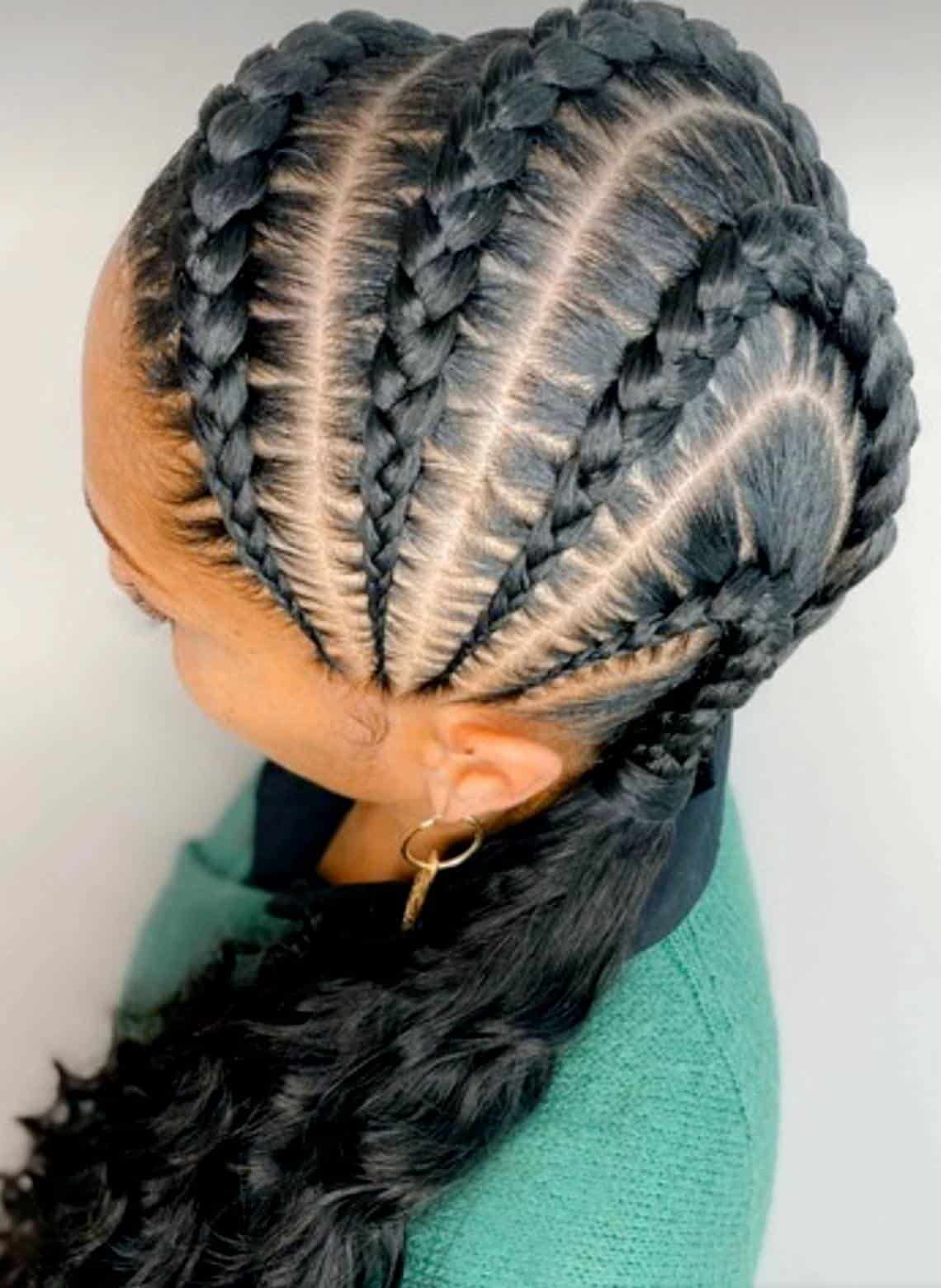
A stitch braid is built by taking small, precise sections of hair and feeding them into the braid from the scalp, creating a raised, almost woven effect against the head. Here, those large, defined stitch braids run from the crown to the nape, where they merge into a single thick ponytail. The ponytail is wavy, not straight, which gives the whole structure a relaxed finish. Ask your stylist for: large stitch braids into a thick wavy ponytail. This design requires dense hair of mid-back length or longer to allow the transition to read as one continuous piece.
The ponytail is the payoff. Smooth the base of the ponytail with a dab of gel to keep the transition clean, then let the waves do the rest. A side view shows how the braided sections sit flat against the scalp while the ponytail carries all the movement. The black color keeps the contrast between the tight braid and the loose wave subtle, so the technique speaks for itself.
Classy Brown Braided Bun
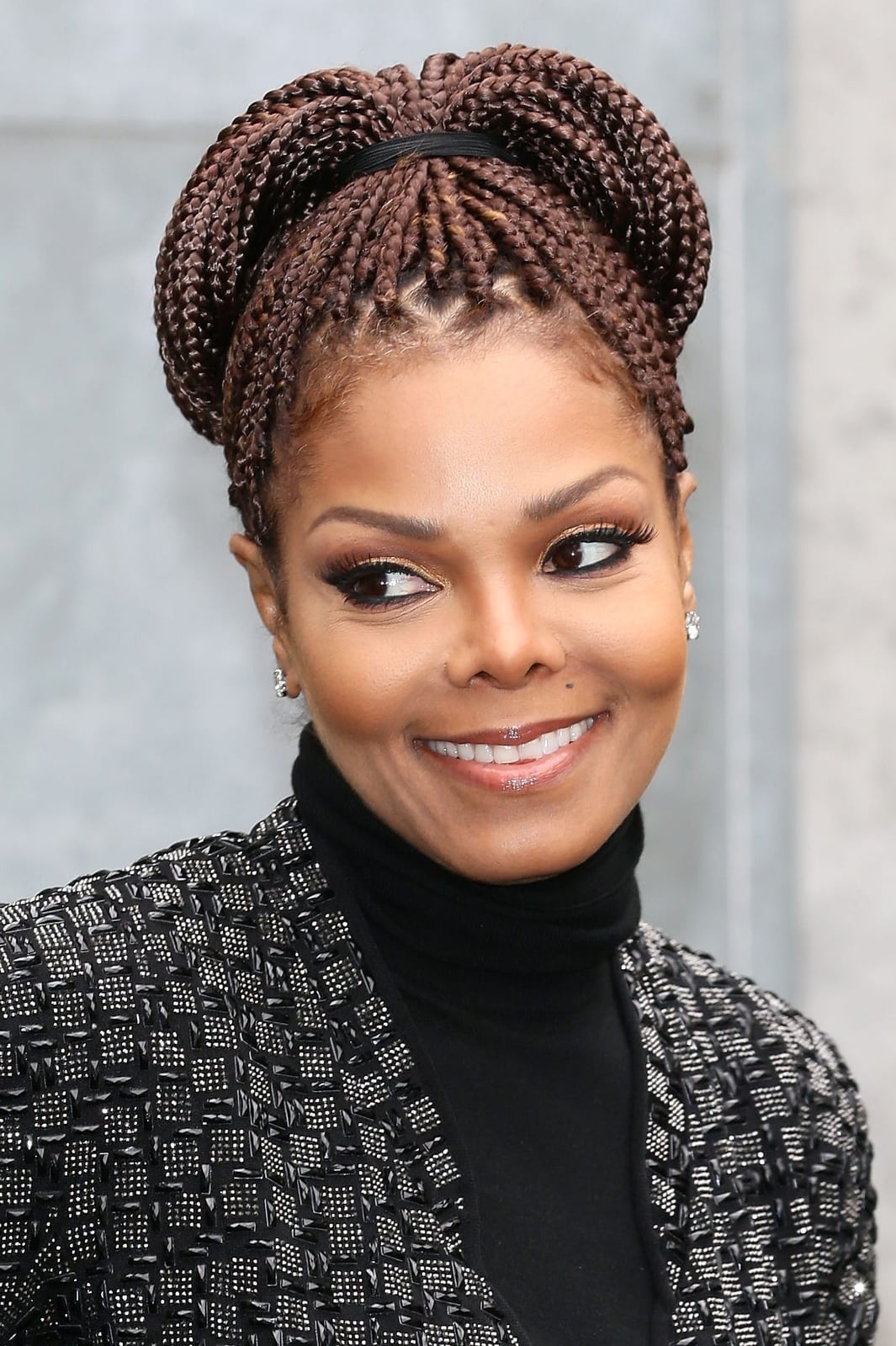
A high bun made entirely of braids sounds like a special occasion only, but this one works for any event where you need your hair out of the way and still look put-together. The brown color is neutral enough to fit a classic style. Straight hair is the easiest base for this because the braid lines stay crisp and the bun sits smooth. Ask your stylist for: neat, high braided bun. If your hair is fine, the stylist can backcomb the sections before braiding to give the bun more presence. A strong-hold hairspray keeps the whole thing secure and flyaway-free for hours.
Dark Brown Braids With Blonde Highlights And Curls
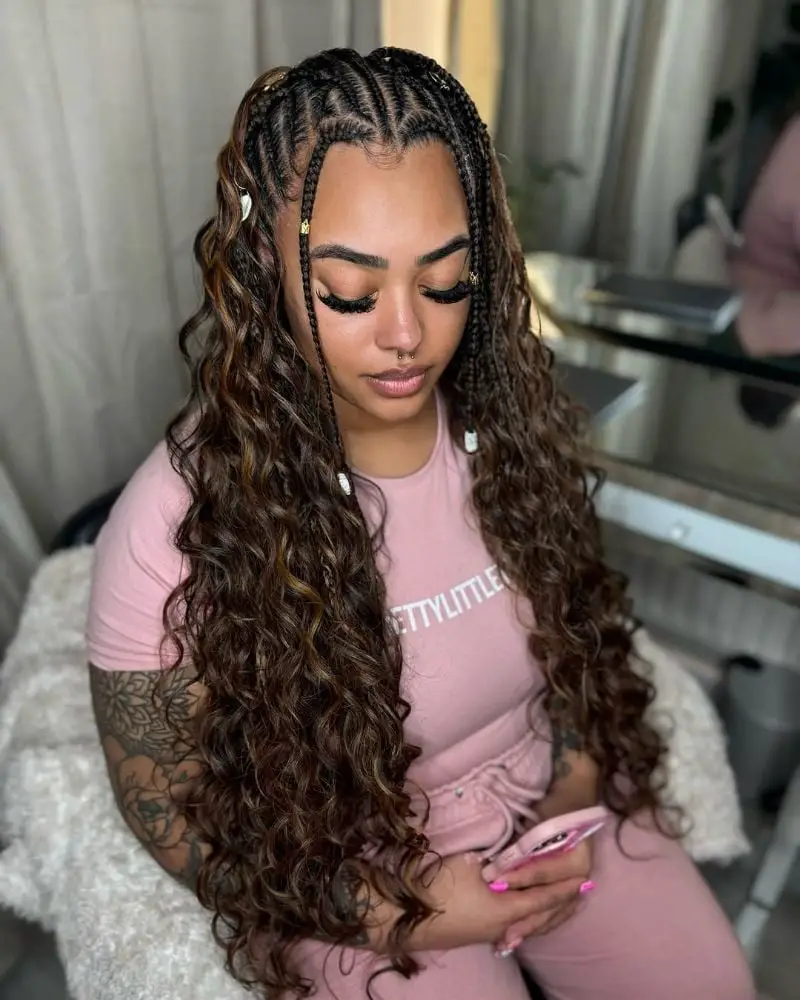
To get the structure of a braid without losing the softness of loose hair, build the braid only at the crown and let the rest fall free. This style starts with intricate cornrows at the top that transition into long, loose, wavy curls. The dark brown base carries subtle blonde highlights through the curly sections, which adds dimension without the braids looking busy. Ask your colorist for: cornrows transitioning into long loose wavy curls with highlights. Thick, wavy hair of mid-back length or longer gives the curls enough weight to hold their shape.
The upkeep requires two separate routines. The cornrows at the crown need a gentle cleanse at the scalp every one to two weeks to prevent buildup, while the loose wavy sections need a leave-in conditioner to maintain moisture and softness. The blonde highlights will need a toning appointment every six to eight weeks to keep the warmth from turning brassy. A satin bonnet at night preserves both the braid structure and the curl pattern.
Large Black Box Braids With Voluminous Curls
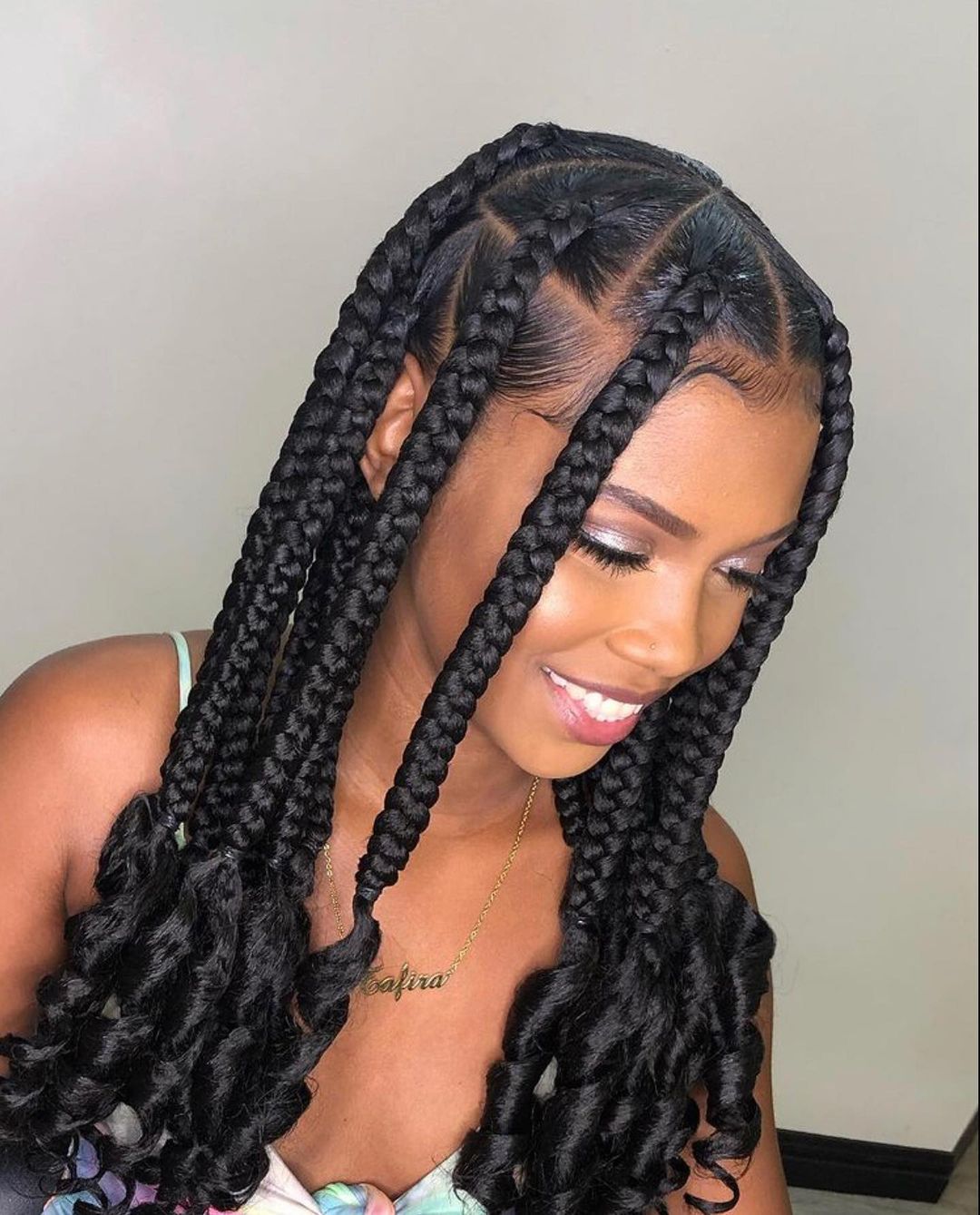
Large box braids cut the installation time in half compared to a dense set, but they also come with a different set of trade-offs. Here, the braids are thick and glossy, extending to mid-back, with the ends styled into loose, voluminous curls. The middle parting keeps the symmetry clean, and the black color lets the texture of both the braid and the curl read clearly. Ask your stylist for: large box braids with voluminous curly ends. Thick hair of mid-back length or longer is the best candidate because fine hair can look sparse with sections this wide.
The honest drawback is weight. Each large braid carries more hair than a thin one, so the style can feel heavy at the nape and cause tension along the hairline if the braids are too tight. A wide-tooth comb gently separates the curly ends for maximum volume, but avoid pulling at the root. The glossy finish comes from the braid itself, not added product, so a dry scalp spray at the part is usually enough to keep things fresh between washes.
Vibrant Black Box Braids With Colorful Beads
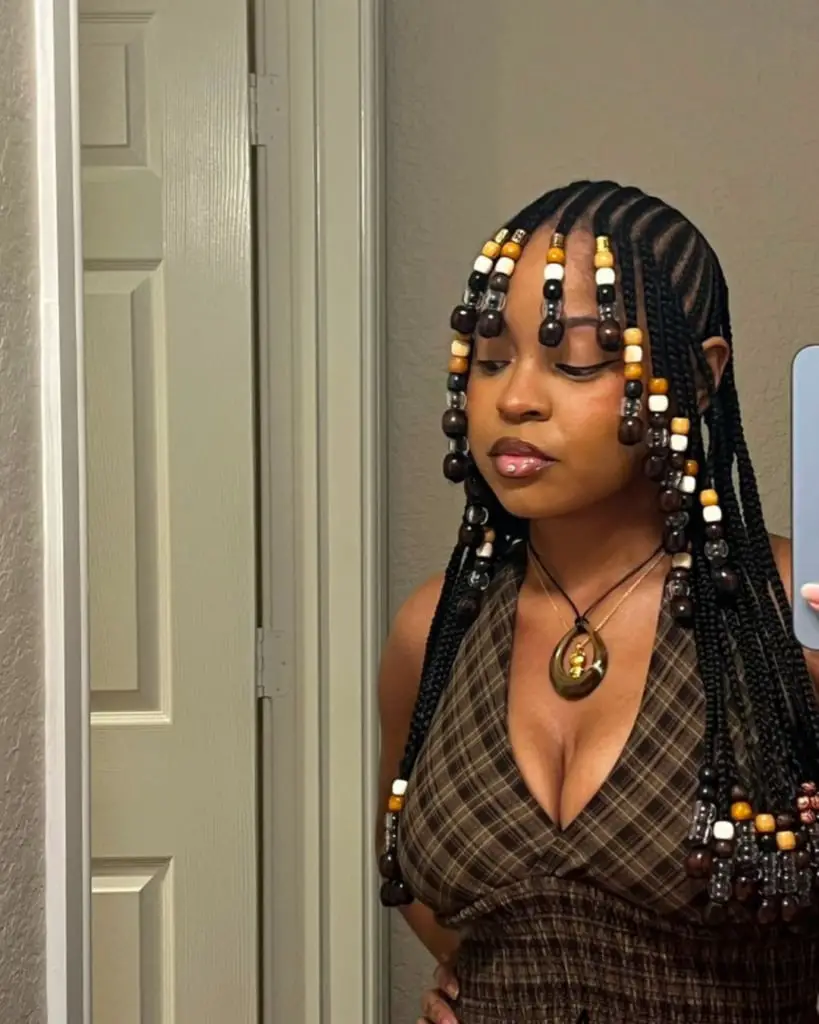
The middle part and the dense, straight fall of these box braids draw the eye straight down, but it’s the beads that make you stop. Threading dozens of colorful beads in varying sizes onto mid-back length braids takes patience and a steady hand, which is why this look is best left to a salon. Ask your stylist for: mid-back box braids with colorful beads. The beads are secured at the ends, so they won’t slide or snag, and they add a playful weight that keeps the braids from frizzing at the tips. Thick hair of mid-back length or longer holds the style best, since the beads need enough braid to grip. This is a festival-ready, casual-outing look that is vibrant but not fussy, but plan for a few hours in the chair to get every bead placed just so.
Final Thoughts
When choosing between DIY and a salon visit, consider the pattern’s intricacy and your patience. Cornrow designs with clean lines or box braids that need even tension are worth booking; a simple accent braid or a quick updo you can manage at home. For fine hair, keep the braid snug but not tight to avoid strain, and let the length fall below the chin if you want to elongate a round face.
- Cleanse the scalp weekly with a diluted shampoo or scalp spray.
- Apply a light oil to the braid shafts every 2-3 days, avoiding roots.
- Sleep on a satin pillowcase to reduce frizz and friction.
- Refresh loose ends or curls with a curl refresher as needed.
- Trim the base of natural hair every 6-10 weeks if wearing extensions.
Braids offer endless possibilities for sophisticated and stylish hair.