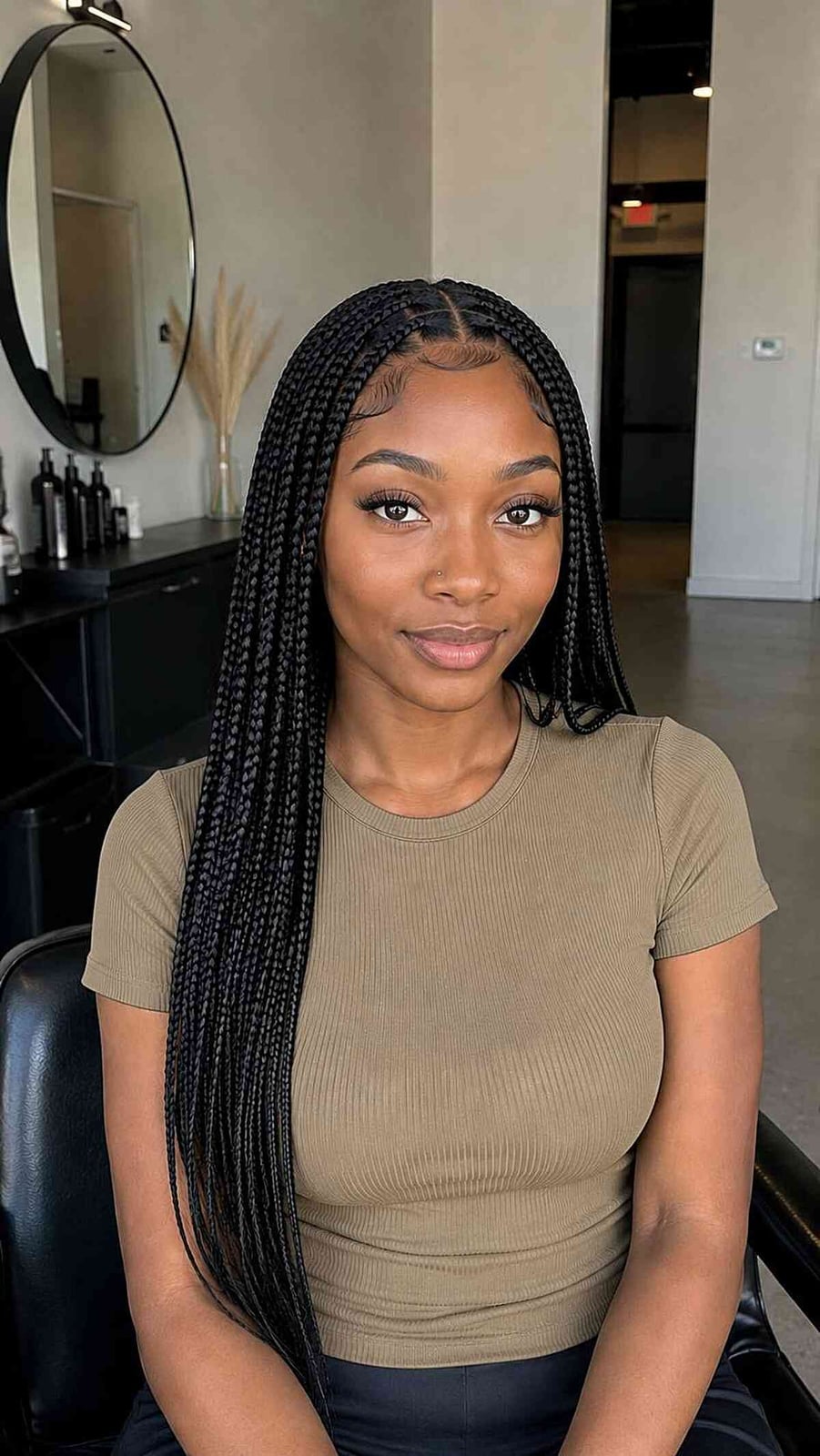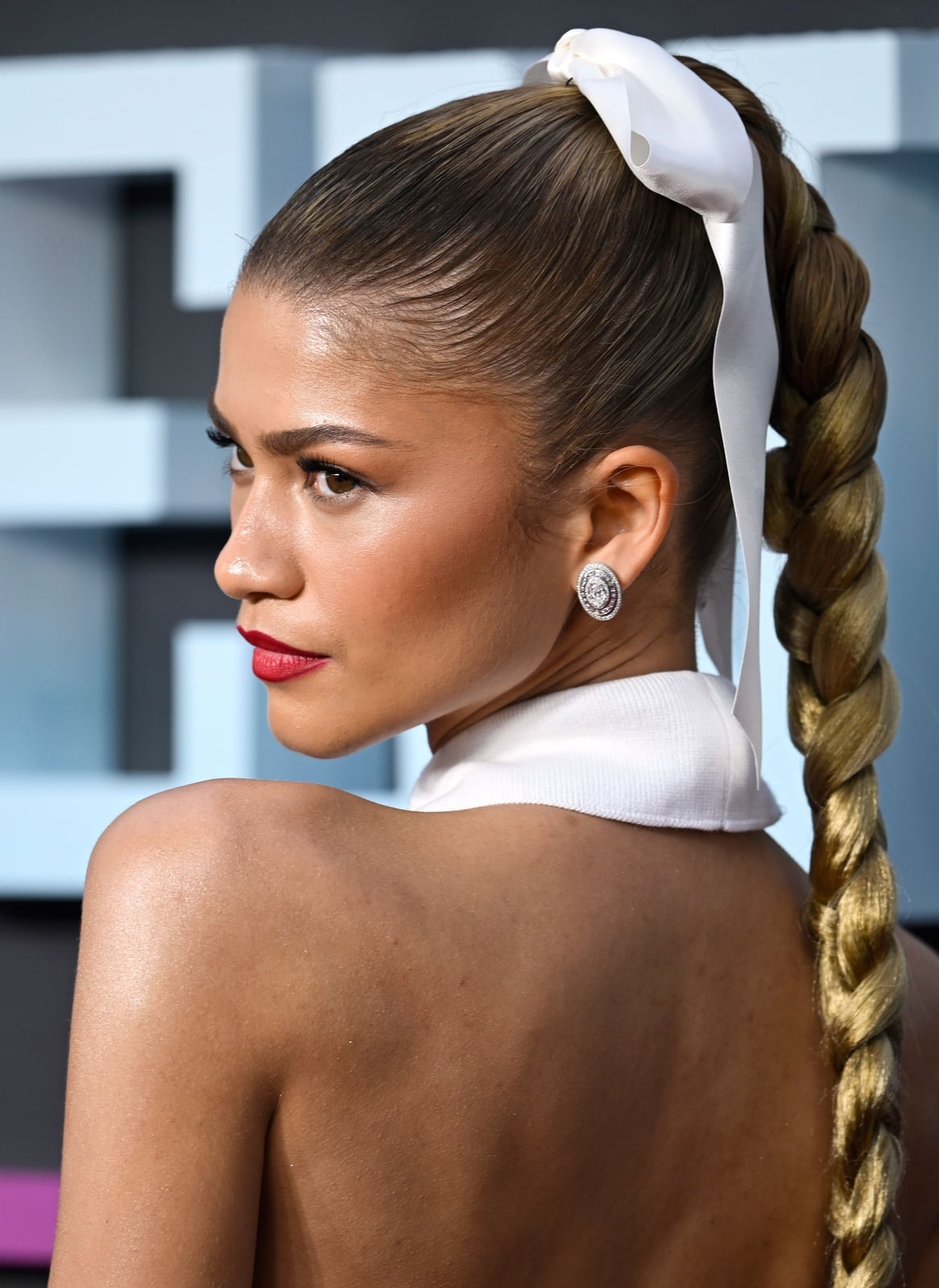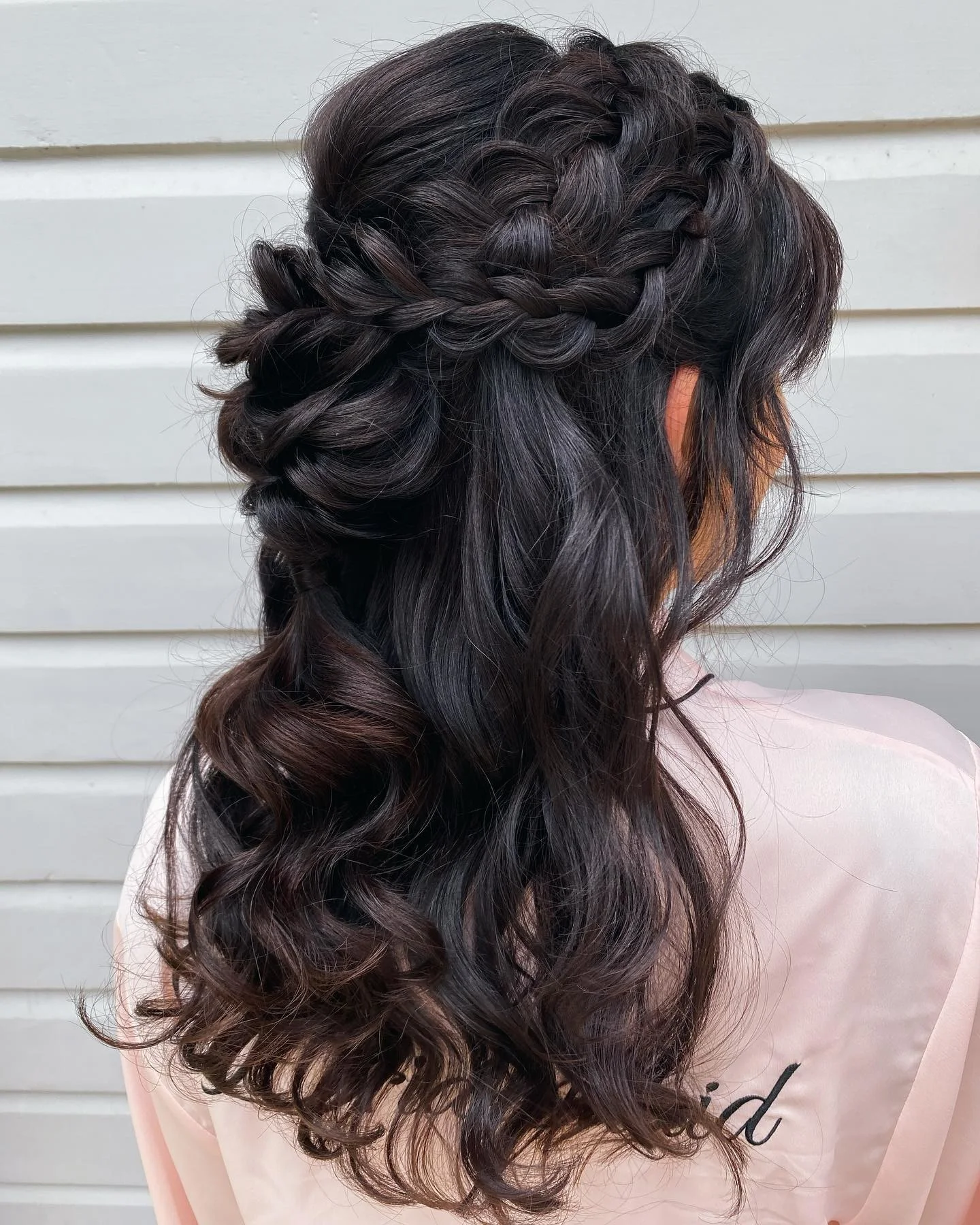

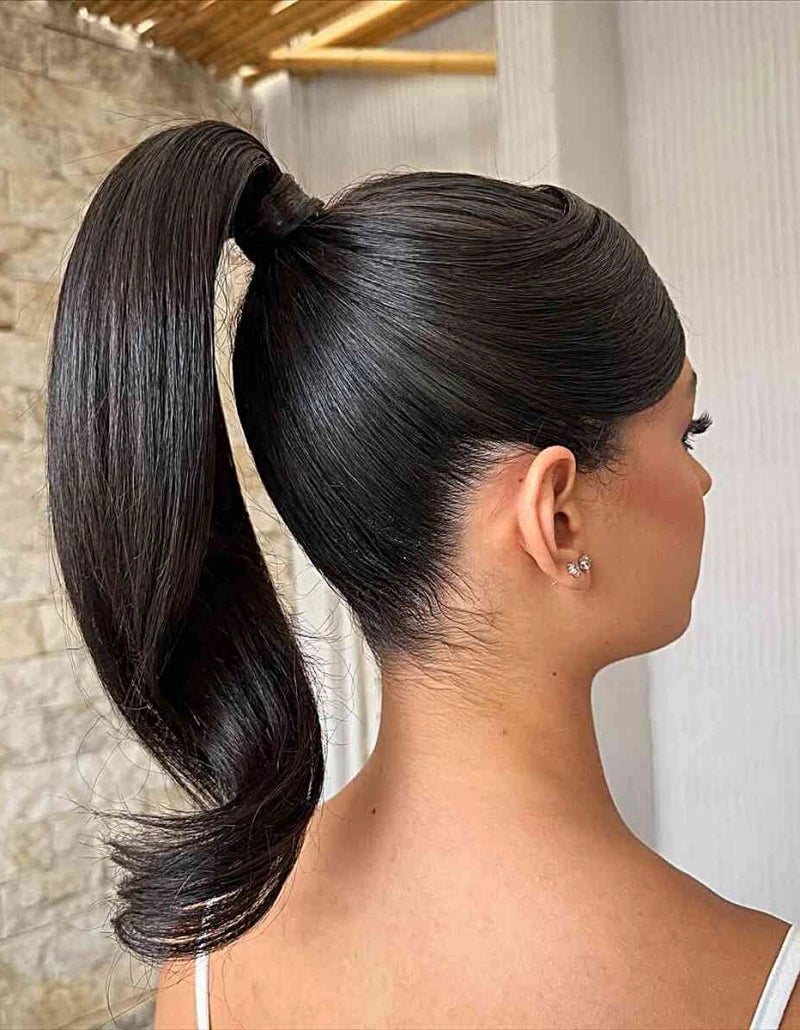
A running hairstyle that actually holds through mile six and still looks put together at the coffee pickup is a specific skill set. The shift toward lived-in color and glossy natural texture means these styles rely on tension and placement rather than product overload.
This collection of 27 Classy Running Hairstyles covers the spectrum from a two-minute sleek ponytail to an intricate braided updo, so there is an option whether your hair is fine, thick, curly or straight. If your go-to ponytail falls flat after a warm-up or your braid unravels before you hit the trail, these are the fixes.
Sleek High Ponytail With Side-Swept Bangs
Thick, straight hair is the natural candidate for a high ponytail this polished, because the weight of the texture itself holds the sleek line without constant tucking. The middle part and side-swept bangs break up what could read as severe, softening the silhouette around oval and heart face shapes. Ask your stylist for: high, sleek ponytail with face-framing side-swept bangs. A smoothing serum brushed through the roots before gathering eliminates the frizz that would otherwise surface by mile two.
Braided Crown Ponytail With Subtle Highlights
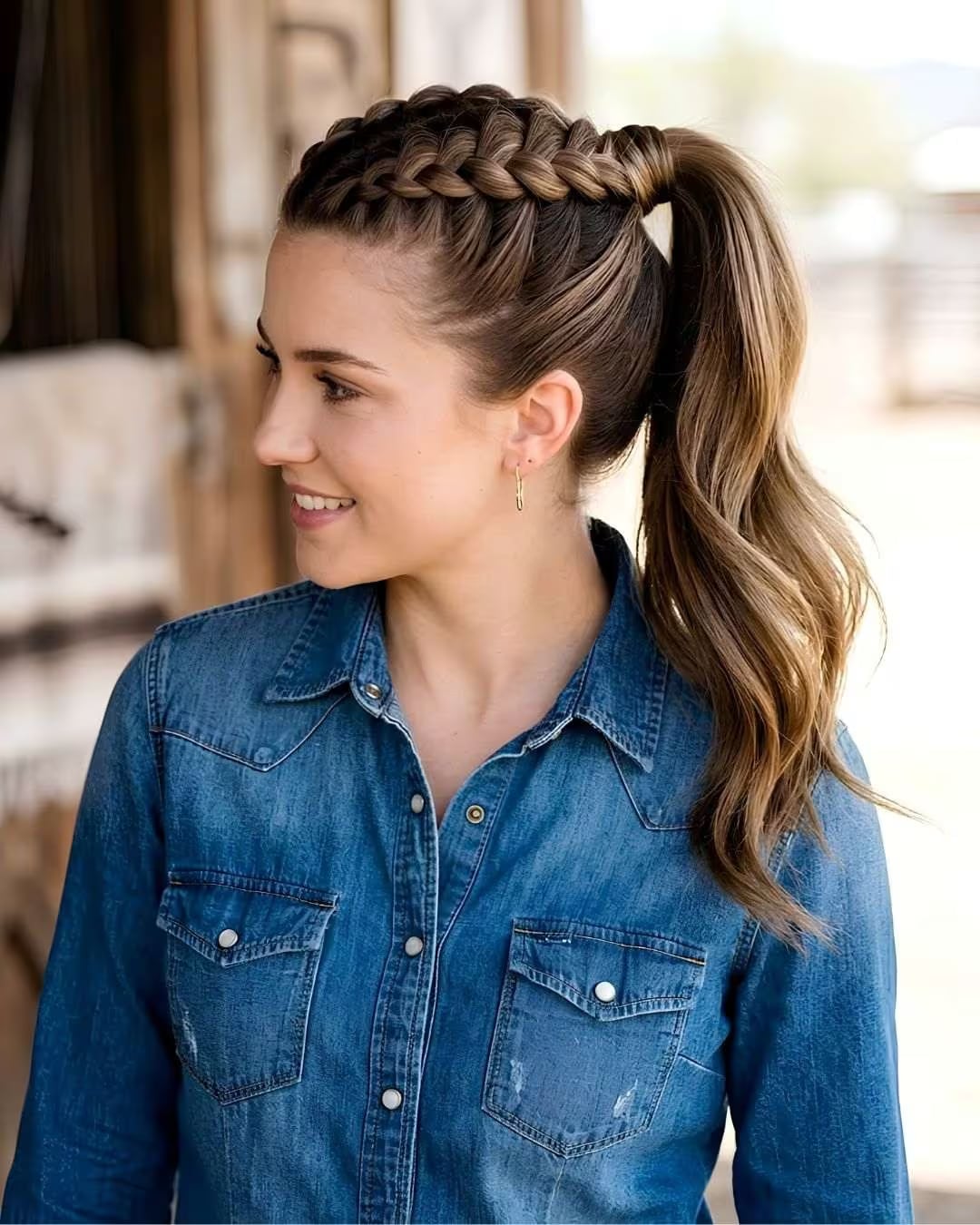
A braid that wraps the crown does double duty: it secures the hair at the hairline and adds visible structure before the ponytail even starts. The technique involves sectioning a strip from ear to ear, Dutch-braiding it backward, and pinning the end into the base of a high ponytail. The rest of the hair then falls in thick, wavy lengths with subtle highlights that catch movement.
Ask your stylist for: high ponytail with a braided crown detail. The braid hides a multitude of sins, second-day texture, a less-than-perfect part, the general chaos of a morning run. A firm-hold hairspray on the braid keeps it from loosening during activity.
Fine Blonde Sleek High Ponytail
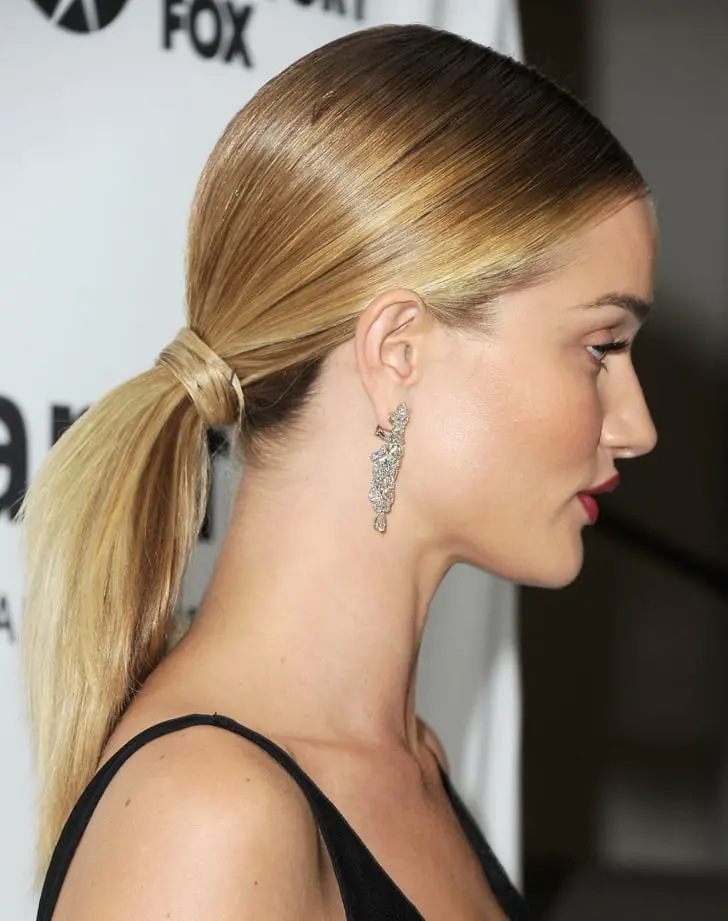
A sleek high ponytail on fine hair is less about what you have and more about how you work it. Fine textures show every bump and every flyaway, so the finish demands precision. Ask your stylist for: high, sleek ponytail with no flyaways. A boar bristle brush and a lightweight gel at the hairline create the polished surface that straight, fine hair can hold all day, as long as the elastic is tight enough to stay put through a jog.
Tousled Dark Brown Fishtail Braid
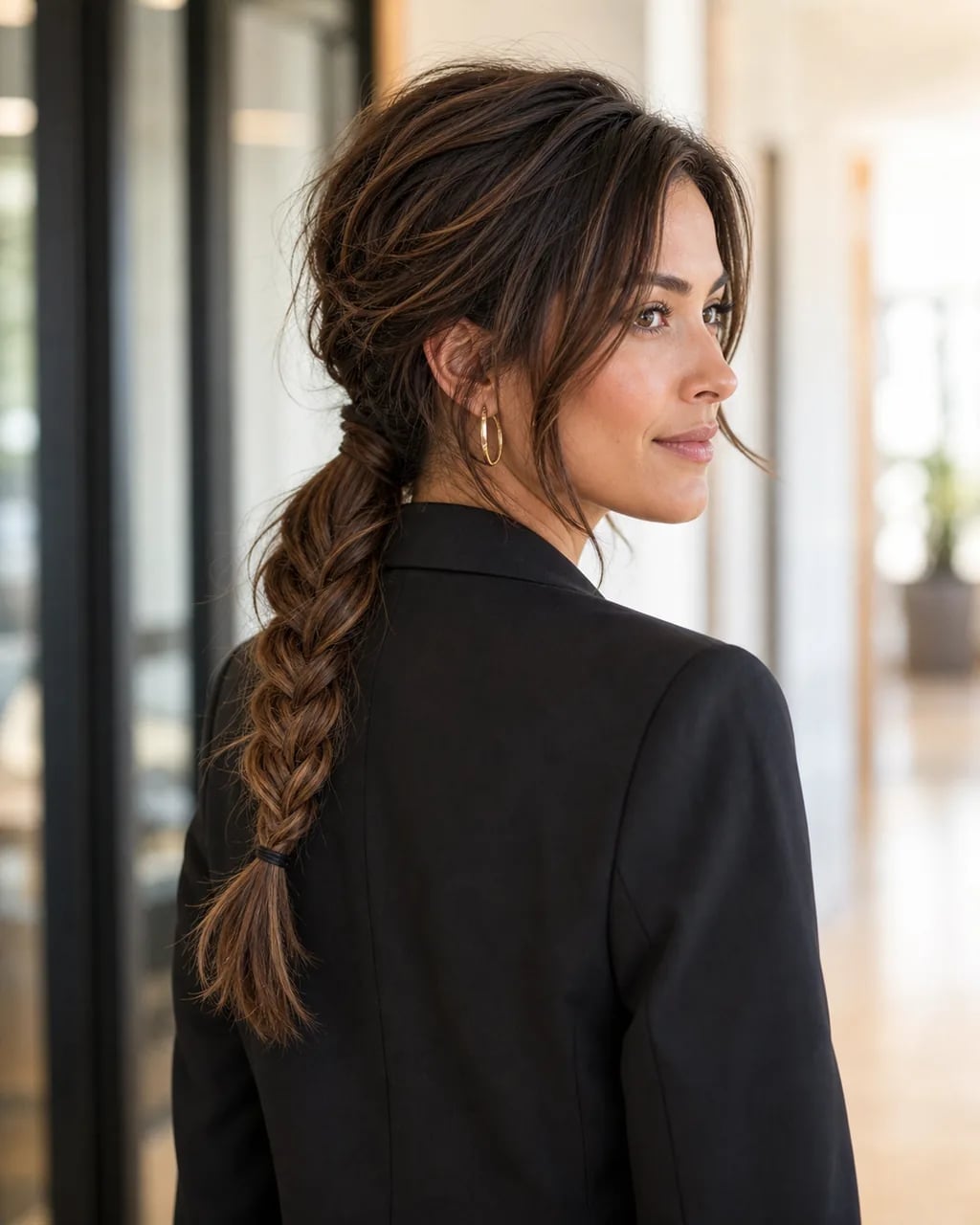
Can a braid look intentional and still hold up during a run? This one can, because the messy texture is the point. A fishtail braid starts with two sections rather than three, which creates a finer, more woven appearance that grips itself without extra pins. Ask your stylist for: messy fishtail braid with a side part. Gently pulling apart the sections after braiding adds volume and a lived-in feel that actually improves as the day goes on. The wavy, thick hair needs enough grit to stay put.
Voluminous Dark Brown Ponytail With Curtain Bangs
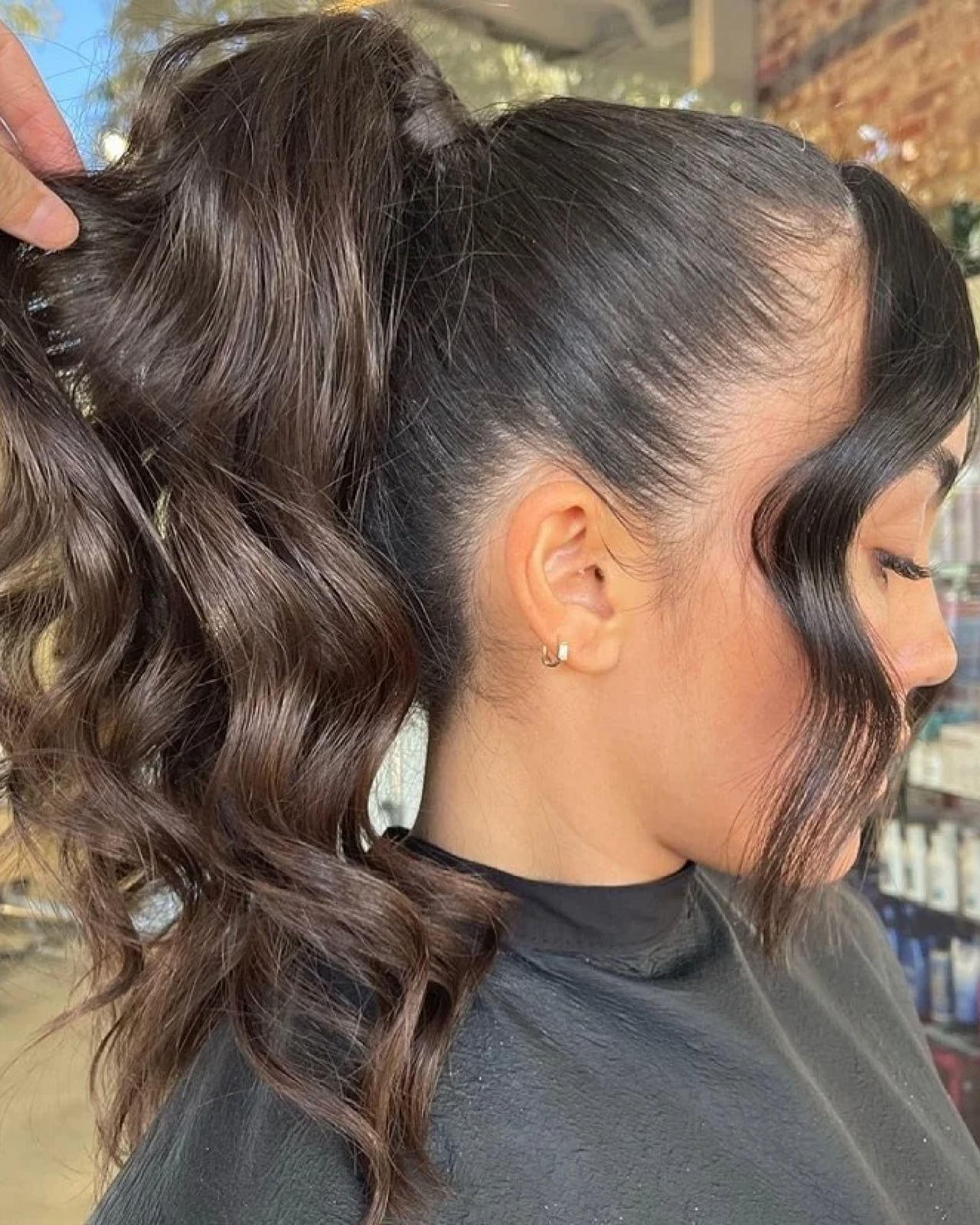
Curtain bangs turn a high ponytail from gym-issue to something you would wear to brunch after. The key is that the bangs are cut to graze the cheekbones, which softens the high pull for square and round face shapes without hiding the ponytail’s volume. Ask your stylist for: voluminous ponytail with loose waves and curtain bangs. A large-barrel curling iron creates the glossy waves, and a volumizing spray at the crown lifts the dark brown base so the subtle highlights catch the light. The bangs need a trim every four to six weeks to keep that precise cheekbone length.
Voluminous Ash Blonde Wavy Ponytail
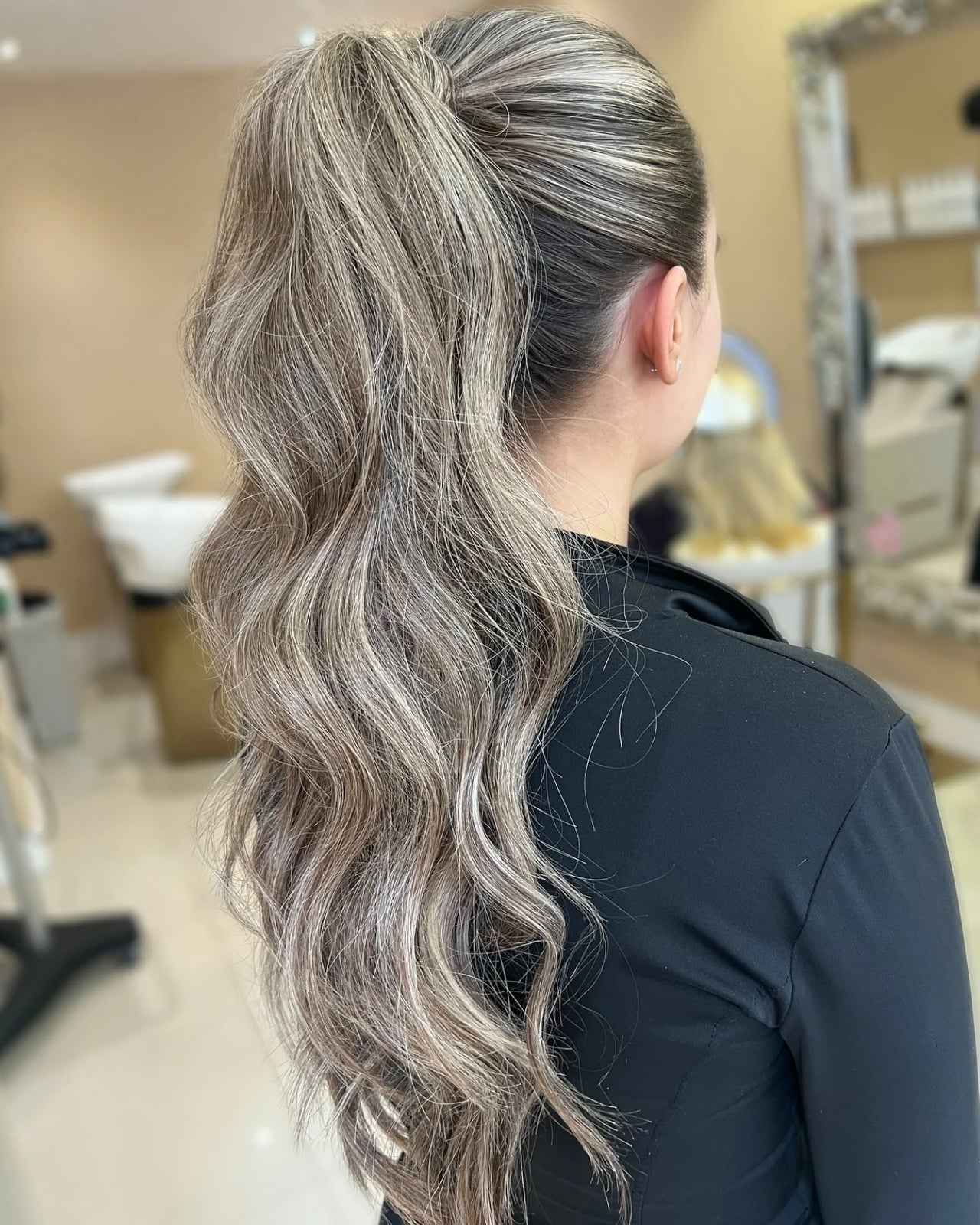
If a sleek ponytail feels a bit severe for your run, this voluminous version offers the same security with a softer finish. The ash blonde base with lighter highlights creates dimension, and the thick, wavy texture adds body without requiring perfect curl formation. A middle part keeps the look grounded, while the high placement keeps hair off your neck. Ask your stylist for: high, voluminous ponytail with loose waves. Apply a texturizing spray to dry waves for added grit and volume. The whole thing takes about 20 minutes. This style works best on thick, wavy hair of mid-back length, and the loose waves soften angular face shapes rather than fighting them.
Medium Brown Dutch Braided Ponytail
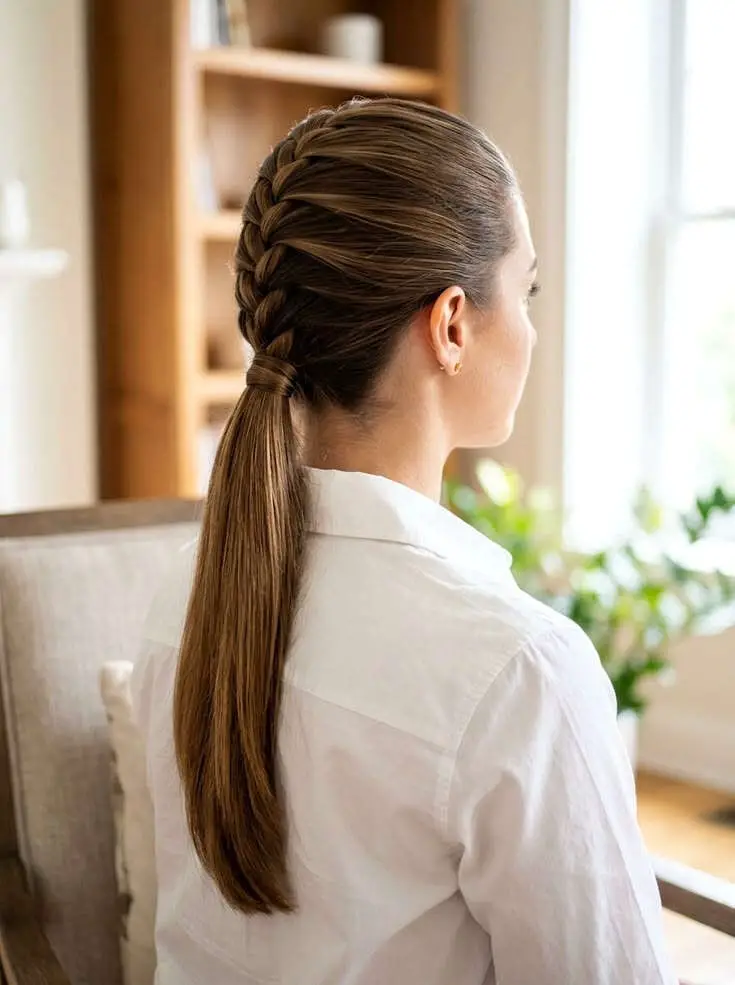
A Dutch braid that starts at the crown and transitions into a sleek ponytail is a design that earns its place in a running routine. The braid secures the top section firmly, while the ponytail below moves freely. The medium brown base with subtle highlights gives the braided sections visible depth, and the thick, wavy texture holds the shape without slipping. Ask your stylist for: Dutch braid into a sleek ponytail. The braid should be tight at the crown for security; a light hold spray helps tame flyaways. This technique works best on thick, wavy hair of mid-back length, and the middle part keeps the braid centered for a balanced silhouette.
Honey Blonde Voluminous Wavy Ponytail, Mid-Back
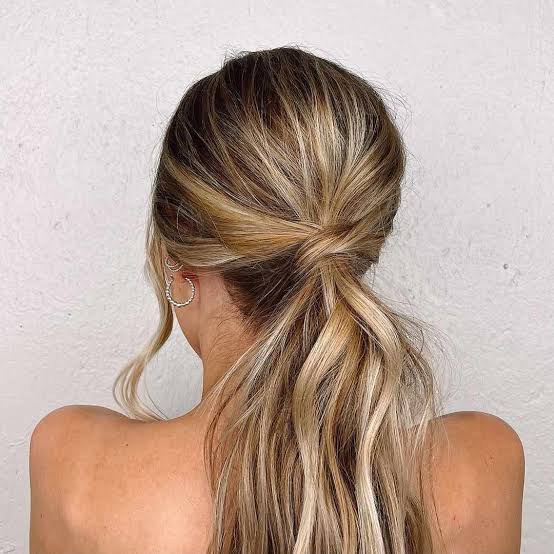
A high ponytail with loose, cascading waves in a rich honey blonde shade with lighter highlights looks polished, but the voluminous waves require deliberate effort to maintain. Curl sections loosely and pull them apart for a natural, lived-in effect. The thick, wavy texture holds the shape well, but fine hair may lose the volume within an hour. Ask your stylist for: high, voluminous ponytail with loose waves. A trim every six to eight weeks keeps the ends healthy and the waves defined. This style is more salon-leaning than a simple ponytail, but the visual payoff is a dimensional, active-ready look that stays put.
Thick Curly Blonde High Ponytail
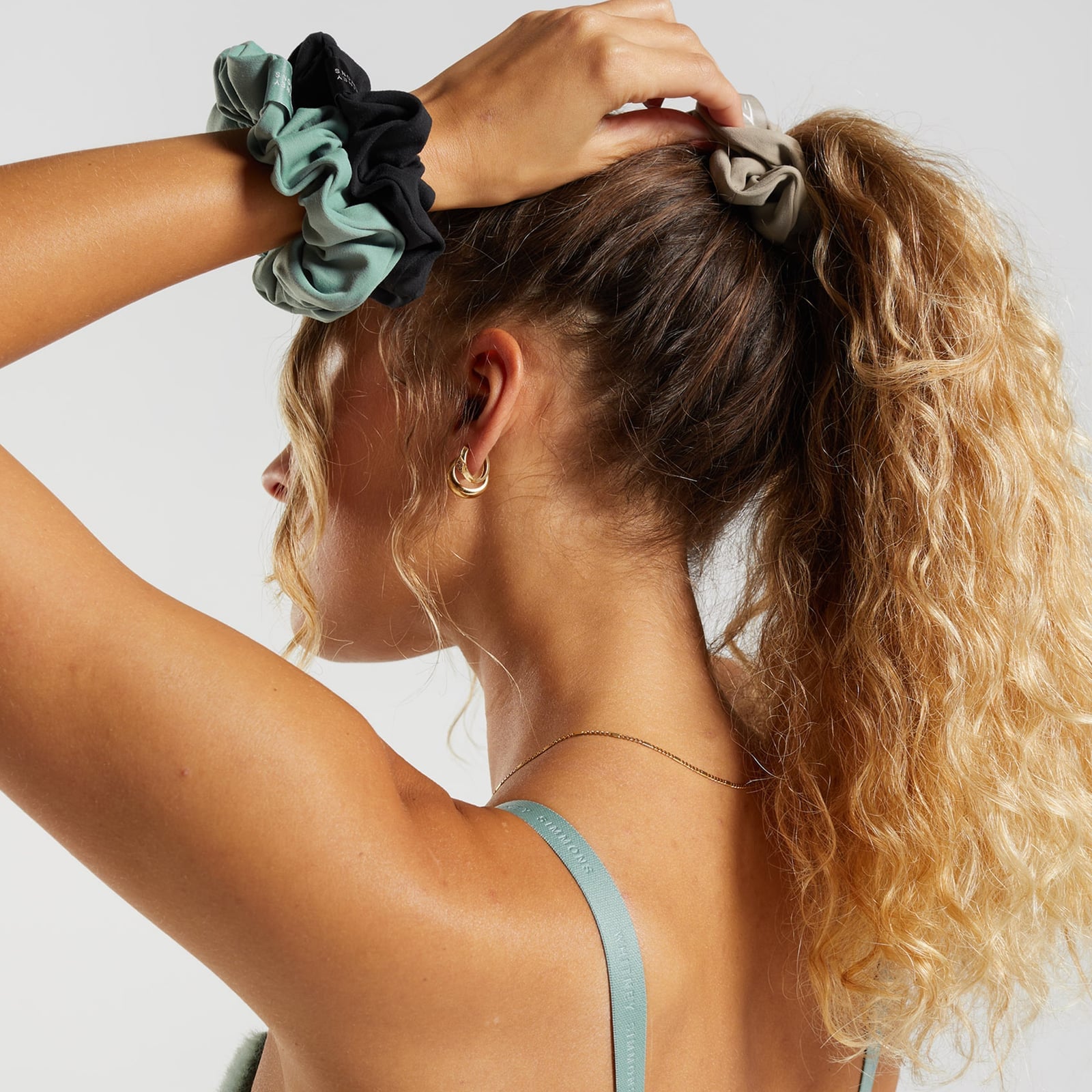
Is there a running style that actually works with thick, curly hair without a fight? This high ponytail does, and it is a DIY-friendly option. The thick, curly blonde hair is pulled back securely with a middle part, extending to mid-back for full movement. Ask your stylist for: high, secure ponytail for curly hair. Use a strong hold gel or pomade to smooth the base, then let curls air dry or diffuse for best results. The natural volume and texture mean no curling iron required, and the high placement keeps the weight off your neck during a run.
Mid-Back Ash Blonde Double Braids

Two neat braids worn down the back are a classic active style, and this version in ash blonde with thick, wavy texture shows why. The middle part keeps both braids symmetrical, and the mid-back length allows them to swing freely without tangling. Ask your stylist for: two neat braids. Braid tightly for durability, and secure ends with elastic bands. A trim every eight to ten weeks prevents the ends from fraying, and a light oil on the lengths keeps the ash tone from looking dull. The braids hold securely through a run, a gym session, or a long day, and they require no re-styling once set.
Blonde Ponytail With Braided Ribbon Accent
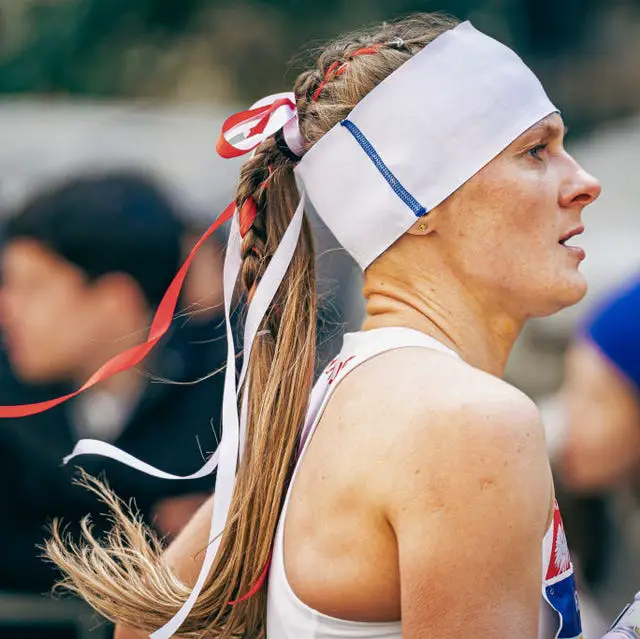
The braid runs along the hairline, weaving red and white ribbons into thick, wavy blonde hair before it all gathers into a ponytail. Ask your stylist for a braided accent and ribbons. Mid-back length gives the ribbons room to trail down. A middle part keeps the base clean, while the braid adds security along the hairline. Start by sectioning off a strip at the front, then weave the ribbons into a three-strand braid, incorporating sections of hair as you go. Secure the braid at the nape, then pull the rest into a ponytail. The ribbons stay put through a run, but wash gently to preserve their color.
Ash Blonde Voluminous Ponytail With Wispy Bangs
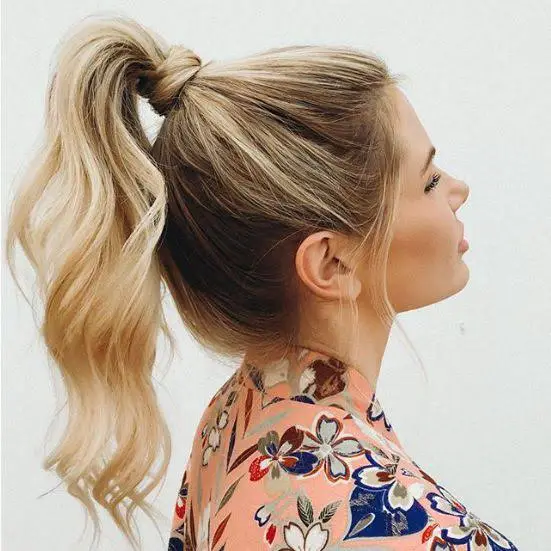
Can wispy bangs survive a run? Yes, with the right prep. This ash blonde ponytail sits high on the crown with significant volume and subtle highlights running through wavy, thick hair that ends at mid-back. A side parting and wispy bangs frame the face. Ask your colorist for ash blonde with subtle highlights. Wispy bangs need a light mist of hold product and a quick reshape after exertion. They soften angular faces but require a trim every four weeks to stay out of your eyes. For thick, wavy hair of mid-back length, the volume holds well, but the bangs are the part that demands attention.
Textured Dark Brown High Ponytail
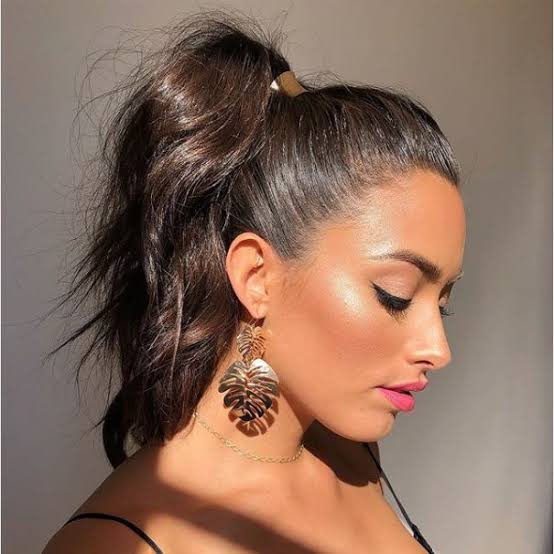
A middle part and a wavy, thick texture in dark brown with subtle highlights, pulled back from the face to end at mid-back. Ask your stylist for a high textured ponytail. This style suits most face shapes because the volume sits at the crown and balances proportions without adding width. The texture adds volume: no flat iron needed, just a texturizing spray or mousse worked through damp hair before blow-drying. Thick, wavy hair holds the shape naturally, and the subtle highlights add dimension without requiring frequent toning. A trim every six to eight weeks keeps the ends healthy.
Brunette Ponytail With Twisted Detail And Face-Framing Pieces
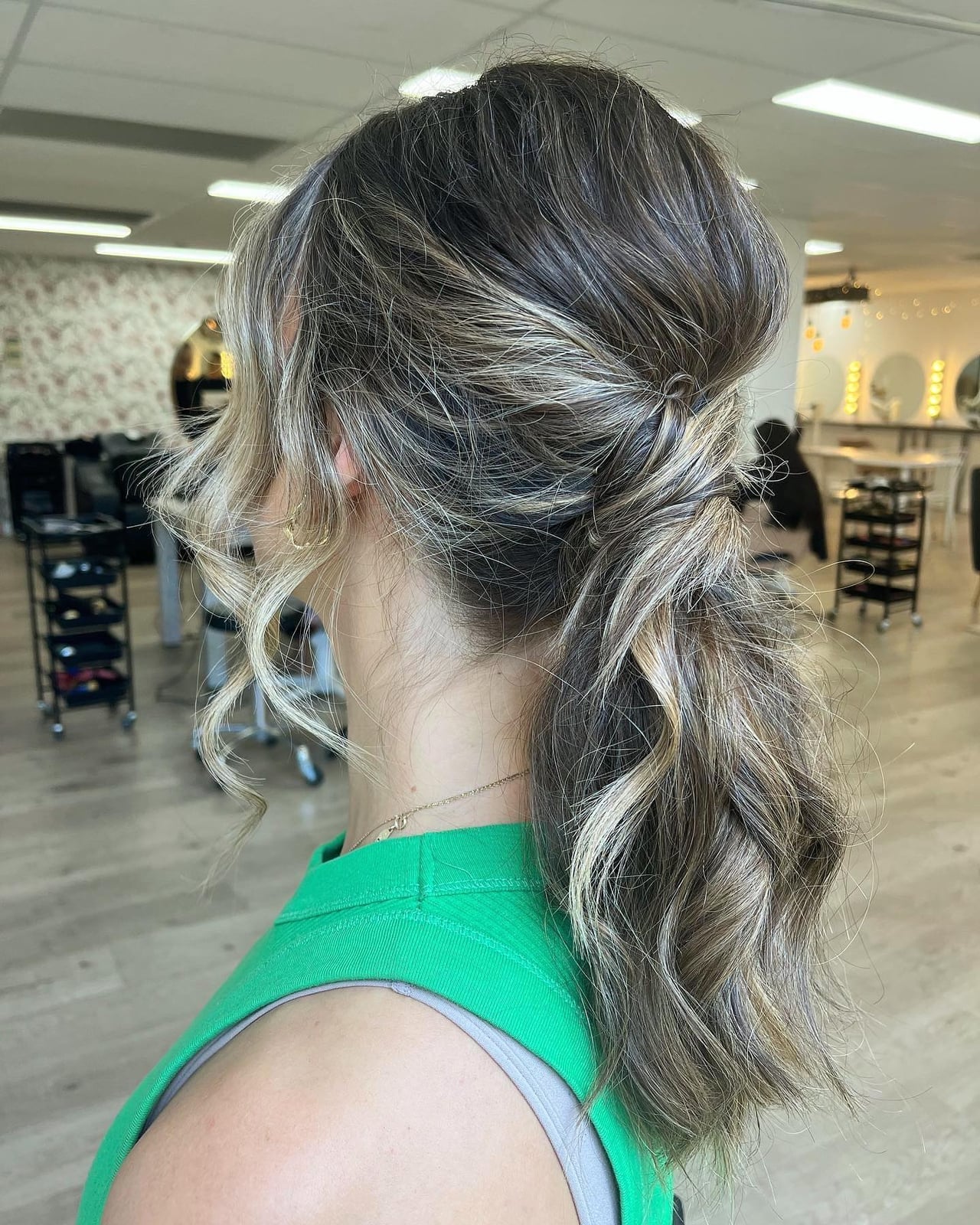
A side part leads into face-framing pieces, then a twisted detail at the base secures the rest of the brunette hair with blonde highlights into a mid-back ponytail. Ask your stylist for a ponytail with twisted base detail and face-framing pieces. The twist at the base is the difference between this and a simple pull-through: it creates a polished anchor that keeps the ponytail from sliding. Face-framing pieces soften angular jawlines, while the wavy, thick texture adds volume through the length. For thick, wavy hair of mid-back length, this style holds through a run without constant adjustment. The twisted detail requires a few extra minutes with a mirror, but it stays secure once set.
Dark Brown Low Ponytail With Caramel Highlights
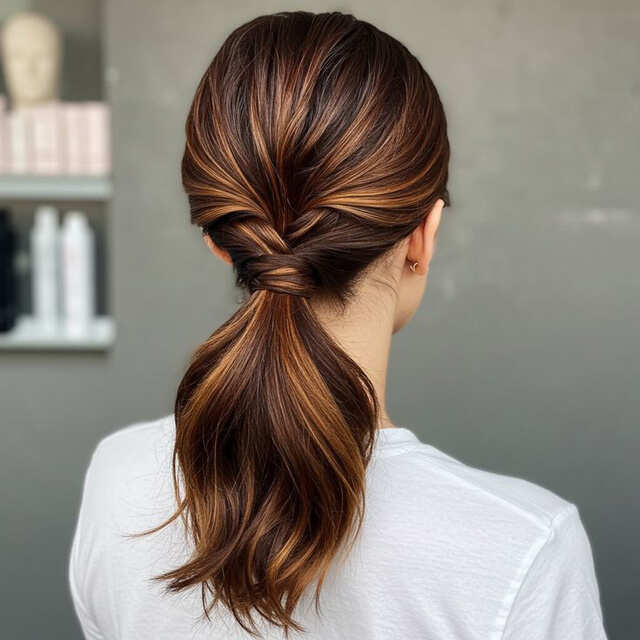
A low ponytail with a twisted detail at the base, built from dark brown hair with caramel highlights that runs wavy and thick to mid-back. Ask your colorist for dark brown with caramel highlights. The twist technique starts by dividing the hair into two sections, twisting each outward, then crossing them at the nape before securing with an elastic. The caramel highlights add warmth and are visible from the back view. Thick, wavy hair holds the twist well, and the low placement keeps it from bouncing during activity. A trim every six to eight weeks maintains the ends without losing the shape.
Wavy Blonde Ponytail With Neat Braid
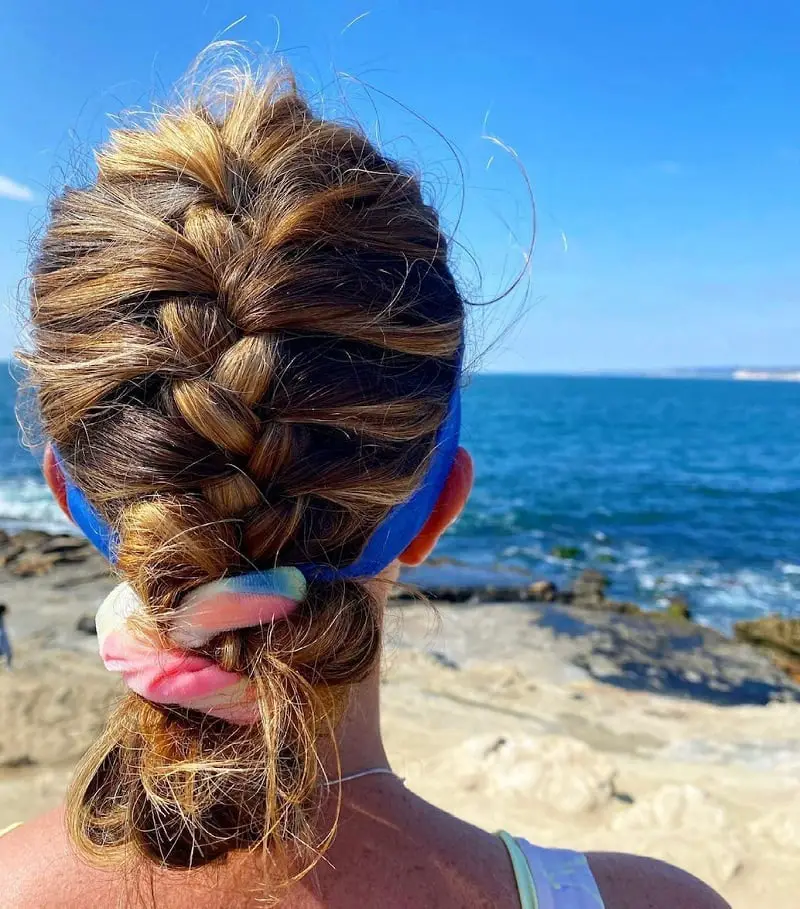
Does a ponytail really need a braid running through it to stay put? With thick, wavy hair at mid-back length, the answer is yes. The braid section locks the ponytail in place, so nothing shifts mid-stride. This blonde-with-highlights style works best when the hair is wavy enough to grip the braid without slipping. Ask your stylist for: ponytail with a neat braid. A middle parting keeps the crown smooth while the waves below add texture that holds all day.
Styling this at home takes under ten minutes: pull the hair into a ponytail, then braid a section from the underside and wrap the rest around it. The braid adds weight, which helps the ponytail stay centered and not swing into your face. A trim every eight weeks keeps the layers sharp and the braid clean. No bangs to fuss over, just a secure finish that works for a five-mile run or a post-workout errand.
Thick Blonde Chunky Dutch Braid
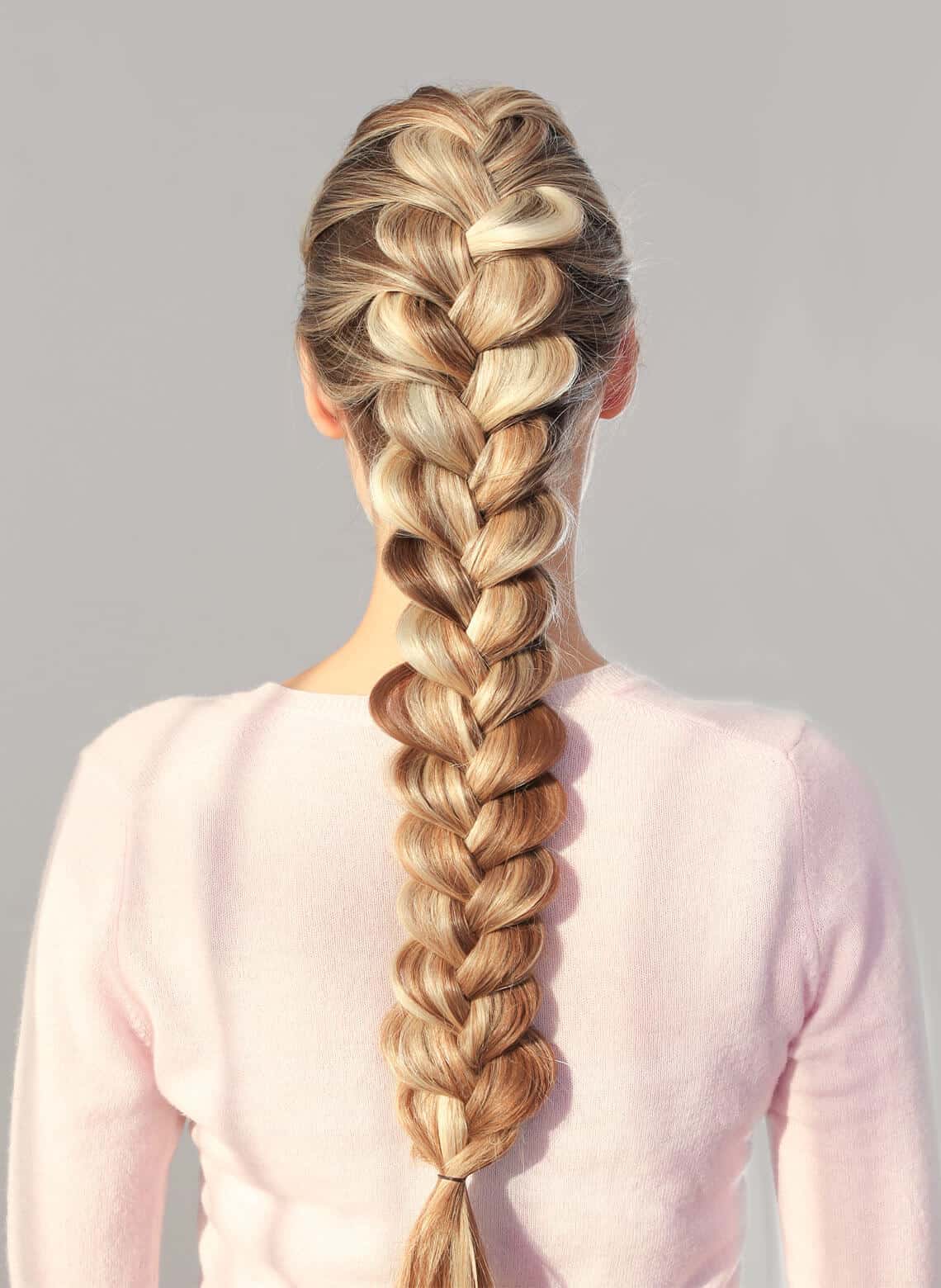
A chunky Dutch braid on straight, thick blonde hair looks simpler than it is. The raised sections need even tension from crown to tip, and on hair this dense, getting that consistent lift without a second set of hands is tough. The braid stays locked for hours with no re-tightening required. The subtle highlights add separation, so the braid reads clearly instead of blending into one solid mass. If your hair is fine or slippery, the chunky sections may loosen within an hour, and a salon start is the safer bet for a clean result.
Thick Blonde Braided Mid-Back Style
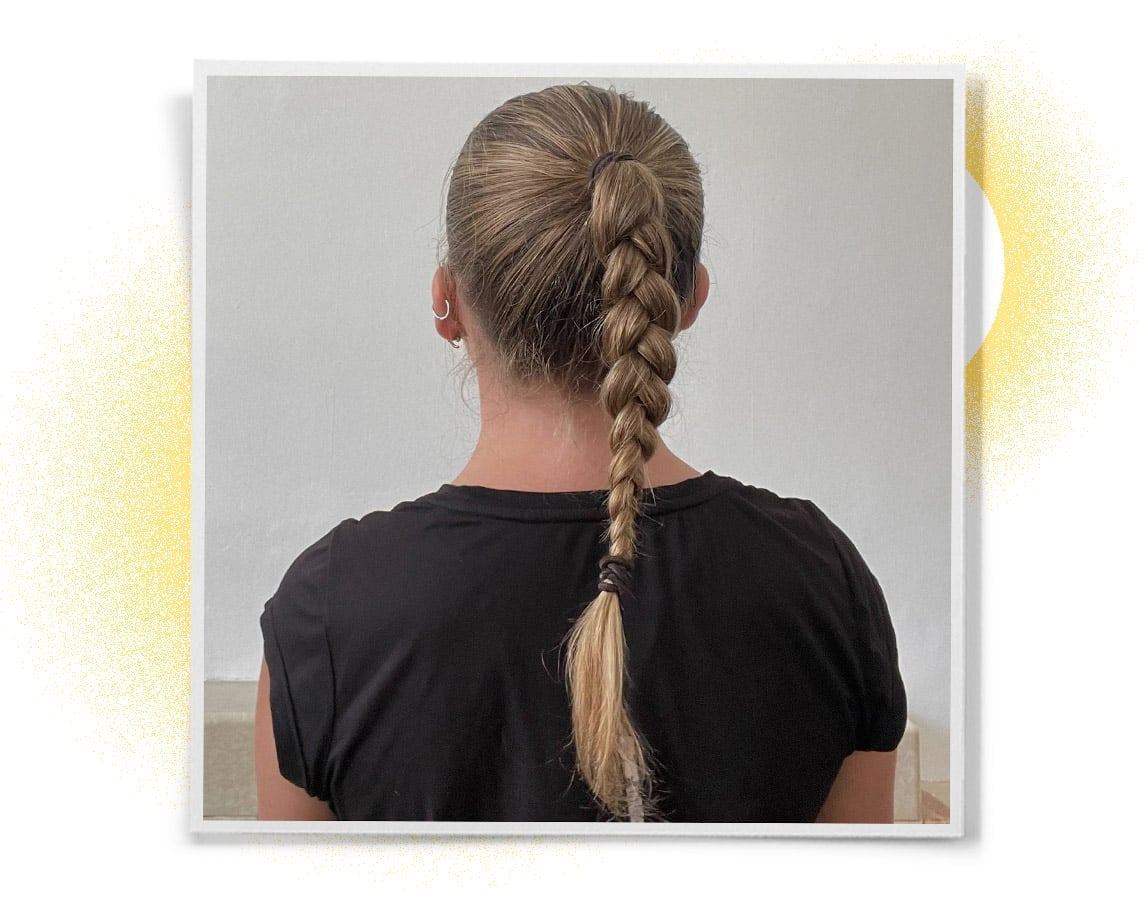
A thick braid on straight, dense hair has one advantage: it stays put without pins, sprays or prayers. This mid-back length style uses a middle parting at the crown to keep the top smooth, then braids all the way down to the lighter ends. The thickness of the hair means the braid has real weight, so it doesn’t bounce or whip around during movement. Ask your stylist for: thick braid. It suits most face shapes because the braid sits behind the shoulders, leaving the face completely clear.
DIY is straightforward. Brush the hair straight back, split into three even sections and braid tightly, securing with a strong elastic. The lighter ends add a natural fade that makes the braid look intentional rather than thrown together. A trim every eight to ten weeks keeps the ends even and prevents the braid from looking frayed. No bangs means nothing to tuck or clip, just a clean line from crown to tip that lasts through a full workout.
Tight Dark Brown Braid
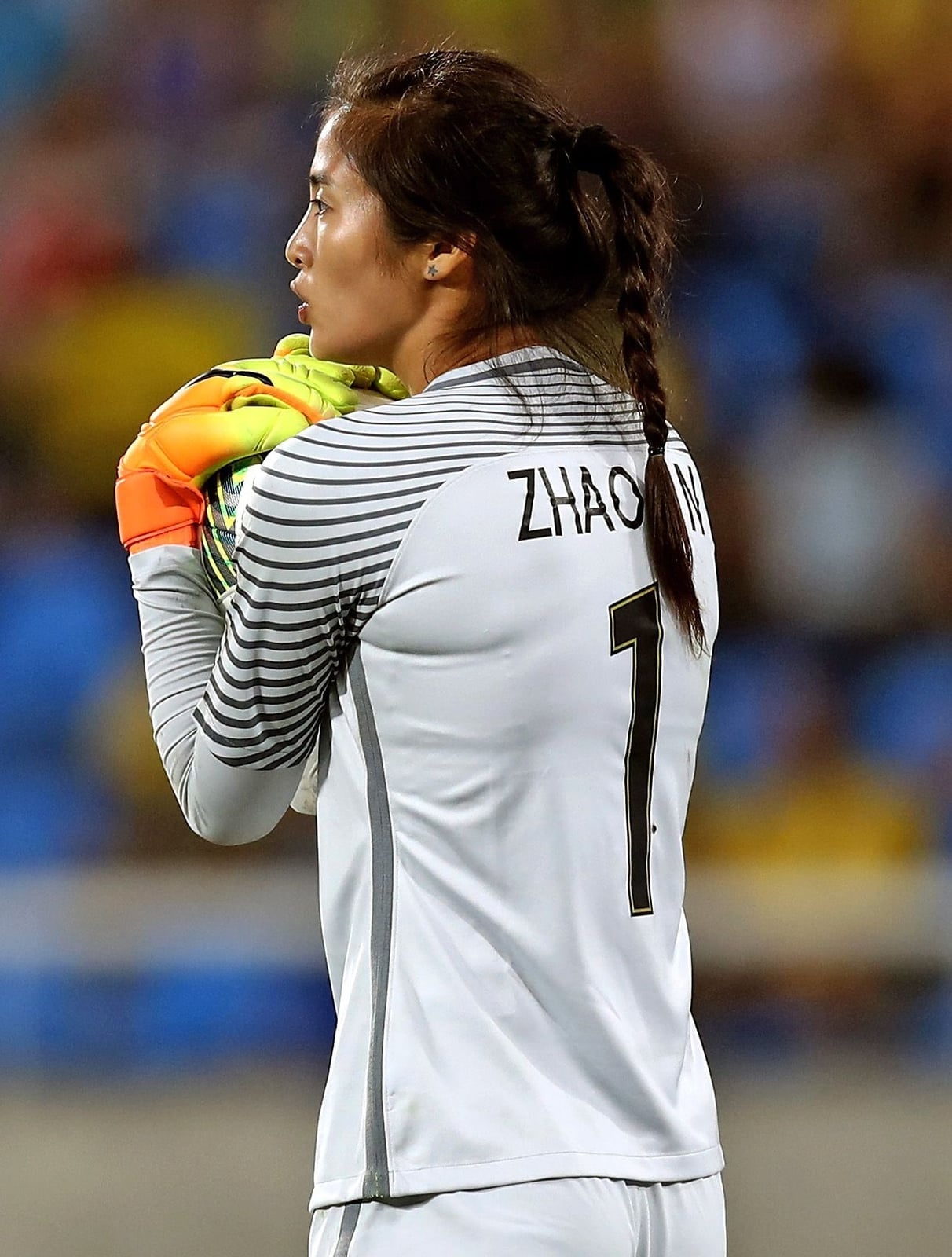
A tight braid on thick, straight dark brown hair is built on tension. Every section must be pulled firm from the crown, and the middle parting keeps the hair evenly divided so the braid sits straight down the center of the back. Ask your stylist for: tight, neat braid. The layers in the cut help the braid hold its shape rather than slipping loose at the nape.
The technique is simple in theory but takes practice. Start with damp hair for grip, divide into three equal sections and braid with consistent downward pull. A smoothing balm applied before braiding controls flyaways without making the hair too slippery. The result is a braid that doesn’t shift, loosen or need adjustment during high-impact activity. No bangs to push aside, just a clean, secure line that works for running, cycling or any sport where stray hair is a problem.
Medium Brown Dutch Braid
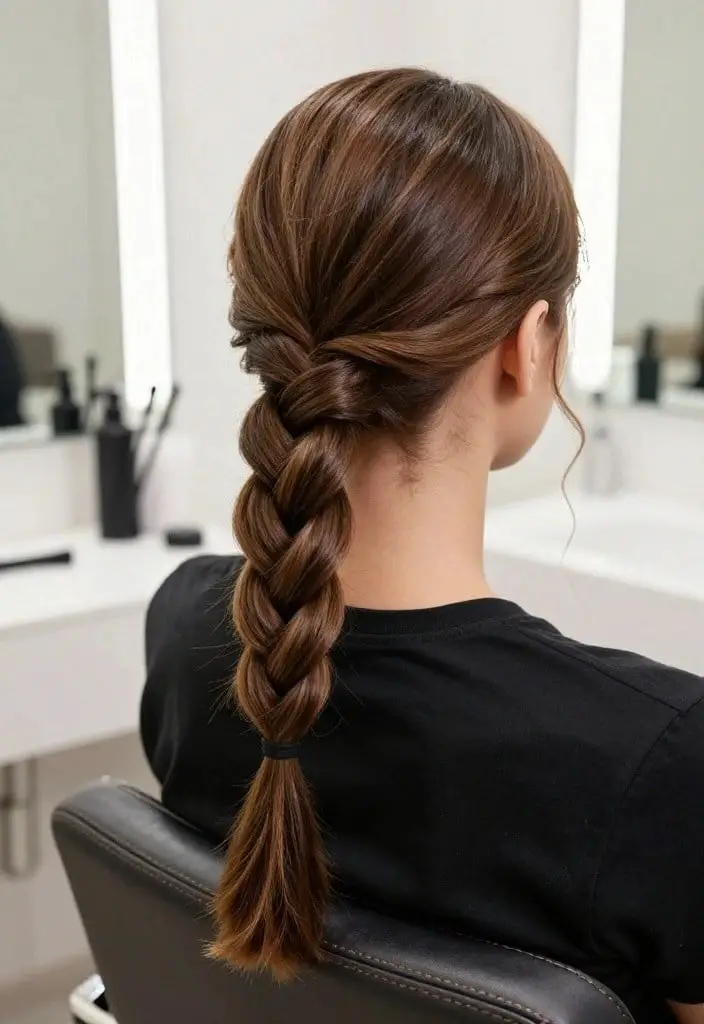
Can a Dutch braid actually stay tight through a full run? Yes, when the hair is thick and straight and the braid is built with tension rather than slack. This medium brown style uses the Dutch technique, where each strand passes under the center section instead of over, creating a raised ridge that grips itself. Ask your stylist for: neat Dutch braid. The thickness of the hair gives the braid enough weight to stay put, and the straight texture means no flyaways break the clean line.
A Dutch braid this neat needs even tension from the first crossover to the last. Start at the crown and work down, keeping each section tight and consistent. The braid holds its shape through sweat and movement because the underhand construction creates more friction than a standard three-strand. A trim every eight weeks prevents the ends from thinning out and losing the braid’s structure. No bangs, no pins, no touch-ups: just a braid that stays where you put it until you take it out.
High Blonde Ponytail
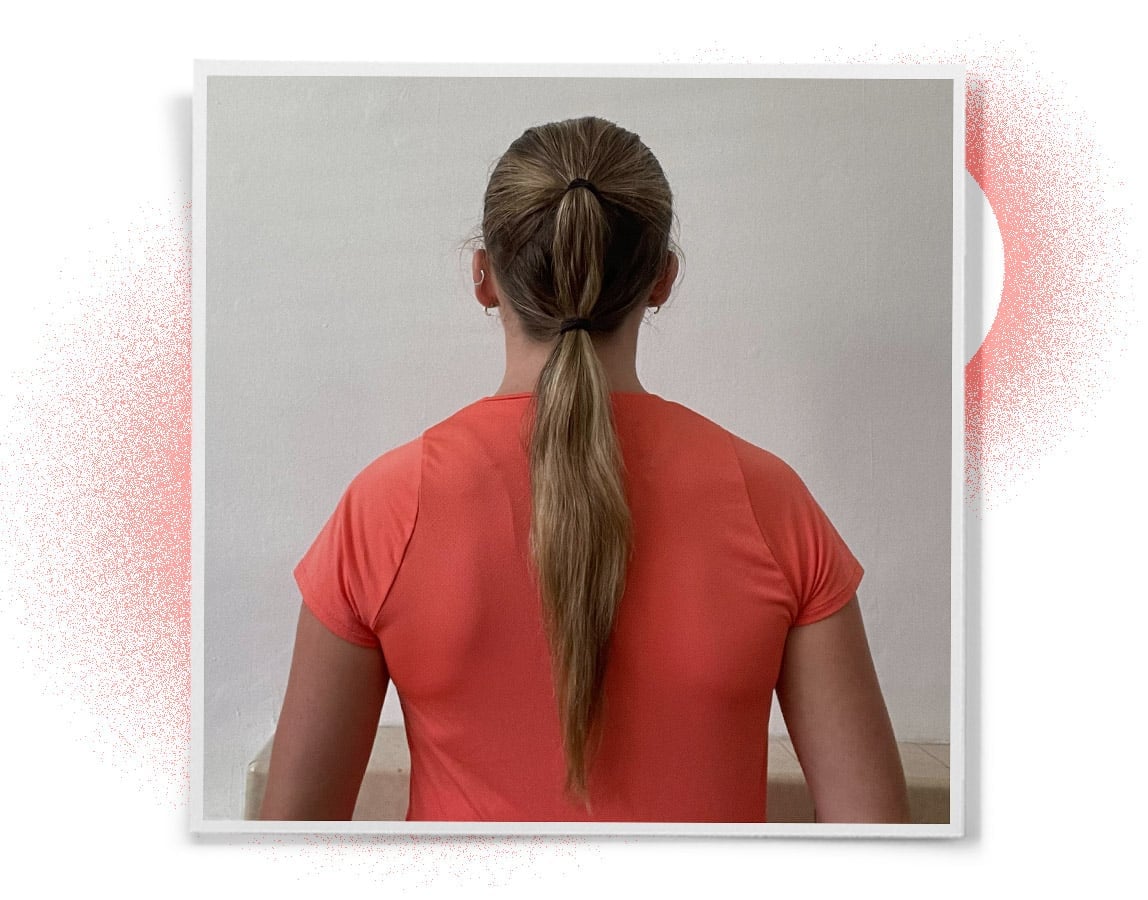
A high ponytail is one of those rare styles that works for almost everyone, provided your hair is thick enough to carry the volume. The straight blonde hair here is pulled back from a middle parting and secured at the crown, letting the length fall cleanly to mid-back. Ask your stylist for: high, neat ponytail. Thick, straight hair of mid-back length suits this best, and it is a solid five-minute DIY if you have a smoothing brush and a strong hold hair tie. A trim every eight weeks keeps the ends looking sharp.
Dark Brown Ponytail With Braided Accent
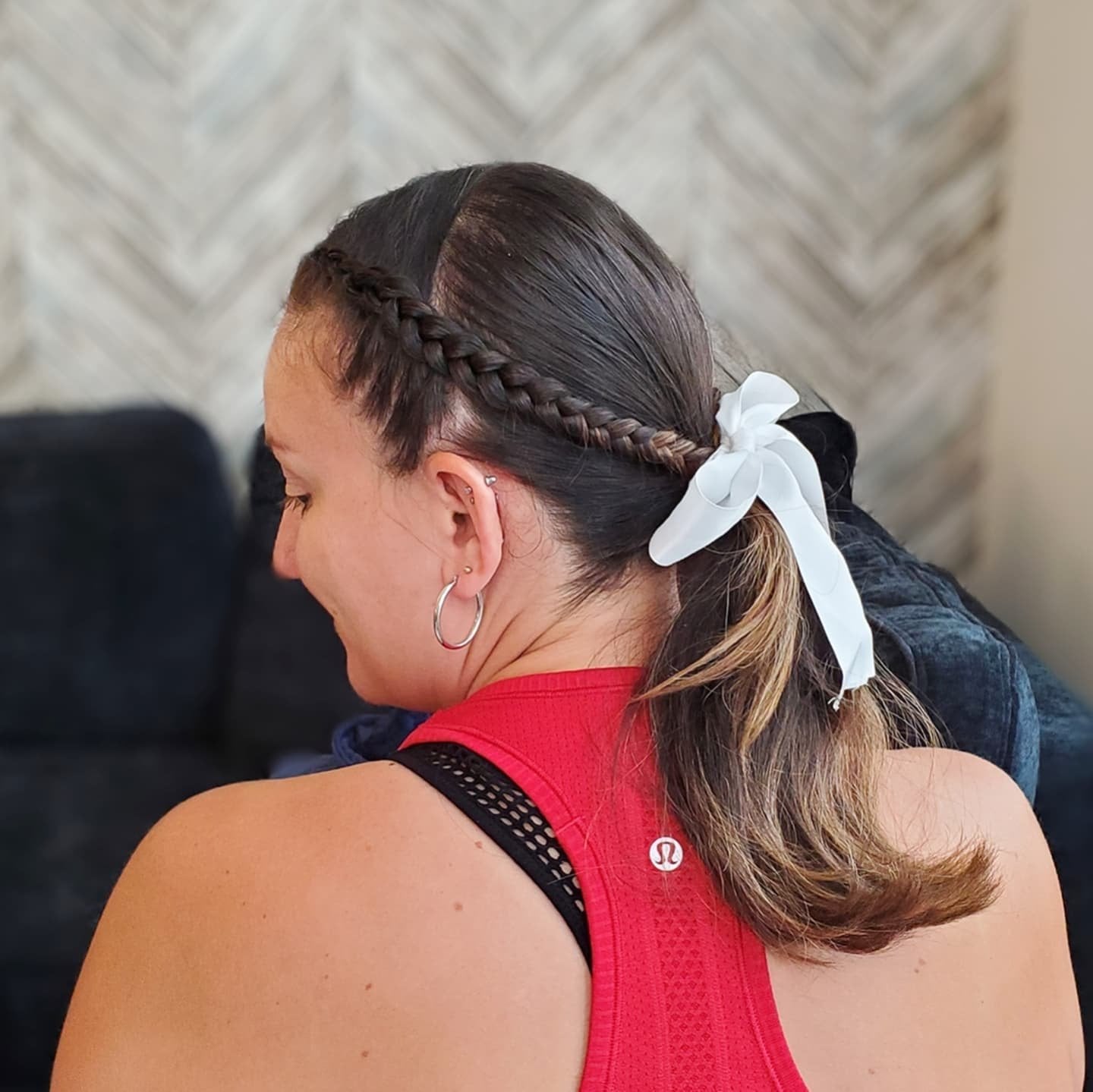
The braided accent running along the side parting adds a deliberate touch to an otherwise straightforward ponytail. Medium, straight dark brown hair with subtle highlights is pulled back into a mid-back ponytail, with the braid meeting the hair at the elastic. Ask your stylist for: a braided accent ponytail.
Start by sectioning off a thin strip of hair along the parting and braiding it tightly. Once the braid reaches the base of the ponytail, gather all the hair together and secure it. The side parting suits oval faces, and the whole thing takes about ten minutes. A trim every six to eight weeks keeps the highlights looking fresh.
Blonde Braided Ponytail With Thin Braids
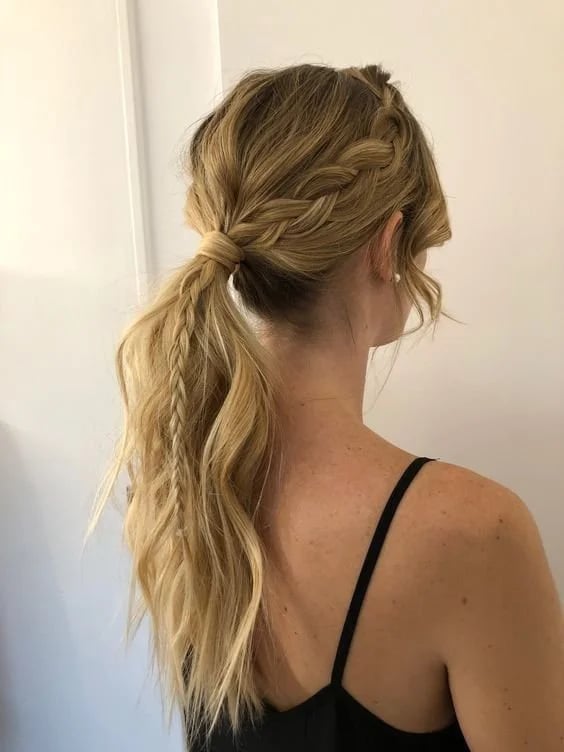
Can a braided ponytail look intricate without requiring an hour in the mirror? This one comes close, but the honest answer is that it is salon-leaning. Blonde, layered hair is gathered into a low ponytail, and two thin braids are woven into the main braid for texture. Ask your stylist for: low ponytail with incorporated thin braids.
It takes time to section and braid those thin strands evenly. Wavy, thick hair of mid-back length holds the shape best, and the layers help the braid sit naturally. A trim every eight to ten weeks prevents the ends from looking ragged. This is not a style you throw together in five minutes, but it stays put through a run.
Ash Blonde Glossy Sleek High Ponytail
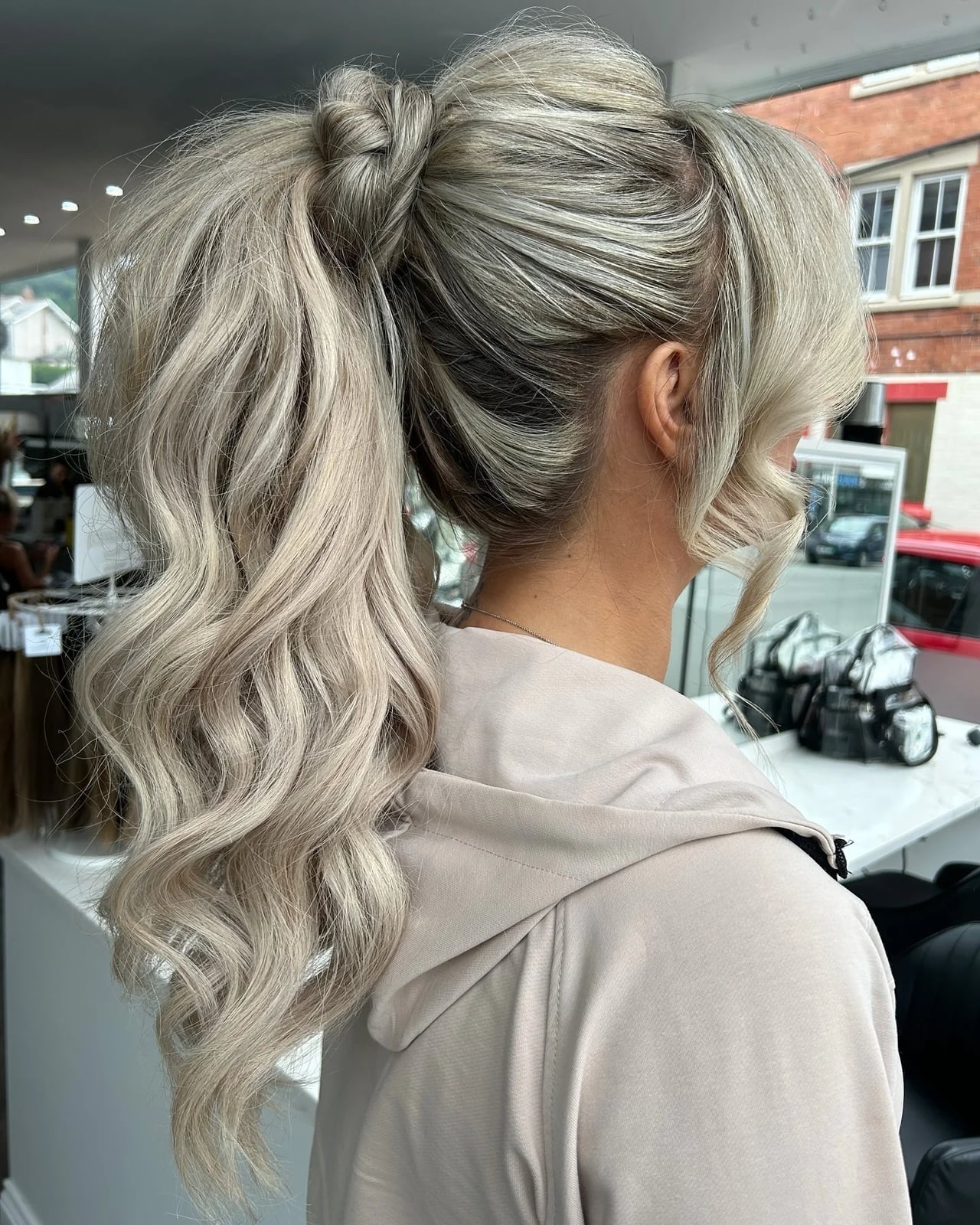
A sleek, high ponytail with a glossy finish is a different animal from a textured or wavy one. The ash blonde hair here is fine and straight, pulled from a middle parting and secured with a black wrap at the base. Ask your stylist for: high, sleek ponytail with a glossy finish. Fine, straight hair of mid-back length suits oval and heart faces, and the shine comes from a finishing spray with hold, not from extra product weight. A trim every six to eight weeks keeps the blunt line precise. This style suggests you showed up ready, not that you threw it together.
Intricate Dark Brown Braid Into Low Bun
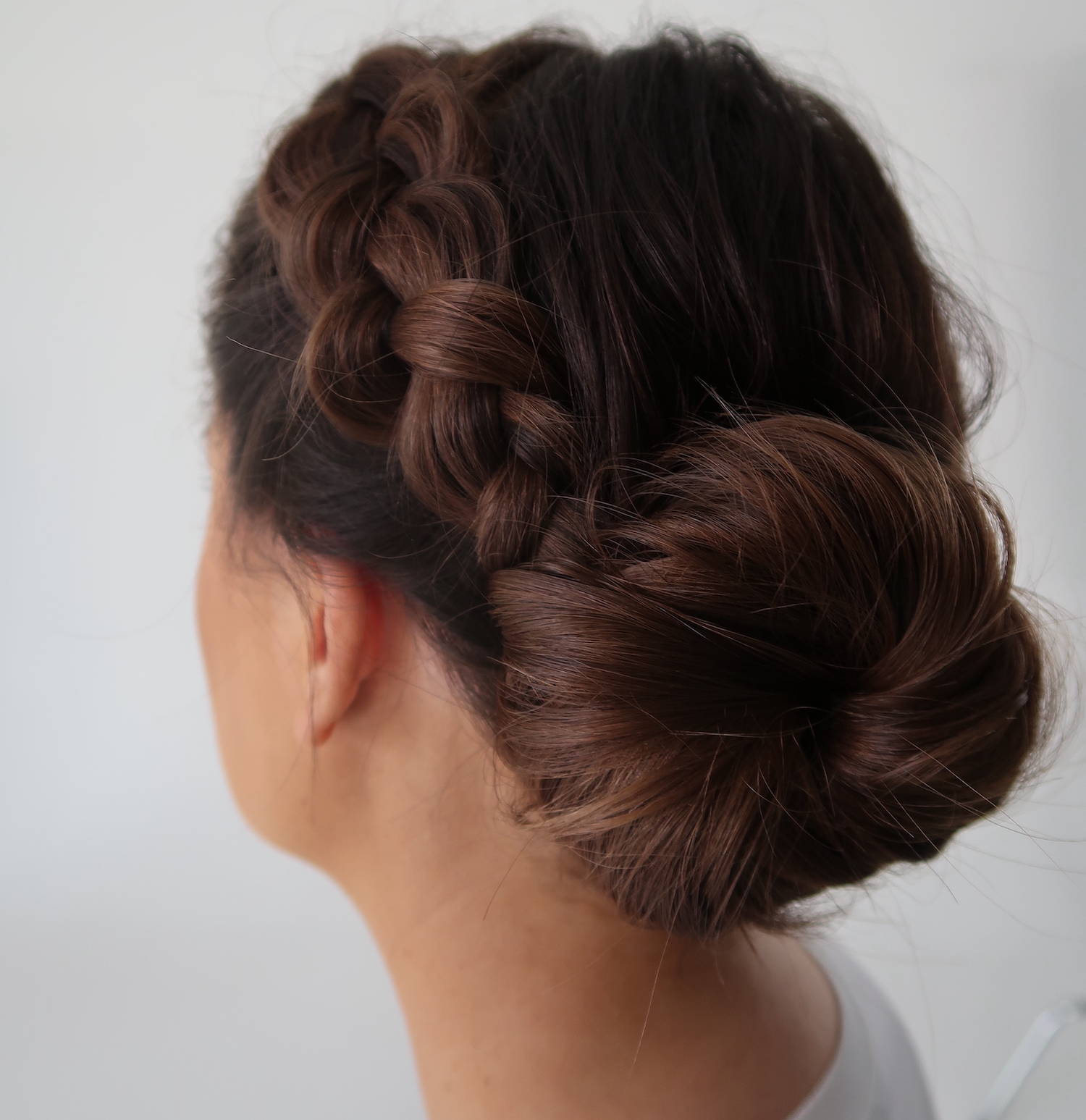
An intricate braid that transitions into a low bun at the nape is a design that rewards patience. The dark brown hair here is thick and wavy, pulled back neatly from the face and braided with precision before wrapping into a bun. Ask your stylist for: intricate braid into a low bun.
The braiding creates a secure foundation, and the bun at the nape keeps everything contained. Thick, wavy hair of mid-back length is ideal, as the texture helps the braid hold its shape without slipping. A trim every eight to ten weeks maintains the integrity of the ends. The side view shows the detail, and a strong hold hairspray is the difference between a bun that lasts and one that unravels mid-run.
Auburn Wavy Twisted Bun With Braided Accents
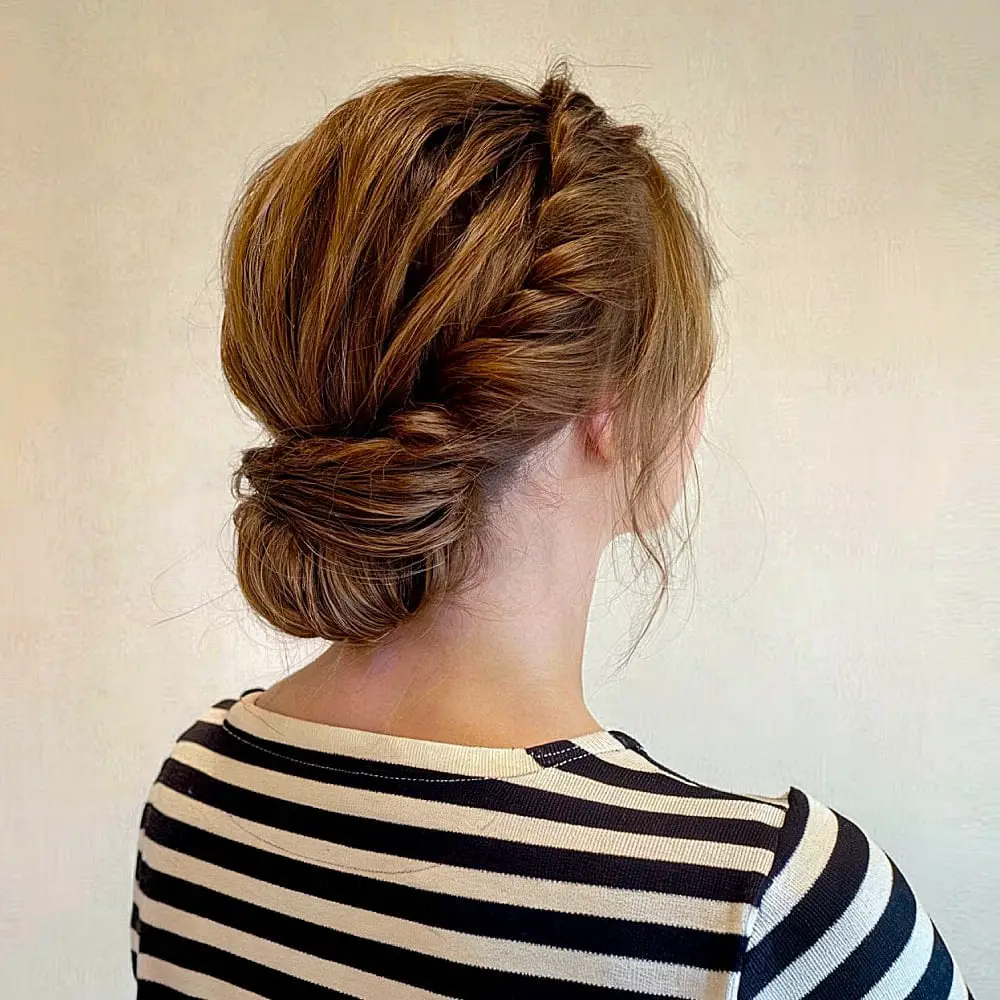
A twisted bun at the nape with braided accents turns thick, wavy auburn hair into an updo that holds through a run and then through dinner. The design works best on mid-back length hair with natural wave, since the texture gives the braids grip without extra product. Ask your stylist for: twisted bun with braided accents. Create defined three-strand braids before twisting everything into the bun, then secure any loose ends with bobby pins. A trim every eight to ten weeks keeps the ends tidy. This is the style that transitions from the trail to an event without a single touch-up.
Medium Brown Intricate Braided Updo
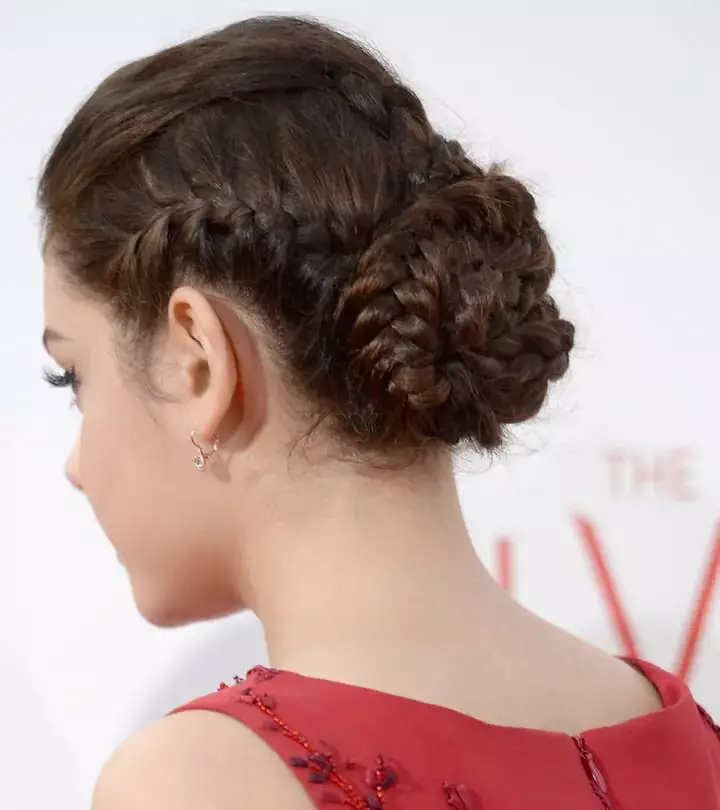
Multiple braids woven into a low bun create a medium brown updo that looks like it took all morning. It did not take all morning, but it took a professional. The intricate pattern requires someone who can section evenly and tension consistently, which rules out a five-minute DIY before a run.
Thick, wavy hair at mid-back length gives the braids enough weight to stay put. Ask your stylist for: intricate braided bun updo. The honest drawback is removal: every braid has to be unpicked by hand, and hair that is fine or prone to tangling may not love the process. A trim every eight to ten weeks keeps the ends clean for future braiding. This is a salon-booking style, not a Sunday experiment.
Final Thoughts
For low-maintenance upkeep, opt for styles with minimal flyaways like sleek braids or tight ponytails. For added polish, consider incorporating a subtle braid detail or face-framing pieces. The right base cut and a reliable scrunchie do most of the work.
- Trim split ends every 6-8 weeks to maintain braid and ponytail neatness.
- Use a smoothing serum on flyaways before styling for a polished finish.
- Protect hair from friction by using a silk or satin scrunchie.
- Refresh braids or ponytails mid-activity if needed with a light mist of hairspray.
Keep it secure, keep it chic.