
This winter, I kept seeing the same thing in the salon chair next to mine: locs going bold. Bright yellows, deep burgundies, two-tone combos. Not subtle. Not trying to be. And honestly, after a season of beige everything, I get it.
The 19 Winter Loc Styles here range from micro locs you can wash and go to sculpted updos that take an afternoon. Some are DIY, some need a stylist. I tried faux locs once and learned the hard way that winter dryness is real — so every idea here comes with a real upkeep note.
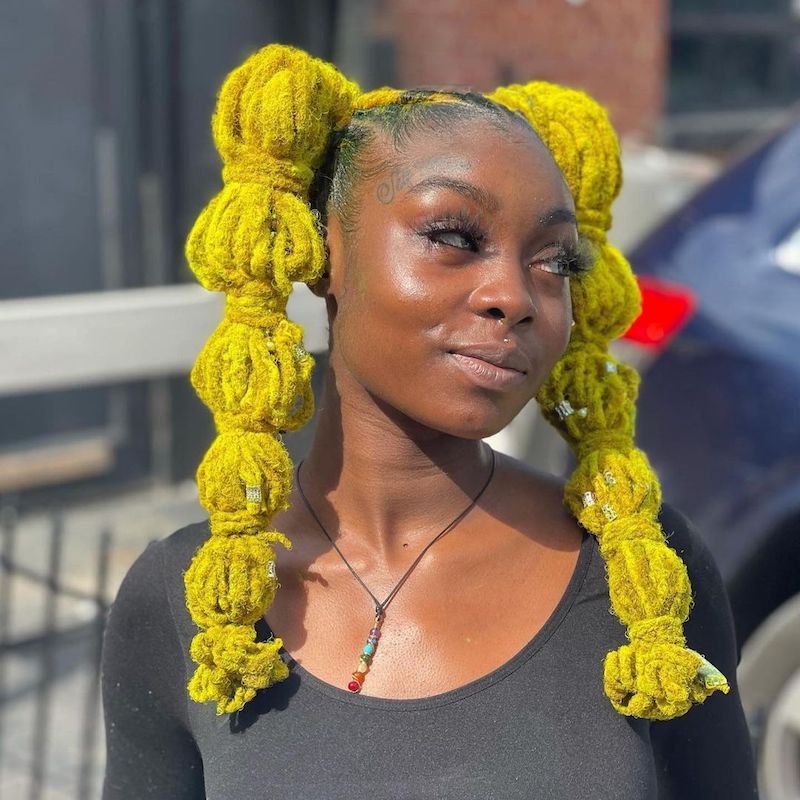
Vibrant Yellow Bubble Pigtails
When did yellow locs pigtails become the bold winter statement you didn’t know you needed? For thick, coily locs, this style delivers. The cut is essentially uniform locs at mid-back, no bangs, but the stacked bubble technique builds artificial layers that give the whole thing dimension. That’s what makes it work: the bubbles break up the solid mass. It’s a look that demands volume and eats thin hair alive. If your locs are sparse, skip it.
Two-Toned Shoulder Length Updo
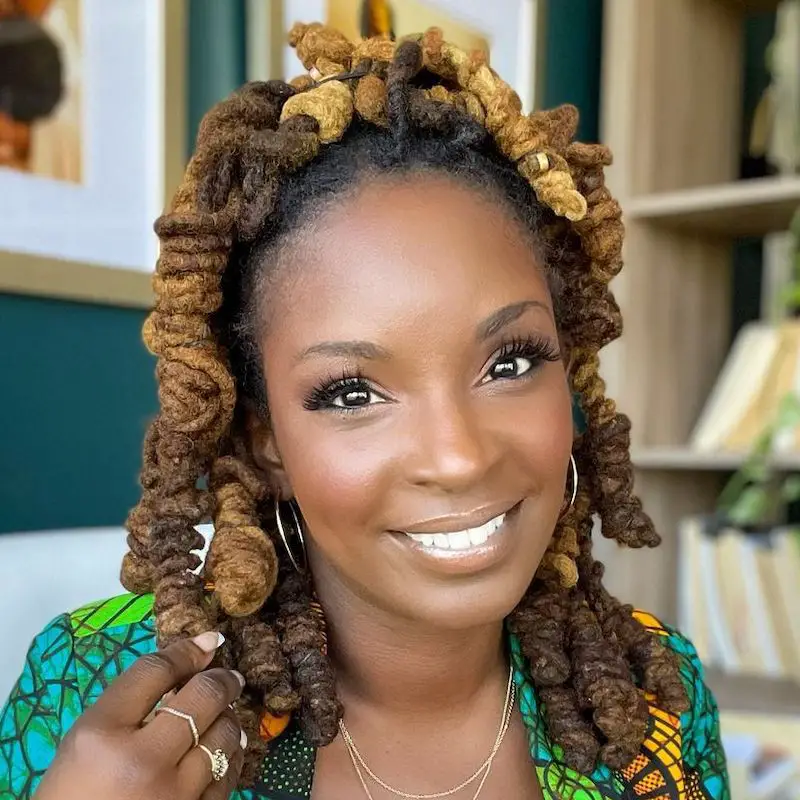
A two-toned color like dark brown blonde locs doesn’t just add depth; it buys you a few extra weeks between root appointments. Compare that to a solid dark brown, where a quarter inch of new growth screams for a touch-up. With the blonde highlights, the grow-out blurs into the style. The shoulder length updo keeps the locs uniform, no layers, no bangs, just even thickness that coils up neatly. Downside: the blonde needs toning every six to eight weeks or it goes brassy. Worth it if you want the dimension without a drastic change.
Neat Bantu Knot Updo
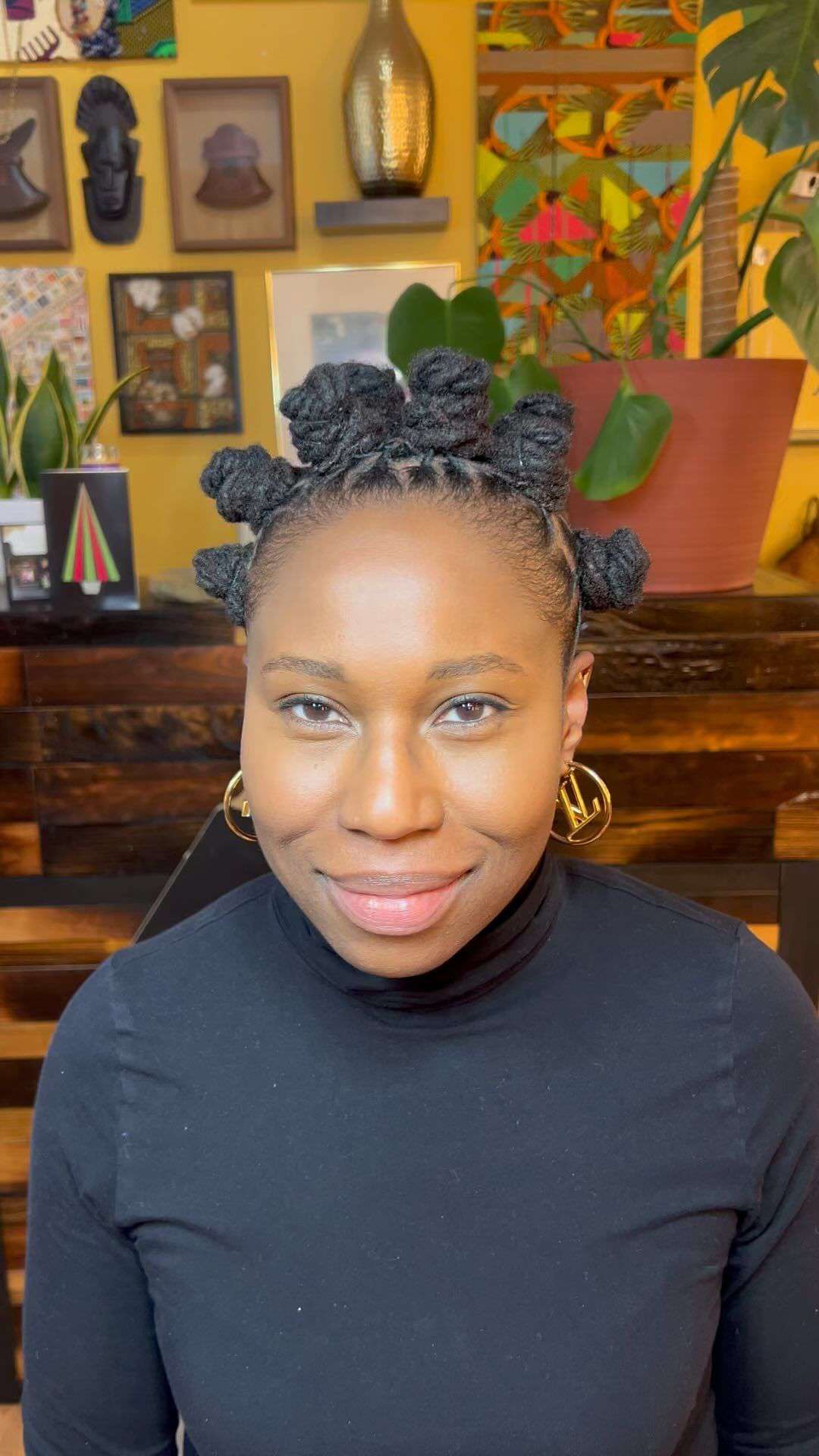
Bantu knot locs are one of those styles that looks harder than it is. The technique is straightforward: section, twist, pin. The cut is uniform locs at shoulder length, no layers, no bangs, which makes the knots sit evenly. That’s the trick. If your locs vary in length the knots won’t align. For thick, dense locs, this is a thirty-minute structured updo that stays put.
Braided Updo with Scalp Detail
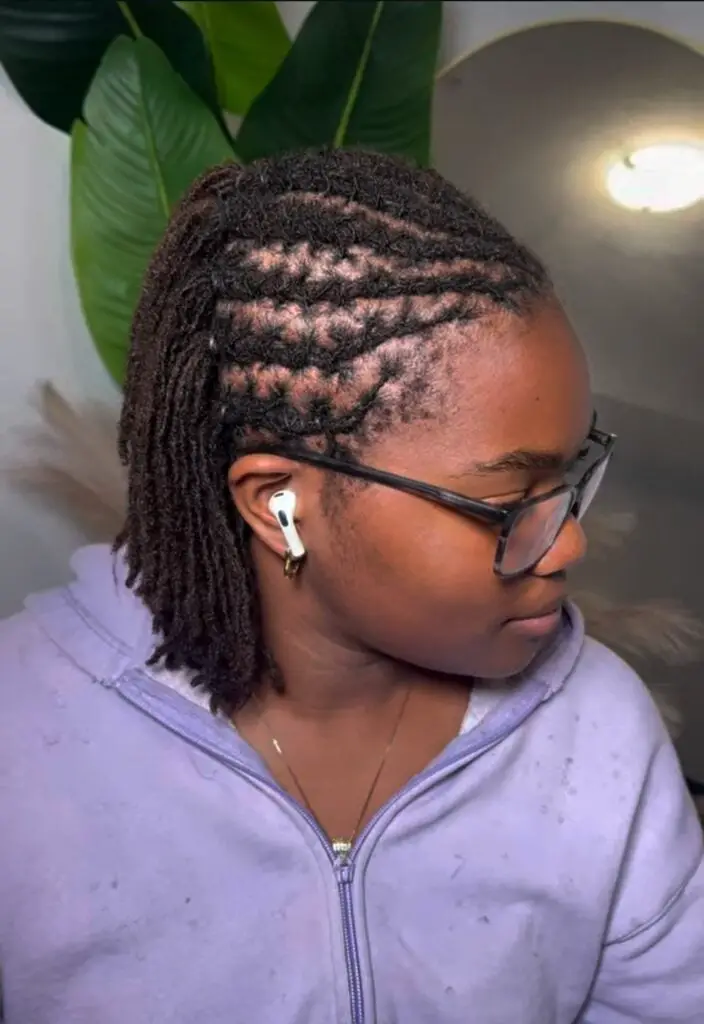
I’ll admit it: I was skeptical about braided locs updo patterns on the scalp. The intricate braided pattern along the top looks like it should unravel by day two. In my experience it doesn’t. The braids anchor the locs flat against the head, which reduces frizz and keeps every piece in place. The cut is shoulder length locs, even all the way through, no layers, no bangs. That uniformity is key for the pattern to line up. Still a salon job, not a weekend DIY. But it holds longer than you’d think.
Voluminous Updo with Beads
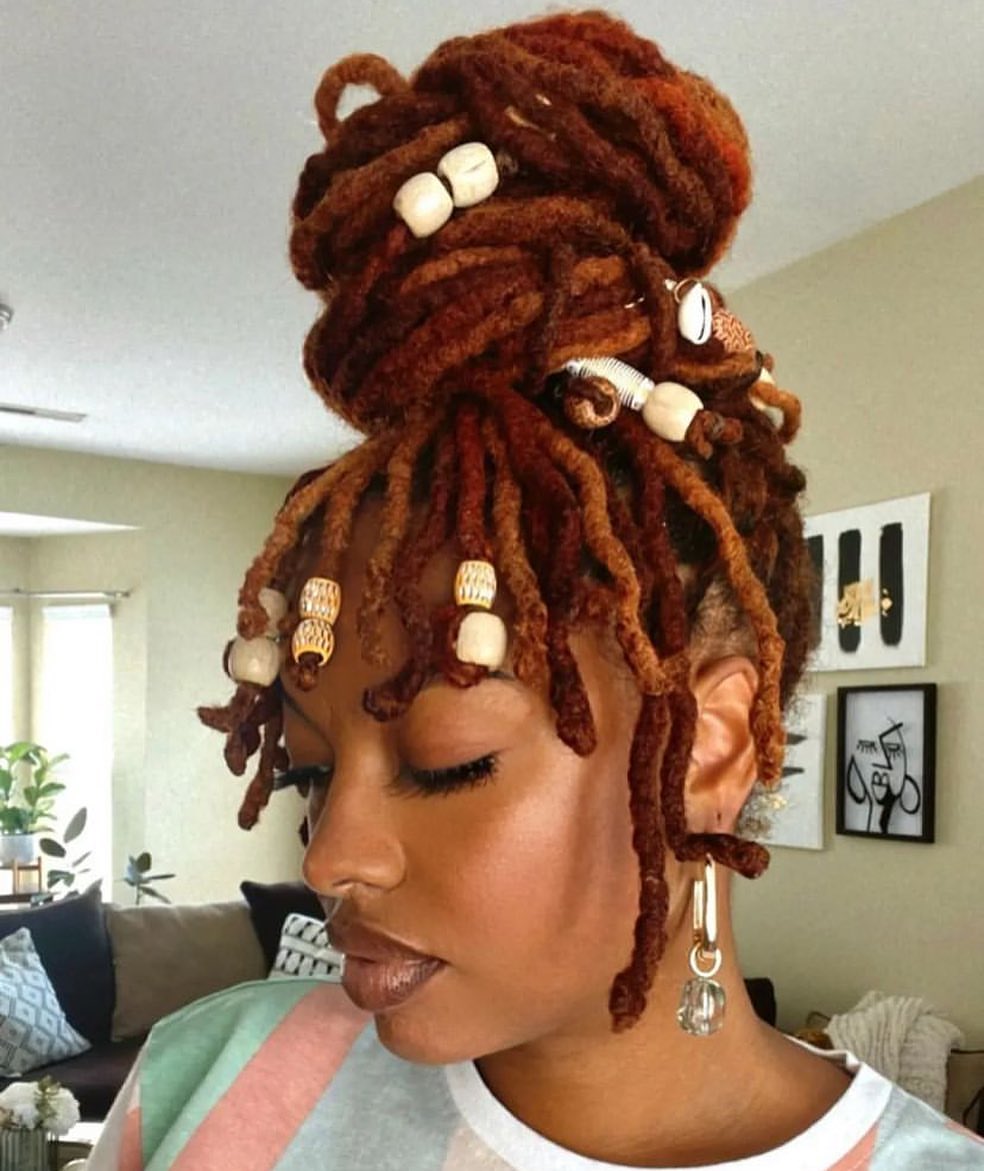
A party, a dinner, a holiday gathering — reddish brown locs with beaded details show up. The volume comes from the updo construction, not the cut. Shoulder length locs, no layers, no bangs, thick enough to hold a pin. The beads catch the light and the whole thing feels finished. This is a winter event style, not a Tuesday morning. Book it for the occasion and let it shine.
Fine Coily Micro Locs, Loose and Natural
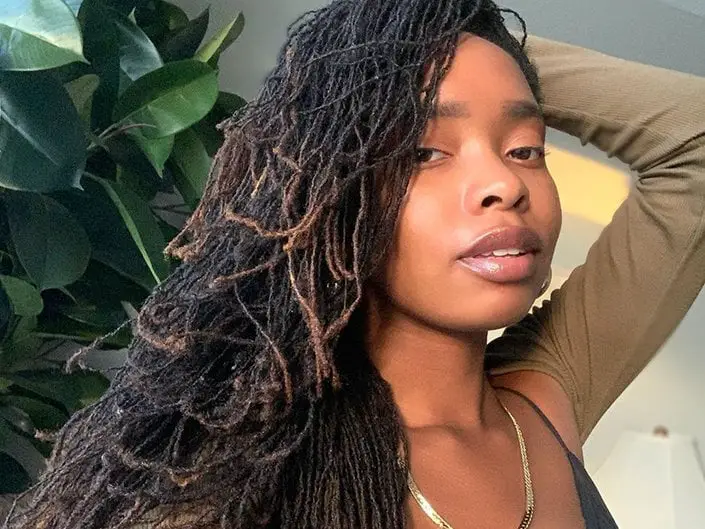
This style genuinely flatters fine, coily texture because it adds the density your own strands might lack. Face shape decides. A middle part can widen a round face; this side part gives a diagonal line instead. Ask your stylist for uniform thin sections, a side part, and no bangs, and skip it if your locs are thick, because the extra weight will flatten the whole shape. Length lands around the middle of the back, and the natural bend at the ends makes the layers for you.
Neatly Sectioned Dark Brown Locs
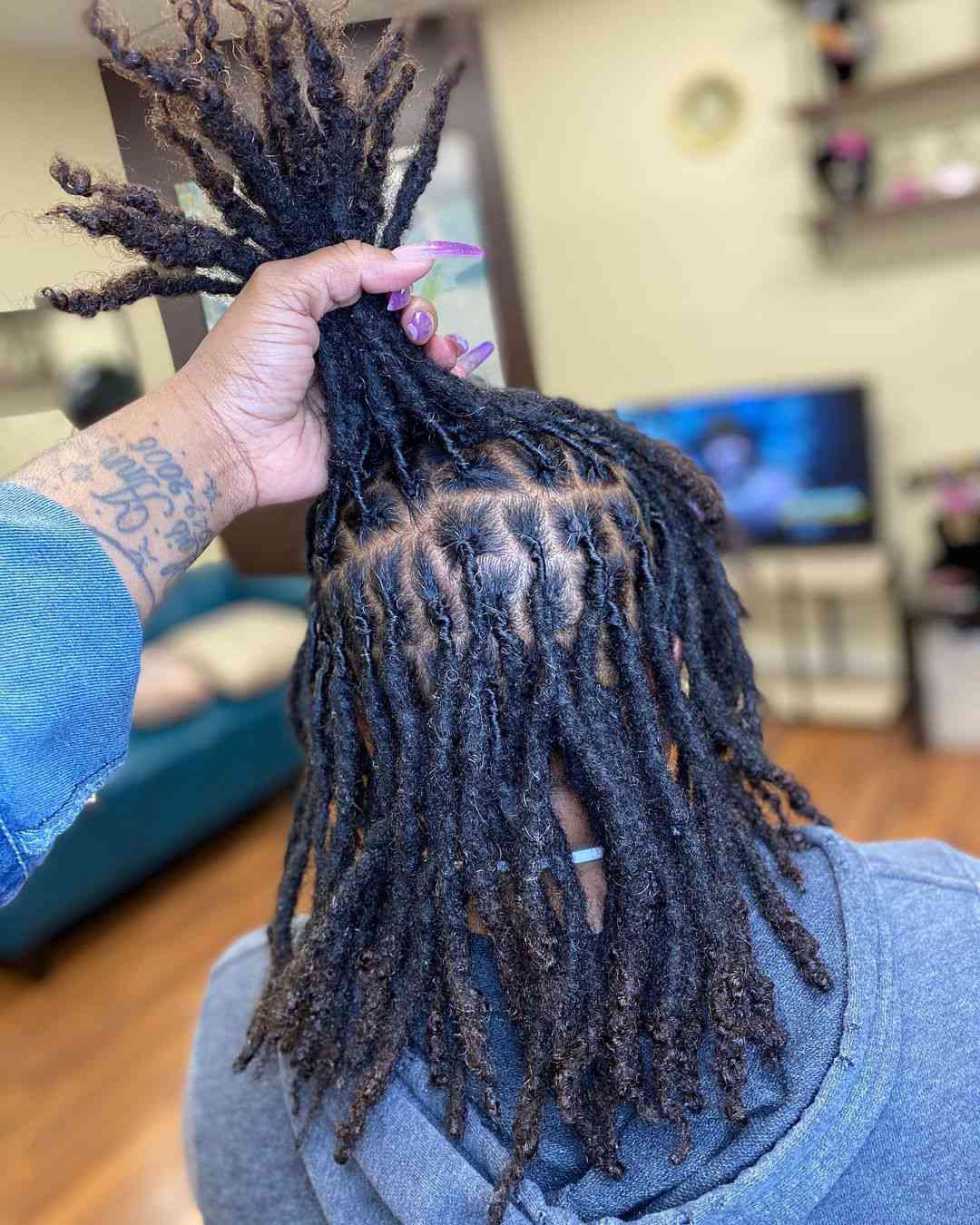
My first reaction to neatly sectioned locs was pure envy, then suspicion. Every dark brown loc sits in its own lane in this shoulder-length cut, thick in texture and heavy enough to hold the part, uniform sections so exact they look stamped out, a center part visible from behind. I’ll be honest. Perfectly even parts are gorgeous at the salon and less realistic once new growth comes in at its own uneven pace. There are no bangs here and no layers to hide behind, so the geometry has to stay clean. That’s the whole argument, and the whole problem.
Mohawk with Braided Sides
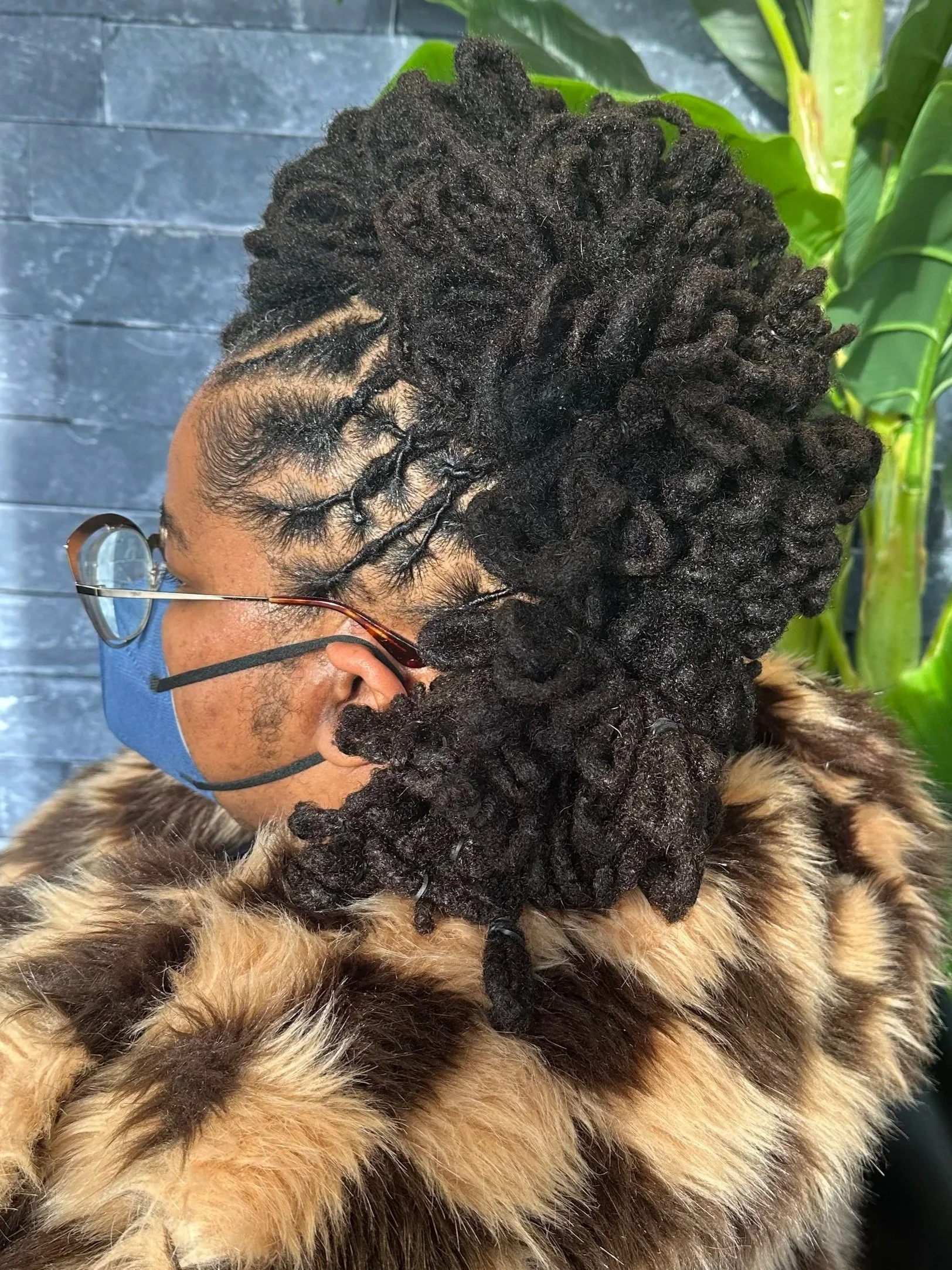
I’ll confess: every loc mohawk style I admire is also the one I worry about. The cut is collarbone-length black locs, no bangs, no layers, just a middle part and braided sides that pull clean to the scalp while the center stands up. The mistake is assuming the shape will stay vertical on its own. It will not. The braided sides need redoing every few weeks, and the top needs a bit of hold and some pinning to keep the volume from drooping sideways, especially if your loc texture is on the heavier side. If your sections are uneven underneath, the mohawk line goes wavy instead of sharp. Worth it, yes, but only if you planned for the maintenance.
Braided Locs with Silver Cuffs
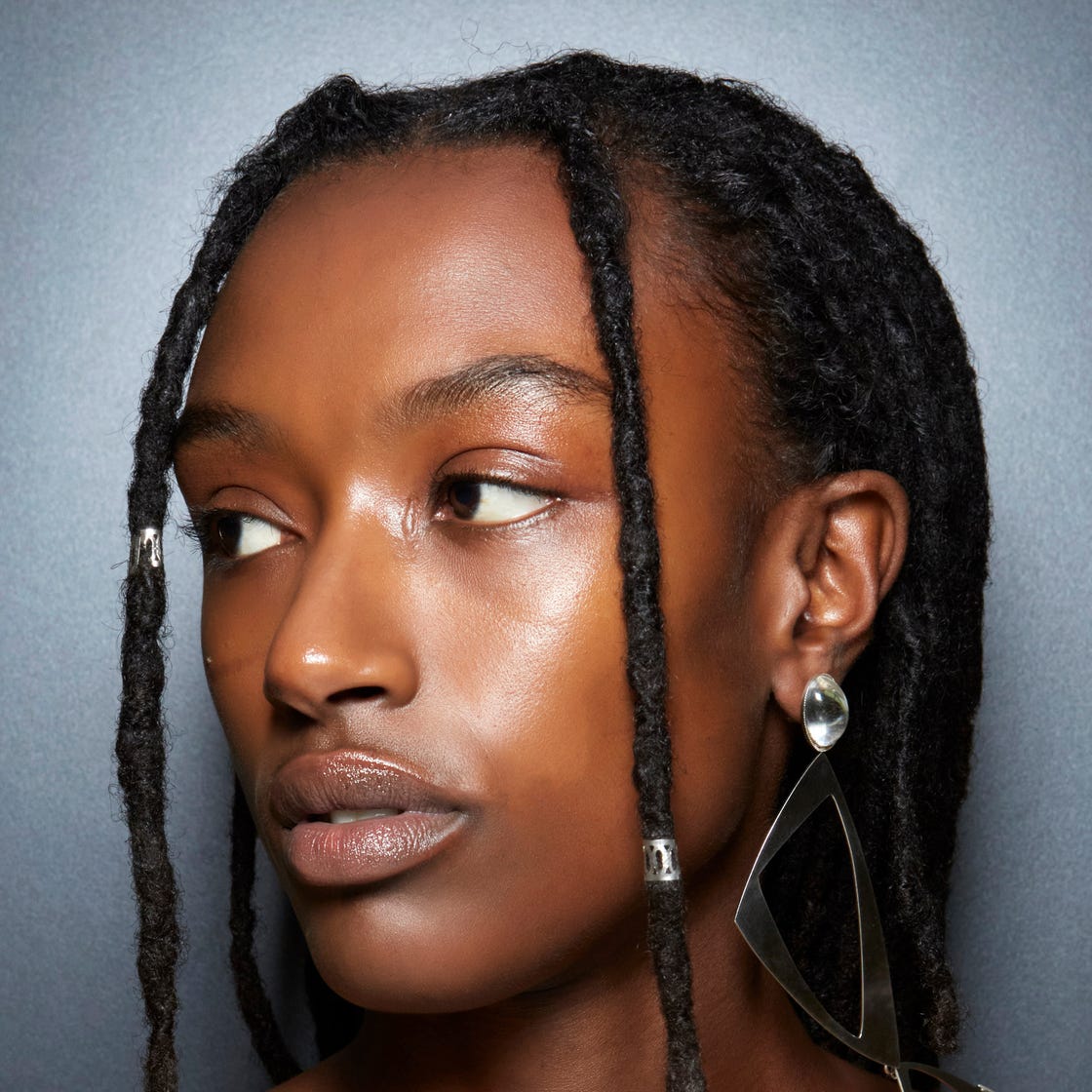
I almost said no to the cuffs, and then the stylist slid one silver hair cuff onto a braided loc and the whole line changed. Suddenly the shoulder-length black locs had a rhythm: braided locs with cuffs catching the light, the coily texture underneath staying soft, a side part giving the front some swing. The metal does that. No bangs, no layers, just the metal drawing your eye down the length. It was the smallest add-on I have ever approved, and it did more for the shape than any cut could have.
Short Asymmetrical Loc Cut
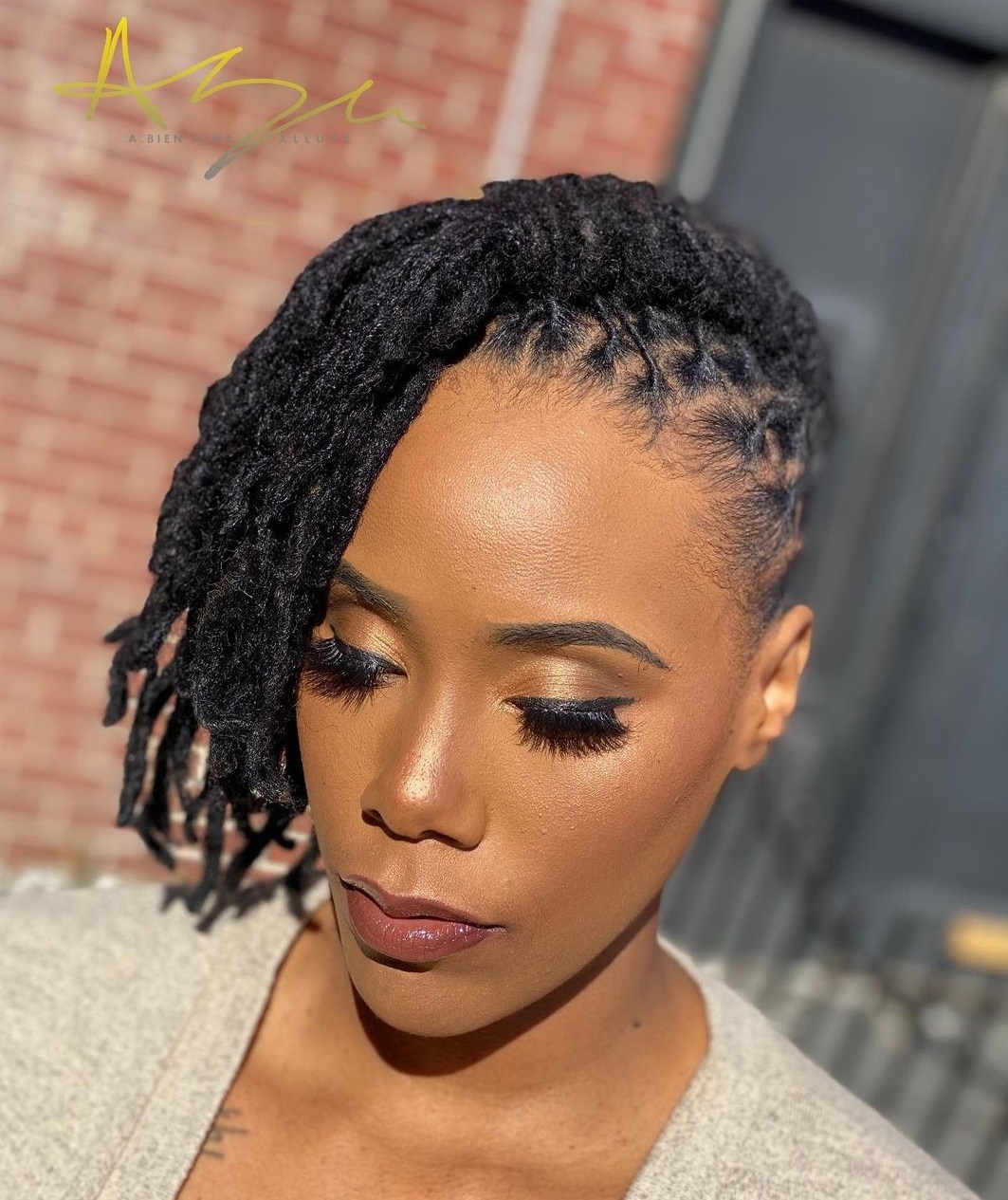
The first thing you notice about asymmetrical locs is how much work the shorter side saves you, until you realize the longer side expects direction every morning. That is the catch. This short cut is black, cut on a diagonal, with the longer locs swept across the forehead and the shorter ones tucked behind the ear. A side part keeps it intentional, no bangs, no layers, just a medium-thick loc texture that holds the angle. Daily styling takes a minute; the trim rhythm does not. Plan for a salon appointment every six to eight weeks, because an asymmetrical line you trim at home will betray you by week three.
Braided Crown Ponytail
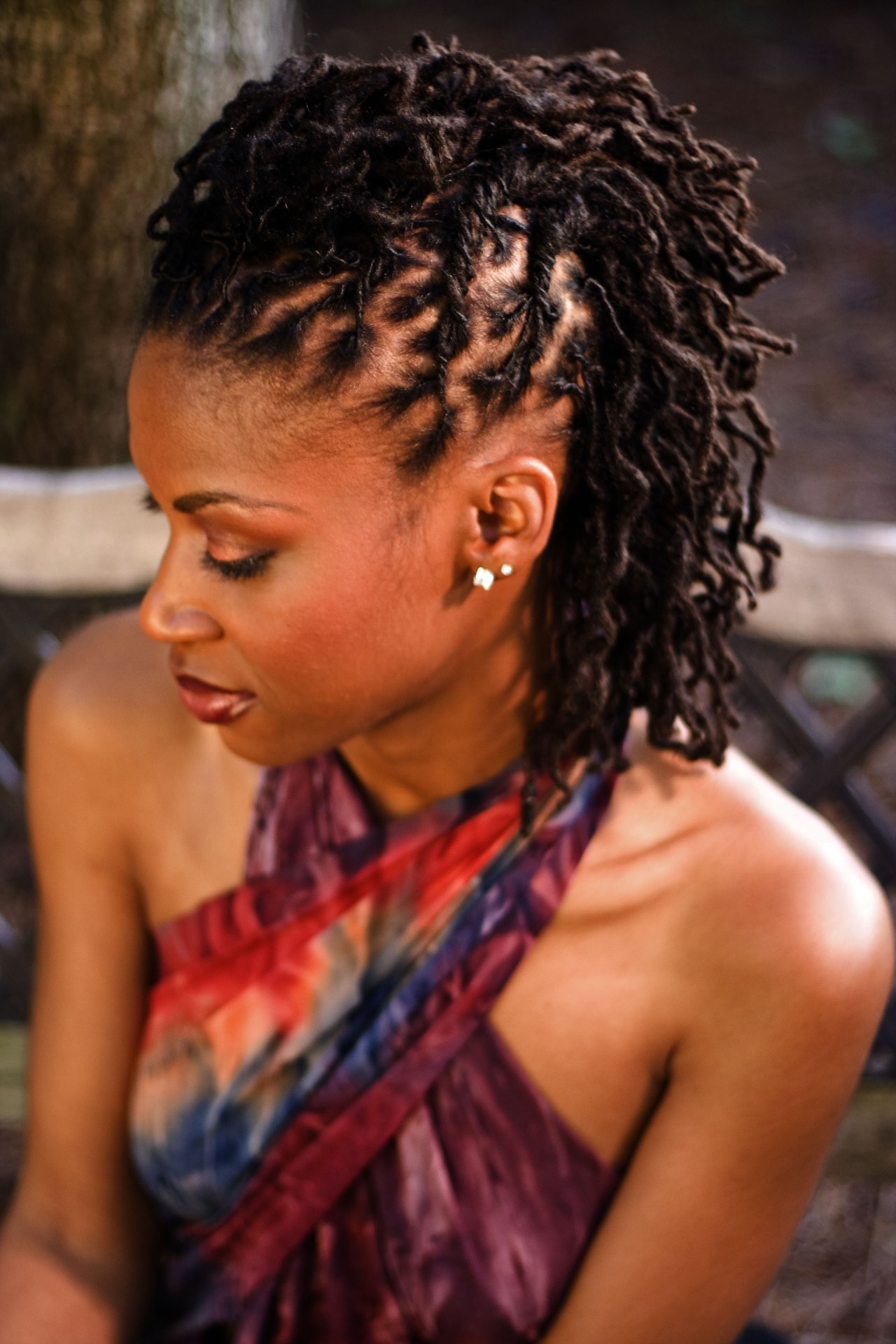
Have you ever needed a winter hairstyle that reads formal without requiring an hour of mirror time? This one braided crown locs into a middle-parted base, then gathers everything into a ponytail at the nape. The texture stays coily and thick, so the braided pattern holds its shape. No bangs, no fuss, just a clean side view. It lands nicely at the shoulder. Intricate braided pattern like this asks for a salon visit — the cornrows need even tension to last through a party. I wore a similar version to a holiday dinner and forgot it was up.
Braided Locs with Wavy Ends
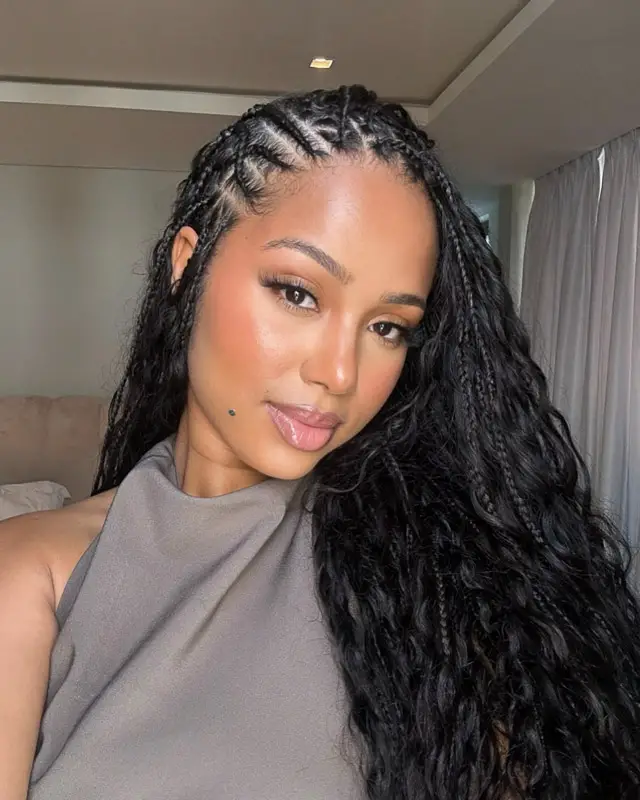
This is what happens when you let a stylist work cornrow details into the front and leave the rest loose. The cut stays long — mid-back — with a middle part that keeps everything symmetrical. No bangs, just a clean forehead. The texture shifts as it goes: coily at the roots from the braiding, then wavy at the ends where the locs fall free. That blend is the whole point. Wavy locs with braids take about an hour to install if the locs are already established, maybe two if they are new. The cornrows buy you a week of neat hair before the front starts to lift. My own set frizzed at day five, but a quick pass with steam reset the wave pattern for three more days.
Playful Pigtail Locs
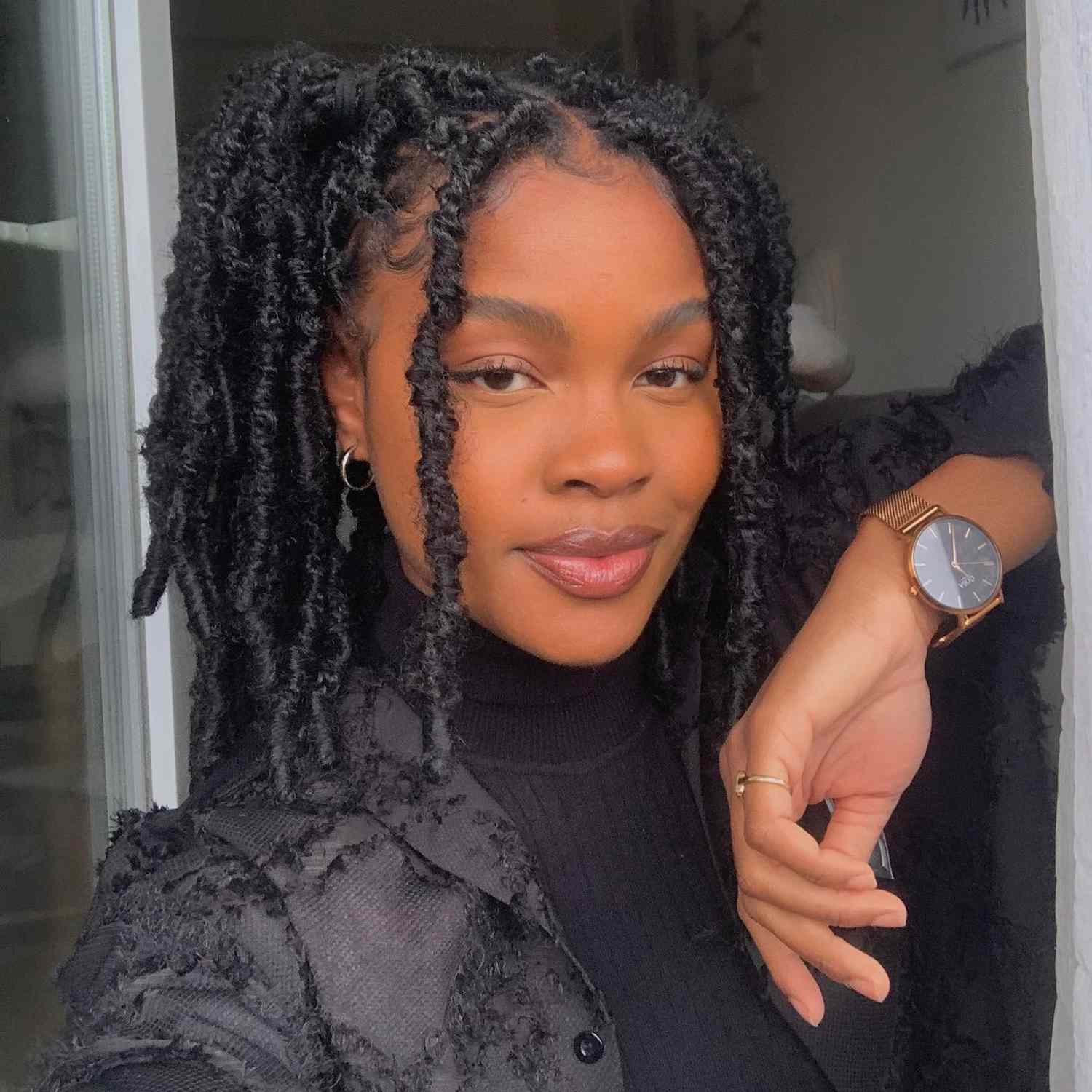
Pigtails on wavy locs hit different. The cut is shoulder-length with a middle part, no bangs, and the texture carries a soft wave that stops the style from looking too young. Playful styling, sure, but the wavy locs pigtails read intentional because the movement looks natural. I did two sections in under twenty minutes. That is the appeal: fast, symmetrical, keeps the hair off your neck. If your texture runs coily rather than wavy, the pigtail bend may be less defined. Worth testing with one section before committing to both sides.
Vibrant Burgundy Collarbone Locs
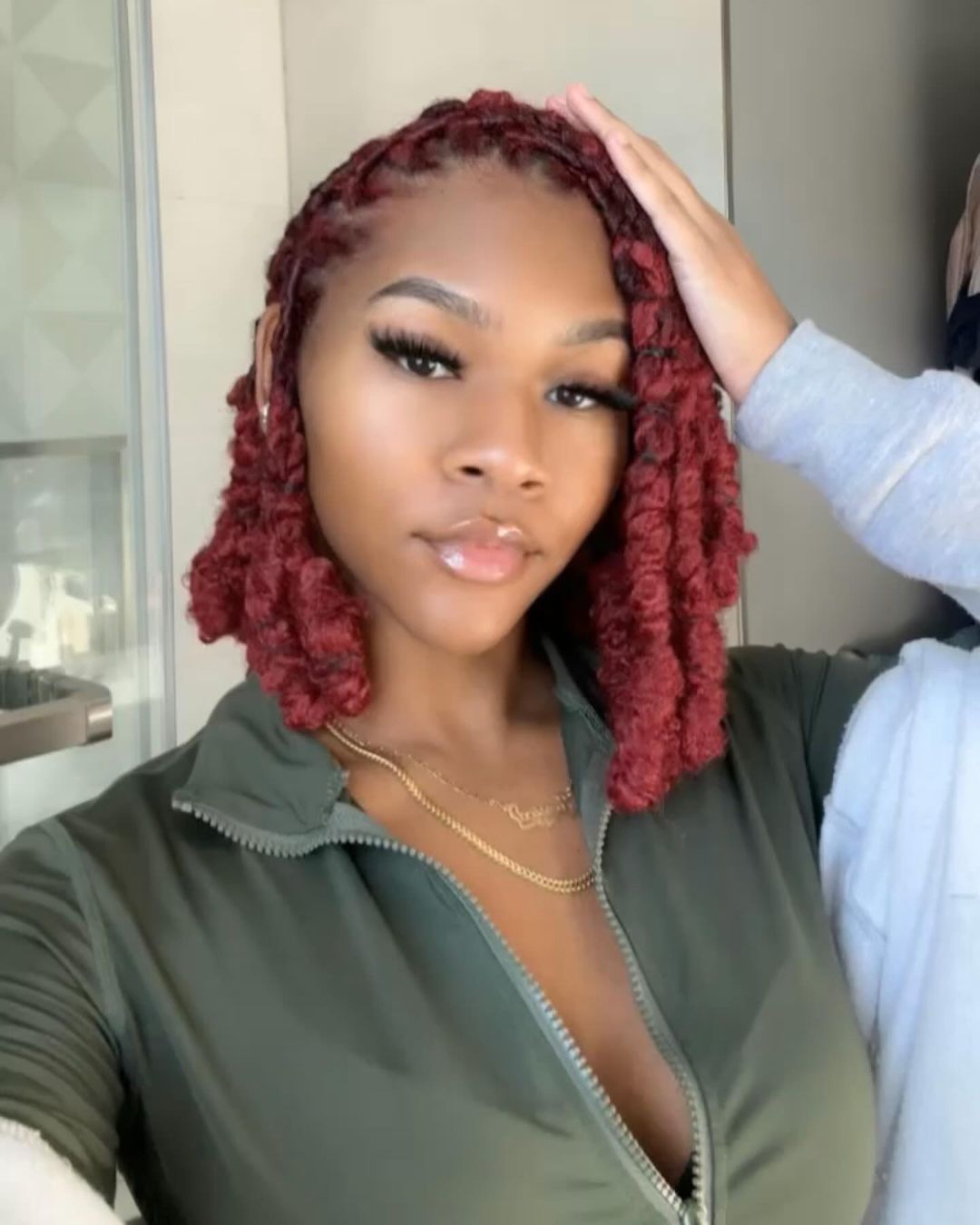
Dark brown locs are dependable. Burgundy locs are a choice — and a good one against a black winter coat. The cut hits collarbone with a side part, no bangs, and the texture stays thick and coily. Vibrant color like this needs a salon process; box dye on locs can leave uneven patches. I saved a friend from that mistake. The shade pops because the locs are uniform in thickness, so the burgundy catches light evenly. It is not a wash-and-go if you want the color to last. A color-depositing conditioner every fourth wash keeps the red from pulling orange. Trim every three to four months to maintain the collarbone length.
Uniform Dark Brown Collarbone Locs
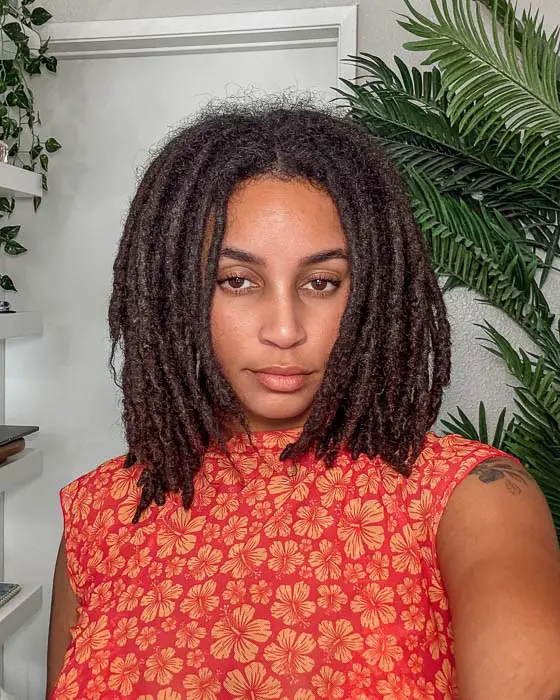
Confession: I once let my locs grow uneven because I skipped trims for six months. That does not happen with this style. Uniform dark brown locs at collarbone length require a blunt cut every three to four months. The middle part and no-bangs shape keeps the look clean. Texture is thick and coily, the dark brown reads natural, and the collarbone length lands somewhere between short and medium — enough to pull back, short enough to dry fast. Wear-wise, it is a five-minute morning. Separate the locs at the roots with your fingers, fluff once, go. The downside: if one section grows faster, the line breaks and the uniform look is gone until the next trim.
Long Wavy Faux Locs
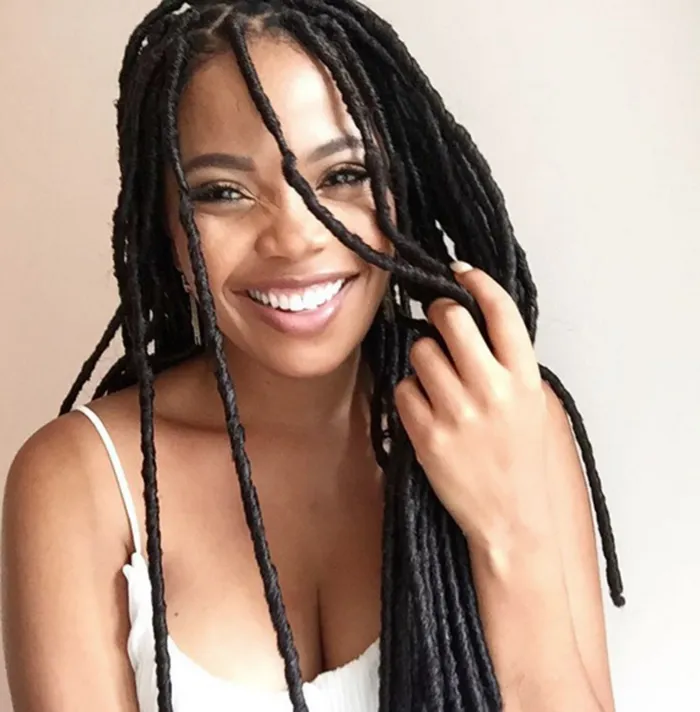
Long wavy faux locs are a commitment. A gorgeous one, but a commitment. Mid-back length, wavy texture, no bangs, no layers cut in — the waves provide the movement. The loose strands framing the face add softness, which is the whole point.
Here is the honest downside: those loose strands catch on scarves and coat zippers. They tangle faster than the rest. This style flatters people who don’t mind occasional detangling. Pass if you hate maintenance or live somewhere with wind.
High Ponytail with Slicked Back Texture
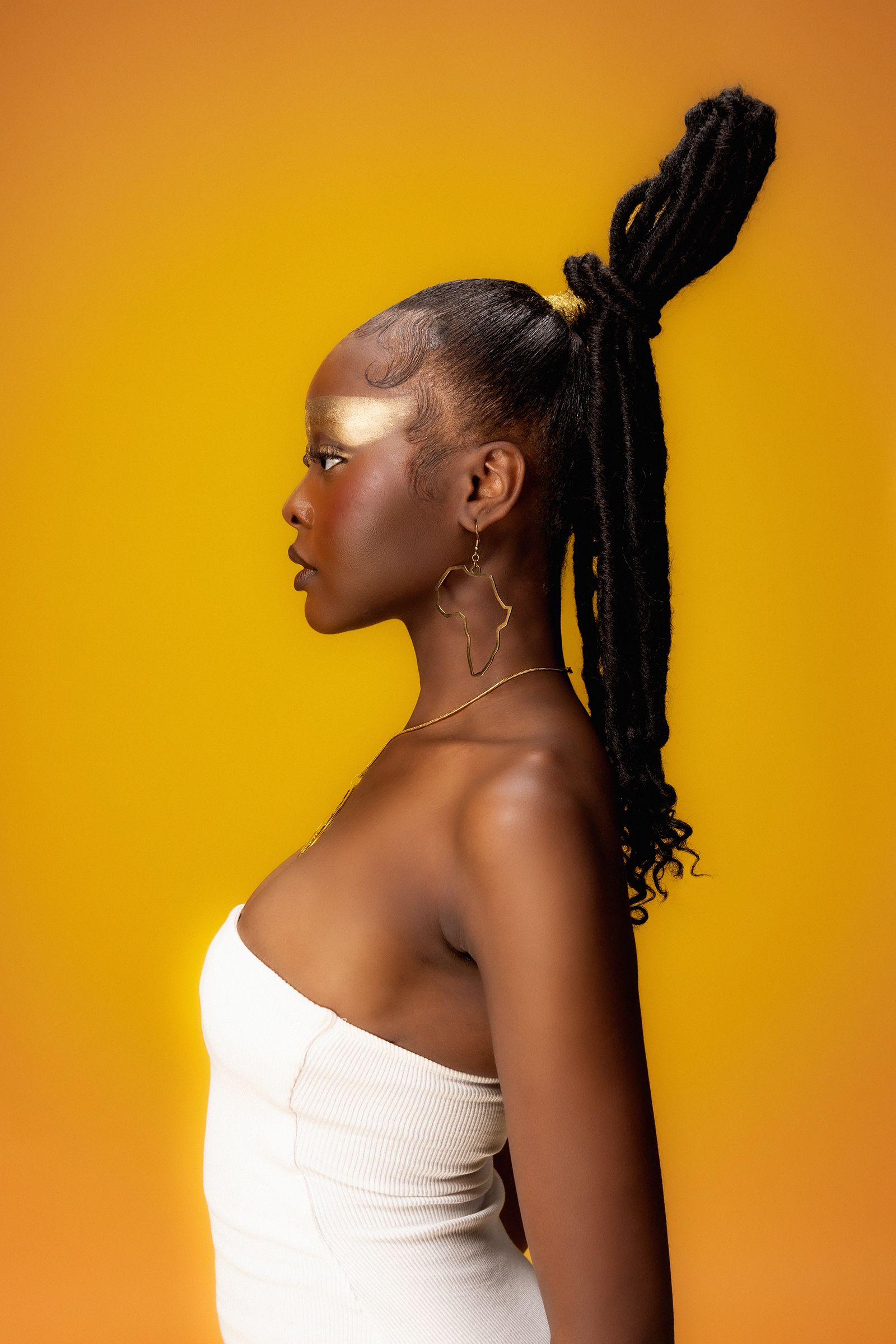
The hair is slicked back, every loc accounted for. Start with a strong hold gel, smooth from the hairline to the crown, then gather all locs into a high ponytail. Secure tightly, then fluff the ponytail for volume — thick locs give it natural body. No bangs, mid-back length, no layers needed because the ponytail creates its own shape. The result is a high voluminous ponytail that stays all night.
Space Buns with Down Locs
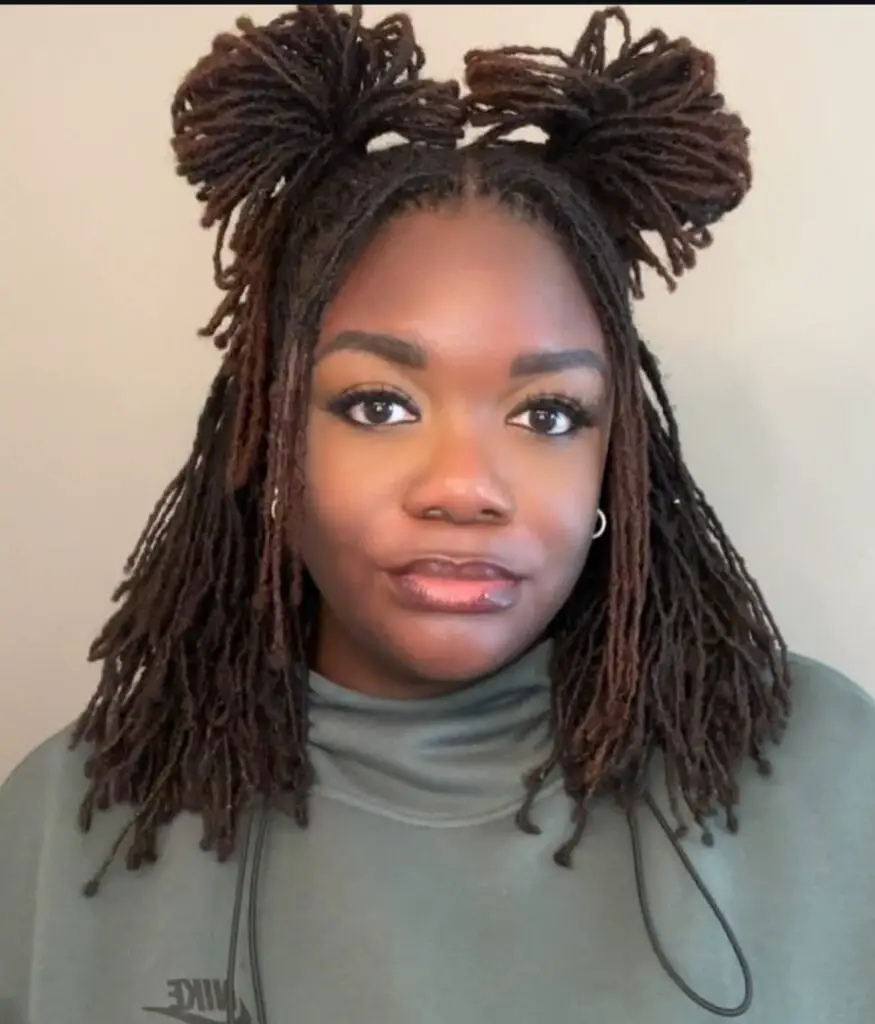
What says winter party better than space buns? Two buns on top, the remaining locs left down to collarbone, middle part, coily thick texture with subtle auburn highlights. No bangs, no layers — the texture does the work. Practical for festivities: hair off your face but length still visible. A playful double space bun that feels festive without the fuss.
Chic Bob with Auburn Highlights
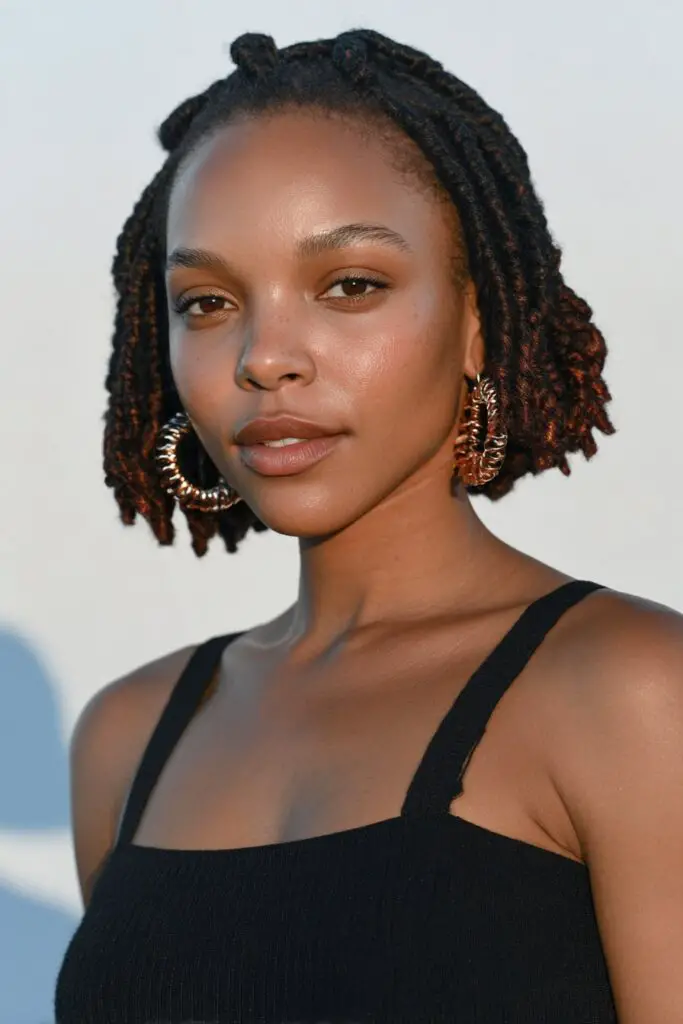
A bob on coily hair is a statement. Chin length, no bangs, no layers — one blunt baseline that lets the natural volume shine. Black base with subtle auburn highlights at the ends, catching light without demanding frequent toning. The cut is low maintenance: air dry and go. Bob locs with highlights work because the shape and color both hold without effort.
Final Thoughts
After seeing all 19 together, I noticed something: the ones with accessories held their shape longest. The beads and cuffs add weight, which helps locs hang instead of puffing up in dry air. I’m booking the braided crown ponytail next — it looks like it holds without constant redoing.
- Moisturize scalp weekly with oil.
- Wrap locs in silk at night.
- Retwist every six to eight weeks.
- Avoid heavy gels in cold air.
- Trim loose ends every three months.