
A middle part can make a haircut look composed before the rest of the styling has even settled. It draws a quiet line through the face, then lets the ends decide whether the mood is crisp, airy, blunt, or soft. That small decision is why middle parting hairstyles often feel more personal than a trend label suggests: the same part can sharpen a bob, relax long waves, or make a bright frame look intentional without asking the whole style to be dramatic.
The strongest version is not necessarily the one with the most movement or the cleanest finish. It is the one whose center line, front pieces, and lower shape agree with the way you actually wear your hair. When the part is right, you can leave the rest polished, let a few bends wander, or keep the silhouette almost bare and still look considered, which makes this detail useful far beyond one particular cut or styling routine.
Warm Face-Framing Color on a Short Bob
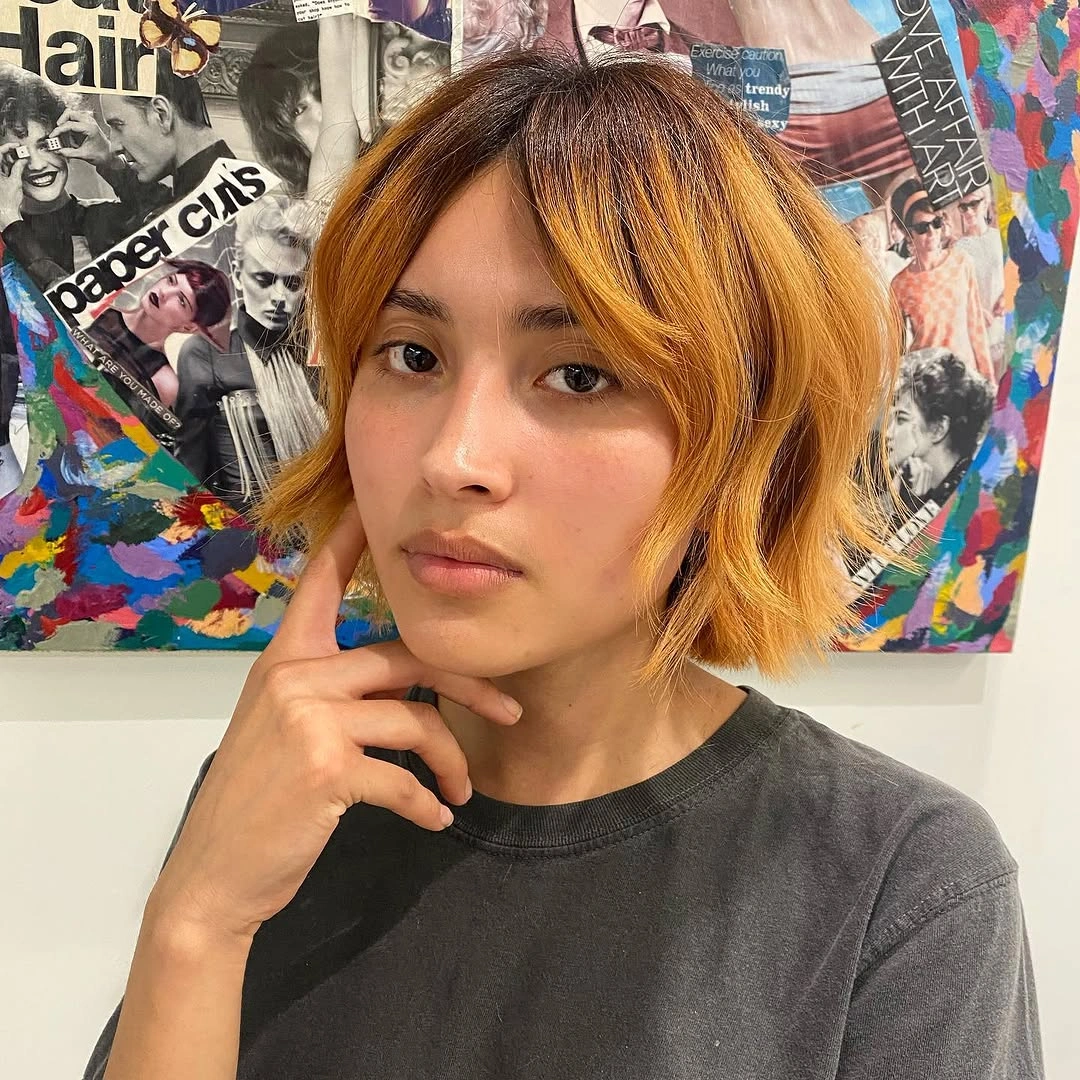
A chin-length bob gives this centered part a compact stage, while broad honey-blonde pieces brighten both sides of the face against a darker base. The ends stay close to the jaw instead of spreading into layers, so the color placement becomes the defining feature rather than a complicated cut. It is a playful example of middle parting hairstyles because the bright front sections make the symmetry easy to notice without needing extra decoration.
What keeps the color from feeling scattered is the simple outline beneath it. The darker root area gives the warm front pieces a visual anchor, and the jaw-length edge prevents the lighter sections from turning into a long vertical stripe. If you like the idea but want less contrast, the same balance can be approached with softer honey pieces placed only around the cheek area.
This compact shape is easiest to judge by the edge at the jaw, because any bend or uneven end will change the whole impression. It may suit someone who likes a clear, noticeable frame and is comfortable keeping a short outline tidy. The tradeoff is that the bright pieces do not have long layers to diffuse them, so the result stays intentionally graphic rather than softly blended.
Long Brunette Layers Opening at the Center
Long brown hair falls below the chest here, with a smooth middle part and gentle pieces that open around the cheeks before joining the lower length. The crown stays controlled while the ends carry only a small bend, which makes the style read as polished rather than heavily waved. That combination gives the long silhouette direction without hiding the clean vertical line created by the center.
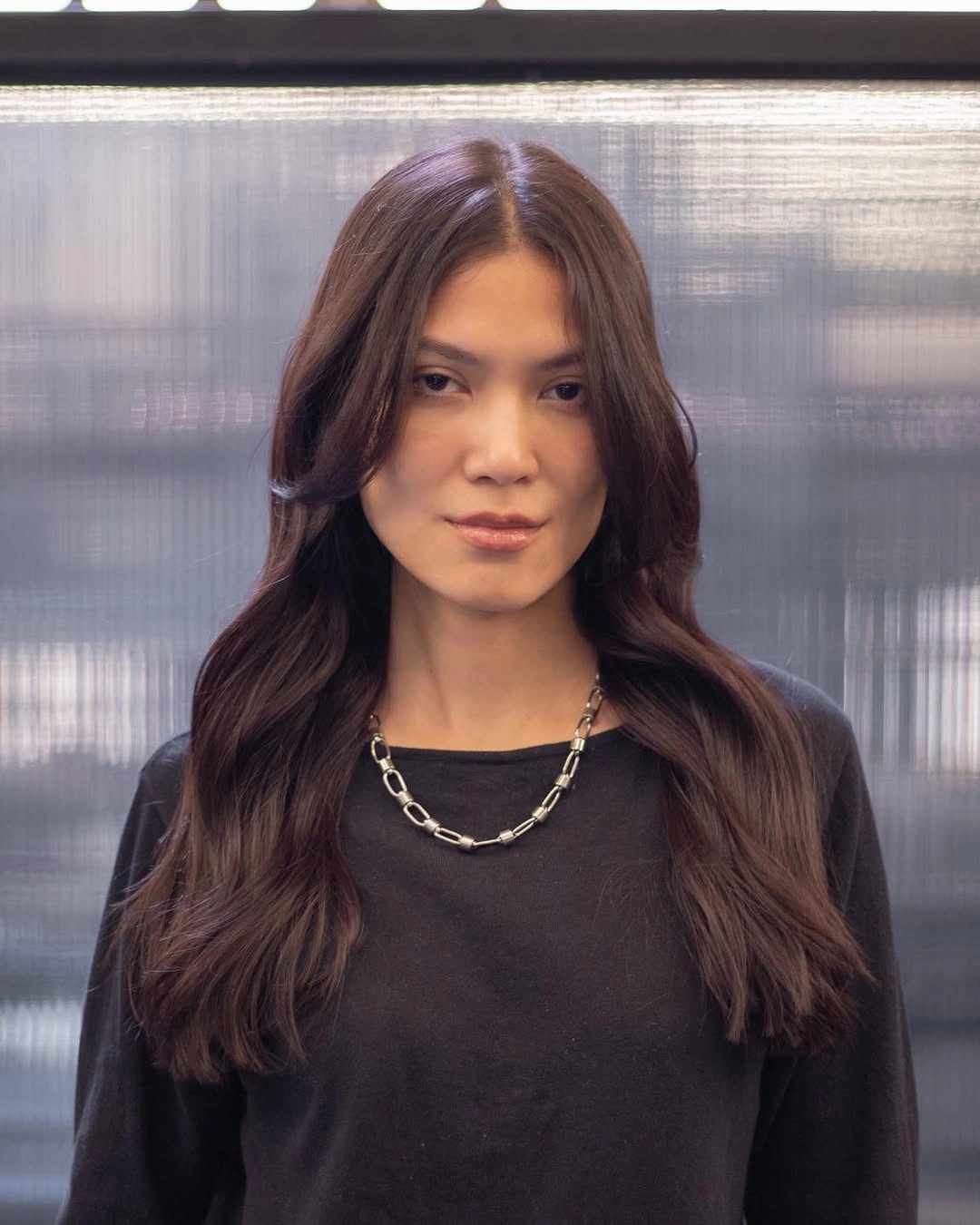
The front layers matter because they stop the length from looking like one uninterrupted sheet. They create a soft break beside the face, while the unbroken top preserves a balanced, symmetrical feeling. For a lighter version, ask for shorter pieces only where you want movement; keeping the lower length calm will maintain the same refined proportion.
Long smooth hair can be visually simple, but the simplicity makes the ends and front sections important to maintain. This version works for someone who wants middle parting hairstyles with a quiet finish and enough framing to avoid a flat curtain. The honest limitation is that the look relies on the front layers sitting in the intended direction, so a more natural, irregular texture will create a different silhouette.
Rounded Dark Bob with Soft Inward Ends
A dark bob ending near the chin gives the center part a neat, rounded frame. The sides curve gently toward the face, and the ends turn slightly inward rather than forming a hard horizontal shelf. Because the background and top are understated, the visible priorities are the open neckline, the compact outline, and the soft curve that keeps the short cut from feeling severe.
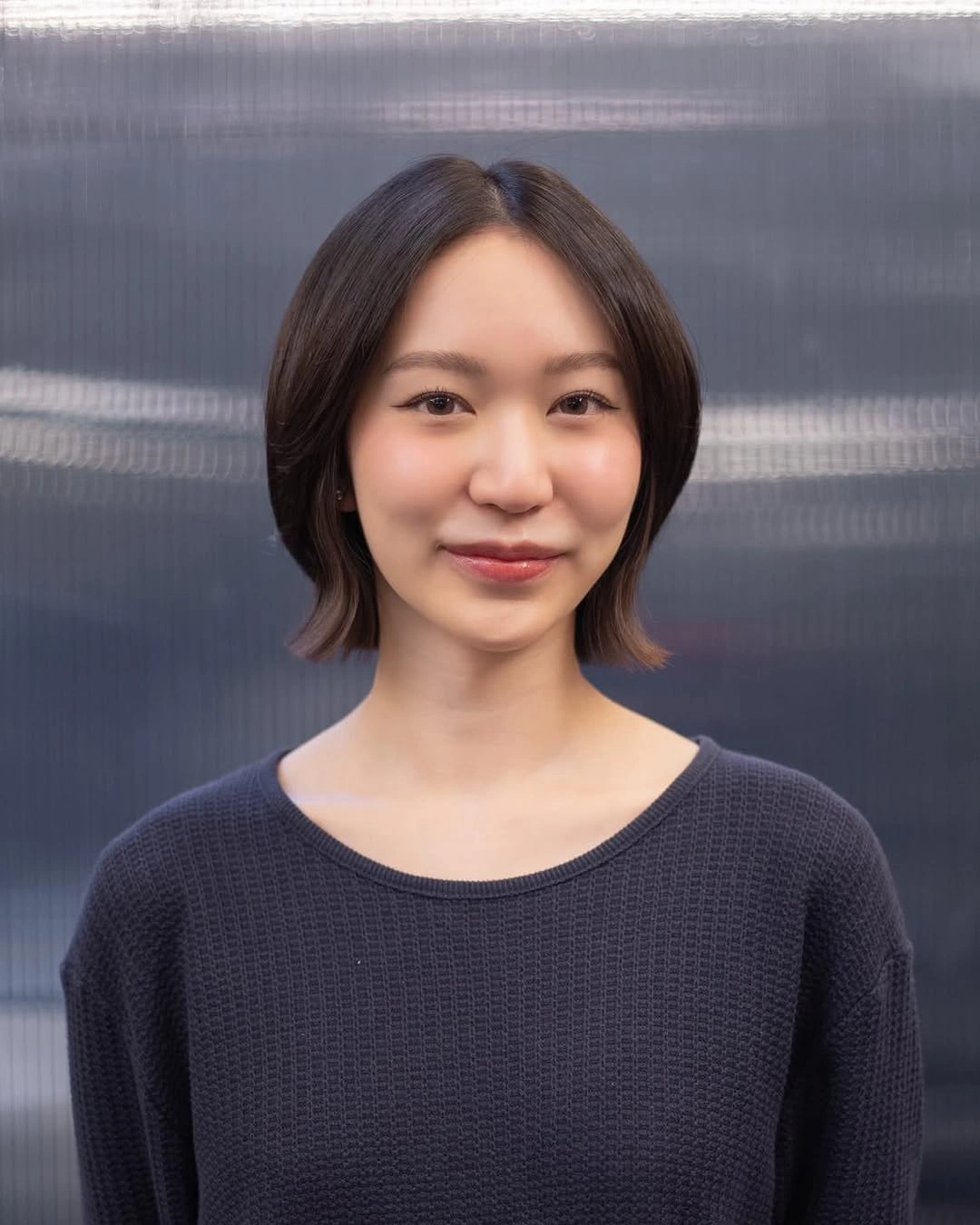
The rounded edge supplies the softness that longer layers would normally provide. With the hair divided evenly at the center, the inward turn creates a quiet sense of balance around the cheeks and jaw. If you prefer a little more movement, the same basic shape could keep the part while allowing the ends to bend outward on selected days, changing the mood without changing the length.
This is a useful choice when you want a tidy short style but do not want a sharply geometric finish. The main tradeoff is that the curve needs to remain visible, so a very irregular texture or a deliberately tousled finish would move the result away from the smooth rounded idea. It also shows how a simple dark color can carry a whole hairstyle when the silhouette is considered.
Airy Shoulder Waves Around the Cheeks
Light blonde hair reaches the shoulders and separates at the center before falling into loose waves. Shorter pieces sit around the cheekbones, while the ends remain uneven enough to keep the shape airy instead of formal. Among these middle parting hairstyles, this one sits between a bob and long layers, using moderate length and open texture to make the center line feel softer.
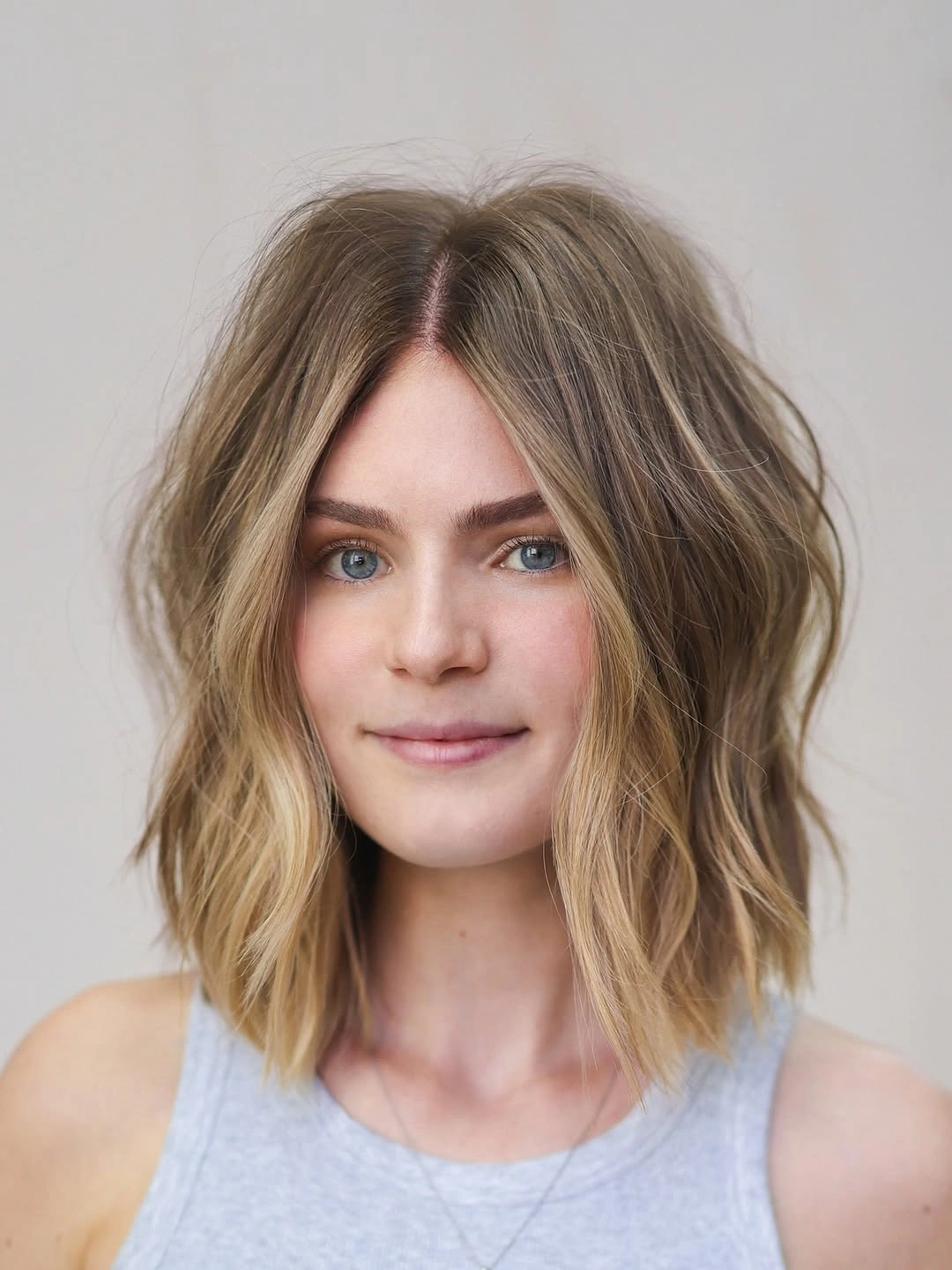
The waves add width through the lower half of the style, but the open part keeps the forehead and upper face clear. That contrast is why the look feels relaxed rather than heavy: movement is distributed around the cheeks instead of piled at the crown. A useful adaptation is to keep the front pieces light and let the back stay closer to the shoulder line if you want the same idea with less overall volume.
This length offers a practical compromise for anyone who likes visible movement but does not want a very long routine. The loose pattern is forgiving compared with a sleek bob, although the airy finish can lose its shape if the ends are pressed flat. It is also less controlled than the long brunette example, so the final result will naturally vary more from day to day.
Minimal Sleek Bob with a Precise Outline
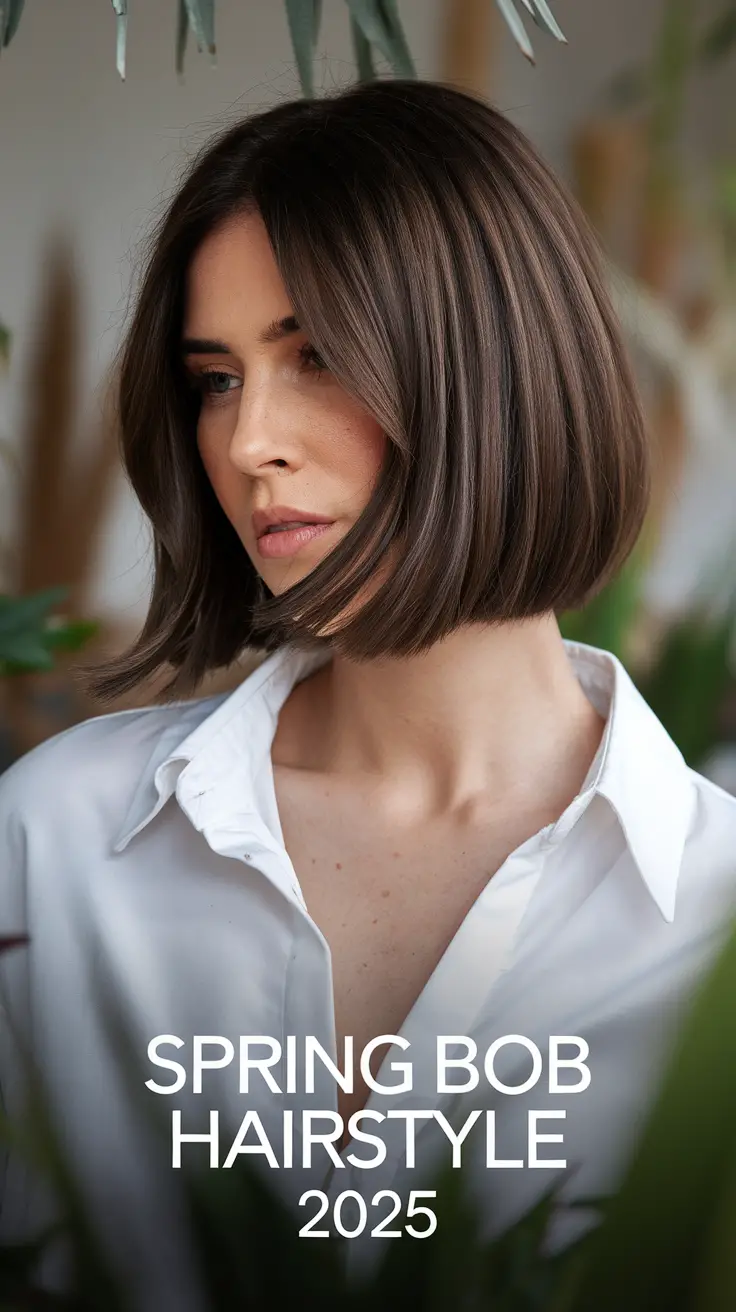
Dark brown hair sits close to the chin with a clean center part and an almost even line through the ends. The surface is smooth, the shape is compact, and the small inward turn keeps the outline from looking completely rigid. There are no bright pieces or visible waves to compete with the part, so this becomes a study in how little a short style needs when the perimeter is clear.
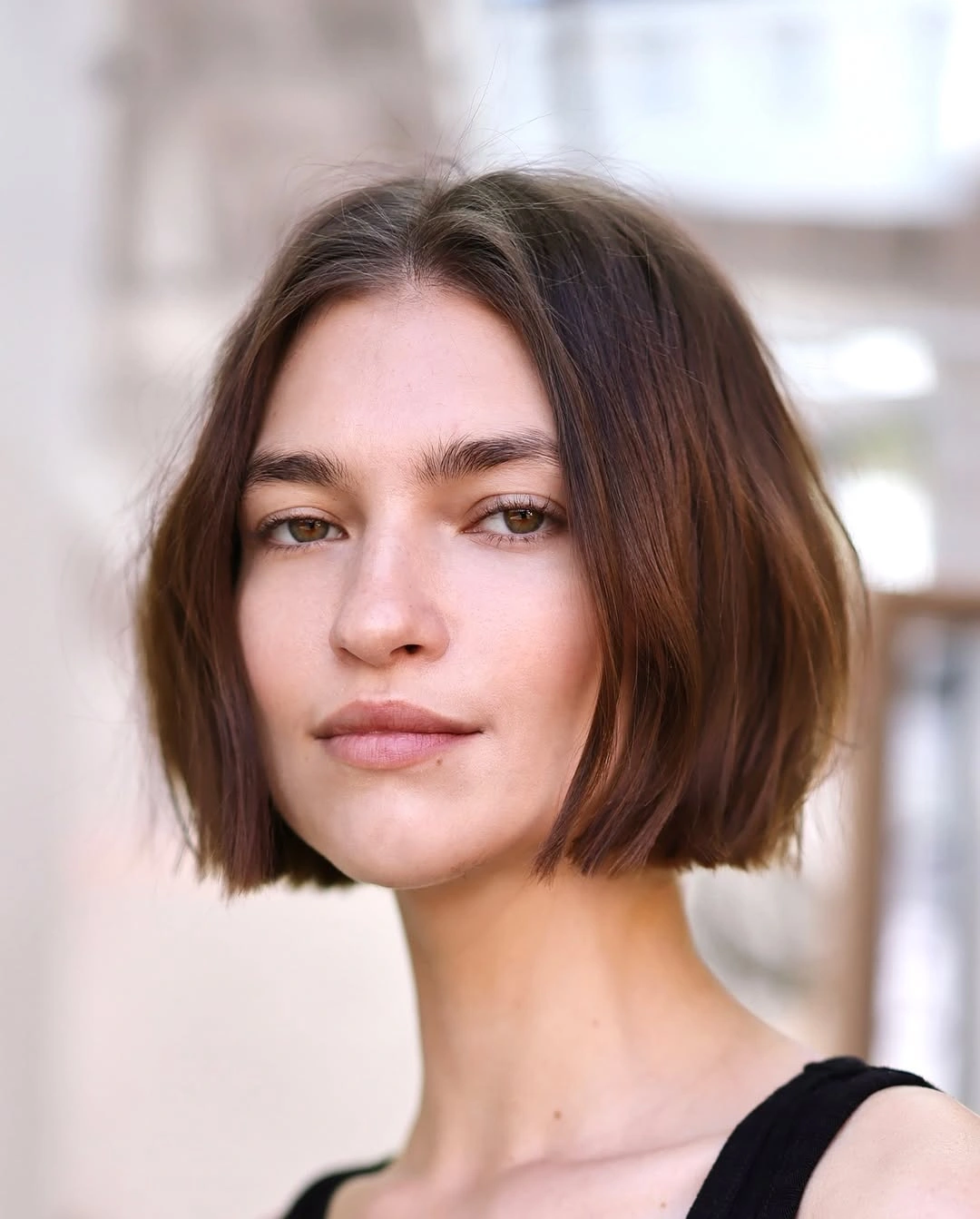
The centered division works here because the two sides meet the jaw in nearly the same visual language. A slight curve at the ends gives the face a softer border, while the dark color reinforces the tidy geometry. If you want to loosen the effect, changing the finish through a small bend at the ends will make a larger difference than adding decoration to the top.
This bob suits a reader who enjoys a polished, low-noise silhouette and does not mind keeping the edge looking intentional. The limitation is visible upkeep: when the ends lose their line, the whole style changes because there are no layers to disguise the shift. Compared with the rounded bob, this version feels more minimal and less dependent on fullness around the sides.
Bright Front Pieces over Soft Blonde Waves
Blonde hair falls just past the shoulders with a centered part, darker roots, lighter strands beside the face, and loose bends through the lengths. The front pieces are shorter and brighter, while the lower hair carries a relaxed wave instead of one repeated curl. That arrangement makes the color and movement support each other: the eye meets the light near the face, then follows the softer texture downward.
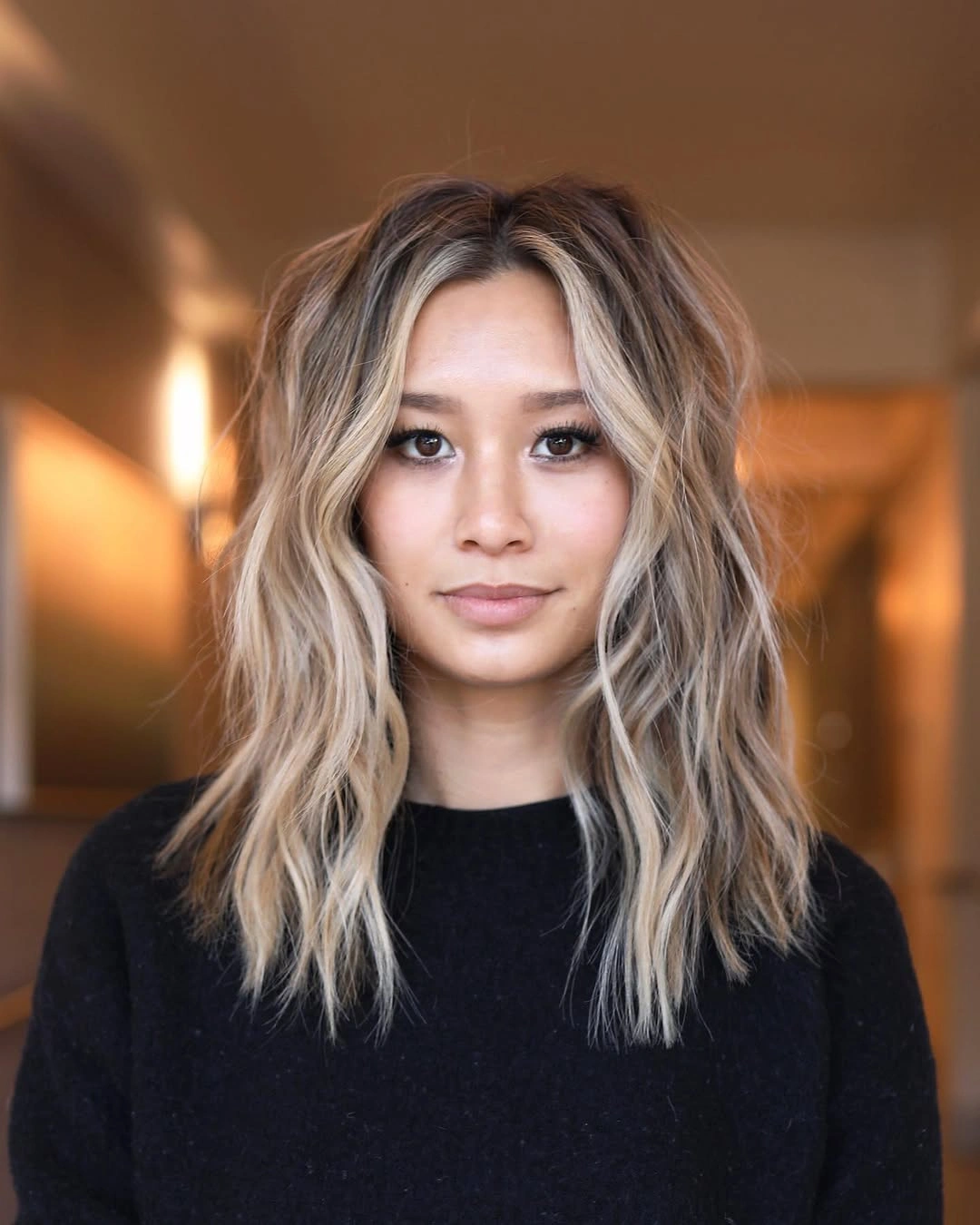
The darker root area gives the bright framing a place to start, and the waves keep the contrast from reading as a hard block. A middle part remains visible because the top is calmer than the ends, which prevents the lighter pieces from closing over the forehead. For a quieter adaptation, keep the brightness near the cheekbones and let the lower layers stay closer to one blonde family.
This idea is more dimensional than a single-tone shoulder cut, but it still avoids the maintenance pressure of a very long, highly layered style. The tradeoff is that color placement does much of the framing work, so the look can feel less defined if the front pieces are tucked away. It is a good comparison point for anyone deciding whether movement or contrast should be the main feature.
Lifted Layers Breaking Up Long Length
Long brown hair is divided in the middle and shaped with visible rounded layers that begin near the cheekbones. The upper section stays relatively smooth, while the lower pieces turn outward in a sequence that creates lift and width. Instead of allowing the length to fall as one vertical column, this approach gives the center part a lively frame and lets the ends continue the same outward direction.
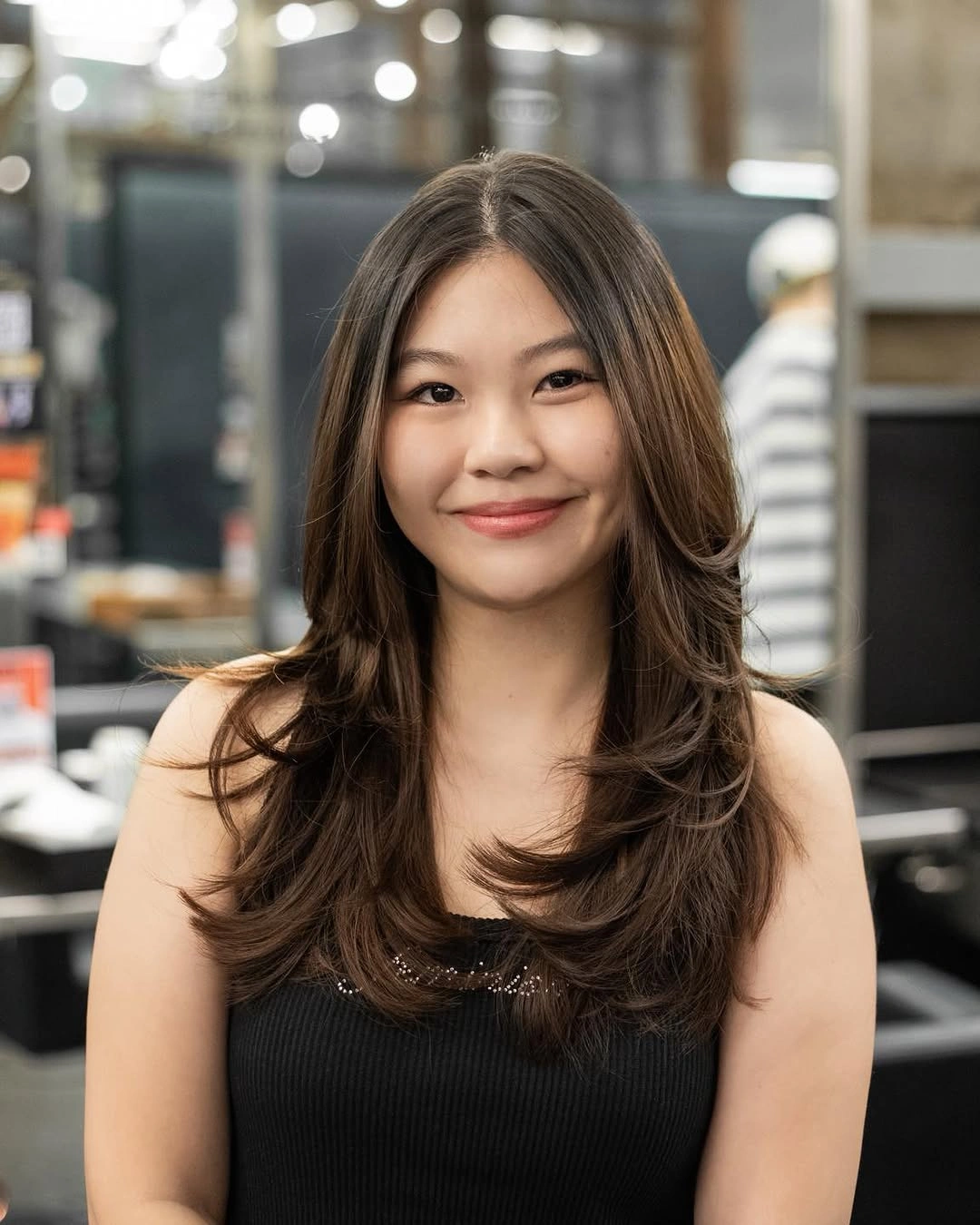
The proportion works because the first layers are high enough to be seen but the lower length remains generous. That keeps the face open without sacrificing the drama of long hair, and the repeated flip gives the silhouette a clear rhythm. If you prefer a calmer finish, the layers can be brushed into a softer curve while preserving their placement around the cheeks.
Long layered hair asks for more attention at the front than a one-length style, especially when the lift is part of the visual idea. It can be rewarding for someone who wants movement that reads from a distance, but the tradeoff is that the ends may look less settled on a low-maintenance day. Compared with the smooth long look, this shape feels fuller and more expressive because the volume is distributed in tiers.
Tousled Waves with a Relaxed Center Opening
Dark brown hair falls below the shoulders in loose, uneven waves, with curtain-like pieces separating around the face. The middle part is visible but not pressed into a severe line, and the wave sizes change enough to keep the lower outline slightly undone. A dark blazer adds polish in the setting, yet the hair itself stays tactile and relaxed rather than perfectly arranged.
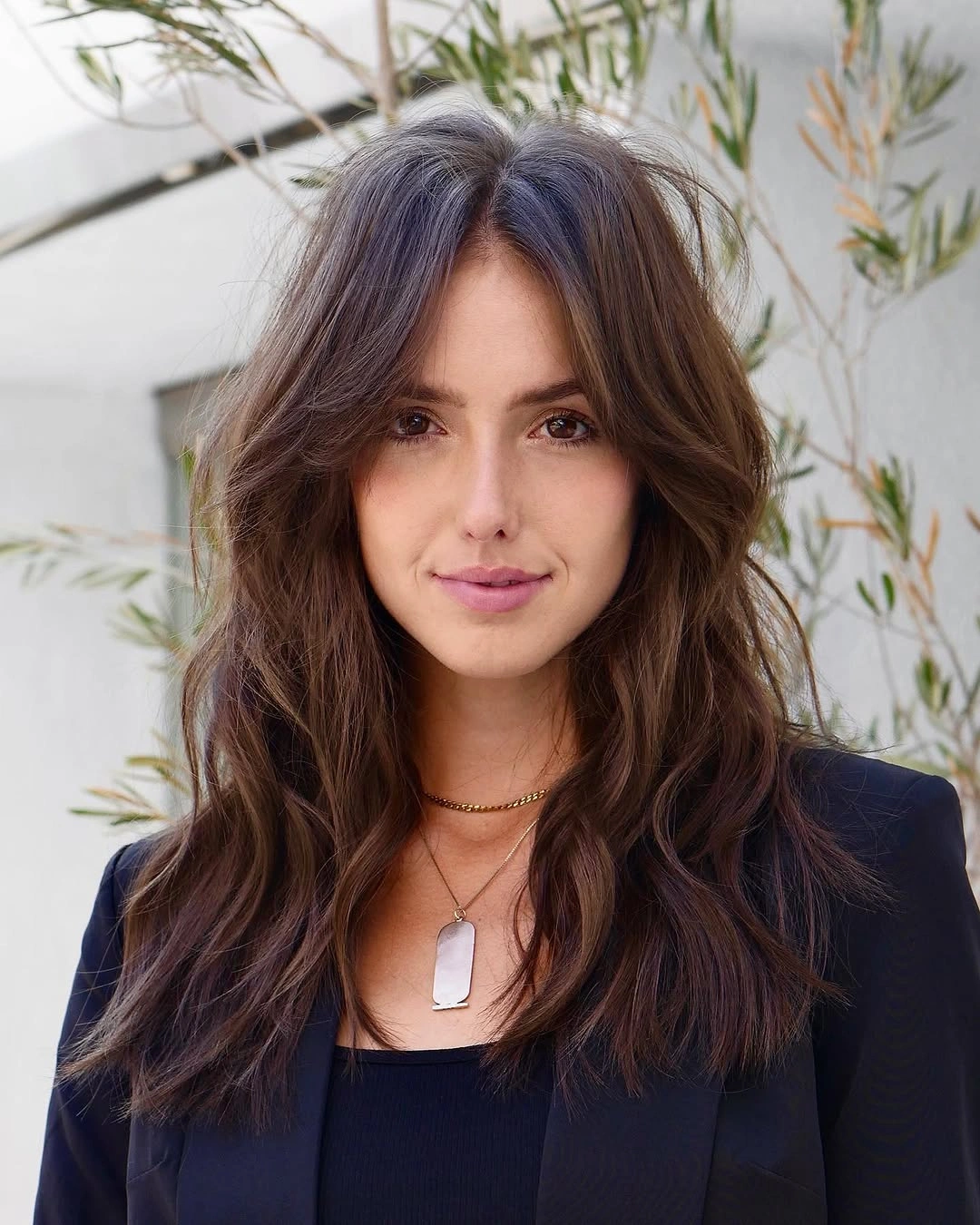
The calm crown and irregular lengths create a useful balance. The center opening keeps the face from disappearing into the texture, while the uneven waves supply softness and fullness lower down. To adapt the idea for a neater mood, smooth only the top and first few inches of the front pieces, leaving the ends varied so the style does not lose its character.
This is a strong direction for someone who wants movement without a visibly formal finish. The honest limitation is predictability: a loose, irregular wave pattern will not land the same way every morning, and a very smooth texture may need more shaping to match the pictured fullness. It also looks more casual than the rounded waves in the next long example, which may be exactly the point.
Full Honey Waves with a Clear Upper Balance
Honey-blonde hair extends well below the shoulders and forms broad, rounded waves through the lengths. The center part leaves a clean opening at the top, while face-framing layers guide the bright color into the fuller lower shape. This is one of the more generous middle parting hairstyles in the set, but the open crown stops the volume from crowding the face.
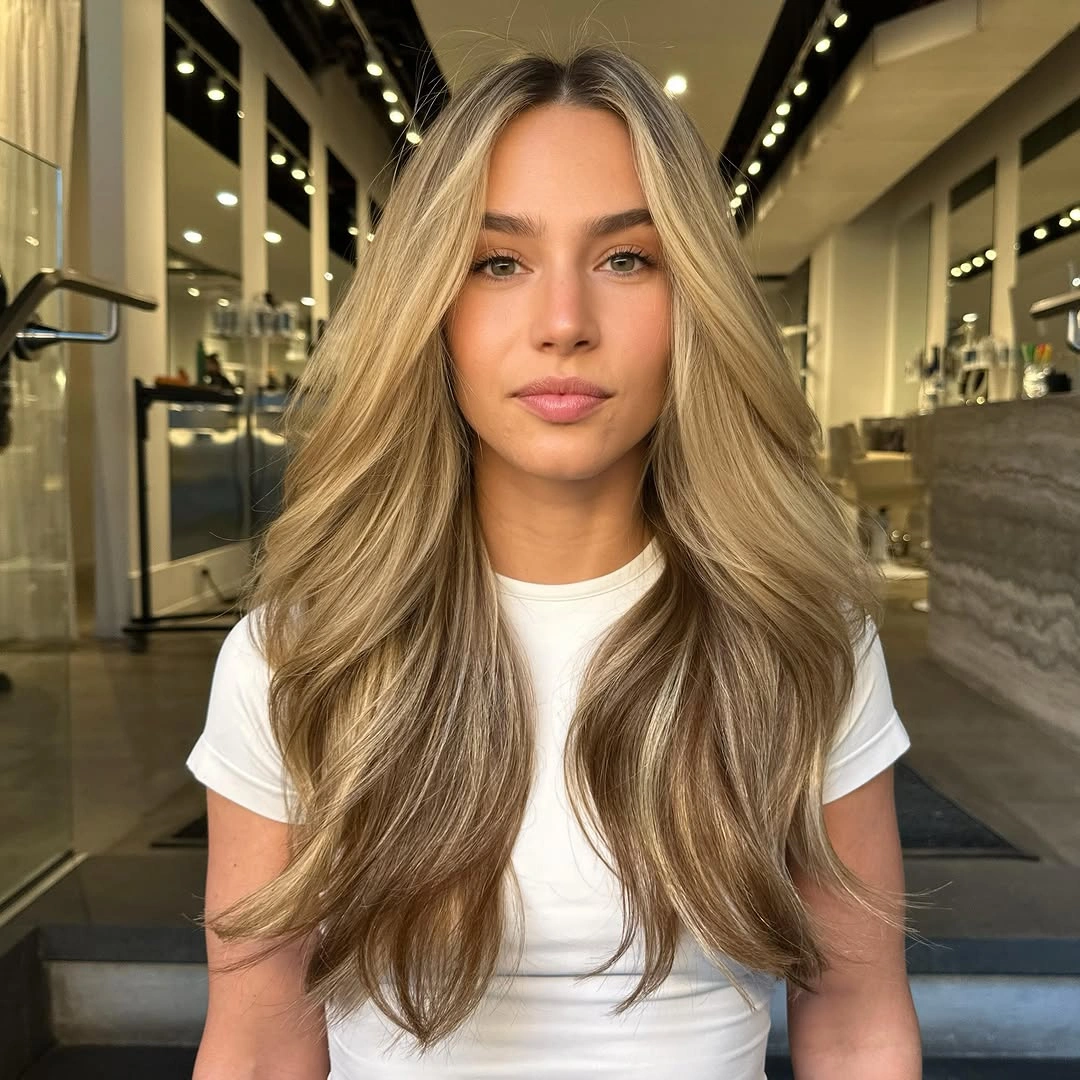
The warmth of the color and the width of the waves make the hair look substantial, so the calm part performs an important organizing job. It creates a simple starting point before the eye moves through the larger curves, and the shorter front pieces keep the sides from becoming one solid mass. A softer version could use the same center opening with less wave through the lower half.
This silhouette suits a reader who wants noticeable fullness and a warm palette rather than a barely-there finish. The tradeoff is visual weight: the hair is more present than a shoulder-length wave, and the broad shape needs enough room to keep its movement visible. Compared with the tousled brunette look, this one is more uniform, brighter, and easier to read as a deliberate wave pattern.
High-Contrast Black Bob with Curved Ends
Black hair is cut close to the jaw with a center part, smooth surface, and softly rounded ends. The white shirt behind it increases the contrast, making the compact shape and exposed neck easy to see. Nothing competes with the outline, so this style feels graphic without relying on a sharp line; the small inward curve keeps the result approachable.
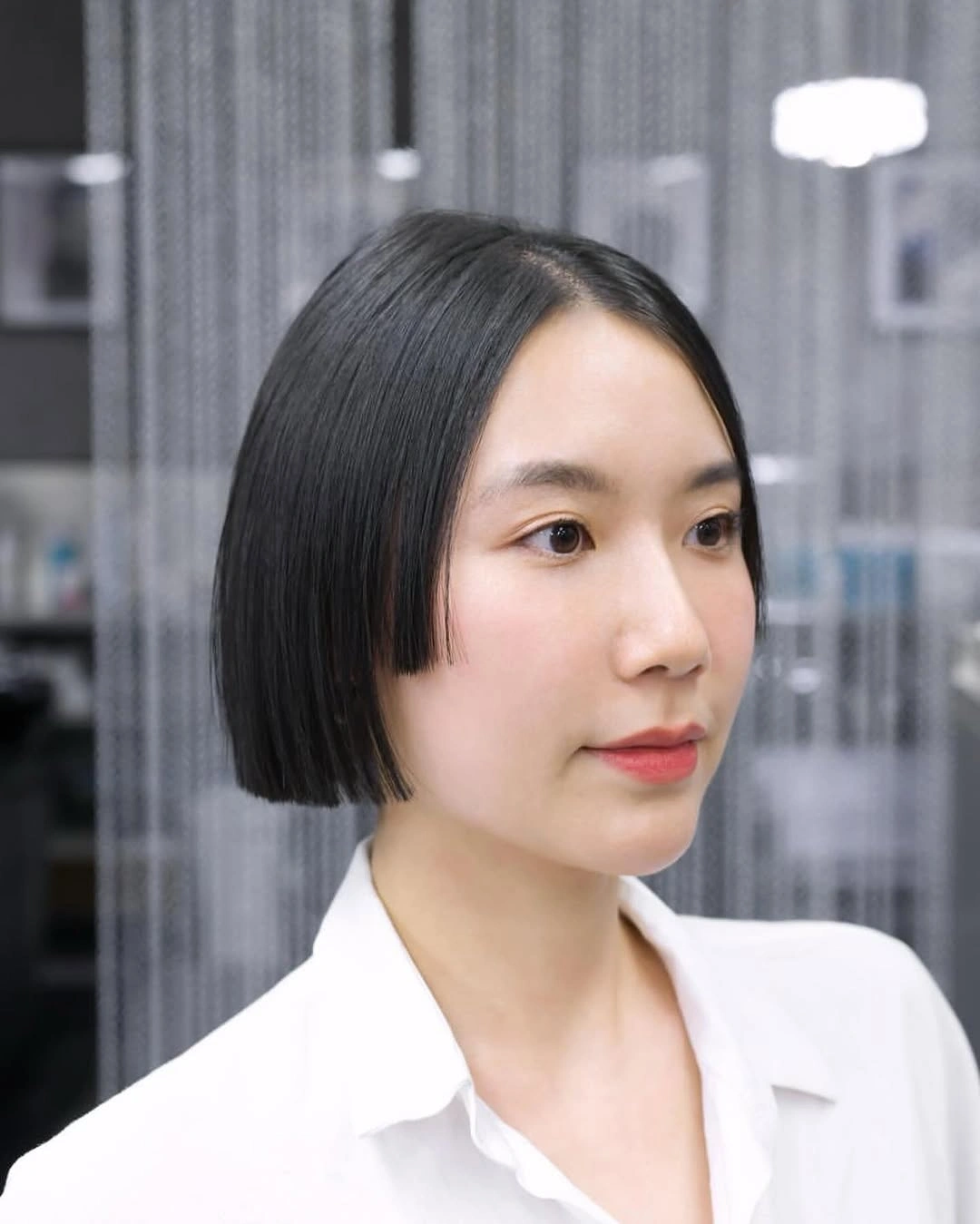
The middle part acts like a clean centerline, while the curved sides create a frame that is softer than a flat geometric bob. The dark color strengthens the shape from root to end, which is why the silhouette remains readable even though the styling is simple. If you want less intensity, a slightly looser surface or a warmer dark tone would soften the contrast while keeping the same short proportion.
This is a practical reference for someone who likes a compact, polished look and wants the haircut to do the talking. The limitation is that a very simple outline leaves little visual cover for uneven ends or unwanted puffiness. Compared with the warm blonde bob, this version has less color variation but more impact from contrast and shape alone.
Three-Quarter Bob with a Quiet Side Contour
Very dark hair reaches the jaw and opens near the center, but the three-quarter angle makes the side contour just as important as the part. The surface remains smooth and the ends tuck gently inward, creating a tidy curve along the cheek and neck. This view shows why a short center-parted style can feel balanced even when the front is not perfectly symmetrical to the viewer.
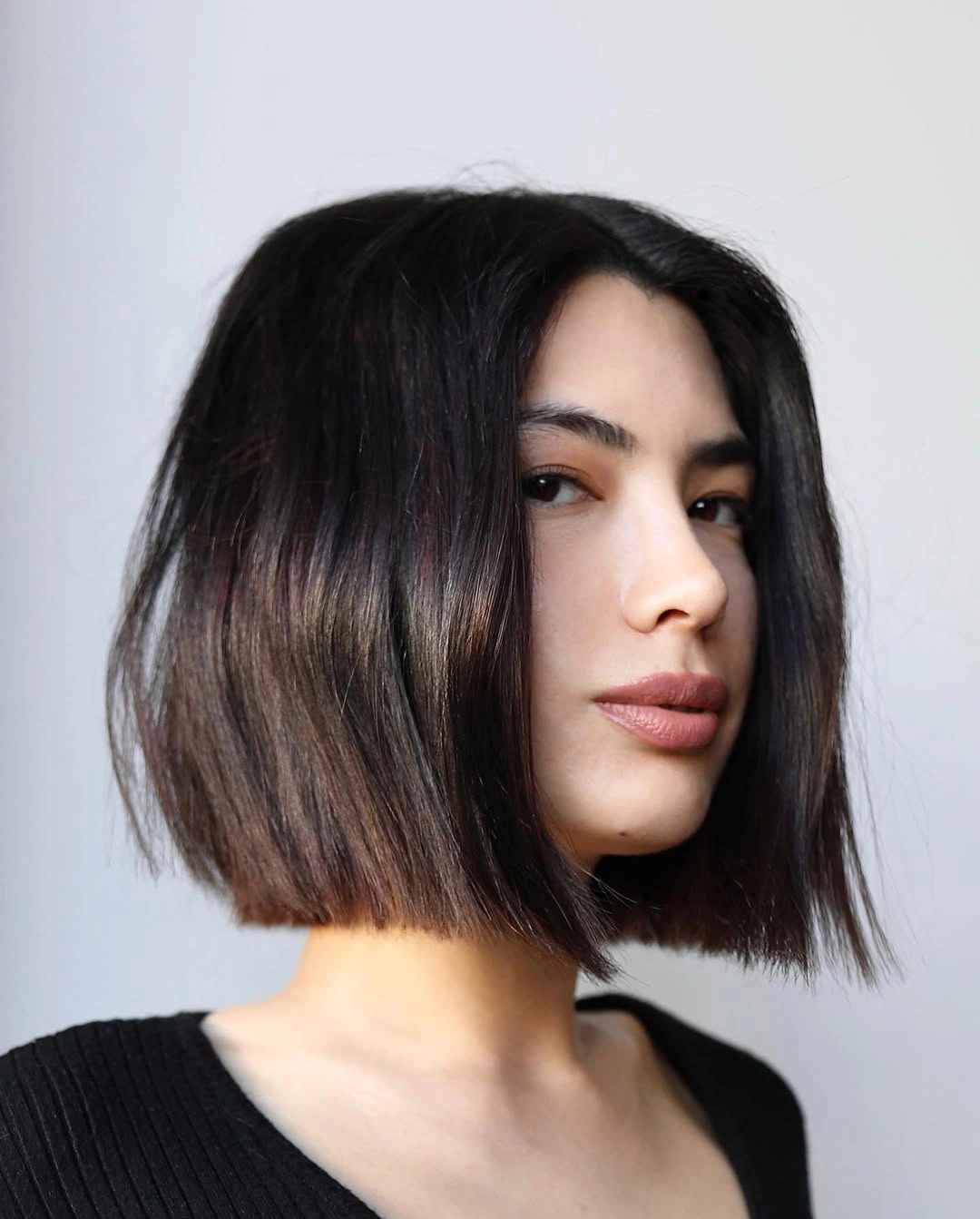
The side line supplies a gradual transition from the center opening to the jaw. Instead of adding layers, the shape relies on a controlled curve that follows the head and then turns under near the ends. If your preference is more casual, allowing the side to sit slightly away from the neck would keep the contour visible while reducing the polished effect.
This look is well suited to readers who care about how a bob reads from more than one angle. Its tradeoff is that the clean contour depends on the ends staying in place, and a strong wave pattern would change the tidy relationship between head, cheek, and neck. It is more sculpted than a loose layered bob, but less stark than a straight line with no curve.
Short Layers with Ends Turning Outward
Dark hair sits around the jaw and shoulders with a center part, shorter pieces near the face, and ends that turn outward slightly. The shape is still compact, but the small outward movement gives it a lighter, more animated edge than an inward-curved bob. That difference shows how a modest change at the perimeter can shift the attitude of middle parting hairstyles without changing their central division.
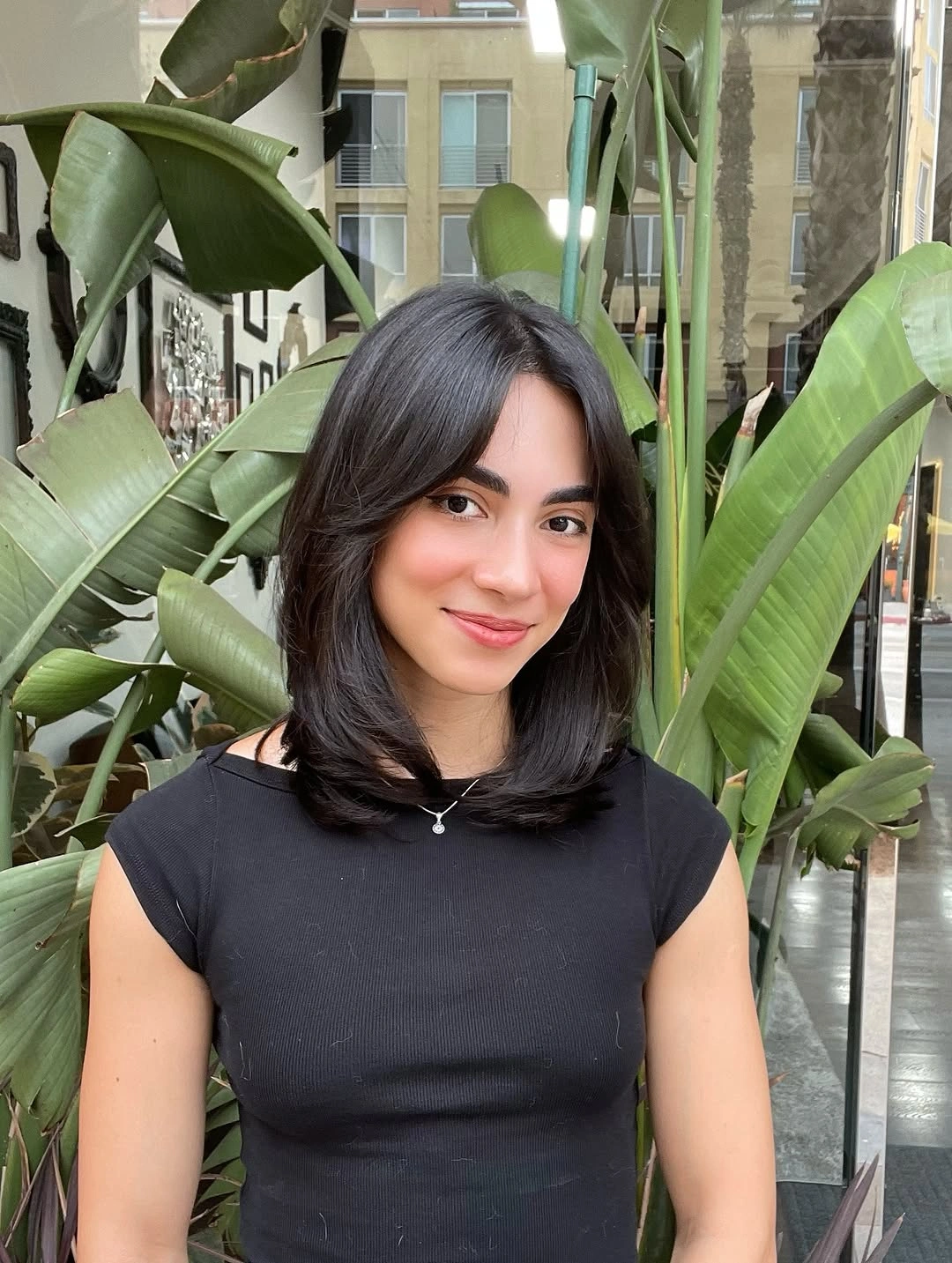
The face-framing pieces create a step between the middle part and the lower length, while the outward ends keep the sides from closing toward the cheeks. The result has more movement than a one-line bob but less volume than a full wave. For a subtler variation, keep the front layers smooth and let only the last inch turn away from the face.
This shape works for someone who wants a short cut that can look neat or slightly playful depending on the finish. The limitation is that the outward turn is part of the identity, so flattening every end will make it resemble a simpler bob. Compared with the dark rounded examples, it offers a bit more air and direction while staying easy to understand from the front.
Airy Pale Blonde Bob with Open Ends
Pale blonde hair is parted in the middle and cut around the jaw, but the ends bend outward instead of forming a dense, closed edge. The light color against a dark jacket makes the airy perimeter visible, and the shorter length keeps the look crisp even though the finish is relaxed. It is a good reminder that a short shape can feel soft through movement rather than through extra length.
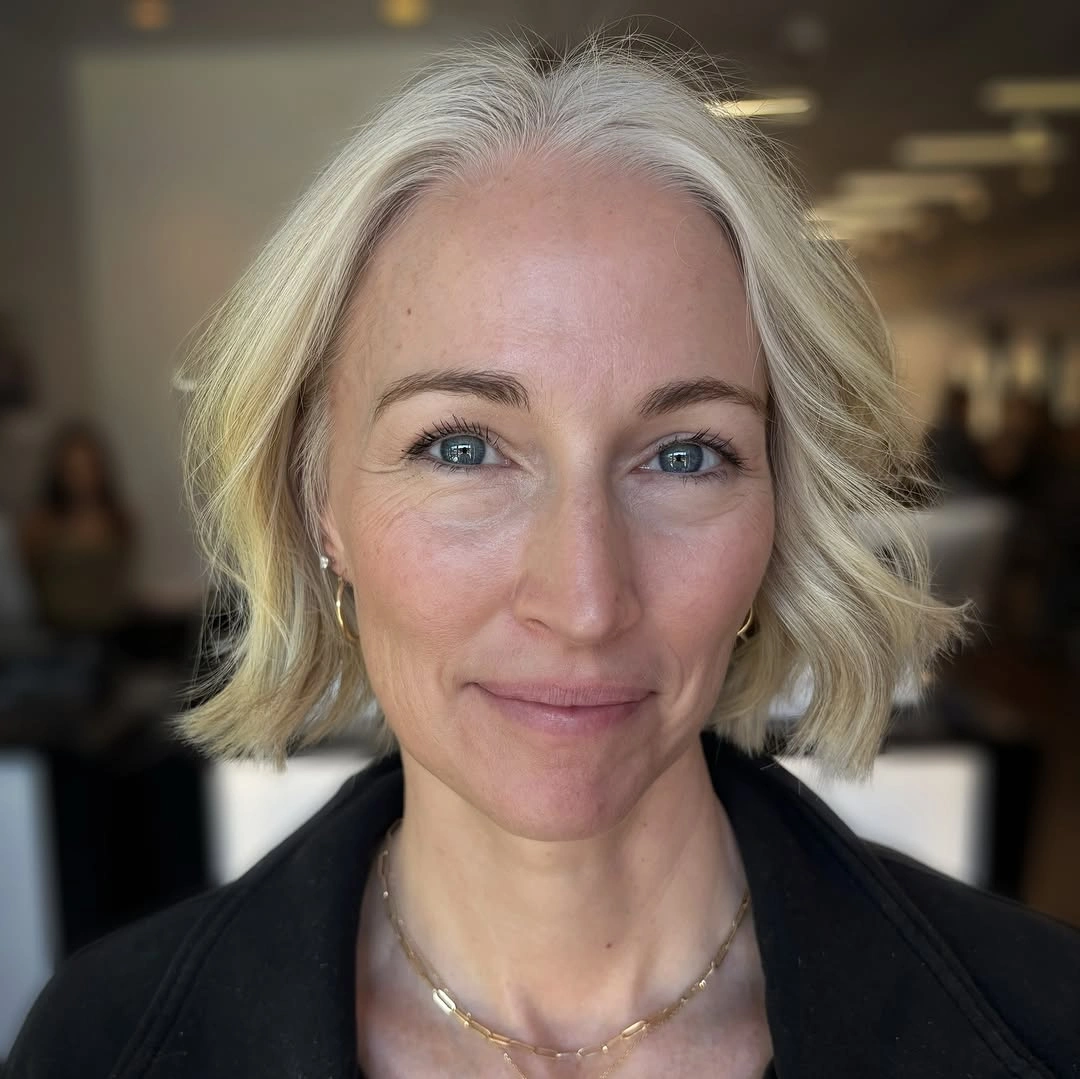
The center part stays readable because the crown is calmer than the sides. Once the hair reaches the cheek and jaw, the ends open away from the face, creating negative space that lightens the compact silhouette. If you want a more restrained version, let the ends make only a slight bend; the key is the open direction, not a large flip.
This option is useful for readers who like the clarity of a bob but want less density around the jaw. The honest tradeoff is that the airy finish needs enough shape to remain visible, so a fully flat result will look more severe and a very irregular texture may blur the outline. Compared with the dark rounded bob, the light color and lifted ends make the same short proportion feel more delicate.
Long Warm Layers with a Soft Curtain Frame
Warm brown hair reaches below the shoulders and separates at the middle before flowing through broad, layered bends. Two shorter curtain pieces open around the eyes and cheeks, then merge into the longer body of hair. The part is present without looking drawn on, because the front layers soften the division and carry the eye smoothly into the length.
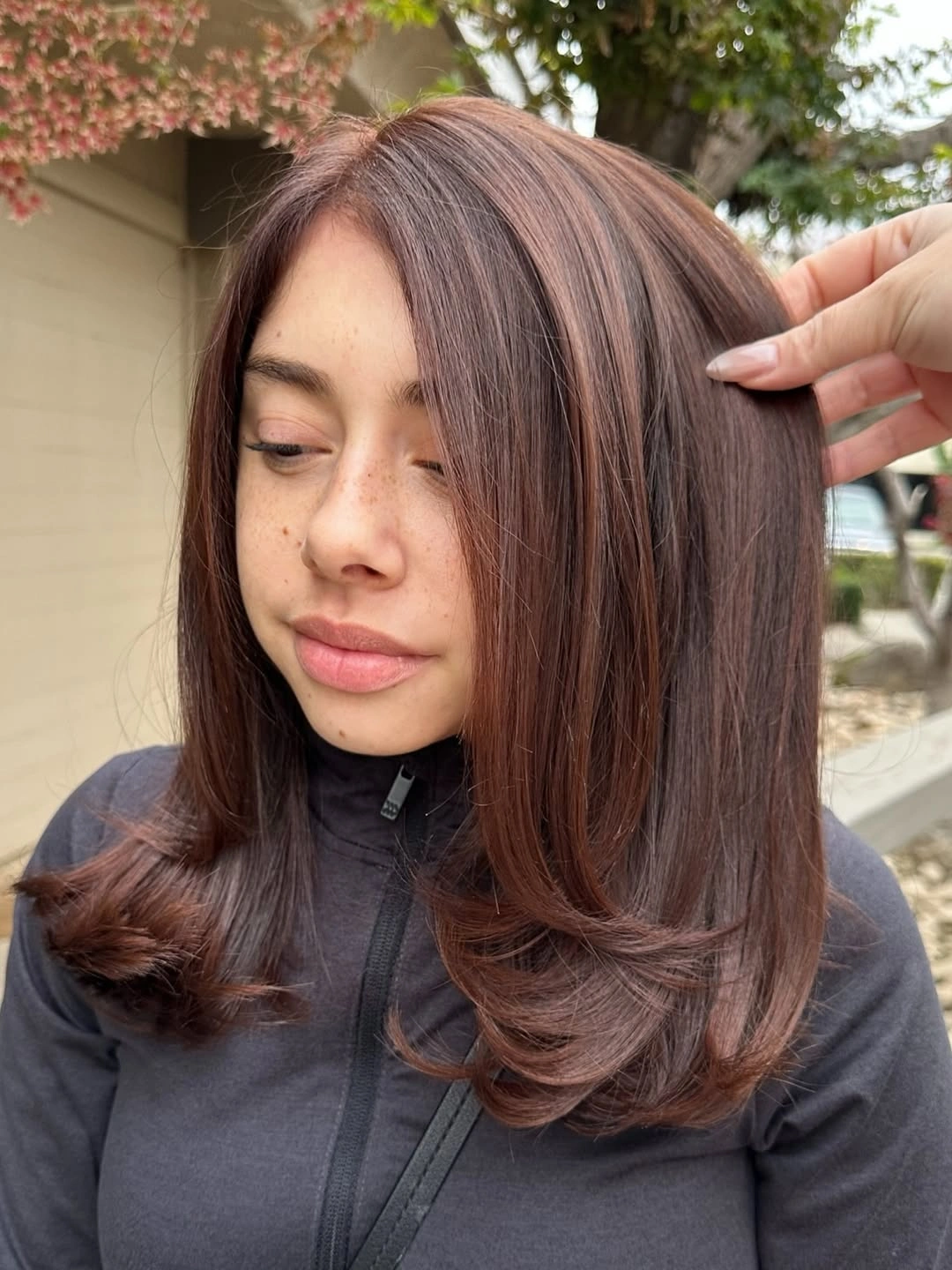
The styling works through a gradual handoff from short to long. The curtain pieces create a face-opening area, while the lower bends keep the silhouette from becoming flat or overly vertical. For an everyday adaptation, the front can be left less swept back and the lower hair allowed to keep a mild bend, preserving the same structure with less deliberate volume.
This is a flexible-looking long cut in the practical sense that it can read polished or relaxed depending on the finish, not because it requires no care. The tradeoff is that the front layers need to fall in the right direction to keep the curtain effect clear. Compared with the sleek long brunette style, this one is warmer, more layered, and more visibly connected to the face.
Cool Blonde Streaks with Feathered Movement
Long cool blonde hair combines a darker root area, bright ribbons beside the face, and broad layers that flip outward through the lengths. The middle part gives those high-contrast pieces a clean starting point, while the feathered perimeter spreads the brightness into a sweeping shape. This is a bold color arrangement, yet the repeated direction of the layers keeps it from looking random.
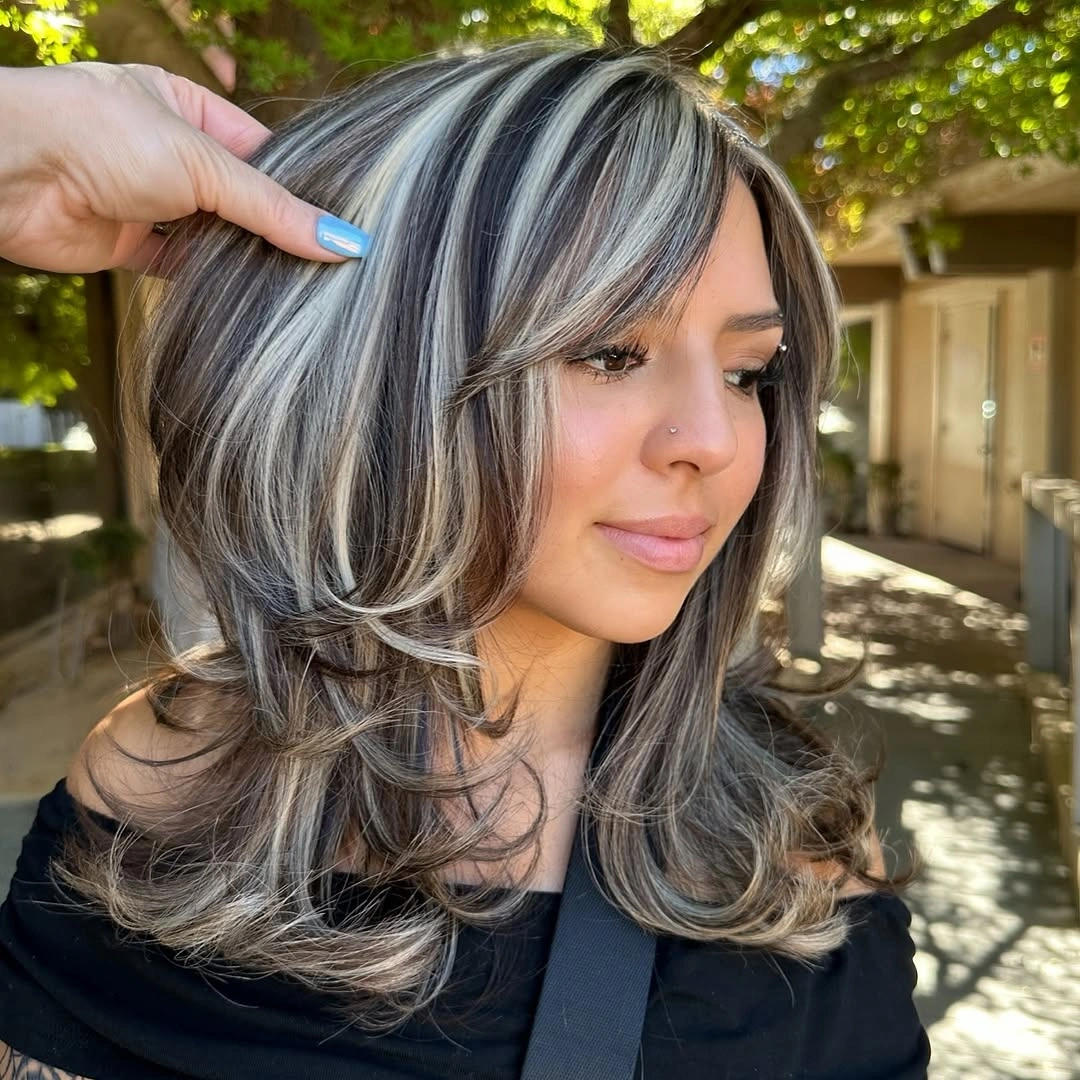
The visual balance comes from pairing strong contrast with a readable silhouette. The lightest pieces frame the center opening, and the outward-turning layers carry that brightness toward the shoulders instead of leaving it concentrated in two narrow strips. If you want a quieter result, reduce the number of bright front ribbons while keeping the same layered movement and centered division.
This style suits someone who wants the color to be noticed before the texture, then rewarded by movement on closer inspection. The limitation is that the high contrast can dominate a delicate shape, so the layers need enough separation to remain visible. Compared with the warm curtain layers, it is cooler, brighter, and more editorial, with a stronger demand for intentional styling.
Compact Bob That Leaves Room for Glasses
Dark hair is cut around the chin with a centered part and a smooth rounded outline, while glasses and a collared shirt add structure near the face. The hair remains the main silhouette, but the accessories show how a simple bob can share attention with other horizontal details without becoming crowded. The ends sit close to the jaw and do not rely on waves or large layers.
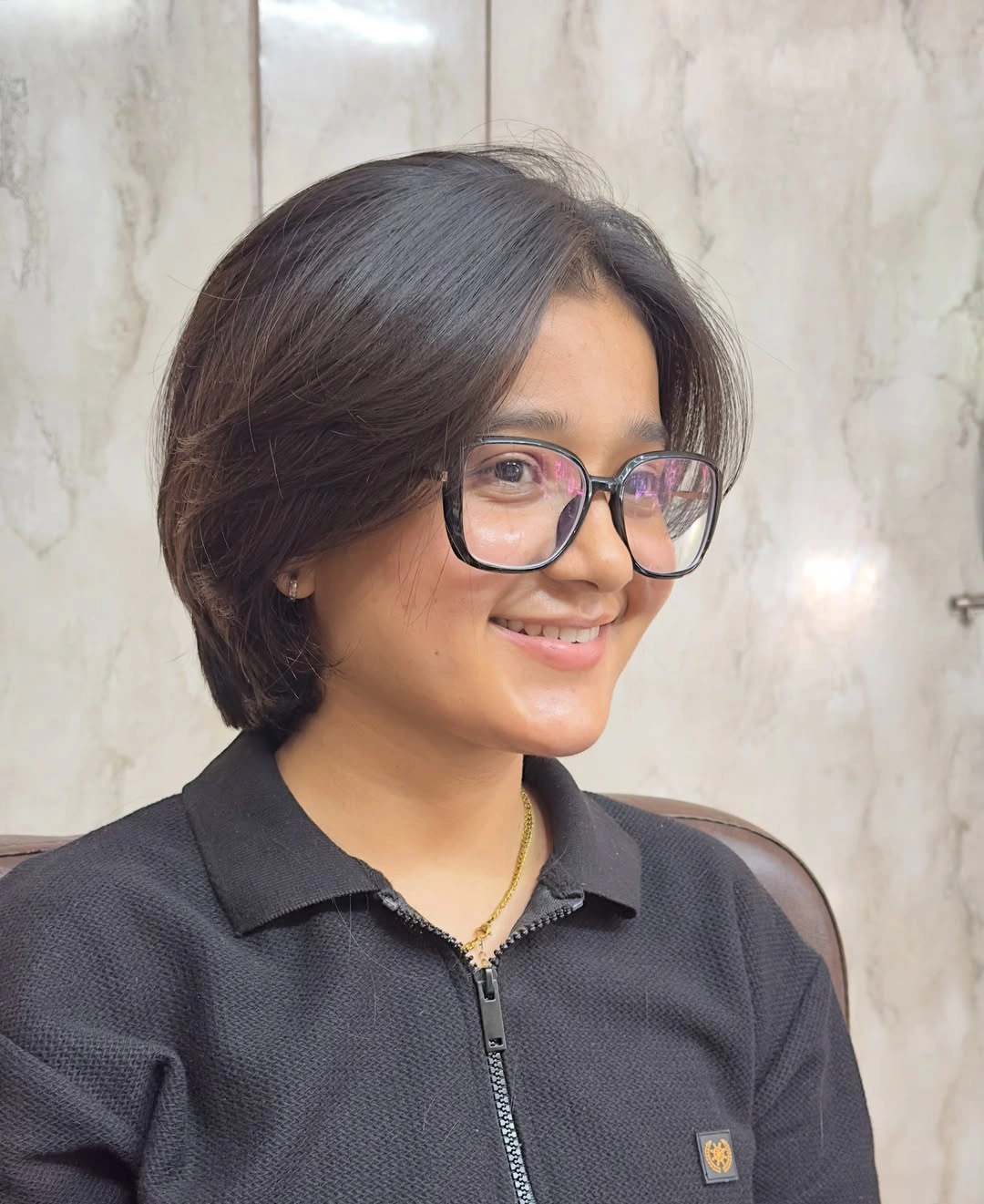
The calm hairline leaves enough visual space for the glasses to register as a frame rather than a competing pattern. A middle part keeps the upper shape balanced, and the compact sides echo the neatness of the collar. If you wear stronger frames or a more structured neckline, keeping the ends smooth and the front layers minimal can preserve this same relationship.
This is a practical choice for someone who wants a short center-parted style that works with everyday accessories. Its limitation is that the clean outline offers little softness if the finish becomes too flat, so a small curve at the ends may help maintain the gentle shape. Compared with the other dark bobs, the surrounding accessories make proportion and visual spacing more important.
Low-Starting Waves that Preserve Length
Ash-brown hair falls well past the shoulders, opens at the center, and begins its broad waves lower down rather than at the crown. The top stays smooth while the ends carry elongated movement, so the overall line remains long and relaxed. This placement gives the style texture without creating a large halo around the face or shortening the visual impression of the hair.
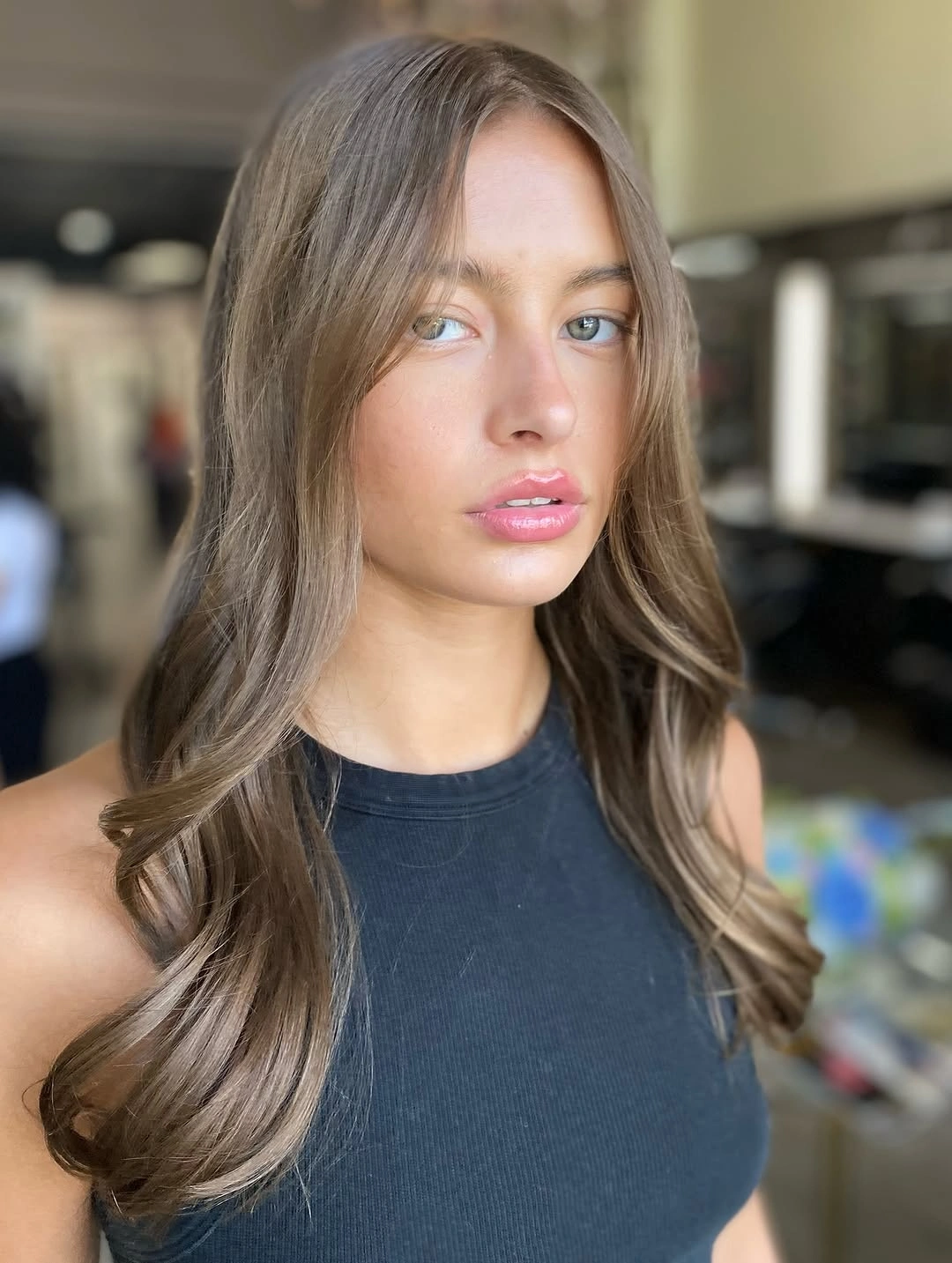
The center part anchors the calm upper section, and the lower waves provide just enough shape to keep the length from looking static. Because the volume starts below the cheek area, the face remains open and the silhouette reads vertically before it widens near the ends. A useful variation is to add a small bend beside the face only if you want more framing without moving the main volume upward.
This approach suits someone who likes movement but wants the crown to stay understated. The tradeoff is that the waves may be less visible from the front when the hair is very straight or fine-looking, while a stronger texture could make the lower shape fuller than intended. Compared with the honey waves, this finish is cooler, less rounded, and more focused on preserving length.
Medium Layers with Cheek-Level Movement
Dark medium-length hair rests near the shoulders, separates in the middle, and uses shorter pieces around the cheeks to create a stepped outline. The ends carry soft bends rather than large waves, giving the style lift without the fullness of the longer examples. It is a balanced middle option for anyone deciding between a compact bob and a long, sweeping layered shape.
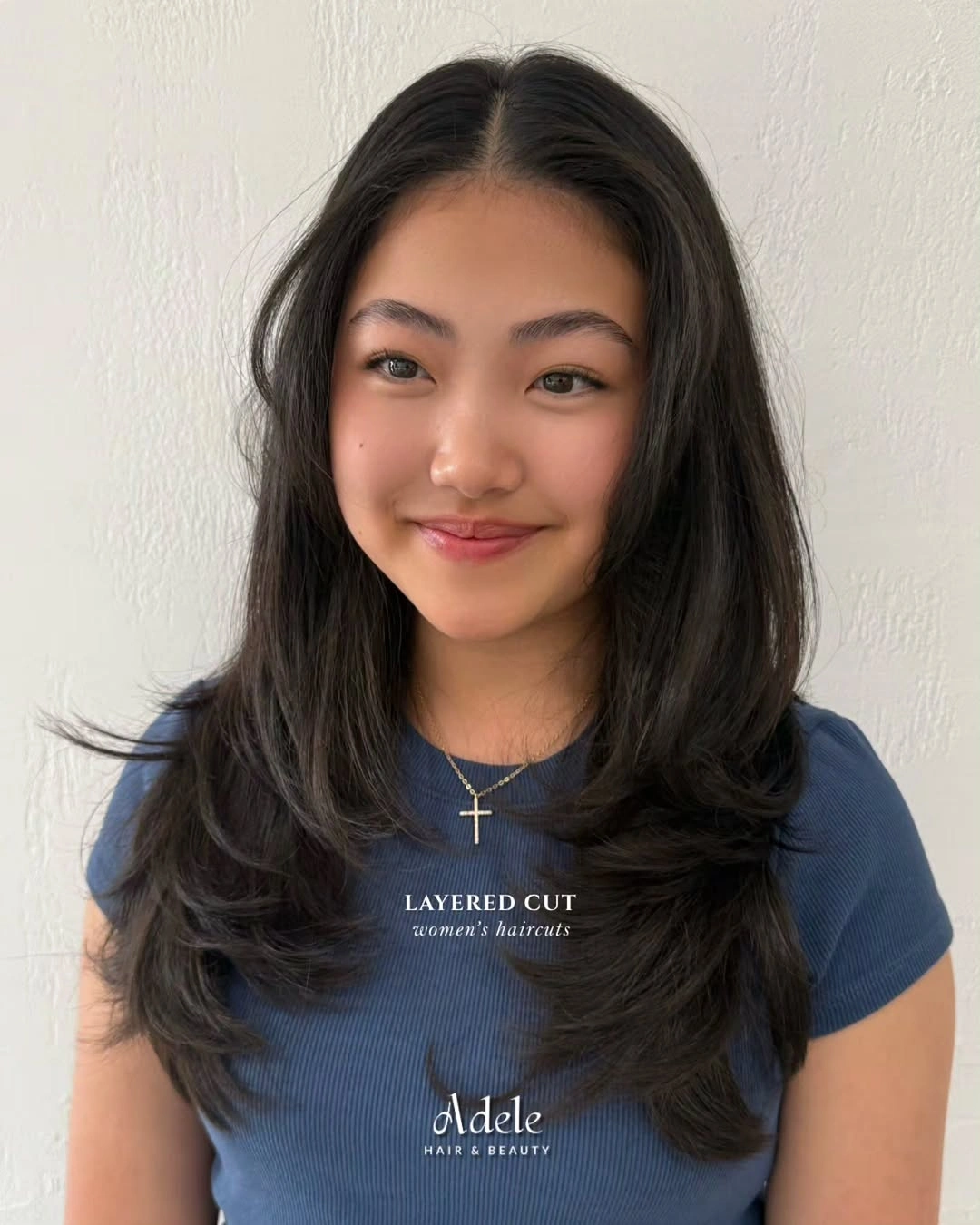
The front layers keep the center part from reading as a flat division by turning away at the cheek area. Since the lower length remains moderate, the movement stays close to the face and is easy to see from the front. For a more polished adaptation, smooth the ends and preserve the cheek-level separation; for a relaxed version, let the bends vary slightly across the sides.
This cut offers a practical sense of proportion because it has enough length to move but not so much that the layers disappear into the lower hair. The limitation is that the face-framing pieces are central to the balance, so growing them out without reshaping can make the outline feel less intentional. Compared with the long ash-brown waves, it places the texture higher and keeps the overall shape more compact.
Vivid Red Waves with the Length Partly Gathered
Rich red hair is viewed mainly from the back and side, with long loose waves and a portion gathered away near the back of the head. The center-directed opening is visible at the top, while the vivid color carries most of the visual energy through the lower lengths. Pulling some hair away lets the wave pattern show instead of leaving the red mass completely uninterrupted.
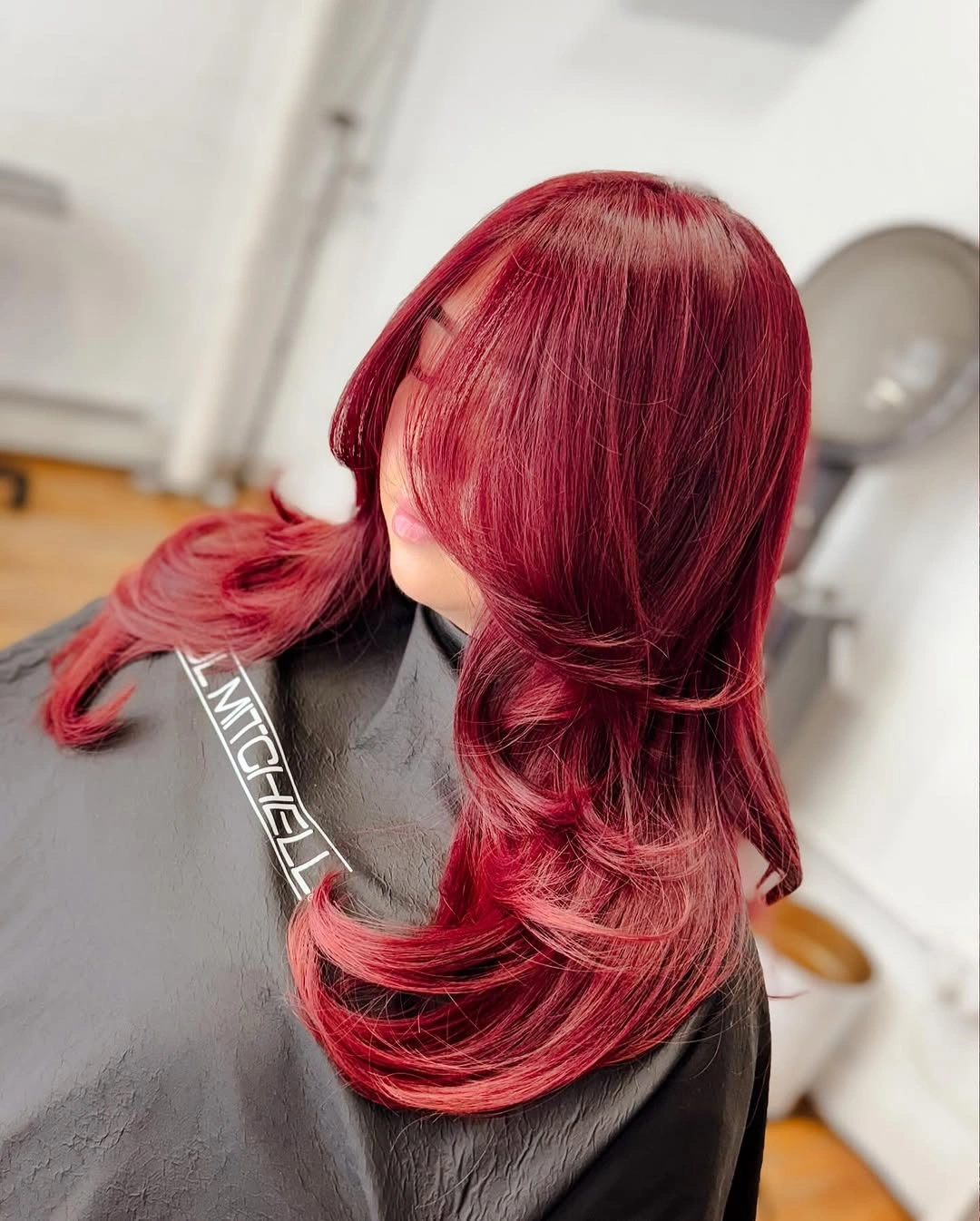
The color and arrangement work together through controlled exposure. The open top gives the strong red a clear beginning, and the gathered section creates a small break that reveals how the waves move beneath it. If you want to adapt the idea for a softer day, gather only one side or use a looser hold so the length still falls freely around the back.
This is a statement direction for someone who wants color and movement to arrive before a precise cut detail. The limitation is that the view does not show the full front, so the exact relationship between the part and face framing remains less clear than in the other sections. Compared with the brunette waves, the silhouette is similar in scale, but the vivid color and partial gathering make it more theatrical.
Full Brunette Waves with a Gentle Center
Deep brown hair reaches below the shoulders and falls in loose, rounded waves with long pieces opening around the face. The center part is soft rather than sharply pressed, so the upper section feels relaxed while the lower perimeter carries fullness. The light blouse creates contrast at the neckline, making the rich color and the broad movement easy to read.
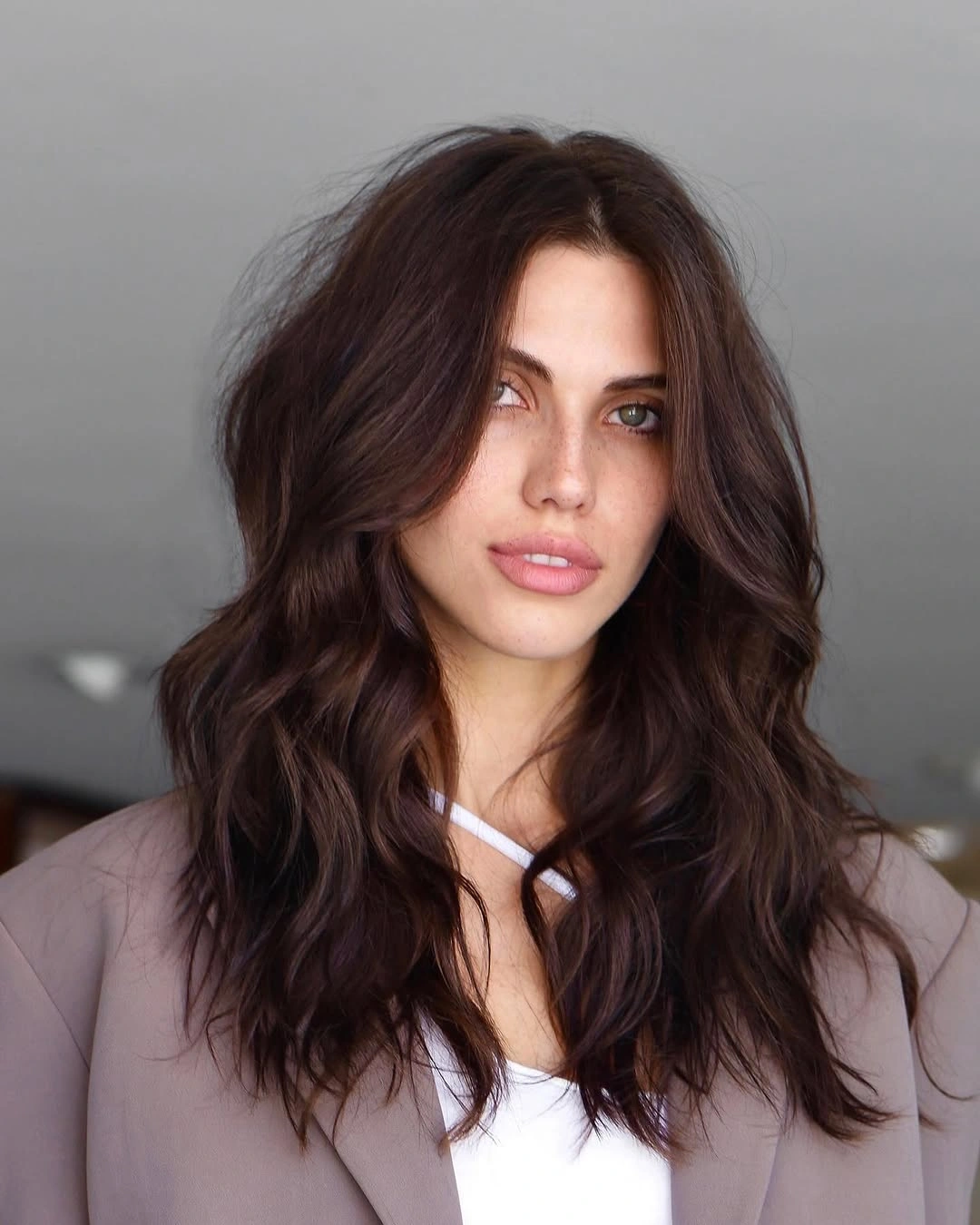
The style stays cohesive because the face-framing pieces flow into the same wave family as the lower hair. That continuity prevents the center opening from looking like a separate design element, and it lets the fullness build gradually from the cheeks toward the ends. A quieter adaptation could keep the part soft and reduce the wave size, preserving the gentle framing without the same amount of body.
This finish suits someone who wants a full, romantic silhouette while avoiding a rigid center line. The tradeoff is that the rounded lower volume is more noticeable than in the low-starting waves, so it may feel heavier around the shoulders or require more shaping to stay even. As a closing comparison, it combines the warmth of the earlier brown layers with the softer, more relaxed rhythm of the wavy looks.