

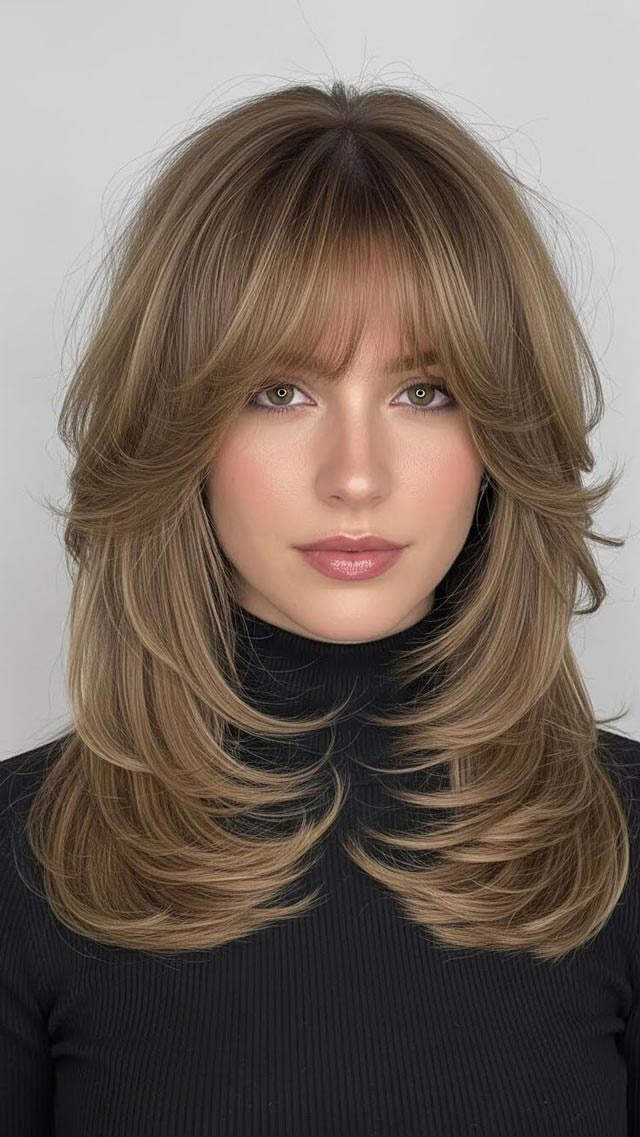
Face-framing bangs are a straightforward way to reshape a haircut without committing to a full fringe. The trend has moved from heavy, blunt lines toward softer, more blended versions that work with the hair’s natural movement.
These 28 ideas for Simple Face Framing Bangs cover everything from a quick blow-dry to a salon appointment, suiting fine, thick, straight, and wavy textures. The goal is to find a style that actually stays where you put it, whether that means a wispy fringe that hides a high forehead or longer layers that soften a square jaw.
Shoulder Length Layers With Curtain Bangs
The trick to curtain bangs that actually behave is a shoulder-length cut with long layers that sweep outward, not straight across. A honey blonde base with a visible root shadow gives depth without looking harsh, and the middle parting lets the fringe fall naturally toward the cheekbones. This design works best on medium-density wavy hair that already has some bend to it, since the whole point is a soft, lived-in wave that moves with you. Ask your stylist for: shoulder length layered cut with full curtain bangs. A blowout with a round brush encourages the wave and volume, and those long layers need a trim every 8 to 10 weeks to keep the shape from going limp.
Mid-Back Waves With Wispy Curtain Bangs

Long layers support the length here, but the wispy curtain bangs do the actual work. They are cut light enough to blend into the mid-back waves rather than sit on top of them, which is the difference between a fringe that frames and a fringe that just sits there. The side parting adds asymmetry, and the espresso brown with subtle highlights keeps the dimension from getting lost at this length.
Medium-density wavy hair carries this look well because the texture gives the bangs something to tuck into. Ask your stylist for: mid-back layers with wispy curtain bangs. A large barrel curling iron shapes the waves, and those highlights need a toning gloss every 6 to 8 weeks to stay bright rather than muddy.
Collarbone Layers With Soft Curtain Bangs

How do you ask for layers that actually frame your face instead of just shortening the whole thing? Start at the collarbone. The face-framing layers here begin around the jaw and blend into the rest of the cut, so the curtain bangs feel connected to the shape rather than tacked on. A soft black base with subtle highlights keeps the texture visible without competing with the cut itself. This length works well for softening a square or angular jawline. Ask your stylist for: collarbone length with soft face-framing layers and curtain bangs. A smooth blowout brings out the shine, and the collarbone length needs a trim every 6 to 8 weeks to stay precise.
Mid-Back With Blended Curtain Bangs

Curtain bangs that start around the cheekbones and blend into the hair behave differently than a blunt fringe. They are meant to disappear into the length when you want them to, which is exactly what happens here with the medium brown balayage and long layers. The middle parting keeps everything symmetrical, and the soft waves give the bangs a natural sweep.
Medium-density wavy hair at mid-back length handles this blend well because the texture helps the transition look seamless. Ask your stylist for: mid-back length with blended curtain bangs. Air-drying with a diffuser encourages the wave pattern, and the balayage tones only need refreshing every 3 to 4 months.
Long Hair With Face-Framing Layers

Thick hair at long length can sit heavy, which is why face-framing layers make such a difference. They carve out shape without sacrificing length, and the soft swept-aside bangs add movement where there would otherwise be a solid curtain of hair. The dark brown base with caramel highlights gives the layers dimension, which is helpful when the texture is naturally straight to wavy. This approach balances a longer face shape by adding width at the cheekbones. Ask your stylist for: long hair with face-framing layers and soft swept-aside bangs. The ends stay polished, and those face-framing pieces need a trim every 6 to 8 weeks to maintain the shape.
Mid-Back Auburn With Voluminous Layers

A mid-back shag with voluminous layers and curtain bangs lands hardest when the auburn color matches the season. Thick wavy hair at this length gets shape and movement from the internal layering, while the curtain bangs soften the silhouette around the face. Ask your stylist for: mid-back shag with voluminous layers and curtain bangs. A blowout with volumizing mousse keeps the lift through cooler months, and a color-depositing conditioner weekly maintains the auburn tone between salon visits.
Collarbone Shag With Choppy Bangs

A practical rule for the collarbone shag with choppy bangs: it only looks intentional if you style it. Medium density wavy hair at this length can read as messy rather than piecey without a texturizing spray and a quick finger-comb. The blonde highlights add dimension to the medium brown base, but the choppy bangs need a trim every four to six weeks to keep their edge. Ask your stylist for: collarbone length shag with choppy bangs. A salon cut is non-negotiable here, since the internal layers and bang graduation require precision.
Mid-Back Dark Brown With Voluminous Bangs

Voluminous curtain bangs that start around the cheekbones do the most work on longer face shapes. The mid-back length and long layers give thick wavy hair enough weight to avoid a triangle effect, while the subtle lighter pieces through the dark brown base add depth without obvious highlights.
Ask your stylist for: mid-back length with voluminous curtain bangs. A smoothing cream enhances the natural gloss, and trimming the length every eight to ten weeks prevents the layers from growing past their intended shape. This cut genuinely flatters medium to thick density; fine hair lacks the body to hold the volume.
Collarbone Dark Brown With Full Bangs

To get that soft, blended effect from full curtain bangs at home, start with damp hair parted in the middle, then blow-dry each section away from your face using a round brush. The collarbone length and wavy texture of this cut mean the bangs naturally settle into the layers instead of sitting as a separate piece. Ask your stylist for: collarbone length with full curtain bangs. A dry texturizing spray breaks up the density, and the subtle lighter pieces in the dark brown base prevent the bangs from looking like one solid block.
Collarbone Ash Blonde With Soft Bangs
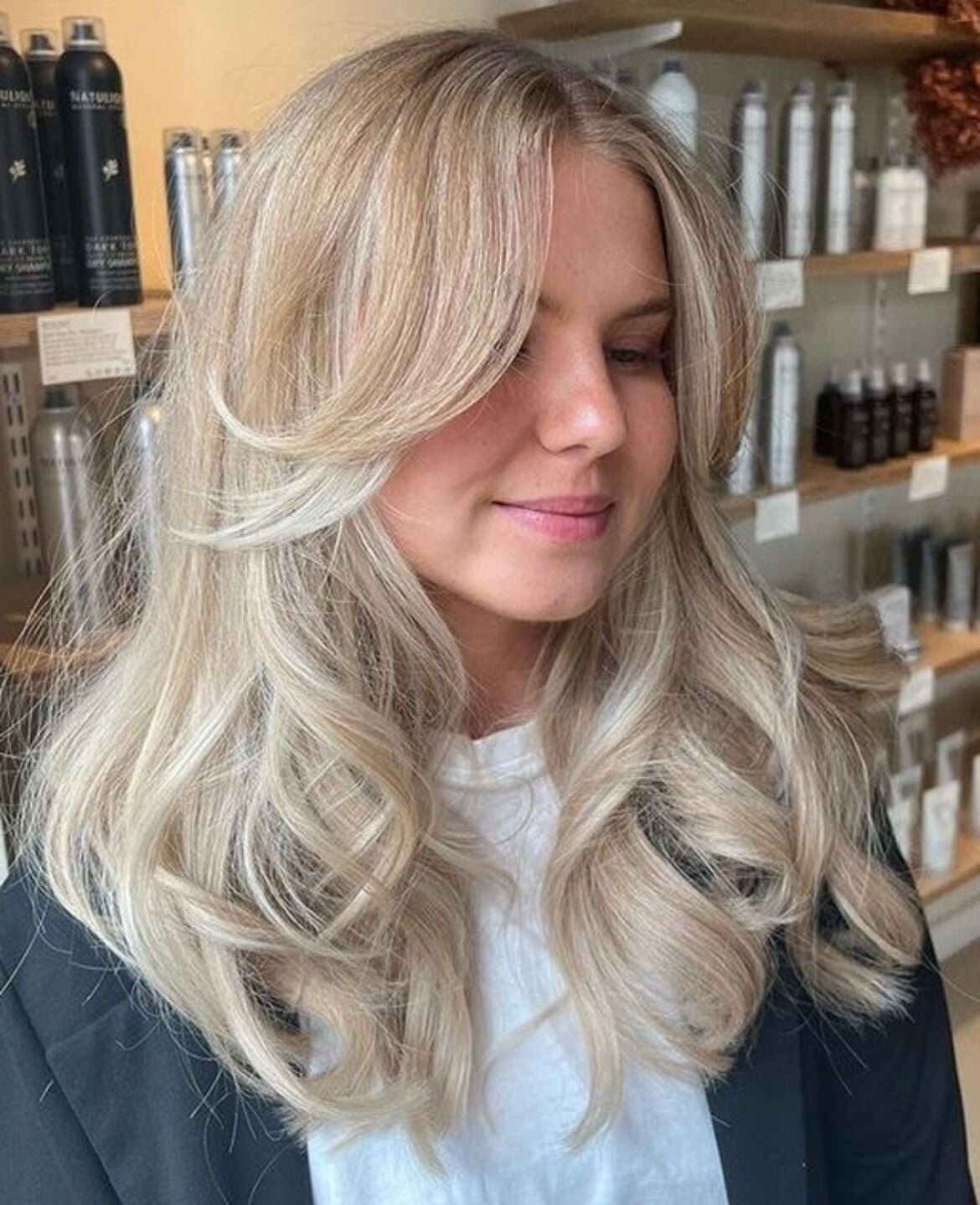
Ash blonde with wispy curtain bangs has a specific appeal: the cool tone keeps the face-framing layers from blending into a single wash of color. At collarbone length on medium density wavy hair, the side part and soft bangs create asymmetry that softens rounder face shapes. Ask your stylist for: collarbone length with wispy curtain bangs. The lighter highlights through the ash base add dimension, but the color requires a toning gloss every six to eight weeks to stay cool rather than brassy. A small round brush on the bangs during blow-drying keeps the curve predictable.
Mid-Back Honey Blonde With Face-Framing Layers

The middle parting does the heavy lifting here, splitting those honey blonde curtain bangs into two soft wings that land right at the cheekbones. The mid-back length and wavy texture keep the overall shape from reading as too precious, while the face-framing layers add movement where a blunt hem would feel heavy. Thick wavy hair holds this shape best; the volume is what makes the layers fan out rather than collapse.
Ask your stylist for: mid-back length with face-framing layers and curtain bangs. A shine serum on the ends preserves the gloss without flattening the wave pattern. Plan a trim every eight to ten weeks, because once those layers grow past the shoulder, the curtain effect turns into a general fluff.
Mid-Back Ash Blonde With Wispy Bangs

Fine straight hair does not naturally volunteer volume, which is why the wispy bangs here break up a flat hairline. The side part and long layers keep the mid-back length from dragging the eye down, and the ash blonde highlights add a bit of dimension that fine texture otherwise lacks.
Ask your stylist for: mid-back length with wispy bangs and long layers. A root-lifting spray before blow-drying buys a few hours of height, but expect the crown to settle by midday. The honest drawback is that wispy bangs on fine hair need a trim every three to four weeks, or they start looking like a stray piece instead of a deliberate cut. A salon visit is the safer bet here; DIY fringe trims on fine texture tend to go crooked fast.
Collarbone Fine Wavy With Blended Fringe

The shag elements in this collarbone-length cut are subtle enough to avoid a 1970s revival look. Long layers cut into the interior create lift at the crown without removing weight from the perimeter. The blended fringe is cut to graduate into those layers, so there is no hard line between the bangs and the rest of the hair. Fine wavy texture benefits from this approach because the shorter internal layers give the wave something to grip, producing a textured finish that looks deliberate.
Collarbone Ash Blonde With Face-Framing Layers, Wavy

Does this cut actually soften a square jaw or is that just something stylists say? It does, provided the layers are cut to graze the jawbone rather than sit above it. The collarbone length and wavy texture here do exactly that: the face-framing bangs hit at the cheekbone, and the layers below angle toward the jaw, creating a diagonal line that breaks up a broad angle. The ash blonde base with a darker root shadow adds contrast, which helps the layers read as intentional shapes rather than random wispy ends. Fine wavy hair at collarbone length suits this best; thicker hair may need internal texturizing to prevent the layers from puffing outward.
Mid-Back Dark Brown With Wispy Fringe

A full fringe that ends in wispy points instead of a blunt line is a useful compromise: it still covers the forehead but lets some skin peek through, which softens the overall effect. On mid-back dark brown hair with a side part and soft waves, the wispy ends prevent the fringe from reading as a heavy curtain. The grow-out is where this design either works or frustrates. As the fringe lengthens, it blends into the face-framing layers instead of forming a separate wedge, so you get a few extra weeks between trims.
Ask your stylist for: mid-back length with full wispy fringe. A smoothing serum on the ends keeps the dark brown shade looking polished. Plan a fringe trim every four to six weeks; the length can go eight to ten weeks before the layers lose their shape.
Collarbone Dark Brown With Sweeping Layers
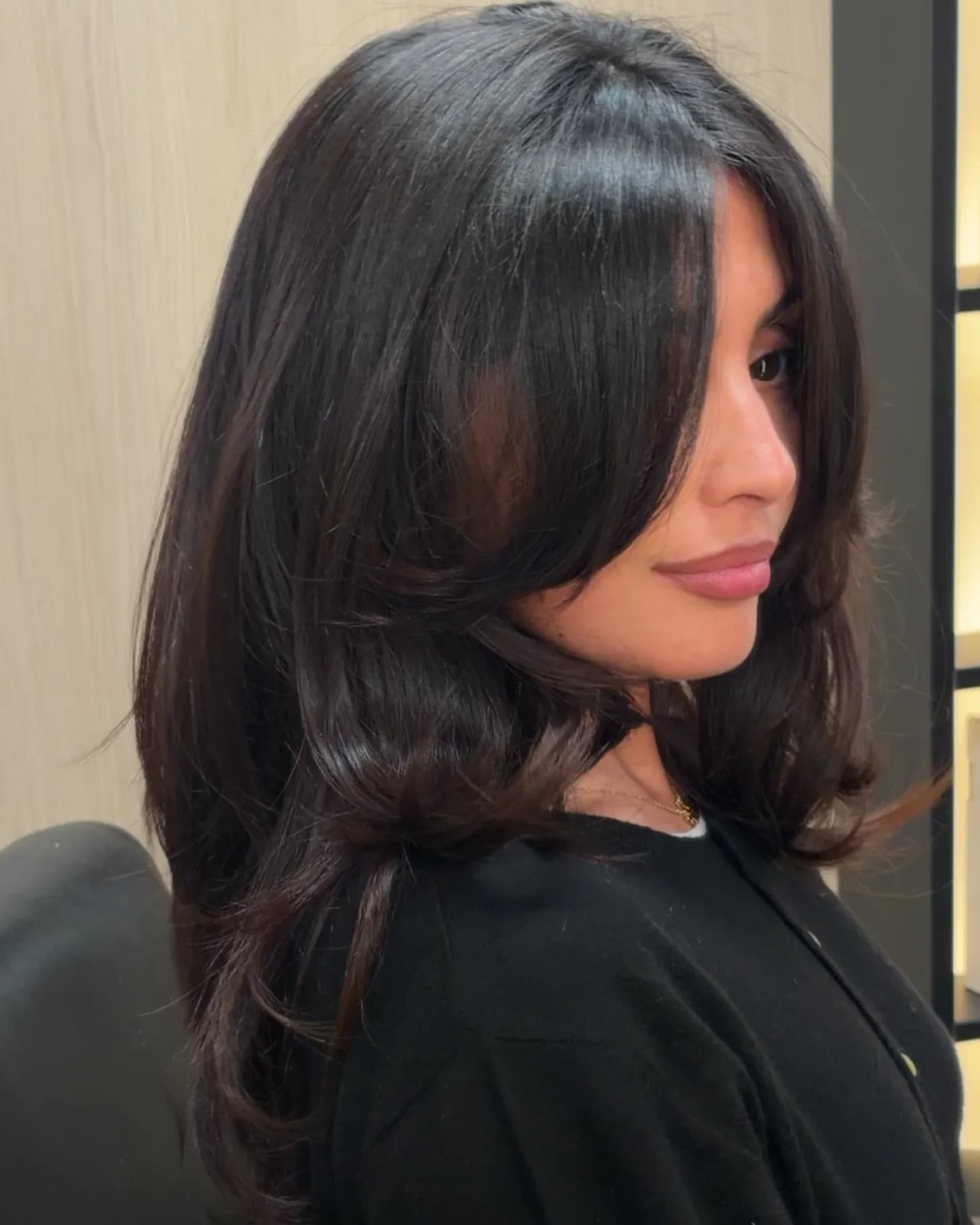
A side view of this collarbone cut shows what the front view often hides: those face-framing layers actually sweep back, not forward. The curtain bangs hit somewhere around the cheekbone and the rest of the hair falls in soft, air-dried waves. Medium density hair holds the shape without going flat. Ask your stylist for: collarbone length with sweeping face-framing layers and curtain bangs. A side part helps the layers fan away from the face rather than clump together. Expect to trim the collarbone length every six to eight weeks to keep the sweep intact.
Chin Length Bob With Blunt Bangs

A chin-length bob with blunt ends demands precision, and the blunt bangs double the geometry. The ash blonde base with darker roots and highlights adds dimension to an otherwise sharp line. Fine wavy hair actually holds the bob shape well, but the waves fight the bangs. Ask your stylist for: chin length bob with blunt bangs. A flat iron on the bangs every morning keeps the edge crisp. The bob line needs a trim every six to eight weeks, the bangs every three to four.
Mid-Back Shag With Face-Framing Bangs

Can a shag work on longer hair? Yes, if the layers stay visible. This mid-back version keeps the shag cut alive with curtain bangs that start high and blend into the length. The middle part and wavy texture make the layers fan out rather than disappear. Blonde with balayage adds the contrast that a one-note shag lacks.
This is a cut for fall and winter, when a heavier wave and a lower-maintenance color schedule make sense. Ask your stylist for: mid-back shag with curtain bangs. A texturizing product on damp hair and a diffuser set to medium heat builds the lived-in shape. Refresh the balayage every three to four months.
Collarbone Dark Brown With Wispy Bangs, Wavy

The design relies on wispy curtain bangs that feather rather than cut straight across. On thick wavy hair, that wispiness can drift into shapelessness without a trim schedule. The blowout here keeps the layers from tangling into one mass. Ask your stylist for: collarbone length with wispy curtain bangs. The real drawback: thick wave patterns push wispy pieces sideways by midday unless you hit them with a round brush and a shot of cool air. DIY styling takes about fifteen minutes. The bangs need a trim every four weeks or the soft frame turns into a puffy curtain.
Shoulder Length Black With Full Bangs

Defined curls plus full bangs is a math problem: too much density and the bangs look like a helmet, too little and they disappear. Here, shoulder-length layers give the curls room to expand without weighing down the front. The middle part keeps the bangs symmetrical. Ask your stylist for: shoulder length with full bangs and defined curls. A curl-defining cream applied to soaking wet hair, then diffused on low heat, sets the shape. The bangs need a trim every four to six weeks to stay at brow level rather than sliding into the eyes.
Collarbone Fine Ash Blonde With Layers, Straight

Wondering if face-framing layers actually work on fine, straight hair? The side view of this collarbone-length ash blonde cut answers that one pretty clearly. The layers are cut to start around the jaw and extend through the length, which adds movement without sacrificing density. Soft face-framing bangs pull the eye outward, creating the illusion of fullness where fine textures can fall flat. Ask your stylist for: collarbone length with face-framing bangs and layers. A volumizing spray at the roots keeps the shape from looking too sleek, and a trim every six to eight weeks prevents the ends from getting straggly.
Mid-Back Dark Brown With Balayage Waves

The design here relies on a simple equation: dark brown base plus lighter balayage plus curtain bangs equals instant dimension. The mid-back length keeps the weight low enough to let the loose waves hold their shape, while the long layers prevent the hair from feeling heavy. The balayage is painted on the ends, so the roots stay dark and the grow-out is forgiving.
Ask your colorist for: mid-back length with curtain bangs and balayage. A sea salt spray adds texture without weighing down the waves. The lighter pieces need a toning appointment every three to four months to keep them from warming up against the dark brown. It is not a high-maintenance look, but it is not a set-it-and-forget-it one either.
Collarbone Shag With Curtain Bangs

Can you get that lived-in shag texture without a salon blowout? Yes, but the technique matters more than the tools. Start with damp hair and apply a texturizing spray from mid-lengths to ends. Blow-dry the curtain bangs away from your face using a round brush or your fingers, then wrap sections of the collarbone-length hair around a large-barrel curling iron, leaving the ends out for that shag-like separation. Run your fingers through once it cools to break up the curl pattern. Ask your stylist for: collarbone length shag with curtain bangs. The middle parting and subtle highlights add depth, but the real trick is not over-styling it.
Collarbone Lob With Soft Curtain Bangs, Dark Brown

The lob is a shape that lives or dies by how it moves, and the soft curtain bangs here create that motion. At collarbone length with layers, the hair has enough weight to sit cleanly but enough texture to swing when you turn your head. The full curtain bangs are parted in the middle and flow into the layers, so they never feel like an afterthought. Dark brown keeps the look grounded, which is useful if you are not planning on highlights. Ask your stylist for: collarbone length lob with curtain bangs. Blow-dry the bangs with a round brush to keep the shape from falling flat, and plan for a lob trim every eight to ten weeks to maintain the blunt edge.
Mid-Back Ash Blonde With Blunt Bangs, Straight

The common mistake with blunt straight-across bangs on mid-back hair is underestimating how often they need attention. The sleek ash blonde finish here looks polished because the bangs are cut to sit just above the brows and are trimmed every three to four weeks. Skip that rhythm and they will land somewhere in the middle of your vision, which is not a good look. The long layers throughout the mid-back length keep the hair from feeling too heavy.
Ask your stylist for: mid-back length with blunt straight-across bangs. A flat iron is essential for that sleek finish. This style demands precision: a DIY bang trim can go wrong fast, so it is best left to a professional every time.
Collarbone Layered Bob With Blunt Bangs

Blunt bangs on a layered bob create a deliberate contrast that a uniform cut simply can’t match. The collarbone length keeps the shape from feeling heavy, while the blowout adds volume at the crown and soft curves at the ends. This combination works best on thick straight hair that can hold the structure. Ask your stylist for: collarbone length layered bob with blunt bangs. A middle part keeps the fringe symmetrical and the layers visible. The bangs need a trim every three to four weeks to stay sharp, and a round brush during the blowout maintains the lift.
Mid-Back Dark Brown With Balayage Bangs, Close-Up Take

The real trick with curtain bangs on mid-back length hair is making sure they blend, not just sit there. Here the balayage highlights do the blending work, with lighter pieces catching the movement of the loose waves so the fringe never looks pasted on. Thick wavy hair at this length benefits from the dimension the color adds, but fine or straight textures may find the waves hard to hold.
Ask your stylist for: mid-back length with curtain bangs and balayage. A middle part lets the bangs sweep outward naturally. The balayage tones need refreshing every three to four months, and a sea salt spray between washes keeps the wave pattern from falling flat.
Collarbone Shag With Choppy Bangs, Dark Brown

Choppy bangs get their textured edge from point cutting, where the stylist holds the shears vertically and snips into the ends instead of cutting straight across. This creates the uneven finish that defines a collarbone shag. The side part lets the fringe fall naturally across the forehead, and the wavy texture keeps the whole thing from looking too precise. Medium density hair holds the shape without getting bulky. Ask your stylist for: collarbone length shag with choppy bangs.
Final Thoughts
For finer hair, opt for wispy or blended bangs to avoid weighing down the texture; thicker hair can handle blunter or fuller styles. Always consider your natural hair texture when selecting a bang style.
- Trim bangs every 3-5 weeks to maintain their shape and length.
- Use a heat protectant when blow-drying or styling bangs.
- Wash bangs separately between full hair washes if they tend to get oily.
- Consider a light hold spray or texturizing powder for styling.
Face-framing bangs add charm and dimension to any look.