
Fulani twists combine a braided crown with loose, twisted lengths for a protective style that holds for weeks. This season, the trend leans toward simpler partings and natural textures, making the style more wearable for daily life.
These 15 ideas for Simple Fulani Twists range from shoulder-grazing to mid-back lengths, with variations in wavy and coily textures. The collection suits medium to thick hair densities and works with natural or added length. If you have fine hair that struggles to hold twists, the thicker styles here show how to build volume without extra bulk.
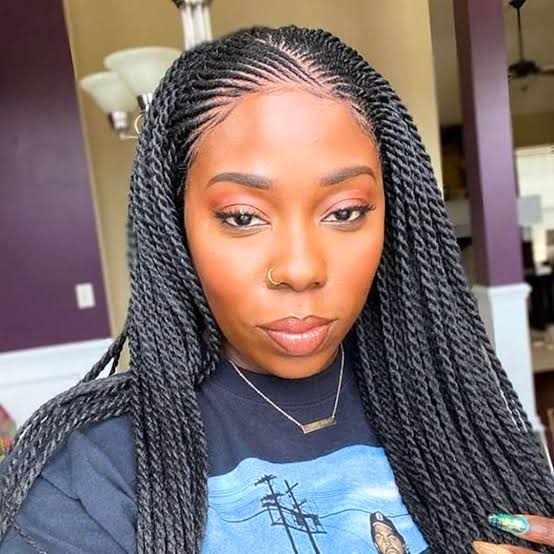
Mid-Back Coily Fulani Twists
The neat middle parting and precise braiding pattern make the coily texture the star here, each twist holding its shape without a single flyaway. This mid-back length gives the hair enough weight to hang smoothly while keeping the natural coily definition visible from root to tip. Ask your stylist for: mid-back Fulani twists with coily texture. A silk scarf at night is the only real maintenance, preserving the twist pattern so you can wake up and go. Coily hair types that reach at least mid-back will find this a structured protective style that actually stays put.
Thick Wavy Fulani Twists With Geometric Parting
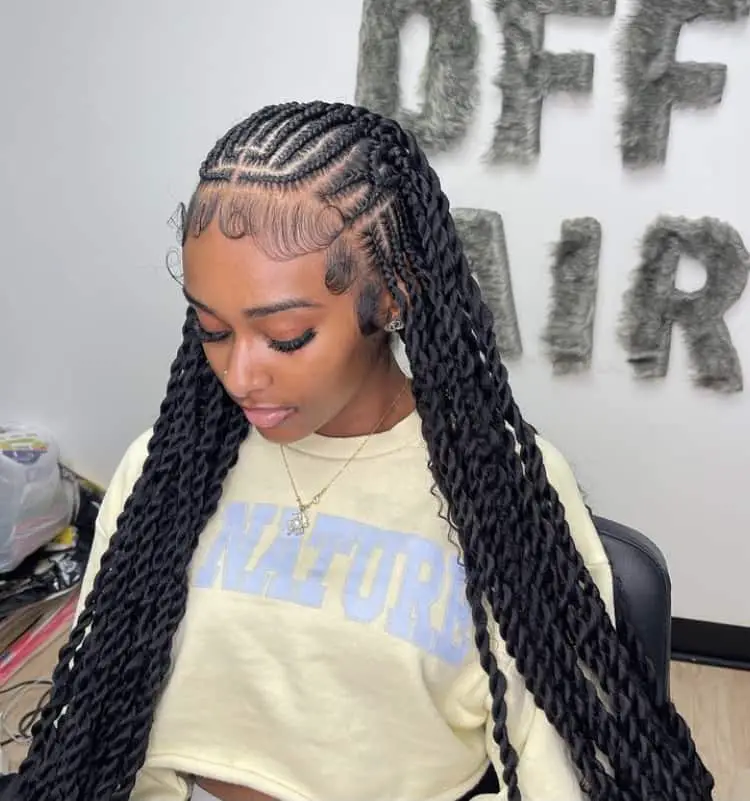
Can a parting be the main event? When it is a geometric pattern on the scalp, yes. The thick, wavy twists extend to mid-back, but the real draw is the clean, angular lines carved into the part, giving the whole style a deliberate, architectural feel.
Ask your stylist for: mid-back Fulani twists with geometric scalp parting and baby hairs. Thick, wavy hair types with at least mid-back length will get the most out of this design, as the density holds the geometric shapes crisp. Keep the baby hairs smooth with a light gel and a soft brush for a polished frame that lasts the day.
Shoulder-Length Wavy Fulani Twists
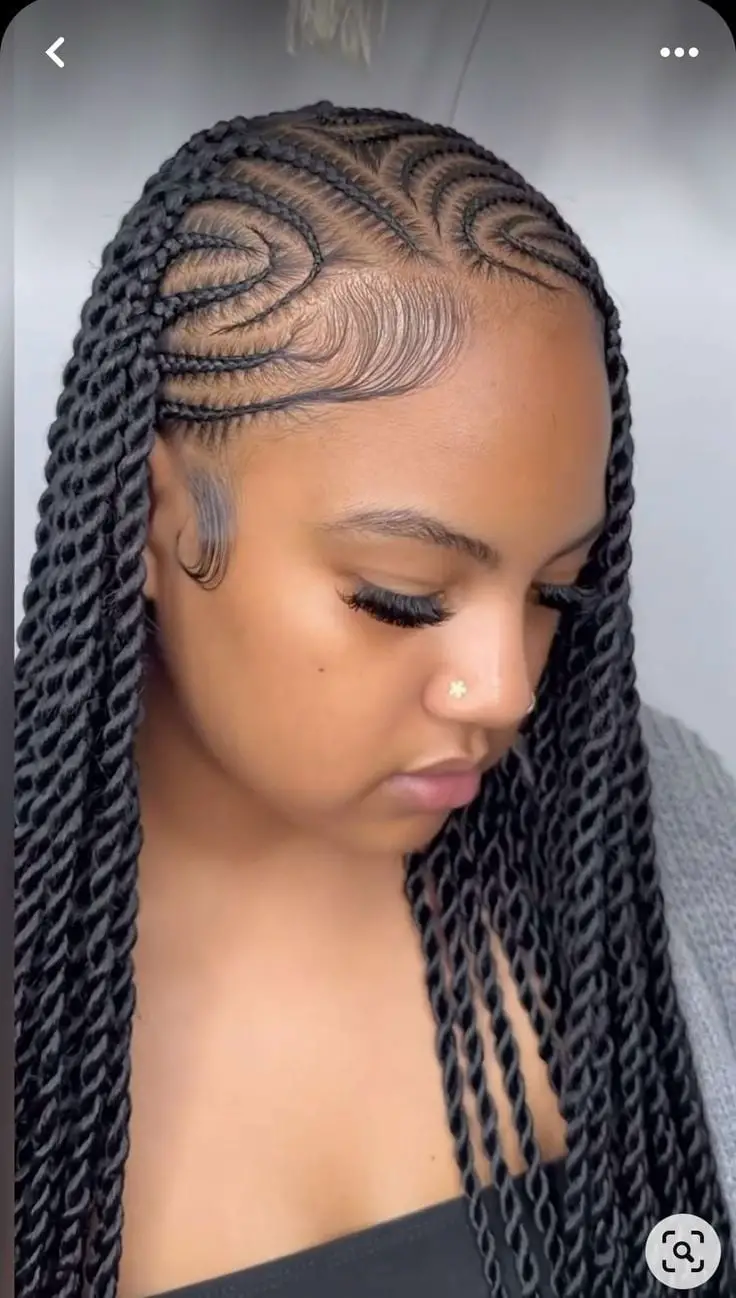
The intricate hairline braiding turns the front into a border, framing the face without needing bangs. A middle parting splits the shoulder-length, wavy twists evenly, keeping the braided pattern symmetrical and the black color uniform. Ask your stylist for: shoulder-length Fulani twists with intricate hairline braiding. This technique works best when you want the front detail to be the focal point, and the shoulder length keeps the style manageable for daily wear.
Dark Brown Wavy Fulani Twists With Crown Braids
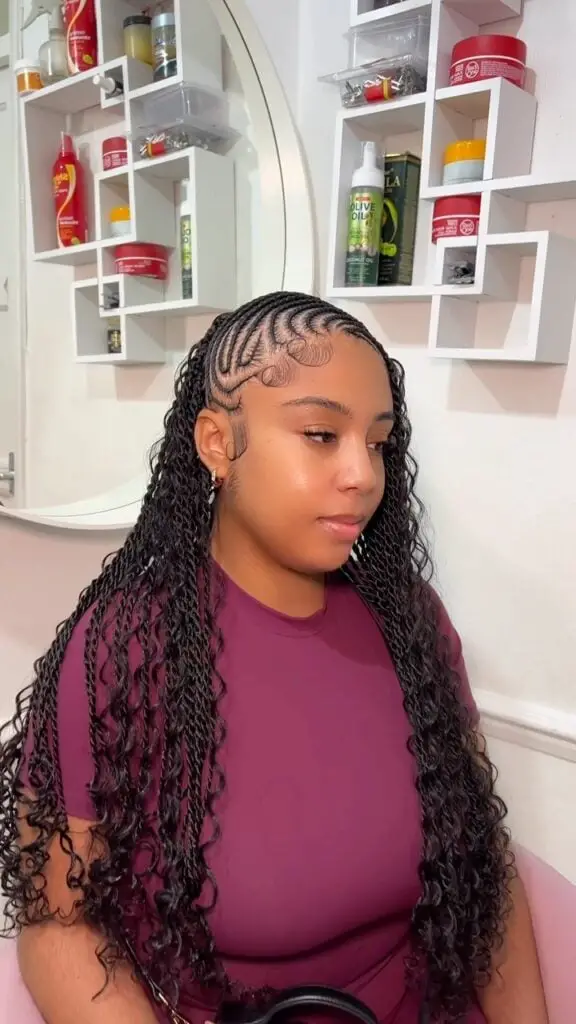
Dark brown has a way of making braided patterns look more defined than black does. The crown braids here sit close to the scalp, then release into wavy and curly twists that reach mid-back. A side parting adds asymmetry, giving the intricate crown work room to breathe. Ask your stylist for: mid-back Fulani twists with crown braids and wavy curly texture. This style works for evening occasions or professional settings where you want the detail to be visible without being loud.
Shoulder-Length Dark Brown Fulani Twists

A distinct side parting shifts the twists to one side, making shoulder-length dark brown Fulani twists feel less symmetrical and more lived-in. The wavy and curly texture keeps the ends from looking blunt, even at this shorter length. Ask your stylist for: shoulder-length Fulani twists with a side part and wavy curly texture. A light mist of water can refresh the texture throughout the day, and the side part means you can switch which side you tuck behind your ear depending on the mood.
Mid-Back Wavy Fulani Twists With Side Part
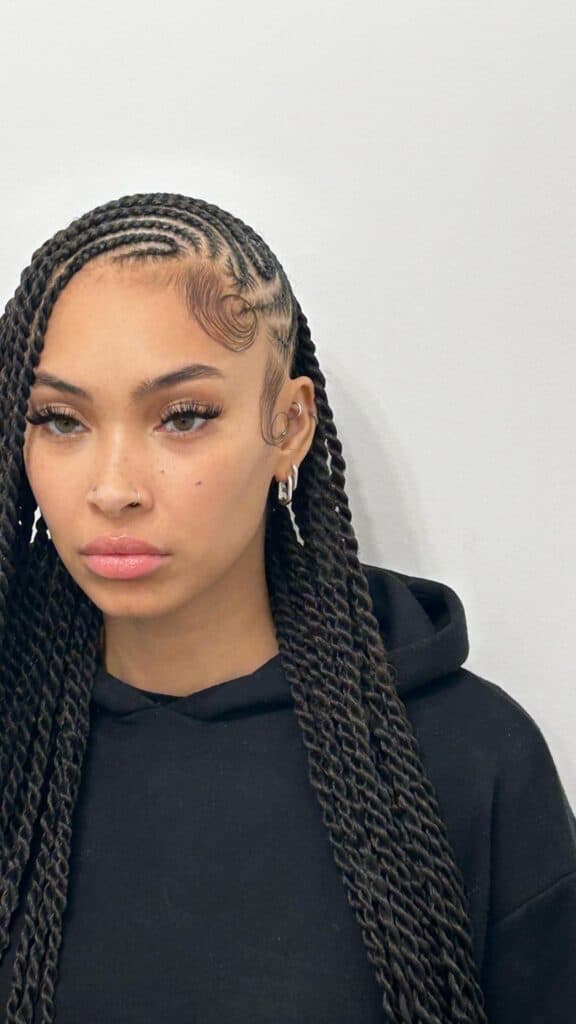
The side part shifts the visual weight of these Fulani twists, giving the defined scalp braids a diagonal sweep that a middle part cannot match. This design works best on hair that reaches at least mid-back, so the thick wavy strands have room to fall without bunching at the shoulders. The black color keeps the focus on the braiding pattern rather than a tonal shift. Ask your stylist for: mid-back Fulani twists with defined scalp braids and a side part. This is a salon-only style: the precision of the side-part braiding requires a second pair of hands and about three to four hours in the chair. Keep the scalp braids neat by applying a small amount of edge control along the part line every few days.
Mid-Back Wavy Fulani Twists With Intricate Parting
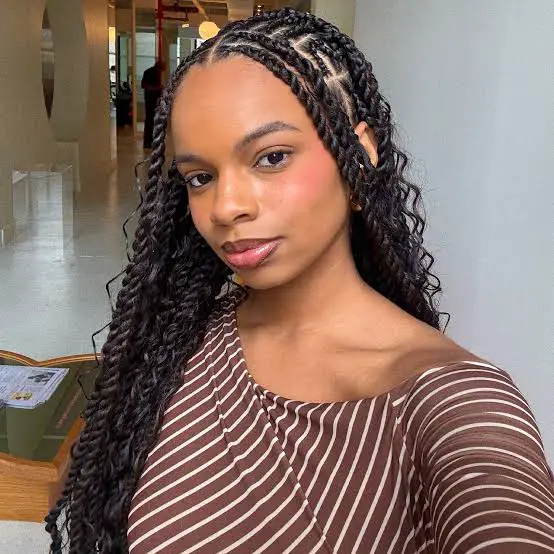
Intricate parting along the hairline adds visual detail, but it also adds time: those small braids near the face take longer to section and braid than a straightforward row. This style suits dark brown hair at least mid-back in length, where the wavy texture of the larger twisted rope braids balances the delicate work near the scalp. The middle part keeps the design symmetrical. Ask your stylist for: mid-back Fulani twists with small hairline braids and a middle part. The main drawback is the maintenance: those tiny braids along the hairline can loosen faster than the thicker sections, meaning you may need a touch-up at the front before the style is ready to come out.
Long Fulani Twists With Loose Curly Ends
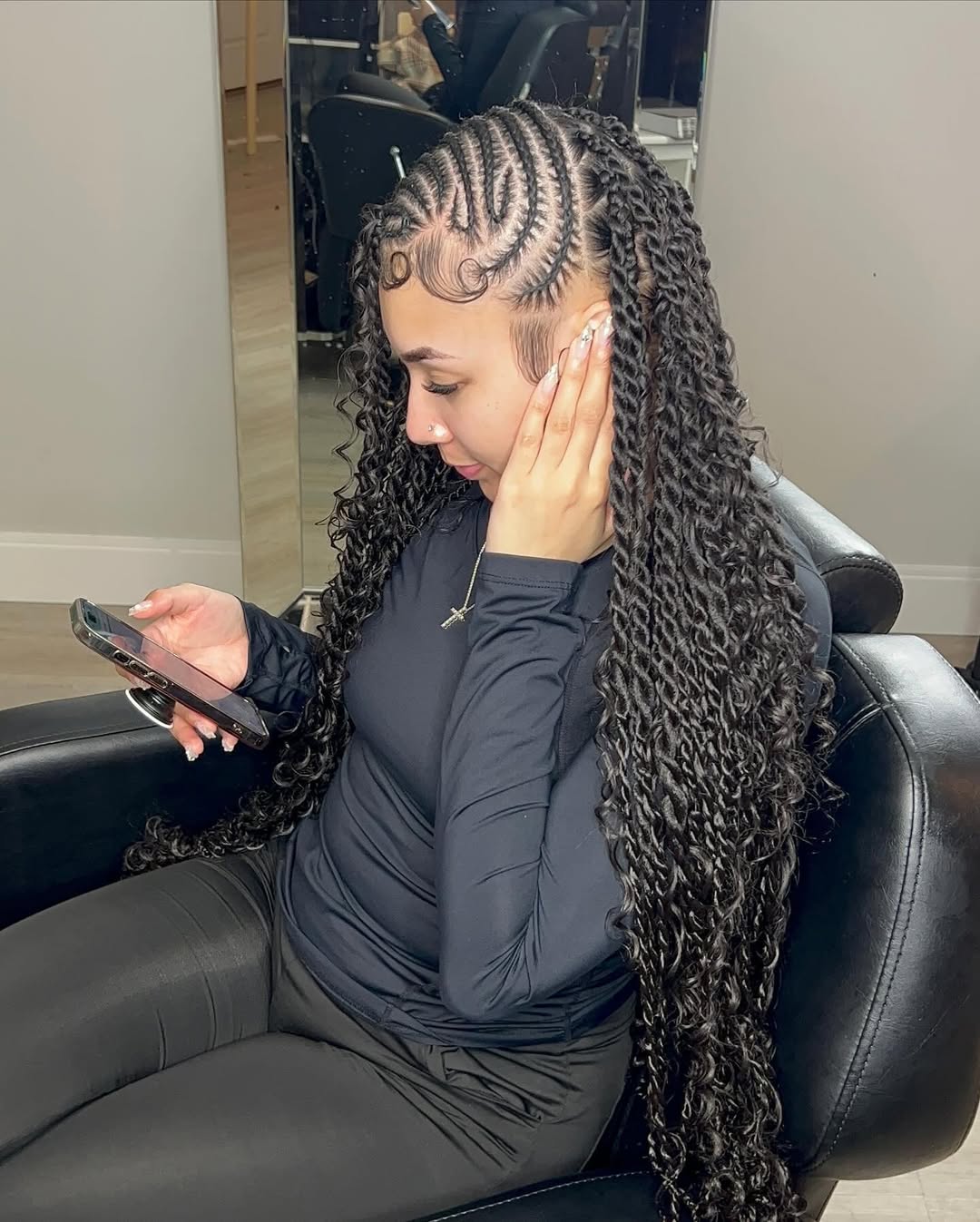
How do you get those tight braids that suddenly relax into loose curls at the ends? The key is in the finishing technique: the stylist braids the length tightly, then releases the last few inches without tension, allowing the natural texture to spring into a curl. This style requires hair at least shoulder length, though the dramatic contrast between the structured braids and the voluminous curly ends reads best on longer lengths. The black color and middle part keep the look clean, letting the texture do the talking. Ask your stylist for: long Fulani twists with tight braids and loose curly ends.
Styling steps are minimal once the twists are installed. Apply a curl-defining cream to the ends to enhance their bounce and shape. Use a silk scarf at night to prevent the loose curls from tangling with the braided sections. The ends swing freely while the braided part stays anchored.
Long Black Fulani Braids With Baby Hairs
The baby hairs here are laid in deliberate swoops along the hairline, softening the transition from the scalp braids to the skin. This design works best on long black hair, where the intricate scalp patterns and middle part create a structured frame for the face. The wavy texture of the loose ends keeps the overall silhouette from feeling too rigid. Ask your stylist for: long Fulani braids with intricate scalp patterns and baby hairs. The baby hairs require a setting spray to stay smooth through the day, and a small soft-bristle brush to reshape them each morning. Without that step, the swoops lose their definition by midday.
Mid-Back Thick Twists With Curly Ends
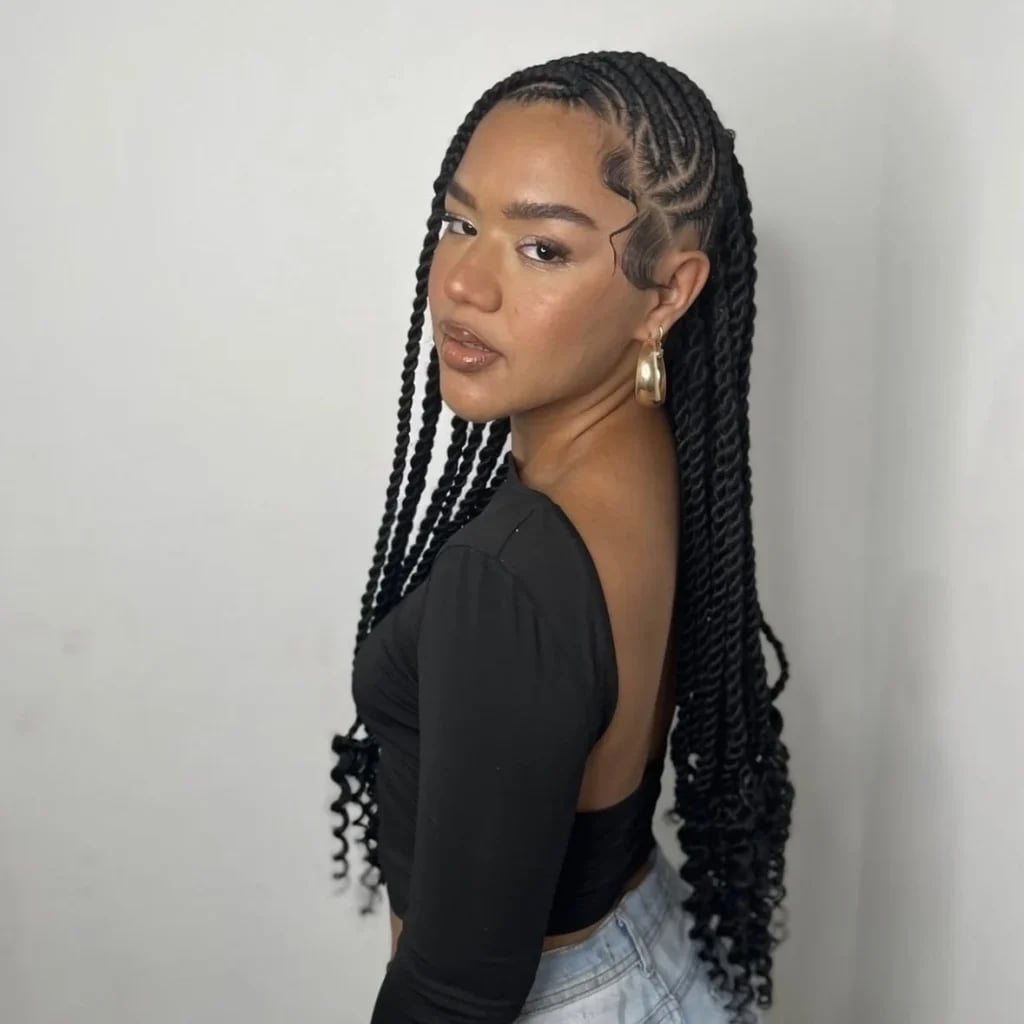
This version reaches mid-back with a middle part, the black wavy texture giving way to distinct curly ends that add movement. The styled baby hairs along the hairline tie the look together. Ask your stylist for: mid-back thick Fulani twists with curly ends and baby hairs. The one real drawback is the weight: thicker twists are heavier than standard ones, so the scalp may feel tension in the first few days. A moisturizing balm on the curly ends prevents dryness and keeps the texture defined, but the extra weight is a trade-off you feel, not just see.
Neatly Braided Mid-Back Coily Twists
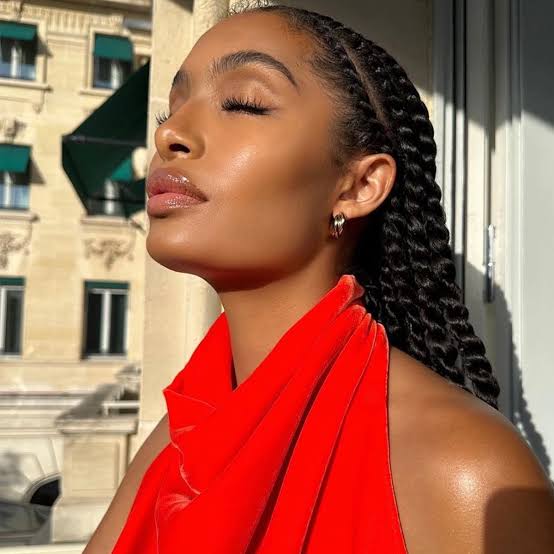
How long do neatly done Fulani twists actually stay neat? These thick, coily twists are braided close to the scalp and fall to mid-back. The black color and coily texture hold the shape well, but the neatness depends on your sleep routine. Ask your stylist for: mid-back coily thick Fulani twists, neatly braided. A satin bonnet every night and minimal touching during the day keep the braids crisp for several weeks. This is a precise look that rewards a careful hand at home, not just a good stylist.
Mid-Back Twists With Beads and Shells

Plain twists are reliable, but beads and shells turn them into an event. These black, wavy twists extend to mid-back with a middle parting, and the decorative accents at the ends add movement and sound. Ask your stylist for: mid-back Fulani twists with beads and shells. The accessories make this a festival or summer choice, not an everyday office option. Compared to a stripped-down version, the payoff is visual interest, but you will hear yourself coming down the hall. That is either a perk or a problem.
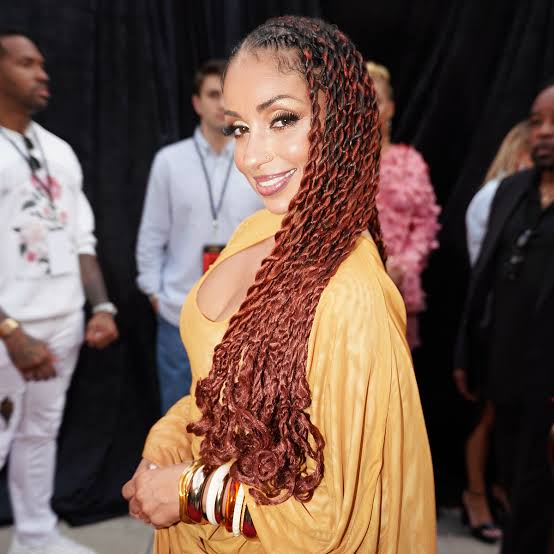
Reddish-Brown Twists in a High Ponytail

The high ponytail is a practical move, but the reddish-brown color and curly ends are where this style earns its keep. Small Fulani twists are gathered at the crown, with the ends left loose and voluminous rather than tucked. Ask your stylist for: shoulder-length reddish-brown twists in a high ponytail with curly ends. The common mistake is pulling the ponytail too tight, which strains the hairline. A salon install is the safer bet here, because the color application and the twist pattern need a steady hand. DIY risk: uneven color and a lopsided ponytail.
Mid-Back Fulani Twists With Curled Ends and Accessories

If you add accessories, they must stay put. These mid-back Fulani twists have curled ends and small butterfly clips woven through the length. Ask your stylist for: mid-back Fulani twists with curled ends and butterfly accessories. Lightweight clips can slip out during the day, especially in wavy hair, and snagging is a real risk when you sleep. Secure each piece firmly and check them before bed. This is a party or photo-call style, not one for a week of commuting.
Versatile Twist Braid Styles

Can you get the same effect at home as in a salon? Twist braid styles, like these shoulder-length dark brown ones with coily texture and cornrowed crown sections, require precision at the scalp. Ask your stylist for: trending twist braid styles. A salon install gives you clean partings and even tension, which means the style holds for weeks without frizzing at the roots. DIY versions tend to loosen faster and show uneven parting lines. For upkeep, wrap the edges at night and expect a trim or touch-up every four to six weeks. The versatility is real, but the skill level is not negotiable.
Final Thoughts
For a polished finish, keep the scalp braiding neat and the twist thickness even. For a relaxed look, let the ends curl naturally and vary the parting. Fulani twists offer timeless style and protection.
- Keep scalp clean with a diluted antiseptic or witch hazel on a cotton pad.
- Apply a light oil or serum to the twists and ends to maintain moisture.
- Sleep with a silk or satin bonnet or scarf to protect from friction.
- Refresh the style by gently re-twisting any loose ends or re-braiding small sections if needed.
- Plan for a professional re-twist every 4-8 weeks, depending on growth and desired neatness.