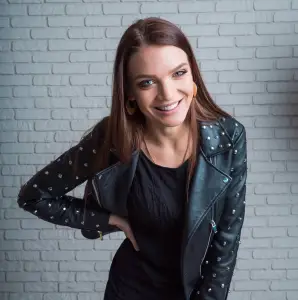

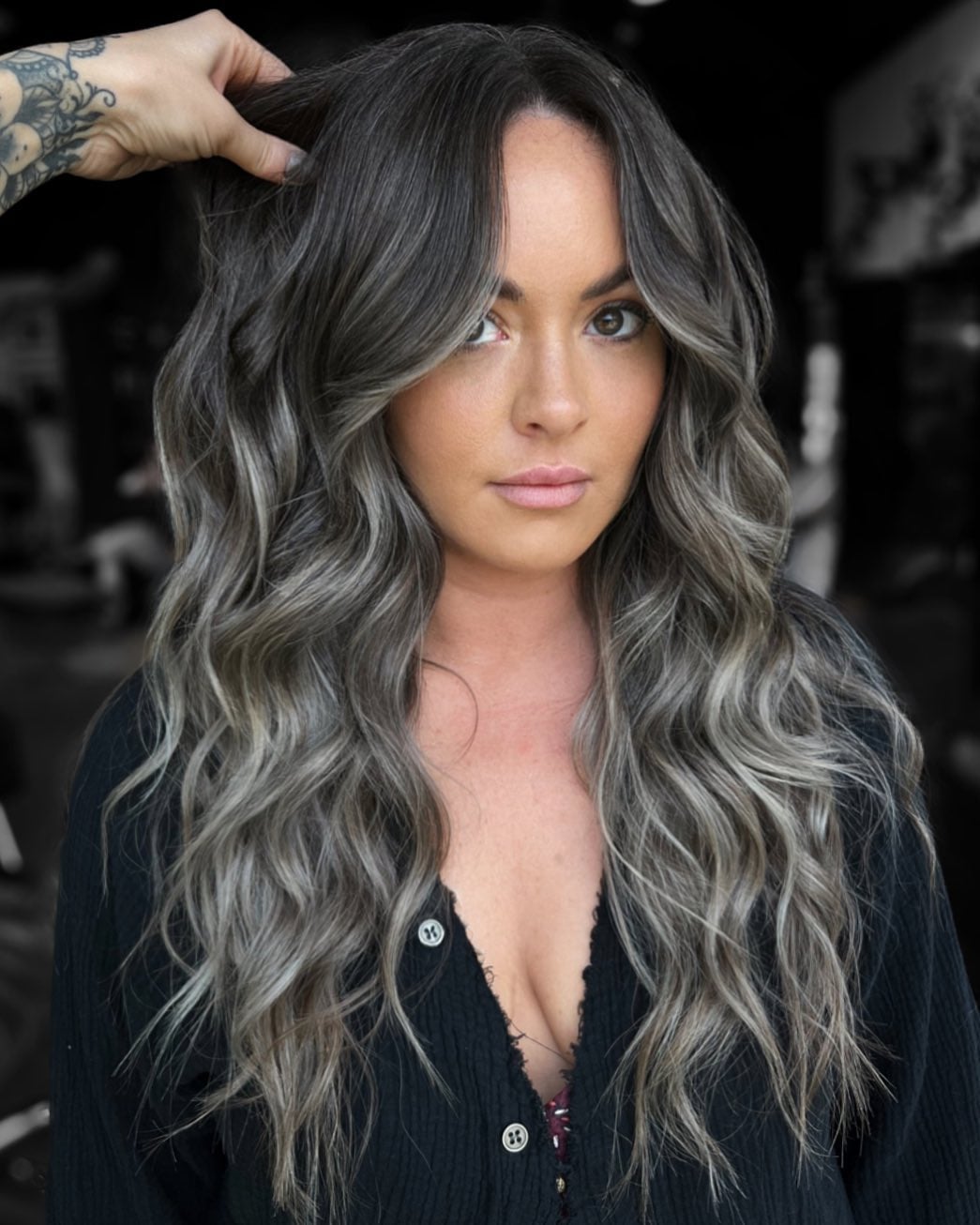
Gray highlights are just pieces of hair that are lighter than your base, usually in an ash or silver tone. Soft face-framing layers and curtain bangs are the current way to wear them, moving away from chunky streaks.
These 25 looks cover collarbone to mid-back lengths, subtle blends to distinct streaks, and straight to wavy textures. Simple Gray Highlights work for anyone who wants a low-upkeep way to add dimension without a full commitment to gray. The collection solves the problem of fine hair that falls flat, a visible grow-out line, or a fringe that will not sit.
Collarbone Length Wavy Bob With Face Framing Highlights
A wavy blowout with a side parting is a smart way to show off a gray base, especially when the lighter gray highlights are concentrated around the face. That placement draws attention to the cheekbones and jawline, which means this cut softens square and round faces without relying on heavy layering. Thick, wavy hair of collarbone length has enough weight to hold the wave pattern and enough density to make the contrast visible. Ask your colorist for: collarbone layered bob, gray base with lighter face-framing highlights. Blow-dry with a round brush for volume; the shape holds best with a trim every six to eight weeks.
Collarbone Layers With Soft Gray Blending
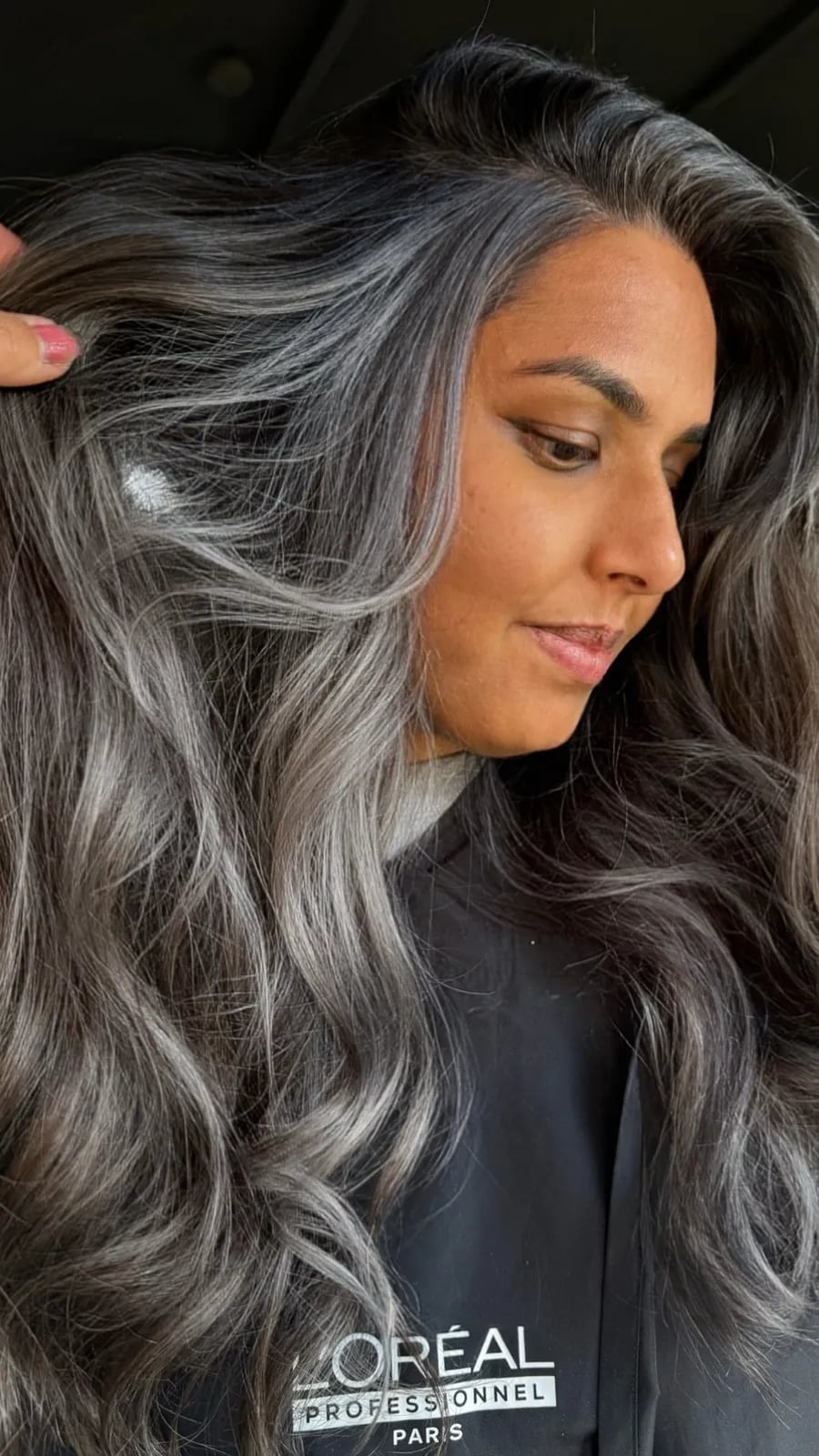
The blending creates a soft transition: the lighter gray highlights are painted close to the natural gray base, so there is no harsh grow-out line. That soft transition makes the color look like a sun-bleached version of itself rather than a salon stripe. Collarbone-length layers with face-framing pieces suit thick, wavy hair that can handle the weight of a blowout without going flat. Ask your colorist for: collarbone layered cut, natural gray base with blended lighter gray highlights. A texturizing spray refreshes the wave pattern between washes; a trim every six to eight weeks keeps the face-framing pieces from losing their shape.
Salt And Pepper Gray Lob With Curtain Bangs
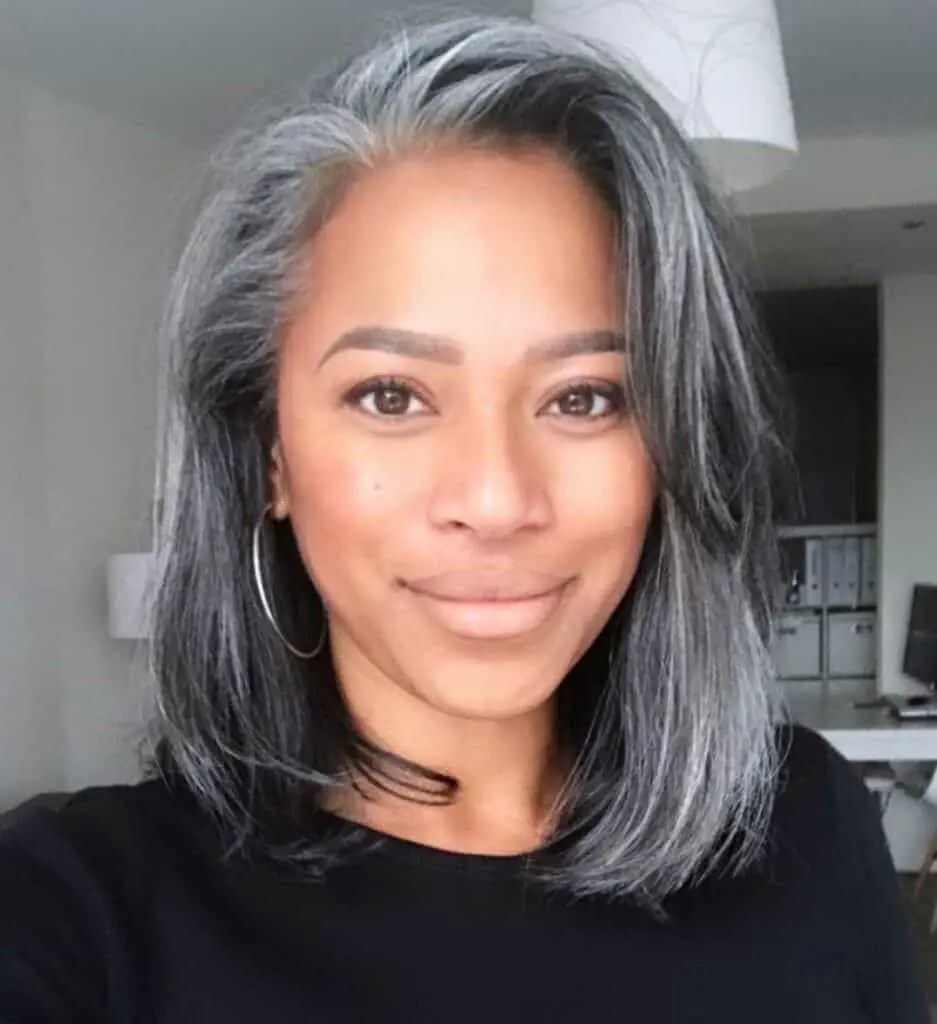
A salt and pepper gray lob with curtain bangs sits somewhere between a full silver commitment and a grow-out you are letting happen on purpose. The lighter gray highlights blend into the darker base so seamlessly that the transition looks like natural movement rather than color work. Medium-density, wavy hair at collarbone length gives the curtain bangs enough weight to sweep open without bouncing back. Ask your colorist for: collarbone lob, salt and pepper gray base, blended lighter gray highlights, curtain bangs. Blow-dry the fringe with a round brush and smooth a serum over the ends for a polished finish that lasts the day.
Ash Gray Lob With Curtain Bangs And Soft Waves
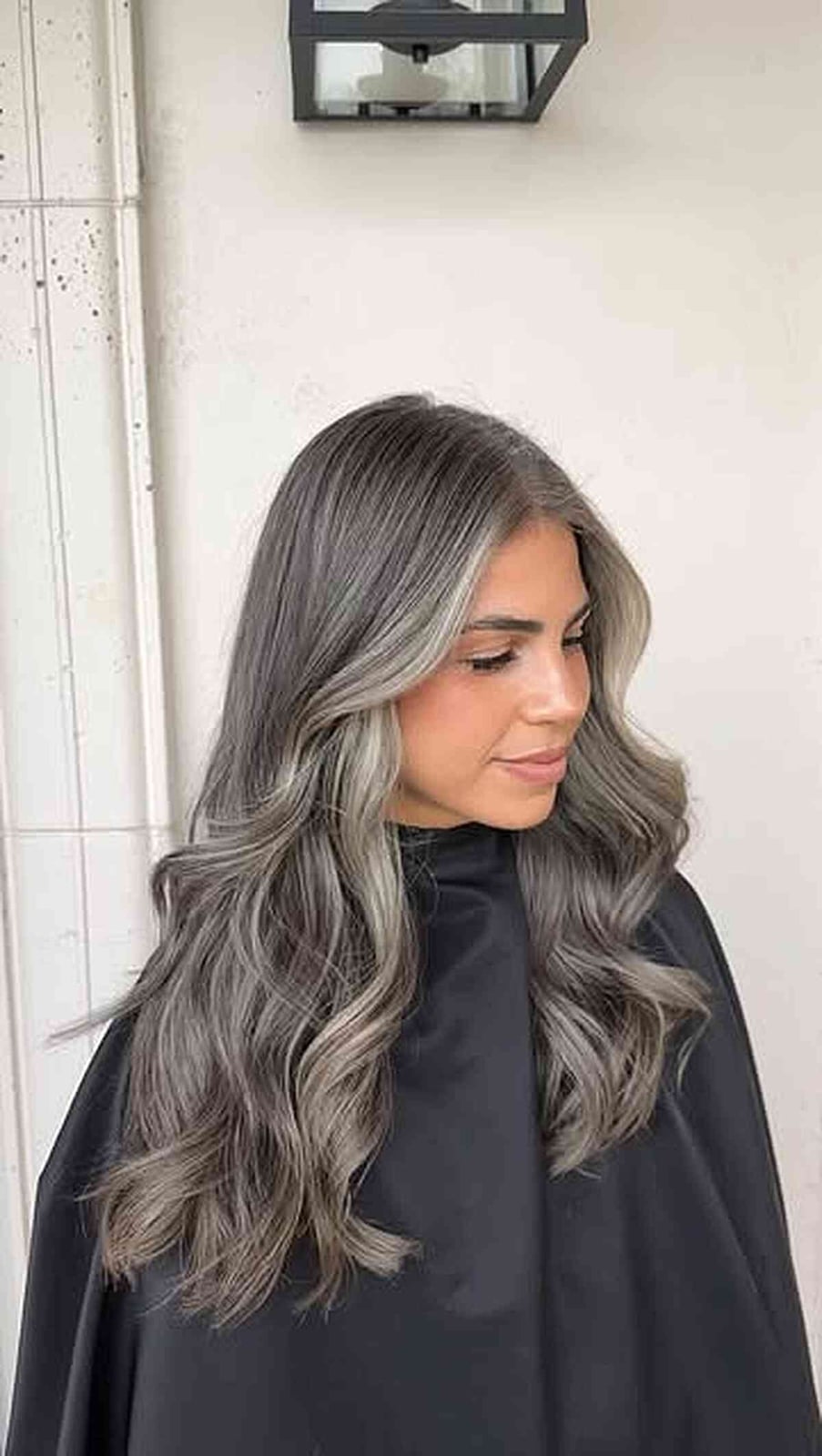
Will ash gray hair look flat by noon? Only if the texture is too fine to hold a wave. On a collarbone lob with curtain bangs, the ash gray base with lighter gray highlights needs volume at the roots and low heat to keep the wave pattern alive. Fine, wavy hair at this length benefits from the lightness of the ash tone, which does not weigh strands down the way a darker base can. Ask your colorist for: collarbone lob, ash gray base with lighter gray highlights, curtain bangs. A trim every six to eight weeks prevents the bangs from drifting into your eyes and keeps the ends looking fresh.
Collarbone Lob With Natural Gray Highlights
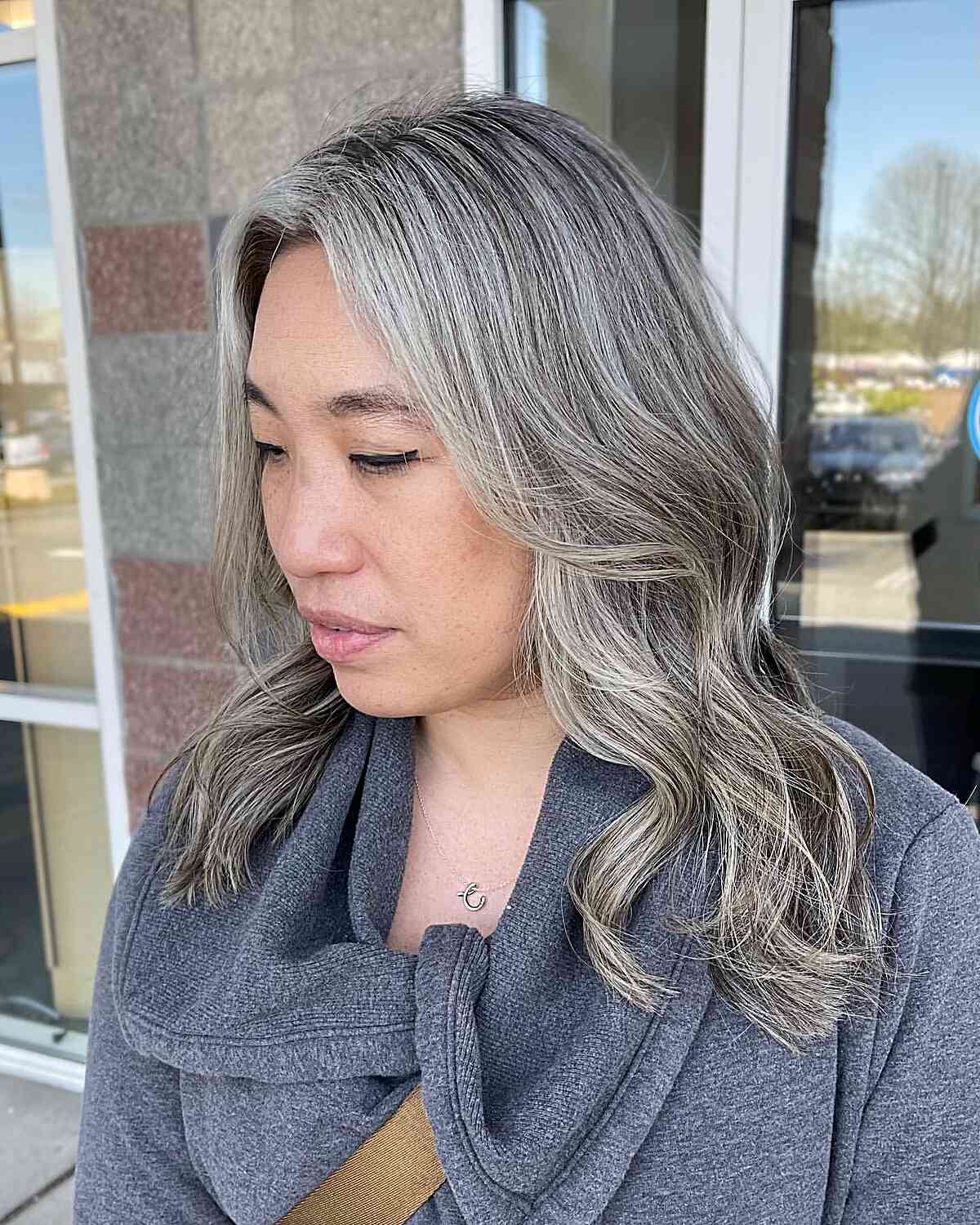
A dark base with natural gray highlights is a low-commitment way to test the gray trend without bleaching your entire head. The key is asking for highlights that are painted subtly through the ends, which keeps the grow-out line soft. A collarbone lob with curtain bangs works best on medium-density, wavy hair that can carry the contrast without looking stripey. Ask your colorist for: collarbone lob, dark base with natural gray highlights, curtain bangs. The baseline should be trimmed every eight weeks to maintain the blunt edge that defines this lob shape.
Collarbone Bob With Bold Gray Highlights
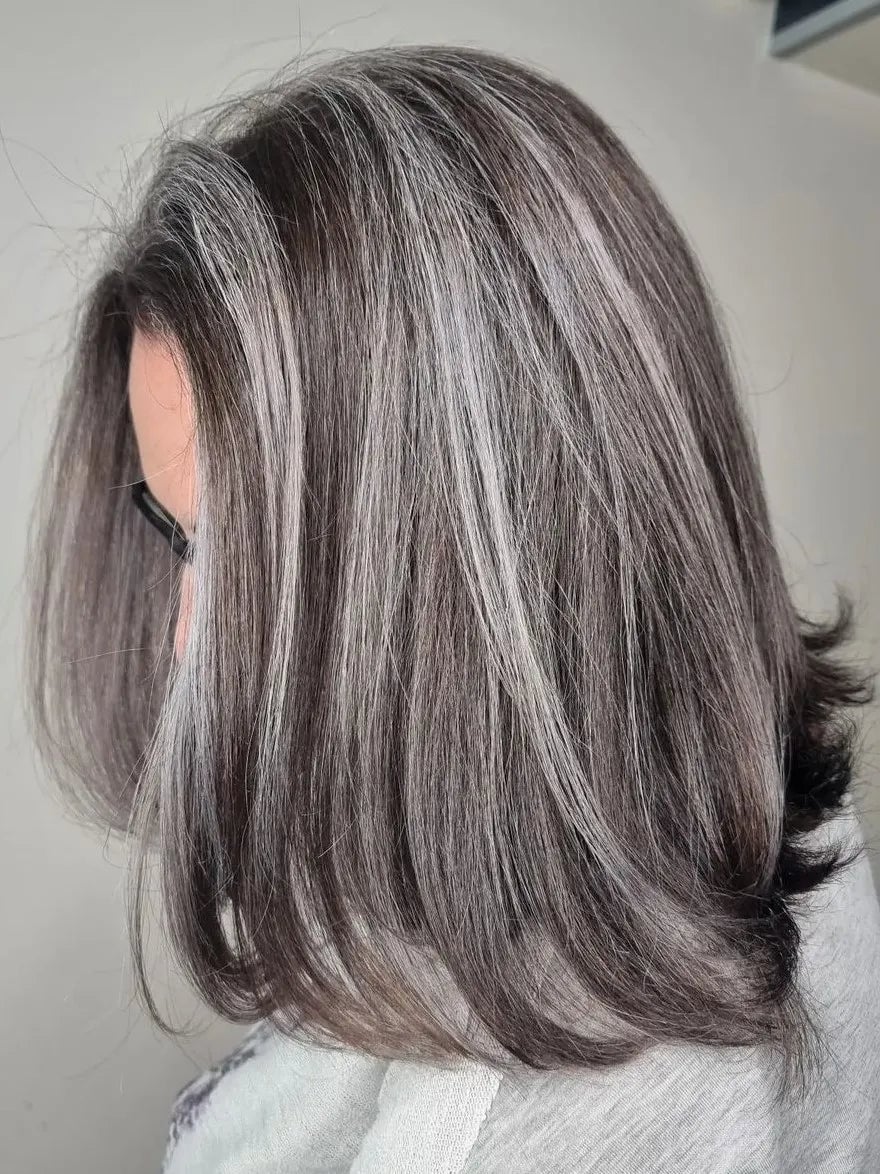
The design is straightforward: a dark base with prominent gray highlights, evenly distributed from root to collarbone end. That high contrast is the trade-off. The lighter pieces stand out immediately against the dark base, which means any warmth creeping in will stand out too. A toning appointment every four to six weeks keeps the gray from shifting brassy. Thick, wavy hair of collarbone length holds the shape best, and the bob suits oval and long faces. Ask your colorist for: collarbone bob, dark base with prominent gray highlights.
Dark Brown Bob With Ash Gray Highlights
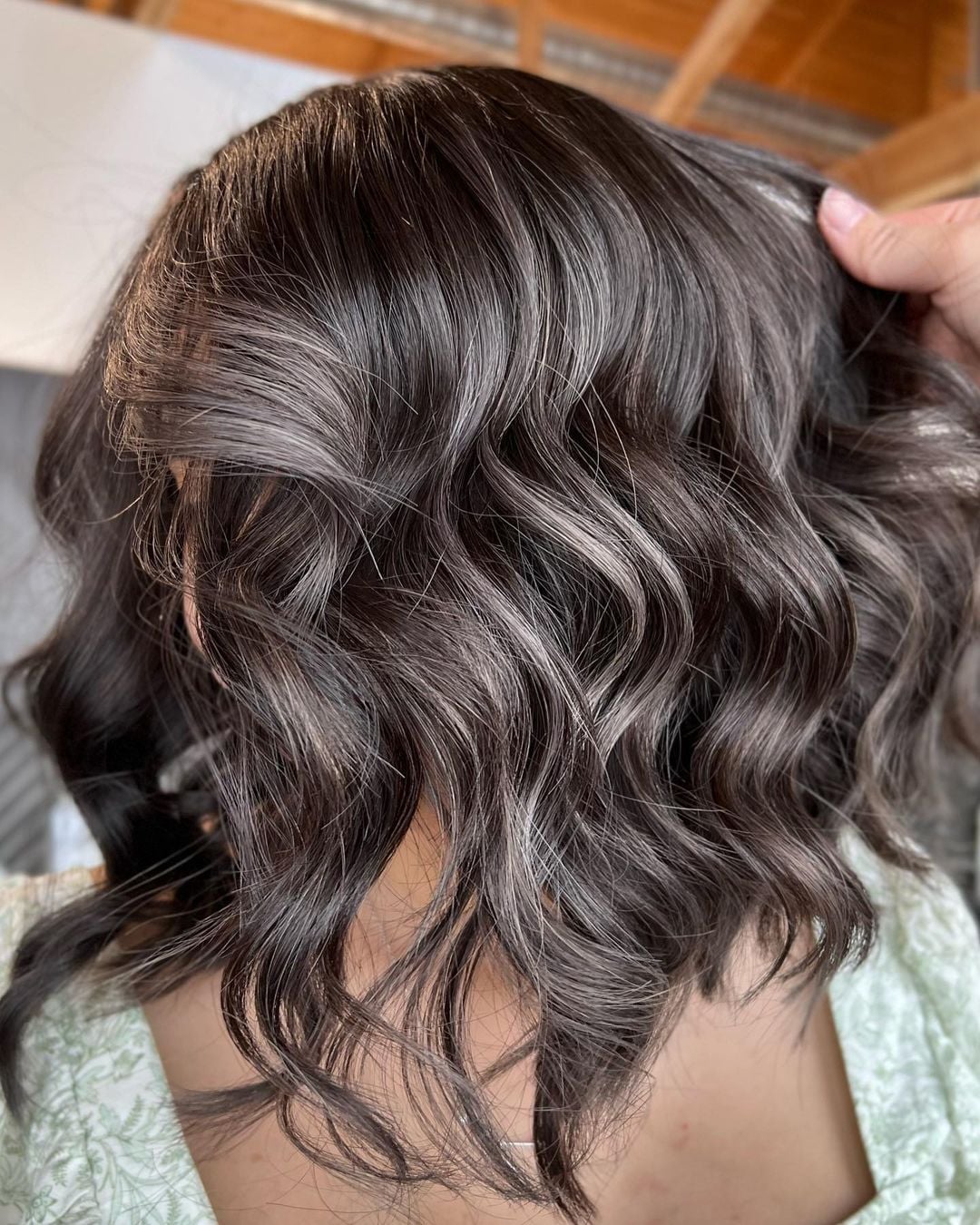
This is a collarbone-length bob with a dark brown base and ash gray highlights woven through in a wavy blowout. The ash tone is the deciding factor here. Cooler undertones in the skin and eyes tend to read as harmonious with it, while warmer complexions can find it washing. Medium density, wavy hair of collarbone length carries the highlights without looking sparse. A bob suits most face shapes, but the middle part and the blunt ends work especially well on oval and heart shapes. Ask your colorist for: collarbone dark brown bob, ash gray highlights.
Dark Brown Lob With Ash Gray Highlights, Collarbone
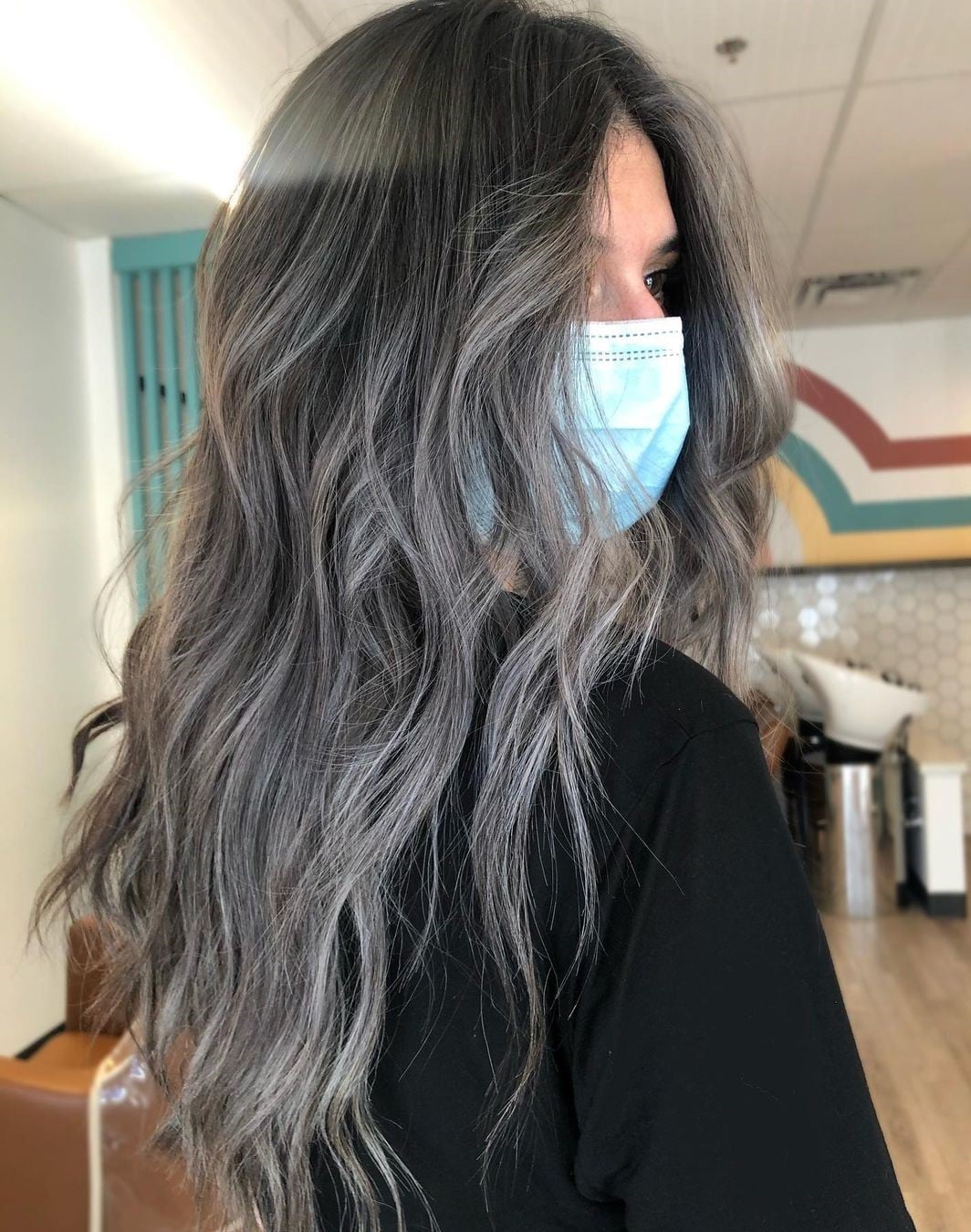
The technique here is a weave of ash gray highlights through a dark brown base, placed subtly from mid-lengths to ends. The back view shows the dimension: the highlights are not chunky, they are spaced to read as natural depth rather than deliberate stripes. A lob is universally flattering, and the collarbone length keeps the waves from pulling the shape down. Wear and upkeep are straightforward. A texturizing spray enhances the loose waves, and a trim every six to eight weeks keeps the hemline clean. Ask your colorist for: collarbone dark brown lob, ash gray highlights.
Ash Gray Lob With Subtle Highlights
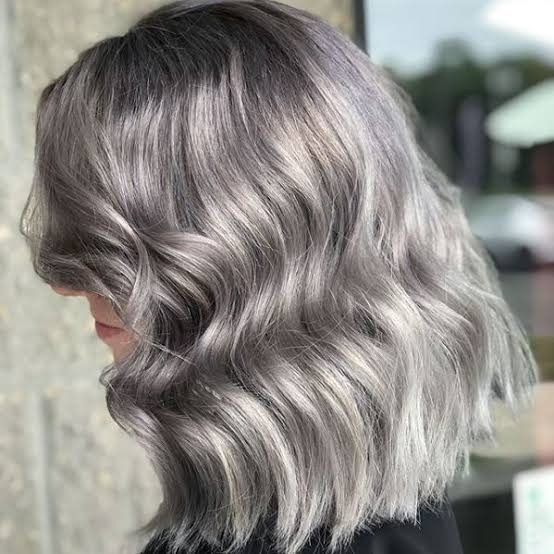
Can an ash gray lob carry you from a humid August afternoon to a crisp November evening? Yes, with a side parting and a wavy texture that works air-dried or with a quick diffuser pass. The subtle highlights sit within the ash tone, so there is no stark contrast, just a soft shift in depth. Medium textured, wavy hair of collarbone length takes the shape naturally, and the style suits oval and heart faces. A shine serum on the ends replaces the need for heavy product. Ask your colorist for: collarbone ash gray lob, subtle highlights.
Shoulder Length Layers With Subtle Gray Highlights
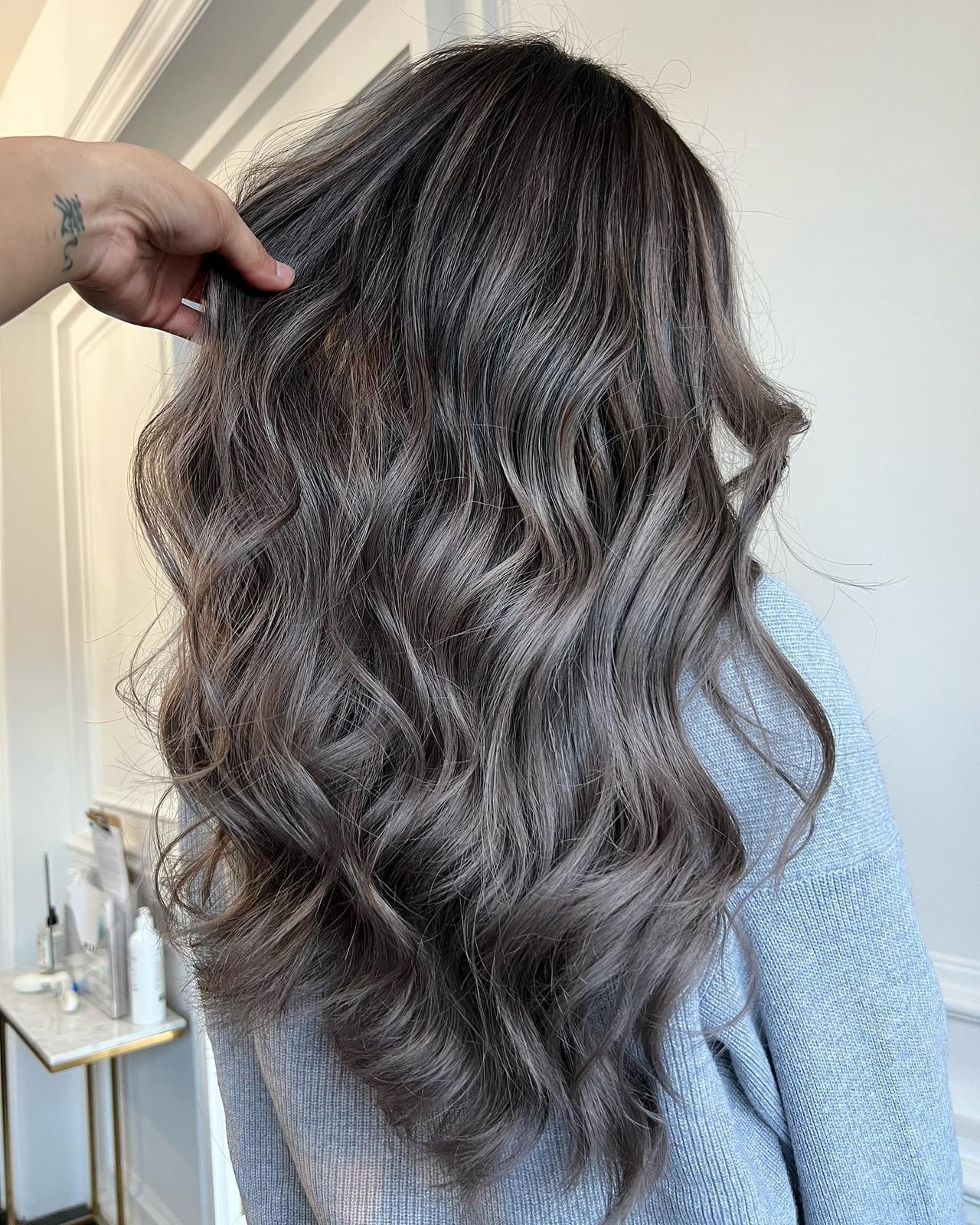
Shoulder-length layers with a gray base and subtle gray highlights: it is a low-contrast design that relies on texture rather than color pop. The air-dried finish and middle parting make it a wash-and-go option for medium density, wavy hair. A middle part elongates round faces, and the layers add movement without losing the blunt hem. Upkeep is minimal. A texturizing cream encourages the natural wave, and a trim every six to eight weeks keeps the layers defined. Ask your colorist for: shoulder length layered hair, gray base with subtle gray highlights.
Shoulder Length Layers With Natural Gray Highlights, Wavy
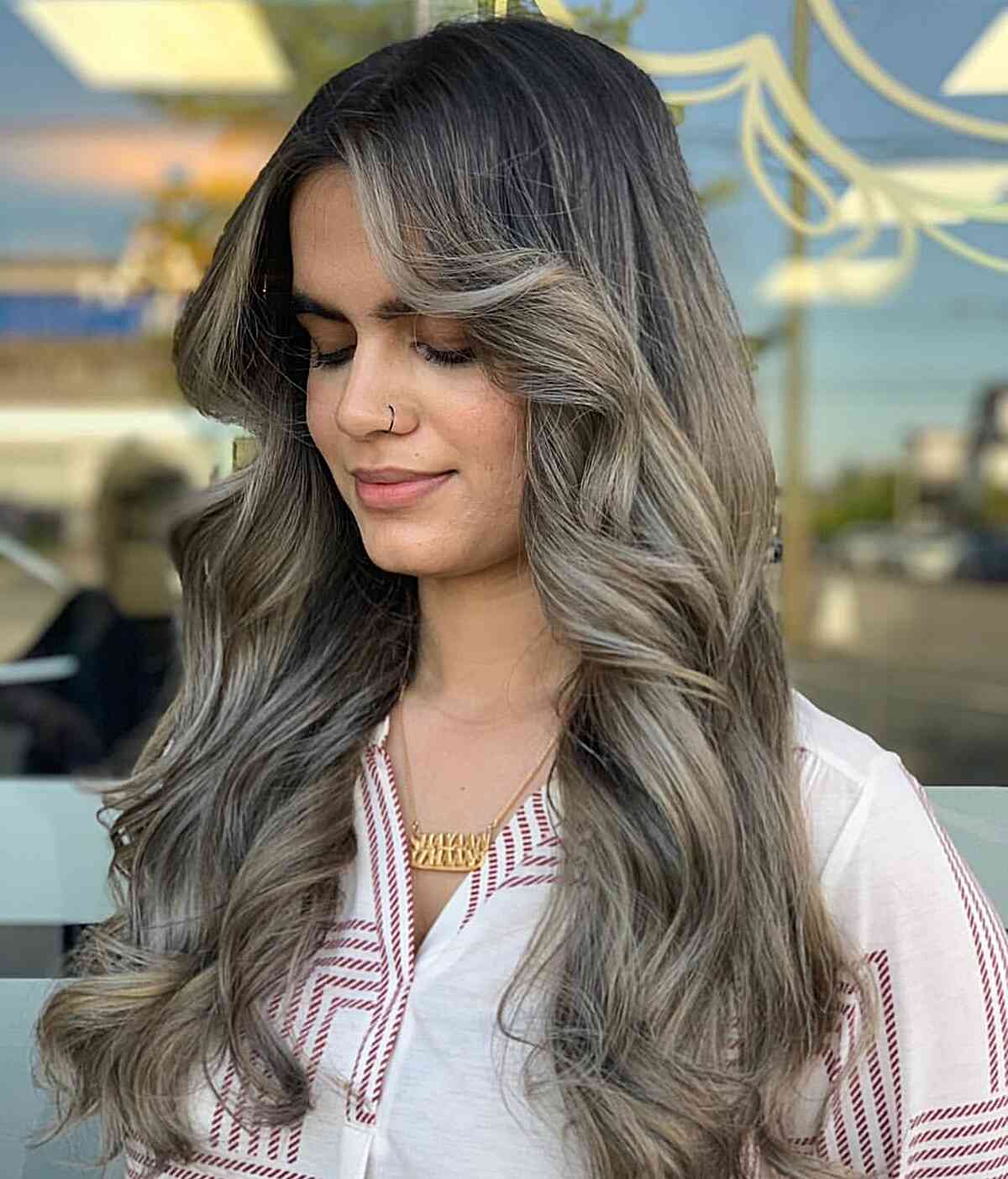
This is the gray highlight look that does not announce itself. The dark base keeps the overall impression soft, while natural gray highlights weave through shoulder-length layers and concentrate around the face. That middle parting and those face-framing layers do the work of shaping a wavy blowout without needing a heavy fringe. Medium-density, wavy hair takes to this technique well, and the face-framing pieces soften angular jawlines.
Ask your colorist for: shoulder length layered cut, dark base with natural gray highlights. The key is asking for fine, blended highlights that follow the natural wave pattern rather than thick stripes. A round brush on the face-framing sections gives that smooth, curved finish that makes the gray pop just enough.
Dark Base With Natural Gray Highlights
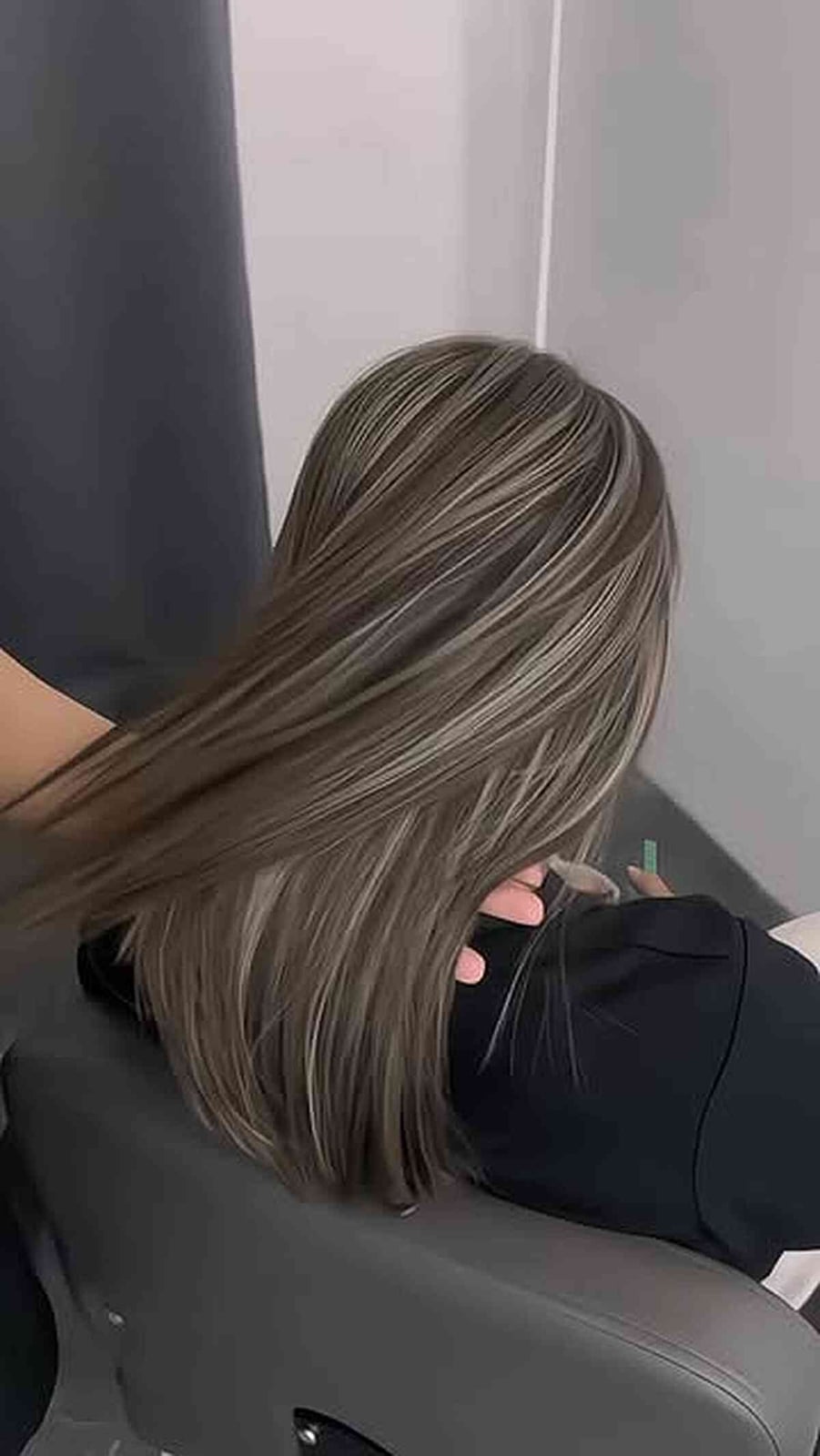
Where the previous look is subtle, this one is the same base but a slightly bolder version. The difference is in the placement: those natural gray highlights on a dark shoulder-length cut are still blended, but they stand out more against the dark base. The wavy blowout and face-framing layers remain, so the overall effect is still wearable. This suits anyone who wants the gray to register from across the room.
Long Layered Hair With Ash Blonde And Gray Highlights
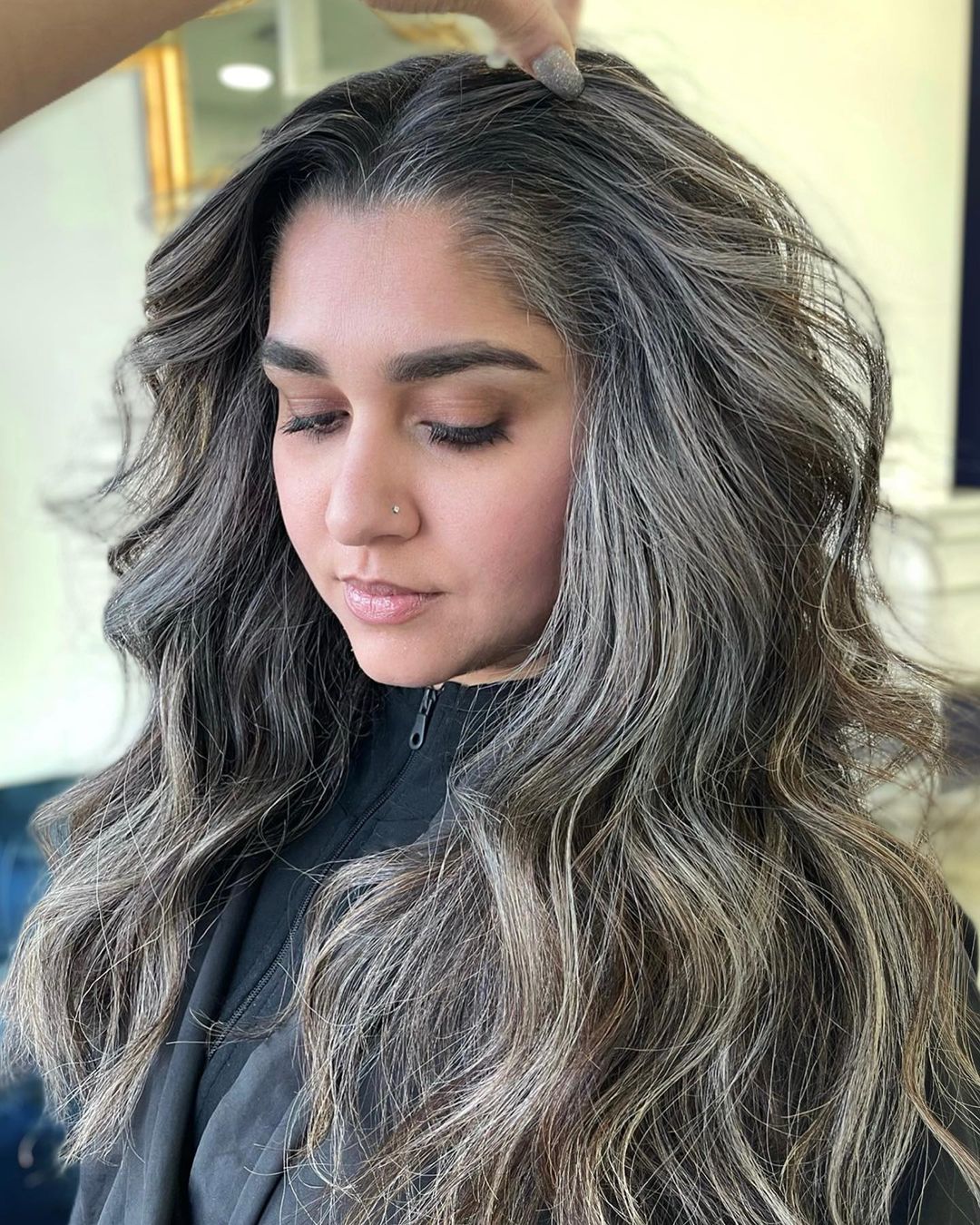
Who actually benefits from blending gray and ash blonde into a dark base? Anyone with thick, wavy hair that tends to look heavy when it is one solid color. The two lighter tones break up the mass of mid-back length hair, and the curtain bangs add movement around the face. The side parting and loose waves keep the whole thing from feeling stiff.
Ask your colorist for: long layered hair, dark base with ash blonde and gray highlights, curtain bangs. The trick is asking for the gray and ash blonde to be woven together as blended sections. This technique works best on natural bases that are already a level four or five, so the contrast looks dimensional and not stark.
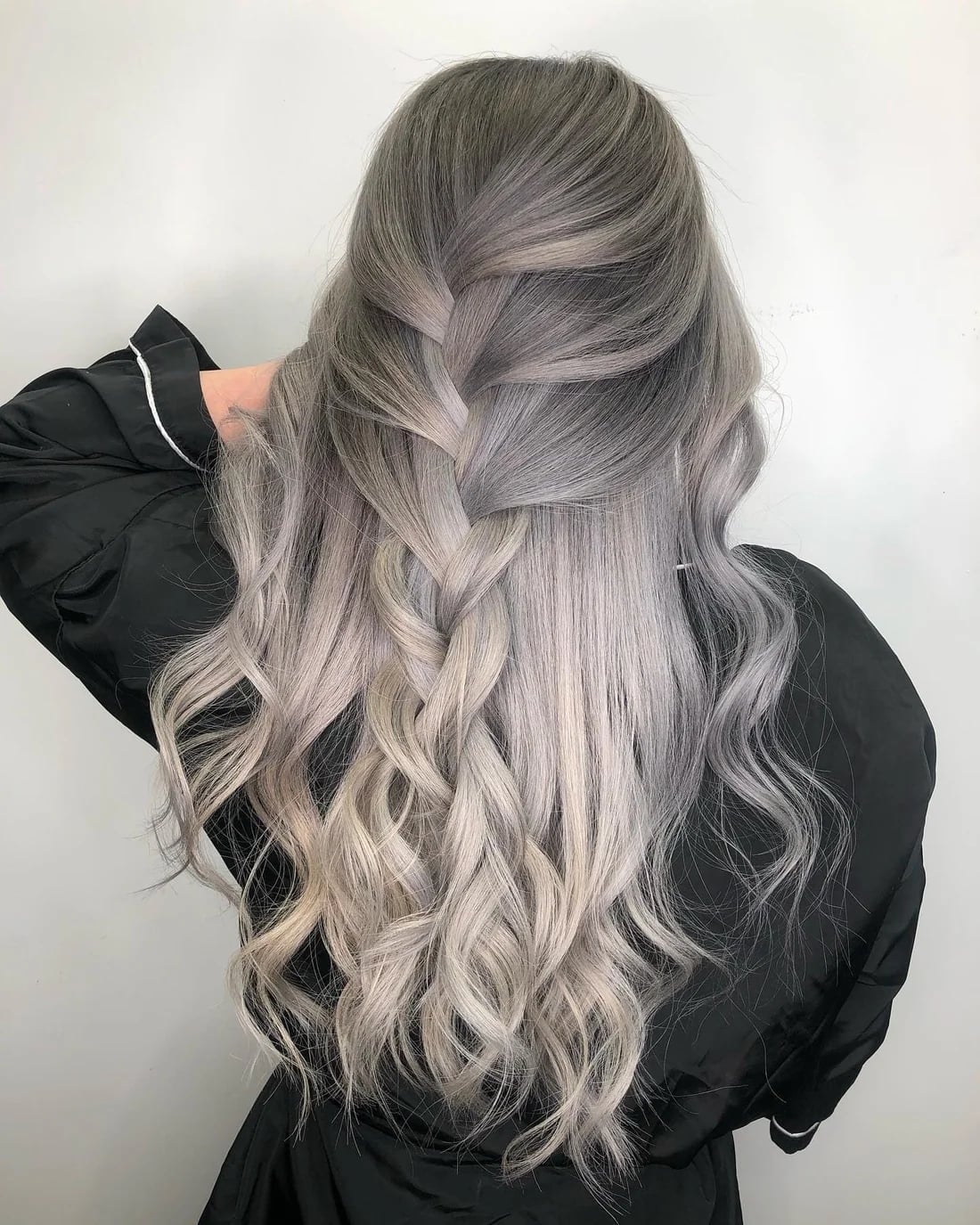
Mid-Back Layers With Silver And Ash Blonde Highlights
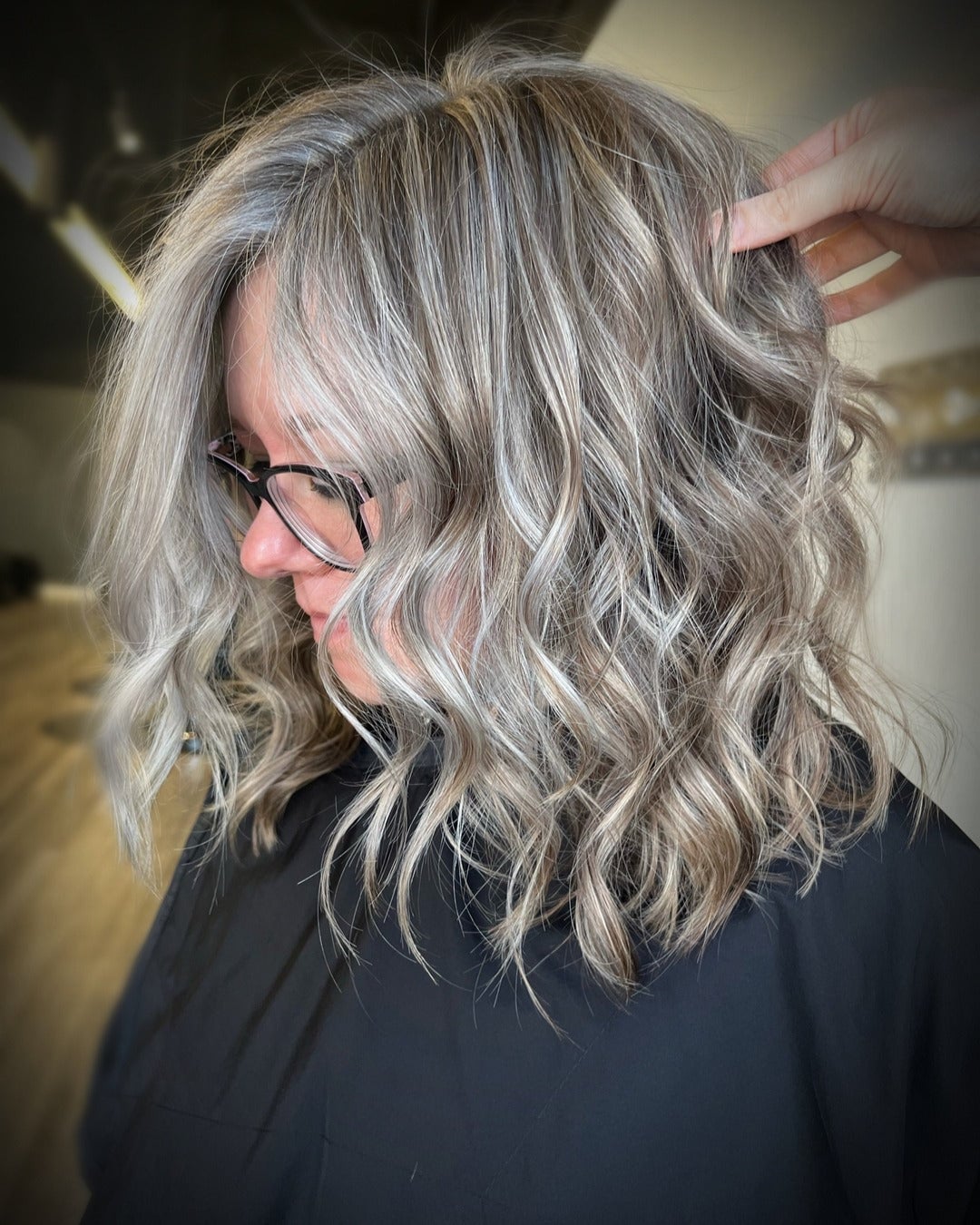
The design here is a gray base layered with silver and ash blonde highlights, which creates a multi-dimensional effect that a single tone cannot achieve. The mid-back length and long layers give the color room to travel, and the middle parting keeps the distribution even. Thick, wavy texture holds the braid and loose wave combination without falling flat.
Ask your colorist for: mid-back length layered hair, gray base with silver and ash blonde highlights. The silver pieces sit a shade lighter than the base, while the ash blonde adds warmth without going brassy. A toning appointment every six to eight weeks keeps the silver from yellowing, and a trim at the same interval maintains the shape.
Dark Brown Base With Ash Gray And Silver Highlights
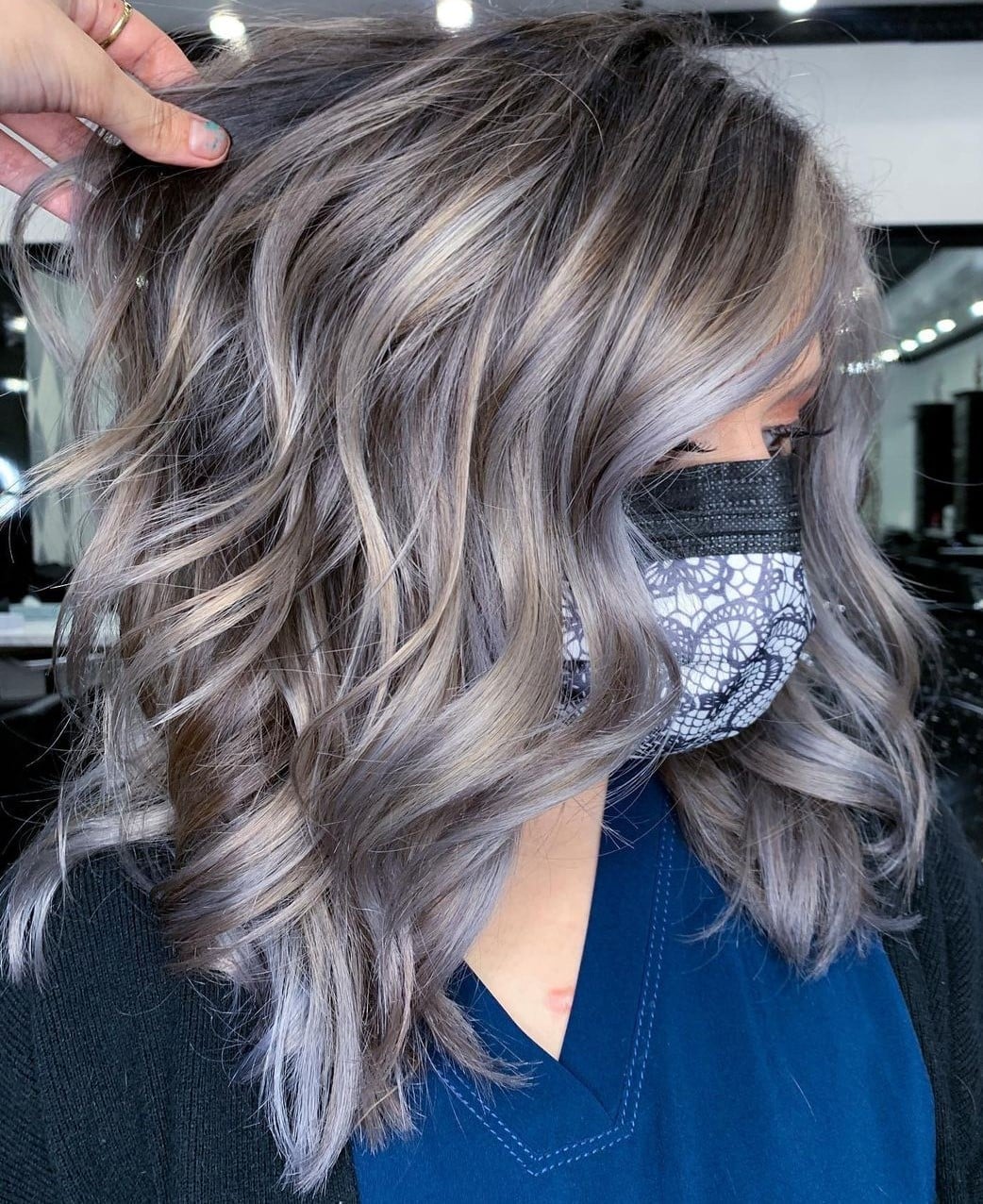
Dark brown hair and cool-toned highlights require a specific maintenance rhythm, and this look is no exception. The ash gray and silver pieces on a dark brown base create a stark contrast that needs regular toning to keep the cool tones from warming up. The mid-back length, long layers, and loose waves give the highlights room to move, but the real work happens between appointments.
Ask your colorist for: mid-back length layered hair, dark brown base with ash gray and silver highlights. A purple shampoo used once a week will keep the silver bright and the ash gray from drifting toward beige.
Dark Base With Distinct Ash Gray Highlights
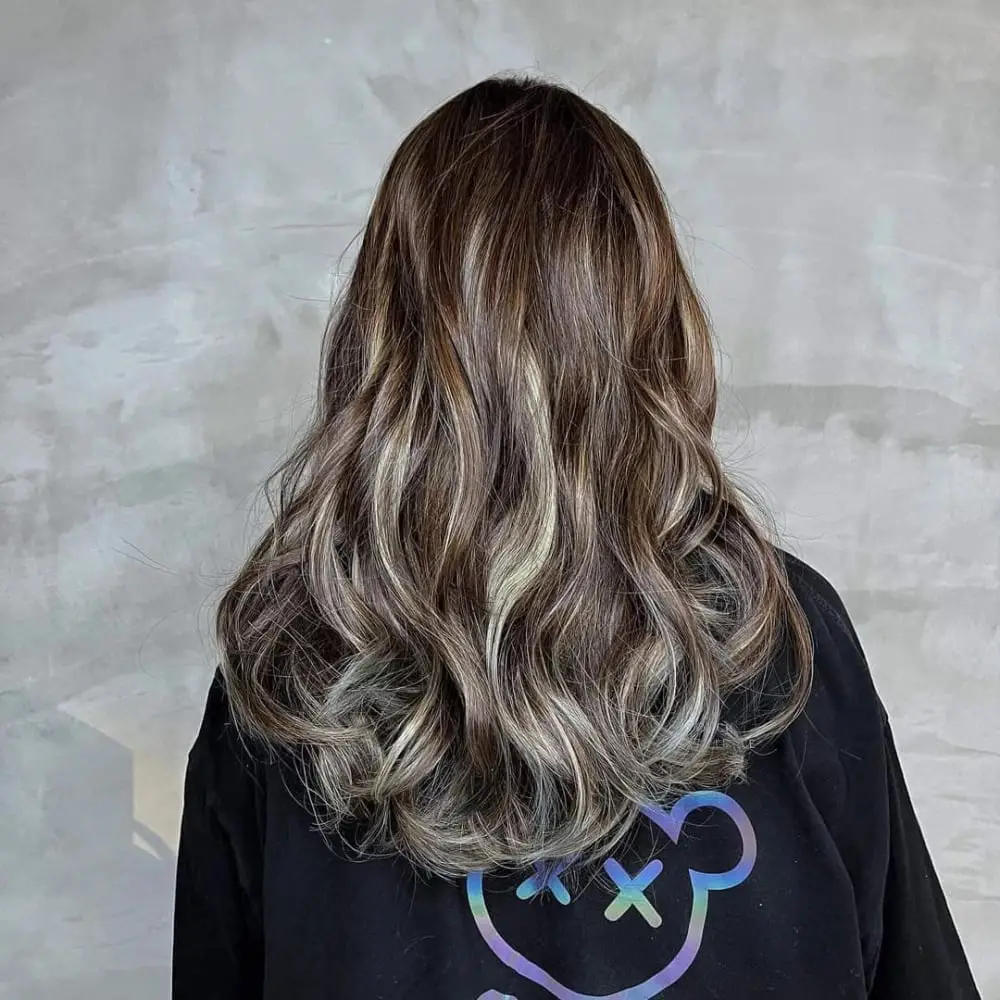
There is a fair trade-off with distinct ash gray highlights on a dark base: the contrast is striking, but it also means a clear line of demarcation when roots grow in. This is a salon-only service, and the ash tone requires a toning appointment every six to eight weeks to keep it from pulling brassy against the dark base. The mid-back length with layers and a middle parting gives the wavy, thick texture room to show off the placement of each highlight.
Ask your colorist for: mid-back length layered hair, dark base with distinct ash gray highlights. The real drawback is that skipping a toning appointment means the gray shifts warmer, and the contrast loses its clean edge. This is for someone who can commit to the schedule, not for the wash-and-go crowd.
Dark Brown Base With Ash Gray Highlights Mid-Back
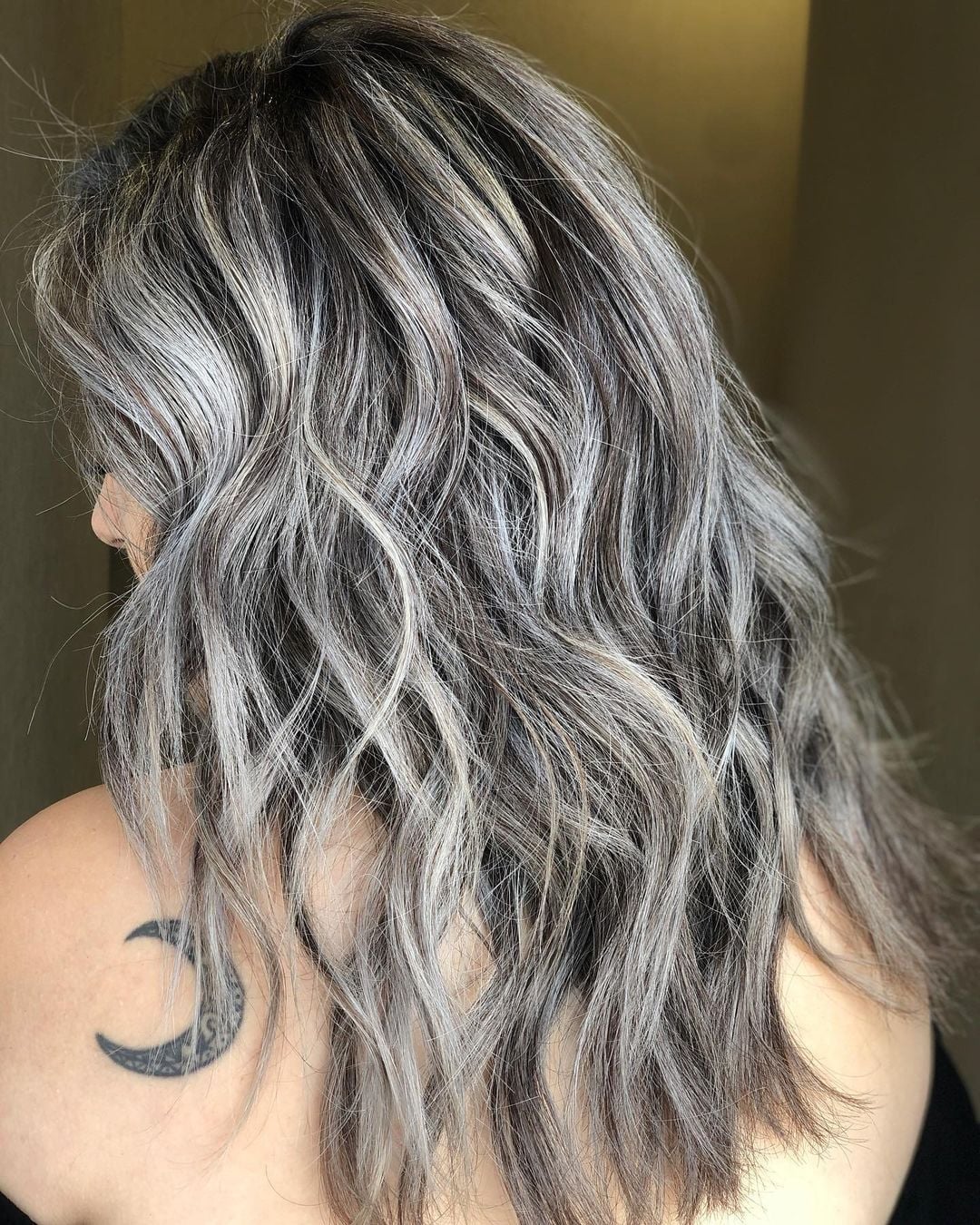
The design of this color relies on even distribution: the ash gray highlights run through the entire length, so the effect is a natural sheen on a dark brown base. Medium-density, wavy hair of mid-back length allows the highlights to catch the movement of loose waves without overwhelming the base. Long layers keep the look balanced.
Ask your colorist for: mid-back length layered hair, dark brown base with ash gray highlights. The softness of the ash tone means it does not fight with warmer skin tones the way a blue-based silver might, and the even placement avoids the stripe effect that can happen with chunkier foil work. A smoothing serum after washing helps the highlights reflect light evenly.
Mid-Back Layers With Silver-Gray Highlights
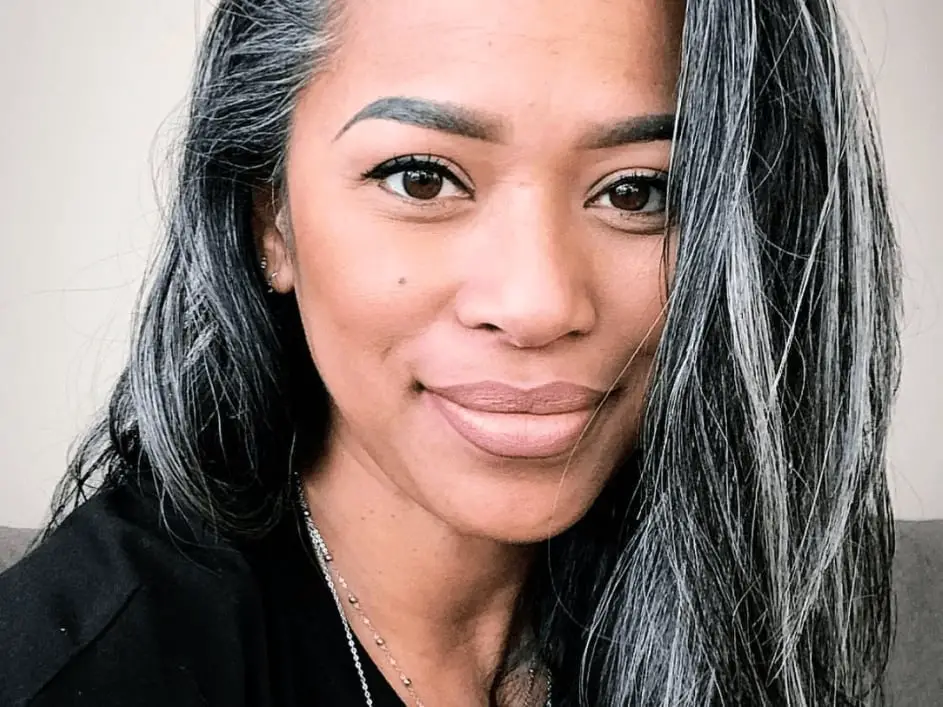
How do you get silver-gray highlights that do not look like a home bleach experiment? The technique is a two-step process: first, the dark base is lifted to a pale blonde in selected strands, then those strands are toned with a violet-based silver formula. Long layers in this mid-back length let the silver-gray strands weave through the thick, wavy texture without forming a solid block of color. Air-dried waves keep the contrast visible, and a trim every eight to ten weeks prevents the ends from fraying the color line.
Mid-Back Layers With Vibrant Gray Highlights and Wispy Bangs
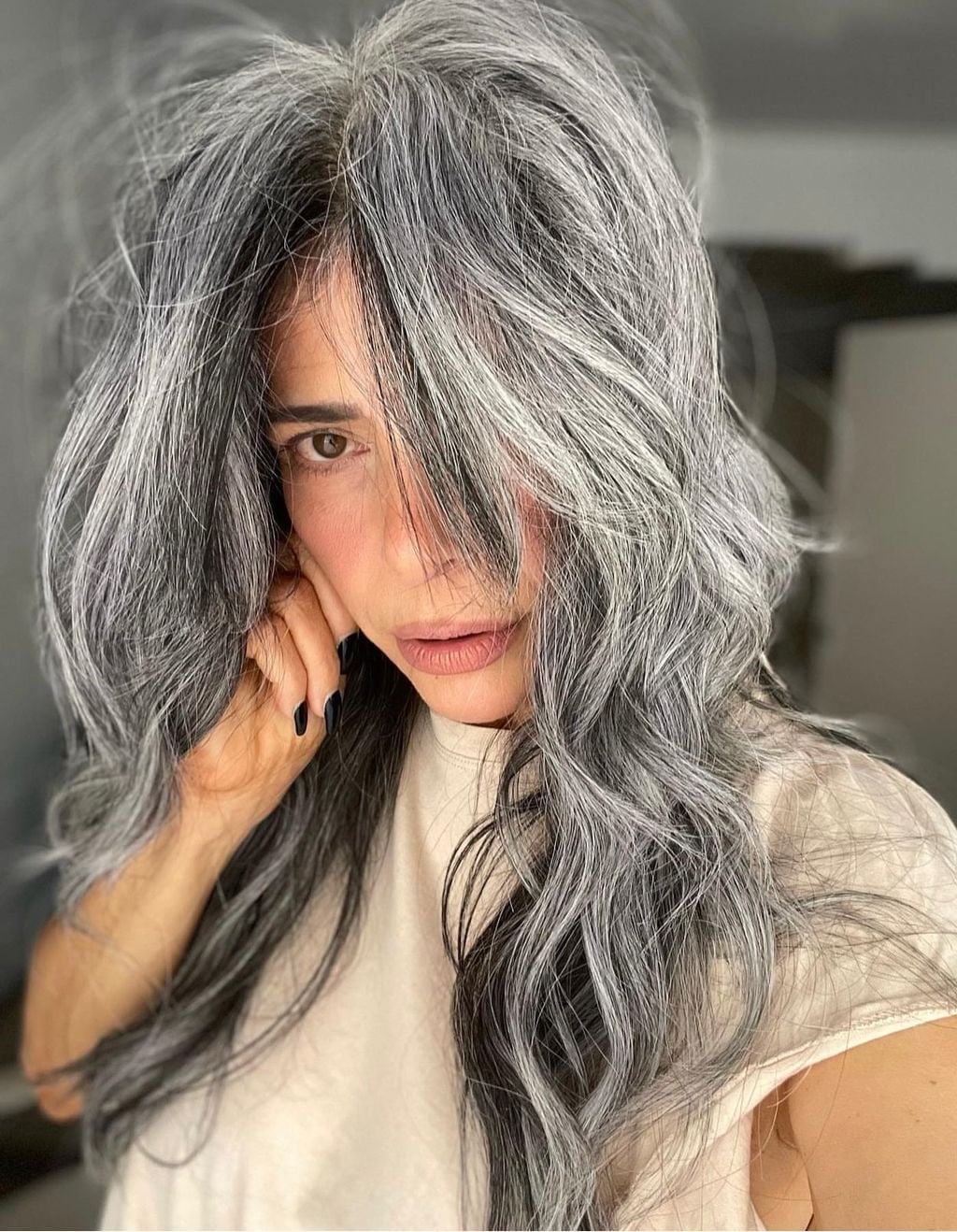
The wispy bangs here do something smart: they pull the vibrant gray highlights forward, so the color reads from the front and the back. The dark base anchors the brightness, and the side parting lets the gray strands fall naturally without sitting in a uniform line. This is a mid-back length with layers and a wavy, thick texture, and the bangs are cut soft enough to blend into the layers.
Ask your colorist for: mid-back length layered hair, dark base with vibrant gray highlights, wispy bangs. Specify that you want the highlights concentrated through the mid-lengths, not just at the ends. Bring a photo of the exact gray intensity you want, because “vibrant” can mean anything from a soft silver to a near-white steel, and your colorist needs a reference point.
Mid-Back Long Layers With Ash Blonde Highlights, Close-Up Take
This is not a platinum blonde or a beige blonde; the ash blonde base sits cooler than either, with lighter ash blonde highlights that add dimension without shifting the overall tone warm. The long layers and loose waves on mid-back length hair create a soft, blended effect that works for medium-density, wavy hair. The middle parting and side view show how the highlights catch light differently depending on the wave placement.
Ask your colorist for: mid-back length layered hair, ash blonde base with lighter ash blonde highlights. The difference between this and a warmer blonde is subtle but noticeable: the ash undertones keep the highlights from turning gold in sunlight, and the lighter pieces sit close enough to the base that the grow-out is softer than a high-contrast highlight would be. A texture spray at the mid-lengths helps separate the tones.
Mid-Back Natural Blend Of Gray Tones
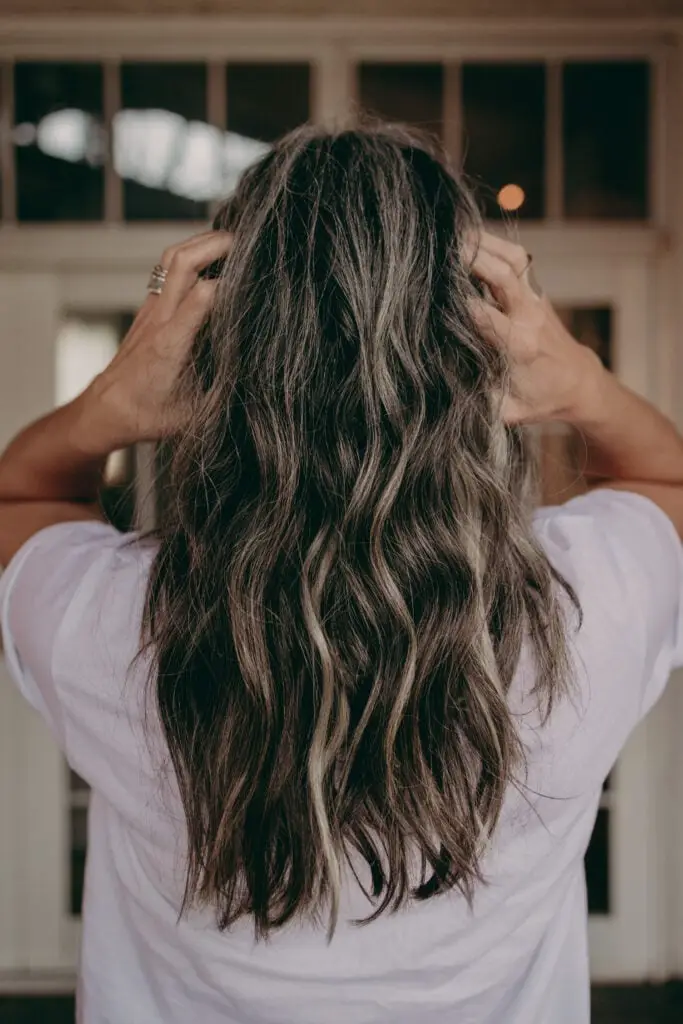
A seamless transition from darker gray at the roots to lighter gray highlights through the mid-back length means no harsh regrowth line to manage. Thick, wavy texture holds the air-dried shape without product, and the middle parting keeps it symmetrical. This blend suits most face shapes because the layers add movement without overwhelming the frame. Ask your colorist for: mid-back length hair, natural blend of gray and darker gray tones with lighter gray highlights. A trim every eight to ten weeks maintains the ends, and a smoothing cream on damp hair is all the styling it asks for.
Collarbone Lob With Gray Base And Lighter Highlights
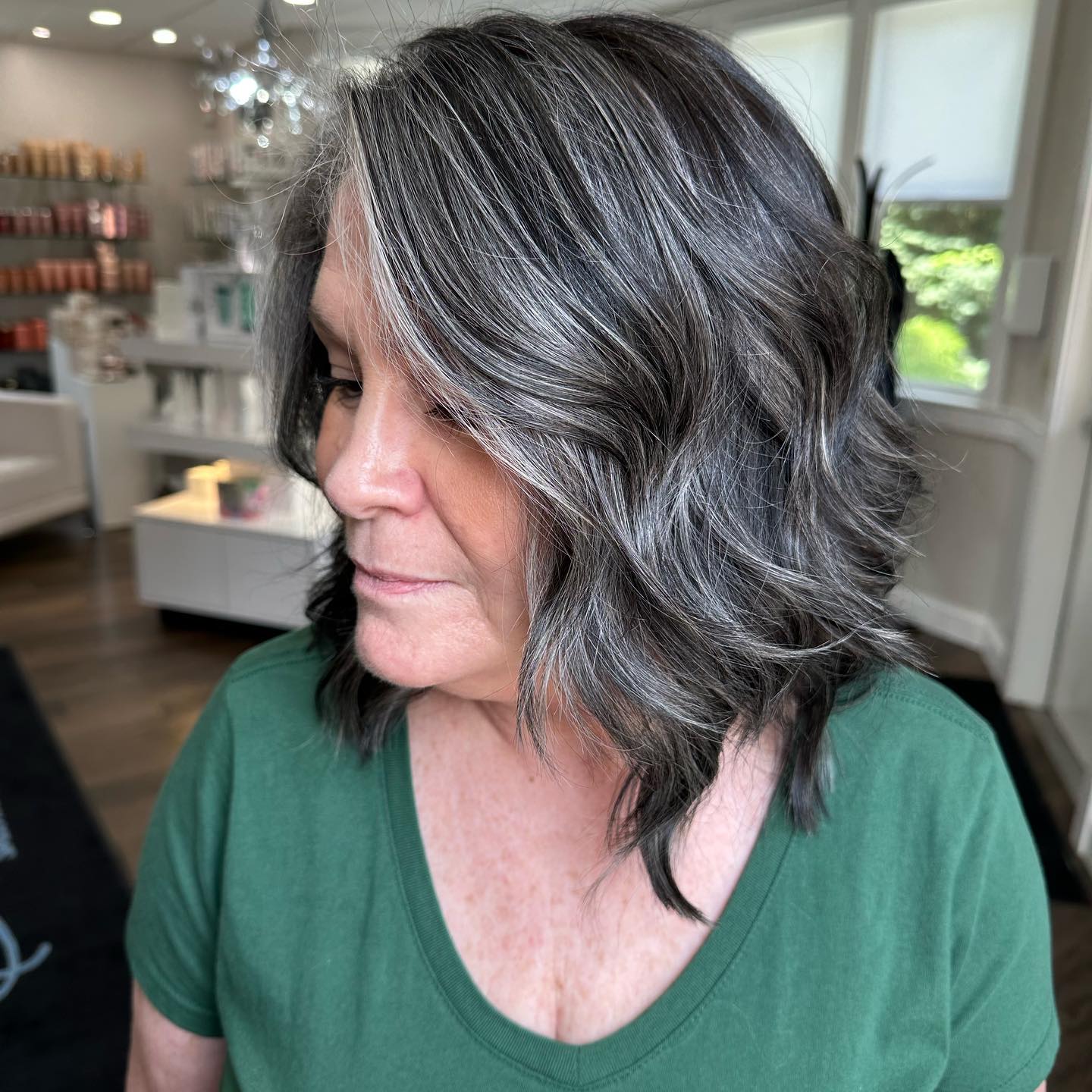
Can you replicate the wavy blowout at home? Yes, if you start with damp hair and a round brush on the curtain bangs. The collarbone lob with a gray base and lighter gray highlights needs a middle parting for symmetry, then loose waves from a large-barrel iron. Work in sections and only curl the mid-lengths and ends. The blowout texture comes from finishing with a cool shot of the dryer and a smoothing serum. Ask your colorist for: collarbone lob, gray base with lighter gray highlights, curtain bangs. This is a salon color job, but the styling is a solid DIY with practice.
Short Pixie Cut With Gray And Silver Highlights
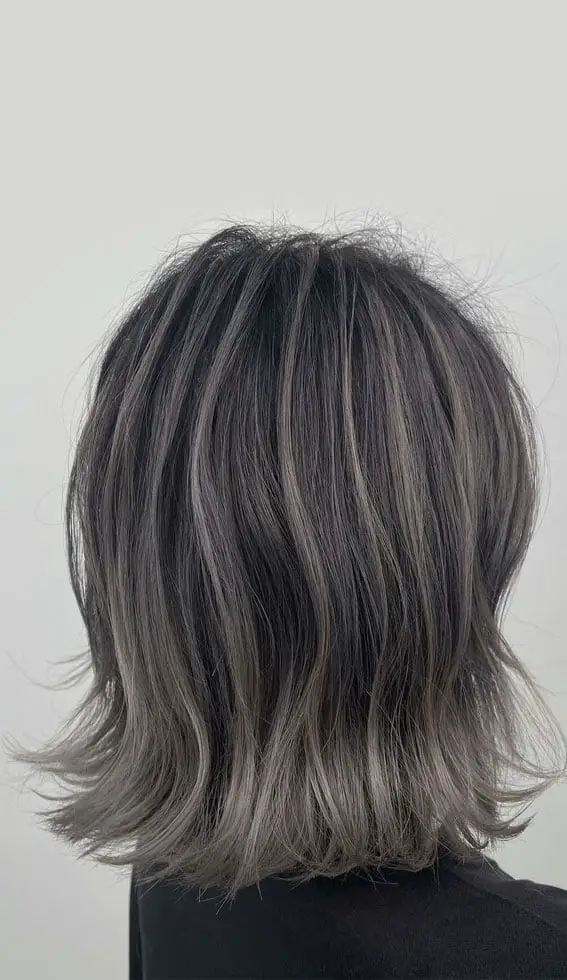
A short pixie cut with bright silver highlights on a gray base works best when the hair is fine and wavy, because the texture adds volume without weight. The side parting and short bangs draw attention to the eyes and cheekbones, which makes it a strong choice for oval, square, and heart faces. Ask your colorist for: short textured pixie, gray and bright silver highlights, short bangs. If your hair is very thick or extremely curly, the pixie shape may require more frequent shaping to avoid looking round.
Gray Hair Color Ideas
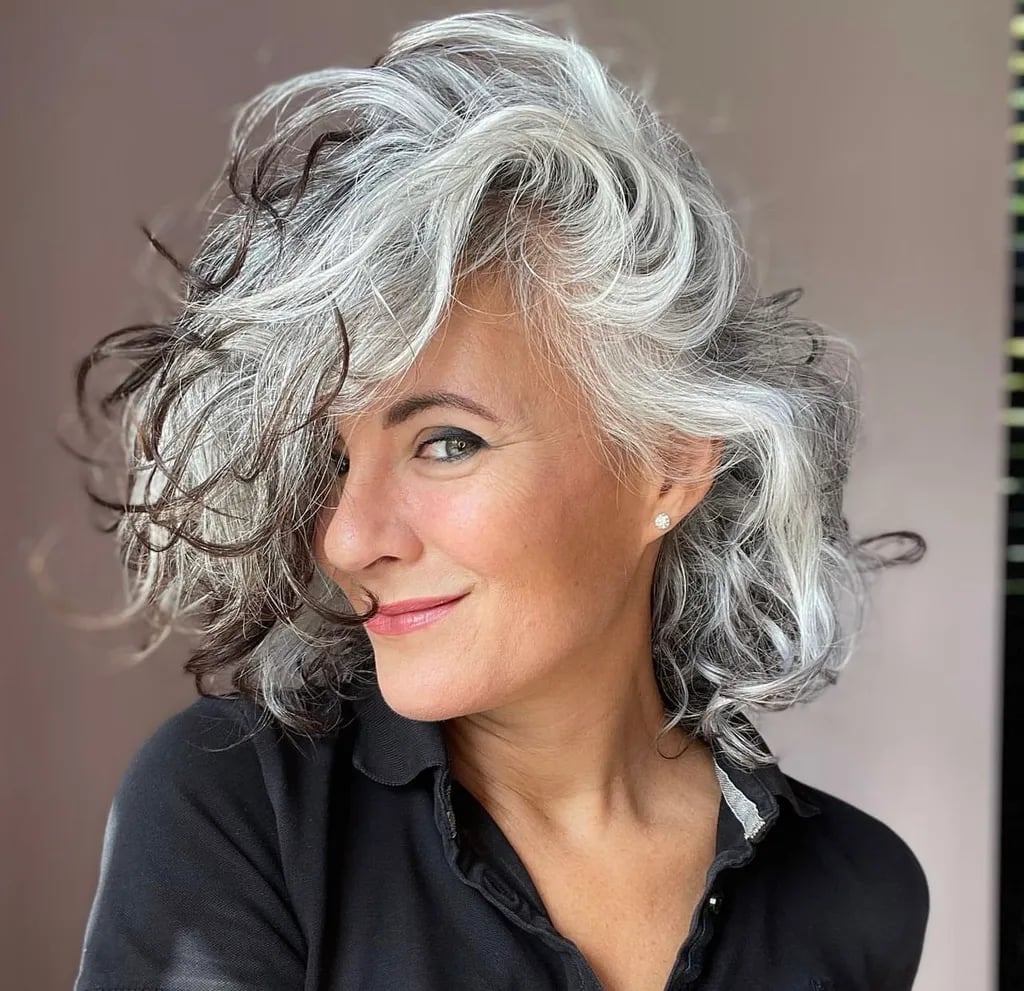
A chin-length layered bob with a dark brown base and silver gray highlights shows how gray can sit on a darker starting point. The air-dried wavy texture keeps it low-key. The technique here uses fine highlights through the top layers, leaving the under layers darker for depth. Ask your colorist for: dark brown base, silver gray highlights, chin-length layered bob. The second approach is a full gray base with lighter gray pieces woven through the mid-lengths, which creates a more deliberate silver than grown-out color. Both require a salon visit for the initial application.
Blending Gray With Dark Hair
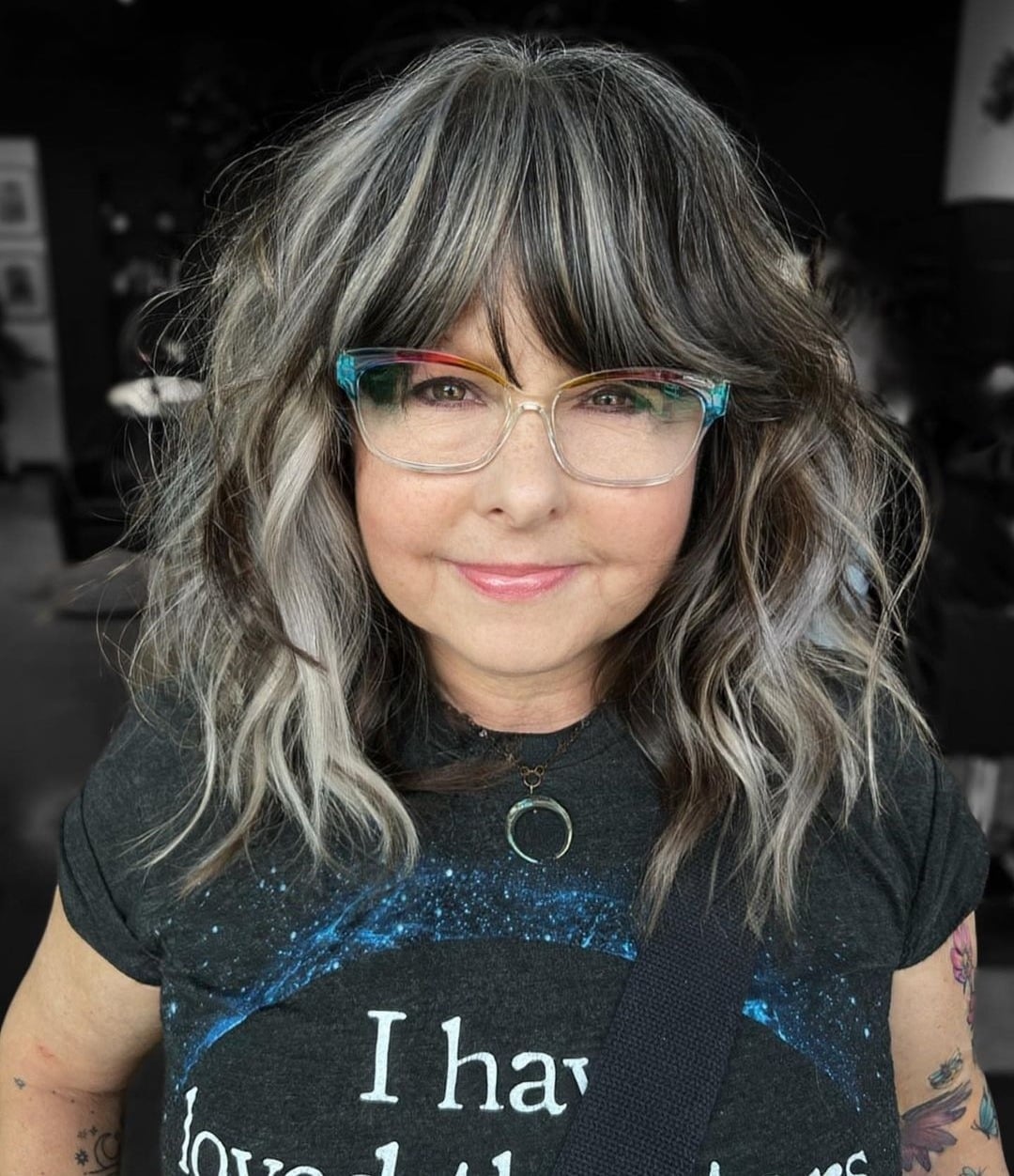
Blending gray with dark hair can go two ways. A balayage method paints the gray highlights onto the surface, so the dark base stays visible underneath and the grow-out is soft. A foilyage method uses foil to lift the color more, giving brighter, more distinct gray pieces. The collarbone shag with curtain bangs and a middle parting in the photo uses the balayage approach: the gray highlights sit mostly on the top layers and the ends, while the dark brown base anchors the look. Ask your colorist for: dark brown base, gray highlights, collarbone shag with curtain bangs. The balayage route needs fewer touch-ups than foilyage.
Final Thoughts
For a subtle effect, ask for blended ash or silver highlights on your natural base color. For more impact, request distinct bright silver streaks with a darker base. Gray highlights are a chic statement. Choose wisely.
- Maintain tone with purple shampoo once a week; adjust frequency based on brassiness.
- Schedule salon toning sessions every 6-8 weeks to keep highlights vibrant.
- Use heat protectant spray before styling to prevent damage to highlighted strands.
- Wash hair with cool water to help preserve color and shine.