
Two-strand twists are a foundational protective style that works across textures and lengths, from chin-grazing bobs to mid-back lengths. The technique has shifted toward softer, lived-in finishes that pair well with curtain bangs and face-framing layers.
This collection of 29 Simple Two Strand Twists covers the full range, from DIY-friendly wet looks to detailed salon styles with beads and balayage. Whether your hair is fine, dense, coily, or somewhere in between, each option addresses a real styling struggle: twists that don’t hold, flat root sections, or a style that unravels by midday.
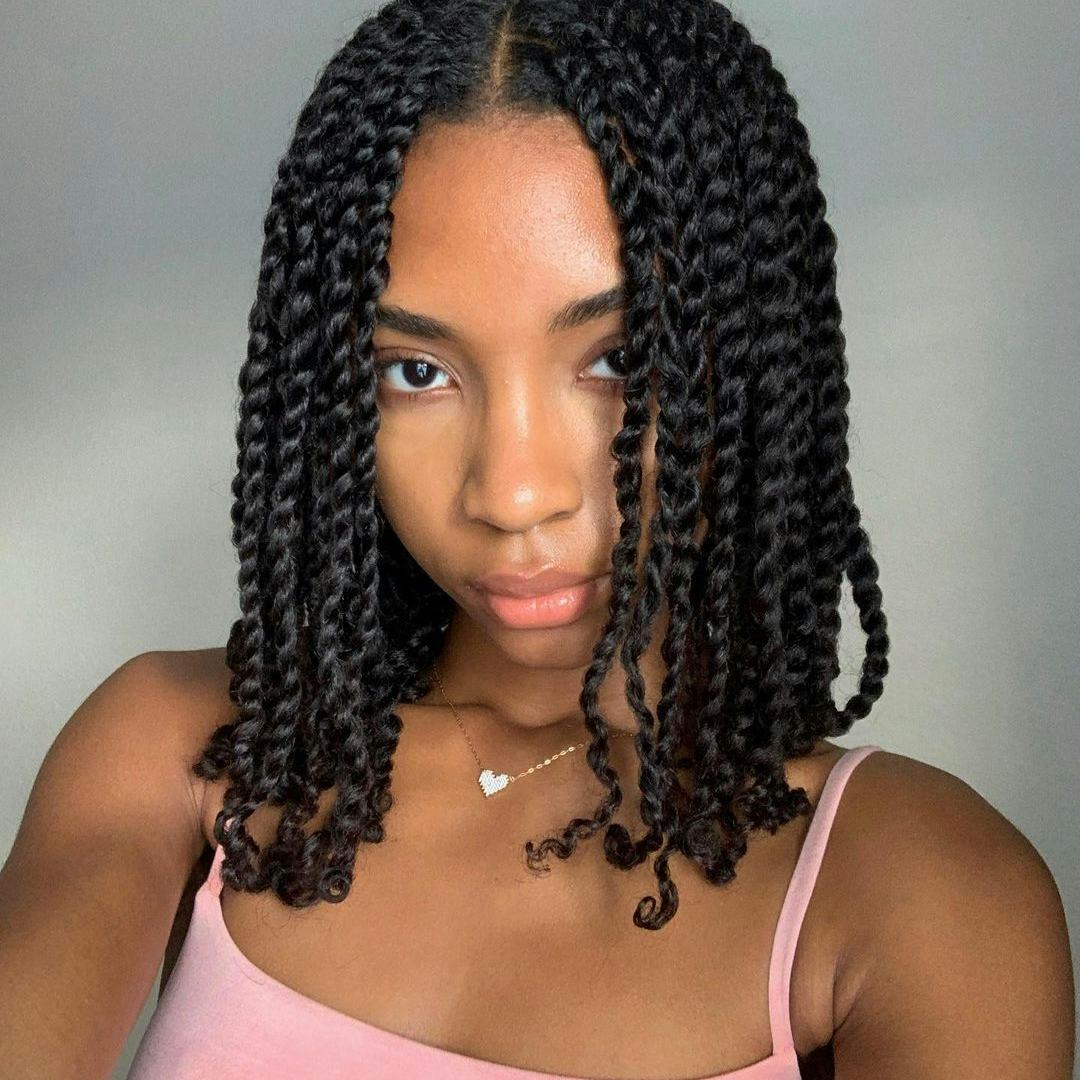
Collarbone Length Loose Two Strand Twists
There is a neatness to this collarbone length style. The middle part splits the hair evenly, and each twist falls with the same weight, which is exactly what medium density coily hair does best: it holds definition without looking rigid. If you have a round face, the length below the chin and the clean part work to elongate things. Ask your stylist for collarbone length loose two strand twists with a middle part. Keep the ends moisturized with a light oil daily, and plan a trim every ten to twelve weeks to stop the twists from looking frayed. It is a salon build, but the payoff is a style that behaves for weeks.
Mid-Back Two Strand Twists With Curly Ends
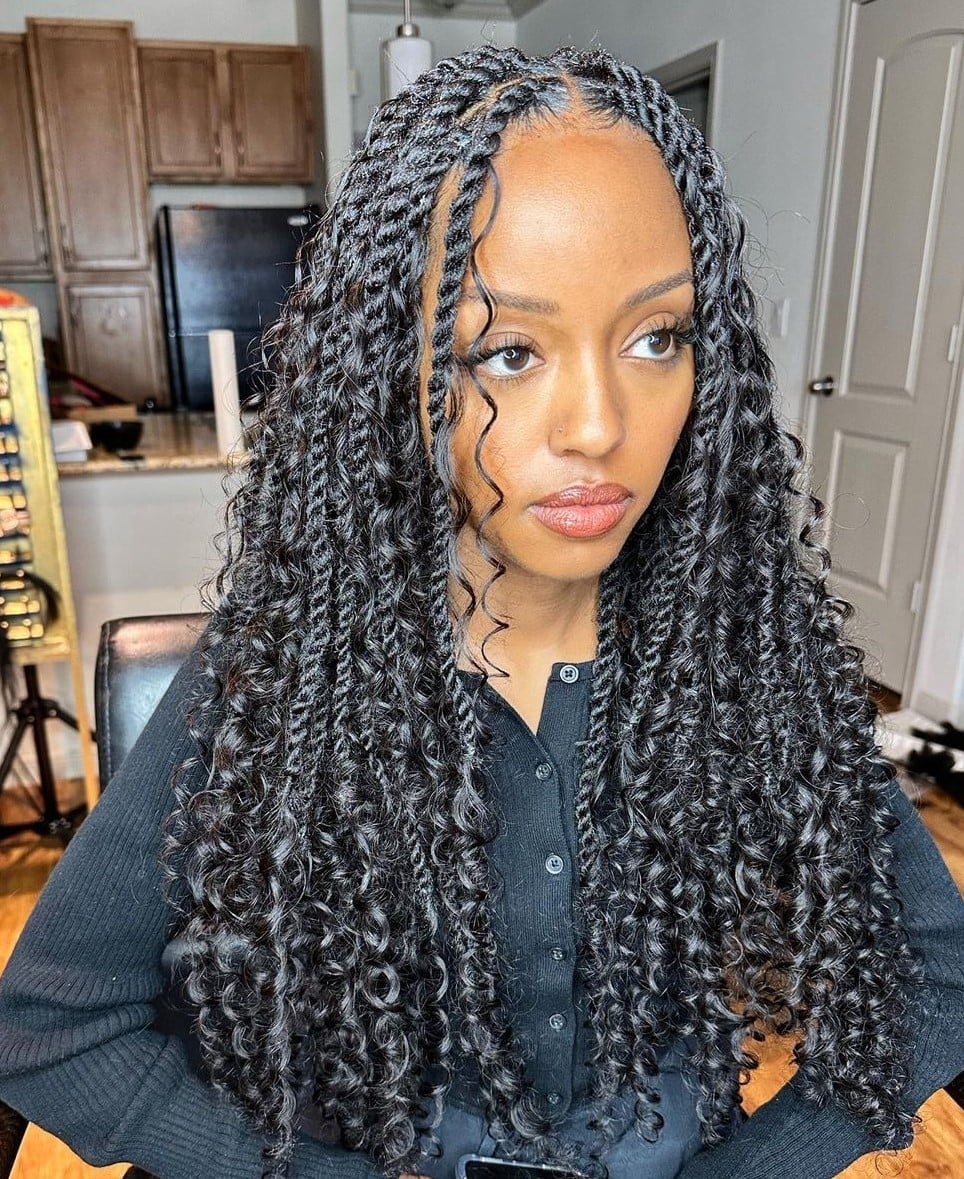
Start with the right base: mid-back length hair, thick and wavy, twisted from root to tip. The subtle brown highlights give the length dimension, so the eye travels down instead of getting stuck at the roots. Ask your colorist for subtle brown highlights and your stylist for mid-back two strand twists with curled ends. After the twists are set, run a curling iron over just the last few inches for that polished finish. Re-twist the roots every six to eight weeks to keep the part sharp. This style leans salon-leaning, mostly because getting those ends uniform takes a steady hand.
Long Defined Two Strand Twists DIY
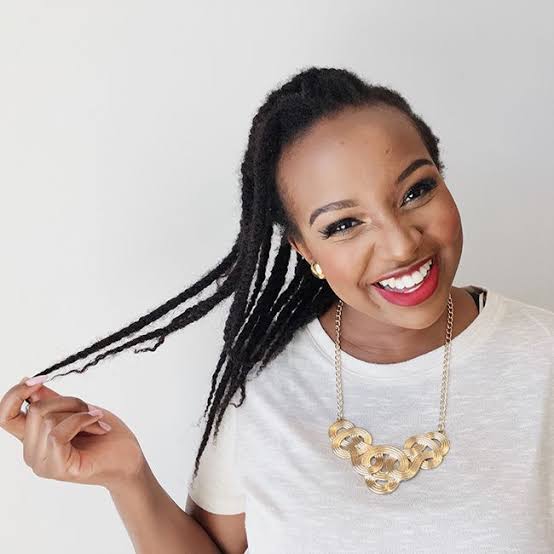
The mistake most people make with DIY two strand twists is twisting too early, when the hair is still damp enough to shrink and puff overnight. Start with hair that’s fully dry and detangled, then part down the middle and twist each section with a bit of product for grip. This shoulder length style works because the coily, thick texture holds the defined shape without much fuss. Ask your stylist for long defined two strand twists with a middle part. To keep them looking sharp, apply a moisturizing spray every few days and separate the ends gently so they don’t tangle into one solid mass. It’s a doable at-home project, but give yourself an evening, not an hour.
Shoulder Length Twists In A Bun
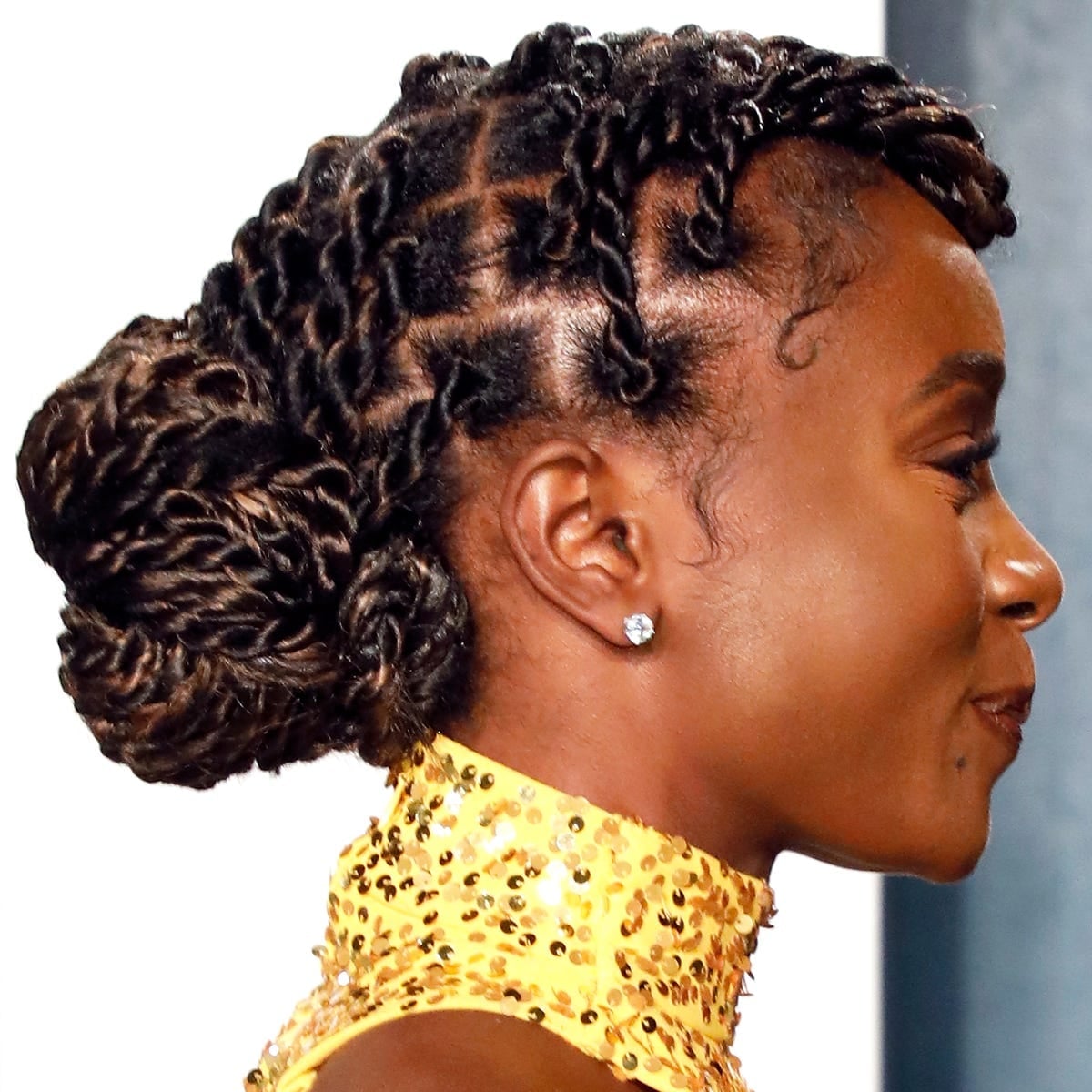
There’s a difference between a bun that looks like you just got out of bed and one that looks like you meant it. This one, built from shoulder length two strand twists, falls in the second camp. The twists are gathered into a neat knot at the nape, and the side view shows how the wavy, thick texture adds body without bulk. It’s the kind of style that moves from a workday to an evening event without a stop at the mirror. Ask your stylist for shoulder length two strand twists gathered into a bun. Secure it with bobby pins and re-twist the loose ends weekly to keep the shape intact. The middle part keeps it symmetrical, which works for most face shapes.
Collarbone Bob Twists With Side Bangs
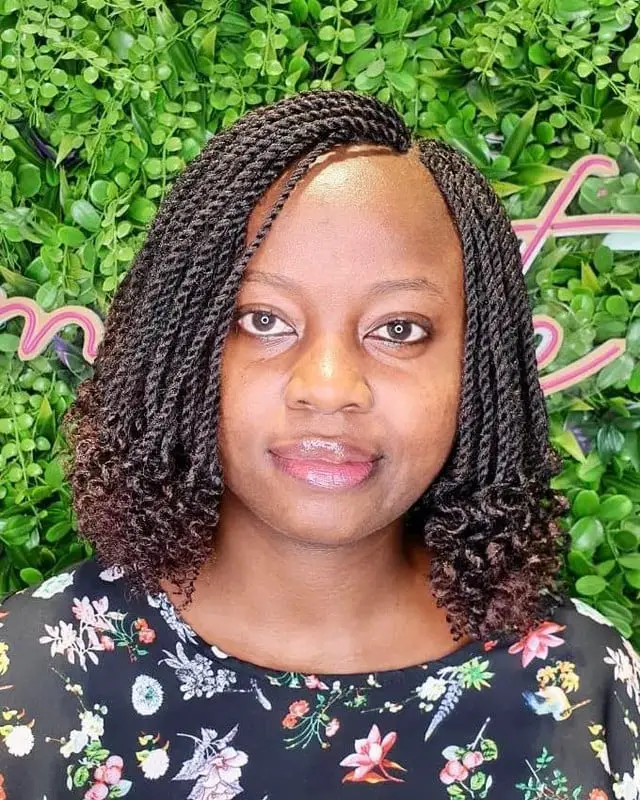
If you’re torn between a bob and longer twists, this collarbone length bob settles it. The side-swept bang breaks up the line of the cut, which softens square and round faces without hiding them. The wavy texture of the twists adds movement, and the curled ends keep the whole thing from looking too severe. Ask your stylist for a collarbone bob with two strand twists, curled ends, and a side-swept bang. The darker base with lighter ends gives it depth, so the style reads as lived-in rather than flat. To keep the ends curled and the bob shape sharp, plan a trim every six to eight weeks. It’s a salon build, but the style works for daily wear without much fiddling.
Mid-Back Twists In A High Updo
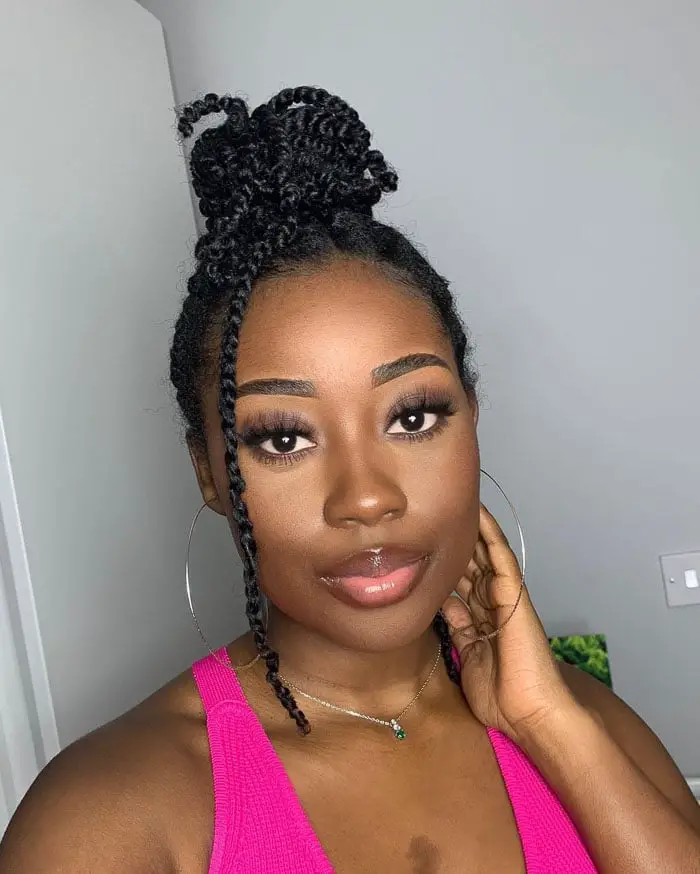
Wondering how to keep mid-back two strand twists out of your face without sacrificing their length? Gather them into a high bun and let the loose twists cascade down the back, which is exactly what this front view shows: a middle parting, black coily hair, and the bun sitting high while the rest falls past the shoulders. The contrast between the sleek bun and the trailing twists gives the style its shape, so the hold depends on pinning the bun firmly and leaving the ends free to move.
Ask your stylist for mid-back two strand twists in a high bun with loose ends. Thick, coily hair holds this updo best, and updos suit every face shape, which makes it a reliable option for events or a long day when you want the twists off your neck. To keep it fresh, mist the loose twists with water and re-pin any strays; the style holds for a full day, though the bun will need a re-pin after a few hours of wear.
DIY Two Strand Twists Wet Look
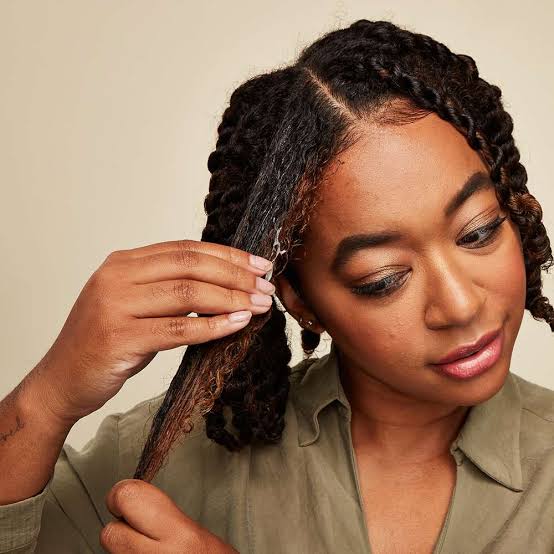
One twist gleaming with product while the rest stay matte is a deliberate contrast, a styling choice rather than an accident. Here, shoulder-length coily hair in dark brown with subtle auburn highlights is twisted all over, but only one twist carries that wet-look shine, which draws the eye without committing the whole head to the effect. Ask your stylist for shoulder length two strand twists with subtle auburn highlights, then finish one twist with gel or pomade at home. The wet look holds for a few hours before it dries matte, so reapply to keep the contrast. Thick, coily hair takes product well, and this works on any face shape, making it a DIY-friendly way to add a little drama to a simple twist style.
Collarbone Twists With Side Bangs, Dark Brown
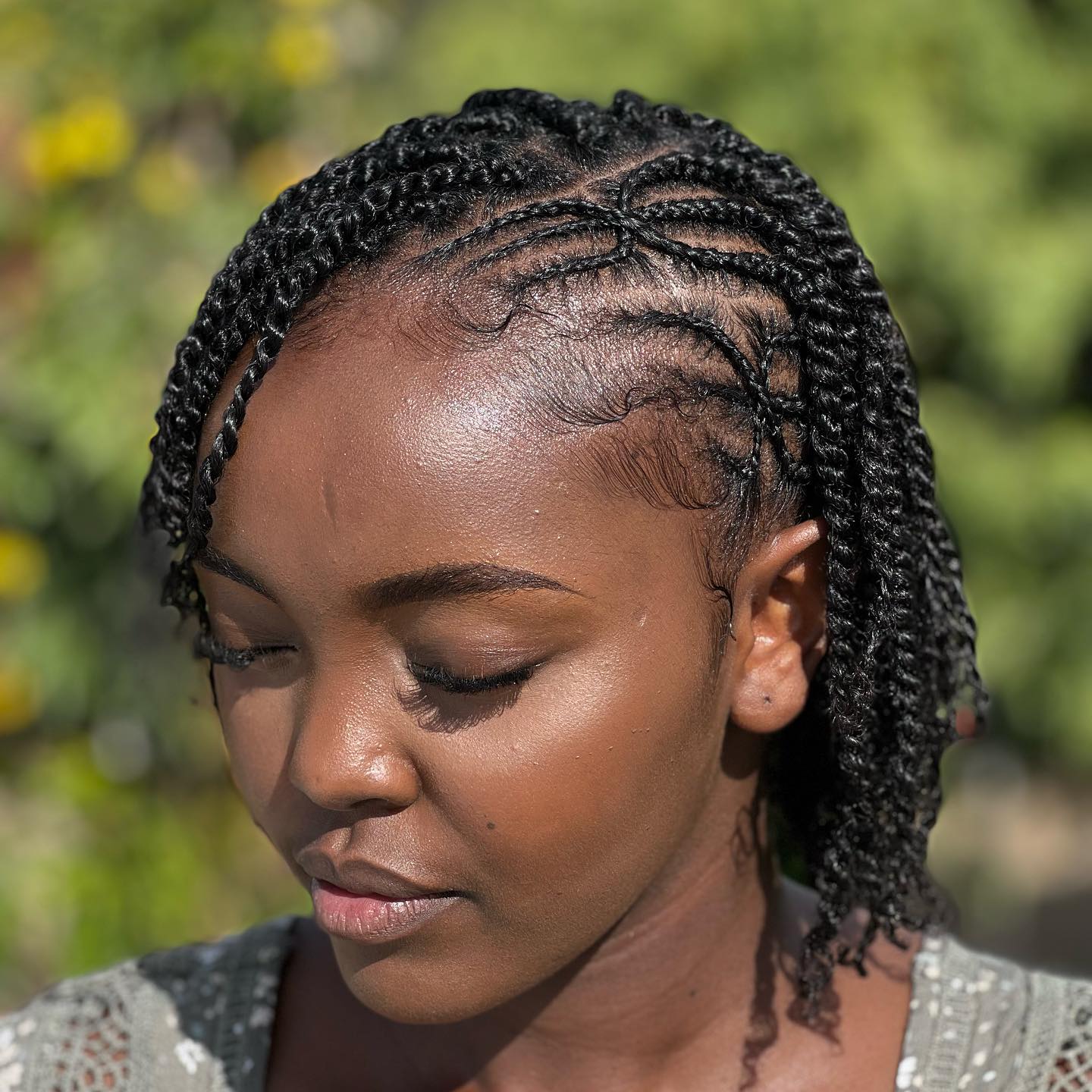
A short bob in dark brown, twisted neatly to collarbone length with a side part and wavy pieces framing the face, this cut looks polished because the twists are uniform and the bangs are deliberately swept. The side-swept bangs soften a strong jawline, and the bob shape keeps the weight off your neck, so it suits wavy hair of collarbone length best. Ask your stylist for collarbone length two strand twists with a side part and face-framing pieces. The upkeep is salon-dependent: a trim every six to eight weeks keeps the bob sharp, and a finishing spray holds the bangs in place through the day. The twists themselves hold their definition for about a week before the roots need attention, so plan for a re-twist or a restyle.
Collarbone Twists With Highlights
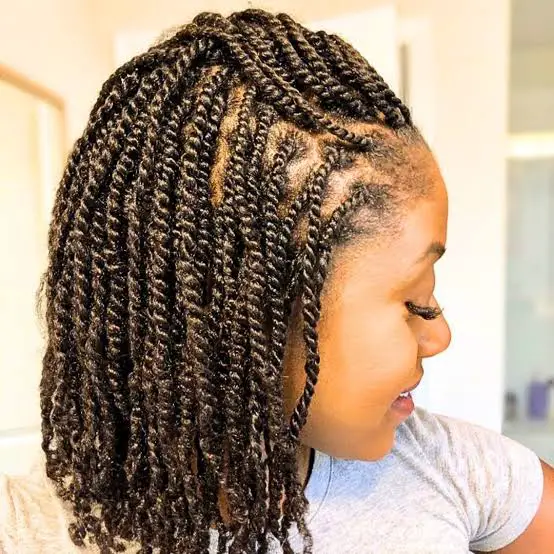
Subtle lighter strands woven through a dark brown base add depth to twists, because each twist shows a different side of the color. Here, thick coily hair is twisted neatly to collarbone length with a middle parting, and the highlights create dimension without contrast, which keeps the style looking natural. Ask your colorist for collarbone length two strand twists with subtle highlights and a middle part. The highlights add depth without changing the overall darkness, so they suit any face shape and any twist size. The color grows out softly, which typically allows four to six weeks between appointments, but the twists themselves need a re-twist every six to eight weeks to keep the part lines clean.
Chin Length Bob Twists With Beads
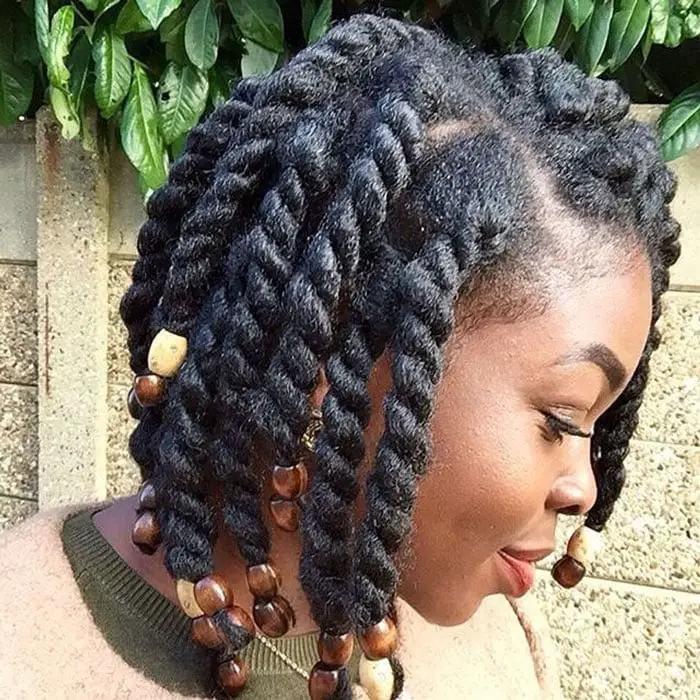
Who says a bob has to be boring? This chin length version is twisted all over in black coily hair, parted down the middle, and finished with wooden beads on the ends, which adds a little weight and a lot of personality to the silhouette. The beads make the twists swing and clack, so they suit anyone who wants their hair to announce itself, and the chin length flatters round and oval faces by framing the jaw. Ask your stylist for chin length two strand twists with wooden beads. The beads are DIY-friendly to add at home, just slide them on and crimp the end, but make sure they are secure so they don’t fly off mid-step. The style holds for a few days, and the beads are easy to remove when you are ready for a change.
Mid-Back Wavy Twists With Highlights
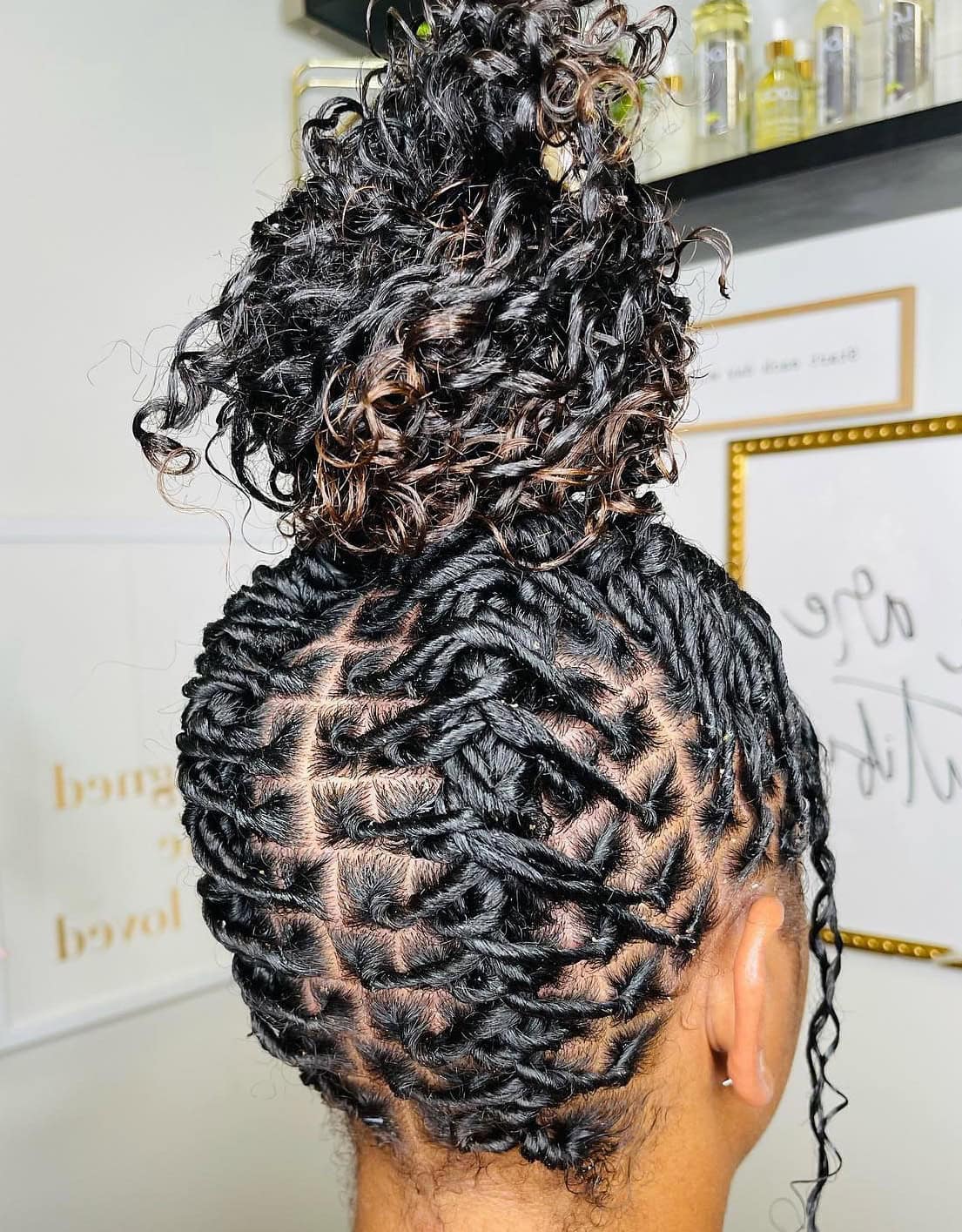
Wavy, thick hair takes two-strand twists in a distinctly different direction than coily textures do. The waves keep the twists from looking too rigid, giving them a softer, more fluid fall that settles naturally at mid-back. The subtle lighter highlights catch light across the width of each twist rather than pooling at the ends, which is what happens with a solid color. Ask your stylist for: mid-back length two strand twists, subtle highlights. The middle parting keeps the volume distributed evenly on both sides.
This texture works best when the twists are not pulled too tight at the root. A looser tension lets the wave pattern read through the finished style. A silk scarf at night preserves that wave and keeps the twists from frizzing at the edges. Re-twist the roots every six to eight weeks to maintain definition as new growth appears.
Shoulder Length Twists With Gold Beads
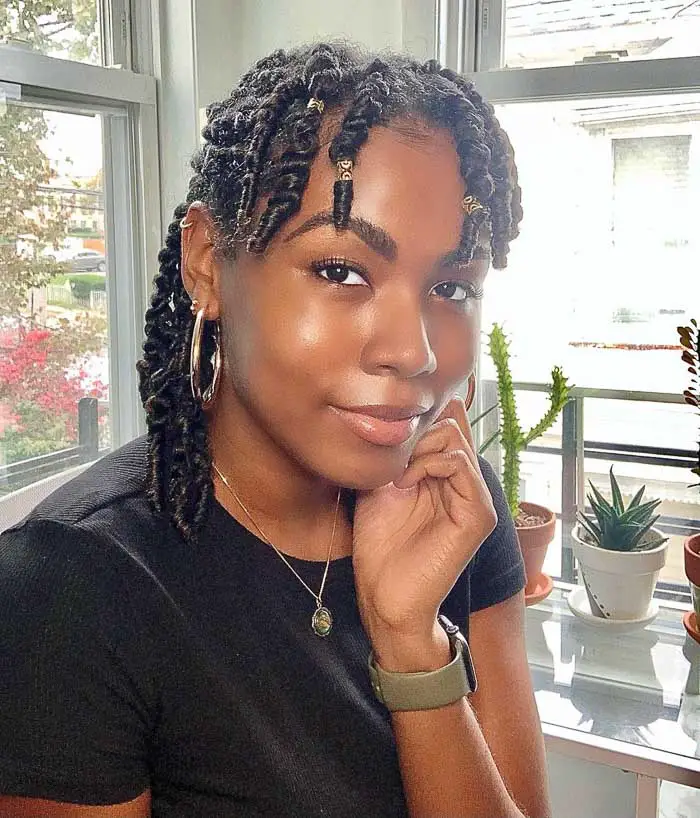
The small gold beads are doing more than decorating here. They add weight to the ends of shoulder-length twists, which helps the loose, coily texture hang downward instead of springing up toward the jawline. The baby hairs are left soft and unpulled, framing the hairline without fighting the middle parting. Ask your stylist for: shoulder length loose two strand twists with gold beads, baby hairs. This arrangement lands naturally at festivals and holiday gatherings where the hair is part of the look.
Collarbone Locs In Two Strand Twists
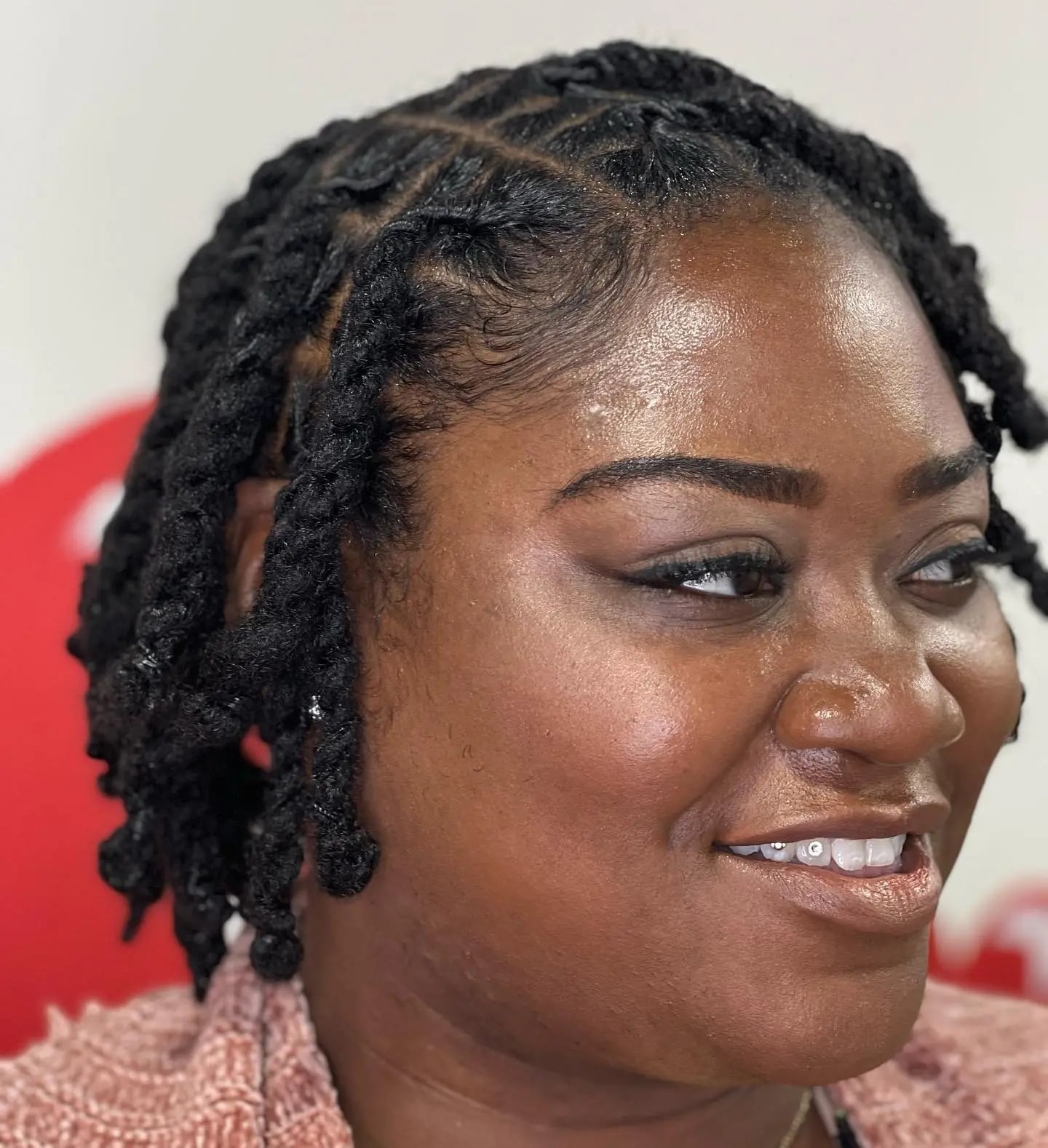
A geometric parting is the quiet star of this style. The locs are sectioned into clean, angular shapes at the root, and each loc is then twisted into a two-strand twist that continues that precision down the length. The hair is thick and coily, so the twists hold their shape without product. Ask your stylist for: collarbone length locs styled in two strand twists with geometric parting. The side view is where the parting pattern reads best, making this a style that works for events photographed from multiple angles.
Short Twists With Blonde Ombre
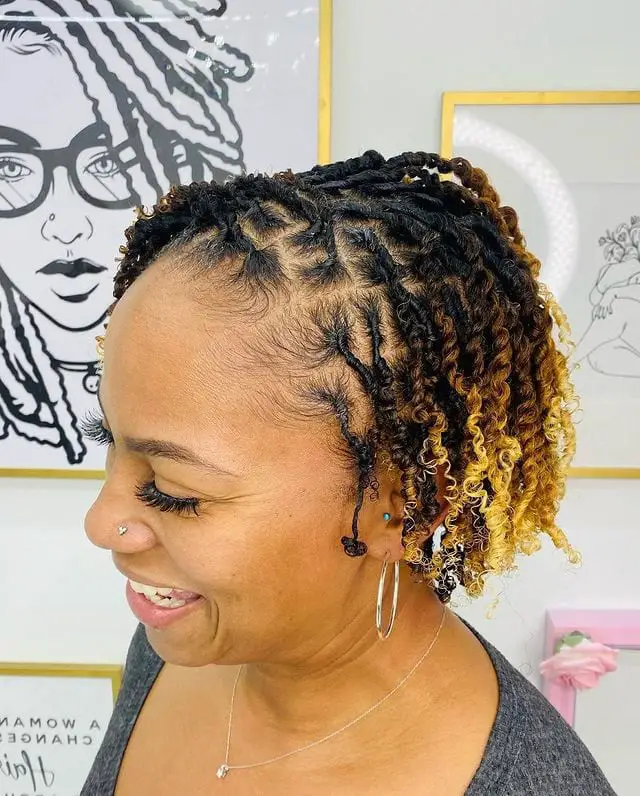
The common mistake with short twists and blonde ombre is expecting the ombre to read clearly at ear length. It does, but only if the blonde starts high enough. Here the ombre begins near the mid-shaft, so the dark root is substantial and the lighter ends land exactly where the twists curl under the ear. Ask your stylist for: short two strand twists with blonde ombre highlights. The fine, curly texture helps each twist stay compact, and the middle parting keeps the color distribution even on both sides.
Mid-Back Twists In A High Ponytail, Black
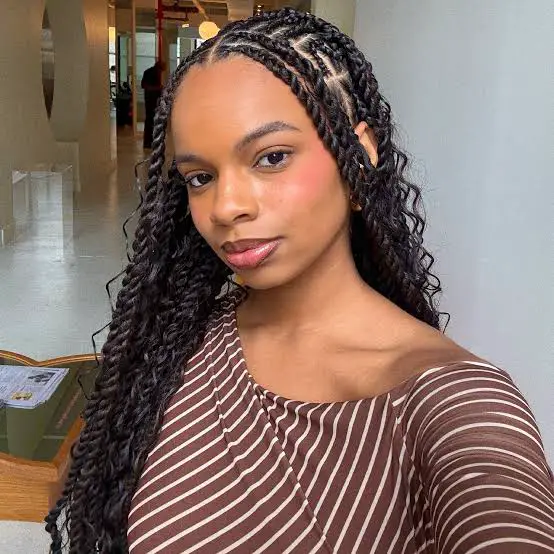
Should the twists hang loose or pull back into a ponytail? A high ponytail is the better choice when you want the length visible but out of the way. The coily, thick texture gives the ponytail body, so it does not look skinny or stringy at the base. Ask your stylist for: mid-back length two strand twists in a high ponytail. The middle parting is clean and the twists wrap upward into the band, creating a uniform surface from root to tip.
This version also shifts the visual weight from the sides to the back. That makes it a strong option for active days or events where you want the hair to move without falling into your face. The ponytail itself needs a seamless band to avoid snagging the twists at the collection point. Re-twist the roots every six to eight weeks to keep the ponytail base neat.
Mid-Back Twists With Auburn Highlights, Side
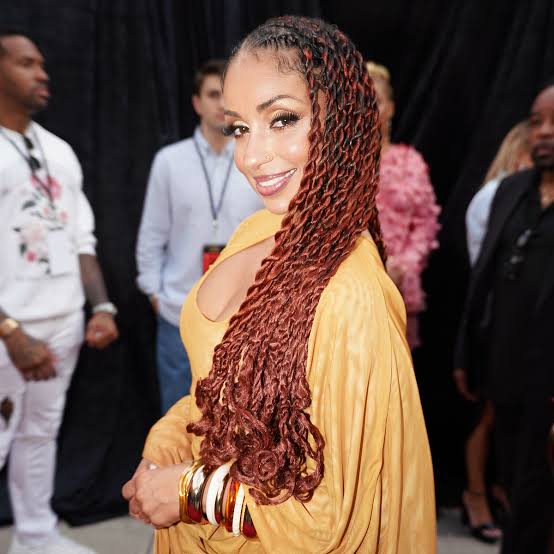
Auburn highlights against a dark brown base give these mid-back twists a warm, vibrant finish. The side parting lets the color fall forward, and the curled ends add softness to the overall shape. Thick, wavy hair at this length holds the twists well, and the vivid color stands out as the main feature. Ask your stylist for: mid-back two strand twists, dark brown with auburn highlights, curled ends. This color works best on hair with natural warmth, not a cool ash tone.
Maintaining that auburn glow means using color-safe shampoo and conditioner between salon visits. The twists themselves need a root refresh every six to eight weeks to keep the part lines crisp and the tension even. The curled ends soften the silhouette, but they require a quick pass with a curling wand after washing to bounce back.
Mid-Back Twists In A Side Updo, Dark Brown
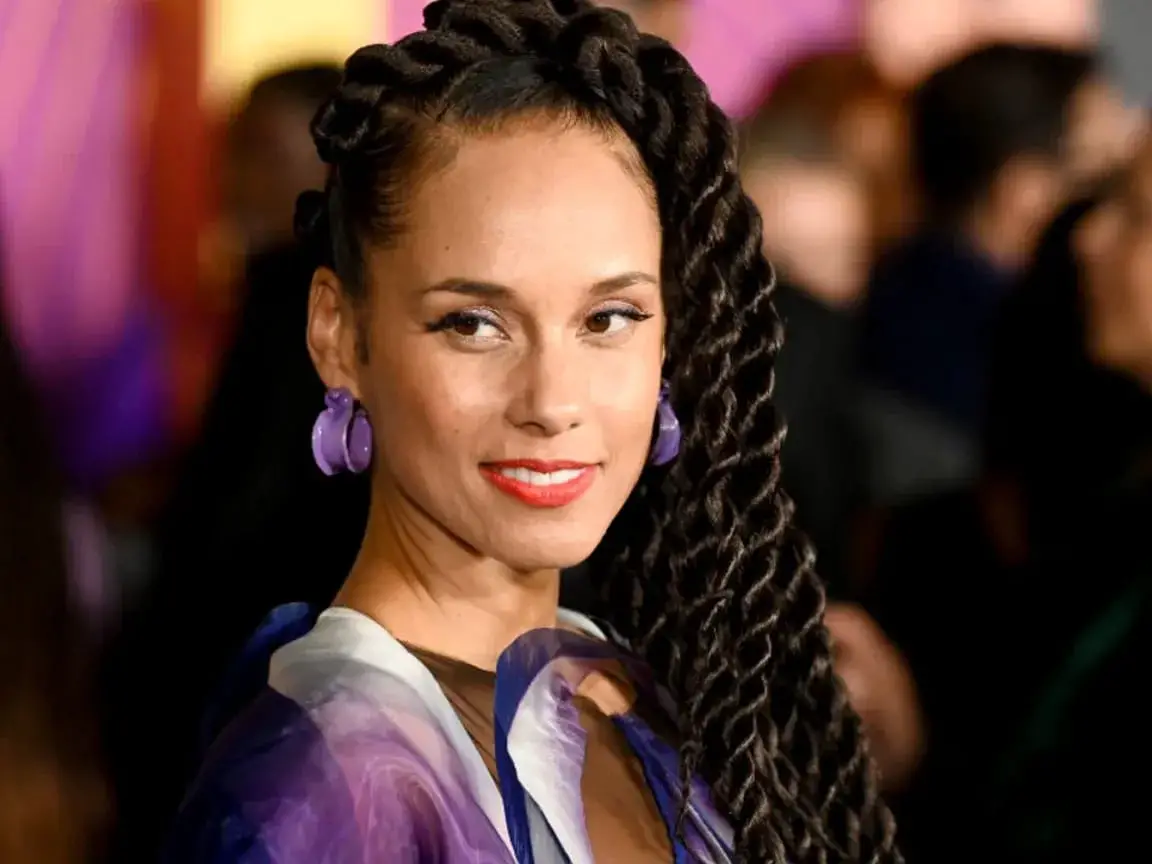
Gathering mid-back twists into a side updo changes the proportions of the style entirely. The large twisted sections wrap around each other to form a bun that sits at the ear, while the remaining length falls down the back in a controlled cascade. Thick, coily texture is what gives this updo its volume and staying power, and the side parting adds a soft asymmetry. Ask your stylist for: mid-back length large two strand twists in a side updo. This is a salon-only construction; the pins and tension need to be precise so the bun does not sag after an hour.
The dark brown color keeps the look polished and formal, which makes it a natural fit for weddings or events where the hair needs to look deliberate. Re-twisting the roots every six to eight weeks maintains the structure, and strong, matte-finish pins are essential for securing the updo against the pull of the twists.
Chin Twists With Cornrows And Wispy Bangs
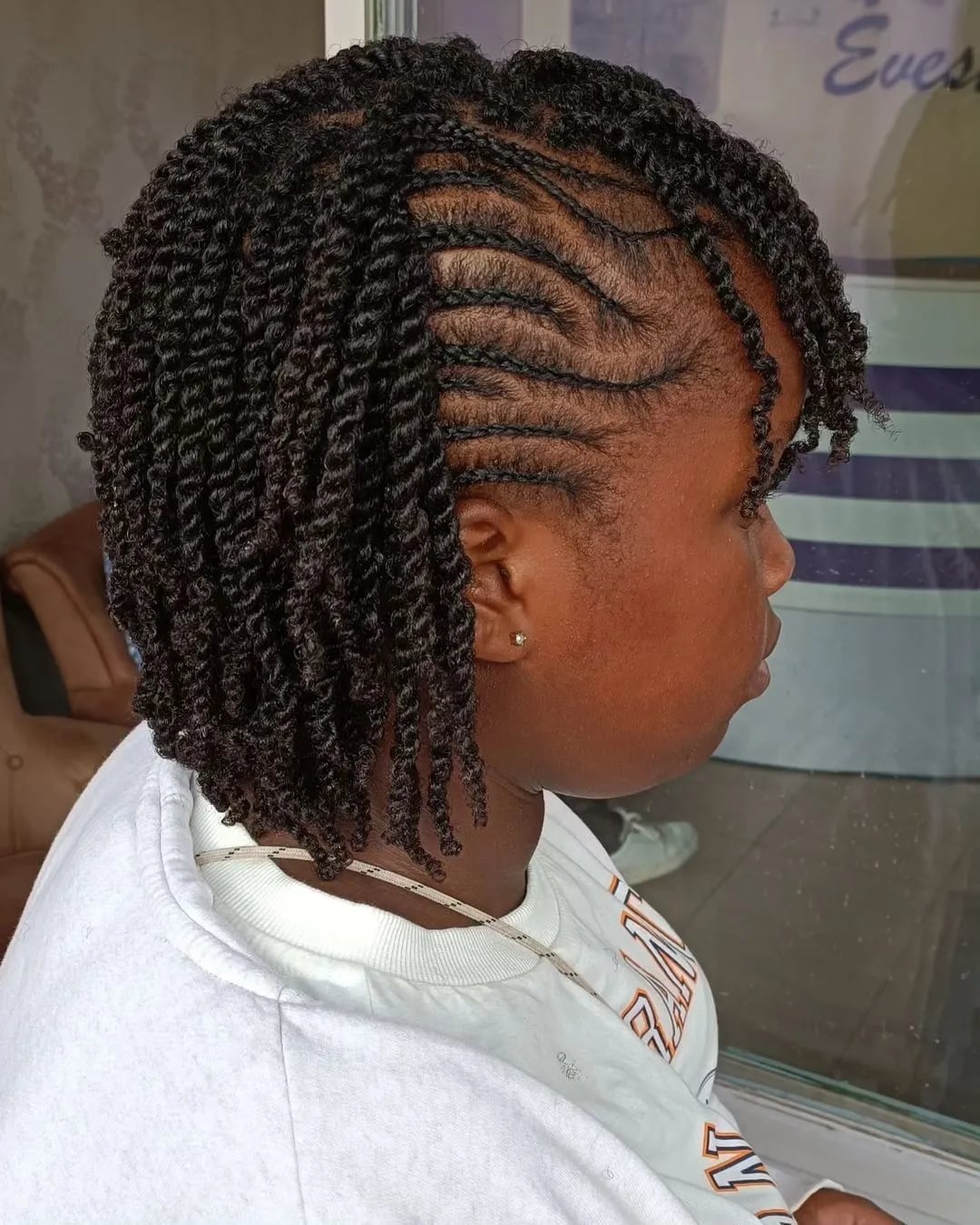
Two-strand twists and cornrows do not often share the same head, but here they work because the cornrows handle the front hairline while the twists take over the rest. The chin length keeps the style from feeling heavy, and the short wispy bangs break up the geometric lines. Thick, coily black hair is the ideal candidate for this combination; the cornrows need density to stay neat, and the twists need texture to hold their shape. Ask your stylist for: chin length two strand twists with cornrows and wispy bangs. The side parting ties both techniques together without a visible seam. Keeping the cornrows moisturized with a light spray prevents them from drying out, and the loose twists need a root refresh every four to six weeks.
Short Braids And Twists With Ombre
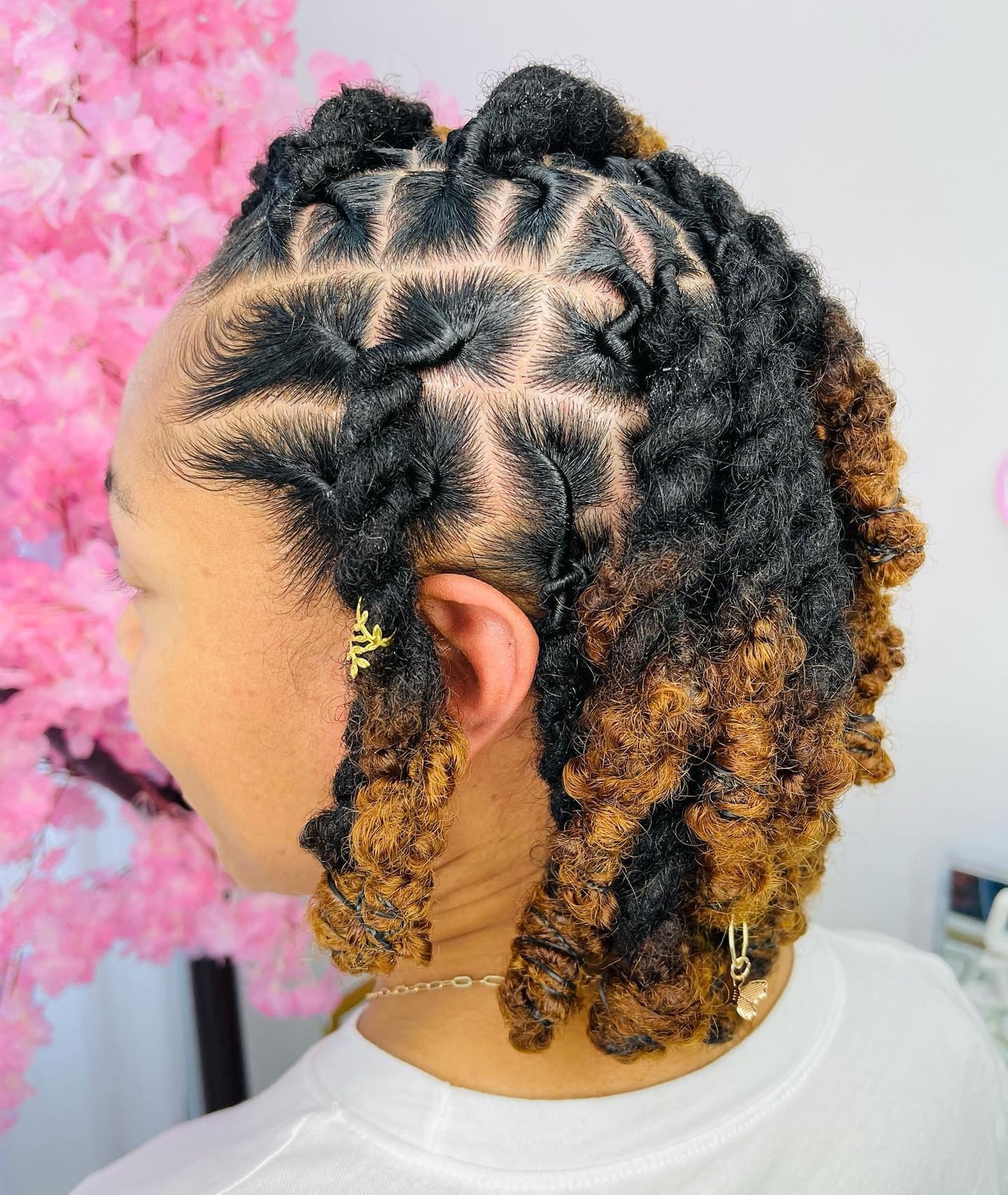
Braids and twists are close relatives, but they read differently on short hair. The braided sections here form a geometric pattern at the crown, while the twisted sides drop into a black and blonde ombre that draws the eye outward. Thick, coily texture is what makes both techniques hold without slipping, and the short length means the style does not take all day to install. Ask your stylist for: short two strand twists with braids and black blonde ombre. The ombre is the contrast that stops the braided top from feeling too uniform. A finishing serum on the blonde ends keeps them from looking dry, and root re-twists every four to six weeks keep the part lines clean.
Collarbone Twists With Blonde Balayage
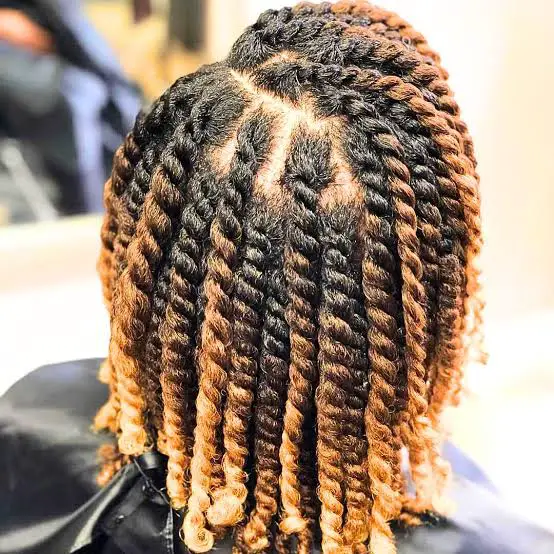
Collarbone-length twists get dimension from a blonde balayage that starts a few inches from the root and deepens toward the ends. The dark brown base keeps the grow-out line soft, and the middle part lets the lighter pieces fall evenly on both sides. Thick, coily hair at this length holds the twist pattern well, and the balayage technique places highlights on the twists without washing them out. Ask your colorist for: collarbone length two strand twists with blonde balayage. A purple shampoo used every few washes keeps the blonde from turning brassy, and the twists need a root refresh every six to eight weeks to maintain the part lines.
Natural Hair Two-Strand Twists
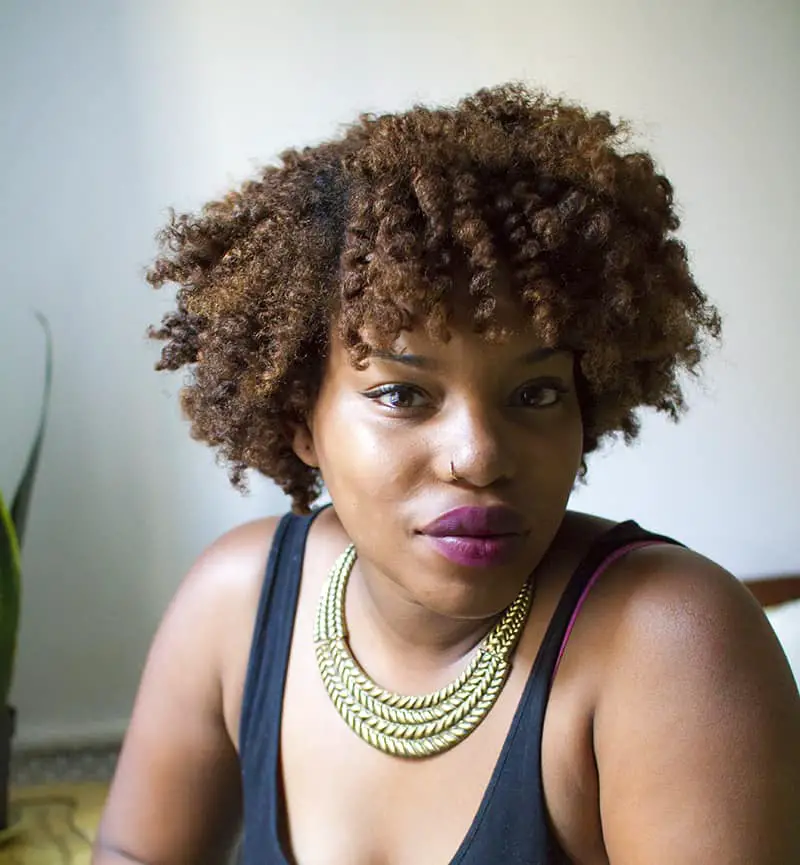
This short, rounded afro is worked into tight two-strand twists that hug the head, with brown hair catching auburn highlights along the way. It suits thick, coily hair of ear length that wants a break from daily manipulation, and the close crop means the twist pattern shows up fast. Ask your stylist for: short auburn two strand twists. The honest reality is that natural hair in this style needs consistent moisture to stay supple, and the shorter the twist, the more often you will be redoing them. Skip it if you want a low-maintenance set, because this one asks for attention.
Mid-Back Neatly Parted Twists
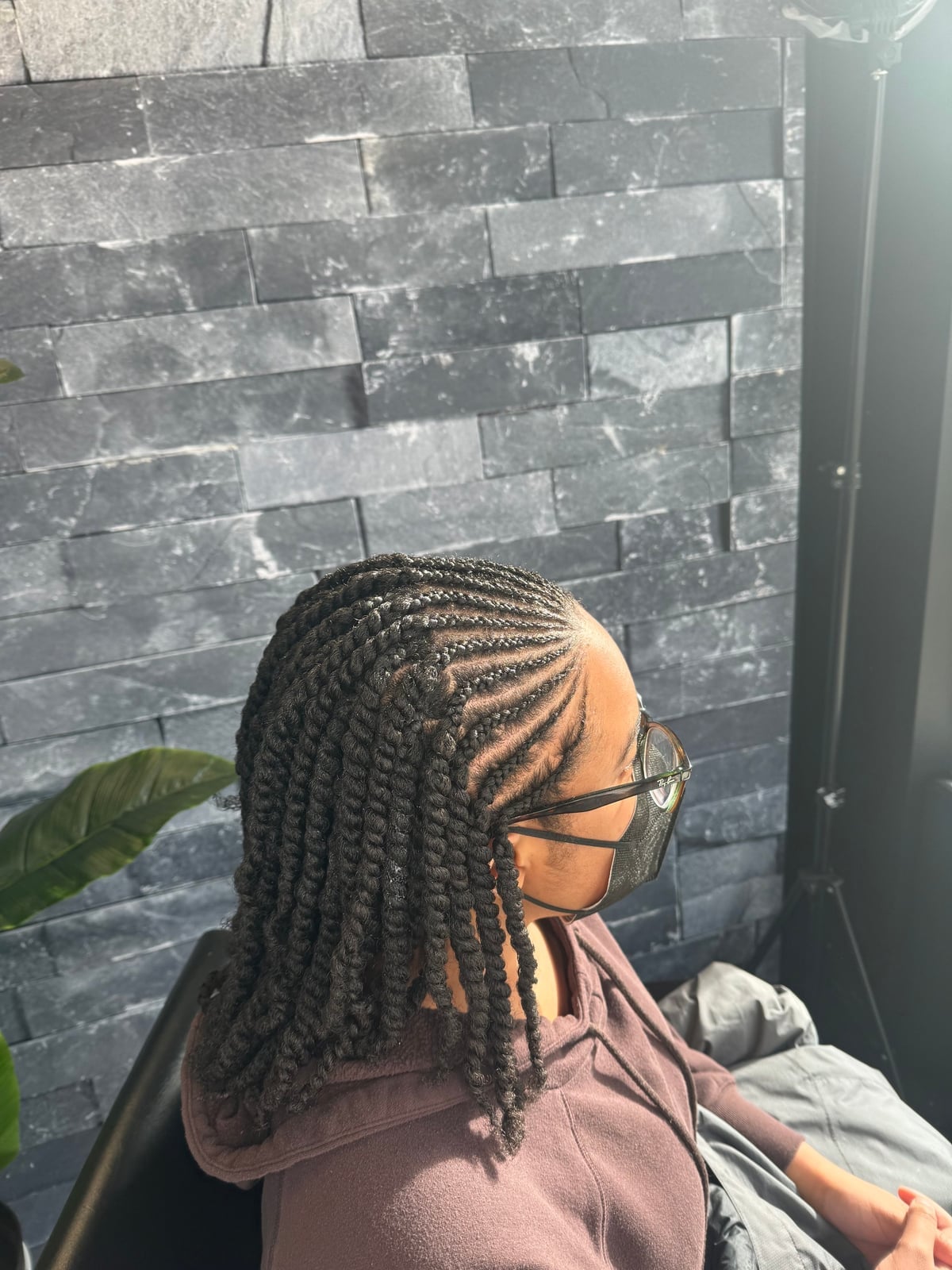
Black, coily hair is divided into dense, uniform two-strand twists that fall past the shoulders to mid-back, with a razor-straight middle parting running from front to nape. That clean part is the detail that makes the style read as polished, and it holds best on thick hair that has enough weight to keep the line from shifting. Ask your stylist for: mid-back neatly parted two strand twists.
For upkeep, a rat-tail comb keeps the parting crisp when you re-twist the roots, which you will want to do every six to eight weeks to stop the new growth from blurring the pattern. The twists themselves hold for a good stretch between sessions, but the parting is what gives out first, so treat it as the thing to protect.
Chin Length Dreadlocks In Twists
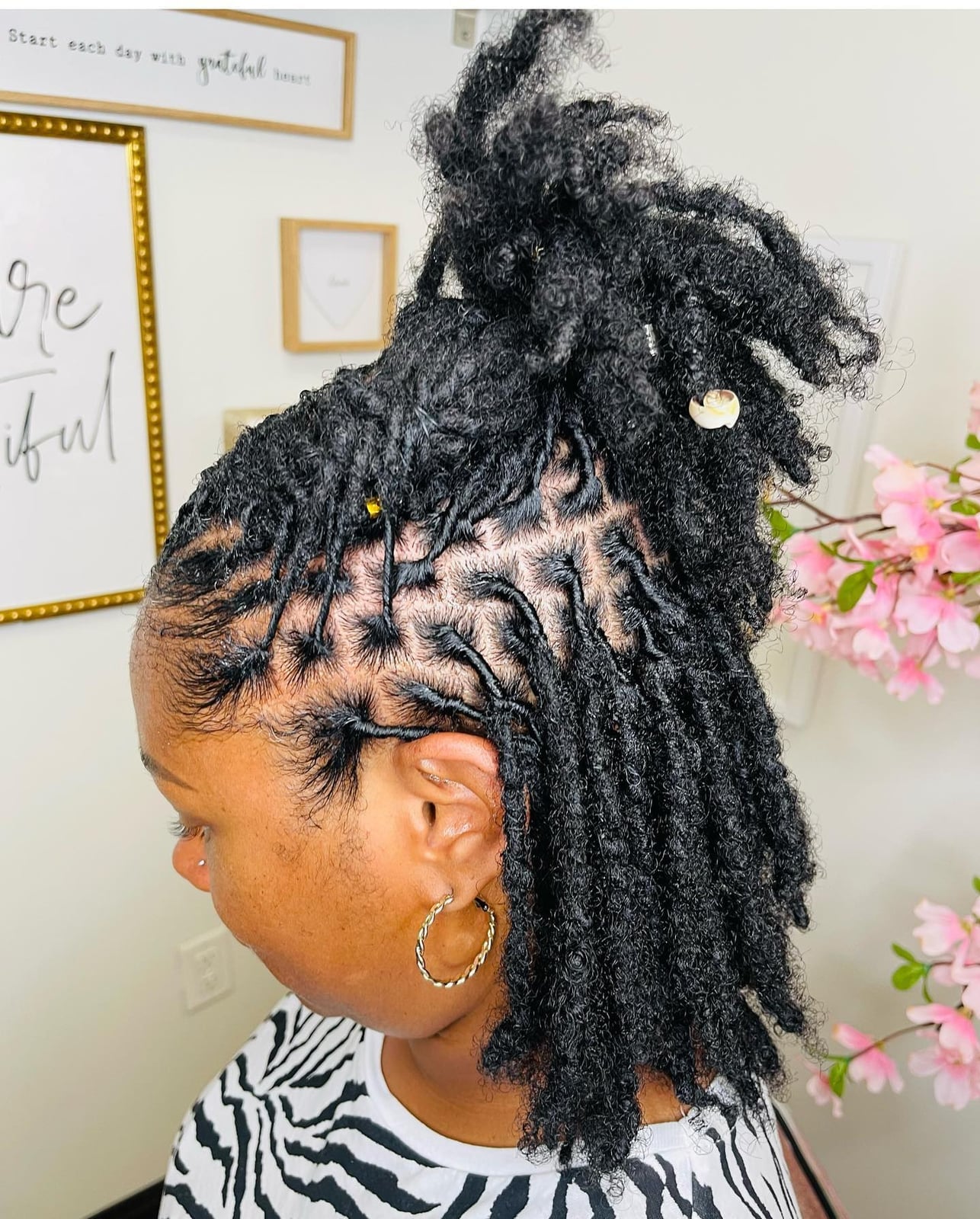
A geometric parting pattern turns chin-length dreadlocks into a precise grid of two-strand twists, with the whole set pulled back into a high ponytail. The sharp angles of the part are the whole point, and they demand a steady hand, so this is a salon request, not a kitchen-table job. Ask your stylist for: chin length dreadlocks with geometric parting. The black, coily texture holds the twist shape well, and the high ponytail keeps the shorter length out of the way. This style shows off the scalp work as much as the hair itself.
Shoulder Length Twists With Gray Roots
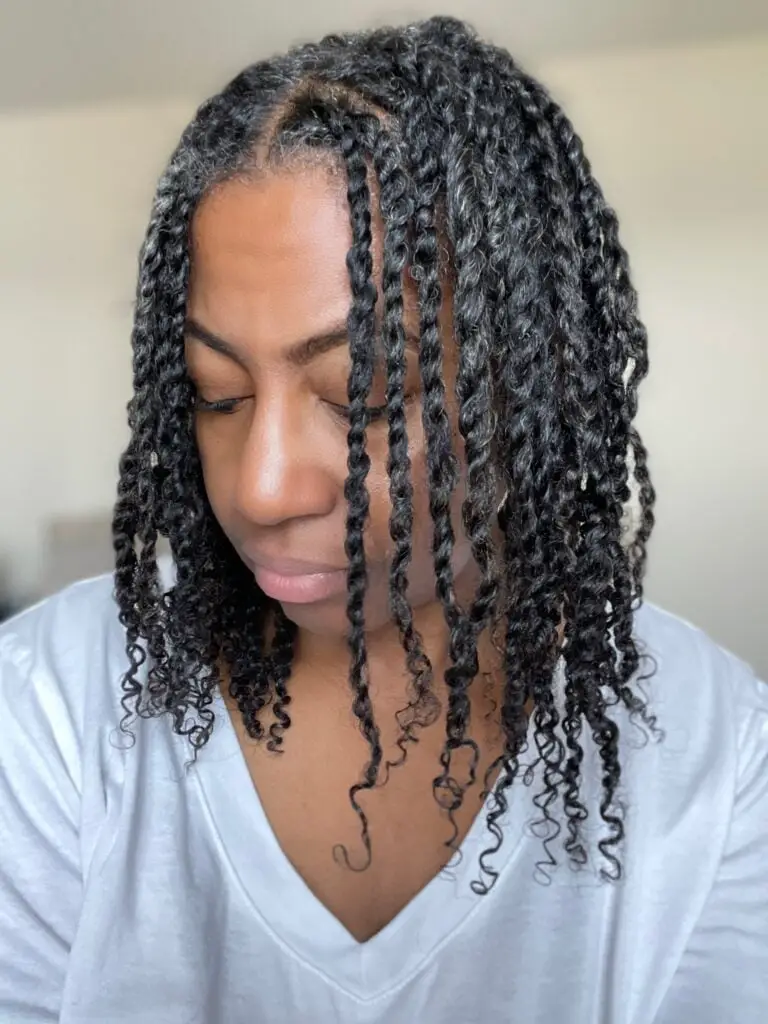
What happens when the roots grow in silver but the rest of the hair stays dark brown? This shoulder-length set of loose two-strand twists answers that question by simply letting the gray sit at the top. It works on thick, coily hair where the contrast looks like a design choice, not a missed appointment. Ask your colorist for: dark brown base, embrace gray roots. A color-depositing conditioner can tone the new growth if you want it to blend, but the contrast holds its own. Re-twist the roots every six to eight weeks to keep the style tidy, and the gray stays a feature.
Shoulder Twists With Brown Ombre
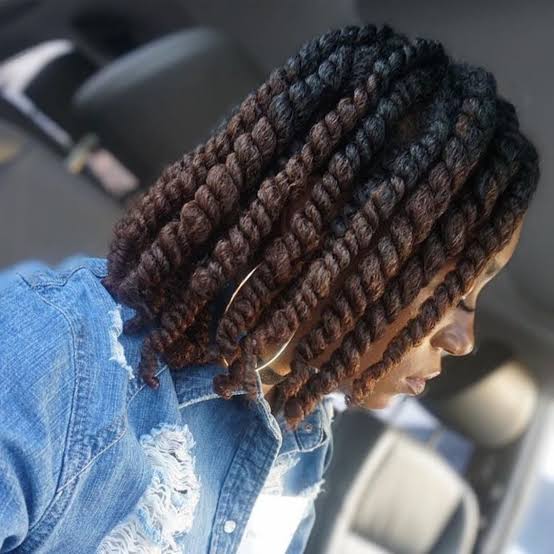
A natural black base melts into warm brown ombre at the ends of these shoulder-length two-strand twists, giving the coily texture a soft gradient that catches the light. The mistake people make is letting the ombre start too high, which turns the whole head muddy instead of dimensional. Ask your colorist for: black to brown ombre on two strand twists. The transition should begin past the midpoint so the darkest color stays near the roots. A leave-in conditioner keeps the brown ends from looking dry, and re-twisting the roots every six to eight weeks keeps the style fresh without disturbing the color work.
Mid-Back Wavy Twists Back View With Dark Brown With Subtle Highlights
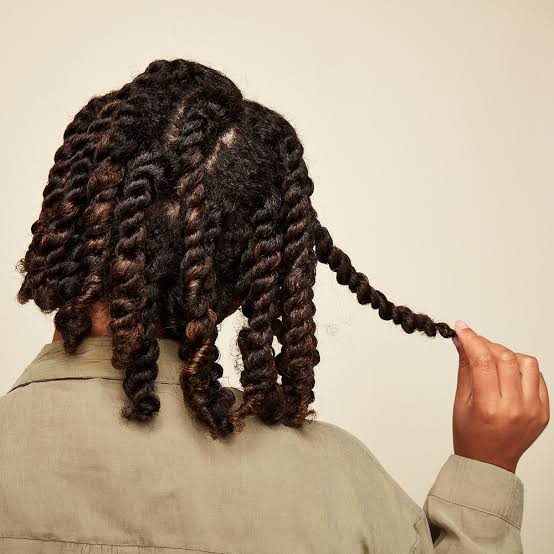
From the back, neatly twisted strands make the technique the focus. This works best on thick, wavy hair that has enough weight to hold the twist pattern without loosening by midday. Ask your stylist for: mid-back length neat two strand twists. The subtle highlights running through dark brown add depth, so the twists appear as individual sections rather than one solid mass. A satin scarf at night keeps the strands from tangling, and re-twisting the roots every six to eight weeks maintains the polish.
Thick textures carry this shape well, but fine hair may need a texturizing spray to add grip before twisting begins.
Collarbone Twists Defined Texture
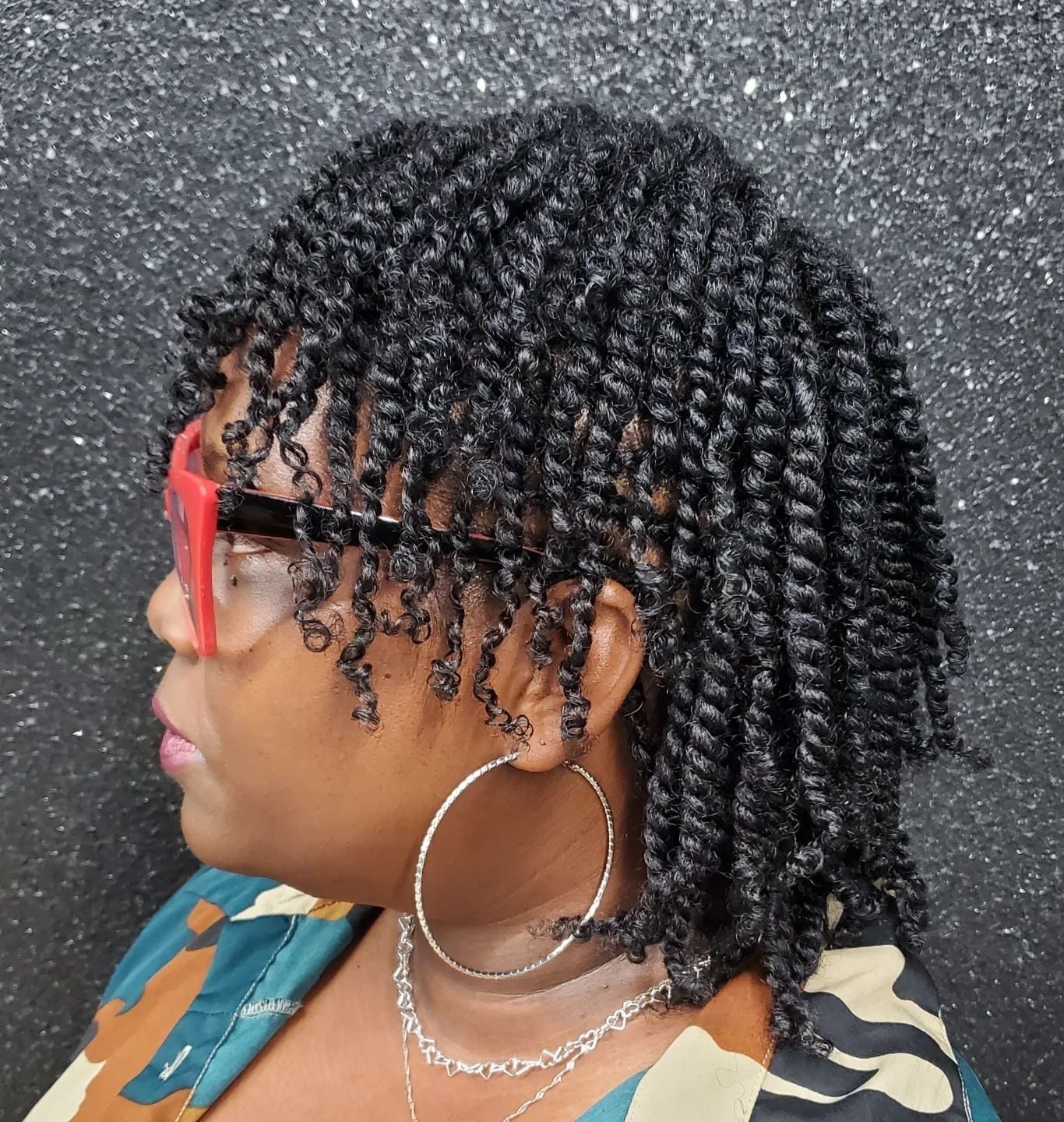
Defined two-strand twists ending at the collarbone rely on the natural curl pattern to stay crisp. The middle parting and side view here show how the black hair stacks evenly, each twist separate from the next. Ask your stylist for: collarbone length defined curly two strand twists. The honest drawback is the maintenance: definition fades after a week unless you refresh each twist individually, which takes patience. A curl-defining cream applied before twisting helps, but the sections must be small to keep the shape from blurring together.
Collarbone Twists Protective Styling
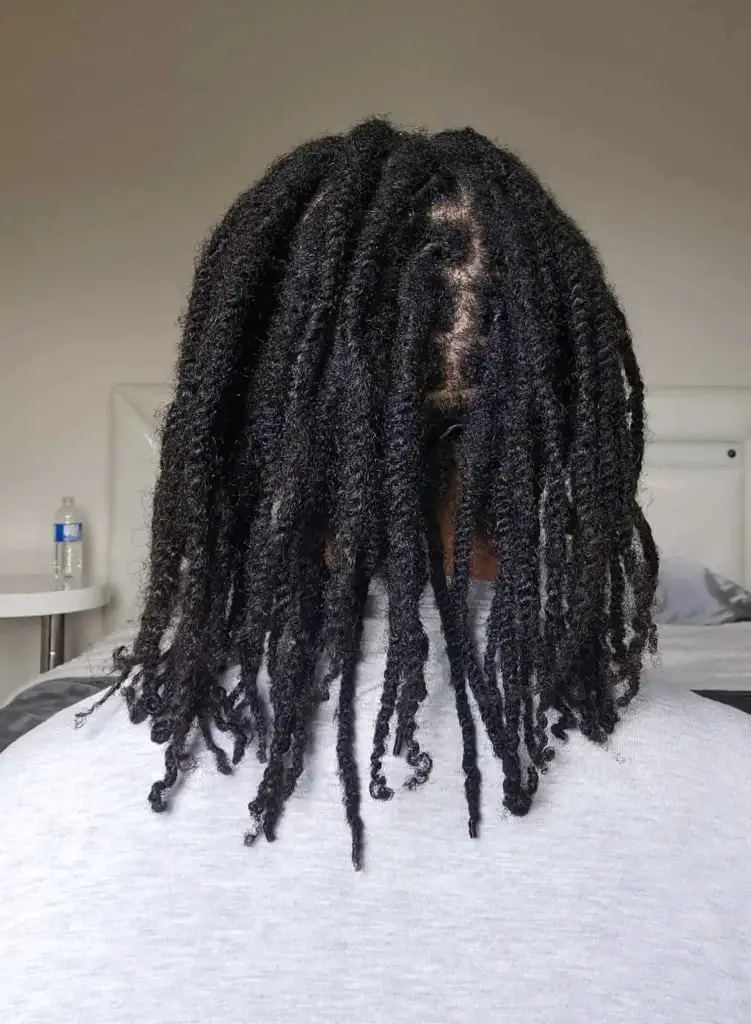
Can you get protective styling without a salon appointment? Yes, but the learning curve is real. On collarbone-length coily hair, two-strand twists are a weekend DIY project, not a thirty-minute rush. Ask your stylist for: collarbone length two strand twists for protective styling. The back view with a middle parting shows even distribution, which takes practice to achieve alone. Salon-applied twists last longer because the tension is consistent, but DIY allows you to control tightness around the hairline. Re-twist roots every six to eight weeks to keep the style fresh.
Mastering Two Strand Twists
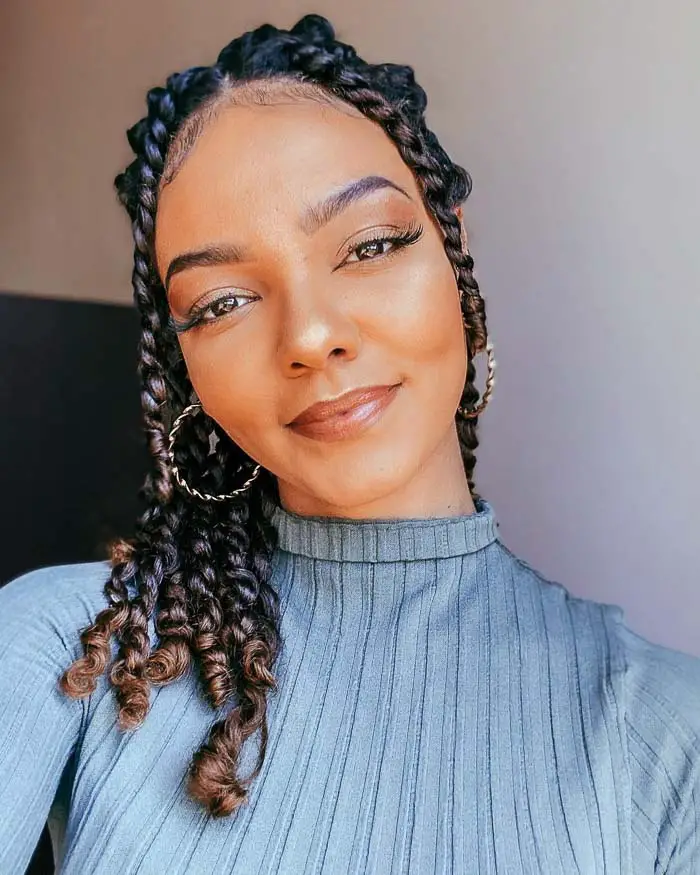
Mastering two-strand twists means understanding tension and section size. Here, shoulder-length coily hair is slicked back with auburn ends peeking through, showing that color placement matters even in a protective style. Ask your stylist for: guidance on two strand twists. Smaller sections produce tighter, longer-lasting twists; larger sections work faster but loosen sooner. Practice on damp hair with a leave-in cream, working from the nape upward. The auburn ends add a visual cue for where each twist starts and stops, which helps when you are learning to keep sections even.
Once the motion becomes muscle memory, the technique takes under an hour for this length.
Final Thoughts
Choose your next twist style based on your daily routine and hair type. For low maintenance, longer twists that gather into buns or ponytails need less frequent re-twisting. Finer textures benefit from beads at the ends, which add weight and help the twists hold their shape.
- Re-twist roots every 4 to 8 weeks depending on growth.
- Moisturize daily with a water-based leave-in conditioner.
- Sleep in a satin bonnet or scarf to prevent frizz.
- Separate ends gently to stop matting between wash days.
Embrace the simplicity and versatility of two-strand twists.