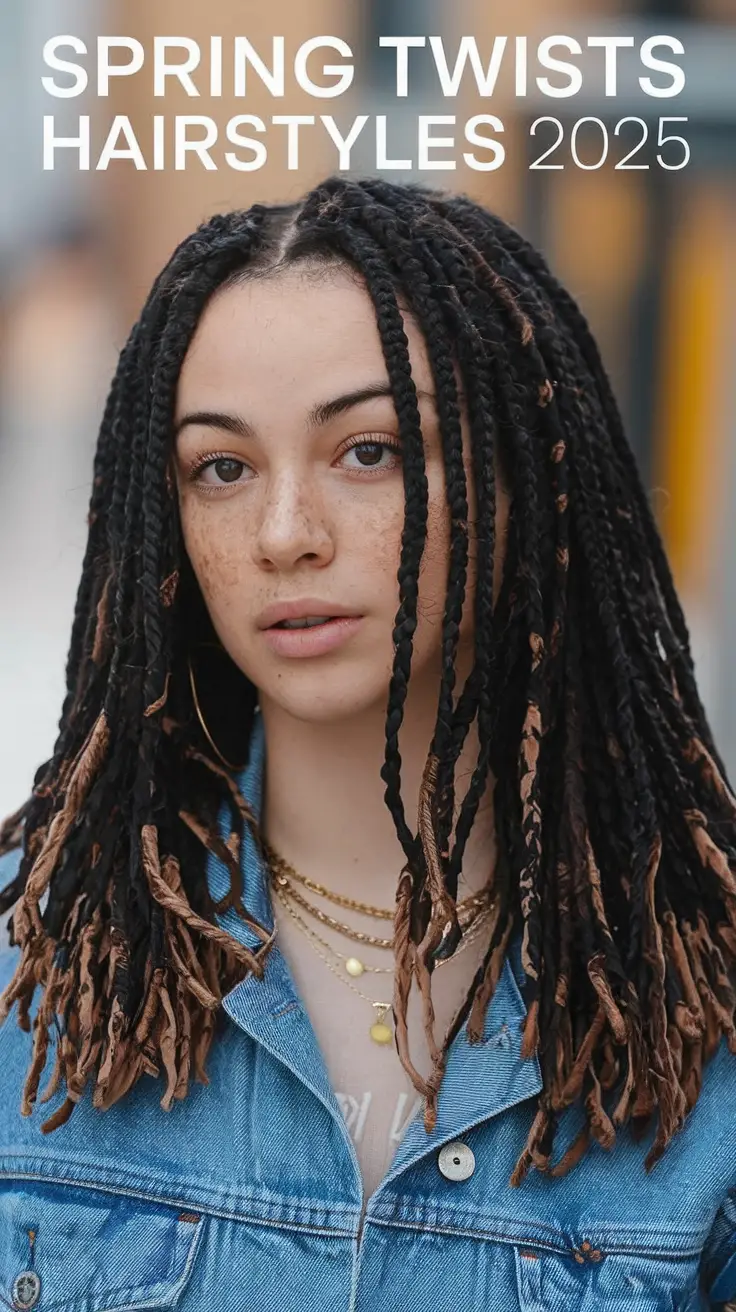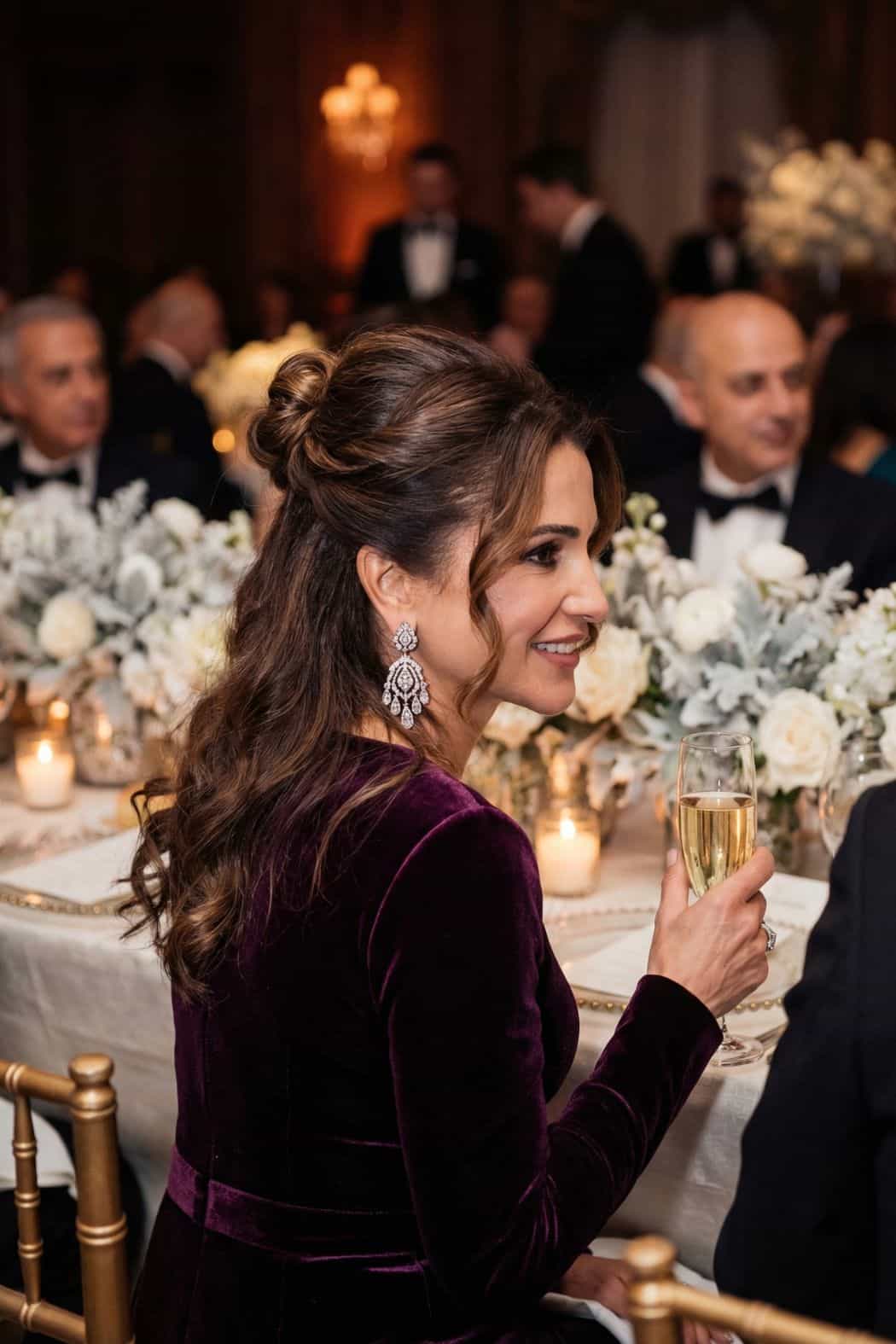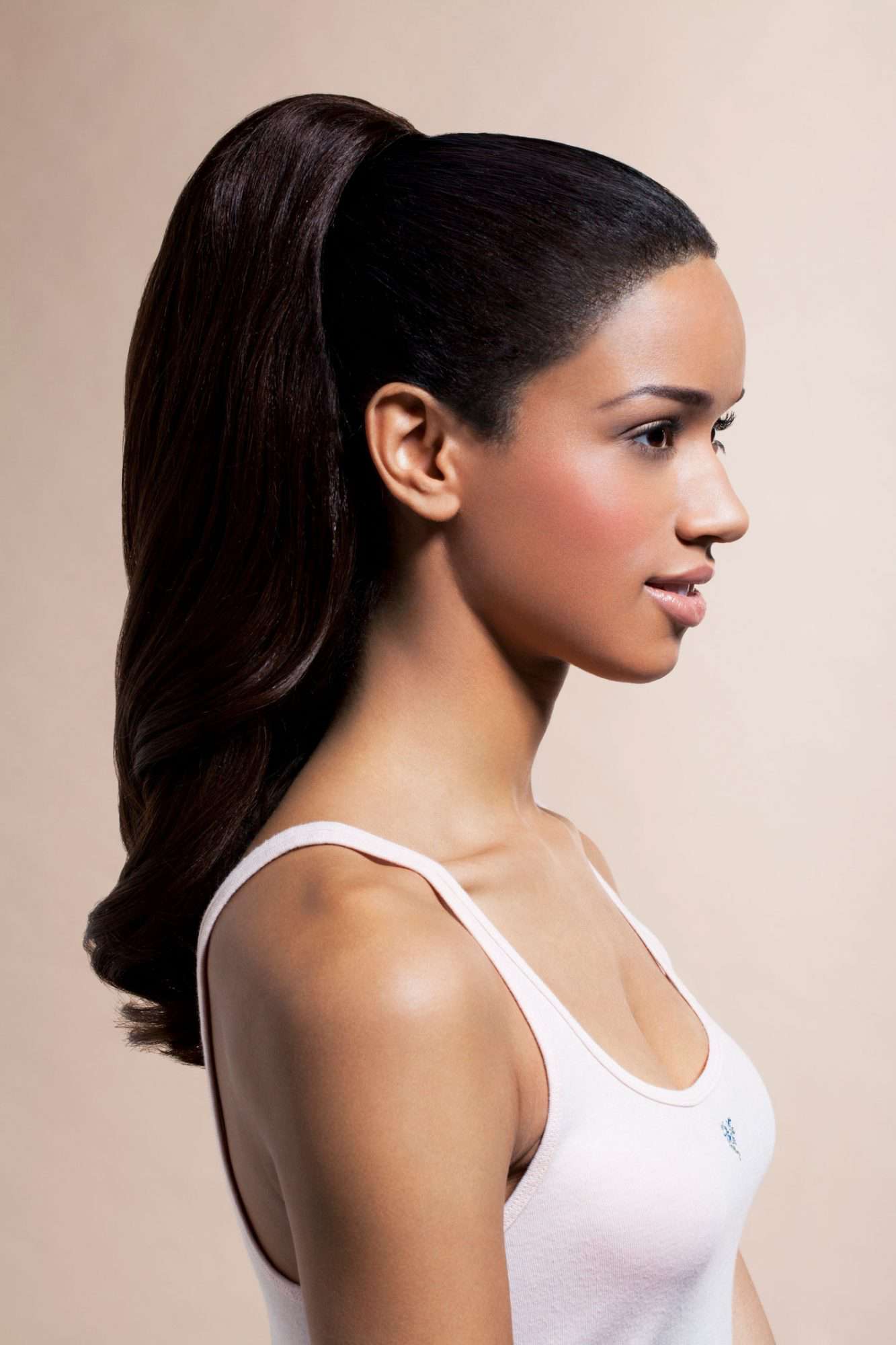

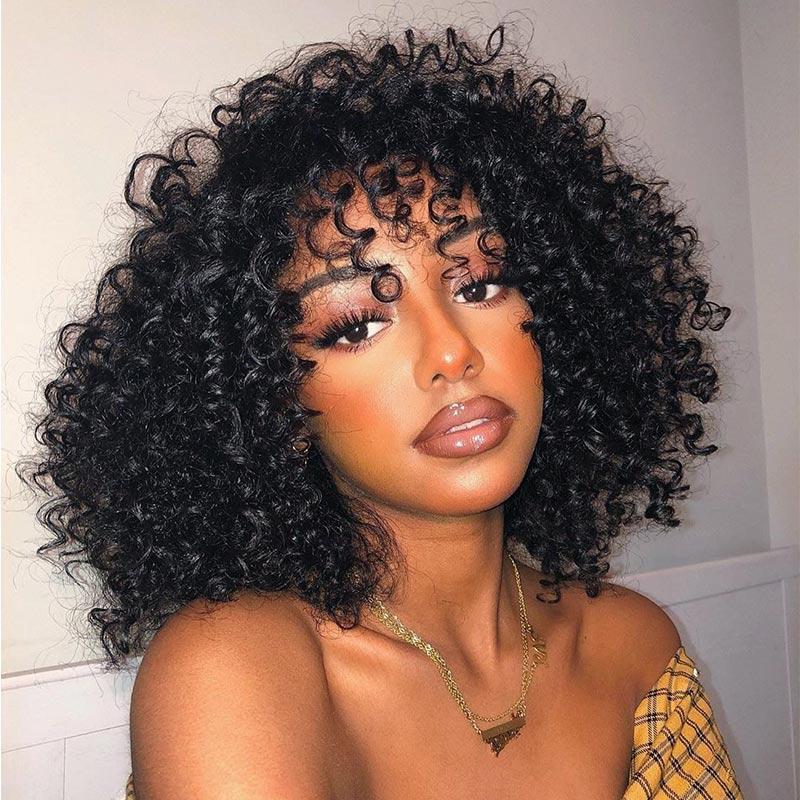
A black wig is a blank slate, not a default. Right now, soft face-framing layers and curtain bangs are the quickest way to make it read as current rather than costume, no matter the starting length.
This collection of 32 Trendy Black Wig ideas runs from a sharp chin-length bob to long, voluminous waves. If your fine hair falls flat, a blunt baseline adds density. If thick hair feels heavy, internal layers remove bulk while keeping the silhouette. Every cut here solves one concrete problem: a fringe that won’t sit, a shape that lacks movement, or a line that needs sharpening.
Chin Length Curly Bob With Full Curtain Bangs
It’s a look that genuinely flatters thick, curly hair, especially if your face is round or square, because the bangs soften those angles without hiding the cut. Ask your stylist for: chin length curly bob, full curtain bangs. To get the definition you see here, air dry with a diffuser and let the curls do their thing. Be prepared to trim those bangs every four to six weeks, or they’ll start staging a coup over your eyebrows.
Short Pixie With Defined Curly Texture, Close-Up Take
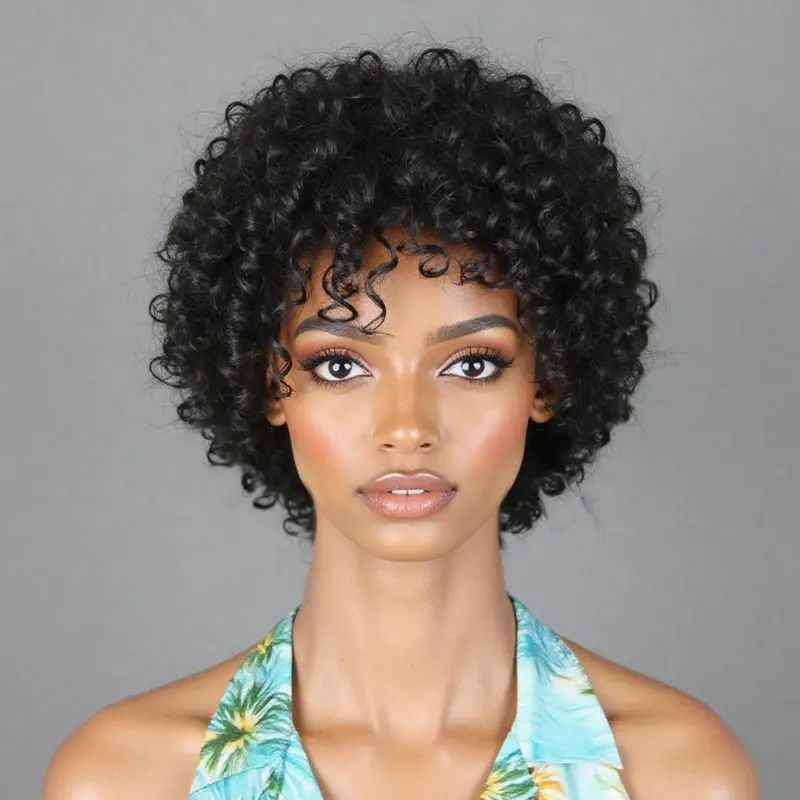
Precision is the whole point of a short curly pixie, because each curl needs its own room to spring without collapsing into its neighbor. The dense, defined texture here is built on a middle part and short, bouncy curls that frame the face evenly, which requires cutting each curl individually rather than taking a one-pass section. Ask your stylist for: short curly pixie, defined curls. Thick, curly hair is the ideal starting point; fine curls risk looking sparse at this length. Use a curl-defining cream on damp hair and let it air dry, then plan on a trim every six to eight weeks to keep the shape from turning into a round puff.
Sleek Straight Chin Length Bob
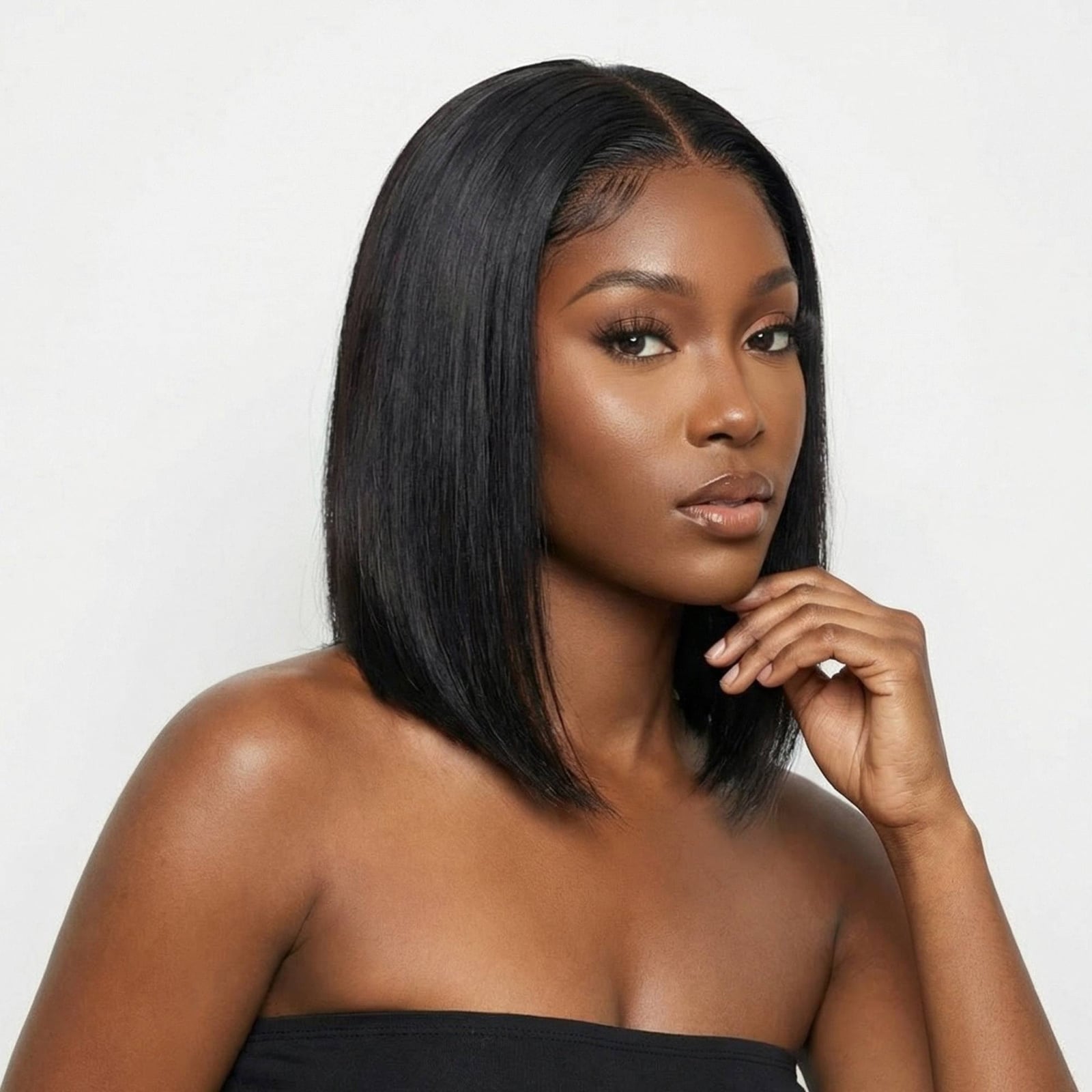
The sleek straight chin length bob is the anti-curly bob. Where its textured cousin embraces volume, this one is all about geometry: a sharp, clean line at the chin, a middle part, and not a single wave in sight. For fine, straight hair that lies flat, this is your moment, and it works to elongate a round face by drawing the eye downward. Ask your stylist for: chin length sleek straight bob. To keep the lines this crisp, apply a smoothing serum and flat iron, then book a trim every six to eight weeks. Left alone, it will drift toward a shag, and nobody ordered that.
Compared to a softer, layered bob, this cut is unforgiving: any asymmetry is instantly visible. But that’s also its power. It says you meant business, not that you rolled out of bed and hoped for the best.
Chin Length Bob With Blunt Straight Fringe
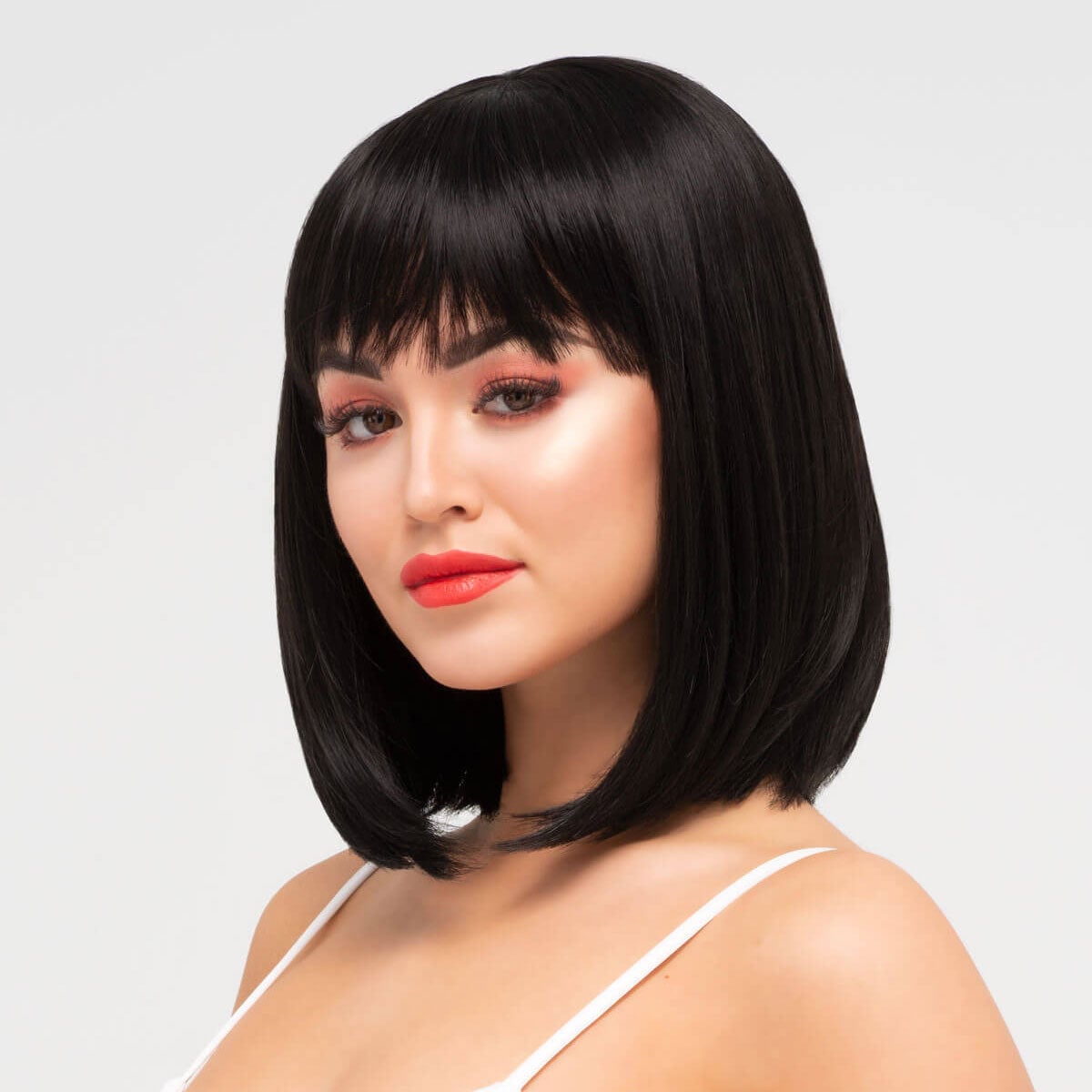
The fringe is the focal point, so ask your stylist for: chin length bob, blunt straight fringe. It balances a longer forehead. To keep the fringe from parting, use a flat iron and a steady hand. The bob needs a trim every six to eight weeks; the fringe might demand one sooner, since bangs grow fast.
Shoulder Length Blunt Cut With Full Fringe
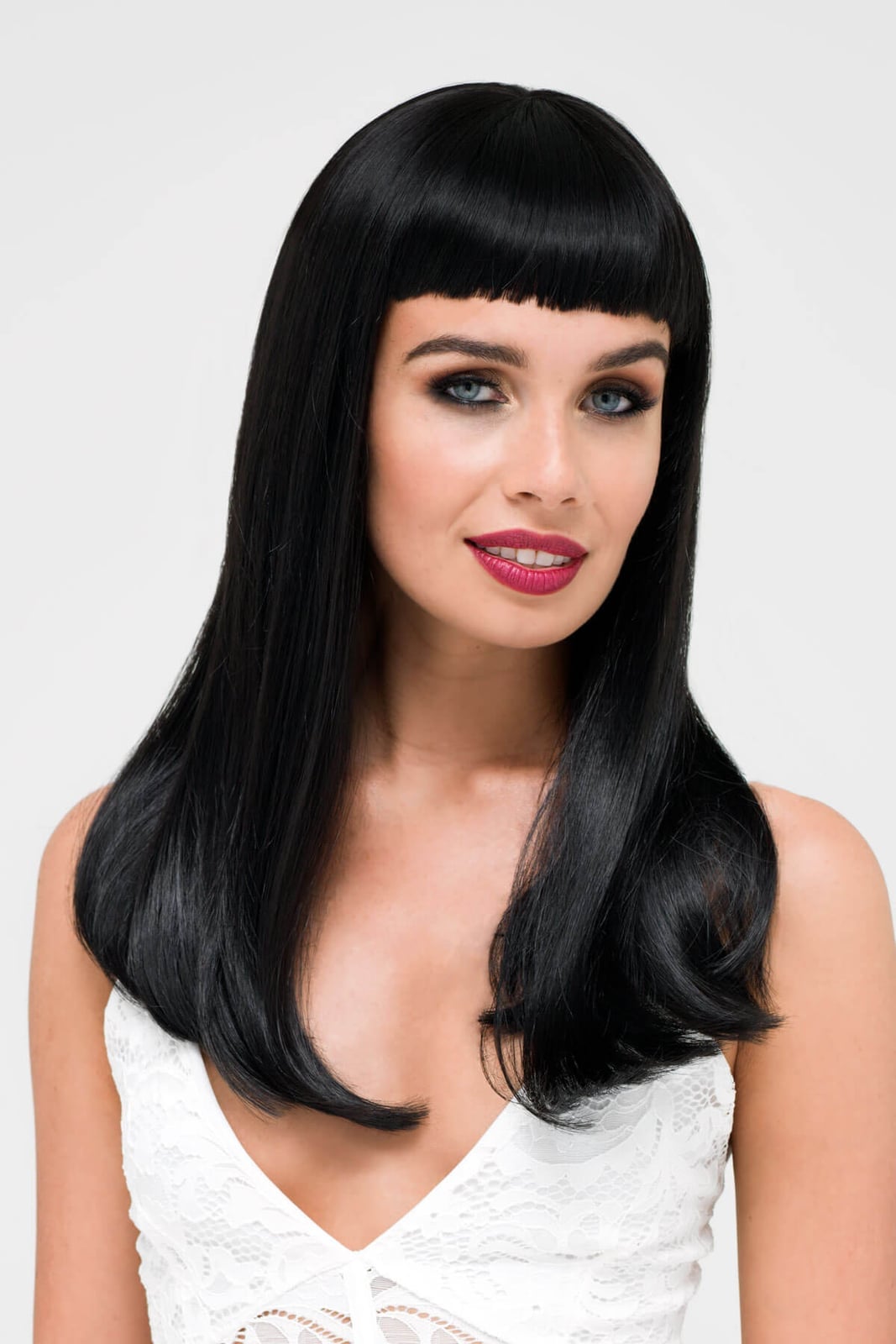
A shoulder length blunt cut with a full fringe is the low-maintenance sibling of the chin length bob. The hair falls to the collarbone, cut straight across with no layers, and the bangs are a solid, straight band across the forehead. For fine, straight hair, this cut creates the illusion of density, because blunt ends make every strand count. Ask your stylist for: shoulder length blunt cut, full blunt bangs. The upkeep is real: bangs need a flat iron every morning to stay obedient, and the baseline needs a trim every eight weeks to avoid split ends creeping up. The trade-off is a look that wears well from desk to dinner without a second thought.
What this style sacrifices in movement, it gains in polish. There’s no fluffing, no twisting, just a clean line that says you have your life together, or at least your hair does.
Short Asymmetrical Pixie With Swept Bangs
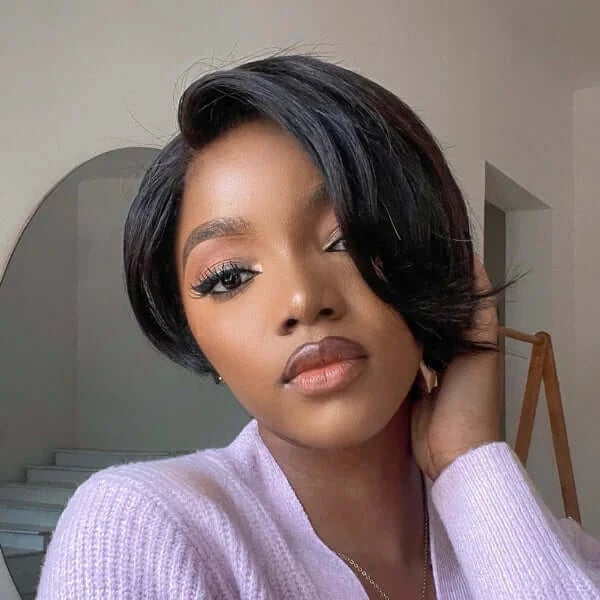
It suits most face shapes, especially those with delicate features that can carry a short, sculpted style. Ask your stylist for: short asymmetrical pixie, swept-over bangs. The trade-off is maintenance: fine hair tends to show every missed strand, so expect to style it daily and revisit the salon every four to six weeks to keep the lines crisp.
Long Bob With Blunt Cut And No Bangs
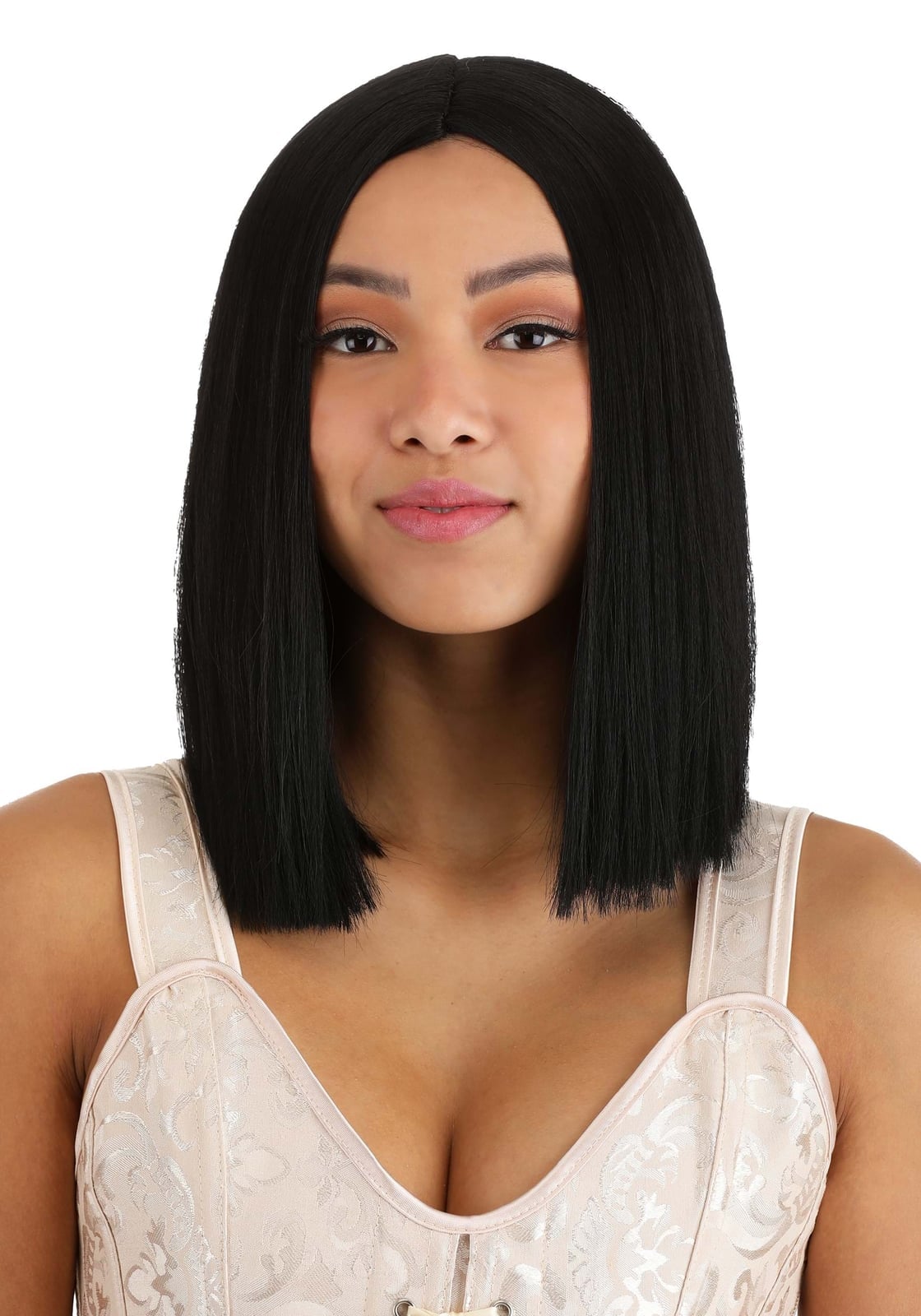
If the micro bob feels too severe, this collarbone length long bob with a blunt cut and no bangs is the softer sibling. The sharp, clean line gives fine, straight hair a weight that air-dried texture alone can’t fake, making it a solid pick for the in-between season when you want length without the bulk. A middle part keeps the face open, which helps elongate round faces. Ask your stylist for: collarbone length blunt long bob. To maintain that precise edge, a trim every eight weeks is non-negotiable, and a smoothing serum before flat ironing keeps flyaways in check.
Sleek Collarbone Bob With Face Framing
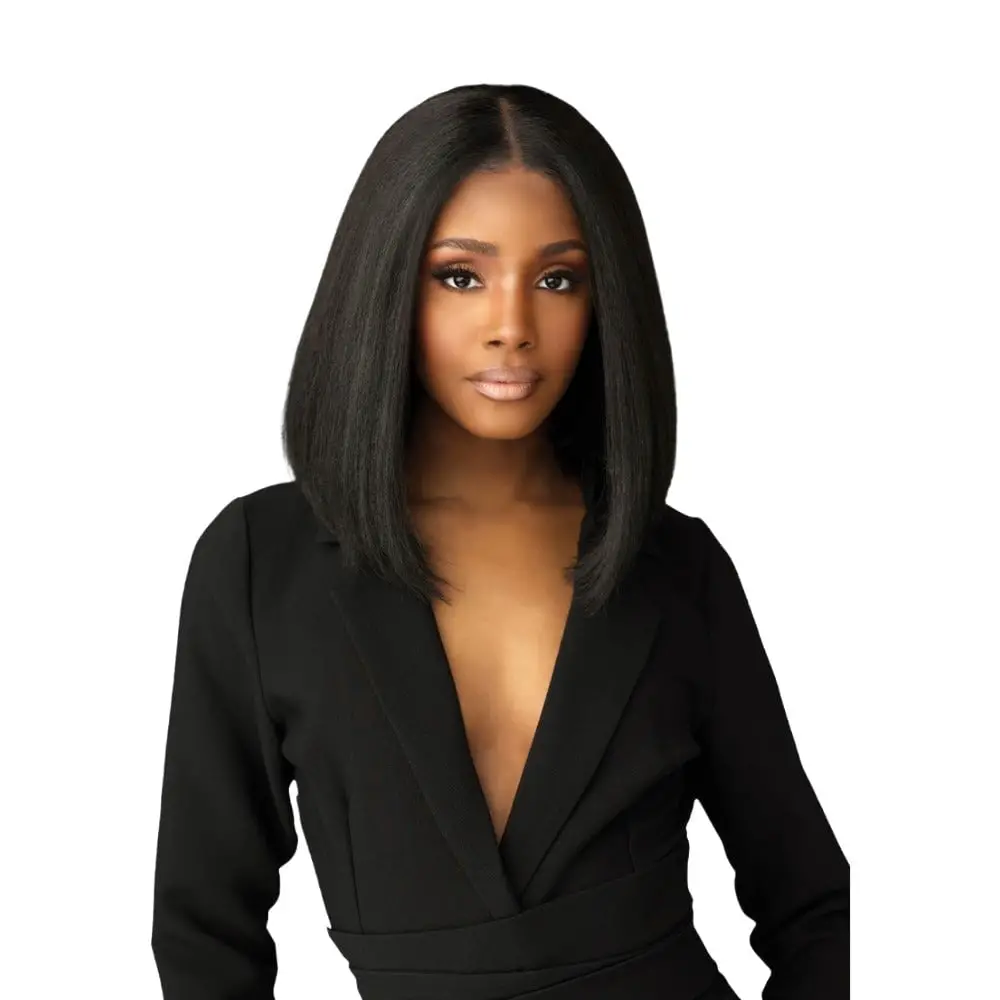
The precision of this sleek collarbone bob lies in its sharp, clean line, which on fine, straight hair requires a steady hand and a sharp eye. The subtle face-framing pieces are cut to move with the hair, not against it, giving the style movement while keeping the overall silhouette polished. This is a salon-only cut; trying to replicate it at home usually ends with a crooked hemline. Ask your stylist for: collarbone length sleek bob, face framing pieces. To keep the line sharp and the framing pieces from growing out into an awkward shag, plan on a trim every six to eight weeks. A flat iron and a light-hold hairspray will keep everything in place for a workday that runs long.
Layered Collarbone Bob With Side Swept Bangs
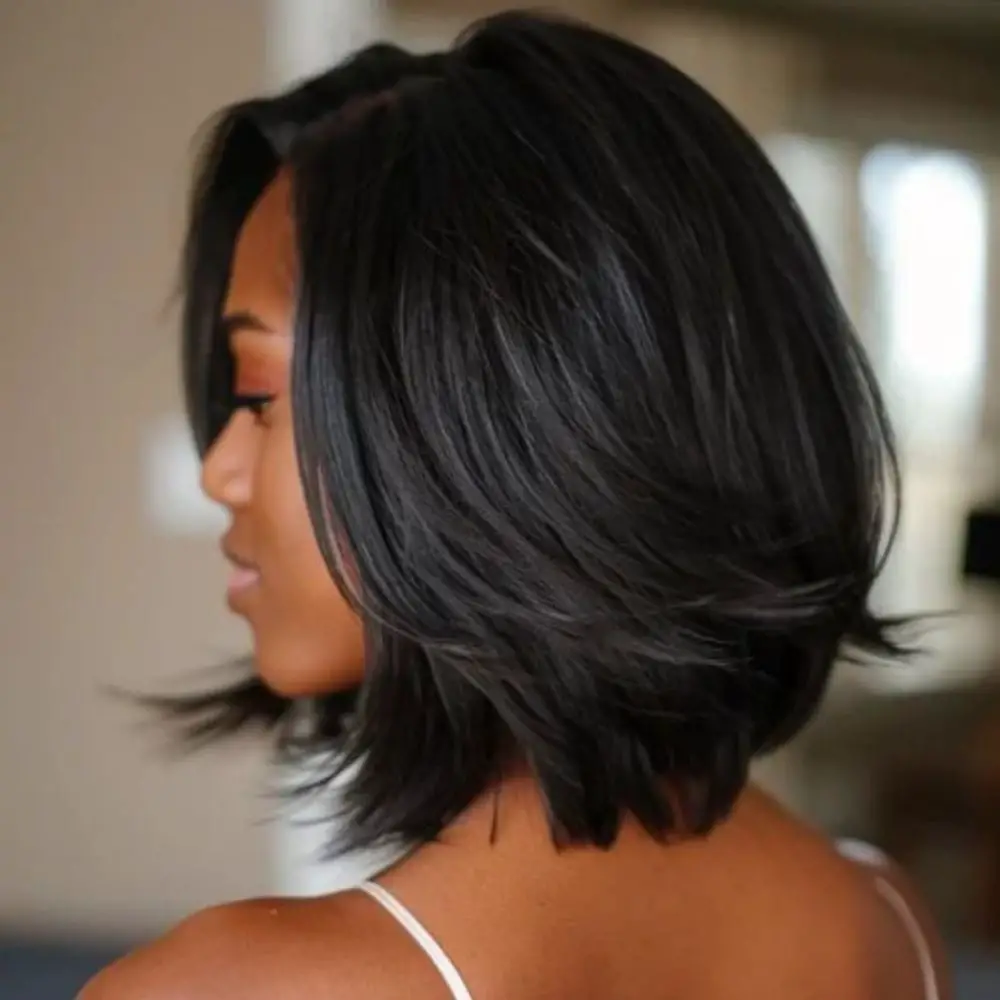
Wondering how to soften a strong jawline without giving up length? This collarbone layered bob with side swept bangs is the answer. The face-framing layers are cut to graze the cheekbones, drawing the eye inward, while the side swept bangs add an asymmetrical softness that a center part can’t achieve. It works best on fine to medium straight hair that can hold a blowout. Ask your stylist for: collarbone layered bob, side swept bangs. For volume at the roots, blow-dry with a round brush, and keep those bangs trimmed every four to six weeks so they don’t turn into an accidental curtain.
Layered Bob With Soft Face Framing
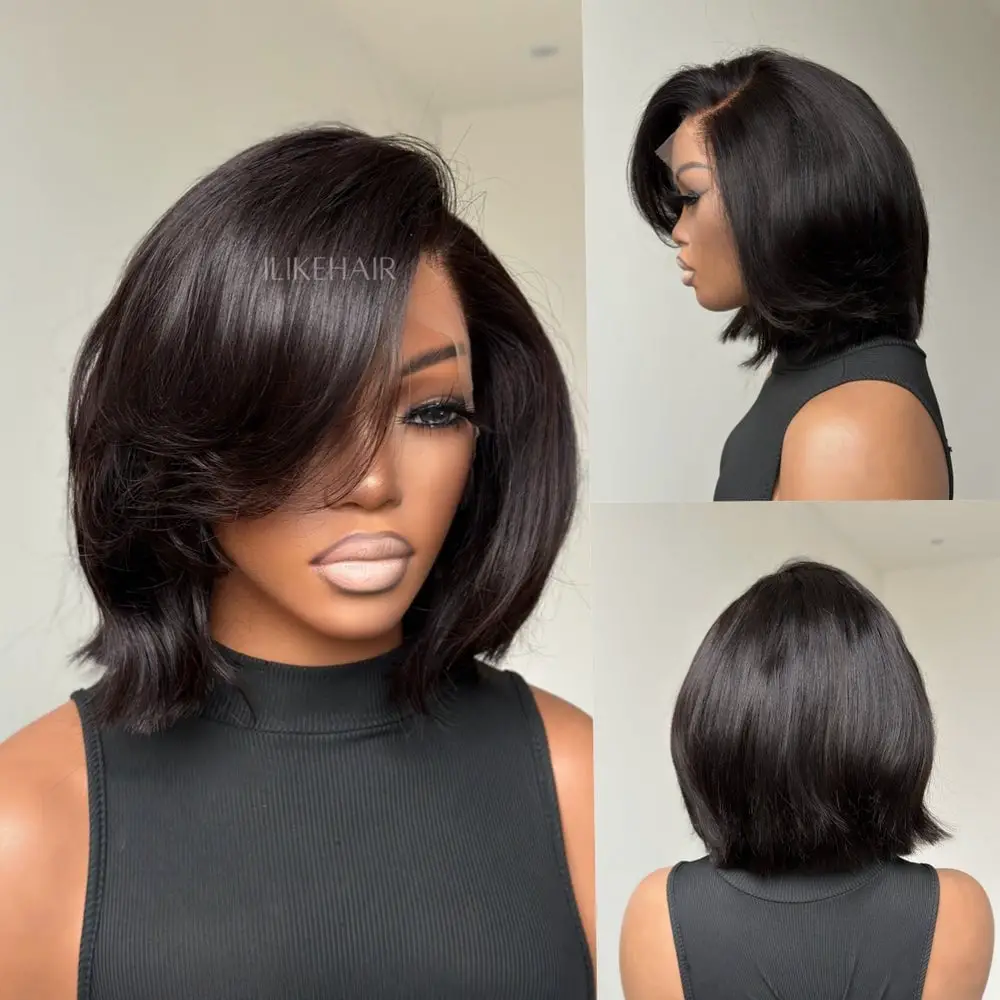
Where a blunt bob can feel like a statement, this collarbone layered bob with soft face framing is the quieter neighbor. The layers are subtle, cut to blend into the fine, straight texture rather than announce themselves, which makes the style read as polished rather than choppy. It’s the right choice when you want movement without the commitment of a dramatic shag. Ask your stylist for: collarbone layered bob, soft face framing. Use a round brush to blow-dry the front pieces away from your face, and a trim every eight weeks will keep the layers from growing out into an unflattering shelf. This one flatters most face shapes, especially if you want to soften angular features without losing length.
Collarbone Bob With Short Straight Fringe

A blunt cut at the collarbone with a short straight fringe makes the shape the whole point. To get this exact line, ask your stylist for: collarbone blunt bob, short straight fringe. The fine texture keeps the bob from looking heavy, and the fringe stays flat with a quick pass of a straightener. A trim every eight weeks preserves the crisp edge.
Collarbone Layers With Blunt Bangs
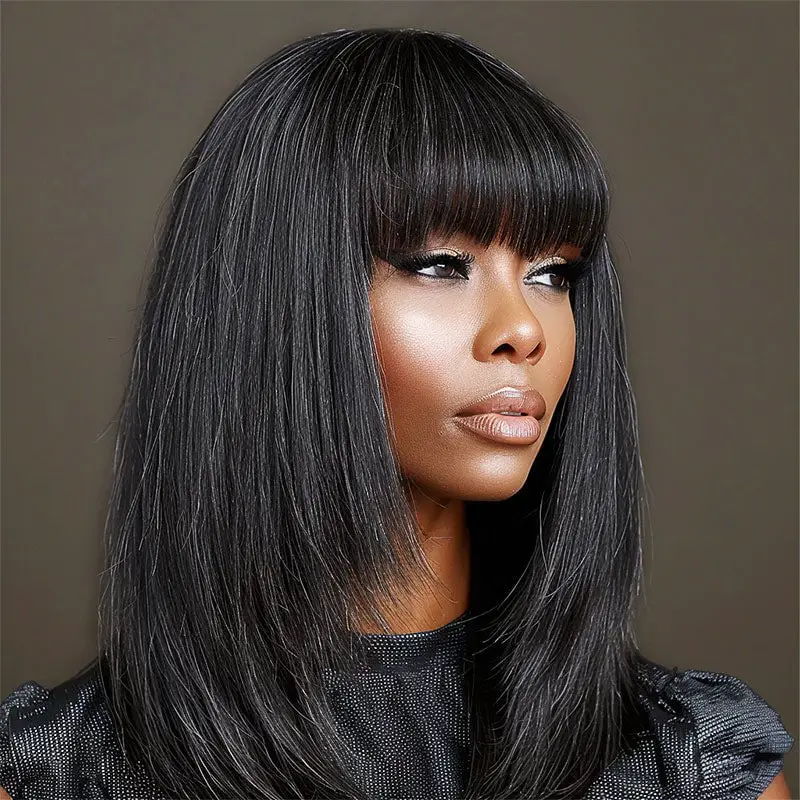
Thick hair needs a plan, and a collarbone cut with layers and a blunt fringe is a solid one. The layers remove enough weight so the hair moves, while the blunt bangs keep the look structured. A middle parting and straight styling emphasize the precision. Plan on a trim every eight weeks, especially to keep the bangs from creeping into your line of sight.
Collarbone Wavy Bob With Side Part
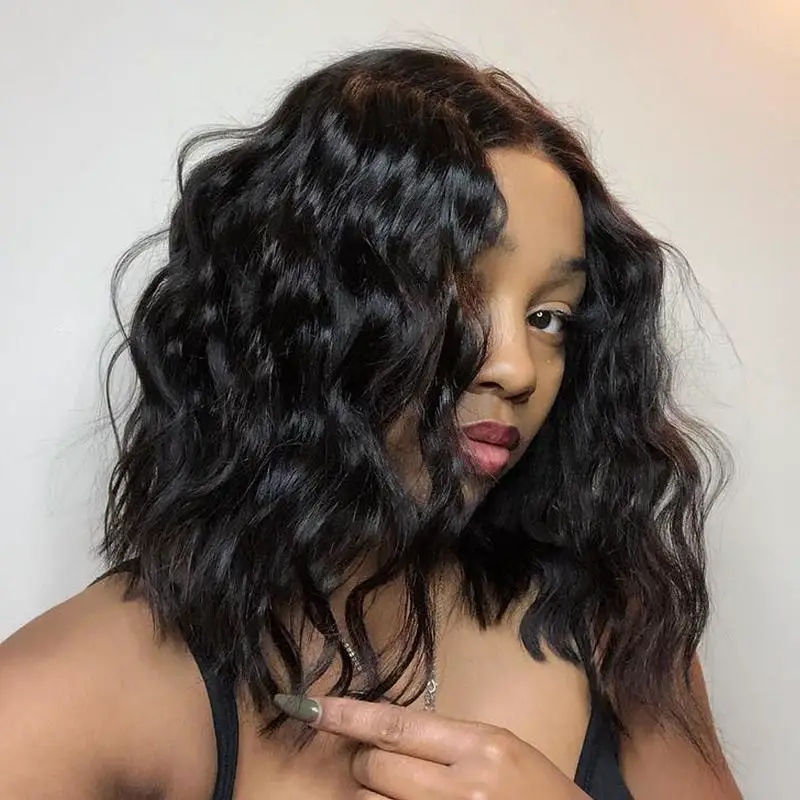
Is there a cut that looks put together with zero effort in warm weather? A collarbone wavy bob comes close. The side part and loose waves give thick hair room to breathe without turning into a triangle. This shape adds softness around the jaw, making it a good match for angular faces. A sea salt spray and air drying are all it takes to get out the door.
Collarbone Layers With Voluminous Curls
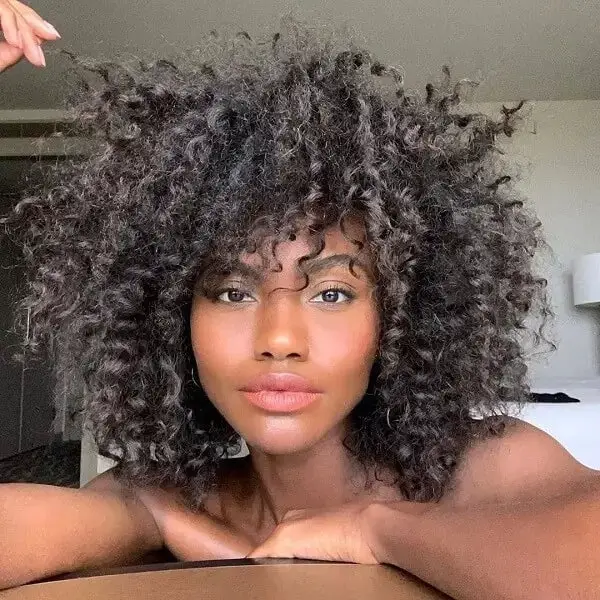
Voluminous curls at the collarbone deliver a lot of hair. The visible layers prevent the shape from looking like a single dense block, a real risk with thick curly texture. This volume can overwhelm a smaller frame. Ask your stylist for: collarbone length layered cut, voluminous curls. Trimming every eight to ten weeks keeps the shape from turning top-heavy.
Chin Length Wavy Bob With Curtain Bangs and Styled In A Soft Blowout

A chin-length bob with curtain bangs and a soft wavy blowout creates a controlled texture. The side parting directs the waves outward, and the bangs are cut to blend into the length so they do not sit as a separate piece. For the same result, ask your stylist for: chin length wavy bob, curtain bangs. A texturizing spray brushed through while blow-drying sets the wave pattern.
Back View Collarbone Bob With Sharp Line
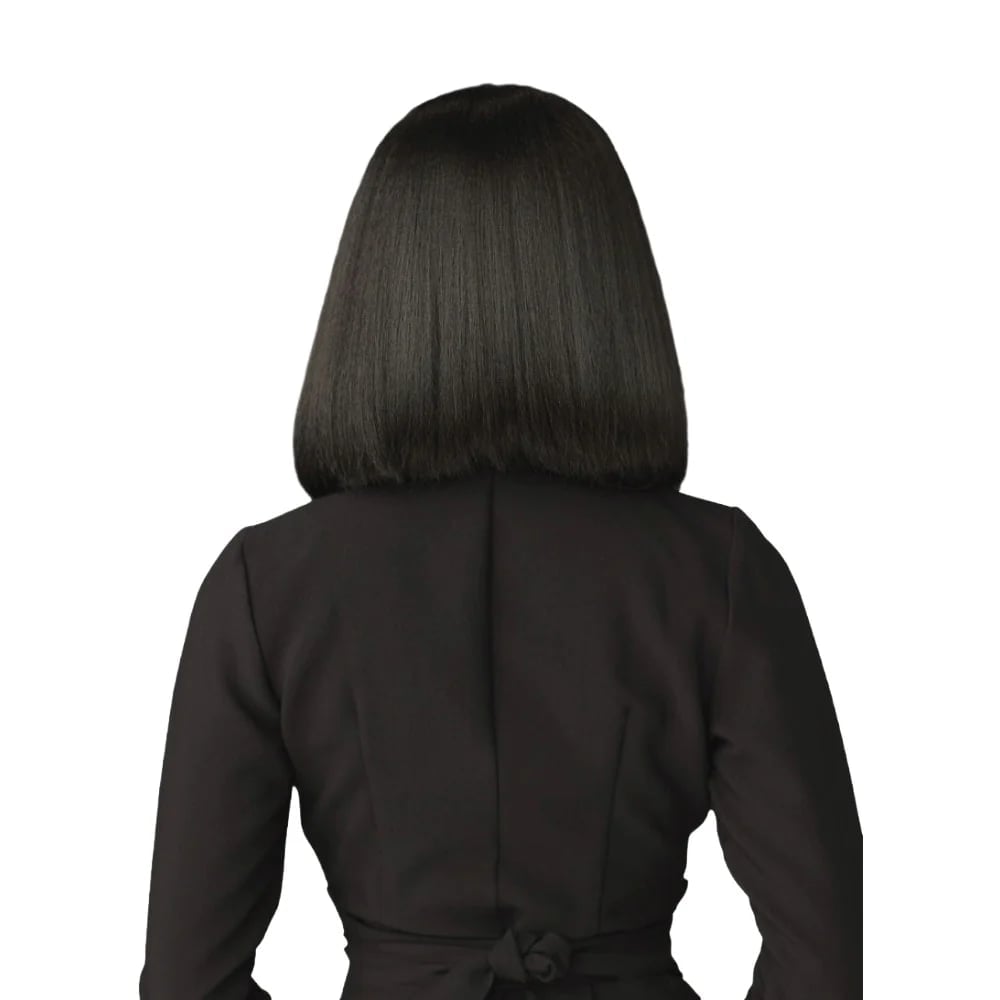
It is not a softer, tapered bob; this is a collarbone-length blunt cut with a single, sharp line across the back. Ask your stylist for a collarbone length blunt bob with a sharp line. The middle part and thick, straight texture give the shape its weight, and that crisp edge defines a strong jawline better than any wispy alternative, though it will shorten a round face. Use a round brush and blow-dry for a smooth finish; plan a trim every eight weeks, because the precision is the entire point.
Back View Fine Bob With Sharp Line and Emphasizing The Cut’S Precision
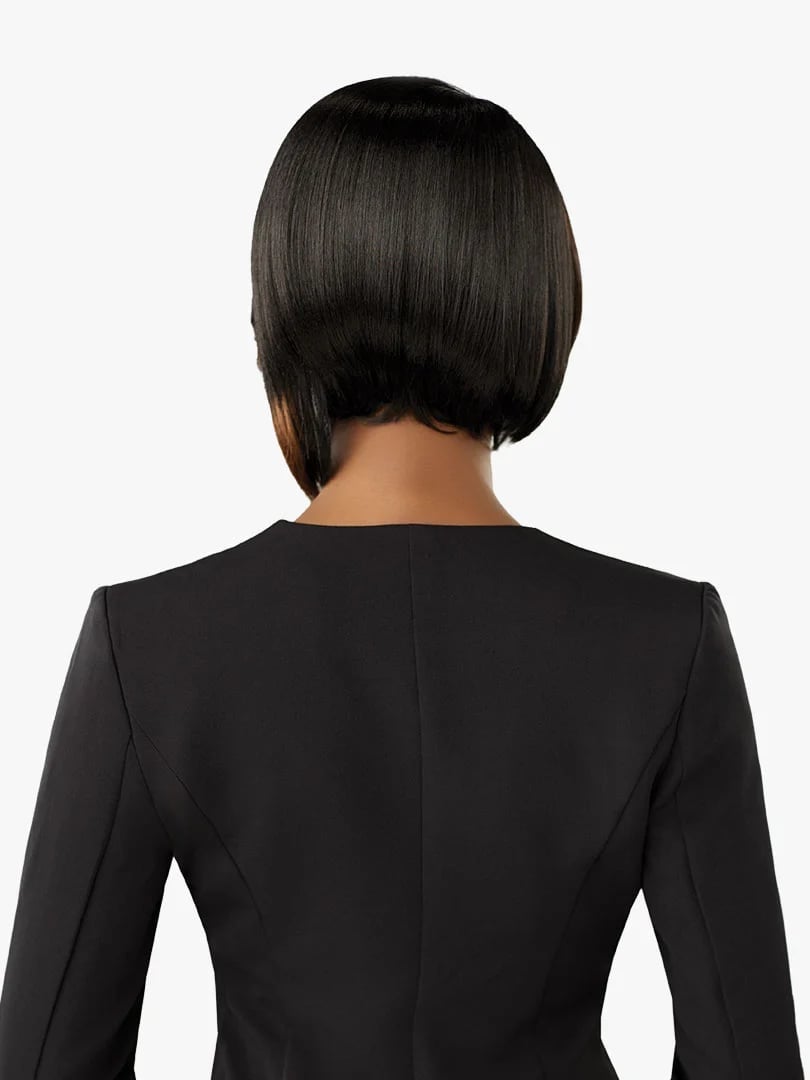
A blunt bob on fine hair is a design decision, not a compromise. Here, the collarbone-length cut and sharp, clean line look deliberate because there is no texture to hide behind. Ask your stylist for a collarbone length fine bob with a sharp line. This version is strictly salon-only: a home trim on fine hair rarely stays level. On coarser textures, that same line can appear heavy, but on fine hair, it looks surgical and purposeful. Apply a smoothing serum and blow-dry straight; the shape holds better than you expect, but plan a trim every eight weeks.
Long Butterfly Cut With Curtain Bangs
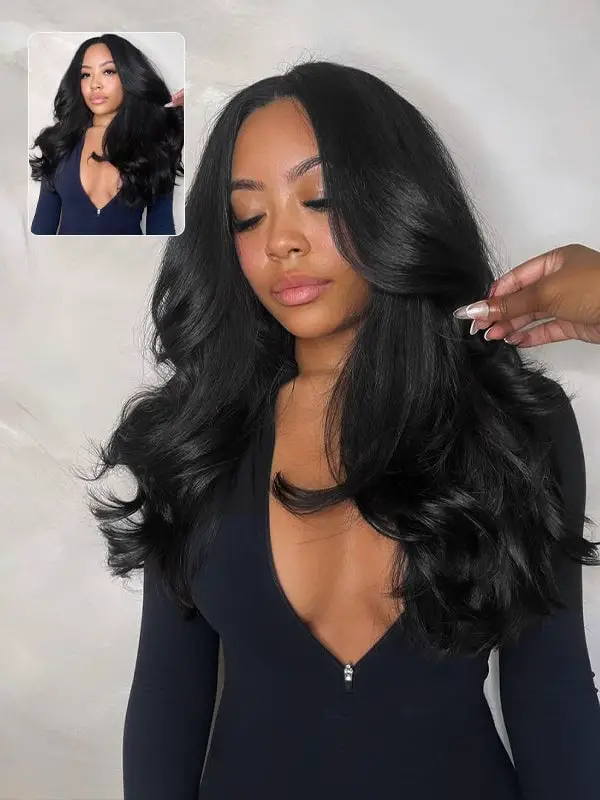
How do you get volume that stays above your shoulders but keeps your length? This butterfly cut, with its long, thick, wavy layers and curtain bangs. Ask your stylist for a long butterfly cut with face framing layers and curtain bangs. The key is graduated layers that start near the cheekbones and fall to a mid-back weight line, so the bulk stays at the bottom while the top lifts. An inset side view shows how the strand lengths shift from short around the face to longer at the nape. Use a round brush and blow-dry each layer section by section; trim every eight to ten weeks to keep the shape from collapsing into one triangle.
- Clarify you want the shortest layer to land at your cheekbone, not higher.
- Request that the curtain bangs reach your jaw when dry.
- Specify that the graduating layers stop at your shoulder blades.
Mid-Back Layered Straight With Curtain Bangs
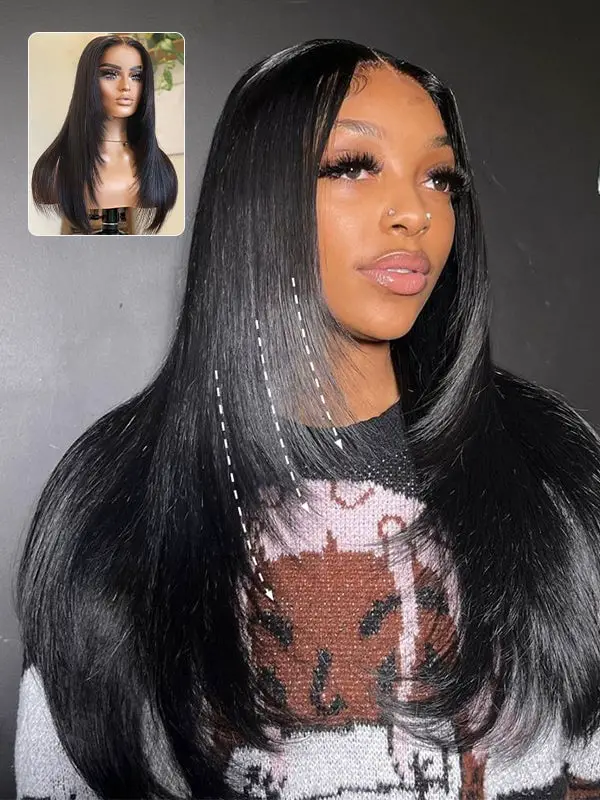
Curtain bangs on a mid-back length require a specific styling commitment. Ask your stylist for mid-back length layers with long curtain bangs. The layers here are subtle running through thick, straight hair, so the length stays full while the fringe does the framing. Curtain bangs need a round brush and a blow-drier every wash, aimed forward then swept to each side, or they default to a flat middle part. Trim the bangs every six weeks and the ends every eight to ten, because once those layers grow past your shoulders, the curtain effect starts to disappear.
This look works best on thick, straight texture, where the weight keeps the layers from frizzing. On fine hair, ask for less graduation so the shape does not go see-through.
Mid-Back Straight With Blunt Bangs
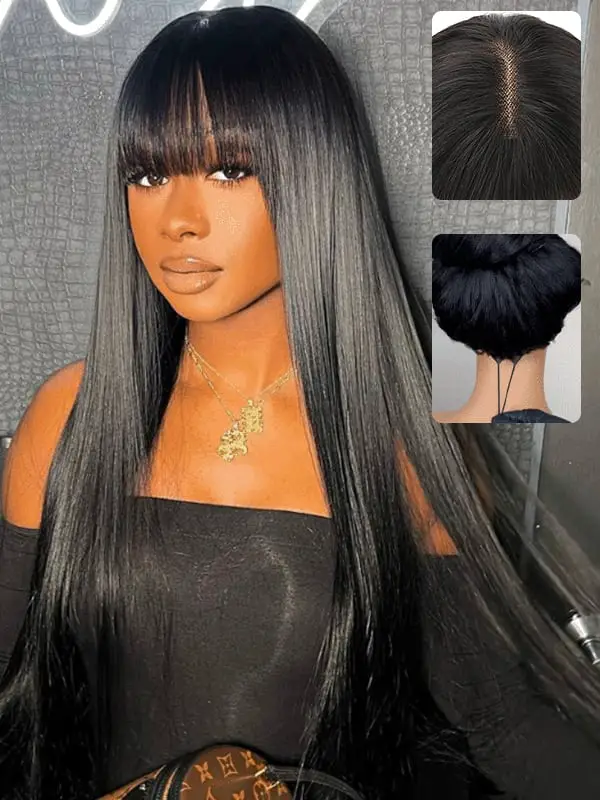
A mid-back length with blunt bangs is straightforward until you realize the fringe dictates the entire rhythm of your morning. Ask your stylist for mid-back length straight hair with blunt bangs. The long, subtle layers keep the lower section from looking flat, while the blunt bangs sit across the forehead at a single length. Here is the real drawback: on thick, straight hair, blunt bangs can feel heavy and require a texturizing snip at the salon to avoid a solid curtain. Keep the fringe flat with a straightener, and be prepared to trim the bangs every three to four weeks, because they will drift into your eyes before the ends need anything.
Mid-Back Fine Straight With Fringe
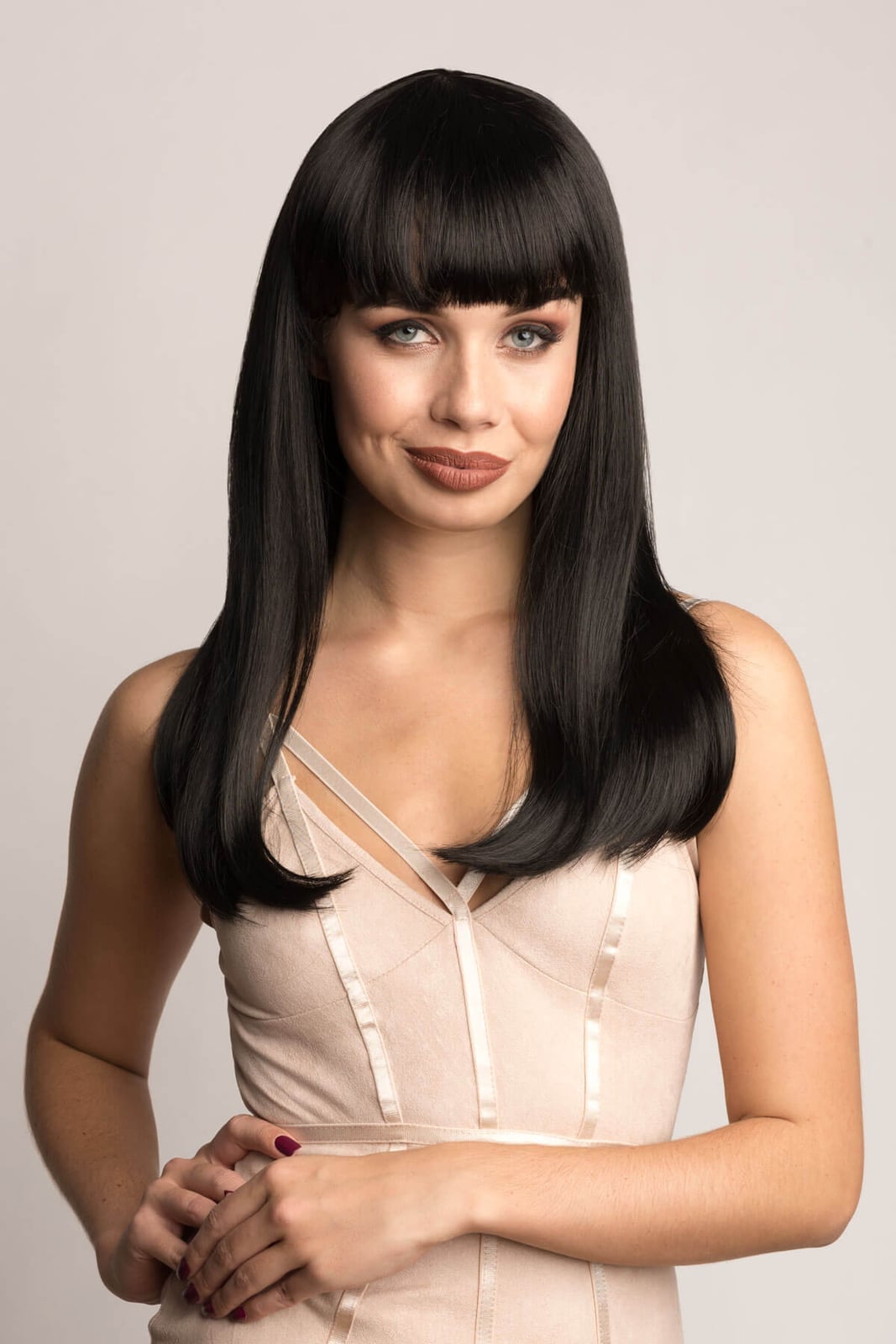
The design hinges on a blunt, straight fringe that cuts cleanly across the forehead while the hair falls in long, subtle layers. This fine straight mid-back fringe style works best on hair that is already straight and fine, since the air-dried finish relies on natural texture. Ask your stylist for: mid-back fine straight hair, blunt straight fringe. To keep the fringe from drifting, set it with a light-hold spray after drying, and plan a trim every eight to ten weeks to maintain that sharp line.
Mid-Back Fine Straight With Fringe and Showcasing Subtle Layers
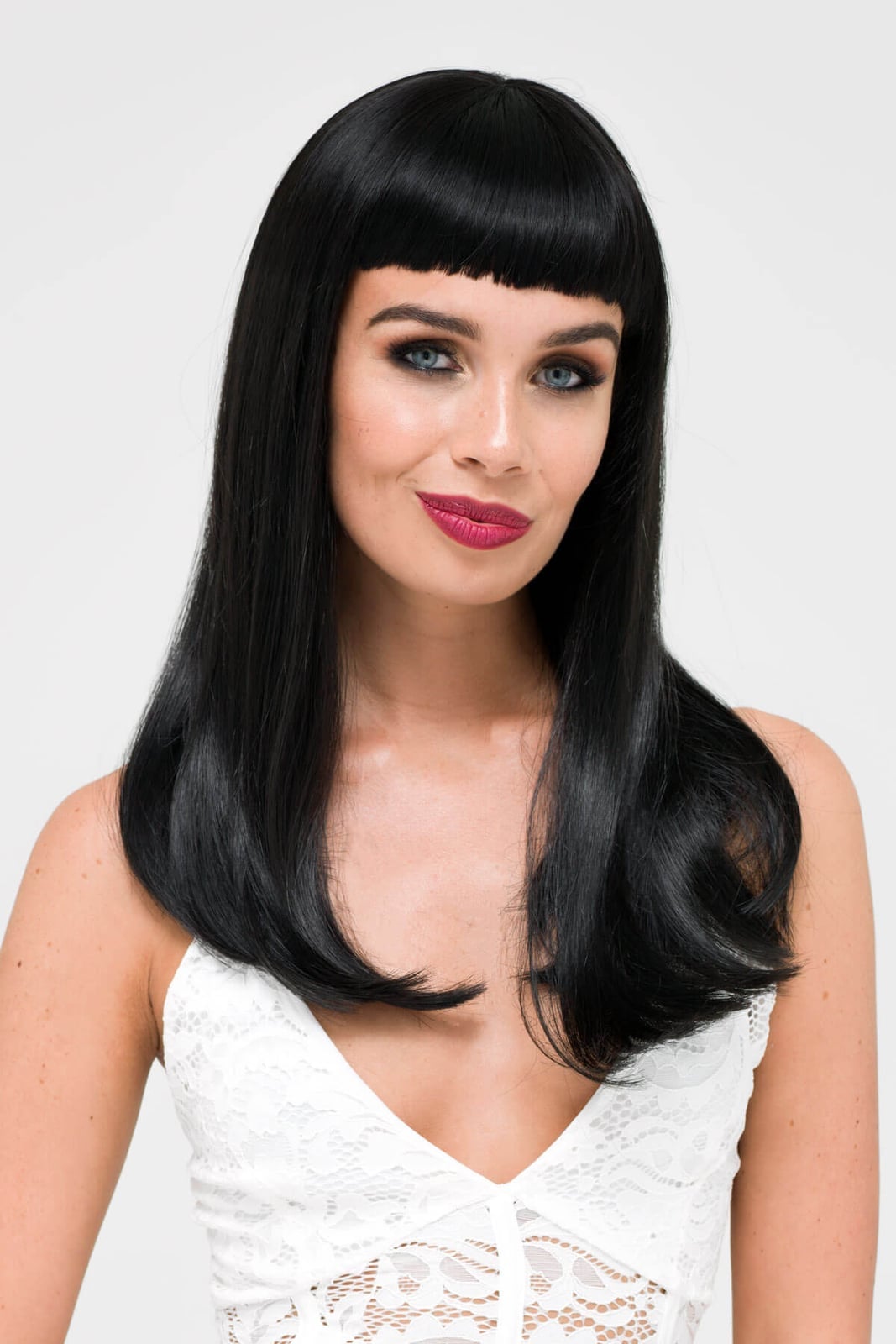
Can fine, long hair actually hold a shape without falling flat? Yes, if the cut uses subtle, long layers that start below the shoulders. The blunt, straight fringe adds a graphic element up top, while the mid-back length keeps the overall weight low, which suits fine textures that might otherwise look sparse at the ends.
The middle part lets the layers frame the face softly without committing to heavy face-framing pieces, so it works for most face shapes. Ask your stylist for: mid-back fine straight hair, blunt straight fringe. The layers create movement when you move, but the fringe stays put, which is the trick. A trim every eight to ten weeks keeps the ends from wisping out.
Mid-Back Sleek Straight With Lace Front
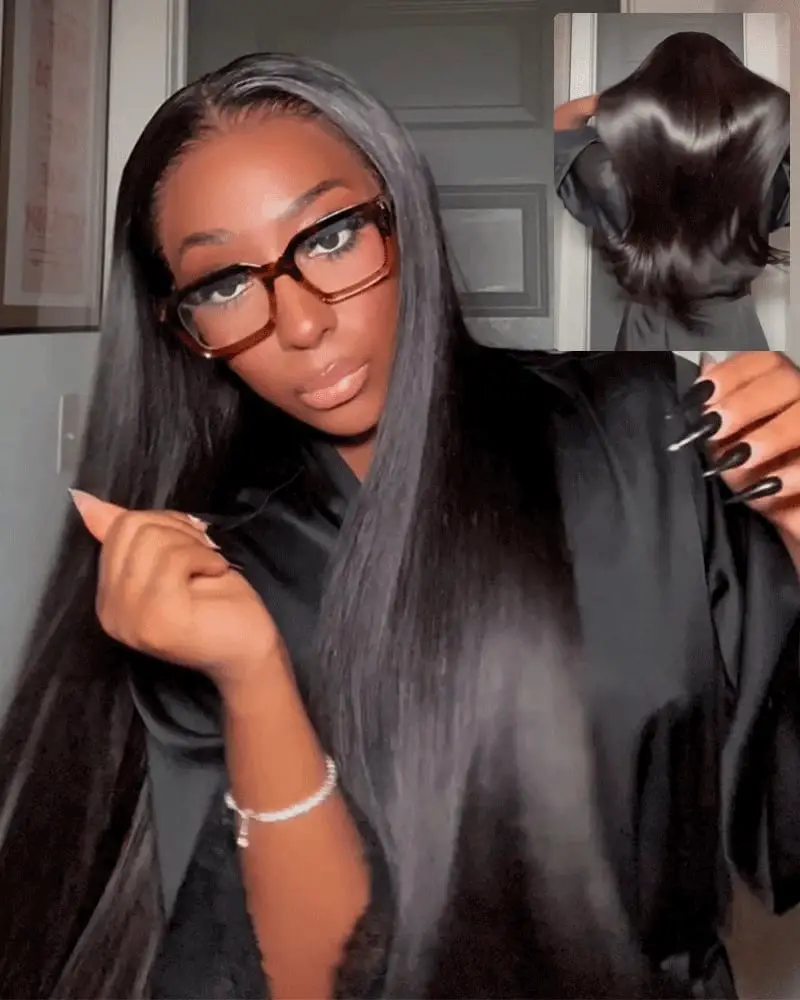
Set this sleek mid-back straight hair against a layered version and the difference is immediate: no interior layers to soften the line, just one continuous fall from a middle part to the ends. The lace front hairline mimics a natural scalp, so the part looks like skin instead of a wig cap, which matters when the style is this polished.
The straight, fine texture takes well to a flat iron for that glassy finish, but it also holds a simple air-dry if you skip the heat. Ask your stylist for: mid-back sleek straight hair, natural hairline. This style suits anyone who wants a clean, professional line without the upkeep of bangs or the visual noise of layers. Plan a trim every eight to ten weeks to keep the ends blunt.
Mid-Back Straight With Subtle Layers
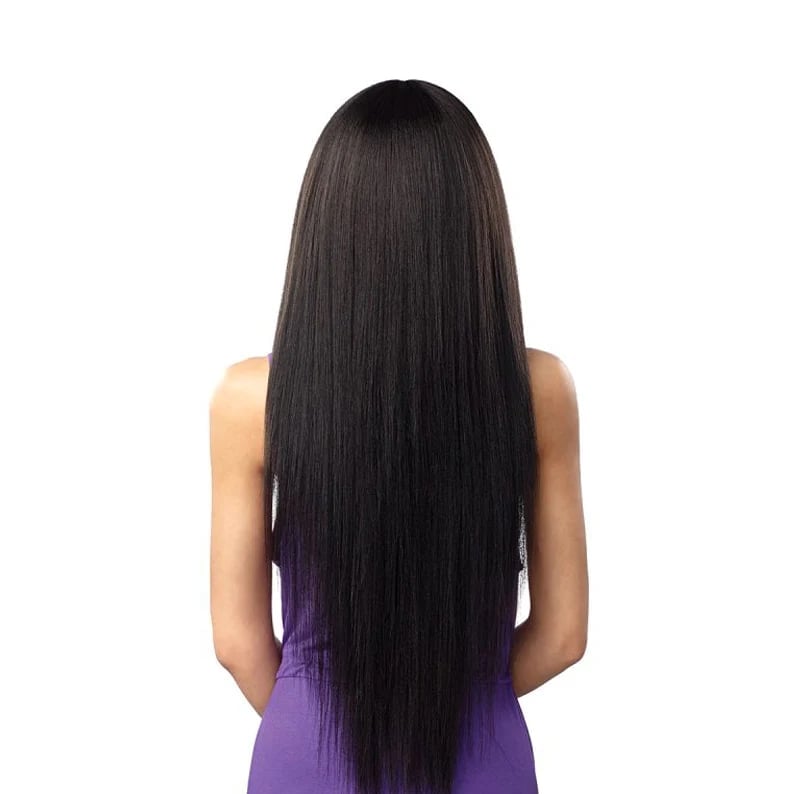
The cut keeps the length at mid-back with only whisper-soft layers worked through, so the silhouette stays heavy and straight from the back. Fine hair at this extreme length can start to look see-through near the ends, which is why the layers are subtle rather than aggressive: they add a touch of movement without sacrificing density. Ask your stylist for: mid-back straight hair, subtle layers. Air drying preserves the natural texture, though a quick blast with a diffuser at the roots gives it a lift that lasts the day. A trim every eight to ten weeks keeps the ends looking full, not frazzled.
Mid-Back Wavy With Body Wave Texture
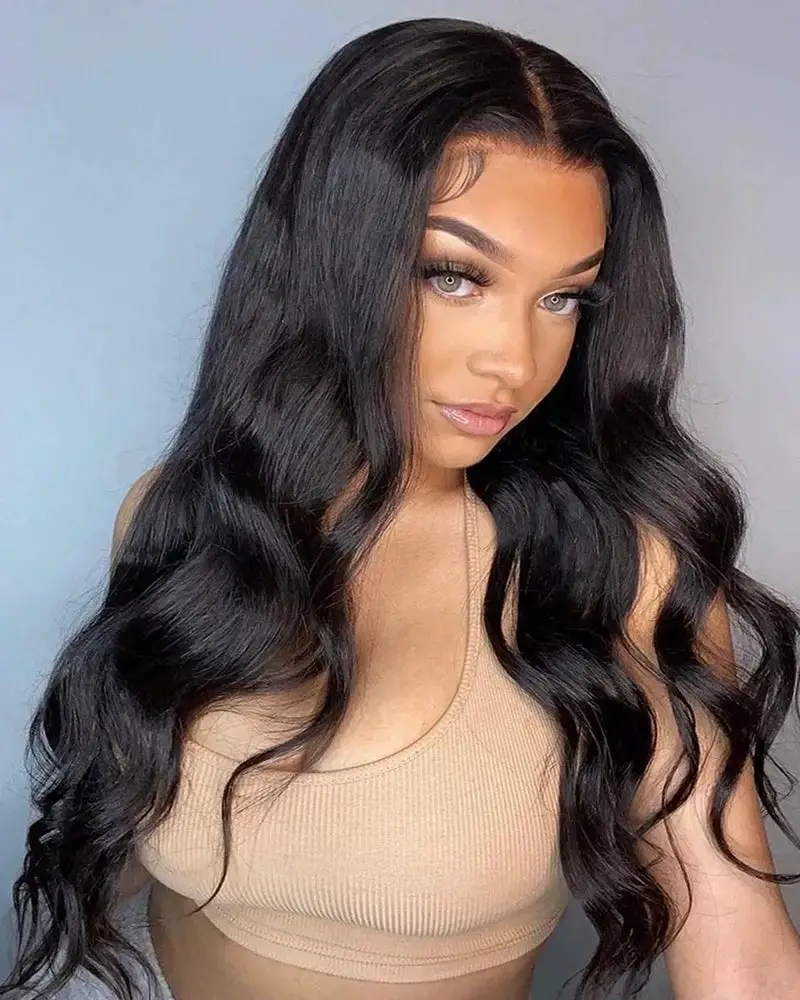
Body wave texture means the wave starts at the mid-lengths, giving the mid-back length a gentle, S-shaped bend that moves when you do. This cut works for summer when you want the volume of waves without the commitment of tight curls or the flatness of straight hair. The thick texture holds the wave pattern naturally, so air drying is enough to set it.
The middle part lets the waves fall symmetrically on both sides, which suits rounder face shapes by elongating the line. Ask your stylist for: mid-back body wave hair. It works for a beach day or a casual office, and it does not demand a curling iron. A trim every eight to ten weeks keeps the wave pattern from losing its shape at the ends.
Mid-Back Voluminous Loose Waves
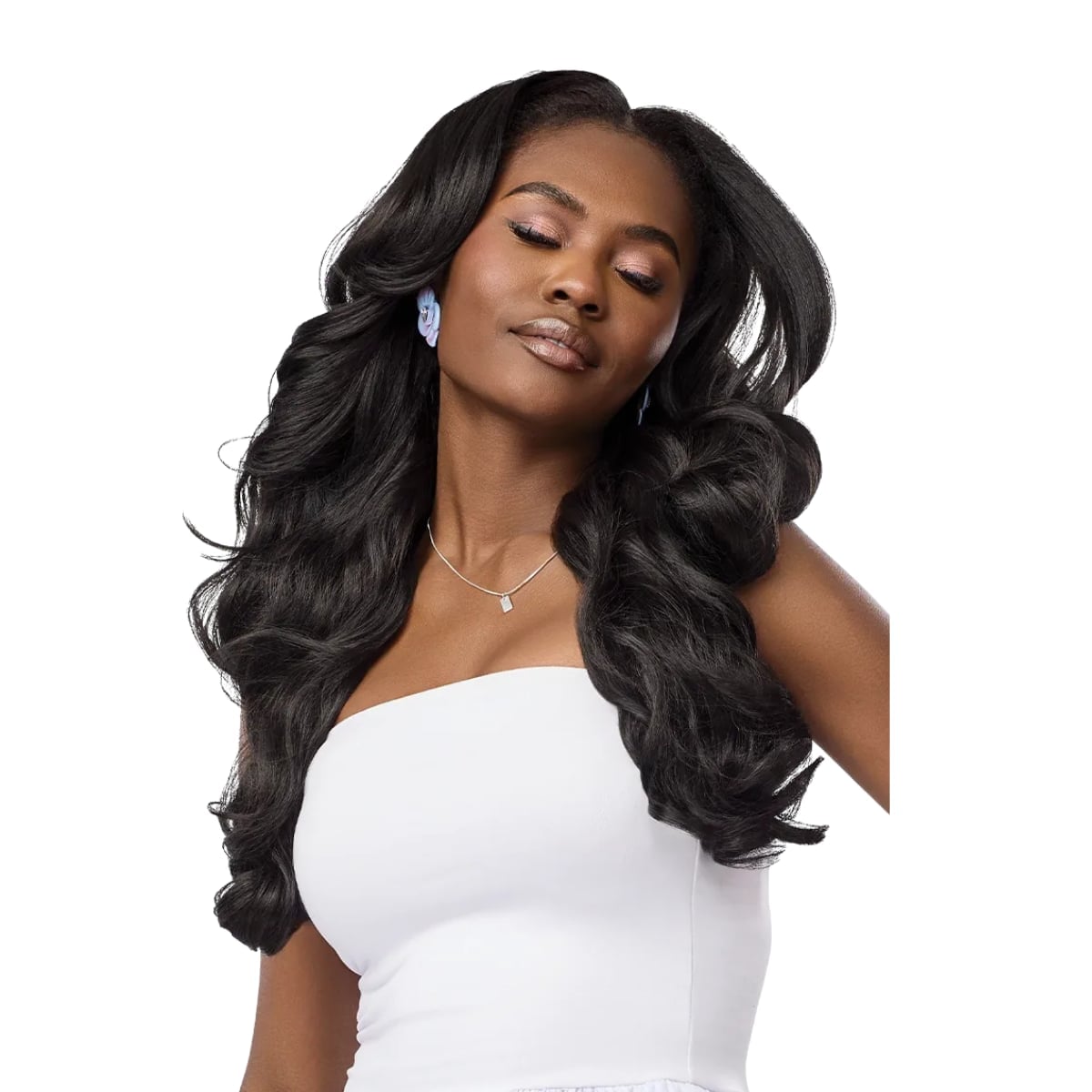
Can a single styling technique make the difference between good hair and a memorable moment? With mid-back voluminous loose waves, yes. This look starts with long layers cut into thick, wavy hair, then gets a thorough blowout with a middle part. The result is a full, cascading shape that holds its body. Ask your stylist for: mid-back voluminous loose waves.
The drawback is time. A soft blowout with large-barrel curling takes at least forty-five minutes and a heat protectant. The volume also settles faster in humidity, so a texture spray at the roots helps. A trim every eight to ten weeks keeps the ends from thinning out. The payoff is a legitimate special-occasion shape, but it is not a five-minute commute style.
Mid-Back Wavy With Natural Texture
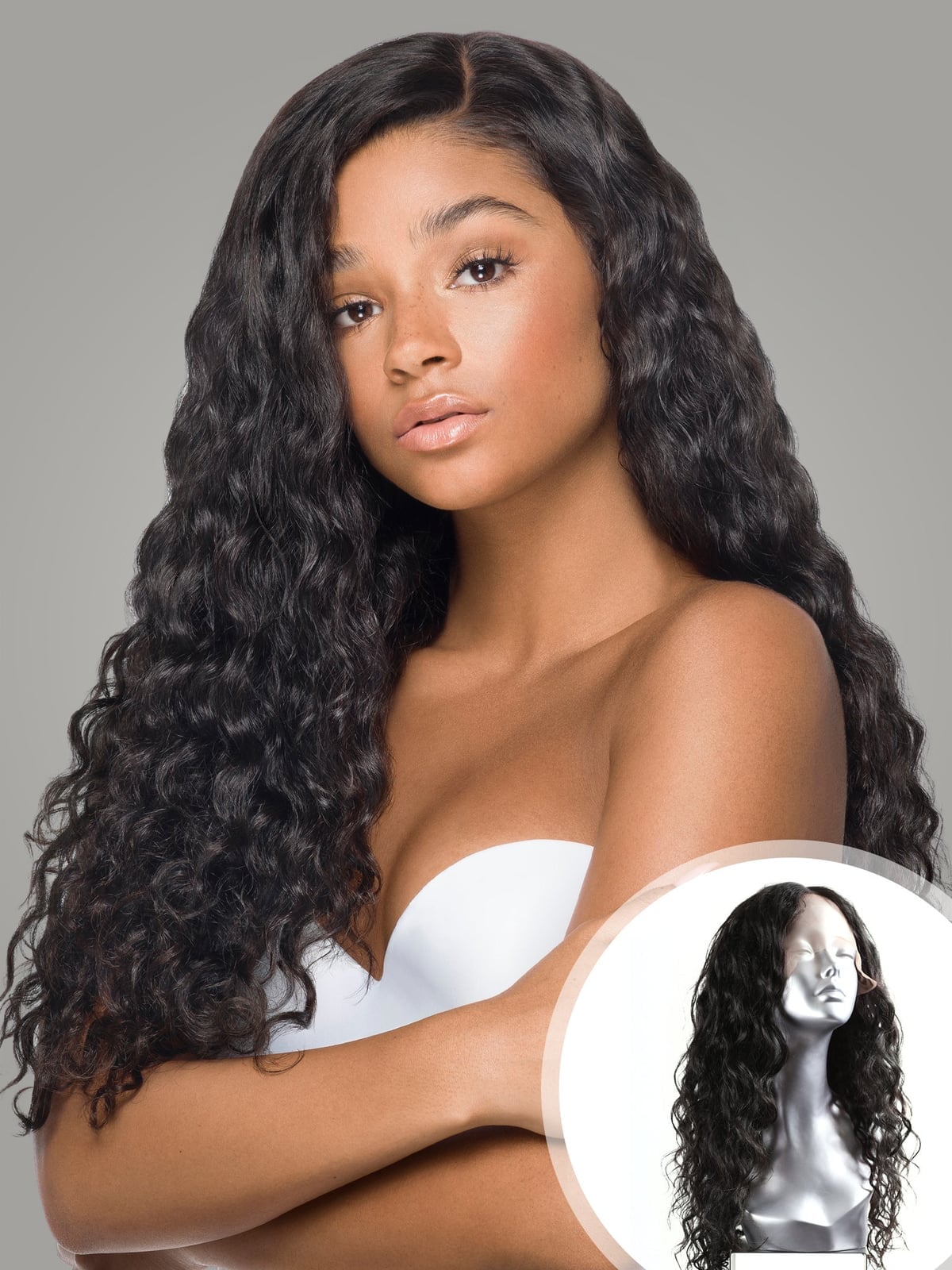
A long, layered cut on thick wavy hair can look deliberate without a curling iron. The design here is a mid-back length with a middle part, relying on the hair’s own wave pattern. Ask your stylist for: mid-back wavy hair, natural texture. At home, apply a curl cream to damp hair, then air dry or use a diffuser on low heat. The salon cut shapes the layers, so the DIY effort is minimal. A trim every eight to ten weeks maintains the shape.
Mid-Back Wavy With Full Fringe
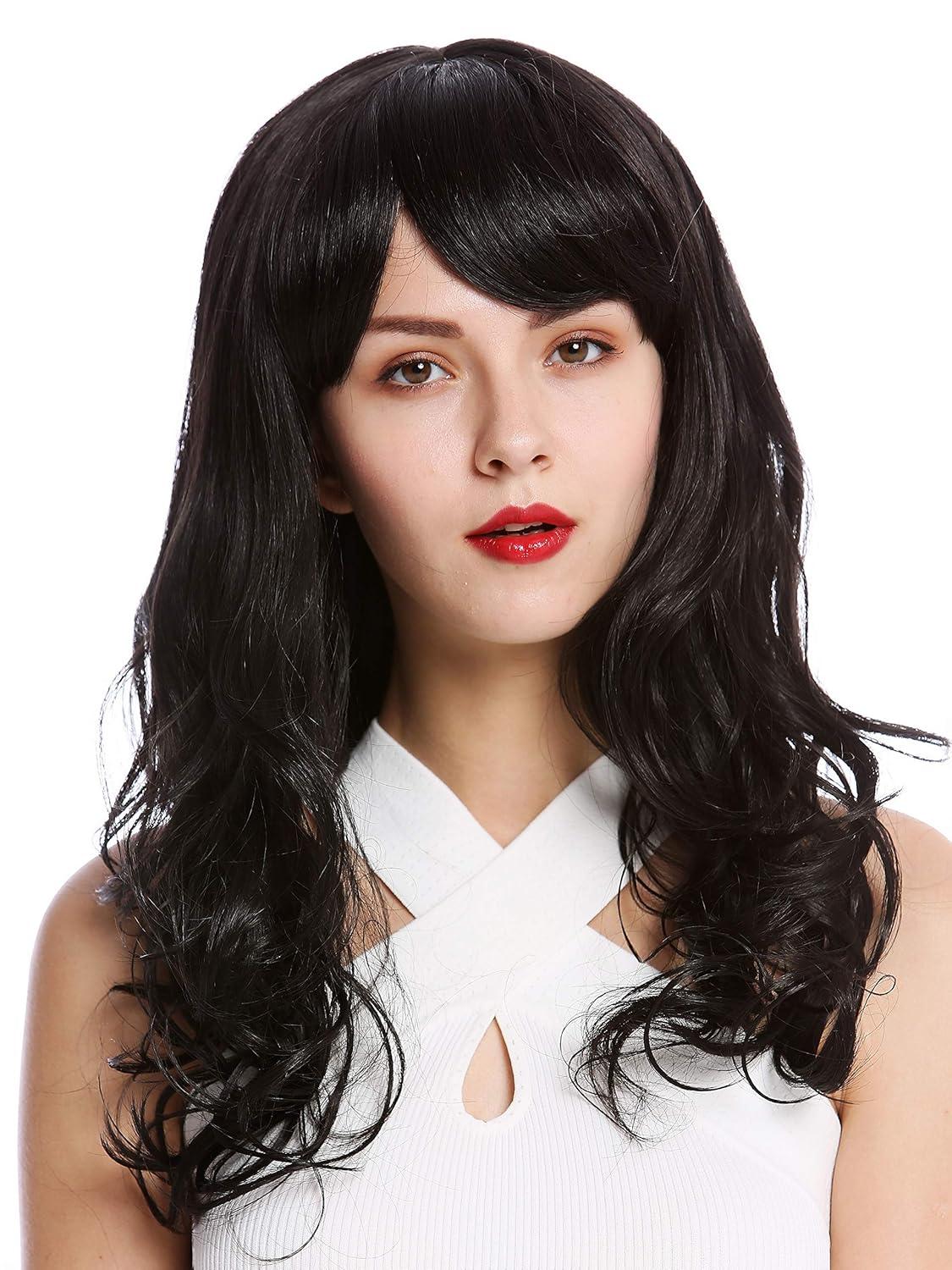
A full fringe changes the weight of a mid-back wavy style. This one is cut with layers throughout thick hair, then styled in a wavy blowout with a side parting. Ask your stylist for: mid-back wavy hair, full fringe. The fringe lands above the brows and requires a trim every four to six weeks, no negotiating. The length and texture balance a longer face shape by adding horizontal width at eye level. Square or heart-shaped faces get the same softening effect. The density of the fringe also keeps the hair from feeling too heavy.
Mid-Back Old Hollywood Waves With Short Fringe
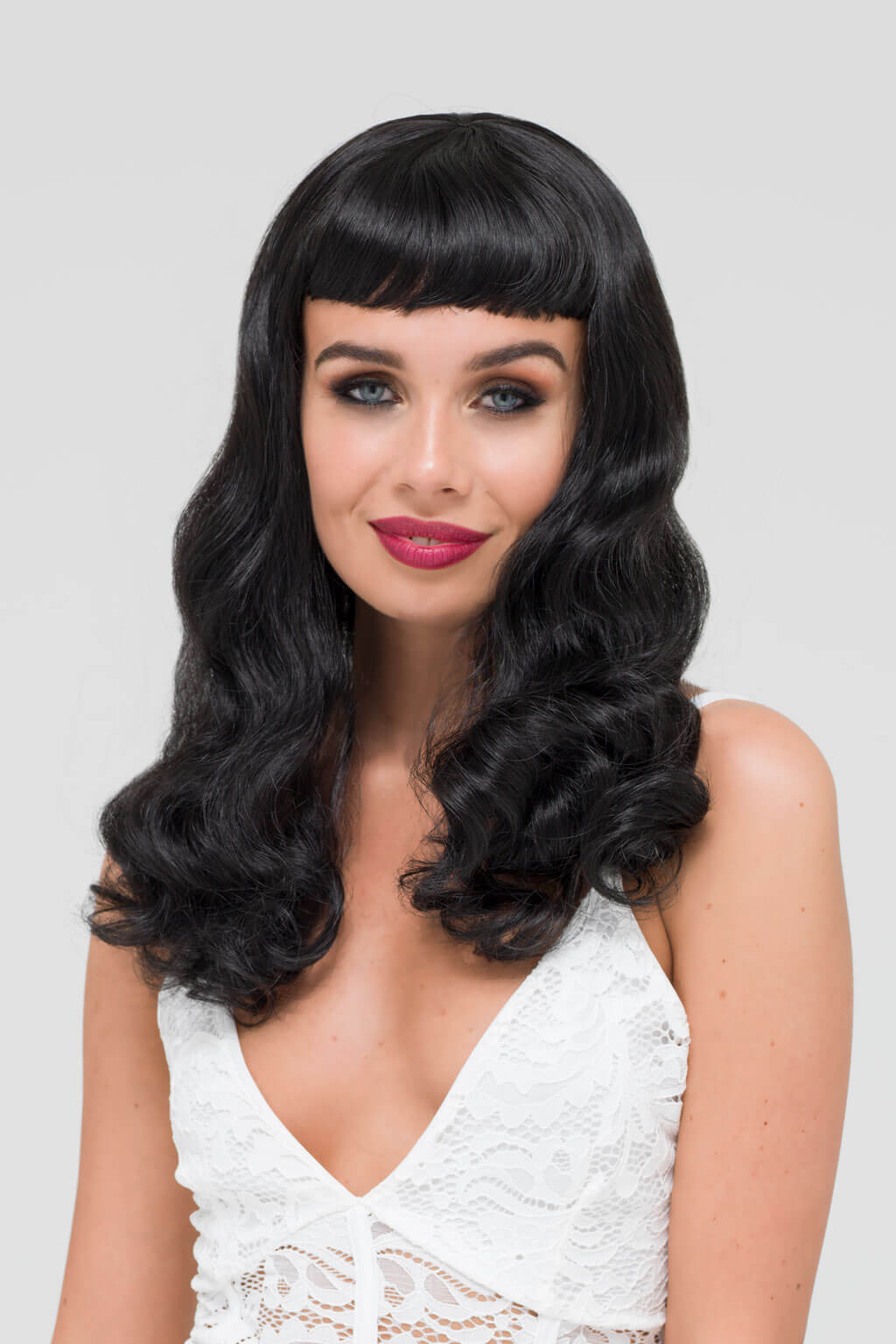
Old Hollywood waves ask for precision in a way that modern beachy curls do not. This version uses long layers on thick, wavy hair, set into structured S-shaped waves that end at mid-back. A short, wispy fringe breaks the formality. Ask your stylist for: mid-back old hollywood waves, short wispy fringe. The fringe requires a trim every four to six weeks to stay out of the eyes. The contrast between the glossy, sculpted waves and the softer bangs gives it a vintage feel. This style requires a salon visit to create and maintain.
Mid-Back Loose Waves With Side Swept Bangs
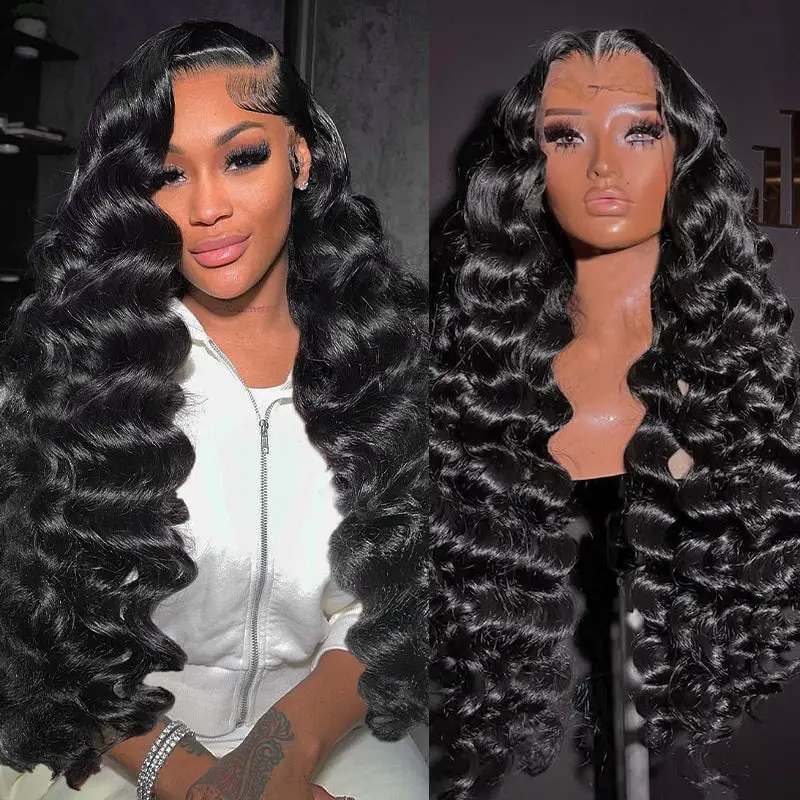
Loose waves that last past noon start with a deep side part on thick, wavy hair cut into layers at mid-back. Ask your stylist for: mid-back loose waves, side swept bangs. The side-swept bangs integrate into the face-framing layers, which softens angular jawlines. Use a large-barrel curling iron and a flexible hold hairspray. A trim on the bangs every four to six weeks keeps them from sliding into the length.
Long Wavy With Blunt Bangs And Side Part
A side part gives this long wavy style asymmetry, and the blunt bangs anchor the whole shape. The cut keeps the length past the shoulders with minimal layering, so the texture stays dense. Thick, naturally wavy hair is the ideal starting point here; the blunt bangs work on most face shapes but need a strong wave pattern to blend with the hair. Ask your stylist for: long wavy hair, blunt bangs, side part.
Styling requires a diffuser and a texturizing spray to keep the wave pattern defined. The blunt bangs demand frequent trims every four to six weeks, because even a quarter inch of growth turns them into a curtain fringe. That maintenance is the trade-off for the graphic line they create against the loose waves.
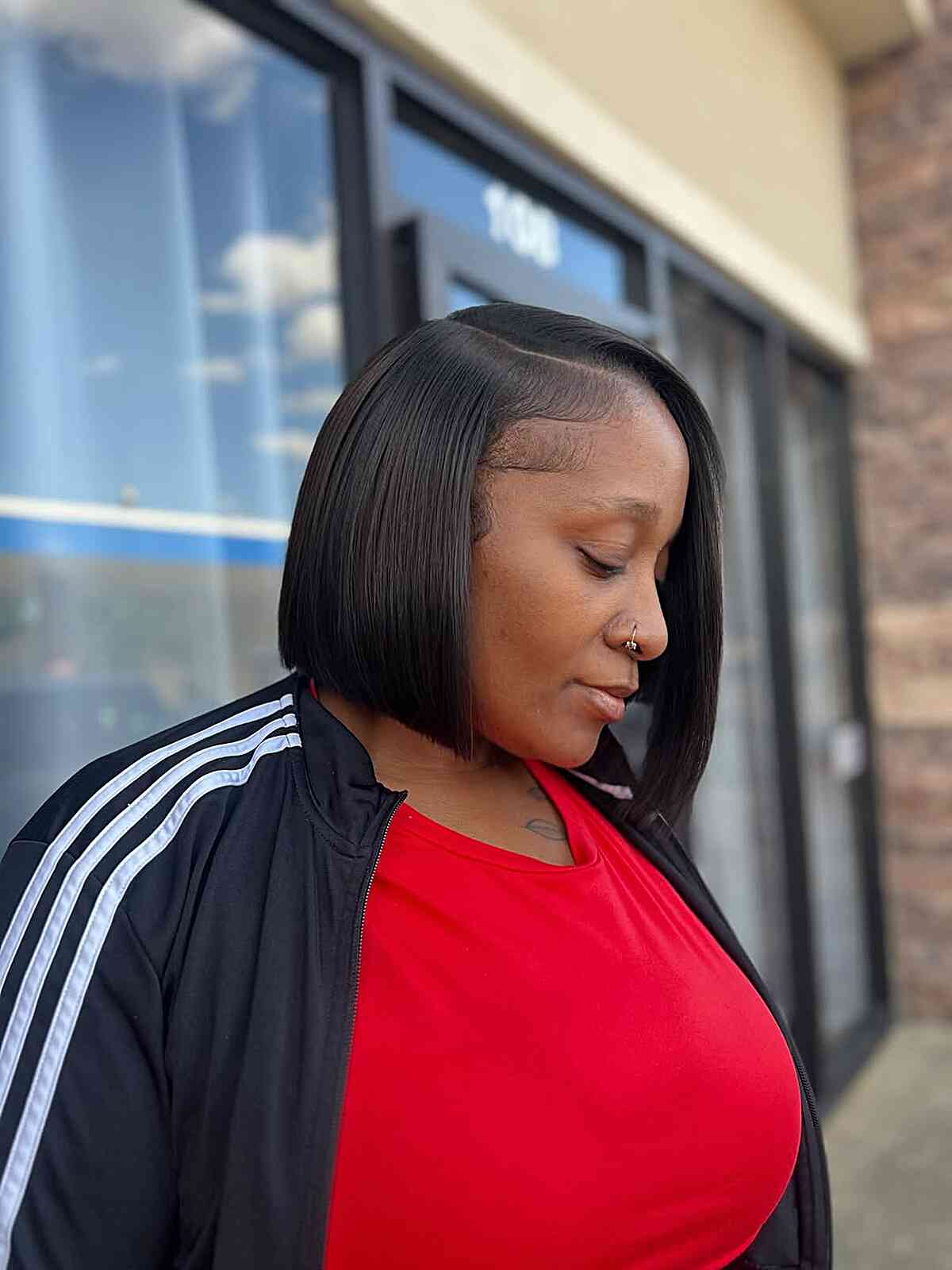
Short Weave Hairstyles For Black Women

Short weave styles offer a range of cuts, but achieving this look at home is not realistic. The loose waves require heat styling with a large-barrel curling iron, and the weave itself needs professional installation to lay flat and avoid tension on the edges. Ask your stylist for: short weave style. A salon visit is essential for both the initial weave and any adjustments to the cut or shape.
Final Thoughts
For fine hair, stick with blunt cuts and add volume through a blowout or soft waves. For thick hair, layered cuts reduce bulk and keep movement.
- Wash wigs every 10-15 wears or when product buildup is noticeable.
- Use a wide-tooth comb or fingers to detangle starting from the ends.
- Store wigs on a mannequin head or in a protective bag to maintain shape.
- Avoid excessive heat styling to prolong the wig’s lifespan.
- Trim split ends every 6-8 weeks for synthetic or every 4-6 weeks for human hair wigs.
Find the cut that speaks to you.