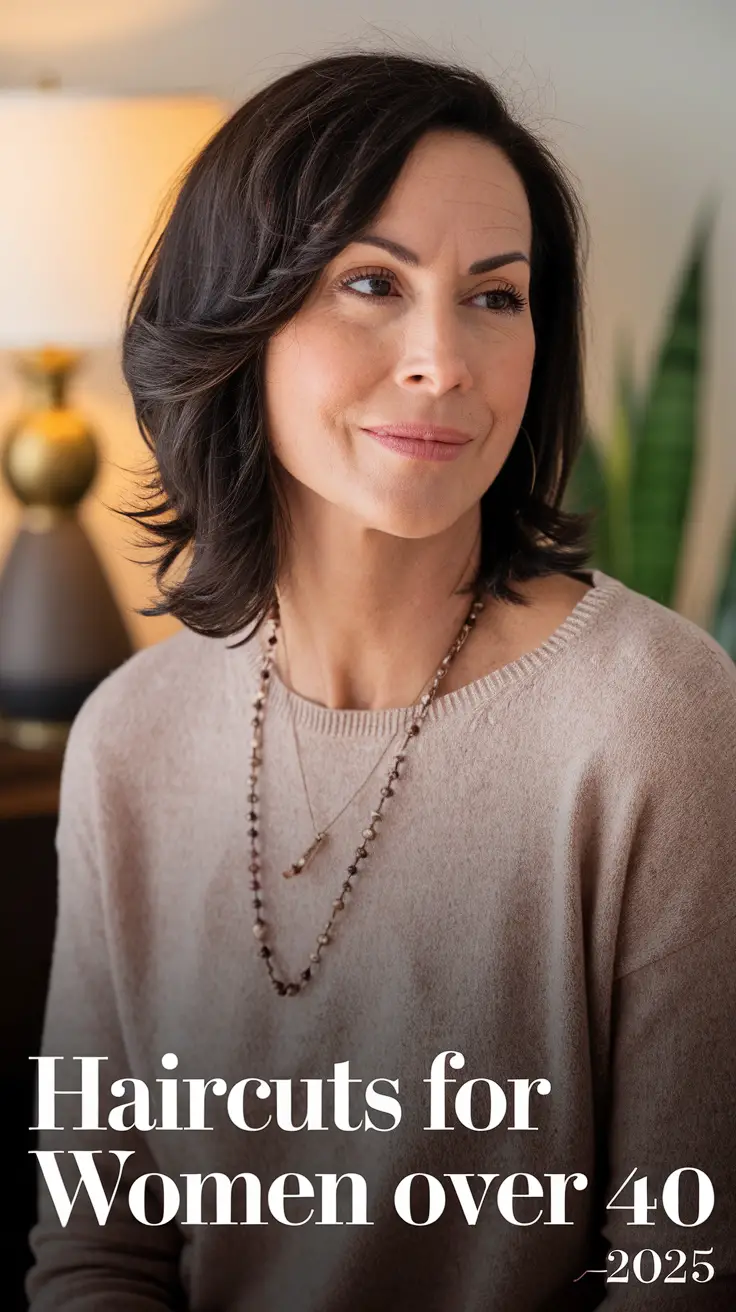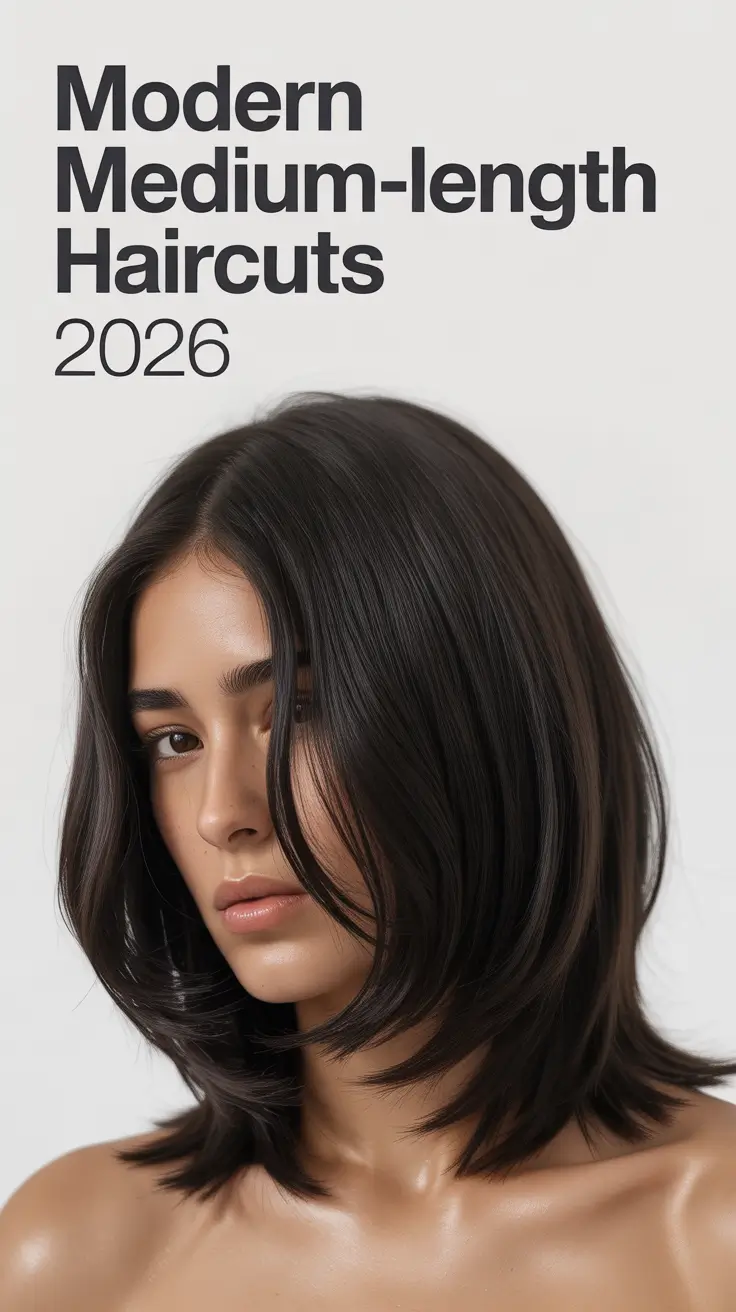

A new haircut can feel like a quiet personal reset, a small decision that changes the energy you carry into ordinary days. The phrase “trendy haircuts for 2027” can simply mark a moment in time, while the real choice remains personal: finding a sense of freshness that feels natural, expressive, and aligned with how you want to present yourself now.
Freshness does not have to mean reinvention or chasing something unfamiliar. Sometimes confidence comes from making a deliberate change that feels clear, current, and personally meaningful, creating room for a different mood without losing what already feels like you. A haircut can become part of that shift, offering a simple form of self-expression with an immediate emotional effect.
Long Layers With a Broken, Airy Outline
This long brown shape keeps plenty of visible length, but it does not behave like one uninterrupted curtain. Shorter pieces gather around the crown and upper sides, then give way to much longer wavy lengths over the chest, so the silhouette feels broken into several zones rather than weighted evenly from top to bottom. The contrast lets the haircut look active without sacrificing its long overall scale.
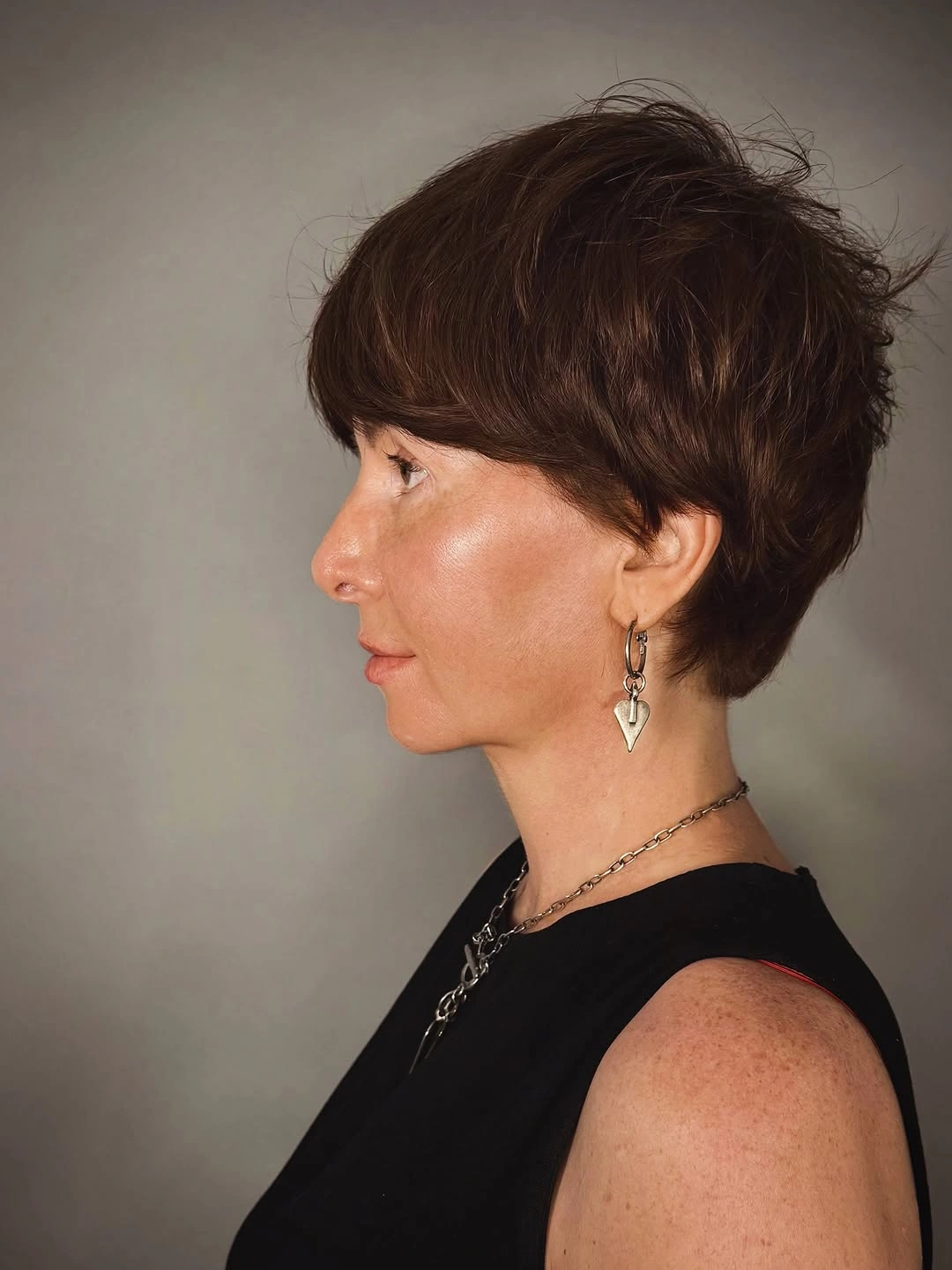
Photo via Instagram
The fringe is part of that structure rather than a separate accent. Fine pieces cross the forehead, while longer sections around the cheeks and jaw step gradually toward the lower lengths, creating a visual bridge between the short upper area and the hair below. If you like long hair but want the face area to feel less enclosed, this kind of graduated framing is one direction worth considering.
The loose bends make the spacing between lengths easier to see, especially where shorter pieces lift away from the longer hair beneath them. Instead of forming one smooth outer edge, the ends land at different points, which gives the outline a light, irregular rhythm from the crown down.
Close Sides Put the Top in Focus
The strongest feature here is the distance between the close sides and the much longer hair across the top. Because the area around the ear and lower back is kept very compact, the upper section appears broader and taller by comparison, even before individual strands are considered. That proportion gives the cut a clear top-heavy silhouette without needing extra length at the perimeter.
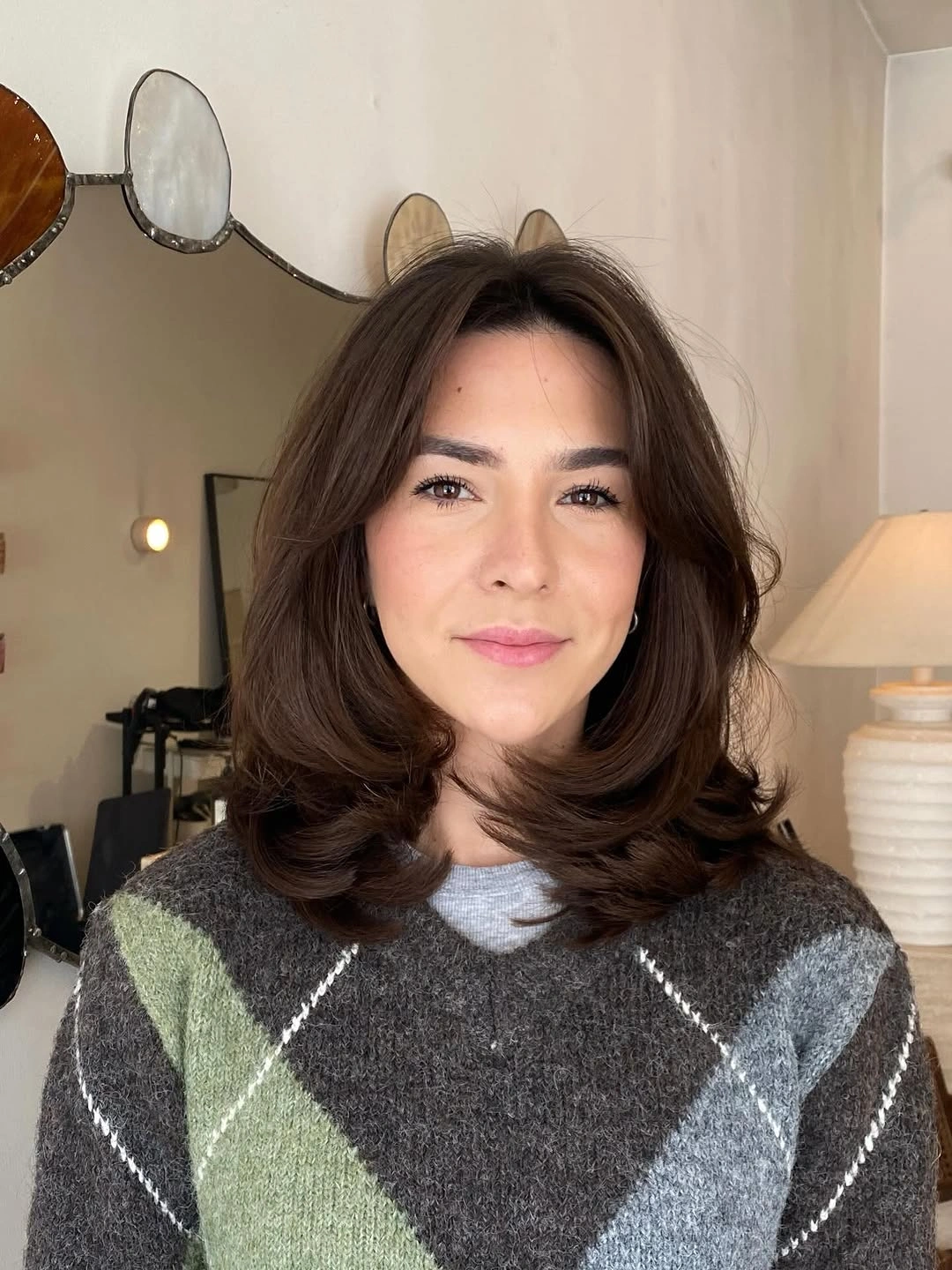
Photo via Instagram
The top is not shaped as one smooth cap. Choppy pieces overlap in different directions, and their uneven endpoints keep the upper surface visibly separated into small sections, while the tight side profile acts almost like a boundary around them. If you want a very short shape with a strong sense of dimension, keeping most of the visible length above the side line is one possible approach.
The irregular top edge also keeps the haircut from feeling too geometric. Small shifts in direction create a textured outline, so the contrast comes not only from long versus short, but also from the difference between a neat taper below and a deliberately broken surface above.
Stepped Lengths Create a Graphic Back View
From the back, the first impression is still very long, straight hair with a strong vertical drop. What changes that simple outline is the presence of several shorter lengths placed across the back, each ending well above the longest section and creating clearly separated horizontal levels. The result is graphic because the eye can follow each endpoint almost like a line drawn across the larger shape.

Photo via Instagram
Those stepped lengths matter more here than softness or volume. Instead of blending gradually into one another, the shorter sections remain visibly distinct against the much longer hair underneath, so the haircut reads as a sequence of length bands from upper back to lower back. If you are drawn to strong structure in long hair, this kind of visible separation offers a more defined alternative to subtle, nearly hidden layering.
The straight fall makes every level easy to compare because there is little bend to disguise where one section ends. That clarity is what gives the shape its graphic quality, while the longest portion still preserves a continuous vertical line beneath the shorter tiers.
Short Crown Meets a Long Rear Extension
This black haircut creates its main contrast by combining a compact upper shape with narrow lengths that continue much farther down the back. The fringe is short and broken, the crown sits close to the head, and the side area stays relatively contained, so the longer pieces at the nape feel especially noticeable. The silhouette changes direction sharply from cropped-looking above to extended below.
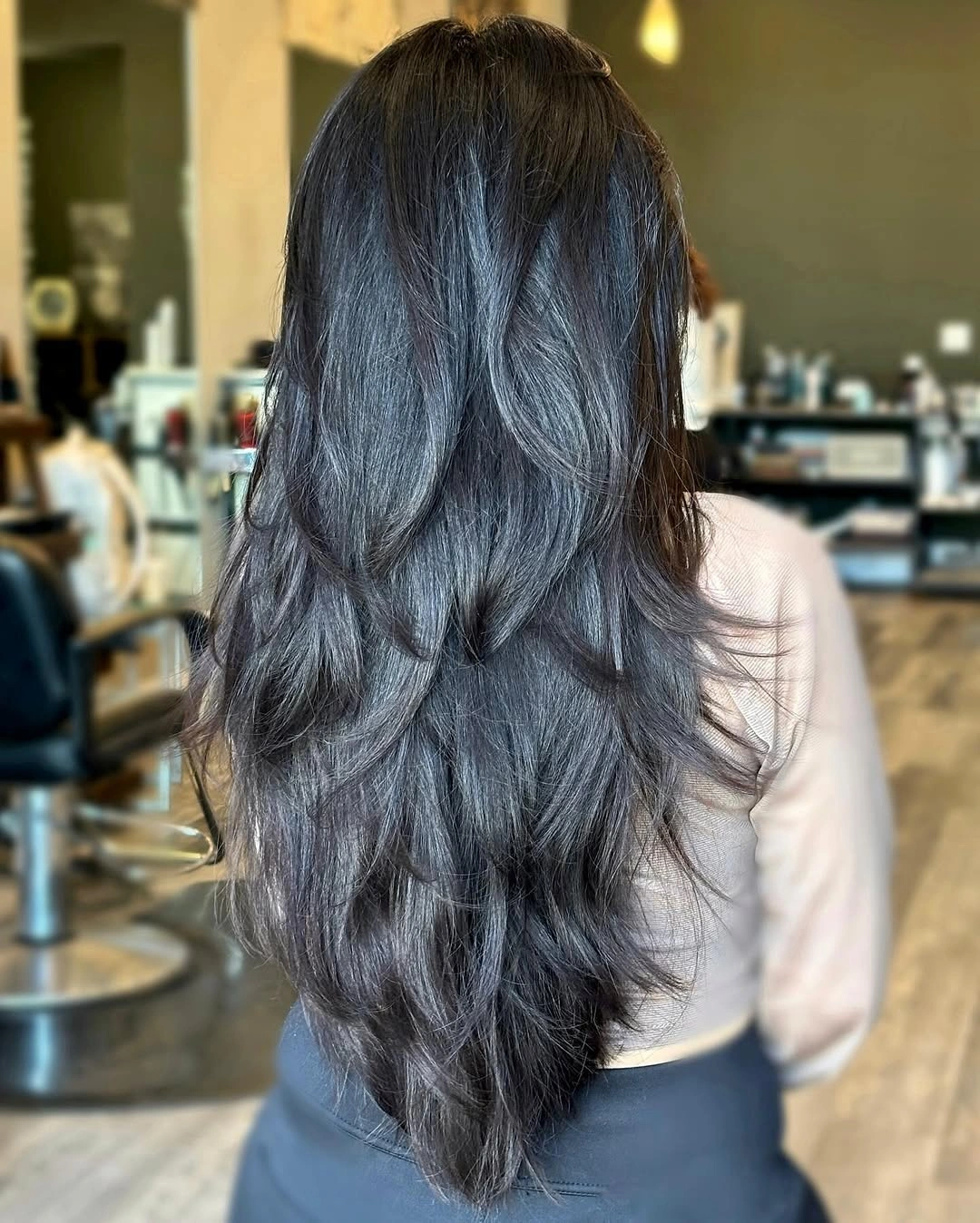
Photo via Instagram
The transition is not limited to the back. Shorter pieces around the sides point toward the longer nape sections, which helps the upper and lower parts connect even though their lengths are dramatically different. If you like a compact shape around the face but do not want the entire perimeter to stop at the jaw or neck, retaining length behind it can create that split proportion.
The rear extension gives the haircut a strong downward pull that would disappear if all the ends finished near the same level. Because those longer strands are relatively narrow, they read as an intentional continuation of the silhouette rather than a broad second block of volume.
Rounded Layers Turn Out at the Nape
Here the short shape is built from rounded movement rather than a rigid lower edge. Fullness gathers through the side and upper back, while the lower ends curve outward near the nape, so the silhouette expands and releases instead of closing into one smooth line. That combination gives the haircut a soft circular body through the middle with a lighter, more animated finish underneath.
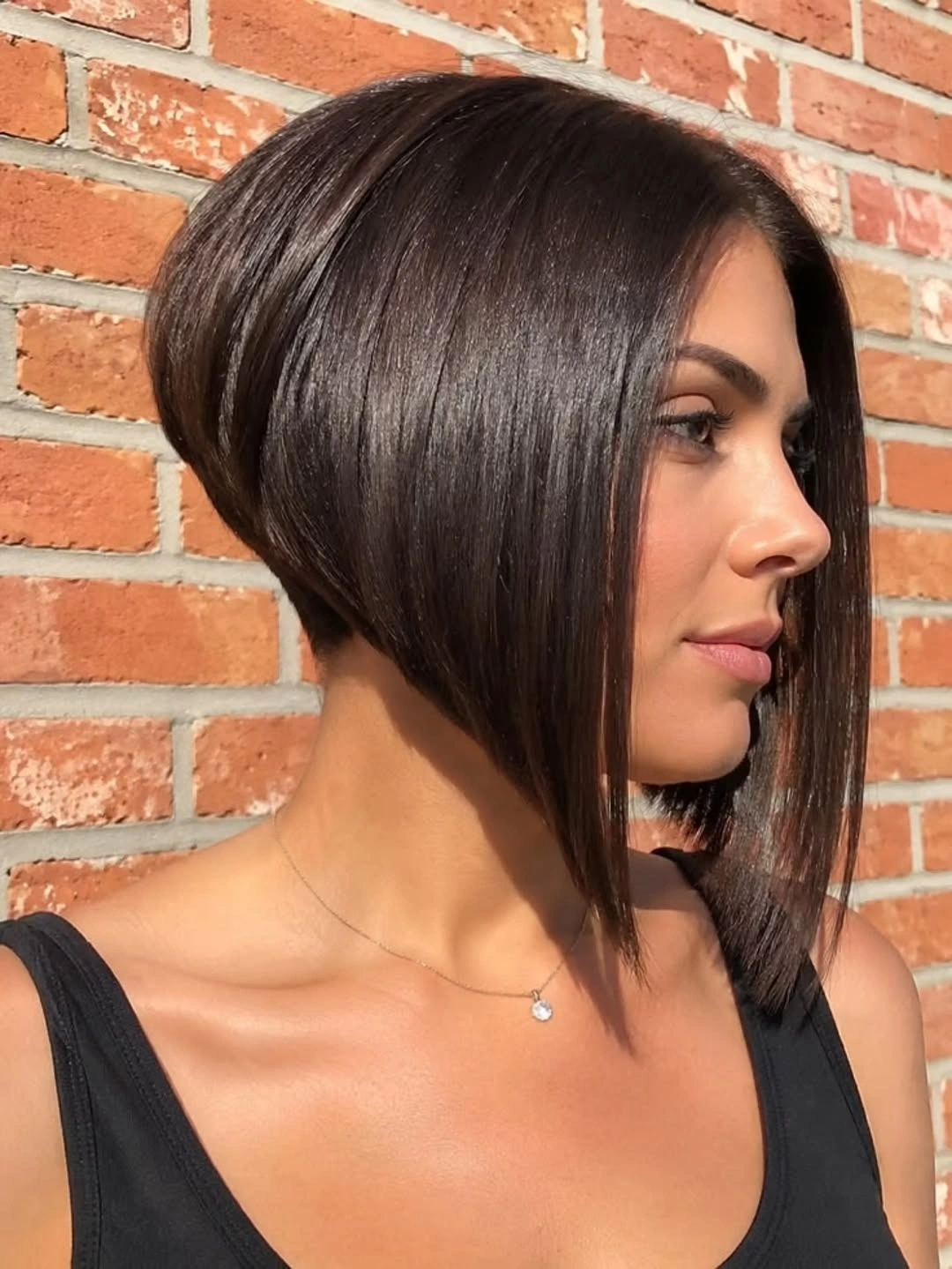
Photo via Instagram
The long front section adds another curve to the structure. It sweeps across the side of the face and turns inward near the cheek, creating a broad arc that contrasts with the shorter, outward-moving pieces behind it. If you prefer a short cut that still has visible length around the face, keeping the front extended in this way can preserve that framing without making the entire shape equally long.
At the nape, the turned-out ends open the lower outline and keep the haircut from reading as a sealed rounded shape. The effect is subtle but important: the upper portion feels full and curved, while the bottom introduces small directional changes that make the silhouette look more mobile.
Long Lower Layers Create Separated Curves
The visible lower half keeps a long, continuous base, but the ends do not arrive at one uniform point. Several shorter sections stop higher through the back, so the outline breaks into spaced layers without losing the impression of substantial overall length. That separation gives the lower silhouette more structure than a single straight drop would create.
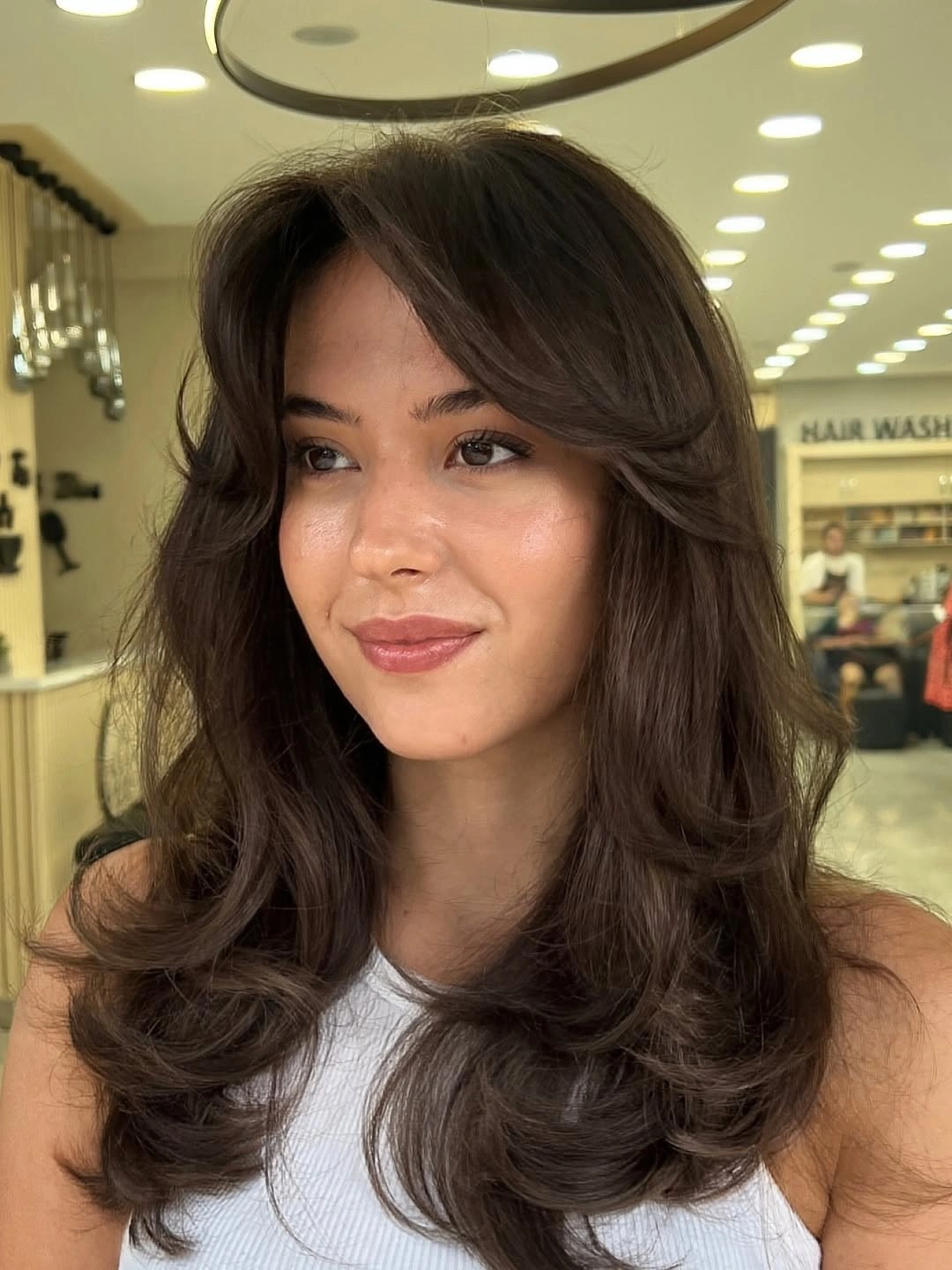
Photo via Instagram
What makes the spacing especially clear is the way the ends turn in different directions. Some pieces curl inward while others bend outward, so each length level creates its own small arc before meeting the longer hair beneath it. If you want long hair to show more internal shape, this kind of varied endpoint can be one way to make the lower layers easier to read.
Because the upper portion is lifted, the crown cannot be read as confidently as the lower structure. The reliable visual story is the spacing at the bottom, where several lengths remain distinct while still feeding into one long silhouette.
A Gentle Angle Sharpens the Straight Perimeter
This straight dark brown cut is defined by a clean lower edge that sits around the jaw and neck area. The back appears slightly shorter while the front extends farther forward, giving the profile a gentle angle rather than a perfectly level line. Because the surface stays smooth, that difference in length becomes the main source of shape.
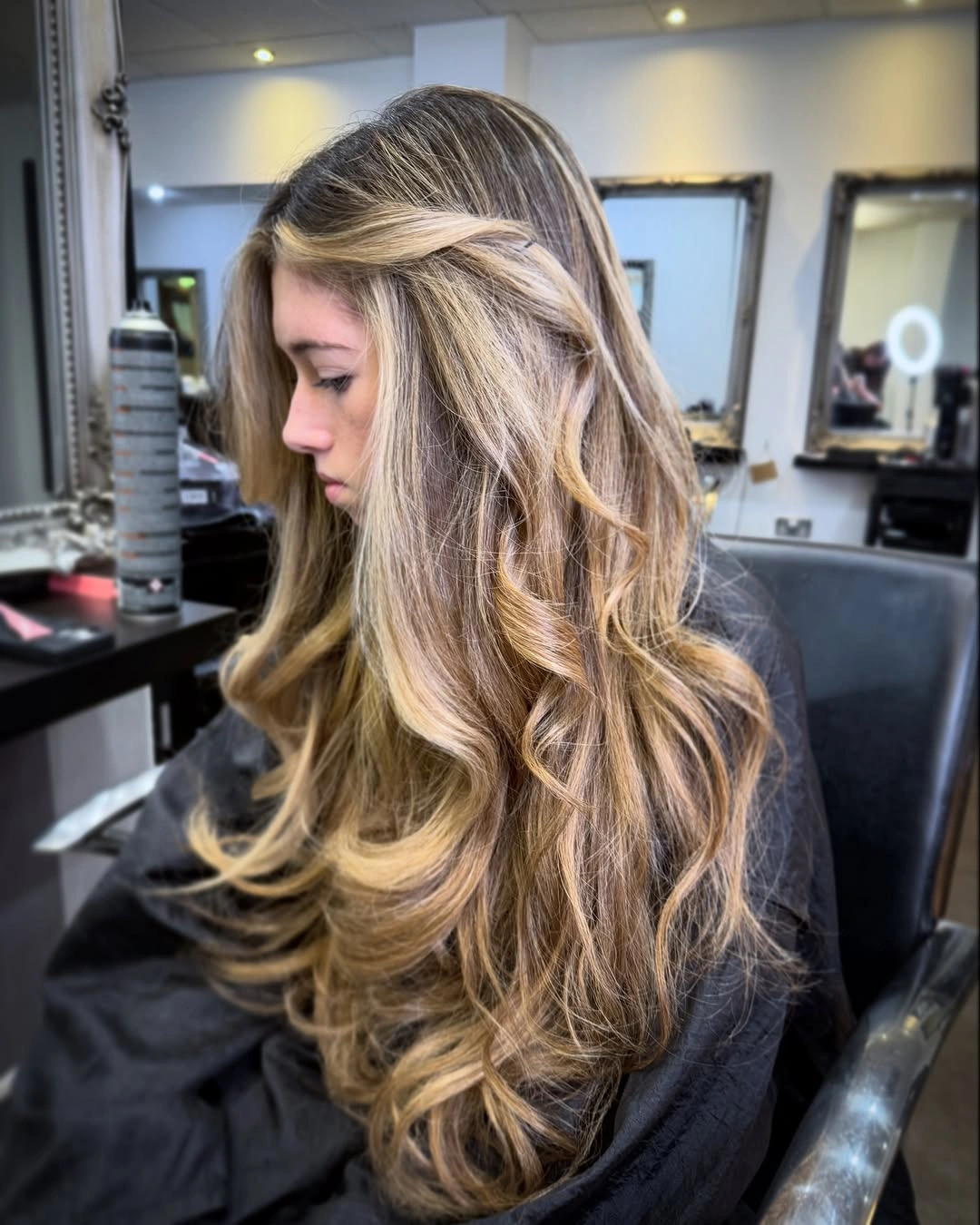
Photo via Instagram
The front section matters because it changes the way the perimeter meets the face. Instead of stopping at the same point as the back, it continues a little lower and creates a longer diagonal through the side profile. If you prefer a compact shape with a subtle sense of direction, a small front-to-back length shift can add definition without relying on obvious internal layers.
There is very little visible texture competing with the perimeter, so the line itself carries the design. That restraint makes even a modest angle noticeable, especially where the front edge sits lower than the hair behind it.
Cascading Curves Break Up the Long Silhouette
The long dark shape is built from several overlapping curves that become visible from the face through the shoulder area. Shorter pieces sit high near the front, medium lengths arc through the middle, and the longest sections continue below them, so the side profile reads as a cascade rather than one continuous wall of hair. The overall length stays generous while the internal outline keeps changing.
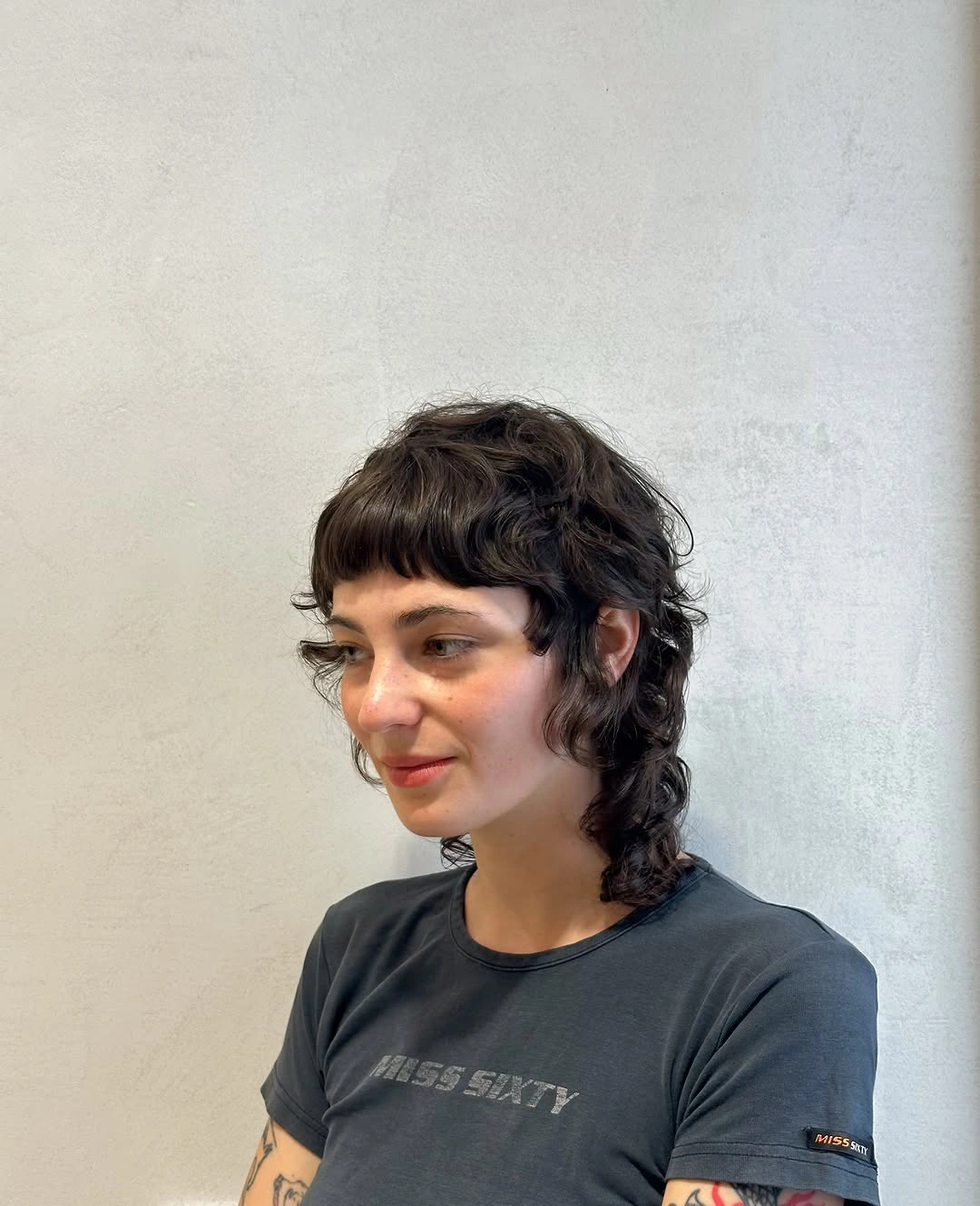
Photo via Instagram
Those layers do not all point the same way, which keeps the silhouette from feeling repetitive. Some ends turn outward, others curve inward, and the difference between them creates small pockets of separation through the side and back. If you like long hair with visible movement, this kind of staggered direction can make the shape feel lighter without depending on a sharply disconnected top.
The longest pieces anchor the silhouette below the shorter arcs, preventing the cut from becoming narrow at the bottom. Because the curves overlap rather than ending on one plane, the profile has depth from several visible lengths instead of one dominant perimeter.
Side Parting Builds a Softer Rounded Shape
The short dark shape gathers most of its fullness around the jaw, where the ends curve inward and create a soft rounded edge. A deep side part shifts more hair across one side of the head, so the silhouette feels asymmetrical in weight even though the overall length remains compact. That combination makes the cut look fuller through the side without requiring a blunt, rigid perimeter.
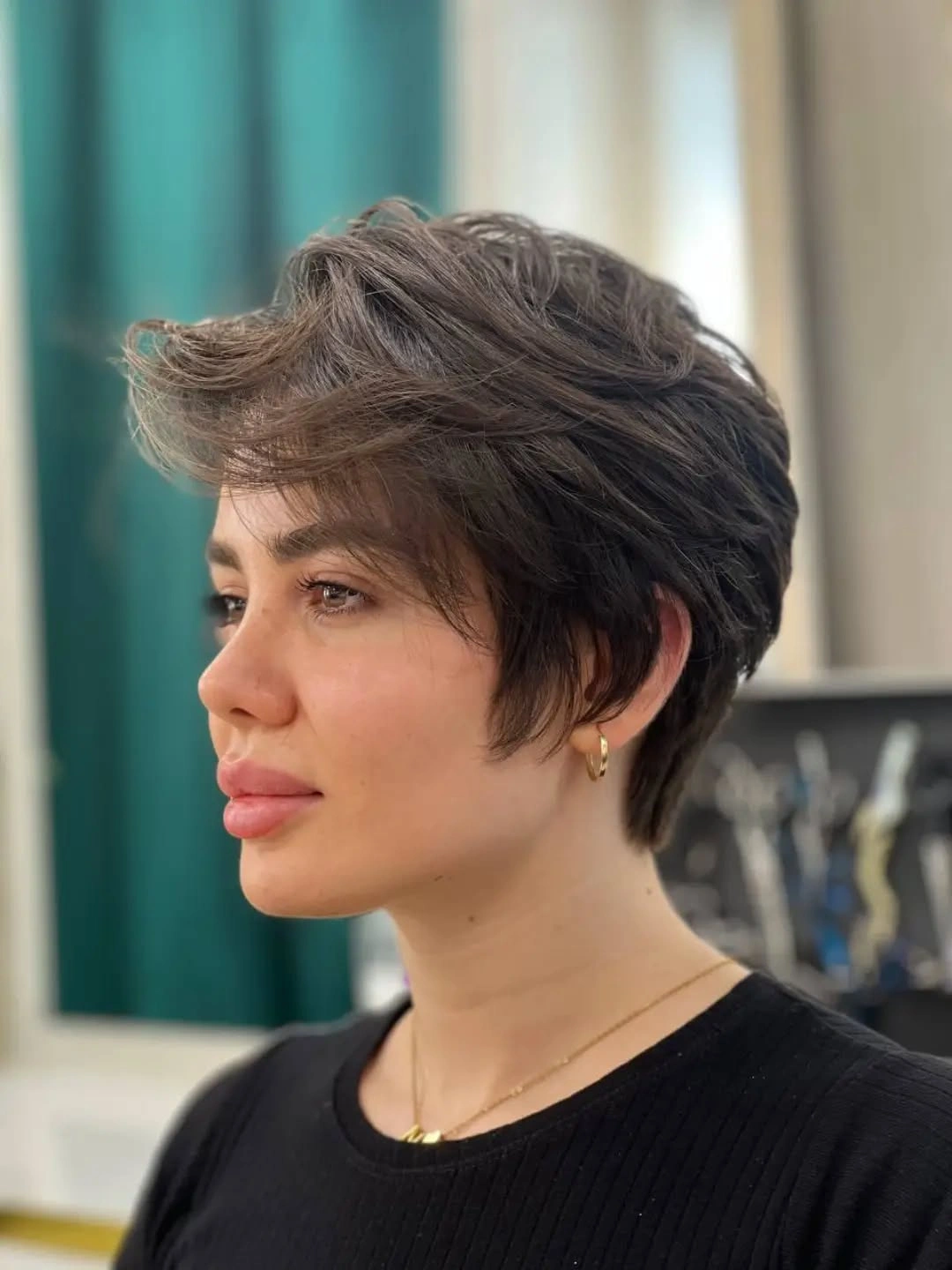
Photo via Instagram
The front pieces create a broad curve around the cheek instead of dropping in a straight vertical line. Their bend connects the upper parting area to the jaw-level ends, so the face frame feels continuous from top to bottom. If you prefer a compact cut with a softer outline, allowing the front to sweep and curve can reduce the severity of a stricter straight edge.
The lower line is still compact, but it is softened by bend rather than presented as a hard horizontal edge. That distinction gives the shape a rounded profile while preserving enough definition at the jaw to keep the length easy to read.
Crown Texture Narrows Into a Compact Lower Line
The upper half carries most of the visible texture, with short dark pieces lifting and overlapping across the crown. Around the ear, the shape narrows quickly, which makes the transition from a broad, tousled top to a tighter lower profile easy to see. The result is compact overall, but the volume is concentrated high rather than distributed evenly around the head.
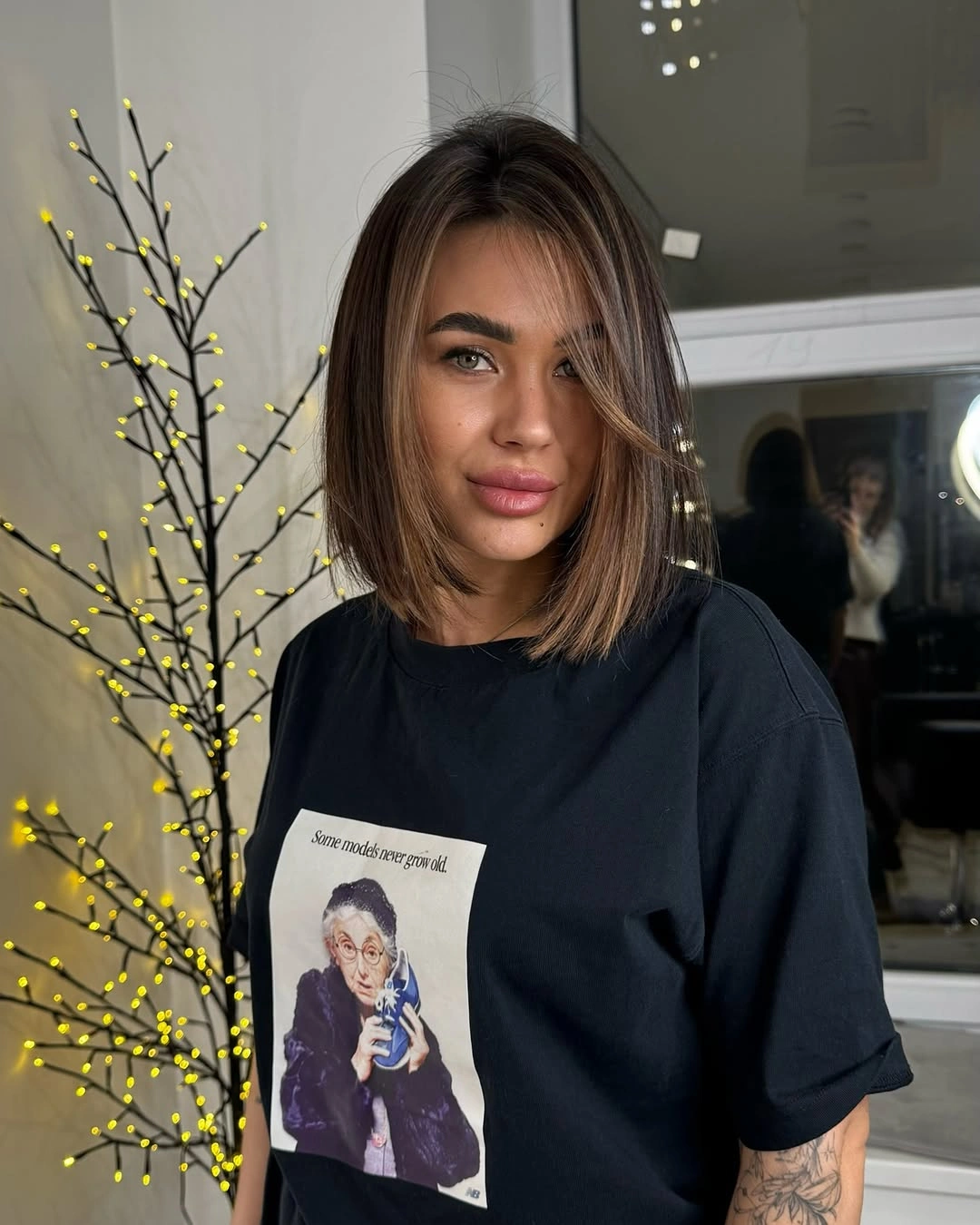
Photo via Instagram
The fringe is broken into small sections that merge into the textured crown instead of forming one solid band across the forehead. At the lower back, narrow pieces sit close to the neck and provide a cleaner finish beneath the busier upper surface. If you want a short shape with contrast inside the silhouette itself, pairing a restless crown with a restrained lower edge can create that effect.
Small shifts in direction across the crown keep the top from forming a single smooth dome. The exposed ear area adds another clean break in the silhouette, so the contrast comes from where texture expands and where the outline pulls inward.
Waves Soften a Compact Shoulder Length Shape
The vivid pink red shape sits around the shoulders, but the lower boundary is softened by loose bends instead of reading as one crisp line. Width gathers through the middle and lower lengths as the waves move outward and back in, giving the silhouette a rounded, flexible appearance. The compact overall length remains clear even though the exact edge is partly obscured by texture.
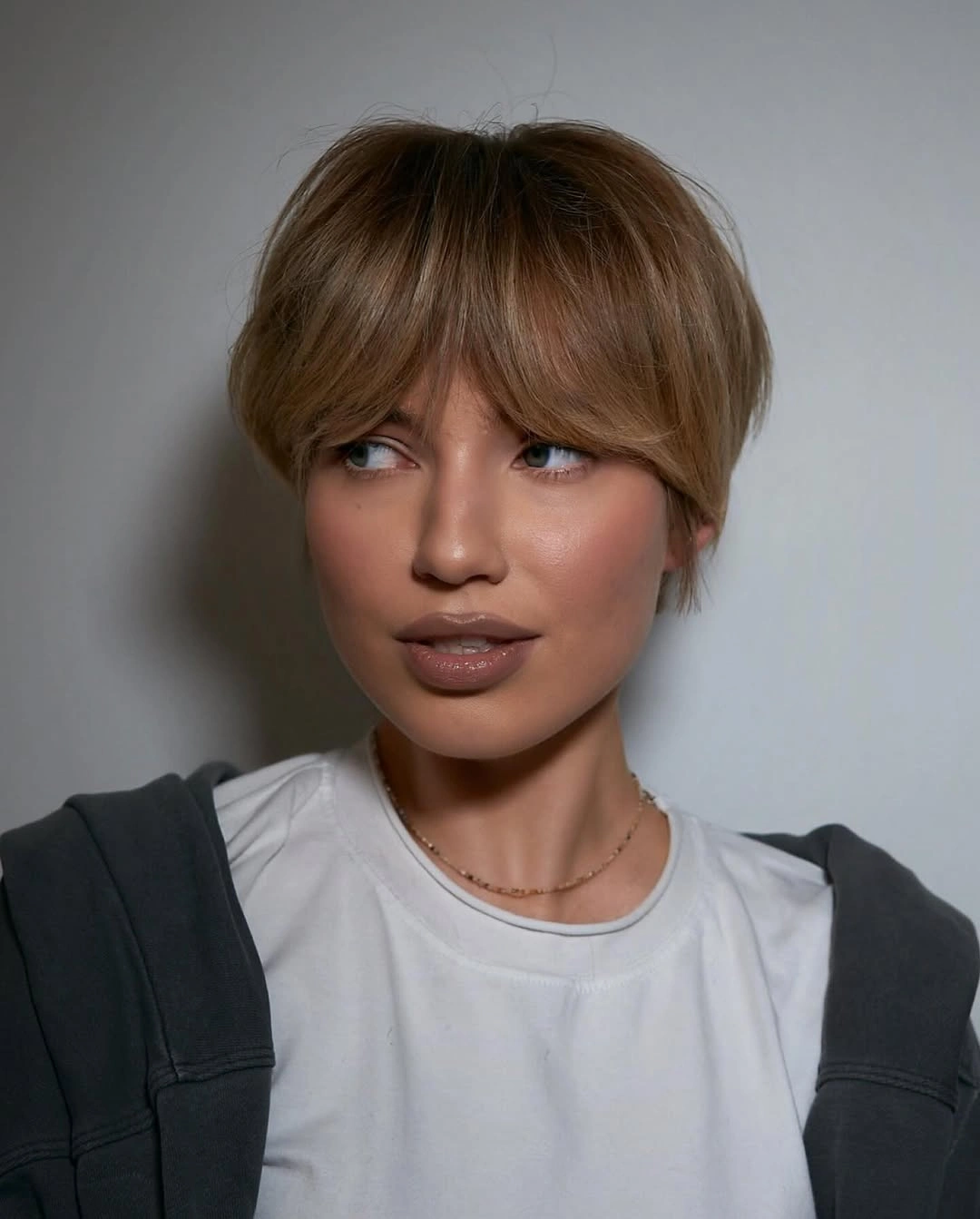
Photo via Instagram
The waves create several visible curves across the back, so the surface feels divided by movement rather than by sharply separated length levels. Some ends sit slightly higher and others fall lower, but the main effect comes from the way the bends interrupt a flat outline. If a defined shoulder level feels too rigid, a similarly textured shape could create a softer perimeter without relying on a severe edge.
Color makes the changing directions especially easy to notice because light catches different sections of the red and pink surface. The haircut still reads primarily through its compact length and broad wavy mass, while the texture keeps the bottom from forming a strict horizontal boundary.
Full Fringe Leads Into a Tapered Silhouette
A full brow level fringe creates the strongest horizontal line at the top, while the rest of the warm brown hair narrows as it moves downward. Shorter pieces around the cheeks and jaw form a fuller upper frame, then longer sections extend past the shoulders in a noticeably lighter lower shape. That shift in density gives the silhouette a clear top to bottom taper.
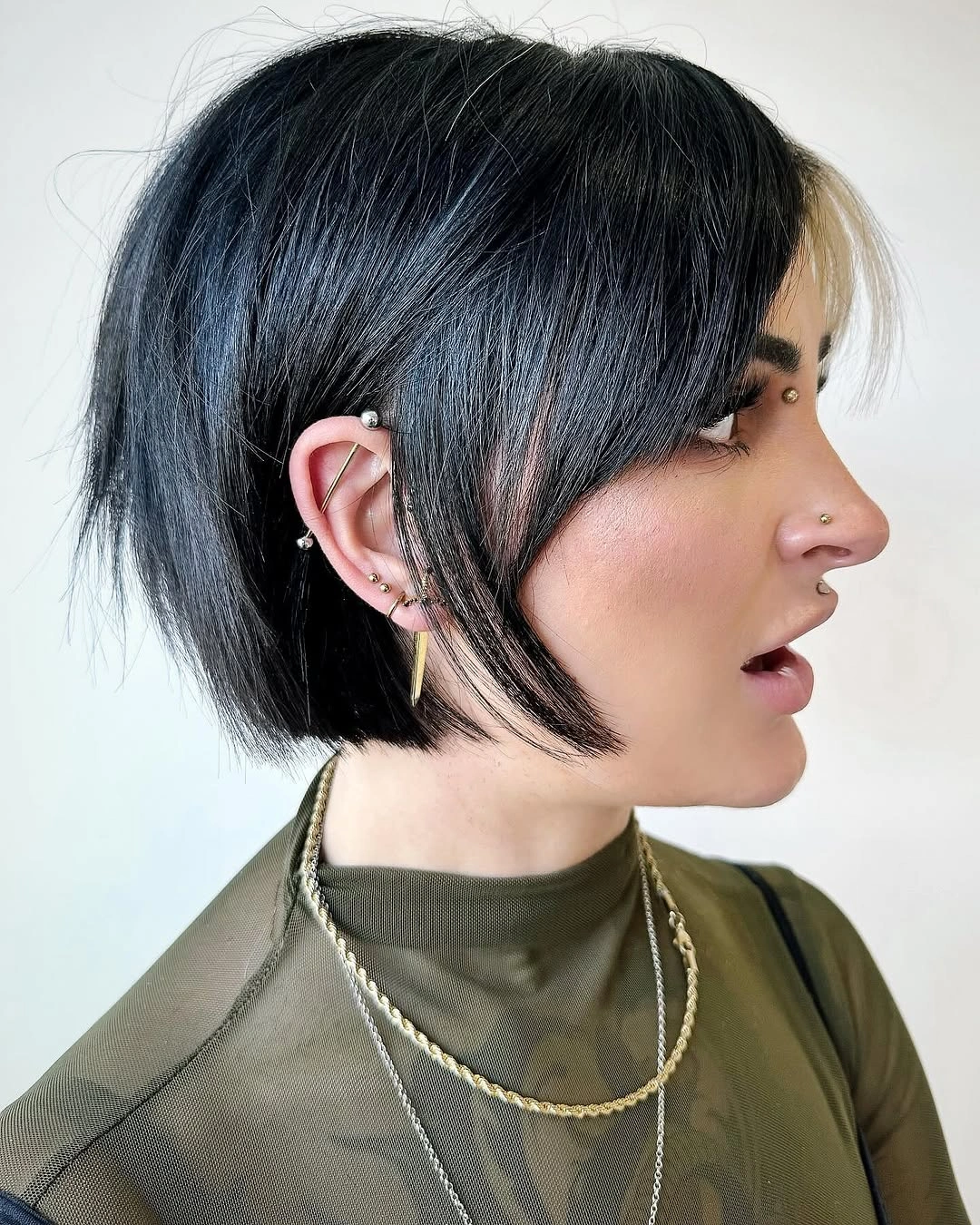
Photo via Instagram
The side pieces are important because they connect the fringe to the longer lengths rather than leaving a hard break between them. Their endpoints descend gradually beside the face, creating a sequence from short forehead coverage to longer strands around the shoulders. If a full fringe feels visually heavy on its own, carrying shorter lengths down the sides can make that upper line feel more integrated with the rest of the cut.
The lower ends are relatively sparse compared with the fuller area around the face, so the haircut does not finish as a broad block. That narrowing gives the long portion a lighter visual footprint and keeps attention concentrated around the fringe and upper frame.
Long Front Curves Meet a Compact Back
The warm brown shape is compact through the back, yet the front pieces extend farther and curve gently along both sides of the face. A center part creates two clear front sections, while the area behind the ears stays much shorter and closer to the head. The contrast comes from front length versus rear compactness rather than from a strongly visible lower perimeter.
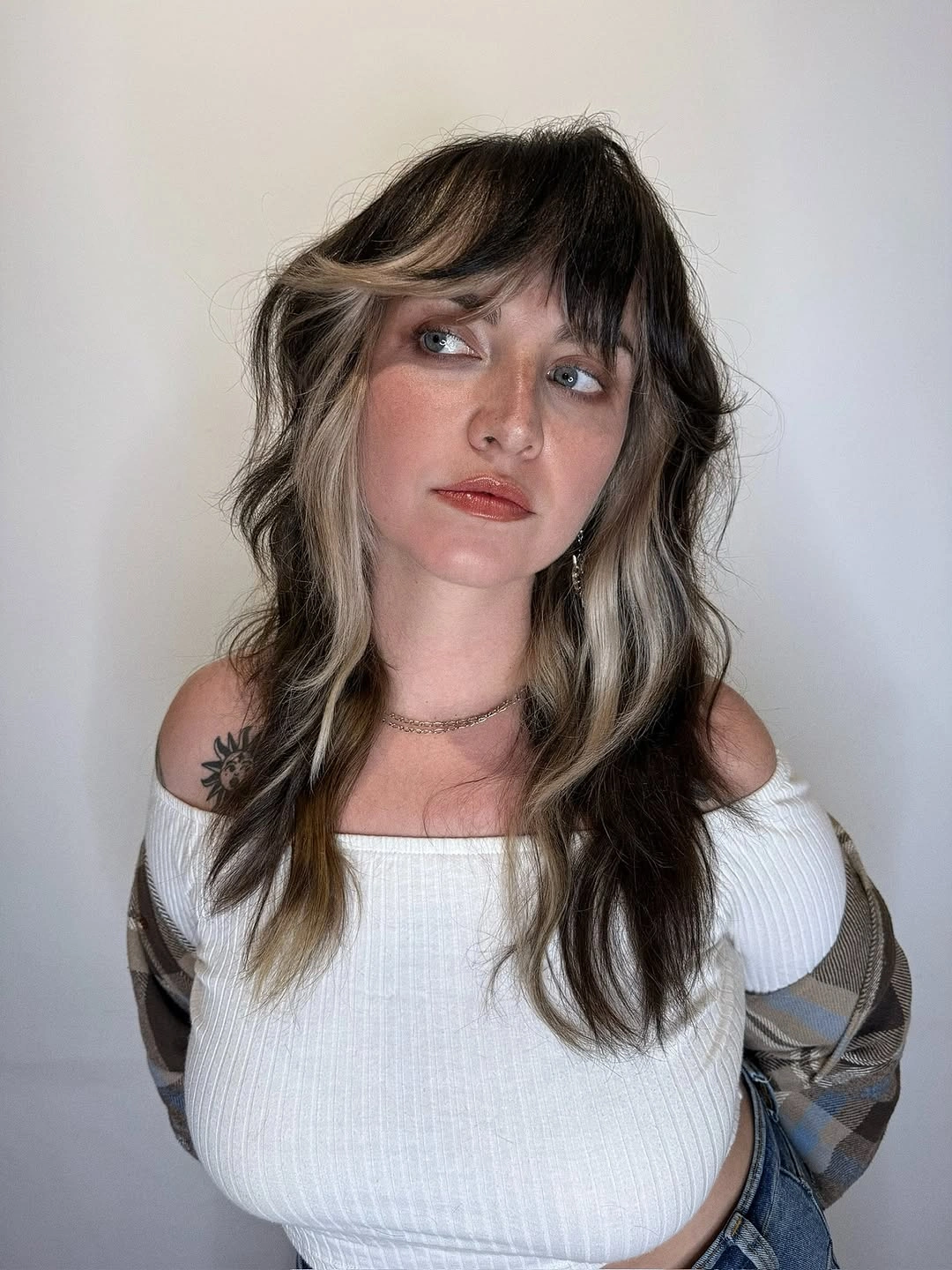
Photo via Instagram
Those longer front pieces create soft arcs that direct attention downward from the part toward the jaw. Because the back sits higher and tighter, the face framing carries more of the visible length and becomes the main structural feature. If you like a compact cut but want more movement around the front, retaining longer curved pieces there can create that distinction without adding equal length everywhere.
Rounded fullness near the ears prevents the shape from feeling sharply angular despite the shorter rear area. The cut reads as soft and contained, with the center opening and elongated front sections giving the silhouette its clearest geometry.
Micro Fringe Defines a Rounded Short Shape
This very short brown shape is organized around two strong lines, a compact rounded crown and a blunt micro fringe placed high across the forehead. The fringe creates a precise horizontal edge, while the hair above it follows a smooth dome that keeps the silhouette controlled from front to crown. Among short haircuts, this kind of geometry makes proportion more noticeable than length variation.
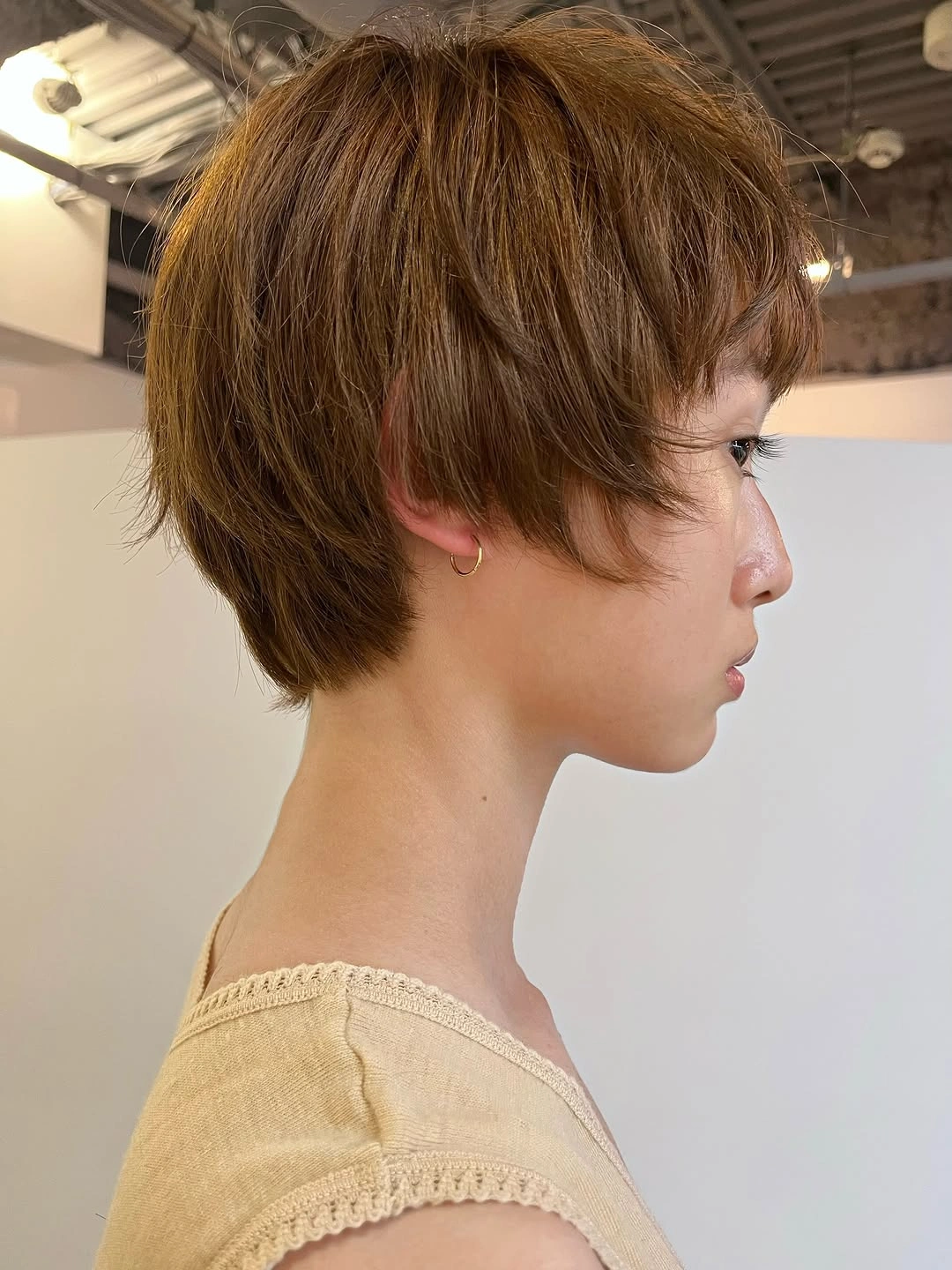
Photo via Instagram
The sides stay close to the head, so the rounded top can continue without spreading outward into a wider profile. That restraint gives the cut a clear cap like shape, while the micro fringe interrupts the curve with a straight visual boundary at the front. If you prefer concise structure over a broken textured outline, a similarly compact arrangement could emphasize shape with very few competing lines.
The contrast between the straight fringe and curved crown gives the haircut its graphic quality. Neither element needs much visible movement, because the effect depends on how a horizontal front edge meets a smooth rounded upper silhouette.
Gradual Face Framing Keeps Long Length Cohesive
The long light brown hair keeps a smooth, continuous base, while shorter front sections begin near the face and extend in progressively longer steps toward the chest. The changes are gradual rather than abrupt, so the haircut preserves a cohesive long silhouette even as the front gains more shape. This makes the framing feel integrated instead of detached from the lower lengths.
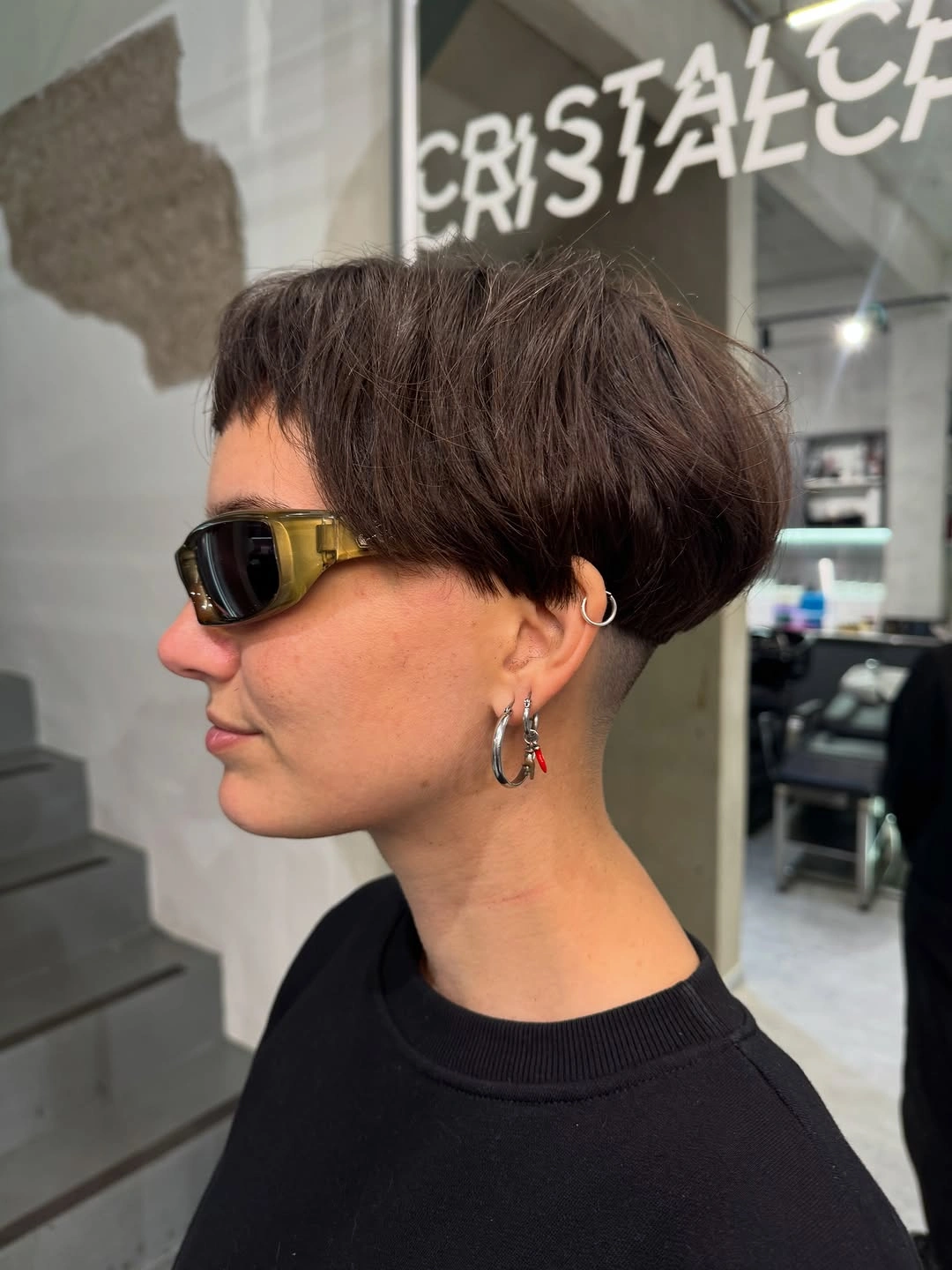
Photo via Instagram
The shortest visible front pieces curve away from the face, then longer sections follow the same direction at lower points. That repetition creates a descending rhythm without producing strong gaps between one length and the next. If you want long hair to keep a full overall outline while adding more definition around the face, gradual front framing can create separation without making the structure look heavily segmented.
The lower ends curve softly inward and outward, bringing the different front lengths back toward a shared overall shape. Because those bends remain smooth, the haircut finishes with continuity rather than the sharply broken edge seen in more disconnected long silhouettes.
Dense Upper Texture Opens Into Long Waves
This very long warm brown shape concentrates its visual weight around the upper head, where short irregular fringe and compact top layers form a dense frame before the hair opens into much longer wavy lengths. The transition is dramatic, but the effect comes from changing density as much as changing length. The upper area feels crowded and textured, while the lower sections separate into narrower strands and curves.
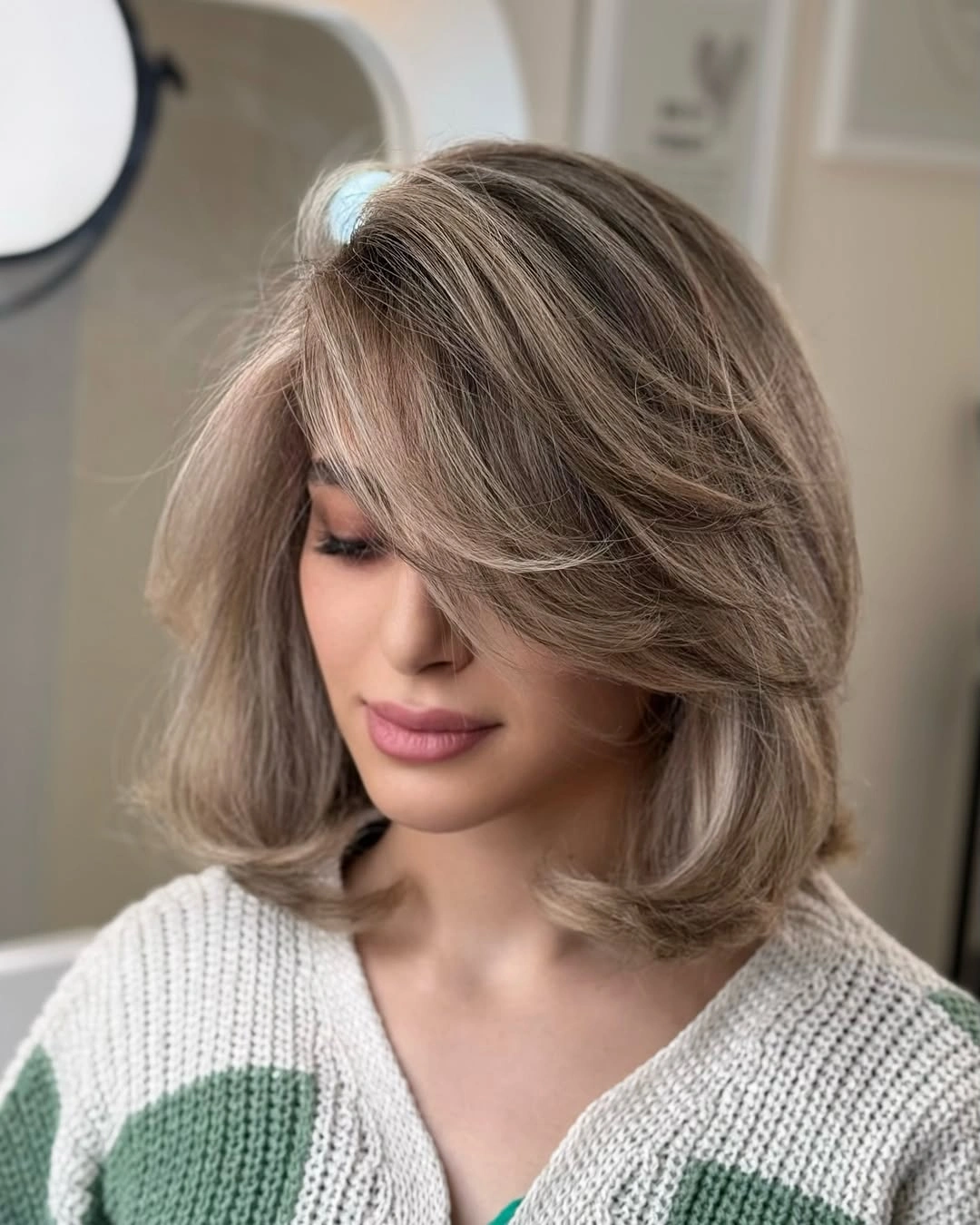
Photo via Instagram
The fringe keeps the front edge broken rather than solid, which prevents the upper mass from reading as one smooth block. Below it, longer sections fall in loose waves that create visible gaps between neighboring pieces, so the silhouette becomes increasingly open as it travels downward. If you like strong contrast without a hard geometric perimeter, this kind of shift from dense top texture to airy lower length could offer a useful direction.
The lower waves continue that release by forming separate arcs rather than merging into one broad curtain of hair. As the silhouette descends, visible space becomes almost as important as the strands themselves, giving the considerable length a lighter lower footprint.
Feathered Ends Open the Long Perimeter
The long shape is built from many feathered endpoints rather than one dominant lower boundary. Shorter pieces begin around the face and shoulder area, then longer sections continue beneath them, creating a sequence of soft outward turns through the side profile. The overall length stays substantial, but the perimeter feels open because so many ends separate from the main mass.
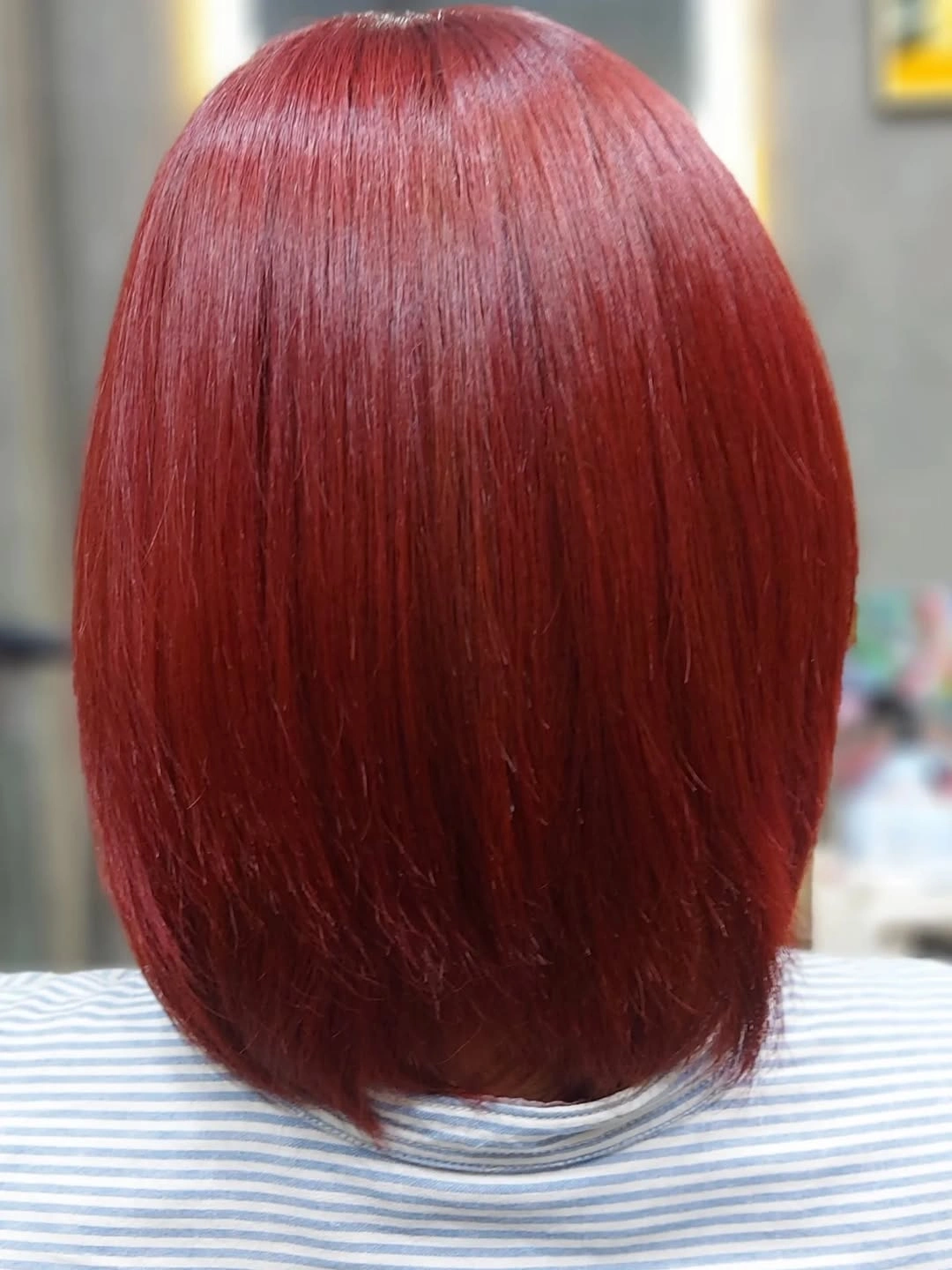
Photo via Instagram
Lighter strands along several outer edges make the placement of those shorter lengths easier to trace, especially around the face and through the lower sides. The haircut itself is doing the structural work: each curved endpoint breaks away from the layer below and creates a small pocket of space. If you prefer long hair with a more feathered outline, this kind of repeated edge separation can keep the silhouette from becoming visually dense.
The ends turn outward at several different heights, so the perimeter never settles into one heavy baseline. Those repeated openings give the side profile a light, branching quality while the longest pieces continue to hold the overall vertical length.
Forward Weight Defines the Compact Silhouette
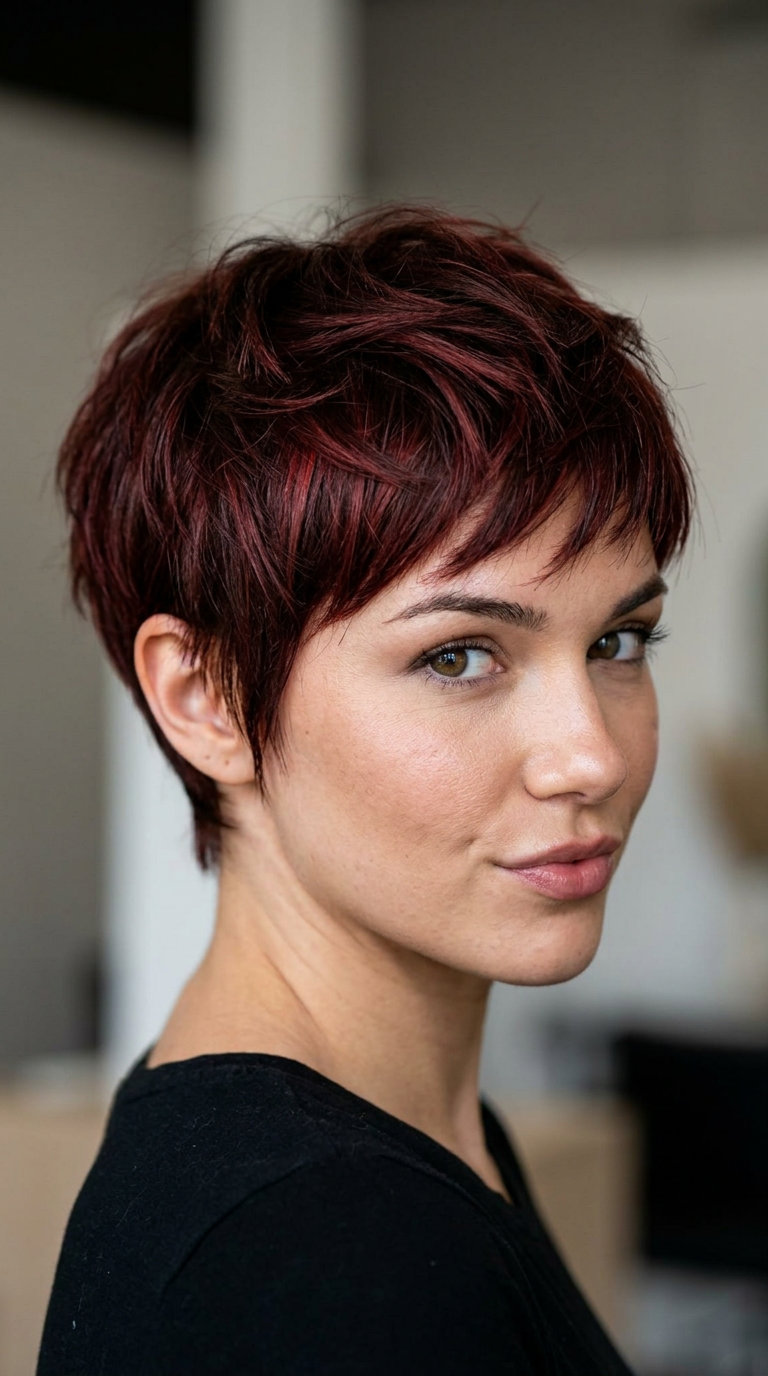
The reddish brown shape places most of its visible length above and in front of the ear, while the lower side and nape are cut much closer. That distribution pushes the silhouette forward, because the upper section extends over the compact base instead of spreading evenly around the head. The result is a short shape with a clear directional bias toward the face.
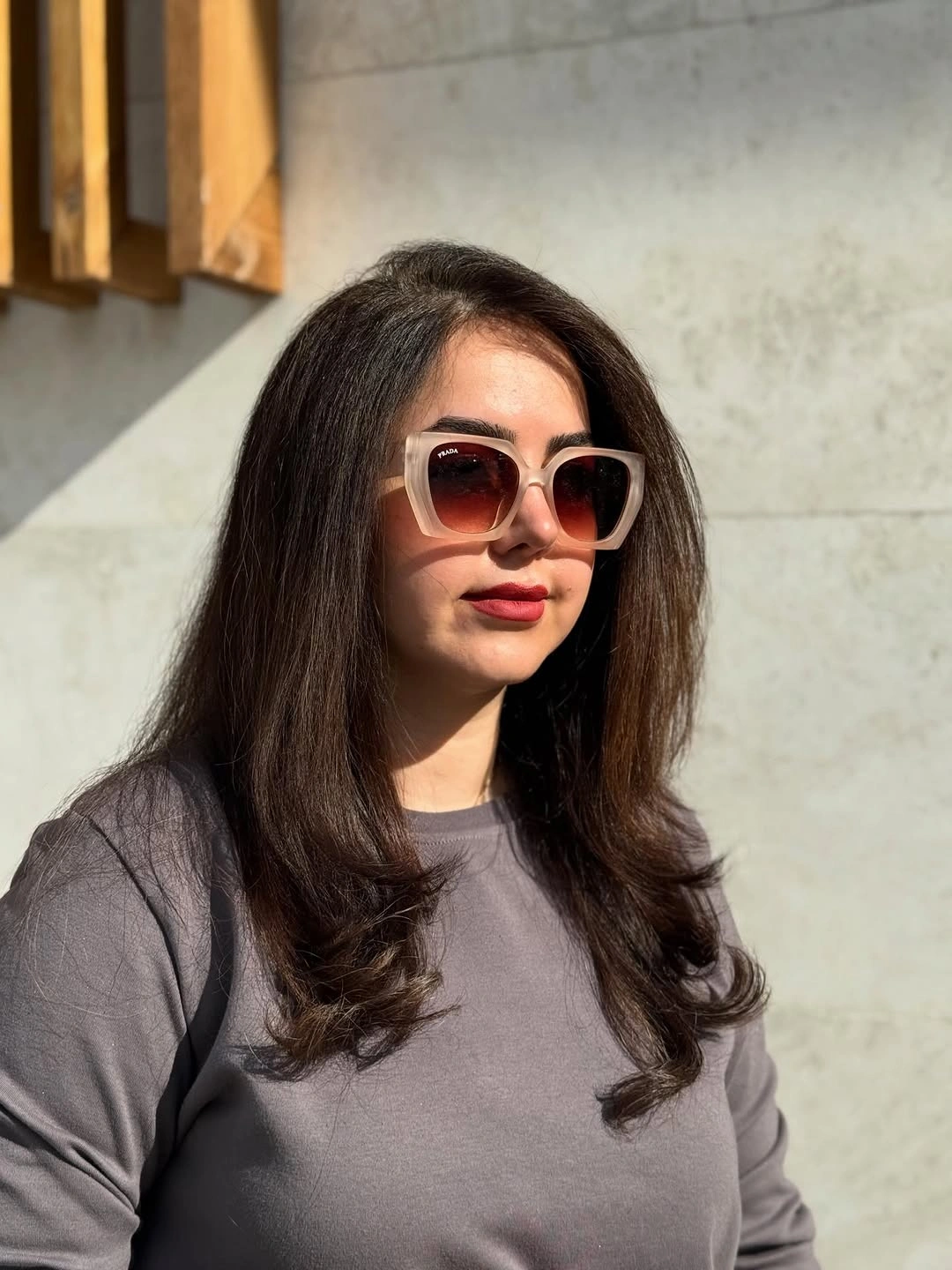
Photo via Instagram
A long top panel falls diagonally across the forehead and toward the cheek, creating a heavy front edge that contrasts with the exposed lower side. The close area around the ear keeps the outline narrow underneath, so the overhanging length reads as a separate visual plane. If you like a compact cut with strong forward emphasis, keeping more length in the upper front area could create that effect without adding equal fullness at the back.
The smoother surface of the longer top makes its downward direction especially clear against the closely controlled area beneath it. Rather than forming an evenly rounded outline, the silhouette projects forward and then contracts sharply around the lower side and nape.
Loose Bends Widen the Compact Outline
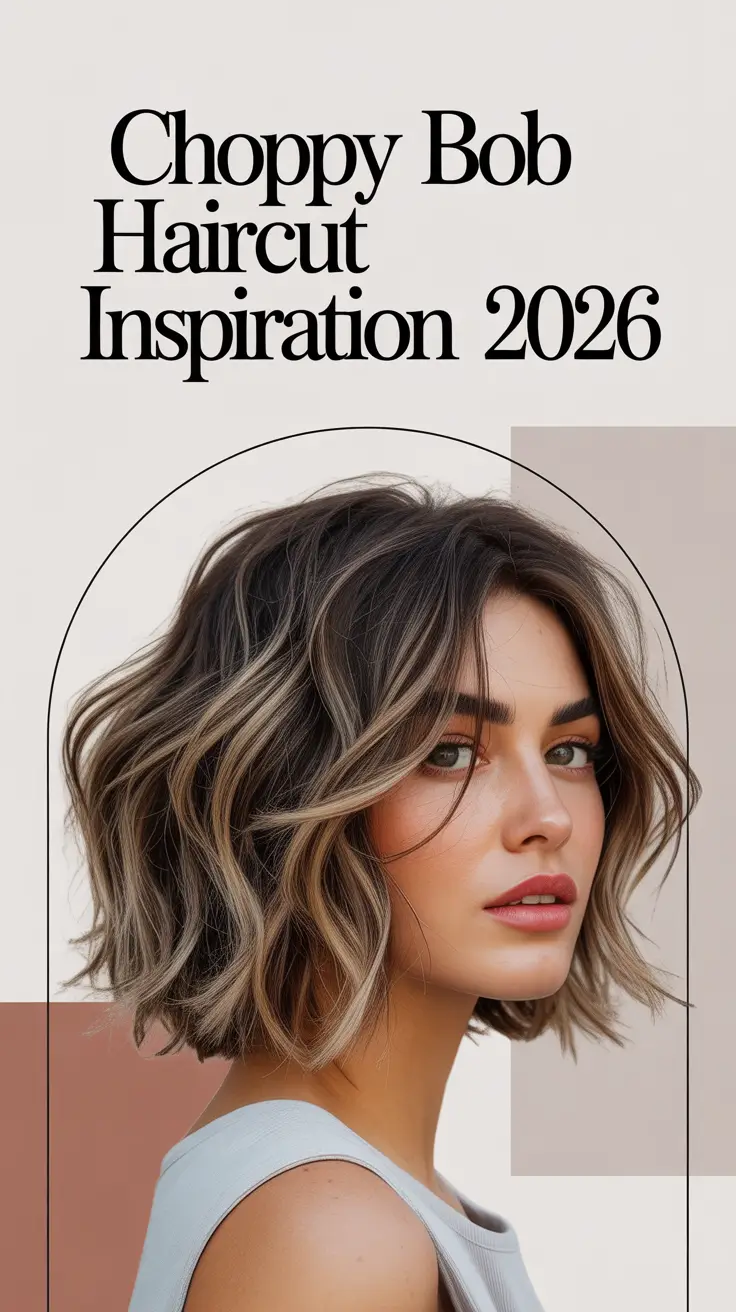
This short-to-medium brown shape gains width from the placement of its loose bends rather than from a broad blunt edge. Curves sit around the cheek and jaw on both sides, pushing the silhouette outward through the middle while the ends remain compact near the shoulders. The shape therefore reads as fuller across the sides than it does vertically.
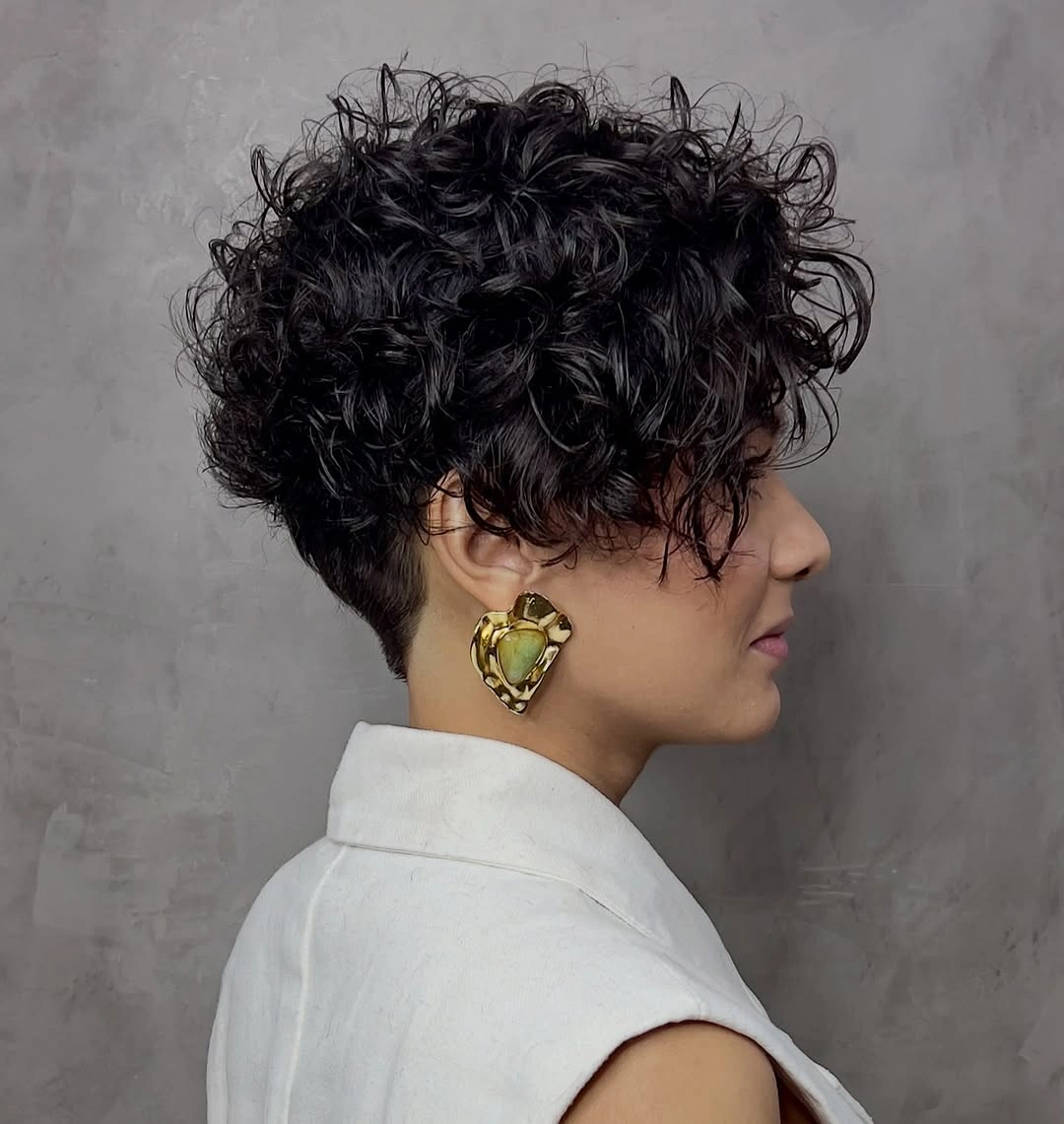
Photo via Instagram
The waves alternate direction, so the perimeter expands and contracts instead of tracing one continuous arc. Lighter pieces make several curves easier to follow, but the haircut’s main effect comes from where those bends sit and how they widen the jaw-level area. If you prefer a compact length with more lateral movement, placing visible curves through the midsection can create fullness without relying on extra overall length.
The center opening gives those bends a clear starting point near the forehead, after which the hair develops more width as it descends. Near the ends, the outline draws inward again, keeping the side volume concentrated through the middle rather than extending into a broad lower block.
Blunt Perimeter Makes the Line Unmistakable
This dark brown shape is dominated by a sharply defined lower edge that runs almost horizontally from one side to the other. The hair falls straight from a center part with very little visible internal layering, so the perimeter becomes the main design feature rather than texture or volume. That simplicity makes small differences in length immediately noticeable.
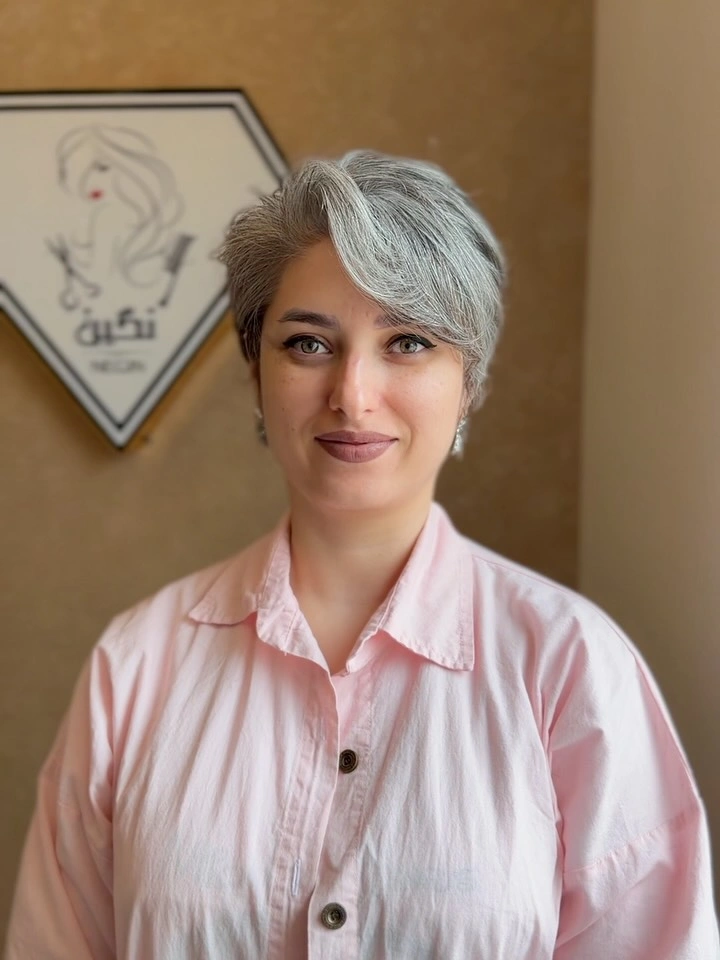
Photo via Instagram
Among bob haircuts, this is a clear example of how a firm perimeter and even side-to-side fall can carry the entire shape. The center part divides the front cleanly, while the ends stop at a consistent level and create a strong geometric boundary around the jaw and neck area. If you prefer a concise silhouette, a similarly uninterrupted edge could emphasize line and proportion over visible layering.
The straight surface leaves little bend or separation to interrupt the lower boundary, allowing the endpoint to remain visually continuous across the shape. That consistency gives the cut its precision through geometry alone, without depending on extra crown volume or textured edges.
Airy Ends Lighten a Long Tapered Shape
This medium-long warm brown shape carries more fullness through the upper and middle lengths, then thins noticeably as it descends past the shoulders. Short, broken fringe pieces sit above cheek-level layers, while the lower strands fall in narrower, uneven sections. The result is an airy taper that keeps the outline loose instead of building a dense bottom edge.
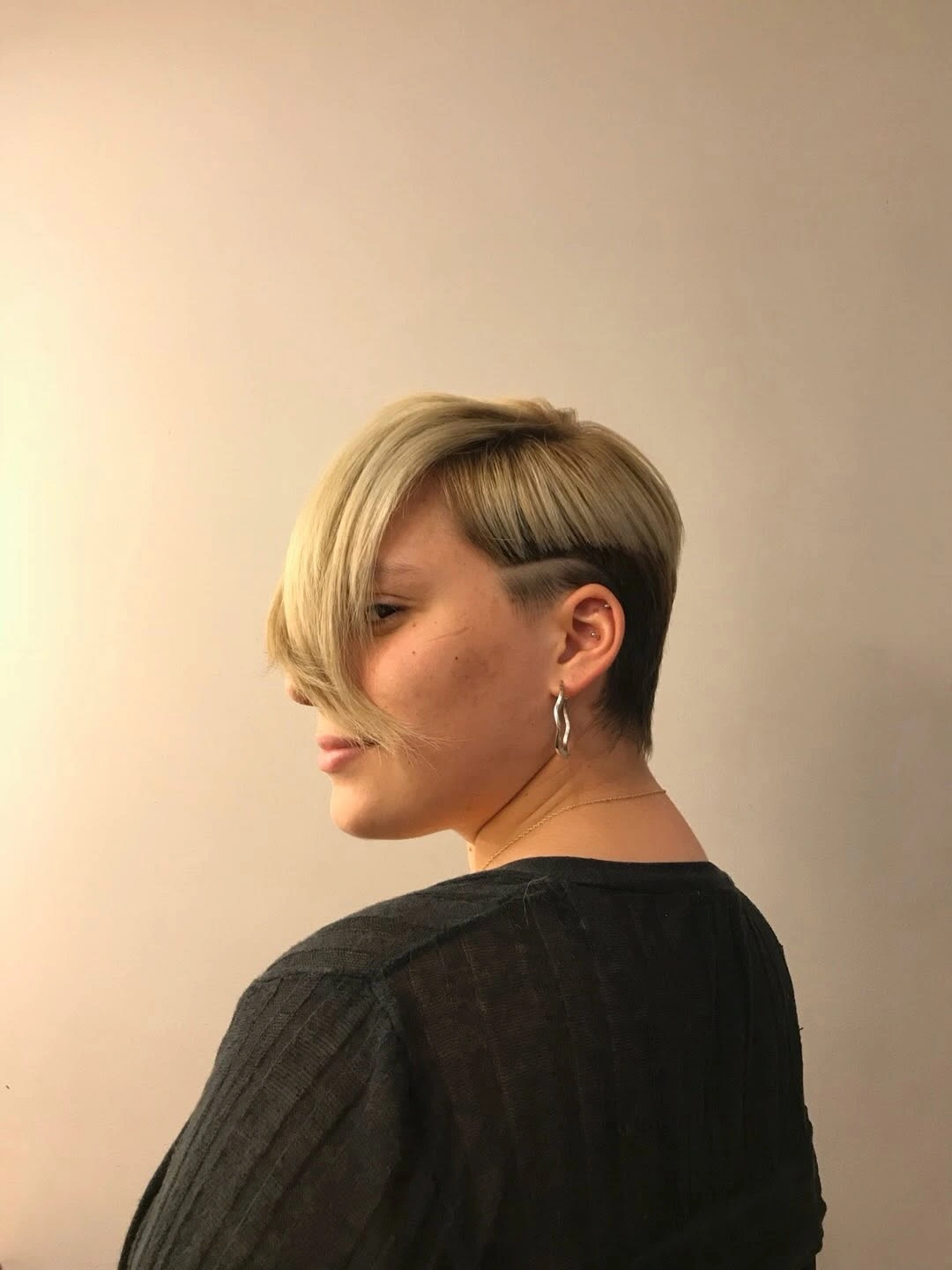
Photo via Instagram
The face-framing pieces do not stop at one uniform level. They step from the fringe into cheek and jaw lengths, then feed gradually into the longer hair below, so the transition feels irregular but connected. If you like a softer shag-like outline, this kind of progressive narrowing could give the lower half visible space without removing the longer silhouette.
The finest ends leave noticeable gaps between neighboring strands, making the lower portion feel lighter than the fuller area above. That visible spacing gives the cut its softness, while the broken fringe echoes the same loose, separated quality around the forehead.
Curved Layers Build an Ordered Long Frame
This long brunette shape uses repeated curves to organize the hair from the face down through the chest. Shorter front sections bend away near the cheeks, medium lengths continue that arc lower down, and the longest hair forms a fuller base beneath them. The structure feels ordered because each curve has room to register before the next length takes over.
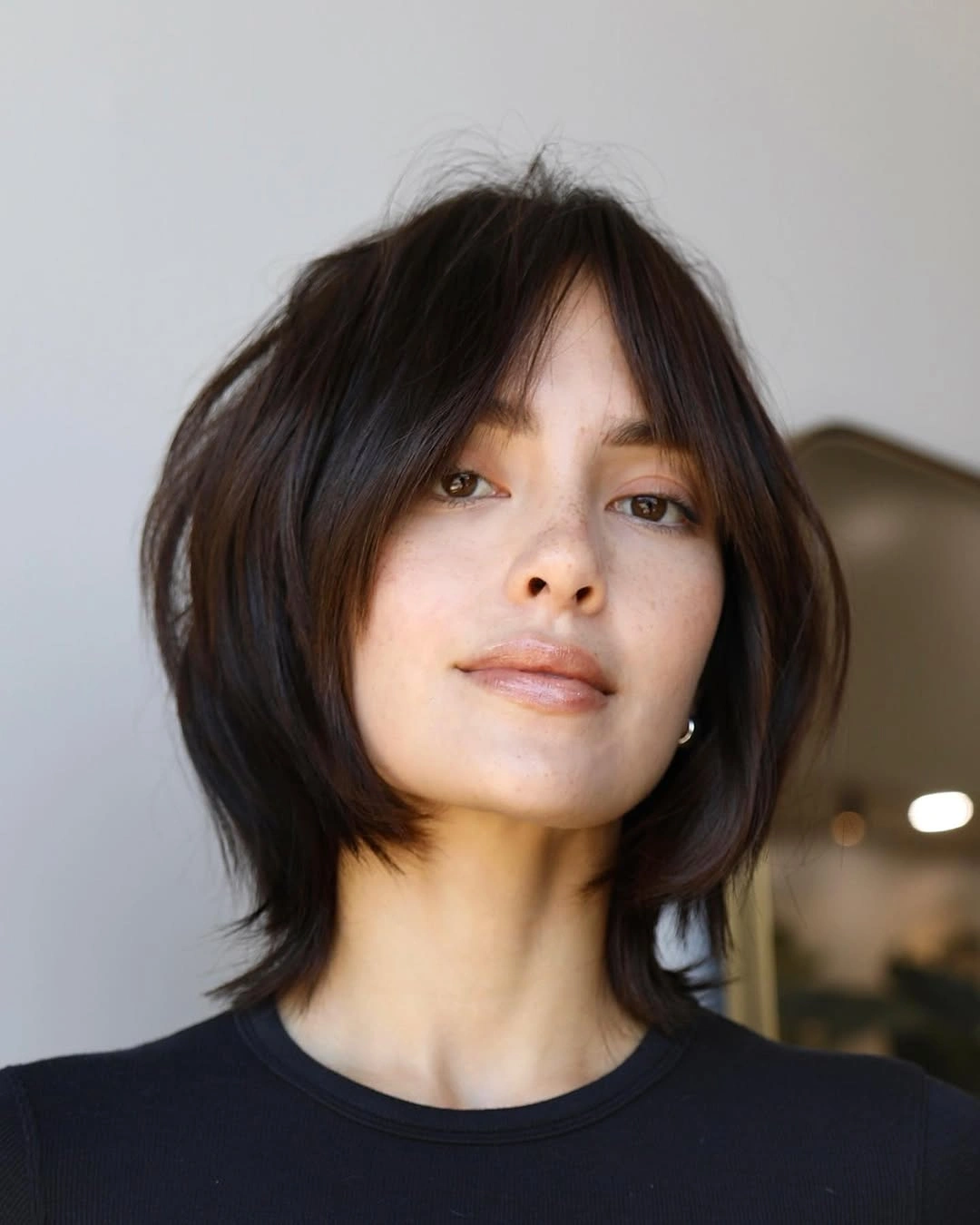
Photo via Instagram
Among layered haircuts, this approach shows how several visible lengths can stay coordinated instead of looking sharply disconnected. The front sections create a descending sequence of rounded lines, while the lower mass remains substantial enough to support them. If you prefer long hair with obvious framing, a similar arrangement could emphasize shape around the face without thinning the entire perimeter.
The repeated arcs create a measured rhythm from the cheek area toward the shoulders and chest, so the framing reads as a sequence rather than scattered pieces. Their consistent spacing gives the long silhouette softness while preserving enough lower density to keep the overall shape substantial.
Irregular Waves Break the Compact Perimeter
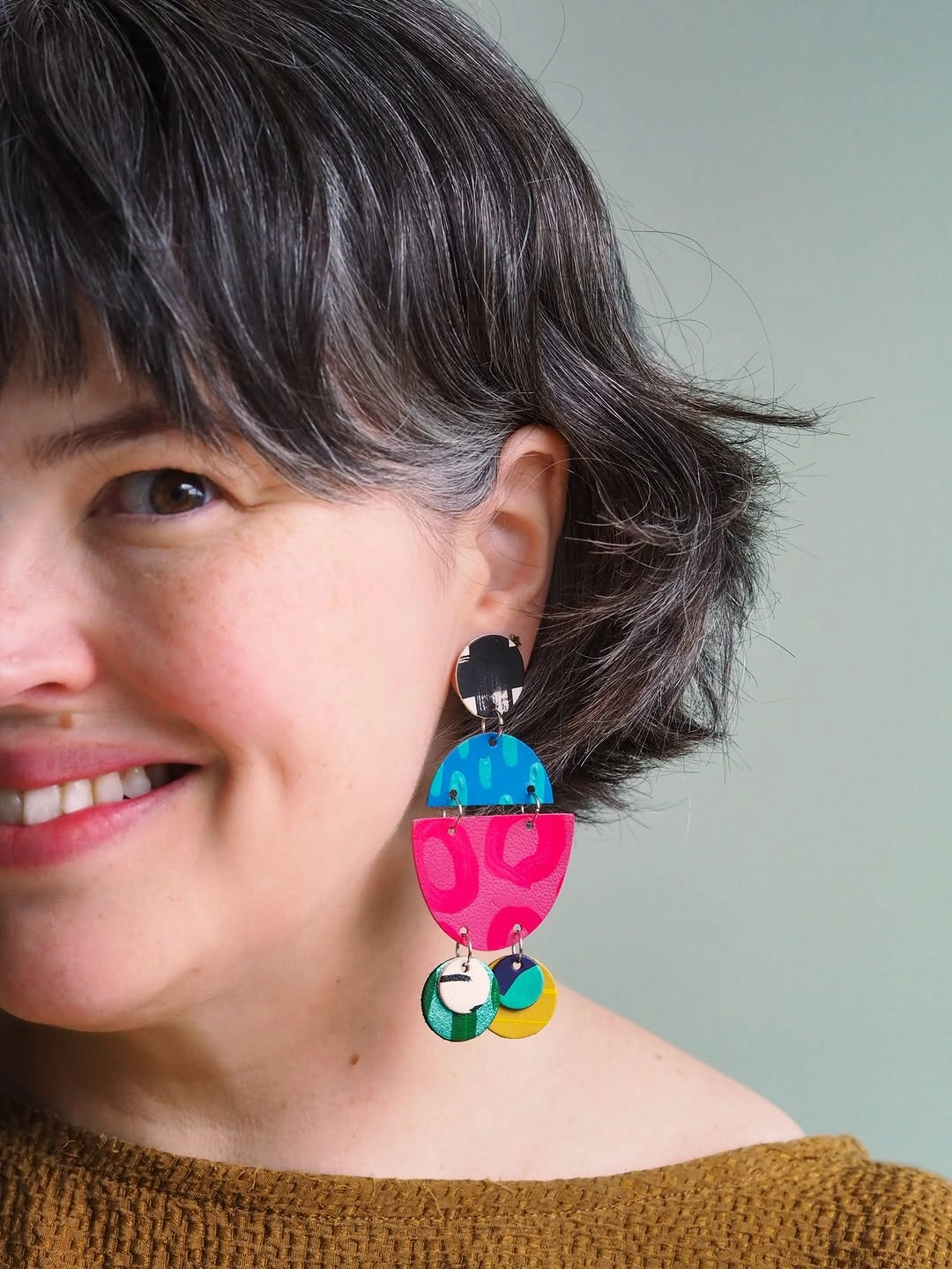
This dark, neck-length wavy shape is defined less by one clean perimeter than by many small endpoints. Soft bends gather through the back and sides, while wispy pieces fall across the forehead and curve beside the cheek. Because the ends land at slightly different points, the outline feels broken, light, and irregular rather than tightly drawn around the head.

The front pieces merge into the side texture instead of sitting apart as a separate fringe block. Curves around the cheek continue into shorter and longer sections near the jaw and nape, so the shape changes gradually as it moves backward. If you prefer a compact cut with softness at the edges, this kind of uneven wavy perimeter could create definition without depending on a blunt boundary.
At the back, the waves create small protrusions and recesses rather than tracing one smooth curve around the neck. That uneven edge gives the compact length its softness, with fullness appearing in small pockets instead of forming one continuous rounded mass.