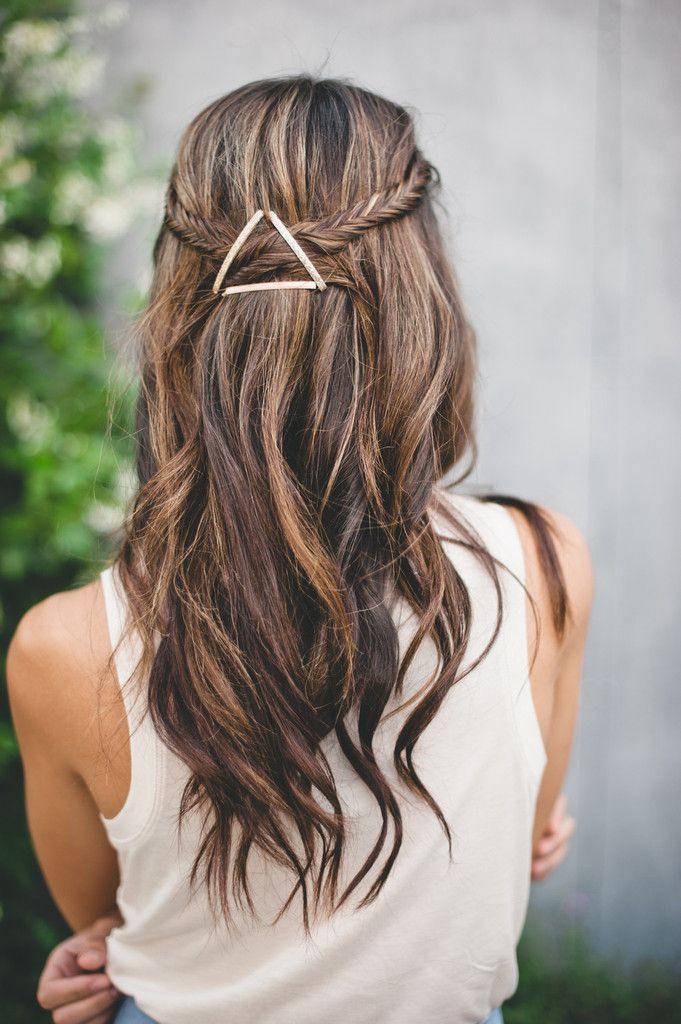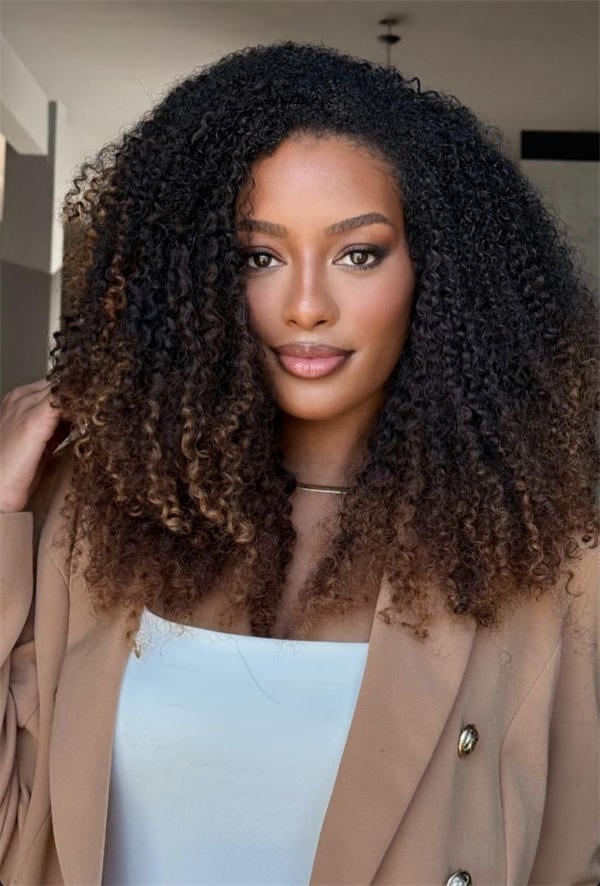

The polished braid is back, but this time it skips the school-run connotations in favor of a relaxed, lived-in feel. Across the board, curtain bangs and soft face-framing layers are replacing blunt uniformity, and glossy natural texture is the goal over poker-straight strands.
This collection of 31 Classy Everyday Hairstyles spans everything from a five-minute fishtail to an intricate updo, covering short bobs, long waves, and every texture in between. If your fine hair falls flat by noon, your highlights show a harsh root line by week six, or your fringe refuses to sit still, there is a cut and styling rhythm here that solves it without daily wrestling.
Wavy Dark Brown Fishtail Braid Mid-Back
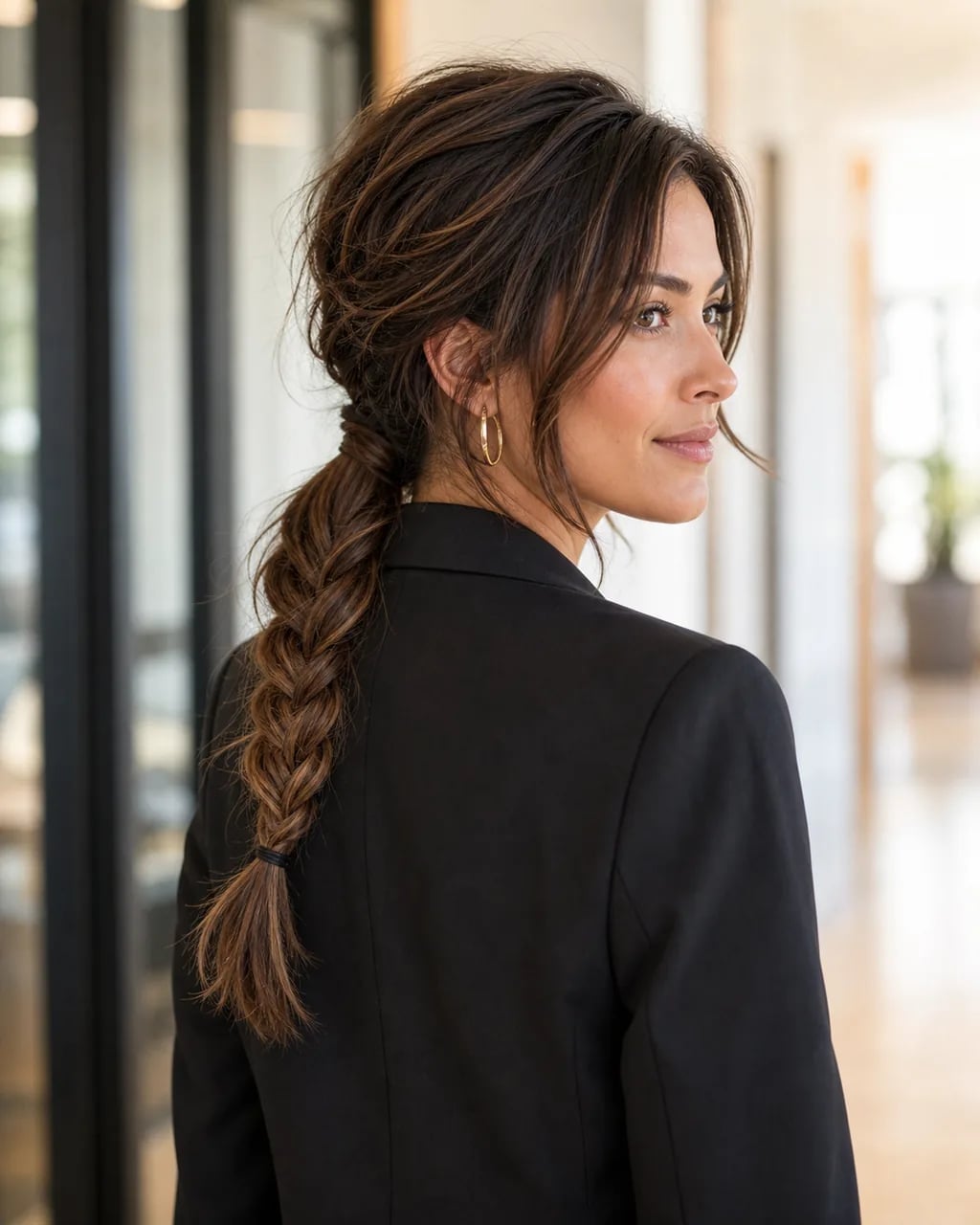
The fishtail braid interlocks two strands into a rope that looks more intricate than a standard three strand braid. On mid-back length, wavy dark brown hair with subtle highlights, the technique adds texture that a three strand braid cannot match; the interlocking pieces reflect light at different angles, making the whole style look deliberate without being fussy.
Ask your stylist for: side fishtail braid, mid-back length, keep subtle highlights visible. This suits medium to long, wavy hair of medium density, and a side parting works for most face shapes. After styling, gently tug the edges of the braid to loosen it for a softer, more lived-in finish. A trim every 10 to 12 weeks keeps the ends healthy and the braid looking crisp rather than ragged.
Sleek Chin Length Dark Brown Bob
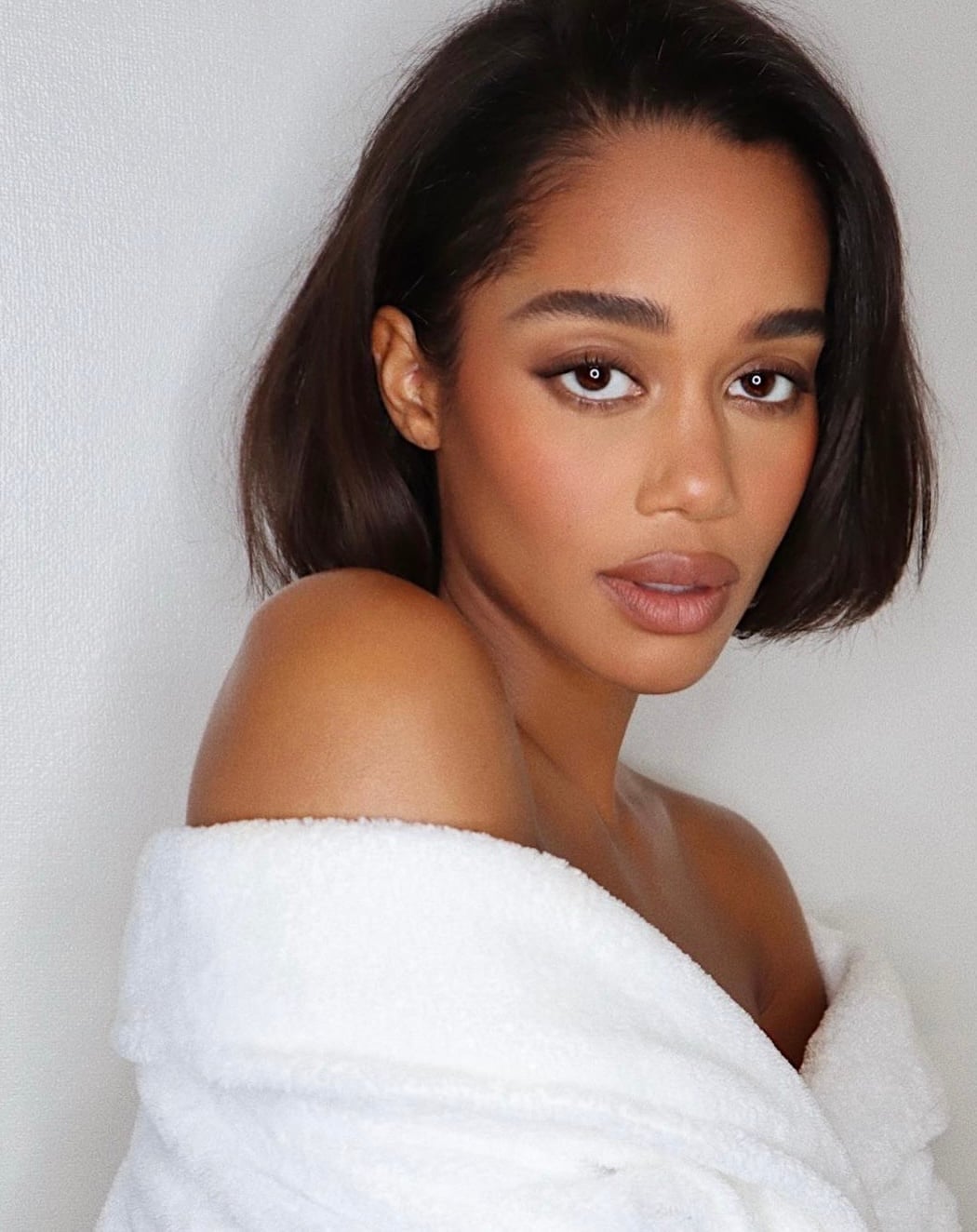
Wondering if a sleek chin-length bob works for fine, straight hair? It does, because the blunt line and glossy dark brown finish create the illusion of density that fine strands often lack. The middle parting adds a vertical line that elongates round and oval faces, while the subtle inward curve at the ends keeps the silhouette from feeling severe. Ask your stylist for: sleek chin-length bob, middle part, inward curve at ends. A flat iron with a ceramic plate gives the smoothest result, and you will need a trim every 6 to 8 weeks to maintain those sharp lines.
Shoulder Length Brown Bob With Curtain Bangs
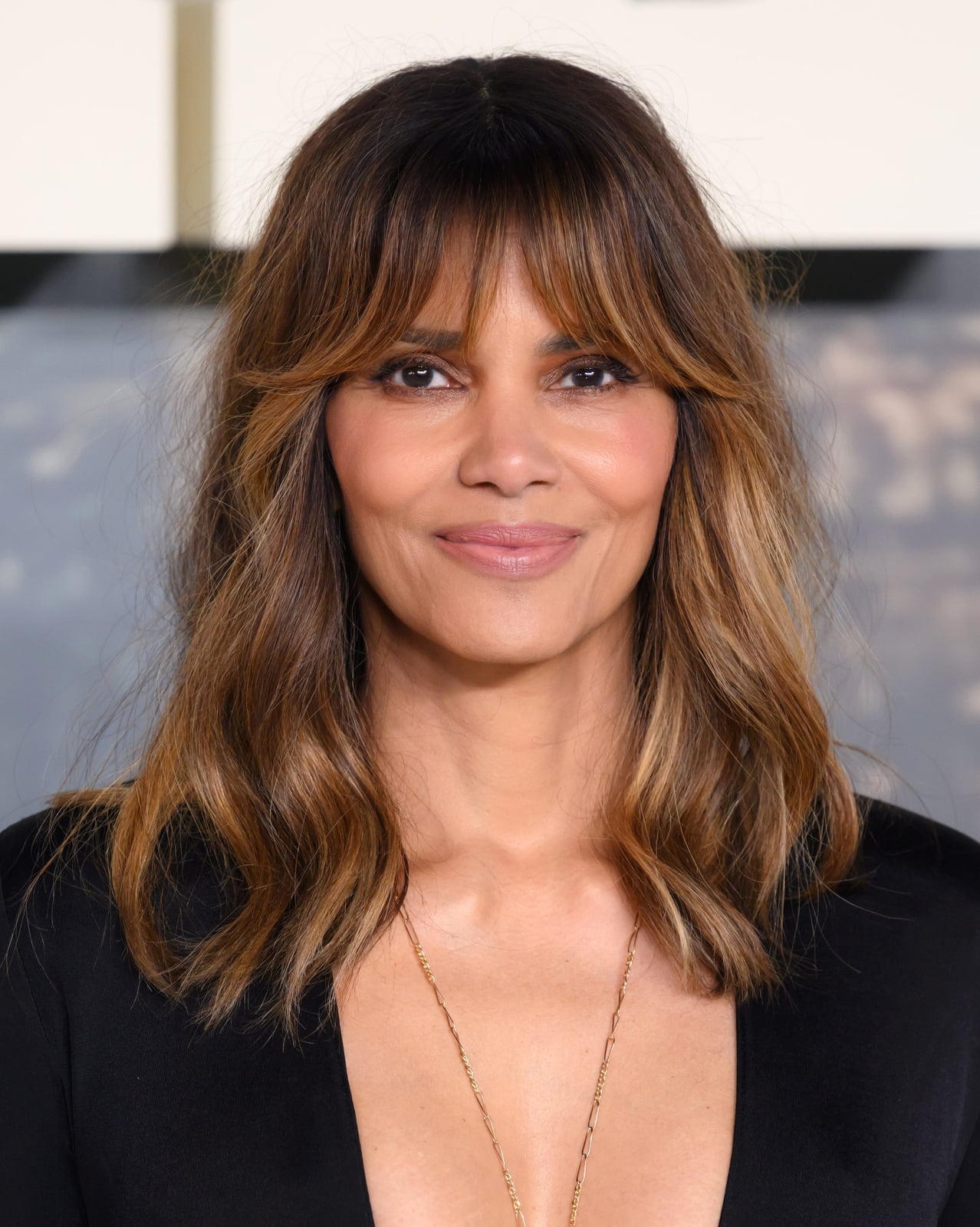
The shoulder length bob with curtain bangs is built on a precise blend: the bangs start short at the center and sweep longer toward the ears, so they frame the face without a full fringe. Ask your stylist for: shoulder length bob, curtain bangs, face-framing layers, soft waves. The medium brown base with subtle highlights gives the waves dimension and keeps the style grounded. For daily styling, blow-dry the bangs with a round brush, directing them away from the face to encourage that soft curve. Curtain bangs need a trim every 4 to 6 weeks, or they start to lose their shape and drift into your eyes.
Collarbone Bob With Face-Framing Layers
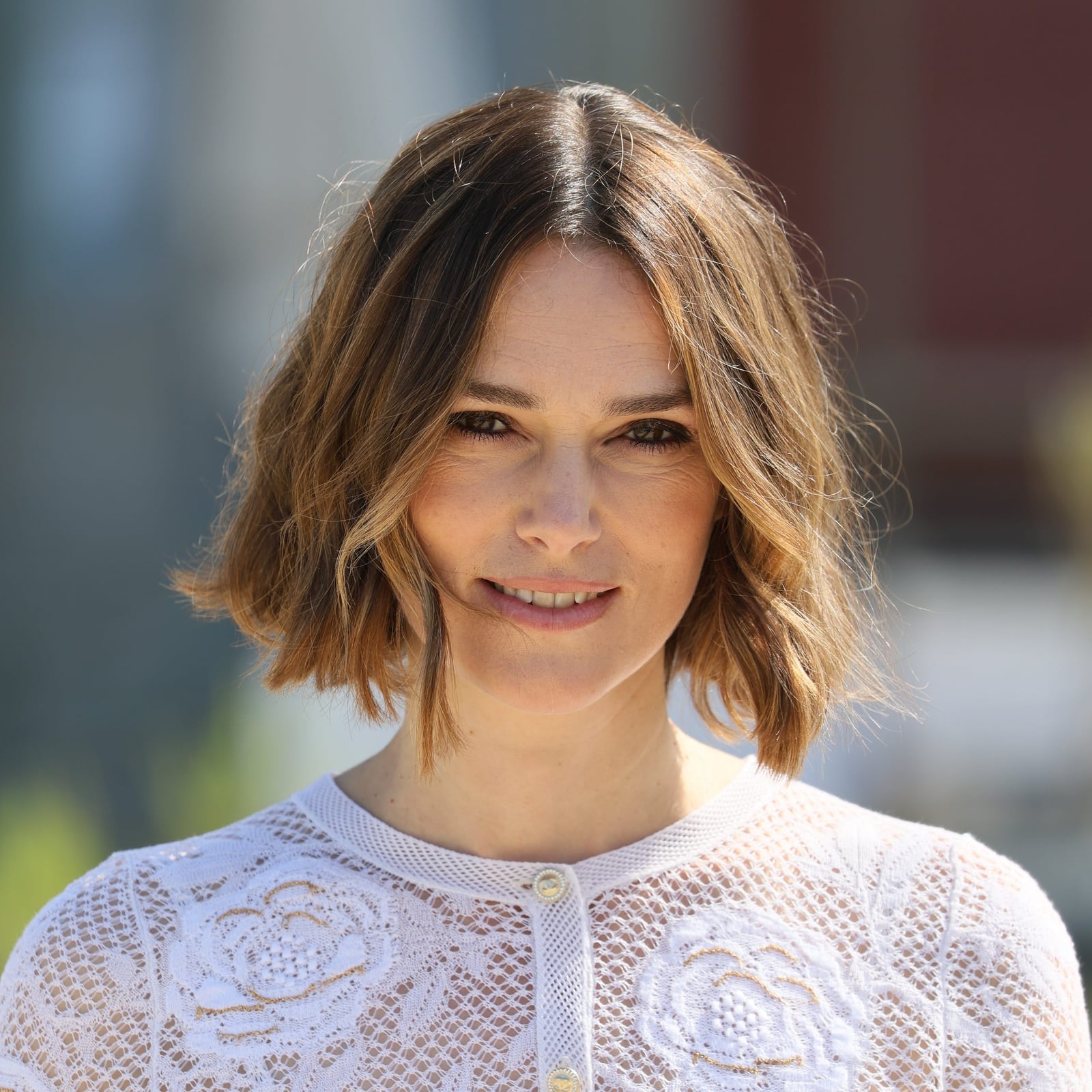
A collarbone bob with face-framing layers wears well in the morning because the layers do half the styling work. The shorter pieces around the jaw naturally catch the wave pattern, so you are not fighting the hair into shape; you are just encouraging it. Ask your stylist for: collarbone bob, face-framing layers, soft waves, middle part. This cut suits medium density wavy hair and softens angular jawlines. A texturizing spray at the roots helps the waves hold their body through the day. The baseline needs a trim every 6 to 8 weeks, otherwise the layers start to blend into one shapeless mass.
Sleek Dark Brown Bob Under Chin, темно-каштановый
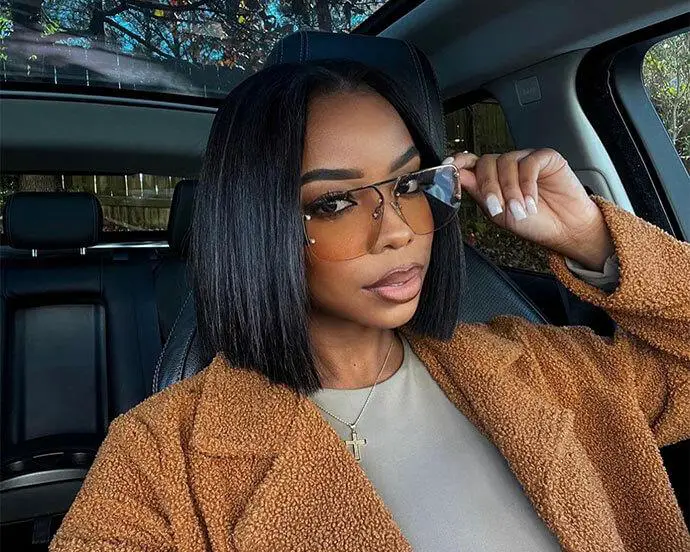
If you are choosing between this sleek dark brown bob and a version with layers, know this: the sleek one is the higher-maintenance sibling. The blunt, chin-length cut with a middle parting demands precision, so a flat iron and a smoothing serum are essential for that glassy finish. Ask your stylist for: sleek dark brown bob, chin length, middle part. It works best on fine to medium straight hair, and the sharp lines suit most face shapes. You can achieve this at home with practice, but the upkeep is constant; a trim every 6 to 8 weeks is the only way to keep the edges from looking ragged.
Wavy Gray Chin Length Bob With Side Bangs
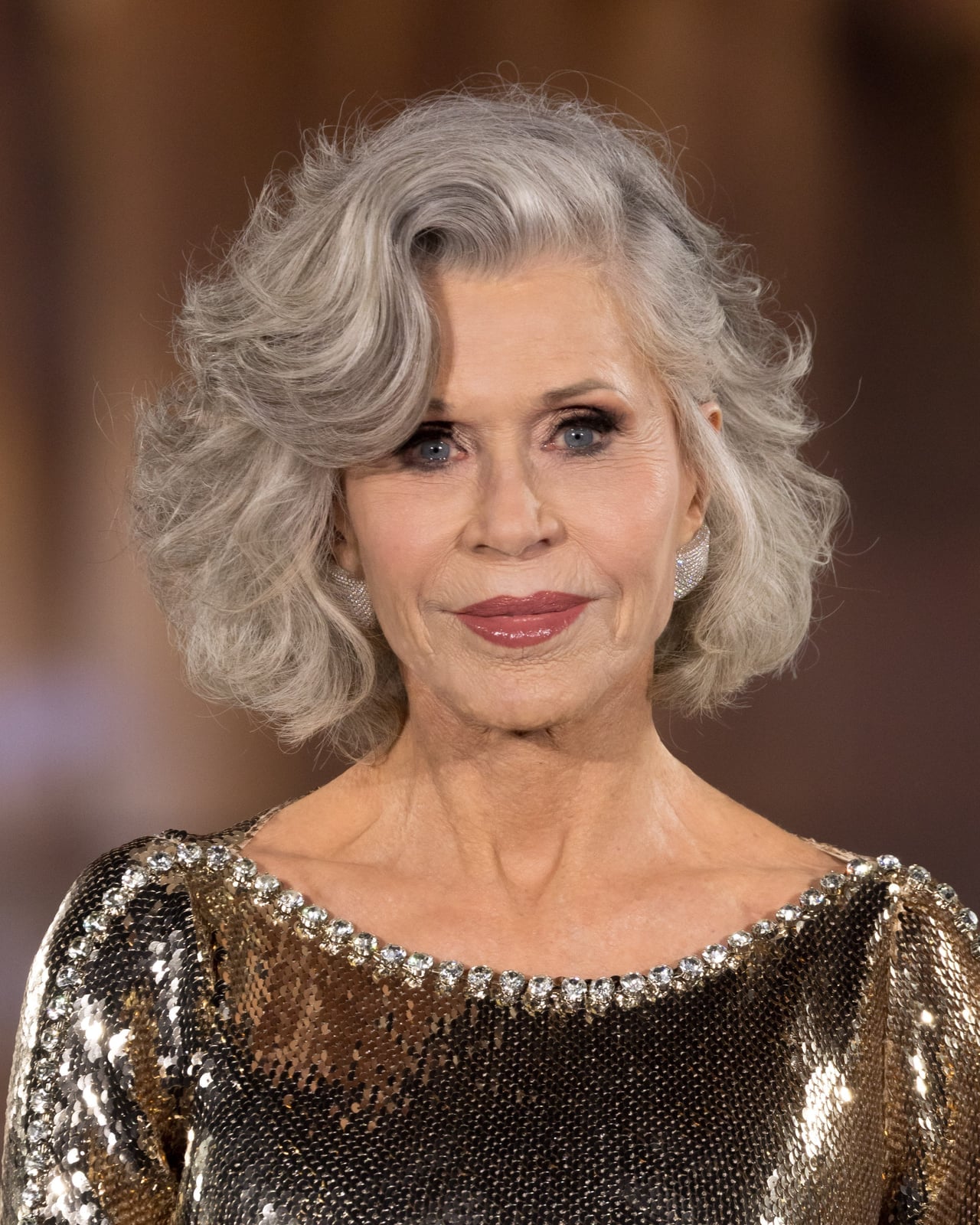
Can a chin-length bob deliver volume without turning into a flat, sad helmet by lunch? This wavy gray version with side-swept bangs does its best, starting with a volumizing mousse at the roots before blow-drying. The fine texture and glossy finish give it a polished look, but the honest truth is that volume in fine, wavy hair requires re-arming the roots with dry shampoo by midday. Ask your stylist for: chin-length wavy gray bob, soft side-swept bangs. The side-swept bangs soften angular faces and add a bit of lift at the crown, and a trim every six to eight weeks keeps the shape from drooping.
Collarbone Ash Blonde Bob With Curtain Bangs
The design here is clever: an ash blonde base with lighter highlights that catch the low winter light, paired with curtain bangs that frame the face without committing to a full fringe. At collarbone length with face-framing layers and a middle parting, this cut lands squarely in the cool-season sweet spot and transitions neatly into spring when paired with a glossy blowout. The wavy texture and medium density hold the shape well, and a smoothing cream on the fringe keeps the bangs from going rogue. Ask your colorist for: collarbone ash blonde bob, curtain bangs, face-framing layers. This one works for work, weekend brunch, and that Wednesday that feels like a Tuesday.
Collarbone Haircut With Full Bangs
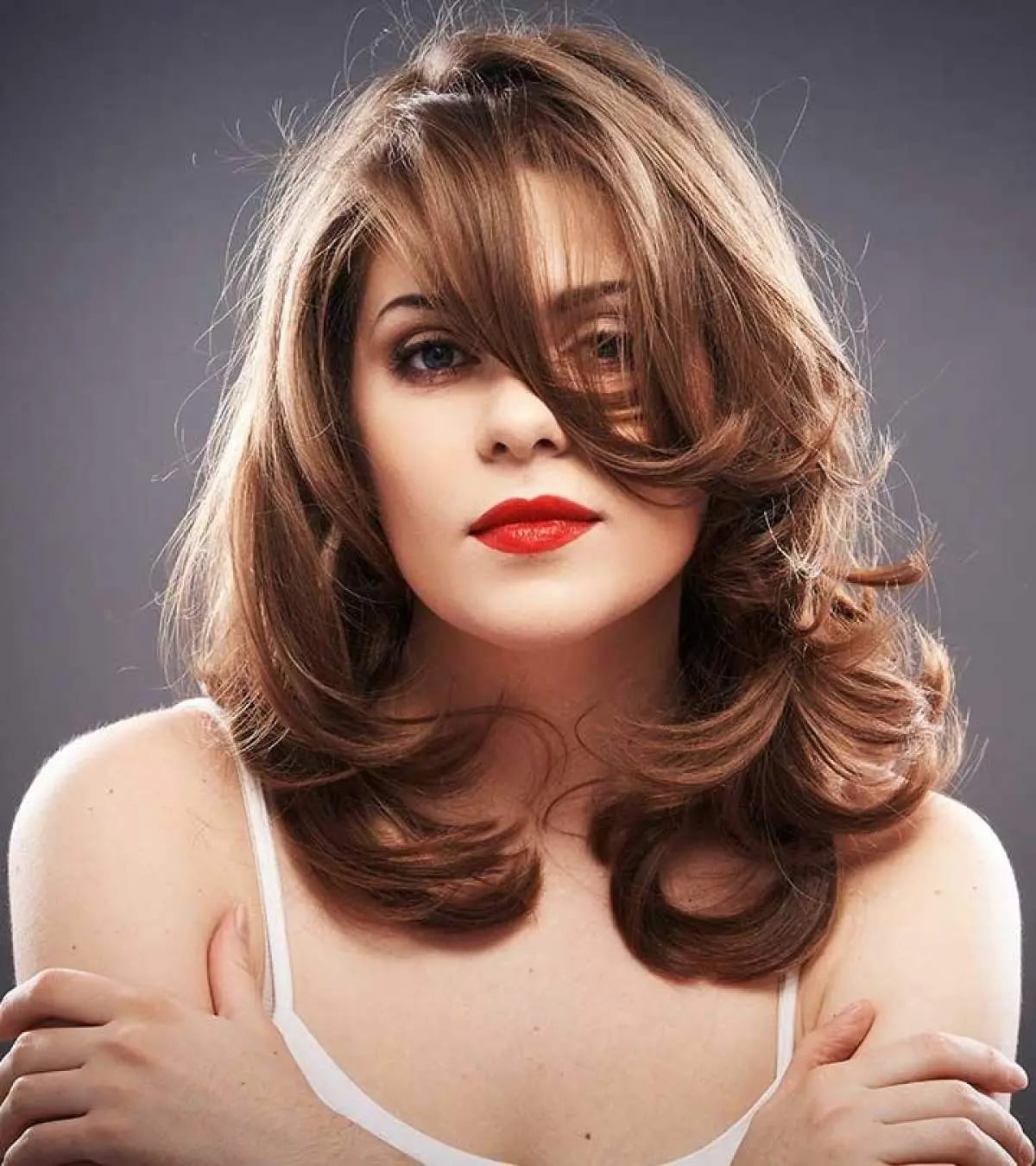
A collarbone-length haircut with full bangs and face-framing layers is a lot of design in one package, but it works because the thick, wavy texture gives the bangs enough weight to stay put. The medium brown color and middle parting keep it grounded, while a texturizing spray on the layers adds movement without frizz. Full bangs suit oval and long face shapes by balancing a longer forehead, and the blowout finish means you are committing to a round brush or a hot brush most mornings. Ask your stylist for: collarbone length haircut, full bangs, face-framing layers. Bangs need a trim every four to six weeks; the rest of the cut can stretch to eight.
Shoulder Length Dark Brown Curls
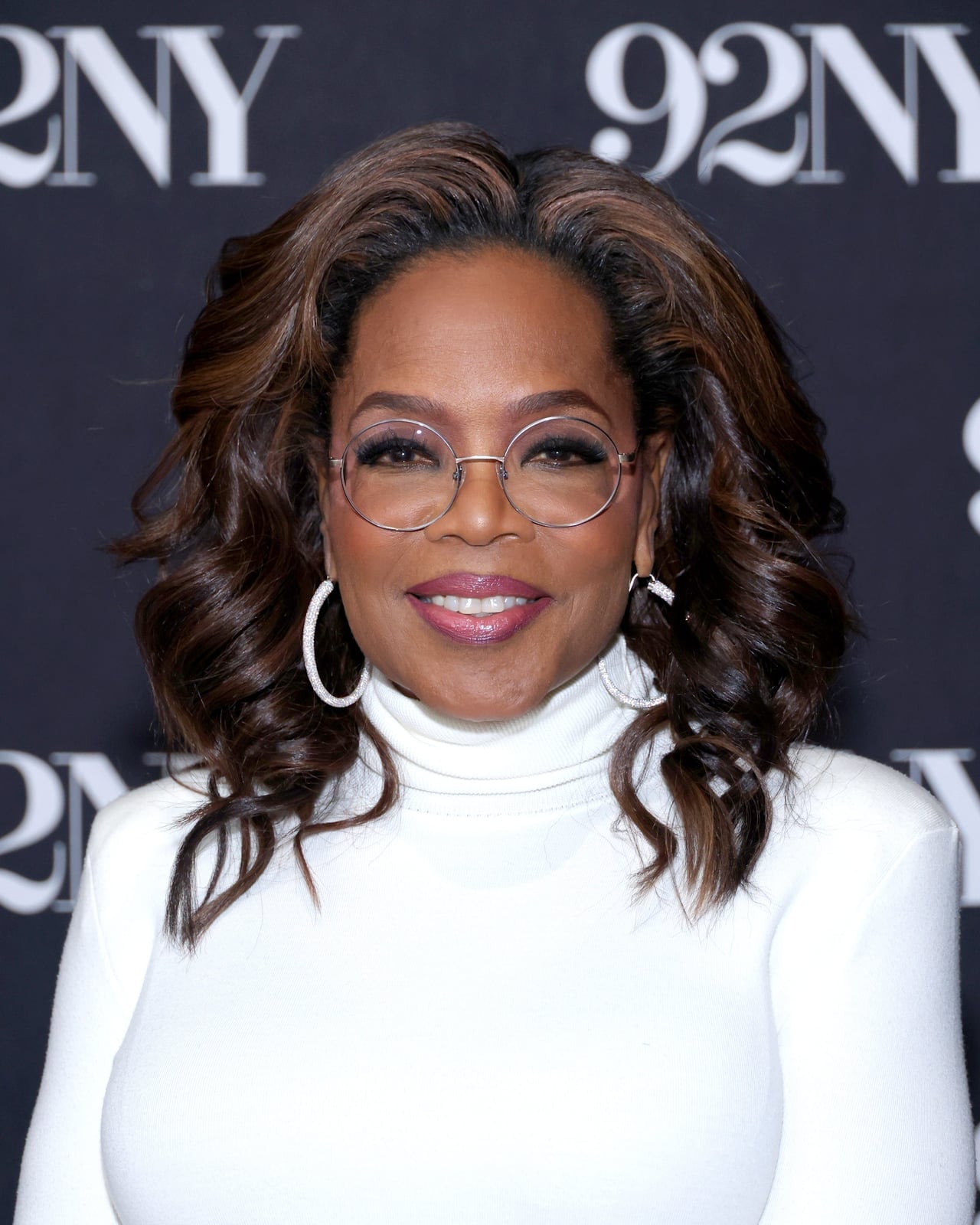
Building voluminous loose curls on shoulder-length dark brown hair with subtle highlights starts with a heat protectant and a diffuser attachment on your blow dryer. Start at the roots, cup the ends, and dry on low speed to encourage the curl pattern without frizz. A side parting and soft side-swept bangs frame the face, while the medium density texture means the curls hold their shape for a full day. Finish with a light texture spray for separation and a gloss spray for shine. Ask your stylist for: shoulder length dark brown hair, voluminous loose curls, side-swept bangs. The layers here do the heavy lifting, so the blowout is more technique than luck.
Collarbone Wavy Hair Low Side Bun
How does a low side bun stay sleek when your hair is fine and wavy and has other plans? The answer is a smoothing balm applied to damp hair before blow-drying, followed by a boar-bristle brush to tame flyaways as you wrap the bun. This collarbone-length dark brown style with a side parting looks clean from the side view, but the fine wavy texture tends to push out baby hairs within a few hours, so a light-hold hairspray is your backup. Ask your stylist for: collarbone length hair, low side bun, sleek finish. A sleek bun on fine hair shows every bump, so this is a style for days when you have ten minutes and a mirror.
Mid-Back Light Blonde Fishtail Braid
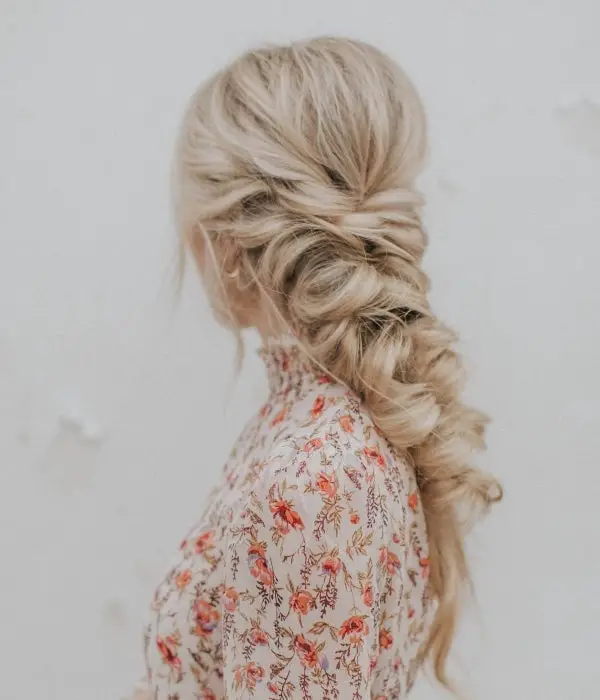
A fishtail braid is one of those designs that looks more complicated than it actually is, but on thick, wavy hair at mid-back length, the difference between a salon finish and a bathroom-mirror attempt is substantial. The light blonde color with soft loose waves gives the braid a textured, lived-in feel that a flat, tight weave would lack. Ask your stylist for a side fishtail braid, mid-back length, soft waves, light blonde color. A proper fishtail on this density takes about forty-five minutes in the chair, and pulling it off at home usually results in a style that looks unfinished.
For everyday wear, pull out a few strands around the face to soften the line. A trim every ten to twelve weeks keeps the ends healthy enough that the braid does not look frayed by the end of the day. The middle part works on most face shapes.
Mid-Back Dark Brown Wavy Hair With темно-каштановый с мелированием
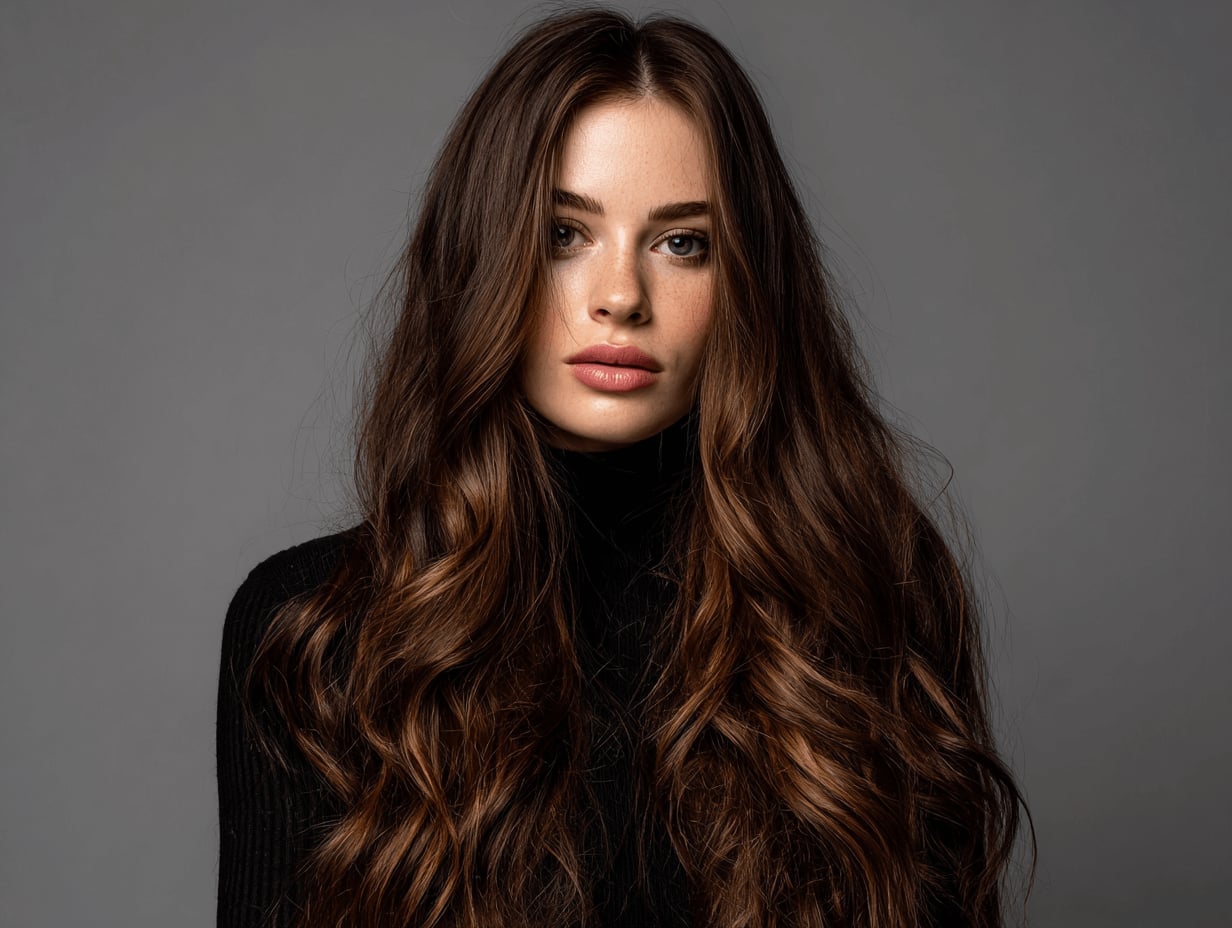
The glossy finish on this dark brown wavy hair at mid-back length comes from a combination of rich color, lighter brown highlights and consistent moisturizing treatments. Without regular deep conditioning, the waves lose their definition and the shine fades to a dull matte. Ask your colorist for mid-back dark brown wavy hair, soft loose waves, dimensional highlights. The middle part elongates round faces, and the thick texture holds a wave well even without heat styling, which is the main selling point for a daily routine.
One real drawback: maintaining that glossiness requires a leave-in conditioner or shine serum on the ends every wash. Skip it for a week, and the highlights start to look separate from the base rather than integrated. A trim every ten to twelve weeks prevents the ends from thinning out, which is the other thing that kills the overall polish.
Long Blonde Curls With Curtain Bangs
Can voluminous loose curls and curtain bangs coexist without looking like two different hairstyles? On long blonde hair with a subtle root shadow, yes, as long as the layers are cut to support both. The curtain bangs soften angular jawlines, and the side parting adds asymmetry that balances longer face shapes. Ask your colorist for long blonde hair, voluminous loose curls, curtain bangs, root shadow. Apply a curl cream to damp hair and air-dry or diffuse for a hold that lasts through a workday. The bangs need a trim every four to six weeks to keep them grazing the cheekbones instead of drifting into the eyes, which is a small price for a style that looks deliberate.
Long Dark Brown Waves With Braid Accent
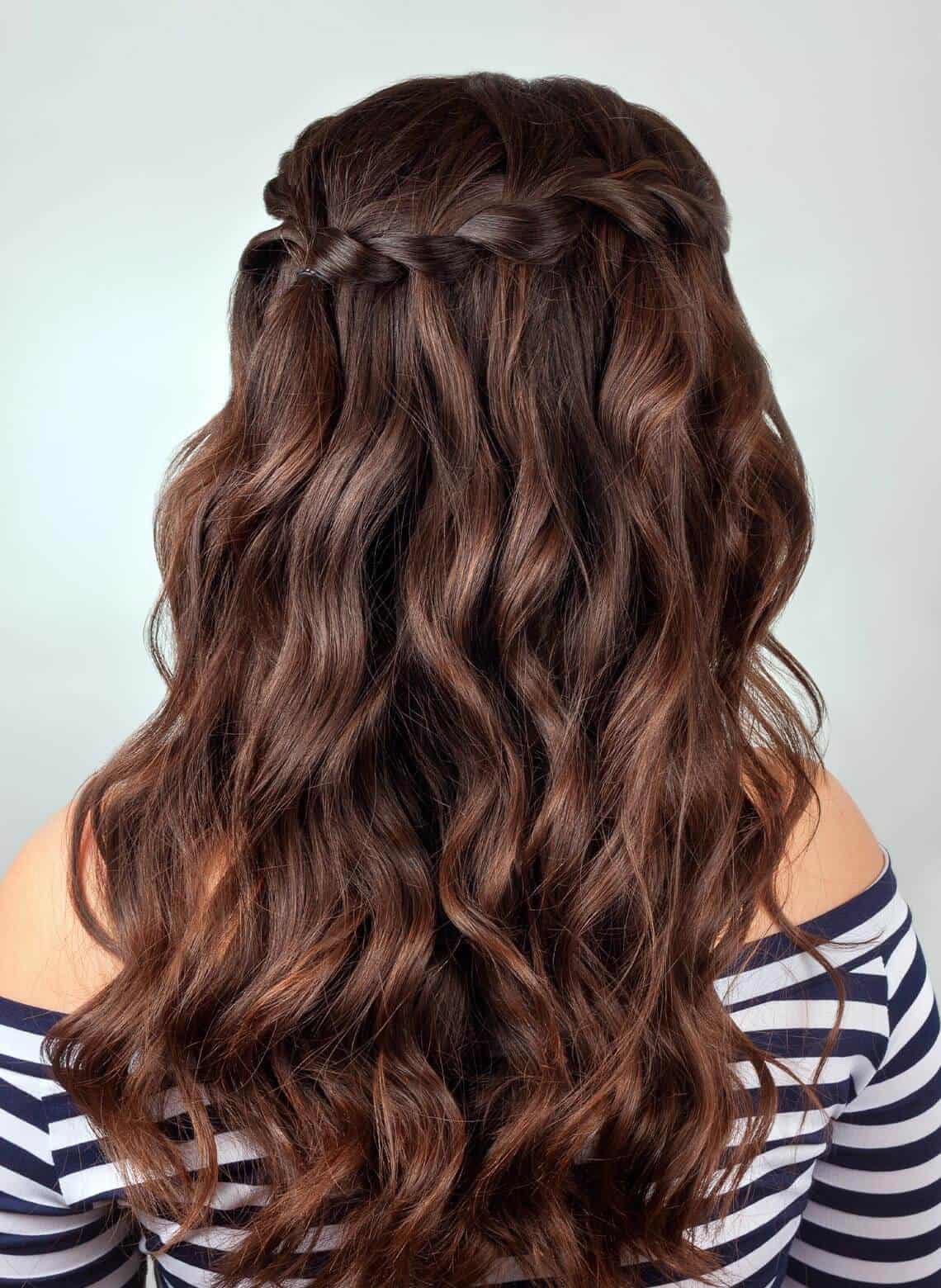
A delicate braid across the crown adds structure to loose waves without turning the whole style into an updo. On long, dark brown hair with subtle highlights, the braid reads as a detail rather than a statement. Ask your stylist for long dark brown hair, loose waves, braided crown accent, middle part. The key is to request a braid that is integrated, not tacked on: it should start at the temple and weave into the waves so the transition is invisible. The middle part keeps the look balanced, and the loose waves provide enough texture to hide any bobby pins you use to secure the braid underneath. A trim every ten to twelve weeks keeps the layers from losing their shape, which is what makes the waves hold their bend in the first place.
Long Medium Brown Waterfall Braid
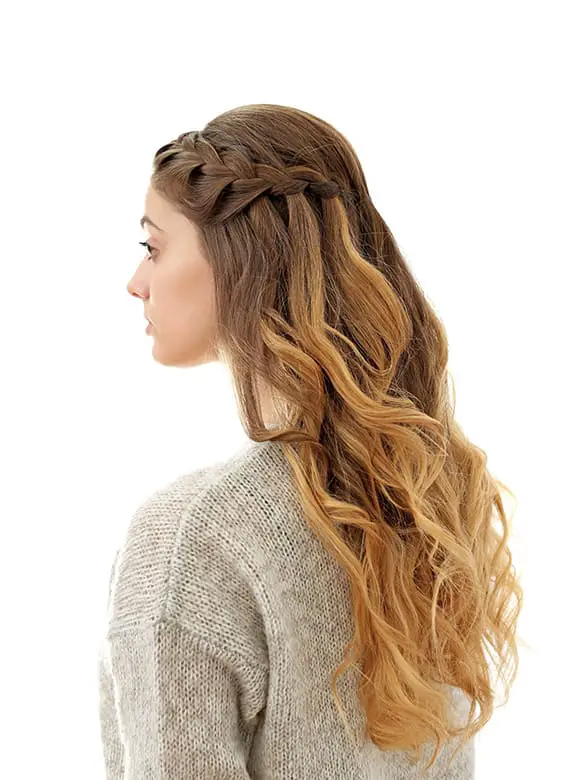
A waterfall braid works by dropping strands out of the weave as you cross the crown, so the braid itself stays close to the head while the rest of the hair falls in loose waves. On long, medium brown hair with blonde balayage, the contrast between the braid and the flowing sections creates the bohemian effect. Ask your stylist for long medium brown hair, loose waves, waterfall braid, blonde balayage. The technique requires a steady hand and a bit of patience, which is why it is usually a salon-leaning style, not a quick morning project. The waves before braiding need enough grip to stay defined without looking stiff. The middle part is standard for this style, and the balayage highlights ensure the braid reads clearly against the darker base.
Mid-Back Light Blonde High Ponytail
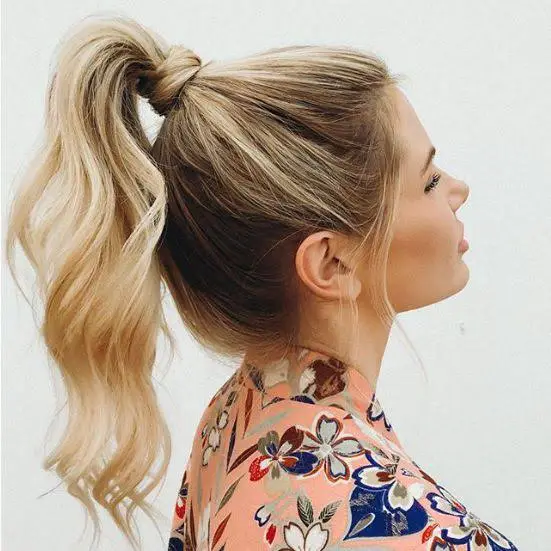
A high ponytail on mid-back length hair is a direct statement about volume. This one uses loose waves and a middle part to build that bouncy, light blonde shape with subtle highlights catching the movement. The structure relies on backcombing at the crown and a strong-hold product to keep the height from dropping by midday. Wrap a small section of hair around the elastic to hide it and call it polished. A trim every 10-12 weeks keeps the ends clean enough for the ponytail to swing without fraying. Ask your stylist for: mid-back light blonde hair, high voluminous ponytail, loose waves.
Mid-Back Dark Brown High Ponytail
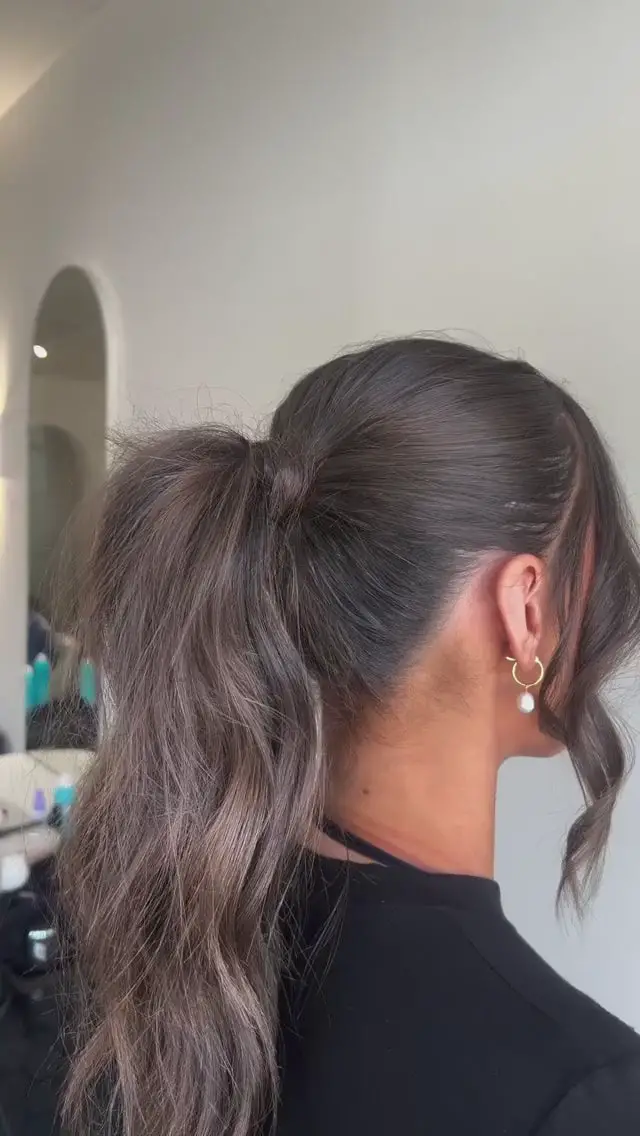
A high ponytail with face-framing pieces pulled out creates a balanced look. The dark brown base with subtle ash highlights adds a cool dimension that works for both a workday and a dinner reservation. Loose waves give the mid-back length enough texture to avoid looking severe, while the middle part keeps the silhouette clean.
This is the style that moves from casual to semi-formal by swapping a hair tie for a velvet ribbon or a metal clip. The face-framing pieces are the key detail. They soften the pulled-back look. A texturizing spray on the ponytail helps maintain the volume, and a trim every 10-12 weeks prevents the ends from looking straggly. Ask your stylist for: mid-back dark brown hair, high ponytail, loose waves, face-framing pieces.
Mid-Back Blonde Ponytail With Curtain Bangs
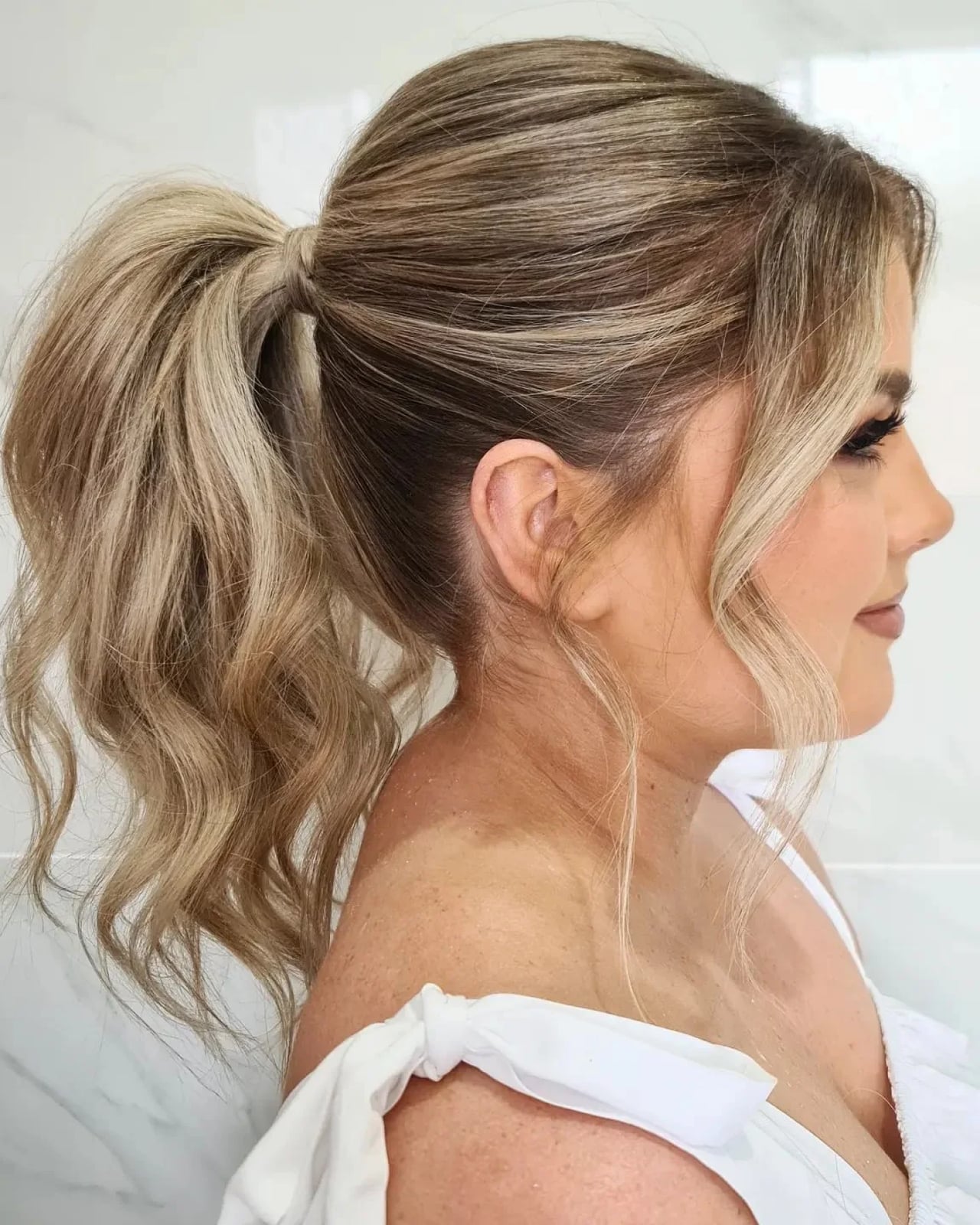
Does a ponytail with curtain bangs take more effort than one without? Yes, but the softer frame around the face makes it worth the extra step. The blonde base with subtle highlights in the mid-back length ponytail stays voluminous, while the curtain bangs sweep forward to balance round and heart-shaped faces. Loose waves in the ponytail keep the texture consistent from root to tip.
The difference between a standard ponytail and this version is the bangs require a separate styling step, a quick pass with a flat iron to shape the curtain and a blast of cool air to set. The ponytail itself is straightforward: gather high, secure, wave. Trimming the bangs every 4-6 weeks keeps the curtain from becoming a blunt fringe. Ask your stylist for: mid-back blonde hair, high ponytail, loose waves, curtain bangs.
Mid-Back Light Brown Bubble Ponytail
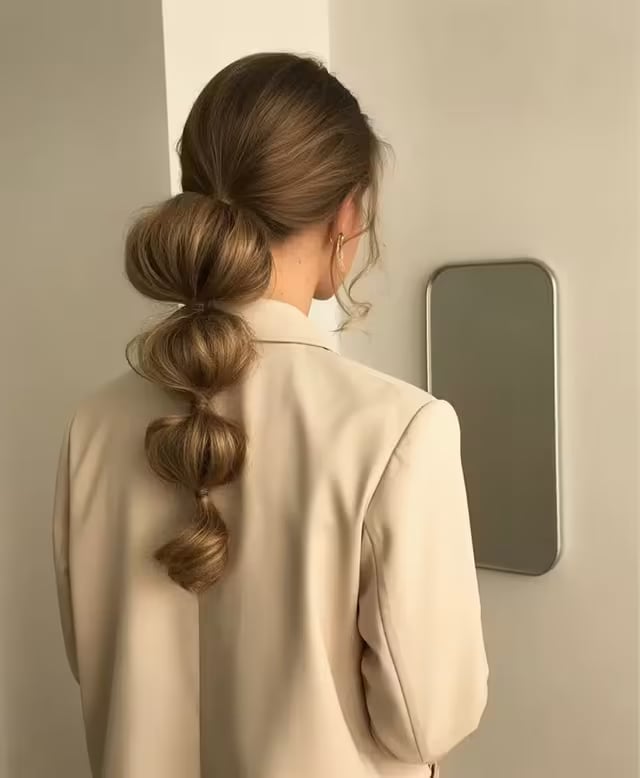
A bubble ponytail is a high ponytail segmented with elastics to create a rounded, voluminous silhouette. The light brown shade and straight, thick texture make the segments stand out clearly, especially from the back where the middle parting anchors the whole shape. Ask your stylist for: mid-back light brown hair, bubble ponytail, thick texture. The spacing between elastics determines the look, closer segments create a tighter, more sculpted bubble effect; wider spacing gives a looser, softer cascade. Use clear elastics for a subtle finish or colored ones to make the bubbles pop. A trim every 10-12 weeks keeps the ends blunt enough for the segments to hold their shape without slipping.
Mid-Back Light Blonde Messy Bun
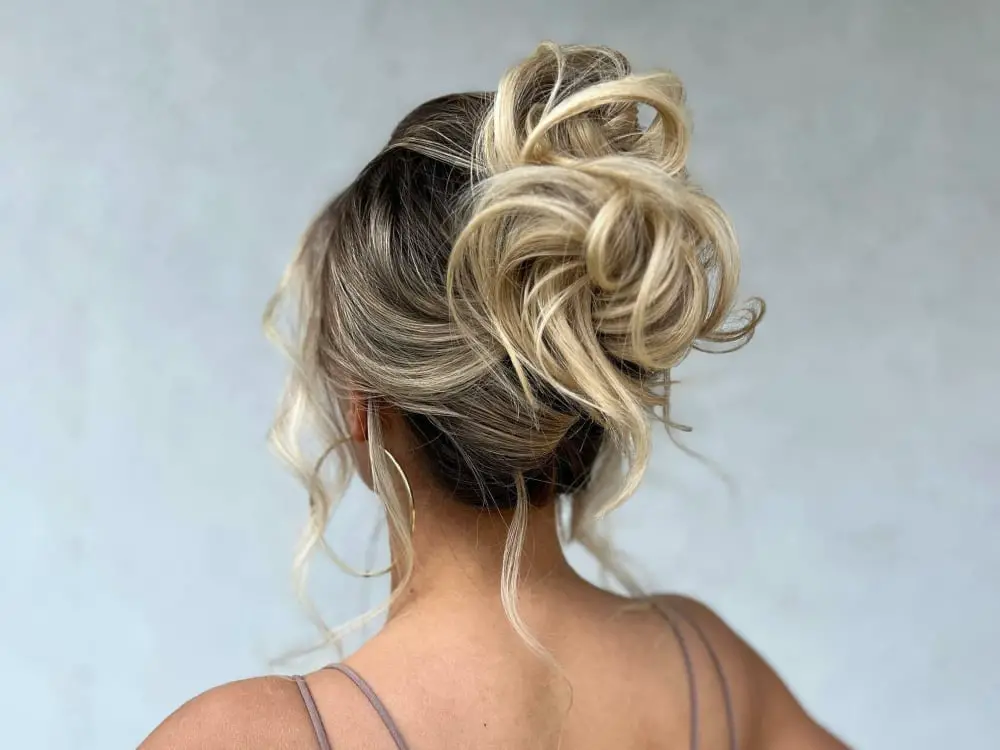
A messy bun on mid-back length hair relies on texture and volume to look intentional rather than lazy. This version uses wavy, thick hair in a light blonde shade with subtle highlights, pulled high on the head with loose tendrils left out to soften the hairline. The undone finish is the point, but achieving that volume on natural density often requires teasing at the crown or a small padding piece inside the bun.
The real drawback: if your hair is fine or straight, the bun can collapse into a small knot within an hour. A texturizing spray applied before twisting helps the strands grip each other, and the loose tendrils should be curled briefly so they don’t look like afterthoughts. A trim every 10-12 weeks keeps the ends from poking out in the wrong places. Ask your stylist for: mid-back light blonde hair, messy high bun, loose face-framing tendrils.
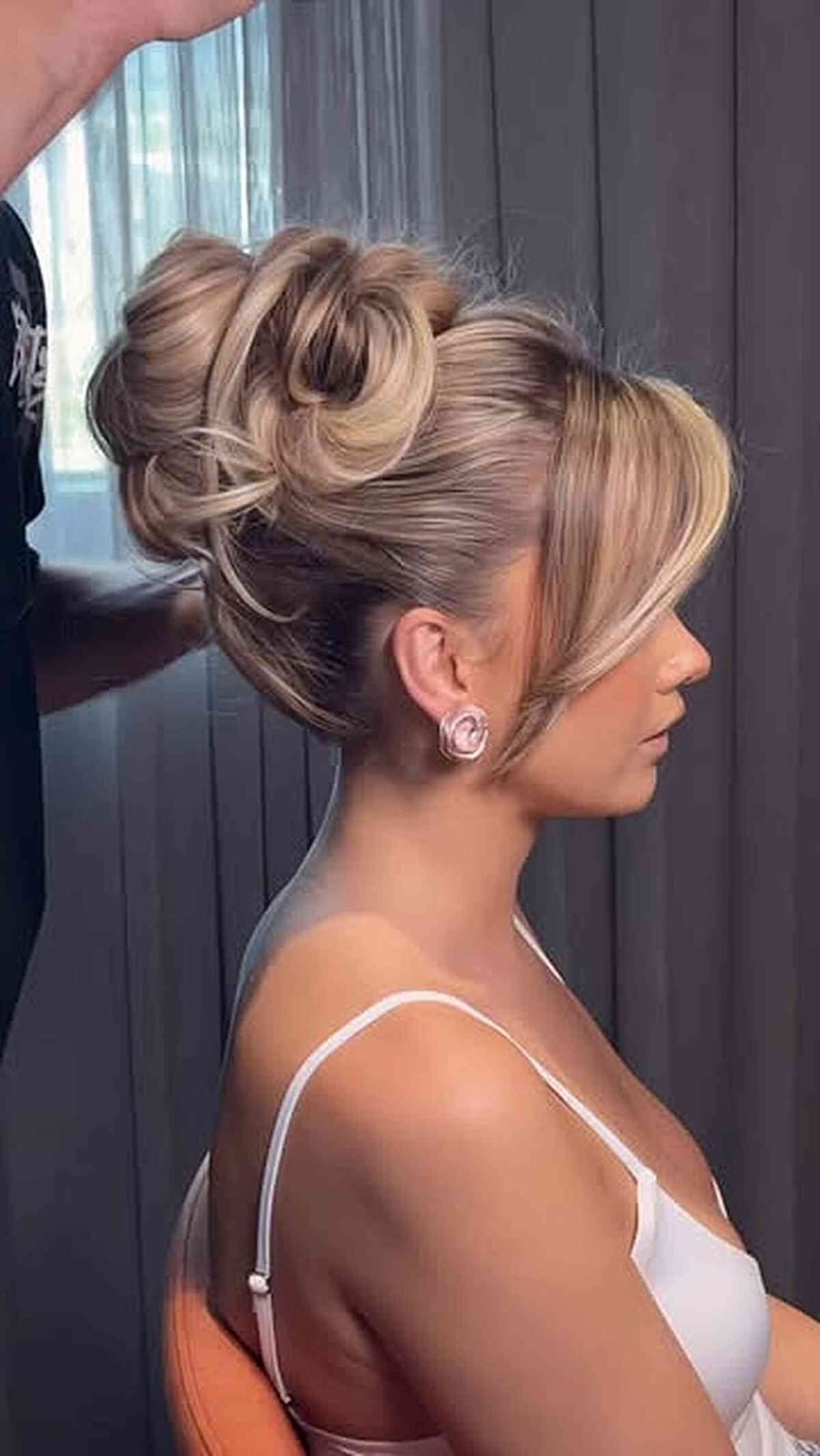
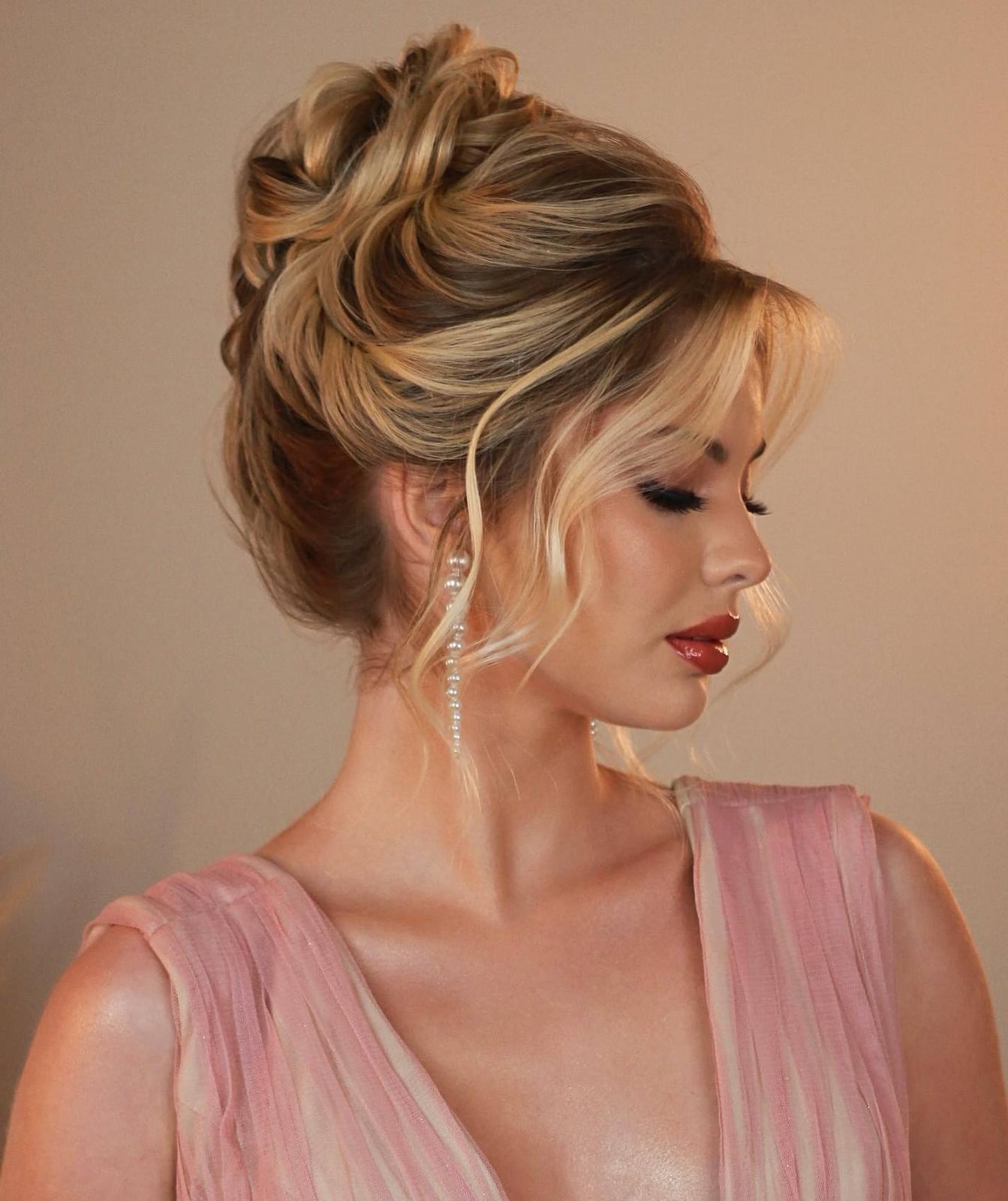
Mid-Back Blonde Updo With Face-Framing Pieces
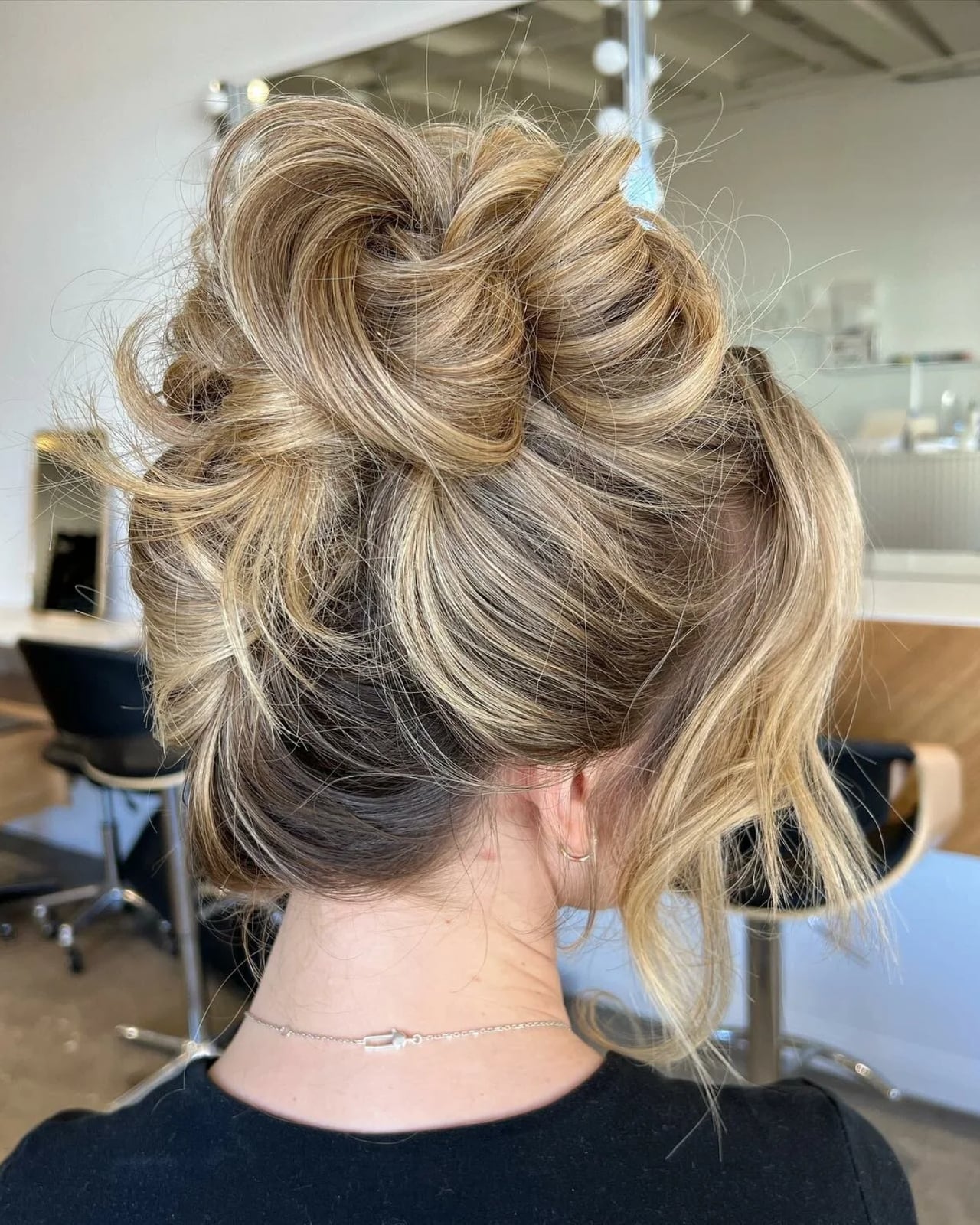
The design relies on sections of wavy, mid-back blonde hair with highlights being pinned into place at the back of the head, leaving a few pieces free to frame the face. It is a blonde updo with face framing pieces that works for both everyday wear and elegant occasions. Medium density hair holds the structure best, and the soft strands around the hairline soften an angular jawline. Ask your stylist for: mid-back blonde hair, intricate updo, face-framing pieces. A flexible hold hairspray keeps the tendrils in place while letting the style move, which matters for a long day at work or a special event. The precision is in the pin placement, and that is a salon task.
The back view shows how the mid-back length gets gathered into a compact shape, with the wavy texture adding visual interest. The highlights give the blonde depth, so the updo does not flatten into a single pale block. A trim every 10 to 12 weeks keeps the ends clean so the face-framing pieces sit properly. This style holds through a full day at a desk.
Mid-Back Blonde Wavy Updo
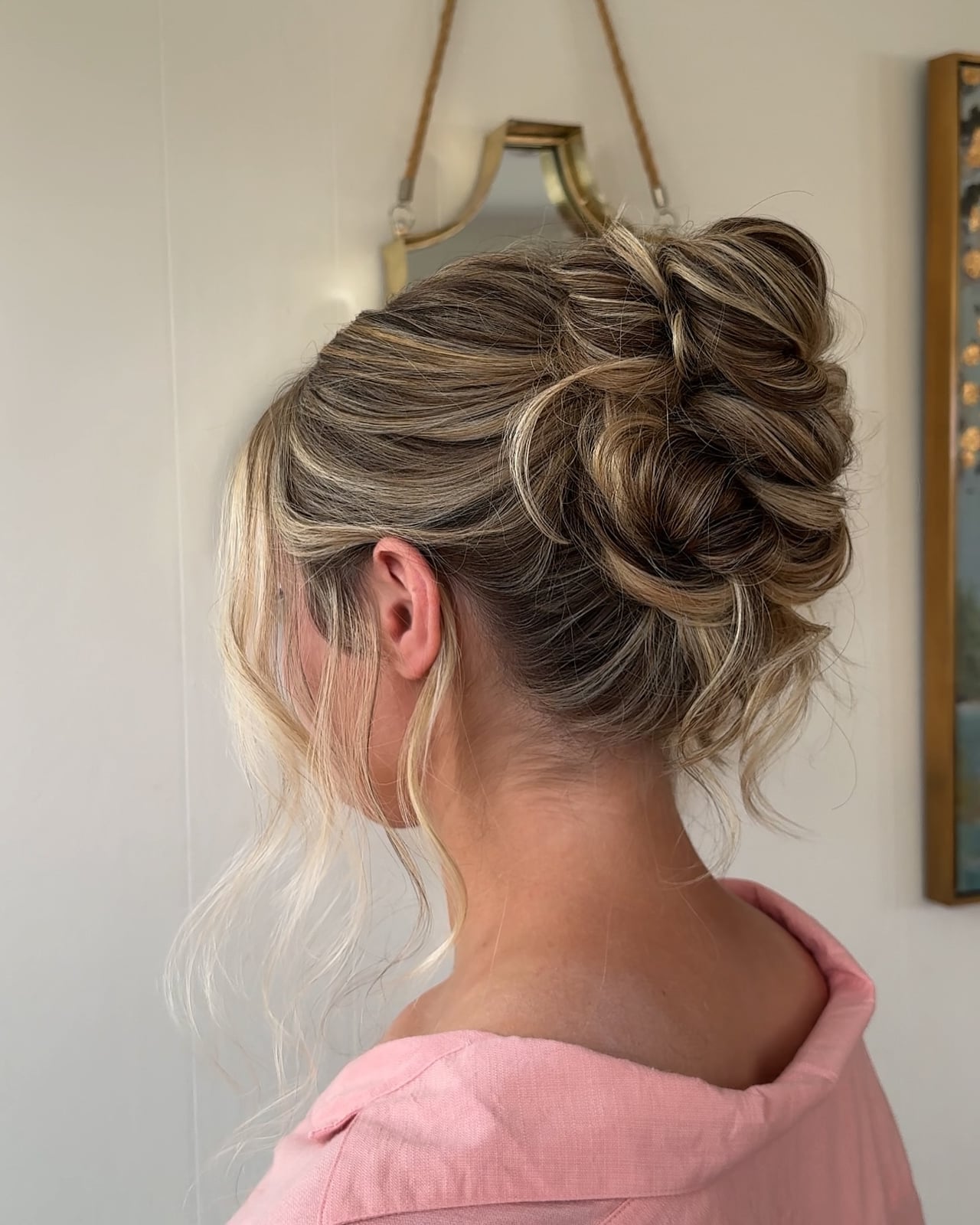
This updo works because the wavy, thick texture of the mid-back blonde hair gives the stylist something to work with, the loose strands around the face keep it from feeling severe, and the layers add movement that a one-length cut cannot. Thick, wavy hair of mid-back length provides the volume needed for the intricate structure to hold its shape well, so finer hair might find the style collapsing by lunch. Ask your stylist for: mid-back blonde hair, intricate updo, loose textured strands. Apply a texturizing spray before styling for better grip, and expect the style to stay put through a workday. A trim every 10 to 12 weeks keeps the layers from growing out and weighing the updo down.
Mid-Back Blonde Intricate Updo, Layers
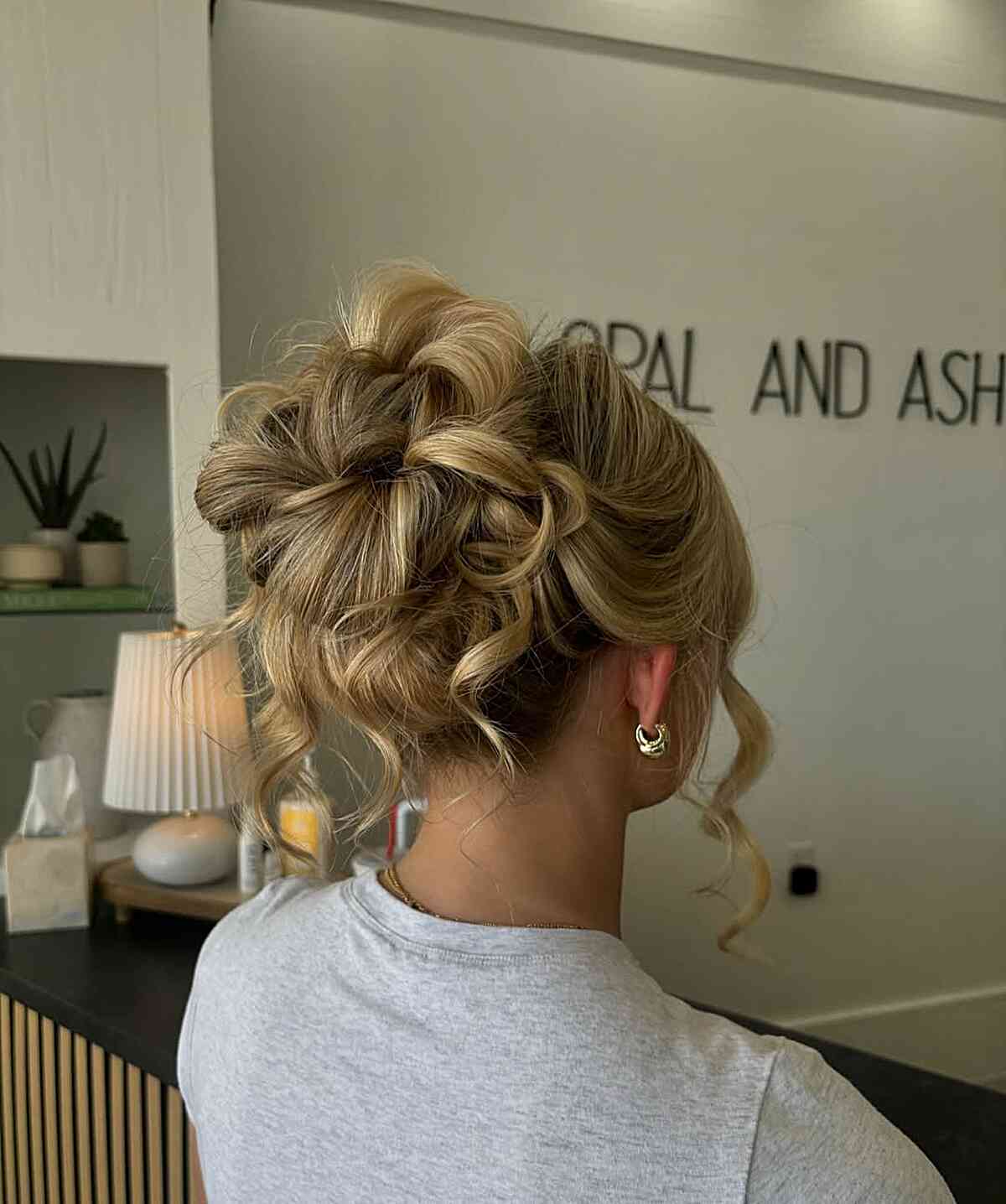
How much time do you actually have before work? That is the real question with an intricate updo on mid-back blonde hair, because this is a salon-level style with a salon-level time commitment. The wavy, thick texture and layers give the stylist plenty to pin, and the loose strands around the face are what sell the look as intentional. Ask your stylist for: mid-back blonde hair, intricate updo, loose textured strands. Recreating it at home is possible, but expect the first attempts to take a while and the results to look looser and less structured than the professional version. The honest drawback is that daily wear might be impractical, since the style needs time to build and strong hold hairspray to keep it secure. A trim every 10 to 12 weeks keeps the layers behaving.
Mid-Back Blonde Wavy Updo With Texture and Adding Depth
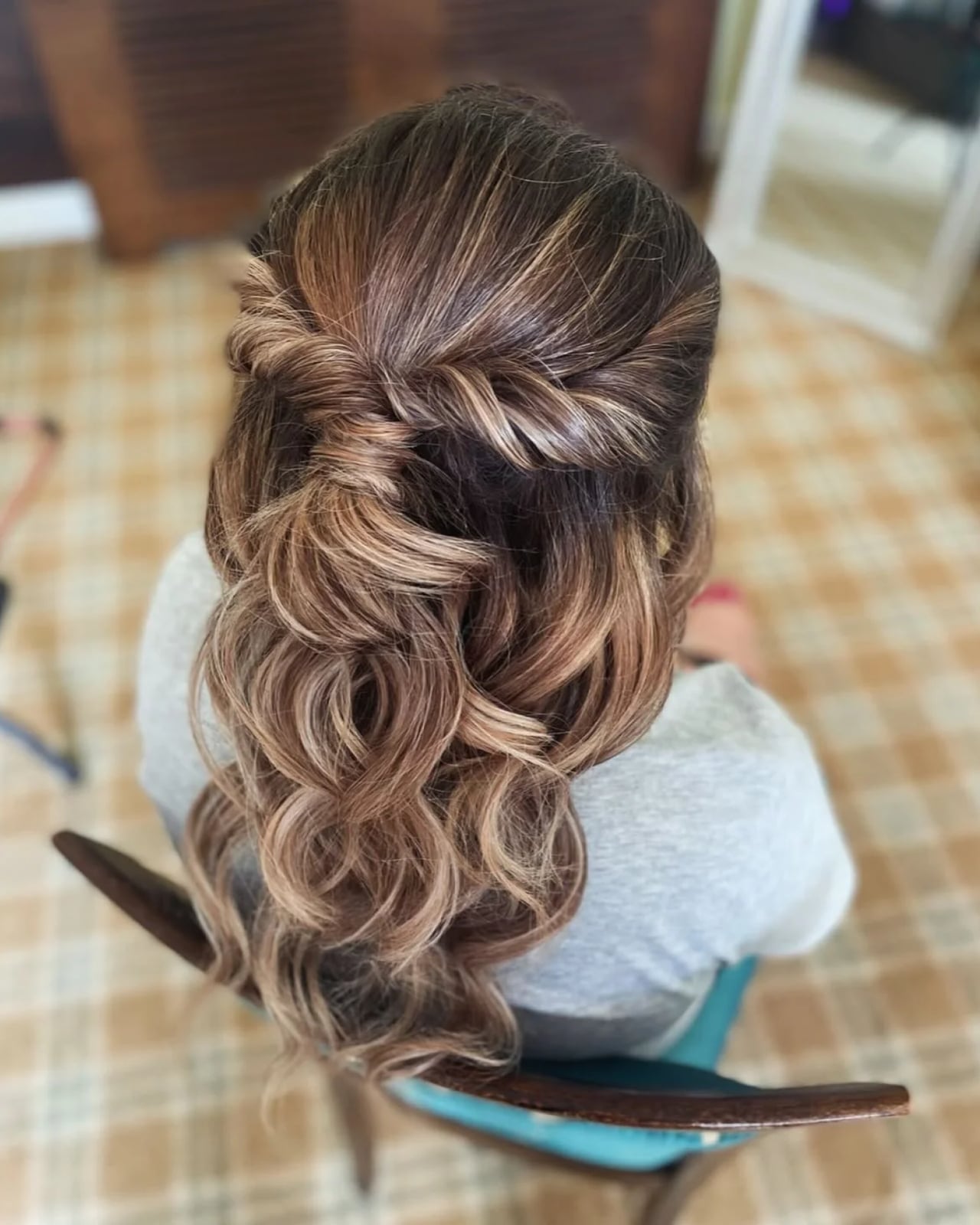
The salon version of this updo has a polished finish that comes from precise pinning, while the home attempt tends to produce something looser and more organic, even when you follow the same steps. Both have a place, but they answer different questions. The wavy, thick texture of the mid-back blonde hair with highlights gives the style its depth, and the loose strands around the face keep the structure from looking rigid. Ask your stylist for: mid-back blonde hair, intricate updo, loose textured strands. A texturizing spray before styling gives the hair more grip, which helps the pins stay where they belong. The salon result holds its shape through a long day, whereas the home version will likely soften by the afternoon, which is fine if that is the look you want.
Medium Blonde Twisted Low Bun
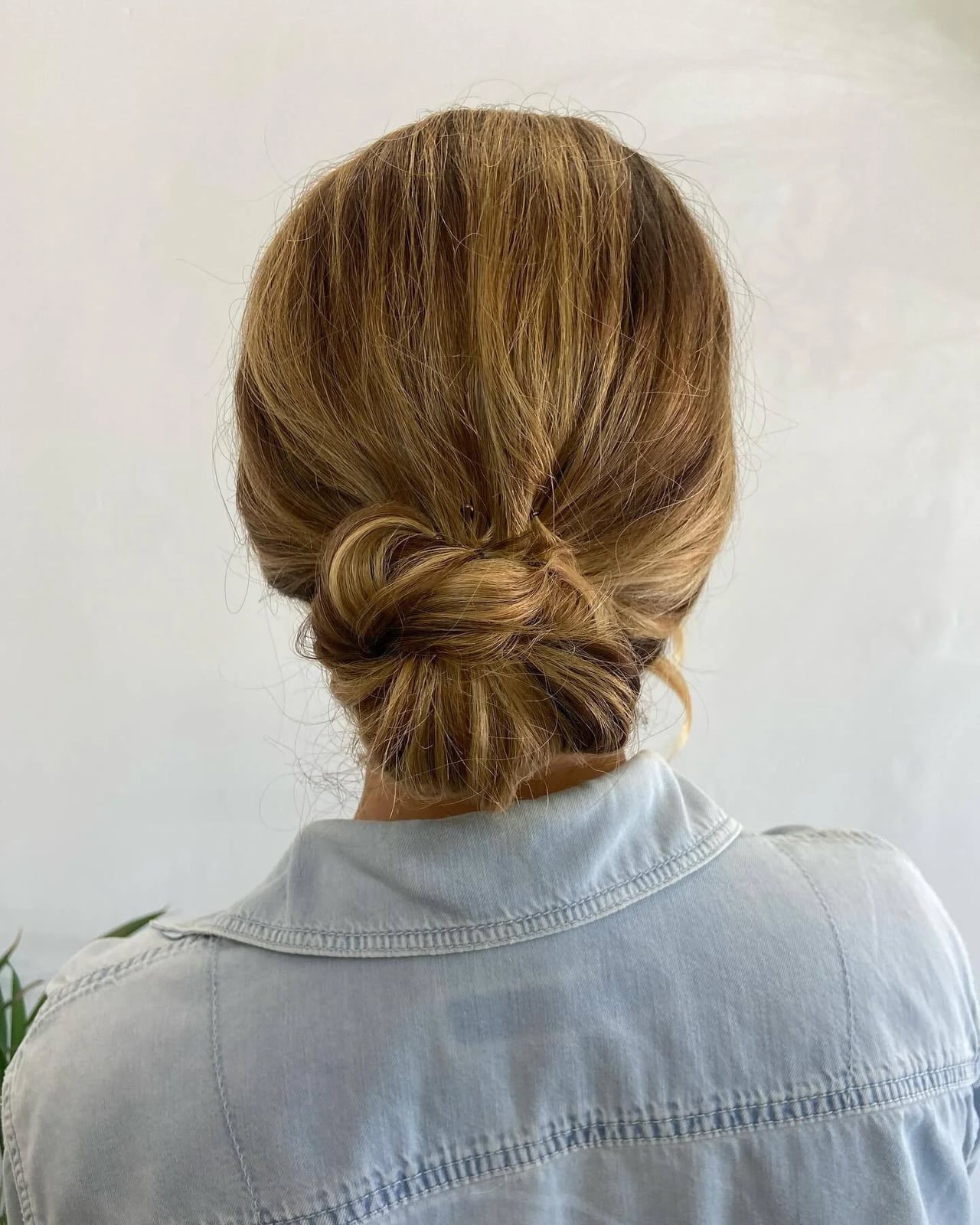
It is a good transitional-weather style, polished enough for work but not so formal that it feels out of place on a weekend errand run. Ask your stylist for: medium blonde hair, twisted low bun, loose strands. The wavy texture gives the twists a natural grip, so the style holds without constant adjustment. Secure it with bobby pins, then gently loosen the strands around the face to avoid the too-tight look. A trim every 10 to 12 weeks keeps the ends neat enough for the twists to read as deliberate.
Medium Blonde Twisted Updo
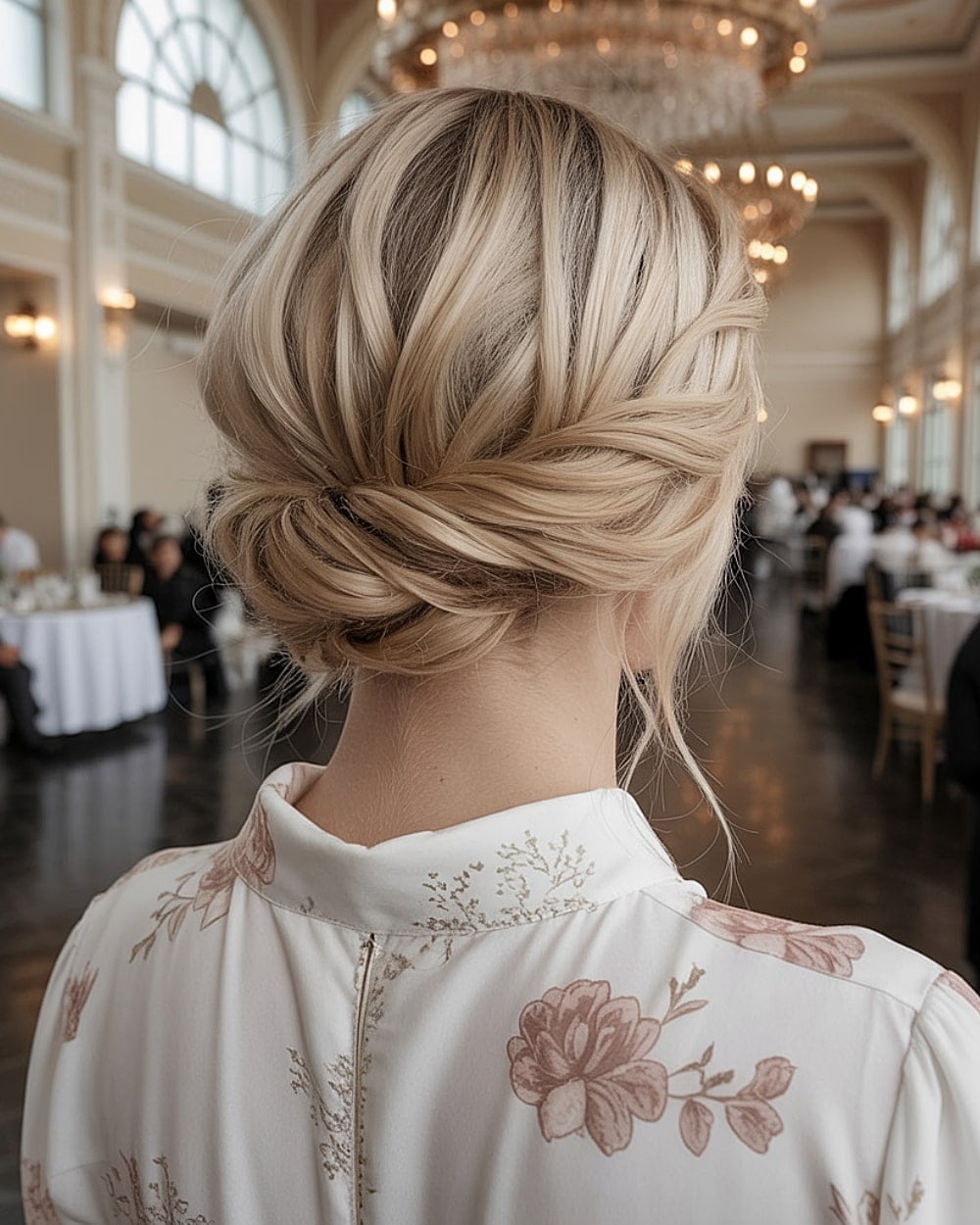
Can a twisted updo look polished without feeling like you spent an hour on it? This one, built on medium blonde hair with highlights, sits low at the nape and lets a few loose strands soften the edges. It works best on wavy, medium-density hair, because the texture gives the twists grip without extra product. Ask your stylist for: medium blonde hair, twisted low updo, loose strands. A flexible hold hairspray keeps the tendrils where you put them, and a trim every ten to twelve weeks keeps the ends neat for the style.
Dark Brown Soft Updo With Curtain Bangs
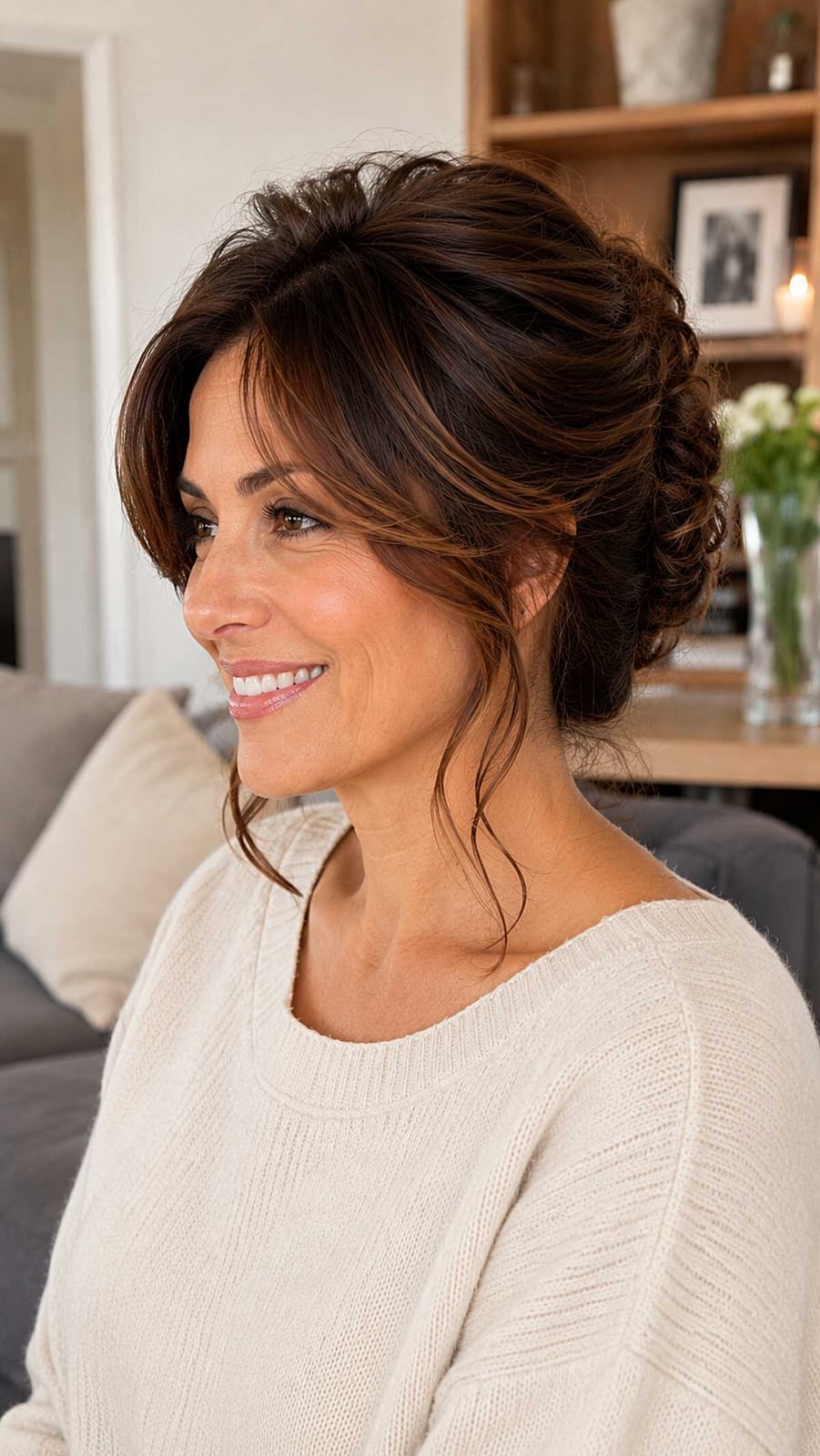
A soft updo with curtain bangs does two things at once: it pulls the bulk off your neck and lets the bangs frame your face without committing to full fringe territory. The dark brown base with subtle highlights adds depth, and the side parting keeps the volume balanced. Curtain bangs are especially useful for softening a square or angular jawline. Ask your stylist for: dark brown hair, soft updo, curtain bangs, face-framing tendrils. A texturizing spray gives the updo enough hold to last the day, and those bangs need a trim every four to six weeks to stay in shape.
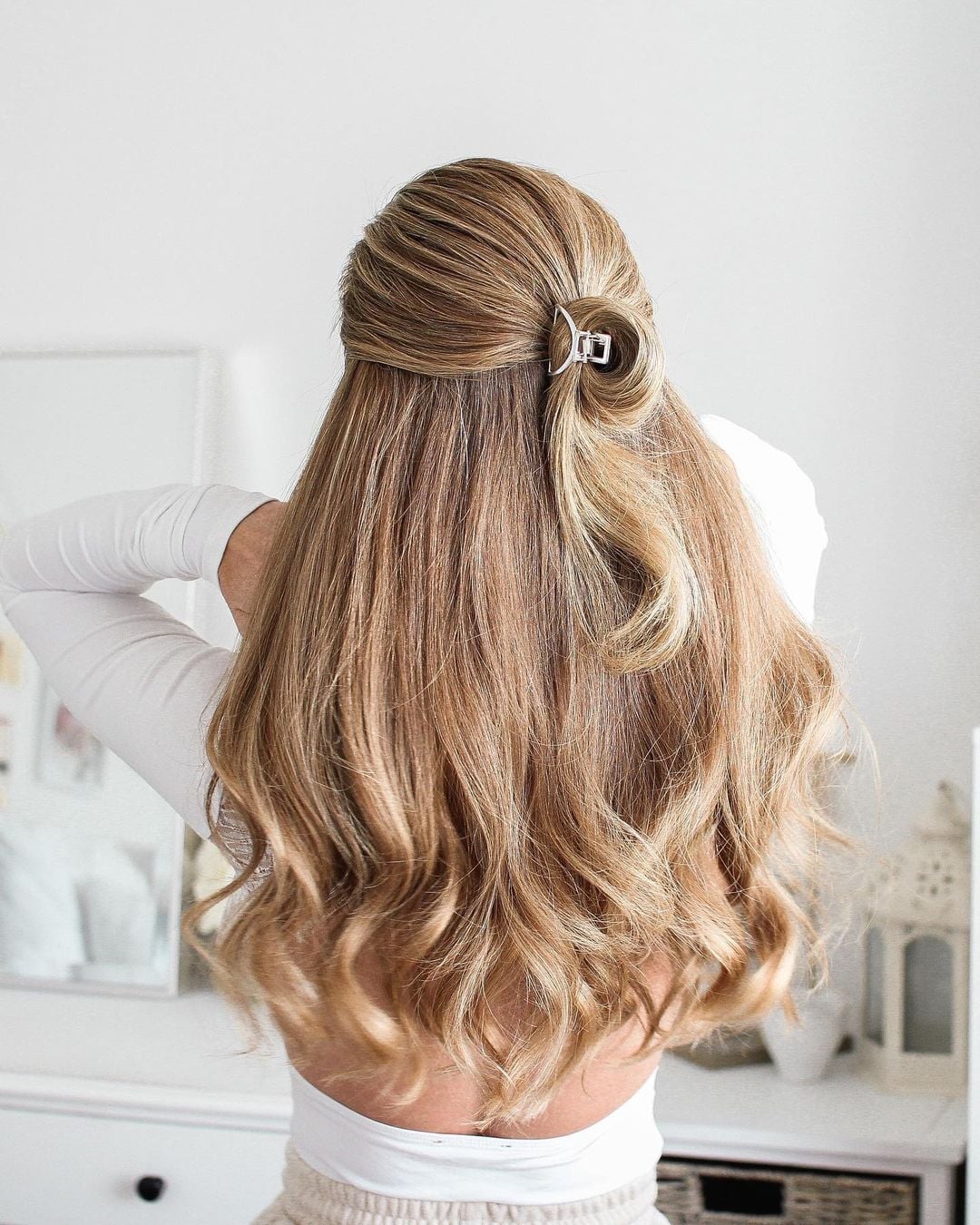
Long Light Brown Half Up Half Down
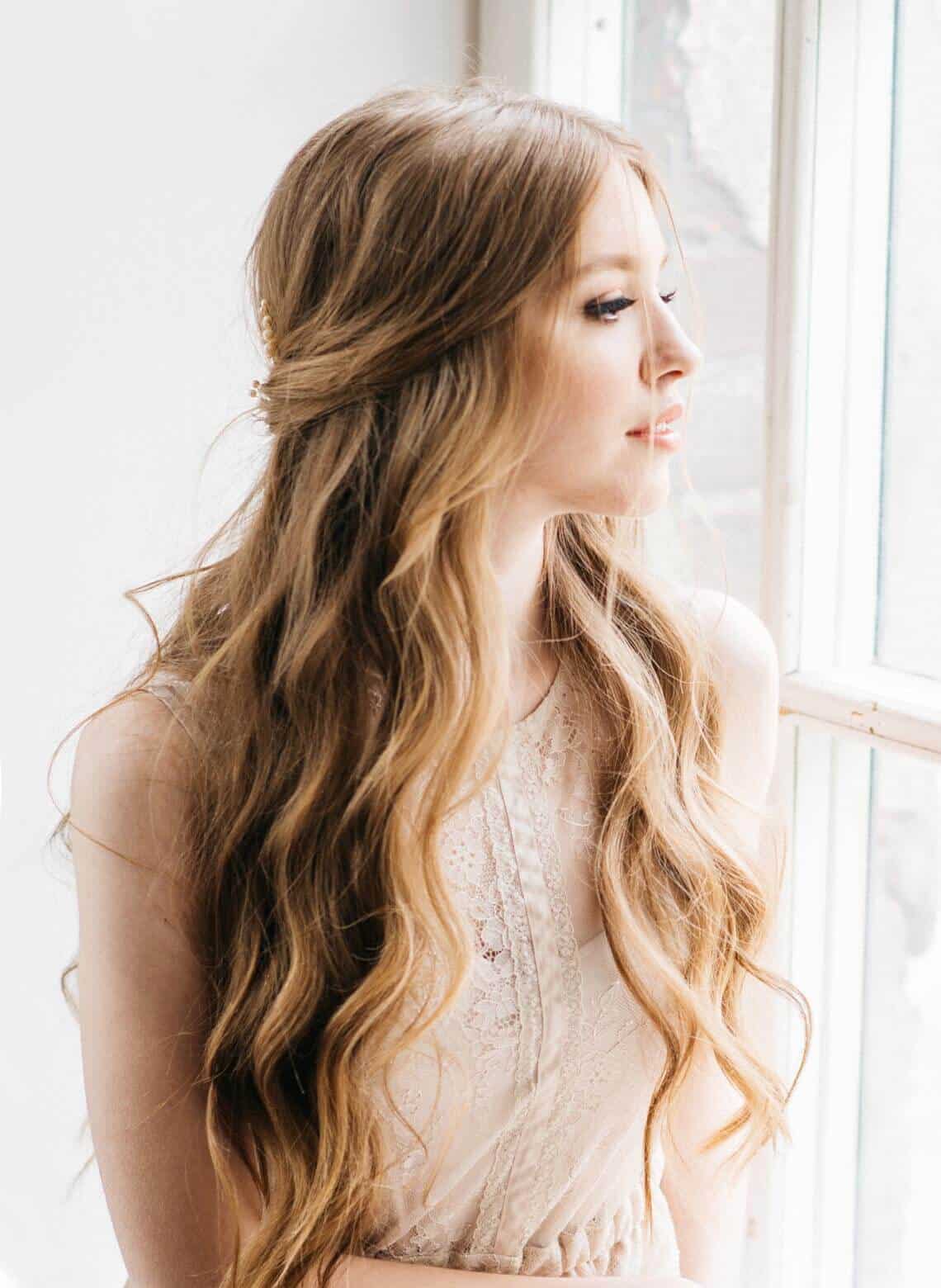
A twisted front section is the part of a half-up style that either looks intentional or slowly unravels by lunch. This version, on long light brown hair with subtle highlights, uses a side part and a single twist pinned at the crown to keep the front tidy while the rest falls in waves. The medium density helps the twist hold its shape without needing a full can of spray.
The honest drawback: that twisted section will loosen over the course of the day, especially if your hair is on the finer side. Plan to re-pin once, or accept a slightly softer look by hour six. Ask your stylist for: long light brown hair, half up half down, twisted front section. A trim every ten to twelve weeks keeps the layers from looking stringy when worn down.
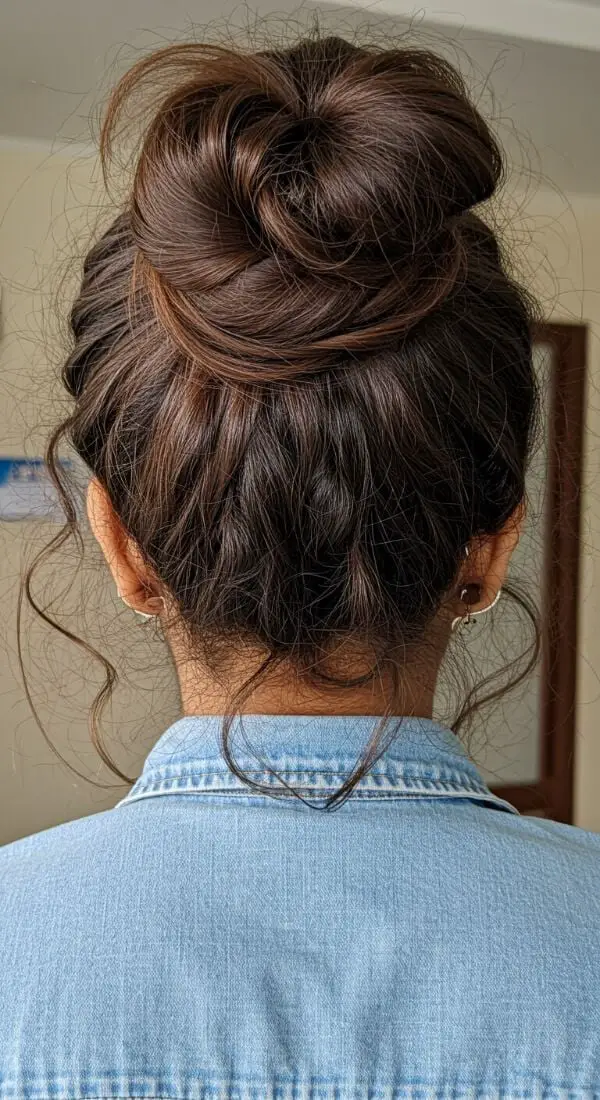
Thick Wavy Hair Voluminous Updo
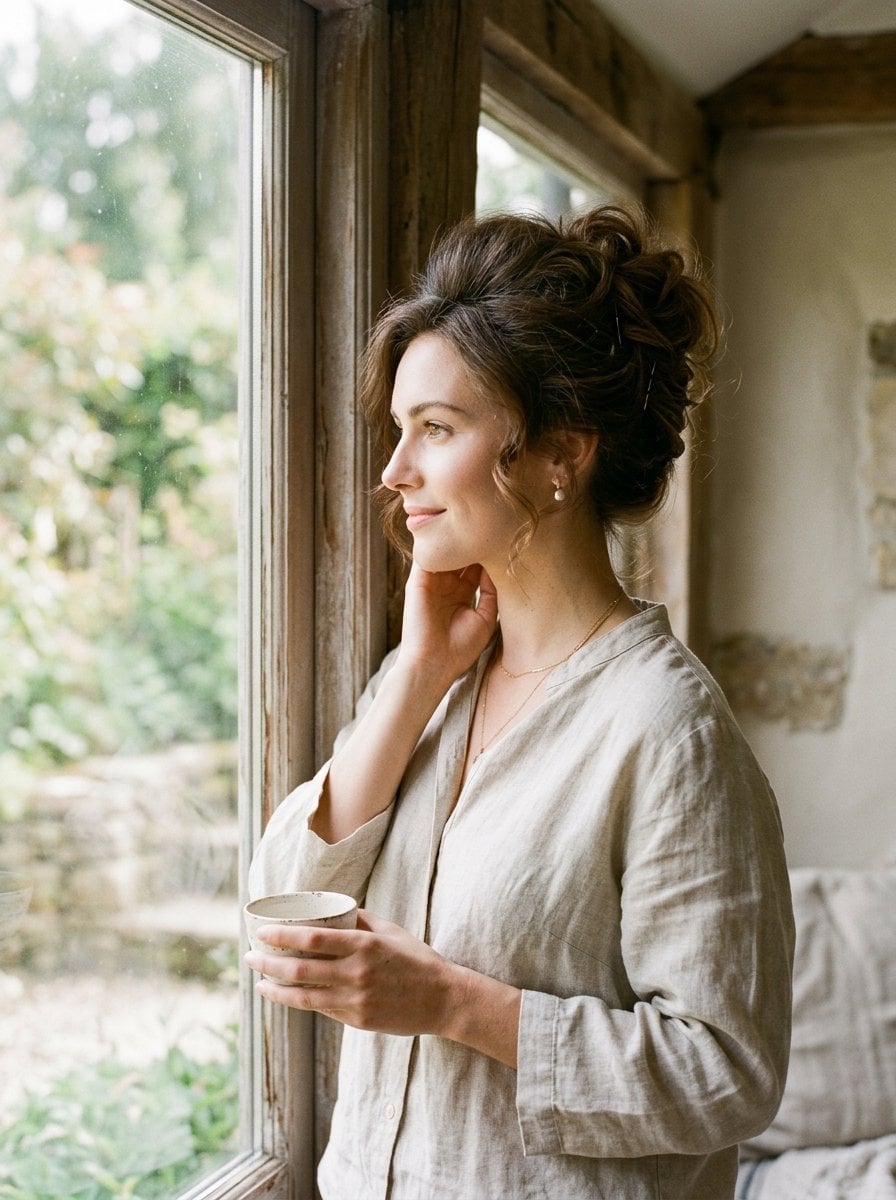
Thick wavy hair holds curls and texture well, so the updo has natural body. The soft curls framing the face soften the overall shape, which helps if you have an angular jawline. Ask your stylist for: thick wavy dark brown hair, voluminous updo, soft curls. A DIY version is possible with enough bobby pins and a texturizing spray, but the salon version will last longer and look more intentional on the first try.
Long Dark Brown Voluminous Updo
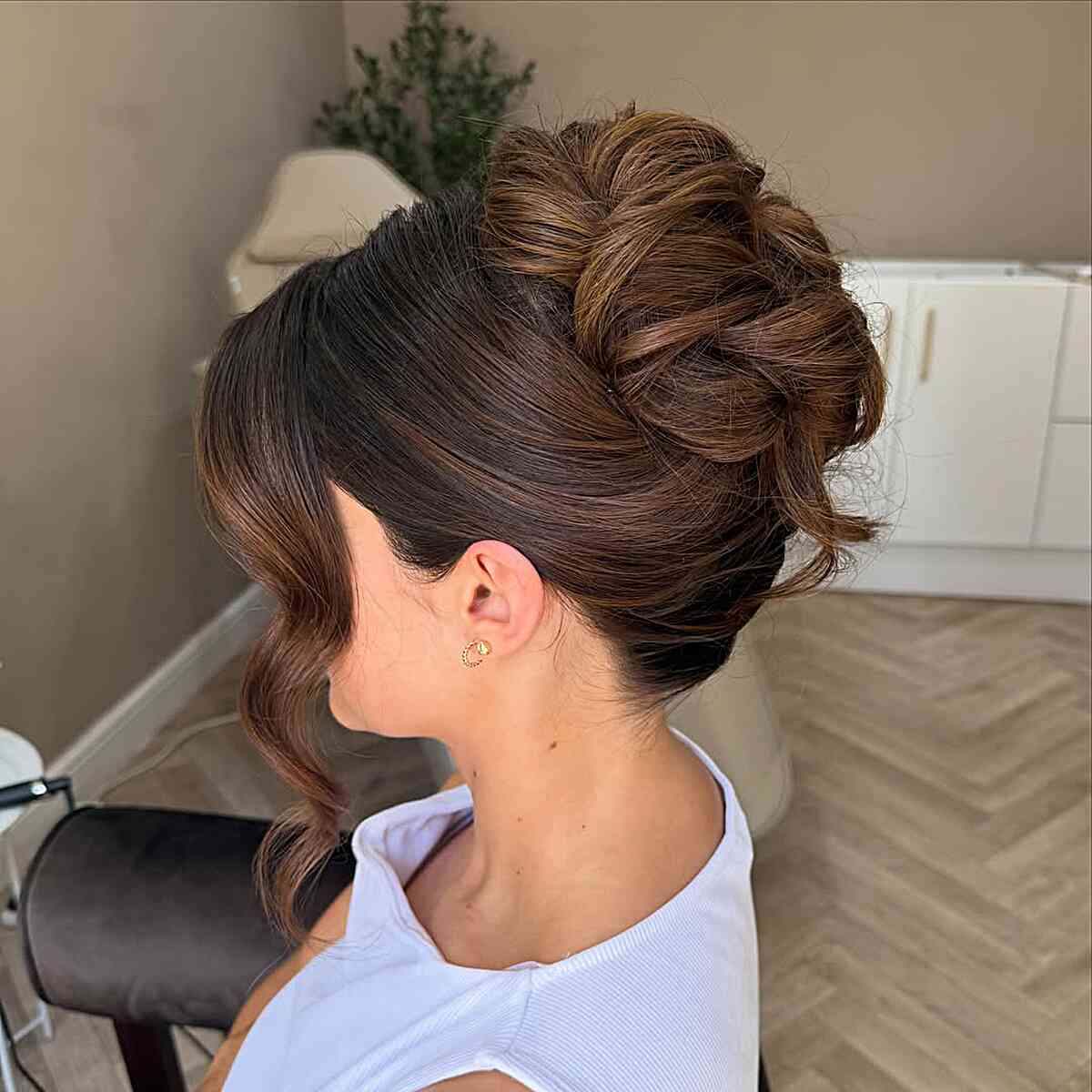
An intricately braided updo on long dark brown hair with warm highlights delivers a textured look. The volume comes from the braiding itself, not backcombing, and the face-framing pieces keep it from feeling too formal. The middle part and soft tendrils work well for softening a rounder face shape.
The trade-off: this level of braided detail takes time. Expect a solid hour or more in the chair, and if you have thick hair, the braids can feel heavy by evening. Ask your stylist for: long dark brown hair, voluminous braided updo, face-framing pieces. A texturizing spray applied before styling helps the braids hold their shape without slipping.
Mid-Back Honey Blonde Loose Waves
The design here is about controlled contrast: a honey blonde balayage with a deliberate root shadow that keeps the color from reading as flat. Thick, mid-back length hair with soft, face-framing layers provides the canvas, and the loose waves are built from a round-brush blowout followed by a large-barrel curling iron, brushed out into a glossy, relaxed S-pattern. A middle parting keeps the volume evenly distributed. Ask your colorist for: mid-back honey blonde hair, loose waves, face-framing layers, dimensional color.
This approach works best on thick, wavy hair, where the layers can move without collapsing. The face-framing pieces also help soften a square or angular jawline. Use a wide-tooth comb to style the waves without disrupting the pattern. A trim every 10 to 12 weeks maintains the shape and the shine.
Final Thoughts
For low-maintenance styling, opt for cuts like blunt bobs or layered styles that hold their shape with minimal effort. For more intricate looks, consider investing in regular salon visits for updos or complex braids.
- Trim blunt cuts every 6-8 weeks to maintain sharp lines.
- Deep condition wavy textures weekly to enhance shine and control frizz.
- Refresh highlights every 8-10 weeks for consistent color dimension.
- Use heat protectant spray before blow-drying or curling to preserve hair health.
- Use texturizing spray for better grip and hold in updos.
Effortless elegance is achievable with the right everyday hairstyle.