
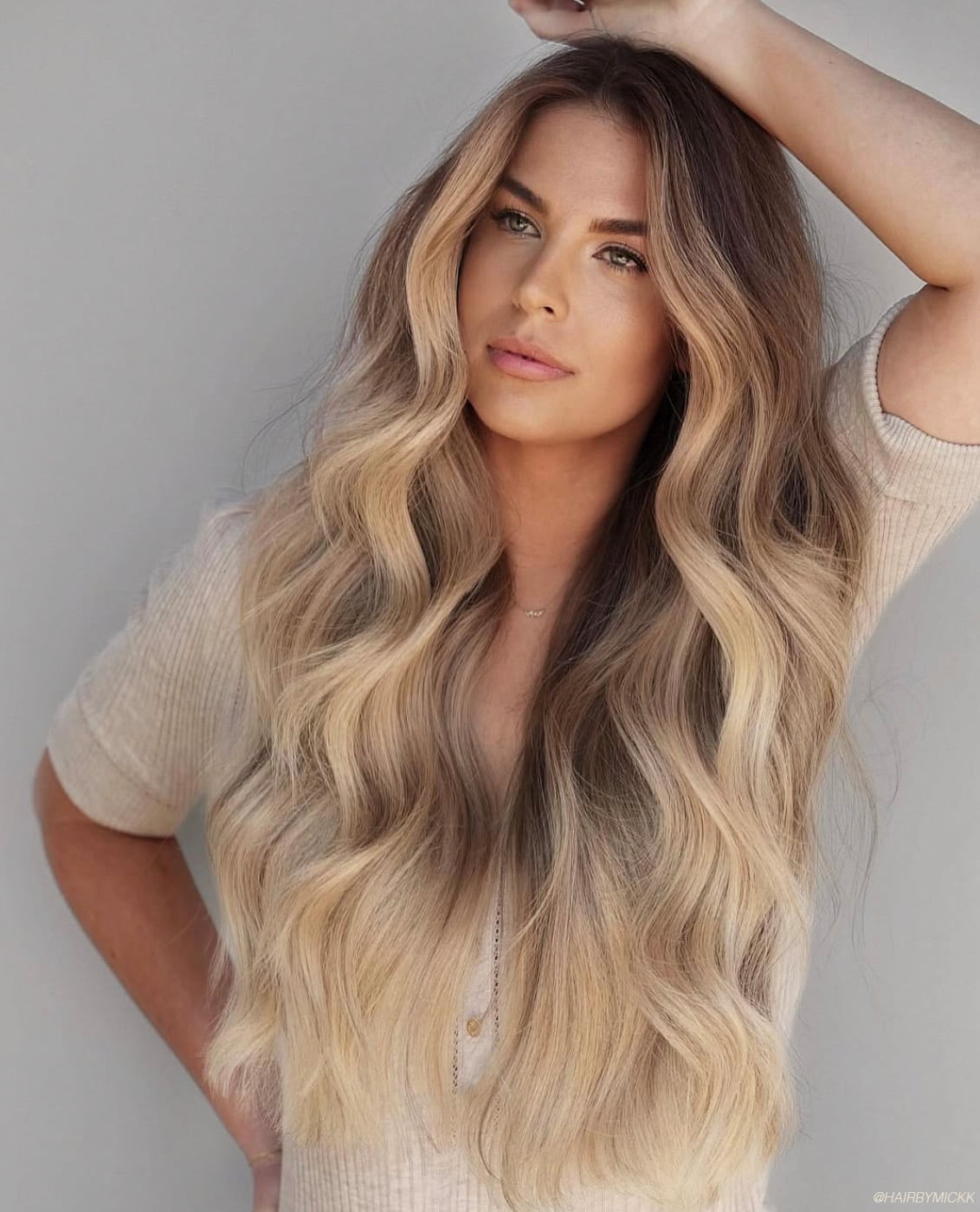
Ombre hair has moved past the harsh stripe of a decade ago into a softer, more deliberate fade. The current take leans on balayage application and tones like bronde or caramel that sit close to the natural base, making the grow-out less of a calendar event.
These 22 classy ombre hair ideas cover collarbone cuts to mid-back lengths, fine textures to thick waves, and shades from ash blonde to deep brunette. They solve common frustrations like a visible root line or color that flattens fine hair, and they work for straight, wavy, or curly textures without demanding a full reformat of your routine.
Long Layered Bronde Ombre With Side Swept Bangs
A side part and side-swept bangs break the symmetry of a classic bronde ombre, turning a straight-ahead color melt into something that frames the face on purpose. The long layers keep the wavy blowout from getting heavy, so the mid-back length moves rather than hangs. This combination works well on oval and square face shapes, where the diagonal line of the bangs softens the jaw.
Ask your colorist for: long layered bronde ombre, side swept bangs. Style with a large-barrel curling iron to get uniform waves, then brush them out for a softer finish. The bangs will need a trim every four to six weeks to stay at the right length, but the rest of the color can coast for eight weeks before the root shadow starts to feel deliberate.
Collarbone Bronde Ombre With Caramel Ash Tones
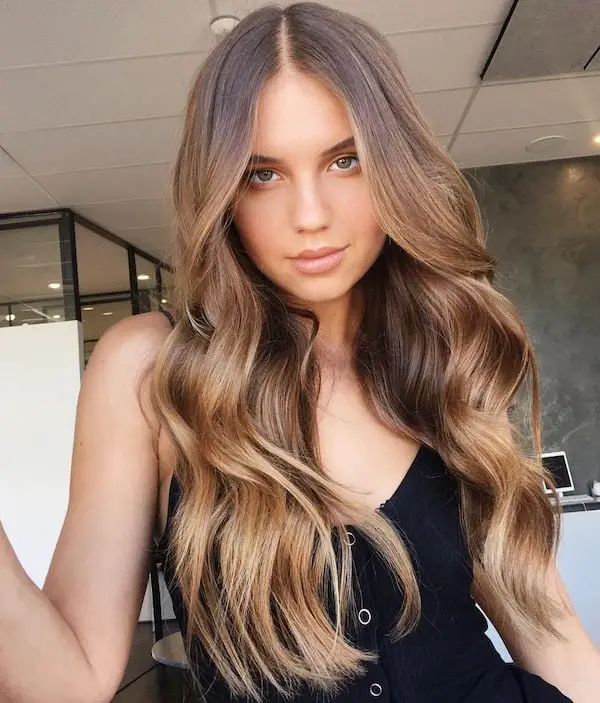
This is a balayage that does two things at once: the caramel lifts the bronde base into warmth, and the ash blonde pulls it back into cool territory, so the collarbone-length waves read as dimensional rather than one-note. The technique starts the color lower, around the ears, which keeps the root area dark and low-maintenance. A middle part and collarbone length work together to elongate rounder face shapes without adding weight at the jaw.
Ask your colorist for: collarbone bronde ombre, caramel and ash blonde tones. The thick wavy texture is what makes the color melt look seamless; finer hair would need more densely packed highlights to get the same effect.
Fine Collarbone Ombre Dark To Sun-Kissed Blonde
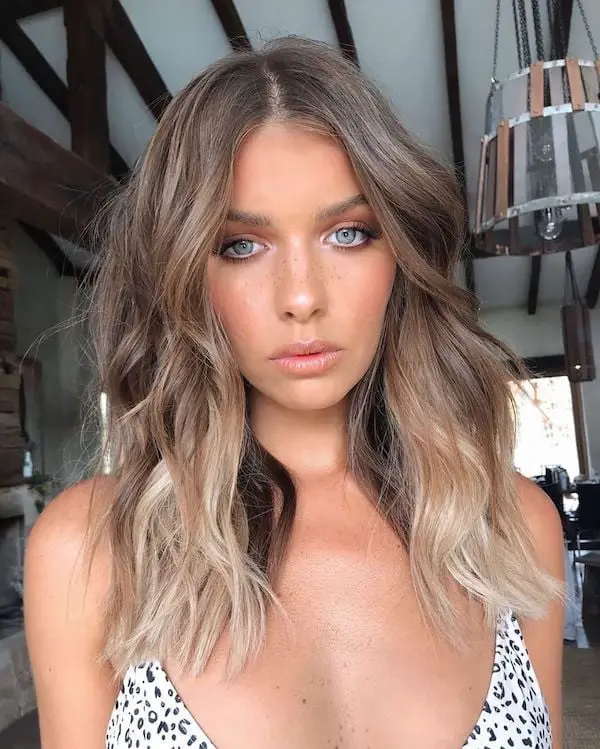
Fine hair and ombre have a delicate relationship: too much contrast and the ends look sparse, too little and the color looks grown-out. This collarbone-length version keeps the dark blonde roots close to the sun-kissed ends, so the transition appears natural. The loose waves add the appearance of volume, which is the main trick fine hair needs to borrow.
Ask your colorist for: collarbone length dark to light blonde ombre, sun-kissed ends. Use a lightweight volumizing mousse at the roots, and skip heavy creams that will flatten the wave pattern. The lighter ends are more porous and will need more frequent trims to avoid looking stringy.
Mid-Back Bronde Ombre From Dark Brown Roots
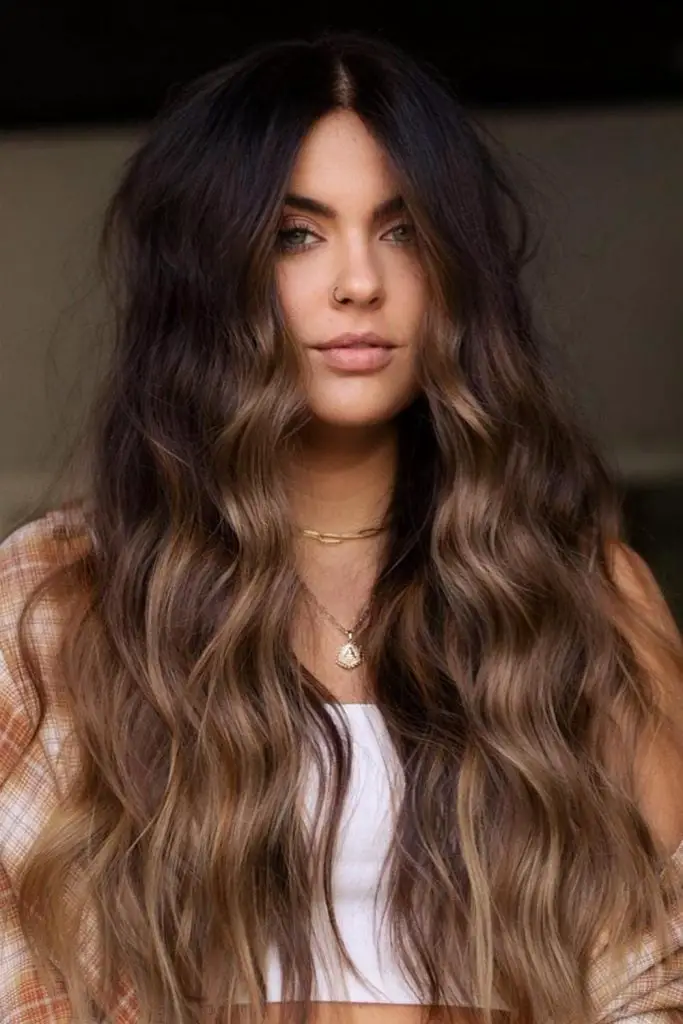
How does a dark brown root grow into bronde without looking like a stripe? The answer is in the placement: the colorist blends the bronde into the brown starting a few inches past the root, so the dark at the top looks like planned depth, not a missed retouch. On mid-back length with long layers, the transition has room to spread out, which makes the grow-out period generous.
Ask your colorist for: mid-back bronde ombre, dark brown to bronde, natural blend. A sea salt spray will give the thick waves texture without weighing them down. You can push the toning appointment to every ten to twelve weeks because the dark root is part of the design, not a problem to fix.
Mid-Back Ombre With Curtain Bangs Balayage
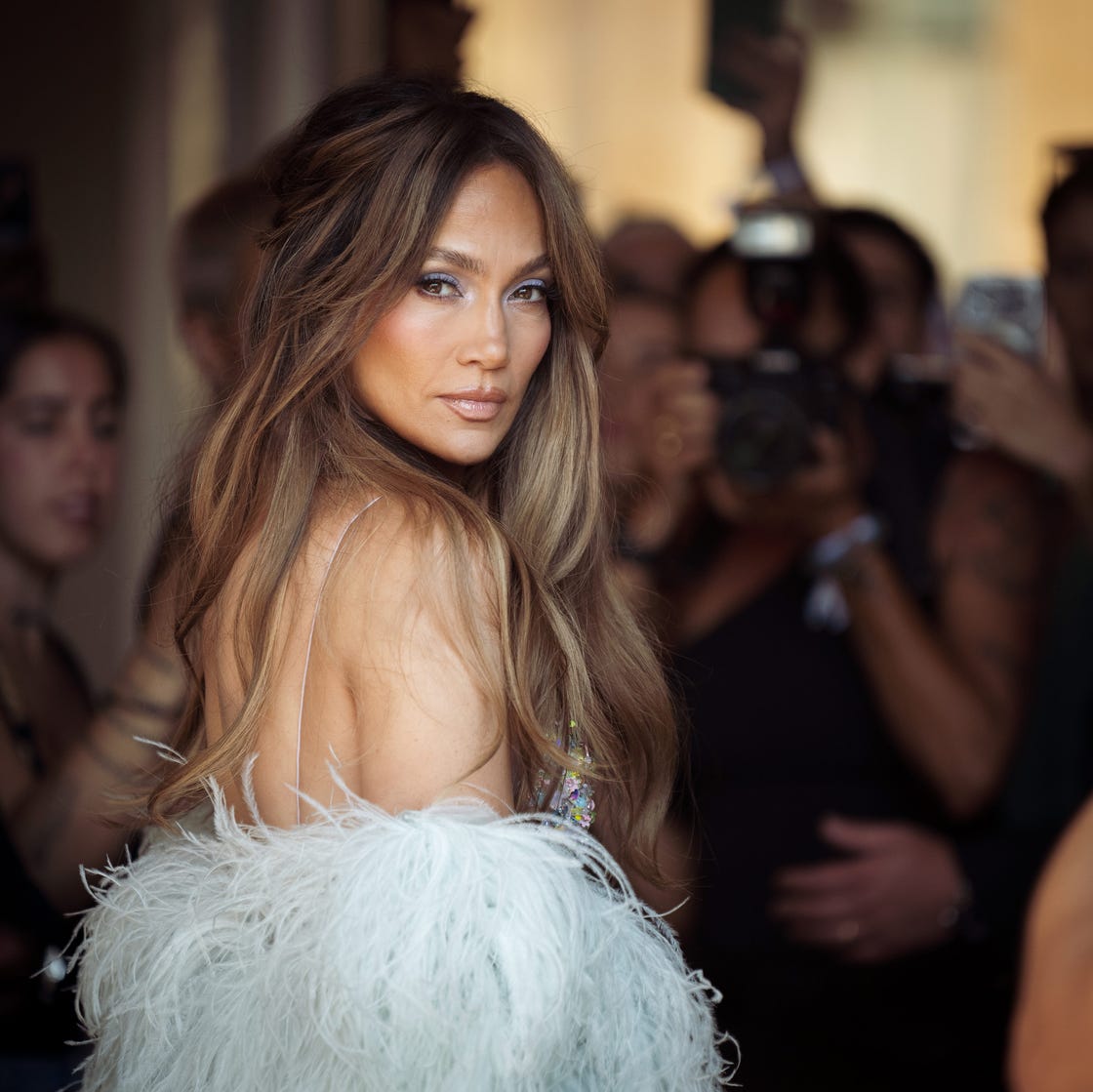
The curtain bangs in this mid-back length cut do not fight the balayage; they frame the caramel and blonde highlights that sweep forward from the dark brown base. The colorist painted the balayage to concentrate brightness around the face and then let it fade into the longer layers, so the bangs look intentionally lit. This works best for square and heart-shaped faces, where the soft wisp of the bangs balances the width of the cheekbones.
Ask your colorist for: mid-back ombre balayage, dark brown base, caramel and blonde tones, curtain bangs. Use a round brush to blow-dry the bangs forward, and a curling iron on the rest for uniform loose waves. This is a good option for a going-out occasion because the color reflects light from every angle.
Side View Dark Brown To Warm Brown Ombre Curls
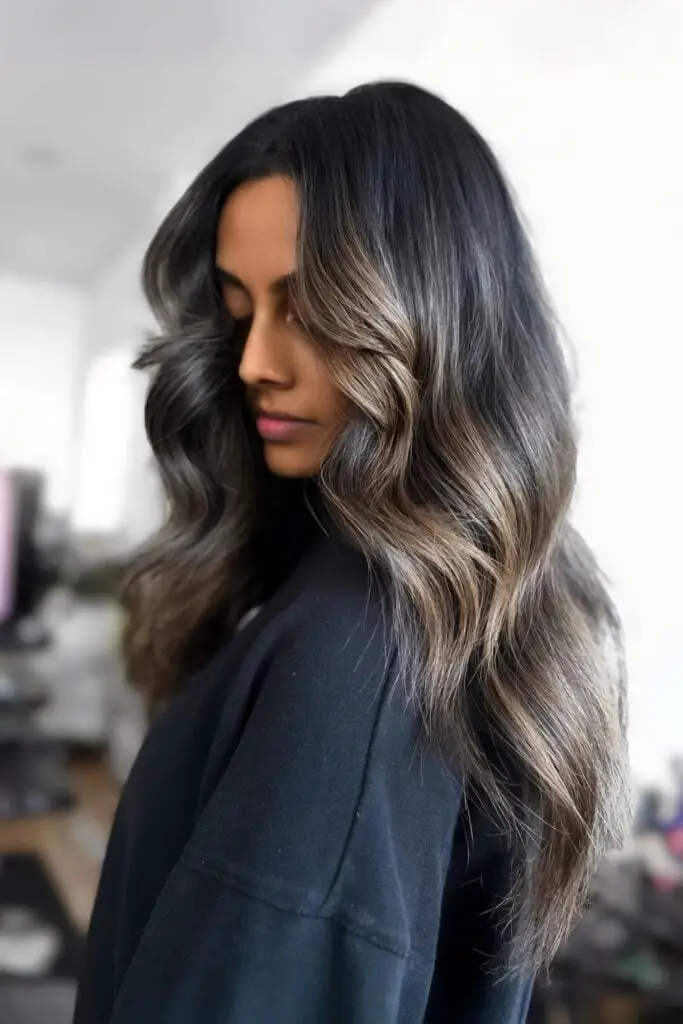
If ash ombre reads too cool for your taste, this dark brown to warm brown ombre leans into richness instead. The base stays dark and deep at the roots, then melts into caramel tones through voluminous curls that hit mid-back. Thick, wavy hair at least shoulder length carries the dimension best, and the volume at the sides balances a long face. Ask your colorist for dark brown to warm brown ombre, rich caramel tones. Diffuse the curls for definition and deep condition weekly to keep the softer tones from turning brassy.
Chin Length Pink Ombre Bob
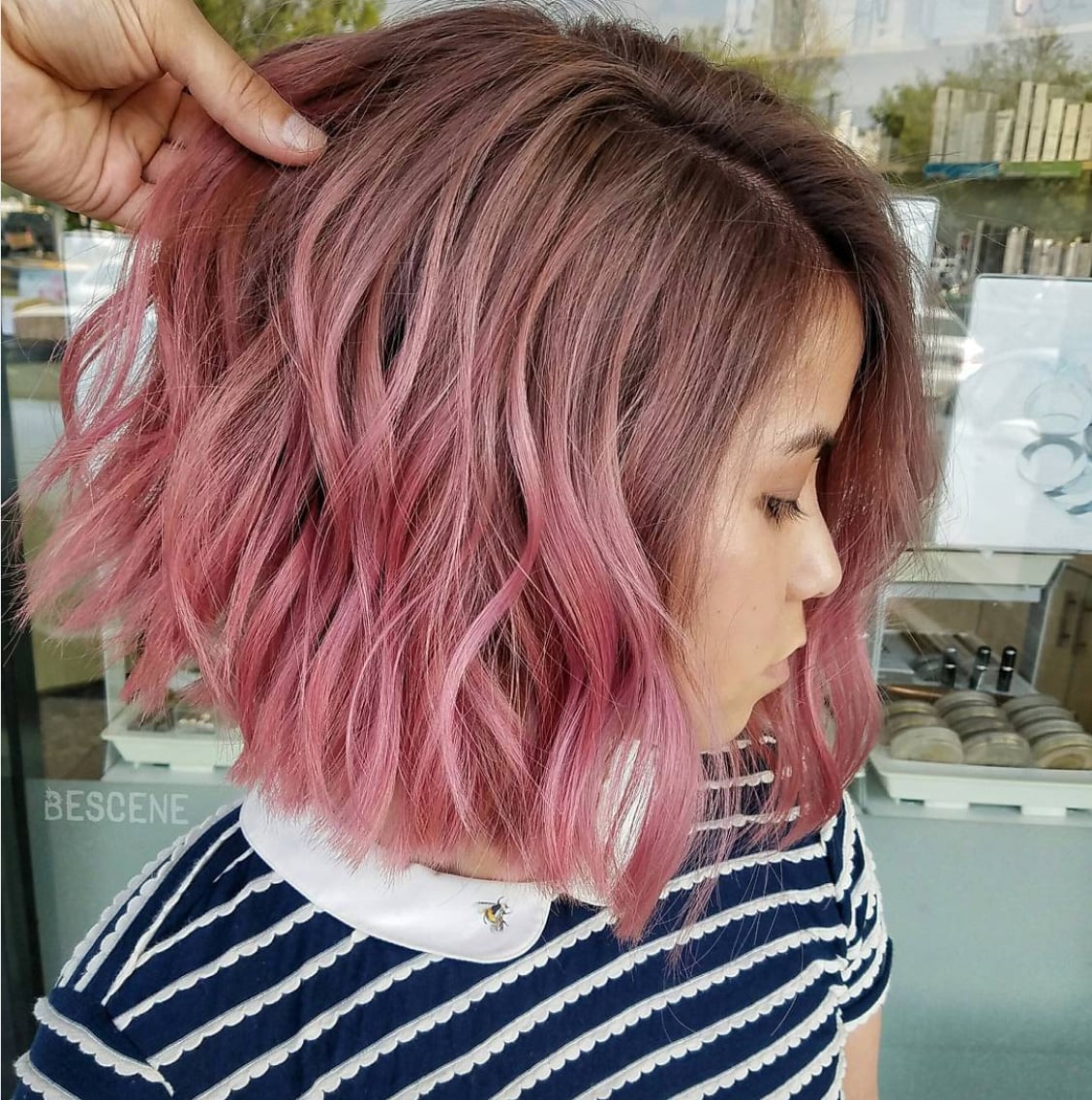
Wondering when a pink ombre bob actually makes sense? Spring and summer festivals, mostly, when a muted rose base fading to vibrant pink ends feels like the right kind of fun. The chin length cut works on medium density hair and suits most face shapes without much fuss. Ask your colorist for a chin length bob, muted rose to pink ombre. Finish with a wavy blowout, then use a texturizing spray for lived-in waves. Keep the shape honest with a trim every six to eight weeks.
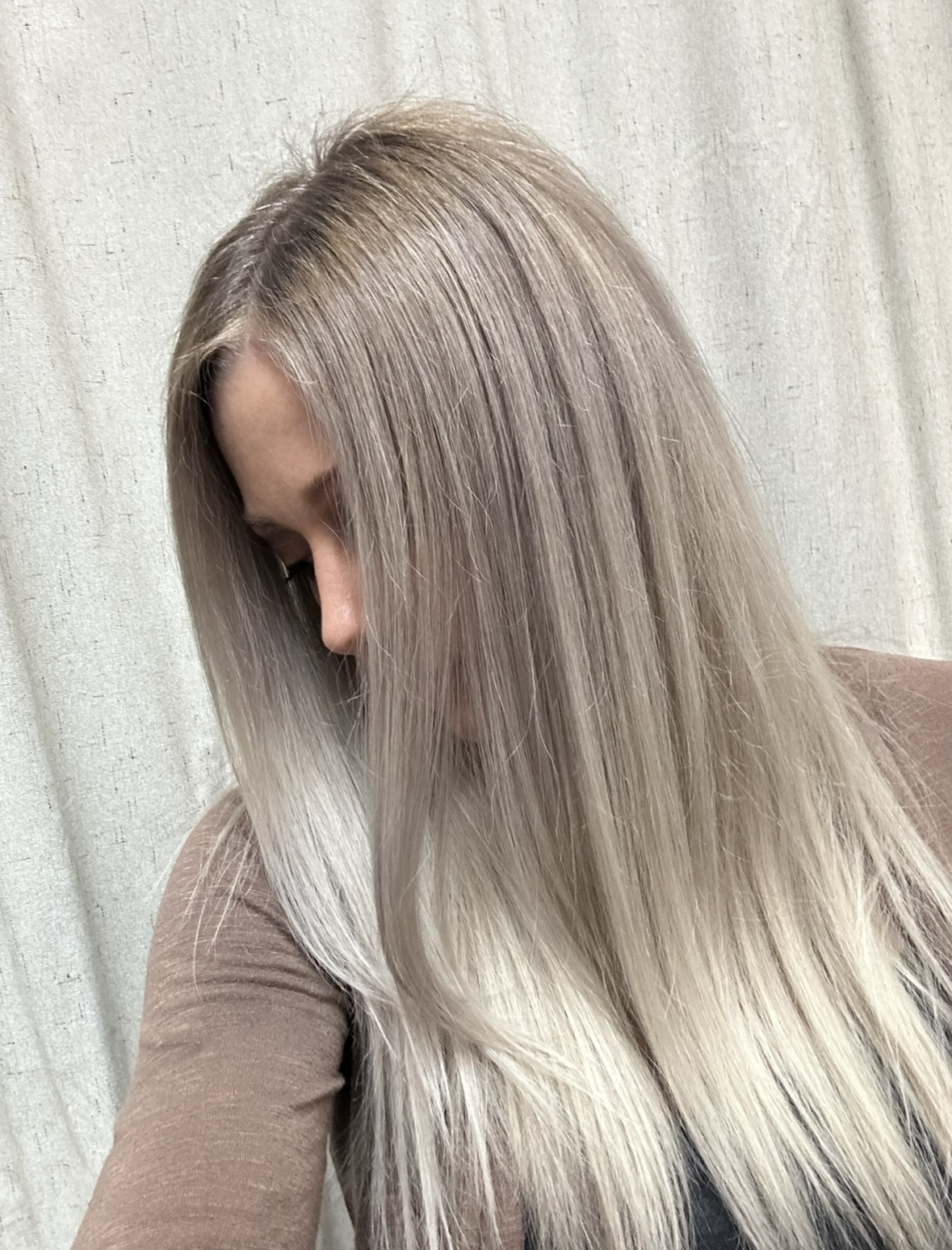
Back View Ash Blonde Ombre Long Layers
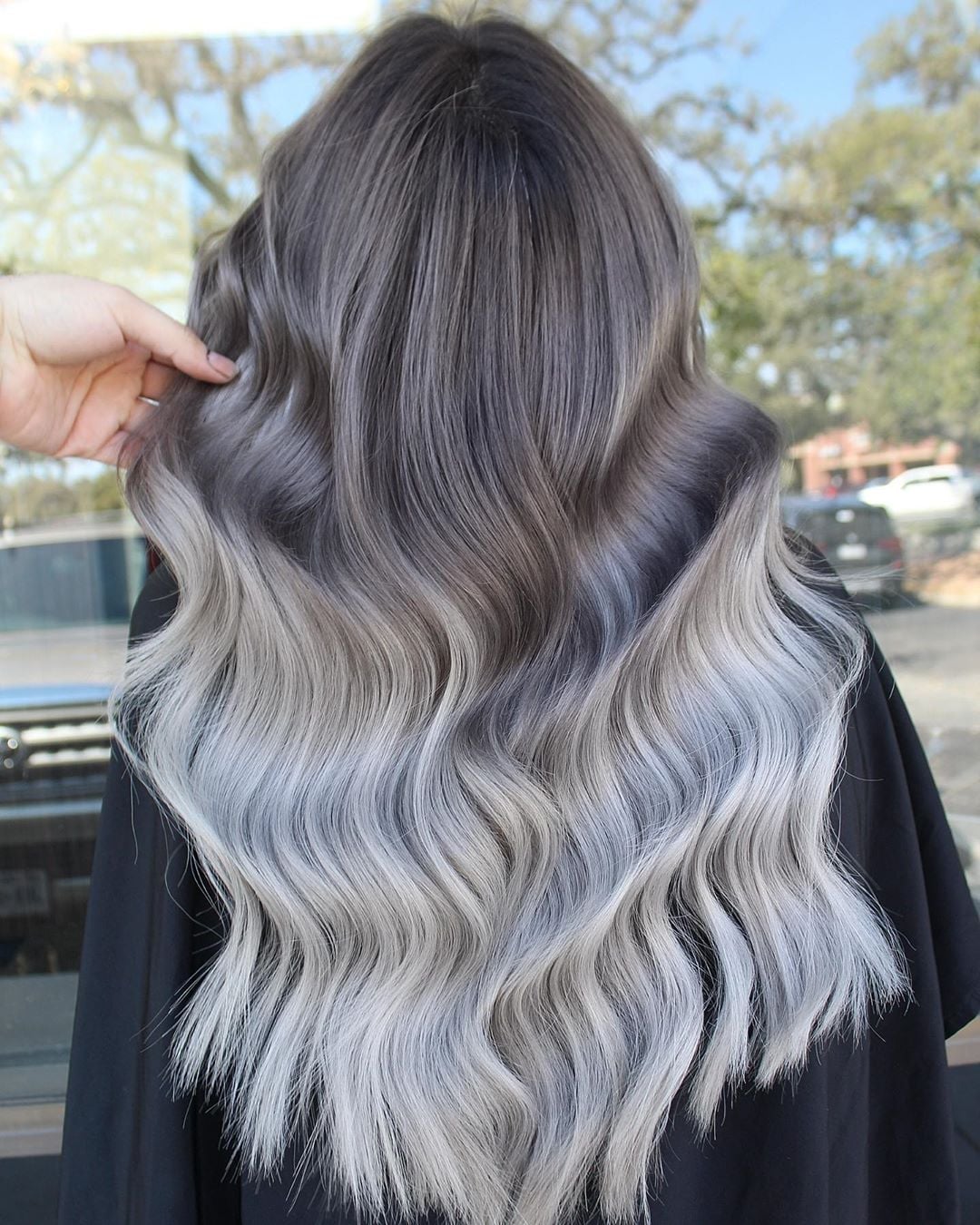
The design starts with a dark ash brown root that lightens gradually to a bright ash blonde at the ends, so the transition appears as a slow fade. Pre-lightening lifts the mid-lengths and ends first, and a toner settles the ash tone before the final gloss. This approach works best on thick, wavy hair at mid-back length, where the long layers give the color room to travel. Ask your colorist for a back view long ash blonde ombre, dark ash brown to bright ash blonde. A middle part keeps the distribution even, and the wavy blowout shows off the gradient from every angle. Brassiness shows up around week four, so plan a toning appointment every four to six weeks. Apply a heat protectant before blowouts to keep the ends from drying out.
Back View Dark Brown To Ash Blonde Ombre
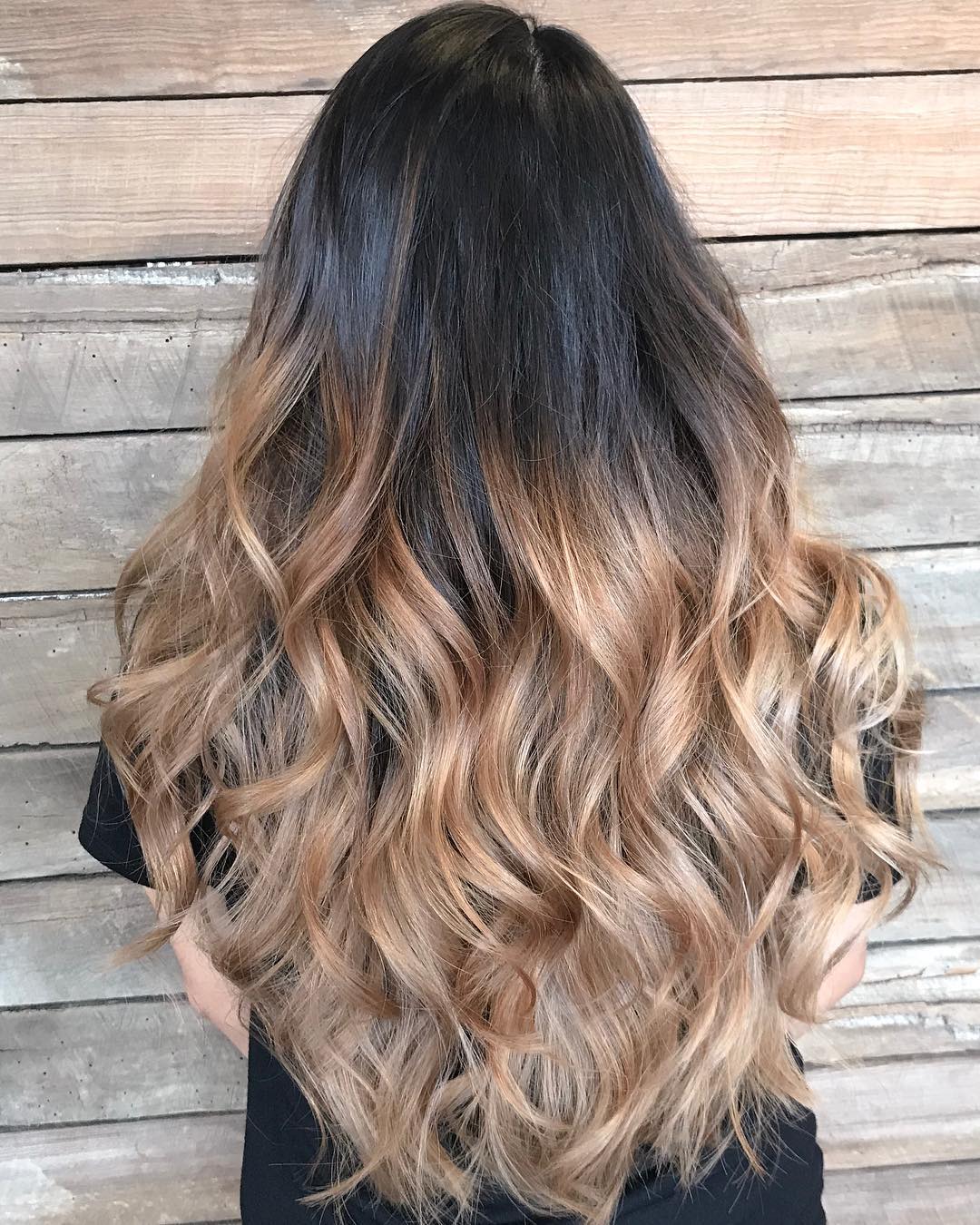
The dark brown base stays close to the root, then the color steps down through blonde into ash blonde at the tips, giving the ombre a cooler finish that suits a round face by elongating it with a middle part. Thick, wavy hair at mid-back length carries the gradient well, and the loose waves show the ash tones clearly. Ask your colorist for a back view dark brown to ash blonde ombre, gradual transition. The gradual fade means the root line is forgiving, but the ash tones need a toner refresh monthly to avoid pulling muddy. Use a wide-tooth comb on damp hair to detangle without roughing up the wave pattern.
Back View Caramel Ombre Wavy Blowout
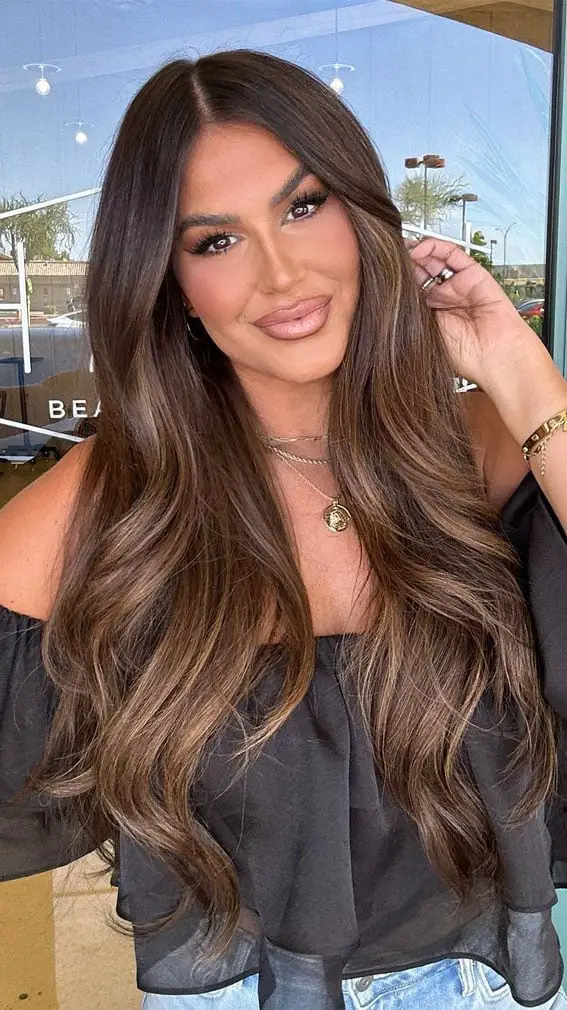
How much daily styling does a wavy blowout with caramel ombre really take? About twenty minutes with a round brush and a blow dryer, plus a heat protectant so the warm tones stay glossy. The rich brown base melts into caramel blonde ends across thick, wavy hair at mid-back, and the middle part keeps the gradient looking balanced from the back. Ask your colorist for a back view caramel ombre, rich brown to caramel blonde ends. The caramel tones warm up the overall color without going orange, and a trim every eight to ten weeks keeps the length from looking ragged. A wide barrel iron refreshes the waves on day two.
Back View Dark Brown To Natural Bronde Ombre
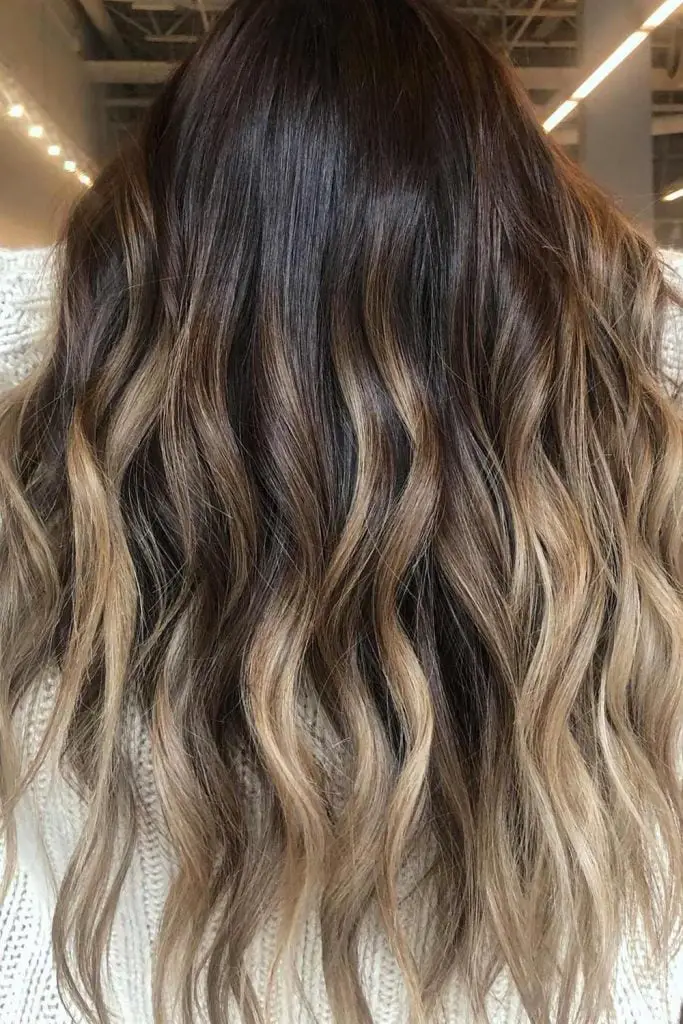
The appeal of a natural bronde transition from dark brown roots is that it looks like the sun did the work, not a colorist. Achieving that subtle lift on medium-density, wavy hair is a salon skill: the blend has to be gradual enough that the grow-out line never announces itself, but distinct enough that the ends do not look faded. A home kit tends to land on one extreme or the other.
Mid-back length and loose waves give the colorist room to place the lighter pieces where they catch movement. Ask your colorist for: dark brown to bronde ombre, seamless blend. A toning visit every ten to twelve weeks keeps the bronde from pulling brassy, and a trim every eight weeks maintains the shape. This is not a shade that rewards shortcuts.
Side View Bronde Ombre With Dimensional Highlights
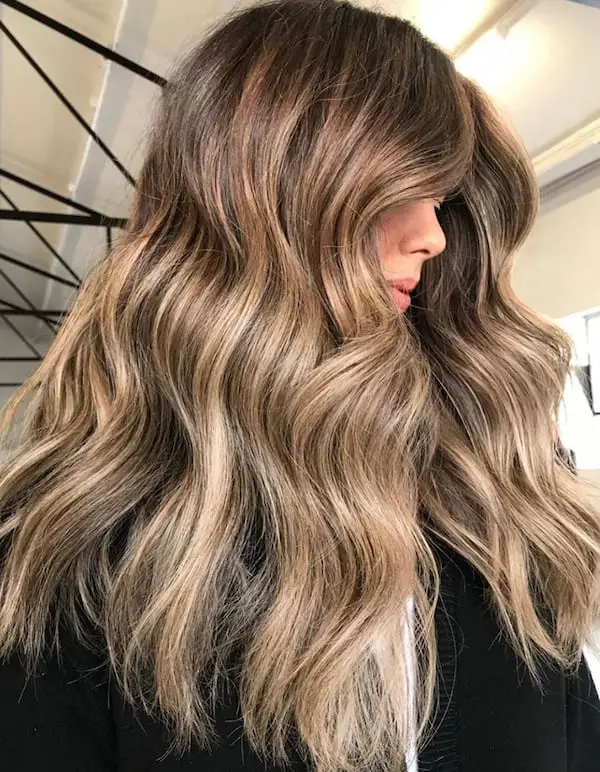
The side view reveals the construction of a bronde ombre more clearly than the front ever can. Here the rich brown base is painted from the root to about mid-shaft, then the dimensional highlights begin their work: some pieces lift to a pale blonde, others stop at honey, and the loose waves scatter them so the eye reads depth rather than a single line of demarcation.
Thick, wavy texture at mid-back length is ideal because each wave creates a new plane for the lighter tones to catch. Ask your colorist for: side view bronde ombre, dimensional blonde highlights. A side part adds lift at the crown, which matters if your hair is on the finer side. A smoothing serum on the ends prevents the lighter sections from looking dry between trims.
Back View Dark Brown To Caramel Ombre Waves
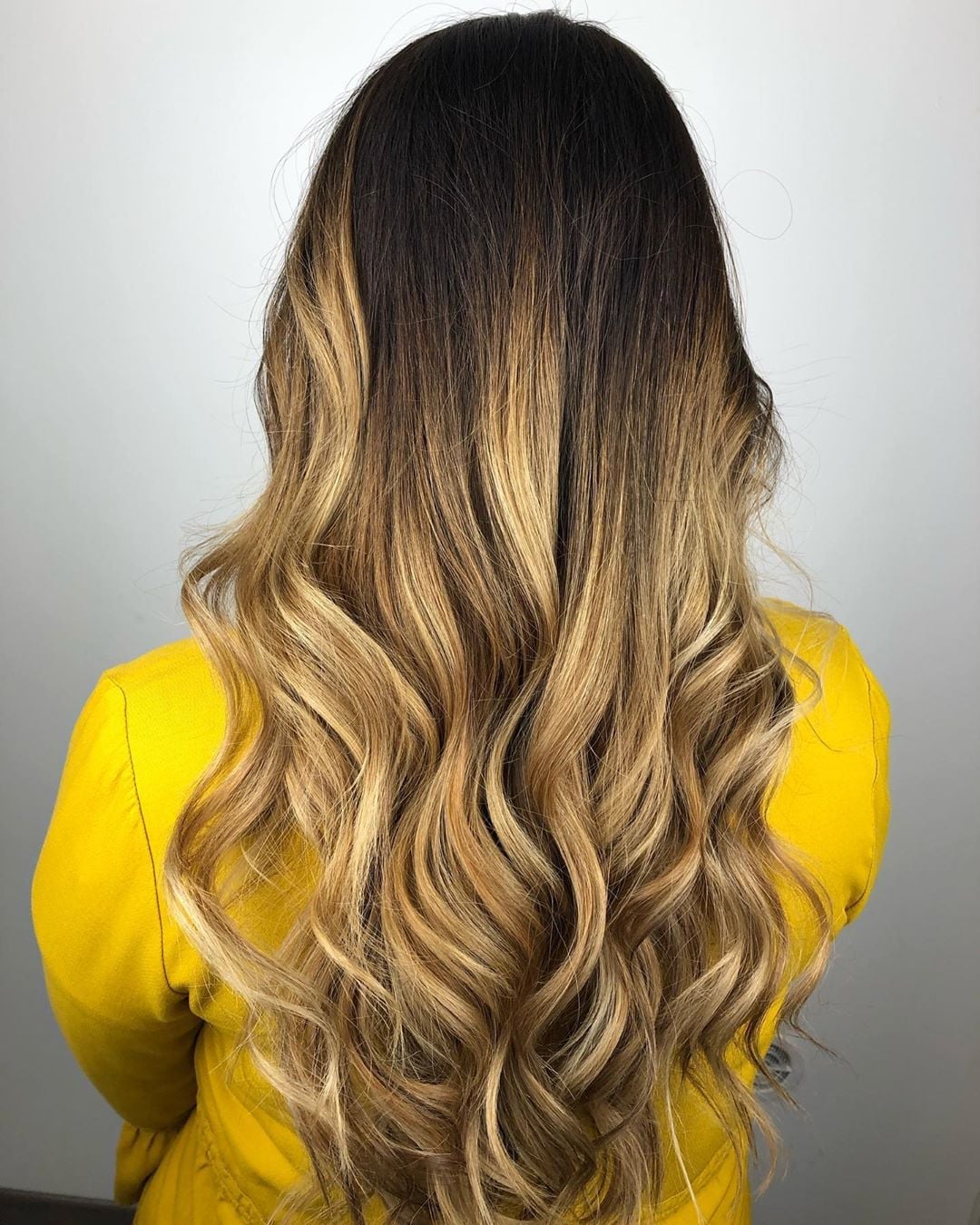
The smooth transition from dark brown roots to caramel blonde ends is exactly what a classic ombre should deliver, but thick, wavy hair makes that blend harder to maintain. The density of the hair means the lighter pigment needs to be saturated enough to read through multiple layers of wave, and caramel is a tone that shifts warm quickly. A toning appointment every six to eight weeks is not optional: skip it and the ends will start to look orange against the dark base.
Side View Bronde Ombre With Dimensional Highlights, Close-Up Take
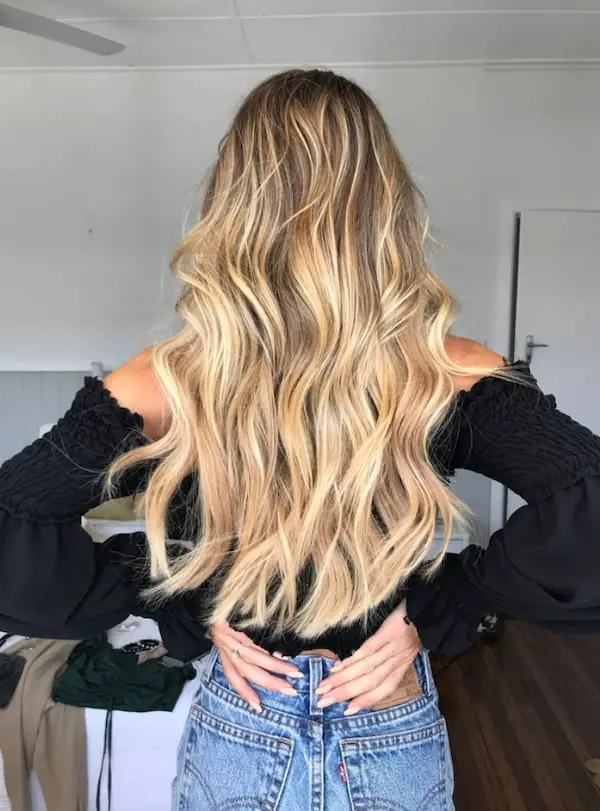
Is the side view more telling than the front? For a bronde ombre with dimensional highlights, yes. From the front, the overall effect is warm and blended. From the side, you see the architecture: the rich brown base sits close to the part, the lighter tones are concentrated around the jaw and below, and the loose waves break up the color so no two strands look identical.
This matters most for thick, wavy hair at mid-back length, where the sheer volume can swallow subtle highlights. Ask your colorist for: side view bronde ombre, dimensional blonde highlights. The side parting is deliberate: it lets the lighter sections fall forward around the face instead of getting lost in the back. A smoothing serum on the mids and ends keeps the dimensional pieces defined.
Front View Dark Brown To Blonde Ombre Waves
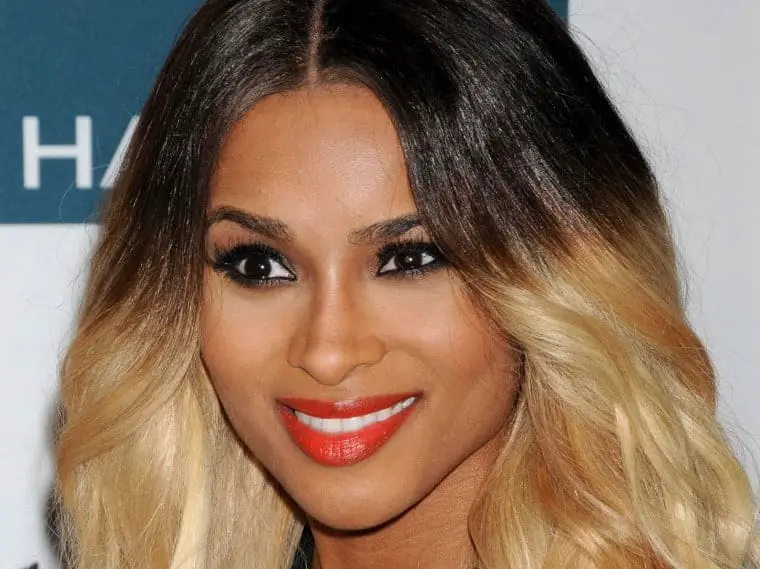
The front view of a dark brown to blonde ombre does two things at once: it keeps the root rich and low-maintenance while the bright ends frame the face. For square or round face shapes, the lighter color around the jaw and below softens the horizontal lines of the face without needing layers or bangs to do the work.
The middle part here is not accidental: it creates symmetry, and the loose waves on thick, mid-back length hair give the color enough surface to show its full range. Ask your colorist for: front view dark brown to blonde ombre, bright blonde ends. A texturizing spray at the roots and mid-lengths adds the grip that keeps the waves from falling flat by midday. A toning shampoo once a week is enough to keep the blonde from turning yellow.
Front View Dark Brown To Pinkish-Purple Ombre
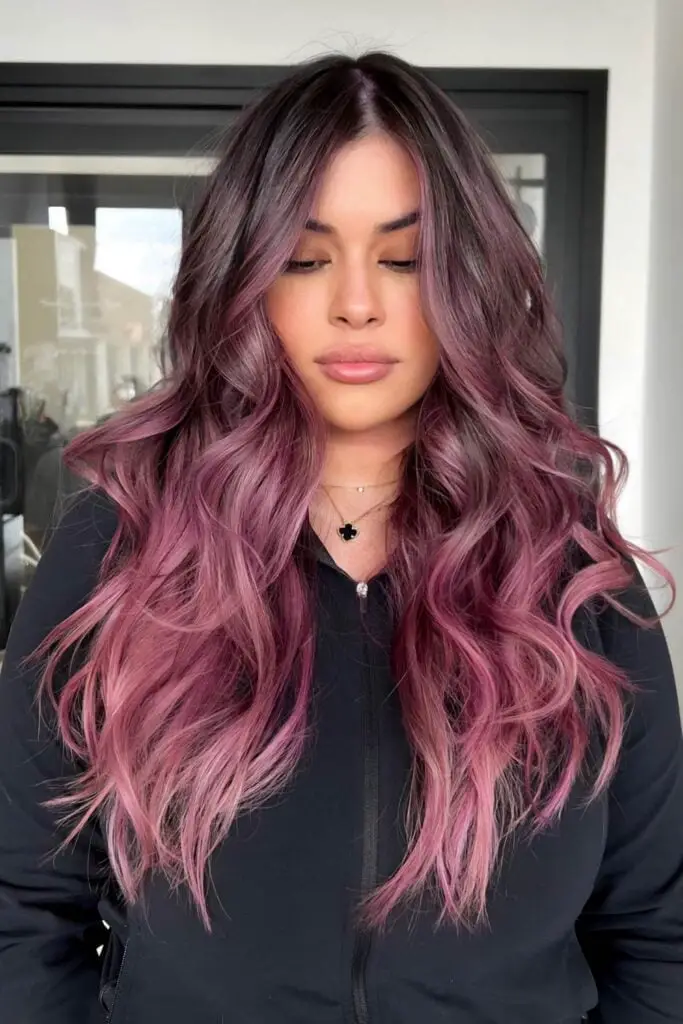
This pinkish-purple ombre brings a bold shift for the colder months. The dark brown base keeps it grounded while the vibrant pinkish-purple ends add a pop of color that works well against gray skies and chunky knit scarves. Medium density, wavy hair at mid-back length carries the gradient smoothly, and the middle part keeps the color balanced on both sides. Ask your colorist for: front view dark brown to pinkish-purple ombre, vibrant ends. To keep the pink from fading into a muddy rose, use a color-safe shampoo and refresh with a tinted mask about once a month. It requires a salon visit, but the result is a hair color that looks deliberate, not accidental.
Collarbone Lob Dark To Light Brown Ombre
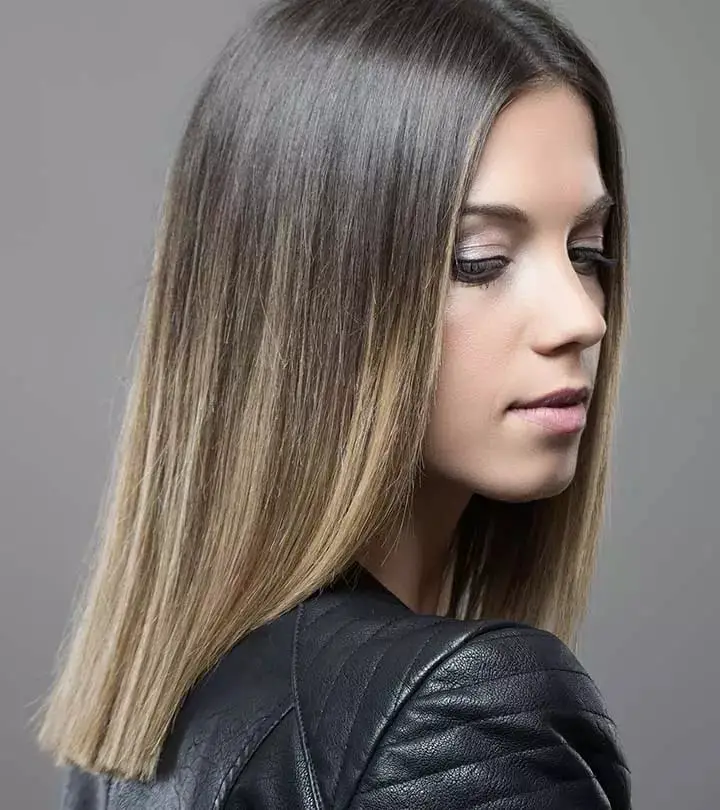
Wondering how to keep a subtle ombre from turning into a grown-out disaster on fine, straight hair? This collarbone lob answers with a dark to light brown transition that stays close to your natural depth, so the grow-out line is barely there. The side part adds a little volume at the root, which fine textures appreciate, and the straight styling keeps the color gradient the main event. Ask your colorist for: collarbone lob, dark to light brown ombre, subtle transition. Since the lob shape depends on clean lines, plan a trim every six to eight weeks. A flat iron smooths the ends in about ten minutes, which is about all the styling this cut needs.
Back View Dark Brown To Caramel Ombre, Close-Up Take
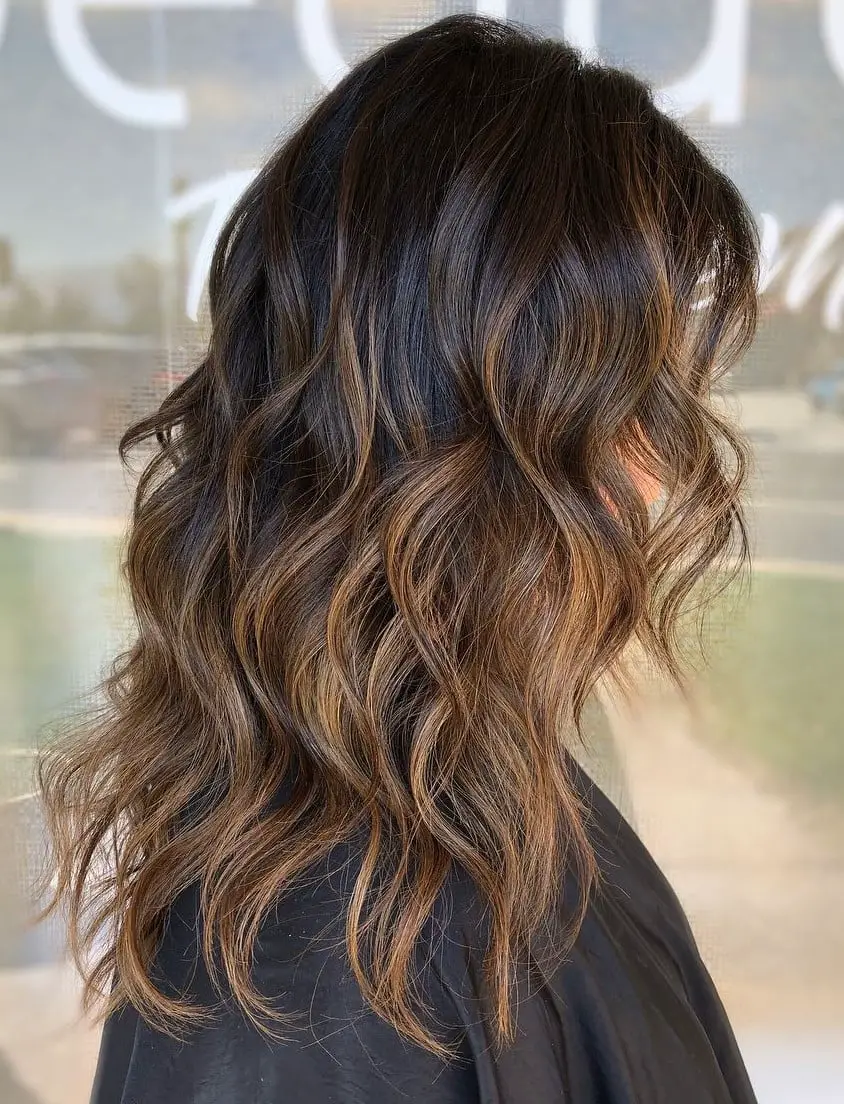
Warm caramel ends are having a moment, and this back view shows exactly why the tone matters as much as the placement. The dark brown base melts into rich caramel without a harsh line, which is the goal of a seamless ombre. Medium density, wavy hair at mid-back length gives the color enough surface to show the gradient, and the loose waves help the color look sun-kissed. Ask your colorist for: back view dark brown to caramel ombre, rich caramel ends. To keep the waves defined, apply a styling cream to damp hair before air-drying, then scrunch. A trim every eight to ten weeks keeps the layers from looking straggly, and the caramel tone needs a gloss around the same schedule to stay warm.
When you book, bring a photo of the back view, because that is where the color placement really shows. The stylist will likely paint the caramel starting a few inches below the roots, then blend upward with a feathering motion. That technique is what keeps the transition soft. If you want more dimension, ask for a few slightly lighter pieces woven through the ends, but keep the base dark to preserve the contrast.
Collarbone Lob Dark Brown To Ash Blonde Ombre
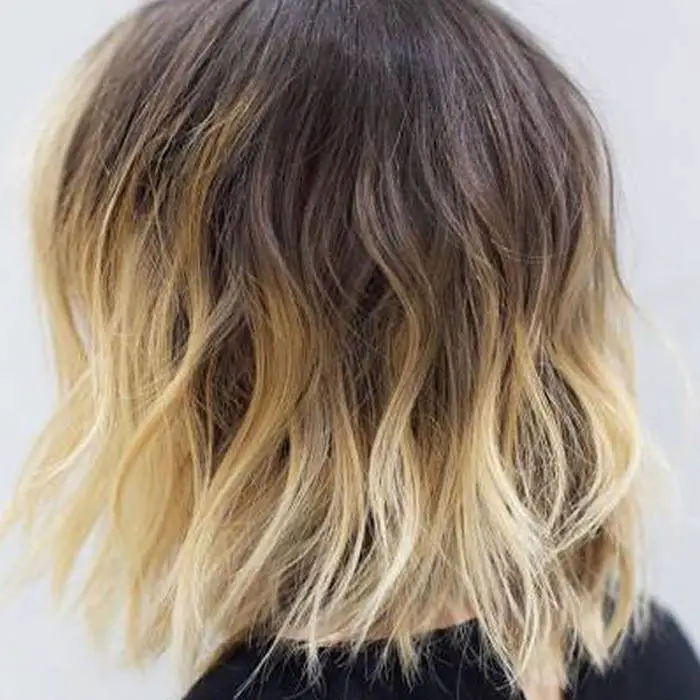
Getting from dark brown to bright ash blonde ends is a two-step process that starts with lightening, then a toner to cancel out any warmth. The noticeable contrast here is the point, and it works because the lob is cut to collarbone length, so the blonde has enough room to make an impact. Medium texture hair handles the beachy waves well, and the middle part shows off the color gradient symmetrically. Ask your colorist for: collarbone lob, dark brown to bright ash blonde ombre. The ash tone needs a purple shampoo once a week to stop it from turning brassy, and the lob itself needs a trim every six to eight weeks to keep the ends looking sharp.
Back View Dark Brown To Blonde Ombre Blowout, Everyday Version
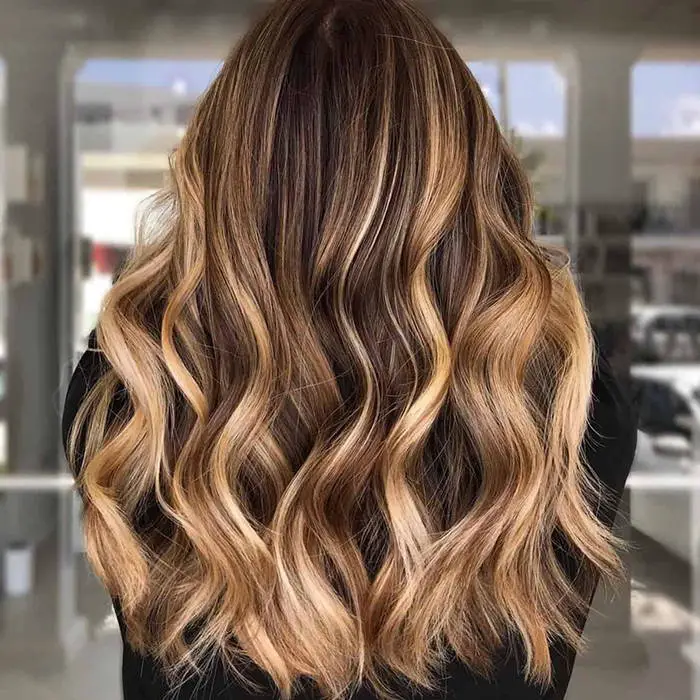
This classic dark brown to blonde ombre is the kind of smooth transition that looks simple but is actually a test of a colorist’s blending skills. The key is in the placement: the blonde starts low enough that the roots stay dark, then melts into bright ends without a visible line. Thick, wavy hair at mid-back length gives the blowout body, and the middle part lets the color fall evenly on both sides. Ask your colorist for: back view dark brown to blonde ombre, bright blonde ends. Doing this at home is risky because uneven lifting can leave patches of orange, so leave the lightening to the salon. For the blowout, use a heat protectant and a round brush to smooth the waves, then finish with a spritz of texture spray for hold. A trim every eight to ten weeks keeps the ends healthy enough to support the color.
Back View Dimensional Ombre Loose Waves

Does a dimensional ombre mean you have to live at the salon? The blend of warm brown and lighter blonde tones here says no. This back view shows thick, wavy hair at mid-back length with a middle part, the color moving from a richer brunette at the roots into softer, brighter lengths without a sharp line. The waves are defined and the color layers remain visible through the movement. Ask your colorist for a dimensional ombre with warm brown and blonde tones. A trim every eight to ten weeks preserves the shape; toning every six to eight weeks keeps the blonde balanced.
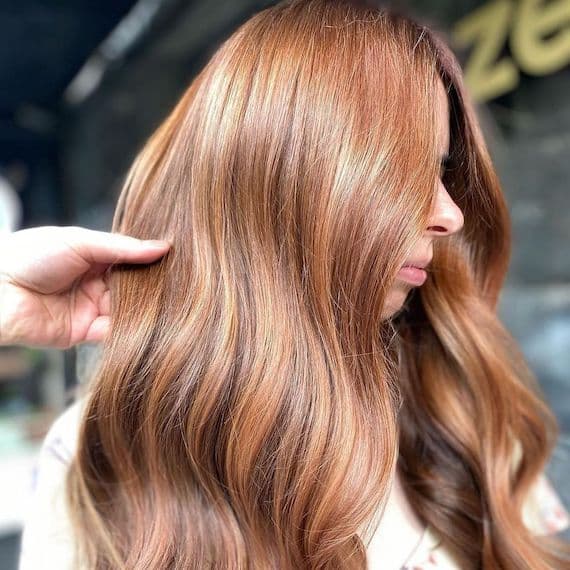
Back View Rich Brunette With Caramel Copper Highlights
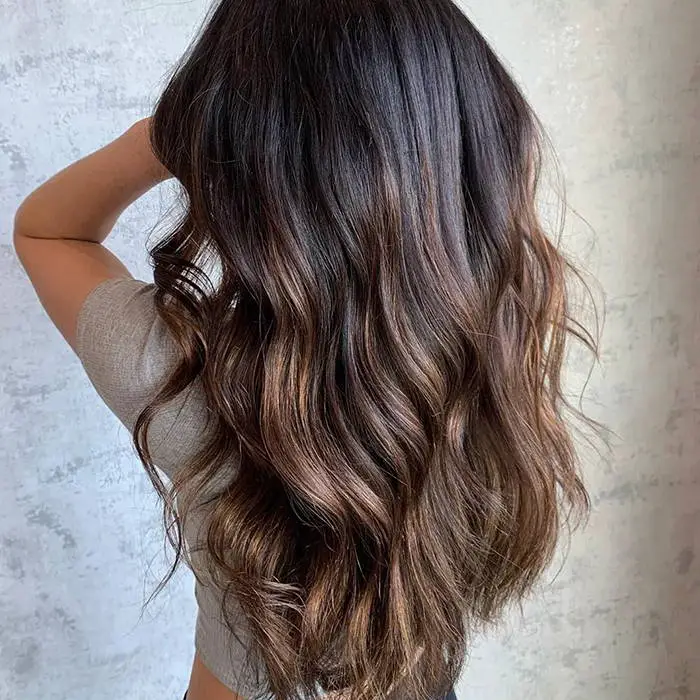
This is a rich brunette that does not sit flat. The deep brown base is lifted by caramel and copper highlights woven through long, layered hair at mid-back length, styled in loose waves over a middle part. Ask your colorist for a dimensional brunette with caramel and copper highlights. The honest trade-off: warm copper and caramel tones fade faster than ashier shades, so expect to reach for a color-depositing conditioner every second or third wash if you want the shine to stick around until your next appointment.
Final Thoughts
For a low-maintenance, natural-looking ombre, choose a seamless blend with tones that complement your natural base color, focusing on shades like bronde or caramel. Fine hair benefits from keeping the transition higher, around the jaw, while thicker textures can let it drift lower without losing definition.
- Maintain ombre tones with color-depositing conditioners every 4-6 weeks.
- Trim split ends every 8-10 weeks to keep the transition sharp.
- Use heat protectant spray before styling to preserve color vibrancy.
- Wash hair 2-3 times a week with sulfate-free shampoo to prevent fading.
Classy ombre offers timeless warmth and dimension.