
Aesthetic dye hair starts with a base shade and a coloring technique, then layers in tone for depth. This season, lived-in color and soft face-framing layers are replacing flat, all-over shades and chunky highlights.
This collection of 22 ideas covers the spectrum, from low-upkeep subtle highlights to high-impact vibrant shades, across short bobs, collarbone lobs, and mid-back lengths. Fine hair that needs volume, a visible grow-out line you want to hide, or a fringe that won’t sit right? There is a solution here. Aesthetic Dye Hair works best when you match the technique to your texture and lifestyle.
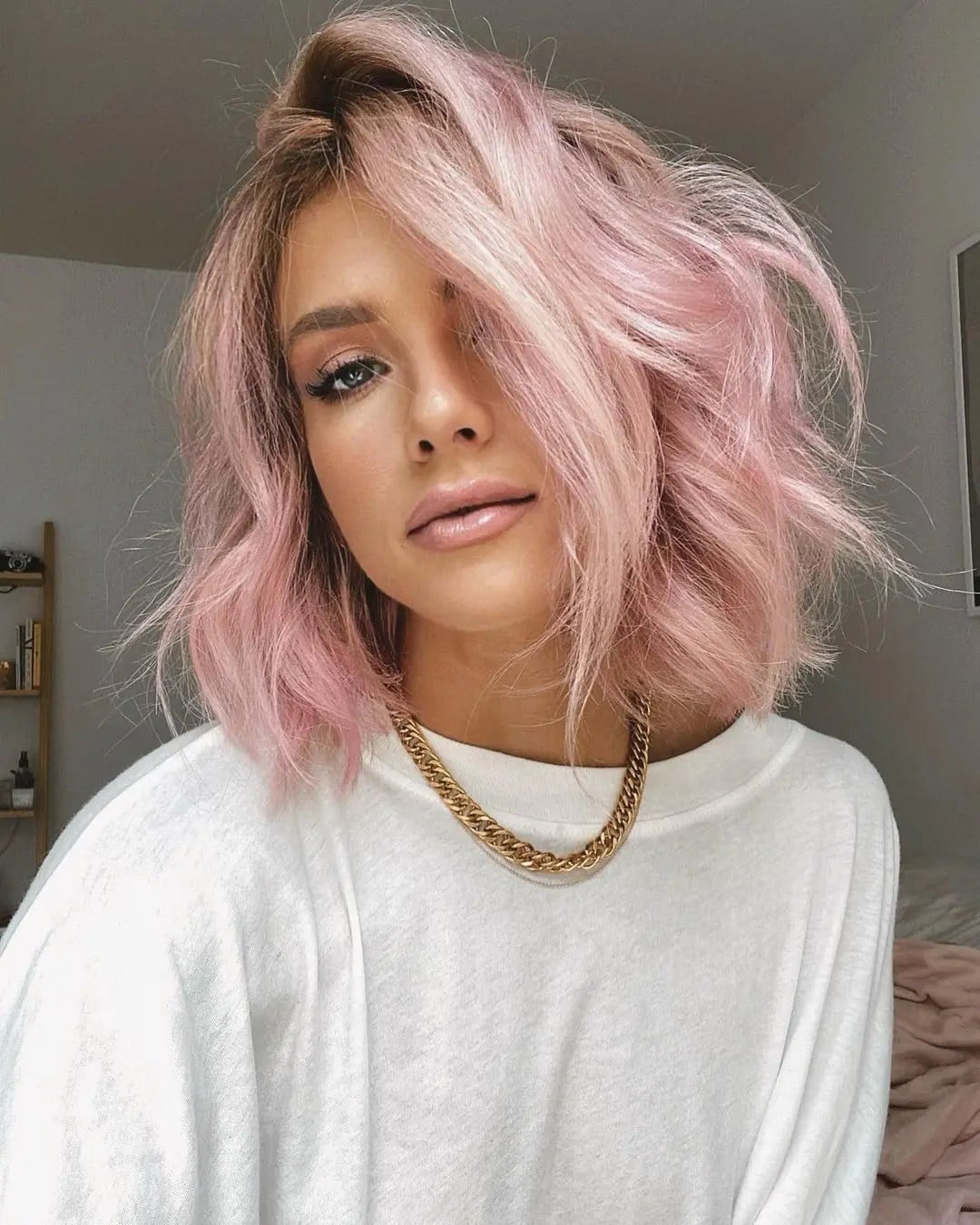
Delicate Pastel Pink Chin Bob With Blunt Bangs
There is something unexpectedly precise about a pastel pink bob: the blunt bangs and chin-length cut keep the soft color from reading as merely sweet. Fine, wavy hair holds the shape best, since the weight of thicker strands can pull the bob off-kilter. Ask your colorist for: chin-length bob, blunt bangs, soft pastel pink. The side parting adds a little asymmetry to a very deliberate silhouette.
Mermaid Multi-Color Mid-Back Waves
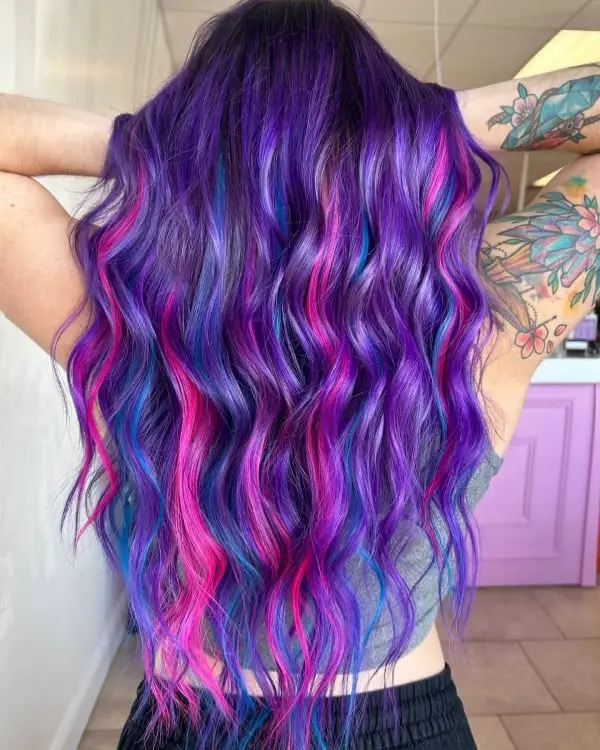
How does a colorist build a mermaid effect without it turning muddy? The answer is in the application order. A deep purple base runs through the length, then sections of blue, pink, and teal are painted in as blended highlights rather than separate chunks. This technique creates a single, shifting tone that changes with every wave. Ask your colorist for: deep purple base with blended blue, pink, and teal highlights.
Medium to thick hair at least mid-back length provides enough canvas for the layers to read. Air-dry or diffuse to keep the waves soft and the colors distinct. Between salon visits, a pigmented conditioner refreshes the non-purple tones without staining the base.
Rich Chocolate Brown With Caramel Highlights
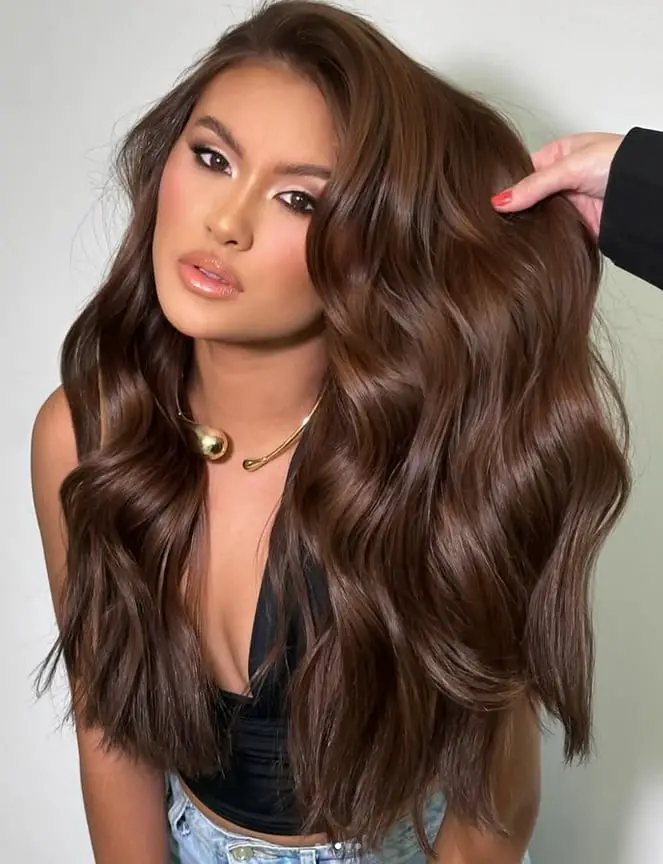
Color-blocking is a statement; this is its quieter cousin. Caramel highlights are painted sparingly into a rich chocolate brown base, so the warmth shows only when the hair moves. The difference from a full balayage is one of intention: here, the brown stays dominant and the highlights accent, not overtake. Ask your colorist for: rich chocolate brown with subtle caramel highlights.
Thick, wavy hair at least mid-back length lets the caramel strands sit deep in the layers. A smoothing serum helps the blowout finish, and a trim every eight to ten weeks keeps the ends healthy enough to reflect the shine.
Ash Blonde Collarbone Lob With Platinum Highlights
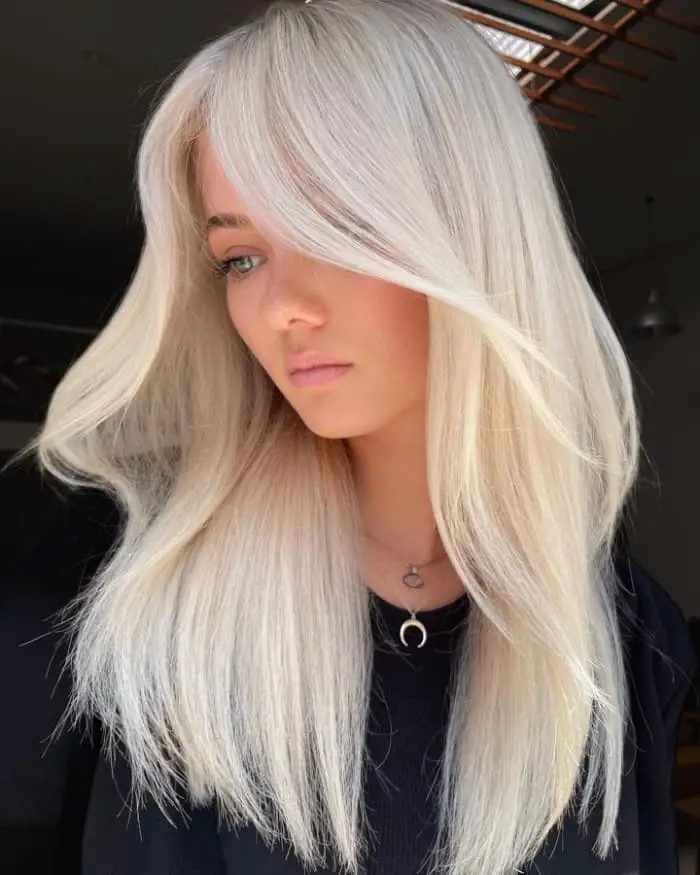
Ash blonde has a reputation for turning brassy, but a root shadow and platinum highlights buy you time. The darker base at the roots means the grow-out line fades rather than screams, while the platinum pieces keep the overall tone bright. Ask your colorist for: ash blonde lob with platinum highlights and root shadow, wispy bangs.
Thick, wavy hair at least collarbone length carries the cool tones well. A purple shampoo used once a week maintains the ash cast, but even with the root shadow, expect to book a toning appointment every four to five weeks to keep the platinum from warming up.
Edgy Hot Pink Bob With Black Roots
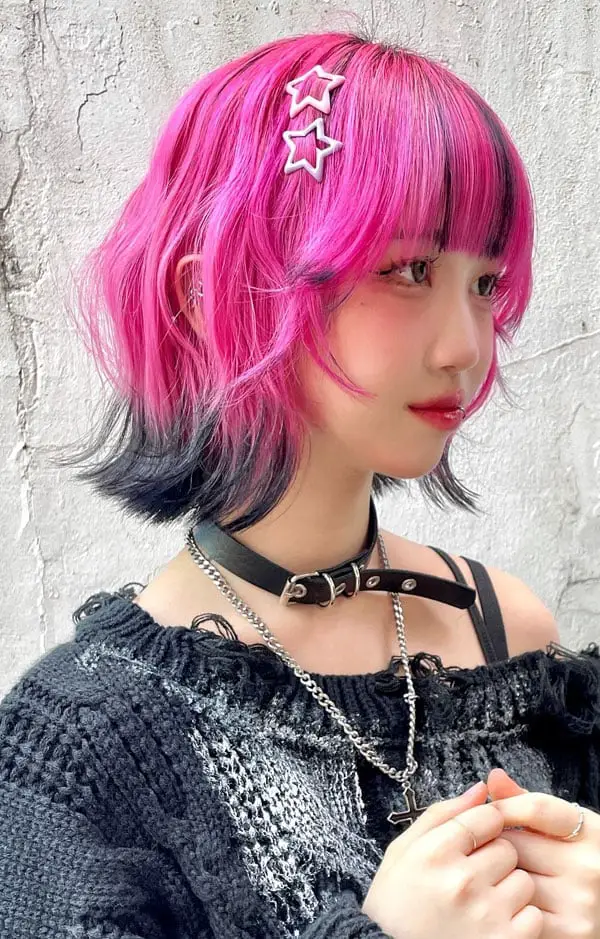
Can you get this at home? Technically yes, but the outcome tends to look more Halloween than editorial. A salon applies the hot pink as an opaque, saturated layer and keeps the black roots crisp and distinct, so the contrast is deliberate. Ask your colorist for: chin-length bob, blunt bangs, hot pink with black roots.
Fine to medium hair at least chin-length holds the blunt bob shape without too much weight. The wavy texture softens the graphic line between the two colors. Between appointments, a color-depositing mask in hot pink refreshes the brightness without lifting the black.
Bold Bright Yellow Mid-Back Waves
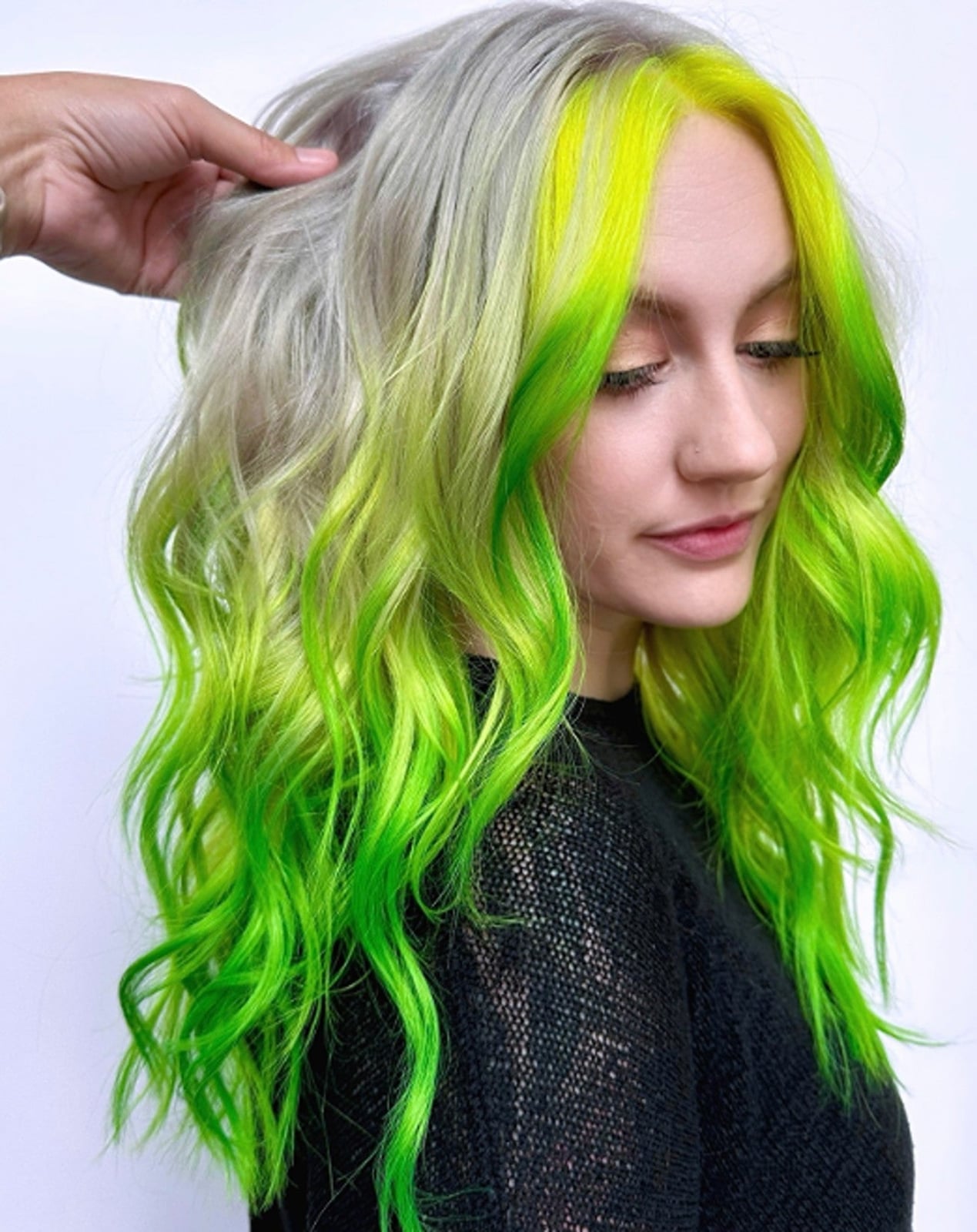
A bright yellow like this is a deliberate choice that works best on thick, wavy hair at least mid-back length. The loose layers keep the shade from reading as flat, while the middle parting gives it a clean line. Ask your colorist for: bright yellow color, mid-back length. This is a summer festival candidate, and the commitment level matches the occasion.
Bright yellow demands a pre-lightened base, so expect a full day in the salon. The payoff is a shade that reads as artistic, and the thick wavy texture here keeps it from looking like a wig. A color-safe shampoo and minimal heat styling will stretch the vibrancy past the first wash or two.
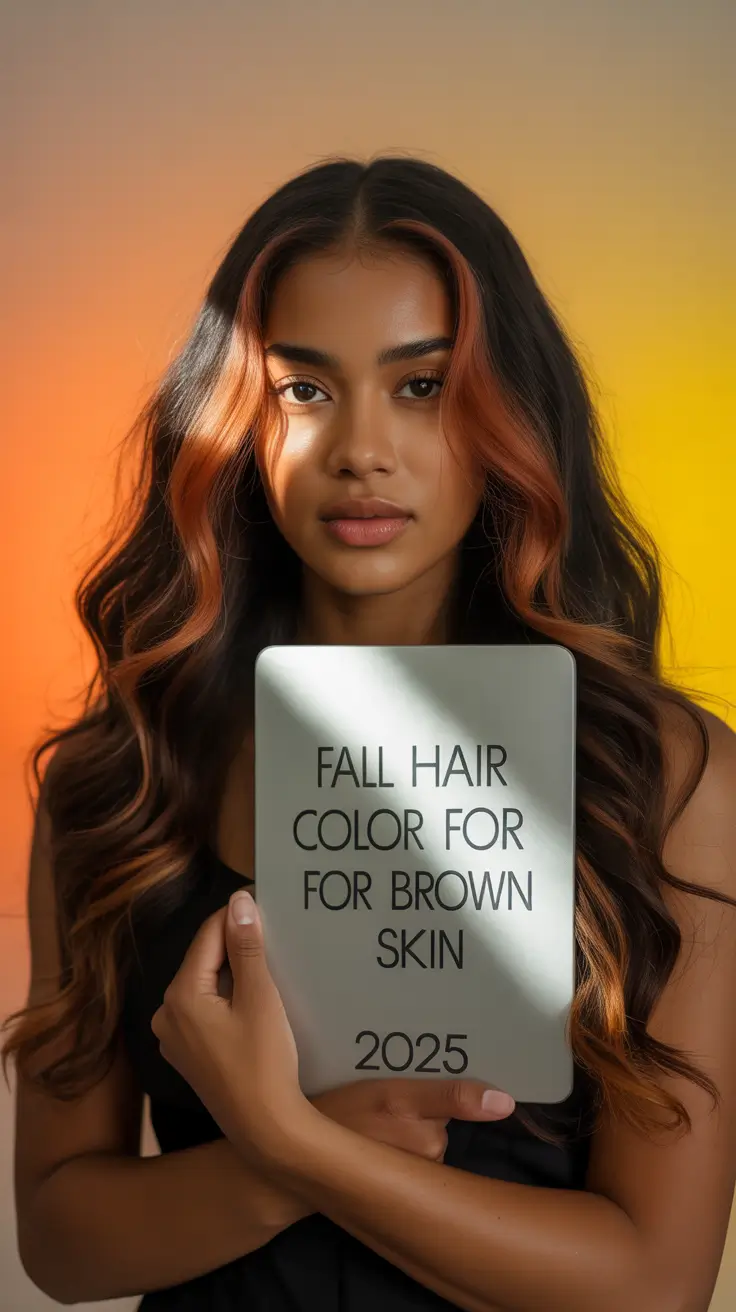
Rich Copper With Lighter Copper Highlights
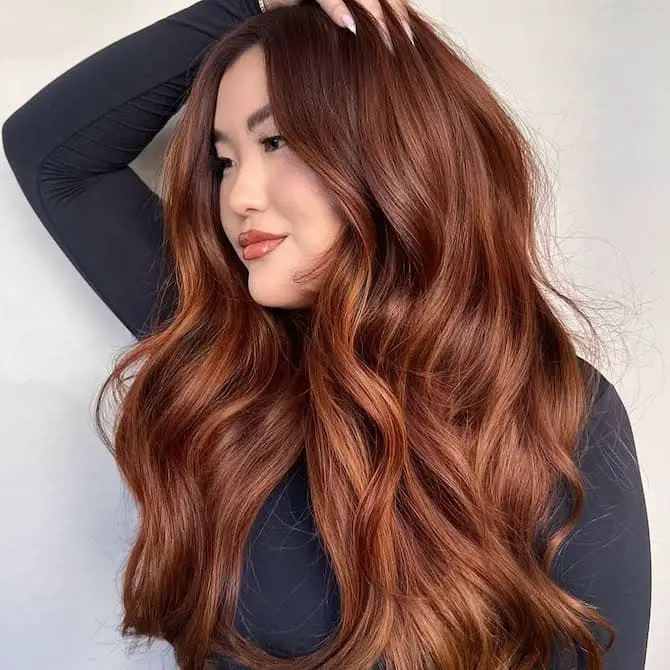
Rich copper with lighter copper highlights is a study in dimension: the base anchors the color while the lighter pieces create movement through thick, wavy hair at mid-back length. This tone works well with warm complexions, but the real requirement is texture. Wavy or curly hair catches the highlights in a way straight hair cannot. Ask your colorist for: rich copper base with subtle lighter copper highlights. The side parting here adds asymmetry that keeps the color from feeling too uniform.
Thick hair is the ideal canvas because the copper has enough surface area to reflect the warm tones. Fine hair can work, but the highlights may read as more subtle. A gloss treatment every few months will keep the copper from pulling brassy, especially if your water has mineral content.
Glossy Dark Brown With Subtle Highlights
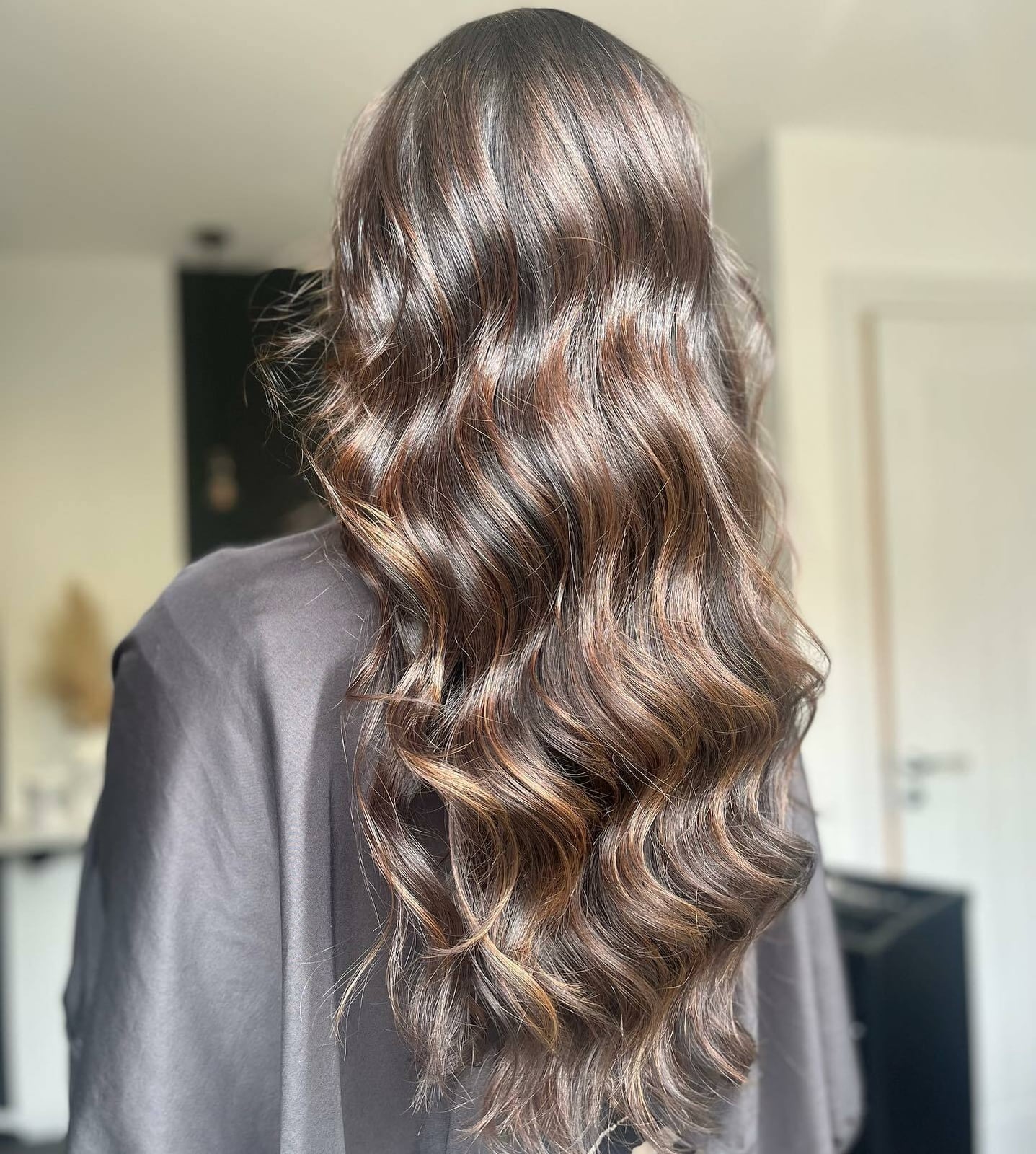
Dark brown with subtle highlights is a dimensional color that relies on contrast between a deep base and lighter pieces. The glossy finish comes from a clear gloss or shine serum, which gives dark brown extra depth. Ask your colorist for: dark brown with subtle lighter highlights.
The main benefit is the grow-out. Because the highlights are subtle and the base is dark, roots take longer to become noticeable, usually around ten to twelve weeks before a touch-up is needed. The drawback is that the dimension can be lost if the hair is over-processed or dry, so a hydrating mask every other wash is essential.
Dark Brown Lob With Burgundy Overlay
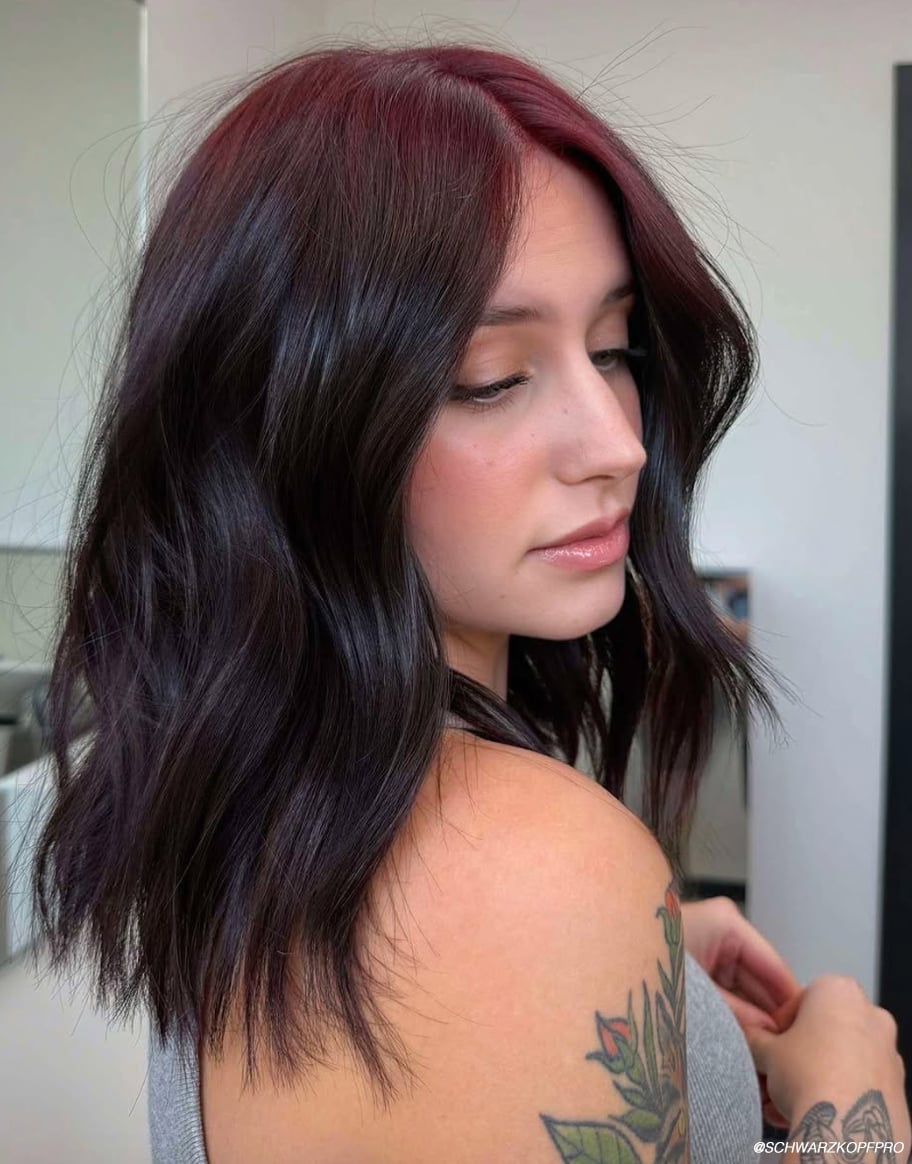
It is not a solid burgundy, it is a dark brown lob with a deep burgundy overlay and a root shadow. The overlay technique applies the red tone over a dark base, which gives the color depth without the high contrast of a true red. Ask your colorist for: dark brown base with deep burgundy overlay and root shadow. The collarbone length and soft waves keep it wearable, while the side parting shows the color shift from root to end. The root shadow buys you extra weeks between salon visits, which is the practical point of this approach.
Blonde Base With Multi-Tonal Vertical Streaks
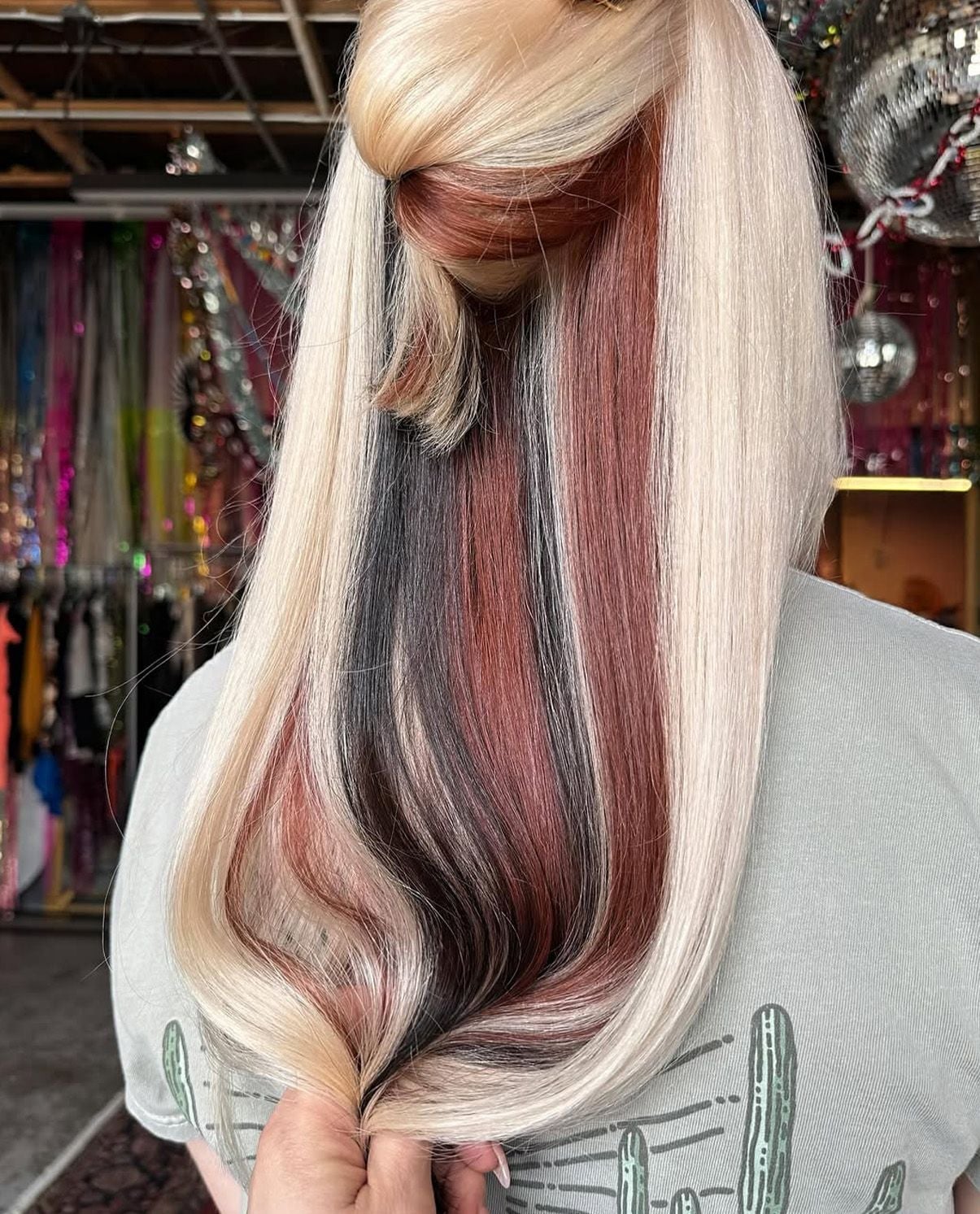
The salon approach involves sectioning the hair into panels and painting each streak individually, which takes a steady hand and a good eye for placement. A DIY version with temporary color sprays can approximate the effect for a single event, but the longevity and precision of salon work are hard to replicate. The thick texture here is an asset, as it provides enough surface area for each streak to read clearly.
Light Brown With Soft Blonde Highlights
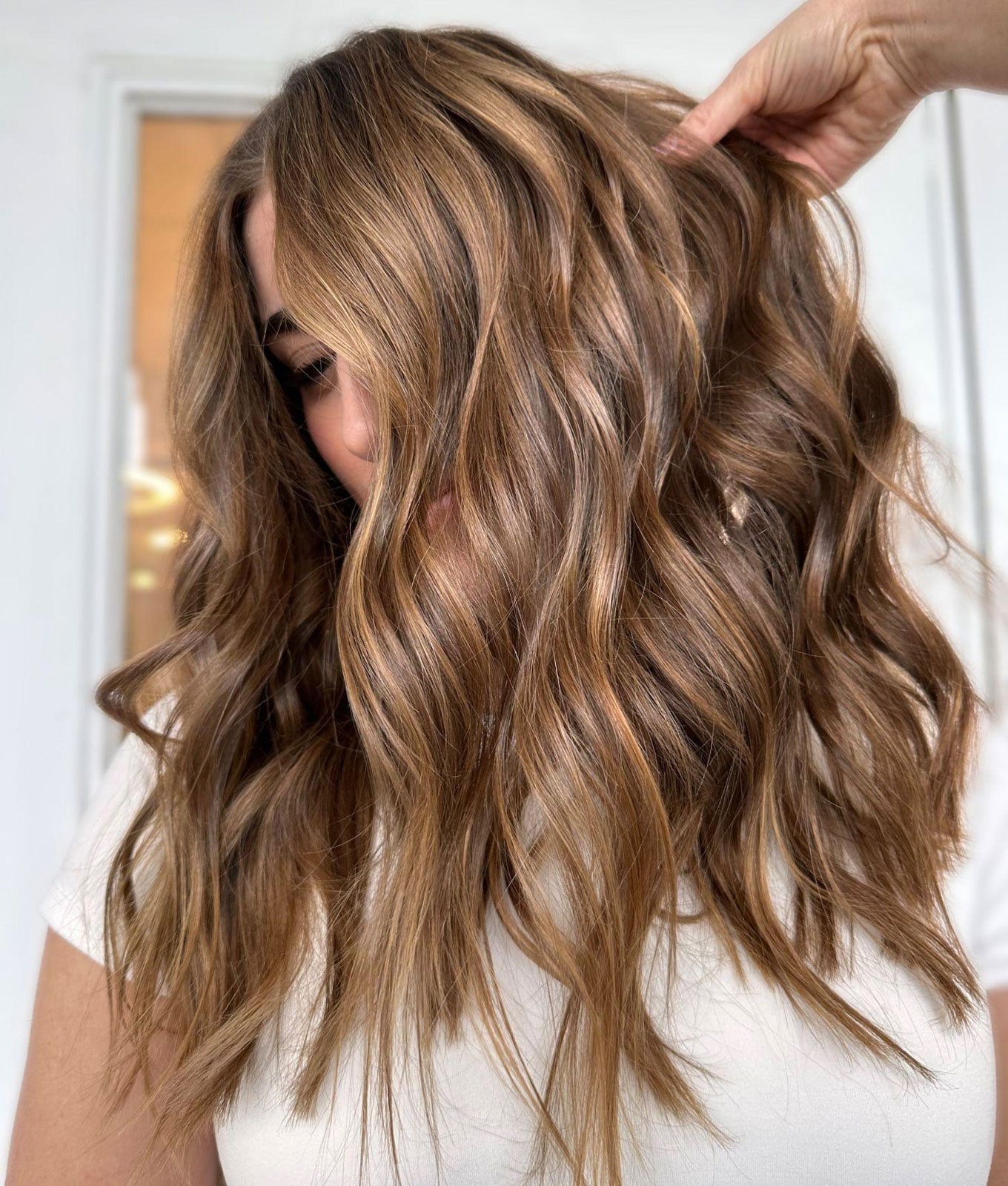
A light brown base with subtle blonde highlights creates a natural, dimensional effect on long, layered hair. The combination works best on thick hair at least mid-back length, though most face shapes take well to it. Ask your colorist for: light brown base with subtle blonde highlights. A blowout adds volume, and the highlights offer a lower-maintenance grow-out than chunkier techniques. The trade-off: subtle highlights can fade faster than you expect, so plan on a toning appointment every eight to ten weeks to keep the blonde from turning muddy.
Icy Blue Pastel Collarbone Layers
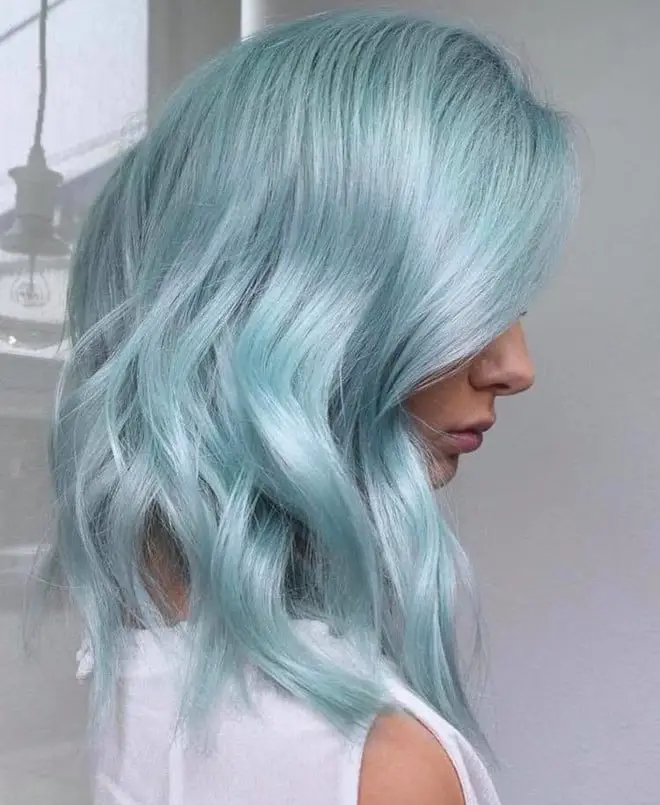
Collarbone-length layers and side-swept bangs meet an icy blue pastel that feels cool, not costume-like. The tone is a natural fit for spring and summer, when lighter shades feel less heavy. Medium wavy hair at least collarbone length carries the pastel well; side-swept bangs soften round faces. Ask your colorist for: collarbone length layers, side-swept bangs, icy blue pastel. The color holds best when you rinse with cool water and use a color-safe shampoo, but expect a touch-up every four to six weeks to maintain the tone.
Vibrant Pink Shoulder Shag With Choppy Bangs
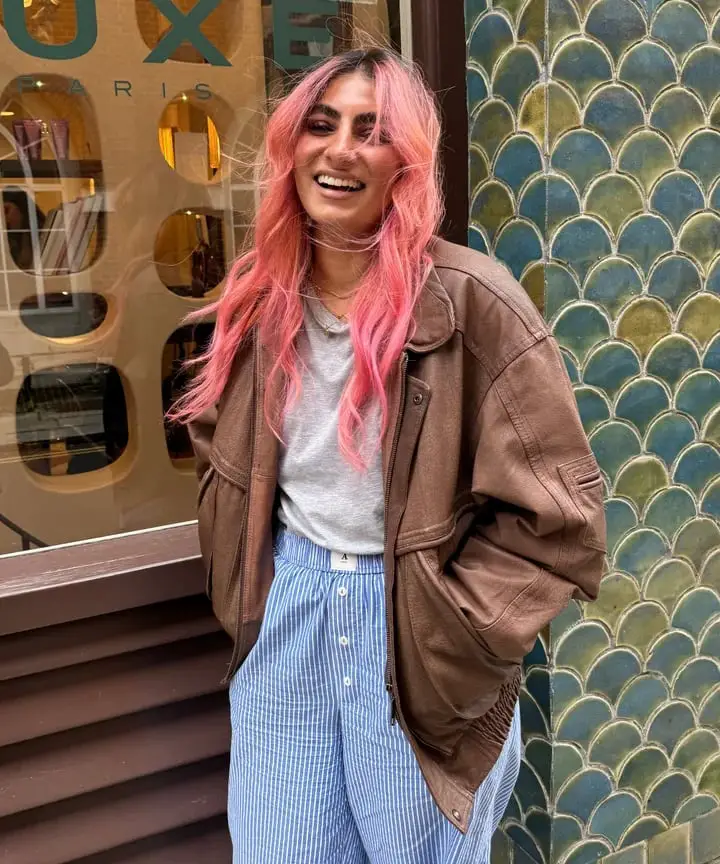
Does fine, wavy hair feel like it needs more presence? A shoulder-length shag with choppy bangs in vibrant pink with lighter pink highlights adds visual interest without weighing it down. The tousled, air-dried texture is the point: the cut does the work. Ask your colorist for: shoulder length shag, choppy bangs, vibrant pink with lighter pink highlights. The shag suits most face shapes, though the choppy bangs need a trim every four weeks to keep their shape. Fine hair takes color quickly, so the pink stays punchy for about six weeks before it starts to soften.
Warm Brown Collarbone With Honey Balayage
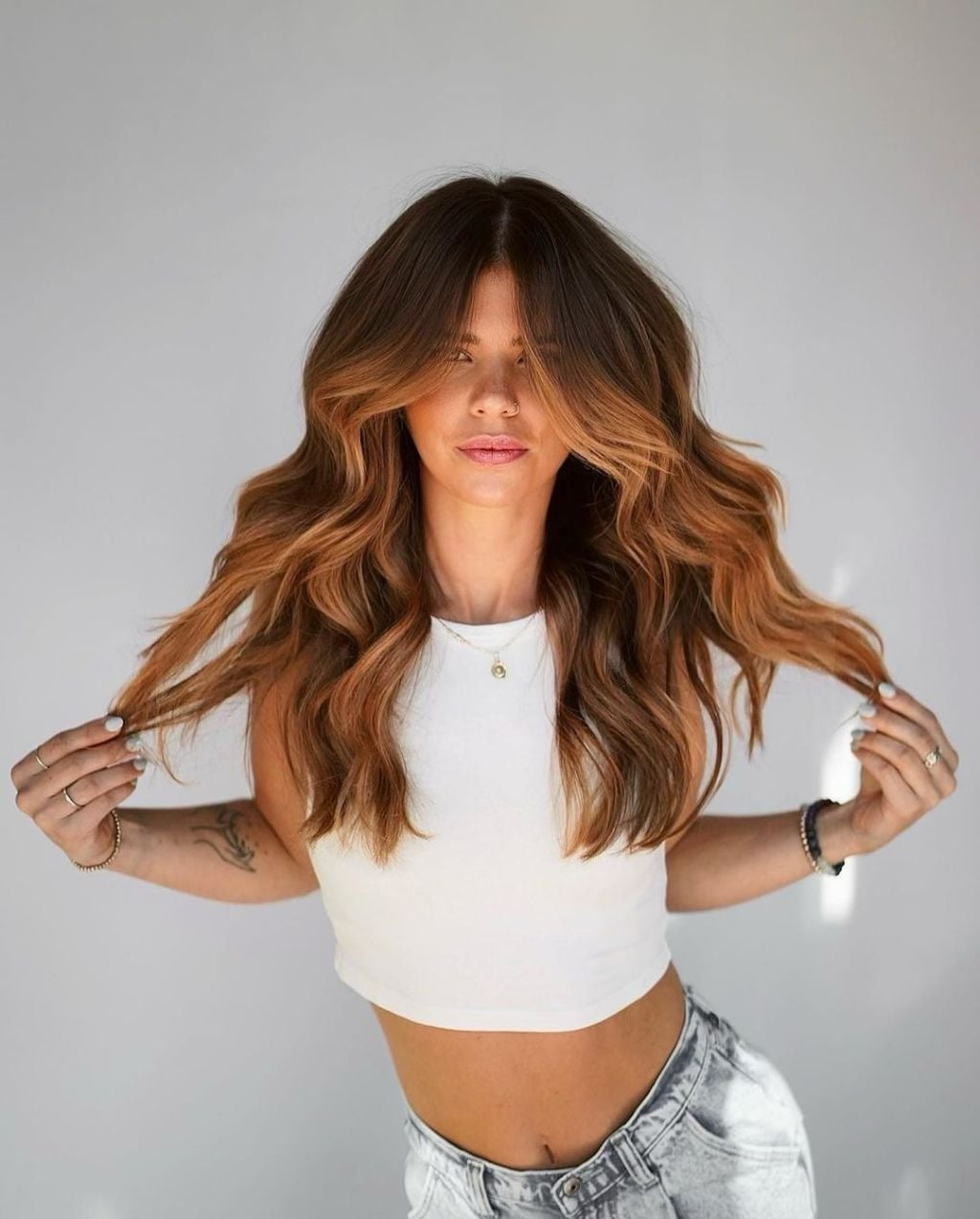
A warm brown base with honey blonde balayage creates a sun-kissed look on collarbone-length layers with curtain bangs. The balayage technique paints the lighter color freehand, so the grow-out line is soft rather than harsh. Thick, wavy hair at least collarbone length handles the dimension well; curtain bangs soften square faces. Ask your colorist for: collarbone length layers, curtain bangs, warm brown with honey blonde balayage. Curtain bangs need a round brush to shape, but the balayage itself fades gracefully over eight to twelve weeks.
Vibrant Pink Mid-Back With Wispy Bangs
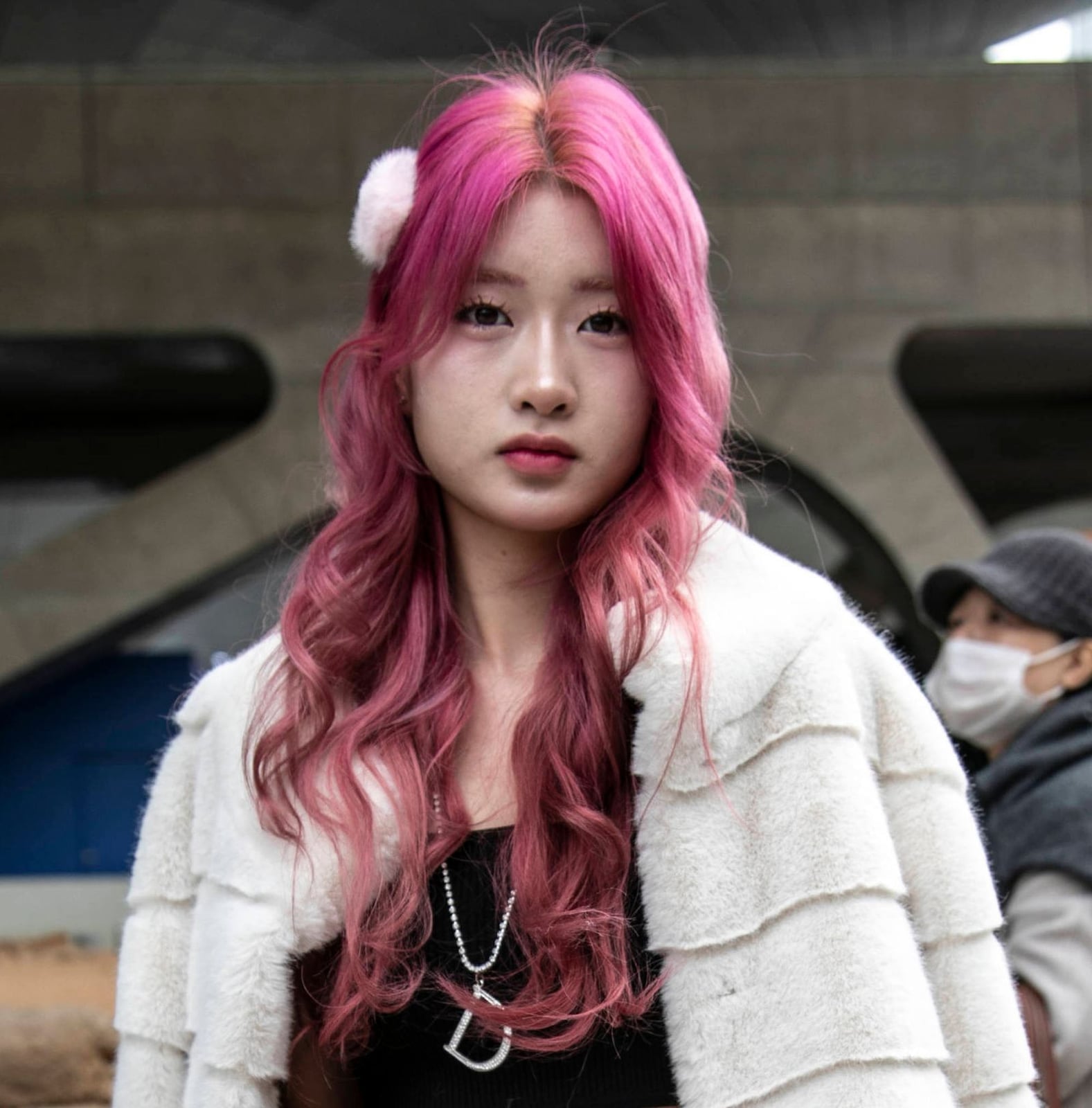
The wispy bangs and loose waves let the color breathe on fine, wavy hair. Ask your colorist for: mid-back length, vibrant pink with lighter pink highlights, wispy bangs. A texturizing spray gives the waves a lived-in finish, and wispy bangs need minimal daily styling. The real drawback: vibrant pink on fine hair tends to lose intensity faster than it would on thicker strands, so plan for a refresh every five to six weeks, and use a color-depositing conditioner between salon visits to keep the tone from washing out completely.
Deep Red Mid-Back Layers With Curtain Bangs
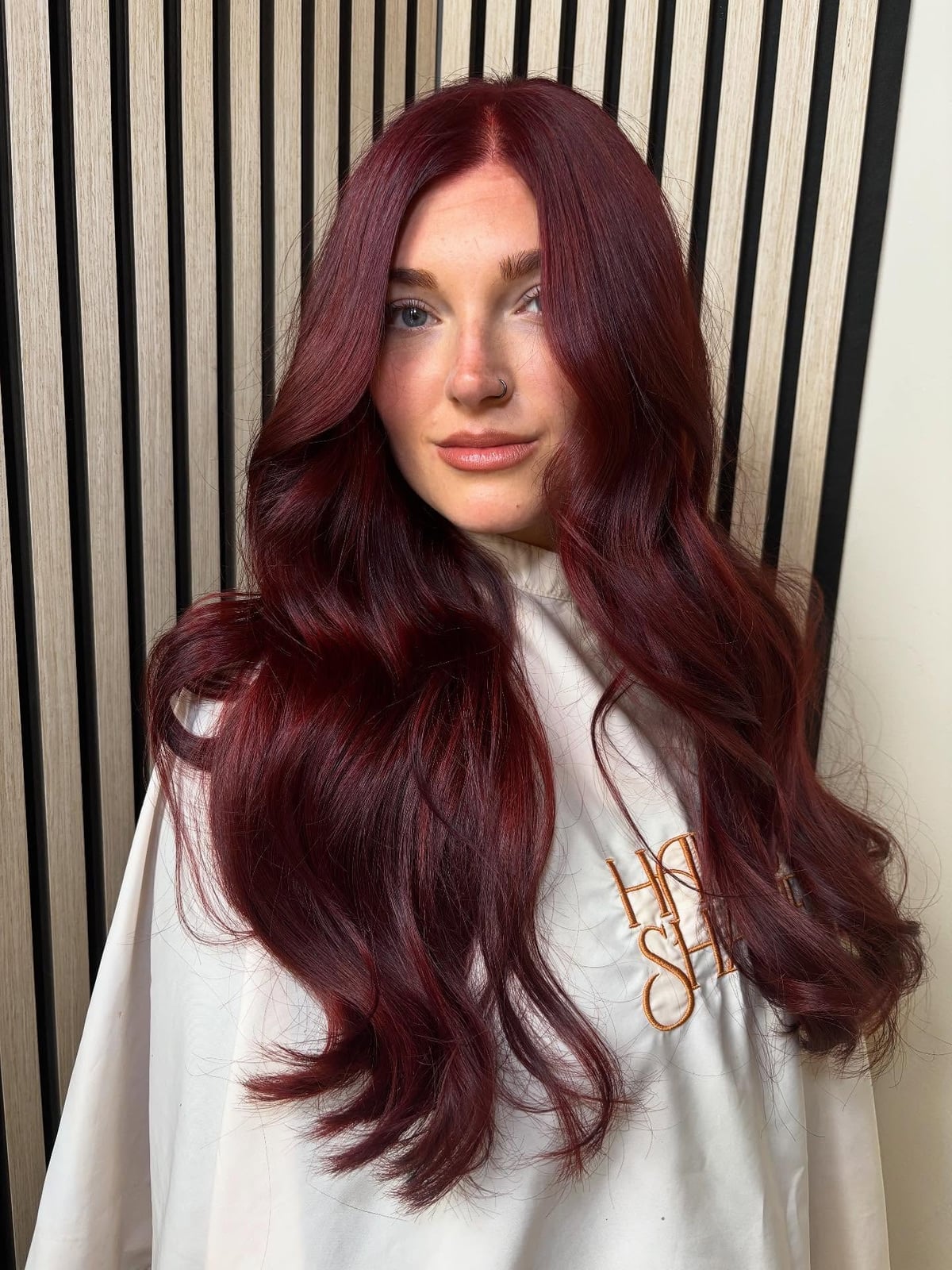
How does a colorist build a rich red? It starts with a deep red base, then adds subtle darker undertones, creating depth without obvious highlights. The loose waves and blowout in this mid-back, thick wavy cut help the light catch both layers, so the color shifts as you move. Curtain bangs soften the forehead and keep the overall effect from feeling severe.
Ask your colorist for: long layers, deep red with darker undertones, curtain bangs. The application involves sectioning the hair and painting the darker pieces underneath the top layer, so the base color stays visible through the movement. This is a salon-only process; the tonal variation comes from precise placement, not a single all-over dye. A gloss treatment every four to six weeks keeps the red from dulling to brown.
Warm Blonde Mid-Back Air-Dried Waves
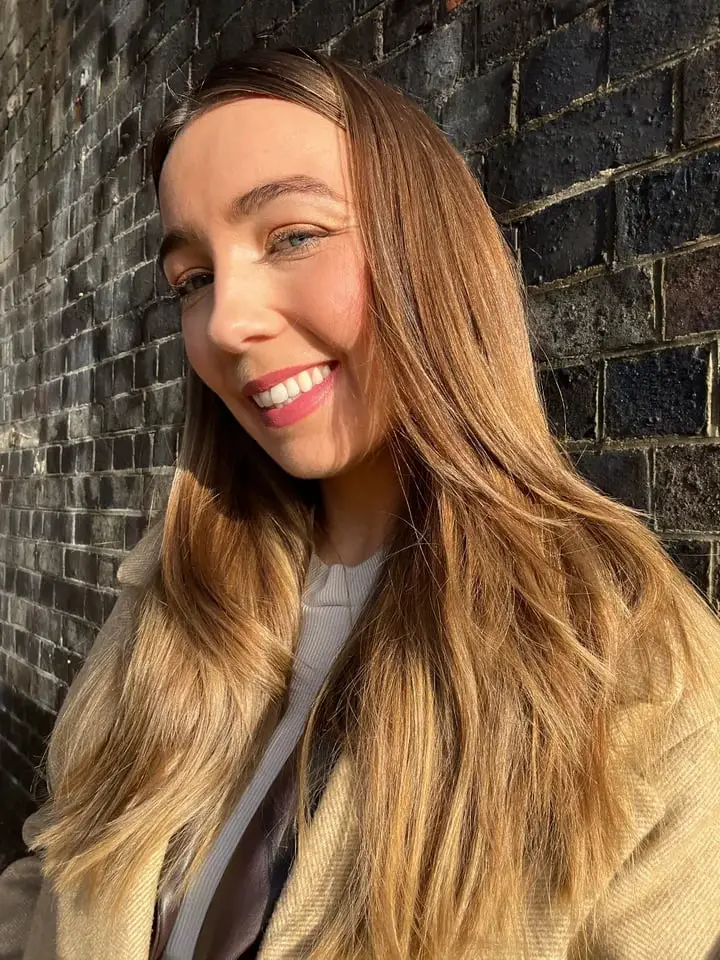
This is the opposite of a blowout commitment. Where a structured wave requires a round brush and twenty minutes of tension, air-dried waves let the hair do its own thing after a shower. The warm blonde base carries subtle blended highlights that catch light unevenly, which is exactly what you want when you skip heat styling. The mid-back length on thick wavy hair gives the texture enough weight to hold shape without product overload.
Ask your colorist for: warm blonde base with subtle blended highlights, air-dried finish. A leave-in conditioner with light hold is all the styling it needs. The highlights are painted to mimic natural sun exposure, so regrowth blends softly for about eight to ten weeks before the roots need attention.
Copper Red Shag With Curtain Bangs
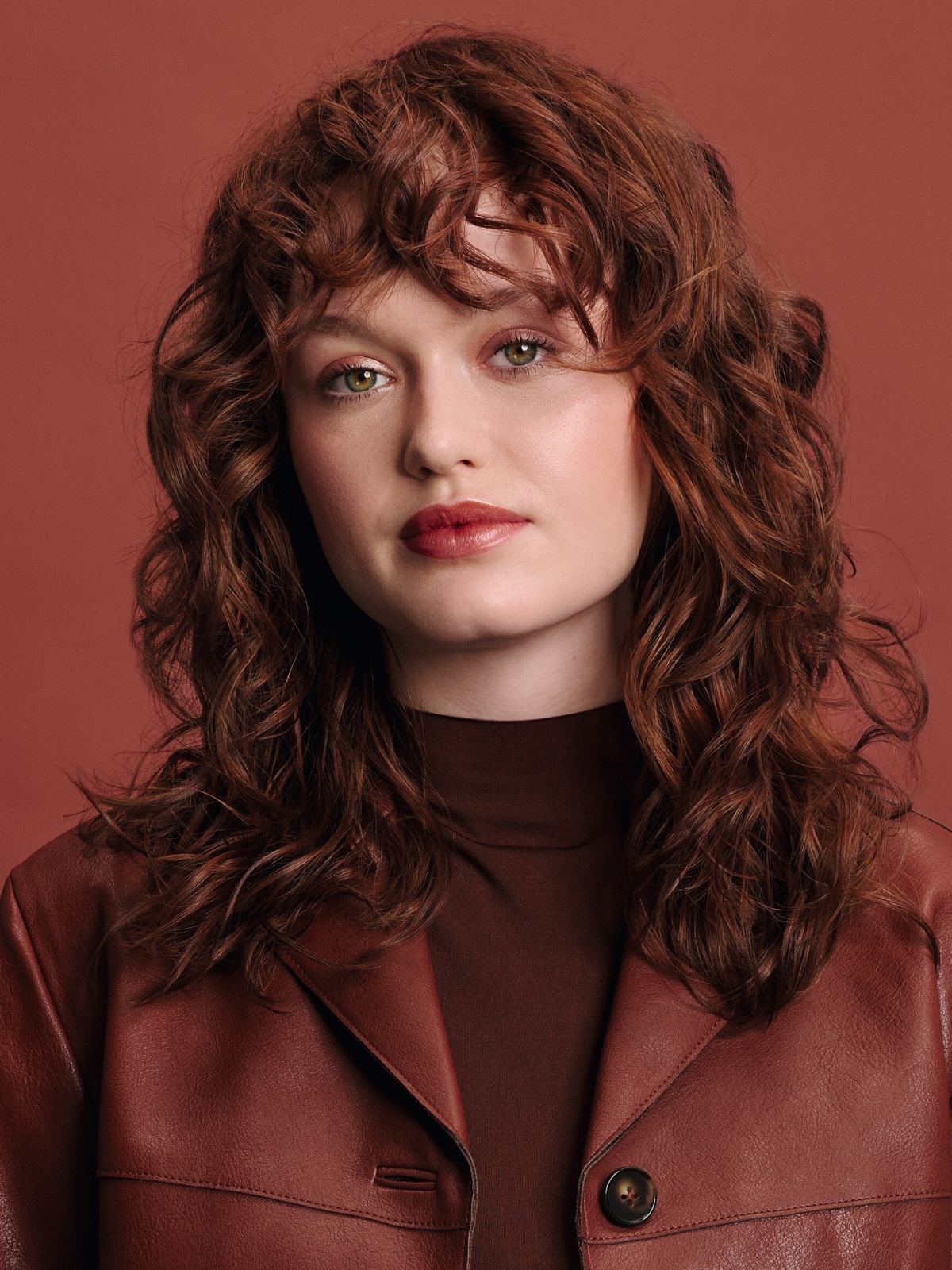
The shag relies on internal layers to create volume, which means it naturally favors thick curly hair that can hold a defined curl without deflating. The copper red base with a subtle darker root gives the color a rooted, grown-in feel, not a flat single shade. Curtain bangs sit at the sides and blend into the shag layers, so the face gets soft framing without a blunt line across the forehead. Collarbone length keeps the cut balanced on wider curls.
Ask your colorist for: shag cut, defined curls, curtain bangs, copper red with dark roots. The copper tone reads warmer than a true auburn and needs a gloss every four weeks to stay vibrant on curly hair, which tends to grab and release color faster than straight textures.
Bright Pink Shoulder Length Messy Waves
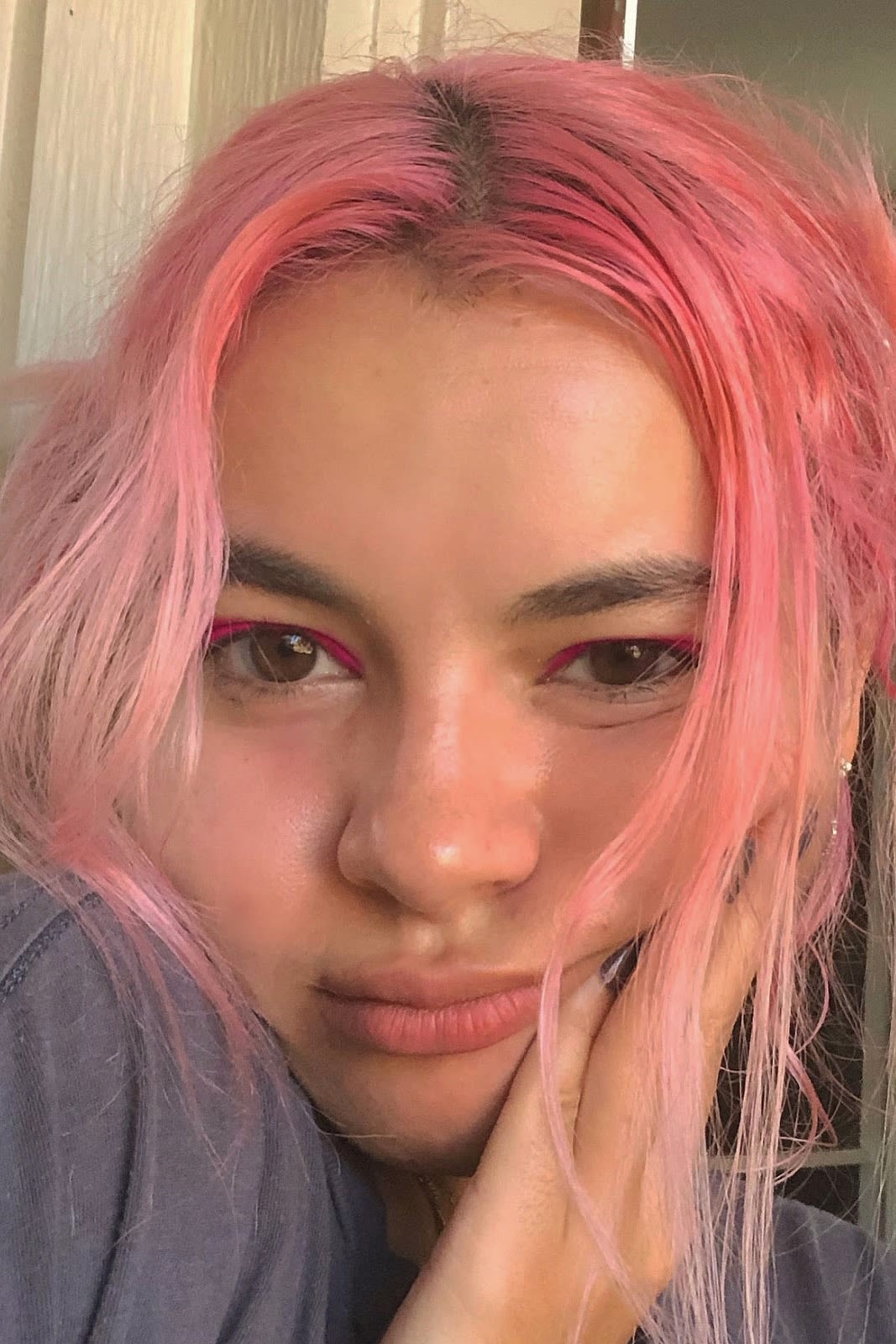
Bright pink on fine wavy hair fades faster than on coarser textures, so this look asks for a color-safe shampoo and cool water on wash days. The shoulder length and wispy bangs work with the messy, textured styling to create volume where fine hair can fall flat. A sea salt spray adds grip without weighing the strands down. The honest drawback: bright pink needs a refresh every three to four weeks, and the color lifts unevenly if you skip the toning shampoo between salon appointments.
Ask your colorist for: shoulder length, bright pink, messy textured waves, wispy bangs. The application requires pre-lightening to a pale yellow before the pink can deposit evenly, so plan for a two-session process if starting from a dark natural base.
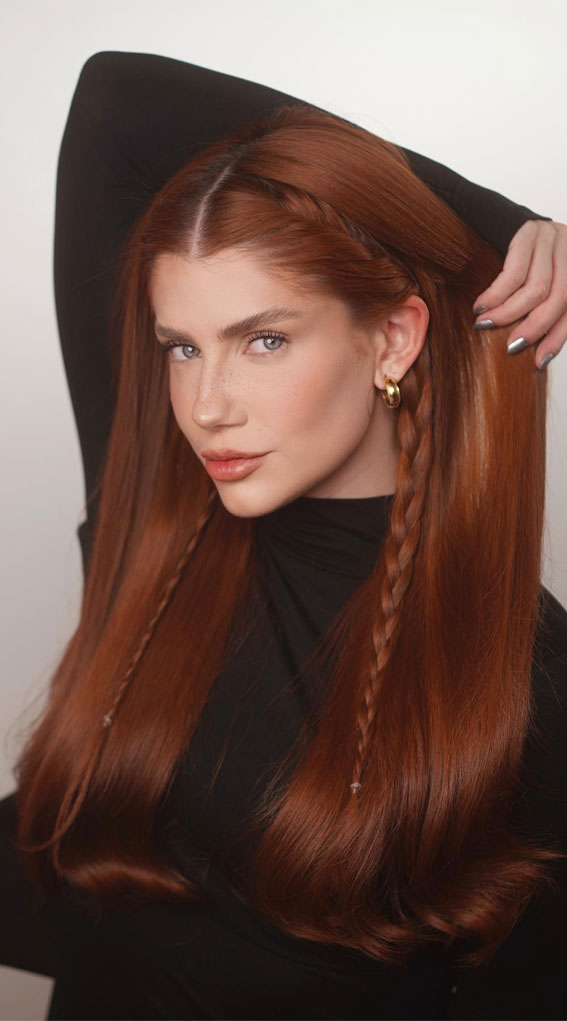
Vibrant Copper Collarbone With Blunt Bangs
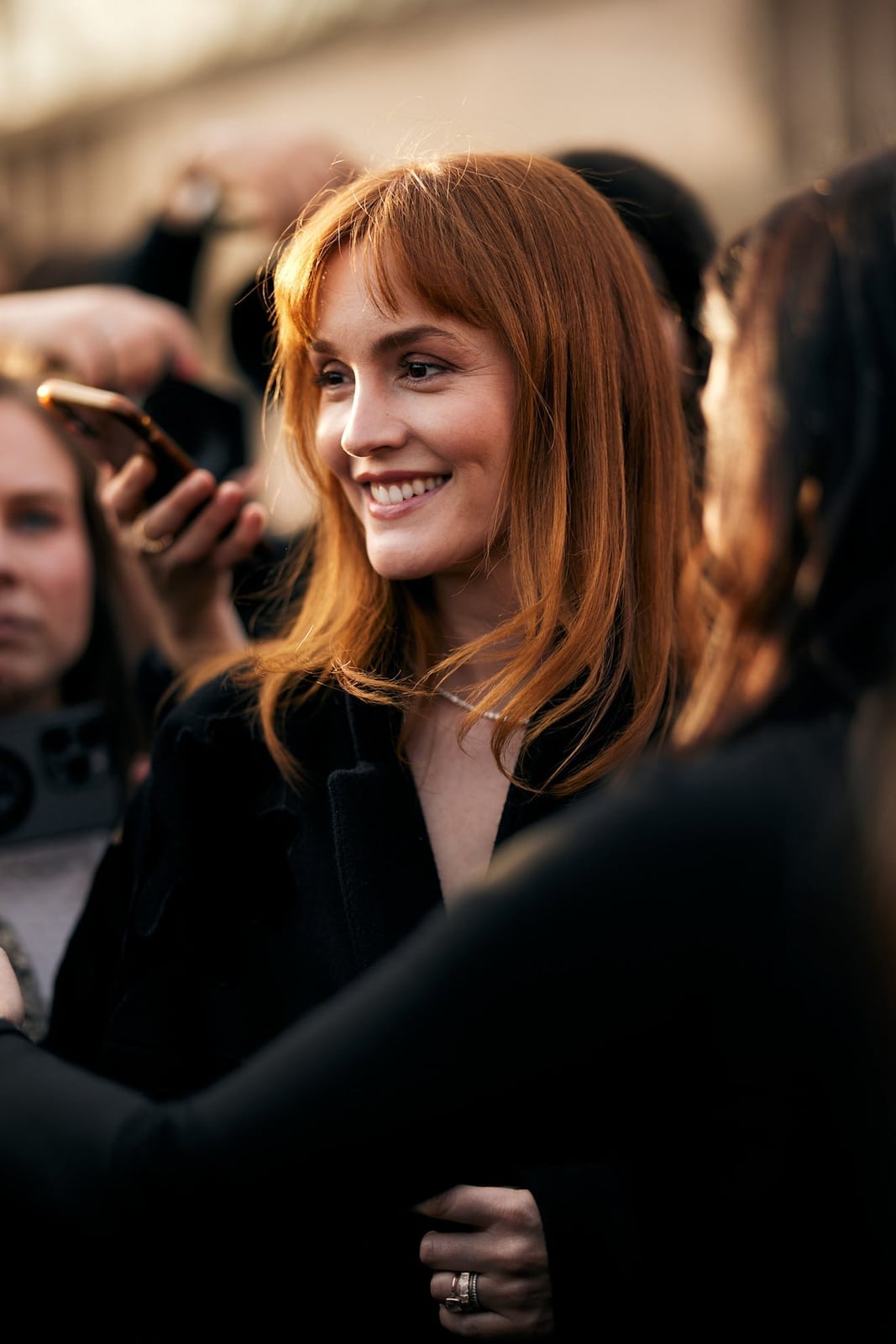
How do you leave the salon with copper that actually looks vibrant rather than rusty? Ask for a single-process formula with a clear gloss on top, which is what gives this collarbone straight layered cut its reflective finish. The blunt bangs sit just above the brows and are cut straight across, so they need a trim every two to three weeks to stay precise. The vibrant copper shade works as a salon-only color because a box dye can pull orange instead of true copper; a colorist mixes the tone to neutralize unwanted warmth. Medium straight hair holds the color evenly since the cuticle lies flat and absorbs pigment consistently.
Ask your colorist for: collarbone length, vibrant copper, blunt bangs, straight layered style. DIY is not realistic here: achieving the same saturation at home usually results in uneven roots and a brassy undertone within two washes.
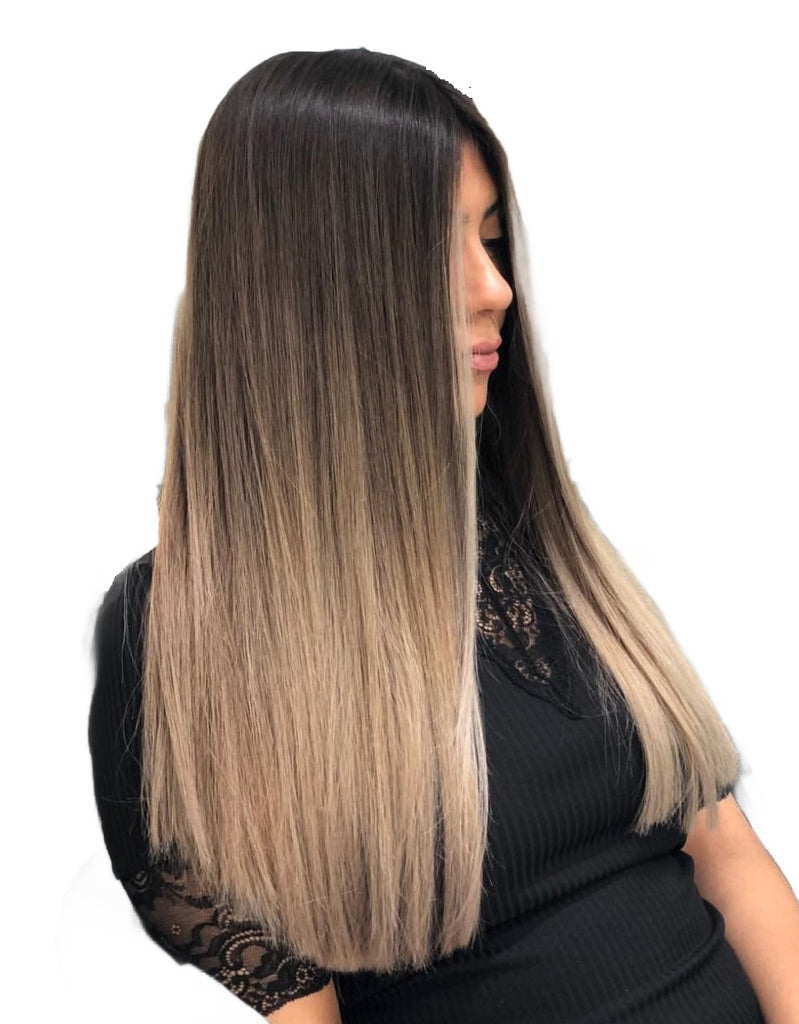
Sun-Kissed Balayage Mid-Back Layers
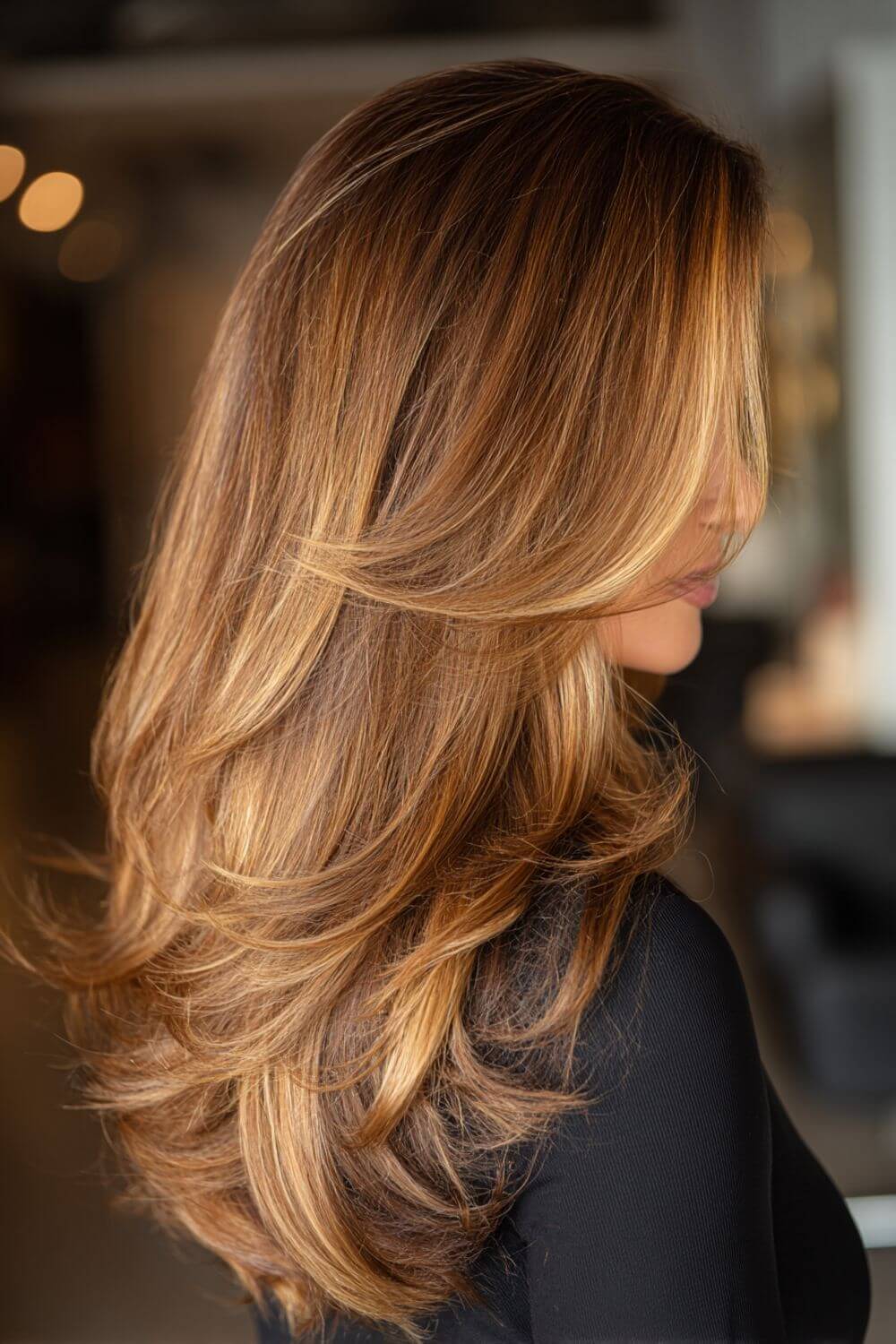
Balayage is not a highlight pattern: the colorist paints each section by hand, starting a few inches from the root, so the blonde appears where the sun would naturally hit. The result here is a warm brown base that graduates into sun-kissed blonde toward the ends, creating a soft, natural glow. This technique works best on thick hair at least mid-back length, since the layers need enough canvas to show the graduated lift. Ask your colorist for: long layers, warm brown base with sun-kissed blonde balayage.
Styling is straightforward. A volumizing mousse at the roots and a round brush during a blowout add body, while the soft waves give the blonde dimension. The side part adds a casual, lived-in feel. The balayage grows out softly, so toning appointments can be spaced ten to twelve weeks apart without a harsh line.
Platinum Blonde Collarbone Lob With Root Shadow

Platinum blonde on fine wavy hair makes a bold statement. This lob hits at the collarbone with curtain bangs and a middle part, and the root shadow, a darker tone at the base, gives the platinum a grounded contrast. The catch is maintenance. Platinum lifts require a toning appointment every four to six weeks, and the root shadow, while softer than a full grow-out, still needs refreshing around every eight weeks. Fine wavy hair at collarbone length is the ideal starting point. Ask your colorist for: collarbone lob, platinum blonde with root shadow, curtain bangs.
Final Thoughts
For a low-maintenance aesthetic, opt for subtle highlights or root shadows over all-over vibrant colors. Consider shades that complement your natural base for easier grow-out.
- Color-treated hair requires sulfate-free shampoos and conditioners.
- Use cool water for washing to preserve color vibrancy.
- Deep condition weekly to maintain moisture and shine.
- Schedule salon toning every 6-10 weeks, depending on color fading.
Find the aesthetic that speaks to you and wear it with confidence.