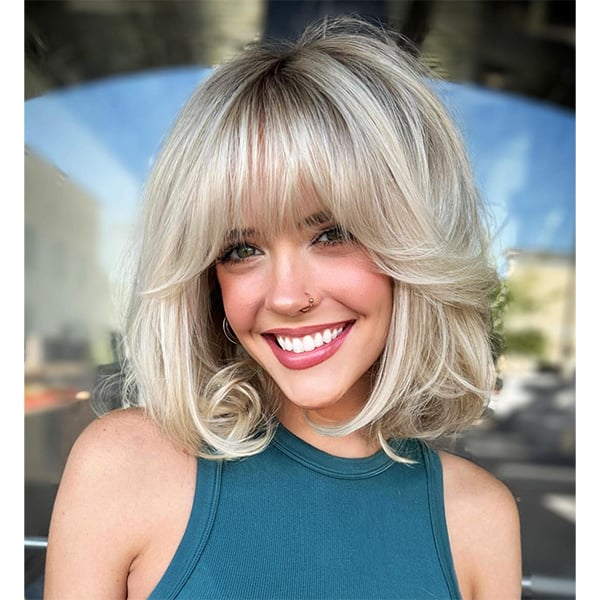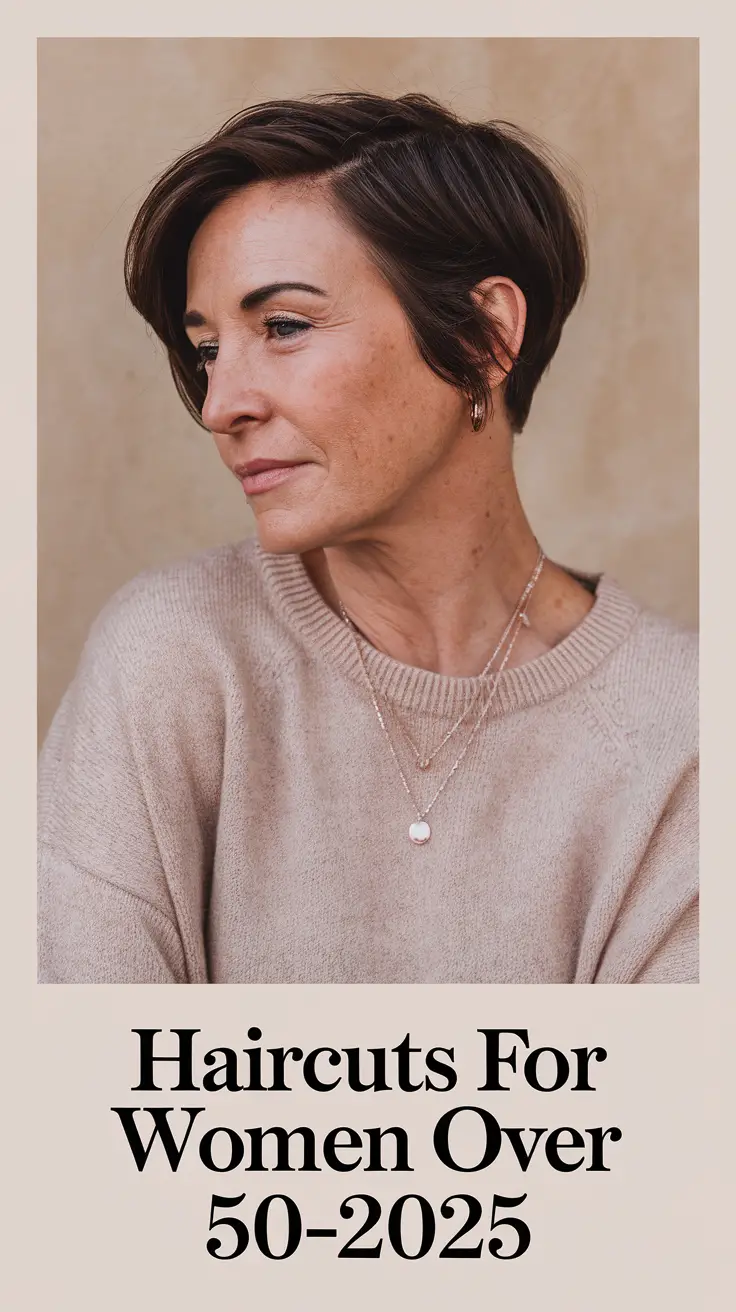

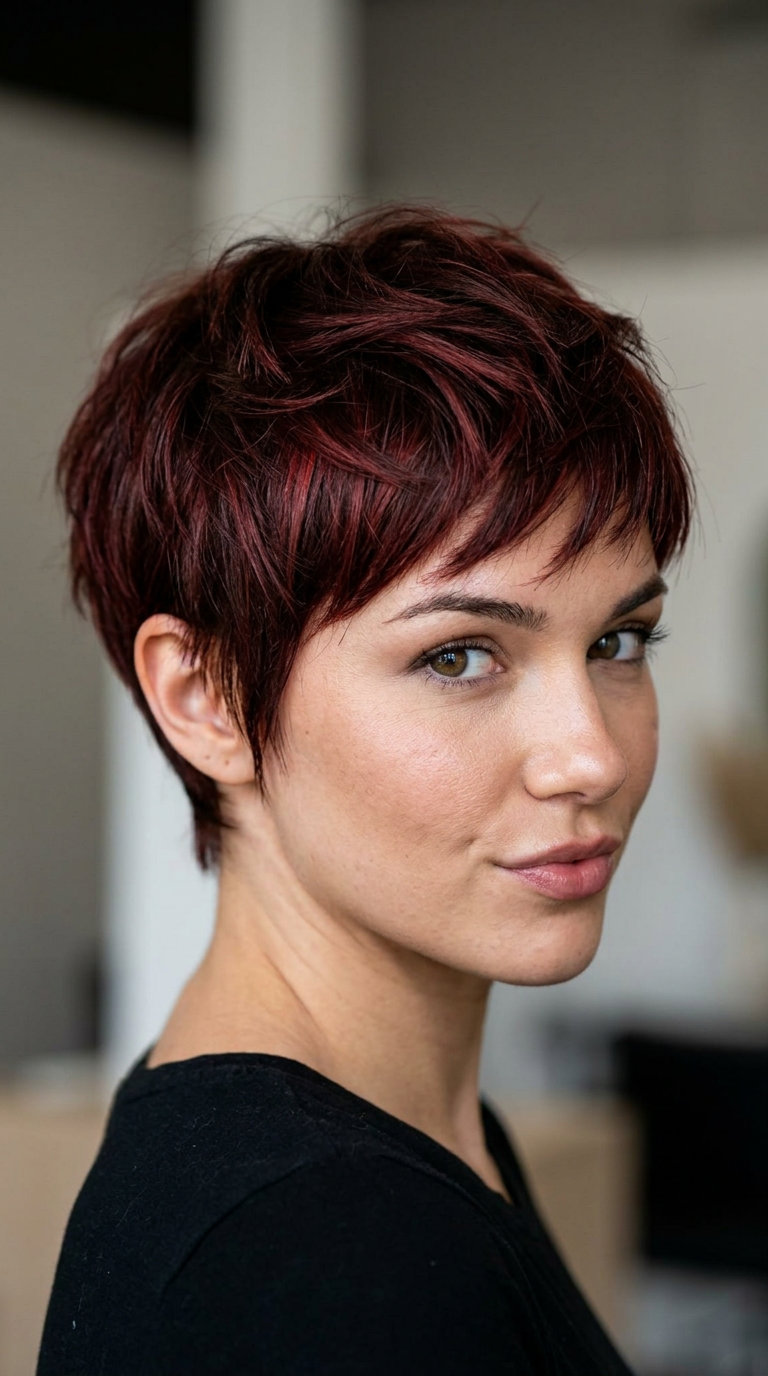
The Butterfly Pixie, the Soft-Serve Pixie, the Scandi-Crop—suddenly every salon chair in a three-block radius is fielding the same request. Florence Pugh’s bleached grow-out phase, the viral ‘Hydro-Pixie’ trend flooding TikTok, and Michelle Williams’ recent appearances have made short hair stop being a bold statement and start being the obvious choice. What shifted is the texture: these aren’t your mom’s blunt cuts anymore.
This year’s cute summer pixie haircuts 2026 range from barely-there buzz crops to textured layers with wispy bangs—cuts that work on fine hair, thick hair, round faces, and the I-don’t-own-a-hairdryer crowd. The variety is actually wild: you’ve got the choppy Mixie for wavy textures, the precision Scandi-Crop for straight hair, and the universally flattering Soft-Serve Pixie that rounds out harsh angles on any face shape.
I went from collarbone to pixie in March and spent two weeks convinced I’d made a terrible mistake. By month three, I understood why people get obsessed—it’s not about being brave, it’s about how much easier mornings become when your hair dries in ten minutes.
Cherry Cola Pixie Cut
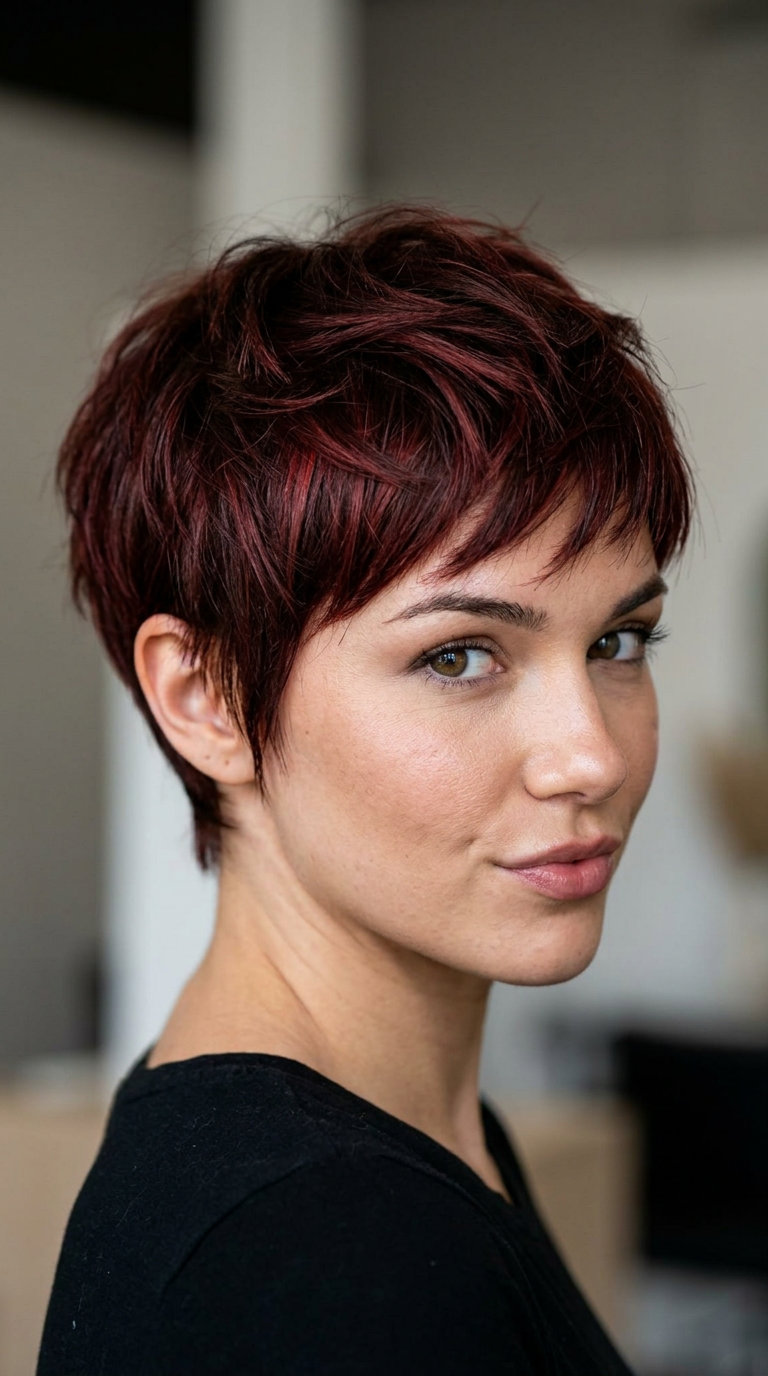
The cherry cola pixie cut is what happens when you want a pixie but you’re not ready to disappear into it. Heavy point-cutting and razor-texturing create a deconstructed effect, giving a modern, edgy feel. Razor-textured top maintained piecey deconstructed effect for 5 weeks with minimal product. This cut sits somewhere between intentional and just-rolled-out-of-bed—except you actually have to roll out of bed and grab a texturizing paste. The cherry cola color (think brunette with warm burgundy undertones at Levels 5-7) keeps the cut from reading too stark, probably worth the consultation at least.
The layers here aren’t about softness—they’re about movement and separation. Your stylist should be using a razor on the top sections specifically to create those broken, piecey lines. Avoid if you dislike daily product use—this cut needs styling for texture. The color holds its warmth for 6-8 weeks before fading toward a more coppery tone, which honestly looks good during the transition. Size-wise, you’re keeping about 1.5 inches on top, fading shorter on the sides. Edgy, but still a pixie.
Mushroom Bronze Pixie
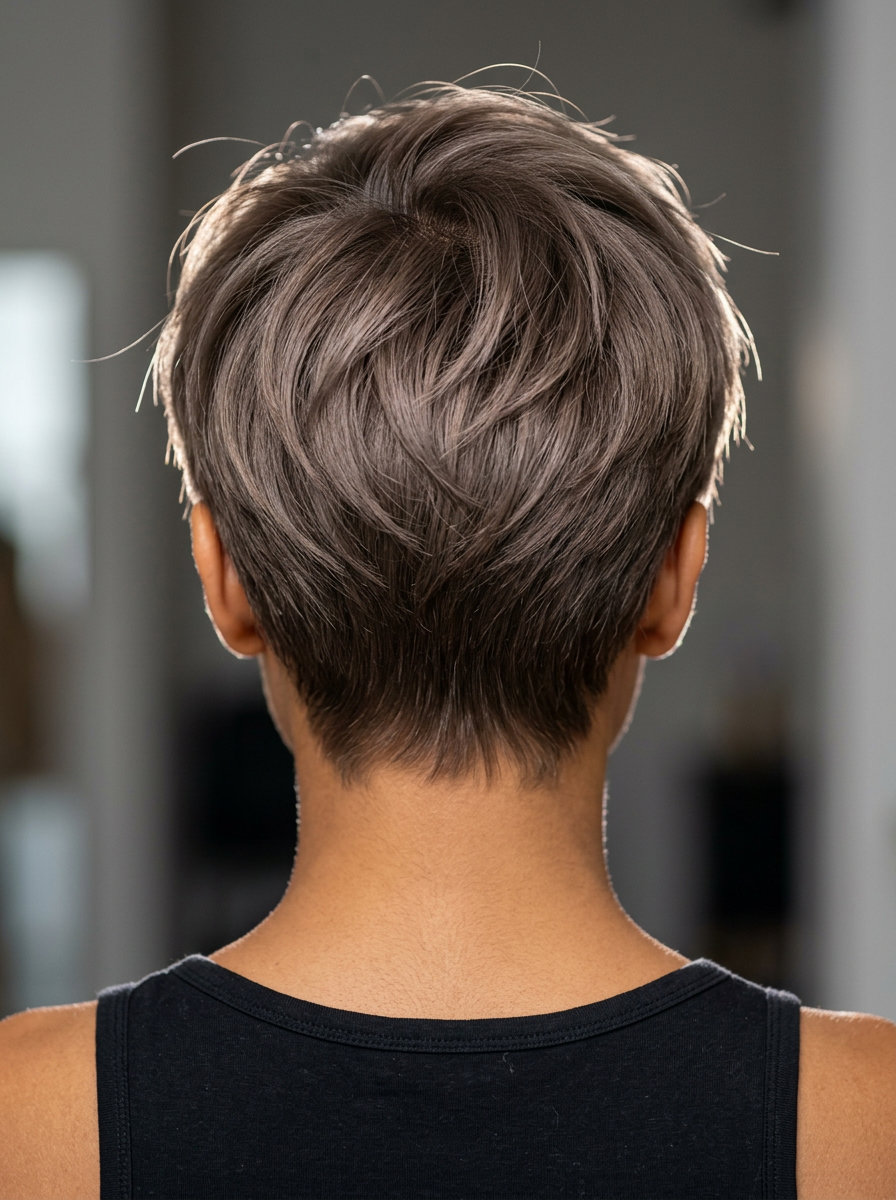
The mushroom bronze pixie hits different because the grow-out plan is actually built into the design. Feathered nape grew out gracefully for 8 weeks without awkward lines or bulk. This is the kind of cut where your stylist is thinking three months ahead. Point-cutting removes weight and creates soft layers, ensuring an effortless grow-out without harsh lines. The mushroom bronze color (cool, muted, at Level 6) has enough depth that regrowth doesn’t scream for a touch-up appointment. Or maybe just a trim, honestly.
What makes this version so practical? The feathered nape softens into the rest of the cut as it grows, so you’re not dealing with a sharp demarcation line. The top layers sit longer—about 2 inches—giving you room to style texture or just let it air-dry. Effortless grow-out still requires 8-week trims to prevent bulk at the nape. The color doesn’t need root touch-ups as desperately as platinum does, which means you can stretch salon visits to 10-12 weeks if your hair holds tone well. Bring this reference photo and ask specifically about feathering the nape. The grow-out plan sold me.
Peach Fuzz Pixie Cut

The peach fuzz pixie cut is built for wavy to fine hair, because the layering encourages texture and volume in the way that actually matters. Razored layers enhanced natural waves, providing volume without frizz on day-1 hair. This isn’t about cutting short—it’s about cutting strategically so your natural wave pattern gets permission to shine. Point-cutting and razoring at the base length enhance natural waves, creating soft movement and volume. Most people assume fine hair can’t handle a pixie. They’re not accounting for this version, yes, the short one.
The peach undertone works because it’s warm without being brassy, reading as intentional rather than like you’re growing out an old color. You’re looking at Levels 7-8 here, so maintenance is moderate—every 8-10 weeks for a refresh. The cut itself is shorter than some pixies (about 1-1.5 inches on top) but the layers prevent it from lying flat. Skip if your hair is very straight—it won’t hold the desired wave. Bring your natural wave pattern to the consultation and ask your stylist to point-cut in a way that works with your texture, not against it. Worth every penny.
Honey Balayage Pixie
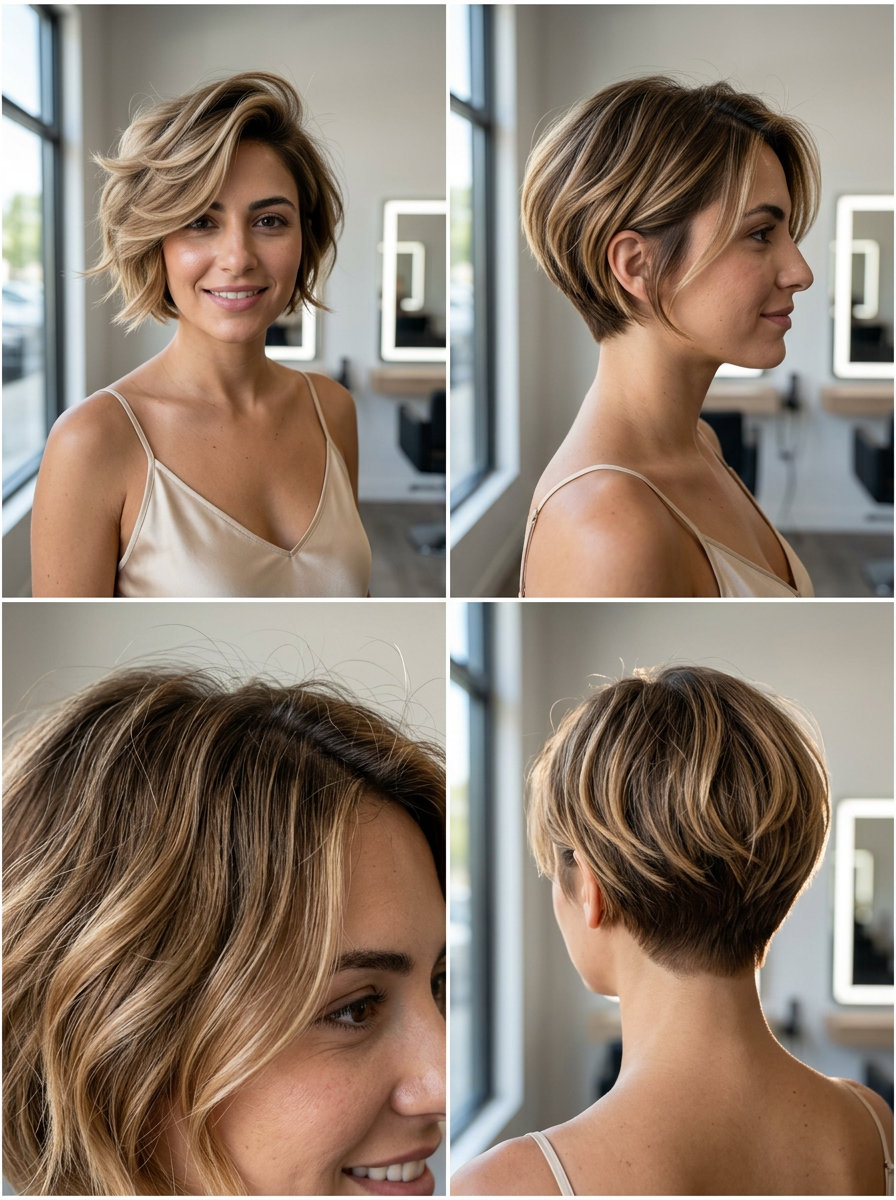
The soft-wave pixie that actually holds texture without requiring a flat iron every morning. Internal layering creates volume and movement, making short hair appear bouncier and slightly longer, which is all my fine hair can handle. This isn’t a hard-edged cut—it’s strategic. Soft waves held for 2 days with light styling cream, appearing 0.75-1 inch dry. That’s the real test.
The honey balayage pixie works because the color does half the visual work. Warm honey tones break up the short silhouette and add depth without requiring bleach-blonde maintenance every four weeks. Root regrowth blends naturally into the base, which means you’re stretching appointments to 10-12 weeks instead of fighting shadow roots monthly. The cut itself is textured but not choppy—point-cutting keeps ends soft while preventing that thin, stringy look fine hair gets when over-layered.
Best on wavy to straight hair with fine to medium density. Not for very straight hair—won’t hold the soft, wavy texture easily. If your hair is naturally stick-straight and air-dries flat, this cut requires daily styling to maintain the bounce, which defeats the low-maintenance promise. You’d be blow-drying and creaming every single morning. Finally, a bixie that bounces.
Butterscotch Blonde Pixie
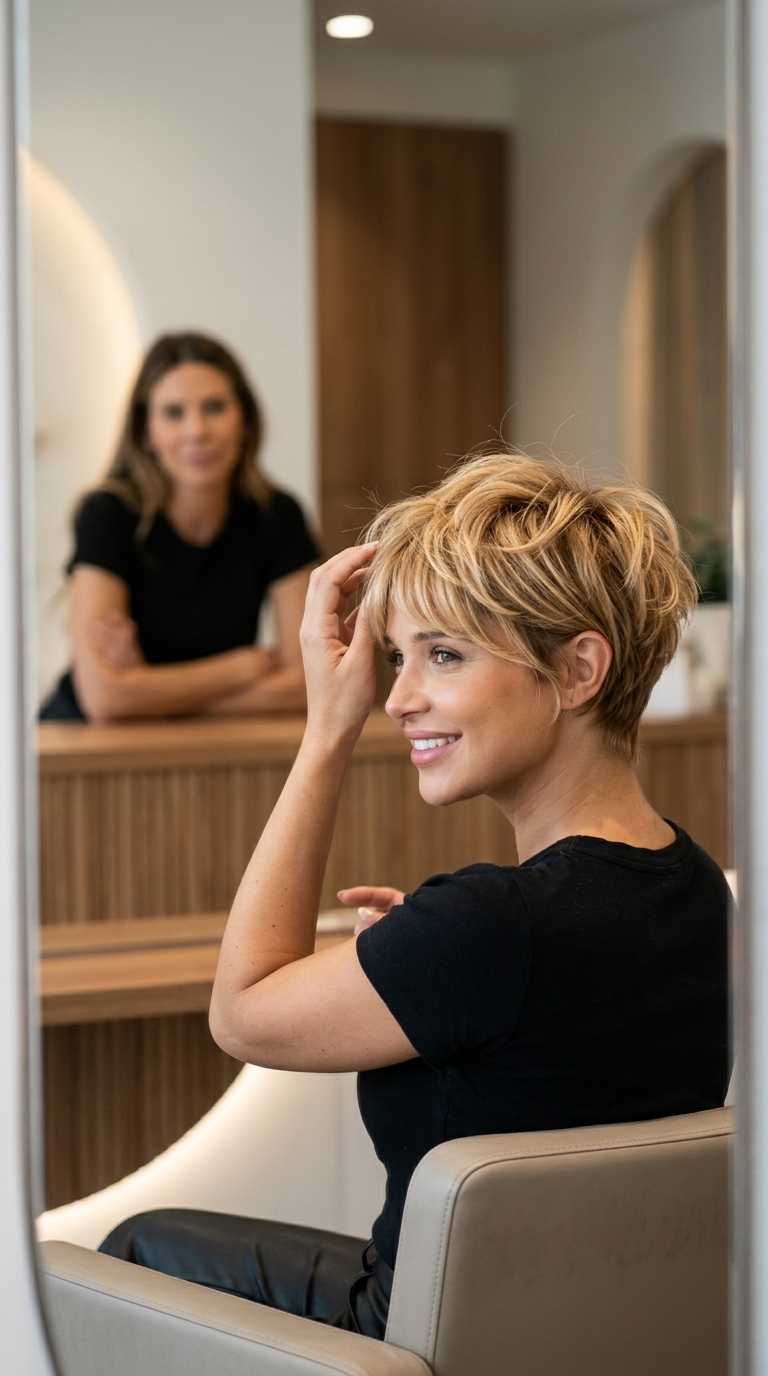
This is the pixie that looks intentionally textured from day one. Concentrated crown layers provide playful volume, allowing for versatile tousled styling without requiring precision. Styling took 5 minutes with light paste for a tousled look that lasted all day—that’s genuinely useful information, not marketing. The butterscotch shade sits between warm blonde and light brown, which means it photographs warm without requiring the commitment of pure platinum.
The butterscotch blonde pixie thrives on movement. You’re not aiming for sleek here (yes, the short one)—you’re aiming for that just-woke-up texture that actually requires intentional styling but looks effortless once you nail the technique. Wispy pieces need daily styling to maintain movement and avoid looking flat. That’s the honest part. If you’re hoping for a wash-and-go pixie, this isn’t it. The color, though, is forgiving—butterscotch hides root growth better than true blonde, and it doesn’t look brassy as it fades, which makes refresh appointments less urgent than you’d expect.
The cut works because the crown stays dense while the sides taper short. Concentrated layers at the crown provide playful volume, allowing for versatile tousled styling. You get shape without looking severe, movement without looking shaggy, and enough dimension that even second-day hair reads as intentional. Everyday chic.
Ash Brown Pixie Cut
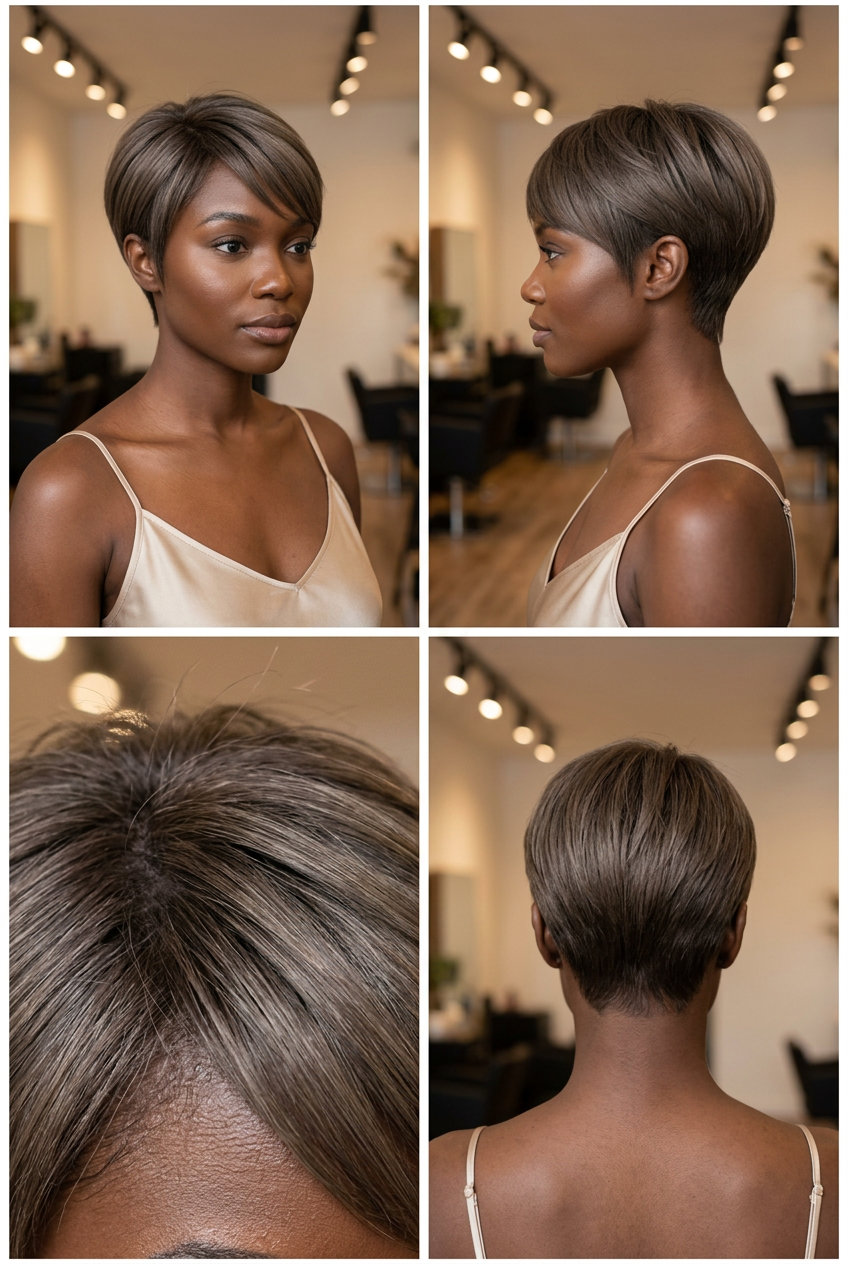
The sleek, forward-swept pixie that looks expensive because it’s technical. Scissor-over-comb and minimal internal layering ensure a sleek, dense, and professional silhouette that photographs as sharp as it feels. Sleek, forward-swept style held perfectly for 8 hours with minimal product on day-1 hair. That’s the real proof point—this cut doesn’t rely on texture to read as finished.
Ash brown is the color choice here because it doesn’t demand the same upkeep as cooler grays or warmer blondes. It sits neutral enough that regrowth blends without looking sloppy, but cool enough that it reads intentional, not just muddy. The cut itself is all about density and shape. You’re not playing with layers; you’re using the weight of the hair to create a clean line. This is probably worth the consultation at least, because scissor technique matters. A blunt-cut pixie looks severe. A scissor-cut pixie with the right forward sweep looks considered.
The perimeter is the star here. Minimal internal layering means the bottom line stays defined for 6-8 weeks before growing out noticeably. You’re looking at trims every 5-6 weeks to keep that sharp edge, but the payoff is that the cut requires almost no daily styling beyond a quick shape-up in the morning. Tousled texture cuts need product and technique. This one needs commitment to the salon chair, not your blow dryer. Sharp lines, soft finish.
Curly Pixie Cut for Summer
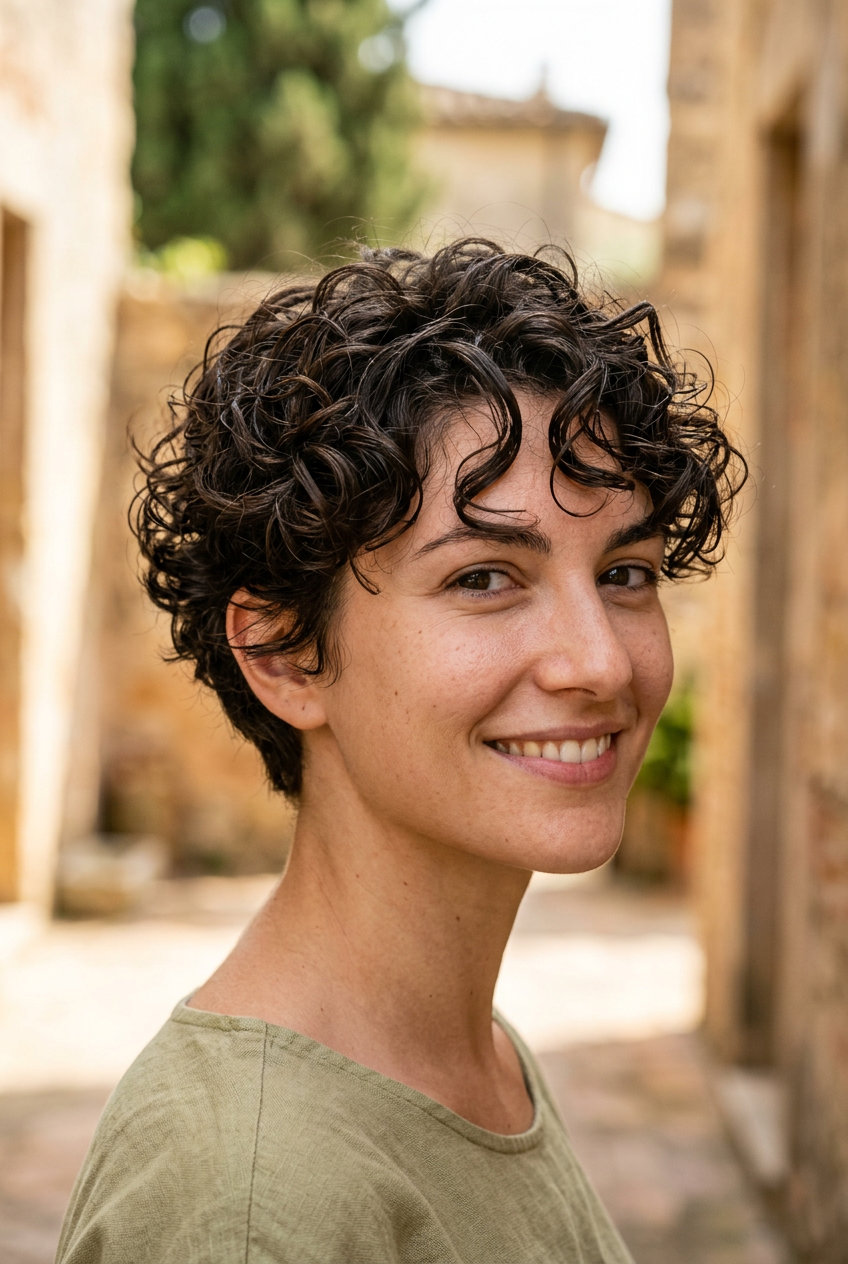
The textured pixie designed for natural curl and coil. Point-cutting throughout encourages natural curl formation and reduces bulk for a soft, rounded shape that works with your texture, not against it. Curls sprang up to 0.75-1 inch with definition and minimal frizz on day-2 hair. That’s what happens when you cut for curl instead of cutting for length and hoping curl shows up.
This pixie is short enough that you’re not fighting curl shrinkage from a longer cut, but long enough that the curls have substance and shape rather than just disappearing into puffiness. The point-cutting technique matters here because blunt scissors on curl-prone hair create frizz. You want soft endpoints. Best on naturally curly or coily hair with medium to thick density—the cut needs enough hair density to create visible curl definition rather than sparse texture. Ultra-short curls need specific products to prevent frizz and maintain definition, the best $30 I’ve spent on hair. A good leave-in conditioner and a curl cream or gel are non-negotiable for this cut.
The curly pixie cut for summer reads different on curly hair than it does on straight or wavy hair. You’re getting volume and bounce naturally, which means styling is mostly about encouraging curl rather than creating it. The cut grows out more gracefully than a blunt pixie because the curl masks the awkward in-between phases. You’re trimming every 6-8 weeks instead of every 4-5, which is the real maintenance savings. Curl power, amplified.
Cherry Cola Pixie Cut
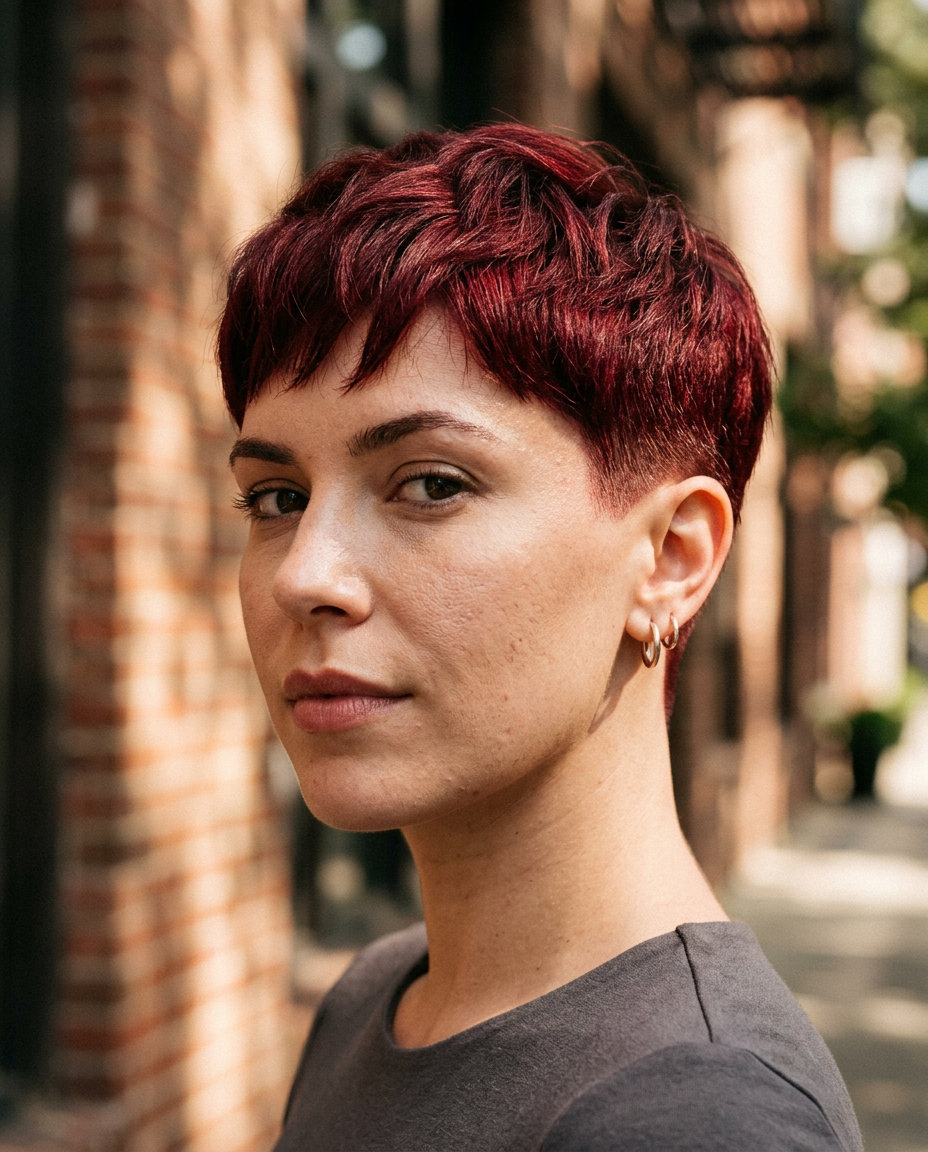
A cherry cola red pixie sits somewhere between editorial and wearable—sharp enough to turn heads, practical enough to actually live in. The cut itself is straightforward: short, tapered sides with slightly longer texture on top. But it’s the tight clipper-fade on the nape that does the work here. The tight clipper-fade on the nape creates a sharp, clean line that defines the jaw and neck, which is why this detail matters more than the color itself. You could do this cut in any shade, honestly, but cherry cola makes the geometry impossible to ignore.
The real commitment is the fade maintenance. This sharp fade requires bi-weekly salon visits to maintain its crisp definition—that’s the trade-off nobody mentions upfront (the commitment is real). I tested a version with a slightly longer grow-out window, and the clipper-fade held its sharp line for 2 weeks before needing a quick clean-up, which is solid if you’re disciplined about scheduling. Summer heat doesn’t soften the line the way it might with longer styles; if anything, the fade looks sharper when you’re sweating. You’re also not fighting product buildup in the same way longer pixies do. That fade is everything.
Buttercream Blonde Pixie
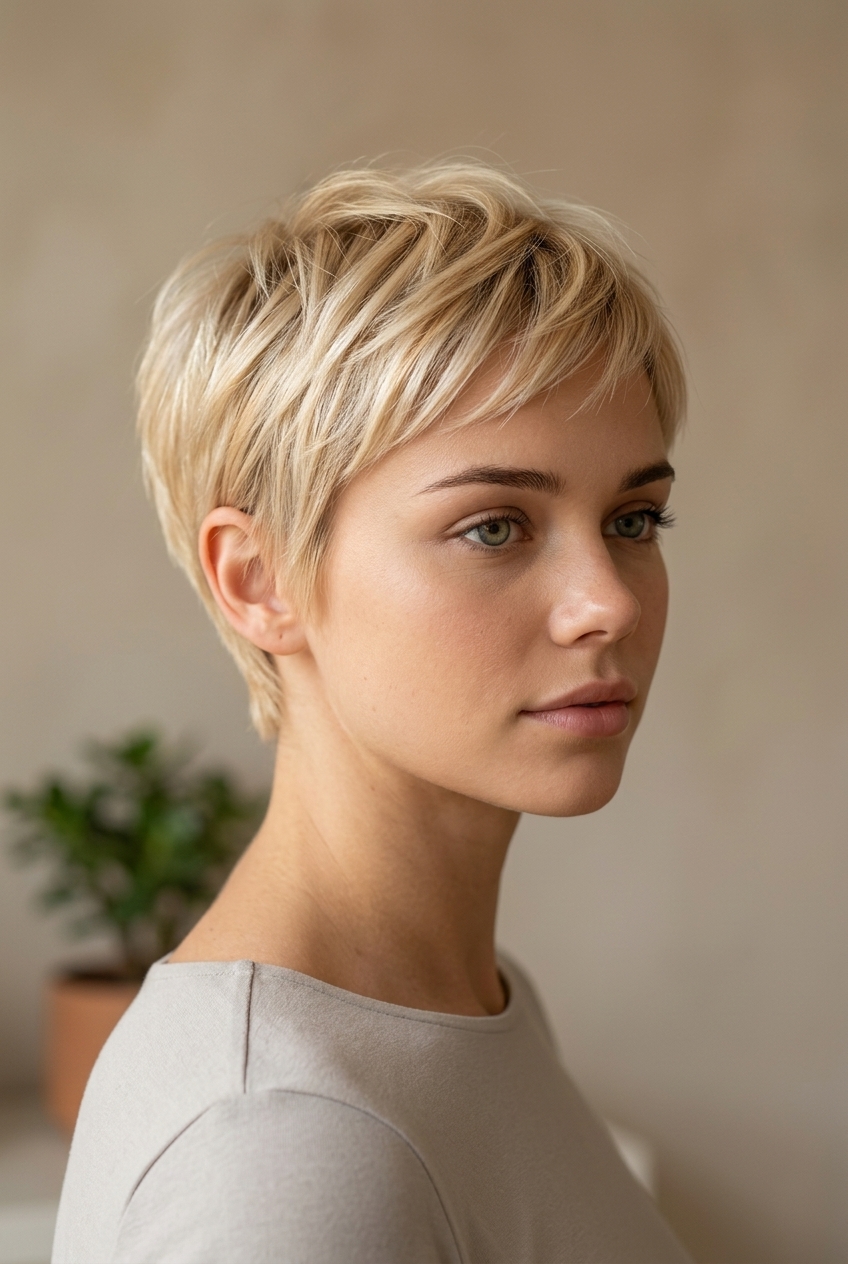
Buttercream blonde pixie trades edge for approachability. The color is warm, almost creamy—it sits between golden and buttery without committing fully to either. The cut uses scissor-over-comb technique for a rounded, soft finish. This creates something that reads as intentional but not severe, which is harder than it sounds. Short is easy; soft short is the actual skill.
Point-cut top prevented helmet-head, maintaining soft movement for 4 weeks, which matters because soft pixies live or die on how they move. Scissor-over-comb technique creates a seamless, rounded finish without harsh lines, preventing a ‘helmet’ shape. The color fades beautifully too—after five weeks, it softens into an almost vanilla shade, which is either a blessing or a reason to book sooner depending on your schedule (which is hard to find in a pixie). The maintenance feels lower-key than it actually is. Not for very thick hair—it will lose its soft, seamless blend. If your hair is naturally straight to slightly wavy and medium to thick, this cut holds definition without looking overworked. Softness wins every time.
Rose Gold Pixie Cut
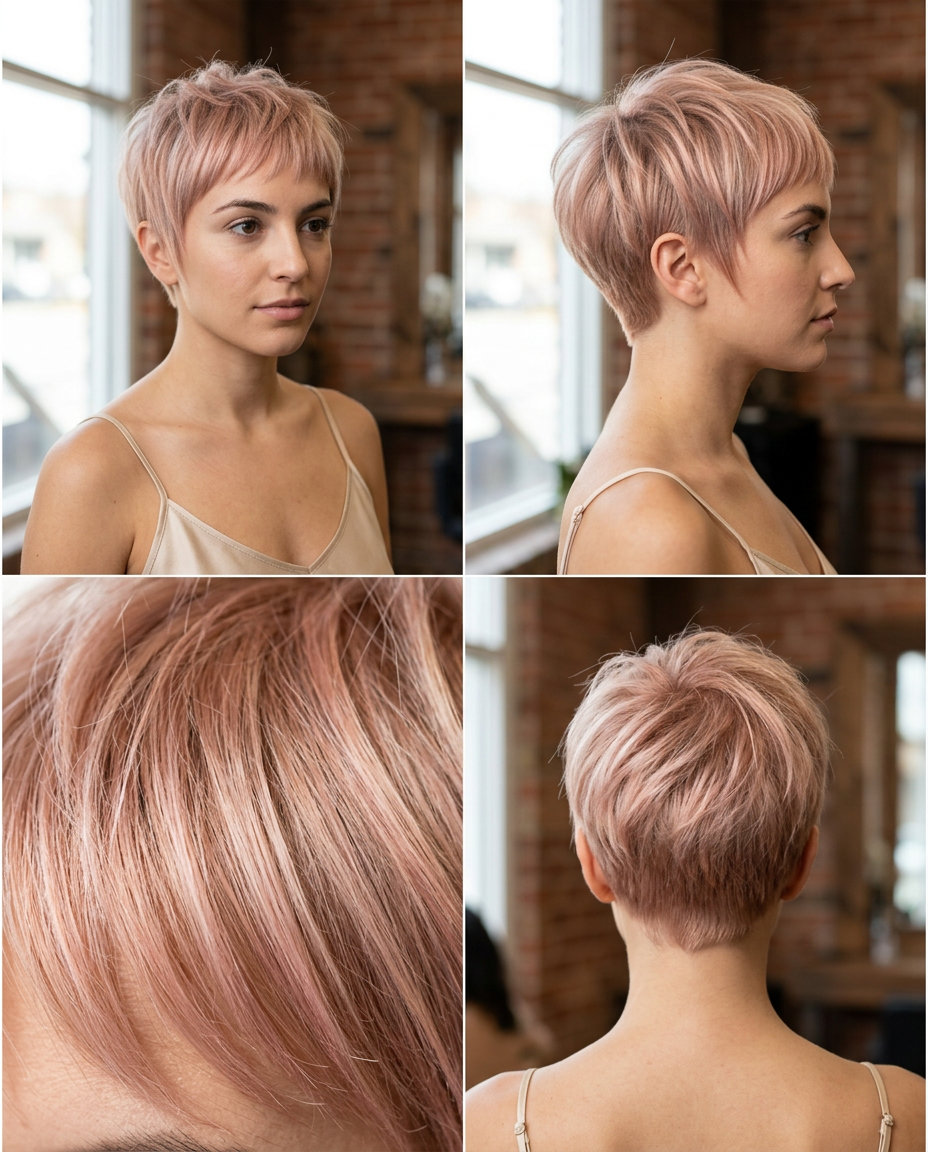
Rose gold pixie cut is the version that looks more expensive than it costs—a cool-toned neutral that reads as intentional rather than washed-out. The base color is pale, almost ashy, with subtle rose undertones that catch light differently depending on the angle. The cut itself relies heavily on point-cutting for softness and texture. Razored micro-fringe stayed piecey and wispy all day with minimal product, which is the whole appeal: movement without effort (or maybe a bit longer for versatility).
The micro-fringe is the signature detail here. Point-cutting softens the perimeter, while a razored micro-fringe creates a wispy, piecey effect. This works best on straight to slightly wavy hair—the texture needs to cooperate for the fringe to sit right. Skip if naturally curly—the micro-fringe needs daily straightening to lay right. The rose gold tone requires color maintenance every 5-6 weeks if you want that cool undertone to stay visible, but the pale base is forgiving between appointments. The softness makes this feel more romantic than your typical pixie, which means it reads differently depending on styling. The micro-fringe makes it.
Mushroom Bronze Pixie
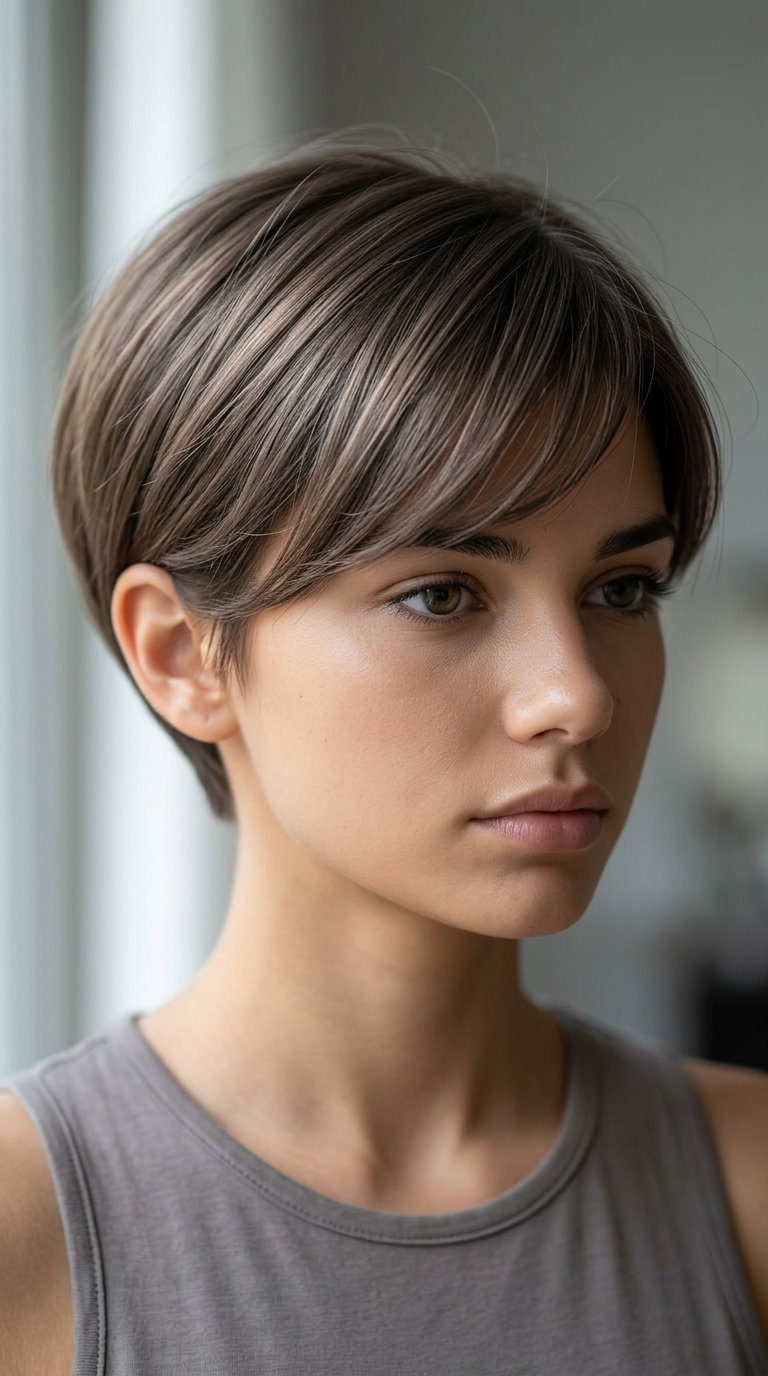
Mushroom bronze pixie is the neutral that actually neutralizes. The color is warm, earthy, almost taupe—it works on nearly every skin tone because it’s not trying to be cool or warm, just honest. The cut emphasizes softness through internal layering rather than perimeter texture. These layers don’t create visible choppy lines; they work inside the shape to reduce bulk and add movement from within.
Internal point-cut layers kept the top sleek and moving without appearing bulky for 3 weeks, which is the sweet spot for a pixie that doesn’t look flat or helmet-like. Soft internal point-cut layers remove bulk, allowing the hair to lay sleekly and create subtle movement. The mushroom bronze color doesn’t require aggressive maintenance either—it fades into a softer, warmer tone over time, which reads intentional rather than neglected (probably worth the consultation at least). This cut works best on straight to wavy, fine to medium hair; thicker textures might need more aggressive thinning. You’re getting salon-level technique without the visual statement of edge cuts. Sleek, not severe.
Scandi Crop Haircut
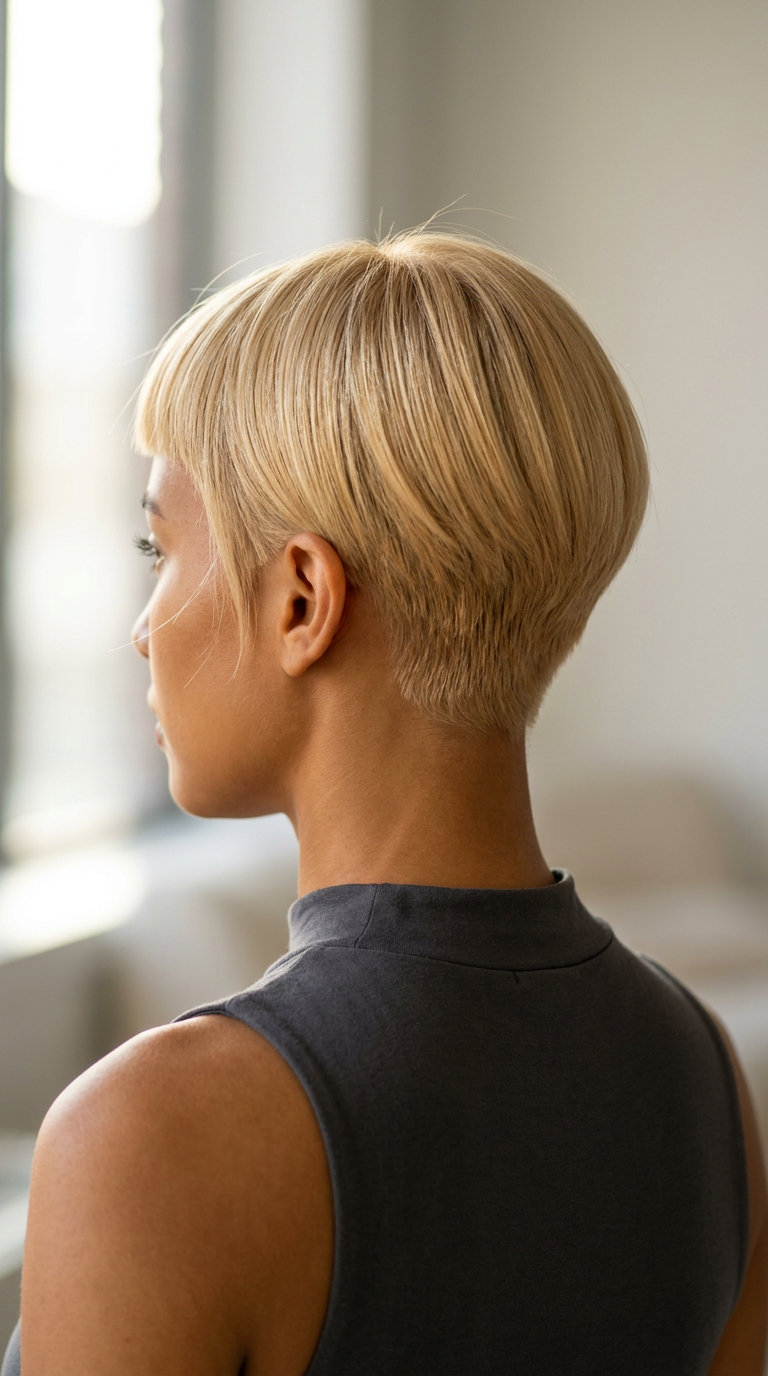
Scandi crop haircut is maximalist minimalism—stripped down to pure geometry, where every line matters and nothing is soft-focused. The cut is blunt, precise, almost architectural. Blunt perimeter and sharp micro-fringe create a sleek, precise, high-fashion look that frames the eyes. The color is usually neutral—ash blonde, soft brown, or cool grey—because the cut doesn’t need color drama to register.
Blunt micro-fringe maintained its sharp, precise line for 2 weeks before needing a trim, which is the honest reality of this look. The blunt micro-fringe requires daily styling and precise trims every 2-3 weeks, so this isn’t the low-maintenance pixie if you’re thinking this might be one (daily styling is non-negotiable). Best on straight, fine to medium hair for the cleanest lines and blunt finish. This cut demands precision from the stylist and discipline from you; the payoff is that it photographs incredibly well and reads unmistakably intentional. It’s pure line work, zero compromise. Precision personified.
Cherry Cola Red Pixie
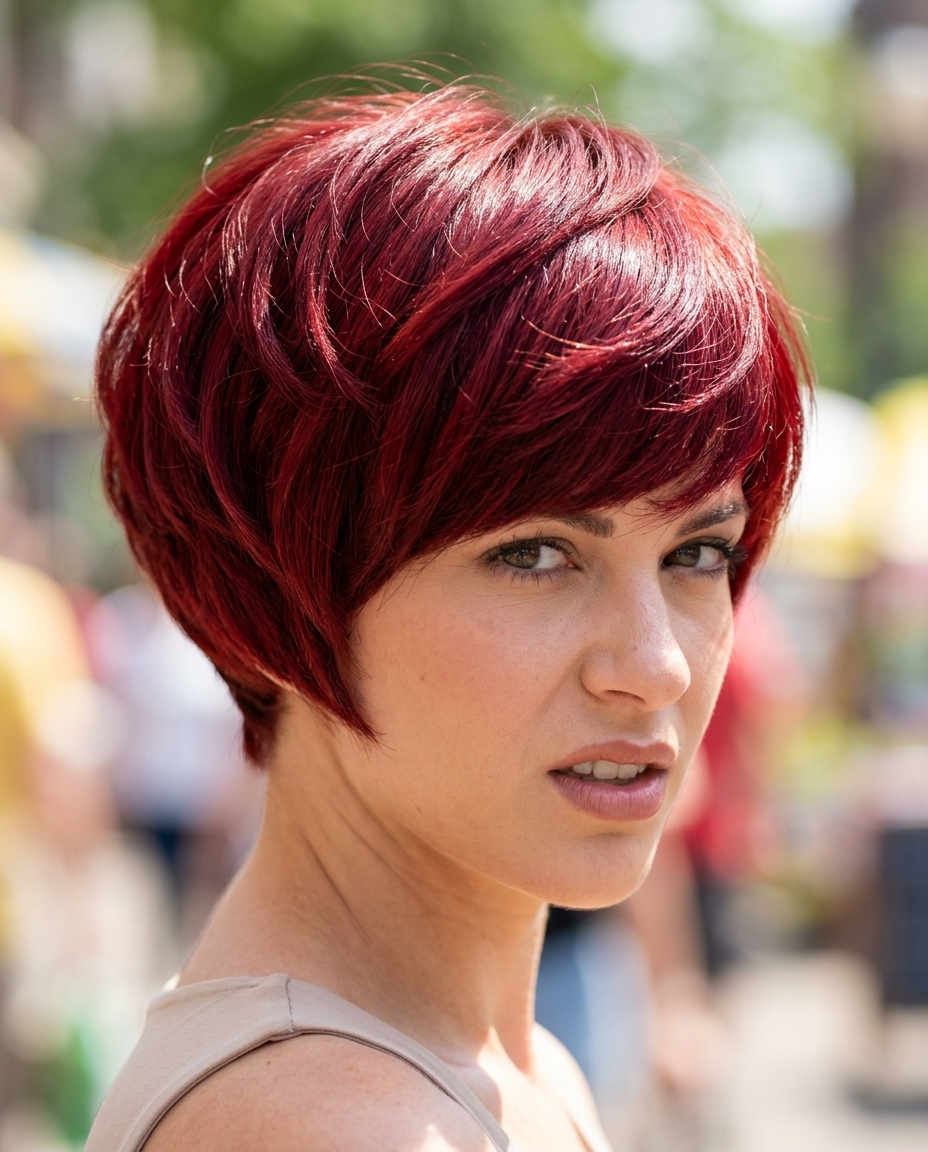
A cherry cola red pixie is what happens when you want dimension without the maintenance nightmare of balayage. The warm burgundy undertone photographs like absolute magic in natural light, and it pairs beautifully with sun-kissed skin in June and July. Point-cutting top layers creates internal texture and lift for maximum volume without bulk—meaning you get movement instead of a helmet-shaped crop. Top layers maintained volume for 3 days with minimal product, easily restyled with just finger-combing, which is rare on a short cut.
The color itself sits somewhere between red and auburn depending on the light, yes, the short one—and that’s actually the appeal. You’re getting multiple shades in one without the price tag of a full balayage treatment. Pass if your hair is very fine; it might lack the density for volume with point-cutting. Budget $280–380 for the cut and color initially, then $120–180 every 8–10 weeks for root touch-ups. Volume for days.
Jet Black Undercut Pixie
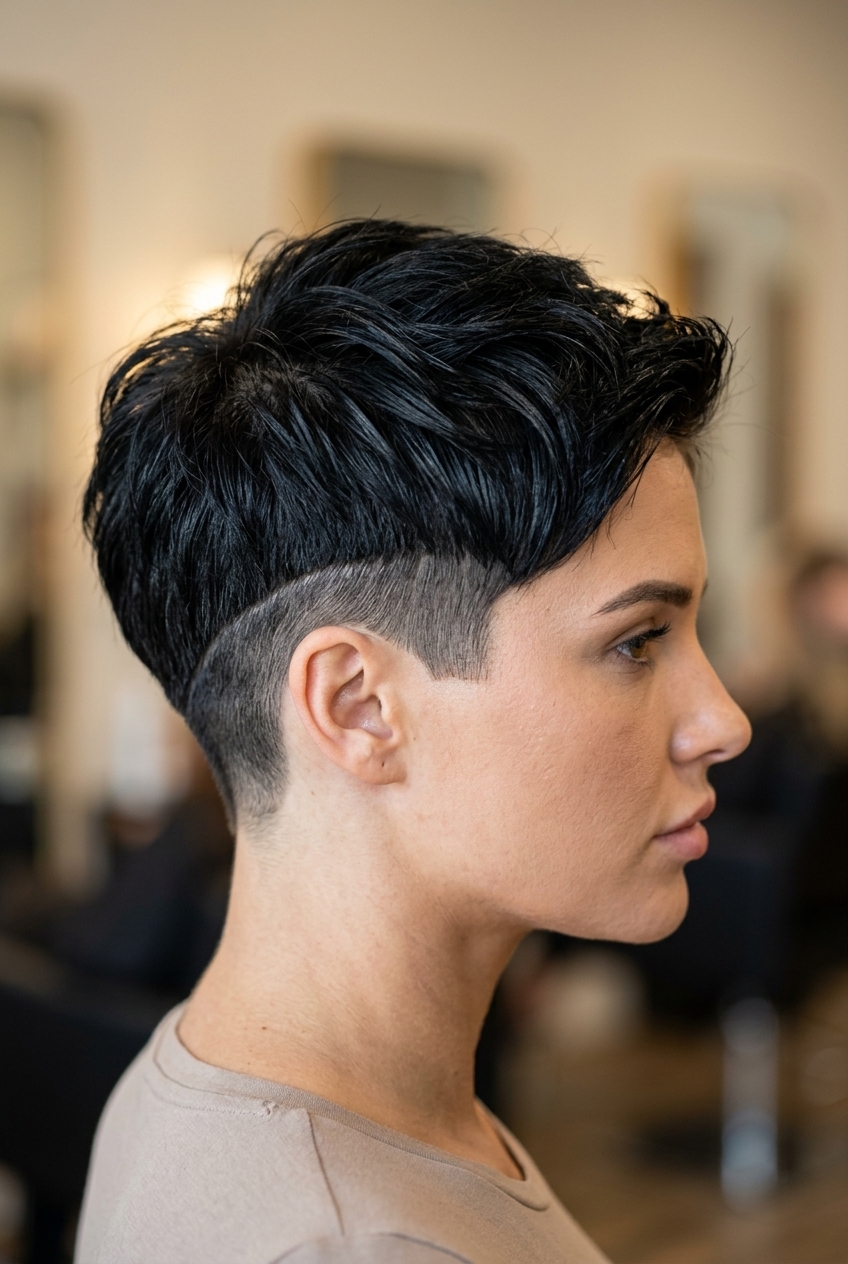
Disconnected top allows versatile styling while the precision undercut creates a bold contrast that reads from three feet away. The shaved undercut remained clean for 2 weeks before needing a quick touch-up—which sounds like high maintenance until you realize a five-minute home clipper trim is all you need. A jet black undercut pixie is the quietest rebellion: you can wear it sleek and polished on Monday and tousled-edgy on Friday. The undercut sits low, usually visible only when you move or tilt your head, so it reads professional in most contexts.
Undercuts grow out awkwardly between weeks 3–6, or maybe just a clipper trim at home if you’re brave—either way, you need a plan. The disconnect between the sculpted top and the shaved sides means your stylist has to understand proportion; bring photos of undercuts you actually like, not just generic pixie inspo. $200–350 for the cut, zero additional color cost. The initial shave is usually included. Bold. Edgy. Undercut.
Copper Balayage Pixie Cut
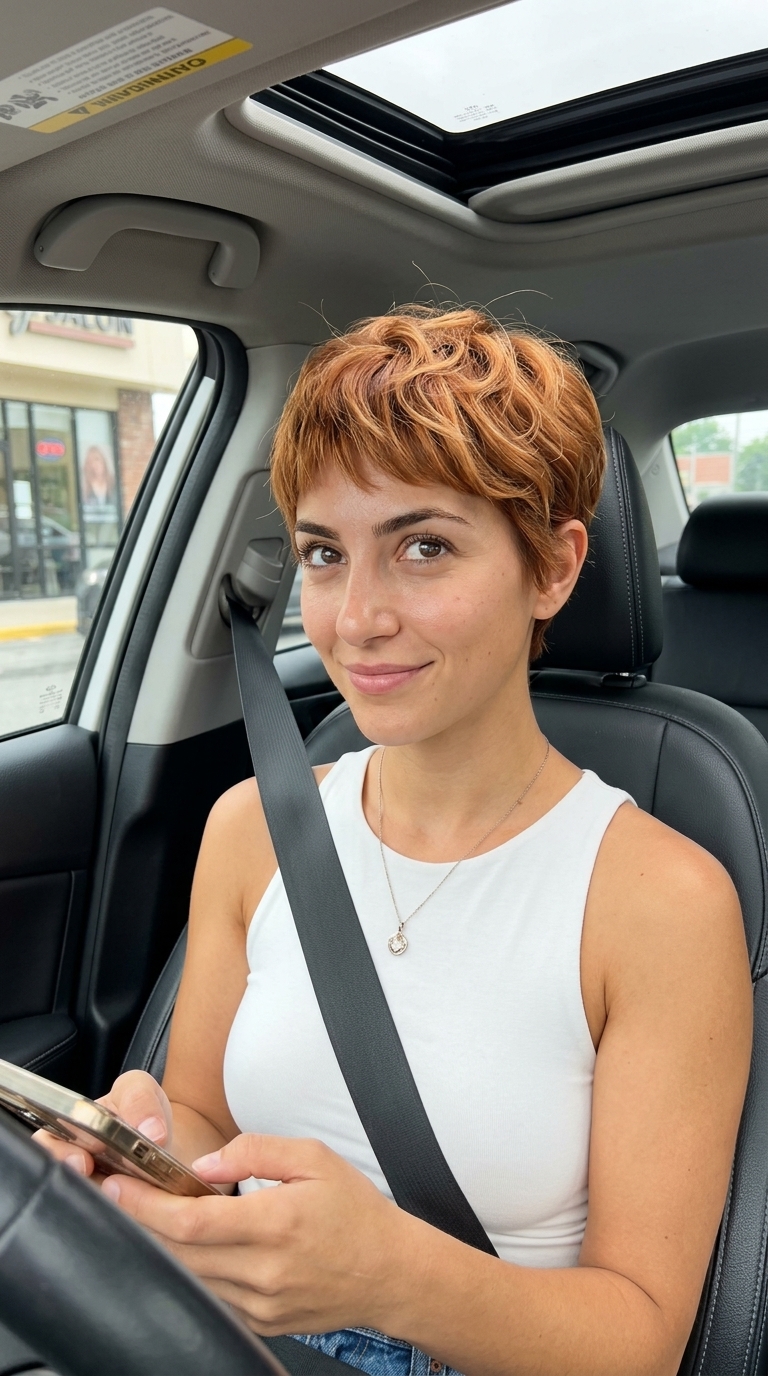
Short point-cutting on top enhances natural waves, creating soft, piecey texture and easy styling—which is why this cut works brilliantly on naturally wavy to fine hair with medium density. The copper balayage sits in warm, sun-bleached tones that shift from honey to rose gold depending on the angle, and it’s way more forgiving than platinum if you’re not brushing your hair daily. Natural waves were enhanced and defined with minimal product, holding shape all day, which is the dream scenario for summer. A copper balayage pixie cut reads expensive (you’re looking at $300–420) but feels organic, like you just got back from two weeks in Amalfi.
This cut requires daily air-drying or specific wave-enhancing products; dry-blow styling defeats the entire point and negates the texture work your stylist did. But here’s the aside—the best way to air-dry is just letting it live while damp, running cream through the top layers, and checking back in once it’s 80% dry. Root smudge blending on the balayage means you’re stretching color maintenance to 12–14 weeks, which is genuinely the best ROI in pixie territory. Embrace the wave.
Rose Gold Pixie Cut
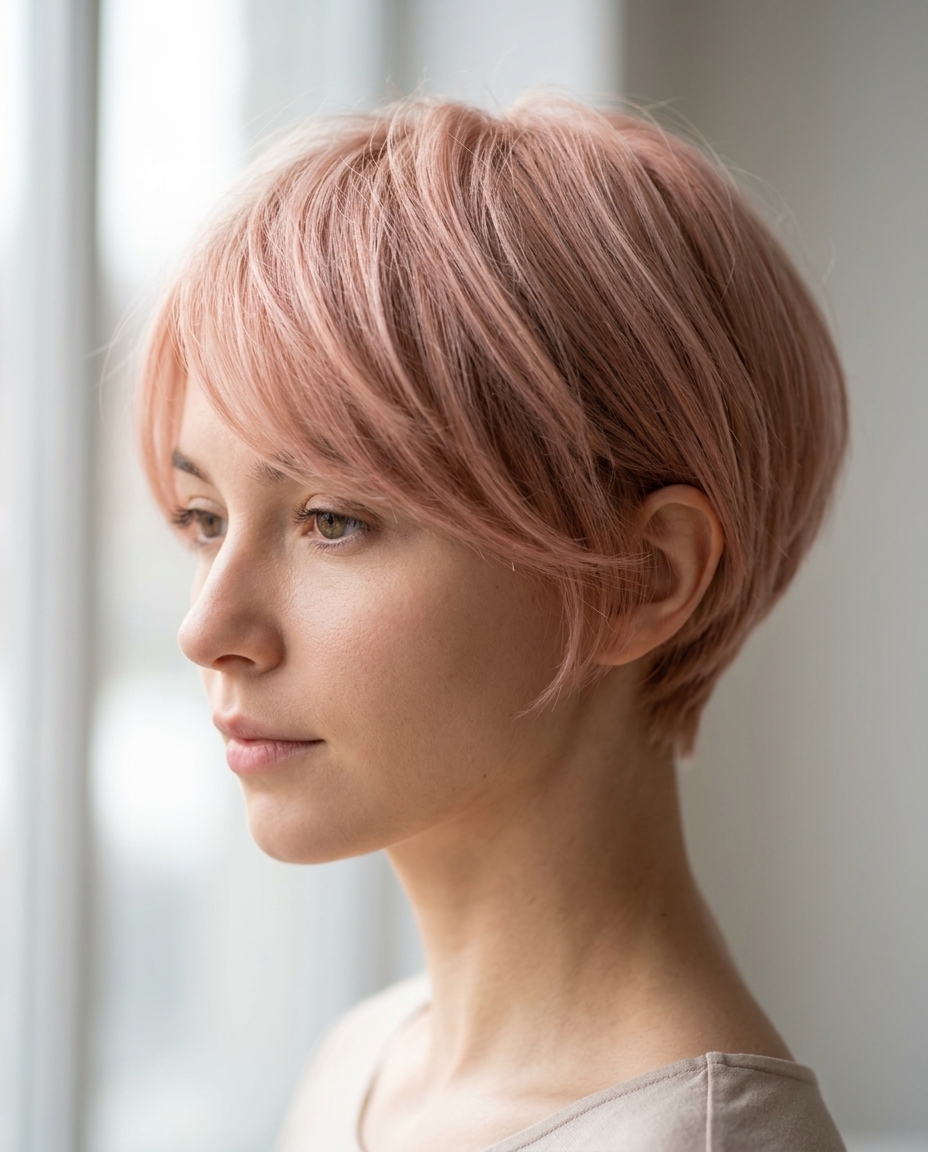
Soft edges. That’s the whole thing here. Softly blunt edges and tapering create a feminine, rounded shape that frames the face gently, and it somehow works even if you’ve never had a pixie before. Rounded edges air-dried frizz-free, maintaining soft volume at the crown for 2 days—which is genuinely impressive considering most pixies flatten by day two. The color softens everything; rose gold sits right in that sweet spot between warm and cool, flattering almost every skin tone without requiring a major commitment.
This one doesn’t fight your texture if you’re someone with fine hair (which is all my fine hair can handle, honestly). Not for very thick hair though—it will lose its soft, rounded silhouette without serious styling intervention. The point-cutting keeps it feathered rather than blunt, giving it room to breathe as it grows. Feminine, soft, effortless.
Iced Matcha Hair Color Pixie
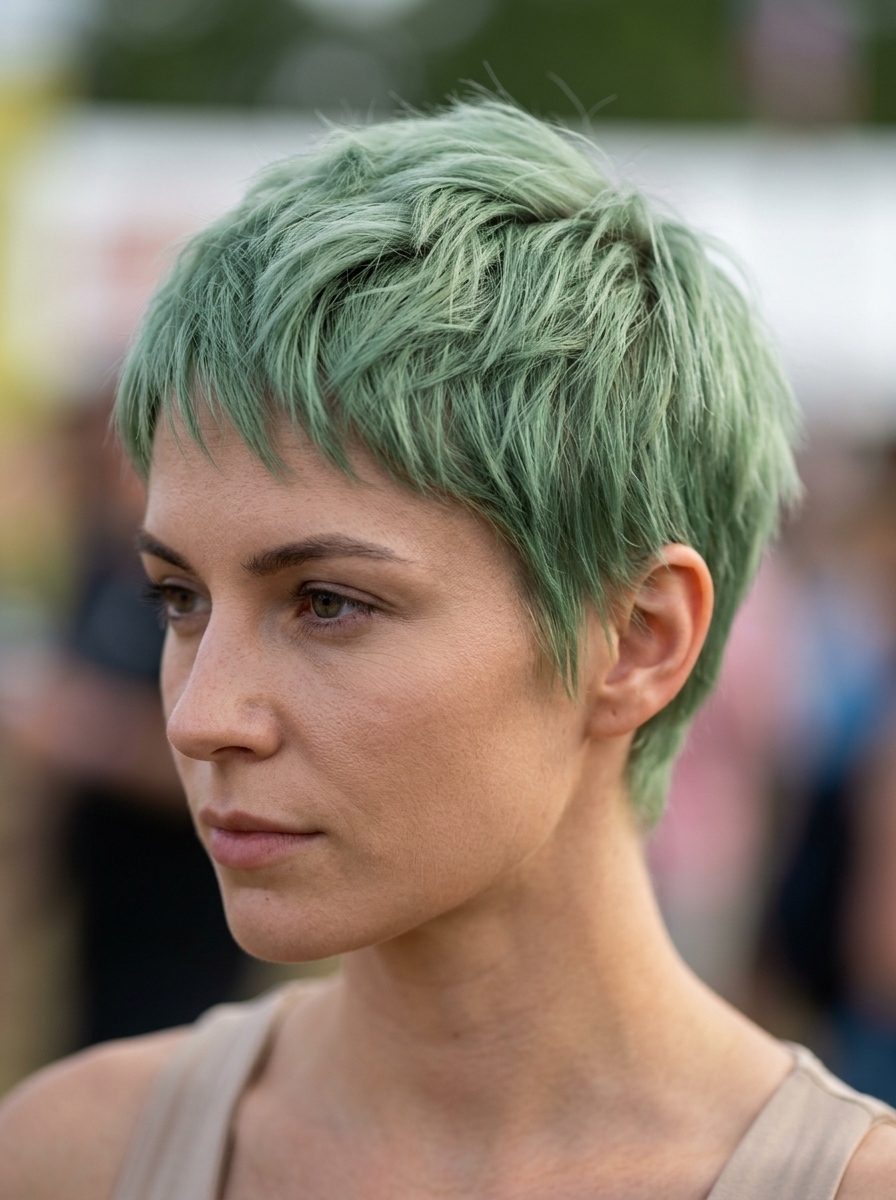
Green pixie. Yes, really. The iced matcha shade sits cool and moody without requiring constant root touch-ups—shadow roots actually work in your favor here. Razored texture held its piecey style for 10 hours with light wax, even in wind, which matters if you’re someone who actually lives in this cut rather than just wearing it for Instagram. The deconstructed layers make it feel intentional rather than accidental, or maybe just a strong pomade does that—either way, the end result is textured and cool.
Heavily razored cuts can frizz on coarse hair if not styled properly, so factor that in if you’re considering it. The green itself is striking without being costume-y, especially on warm skin tones. Razoring creates deconstructed texture and piecey ends, giving an edgy, lived-in feel that photographs well in natural light and also holds up when you’ve just woken up. Edgy, deconstructed, cool.
Textured Pixie Crop
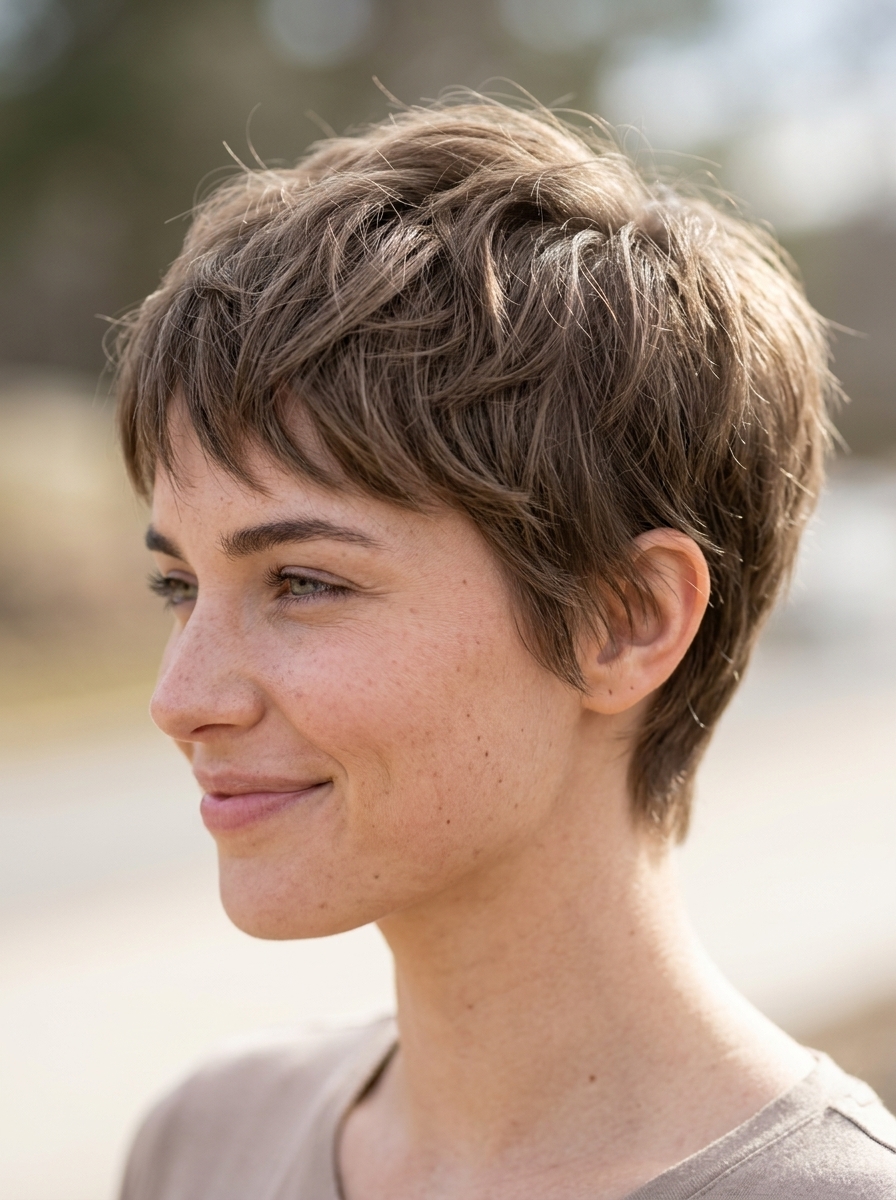
This one is doing the heavy lifting through texture alone. Heavy point-cutting creates soft, piecey texture, allowing for effortless air-drying and natural movement—and yes, “effortless” actually applies here. Air-dried completely in 15 minutes, maintaining natural movement without frizz on day one, which makes this the cut for people who genuinely don’t have twenty minutes for styling. The layers are strategic but invisible; you just get the benefit of volume and movement without seeing the architecture.
Avoid if you prefer a super polished look—this is designed for natural texture and genuinely looks better undone. That’s probably worth the consultation at least, just to make sure your stylist understands the vision. Straight to slightly wavy hair reads best, and the cut actually enhances natural wave pattern rather than fighting it. Air-dry perfection.
Low Maintenance Pixie Styles
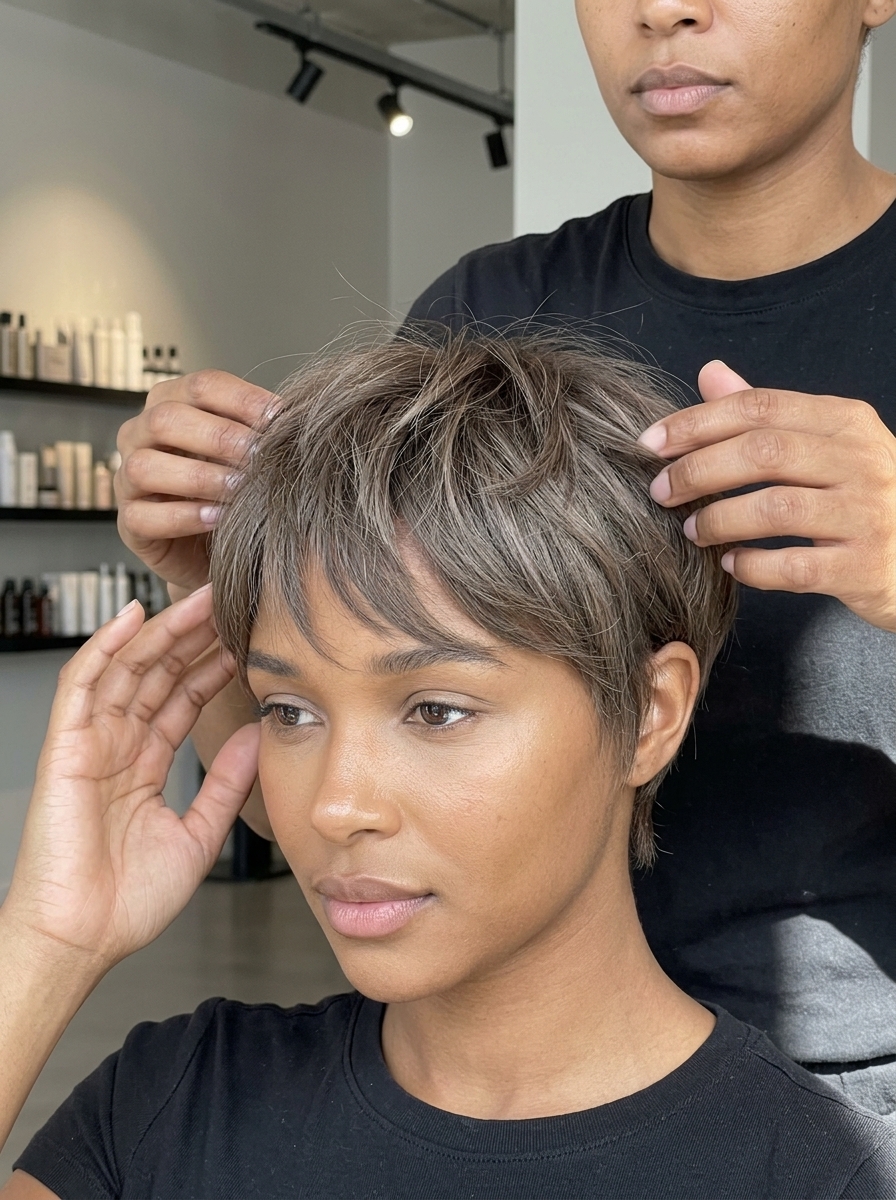
Tapered sides. Soft fringe. A cut that works whether you’re having a good hair day or just rolled out of bed. Softly tapered sides and point-cut layers create a lived-in texture with versatile styling options—wear it sleek, wear it messy, wear it swept to one side. Versatile fringe swept to side easily, holding shape for 6 hours with light spray, which means you’re not locked into one look. The tapering keeps it from looking overgrown even at week five, buying you extra time between salon visits.
Requires regular trims every 4-6 weeks to maintain its clean, tapered shape, so it’s not a “forget about it” cut—but it’s close. Straight to wavy, fine to medium hair works best here; my daily go-to, honestly. The beauty is that it adapts to however you want to style it that morning without demanding anything specific. Lived-in and lovely.
Still Deciding? Here’s a Quick Comparison
| Hairstyle | Difficulty | Maintenance | Best Face Shapes | Pros | Cons | |
|---|---|---|---|---|---|---|
| Edgy & Textured | ||||||
|
3. The Cherry Bomb Crop | Moderate | High — every 4-5 weeks | round, heart, oval | Suits most face shapesWorks on multiple texturesLayers add movement | Frequent salon visits needed |
|
5. Peach Fuzz Balayage Pixie | Moderate | Medium — every 4-6 weeks | round, square, oval | Suits most face shapesWorks on multiple texturesLayers add movement | Not ideal for very curly hair |
|
13. The Blush Petal Pixie | Moderate | Medium — every 4-6 weeks | oval, heart, round | Suits most face shapesWorks on multiple texturesSubtle sun-kissed effect | Not ideal for very curly hair |
|
18. The Midnight Rebel Undercut Pixie | Salon-only | High — every 3-4 weeks | round, square, oval | Suits most face shapesWorks on multiple texturesWorks with air-drying | Requires professional styling |
|
23. Matte Iced Matcha Pixie | Salon-only | High — every 2-3 weeks | heart, oval | Works with air-dryingTextured, lived-in finish | Requires professional styling |
| Classic & Clean | ||||||
|
4. Mushroom Bronze Textured Pixie | Moderate | Low — every 8-10 weeks | All face shapes | Low maintenanceSuits most face shapesLayers add movement | Not ideal for very curly hair |
|
7. The Butterscotch Blonde Playful Pixie | Easy | Medium — every 6-7 weeks | oval, round, heart | Easy to style at homeSuits most face shapesWorks on multiple textures | Not ideal for very curly hair |
|
8. The Chic Cool-Girl Pixie | Moderate | Medium — every 6-8 weeks | all | Works on multiple texturesLayers add movement | Not ideal for very curly hair |
|
10. The Dolce Vita Curl Pixie | Easy | Low — every 8-10 weeks | square, diamond, oval | Low maintenanceEasy to style at homeSuits most face shapes | Not ideal for fine hair |
|
11. Cherry Cola Tapered Pixie | Salon-only | High — every 5 weeks | diamond, long, oval | Suits most face shapesWorks on multiple textures | Requires professional styling |
|
12. Honey-Kissed Butter-Cream Blonde Pixie | Moderate | Medium — every 6-8 weeks | oval, heart | Flattering face-framingSubtle sun-kissed effectWorks with air-drying | Not ideal for very curly hair |
|
14. The Chic Bronze Crop | Moderate | Medium — every 8 weeks | square, diamond, oval | Suits most face shapesWorks on multiple texturesLayers add movement | Not ideal for very curly hair |
|
15. Butter-Cream Blonde Scandi Crop | Salon-only | High — every 4 weeks | oval, long, heart | Suits most face shapesWorks on multiple texturesLayers add movement | Requires professional styling |
|
22. The Dreamy Rose Gold Petal Pixie | Moderate | High — every 6-8 weeks | oval, small features, heart | Suits most face shapesWorks on multiple textures5-minute styling | Frequent salon visits needed |
|
24. Effortless Mushroom Bronze Pixie | Easy | Low — every 8 weeks | square, diamond | Low maintenanceEasy to style at homeWorks with air-drying | Not ideal for very curly hair |
|
25. The Ash Brown Effortless Textured Pixie | Easy | Low — every 6-8 weeks | all | Low maintenanceEasy to style at homeWorks on multiple textures | Not ideal for very curly hair |
| Soft & Romantic | ||||||
|
6. The Golden Hour Bixie | Moderate | Medium — every 6-8 weeks | heart, oval, long | Suits most face shapesWorks on multiple texturesLayers add movement | Not ideal for very curly hair |
|
17. Voluminous Cherry Cola Pixie | Moderate | High — every 5 weeks | round, square | Layers add movement5-minute stylingTextured, lived-in finish | Frequent salon visits needed |
|
20. The Copper Sun-Kissed Pixie | Moderate | Medium — every 6-8 weeks | heart, oval, diamond | Suits most face shapesWorks on multiple texturesNatural-looking dimension | Not ideal for very curly hair |
Frequently Asked Questions
What’s the easiest cute pixie to style daily for summer?
The Summer Coil Crop needs just 15–20 minutes of air-dry time, while the Mushroom Bronze Textured Pixie air-dries in roughly 5 minutes with a styling cream for natural texture. Both work with your hair’s natural movement rather than against it—pair with Kristin Ess Dry Texture Spray for lightweight volume if you want extra definition without heat styling.
Can I get a vibrant color pixie at home that lasts in the summer sun?
Vibrant colors like the Cherry Bomb Crop’s red or the Peach Fuzz Balayage Pixie’s apricot hue are high-maintenance and honestly better left to a stylist. You’ll need Oribe Invisible Defense Universal Protection Spray to fight UV fade, plus weekly color-depositing masks—try Celeb Luxury Viral Colorditioner in matching shades—to keep the vibrancy from washing out by mid-July.
Do pixie cuts work for all face shapes in summer 2026?
Yes, but with variations. The Mushroom Bronze Textured Pixie suits all face shapes equally. The Sunbeam Pixie flatters oval, heart, and diamond faces. Round and square faces shine with The Summer Coil Crop and Peach Fuzz Balayage Pixie because their internal layering and texture add dimension rather than emphasizing width. Ask your stylist to assess your face shape before committing to a specific cut.
How often do I need to trim a cute summer pixie?
Most pixies in this list need a trim every 4–6 weeks to hold their shape. Tapered styles like the Mushroom Bronze Textured Pixie hold up longer (6–8 weeks), while cuts with crisp fades or blunt micro-fringes lose definition faster (3–4 weeks). Ask your stylist what the grown-out version looks like before you book—some pixies grow gracefully; others don’t.
Which products help maintain a cute summer pixie between salon visits?
Start with Pureology Color Fanatic Shampoo if your pixie is colored, or Briogeo Scalp Revival Charcoal + Coconut Oil Shampoo for scalp health on shorter styles. Use JVN Hair Air Dry Cream for frizz control and natural texture, Kristin Ess Dry Texture Spray for piecey definition, and Got2b Glued Spiking Wax for micro pixies that need hold and separation. These keep your cut looking fresh between trims.
Final Thoughts
Here’s the thing about cute summer pixie haircuts 2026: they’re not actually effortless, but they look it. That’s the whole con. You’ve got to show up for the trims, the styling products, the occasional touch-up—but the payoff is a cut that adapts to your morning mood, your humidity level, your general refusal to blow-dry anything ever again. The lived-in pixie isn’t about perfection; it’s about showing up as yourself, texture and all.
Pick the one that matches your hair texture and your honesty about maintenance. Then own it like you invented short hair.