
Early winter outfits work best when they bridge two kinds of weather and two kinds of dressing. Lighter layers can still feel practical when a coat, knit, scarf, or boot is used to control the silhouette, while transitional pieces keep the result from looking as heavy as a deep-winter uniform. The key is not adding more garments at random, but building a clear relationship between length, volume, warmth, and color.
These outfit ideas range from denim and patterned knitwear to long coats, wide trousers, short skirts, tall boots, puffer jackets, and small accessories that repeat a useful accent. Some combinations stay within muted neutrals, while others use pale blue, lime, red, white, or olive to create a stronger visual rhythm. Reading the looks through their proportions and layer placement makes the early winter wardrobe feel more flexible and easier to adapt.
Patterned Knit With Straight Blue Jeans
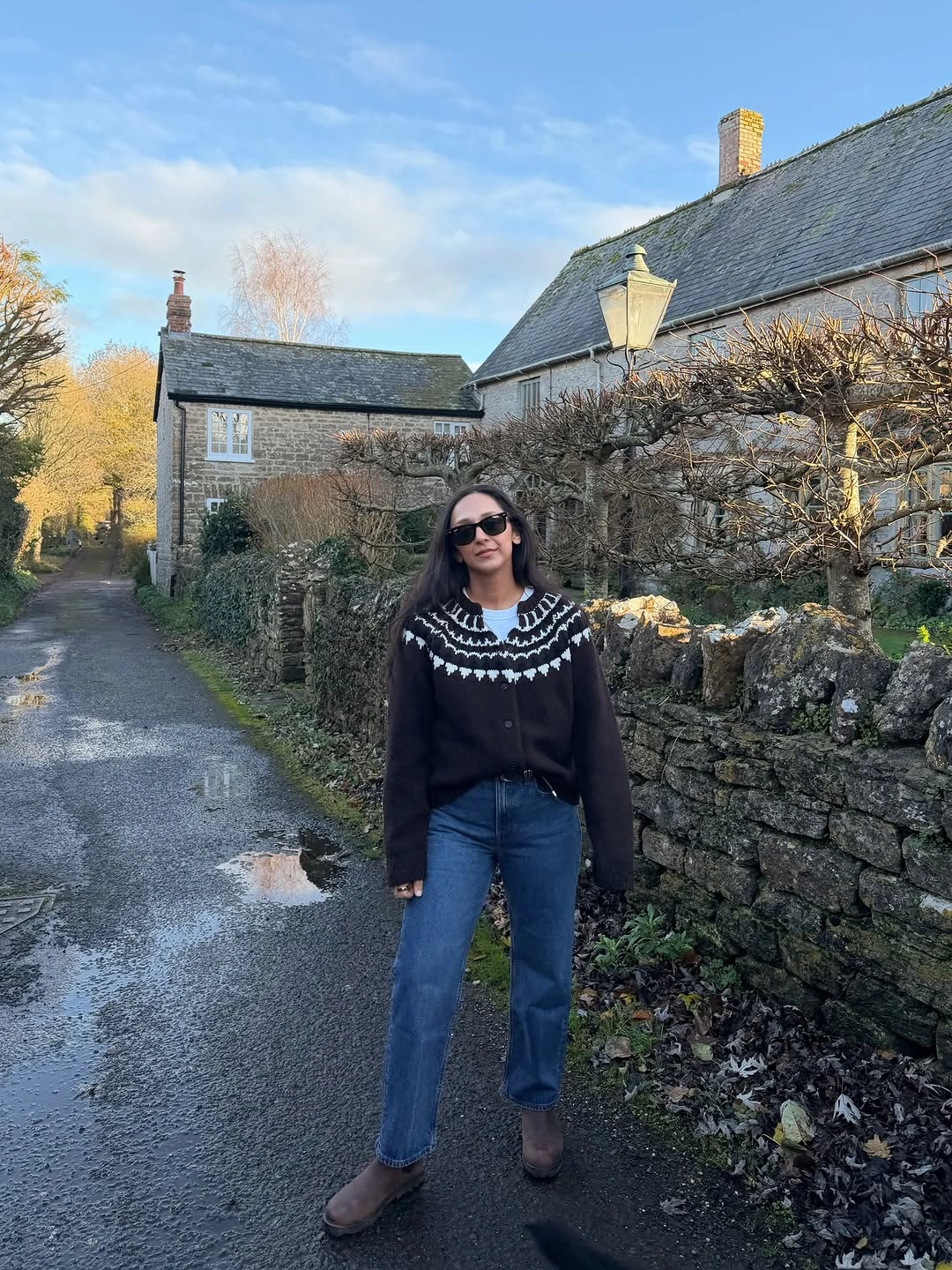
A dark knit with a broad white yoke pattern gives this casual early winter outfit a clear focal point before the eye reaches the denim. The straight blue jeans keep the lower half visually calm, while the brown ankle boots add a softer dark neutral at the hem. Because the pattern stays concentrated across the shoulders, the outfit feels detailed without becoming visually busy from top to bottom.
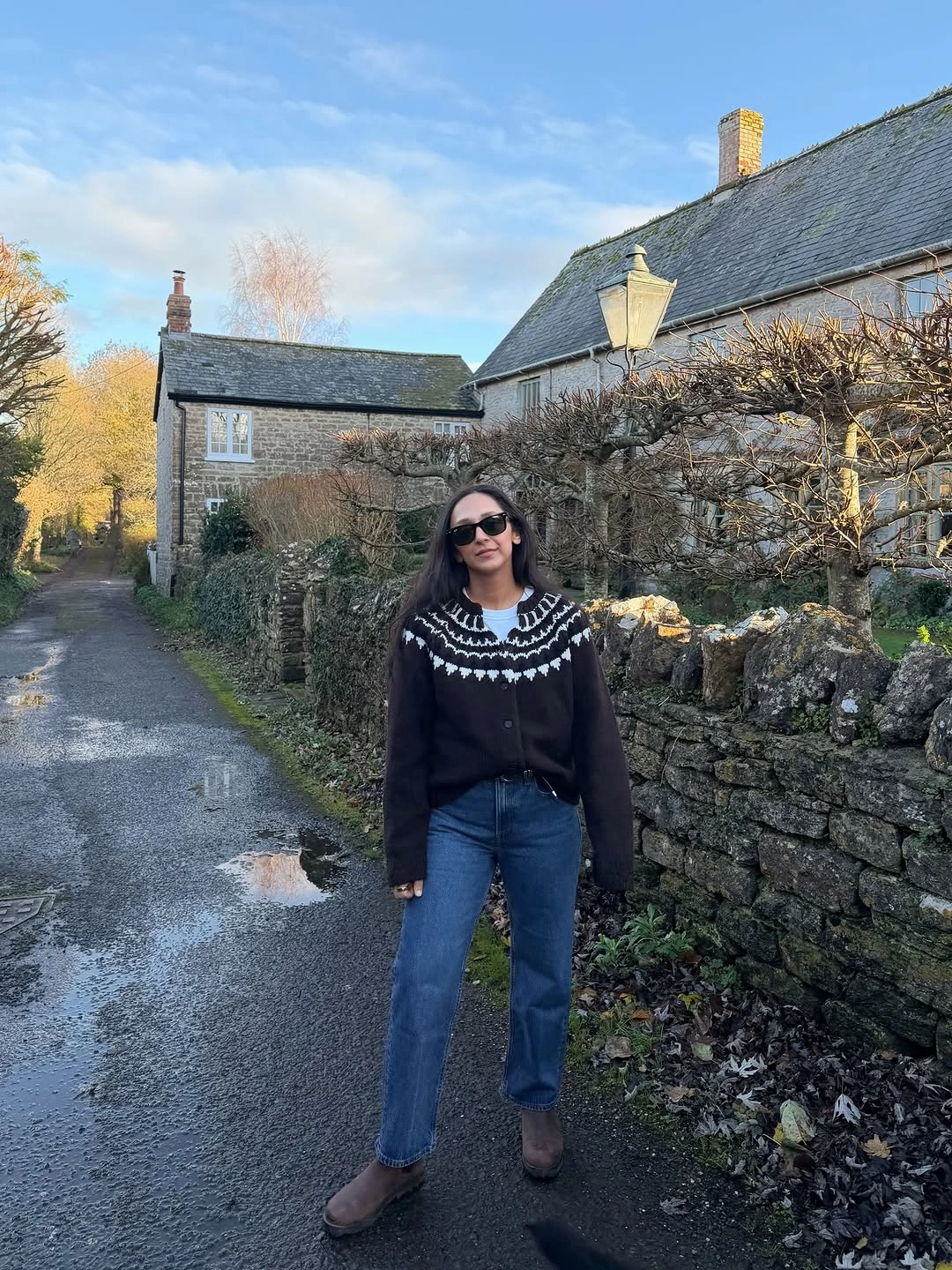
This is a useful example of early winter outfits with jeans because the denim is not doing the decorative work. Instead, the patterned knit defines the upper silhouette and the jeans provide a simple vertical continuation underneath. The small gap between the jean hem and ankle boots also keeps each piece readable, so the outfit has separation even though the palette remains restrained.
Keeping the strongest motif near the shoulders gives the outfit a natural hierarchy, with the eye landing on the knit before moving down to the simpler denim. It is a straightforward late autumn layering idea that depends on pattern placement and proportion rather than extra accessories.
Dark Long Coat With Pale Blue Accents
A long charcoal coat creates the dark foundation, but the pale blue accessories are what give this outfit its visual rhythm. The scarf falls vertically through the center, the structured handbag repeats the same light family at the side, and the loafers bring that pale accent to the ground. Against cropped dark trousers, those repeated details feel deliberate rather than incidental.
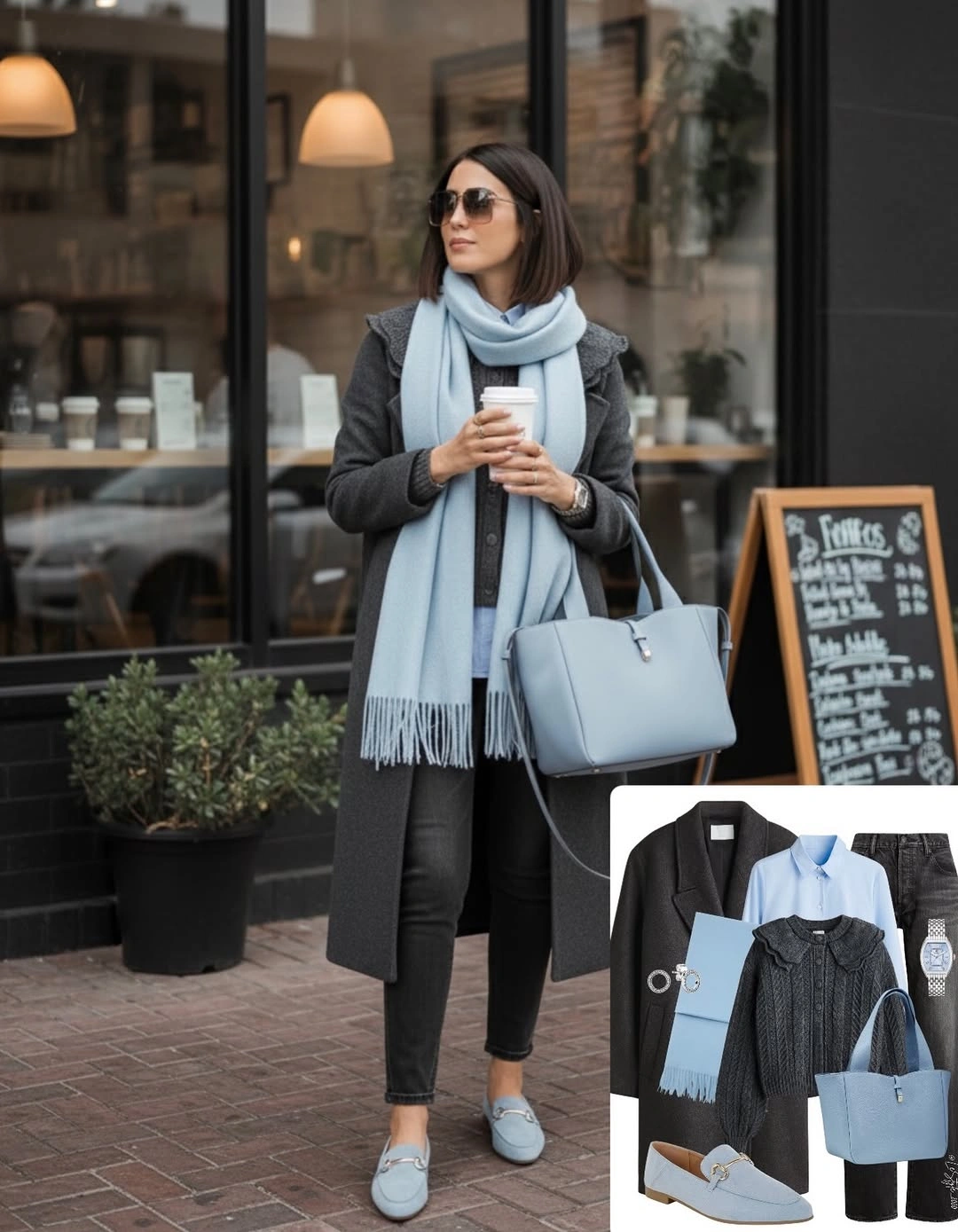
Among chic early winter outfits, this combination stands out for distributing one accent color across three different zones instead of relying on a single statement piece. The scarf draws attention near the face, the bag fills the middle of the silhouette, and the light shoes finish the repetition below. The result is a dark layered look with a clear visual path from top to bottom.
The cropped trouser length also gives the pale shoes enough space to register as a separate part of the composition. Rather than making the coat the only dominant piece, the repeated blue accents connect the upper, middle, and lower sections of the outfit.
Cream Scarf With Short Skirt and Tall Boots
The strongest idea here is the way a short dark skirt is framed by longer elements above and below it. A long cream scarf drops well past the waist, while tall black boots rise toward the hem and visible white socks create a narrow break between the two. The compact dark outer layer keeps the center controlled, so the scarf and boots become the main vertical markers.
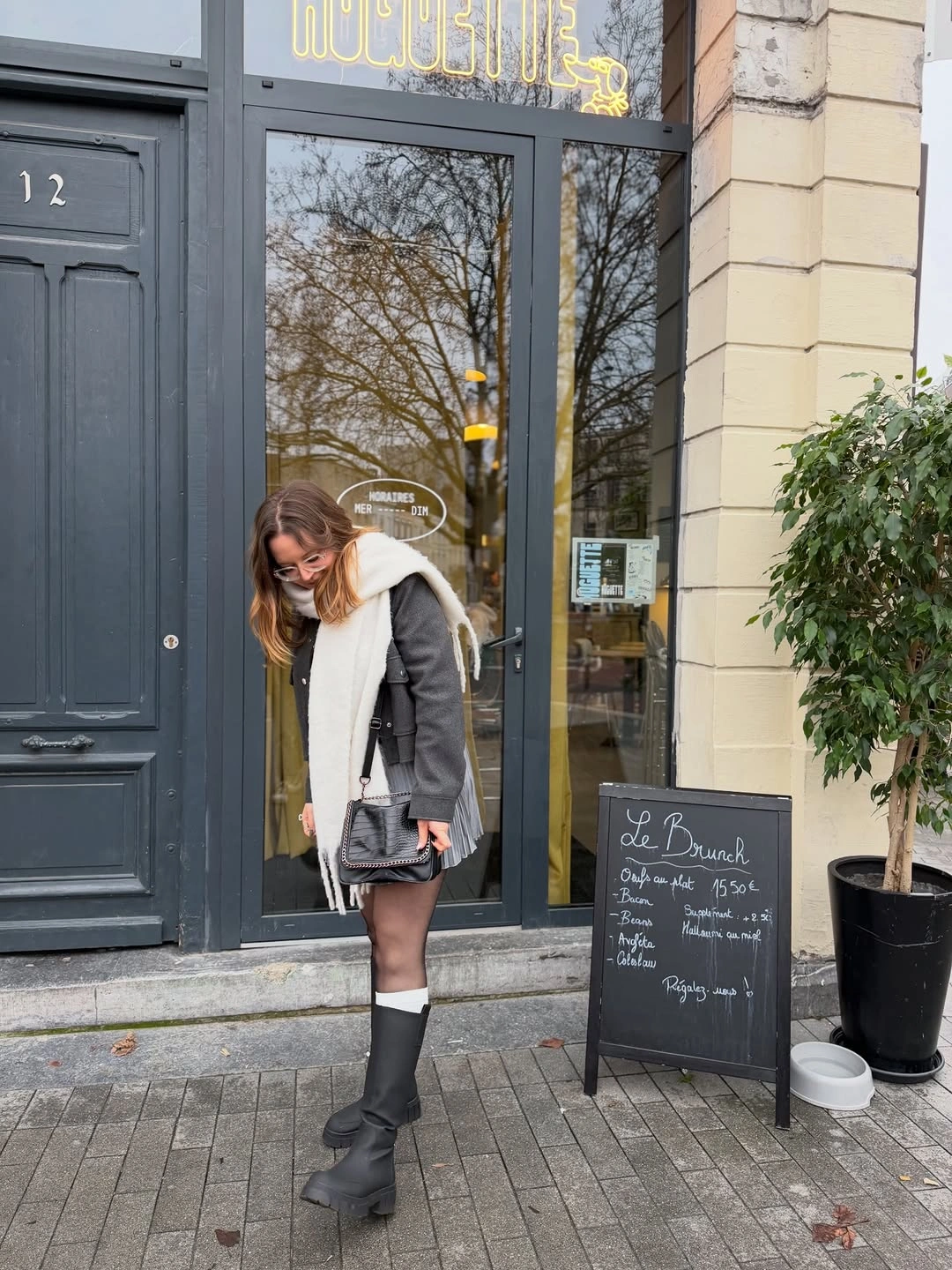
For an early winter outfit with a skirt, the proportions matter more than adding extra detail. The cream scarf lengthens the upper section, the short hem creates a sharp change in scale, and the tall boots give the lower half more visual weight. A small dark bag stays close to the body, which prevents the accessory from competing with the stronger scarf-to-boot relationship.
The visible white socks repeat the light tone of the scarf on a much smaller scale, creating a subtle connection between opposite ends of the look. That small detail helps separate the black boots from the skirt instead of allowing the dark pieces to merge into one block.
Brown Long Coat With Wide Black Trousers
This long brown coat and wide black trouser combination is built around uninterrupted vertical length. The coat falls well below the knee, while the trousers extend in a broad line beneath a light high-neck top. That lighter center breaks up the deeper brown and black sections, making the layered structure easier to read without introducing a bright accent.
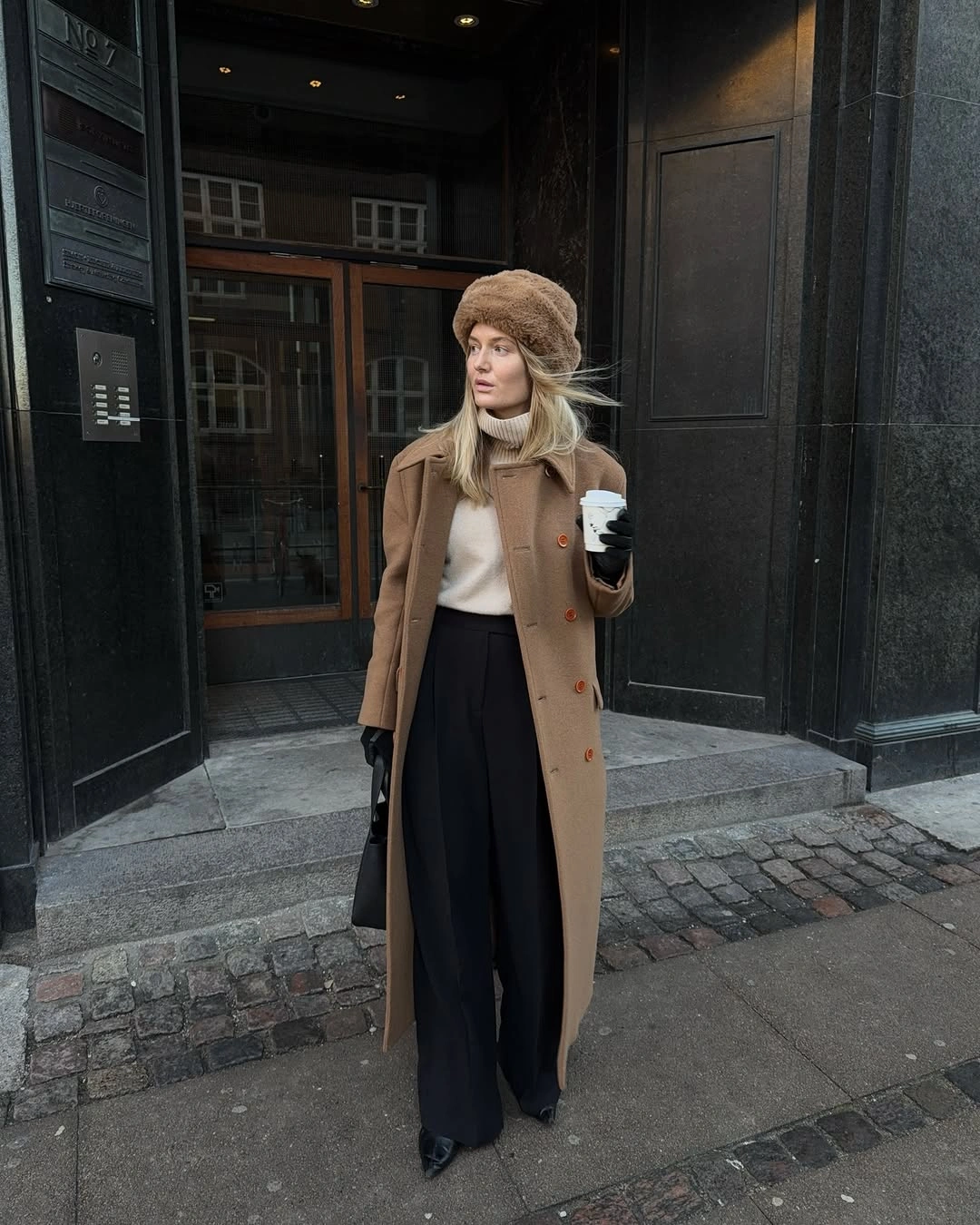
Wide-leg trousers change the balance of a long-coat outfit because the lower half carries as much visual presence as the outer layer. Here, the brown hat echoes the coat without turning the whole look into one flat tone, and the dark pointed footwear continues the black trouser line. The overall effect comes from proportion first: long coat, wide trousers, and a narrow light section between them.
This neutral early winter outfit shows how two substantial vertical shapes can coexist without one visually overwhelming the other. The light top acts as a clean interruption between the coat and trousers, while the repeated brown near the top keeps the palette connected.
Brown Layers With Long Shorts and Tall Boots
This brown tonal outfit uses an unusual proportion through long shorts and tall boots rather than relying on full-length trousers. A patterned cropped top keeps the upper half compact, while the shorts extend toward the knee and the boots continue the darker brown story below. The tan beanie stays within the same muted family, which lets the pale yellow shoulder bag become the clearest contrast.
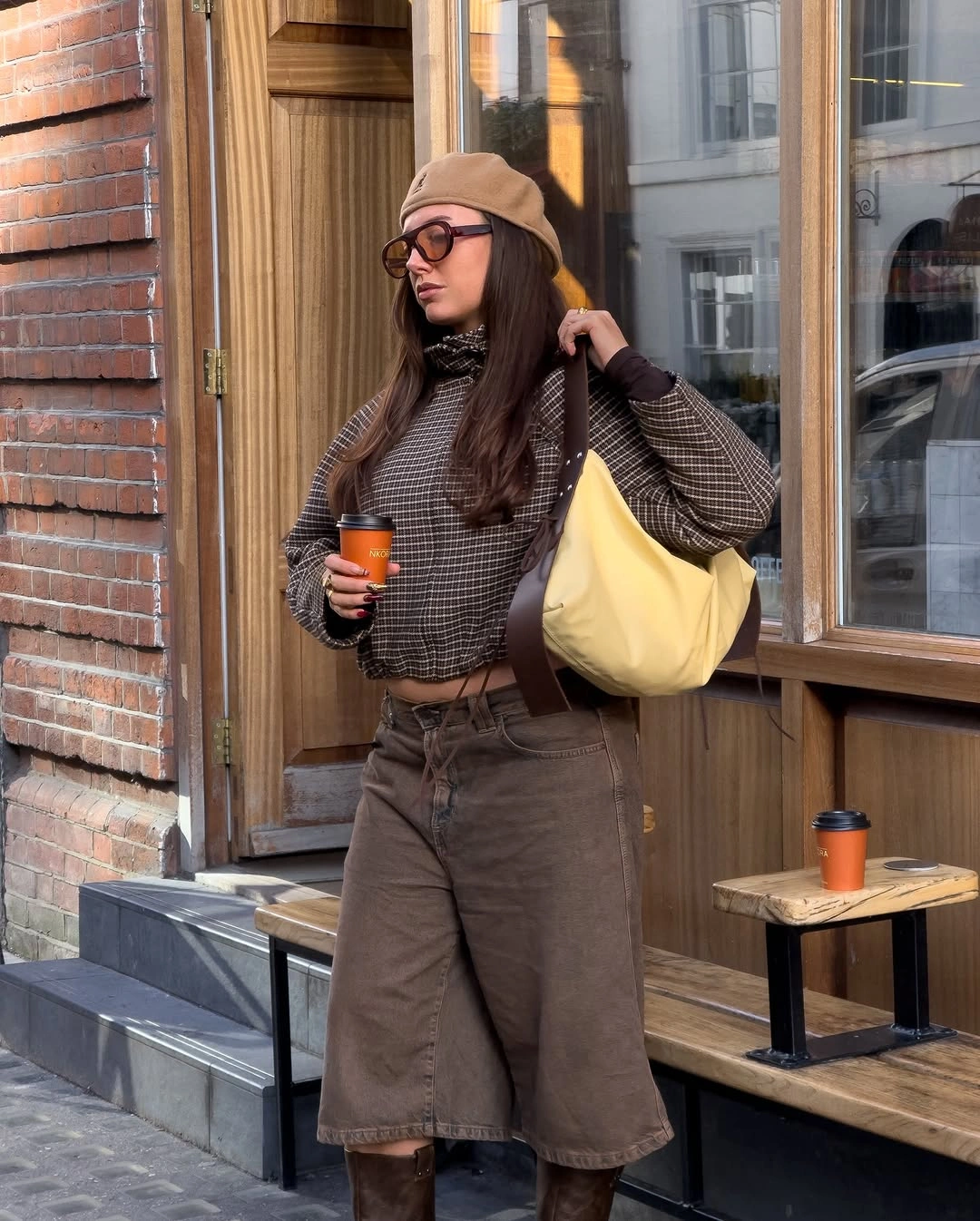
The long-shorts-and-boots combination gives this early winter outfit a distinct shape because the leg is divided into several visible sections instead of one continuous line. Repeated browns link the top, shorts, boots, and beanie, but their different shades keep the pieces from blending together. The yellow bag adds one lighter interruption near the shoulder without changing the outfit’s dominant tonal direction.
The bag works precisely because most of the surrounding pieces remain within a closely related brown range. At the same time, the contrast between the cropped upper section, longer shorts, and tall boots gives this look a proportion story that is clearly different from the jeans and long-coat combinations.
Olive Jacket With Lime Scarf and Wide Jeans
A short olive jacket sets up the proportions of this casual early winter outfit, but the oversized lime scarf immediately becomes its strongest visual feature. Wrapped high around the neck and falling down the front, the bright scarf creates both volume and color contrast against the quieter jacket. Light blue wide-leg jeans expand the silhouette below, while chunky black ankle boots give the loose denim a clearly defined ending.
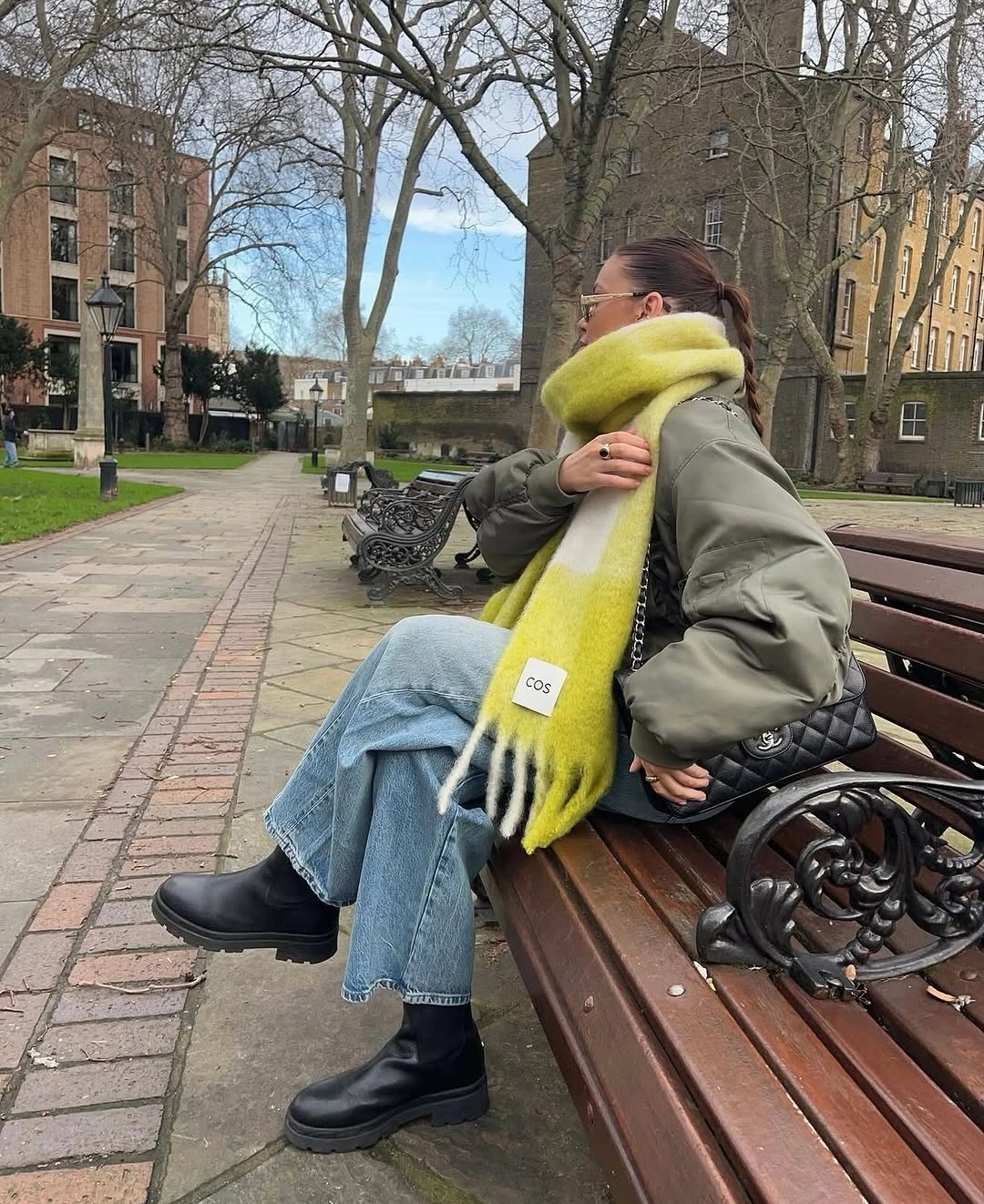
The combination works through differences in scale rather than a tightly matched palette. The scarf is large and vivid, the jacket stays comparatively compact, and the wide jeans introduce another generous shape below the waist. A black quilted shoulder bag and black boots repeat a darker note at opposite sides of the outfit, allowing the lime and pale denim to remain the most noticeable elements.
This is a useful example of how an oversized scarf can become part of the silhouette instead of functioning as a small finishing detail. The contrast between the compact jacket, broad scarf, and wide denim gives the look a structure that is distinct from the straighter jeans and longer outer layers seen earlier.
Charcoal Long Coat With White Accessories
A long charcoal coat falls over a nearly continuous dark base of black separates and very wide trousers, creating one of the deepest palettes in the group. Instead of introducing contrast through a scarf or bright top, the outfit places it at the edges with a structured white top-handle bag and white sneakers. Those two light elements interrupt the dark column without competing with the coat’s length.
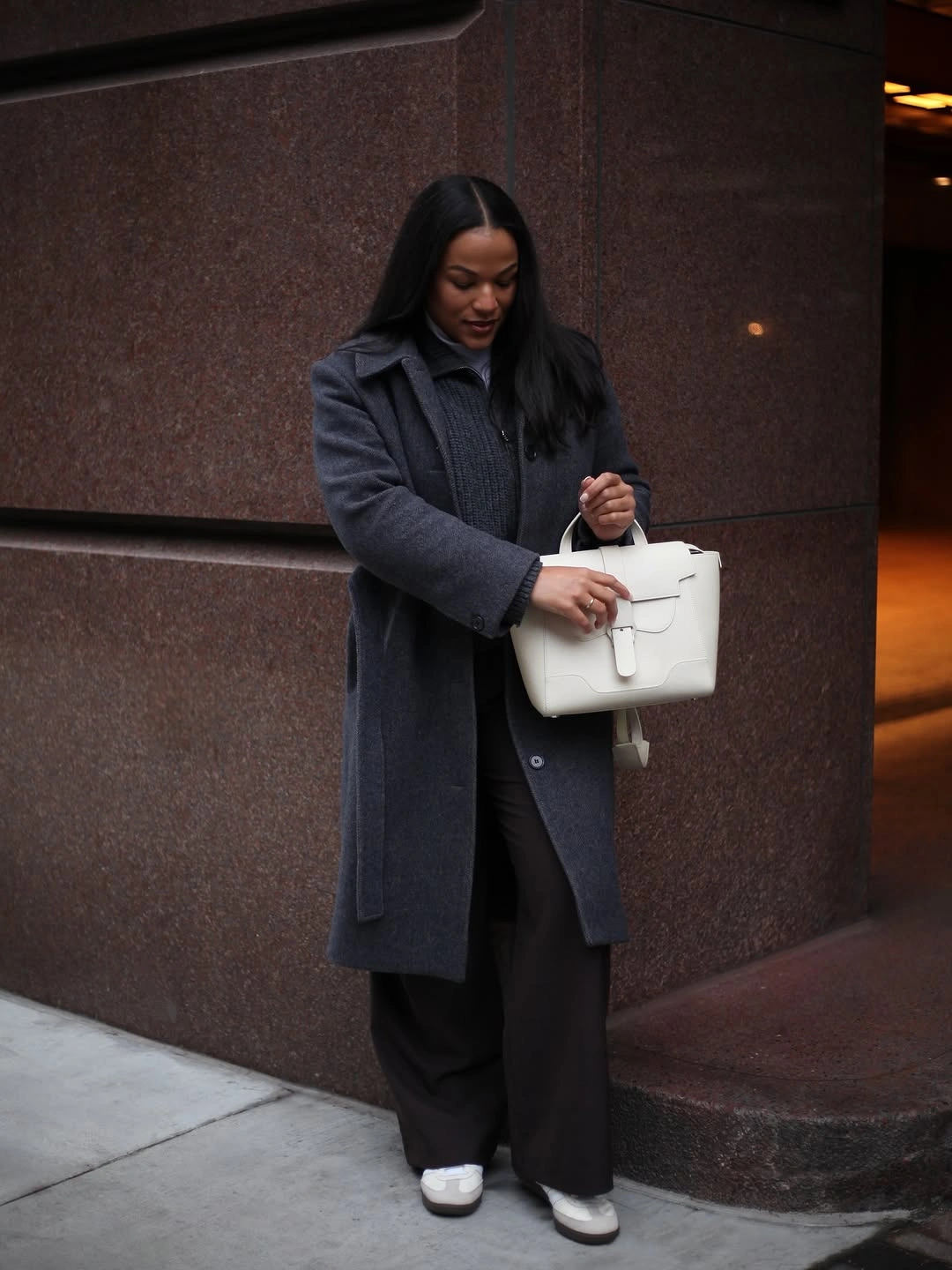
The wide trousers are important because they prevent the lower half from disappearing beneath the substantial coat. Their broad shape remains visible below the hem, while the white sneakers create a crisp endpoint at ground level. The white bag adds a second light interruption around the middle of the silhouette, so the contrast appears in two separated areas rather than as one concentrated accent.
This dark early winter outfit is less about matching accessories to each other than about using them to break up a monochrome base. The pale bag and sneakers give the eye two clear reference points while the charcoal and black layers remain visually dominant.
Black Sweatshirt With Coordinated White Accessories
An oversized black sweatshirt and black leggings create a simple dark center, while repeated white details trace the outfit from top to bottom. White earmuffs frame the head, white gloves introduce another light point at the hands, and white lace-up footwear finishes the sequence below. The sweatshirt also carries white lettering and striped trim, reinforcing the same two-color idea within the main garment.
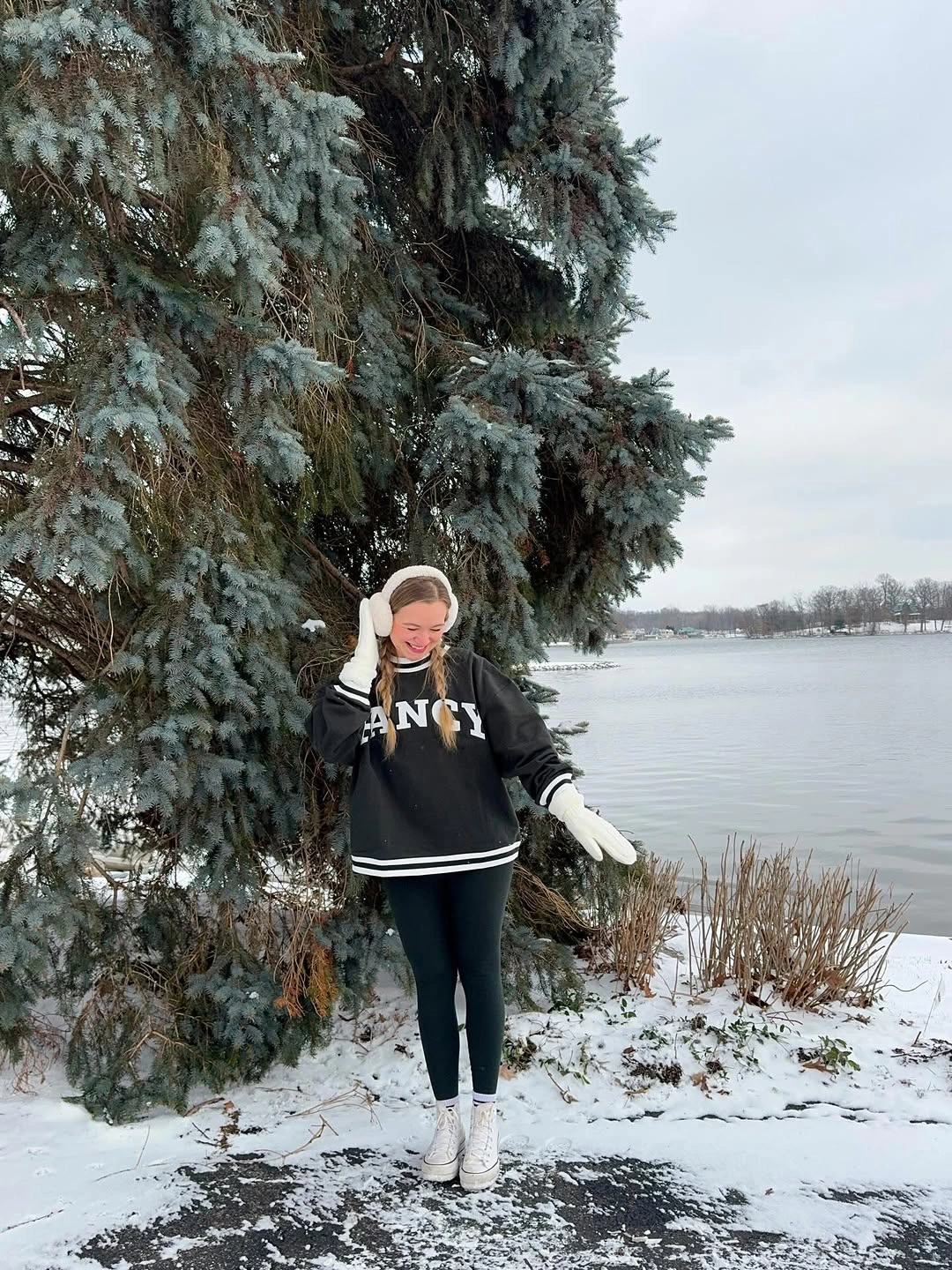
What makes this black-and-white casual outfit visually coherent is the distribution of the lighter color rather than any single accessory. The white elements are separated across the silhouette, so the eye moves between the earmuffs, sweatshirt details, gloves, and shoes. Against the narrow black leggings, those repeated accents stand out clearly without requiring another color to create distinction.
The result shows how small coordinated details can give a relaxed early winter outfit a strong visual identity. Unlike looks where a scarf or handbag carries most of the contrast, the lighter color here is repeated in several compact points from head to toe.
Navy Puffer Over a Cream Tonal Base
A short navy puffer creates a strong dark frame around a pale cream outfit underneath. The light top and matching trousers read as an almost continuous tonal base, so the outer layer becomes especially distinct around the shoulders, sleeves, and waist. Rather than mixing several competing shades, this early winter layering idea relies on one deep outer color placed directly against a much lighter center.
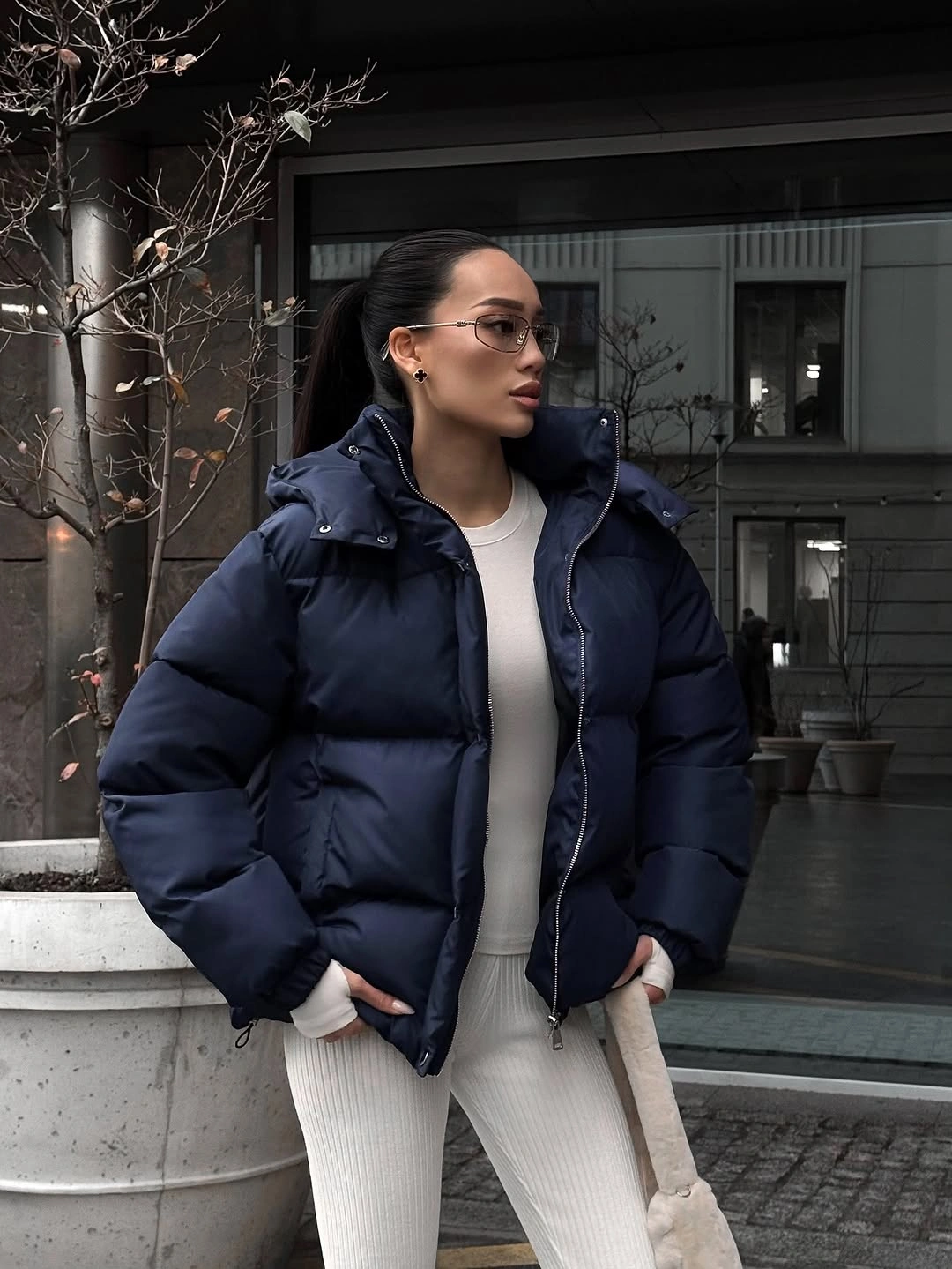
The jacket’s compact length also keeps plenty of the cream lower half visible, which is important to the overall balance. Because the trousers continue the light tone of the top, the eye reads the inner outfit as one extended column beneath the darker puffer. That makes the contrast feel broader and more structural than an accent created by a small bag, scarf, or pair of shoes.
This navy-and-cream combination demonstrates how outerwear can function almost like a border around a tonal base. The visual interest comes from the large separation between dark and light areas, not from multiple accessories or intricate layering details.
Beige Jacket With Charcoal Jeans and Pointed Boots
A short beige jacket, gray beanie, charcoal jeans, tan pointed ankle boots, and a dark shoulder bag create a neutral early winter outfit without repeating one exact shade. The colors shift gradually from light beige through gray and charcoal to deeper accents, giving each piece its own place. The pointed boots add a sharper lower edge than the chunkier footwear used in several of the more casual combinations.
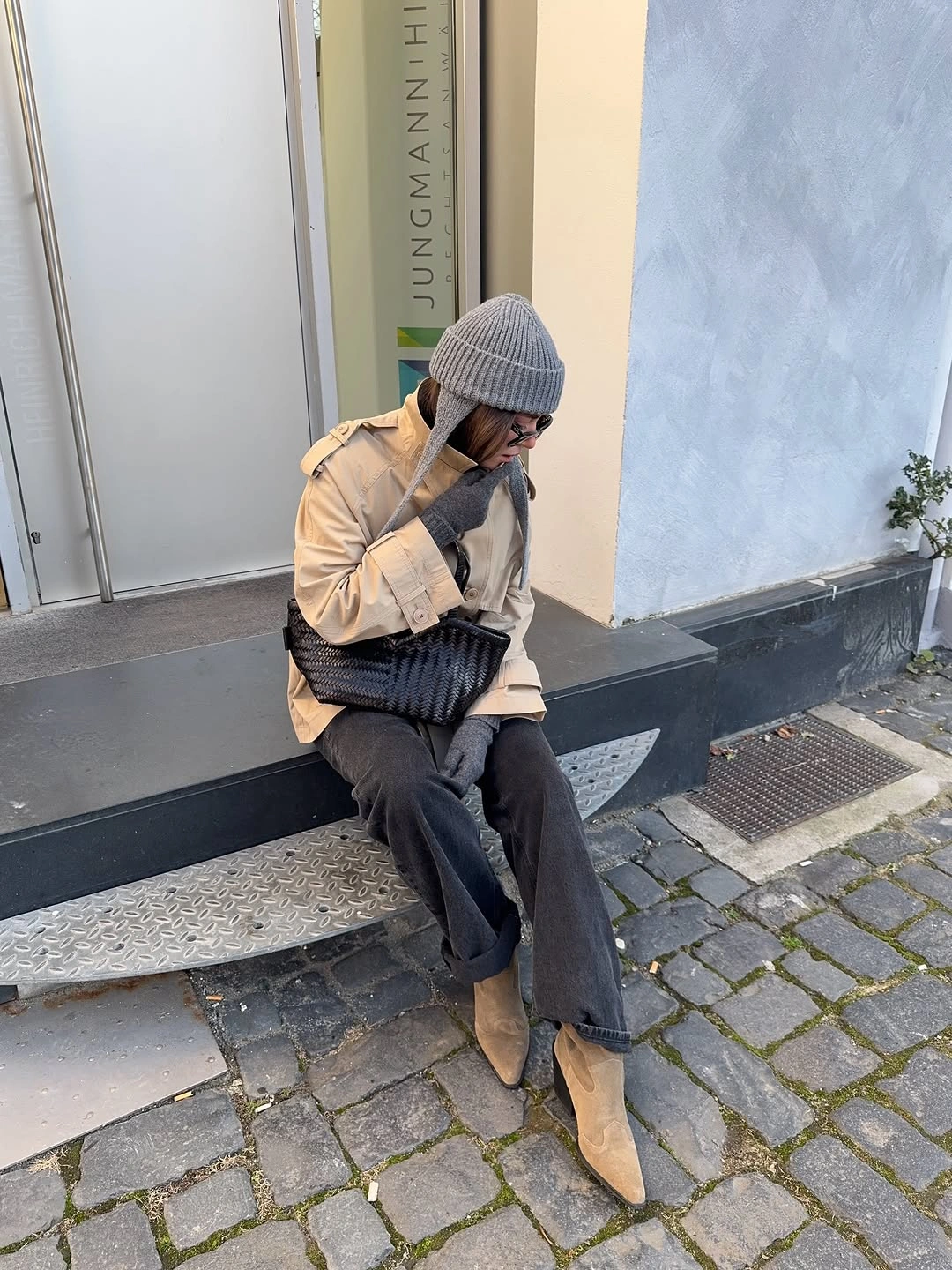
The charcoal jeans provide the darkest large section, while the beige jacket keeps the upper half noticeably lighter. Tan boots introduce another warm neutral at the bottom rather than simply extending the gray trouser color, and the dark bag adds a compact contrasting shape near the torso. Because the palette stays muted, differences in proportion and tone become easier to notice than any single statement detail.
This is a useful jeans-based alternative to outfits built around bold scarves or high-contrast accessories. Its character comes from several neighboring neutrals and the sharper shape of the pointed ankle boots, giving the look a quieter but still clearly organized finish.
Long Black Puffer With a Light Knit Center
A long black puffer creates a deep outer frame around a much lighter center, with the cream high-neck knit remaining clearly visible from the neckline through the open front. Dark slim trousers and black ankle boots continue the outerwear color below, so the pale knit becomes the main interruption. The contrast is concentrated through the torso rather than scattered across several accessories.
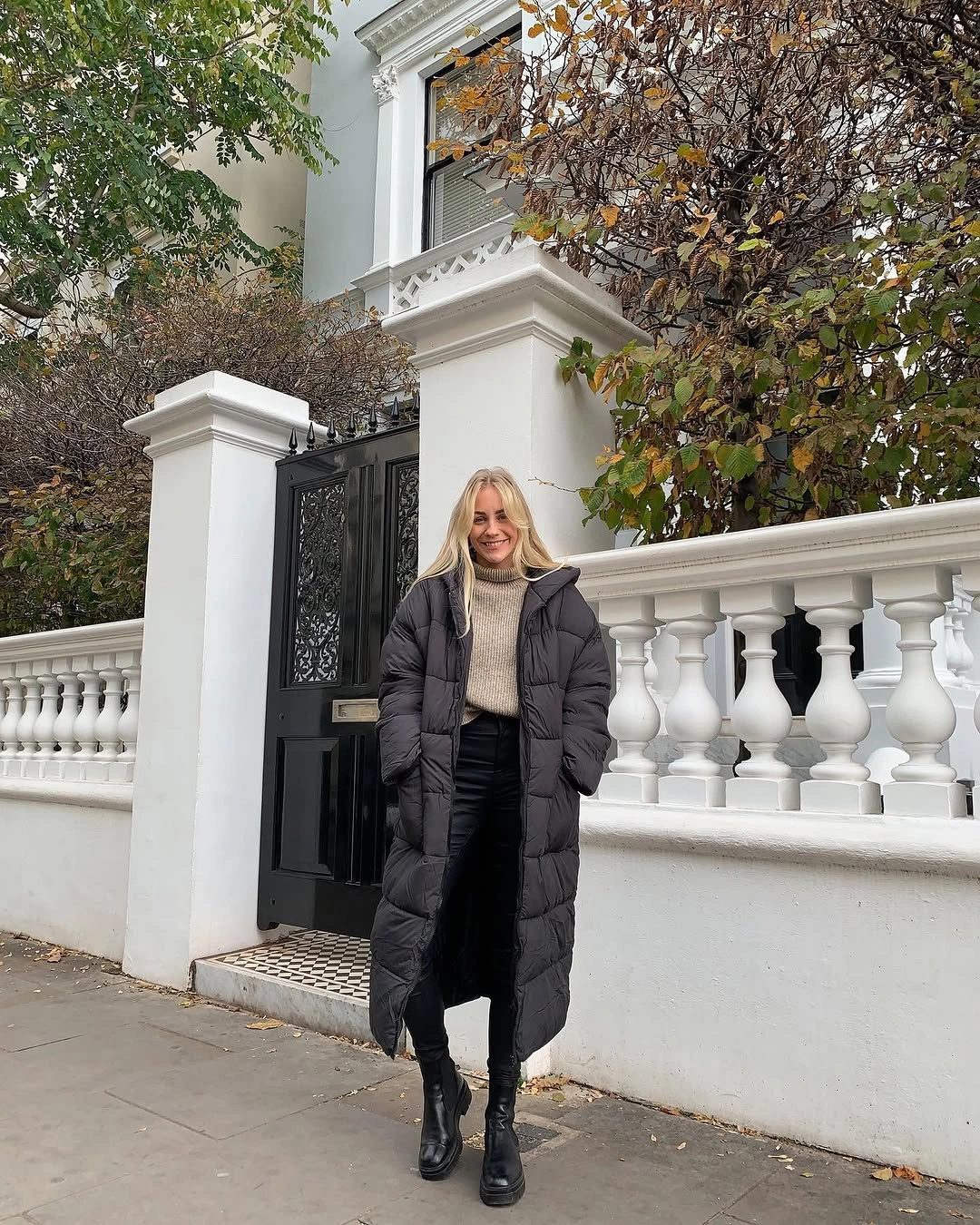
The length of the puffer gives this early winter outfit a different structure from the shorter jackets seen with denim and skirts. Its dark sides extend well down the silhouette, while the cream knit forms a narrow vertical section between them. Because the trousers and boots stay similarly dark, the lower half supports that framing effect instead of introducing another large block of color.
The strongest styling idea is the relationship between the long dark outer layer and the compact light center. It offers a simple way to create visible depth with only a few large color areas rather than multiple contrasting details.
Cropped Brown Jacket With Striped Track Pants
A short brown jacket is layered over a gray hooded piece, creating a compact upper section before the outfit shifts into relaxed black track pants. White stripes running down the trouser sides add a strong linear detail that is absent from the outer layers. Tan slip-on footwear introduces a lighter neutral at the bottom, keeping the casual combination from becoming entirely dark below the waist.
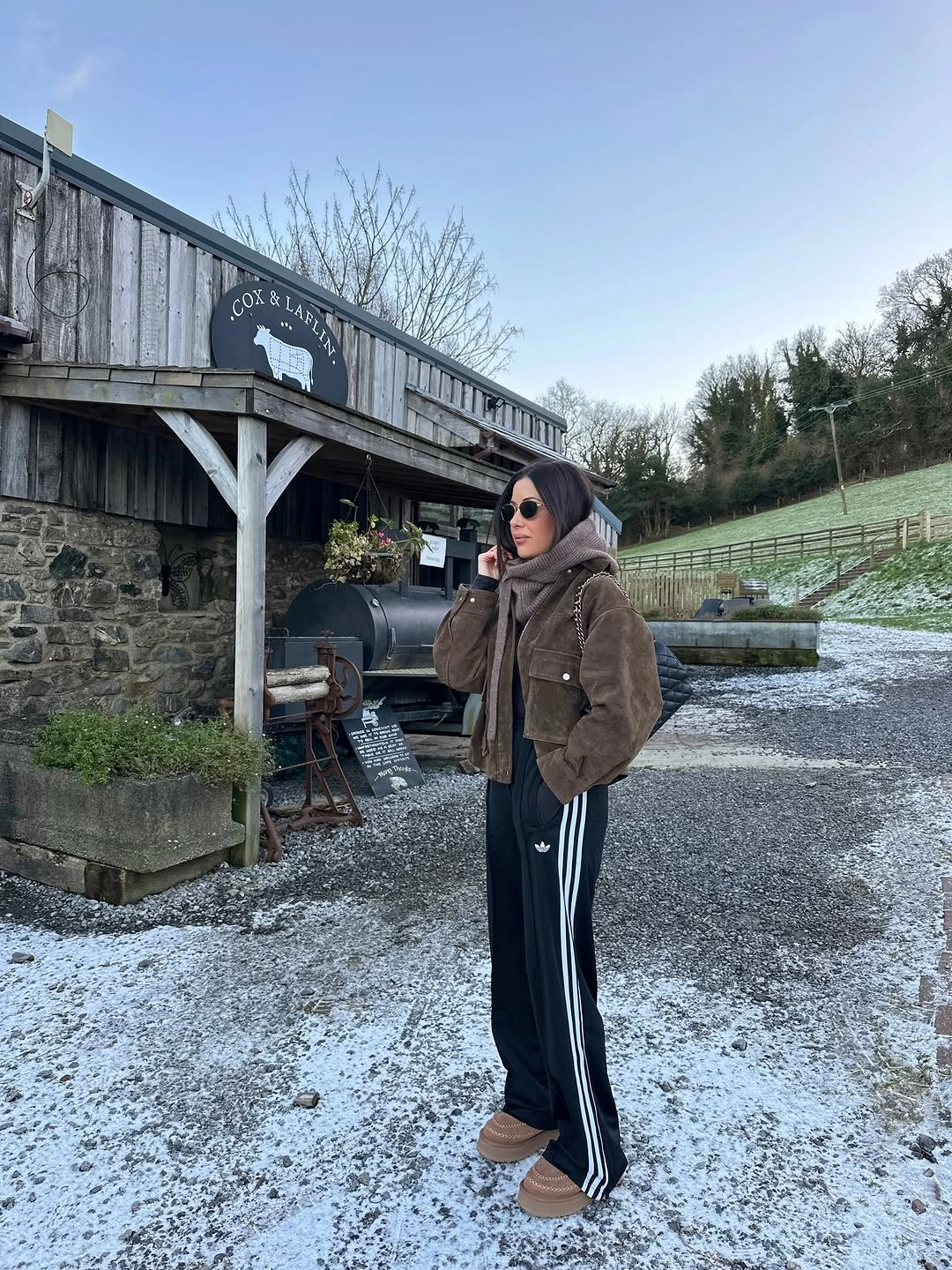
This casual early winter outfit is defined by the contrast between a cropped-looking outer layer and the looser, longer trousers underneath. The side stripes emphasize the full length of the track pants and give the lower half a sporty graphic element, while the visible gray hood adds another layer around the neckline. Brown, gray, black, white, and tan appear in distinct zones rather than blending into one tonal column.
The striped trousers are the feature that separates this look from the wide-leg and denim combinations elsewhere in the article. Their vertical detailing brings movement to the lower half while the short brown jacket keeps the upper silhouette comparatively contained.
Muted Green Layers With a Black Shoulder Wrap
A long muted green outer layer forms an uninterrupted column, while a large black wrap is draped broadly across the shoulders and upper torso. The dark layer creates a strong horizontal break against the green rather than following the vertical line underneath. A small muted green handheld bag repeats the main color near the center, keeping the accessory connected to the longer layer instead of introducing a new accent.
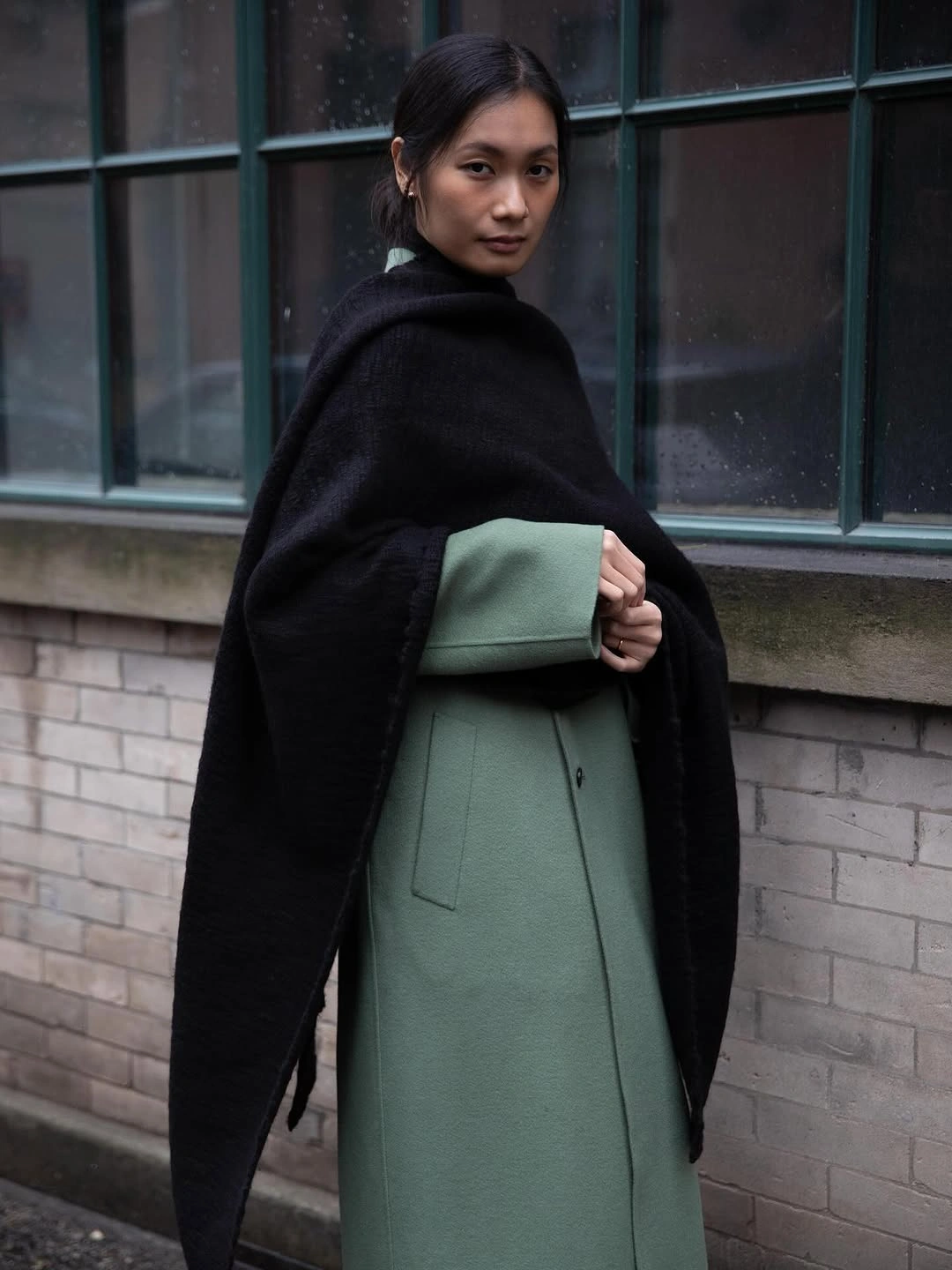
The most distinctive part of this layered outfit is the relationship between the long green base and the black piece placed across it. One element emphasizes length, while the other spreads across the shoulders and chest, creating two different directions within the same silhouette. The matching green accessory reinforces the base color on a smaller scale and leaves the black upper section as the clearest point of contrast.
This approach differs from a conventional coat-and-scarf combination because the dark layer reads as a broad upper block instead of a narrow vertical accent. The result depends on directional contrast and color placement rather than on multiple small accessories.
Gray Coat and Jeans With Bright Red Accents
An oversized gray coat and gray jeans create a broad muted base, while bright red appears in two smaller but highly visible areas. A structured red handbag introduces the stronger accent around the middle of the outfit, and red socks repeat that color just above tall black boots. The black footwear grounds the gray layers while giving the lower red detail a sharp surrounding contrast.
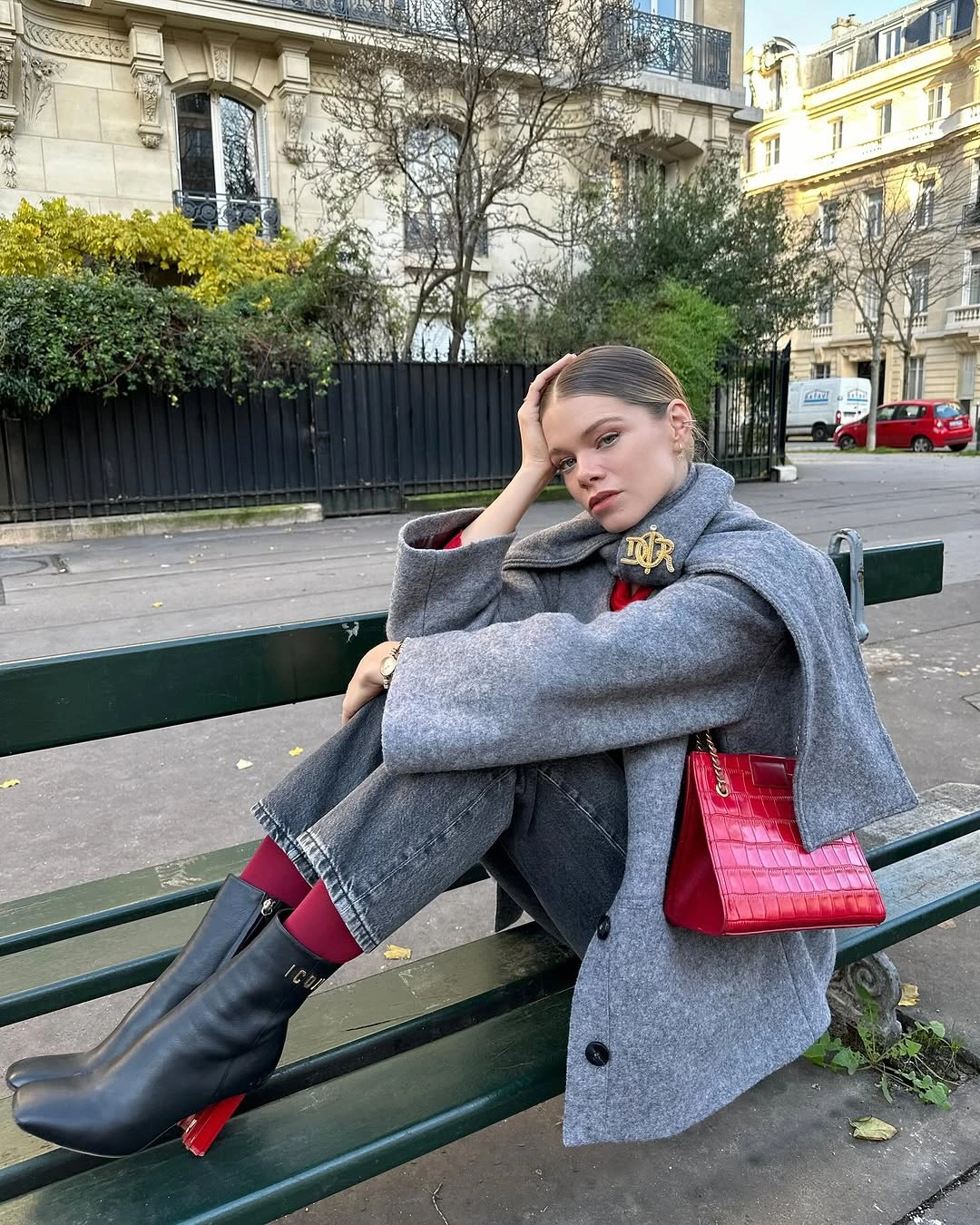
The red accents work because they are separated rather than concentrated in one place. The handbag sits high enough to interrupt the gray coat and jeans, while the socks place a second flash of the same color close to the boots. This gives the eye two distinct points to follow through the outfit without turning the brighter shade into the dominant color across the entire silhouette.
Gray provides enough visual continuity for the red details to remain precise and easy to notice. The combination shows how a small repeated accent can shape an early winter outfit differently from the larger pale-blue or white accessory groupings used earlier.
Gray Jacket and Mini Skirt With Tall Boots
A gray oversized jacket sits over a short gray skirt, creating a tonal upper half with noticeably different lengths and volumes. Below the skirt, sheer black tights lead into black knee-high boots, extending the darker section well upward from the ground. A small black shoulder bag stays close to the torso, echoing the footwear without competing with the jacket-to-skirt proportion.
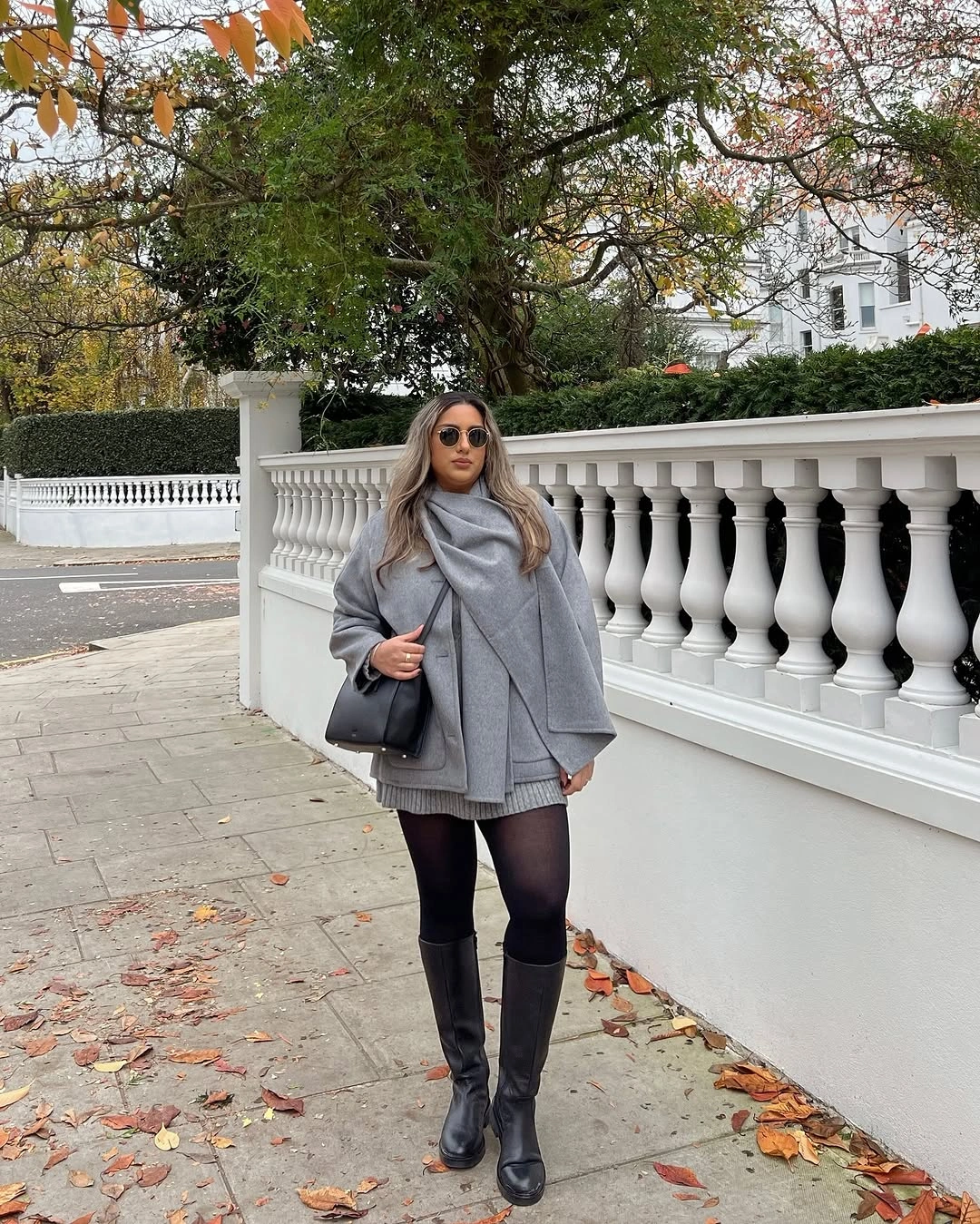
The spacing between the short skirt hem and the tops of the boots is central to the way this early winter skirt outfit is structured. Gray remains concentrated above, while the sheer tights provide a lighter transition into the solid black boots below. Because the jacket has more visual volume than the skirt, the silhouette shifts from broad at the top to compact at the center before becoming substantial again at the boots.
The tonal gray pairing keeps attention on proportion instead of color contrast. Tall boots give the short skirt a strong lower frame, while the small dark bag repeats the black accessories without adding another large shape.
Olive Bomber Jacket With Black Mini Skirt
A full olive bomber jacket gives the upper half a rounded, substantial shape, while the black mini skirt beneath it stays short and visually compact. Sheer black tights continue the dark lower section without adding another strong color block. The contrast between the jacket’s volume and the narrow skirt creates the main structure of this early winter outfit, making proportion more important than extra accessories.
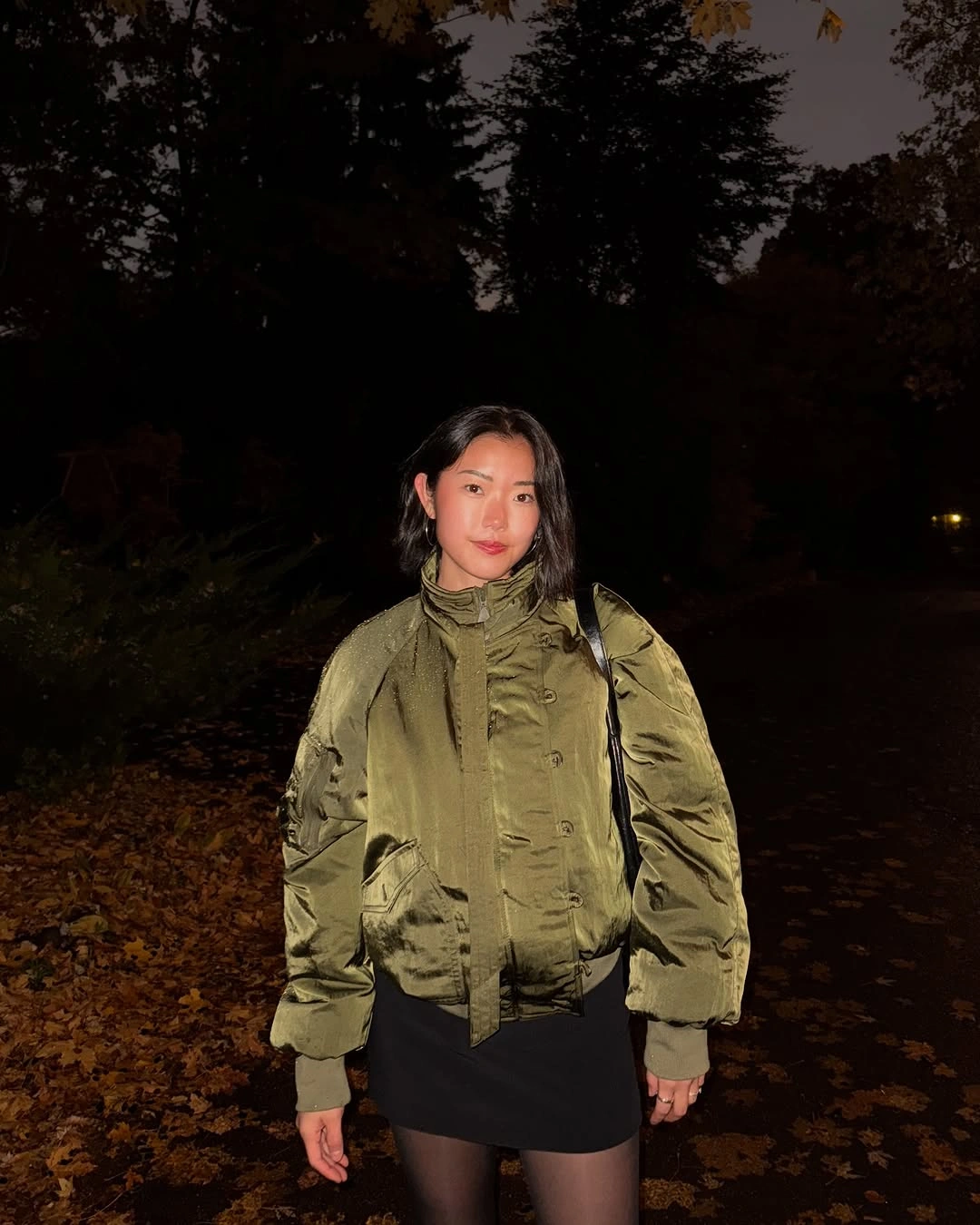
The olive-and-black pairing keeps the palette simple enough for the difference in shape to remain obvious. The jacket extends outward through the sleeves and torso, then ends above a much slimmer lower section formed by the short skirt and tights. Instead of building a long continuous silhouette, this combination changes scale sharply around the waist and hem, giving the outfit a compact, graphic balance.
This look is distinct because the outer layer supplies nearly all of the visible volume. The short black skirt acts as a clean counterpoint, allowing the contrast between rounded outerwear and a narrow lower half to carry the styling idea.
Leopard Print Coat With Tall Black Boots
A leopard print coat carries almost all of the visible pattern in this outfit, while the pieces underneath stay predominantly black. The dark bottoms include openings at the knees, and tall glossy black boots continue the deep color through the lower half. Because the surrounding pieces are restrained, the high-contrast coat remains the clear focal point from shoulders to hem without competing prints elsewhere.
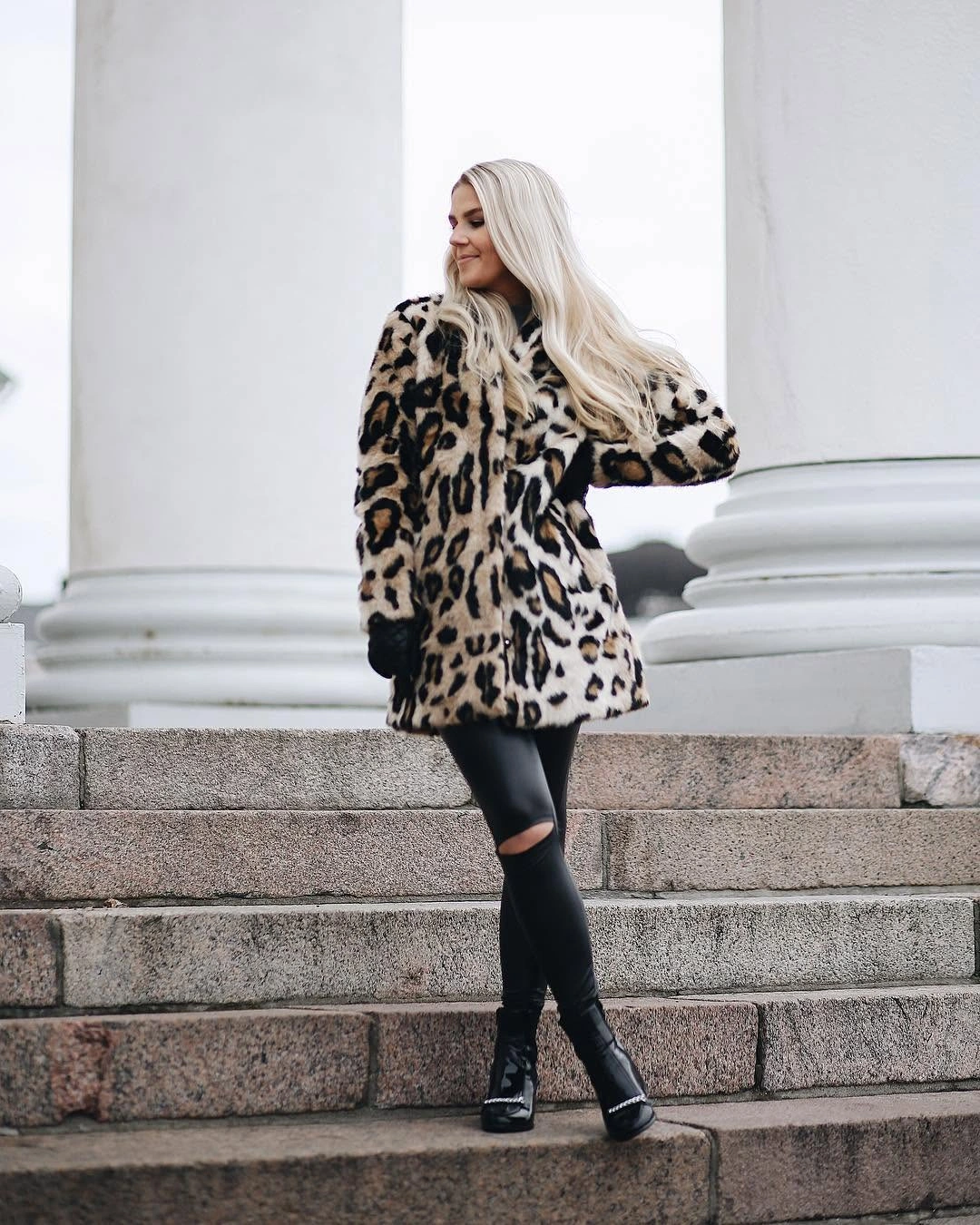
This statement coat outfit works differently from looks that use scarves, bags, or socks as the main source of contrast. Here, the largest outer layer is also the most decorative element, while the black base creates a relatively quiet frame around it. The tall boots add another substantial dark shape below, helping the patterned coat remain visually connected to the rest of the silhouette rather than appearing isolated.
Concentrating pattern in a single large layer gives the outfit a strong hierarchy. The black lower pieces and tall boots support the coat without repeating its motif, so the visual emphasis remains deliberate and easy to read.
Brown Long Coat With Short Gray Skirt
A long dark brown coat frames a much shorter combination underneath, where a light gray top meets a short gray skirt. Brown knee-high boots rise toward the skirt hem, while a pale structured handbag introduces a lighter accent near the side. The outfit is shaped by three different lengths at once: the extended coat, the short center layers, and the tall boots that visually fill much of the lower half.
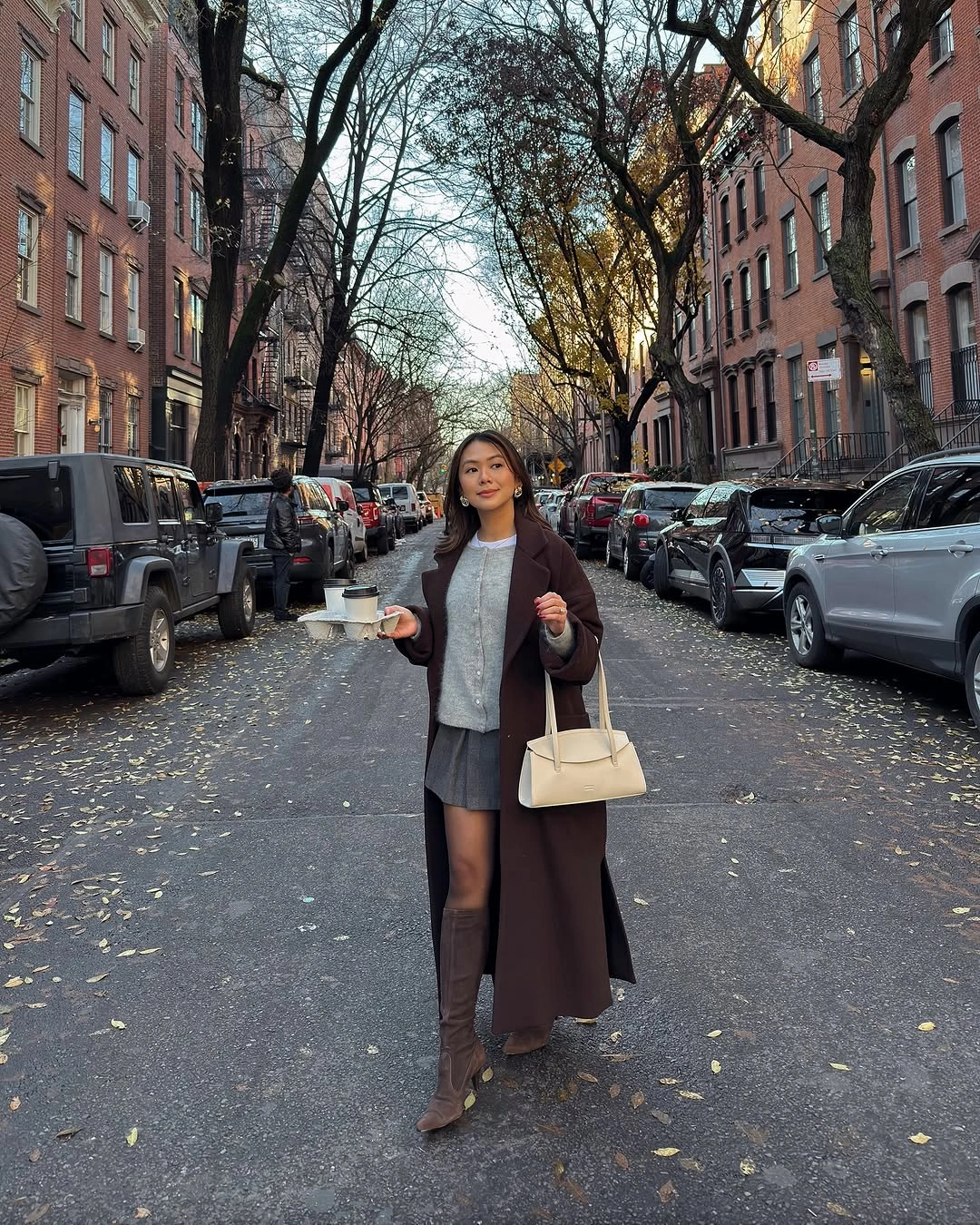
The contrast between coat length and skirt length gives this early winter skirt outfit its clearest visual identity. When the coat is open, the gray center remains visible as a compact interruption between the darker brown outer layer and the boots below. The pale bag adds contrast without becoming the dominant feature, allowing the coat-skirt-boot sequence to remain the main proportion story.
Tall boots make the space below the short skirt feel more structured, while the long coat adds another vertical frame outside that relationship. This creates a layered silhouette that is different from both a simple tonal brown outfit and a skirt look built around a scarf.
Dark Long Coat With Red Layered Accents
A long dark coat sits over a bright red top and dark wide trousers, creating a strong center accent within an otherwise deep palette. The red top occupies a much larger area than the smaller color details used in several earlier looks, while a deep red structured handbag repeats the color family at the side. Black boots continue the dark trouser line and keep the lower section visually grounded.
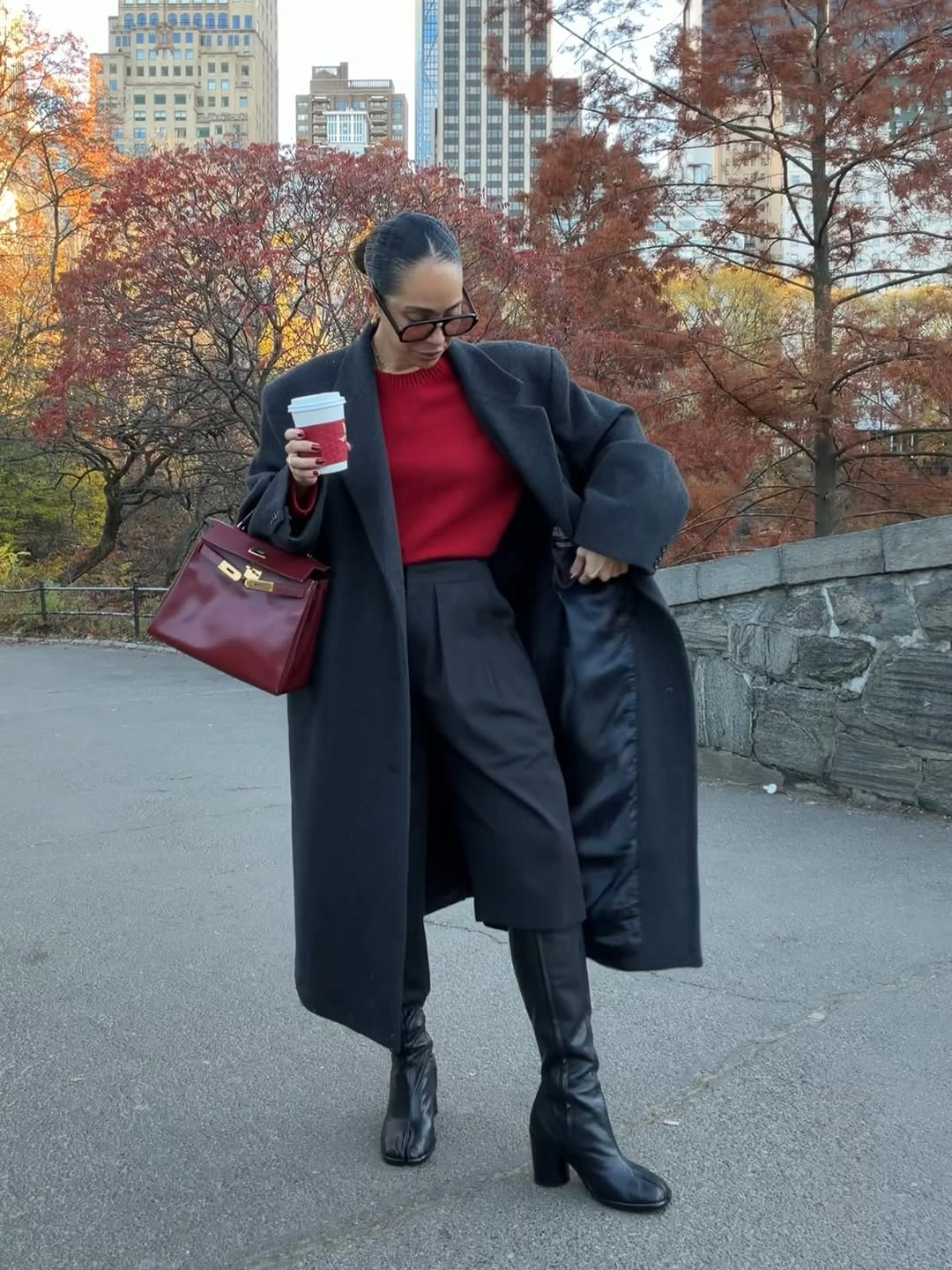
The relationship between the two red tones is what gives this outfit its color structure. The brighter top forms the main focal area across the torso, while the deeper handbag provides a smaller, darker repetition nearby. Against the long coat and broad trousers, those accents feel integrated into the full silhouette rather than added as isolated details, making the color contrast substantial but still controlled.
This approach differs from using small bright points because the red top becomes part of the outfit’s central architecture. The deeper bag then echoes that choice on a smaller scale, creating connection without requiring exact color matching.
Camel Double-Breasted Coat With Brown Separates
A long camel double-breasted coat provides the most structured-looking element of this outfit, while the dark brown top and loose brown trousers underneath create a softer tonal base. A light baseball cap, light sneakers, and a small pale handbag introduce brighter details at the top, bottom, and side. The result combines a long outer layer with relaxed shapes and compact casual accessories.
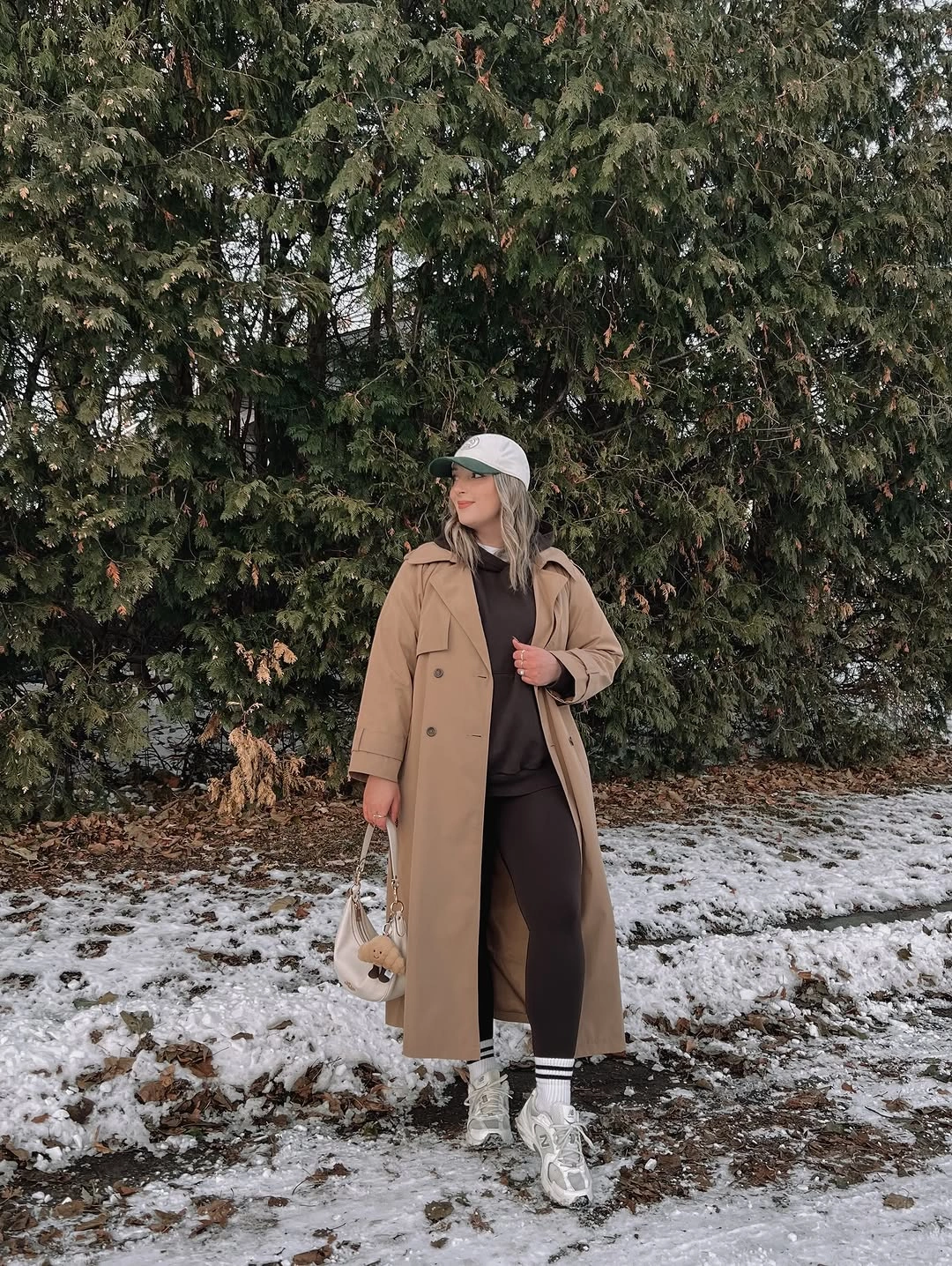
The brown separates keep the center of the outfit visually connected, but the lighter coat prevents the palette from reading as one continuous dark column. The cap and sneakers repeat another pale note at opposite ends of the silhouette, while the small handbag adds a third light point without taking over the composition. Loose trousers also create a wider lower shape beneath the long coat, changing the balance from a narrow layered look.
The strongest idea here is the contrast between the long double-breasted coat and the more casual cap-and-sneaker details. It closes the collection with a neutral combination whose interest comes from mixing different proportions and styling cues rather than relying on a bright statement color.