
Winter haircuts are often judged by more than length. A change in the outline can make thick hair feel lighter, give fine hair a clearer shape, or create movement without requiring a dramatic restyle. Bobs, layered cuts, fringes, soft shags, and longer face-framing shapes each change the way the hair sits around the cheeks, jaw, and shoulders, so the best choice begins with the silhouette you want to see every day.
The styles in this collection move from compact short cuts to shoulder-skimming shapes and longer layered options, with different fringe lines and finishing details along the way. Some look neat and graphic, while others keep a more relaxed sense of texture and movement. Comparing the outline, the amount of layering, and the position of the fringe makes it easier to identify a winter haircut that suits both your preferred shape and your styling routine.
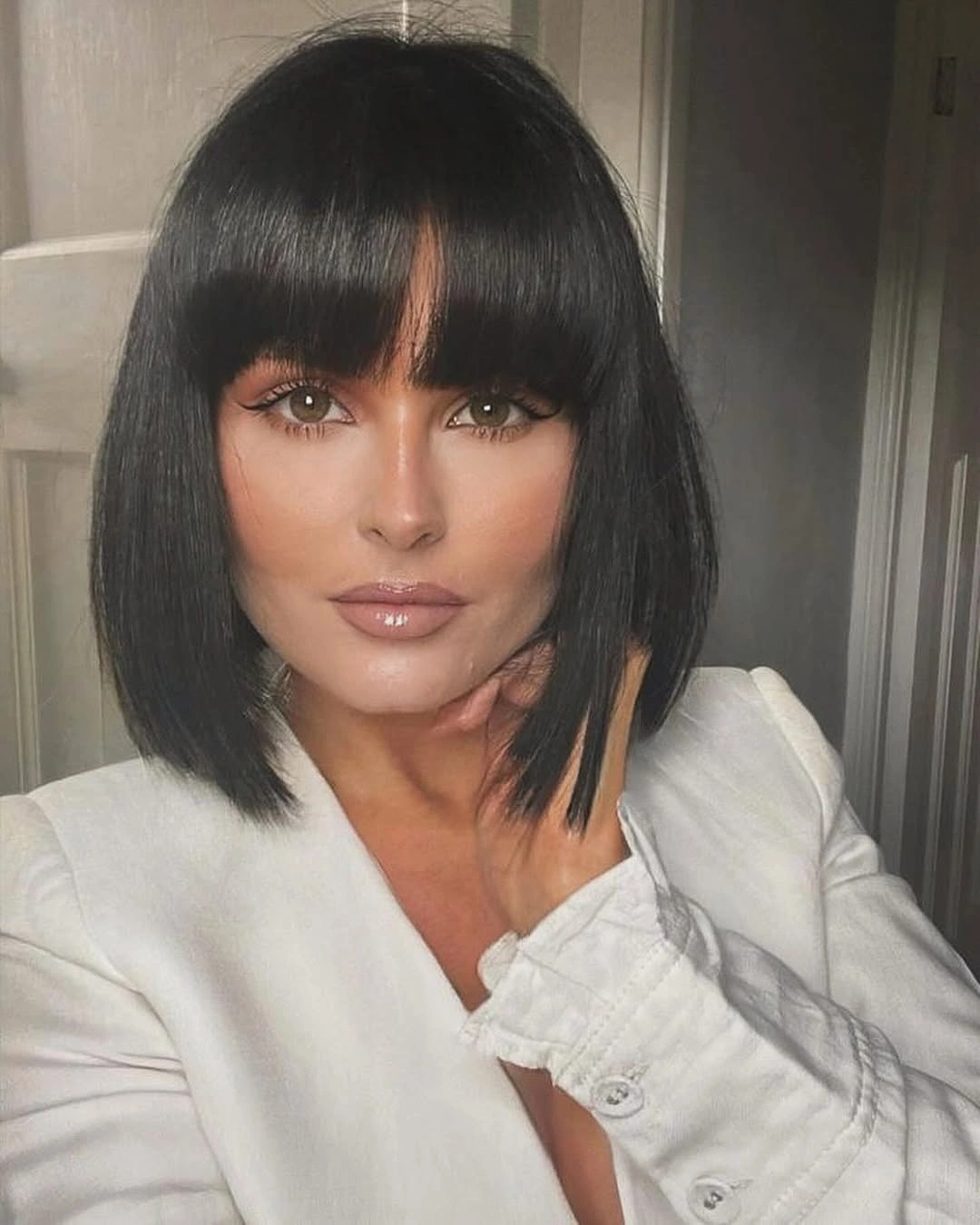
Sleek Black Bob With Full Straight Bangs
This sleek black bob is built around two strong lines: a dense fringe across the forehead and a smooth lower edge that sits around the jaw and upper neck. The straight texture keeps both shapes easy to read, while the front sections appear slightly longer than the hair directly behind them, adding a narrow vertical pull beside the face without disrupting the compact outline.
What separates this cut from a softer layered bob is the way the fringe and perimeter hold their shape with very little visible interruption. The bangs create a solid horizontal band at the front, while the sides fall in a controlled, nearly continuous sheet, so the haircut is defined more by edge placement and proportion than by obvious internal layering or loose movement.
Among the short winter haircuts in this set, this one makes fringe density the main structural feature. Later bobs shift attention toward graduation, blunt chin-level edges, or shorter bangs, but here the full fringe and sleek outline work as a matched pair.
Rounded Short Bob With a Close-Cut Nape
Viewed from the back, this short bob has a distinctly rounded shape that narrows quickly toward the nape. The upper layers sit fuller over the back of the head, while the lower section is cut closer and shorter, creating a visible change in length from the curved crown area down to the exposed neckline rather than a single blunt edge across the bottom.
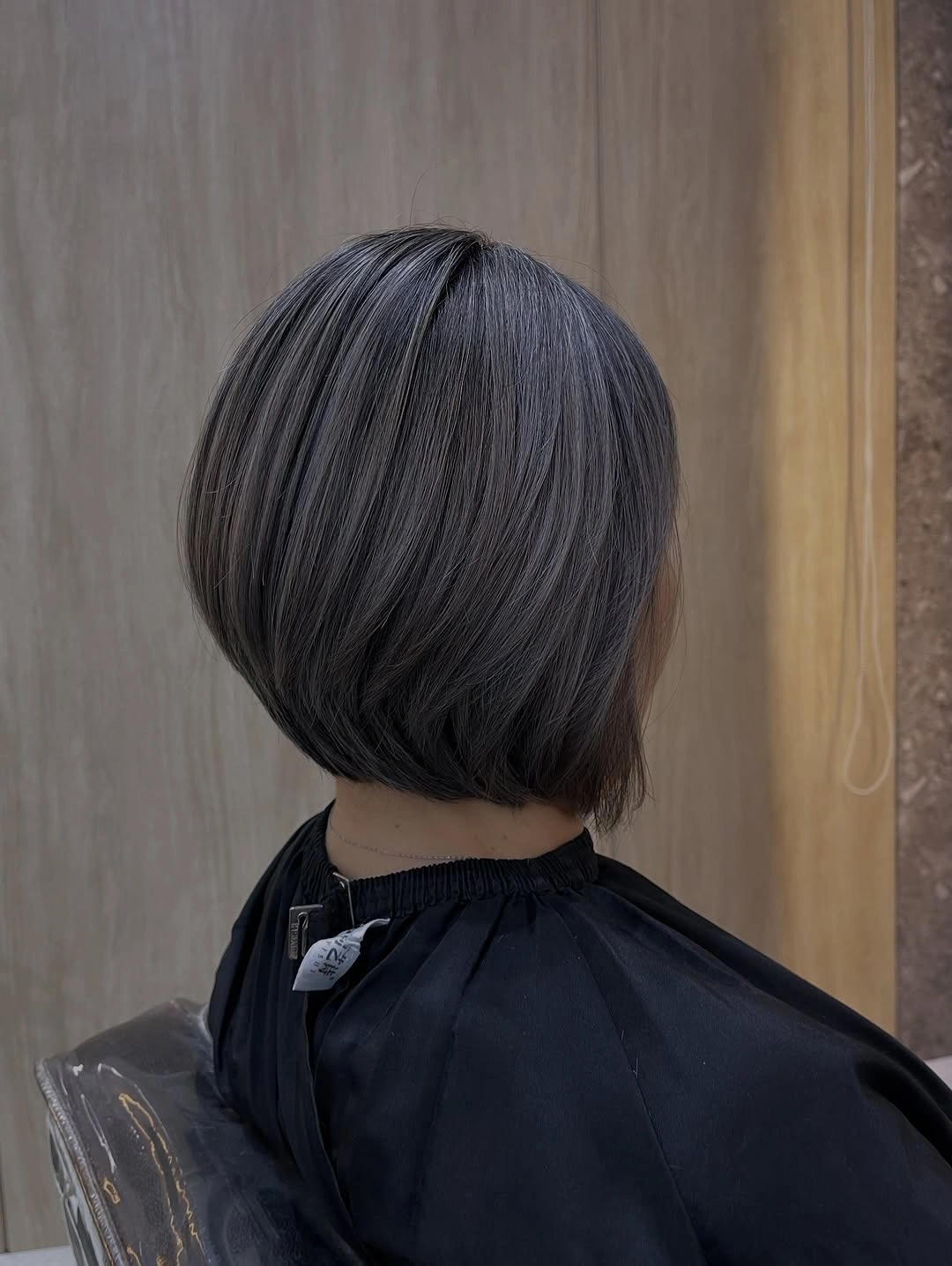
The strongest feature is the contrast between volume above and a compact finish below. Instead of falling straight down, the ends curve inward and follow the rounded contour of the head, which makes the graduation readable even without a front view. That back silhouette gives the cut a more sculpted profile than a one-length bob and keeps the nape visibly clear.
This is the clearest back-view example of graduation in the first group of images. Its shape comes from visible length changes and a rounded contour, not from bangs, long front points, or a blunt perimeter.
Long Feathered Layers With Face-Framing Sweep
This long haircut uses several visible layer levels to build movement from the face down through the lower lengths. Shorter pieces begin around the front and sides, then step gradually into much longer sections, while the ends curl into broad feathered bends. The result is a cascading outline in which the cut is easy to follow because each layer turns away or under at a slightly different height.
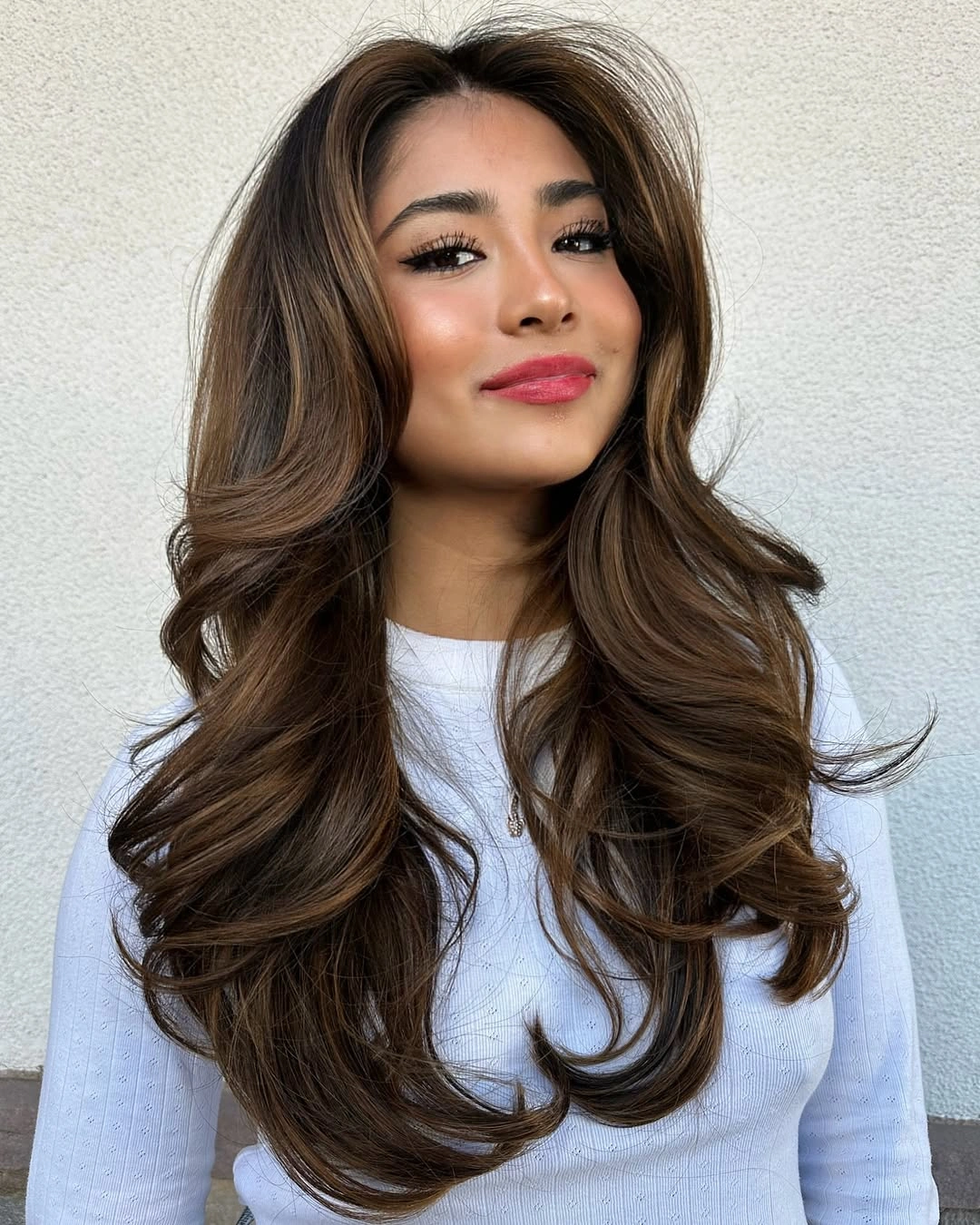
The most important comparison here is scale: the distance between the shortest face-framing sections and the longest hair is much greater than in a shoulder-length layered cut. Those repeated curves separate the layers instead of letting them collapse into one mass, so the architecture reads vertically from top to bottom. The long perimeter remains present, but the stepped layering carries most of the visual interest.
This section treats long winter haircuts as more than simply extra length. In this image, the defining feature is the repeated transition from shorter face-framing pieces into progressively longer, feathered layers.
Shoulder-Length Lob With Soft Face-Framing Layers
This shoulder-length lob keeps its layering restrained, with a center part, softly curved front pieces and a lower edge that stays close to the shoulders. The shorter sections around the face turn outward enough to create separation, but the rest of the cut remains comparatively compact, so the overall shape is balanced between a blunt lob and a more heavily feathered layered haircut.
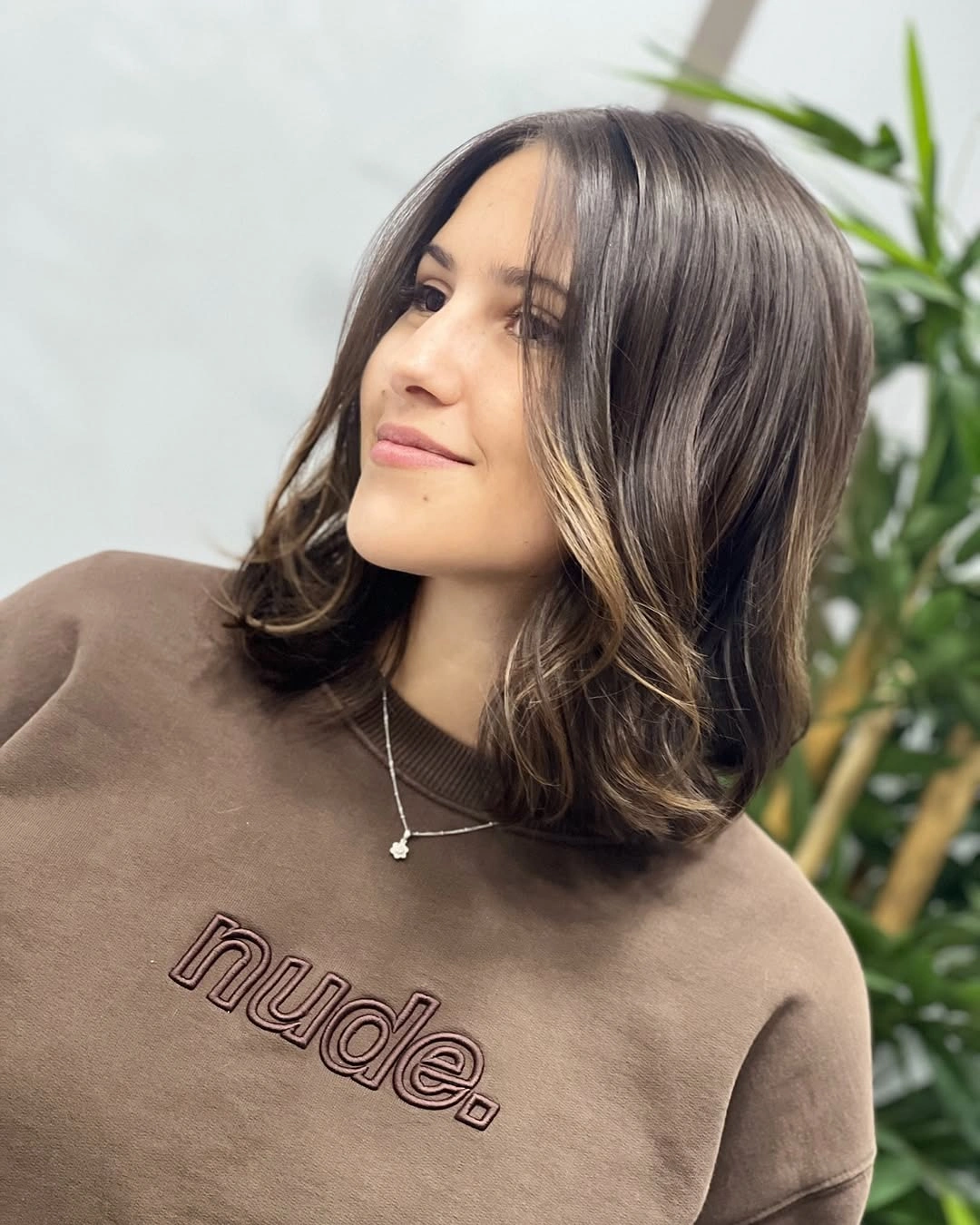
Because the layering is concentrated near the front and lower lengths, the cut does not break into many distinct tiers. The front pieces curve away from the face while the ends below settle into loose bends, giving the silhouette movement without losing the clear shoulder-length base. That makes the architecture subtler than the long cascading layers in the previous image.
The key distinction is moderation: the face framing is visible, but it does not dominate the entire haircut. This image gives the article a medium-length example where small changes around the front alter the outline without creating a highly layered silhouette.
Medium Layered Cut With Flipped-Out Ends
From the back, this medium layered cut appears smooth through the upper section and becomes more active near the ends. The hair extends just beyond the shoulders, with several lower layers turning outward in soft, separate flips. Those bends make the stepped lengths visible at the perimeter while the upper half remains comparatively straight and unified.
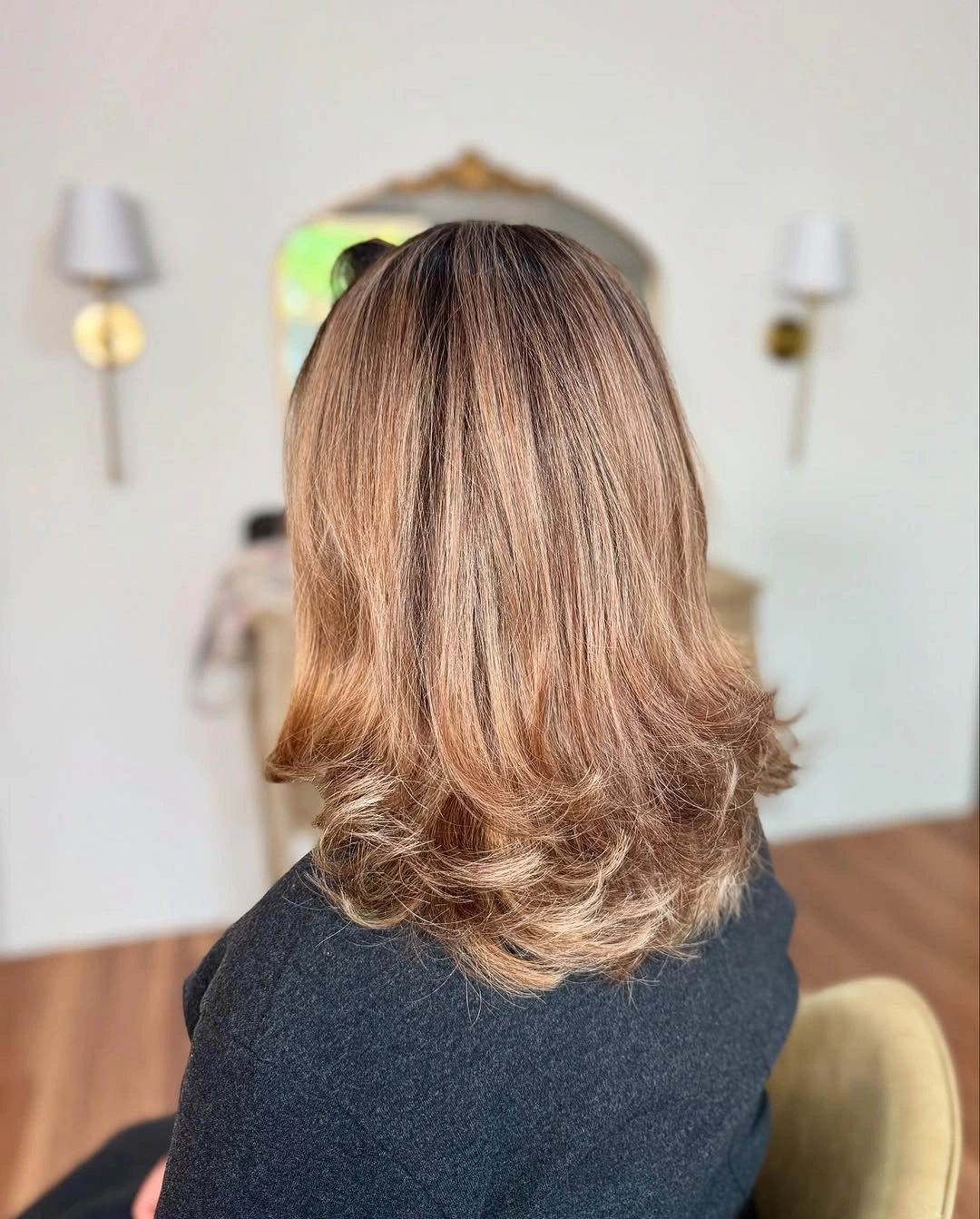
The movement is concentrated low in the haircut rather than distributed from crown to ends. Each outward turn exposes a slightly different layer level, so the bottom edge looks airy and tiered instead of blunt, yet the main body of the hair keeps a calm, narrow silhouette. This makes the end behavior more important than dramatic face framing or large internal volume.
This cut creates a clear contrast with layered styles where movement begins much higher. Here the visual structure is carried by the lower tiers and flipped-out ends, giving the medium length a distinct perimeter-led shape.
Long Layers Shaped by Loose Curved Waves
This long haircut shows its layering most clearly through the broad waves that begin around the middle lengths and continue toward the ends. The upper section stays comparatively smooth, while overlapping pieces separate as they curve outward and inward below. That change in movement makes the different lengths visible without relying on a sharply stepped or heavily feathered perimeter.
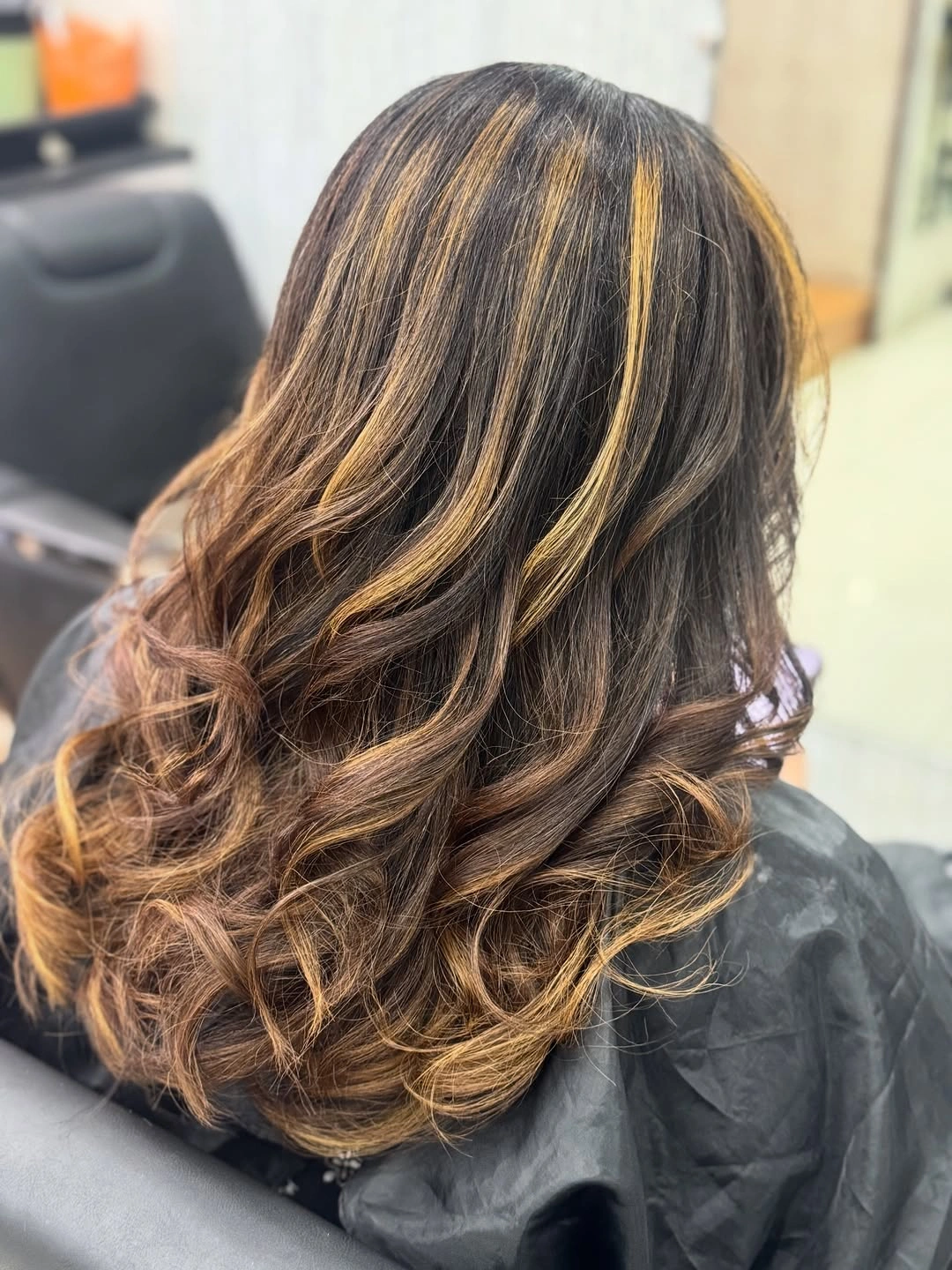
Compared with the straighter layered cuts, the architecture here is revealed by the way each wave exposes another section underneath it. The lower half expands into several rounded bends, so the outline feels fuller and more irregular than a blunt long cut. The longest pieces still establish the overall length, but the shorter layers interrupt that line enough to keep the bottom from appearing solid.
The defining feature is the partnership between long layers and curved movement rather than a dramatic change in overall length. This section keeps the focus on how waves can reveal overlapping haircut levels that would look less distinct if the same shape were completely straight.
Long Graduated Layers With a Soft Cascading Outline
This back view presents a long haircut with gradual layering that becomes more noticeable through the lower half. The upper lengths fall relatively smoothly, then shorter sections begin to separate into gentle curves as they approach the ends. Instead of forming a hard bottom line, the perimeter narrows and breaks into several softly rounded lengths that create a cascading outline.
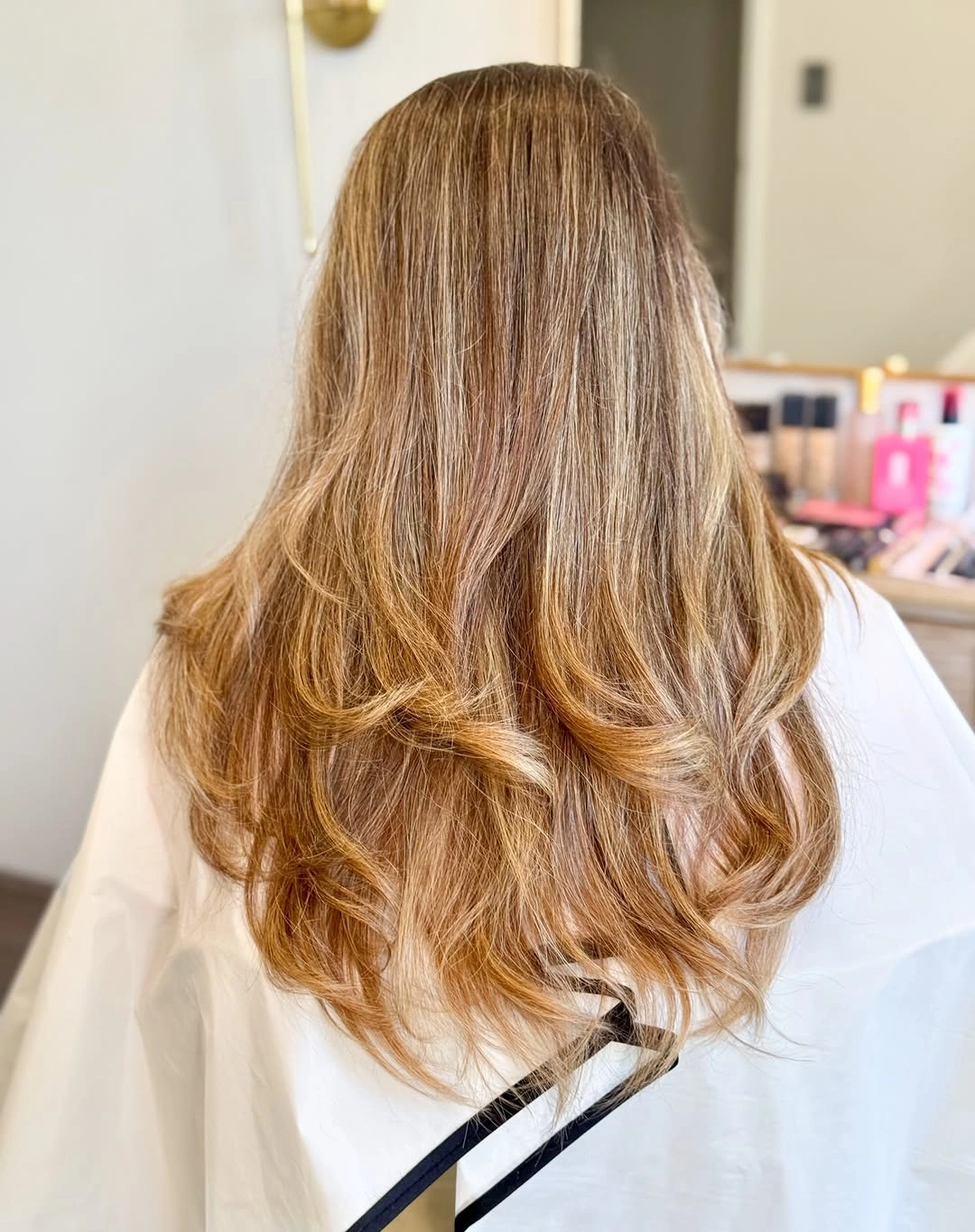
The progression between layers is quieter than in a cut with strongly separated curls or pronounced feathering. Each section blends into the next, so the eye follows a slow transition from the fuller upper area toward the tapered lower edge. The curled ends help reveal that progression without turning the haircut into a series of sharply disconnected tiers.
This image is useful for comparing gradual taper with the more obvious wave-defined layering in IMAGE 06. Its structure depends on a smooth descent through the lengths, with the softened perimeter carrying more of the visual information than any single dramatic layer.
Blunt Chin-Length Bob With a Center Part
This chin-length bob is built around a crisp, nearly horizontal perimeter with very little visible layering. The center part divides the smooth straight hair evenly, allowing both sides to fall as compact panels toward the jaw. Because the lower edge stays dense and uninterrupted, the overall shape reads immediately as a controlled one-length cut rather than a graduated or feathered bob.
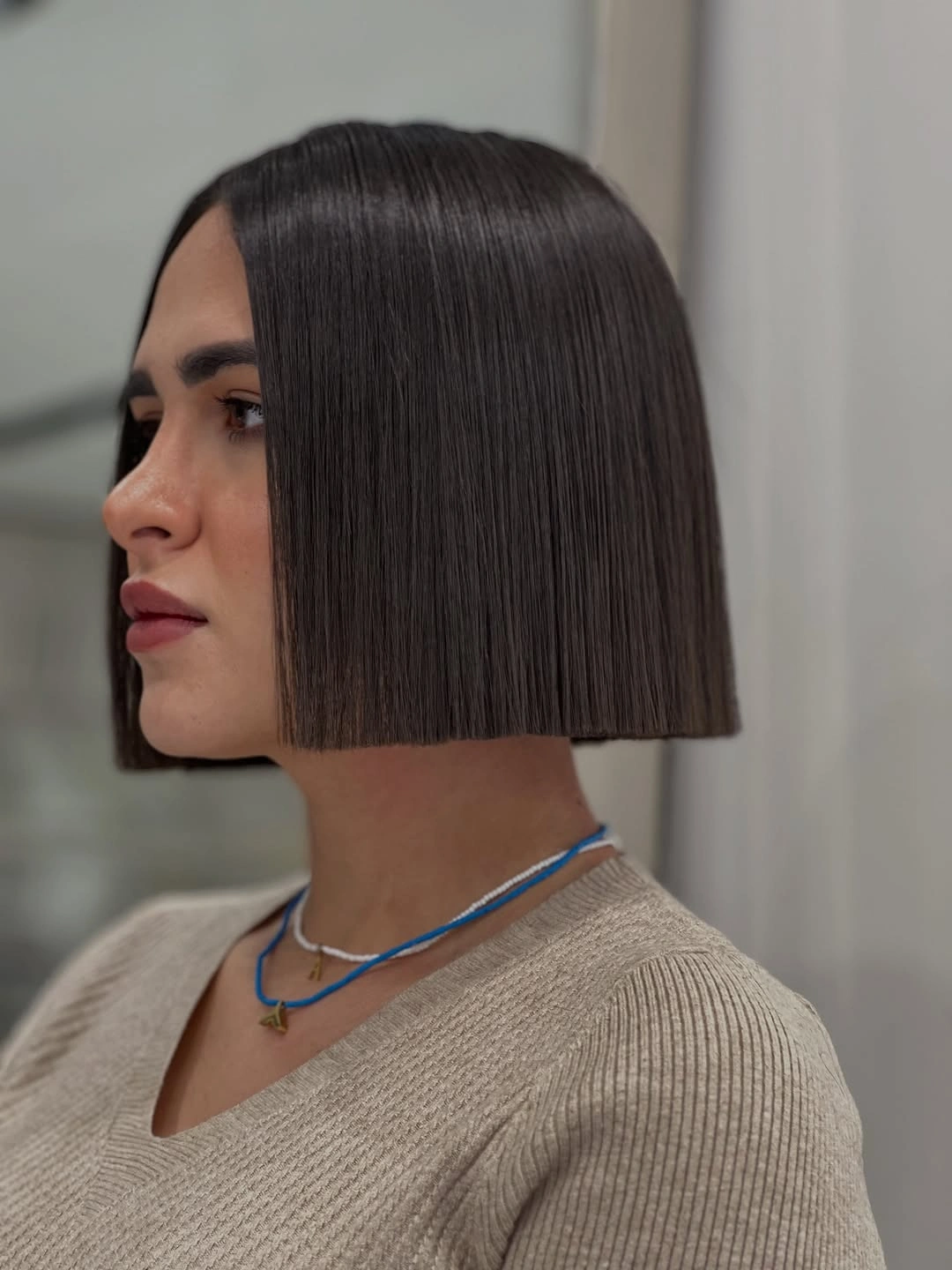
The straight texture makes the precision of the bottom line especially easy to compare with the rounded and tapered short cuts elsewhere in the article. There are no visible bangs to interrupt the front, and the sides do not break into separate layer levels, so the perimeter becomes the dominant feature. The result is a compact silhouette whose structure comes from edge placement more than internal movement.
This is the clearest blunt-bob benchmark in the sequence so far. Its nearly level edge provides a useful contrast with the rounded graduation of IMAGE 02 and the layered shoulder-length shapes that rely on softer, less continuous perimeters.
Long Wavy Cut With Softly Tapered Ends
This long cut keeps a broad vertical sweep from the upper lengths to a gently narrowed perimeter, while large waves add movement through the middle and bottom. The outline does not finish in a blunt horizontal line, and the ends separate into softer points and curves instead. That gives the haircut a more tapered appearance even though the visible differences between individual layers remain relatively subtle.
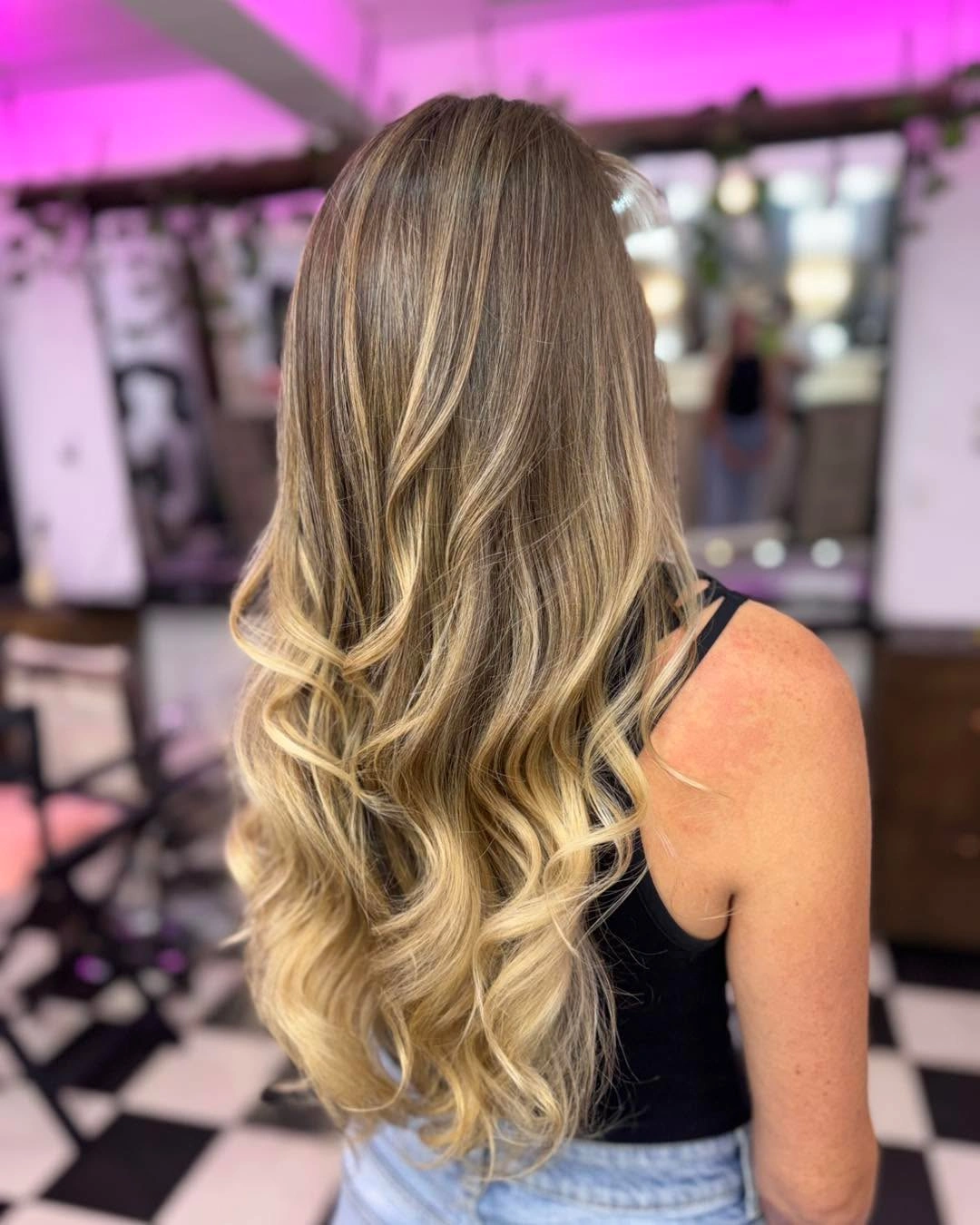
Unlike a strongly feathered long cut, this shape lets the waves blur the exact boundaries between one layer and the next. The movement is broad and continuous, so the haircut reads first as a long flowing silhouette and only then as a layered structure. The softened lower edge is therefore more important than any sharply defined step in length.
This section broadens the long-hair comparison by showing how taper can remain understated beneath large waves. The haircut does not need sharply separated tiers to avoid a heavy perimeter, because the narrowed ends and curved movement already break up the bottom outline.
Short Pixie With a Longer Side-Swept Top
This short pixie creates its shape through a clear contrast between the closely cropped sides and the visibly longer hair across the top. The front section sweeps to one side in a broad curve, extending farther than the compact hair around the ear and lower head. That internal difference in length gives the cut direction and movement even though the overall silhouette remains very short.
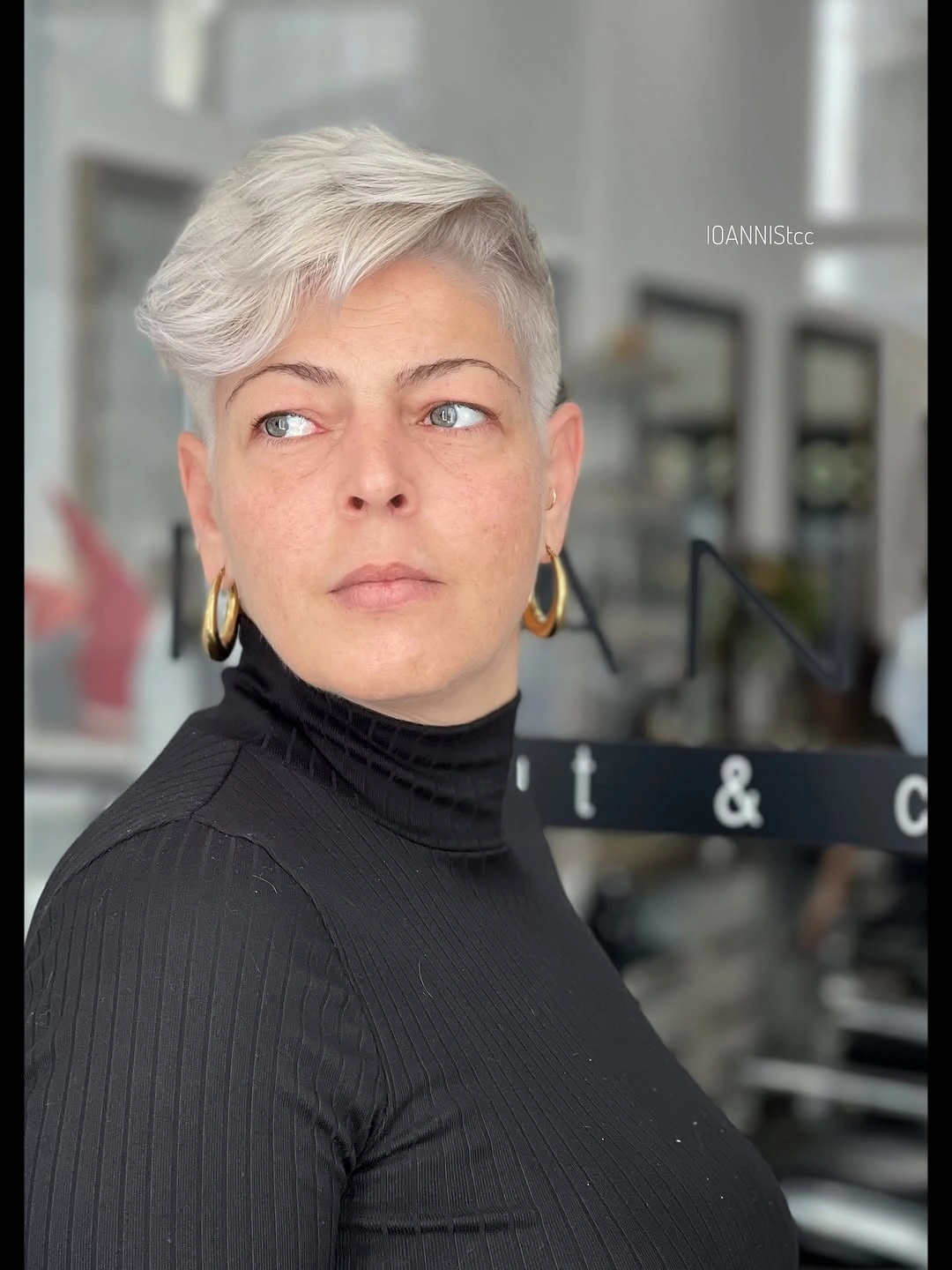
Instead of relying on a blunt perimeter or rounded bob shape, this haircut concentrates most of its visible length above the sides. The longer top can be followed from the upper head into the side-swept front, while the shorter sections keep the lower outline narrow and exposed. This makes proportion within the cut more important than a continuous edge around the entire head.
The pixie introduces a different kind of haircut architecture from the bobs and long layers that precede it. Its defining comparison is not simply short versus long hair, but short sides and back set against a longer, directional top section.
Dramatic Angled Lob With Long Front Points
This straight lob is shaped by a pronounced diagonal that runs from a shorter rear section toward much longer pieces at the front. The smooth surface makes that change in length especially clear, because the hair falls without visible waves or curls to soften the outline. The front points extend well below the shorter back, giving the perimeter a strong forward direction.
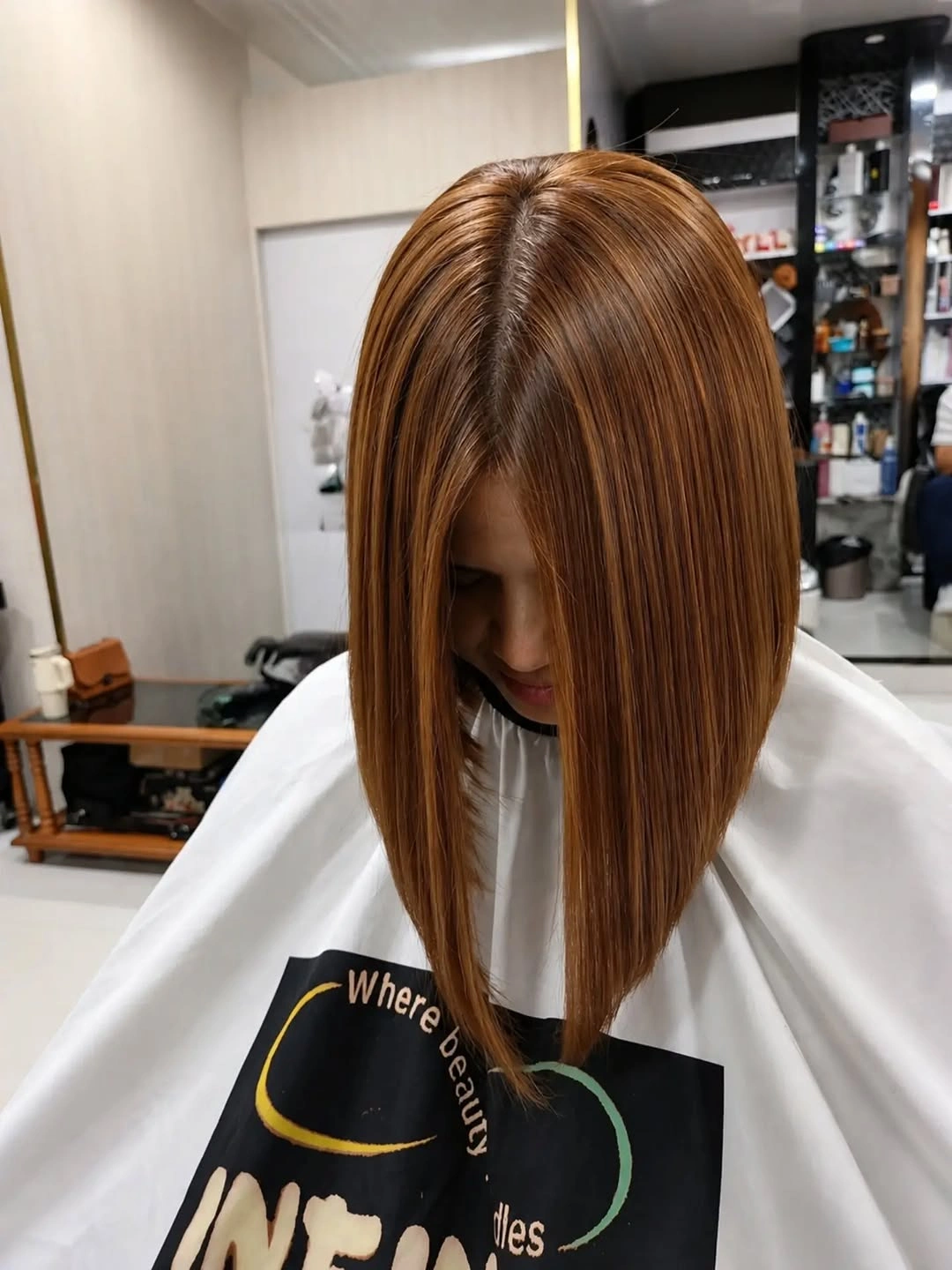
Unlike a blunt lob that holds roughly the same length from back to front, this haircut makes the angle itself the main architectural feature. The longest sections frame the front while the shorter area behind them creates a visible rise toward the back, so the silhouette changes substantially depending on where the perimeter is viewed. Minimal visible layering keeps attention on that clean diagonal relationship rather than on internal movement.
The defining idea here is front-to-back geometry rather than texture or fringe. Its long front points make it much more dramatic than the subtly angled lob later in the sequence.
Long Straight Cut With a Rounded Dense Perimeter
This long straight haircut keeps most of its visible length remarkably even, creating a dense lower edge that curves gently rather than ending in a perfectly horizontal line. From the back, there is little obvious separation into short and long layers, so the silhouette reads as continuous from the upper lengths down to the perimeter. The slight rounding at the bottom softens what is otherwise a very controlled shape.
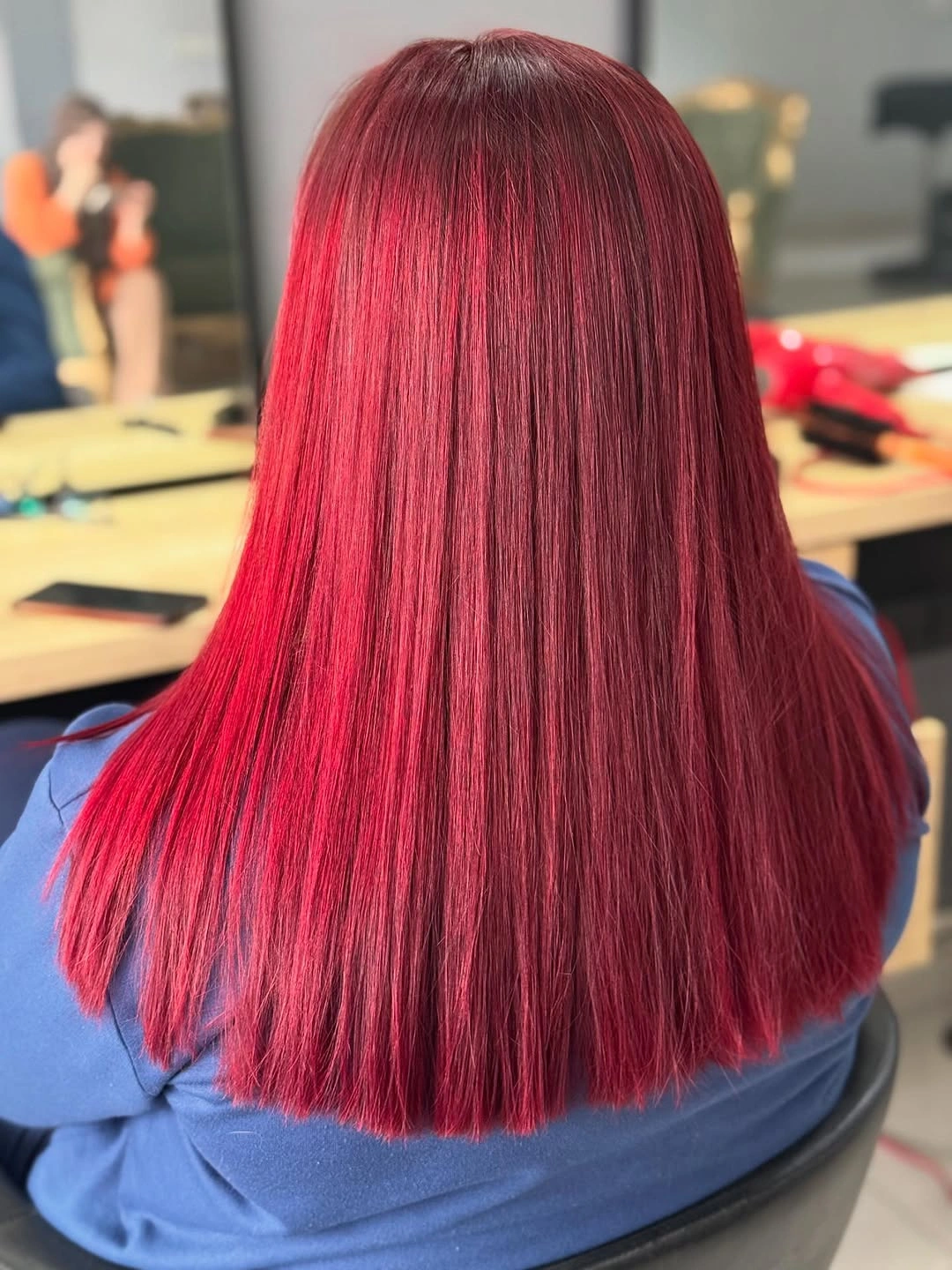
The straight texture allows the outer line of the haircut to remain the dominant feature, much as it does in the blunt bob from IMAGE 08, but the longer scale changes the proportion completely. Instead of a compact chin-level block, the hair forms a broad vertical sheet before finishing in a shallow arc. Any visible variation near the ends is subtle, so the section should stay focused on perimeter density rather than claiming strong internal layering.
This image provides the long-hair counterpart to the article’s sharper one-length shapes. Its distinction comes from combining substantial length with a softly rounded edge instead of a tapered or heavily broken perimeter.
Shoulder-Length Cut With Turned-Out Lower Layers
This shoulder-length cut remains smooth and relatively straight through the upper portion, then changes character near the bottom as several sections turn outward. Those curved lower pieces create visible separation between layer levels without breaking up the entire haircut. The result is a compact medium silhouette whose movement is concentrated almost entirely around the perimeter.
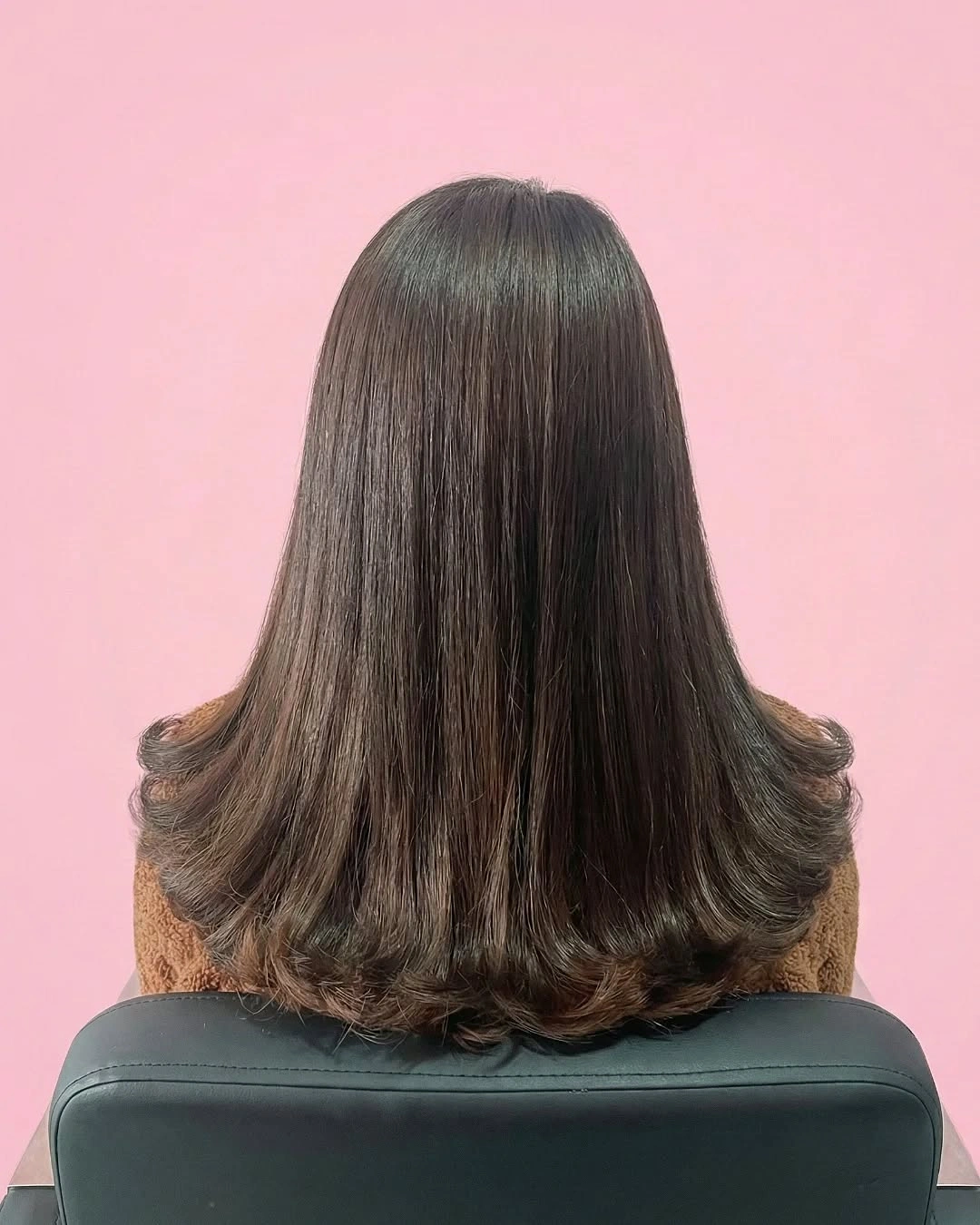
Compared with the flipped medium cut in IMAGE 05, this version sits closer to the shoulders and presents the outward turns as a more defined border around the bottom. The upper lengths stay unified while the ends fan away in several rounded directions, making the lower edge appear wider and more active. That contrast between a calm top and an animated perimeter is the main structural lesson of the haircut.
The cut shows how lower layering can alter a shoulder-length outline without requiring visible movement through every section. Its turned-out edge gives it a different profile from both blunt lobs and softly tapered medium cuts.
Curly Bob With Short Textured Bangs
This curly bob forms a rounded silhouette around the jaw and neck, with compact curls filling the sides and a short textured fringe crossing the forehead. Because the strands bend and coil throughout the cut, the perimeter is not expressed as one hard straight line. Instead, the overall bob shape is read through the collective curve of the curls and the relatively even compact length around the head.
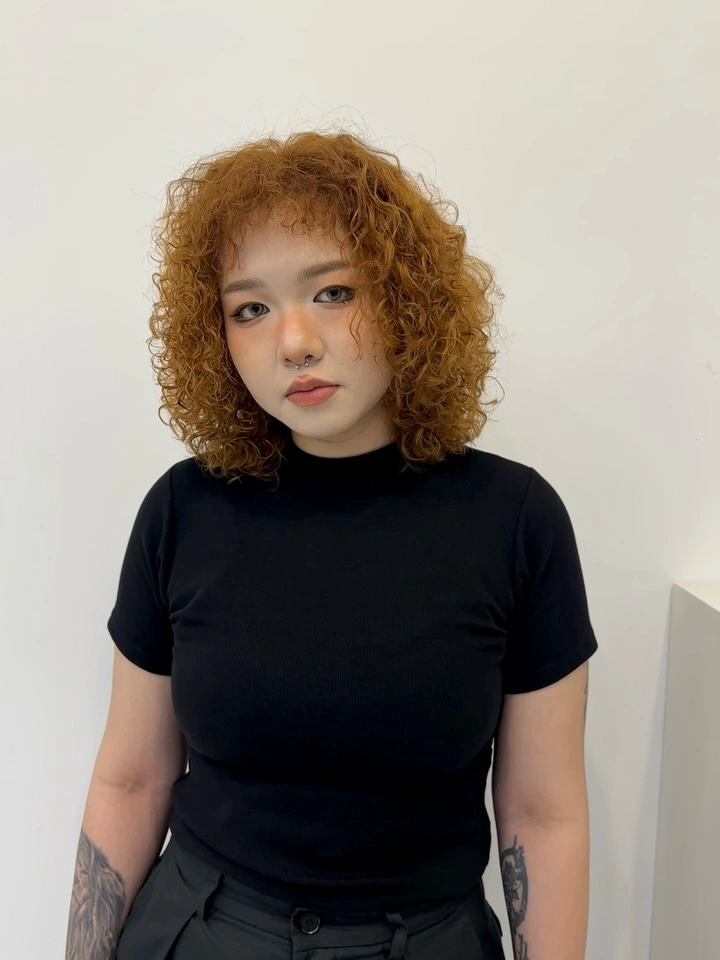
The bangs are an important part of the architecture because they repeat the same curled texture on a much shorter scale at the front. Their irregular edge contrasts with the blunt fringes seen earlier, while the side volume creates a rounded frame that remains visibly connected to the bob length below. This makes curl pattern and silhouette inseparable in the way the haircut is perceived.
This section introduces a structure that cannot be described accurately through straight-edge comparisons alone. The haircut is defined by a rounded bob outline, short curly fringe, and repeated curved movement throughout the visible shape.
Sleek Shoulder-Length Lob With a Subtle Angle
This sleek lob sits around shoulder to collarbone length and shows a gentle forward angle rather than an abrupt diagonal. From the side, the back appears slightly shorter while the front section extends lower, creating a clean sloping perimeter that remains restrained. The straight texture and minimal visible layering make that subtle difference in length easier to see.
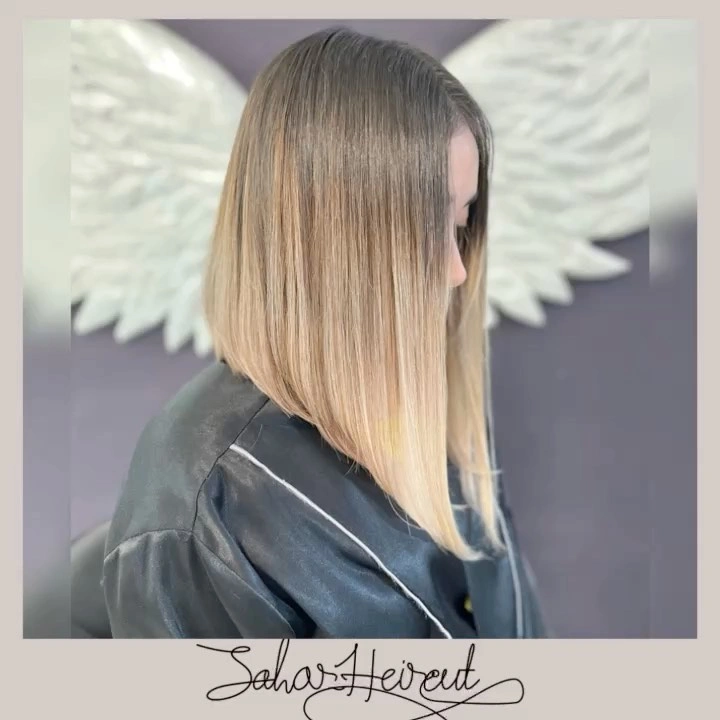
The comparison with IMAGE 11 is especially useful because both cuts use a front-to-back angle, but the scale of that angle is very different. Here the transition is gradual and the front does not project into dramatically elongated points, so the haircut retains the compact feel of a conventional lob. The visual interest comes from a small perimeter adjustment rather than a major change in internal layering or movement.
This cut demonstrates how a slight angle can influence the side profile without becoming the entire identity of the haircut. It offers a quieter geometric contrast to the much sharper angled lob earlier in the sequence.
Graduated Short Bob With a Long Side Fringe
This short bob is defined by a visibly shortened nape, a fuller rounded back, and a longer section that sweeps forward beside the face. The side profile makes the change in length easy to follow, with the lower rear area sitting close to the head while the upper sections extend farther outward. That progression creates a compact graduated silhouette rather than a single blunt perimeter.
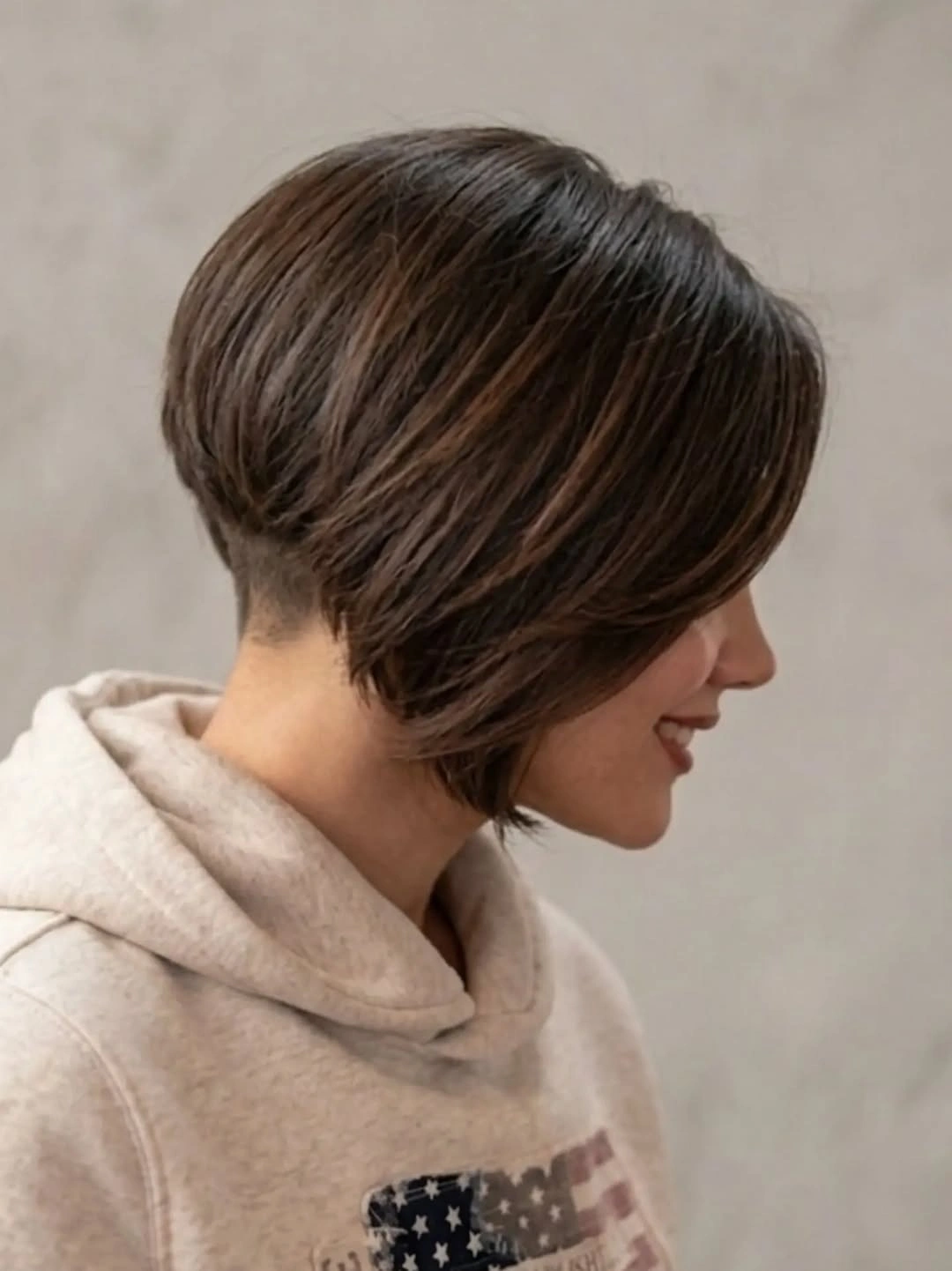
The longer front section changes the balance of the haircut because it pulls the eye forward while the back remains short and curved. Compared with the back-view bob in IMAGE 02, this cut shows more clearly how graduation can connect a close nape to an elongated side section. The architecture therefore depends on both the rounded rear shape and the directional sweep near the face.
This haircut adds a side-profile version of short graduation to the collection. Its defining contrast is the relationship between a compact nape, fuller back, and visibly longer front rather than fringe density or a level chin-length edge.
Graphic Chin-Length Bob With Short Blunt Bangs
This dark chin-length bob combines a compact straight outline with a noticeably short fringe that sits well above the eyebrows. The sides fall smoothly toward the jaw, while the lower edge stays crisp and relatively even. Because both the bangs and the bob perimeter form strong horizontal lines, the haircut reads as deliberately graphic rather than softly layered or rounded.
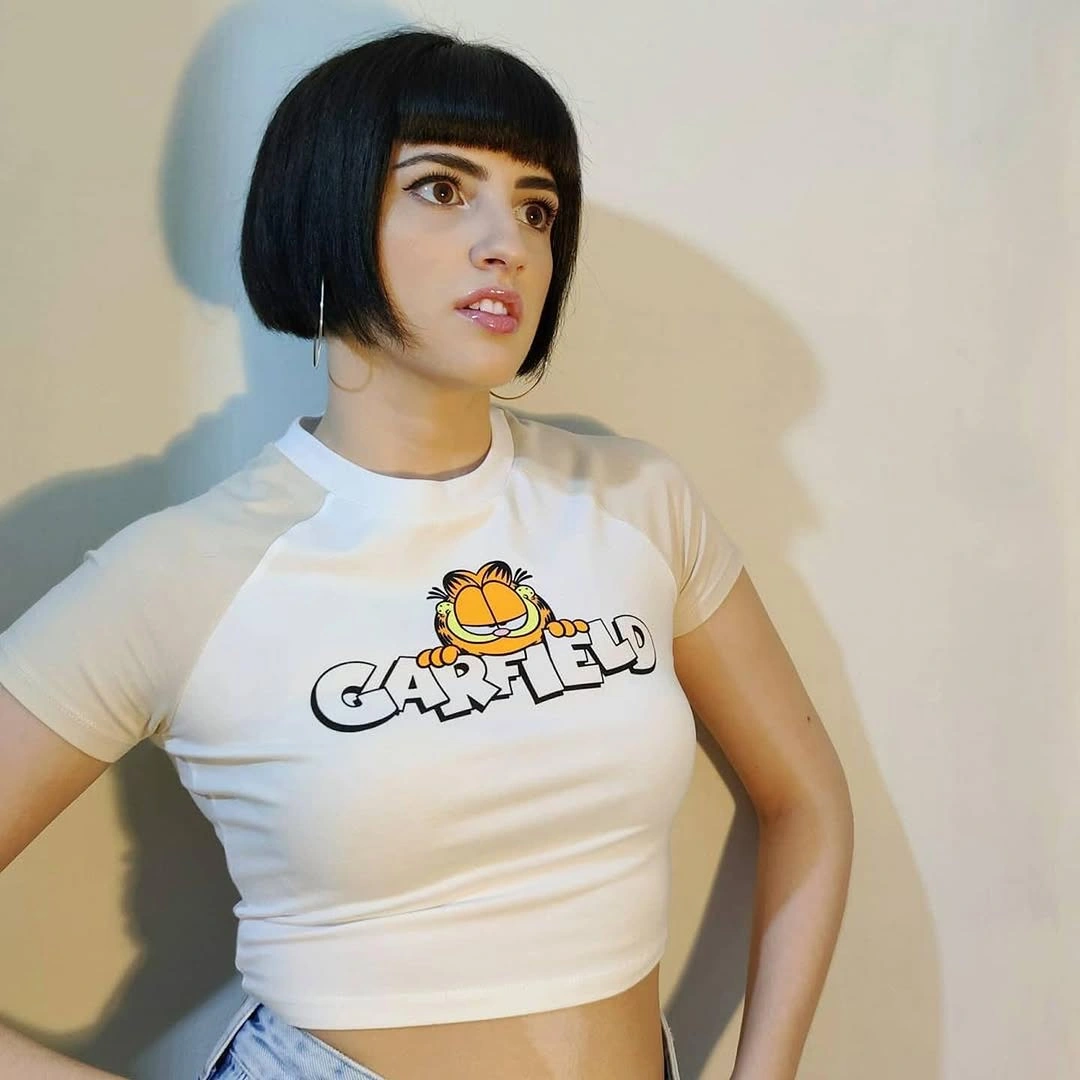
The fringe proportion is what most clearly separates this cut from IMAGE 01, where the bangs extend farther down the forehead and appear much denser. Here the shorter blunt line leaves more space between the fringe and the lower perimeter, making the distance between those two edges part of the overall design. Minimal visible layering keeps the focus on those clean geometric boundaries.
This section shows how changing only the fringe length can substantially alter the character of a compact bob. The short bangs and chin-level edge create two distinct visual markers, giving the cut a sharper structural rhythm than the fuller-fringed bob earlier in the article.
Long Layers With Curtain Bangs and Face Framing
This long haircut begins with center-parted curtain bangs that open away from the forehead and connect into shorter layers around the sides of the face. Those front pieces continue downward through progressively longer sections, creating a visible transition from fringe to cheek-level and jaw-level framing before reaching the longest lengths. The result is a layered structure that can be read from the top front all the way to the lower perimeter.
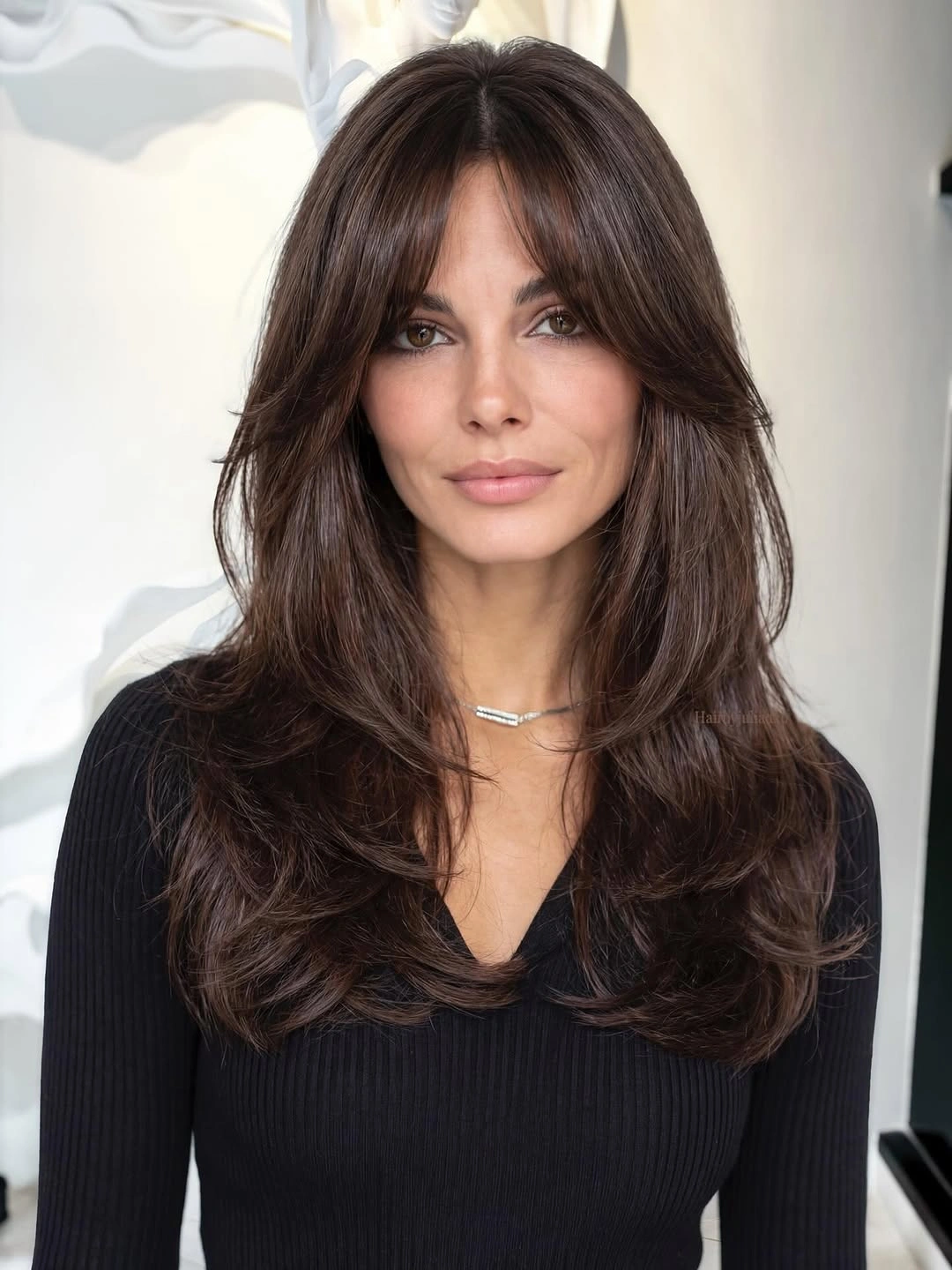
Unlike long layered cuts where the movement is concentrated mainly at the ends, this one establishes its hierarchy much higher around the face. The shorter front sections curve outward and blend into broader layers through the sides, while the longest hair remains below as the base of the silhouette. That repeated progression makes the fringe feel structurally connected to the rest of the haircut instead of appearing as a separate element.
The defining idea is continuity between bangs, face framing, and long layers. Compared with IMAGE 03, the front structure is more explicitly anchored by a parted fringe before moving into the longer cascading sections.
Medium-Long Waves With Soft Layered Movement
This back view shows medium-long hair falling to around the shoulder-blade area, with broad loose waves creating movement through the middle and lower lengths. The perimeter is not a hard straight line, because the ends separate into curved sections at slightly different levels. The overall silhouette remains fairly full, but the lower edge is softened by visible variation in length and direction.
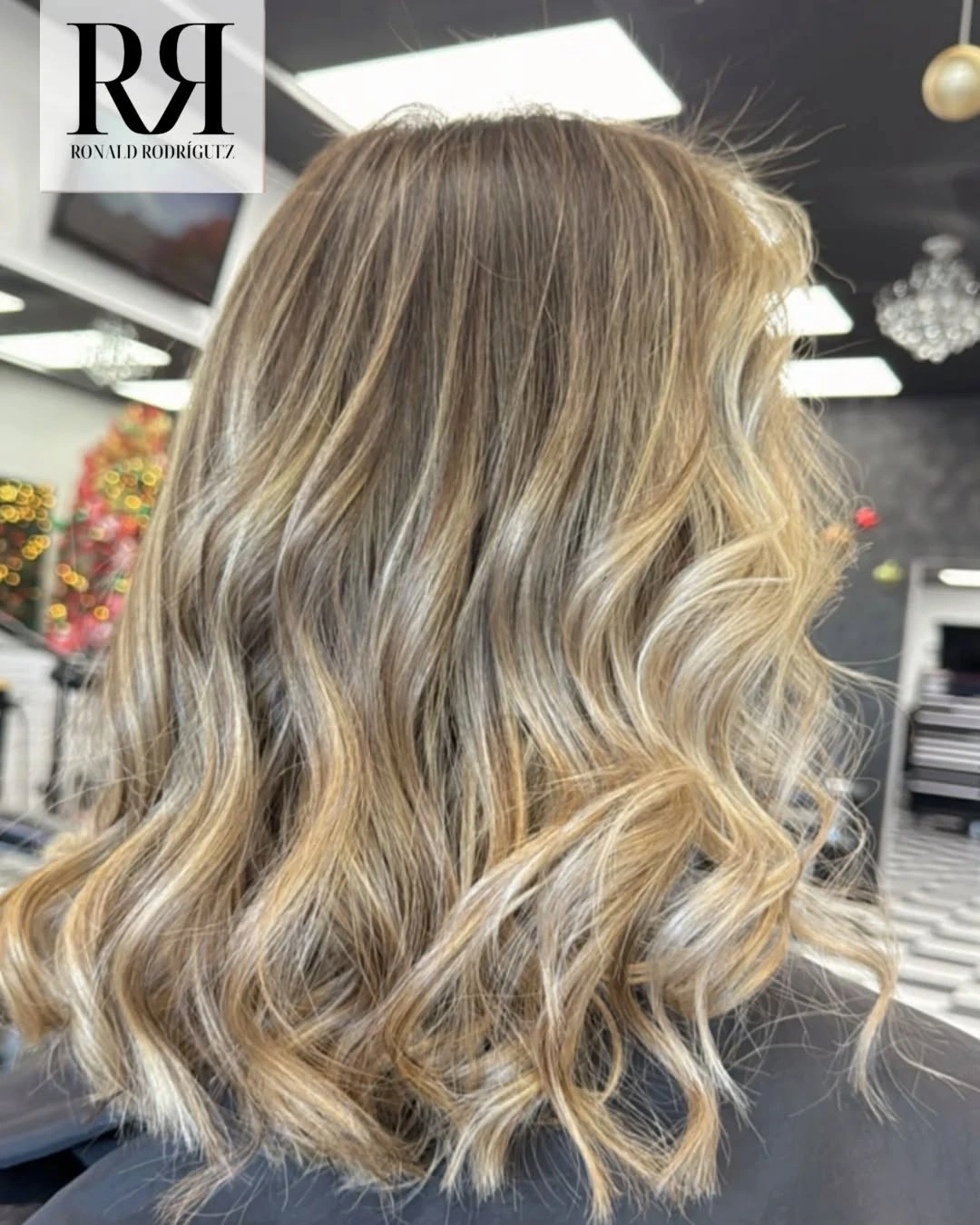
The layering here is quieter than in the strongly feathered long cuts earlier in the sequence, so the waves carry much of the visual separation. Instead of obvious steps from short to long, the haircut reveals its structure through overlapping bends and an unevenly moving lower outline. That makes this an example where the visible motion is stronger than the individual cut lines themselves.
This section occupies the space between a clearly layered long cut and a dense one-length perimeter. Its softer wave pattern and restrained layering create movement without producing sharply separated tiers.
Layered Shoulder-Blade Cut With a Narrow Taper
This back and side view shows hair extending below the shoulders with several long layers blending into a progressively narrower lower silhouette. Shorter outer sections sit above and around the longer interior lengths, creating a visible taper rather than a broad blunt edge. The movement remains smooth and gently curved, so the layer changes appear gradual instead of sharply stepped.
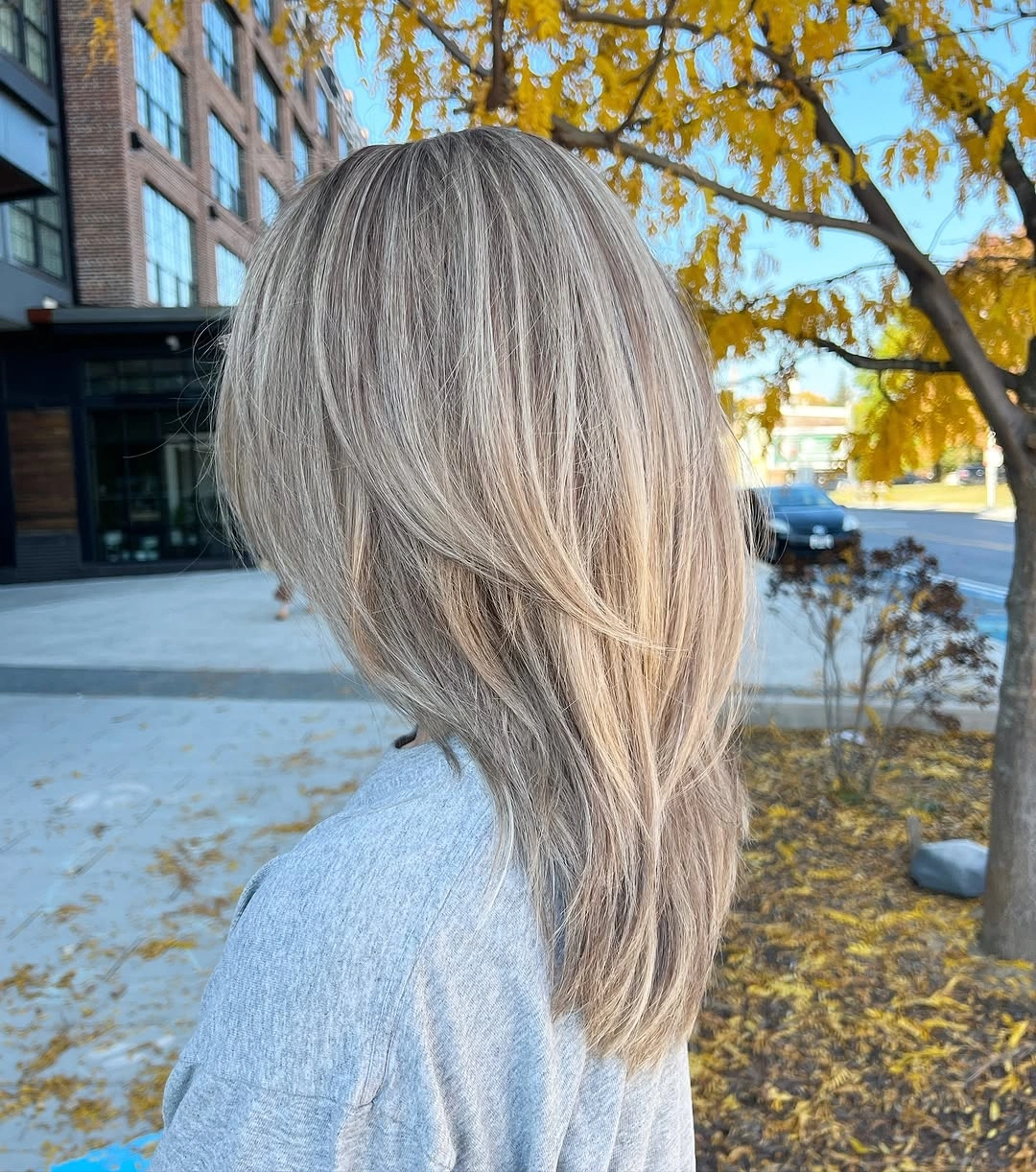
The perimeter is the key comparison because it narrows as the hair descends rather than maintaining equal width from top to bottom. Long outer pieces curve into the lower lengths and prevent the ends from forming a dense horizontal block, while the central sections continue farther downward. This gives the haircut a tapered architecture that differs from both the rounded long perimeter in IMAGE 12 and the wave-softened edge in IMAGE 19.
The final cut completes the article’s perimeter comparison with a long shape controlled by gradual narrowing. Its long layers alter the silhouette through taper and overlap, showing a different structural outcome from blunt, rounded, flipped, or heavily waved endings.