
When the first sweater comes out and the light turns a little softer, I start wanting a manicure that feels seasonal without looking like a costume. The strongest ideas here keep a pale, glossy center and let the tip do the talking, whether that edge is berry, sage, black, or a bright flash of orange. It is the kind of detail I notice while reaching for a coffee cup.
Use the shapes as a starting point, not a rulebook. Compare the open-base designs with the busier tips, then choose the amount of contrast that fits your hands, your wardrobe, and the length you actually enjoy wearing; a short oval can borrow the same color logic as a long almond. If one detail makes you pause, that is enough permission to adapt it.
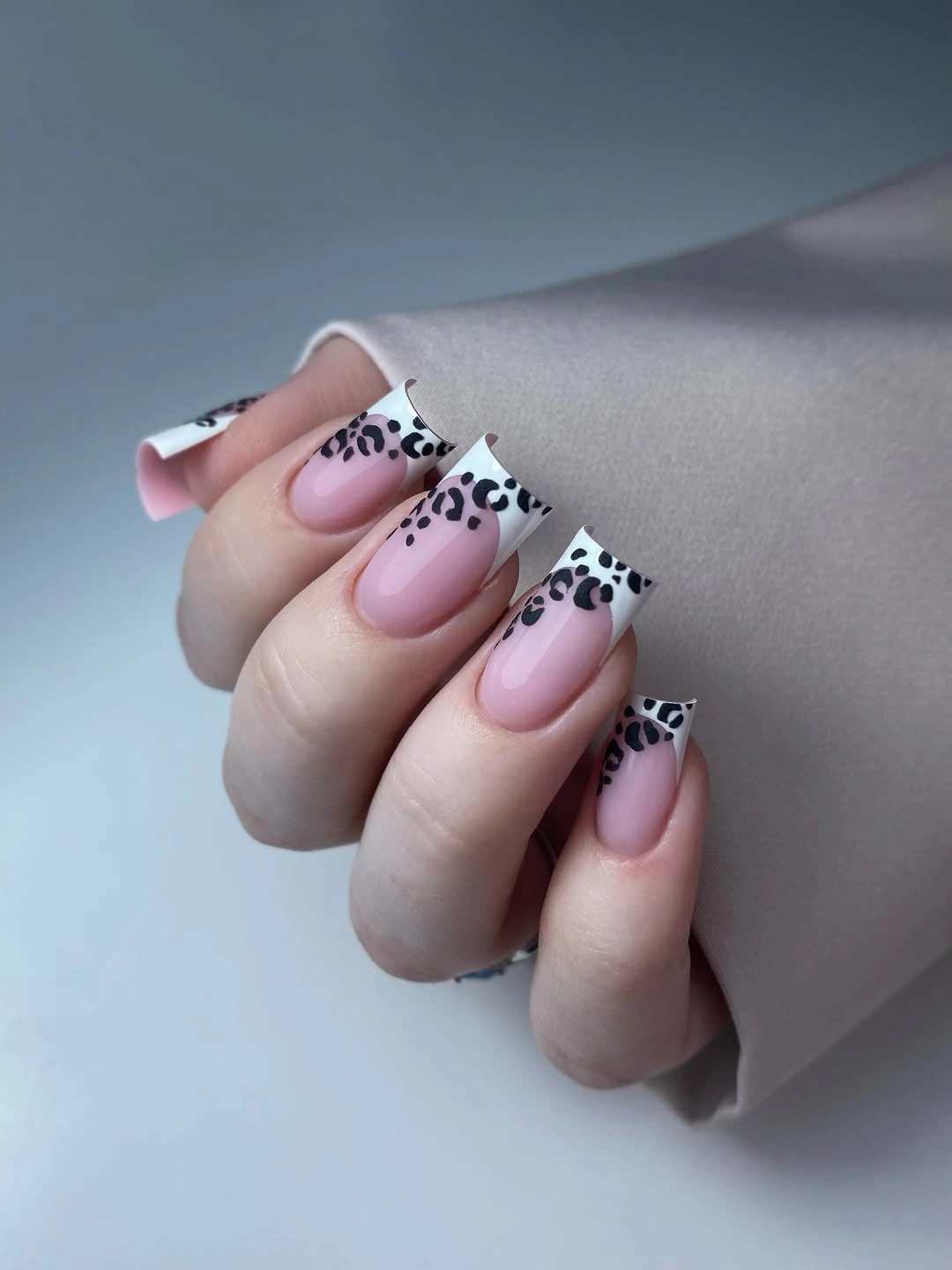
Spotted Tips Over a Soft Blush Base
The first set keeps the center of each medium almond nail a translucent blush pink, then concentrates black-and-white spotted bands at the free edge. Because the pattern stays near the tips, the manicure has a clear French structure instead of reading as an all-over animal print. The open pink area also lets the tapered shape remain the quiet part of the design.
What makes this idea work is the contrast between a delicate base and a graphic border. The small dark marks repeat across the hand, while the white breaks keep them from becoming one heavy stripe, so the result feels playful but still organized. I would keep the spots slightly irregular rather than forcing every dot into the same size, since that preserves the hand-drawn character.
For a shorter or more office-friendly version, move the pattern to two accent nails and use a thin black French line on the rest. The design will need cleaner spacing than a solid tip as it grows out, especially where the spots sit close to the sidewalls. A tidy almond file and a little open space around each mark will keep the idea readable between appointments.
Orange and Black Tips on Long Coffin Nails
Long coffin nails make the second French design much more graphic, with vivid orange and black tips alternating over a clear pink-looking base. One warm glitter accent adds a small change in texture, but the main decision is still the repeated color swap from finger to finger. The straight free edge gives both shades a strong, almost architectural finish.
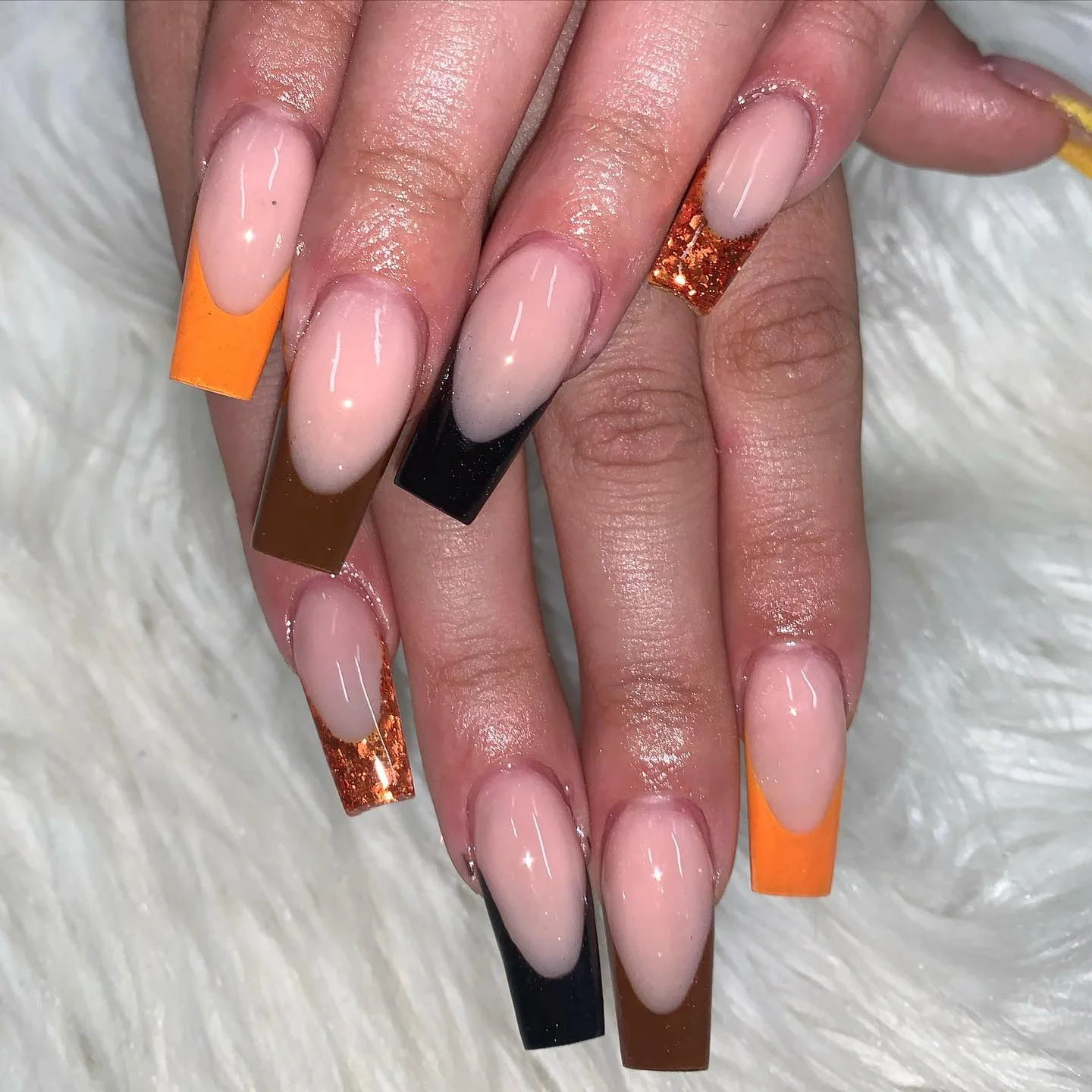
The shared base is important because it ties the bright and dark tips together. Orange brings a lively fall accent, black grounds it, and the narrow pale center keeps the hand from becoming a block of color. If you want the set to feel more coordinated with everyday clothes, repeat orange on only one or two nails and let black carry the rest.
There is an honest tradeoff here: the long square length and high-contrast tips are meant to be noticed, so this will not read as a barely-there manicure. A shorter soft-square shape can keep the alternating idea while reducing the visual drama. Check the tip widths carefully, because uneven straight edges are easier to spot on a long coffin silhouette than on a rounded nail.
A Fine Metallic Curve for Short Almond Nails
Short almond nails can carry a French idea without a wide color block, as this glossy pale pink set shows. The base remains the main field, while a very narrow curved line sits close to the free edge and catches the light with a soft metallic effect. The result keeps the compact length visible instead of trying to imitate a longer nail.
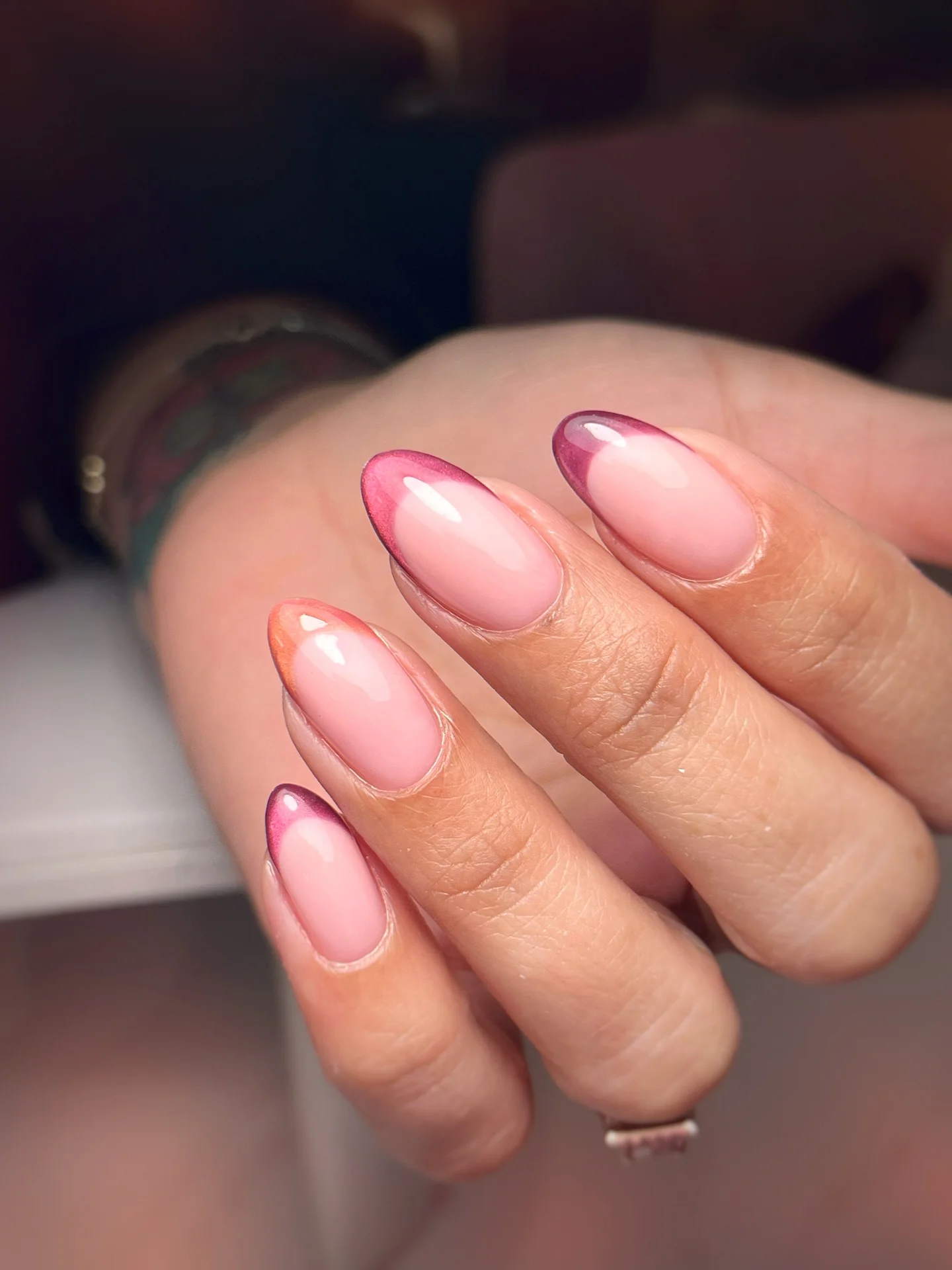
The appeal is in the restraint and the placement. A slim line gives the eye a finished border, but the blush center stays calm enough for the rounded almond shape to do its own work. If metallic silver feels too cool for your fall wardrobe, a fine bronze, brown, or muted berry line would preserve the same visual decision while warming the overall impression.
This is a detail that benefits from careful spacing because there is nowhere to hide a wobble on a short free edge. Ask for the curve to follow each nail rather than copying one rigid arc across every finger, and keep the line narrow enough that it does not swallow the base. The tradeoff is subtlety: the effect may disappear in low light, but it will remain easy to live with.
Pointed Black and White French Contrast
A soft pink base gives these medium almond nails a gentle center, while black and white pointed tips alternate across the hand. The colors are simple, but the shape of each edge matters: the dark and light sections angle toward the almond point, creating a clean graphic finish rather than a rounded smile line. Nothing else competes with that outline.
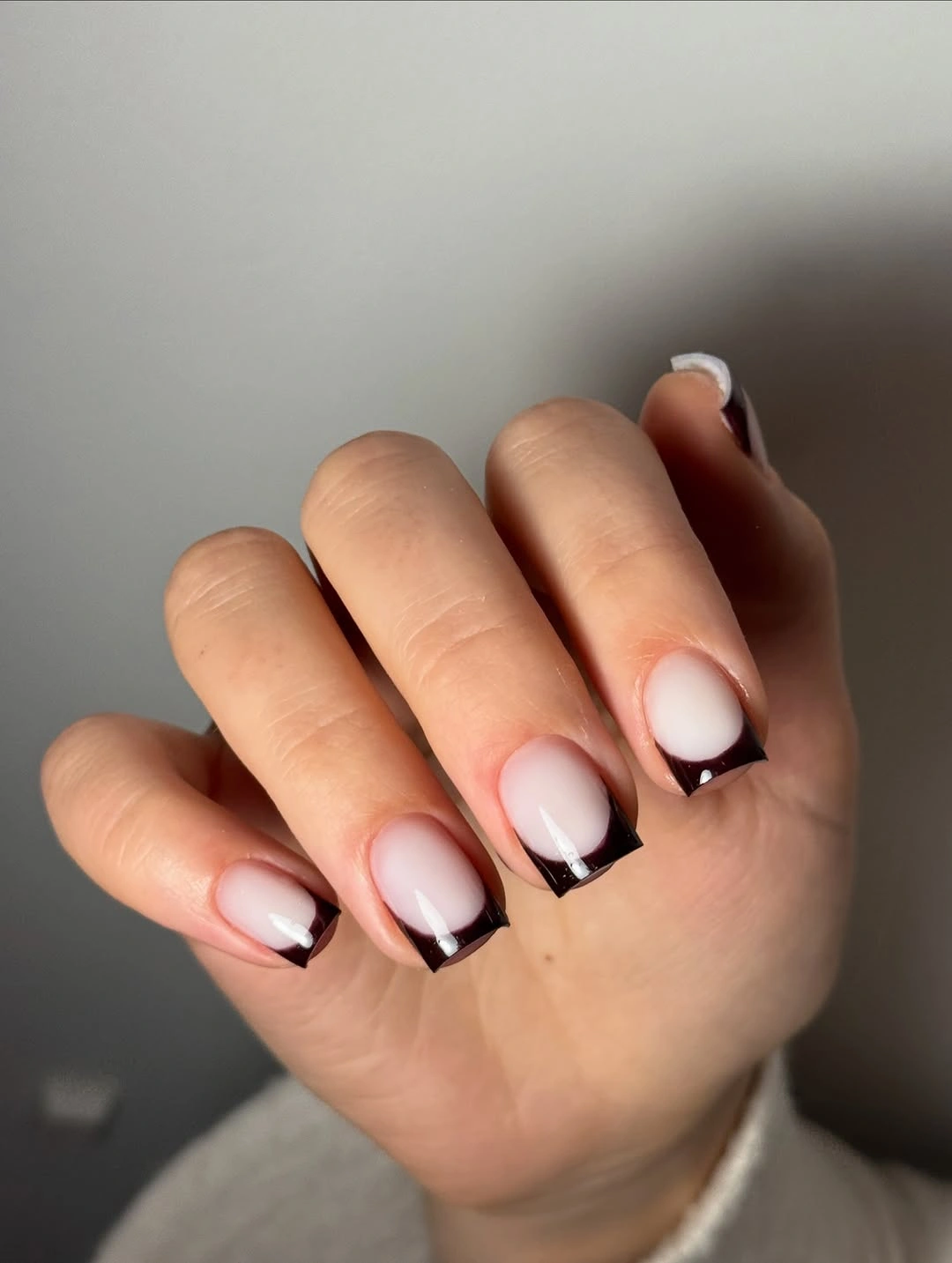
The contrast works because it follows the nail instead of sitting across it like a separate sticker. Black supplies definition, white keeps the set from becoming too severe, and the pale base leaves enough room for the almond taper to remain visible. For a quieter appointment reference, use white on most nails and keep black as a single accent so the same structure feels less formal.
Shape consistency will matter more than extra decoration here. If one almond is noticeably shorter, its pointed tip will create a different visual angle and the alternating rhythm can break. This design is also easy to adapt to a short almond, but the edge should become thinner as the available length decreases; otherwise the dark section may make the nail look visually compressed.
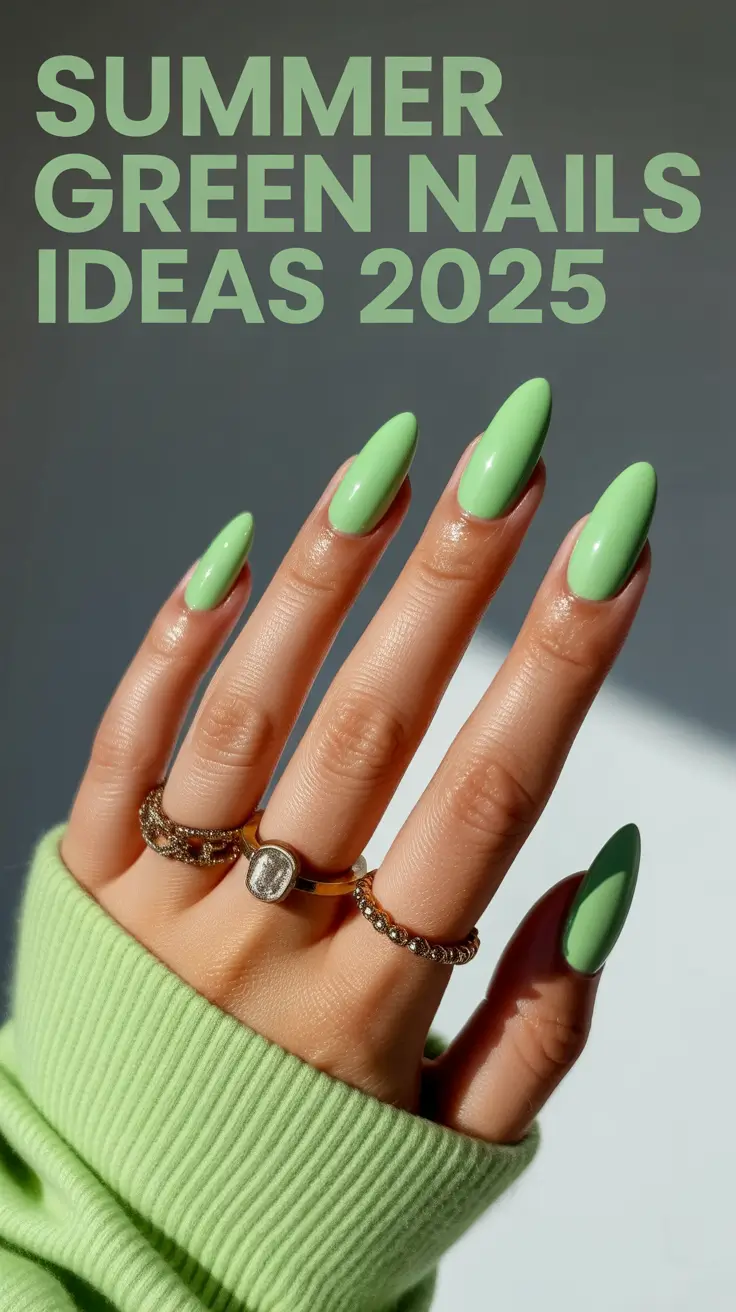
Sage Green Tips with a Milky Center
Muted sage green changes the mood of a French manicure without turning it dark, especially when it sits beside milky white and soft pink bases. The medium almond shapes in this set keep the colored edge narrow, so the green reads as a seasonal accent rather than a full coat. Against a knit sleeve, the palette feels calm and connected to early fall dressing.
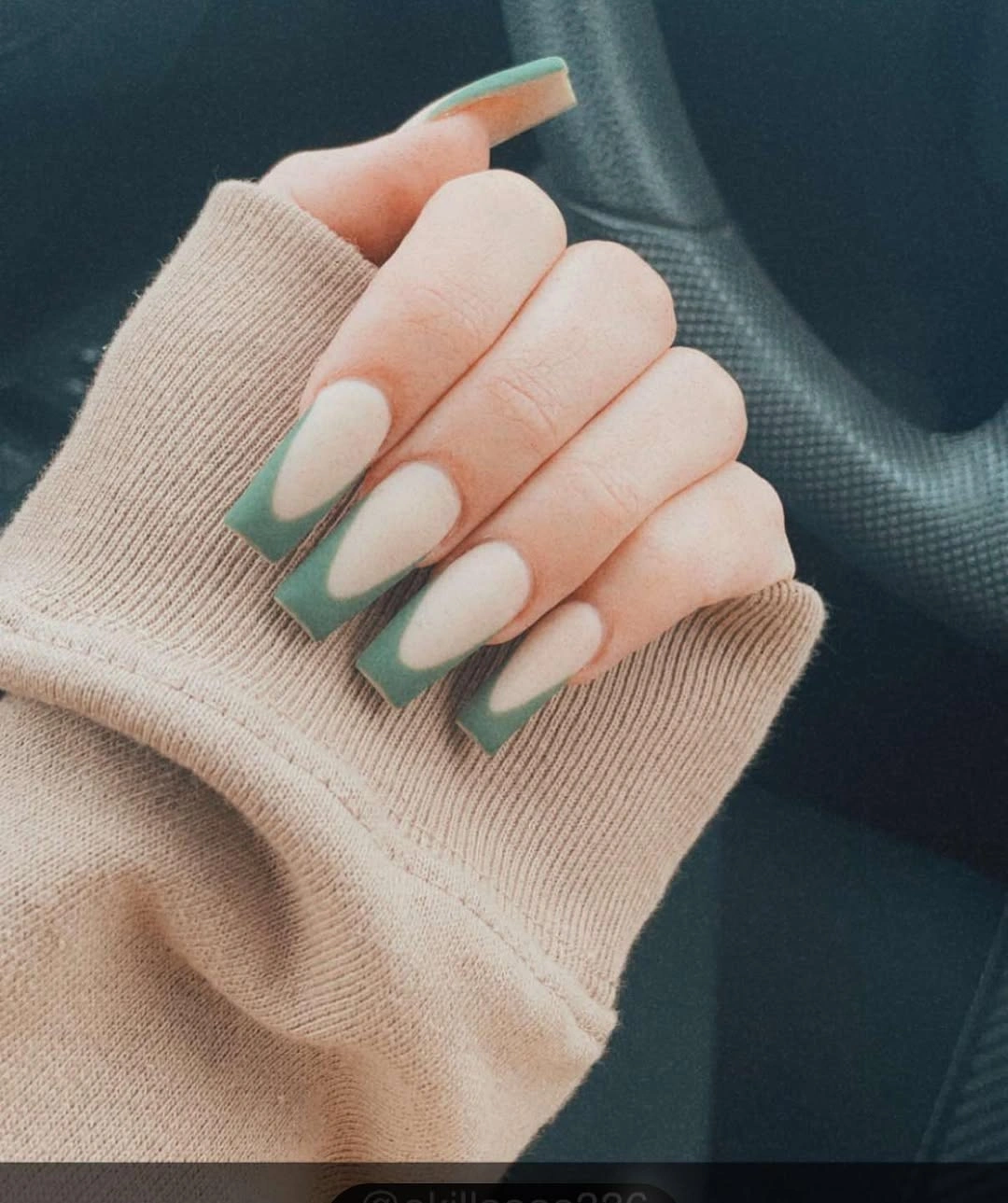
Sage works here because it has enough depth to separate from the pale center but not so much saturation that it dominates the hand. The repeated tip placement gives the mix of white and pink a common structure, and the almond shape makes the edge feel gently tapered. If you prefer a deeper look, olive can replace sage while the milky base stays exactly as it is.
Keep in mind that a muted green edge can lose definition against a pale background or a cream sweater. A slightly darker line near the free edge, or a white base on alternate nails, can give it more visual separation without making the design louder. The practical advantage is that the soft palette works across casual clothing, while the realistic limitation is that understated color needs clean application to stay visible.
Neon Color Moves Along Almond Tips
Long almond nails become a bright color study when the tips shift between neon orange, lime, pink, and green. The base remains translucent and open, which keeps the manicure from becoming a solid wall of color even though every finger brings a new accent. The design feels more like a row of small flashes than a single repeated shade.
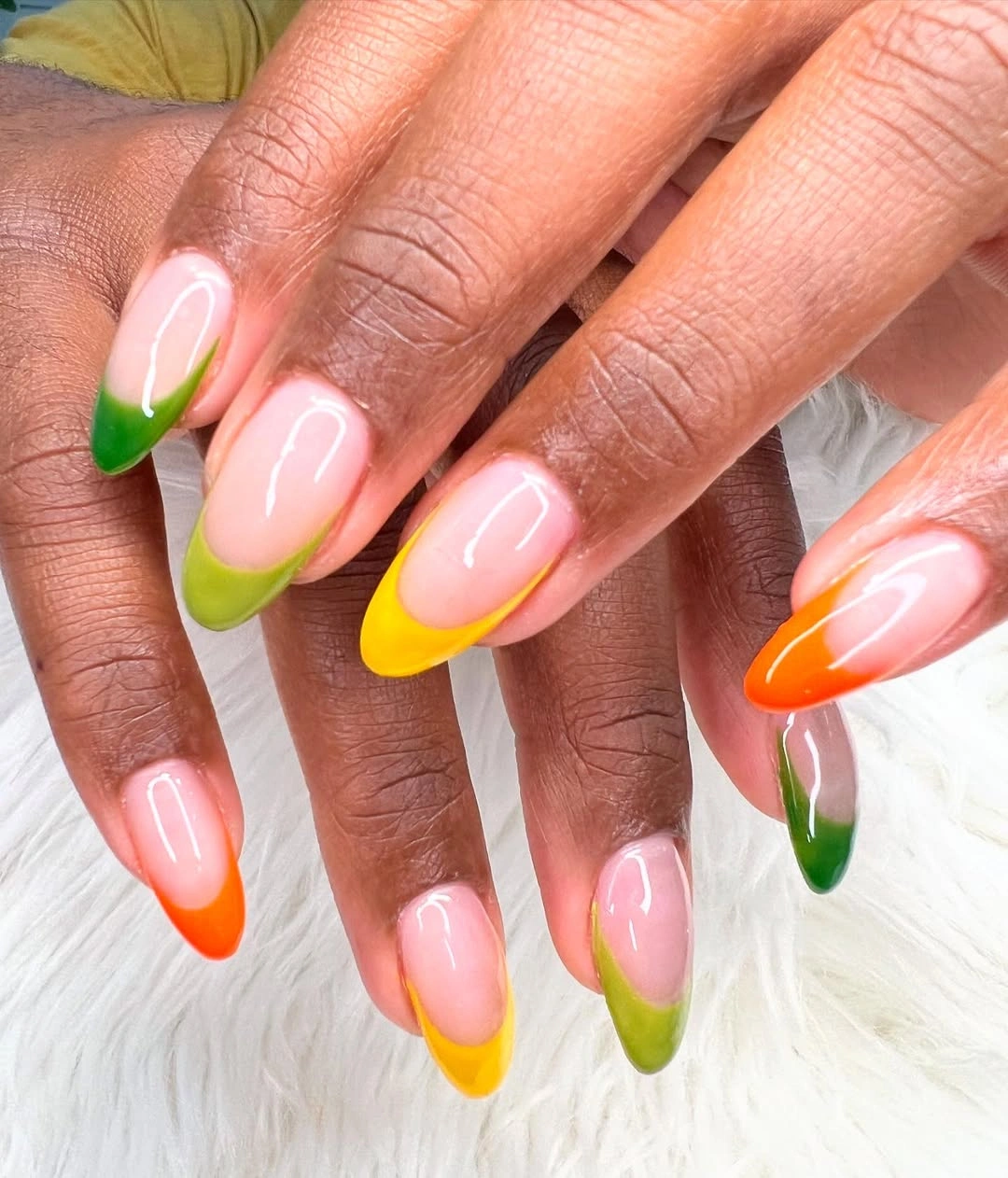
The open center is what makes the vivid palette wearable as a French idea. Each bright edge gets a little breathing room, and the long almond taper gives the color a clean directional finish rather than a blunt block. I would choose two or three shades if you want a fall version with more cohesion, perhaps orange and lime, while leaving the placement varied.
This set is expressive enough to compete with loud prints, colorful jewelry, or another statement accessory, so it works best when the rest of the look has some breathing space. A shorter almond can carry the same concept with narrower tips, but the lines need to remain crisp as the available length changes. The maintenance note is simple: bright edges make small chips easy to notice.
Warm Foil Accents on Short Rounded Nails
Short rounded nails take a warmer route with a pink-nude base, translucent amber-looking tips, and small gold foil-like details near the edge. The color story is close and gentle, so the design feels more like a polished accent than a dramatic French contrast. The compact shape also keeps the warm details grounded and easy to imagine for daily wear.
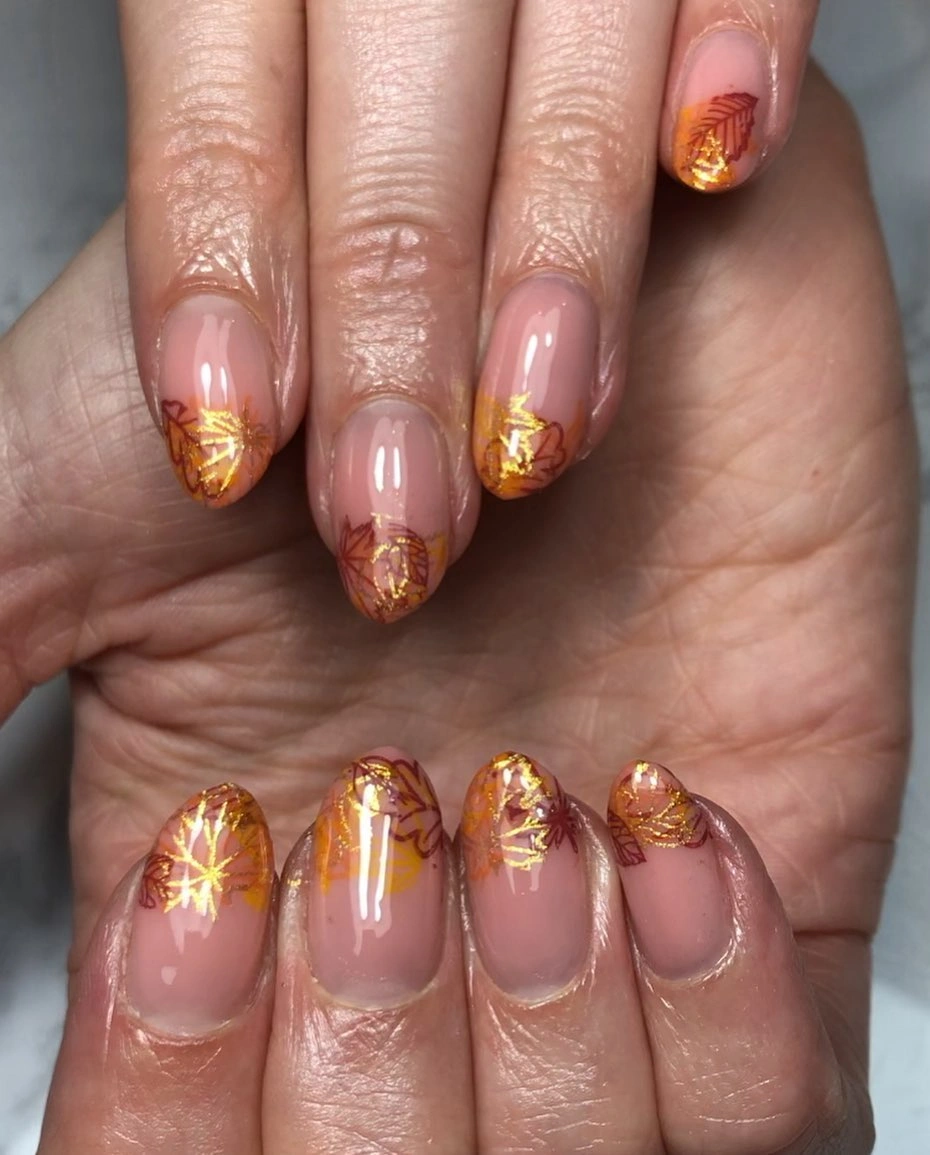
The small metallic marks work because they repeat the amber warmth without covering the base. They add a little sparkle where a full glitter tip might feel too much, and the rounded outline prevents the design from looking rigid. For an even cleaner result, place the foil on one accent nail or move it toward the cuticle while keeping the warm tip on the rest.
Short nails leave less room for decorative spacing, so the foil should remain deliberately small rather than being stretched into a crowded pattern. As the manicure grows, details near the tip can look displaced, making a tidy refresh useful sooner than with a plain color. The payoff is practical: the palette pairs easily with cream, camel, denim, and brown without requiring a specific outfit.
Black and Gold Lines Define a Nude Tip
These medium almond nails use a milky nude center and build the French edge with black, then soften or sharpen it with a warm gold line. The result is still recognizable as a tip design, but the narrow border gives the manicure more structure than a single dark band. The pale center keeps the layered edge from taking over the hand.
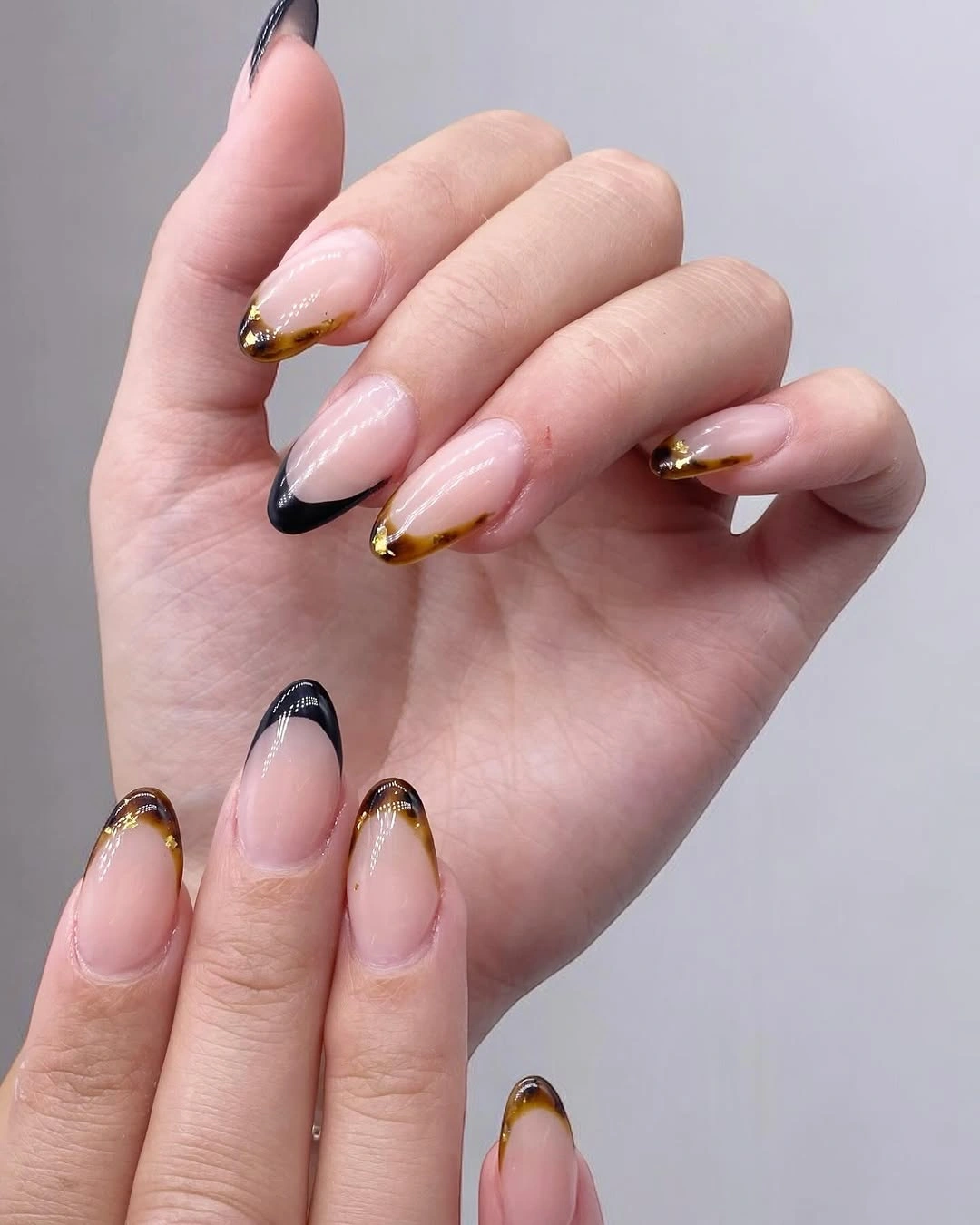
Black supplies the visual anchor while gold keeps the contrast from feeling flat. Because both lines follow the almond edge, the detail reinforces the taper and creates a quiet sense of movement across the fingers. If you want the idea to sit closer to everyday neutral, use espresso brown with bronze or keep only the black outline and let the base do more of the work.
Two borders require more precision than a single French line, particularly near the sidewalls where a small shift changes the balance. On shorter nails, reduce the width of each band instead of copying the same thickness, or the layered edge may crowd the center. The maintenance tradeoff is that the design can grow out neatly if the lines are slim, but every gap will still be visible.
Different Soft Shades, One French Structure
Here the medium square nails vary the tip color between peach, sage, orange, and cream while keeping the base pale and the placement consistent. The manicure feels colorful, but it does not rely on a different motif for each finger; the French edge is the shared language. A neutral sleeve in the styling reinforces how easily the soft palette can sit beside everyday clothing.
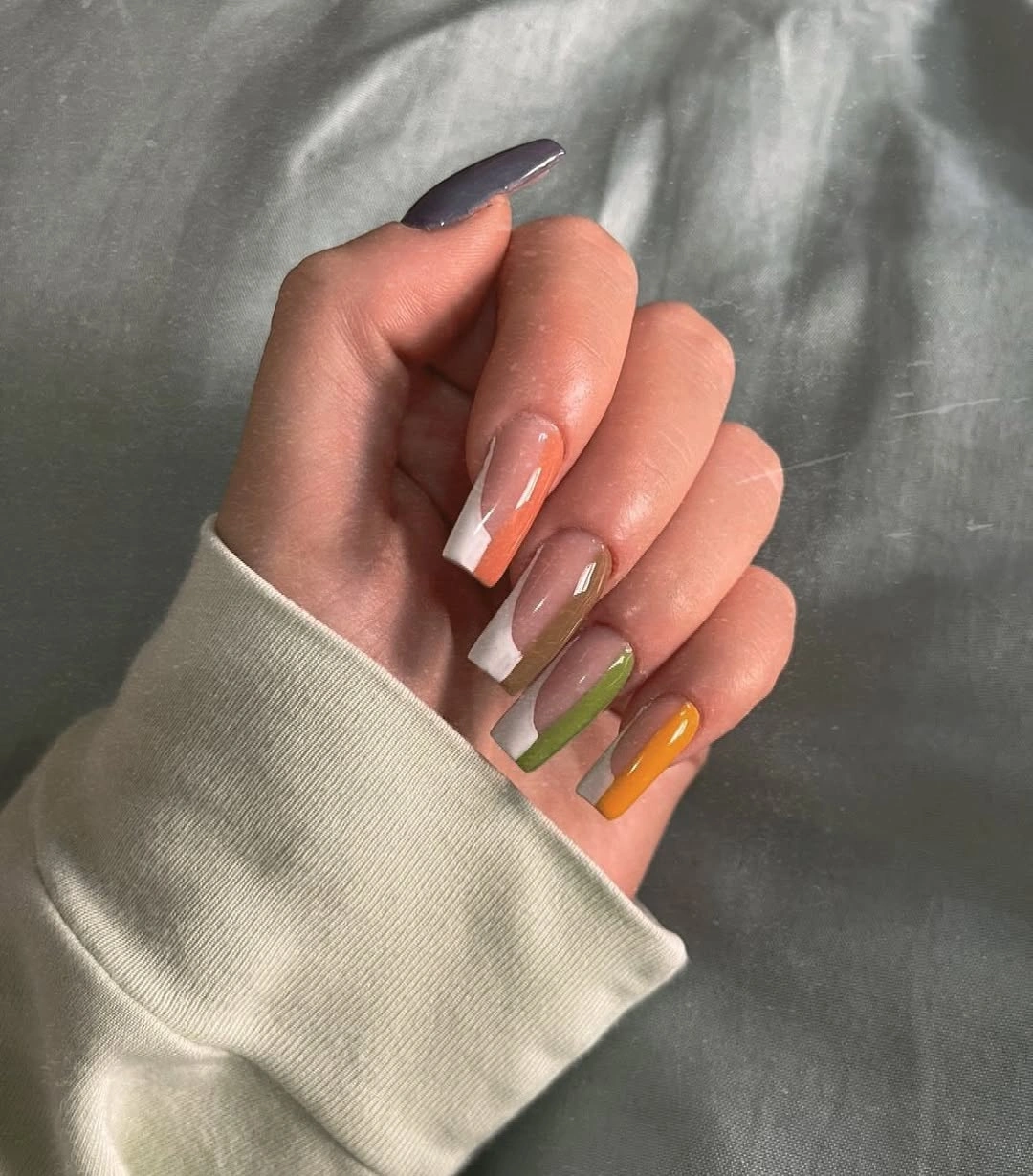
The square shape gives each color block a neat frame, while the pale center prevents the hand from looking overloaded. Peach and orange bring warmth, sage interrupts the warm run, and cream acts as a visual rest, so the variation has a natural rhythm. To make the set more office-friendly, select three shades with similar softness and repeat them instead of assigning a new color to every nail.
More colors also mean more opportunities for undertones to disagree. If one shade is much brighter or cooler, it can pull attention away from the rest, so a muted palette is easier to coordinate. The design adapts well to shorter square nails, but keep the blocks thin and the corners clean; broad color on a compact free edge can make the nail look wider than intended.
Lavender Details and Tiny Playful Marks
Short almond nails in pale lavender-pink create a soft base for small black-and-white spotted or flower-like accents. The marks appear only on selected nails, so the manicure does not become a full pattern; most of the hand remains a quiet pastel field. That balance makes the idea feel playful without asking the short shape to carry too much detail.
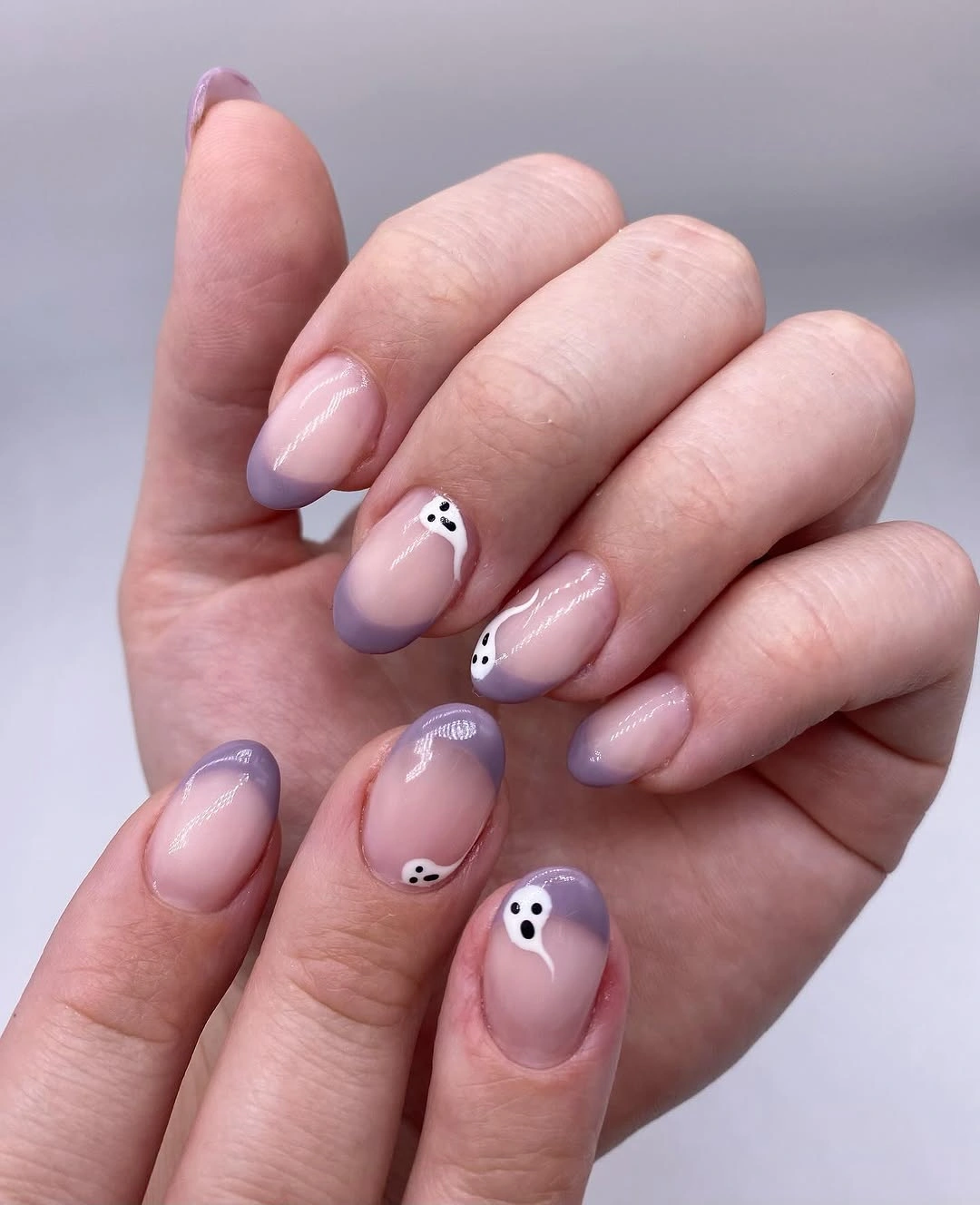
The design succeeds through scale. Tiny marks add personality at the edge, while the pale color keeps the overall contrast gentle and lets the almond outline remain visible. If you want the accents to read more clearly, place one small motif near the tip and leave the center open; if you prefer a softer finish, use a muted mauve mark instead of black.
Short nails can make small motifs look crowded when several are placed close together, so spacing matters more than adding another color. A single accent finger or a dot-only version will be easier to maintain and still preserve the idea. Because the base is light, any smudging or uneven edge will show, but the low-detail layout makes a small repair less disruptive.
Berry Marks on Rounded Pink Nails
Short rounded nails keep their base sheer and pink, then add tiny deep berry marks that resemble small flowers or hearts near the tips and sides. The design is not a solid red manicure and it is not a traditional French line either; it uses a few dark accents to give the soft base a seasonal pulse. The rounded shape makes the motif feel friendly rather than sharp.
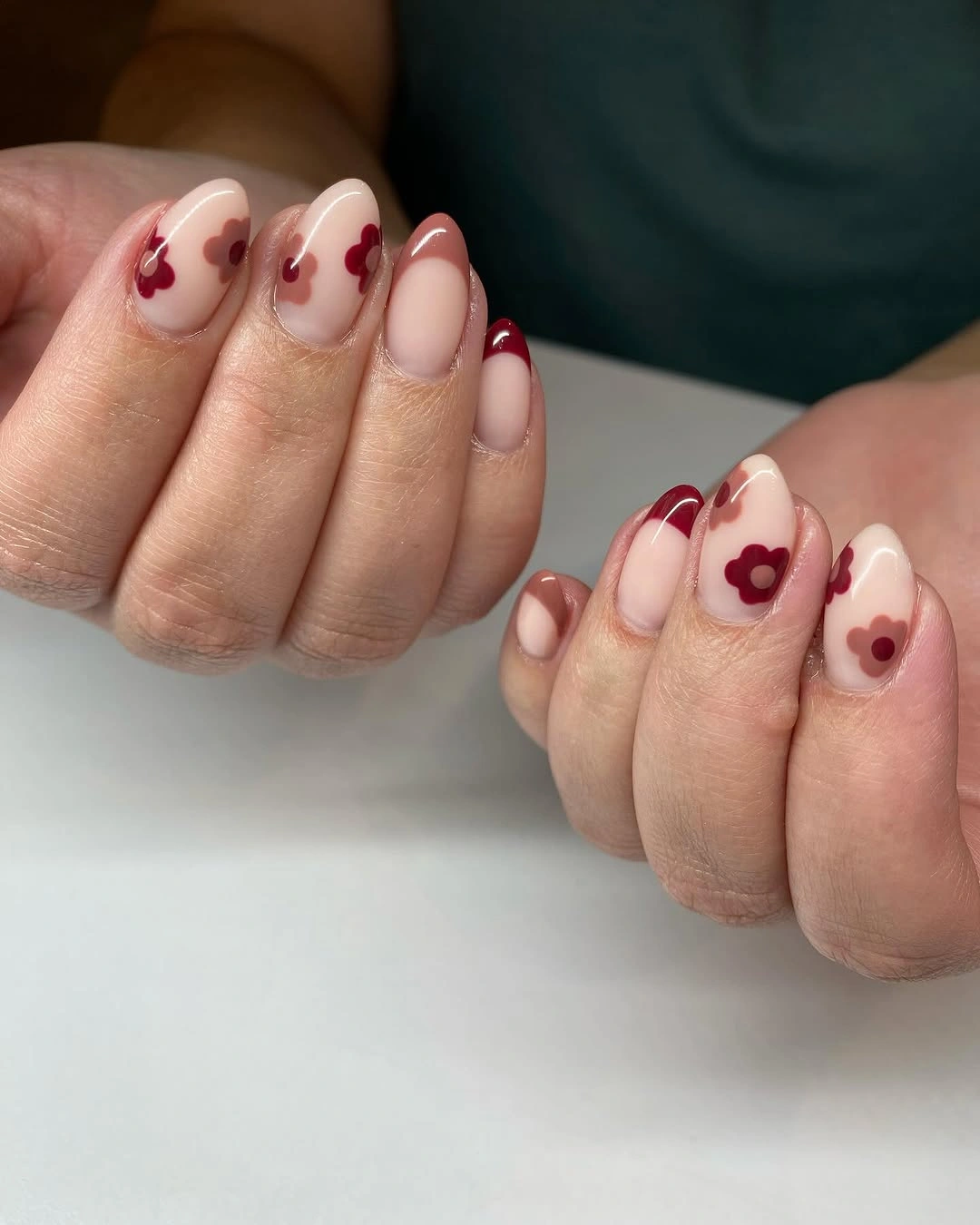
The berry color works because it appears in small repeated doses. It gives the eye something to find, but there is enough open pink around each mark to keep the set light, and the warm red connects naturally with fall clothing. For a simpler translation, move all the marks to one or two nails or swap the berry for cocoa brown.
Keep the little shapes separated from one another so they do not turn into an indistinct dark patch as the nails grow. A rounded short file is forgiving for daily tasks, although its compact surface limits how much detail can be added without crowding. The practical advantage is that the design can look seasonal with very little color; the limitation is that precision matters at this small scale.
Muted Edge Color on a Short Squoval
Short squoval nails use a translucent neutral base with muted green and mauve touches along the free edge. The colors are soft enough that the manicure stays close to a natural palette, while the placement gives the shape a clear design decision. Rounded corners stop the edge accents from feeling too geometric, so the overall effect remains relaxed.
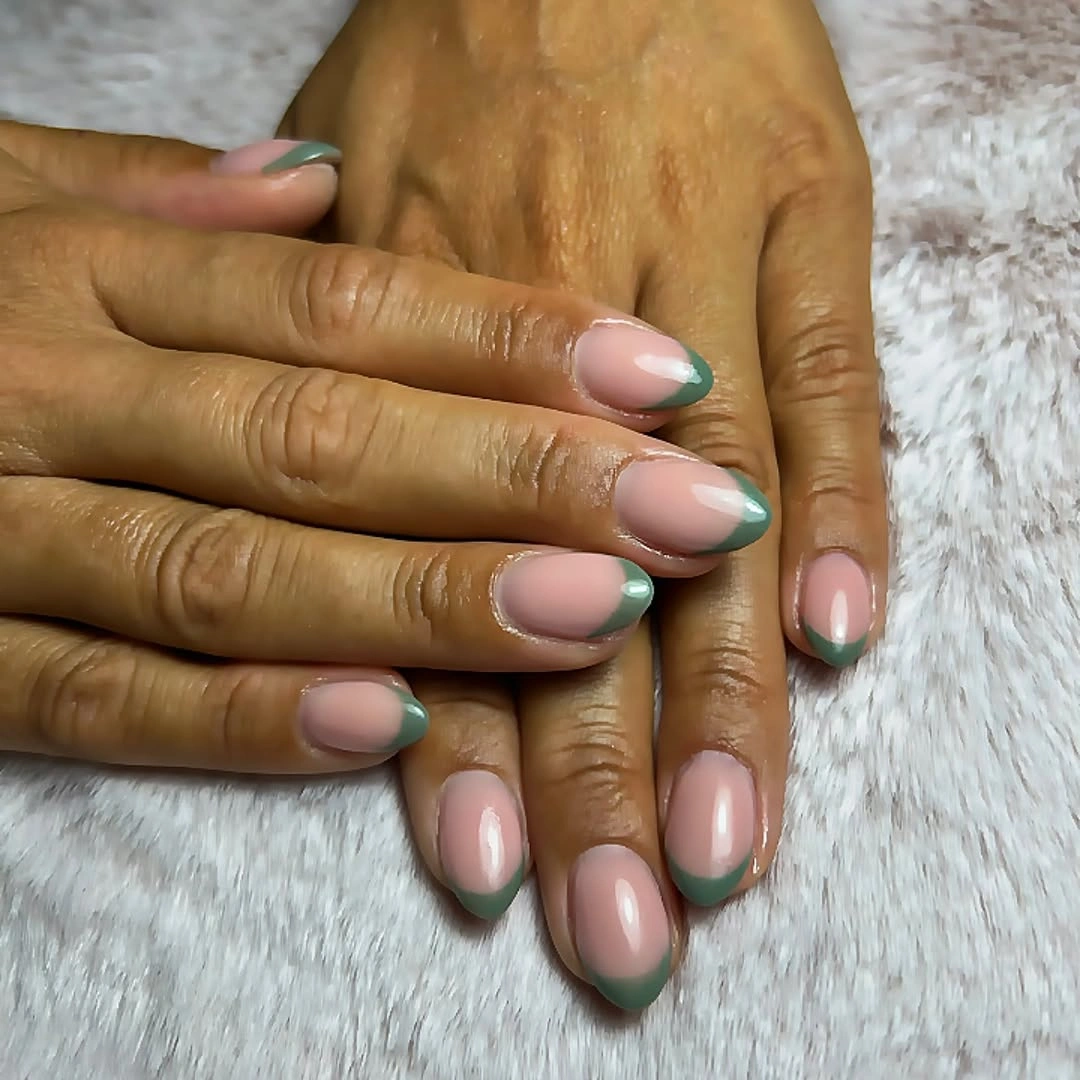
The low contrast is the reason this set feels easy to wear. The base remains visible across most of the nail, and the green and mauve edges create variation without demanding attention from every finger. If you want a more defined fall look, deepen the green toward olive or use one darker tip while leaving the other nails soft.
Subtle color can disappear in dim light, which is the tradeoff for keeping the design gentle. Ask for enough separation between the base and edge to preserve the outline, especially if your clothing is pale or textured. The short squoval shape is practical, and the color story can be simplified to one repeated shade when you want the cleanest version.
Layered White Tips on a Long Almond Shape
Long almond nails make room for a pale peach base, a bright white tip, and a deeper brown or berry outline that sharpens the edge. The layered French treatment is more dramatic than a single band, but the center stays light, so the design still has an airy middle. The pointed silhouette gives the contrast a natural direction from cuticle to tip.
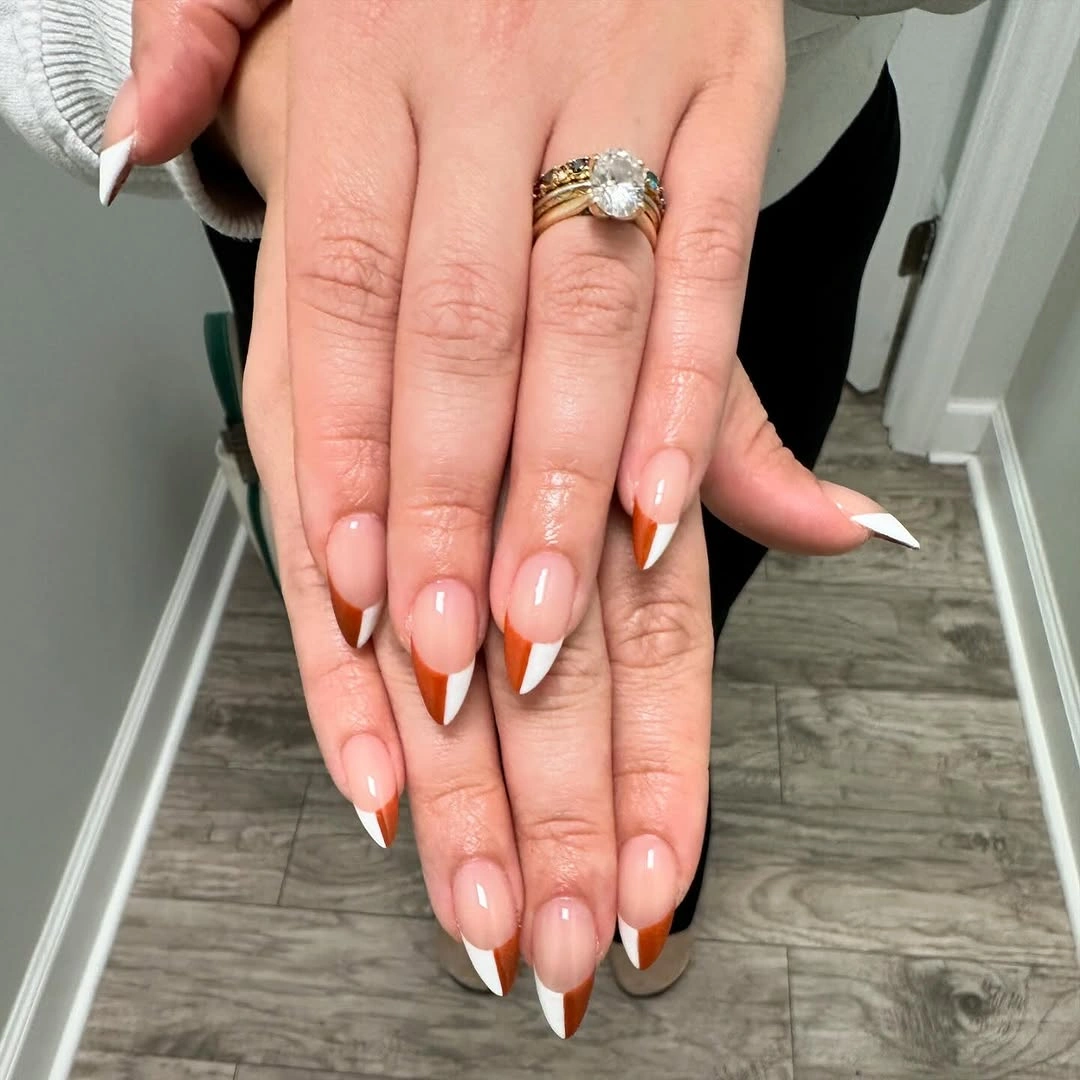
The dark line is doing more than adding color; it separates the white tip from the pale base and makes the whole edge read clearly. Because the outline follows the taper, it lengthens the visual path of the nail instead of cutting across it. To soften the look, remove the outer line or use warm brown rather than a deep berry shade.
Long length and layered detail are both noticeable choices, so this idea suits someone who enjoys a stronger manicure rather than a background neutral. A shorter almond can borrow the same white-and-brown contrast, but the bands need to become narrower and less numerous. Keep the side edges even, since any imbalance will be amplified by the pointed shape and high contrast.
Teal Tips Bring a Cooler Fall Accent
Medium almond nails take a cooler seasonal route with a neutral base and saturated teal tips. A few small pale details appear near the transition, but the main focus is the deep green-blue edge and how cleanly it follows the almond outline. The result feels different from the expected brown or red palette while still carrying enough depth for fall.
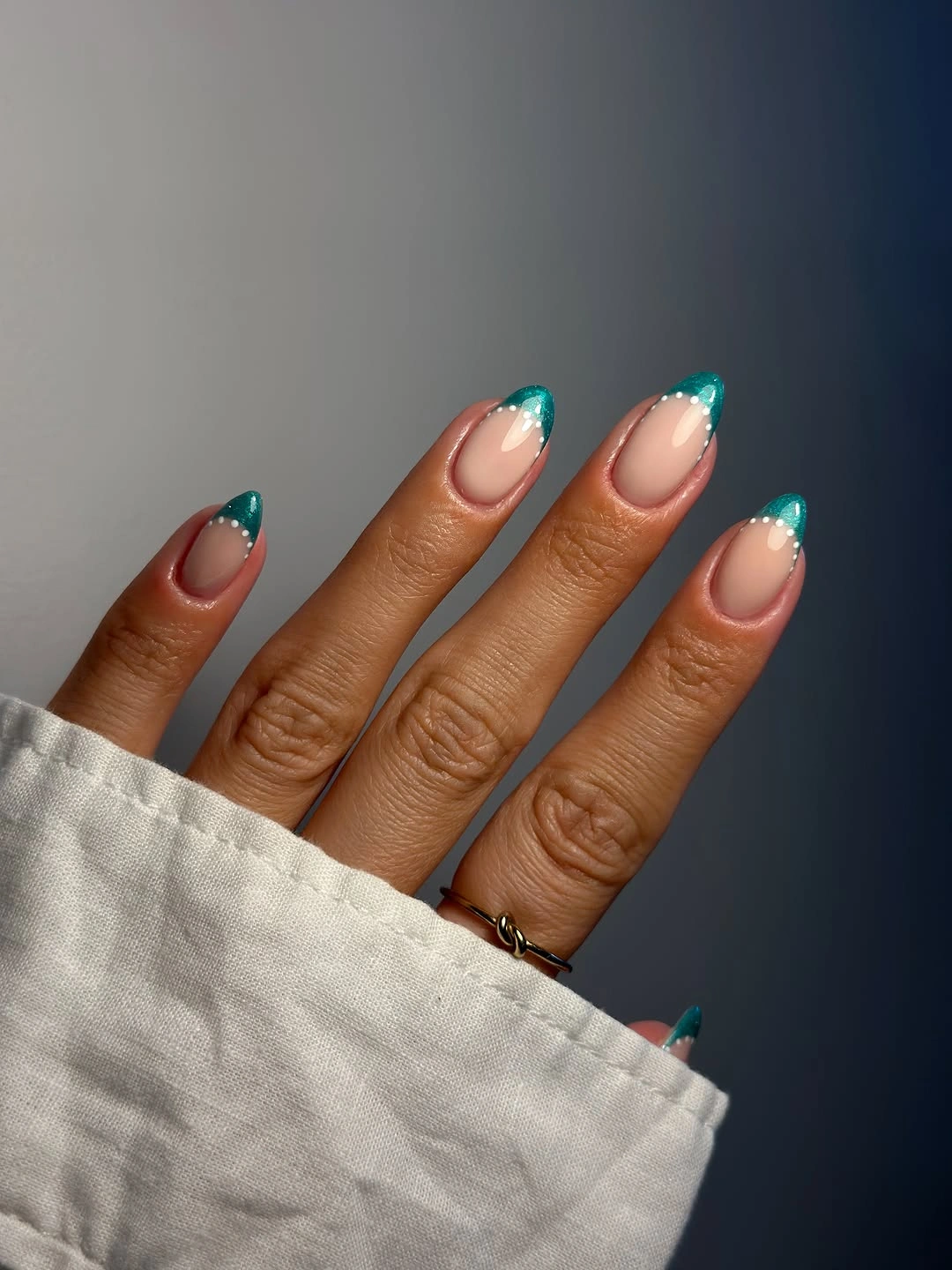
Teal works here because it has strong contrast against the nude center and a naturally tapered shape at the free edge. It gives the hand color without covering the base, so the design remains a French manicure rather than a full-color set. If teal feels too bright, choose eucalyptus or olive; if you want more definition, keep the base milky rather than sheer.
Dark edge color makes sidewall gaps easier to see, so the curve needs to be even from finger to finger. On a shorter almond, a thinner teal line will preserve the proportions and keep the nail from appearing visually shorter. The practical appeal is that teal pairs well with denim, cream, gray, and brown, although it may compete with another saturated accessory.
Pink Tips Meet Spotted Statement Edges
Long square nails alternate bright pink tips with black-and-white spotted tips over a pale pink base. The manicure uses one patterned edge as a change of pace, then repeats pink elsewhere so the set still feels connected. Because the free edge is long and straight, both the color blocks and the spots have room to read distinctly.
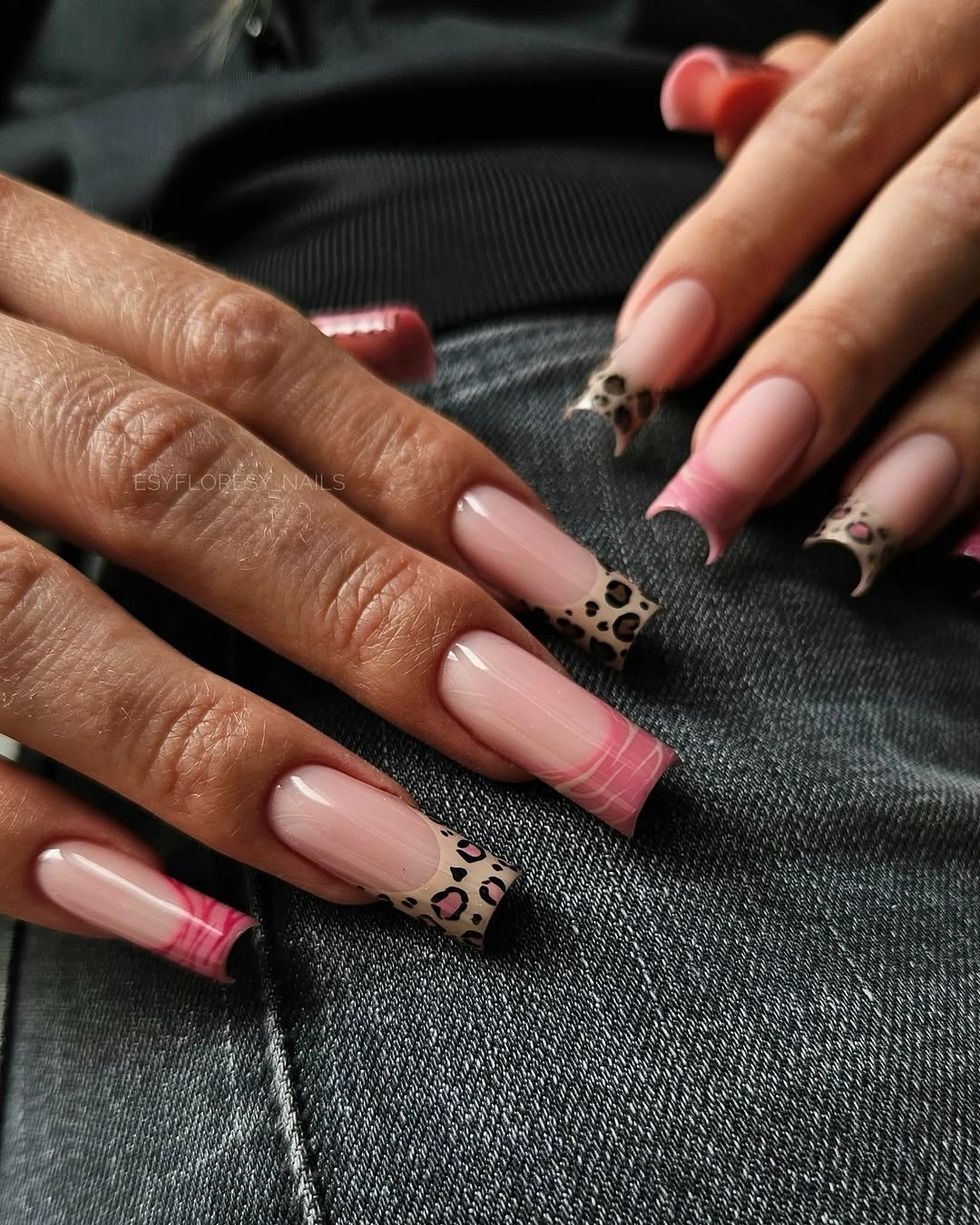
The repeated pink is the quiet organizing move. It makes the spotted nail feel like an accent rather than a separate idea, while the pale center keeps the contrast from filling the whole hand. For an easier everyday version, use one spotted nail and replace the bright pink with dusty rose or a soft berry that still echoes the pattern.
This design emphasizes length, and the straight square edge will make chips or uneven filing visible quickly. If you prefer a shorter nail, keep the pattern only at the very tip and reduce the pink block so the free edge does not overpower the base. It is a good choice for someone who wants a playful reference with a clear focal point, not a barely noticeable neutral.
Simple Red Tips on a Short Oval
Short oval nails keep the classic French logic very clear: a glossy blush-pink base, a narrow red edge, and no extra motif. The red has enough depth to feel seasonal, but the band remains slim so the compact shape does not look weighed down. It is a reminder that a fall manicure can come from placement and proportion rather than decoration.
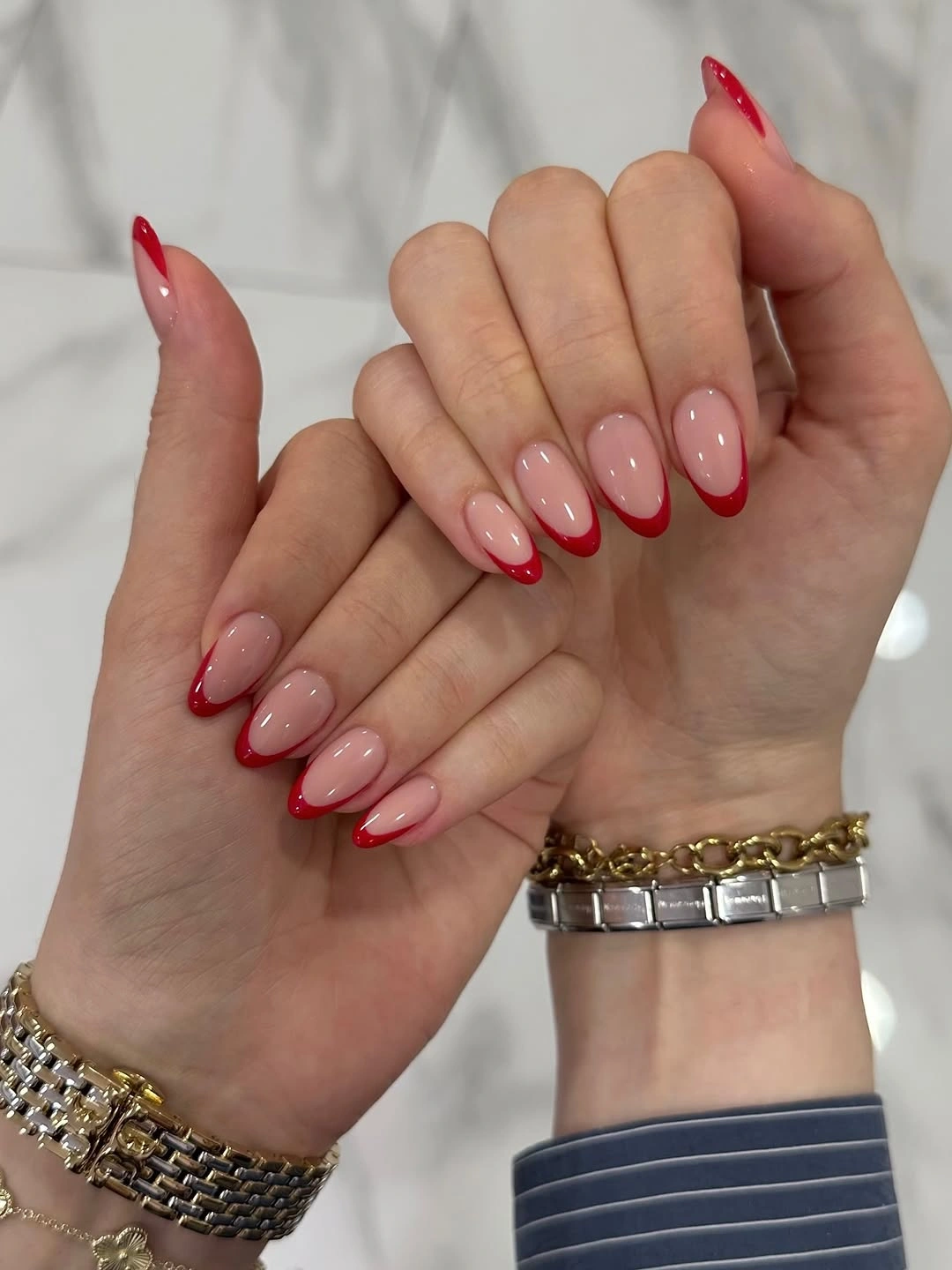
The oval edge gives the red a soft finish, which is why the color feels polished rather than severe. Against the pale base, the tip becomes the only strong note, and that simplicity makes the manicure easy to compare with more detailed ideas in this group. A muted cranberry would lower the contrast, while a brighter red would make the same shape feel more direct.
Even a simple tip needs a consistent curve, especially on a short oval where there is little empty space to disguise an uneven line. The compact length is practical for everyday tasks, and the two-color palette grows out more quietly than a dense design. The tradeoff is that red will show small chips sooner than a nude edge, so an at-home touch-up may be noticeable if the tone does not match.
Pastel Blocks Frame a Medium Square
Medium square nails use a pale nude base and small blocks of lavender, yellow, and blue near the edges. The accents are geometric rather than floral, so the clean corners of the shape become part of the design language. Because the color is limited to the perimeter, the manicure feels playful without turning the center into a busy collage.
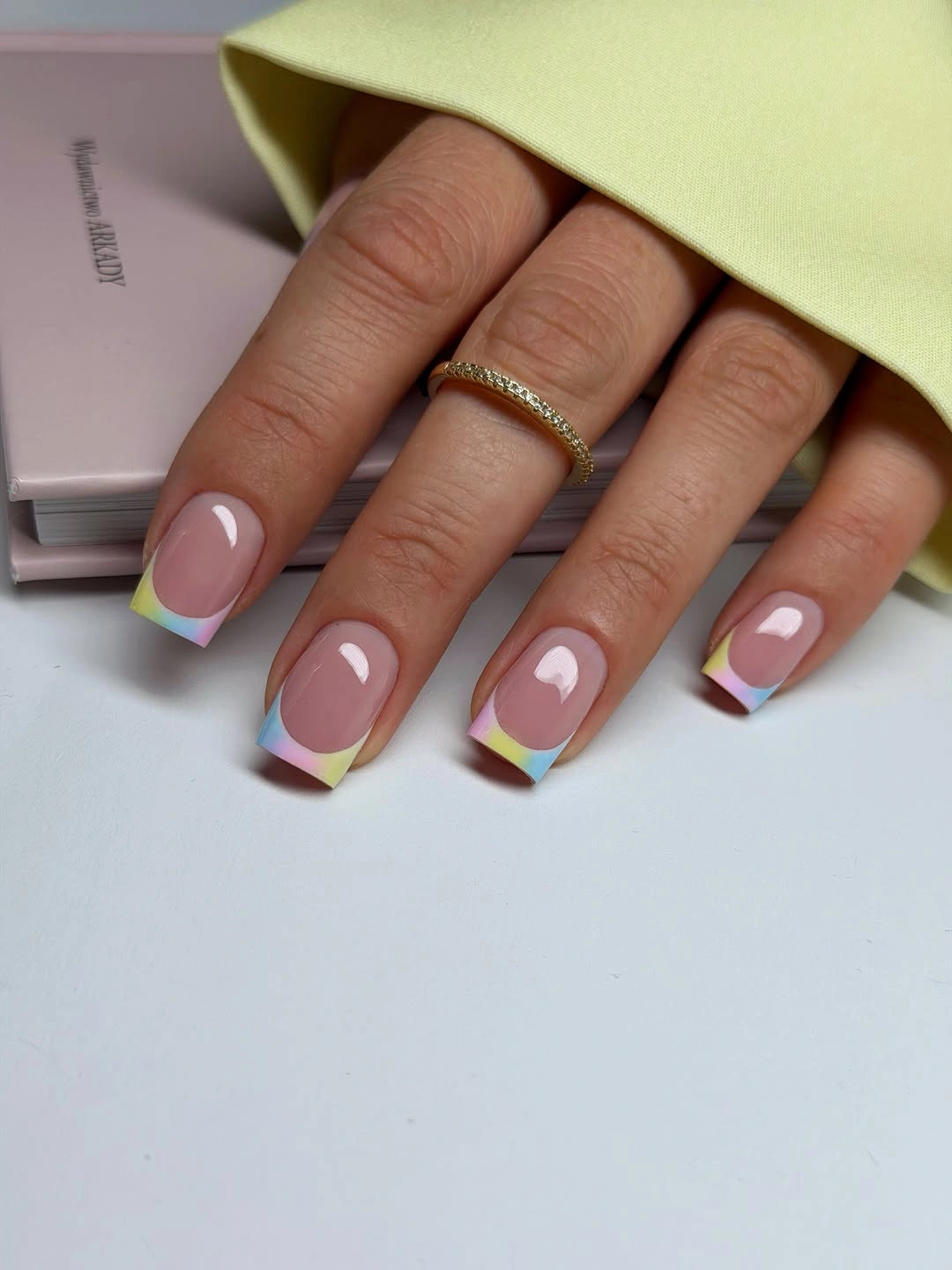
The square outline gives the little blocks a tidy frame, and the pale base keeps the pastel and bright notes from competing. Each color can act as a small focal point, but the shared placement makes the hand look coordinated. If you want a more restrained fall interpretation, select lavender and muted mustard, then repeat them instead of adding a new shade to each finger.
Geometric tips depend on clean boundaries, so uneven widths will be visible even when the colors are soft. On a shorter square nail, reduce the number of blocks and keep them close to the edge; broad shapes can make the free edge look heavier. The design is adaptable, but it works best when the palette has a similar level of softness and no single color overwhelms the rest.
Lavender Edges with a Cozy Soft Finish
Long almond nails pair a pale pink base with lavender accents at the edges, creating a cooler alternative to the usual autumn darks. The surrounding knit sleeve makes the color relationship easy to read: soft lilac against a warm fabric, with enough pale space to keep the hand light. The design is expressive through color, not through a busy motif.
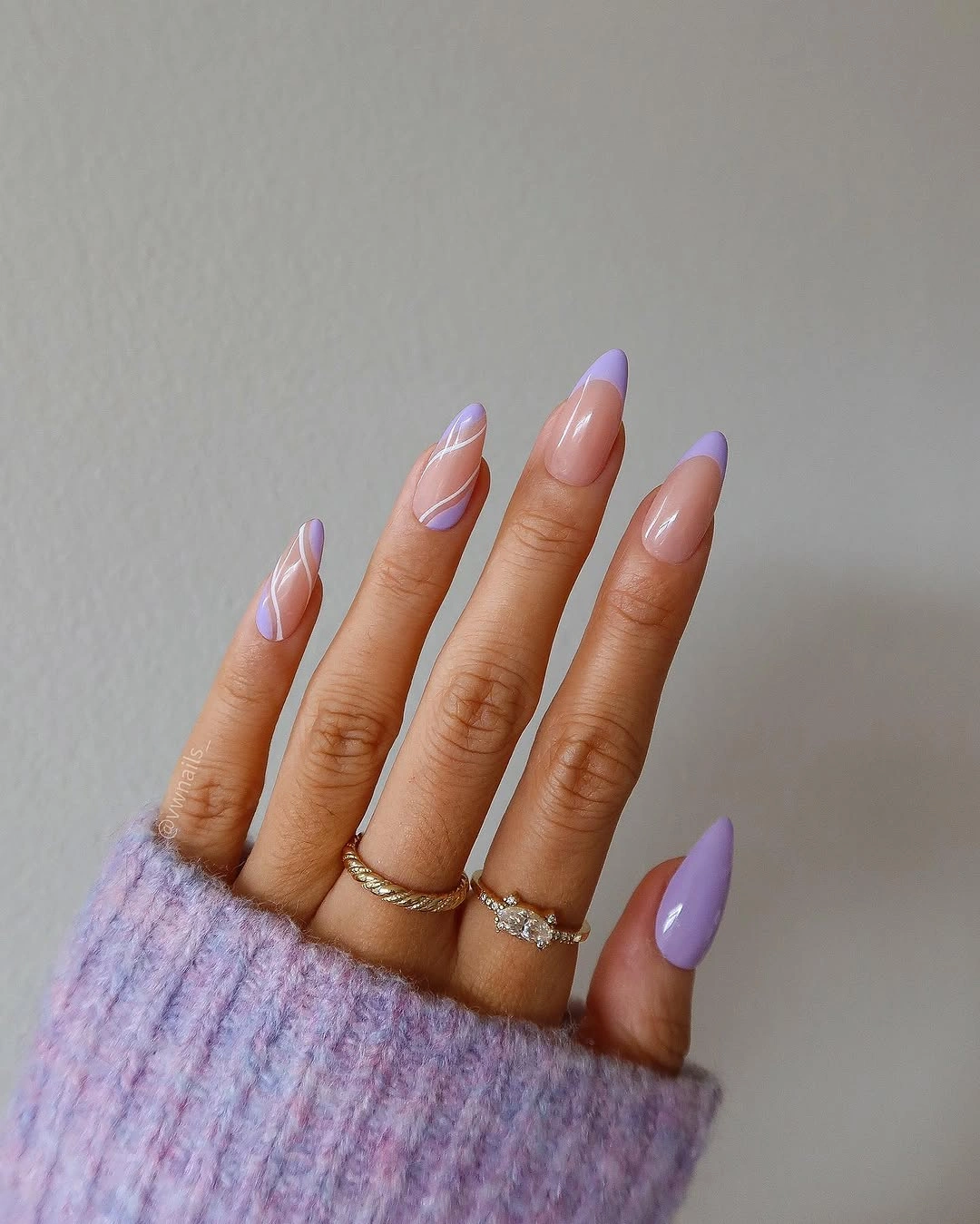
Lavender gives the long shape a gentle seasonal shift because it adds contrast without adding visual weight. The narrow placement lets the almond taper stay visible, while the pink base keeps the cool edge from feeling disconnected. For a warmer wardrobe, use dusty mauve or add a muted cream base on alternate nails so the palette sits more naturally beside camel and brown.
Pale colors can lose definition against light backgrounds, so the edge needs enough contrast to remain visible in everyday settings. The long almond shape also carries its own drama, which means extra glitter or art is unnecessary here. A shorter almond can keep the same color story with a thinner tip, making the look easier to wear while preserving the quiet lavender focus.
Green and Blue Tips Keep the Base Open
Medium almond nails combine a neutral center with green and blue tips, adding cool contrast without introducing a drawn motif. The edge placement changes from finger to finger, but the manicure keeps the same open-base logic throughout. That makes the set feel modern and clear: the color moves around the hand while the shape remains the constant.
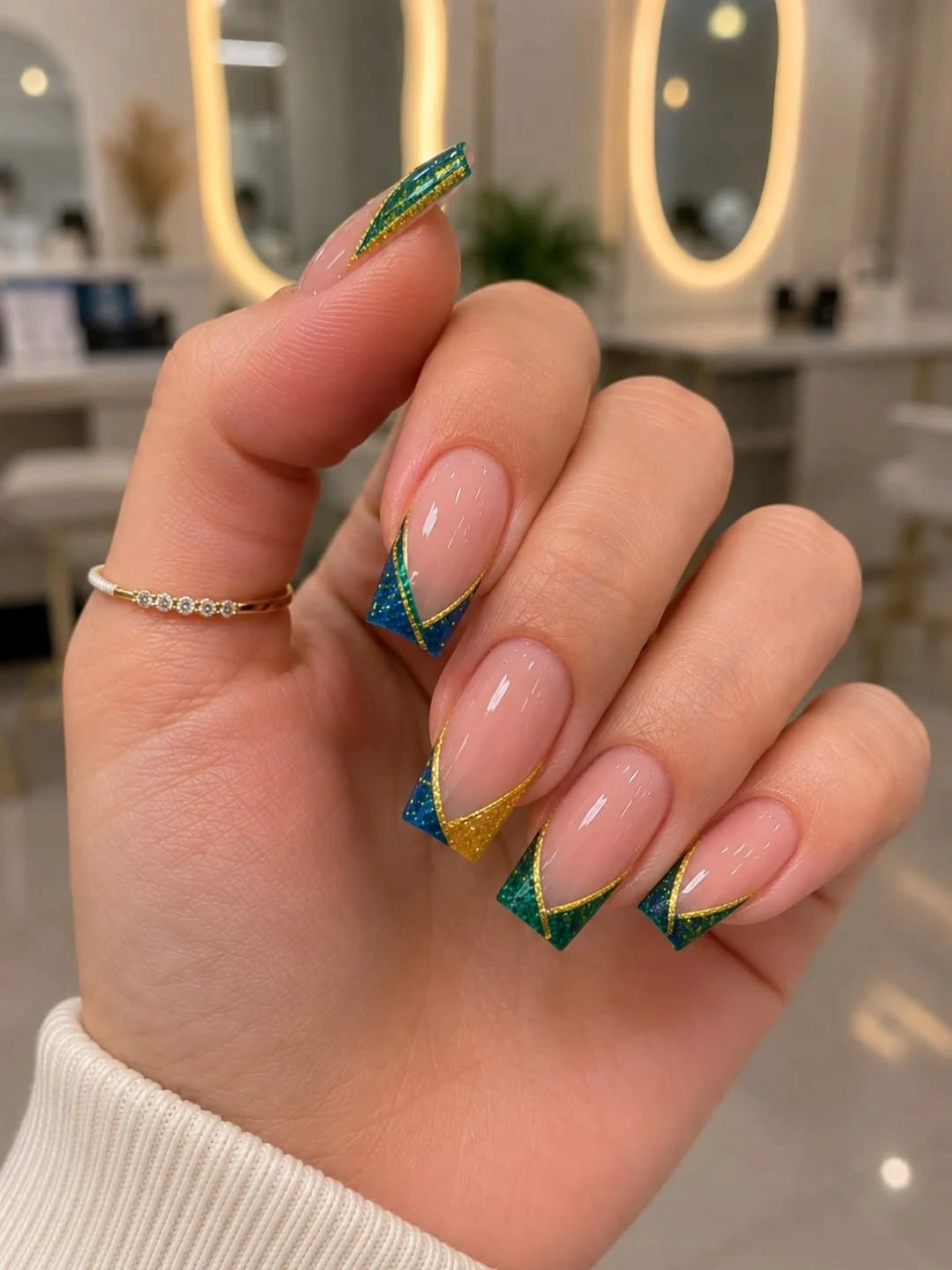
The two shades work because they share a cool, saturated direction and occupy the same visual position. The neutral base gives both colors breathing room, and the almond taper helps the tips look intentional rather than like random patches. For a deeper fall version, choose olive and navy; for a lighter result, use eucalyptus and muted denim blue.
When two dark cool colors are used together, their saturation needs to feel related or one will dominate. Repeat the stronger shade on fewer nails if the contrast is uneven, and keep the tip lines narrow on a shorter almond. The design is easy to pair with denim and gray, though another bright cool accessory could compete with the clean two-color decision.
Rainbow Edges Around a Milky White Center
Short almond nails turn the French edge into a fine rainbow outline, with pink, green, yellow, and blue reflective-looking color tracing a milky white center. The middle of each nail stays quiet, so the playful palette remains at the perimeter rather than filling the hand. It is a lively idea that still respects the proportions of a short shape.
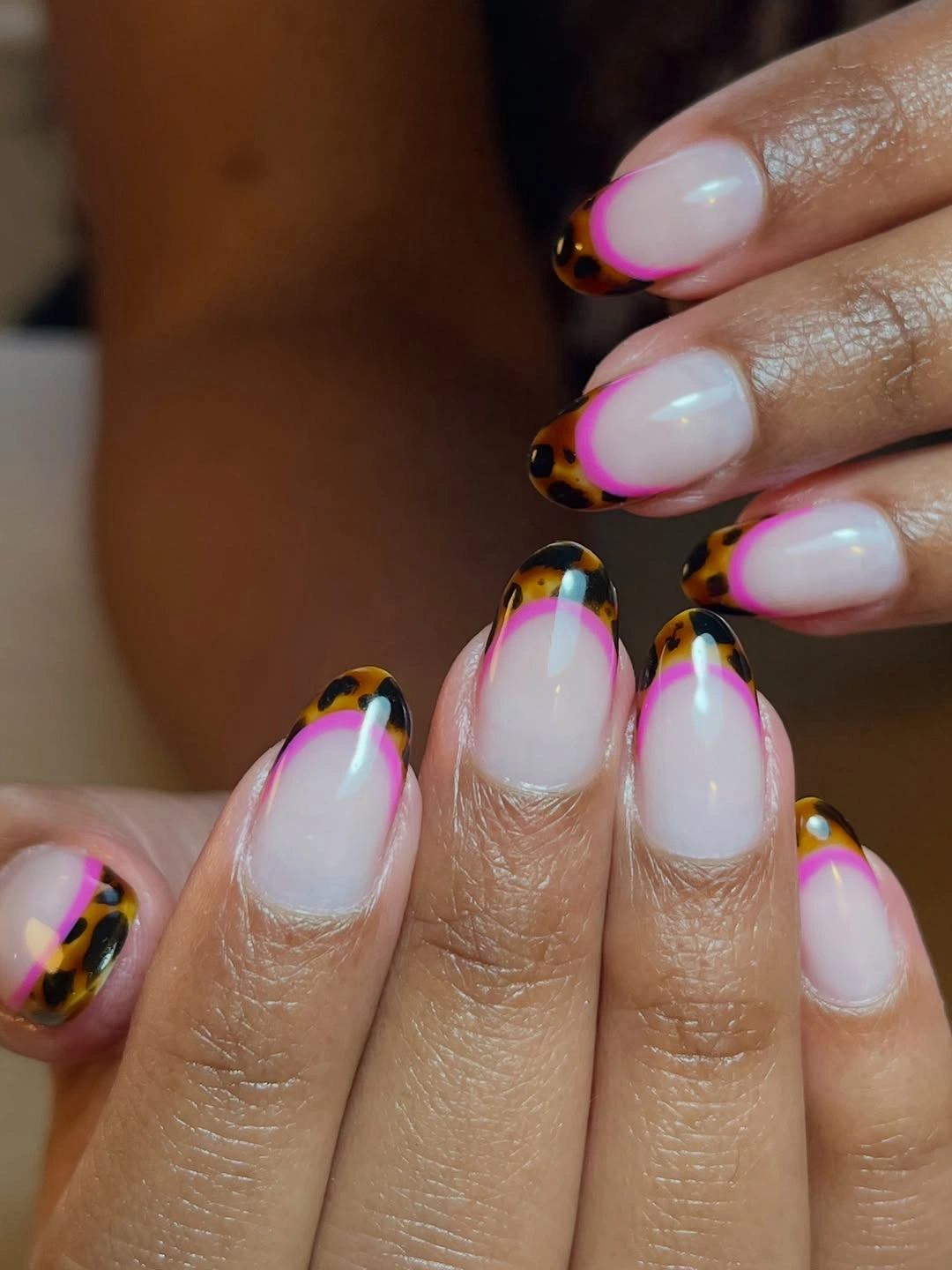
The white center is the reason the multiple colors do not become chaotic. Each shade appears as a slim border, and the rounded almond shape gives the edge a continuous path around the nail. If a full rainbow feels too bright, use two neighboring shades or one metallic color while keeping the same open center and fine outline.
Very thin multicolor lines require spacing and a steady curve, especially where several colors meet at the sidewall. They may also lose clarity as the free edge grows, so this is a look that rewards a careful refresh. The short length makes it practical, but the color still reads as playful and may be better with simple clothing or one quiet accessory.
Berry and White Diagonals on Stiletto Nails
The final set is intentionally dramatic, with long stiletto nails split into bright white and saturated magenta or deep berry panels. The division runs diagonally, so the color layout points toward the sharp tip rather than forming a standard horizontal French line. The result uses the nail shape as part of the design instead of treating it as a neutral base.
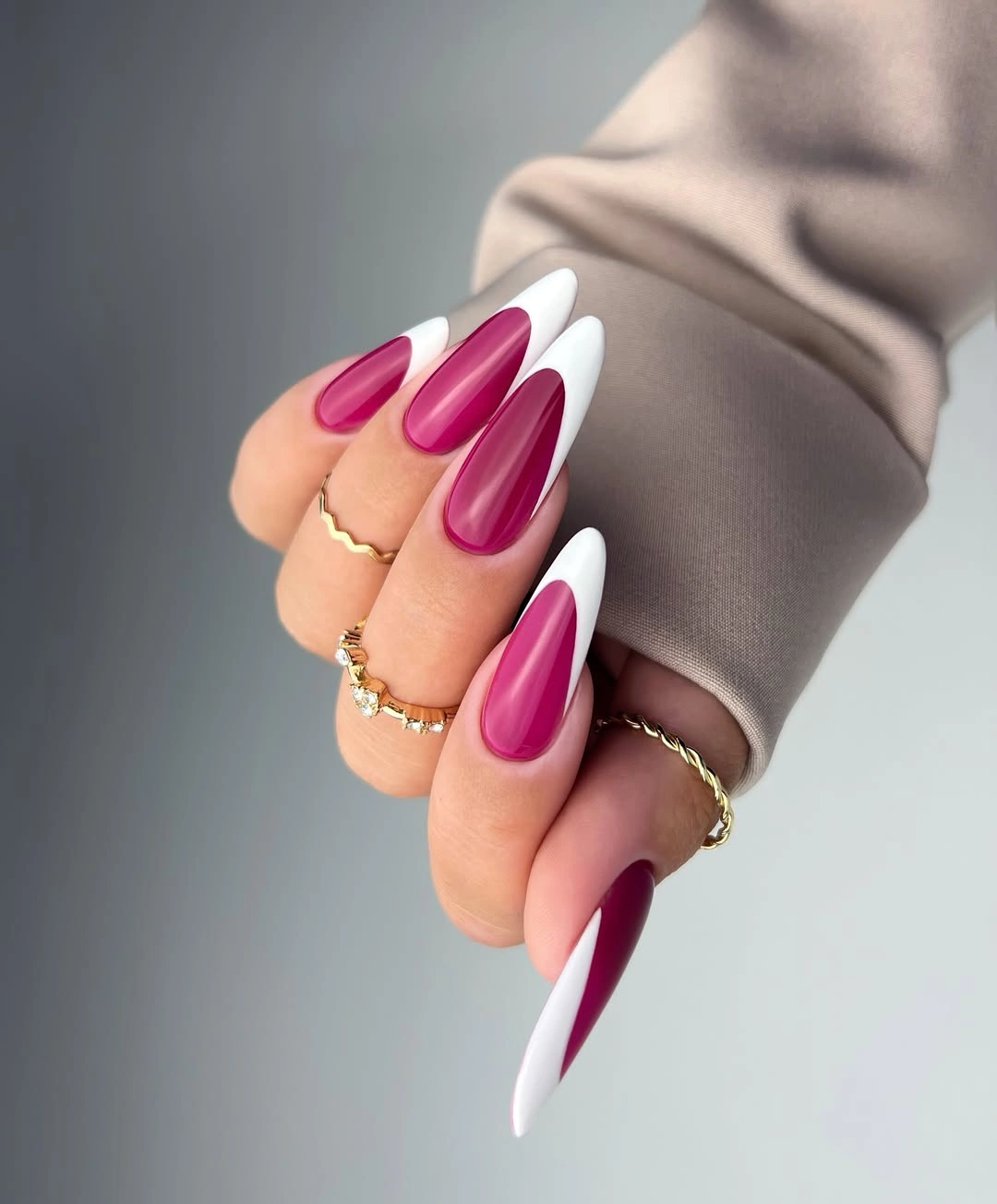
The strong effect comes from the hard contrast and the direction of the split. White opens one side, berry anchors the other, and the diagonal line creates movement across the hand even when the colors repeat. If you love the idea but not the length, translate it to a shorter almond and keep the deeper shade at the very tip with a softer diagonal.
This is the least understated option in the group, so it suits an occasion or a wardrobe that can handle a clear focal point. Long points also require more attention during everyday tasks, and any uneven panel will show against the white. The practical lesson is to keep the rest of the styling simple; the manicure already supplies the contrast and direction.