
There is a particular fall workday when I want my nails to look finished before the first meeting, but I do not want them to announce themselves from across the room. The ideas here solve that small tension in different ways: some use one deep color, some add a quiet line, and others tuck a seasonal accent into a single nail. The best choice depends on how much contrast feels like you.
Start by comparing the visual volume of the set with the reality of your routine. A short glossy burgundy manicure asks very little of you, while plaid, speckles, charms, and long almond shapes need more upkeep and may suit a less hands-on week. Borrow the color, the placement, or the accent nail separately, then let your own dress code make the final call.
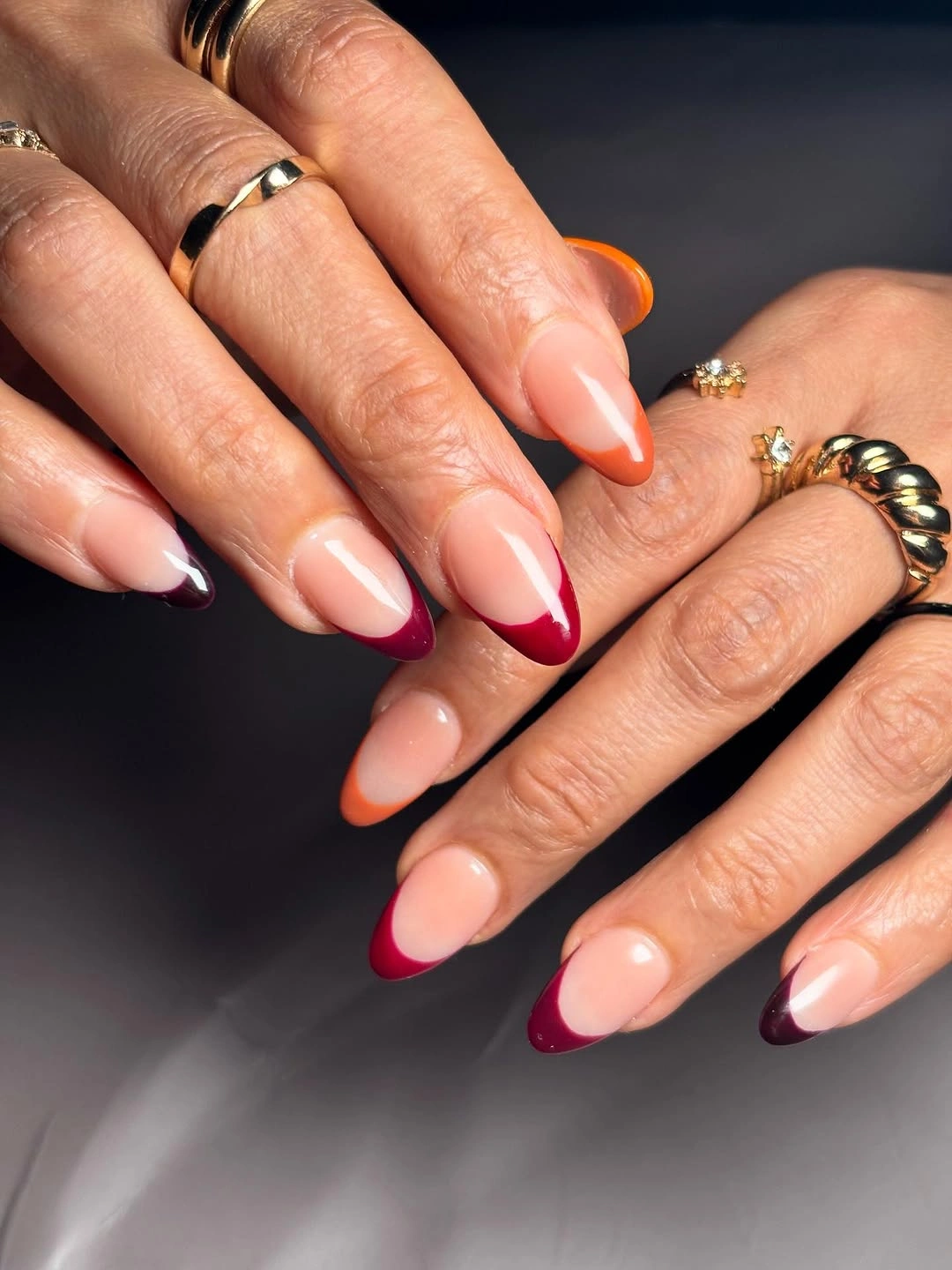
Warm Split Tips on a Sheer Almond Base
Medium almond nails begin with a sheer neutral base and add coral, pink, and deeper berry color along selected sides and tips. The design feels like a French manicure viewed from a slightly more directional angle, because the color does not form one heavy band across every nail. Most of the center remains open, which keeps the look composed for a work setting.
The open base creates the office-friendly balance. Warm accents give the manicure personality, but the pale center keeps the eye from stopping on every finger, and the repeated edge placement makes the color changes feel planned. If your workplace is conservative, choose one coral and one deeper shade rather than carrying all three across the hand.
This design is more forgiving than full nail art, but uneven side lines will still show because the almond shape makes the eye follow the edge. A shorter almond can keep the same idea with thinner color, and a plain nude nail can replace the busiest accent. The realistic limitation is that several warm shades can become less formal if their brightness is not kept under control.
Clean Orange French Tips for a Bold Accent
Long square nails use a pale transparent-looking base and a saturated orange French tip with a crisp straight edge. There is no extra motif, so the entire office look depends on the color and the length. Orange gives the manicure a clear fall reference, while the empty center keeps it from becoming a full bright set.
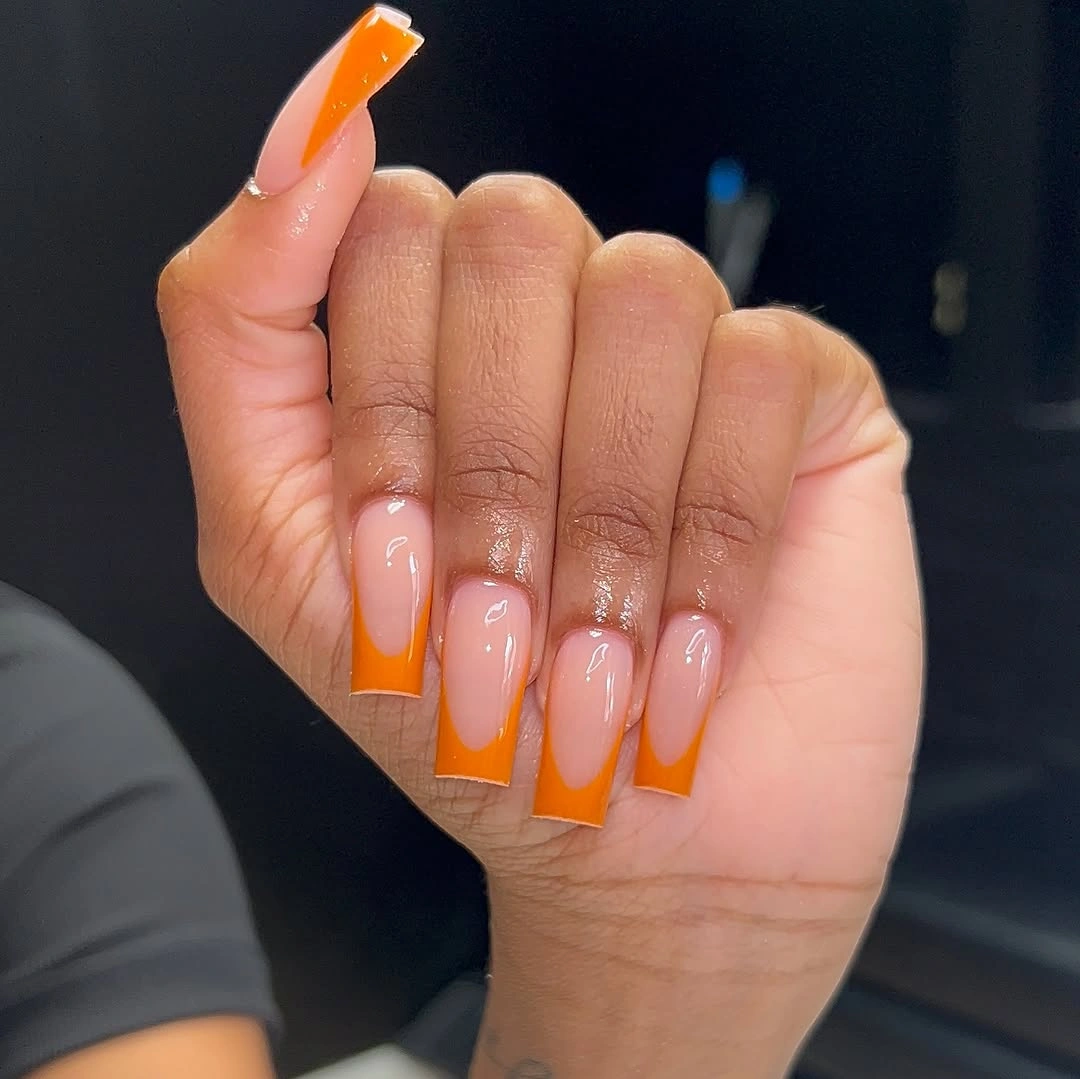
The simplicity is useful because a single accent color reads quickly and does not compete with line art or texture. The square shape gives orange a firm frame, and the pale base creates a visual pause before the tip. A burnt orange or terracotta version would feel more muted, while a shorter square would make the same idea easier to wear at a keyboard.
Even though the design is minimal, the long length makes it a statement and the vivid edge will draw attention beside neutral clothing. Keep the tip width consistent so the manicure looks deliberate rather than like a block of color added at the last moment. If chips are a concern, the saturated orange may need more visible maintenance than a beige or soft brown edge.
Glossy Burgundy Keeps the Shape Simple
Short almond nails are coated in one deep burgundy shade, with a glossy surface that reflects light across the curved outline. Nothing is added to distract from the color, making this the most direct option for an office manicure. The compact shape prevents the rich shade from feeling overly formal, while the dark tone supplies enough seasonal depth on its own.
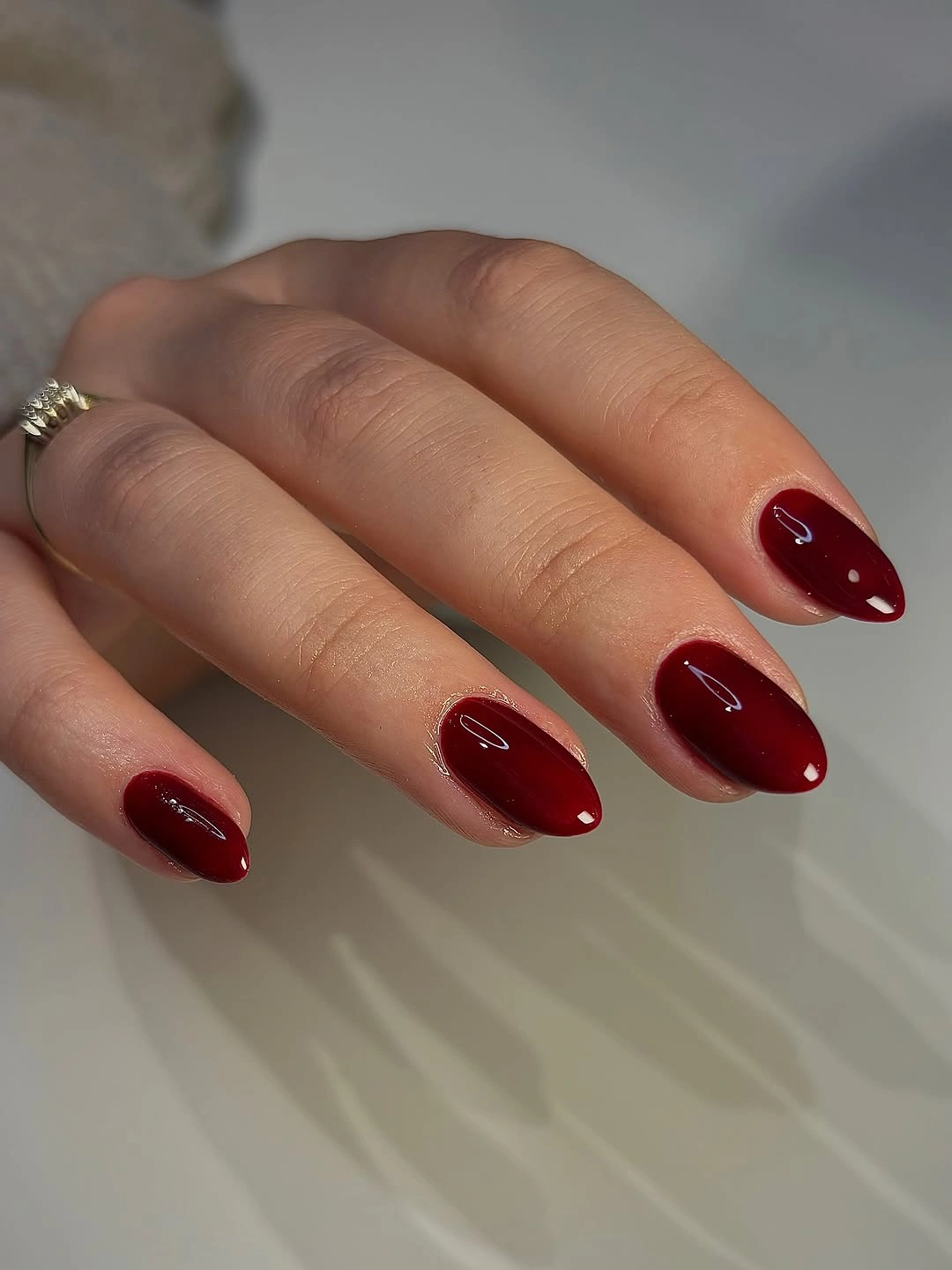
A single color can look more considered than a crowded design when the shape is clean. Burgundy follows the almond contour and gives the hand a warm, polished center of attention without needing a contrasting accent. You could shift it toward oxblood for more depth or choose a softer wine shade if blackened red feels too strong for your workplace.
The tradeoff is maintenance visibility. Dark glossy color makes small chips, gaps, and uneven cuticle edges easier to notice than a neutral base would, so a tidy application matters. The short almond length is practical and keeps the overall impression balanced, but the direct red note may still feel more expressive than a nude manicure when paired with bright accessories.
Dark Neutrals with One Abstract Accent
Short squoval nails alternate charcoal and chocolate-brown solids with one lighter nail carrying a small black-and-white abstract shape. The set is mostly dark and quiet, but the pale accent interrupts the uniform color just enough to create a focal point. Rounded corners keep the square outline approachable, so the design does not feel overly sharp for a weekday wardrobe.
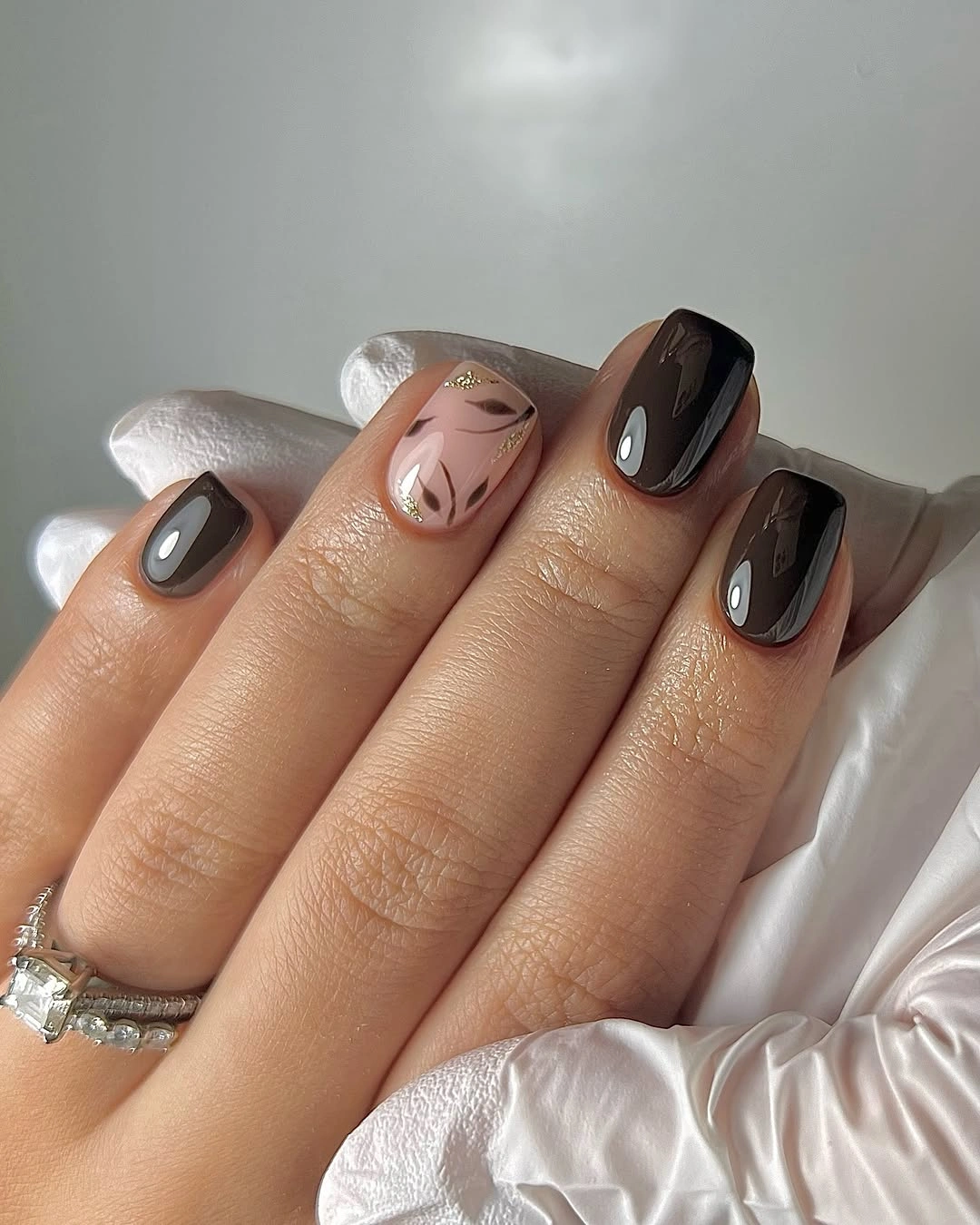
The single feature nail keeps the visual hierarchy clear. The dark colors provide a steady base, the light nail creates contrast, and the small abstract mark adds personality without turning the hand into a repeated pattern. For a stricter office, use nude and espresso instead of black and white, or leave the accent nail plain and let the color shift do the work.
Mixed finishes add another layer of information, so it is worth keeping the accent detail small and the rest of the surface even. The short squoval shape is easy to wear, but the pale nail may show smudges or uneven edges more readily than the dark solids. This is a good compromise when you want one creative decision without committing to decorative work on every finger.
Deep Brown with Tiny Light Flowers
Long almond nails are mostly a deep brown, with small white dotted flowers placed on a few fingers. The pattern is intentionally sparse, so the solid color still leads and the pale marks act like little points of light. The almond shape adds length, but the limited palette prevents the manicure from feeling visually scattered.
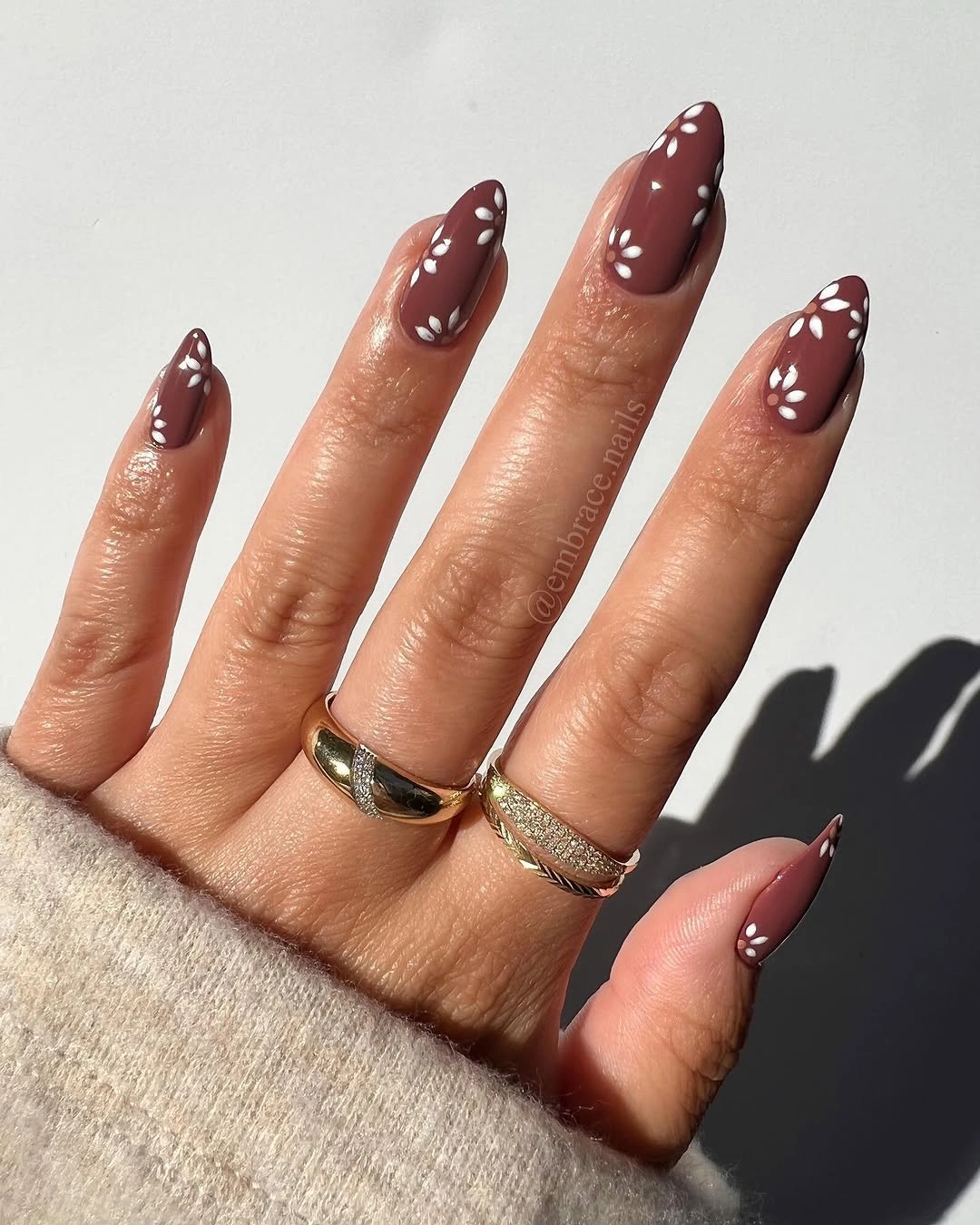
The design works through repetition and restraint. Brown supplies a warm, office-ready foundation, while the small white flowers soften the dark field without demanding the attention of a full botanical print. You can make the idea more conservative by keeping one decorated nail per hand or replacing white with a muted cream that lowers the contrast.
Long almond length is the bigger commitment here, not the tiny motif. It can look polished in an office but may be less convenient for frequent typing, cleaning, or hands-on work, and dark color will make grow-out visible. If you shorten the shape, preserve the flowers only where there is enough room around them; crowded dots will lose the airy quality that makes the set work.
Brown Solids with a Blush Floral Accent
Medium almond nails use a deep brown on most fingers and reserve blush pink for accent nails carrying a small dark floral mark. The contrast is warm rather than stark, which keeps the set appropriate for a desk or meeting while still giving the hand a focal point. The rounded almond outline softens the dark shade and the graphic detail together.
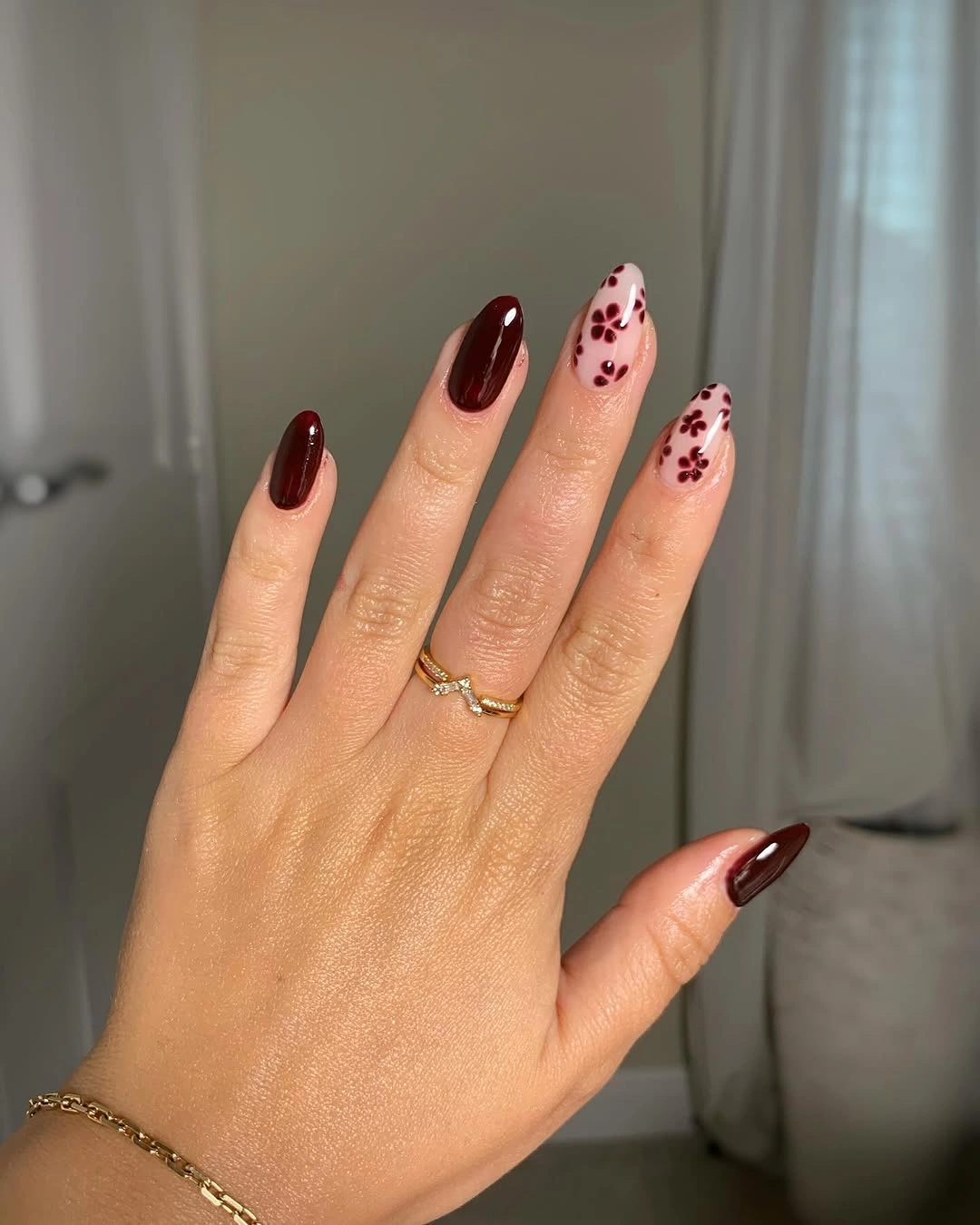
The pale accent works because it appears only once or twice and is surrounded by the repeated brown. That repetition makes the decorated nail feel connected, while the pink gives the eye a place to rest. For a lower-detail interpretation, leave the blush nails plain or use a single dot near the tip instead of a full flower shape.
Feature nails carry more responsibility than uniform color because their placement affects the balance of the whole hand. Keep the mark small enough to leave a clean border around it, and remember that the blush surface can show imperfections more easily than the brown solids. The medium almond length remains wearable, but the dark-and-light contrast will still be visible with neutral office clothing.
Chocolate Brown Swirls on a Soft Base
Short almond nails pair a chocolate-brown base on most fingers with blush-pink accents marked by tiny brown flowers or rounded details. The colors stay close to a fall palette, but the pale accents keep the manicure from looking like one uninterrupted dark block. Its compact length makes the idea feel practical even though the feature nails add a little decoration.
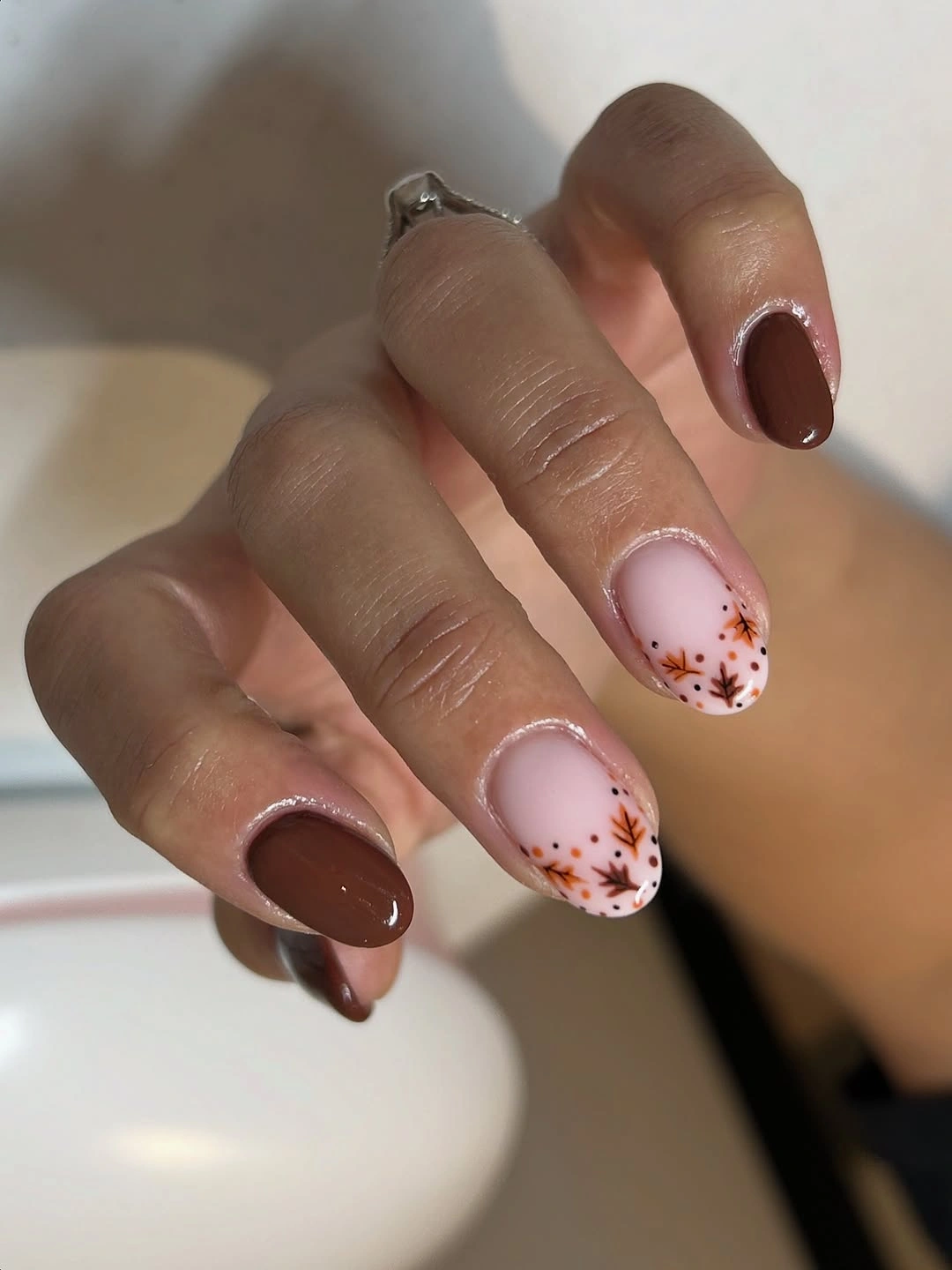
The contrast is gentle because the brown and blush share warmth. Solid brown nails anchor the hand, while the pale accents create variation without needing bright color or glitter, which is useful when the office dress code is quiet. If you want a more minimal result, use blush on one nail only or replace the tiny flowers with a small curved line.
Small marks need room to breathe on a short almond, so the design should not be packed with extra dots or lines. Blush can also show wear more quickly than the dark solids, making a clean base important between appointments. The practical benefit is the easy shape; the limitation is that the decorative accent must stay small enough to remain legible rather than turning into a dark blur.
Fluid Espresso Swirls for a Longer Shape
Long almond nails carry a sheer nude base with deep espresso-brown swirls and soft white or gray transitions. The lines move along the length rather than stopping in one hard block, giving the manicure a sense of motion while keeping the palette neutral. It is a more artistic office option, but the absence of bright color keeps the effect grounded.
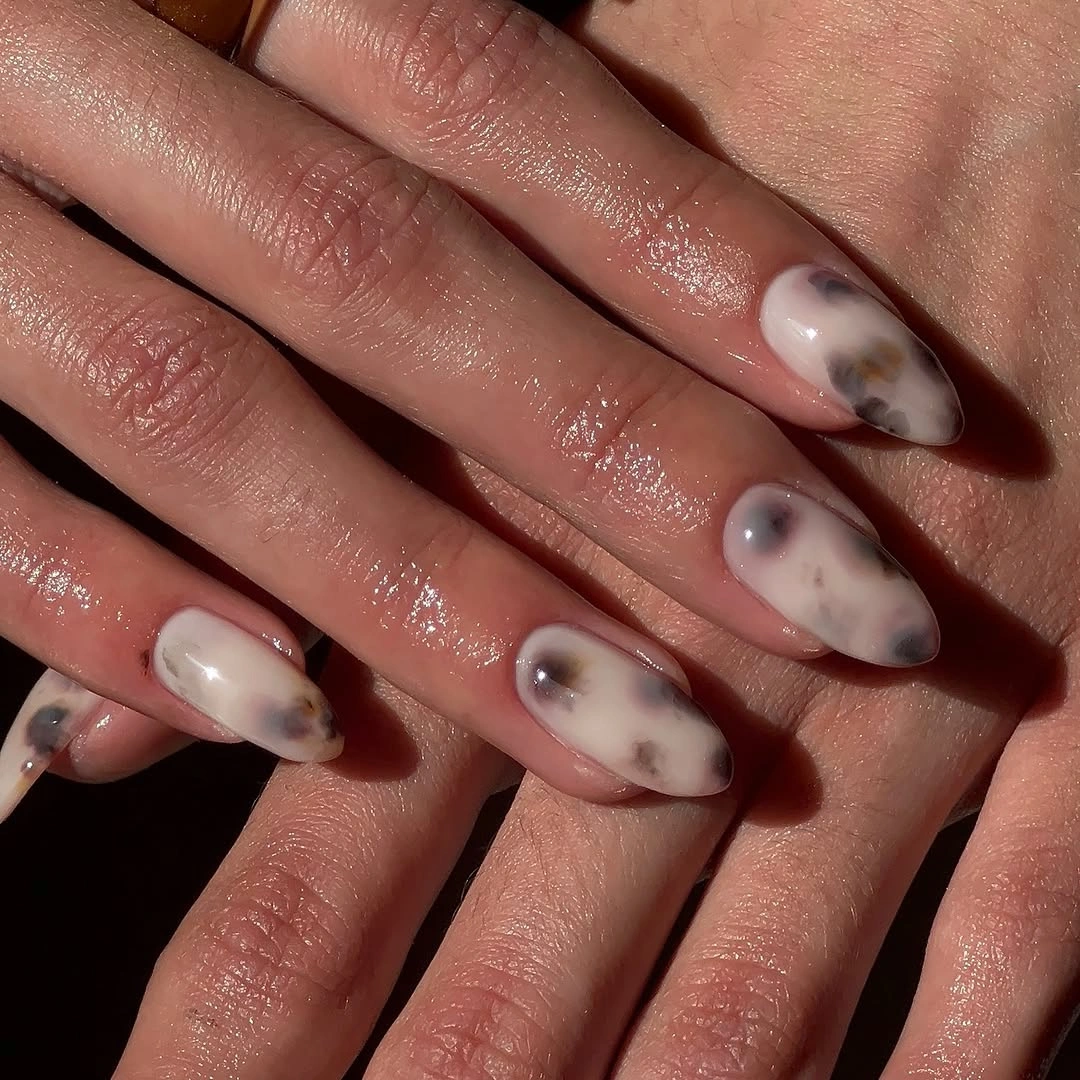
The curved lines suit the almond silhouette because they echo its taper. Dark brown gives the pattern definition, while the pale base and soft transitions prevent the set from feeling heavy from fingertip to cuticle. A shorter almond can borrow the same idea with one broad swirl per nail, or you can reserve the full pattern for two accent fingers.
Abstract lines are conceptually forgiving, but they still need a consistent visual rhythm across the hand. Too many overlapping curves can make the nails look busy, and the long almond length will already be noticeable in a conservative office. The maintenance question is grow-out: because the base is sheer, the design can age quietly, but chips in the dark lines may stand out.
Soft Plaid Panels with Warm Metallic Detail
Long square nails combine pale cream and nude panels with orange and black plaid-like lines, plus a few warm metallic touches. The design uses straight geometry and a fall palette, but the light sections keep the hand from becoming too dark. Because the square shape gives the lines a clear frame, the manicure reads as intentional structure rather than scattered decoration.
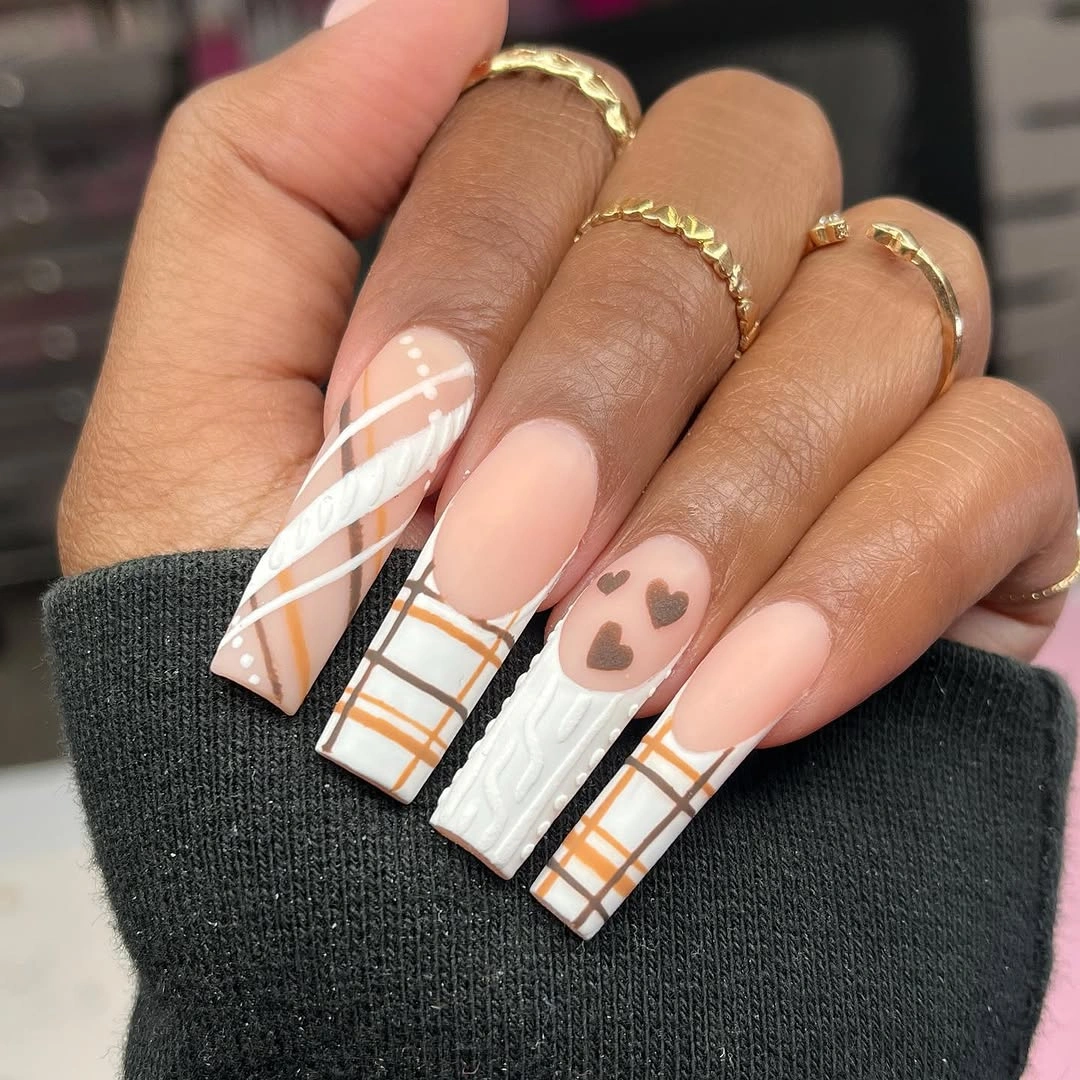
The strongest office-friendly choice here is the separation of detail. Plaid appears on selected nails, while pale panels and quieter surfaces give the eye a place to rest, and the small metallic notes add warmth instead of another large motif. If your work setting is formal, keep the plaid to two nails and use cream or warm nude on the rest.
There is more upkeep in a grid than in a solid shade or simple French tip. Straight lines can show small shifts, and the long square shape may be less convenient for hands-on tasks, so the idea suits someone who enjoys a more deliberate appointment. A shorter square can keep the plaid, but the pattern should be simplified to fewer lines so the panel does not become crowded.
Orange Line Art with a Seasonal Wink
Long stiletto nails use orange fields and black curved line art, with small seasonal details that give the set a playful autumn direction. The point of the nail amplifies every orange shape, while the black marks create a clear outline and keep the motifs from blending together. This is office inspiration for a workplace that allows personality, not a strictly invisible manicure.
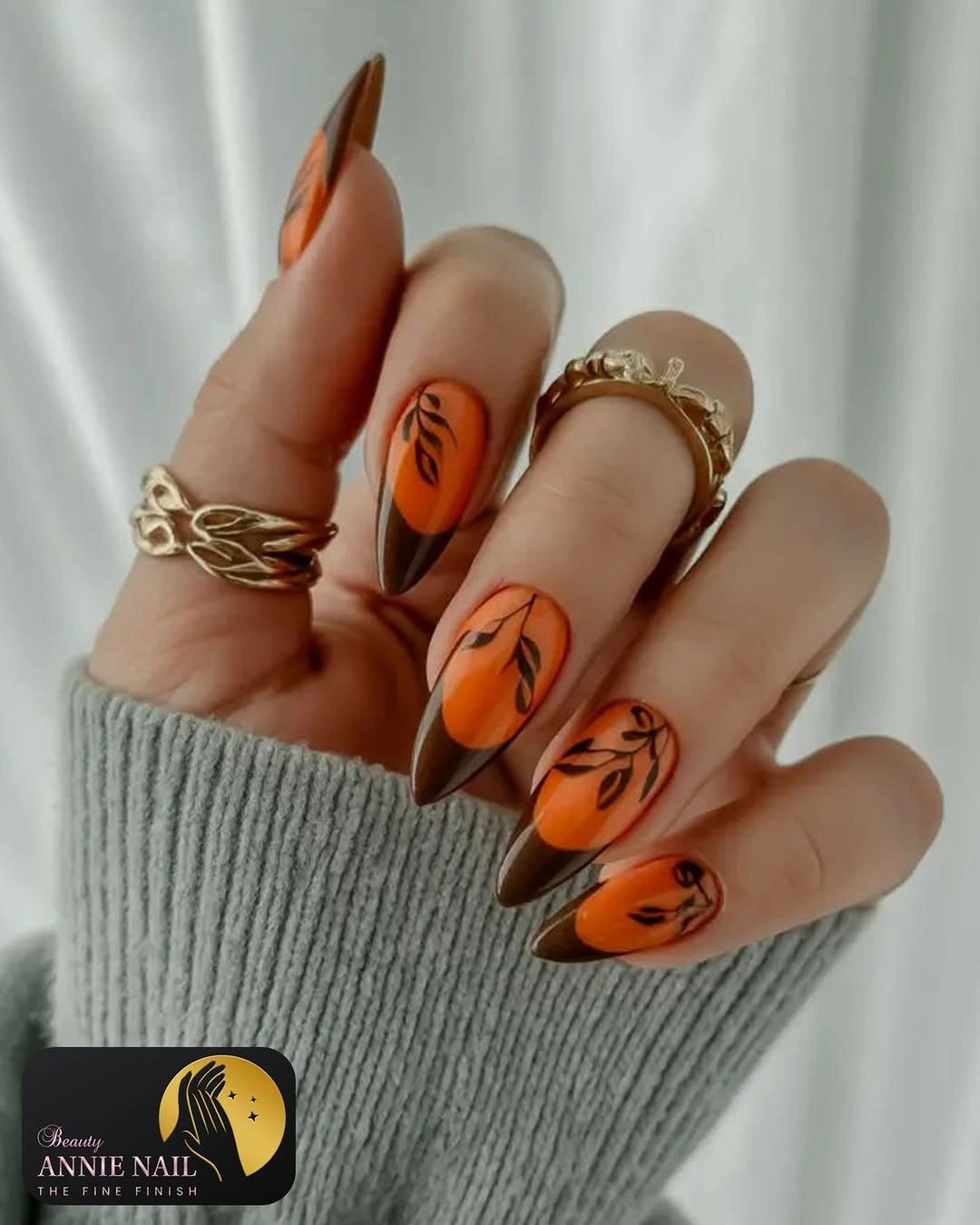
The limited palette is what keeps the motifs from becoming chaotic. Orange brings the seasonal warmth, black defines the curves, and the repeated placement makes the different details feel related. To adapt the idea for a more conservative setting, use one accent nail with the line art and choose a muted orange or nude solid for the remaining fingers.
The long stiletto shape is the main practical limitation because it can affect typing, opening packages, or other routine movements. Recognizable seasonal marks also make the manicure feel more playful than plain French tips, so consider the culture of your office before choosing the full set. If you keep the length, let the rest of your accessories stay quiet and give the nails the only strong graphic moment.
Fine Brown Florals on a Blush Base
Medium almond nails use a blush-nude base with delicate brown floral and vine-like lines concentrated near the tips. The marks are fine rather than filled, so the design stays light and leaves the pale center visible. It feels personal without relying on glitter or a strong dark block, which makes it one of the gentler choices for office wear.
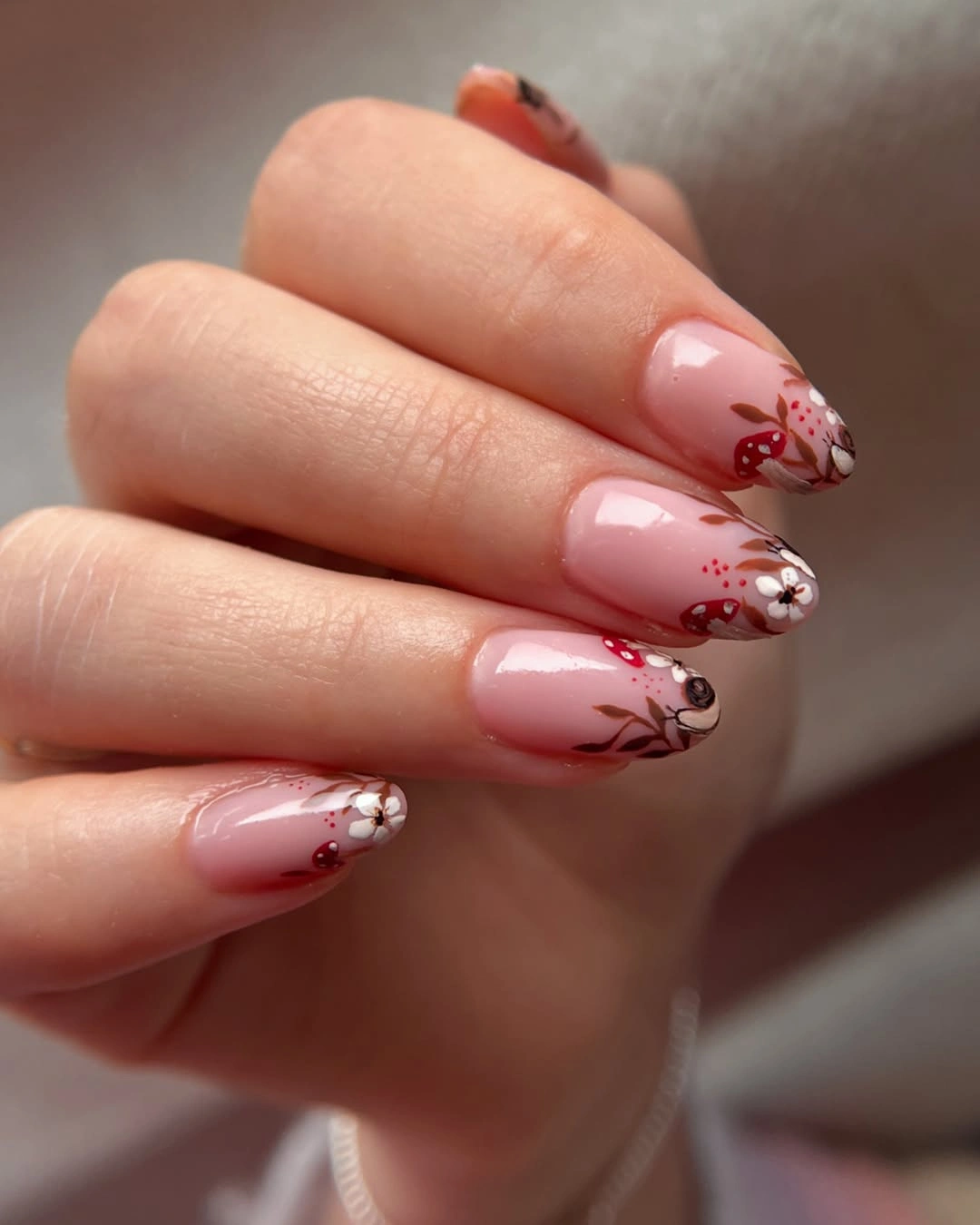
The low-saturation palette allows the line work to be the detail without overpowering the shape. Brown is softer than black against blush, and the almond outline gives the fine curves room to look natural. You can simplify the set by keeping the floral line on two nails, or choose a single small vine mark near the free edge for an even quieter reference.
Fine lines need enough value contrast to remain visible, but too much contrast can change the mood from delicate to graphic. The medium almond length offers a useful middle ground, though the pale base will show smudges and uneven cuticles more readily than a deep solid. A clean border around each mark matters more than adding another flower or color.
One Checker Accent in Cream and Gold
Medium square nails mix cream and nude panels with one black checker detail, fine black curves, and small warm gold accents. The manicure uses several visual ideas, but the checkerboard remains limited to a feature nail, keeping the overall layout readable for an office. The square shape supports the straight pattern, while the pale colors prevent it from feeling too harsh.
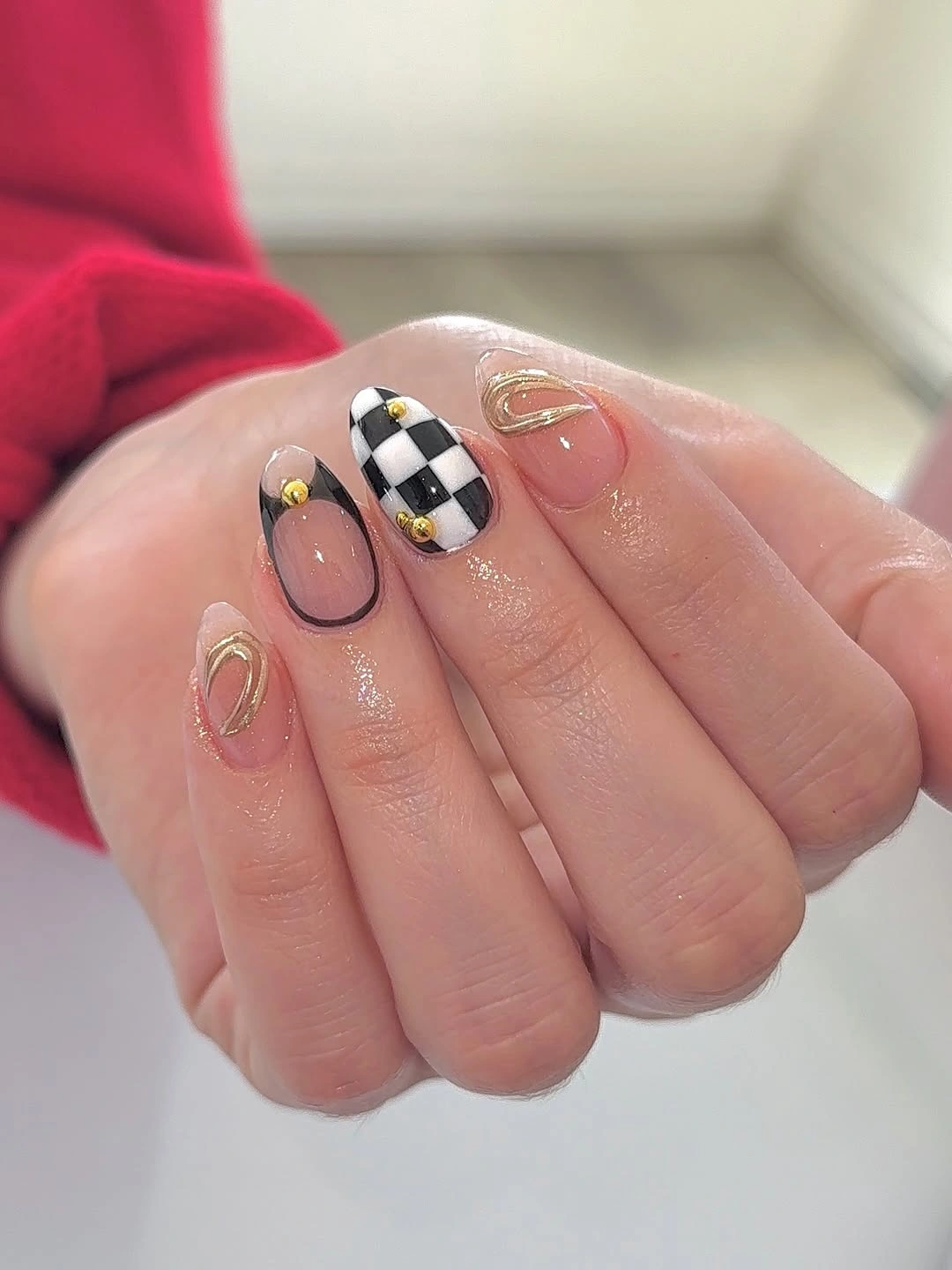
The feature nail creates a clear focal point without making the rest of the hand decorative. Black supplies the graphic note, gold warms the neutral palette, and cream gives both details enough space to sit cleanly. If a checkerboard feels too bold, reduce it to a few alternating blocks or replace it with thin brown and cream lines that keep the same structured idea.
Because the set already has a checker, curves, and metallic touches, restraint elsewhere will help it remain office-ready. Keep the other nails quiet and watch the scale of the squares on a shorter shape, where a large checker can look crowded. The medium length is manageable, but a small mismatch in the feature nail will be more visible because it carries the visual focus.
Olive and White Panels Follow the Almond
Long almond nails alternate milky white and olive-green panels, with tapered white sections that resemble leaves or soft drips. The design feels seasonal through its muted green and pointed placement rather than through literal symbols or bright orange. The almond silhouette is not incidental here; each panel narrows toward the same direction as the nail.
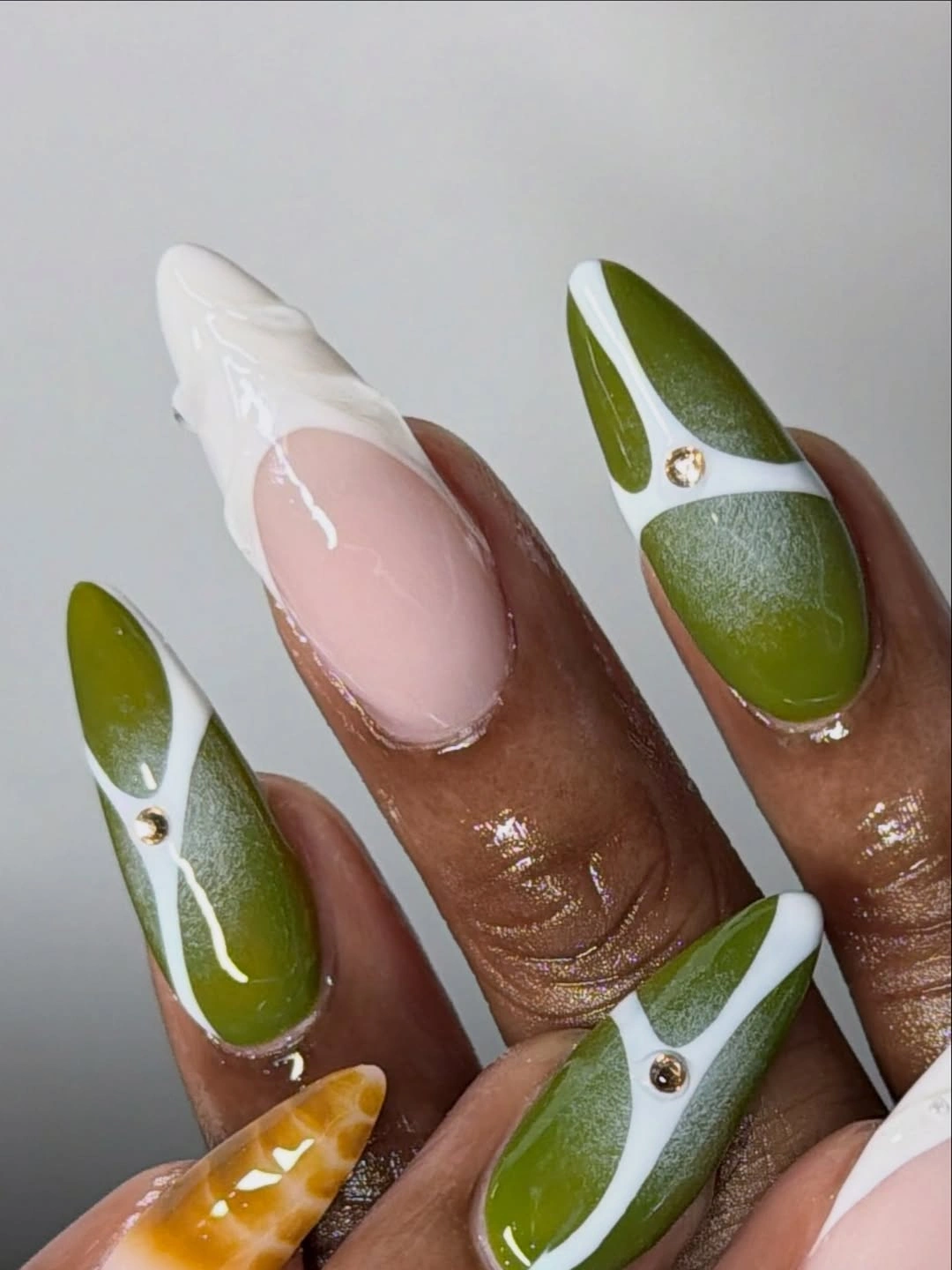
Olive is a useful office color because it has depth without the directness of a vivid red or yellow. White opens the composition, and the tapered panels keep the design connected to the long shape instead of forming unrelated blocks. For a quieter version, place olive on two nails and use a cream base with one narrow green edge on the rest.
The long almond length makes this more noticeable than a short neutral, and the pointed panels need clean boundaries to keep their soft leaf-like suggestion. If typing or hands-on work is part of your day, shorten the shape before copying the art; the color story will survive even when the panels become smaller. Dark green can also show sidewall gaps, so neat edges are part of the look.
Speckled Mustard Adds Texture Without Art
Long almond nails are covered in one warm mustard shade scattered with fine dark speckles. The set does not use multiple colors or a separate motif, but the speckled surface gives the solid manicure texture and a clear fall identity. Its simple construction keeps the visual field orderly, even though the yellow is more expressive than a typical office neutral.
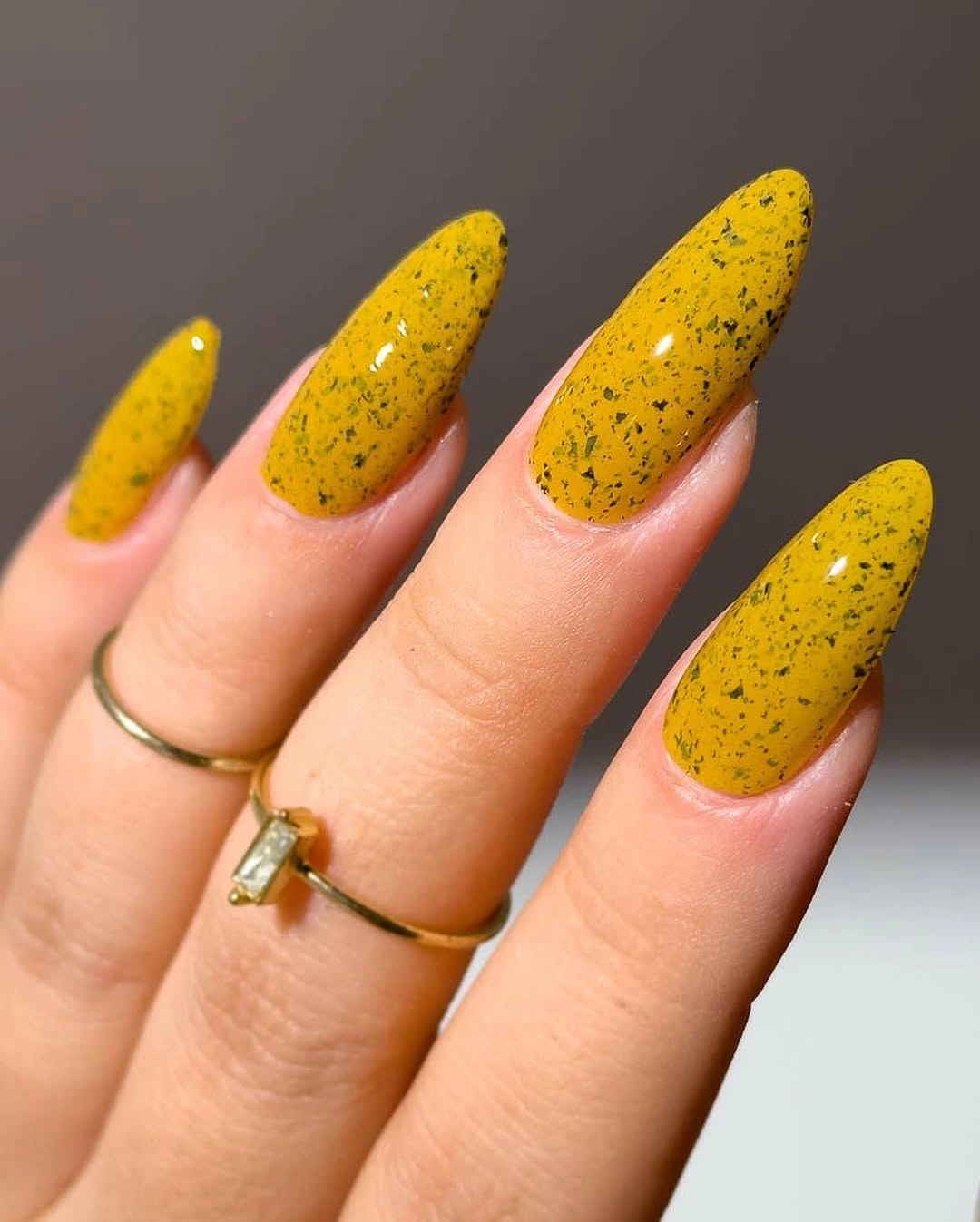
The repeated color makes the design easy to understand, while the tiny flecks stop the long almond shape from looking flat. Mustard feels connected to autumn without depending on a literal leaf or pumpkin, and its warmth can work beside cream, brown, denim, or charcoal clothing. If the full yellow set feels too strong, use it on two accent nails and keep the rest in warm nude.
This is a workplace question as much as a color question. The long shape is noticeable, and bright mustard will draw more attention than deep brown or blush, so it suits an office with room for personal style. Speckles can also make small surface wear less obvious than a perfectly solid color, but the yellow itself may compete with another bright accessory.
Glossy Black on a Medium Oval
Medium oval nails use a uniform glossy black with no visible art, letting shape and finish carry the entire manicure. The rounded outline keeps the dark shade from feeling too severe, and the reflective surface adds a small amount of dimension without introducing another color. For an office, it is a direct choice that looks deliberate precisely because it is so edited.
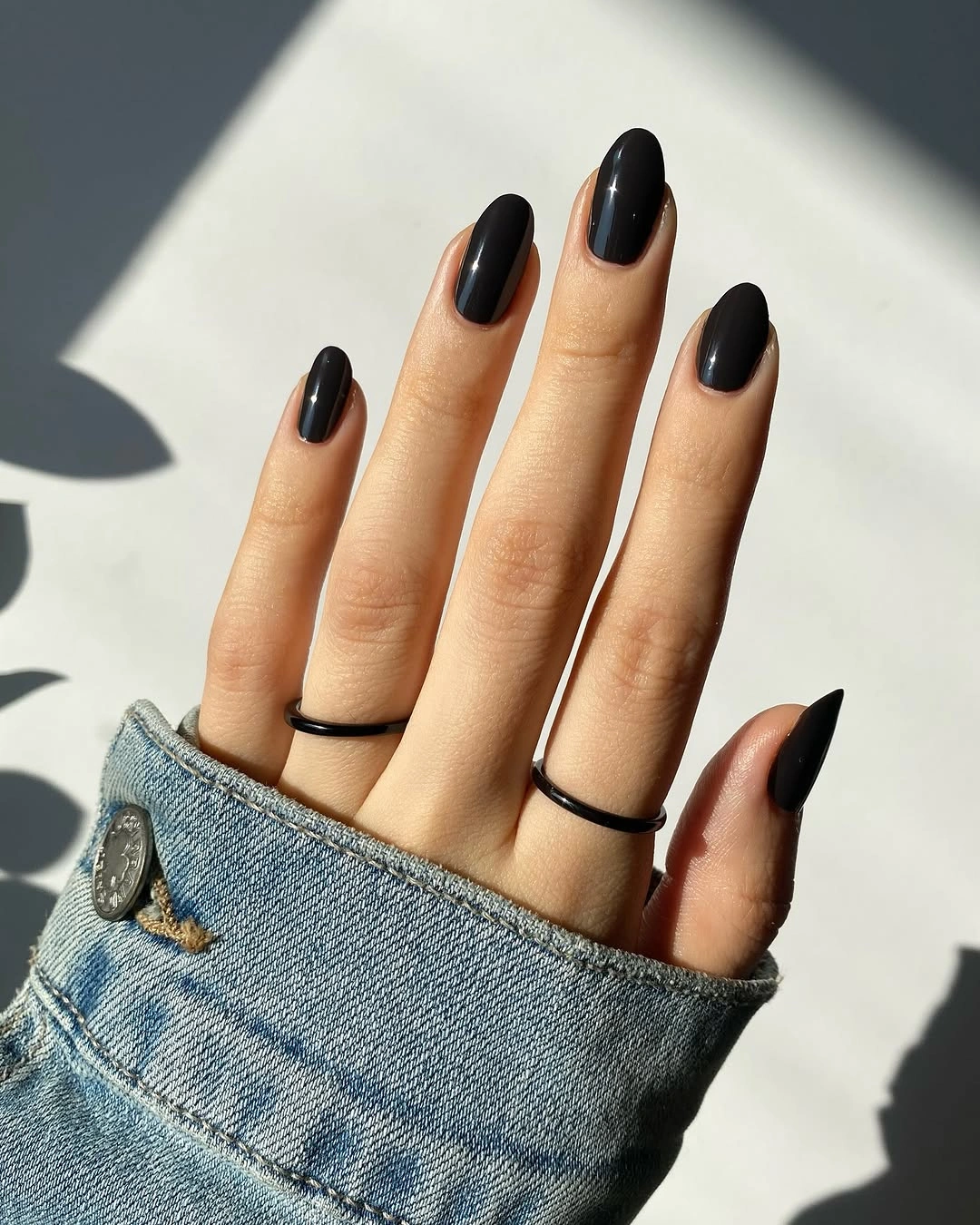
Black can read polished when the silhouette is soft and the application is even. The oval shape provides visual relief around the strong color, while the gloss catches light across the curve and prevents the set from looking flat. If black feels too stark, charcoal, espresso, or deep navy can deliver the same clean single-color decision with less contrast.
The drawback is that glossy black shows chips and uneven edges quickly, so the manicure benefits from a tidy maintenance routine. Medium oval length remains practical for most desk work, but the dark color is still more assertive than nude and may stand out against pale clothing. Keep the rest of the look simple if you want the nails to feel like a controlled accent rather than a competing statement.
Five Autumn Solids, One Coordinated Palette
Short-to-medium nails shift from olive and mustard to rust, plum, and brown, giving each finger its own solid autumn shade. There is no line art or texture to manage, so the interest comes from the relationship between the colors and the knit sleeve around the hand. The shapes stay practical, which keeps the multicolor idea closer to daily office wear than a long decorated set.
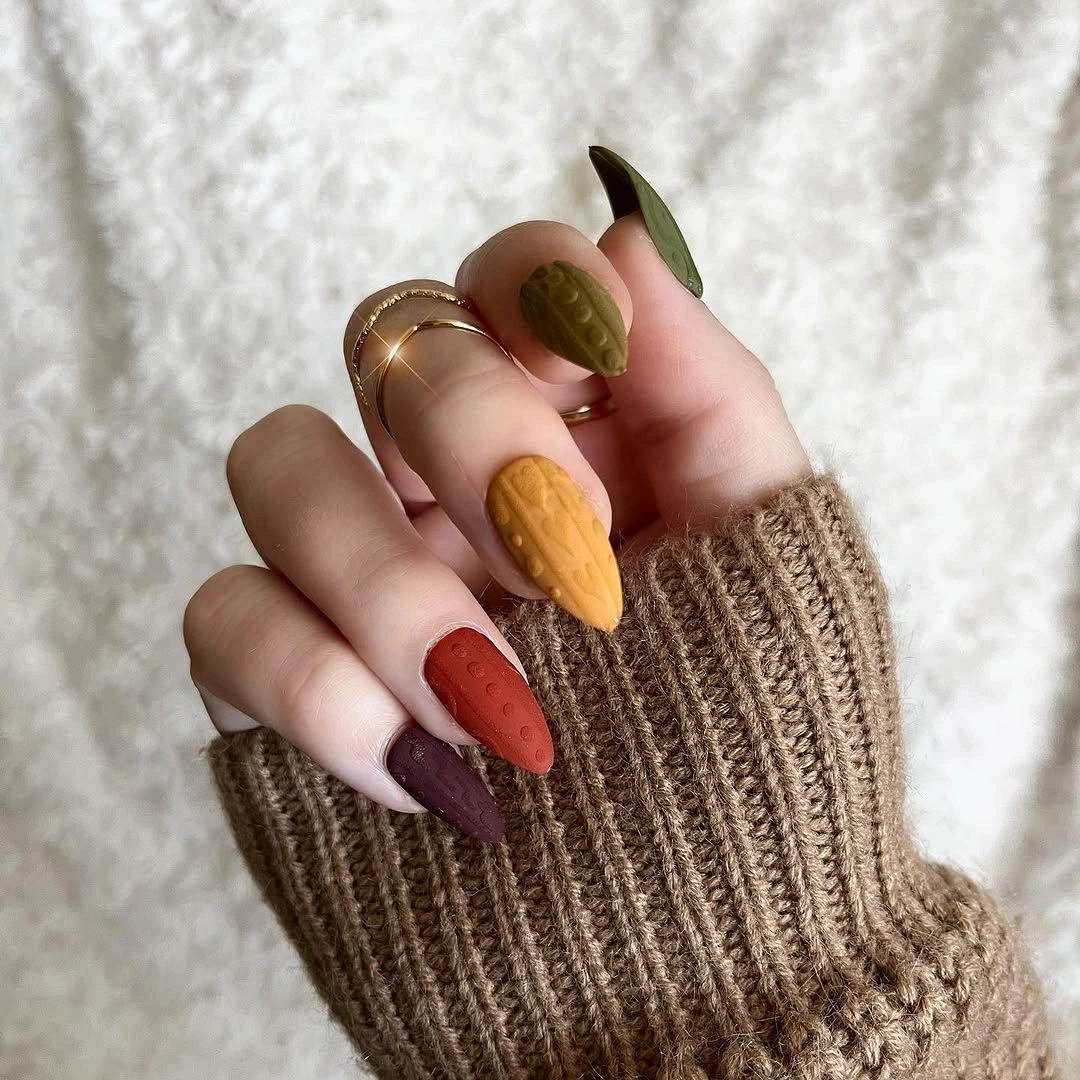
The color story works because every shade has a warm, grounded depth. Olive interrupts the oranges, plum adds a cooler note, and brown provides a visual anchor, so the hand reads as one palette instead of five unrelated choices. For a stricter workplace, choose three colors and repeat them, or keep the brighter mustard and rust on only the accent fingers.
With several solid shades, undertone becomes the main detail to watch. A single neon or overly cool color could break the harmony, and the different tones may make grow-out more noticeable from finger to finger. The practical advantage is that there is no art to catch or repair; the limitation is that the palette itself must stay coordinated with your clothes and accessories.
Neutral Swirls Make a Graphic Set Softer
Long almond nails use a pale cream base with brown and black curved blocks that form a soft abstract swirl. The contrast is graphic, but the colors remain neutral, and the curved edges keep the design from feeling as rigid as a checker or stripe. The long shape gives each section room to stretch without crowding the cuticle area.
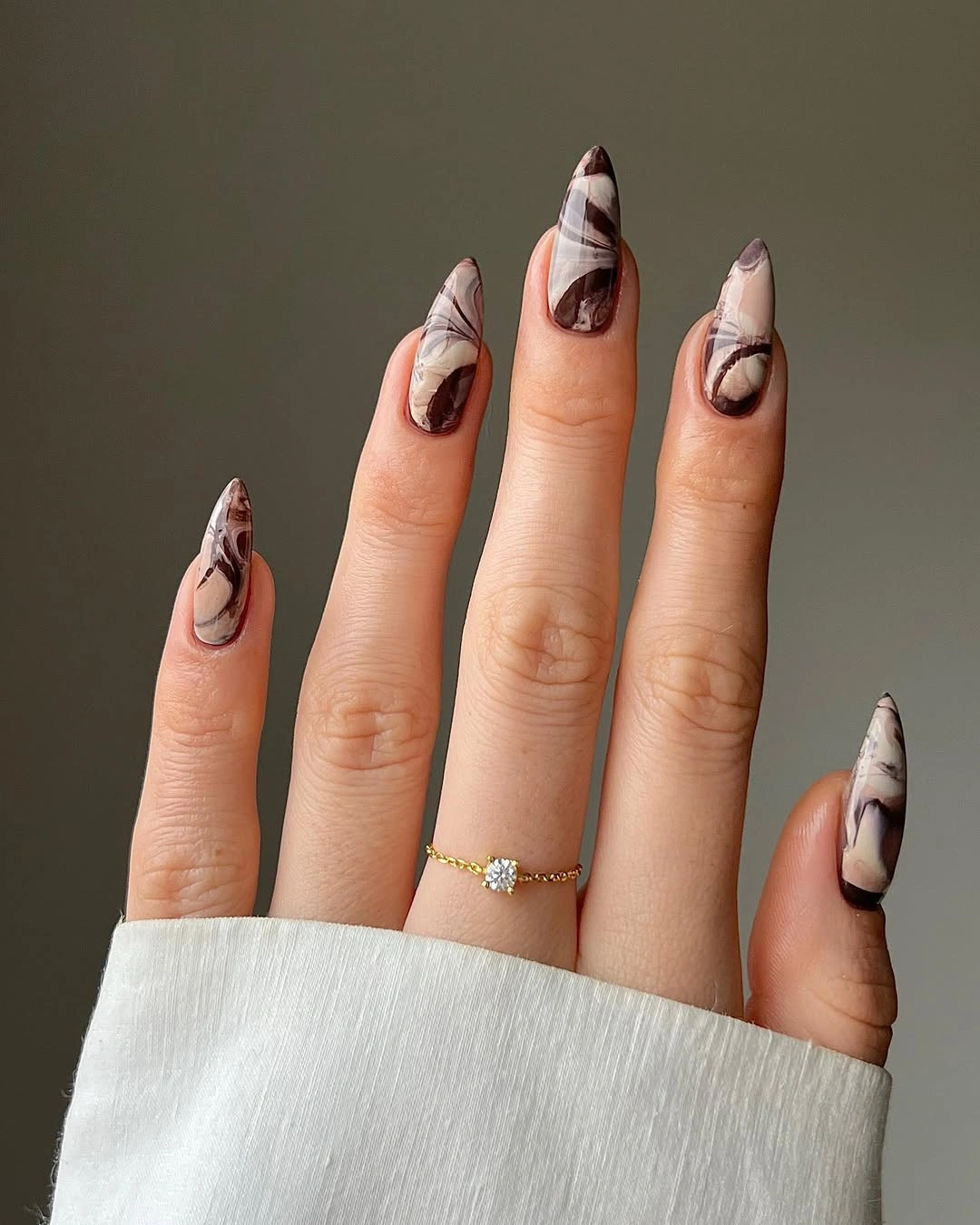
The design feels office-aware because it trades bright color for movement. Dark shapes supply definition, cream opens the hand, and the curves echo the almond taper so the pattern looks connected to the silhouette. You can make it quieter by using brown alone or by placing the full abstract panel on two nails and leaving the rest cream.
Long almond length is still a visible commitment, even when the palette is neutral. Keep the curves broad enough to read at a glance but leave clear areas of cream so the hand does not look crowded. If you shorten the nail, remove one of the dark tones rather than squeezing both into a smaller space; the composition needs room for its soft contrast.
Brown Curves Over Cream and Nude
Medium almond nails combine a neutral nude base with cream panels and dark brown curved tips or outlines. The lines are more structured than a free-form swirl, but they still follow the rounded almond edge and create a warm alternative to black-and-white French nails. The palette is quiet enough for work, while the layered edge gives it a distinct point of view.
Brown and cream soften one another, which makes the design feel polished without looking severe. The repeated curve carries the eye from nail to nail, and the nude center stops the layered tip from becoming too dense. For a simpler version, use one brown line at the edge or switch espresso to cocoa so the contrast stays closer to the base.
The design needs more precision than a plain French tip because several curves sit near one another. Keep each band narrow on a shorter nail, and avoid adding extra color when the base and cream already create enough variation. It is a wearable middle ground for office settings, though the dark outlines will still show small gaps more readily than a soft solid neutral.
Quiet Tonal Texture on a Square Shape
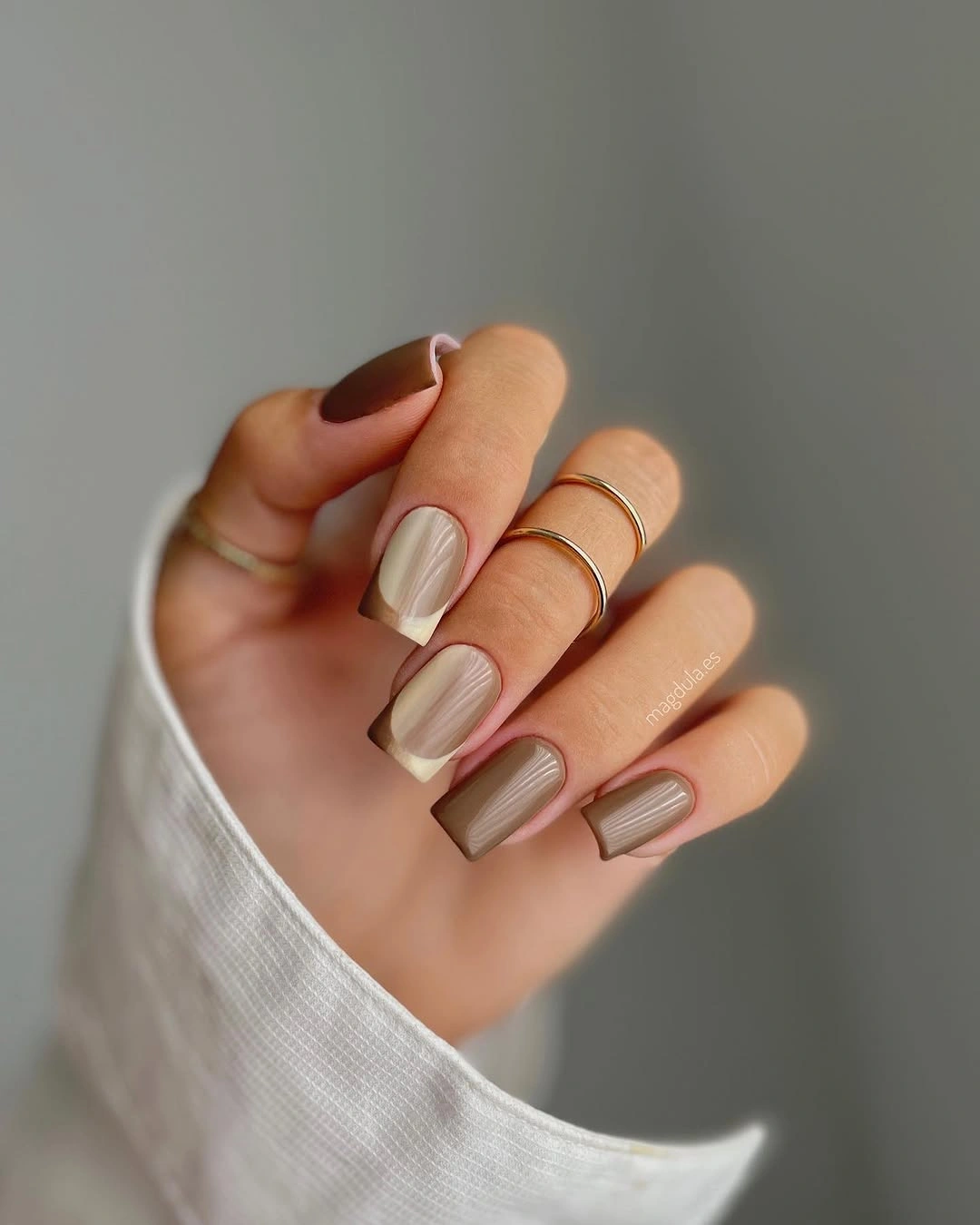
Medium square nails alternate taupe, ivory, and soft gray, with selected fingers carrying pale vertical sections that look ribbed or lightly raised. The palette stays close to skin and fabric tones, so the interest comes from surface and direction rather than from bright color. The straight shape gives the vertical detail a clean frame and keeps the set orderly.
Tonal texture is useful for office nails because it adds dimension without asking the color to do all the talking. The vertical sections visually stretch the square outline, while the muted shades make the detail easy to pair with tailoring, knitwear, or denim. If you want the lowest-maintenance version, keep one textured accent nail and repeat taupe across the rest.
Subtle detail has a narrow margin between intentional and uneven, especially when the colors are close. A clean, smooth base will help the texture read as a choice rather than a flaw, and a shorter square can carry the same idea with fewer sections. The payoff is quiet interest; the limitation is that the effect may not show clearly in low light or from a distance.
Deep Plum Lines Add Controlled Shine
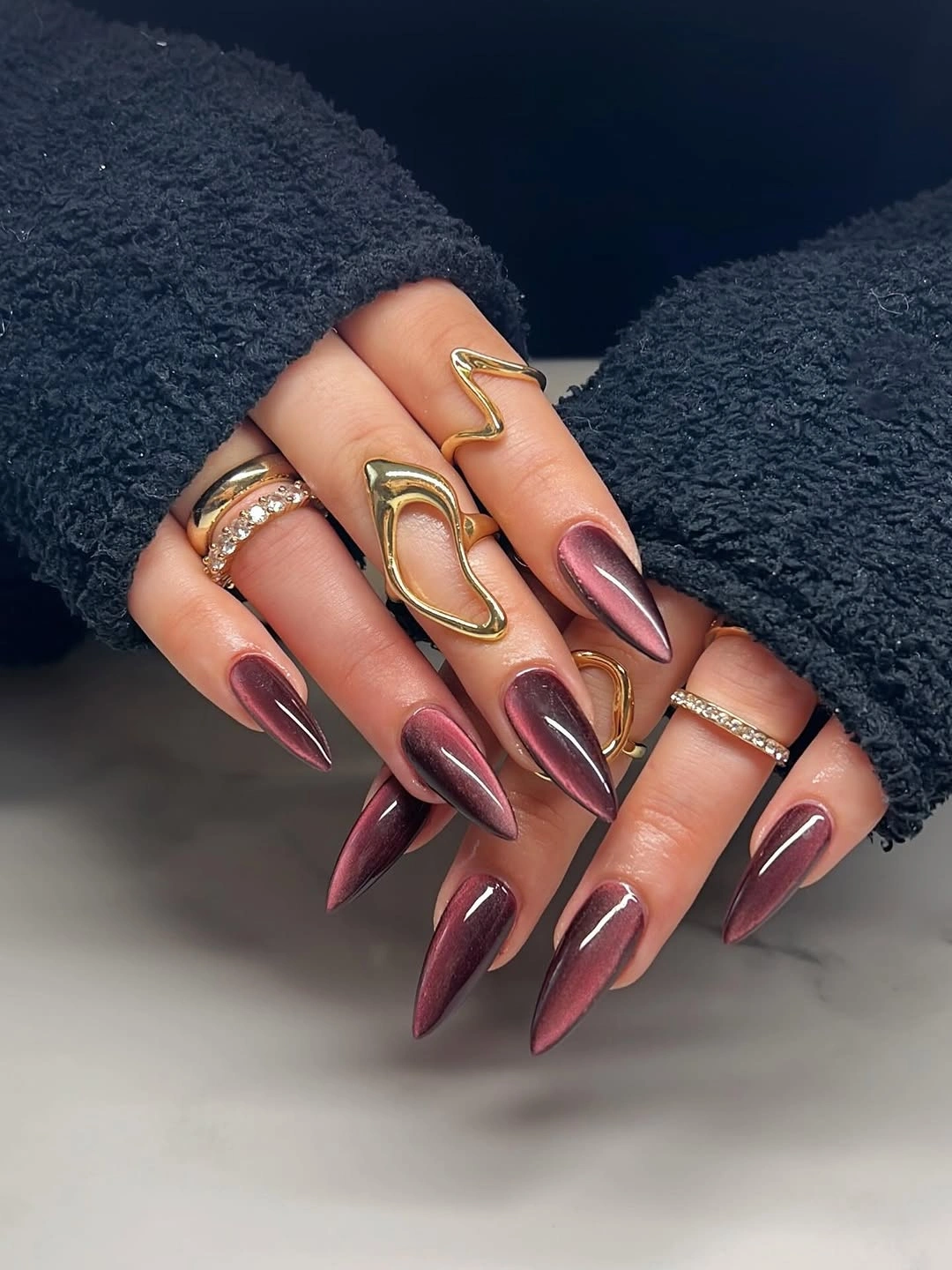
Long almond nails use deep plum and burgundy tones with slim reflective-looking curved lines on selected fingers. The base colors stay within one dark family, so the design has movement without a new motif or bright contrast. The almond shape gives the lines a long path to follow, making the reflective accents feel like part of the silhouette.
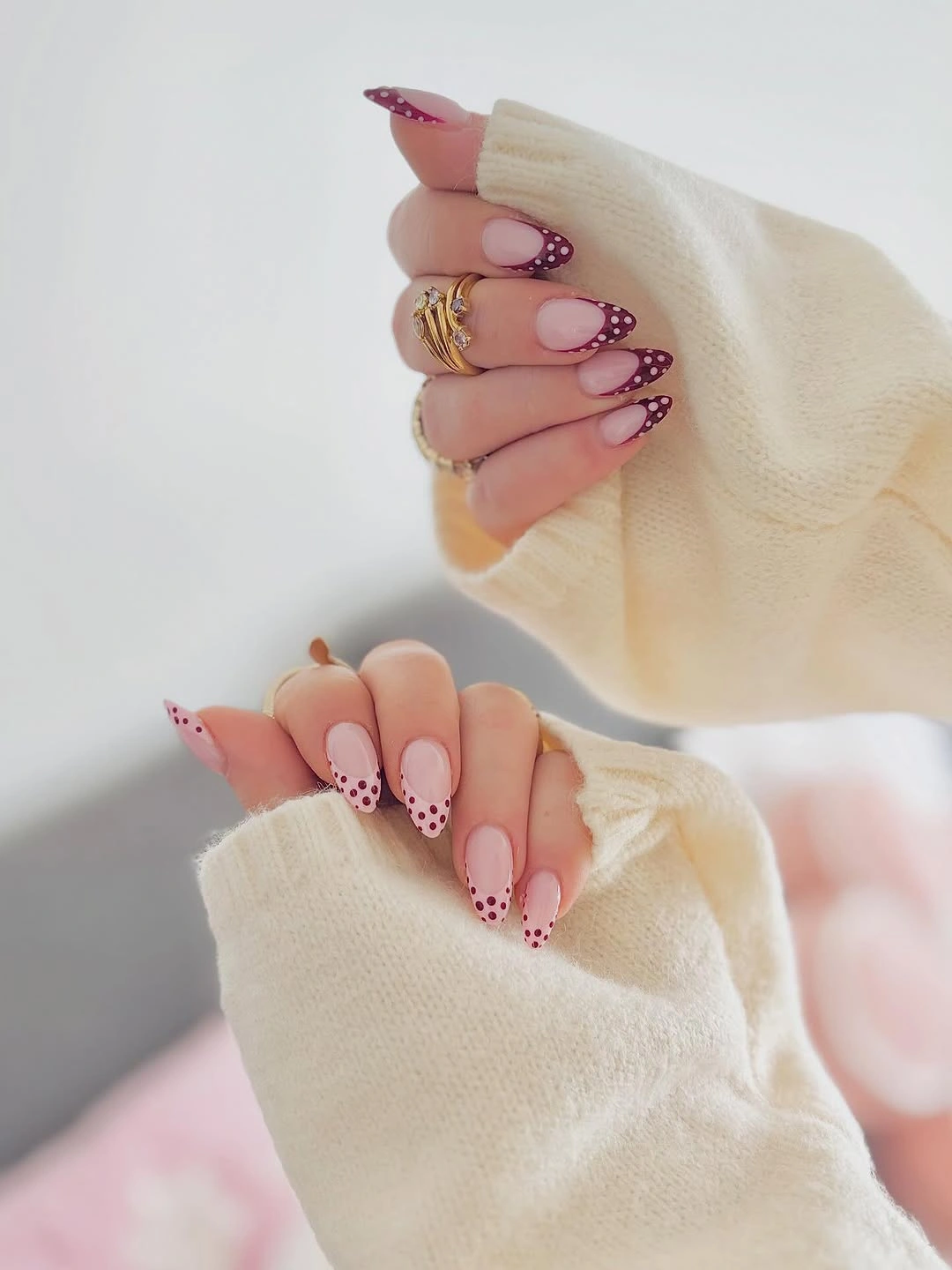
The quiet palette is what keeps the shine controlled. Plum supplies depth, burgundy adds a slight shift between nails, and the fine curves catch attention only when the hand moves. For an office-friendly adaptation, put the reflective line on one or two nails or trade the deep base for brown while keeping the same curved placement.
Long almond nails and dark glossy color both ask for a little more maintenance than a short neutral. Chips, sidewall gaps, and grow-out will be easier to see, especially where the reflective line creates a crisp boundary. Choose this direction when you want a polished statement that still feels edited, and keep jewelry or clothing detail quieter so the curved shine has room.