
Matte finish changes the weight of a manicure before a single design detail is added. It can make a dark shade feel quieter, make a bright shade look more deliberate, or expose uneven shaping that gloss would hide. That is why the real decision is not whether matte is fashionable, but whether the surface gives the chosen length and silhouette the kind of control they need.
Use a simple test before committing: decide whether shape, color, or one small contrast should lead, then make the other choices visibly subordinate. A long silhouette usually needs fewer competing details, while a compact one can carry a precise mark if its scale stays open. This keeps the finish useful after the first week, when edge wear and grow-out begin to change the proportions.
Deep Navy Almonds With a Quiet Edge
Deep navy covers the long almond nails in an even matte field, while a small lighter edge detail catches the light near several tips. Because the color is repeated rather than divided into multiple panels, the eye follows the taper of the almond shape before it notices the tiny shift at the border. That makes the design feel intentional without needing a separate feature nail or a busy autumn motif.
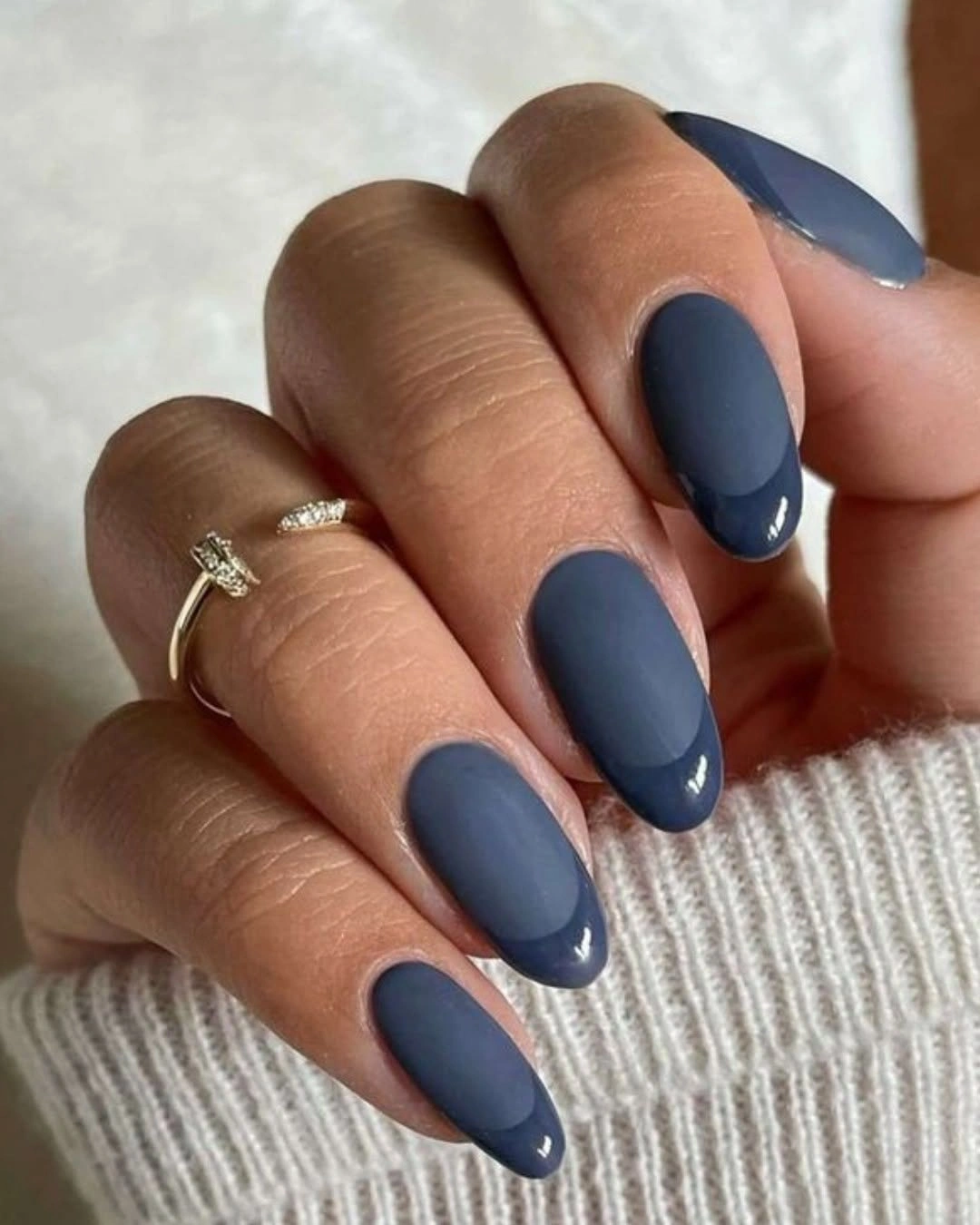
Use navy as the anchor when you want fall matte nails to look cool, graphic, and easy to coordinate with cream, denim, or charcoal clothing. The small edge contrast is most useful when it stays narrow, since a wider bright band would change the proportion and make the tips look shorter. On a medium almond, keep the same dark base and place the detail on only two nails for a calmer version, then compare the proportion with these navy blue fall nail ideas.
The main tradeoff is the length rather than the color. A long almond makes the navy feel more dramatic and gives the edge detail room to show, but it also makes tip wear more visible and asks for more care around the pointed silhouette. If you prefer less upkeep, a short oval in the same shade preserves the clean contrast while making the manicure feel more practical.
Plum Matte Squares With One Pale Botanical
Most nails are a rich plum matte on a long square shape, and one pale pink nail carries dark leafy strokes with a small botanical motif. The accent works because its light base reverses the value relationship of the surrounding nails, so the dark linework feels connected to the plum rather than pasted on top. The square edge also gives the decorative nail a steady frame.
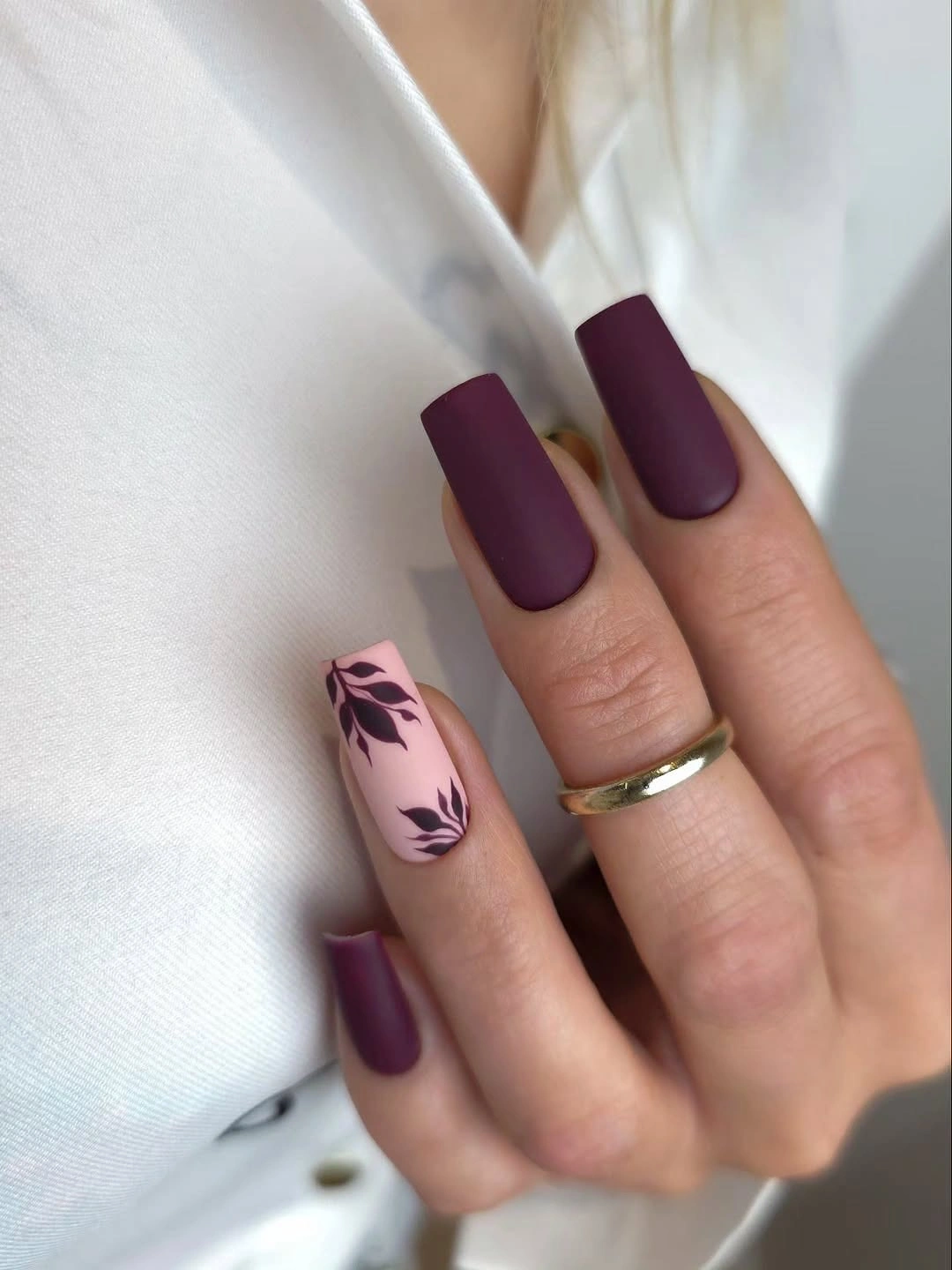
For a wearable fall matte nails colors idea, keep the plum solid and let the pale nail do the explaining. The leafy marks should stay open enough to remain legible, especially if the accent is copied onto a shorter square where there is less surface to separate each stroke. A dusty rose or muted mauve can replace the pale pink without changing the contrast logic.
There is a clear choice between preserving the length and preserving the motif. Long square nails make the plum block feel confident, while a medium square will let the botanical accent read more cleanly during daily use. If the design starts to feel too decorative, keep the pale base and remove half the linework rather than adding another color.
Blue and Orange Curves Across a Neutral Base
Long almond nails use a translucent gray-beige base with electric blue and orange curving lines that repeat across nearly every nail. The warm orange is threaded through the cooler blue, so the curves create movement and keep the color pairing from becoming a simple two-tone split. The repeated placement gives the eye a route from nail to nail, while the pale base keeps the saturated lines visible.
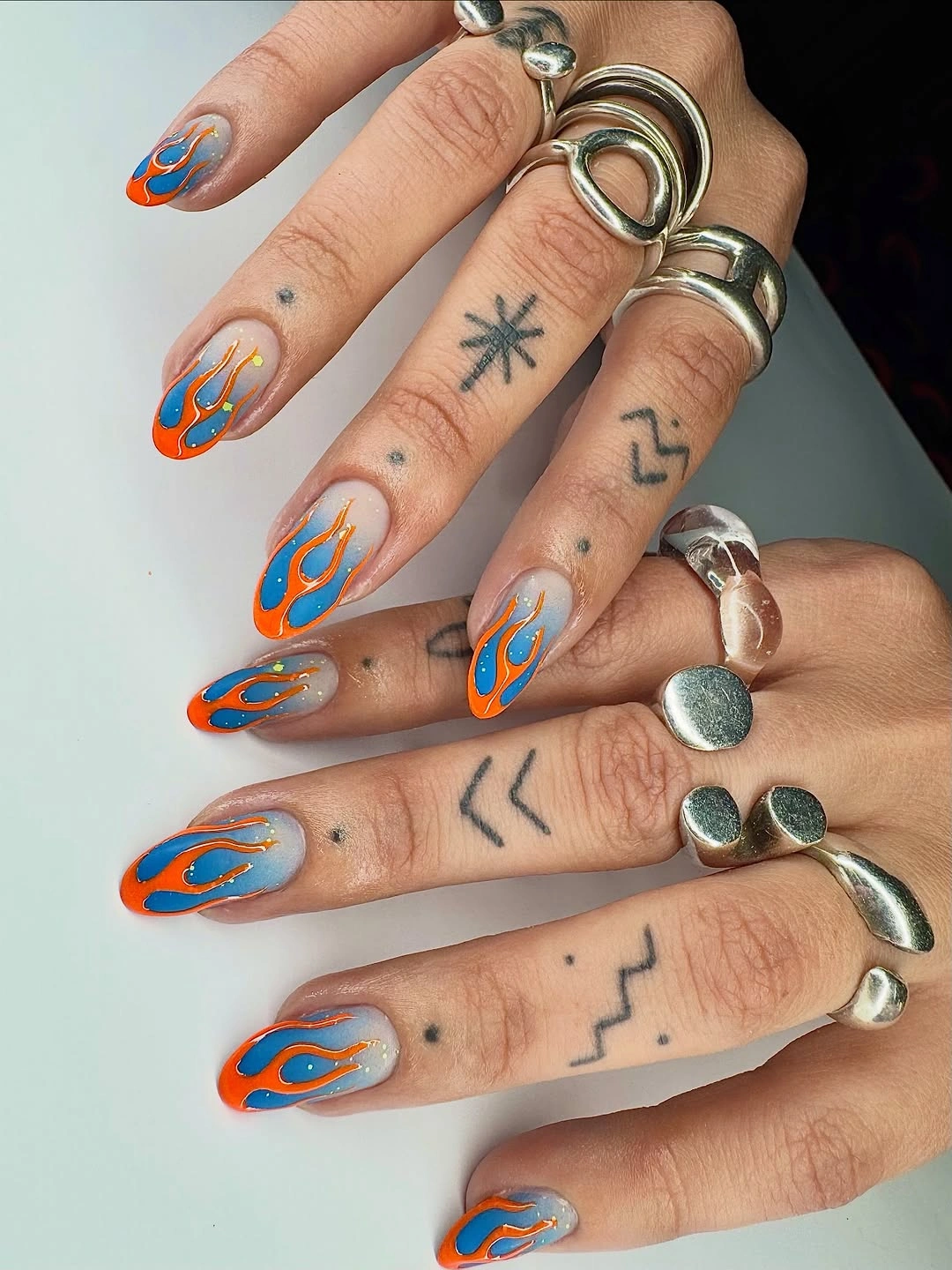
Choose this approach when the appeal of fall matte nails ideas is shifting from a solid shade to visible rhythm. The blue and orange can be softened by using a smoky gray base or narrowed into two accent nails, but the curved gesture should remain consistent so the manicure still feels like one idea. A medium almond would also reduce the visual intensity without removing the color relationship.
Detailed linework brings an honest limitation: small irregularities show more clearly when every nail repeats the same motion. Keep the curves generous rather than crowded, and do not try to fill every open space just because the surface is long. If daily wear calls for less maintenance, preserve the blue base and use one orange curve on each hand as the recognizable point of difference.
Pastel Squovals With Pinpoint Metallic Notes
Short squoval nails alternate pale sage, cream, and soft gray, with several nails carrying a thin dark vertical line and tiny gold studs. The muted colors make the small accents visible without turning them into loud decoration, and the short shape keeps the line placement close to the center of the design. Nothing needs to compete with the other choices, which is why the details feel carefully placed.
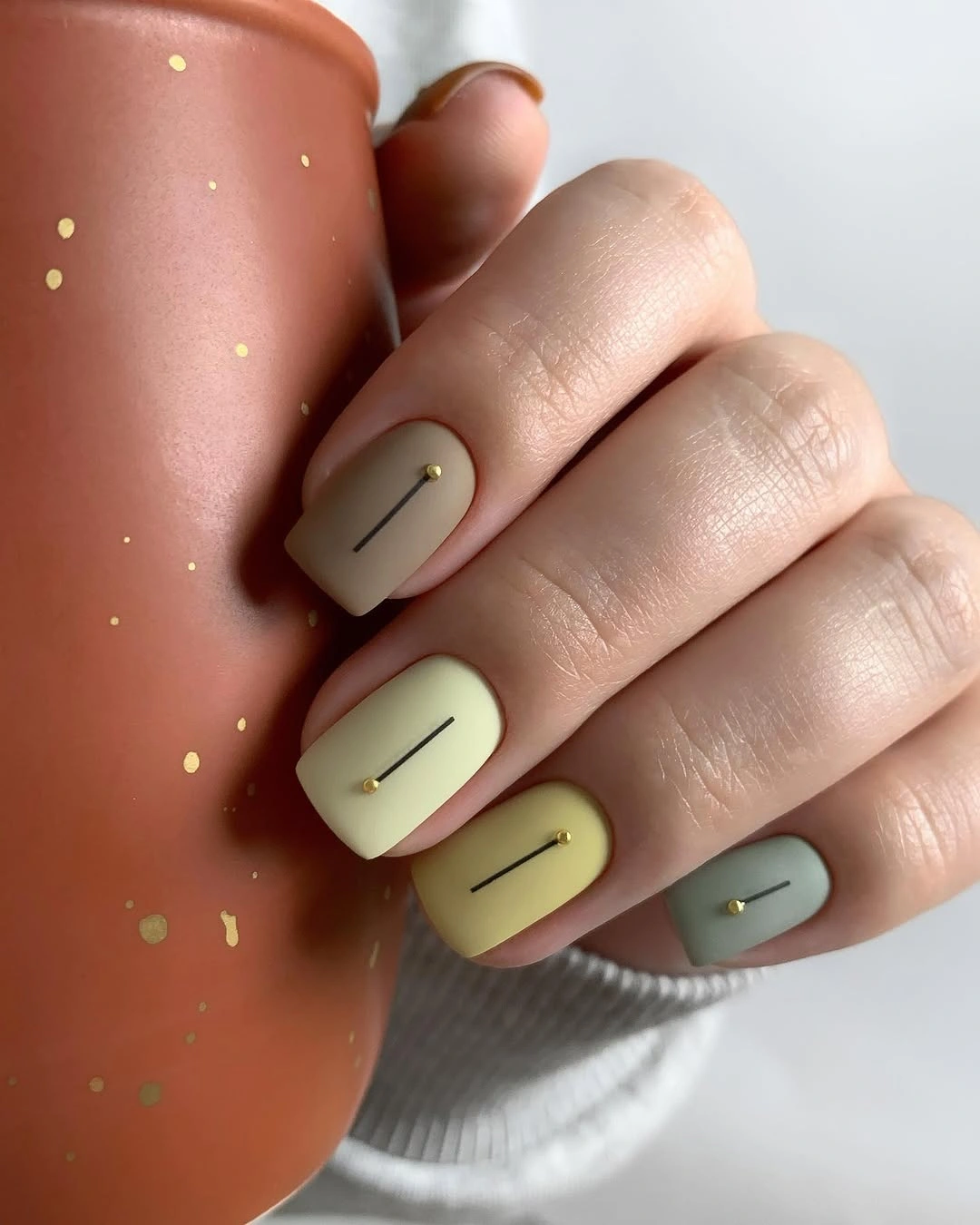
Use the pastel mix when you want fall nail colors to feel lighter than the usual brown or burgundy palette. Repeat the line on two or three nails, then leave at least one shade completely plain so the eye has a quiet stop. If gold is not your preference, a dark brown dot or a muted bronze point will keep the same scale and contrast. The same restraint is useful when adapting simple short fall nail inspiration to a compact shape.
The short squoval shape is doing practical work here. It keeps the pale colors neat and makes a tiny stud less likely to look lost, while the compact length limits how much visual weight the gold can carry. Adding a stud to every nail would change the design from restrained punctuation into a pattern, so spacing matters more than quantity.
Soft Pink Edges for a Nearly Bare Finish
Short rounded-square nails appear in a sheer pink base with a very light pale tip, creating a clean outline without a dramatic color break. The edge is close enough to the base that the manicure reads as tidy before it reads as decorated, which gives the rounded shape a gentle definition. The restrained contrast also leaves the hand styling and natural movement in the background rather than asking them to carry the design.
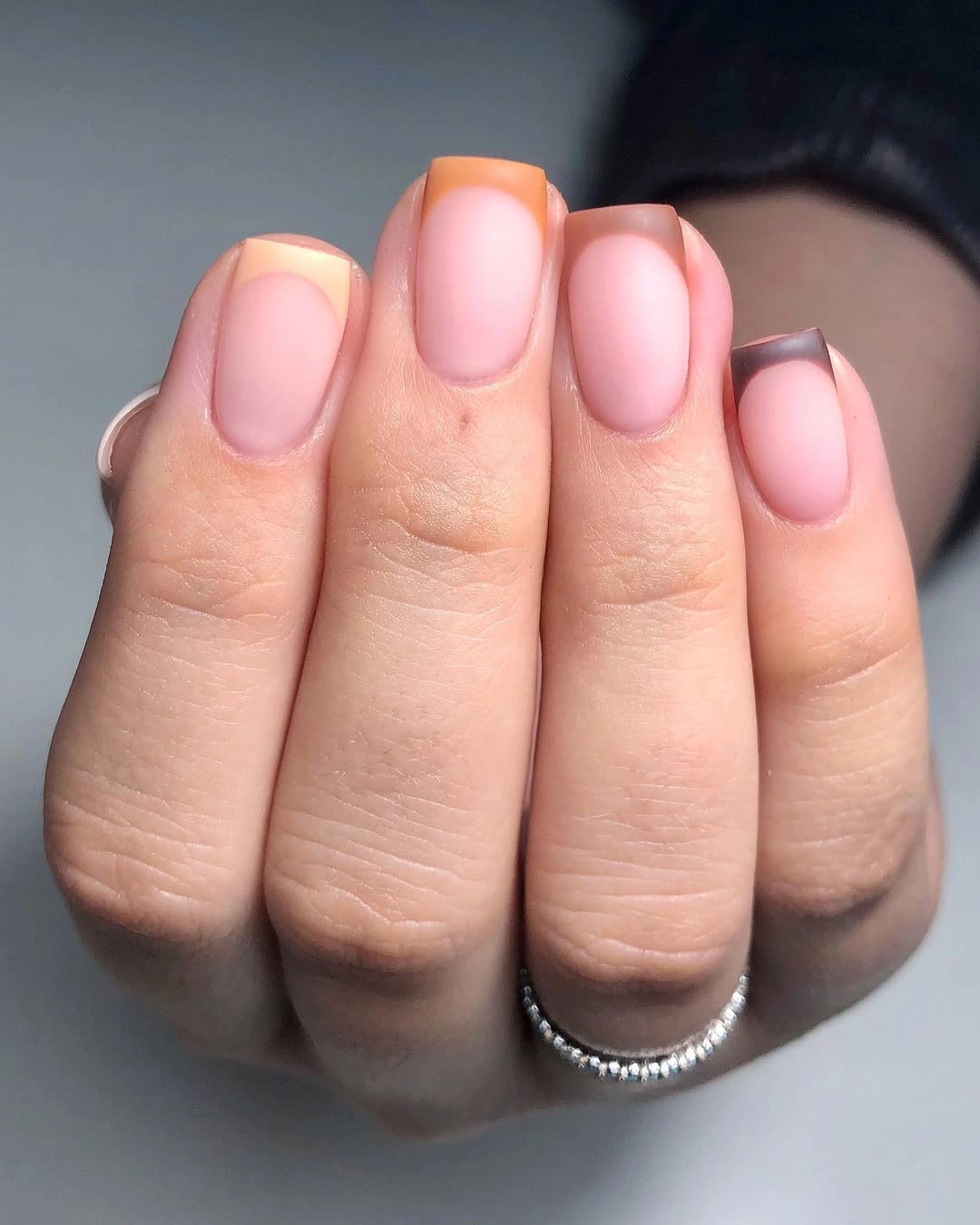
This is a useful answer for someone searching for fall matte nails short ideas but not wanting a visibly dark or glitter-heavy result. Keep the base close to the natural pink family and make the tip only slightly lighter, because a bright white line would change the mood immediately. A narrow beige edge can bring a little more warmth while keeping the same low-contrast structure.
The limitation is that subtle work depends on a clean perimeter. A wider gap or uneven tip will be more noticeable because there is no motif to distract from the outline, so the shape should stay simple and the edge should remain thin. If you want more seasonal character, add one muted brown tip rather than covering the entire nail with a new pattern.
Peach Neutrals With One Copper Spark
Short rounded-square nails use a warm peach neutral, while one accent nail is covered in dense copper-orange glitter. The glitter has enough texture and color to become the focal point, but the surrounding nails stay quiet so the warm accent does not spread across the whole hand. The orange knit nearby reinforces the warmth, yet the manicure still has a clear internal hierarchy without relying on the background.
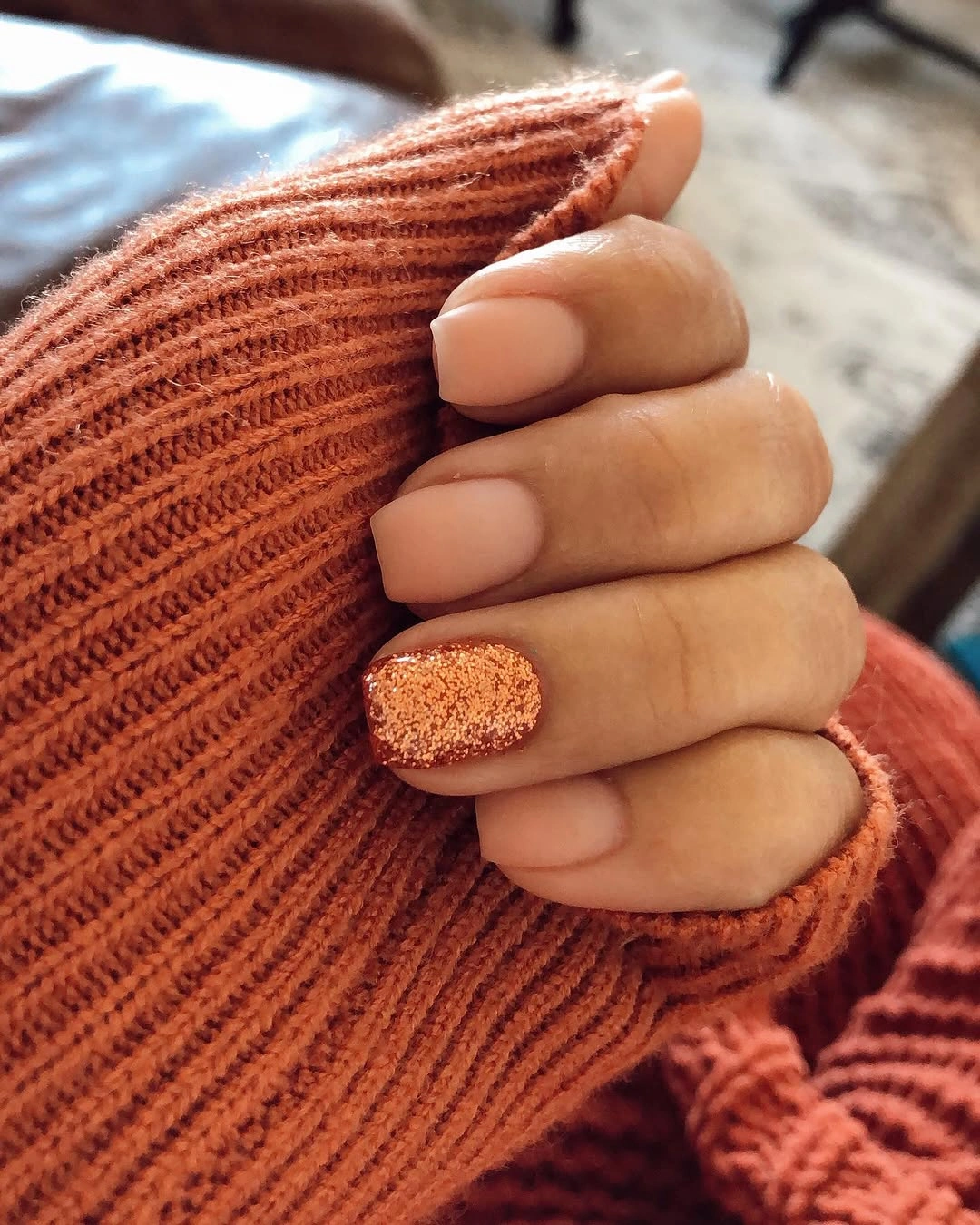
For fall nails with glitter, one concentrated accent usually gives a better balance than a layer of sparkle on every finger. Keep the peach base soft and let the copper echo it instead of introducing a cool metallic shade. If the full glitter nail feels too strong, use a narrow glitter band near the tip or place the copper only on the ring finger.
Dense glitter brings more visible grow-out and more texture than a matte neutral, so the accent should be chosen with its maintenance in mind. The short shape keeps the design manageable, but it also means the glitter occupies a large percentage of the nail surface. Reducing the glitter area preserves the warm focal point and makes the manicure easier to refresh.
Red Almonds Marked With Even Pale Dots
Medium-to-long red almond nails carry evenly spaced small pale dots across each nail, turning a direct red base into a repeatable pattern. The dot scale stays consistent, so the almond taper remains visible and the decoration does not fight the silhouette. Even spacing is the quiet skill behind the effect: the pattern feels deliberate because no single dot is trying to become the feature.
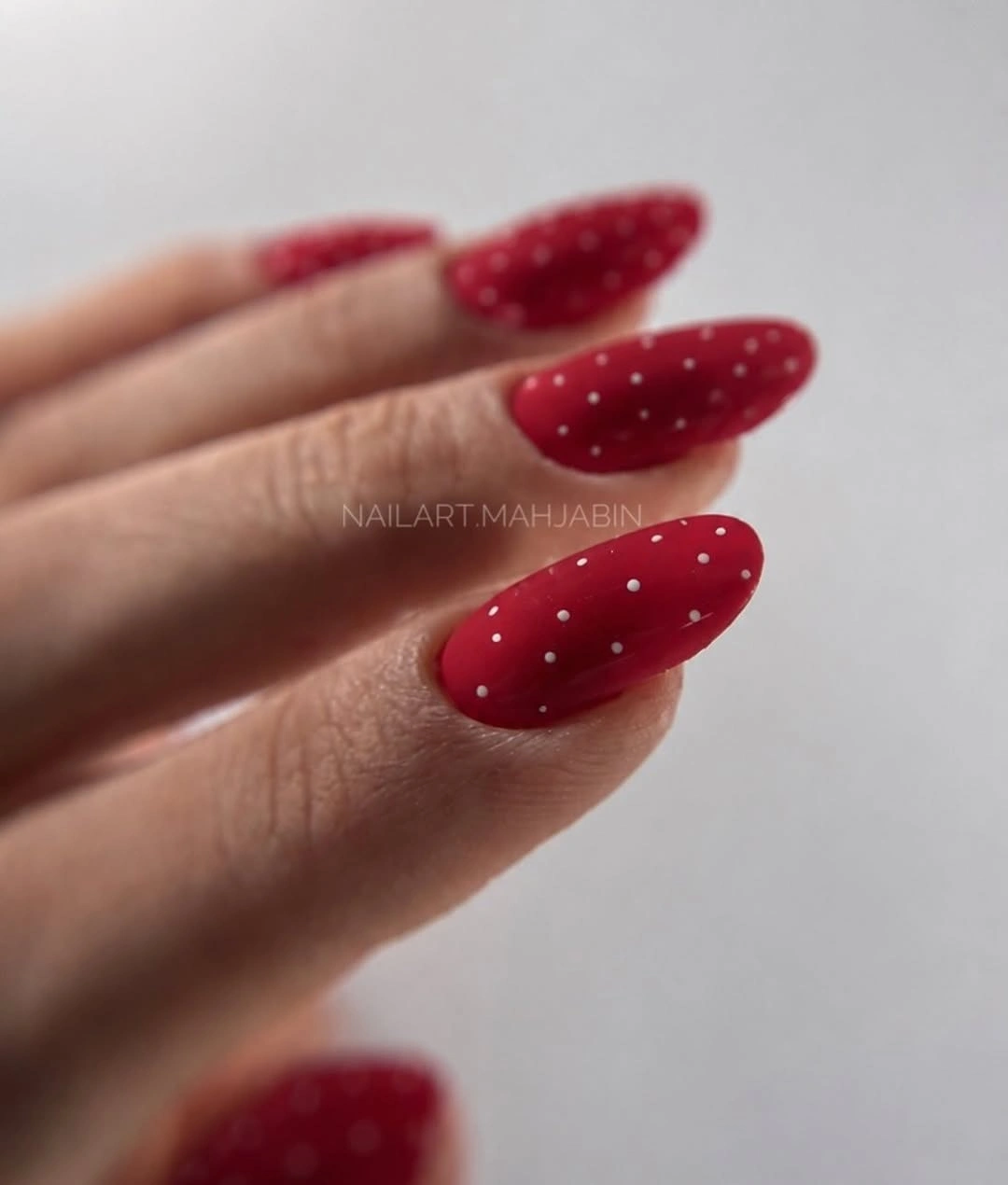
Use this format when you want a fall manicure to feel playful without adding several unrelated motifs. A deep berry red can make the contrast softer, while a warm cream dot will connect the pattern to autumn neutrals. On shorter nails, reduce the number of dots but keep their distance consistent so the surface does not look crowded.
The honest tradeoff is precision. Dots that vary too much in size can make the design look accidental, especially on a glossy surface where every mark catches light. If you are adapting the idea for easier wear, place a small cluster near the tip on one or two nails and leave the other red nails solid so the pattern has room to breathe.
Black Matte With Mustard Abstract Panels
Short-to-medium square nails are mostly black matte, while two mustard accents include dark abstract strokes or leaf-like shapes. The near-black field gives the warm panels a clear focal role, and the mustard keeps the manicure from becoming visually closed. Because the accents are grouped rather than scattered across every nail, the contrast feels planned and the square shape stays easy to read.
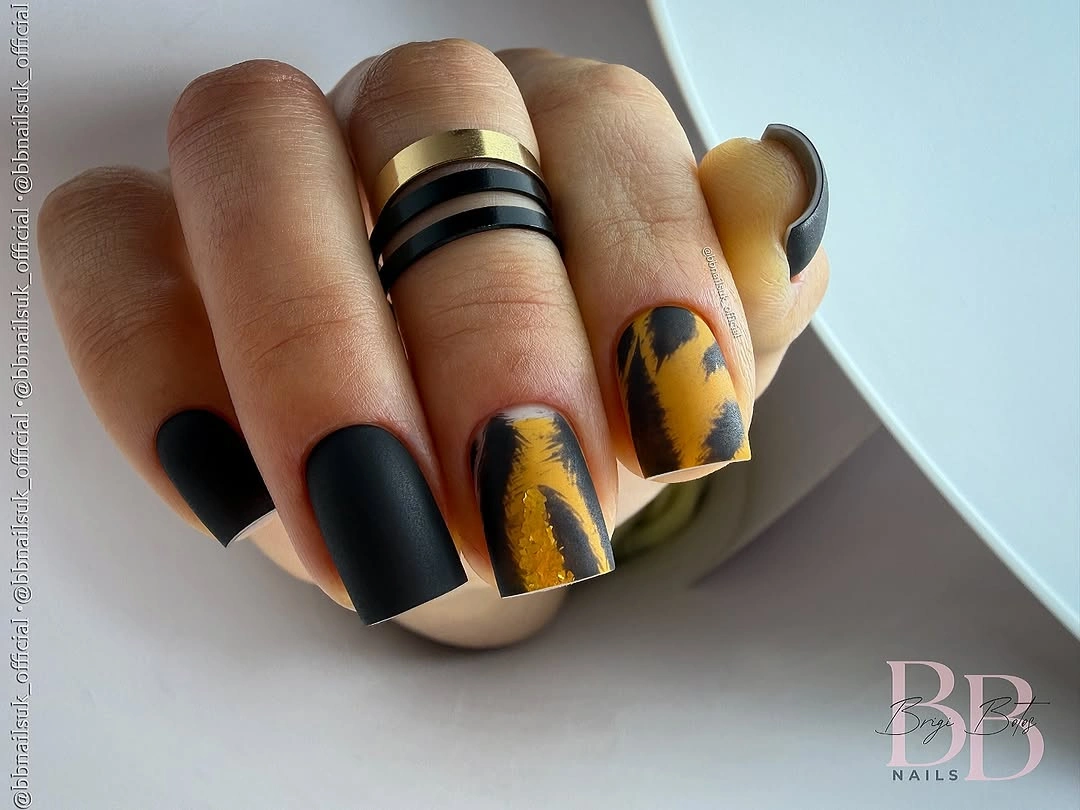
Let the mustard carry the seasonal warmth if you want fall matte nails colors without using several brown shades at once. One mustard accent is enough for a lower-key version, and a muted ochre can soften the difference between the panel and the black base. Keep the dark strokes sparse so they support the shape instead of turning the accent into an opaque block.
Black matte can show dust and surface changes more readily than a mid-tone neutral, while a square edge makes any unevenness easy to see. That does not make the design impractical, but it does reward a simple shape and deliberate accent placement. If the contrast feels too sharp, replace the black with deep espresso and keep the mustard unchanged.
Black Coffins With Irregular Gray Patches
Long black coffin nails alternate with gray accent nails marked by irregular black animal-like patches. The solid black nails establish a strong repeated block, while the gray accents soften the transition with an organic pattern that refuses perfect symmetry. That contrast between strict shape and irregular motif is what gives the manicure its character, not the print alone.
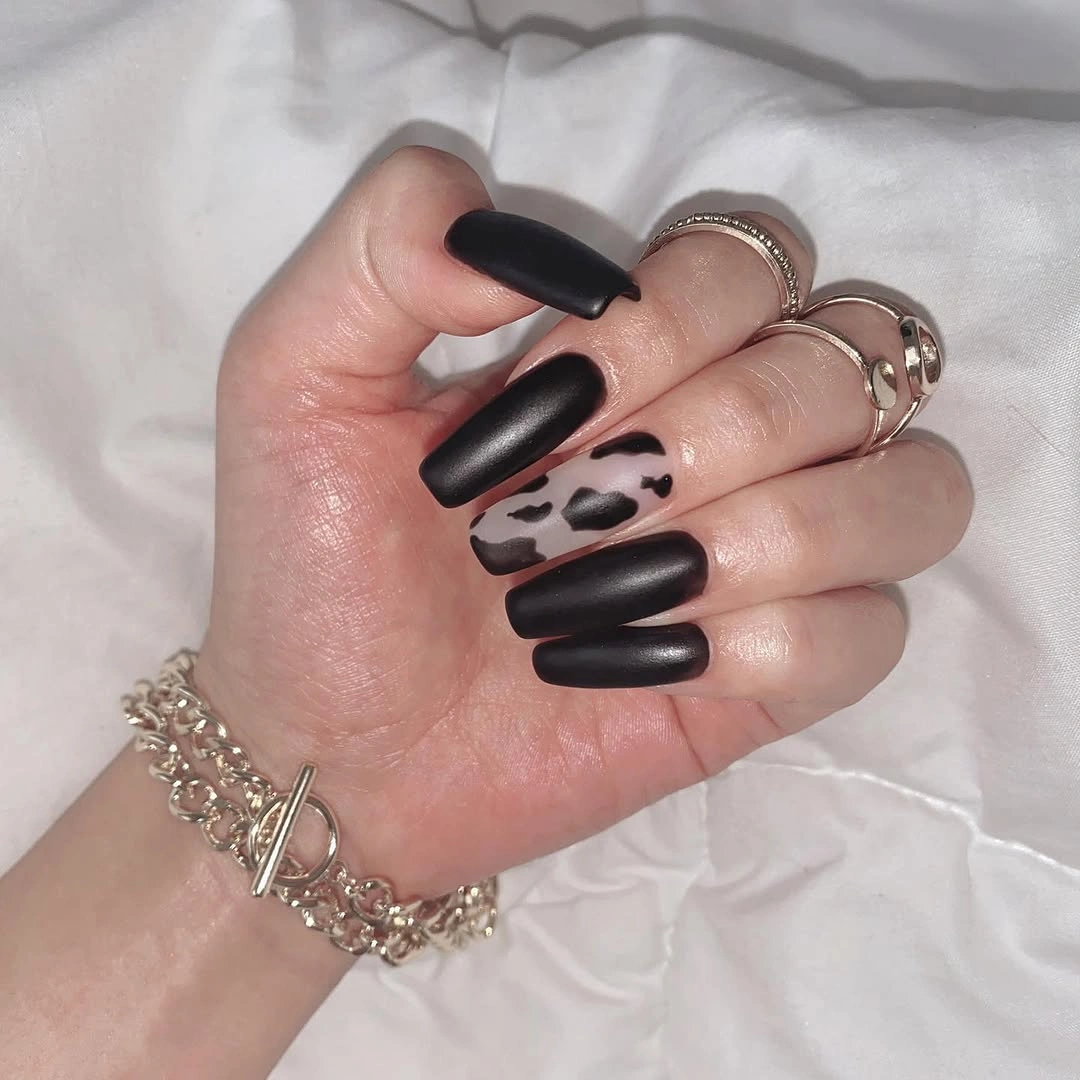
For fall matte nails almond or coffin ideas, keep the print on one or two nails and let the dark base do most of the work. A warm gray, taupe, or mushroom shade can replace the cooler gray if you want the palette to sit closer to autumn clothing. Larger patches will read more clearly on a medium length and will be easier to keep visually separate.
The long coffin silhouette adds drama, but it also makes the uneven patch pattern more noticeable as the nails grow. If you prefer a quieter result, shorten the edge and keep one gray accent with two or three large patches instead of repeating many small ones. The design will still have the same strict-versus-organic tension, just with less surface to maintain.
Muted Autumn Blocks in Five Neighboring Tones
Medium-to-long nails alternate muted rose, dark brown, mustard, beige, and gray-brown as solid color blocks. There is no painted motif to direct the eye, so the palette order becomes the design decision: lighter neutrals open the hand, the dark brown adds weight, and mustard prevents the sequence from collapsing into beige. Each nail remains simple, but the group feels considered because the colors sit close enough to relate.
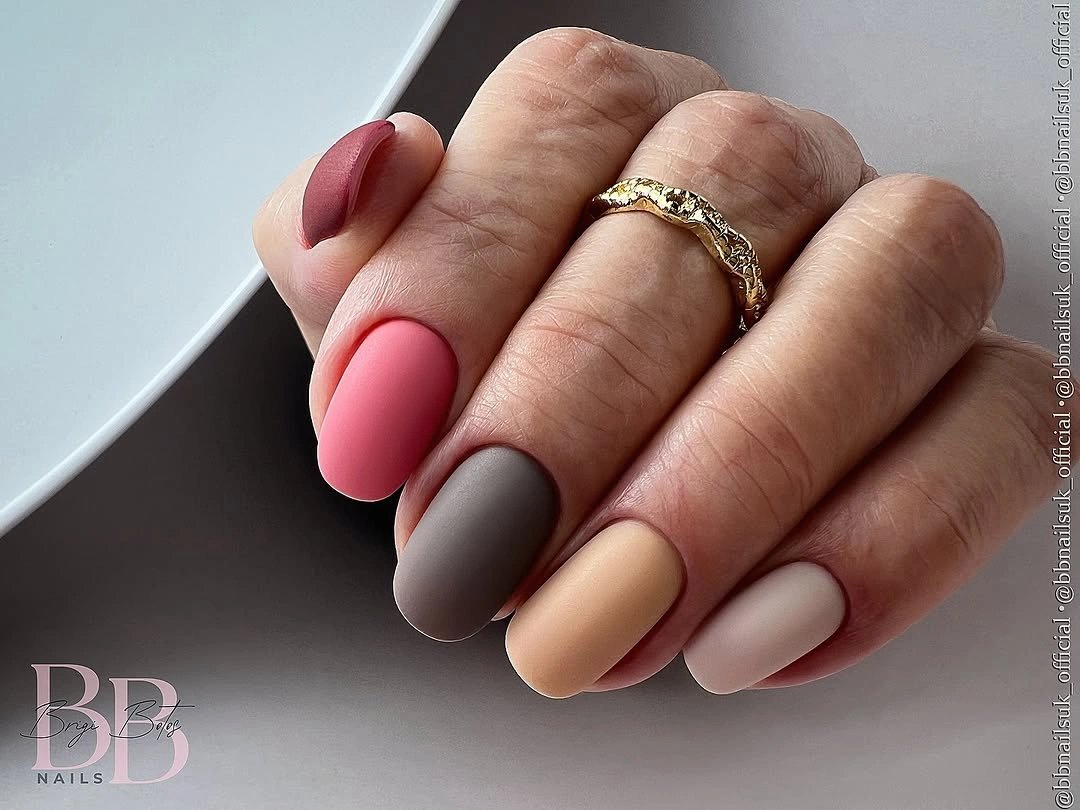
Use this approach when you want fall nail colors to look varied without adding linework or glitter. Place the darkest shade beside the lightest one for contrast, or arrange the tones gradually from beige toward brown for a softer flow. If five shades feel too busy on short nails, keep rose, mustard, and dark brown and use the other colors as clothing or jewelry references. For a broader comparison, see these fall matte nail color ideas while keeping the same rule of a clear lead shade.
The practical limit is visual rhythm rather than upkeep. Five solid shades are easy to understand, but a random order can make the manicure look disconnected, especially when the colors are all muted. Decide whether you want contrast or a gradient-like progression before choosing the order, then keep the shape consistent so the palette remains the main feature.
Hot Pink Stilettos With a Matte Surface
Very long stiletto nails are a uniform saturated hot pink with a matte surface and no visible motif. The shape supplies the drama, while the single vivid color keeps the result from becoming visually cluttered. Because there are no accents competing for attention, the eye reads the long taper first and the pink intensity second, which makes the manicure feel direct rather than overworked.
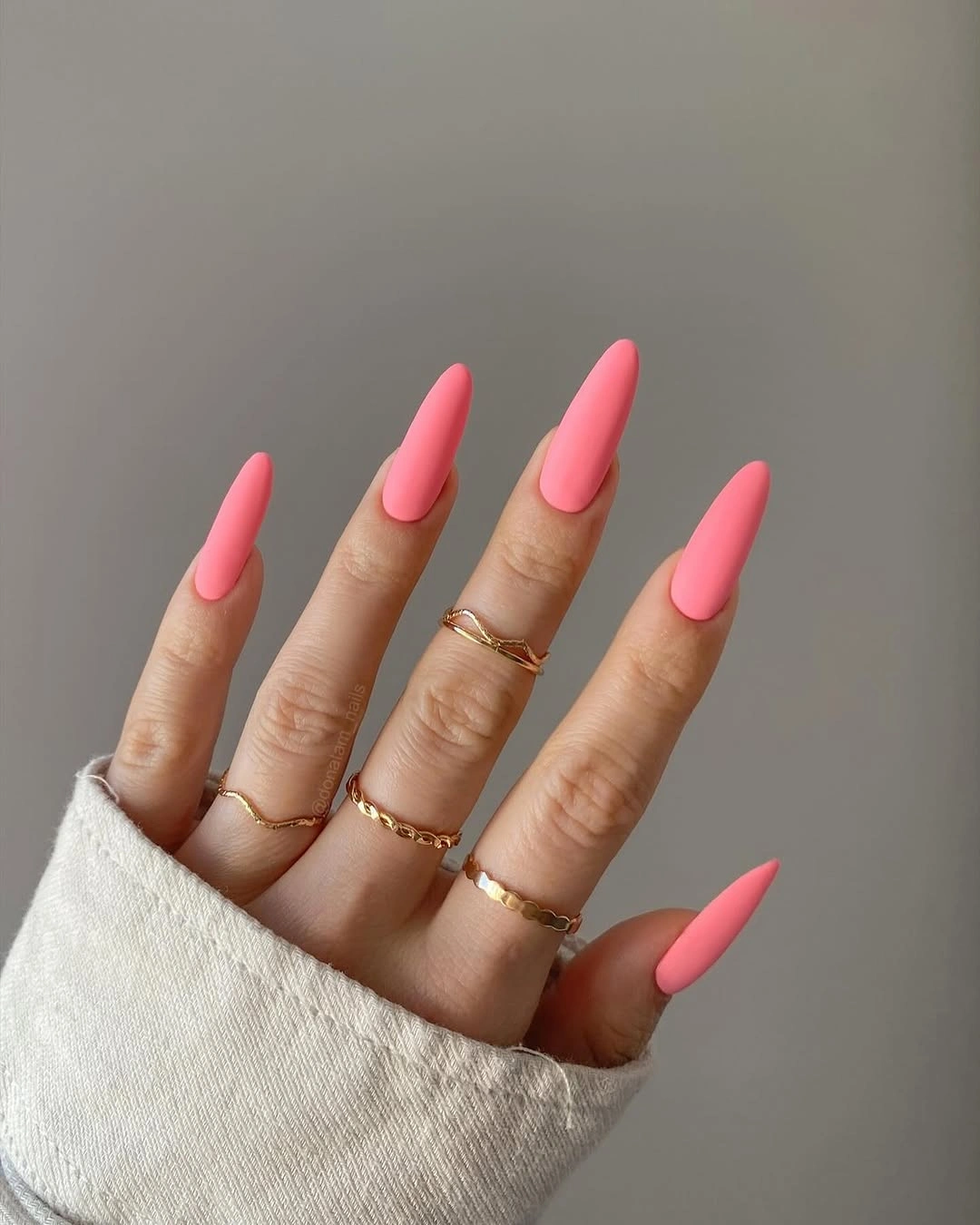
Choose a bright shade like this when you want the fall matte nails 2026 idea to come from attitude and silhouette rather than literal leaves or seasonal illustrations. A slightly dustier pink will feel less sharp, while a medium almond can keep the color vivid and make the look easier to use every day. The finish should stay uniform so the strong shape remains the point.
The major tradeoff is commitment to length. A stiletto edge changes how the hand moves and makes visible tip wear harder to ignore, so the same pink on a shorter almond may be the more realistic adaptation. You can also keep the vivid color on every nail and soften only the point, preserving the visual statement without asking the silhouette to do all the work.
Pink-to-White Almonds With Vivid Curved Tips
Long almond nails fade from pale pink toward white and add vivid hot-pink curved tips that echo a reverse-French effect. The base transition gives the eye a soft path into the stronger tip, so the bright pink feels placed rather than pasted across the edge. Repeating the curve on each nail also emphasizes the almond shape and makes the set feel connected.
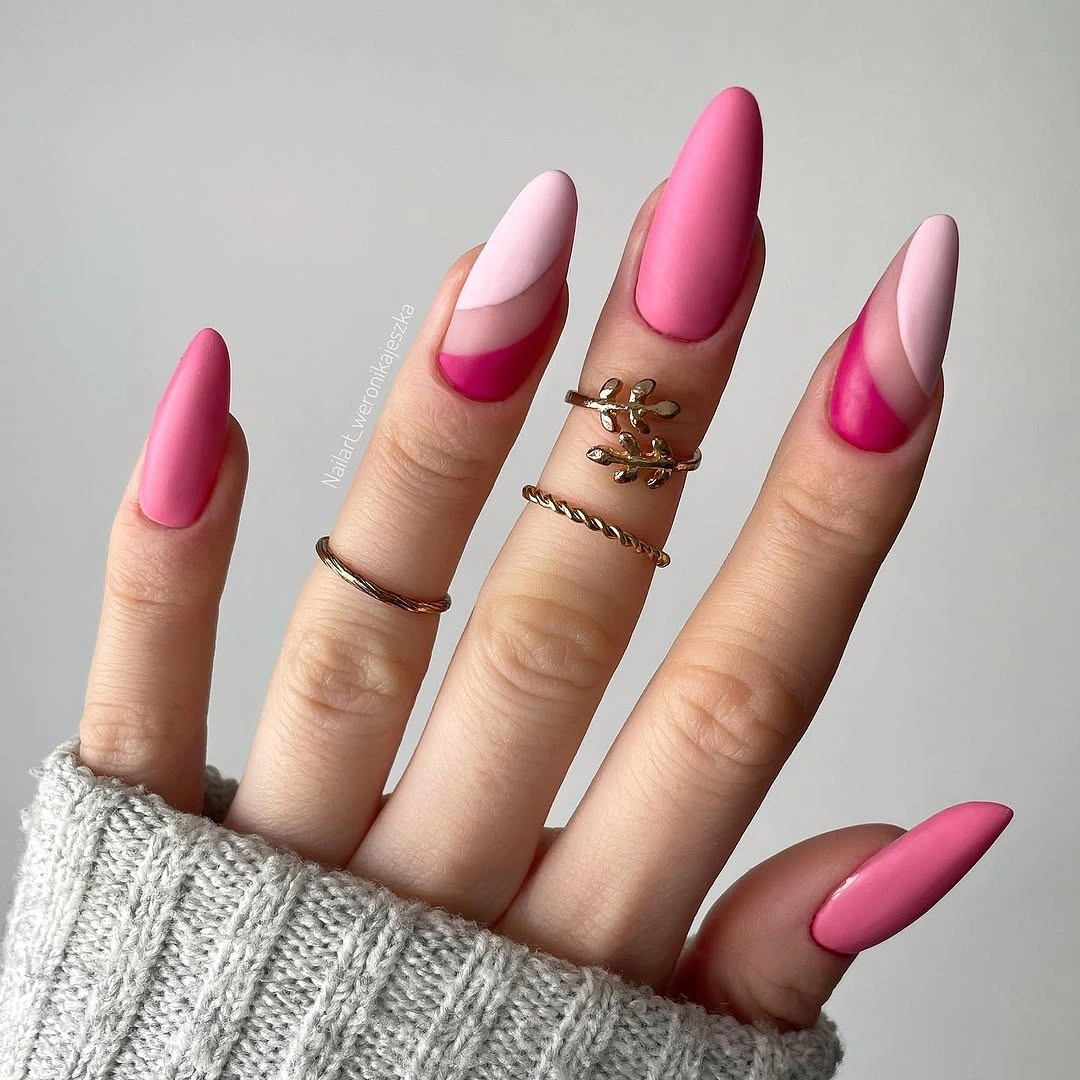
Use a bright curved tip when you want fall nails ideas to feel playful while keeping most of the surface light. The hot pink can shift toward berry or coral, but the curve should stay clean and reasonably narrow so the pale fade remains visible. On a shorter almond, place the color only at the free edge and let the base do more of the work.
Layered color creates more edge decisions than a solid manicure. The fade, pale transition, and vivid tip all need enough separation to remain readable, yet the design can look busy if every border is equally strong. If you want easier upkeep, keep the pink curve and simplify the base to one sheer pink rather than adding another contrasting band.
Neon Lime Ovals With a Soft Color Shift
Short oval nails move between bright lime and yellow-green, with the color appearing softly blended rather than fully solid. The compact shape keeps the high-energy palette from taking over the hand, while the light-to-dark shift adds depth without a separate motif. The result is vivid because of color temperature and value, not because the surface is crowded.
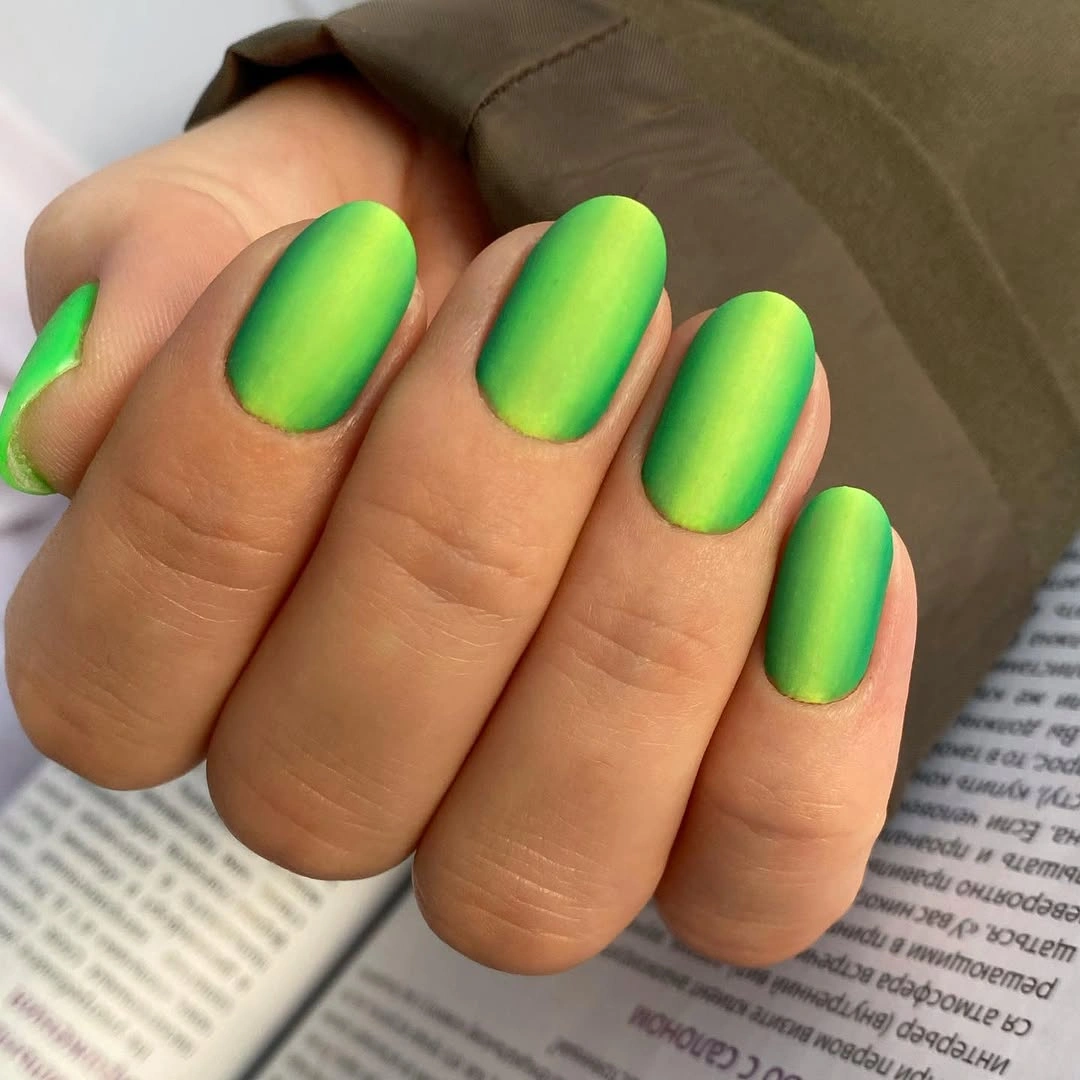
For fall matte nails short looks, a neon shade can work when the shape and finish keep it controlled. Let the brighter lime sit near the center or tip and allow the yellow-green to soften the base, then repeat that movement instead of changing the direction on every nail. If the color feels too summery, add a muted olive version on one accent nail rather than darkening the whole set.
A strong neon can make every small edge imperfection visible, especially when the surface is matte and the color shift is broad. Keeping the oval short helps, but the blend should remain simple enough that wear does not create a confusing boundary. A solid lime on two nails with the blended treatment on the others is a practical compromise.
Deep Teal Almonds With Nothing Extra
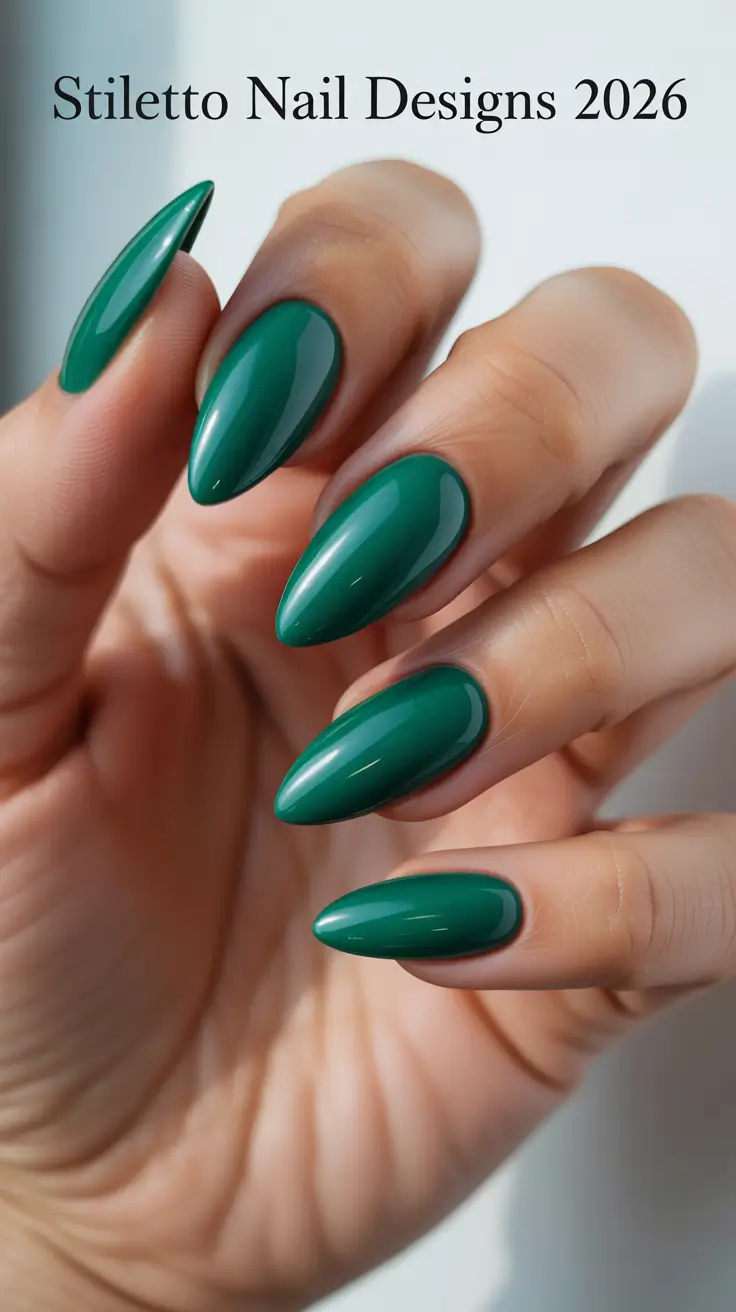
Long almond nails are a saturated blue-green teal with a deep matte surface and no visible painted motif. The cool color has enough intensity to stand alone, and the matte finish absorbs some of the visual glare that a glossy jewel tone would create. The clean repetition lets the almond taper stay visible from the base to the tip.
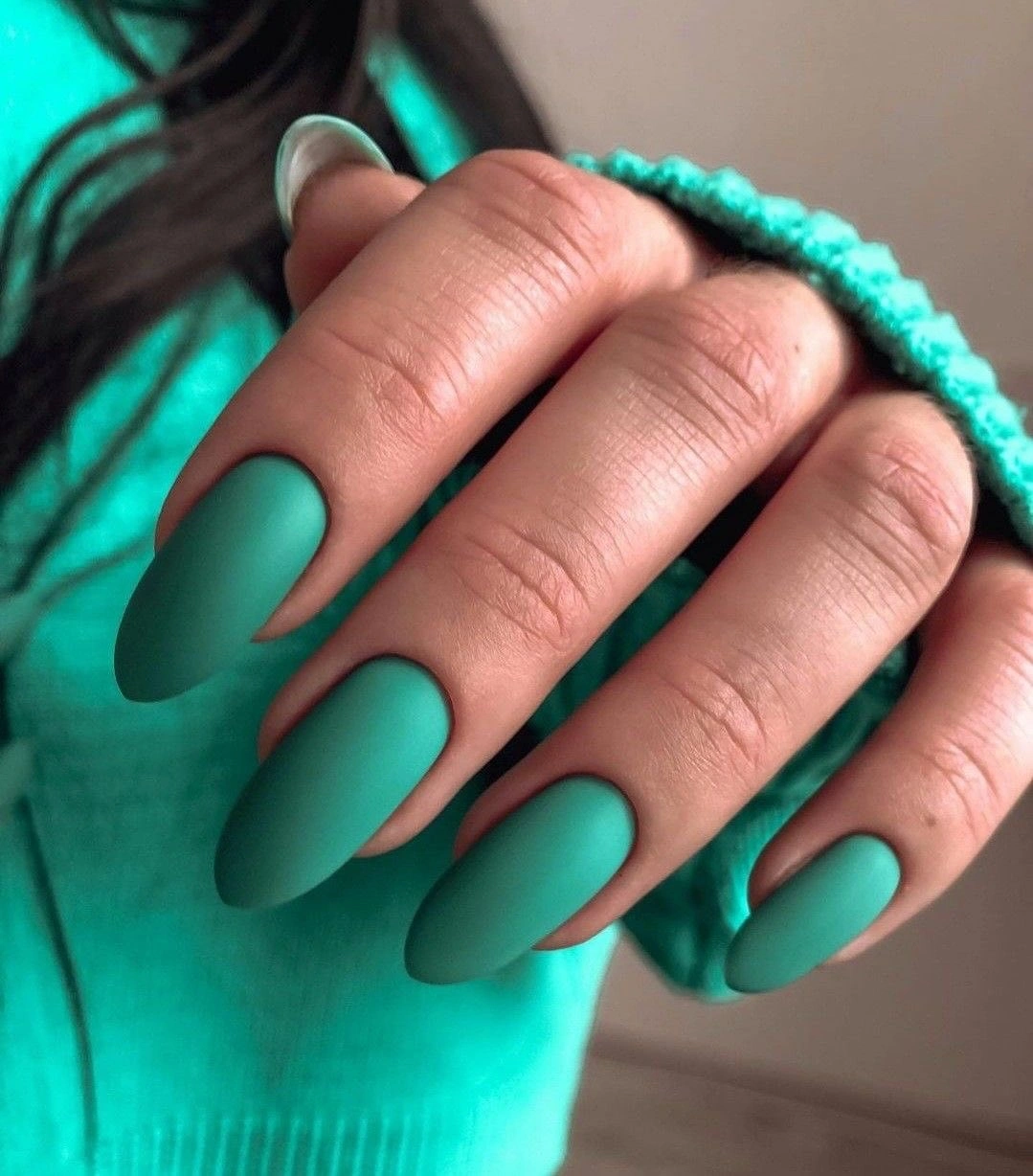
Use teal as a one-color statement when you want dark fall nails without defaulting to black, burgundy, or brown. A little more blue will make the shade feel sharper, while a greener version can sit closer to olive clothing and warm metals. Keep the finish consistent so the color remains the main choice rather than an accidental difference between nails.
Dark saturated colors are easy to admire and harder to ignore when the edge starts to grow out, so the long almond shape should match your maintenance habits. A medium almond will reduce the practical commitment while preserving the color story. If the teal looks too solid, add a single matte gray accent rather than introducing a full pattern across the set.
Taupe With One Orange Nail and Cow Patches
Short squoval nails use a taupe-beige base with one bright orange nail and one cream accent marked by irregular black cow-like patches. The neutral nails keep the hand grounded, the orange supplies a clean warm spark, and the print adds an organic shape that is different from the solid accent. Each element has a separate job, so the design feels lively without becoming a collection of competing motifs.
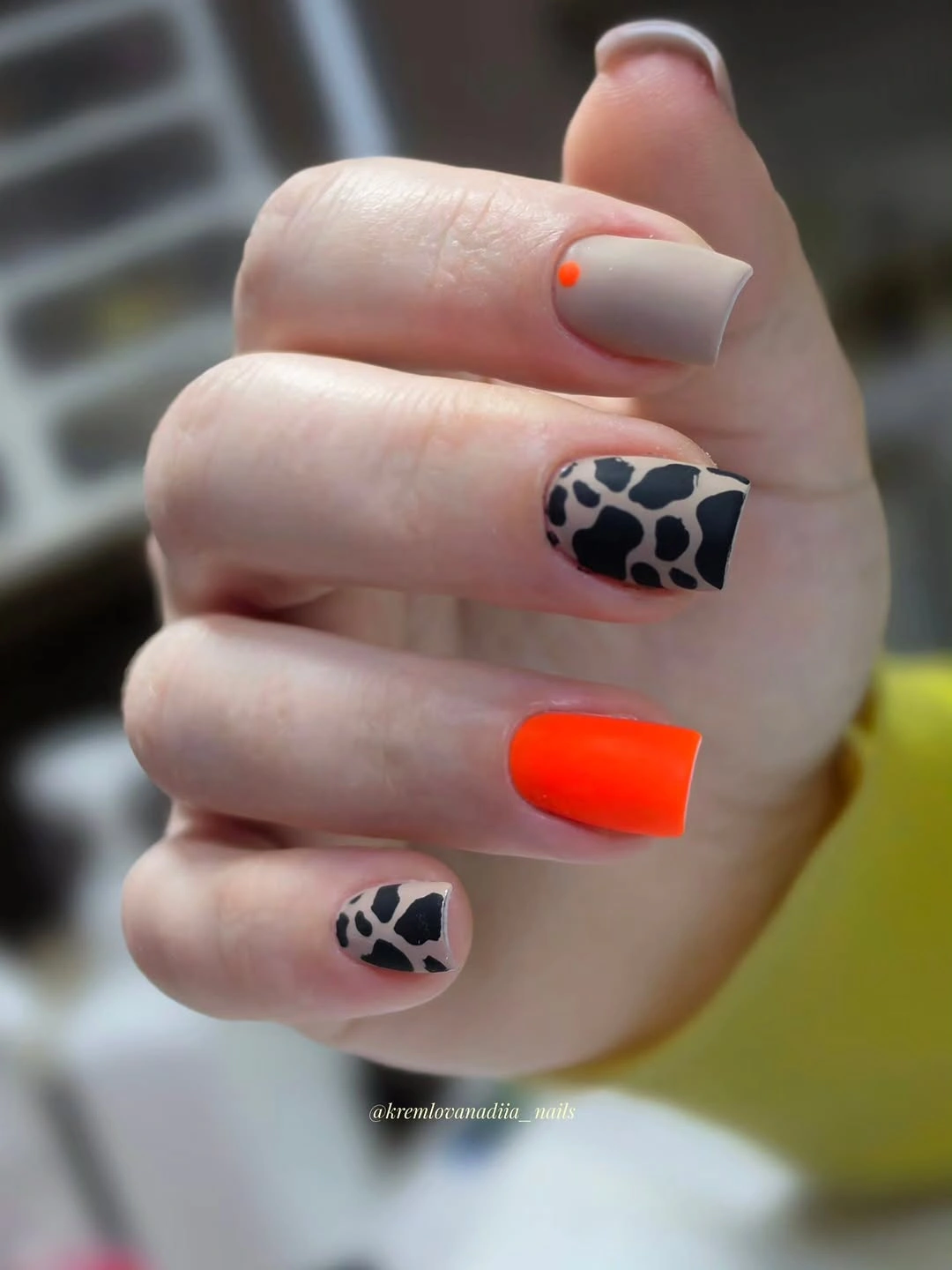
Pair a warm neutral with one orange accent when you want fall matte nails colors to feel current but still easy to combine with brown, denim, or cream. The cow-like patches should stay large enough to read clearly, while the orange can shift toward rust for a quieter autumn finish. On a shorter set, keep the print on one nail and use the orange on the thumb or ring finger.
The print and orange accent create two focal points, so their placement matters more than their exact shade. If both sit beside each other, the hand may look busier than intended; spacing them apart lets the taupe perform its balancing role. Reducing the patch count is a better adjustment than adding another neutral because the base is already doing enough quiet work.
Cobalt Square Nails With a Clean Matte Field
Long square nails are a uniform vivid cobalt blue with a matte surface, and the crisp shape does most of the visual work. The color is saturated enough to feel graphic, but the lack of a pattern keeps the surface readable and lets the straight sidewalls hold attention. It is a direct manicure decision that does not need a secondary accent to explain itself.
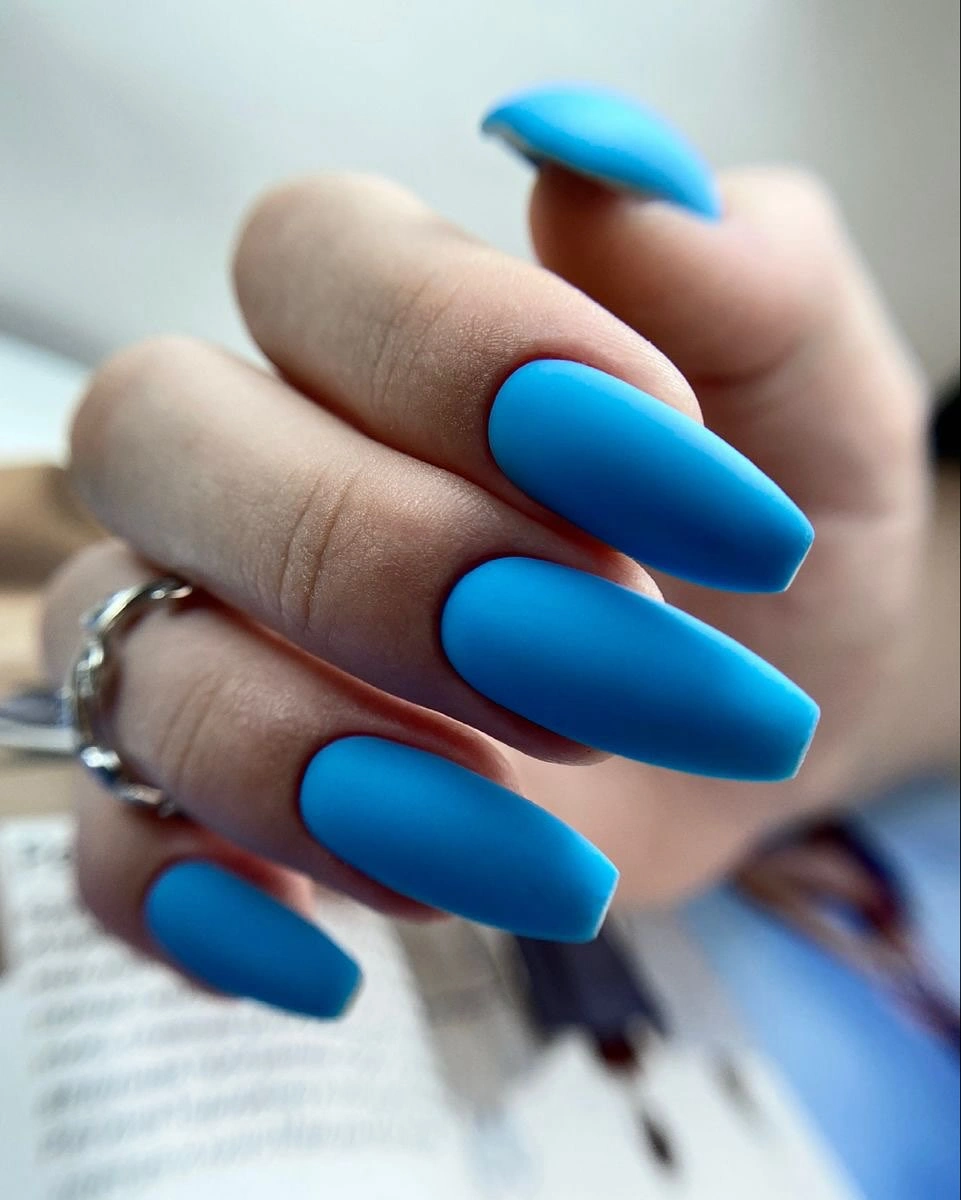
Choose cobalt when a cool saturated color is more useful than a seasonal motif. A slightly softer blue can make the look easier to pair with neutrals, while a deeper ink tone will move it closer to the dark side of the palette. If you want a touch of fall matte nails inspiration without adding decoration, vary only the depth of blue on one nail.
A long square gives cobalt a strong architectural outline, but it also exposes uneven length and edge wear. A medium square is a straightforward adaptation because it changes the proportion without changing the color. Keep the surface plain if you shorten the nails; adding a pattern would remove the clean tension between the bright blue and the disciplined silhouette.
Green, Pink, and Gold Foil in Small Zones
Medium square nails combine sheer pink, deep green, and gray-white linework, while green accents carry scattered gold foil-like pieces. The design uses several materials of attention but keeps them in small zones: green gives weight, pale linework opens the surface, and gold catches the eye only where it is placed. That distribution stops the collage from becoming an undifferentiated mix.
Let green and pink do the color balancing while the gold acts as a small highlight rather than a full metallic field. A darker olive or a softer blush can move the palette toward autumn, and the linework can be reduced to one pale accent if you prefer fall matte nails with less visual density. Keep foil on one or two nails so its irregular edges remain meaningful.
The challenge is preserving hierarchy when several details are visible at once. If the foil, linework, and green shapes all become equally large, the eye loses a place to rest, especially on a short square. Choose one dominant accent, one supporting accent, and leave the remaining nails quiet so the mixed palette still feels deliberate after grow-out.
Dark Green Ovals With Pale Organic Shapes
Short oval nails are deep green, with at least one nail carrying pale irregular camouflage-like shapes across the same dark base. The design stays inside one color family, so the pattern creates interest without adding a competing hue. The oval shape softens the edges of the organic marks and keeps the dark green from reading as a hard block.
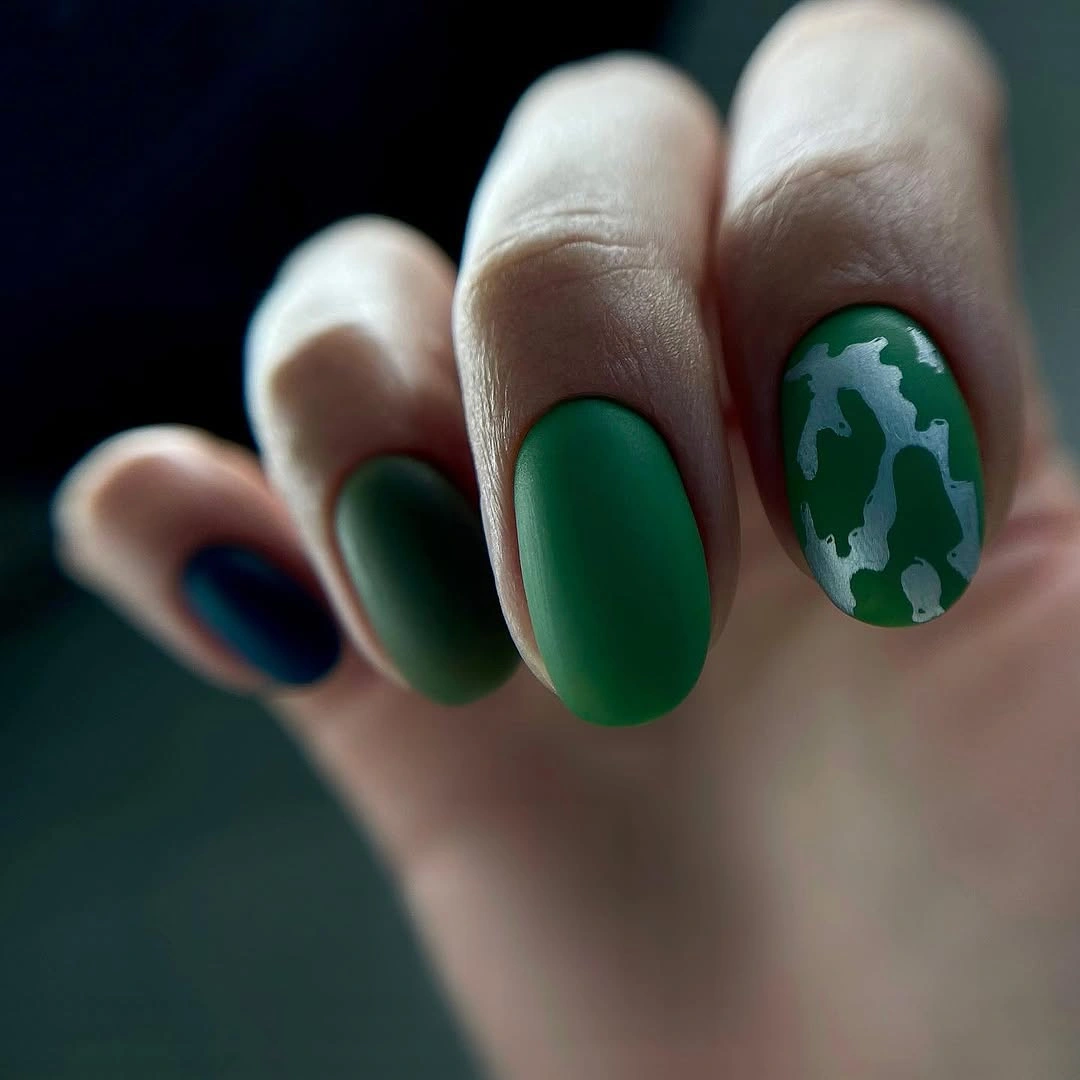
Use a tone-on-tone pattern when you want a fall nail colors idea that feels graphic but not loud. Pale sage or gray can replace the light shapes, while a warmer forest green will make the contrast feel more seasonal. Keep the organic marks on one or two nails and leave the rest solid so the pattern remains a focal detail.
The short oval is forgiving of the pattern, but dense pale shapes can quickly cover the green and change the balance. Leave visible gaps between the marks and avoid shrinking them into tiny spots, because large irregular forms are easier to understand and maintain. If you need an even quieter version, use the pale shapes only near the tip.
Soft Pink Squares With a Small Outlined Heart
Medium square pale pink nails are mostly solid, with one nail carrying a small black outlined heart near the center. The symbol is intentionally modest: it gives the hand a focal point but leaves the surrounding pink uninterrupted, so the manicure does not depend on a large illustration. The square shape gives the tiny outline a stable frame and keeps it from drifting into the edge.
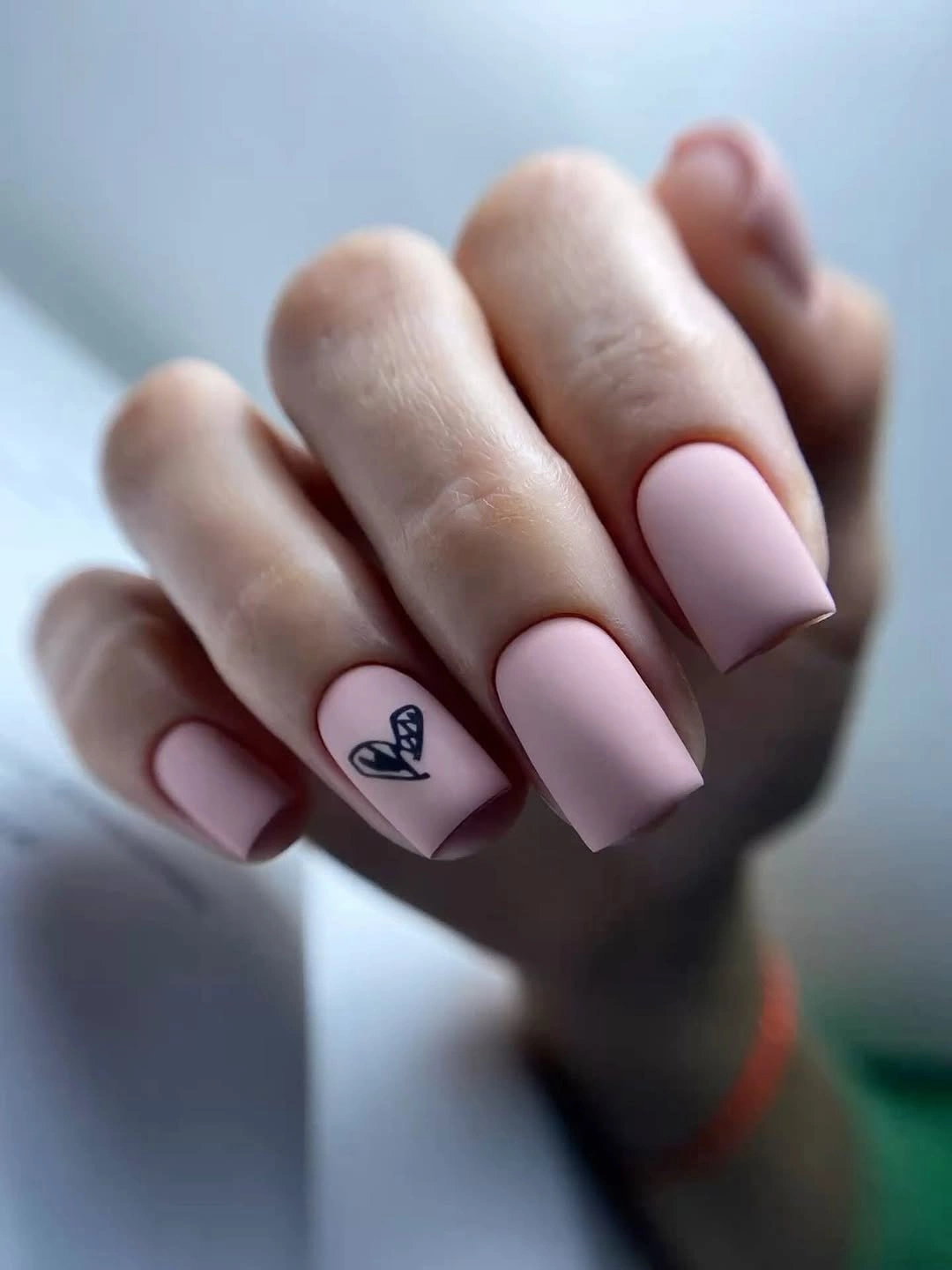
Keep the base pale when you want a small accent to feel personal without becoming a novelty theme. A muted rose or soft beige can replace the pink, while the outline can shift to brown for a gentler contrast. One heart is enough; repeating it on every nail would change the design from a quiet mark into a pattern.
The placement near the center makes the symbol more visible, but it also means grow-out will change its relationship to the cuticle. If you prefer a longer wear window, move the heart slightly toward the tip or use a tiny dot-and-line motif instead. The clean base gives you room to adapt without losing the essential idea of one dark mark on a soft field.
Pink Nails Framed by Narrow Gold Tips
Short-to-medium rounded-square nails use pale pink with narrow gold glitter bands at the tips on several nails. The glitter stays at the perimeter, so it frames the soft base instead of covering it, and the rounded shape keeps the gold from looking too rigid. Because the sparkle repeats in a thin line, it reads as an edge decision rather than a dense glitter accent.
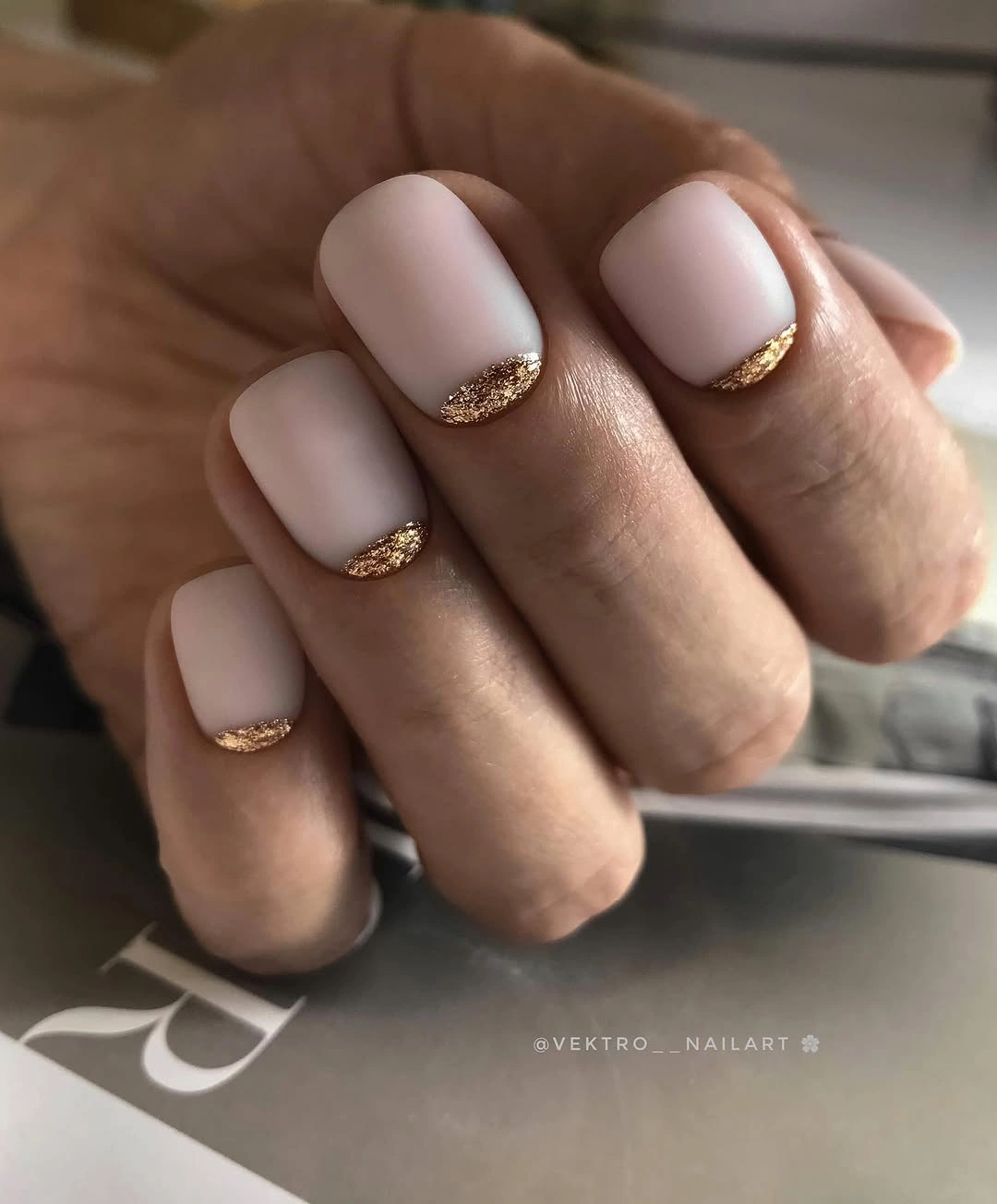
Use a gold edge when you want fall nails with glitter but prefer the shimmer to remain controlled. A muted bronze or champagne tone will keep the same warm relationship, while a sheer beige base can make the tips feel less pink. On shorter nails, use one metallic tip and leave the remaining nails plain so the border does not occupy the whole surface.
Tip-focused designs show wear along the exact place where the eye expects the line to be clean, so the band should stay narrow and even. A thinner glitter edge will still catch light and will be easier to refresh as the nail grows. If the sparkle feels too decorative, replace it with a solid warm-brown micro-tip and preserve the framing logic.
Lavender Ovals With Warm Red Animal Spots
Short oval nails are pale lavender, with two white-pink accent nails covered in irregular red animal-like spots. The cool lavender base gives the warm spots enough separation to feel purposeful, while the soft oval shape keeps the print from looking severe. Limiting the pattern to two nails creates a clear focal pair and lets the remaining color remain calm.
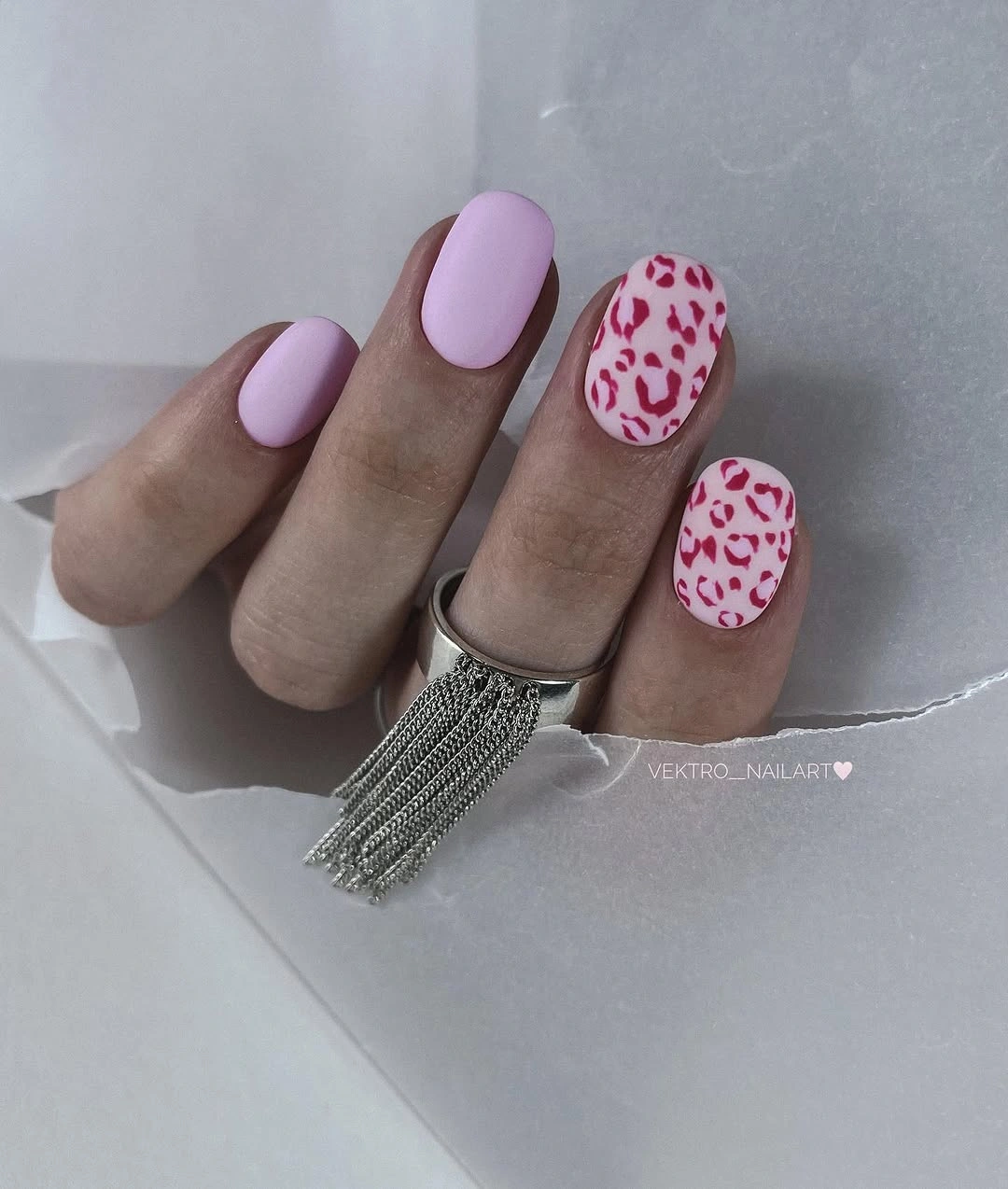
Use lavender when you want fall matte nails ideas to move away from brown without losing the value contrast that makes a print readable. A dusty mauve can warm the base, and the red spots can shift toward berry or rust for a more autumnal interpretation. Keep the spots irregular but generous enough to remain legible on a compact surface.
The animal pattern brings more visual noise than the plain nails, so adding another accent would weaken the hierarchy. One printed nail per hand can be enough, especially if the oval is very short or the red is highly saturated. Let the lavender do the quiet work and treat the warm spots as the small detail that the eye discovers last.