
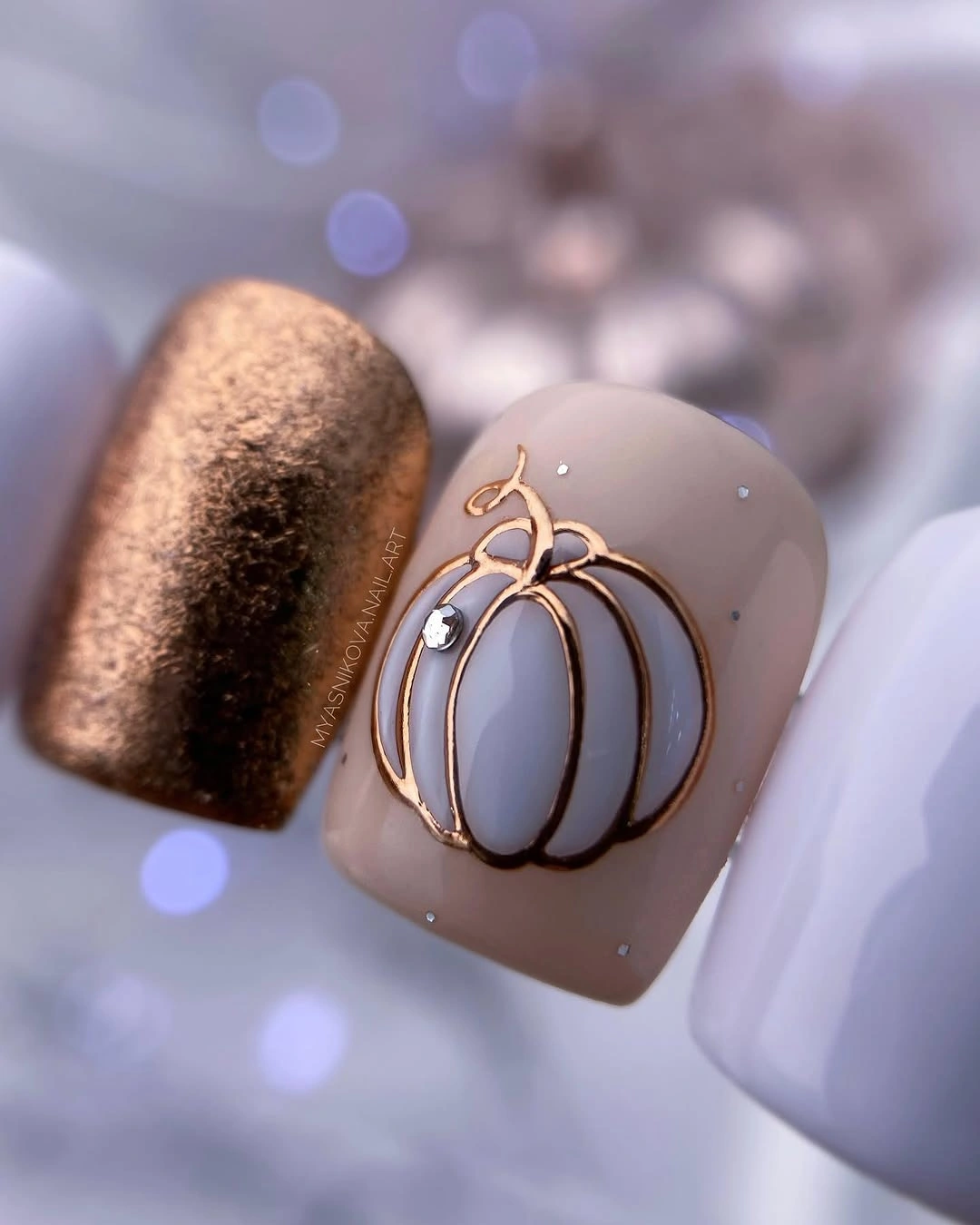
At its freshest, seasonal nail art gives one detail room to be noticed. A small pumpkin, a botanical line, a warm French edge, or a single glitter accent can suggest the mood without covering every surface. The best fall nail art ideas balance a readable base with a detail that has a clear reason to be there.
Before choosing a motif, decide how much contrast your routine can carry. Long lines and layered tips need more room, while short nails often benefit from compact marks, open color blocks, and one strong accent. Use the ideas below as visual directions, then adjust the motif scale and color intensity instead of copying every detail literally.
Pale Lavender with a Single Pumpkin Motif
A pale lavender base gives a small pumpkin outline a cooler, quieter setting. The short-to-medium rounded shape keeps the seasonal symbol easy to read, while bronze and warm gold connect it to autumn without filling the whole manicure with orange. The charm comes from restraint: one clear motif can carry more personality than many tiny drawings.
Keep the pumpkin line fine and place it where the light base can support its shape. The surrounding nails should remain visually calm so the outline feels intentional rather than lost in a collection of competing icons. A rounded tip suits the friendly motif, while a short square version would make the same idea more graphic.
This is a good starting point for someone who wants seasonal nail art without a heavy color shift. Its tradeoff is that the small illustration depends on clean scale and contrast. If you need a stronger autumn signal, warm the metallic accent slightly; do not multiply the motifs until the open lavender balance disappears.
Nude Almonds with Layered Brown French Tips
Layered brown and chocolate edges give a nude almond base a warm seasonal frame. White space keeps the design light, while small gold dots add a pinpoint of shine rather than turning the tips into a solid block. This is one of the most adaptable fall nail art ideas because the detail stays at the edge and leaves the center open.
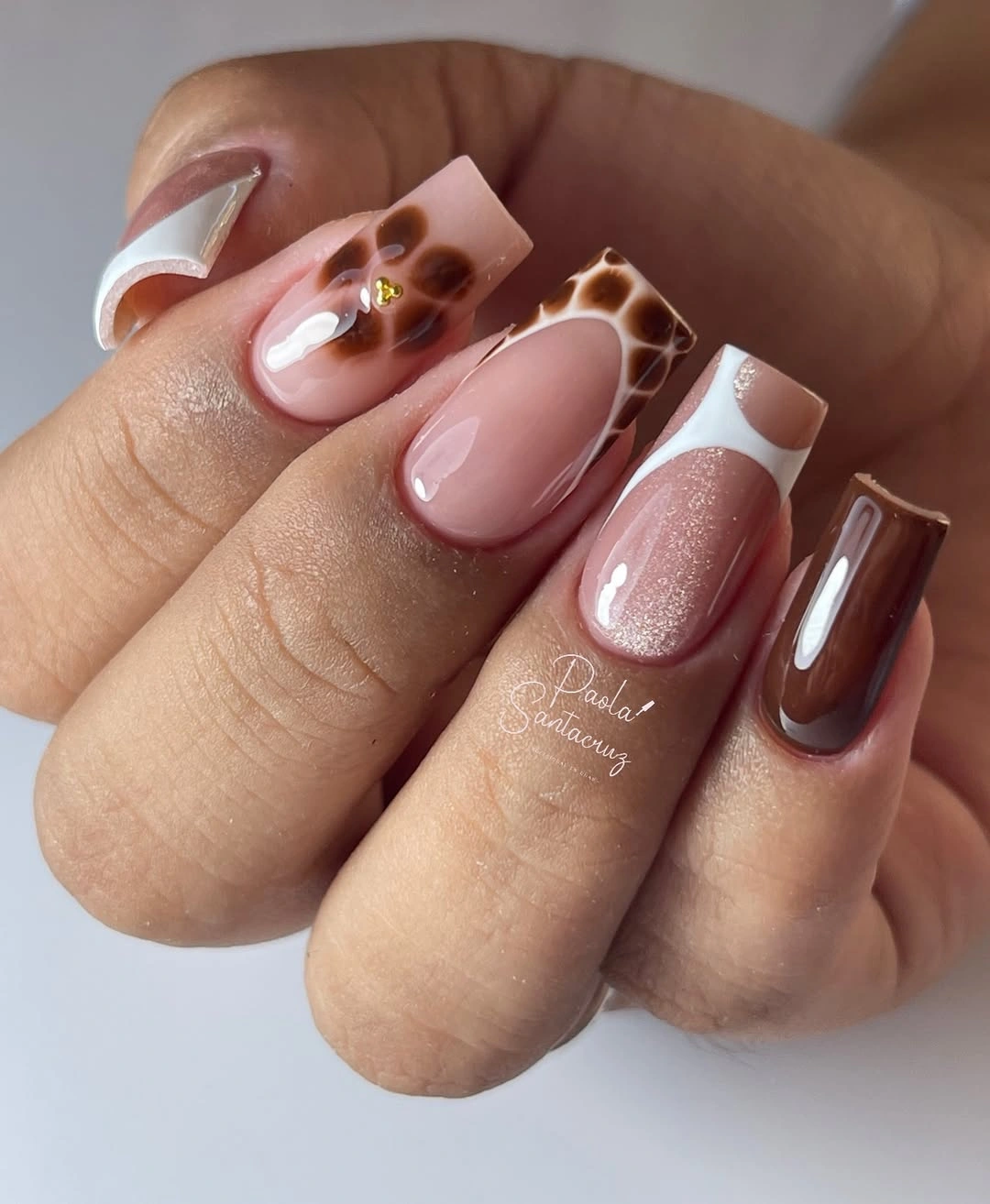
The almond taper naturally supports the stacked French lines, so each color can follow the curve without looking crowded. Let the nude field remain generous and treat the gold dots as punctuation. If you move the idea to shorter nails, reduce the number of layers first, preserving the warm brown-to-white relationship.
The design feels polished enough for a dressed-up look but remains readable with everyday clothing. Its tradeoff is precision at the tip: uneven curves will show because the base is so clean. Keep the colors close in warmth and let the almond outline provide the elegance rather than adding extra art.
Blush Almonds with Black and White Botanical Lines
Blush and taupe create a soft background for black-and-white botanical lines. On a medium almond shape, the curved drawings echo the silhouette and make the pale base feel considered without becoming ornate. The design is more about line quality than coverage, so the open areas are as important as the visible leaves and flourishes.
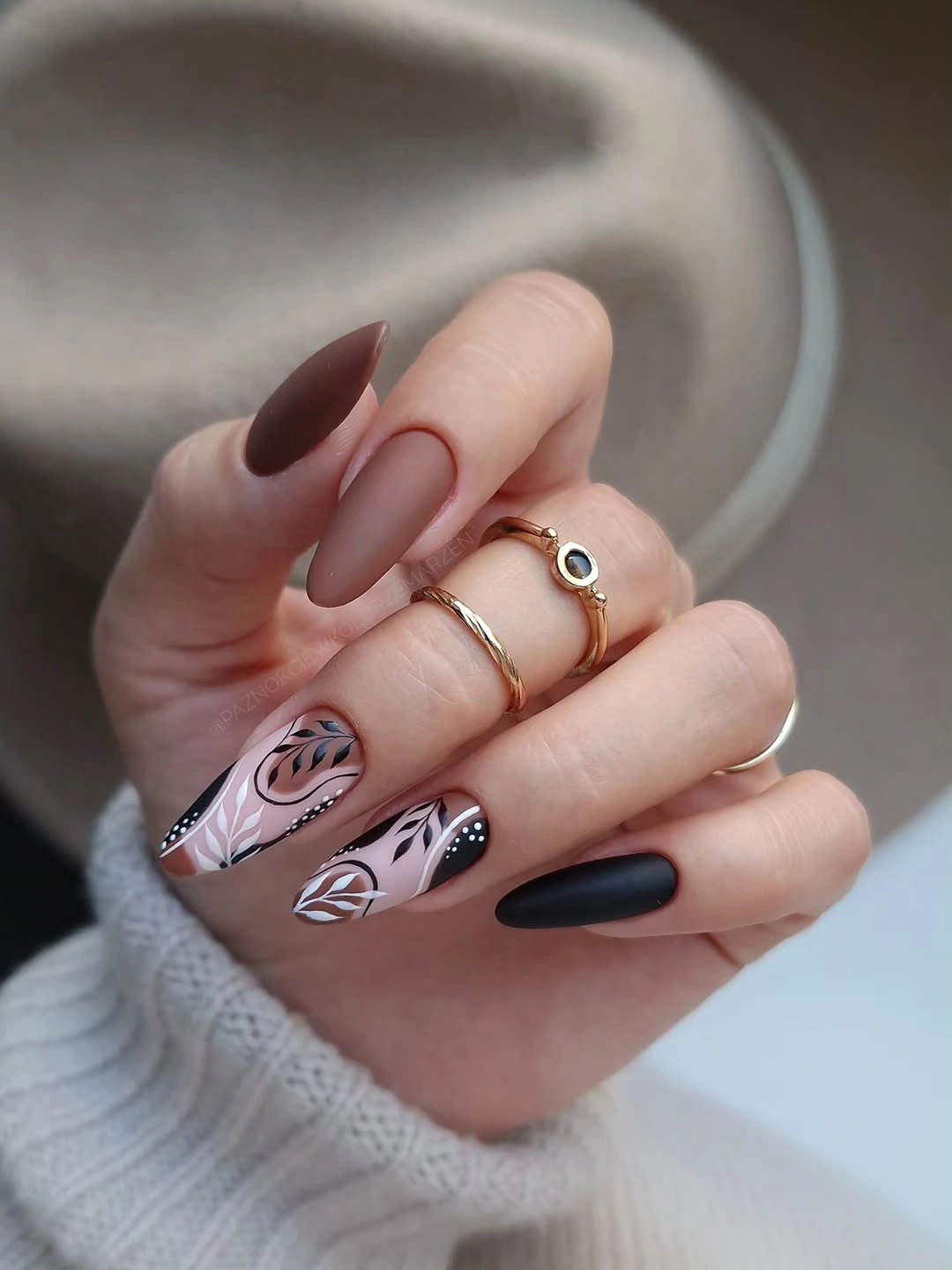
Allow the dark lines to breathe across the nail instead of packing every curve into one dense cluster. White accents can break the black and keep the drawing from feeling too heavy against the blush ground. A shorter almond can use one central branch or a single curved outline while keeping the same calm contrast.
This direction works when you like recognizable art but prefer a neutral palette. The tradeoff is that fine botanical marks need enough scale to remain legible; shrinking them too far will turn the design into scratches. Preserve the blush base and vary the line placement so the set feels related rather than mechanically repeated.
White and Orange Almonds with Leaf and Web Details
White nails create open panels for orange, green, and black details to stand out. Leaf shapes, fine web lines, and tiny illustrated marks share the set, but the light base keeps them from merging into one dense picture. The long pointed silhouette adds direction, making the seasonal colors feel sharper and more graphic.
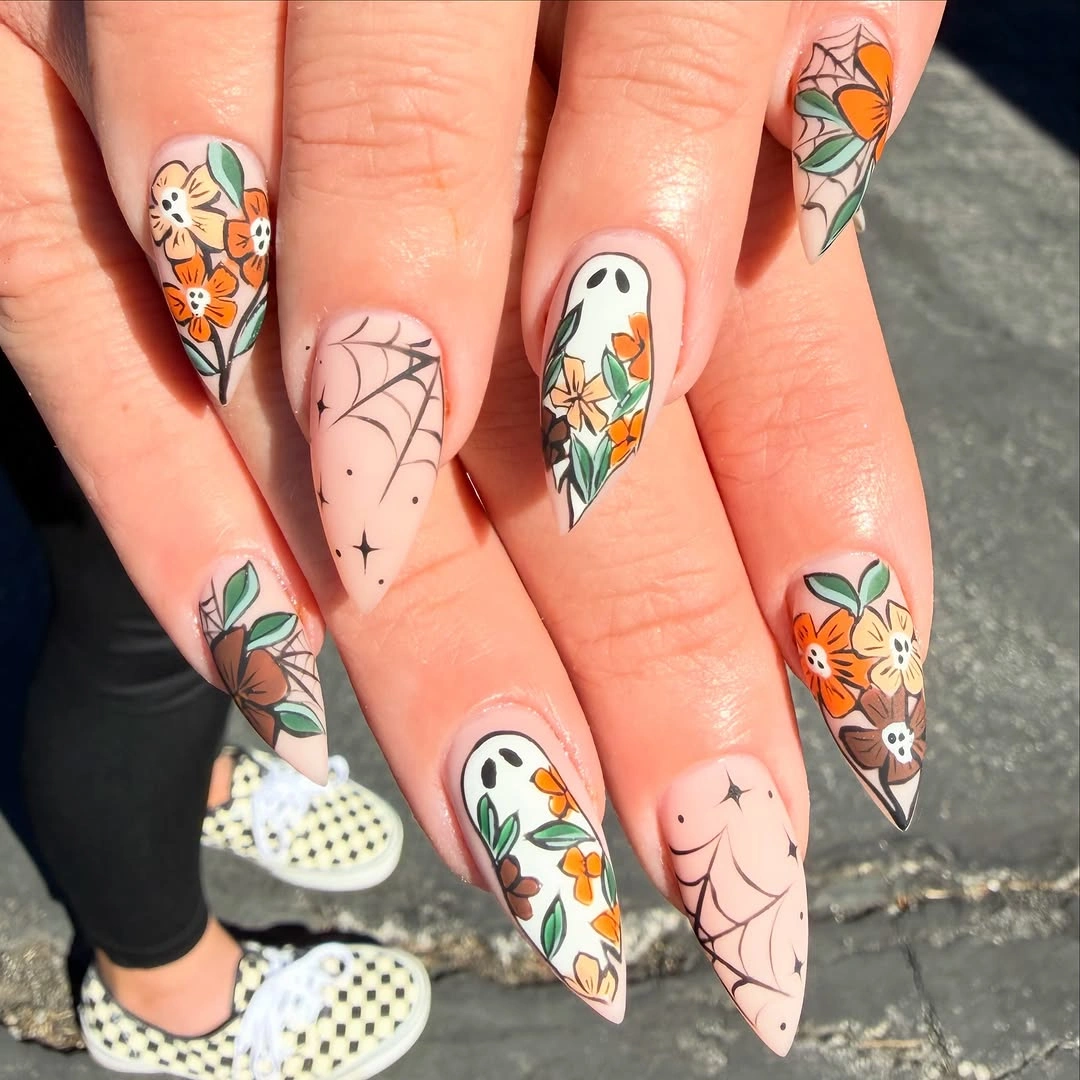
Use the white surface as visual breathing room and keep the orange and green concentrated where they can anchor the composition. Fine web-like lines should remain secondary to the larger leaf or accent shape. On a softer almond, shorten the point and let the white panel carry most of the design weight.
This is a stronger choice for someone who wants obvious fall nail art with several small references. Its tradeoff is density: multiple motifs can compete when the nails are shorter or the base is not left open. Keep one dominant detail per nail and repeat the color family so the set remains coherent.
Nude Almonds with Orange and Brown Floral Clusters
Small orange and brown floral clusters bring warmth to a nude almond without turning each nail into a solid autumn shade. The clustered marks create a gentle rhythm across the hand, while white details keep the palette from becoming too close in value. The medium-long shape gives the flowers enough room to remain recognizable.
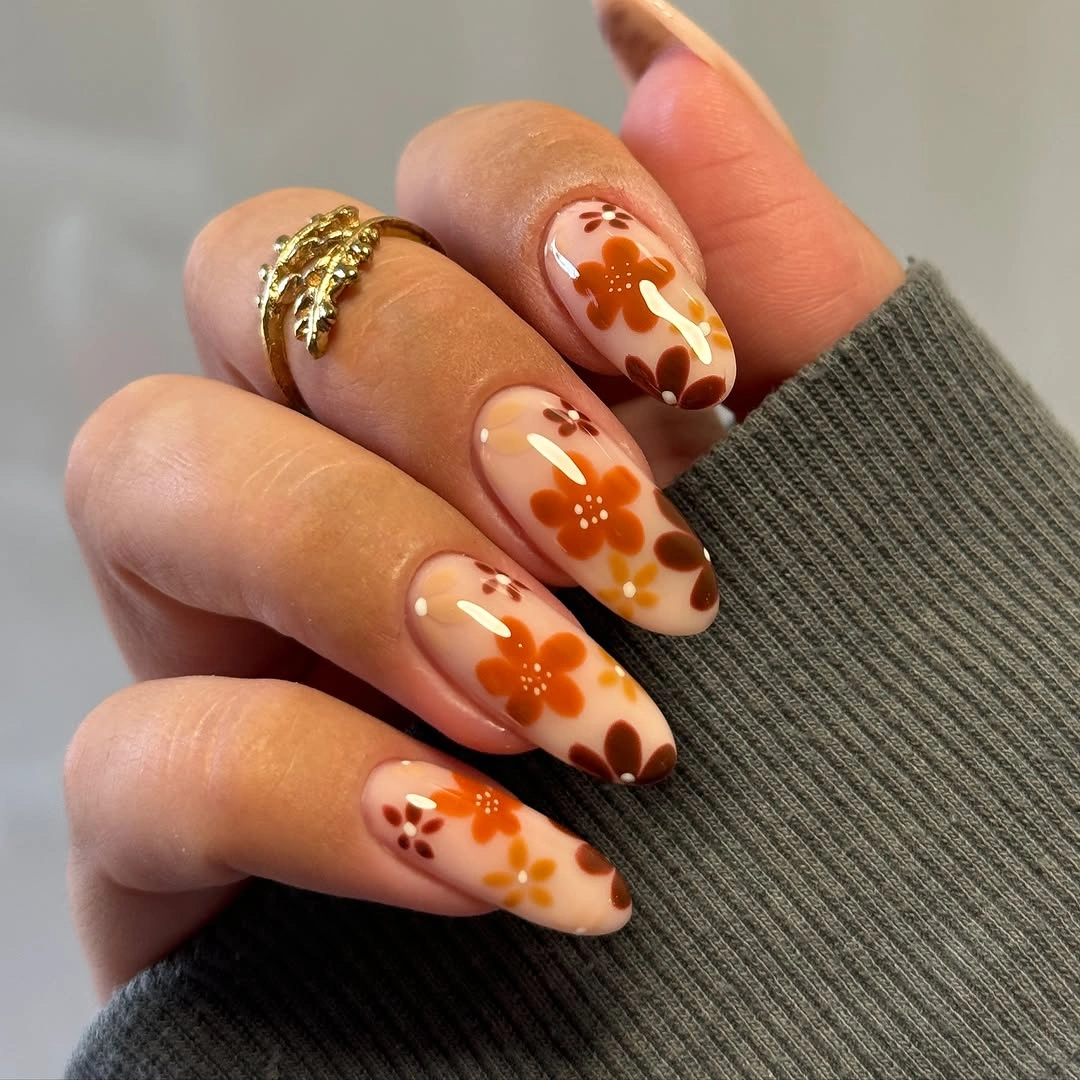
Place the clusters with a little variation so they feel hand-arranged rather than stamped into identical positions. The nude base should remain the largest visual area, and the brown leaves can connect the orange flowers from nail to nail. If you choose a shorter shape, keep the clusters small but give each one a clear center.
This look works with warm neutrals because the color story is clear without being loud. The tradeoff is that clustered art can become busy when every nail has the same density. Leave one or two nails mostly nude and use the lighter marks as a pause around the richer flowers. That pause makes the warm clusters easier to place.
White, Brown, and Gold Graphic Accents
White, brown, and gold create a tidy graphic rhythm on short-to-medium almond nails. Fine gold lines and brown pattern blocks supply detail, while white nails act as visual pauses between stronger marks. The manicure feels seasonal through its warm contrast rather than through one literal illustration.
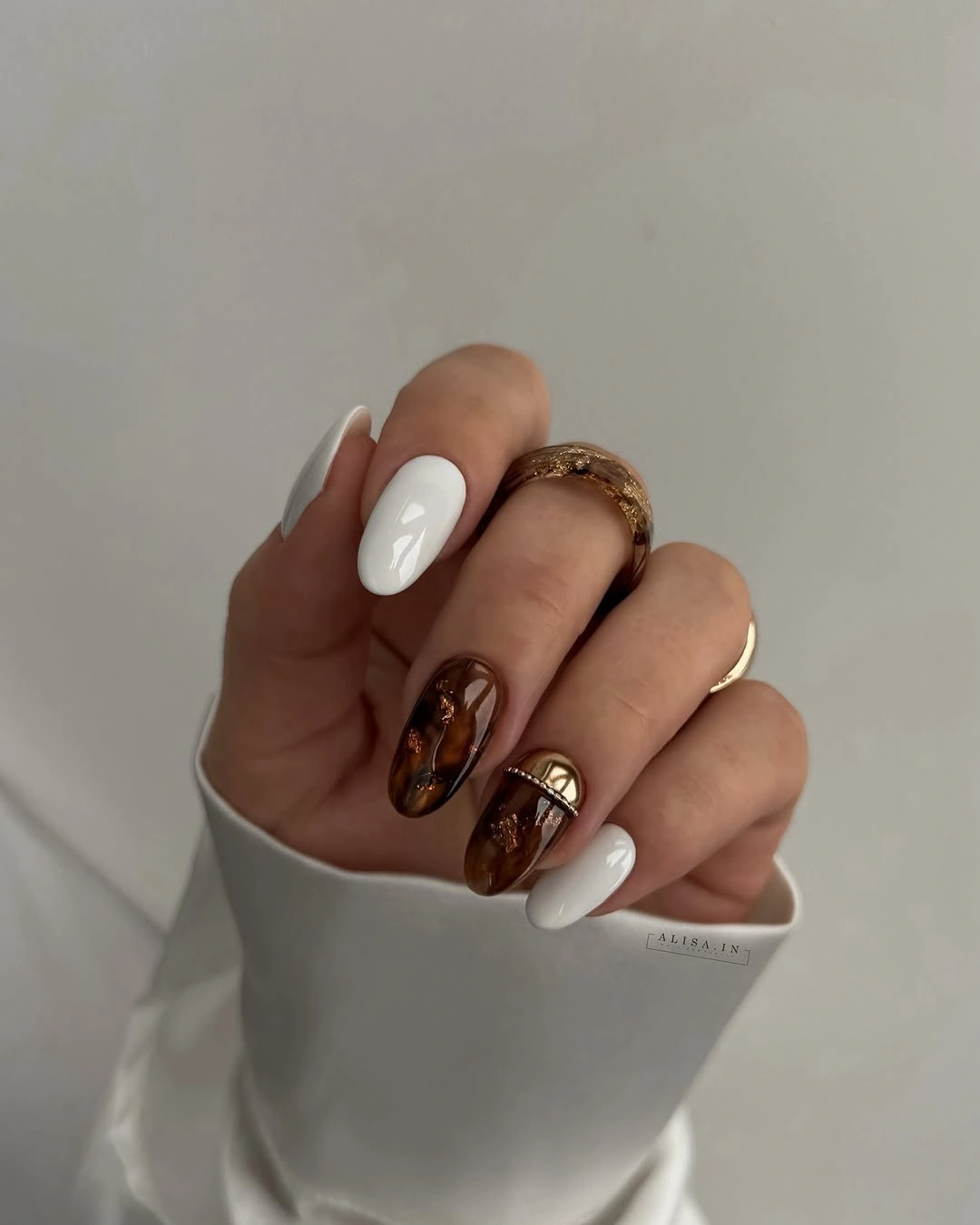
Keep the brown blocks simple enough to read at a short length, then use gold as a narrow line or small edge. The almond shape softens the geometry, so hard blocks do not feel as rigid as they would on a square tip. If the set becomes visually dense, remove one pattern before changing the palette. The warm contrast will remain intact.
This design is useful for readers seeking fall nail art ideas that do not depend on pumpkins or leaves. For more shape-led variations, compare the same palette with these fall square nail designs. Its tradeoff is balance: gold can disappear beside white or become too bright against brown if the accents are oversized, so keep metallic detail selective.
Blush, Orange, and Silver Detail on Long Nails
Blush and orange establish a warm base, then a cool silver accent interrupts the color story at one focal nail. Linear details repeat movement across the long almond shape, while the glitter-like flash keeps the set from becoming one-note. The contrast feels intentional because the cool note is limited rather than scattered.
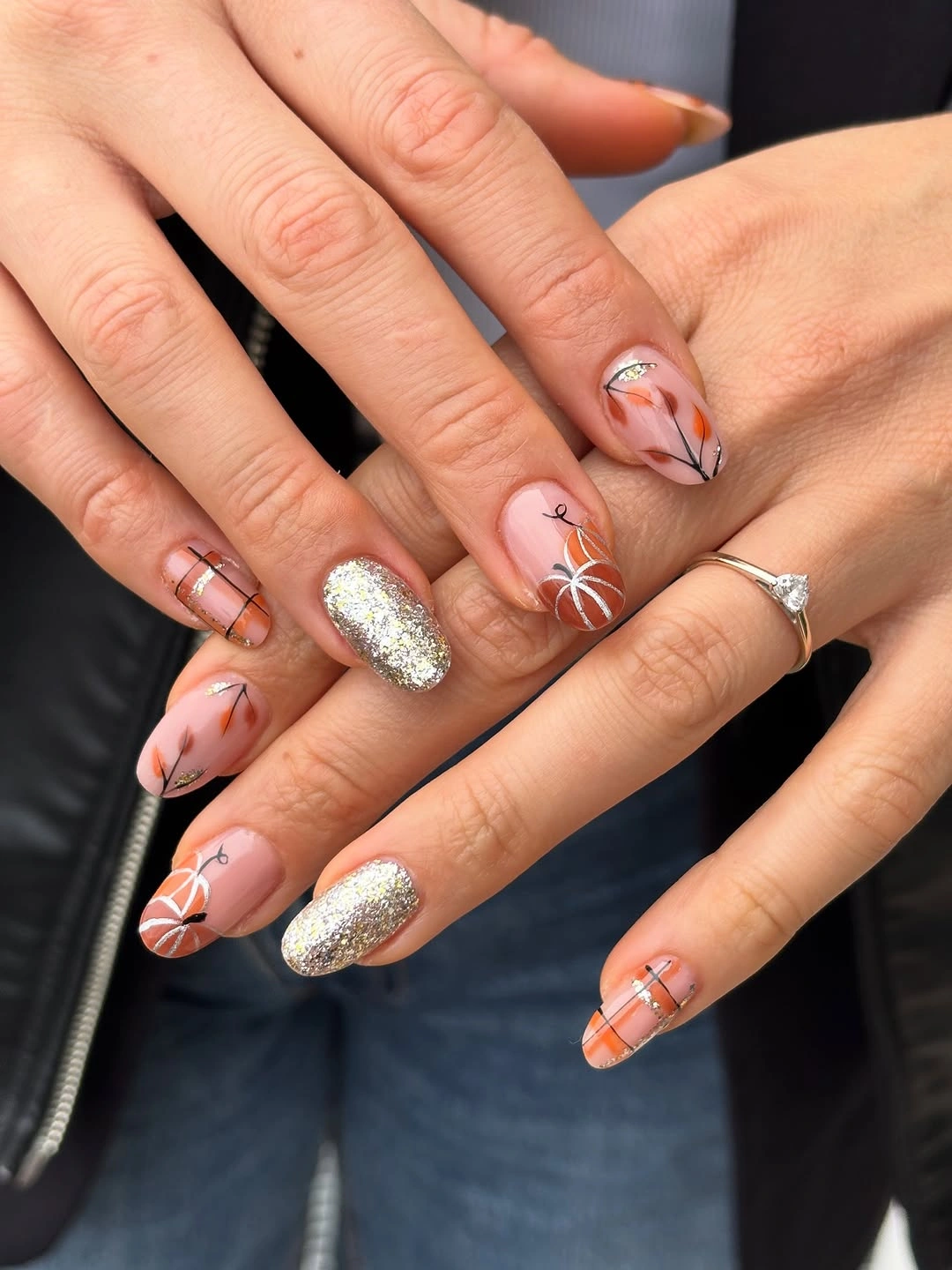
Use the long surface for a few clear lines instead of filling it with tiny symbols. The silver focal nail can carry more attention, but the blush and orange should still reappear elsewhere to hold the hand together. On medium nails, shorten the lines and keep the silver accent near the tip or center.
The result suits anyone who wants warm seasonal color with a little evening shine. Its tradeoff is that the glitter accent can dominate if the surrounding lines are too faint. Keep one cool focal point and make the other details strong enough to support it without copying its sparkle everywhere. A restrained accent keeps the palette balanced.
Pale Pink Nails with Tiny Orange Pumpkin Tips
Pale pink keeps the seasonal message light on a medium coffin shape. Thin orange tip lines and miniature pumpkin-like marks sit near the edge, leaving the center open and making the design feel delicate rather than cartoon-heavy. The idea works because the orange is placed as a small signal, not as the whole background.
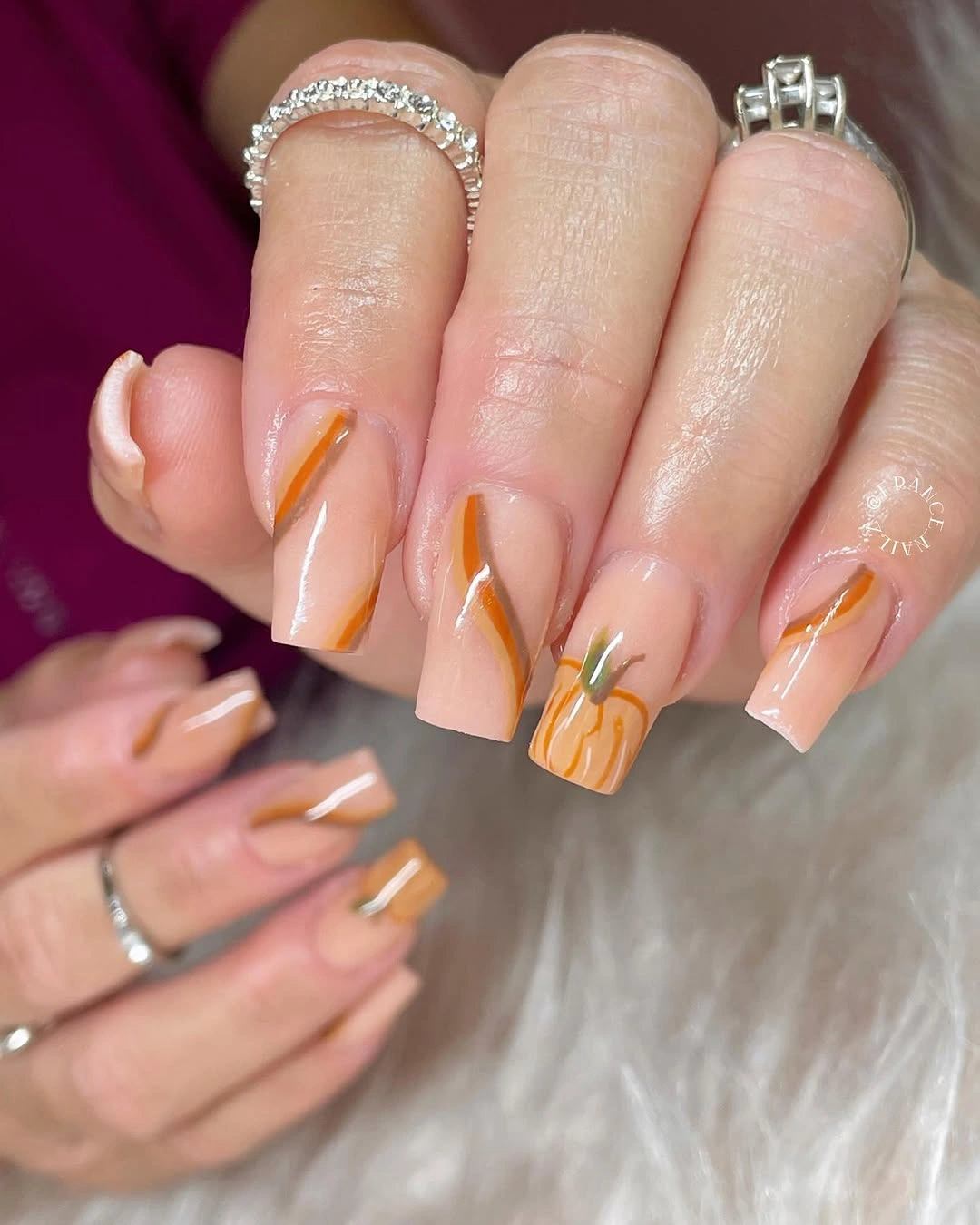
Let the tip placement follow the coffin outline and keep the tiny motifs spaced enough to read separately. White can support the pale base without adding a new visual direction. If you shorten the nails, preserve the open center and use one orange mark per accent nail rather than compressing several details together.
This style is a gentle answer to fall nail art ideas for someone who likes seasonal references but avoids strong orange. Its tradeoff is low contrast, so the small marks may be subtle in quick glances. Protect the pale background and use a clear warm orange line where you want the motif to remain visible.
Mustard Yellow Gloss on Short Almond Nails
Mustard yellow turns the short almond shape into the design. There is no separate motif, so the manicure feels bold through saturation and clean silhouette rather than decoration. The warm shade carries an unmistakable autumn association while the compact length keeps it from becoming overwhelming.
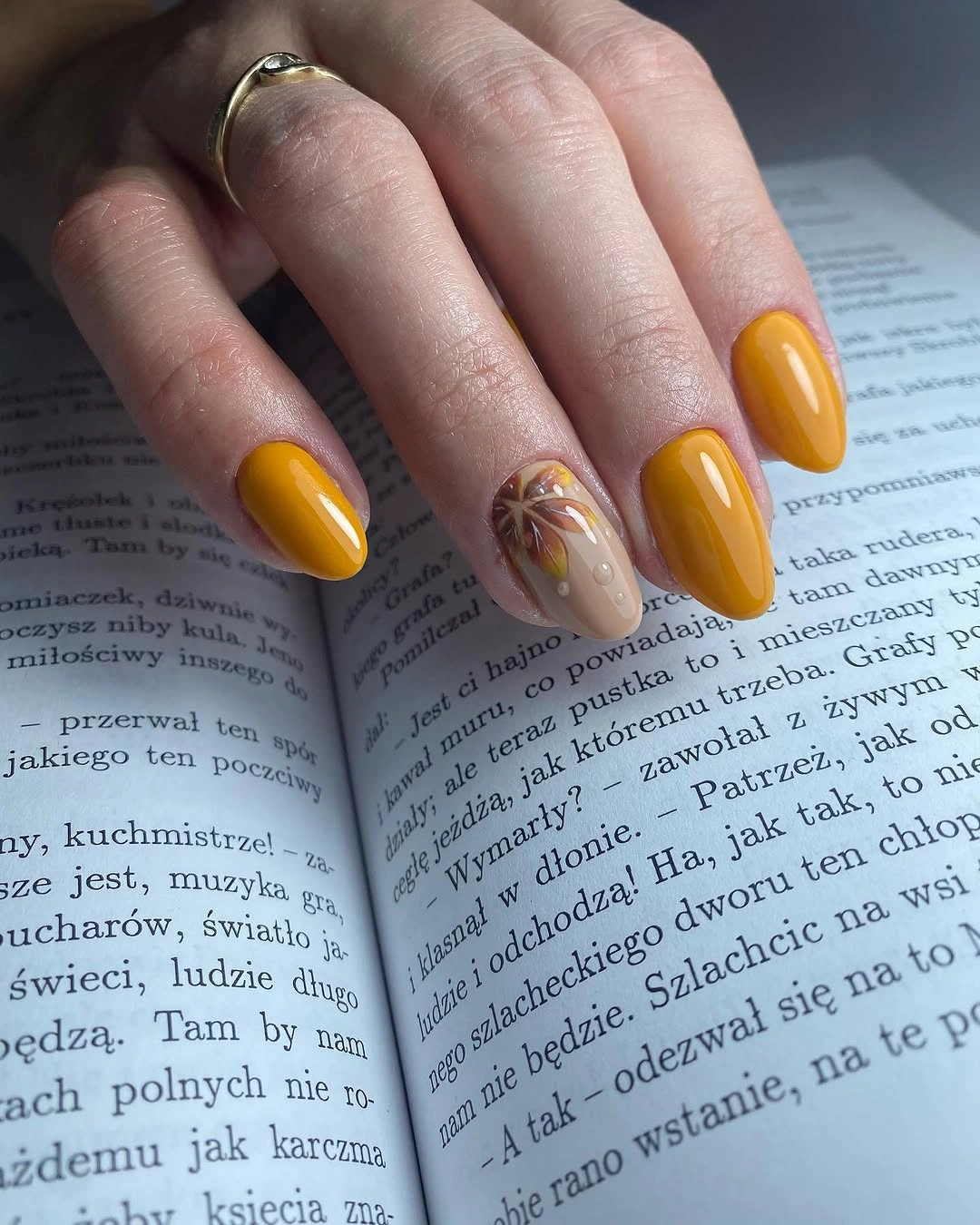
Keep the almond edge smooth because a single-color set leaves nowhere for uneven shaping to hide. The short length makes the yellow easier to wear, and the rounded taper keeps the strong color from feeling blocky. Add detail only if the base needs relief; a small neutral accent will be enough. The saturated surface should still lead.
This is a practical option when you want seasonal color without an illustrated manicure. Its tradeoff is that mustard can emphasize undertone differences, appearing softer or greener in changing light. Pair it with quiet neutrals and let the saturated surface remain the one clear statement. That simplicity is part of its appeal.
Nude Nails with Green and Orange Curved French Lines
Green and orange curved lines bring a clear autumn contrast to a nude almond base. The open center prevents the color from feeling heavy, while small gold-like accents add warmth around the edges. Because the design is built from lines rather than blocks, the long shape stays elegant and easy to follow.
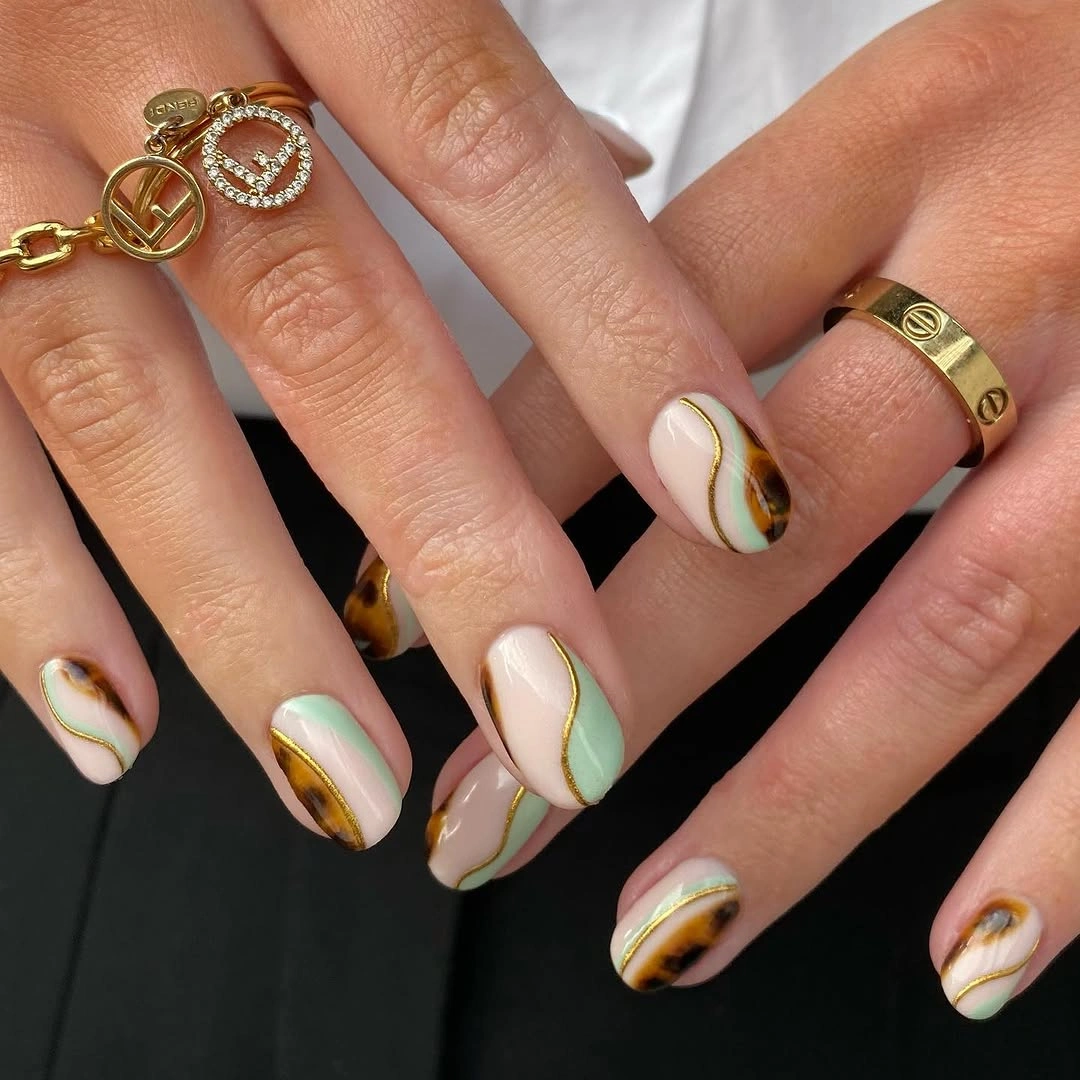
Let the colored curves follow the almond taper and keep the nude space between them visible. Green supplies a cooler counterpoint to orange, so neither shade needs to dominate every nail. On a shorter almond, use one broader curved line per tip and keep the gold detail tiny. The open center keeps the contrast light.
This is a flexible style for someone who wants fall nail art with a modern, open composition. Its tradeoff is precision: parallel curves can look uneven if the spacing changes from nail to nail. Preserve the same general direction, then allow small placement differences to keep the set natural. The repeated arc is the unifying detail.
Black, Blue, and Leopard Accent on Short Nails
Black provides the strongest base here, while a cobalt stripe and a small tan patterned accent break the surface in two different ways. The short square shape keeps the contrast compact, making the manicure graphic without requiring a long canvas. Pale nude space helps the blue and print remain separate focal points.
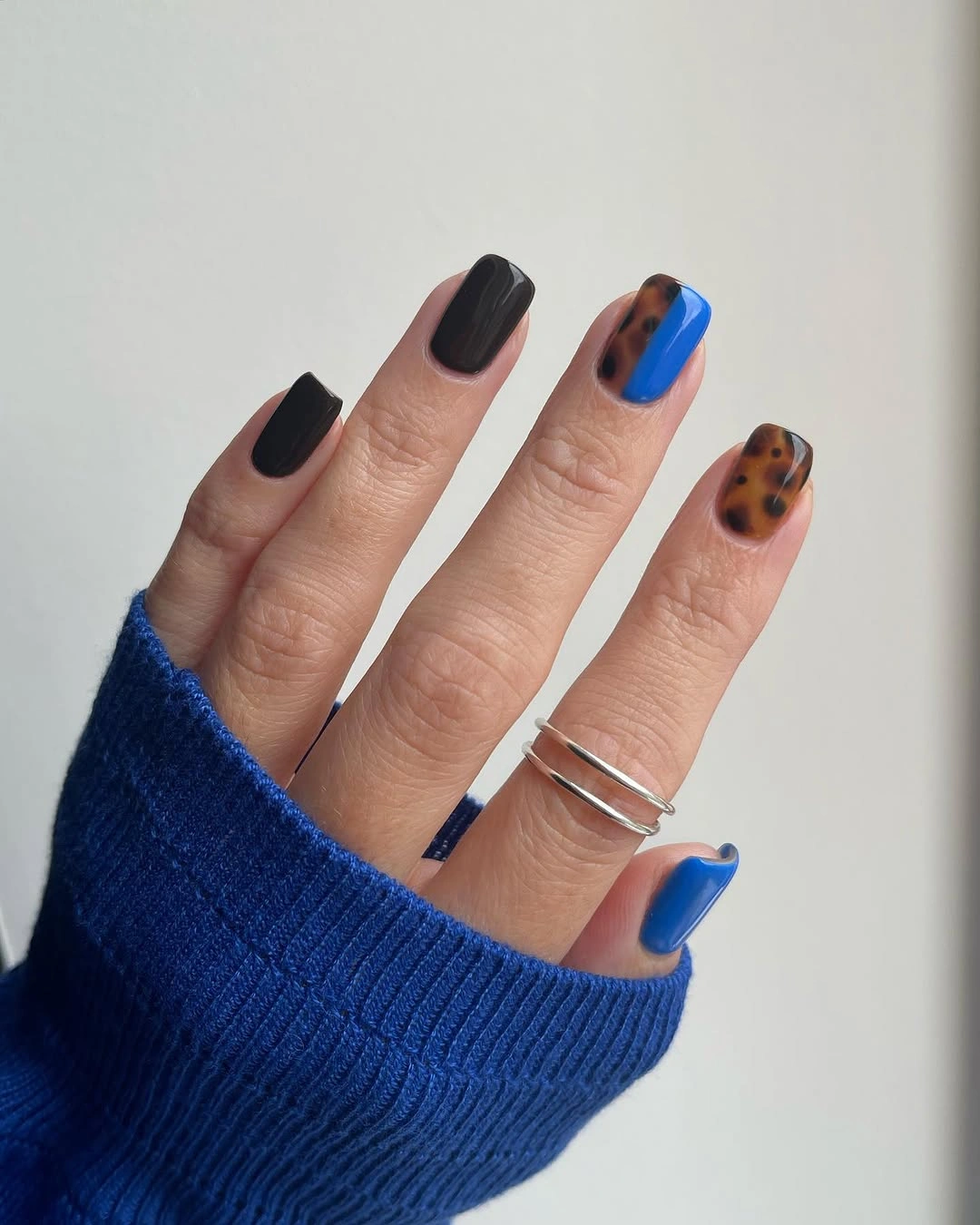
Use the blue stripe as a clean interruption and keep the leopard-like mark limited to one accent nail. The square outline reinforces the graphic quality, while a shorter length makes the set practical for everyday movement. If you want less contrast, soften the black with charcoal but keep the blue as the sharper note.
This design suits anyone who likes fall nail art ideas with an unexpected cool color. Its tradeoff is visual variety: black, blue, and a small print can feel disconnected if no color repeats. Let one neutral or pale detail bridge the elements and keep the accent count low. The short shape benefits from that discipline.
Burnt Orange Almonds with One Botanical Accent
Burnt orange establishes a strong seasonal field on long almond nails. One detailed brown botanical accent adds interest without breaking the clarity of the solid color story, and gold-like touches give the warm surface a little lift. The set feels designed because the illustration has a deliberate single location.
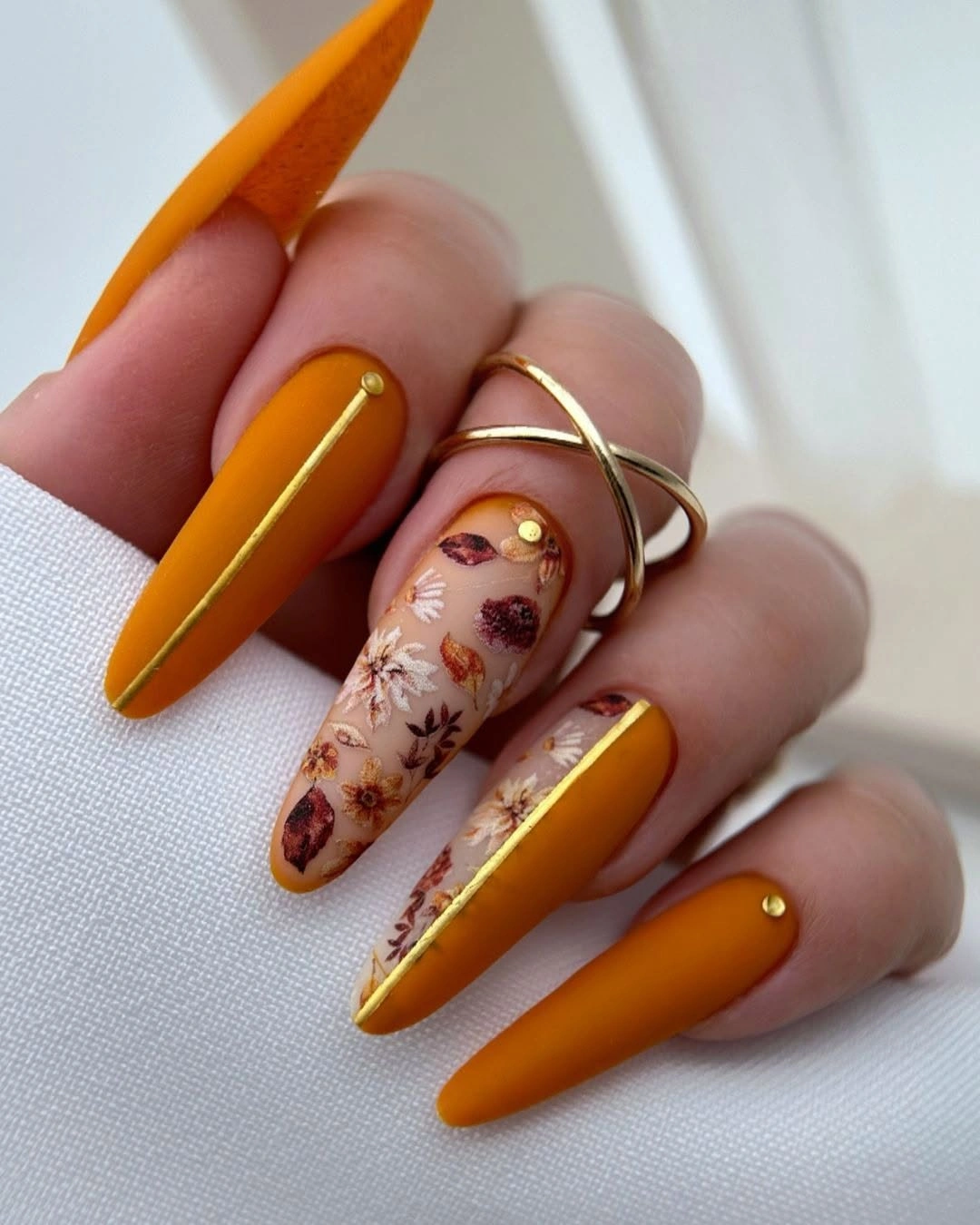
Keep most nails solid so the accent remains the place where the eye rests. The almond taper elongates the saturated color, while the brown botanical detail can echo the same warmth at a smaller scale. If you use a medium length, retain the solid orange base and simplify the branch rather than adding more motifs.
This is a confident choice for someone who wants an unmistakable fall color with only one piece of art. Its tradeoff is intensity: burnt orange can dominate a pale outfit or look brighter under direct light. Balance it with neutral clothing and let the botanical accent stay fine and secondary. The solid color should remain the first impression.
Burgundy, White, and Red with Seasonal Illustration
Burgundy and red give the manicure depth, while white accent nails create a clear background for small seasonal drawings. The medium-long almond shape keeps the illustrations visible without making the entire hand feel busy. Repeated warm colors connect the illustrated panels to the darker solid nails.
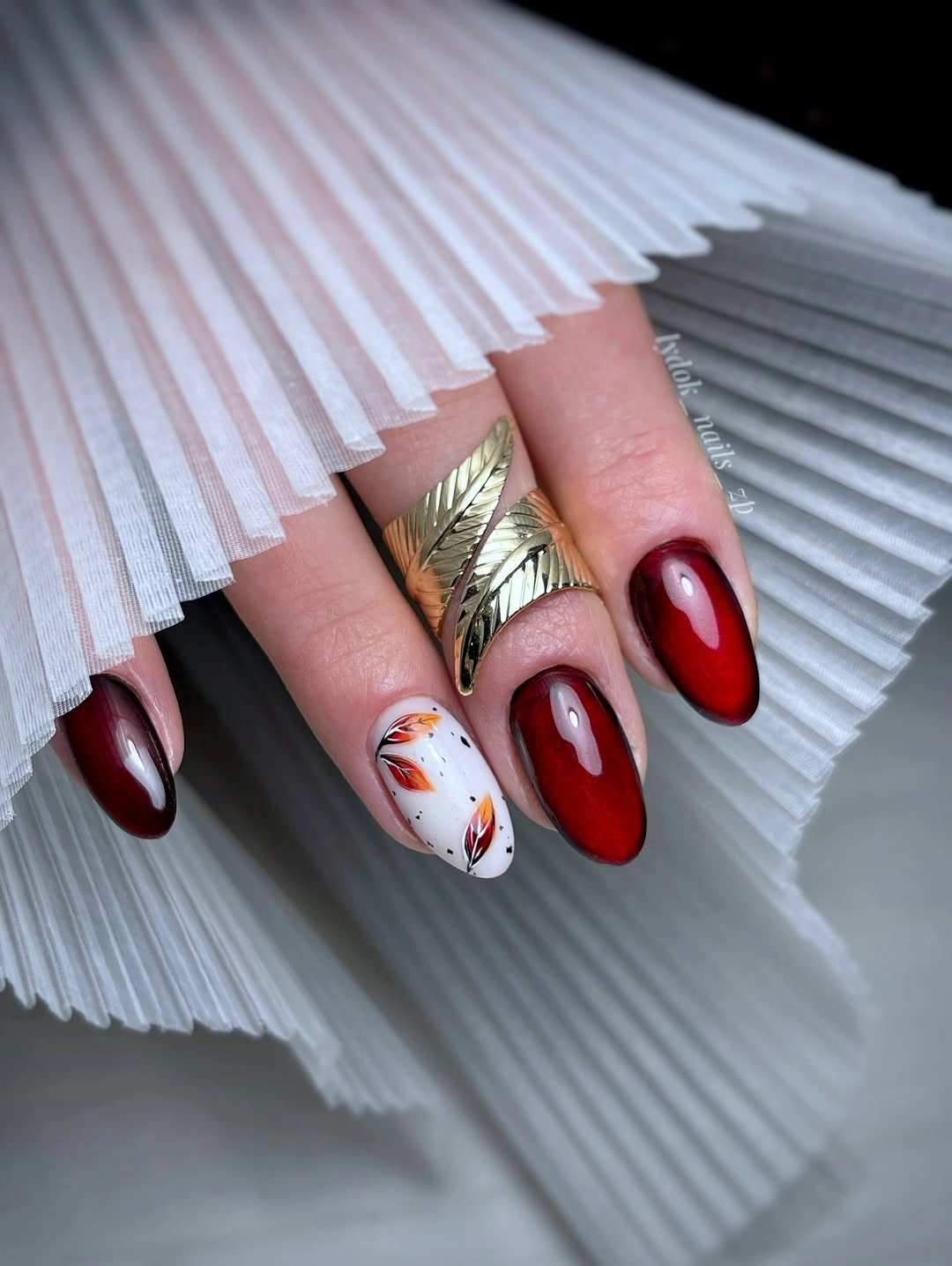
Use white as the open space that lets each small drawing breathe. The burgundy nails can remain simple, acting as visual anchors between the red and white details. If you shorten the shape, reduce the illustration size or choose one larger symbol rather than squeezing several marks into a narrow panel.
This direction works when literal seasonal art is part of the appeal. Its tradeoff is that the illustrated nails need enough contrast to stay readable beside rich burgundy. Keep the drawings limited to a few clear shapes and repeat one warm tone around them so the set feels like one story. The white panels should remain calm.
Lime and Black Leaf Marks on Soft Yellow
Pale lime and yellow take autumn nail art in a lighter, less expected direction. Black leaf-like marks create crisp contrast on the medium almond base, while white details keep the palette from becoming flat. The mood is seasonal through color temperature and botanical rhythm rather than through a dark background.
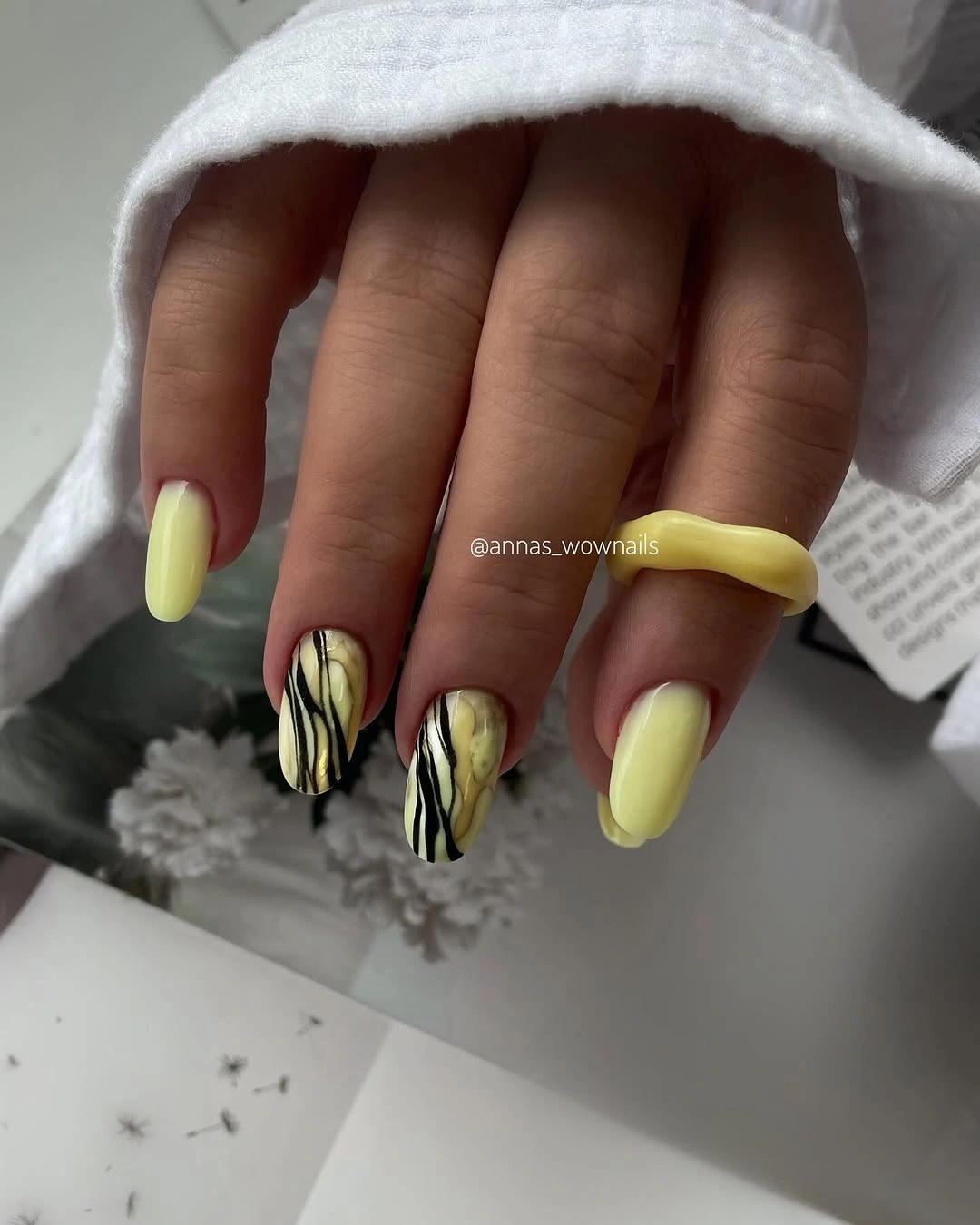
Keep the black marks airy and let the pale base remain dominant. The almond shape supports curved branches and leaf forms, but the design will stay clearer if each nail has one main direction. On shorter nails, reduce the number of leaves before reducing the contrast that makes them readable. Space is what gives the pale palette definition.
This option is useful for anyone exploring fall nail art ideas outside the usual brown and orange range. Its tradeoff is softness: pale yellow and lime can look gentle rather than dramatic. Add a small black accent only where needed, keeping the unusual color relationship at the center. The lighter direction is the point.
Orange Tips with Pressed-Looking Floral Accents
Saturated orange and yellow tips frame delicate floral-looking panels on long pointed nails. Pale nude areas give the flowers room to breathe, so the collage feels placed rather than scattered. The pointed silhouette adds a light directional tension, while the softer accent panels keep the color from becoming too solid.
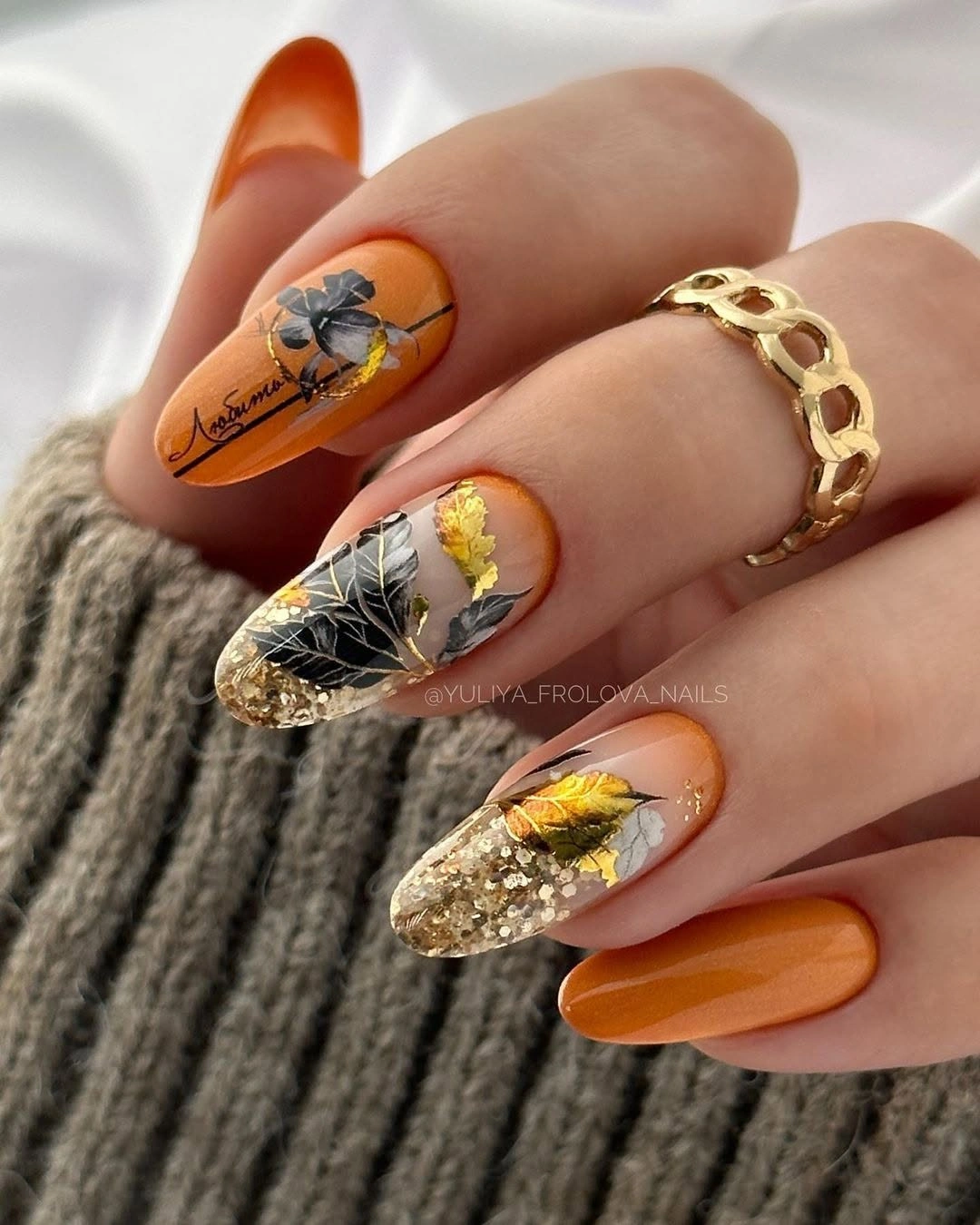
Let the orange and yellow act as strong borders and keep the floral details inside their pale spaces. That separation makes the small marks easier to read and prevents the colors from blending into one bright field. On a long almond, broaden the pale panel slightly and soften the tip to make the idea more wearable.
This style suits someone who wants a decorative seasonal set with a clear composition. Its tradeoff is length and saturation: both make the design noticeable before the floral details are seen. Keep accessories simple and allow the delicate panels to provide the contrast against the bold tips. The pale panels need that breathing room.
Mixed Autumn Colors with White Leaf Details
Orange, coral, pink, purple, and red can coexist when white leaf lines provide a common thread. The medium-long almond shape gives the mixed colors enough space to remain distinct, while the repeated pale details keep the hand from looking like unrelated swatches. The design is lively, but its structure comes from repetition.
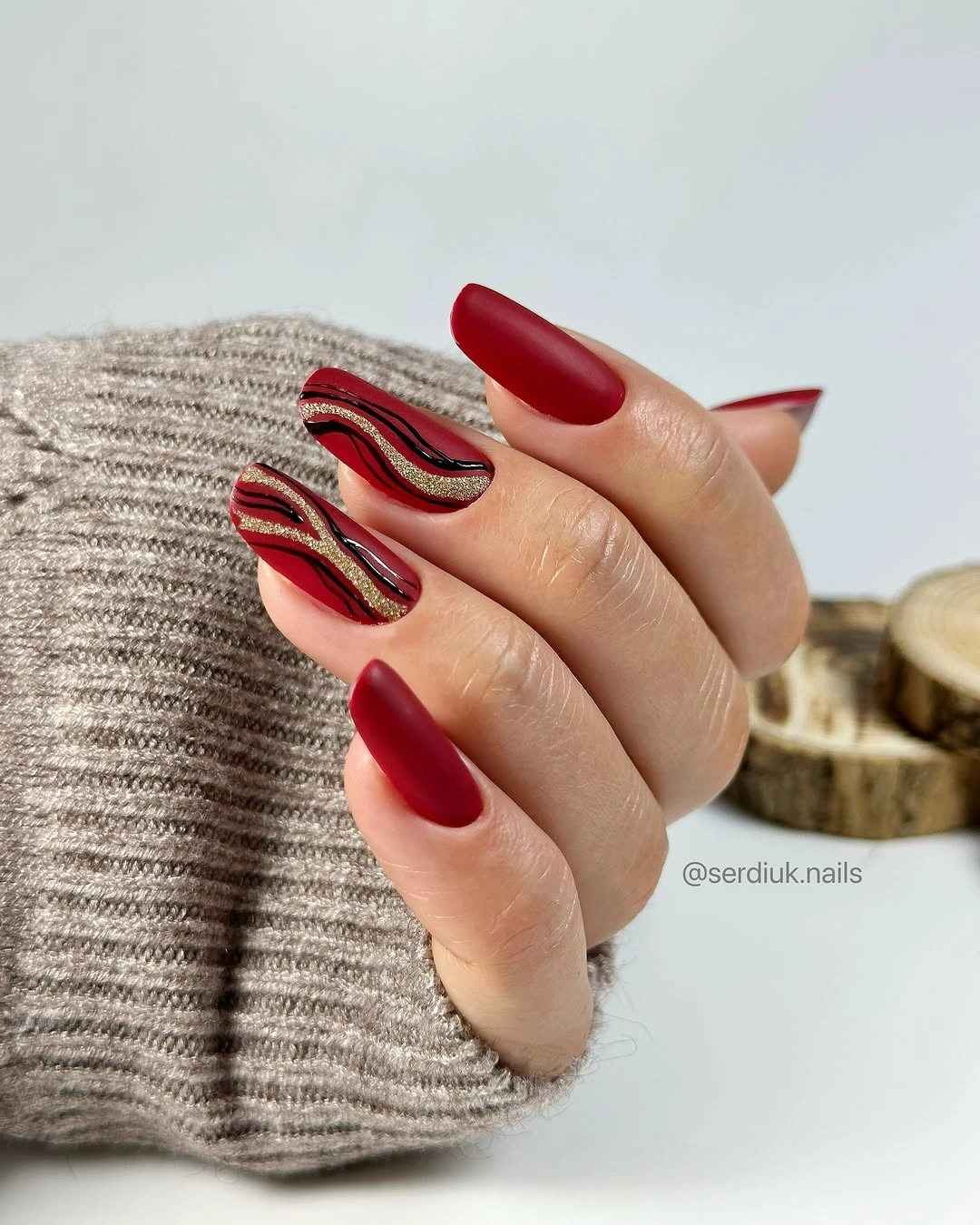
Use white marks to connect the colors without repeating the exact same drawing on every nail. Keep each base shade large enough to read on its own, then let the leaf lines sit above it as a shared accent. If you shorten the manicure, choose three main colors and keep the white thread consistent. This creates unity without flattening variety.
This is a good answer for anyone who wants fall nail art that feels playful and colorful. Its tradeoff is visual noise if every hue receives equal decoration. Decide which color should lead, which should support, and where the white lines can create a pause between them. A clear hierarchy keeps the mix intentional.
Layered Red and Orange French Waves
Stacked red, orange, and white waves give a long coffin shape a clear sense of movement. The nude base keeps the warm colors open, while the repeated curves create rhythm from nail to nail. This approach feels seasonal through its palette and line direction, without relying on a single symbol. The open base keeps the rhythm light.
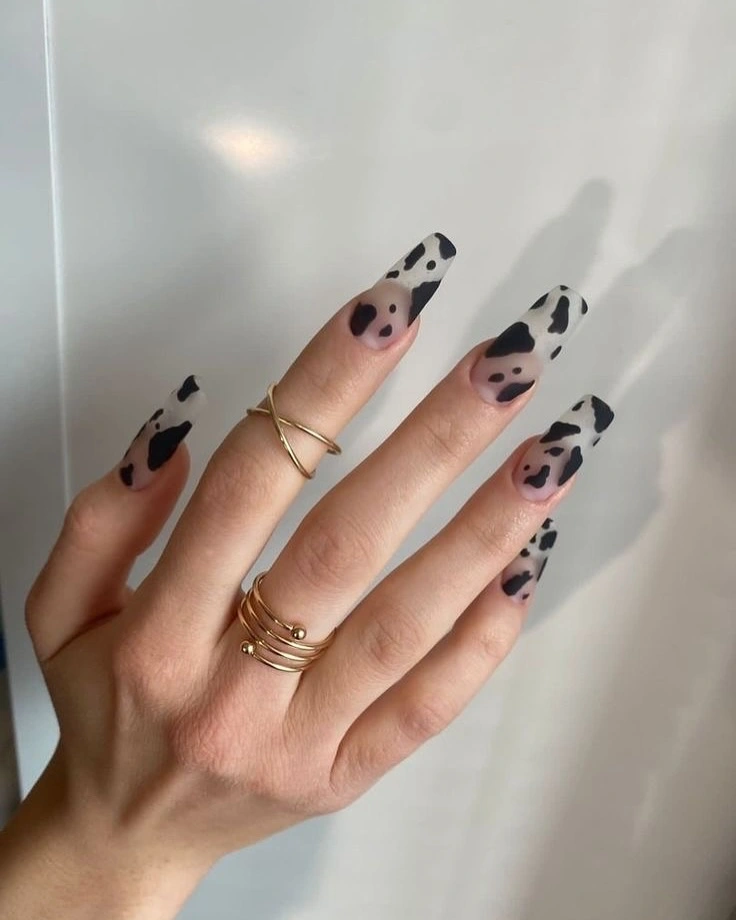
Let the waves follow the coffin edge and keep their spacing readable at the tip. The nude center is important because it stops the warm colors from becoming too dense, especially on a long shape. For shorter nails, use two lines instead of three and allow the white border to remain visible. That preserves the layered effect.
The manicure feels polished but still has enough movement for a statement look. Its tradeoff is that uneven curves will interrupt the rhythm more than they would in a scattered design. Keep the direction consistent, then vary the starting point slightly so the hand does not look mechanically identical.
White Almonds with Black Web and Character Lines
A white almond base gives black web-like lines and a small character drawing maximum contrast. The long shape supplies a clean frame, and the dark tips help the detailed surface remain anchored instead of floating. This is a playful set, but the limited palette keeps it visually focused. The pale field does the organizing work.
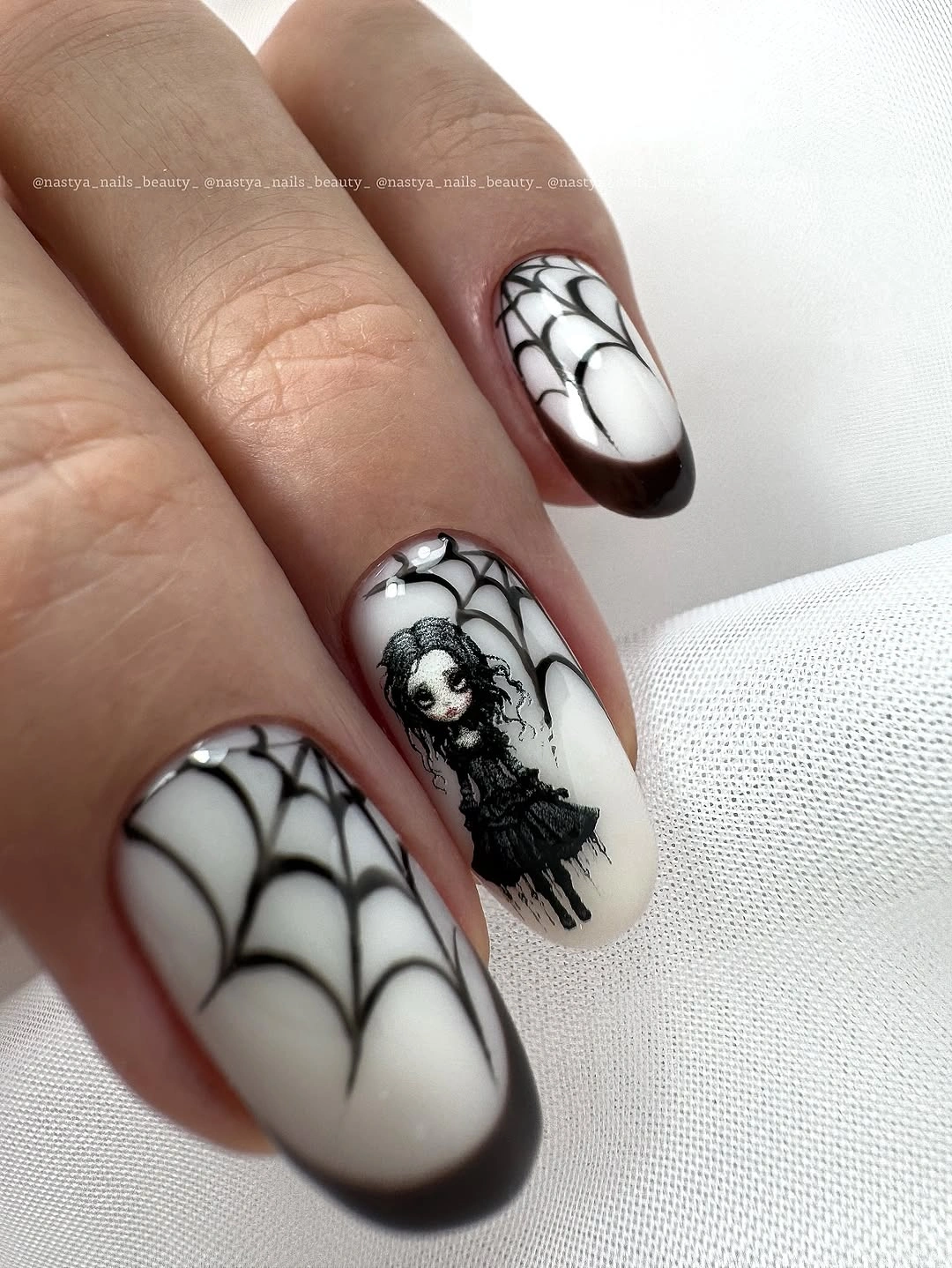
Leave enough white space around the web lines so the small drawing remains distinguishable. The black details can vary in scale, but the tip framing should stay simple to prevent the design from feeling crowded. On a medium almond, choose either the web pattern or the character as the main accent. One clear focal detail will read best.
This option is best for someone who wants clearly visible art and a little personality. Its tradeoff is high contrast: every line will show, including any unevenness in the shape. Keep the base clean, use a restrained number of marks, and let the white field do the organizing work. The clean background makes the playful detail stronger.
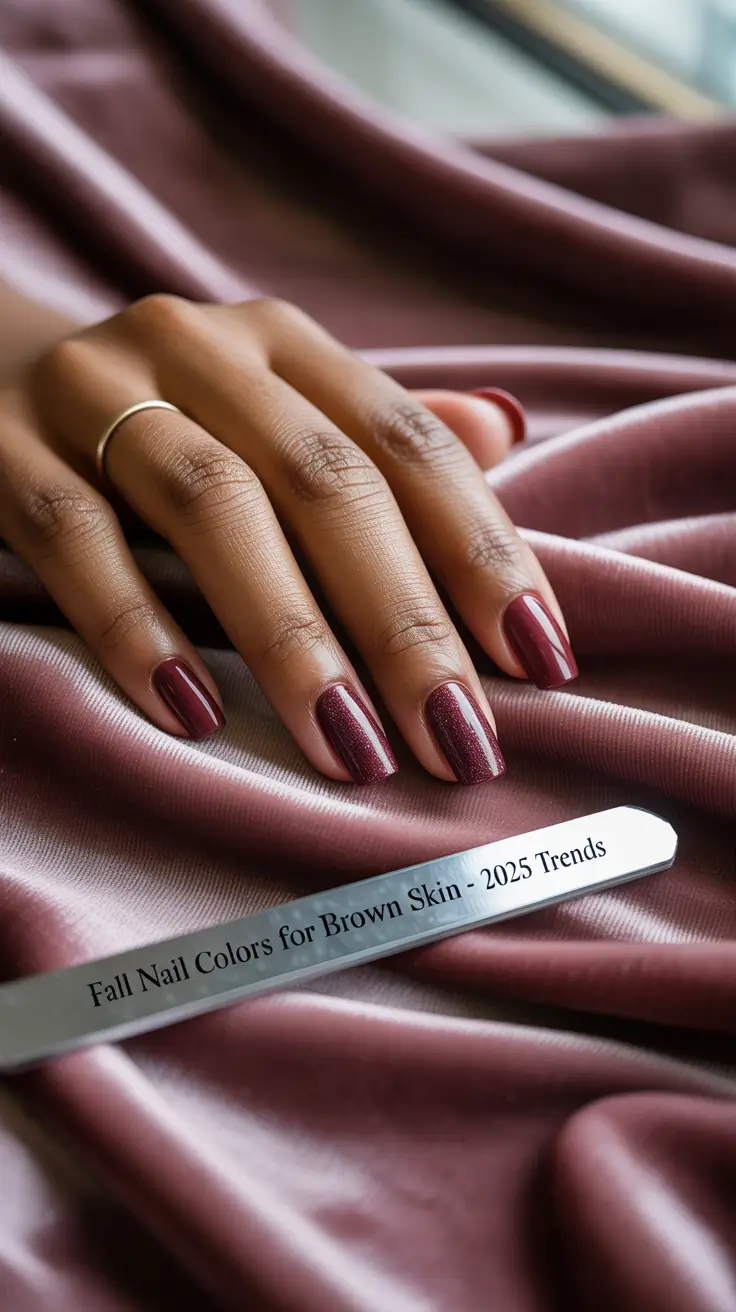
Burgundy Gloss with Rose-Like Swirl Accents
Burgundy gloss gives short square nails a deep, unified base, while small rose-like swirls add pattern without opening a new color story. Black and red deepen the accents, and one pale blue note keeps the set from closing into a heavy block. The compact shape makes the design feel confident rather than ornate.
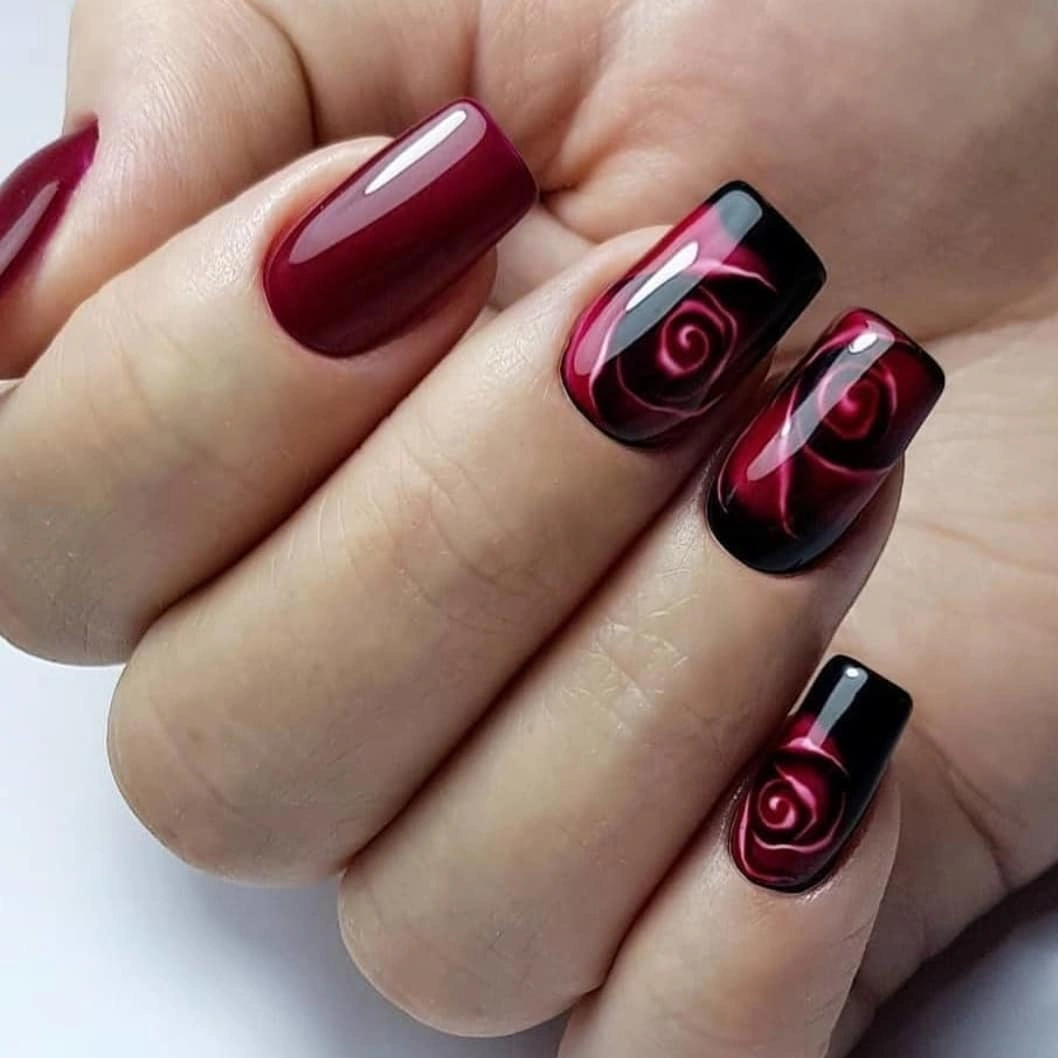
Keep the swirl marks smaller than the burgundy field and use the pale accent only where the set needs a point of relief. The square outline supports the graphic quality, while the short length prevents the dark red from feeling too dramatic. If you choose an almond shape, let the swirls curve with the taper.
This is a strong choice for someone who likes rich color with a hint of illustration. Its tradeoff is density: a full pattern on every nail would overpower the short silhouette. Preserve a few solid burgundy nails and let the darker swirls remain accents rather than a second base. The pale detail should stay a small interruption.
Nude Nails with Chunky Orange Glitter Details
Chunky orange and copper details stand out clearly against a nude-pink long coffin base. Large glitter panels and gold accents create a tactile-looking focal point, while the transparent center keeps the design from becoming fully opaque. The warmth feels festive, but the nude space gives it a clean frame.
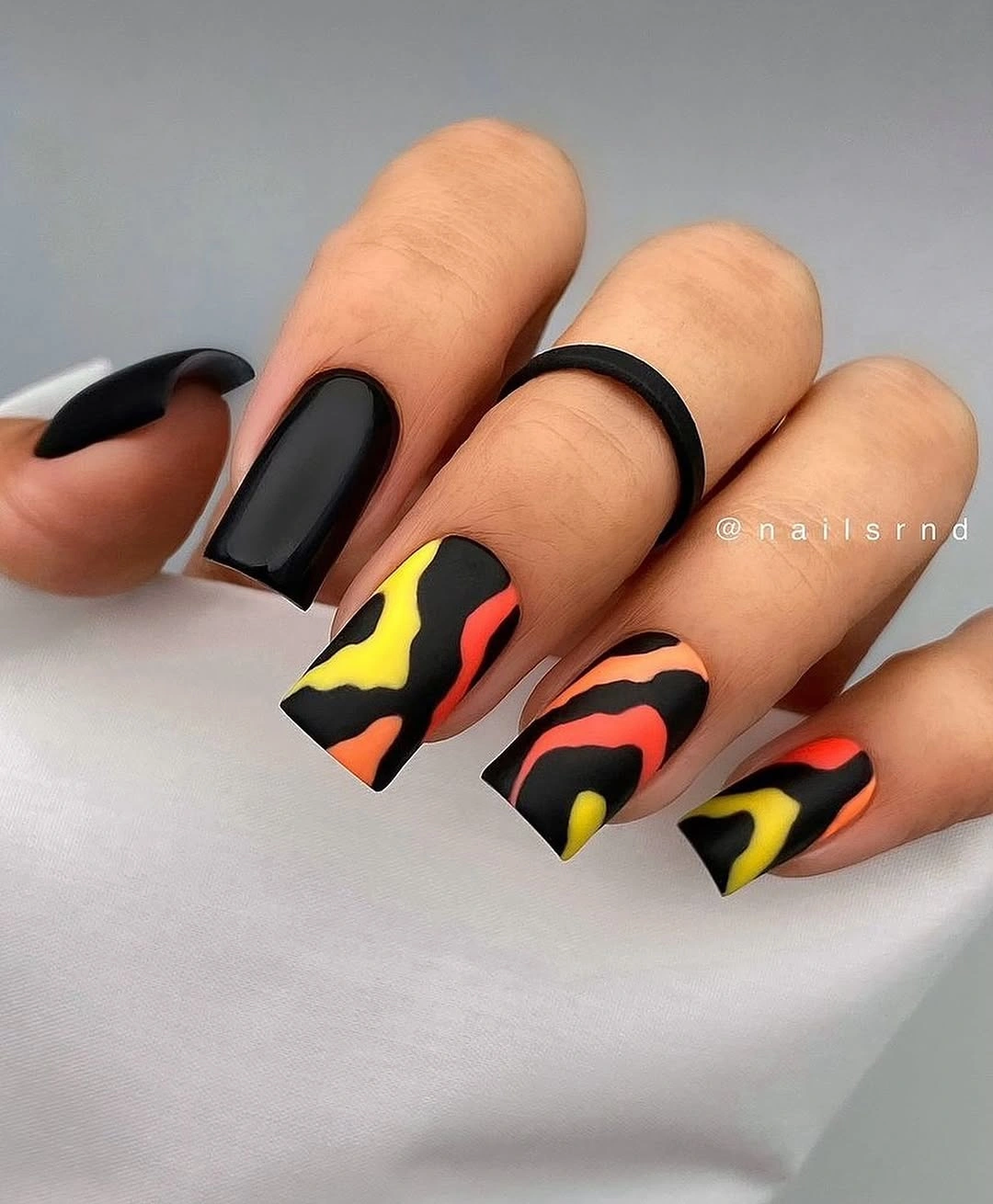
Keep the glitter concentrated toward the tip or selected sections so the nude base remains visible. Gold accents work best as repeated small blocks or edges, not as a second layer across every nail. If you shorten the shape, reduce the panel size while keeping one warm metallic point for continuity.
This idea suits someone who wants fall nail art with noticeable shine and a strong color payoff. Its tradeoff is visual weight: chunky details can make a long coffin shape feel heavier if the nude balance disappears. Let the open base stay generous and keep the surrounding styling simple. The nude center is the necessary counterweight.
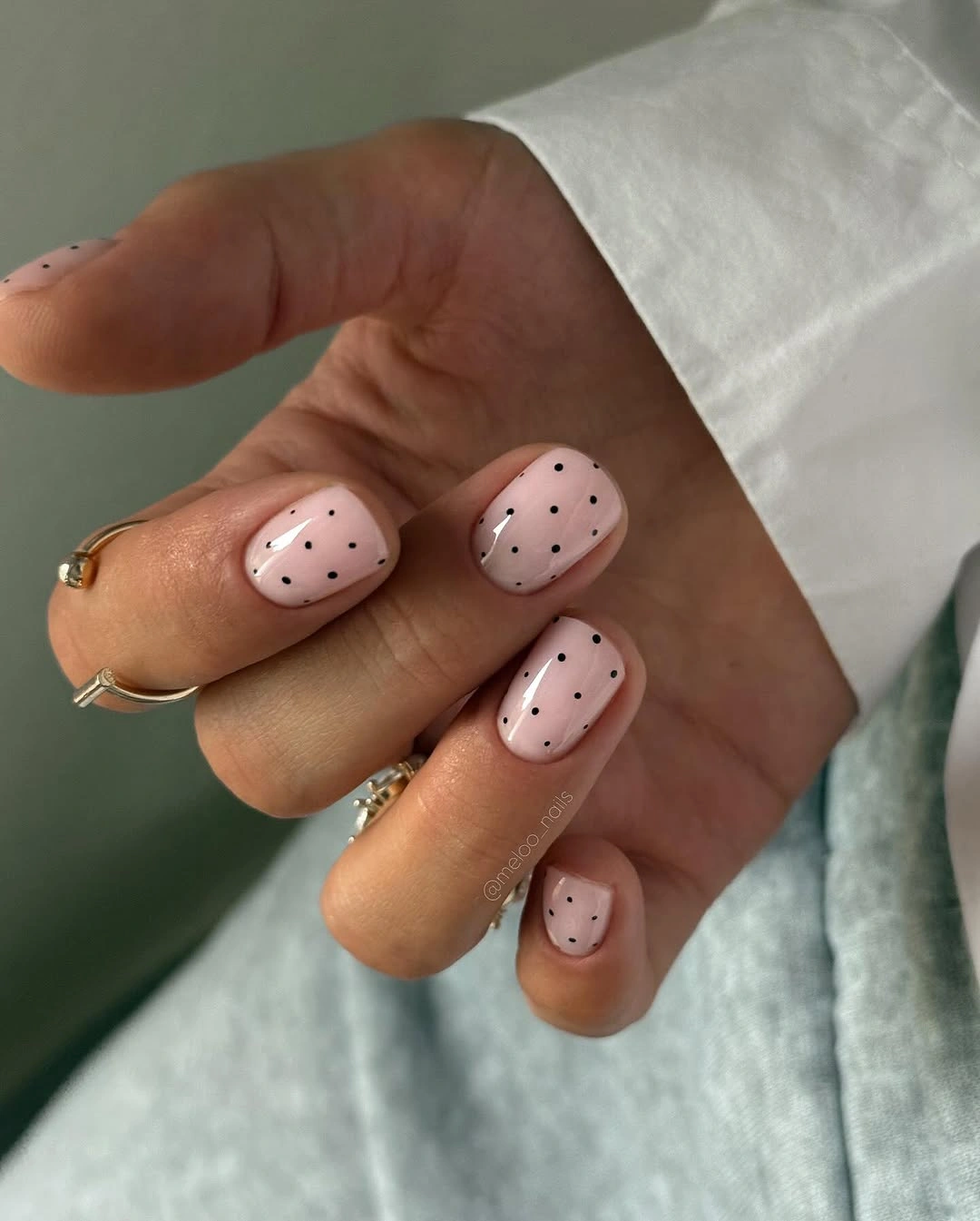
Pale Pink Nails with Black Dot Borders
Pale pink creates an open surface for black dotted edging to establish rhythm. Small orange and gold marks add warmth, but the border remains the clearest idea, giving the short-to-medium rounded shape a delicate frame. The result is seasonal through tiny accents rather than through a large illustration.
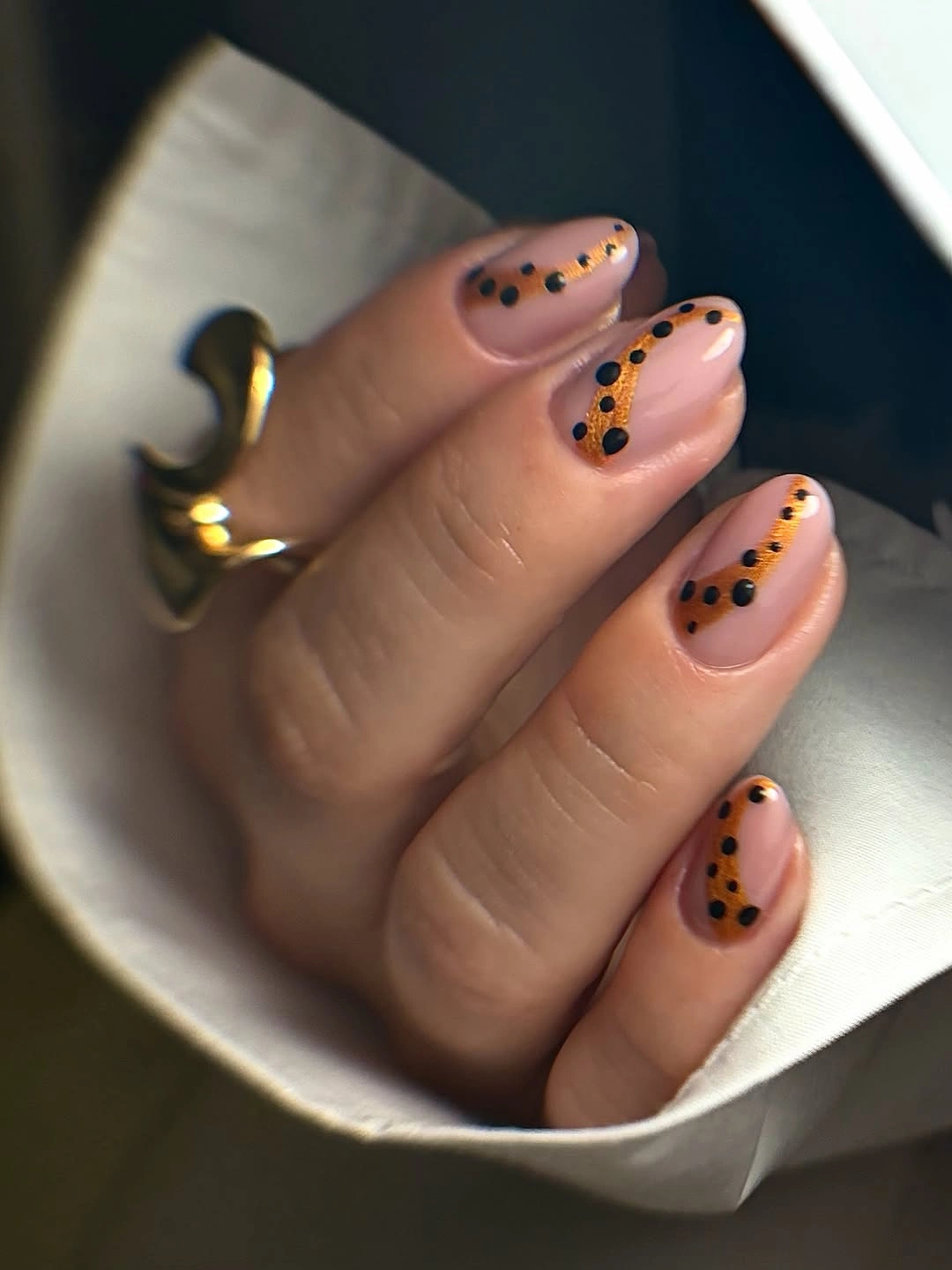
Keep the dots evenly spaced enough to read as a border, then let a few warm marks break the pattern. The rounded silhouette supports the soft, almost jewelry-like quality, while the pale base prevents the black from feeling too hard. On very short nails, use dots only along one side or the tip. A partial border can be just as clear.
This light, tidy finish can also be scaled toward the practical proportions in these simple fall short nails. Its tradeoff is scale: oversized dots would change the border into a heavy graphic stripe, so preserve the pink space and keep the small seasonal marks restrained. Small accents need a quiet background.
Navy, Rust, and White Small-Scale Accents
Navy and rust create a cool-versus-warm contrast on short square nails, while white and pale blue keep the small color blocks open. Tiny abstract marks add interest without requiring full illustrations, so the set feels designed but not overworked. The square shape gives the varied palette a neat framework.
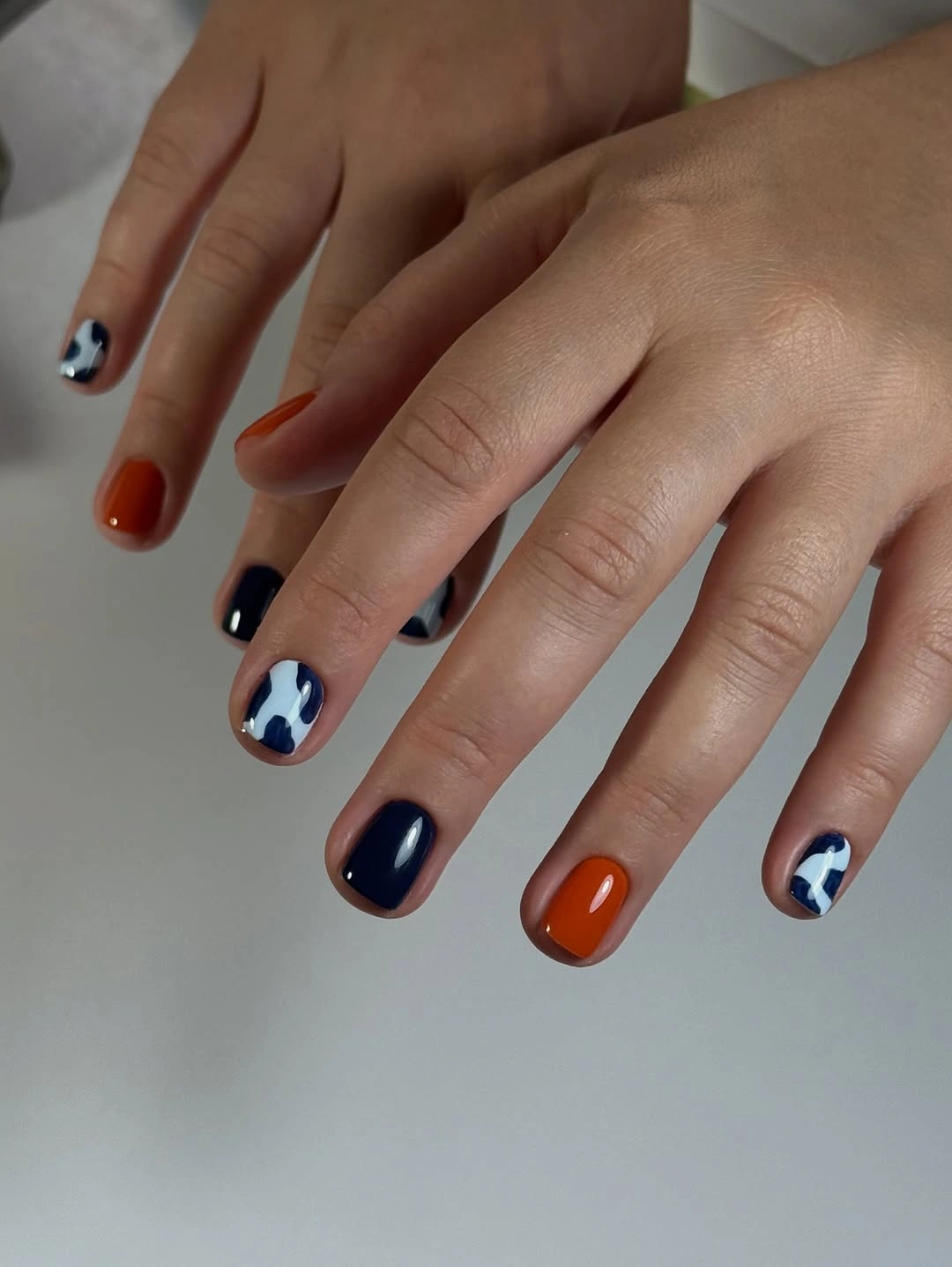
Let navy or rust lead on each nail and use white as the visual separator. Because the canvas is short, small marks should remain simple and spaced rather than packed into mini scenes. If you move the colors to an almond shape, allow the accents to follow the length instead of forming a rigid grid. The cool-warm contrast will remain easy to read.
This manicure is a good fit for someone who wants seasonal color with an abstract finish. Its tradeoff is that several small accents can look disconnected if no shade repeats. Keep navy and rust as the main pair, use pale tones for relief, and leave enough solid color to make the composition readable.