
A short manicure looks fresh when the eye can understand it quickly. That does not require a bare surface or a strict matching set; it requires a clear focal point and enough quiet around it. On a compact nail, clean spacing often has more impact than extra decoration, because the shape stays visible instead of disappearing beneath details.
Use simplicity as an editing tool rather than as a demand for plainness. Keep the edge consistent, let one decision carry the personality, and remove anything that competes with it. That approach makes fall short nails easier to wear with changing clothes and easier to maintain when a small mark or accent begins to fade.
Black Dots Give Blush Nails Clear Rhythm
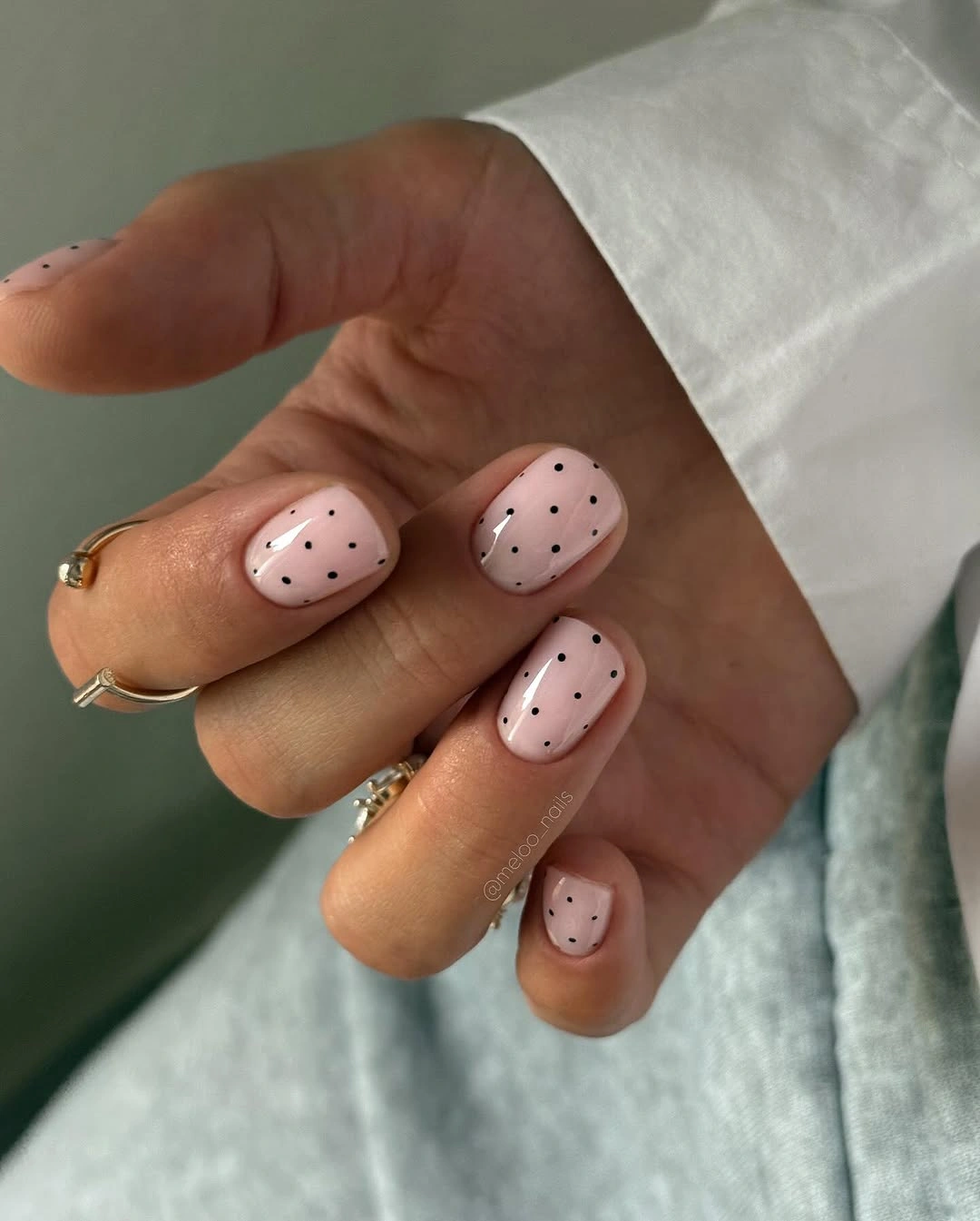
Small black dots sit across a blush-nude base, giving the short rounded shape a crisp pattern without covering its lightness. The spacing is loose enough that the manicure still feels airy, while the dark marks create a clear visual beat from finger to finger. Nothing else competes with the dots, which is why the result stays simple rather than busy.
Photo credit by: https://www.instagram.com/p/DMszJ4dML9c/Keep the base soft and let the dots vary slightly in spacing instead of forcing a rigid grid. If you want a cleaner reset, place them only near the center of each nail; if you want more fall depth, switch black to chocolate while preserving the same light background and open structure. The pale margin is part of the pattern, not unused space.
The short rounded square outline makes the pattern approachable, but tiny dots can look uneven if they are crowded near the edge. Leave a quiet margin around the cuticle and free edge, and the manicure will stay readable as it grows; the plain base also makes a small repair easier than it would be on a dense print.
Muted Color Blocks Make Mismatch Feel Intentional
Brown, forest green, burgundy, cream, and muted pink appear on separate short nails, but the softened saturation keeps the varied set visually connected. A few small curved accents add movement without turning the manicure into a full art project. The freshness comes from editing the palette, not from making every finger identical.
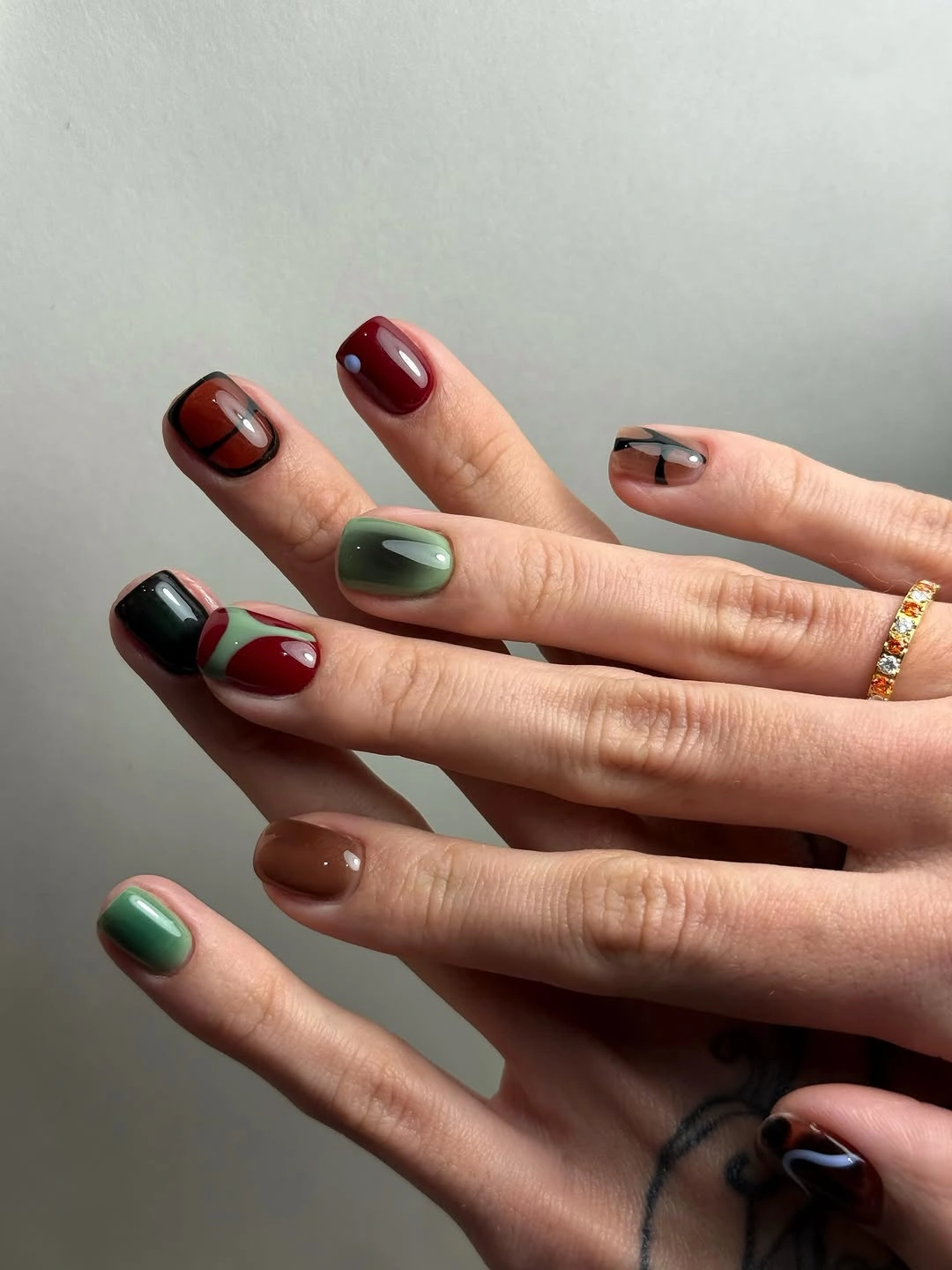 Photo credit by: https://www.instagram.com/p/DVZO46dEmpM/
Choose three colors that share a dusty quality, then repeat each at least twice across the hands. One curved accent can stay as the focal point, while a brighter green or red should be used sparingly; reducing the number of colors is the quickest way to make this idea feel more composed. Repetition is what turns a mismatch into a collection.
A mixed set has an honest limitation: the balance can disappear if one nail becomes much louder than the others. Keep the shapes and finish visually similar, and make the color placement carry the variation; that leaves the manicure fresh without needing extra stones, lines, or a longer silhouette.
One Spotted Accent Keeps Peach Nails Light
Most of this short square manicure stays in sheer peach and cream, while one light nail carries a dense black-and-white dot pattern. The single accent creates a focal point without making the whole hand loud, and the pale surrounding nails provide plenty of visual breathing room. It is a small change with a clear payoff.
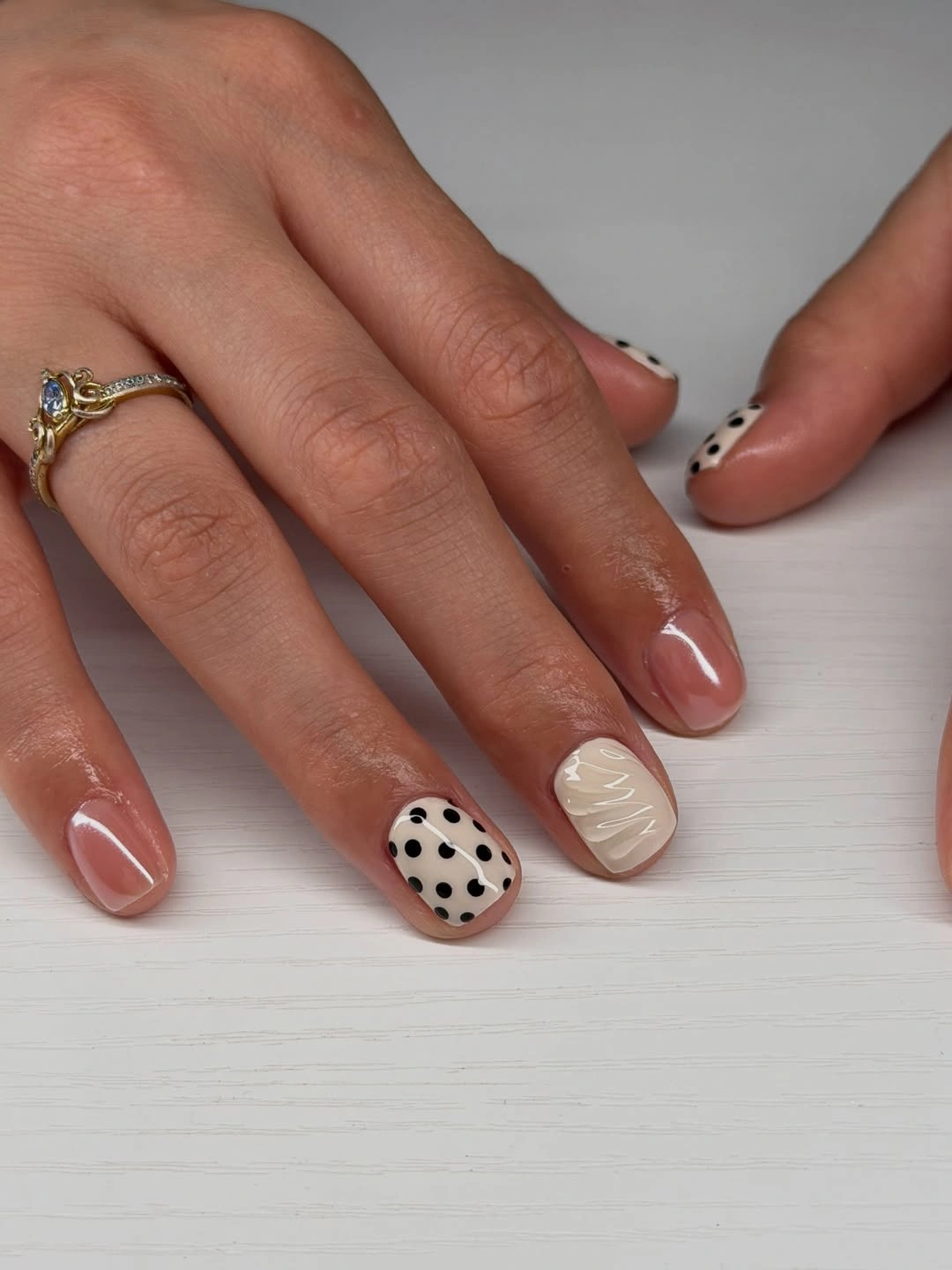 Photo credit by: https://www.instagram.com/p/DXPLyLqlsOt/
Use the spotted pattern on one finger and leave the rest translucent peach if you want a quick version of neutral nails for everyday wear. A warm brown dot can make the contrast gentler, while black keeps the graphic effect sharper; either choice works because the accent remains isolated and the base stays open.
Dense dots need enough space to remain round and separate, especially on a short plate. If the nail is smaller, enlarge the dots slightly and reduce their number instead of squeezing in more, then keep the other fingers plain; the design will look more deliberate and will be easier to refresh when one accent wears.
Micro Black French Follows the Taper
A milky beige base and very thin black tips make these short almond nails look crisp without adding visual weight. The dark edge follows the curved end, while one fine vertical detail gives the set a slight change of direction. Because the accent is narrow, the pale center remains the main impression.
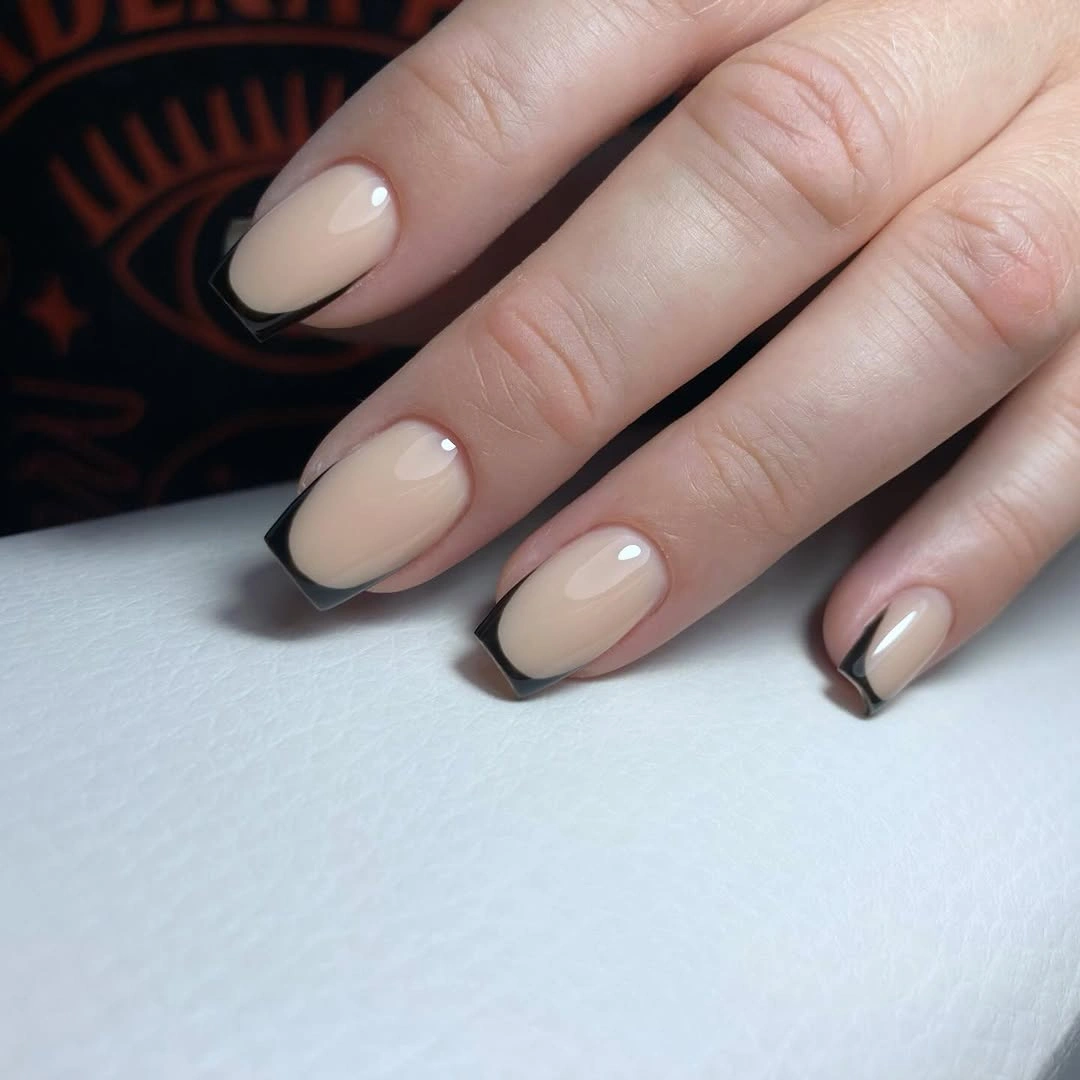 Photo credit by: https://www.instagram.com/p/DWmWizogLZ4/
Keep the black line thinner than the free edge itself so the shape stays open and the design does not shorten the nail visually. A muted taupe tip can soften the contrast, while a deep brown will keep the same clean outline with a warmer fall feeling. The light center should remain the first thing you notice.
The simple structure is easy to pair with clothing, but a micro French edge shows uneven curves quickly. Use the natural taper as a guide and avoid adding more marks if the nail plate is small; the fresh quality comes from one precise border and the pale space around it. A quiet center makes the thin edge look sharper.
Neon Curves Add Energy to Soft Pink
Bright yellow curves sweep across a soft pink short base, with a second slim line echoing the first on several nails. The color is lively, yet the pink keeps the overall look light because the neon occupies only a narrow band. Curved placement also follows the rounded short silhouette instead of cutting it into a hard block.
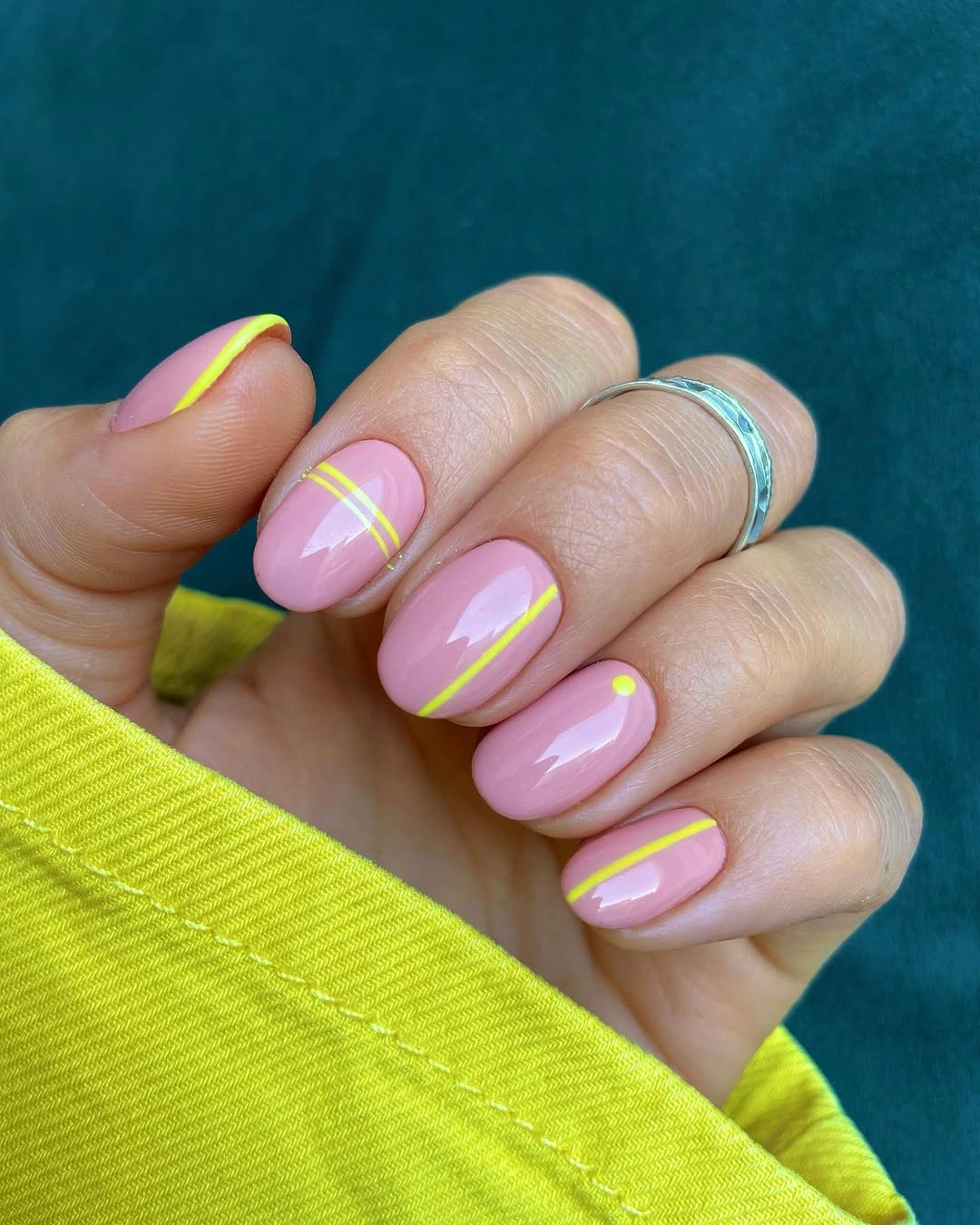 Photo credit by: https://www.instagram.com/p/CiZWzvXNpIf/
Use one neon curve for a cleaner update, or reserve the second line for two accent nails so the bright color remains purposeful. A muted mustard can make the idea easier to wear in fall, but it will reduce the visual reset; choose it only when the stronger yellow would compete with the rest of the outfit.
Neon edges are an easy focal point, so extra decoration would work against the simple mood. Keep the base glossy and the line spacing generous, and accept that the bright tip will show small chips sooner than a low-contrast color; the benefit is that the repair can stay limited to the edge. The pink base supplies enough softness on its own.
Pastel Mismatch With One Tiny Flower
Lavender, blush pink, and cream share the short square shape, while one pale nail carries a small dark-and-yellow botanical mark. The pastels create a soft visual reset through color, and the single illustration prevents the mixed set from feeling flat. No nail needs a large motif because the palette already supplies variation.
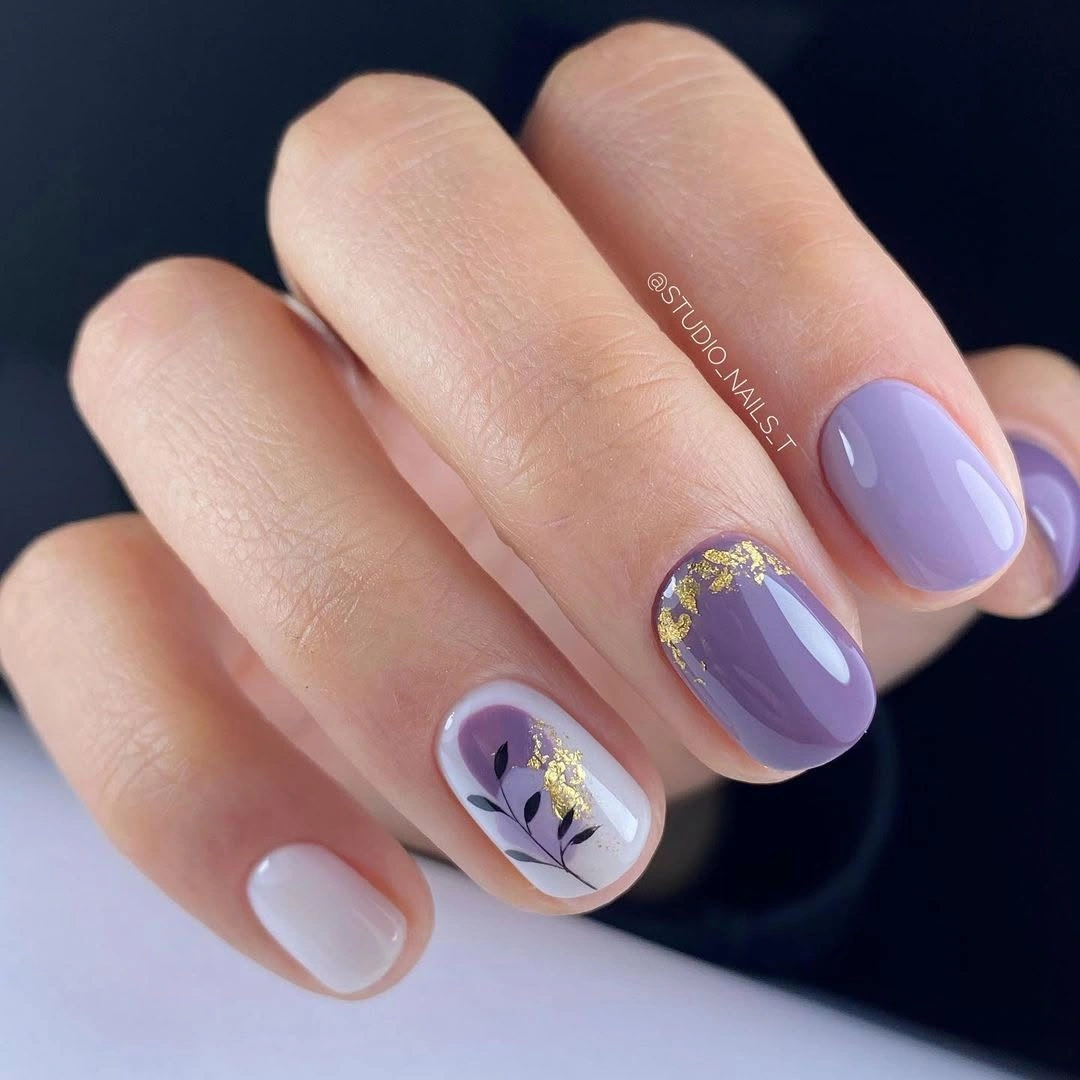 Photo credit by: https://www.instagram.com/p/CsOL6l6oACz/
Pick two pastel colors for the main fingers and leave the little flower on one accent nail. A dusty mauve can replace the lavender for a more grounded fall version, but keep the cream space around the mark so the design remains clear and the overall set does not lose its lightness. One pale pause is enough to hold the mixed palette together.
Small botanical details can become indistinct if the nail is too short, so simplify the shape to one petal-like mark rather than adding extra lines. The mixed colors are forgiving because they do not demand perfect symmetry, but the accent should still have enough open base to look intentional instead of crowded.
Dense Black Dots Turn White Into a Print
Light nails covered with evenly spaced dark dots create a stronger graphic effect than a single spotted accent, yet the rounded short shape keeps the print friendly. The limited black-and-white palette makes spacing and scale the main visual decisions. Because no third color interrupts the pattern, the manicure feels clear rather than complicated.
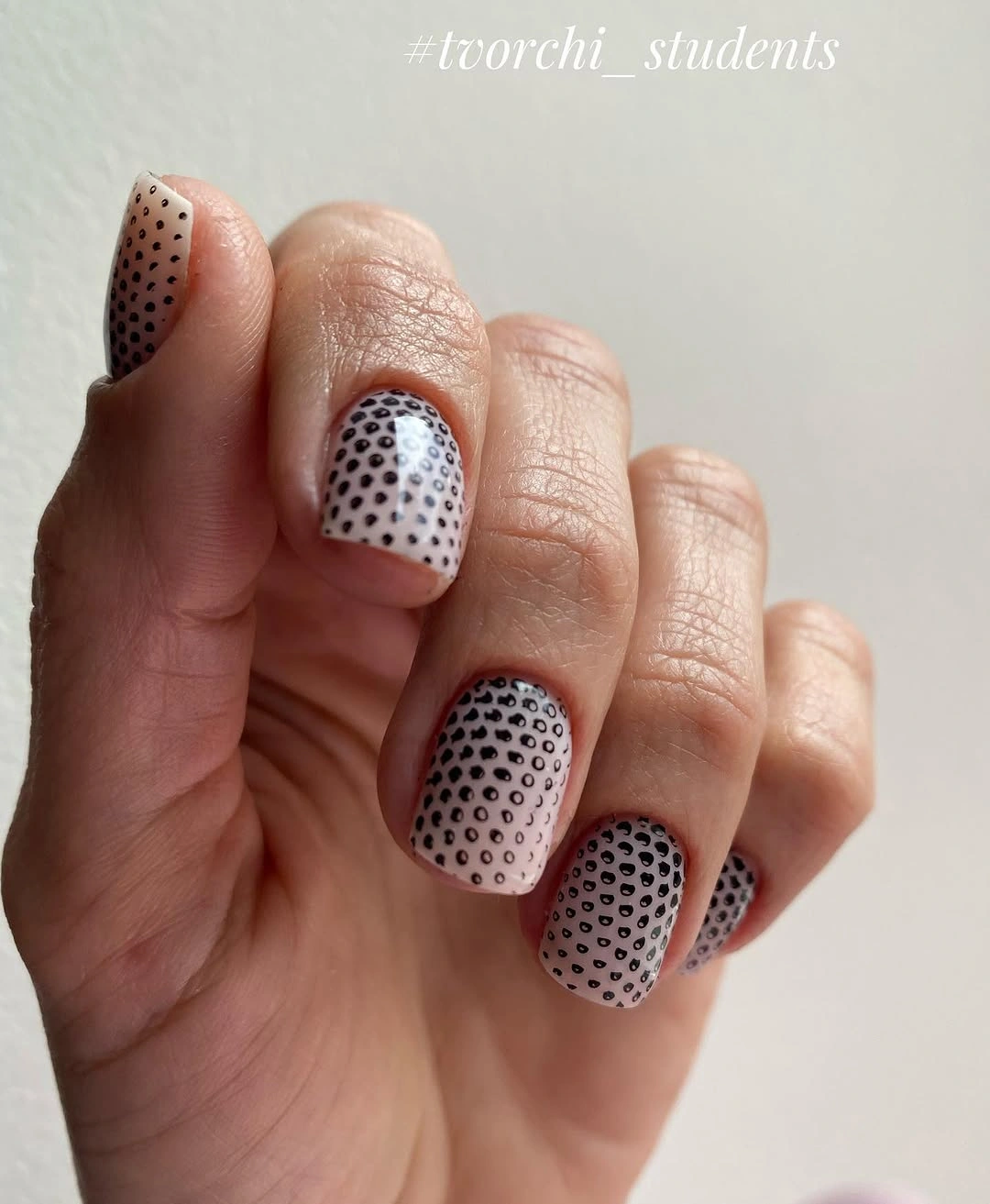 Photo credit by: https://www.instagram.com/p/CsdOfFcNyNX/
Use the denser dots on one or two accent nails and leave the rest creamy white if you want the idea to feel lighter. Switching black to charcoal lowers the contrast, while using larger dots makes the pattern more playful; preserve the even distribution so the surface does not look accidentally speckled.
Short nails can carry a print well when the dots are consistent, but a cramped edge will make the manicure look smaller. Keep the pattern away from the cuticle or free edge when necessary, and treat the light margin as part of the design; that is the detail that keeps a bold print fresh. The border gives the eye a clean place to stop.
Tonal Orange Lines Keep Bright Color Simple
Bright orange covers the short rounded nails, while lighter orange curves or leaf-like marks create a tonal pattern across the surface. The colors are close enough to keep the manicure unified, so the visual interest comes from movement and reflection rather than contrast. It is a saturated idea with a surprisingly uncluttered structure.
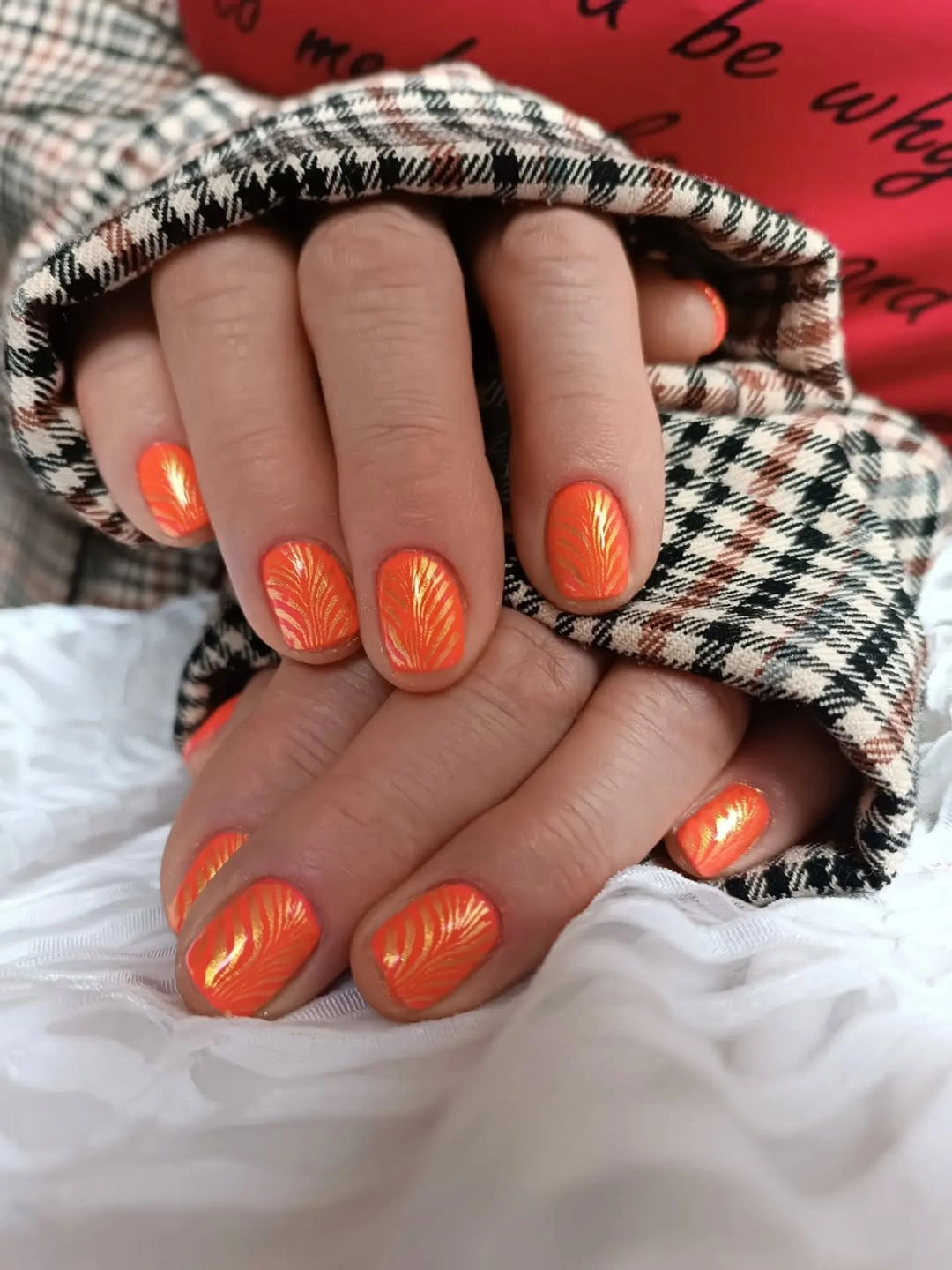 Photo credit by: https://www.instagram.com/p/DZxk8Z7iABn/
Use a lighter version of the same orange for the lines if you want to keep the palette simple, or reduce the marks to one curve per nail for more breathing room. A muted pumpkin tone will quiet the result for fall, but the clean monochrome relationship should remain the same. The close color values are what keep the bright surface edited.
Strong color already carries attention, so additional glitter or a second accent shade would make the design less fresh. The practical limitation is that tonal lines can disappear under uneven light, while the advantage is that small edge wear is less disruptive than it would be on a high-contrast pattern.
Subtle Flecks Keep Nude Almost Bare
A pale translucent base and a few tiny warm flecks create one of the quietest simple fall short nails ideas in the collection. The marks are low contrast, so the effect is more about a little surface movement than a visible print. Rounded short edges and a soft finish help the manicure stay close to the skin.
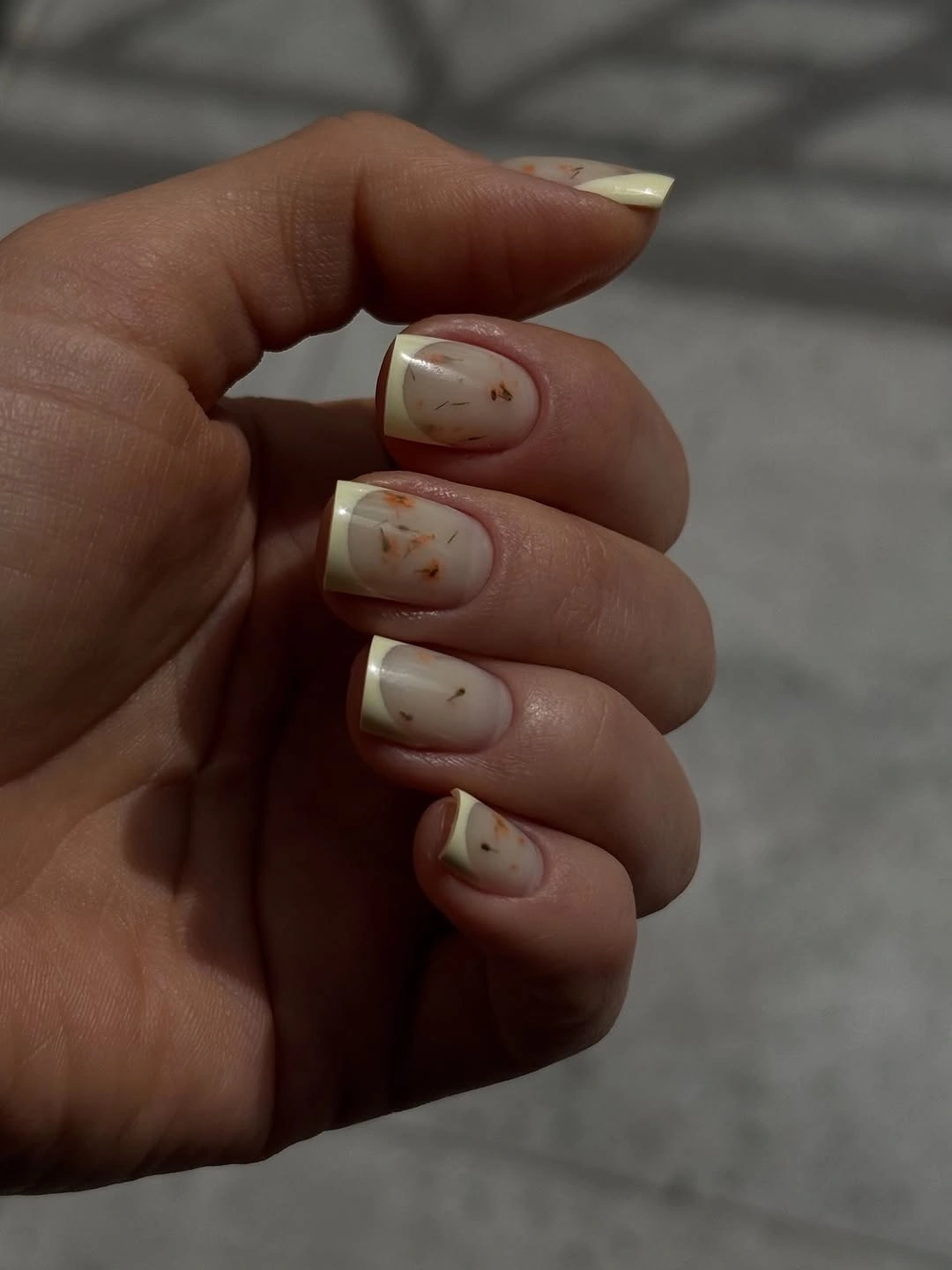 Photo credit by: https://www.instagram.com/p/DX9qKEvjMYn/
Use only a handful of small beige or brown marks over the base, leaving long stretches of clear space around them. The same placement can feel warmer with terracotta flecks or cooler with gray, but adding too many dots would change the idea from barely-there detail to a full pattern. A little irregularity keeps the sheer base believable.
This restrained design is forgiving from a distance, though the low contrast means the marks may disappear in dim light. Keep the edges tidy and let the plain surface remain dominant; the point is not to make every detail visible, but to prevent a sheer manicure from feeling unfinished. The quiet surface should still lead the composition.
Pearly White With Tiny Warm Specks
Milky white and soft peach create a light base, while a fine reflective finish adds depth and a few warm flecks keep the color from feeling cold. The short rounded shape gives the pale manicure a neat boundary, so the sparkle can stay delicate rather than becoming a full glitter coat. Everything here is edited toward brightness.
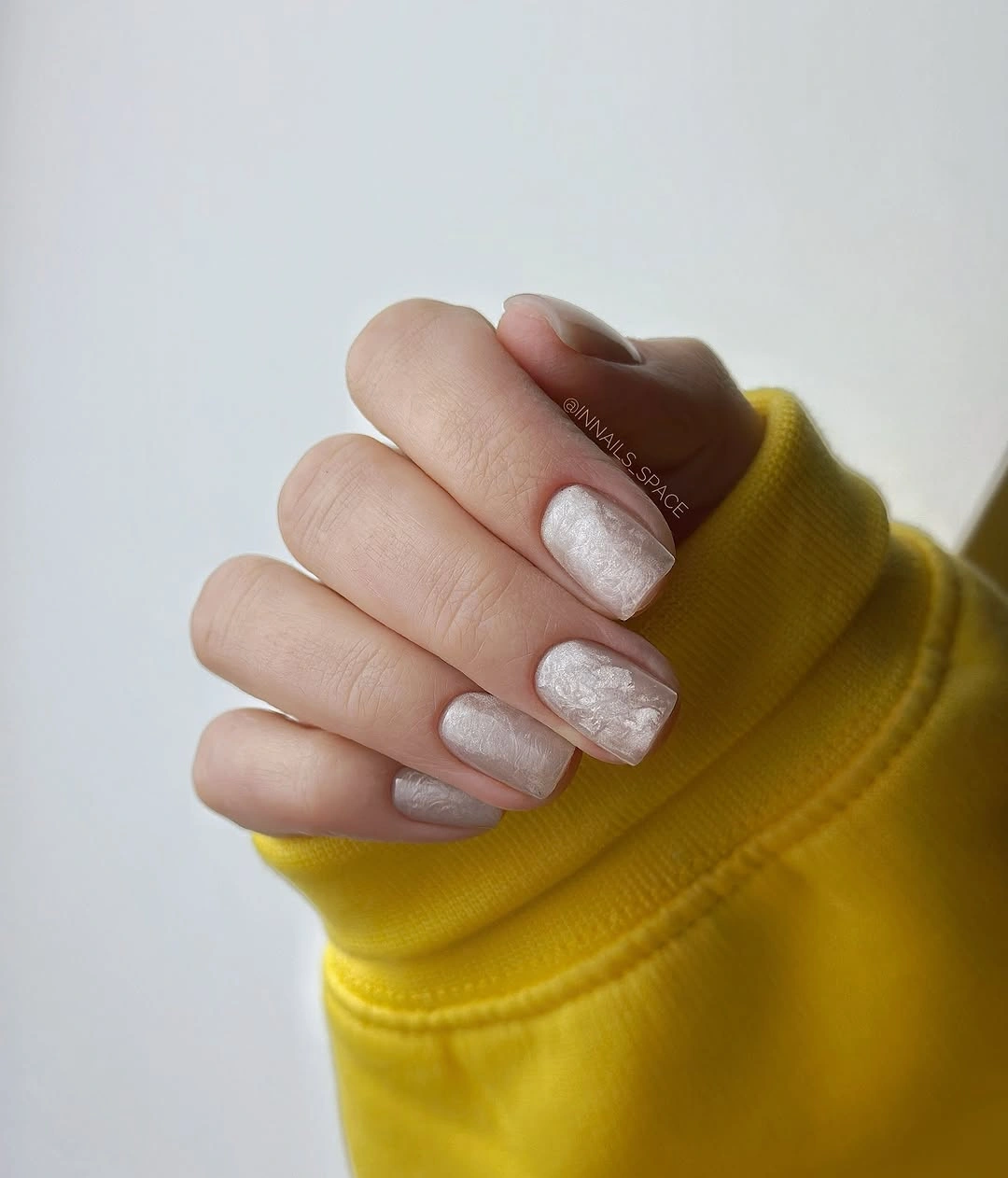 Photo credit by: https://www.instagram.com/p/DPwIeZejBe4/
Keep the shimmer fine and place one or two warm dots on selected fingers for a simple update. Cream can replace white to make the palette softer, while a faint rose fleck can connect the base to blush clothing; preserve the small scale so the surface does not lose its calm visual breathing room. The pale finish needs only a hint of contrast.
Pale reflective finishes reveal uneven coverage, but they are easy to coordinate with yellow, brown, gray, or denim. If the sparkle begins to compete with the shape, reduce it on the accent nails first; a small warm detail will do more for freshness than adding another layer of shine. Let the surface stay lighter than the detail.
Taupe Tips Add Structure to Pale Nails
White and nude nails are sharpened by dark taupe or brown French tips, with tiny gold-looking accents adding a controlled point of shine. The palette stays neutral, but the value difference at the edge gives the short square shape a clean frame. The result feels styled through structure rather than through a busy motif.
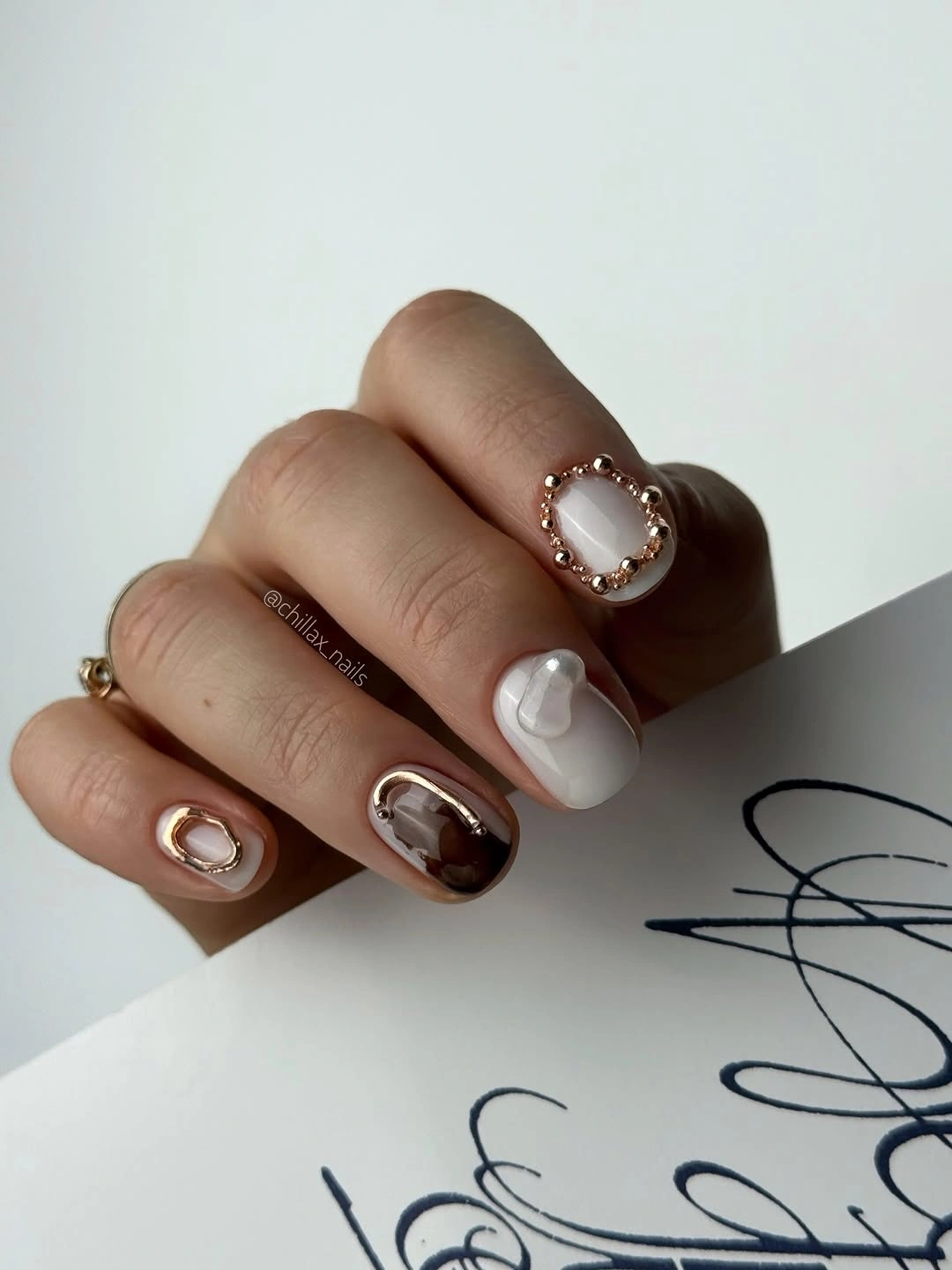 Photo credit by: https://www.instagram.com/p/DTGFtsbDLls/
Use the dark tip on two nails and keep the other fingers pale, then place one metallic-looking point where the colors meet. A softer caramel tip will look warmer, while charcoal will make the outline crisper; either change works if the base remains light and the accent count stays low. The neutral base prevents the frame from feeling severe.
French edges need consistent width to look fresh, especially when the rest of the design is so quiet. The small metallic points may need more care than a plain base, but the overall set remains adaptable for fall nail designs for office because the colors are neutral and the short shape does not depend on added length. A clean border keeps the pale fingers from looking unfinished.
Silver Sparkle Deepens Charcoal Short Nails
Charcoal and black provide a dark field for concentrated silver sparkle, making these short rounded nails the most evening-leaning design in the collection. The glitter catches light in small points rather than forming a flat metallic block, so the dark base still reads through it. The short shape keeps the shine compact and controlled.
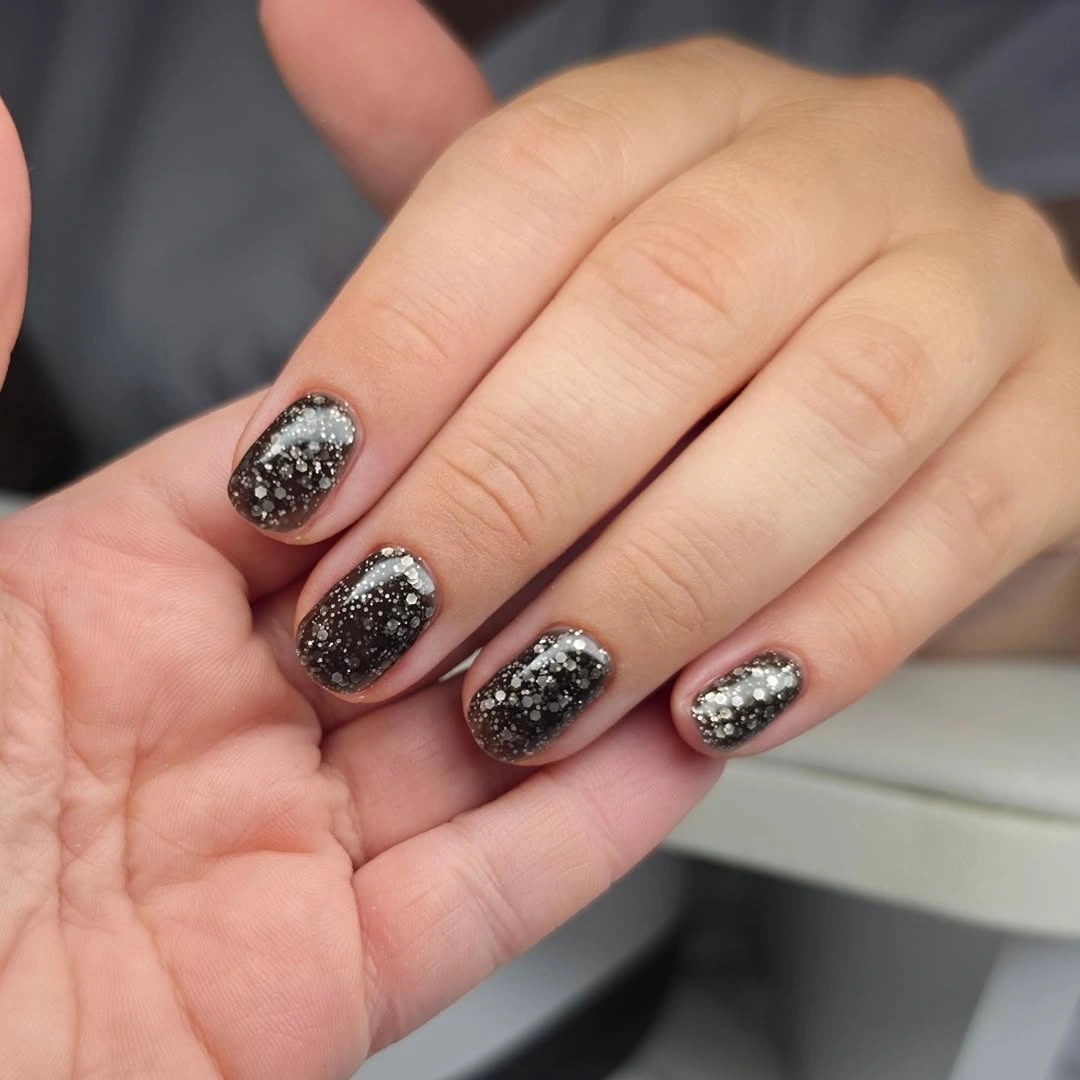 Photo credit by: https://www.instagram.com/p/Db3uOzAs64G/
Use sparkle on two or three fingers and leave the others charcoal when you want a fresher everyday balance. A deep plum base can warm the look, while a cool gray will soften it; keep the reflective accent contained so the manicure still has clear visual breathing room. The dark solid nails create the needed pause.
Dense sparkle may catch on fabric and can make grow-out more noticeable, which is the honest tradeoff for the strong finish. Short nails reduce the handling burden compared with a long shape, and a plain dark nail beside the glitter gives the eye a quiet place to rest. Containment keeps the shine from becoming the whole story.
Sky Blue Tips Cool a Warm Nude
Sheer peach nude and pale blue create a clean two-tone relationship on short rounded nails. The blue sits at the tips in a narrow curved line, so it adds a cool accent without taking over the warm base. That contrast gives the simple fall short nails idea a crisp update while preserving a light, open surface.
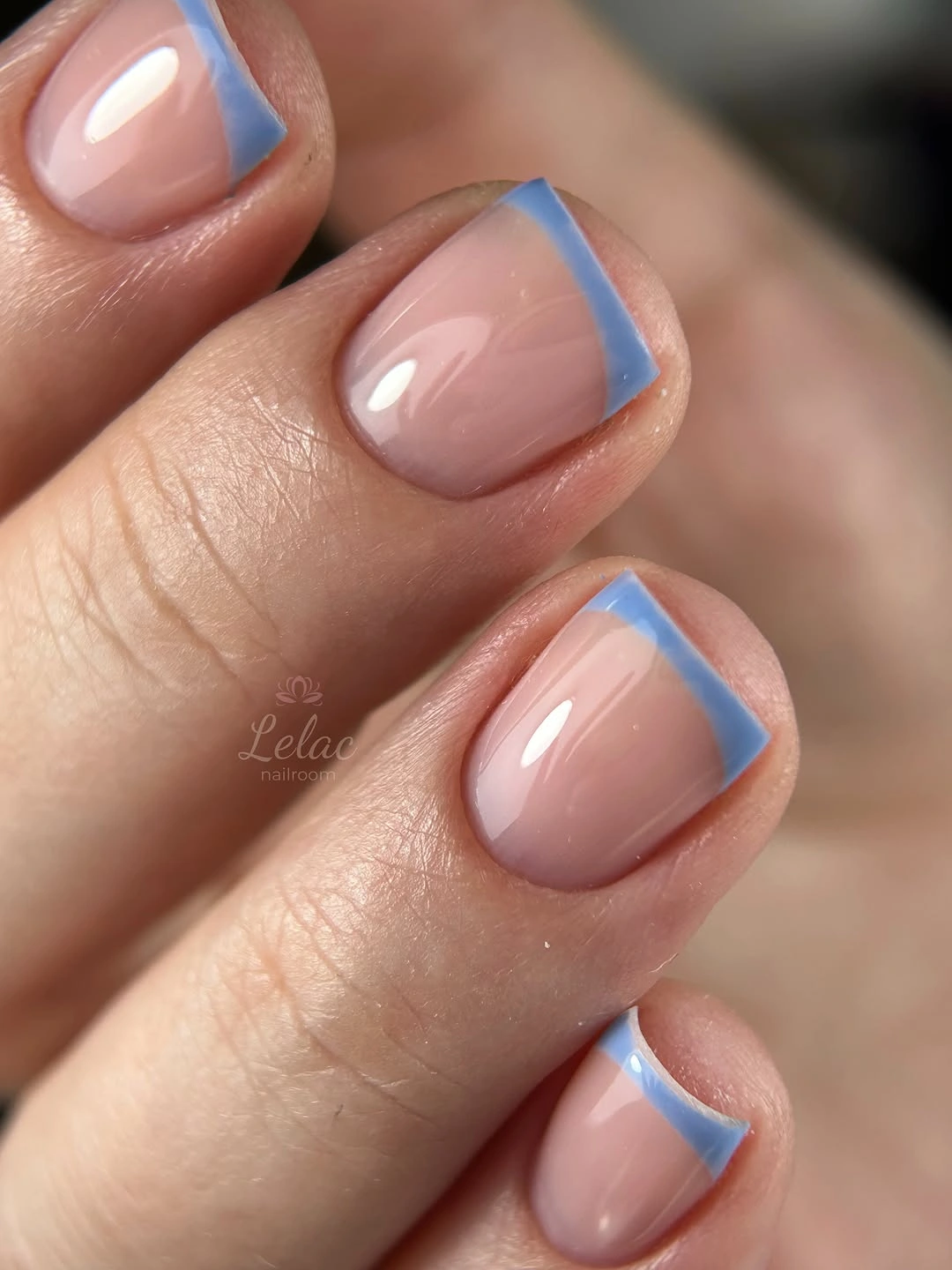 Photo credit by: https://www.instagram.com/p/DbAzkpzNOq2/
Keep the blue line thin and let it follow the rounded edge, or switch to dusty slate blue for a more seasonal finish. The key is to change the cool accent, not the whole structure; once the base becomes opaque or the tip becomes too wide, the manicure loses the clean reset created by the original negative space.
Micro tips require careful spacing, but their small area makes a repair less disruptive than repainting a full pattern. Pair the look with denim, gray, or cream, and resist adding a second motif; the contrast between warm nude and cool blue already supplies enough visual information. The open base keeps the cool line crisp.
Pink Shimmer Uses Texture Instead of Art
Soft pink covers the short square nails with a pearly reflective finish and tiny tonal flecks, creating depth without a contrasting line or motif. The shape stays compact and clean, while the surface gives the eye something to notice at close range. It is a fresh option for anyone who wants detail that remains quiet.
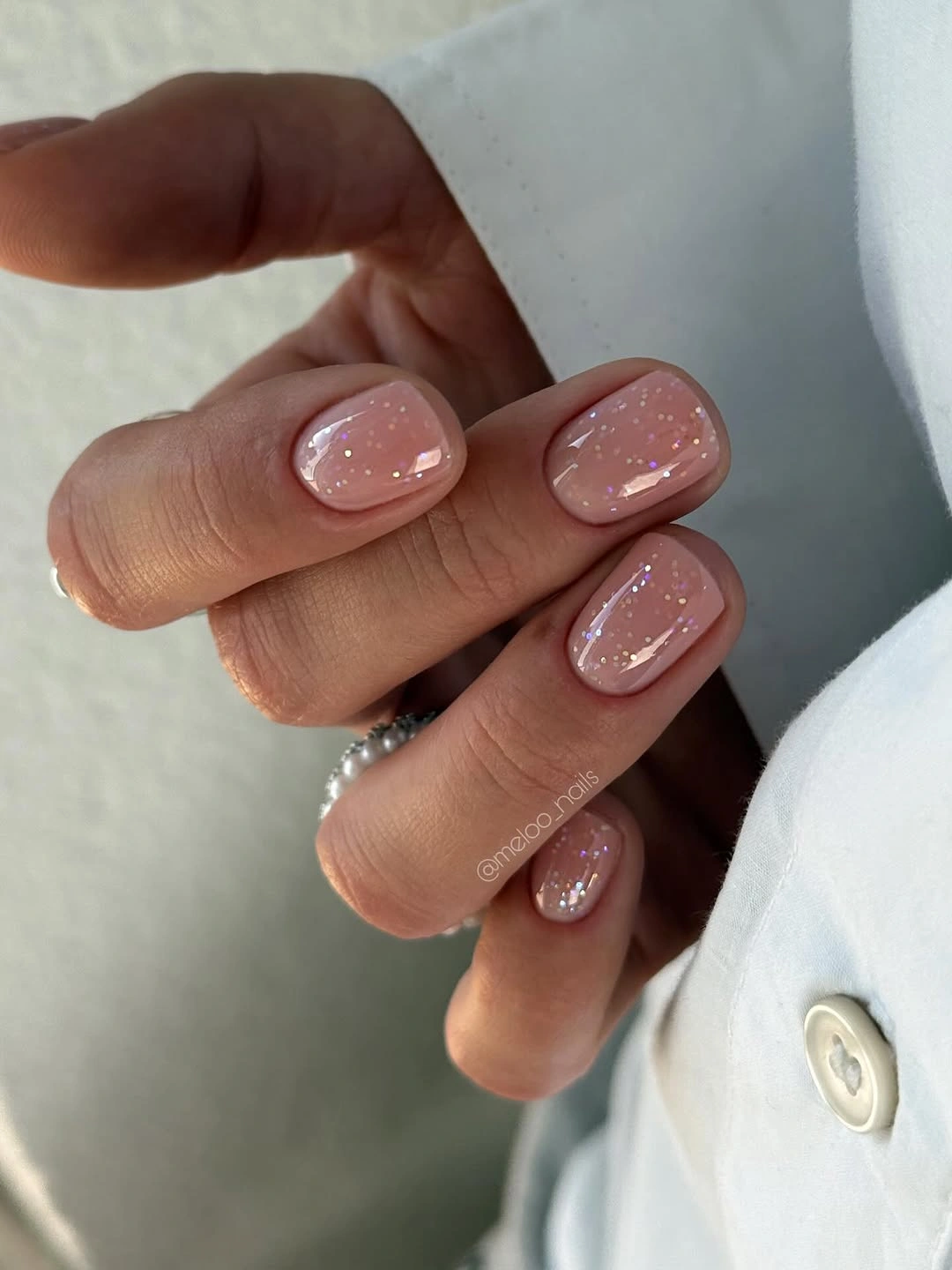 Photo credit by: https://www.instagram.com/p/DUI8z14DEHg/
Choose a base one shade lighter than the speckles so the texture remains visible, then leave the tips plain. A mauve shimmer will deepen the effect, while a creamy pink will keep it softer; either adjustment is more coherent than adding a separate glitter accent to an already reflective finish. The close tonal range keeps the surface calm.
The low-contrast design will not hide a rough edge, but it also will not create a hard grow-out line. Keep the surface smooth and use the shimmer as the single defining decision; the manicure feels unfinished only when extra details are added without improving the shape or spacing. A quiet finish still needs a clear outline.
Sage Green Carries a Pale Botanical Accent
Muted sage, milky white, and pale pink create a calm color group on short square nails, while small white curved marks suggest a simple botanical detail. The green gives the pale set a grounded point of contrast, and the light accents stay visible because they are not repeated across every finger. The overall impression is soft but structured.
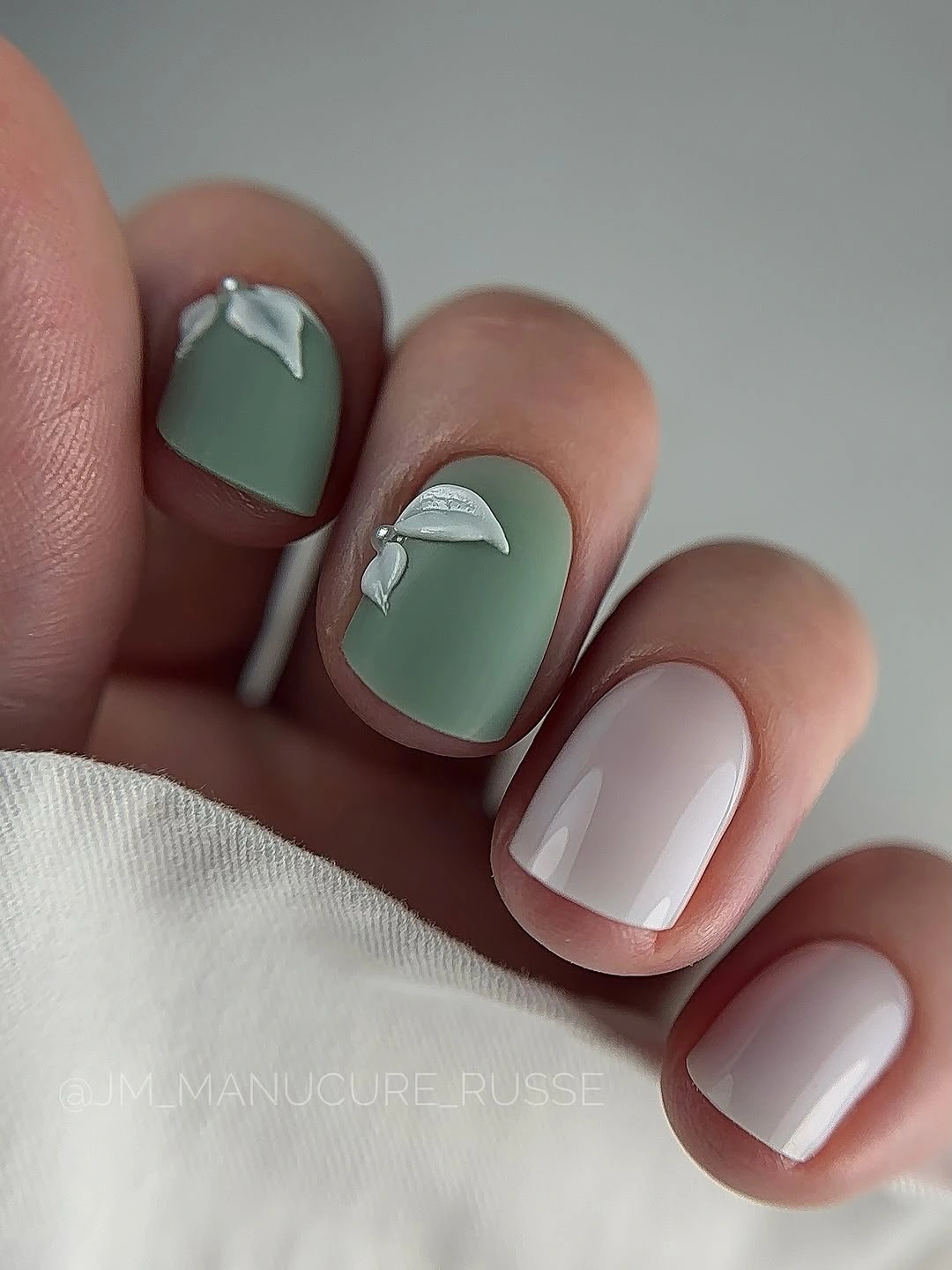 Photo credit by: https://www.instagram.com/p/DazZebyCINW/
Use sage on two accent nails and keep the pale botanical mark small, or replace it with one curved white line for a cleaner reset. A dusty olive will make the palette deeper, while a cooler eucalyptus tone will feel lighter; the placement should remain selective so the green does not become background noise.
Muted colors can look flat when every nail uses the same finish, so a small difference in surface reflection helps the set feel considered. Do not add more motifs to compensate; preserve the short square outline, the open pale space, and the single green decision that makes the manicure recognizable.
Slate Blue And Silver Feel Clean Together
Cool blue-gray nails sit beside pale fingers with concentrated silver sparkle, creating a fresh contrast through temperature and finish. The slate color is quiet enough to keep the set wearable, while the glitter accent adds a narrow flash of light rather than a full party effect. The short shape makes the combination feel edited.
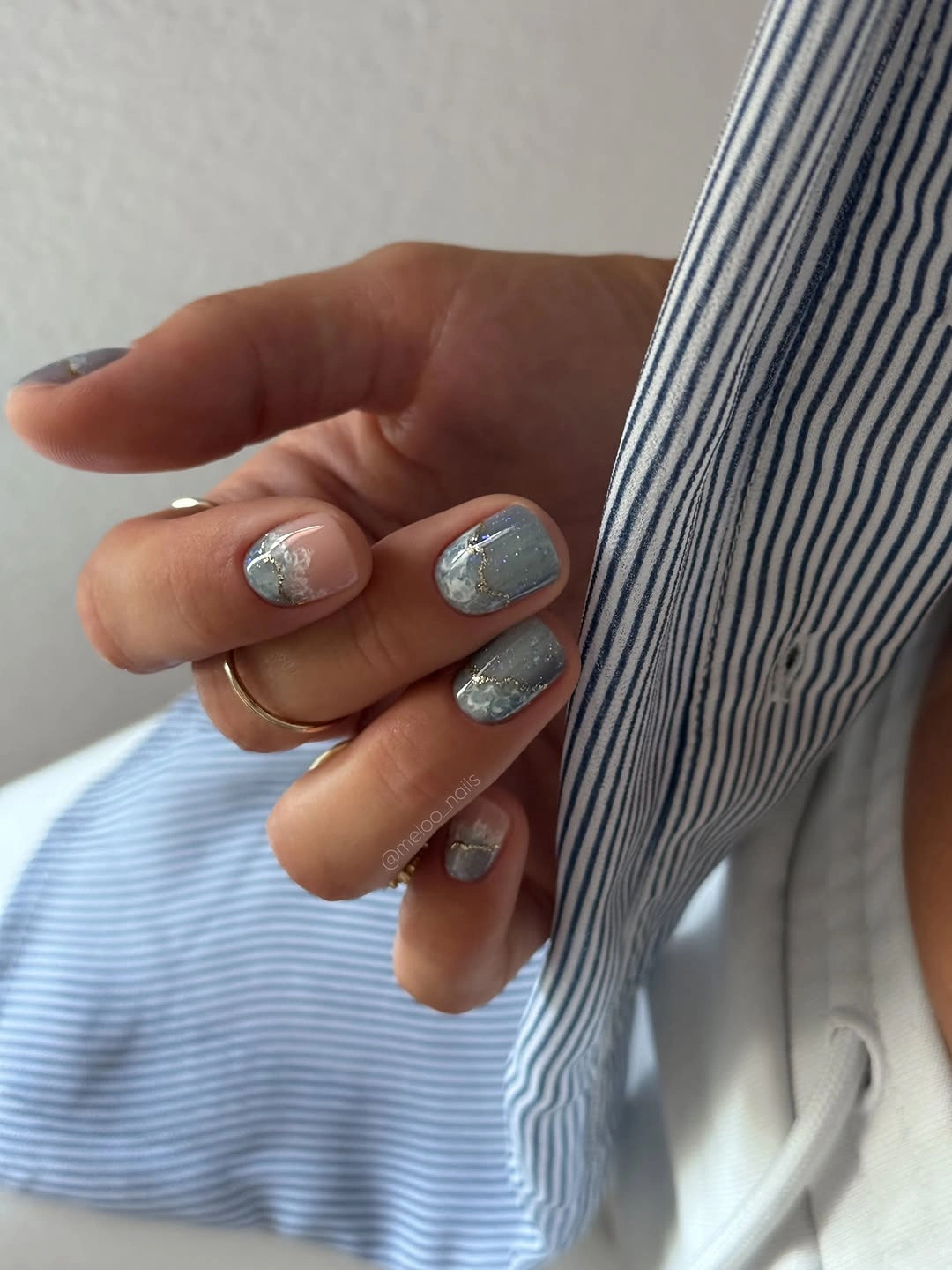 Photo credit by: https://www.instagram.com/p/Da5-YgXEecC/
Keep one glitter accent for every two solid nails and repeat the blue-gray in a sweater, bag, or accessory if you want the palette to feel connected. A muted lavender can replace slate for a softer version, but preserve the cool value relationship so the result remains clear rather than muddy. The solid gray-blue nails give the sparkle a clean frame.
Silver sparkle can make a compact nail look denser, so leave neighboring nails solid and avoid adding a second bright color. The finish may need more care at the edge, yet the simple color block is easy to refresh; a clean slate base can carry the design even when the accent is reduced. Restraint keeps the cool palette easy to wear.
Quiet Neutrals Let Small Marks Matter
Taupe, dusty rose, white, and soft gray share the short rounded shape, with small geometric marks and tiny reflective points appearing on selected nails. The colors sit close enough to feel calm, so minor differences in line placement and finish create the visual rhythm. It is a mixed set built from restraint rather than from a single loud accent.
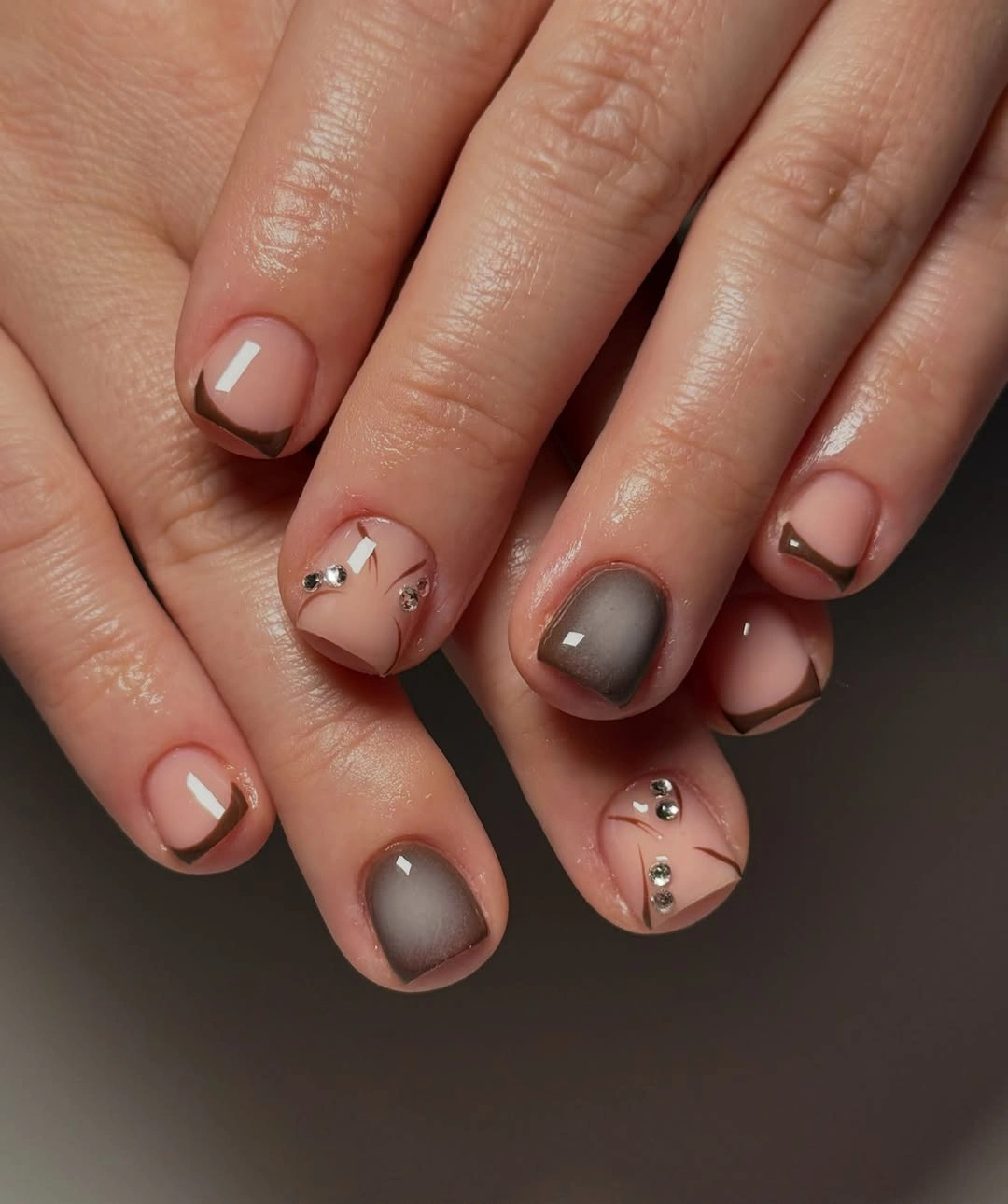 Photo credit by: https://www.instagram.com/p/DISBrZ4hphe/
Choose two neutrals and one dusty color, then let one fine line or dot distinguish an accent nail. If the set feels too quiet, deepen only one shade rather than adding glitter everywhere; the clean result depends on keeping most of the surface open and allowing the small mark to have a job. One intentional contrast is enough to reset the set.
The neutral palette is forgiving when the patterns are not perfectly identical, but it can look unfinished if every nail is equally plain. Keep one purposeful accent and make the edges consistent, then stop; the freshness comes from a clear visual hierarchy, not from filling the remaining space. The empty nails make the small mark feel chosen.
Light Swirls Keep Orange From Looking Flat
Saturated orange covers the short square nails, while lighter yellow-orange swirls create a layered surface that remains within one color family. The pattern adds movement without introducing a new hue, and the compact shape keeps the bright manicure focused. It is a vivid update that still follows the article’s simple logic.
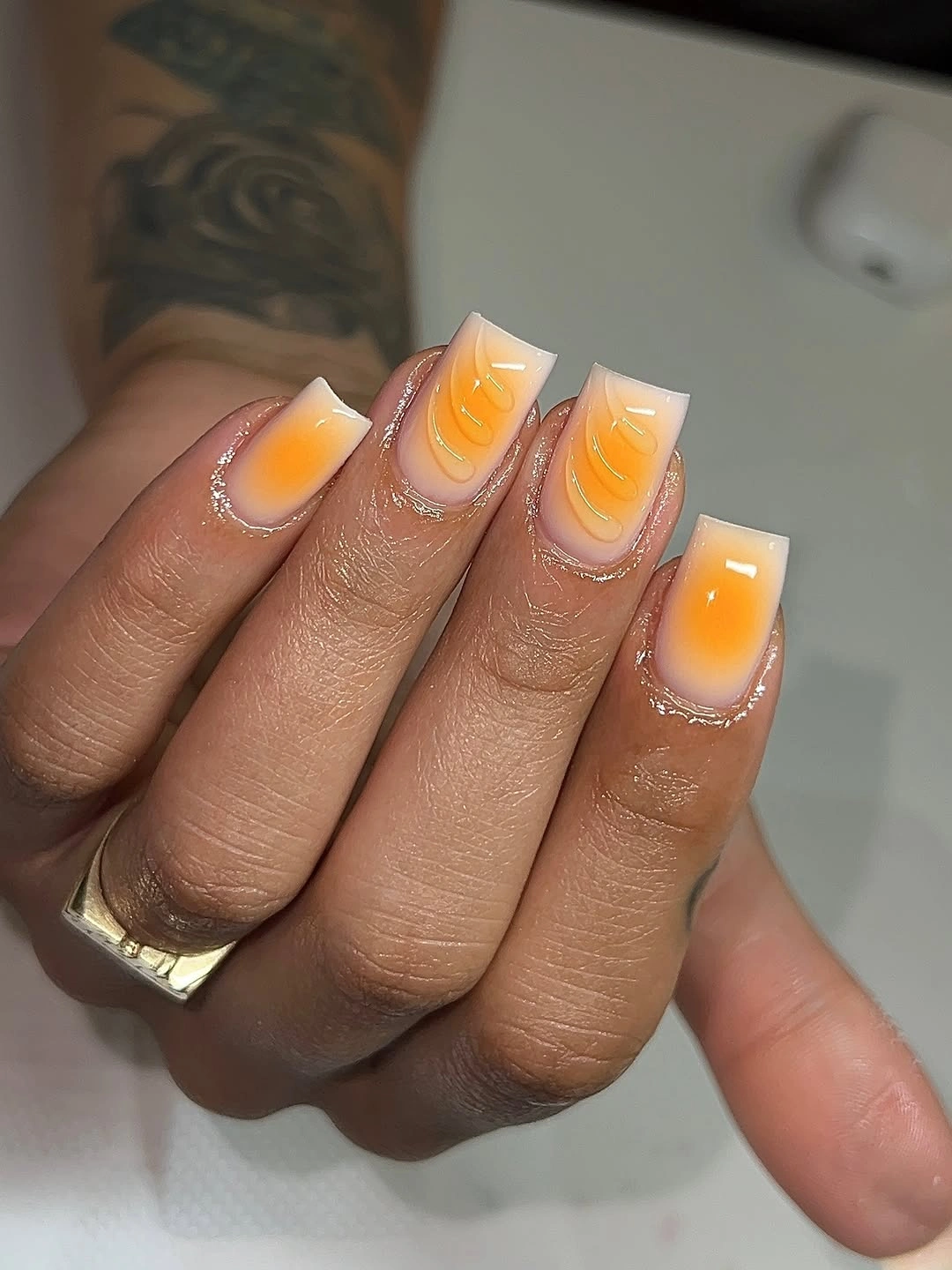 Photo credit by: https://www.instagram.com/p/DbcAnX7DJPJ/
Use one broad swirl instead of several narrow ones when the nail is smaller, or choose a muted pumpkin base for a softer fall direction. Keep the lighter line close to the base color so the design stays tonal; a dark outline would change the mood from fresh and airy to graphic and high contrast. The single-color family keeps the bright surface composed.
Orange already has strong visual energy, so the best maintenance choice is to keep the silhouette neat and the accent count low. The lighter swirls may catch reflection unevenly, but a small imperfection is less distracting than a crowded surface; clear spacing will keep the manicure readable as it wears.
Black Tips Frame A Pink Base
Soft pink nude fills most of each short square nail, while black tips and tiny pale geometric accents create a crisp edge. The strong value contrast makes the shape easy to read, but the dark color stays concentrated so the manicure does not become heavy. A small amount of negative space keeps the design current and uncluttered.
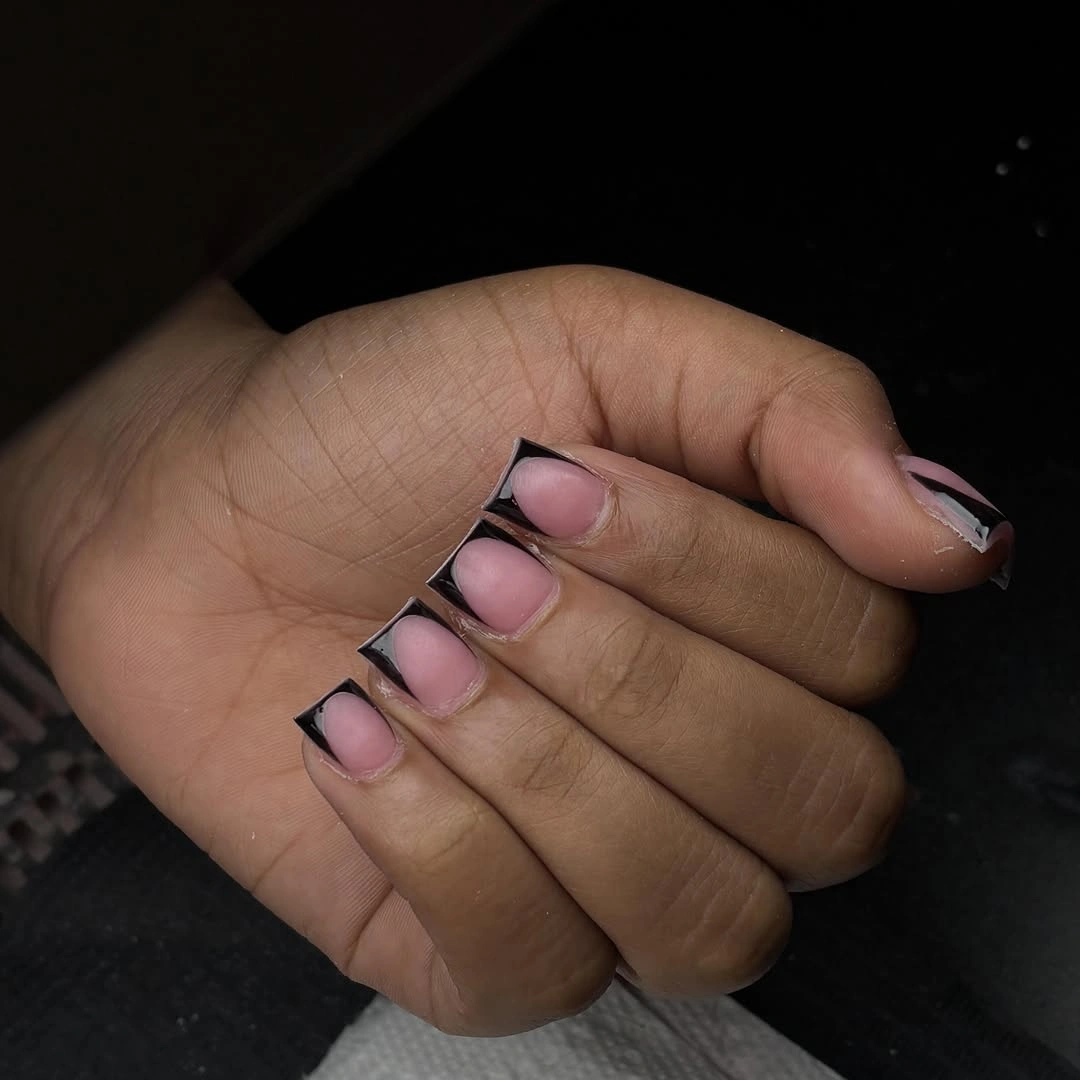 Photo credit by: https://www.instagram.com/p/DZDO3lHlEtZ/
Keep only the black edge for the simplest version, adding one pale mark on an accent nail if you want a little variation. Brown will soften the contrast and connect the look to fall neutrals, while charcoal will stay graphic; the pink base should remain visible because it is what keeps the set light.
The tip line will show unevenness, so follow the natural curve and resist widening it to cover mistakes. The short length makes the style practical, and the plain pink space gives a quick repair somewhere to blend; freshness here comes from a clean border, not from a complicated design. The light center keeps the dark edge from taking over.
Reflective Plum Needs No Extra Motif
Dark plum and blue-violet reflections shift across the short rounded nails, creating dimension through finish instead of through painted art. The color stays solid, but the changing highlights keep the surface from looking flat. Because the silhouette is short and soft, the deep tone reads as deliberate rather than overly dramatic.
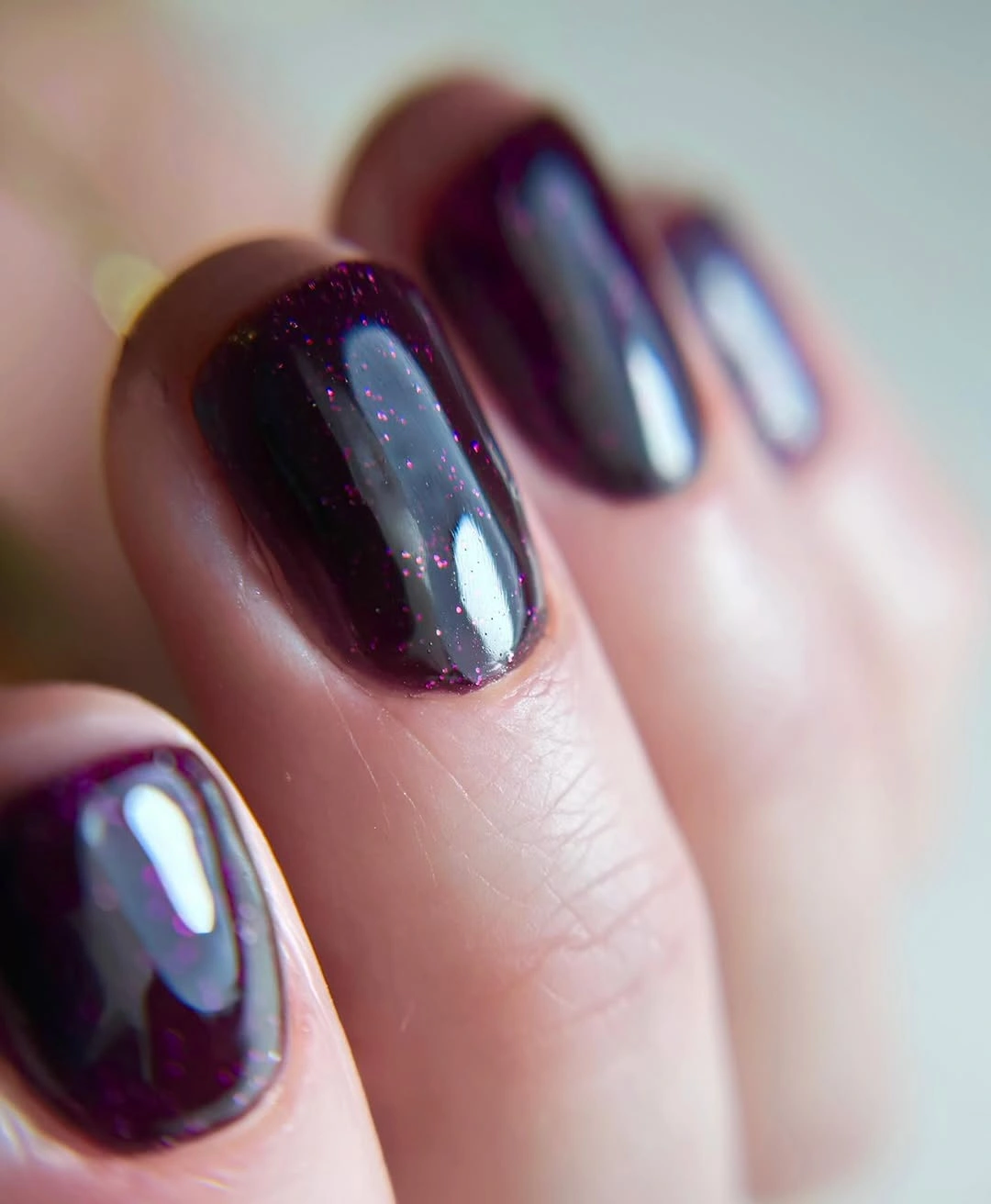 Photo credit by: https://www.instagram.com/p/DTUK57LDaOJ/
Use a deep berry base with a cool reflective shift when you want simple fall short nails that still have presence. A warmer burgundy will make the manicure cozier, while a blackened plum will sharpen it; keep the surface plain so the color movement remains the defining decision. The changing highlight is already the accent.
Reflective finishes can show dents and uneven edges, especially on a dark base, but they also make small repairs less noticeable than a detailed line drawing. Keep the length short, avoid extra glitter, and let the contrast between plum and blue highlights provide enough freshness without adding another layer.
Playful Mismatch With Four Clear Accents
This short rounded set mixes black, lime green, pink, orange-brown marbling, and silver sparkle, yet each nail has one obvious treatment. The variety is high, but the colors recur across the hands and keep the mismatch from becoming random. It is a more expressive version of simple nails because the structure remains clear even when the palette expands.
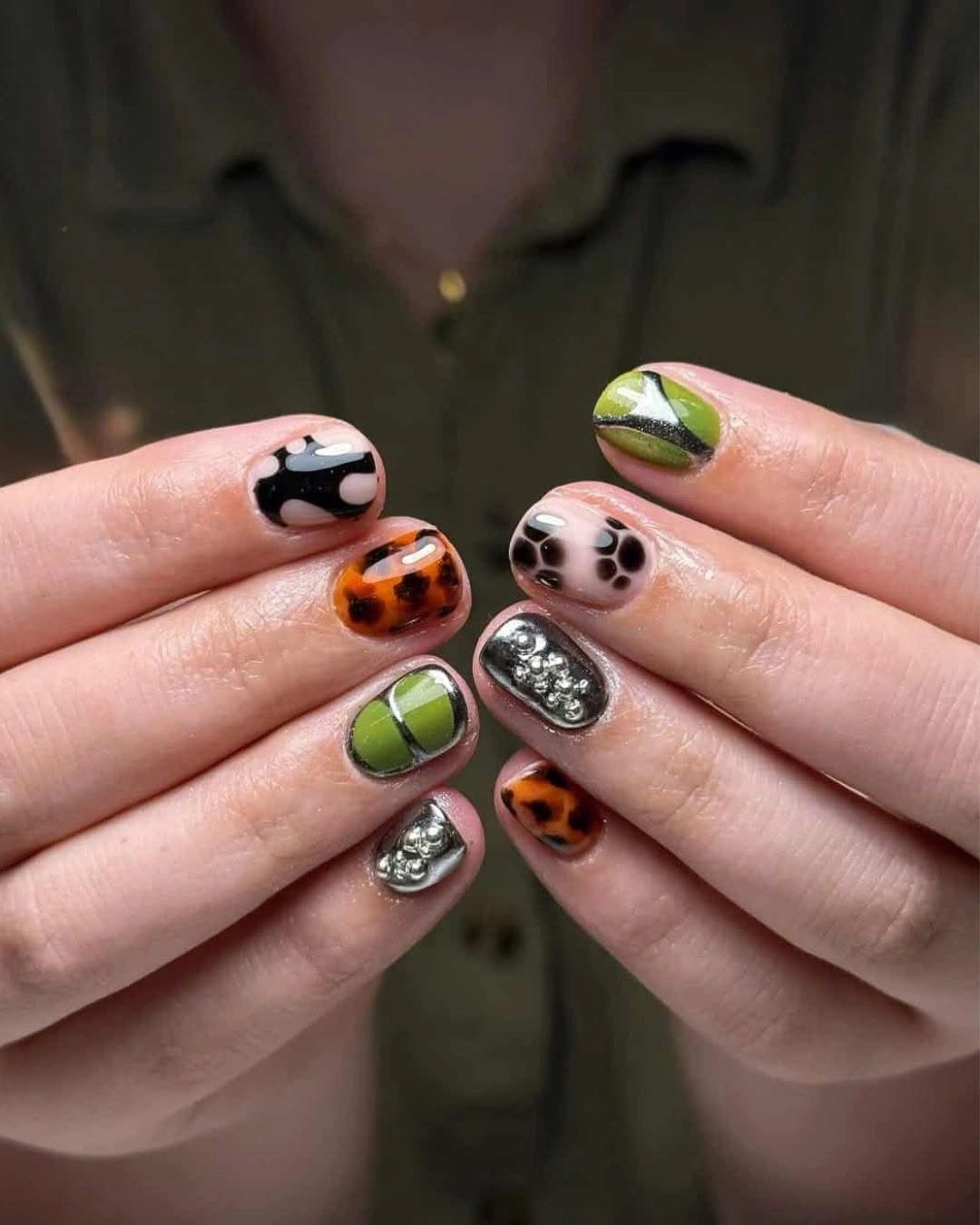 Photo credit by: https://www.instagram.com/p/DQjFwNZiUBn/
Borrow the formula by choosing one dark base, one bright accent, one warm pattern, and one sparkle nail, then repeat at least two colors. Removing one motif will make the result cleaner, while keeping all five colors will preserve the playful energy; the important choice is to give each nail a single focal treatment.
The tradeoff is that a mixed manicure takes more planning and has more details to maintain than a plain set. Keep the shapes similar and let the solid nails provide pauses, especially if the accent patterns vary; that balance prevents a short length from looking overwhelmed by too many small ideas.
Milky White Ends On A Clean Note
A short oval shape and glossy milky white-pink color create the cleanest finish in the collection. There is no visible art to interrupt the smooth surface, so the rounded edge and even reflective layer become the whole visual statement. The pale value makes the manicure feel light without relying on shimmer, dots, or contrast lines.
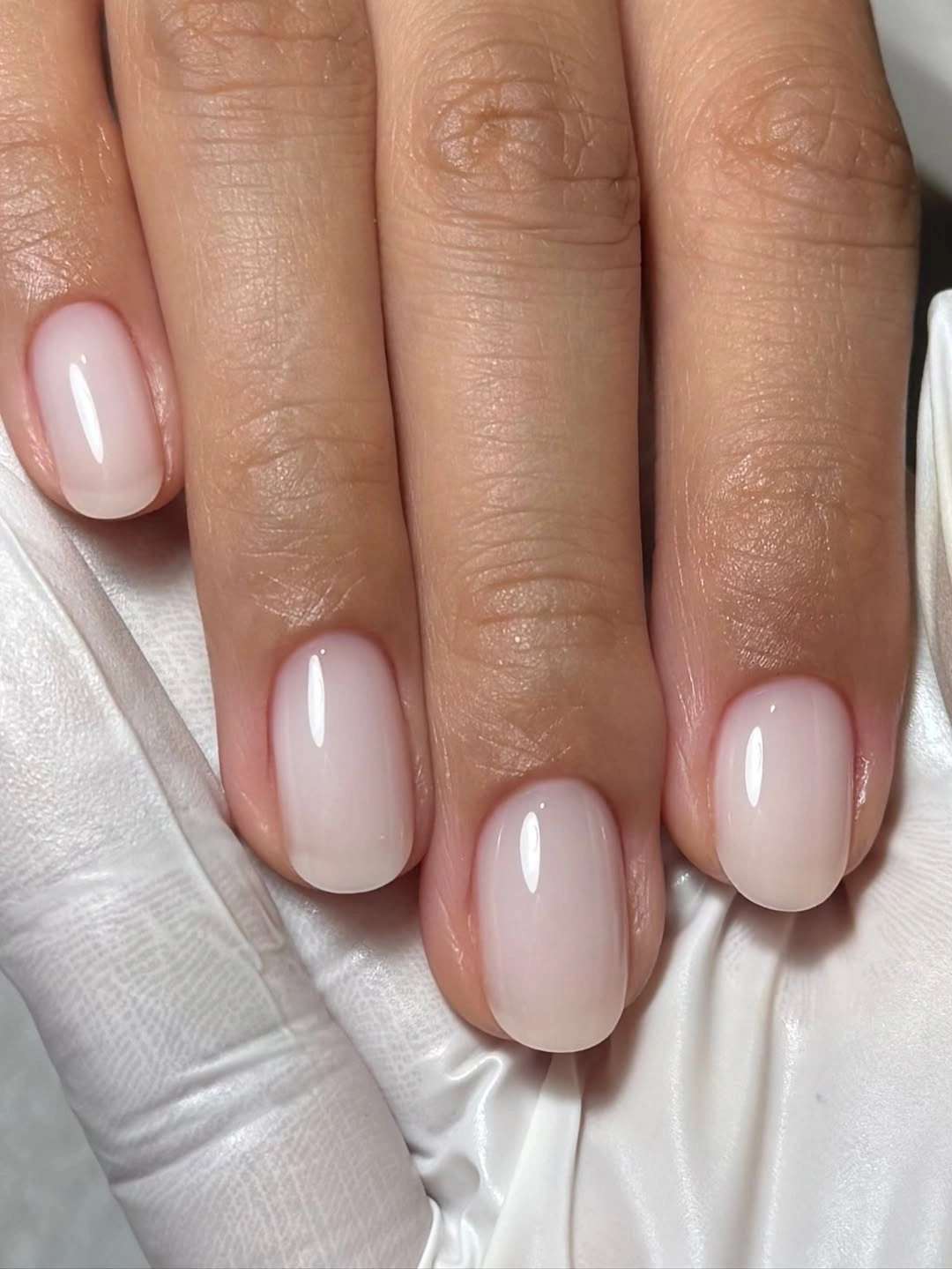 Photo credit by: https://www.instagram.com/p/DRSNgGeCGtP/
Choose this as a simple base when you want a fresh reset that can stand alone or support one small accent on a single finger. A warmer cream will soften the effect, while a cooler milky white will make it crisper; keep the color solid so the shape remains the first thing the eye reads. The plain surface leaves room for one future accent.
Plain pale nails show surface unevenness, but they are also easy to coordinate and easy to shorten. Keep the oval edge smooth, avoid adding decoration just to fill space, and let the quiet finish close the collection with the detail that keeps simplicity from feeling unfinished. The clean oval is enough of a decision.