Good everyday dressing becomes difficult when every piece is individually safe but none of them has a clear reason to lead. For outfits for men 2027, the lasting lesson is not a prescribed uniform; it is learning to notice which color, proportion, or layer gives an outfit its center of gravity. Once that choice is visible, getting dressed stops feeling like a negotiation between unrelated basics.
Begin with the item that sets the mood you actually want to wear – a soft knit, a substantial trouser, a compact jacket, or even a pair of shoes with presence. Let everything else reduce friction around it by repeating a value, leaving space, or creating one useful contrast. The goal is not perfect matching; it is a silhouette that still makes sense after you remove one unnecessary decision.
Muted Hoodie With a Dark Ground
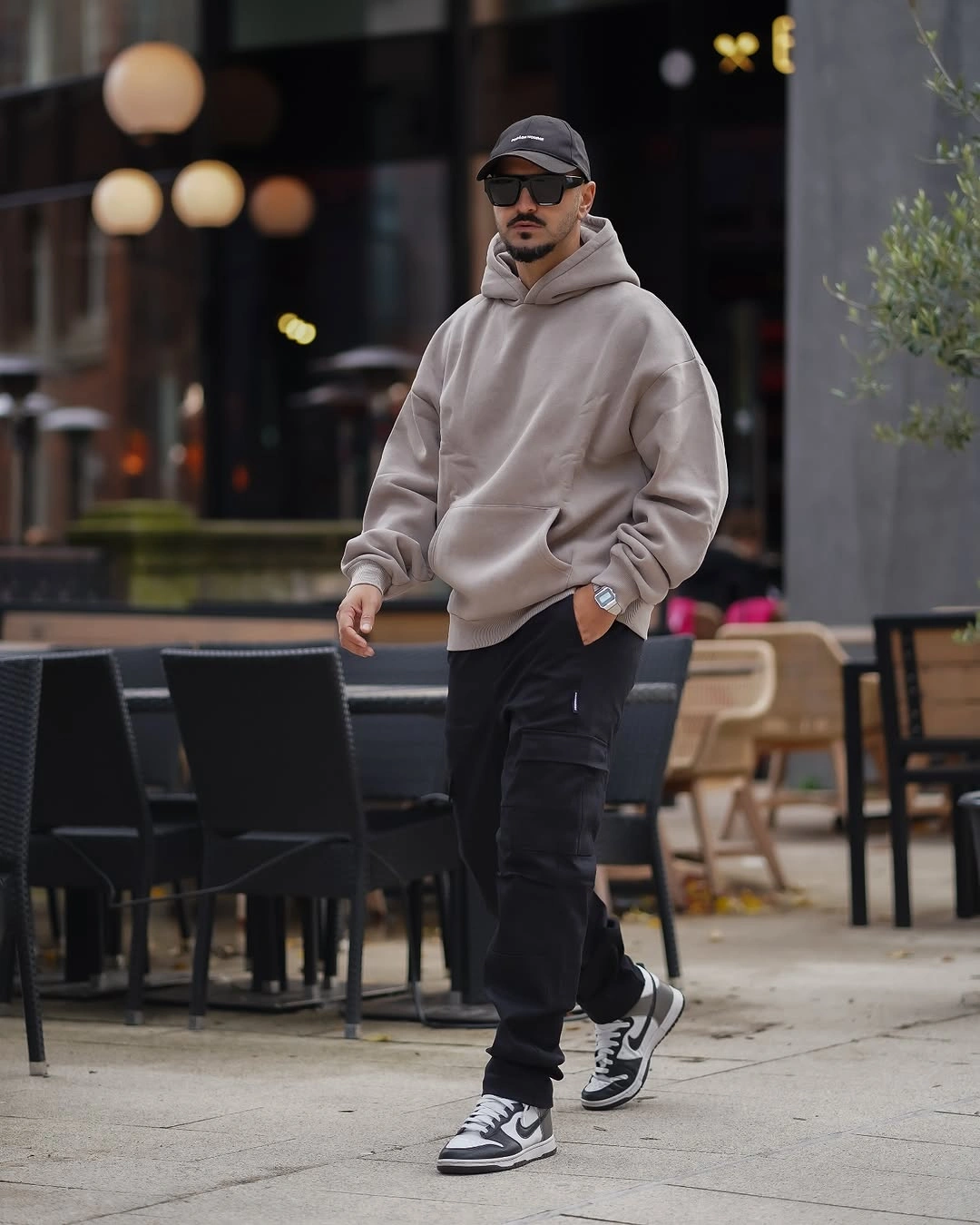
The warm gray hoodie, black cap, and dark relaxed trousers make a simple high-to-low value arrangement that feels calm without becoming flat. The light top sits close to the face while the trousers create a visual ground below it, and the black-and-white sneakers repeat both sides of that contrast. It is a useful reminder that a neutral outfit can still have a deliberate hierarchy when the lightest piece is placed up top.
Because the hoodie is roomy and the pants are relaxed rather than narrow, the silhouette reads as one easy column instead of two competing shapes. A slightly shorter sweatshirt or a subtle front tuck would sharpen the transition at the waist if the volume starts to feel too loose. The cap also keeps the soft hood from becoming overly casual by adding a compact, dark point at the top.
Keep accessories sparse with this formula, since the contrast is already clear. A small black crossbody or a plain watch would work better than a bright bag, while a pale sock can echo the sneaker sole without interrupting the long trouser line. For more ideas on making color choices feel connected, the site’s color balance guide offers another useful starting point.
Olive Cargos Under a Charcoal Hoodie
Olive cargo trousers give the charcoal zip hoodie more purpose because the two dark tones are different enough to register without creating a loud divide. The hooded upper layer stays compact around the shoulders, while the fuller pants build weight lower down and the orange detail on the sneakers interrupts the dark base. That tiny warm accent makes the outfit feel considered rather than like a uniform assembled from black pieces.
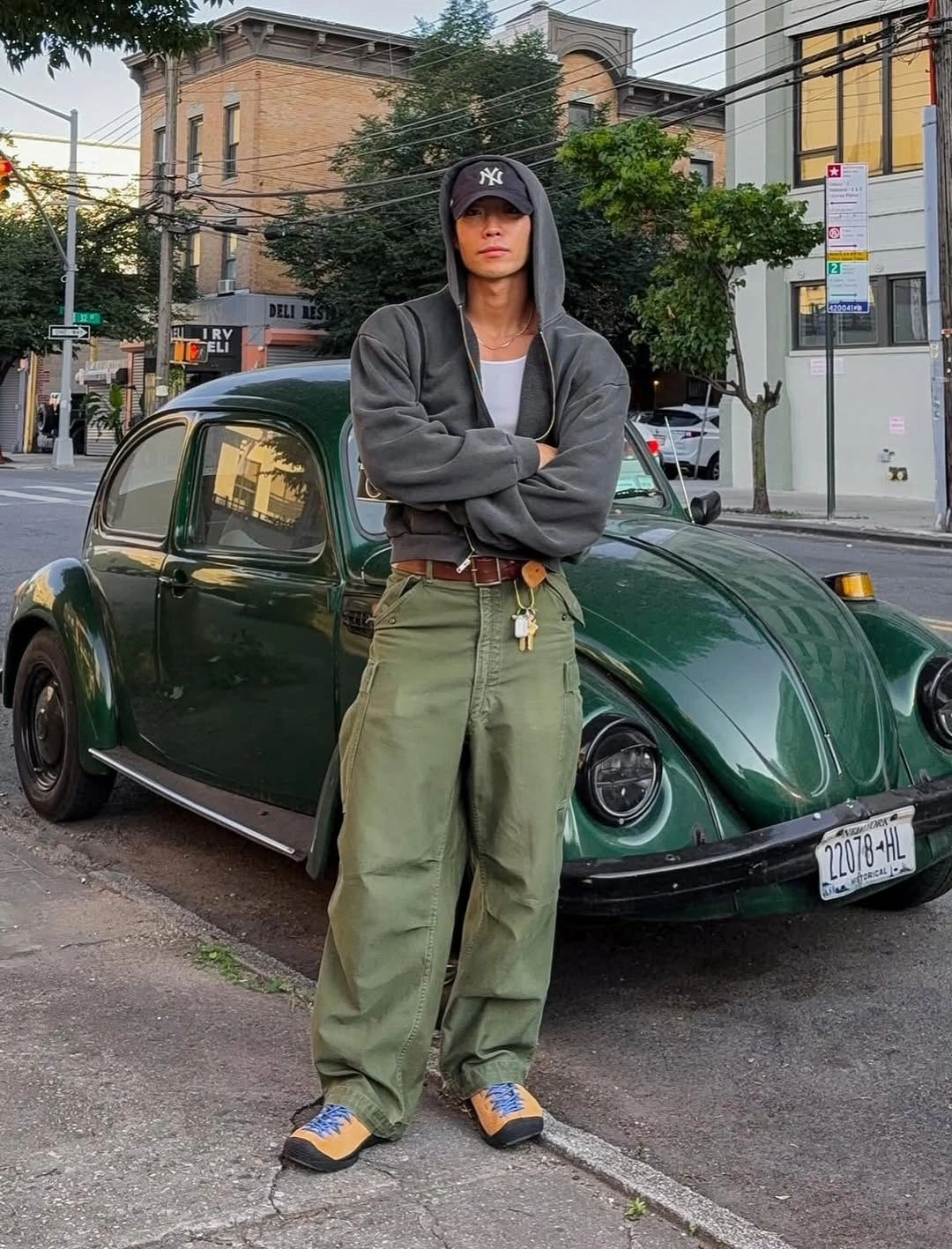
The cargo pockets already add texture, so a plain inner tee is the right move if the hoodie is left open. Keeping the trouser hem near the sneaker rather than stacking it heavily allows the orange note to remain visible, which is important when that is the only lively color. Someone who prefers less volume could choose a straighter olive pant, but should preserve the slightly boxy relationship between jacket and leg.
What works best here is the controlled use of utility detail rather than an attempt to make every item rugged. A black bag, dark belt, or quiet metal chain can support the look, whereas a second colored accessory would compete with the shoes. The same approach translates well to casual errands or an informal daytime plan because it has enough structure without depending on tailoring.
Olive Bomber With Earth-Toned Trousers
The cropped olive bomber creates a strong starting point for the deep brown trousers because its shorter length gives the wider leg somewhere to begin. A dark textured knit sits between those tones, making the outfit read as a close family of greens and browns rather than separate garments. Black shoes finish the base quietly and prevent the warm trousers from drifting into a costume-like retro mood.
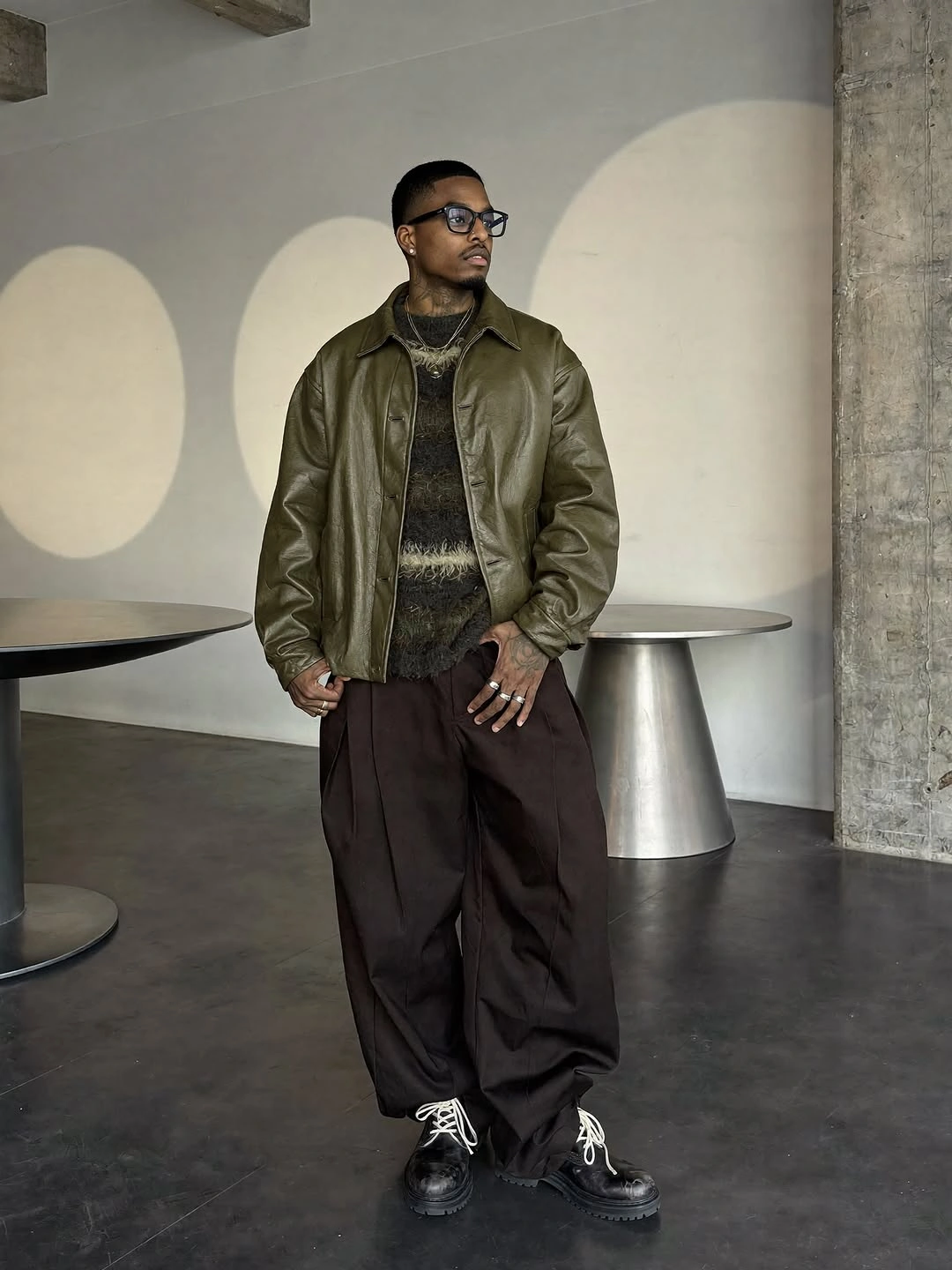
This is a good example of how an outer layer can manage proportion without needing a bright color. The bomber appears compact at the waist, so the roomy trousers feel balanced rather than oversized; a longer jacket would blur that relationship. If the knit is swapped for a tee, choose one in charcoal, deep olive, or soft cream instead of crisp white, which would make the palette more abrupt.
The appeal lies in the restrained temperature shift: the olive reads cooler while the brown pant looks warmer, yet both remain muted. A low-profile shoe is more helpful than a chunky athletic pair because it lets the trouser drape stay visible. That choice makes this combination useful when an everyday jacket needs to look a little more intentional without becoming formal.
Gray Hood Framed by Black Puffer Layers
A gray hood showing beneath a black puffer gives the dark outerwear real depth, especially when the cap and wide trousers stay nearly black. The lighter sweatshirt forms a soft center line between the puffer panels and the pants, while the sneakers introduce a small sporty finish. Without that gray layer, the outfit would depend entirely on texture and could appear visually heavier around the chest.
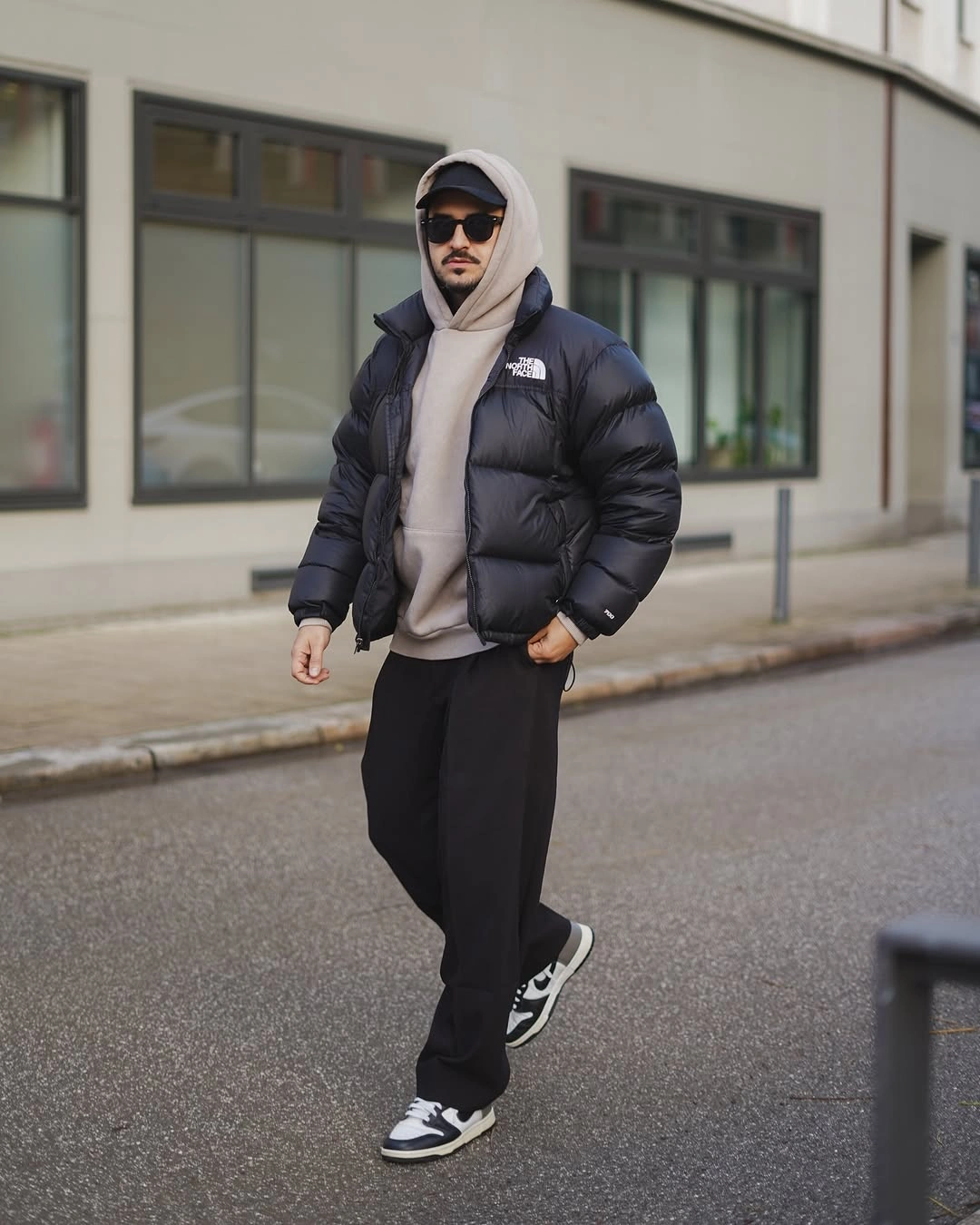
Puffer volume needs room below it, which is why the wider pant works more naturally here than a skinny jean would. The slight looseness lets the jacket look purposeful instead of overstuffed, and the visible hood keeps the shoulders from feeling too square. For a tidier version, use a charcoal sweatshirt and keep the trouser fabric matte; shiny pants would create too many competing surfaces.
There is no need to add a colorful scarf or bag when the layered gray already establishes the focal point. A black beanie could replace the cap for colder conditions, while the sneaker should retain some pale detail to avoid making the lower half disappear. The result is practical streetwear that gets its personality from overlapping values rather than from a logo or print.
Red Knit Above Soft Brown Volume
The red patterned sweater is unmistakably the lead piece, and the very wide brown trousers are smart because they offer warmth without trying to rival that color. Their dark, earthy value absorbs the brightness of the knit, while the tan footwear creates a gradual bridge between the two. The necklace adds a narrow glint at the neckline, but the outfit still relies on the red-to-brown relationship for its energy.
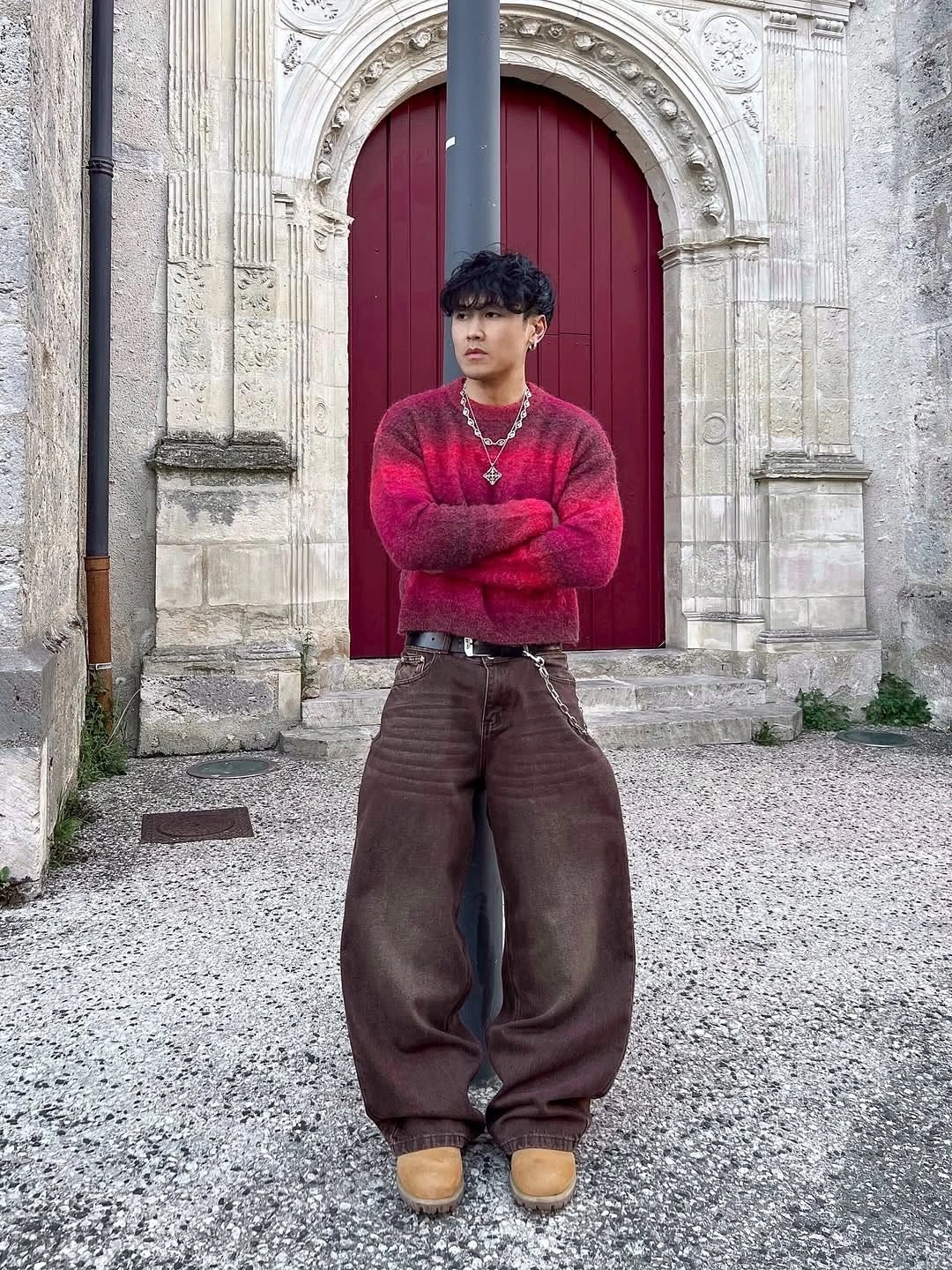
When a knit carries this much color and surface detail, the trousers need to stay broad and plain rather than adding a second pattern. The high waist and generous leg make the sweater feel less sweet and more directional, while compact shoes keep the hem from becoming a heavy puddle. A darker burgundy or rust sweater could create a subtler variation, but the lower half should remain quiet in either case.
Try this balance when one saturated garment deserves attention but a full tonal outfit feels too forceful. The practical limitation is warmth: a thick knit and wide fabric can become substantial indoors, so a breathable base layer matters. Leaving the pants unadorned lets the eye return to the sweater, which is the visual decision worth protecting.
Camel Ribbed Knit With Navy Trousers
The camel sweater and deep navy trousers prove that a polished contrast does not require a blazer or a sharp shirt collar. The warm, close-fitting knit sits neatly above the fuller navy pants, and the tan shoes echo the sweater without making the outfit look perfectly matched. That repeated warmth at the top and bottom gives the dark trouser color a clear place inside the composition.
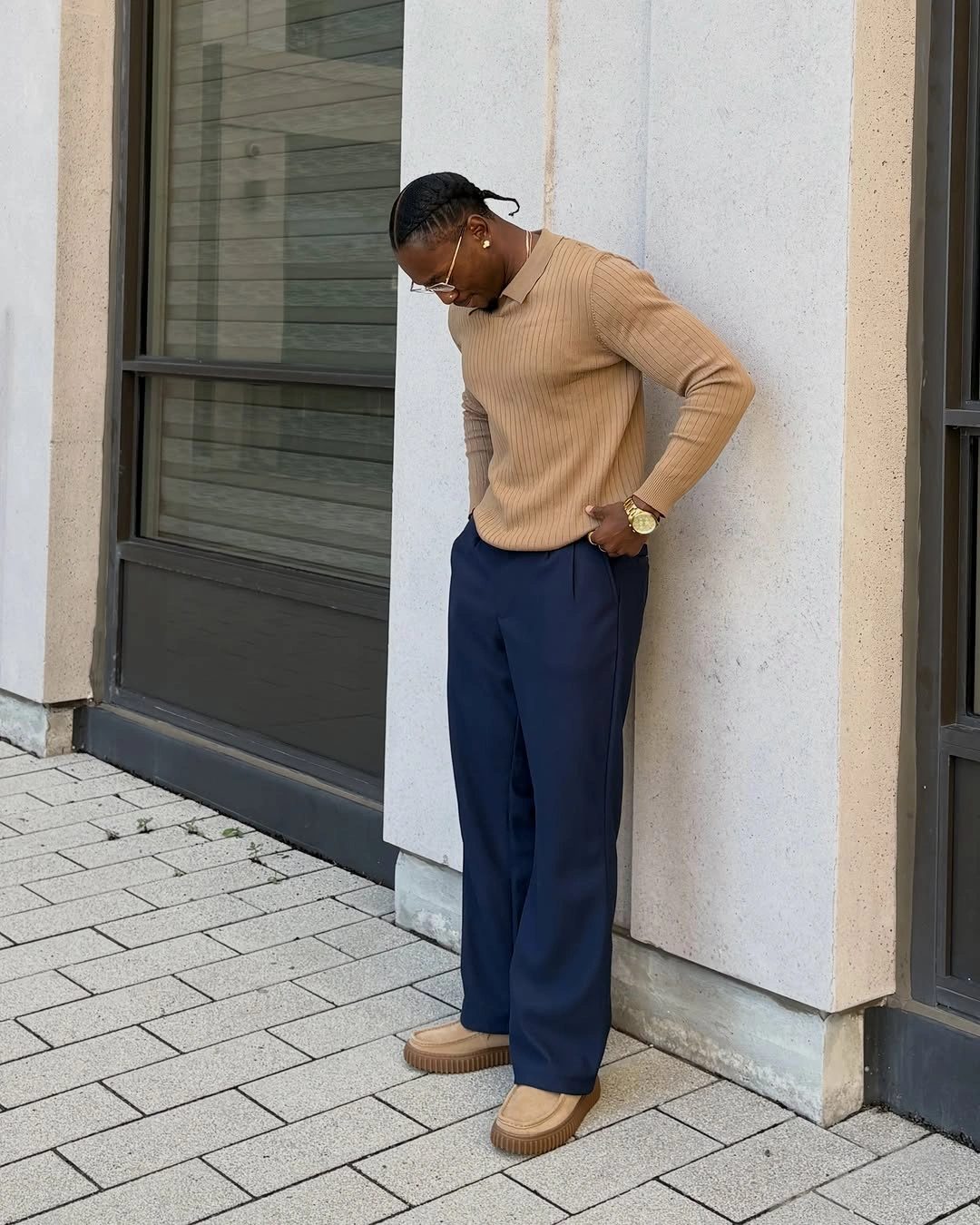
Notice how the fitted upper half keeps the wide trouser shape readable. If both pieces were oversized, the outfit would lose its clean line; here, the sleeves pushed slightly upward add an informal note while preserving the trim shoulder. A small tuck at the waistband can make the proportion even clearer, especially when the pants have a pleated or high-rise front.
For a more casual version, swap the shoe for a simple cream sneaker but retain the navy trouser and camel top. For something slightly dressier, a dark brown loafer will connect the warm and cool tones with less visual interruption. The restraint is the point: only two major colors are needed to make this outfit feel composed.
White Tee and Long Light Shorts
An oversized white T-shirt and light knee-length shorts can look intentionally minimal when the pieces share a pale, low-contrast palette. The white cap and sneakers continue that lightness from head to toe, so the shirt’s larger scale feels like part of a complete summer silhouette instead of an accidental extra size. The only real contrast comes from skin and small dark details, which keeps the outfit airy.
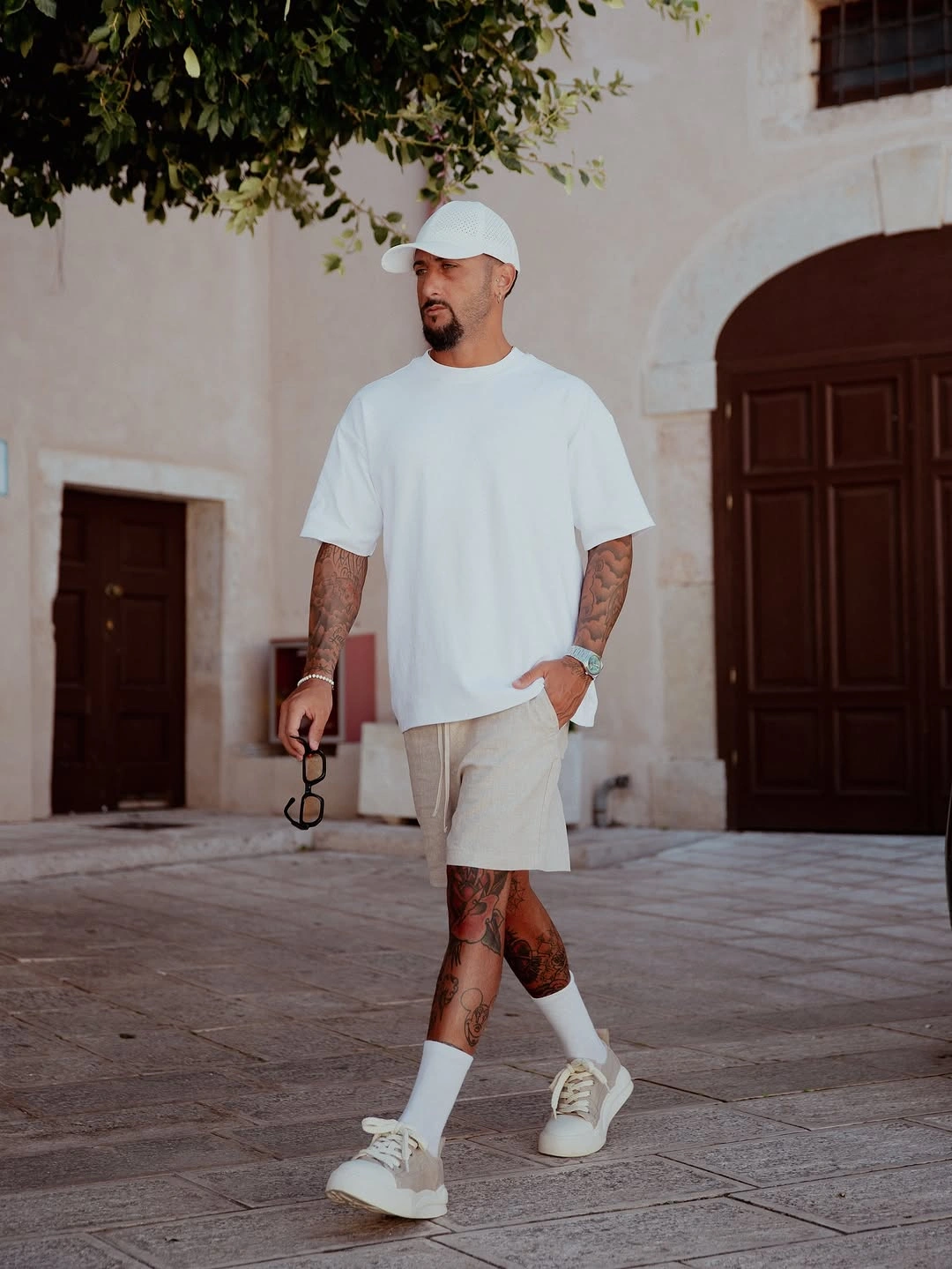
The length of the shorts matters here because it balances the larger shirt without making the legs look abruptly cut off. A shorter running-style short would create a more athletic result, while a heavier cargo shape would add detail the outfit does not need. Keep the tee fabric soft and the shoes clean, since both contribute more to the overall effect than any accessory could.
This kind of pale uniform is useful when comfort comes first but looking unfinished is not an option. A small dark watch or sunglasses can provide enough definition, and a canvas tote in cream or charcoal would sit naturally beside it. The limitation is practical rather than aesthetic: light pieces show wear quickly, so the simplicity depends on keeping them fresh.
Navy Knit and Cream Pleated Trousers
The navy sweater over a crisp white collar gives the cream trousers a tailored context without making the outfit rigid. Dark navy frames the upper body, the white collar creates a narrow bright break, and the light high-waisted pants carry that brightness into a longer line. Sunglasses and a small bag remain dark, which prevents the light trouser area from feeling overly delicate.
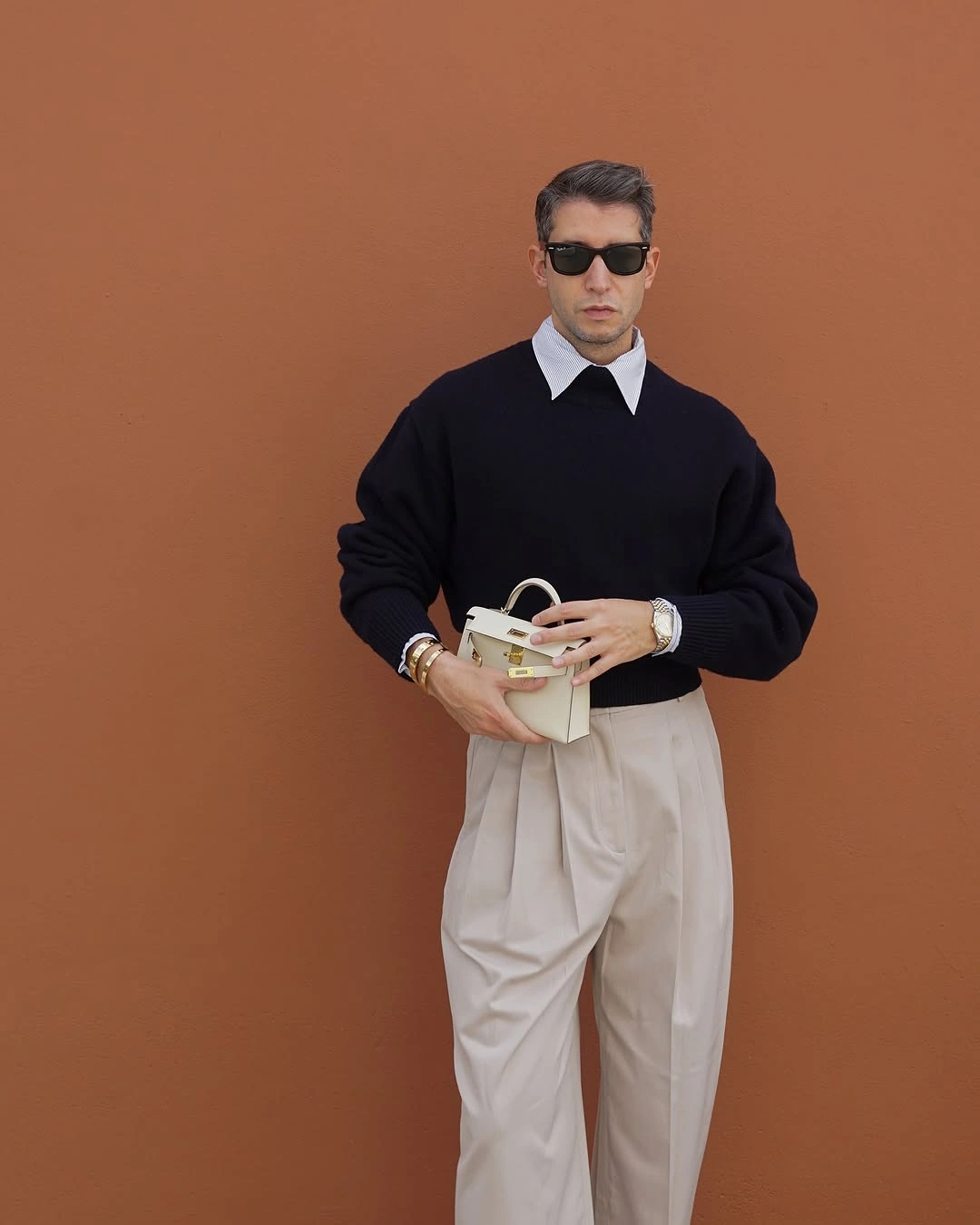
A visible waistband is doing useful work here because it separates the soft knit from the fuller pleats below. Letting the sweater fall too far over the pants would remove that structure, so a partial tuck or naturally shorter hem is more effective. The shoe should stay compact and dark, since a thick white sneaker could interrupt the elegant cream line at the ankle.
This is one of the easiest ways to make a casual crewneck feel ready for a more considered setting. The collar can be replaced by a pale tee for less formality, but then the trouser crease and belt need to carry more of the definition. The strong light-dark split is what makes the outfit memorable, so preserve it even when changing individual pieces.
Printed Overshirt Over a Cream Base
The pale green printed overshirt has enough visual movement to become the focus, yet the white tee and cream trousers keep its scenic pattern from taking over. Because the shirt is worn open, it frames a simple central column and lets the eye move from print to plain fabric without confusion. The dark belt and sunglasses are small anchors that stop the pale lower half from drifting away.
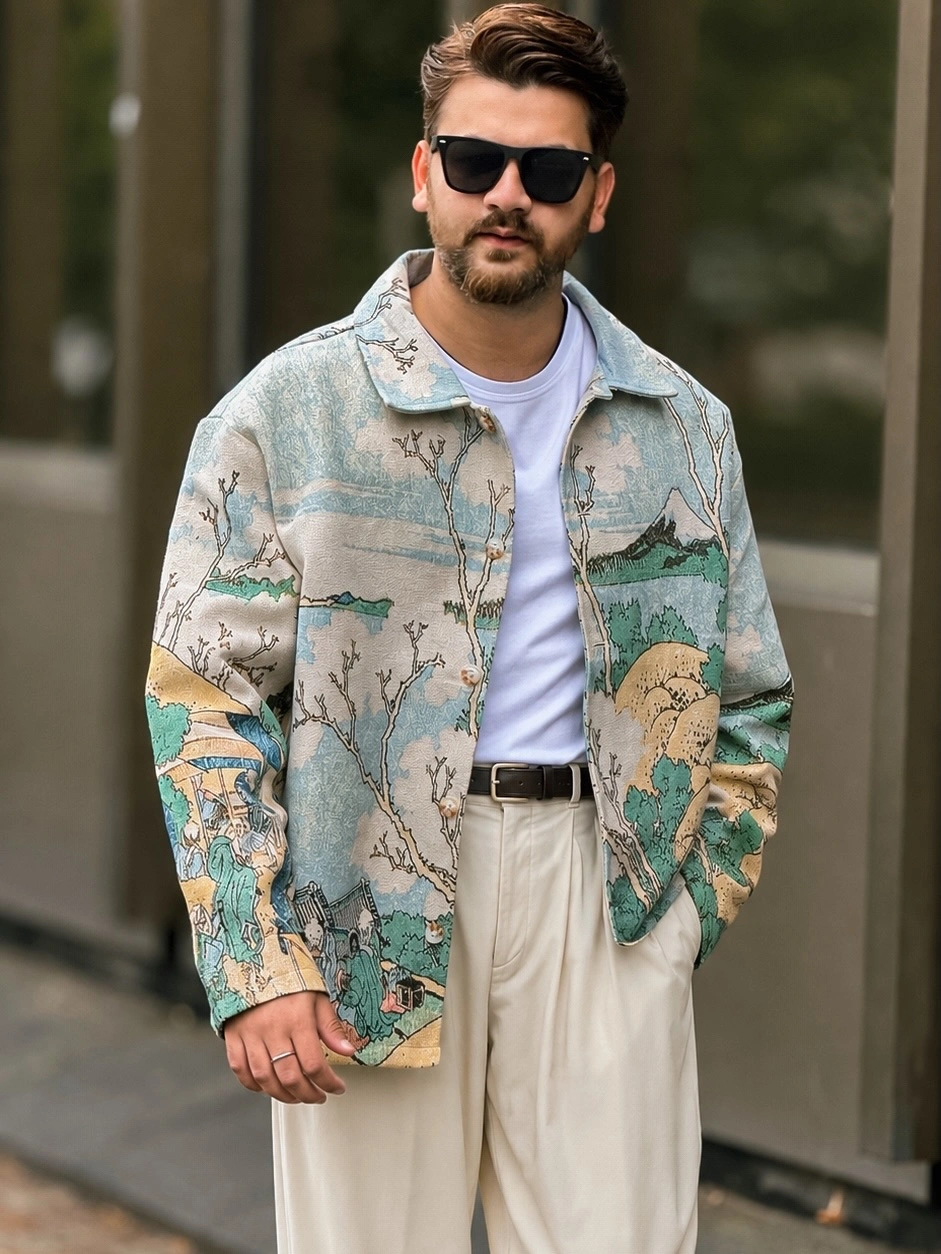
A statement overshirt works best when its neighbors are almost silent. The cream trousers are roomy but not decorative, and the white tee keeps the shirt’s colors visible at the center rather than trapping them against another print. If a patterned garment feels unfamiliar, start with this open-layer approach instead of buttoning it fully, because it leaves more neutral space around the design.
Choose one color from the print only if an accent is needed, perhaps through a muted sock or a small bag, not through another large garment. A clean trouser hem and low-key shoe will do more for the balance than an extra accessory. That restraint makes the patterned layer feel personal while the rest of the outfit remains easy to repeat.
Wine Tailoring With a Casual Cap
The long wine coat and matching loose trousers create a tonal tailored look, but the baseball cap and sneakers pull it away from ceremonial dressing. The color is strong enough to read as one complete idea, while the muted T-shirt provides a small breathing space at the center. Rather than treating the coat as formal outerwear, the relaxed cut lets it work as the main color field.
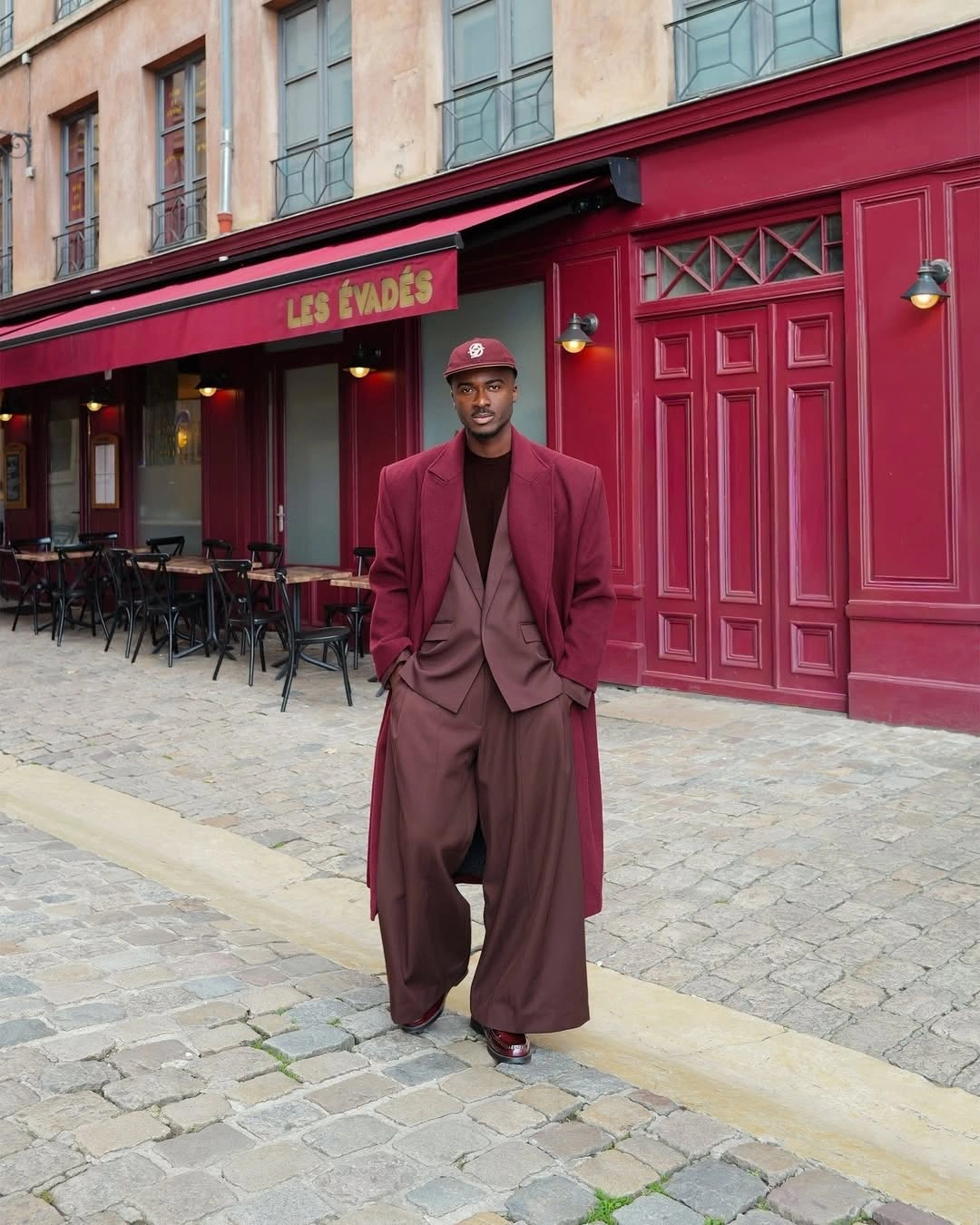
Matching separates need a simple underlayer because another contrast color would compete with the coat-and-trouser conversation. The cap is useful precisely because it is casual and dark; it gives the long coat a different mood without requiring more tailoring details. If the wine tone feels too bold, a charcoal coat with similarly colored trousers can preserve the same idea at lower intensity.
Keep the footwear clean and uncomplicated so the long hem and wide leg remain the defining shapes. A slim sneaker works better here than a bulky running shoe, which would make the lower half look crowded. The lesson is not to copy the color exactly, but to let a single tonal family carry the outfit from shoulder to shoe.
Pink Knit Against Pinstripe Trousers
The pale pink sweater softens the black pinstripe trousers, while the vertical stripe pattern gives the gentle color enough seriousness to avoid looking overly sweet. A shirt collar peeks out at the neckline and adds a clean light accent, but the pinstripes remain the lower-half focal point. Together, the colors work through contrast in both value and mood: soft knit above, graphic tailoring below.
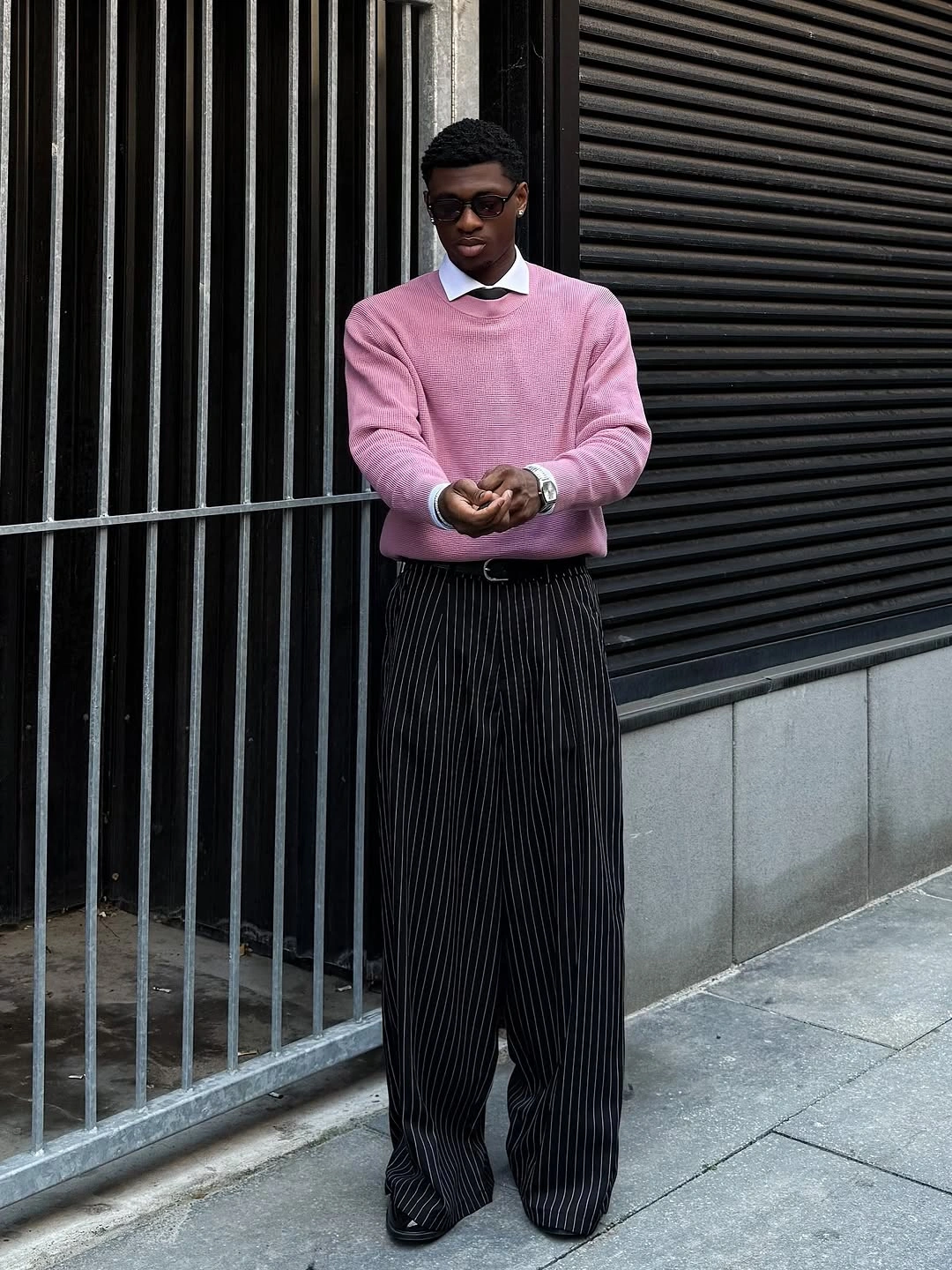
Wide pinstripe trousers already create movement, so the sweater should stay plain and close to the body. The narrow collar is a better addition than a loud necklace or patterned scarf because it lifts the face area without challenging the lines in the pants. A dark shoe grounds the hem and keeps the vertical effect intact when the trousers fall wide.
For a quieter version, replace the pink with dusty blue, mushroom gray, or soft cream and leave every other part unchanged. The tradeoff with wide pinstripes is that they demand a clean upper half; extra pockets, graphics, or layered jackets would quickly make the outfit busy. Let the trousers deliver the pattern and let the knit deliver the color.
Striped Polo With Relaxed Denim Shorts
The orange-and-black striped polo has enough scale to dominate the outfit, so the loose blue denim shorts wisely act as a broad, plain lower field. White socks and black-and-white high-tops establish a sporting finish that connects with the polo’s casual shape. The cap repeats the light footwear color, creating three grounded zones around an otherwise bright top.
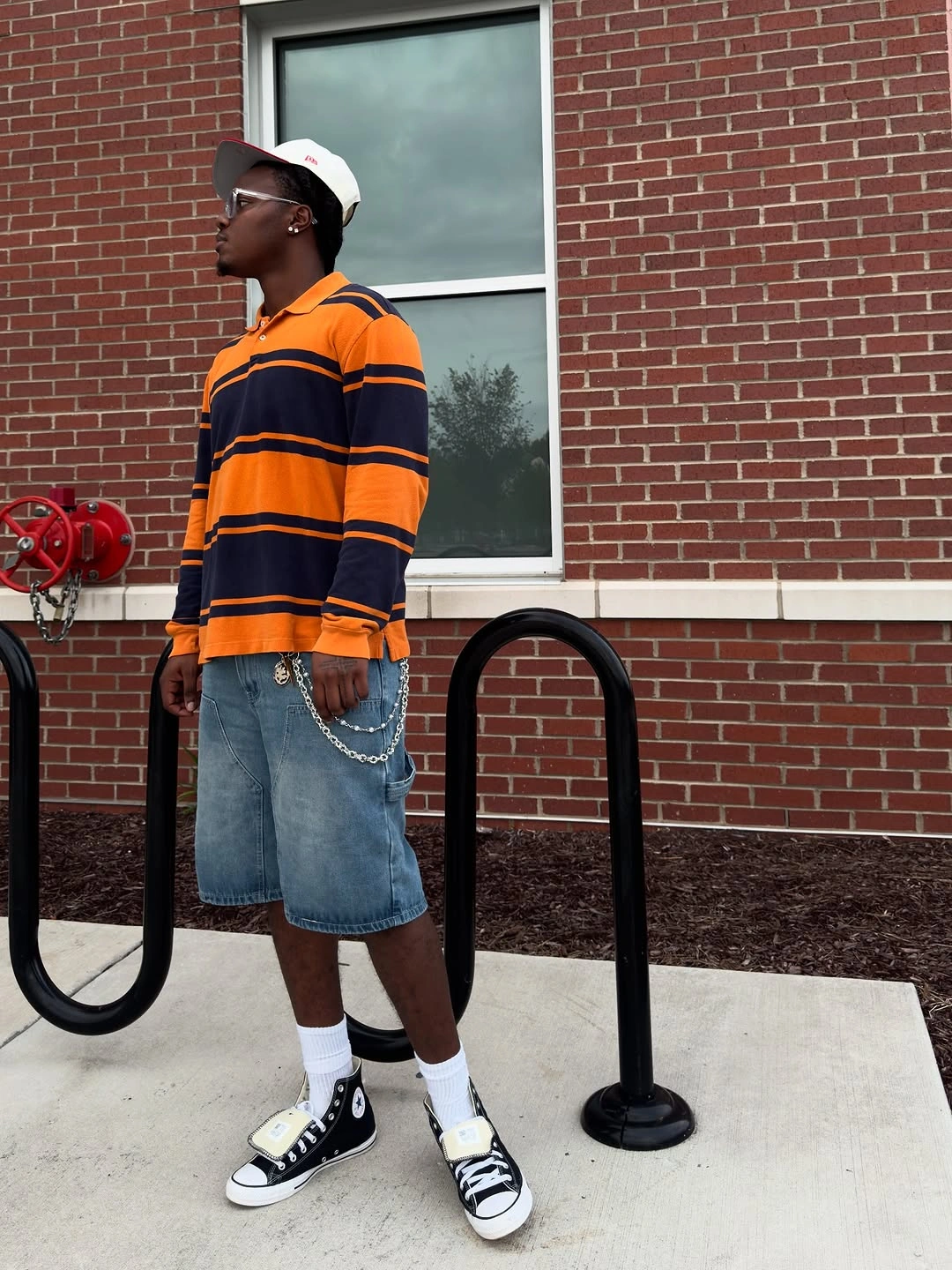
Horizontal stripes add visual width, which is why the generous shorts and high-top shoe work better than very slim bottoms would. A narrow pant could make the top feel top-heavy, but the denim gives the outfit enough base to handle the pattern. Keeping the polo loose rather than tucked preserves its relaxed streetwear character and leaves the stripe rhythm uninterrupted.
A simple black crossbody bag would be an easy addition if carrying space is needed, because it would repeat one stripe color without adding a new one. Avoid a printed sock or colorful hat; the polo has already spent the pattern budget. This is a lively warm-weather look that succeeds by letting one garment remain unmistakably in charge.
Black Zip Polo With Wide Trousers
The fitted black zip polo and high-waisted wide trousers rely on shape more than color, creating a long monochrome line that feels clean rather than plain. The zip creates a vertical detail at the chest, while the waist definition prevents the extra trouser width from becoming shapeless. Dark leather shoes continue the line to the ground and suit the more polished mood of the pieces.
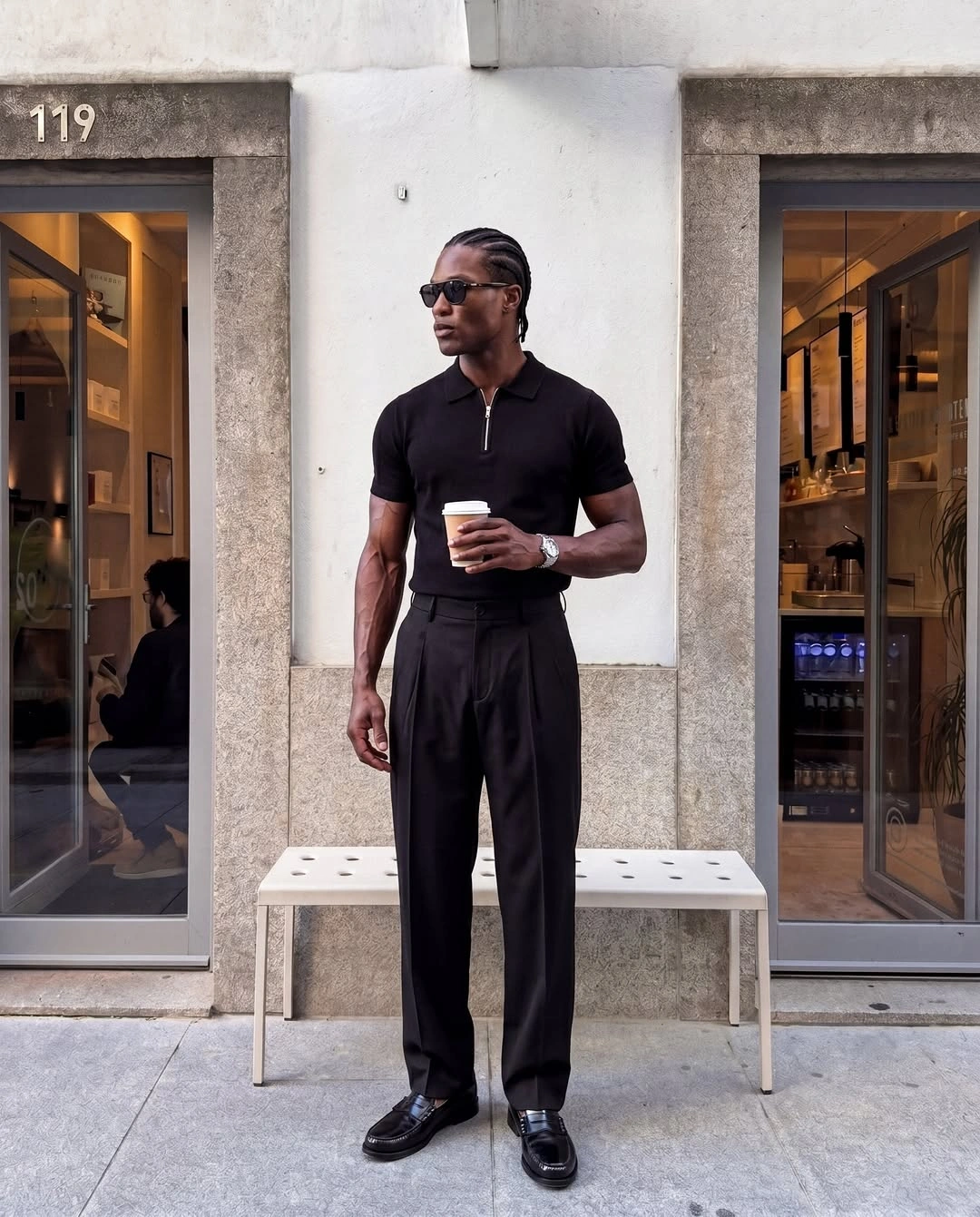
Because the polo stays close to the torso, the trousers can be generous without overwhelming the body. This is the kind of proportion contrast that makes all-black dressing interesting: compact above, expansive below, with a waist as the hinge. A thin belt or subtle watch is enough finishing detail; a large chain or graphic bag would distract from the disciplined silhouette.
The look is best for an evening-leaning casual setting where a jacket would feel unnecessary but a T-shirt too ordinary. If the zip polo feels restrictive, a fine-gauge black knit with the same open neckline can give a similar effect. The key is to preserve that slim, vertical upper area before the trousers release into volume.
Green Bucket Hat Over an All-Black Set
The green bucket hat is the single saturated note in an otherwise black T-shirt-and-shorts outfit, so it becomes more effective than a head-to-toe colorful attempt would be. A small white chest graphic and dark sunglasses support the graphic mood without competing with the hat. The result is a summer uniform with one clear signal instead of a pile of separate accessories.
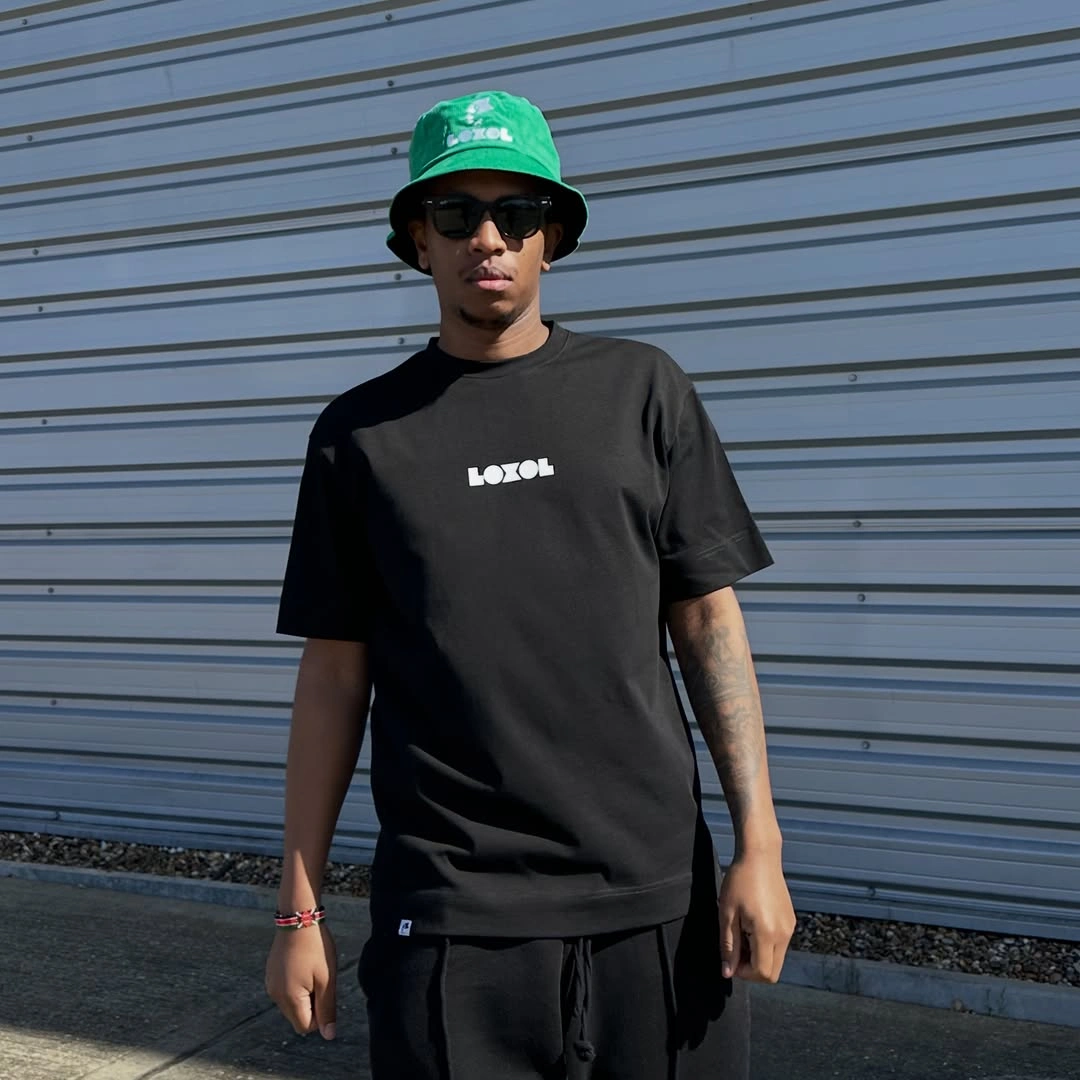
Black shorts and a plain tee give a bright headwear choice enough empty space to read, especially when the shirt falls loosely rather than tightly. The hat could be swapped for a colored cap if a narrower silhouette is preferred, but the rest of the outfit should remain almost unchanged. Adding another strong hue at the shoes would dilute the reason the green works.
Use this structure whenever a familiar black base feels too severe for daylight. A dark sandal or minimal sneaker will keep the outfit casual, and a green-tinted detail on a watch strap can echo the hat without becoming obvious. The practical advantage is flexibility: remove the hat and the look instantly becomes a very simple neutral set.
Navy Open Shirt With White Drawstring Pants
The navy open shirt gives the loose white trousers a darker counterweight, while the exposed chest and relaxed fabric keep the contrast from feeling formal. Burgundy shoes and a striped bucket hat introduce small warm notes at opposite ends of the body, but the navy-and-white split remains the strongest relationship. That is why the look still reads breezy despite several visible details.
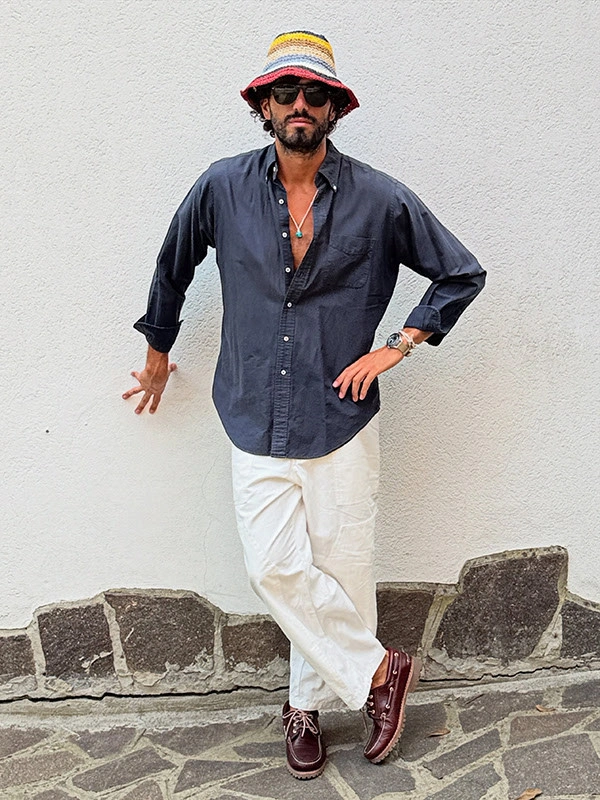
White trousers are doing more than brightening the outfit; their soft volume also makes the dark shirt look lighter and less structured. A narrow hem or ankle-length break is useful here because it keeps the pants from swallowing the dark shoes. If the open neckline feels too bare, a simple white tee can echo the trousers while retaining the same high-contrast frame.
The bucket hat is playful, but it works because its color family does not clash with the shirt or shoes. A more understated version could use a plain navy cap and brown sandal, leaving the white pants as the only bright element. Either way, keep the shirt loose and the lower half simple so the dark-light balance stays readable.
Patched Olive Cardigan and Dark Trousers
The olive cardigan carries the outfit’s personality through its small graphic patches, while the black trousers, cap, and bag create a dense neutral frame around it. Layered necklaces add a narrow reflective detail near the V-neck, but the cardigan remains the central visual event because it has both color and surface interest. This makes the look feel collected without relying on a large print.
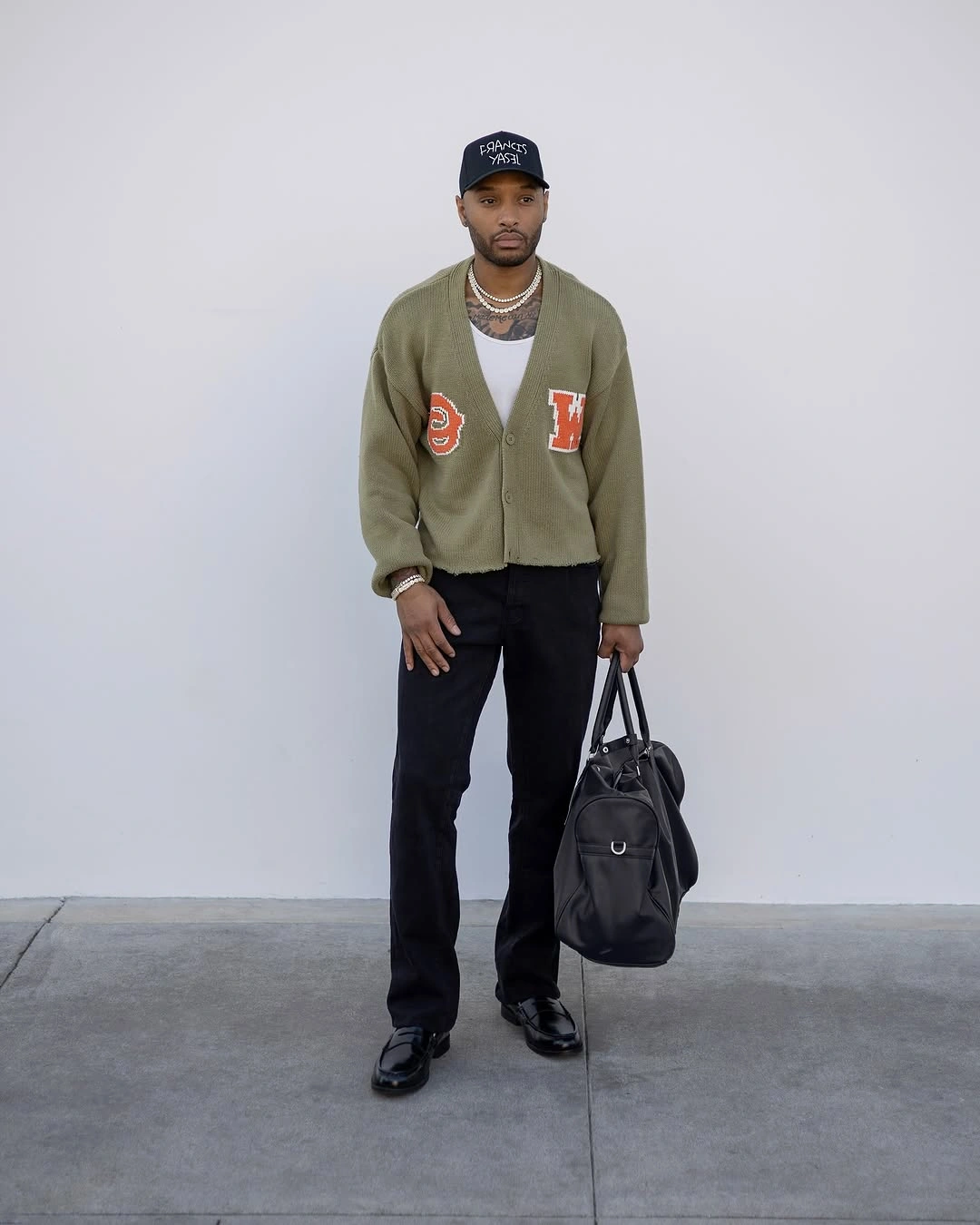
When knitwear has visible decoration, plain trousers are not a compromise; they are what makes the details legible. The V-neck also leaves room for the shirt or jewelry to create depth, while the dark cap repeats the lower half and keeps attention from drifting upward too far. A shorter cardigan would sharpen the waist, but the slightly relaxed length supports the easy mood.
Keep bags and shoes dark and unbranded-looking here, because another graphic motif could compete with the patches. The outfit can move toward smarter casual territory with a leather loafer, or stay more relaxed with a plain canvas shoe. In either direction, the cardigan should remain the only item with a visual story written across its surface.
Quilted Vest Over a Gray Sweatshirt
The black quilted vest puts a vertical, padded frame around the heather-gray sweatshirt, giving a basic crewneck more shape without hiding it. Loose charcoal trousers continue the muted palette, and the sunglasses add a compact dark point near the face. The vest’s panels create enough texture that the outfit does not need a patterned tee, bright sock, or oversized accessory.
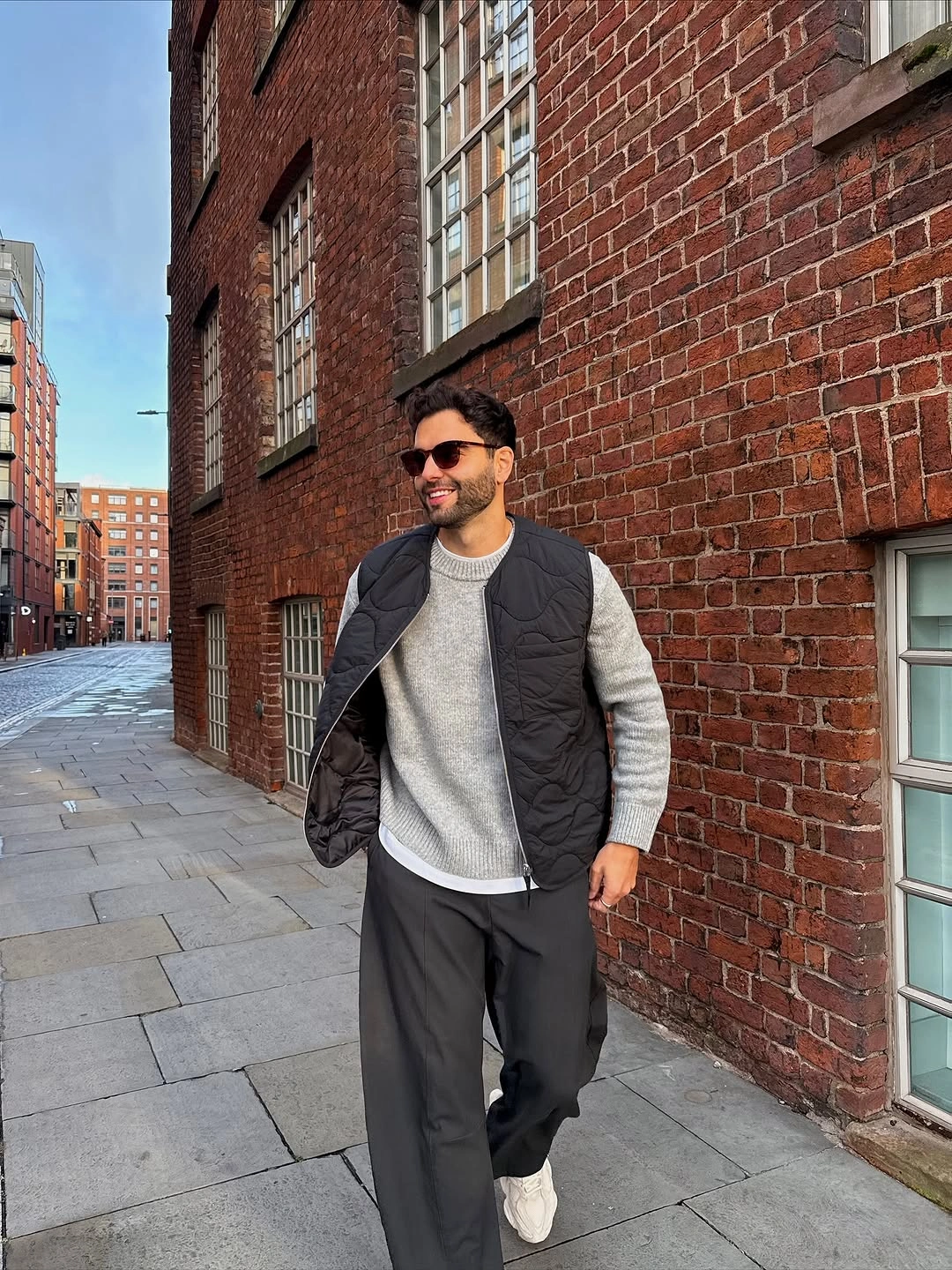
A sleeveless layer is especially useful when a full jacket would add too much bulk at the arms. Here the sweatshirt remains visible across the shoulders and sleeves, so the puffer effect feels controlled rather than padded from every direction. If more contrast is wanted, choose an off-white sweatshirt, but keep the trousers deep and matte so the vest stays the structural layer.
The practical limitation is weather: an open-arm vest will not replace a full coat when conditions are harsh, but it is excellent for movement or indoor transitions. A simple low sneaker keeps the look approachable, while a heavier boot could tilt it toward utility wear. The strength is in the extra outline the vest creates, not in adding more color.
Sage Overshirt With Soft Gray Trousers
The sage overshirt and pale gray trousers make a quiet cool-toned pairing, while the white T-shirt inserts a slim light break between the similar muted layers. Because the jacket is soft in color rather than dark, it does not dominate the wide trouser shape; the whole outfit reads as one calm progression from shoulder to shoe. Minimal gray footwear reinforces that lack of hard contrast.
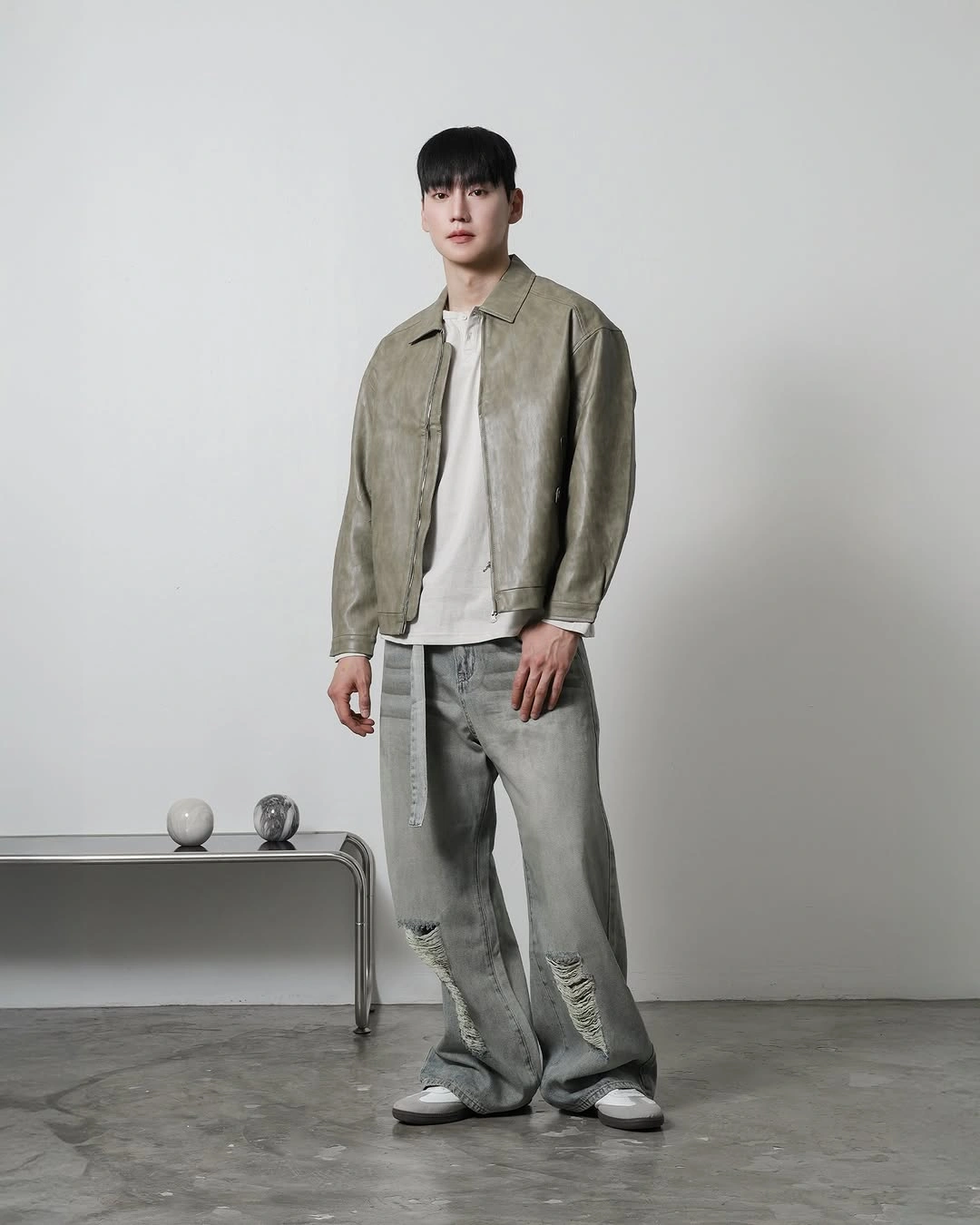
Close tones work best when the garments have enough difference in texture or value to stay separate, and the white tee handles that separation here. Keeping the overshirt unbuttoned is helpful because it lets the central light column show without demanding a belt or stronger accessory. A darker green jacket would make the outfit more obvious, but would also remove some of its restrained charm.
This is a useful color route for someone who usually defaults to black but wants a softer alternative. A pale canvas bag, silver watch, or charcoal cap can join the palette without breaking it into too many pieces. The main caution is cleanliness: muted pale trousers show creasing and marks easily, so the polished effect depends on their condition.
Pink Short Sleeve Shirt With Pale Denim
The pink short-sleeve button shirt and faded wide denim feel easy together because both pieces are relaxed in scale and light in visual weight. White sneakers repeat the shirt’s brightness at the bottom, while the blue jeans cool down the pink without turning the outfit into a costume. The open collar keeps the color from feeling overly precious by introducing a casual, unfussy neckline.
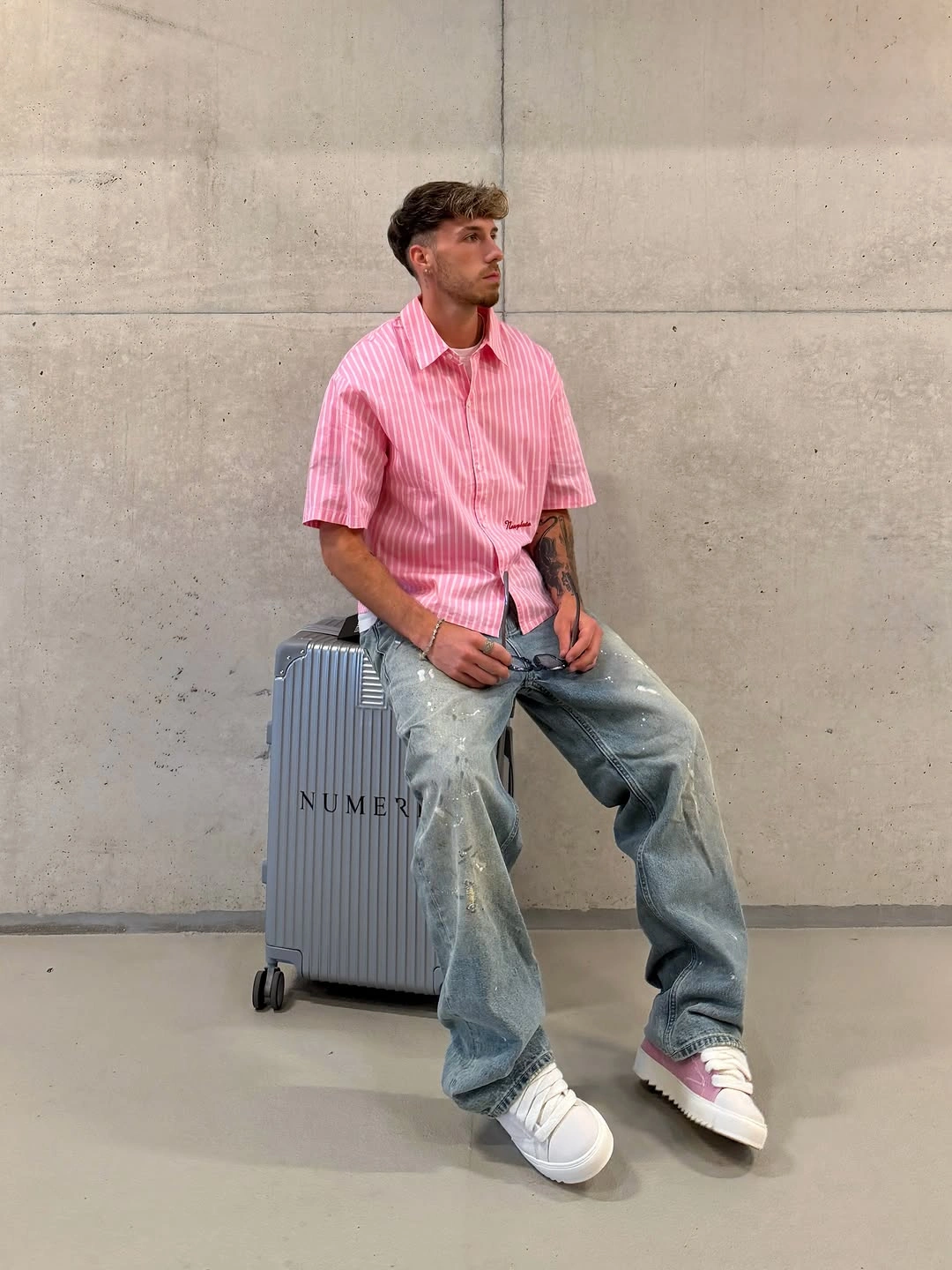
Roomy denim is important here because it matches the shirt’s soft drape; a sharply skinny jean would make the upper half look disconnected. A small belt or partial tuck can add structure when needed, but the outfit does not need a jacket to feel complete. If pink is not the right choice, a pale peach, faded coral, or dusty lavender shirt can preserve the same light-over-blue relationship.
The appeal is less about a specific color and more about allowing denim to act as a calming partner for it. A darker shoe would give the bottom more weight, but white sneakers maintain the clear daytime mood. Keep the accessories simple and let the shirt, jeans, and footwear form one friendly sequence of light color, blue, and white.
Striped Overshirt With White Wide Pants
The blue striped overshirt, white wide trousers, green cap, and yellow shoes use several accents, yet the bright pant base keeps the outfit organized. Vertical stripes add length through the upper body, while the white lower half provides an open field for the cap, footwear, and small crossbody pouch to register individually. The result is colorful, but every accent has space around it.
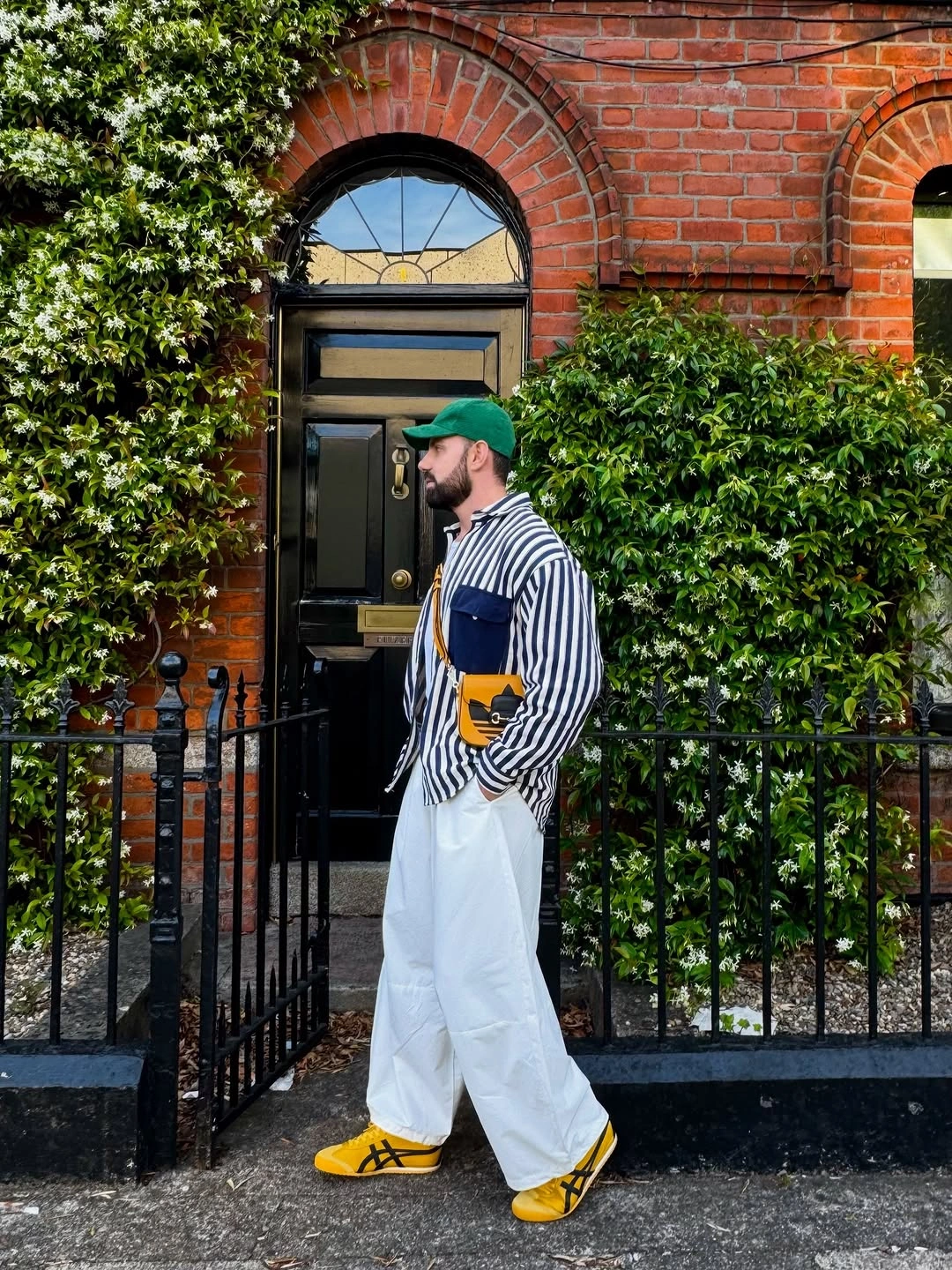
For a look with this many visible colors, the trousers need to remain plain and the shirt needs to stay airy rather than tightly buttoned. The yellow shoes are especially effective because they sit below a largely neutral pant, not beside another strong garment. A muted sneaker could make the combination quieter, but should still carry some warm tone if the green cap remains.
Readers who enjoy casual summer proportions can borrow the same idea with shorts, a striped shirt, and one colored shoe detail. The difference is that white trousers offer more negative space and make the accents feel intentional. Do not add a patterned belt or loud bag here; the stripes have already supplied the movement.
Layered Tee With Olive Cargo Pants
The washed brown graphic T-shirt over white long sleeves creates a visible layer break that gives the olive cargo pants a more complete streetwear context. The red cap supplies a small high-position accent, while the brown shoes quietly echo the T-shirt without making the colors too coordinated. Each piece has a practical-looking texture, yet the white sleeves stop the outfit from becoming a single dark mass.
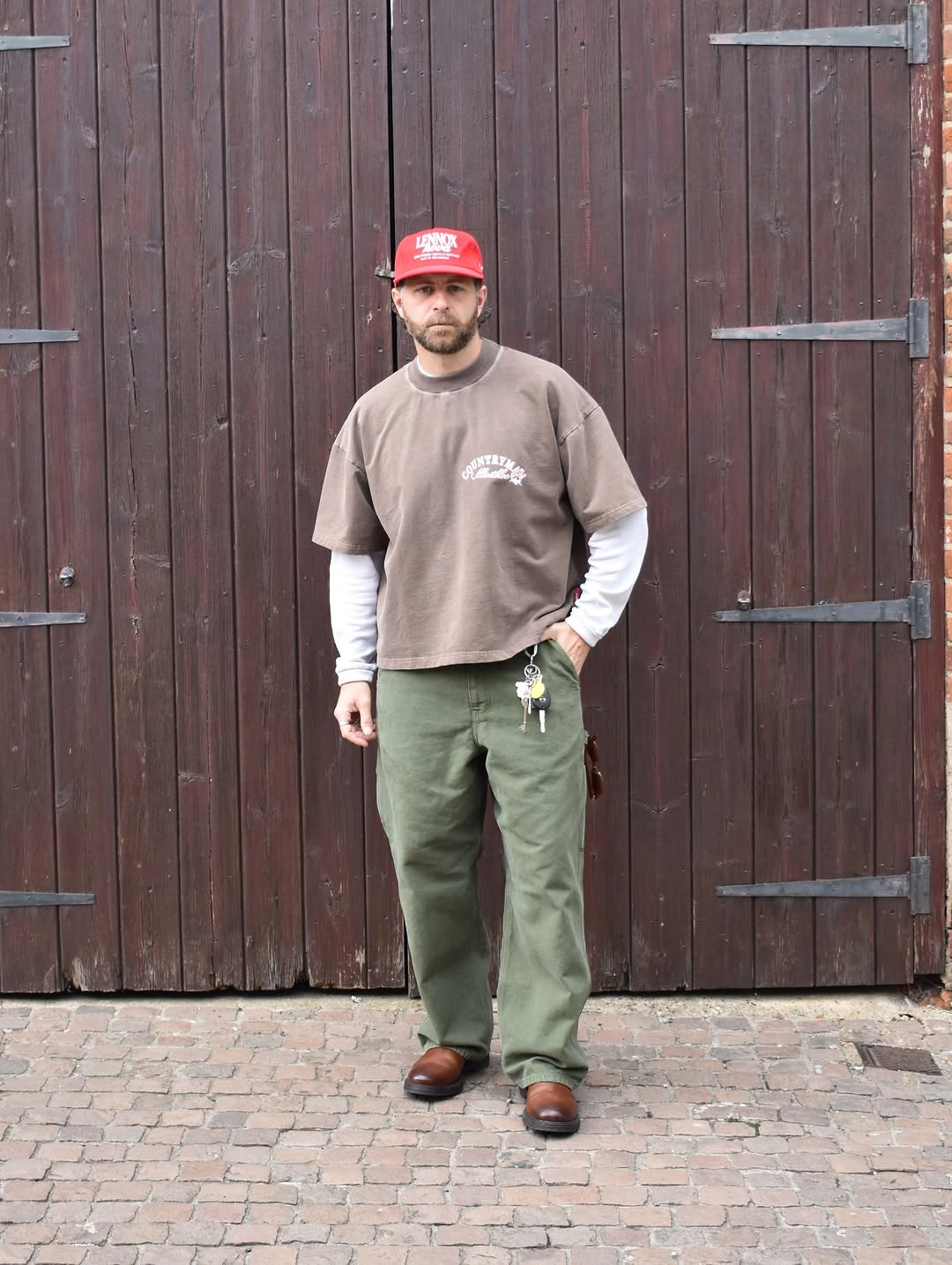
Layered sleeves work best with pants that have enough body to match them, which is why the wide cargo shape feels more balanced than a slim jean would. Keep the undershirt plain and long enough to show deliberately, but not so long that it pulls attention away from the tee graphic. A simple black belt or small pouch is useful; extra patches or chains would make the center too crowded.
This outfit has a more practical, workwear-adjacent mood than the tailored looks, so the shoes can be sturdier without disrupting the proportion. The cap can change the character quickly: dark green would deepen the palette, while cream would echo the sleeve layer. What should remain fixed is the contrast between the short dark tee and the clean white sleeves beneath it.
Blue Stripes Above Dark Relaxed Trousers
The light blue striped short-sleeve shirt brightens the dark loose trousers without relying on a large graphic or strong saturated color. Its vertical pattern brings a little movement to the upper body, while the cap and white sneakers keep the overall mood casual. The dense lower half gives the pale shirt a stable base, making the contrast easy to read from a distance.
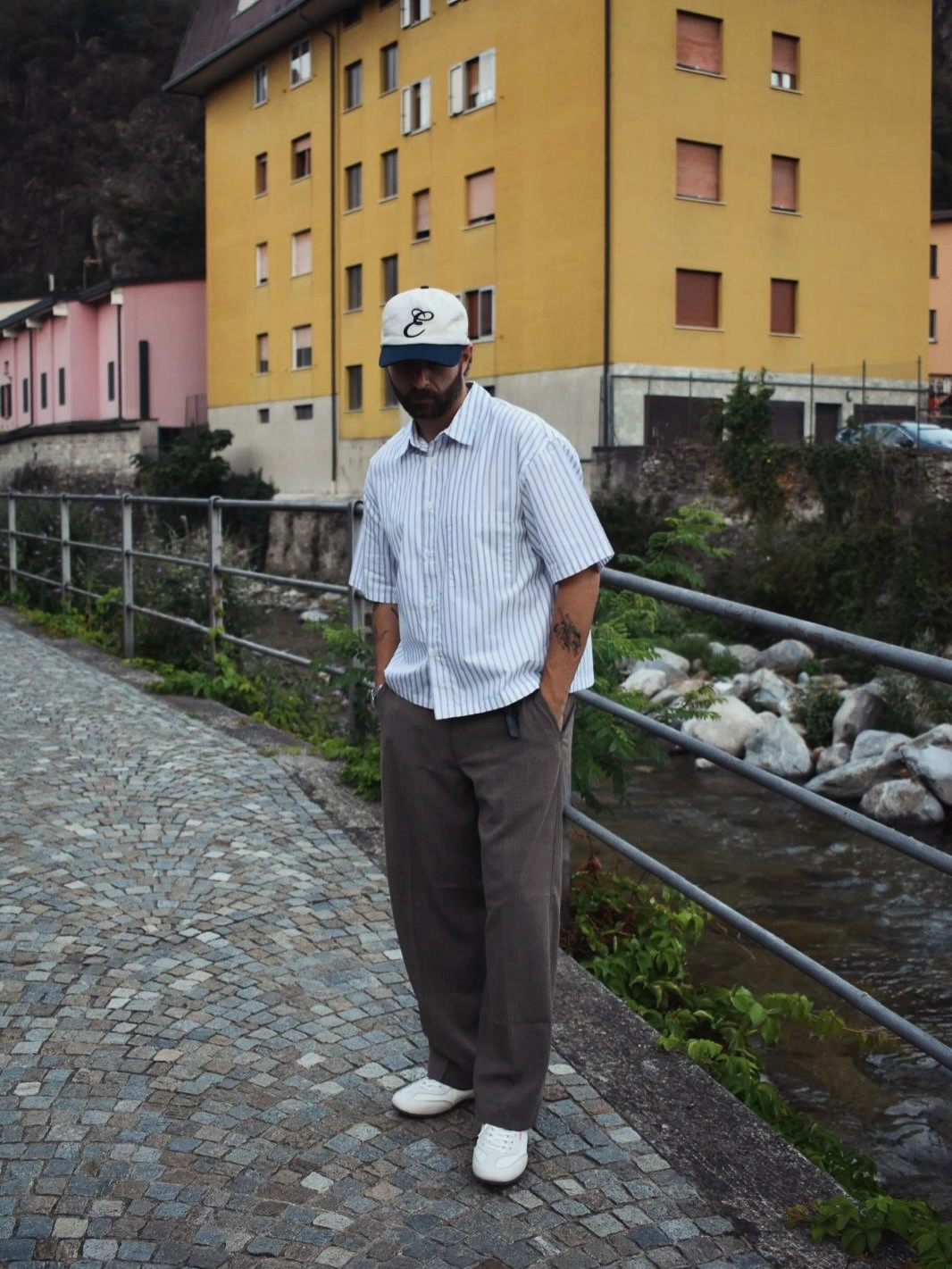
A short-sleeve button shirt can feel more considered than a standard tee when the trousers are roomy, because the collar provides a small amount of structure at the top. Leave it loose or use a restrained front tuck rather than a tight full tuck, which could make the relaxed pants look overly formal. The white shoe is helpful because it repeats the shirt’s lightness near the ground.
For an everyday variation, switch the cap to navy and retain the same dark pant-and-white-shoe rhythm. A black sandal would make the outfit more summery, but the contrast would become heavier at the ankle. The quieter choice here is also the strongest one: a pale striped shirt, dark trousers, and just enough white to connect the two.