
A dotted manicure can look charming or chaotic for exactly the same reason: small marks are easy to add, but harder to give a clear place. The most satisfying versions have a little pause around each dot, so the design still feels deliberate when hands are moving. That sense of spacing matters more than using every color or detail that initially catches your eye.
Start by deciding what should read first – the shape, the tip, or the pattern – and let the other two play quieter roles. A bold edge needs smaller dots, while a bare-looking base can support a stronger contrast. When one detail gets enough open space, the manicure feels more polished and the nail shape remains visible rather than becoming a crowded background.
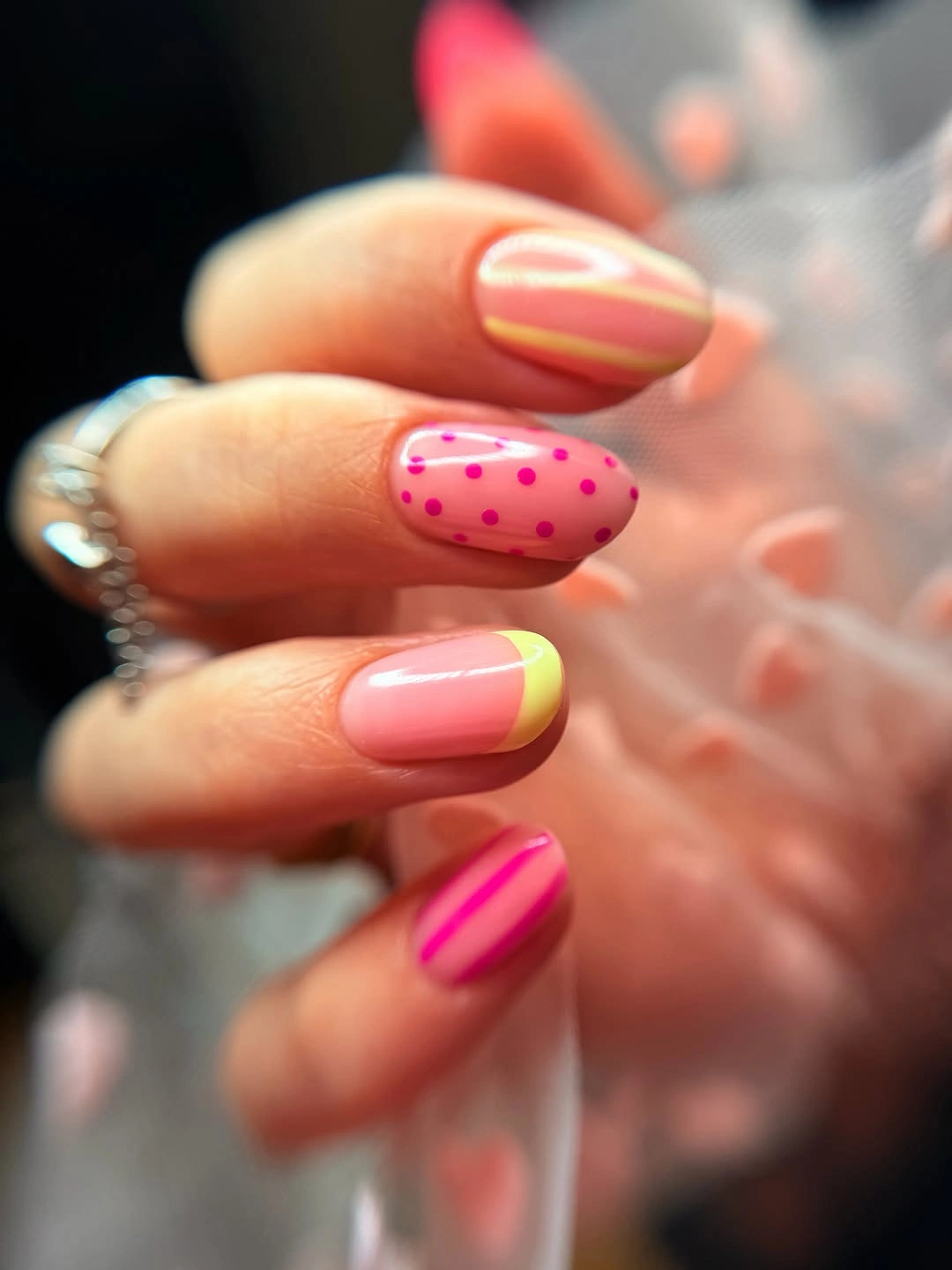
Colorful French Tips With Pink Dots
Short almond nails use a soft pink base, but every tip takes a different turn through yellow, orange, magenta, and hot pink. The dotted pink nail gives the set a recognizable motif without forcing the same design onto every finger. This is a lively mix because the colors change while the small-scale graphic treatment keeps the group connected.
The visible nude-pink space makes the saturated tips feel cleaner than full-color nails would. If you want to adapt this for a shorter length, choose just two bright colors and keep the dots on one or two accent nails. That will preserve the cheerful contrast without making a compact manicure look crowded. A glossy finish suits the crisp color divisions particularly well.
There is a useful restraint in keeping the dots concentrated rather than spreading them over every nail. The solid magenta and orange accents give the eyes a pause, then the dotted nail provides the playful payoff. If you prefer a calmer palette, swap yellow for cream and orange for coral. The same mixed-tip idea will still work, but the overall impression will be softer and easier to pair with everyday clothes.
Pink Stiletto Nails With Dark Dot Contrast
Soft pink and deep burgundy create the base mood of this long pointed manicure, while black dots provide a sharper graphic interruption. The dots are small enough not to flatten the tapered silhouette, yet their dark color gives the pale sections more definition. That balance is why the design feels bolder than a plain pink set without becoming a full black-and-white statement.
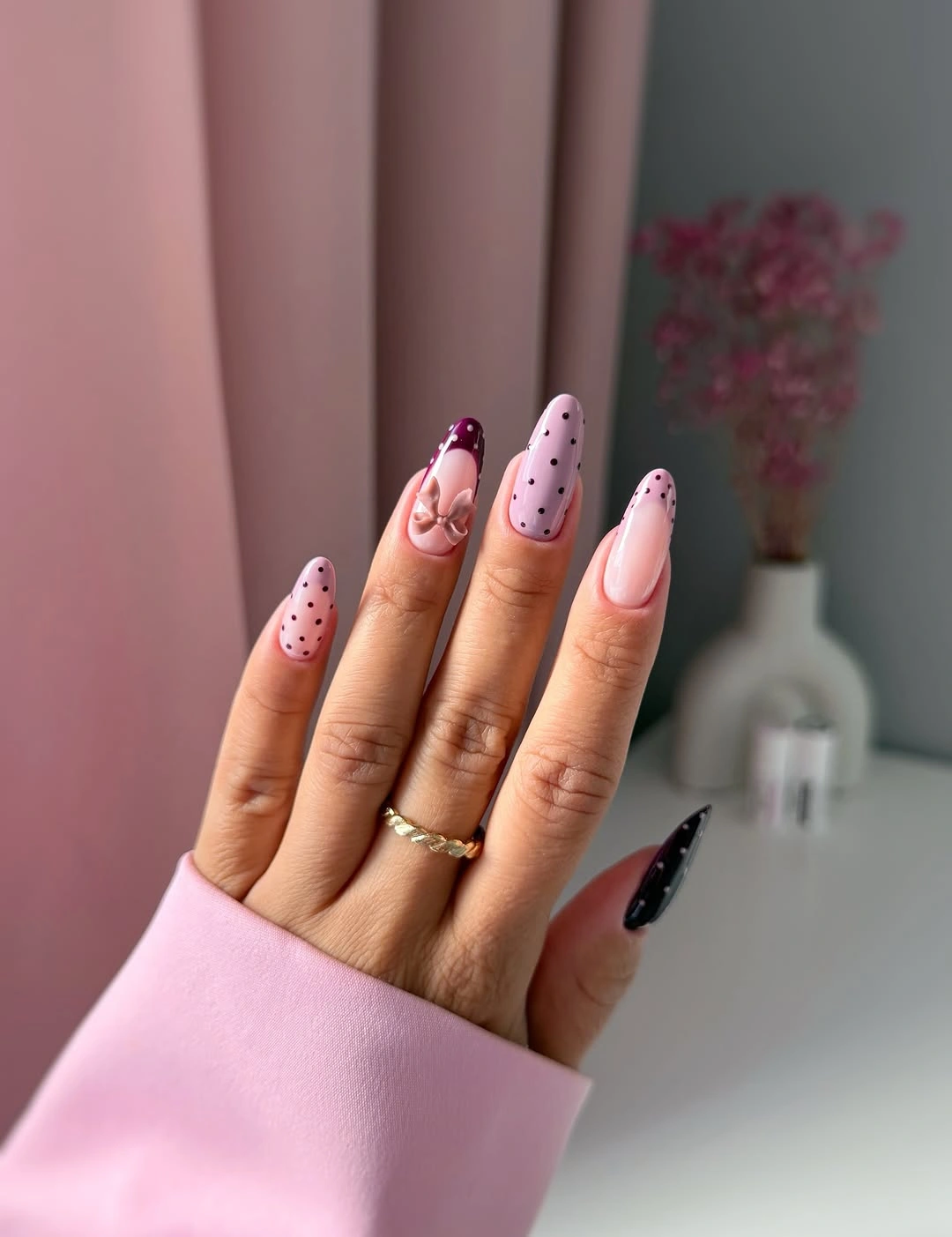
Pointed nails already have a lot of visual direction, so the dot placement works best when it follows the tip or stays within one section instead of covering the entire surface. A reader who wants a more wearable version could keep the pink base and use burgundy on only two tips. The black marks would still create contrast, but the longer shape would have more breathing room and less detail density.
The practical catch with a design this long is that every contrasting mark becomes more noticeable as the nail grows out. Choosing dots near the tip, as seen here, keeps the bare-looking base area visually quieter. If you prefer less upkeep to be visible, use a deeper pink or a closer nude base and reserve the darkest color for the far edge. The point is to let the shape remain the main drama.
Lavender Almonds With Tiny White Freckles
Lavender and pale pink almond nails create a soft, almost tonal set, then tiny white dots add just enough texture to keep it from looking plain. The spacing is delicate rather than dense, which lets the rounded almond shape stay visible. This is the low-key option for someone who likes the polka dot idea but does not want the pattern to become the first thing people notice.
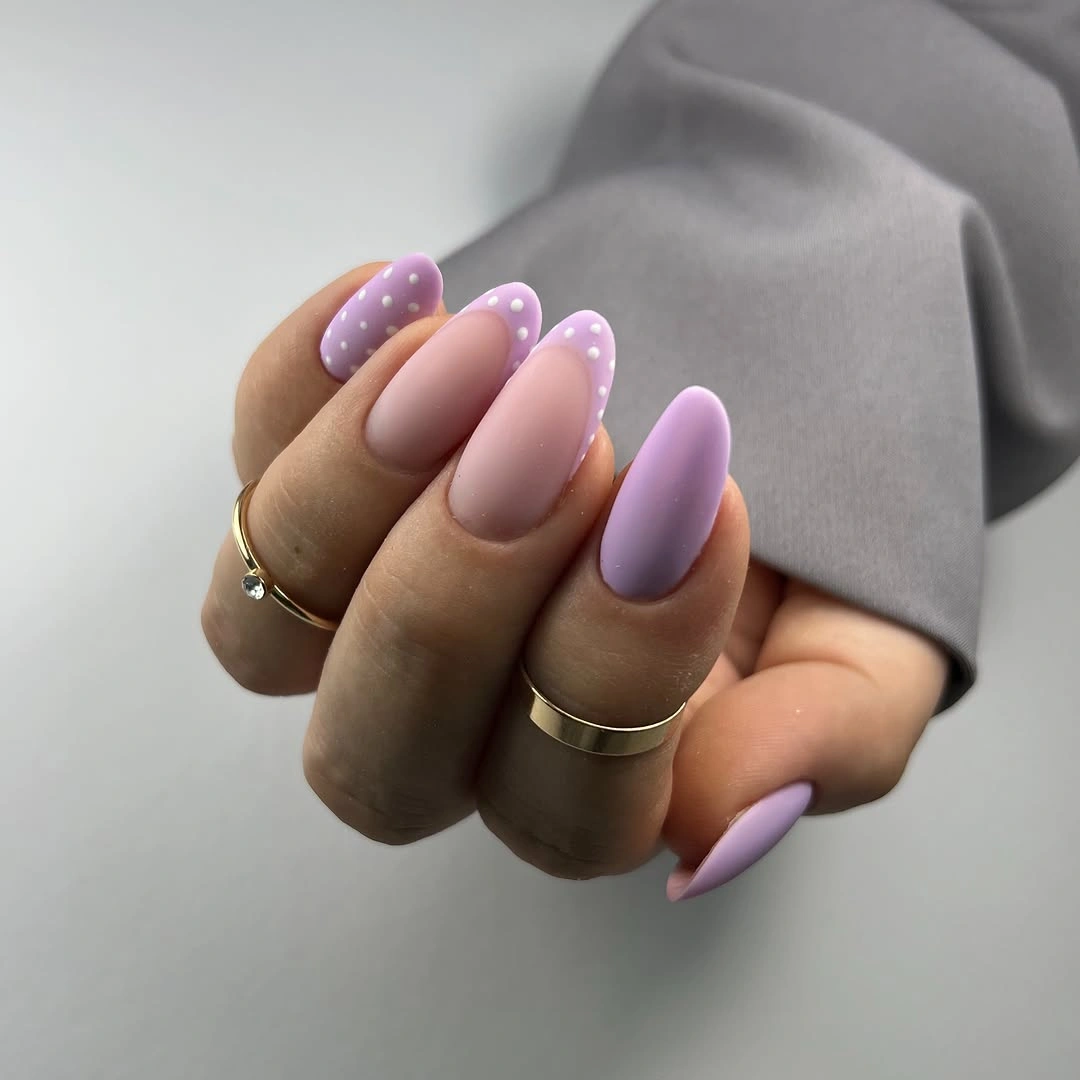
White dots work especially well against lavender because the contrast is visible but not harsh. Keep them small and unevenly distributed rather than forming strict rows if you want a softer, more organic effect. A short or medium almond length would carry the same idea beautifully. The important part is leaving enough smooth color around each dot so the finish still reads clean at a glance.
Because the palette stays so quiet, this manicure can support a little shine from rings or a simple glossy top layer without feeling overdone. The tradeoff is that very pale dots may disappear at a distance, which is part of their charm but not ideal if you want high impact. For more definition, deepen one nail to a muted plum or add a narrow lavender French edge on the thumb and ring finger only.
Squared White French With Black Spots
The long square shape gives the white French sections a firm, graphic edge, and the black dots make that edge feel more playful. A nude-pink base keeps the high contrast from becoming too stark across the full nail. The curved black outline on some tips adds another layer of structure, so the dotted detail looks framed rather than scattered.
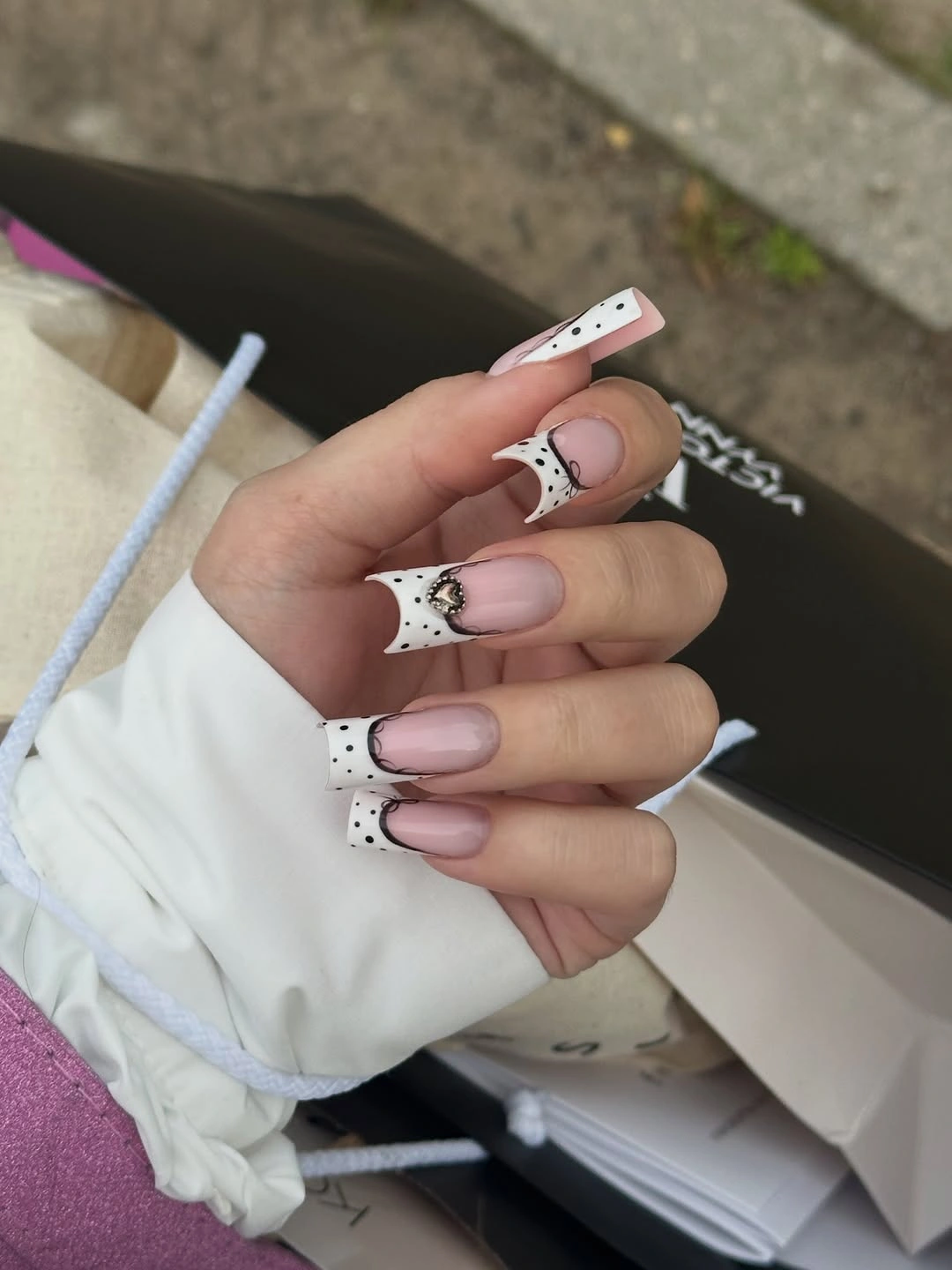
This design shows why square tips are useful for polka dots: their flat edge gives the pattern a clear boundary. If you want a simpler version, keep the white tip and use dots on just the index and ring fingers. That reduces the density while preserving the recognizable black-and-white idea. A short square shape would make the same pattern feel more minimal and less editorial.
High-contrast tips can reveal small chips more quickly than an all-nude design, so keep the white area narrow if you need a lower-maintenance option. The black dots should remain crisp and separated rather than merging into a dense field. That space is what makes the manicure feel precise. A plain black accessory nail could replace one dotted tip if you want more depth without adding another motif.
Black and White Dots on Nude Stilettos
Long nude stilettos alternate between black and white dotted areas, creating a clear graphic contrast while leaving much of the base visible. The tapered tips make the dots feel more directional than they would on a rounded nail. This is a high-impact polka look, but the nude center keeps the pattern from covering the entire manicure with equal intensity.
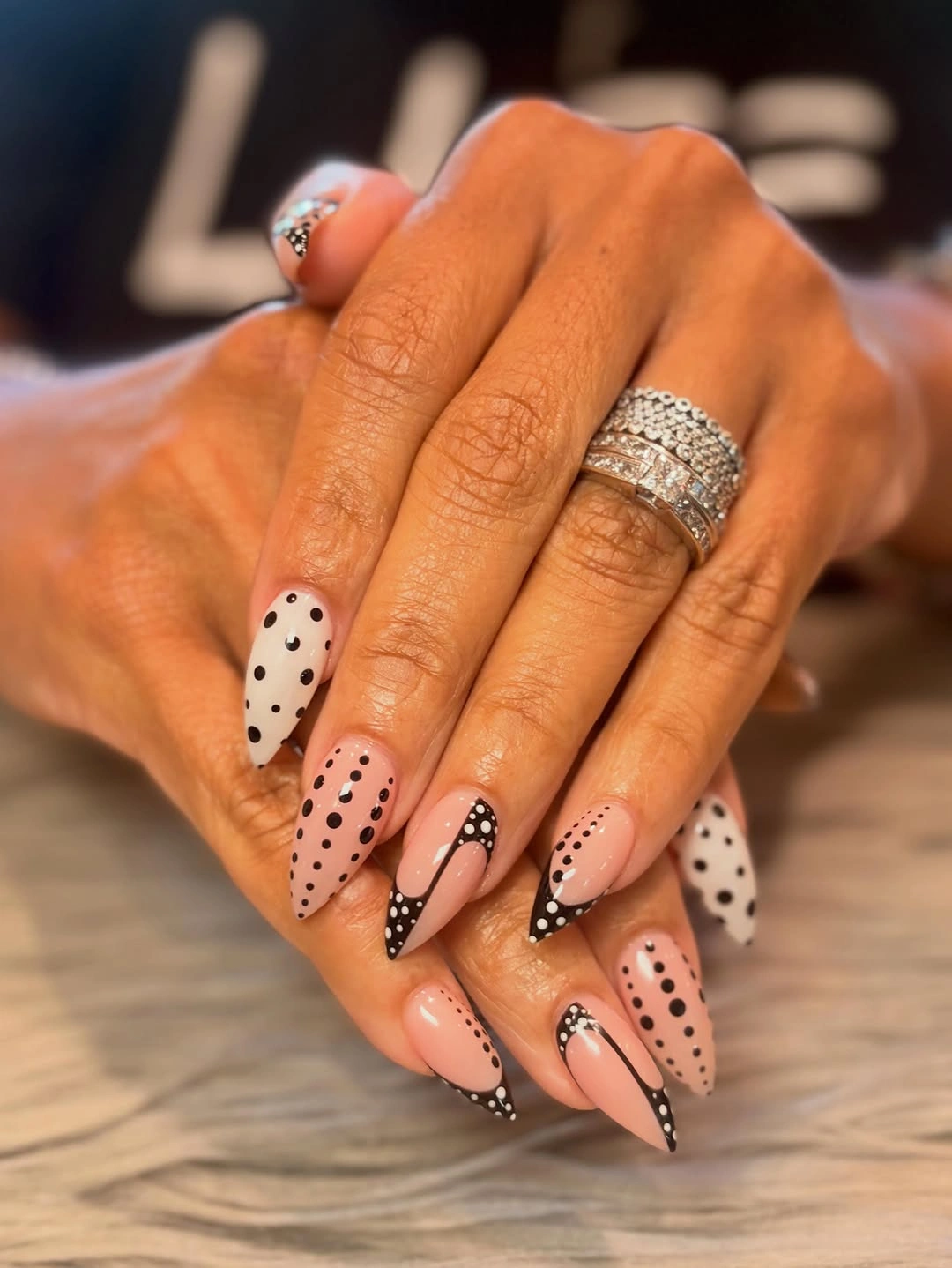
Alternating black and white sections is a smart way to make a simple dot motif look more dimensional. Each color gets enough space to read on its own, then the nude base connects them. If the pointed length feels impractical, use a medium almond shape and place the dark pattern only on the thumb and two accent nails. You will keep the contrast while making the design easier to live with.
The key limitation is visual density. Black spots on white and white spots on black are both attention-grabbing, so adding a third bold color would likely crowd the idea. Keep rings and clothing choices simple if you want the manicure to remain the focal detail. For an understated version, use dark brown instead of black; the pattern will look softer while preserving the same alternating logic.
Neon French Edges With Polka Details
Vivid pink and red French-like edges bring energy to this nude almond set, while white areas with black dots keep the color from feeling too straightforward. The mix works because the brights appear in defined tip zones rather than filling every nail. There is a lively push between neon color and classic black-and-white pattern, but the nude base gives both details room to breathe.
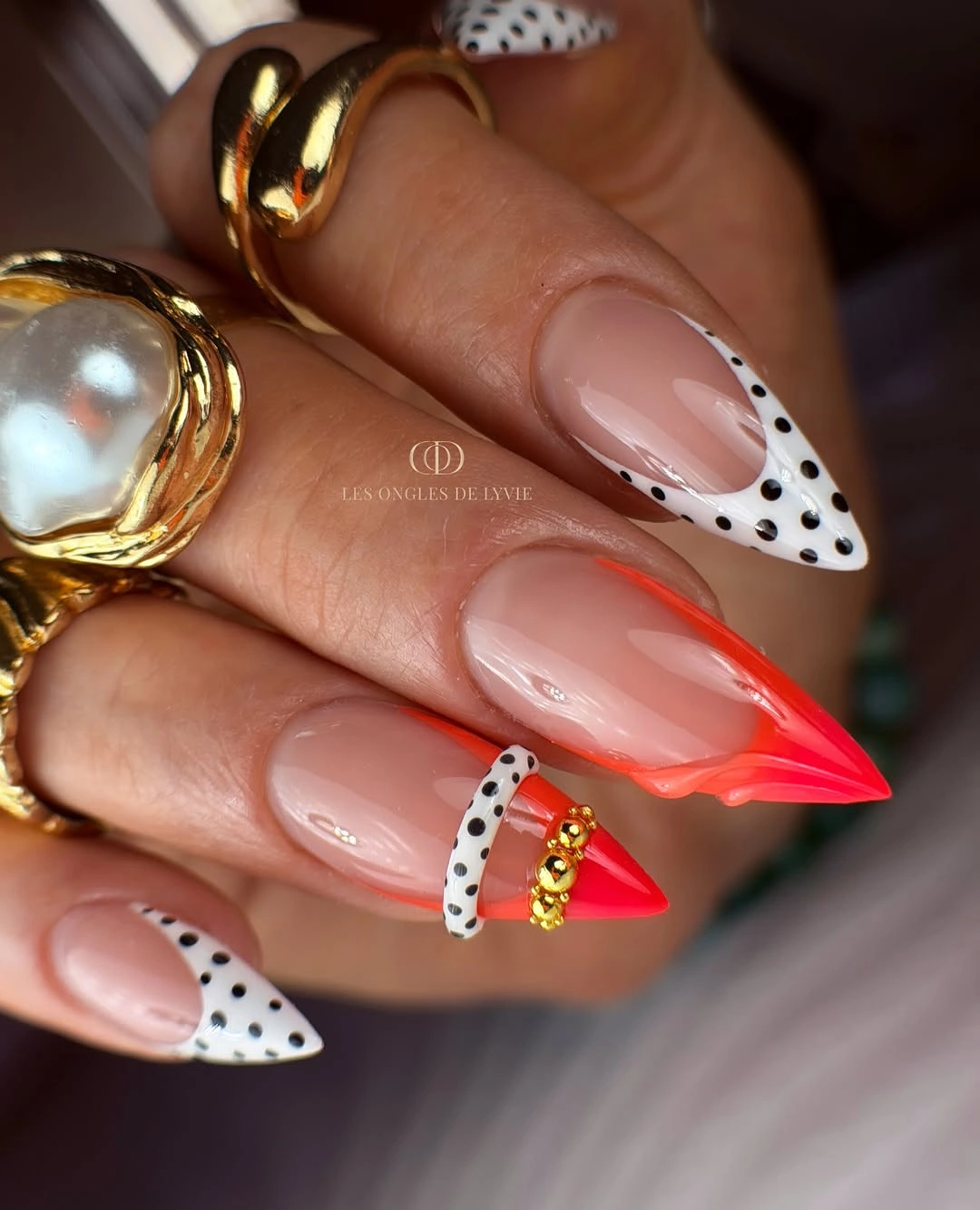
When a manicure combines bright color and dots, choose one element to be larger and one to be smaller. Here the French edges carry the broad color, while the dots remain compact marks inside white sections. You could simplify the look by using only hot pink tips with black dots, or make it warmer with coral and red. What matters is avoiding a different accent system on every nail.
A design with fluorescent-looking color can feel seasonal, but it does not need a specific occasion to work. Pairing it with a nude base makes it easier to wear alongside neutral clothes, and the dotted accents offer a little extra personality without turning it into a costume. The realistic tradeoff is that bright tips show regrowth more clearly than a full color. Keeping the base close to your natural tone helps soften that transition.
Pink Square Tips With Floral Dots
Long square nails use pink French sections, small dots, and floral-looking accents to build a manicure that feels decorative without losing its color unity. The darker pink tip details anchor the design, while the pale base keeps the raised-looking features from becoming visually heavy. This is a good example of dots acting as a bridge between a clean French layout and a more embellished surface.
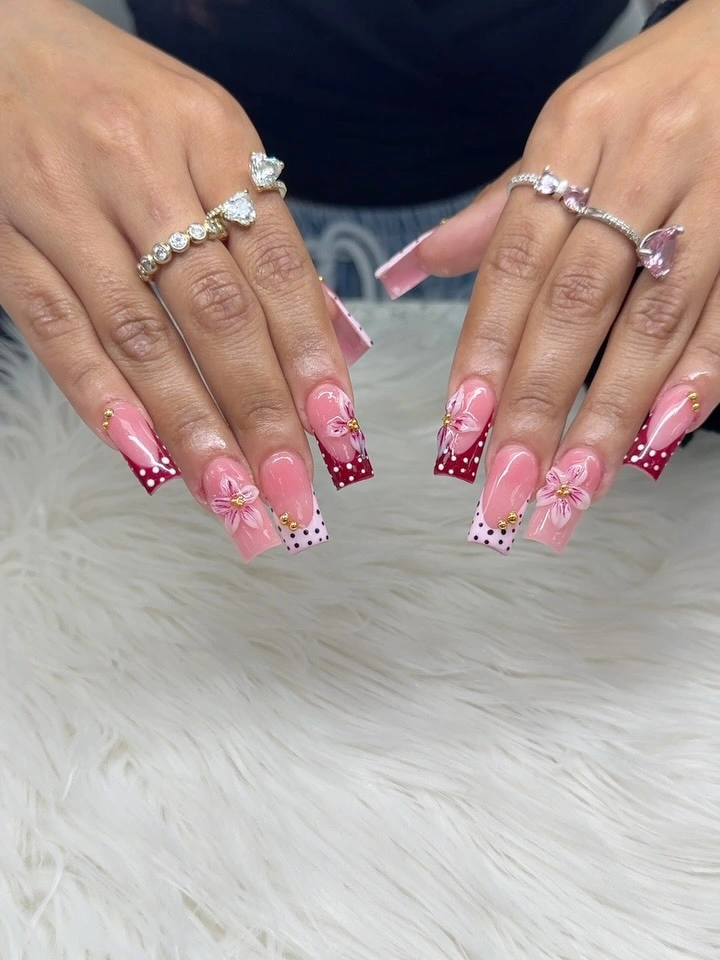
Because the set includes several details, repeating pink across the tips is what keeps it coherent. If you want less ornament, drop the floral accent from most nails and retain one dotted French nail as the focal point. A square shape gives the pink sections more room to read, but a soft coffin or almond edge could make the same idea feel less structured. The color family should remain the constant.
Decorative features are easiest to appreciate when the surrounding nails stay comparatively simple. Let two or three nails carry the most visible flower-like elements, then use dots as a lighter echo elsewhere. That distribution prevents the design from looking equally busy from every angle. If you are choosing between more dots and more florals, pick one direction to lead. The strongest sets usually have one clear visual hierarchy.
Lime Tips With a Pink Dotted Base
Acid lime and pale pink make a fresh contrast on these almond nails, while fine black dots add a graphic edge that keeps the colors from feeling overly sweet. A tiny flower detail gives one nail a small focal moment without changing the overall pattern language. This combination is bright, but the dots are contained enough that the lime tips remain the first visual decision.
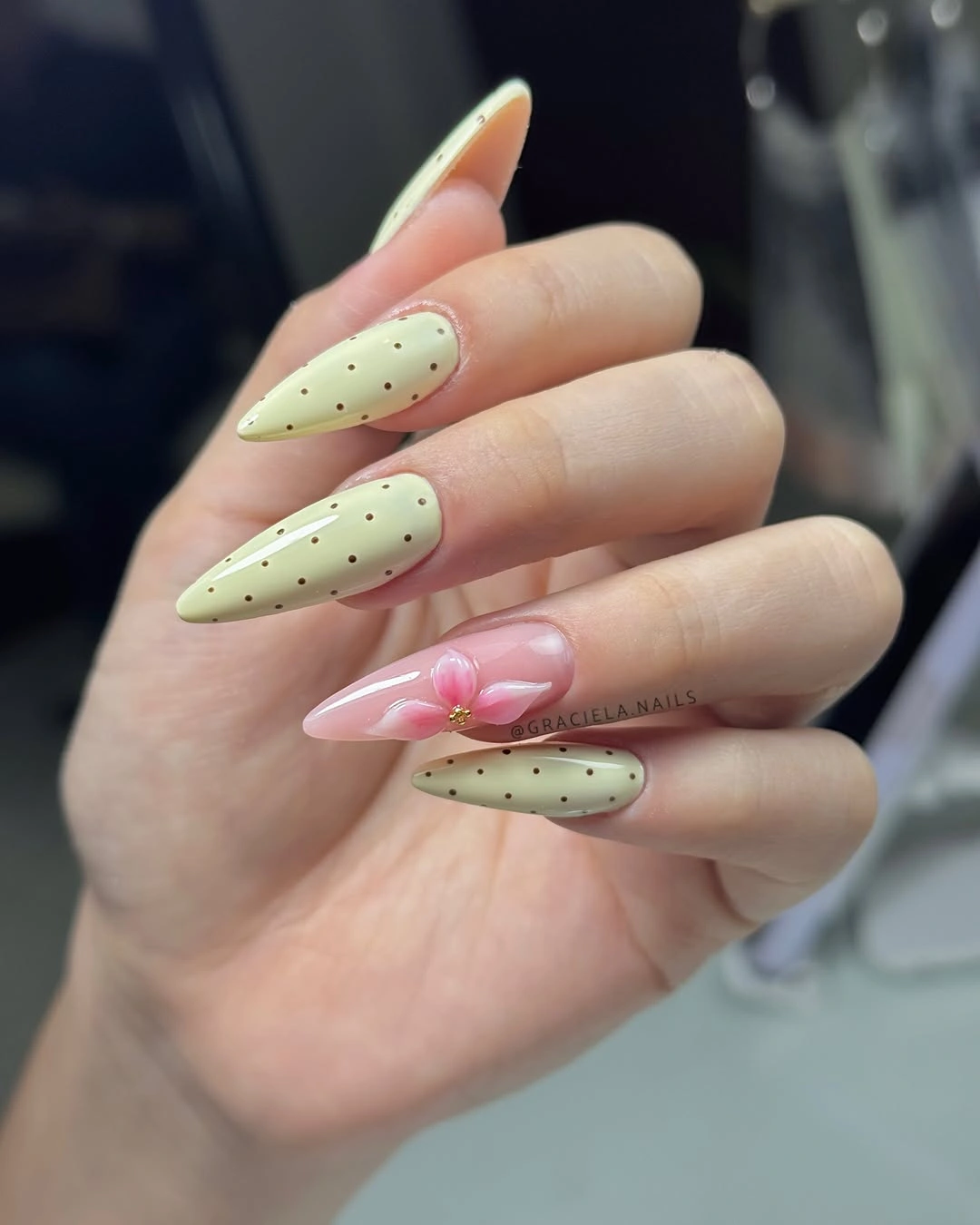
Lime works best here because it is concentrated at the tip, leaving a generous pink or nude area below. That placement creates a crisp border and makes the color easier to wear than a full lime nail might be. For a quieter version, trade lime for pistachio or soft chartreuse and use fewer black dots. The shape can stay almond, since that gentle taper balances the sharpness of the green.
There is a fun contrast between the high-energy color and the very small pattern scale. If the dots were much larger, they would compete with the French edge and make the nails feel crowded. Keep any rings simple and warm-toned, or let the nail colors do the talking. This design has enough character already, and its best feature is the way the lime stays defined rather than spreading across the whole set.
Blue Dotted Tips on a Nude Almond
Cool blue and black dots give this nude-pink almond manicure a more graphic mood than a neutral base alone would suggest. The blue appears in defined accent areas, while the dots remain small enough to preserve the elongated nail shape. A dimensional-looking detail on one nail adds interest, but it does not change the central idea of a warm base meeting cooler dotted edges.
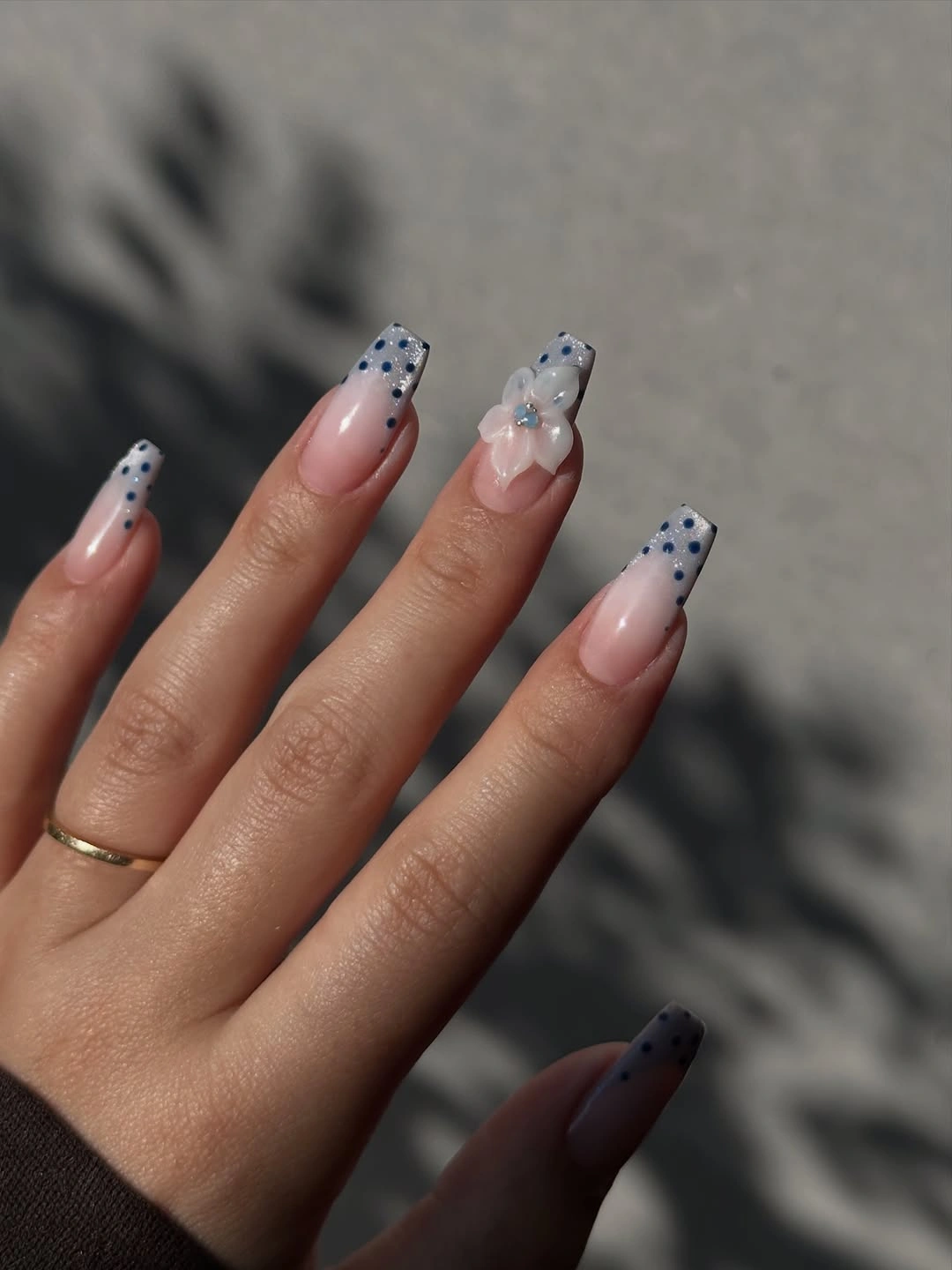
Blue is a helpful alternative when you want the contrast of black-and-white polka nails without the same stark effect. Choose a medium or deep shade of blue, then use black dots sparingly so the color stays visible. If you shorten the nails, keep the blue on one side of the tip rather than creating a full band. That makes the pattern feel intentional on a smaller canvas.
The set is most effective because the special accent remains isolated. Repeating dimensional details across every nail would make the dots feel secondary and reduce the clarity of the design. Think of the extra feature as punctuation rather than a new theme. For a lower-maintenance variation, skip it and use a single blue French nail beside several nude nails with small black dots.
Short Nails With Mixed Color Marks
These short rounded nails use different colors, stripes, dots, and tiny graphic marks without asking every finger to match exactly. The scale stays small, which is what makes the variety feel playful instead of disorderly. Blue, pink, yellow, green, and red all appear, but the compact length gives the whole manicure a casual, sketchbook-like energy rather than a maximalist finish.
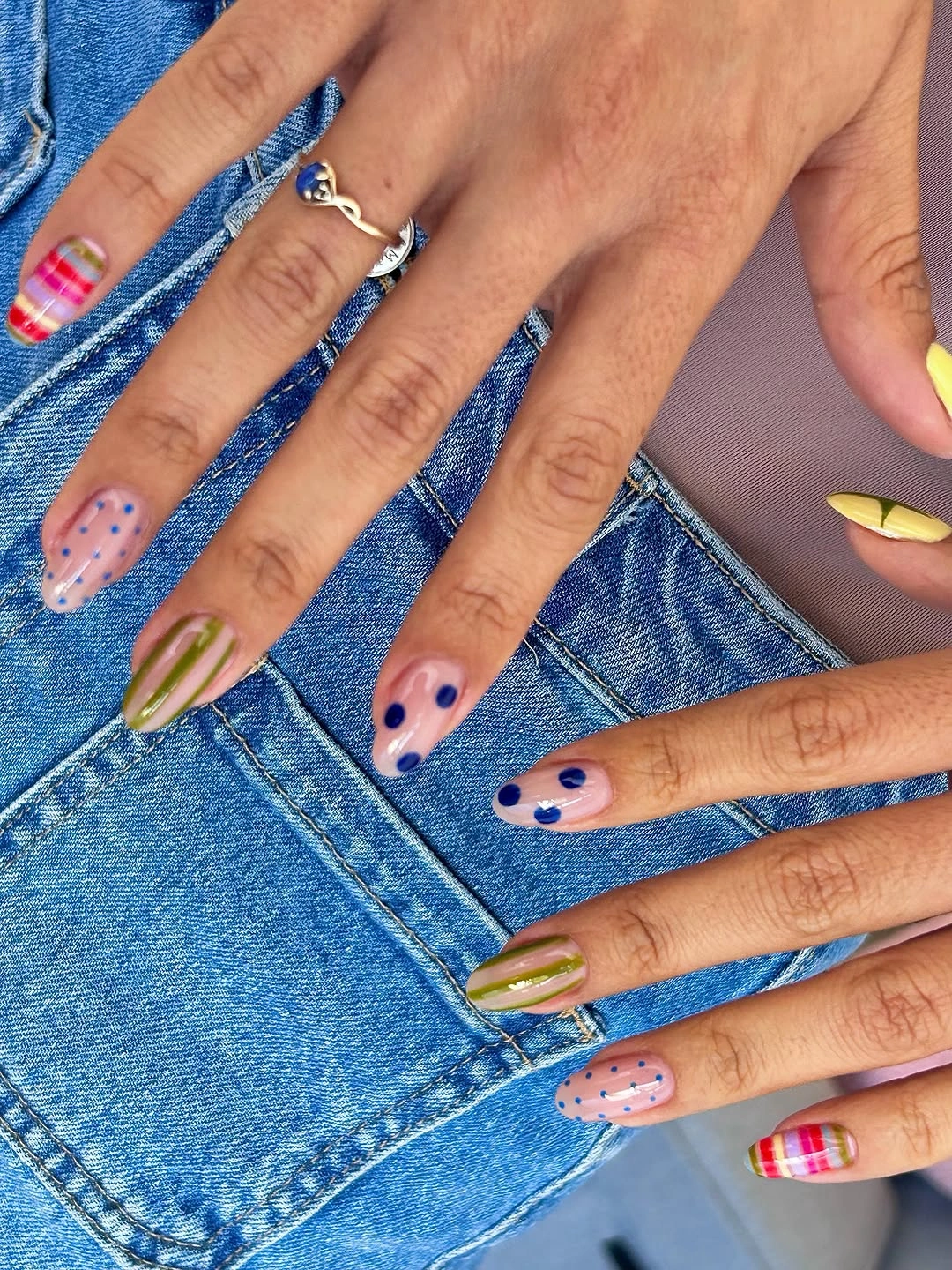
Short nails are a great place to experiment with several colors because the surface area naturally limits how much each design can hold. Pick a loose rule, such as one dotted nail, one striped nail, and a few solid or nearly solid accents. That keeps the variation readable. If you copy this idea, resist the urge to add a new motif to every finger; repeat one mark at least twice so the set has a thread.
The practical benefit is flexibility. A small multicolor detail can work with jeans, bright knits, or a neutral coat because no one shade dominates the set. The limitation is that very intricate lines may be harder to notice on a short rounded shape. Favor clear dots and broader stripes over tiny complicated illustrations. The design should still look intentional when seen from a natural distance, not only in a close-up view.
Warm French Colors Tied by White Dots
Nude almond nails receive red, pink, and yellow French-like tips, then white dots connect those separate warm colors across the set. The dots keep the different tip shades from feeling random because they repeat the same small-scale texture. This is a bright manicure, but its structure is clear: warm color at the edge, light pattern on top, and a calm nude base beneath.
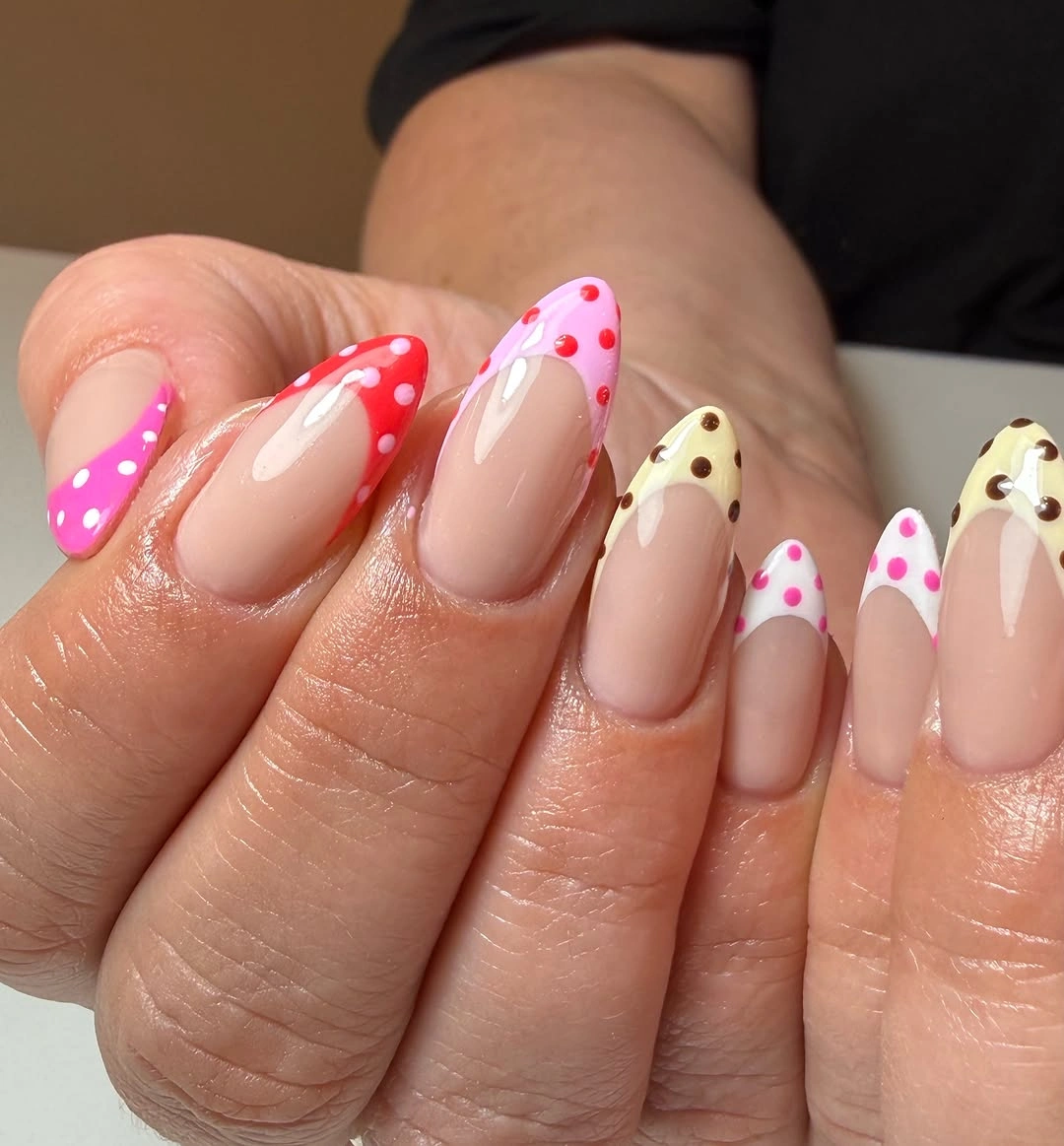
When several tip colors are involved, white dots are a useful unifying detail because they show clearly on both deep red and bright pink. Keep the dot size consistent even if the colored sections differ from nail to nail. A medium almond shape offers enough room for that variation without stretching it out too far. For a softer option, switch the red to coral and let yellow appear on just one accent nail.
These warm hues feel cheerful, yet the manicure avoids looking overly busy because the base remains mostly nude. That negative space is important. Filling every nail with color would make the dots less legible and reduce the sense of rhythm. If you prefer more contrast, add a thin dark outline to one tip only, rather than changing every nail. One small interruption can make the whole palette feel sharper.
Deep Red French With Delicate White Dots
Glossy deep red French tips sit over a soft nude base, and small white dots make the traditional color pairing feel lighter and more playful. The almond shape keeps the red edge fluid rather than blocky. This is one of the more polished ways to wear polka dots because the pattern is limited to a simple repeat and the palette stays within two clear colors.
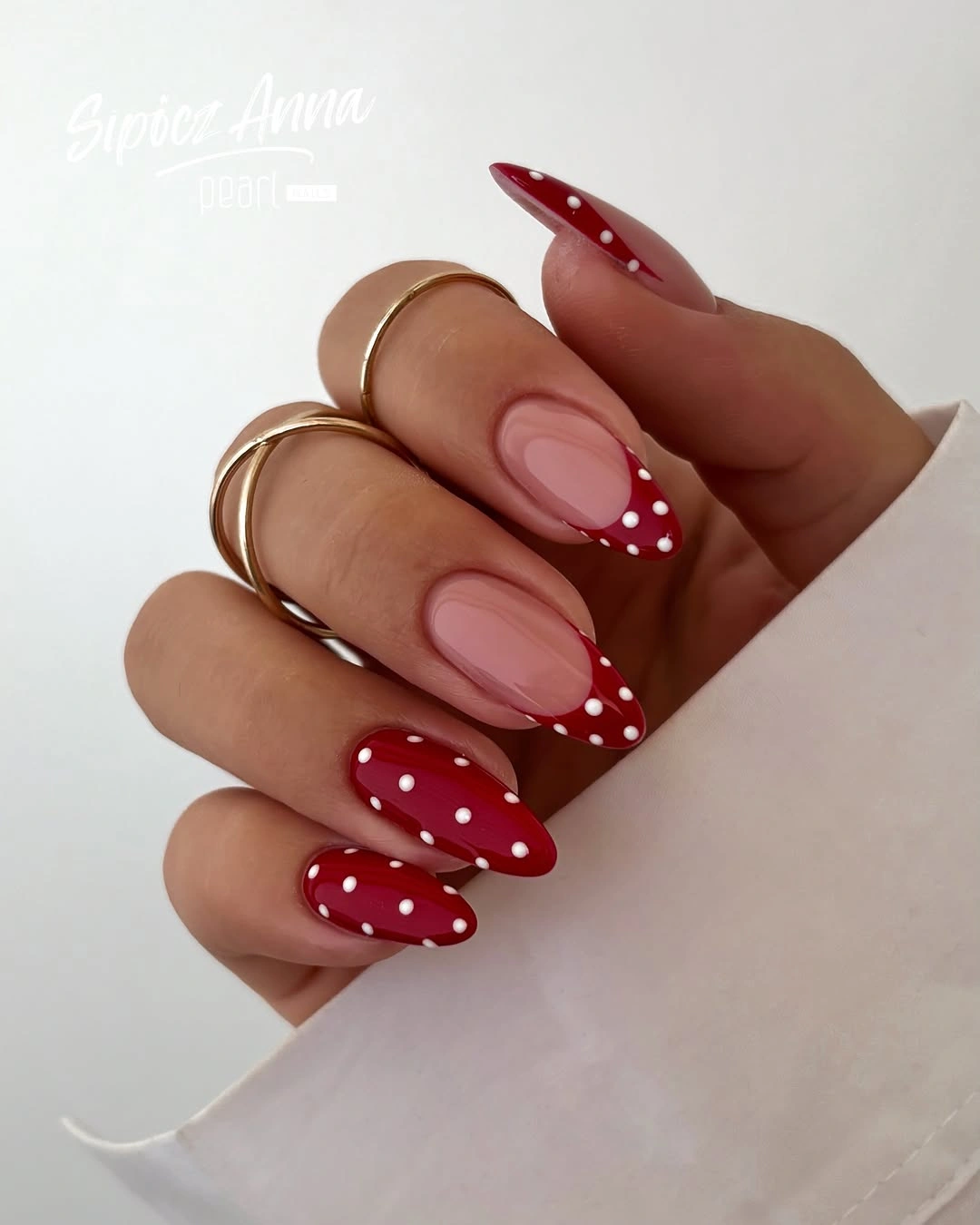
The dots are most effective when they follow the tip direction or stay near its edge instead of drifting into the nude center. That keeps the French structure visible and avoids blurring the division between base and color. For a more understated look, use a thinner red line and fewer dots. For a richer version, deepen the base slightly toward rose beige so the contrast softens while the red still retains its depth.
Red tips can show wear at the edge more clearly than a sheer design, so consider the width of the French section before committing. A narrower line is easier to grow out gracefully and still leaves room for a few crisp white marks. For a fuller red palette, browse these fall red nail ideas. This set also proves that a simple two-color manicure does not need an extra accent nail to feel finished. The dots provide enough detail on their own.
Short Square Dots With Clean White Tips
Short square nails use a pale nude base, narrow white French edges, and tiny black dots to create a manicure that feels precise rather than fussy. The compact shape keeps the pattern contained, while the white tip gives the dots a light field to stand out against. It is a polished option for someone who likes a graphic detail but wants the overall design to remain minimal.
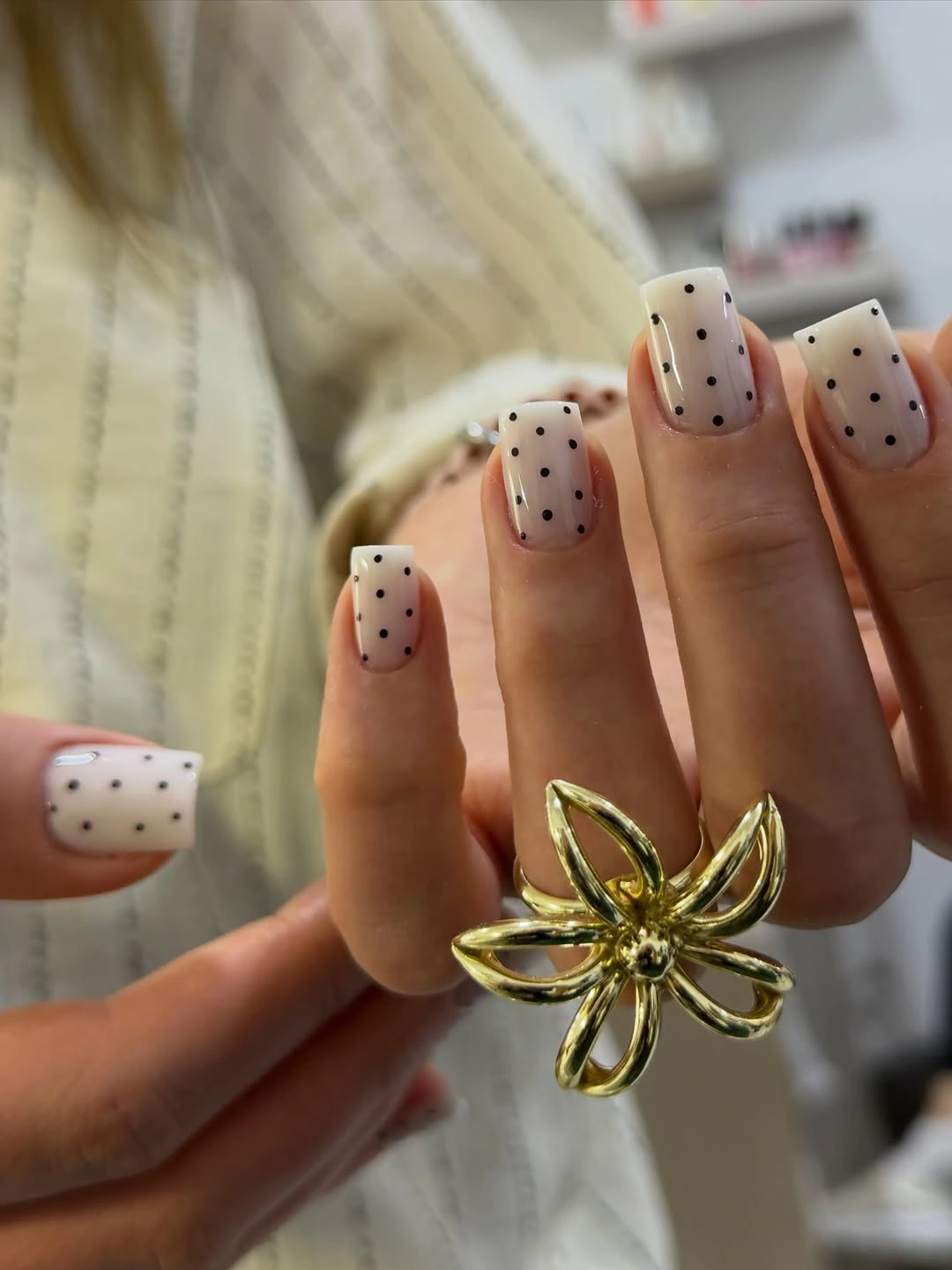
Small dots are the right scale for a short square silhouette because large spots would overwhelm the flat tip. Keep the French line slim and let the dots sit mostly within the white area or just below it. If you want a little more variation, make one nail fully white with black dots and leave the rest as French. That change adds contrast without abandoning the clean structure.
The short length also makes this a practical choice when you use your hands constantly. There is enough design to feel special, but the palette can work with almost any outfit. For more low-profile options, see these simple short nail ideas. The main maintenance point is keeping the white edge crisp, since smudging there is more visible than on a sheer nude nail. A glossy finish helps the small black dots look clean and keeps the whole set from appearing dull.
Black Accent Nails and Dotted Neutrals
Long almond nails alternate a nude base with black accent nails, white dotted sections, and small pale embellishments. The black nails give the set depth, while the dotted parts keep it connected to the polka theme. This is more decorative than a standard French manicure, yet the restrained black, white, and nude palette stops the extra details from feeling unrelated.
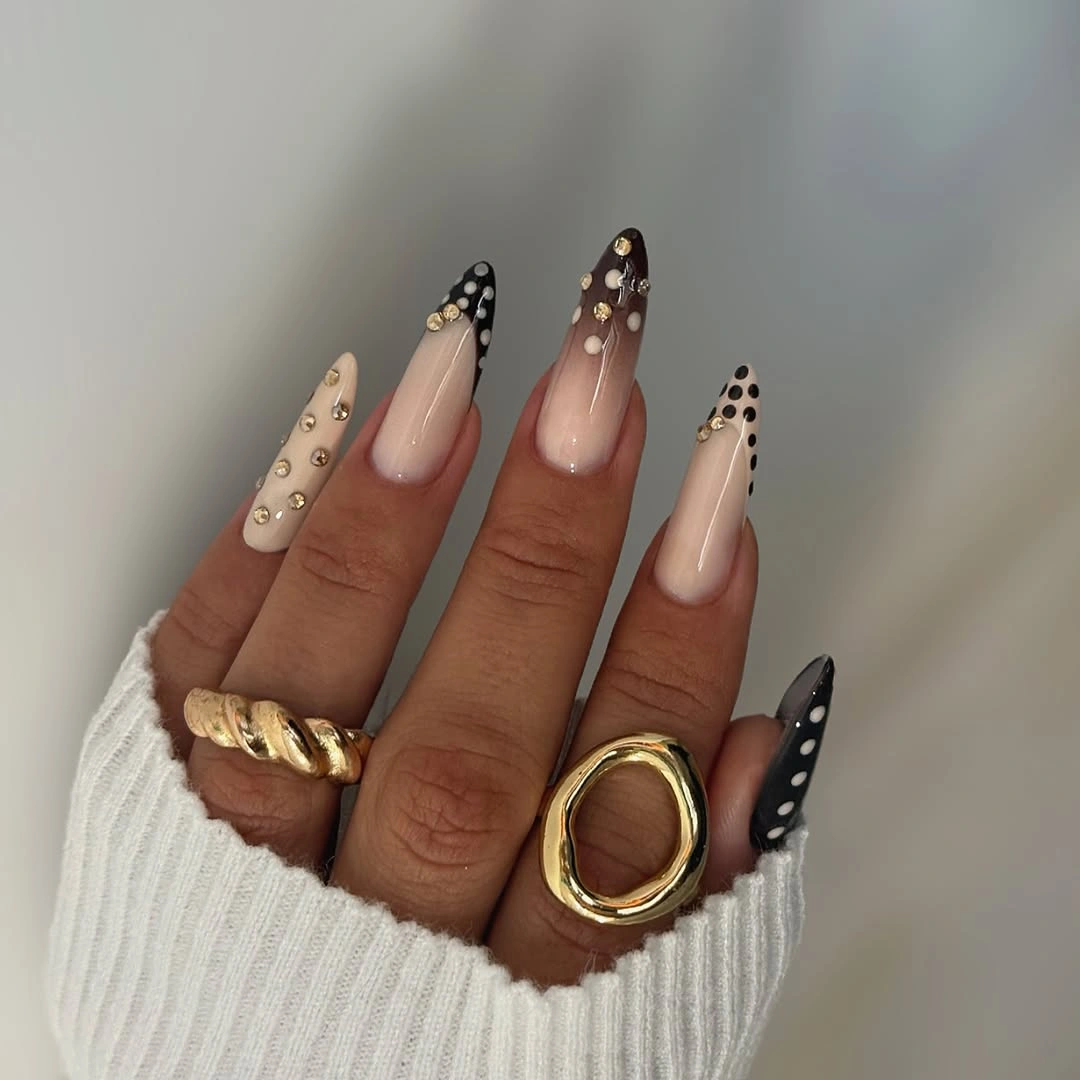
Using full black accent nails is a smart way to create contrast without filling every tip with a pattern. They act as visual pauses between the more detailed white and nude sections. If you want a less dramatic version, replace black with espresso brown or charcoal and retain the same dotted accents. The almond silhouette will still look elongated, but the overall effect will be gentler against the skin.
With a manicure this detailed, dot spacing matters more than adding more marks. Keep the white dotted areas clean, and let the small pale accents appear on only one or two nails. That creates a clear hierarchy: dark solids first, dots second, tiny decoration last. The realistic tradeoff is that a busy long set can feel more noticeable in everyday settings, so use it when you want the nails to be part of your outfit’s visual story.
Pastel Tips With Fine Confetti Dots
Soft pink nails receive pastel blue and yellow tip details, then tiny multicolor dots provide a confetti-like finish without overwhelming the short almond shape. The colors are light enough to feel airy, and the dots remain small enough that the tips still define each nail. This is a gentle way to add a little extra personality to a pastel French idea.
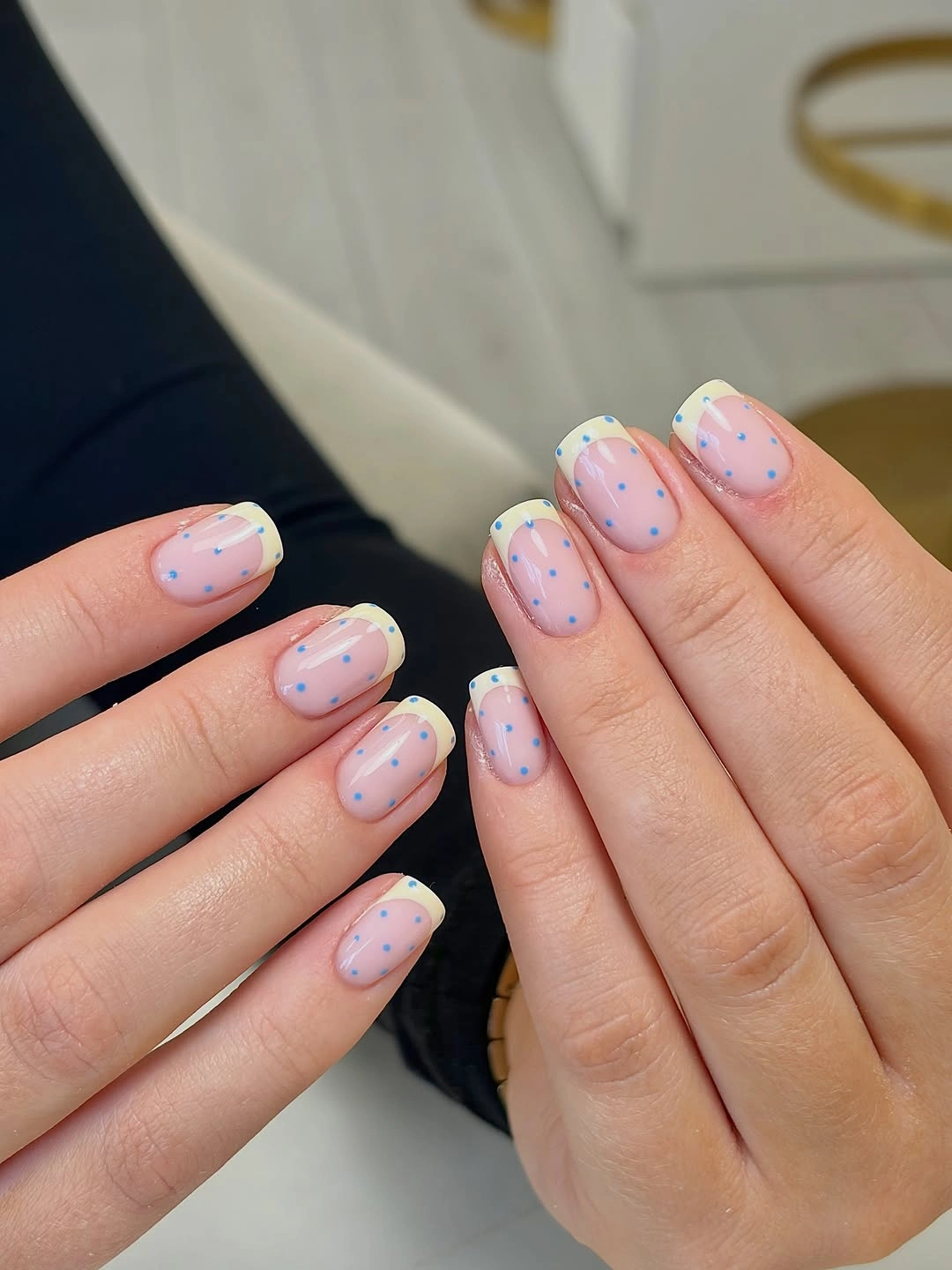
Pastel dots work best when their colors repeat the tip palette instead of introducing a completely new rainbow. Here the blue and yellow already establish the direction, so the small marks feel integrated. If you need an even simpler version, use a pale pink base with blue tips and white dots only. That will keep the same soft mood while making the pattern easier to notice from a distance.
The short almond shape keeps the look wearable and prevents the pastel colors from becoming too sugary. A neutral sweater, denim, or gray coat would let these tones feel fresh without needing a matching accessory. The potential limitation is visibility: very tiny pastel dots can read as texture rather than a clear motif. Increase their contrast slightly with one deeper blue or lavender accent if you want the polka idea to show more clearly.
Monochrome White Nails With Black Polka Dots
Opaque white rounded nails become instantly graphic with evenly spaced black dots, proving that a simple two-color design can still feel expressive. The medium oval shape softens the high contrast and keeps the pattern from looking too rigid. Nothing else is needed because the dot scale and clear white background already create a strong, recognizable rhythm across the manicure.
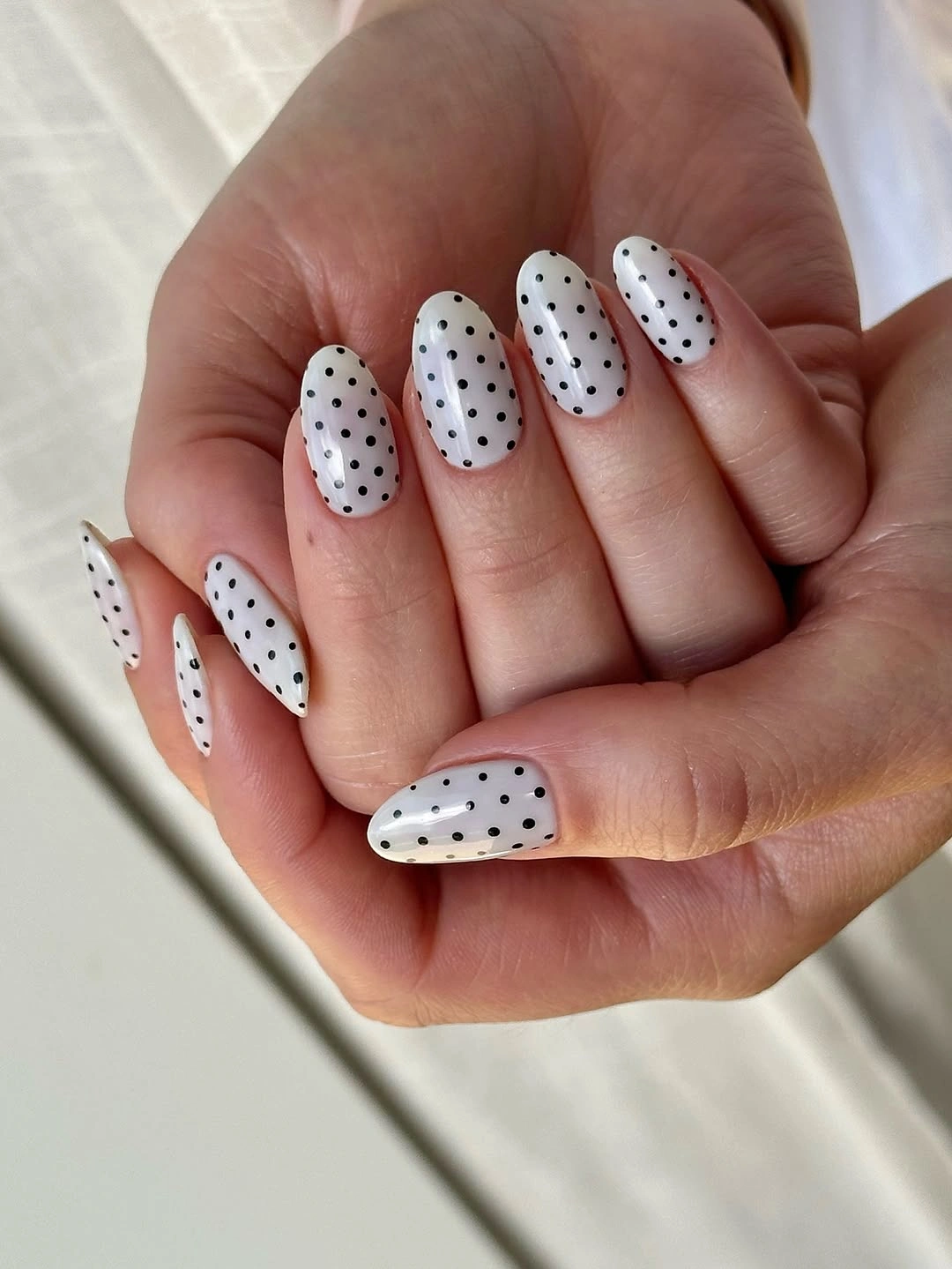
Even spacing is the defining choice here. The dots are not clustered at the tip or scattered randomly, so the design has a classic, almost printed quality. If you want a subtler version, use a milky white base and charcoal dots instead of pure black. For an autumn-led variation, explore these polka dot fall nail ideas. For a bolder one, enlarge the spots on the thumb and ring finger while keeping the remaining nails at the smaller scale.
White nails can show staining or wear more readily than nude bases, which is the practical tradeoff behind their clean impact. Keeping the dots crisp helps the finish look intentional even as the manicure grows out. Avoid adding extra stripes or glitter, since that would dilute the strong monochrome message. This set succeeds precisely because it commits to one pattern and lets the contrast do all the work.
Pointed Pink Tips With Bright Dot Energy
Long pointed nails use a nude-pink base and vivid pink, yellow, and pale blue tip details, then dots make the bright colors feel even more animated. The sharp silhouette gives every accent a sense of movement toward the tip. This design is a little extra in the best way, but the bare-looking center keeps the color concentrated where the eye expects it.
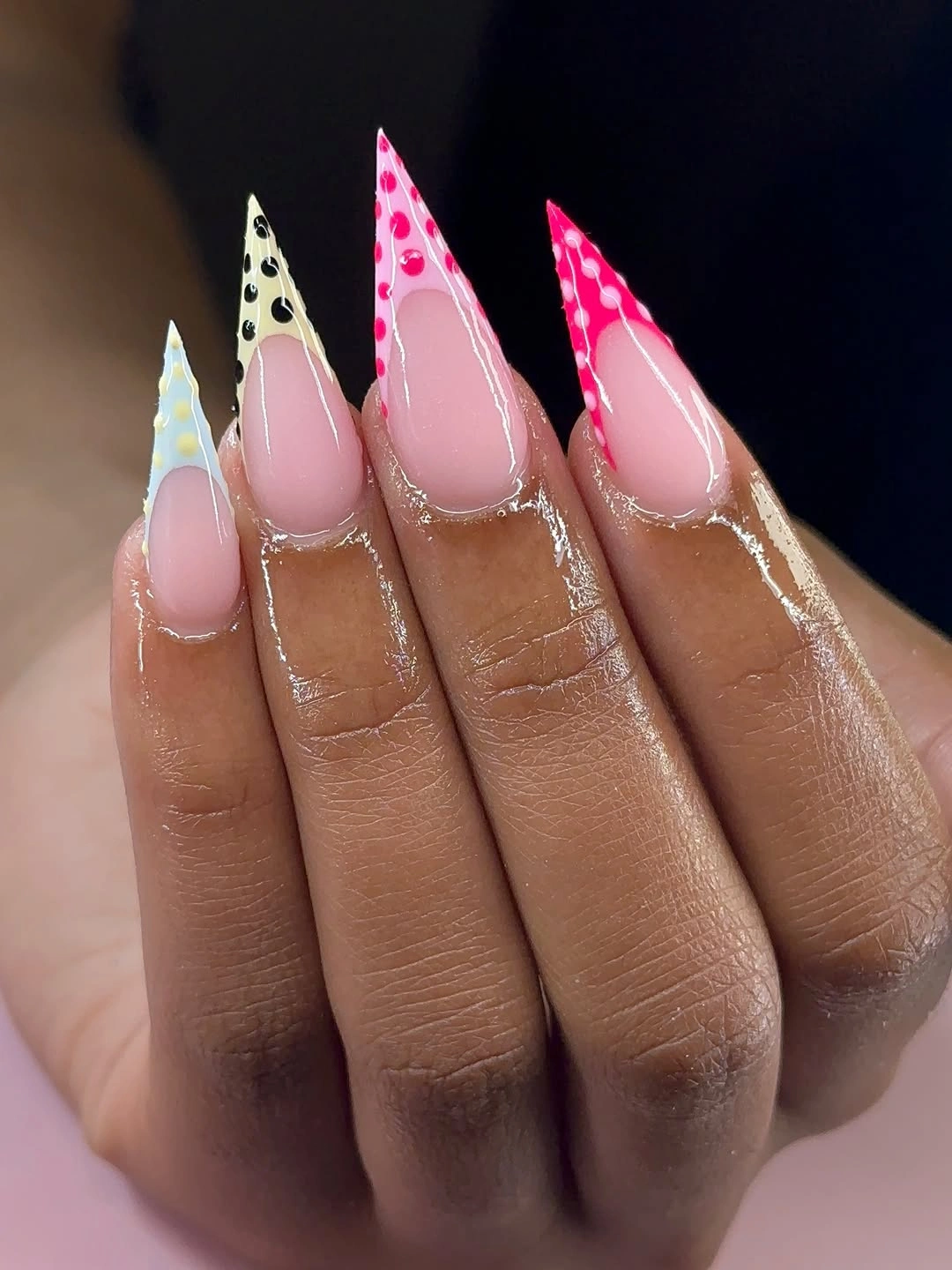
On a shape this long, the most balanced approach is to keep the busy detail near the point and leave the lower half smoother. That prevents the dots from visually shortening the nail. You could edit the palette down to pink and yellow for a simpler version, or replace yellow with white for more contrast. The important part is preserving the clear nude-to-color transition that gives the design its elegant structure.
Very pointed tips make every graphic mark appear more dramatic, so dot size should stay modest. Oversized spots would compete with the shape and make the finish feel less refined. If the length is not practical for you, a medium almond retains the same color direction with a more forgiving edge. The bright dots will still deliver the playful element, just with a calmer overall profile.
Square White French With Crisp Black Dots
A nude base, square white French tips, and clearly defined black dots create a familiar manicure structure with one playful update. The medium square length gives the pattern enough space while keeping the outline neat. This is a clean, graphic alternative for anyone who likes a classic white tip but wants something more specific than a plain finish.
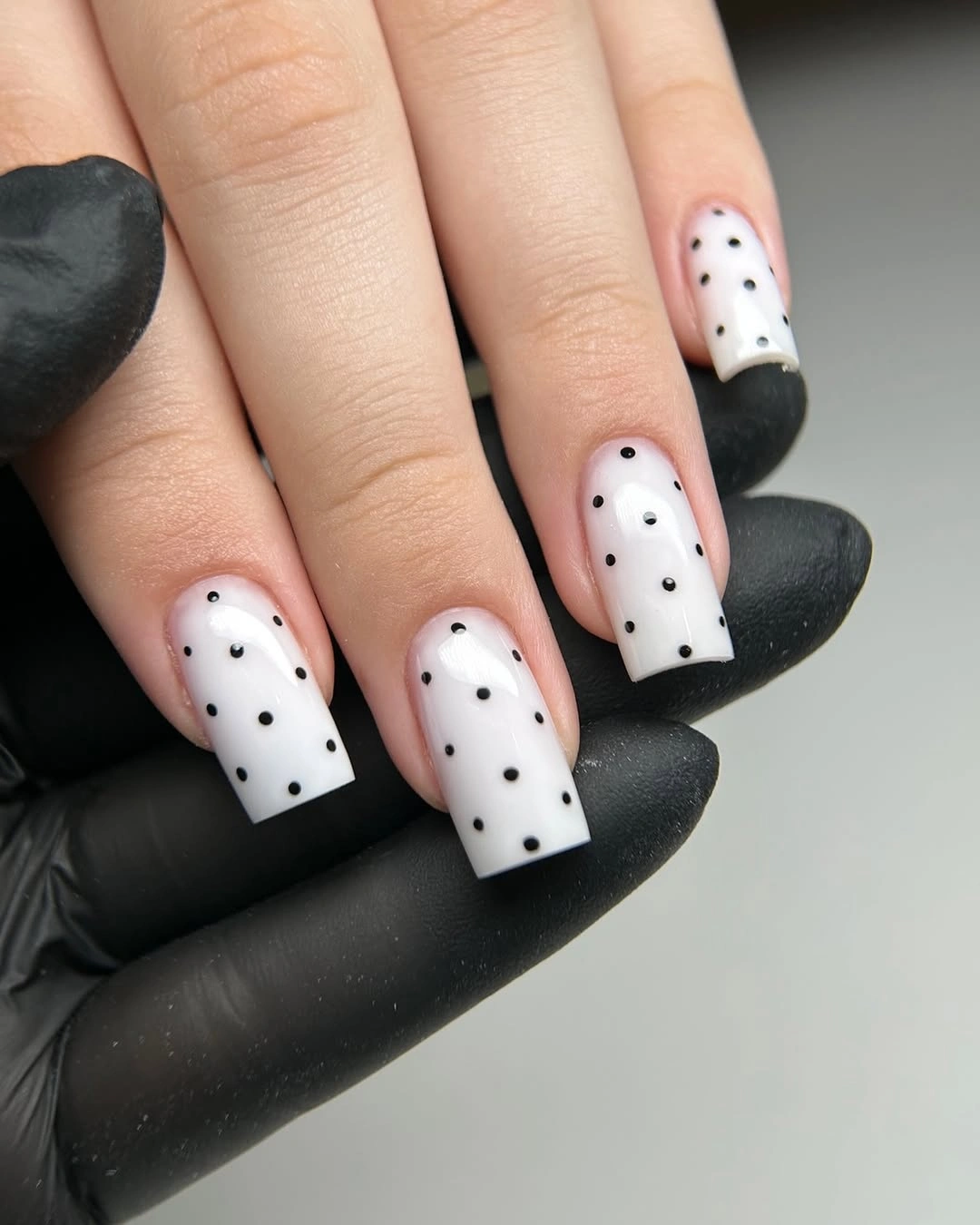
The design remains readable because the white section is allowed to stay broad and the dots sit with visible space between them. If you prefer a more delicate look, reduce the white area and use fewer dots on only two nails. A rounded square edge would soften the graphic quality slightly, while keeping the same high-contrast palette. The French layout is doing the organizing work, so do not cover it with too many extra marks.
This manicure can suit many styles because black and white have enough contrast to feel intentional alongside both bright and neutral clothing. The most realistic consideration is upkeep at the tip, where white can show wear quickly. Keeping the edge a touch narrower makes it easier to maintain while retaining the recognizable French effect. The dots will continue to make it feel playful even if the tip is kept restrained.
Olive French Edges With Small Black Dots
Olive green French tips give this nude almond manicure a grounded, unexpected mood, while tiny black dots bring the familiar polka rhythm. The earthy color keeps the pattern from feeling overly sweet or seasonal in one obvious direction. Because the tips remain narrow, the green acts like a fine outline and leaves plenty of nude space around the small dark marks.
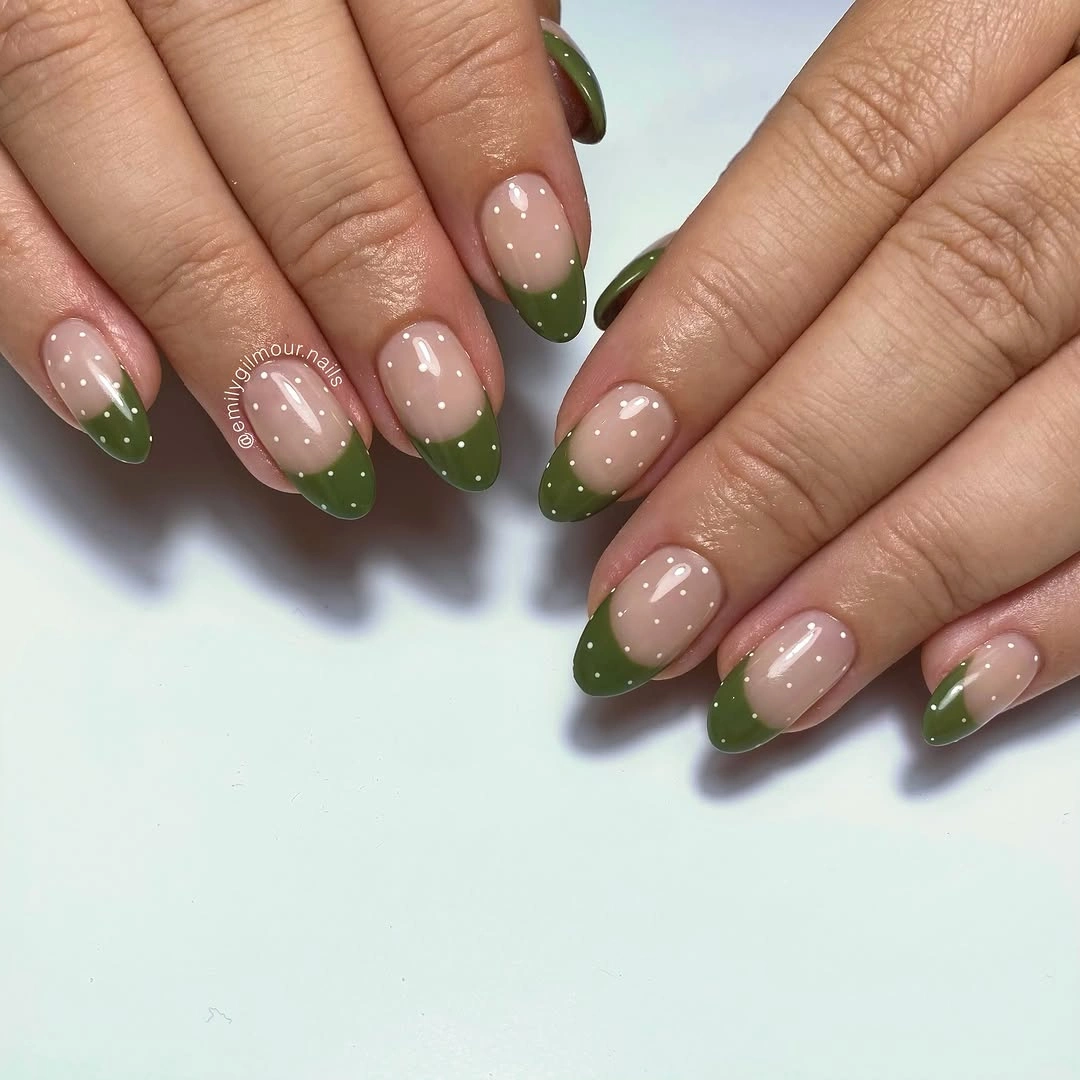
Olive is a useful choice when you like bright nail art but want something less loud than lime or red. It works especially well with black dots because both colors have visual weight without creating a harsh white contrast. For a shorter nail, use a micro French edge and place dots on one or two fingers only. That keeps the motif legible even when the available surface is limited.
The subtlety of this palette means it can pair easily with denim, brown knitwear, gray coats, or simple black accessories. A large floral accent would pull the design in another direction, so stay with dots and clean edges if you want the quiet charm to remain. The small tradeoff is that dark olive can look almost black in low light. A slightly lighter moss tone will make the color distinction clearer if that matters to you.
Berry Nails With Pale Curves and Dots
The glossy berry base gives this almond manicure real depth, then pale pink curved lines and white dot accents lighten the surface. The contrast is softer than black-and-white polka dots, but it still creates a clear pattern because the pale marks sit visibly on the rich color. This is a more dramatic option for readers who want dots to feel decorative rather than purely graphic.
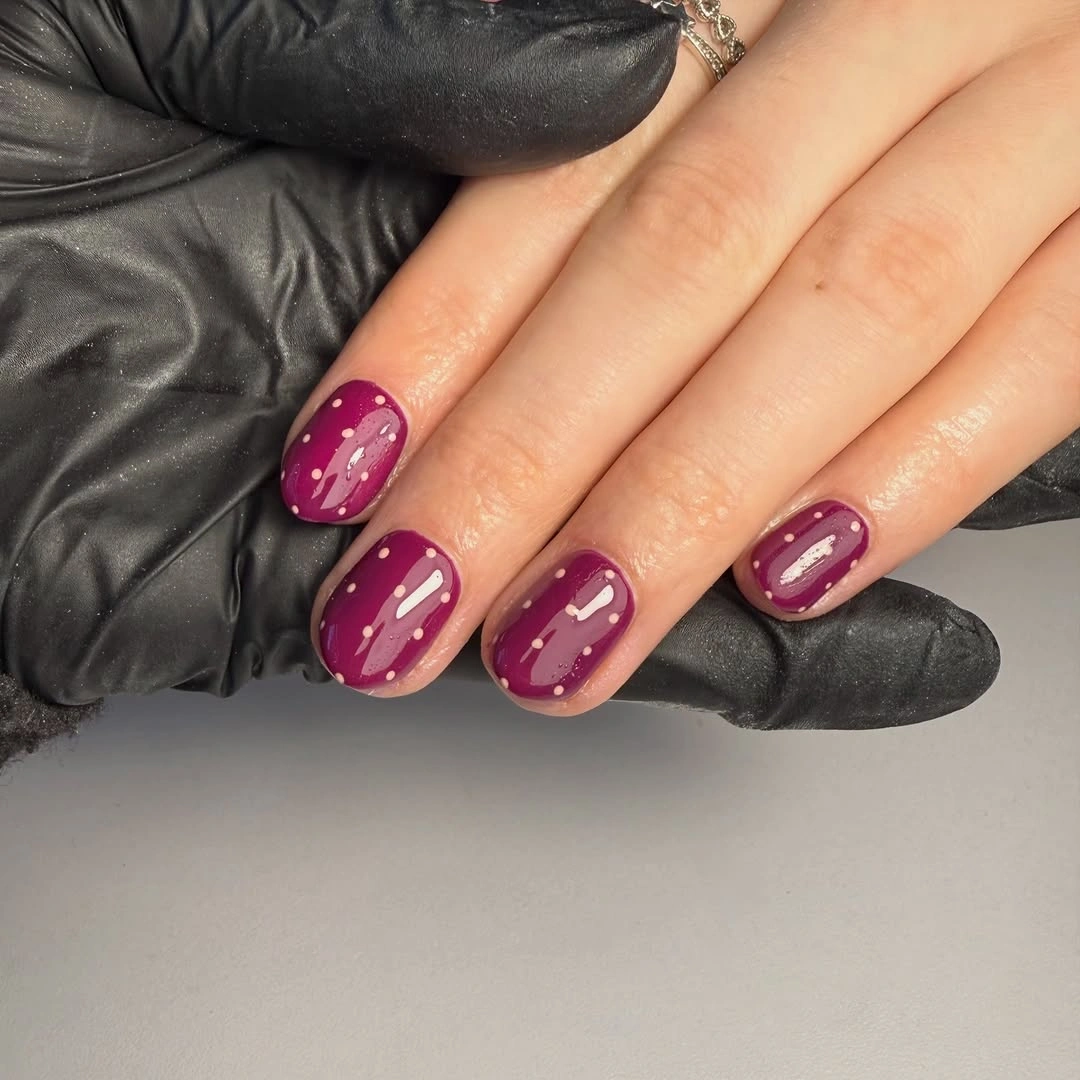
Curved pale lines are a helpful partner for dots because they introduce movement without requiring another full motif. Keep the curves thin and allow the berry background to remain the largest area. If you want to simplify the set, choose one accent nail with both curves and dots, then use solid berry on the rest. That gives you the same color payoff with a more understated level of detail.
Deep color naturally makes small white accents stand out, so dot placement should feel deliberate. A random scatter could look messy against such a rich base, while a light cluster near the tip or curve feels more composed. The dark foundation can also make wear near the edge more noticeable, but a medium almond length is more forgiving than a very long point. Let the glossy finish support the color instead of adding glitter on top.
Short Pink Squares With Micro Dots
Pale pink short square nails use tiny black dots as a restrained pattern, showing that the motif does not require a long shape or bold color to work. The compact nail bed makes each dot feel intentional, and the soft base keeps the contrast from becoming too severe. This is one of the most approachable versions of the trend for someone who wants a small design with everyday flexibility.
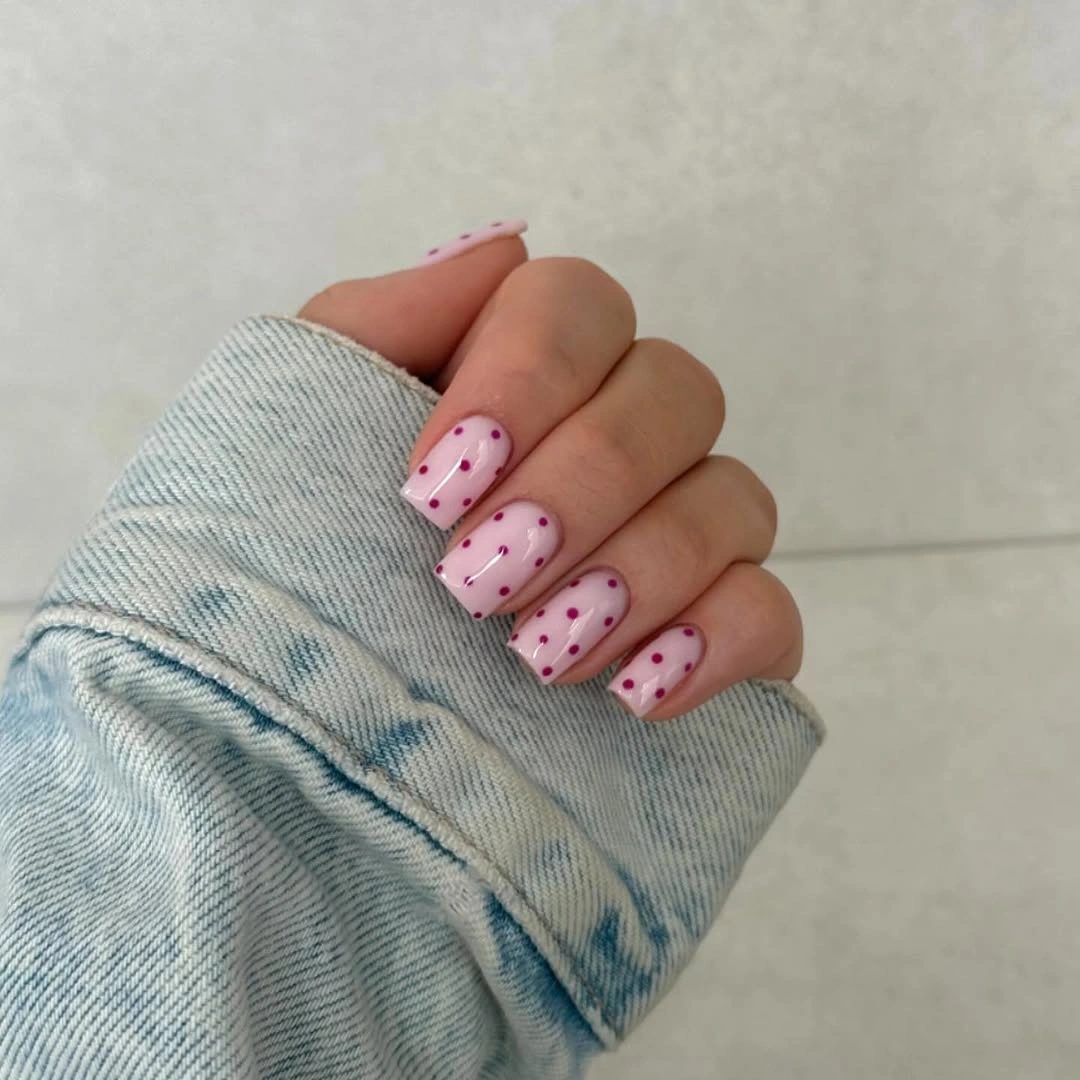
Micro dots are especially effective on short squares because they do not compete with the flat tip or make the nail look shorter. Keep the spacing loose and avoid filling every millimeter of the base. If you want slightly more visual interest, add a narrow black French line to one accent nail rather than increasing the dot count everywhere. That gives the set a focal moment while protecting its clean, minimal mood.
The practical advantage is clear: a simple pale base can grow out more quietly than a full dark color, while the dots still make the manicure look chosen. The limitation is that very tiny marks need clean application to remain crisp. If you prefer a softer contrast, try deep brown or navy dots in place of black. The overall design will stay understated but gain a little warmth or coolness to suit your wardrobe.
Lime French Tips With White Dot Finish
Bright lime French tips sit over a soft nude base, and evenly placed white dots make the color feel lighter and more playful. The almond shape keeps the green edge fluid, while the white marks add a second point of contrast without making the palette complicated. This is a fresh final take on the trend because it pairs a bold tip with a delicate pattern rather than using full-color nails.
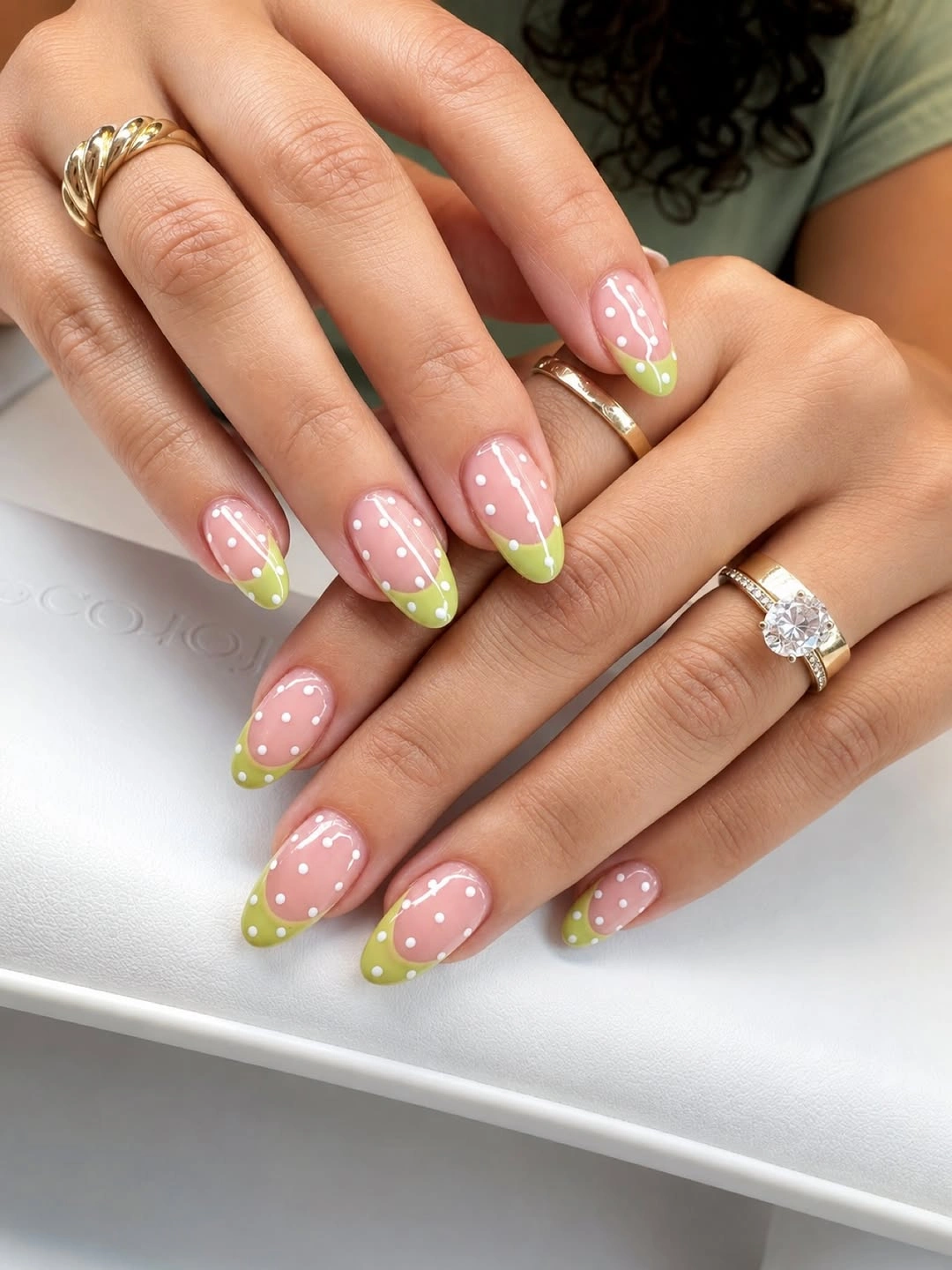
White dots soften lime beautifully because they introduce brightness without the hardness of black. Keep the tip defined and let the dots remain small, especially if you want the green to stay visible from every angle. A reader who prefers less saturation could switch lime for soft pistachio or pale yellow and retain the same white pattern. The nude base will still provide the negative space that makes the design feel balanced.
This color combination can feel bold with neutral clothing and surprisingly wearable with denim, cream knits, or black accessories. The tradeoff is that a bright French edge demands a clean outline, since irregular color becomes more noticeable than it would on a sheer finish. Avoid adding a third strong color unless you are deliberately choosing a mixed palette. Lime and white already have enough contrast to make the dots feel save-worthy.