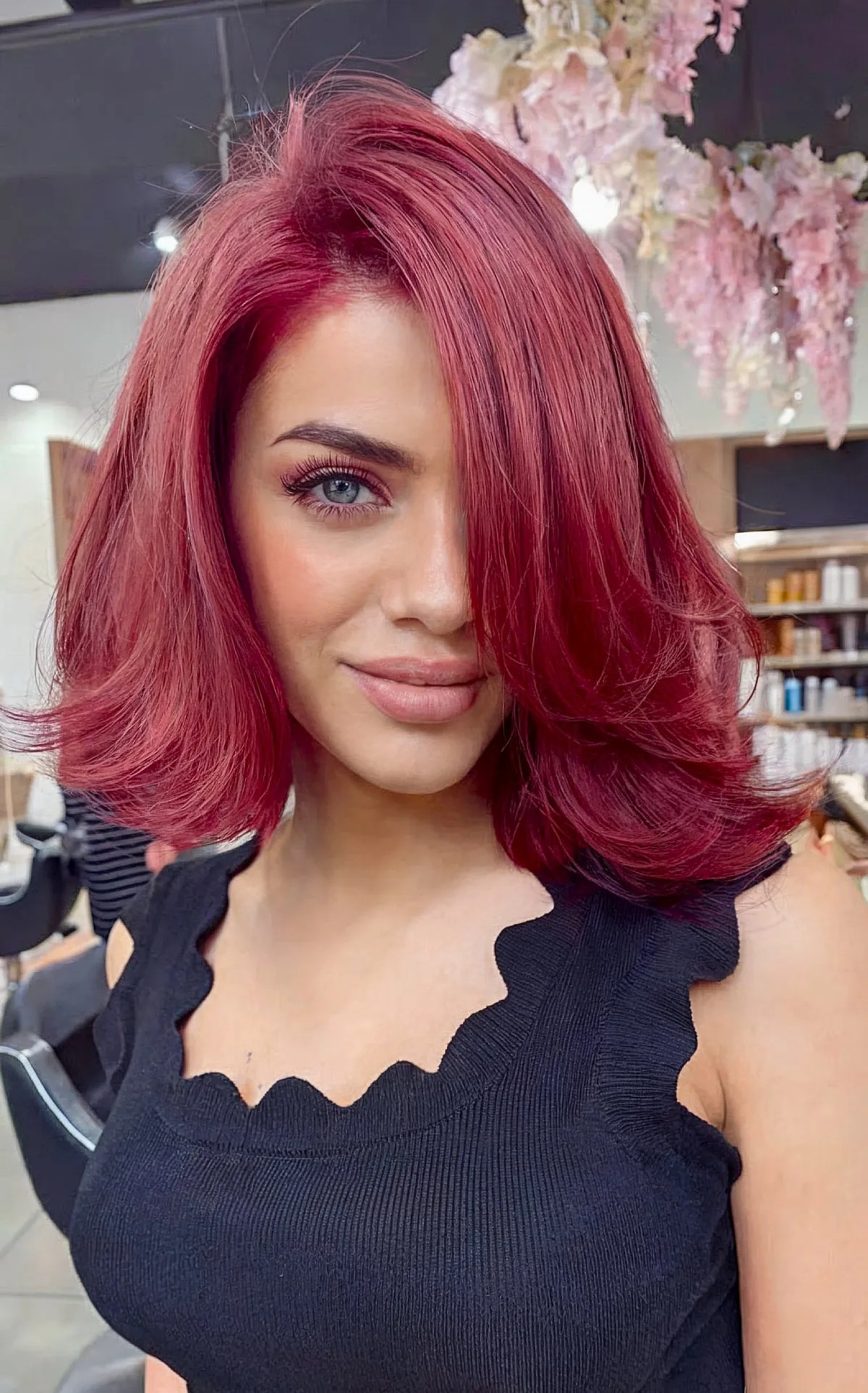

Pink hair dye has moved past a single shade, now spanning everything from barely-there blush to saturated fuchsia. The current shift favors lived-in color and soft face-framing layers, so the pigment feels like a natural part of the cut rather than an add-on.
This collection of 33 looks covers the full pink spectrum, from low-upkeep balayage to bold split-dye statements. It solves the common struggle of finding a pink that works with your texture and length, whether you need a subtle dusting or a full saturation. Pink Hair Dye Inspiration here means real, wearable color you can actually describe to your colorist.
Shag Haircut With Bubblegum And Cinnamon Rose Pink
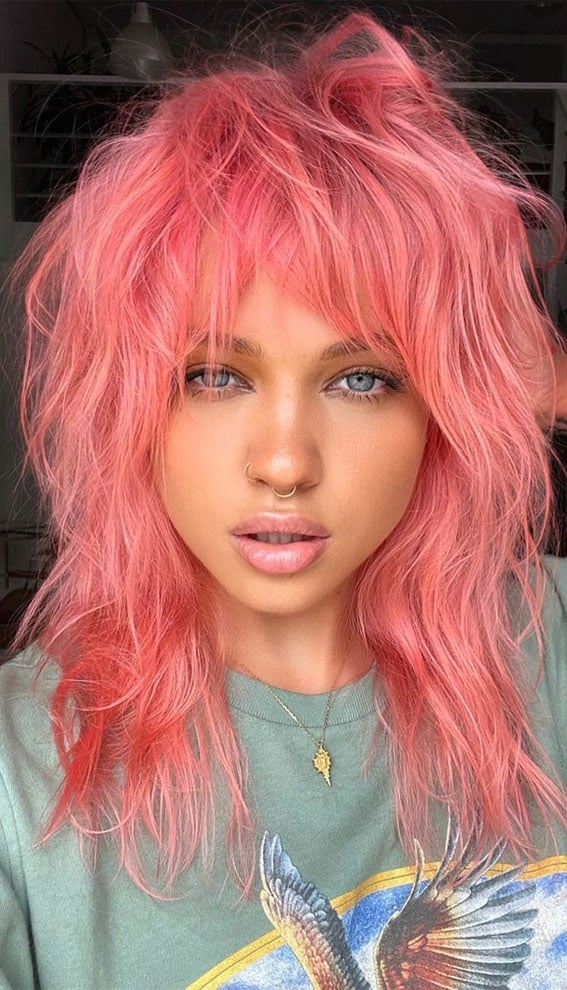
A collarbone-length shag with wispy bangs combines bubblegum pink and cinnamon rose for a color story that shifts with every wave. The thick, wavy texture is the point here: the shag’s layers catch both shades at different angles, so you get a dimensional effect without highlights. This cut softens square and round faces, and it suits medium to thick hair best. Ask your colorist for a collarbone length shag with wispy bangs, bubblegum and cinnamon rose blend. Enhance the texture with a sea salt spray; those wispy bangs need a trim every four to six weeks to keep their shape.
Chin Length Bob In Vibrant Hot Pink

A sharp chin-length bob with a middle parting gets a jolt of energy from vibrant hot pink with fine blonde highlights woven through. The smooth blowout on straight, fine hair lets the saturation speak for itself: no texture needed when the color is this loud. Ask your colorist for a chin length bob, hot pink with blonde highlights. A smoothing serum keeps the gloss intact, and the bob will need a trim every six to eight weeks to maintain that precise line.
Collarbone Lob With Dusty Pink Balayage

Can a pink feel almost neutral? A collarbone-length lob with a side parting proves it can. The dusty pink balayage blends soft pink tones into a lighter base, so the color transitions are subtle enough for an everyday wearer. The wavy texture and medium density help the balayage breathe rather than sit as a solid block. Ask your colorist for a collarbone length lob, dusty pink balayage.
To keep those waves defined, apply a texturizing spray on damp hair. The dusty tone fades cooler over time, so a pastel pink conditioner used monthly will keep it from turning ashy.
Shoulder Length Shag With Light Pink

If a full salon appointment sounds like a commitment, a shoulder-length shag with wispy curtain bangs in light pink with visible blonde undertones is the DIY-friendly alternative. The air-dried texture and fine wavy hair make the color look lived-in from day one, rather than fresh out of the bowl. Ask your colorist for a shoulder length shag, light pink with blonde undertones, curtain bangs. For the at-home approach, a semi-permanent pink on pre-lightened hair gets you close without the bleach session. Air dry with a texturizing cream and trim those curtain bangs every four to six weeks.
Layered Shoulder Cut In Cherry Pink
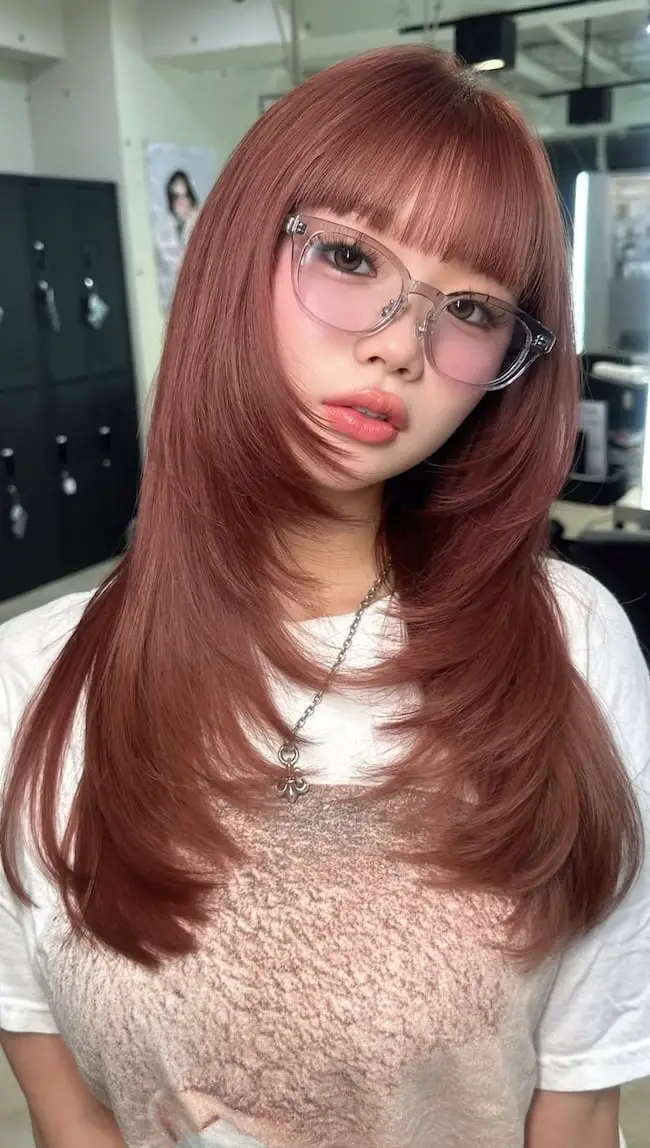
A shoulder-length layered cut with a full fringe in cherry pink reads as playful but not childish, thanks to the depth of the shade. Unlike a solid pastel, cherry pink has enough pigment to stay rich on wavy, medium-density hair. The layered blowout adds volume at the crown, which helps balance longer face shapes. Ask your colorist for a shoulder length layered cut, cherry pink, full fringe.
A volumizing spray at the roots gives the layers lift, and a cherry-red conditioner applied monthly will keep the tone from drifting toward orange. The full fringe will need a trim every three to four weeks to stay out of your eyes.
Collarbone Layers With Pastel Pink

Pastel pink works best when the cut has enough movement to show off the shade’s subtle dimension, and collarbone-length layers with curtain bangs deliver exactly that. Fine wavy textures benefit from the soft graduation, which adds body without weighing the hair down. The middle part and curtain bangs soften angular face shapes, while the pastel tone keeps the whole thing light. Ask your colorist for: collarbone length layers with curtain bangs, pastel pink. Blow-dry with a round brush to lift the roots, and refresh the tone every few weeks with a color-depositing mask to prevent the pastel from turning brassy.
Wavy Lob With Soft Pastel Pink And Blonde

Can you keep a pastel pink lob looking fresh without spending every weekend in the salon? Yes, if you pick the right shade placement. A collarbone-length lob with soft waves and a side part shows off pastel pink with lighter blonde undertones, which grow out more naturally than a solid pastel. Fine wavy hair holds the loose texture well with just a texturizing spray and a quick diffuser dry. Ask your colorist for: collarbone length lob, pastel pink with blonde highlights. Plan a toning appointment every four to six weeks to maintain that airy, barely-there pink against the blonde base.
Collarbone Layers With Baby Pink Balayage

Baby pink balayage over a blonde base creates a gradient that starts subtler at the roots and builds to a soft pastel through the ends, which means the grow-out is less obvious than a root-to-tip application. The technique works by hand-painting the color onto fine wavy hair, keeping the saturation lighter around the face and deeper toward the collarbone. Side-swept bangs frame the cheeks without cutting off the line of the gradient. Ask your colorist for: collarbone length layers, baby pink balayage, side swept bangs. A blowout with a round brush gives the fine texture enough volume to show the color transition clearly.
Collarbone Bob With Pastel Pink Highlights

A collarbone bob with curtain bangs already has a lot going for it, but adding pastel pink highlights on a pastel pink base is what gives the color depth. The lighter pink pieces catch the light differently from the base shade, creating dimension without needing a full balayage or ombre. Fine wavy hair works with this because the highlights are woven in, not painted on thickly, so the texture stays airy. Ask your colorist for: collarbone length bob with curtain bangs, pastel pink highlights. A wavy blowout and a spritz of texturizing spray keep the look from reading as too polished.
Shoulder Length Layers In Pink Blonde Balayage
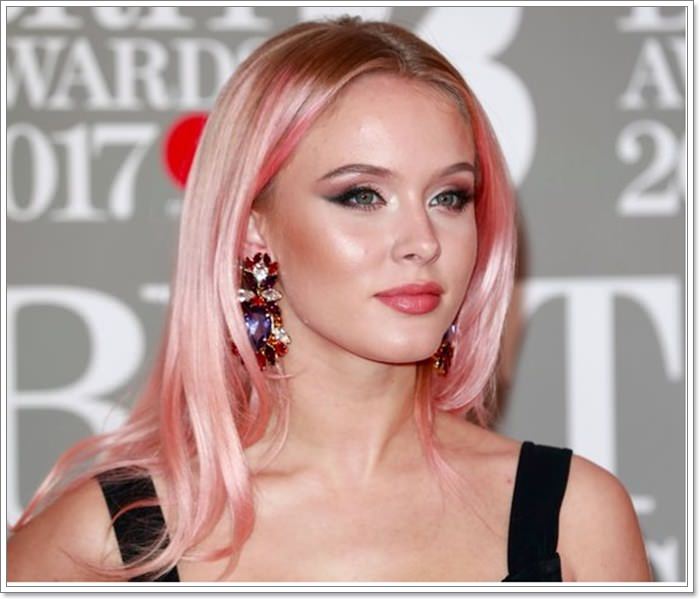
Wondering how pink blonde balayage compares to a solid pastel? The difference is in the grow-out: a balayage leaves the roots a softer blonde, so you get more weeks between touch-ups. Shoulder-length layers with a middle part and a smooth blowout show off the lighter pink ends against the blonde base, which keeps the overall effect from feeling too candy-colored. Fine wavy textures get a boost from the layers, which add movement without sacrificing length. Ask your colorist for: shoulder length layered cut, pink blonde balayage. A pink-tinted conditioner used monthly keeps the ends from fading into a flat beige.
Chin Length Bob In Soft Blush Pink

A chin-length bob in soft blush pink reads as grown-up, not girlish, largely because the tone is barely there. On fine wavy hair, the gentle waves and side-swept part keep the shape from looking too precious. Ask your colorist for: chin length bob, soft blush pink. A texturizing spray defines the waves without flattening the fine texture, and a pink-tinted conditioner swapped in monthly prevents the shade from veering into beige. The bob needs a trim every eight weeks to hold its line, but the upkeep on the color is, for once, genuinely low.
Short Pixie Cut In Vibrant Pink

A short pixie cut in vibrant pink eliminates the guesswork of whether a bold color works with long hair. The piecey layers and side-swept fringe create movement on fine straight texture, and the uniform pink shade gives the cut a deliberate, modern edge. Ask your colorist for: short pixie cut, vibrant pink, side-swept fringe. This cut suits oval and heart-shaped faces best, as the side-swept fringe softens a strong jaw. The density of the color on short lengths means regrowth shows faster, so plan for a root touch-up every four weeks.
Chin Length Blunt Bob In Vibrant Pink, Straight

A chin-length blunt bob in vibrant pink is a statement that demands precision. The blunt bangs and sleek, straight finish on fine hair create a graphic line that reads as editorial, but the trade-off is immediate: every uneven hair or faded patch is visible. Ask your colorist for: chin length blunt bob, blunt bangs, vibrant pink. This cut suits longer face shapes, as the blunt bangs shorten the visual length. The vibrant pink fades fastest on fine, porous hair, so a color-depositing conditioner every two weeks is not optional. If you hate frequent salon visits, skip this one.
Ear Length Bob With Pink Orange Peach Blend

To get a pink, orange, and peach blend to look deliberate, placement is key: lighter highlights woven through the mid-lengths and ends on an ear-length bob with blunt ends. Ask your colorist for: ear length bob, pink orange peach blend. The middle parting and smooth blowout on thick straight hair let each tone sit separately without muddying together. The technique works best on a base that is already light enough to take the warm peach and pink tones without brassiness. A toning gloss every six weeks keeps the blend cohesive.
Collarbone Shaggy Bob With Hot Pink

A collarbone shaggy bob with hot pink and black roots and tips is a color story that does not rely on pastel delicacy. The curtain bangs and wavy blowout on medium-density hair give the cut a lived-in feel, while the contrast roots anchor the hot pink. Ask your colorist for: collarbone length shaggy bob, curtain bangs, hot pink with black roots. The black tips add weight visually, which balances the shag layers on wavy texture. Curtain bangs require a trim every four to six weeks to keep them skimming the cheekbones.
Collarbone Lob In Vivid Pink

Ask your colorist for: collarbone length lob, vivid solid pink. The lob elongates a round face, and the loose waves add softness around the jaw. Use a texturizing spray on dry hair to keep the wave pattern defined. A pink-depositing conditioner once a month refreshes the tone between salon visits.
Collarbone Length With Pink Ombre

How does the pink actually land on a dark base? The ombre technique does it in two steps: the lower section is lifted to a pale blonde, then overlaid with a vibrant pink, while the roots stay dark. That contrast creates a gradient that looks deliberate. On thick wavy hair, the transition sits at collarbone length and moves with the wave pattern instead of fighting it.
Ask your colorist for: collarbone length, dark base to vibrant pink ombre. The middle part keeps the color distribution even, and layers cut into the thick texture prevent the ombre from looking heavy. A heat protectant before a blowout preserves the gloss, and a trim every eight to ten weeks keeps the ends from splitting.
Mid-Back Hair With Rose Pink Balayage

Rose pink balayage on a blonde base shows up as a warm, dimensional fade. The colorist paints the pink onto sections of the ends, which keeps the regrowth line soft and the root area low-maintenance. Thick wavy hair at mid-back length carries the color well because the texture scatters the light across each strand.
Ask your colorist for: mid-back length, rose pink balayage over blonde base. The loose waves suit long hair by adding movement without losing length. This look works for a wedding or a weekend brunch, depending on styling smooth or tousled. A rose gold conditioner every third wash prevents the pink from turning brassy.
Mid-Back Layers In Vivid Saturated Pink

A vivid saturated pink at mid-back length needs a darker root shadow to keep the color from looking disconnected as it grows. The root shadow is a few shades deeper than the pink, so the grow-out has a deliberate look for about six weeks. Thick wavy hair takes this intensity well because the layers break up the color into visual texture instead of a single curtain.
Ask your colorist for: mid-back length layers, vivid saturated pink with root shadow. The layers add shape to the thick texture, and the loose waves keep the movement natural. A color-safe shampoo prevents the pink from fading faster than the root shadow. A bright pink mask every two to three weeks revives the tone without a full salon visit.
Mid-Back Long Layers With Light Pink

How do you ask for light pink without ending up with a dusty pastel? Specify a soft light pink with a neutral undertone, which keeps the color from leaning too gray or too warm. The long layers and side-swept bangs frame the face without requiring a full restyle. Medium density wavy hair at mid-back length lets the color breathe through the movement.
Ask your stylist for: mid-back length long layers, light pink, side swept bangs. The bangs soften an angular jaw, and the loose waves give the light tone some body. Use a texturizing spray on damp hair before air-drying to encourage the wave pattern. Trim the bangs every four to six weeks to keep them skimming the brow.
Mid-Back Layers In Soft Light Pink, Straight

A soft, light pink reads entirely differently on fine, straight hair than on its wavy counterpart. Here, the glossy finish and loose waves give the color a polished, almost ethereal quality, unlike the tousled, lived-in feel it takes on a coarser texture. The face-framing layers keep the length from feeling heavy, which is the main risk when you have fine hair past the shoulders.
This is a good pick if your hair is naturally straight and you want a pink that is subtle. Ask your colorist for: mid-back length layers, soft light pink, face framing layers. The upkeep is straightforward: a smoothing serum on the ends keeps the shine intact, and a pastel pink conditioner used once a month prevents the color from drifting into a muddy beige.
Mid-Back Layers With Fuchsia Pink Highlights

A fuchsia pink base gets its edge from lighter pink highlights woven through the ends. On thick, wavy hair, the technique creates a contrast: the brighter pieces stand out while the deeper base holds the shape. The side-swept bangs are part of the design because they let the highlights wrap around the face without needing a middle part. Ask your colorist for: mid-back length layers, fuchsia pink with lighter pink highlights, side swept bangs. A fuchsia-toned mask every two to three weeks keeps the color from turning too warm.
Mid-Back Layers In Pink With Highlights and Loose Waves

How does a pink-with-highlights look hold up when you have thick, wavy hair that actually moves during the day? Pretty well, provided the layers are long enough to avoid a triangle shape. The lighter pink highlights here are subtle rather than chunky, so they add dimension without creating a stripe effect when the waves shift.
The daily styling is minimal: a texturizing spray on damp hair, then air-dry or a quick diffuser blast to encourage the natural wave pattern. Ask your colorist for: mid-back length long layers, pink with lighter pink highlights. A pink-tinted conditioner used every fourth wash keeps the highlights from turning brassy, and a trim every ten to twelve weeks stops the ends from looking straggly.
Mid-Back Layers In Dimensional Rose Gold

The dimensional rose gold here is not a single shade but a blend of pink and blonde tones anchored by a visible root shadow. On thick, wavy hair, that root shadow is the practical detail: it hides the grow-out line for about six weeks, which buys you time between appointments. The layers are cut to follow the wave pattern, so the color shifts from deeper at the roots to lighter at the ends without a harsh line.
This works best if your natural base is a medium blonde or lighter, because the rose gold needs a pale canvas to read as pink rather than copper. Ask your colorist for: mid-back length layers, dimensional rose gold with root shadow. A rose gold mask every two to three weeks maintains the balance between the pink and blonde tones.
Mid-Back Layers In Pink And Purple Blend

Blending vibrant pink with purple undertones is a two-step process: the base is a cool-toned pink, and the lighter pink highlights are painted on after to create depth. On thick, wavy hair, the result is a color that reads as pink in direct light and shifts toward violet in the shadows. The long layers keep the weight distributed so the waves do not collapse into a single block of color. Ask your colorist for: mid-back length long layers, vibrant pink and purple blend. A color-safe shampoo is non-negotiable here, and a monthly pink or purple mask prevents either tone from fading faster than the other.
Mid-Back Hair In Vibrant Hot Pink

Can a single shade of pink be too much? This mid-back length, thick wavy hair proves that vibrant hot pink with a darker pink root shadow is more wearable than you might think. The root shadow is not just a stylistic choice; it buys you about six weeks before the grow-out line becomes a conversation. Ask your colorist for: mid-back length, vibrant hot pink with darker pink root shadow. Thick wavy hair at this length handles the intensity without looking flat, and layers keep the volume from becoming a single heavy curtain.
A shade this saturated demands a color-safe shampoo and a hot pink mask every two to three weeks to keep the tone from fading to a washed-out coral. It is a salon color, not a weekend experiment. If you are not prepared for that rhythm, this is one pink you might want to admire from a distance.
Mid-Back Straight Cut In Color Blocks

Color blocking is a direct statement, and this mid-back straight cut with thick straight texture makes it clear why. The hot pink, orange, and white sections are separated by hard, graphic lines that a blended balayage cannot produce. A straight cut at this length keeps the blocks from competing with layers for attention, and the middle parting splits the canvas evenly. Ask your colorist for: mid-back length straight cut, hot pink, orange, and white color blocks. Thick straight hair holds the edges cleanly, which is the entire point.
If you prefer a softer transition where one shade melts into the next, this is not the look for you. It works best on hair that can hold a crisp line without needing a flat iron touch-up every hour. The visual impact is immediate, but it is also exacting: every strand has to sit where it was placed.
Mid-Back Layers In Pastel Pink And Blonde

Pastel pink with subtle blonde highlights on thick wavy hair at mid-back length works because the layers break up the lightness. Loose, voluminous curls catch the blonde pieces as highlights, so the color appears dimensional. Ask your colorist for: mid-back length long layers, pastel pink with subtle blonde highlights. The blonde base gives the pastel tone a warm undertone. Thick hair is essential here; finer textures would let the blonde overwhelm the pink.
Mid-Back Split Dye In Fuchsia And Pastel Pink

The curtain bangs bridge the two halves without letting them blend, which is the whole trick. Ask your colorist for: mid-back length long layers, fuchsia and pastel pink split dye, curtain bangs. The upkeep involves using color-safe products to keep the pastel side from absorbing the fuchsia during washing, and a texturizing spray helps each side stay distinct. A toning appointment every four weeks keeps the pastel from turning yellow and the fuchsia from fading to magenta.
Mid-Back Pink Balayage With Glitter, Wavy

The technical detail here is the gradient: a pink balayage over a blonde base on mid-back length thick wavy hair, transitioning from darker pink at the roots to lighter pink at the ends. The scattered heart-shaped pink glitter pieces are applied after the color is set, not mixed into the dye. Ask your colorist for: mid-back length layers, pink balayage over blonde base, with glitter. The balayage technique keeps the root line soft, so the grow-out is less demanding than a solid pink. The glitter is the kind of detail that works best for a single event rather than daily wear, since it requires a fine-tooth comb to distribute evenly and a gentle shampoo to remove.
Guide To Pink Hair Dye

Pink hair dye is not a one-and-done situation, and the more vivid the shade, the more maintenance it demands. Pastel pink requires lifting hair to a very pale blonde first, which is a multi-step process best handled by a professional. Vibrant hot pink fades faster than you think, often washing out to a peachy tone after four to six washes. Ask your colorist for a pink hair dye consultation before committing to a full head. The real drawback is the grow-out: unless you opt for a root shadow or balayage technique, dark roots against a light pink base need a touch-up every three to four weeks.
Anyone with naturally light blonde or pre-lightened hair will have an easier transition, but those starting from a darker base should expect multiple sessions. A strand test is non-negotiable before any full application, especially with pastel shades that show every uneven patch. This is a color that demands effort, but the payoff is a shade that turns heads.
Collarbone Long Bob In Neon Pink

How do you get a neon pink that looks this uniform on thick, wavy hair? The answer is a single-process color applied from root to tip on pre-lightened hair, with no dimension or highlights to muddy the shade. The collarbone length long bob keeps the shape clean and the color dense, while loose waves add movement without breaking up the neon effect. Ask your colorist for a collarbone length long bob in uniform neon pink. The thick wavy texture takes the color well, but the real trick is the even saturation. A color-depositing conditioner in a matching neon pink tone every two weeks keeps the shade from turning brassy.
Collarbone Lob With Rose Gold Balayage

The rose gold balayage here is a study in contrast: a warmer, deeper base shade at the roots that gradually lightens into soft pink tones through the mid-lengths and ends. The curtain bangs catch the lighter pieces first, drawing attention to the face without requiring a full head of color. Ask your colorist for a collarbone length lob with curtain bangs and a rose gold balayage. The wavy blowout styling enhances the dimension, and a texturizing spray keeps the waves from falling flat. Curtain bangs need a trim every four to six weeks to maintain the shape.
Final Thoughts
For a low-commitment entry point, choose a rose gold or dusty pink balayage that grows out softly. If you want full impact, a vivid hot pink or a split-dye technique delivers without requiring a full head of bleach.
- Use a color-depositing conditioner every 1-2 weeks to keep pink tones from turning brassy.
- Schedule a toning appointment every 6-8 weeks to refresh faded shades.
- Wash with sulfate-free shampoo and cool water to slow color fade.
- Apply a heat protectant before any hot tools to prevent color dulling.
Find your perfect pink, from subtle blush to striking fuchsia.