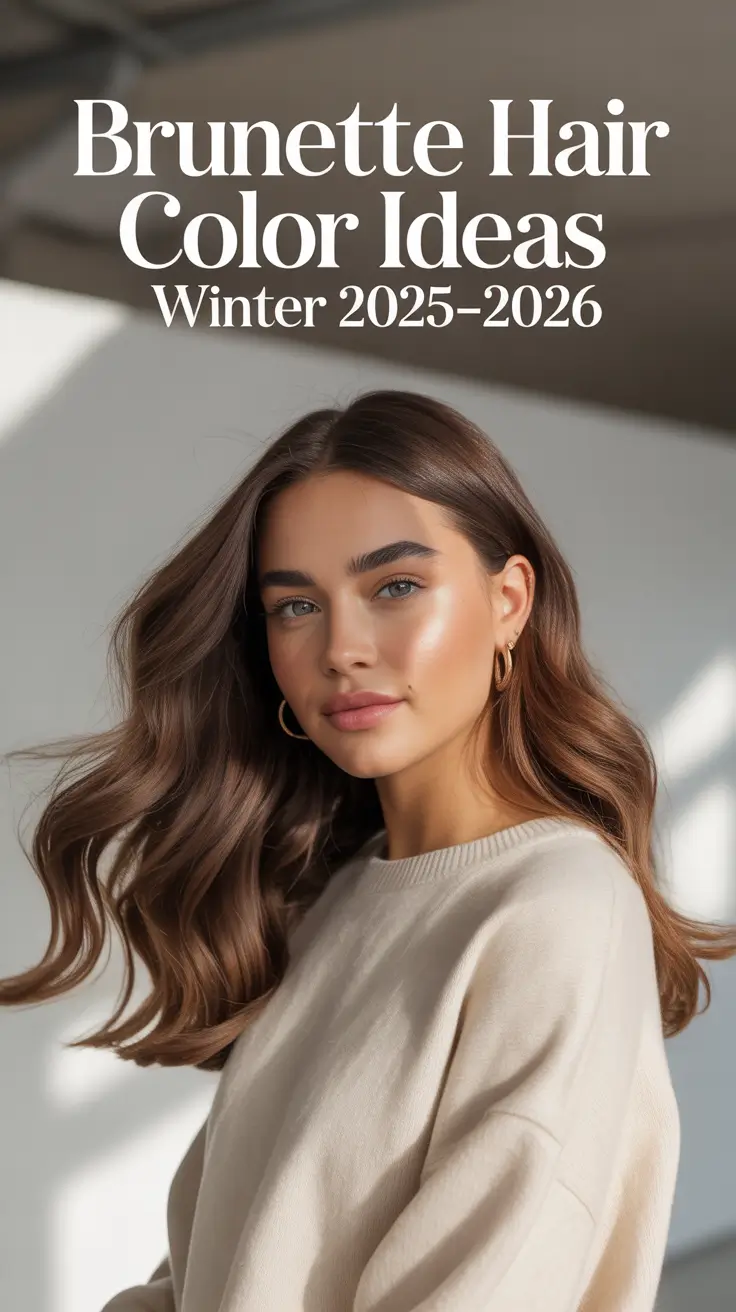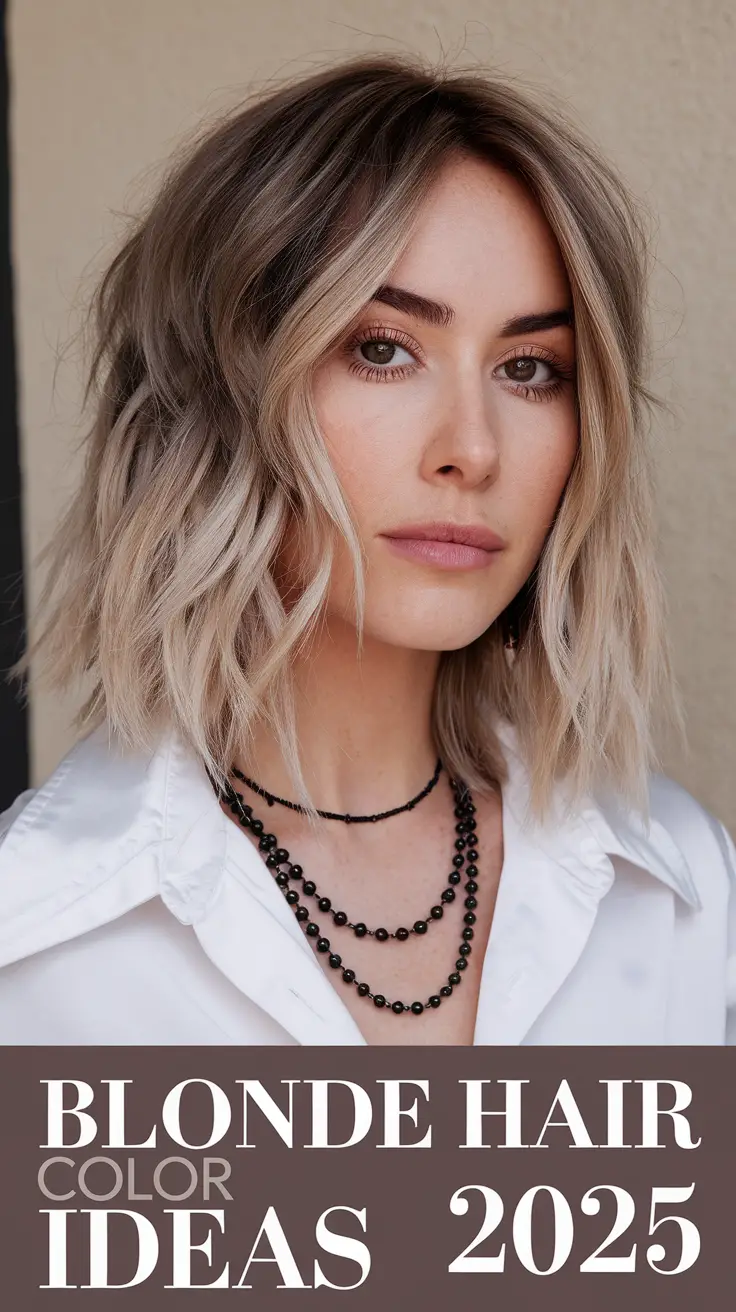

I used to think brown hair was the safe choice. Then winter hit and I started noticing how much depth a little copper or ash can add. It’s not boring, it’s strategic.
This roundup has 27 takes on Winter Brown Hair Colors, from barely-there highlights to full-on auburn. Some need a salon appointment, others a toner at week six. For fine hair that flattens by 4pm, for thick hair that needs dimension, for anyone tired of their grow-out line showing at week five. I’ve tested enough of these to know which ones hold and which ones fade fast.
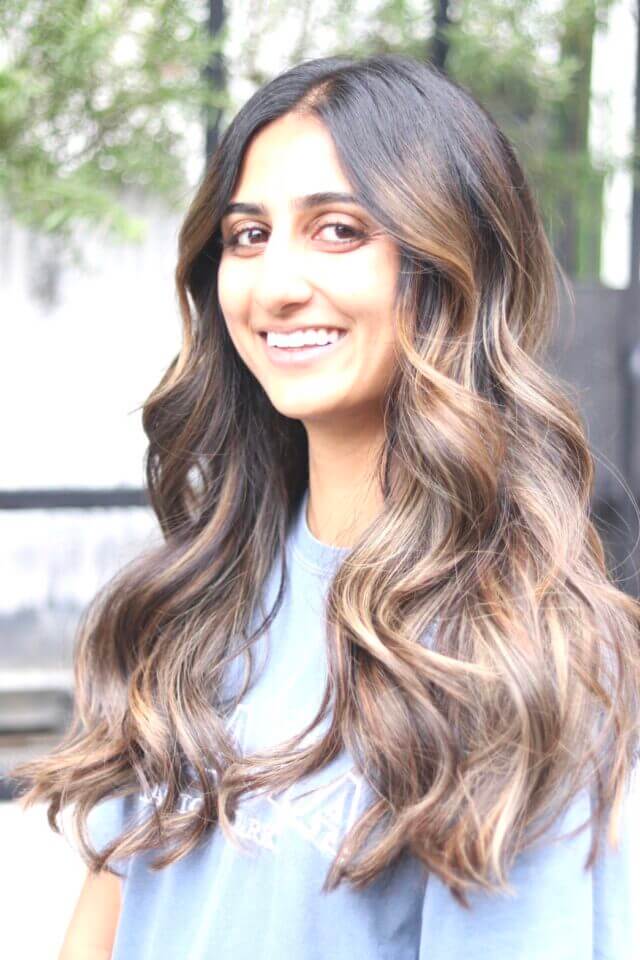
Medium Brown with Subtle Highlights
The difference between flat brown and dimensional brown is exactly this: a few lighter strands woven in, not scattered. Medium brown with subtle lighter brown highlights uses fine foils placed close to the root for a natural lift that reads like sun, not salon. Wavy, shoulder-length hair with a middle part lets the highlights peek through without looking deliberate. This tone reads warm but not orange, which flatters medium skin with neutral undertones. Skip it if you want contrast or dramatic change, this is quiet and soft.
Rich Chocolate Brown with Copper Undertones
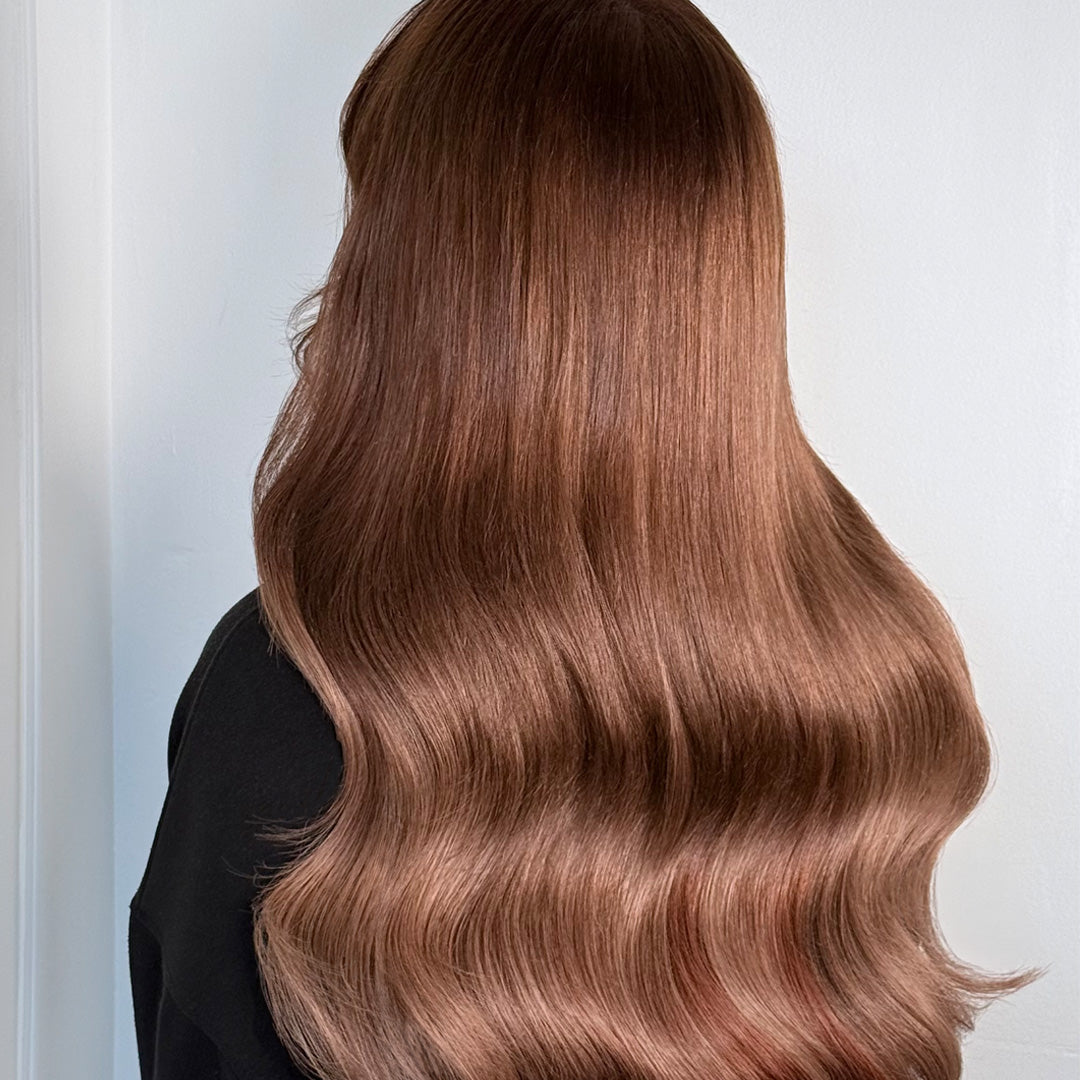
I’ll admit I was skeptical of copper in a brown this dark. Thought it would disappear by day three. But rich chocolate brown with copper undertones holds longer than expected because the copper is a tone woven into the base, not a highlight on top. Fades slowly over the week and stays warm, never brassy. The colour looks like one solid deep brown until light hits and brings out red flashes. Long, smooth waves on thick hair catch the copper best, especially with a middle part that lets it reflect symmetrically.
Salon versus DIY: you can do this at home with a gloss kit, but getting the copper tone right on dark hair takes practice. I’d book the salon for the first round, ask for a copper undertone added to a chocolate base, then maintain with a copper-depositing mask every few washes. The mask extends the tone by about two weeks between salon visits.
Deep Espresso Brown Smooth Blowout
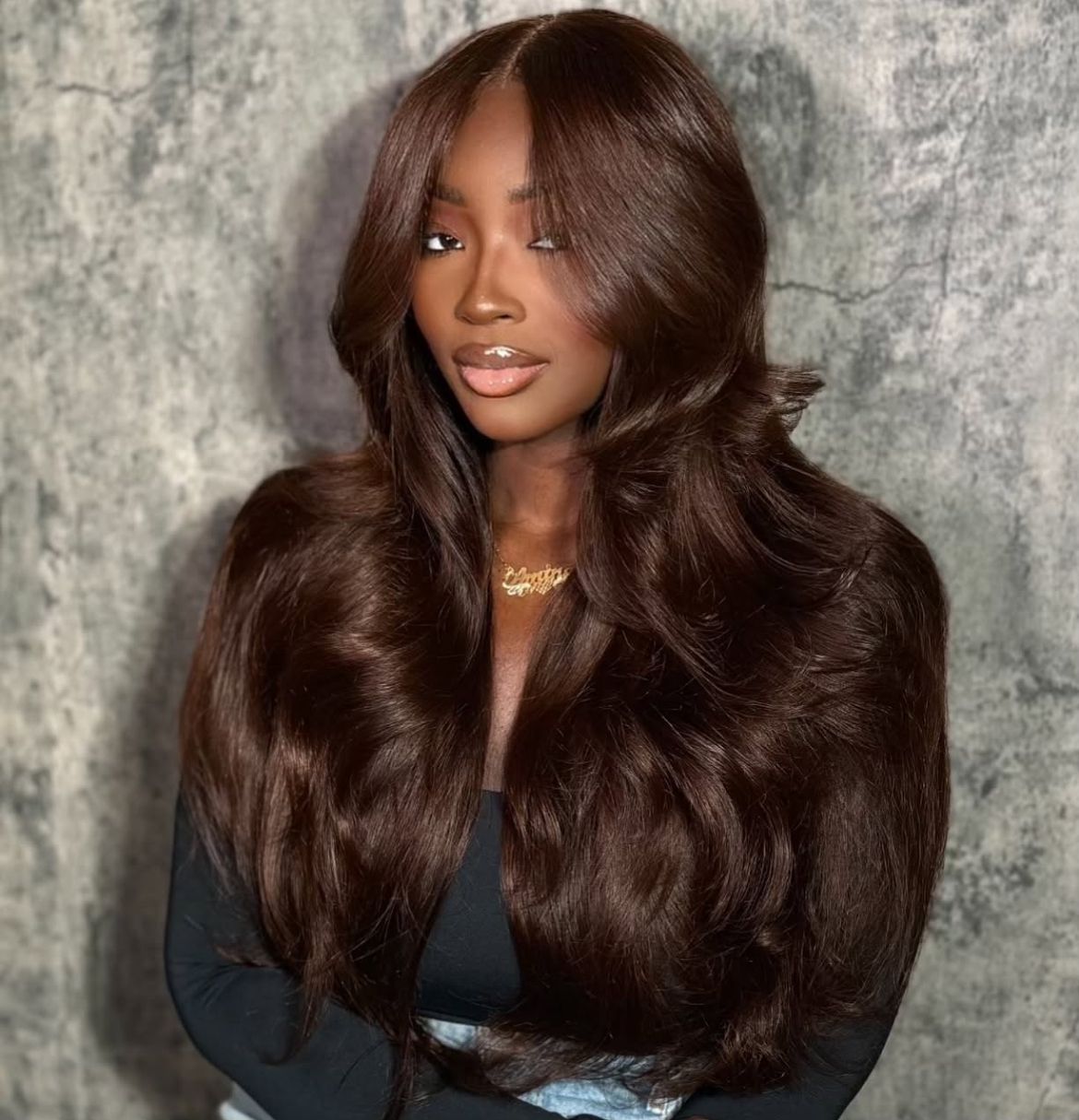
Deep espresso brown flatters darker complexions best, as the cool, rich shade mirrors the depth of melanin-rich skin. The all-over single-process technique on this mid-back straight, thick hair creates a sleek, polished finish with a smooth blowout. The long layers and face-framing pieces keep it from feeling too heavy. The cool tone prevents brassy fade, which is winter’s win. But the depth can feel one-dimensional; without subtle lighter pieces, it risks looking like a solid block of color in winter’s gray light.
Collarbone Deep Brown with Reddish Undertones
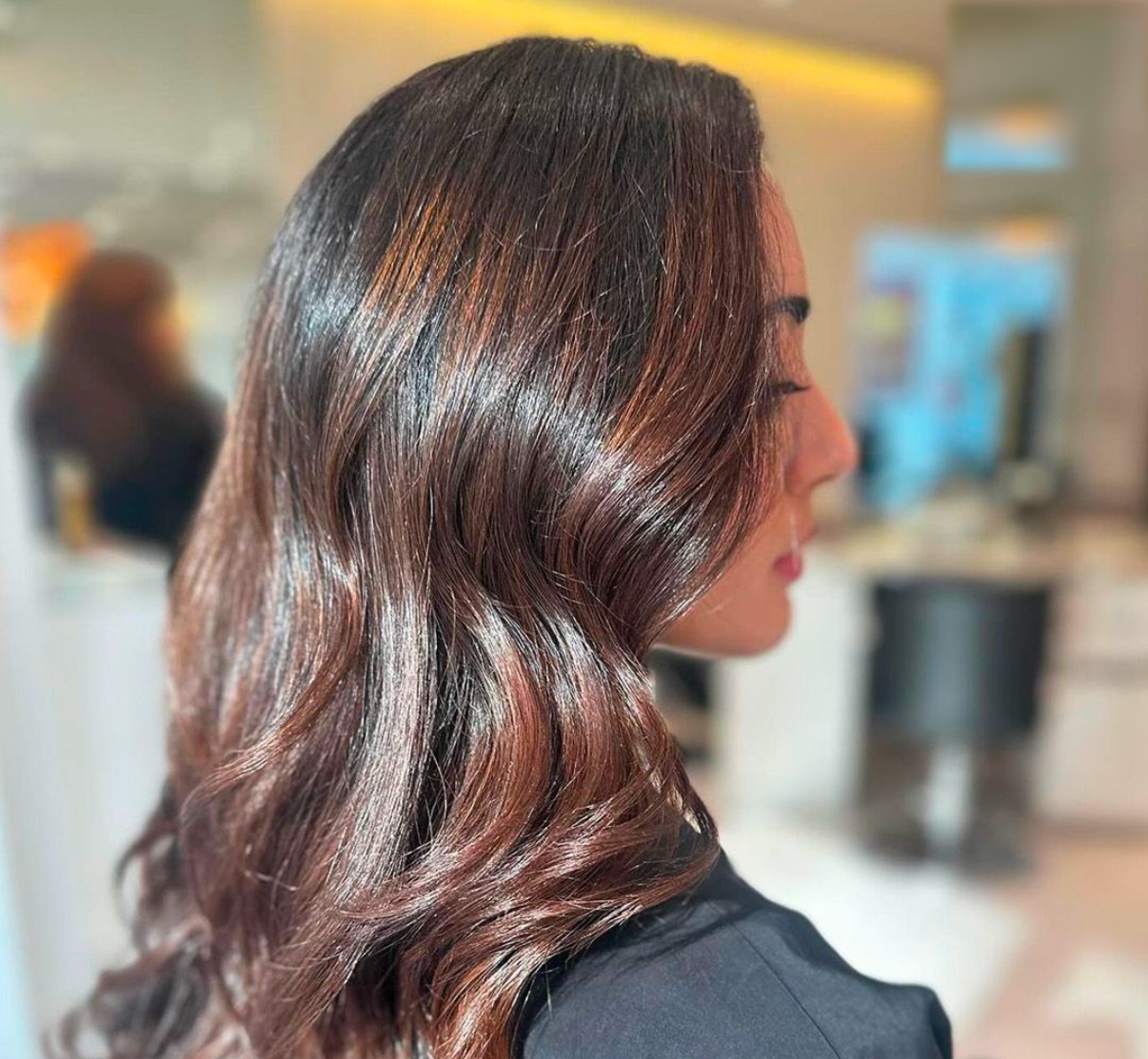
Ever had a brown that turned brassy in three weeks? That is the mistake with deep brown reddish undertones on collarbone-length wavy hair. The technique uses a single-process color with a warm tone, meant to add subtle flickers of red in natural light. But without upkeep, the reddish undertone fades into a brassy orange, especially on medium-density hair that grabs warmth. The dodge: a weekly color-depositing conditioner keeps the red from veering into copper. The length at collarbone shows off the dimension, and the wavy texture helps diffuse the warmth, so it does not look flat. Many assume this low-maintenance look needs no toner, which is the real error; a gloss every six weeks preserves the undertone from going rusty.
Dark Brown with Ash Blonde Balayage
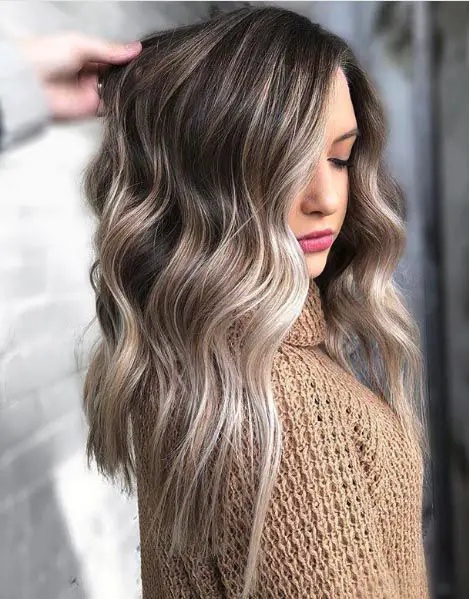
A dark brown ash blonde balayage is a test of a colorist’s hand. The depth of the dark brown base, typically a cool tone, is painted freehand with a lightener from mid-lengths to ends, creating a soft, graduated lift. The ash blonde tone cancels any warmth, leaving a cool, ashy contrast against the deep base. On mid-back wavy, thick hair with curtain bangs, the technique builds dimension by concentrating lightness where the waves catch light. This is not a bathroom-mirror project; the lightness placement requires the stylist to see the hair in three dimensions. The curtain bangs are cut to blend with the lightness, softening the contrast.
The contrast is deliberate: a deep root that melts into a pale blonde without a harsh line. The balayage placement follows the hair’s natural fall, so the lightness grazes the face and falls in ribbons through the length. It is not a uniform highlight; the technique relies on the colorist feathering the lightener into the base, so the grow-out blurs into the dark. The result reads cool and modern, a deliberate departure from warm winter browns.
Cool-Toned Ash Brown with Subtle Highlights
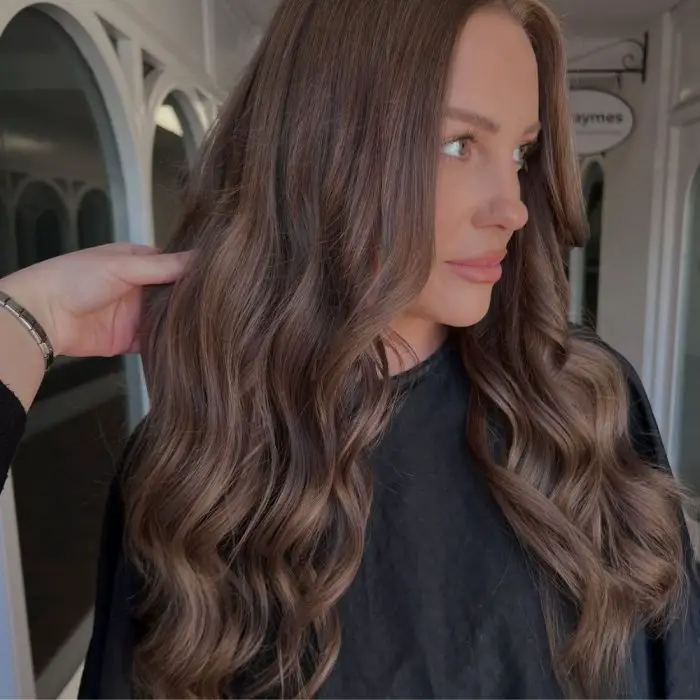
Monday morning, no flat iron. The cool ash brown highlights catch enough light that the wavy, medium-density mid-back length looks intentionally undone. The color is a salon-level technique: cool-toned ash brown base with subtle lighter pieces painted around the face and through the layers. DIY is not an option for this precise cool tone; one wrong toner can pull green or lavender. Across a real week, these highlights remain visible because they are low contrast; they do not grow out as obvious roots but soften into the base. The tone stays cool without turning brassy, though winter’s dry air can make ash look dusty if not refreshed. A salon visit every eight weeks for a toner keeps the ash from fading to a muddy beige.
Chin-Length Lob with Ash Blonde Highlights
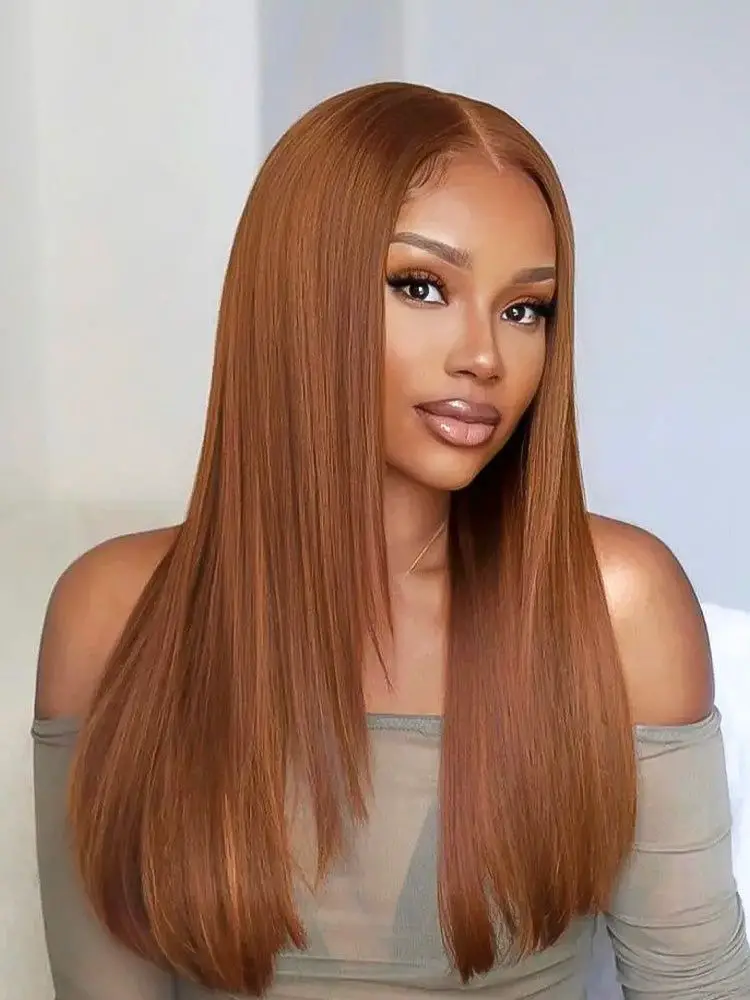
A chin-length lob hits the right note for winter because it clears the collar of a thick sweater. The color technique uses a medium brown base with chin length lob ash blonde highlights for cool dimension without heavy maintenance. The side-swept bangs soften the blunt line, and the layered blowout technique gives the wavy, medium-density texture some lift. This cut and color is a low-commitment winter style: the chin length works with turtlenecks, and the ash blonde highlights catch the low winter sun without looking brassy.
Deep Cool Brown with Subtle Highlights
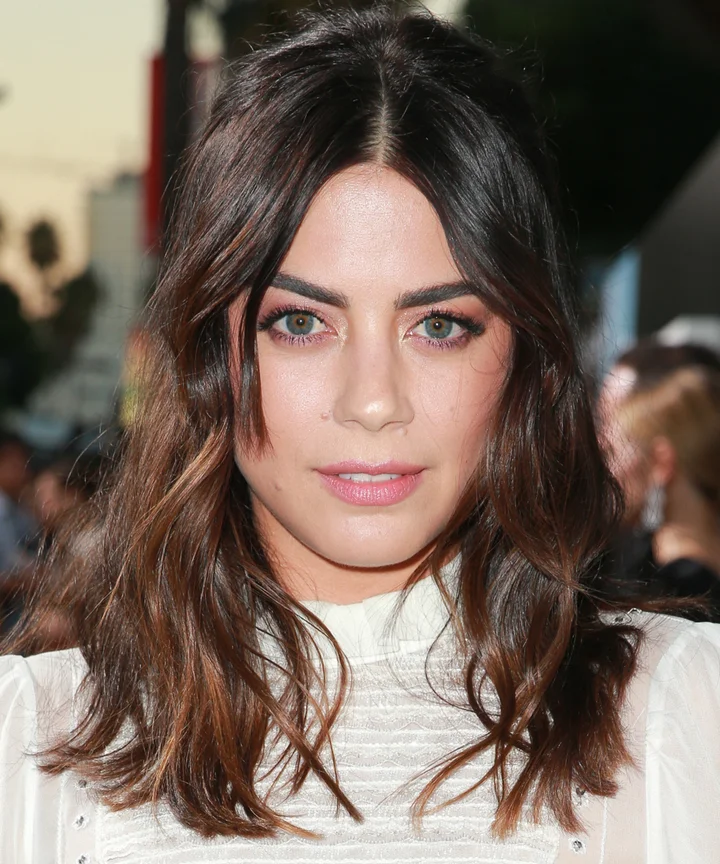
The colorist starts at the crown, weaving thin sections from a deep cool brown base for a natural lift. The foil technique uses a cool-toned highlight formula, not a warm one. The subtle highlights are spaced wide, mimicking natural dimension rather than stripes. The mid-back length with long layers keeps the weight heavy, and the thick, wavy texture air-dries into soft waves that the highlights follow.
The tone is intentionally cool, leaning ash without going grey. On a deep brown base, these highlights sit just one or two levels lighter, creating a sophisticated winter brown that never screams for attention. The middle part, no bangs, keeps the focus on the color placement. It’s a technical application that looks like you woke up with perfect depth.
Medium Brown with Caramel Balayage
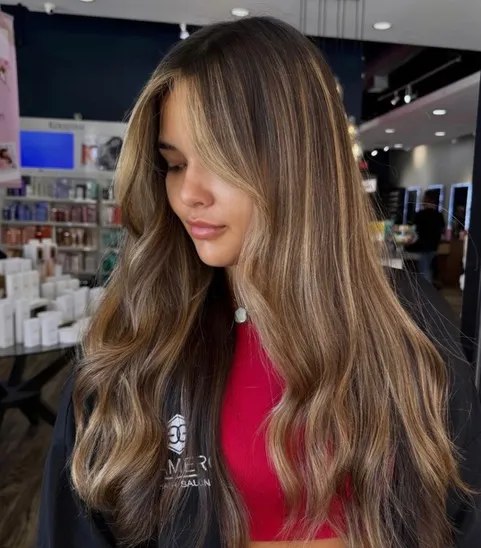
Medium brown caramel balayage is the most forgiving warm highlight for olive and neutral skin tones. The balayage technique paints the caramel tone onto the mid-lengths and ends, leaving the roots dark for a soft grow-out. The mid-back length with long layers and face-framing pieces lets the caramel frame the face. On medium density wavy texture, the color lands evenly without striping. This is not a high-contrast look; the caramel sits close to the base, so it works on anyone who wants dimension without a hard line. On very fair, cool skin, the caramel can look brassy, so I’d skip it there.
Deep Brown with Auburn Undertones and Side Bangs
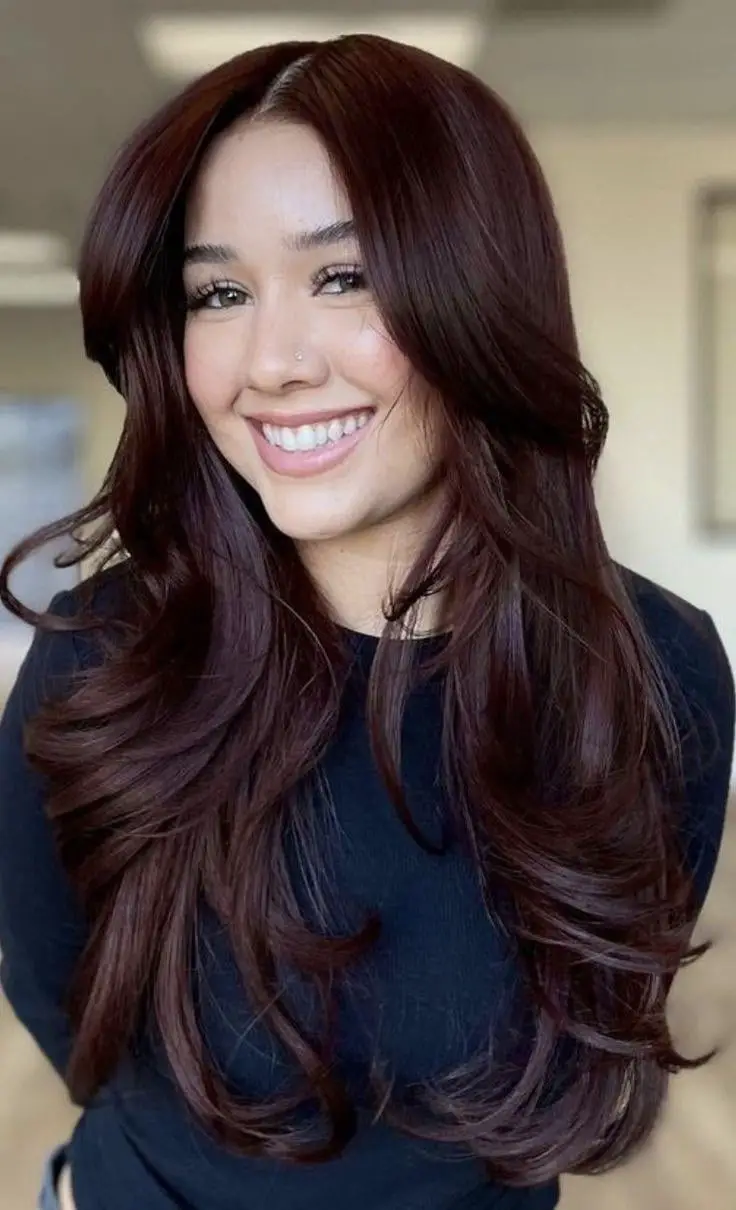
Have you ever wanted to look like you just stepped out of a holiday party without actually going to one? That is what this deep brown with auburn undertones and side bangs does. The colour is a rich, warm brown — almost espresso with a red glow — done as an all-over base with a subtle auburn tone painted through the ends. Those side bangs sweep across the forehead, softened by the middle part and loose waves. The length hits mid-back, the texture is thick and wavy, and it takes about 20 minutes to wave if your hair holds a curl.
The season connection is direct. The auburn catches warm candlelight and twinkle lights, so it reads festive without screaming. For upkeep: the tone needs refreshing every six to eight weeks if you want the red to stay visible. The side bangs need a trim every three to four weeks, or they drift into your eyes by Tuesday. This is not a set-it-and-forget-it colour, but for December through February, it earns its slot.
Long Deep Rich Brown with Reddish Undertones
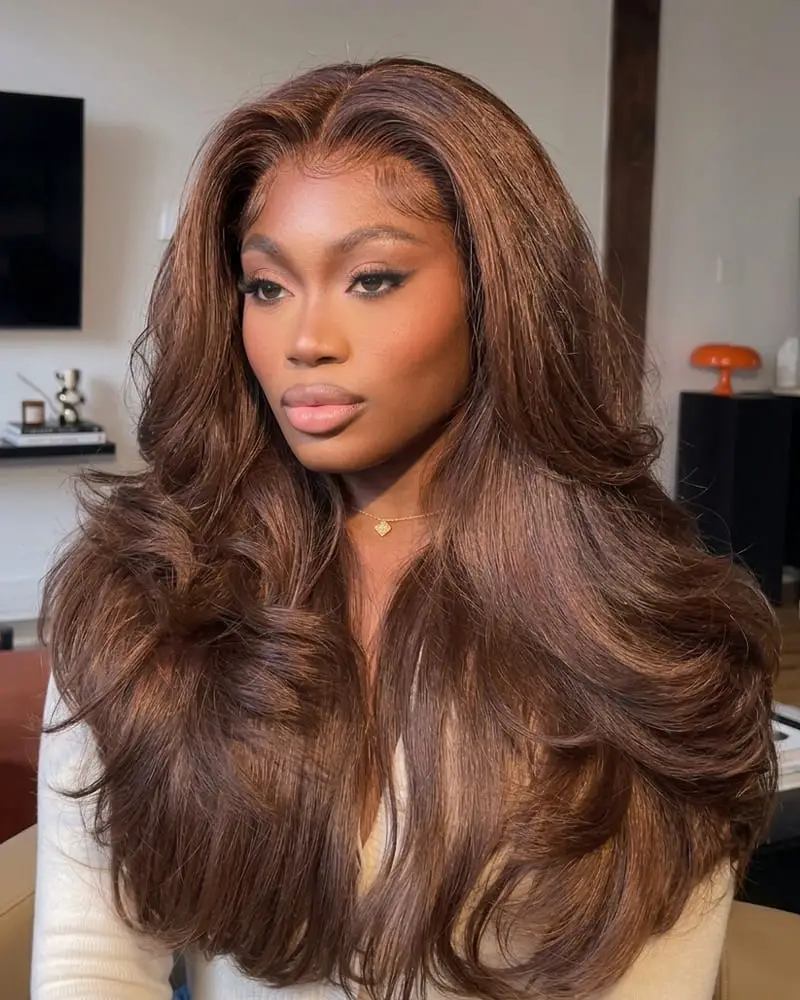
The verdict: deep rich brown reddish undertones work — but only when the red is subtle, not shouty. The common mistake is asking for red and getting a tone that reads more box-dye burgundy than warm glow. Here, the reddish undertone sits beneath the deep brown, surfacing in direct light rather than landing on top. The technique is a single-process gloss over long layers, no balayage, no highlights. The result is a solid, dimensional brown that shifts in the sun. Length is long, texture is wavy and thick, and the front view with a middle part shows the red only when the wave catches.
To dodge the brassiness trap, skip any red that looks orange in the bowl. Ask your stylist for a cool-leaning red undertone — think cherry wood, not copper. That keeps the colour from veering warm after a few washes. The tone stays richer longer when you wash in cool water and use a color-depositing conditioner. Without that, the red fades to brassy in about five weeks, and then you are stuck until the next gloss.
Collarbone Medium Brown with Subtle Blonde Highlights
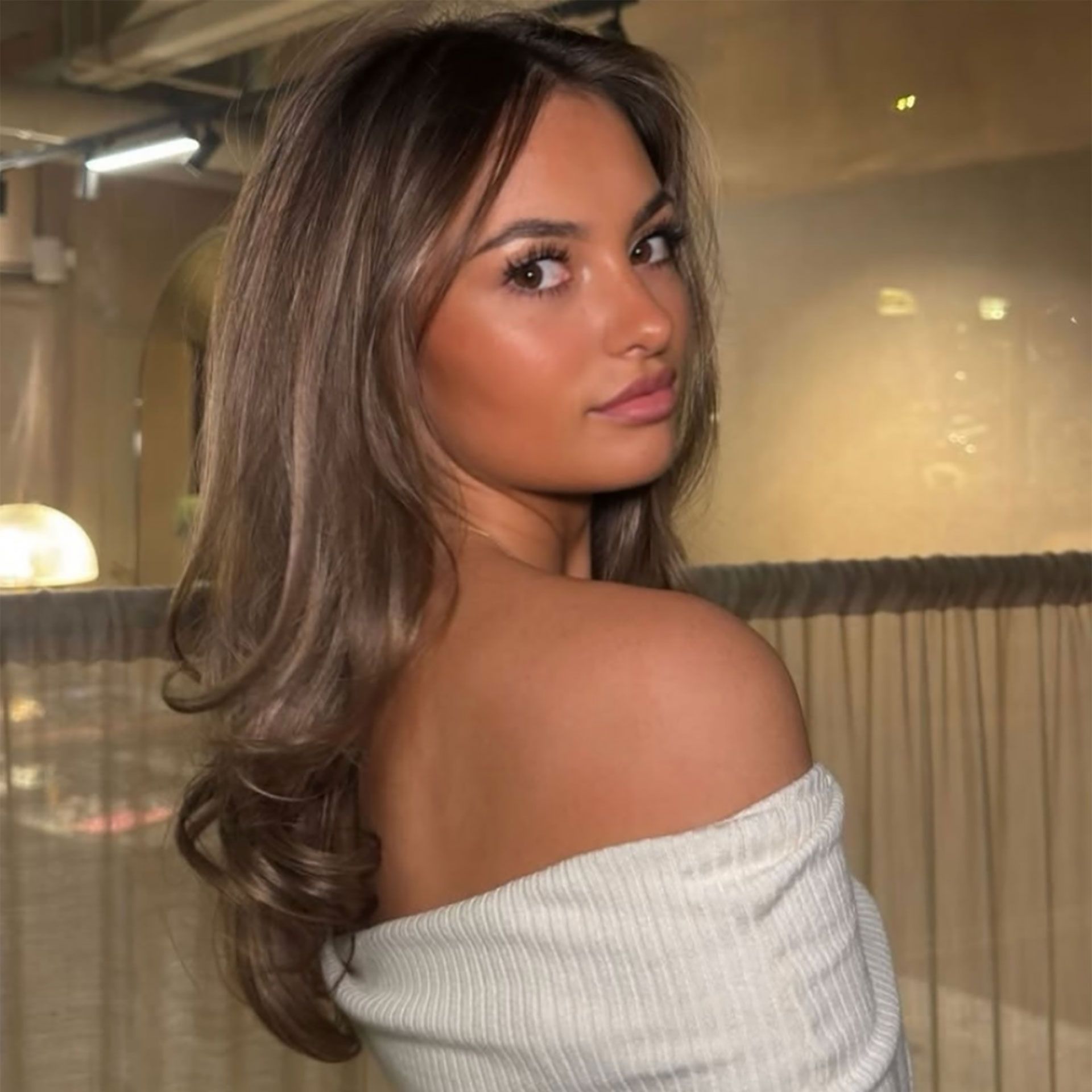
It is Tuesday at 8 AM. You have ten minutes to make your hair look intentional. This collarbone medium brown with blonde highlights is the color you book because it works on autopilot. The medium brown base is a neutral tone, not too warm, not too cool, and the subtle blonde highlights are painted in — not foiled — so they blend softly and grow out without a harsh line. The technique is a balayage hand-paint, the tone is a beige blonde that reads more ivory than yellow. Length is collarbone, texture is wavy medium density, and the curtain bangs frame without demanding a blowout.
Long Layers Medium Brown with Blonde Balayage
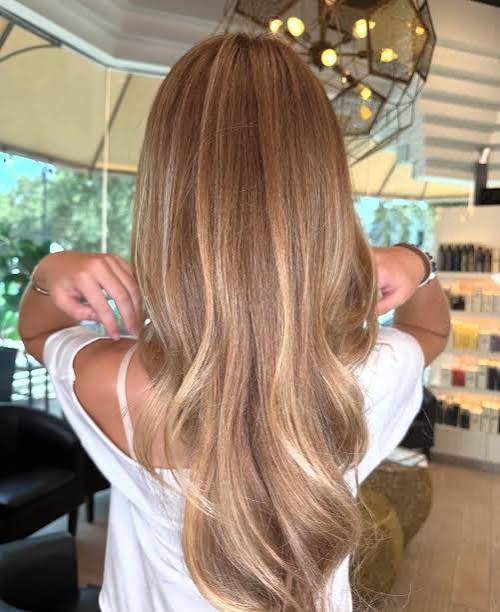
I looked at this back view and thought: that is exactly what balayage is supposed to do. The medium brown blonde balayage starts dark at the roots, then sweeps into a soft, warm blonde through the mid-lengths and ends. The technique is painterly — the stylist sweeps color onto the surface of each section, feathering outward, so the transition is blurred rather than striped. No foils, no sharp line. The tone is golden blonde, not ash, so it warms the medium brown base without fighting it. Length is shoulder, texture is wavy medium density, and the long layers give the waves room to spiral. From the back, the light hits each lifted section separately.
Dark Brown with Caramel Highlights
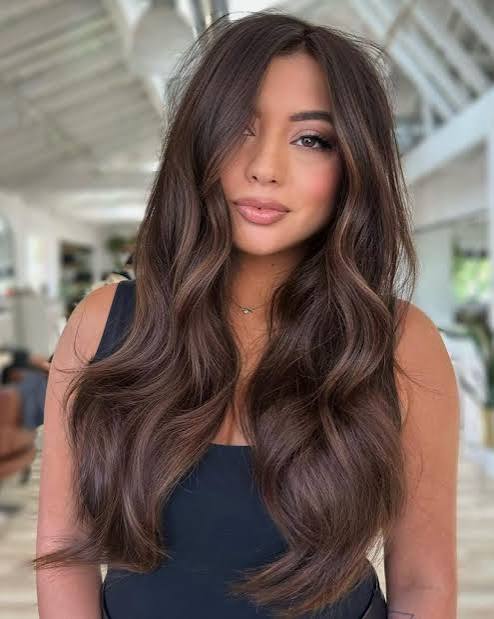
Caramel on dark brown runs warmer than the ash blonde everyone’s been pushing, and that warmth is the whole point. The base stays deep and rich, the highlights land in soft ribbons around the face, and the tone reads more honey than gold. On collarbone-length layers with side bangs, the contrast shows without shouting. Thick, wavy hair carries it best because the caramel catches the light in every bend. It fades faster than you’d like, so plan on a color-depositing conditioner around week four. The grow-out is forgiving, though, since the dark base does the blending for you.
Mid-Back Medium Brown with Lighter Brown Highlights
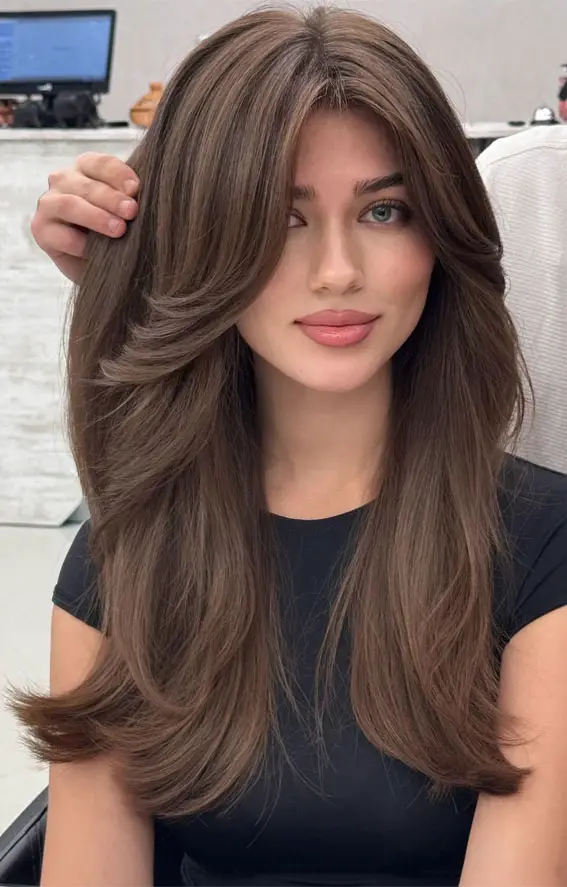
Everyone asks for lighter brown highlights and then complains there’s no definition. The mistake is letting them blend too much, which turns the whole head into one flat beige. The fix is placement: the highlights need to sit where the light hits, around the face and through the top layers, not buried underneath. On mid-back length with curtain bangs and thick, wavy texture, the contrast reads soft but visible. Medium brown base keeps it natural, the lighter brown adds movement. A color-depositing conditioner every few washes keeps the tone from going dull.
Long Layers Medium Ash Brown with Subtle Blonde Highlights
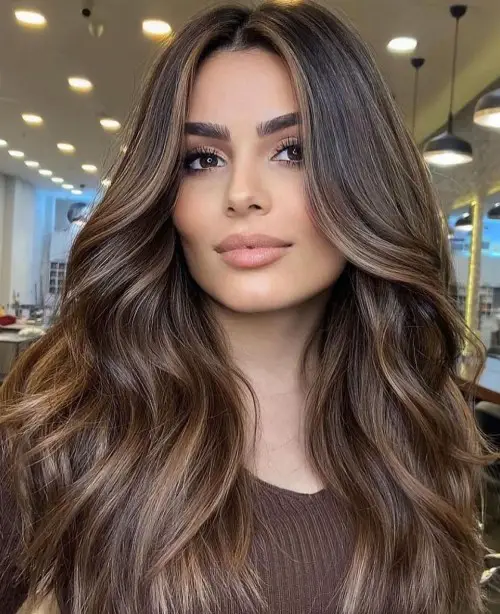
Ash is the quiet workhorse of winter browns, and this one does it right. The medium ash brown base carries a cool, smoky tone that flatters fair skin without washing it out, and the subtle blonde highlights add just enough lift to keep the long layers from falling flat. Face-framing pieces catch the light first, which is exactly where you want the brightness. Thick, wavy hair holds the loose waves for hours, and the mid-back length gives it weight. The blonde fades, so plan on a toner every six to eight weeks.
Collarbone Medium Brown with Caramel Highlights
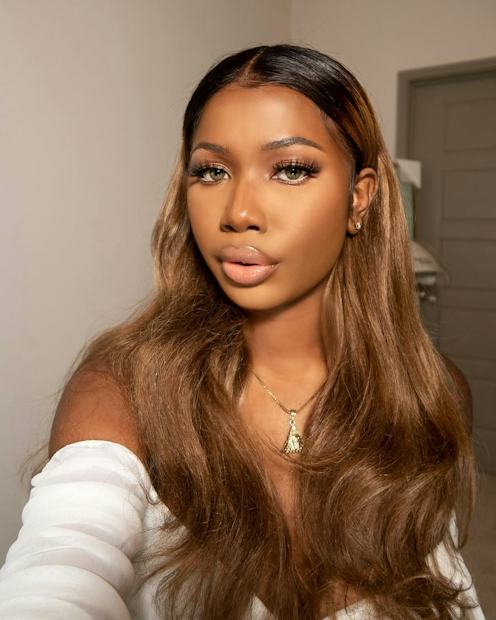
I’ll admit it: I used to think caramel highlights were a summer-only thing, too warm for the gray months. But this collarbone-length cut with medium brown caramel highlights proves me wrong. The technique uses subtle ribbons of caramel through the mid-lengths and ends, keeping the root dark so the tone reads dimensional, not brassy. On a thick, wavy texture like this, the warm tone catches light without screaming. The honest downside? If your skin runs cool, that caramel can pull orange fast. A purple shampoo won’t fix it, so know your undertone before you book.
Rich Espresso Brown with Lowlights
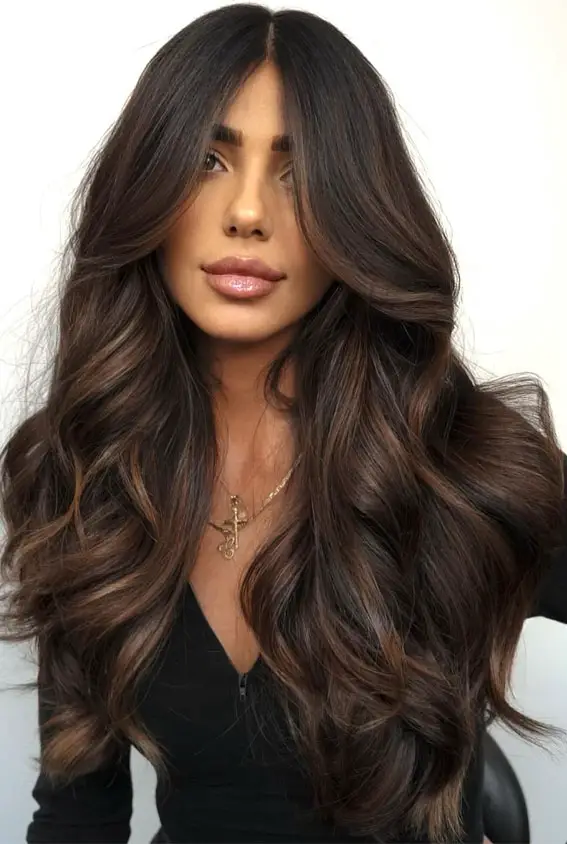
There’s a particular shade of brown that looks like a wool coat feels, and this rich espresso brown lowlights color is it. The base is a deep, almost-black espresso, and the lowlights are a whisper of dark chocolate woven through the mid-lengths and ends. The technique is subtle: thin sections placed underneath, so the hair reads solid from the front but shifts in movement. On mid-back length with thick, wavy texture, the lowlights add depth without visible lines.
This is a winter color that actually stays put. Lowlights require less maintenance than highlights because you’re darkening, not lifting, so root regrowth is soft. I’d book a trim every eight to ten weeks to keep the layers fresh, but the color itself holds for months. It’s the kind of shade that makes a cozy sweater feel intentional, not an afterthought.
Side-Swept Bangs Ash Brown with Cool-Toned Highlights
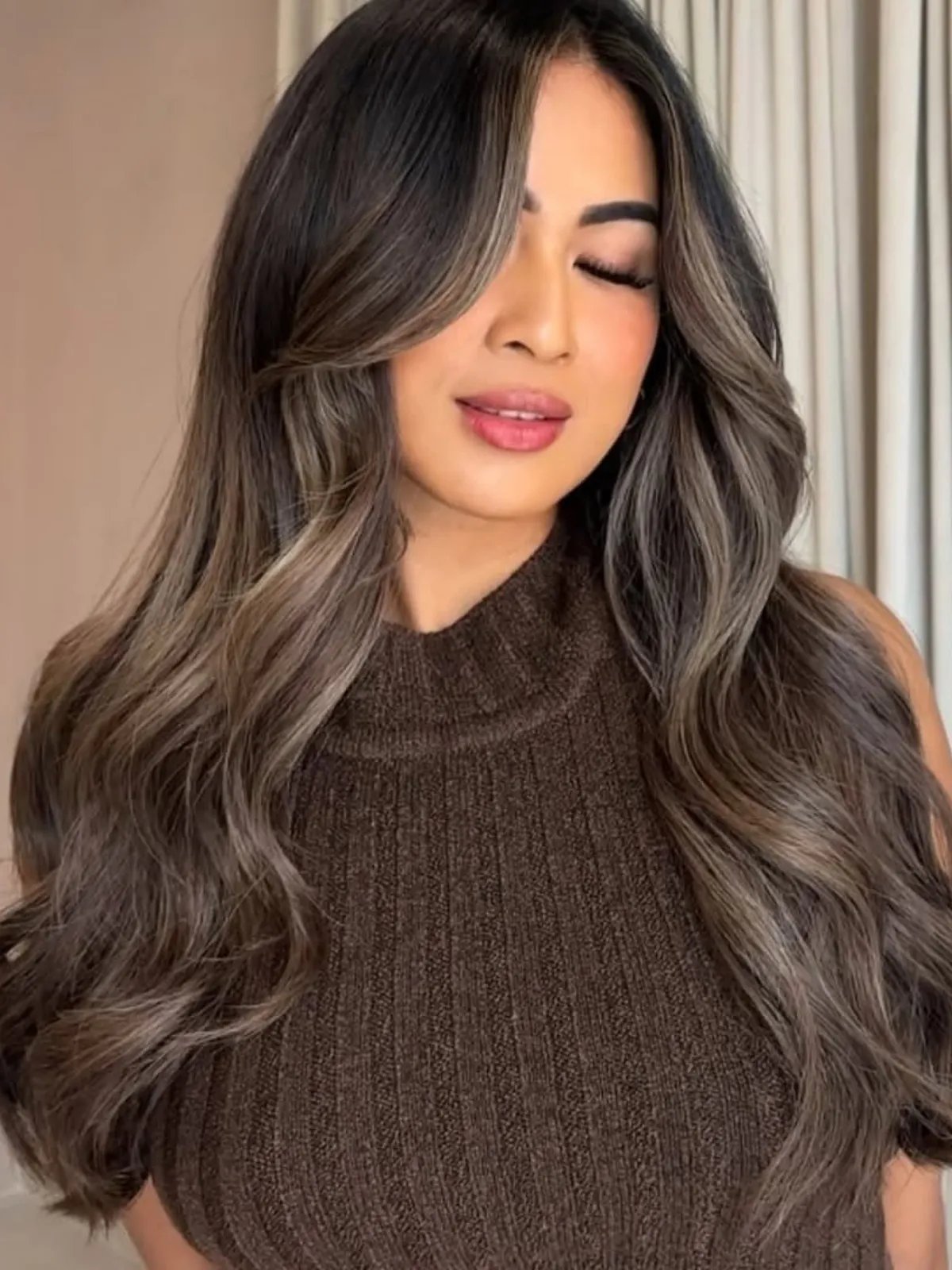
Ash brown wins over warm brown if you want your hair to look like it costs more than it did. This mid-back length with side-swept bangs uses an ash brown base with fine, cool-toned highlights woven through the lengths. The technique is a soft balayage, hand-painted so the cool tones sit subtly, never stripey. On wavy, medium-density hair, the ash tone reads sophisticated, not flat, because the highlights add just enough lift.
Compare this to a warm caramel brown, which can read brassy on cool skin. The ash brown cool highlights stay muted, almost smoky, and the side-swept bangs soften the face without demanding daily styling. It’s the color equivalent of a cashmere scarf: quiet, but everyone notices.
Warm Brown with Copper and Gold Highlights
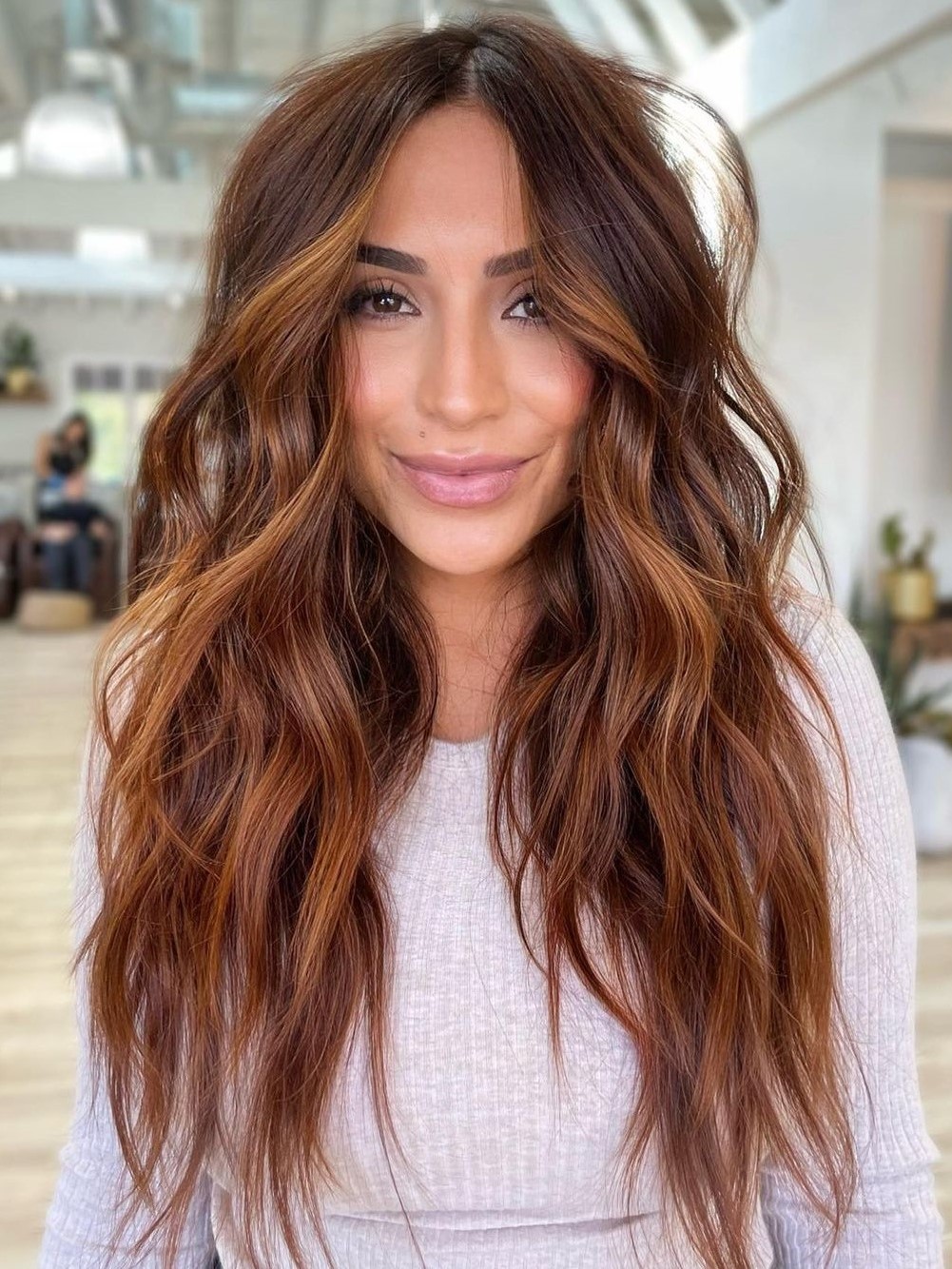
The stylist’s brush moves in thin ribbons, copper on one side, gold on the other, and the result is a warm brown base that catches light from every angle. The technique here is a double highlight: copper pieces placed around the face for warmth, gold pieces woven through the lengths for shine. On long, thick, wavy hair with face-framing bangs, the two tones create a dimensional effect that reads sunlit, not streaky.
Why two tones instead of one? Copper alone can look flat, gold alone can look brassy. Together, they bounce off each other, so the warm brown copper gold highlights shift from bronze to honey depending on the light. It’s a salon-only job, because the placement needs to be precise to avoid muddiness. But once it’s done, the dimension lasts through several washes without fading into one note.
Mid-Back Dark Brown with Warm Caramel Balayage
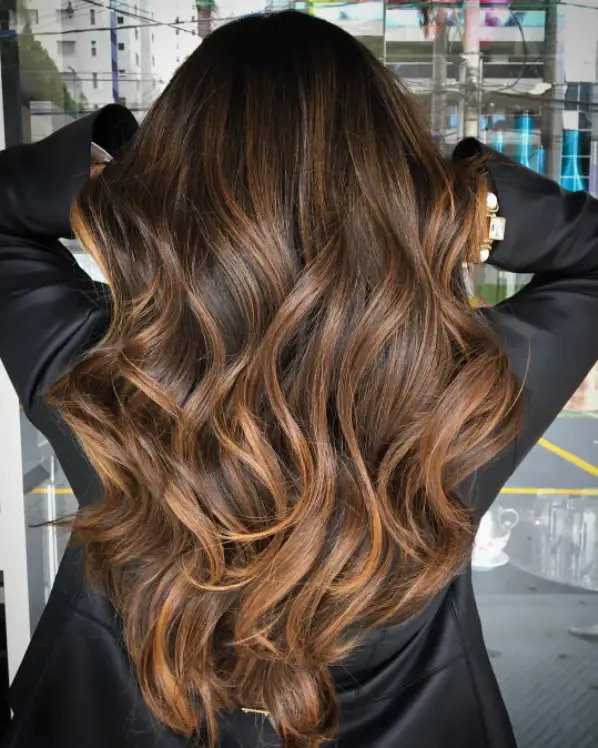
Warm caramel on dark brown is the color equivalent of a cashmere scarf: it just makes sense in winter. The balayage technique sweeps the caramel from mid-length down, so the roots stay dark and the grow-out is a non-event. On a mid-back length with loose waves, the warm tones catch the light like they’re lit from inside. This one flatters warm undertones best; if your skin has a golden or peachy cast, the caramel will read as natural, not brassy. Cool undertones might find it too orange, so if that’s you, ask for a cooler caramel, more beige than gold. The texture matters too: thick, wavy hair holds the dimension beautifully, while fine hair can let the highlights get lost. I’ve seen this on a friend with thick waves, and it looked like she’d just come from a week somewhere sunny.
Long Layers Dark Chocolate Brown with Cool Highlights
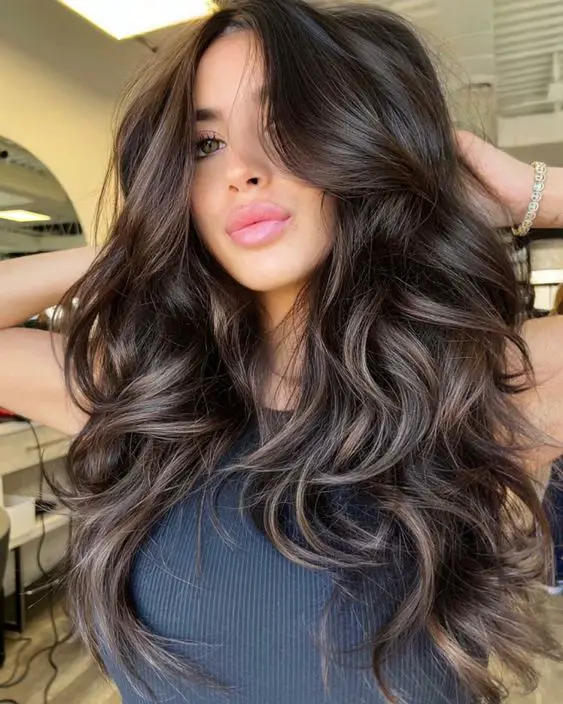
I’ll admit, I used to think cool-toned highlights on dark brown looked a little flat. Then I saw this in winter light, and I changed my mind. The dark chocolate brown base is so deep it’s almost black, and the cool highlights are subtle, not stripey, just enough to give the long layers some movement. It’s the kind of color that looks expensive in a low-lit restaurant.
For winter, this is a moody choice that doesn’t fight the season. The cool tones echo the gray skies without washing you out. On wavy, thick hair, the highlights catch the wave pattern and make it look dimensional. The upkeep is manageable: trims every 8-10 weeks keep the layers sharp, and because the highlights are subtle, you can stretch touch-ups to 12 weeks. Cool tones do fade, so expect a toner appointment every 6-8 weeks to keep them from turning brassy. It’s not a wash-and-go color, but it’s worth the extra chair time.
Dark Brown with Warm Blonde Highlights
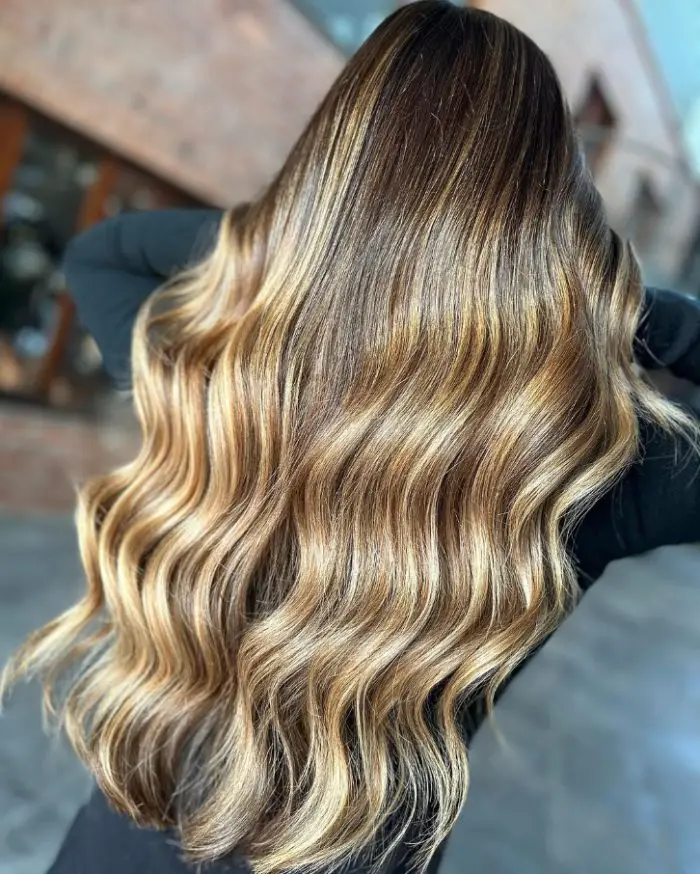
The first thing I noticed is how the warm blonde highlights sit on the dark brown base like they were always meant to be there. The contrast is rich, not harsh, and it’s the kind of color that looks good in the morning mirror and at 10 pm. I’ve had clients with this combo, and the grow-out is the saving grace: because the highlights are woven through the layers, the roots don’t show a hard line. You can push touch-ups to 10 weeks without anyone knowing. The technique is a salon job, no question. Getting that warm blonde to land without brassiness takes a skilled hand, and doing it at home is a gamble I wouldn’t take. On wavy, thick hair, the highlights catch the movement and add depth. If you have fine hair, ask for finer pieces so they don’t look chunky.
No Bangs Dark Espresso Brown with Cool Highlights
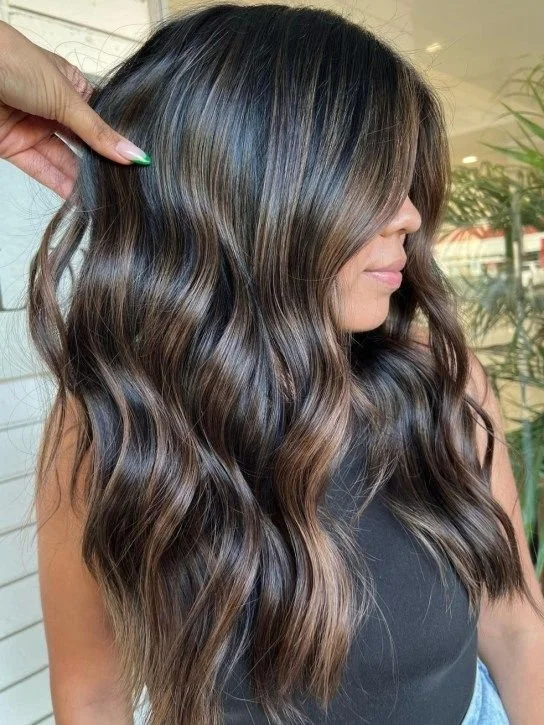
Ever seen cool highlights on a dark espresso base go wrong? It’s when they get too ashy, and suddenly you look like you have gray streaks instead of highlights. The fix is in the technique: the highlights need to be fine and woven close to the base color, not chunky or too light. On a deep espresso brown, the cool tones should read as a sheen, not a stripe. The long layers help, too, because they let the highlights move with the waves instead of sitting flat. This color is a salon job, no question. Getting that balance between cool and harsh takes a stylist who knows how to tone. On wavy, thick hair, the voluminous waves show off the dimension. If you have fine hair, ask for a gloss instead of full highlights to keep it subtle.
Long Layers Medium Brown with Lighter Highlights
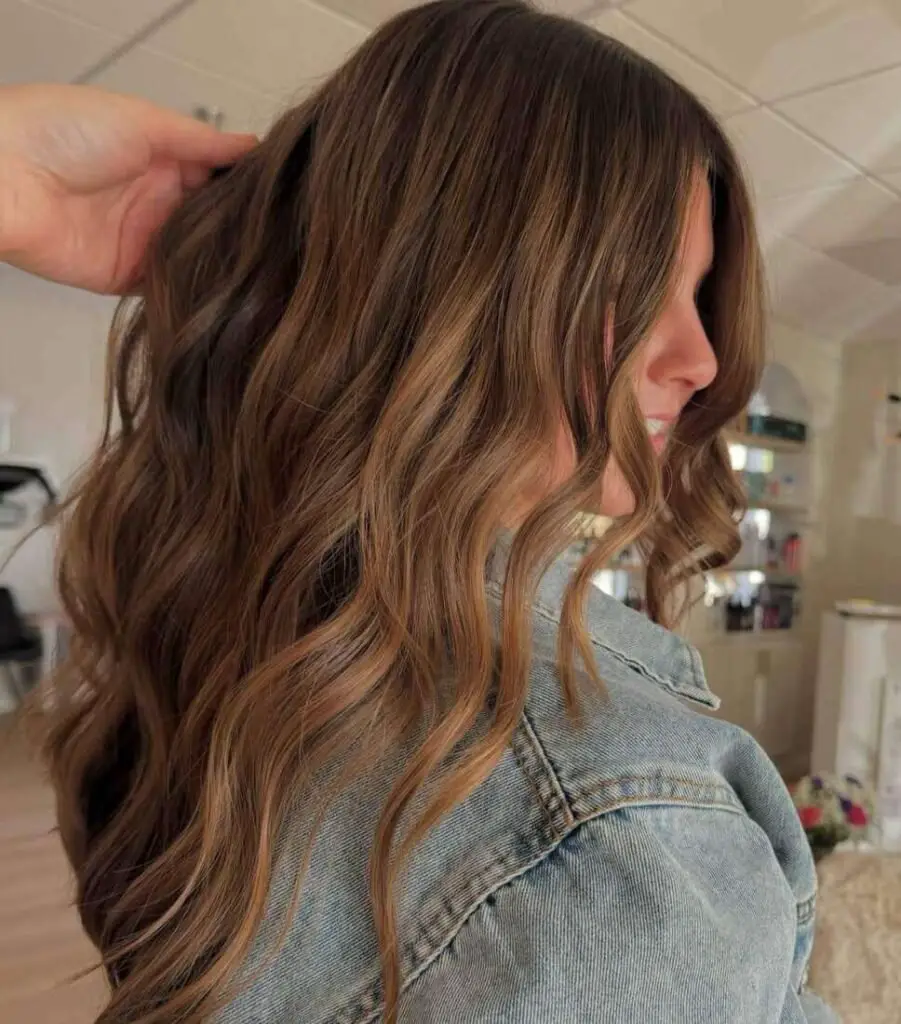
A mid-back wave of medium brown lighter highlights catches the light before it drops. It is a subtle enhancement, not a statement. The technique adds dimension without high contrast, which flatters anyone wanting an easy grow-out. This works best on hair with natural wave or body, the kind that holds a bend without a curler. Fine, straight hair may show the highlights as isolated ribbons rather than blended depth. The warm tone reads natural against medium to deep skin. Long layers keep the weight moving down and soften a round or oval face. The result is hair that looks like it spent a week at the beach, not two hours in the chair.
Mid-Back Chocolate Brown with Caramel Highlights
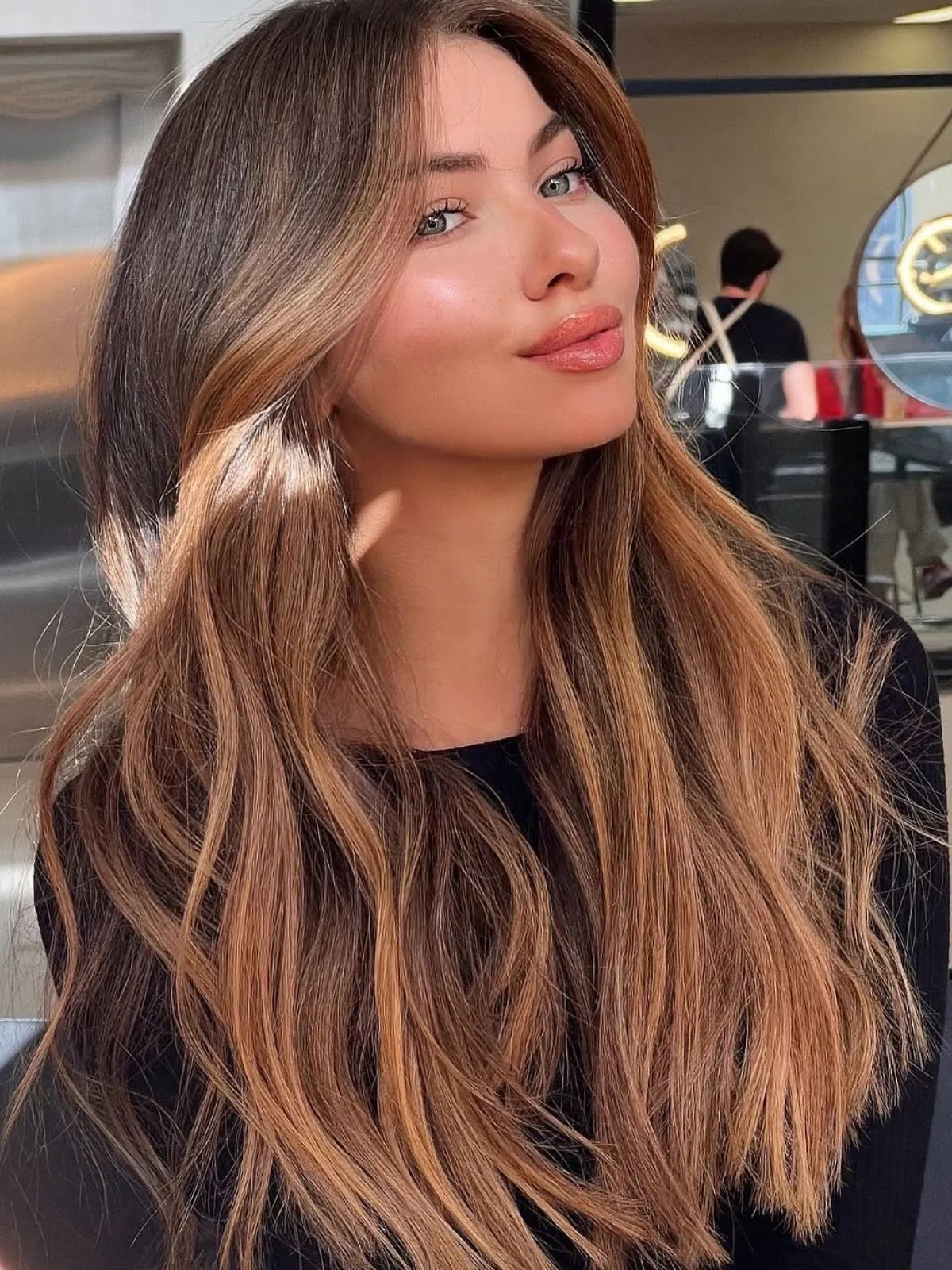
I admit, I was skeptical about caramel on chocolate in winter. Then I saw it catch the low December sun. Chocolate brown caramel highlights warm up a neutral base without tipping into brass. The technique paints thin ribbons of caramel through the mid-lengths and ends, leaving the root deep. On wavy, thick hair, those ribbons catch every light shift. Mid-back length lets the pattern fall into view naturally. It works in sweaters and scarves because the warm tone holds its own against dark fabrics.
Dark Chocolate Brown with Auburn Highlights
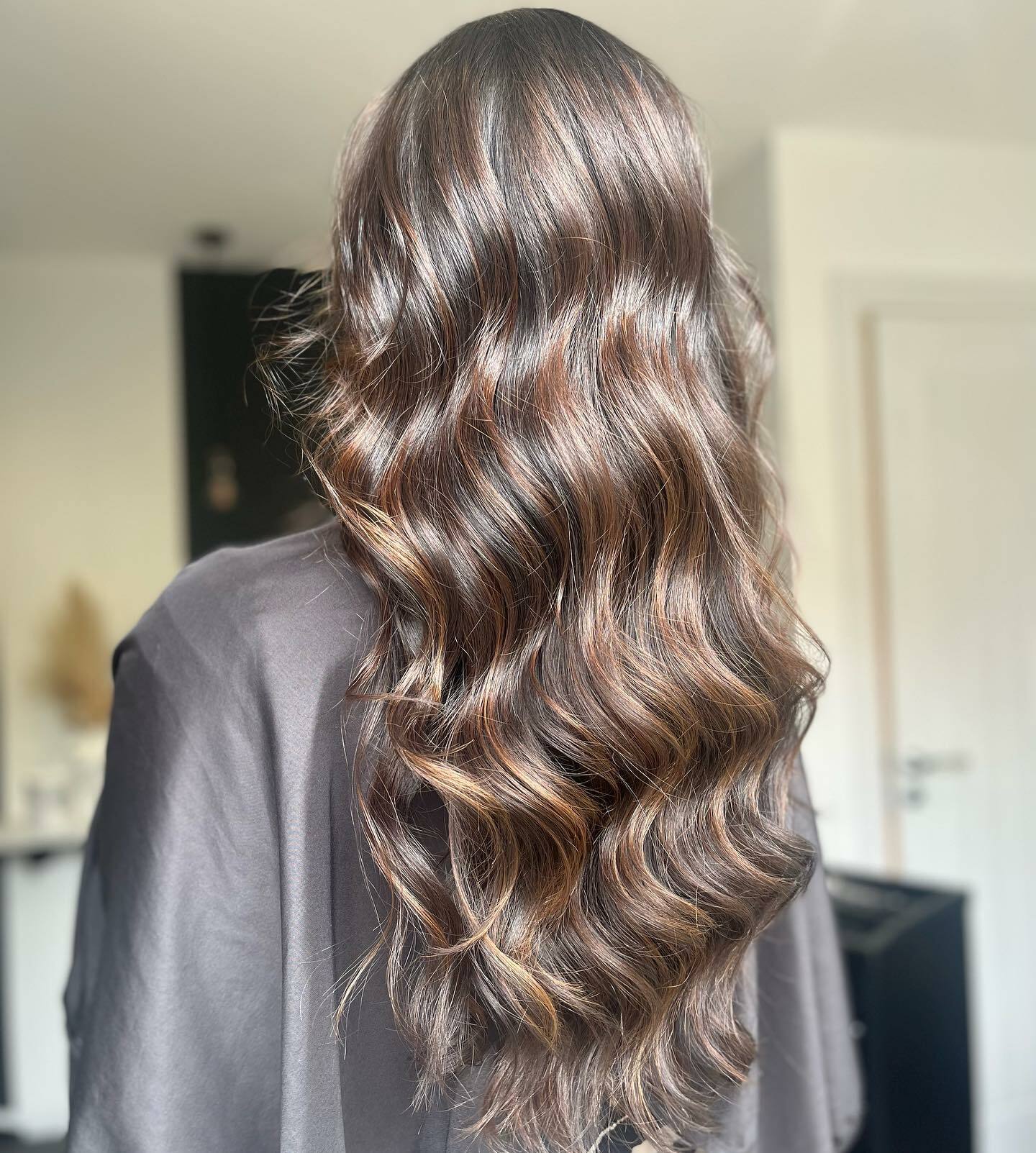
I will be honest: dark chocolate brown auburn highlights require a commitment to toning. That red-red warmth fades fast, especially if you wash often. Within three weeks you might see a brassy shift, more rust than garnet. The base is dark chocolate, so the contrast is subtle when fresh but obvious when the auburn dulls. A color-depositing conditioner helps, but it is an extra step every week. Plan on a gloss every four to six weeks to keep the auburn alive. If you skip it, the highlights look tired rather than vibrant.
The trade-off is dimension that other browns cannot copy. On wavy, thick hair, the auburn catches indoor light and makes the layers visible. Mid-back length gives the colour room to travel down. This is not a set-it-and-forget-it color. But for three weeks after each toning, it is worth the fuss. Just know that you are signing up for maintenance, not a one-and-done.
Final Thoughts
I started this list thinking brown was the safe choice. Now I’m eyeing the auburn undertones. The best winter brown isn’t dark, it’s layered. I’m booking the deep brown with copper hints next. It kept catching my eye in the mirror.