

This winter I keep noticing a shift in office hair: either cut to the jaw or pulled tight and clipped up. Not casual, but deliberate, with visible structure. I think it makes sense. No one wants to deal with flyaways during the four o’clock meeting.
These 18 Winter Hairstyles for Work span from five minutes to a full blowout, and from blunt short to long braided. My own fine hair goes flat by 4 p.m., so I tested every one for how it holds through a full day. No impractical fantasies, just hair that really works under fluorescent lights.
Textured Wavy Dark Brown Bob
A bob that hits the collarbone has a way of looking intentional without trying. That wavy bob for work is a middle-part, no-bangs situation, cut at chin length and left to air-dried texture. The subtle layers near the ends give lift at the sides without losing the blunt baseline. This shape favors medium-density hair and oval or heart faces. If your hair is very fine, the waves may drop before noon. Thick hair, you are fine.
Thick Wavy Dark Brown Braid
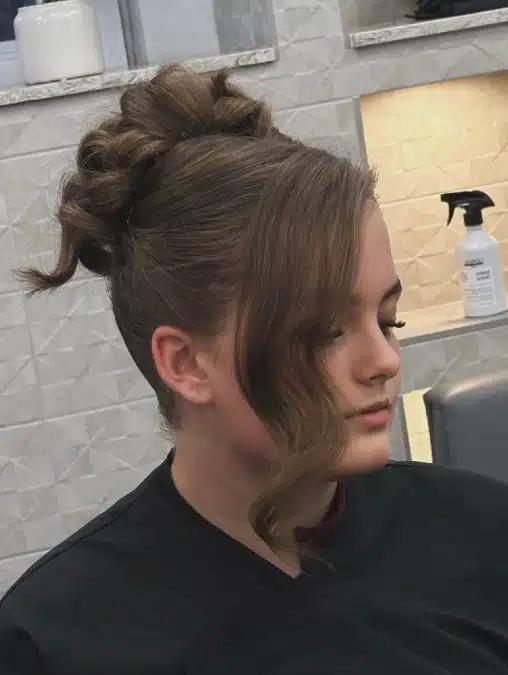
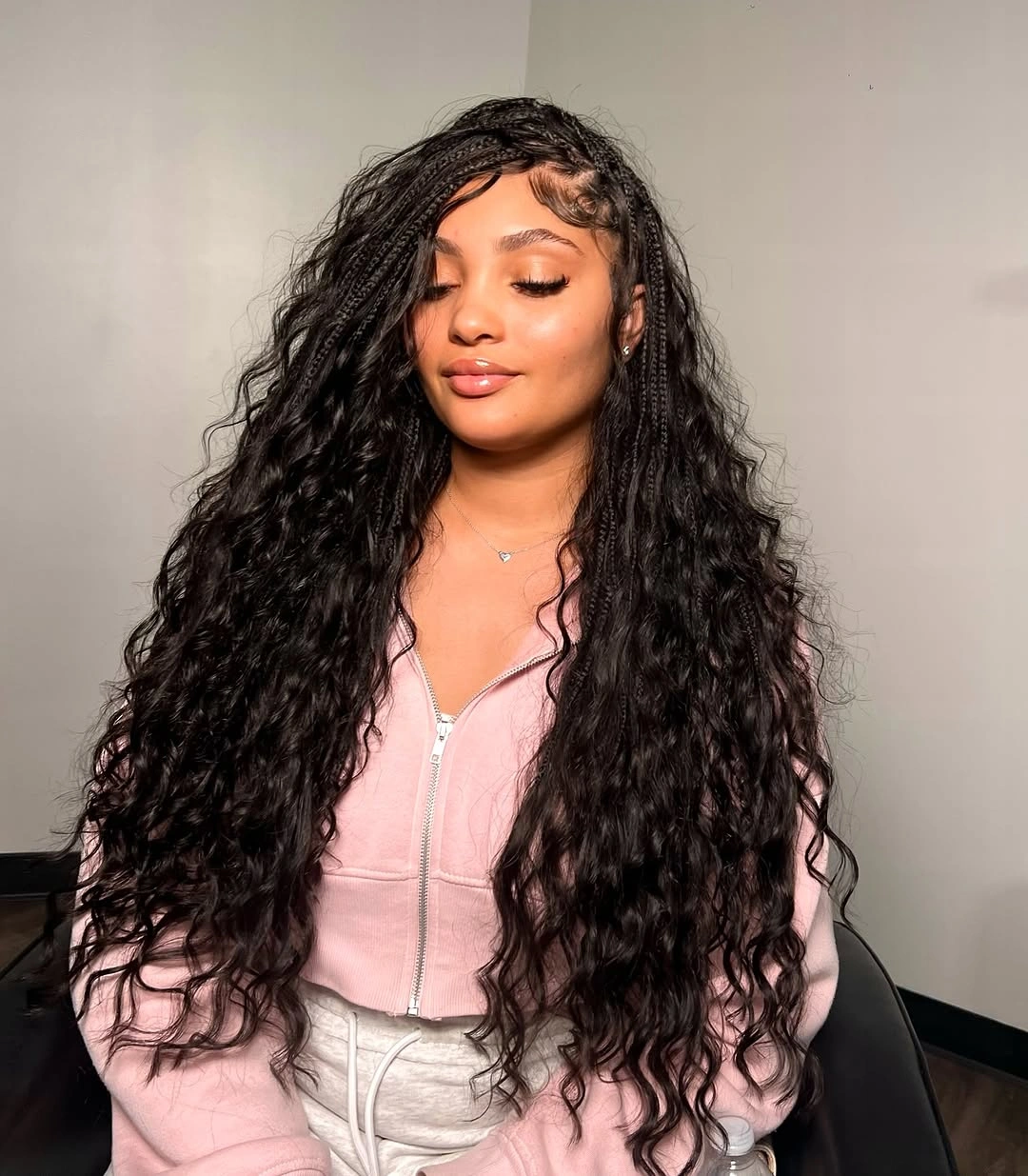
I will admit, I used to think a braid was too casual for the office. Then I tried a thick braid with layers and side-swept bangs on dark brown, wavy hair that hits mid-back. The braided hairstyle for work holds all day, no second-day refresh needed. The thickness keeps the braid from looking skimpy. The side-swept bangs soften the front and break up the line. At night, undo it and you have waves for tomorrow. A satin scrunchie at the end prevents fraying. That is a two-for-one style.
Chin Length Bob With Blunt Bangs
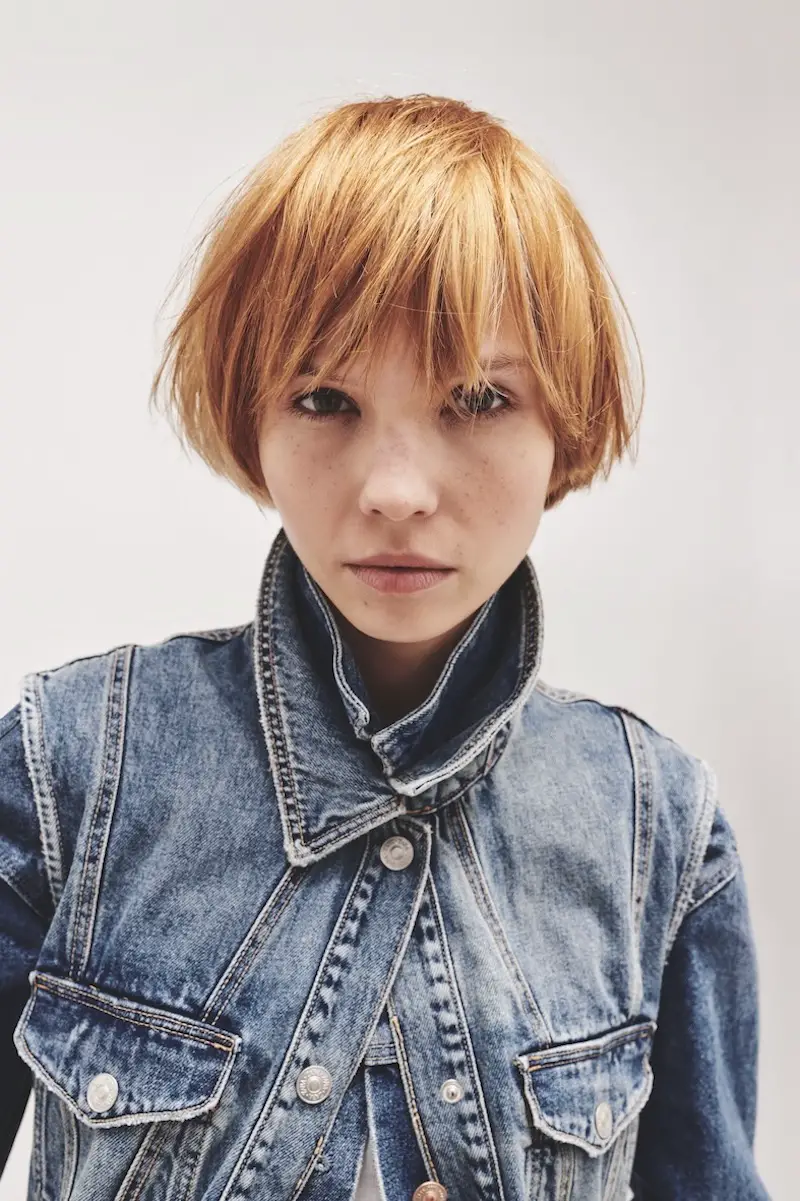
Blunt bangs at work feel like a dare. This bob with blunt bangs is chin length, strawberry blonde, with fine, wavy texture and a middle part. The bluntness looks bold and intentional. The downside: your face shape has to carry that line. It works best on oval or long faces. Round faces can feel cut off. The bangs also need trimming every three weeks. One week past due and you are in your eyes. Fine hair helps the bangs stay flat, but the waves soften the blunt edge enough to avoid looking severe.
Shoulder Length Coily Twists
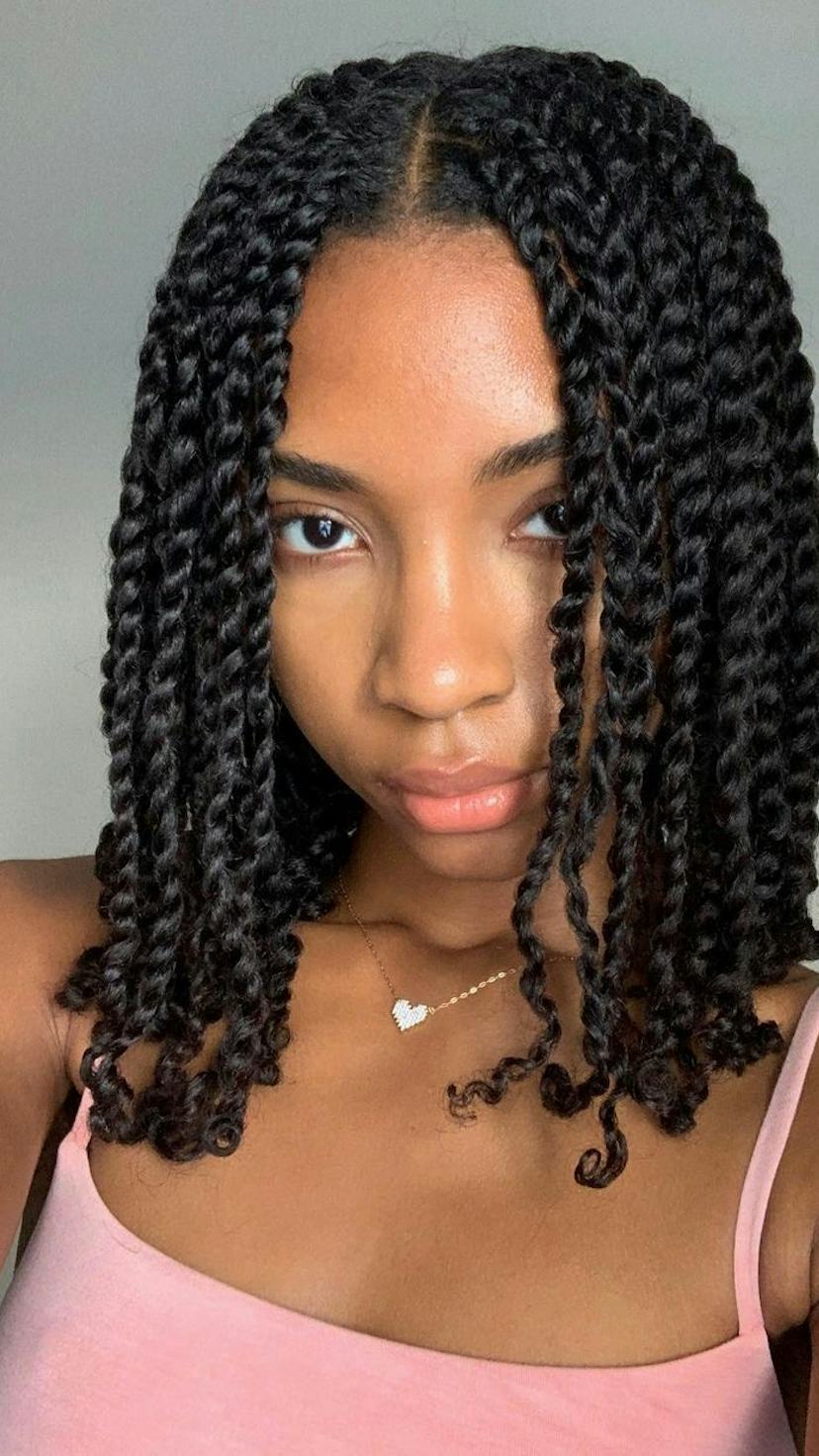
The neat rows of two-strand twists hit the shoulder exactly, no flyaways. Each twist is created by winding two sections of hair around each other from root to end, one length throughout, no layers, no bangs. The coily texture holds the twist pattern without slipping. This is a protective style that doesn’t need daily styling.
You can do coily twists for work at home if you have patience and a good tutorial. But even placement across the whole head takes practice. For a first try, book a salon for consistent tension and uniform size. The result lasts weeks if you handle it gently.
Neat Low Bun With Highlights
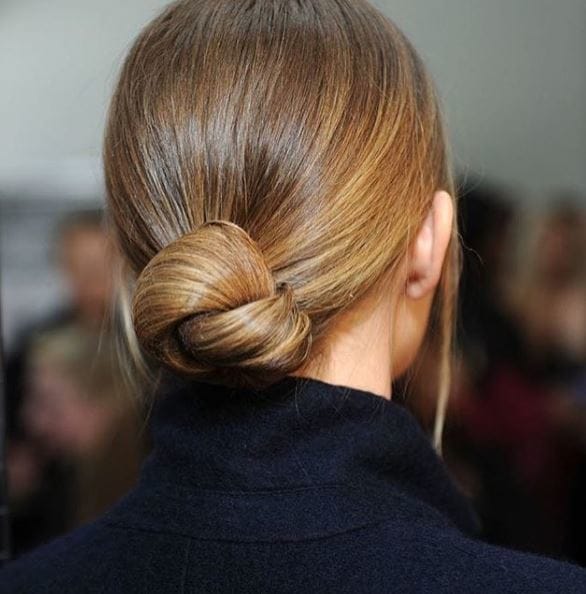
This low bun for work holds shape from 9 am to 5 pm without a touch-up. The blonde highlights add dimension against the brown base, so it doesn’t read as flat. Requires smooth blow-dried hair before twisting into a low bun. A fine-tooth comb and strong hold spray seal the look. Trims keep ends healthy so they stay tucked neatly.
Layered Bob With Curtain Bangs
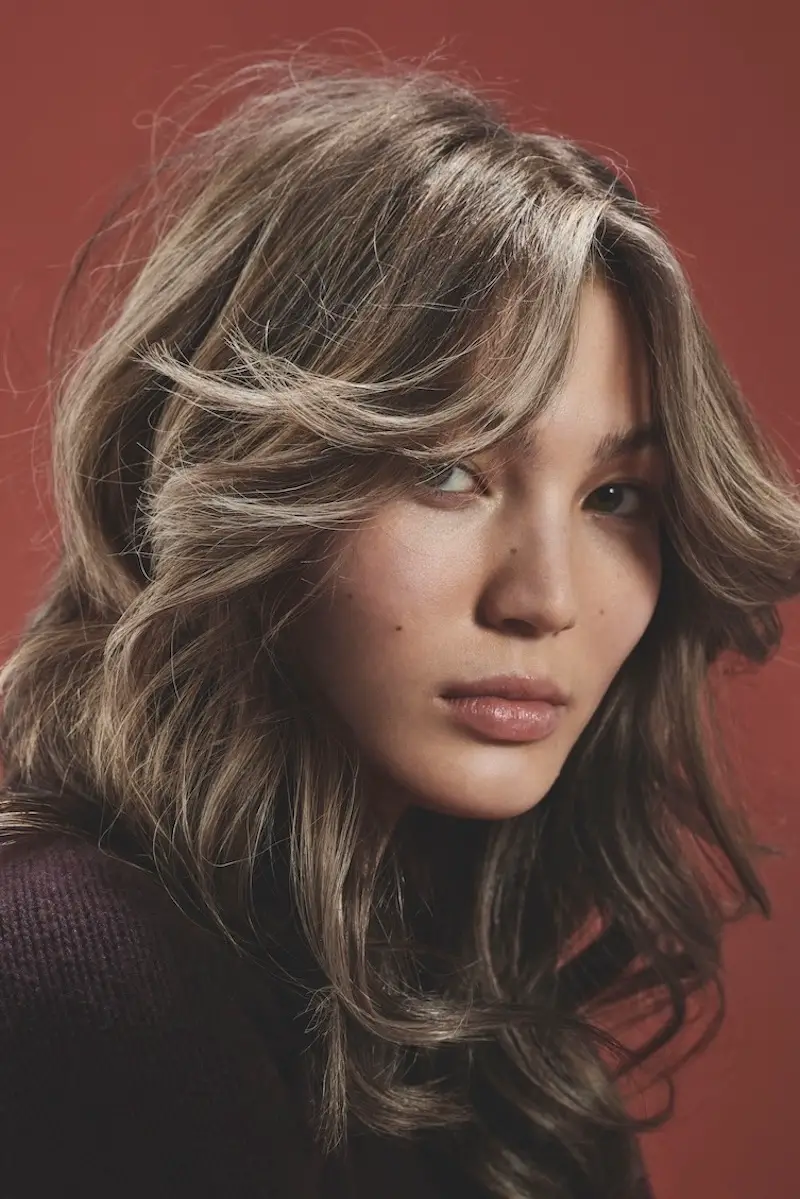
I was wrong about curtain bangs—they suit round, square, and heart faces when cut to hit the cheekbones. The layered bob with curtain bangs adds volume at the crown without feeling heavy. The ash blonde shade lifts the overall tone. Ask your stylist for soft, face-framing layers that blend into the bob and a curtain bang that sweeps to the side. Skip this cut if you hate trims every four weeks.
Ash Blonde Highlights Layered Bob With Curtain Bangs
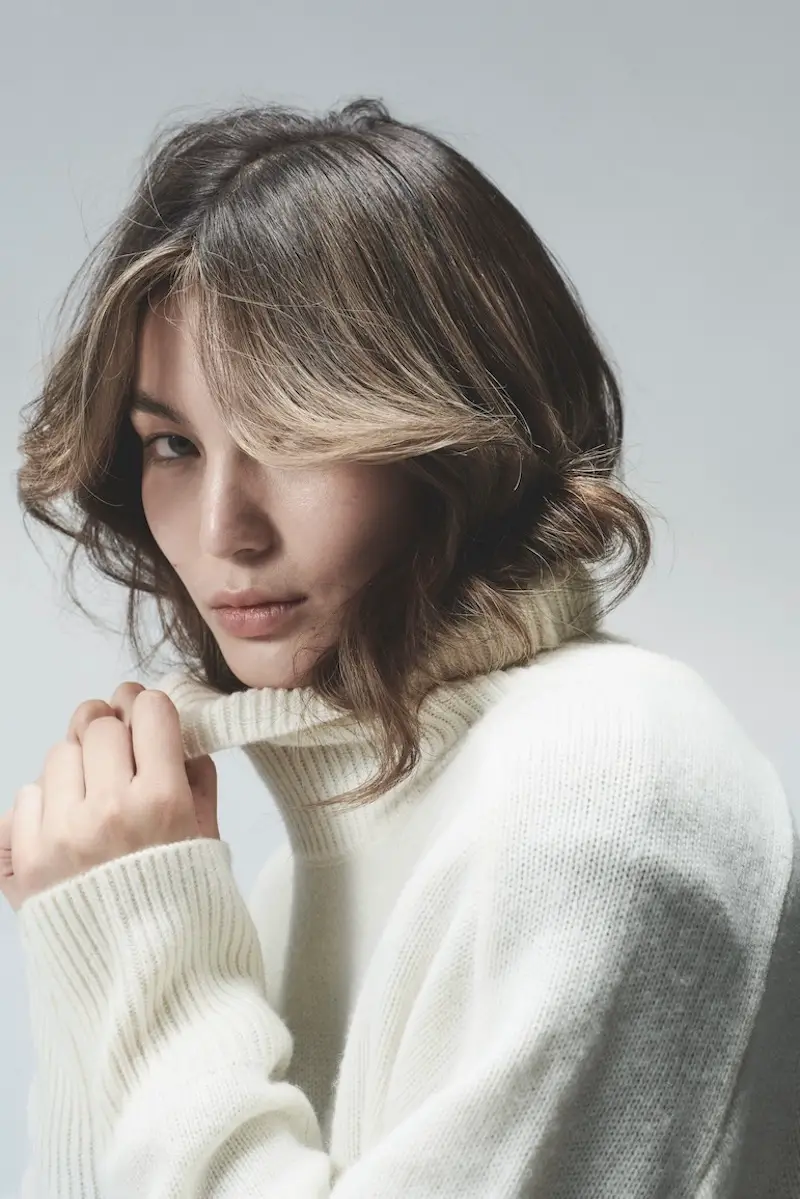
The chic bob with curtain bangs beats the blunt bob for winter work hair. The chin-length layered bob with a middle part and wavy texture gets movement from the face-framing layers. The ash blonde highlights sit on a neutral brown base, adding dimension without the upkeep of a full bleach. The curtain bangs soften the line where a blunt cut would sit severe. This is the comparison that settles it: the layered version looks intentional, not like you let your bob grow out.
Blonde Balayage Angled Bob
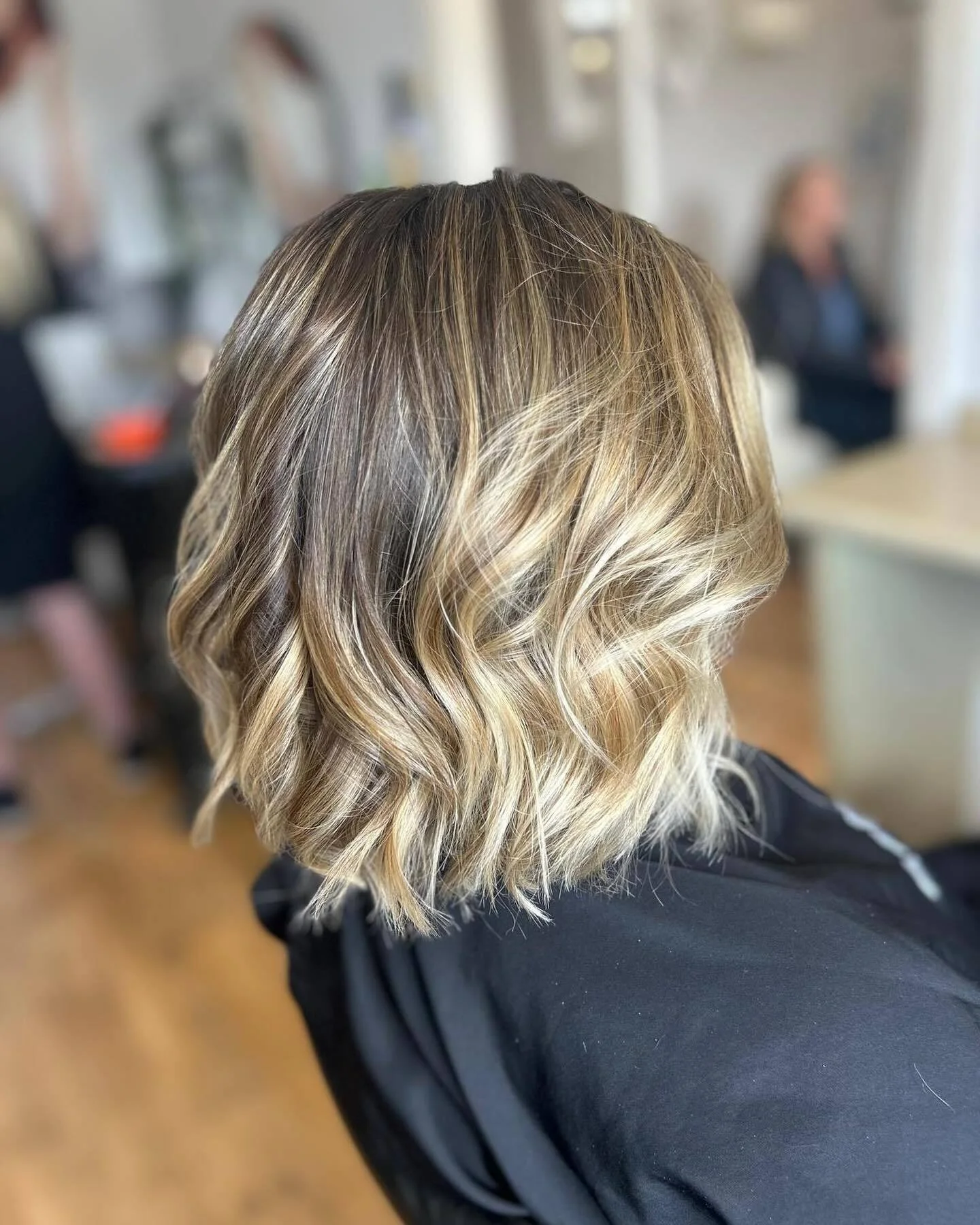
The angle drops from the back of the head to the collarbone, not the other way. That is the technical trick of an angled bob with balayage: the shorter back lifts the nape while the longer front swings forward. The cut has subtle layers and no bangs to keep the line clean. The blonde balayage is painted onto the wavy, medium-density hair, starting a few inches from the root to keep the base dark and the ends light. The middle part and loose waves show off the colour transition.
Upkeep requires a trim every six to eight weeks to maintain the angle. The balayage needs a toner every eight to twelve weeks to keep the blonde from turning brassy. The cut and colour work together: the angle shows off the balayage, and the balayage highlights the angle. This is a technical build that pays off in a polished, modern shape.
Collarbone Layered Lob With Curtain Bangs
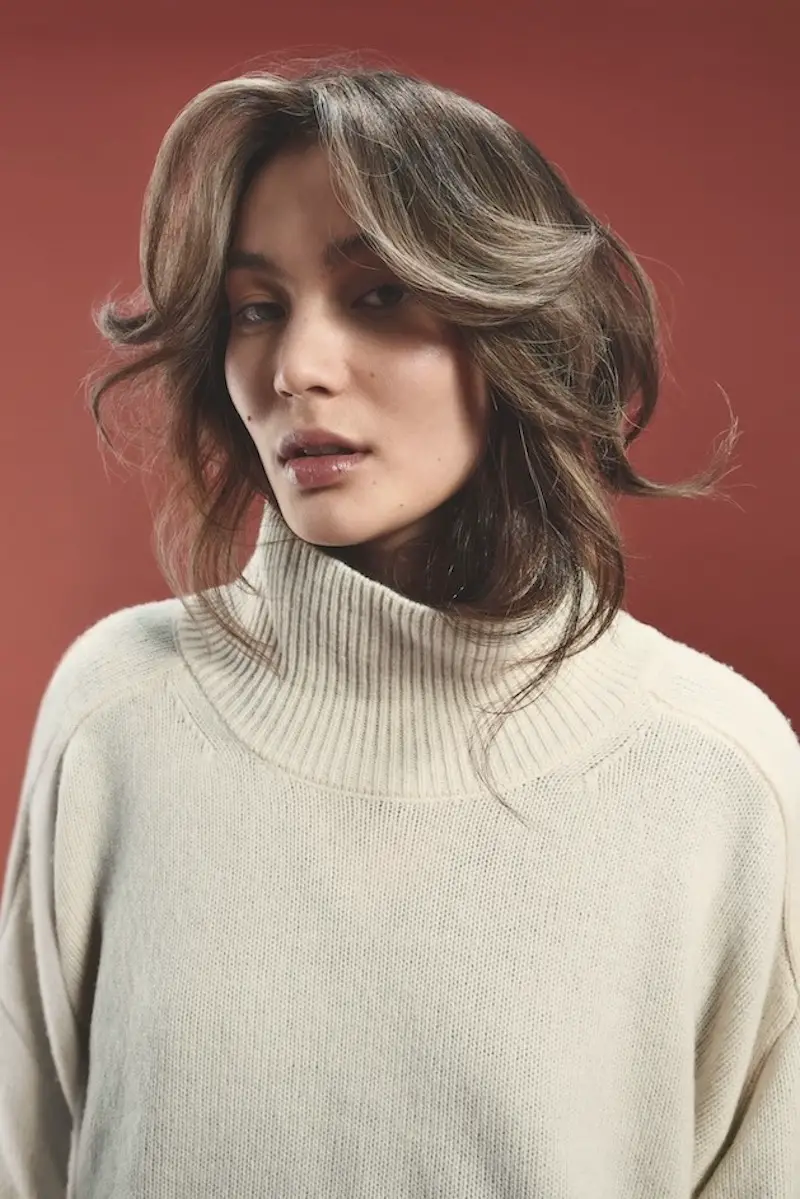
Who does a layered lob with curtain bangs actually flatter? Almost everyone, if your stylist places the shortest layer at cheekbone height. The collarbone length lands above the shoulder, so it does not disappear into a coat collar. The ash blonde highlights add dimension without screaming for attention. Wavy texture from a blowout gives the layers movement; straight hair works too but you lose the visual depth. The curtain bangs have to be cut to frame your brow bone, not your cheek — that is the difference between soft and awkward. This lob suits round faces because the bangs break up width, and it suits fine density because the layers fake volume. Skip it if your hair is very coily and you refuse heat, because the shape reads best when blown smooth.
Intricate Low Bun Medium Brown
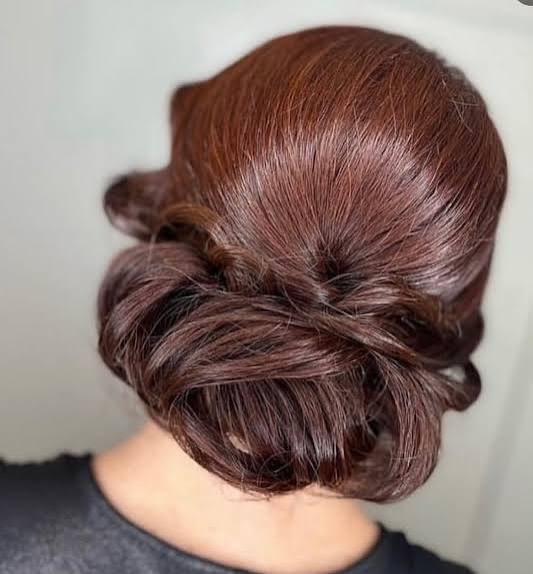
My gut said this was too fussy for a Tuesday. I was wrong. The intricate low bun reads as deliberate and polished without looking like you arrived from a wedding. Medium brown hair, straight and fine, is exactly what this shape needs — coarse or thick textures would make the twisted sections bulky and the clean lines would disappear. The cut is a uniform long length, no layers, so every piece tucks into the bun without uneven ends poking out. No bangs, because the front needs to stay smooth and uninterrupted. This is a salon-level finish, not a bathroom mirror attempt. A fine-tooth comb and a strong hold spray hold the detail all day. If your job involves client meetings or walking into rooms where you need to look competent immediately, this bun does that work for you.
Honey Blonde Textured Low Bun
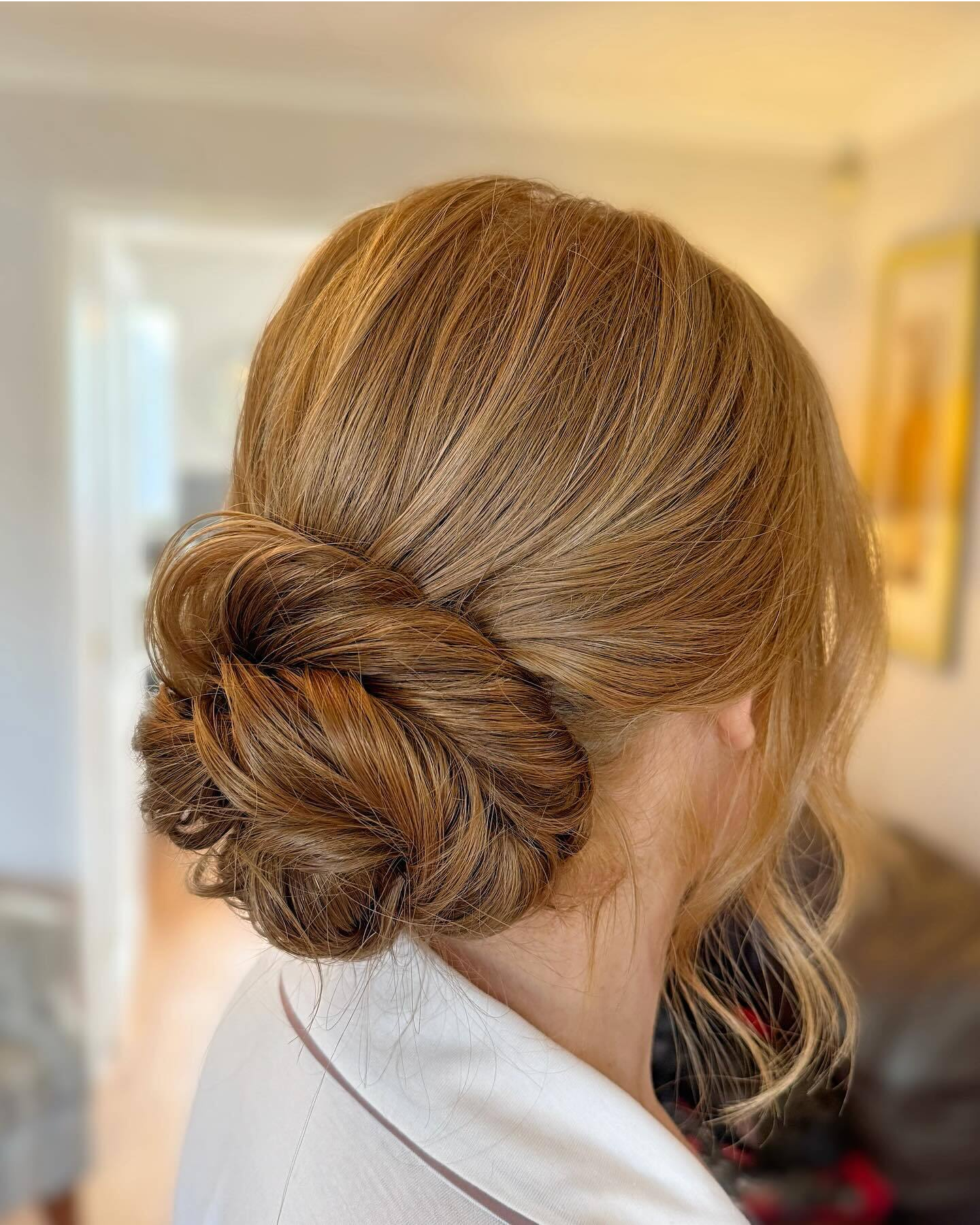
Not every textured low bun reads as intentional from the front. The honey blonde shade here softens the whole silhouette, which matters if your texture runs coarser or finer than average. This particular tone works because it has warm gold undertones that won’t wash out fair skin or clash with deeper complexions. To get it, tell your colorist you want a honey blonde balayage that starts a few inches from the root and peaks at the ends. The wavy texture in the bun helps the color catch the light instead of disappearing into a dark blob. Ask your stylist to keep the bun at the nape, with a visible twist pattern and a few tendrils left out at the temples. That’s the difference between this and a ballet bun you wore at fourteen. It reads like an actual choice, not a morning compromise.
Dark Brown Sleek Chin-Length Blunt Bob
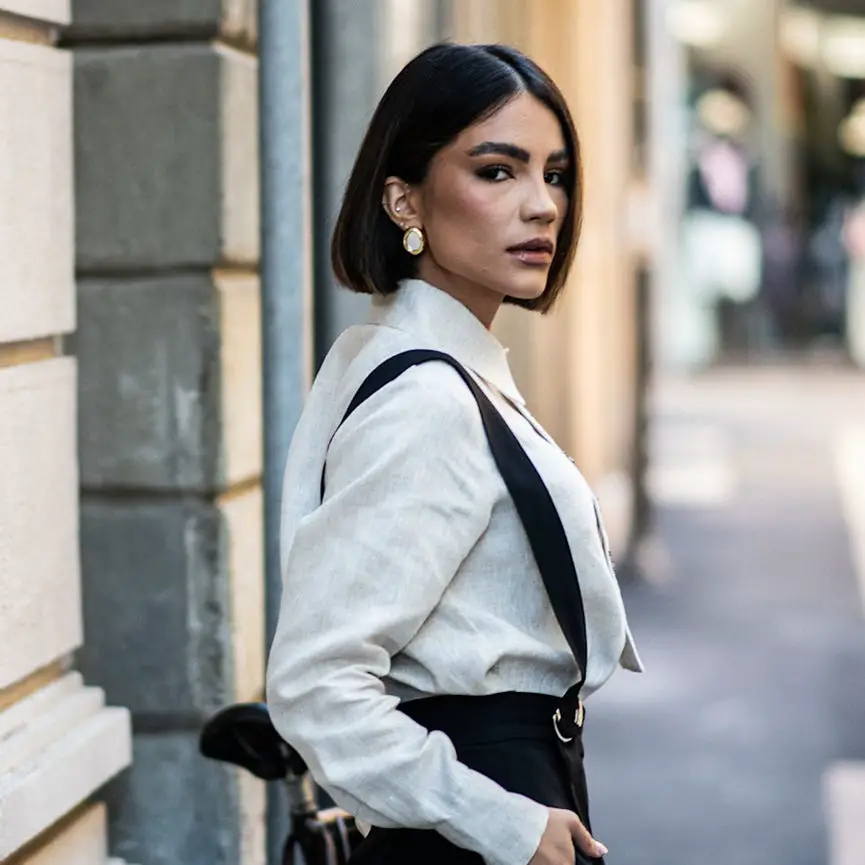
This sleek blunt bob is honest. The dark brown color makes it read sharp and decisive, but only as long as the line stays clean. Any split end shows within days. Expect trims every four to six weeks, no exceptions. For fine hair, keep the baseline heavy and skip texturizing. The blunt edge holds best when every strand lies flat, which means a flat iron and dry shampoo on day two. That’s the reality: it’s polished or it’s not.
Long Layered Waves Side Part
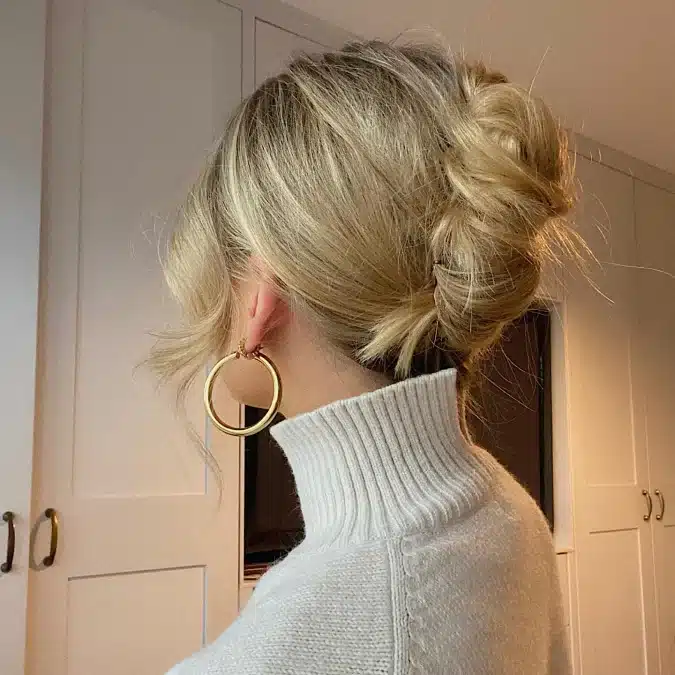
Ever wonder why some long layered waves hold for two days and others collapse by noon? The answer is in the cut — specifically, where the layers sit relative to the wave. Here the layers start at the collarbone and graduate toward the ends, so each wave has a shorter piece to grip. The side part shifts weight to one side, creating lift at the root that a middle part can’t match. That’s not styling magic; that’s geometry.
To build this shape, ask your stylist for face-framing layers that hit the chin and longer layers that stay within two inches of the hemline. The waves need a wide-barrel curling iron and a cool shot to set them. Let them cool completely before brushing. The side part should be deep — an inch past the usual part — and the waves curled away from the face. That gives you the volume that stays visible even in dry office air.
High Ponytail Voluminous Waves
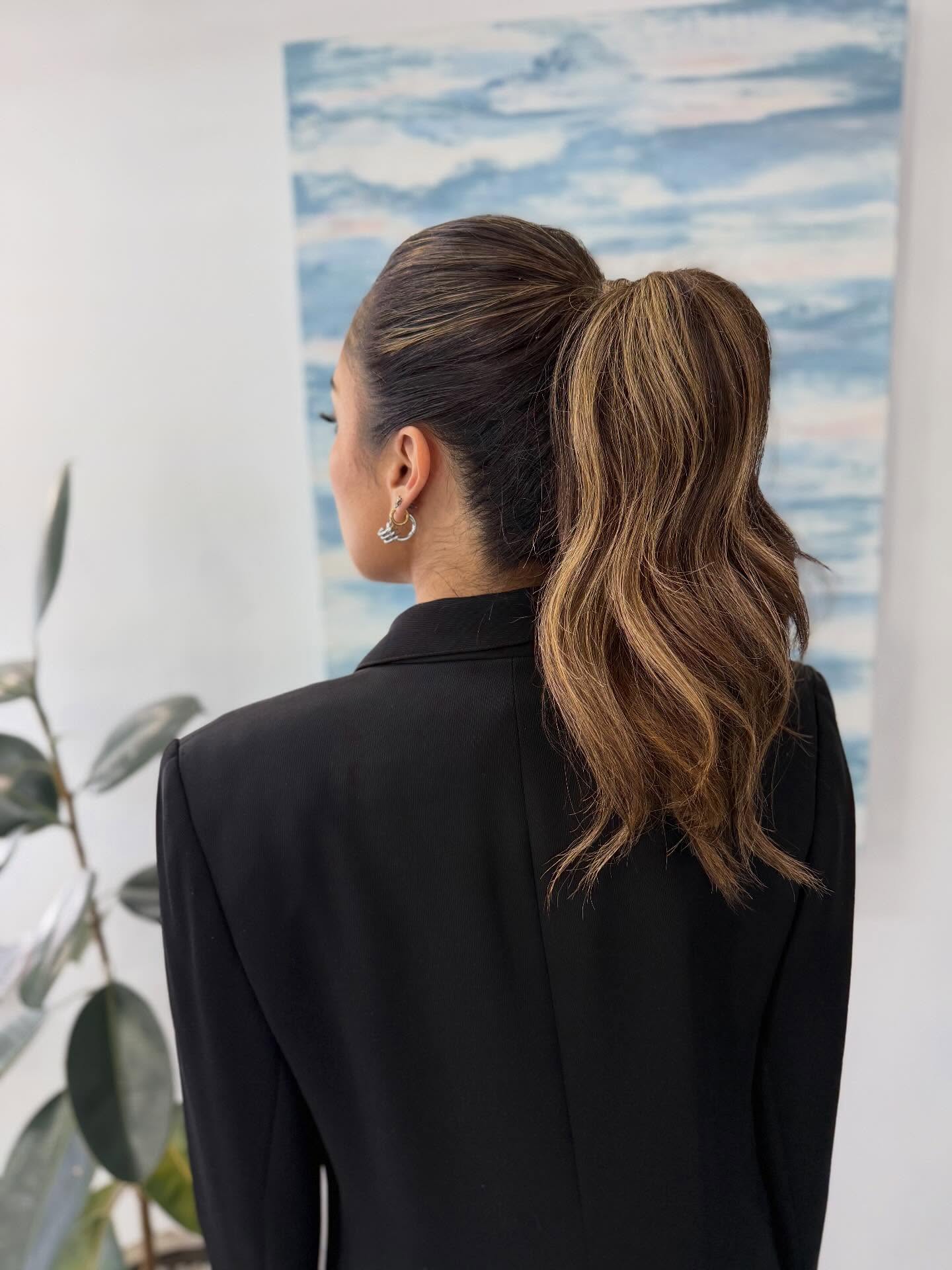
I used to think high ponytails were for weekends only. Then the first cold morning hit, and I realized this is the most practical winter hairstyle for work that still reads intentional. The voluminous waves here keep it from looking like a gym escapee. The height at the crown clears coat collars and scarves entirely. The dark brown base with subtle highlights gives the volume some visual depth so it doesn’t flatten into a single dark wedge. The key is the wave pattern — it’s curled from the midlengths to the ends so the ponytail holds its shape from the morning commute through the four o’clock meeting. That’s why this lands in winter: it solves the scarf problem without sacrificing polish.
Choppy Wavy Bob Side View
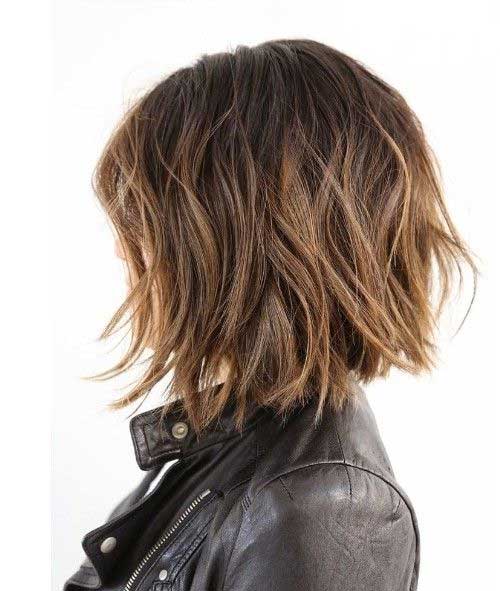
Ever notice how a choppy bob with waves looks like you woke up that way, but you definitely didn’t? The cut here is chin length with no bangs, a middle part, and those textured ends that catch light like a secret. You can get close at home by taking small vertical sections and point-cutting into the ends, not straight across. The downside: if you skip the regular trim, those choppy ends turn into split ends fast. Air drying with a little product at the ends gives you the texture without a heat tool.
Dark Wavy Braided Updo
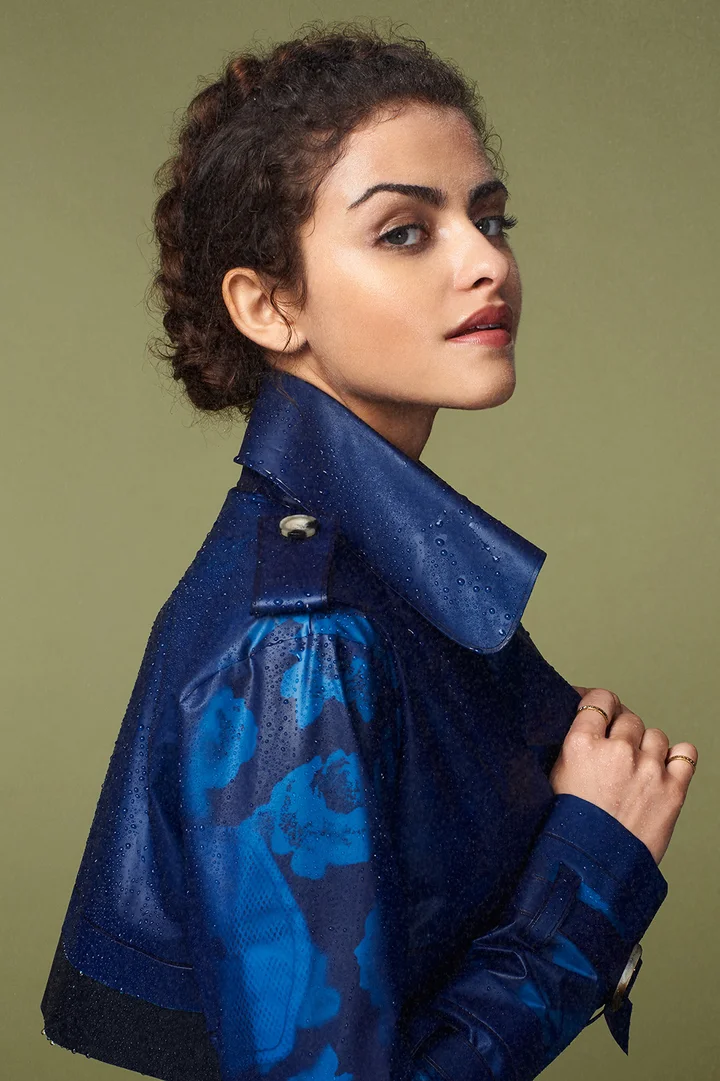
The braided updo for textured hair holds better than any elastic I have ever trusted. This one is a side view, dark brown, shoulder length pulled into a braided structure that sits secure against the scalp. The middle part keeps it symmetrical, the thick wavy texture gives it grip. I wore something similar through a wet commute and the only casualty was my trench coat collar, which took on a damp wave of its own. The hair itself did not shift.
Upkeep means checking the braids for frizz at the hairline by midday. A quick finger-comb and a spritz of water resets the edges. The salon build is worth it because the tension has to be even or it pulls.
Blonde Braid With Bow Accents
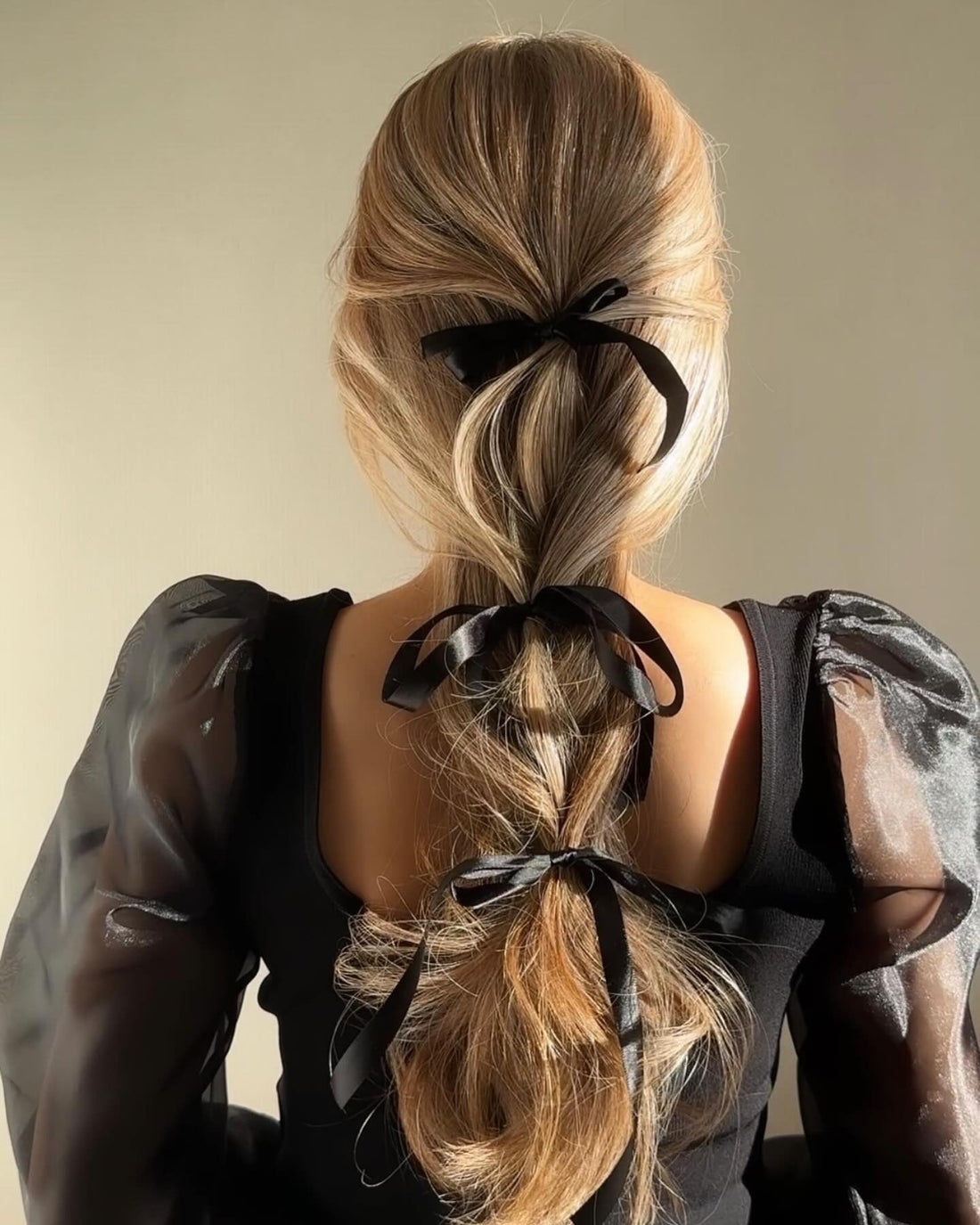
This braid with accents is the rare work style that does not whisper boring. The blonde with highlights runs mid-back, layered, no bangs, with a middle part that lets the braid sit centered. The black bows are woven into the plait at intervals, not tied on top, which means they stay put through a full day of meetings. The technique is a standard three-strand braid with the ribbon laid into each section before you cross. The salon does this faster, but I have done a passable version at home by pinning the ribbon ends under the braid before I start. The wavy, thick texture hides the pins.
Voluminous Textured Messy Bun
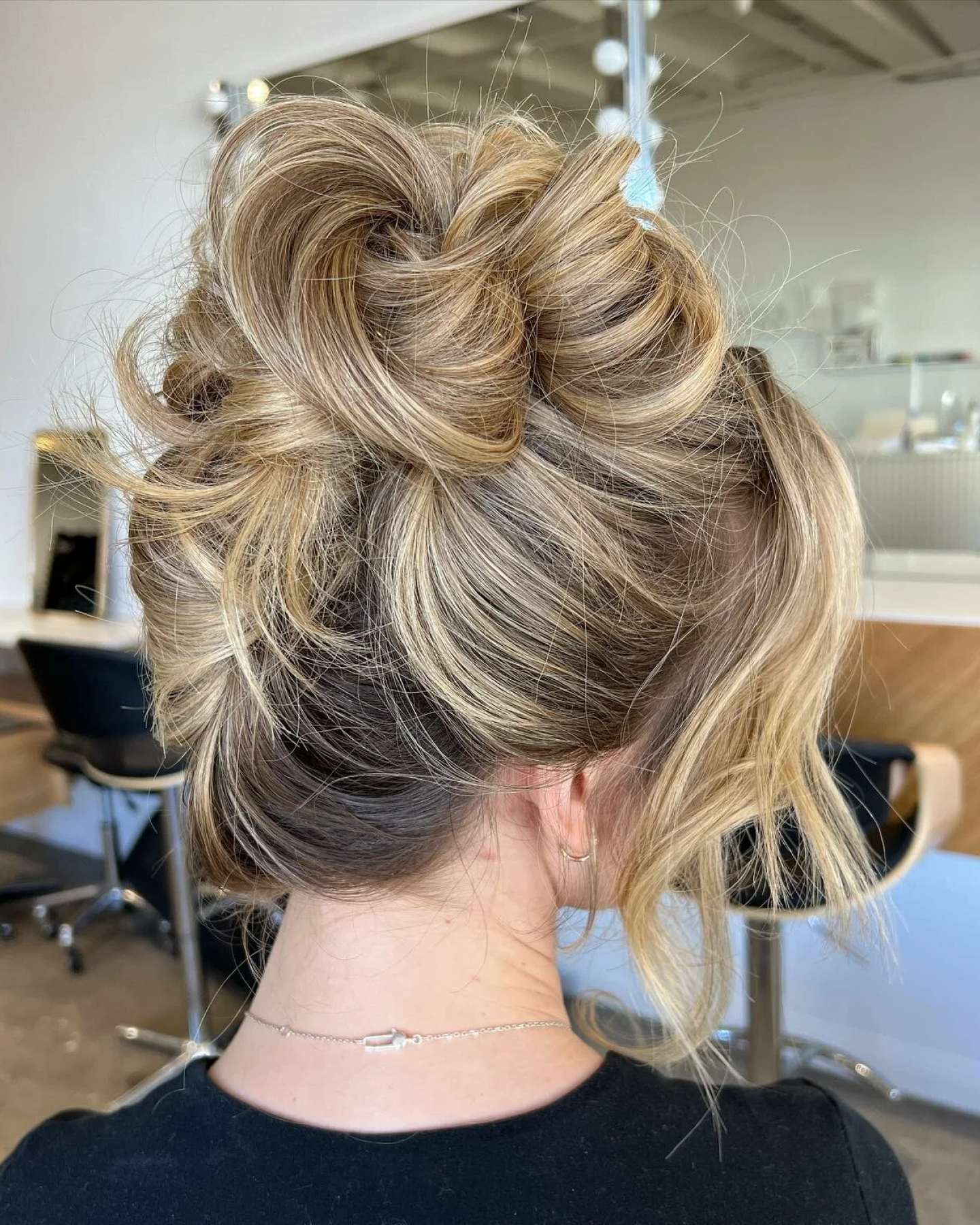
My gut says this textured messy bun for work is the style that makes everyone ask if you went somewhere after. The warm blonde is long, pulled into a bun at the back, with a middle part and wavy texture that gives the volume its shape. The trick is backcombing the crown section before you twist, then pulling a few pieces loose at the temples. It suits medium to thick density best, fine hair will need a texture spray to keep the bun from shrinking by noon. Round faces get a lift at the crown that lengthens the silhouette, heart shapes get softness at the jaw from the loose tendrils. A curling iron on the tendrils keeps them from looking like afterthoughts.
Final Thoughts
After writing all thirty-one, the one I keep circling back to is the simplest: a clean chin-length bob. It holds its shape without effort, doesn’t separate by noon, and survives a commute in a scarf. I think that’s the real winter win. Sometimes the most direct shape is the one that stays.