September outfit ideas matter most on mornings when getting dressed feels harder than usual: the calendar has changed, but your comfort level has not. The clothes that look convincing in that moment are rarely the loudest ones. They give the eye a clear reason to settle, then leave enough ease for the person wearing them to move through the day without constantly correcting the outfit. That balance is where personal style starts to feel useful rather than performative.
Use a simple decision lens before you leave the house. Ask whether the outfit has one dominant line, whether the contrast is intentional rather than accidental, and whether adjusting the amount of coverage would preserve its balance. If the answer is yes, the look has room to become personal and repeatable; if not, another accessory will only make the uncertainty louder. Choose the version that still feels coherent after the first five minutes of real movement.
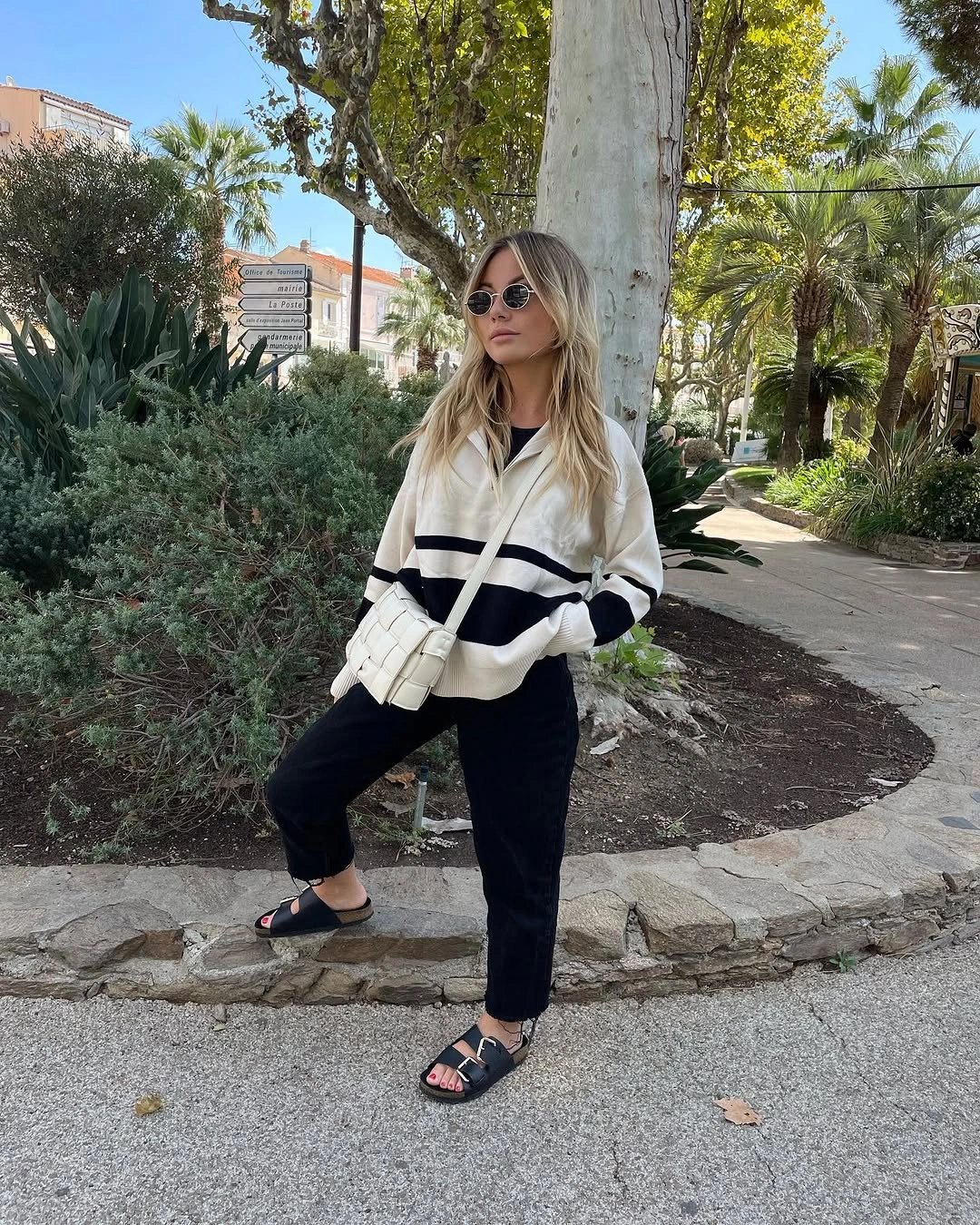
Cream stripes sharpen a black trouser base
A cream knit marked with navy stripes gives a black trouser outfit a clear center without turning the whole look into a pattern exercise. The relaxed top sits above a long, dark lower line, while the pale bag and sunglasses repeat the light side in smaller doses. Because the trousers and sandals stay quiet, the horizontal stripe can be noticed immediately and still feel grounded. It is an easy entry point for anyone who wants a visual update but prefers the reliability of black bottoms.
The useful proportion here comes from the contrast between a soft upper layer and the straight, uninterrupted trouser shape. Black sandals keep the lower edge open, which makes the outfit feel lighter than it would with a heavy boot, while the pale bag prevents the cream knit from floating alone. If you want a warmer version, replace the sandals with a dark loafer and keep the bag small. The stripe already supplies enough direction, so extra jewelry or another print would probably make the outfit less readable.
For ordinary wear, this is a flexible base rather than a costume-like nautical reference. A simple white tee under the knit can create the same light-dark rhythm when the sweater feels too warm, and a navy scarf can echo the stripe without adding bulk. The tradeoff is that a pale knit shows contact with outdoor surfaces more readily than a dark top, so a washable layer or careful bag placement makes the idea easier to repeat. The strongest feature to preserve is the clean cream, navy, and black relationship.
A knit vest gives brown trousers structure
Brown striped wide-leg trousers can look relaxed without looking unfinished when a knit vest is placed over a crisp white shirt. The shirt supplies a light edge at the sleeves and neckline, while the vest creates a darker middle layer that connects the upper body to the warm trouser pattern. Light sneakers keep the generous lower shape from becoming formal, and the small bag stays secondary. The result feels layered because each piece has a visible job, not because the outfit contains many items.
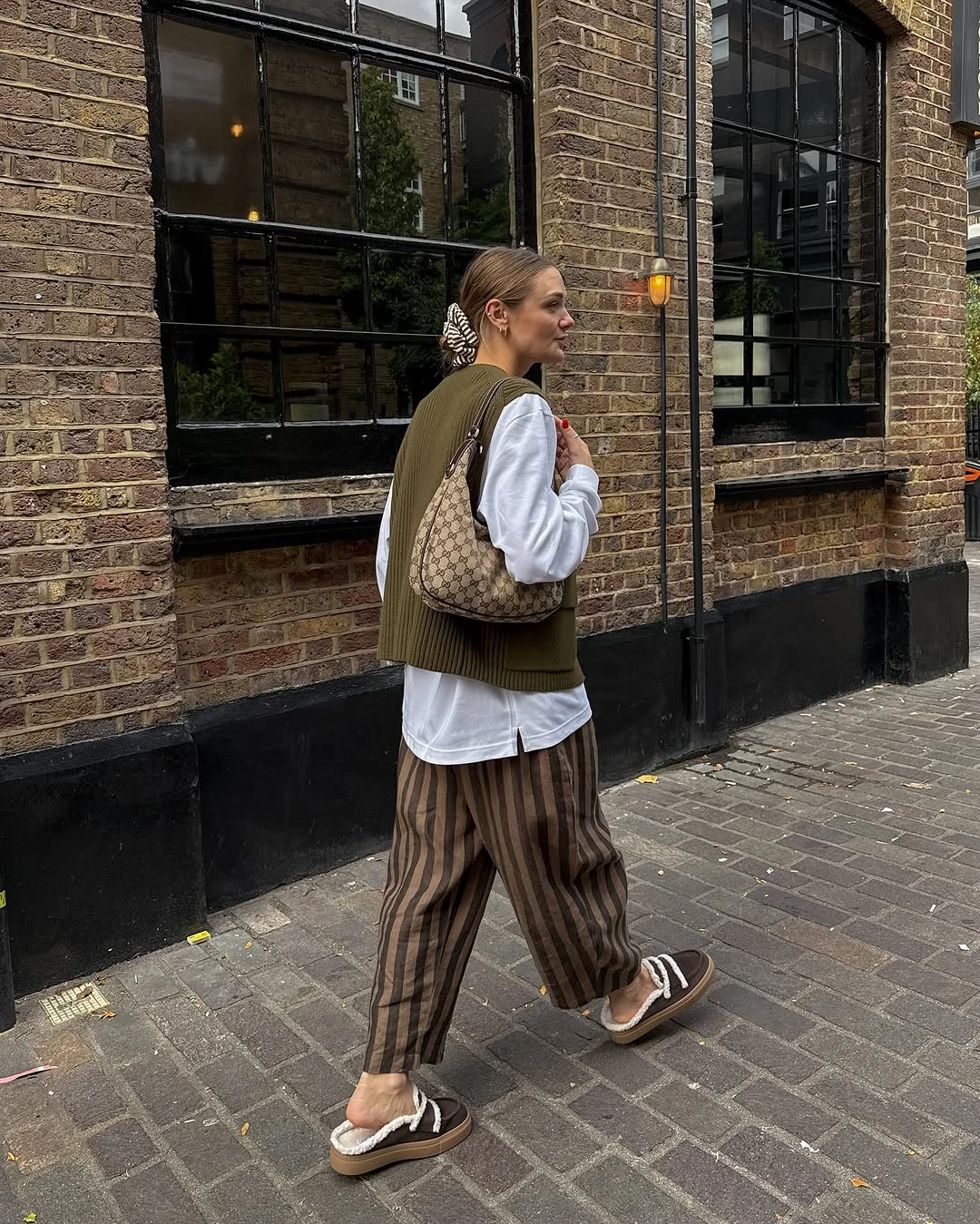
What makes the proportion work is the contrast between the closer shirt layer and the roomy trousers. The vest stops the eye around the torso and gives the wide leg a visual counterweight, while the fine vertical stripes quietly lengthen the lower half. If you want a simpler version, use a plain brown trouser instead of a striped one and let the vest carry the texture. Keep the sneakers neat and low-profile, since a very heavy shoe could compete with the volume already created by the trousers.
This formula is especially useful when September mornings call for a layer but the day still suits lighter footwear. The white shirt can remain visible or be mostly covered, and the vest can be replaced by a short cardigan if you prefer less structure. The realistic limitation is that a loose shirt, a vest, and wide trousers can all add volume at once, so a tucked front or a clean side seam helps preserve shape. For more denim-based combinations, the denim outfit ideas on the site offer another way to keep layers easy.
One brown bag warms an all-black look
A dark jacket, black shorts, sheer hosiery, and pointed shoes create a compact outfit with a clear after-dark energy, but the brown shoulder bag prevents the result from becoming a single flat block. The jacket supplies coverage at the shoulders while the short lower hem keeps the silhouette sharp and light. Because the bag is warm rather than bright, it adds contrast without interrupting the black line. This is a stronger direction for a going-out setting than for a long walking day, and that distinction is part of its usefulness.
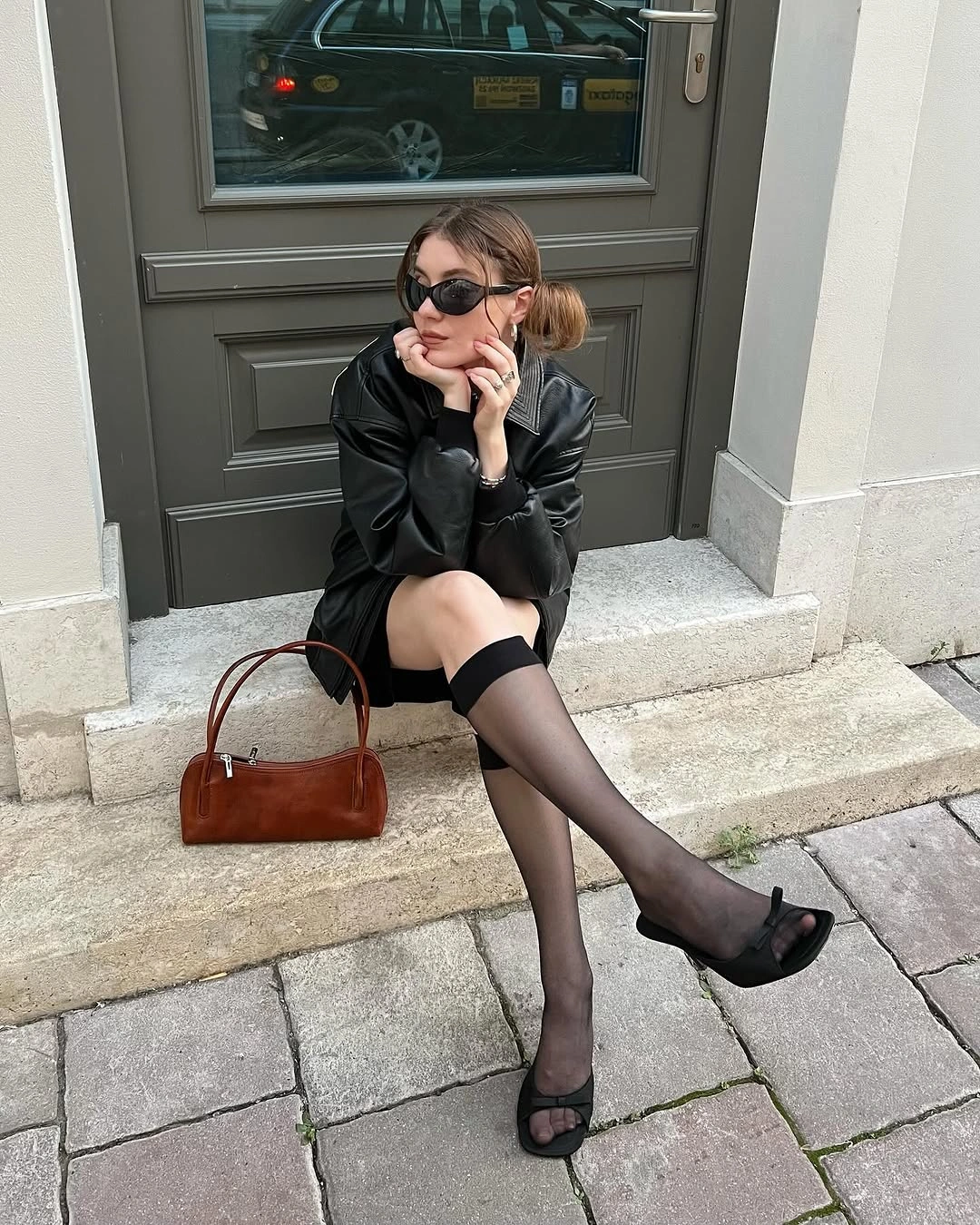
The eye moves from the close jacket to the short hem and then down the sheer leg line, so the pointed shoe feels like a continuation rather than a separate statement. A brown bag introduces a softer note near the hand and breaks the expected all-black repetition. To make the outfit less dressy, swap the pointed shoe for a flat black style and keep the hosiery; to make it calmer, use a dark brown bag instead. The more compact the clothing becomes, the more important it is to keep accessories intentional.
Wearability depends on the tradeoff between coverage and exposure. The jacket can be closed or layered over a simple top, but the short hem and sheer tights still create a more deliberate look than jeans and a knit. A longer jacket would make the outfit easier for cooler conditions, while a small structured bag would preserve the clean line better than a slouchy tote. The visual lesson is not that every black outfit needs color, but that one warm accessory can give a dark composition enough depth to stay readable.
Brown outerwear grounds pale wide trousers
White wide trousers look more settled when they meet a warm brown jacket and a small patterned neck detail. The light top and trousers create a broad pale area, while the jacket supplies a darker frame around the shoulders and waist. Loafers and the compact bag continue that grounded feeling without adding another vivid color. It is a useful September outfit ideas direction because the pieces can stay light while the palette starts to feel more autumnal.
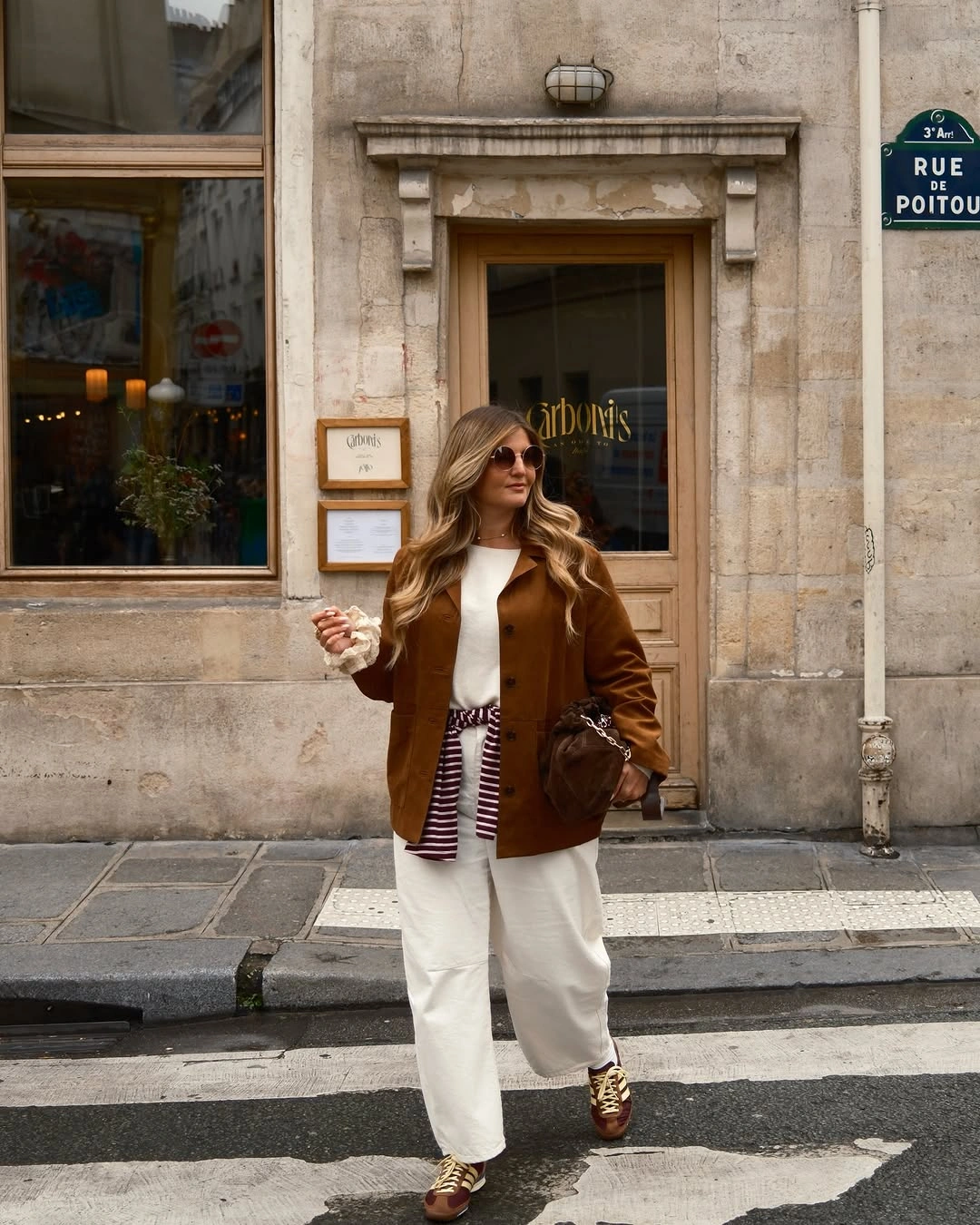
The key balance comes from keeping the jacket shorter or more defined than the trousers beneath it. That prevents the pale lower half from becoming one shapeless field and gives the neck accent a place to work as a small focal point. If the patterned detail feels too decorative, a plain scarf or open collar can preserve the same upper-body structure. A darker shoe would make the outfit more formal, while a pale sneaker would soften it and keep the wide trousers casual.
This combination also shows why a restrained accessory can matter more than several small ones. The brown jacket connects the top and footwear, while the white trousers hold the light in the center of the look. The main limitation is practical rather than visual: pale trousers need more attention around seats, steps, and crowded streets than dark denim does. Keep the rest of the outfit simple and the idea remains adaptable for a warm afternoon, a relaxed office, or a polished everyday errand.
Taupe knitwear makes ivory trousers feel sharper
A taupe turtleneck and white trousers create a quiet neutral base, but the large black bag adds a decisive edge that keeps the softness from becoming vague. The high neckline makes the top feel substantial, while the pale trousers continue the light color downward in one long line. Sunglasses and dark footwear repeat the black accent without turning it into a second focal point. The appeal is in the controlled contrast: most of the outfit is gentle, and one structured accessory does the sharpening.
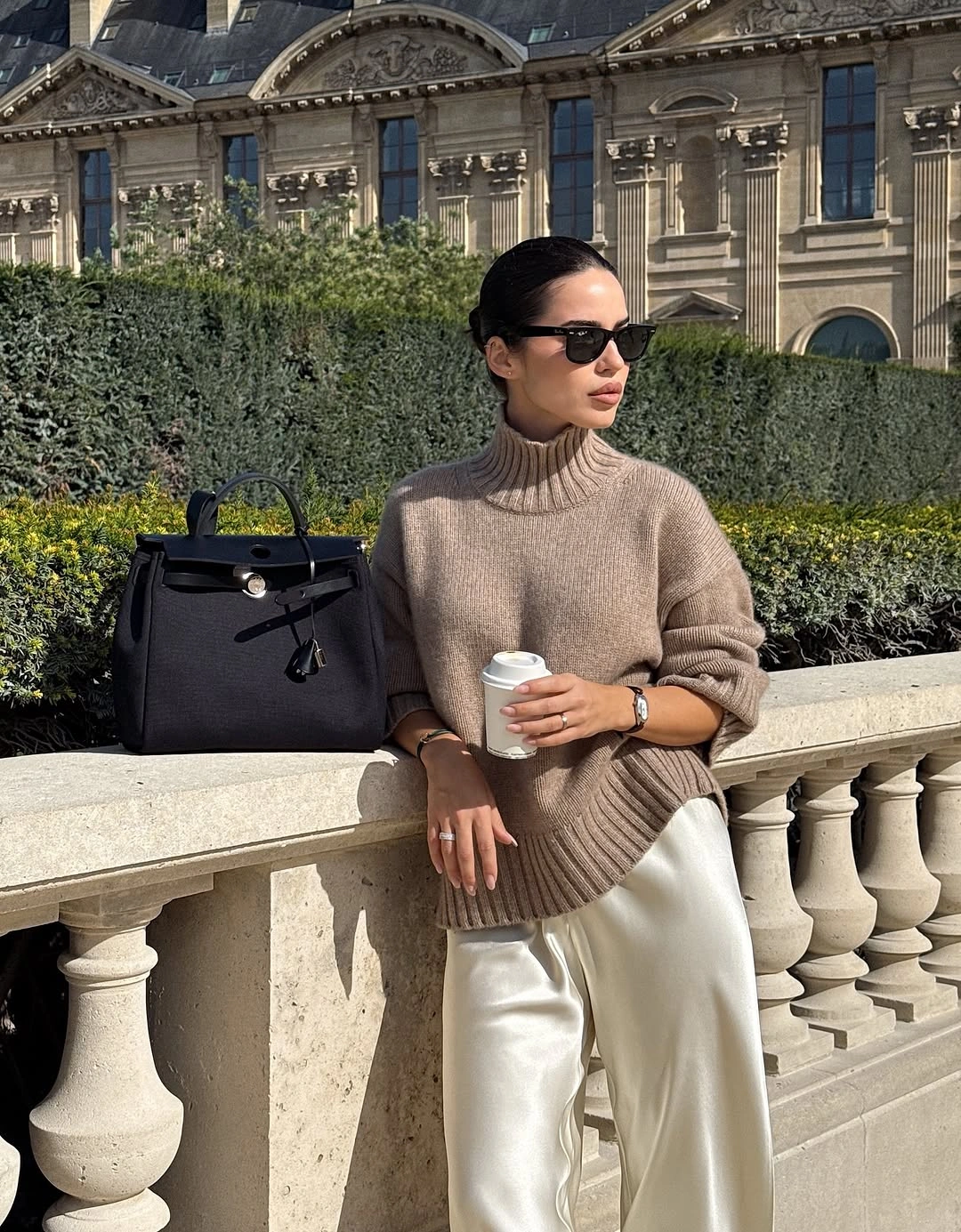
Because the knit appears roomy and the trousers stay straight, the outfit works best when the waist and trouser break remain visually clean. A smaller black bag would make the idea lighter, while a dark belt could provide definition if the knit is tucked or partially tucked. Avoid adding another strong pattern, since the interest already comes from the difference between soft taupe, pale ivory, and the black accessory. The result is comfortable in appearance but still has enough structure to avoid reading like homewear.
The practical choice here is deciding how much of the high neck and knit volume you actually want. A fine crewneck can reproduce the palette with less bulk, and a dark loafer can replace the sandals when you want the pale trousers to look more grounded. The limitation is that a large bag can visually widen an already soft outfit, so keep its shape defined rather than collapsing at the side. Preserve the taupe-to-ivory calm and use black only where you need a clear edge.
A large plaid coat needs a quiet base
A blue-and-burgundy plaid coat is strong enough to lead an outfit on its own, so the dark trousers, shoes, and bag underneath are doing important supporting work. The long outer layer carries the color and scale, while the black base gives the eye a clean field to read it against. Glasses and the compact bag add small dark points without creating a competing story. This is a reminder that expressive outerwear often looks more wearable when the layers underneath become deliberately uninteresting.
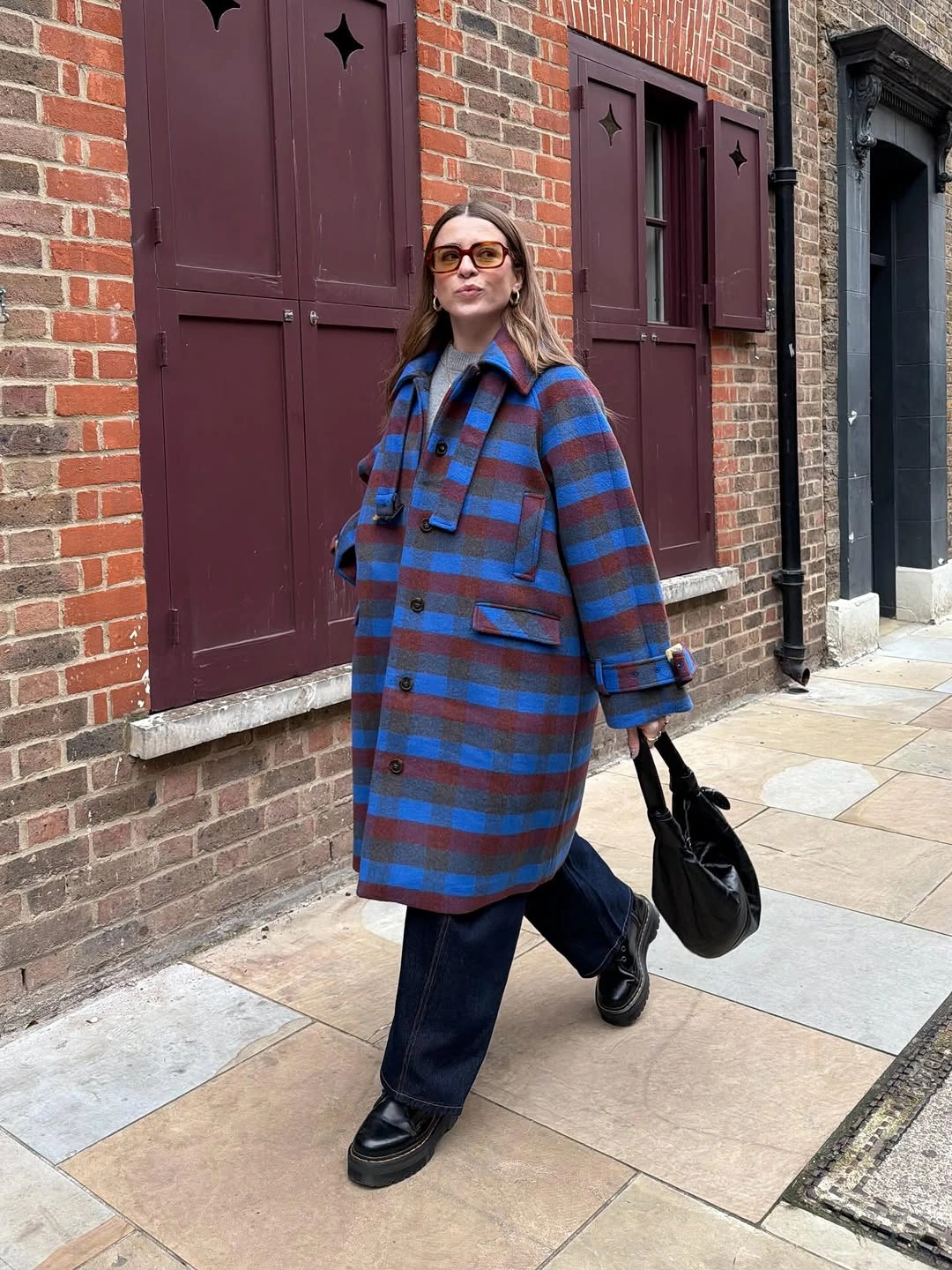
The oversized coat changes the silhouette before any accessory is considered. Its length and plaid scale create volume around the body, and the narrow-looking dark base keeps that volume from spreading into every part of the outfit. If you want a softer version, use a plain navy or burgundy scarf and leave the coat open; if you want more definition, choose a shoe with a clean toe rather than a bulky shape. The coat remains the focal point because nothing else is trying to outscale it.
A statement coat like this works well for days when you want one decision to make the whole outfit feel finished. The honest tradeoff is that a large patterned layer can feel too warm, heavy, or visually dominant indoors, so it helps to build the underlayers around a simple top and trousers that stand alone. A compact bag is easier to manage than a second oversized item. For another approach to stronger everyday texture, browse the site’s street style outfits without copying the full silhouette.
Wide jeans welcome one unexpected green bag
A deep textured sweater and wide blue jeans already make a relaxed base, but a muted green bag gives the outfit a third color and prevents it from becoming only brown and denim. The sweater stays dark and soft, the jeans create an easy volume through the legs, and pale sneakers keep the lower edge open. Sunglasses repeat the practical, casual mood rather than adding glamour. The small color change in the bag is enough to make the familiar combination feel chosen.
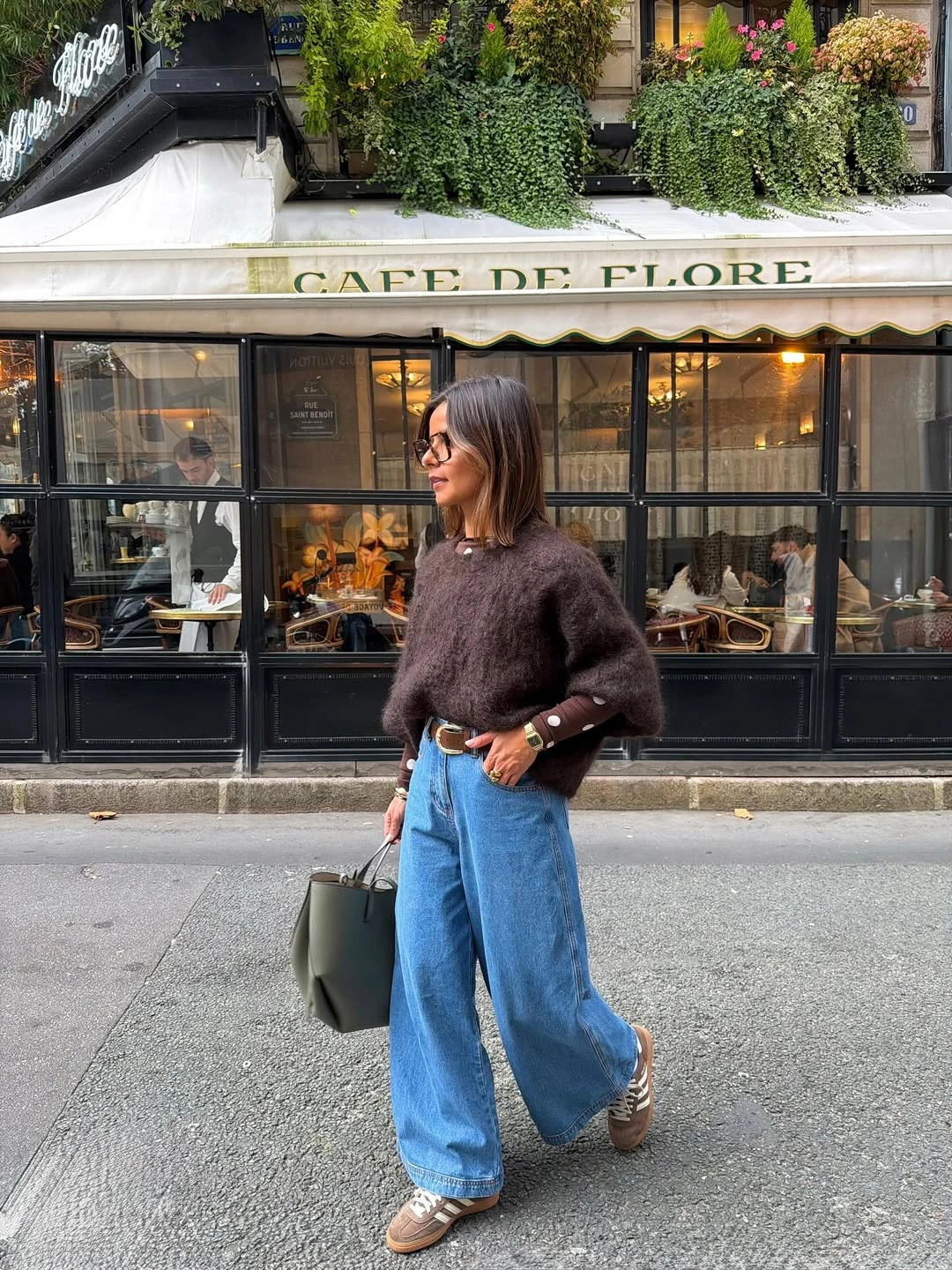
The proportions are forgiving because the sweater and jeans share a relaxed scale, but the visible sneaker keeps the wide leg from dragging visually. Green works here as a bridge between the warm darkness of the sweater and the cooler blue of the denim, so it reads as part of the palette rather than a random accent. A rust or brown bag would create a warmer version, while a black bag would make the outfit quieter. Keep the accessory shape simple so its color remains the useful detail.
This outfit is easy to repeat for a café, errands, or a casual workday where denim is acceptable. The tradeoff is that wide jeans can become heavy when paired with a thick sweater and a large bag, so one of those three elements should stay lighter or more compact. A fine knit, a shorter sweater, or a smaller crossbody can restore balance without changing the color idea. The most repeatable feature is the calm three-color relationship: deep top, blue denim, and one muted accent.
Leopard texture works with a plain dark sweater
A long leopard-pattern skirt can easily become the entire outfit, yet a dark textured sweater gives it a calm upper frame. The pattern remains visible through the lower half, while the white sneakers pull the look away from a dressy or overly styled direction. The sweater’s softness echoes the movement of the skirt without competing with its surface detail. A takeaway cup is incidental, but the relaxed stance reinforces that this pairing is meant to work in ordinary daytime settings.
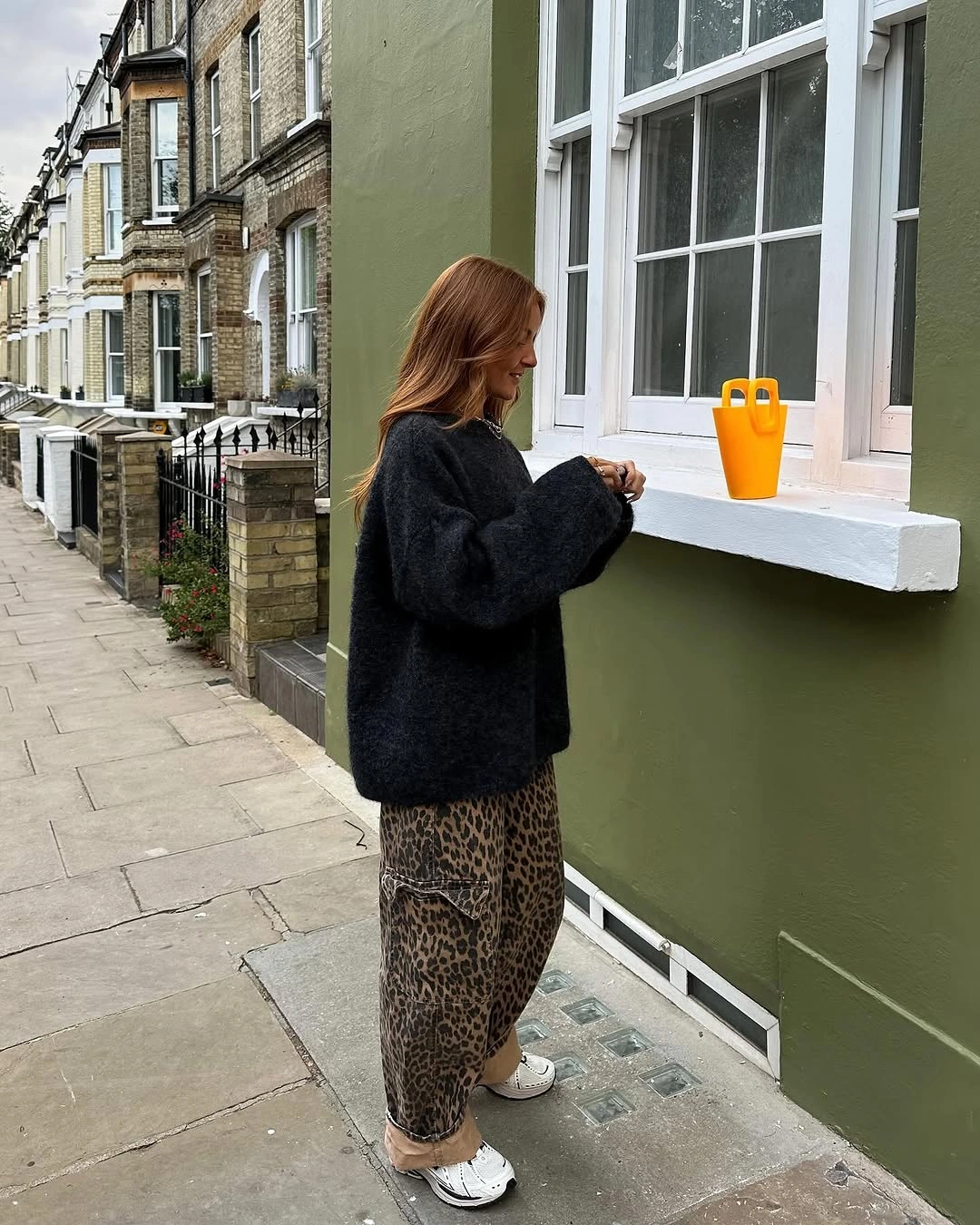
The useful contrast is between a quiet solid top and a patterned lower line. That allows the leopard surface to keep its visual energy while the sneaker supplies a clean, bright interruption at the feet. If you want a more polished version, use a pointed flat or a short boot; if you want even less contrast, choose an off-white sneaker that sits closer to the skirt’s light markings. Avoid adding a printed scarf or busy bag, because the skirt already provides the focal texture.
There is also a realistic comfort advantage in keeping the upper half simple. A soft sweater can be adjusted through the neckline or sleeve, and the long skirt provides movement without a tight lower shape. The limitation is that a long patterned skirt may feel too visually full with an equally oversized top, so a half tuck or a slightly shorter knit can restore proportion. The idea succeeds when the print is allowed to be expressive while the rest of the outfit stays calm and useful.
A cropped pale jacket lightens wide white trousers
A pale jacket, white wide trousers, dark cap, brown crossbody, and light sneakers form a relaxed outfit with a deliberately airy palette. The jacket ends higher than the trousers begin, which keeps the generous lower shape from swallowing the whole silhouette. The cap and bag add small dark and warm points near the top half, making the light colors easier to read. It is casual, but the proportions are clear enough that the outfit feels styled rather than simply assembled.
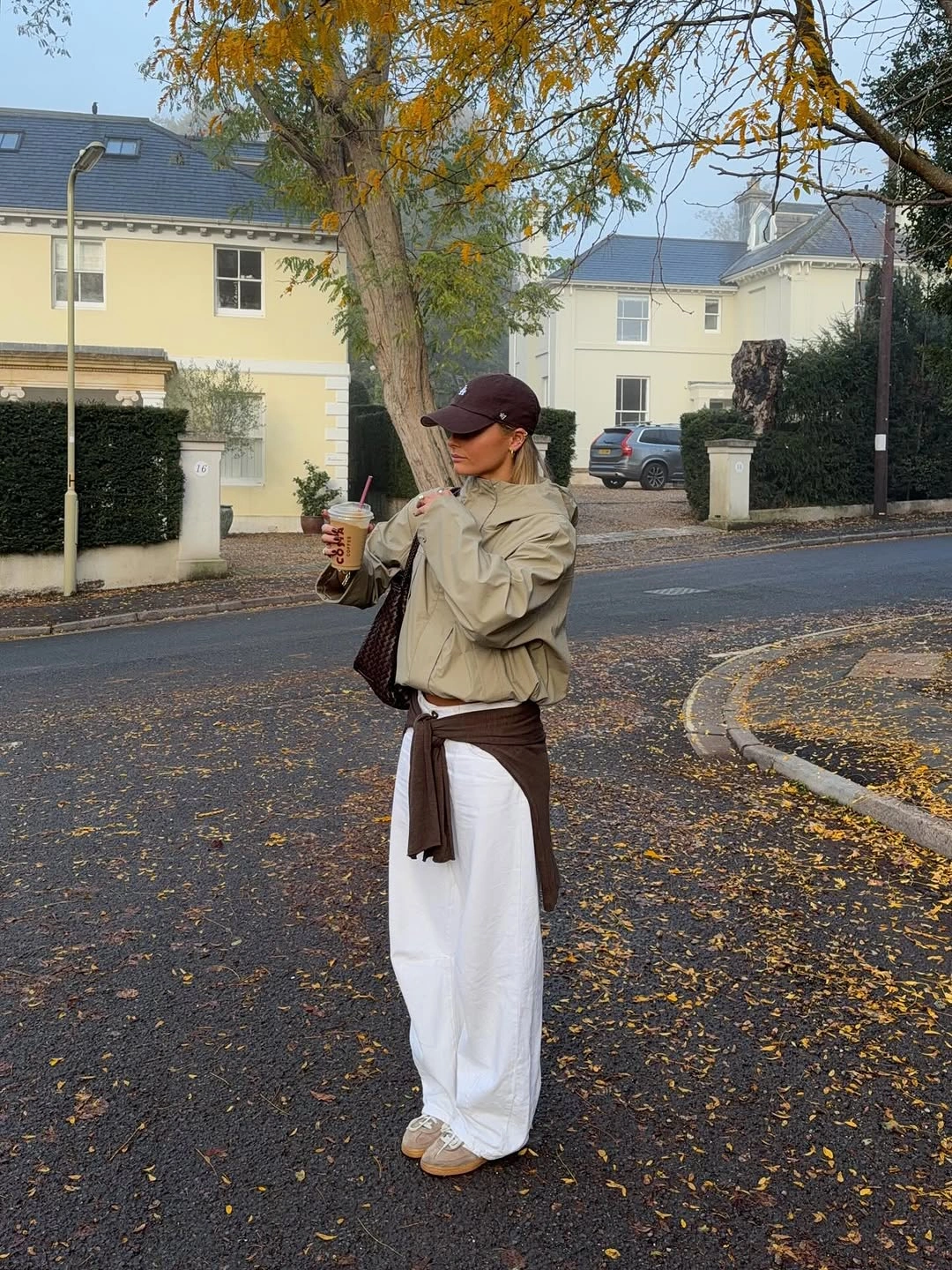
The short-over-wide relationship is doing most of the work. White trousers can look visually broad when paired with a long top, while a shorter jacket restores a sense of length and leaves the sneakers visible. A darker jacket would create a stronger September contrast, and a scarf could replace the cap when you want a softer line near the face. Keep the bag compact if the jacket is already loose, since a large tote would add volume at the side and compete with the trousers.
This is a flexible warm-weather bridge because the jacket can be removed without breaking the outfit underneath. The honest limitation is the maintenance of a pale lower half, especially when the trousers are wide enough to brush against steps or pavement. A darker cream, ecru, or light denim version can preserve the same balance with less worry. What matters most is the short pale layer, the open lower line, and one brown accessory that stops the outfit from becoming too blank.
Burgundy knitwear refreshes classic blue jeans
A burgundy sweater over a white shirt gives straight blue jeans a clear September update without changing the familiar foundation. The shirt appears at the collar and hem, adding a light break between the saturated knit and the denim. White sneakers keep the outfit practical, and the dark bag repeats the grounded side of the palette. The strength is its clarity: one deep color, one light layer, and one dependable jean shape.
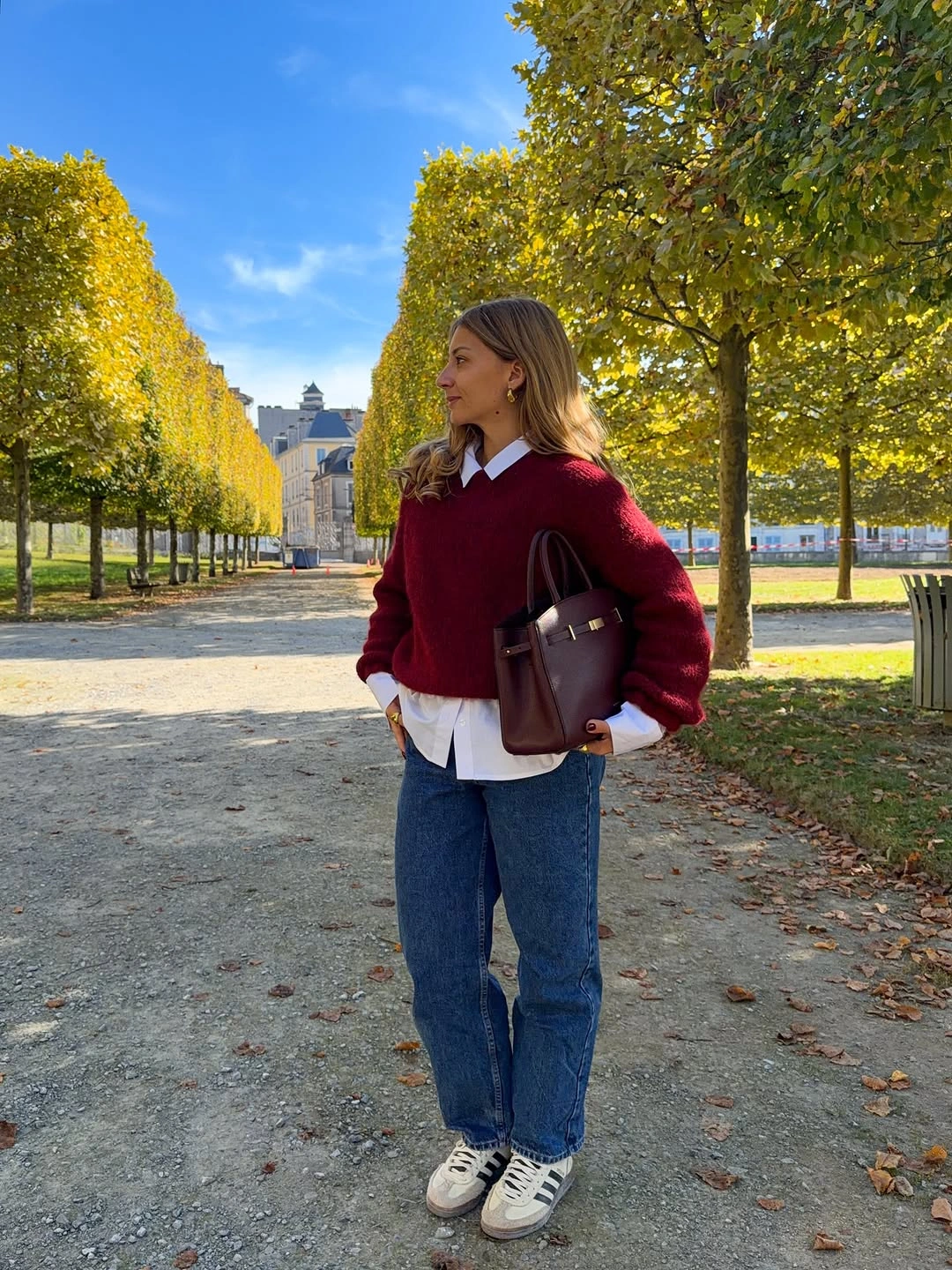
The white shirt prevents the burgundy from sitting as one heavy block on top of the jeans. A small visible collar or hem is enough to create contrast, so there is no need to add a bright necklace or another saturated accessory. If the jeans are wider, a shorter sweater can preserve the same proportion; if they are straight, a longer hem can feel more relaxed. The sneaker keeps the saturated top from drifting into formal territory and gives the outfit an easy everyday finish.
For work, the sneakers can become a simple loafer, while a softer shirt can make the outfit less crisp for a weekend. The limitation is that burgundy attracts the eye, so the fit and condition of the knit matter more than they would with a very neutral top. Keep the bag understated and let the white layer do the separating. This is a useful example of repeating a familiar outfit formula while changing only the color emphasis and the small amount of layering.
Muted green gives denim a softer direction
A muted green buttoned layer, pale blue jeans, black loafers, and a dark bag create a gentle color shift without relying on a print. The green sits between the cool denim and the black accessories, giving the outfit a little more personality than a plain neutral top. The straight jean line leaves the loafers visible, and the sunglasses add a small repeated dark note. It feels calm because the color is softened, but it is not visually empty.
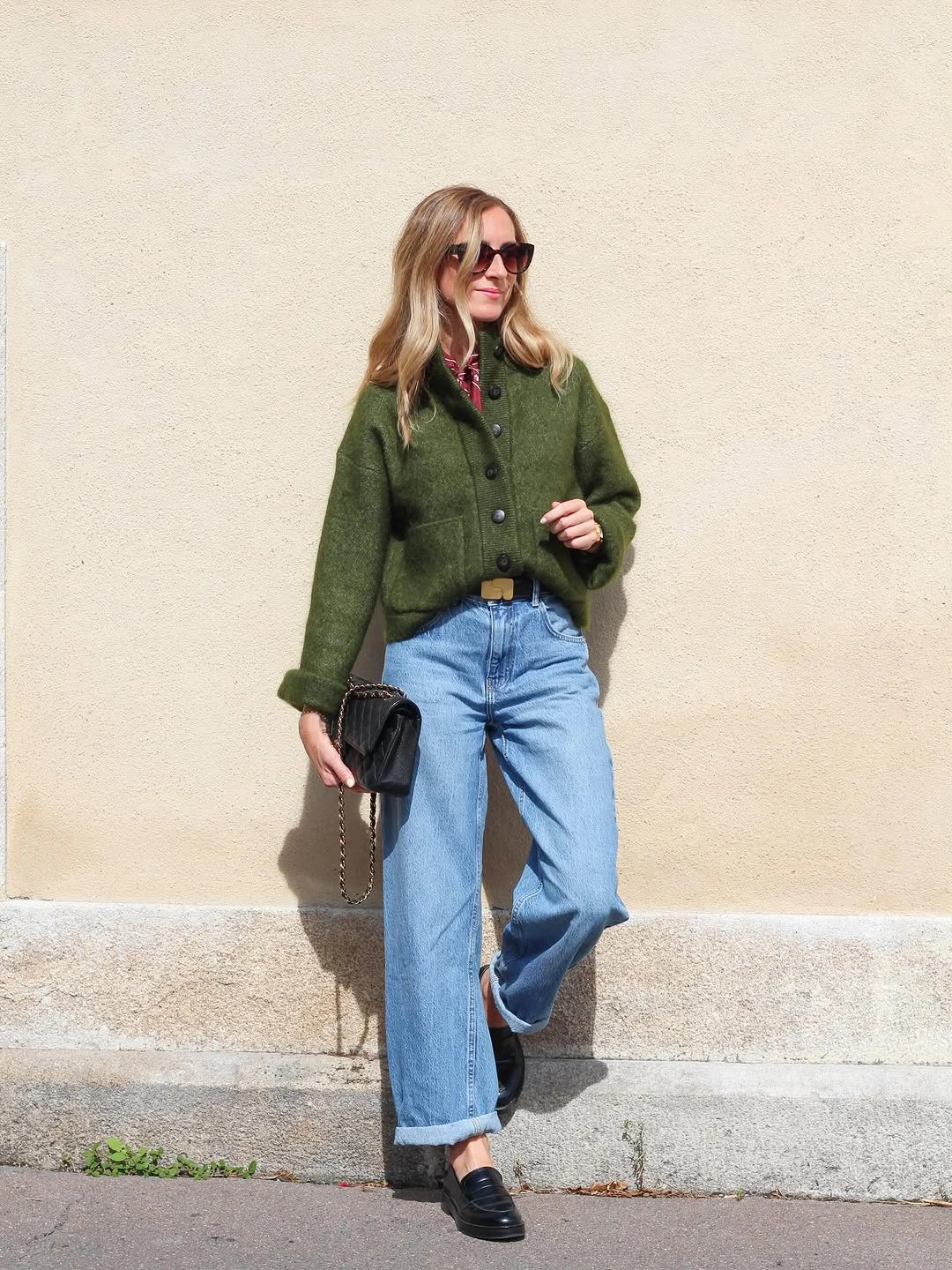
Black shoes and a matching bag are useful here because they repeat one strong accent and make the muted green look more deliberate. The outfit would become lighter with tan shoes, while dark brown would warm the green without creating as much contrast as black. Keep the jeans straight or gently relaxed rather than extremely wide, since the compact upper layer and visible loafer are part of the clean balance. The color does not need a second bright partner to hold attention.
This is an easy formula for someone who wants to move beyond white, beige, and navy but does not want a loud trend shade. The green layer can be worn open over a tee, closed as a shirt-like jacket, or replaced with a muted olive cardigan. The tradeoff is that soft color can disappear when the fit is too loose or the background is busy, so the black accessories provide useful definition. Preserve the muted green against pale denim and let the footwear set the level of polish.
Denim and beige wide trousers stay balanced
A blue denim layer over a pale top and beige wide trousers creates an easy contrast between cool and warm neutrals. The shorter blue piece gives the loose trousers a visible starting point, while the brown bag bridges the color difference and keeps the outfit from feeling split in half. Light shoes continue the pale side instead of adding another dark block. It is a simple combination, but the balance is thoughtful enough to repeat when the weather or schedule changes.
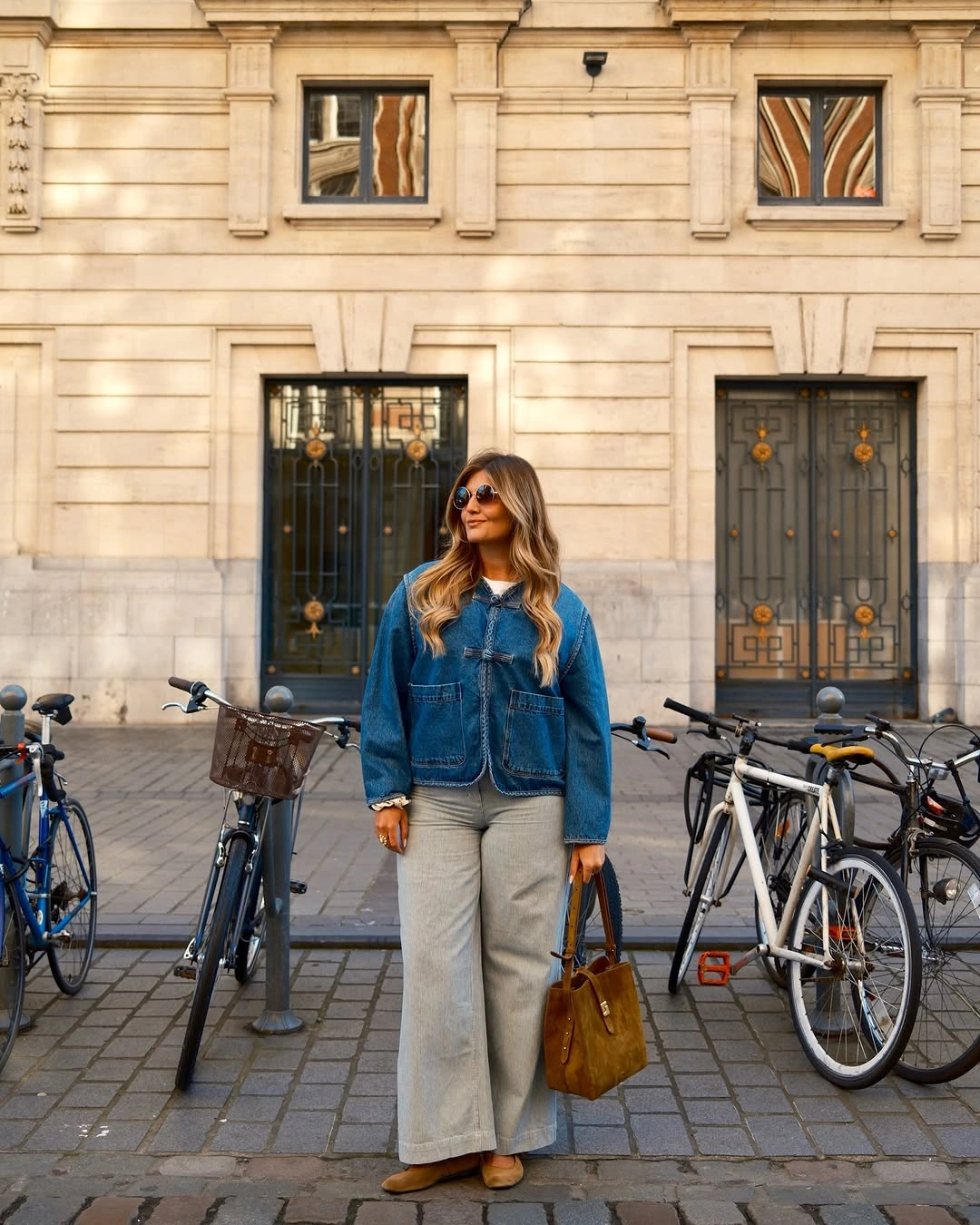
The strongest detail is the relationship between the short upper layer and the long pale leg line. A longer denim jacket would make the outfit more relaxed but also less defined, while a cropped jacket would make the proportion sharper. Brown at the bag brings warmth toward the center and can be echoed by a belt or a simple watch strap. Keep the inner top light so the denim remains a clear anchor rather than becoming one dark uninterrupted panel.
For a cooler day, a fine knit can replace the pale top and a light scarf can sit above the denim without changing the base. The limitation is that wide beige trousers can look too loose when the shoe disappears, so a clean sneaker, flat, or short boot should remain visible. A smaller bag keeps the outfit mobile and lets the warm brown note stay subtle. This is the kind of September outfit ideas formula that works because each color has a separate, readable role.
A neck scarf gives a brown jacket a new focal point
A warm brown jacket and blue jeans are familiar pieces, but the small neck scarf changes where the eye lands. The scarf creates a light, patterned detail close to the face, while the jacket supplies structure and the jeans keep the lower half relaxed. The dark handbag and sunglasses support the city-ready feel without adding another print. This is a good way to refresh a jacket you already own: change the point of emphasis rather than replacing the base.
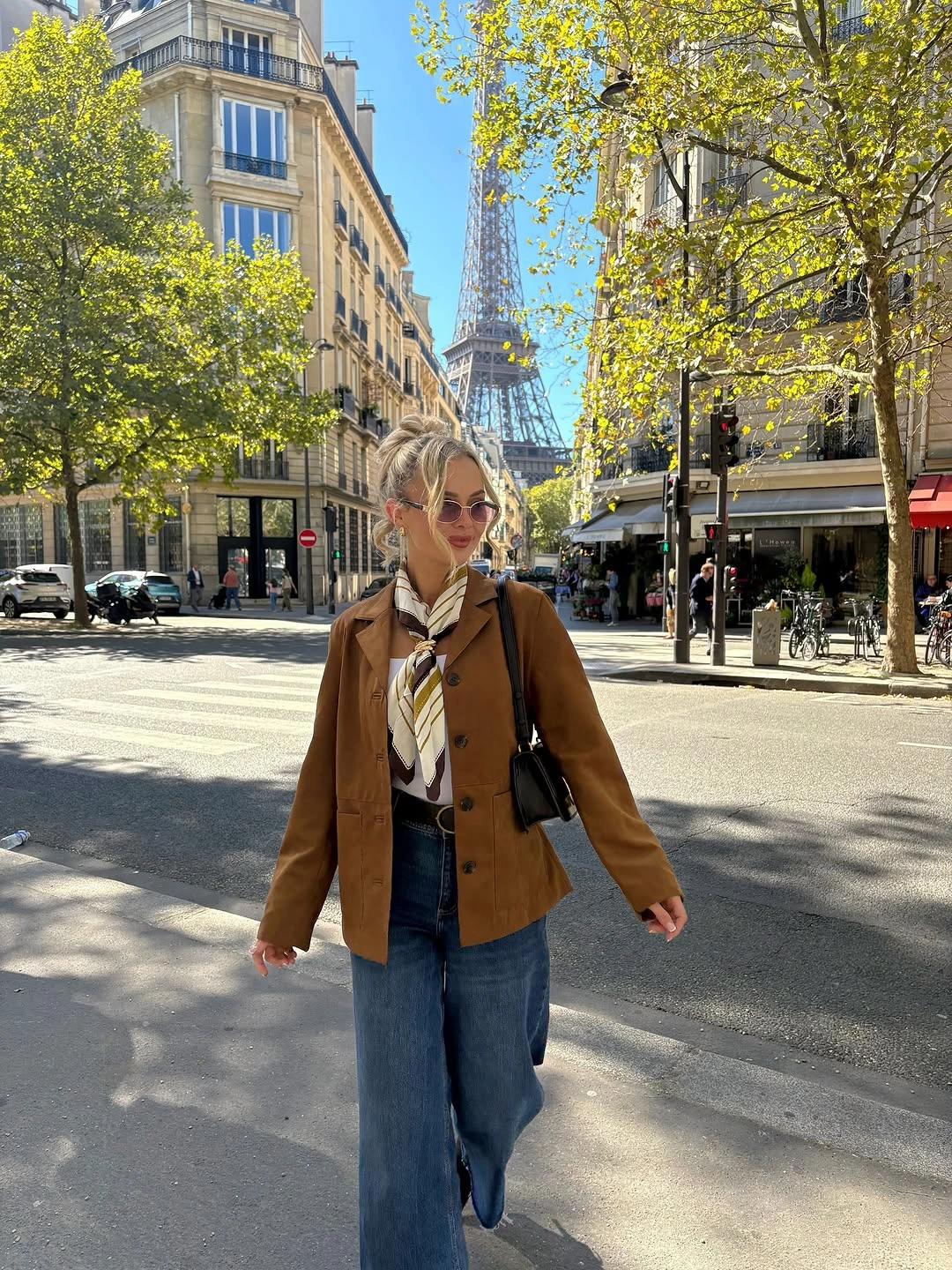
The cropped jacket leaves the jeans line clear, so the scarf can work vertically without competing with a long layer. A plain scarf in cream or navy would produce a quieter result, while a stronger pattern could become the main statement if the bag and shoes stay dark. Keep the knot or fold compact, because a large scarf would introduce bulk around an already structured top. The accessory earns its place by connecting the face area to the warm jacket color.
The outfit can move from casual to slightly more polished through the shoe alone. Sneakers would keep the jacket and denim relaxed, while loafers or ankle boots would make the scarf feel more intentional. The realistic limitation is that a neck detail is less comfortable when the jacket collar and scarf compete for space, so an open neckline may be the easiest adaptation. The key is the small scale: one focused scarf detail, not a collection of competing accessories.
Red flats wake up a navy blazer and denim
A navy blazer, pale top, flared blue jeans, red flats, and a brown bag combine familiar pieces with one clear color interruption. The blazer supplies tailored structure at the shoulders, the flare creates a longer lower line, and the red shoe appears close enough to the ground to feel intentional rather than decorative. Brown at the bag warms the palette without taking attention from the flats. This is a strong smart-casual route because the base remains classic while the accent feels current.
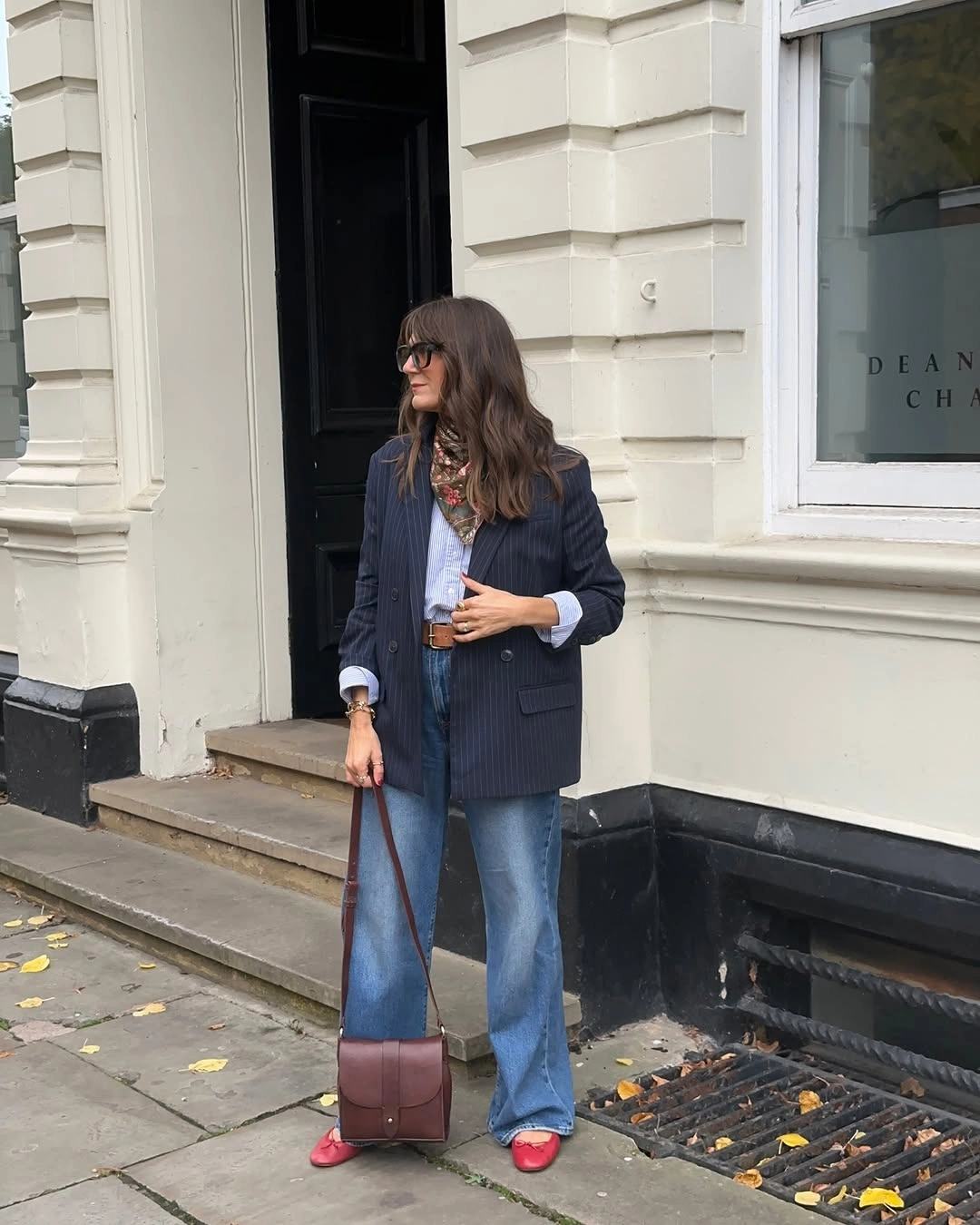
The flare needs a shoe that can be seen and has enough visual weight, which is why the red flats matter more here than a barely visible neutral shoe would. The white top separates navy from denim, and the brown bag adds a quieter warm note near the hand. If you prefer less contrast, use burgundy or rust footwear; if you want a brighter finish, keep the red but simplify the bag. The outfit works when the red accent stays singular and easy to locate.
For a work setting, a straighter jean and a darker flat can preserve the same blazer-led structure with less color contrast. For a weekend, the blazer can open over a tee and the red shoe can stay as the only expressive detail. The tradeoff is that a flare needs a clean hem and a shoe that does not disappear, so the lower proportion deserves more attention than the accessory count. The useful lesson is simple: a classic base can carry one sharp color without becoming fussy.
Striped burgundy knitwear keeps the shape relaxed
A burgundy-and-cream striped sweater, dark wide trousers, cap, pale sneakers, and a warm bag create a relaxed outfit with enough repetition to feel cohesive. The stripe supplies horizontal energy, while the wide trousers repeat the easy scale below rather than forcing a tight contrast. The cap keeps the top line casual, and the pale shoes stop the dark trousers from visually pooling at the floor. It is comfortable in mood, but the color relationship is deliberate.
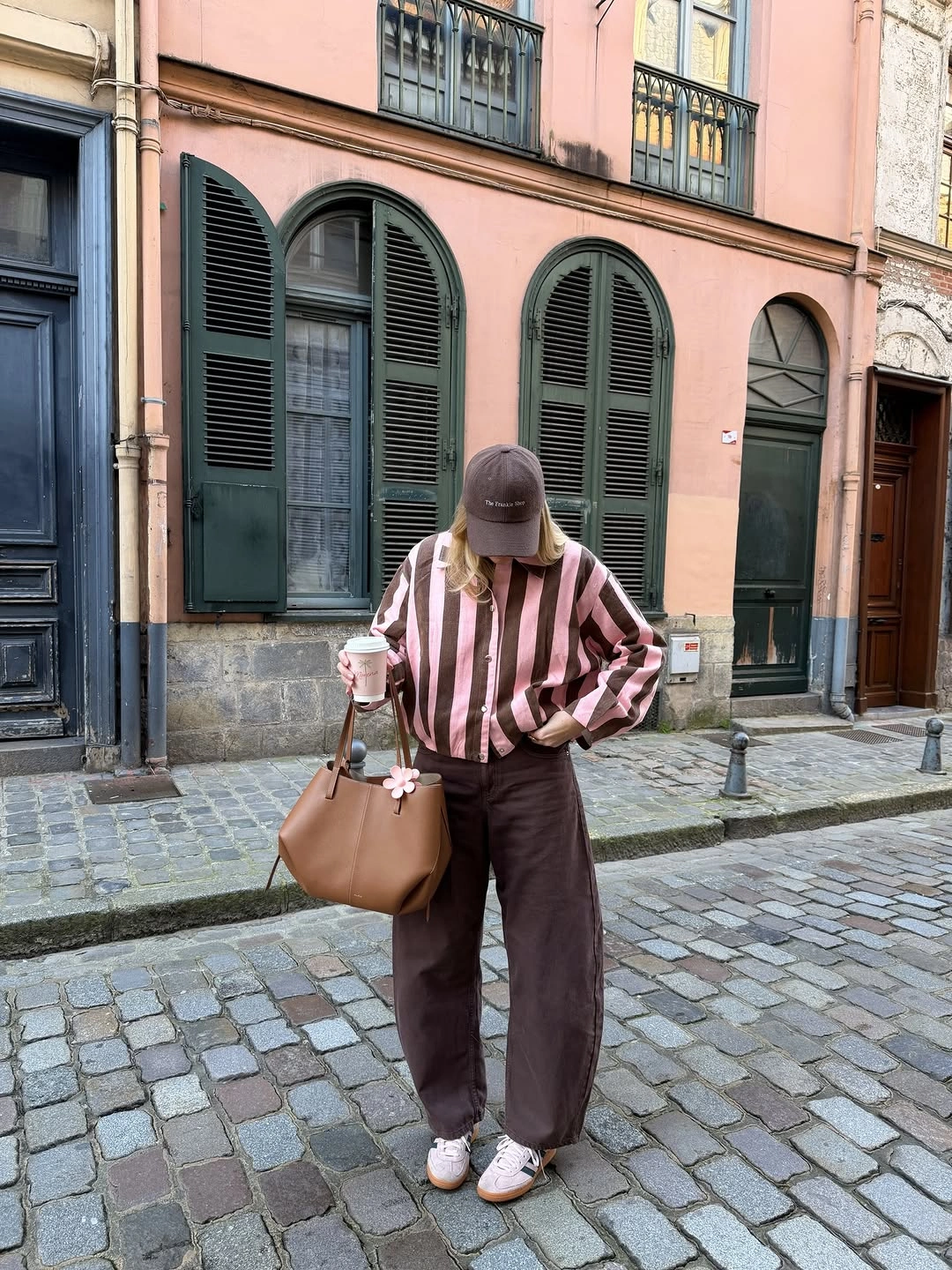
The best way to keep this silhouette readable is to let the sweater and trousers share volume while the shoes remain clean and visible. A plain burgundy sweater would make the outfit quieter, while a lighter trouser would open the lower half and reduce the depth. The cap works because it echoes the relaxed proportion; a formal hat would create a different register and might compete with the stripes. Keep the bag small or medium so the upper half does not become overloaded.
This direction suits a weekend, travel day, or casual plan where movement matters more than a crisp waistline. If the sweater feels too loose, a front tuck or a shorter underlayer can reveal a little more shape without changing the mood. The limitation is that horizontal stripes and wide trousers both broaden the visual field, so a clear shoe and controlled bag are useful. Preserve the burgundy-and-cream pattern, but adjust the lower color when you need a lighter finish.
A taupe top softens a black midi skirt
A taupe knit top above a black midi skirt creates a clean contrast between a soft neutral and a sleek-looking dark lower line. The black bag repeats the skirt, while sunglasses and flat sandals keep the outfit from becoming too formal. The long skirt supplies a steady vertical shape, and the lighter top keeps the upper half open. It is a restrained dressier option for September days when you want more polish without bright color.
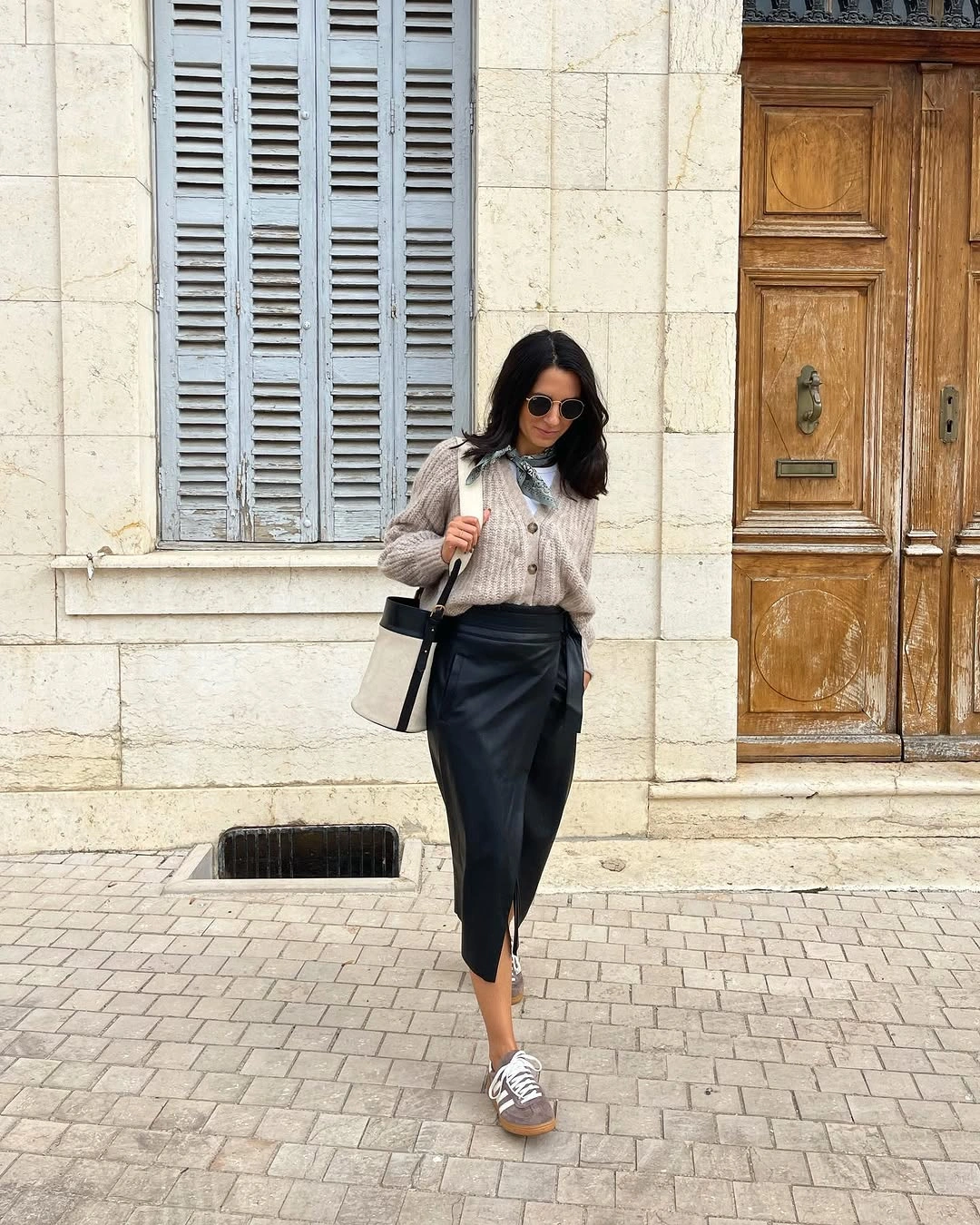
The proportion is easiest to read when the taupe top is tucked, shortened, or allowed to end near the waist rather than covering the full skirt. A fine knit would make the line sharper, while a fuller sweater would create a softer contrast and may need a small front tuck. Flat sandals make the look lighter, whereas a dark loafer or boot would extend the black line and raise the polish. The black bag is useful because it repeats the skirt without adding another shape.
This outfit can become more casual through a flat sneaker, or more evening-leaning through a pointed shoe, but the neutral contrast should remain the main idea. The honest limitation is that a narrow midi line can restrict movement more than wide trousers or a fluid skirt, so the cut needs to feel comfortable before accessories are considered. Avoid adding a loud print; taupe, black, and one clean shoe already provide enough visual information. The quietness is exactly what makes the formula repeatable.
Blue plaid makes a jeans base feel intentional
A blue plaid overshirt over a pale top and blue jeans is familiar, yet the repeated blue color makes the pattern feel connected to the base rather than dropped on top. White sneakers keep the outfit open and casual, while the light inner layer creates a small break beneath the overshirt. The bright drink is not part of the clothing, but the overall styling reads as an easy day look. This is a useful September formula when you want a layer with personality but not a full coat.
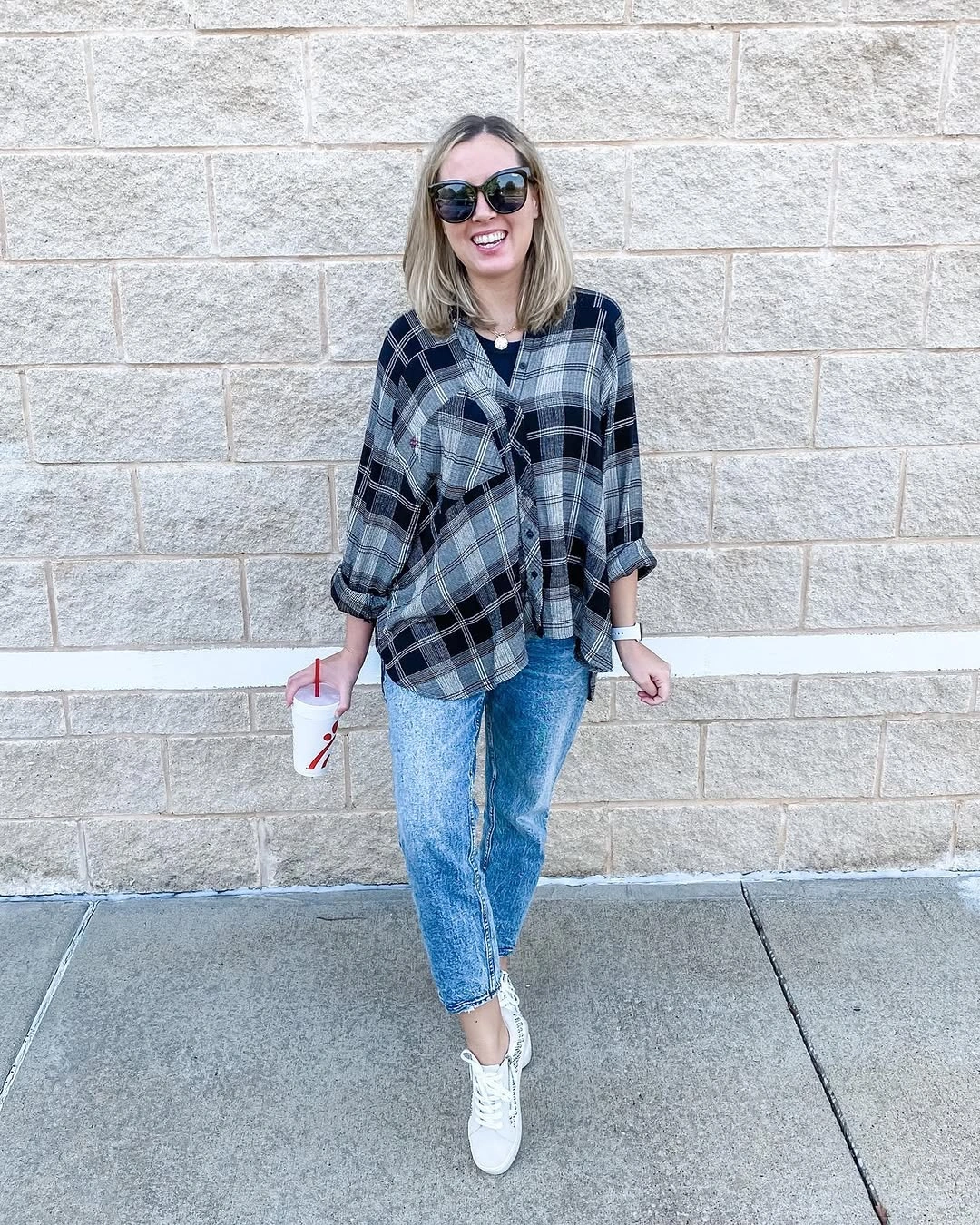
The overshirt works best open or partly open because that lets the pale top interrupt the plaid and prevents the torso from becoming one dense block. Medium or straight jeans echo the relaxed proportion, while a very wide leg could make the whole outfit feel too soft. If you want more contrast, use cream denim or a darker shoe; if you want a quieter version, repeat the blue in a simple bag. The plaid should stay the most detailed surface in the outfit.
For cooler conditions, a fine turtleneck can replace the pale top, and the overshirt can sit under a simple coat without changing its role. The tradeoff is that plaid, denim, and a large bag can become visually busy together, so keep the accessory small and the shoe clean. This is not a formula that needs extra jewelry or a statement belt. Its value is that one graphic layer makes ordinary jeans feel considered while staying easy to wear.
A gray sweater leaves room for a patterned skirt
A pale gray sweater and a long brown patterned skirt create a calm contrast between a plain upper half and a fluid lower shape. The skirt carries the movement and print, while the soft bag and light sneakers keep it appropriate for an ordinary daytime plan. Gray does not compete with the brown pattern, but it also avoids the heavy effect a black top might create. The result is gentle, readable, and different from a standard jeans outfit.
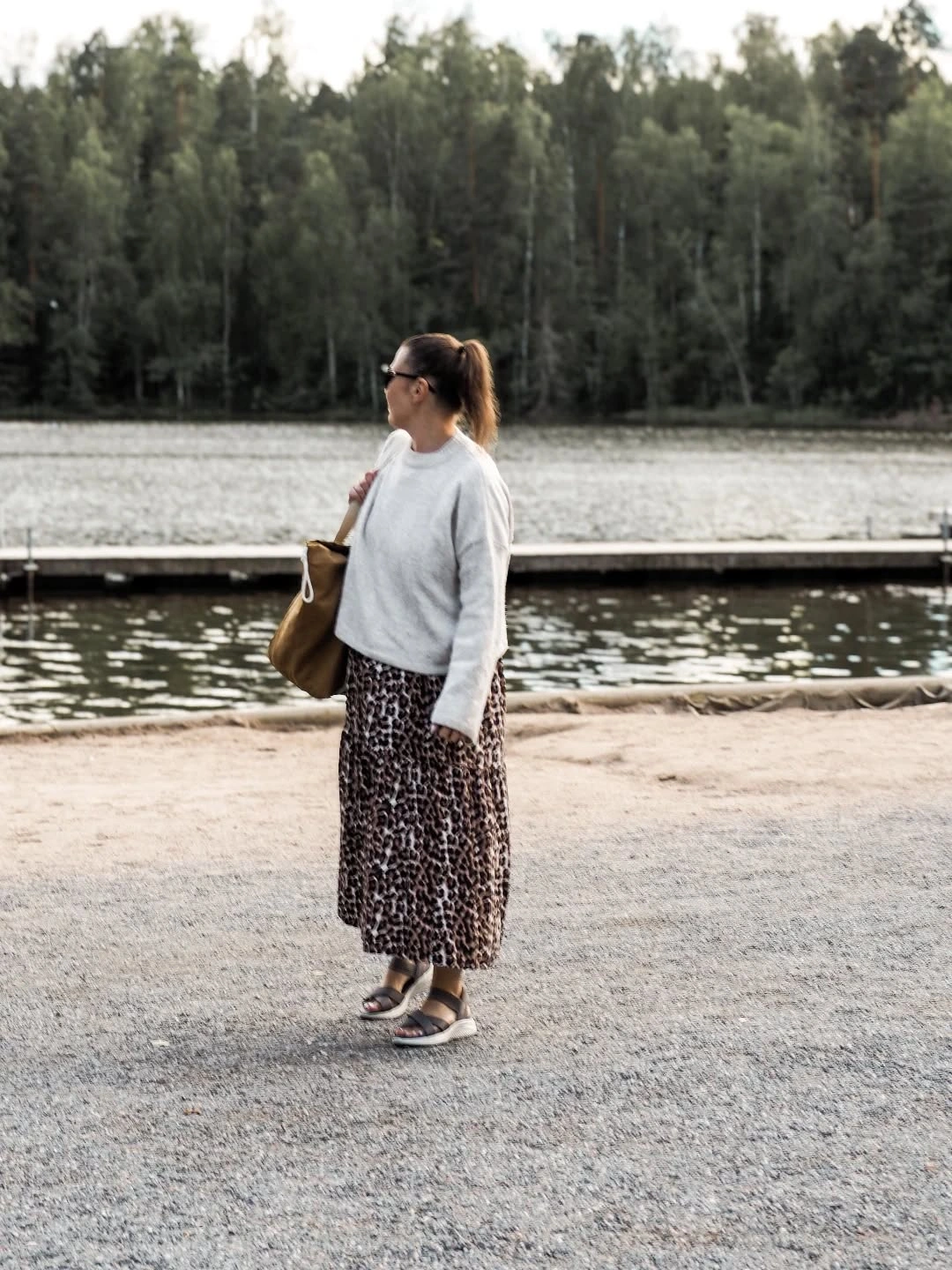
The plain sweater gives the skirt the space it needs to remain the focal point. A shorter or lightly tucked top would show more of the waist and make the long skirt feel sharper, while a longer gray layer would keep the mood relaxed and fluid. The sneakers supply brightness at the bottom and prevent the outfit from looking too formal. If you want to repeat the pattern elsewhere, choose a bag that borrows one muted tone rather than introducing a new print.
This pairing is useful for days when a dress feels too expected but jeans do not fit the mood. The long skirt offers movement, while the sweater can be adjusted through sleeve length, neckline, or a lighter knit. Its limitation is that a full skirt and loose sweater can hide the body’s structure, so a visible waist, clean tuck, or defined bag helps. Keep the color difference soft and the outfit will feel expressive without becoming loud.
A short brown layer balances very wide trousers
A brown short overshirt over very wide dark trousers is a study in proportion. The back view makes the relationship especially clear: the upper layer ends early, while the trousers continue in one long, roomy line. A small crossbody stays close to the body and does not add another large shape. The palette remains dark and warm, so the silhouette itself becomes the interesting decision. This is a useful idea when you like volume but still want the outfit to have an obvious structure.
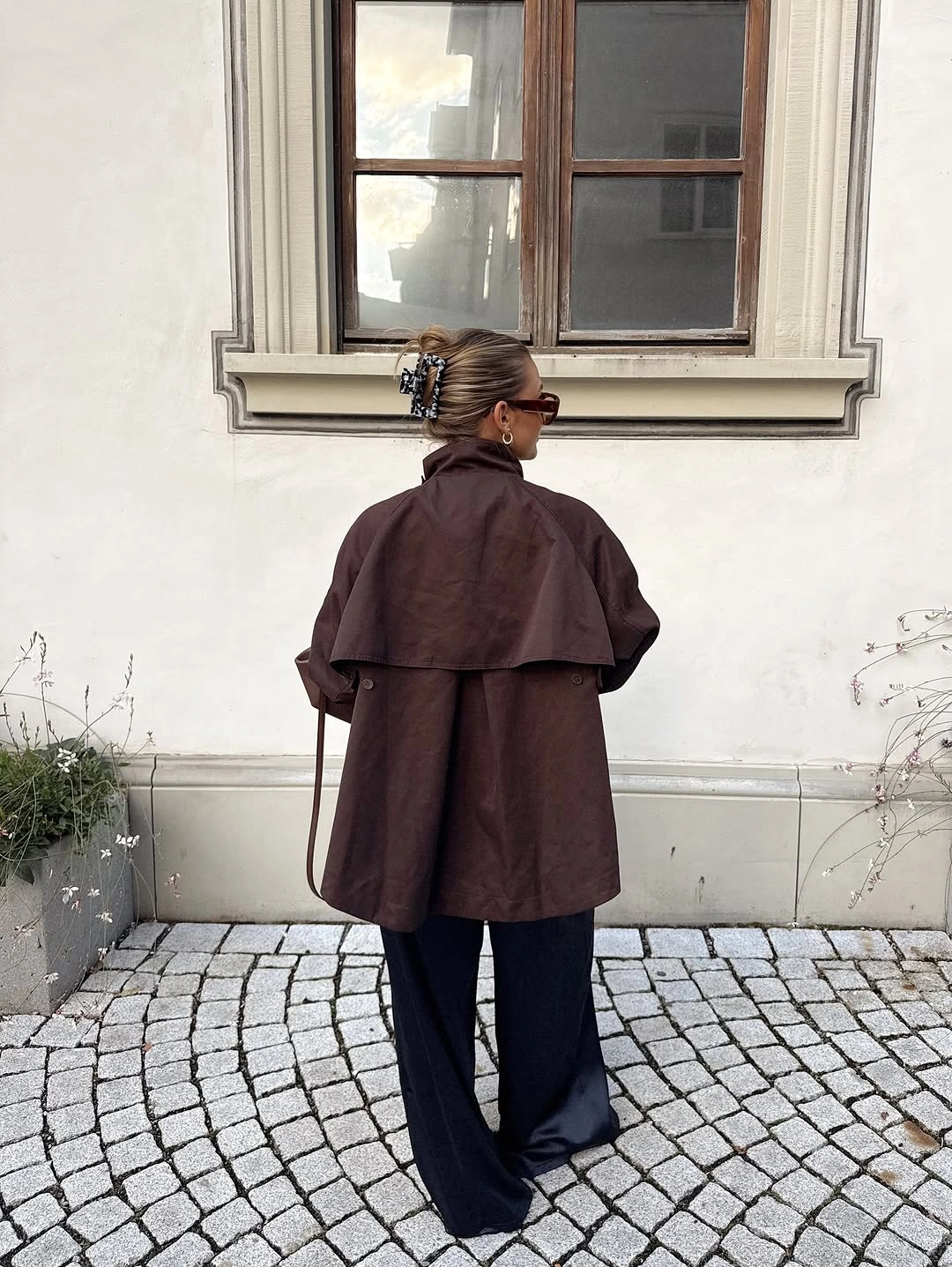
The cropped top prevents the wide trousers from becoming one uninterrupted block and gives the eye a stopping point near the waist or hip. A tucked tee or fitted knit underneath would preserve that effect, while a long loose shirt could erase it. Clean shoes matter because the trouser volume already creates weight at the bottom; a delicate sandal would look different from a substantial loafer or boot. Keep the crossbody small so the back line remains simple.
The main tradeoff is movement and coverage. A short layer allows the wide trousers to lead, but it may not feel as protective or warm as a longer coat, so this formula suits a mild day or an indoor plan better. You can keep the proportion with a shorter jacket when conditions change. The useful lesson is that oversized pieces do not always need to be reduced; they need one clear boundary between them.
Blue pattern gives pale denim a focal point
A blue-and-white patterned top layer with pale jeans and white sneakers keeps the palette light while adding enough graphic detail to prevent the outfit from looking blank. The seated pose highlights the relaxed fit, and dark sunglasses provide one small contrast near the face. Because the pattern is concentrated above the jeans, the lower half remains easy and familiar. It is a casual September outfit ideas option for anyone who wants interest without a strong saturated color.
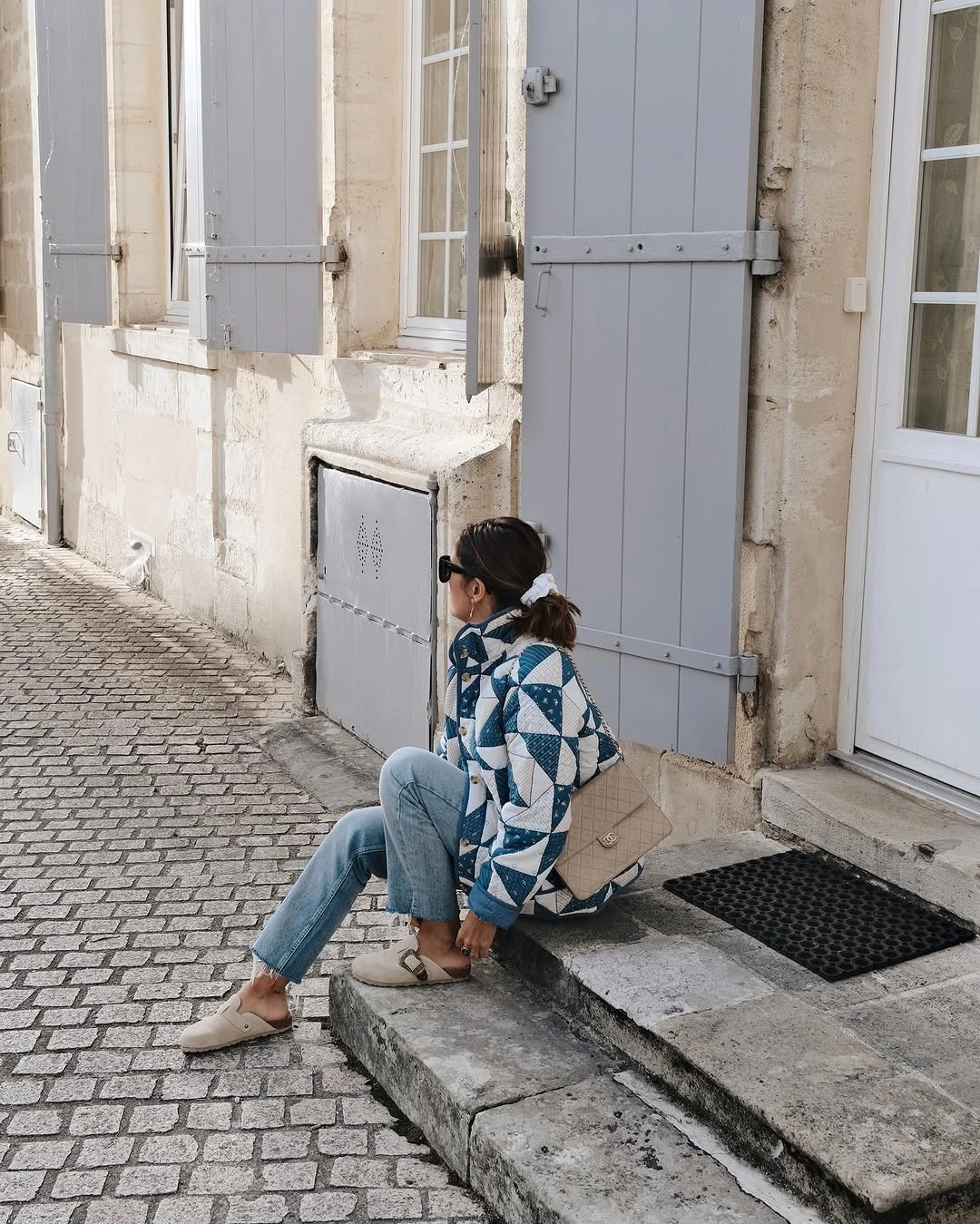
The outfit works because the pattern carries the contrast while the jeans and shoes stay within the same pale family. A darker bag could give the look more structure, while a cream bag would keep the airy effect. Avoid adding a second statement print, since the blue pattern already acts as the focal point. If you want a shorter silhouette, use a cropped jacket or roll the sleeves; if you want more coverage, leave the relaxed layer open over a simple tee.
This formula is easy to adapt for a doorway, café, or weekend walk because the visual idea does not depend on a delicate shoe or a narrow skirt. The limitation is that a very loose patterned top can overwhelm pale jeans if the hem is too long, so a partial tuck or defined side opening may help. Keep the blue and white relationship visible and change only the bag, shoe, or inner layer when the outfit needs a new mood.
Warm accessories frame a textured brown jacket
A warm brown textured jacket, blue jeans, tan boots, and a matching tan shoulder bag form one of the easiest early-fall color relationships. The jacket supplies softness and volume at the top, while the jeans keep the lower half familiar. Boots and bag repeat the warm tone at two separate points, which makes the outfit feel held together rather than brown by accident. The texture is enough to give the simple base personality without requiring a print.
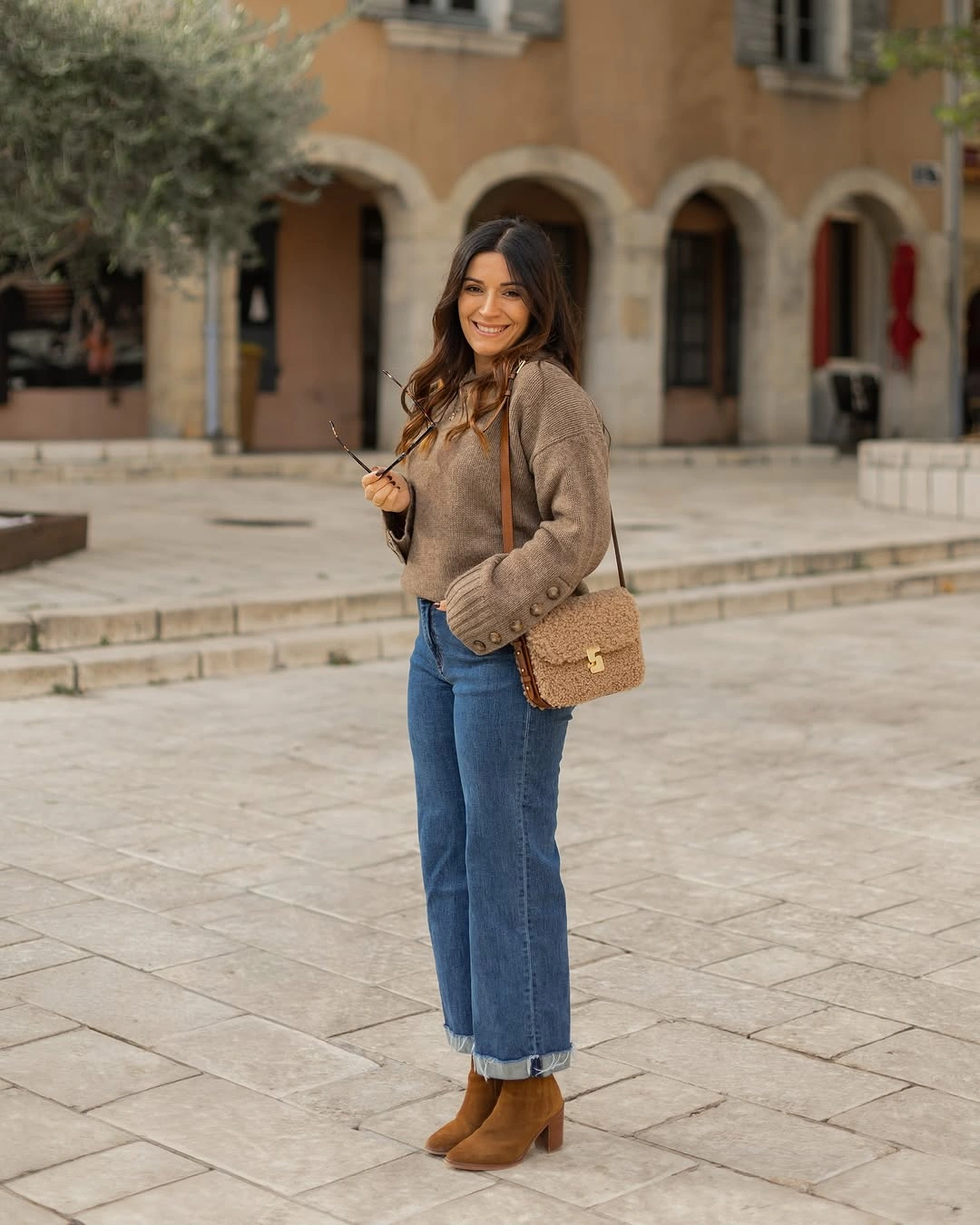
The shorter jacket and visible boots keep the jeans line clear, while the repeated tan accessories create a stable frame around the blue. A lighter sneaker would make the outfit more casual and open, whereas a darker boot would make the brown jacket feel deeper. If the jacket is very soft or oversized, keep the bag structured so the side of the silhouette does not collapse. The most useful choice is repeating the warm family, not matching every surface exactly.
This idea can handle a simple tee, a fine turtleneck, or a scarf depending on how much coverage the day needs. The honest limitation is that textured outerwear can feel visually bulky with a very wide jean, so a straighter leg may be easier if the jacket already has volume. The bag and boots can remain while the inner layer changes, which makes the outfit repeatable. The warm frame is the feature to preserve when you simplify it.
A patterned bag gives a dark jacket contrast
A black jacket, dark short patterned hem, sheer tights, chunky boots, and a small patterned bag create a compact outfit with a controlled point of contrast. The jacket and footwear establish a continuous dark frame, while the bag introduces texture and a small amount of warmth near the hand. The short hem keeps the look sharper, and the tights connect it to the boots rather than breaking the line. It has a more deliberate after-dark energy, but the silhouette stays practical enough for a short outing.
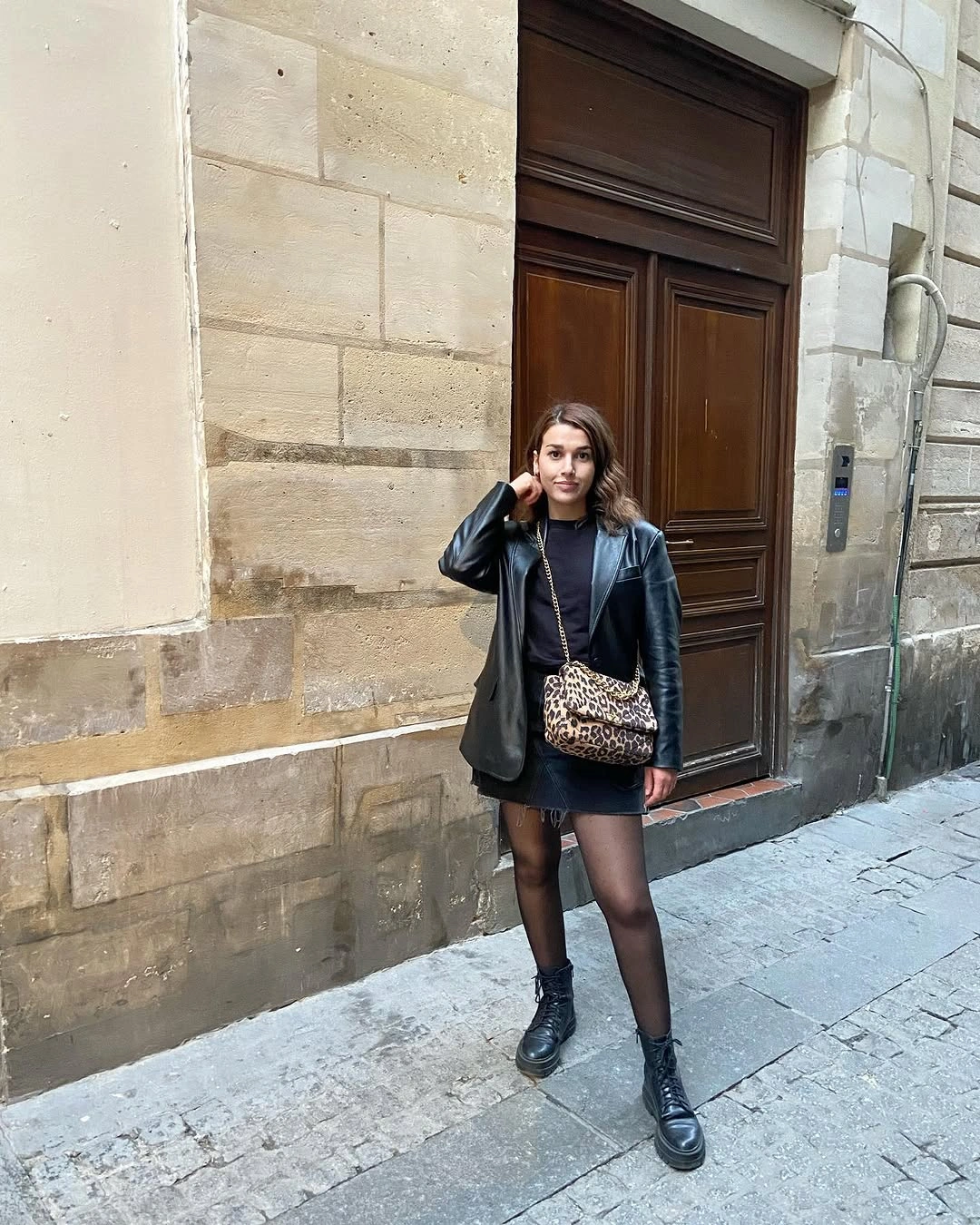
The bag matters because a fully dark outfit can lose its internal structure when every surface has the same value. A small pattern gives the eye somewhere to pause without competing with the short hem or the boots. You could replace it with a brown bag for more warmth or a plain black bag for a cleaner finish, but a large tote would weaken the compact proportion. Keep the jacket length intentional so it supports the lower line rather than hiding it.
This look is less about adding more pieces and more about deciding where the contrast belongs. A longer jacket or opaque tights would make it easier for a cooler day, while a flat boot would reduce the dressy edge and improve walking comfort. The limitation is that short hems, sheer hosiery, and chunky shoes make the outfit visually specific, so it may not suit every setting or movement preference. The patterned accessory is the smallest change that keeps the darkness readable.