
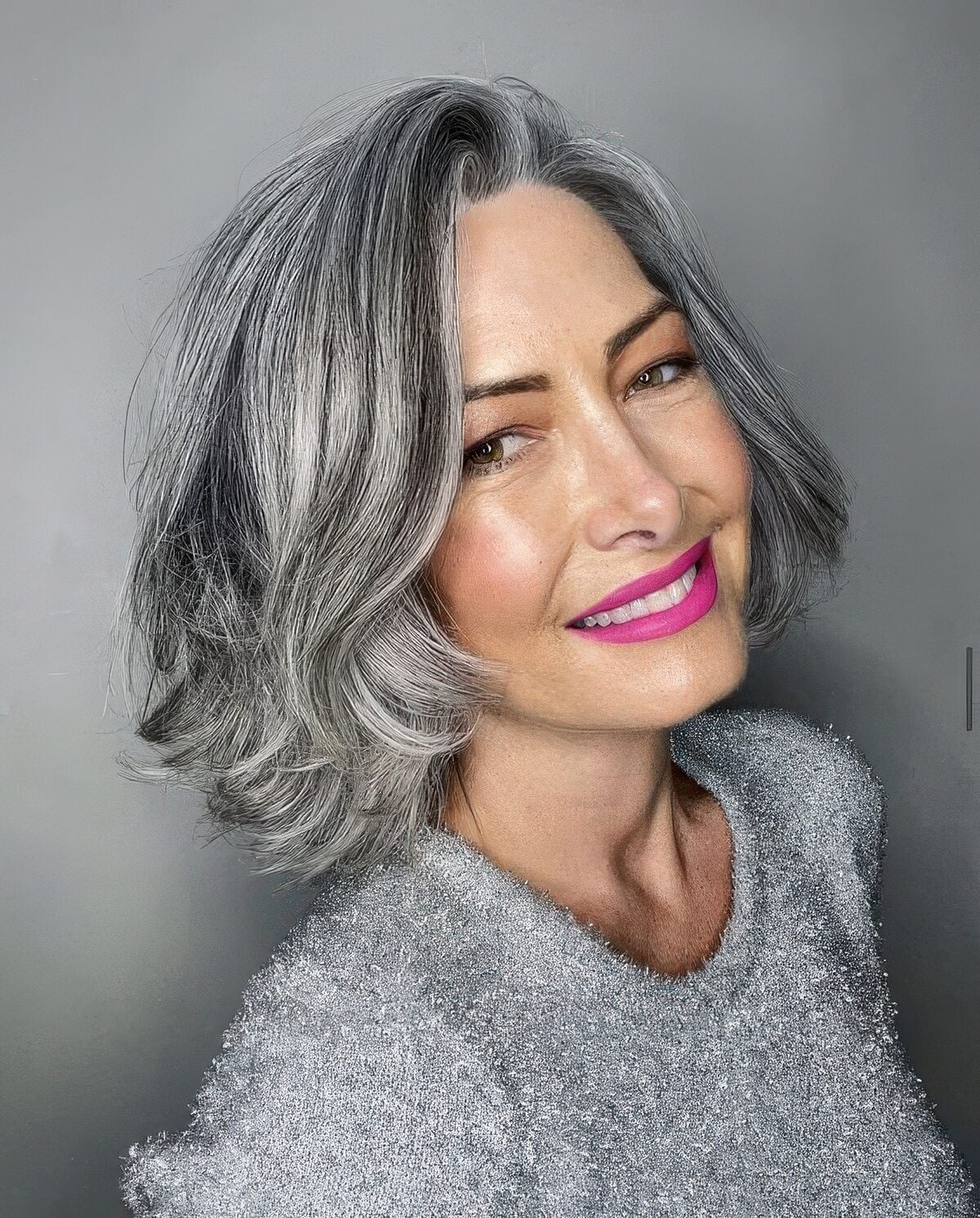
Gray hair is no longer something to hide; it’s a sophisticated color to embrace. Simple gray blending techniques offer a natural way to incorporate your emerging silver strands with your dark brown base, and the current shift favors lived-in color with soft face-framing layers.
This collection of 23 ideas for Simple Gray Blending Hair Dark Brown covers everything from chin-length bobs to mid-back layers, with low upkeep and high payoff. Whether you have fine hair that needs a blunt baseline or thick hair that can handle more movement, there’s a cut here that solves the visible grow-out line without a drastic change.
Wavy Bob With Side Part Gray Blend
A chin-length wavy bob with a side parting is the kind of haircut that makes gray blending look intentional without trying to prove a point. The fine, wavy texture keeps the shape soft rather than severe, and the gray strands read as natural highlights instead of a grow-out problem. This cut works best on fine to medium density hair starting at chin length, and it suits most face shapes because the soft waves add gentle volume where you want it. Ask your stylist for: chin-length wavy bob, side part, natural gray blending.
Sleek Straight Bob With Side Swept Bangs
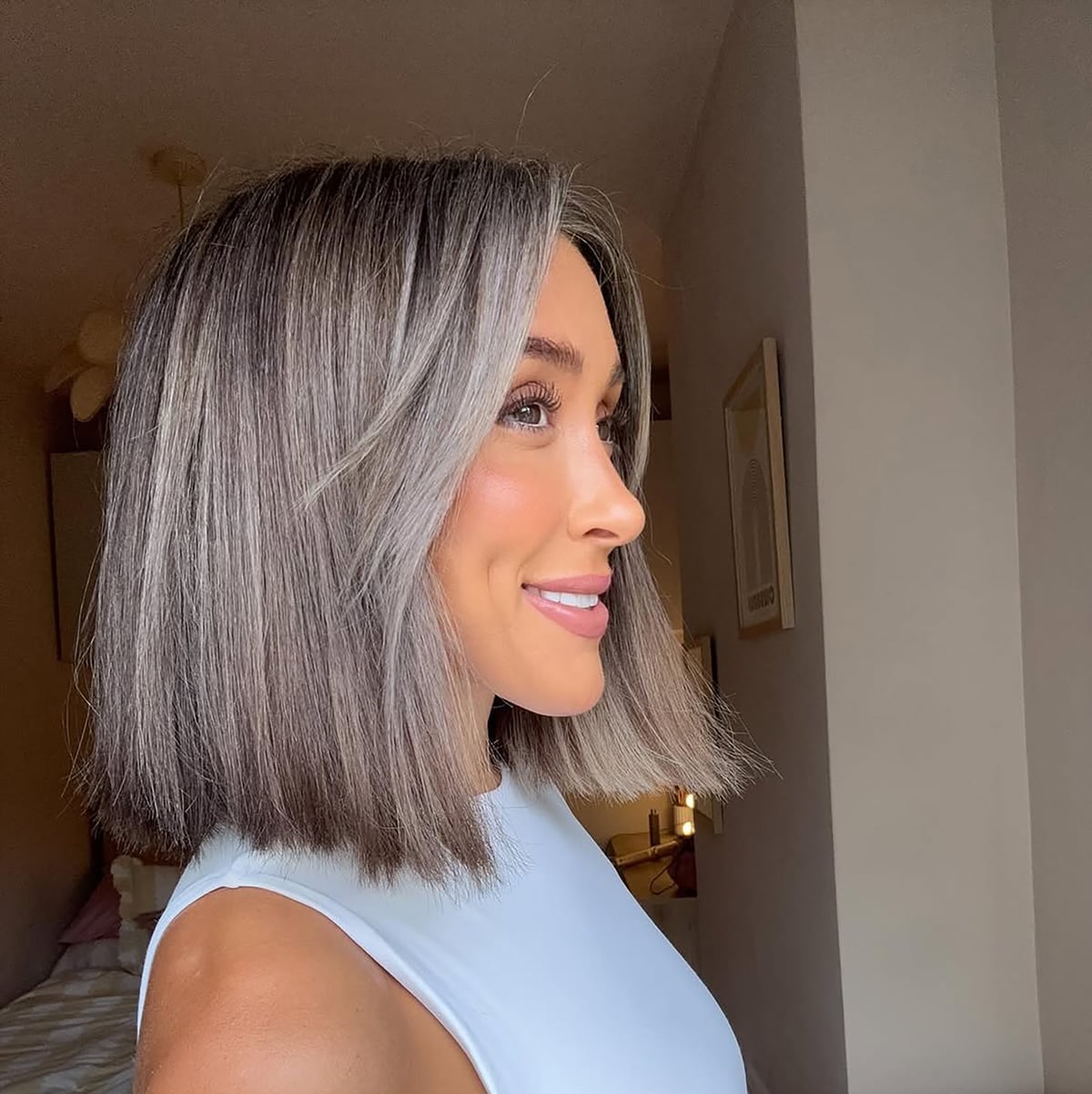
How do you ask for a bob that looks sharp without feeling rigid? A chin-length sleek blunt bob with side-swept bangs and a subtle gray blend. The blunt ends and straight texture create a clean silhouette, while the side-swept bangs soften the overall effect. Fine, straight hair starting at chin length holds this shape best, and the elongating line works well on rounder face shapes. Ask your stylist for: chin-length sleek blunt bob, side swept bangs, subtle gray blend.
Collarbone Bob With Loose Blowout
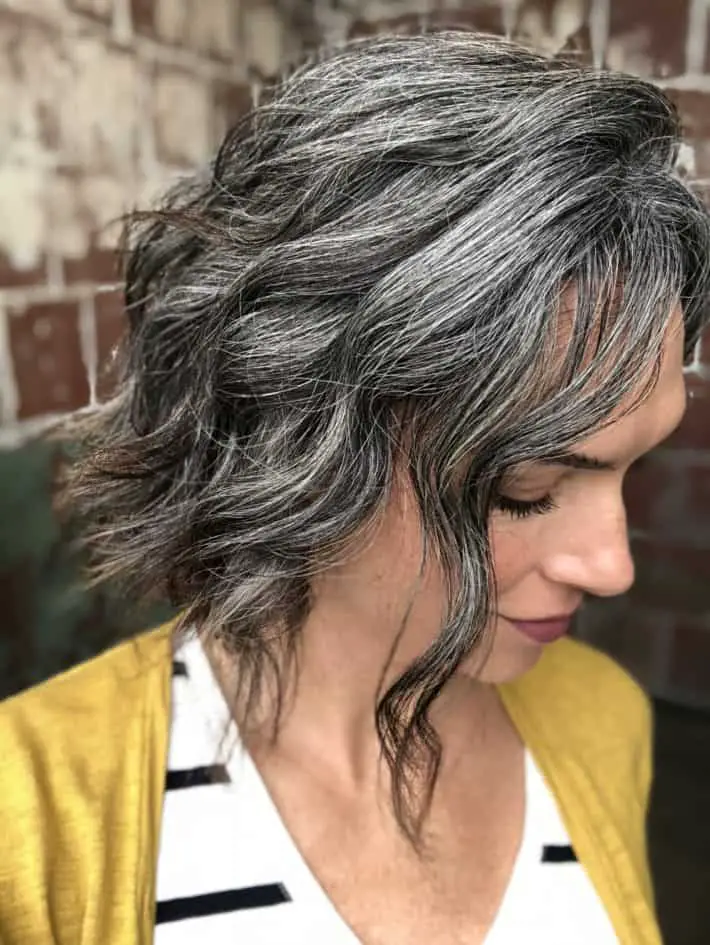
A collarbone-length bob with a loose blowout is less about precision and more about movement. The wavy texture on medium density hair means you are not fighting natural body, just encouraging it. A round brush and a blow-dryer are your daily tools, and the side parting lets the waves fall in a direction that softens a square jawline. The gray blending becomes part of the wave pattern rather than a separate color block. Ask your stylist for: collarbone wavy bob, loose blowout, natural gray blend. A trim every six to eight weeks keeps the ends from looking straggly, and the grow-out is forgiving enough to push it to ten if life gets busy.
Collarbone Lob With Side-Swept Bangs
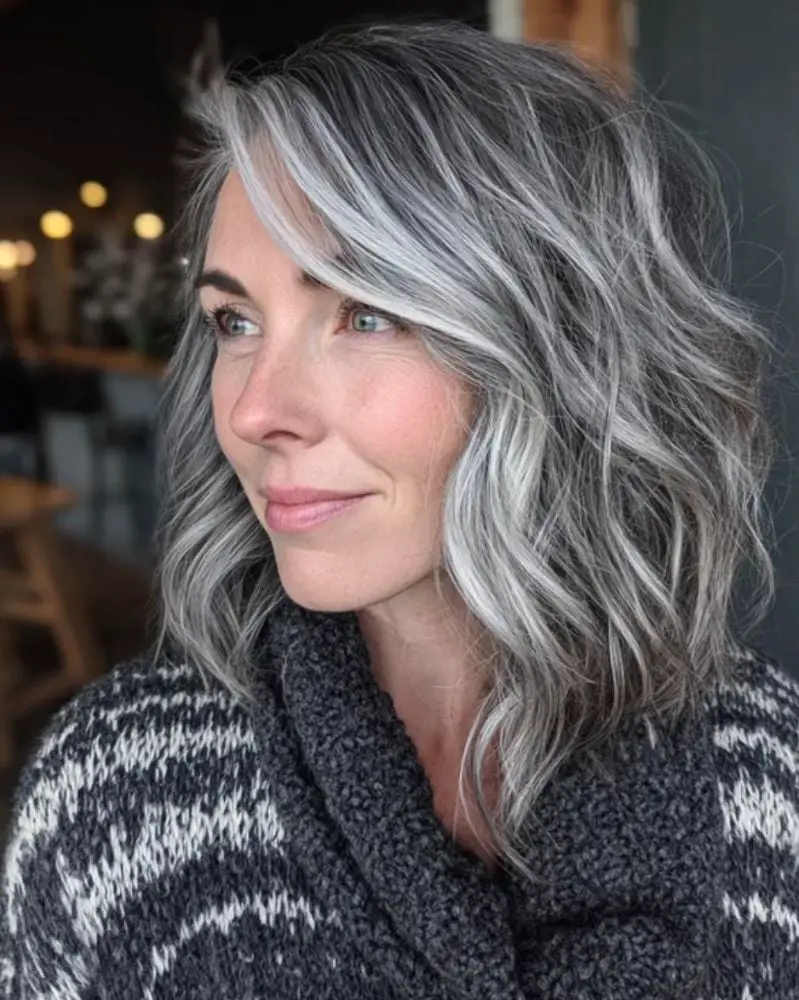
A collarbone lob with side-swept bangs is the alternative for anyone who finds a chin-length bob too short. The longer length gives you more styling options, and the bangs frame the face without the commitment of full fringe. Medium density hair starting at collarbone length supports the soft wave pattern, and the side-swept shape softens angular features.
Compared to a blunt bob, this lob grows out more gracefully. The bangs need a trim every three to four weeks to stay out of your eyes, and the longer length means the gray blending appears softer. Ask your stylist for: collarbone lob, side swept bangs, soft waves, seamless gray blend.
Collarbone Lob With Face-Framing Layers
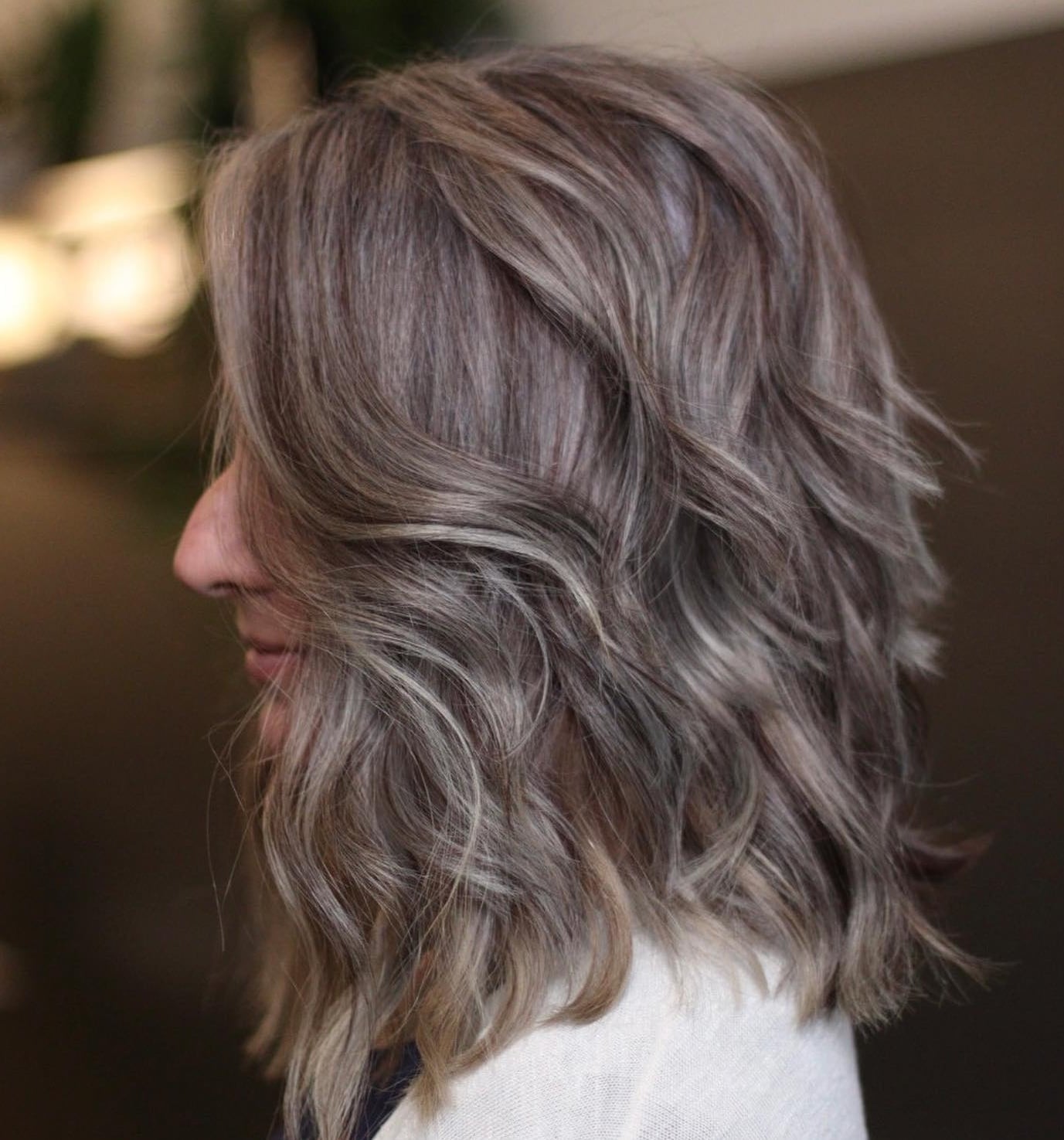
A collarbone lob with face-framing layers places the lightest pieces where they draw the eye first. The layers start around the jaw and graduate down, so the gray and ash blonde tones fall forward instead of disappearing into the length. Medium density hair starting at collarbone length gives the layers enough weight to hold shape without going flat.
Ask your stylist for: collarbone lob, face framing layers, loose waves, gray ash blonde blend. The key is to have the colorist weave the gray and ash tones through the layers themselves, not just paint them on the surface. Dry texture spray defines the wave pattern without making it stiff, and the layers mean you can air-dry on days you skip the blow-dryer.
Collarbone Lob With Curtain Bangs
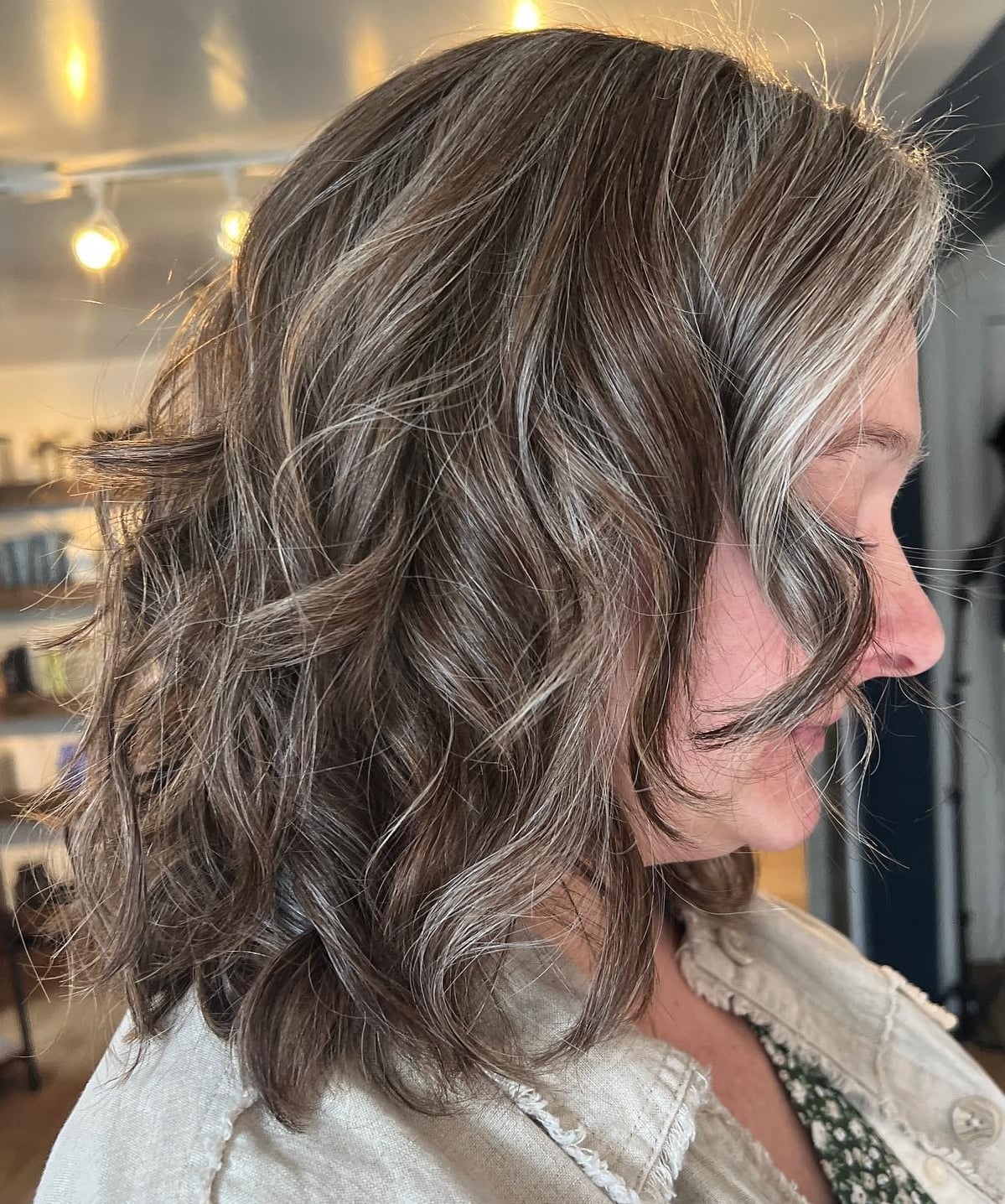
Wondering how to ask for those soft, blended curtain bangs without ending up with something too blunt? This collarbone lob keeps the length easy and the layers subtle, so the gray and blonde highlights woven through the dark brown base do the talking. The curtain bangs are cut to feather away from the face, which softens a round or square jaw without shrinking the overall shape. Ask your stylist for: collarbone lob, curtain bangs, soft waves. Style the bangs with a round brush, pulling them outward as you dry, and book a trim every eight weeks to keep the shape from turning into one solid curtain.
Collarbone Lob With Curtain Bangs and Waves, Wavy
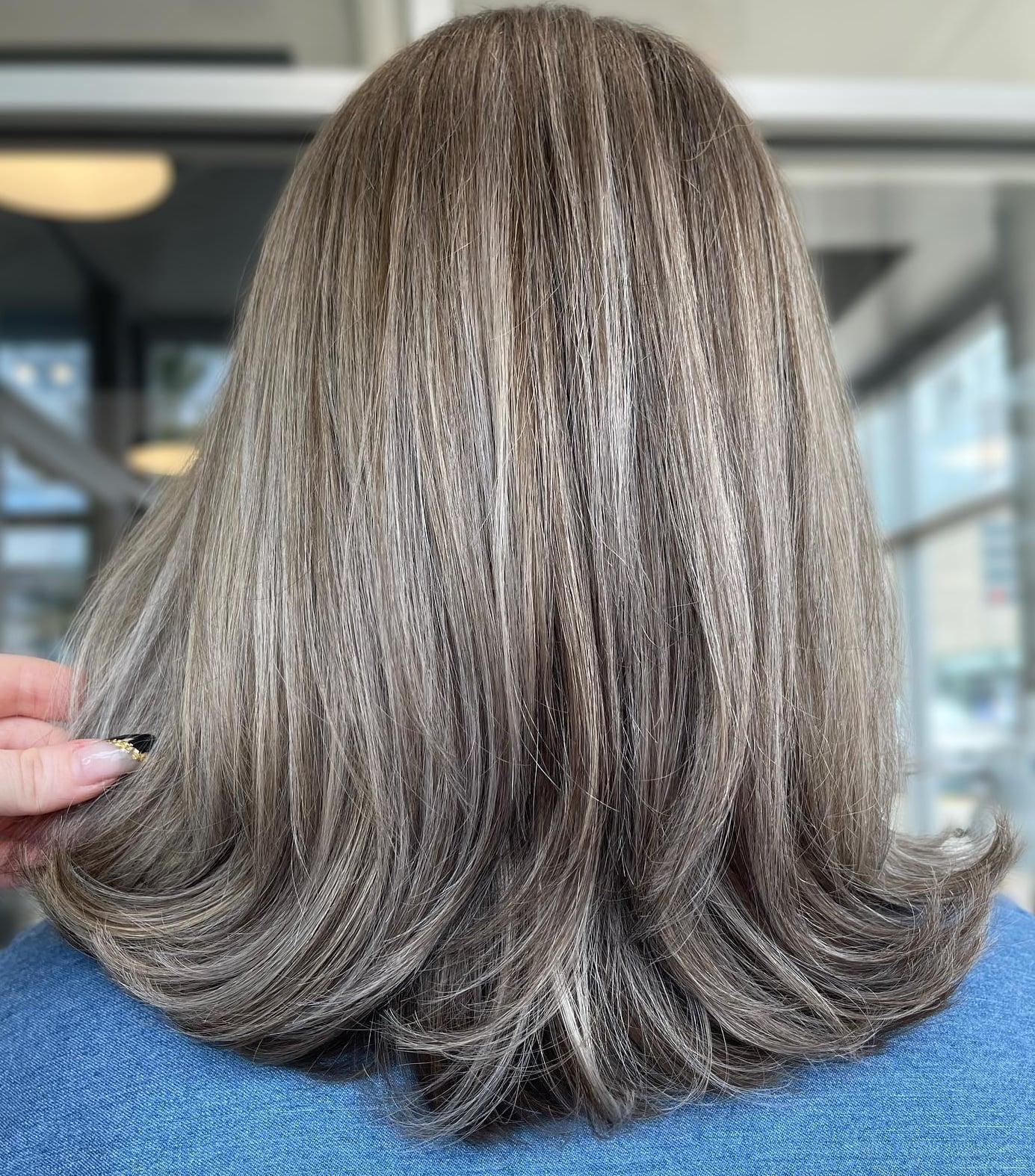
When early autumn rolls around, a dark brown base with gray and ash blonde highlights starts to make a lot of sense. The cooler tones pick up the fading light, and the loose waves give the collarbone lob a lived-in texture that works for both the office and a casual weekend. The middle parting and curtain bangs frame the face evenly, which suits round and heart shapes by balancing the width at the temples. Ask your colorist for: gray ash blonde blend. A wave spray and a quick scrunch while it air-dries is all the styling this needs, and a trim every eight weeks keeps the layers moving.
Collarbone Layers With Subtle Gray
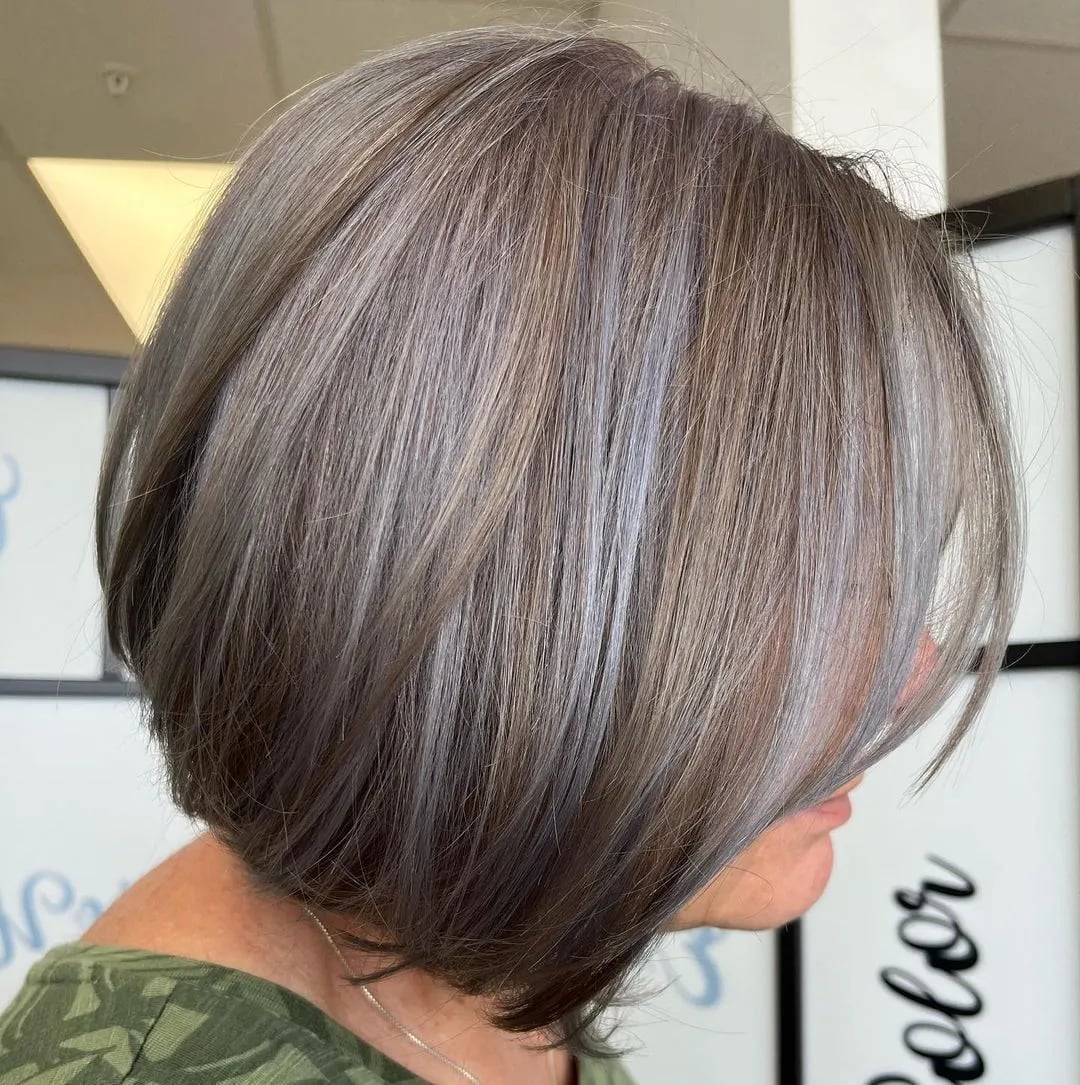
This one is honest about the effort involved. Blending gray into dark brown on thick, wavy hair takes a colorist who knows how to place the lighter pieces for natural dimension, not a grown-out root. The subtle layers here add movement without sacrificing the fullness that thick hair gives you, and the middle parting keeps the weight evenly distributed. Ask your colorist for: natural gray blend with subtle layers.
This look needs a steady hand. On wavy texture, the gray can pool in the curves and look patchy if the placement is too heavy, so the color work is best left to a salon. A sea salt spray enhances the wave without crunch, and the layers will hold their shape for about ten to twelve weeks before the ends start to feel heavy.
Collarbone Lob With Loose Waves
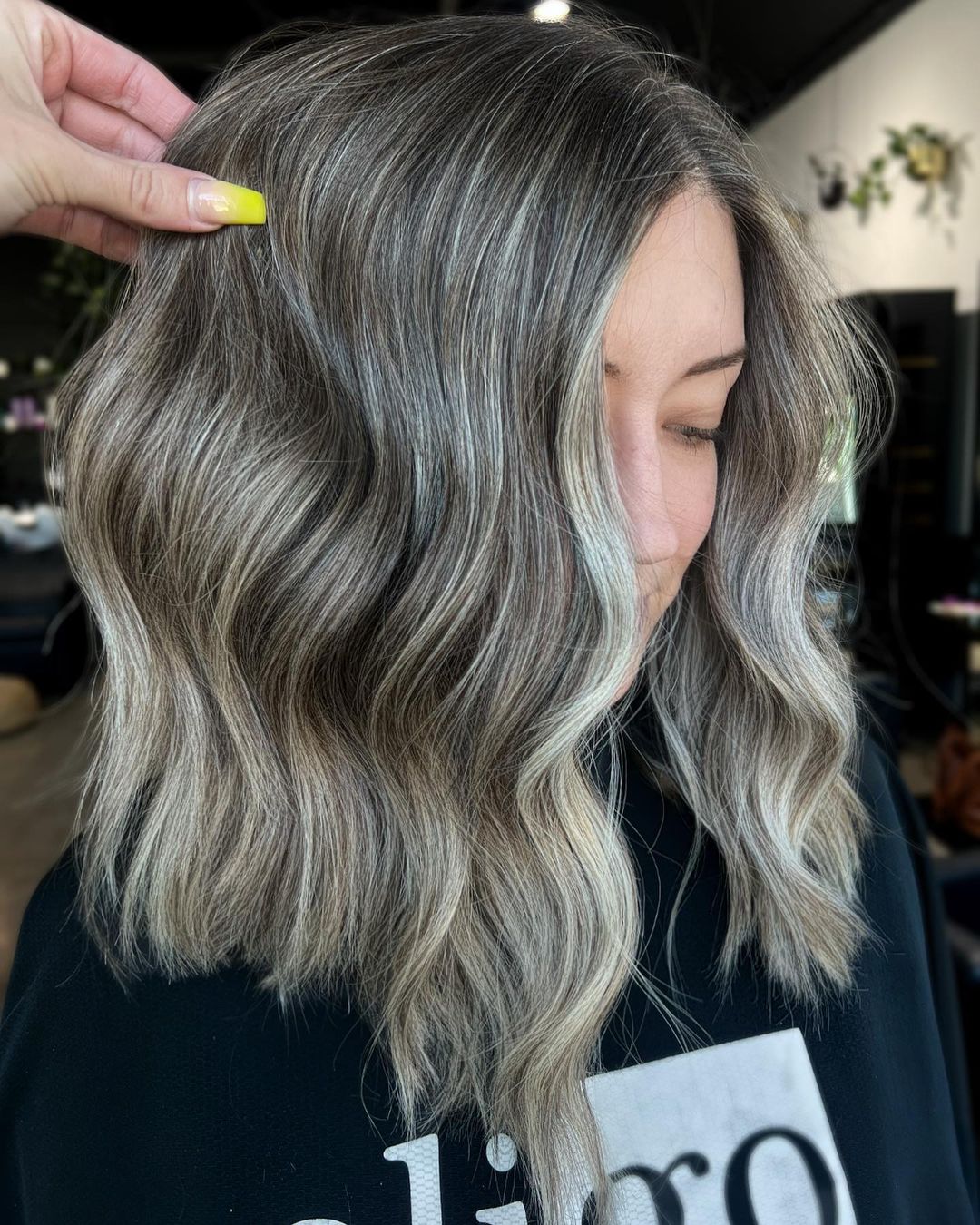
If you want a cut that works with a bit of wave, this collarbone lob is a practical pick. The subtle layers keep the ends from looking too blunt, and the loose waves give the hair a soft, dimensional finish that suits oval and heart face shapes by adding width at the cheekbones. The gray and blonde highlights break up the dark brown base without any harsh lines. Ask your colorist for: collarbone lob, loose waves, gray blonde blend. Use a heat protectant before you reach for a curling wand, then brush the waves out once they cool for that relaxed bend. A trim every eight weeks keeps the lob from creeping past the collarbone.
Shoulder Length Layers With Loose Curls
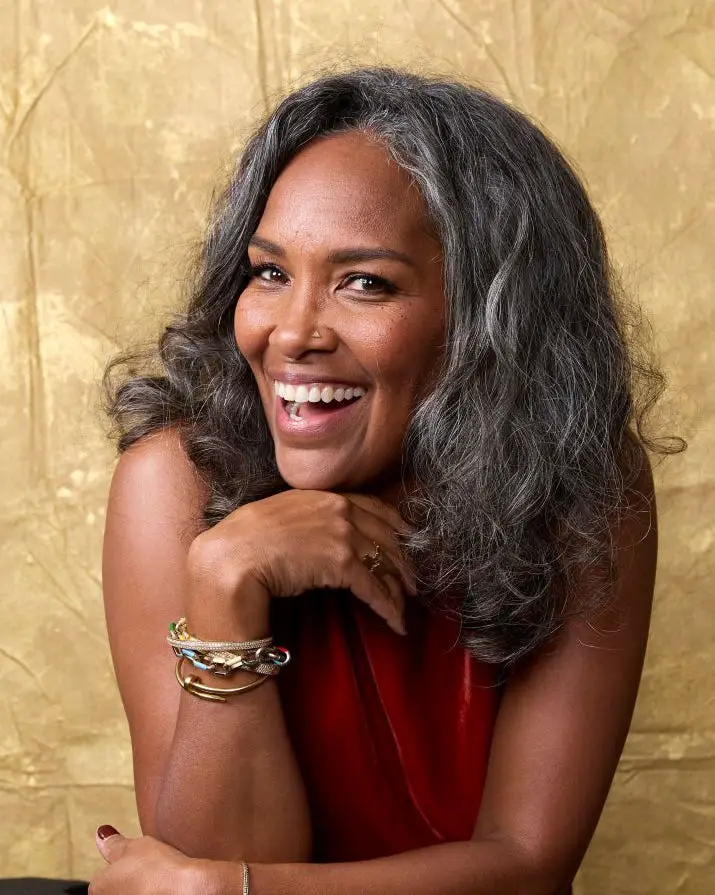
If your hair is already a natural gray with darker undertones, you can lean into it with a shoulder-length layered cut that gives the curls somewhere to go. The layers are cut to stack through the back, so the thick, wavy texture gets shape without turning into a triangle. The middle parting keeps the face clear, and the loose curls soften the overall silhouette.
Getting close to this at home starts with the cut: ask your stylist for: shoulder length layered cut with loose curls. Then the styling is mostly about letting the hair do its thing. A diffuser on low heat encourages the curl pattern, and a trim every six to eight weeks keeps the layers from getting shaggy. This is a DIY-friendly option once the base cut is right, since the daily routine is just wash, diffuse and go.
Shoulder Length Layers With Subtle Gray
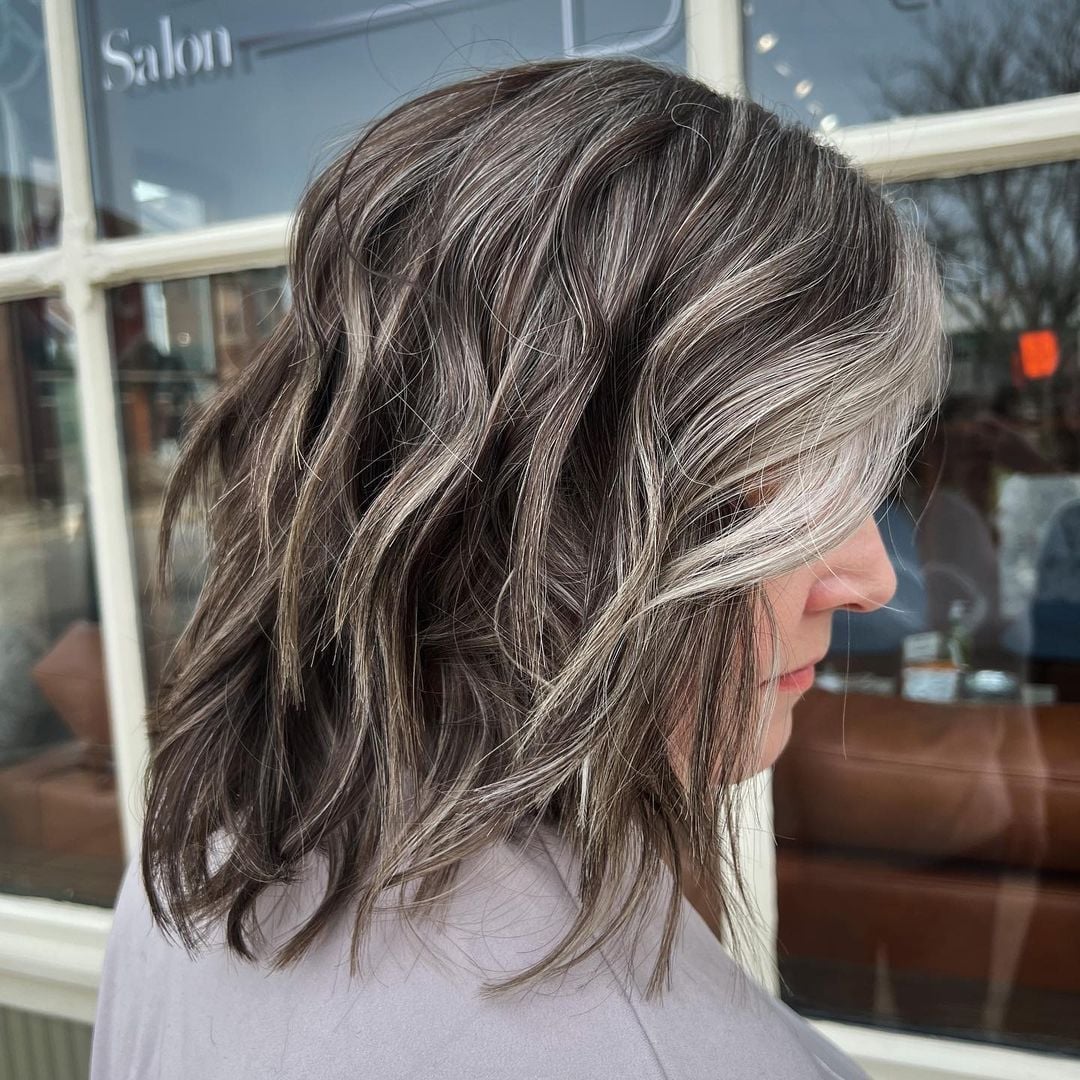
A shoulder-length layered cut with a middle part does two things at once: it gives fine-to-medium waves somewhere to land and keeps the gray blend from looking like an afterthought. The subtle silver threads sit naturally through the mid-lengths, so the grow-out phase is mercifully quiet. No bangs means less daily fuss, and the soft waves add volume where straight hair might fall flat.
Ask your stylist for: shoulder length layers, middle part, subtle gray blend. Medium density hair starting at shoulder length gets the most movement here. A texturizing spray brings out the wave pattern on second-day hair; a trim every six to eight weeks keeps the shape honest.
Collarbone Layers With Gentle Blowout
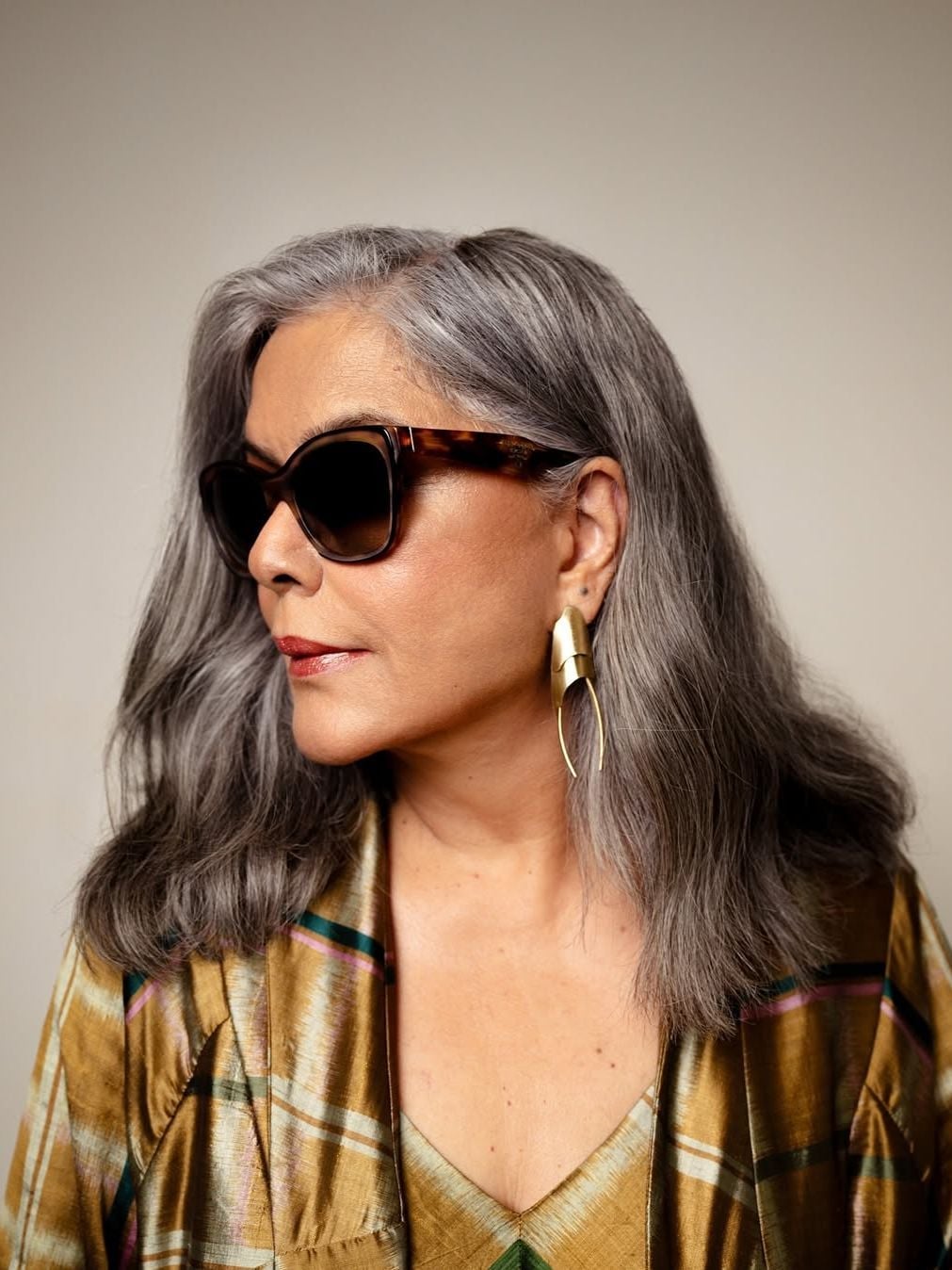
A collarbone-length cut with soft layers and a side part builds body where fine, wavy hair often lacks it. The gentle blowout smooths the cuticle without flattening the wave, and the gray blend is evenly distributed. Fine hair needs a heat protectant and a boar bristle brush to hold the shape past lunch. Ask your stylist for: collarbone length soft layers, side part, gentle blowout, gray blend. The technique works best on hair that air-dries with a natural bend, not bone-straight strands.
Mid-Back Layers With Smooth Blowout
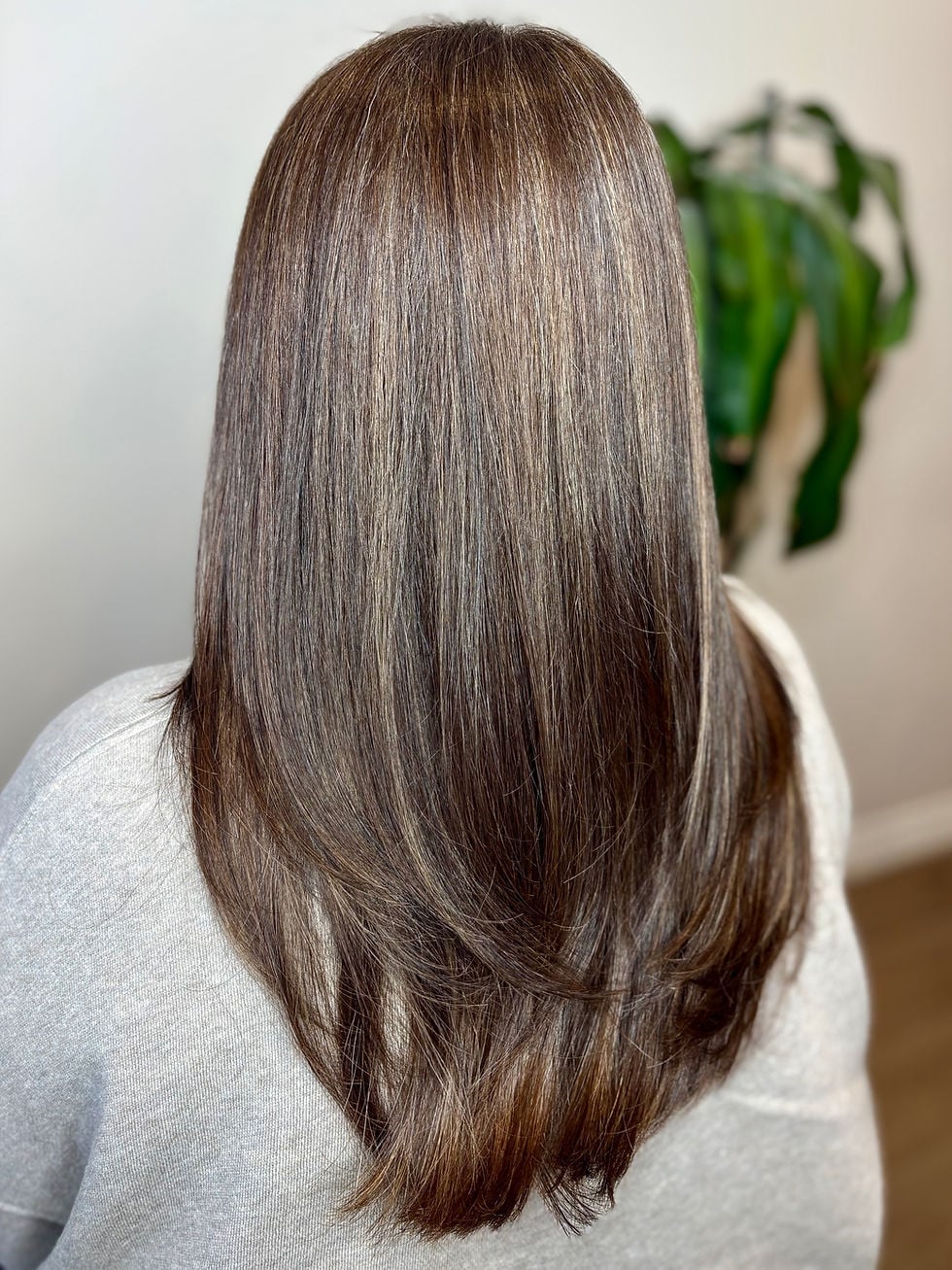
Long layers on thick, straight hair do something that blunt cuts cannot: they remove weight without sacrificing length. A smooth blowout with a middle part shows off the subtle gray highlights as a soft shimmer. On wavy textures, the same layers can look choppy if not cut dry, so this style suits those who prefer a polished finish. Ask your stylist for: mid-back length with long layers, smooth blowout, subtle gray blend. A large round brush and steady blow-dryer technique are required for the volume that straight hair needs.
The back view here tells the real story. The gray strands are woven through the interior, not just painted on the surface, so the color blends naturally from every angle. Thick hair benefits from the internal weight removal, and the middle part keeps the face-framing pieces even.
Mid-Back Length With Gray Balayage
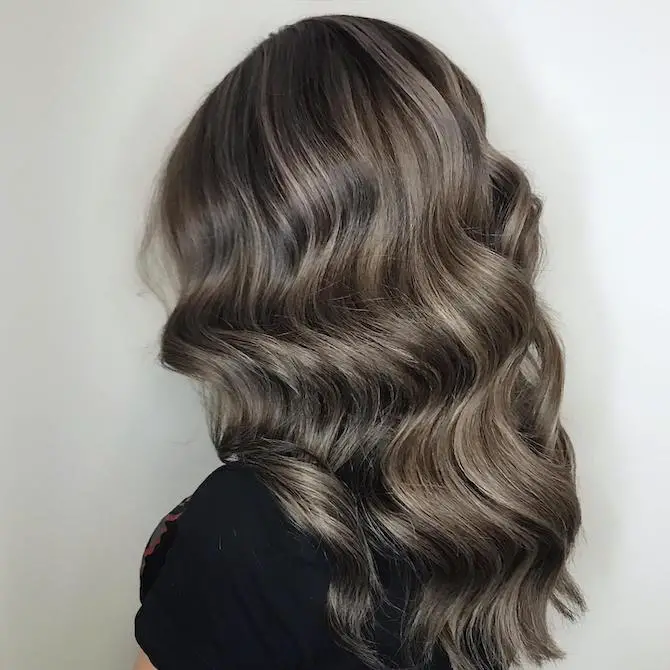
A gray balayage on a dark brown base is a different animal from standard highlights. The colorist hand-paints the silver tone onto the surface of thick, wavy sections, so the root line stays soft and the grow-out blends naturally. Here the loose waves and middle part show off the contrast between the deep base and the lighter gray pieces without a harsh demarcation line.
Ask your colorist for: mid-back length, loose waves, gray balayage, middle part. A texturizing spray and air-drying are enough for the wave pattern to do its job; a trim every ten to twelve weeks keeps the ends healthy. The technique works best on hair that has some natural bend, because the balayage placement follows the wave, not the straight line.
Mid-Back Layers With Gray and Blonde Highlights
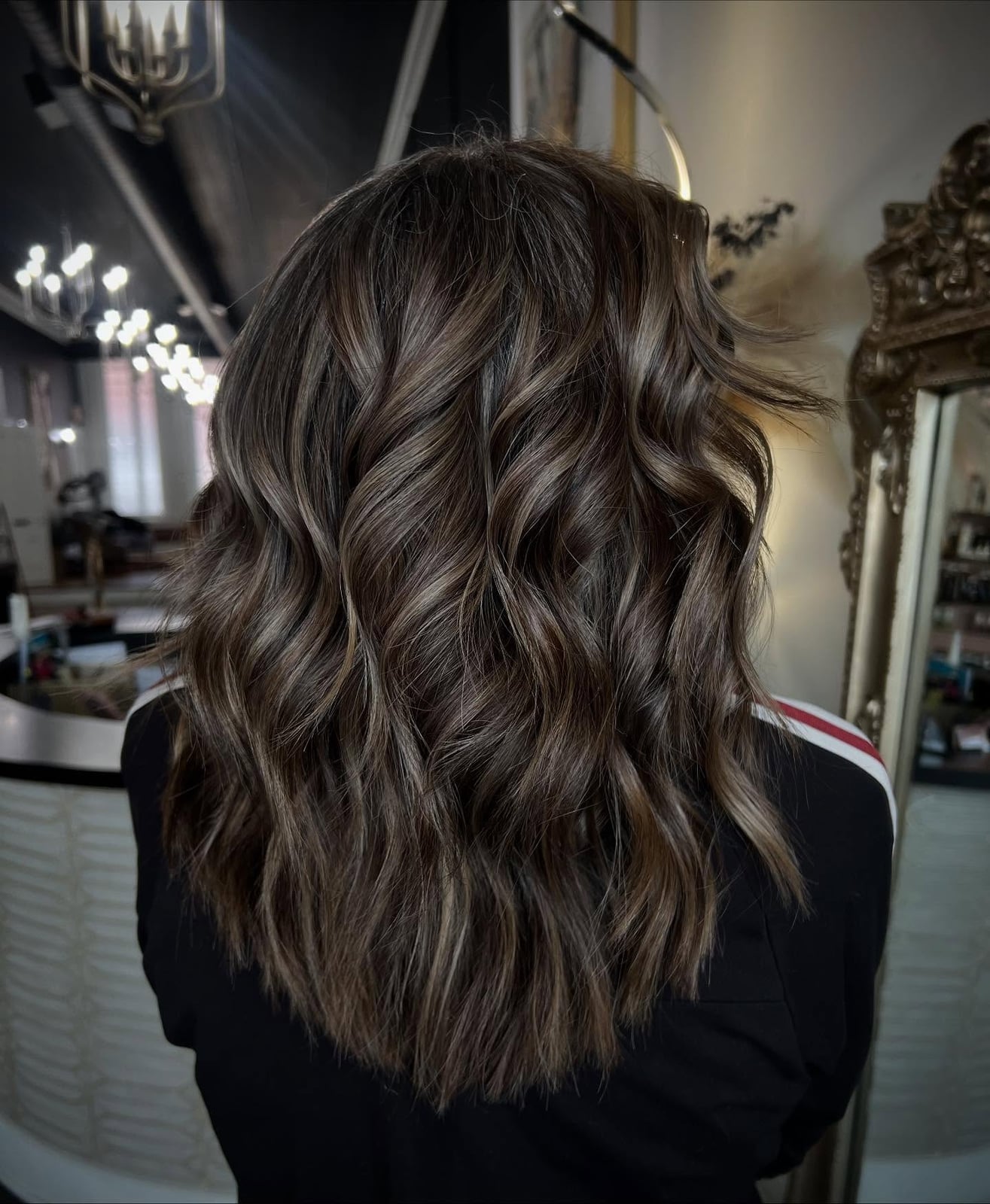
Wondering whether gray and blonde can coexist without looking like a happy accident? Long layers and loose waves on a mid-back length create enough movement for both tones to read as dimension, not confusion. The dark brown base anchors the lighter pieces, so the gray reads as cool and the blonde reads as warm, not muddy. Ask your colorist for: mid-back length long layers, loose waves, gray blonde highlights. Medium density hair with a natural wave benefits most from the mix; a curling iron can enhance the wave pattern for an event finish.
Long Wavy Layers With Seamless Gray Blend
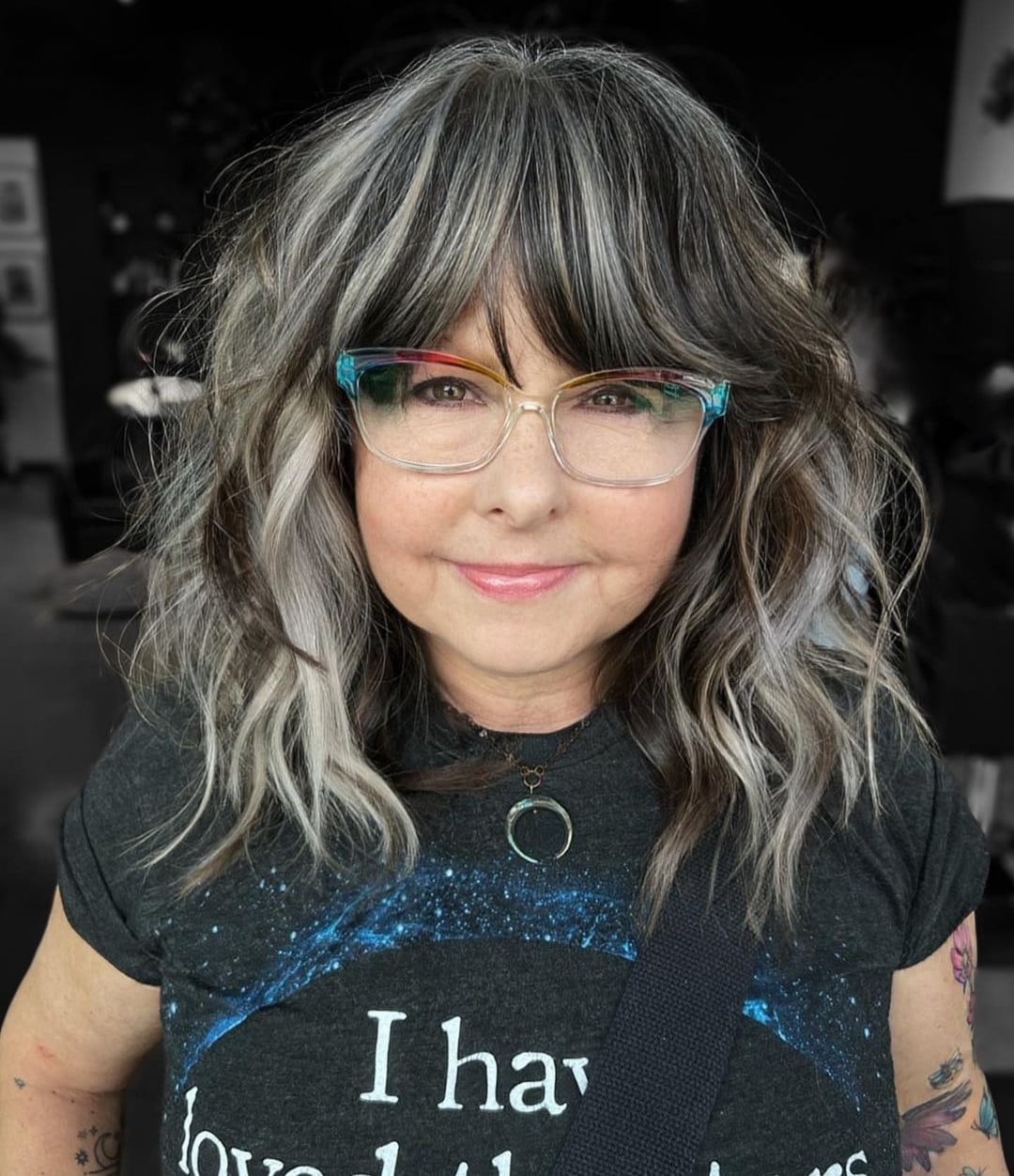
Thick hair at this length can feel heavy, which is why long layers are the structural answer here. They remove bulk while keeping the length, and the wavy blowout gives the whole thing a polished finish. The seamless gray blend runs through the ends, so the grow-out line is soft.
Ask your stylist for: long wavy layered cut, middle part, seamless gray blend. This cut works best on hair starting at mid-back, and the layers will need a trim every eight to ten weeks to keep the shape from drooping. A smoothing serum on damp hair before blow-drying helps the waves hold their form without frizz. The middle parting keeps the look symmetrical, which is useful when you want the gray to be a deliberate feature, not an accident.
Mid-Back Layers With Wavy Texture
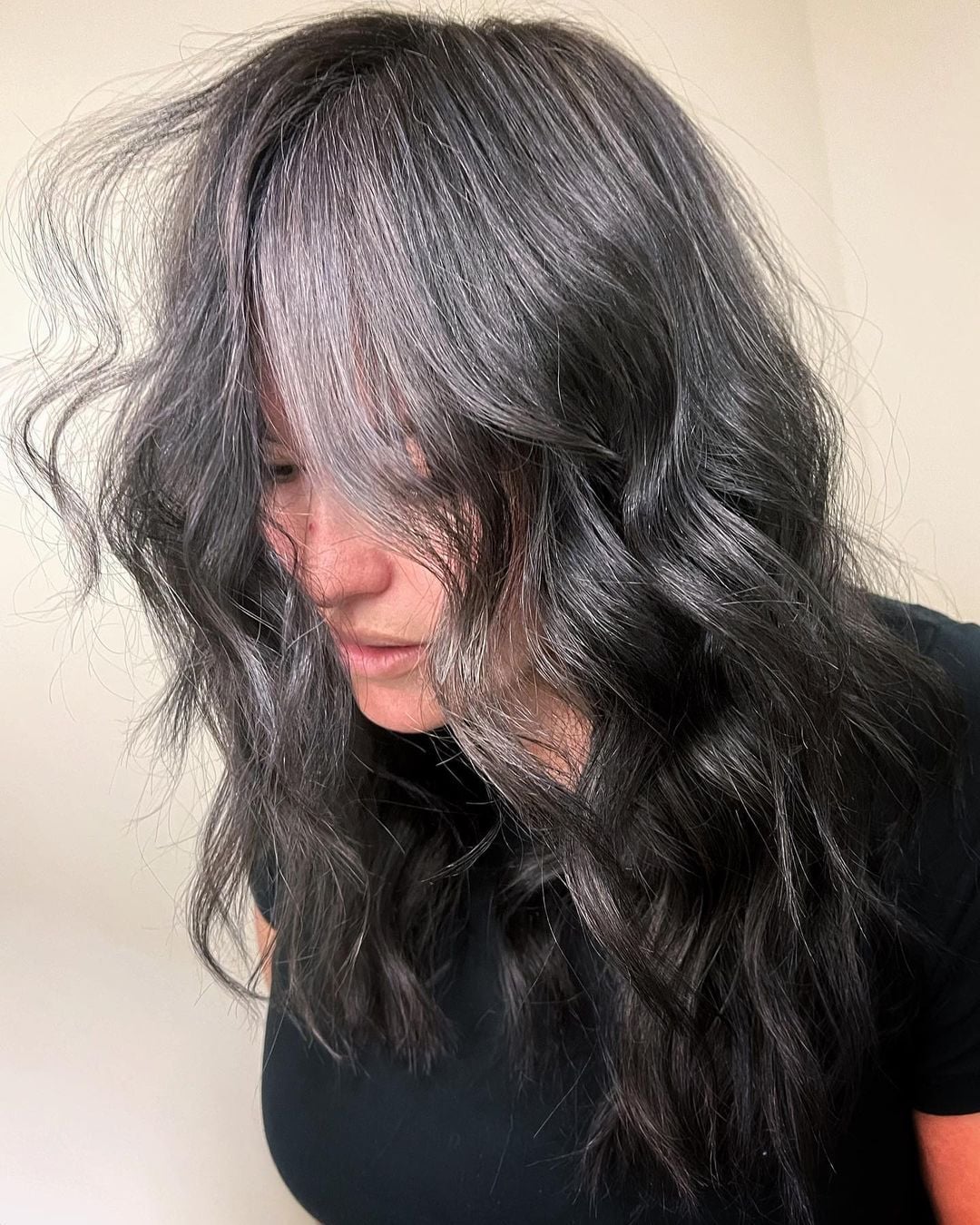
Seamless gray blending looks best when the cut gives the color room to move, and subtle layers at mid-back length do exactly that. The soft waves add texture without making the hair look fussy, and the middle parting keeps the distribution even. Thick, wavy hair at this length needs daily styling to avoid looking shapeless.
Ask your stylist for: mid-back length subtle layers, middle part, seamless gray blend. If you are not willing to spend time coaxing waves into place with a diffuser or a curling wand, this look will fall flat by midday. The layers themselves are low-maintenance on the cut side, but the texture requires effort. Skip this one if your idea of styling is a quick comb and out the door.
Mid-Back Air-Dried Waves With Gray Blend
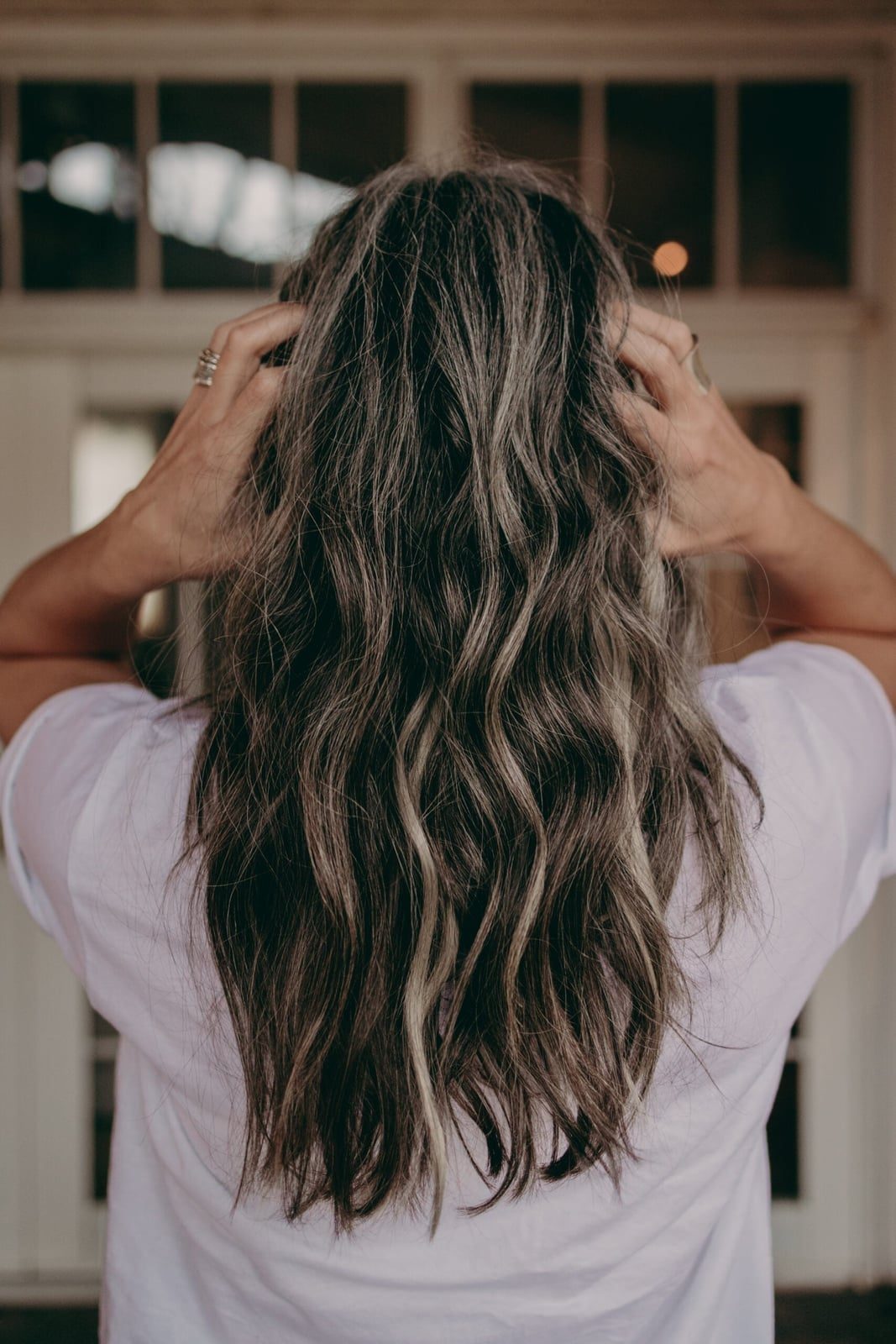
An air-dried finish is the path of least resistance, and for mid-back hair with a natural gray blend, it works. The thick, wavy texture holds its own shape without heat, and the middle parting gives the hair a relaxed, even fall. This is the go-to for a casual summer day when the goal is to look put together without turning on a blow-dryer. Ask your colorist for: mid-back length air dried waves, middle part, natural gray blend. The color creates the contrast, so the styling can stay simple.
Mid-Back Layers With Rich Gray Blend
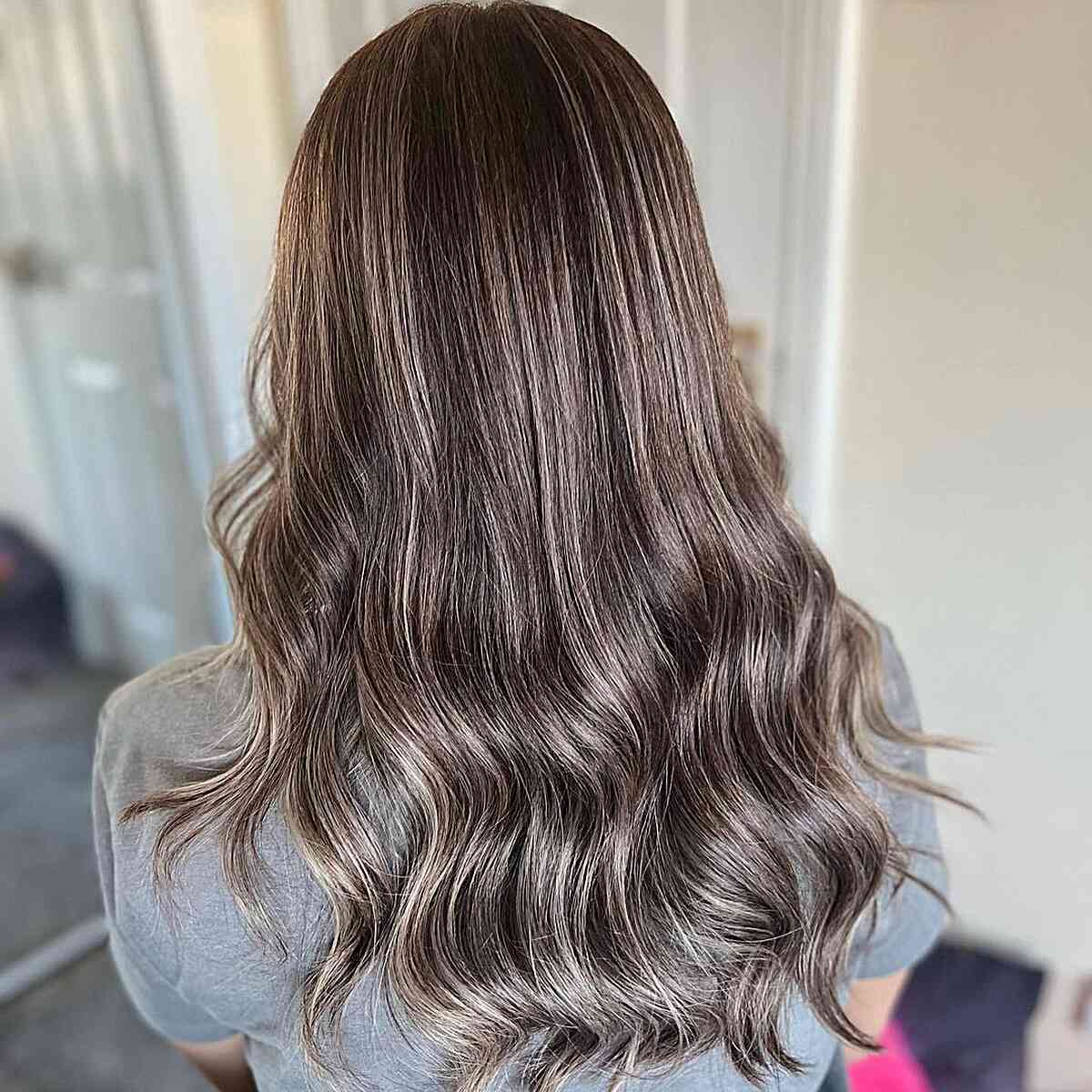
A rich gray blend with subtle ash highlights relies on technique more than luck. The colorist paints the gray tones into the dark brown base in a way that mimics natural growth, and the ash highlights add a cool dimension that stops the gray from reading as flat. Long layers at mid-back length allow the color to catch the light at different points, and the loose waves amplify that effect. Ask your colorist for: mid-back length long layers, loose waves, rich gray blend with ash highlights. The middle parting ensures the color distribution stays balanced from root to end. This is a salon-built look, not a grow-out you can fake at home.
Mid-Back Layers With Extensive Gray Blend, Wavy
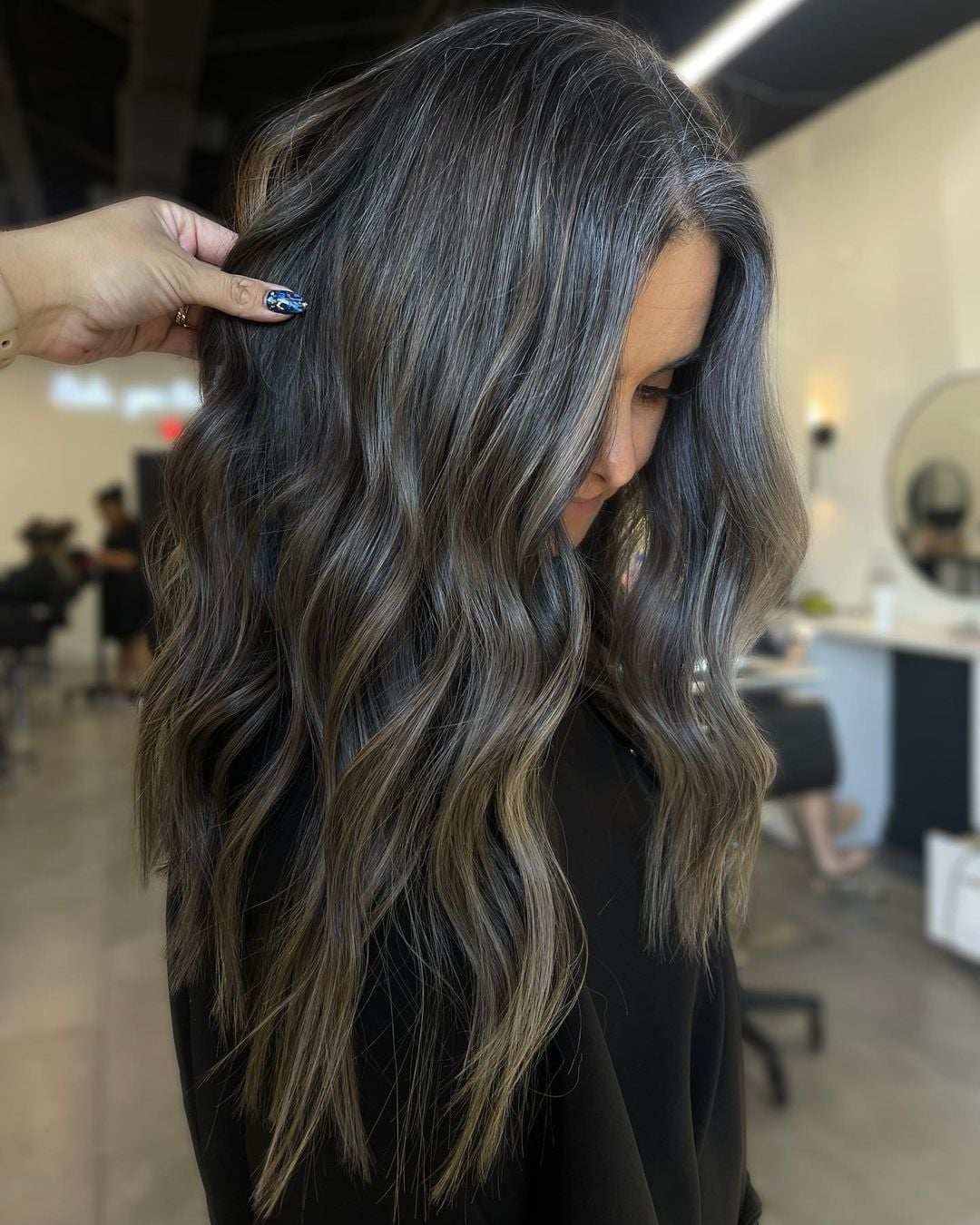
How do you ask for a gray blend that is extensive but still looks like it belongs there? You start with the cut. Long layers at mid-back length give the colorist room to weave the gray throughout, and the side parting adds asymmetry that keeps the blend from looking uniform. The loose waves soften the transition, and the subtle lighter highlights prevent the gray from overwhelming the dark brown base. Ask your colorist for: mid-back length long layers, loose waves, extensive gray blend. The side parting changes how the color falls, so expect the blend to read differently on each side. That is the point.
Long Layered Hair With Natural Gray Blend
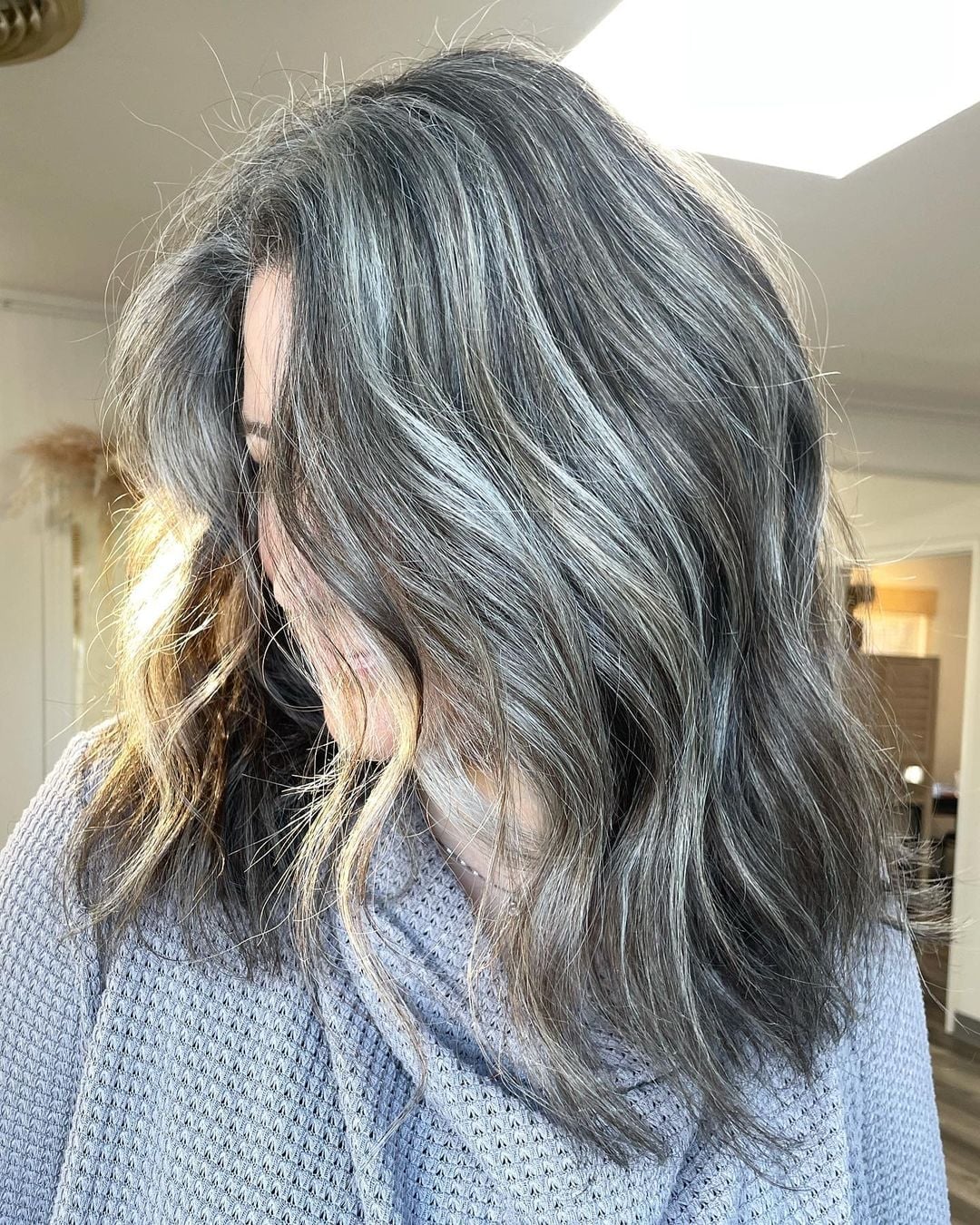
Thick, wavy hair has a habit of turning into a triangle if the cut doesn’t have enough internal movement. Long layers solve that by removing weight without sacrificing length, and they let air-dried waves fall in a natural S-pattern rather than a puff. The side part and ash-streaked gray blending here keep the dark brown base from reading as flat or solid. Ask your stylist for a long layered cut, air dried waves, side part, natural gray blend with ash streaks. A curl cream twisted into damp sections is enough styling effort; trims every 10 to 12 weeks maintain the shape.
Mid-Back Layers With Blended Gray Strands
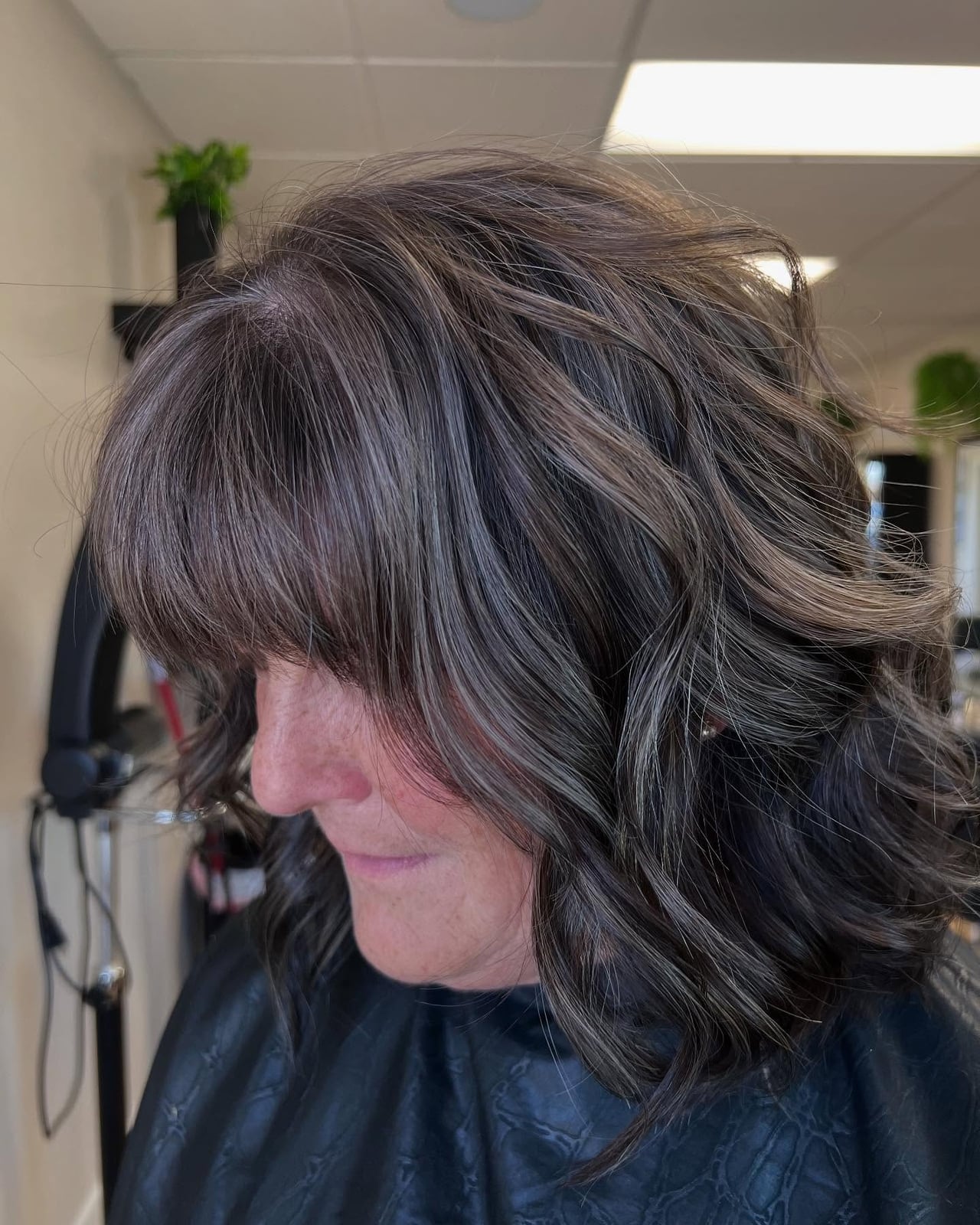
The design here is straightforward: dark brown hair with gray strands woven through the ends, not just clustered at the root. Long layers give the gray blending room to travel, so the silver doesn’t sit in a single stripe. A salon handles the color work, but the in-between upkeep is manageable. A texturizing spray and a quick scrunch revive the loose waves on day two or three, and a purple shampoo used once a week keeps the gray from picking up a yellow cast. The side part and thick wavy texture make the blend look deliberate. Ask your colorist for mid-back length long layers, loose waves, side part, blended gray strands. The grow-out line stays soft because the gray is distributed, not painted on.
Mid-Back Wavy Hair With Curtain Bangs
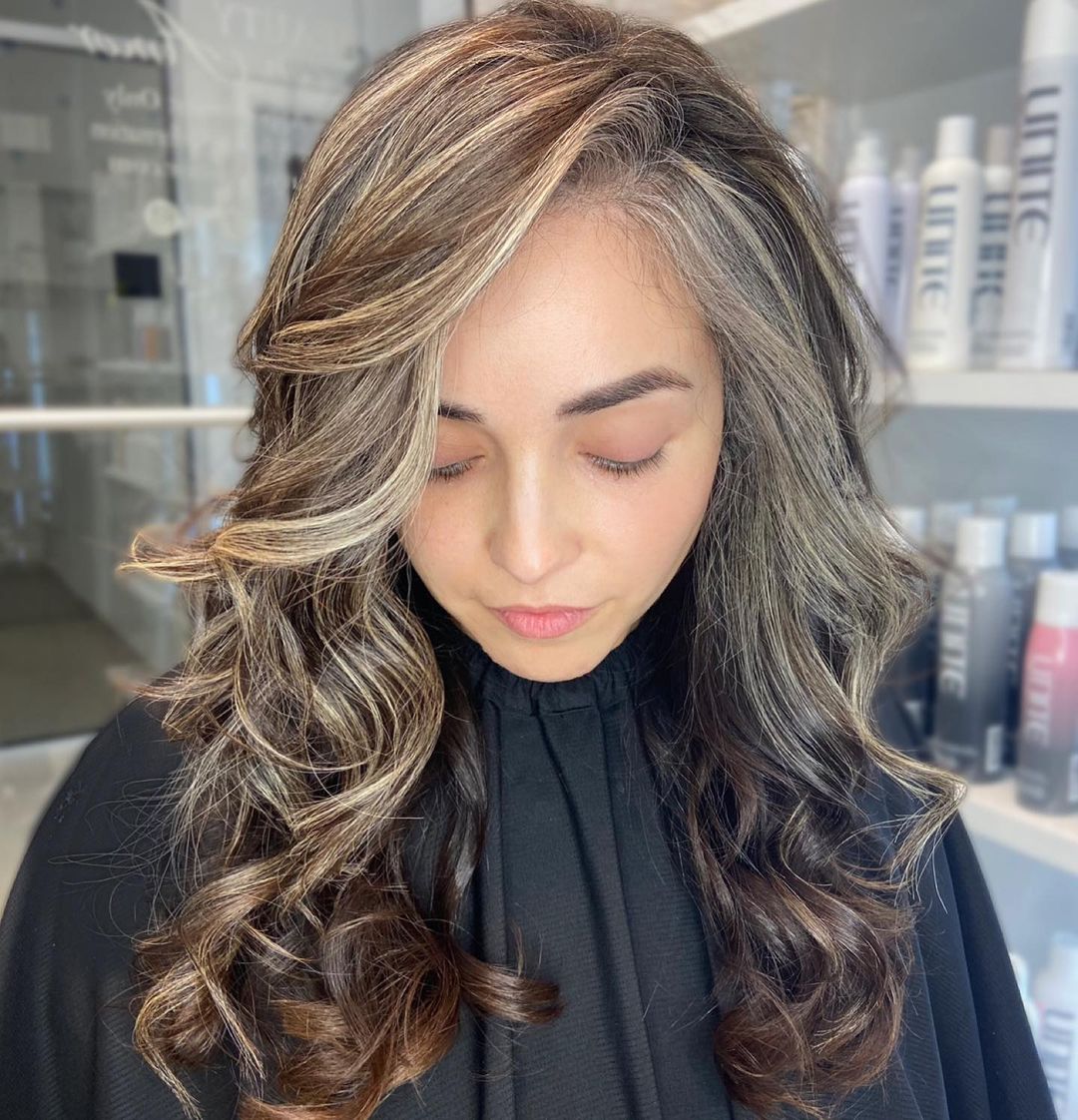
Curtain bangs on thick, wavy hair come with a trade-off: they look great when styled and can look awkward when they are not. The front pieces need a round brush and a blow-dryer every wash day, or they land at an angle that is neither fringe nor layer. The mid-back length waves can air dry with a texture spray, but the bangs demand attention. The gray highlights here are blended through the dark brown base, so the root line stays forgiving for several weeks. Ask your colorist for mid-back wavy hair, curtain bangs, side part, blended gray highlights. The drawback is that a blow-dryer is not optional for the bangs, and a trim every eight weeks keeps them from sliding into your eyes.
Final Thoughts
For fine hair, opt for blunt cuts or minimal layers to maintain density. Thicker hair can handle more layers for movement and to showcase the color blend.
- Trim every 6-10 weeks to maintain shape and blunt lines.
- Use color-safe shampoo and conditioner to preserve depth.
- Purple shampoo can be used sparingly to neutralize brassiness, but be cautious with gray tones.
- Deep condition weekly to keep hair soft and manageable.
Gray blending is about enhancing your natural beauty, not masking it.