
Hair color charts translate the spectrum from darkest brown to lightest blonde, mapping depth and tone so you know what you are asking for before you sit in the chair. Lived-in color and soft face-framing layers are the current standard, moving the conversation away from flat, solid shades and toward dimension that grows out gracefully.
This collection of 26 ideas walks through the full range, from low-maintenance balayage to vibrant reds and ash-toned blondes, covering lengths from collarbone to mid-back and textures from straight to wavy. The Simple Hair Color Chart approach helps you match a base shade and technique to your real life, whether fine hair that needs depth or a visible grow-out line that needs a root shadow.
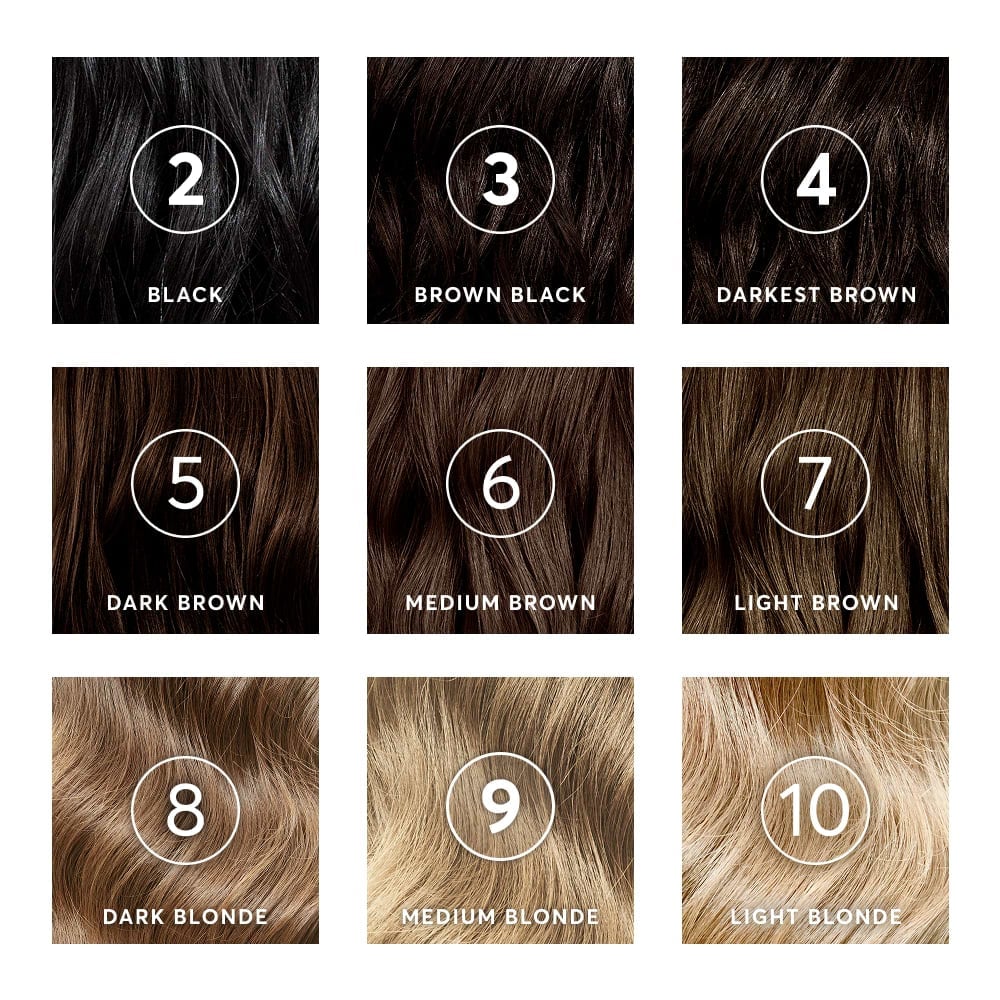
Hair Color Swatches Numbered 2 to 10
Forget guessing your base shade from a blurry bathroom mirror. This grid lines up hair color swatches from level 2 (black) to level 10 (light blonde) in tidy, straight sections against a white background, each one numbered and labeled so you can see exactly how dark chocolate differs from espresso. If you are trying to explain to a colorist whether your natural is a warm 5 or a neutral 6, this is the visual shorthand you need. Ask your colorist for: hair color levels 2 through 10. Use the chart as a reference before any consultation, and save yourself the confusion of describing a shade you can only half remember.
Platinum Blonde Lob With Root Shadow
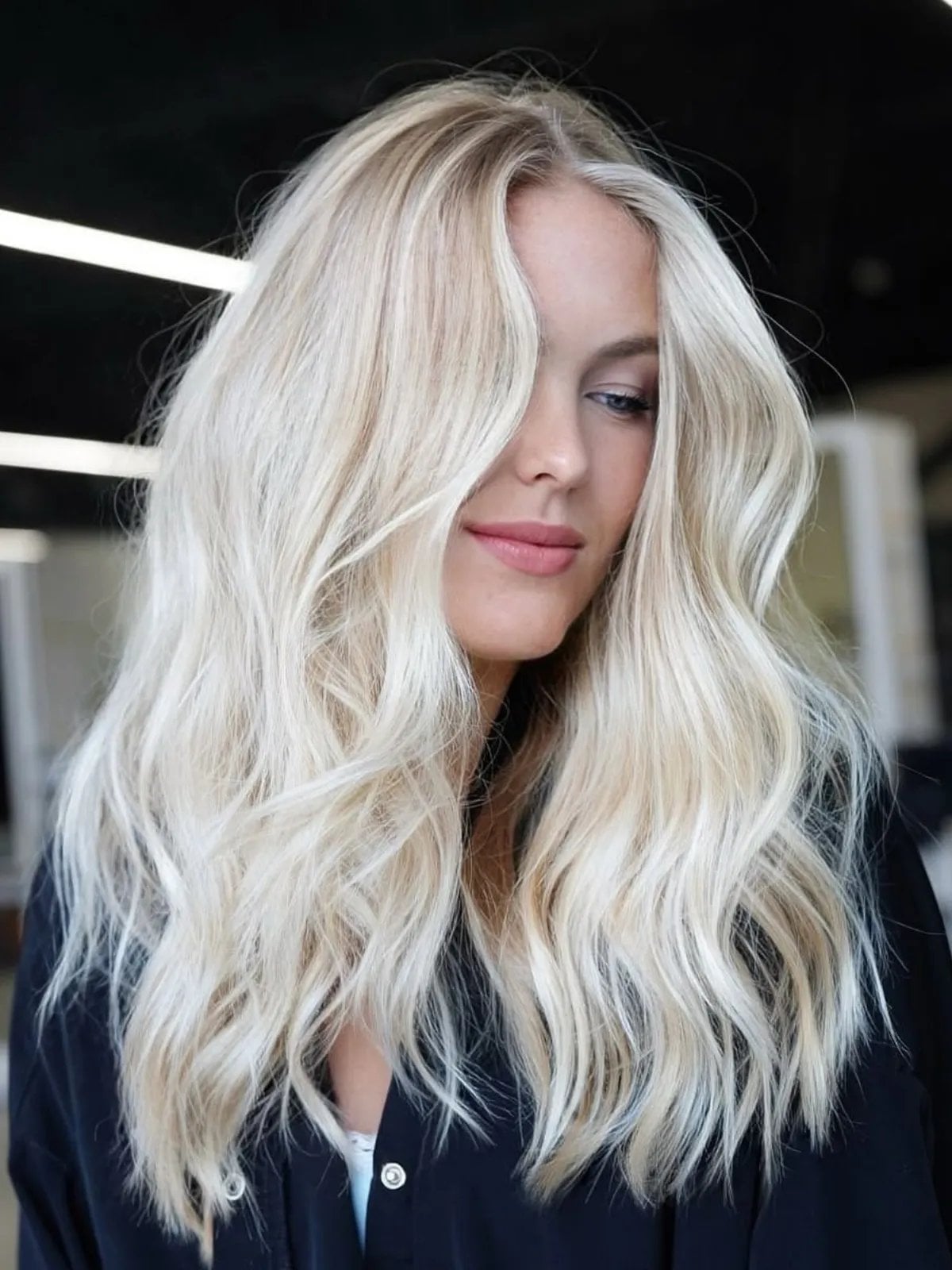
Can fine, wavy hair pull off platinum blonde without looking like a sad cotton ball? Yes, if the technique is right. This mid-back length lob uses a soft root shadow at the part that blends into a cool, ashy platinum through the ends, with subtle babylights to keep it from going flat. The curtain bangs and voluminous blowout add the width fine texture often lacks. Ask your colorist for: platinum blonde with soft root shadow and babylights. Use a purple shampoo once a week to keep brassiness at bay, and expect a toning appointment every four to six weeks. Platinum demands upkeep, but the root shadow buys you a few extra weeks between touch-ups.
Dark Brown Base With Caramel Balayage
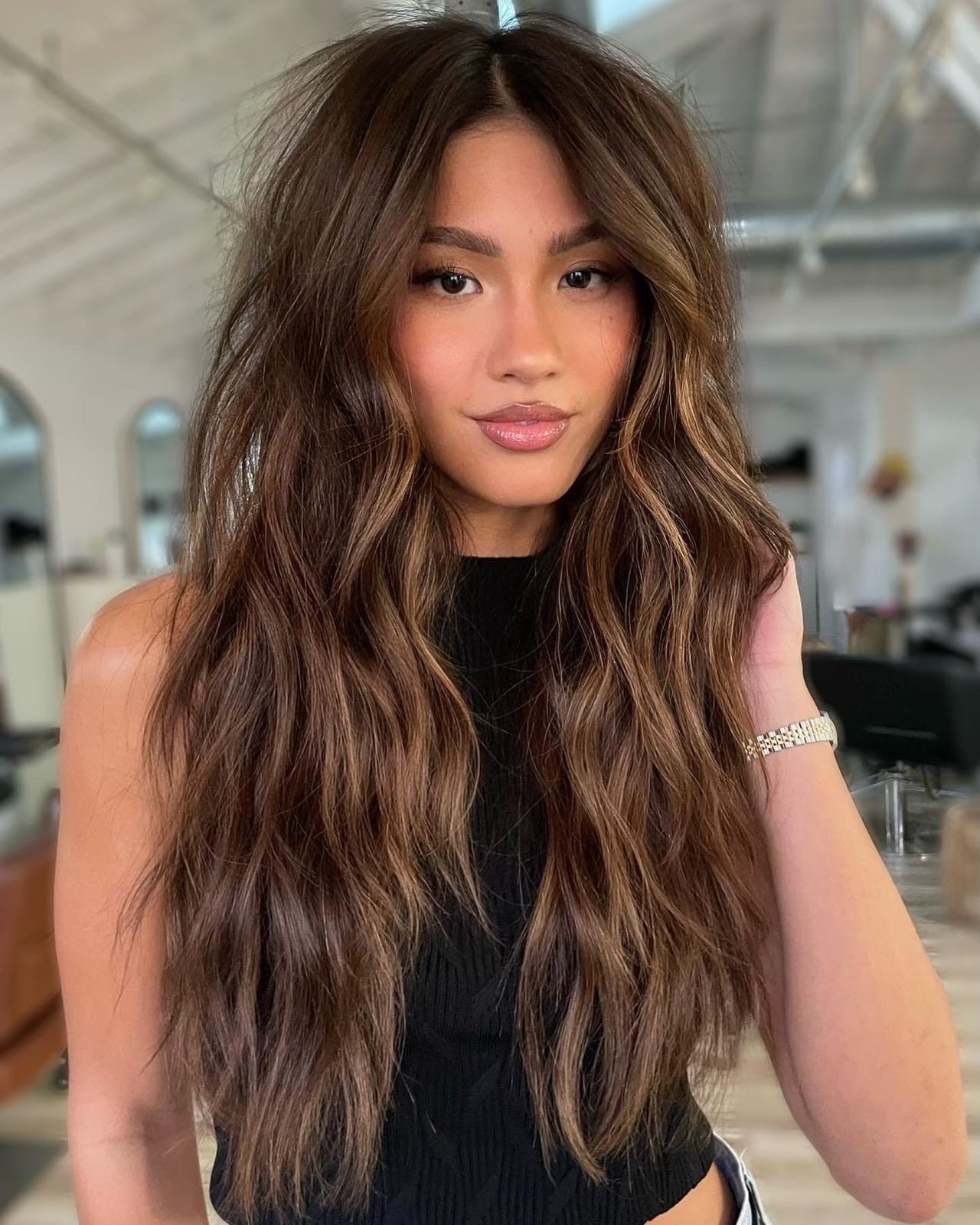
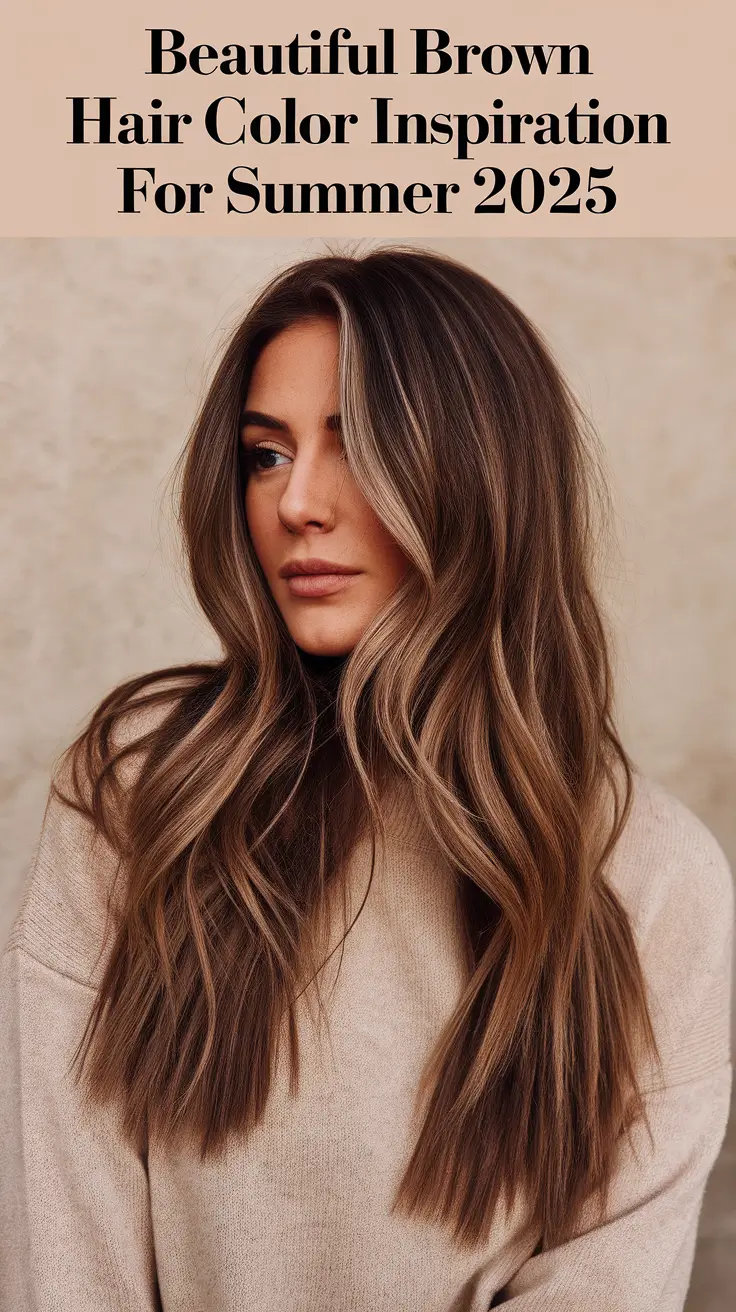
The dark brown base here stays deep and rich at the roots while the caramel balayage is painted freehand onto the mid-lengths and ends, creating a gradient that gets lighter toward the tips. That hand-painted application is what gives the color its soft, diffused transition, no harsh lines where the brown meets the caramel. Long layers and curtain bangs frame the face without cutting into the overall length. Ask your colorist for: dark brown base with caramel balayage and curtain bangs. The balayage placement is tailored to where light naturally hits the hair, which is why it looks dimensional even when the waves fall loose.
Air Dried Brown With Subtle Caramel
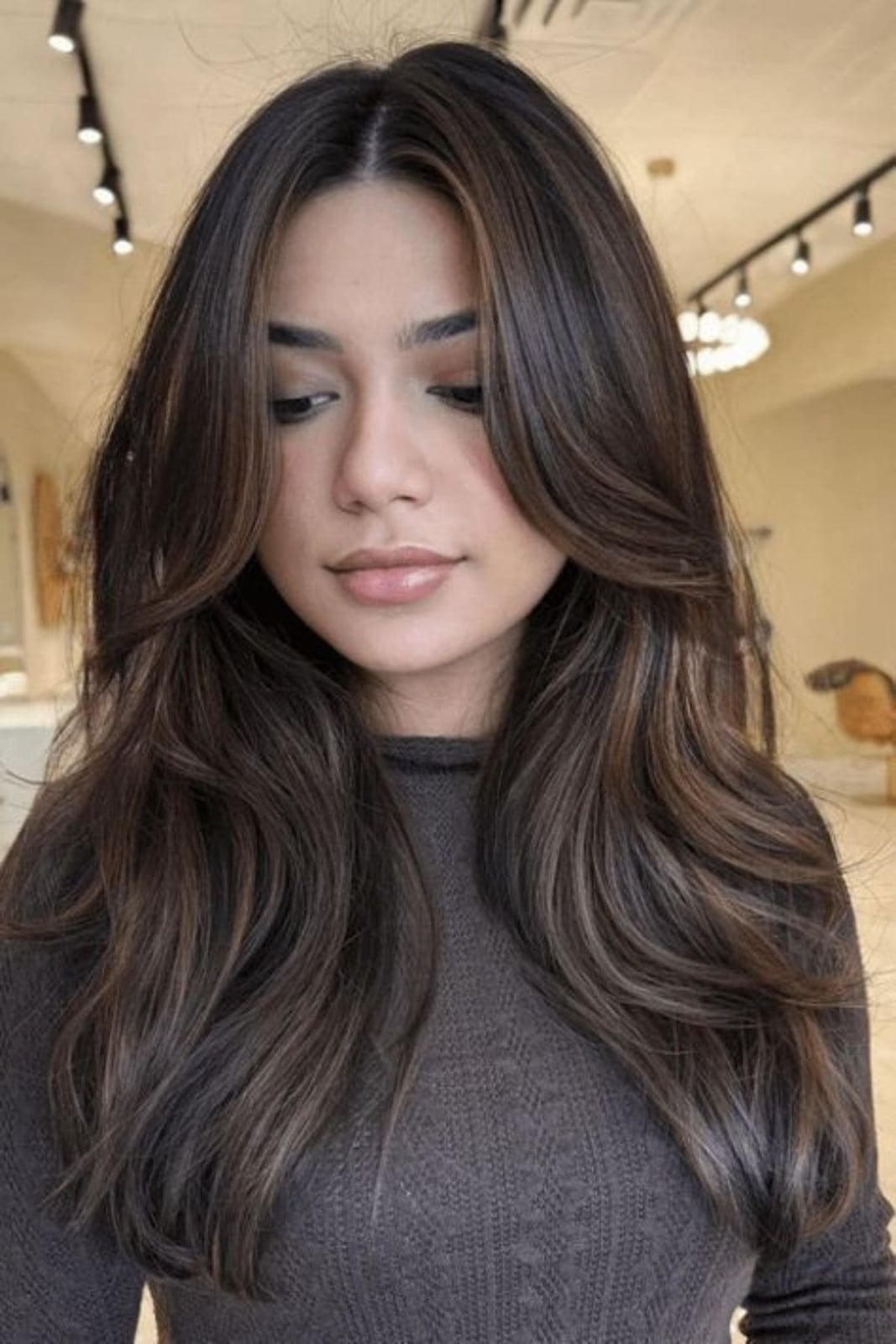
This is what a lived-in color looks like when you actually live in it. The dark brown base is accented with subtle caramel highlights that are concentrated around the face and scattered through the lengths, not so many that you lose the base color entirely. The hair is styled air-dried with soft waves, which means no heat styling is required to make the highlights read as intentional. Ask your colorist for: dark brown base with subtle caramel highlights and curtain bangs. This is a salon-leaning job, but the maintenance is low: a trim every eight weeks and a gloss every three months keeps the caramel from warming up too much against the brown.
Dimensional Caramel Balayage Lob
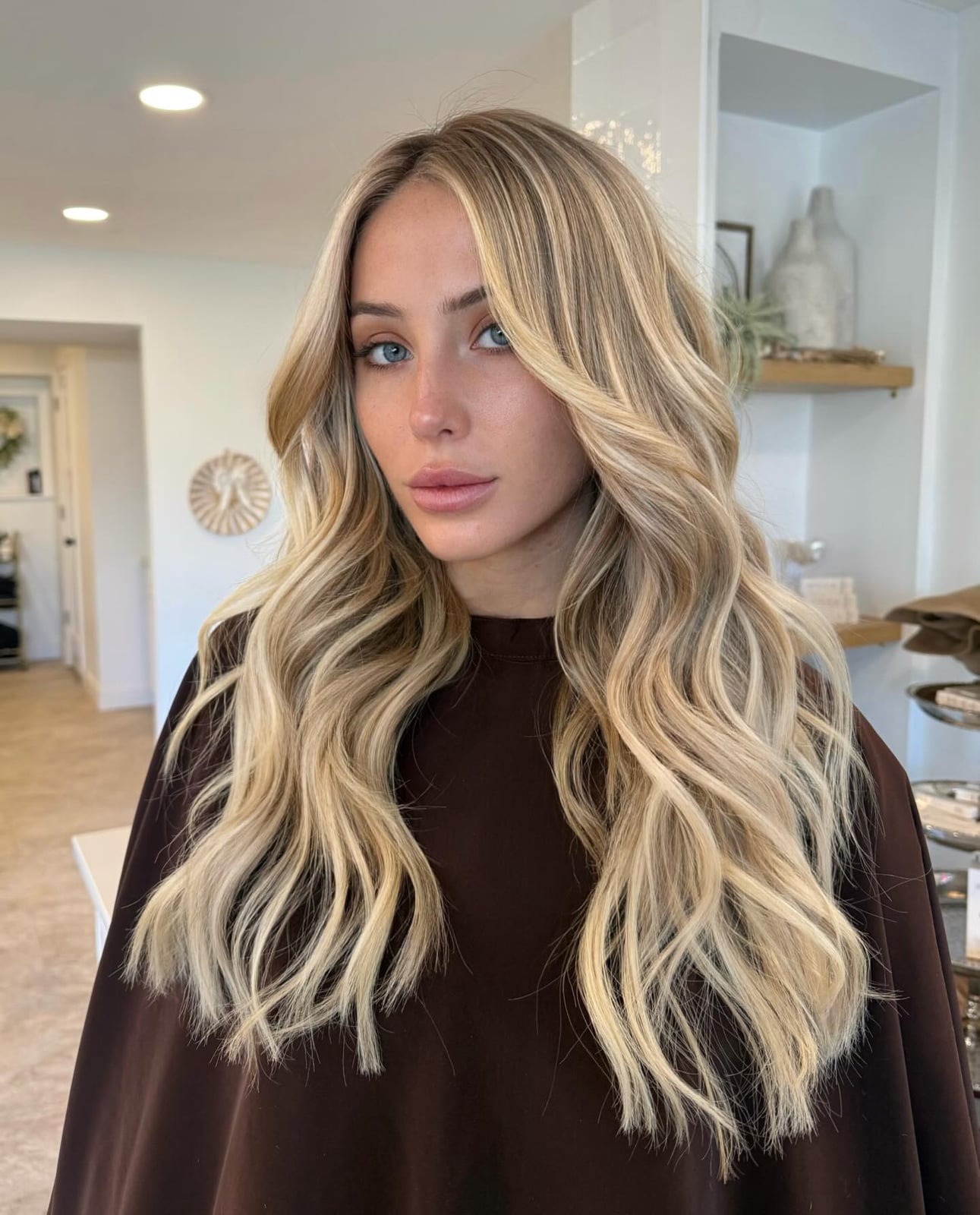
How do you get a colorist to give you exactly this kind of dimension without a long explanation? Start with the right words. This mid-back lob uses a dark brown base with caramel balayage painted through the ends, and the key detail is that the caramel pieces are placed at varying widths and depths, not all at the same level. That irregular placement is what creates the dimensional effect, making the color shift as the hair moves. Ask your colorist for: dark brown base with caramel balayage and curtain bangs. If you show them a reference that matches the middle part and loose waves, they will know exactly how to layer the tones.
Chocolate Brown With Caramel Balayage
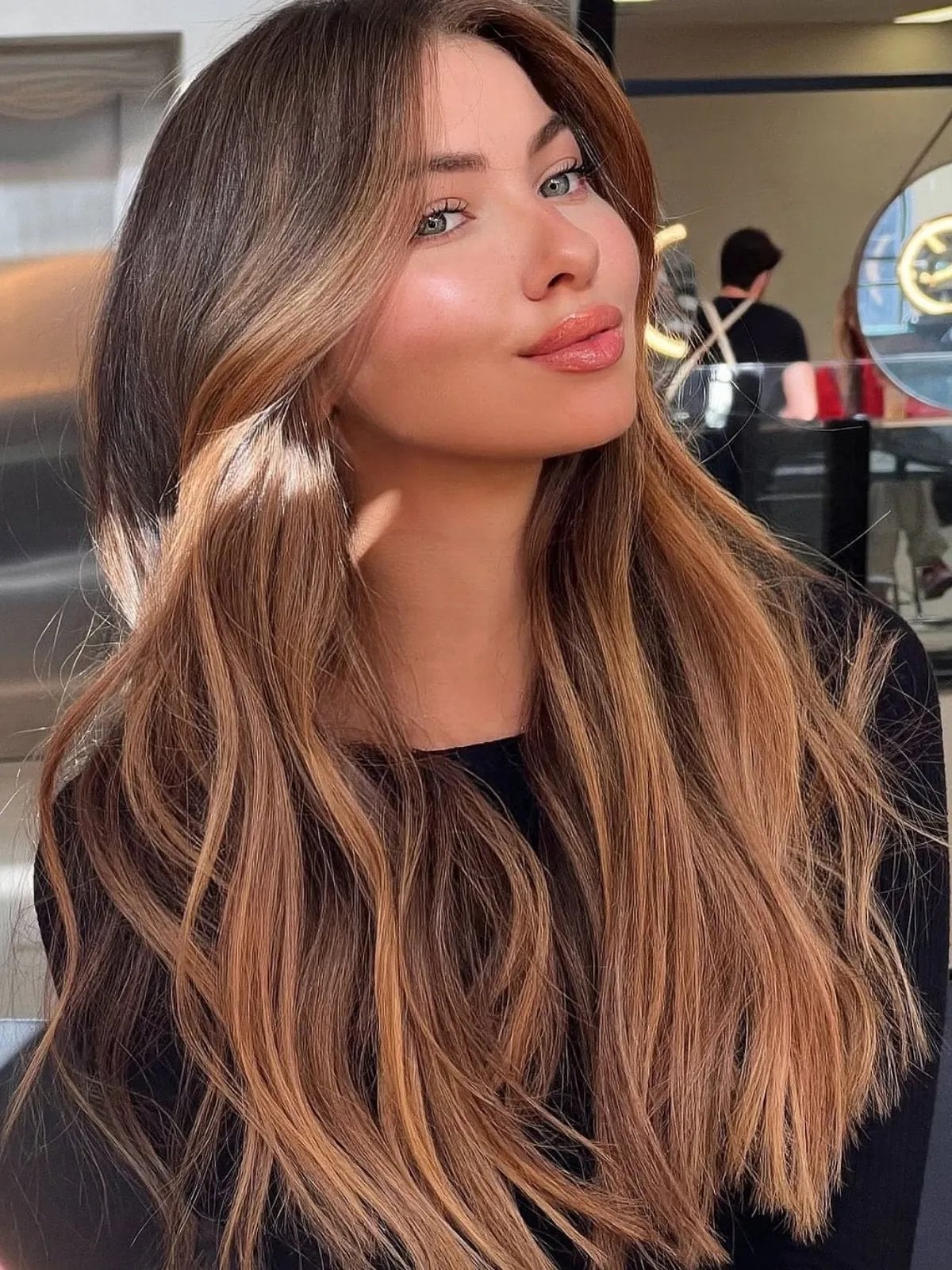
Where a straight dark brown can read as flat, this chocolate brown base with caramel balayage adds dimension without going full blonde. The mid-back length is styled in loose waves with curtain bangs and a middle part, and the caramel tones are painted through the ends. Thick hair types benefit most here; the curtain bangs soften round and heart faces. Ask your colorist for: chocolate brown base with caramel balayage and curtain bangs. A texturizing spray helps define the waves. Plan for a balayage touch-up every three to four months.
Dark Blonde With Blonde Balayage
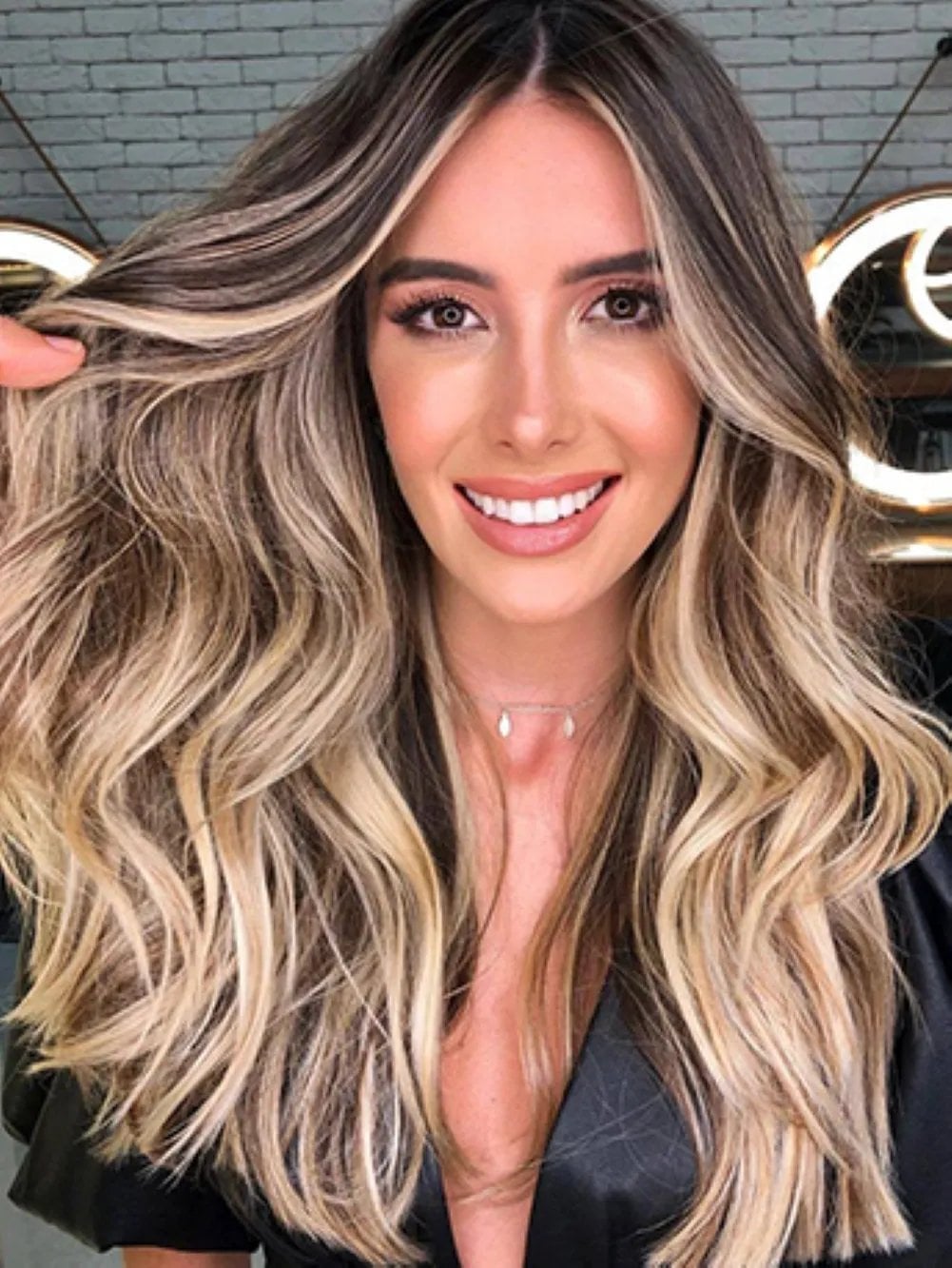
A dark blonde base with a blonde balayage works because the contrast is gentle. Long, thick hair styled in loose waves with a middle part lets the sun-kissed effect look natural. This look suits thick hair types; the middle part and length below the chin elongate oval and long faces. Those with fine or low-density hair may find the weight of the balayage too heavy. Ask your colorist for: dark blonde base with blonde balayage. A texturizing spray keeps the waves from falling flat. Refresh the balayage every three to four months.
Thick Straight Dark Blonde Balayage
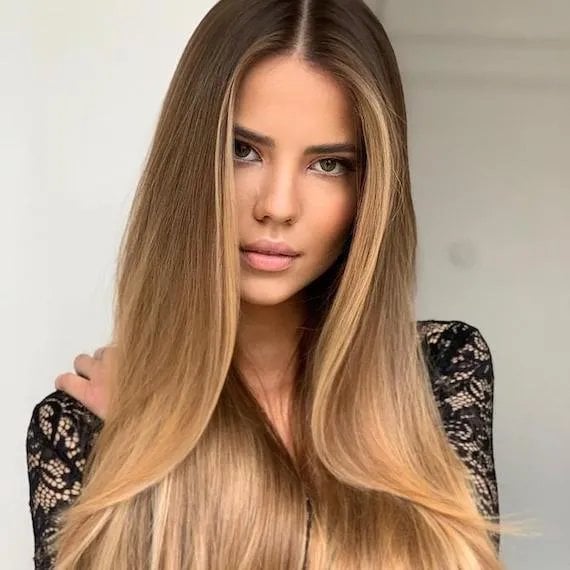
The balayage technique here is applied to mid-back length, thick, straight hair with a dark blonde base and lighter blonde highlights. Because the hair is straight, the color is painted freehand in vertical sections so the lighter pieces sit closer to the surface. A middle part and blowout styling show the dimension clearly. Thick hair types with straight texture get the most mileage from this approach. Ask your colorist for: dark blonde base with lighter blonde balayage. A smoothing serum controls flyaways and adds shine. The balayage grows out softly and needs a refresh every three to four months.
Ash Blonde With Platinum Highlights
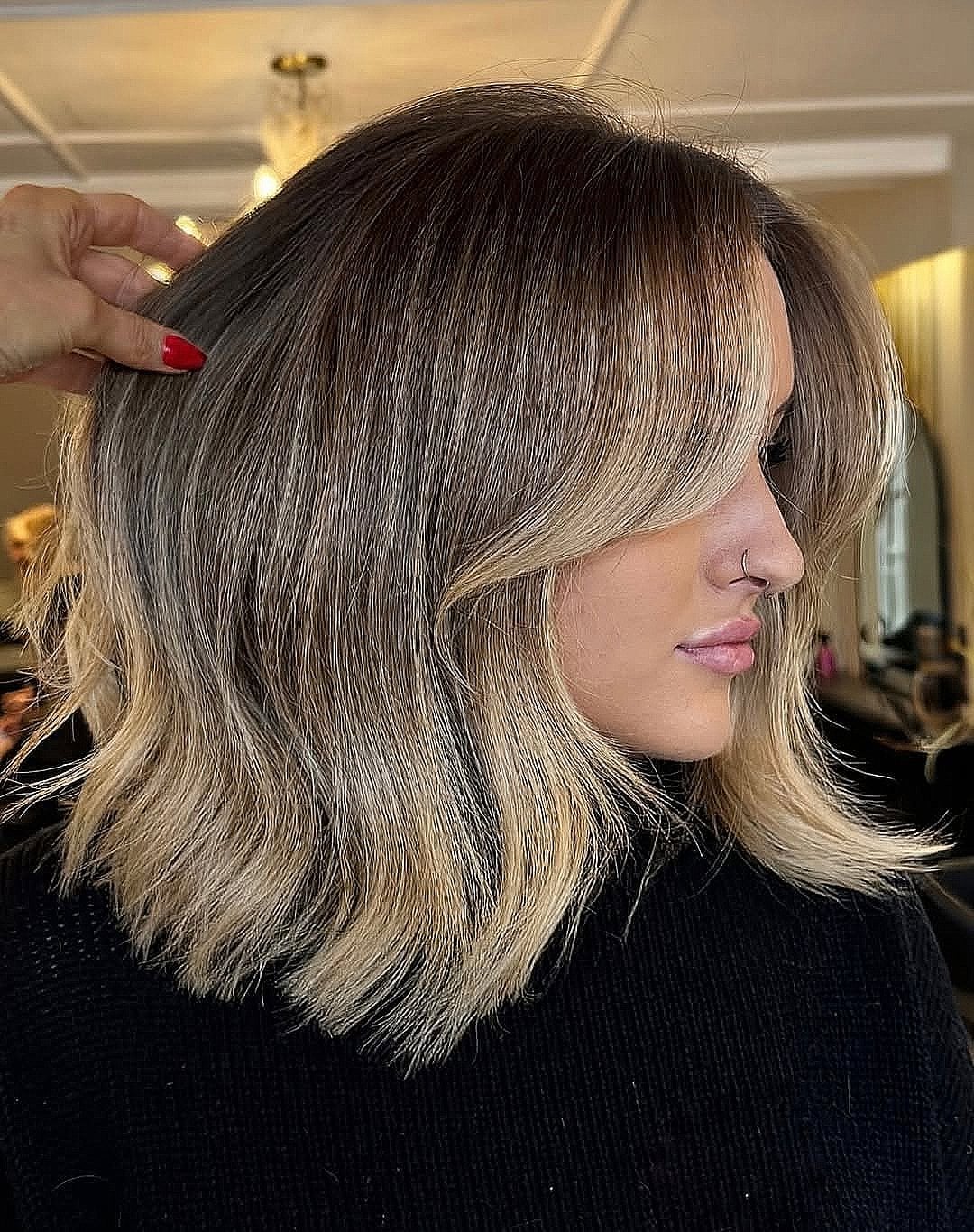
Is the payoff worth the maintenance? Long, layered hair styled in loose waves with an ash blonde base and bright platinum highlights creates a high-contrast look that is striking but demanding. Thick hair types can carry the dimension; the middle part and length below the chin elongate oval and long faces. The honest drawback is brassiness. Ash tones pull warm quickly, and platinum highlights show every hint of yellow. Ask your colorist for: ash blonde with bright platinum highlights. A purple shampoo used weekly helps, but toning appointments every six to eight weeks are the real cost of entry.
Ash Blonde With Subtle Highlights, Mid-Back
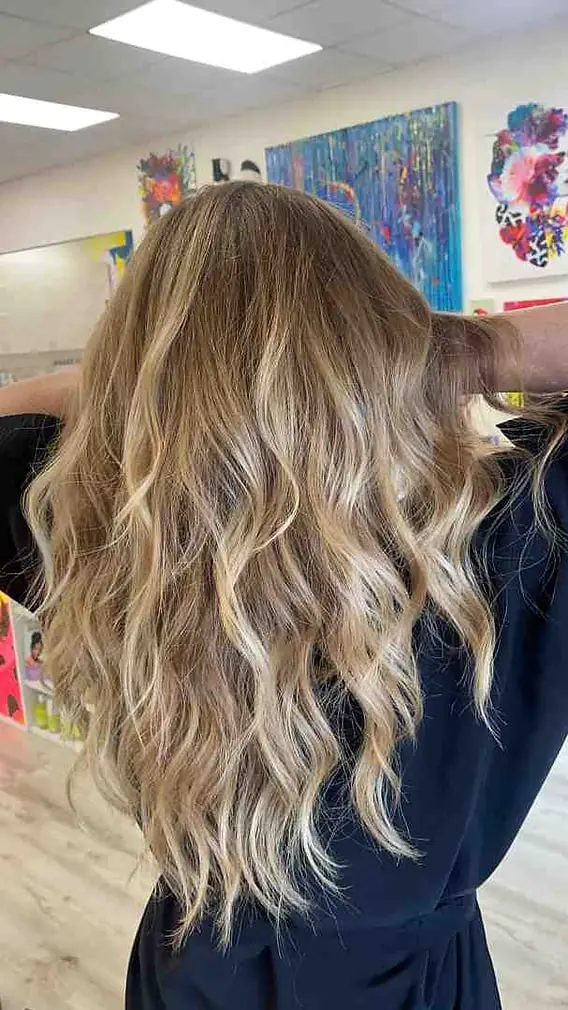
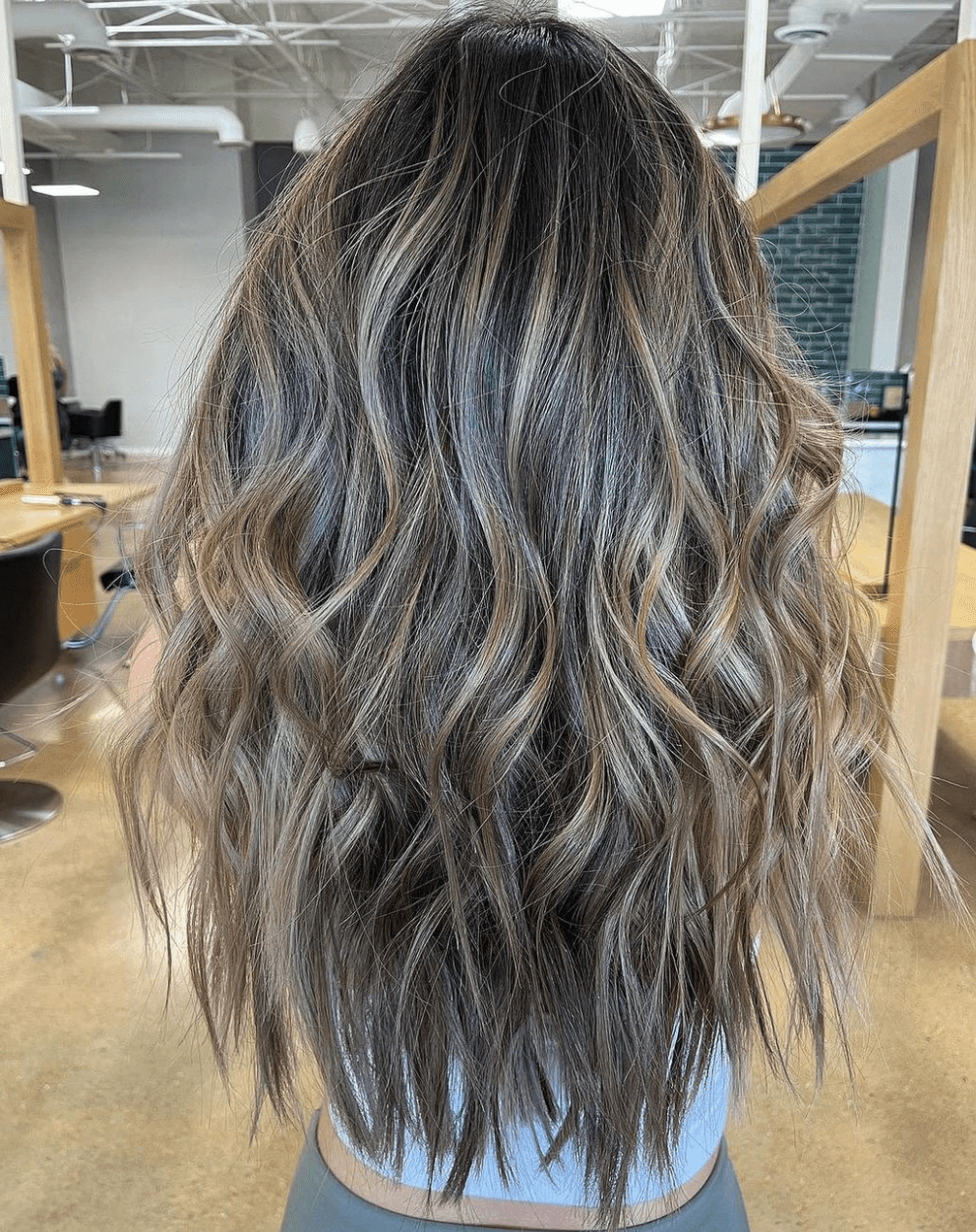
A back view of long, thick, wavy hair in an air-dried style shows how ash blonde with subtle, blended highlights reads from every angle. The layers are visible through the mid-back length, and the color is a cool ash blonde with highlights that are there but not shouting. Thick hair types suit this best; the middle part and length below the chin elongate oval and long faces. Ask your colorist for: ash blonde with subtle blended highlights. A purple shampoo keeps the ash tone from going brassy between appointments. Plan for a highlight refresh every eight to ten weeks.
Collarbone Blonde With Highlights
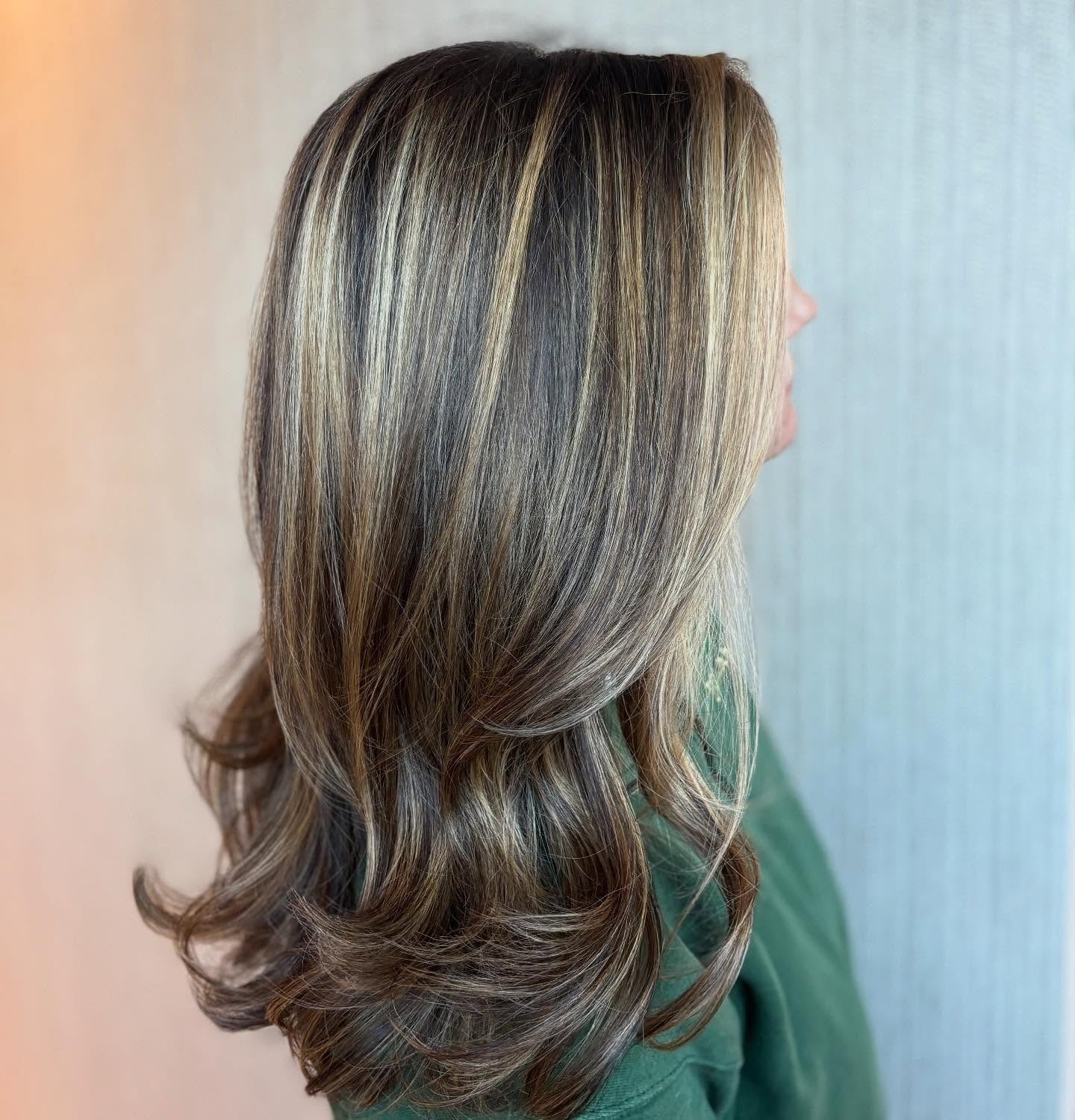
A collarbone-length cut with loose waves and a middle part shows off a blonde base woven with lighter blonde highlights. The effect is subtle dimension rather than stripey contrast, which makes it a good match for medium-density hair. Ask your colorist for: blonde base with lighter blonde highlights. A few specific requests help: keep the highlights fine and place them around the face to catch light, and ask for a root shadow to soften grow-out.
Mid-Back Neutral Blonde Balayage
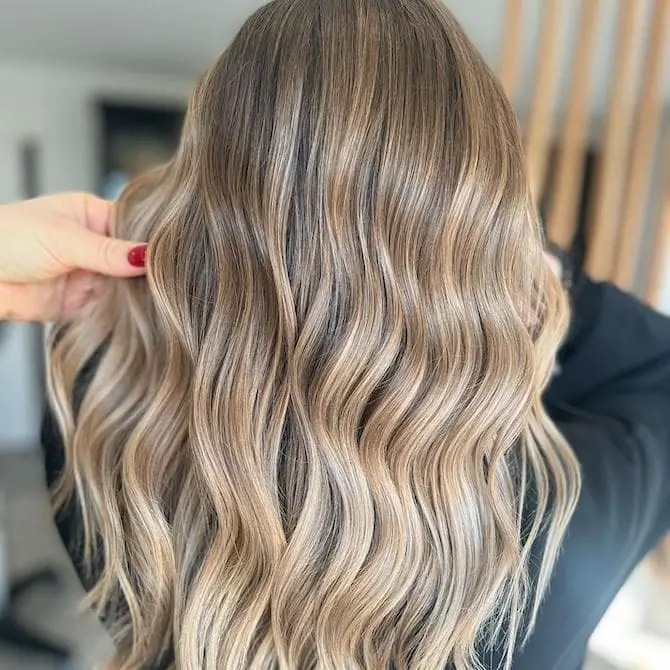
How do you get a blonde that reads as dimensional but never brassy? The answer is a neutral blonde balayage on mid-back length hair with layers and a middle part. The colorist hand-paints lighter blonde strands onto a neutral base, skipping the roots to create a soft, sunkissed fade. Thick hair is the ideal canvas here, since the technique relies on enough density to show the contrast between the deeper base and the lighter pieces.
Ask your colorist for: neutral blonde balayage with lighter blonde strands. The back view in this photo shows how the lighter ribbons travel through the layers, which adds movement to wavy blowouts. Because the root area stays close to your natural shade, this grows out with almost no visible line, so you can stretch the time between touch-ups to three or four months.
Collarbone Ombre With Blonde Ends
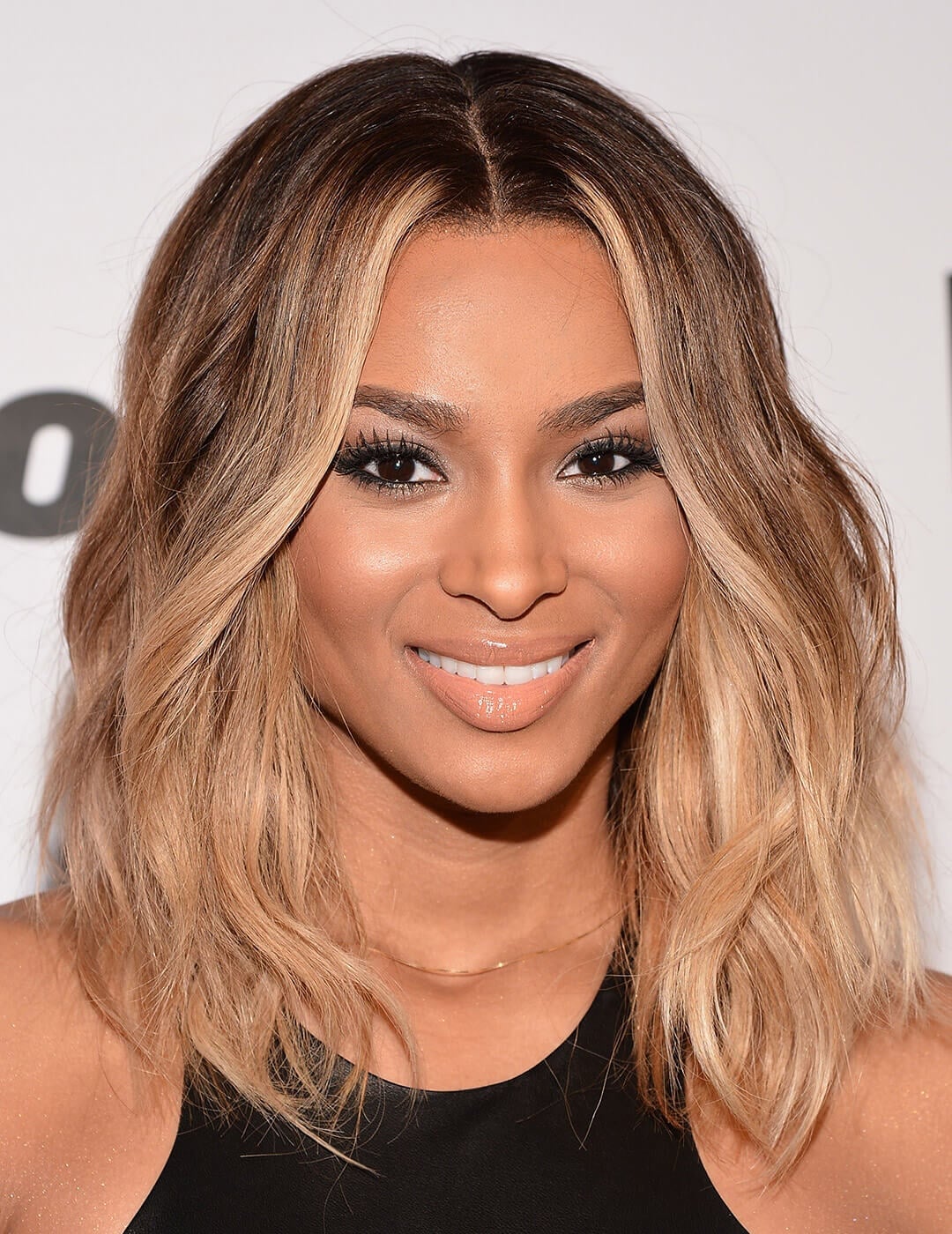
This is not a balayage where the color starts near the crown. The ombre effect here keeps the medium brown base at the roots and shifts to a lighter blonde at the ends, creating a clear transition around the collarbone. It works best on medium-density, wavy hair, where the change in color follows the natural movement of the waves. Ask your colorist for: medium brown base with blonde ombre. The middle part and front framing help the gradient look intentional and not grown out.
Collarbone Brunette With Brown Balayage
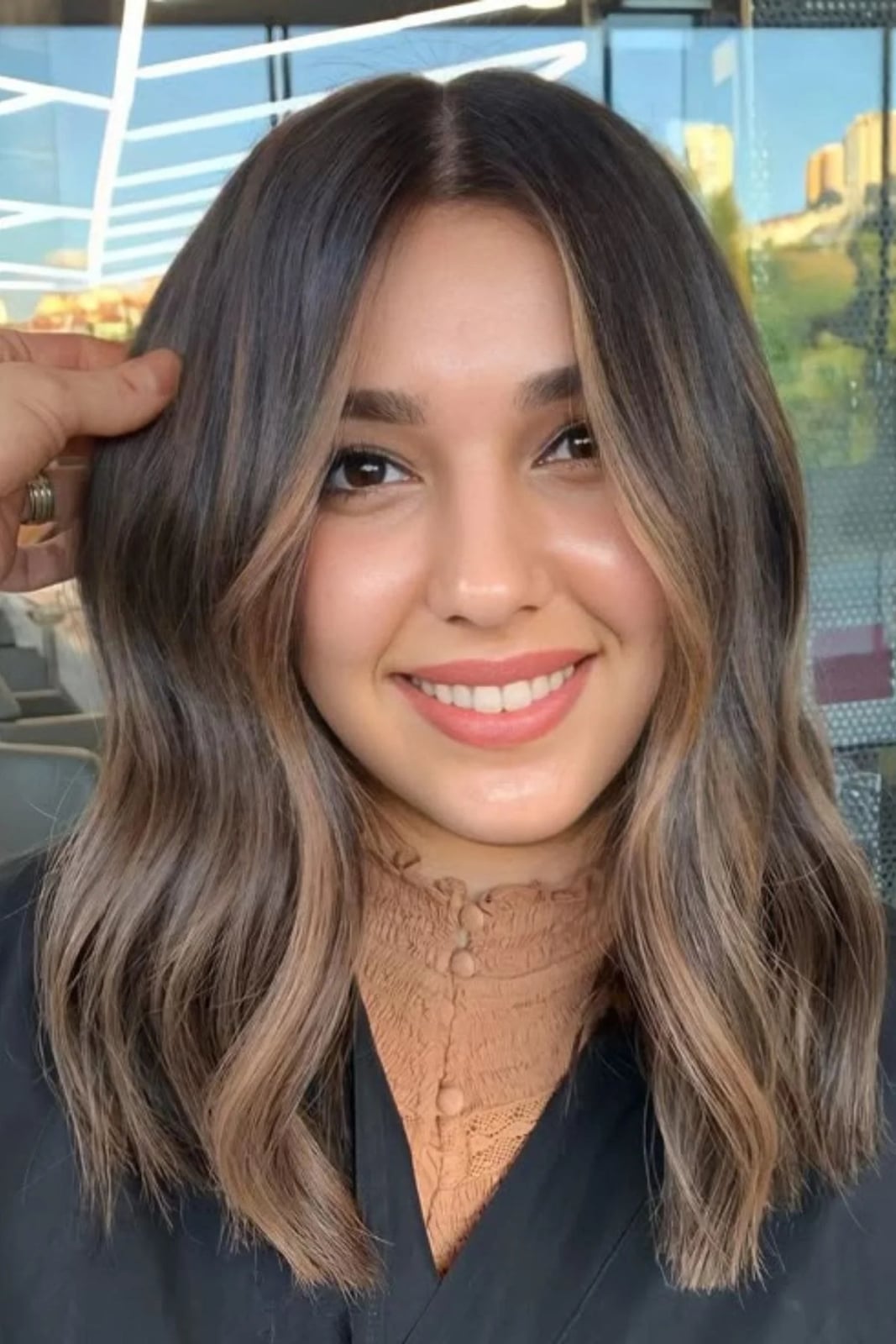
A rich brunette base with lighter brown balayage is a low-commitment way to add warmth without going full blonde. The colorist paints subtle lighter brown tones onto the ends, leaving the root area untouched. On collarbone-length, wavy hair with a middle part, the effect is a soft glow that does not require frequent toning appointments. Ask your colorist for: brunette base with subtle lighter brown balayage. A heat protectant and a round brush during blowouts keep the shine visible between trims.
Collarbone Medium Brown Blonde Balayage
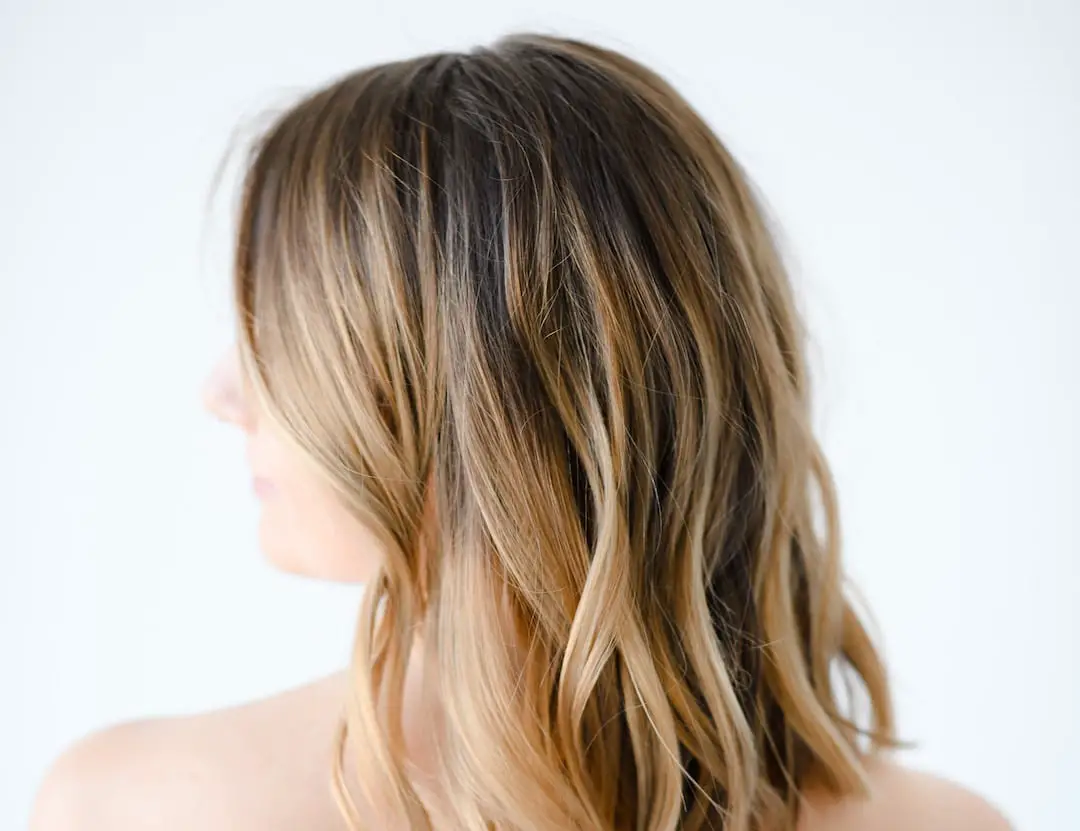
A side view of collarbone-length, wavy hair reveals a medium brown base lifted with blonde balayage highlights. The lighter pieces hit around the cheekbones and the ends, so the color looks blended. Medium-density hair holds the dimension well without looking overloaded. Ask your colorist for: medium brown base with blonde balayage. Specify that you want the highlights to stay fine and concentrated on the surface layer for a natural finish.
Collarbone Dark Brown Blonde Balayage, Wavy
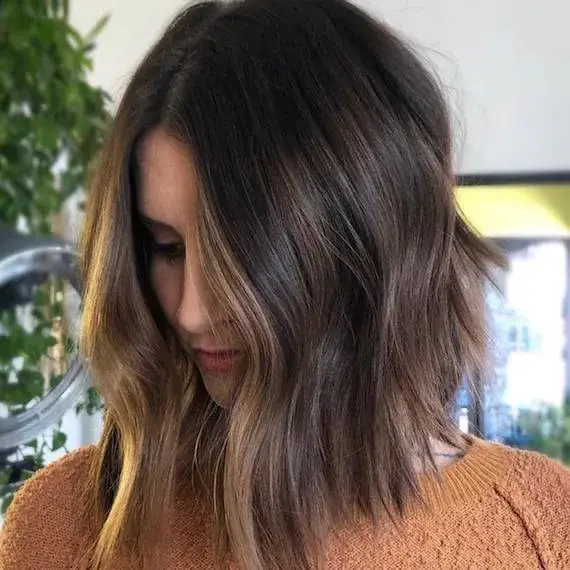
How does balayage actually work on a darker base? The colorist paints lighter brown sections freehand onto the surface of thick, wavy hair, skipping the root by about an inch. This creates a soft, sun-kissed transition from a dark brown base into lighter pieces that hit around the collarbone. The side part and wavy blowout help the lighter brown balayage catch the light without looking stripey. Ask your colorist for: dark brown base with lighter brown balayage. A middle part and length below the chin elongate a round face. Thick hair holds the wave pattern well, so a texture spray is all you need to refresh the shape between washes.
Shoulder Dark Brown With Brown Highlights
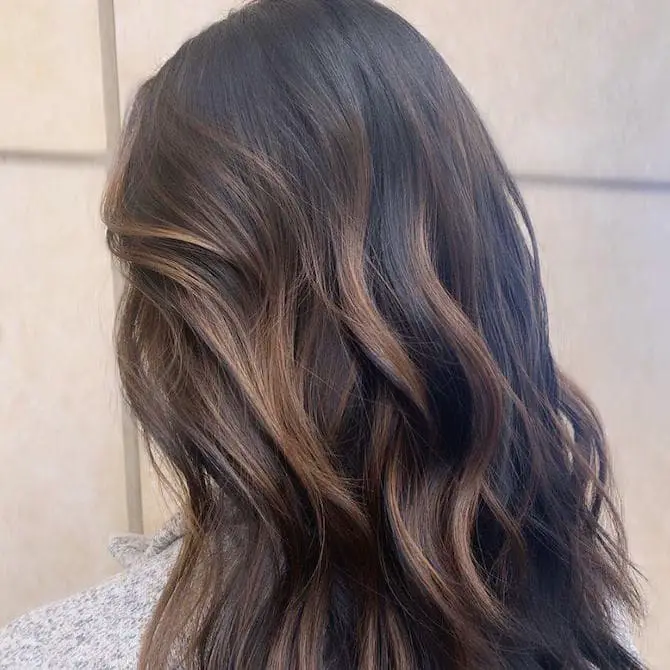
This shoulder length, thick, wavy hair has a dark brown base with lighter brown highlights woven through the ends. A middle part and no bangs keep the focus on the color contrast. Ask your colorist for: dark brown base with lighter brown highlights. Compared to a longer version, this shoulder length shows off the lighter pieces more because there is less hair to hide them. Thick hair types benefit from the extra dimension, and the middle part softens a square or oval face.
Dark Base With Gray Silver Balayage
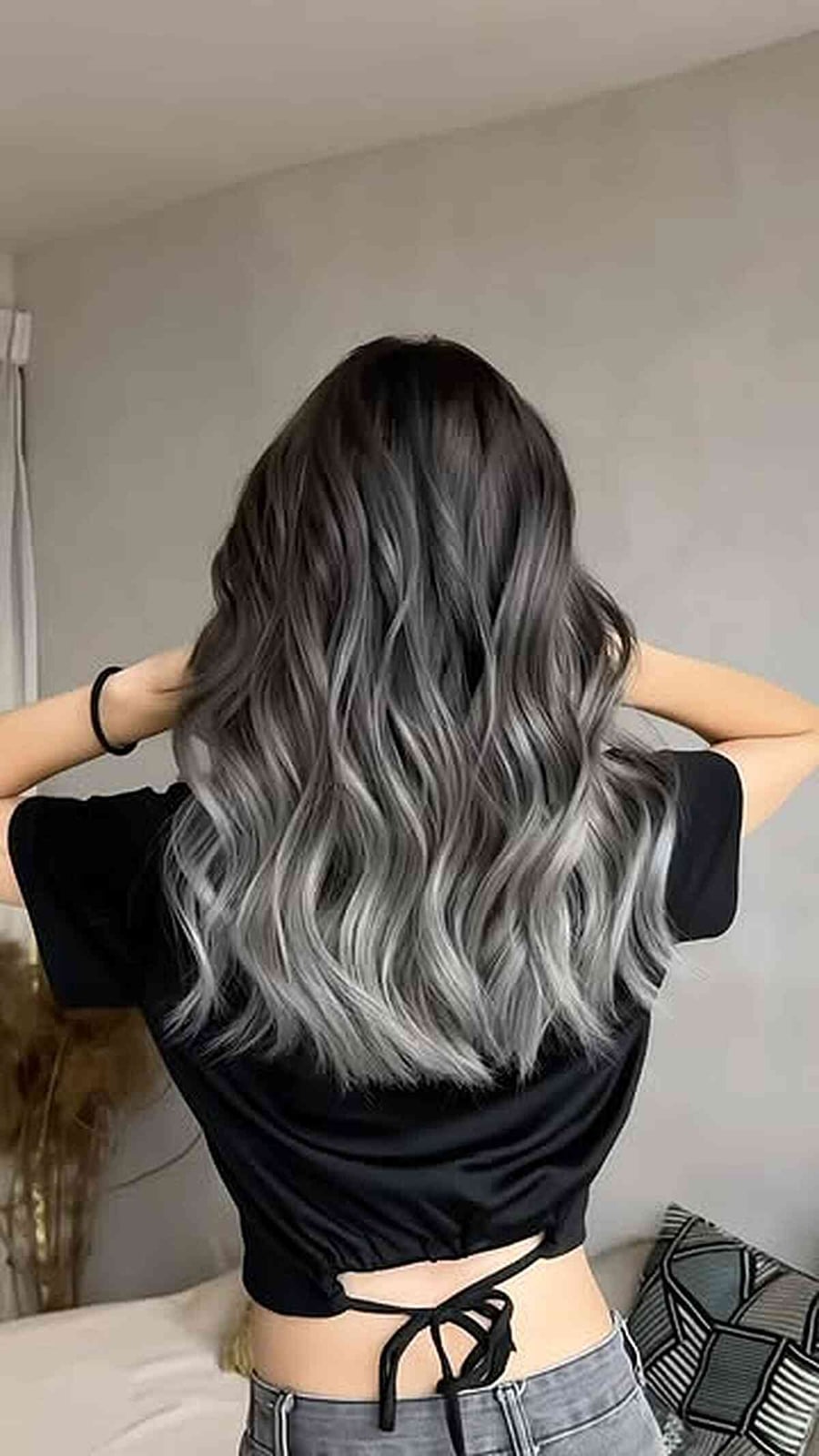
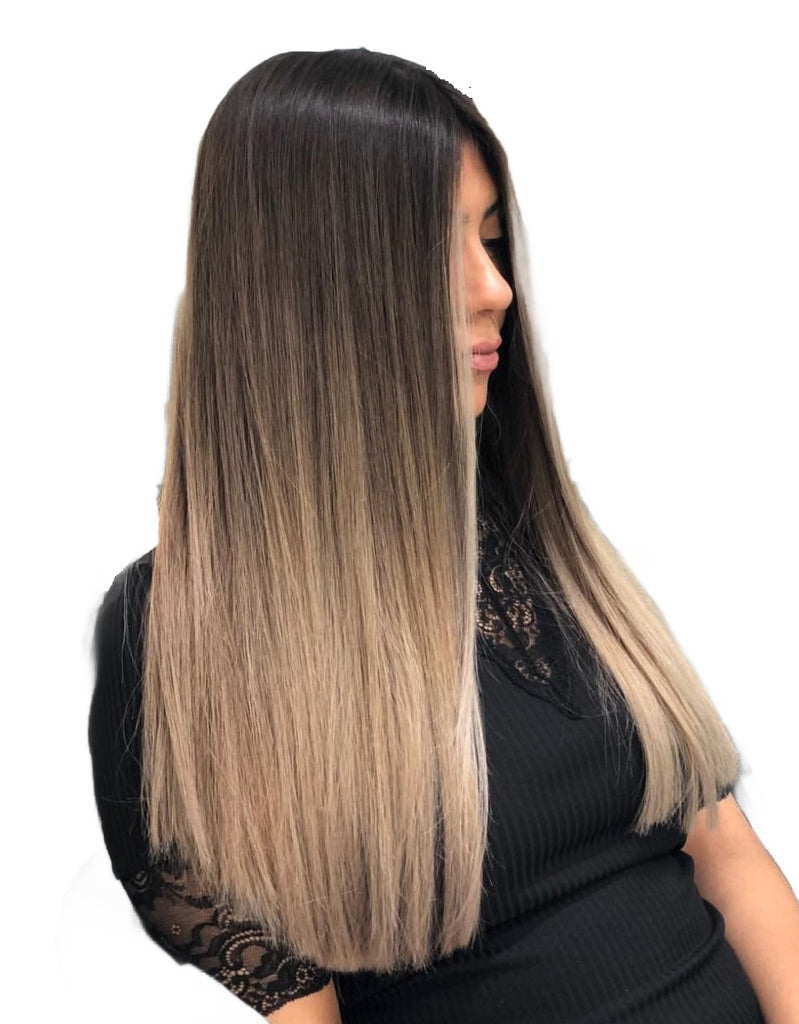
Gray and silver balayage is a two-step process that starts with a dark base and ends with a cool-toned statement. The colorist lightens the mid-lengths and ends to a pale blonde, then tones them to a gray-silver finish. The middle part and loose waves show off the gradient from dark to silver along the mid-back length.
Ask your colorist for: dark base with gray and silver balayage. This suits medium-density hair because the lighter ends add visual weight. The vertical line of the middle part and the length below the chin elongate a round or long face. If your natural base is very warm, expect extra time in the chair to neutralize it before the silver takes.
Glossy Deep Red Mid-Back Length
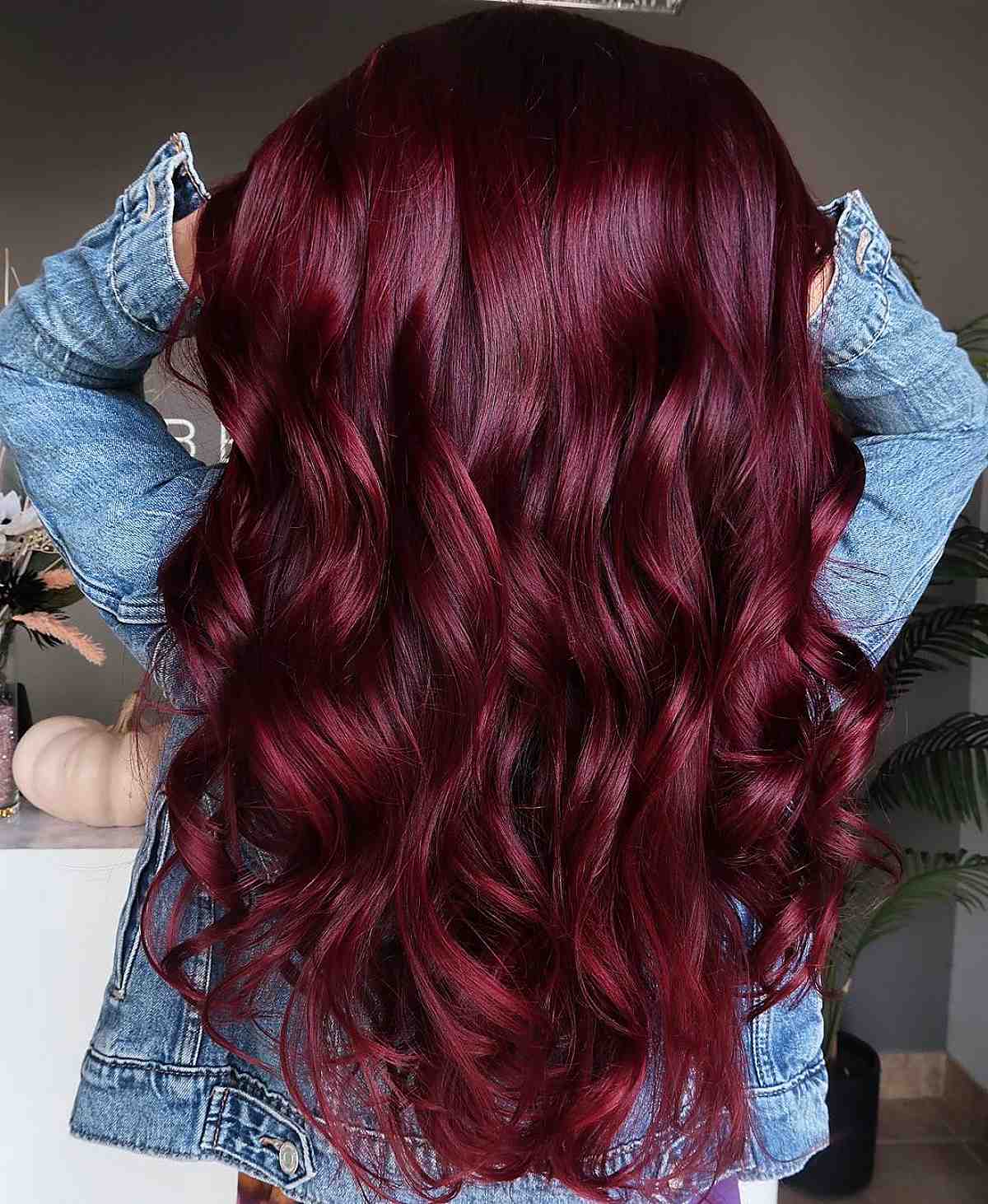
Ask your colorist for: rich, deep red uniform color. The upkeep is straightforward: a color-safe shampoo and a weekly deep conditioner keep the red from fading into brown. This color works for everyday wear but also reads as special-occasion ready because the depth and gloss do the work. Thick hair types get the most from the voluminous curl pattern, and the long layers soften a square or oval face.
Vibrant Red Mid-Back Waves
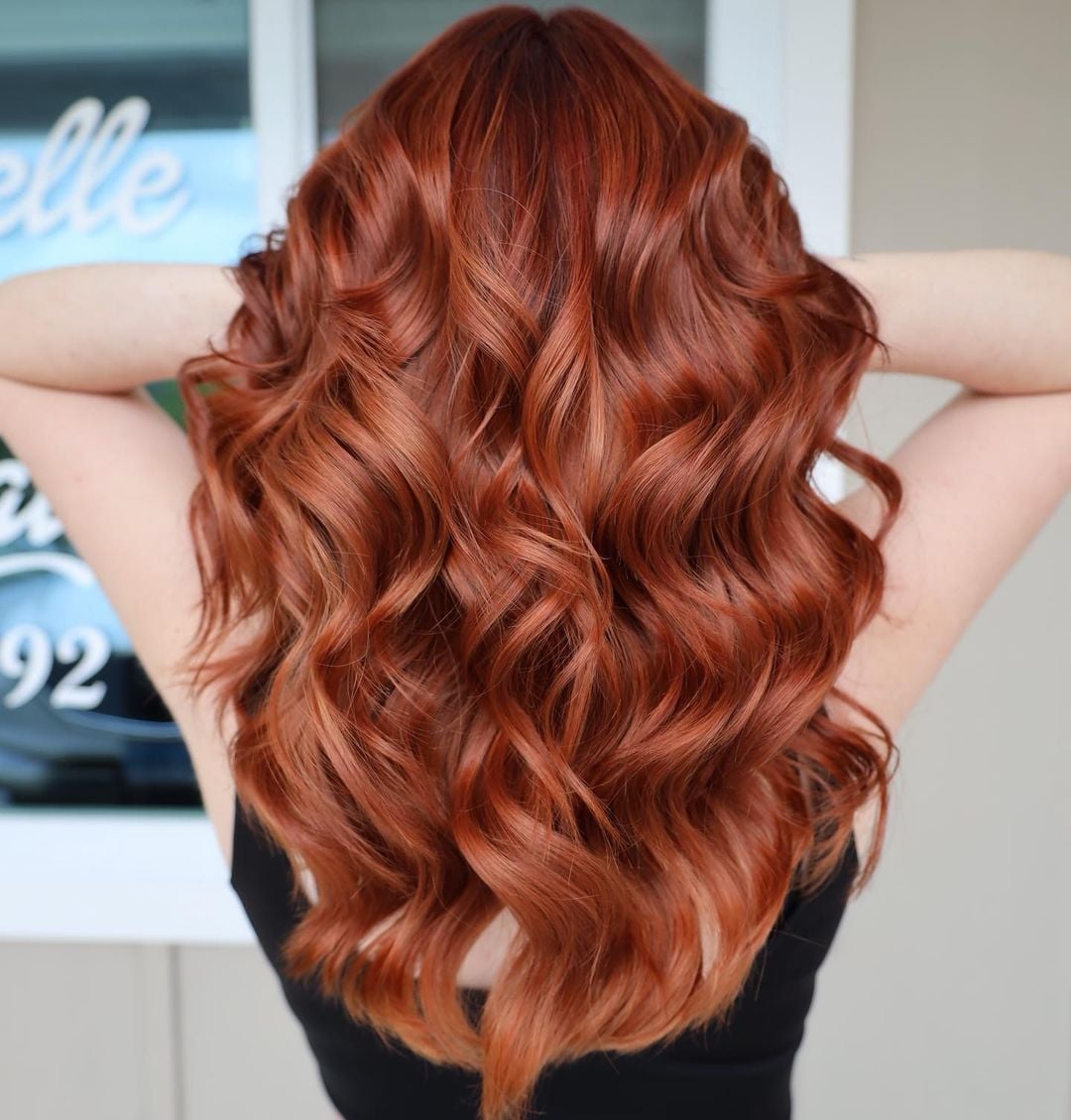
A vibrant red base with subtle lighter undertones relies on saturation for its effect. The colorist applies a single, intense red formula to thick, wavy mid-back length hair, then adds a few slightly lighter pieces. The result is a uniform hue that still has a hint of dimension.
Ask your colorist for: vibrant red with subtle lighter undertones. The middle part and loose waves let the undertones show without appearing deliberate. This technique works best on unbleached or previously colored hair, as the lighter pieces need a clean canvas to register. Thick hair benefits most from the wave pattern, and the length below the chin elongates a round face.
Copper Red With Lighter Highlights
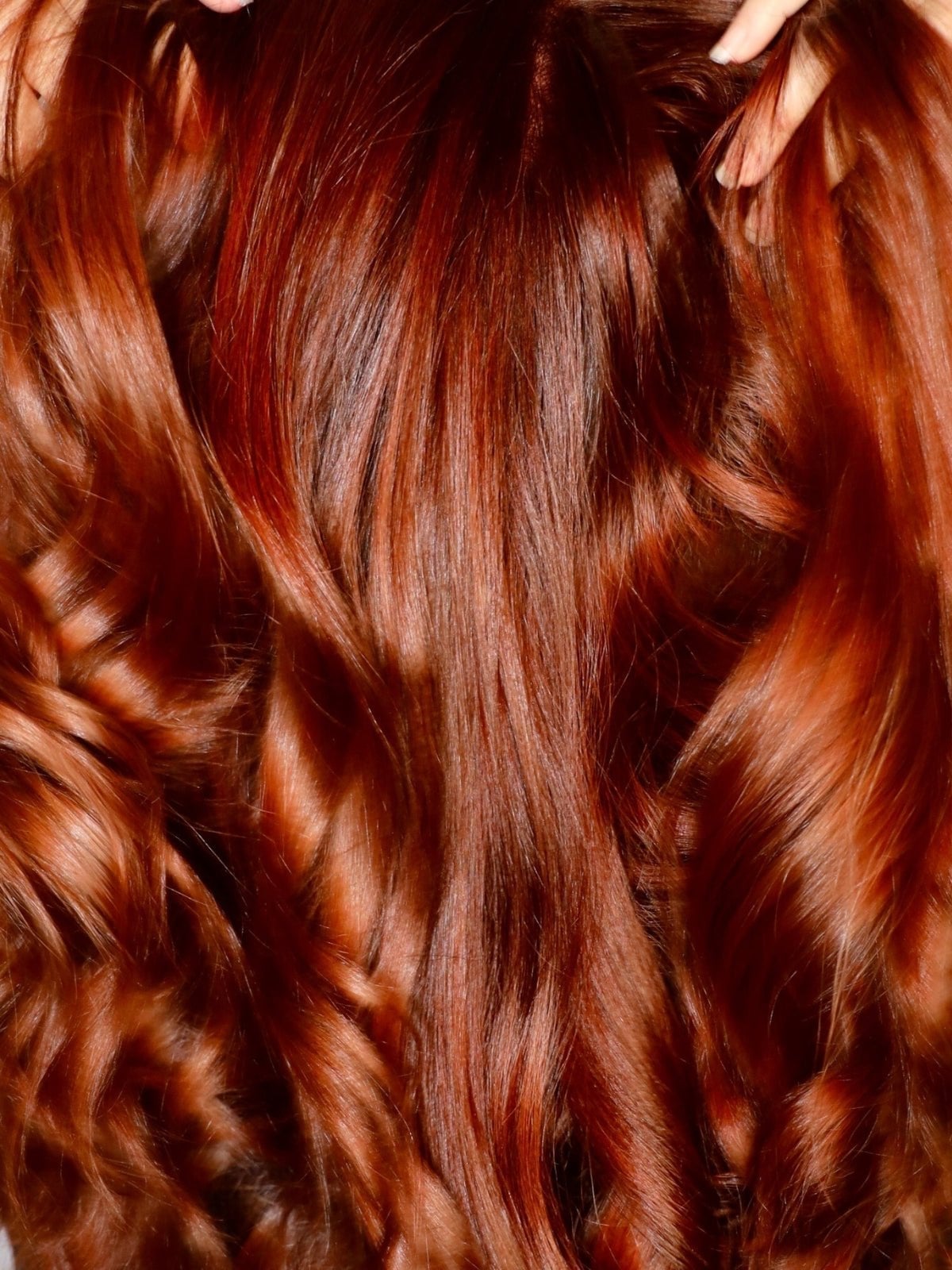
The vibrant copper red base creates a striking foundation, while the subtle lighter red highlights prevent the color from appearing flat. The mid-back length allows loose waves to display the dimensional effect. This texture works well with thick hair. Ask your colorist for: copper red base with subtle lighter red highlights. A middle part softens square and oval face shapes.
Red Brown With Lighter Undertones
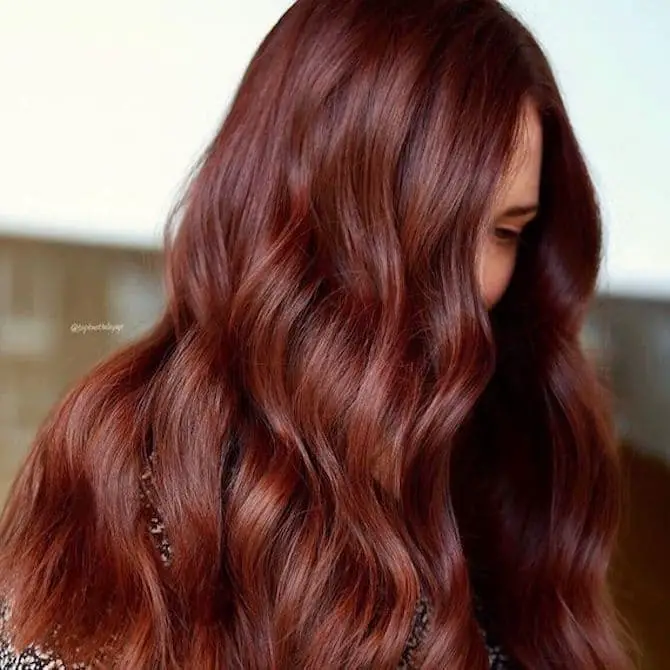
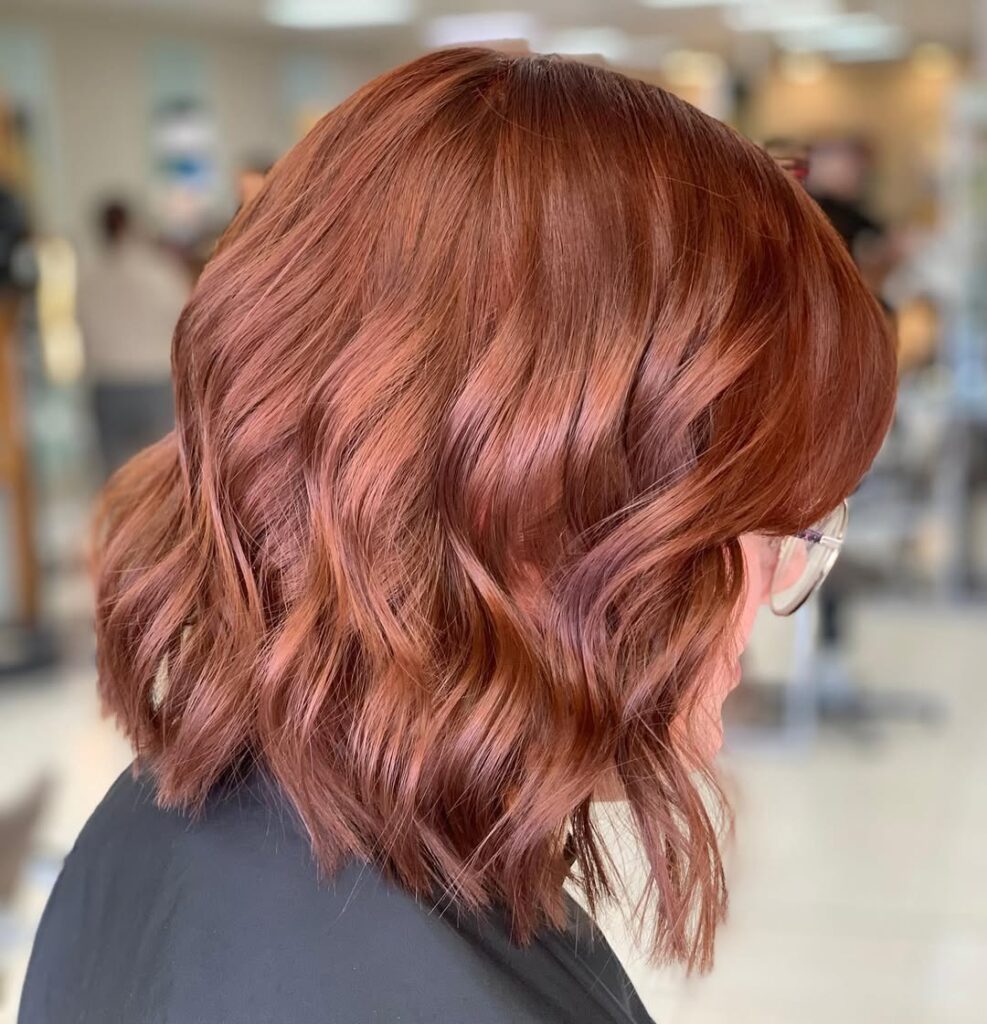
What makes a red brown different from a straight copper or a true auburn? It sits in the middle, with a deep brown base that keeps it grounded and subtle lighter red undertones that add warmth. The side parting here adds width where narrow faces need it. Thick, wavy hair at mid-back length shows off the depth best, since the color shifts as the waves turn. Ask your colorist for: deep red brown with subtle lighter red undertones. This is the shade for anyone who wants warmth but finds full copper too loud or auburn too orange. It appears rich and not brassy, and that distinction matters.
Collarbone Copper Brown With Highlights
A warm copper brown base with lighter copper highlights hits the sweet spot between natural and polished. The collarbone length keeps it practical, while thick wavy hair gives the color enough surface to show dimension. A middle part softens round and heart faces. Ask your colorist for: warm copper brown base with lighter copper highlights. This works best for medium to thick density, since fine hair can make the highlights look sparse instead of blended.
Medium Blonde With Ash Tones DIY
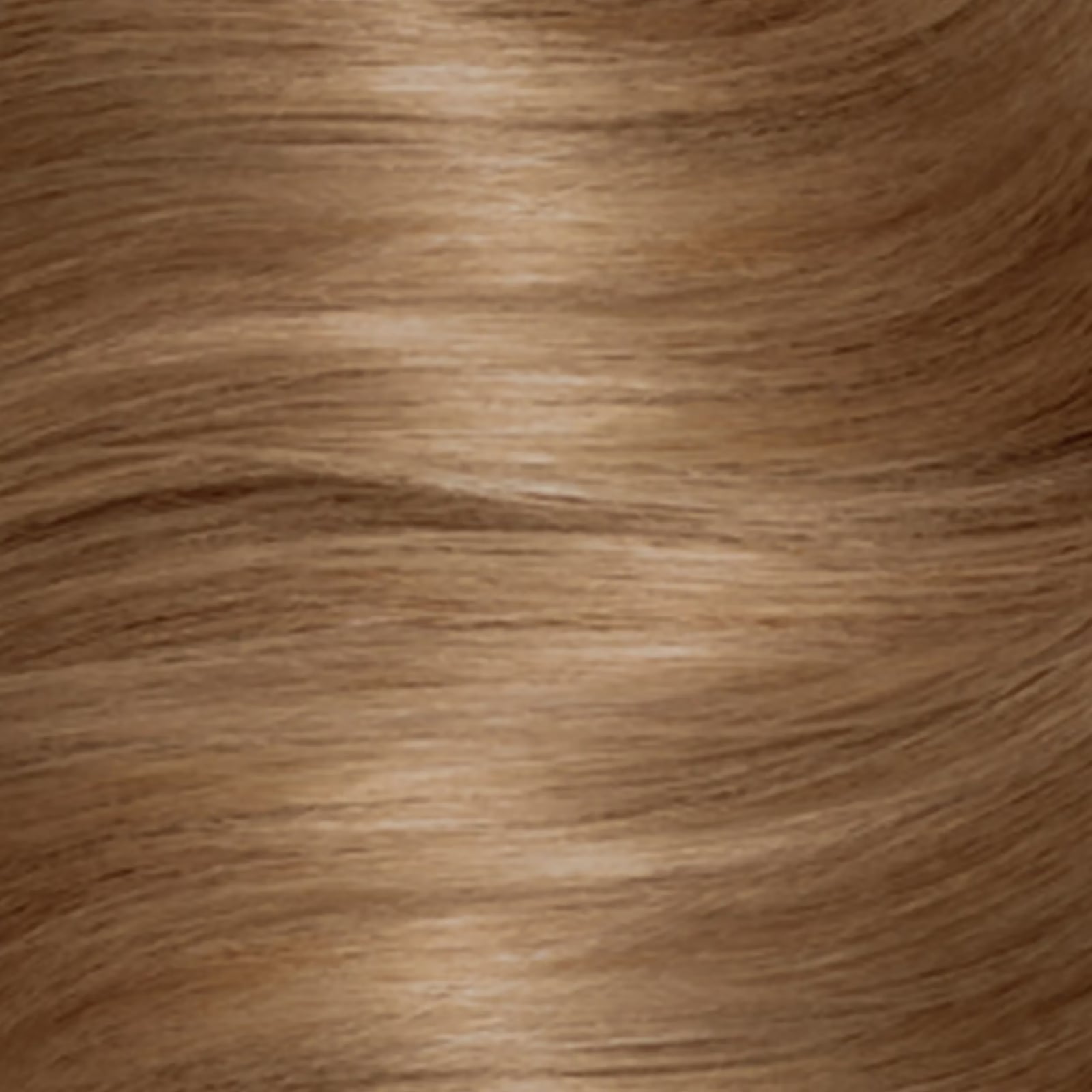
A medium blonde base with subtle ash tones is one of the few shades that actually translates well to a DIY approach. The fine wavy texture here is air-dried, which keeps the finish natural and low-commitment. Start with a level 7 or 26 ash blonde box color, then follow with a toner to neutralize any warmth that pops up. Ask your colorist for: medium blonde with subtle ash tones. A salon version would cost more and take about two hours, but the home version gets you 80 percent of the way there for a fraction of the time.
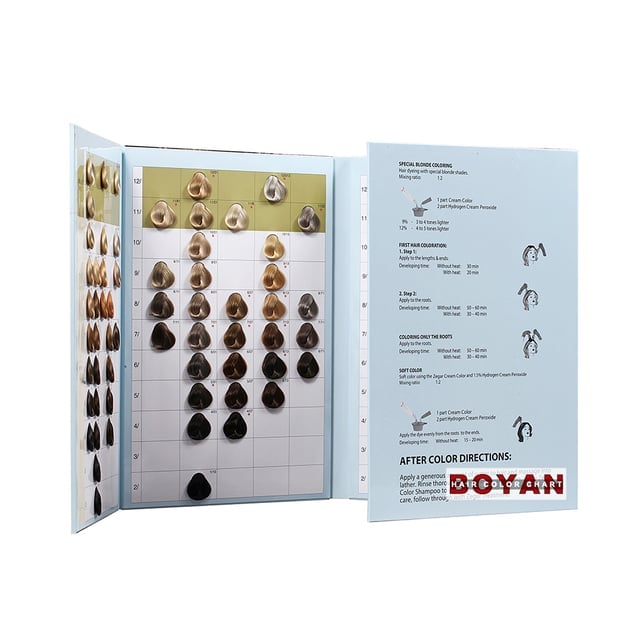
Hair Color Chart Swatches Variety
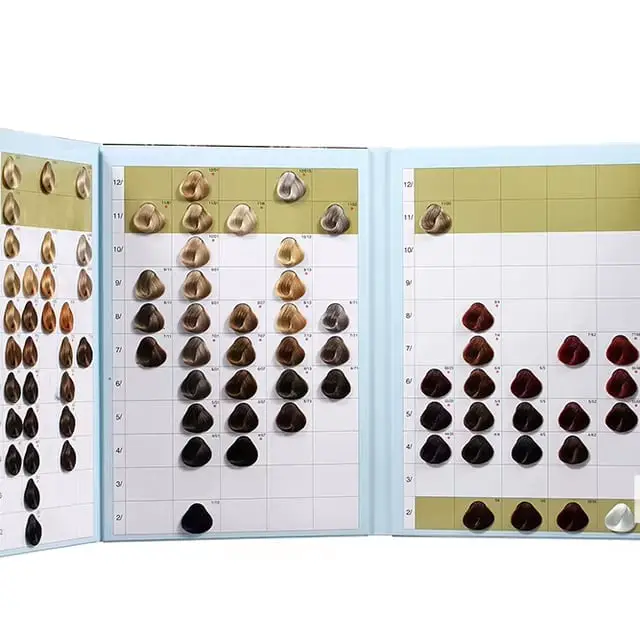
A single-shade application is straightforward, but a tri-fold color chart with swatches from light blonde to dark brown and red tones shows you what you are actually choosing between. Seeing the shades side by side makes the difference between a warm caramel and a cool beige obvious in a way that a name on a box never will. Ask your colorist for: hair color swatches for blonde, brown, and red tones. Use the chart as a starting point, not the final decision, since the swatch on paper always looks slightly different on your hair.
Organized Hair Color Swatches
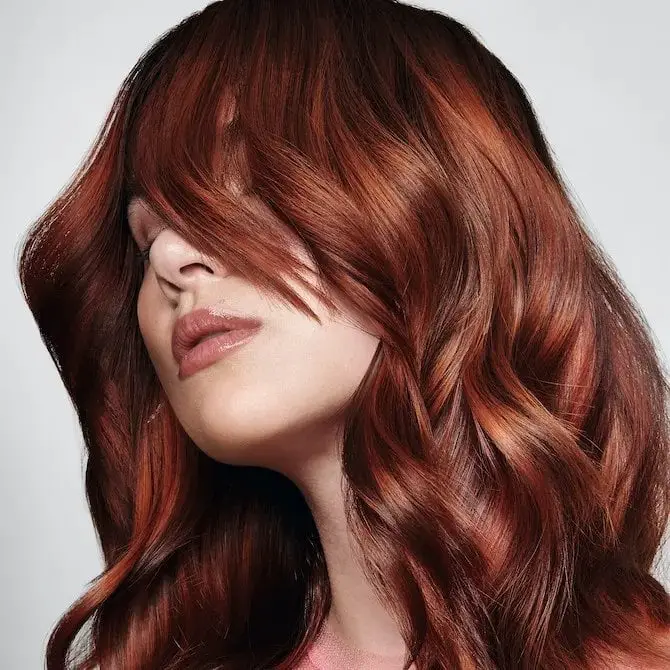
How do you keep vibrant copper from turning brassy before your next toning appointment? On collarbone-length hair with soft layers and curtain bangs, that warm copper brown base with lighter copper highlights needs a purple shampoo once a week and a toning visit every six to eight weeks. The middle parting and wavy blowout show off the dimension, but the trade-off is that red-based tones fade faster than neutral ones. Ask your colorist for: warm copper brown with lighter copper highlights.
Final Thoughts
For low maintenance, opt for balayage or ombre techniques that blend seamlessly with your natural base, requiring fewer touch-ups than solid color applications. Fine hair benefits from keeping the base darker and the highlights finer. A round face can wear any depth but may prefer the length below the chin.
- Maintain salon color with toning shampoos every 2-3 weeks.
- Deep condition hair weekly to preserve color vibrancy.
- Use heat protectant before styling to prevent color fade.
- Schedule root touch-ups every 6-8 weeks for solid colors.
- Balayage and ombre may require refresh glosses every 3-4 months.
Find the shade that speaks to you.