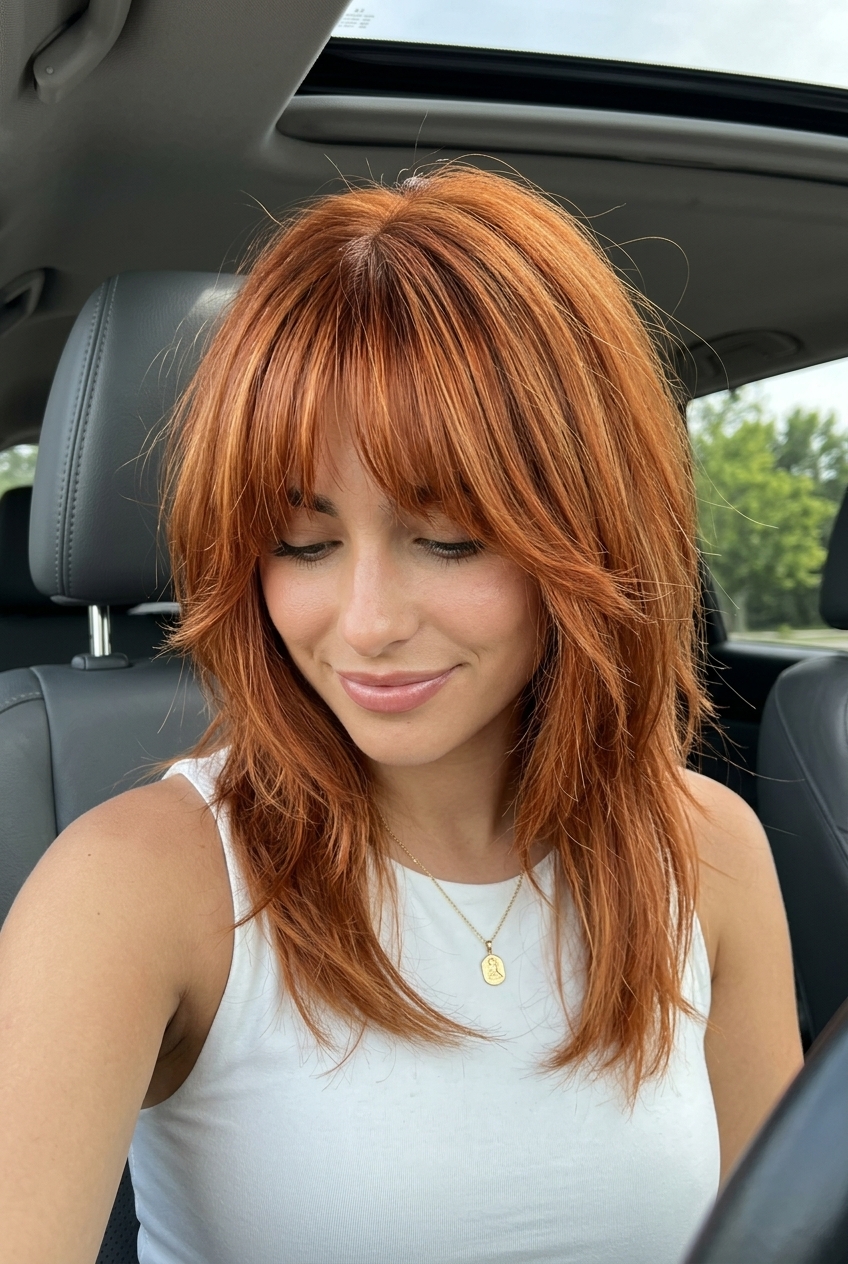

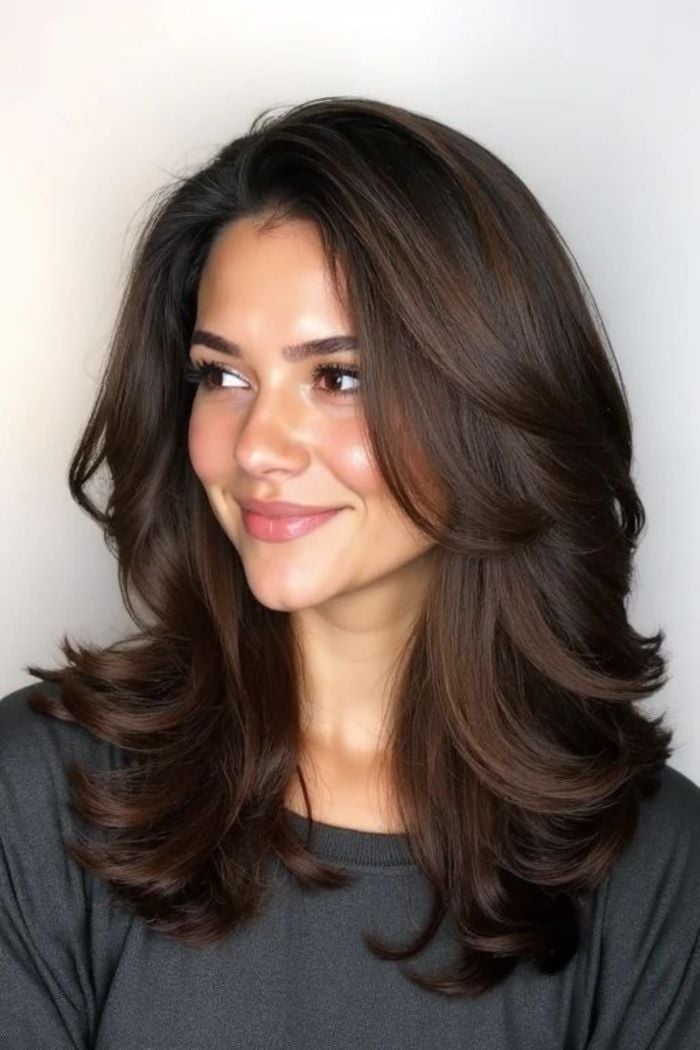
Simple haircuts are the foundation of a good hair day, not a compromise. Right now, soft face-framing layers and curtain bangs are replacing heavy, one-length cuts, offering movement without demanding a stylist visit every three weeks.
This Simple Haircuts Tutorial covers 26 looks, from low-upkeep bobs to DIY trim guides, so you can find the shape that actually works for your texture, face shape, and schedule. Whether your fine hair falls flat by noon or your blunt fringe refuses to sit straight, there is a cut here that solves it without the fuss.
Collarbone Length Lob With Soft Waves
Long layers and curtain bangs do the same thing here: they add movement without removing much weight. The side parting lets the bangs sweep across, which softens a strong jawline, while collarbone length itself balances a round face by drawing the eye down. Thick, straight hair holds the wave pattern best, but medium density works too if you use a large-barrel curling iron. Ask your stylist for: collarbone lob with long layers and curtain bangs. To keep the shape clean, a trim every six to eight weeks is all it needs.
Shoulder Length Blunt Cut With Highlights

A blunt cut is the opposite of layers: one clean line across the back, no graduation. That makes it better for medium-density straight hair that would look stringy with too much layering. The curtain bangs here are cut separately and blend into the length only when styled. Ask your stylist for: shoulder length blunt cut with curtain bangs. Fine hair gains visual weight from the solid hemline, while thick hair needs texturizing inside to avoid a blocky silhouette. A smoothing serum keeps the glossy finish intact between trims.
Ash Blonde Blunt Bob With Face Framing Layers

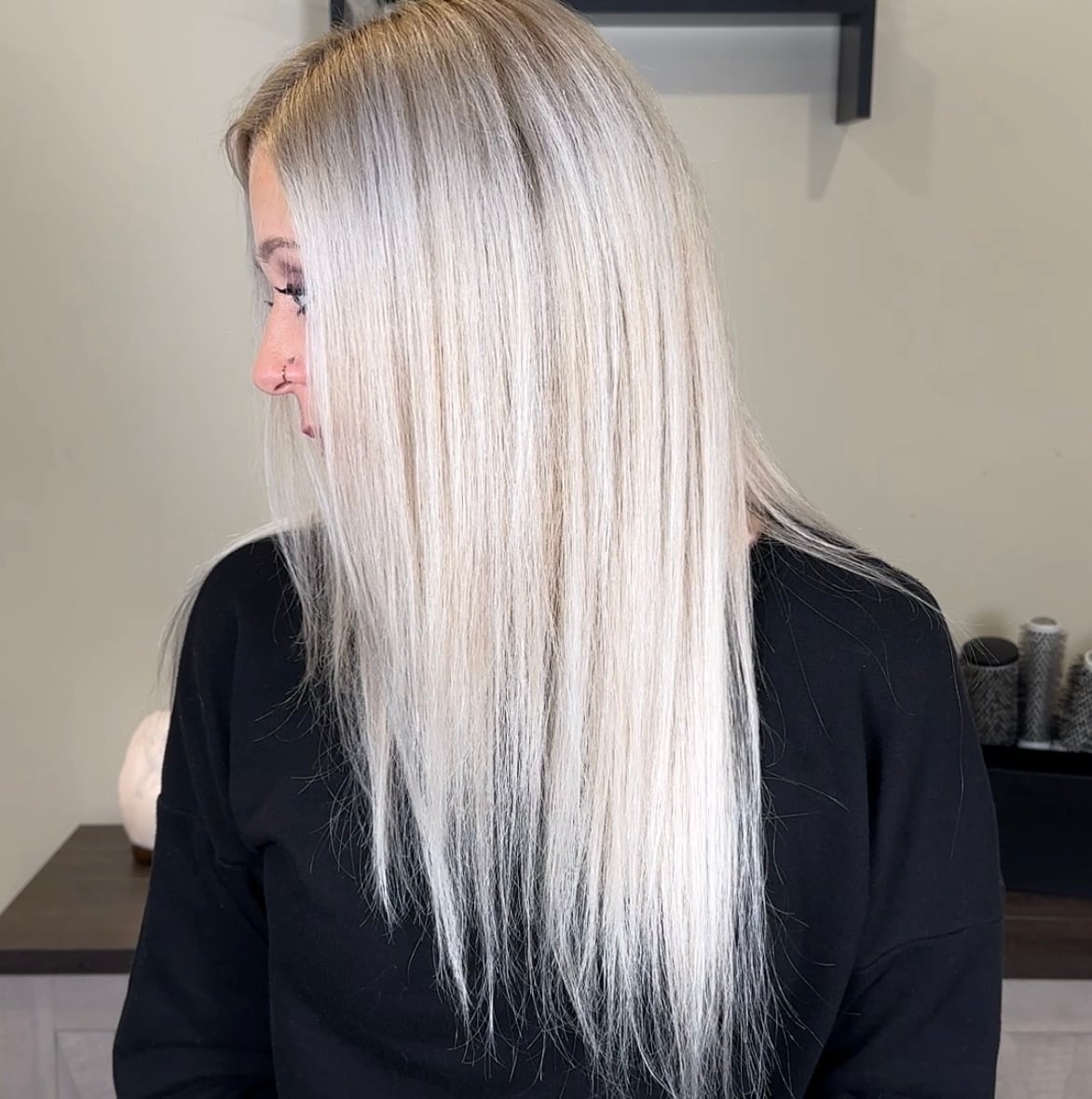
A blunt bob relies on precision: the baseline must be perfectly horizontal at the collarbone. Face-framing layers are then cut into the front sections only, so the back stays solid. Fine, straight hair benefits from this because the blunt line adds weight while the layers add movement around the face. Ask your stylist for: collarbone blunt bob with face framing layers and curtain bangs. The ash blonde tone requires a purple shampoo every second wash to keep it from turning brassy.
Dark Brown Long Layered Cut With Bangs
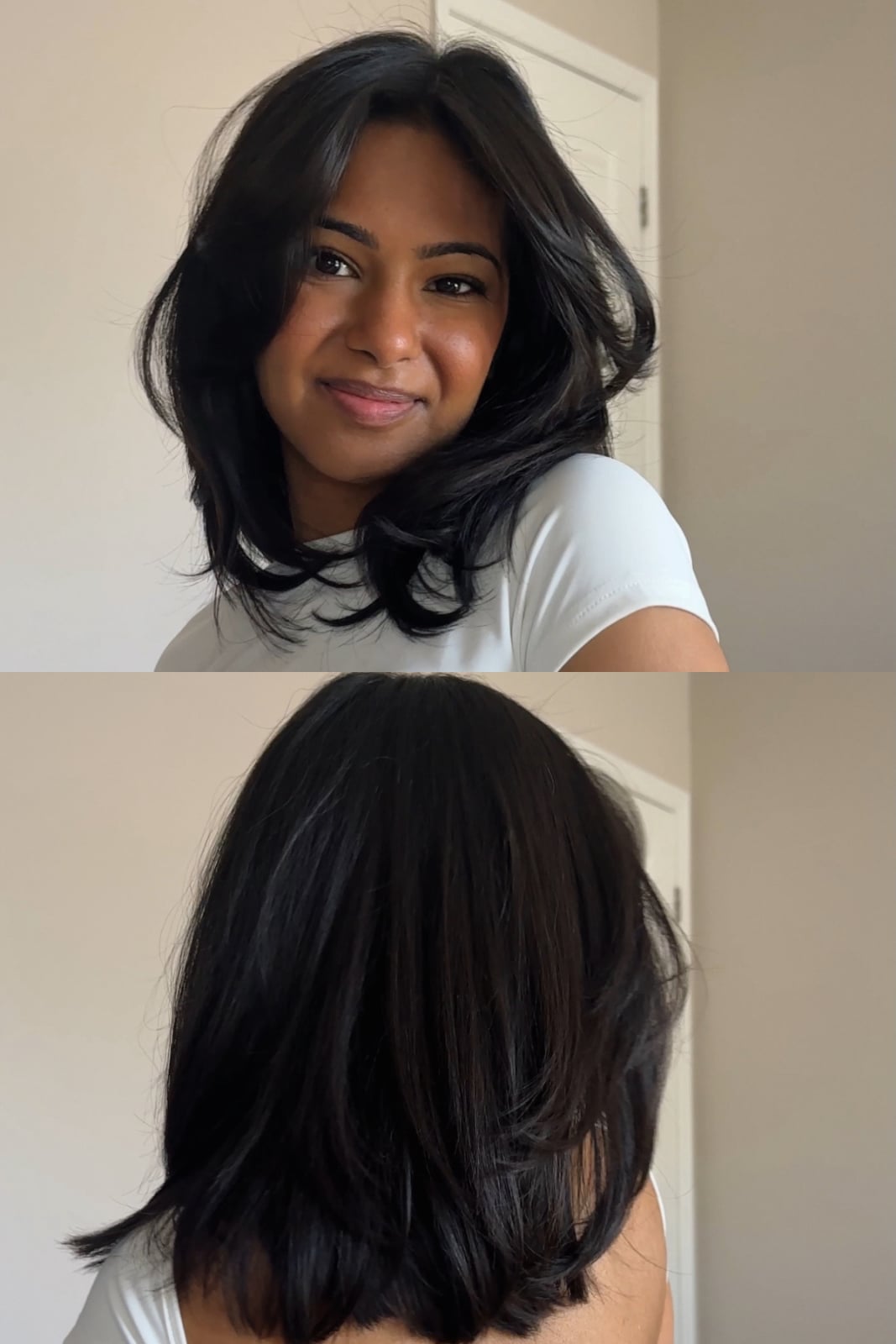
Can long layers actually work on thick, wavy hair without turning into a triangle? Yes, if the layers start below the chin. This cut keeps the bulk in the lower half and uses the curtain bangs to transition the weight around the face. The side parting directs the bangs away from the center, which opens up the eye area. Ask your stylist for: shoulder length long layers with curtain bangs. A volumizing spray at the roots during blow-drying lifts the crown without adding frizz. Plan for a trim every eight to ten weeks.
Mid-Back Honey Blonde Layers With Curtain Bangs
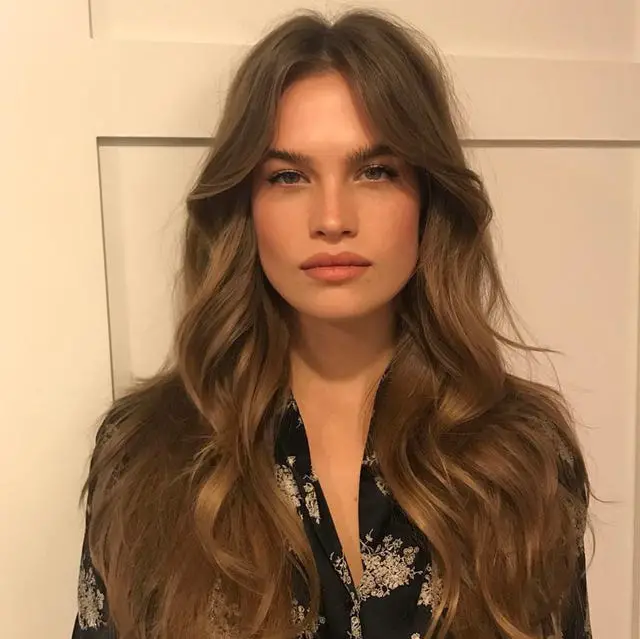
Long layers on thick, wavy hair can look heavy unless the stylist removes enough interior weight. The trick here is that the layers are graduated through the mid-lengths, so the waves stack rather than fluff out. This works best for hair that is naturally wavy or has enough density to hold a wave without product. The honey blonde shade reads warm and rich against the dark base. Ask your stylist for: mid-back long layers with curtain bangs. The middle parting keeps the bangs symmetrical, which suits oval and heart-shaped faces. A texture spray on damp hair enhances the wave pattern for events without requiring heat.
Shoulder Length Long Bob With Balayage
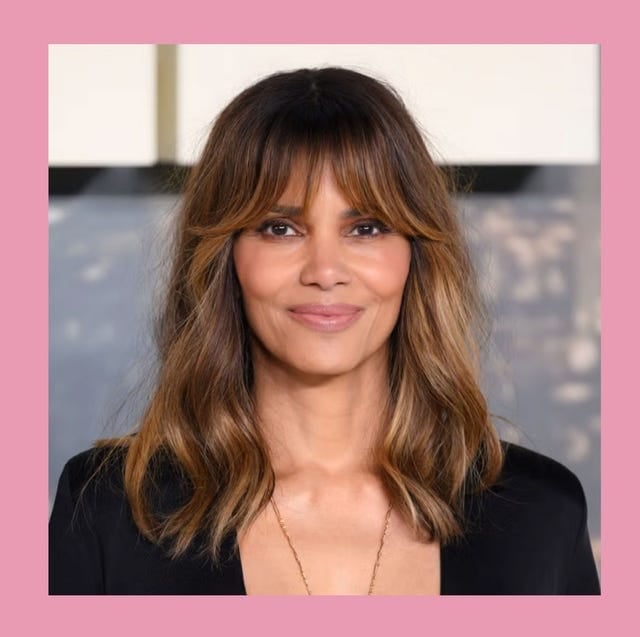
Warm balayage highlights concentrate toward the ends, so the dark brown base stays rich at the roots and the color grows out without a harsh line. Subtle layers keep the shape from feeling heavy, and curtain bangs soften the whole thing. Ask your stylist for: shoulder length long bob with subtle layers and balayage. The side parting and loose waves give it movement, and medium-density wavy hair holds the texture best. A balayage refresh lands around every 12 to 16 weeks.
Textured Bob With Wispy Curtain Bangs

A chin-length bob with wavy layers and wispy curtain bangs looks undone in a way that requires actual effort. The textured shape is designed to look lived-in, but those bangs need a quick blast with a round brush every morning, or they go rogue. Ask your stylist for: chin length textured bob with wispy curtain bangs. The side parting and medium-density wavy hair work together, though anyone who hates daily styling should probably pass. A trim every six to eight weeks keeps the bob from losing its shape.
Collarbone Bob With Face Framing Layers

Can fine straight hair actually hold a bob without looking flat? Yes, if the cut relies on face-framing layers and curtain bangs rather than bulk. The collarbone length keeps the weight manageable, and the middle parting lets the layers fall forward to create the illusion of volume. Ask your stylist for: collarbone bob with face framing layers and curtain bangs. A smooth blowout with a round brush on the bangs takes about ten minutes, and the shape holds for a few days. A trim every six to eight weeks keeps the ends from going wispy.
Dark Brown Lob With Subtle Balayage
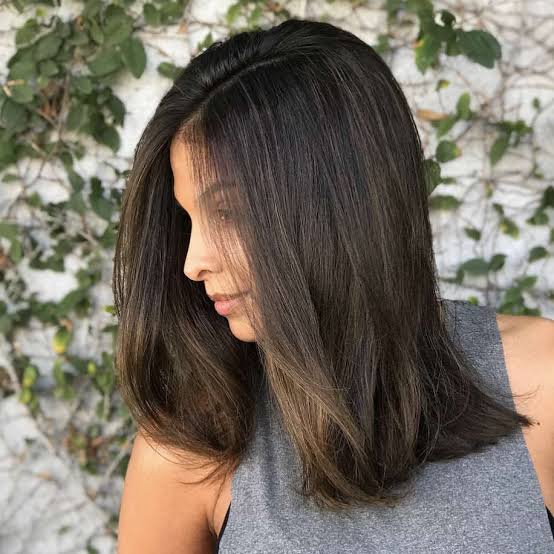
Unlike a blunt lob that can feel heavy on fine hair, a collarbone-length version with subtle layers and no bangs lets the texture breathe. The dark brown base with lighter balayage adds dimension without needing a full highlight schedule, and the side parting with a slight inward curl keeps it polished. Ask your stylist for: collarbone lob with subtle layers and balayage. Fine to medium-density straight hair benefits from the soft movement, and the lack of bangs means one less thing to style. A balayage refresh every 12 to 16 weeks handles the grow-out.
Sharp Bob With Face Framing Layers, Dark Brown
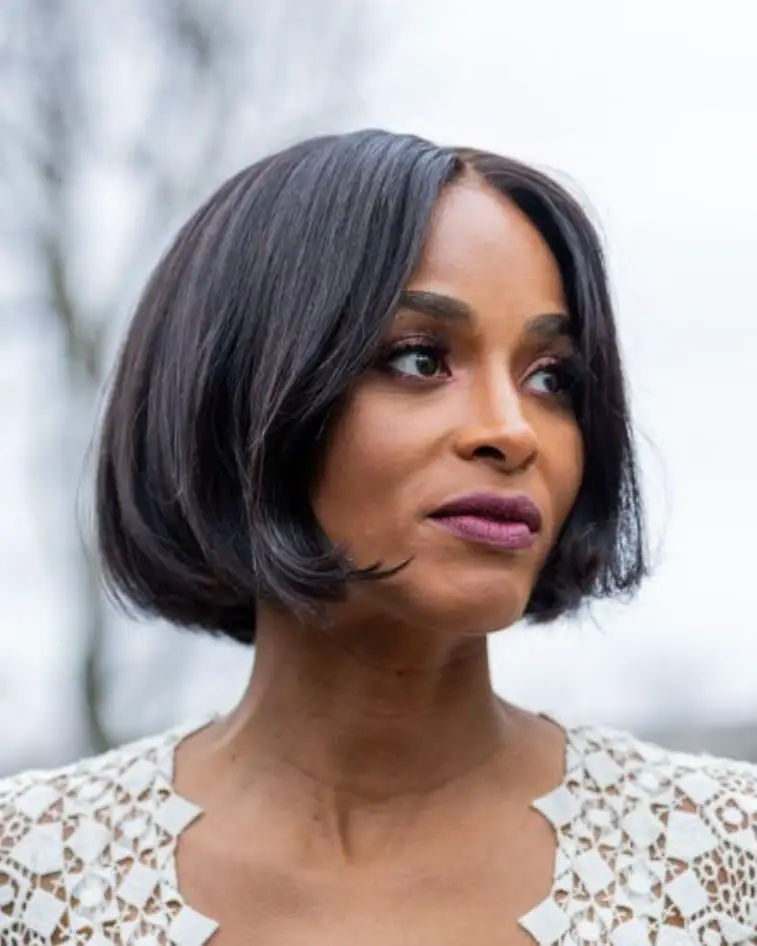
A sharp bob line makes a statement that softer, layered cuts do not. The collarbone length and side parting keep it modern, while subtle face-framing layers prevent the shape from reading as too severe. Ask your stylist for: collarbone sharp bob with subtle face framing layers. Fine straight hair suits the clean lines best, and a smooth blowout or a quick pass with a flat iron is all it needs. A trim every six to eight weeks is required to maintain the sharp edge.
Chin Length Blunt Bob With Inverted Shape
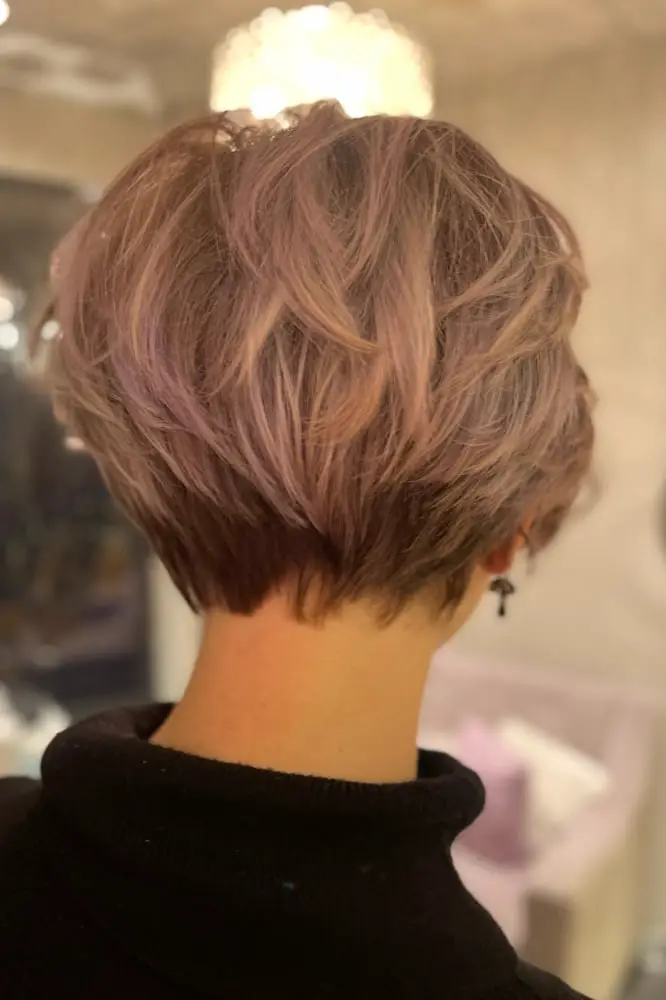
The precision here lives in the contrast between the blunt perimeter and the slight stacking at the nape. Ask your stylist for: chin length blunt bob with slight inversion. The straight, medium density texture holds that sharp line without fight, and the side part breaks up the symmetry just enough. A trim every four to six weeks keeps the edge from softening into a rounded shape.
Short Bob With Sweeping Side Bangs

Can a short bob still soften your features without losing its edge? Yes, when the bangs do the work. Ask your stylist for: short bob with sweeping side bangs. The ear length keeps the shape clean, while the side-swept fringe breaks up the horizontal line across the forehead. Medium density, straight hair is the ideal canvas here, the bangs blend into the cut without sitting as a separate piece.
Short Textured Haircut
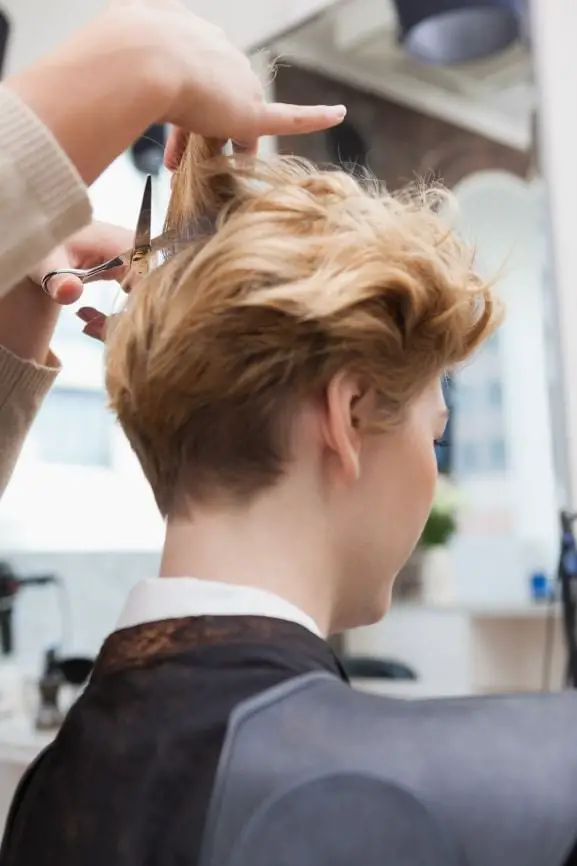
A short cut on thick, wavy hair is less about the initial shape and more about what happens in the weeks after. Ask your stylist for: short textured cut. The nape is sculpted close, but the top and crown keep enough weight to hold visible wave. A texturizing paste applied to damp hair defines the pieces, and a trim every four to six weeks prevents the shape from growing into a mushroom. This cut requires a salon hand, not a mirror-and-scissors situation at home.
Mid-Back Waves With Twisted Crown
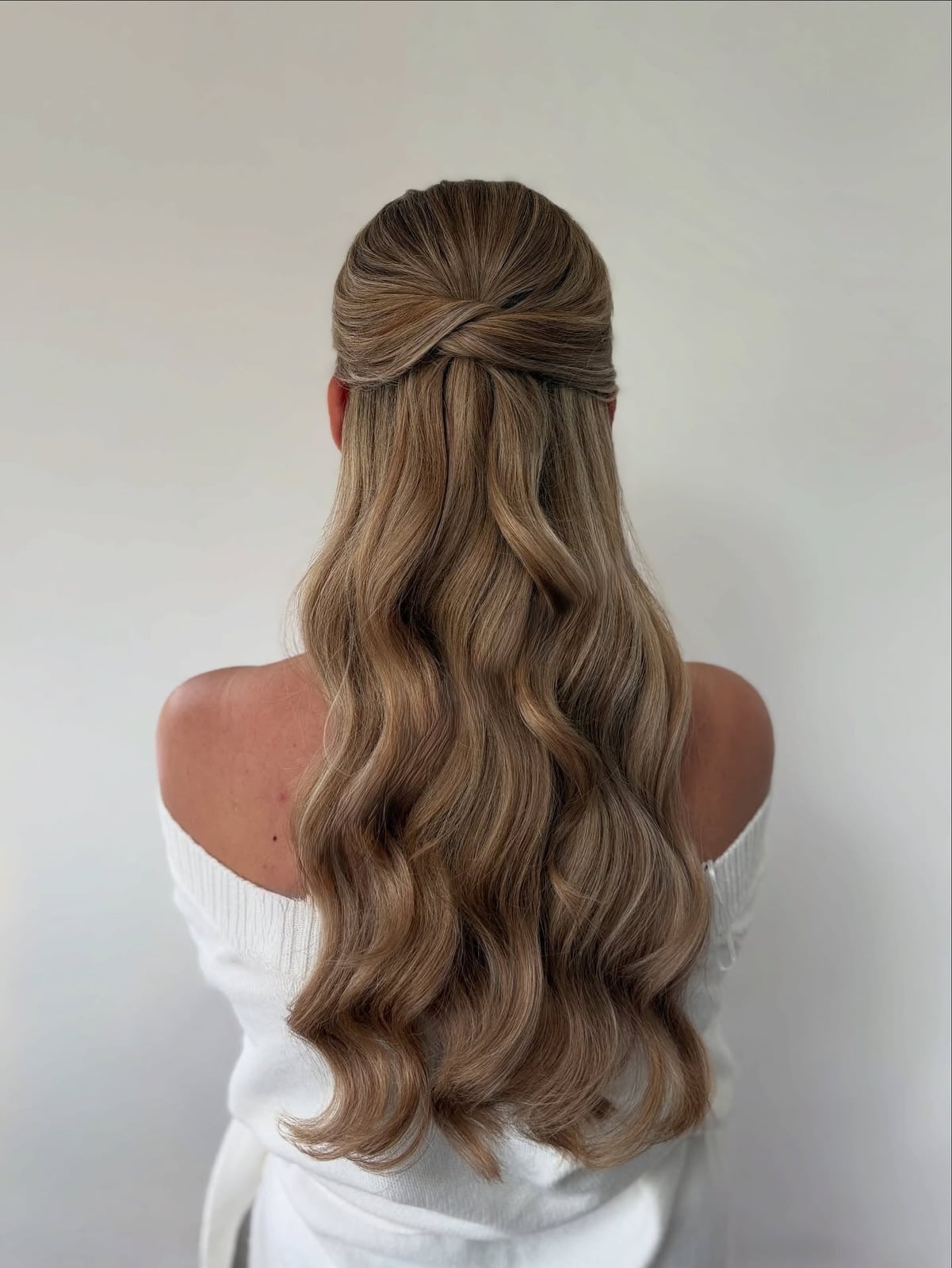
The mistake most people make with a twisted crown is pulling it too tight, which flattens the top and kills the texture below. Start with second-day hair for grip. Take a section from each temple, twist them toward the back, and pin them at the occipital bone. Ask your stylist for: mid-back hair with twisted crown half-up style. The loose waves in the lower half contrast the clean twist, and the middle part keeps the look balanced. This style works for an event where you want the hair off your face but not fully up.
Dark Blonde Half-Up Twist With Waves
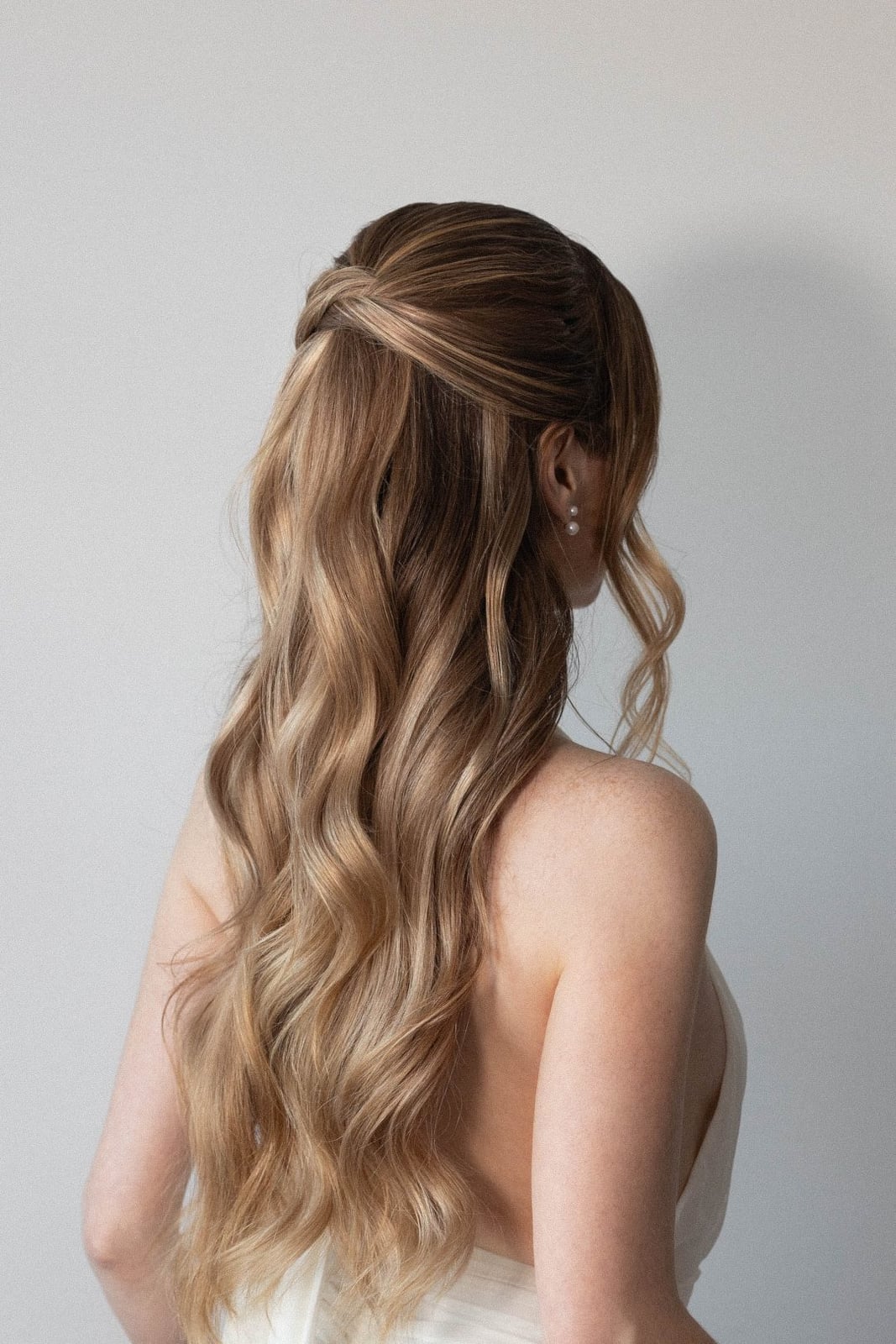
Is a half-up twist too casual for a polished look? Only if you skip the face-framing pieces. Ask your stylist for: mid-back hair with twisted half-up style. The twist gathers hair from the crown and secures it at the back, leaving the rest to fall in soft waves. Pull out a few strands around the temples to soften the line, and pin the twist loosely so it has some volume. The dark blonde base with highlights adds dimension that keeps the style from reading as one solid block of color.
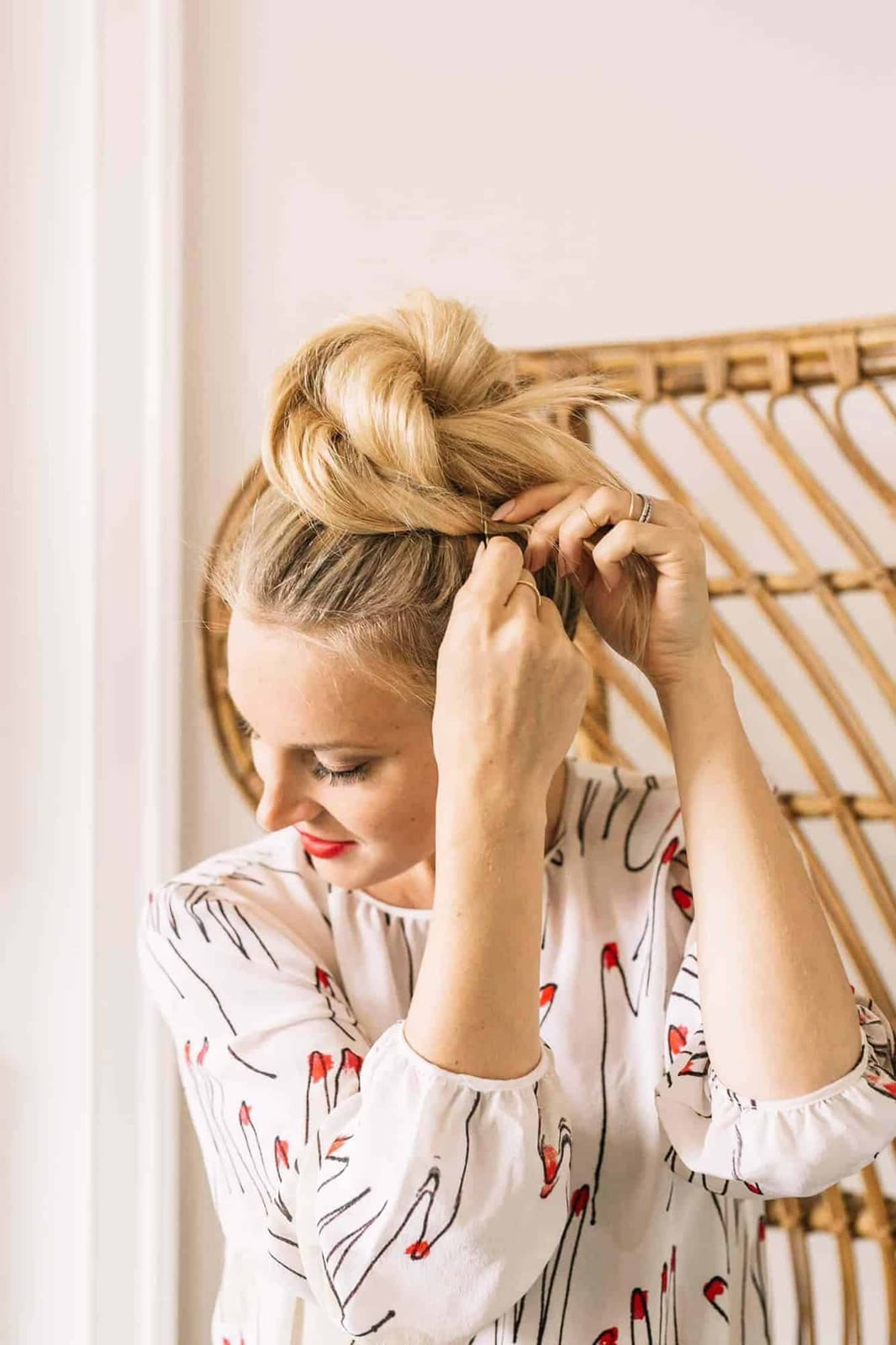
DIY Half-Up Twist For Long Wavy Hair
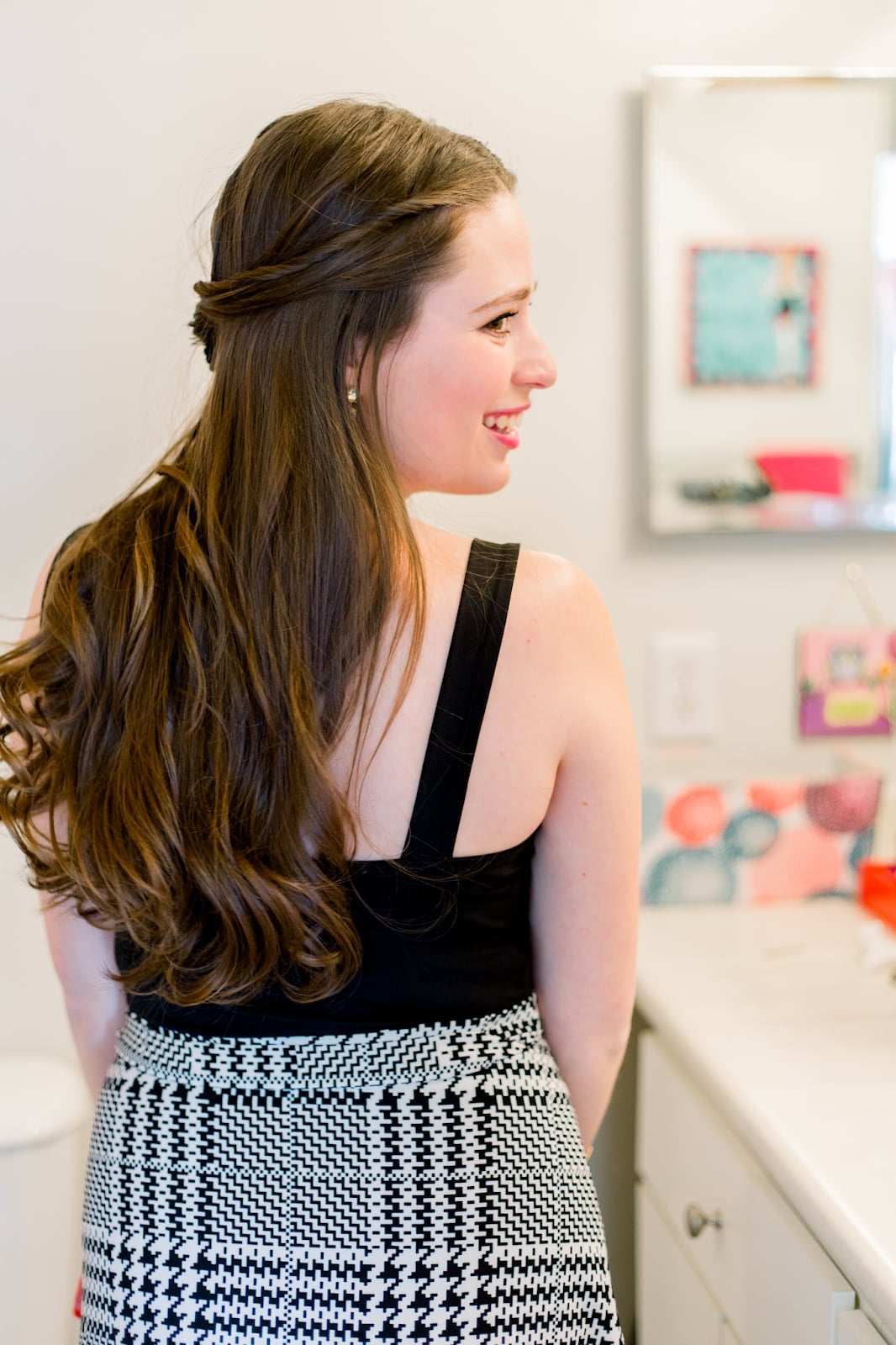
A twisted half up at the crown pulls thick, wavy dark brown hair off the face without losing the length. Mid back length hair gives the twist enough weight to stay put. A clear elastic or two bobby pins are all you need to secure the twisted section.
Ask your stylist for: long wavy hair with a simple half up twist. Section the top portion from ear to ear, twist it toward the back and pin at the crown. The remaining mid back length falls naturally, making this a five minute style for casual days. A texture spray on the ends adds grip if your hair is on the finer side.
Elegant Low Updo With Face Framing Tendrils
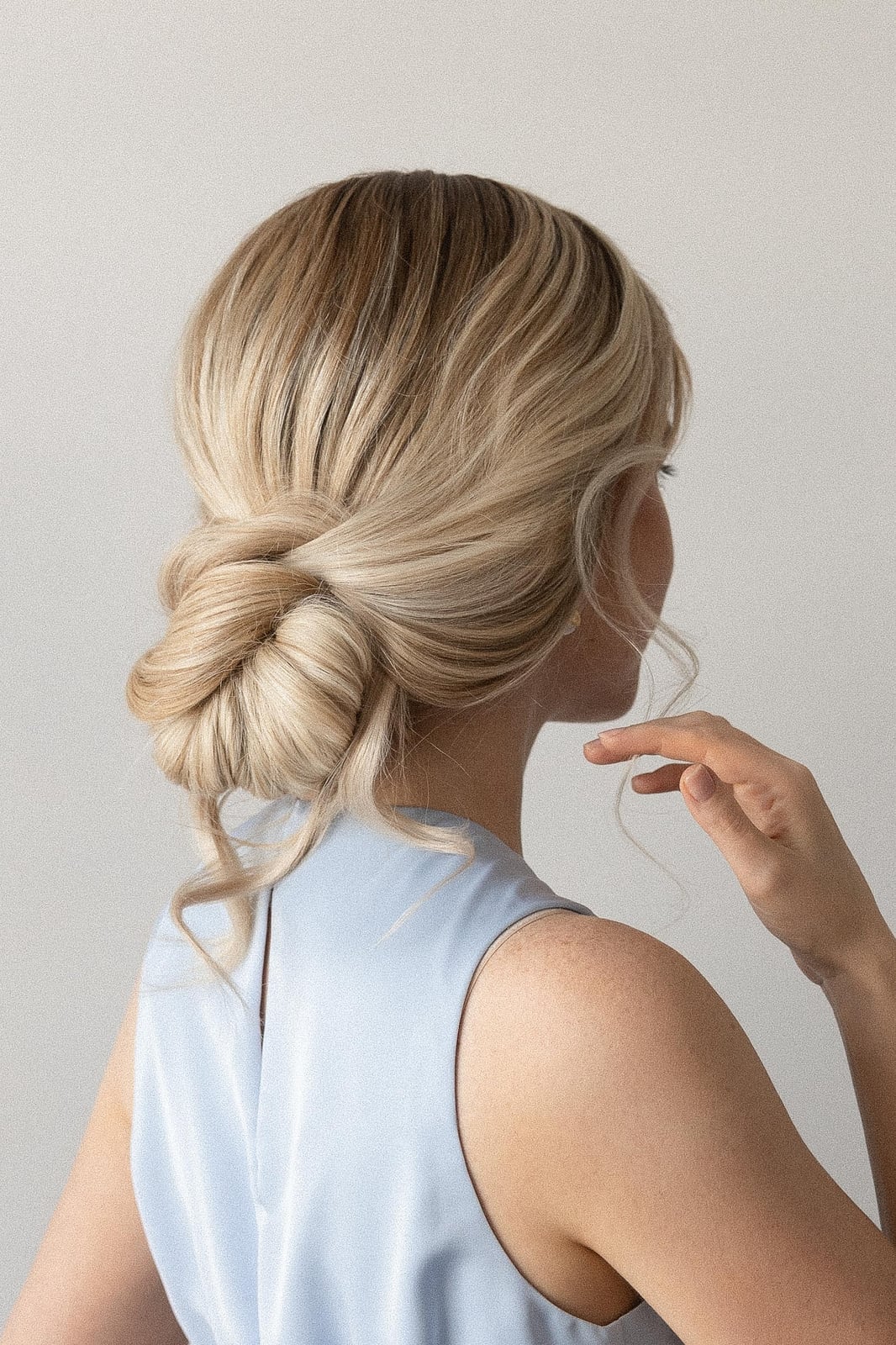
A low bun at the nape of the neck keeps the silhouette clean, while loose tendrils soften the hairline. On shoulder-length blonde hair with highlights and a wavy texture, the updo reads as formal without being severe. The back view shows the bun is intricately twisted, not just pinned.
Ask your stylist for: elegant low updo with face framing tendrils. The technique involves twisting sections before wrapping them into the bun, then gently pulling out a few strands around the face. This is a go-to for events where you want your hair off your shoulders but still want movement. A texturizing spray before styling helps fine hair hold the shape.
Ash Blonde Low Bun With Twisted Detail
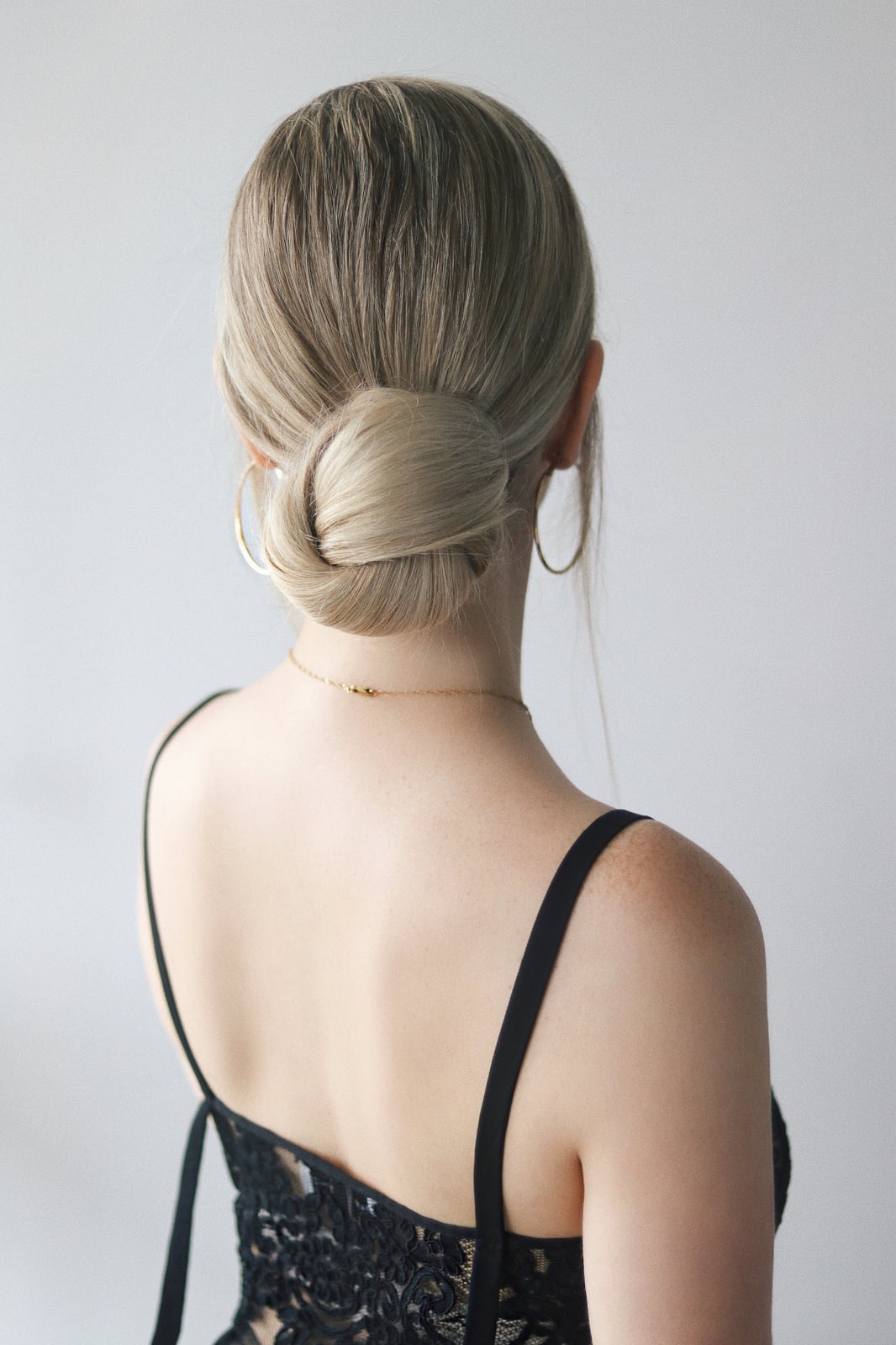
Ask your stylist for: neat twisted low bun. The method starts with a low ponytail, then the tail is twisted and wrapped around the base. A light hairspray smooths flyaways without stiffening the bun. The clean execution makes this appropriate for work or an evening event where you want minimal fuss and maximum precision.
Braided Bun Updo On Mid-Back Hair
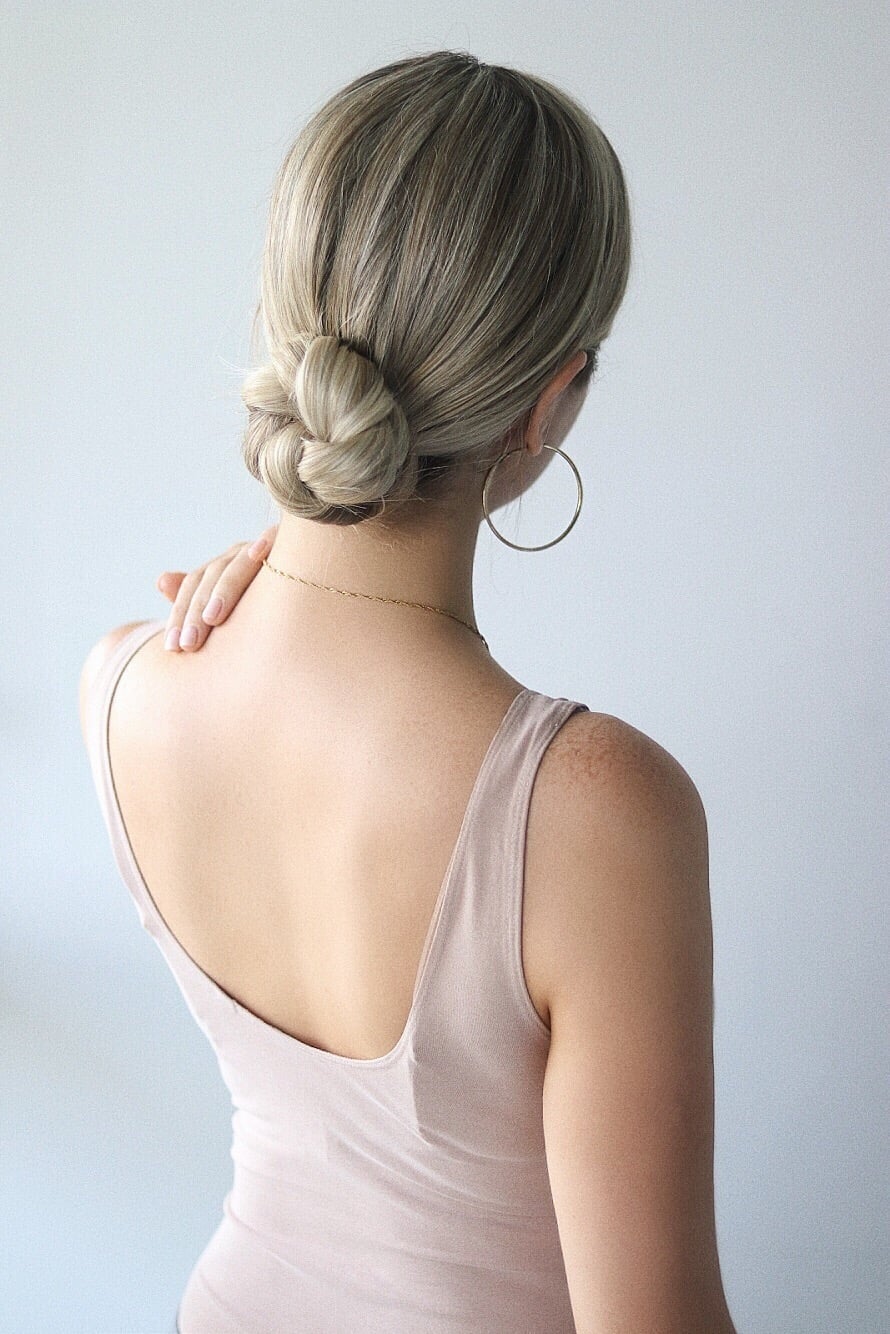
A braided bun on thick, straight ash blonde hair turns mid-back length into a compact updo that holds all day. The braid is woven tightly from the nape, then coiled into a bun and pinned flat. This is not a quick style, but the result is secure enough for hours of dancing or a long ceremony.
Ask your stylist for: intricate braided bun. The process involves sectioning the hair into three parts, braiding each, then wrapping them around each other into a single bun. The straight texture of ash blonde hair makes the braid lines crisp and visible. A strong-hold hairspray and plenty of bobby pins are essential for keeping everything in place.
DIY Long Layers Trim Tutorial
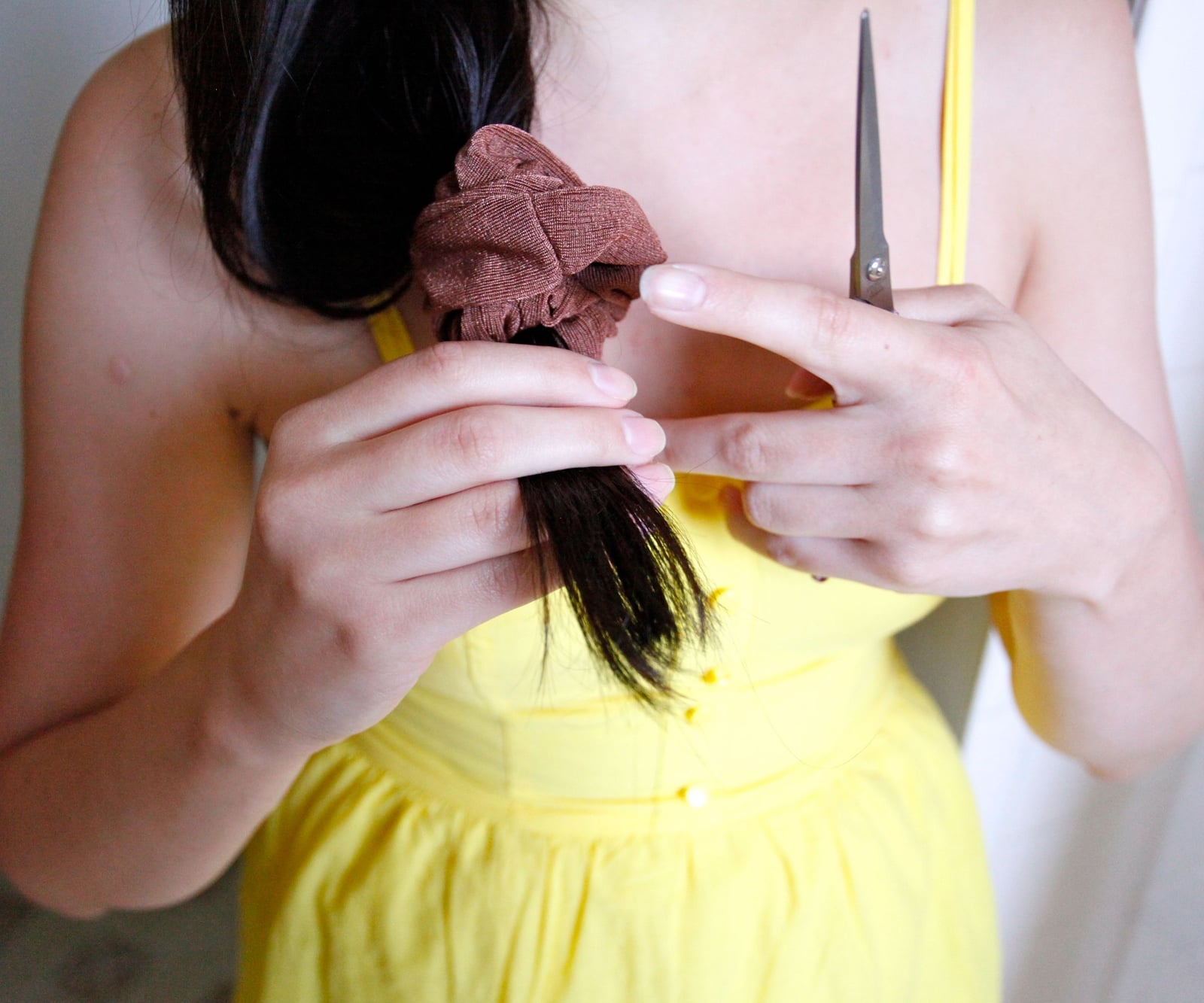
Trimming long layers at home on thick, straight dark brown hair is possible with sharp hair cutting scissors and patience. The close-up view shows a bundled section of mid-back length hair being snipped, a method that works best when hair is dry and sectioned into quadrants. Each layer is cut individually to maintain the shape.
Ask your stylist for: how to trim long layers at home. The DIY approach saves a salon visit, but the risk is uneven layers if you cut wet or rush the sectioning. A small mistake can be fixed, but a large one requires a professional to rebalance. Stick to trimming a quarter inch at a time, and always cut upward into the ends rather than straight across.
DIY Blunt Bangs Trim Tutorial
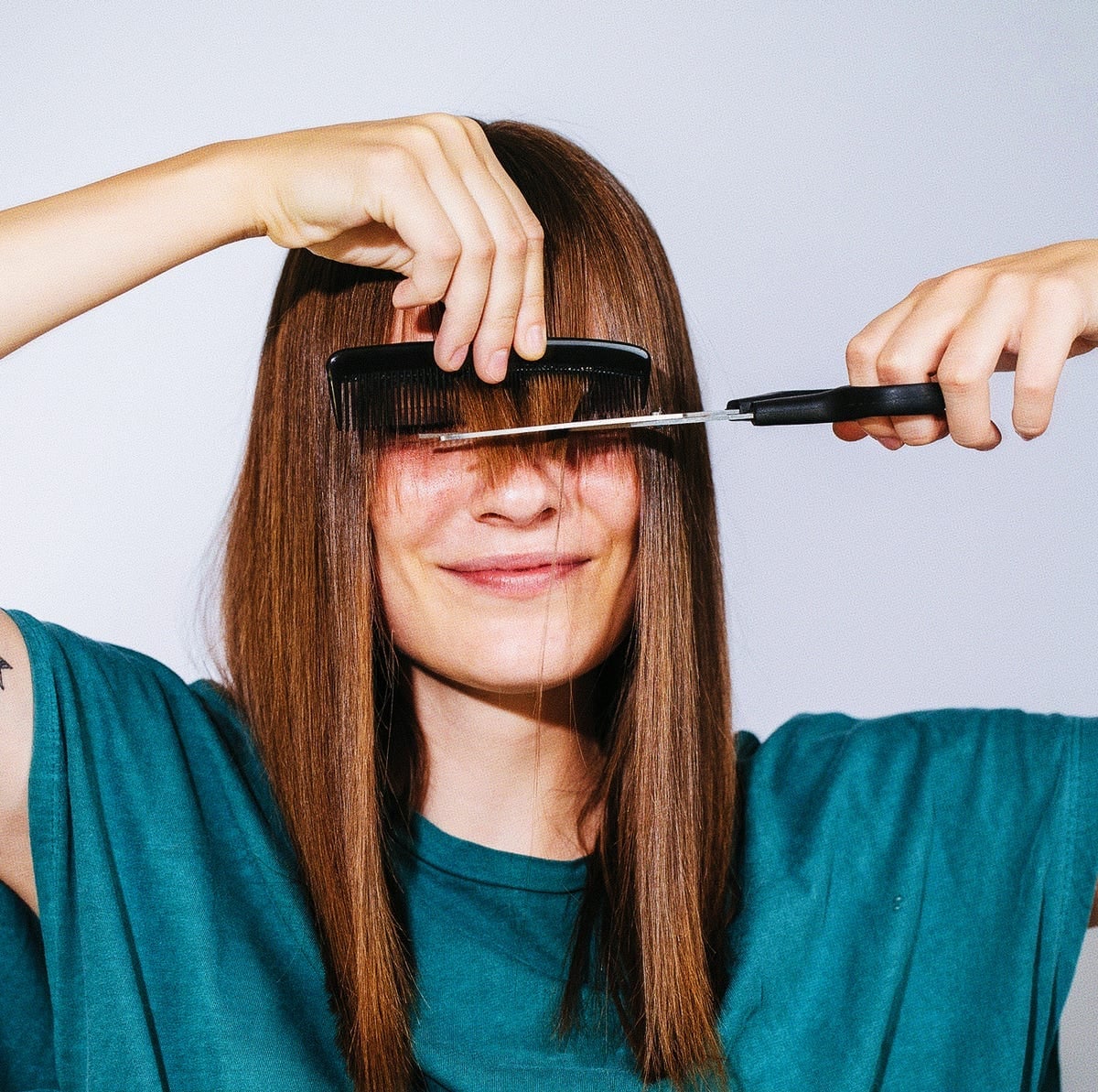
Wondering if you can really trim your own blunt bangs without disaster? The woman in this photo has medium brown, collarbone-length straight hair with a middle part and blunt bangs, and she is holding scissors and a comb to do exactly that. Ask your stylist for: how to trim blunt bangs at home. Fine, straight hair at collarbone length with blunt bangs is the ideal candidate for this DIY job.
The honest drawback is that blunt bangs show every uneven snip. Comb the bangs forward and trim small sections, cutting slightly below the desired length so you have room to correct. Even then, a single crooked cut can mean a week of awkward styling. If your hair is fine, the margin for error is even smaller; consider this a low-stakes experiment best saved for between salon visits.
DIY Side View Layer Trim
The side view of this collarbone-length, dark brown fine straight hair reveals subtle layers that were cut at home with a comb and scissors in hand. There are no bangs here, just a middle part and the kind of soft graduation that air-dries without fuss. Ask your stylist for: how to trim layers at home from the side. Fine straight hair at collarbone length needs a careful hand to keep the layers from disappearing.
Use a comb to section the hair and cut the layers at an angle, following the natural fall of the hair. A trim every eight to ten weeks maintains the shape without losing length. The trick is to cut less than you think you need; you can always go shorter, but you cannot glue a quarter-inch back on.
Ponytail Cut For Straight Medium Hair
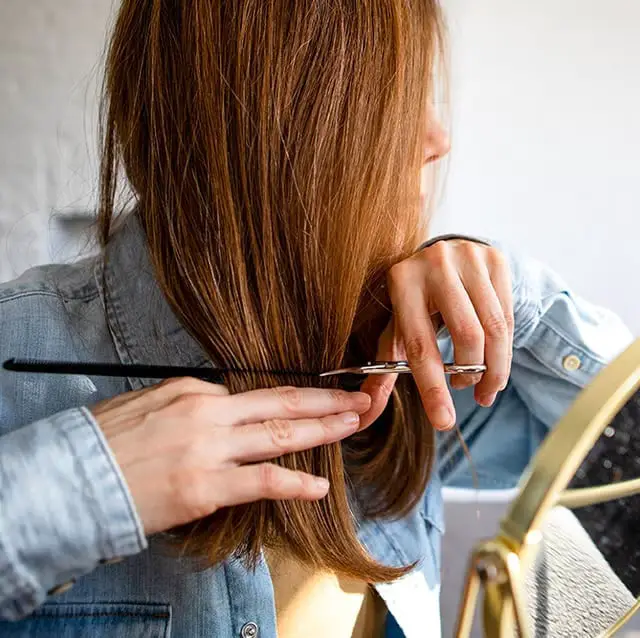
The ponytail cut method works best on medium-thickness straight hair at shoulder length, gathered into a high, smooth ponytail before you make a single snip. This auburn hair, shown from the side view with blunt ends and no bangs, is the textbook candidate: straight enough that the tension creates an even line, thick enough that the ends hold together. Ask your stylist for: how to cut hair using the ponytail method. Medium-thickness straight hair of shoulder length that can be gathered into a tight ponytail will produce a clean, one-length result.
Pull the ponytail tight and smooth before cutting; any bumps or loose sections will translate into uneven layers. The method is best for achieving even lengths rather than graduated shapes. If your hair is curly or very fine, the ponytail cut can create a blunt line that looks heavier than intended, so stick to straight, medium-density hair for the most reliable outcome.
Thick Hair Blowout With Soft Waves
Can thick, straight hair ever hold a soft wave without turning into a frizzy mess? The answer is a blowout with proper technique, as seen on this collarbone-length thick straight hair styled in a blowout with soft waves, curtain bangs, and a side parting. The long layers are cut to release weight while keeping the density that makes thick hair shine. Ask your stylist for: collarbone length thick hair with soft waves and blowout. Thick, straight hair at collarbone length is ideal for this style because the volume stays put.
Use a round brush and blow dryer to smooth each section before wrapping the ends around the brush for wave shape. A curling iron refreshes the waves on day two, but the blowout itself gives the most polished result. Thick hair takes longer to blow dry than fine hair; budget extra time for the initial styling session. A trim every six to eight weeks keeps the layers from growing heavy.
Ash Blonde Bob With Soft Waves
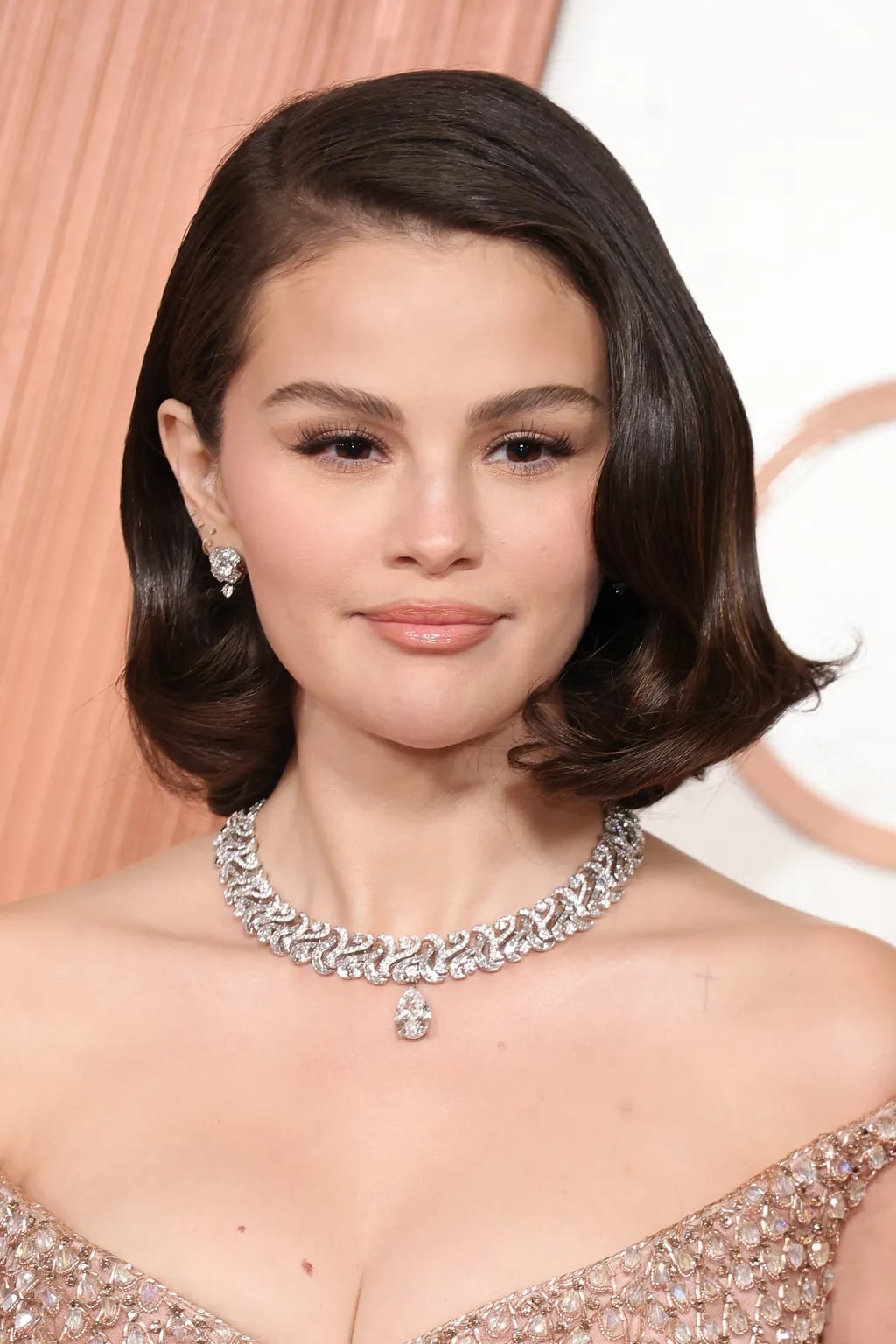
A collarbone blunt bob with face-framing layers and curtain bangs, styled in a blowout with gentle waves, sits in a different category than a sharp, geometric bob. The ash blonde base with subtle highlights softens the blunt line, while the waves prevent the cut from looking severe. Ask your stylist for: collarbone blunt bob with face framing layers and soft waves. Fine-density straight hair at collarbone length benefits from the layers and waves, which add movement that a one-length bob would not provide.
Use a large-barrel curling iron to create the waves, wrapping sections away from the face for consistent shape. A trim every six to eight weeks preserves the blunt line and the curtain bangs. This cut suits those who want the polish of a bob without the strict maintenance of a true blunt cut.
DIY Hair Trimming Guide
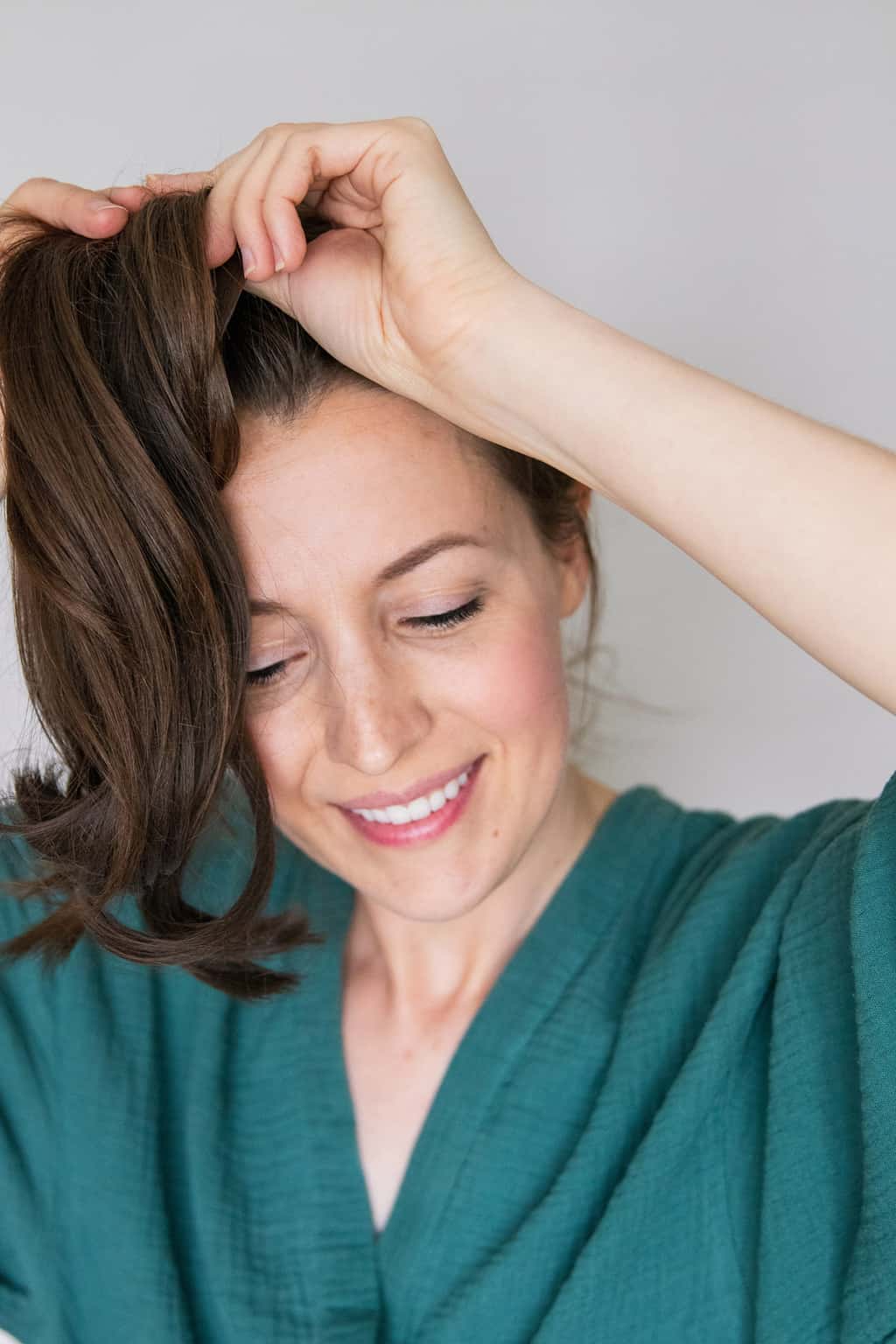
The ponytail cut is the oldest trick in the at-home haircutting book, and it works because it forces all your layers into one clean line. This method suits anyone who wants to maintain a simple shoulder-length cut between salon visits, especially if your hair is straight and medium thickness like the hair shown here. Ask your stylist for: simple DIY haircutting tips. Start with clean, dry hair, then pull it into a high ponytail on top of your head, holding it straight up.
Section the ponytail with clips if you want more control, then snip straight across. The key is to cut less than you think you need, since you can always go shorter but growing back takes patience. This DIY hair trimming guide is best for refreshing existing layers, not for a full restyle. A trim every eight weeks keeps the line sharp without risking a crooked result.
Final Thoughts
For a low-maintenance cut, opt for blunt lines and minimal layers. If you prefer movement, choose face-framing layers and consider curtain bangs for versatility.
- Trim blunt bobs and bobs with blunt bangs every 4-6 weeks for sharp lines.
- Layered cuts and lobs benefit from a trim every 6-10 weeks to maintain shape.
- For colored hair, refresh tones every 6-12 weeks depending on vibrancy.
- Use heat protectant spray before blow-drying or heat styling.
Find the simple cut that fits your routine and lifestyle.