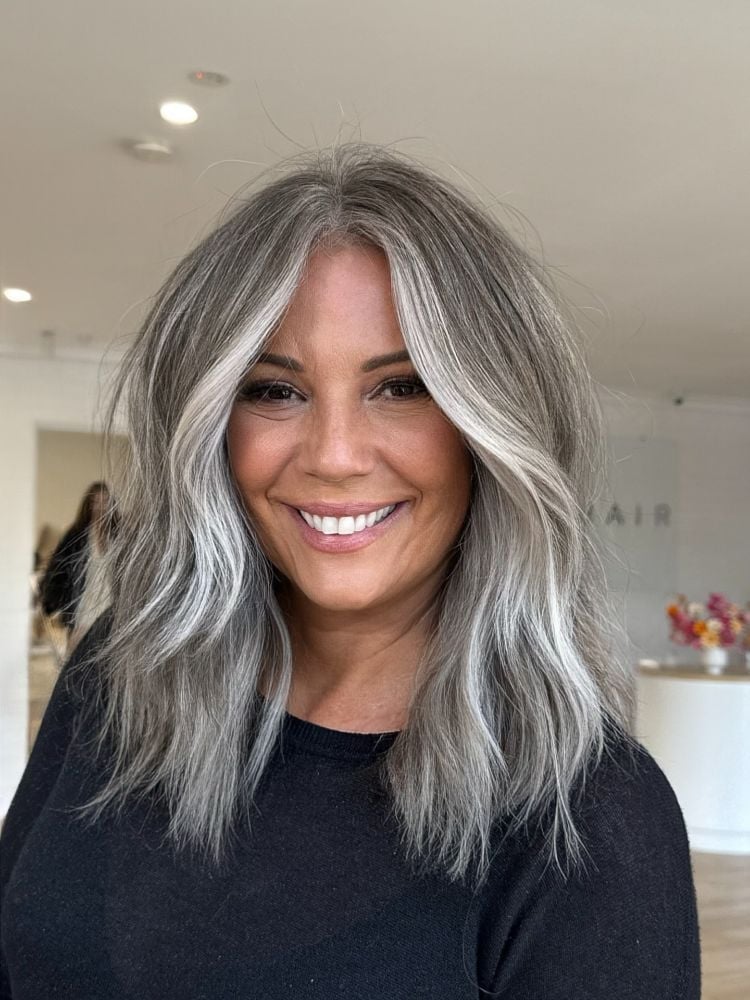

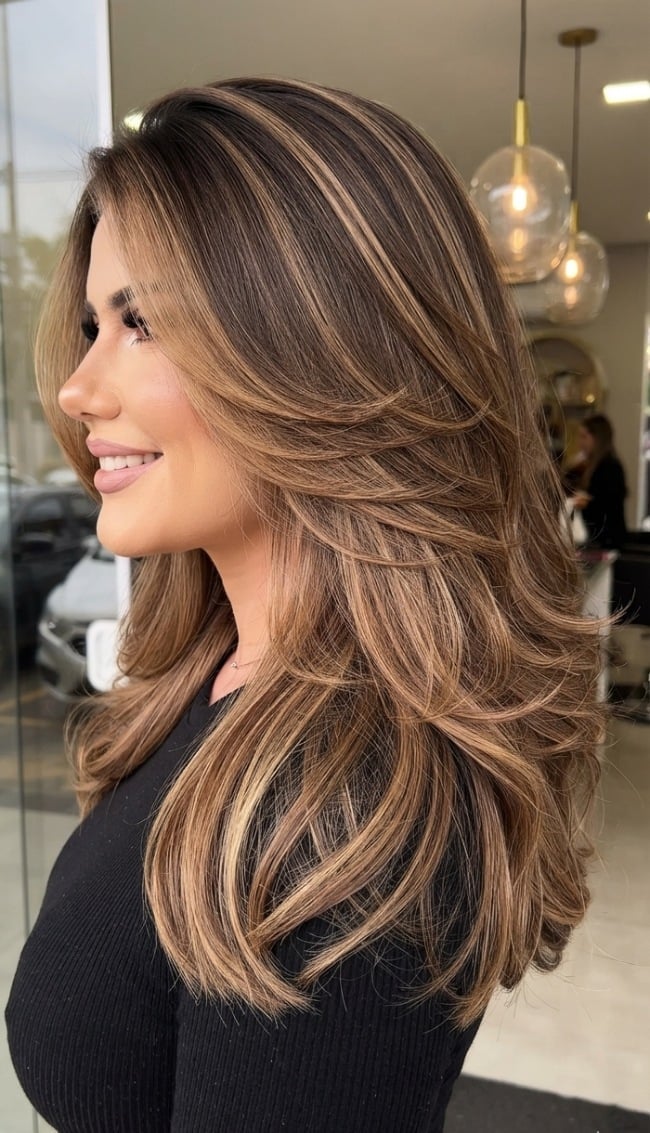
Honey balayage is a hand-painted color technique that deposits warm, golden tones through the mid-lengths and ends, creating a sun-kissed effect that grows out softly. The trend has shifted toward softer face-framing layers and curtain bangs, which let the honey tones catch light naturally without a stark root line.
This collection covers 26 ways to wear Simple Honey Balayage, from low-upkeep mid-back lengths to bolder chin-length bobs, on textures from straight to curly. It solves the usual struggles: fine hair that looks flat, a visible grow-out line, or a fringe that refuses to behave. Every idea works with a lived-in color rhythm and a gloss every eight to twelve weeks.
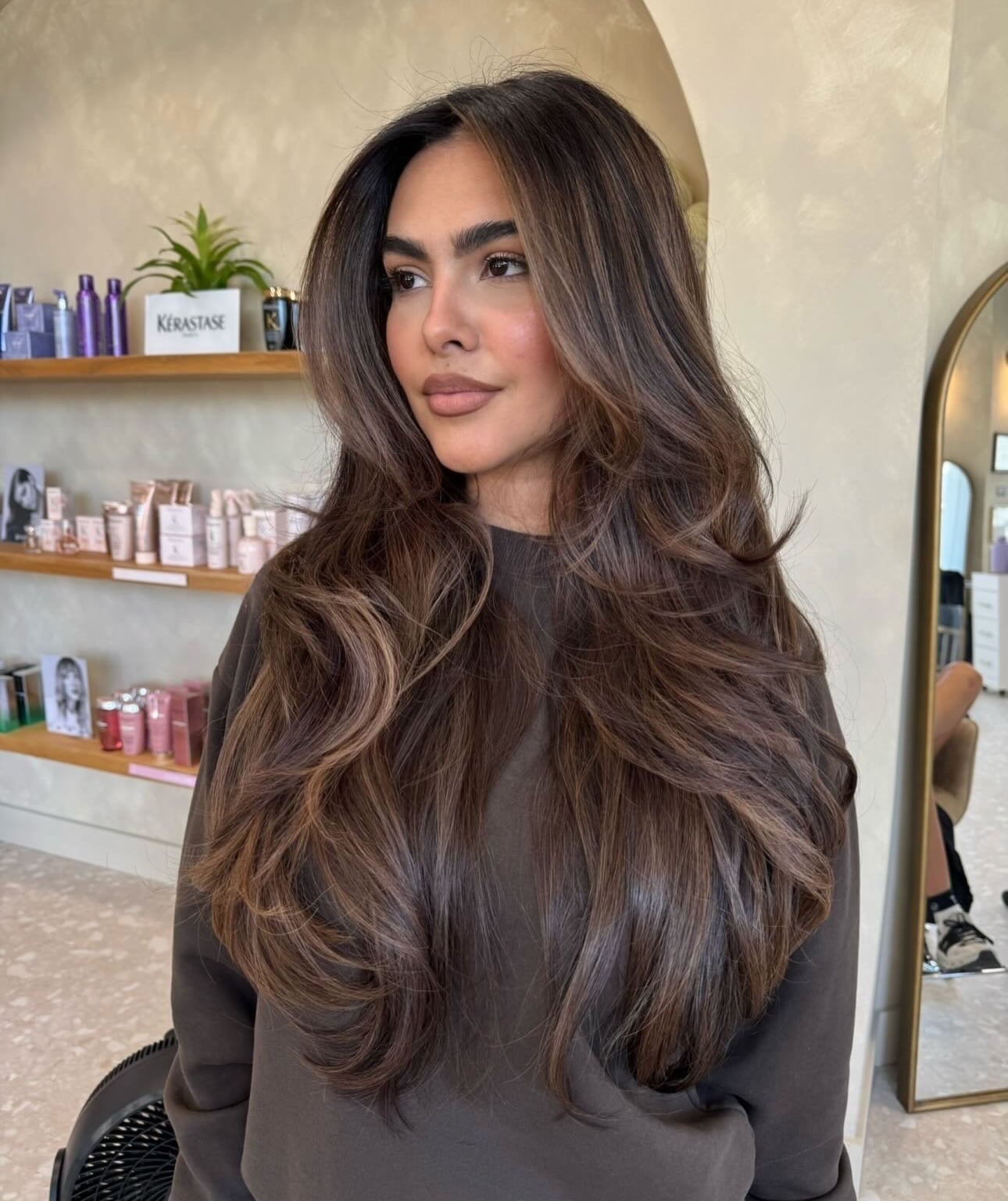
Mid-Back Length Layers With Honey Caramel Balayage
The honey caramel balayage here works because it avoids the common trap of looking like two separate colors glued together. On a brunette base, the warm caramel tones blend upward into the honey highlights, so the transition reads as a single gradient rather than a stripe. The long layers and soft waves give the dimension somewhere to travel, and the face-framing pieces catch light right where you want it.
This works best on thick, wavy hair that starts at mid-back length; the weight keeps the layers from collapsing into each other. Ask your colorist for: mid-back layers, honey caramel balayage, face-framing pieces. A large barrel curling iron creates the soft waves, and a trim every 10 to 12 weeks keeps the layer shape clean.
Voluminous Honey Blonde Balayage With Loose Waves
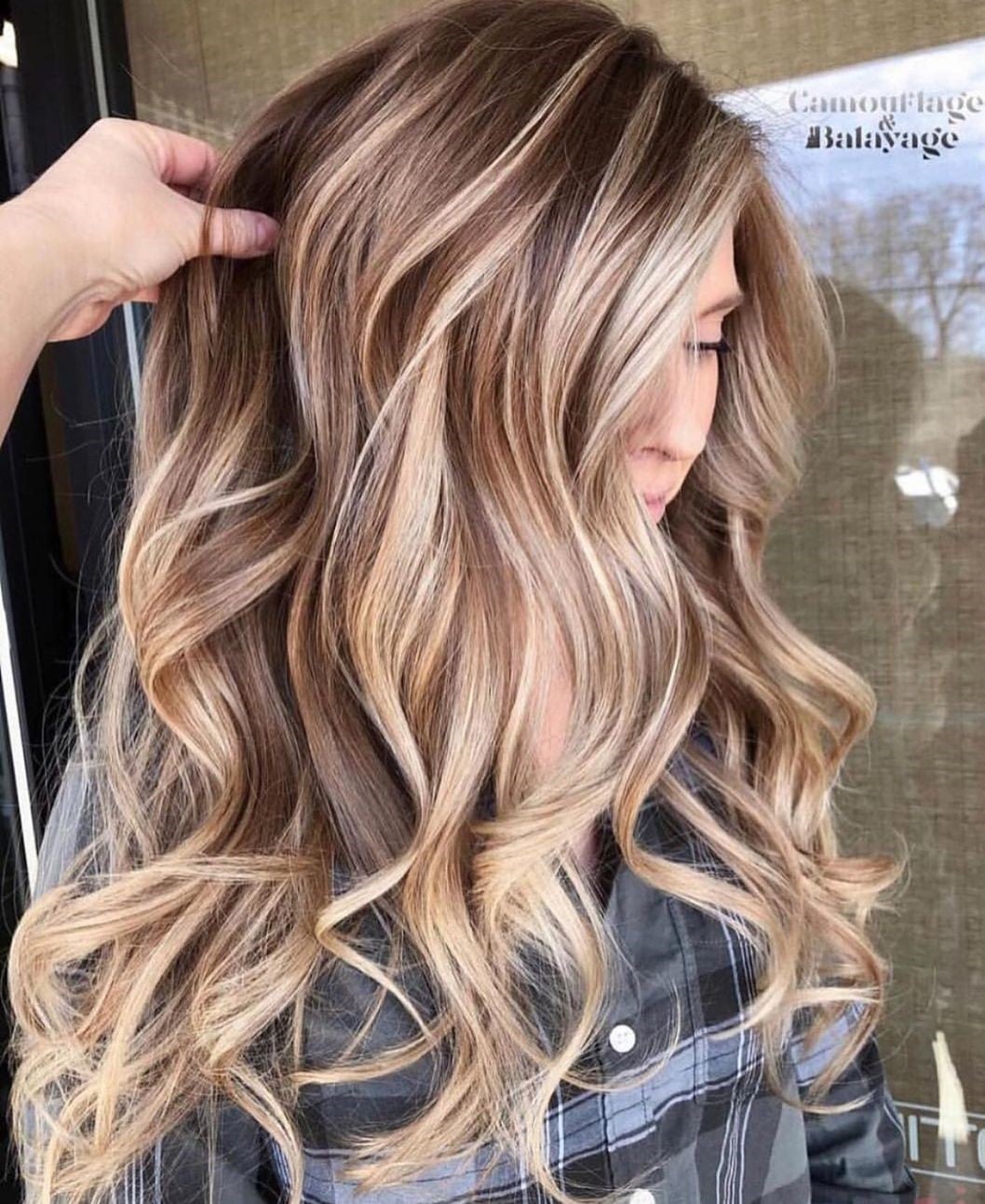
Wondering if honey blonde is worth the upkeep? It depends on your starting point. This particular version sits on a mid-back length with voluminous loose waves, and the lighter blonde highlights are woven close to the root around the face for brightness without a harsh grow-out line. The volume comes from the cut and texture, not from heat alone.
Thick, wavy hair at mid-back length carries the lift best, and the volume balances long and square face shapes. Ask your colorist for: voluminous loose waves, honey blonde balayage with highlights. Expect a balayage touch-up every 12 to 16 weeks, with a texturizing spray used on damp hair before styling to hold the wave.
Honey Brown Balayage With Curtain Bangs
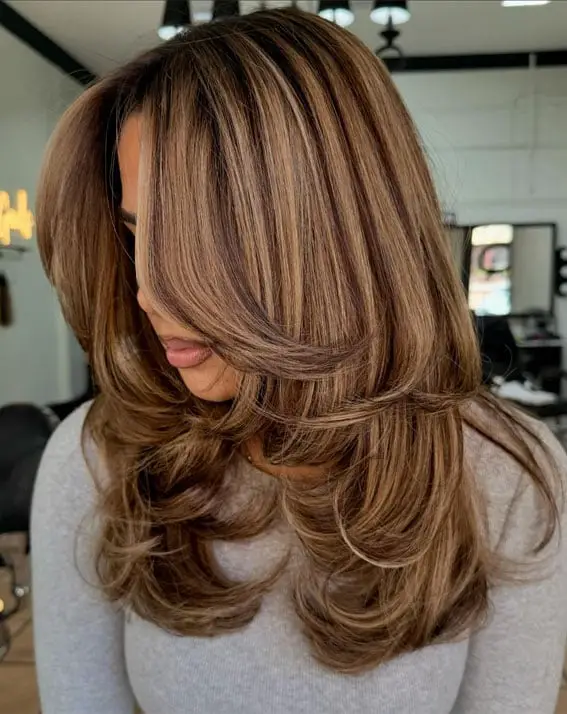
The honey brown base keeps this from veering into full blonde territory, while the lighter blonde balayage highlights add dimension without the commitment of a high-lift color. The curtain bangs and face-framing layers are cut into the same mid-back length, so the bangs blend into the longer hair when pushed to the side. A middle parting keeps the curtain shape symmetrical. This is a solid choice for thick, wavy hair, and the curtain bangs soften angular face shapes. Ask your colorist for: honey brown balayage, curtain bangs, face-framing layers. Blow-dry the bangs with a round brush, and plan a toning appointment every 8 to 10 weeks.
Collarbone Length Honey Bronde Balayage
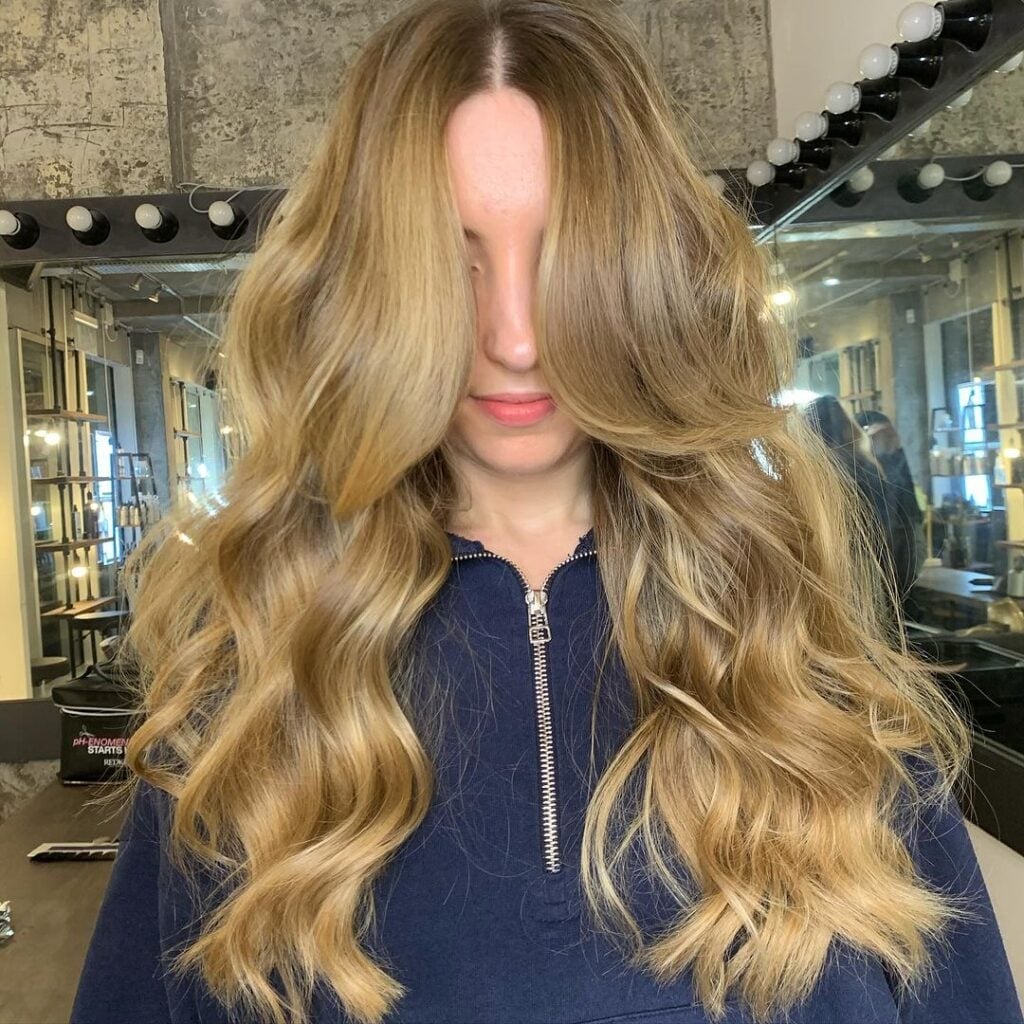
A collarbone length with layers and curtain bangs is a low-risk shape for anyone who wants movement without losing length. The honey bronde balayage blends warm blonde and light brown tones so closely that the root shadow is barely there, which means the grow-out phase is unusually forgiving. The wavy texture and middle parting keep the layers from looking too blunt. Thick, wavy hair at collarbone length holds the blowout well, and the curtain bangs work for oval and heart faces. Ask your colorist for: collarbone length layers, honey bronde balayage, curtain bangs. Use a volumizing mousse before blow-drying, and trim the baseline every six to eight weeks.
Dark Brown With Honey Blonde Balayage Lob
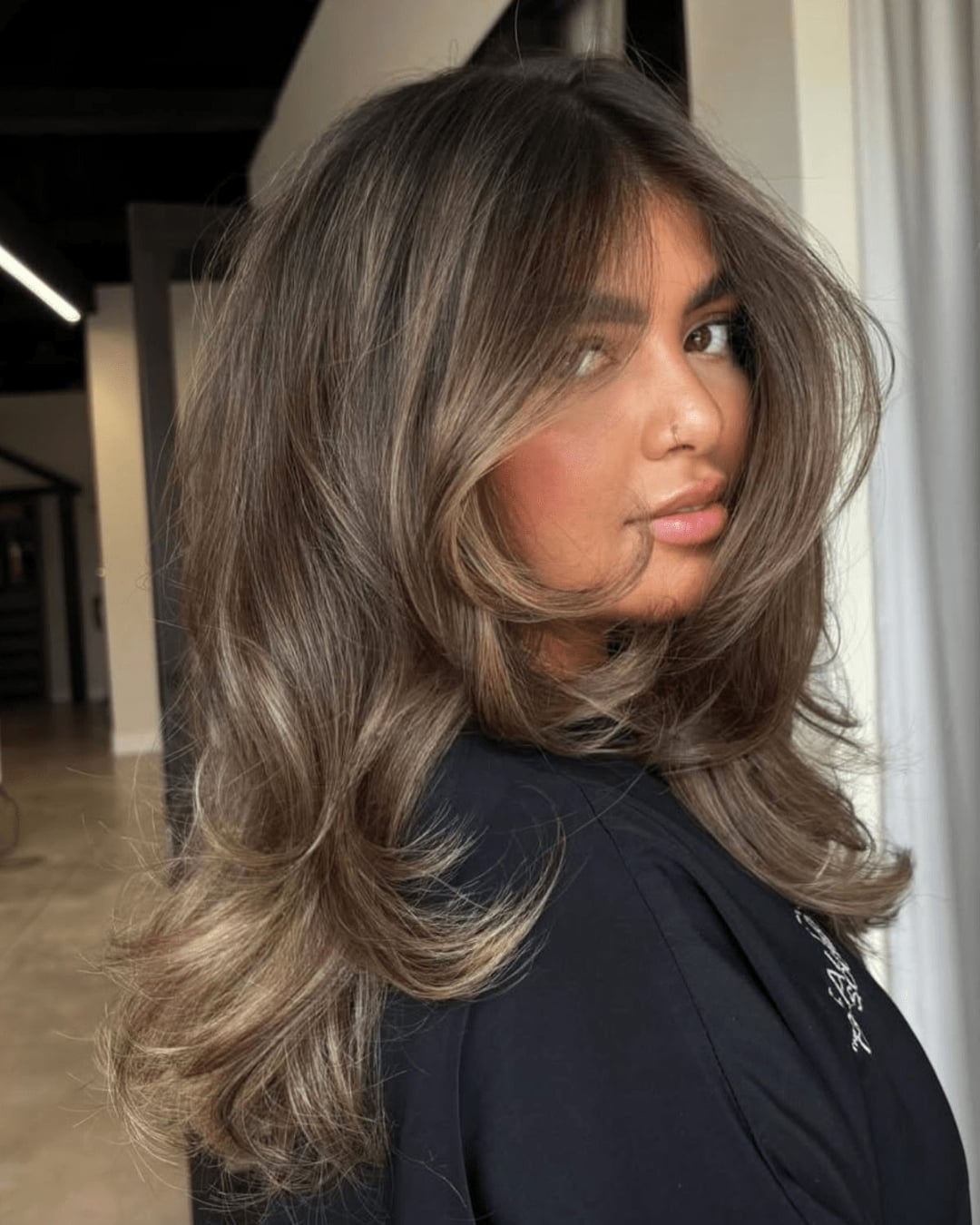
Compared to a fully blended balayage, this one plays up the contrast. The dark brown base stays rich and deep, while the honey blonde balayage is concentrated around the face and through the mid-lengths and ends. The result is more of a statement than a subtle shift, and it works because the curtain bangs and loose waves keep the high contrast from feeling harsh. This is a salon-only process: the colorist needs to place the light pieces so they hit the face and the ends without lifting the base too high. Mid-back length, thick, wavy hair carries the weight of the contrast best. Ask your colorist for: mid-back length, dark brown base, honey blonde balayage, curtain bangs.
Mid-Back Waves With Warm Blonde Balayage
The warm blonde balayage here is painted slightly higher than usual, starting around the ears rather than the mid-lengths. That placement pushes brightness toward the face without needing heavy front highlights. It works well on thick, wavy hair of mid-back length, where the warm tone adds depth to the darker base. Ask your colorist for: mid-back length, warm blonde balayage, curtain bangs, face-framing layers. The drawback is that the higher placement means new growth shows faster, so expect a root shadow or a toning visit around week six.
Middle parting and curtain bangs keep the face open, which suits oval and heart shapes. The waves are styled with a diffuser on low heat, which preserves the thick texture without frizz. Baseline trims land every eight to ten weeks, and a glossing treatment at the same rhythm keeps the warm tone from drifting brassy.
Warm Blonde Honey Balayage With Curtain Bangs
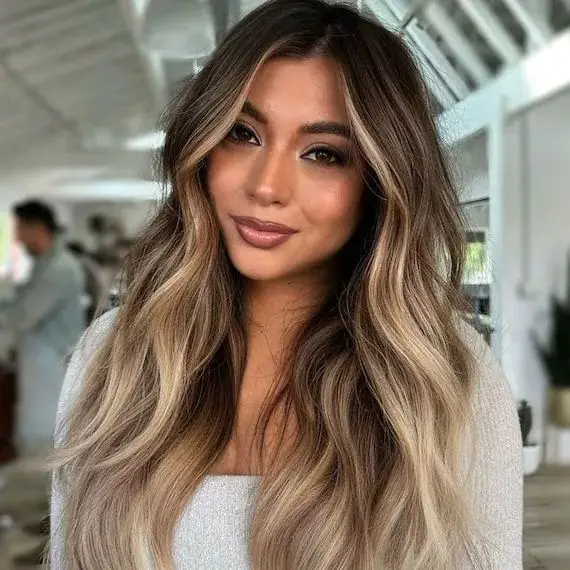
What makes this honey balayage read as natural is the soft gradient: the warm blonde base stays darker at the roots, then lightens gradually through the ends. The curtain bangs catch the lightest pieces, so they glow without looking striped. This design suits thick, wavy hair of mid-back length, with the layers cut to move with the wave pattern. Ask your colorist for: mid-back length, warm blonde base, honey balayage, curtain bangs. The blowout finish is done with a round brush. A toning appointment every six to eight weeks keeps the honey tone clear.
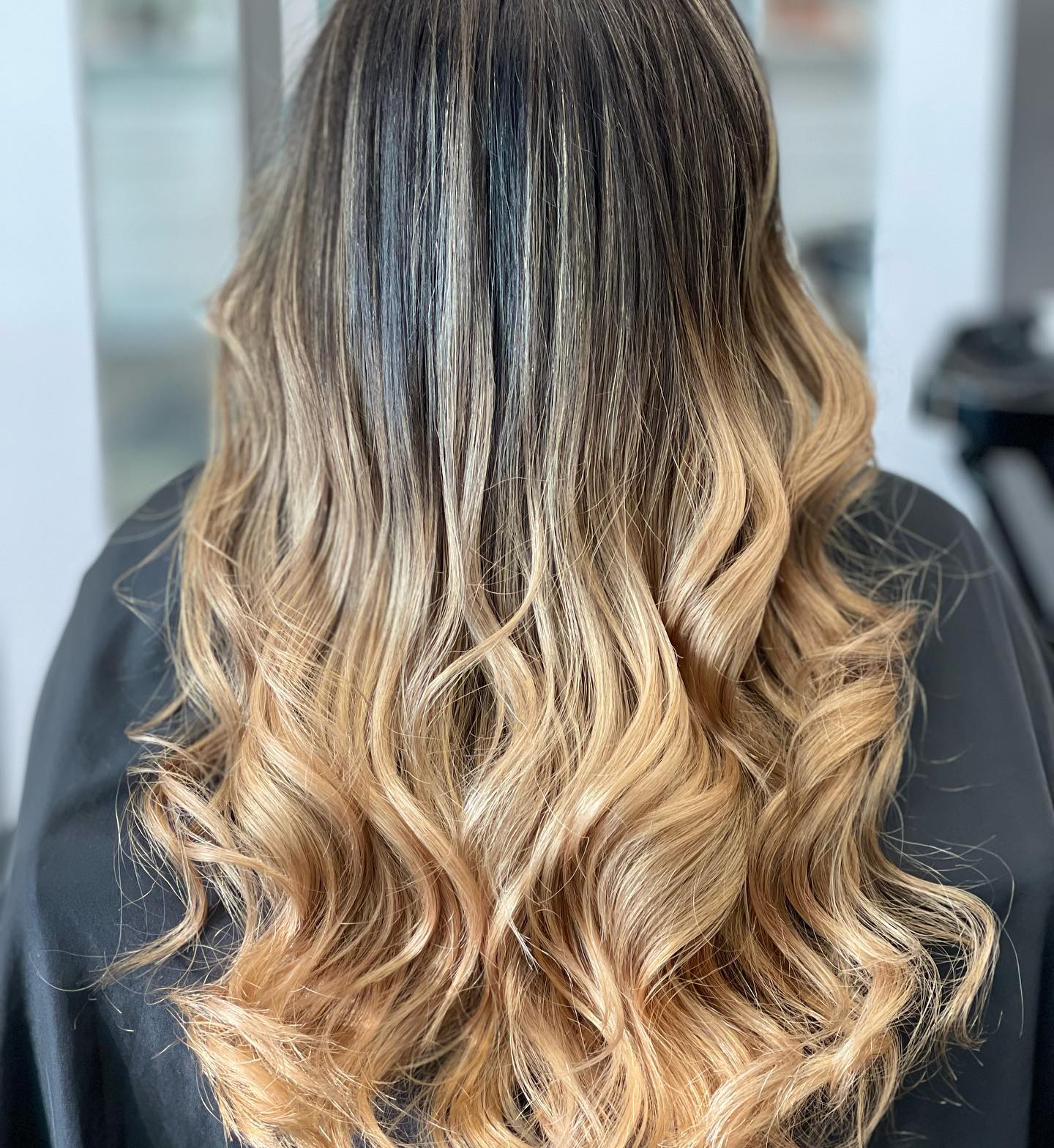
Mid-Back Waves With Honey Balayage
The curtain bangs should be cut dry so they land correctly with your natural wave. The stylist paints the honey balayage in a V-shape pattern, which creates the dimensional effect without harsh bands. A smoothing serum on damp hair before blow-drying gives the glossy finish seen here.
Caramel Honey Balayage With Curtain Bangs
The caramel honey balayage sits between a true brown and a warm blonde, which makes it a natural choice for anyone with a medium to dark brown base who wants warmth without full lightness. The loose curls and thick, wavy texture of mid-back length hair hold the color well because the caramel tone catches light on each bend. Curtain bangs frame round and square faces by softening the jaw and cheekbone lines. Ask your colorist for: mid-back length, thick wavy texture, caramel honey balayage, curtain bangs. For upkeep, a curl cream defines the pattern after washing, and a toning appointment every eight to ten weeks prevents the caramel from pulling too orange.
The middle parting keeps the face open, and the layers are cut to follow the natural wave without imposing a shape. A glossing treatment at the same rhythm as the tone appointment maintains the shine.
Medium Brown With Honey Blonde Balayage
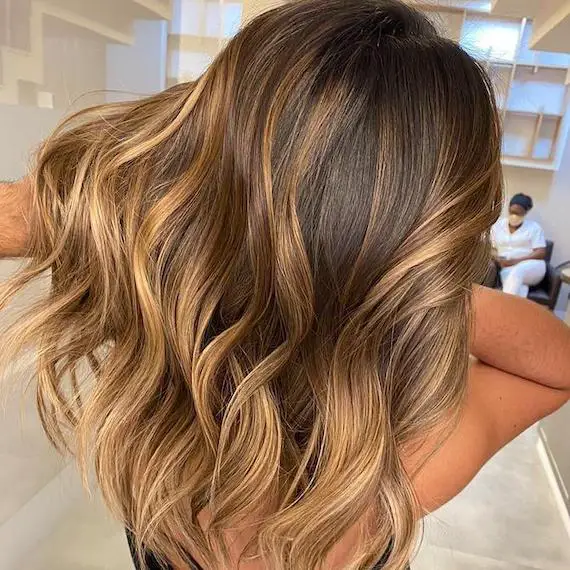
The honey blonde balayage on a medium brown base is a low-commitment color shift: the lighter pieces add dimension and warmth without requiring a full base change. The soft waves and middle parting show off the blend, which is painted in a graduated pattern that leaves the roots untouched. This design suits thick, wavy hair of mid-back length and works with most face shapes because the layers stay soft and the part is neutral. Ask your colorist for: mid-back length, medium brown base, honey blonde balayage, soft waves. The day-to-day wear is straightforward: a texturizing spray refreshes the waves between washes, and a glossing treatment every six to eight weeks keeps the honey tone from fading into a flat yellow.
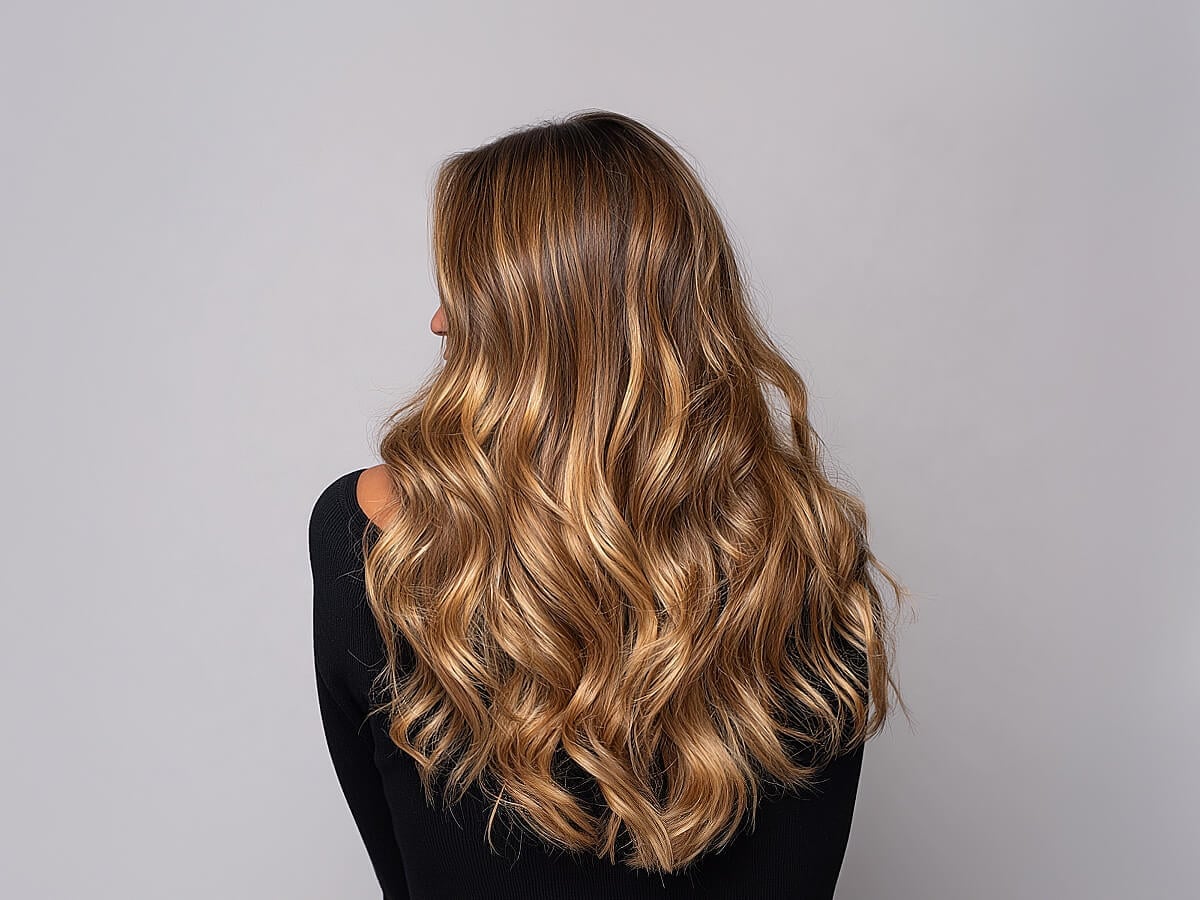
Honey Brunette With Blonde Balayage Highlights
Back-view reveals the design logic: a honey brunette base that darkens the overall tone, with blonde balayage highlights painted through the mid-lengths and ends to create depth without a solid line. Thick, wavy hair of mid-back length holds the dimension well, and the middle parting lets the lighter pieces fall symmetrically around the face.
This is a salon-leaning technique for a reason. The hand-painted highlights need to be placed low enough to avoid a stripe effect, and the honey brunette base requires a colorist who can judge the lift on thick hair. Ask your colorist for: mid-back length, honey brunette base, blonde balayage highlights. A texture spray on damp hair, then air-drying, keeps the waves defined without heat. A trim every 10-12 weeks maintains the ends.
Dark Blonde With Honey Balayage
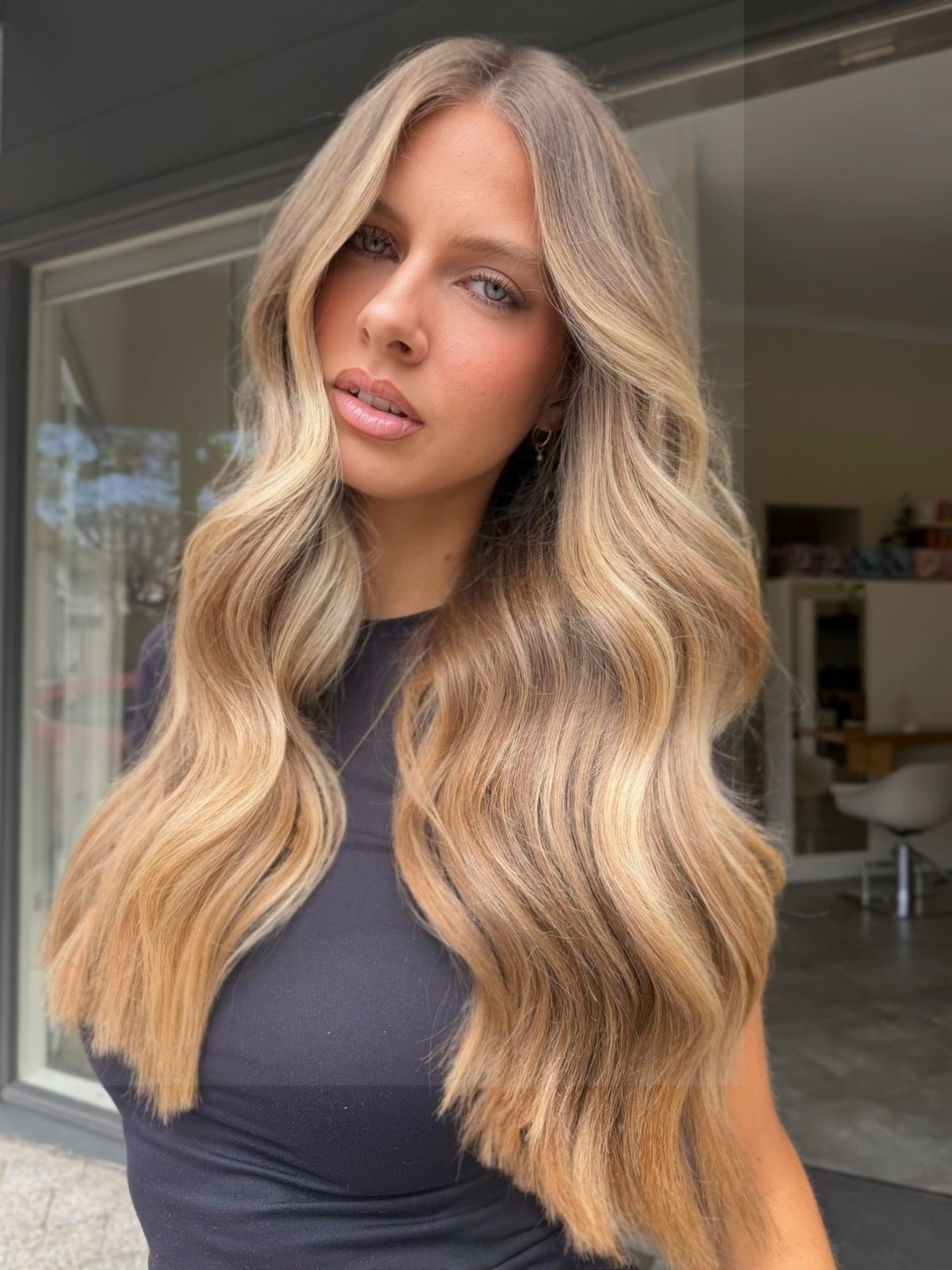
What makes this work is the base: dark blonde sits close enough to the honey balayage that the transition is a gradual lightening, not a sudden jump. Long layers and soft waves carry the color from root to tip, and the middle parting keeps the distribution even on both sides.
One real drawback: on a dark blonde base, the honey can fade to a brassy yellow after a few weeks if you skip toning. A purple shampoo used every other wash keeps the tone warm. Ask your colorist for: mid-back length layers, dark blonde base, honey balayage. Expect a toning appointment every 10 to 12 weeks to refresh the shade. Medium-density, wavy hair suits this approach best.
Wavy Dark Blonde With Honey Balayage
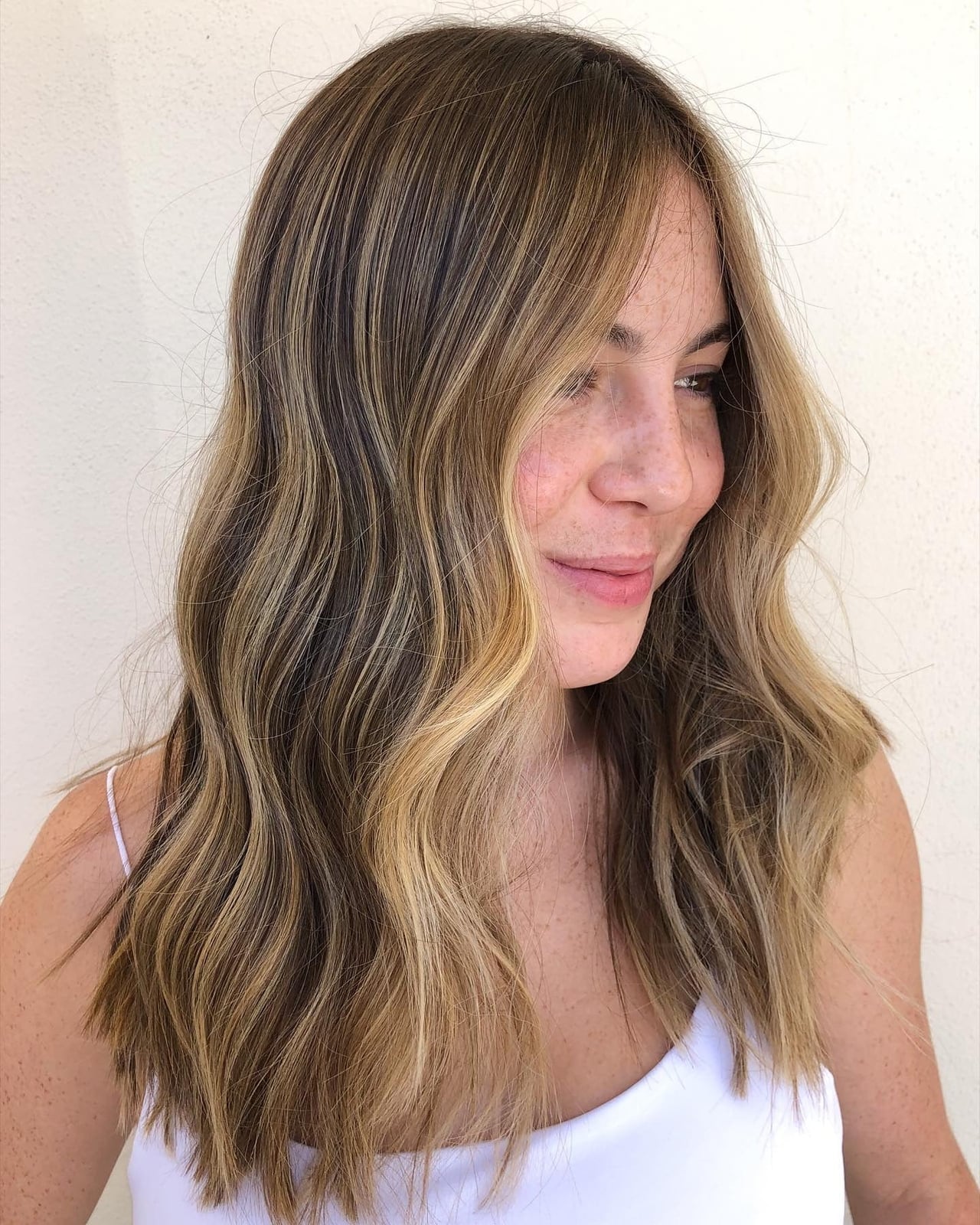
This is the air-dried version of the same dark blonde and honey balayage formula, and it sits in a different category than the polished wave set. Natural texture means the color is more diffused, less deliberately placed. For someone who wants the honey brightness without the blowout commitment, this is the closer match. Medium-density, wavy hair of mid-back length lets the balayage peek through the layers. Ask your colorist for: mid-back length layers, dark blonde base, honey balayage. A curl-defining cream on damp hair, then air-drying, is all it takes to keep the shape.
Diffused Honey Blonde Balayage on Dark Brown, Mid-Back
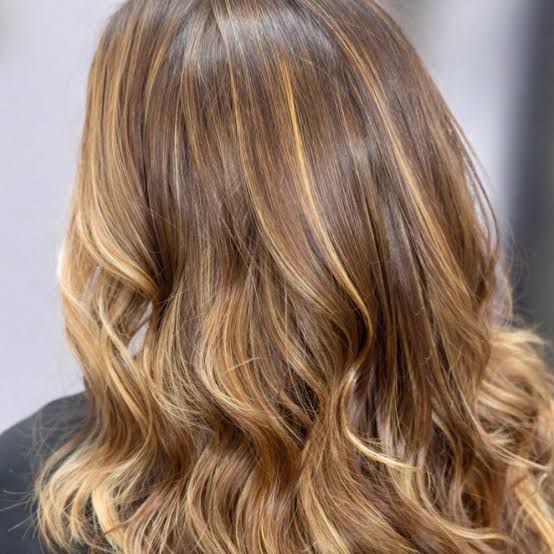
Does a dark brown base need a high-contrast balayage to read as dimensional? Not necessarily. This version uses a diffused honey blonde application, so the lighter pieces blend softly into the dark brown rather than stopping at a hard line. The effect is more sun-kissed than streaky, and it grows out without a visible root line for about six weeks.
Maintenance here is about gloss, not lift. A clear glossing treatment every 8-10 weeks keeps the honey blonde from turning brassy against the dark brown base. Thick, wavy hair of mid-back length benefits from the diffused technique because the waves break up any potential pooling of color. Ask your colorist for: mid-back length, dark brown base, diffused honey blonde balayage. A wide-tooth comb on damp hair preserves the wave pattern.
Dark Brown With Blonde Balayage and Long Layers
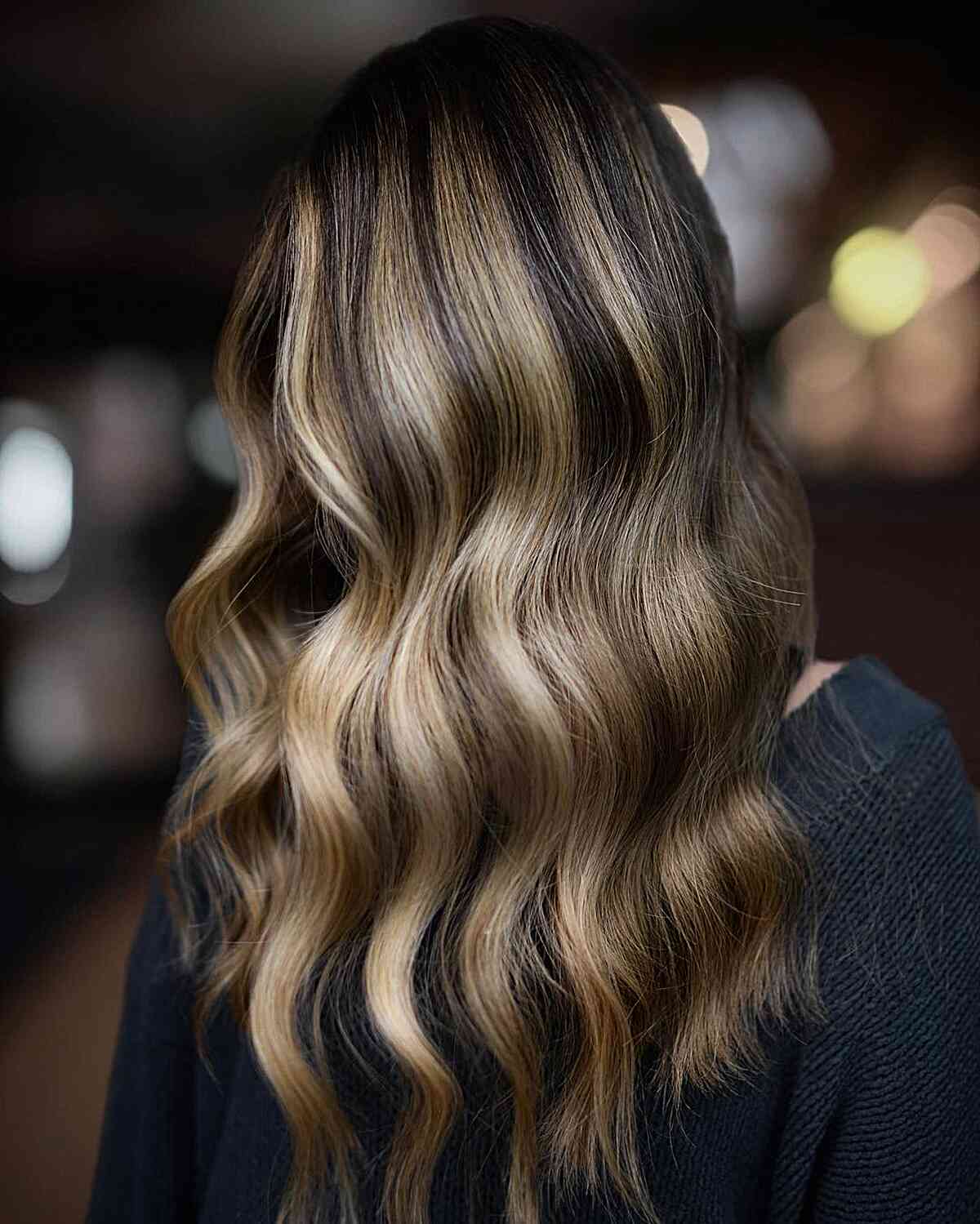
The back view tells you exactly how this was built: the blonde balayage starts lower on the head, leaving the dark brown base intact at the crown, then widens through the long layers. This creates noticeable contrast without lightening the hair near the scalp, which keeps the grow-out period longer than a full-head highlight would.
DIY is not a realistic option here. Hand-painting blonde onto dark brown requires a steady hand and a good eye for placement; one uneven section reads as a mistake rather than a deliberate highlight. Medium-density, wavy hair of mid-back length holds the contrast well. Ask your colorist for: mid-back length layers, dark brown base, blonde balayage. A color-safe shampoo and conditioner, plus a trim every 10-12 weeks, are the standard upkeep.
Dark Brown With Light Honey Brown Balayage
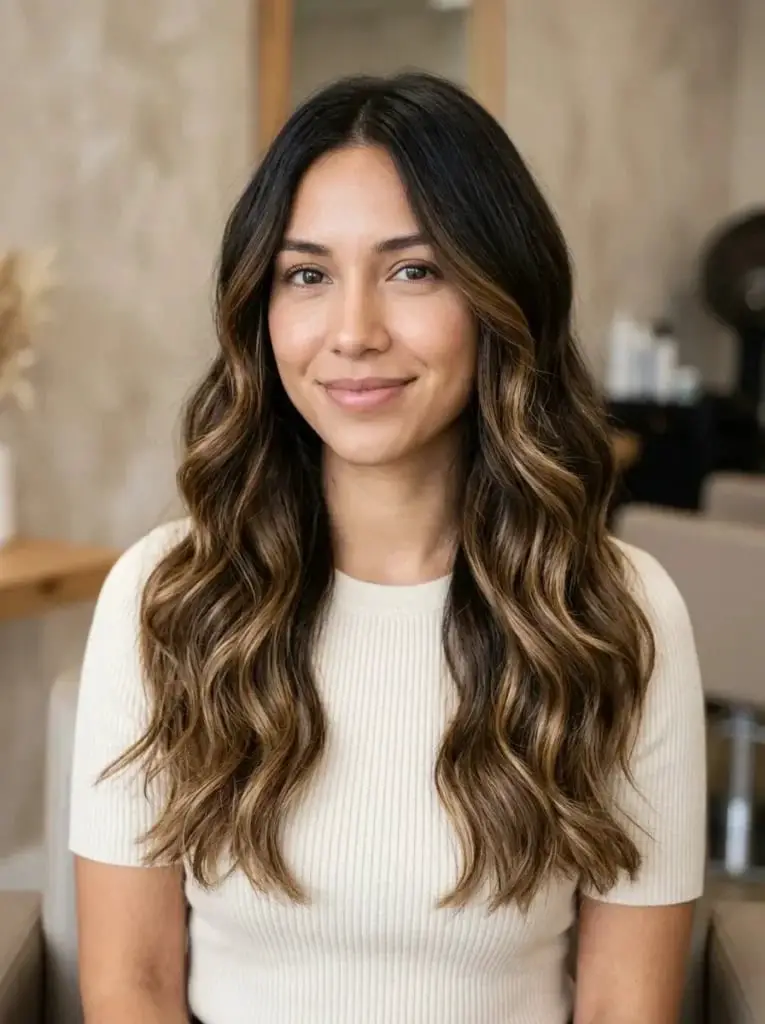
The light honey brown balayage here is so subtle it reads more like a slow fade from dark brown than a highlight. On a mid-back length with medium wavy texture and a middle parting, the warmth appears at the ends, leaving the roots untouched. The drawback? That softness means you will not get a dramatic pop of brightness, so if you want contrast, this is not it. Ask your colorist for: dark brown base with light honey brown balayage. A toning appointment every 12 to 16 weeks keeps the honey from pulling orange on darker hair.
Honey Blonde Balayage With Face-Framing Layers
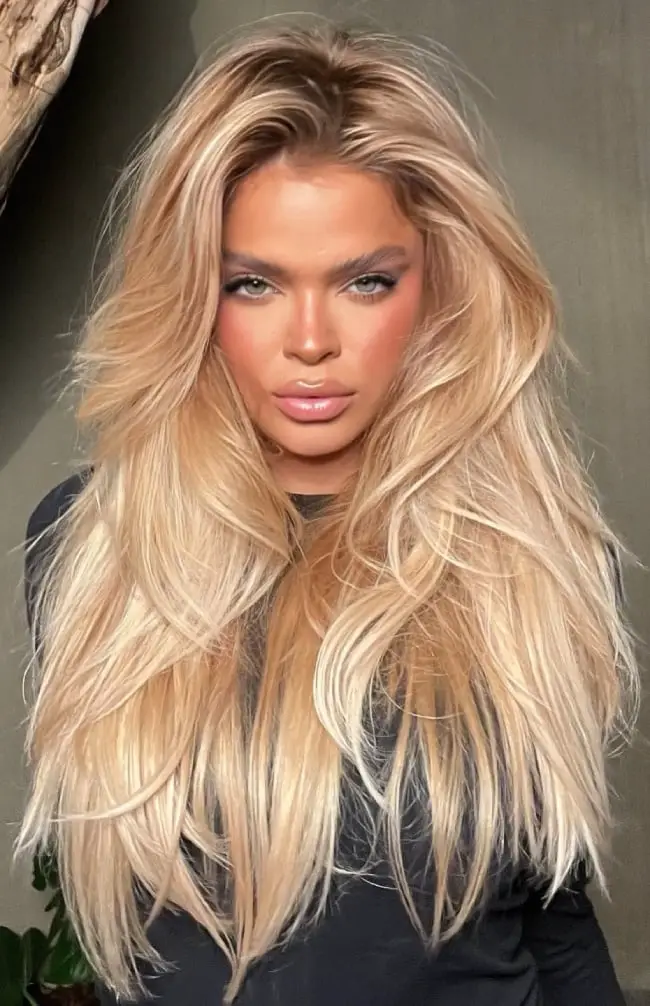
Is this honey blonde balayage for you? It works best on thick, wavy hair at mid-back length, where the volume can actually support those face-framing layers. If your hair is fine or straight, the layers can collapse into the length and the dimension gets lost. The middle parting and soft layers here do the work of framing without bangs, which is a solid choice if you want movement around the jaw without commitment.
Ask your colorist for: honey blonde balayage with face-framing layers. A volumizing spray at the roots keeps the shape from falling flat, and a baseline trim every 10 to 12 weeks prevents the layers from growing past their intended angle.
Honey Bronde Balayage Wavy Blowout
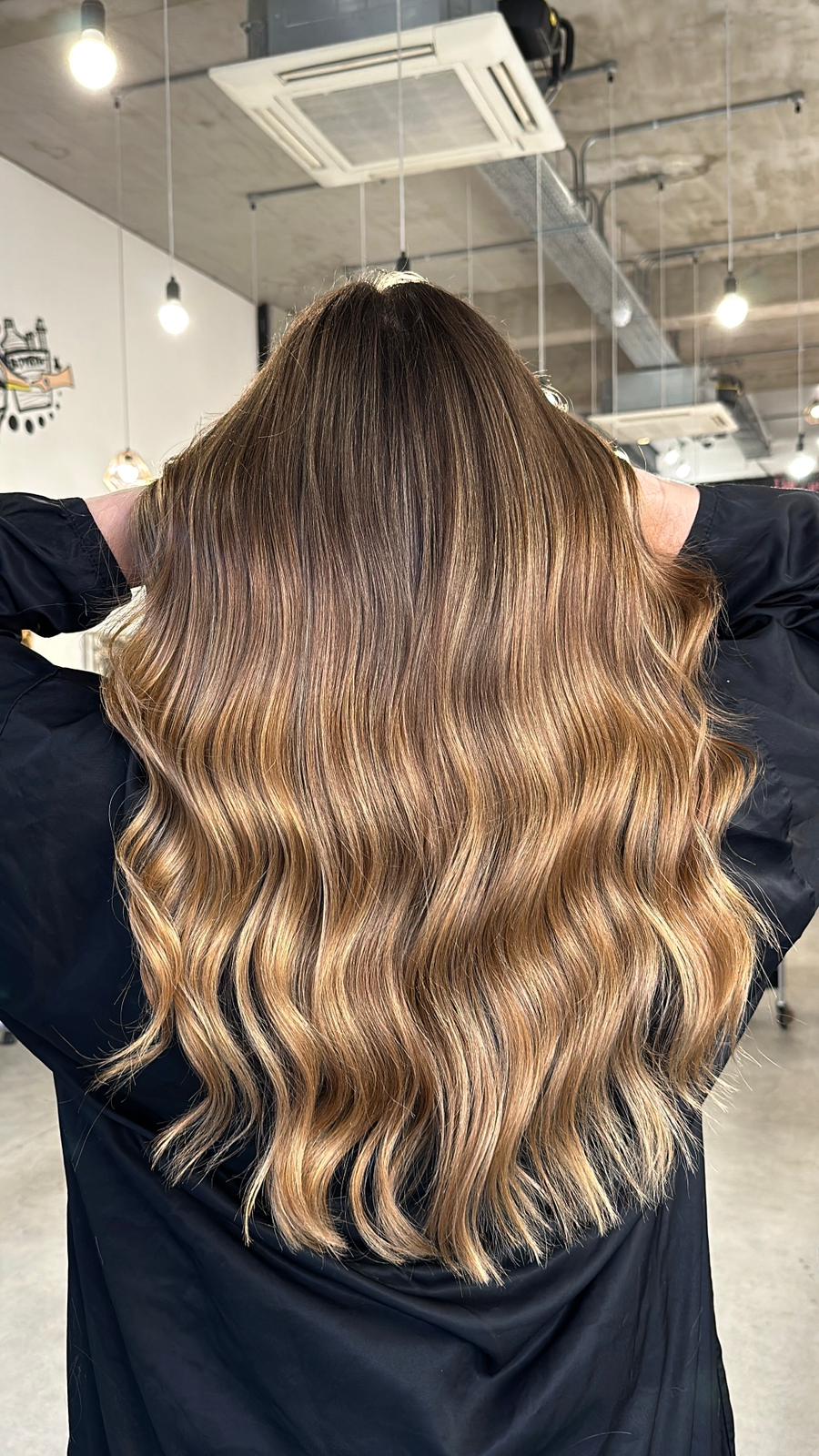
A honey bronde balayage sits in that sweet spot between brown and blonde, so it stays warm without being brassy. On mid-back length thick wavy hair, the layered cut gives the wavy blowout enough structure to hold its shape for a full day. The upkeep is not extreme, but it is not zero either.
Ask your colorist for: honey bronde balayage with wavy blowout. A heat protectant before styling is a must, and a toning appointment every 8 to 10 weeks keeps the blonde highlights from veering yellow. Without that rhythm, the honey tone turns a little too golden for most tastes.
Collarbone Length Honey Brown Balayage
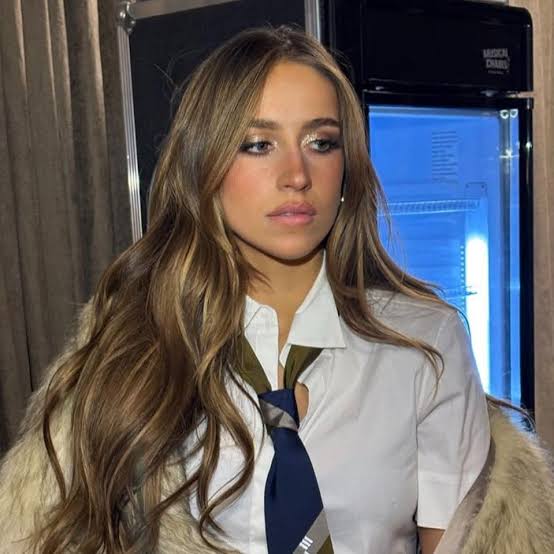
Ask your colorist for: collarbone length with honey brown base and subtle blonde balayage. Specify face-framing pieces that start at the jaw, not the chin, so the lightness lands where you actually want it. A trim every six to eight weeks keeps the collarbone line crisp.
Collarbone Lob With Honey Balayage And Curtain Bangs
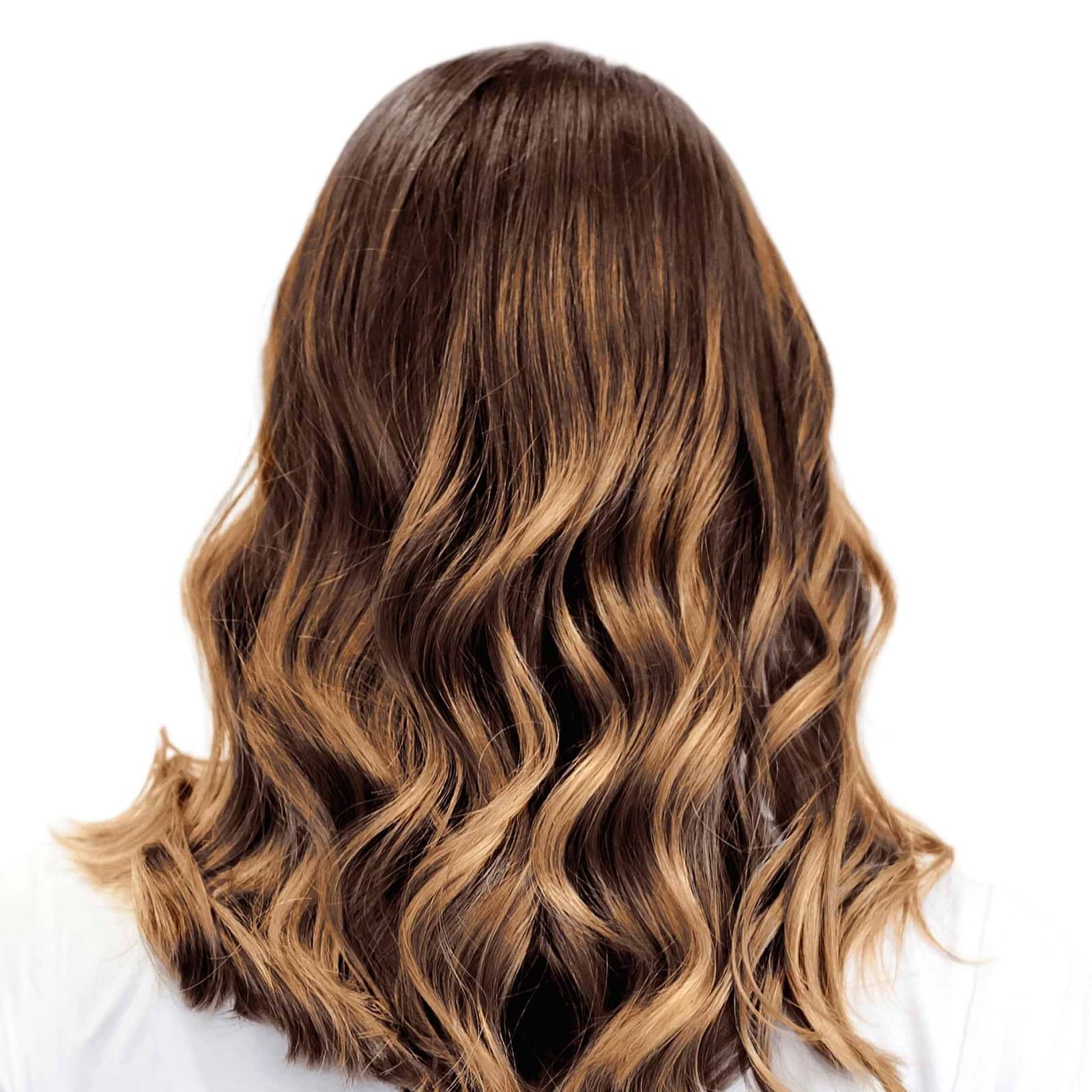
Can you get a honey balayage on a dark brown base without it looking like two separate colors? Yes, if the balayage is painted low and the curtain bangs are left darker at the root. This collarbone lob uses a wavy blowout to blend the transition, so the honey blonde appears as a gradual lightening. The soft face-framing layers and curtain bangs keep the shape modern.
Ask your colorist for: collarbone lob with dark brown base and honey blonde balayage. This is a salon-only job: the balayage placement on a short lob requires precision, and the curtain bangs need a dry cut to land correctly. It works year-round but shines in fall when the warm tones match the season.
Collarbone Ash Blonde With Honey Balayage and Creating A Subtle
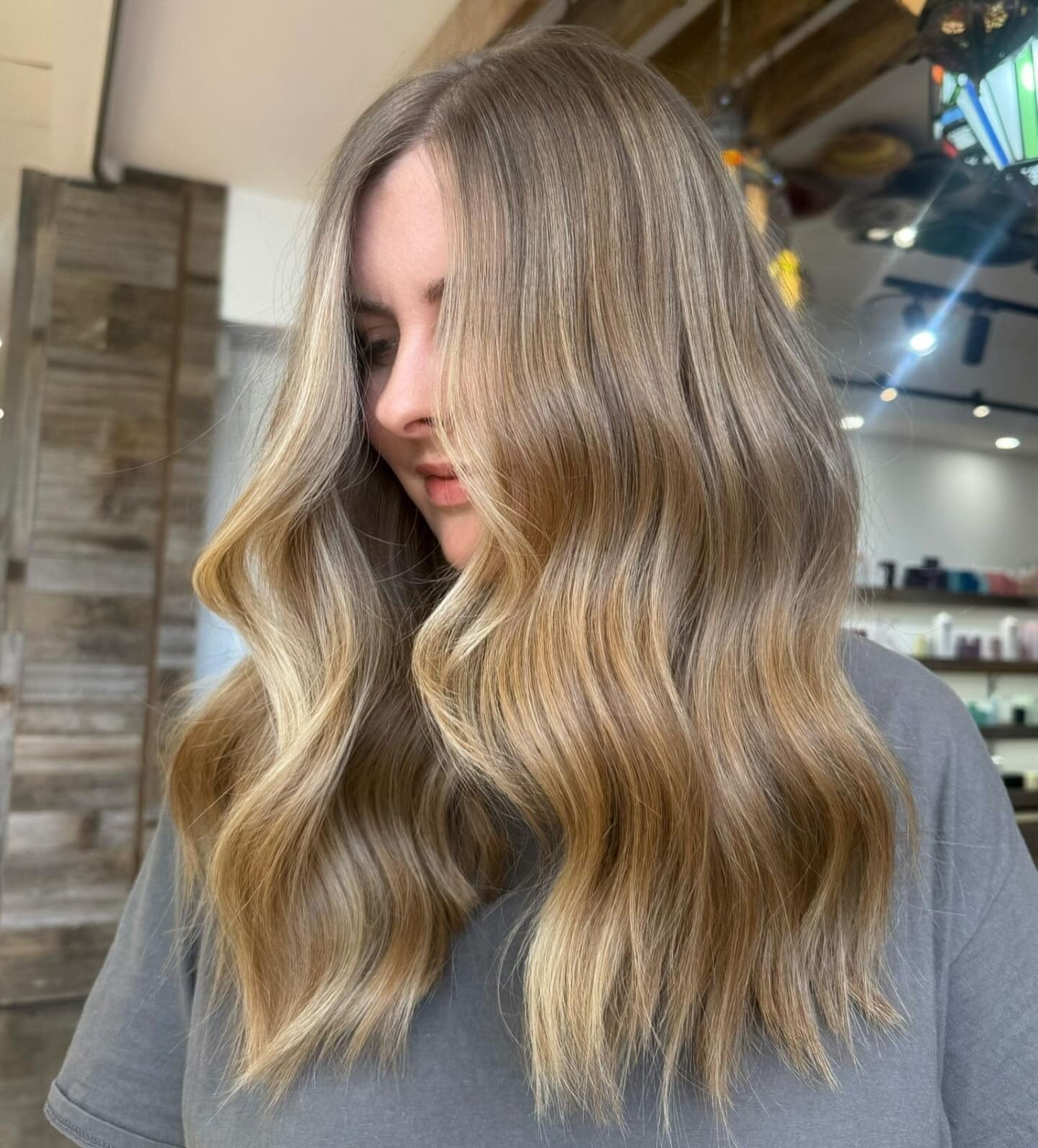
An ash blonde base and honey blonde balayage sound like opposing temperatures, but on medium, wavy collarbone-length hair they read as a deliberate cool-warm shift rather than a mistake. The side parting and soft waves keep the honey pieces from clumping, so the blend stays diffused instead of stripey. The real drawback is that the ash base needs a purple shampoo every few washes to stop it pulling greenish against the warm tones. Ask your colorist for: collarbone length, ash blonde base, honey blonde balayage.
Collarbone Ash Blonde With Beige Highlights
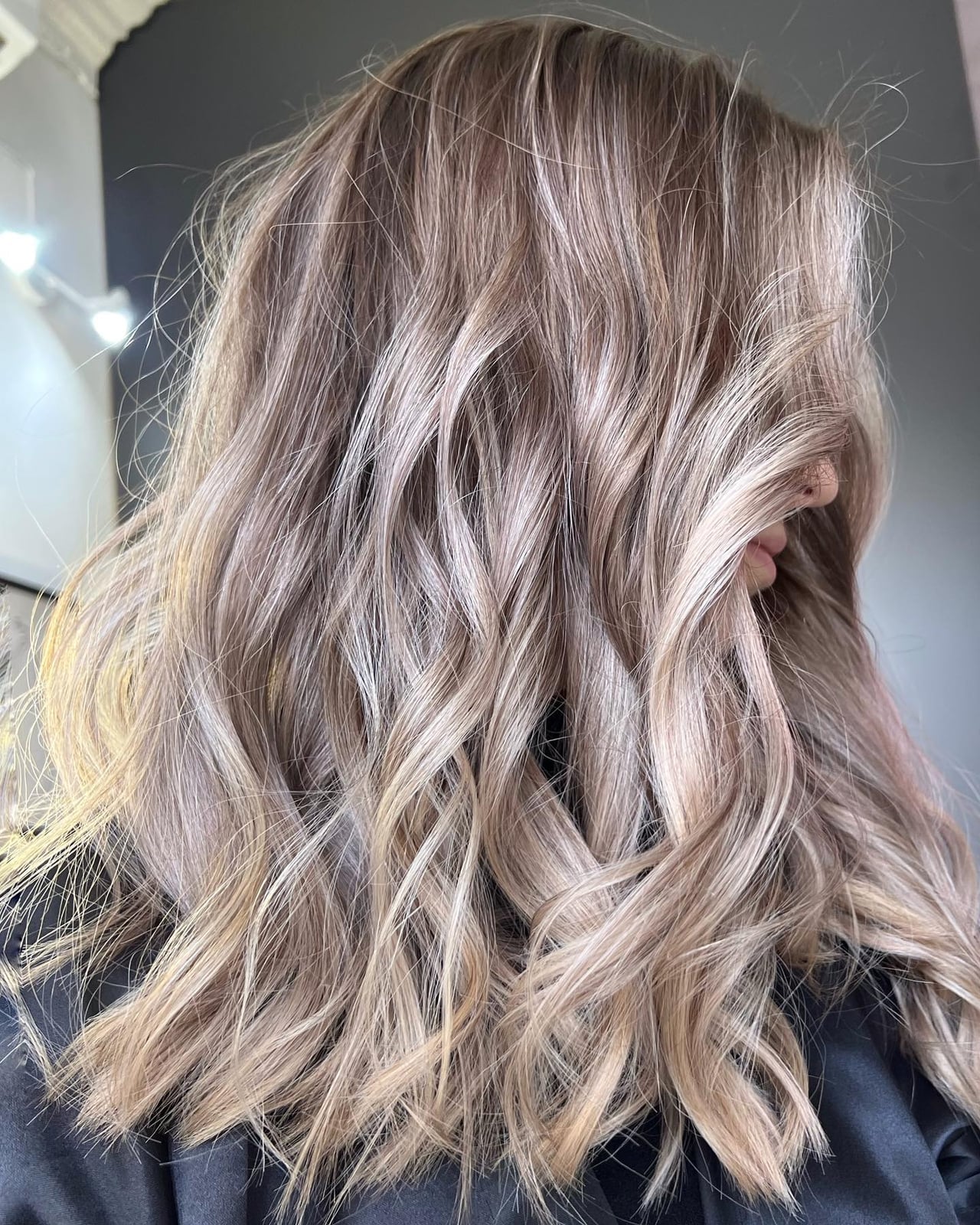
This is not a honey balayage. The beige highlights sit cooler and dustier, more sand than gold, which makes them an intentional grown-out tone. Fine, wavy hair at collarbone length benefits from the softer contrast because it does not overwhelm the texture. The wavy blowout keeps the dimension visible without needing layers that disappear on thin strands. Ask your colorist for: collarbone length, ash blonde balayage, beige highlights. The baseline needs a trim every six to eight weeks to keep the ends from looking straggly.
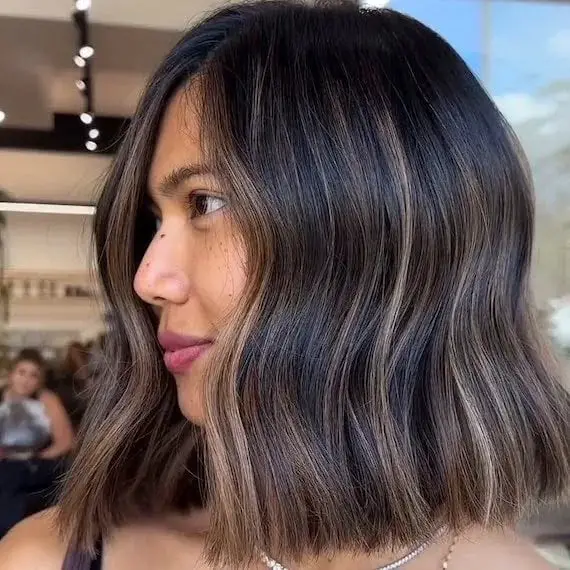
Chin Length Bob With Honey Balayage
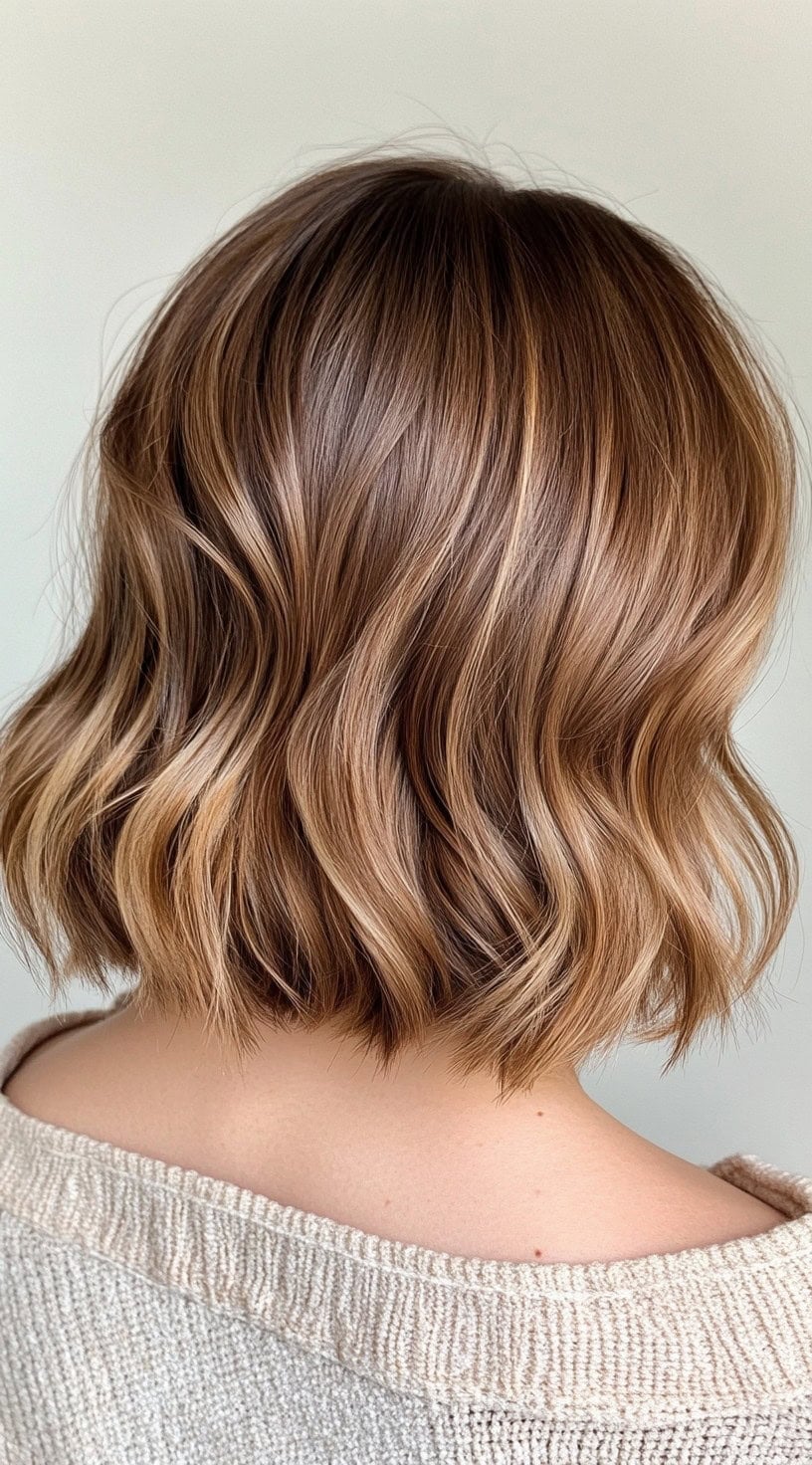
Can you pull off a chin-length bob? Yes, if your hair has enough density to hold the shape and your stylist places the honey balayage so it hits around the jaw rather than lower. The side parting and soft waves add volume where a blunt bob can sometimes fall flat. Ask your colorist for: chin length bob, medium brown base, honey balayage. A texturizing spray gives the waves grip without crunch, and the bob needs a trim every four to six weeks to keep the line clean.
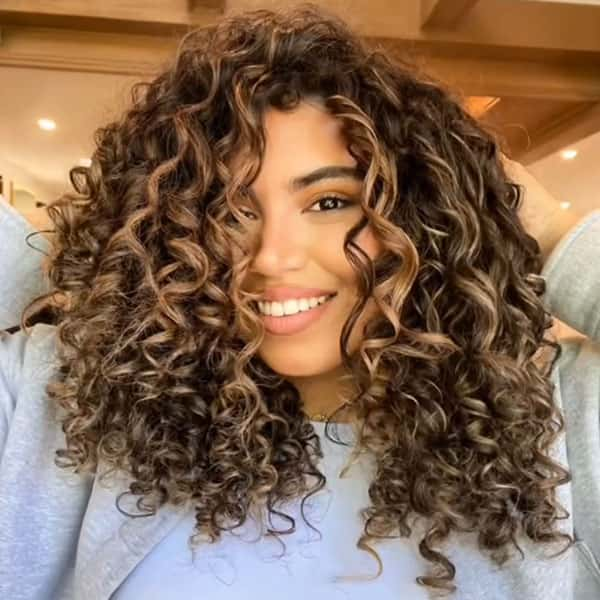
Mid-Back Curly Hair With Honey Highlights
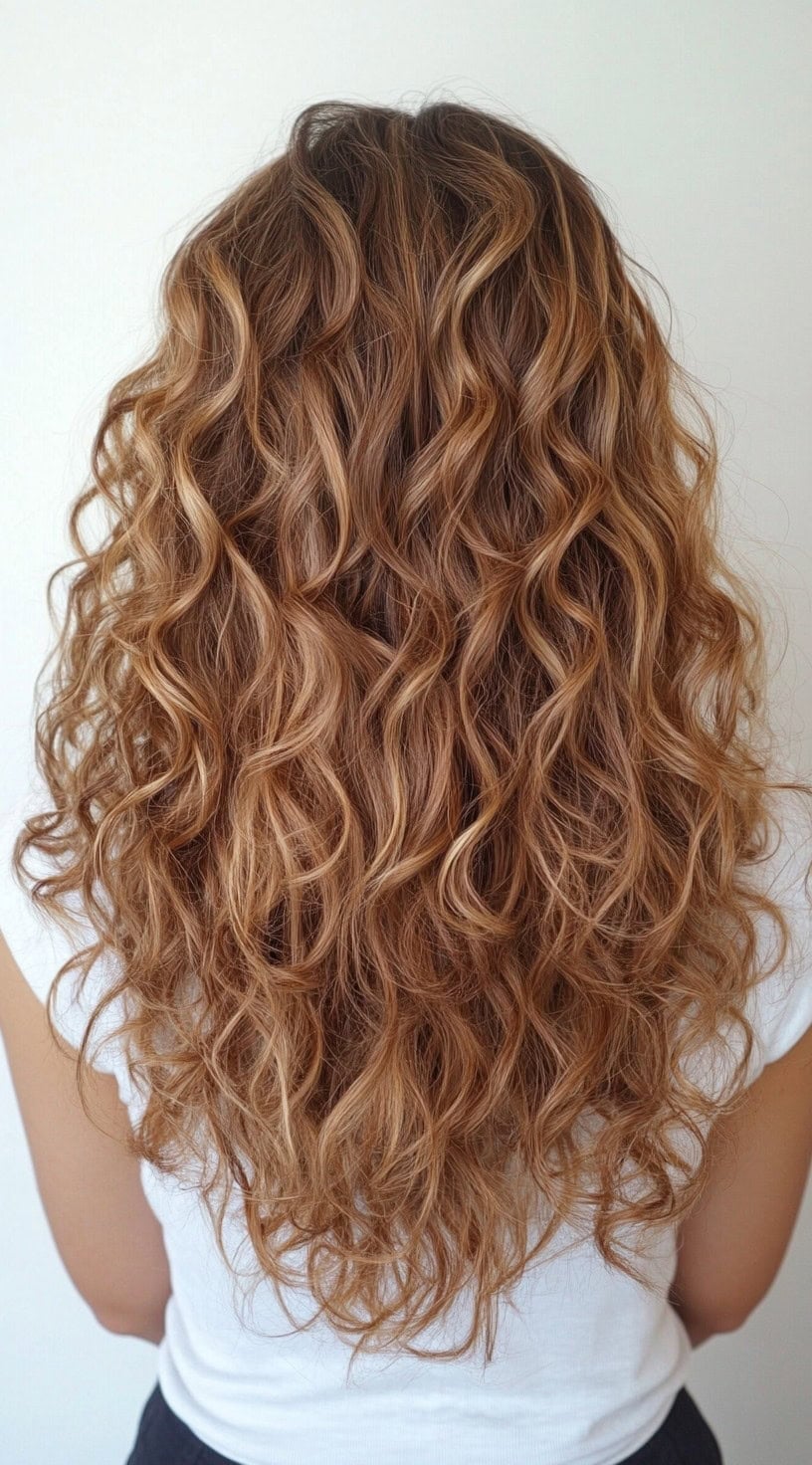
Honey highlights on curly, thick hair do not behave the same way they do on straight strands. The color wraps around each curl, so the placement has to be more generous to read as dimensional rather than just patchy. Long layers keep the weight manageable and let the tight curls spring up without losing length. Ask your colorist for: mid-back length layers, medium brown base, honey highlights. A curl-defining cream applied to wet hair and diffused on low heat preserves both the shape and the color. Toning appointments every 10 to 12 weeks prevent the honey from warming up the medium brown base into an unintended copper.
Shoulder Length Honey Brown Balayage
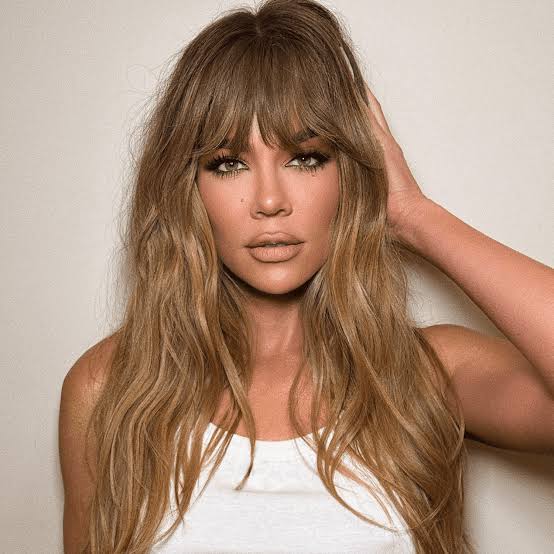
Shoulder length is the sweet spot for a honey brown balayage because the color has enough vertical space to graduate from darker at the roots to lighter at the ends without looking abrupt. The face-framing bangs catch the light differently than the rest, which is the whole point. Ask your colorist for: shoulder length, honey brown balayage, face-framing bangs. A leave-in conditioner and air drying are all this needs, so it is a low-effort option for mornings when the blow-dryer is not happening.
Mid-Back Straight Hair With Honey Blonde Balayage
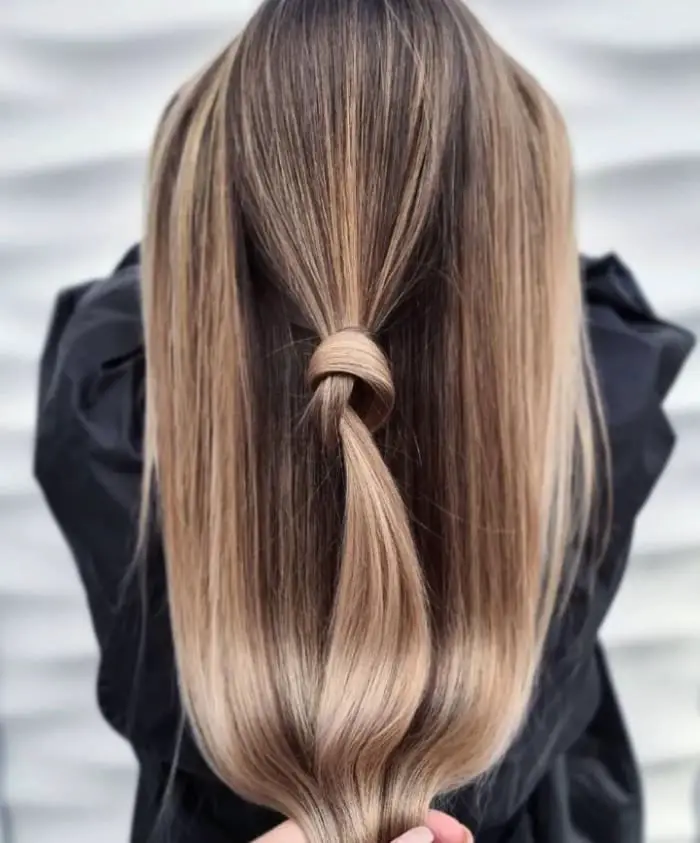
Can a simple honey balayage still do the job on straight, fine hair? Yes, but the technique matters more than you think. This mid-back length style keeps the base dark enough for contrast while the honey blonde pieces stay fine and well-blended, never chunky. The middle parting and low ponytail show off the dimension.
This is a salon project. The colorist paints thin sections freehand, so the lighter strands land where natural light would hit. Fine, straight hair shows every tonal shift, so brassiness creeps in faster than on coarser textures. A toning appointment every six to eight weeks keeps the honey warm, not yellow. Ask your colorist for: mid-back honey blonde balayage, low ponytail.
Final Thoughts
For finer hair, keep the balayage concentrated around the face and ends to create the illusion of density without overwhelming the base. Thicker hair can handle a more diffused application, which adds depth without reading as a solid block of color.
- Refresh tone with a color-depositing conditioner every 2-3 weeks.
- Use a sulfate-free shampoo and conditioner to preserve color vibrancy.
- Protect hair from heat styling with a thermal protectant spray.
- A gloss or toner service every 8-12 weeks keeps honey tones bright.
Embrace the warmth and dimension of honey balayage.