
Layers are the backbone of modern hairstyles, adding movement, volume, and shape. Right now, soft face-framing layers and curtain bangs are replacing the heavy, one-length cuts of a few seasons ago, and lived-in color is the default over chunky highlights.
This collection of 25 simple layers hairstyles covers everything from a chin-length bob to mid-back waves, with options for fine, thick, wavy, and straight textures. If you have fine hair that falls flat or a fringe that refuses to sit, there is a cut here that fixes it without a weekly salon visit.
Chin Length Layered Bob With Side Swept Bangs
A chin-length bob with a side part and side-swept bangs works best on thick, straight hair that can hold the shape without collapsing. The side-swept angle softens square jawlines, and the layers add volume around rounder faces without adding width at the cheeks. Ask your stylist for: chin length layered bob with side swept bangs. Blow-dry those bangs with a small round brush first; the rest follows easily. Plan on a trim every six to eight weeks to keep the line sharp.
Shoulder Length Shag With Curtain Bangs

The shoulder-length shag relies on a middle part and curtain bangs that push apart naturally. Medium-density wavy hair takes to the internal layering best, since the cut needs texture to show its shape.
Ask your stylist for: shoulder length shag with curtain bangs. Work a texturizing spray or paste into dry hair, then let the waves fall where they want. A trim every eight to ten weeks stops the shag from growing into a shapeless blob.
Collarbone Bob With Soft Face Framing Layers
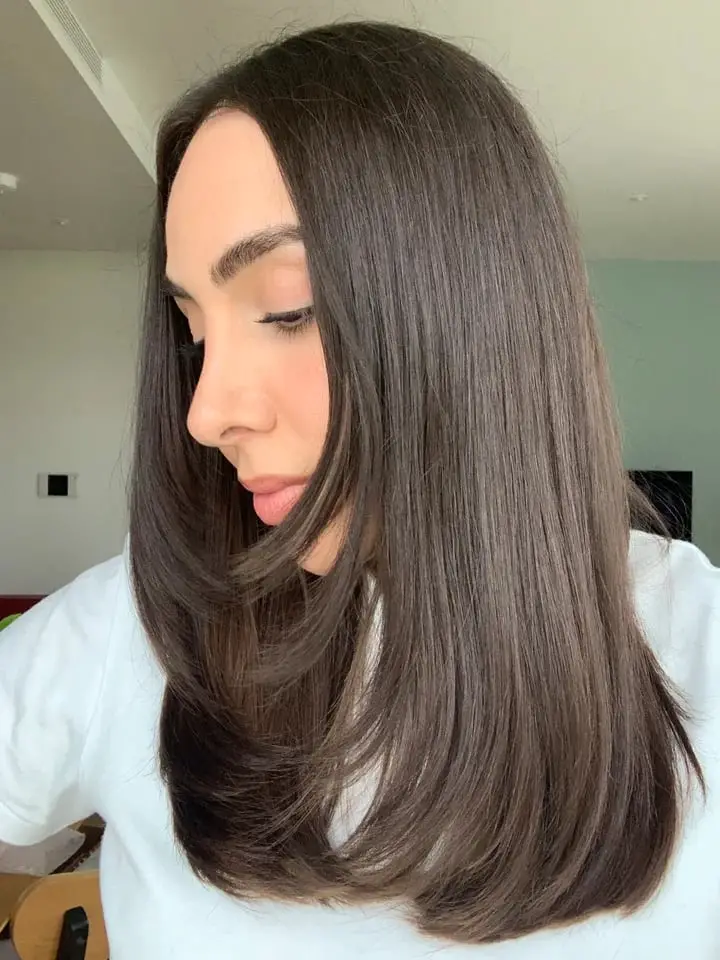
How do you get soft face-framing layers without losing length? Ask your stylist for: collarbone length bob with face framing layers and curtain bangs. This works on fine, straight hair because the layers are cut into the front only, leaving density at the back. A middle part and a smooth blowout keep the shape clean. The face-framing pieces fall just past the chin, which visually elongates a round face. No extra product needed; just direct the layers away from your face with a round brush.
Shoulder Length Cut With Blunt Bangs
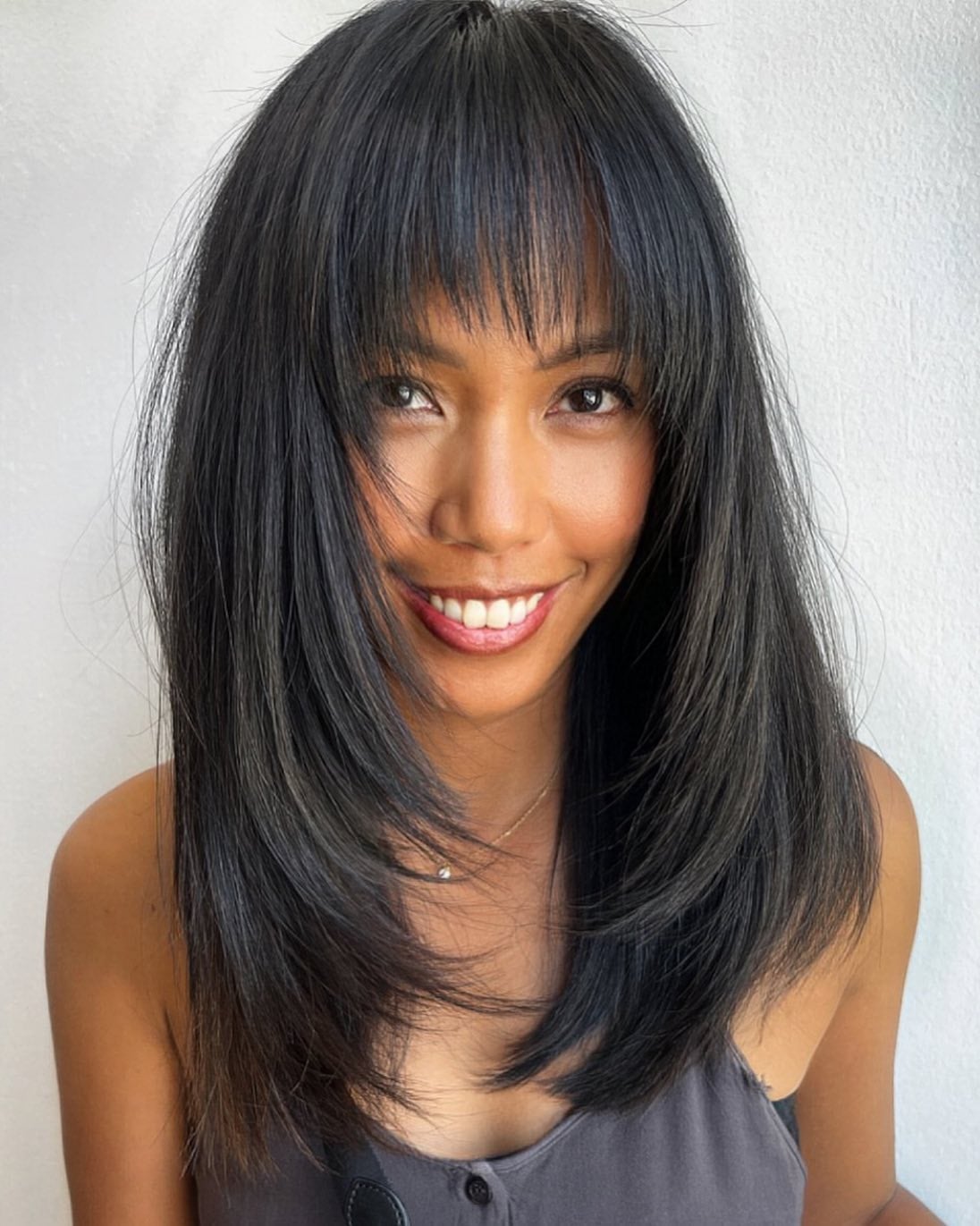
Blunt bangs on layered hair is a different proposition from curtain bangs. Where curtain bangs soften, these make a statement. The straight-across line works best on thick, straight hair and suits oval or square face shapes. Ask your stylist for: shoulder length cut with blunt bangs. A flat iron is your friend here; those bangs need to be perfectly smooth, with zero bend.
The middle part and black base with cool undertones keep the look modern. Trim those bangs every four to six weeks or they will land halfway down your nose.
Chin Length Shag With Textured Layers

A chin-length shag with curtain bangs and a middle part needs wavy hair to look lived-in. Medium-density textures hold the internal layers best; finer hair might need a volume-boosting product. Ask your stylist for: chin length shag with curtain bangs and texture. Work a texturizing paste through dry hair and leave it alone. The tousled finish means you can skip heat styling most days. Trim every eight to ten weeks to keep the shaggy shape from looking round.
Collarbone Cut With Face Framing Layers

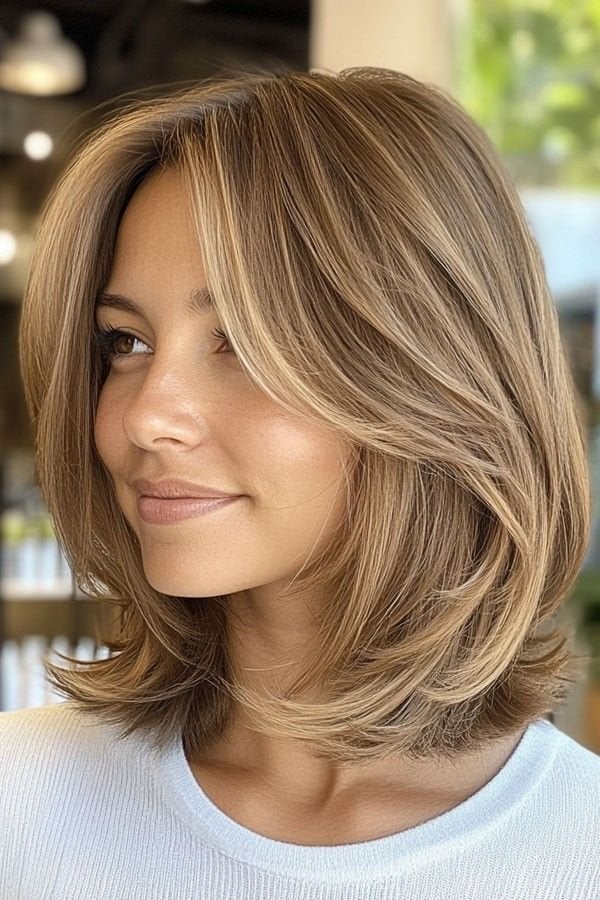
This cut uses the light brown base and blonde highlights to create a gradient effect that reads as sunlit rather than salon-spent. The collarbone length keeps the weight low enough that the thick, wavy texture holds its shape without deflating by midday, and the curtain bangs sweep open to keep the face visible. Ask your stylist for: collarbone length with face framing layers and curtain bangs. A middle part lets the layers fall symmetrically, and the highlights catch the light in a way that works best for spring and summer, when shorter blow-dry time is a real advantage.
Shoulder Length Layers With Curtain Bangs, Dark Brown
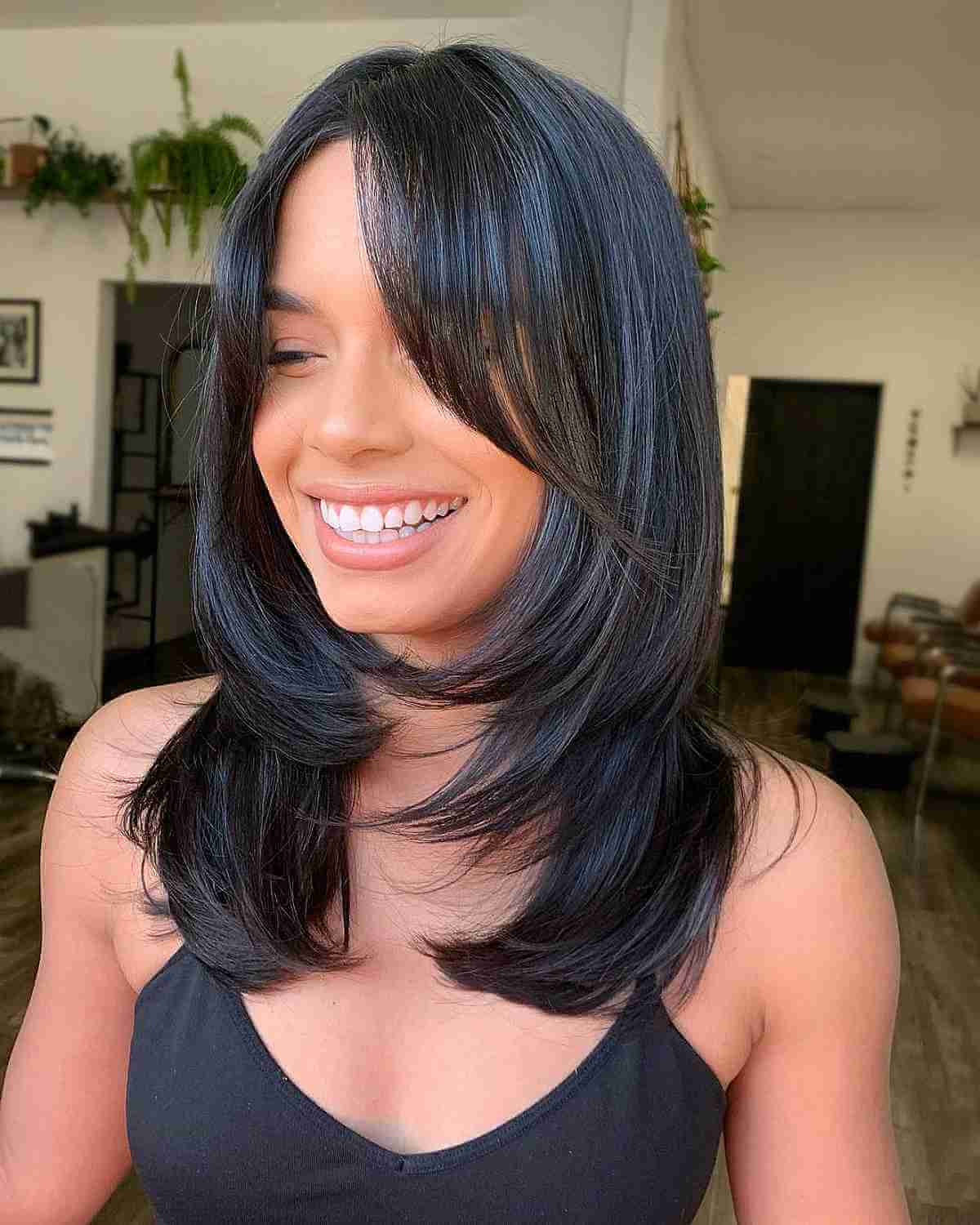
Can you get curtain bangs to look this polished without a salon visit? Technically yes, but the odds are not in your favor. The dark brown base hides any unevenness in the cut, which is why a stylist uses precise sectioning to feather the layers through the shoulder-length body. Fine, straight hair shows every blunt edge, so the subtle layers here are cut to blend into the curtain bangs without a visible line.
Ask your stylist for: shoulder length with subtle layers and curtain bangs. A round brush and a blow-dryer at home can maintain the sweep for about a week, but the initial shape is a salon-only job. Trim every six to eight weeks to keep the bangs from turning into a vague fringe.
Voluminous Shoulder Length Layers

The rounded shape here comes from layers cut to stack through the mid-section and face-framing pieces that curve under the jaw. On wavy, medium-textured hair, a voluminous blowout lifts the roots and holds the bend for most of the day, which is the entire point. The blonde balayage against the dark brown base adds dimension so the layers read individually rather than as one solid block.
Ask your stylist for: shoulder length layered cut with face framing volume. The honest drawback: medium density hair can lose the volume by late afternoon without a root-lifting product at the crown. A middle part and a round brush technique help, but this is a style that needs re-blow-drying after a humid commute. A trim every six to eight weeks keeps the ends from weighing down the shape.
Collarbone Layers With Face Framing Bangs and Brunette With Highlights

The face-framing bangs here are cut to hit just below the cheekbone, which is a length that works on round and square face shapes because it draws the eye outward rather than down. The side part breaks up the symmetry and lets the highlights fall more heavily on one side, creating a casual weight shift. Wavy, medium-density hair at collarbone length holds the bend from a blowout without needing a curling iron. Ask your stylist for: collarbone length with face framing bangs and subtle layers. A trim every six to eight weeks keeps the bangs from grazing the jaw, which changes the whole proportion.
Collarbone Blonde With Face Framing Layers, Wavy
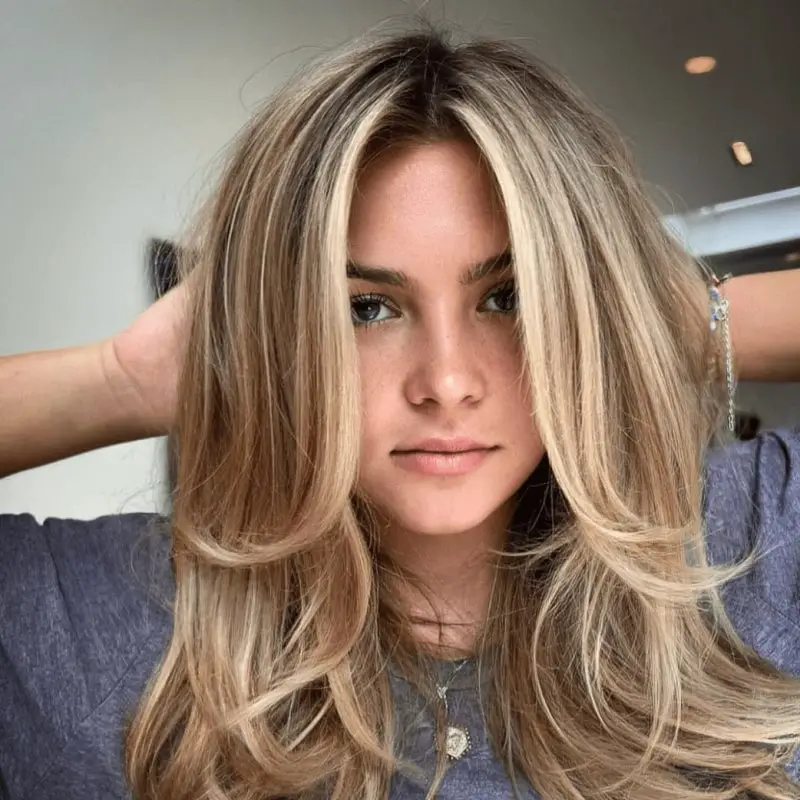
The layering technique uses shorter interior pieces and longer face-framing sections that taper toward the collarbone. On wavy, medium-density hair, this creates movement without removing too much weight, so the waves stack and hold their shape. The blonde base with subtle highlights keeps the layers visible against the lighter tone. Ask your stylist for: collarbone length blonde with face framing layers. A volumizing spray at the roots before blow-drying lifts the crown, and the middle part lets the layers fall evenly on both sides. A trim every six to eight weeks prevents the face-framing pieces from blending into the body length.
Long Wavy Hair With Voluminous Layers
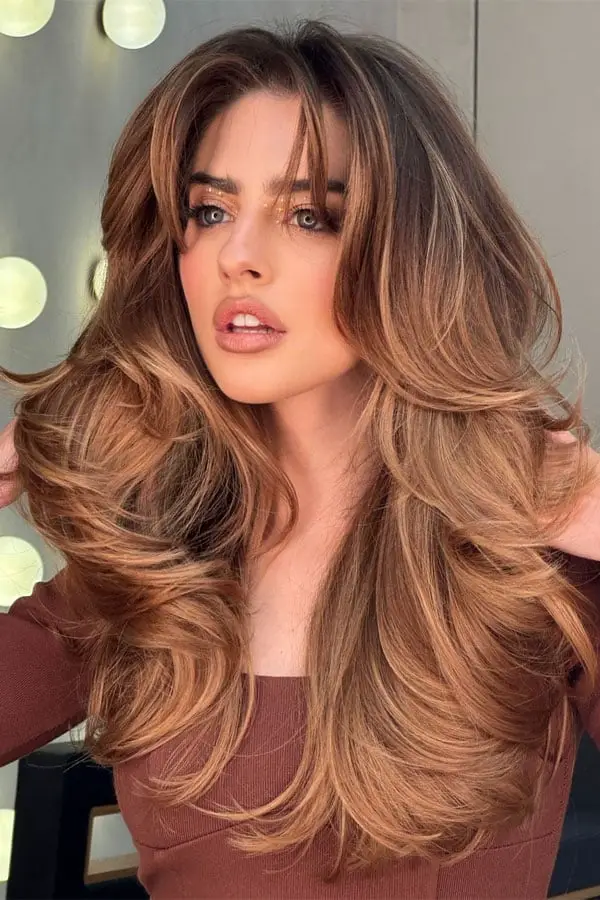
Thick, wavy hair can hold shape without turning into a triangle when layers start around the collarbone and build toward the ends. This look uses a warm brown base with blonde balayage highlights, plus curtain bangs that blend into the face-framing pieces. The middle part keeps the volume distributed evenly across the head.
This cut suits thick, wavy hair that already has some natural bend. Ask your stylist for: long wavy hair with voluminous layers and curtain bangs. To style, use a diffuser attachment on your blow dryer to encourage the wave pattern without frizz. The hold comes from the layers themselves, so a trim every eight to ten weeks keeps the shape from getting heavy.
Long Layers With Volume and Side Part
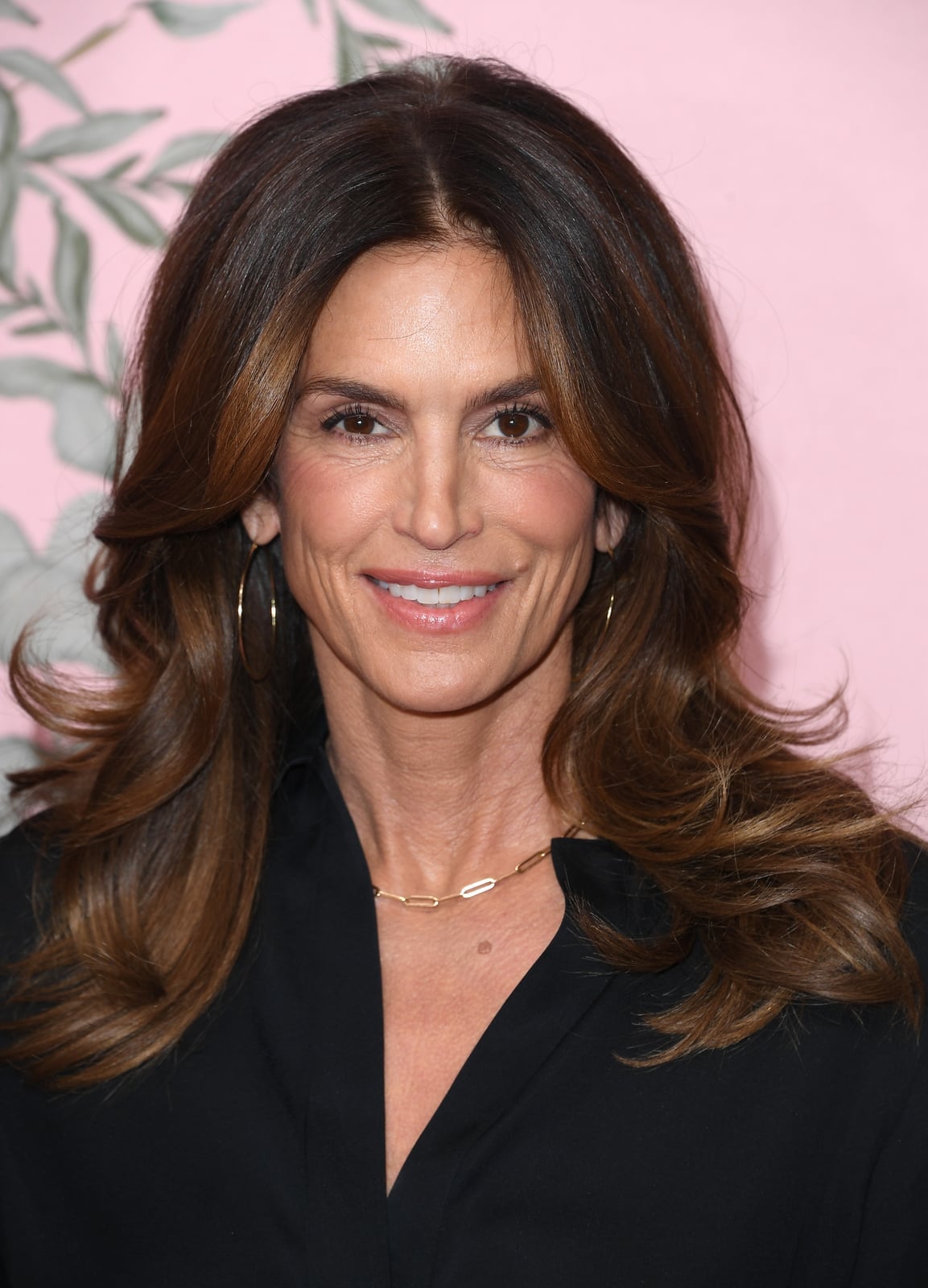
The side part does more work here than most people give it credit for. On a long, medium brown base with subtle blonde highlights, the deeper part lifts the hair at the root on one side and lets the layers fall forward on the other. The result is a voluminous blowout that still reaches past the shoulders.
This approach works best on wavy, medium textured hair that can hold a bend from a round brush. Ask your stylist for: long layered hair with volume and a side part. Blow-dry with a large round brush, directing the hair away from the part to maximize lift. A trim every eight to ten weeks maintains the movement, especially around the face where the shortest layers sit.
Mid-Back Length With Face Framing Layers
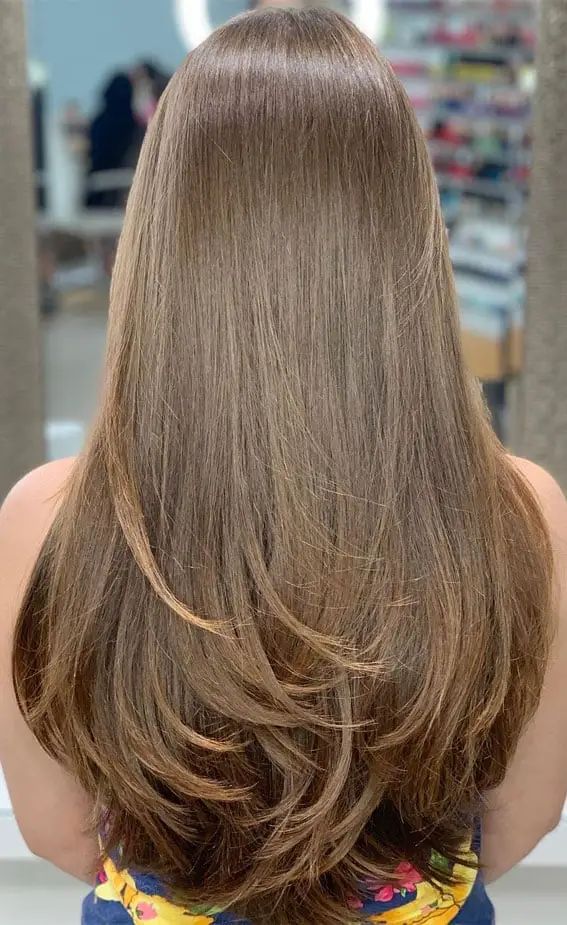
Face-framing layers are not the same as all-over layers, and the distinction matters. All-over layers remove weight throughout the entire head, which can make thick, straight hair feel thinner. Face-framing layers only shorten the pieces around the jaw and collarbone, leaving the length full and blunt.
This style uses a medium brown base with subtle highlights, a middle part, and a blowout finish. It suits thick, straight hair that reaches mid-back and needs softening around the face without sacrificing density. Ask your stylist for: mid-back length with face framing layers. Use a smoothing serum on the ends to keep the straight texture glossy. A trim every eight to ten weeks keeps the framing pieces from blending back into the main length.
Mid-Back Honey Blonde With Layers

Honey blonde with balayage is a color that does not need much help to look good, but layers give it a polished finish. The honey base reads warm, while the balayage highlights add depth through the ends. The loose waves and middle part give it a relaxed finish that works for everyday or vacation.
This cut suits thick, wavy hair that reaches mid-back. Ask your colorist for: mid-back honey blonde hair with layers and balayage. A sea salt spray enhances the loose wave texture without weighing the layers down. The color grows out softly because of the balayage placement, so you can stretch the salon visit to ten or twelve weeks. The layers need a trim every eight to ten weeks to keep the shape from losing its movement.
Mid-Back Ash Blonde With Curtain Bangs

Can curtain bangs work on ash blonde hair without turning brassy? Yes, as long as the base is kept cool and the highlights stay subtle. This style uses an ash blonde base with lighter highlights, long soft layers, and curtain bangs that blend into the face-framing pieces. The middle part and smooth blowout keep the look polished.
This cut suits medium density, wavy hair that reaches mid-back. The curtain bangs soften oval and heart face shapes by drawing attention outward. Ask your colorist for: mid-back ash blonde hair with long layers and curtain bangs. Use a texturizing spray on the bangs to separate them from the rest of the hair. A trim every eight to ten weeks keeps the bangs from growing past the cheekbones, and a toning appointment every four to six weeks prevents the ash tone from warming up.
Mid-Back Layers With Face Framing and Brown With Blonde Balayage
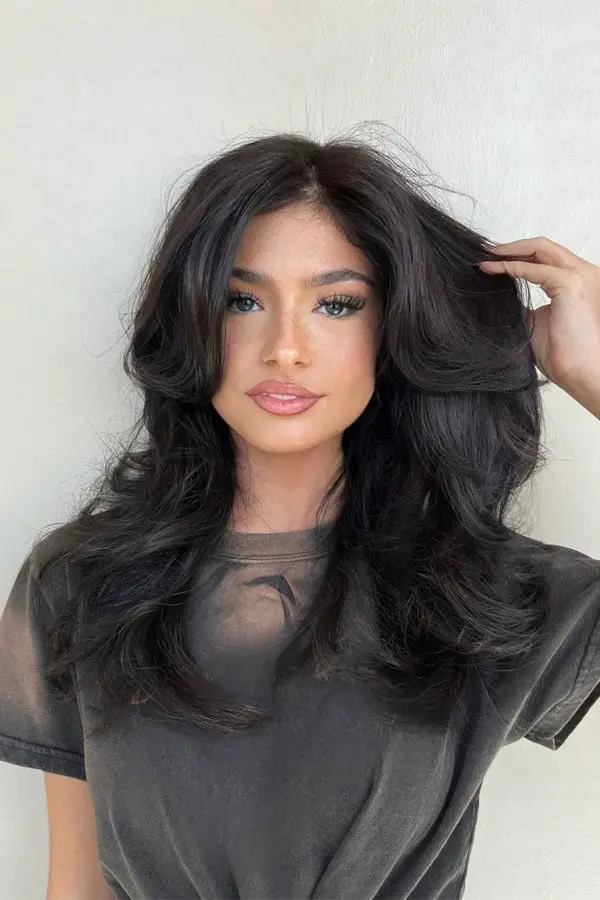
The design hinges on those face-framing pieces. They drop forward from the length, creating a soft frame around the face that the middle part and curtain bangs complete. Thick, wavy hair at mid-back is the ideal canvas; the layers remove enough weight to let the wave pattern show without losing density. Ask your stylist for: mid-back length with face framing layers and curtain bangs.
Blow-dry the front sections away from your face using a round brush to set the curve. A toning appointment every six to eight weeks keeps the blonde balayage from warming up, and a trim every eight to ten weeks maintains the shape of the layers.
Mid-Back Layers With Balayage

Balayage on a medium brown base grows out with a soft line rather than a hard band, which is the main reason people stick with it. Here the blended blonde pieces run through the mid-back length, and the subtle layers let the color show without competing for attention. Straight, thick hair holds the shape of a smooth blowout well, and the middle part keeps the color distribution even on both sides. Ask your colorist for: mid-back length with subtle layers and balayage.
A gloss treatment every four to six weeks refreshes the blonde without a full retouch. Between appointments, a dry shampoo at the roots keeps the blowout from falling flat by the second day.
Back View Mid-Back Layers
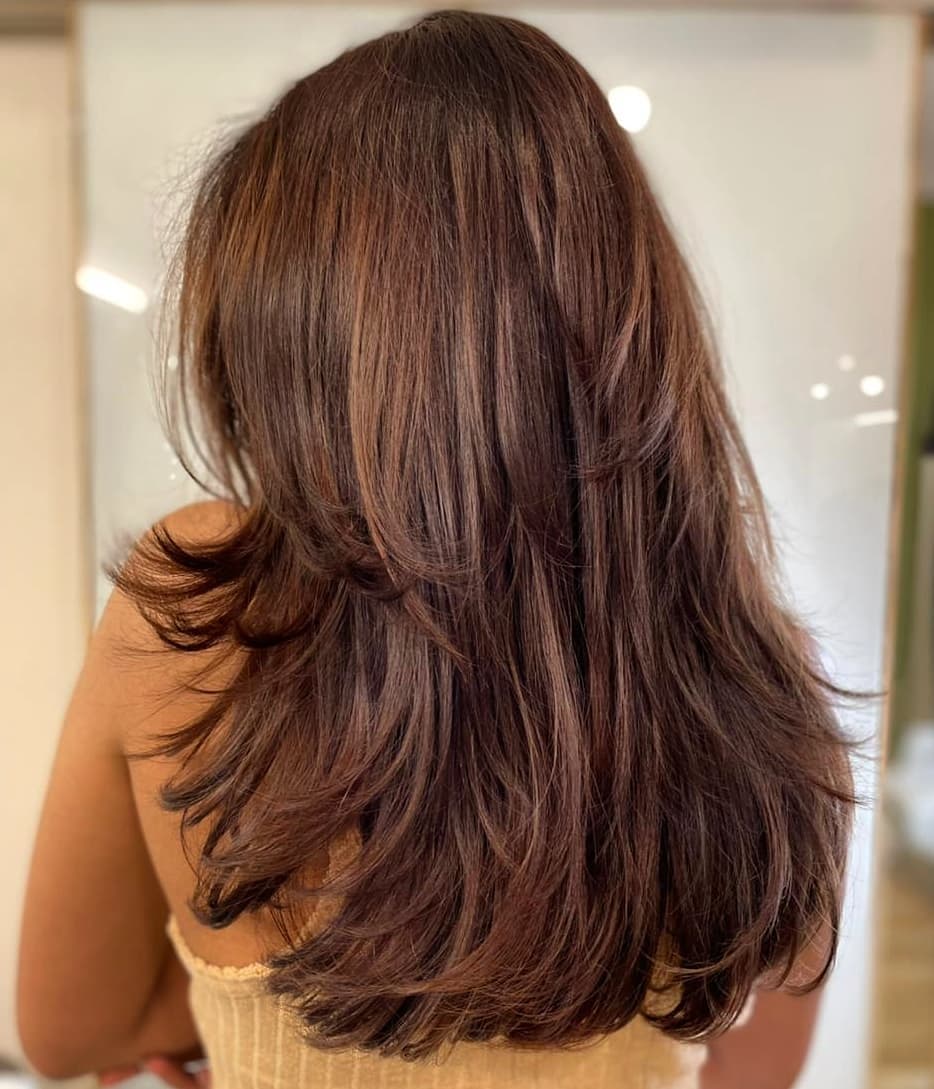
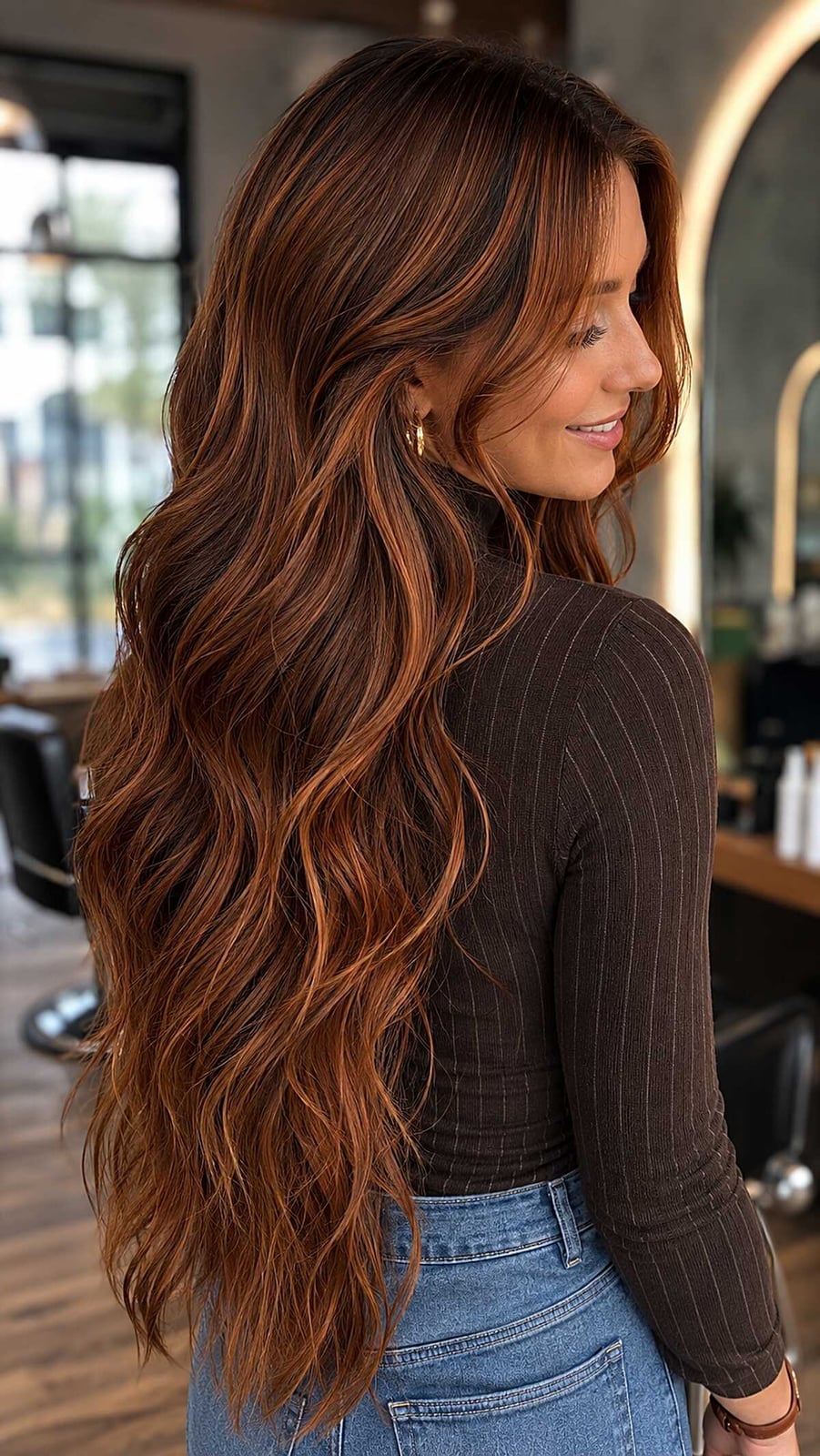
The cascading effect from the back comes from multiple layers cut so each one releases the one above it, creating a graduated fall instead of a blunt wall of hair. This back view shows the result on thick, wavy dark brown hair with subtle highlights that add depth to the movement. Ask your stylist for: mid-back length with cascading layers.
A leave-in conditioner applied to damp hair helps the layers separate without frizzing. The highlights need a toning appointment every eight to ten weeks to keep them from turning brassy, and a trim at the same interval preserves the cascade.
Back View Blonde Layers
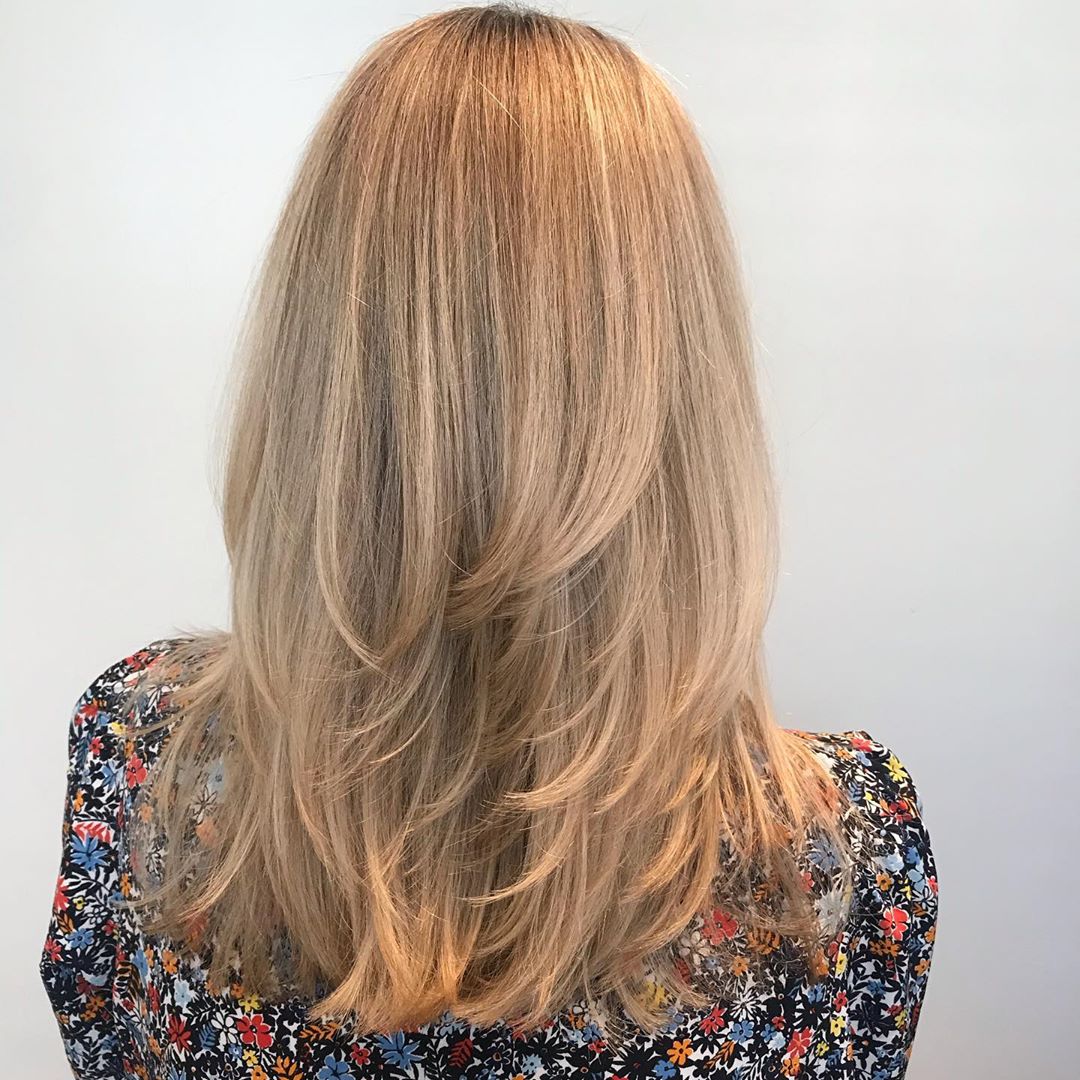
Blonde layers read differently from the back than darker tones do, the lighter color reflects more light, so every cut line and piece of movement becomes more visible. Here the soft cascading layers on thick, straight blonde hair create a shape that looks intentional without being fussy. A middle part and a smooth blowout let the layers speak for themselves. Ask your stylist for: mid-back blonde hair with soft cascading layers.
A purple shampoo once a week keeps the blonde from yellowing between salon visits. The layers hold their shape for about eight weeks before the ends start to feel heavy again.
Back View Dark Brown Soft Layers

Dark brown hair with subtle highlights can look flat from the back if the layers are too aggressive. This version uses softly blended layers that move into each other, so the highlights appear gradually rather than in chunks. Thick, wavy hair at mid-back benefits from the weight reduction without sacrificing the overall density. Ask your stylist for: mid-back dark brown hair with softly blended layers.
A moisturizing mask every week keeps the wave pattern defined and the ends from drying out. This is a solid choice for autumn events where you want a polished look. It holds a blowout well and the subtle highlights add a bit of depth under indoor lighting.
Back View Long Layers With Shape
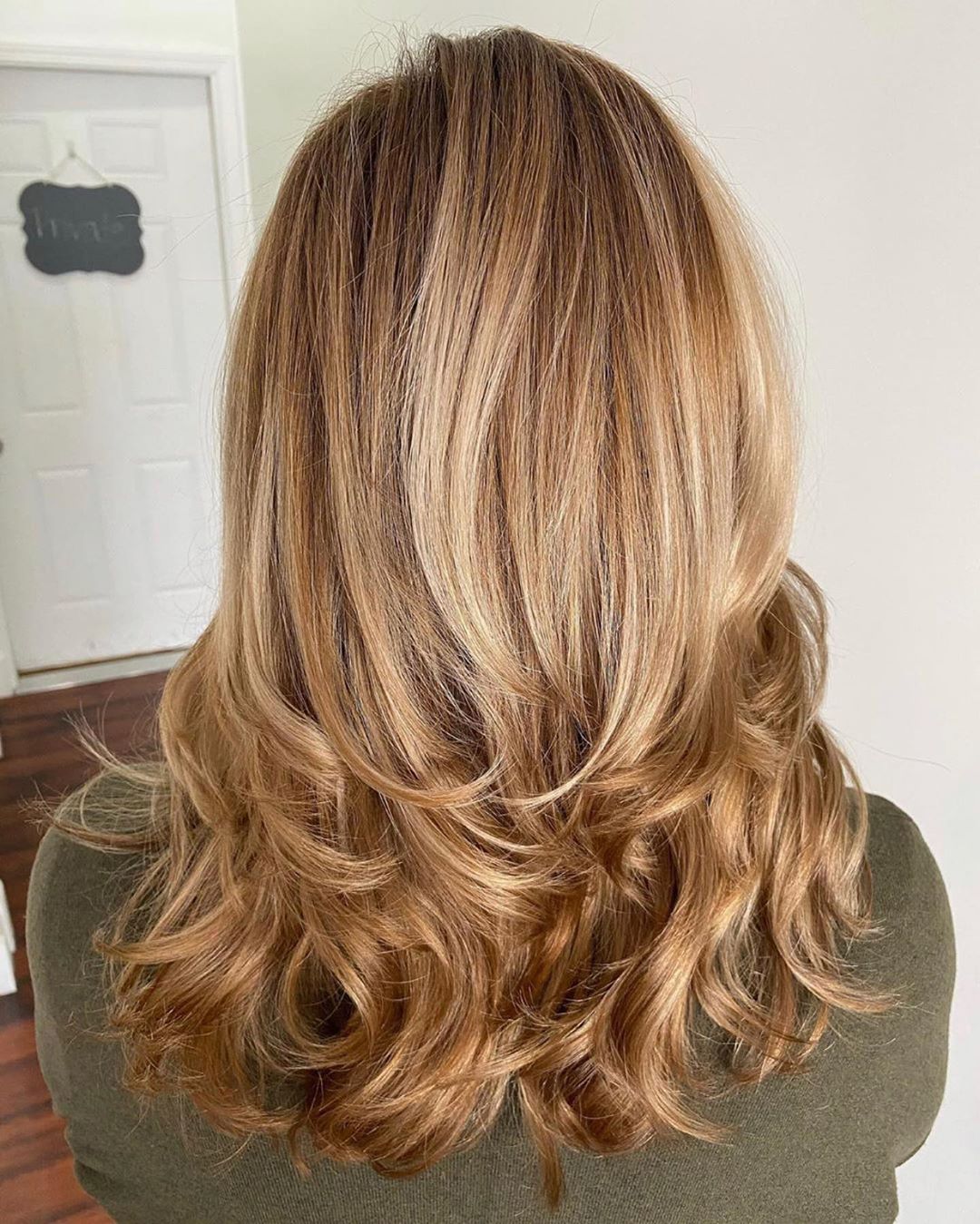
Here the ends are cut with distinct layers that stop the weight from sitting in one heavy block, and the loose waves give each piece room to move. Thick, wavy hair benefits most from this approach: without the layers, the natural volume would just spread sideways and fall with shape. Ask your stylist for: long hair with distinct layered ends. A texturizing spray on the ends helps define the wave pattern, and a trim every eight to ten weeks keeps the shape from widening into a triangle.
Back View Dark Brown Layered Style, Wavy

How do you get softly curled ends that actually hold their shape on thick, wavy hair? It starts with the cut. Distinct layers remove enough bulk so the ends can bend without fighting the weight above them. Here the blowout is the finishing move: a large barrel curling iron on the last few inches gives that polished curve, and the dark brown color makes the curl pattern read clearly. Ask your stylist for: mid-back dark brown hair with distinct layers and curled ends. A trim every eight to ten weeks keeps the layers from growing into one blunt line.
Back View Ash Blonde Layered Texture
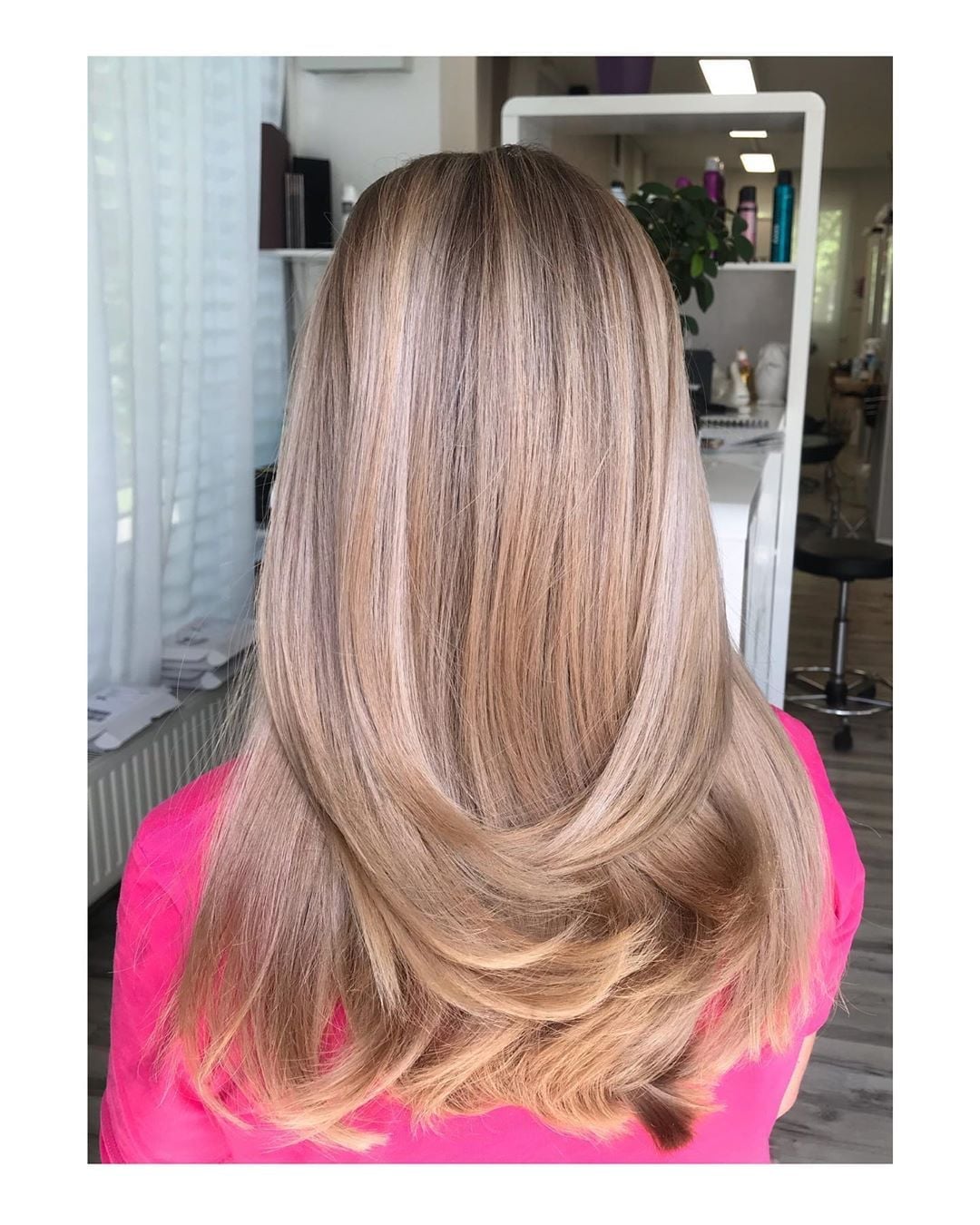
Multiple layers on thick, straight hair are the difference between a flat sheet and something with actual dimension. The ash blonde base here does some of the work, but the layered cut is what stops the hair from hanging like a curtain. Without the layers, the straight texture would just sit; with them, each section reflects light differently. Ask your stylist for: mid-back ash blonde hair with multiple layers. A light texturizing product at the ends enhances the separation, and a trim every eight to ten weeks prevents the layers from blending back into one solid mass.
Back View Thick Blonde Layers, Straight

Thick, straight hair can look like a single block of color without enough internal shaping. The solution is numerous layers cut throughout the length, which break up the density and add visual texture without needing to curl every strand. This is not a DIY job: getting the layers to sit precisely on thick, straight hair requires a stylist who can see how the weight will fall. Ask your stylist for: mid-back thick blonde hair with numerous layers. A smoothing cream keeps the ends sleek, and a trim every eight to ten weeks maintains the shape.
Side View Mid-Back Layers With Balayage

Does balayage on a brown base need more upkeep than you think? Yes, because the lighter pieces on brown hair show warmth faster than an all-over blonde does. The side view here shows long layers and face-framing pieces that let the balayage highlights travel forward, which is exactly the point: the lighter sections land where the eye goes first. Ask your colorist for: mid-back hair with long layers and balayage. Plan a toning appointment every six to eight weeks to keep the highlights from pulling too golden.
Final Thoughts
For fine hair, stick to a blunt baseline with minimal, strategic layers around the face to avoid thinning. For thick hair, longer, blended layers reduce weight and improve movement. Trim the baseline every eight weeks, use a heat protectant before styling, and apply a smoothing serum on wavy textures. A color-depositing conditioner every four to six weeks keeps highlights fresh.
- Trim every 6-10 weeks to maintain layer shape and blunt lines.
- Use a heat protectant spray before blow-drying or heat styling.
- Apply a smoothing serum to combat frizz, especially on wavy textures.
- Consider a color-depositing conditioner every 4-6 weeks to refresh highlights.
Choose layers that enhance your natural texture and complement your face shape.