
Braids worn down the back are a reliable way to keep hair controlled without sacrificing shape. This year, the trend leans into visible texture and deliberate pattern, from sleek scalp braids to looser, lived-in fishtails that move.
These 26 ideas cover the range, from a quick at-home double braid to a salon-length cornrow session. They work for fine hair that needs grip, thick hair that needs weight distribution, and every texture in between. Trendy Braids to the Back means a clean part, a secure hold, and a finish that stays put from morning through evening.
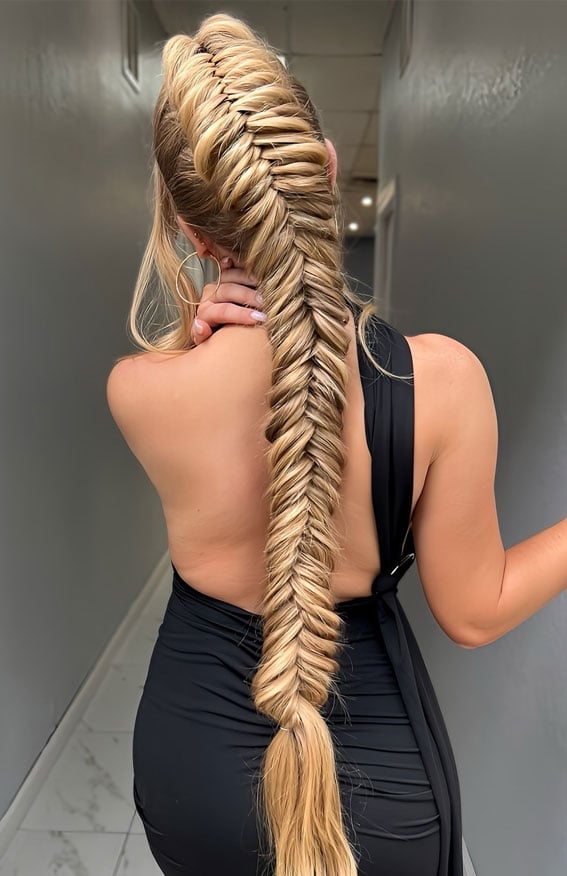
Extremely Long Blonde Fishtail Braid
A fishtail braid is a two-strand weave that takes patience, and this version proves the payoff is worth the wrist workout. The blonde base with visible highlights catches light differently along each section, which creates the pattern. Thick, straight hair starting at mid-back gives the braid enough weight to hang cleanly without pulling the strands apart. A middle parting keeps the front simple so the back does the work.
Ask your stylist for: extremely long mid-back fishtail braid, blonde with highlights. Spritz a texturizing spray through damp hair before braiding for grip that lasts through a full day. Plan a trim every 10 to 12 weeks to keep the ends from splitting, since the braid puts tension on the ends.
Sleek Black Box Braids in High Ponytail
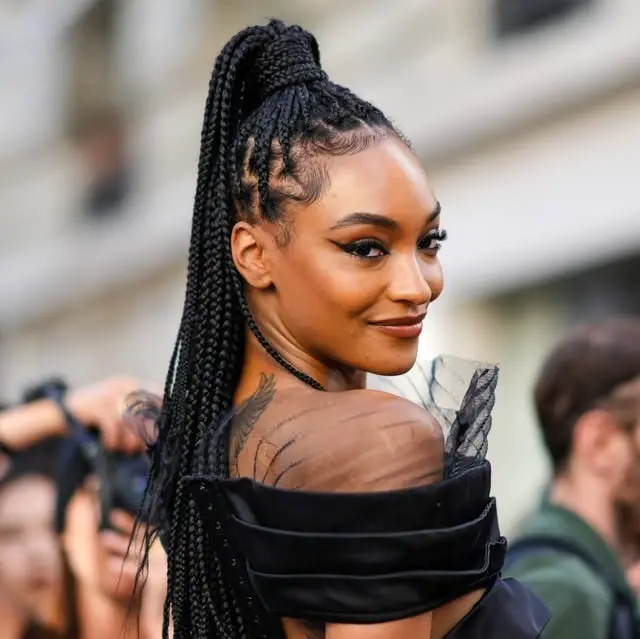
Can a ponytail actually look deliberate when it is made of braids? Yes, when the box braids are neat and dense and pulled up to the crown. The middle parting elongates a round face, and the smaller face-framing braids soften the high pull. This is a work-to-weekend style that holds its shape through movement because the weight sits at the back rather than the sides. Ask your stylist for: mid-back box braids into a high ponytail, neat and sleek. A strong elastic at the base and a dab of gel on the hairline keep everything polished.
Thick Black Cornrows with Middle Part
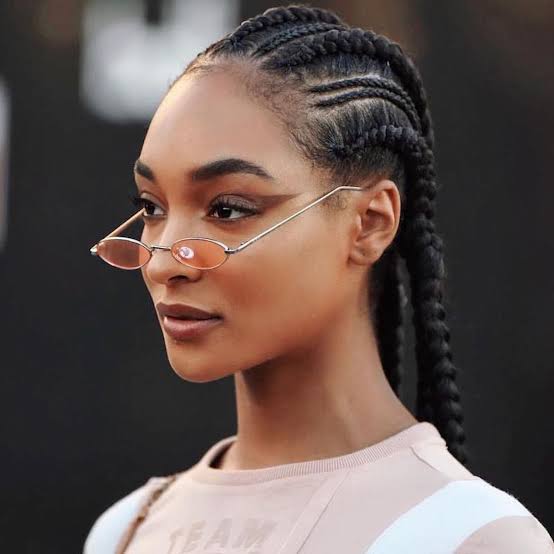
Cornrows get called the reliable sibling of braided styles, but that undersells the precision a neat hairline requires. Unlike loose braids that can shift during the day, these thick black rows follow the scalp from the front hairline straight back, so the pattern stays crisp from morning to evening. The middle part is clean enough that the style reads as structured rather than casual. Dense, straight hair at mid-back length holds the rows without gaps. Ask your stylist for: thick black cornrows, neat hairline, middle part. Apply a light oil sheen to the scalp and braids every few days to keep the shine going.
Precise Dark Brown Cornrows with Gradient Ends
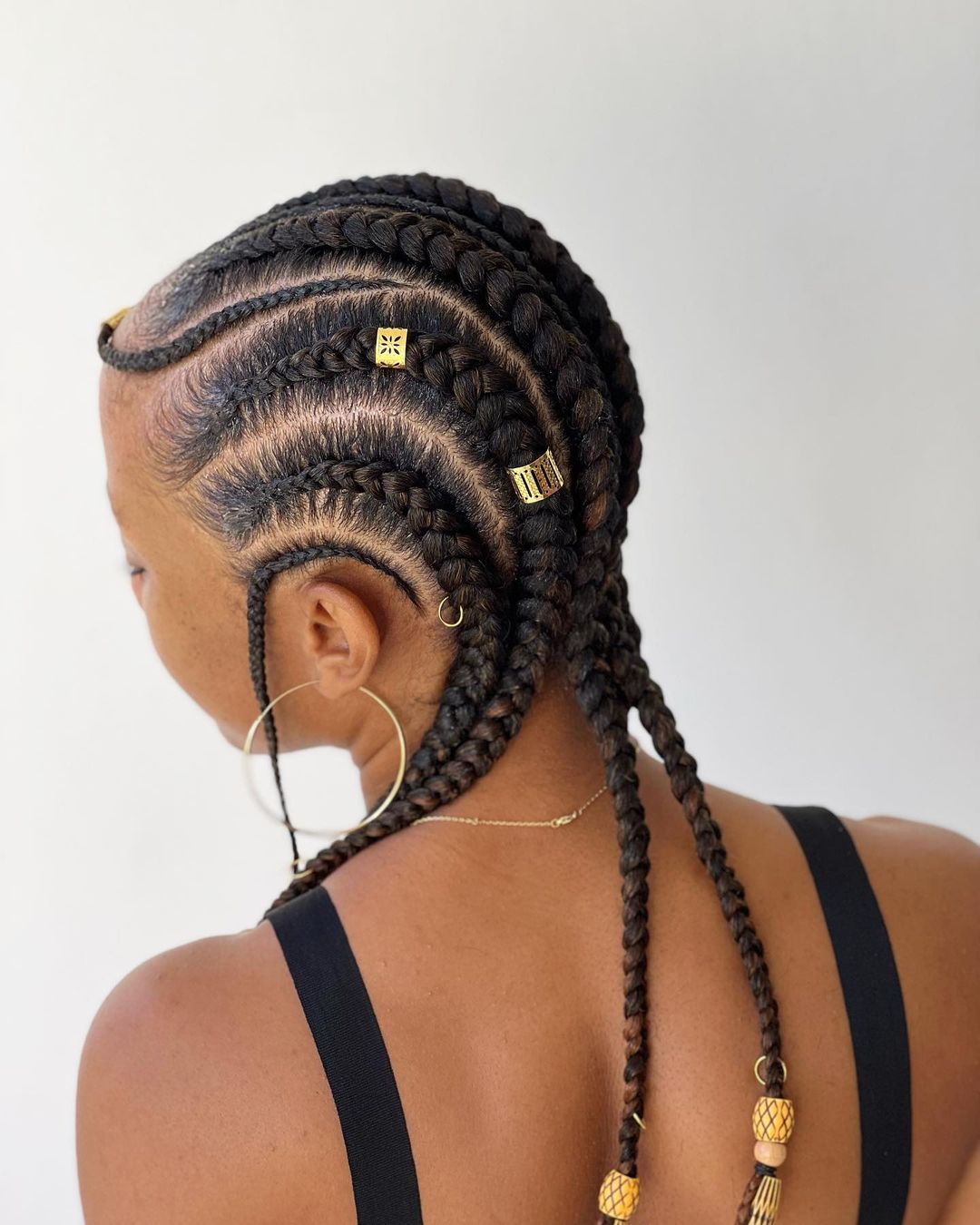
A gradient on the ends of cornrows is a small detail that changes how the braid catches light. The dark brown base shifts to a lighter brown at the tips, so the straight-back pattern has a natural fade. Precise partings keep the rows uniform, which matters because uneven spacing becomes more visible the longer the braid wears. Dense, straight hair at mid-back length is ideal for this technique. Ask your stylist for: dark brown cornrows straight back, subtle lighter ends. Sleep in a satin bonnet to protect the braid pattern, and expect a re-braid appointment every 6 to 8 weeks.
Intricate Black Braided Back Style
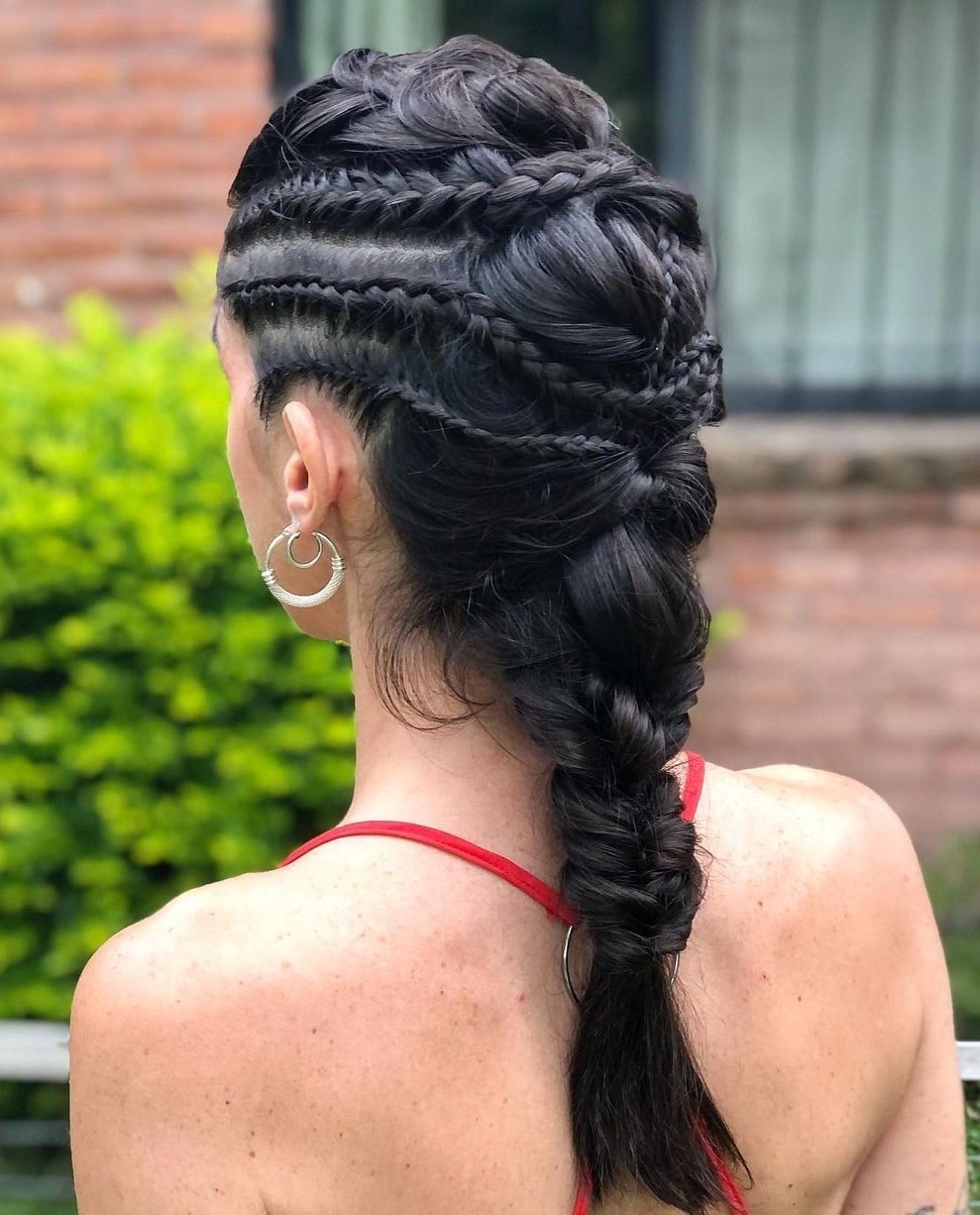
This is a braid composition, not a single technique. Cornrows run along the sides, then converge into a large fishtail braid down the center of the back, all on coily, thick hair that holds each section without slipping. The complexity comes from switching between scalp-hugging rows and a free-hanging weave, which requires the stylist to map the pattern before starting. A middle parting grounds the layout so the eye follows the lines.
- Section the hair into three zones: two side panels for cornrows and one back panel for the fishtail.
- Braid the side cornrows from the hairline to the nape, then join them into the fishtail.
- Tension the fishtail loosely to keep the coily texture visible.
Ask your stylist for: complex braided style with fishtail and cornrows. A moisturizing serum on the braids prevents dryness, especially if you plan to keep the style for several weeks.
Black Braids with Variety of Sizes
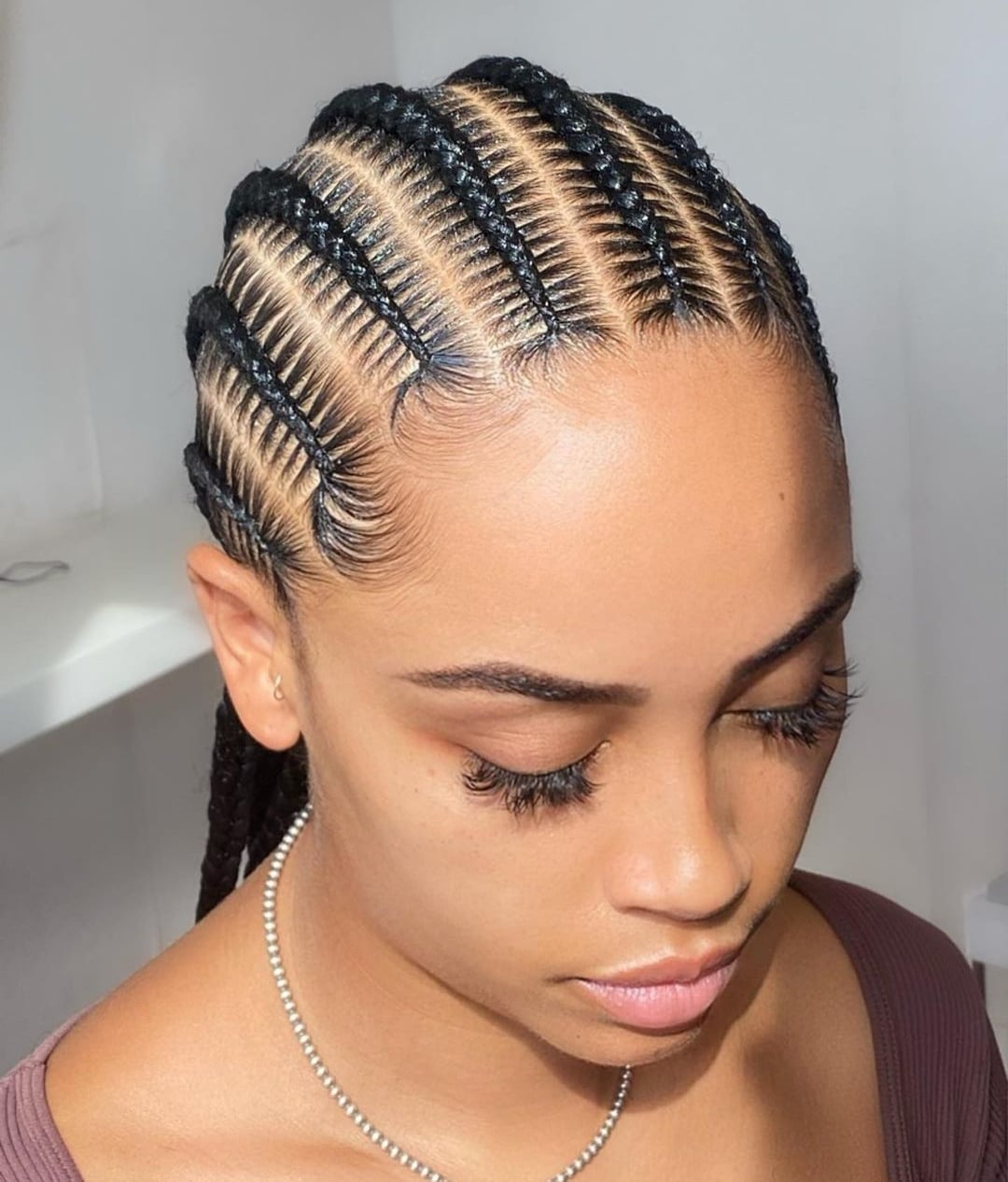
Some braided styles look dynamic because of a mix of braid thicknesses. These black braids fall to the mid-back with a middle parting, and the blend of fine and chunky sections adds texture that a uniform size cannot match. This look suits thick, straight hair and works with most face shapes thanks to the central part. Ask your stylist for: mid-back braids with mixed sizes, middle part. Expect to spend a few hours in the chair, as the varied sizes require more precision. A braid balm helps keep the scalp smooth and adds shine, and you will want to re-braid every six to eight weeks to maintain the contrast.
Classic Dark Brown Double Braids
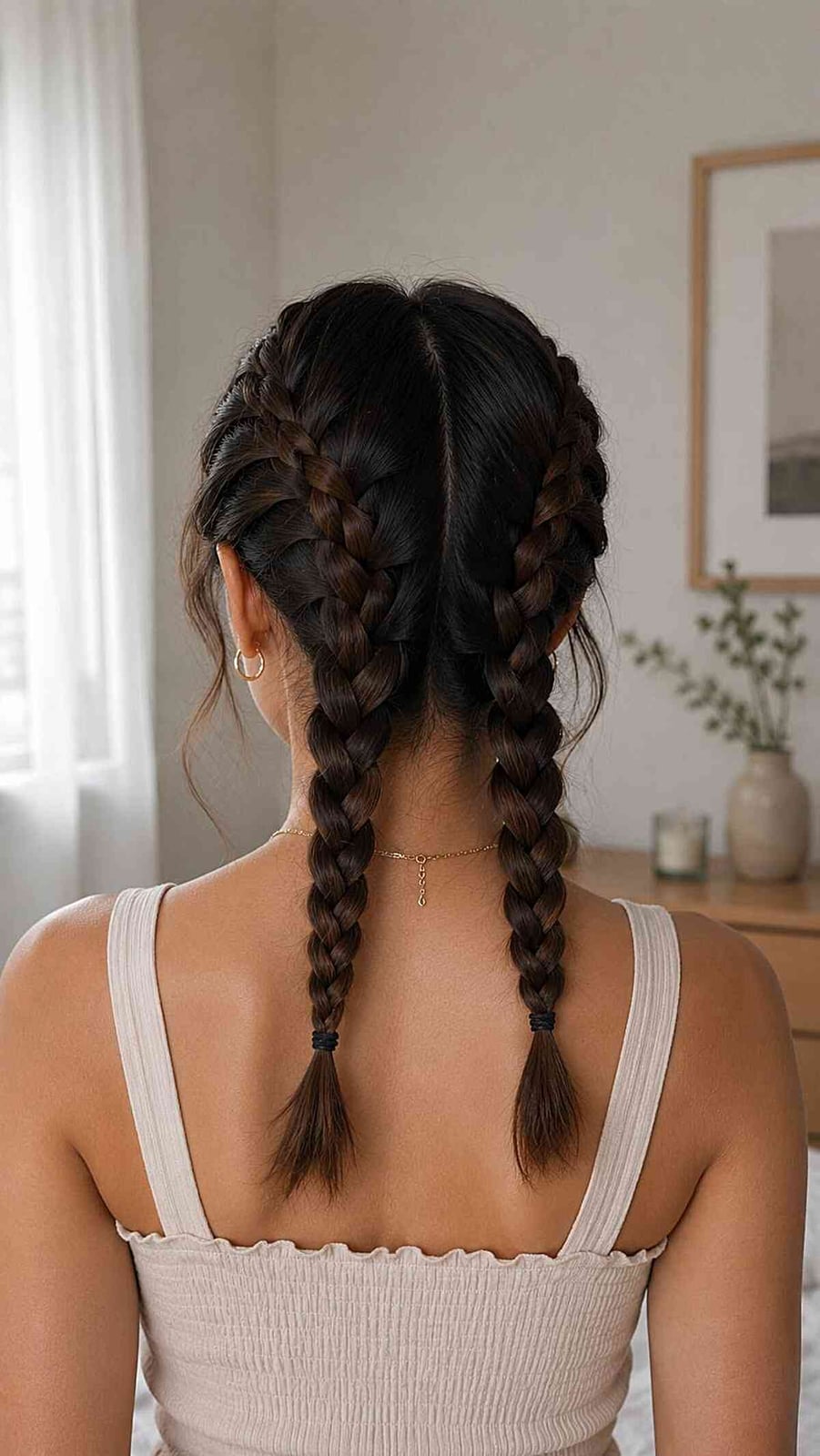
Two braids parted down the middle is as straightforward as braiding gets, but the straight, smooth finish makes it look polished. On thick, mid-back length hair, this style holds its shape all day and suits most face shapes thanks to the even parting. Ask your stylist for: classic double braids to mid-back, dark brown. To get the smoothest result, braid your hair while it is still damp, which helps tame flyaways before they start. The ends fray after a couple of months, so a trim every eight to ten weeks keeps them looking intentional.
Vibrant Red Cornrows with Geometric Pattern
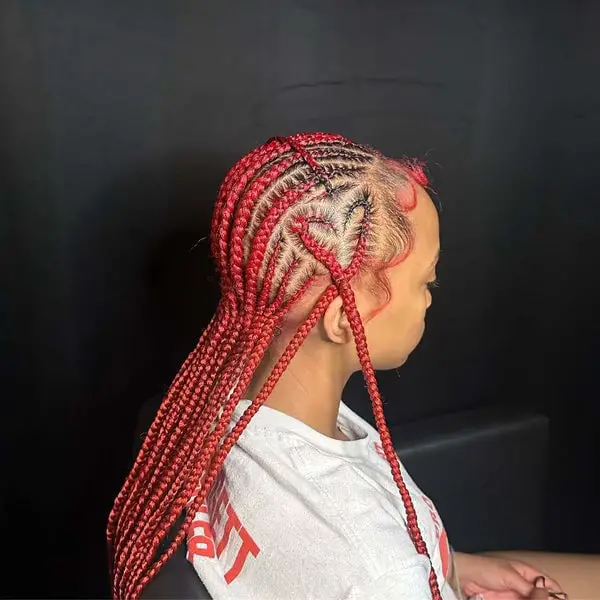
Before you wade into the practical world of neutral braids, consider this red number with black undertones. It is not a subtle choice, and that is the point. The cornrows run straight back to the mid-back, and the geometric pattern traced along the scalp gives it a precise finish. This style suits thick, straight hair and flatters most face shapes without much fuss. Ask your colorist for: vibrant red cornrows with geometric scalp pattern. The bold shade feels made for warm weather and festive events, though you will need to protect it with a color-safe shampoo and conditioner. Re-braiding every six to eight weeks keeps both the pattern and the hue intact.
Dark Brown Beaded Box Braids

Those clear and blue beads aren’t just decoration; they change how the braids move and sound. This dark brown set falls to the mid-back with a straight, dense texture, and the beads add a reflective quality that plain braids can’t. The look suits thick hair and most face shapes, though the weight of the beads is a real consideration. Ask your stylist for: mid-back box braids with beads, dark brown. Enjoy the visual payoff, but know that beads can snag on collars and pull at the roots during sleep. Make sure each bead is crimped tight, or you’ll be hunting for lost ones by week two. Plan for a re-braid every eight to ten weeks.
Black Stitch Braids to Shoulders
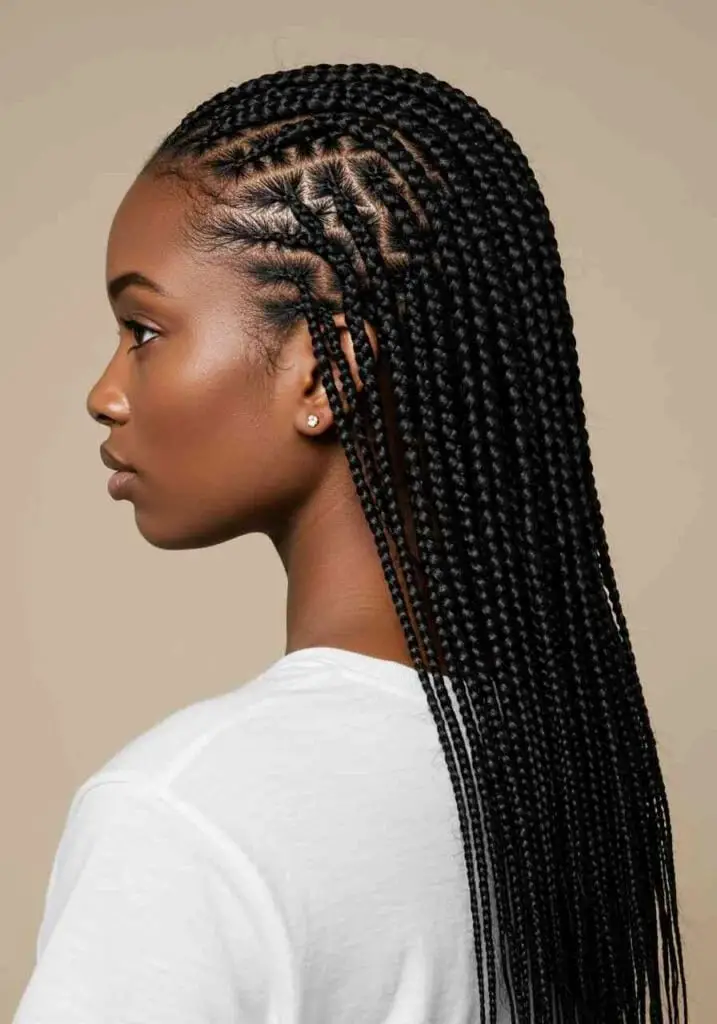
Stitch braids are the quiet overachiever of the braid world. The linear pattern along the parting line gives them a crisp, architectural look, and stopping at the shoulders keeps the style light enough for daily wear. This black set suits thick, straight hair and works with any face shape, since the length hits below the jaw. Ask your stylist for: shoulder length stitch braids, black. The shorter length means less weight on your scalp, but the ends need regular attention to avoid looking ragged. A light braid balm on the tips prevents fraying, and you’ll want to re-braid every four to six weeks to keep the stitch pattern distinct.
Thick Dark Brown French Braid
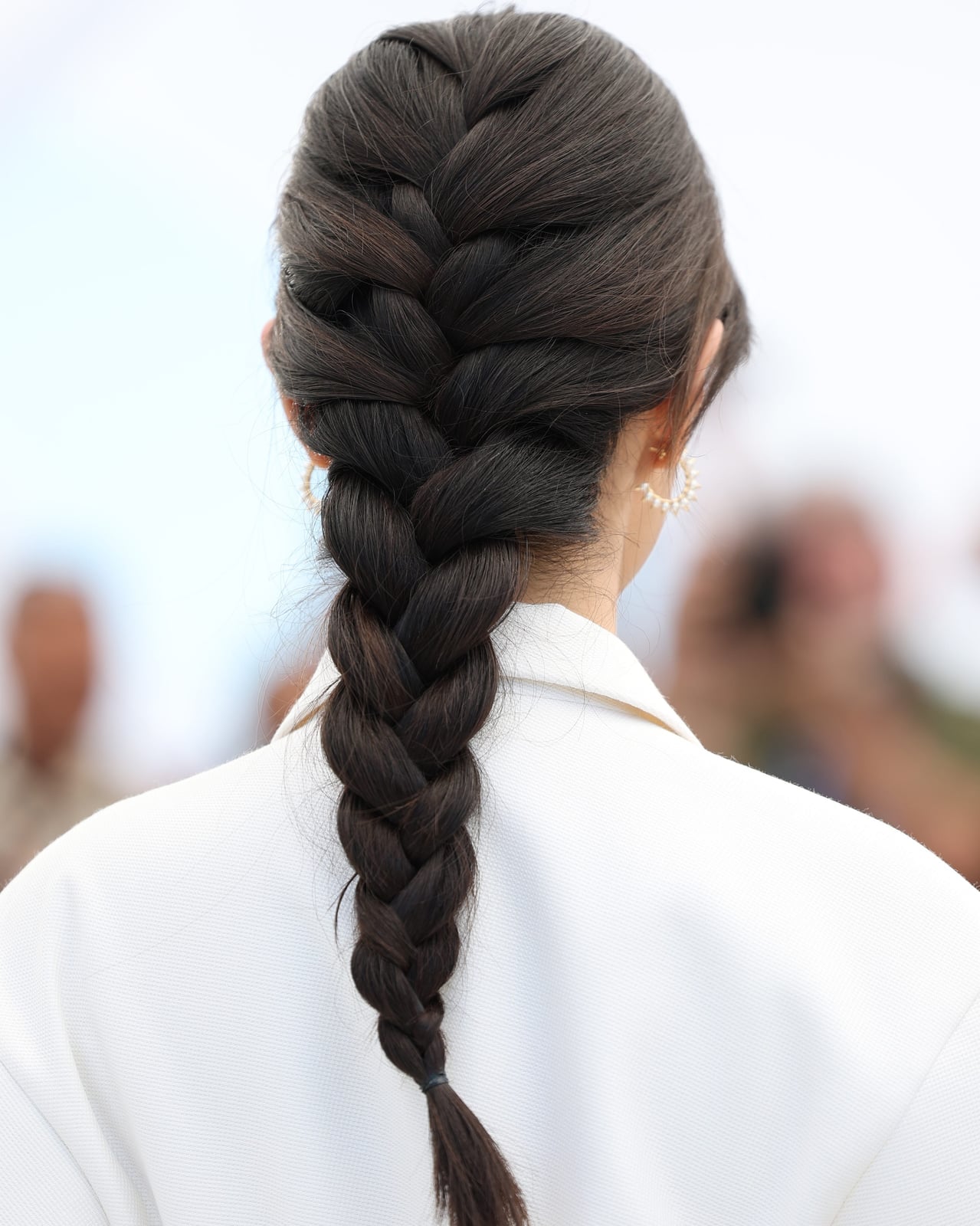
The precision of a French braid lies in the consistent tension of each crossover. On thick, straight hair that reaches mid-back, this style creates a clean, raised ridge that holds its shape without slipping. Ask your stylist for: thick mid-back French braid, dark brown. A middle parting balances the volume on both sides, suiting most face shapes. Braid the hair loosely at the nape for comfort, then tighten as you go up for that sculpted look. Trim the braid ends every 8-10 weeks to keep the finish sharp and prevent fraying.
Simple Dark Brown Double Braids, Mid-Back
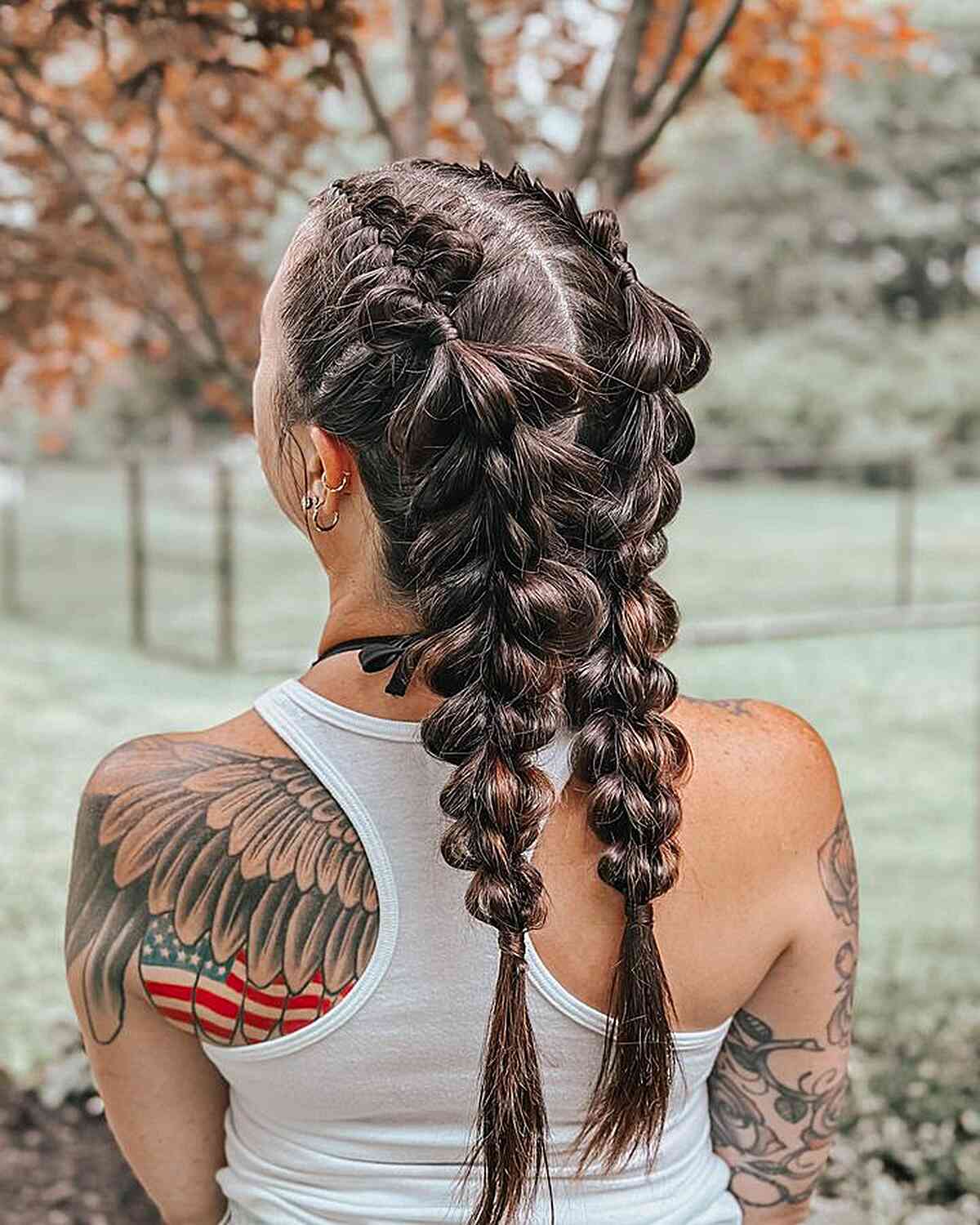
Two classic braids are about as straightforward as it gets, but the result is reliably neat. On thick, straight dark brown hair that falls to mid-back, a middle parting splits the density evenly so each braid has the same heft. Ask your stylist for: simple double braids to mid-back, dark brown. Braid the hair while damp for a smoother finish that sets as it dries. A trim every 8-10 weeks keeps the ends from looking straggly.
Defined Dark Brown Dutch Braids
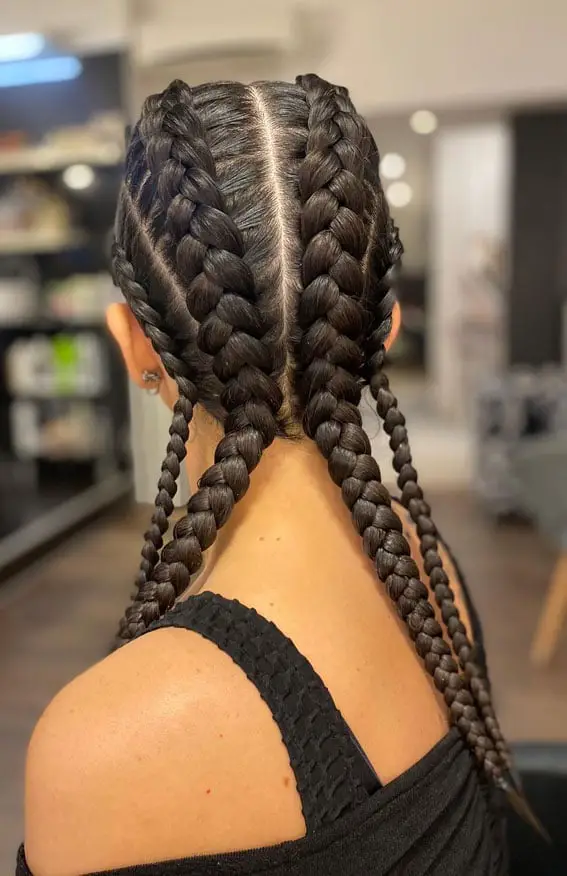
Wondering how to get those braids that sit on top of the hair? That is the Dutch braid difference. The sections cross under instead of over, creating a raised, three-dimensional line. On thick, straight dark brown hair at mid-back length, two Dutch braids with a sharp center part look clean and defined. Ask your stylist for: two thick Dutch braids to mid-back, dark brown. Pull out small sections of the braid after securing for a softer, fuller appearance. Trim the ends every 8-10 weeks to maintain the shape.
Multi-Tonal Box Braids with Wavy Ends
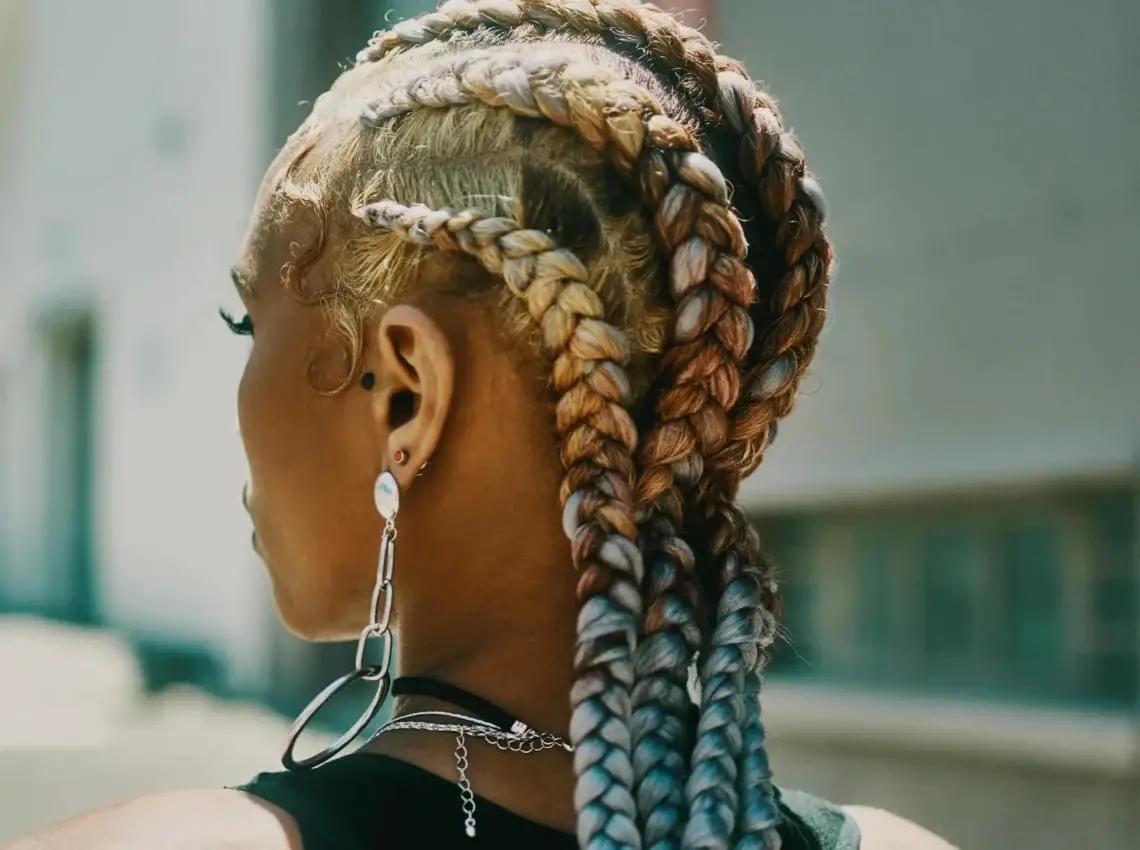
Solid-color box braids are a classic, but the multi-tonal version with blonde, brown, and gray hues creates a more dimensional effect. The wavy ends add movement, making the mid-back length feel less uniform. Ask your stylist for: mid-back box braids, blonde brown gray mix, wavy ends. This is a salon-only project given the color blending and installation time, but it lasts for weeks. A leave-in conditioner on the wavy ends keeps them soft and tangle-free between appointments.
Black Box Braids with Curly Tendrils
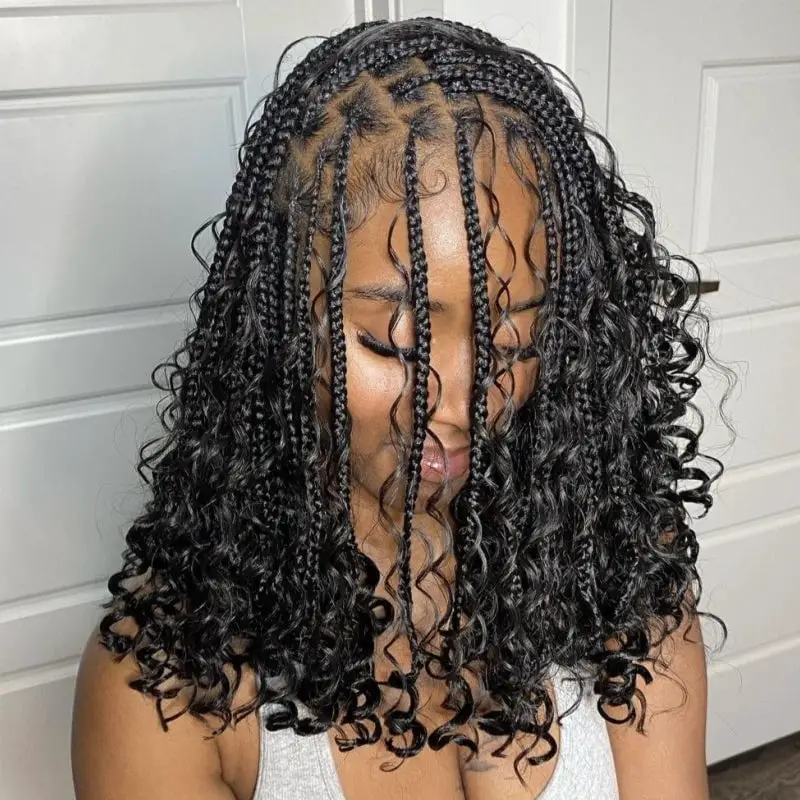
The contrast here is the point. Sleek black box braids run from the scalp to the shoulders, then transition into loose, curly tendrils that soften the overall line. A distinct middle parting and a few face-framing baby hairs keep it from feeling severe. Ask your stylist for: shoulder length box braids with curly tendrils, black. Apply a curl-defining cream to the tendrils for bounce that lasts through the day. Re-braid every 4-6 weeks to keep the roots tidy and the curls defined.
Precise Black Cornrow Lines
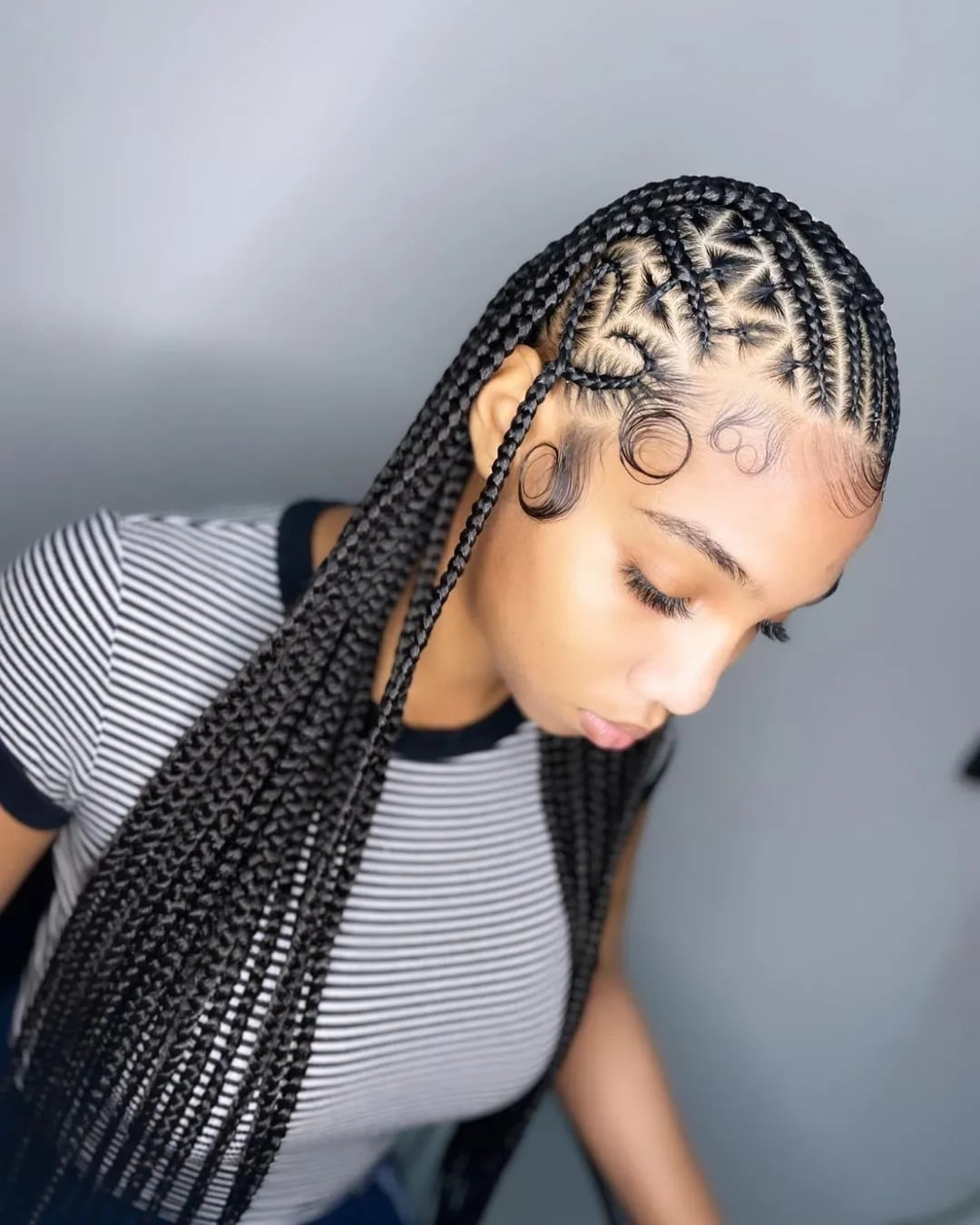
A middle parting keeps the symmetry clean, so it works on most face shapes without extra effort. The hold is excellent: tight against the scalp, no lifting for days. To maintain the sharp lines, wrap the edges in a satin scarf at night. Plan a re-braid appointment every six to eight weeks, because new growth blurs the precision faster than you think.
Neat Dark Brown French Braid with Highlights
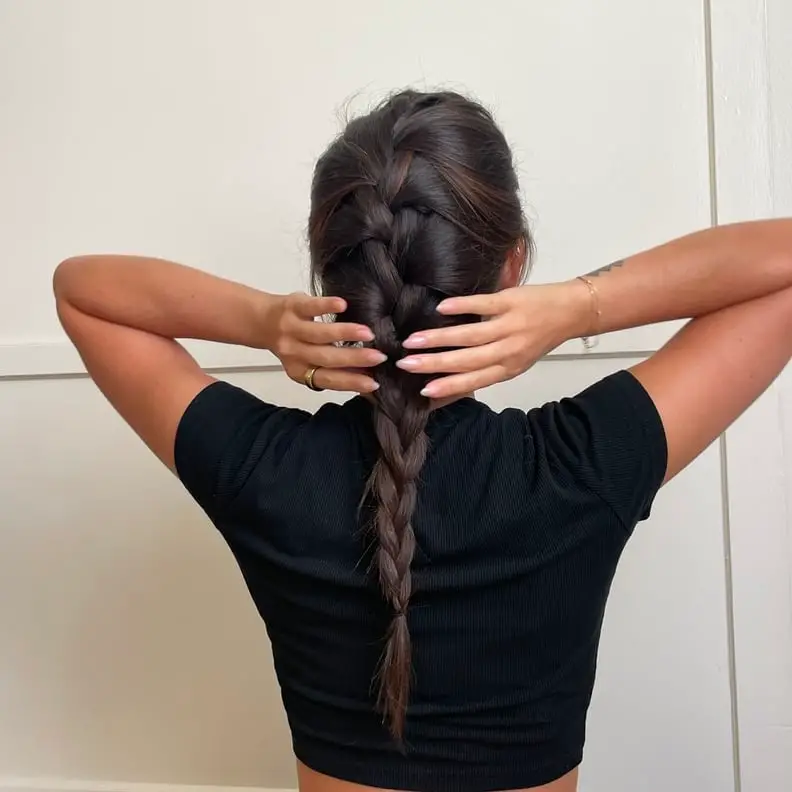
Wondering if a single French braid can look like more than a gym default? The subtle highlights in this dark brown version add the dimension that turns a practical style into something you want to wear out. Ask your stylist for: neat French braid to mid-back, dark brown with subtle highlights. The middle part and thick, straight texture make it a natural fit for most face shapes. Braiding the hair while it is slightly damp gives a smoother finish and a tighter hold that lasts through a full day. A trim on the braid ends every eight to ten weeks keeps the tail from looking frayed.
Black Braids and Twists with Baby Hairs
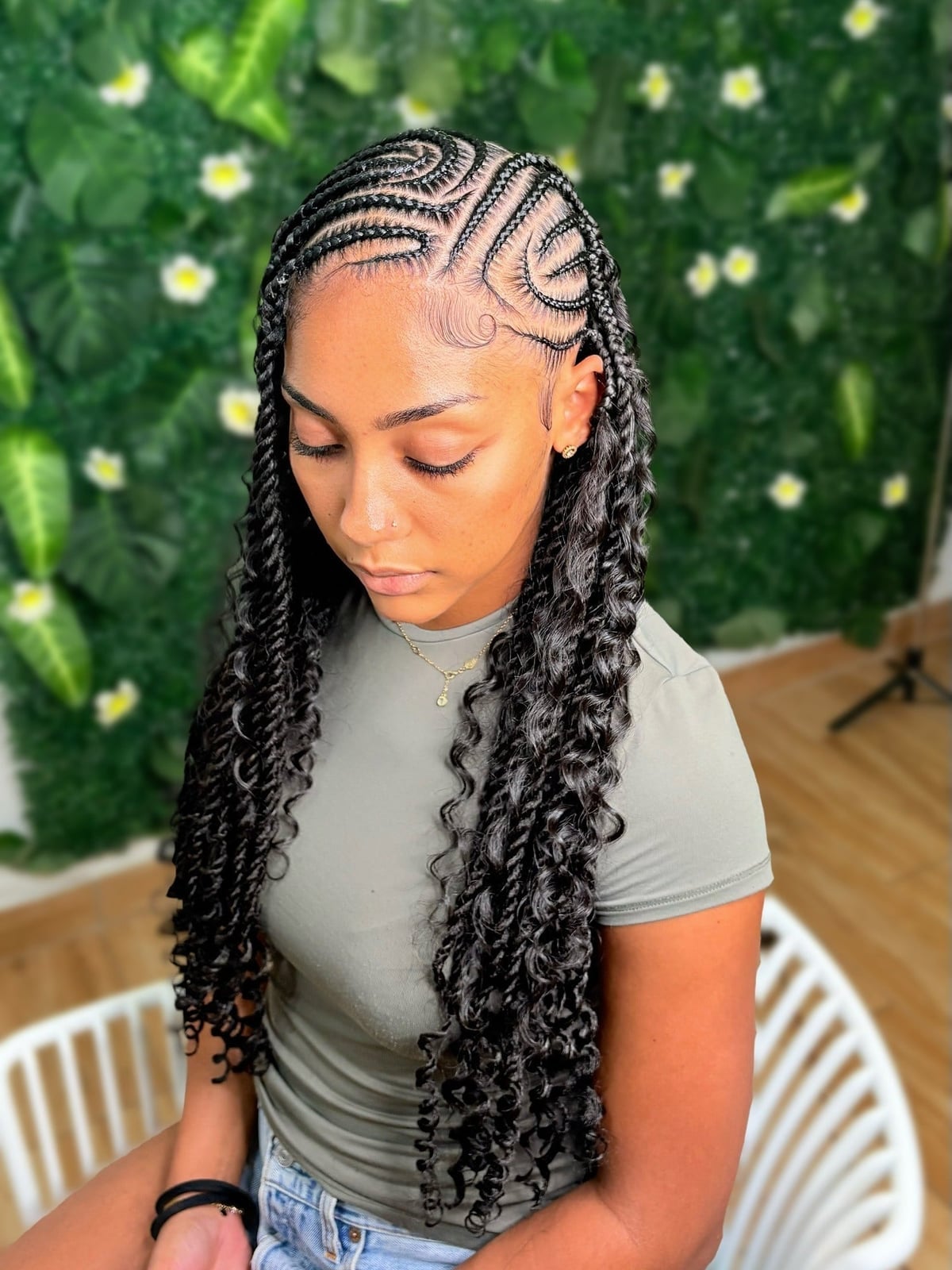
This is not the same old box braid routine. Intricate scalp braids transition into thick, wavy twists at mid-back, and the defined baby hairs along the hairline give the style a polished finish. Ask your stylist for: mid-back braids and twists with baby hairs. The combination of textures and the face-framing edges land this style firmly in special-occasion territory: festivals, date nights, anything that calls for a bit of drama. A light-hold styling cream on the twists keeps the definition visible without weighing them down.
Sleek Black Wet Look Braids
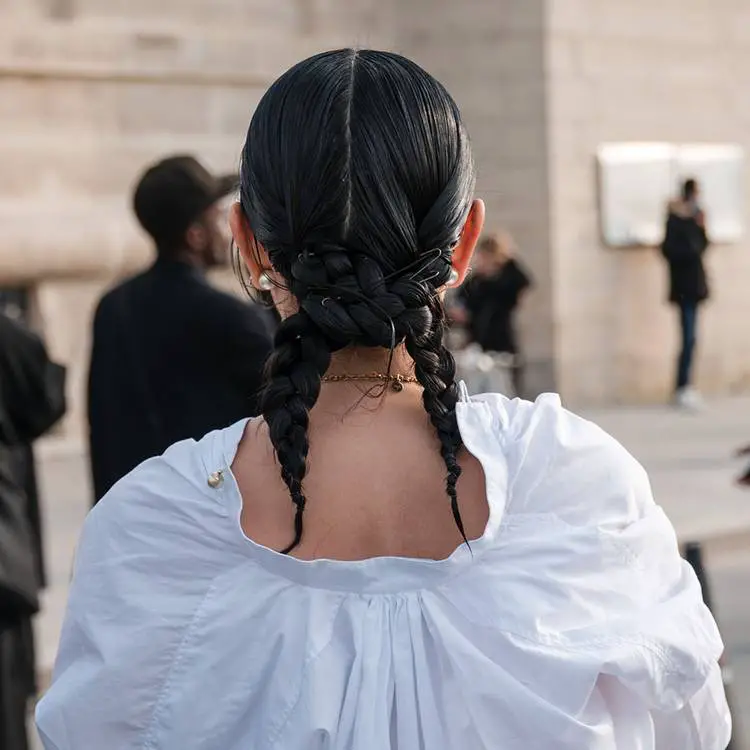
Two thick, sleek braids from a middle part to mid-back, finished with a wet effect: the look is polished enough for evening but demands maintenance. Ask your stylist for: two sleek wet look braids to mid-back, black. The gel or pomade needed for that glossy finish can flake as it dries, and frizz creeps in faster than you expect. A strong-hold product during braiding helps, but this is a one-day style, not a week-long commitment. Trim the ends every eight to ten weeks to keep the shape clean.
Black Cornrows with Geometric Pattern
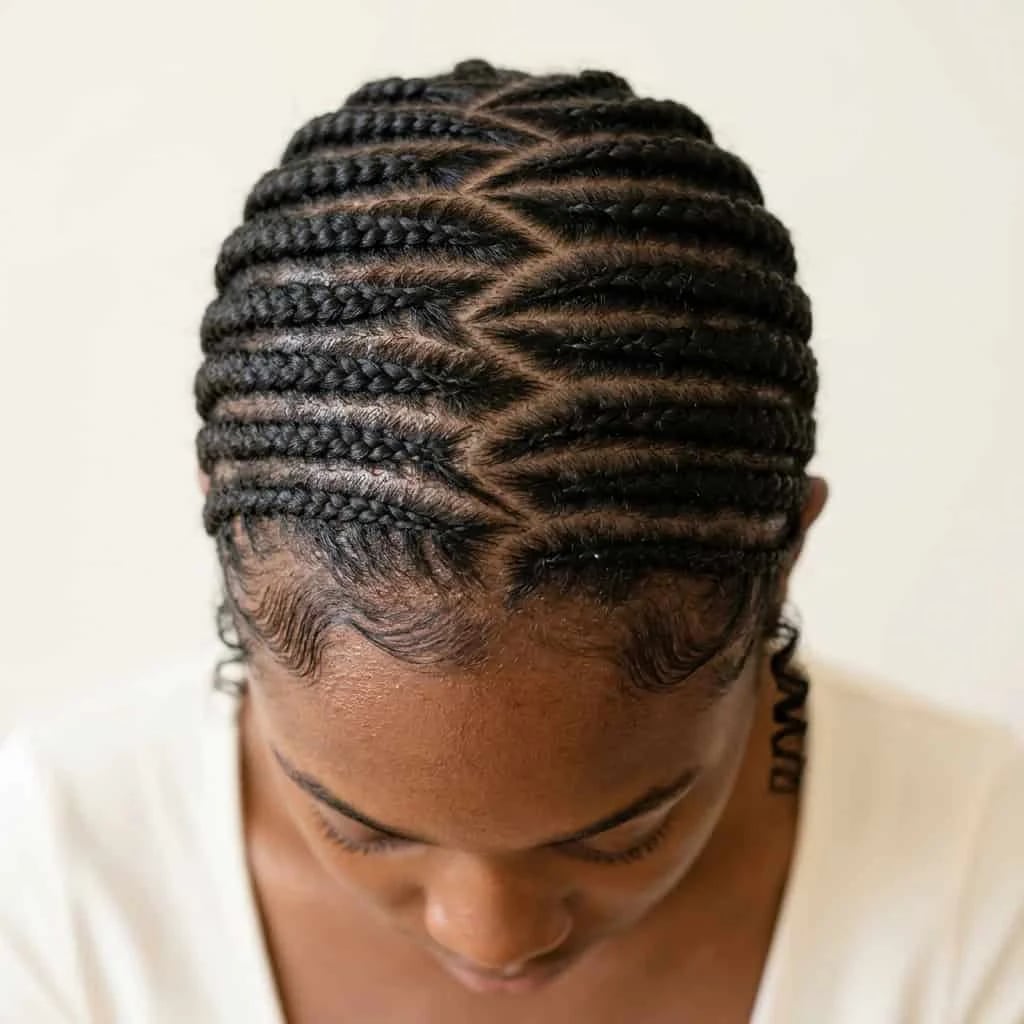
A geometric cornrow pattern on the scalp requires parting that is as precise as a blueprint. The straight, dense black braids start at a middle part and follow the design down the back. Ask your stylist for: cornrows with geometric scalp pattern, black. This is a salon-level achievement: the angles need a steady hand and experience to stay crisp. At home, you can maintain the look with a light oil on the scalp to prevent dryness and add a subtle sheen. A re-braid every six to eight weeks keeps the pattern from distorting as new growth appears.
Numerous Small Black Coily Box Braids
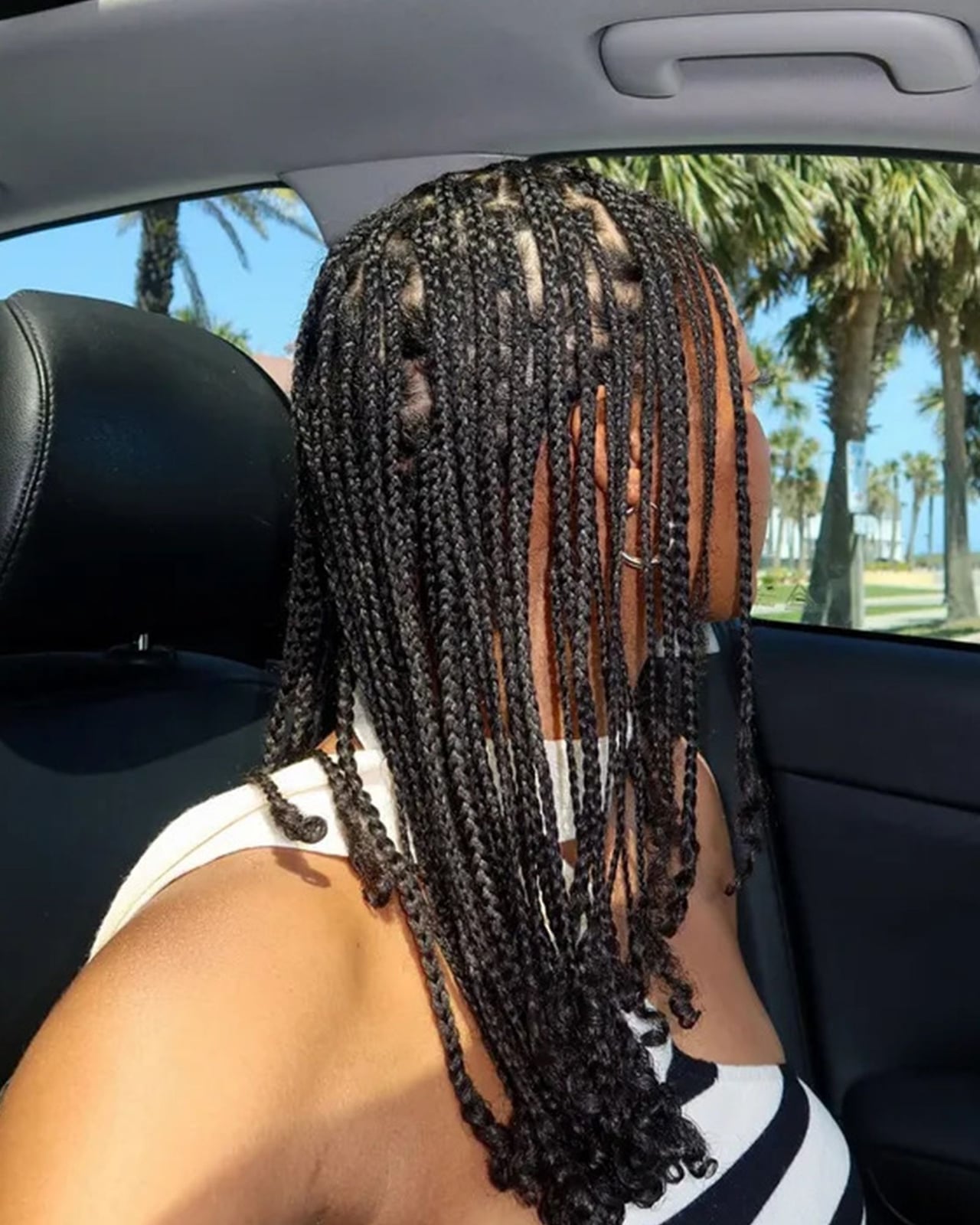
Where micro braids prioritize density, these numerous small coily box braids lean into texture and volume. The thick, coily strands reach mid-back, parted down the middle, and each braid has enough weight to swing. Ask your stylist for: mid-back small coily box braids, black. This is not a Tuesday-night project. The time investment is considerable, but the style holds its shape for weeks with minimal fuss. A moisturizing braid cream keeps the coils defined and hydrated between appointments.
Brown and Blonde Braids with Loose Curls
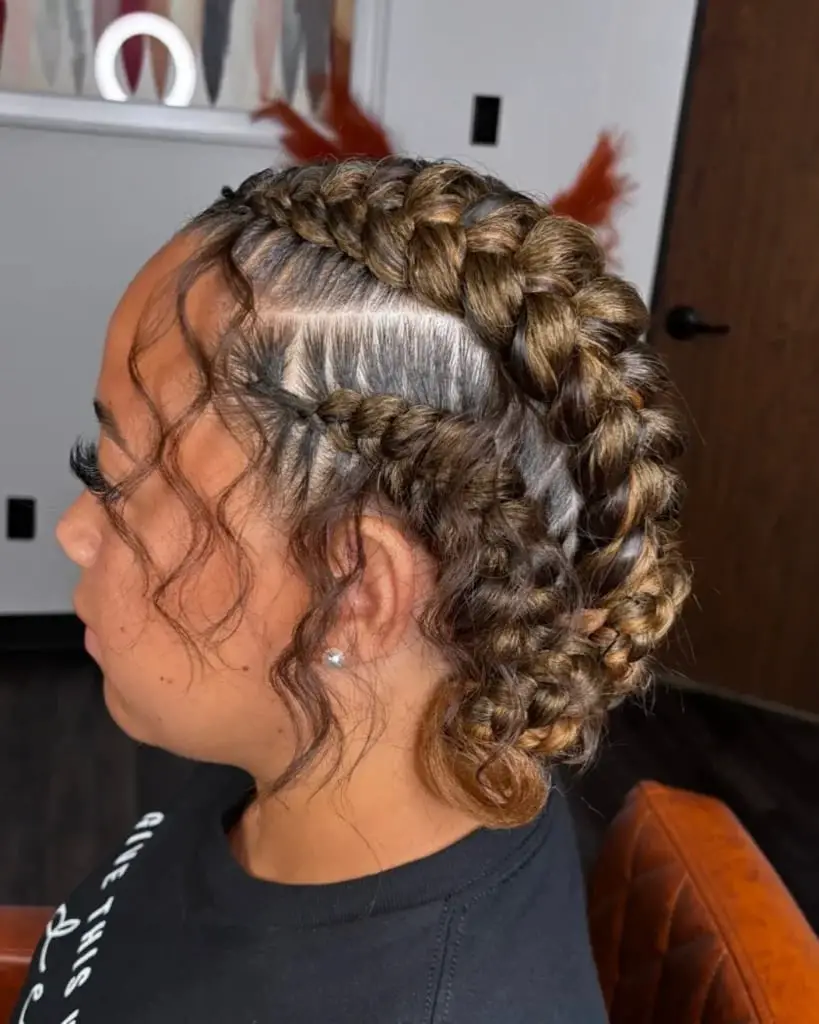
The design alternates braided sections with loose, shoulder-length curls, creating a texture that reads as layered rather than uniform. Brown hair with blonde highlights adds dimension without needing a full balayage. Ask your stylist for: shoulder length braids with loose curls, brown and blonde. Thick, curly hair carries the contrast best, and the middle parting keeps the weight balanced. A curl-enhancing serum applied to the loose sections prevents them from blending into the braids.
Chunky Black Side Braids
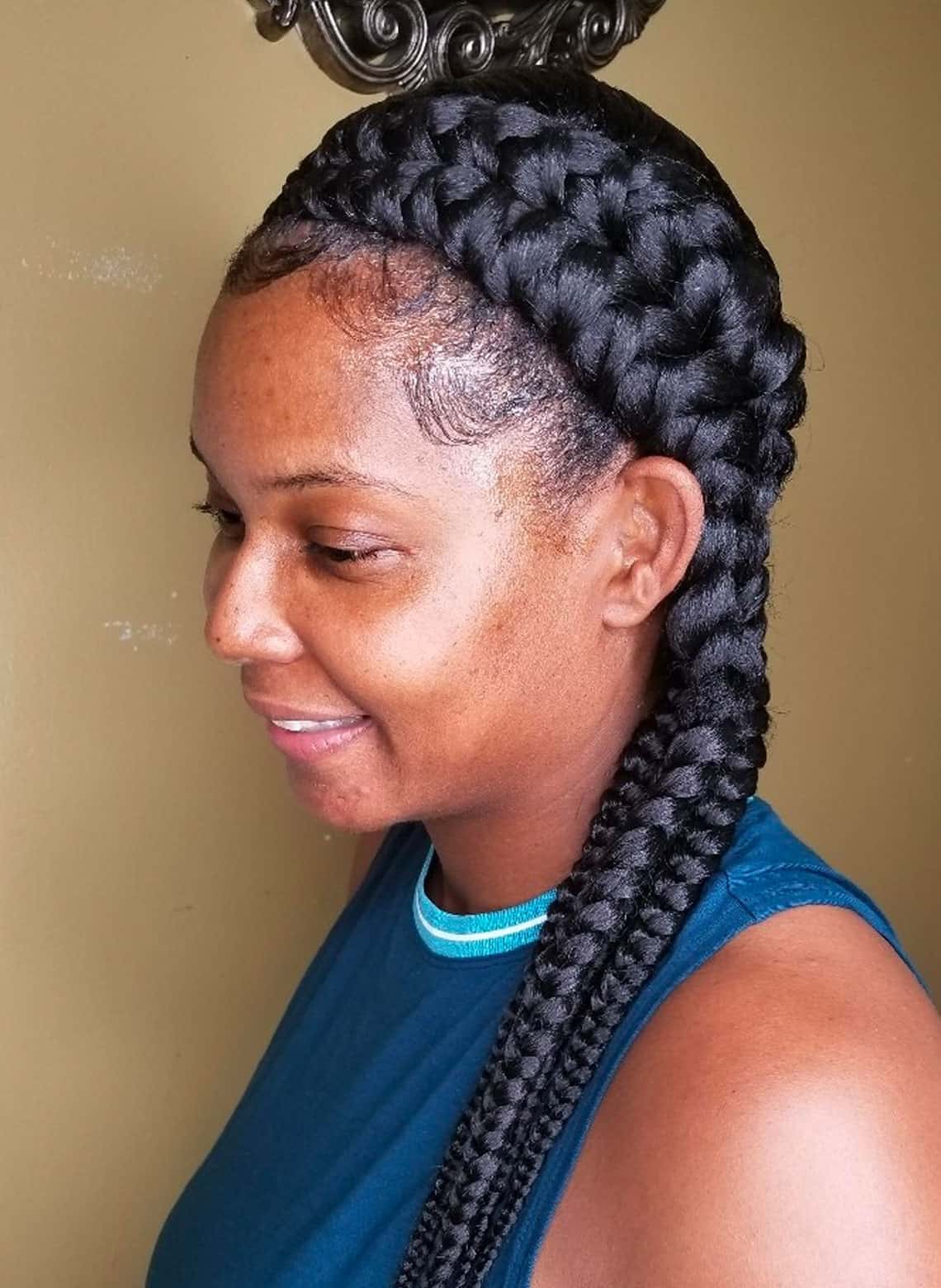
Two chunky braids with a side parting keep thick, wavy black hair out of the way without the polish of a single French braid. The shoulder-length finish means the braids sit just above the collarbone, which reduces the risk of them catching on bag straps or zippers. Ask your stylist for: shoulder length chunky side braids, black.
Braid the hair while it is still damp and secure each end tightly with a small elastic. The wavy texture actually helps the braids hold their shape longer than straight hair would. Expect to trim the ends every six to eight weeks to keep the tips looking clean.
Wavy Black Chunky Side Braids With Shoulder Length
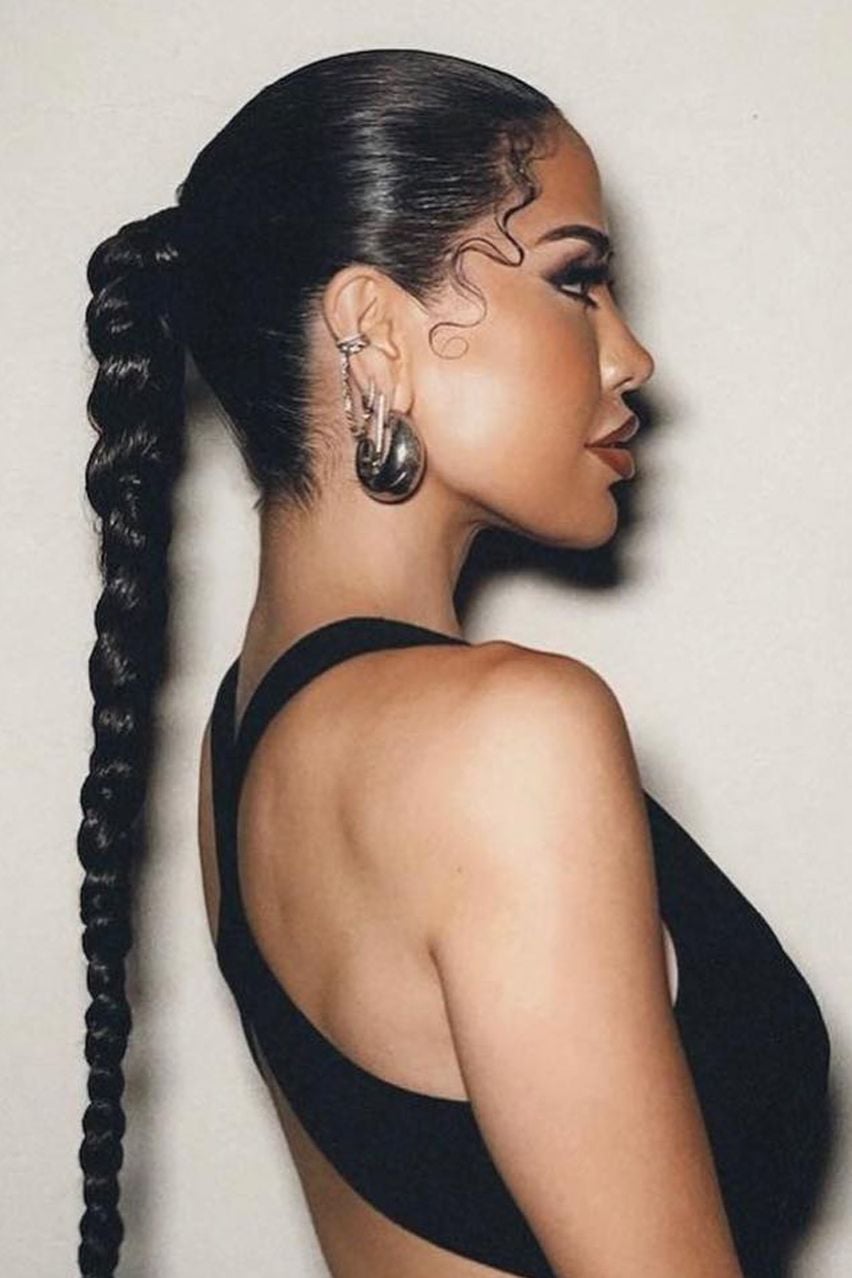
The same chunky side braid formula works best when you let the natural wave do some of the work. Braid damp hair loosely, then tug gently at the outer edges of each braid to create a slightly undone, wider silhouette. Ask your stylist for: shoulder length chunky side braids, wavy black. A side parting offsets the volume for heart-shaped faces, and the shoulder-length finish keeps the style from feeling heavy. No heat tools needed, just a brush and a few elastics.
Fine Black Micro Braids

Micro braids look delicate, but on fine hair they carry a real trade-off: the tension required to keep them neat can stress strands that are already on the thinner side. These reach mid-back, parted in the middle, with each braid uniform in size. Ask your stylist for: mid-back micro braids, fine texture. If your hair is prone to breakage or slippage, this style might not be the best bet. The weight of the extensions can pull at the roots over time. A light braid balm helps, but it does not solve the fundamental tension issue.
Textured Blonde Pull-Through Fishtail Braid
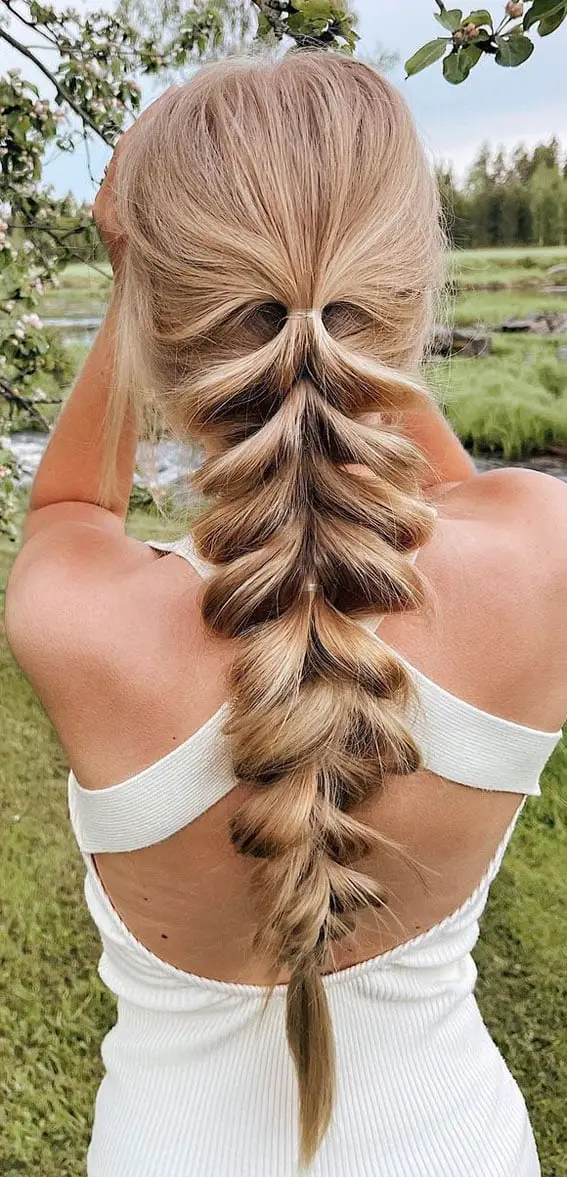
Ever wondered how to get that thick, almost woven look without spending an hour with three strands? A pull-through fishtail braid creates the same visual heft as a traditional fishtail but uses small sections of hair pulled through loops, which gives it that chunky, textured appearance. This version sits at mid-back length, with a blonde base, darker root shadow, and subtle highlights that catch the light between each loop. It works best on thick, wavy hair that already has some grip, and the middle part keeps the shape balanced for all face shapes. Ask your stylist for: mid-back pull-through fishtail braid, blonde with root shadow. Gently tug at the outer edges of each loop after braiding to double the volume and soften the line.
Final Thoughts
Fine or thin hair benefits from cornrows or small flat braids that add the illusion of density. Thick or dense hair handles chunkier Dutch or fishtail braids without feeling heavy or bulky.
- Maintain braids with a light-hold mousse for smoothness.
- Protect braids from friction with a silk or satin scarf at night.
- Refresh cornrows or scalp braids weekly with a spritz of diluted leave-in conditioner.
- Consider a braid refresh spray to add shine and combat frizz between salon visits.
Master the art of the back braid for practical sophistication.