
Glossy natural texture is having a moment, and the latest curly hair colors are built to move with your curls, not fight them. Soft face-framing layers and lived-in tones are replacing heavy, solid color blocks this season.
This collection of 31 Trendy Curly Hair Color ideas covers the full range: from a chin-length bob to mid-back waves, from platinum blonde to rich auburn. Whether your hair is fine and needs a volume boost or thick and craves dimension, each option is chosen for how it behaves on textured hair. No more wondering if that highlight will show up in your curl pattern or if the grow-out line will be a nightmare by week four.
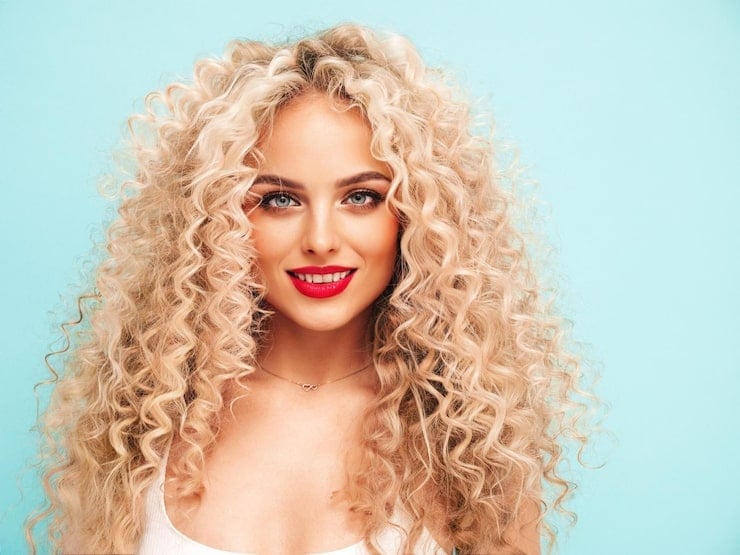
Mid-Back Platinum Blonde Curly Hair
A consistent platinum blonde from root to end on thick, curly hair is a design choice that depends on placement as much as lift. The middle parting and air dried texture let the color appear as a single saturated statement rather than a series of highlights. Ask your colorist for: mid-back length platinum blonde. A purple shampoo used every other wash keeps the tone from drifting into yellow, and a heat protectant is needed if you ever want to diffuse or touch up with a curling wand.
Thick curls at mid-back length hold a lot of hair, which means the lightening process takes more time and a skilled hand to avoid uneven porosity. Plan on a full day in the salon for the initial lift and a toning appointment every four to six weeks to maintain the cool tone. The result is a color that looks modern and deliberate, not accidental.
Mid-Back Copper Curls With Auburn Highlights
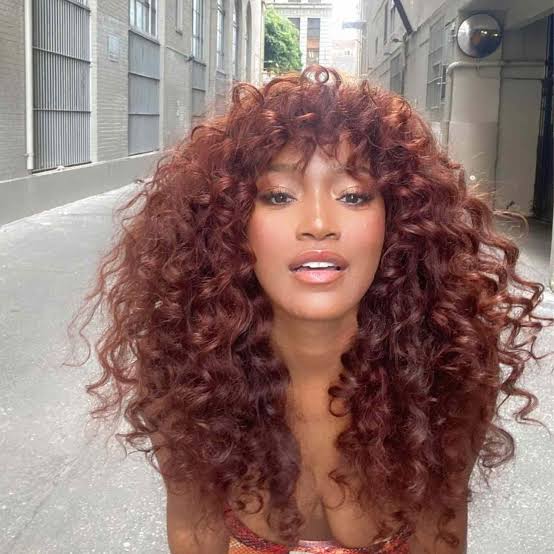
Copper and auburn get lumped together, but they live on opposite sides of the red spectrum. Copper leans warm and bright, while auburn brings a deeper, almost brown undertone. On mid-back dense curls, the subtle auburn highlights here add shadow and depth without muting the copper base. Ask your colorist for: mid-back copper base with auburn highlights. The result is dimension that moves with each curl instead of sitting flat on top.
For thick, curly hair that already has natural warmth, this combination reads as enhanced rather than dyed. If your hair runs fine or has low density, skip the highlights and go for a solid copper instead. The deeper auburn pieces can make thin curls look heavier than they are.
Collarbone Pink And Purple Balayage

Who actually wears pink and purple beyond festival season? Anyone with collarbone-length curly hair who wants a color that shifts between tones depending on the light. The balayage technique keeps the darker base visible at the roots, so the pink and purple read as deliberate accents rather than a full commitment. Ask your colorist for: collarbone length balayage with pink and purple tones.
This works best on thick, curly hair that has enough density to carry multiple colors without looking patchy. Fine or low-density curls will show the darker base too much and lose the blend. Save this for a time of year when you want color to be the main event.
Shoulder Shag With Vibrant Red
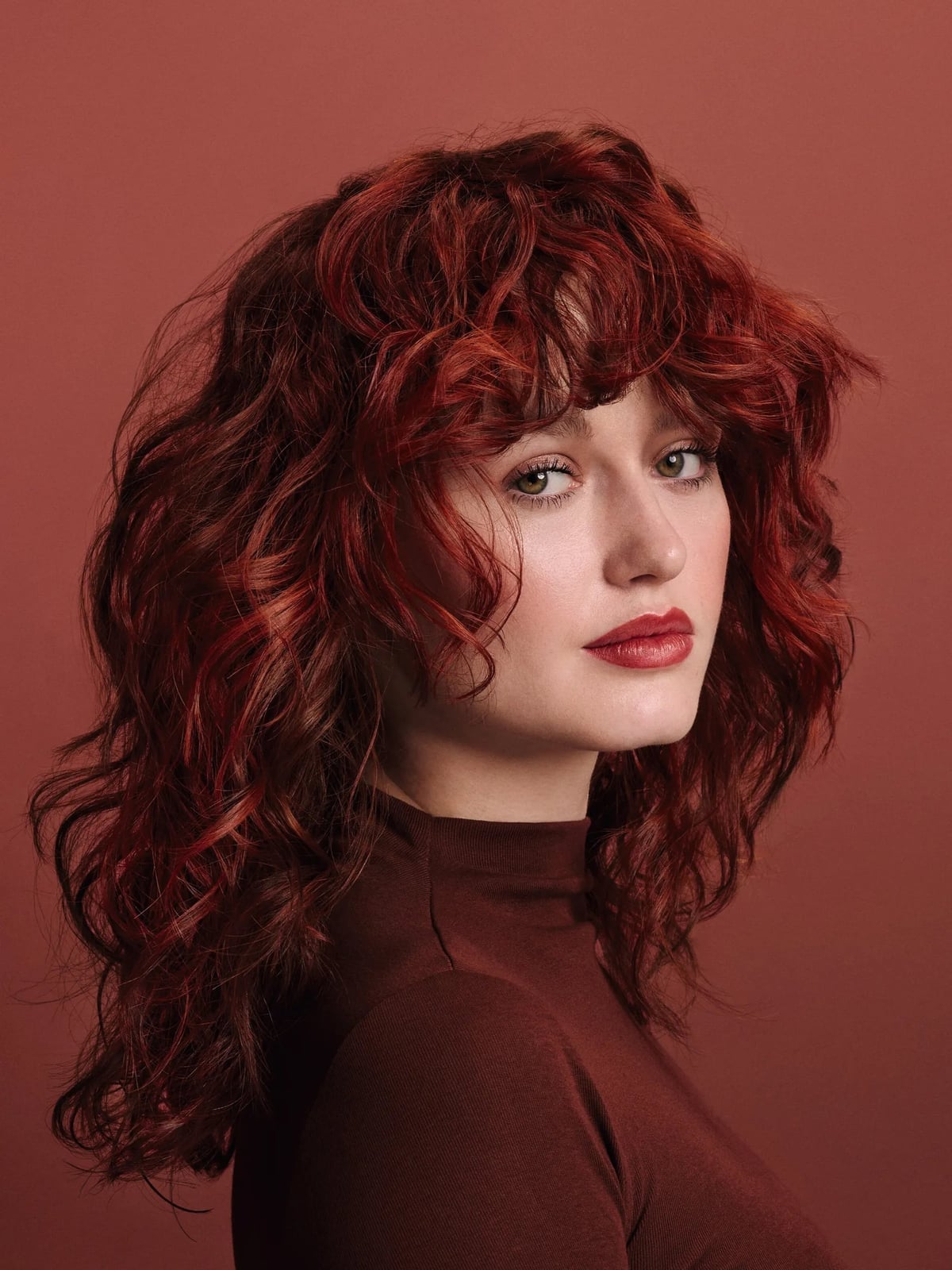
A shag cut on shoulder-length wavy hair already does most of the work; the vibrant red base with subtle lighter red highlights just makes the layers more visible. The curtain bangs and middle parting frame the face without needing to be pinned back. Ask your stylist for: shoulder length shag with curtain bangs and vibrant red color. Be specific about the red: a true vibrant shade, not a muted wine or a cherry cola.
What to ask for: a shag that starts the shortest layer at the jaw, curtain bangs that graze the cheekbones, and a vibrant red that is one solid base with a few lighter pieces woven through the top layers. The cut does the heavy lifting; the color just highlights the shape.
Chin Length Auburn Bob With Short Bangs
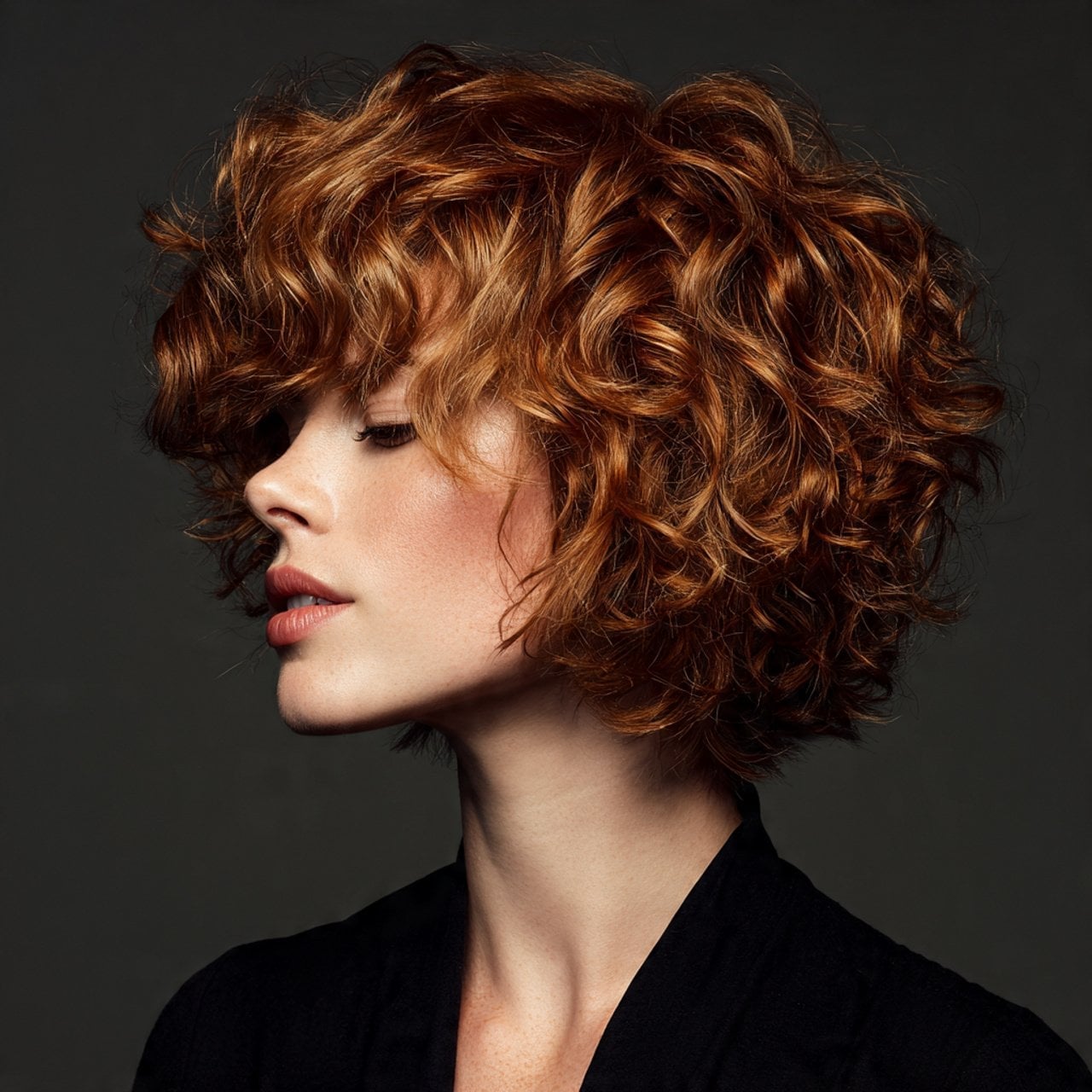
A chin-length bob with short bangs on thick, curly hair is a shape that demands precision. The vibrant auburn base with lighter auburn highlights adds a lived-in effect that softens the blunt line of the cut. Air-dried texture keeps the whole thing from looking too precious. Ask your colorist for: chin length bob with short bangs in vibrant auburn.
The highlights grow out gradually because they are only a shade lighter than the base, so you can stretch toning appointments to every eight weeks. A texturizing spritz on damp curls will reinforce the piece-y effect that makes the highlights look like a deliberate choice instead of faded color.
Ear Length Pastel Pink Bob
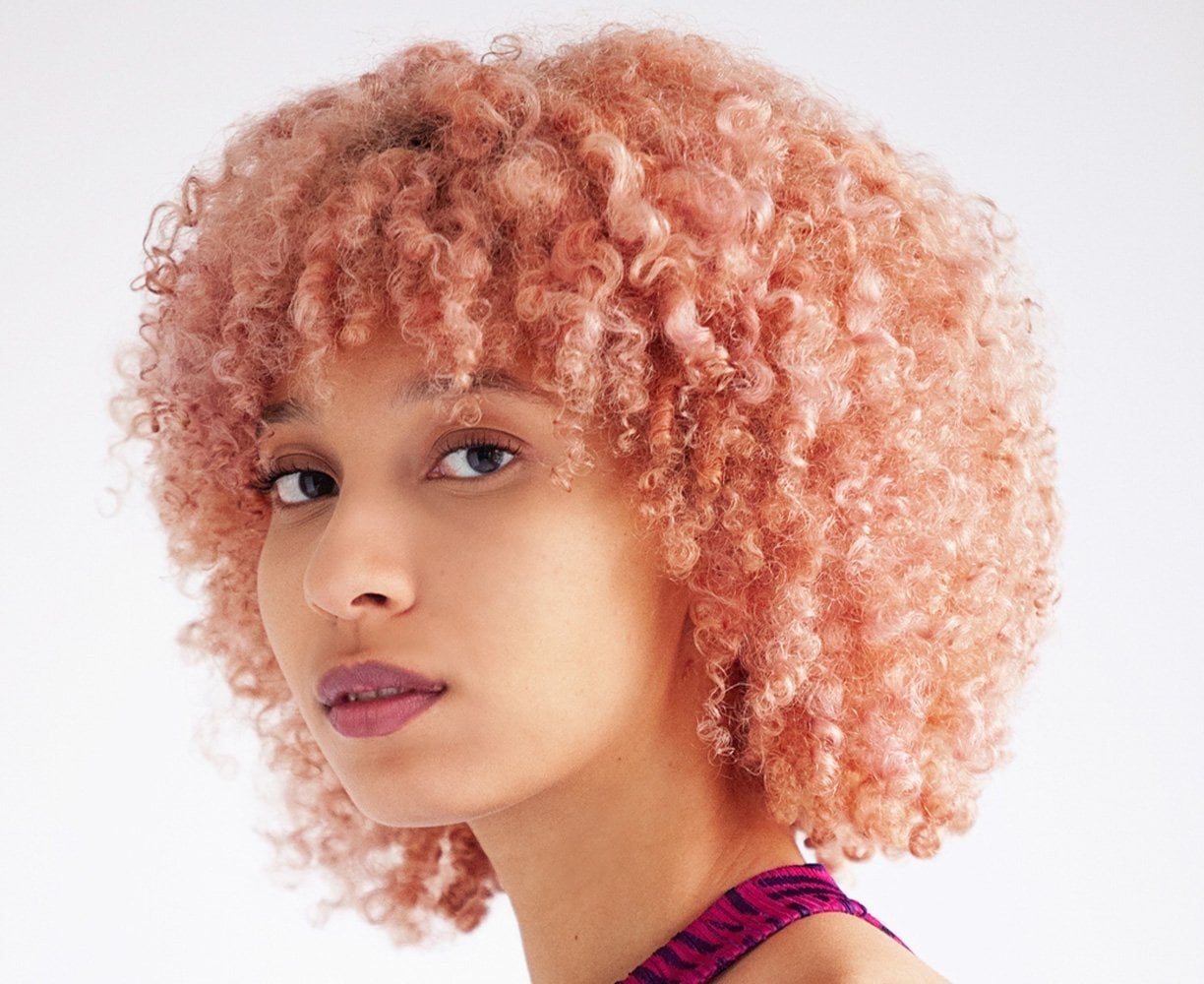
Pastel pink on fine, curly hair is a commitment, and this ear length bob shows exactly why. The middle parting and air-dried texture let the color do the talking, but that vibrancy comes at a price. Pastel shades fade fast on fine strands, so plan on a salon visit every three to four weeks to keep the tone from washing out to a dull beige. Ask your colorist for: ear length bob in pastel pink. It is not a color you can fake at home with a box dye, and the upkeep is real.
Mid-Back Dark Brown With Honey Caramel Balayage
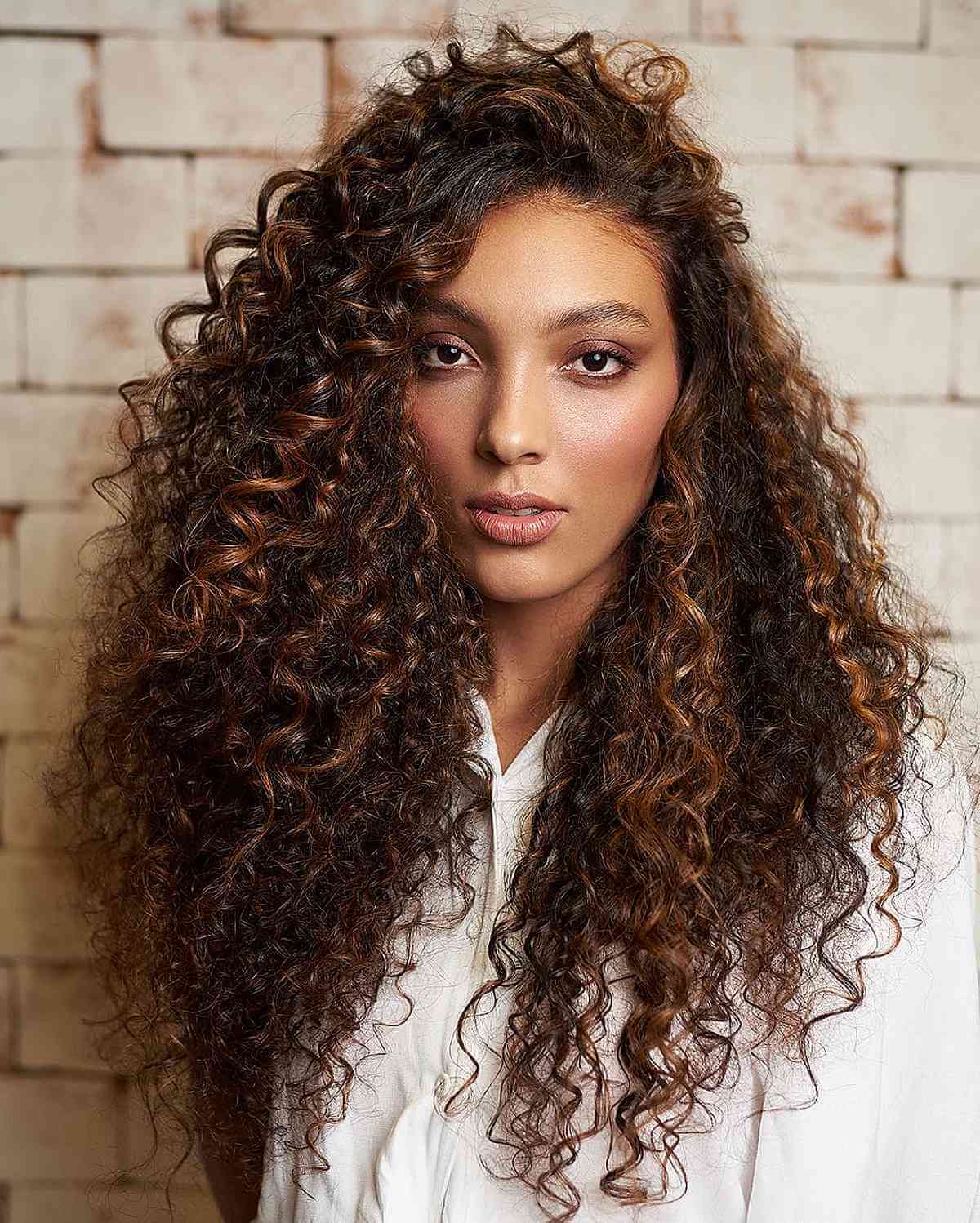
This balayage starts with a dark brown base and layers honey and caramel tones through the ends, a technique built for thick, loose curls. The colorist paints each section by hand, so the lighter pieces land exactly where the curl bends, creating dimension without a harsh root line. On mid-back length hair with thick density, the blend looks rich and streaky, and the middle parting lets the color fall symmetrically. Ask your colorist for: mid-back dark brown with honey caramel balayage. Air-drying is the right move here, since the tones are designed to show up in the natural curl pattern, not in a blowout.
Collarbone Dark Blonde With Caramel Balayage
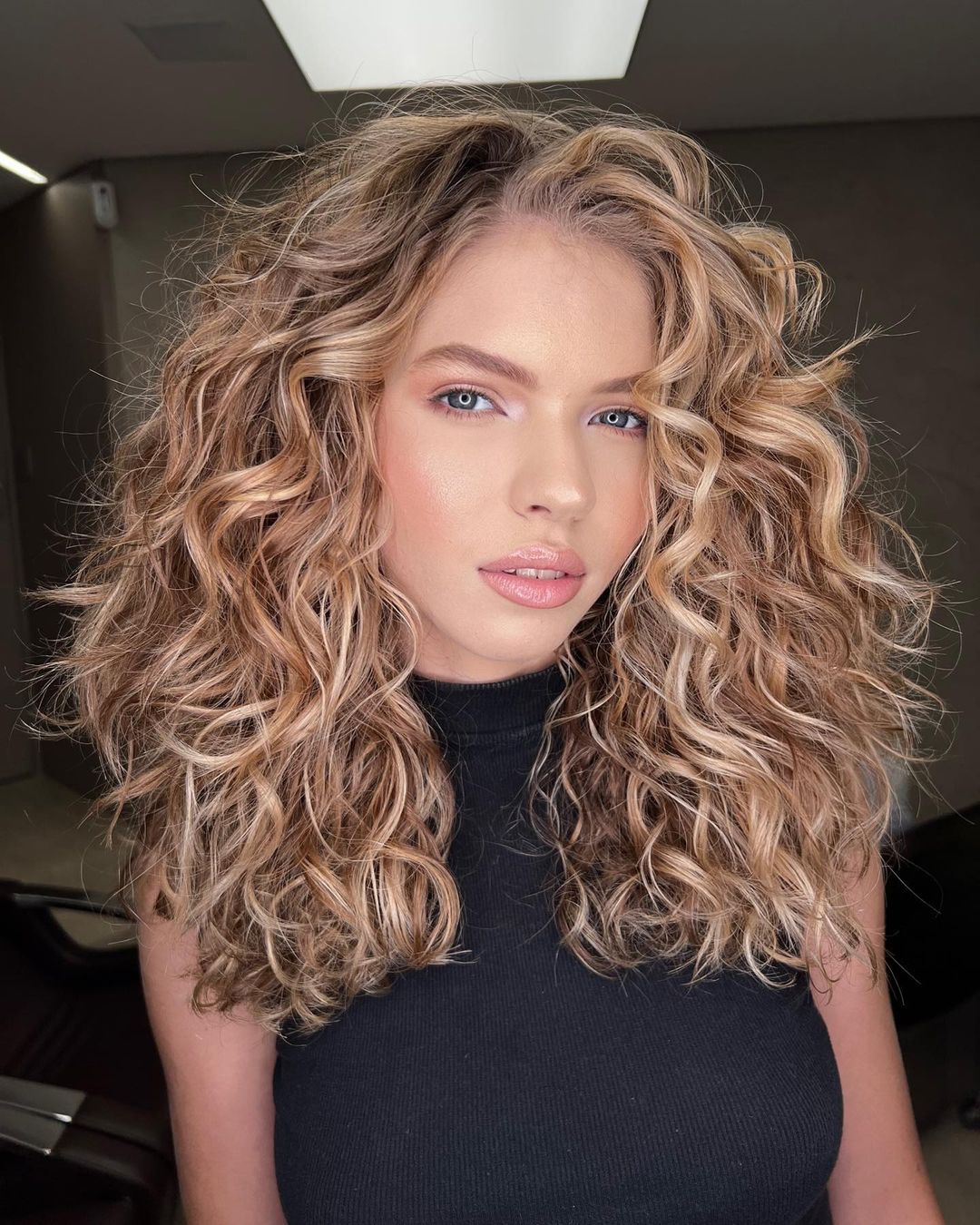
What makes this collarbone length work is the contrast between the dark blonde base and the caramel balayage, painted in soft, sweeping sections that follow the wave. The side parting adds volume at the root, and the voluminous blowout gives the thick, wavy texture a polished finish without losing its natural movement. The caramel pieces are concentrated around the face and ends, so the color feels expensive without brassiness. Ask your colorist for: collarbone length dark blonde with caramel balayage. A smoothing serum keeps the gloss visible, and a toning appointment every six to eight weeks keeps the caramel from turning orange.
Collarbone Wavy With Caramel Balayage

If you are torn between this caramel balayage and something like a full-on highlight, here is the difference. A highlight lifts every strand, which can make thick, wavy hair look stripey, while this balayage keeps the dark blonde base and paints caramel only where the wave turns, preserving depth. On collarbone length layers with a side parting, the technique softens the texture rather than fighting it, and the voluminous blowout adds movement. Ask your colorist for: collarbone length wavy hair with caramel balayage. It is a solid choice if you want dimension without the upkeep of a full color, though it does require a salon visit to maintain the blend.
Collarbone Dark Brown With Honey Blonde Balayage
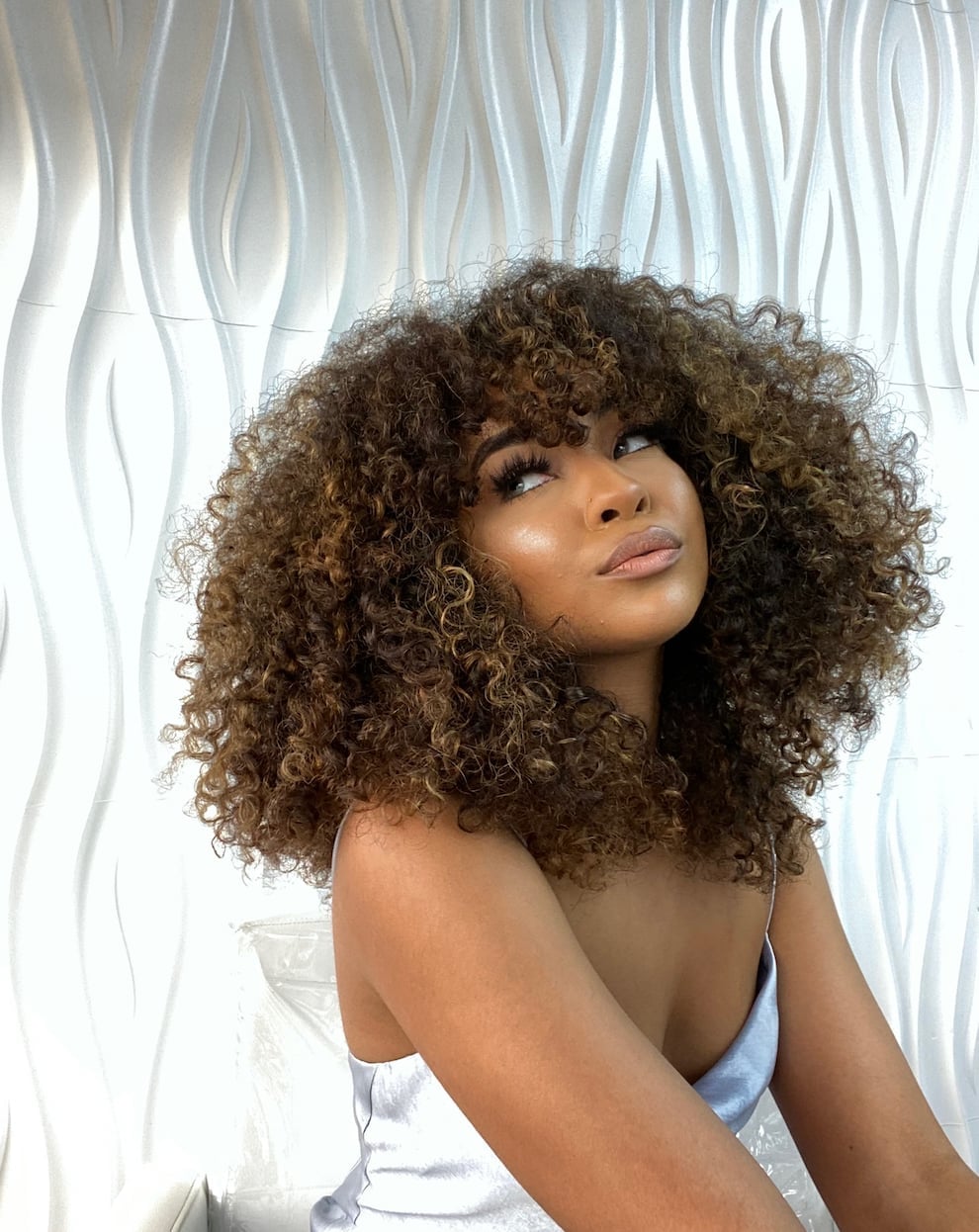
How do you ask for a color that looks this lived-in without sounding vague? Start with the base, then the technique, then the details. This collarbone length cut keeps a dark brown base and adds honey blonde balayage through the mid-lengths and ends, with face-framing curtain bangs to soften the front. The middle parting and voluminous blowout give the thick, curly texture a polished shape, and the balayage means the roots grow out without a harsh line. Ask your colorist for: collarbone length dark brown with honey blonde balayage and curtain bangs. Bring a photo of the exact honey tone you want, since that shade can pull either golden or brassy depending on the formula.
Collarbone Blonde Balayage With Face-Framing Layers

Blonde balayage is painted on in sweeping strokes that start mid-length and intensify toward the ends, so the collarbone-length cut keeps its depth at the roots while the face-framing layers add movement. This front-facing design with curtain bangs works best on thick, wavy hair that can hold the shape of the blowout. Ask your colorist for: collarbone blonde balayage with face-framing layers. The layers keep the hair separated and defined, which is the key to this look.
The lighter pieces are concentrated around the face to brighten the style without washing out the waves. It is a salon technique, not a DIY project, because the balayage needs to be hand-painted to land exactly where the layers fall. Expect to sit for a few hours, and plan on a toner or gloss at the sink to keep the blonde from turning brassy between visits.
Collarbone Dark Brown With Lighter Brown Highlights
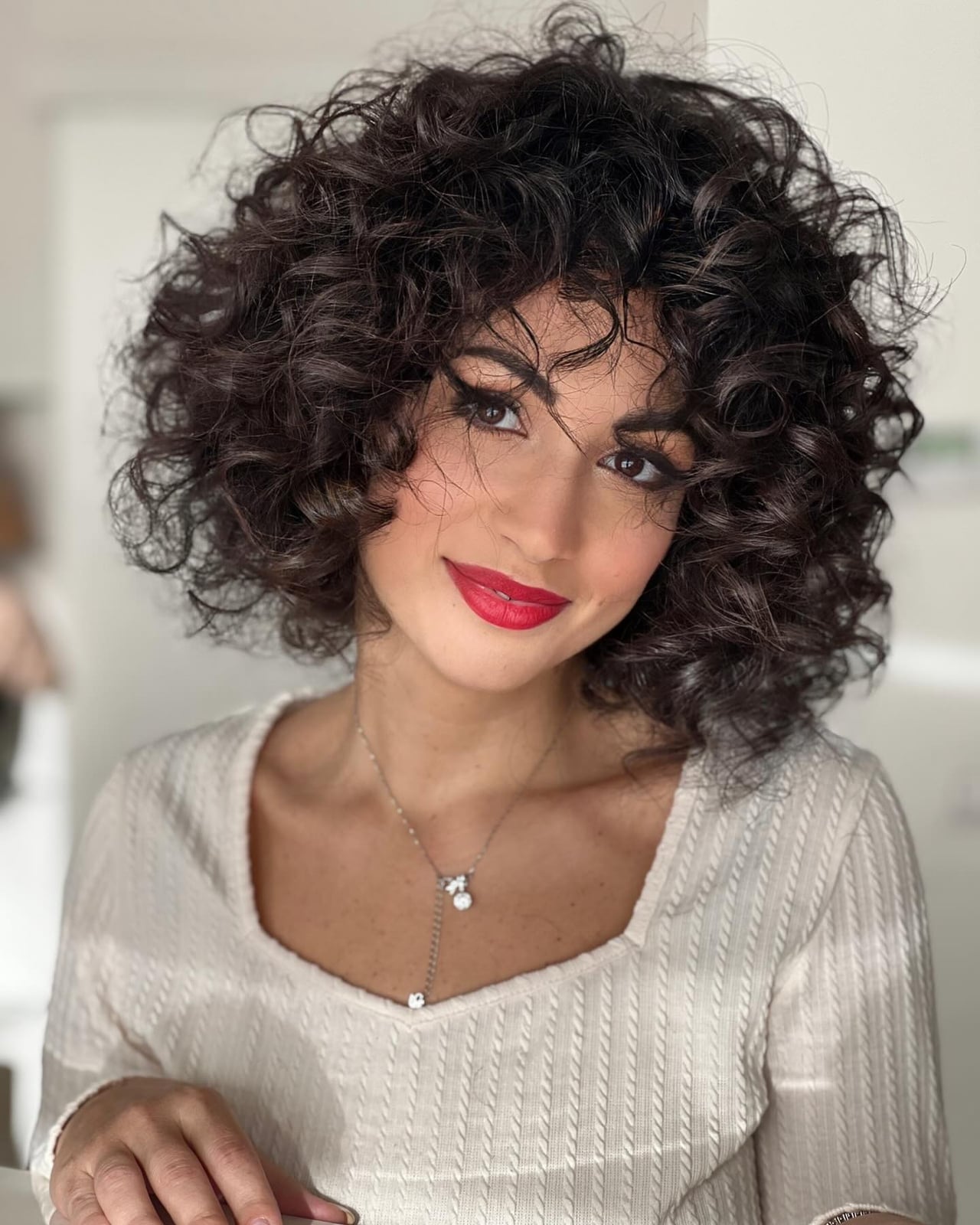
Defined, glossy curls with a dark brown base and subtle lighter brown highlights give the collarbone-length cut a dimension that reads as natural, not painted. The middle parting and curtain bangs frame the face without stealing attention from the texture of the blowout. This is a low-commitment color for anyone who wants a change but does not want to deal with obvious grow-out. Ask your colorist for: collarbone dark brown with subtle lighter brown highlights and curtain bangs. The highlights are subtle enough that you can stretch the time between touch-ups, but a curl-defining cream will keep the glossy finish looking fresh. Plan on a trim every eight weeks to keep the bangs from getting in your eyes.
Collarbone Medium Brown With Caramel Highlights
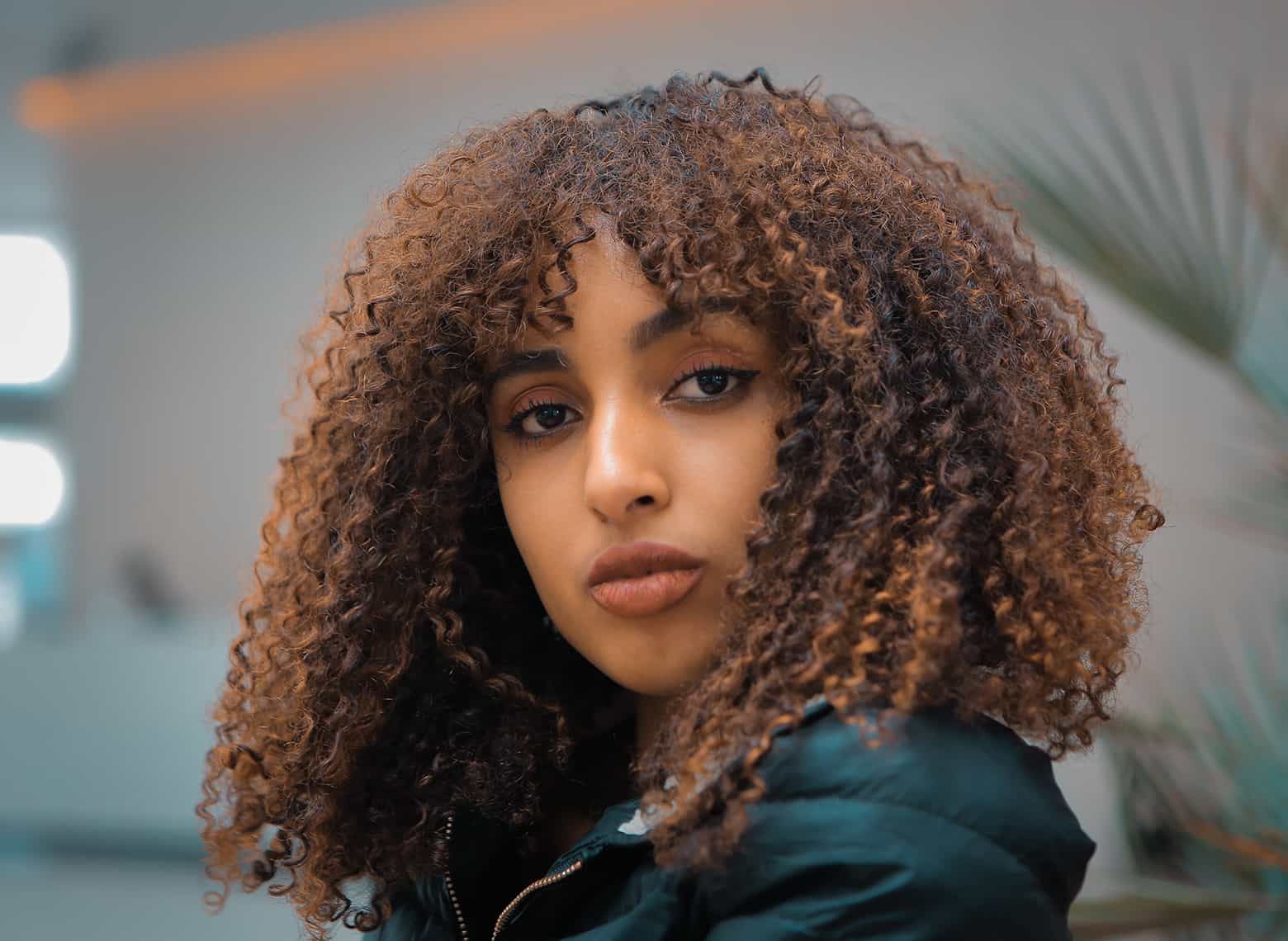
Wondering if caramel highlights will work on your medium brown waves? The answer depends on how much dimension you want. This collarbone-length cut with soft layers and curtain bangs uses caramel pieces to warm up the base without going full blonde, and the blowout keeps the waves bouncy and full. It suits thick, wavy hair best, because the caramel needs enough surface to catch the light. Ask your colorist for: collarbone length medium brown with caramel highlights and curtain bangs. A round brush during blow-drying will add volume to the layers, which is what makes the color pop. This is a salon color that blends nicely as it grows, so you are not chained to the appointment book.
Shoulder Shag With Vibrant Red Highlights and Curtain Bangs
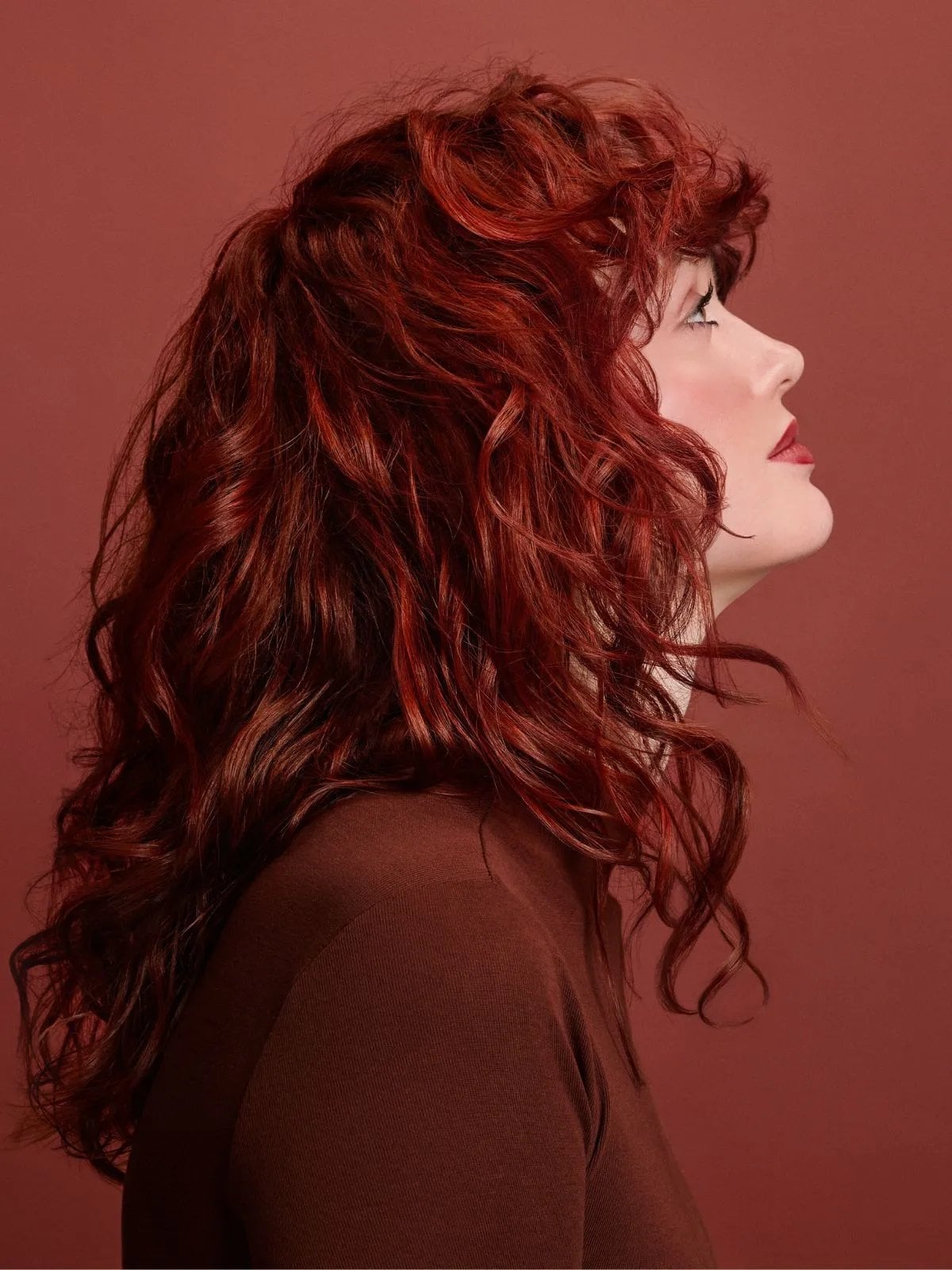
Vibrant red is a commitment, and the shag cut with curtain bangs makes that commitment visible from every angle, especially in side profile. The shoulder-length, thick wavy hair shows off the red base with subtle lighter red highlights that add a bit of depth, but the color will fade faster than almost any other shade. Ask your colorist for: shoulder length shag with curtain bangs and vibrant red color. This is a salon job, because getting the red even and the highlights placed right takes skill, and you will be back for a gloss every four to six weeks to keep it from turning orange. A volumizing mousse will enhance the tousled texture that makes the shag work, but if you are not ready for the upkeep, skip the red and stick with a darker base.
Shoulder Curly With Auburn Highlights

Dark brown curls with subtle auburn highlights do not shout, they just add warmth that catches the eye in natural light. This shoulder-length cut is styled air-dried, which is the point: the middle parting lets the curls fall naturally, and the auburn pieces peek through without overpowering the dark base. It is a great choice for thick, curly hair that wants a bit of dimension but not a full color overhaul. Ask your colorist for: shoulder length dark brown with subtle auburn highlights. The technique is low-fuss, so you can go a few months between touch-ups, and a leave-in conditioner will keep the curls defined and frizz-free. This is about enhancing what is already there, not changing it.
Shoulder Vibrant Copper Curls

A vibrant copper with subtle red undertones works on shoulder-length curly hair because the curl pattern catches the warm color from every angle. Medium-density curls hold the pigment well without it overwhelming the texture. Ask your colorist for: shoulder length vibrant copper with subtle red undertones. The color is built by applying a high-copper base first, then adding a demi-permanent red toner to the mid-lengths and ends. This keeps the roots from turning brassy for about six weeks. The air-dried finish with a middle parting lets the natural shine do the work. A blowout is not necessary here; the goal is the color, not the shape.
Shoulder Curly With Honey Blonde Balayage

Honey blonde balayage is not the same as a full blonde or a caramel highlight. On shoulder-length thick curly hair, the honey tone sits between a warm gold and a soft beige, creating dimension without a harsh line. A side parting and air-dried texture let the balayage peek through the curls naturally. Ask your colorist for: shoulder length with honey blonde balayage. If you want a brighter, more sun-kissed effect, honey blonde is the better choice over a butter blonde, which can wash out dark bases. The technique uses a freehand painting method on the mid-lengths and ends, leaving the roots darker. This keeps the grow-out soft for about eight weeks.
Shoulder Dark Brown With Blonde Highlights

Dark brown hair with blonde highlights on shoulder-length curls can look stripey if the placement is not right. Ask your colorist for: shoulder length dark brown with blonde highlights. The highlights should be painted on the top layers and around the face, leaving the under layers dark. This creates contrast without the curls swallowing the lighter pieces. A middle parting and a blowout help define the highlights, making them visible from the front view. The technique uses a foil or balayage method to keep the blonde sections narrow. A toning appointment every four to six weeks prevents the blonde from turning yellow against the dark base.
Shoulder Dark Brown Natural Curls

A deep dark brown base on shoulder-length thick natural curls is about as low-maintenance as a color gets. There is no root line to manage and no tone to refresh. Ask your stylist for: shoulder length dark brown natural. The cut uses layers to remove weight from the bottom, so the curls spring up instead of hanging heavy. Styling is a DIY affair: a curl-defining cream applied to damp hair, then air-dried with a middle parting. A trim every eight to ten weeks keeps the shape clean. The dark brown shade adds richness without needing a salon visit for toning. It is a one-and-done color that works year-round.
Shoulder Solid Dark Brown Curls, Layers
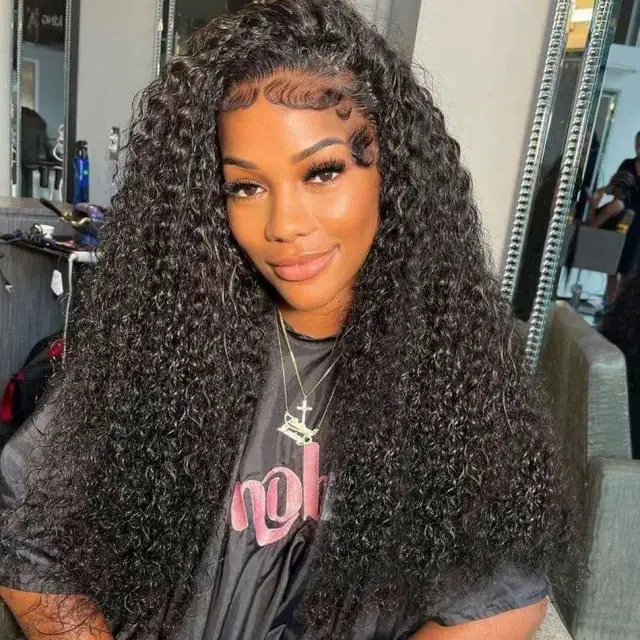
Is a solid dark brown color too flat for curly hair? It depends on the cut. On shoulder-length thick curls with layers, a single dark brown shade can look rich rather than one-dimensional. The layers create depth by allowing the curls to stack and separate. Ask your colorist for: shoulder length solid dark brown. The honest downside is that without highlights or a balayage, any damage or dryness is more visible. A deep conditioning treatment every two weeks keeps the shine intact. Styling is air-dried with a side parting, which takes about ten minutes in the morning. This is a straightforward, no-fuss color for anyone who wants uniform shade and healthy-looking curls.
Collarbone Curly With Caramel Highlights
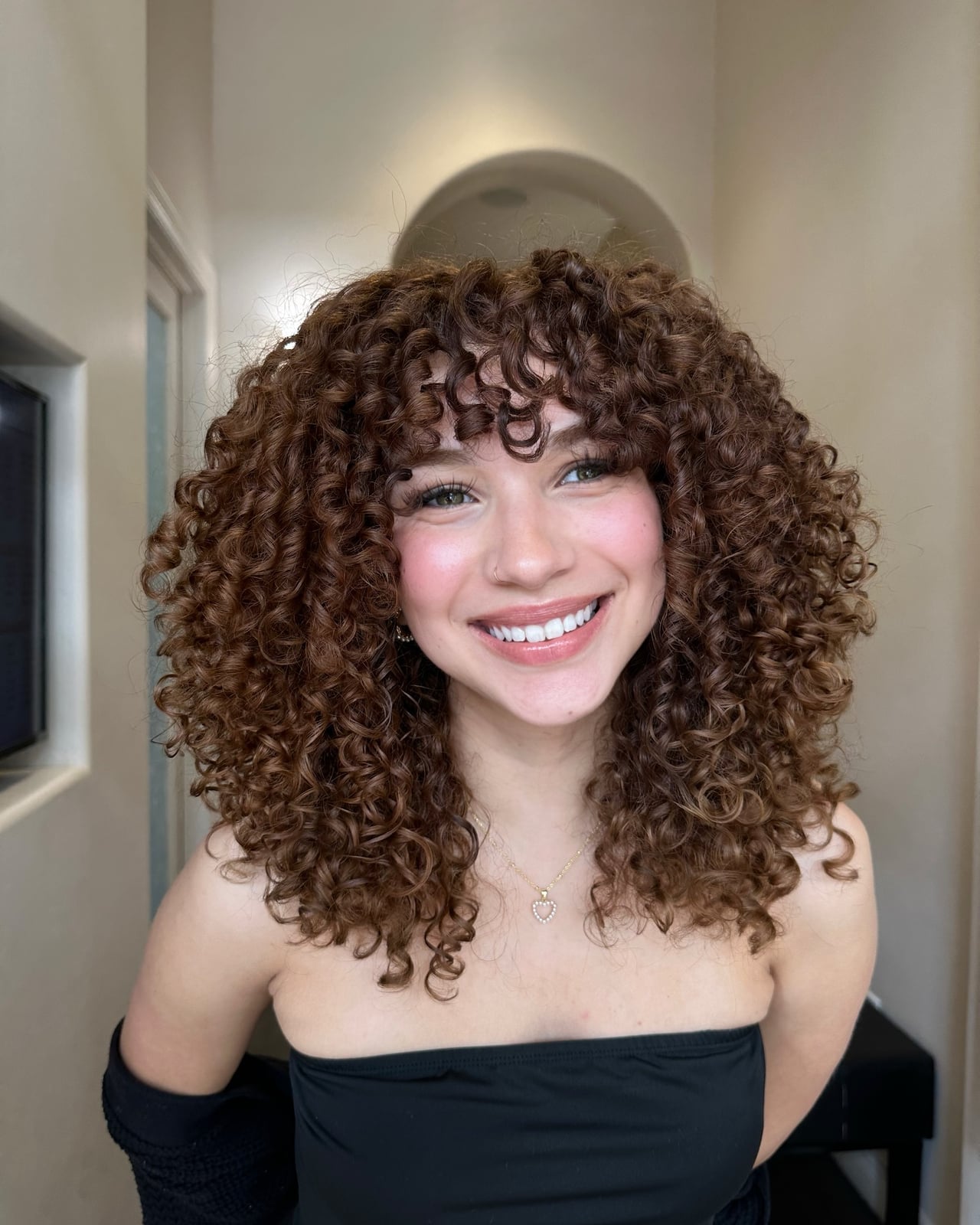
Caramel highlights on a medium brown base turn collarbone-length curly hair into a study in dimension rather than a flat wash of color. The curly bangs and middle parting pull the lighter pieces forward around the face, which is the main reason this works on medium-density curls: the highlights have enough room to register without overwhelming the texture. Ask your colorist for collarbone length medium brown with caramel highlights and curly bangs. A curl-defining cream on damp hair encourages the natural wave pattern and keeps the caramel from looking like an afterthought.
Collarbone Medium Brown With Caramel Balayage, Layers
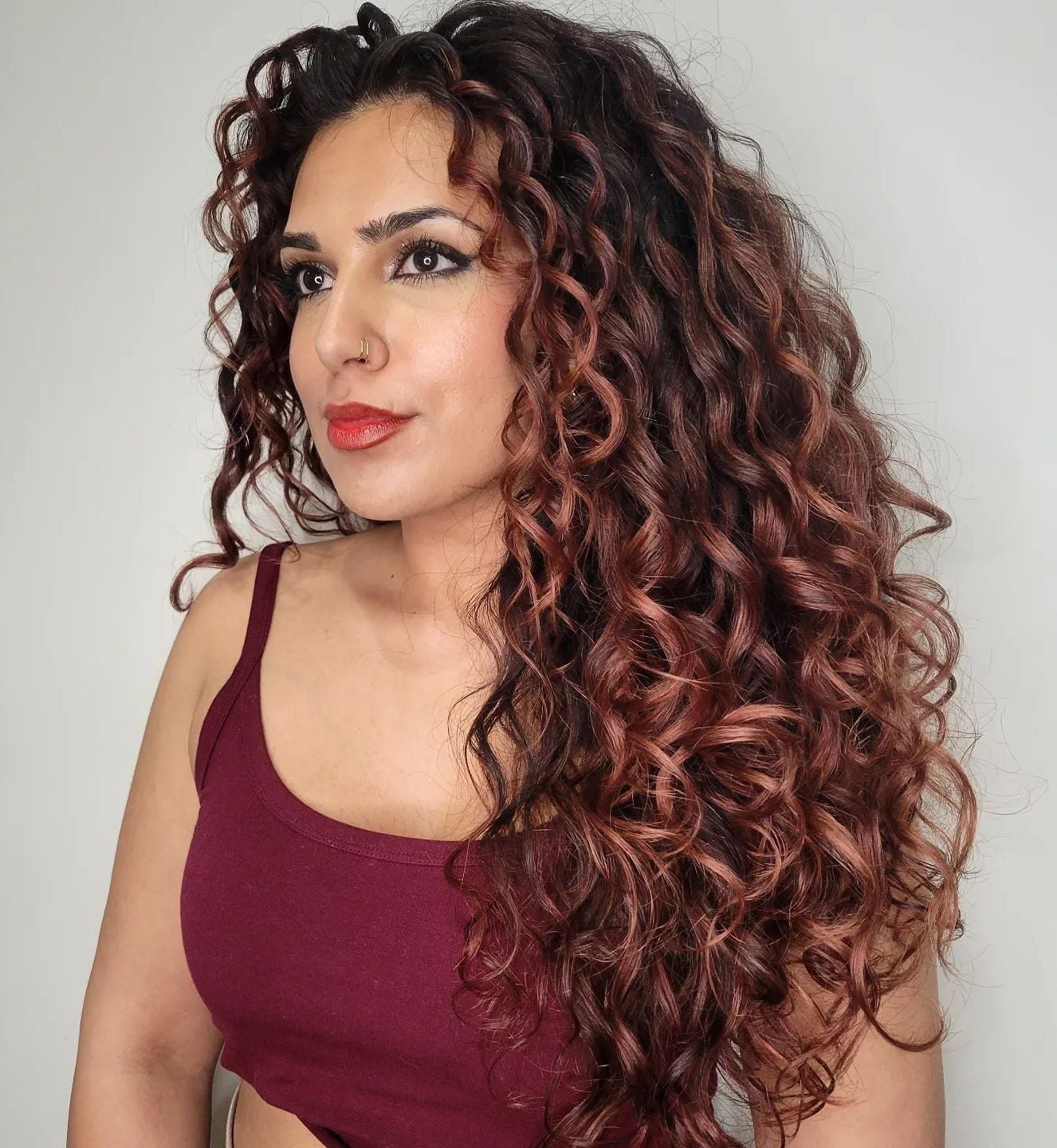
Balayage relies on hand-painted sections instead of foils, and on thick curly hair at collarbone length that distinction matters. The caramel is swept through the mid-lengths and ends of a medium brown base, leaving the roots darker, so the color creates a gradual lift. A side parting naturally adds volume on one side and lets the balayage fall where the eye lands first. Ask your colorist for collarbone length medium brown with caramel balayage. A texturizing spray on dry curls will reinforce the lived-in separation the technique is designed to create.
Collarbone Medium Brown With Caramel Balayage, Close-Up Take
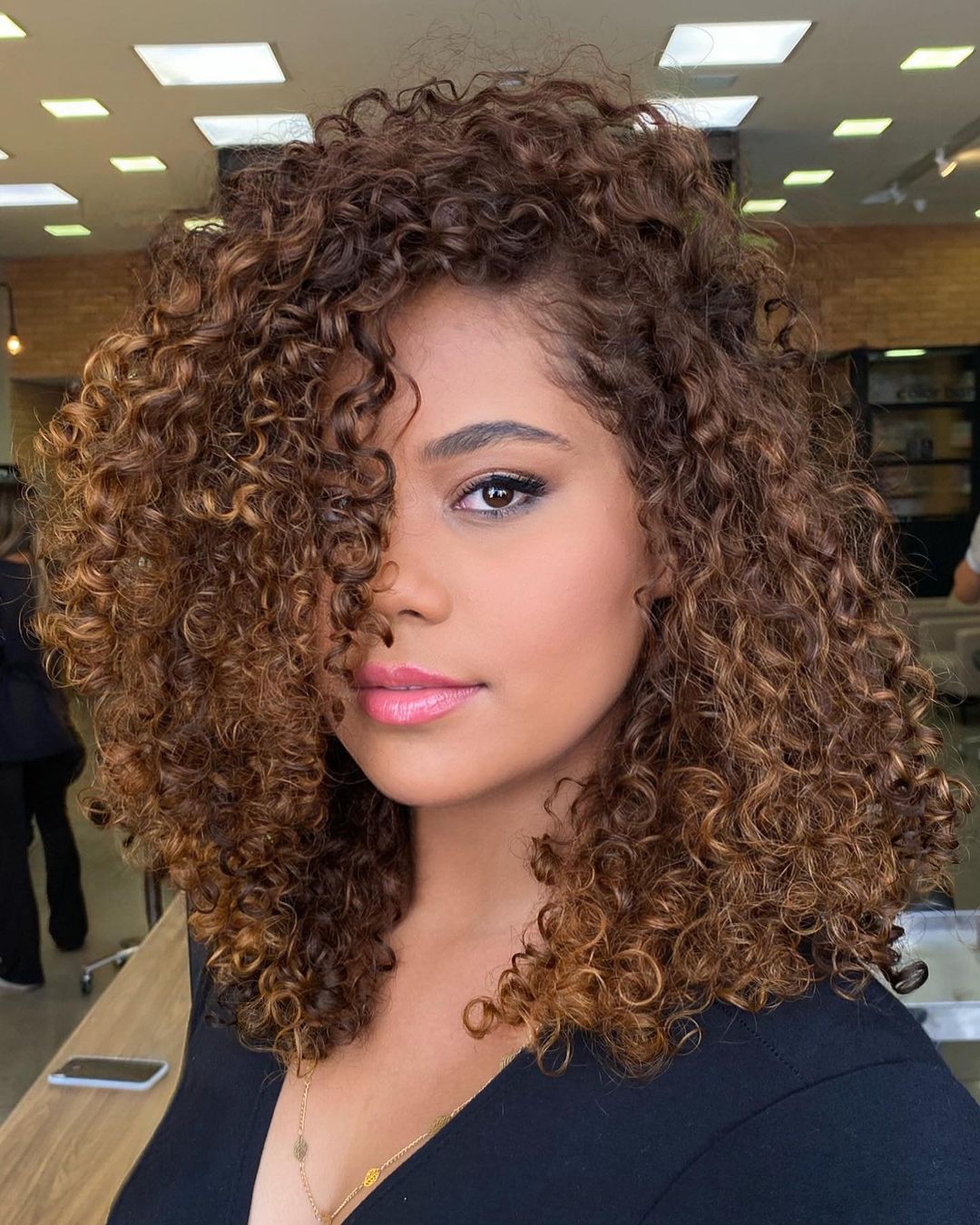
This is the same caramel balayage on a medium brown base as the previous look, but seen closer and with thicker curls. Where a full-head highlight spreads color evenly, balayage keeps the root area darker and concentrates the lighter strands on the surface, which is why it works better for those who want grow-out to look deliberate rather than urgent. The side parting and air-dried finish confirm that the technique was built for low-maintenance days. Ask your colorist for collarbone length medium brown with caramel balayage. Thick curls hold the hand-painted ribbons of color visibly, so the dimension stays readable even when the hair is not styled.
Collarbone Dark Brown With Blonde Balayage and Sun-Kissed Effect

Can a dark brown base with blonde balayage look sun-kissed instead of high-contrast? On thick curly hair at collarbone length, yes. A well-blended technique keeps the lightest pieces away from the roots, so the transition mimics a natural fade from winter to summer. This suits anyone with enough curl density to break up the blonde sections into individual ribbons. Ask your colorist for collarbone dark brown with blonde balayage. A curl-defining cream will sharpen the wave pattern and prevent the blonde from blurring into the base.
Collarbone Dark Brown With Caramel Blonde Balayage and Air Dried
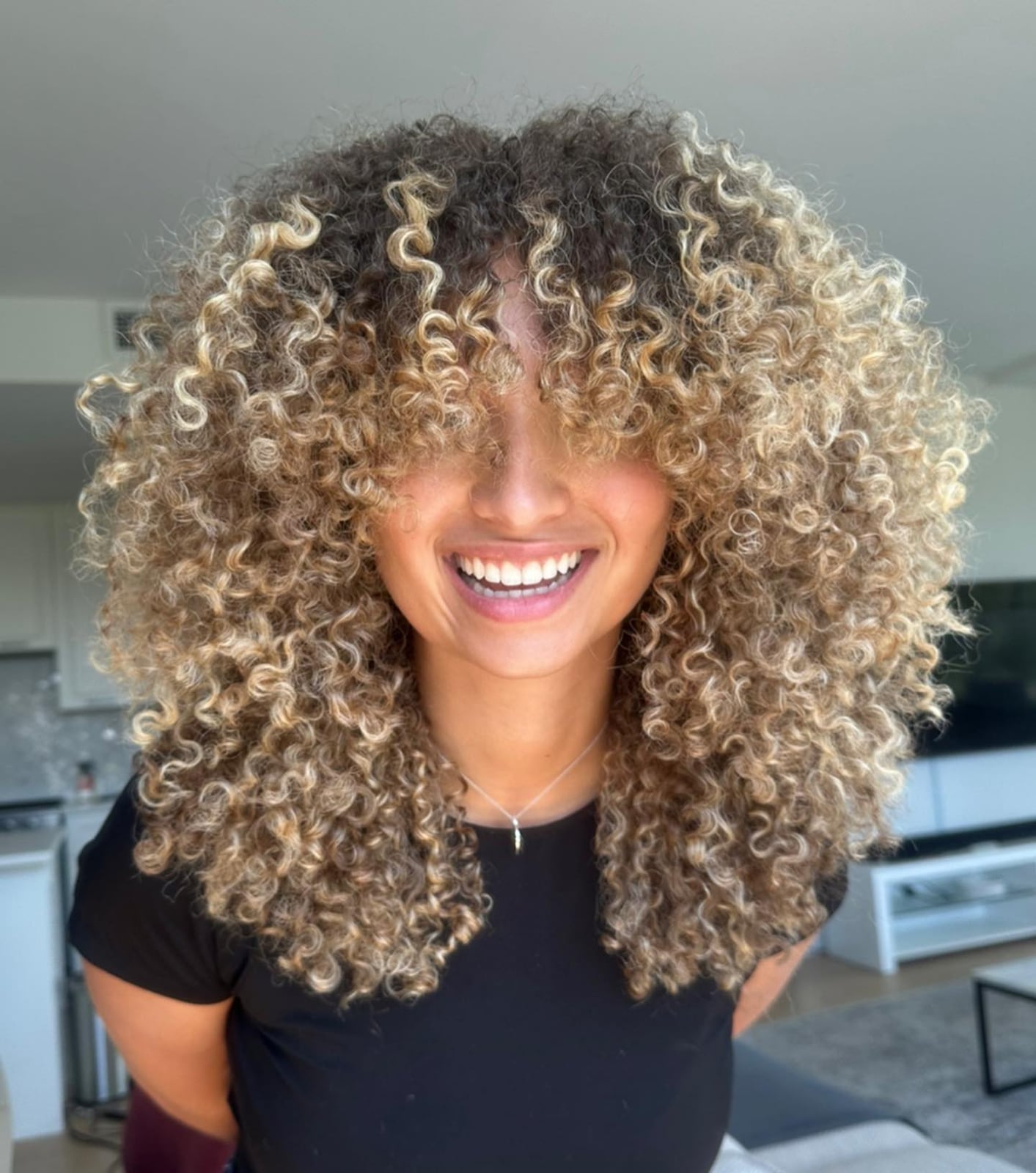
A seamless blend of caramel and blonde on a dark brown base reads as one graduated color rather than two separate tones, and on collarbone-length curly hair that unity is what makes the grow-out tolerable. The side parting lets the lighter strands fall forward, so the face gets the brightness without a full highlight. Upkeep is straightforward: a gloss appointment every ten to twelve weeks refreshes the caramel-blonde blend and keeps the dark base from turning muddy. Ask your colorist for collarbone dark brown with caramel and blonde balayage. A texturizing spray on air-dried curls will emphasize the separation the technique already provides.
Collarbone Dark Brown With Copper Highlights and Curly Bangs

Can copper highlights on dark brown curly hair look natural? Yes, when the placement is precise and the cut works with your texture. The collarbone-length shag here uses layers to let the copper strands peek through the dark brown base, so the warmth shows as dimension, not a stripe. Curly bangs frame the face, which means the highlights hit right around the eyes and cheekbones.
Ask your colorist for: collarbone length dark brown with copper highlights and curly bangs. This is a salon-leaning process: the copper needs to lift through dark brown, which takes time and precision. A curl-defining cream on damp hair will enhance the natural texture. The root maintenance is significant: copper wants refreshing every four to six weeks to keep its warmth from turning brassy.
Collarbone Dark Brown Natural Curls, Layers

The real trick with dark brown curls is letting the texture do the talking, and this collarbone-length cut nails it. Thick natural curls are cut with layers that prevent the dreaded triangle shape, while the middle parting keeps the weight balanced. The dark brown base is solid, which means no grow-out line, no toning appointments, no brassiness to wrestle. Ask your colorist for: collarbone length dark brown natural. A curl-defining cream on damp hair and air drying is all the styling you need. This is the lowest-maintenance option in the bunch: one product, no heat, no salon visits for color.
Collarbone Dark Blonde With Ash Blonde Highlights
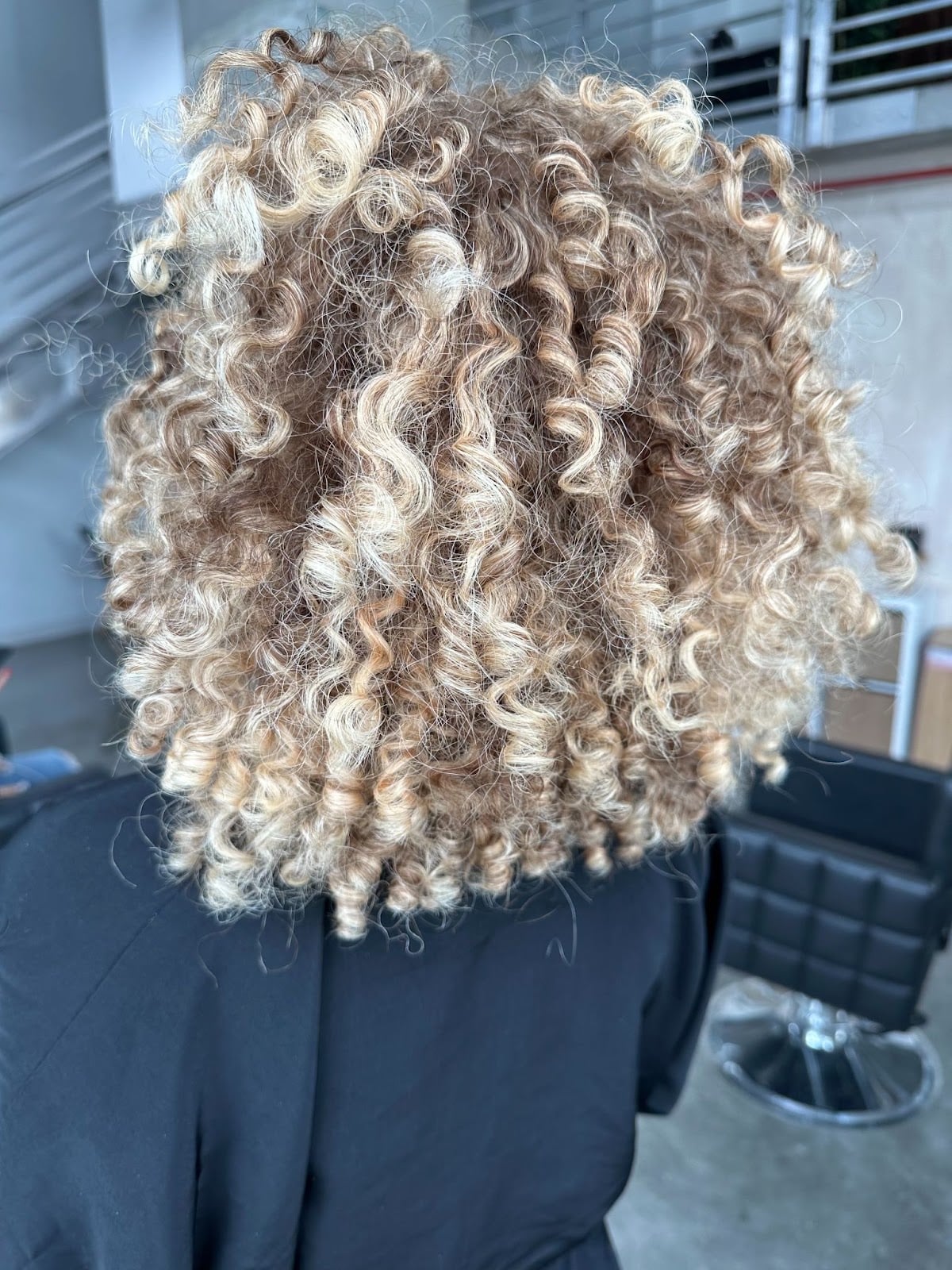
Ash blonde highlights on a dark blonde base create a cool-toned dimension. On collarbone-length thick curls, the layers catch the lighter pieces from the back view, so the color looks like a gradient. The air-dried texture keeps the ash tones from looking too polished. Ask your colorist for: collarbone dark blonde with ash blonde highlights. A color-depositing conditioner in a cool tone will stretch the time between toning appointments, which you will need about every six weeks to keep the ash from warming up.
Mid-Back Dark Brown With Auburn Undertones

Subtle auburn undertones versus full-on red: think of it as the difference between a whisper and a shout. This mid-back length uses a dark brown base with just enough warmth that the curls catch a reddish glint in side lighting. The side parting and air-dried texture keep it from looking like a costume. Ask your colorist for: mid-back dark brown with subtle auburn undertones. A leave-in conditioner will combat frizz and support curl definition. This is a DIY-friendly option: a semi-permanent gloss in auburn can refresh the undertones at home, though a salon application gives a more even result for thick hair. A trim every eight weeks keeps the ends healthy.
Mid-Back Dark Brown With Auburn Highlights and Air Dried

How do you add warmth to dark brown curly hair? Subtle auburn highlights placed through the ends. This mid-back cut keeps the dark brown base intact at the roots, so the grow-out is forgiving, and the layers let the auburn pieces surface naturally. The air-dried styling and middle parting show off the texture. Ask your colorist for: mid-back dark brown with subtle auburn highlights. Use a color-safe shampoo to preserve the depth of the dark brown base, and expect a toning appointment every six to eight weeks if you want the auburn to stay warm.
Mid-Back Dark With Pink Highlights

Pink highlights on a dark base are a commitment, but they add a pop of color that moves with every curl. This mid-back length suits thick, curly hair that can handle the contrast without looking weighed down. Ask your colorist for: mid-back dark hair with pink highlights. The color technique, likely a form of highlighting or balayage, means the pink sits in sections and not all over, so the roots stay low-maintenance. The real drawback is fading: pink on dark hair can turn brassy or muddy without regular upkeep. A color-depositing mask between salon visits helps refresh the tone, and air-drying keeps the natural texture defined. Expect a toning appointment every four to six weeks to keep the pink true.
Final Thoughts
For curls that tend to be dry, opt for color techniques like balayage that require less frequent touch-ups and focus on rich, moisturizing tones. Fine or low-density curls benefit from a single, brighter face-framing highlight rather than all-over lightening.
- Deep condition weekly to maintain color vibrancy and curl health.
- Use color-safe shampoos and conditioners to prevent fading.
- Toning may be needed every 6-10 weeks depending on the color.
- Trim split ends every 8-12 weeks to keep curls defined.
Embrace your curls with color that moves with you.