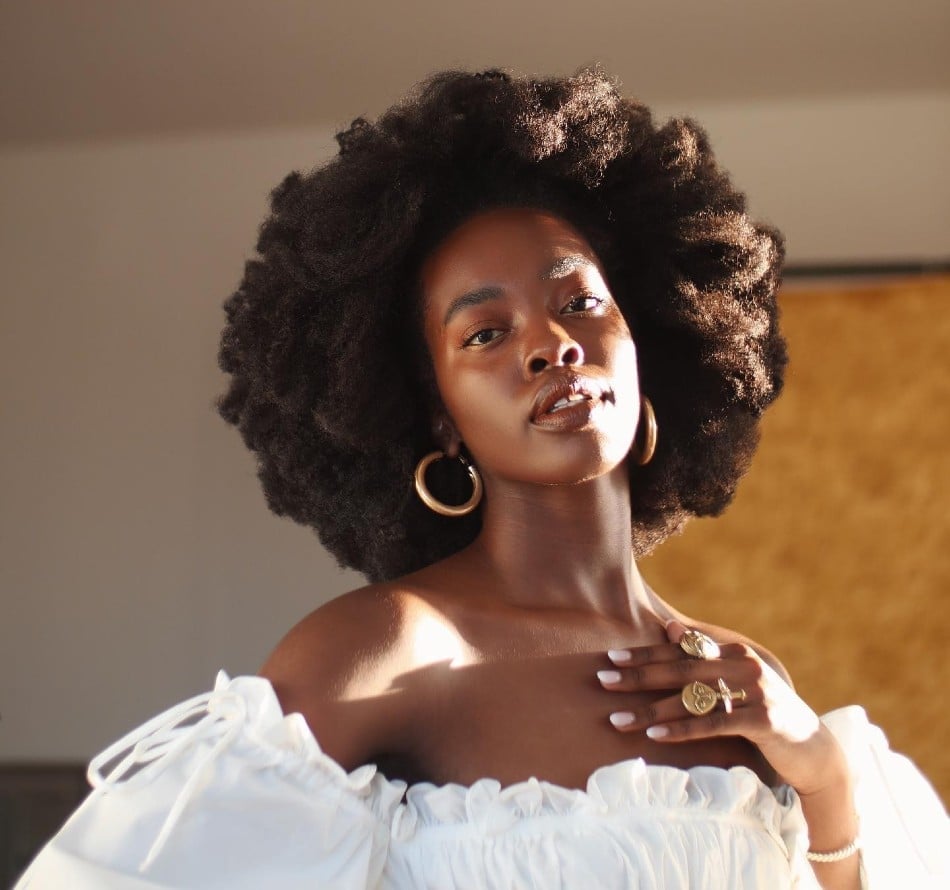

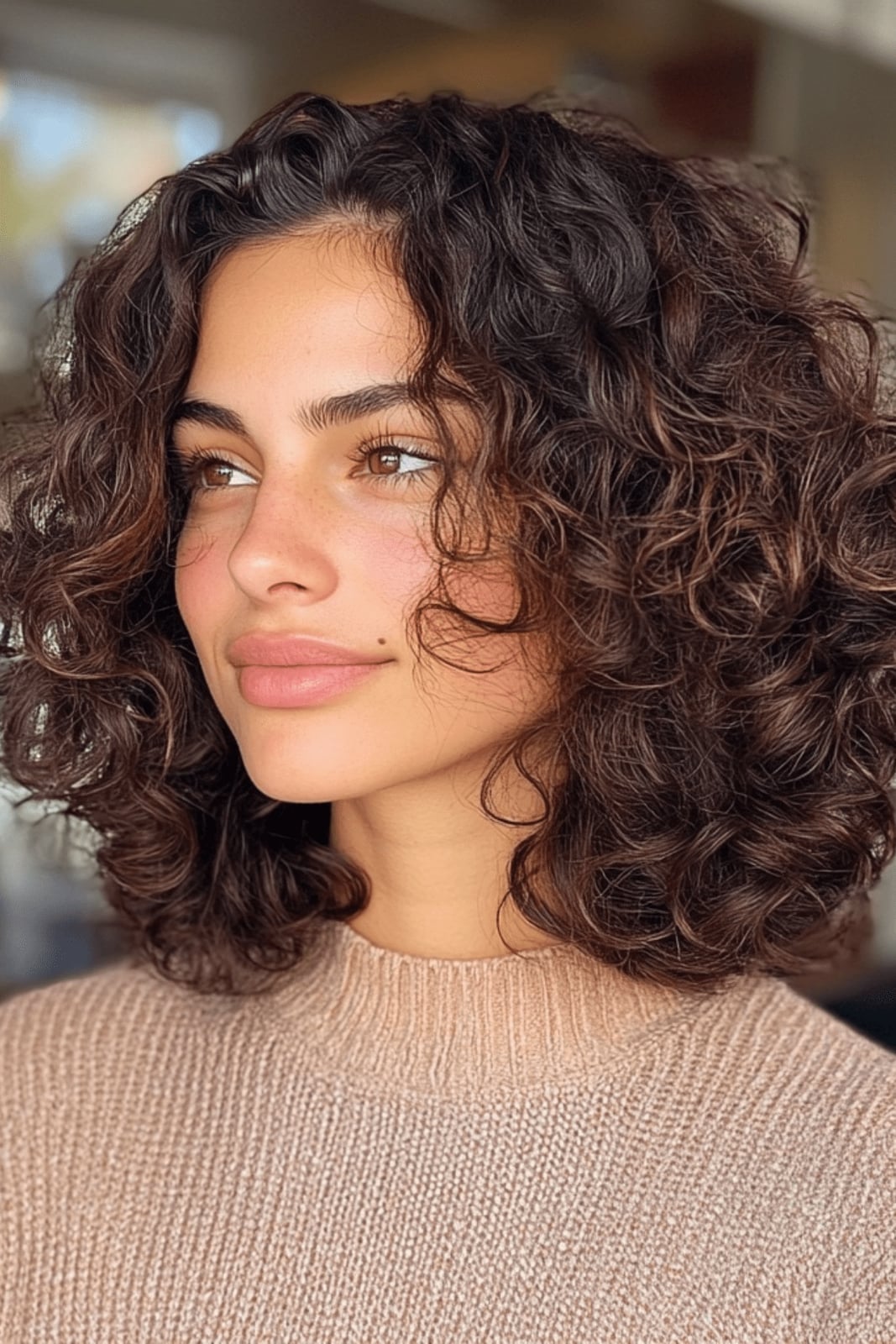
Curly hair is having a moment, and the cuts are getting sharper: bobs, pixies, and shags with curtain bangs are leading the pack. The trend is soft face-framing layers and lived-in color that let your natural texture do the talking.
This collection of 29 haircuts covers the spectrum from chin-grazing bobs to mid-back layers, with styling routines for every curl type and density. Whether your hair is fine and falls flat or thick and prone to volume, there’s a shape here that works. This is the Trendy Curly Hair Routine guide for finding your next cut without the guesswork.
Short Curly Bob With Short Curly Bangs
A short bob cut with layers and short curly bangs gives fine hair a volume boost it cannot get from a one-length cut. A side part and air dried finish keep the style low maintenance. Fine, curly hair starting at ear length suits this cut, and it softens round and oval faces without fighting your natural texture. Ask your stylist for: short curly bob with short curly bangs. Apply a curl cream to damp hair and let it air dry; plan to trim those bangs every four to six weeks or they will start grazing your eyebrows.
Pixie Bob With Short Curly Bangs, Ear
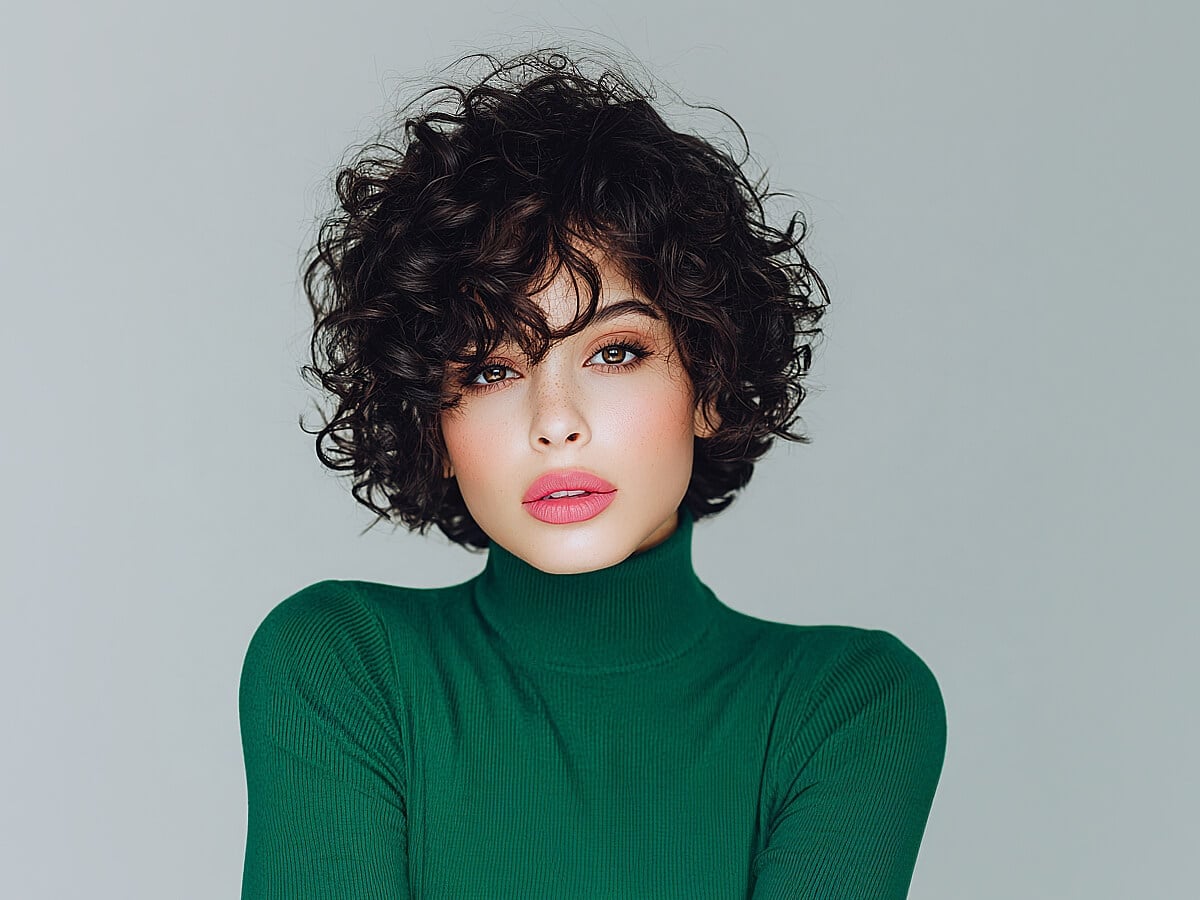
Can you pull off a pixie if your hair is curly? Yes, but the bangs are the part that demands respect. This dark brown version with a subtle middle parting stays air-dried, so the shape does the work, not a diffuser. Fine, curly hair of any length can carry this cut, and the short curly bangs frame the face without hiding it. Ask your stylist for: pixie bob with short curly bangs. The honest drawback is that those bangs need a salon visit every three to four weeks, or they turn into a fuzzy triangle.
Chin Length Bob With Short Textured Bangs
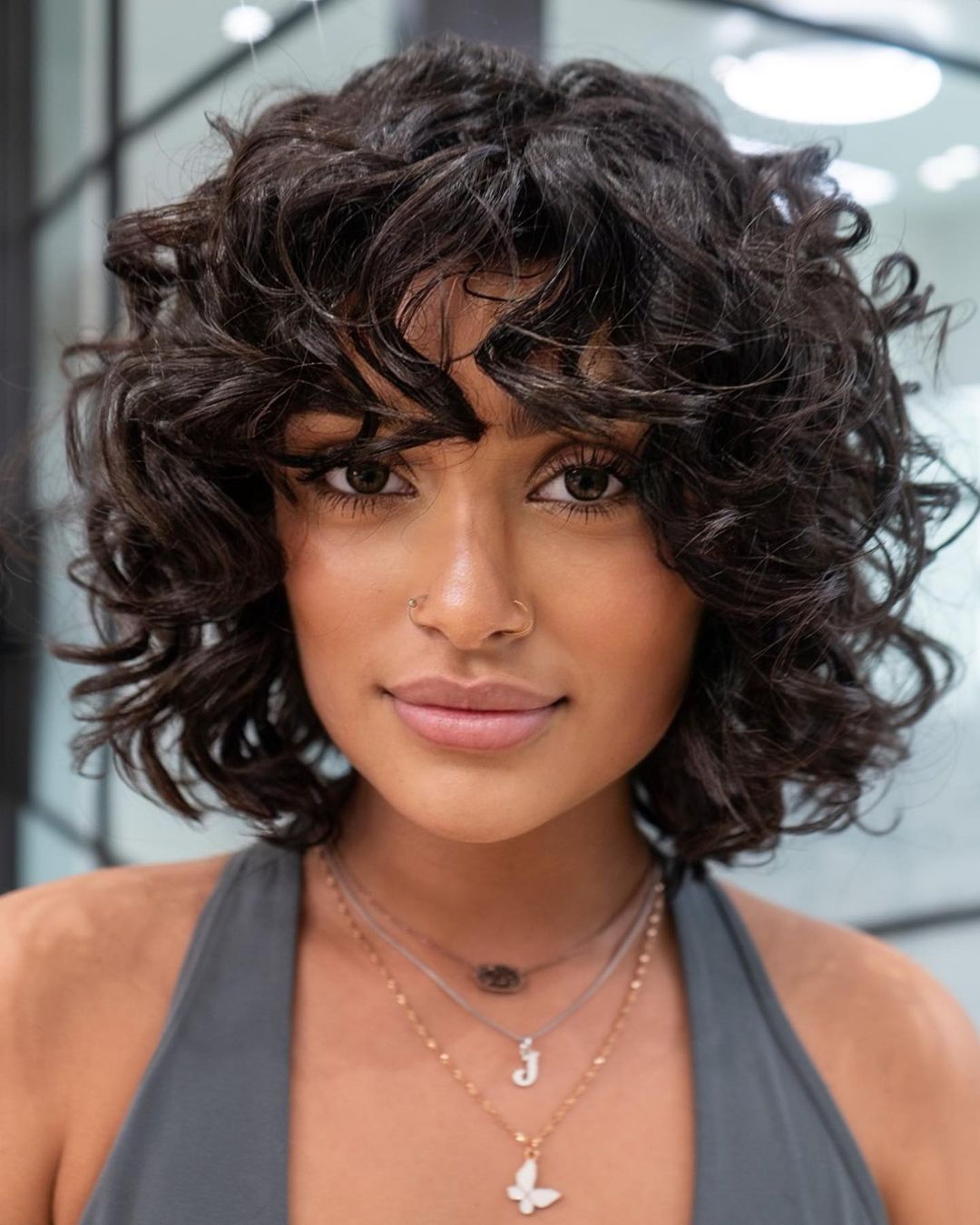
What makes this chin-length bob different is the short, textured bangs cut to sit above the brows. Air-dried curls keep the volume low at the roots and wide at the jaw, which elongates a round face. Fine, curly hair starting at chin length gets the most out of this shape. Ask your stylist for: chin length bob with short curly bangs. Be specific about the texture on the bangs: you want them piecey, not blunt, so they blend into the curl pattern.
Thick Black Curly Chin Length Bob
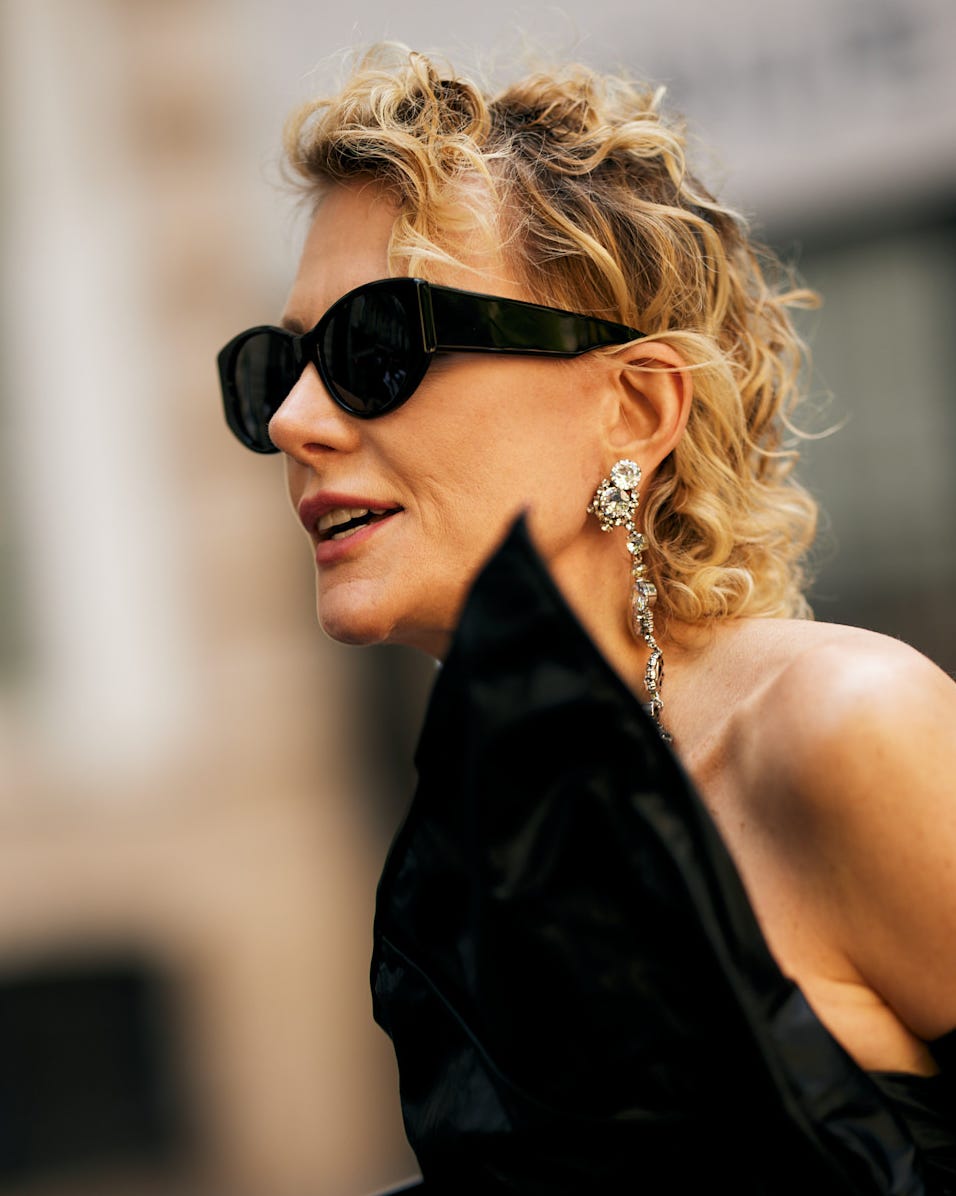
Where a fine-textured bob relies on product for body, this thick black curly bob has density built in. The layers keep the chin-length shape from becoming a solid triangle, and the side parting breaks up the mass so it looks deliberate.
Thick, dense curly hair starting at chin length suits oval and heart faces best. Ask your stylist for: chin length bob, air-dried defined curls. Use a wide-tooth comb on wet hair with conditioner only; brushing it dry will turn the definition into a cloud. A trim every six to eight weeks keeps the weight off the ends.
Side Part Thick Curly Chin Bob

The side part on this chin-length bob does two things. It shifts the visual weight away from the center of the face, which can soften a square jaw, and it lets the thicker side fall forward for more coverage. The dark brown curls are air-dried, so the shape comes from the cut, not from tension or heat.
Thick, curly hair starting at chin length carries this shape best, and it works well on square and diamond face shapes. Ask your stylist for: chin length bob, side part, air-dried. Apply a curl-defining cream and scrunch gently; avoid touching it while it dries if you want that defined pattern. A trim every six to eight weeks keeps the line clean without losing the natural movement.
Collarbone Bob With Ash Blonde Shade
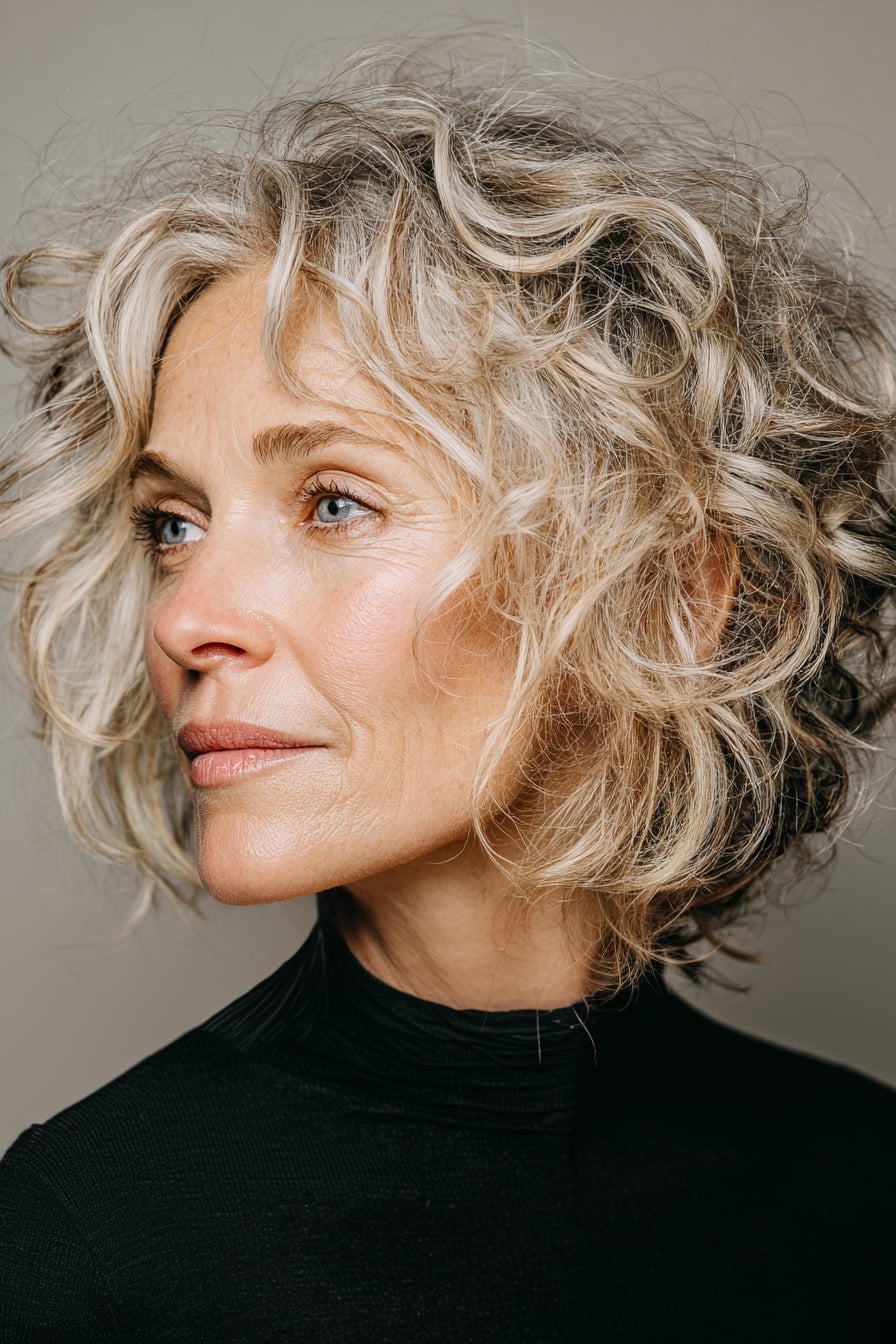
An ash blonde bob at collarbone length is the cool-weather answer to curly hair that wants to look deliberate without trying too hard. The gray roots are not a mistake; they are the point, softening the grow-out so you can stretch salon visits past the usual panic point. Ask your colorist for: collarbone bob, ash blonde, natural roots. The fine, air-dried curls keep the shape from reading as severe, while the side part adds a little lift at the crown. For fine textures, this cut adds the illusion of density, and the cool tone suits the muted light of fall and winter. A color-safe shampoo and a trim every six to eight weeks keep the ash from turning brassy and the ends from splitting.
Collarbone Length With Face Framing Pieces
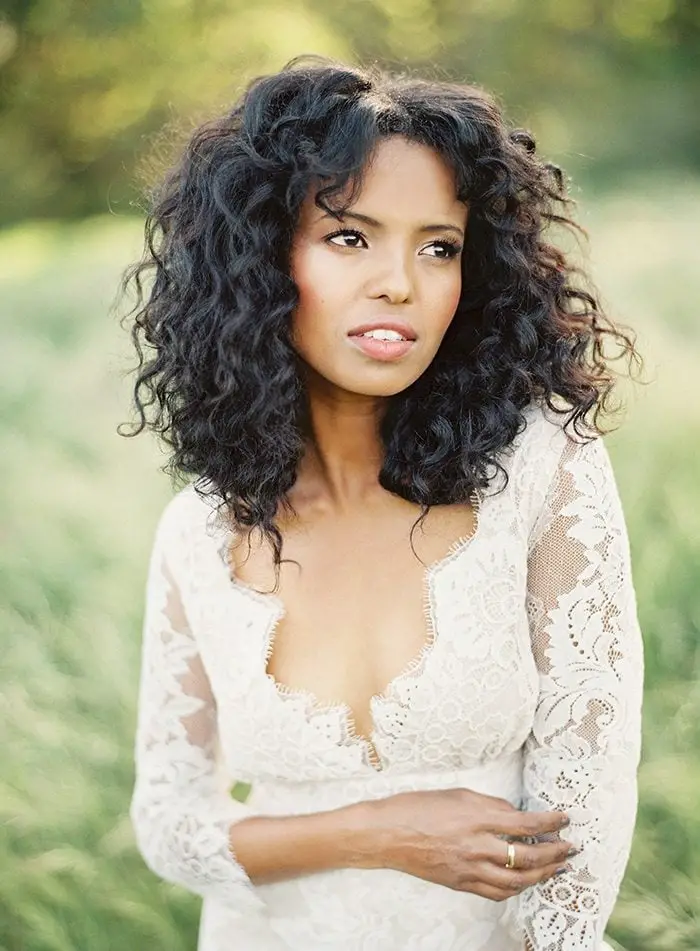
Face-framing pieces are the quiet workhorses of curly haircuts, and this collarbone-length version shows why. The layers start around the jaw, so the thick, dark brown curls fall in loose, defined shapes that soften the line of a square or round face. Ask your stylist for: collarbone length, loose curls, face-framing pieces. The side parting keeps the weight off one side, letting the front pieces move without collapsing into a curtain.
For thick hair, the key is asking for the layers to be cut dry, so each curl lands where it should. A leave-in conditioner and a scrunch while damp define the pattern, and a trim every eight to ten weeks stops the shape from growing into a triangle.
Collarbone Dark Brown With Curtain Bangs
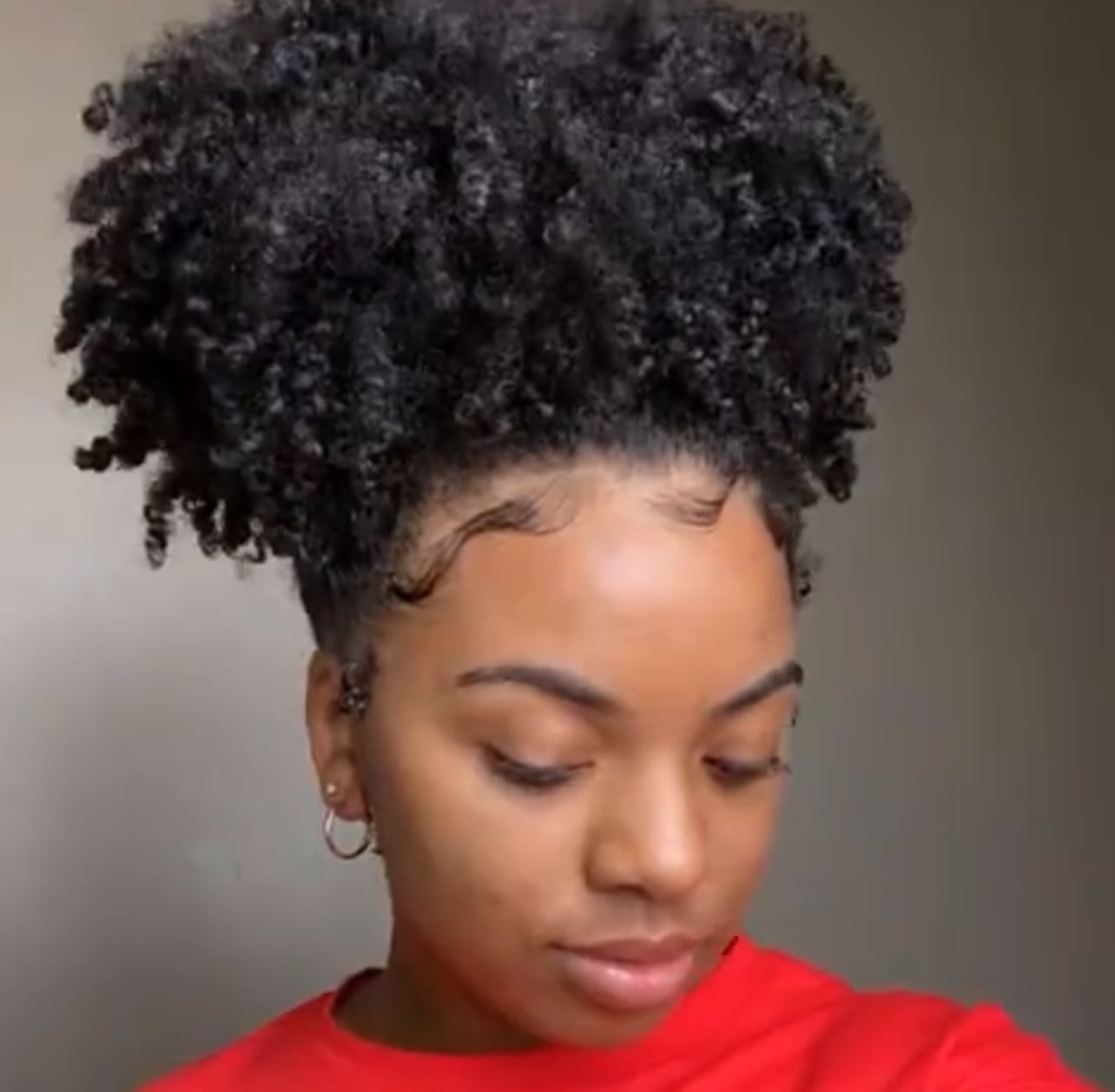
Wondering how to get those curtain bangs to actually behave on curly hair? The trick is in the cut and the finish. This collarbone-length cut keeps the dark brown curls defined and bouncy, with curtain bangs that soften the forehead rather than committing to a full fringe. Ask your stylist for: collarbone length, curtain bangs, defined curls. The side parting lets the bangs swing open, and the blowout finish gives the whole style a glossy, voluminous lift that air-drying rarely achieves.
For thick hair, this shape avoids the dreaded pyramid by keeping the layers internal, so the curls stack without widening at the ends. When you style, use a diffuser on low heat and dry the bangs away from your face, then let them cool before touching them. A trim every eight weeks keeps the bangs from growing into an awkward mid-nose length.
Collarbone Fine Hair With Auburn Balayage
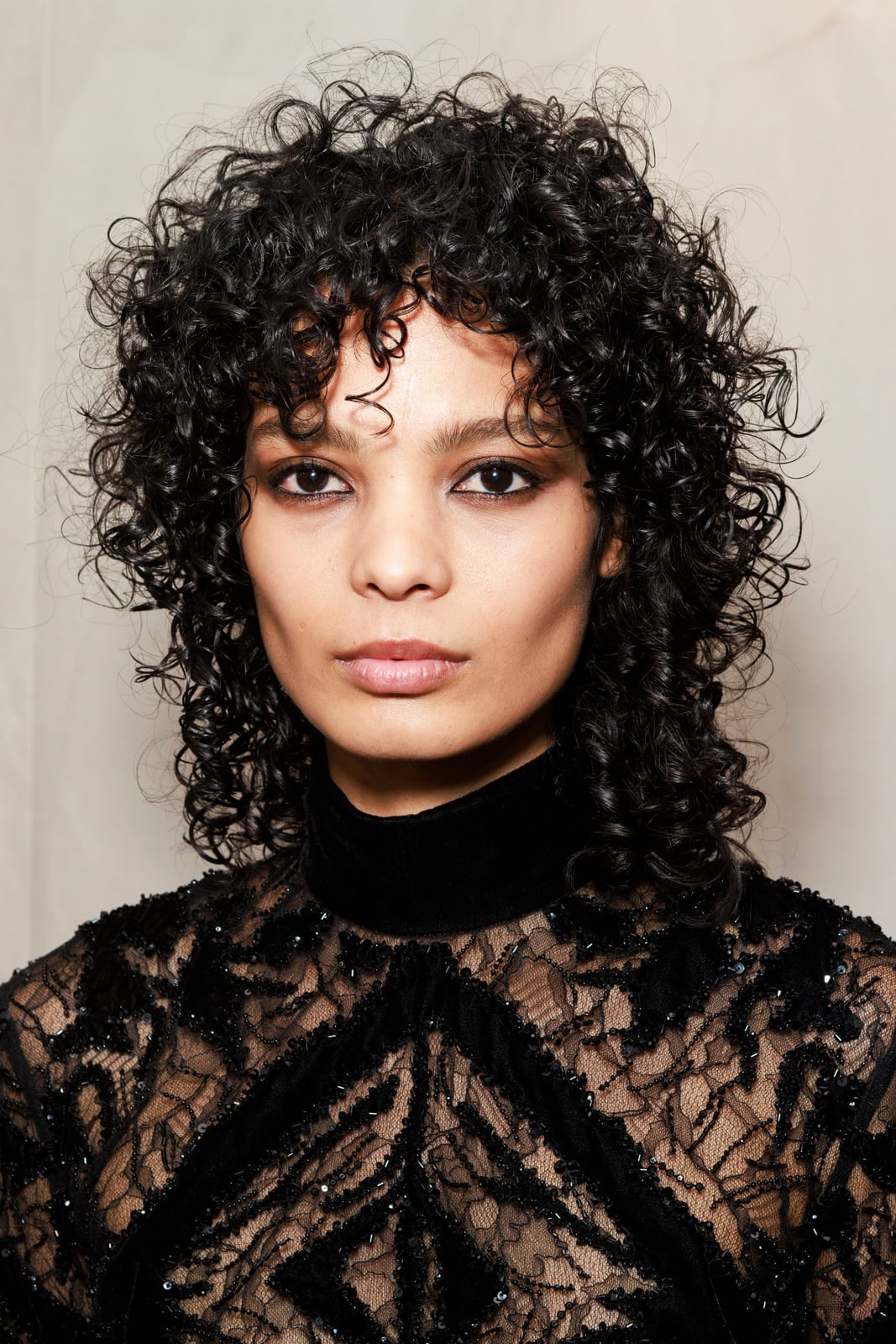
If your fine curls tend to look flat, this collarbone-length cut with auburn balayage is the visual equivalent of adding a second dimension. The dark brown base keeps the roots grounded, while the warm auburn pieces catch light and create the illusion of depth and movement. Ask your colorist for: collarbone length, auburn balayage, defined curls. The middle parting and air-dried texture keep it natural, so the color does the work without any heat styling. For fine hair, the balayage technique is gentler than all-over color because it skips the roots, and the soft blend means grow-out is a non-event. This is a salon job, but the payoff is that you can let it air-dry and go. A sulfate-free shampoo keeps the warmth from fading into brass.
Collarbone Thick Hair With Curly Bangs
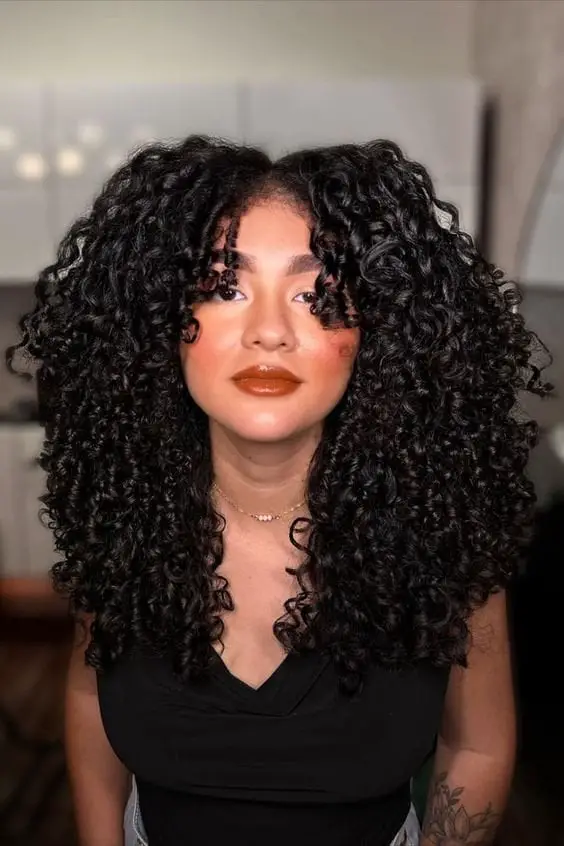
A voluminous blowout on thick, dark brown curls is a statement, and this collarbone-length cut delivers it without the weight. The curly bangs are the unexpected twist, framing the face while the middle parting keeps the volume balanced on both sides. Ask your stylist for: collarbone length, voluminous blowout, curly bangs. Thick hair needs strategic layering to avoid looking like a helmet, so the interior layers are cut to release weight while keeping the curl pattern intact. The blowout finish gives defined, bouncy curls that hold their shape for a couple of days if you refresh with a little water and scrunch. A diffuser on a low setting is your best tool for recreating the volume at home, and a trim every eight weeks keeps the bangs from turning into a fringe you didn’t ask for.
Collarbone Thick Hair With Light Highlights
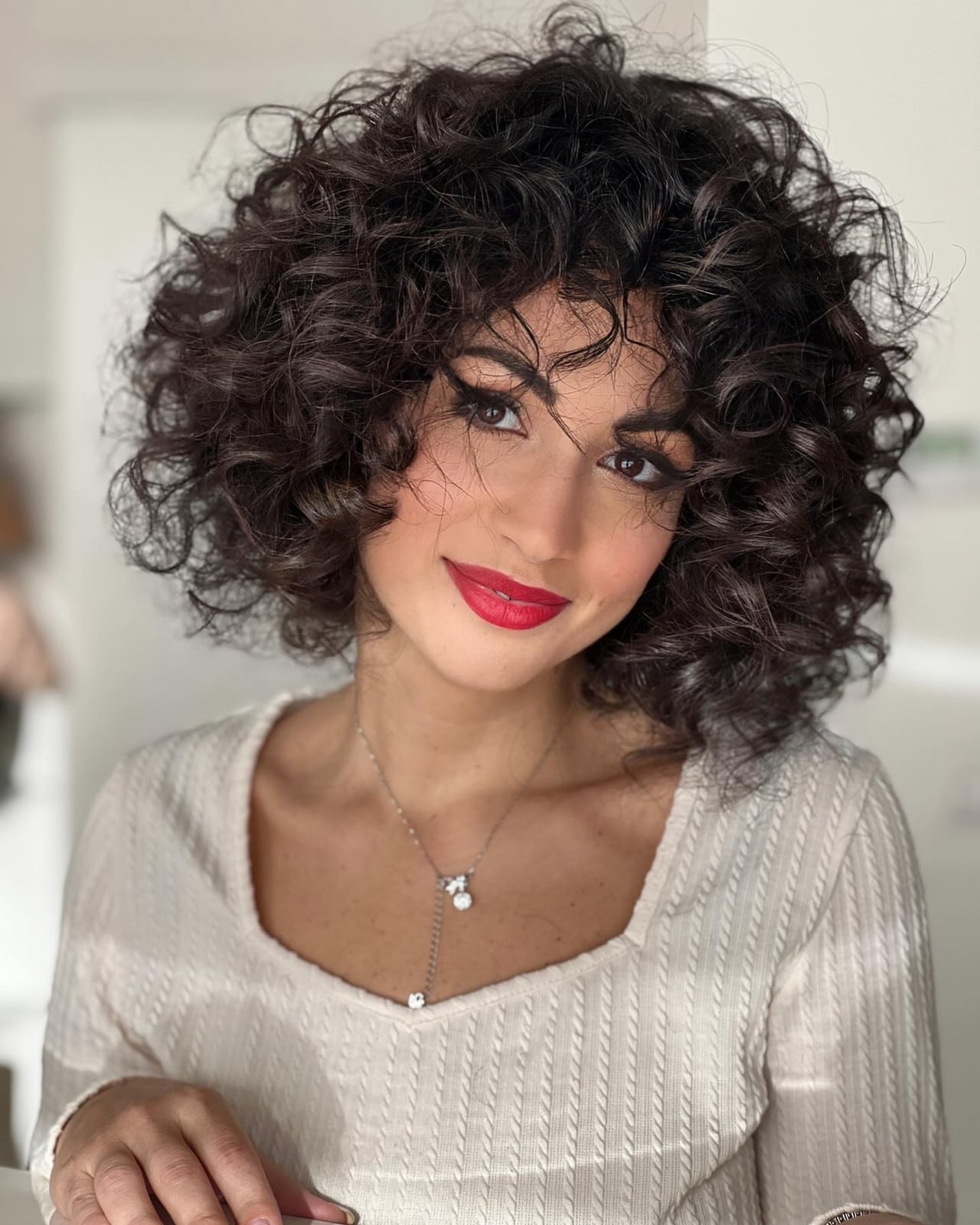
Subtle lighter brown highlights threading through a dark brown base do not scream for attention. They add dimension, which matters when winter sun is scarce. This collarbone-length cut uses soft internal layers to keep thick curly hair from forming a solid triangle, and there are no bangs to maintain. The air-dried finish keeps the routine short.
Thick, curly hair starting at collarbone length benefits most from this quiet brightness. Ask your colorist for: collarbone length, dark brown with light highlights. A shine serum on the mid-lengths and ends adds polish without weighing curls down. Plan a trim every 8 to 10 weeks to keep the shape from widening.
Collarbone Length With Curtain Bangs Highlights
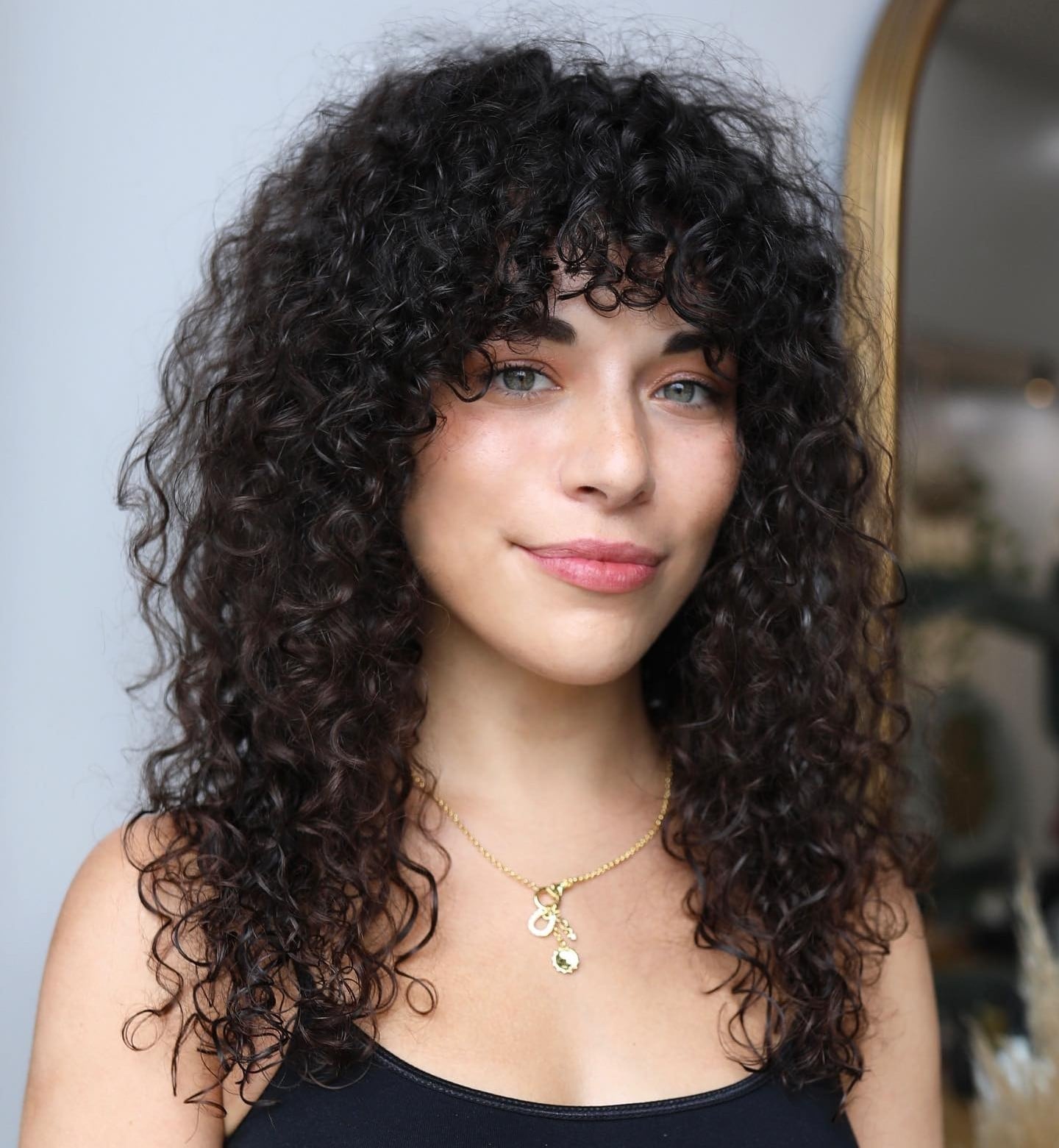
How do you add brightness without losing the softness curtain bangs provide? Blonde highlights on a dark brown base, worked through defined collarbone-length curls. The bangs sweep outward instead of sitting straight across, which keeps the face-framing effect gentle. Thick, curly textures hold the shape well, and the layers underneath prevent bulk at the ends.
Blending is the main challenge. Getting the highlights to sit naturally around curtain bangs takes a stylist who understands both techniques. Ask your colorist for: collarbone length, curtain bangs, dark brown with blonde highlights. One benefit: the grow-out is gradual enough that you can push the bangs aside when they need a trim.
Collarbone Wavy Hair With Curtain Bangs
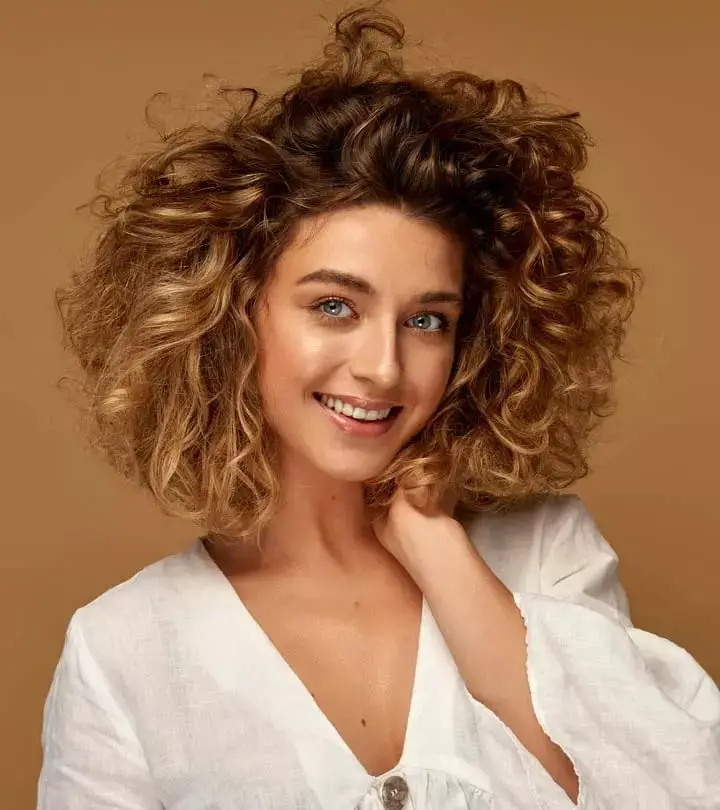
Wavy hair at collarbone length can look flat if the cut does not add its own momentum. Curtain bangs and a side part create that movement without relying on product. The dark blonde base with lighter blonde highlights gives dimension, and the blowout softens the wave pattern into something polished. The style works on hair that already bends easily, since the bangs need to sweep forward. Wavy textures that lean straight may require a round brush and a few extra minutes of heat. Ask your stylist for: collarbone length, curtain bangs, dark blonde with highlights. Root volume spray adds hold without stiffness.
Shoulder Length Layers With Curtain Bangs
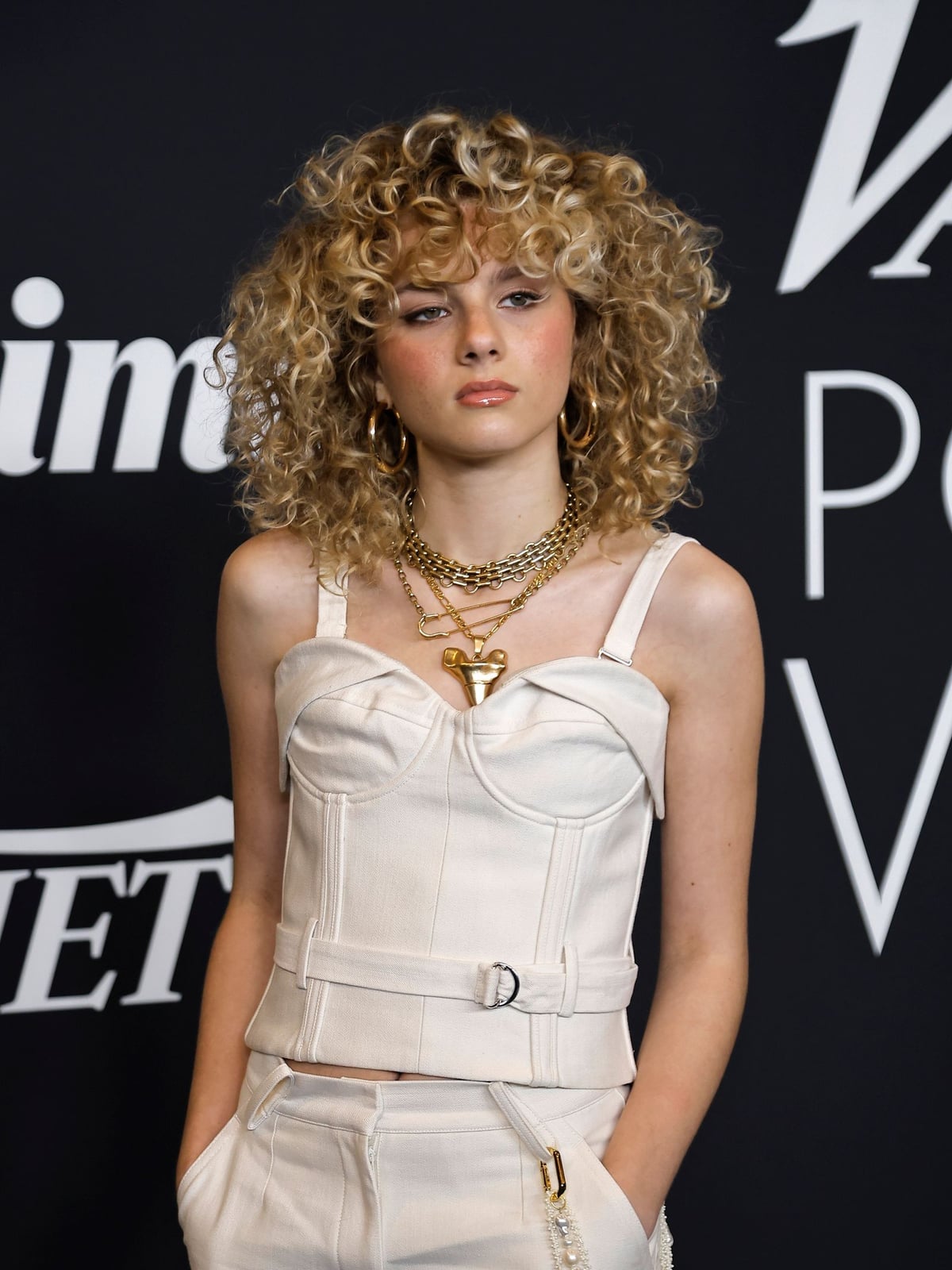
The layers here are the backbone of the shape. Shoulder-length hair with thick, curly texture needs internal carving, or it rounds out too much. Curtain bangs break the front line and the honey blonde highlights prevent the whole thing from reading as one dark block. The middle parting keeps the volume balanced on both sides.
When you sit in the chair, be specific. Ask your stylist for: shoulder length layers, curtain bangs, honey blonde highlights. Say you want the layers to start below the jaw so the top stays dense. A blowout with a diffuser defines the curls without frizz, and a trim every 8 to 10 weeks keeps the bangs from becoming a solid fringe.
Shoulder Length Lob With Curtain Bangs, Collarbone

A shoulder-length lob with curtain bangs works best on medium-density curly hair because the shape needs enough weight to hang well but not so much that it widens. Chestnut brown with caramel highlights adds warmth without high maintenance. The collarbone length keeps the curls from pulling the cut too short, and the middle part and blowout create a polished finish. Square face shapes benefit from the softness around the jaw. Ask your stylist for: shoulder length lob, curtain bangs, chestnut brown with caramel. Use a round brush during blow drying to guide the bangs outward, and book a trim every 8 weeks to preserve the lob’s clean line.
Shoulder Length Curly Shag
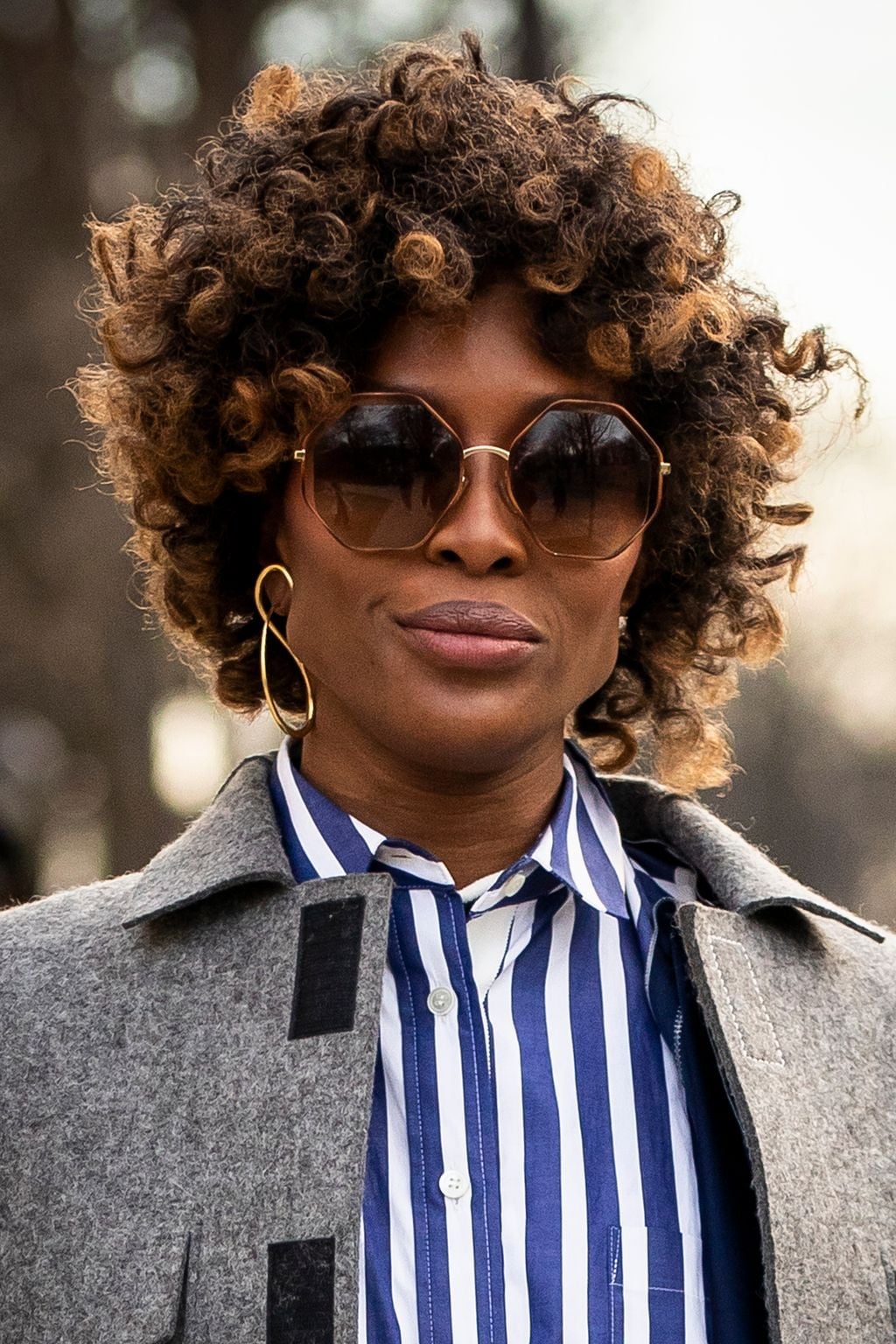
What if your haircut could do half the styling work before you even pick up a product? That is the curly shag in a nutshell: the layers are cut to fall around the shoulders, with short curly bangs up top, so the shape itself builds the volume and movement. On dark brown hair with honey blonde highlights, those layers create a textured dimension that a single-tone cut cannot match.
The shag suits medium-density curls starting at shoulder length, because that weight gives the layers something to bounce against. Ask your stylist for: shoulder length shag, short curly bangs, honey blonde highlights. The upkeep is refreshingly low: air-dry it, maybe add a sea salt spray for extra grip, and the cut’s internal texture keeps the curl pattern defined without daily fuss. A trim every eight weeks keeps the bangs from becoming a curtain.
Shoulder Length With Caramel Balayage
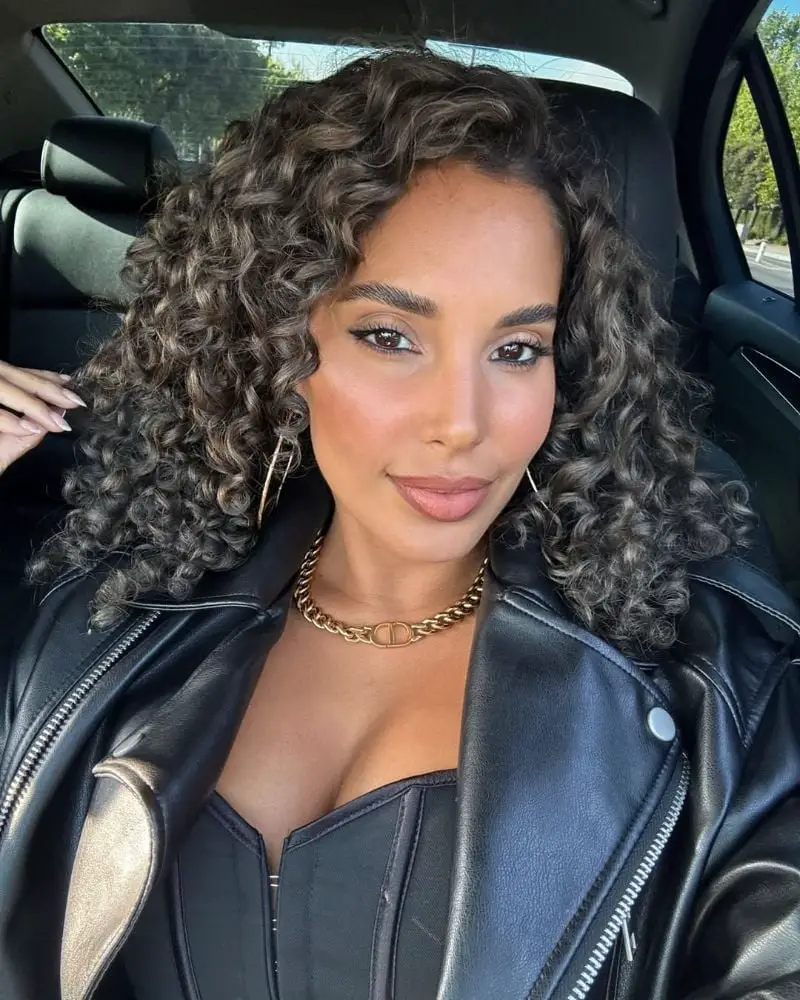
The clever part of caramel balayage on dark brown curls is how the lighter pieces sit deep enough to read as warmth, not streaks. Here the color is painted through thick, curly hair that falls to the shoulders, with no bangs to distract from the dimension. The middle parting lets the caramel show symmetrically on both sides, which is a neat trick for making the whole head look balanced.
You will need a salon for this one, because balayage on dark hair is a two-step process: lighten, then tone. Ask your colorist for: shoulder length, caramel balayage, air-dried defined curls. Caramel can lean brassy as it fades, so a purple shampoo once a week and a toning appointment every six to eight weeks keeps it from turning into orange. If you are not ready for that rhythm, this is the look to skip.
Shoulder Length Defined Curls
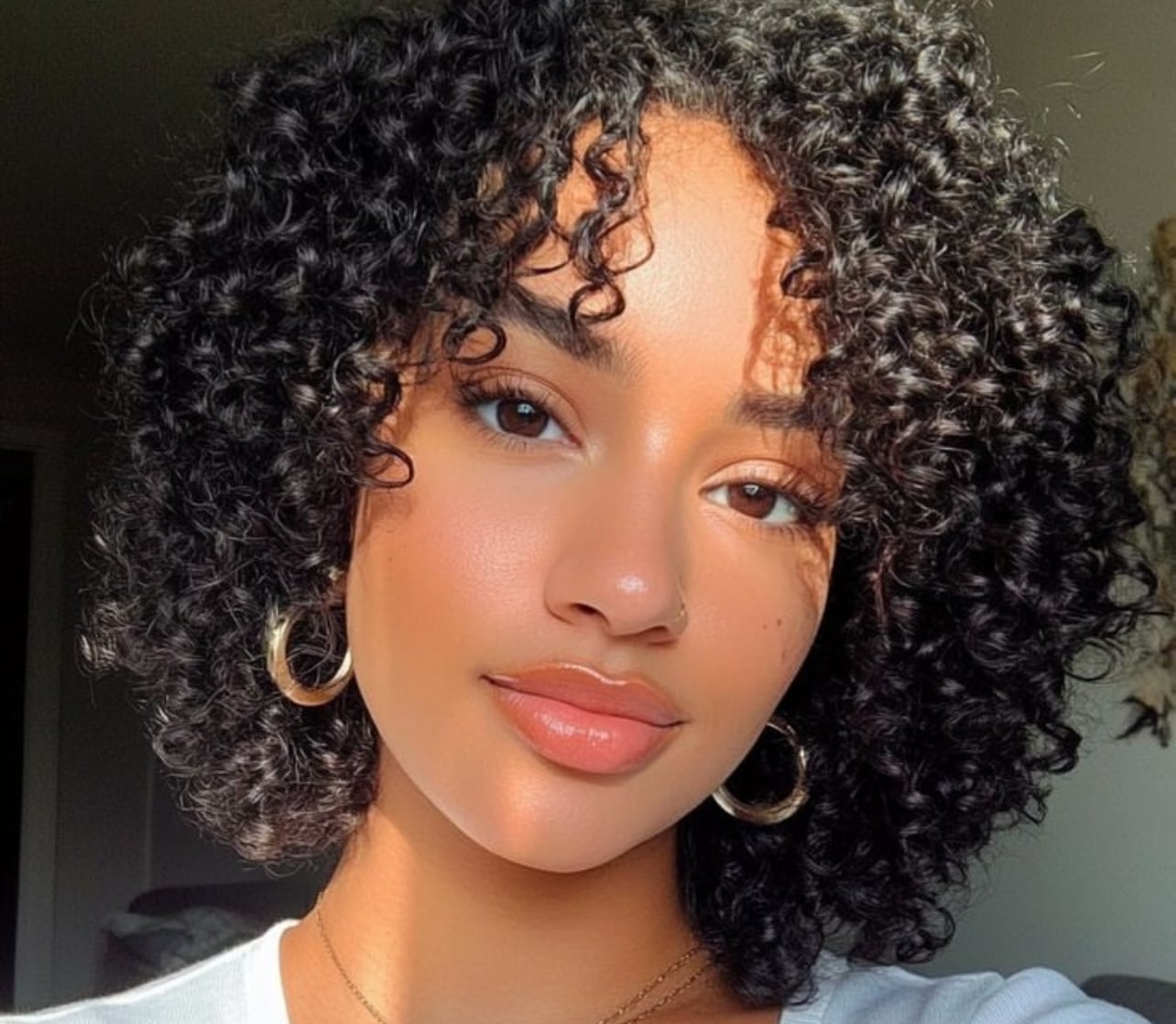
Defined curls are a geometry problem: the cut has to remove enough weight that each coil can spring up on its own, but not so much that the ends go frizzy. This shoulder-length cut solves it with subtle layers that let the curl pattern show from root to tip, sitting on a middle parting with no bangs to interfere.
The technique leans on the cut and the styling. Ask your stylist for: shoulder length, subtle layers, defined curls. On thick, dark brown hair, the layers give each curl room to form its own shape rather than collapsing into a wave. To get that definition at home, apply a curl-defining cream to soaking wet hair, then twist small sections around your finger and let them air-dry. The result is a low-fuss routine that still looks put together.
Shoulder Length Voluminous Curls, Layers
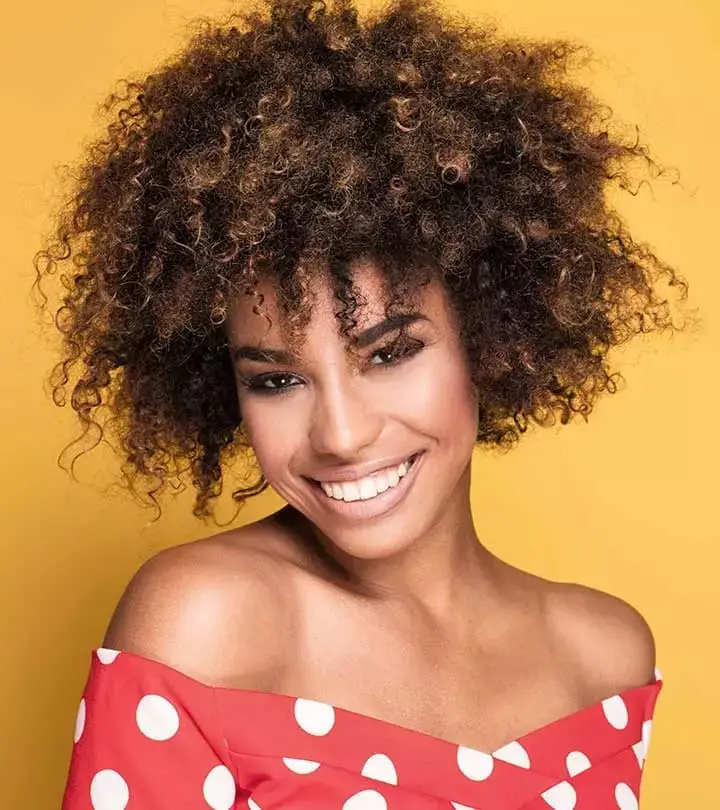
This is not the curly cut for someone who wants to hide their hair: it is the one that asks the texture to take up space. The shoulder-length layers are cut to stack volume at the crown, and on thick, dark brown hair with blonde highlights, that fullness is a deliberate style choice. The middle parting keeps the weight balanced, so the curls fall forward instead of flat.
It is a strong pick for autumn, when the rich brown base and lighter highlights echo the season’s palette. Ask your stylist for: shoulder length, voluminous curls, dark brown with blonde highlights. On wash day, use a wide-tooth comb on wet hair, then scrunch with a curl-defining mousse and let it air-dry. The cut provides the structure, so the styling is mostly about encouraging what is already there.
Collarbone Half Up Half Down Style
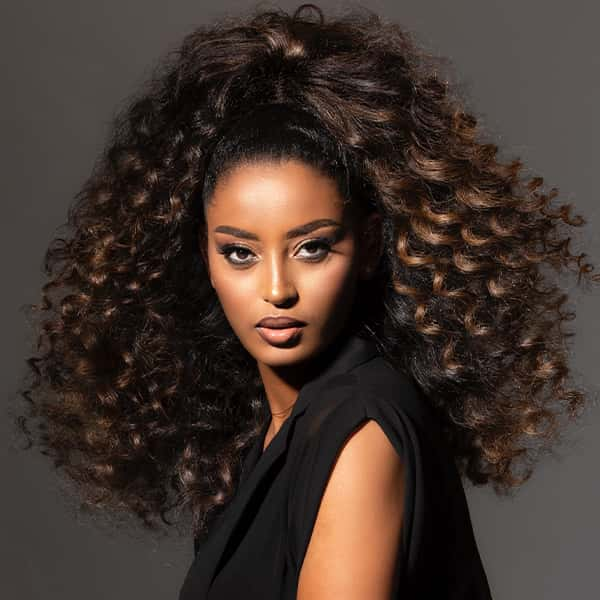
How do you get a curly style that works for a wedding and a Tuesday? The half-up, half-down is the answer, because it pulls the top section back without losing the length below. Here it lands on collarbone-length curls with honey blonde highlights, and the wispy bangs are the detail that keeps it from looking like a school-day ponytail.
The key is asking for the right base. Ask your stylist for: collarbone length, half up half down, wispy bangs. The layers around the face need to be long enough to frame, not so short they stick out when pinned. To style, gather the top section from ear to ear, secure it with bobby pins or a small elastic, and let the tendrils fall loose. The side parting adds a little asymmetry, which suits most face shapes without committing to a full side sweep.
Shoulder Length Updo With Wispy Bangs
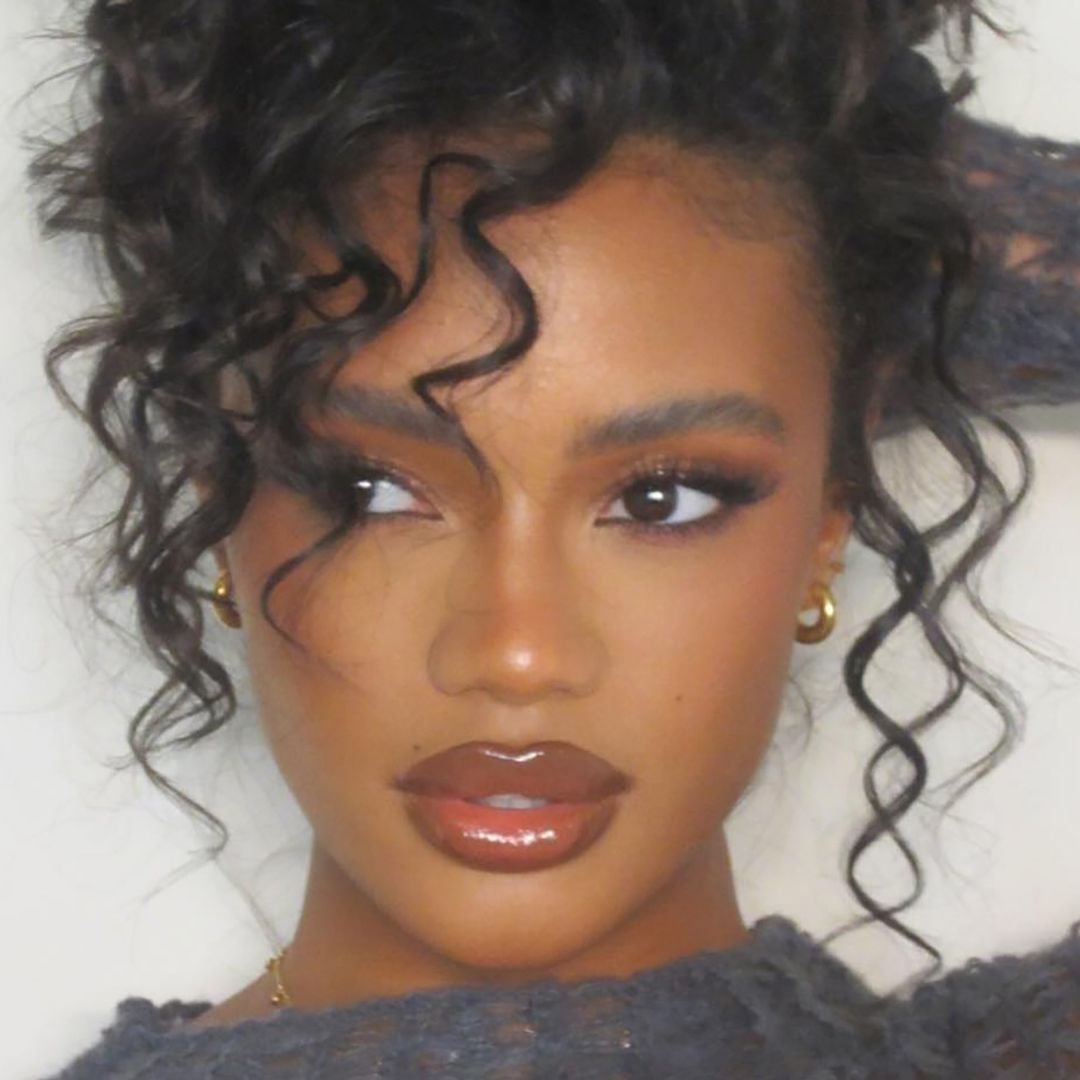
An updo is the rare curly style that works harder than it looks, pinning shoulder-length layers into a loose, gathered shape while wispy bangs and a few face-framing tendrils stay out to soften the whole effect. It suits round and square faces because those loose pieces break up the line around the jaw. Ask your stylist for: shoulder length updo, wispy bangs, face framing tendrils. You can fake it at home by twisting sections up and securing them with pins, but the salon version gives you that controlled looseness where every curl lands on purpose. Expect about three hours in the chair for the cut and styling, and a trim every eight weeks keeps the tendrils from turning into full-on curtain bangs.
Collarbone Blowout With Full Curly Bangs
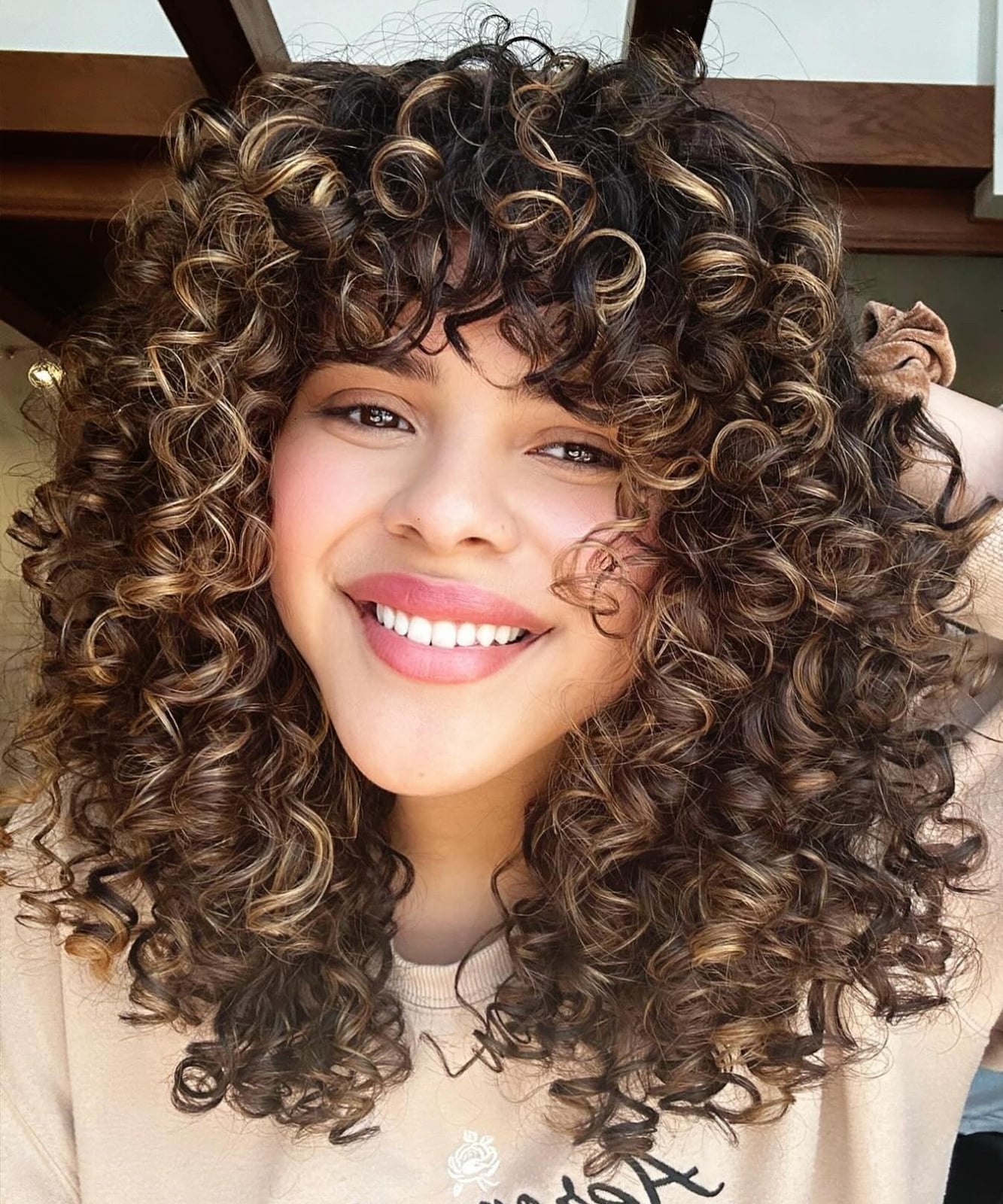
A blowout on curly hair is a commitment, and this collarbone-length version with full curly bangs delivers a glossy, defined finish. The layers give the thick, dark brown hair room to move, while the blonde highlights add depth. Ask your stylist for: collarbone length blowout, full curly bangs. The look suits thick, curly hair and balances a strong jawline by drawing the eye upward. To keep the blowout from falling flat, use a diffuser on your blow dryer and set the curls with a light-hold product. Plan for a trim every eight weeks to maintain the shape, and know that the heat styling will need a heat protectant every time to keep the curls from getting brittle.
Collarbone Shag With Curtain Bangs, Middle
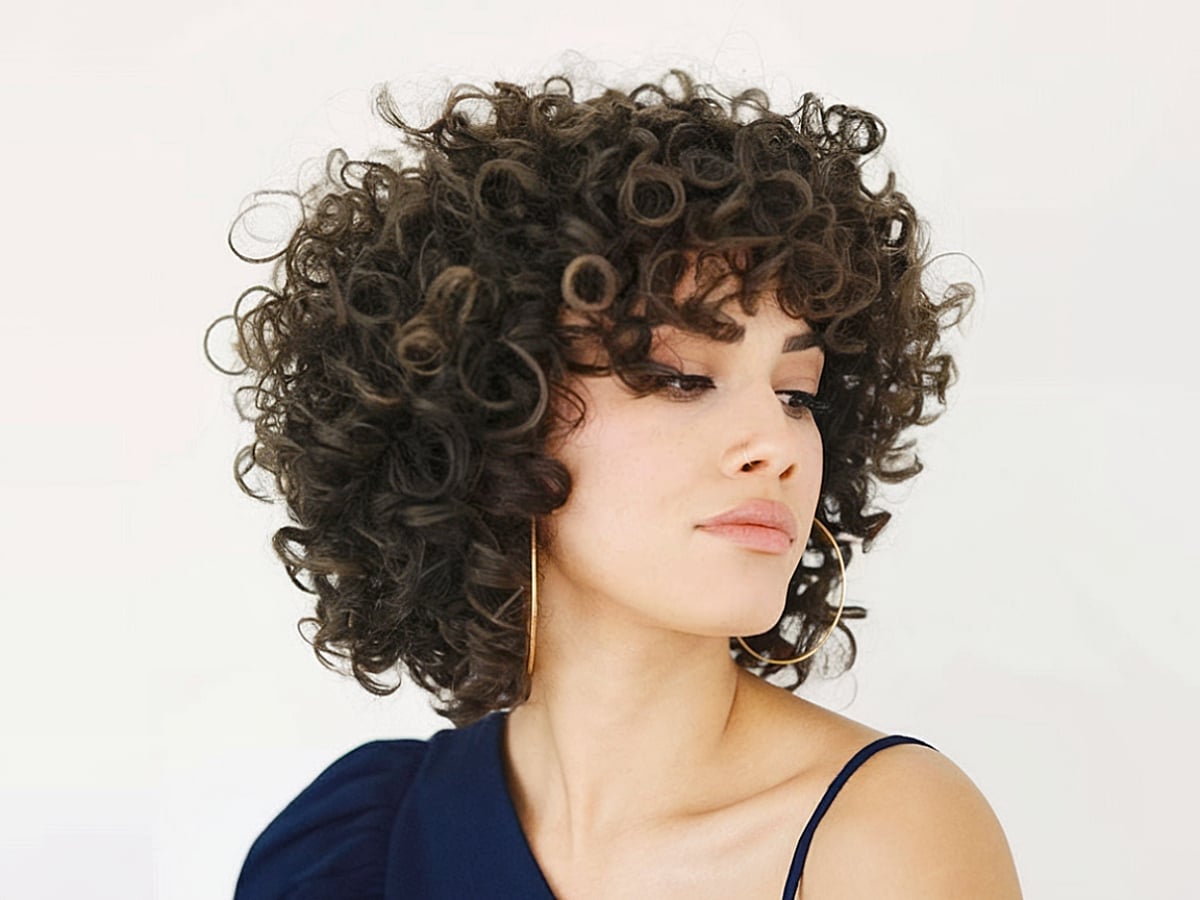
Can a shag actually hold its shape on curly hair? Yes, but only if you’re ready to work with the definition. This collarbone-length shag is built on layers that give thick, dark brown curls a bouncy, air-dried feel, with curtain bangs and a middle parting framing the face. Ask your stylist for: collarbone length shag, curtain bangs, defined curls. It suits thick, curly hair because the layers remove weight without sacrificing volume, and the texture stays defined rather than frizzy. The trade-off: maintaining that sharp curl definition takes effort, especially in humidity, where curls tend to loosen and the shag can look more like a triangle. A curl-defining product and a scrunching motion help, and a trim every eight to ten weeks keeps the shape from growing out into a shapeless mop.
Chin Length Bob With Blonde Highlights
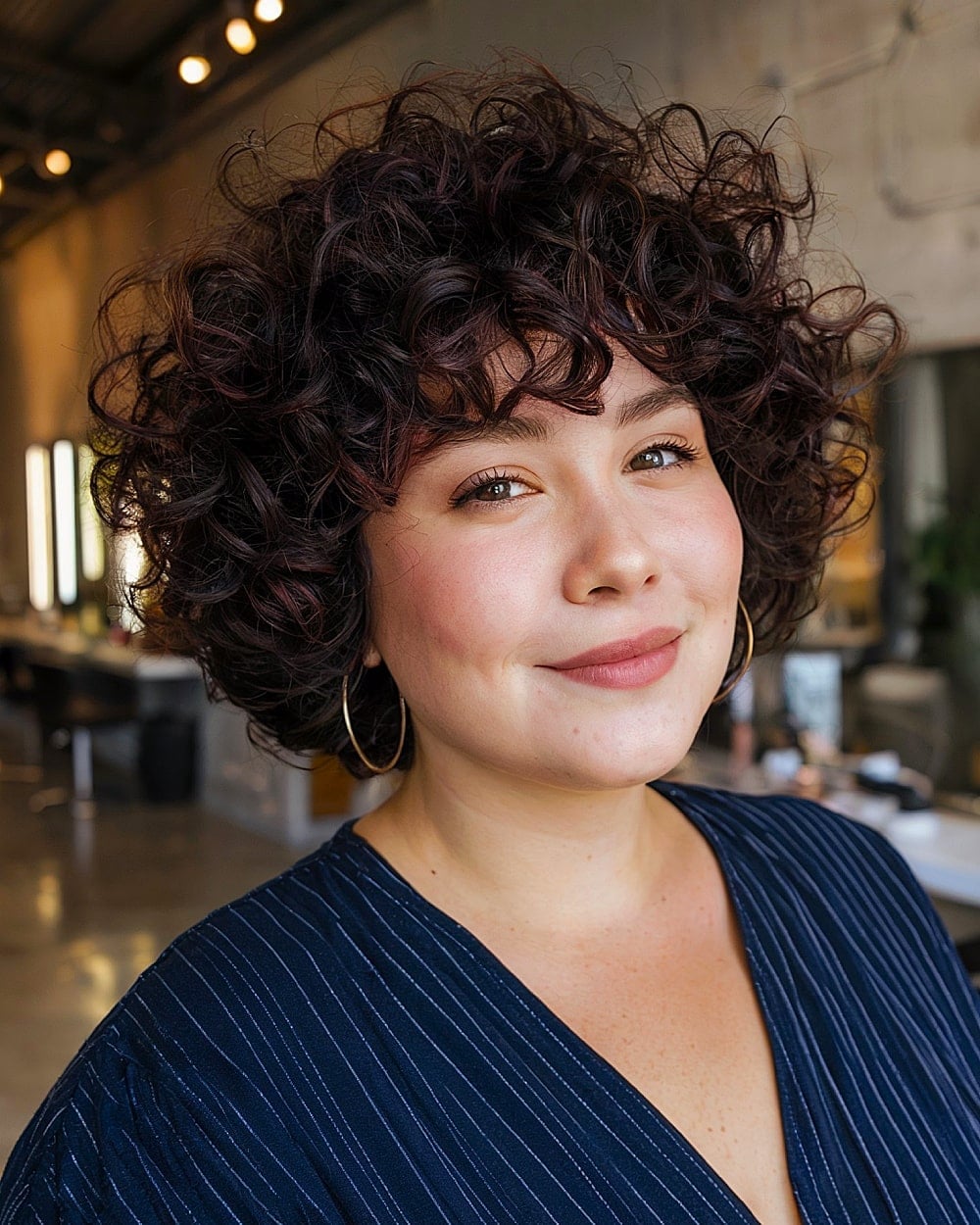
A chin-length bob is the contained cousin of longer curly styles, and this one pairs a dark brown base with blonde highlights for a lived-in, dimensional look. The thick, curly texture is air-dried to show off rich curl definition, with a middle parting and no bangs to keep the silhouette clean. Ask your stylist for: chin length bob, blonde highlights, defined curls. It suits thick, curly hair that wants less weight and a sharper outline, and it brightens the face without committing to an all-over color. Compared to a collarbone cut, this bob needs less styling time but asks for a trim every six to eight weeks to hold its shape. Use a moisturizing shampoo and conditioner to keep the curls defined and the highlights from looking brassy.
Collarbone Thick Hair Voluminous Blowout
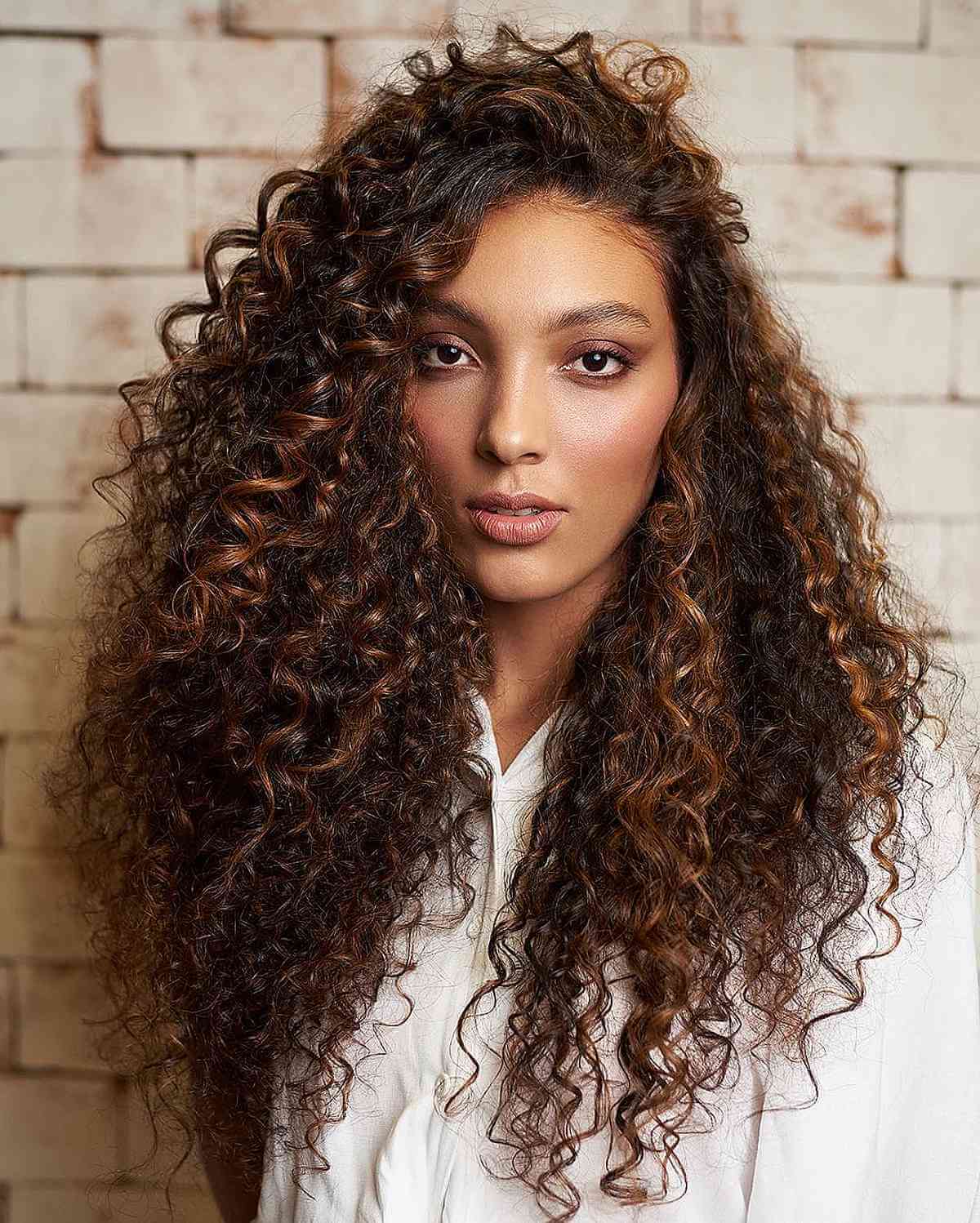
A voluminous blowout on thick, curly hair is a study in controlled chaos, where the collarbone-length layers catch air and the dark brown base with warm brown highlights adds depth. The middle parting and defined, bouncy curls give it a polished but natural finish, and the lack of bangs keeps the focus on the movement. Ask your stylist for: collarbone length, voluminous blowout, defined curls. This genuinely flatters thick, curly hair because the density supports the volume without falling flat, and the layers prevent it from feeling heavy. If your hair is fine or thin, this style will likely overwhelm you, so consider a lighter cut. To get the look, use a large round brush while blow-drying to smooth and lift the roots, then let the curls cool before touching them. A trim every eight weeks keeps the shape fresh, and the blowout typically lasts a couple of days before it needs a refresh.
Mid-Back Hair With Copper Blonde Balayage
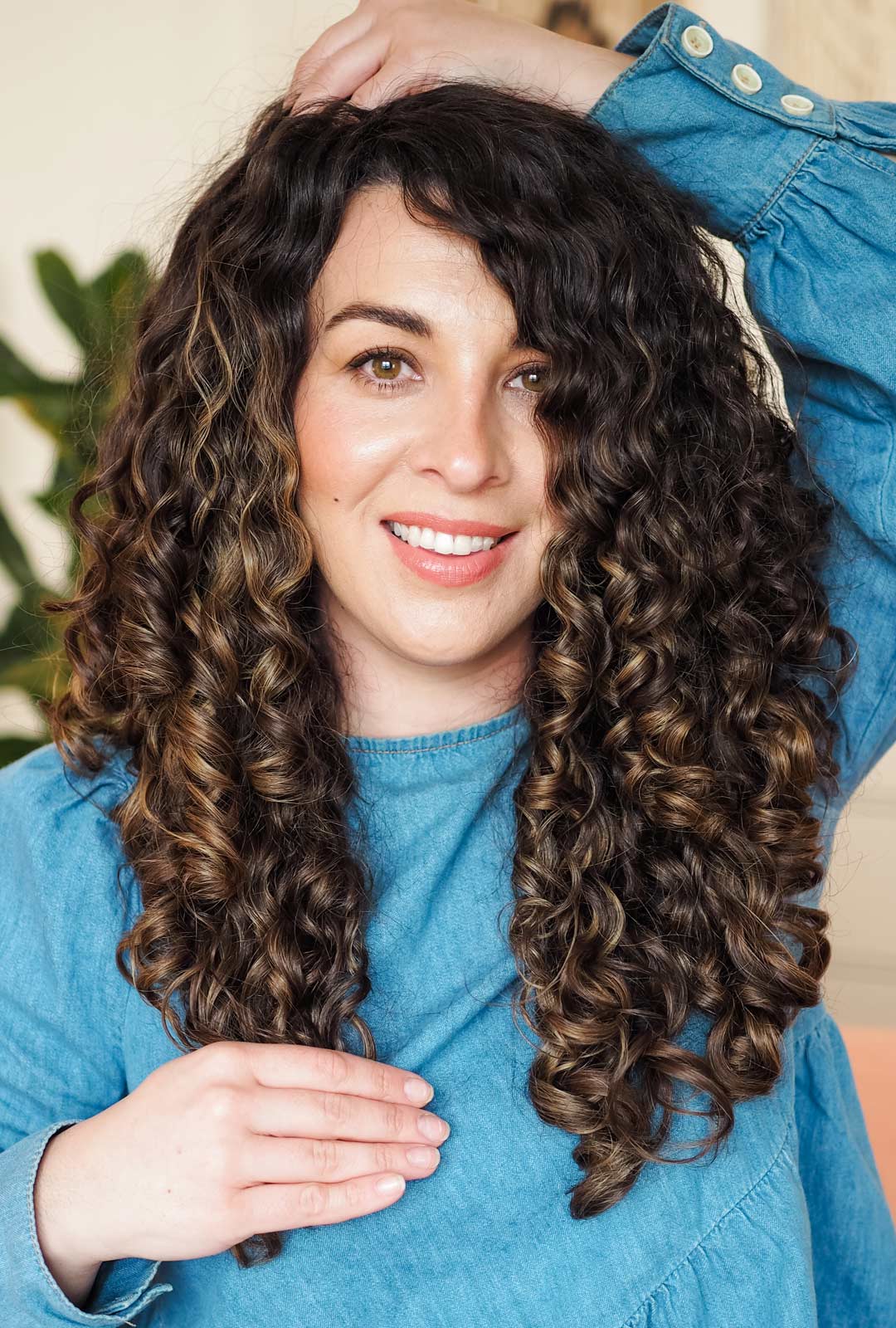
A balayage this vibrant doesn’t happen by accident. The dark brown base provides a rich canvas for copper and blonde ribbons that travel through the mid-back length, catching light in a way a single process never could. The face-framing layers ensure the color hits the front sections too, which is where most people notice it first. Curly texture amplifies every tone, so the blend reads as dimensional rather than striped.
Thick, curly hair starting at mid-back has enough surface area to carry this kind of saturation without looking heavy. Ask your colorist for: mid-back length, copper and blonde balayage, face-framing layers. A color-depositing conditioner keeps the copper from turning brassy between appointments, and a trim every 10 to 12 weeks stops the ends from thinning out. The grow-out is soft by design, which is the only reason this many tones works on a mid-back curly balayage without constant root touch-ups.
Mid-Back Voluminous Curls With Layers
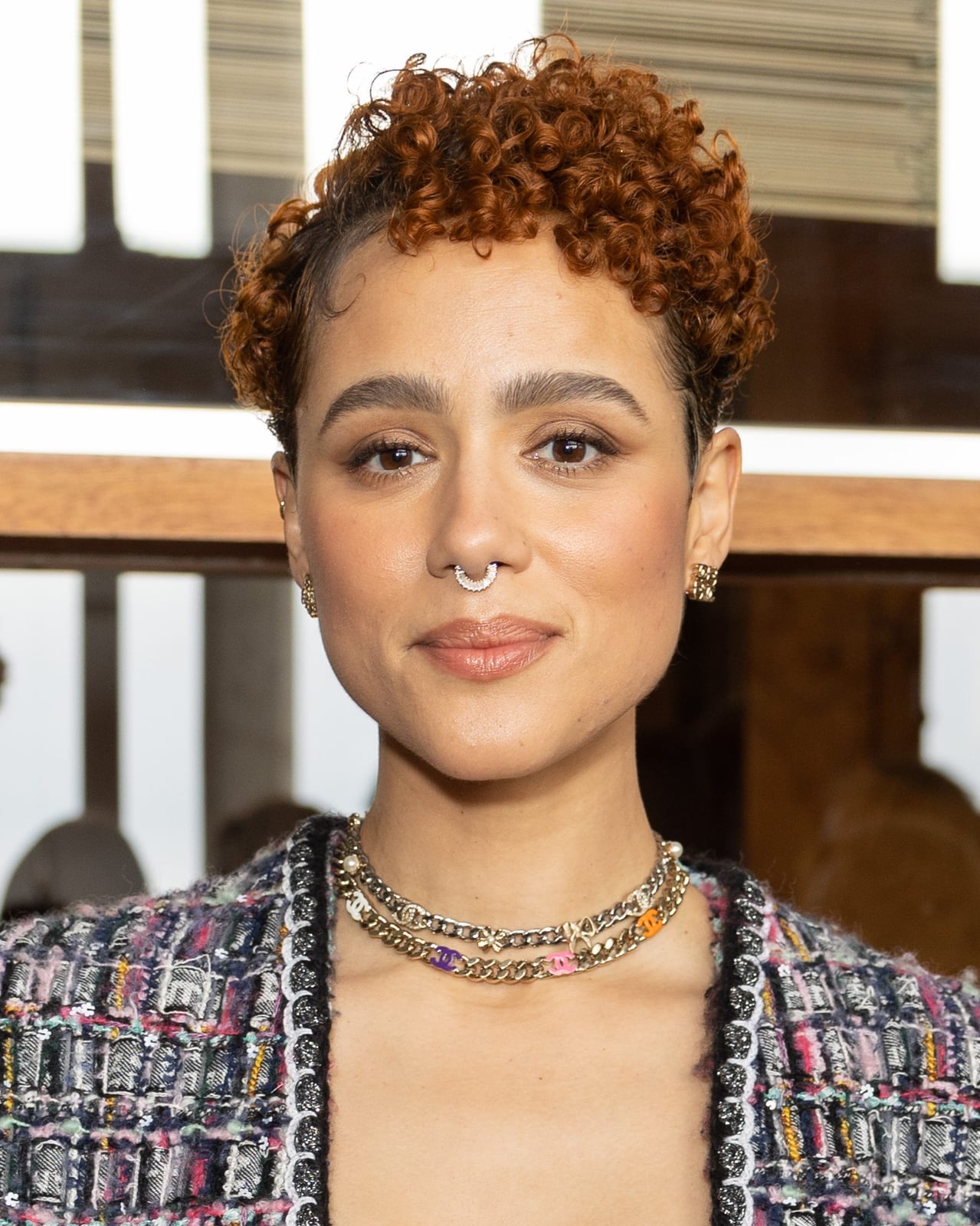
Voluminous curls at mid-back length have a specific advantage: they move. The layers are cut to release weight from the interior, so the hair lifts at the crown and drops into a soft shape rather than sitting as one heavy triangle. The subtle blonde highlights add contrast without competing with the curl pattern, which is the point. The texture does the work, the color just helps it read.
This is a festive-season cut. The volume fills out a blowout for holiday dinners and also air-dries into something presentable for a Tuesday. Ask your stylist for: mid-back length, voluminous curls, face-framing layers. A curl-defining cream applied to wet sections and twisted individually gives the shape its staying power. For a rounder face, keep the layers above the collarbone; for a longer face, let them hit closer to the shoulder.
Mid-Back Defined Curls With Warm Highlights
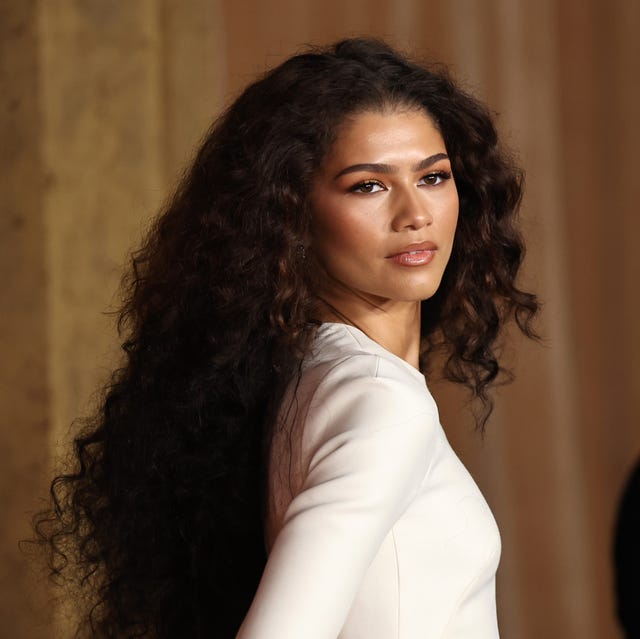
Defined curls that last past noon without a diffuser start with a cut that encourages the curl pattern before styling begins. This mid-back length uses layers that remove bulk from the interior, allowing each coil to spring upward without getting weighed down by its own density. The warm brown highlights sit subtly within the dark brown base, adding depth without creating a visible regrowth line. Air drying is the test: if the curls land evenly without manipulation, the cut is doing its job.
Thick, curly hair starting at mid-back benefits from this approach because the length stays intact while the shape breathes. Ask your colorist for: mid-back length, warm brown highlights, long defined curls. A leave-in conditioner applied to sopping-wet hair and left alone, no raking, no scrunching, produces the most consistent results. The mid-back curly warm highlights appear natural when the tone is only a few shades lighter than the base.
Mid-Back Long Curls With Blonde Highlights
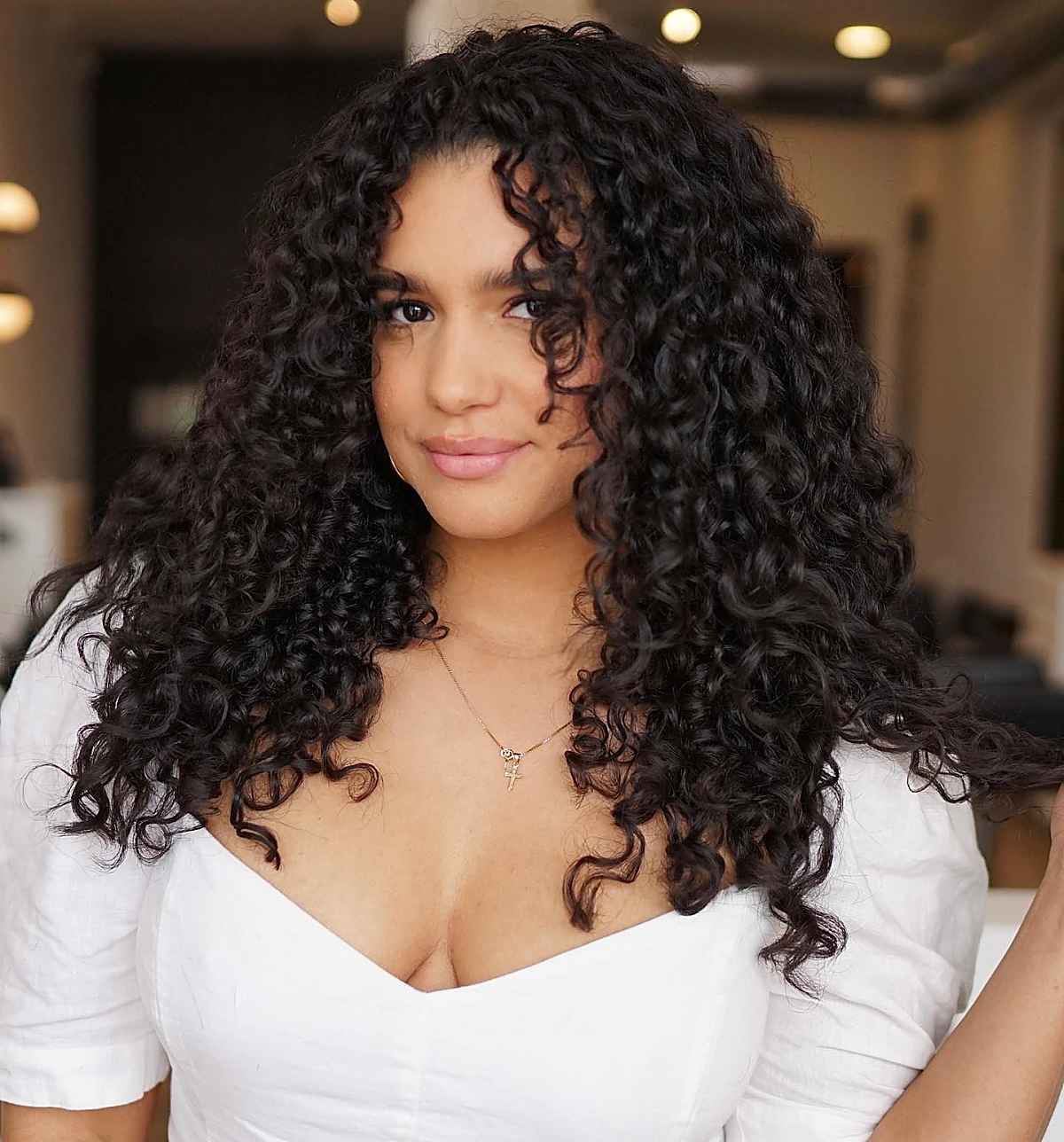
Curtain bangs on mid-back curls change the silhouette entirely. The bangs sweep outward rather than sitting straight across, so the face is framed by soft movement instead of a solid wall of curl. The subtle blonde highlights are placed through the mid-lengths and ends, leaving the root area dark and low-maintenance. This is a two-part ask: the bangs need to be cut dry to account for spring, and the highlights need to be painted in a way that follows the curl pattern rather than fighting it.
Thick, curly hair starting at mid-back carries this weight well because the bangs prevent the front from feeling heavy. Ask your stylist for: mid-back length, curtain bangs, voluminous curls. For the highlights, ask your colorist for: subtle blonde highlights, air-dried volume. A few things to tell the stylist exactly: you want the curtain bangs to hit the cheekbone when dry, you want the layers to start below the chin, and you want the blonde to stay away from the first two inches of root. Long curly hair with blonde highlights works best when the color is built around the curl, not the other way around.
Final Thoughts
Before you book the appointment, apply this rule: fine curly hair holds its shape better with a blunt baseline and minimal layers, while thick curly hair needs internal layers to release weight and let the curl pattern spring up. Match the cut to your density, and the routine almost takes care of itself.
- Trim curly bobs and pixies every 6-8 weeks to maintain shape.
- Collarbone and shoulder-length cuts typically need trims every 8-10 weeks.
- Longer styles can go 10-12 weeks between trims, focusing on split ends.
- Refresh air-dried curls with a light mist of water and curl enhancer.
- Use a satin or silk pillowcase to minimize frizz overnight.
Find the curly cut that works for your texture and lifestyle.