
Personal style is not fixed, and that is part of what makes changing your hair feel expressive rather than purely practical. Trendy hairstyles for women over 30 can offer a useful point of reflection on how you want to show up now, especially when your taste has evolved beyond choices that once felt automatic. The goal is not to become someone different, but to choose with more awareness of who you already are.
Some style decisions are less about transformation than about giving yourself permission to feel different for a while. A hairstyle can become part of how you signal energy, restraint, playfulness, or confidence to yourself, without requiring a permanent story about who you are. That freedom matters because self-expression works best when it leaves room for change, contradiction, and choice.
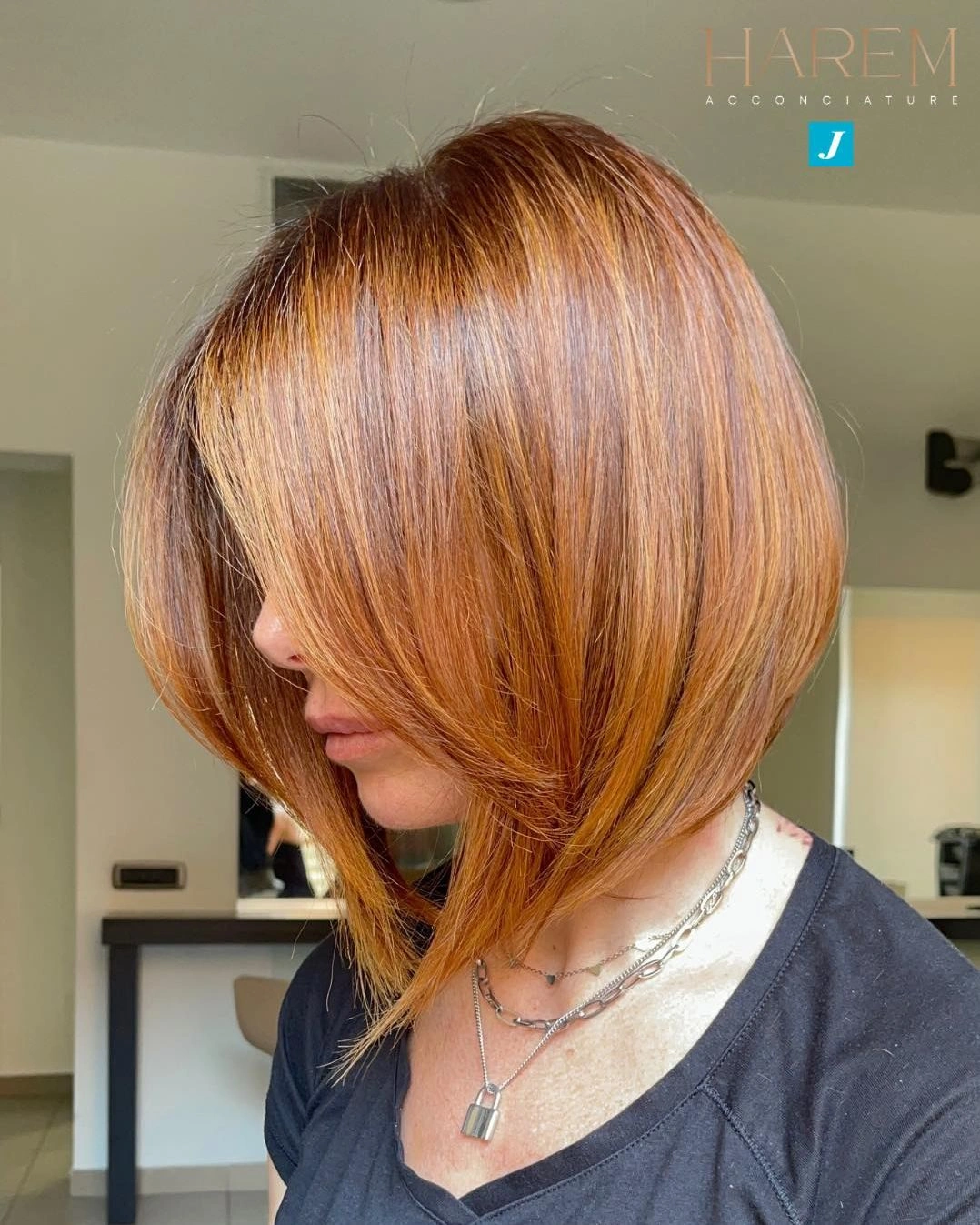
Side-Swept Copper Shape With Curved Ends
The strongest feature here is the diagonal front section, which sweeps across part of one eye and immediately shifts the balance away from the center. From the side, the copper-auburn shape stays compact around the head, then narrows into curved, layered-looking ends around the jaw and neck. That combination makes direction, rather than overall length, the main visual idea.
Photo via Instagram
The lower outline matters because the ends turn back toward the neck instead of projecting outward or dropping in a straight line. That inward curve keeps the medium-short shape visually contained while the long front piece adds asymmetry above it. If you like the sense of movement but not the full silhouette, the front sweep and the curved lower finish can be considered as separate choices.
A deeper side sweep would emphasize the diagonal effect, while a softer sweep would expose more of the front. The same lower curve could also be paired with less front coverage for a more open version of the shape.
Long Auburn Lengths With a Soft End Curve
The centered part creates a balanced starting point, and the long auburn lengths fall in a smooth, nearly vertical line through most of the style. Because there is so little interruption through the upper and middle sections, the softly curved ends below the chest become much more noticeable. The movement is restrained, but it is still visible enough to keep the perimeter from reading as rigid.
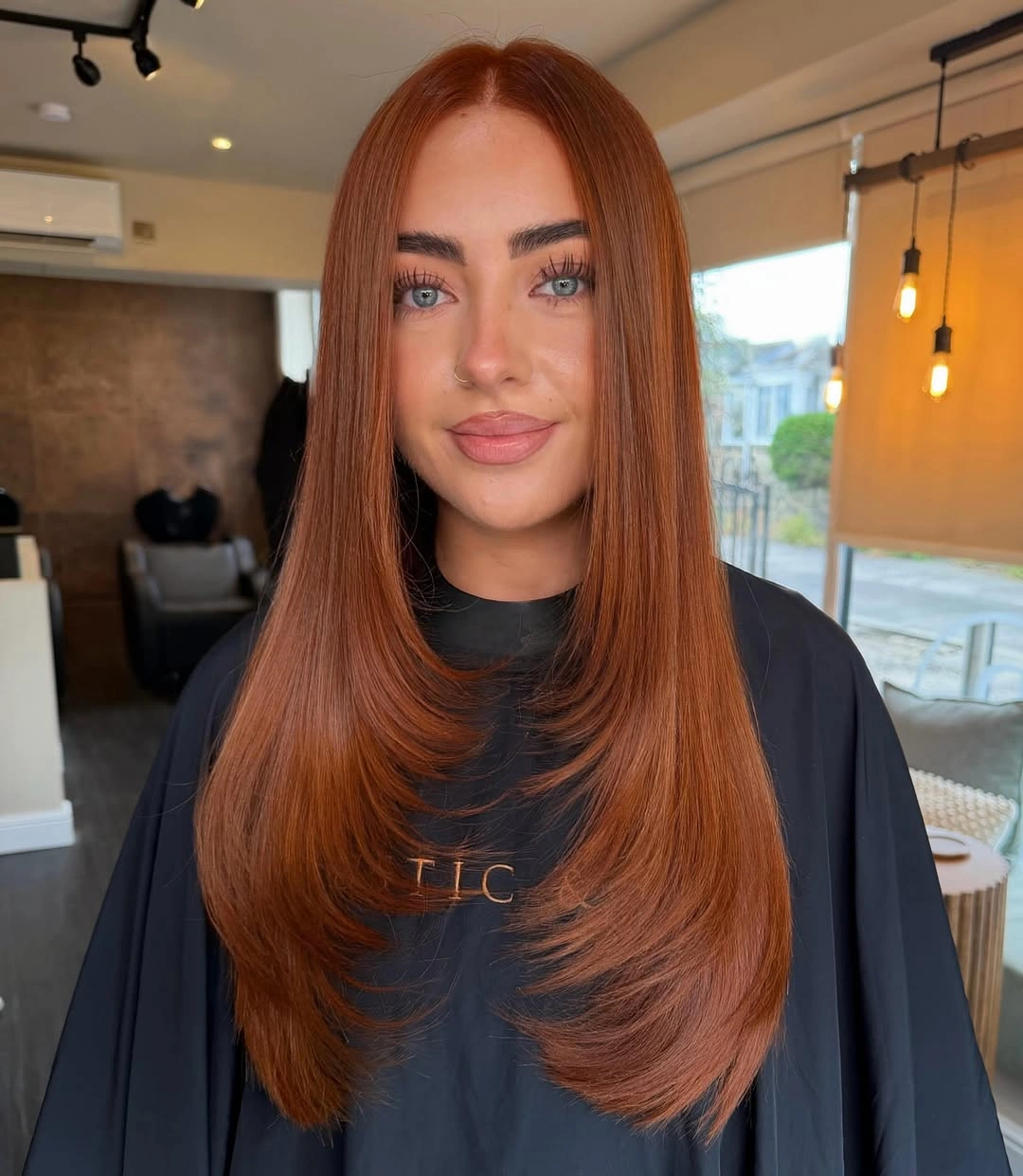
Photo via Instagram
This is a useful example of how straight hair can still carry visible shape without adding waves throughout the length. The smooth surface keeps the eye moving downward, while the lower curve adds a quiet change in direction near the finish. Readers comparing long styles can decide whether they prefer uninterrupted straightness or a softer end behavior that gives the bottom more motion.
The key variable is how much of that curve is reserved for the final inches rather than carried higher into the lengths. Keeping the upper section smooth preserves the long vertical line, while a stronger turn at the bottom would make the finish more prominent.
Very Long Blonde Hair With Minimal Movement
Very long pale blonde hair creates a strong sense of scale here because the lengths remain almost entirely straight from the softly off-center top to the lower back. There is little visible interruption through the middle, so the hairstyle reads as one long vertical flow rather than a series of shaped sections. Only the final portion shows slight movement, which keeps the finish softer than a perfectly flat drop.
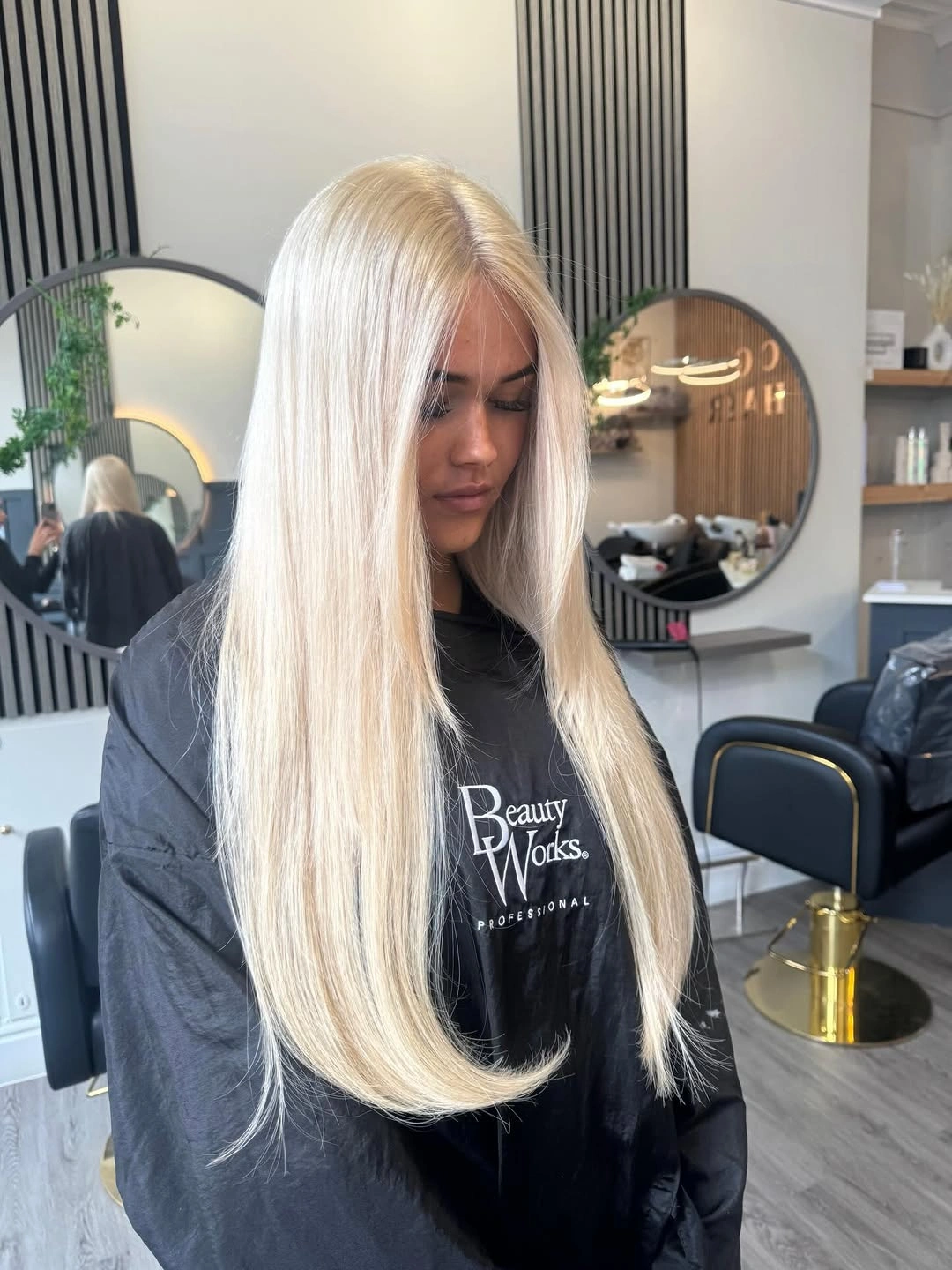
Photo via Instagram
The subtle off-center placement prevents the top from feeling completely mirrored, yet it does not compete with the length as the dominant feature. That restraint makes the silhouette easy to read: long, narrow, smooth, and minimally curved. Someone using this as a reference could focus on continuity through the body of the hair, then decide separately how much bend they want to keep near the ends.
This approach works well as a comparison point for readers who want length itself to carry most of the visual weight. A small amount of end movement can soften the finish without changing the straight character of the main lengths.
Loose Ash-Blonde Waves From Front to Ends
The beige or ash-blonde lengths introduce movement much earlier than the straighter styles, with broad bends appearing through the upper and middle sections instead of waiting for the ends. Lighter face-adjacent pieces follow those curves around the front, making the direction of each bend easier to see. The result is a hairstyle where motion is distributed through the silhouette rather than concentrated in one lower zone.
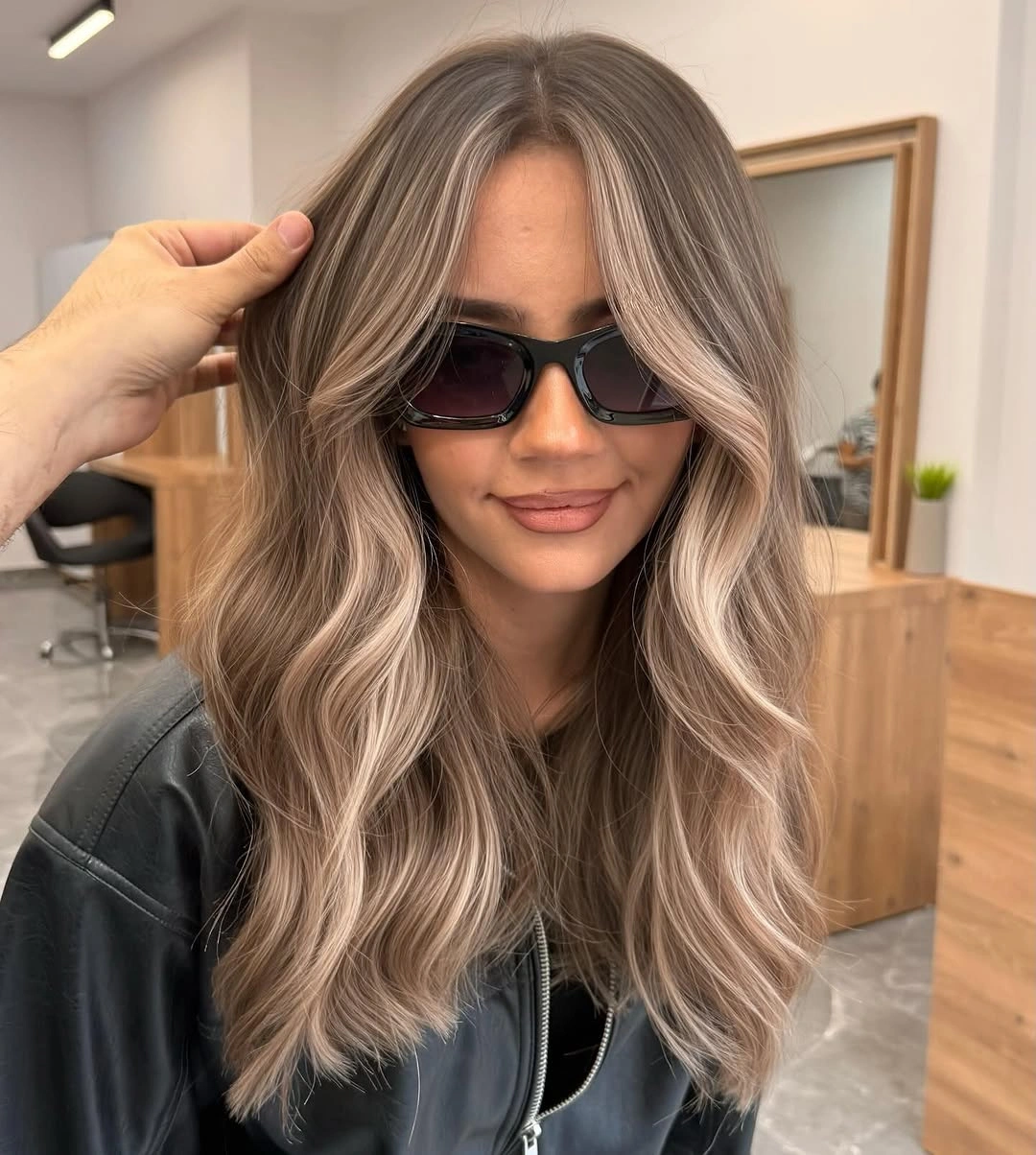
Photo via Instagram
Because the waves repeat at different heights, the eye moves from the front pieces into the longer sections without one sharp break between them. The lighter and darker visible areas also shift as they pass over each bend, so color contrast and wave direction work together without needing a technical label for the effect. A useful comparison is where the first noticeable bend begins, since that point changes how active the upper half feels.
Moving the first bend lower would keep more of the top smooth, while bringing it higher would make the front and middle lengths feel more animated. The overall length could stay similar while that single placement choice changes the balance.
Claw-Clip Ponytail With a Curled Finish
The large claw clip creates a fixed point high at the back, so this style reads differently from hair worn fully loose even though the ponytail remains long. Reddish-burgundy lengths drop from the gathered section into a tail with visible curls near the bottom, while wispy front pieces stay separate around the face. The structure is therefore split between a secured crown area and a moving lower section.
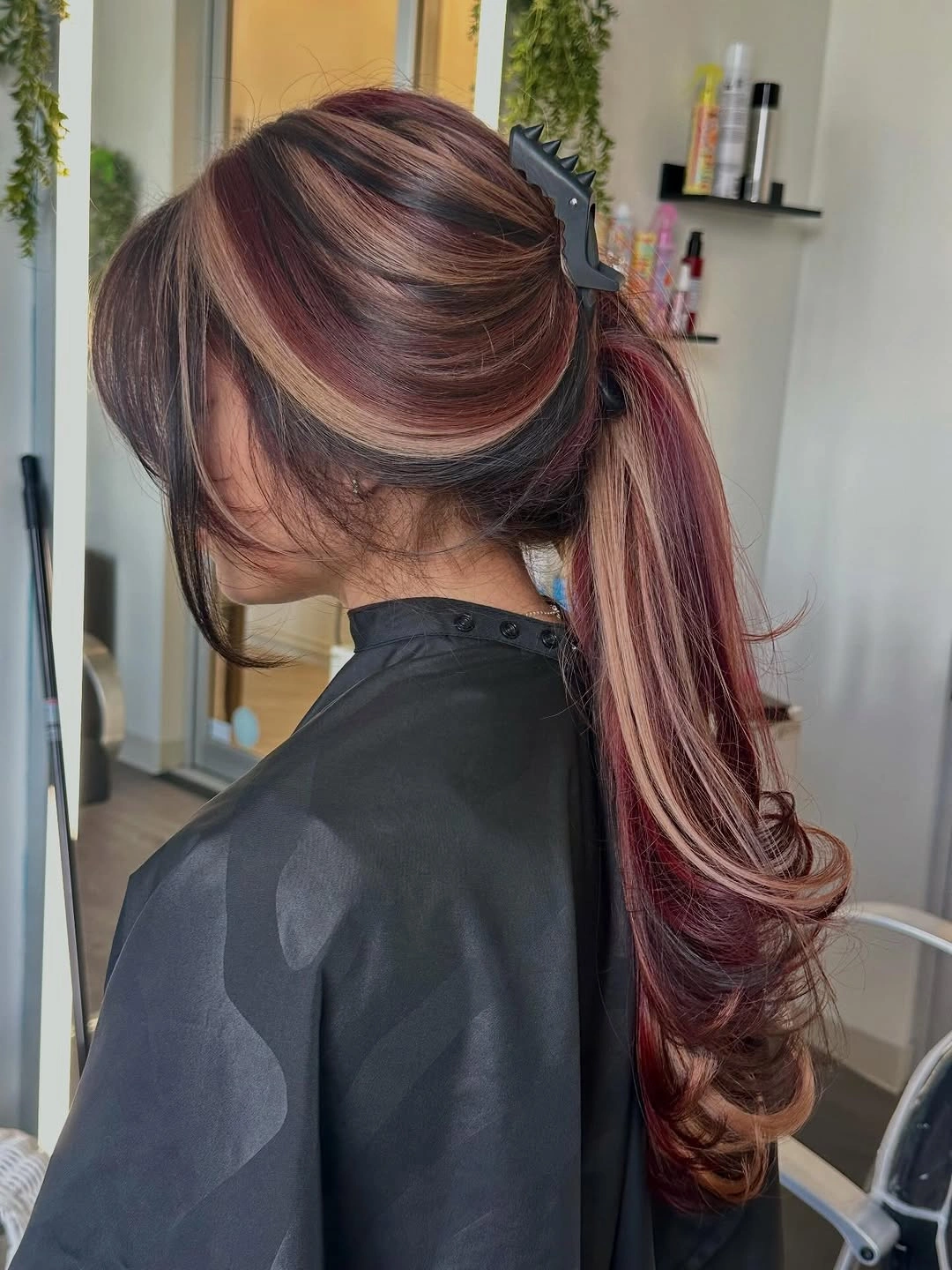
Photo via Instagram
That contrast between anchored and loose areas is the main design idea. The clip holds the upper hair close together, but the tail expands again as the curled ends turn outward and downward, giving the lower portion its own shape. The free front pieces soften the transition into the gathered section and keep the style from reading as one continuous pulled-back line.
Clip height, front looseness, and tail curvature can all be adjusted independently when borrowing this idea. A reader could keep the gathered structure while choosing a straighter tail or fewer loose front pieces, depending on which part of the silhouette matters most.
Broken Fringe and Outward-Flicked Dark Ends
The front is intentionally broken into several narrow pieces rather than opening from one clean part line, so the dark shape feels active before the eye reaches the ends. Those curtain-like strands cross the forehead and brush the cheeks at different lengths, while the lower outline flicks outward around the neck. The earrings remain visible through the separated side pieces, reinforcing how open the edges are.
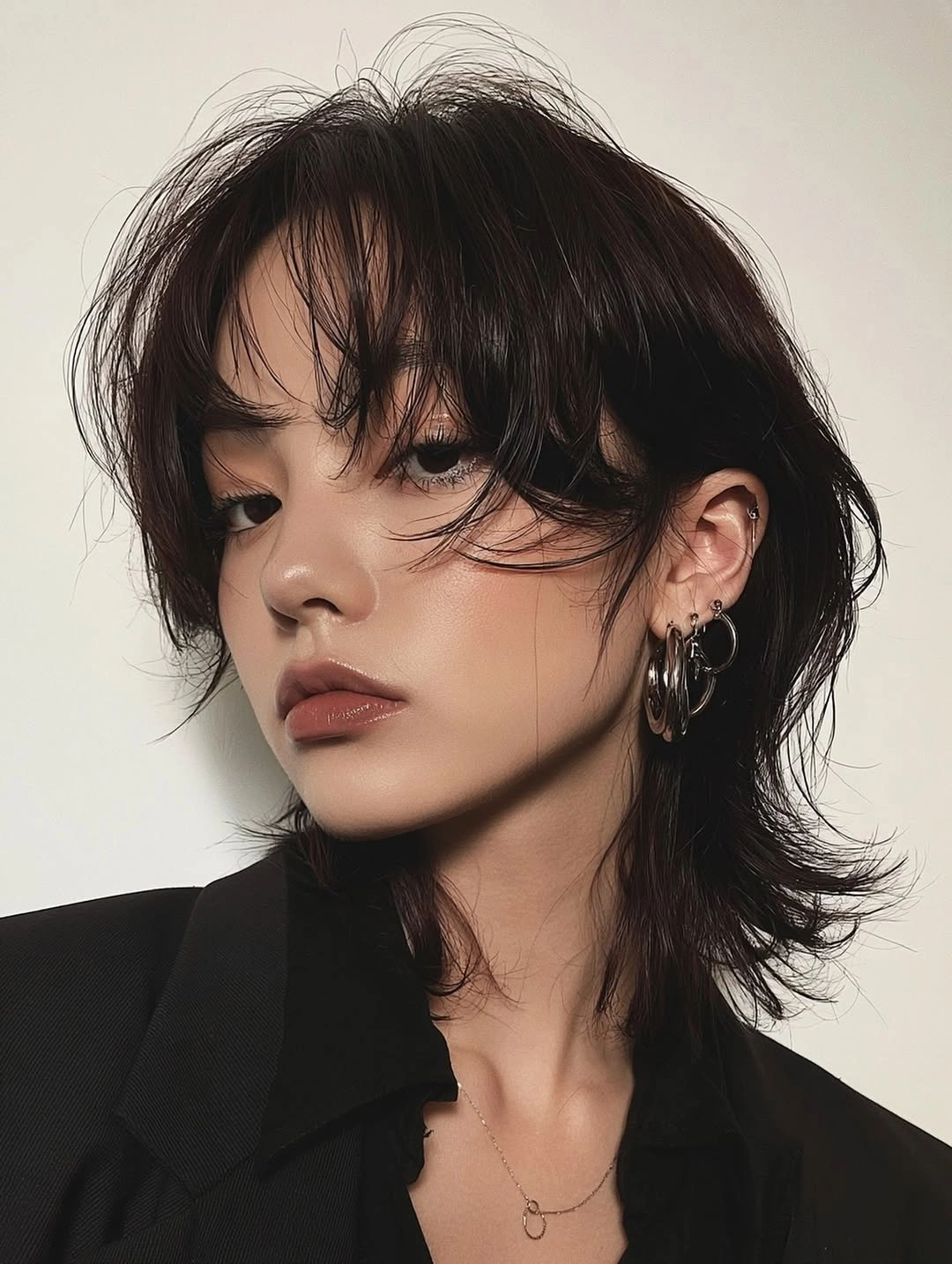
Photo via Instagram
The lower direction is what separates this shape from a smoother inward finish. Instead of tapering quietly toward the neck, the ends turn away from it in small irregular kicks, creating width near the bottom and a slightly more scattered perimeter. If that effect appeals, the broken fringe and the outward end direction can be treated as two separate ideas rather than one fixed formula.
Keeping the fringe more separated would preserve the fragmented front while allowing the lower ends to stay quieter. Alternatively, emphasizing the outward flicks while reducing front coverage would move the main point of interest toward the neck and shoulders.
Long Black Hair With Gradual Lower Waves
The near-center part keeps the upper silhouette calm, and the long black lengths stay relatively smooth around the crown and upper sides. Movement builds gradually through the lower half, where loose bends become wider and more visible as the hair falls past the shoulders. That slow transition gives the style a continuous flow instead of a sharp break between straight and wavy zones.
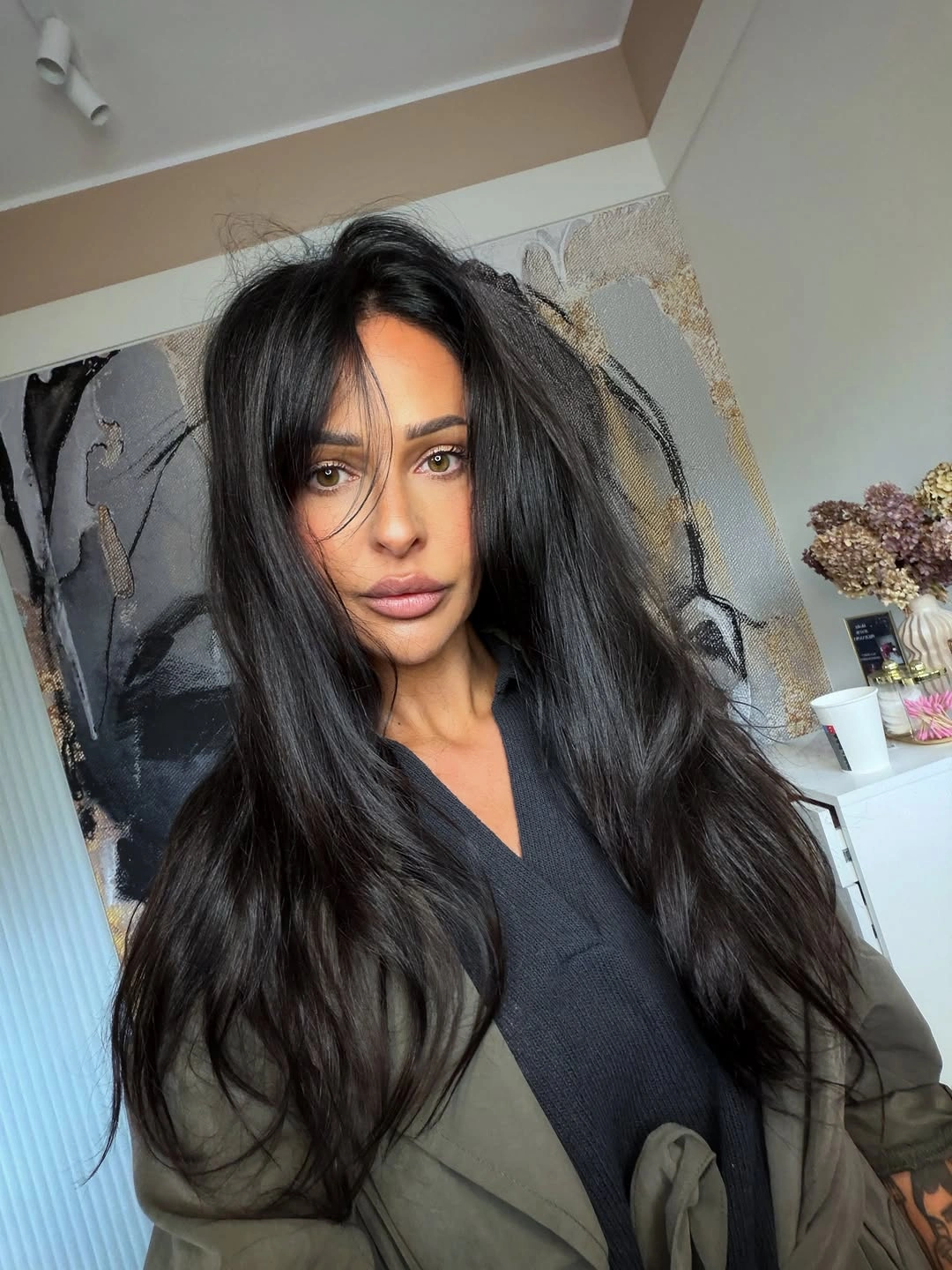
Photo via Instagram
The front framing matters because those longer pieces blend into the same lower wave pattern rather than stopping as an isolated feature. Their curve opens the sides of the face area, then continues into the larger bends below, which makes the movement feel connected from front to length. A reader comparing long dark styles can use the height of the first strong wave as the main variable.
Starting the larger bends lower would preserve more of the smooth upper length, while bringing them higher would make the silhouette feel more active sooner. The long black surface makes that shift in direction especially easy to read because color changes do not interrupt the outline.
Very Long Brown Hair With Stacked Lower Curves
A centered part and smooth upper lengths create a clear first zone, while the very long brown hair becomes much more rounded through the lower sections. Large waves and curls stack at different heights, so the lower half carries most of the visible motion without disturbing the controlled top. That split makes the change from straight to curved especially easy to read.
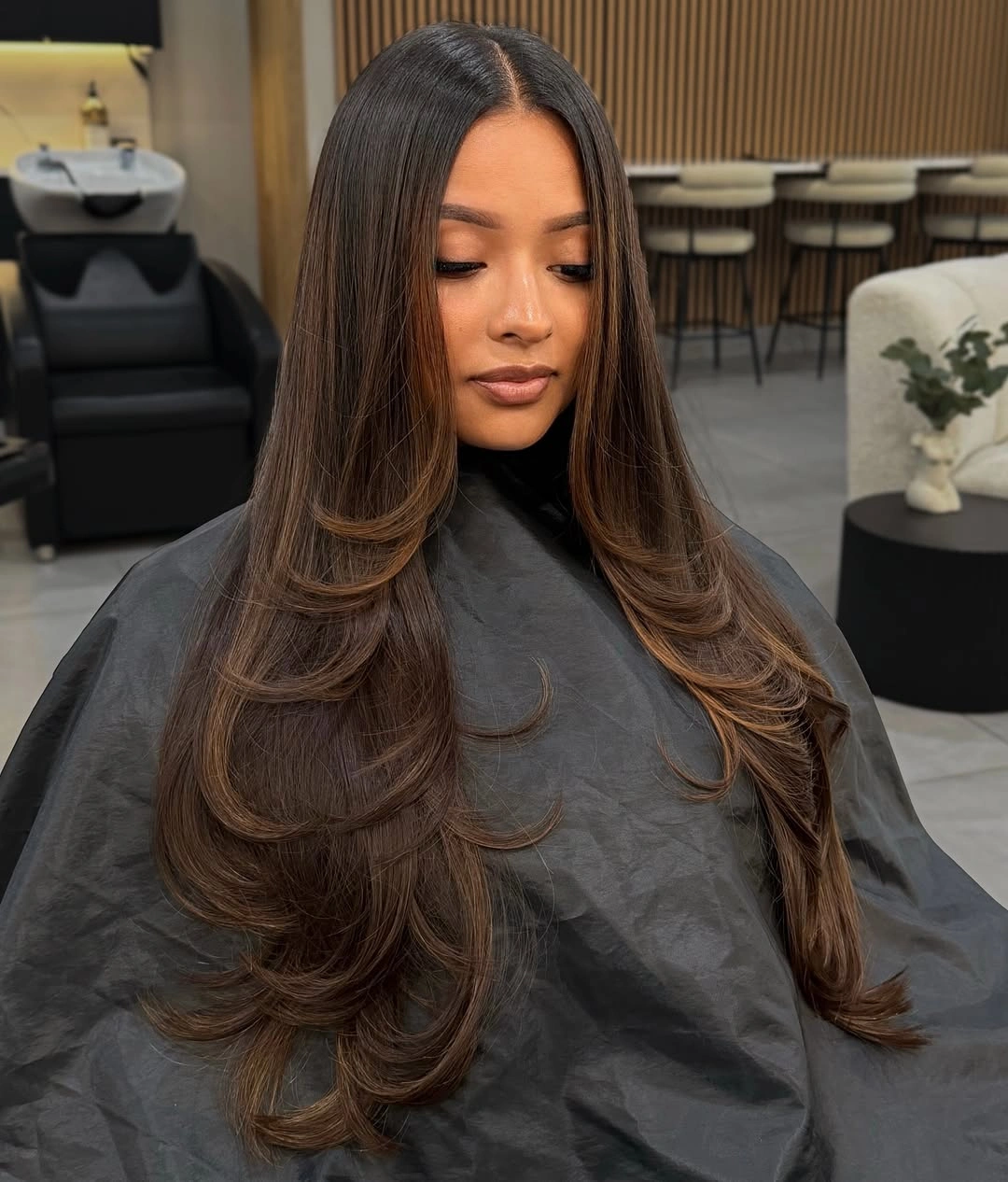
Photo via Instagram
The repeated lower turns do more than add movement at the perimeter because several rounded sections sit above one another through the bottom half. This creates a tiered rhythm in which one curve leads into the next, rather than a single bend appearing only at the ends. The same overall length could look much quieter if those large turns began lower or were reduced in scale.
The useful reference here is the separation between a smooth upper zone and a much more curved lower zone. A reader could keep the centered, controlled top while choosing fewer or softer lower turns for a less pronounced version of the same structure.
Curtain Fringe Opens Into Feathered Black Ends
The curtain fringe creates a relatively closed upper area because dark pieces fall across part of the eyes and narrow the opening through the front. Farther down, the silhouette becomes more expansive as multiple layered-looking sections turn outward around the chest. That closed-to-open progression gives the hairstyle a distinct directional shift from top to bottom.
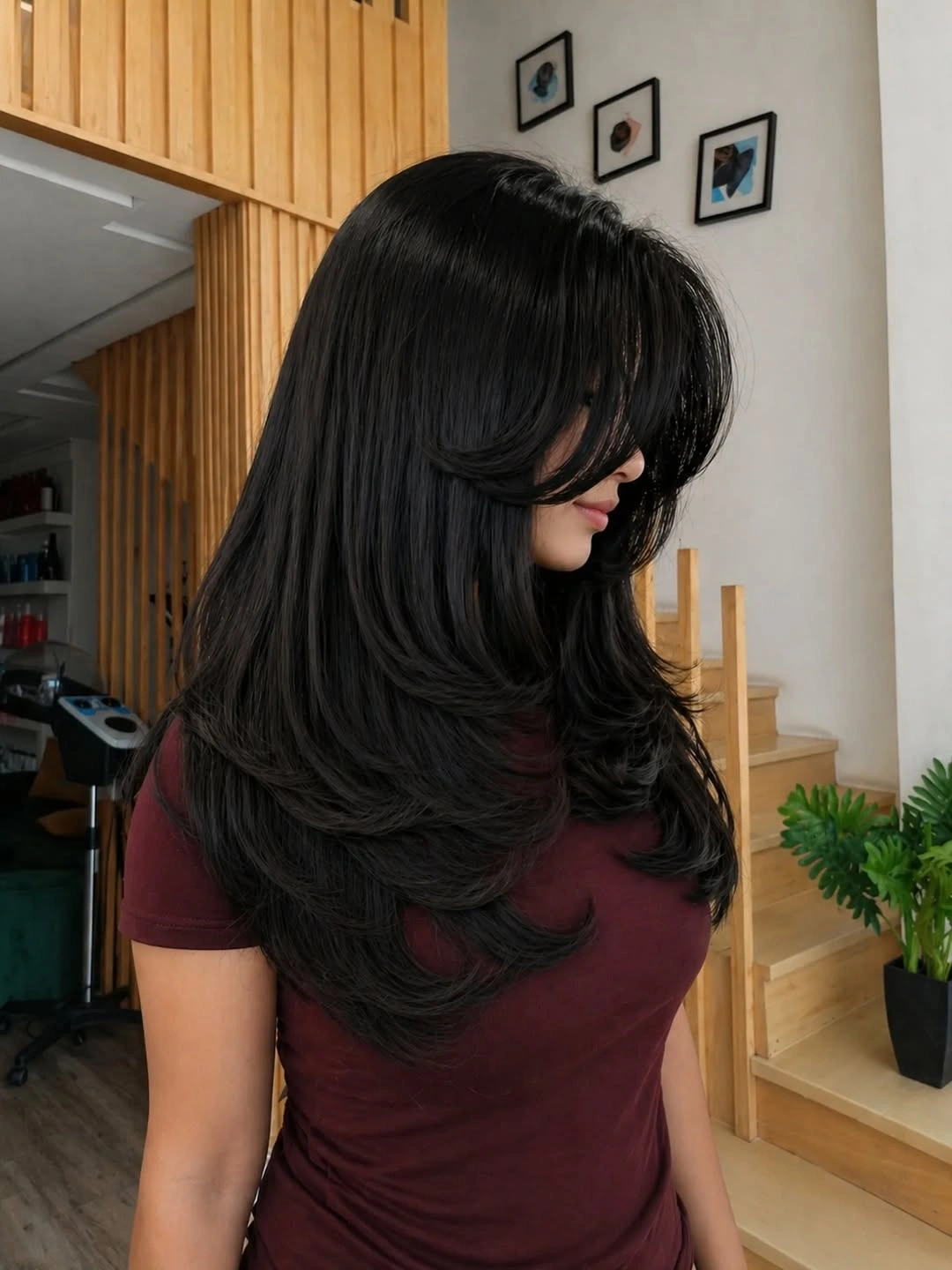
Photo via Instagram
The outward lower ends are separated enough to read as several visible tiers instead of one continuous wave. Each turn pushes away from the central body of the hair, which makes the chest-level outline broader and more segmented than the darker, heavier-looking area above. The fringe depth and the lower outward movement could each be adjusted independently while preserving the same overall contrast.
The strongest visual tension comes from the narrow, partially covered front against the increasingly open lower outline. Reducing either the fringe coverage or the number of outward turns would soften that contrast without changing the medium-long scale.
Straight Blonde Lengths With a Softened Back Edge
From the back, the long pale blonde lengths fall in mostly straight vertical lines, so alignment becomes the dominant visual feature. The middle section stays especially controlled, with little visible wave or bend interrupting the downward path. At the bottom, the ends finish at slightly different points, which softens the perimeter instead of creating one rigid horizontal edge.
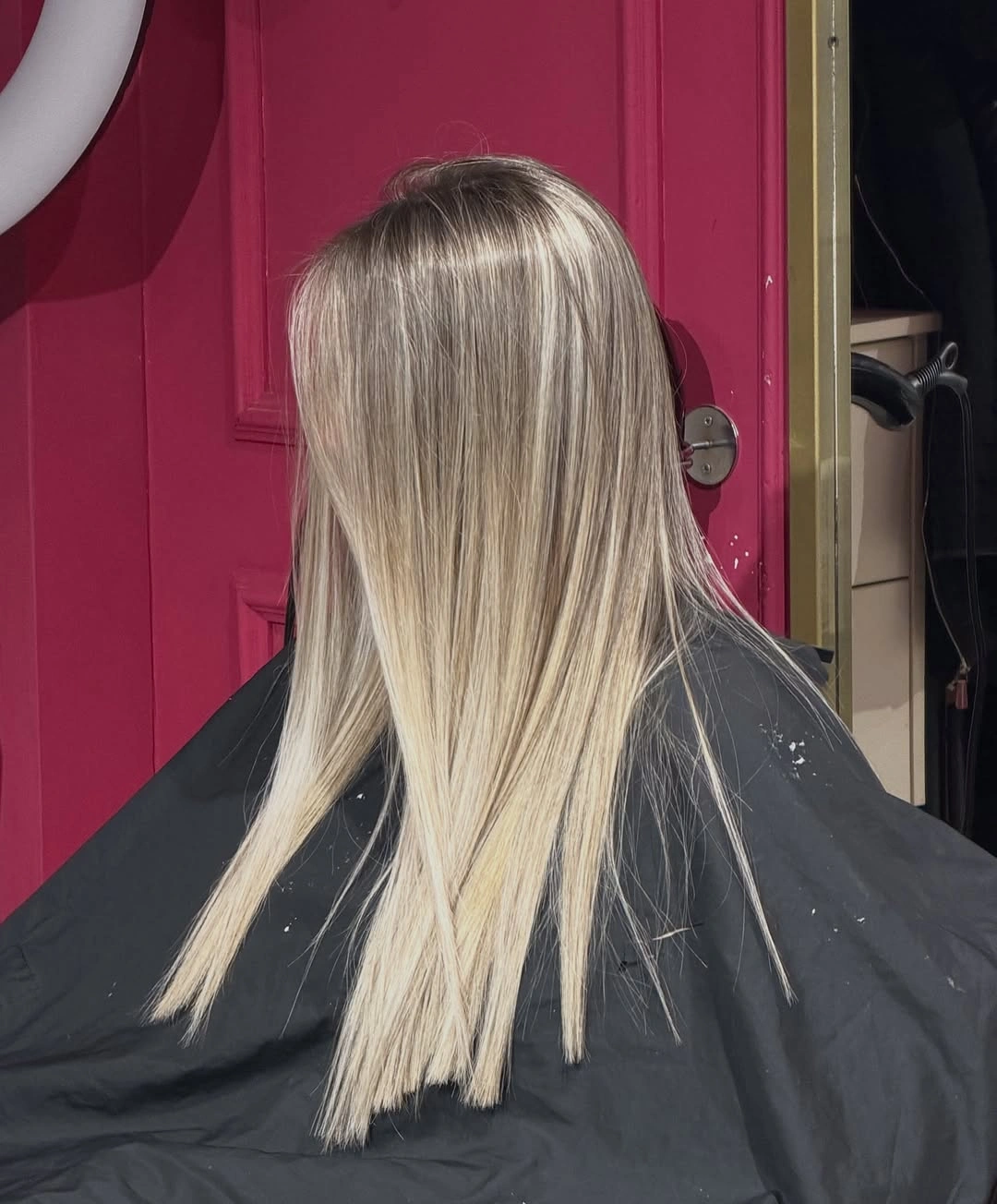
Photo via Instagram
That lower edge is subtle but important because it keeps the back view from reading as a perfectly blunt block. A few ends extend or recede slightly within the overall straight shape, adding softness without changing the main vertical direction of the hair. For readers focused on back-view balance, the distinction is between strict alignment through the lengths and a gentler finish at the perimeter.
This view is especially useful for judging how straight lengths meet the bottom edge without front framing competing for attention. A more even perimeter would make the finish feel sharper, while preserving the slight variation keeps the lower line visually softer.
Deep Violet Lengths With Curled Lower Movement
The deep violet color reads as one continuous field through the upper and middle lengths, where the surface stays comparatively smooth and the waves remain restrained. Farther down, the hairstyle becomes more animated as several curled sections turn outward and inward at slightly different heights. That shift makes the lower portion carry most of the visible movement without breaking the color into separate contrasting zones.
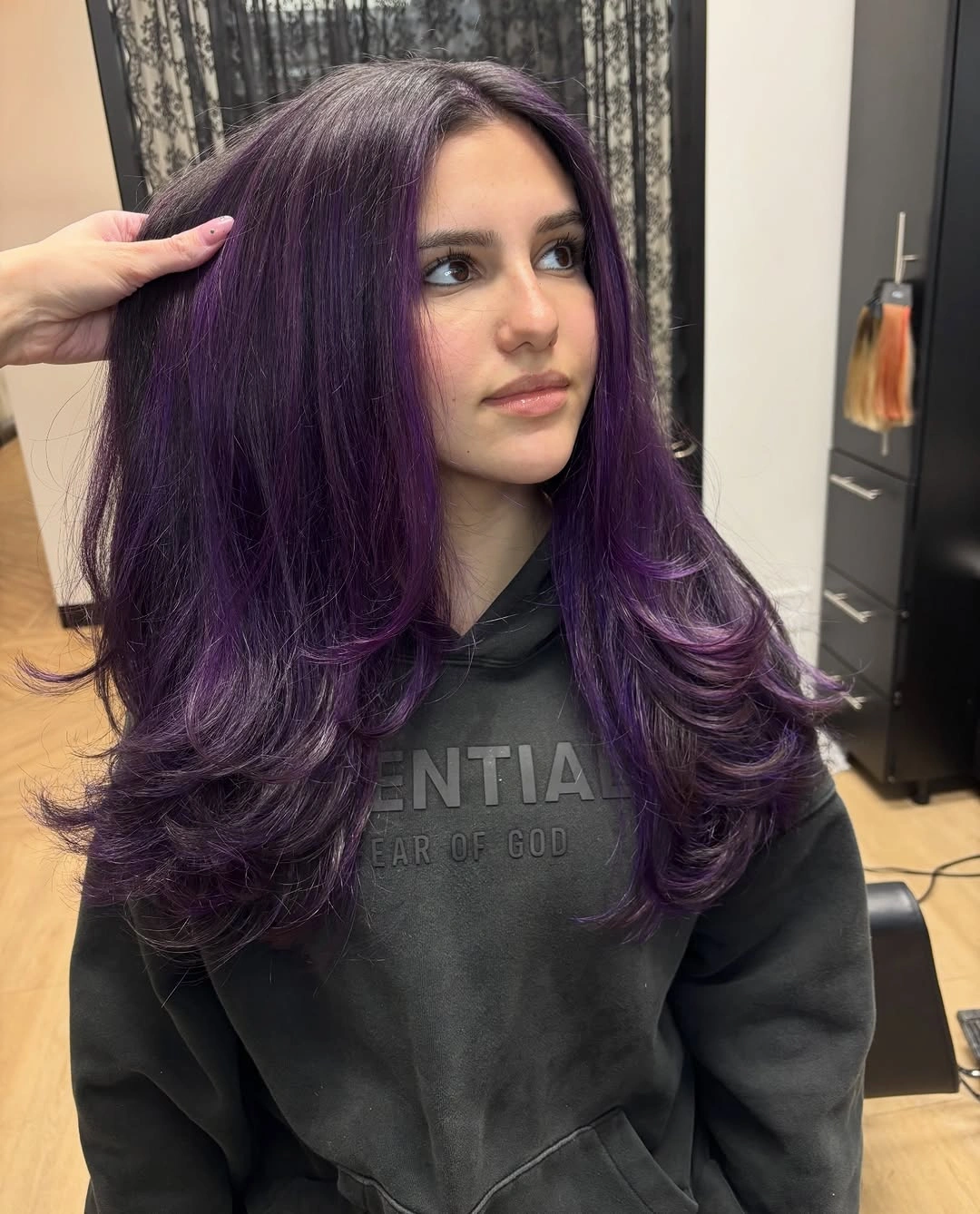
Photo via Instagram
Because the shade remains consistently saturated from top to bottom, changes in direction are easy to notice through the silhouette itself. The softer middle bends lead into more obvious curled ends, so the hairstyle builds movement gradually rather than introducing one abrupt wave line. A reader can separate the color choice from the movement pattern and use either element independently as a reference.
Keeping the upper area quieter makes the lower curls feel more prominent even without changing the overall medium-long scale. If the bends were reduced, the violet surface would read as a smoother vertical shape with much less emphasis on the perimeter.
Centered Dark Lengths With Broad Polished Waves
The centered part creates a balanced starting point, while the long dark front sections curve away before blending into broad waves through the lower lengths. The smooth reflective surface makes each large bend read as one continuous arc rather than a group of smaller textured turns. Because the waves are wide in scale, only a few directional changes are needed to shape the entire lower silhouette.
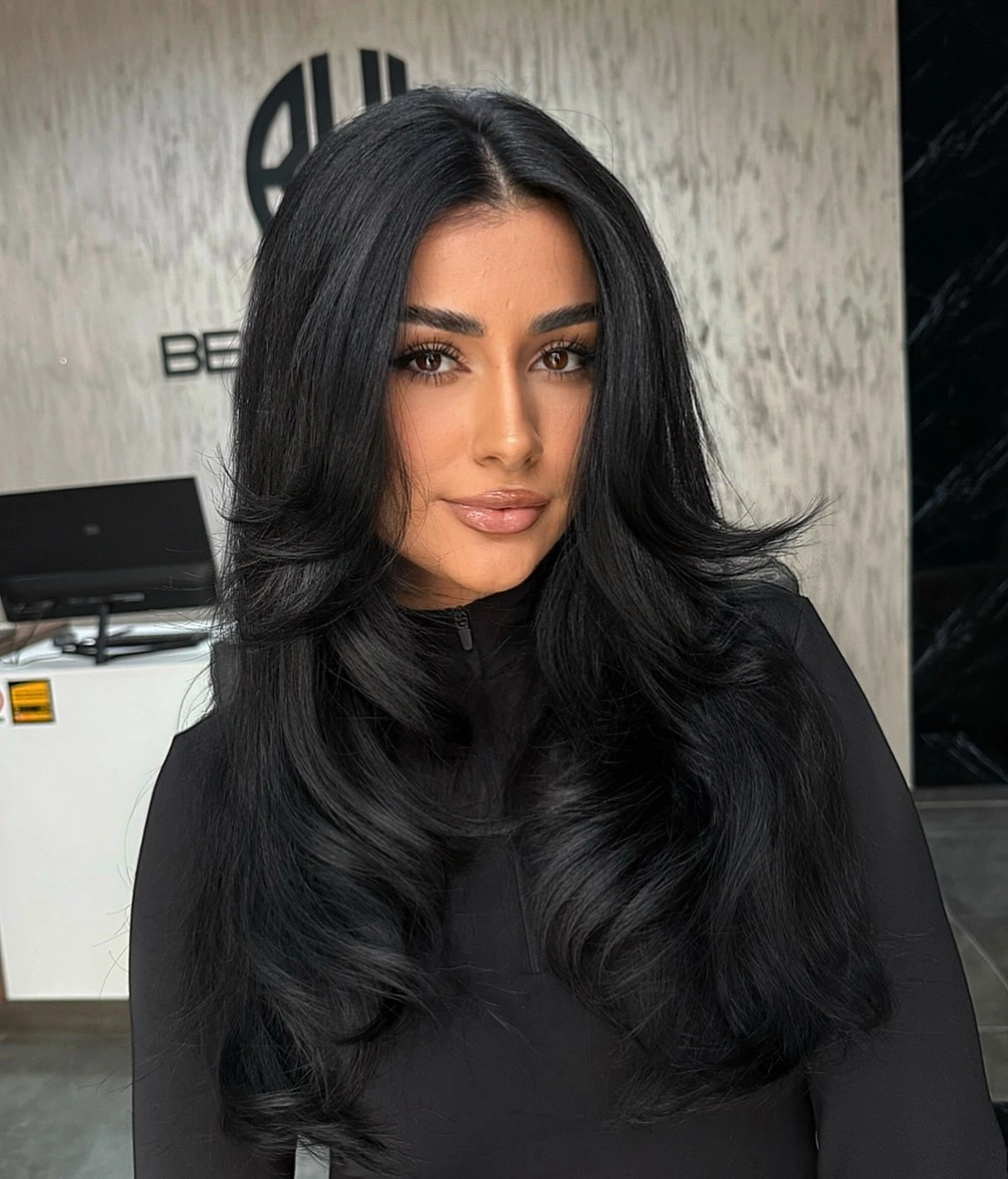
Photo via Instagram
Wave size is the defining feature here more than wave count. Each curve occupies a large portion of the visible length, which creates a slower visual rhythm than tightly repeated bends would produce, while the upper section remains comparatively controlled. Readers comparing long dark hairstyles can use the width of each curve as the variable that changes how expansive or restrained the lower half appears.
Larger waves create broader zones of movement, while narrower bends would divide the same length into more frequent directional changes. Keeping the centered top smooth preserves the contrast between controlled upper lines and rounded lower sections.
Dark Brown Hair With Overlapping Curl Tiers
The long dark-brown hairstyle builds movement at several different levels rather than placing every curve along one horizontal line. Rounded front sections turn near the upper chest, while larger loose curls appear below them and continue toward the perimeter. This creates overlapping tiers of movement, with one curve leading visually into another instead of forming a single uninterrupted wave pattern.
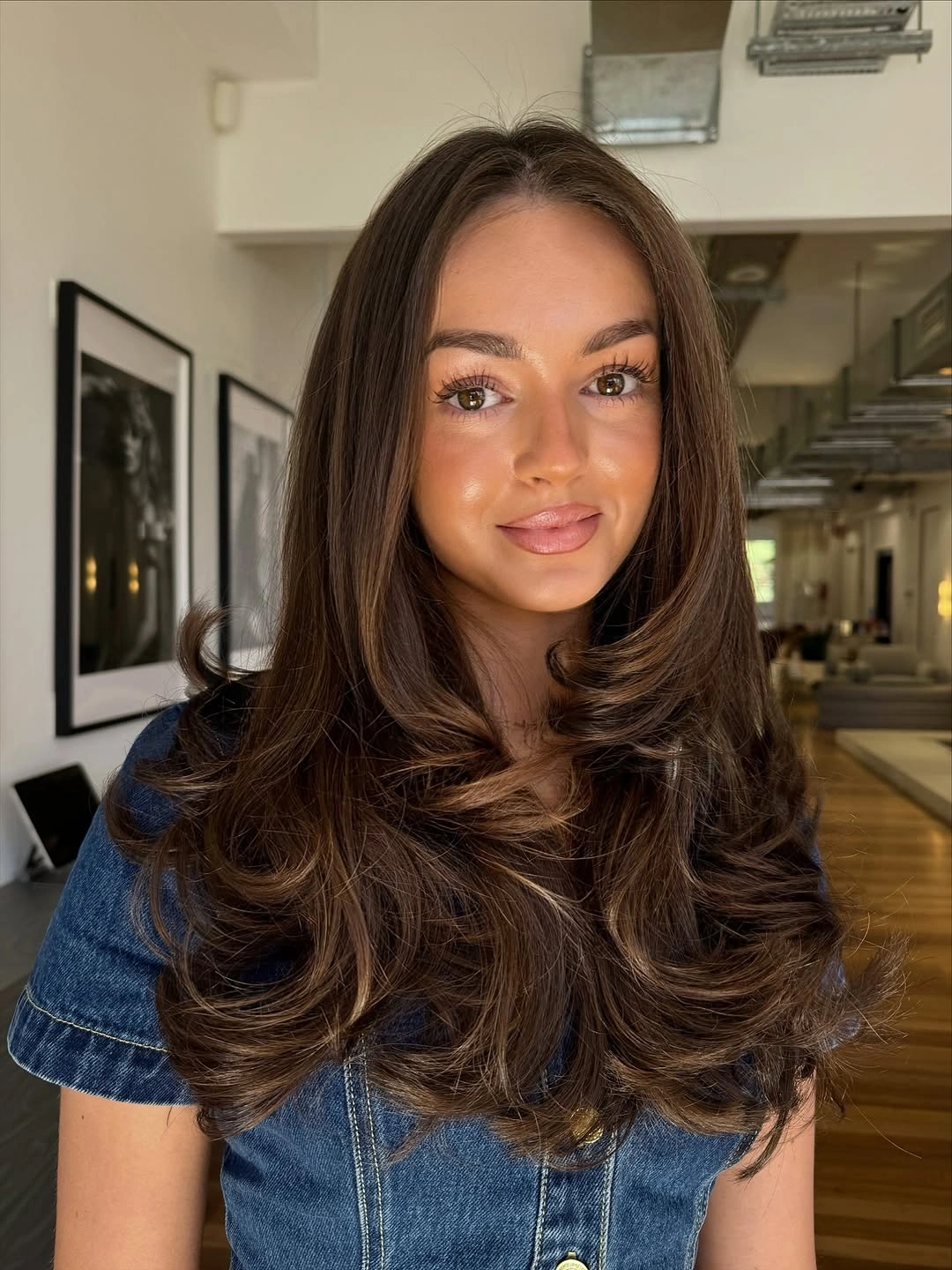
Photo via Instagram
The centered part keeps the top balanced, but the lower sections become increasingly dimensional as separate curls point inward and outward around the front. Those repeated direction changes prevent the long brown silhouette from reading as one solid mass, even though the color stays relatively consistent. A useful comparison point is which tier of movement attracts attention first, since the upper turns and lower curls can carry different emphasis.
The face-adjacent turns could remain prominent even if the lower curls were softened, and the reverse would also preserve much of the overall shape. Treating the curl levels separately makes it easier to adapt the silhouette without copying every visible bend.
Pale Blonde Waves Across a Back View
Seen from the back, the long pale blonde hair spreads gradually as gentle waves interrupt the otherwise vertical fall through the middle and lower sections. The movement appears at several heights, creating a broader outline than a fully straight back view would show. Layered-looking lower sections finish at slightly different levels, which adds visible separation without forming a sharply stepped perimeter.
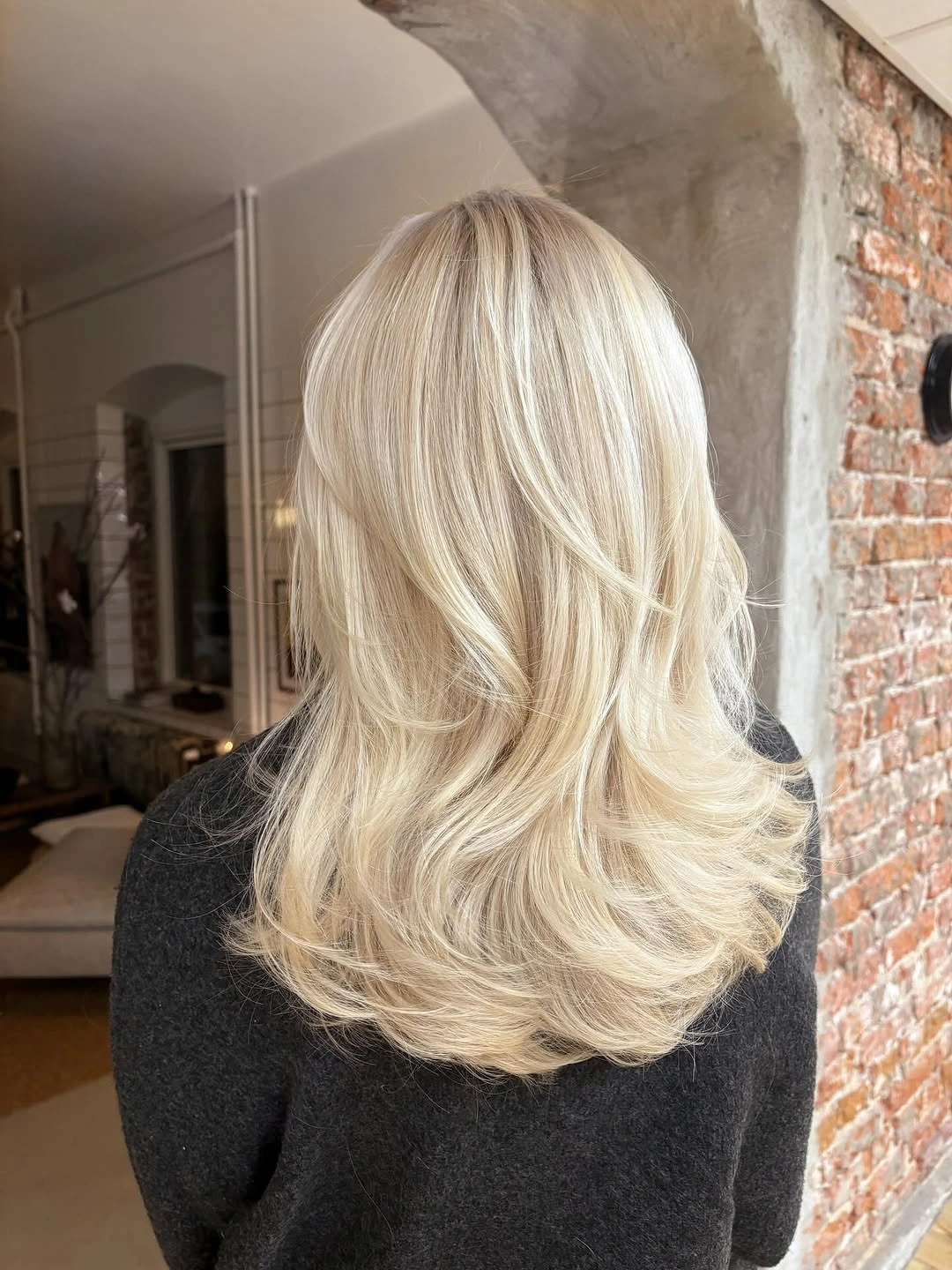
Photo via Instagram
The back view makes wave distribution especially clear because no front framing competes with the main outline. Several soft bends shift the hair from side to side before the lengths settle around mid-back, so width develops through movement rather than through one dramatic curl at the bottom. Readers can compare how much of the back silhouette stays vertical before the first noticeable wave begins.
Starting the bends higher would spread movement through more of the length, while keeping them lower would preserve a straighter upper column. The softly varied lower edge also keeps the finish from reading as a single blunt line.
Smooth Ash Blonde Lengths With Rounded Ends
The ashy blonde hair falls in a very smooth, nearly straight sheet from the back, with little visible interruption through the middle lengths. That controlled surface directs attention toward the bottom, where the perimeter rounds gently and turns slightly under rather than ending in a flat horizontal line. The hairstyle therefore carries almost all of its visible shaping in the final portion.
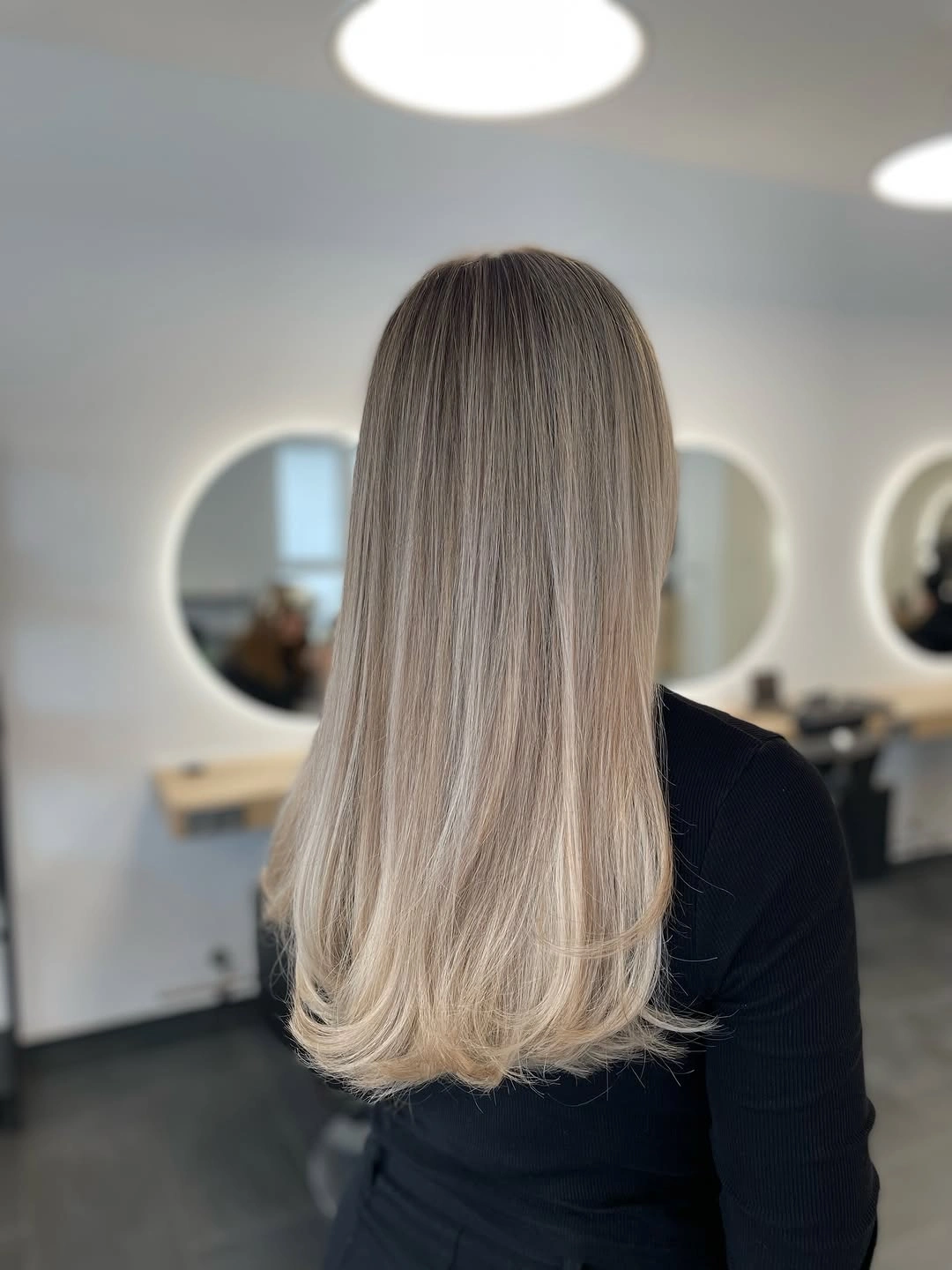
Photo via Instagram
This is a restrained example of how end direction alone can alter a straight silhouette. The middle remains calm and vertically aligned, but the subtle lower curve softens the transition into the perimeter and creates a more rounded finish than a completely blunt edge would provide. Readers who prefer minimal movement can use the bottom curve as the main reference rather than adding waves through the full length.
Reducing the under-turn would make the outline read straighter from top to bottom, while increasing it would give the perimeter more visible shape. The smooth back view keeps that small change in direction easy to notice because there are few competing bends elsewhere.
Bronde Waves With Lighter Front Contrast
The medium-long bronde hair has a soft central placement, but the lighter sections nearest the front make that area stand out before the eye follows the darker lengths downward. Those brighter pieces travel through broad, relaxed bends toward the chest, so their direction remains easy to trace against the deeper brown areas beside them. The contrast gives the front framing more visual emphasis without separating it from the rest of the wavy silhouette.
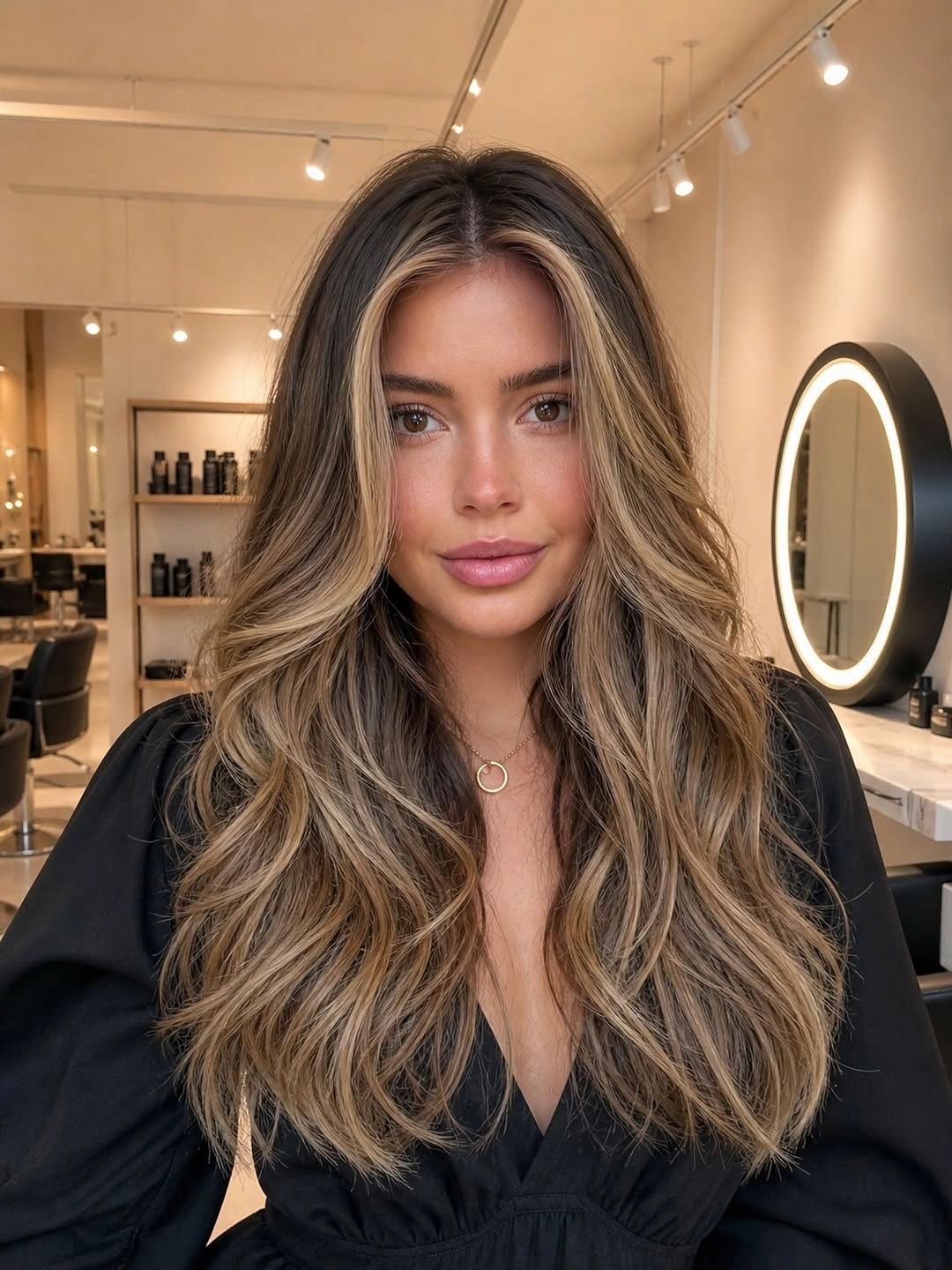
Photo via Instagram
Movement develops gradually through the middle and lower lengths rather than arriving as one dramatic curl at the perimeter. Because the lighter front sections follow the same broad rhythm as the surrounding hair, color contrast and wave placement reinforce each other while remaining visually distinct choices. A reader could emphasize the front contrast, soften it, or keep similar waves with a more uniform color distribution.
The transferable idea is the relationship between a brighter front path and a looser moving background. Keeping the bends broad preserves that connection, while straighter surrounding lengths would make the lighter front sections even more visually prominent.
Wispy Burgundy Fringe Against Quiet Long Lengths
The wispy curtain-like fringe supplies most of the small directional changes in this long burgundy or mauve hairstyle, with separated pieces falling across the forehead and beside the face. Below that active front area, the main lengths remain comparatively straight and continuous for much of their descent. The contrast makes the top feel detailed while the body of the hairstyle stays visually calm.
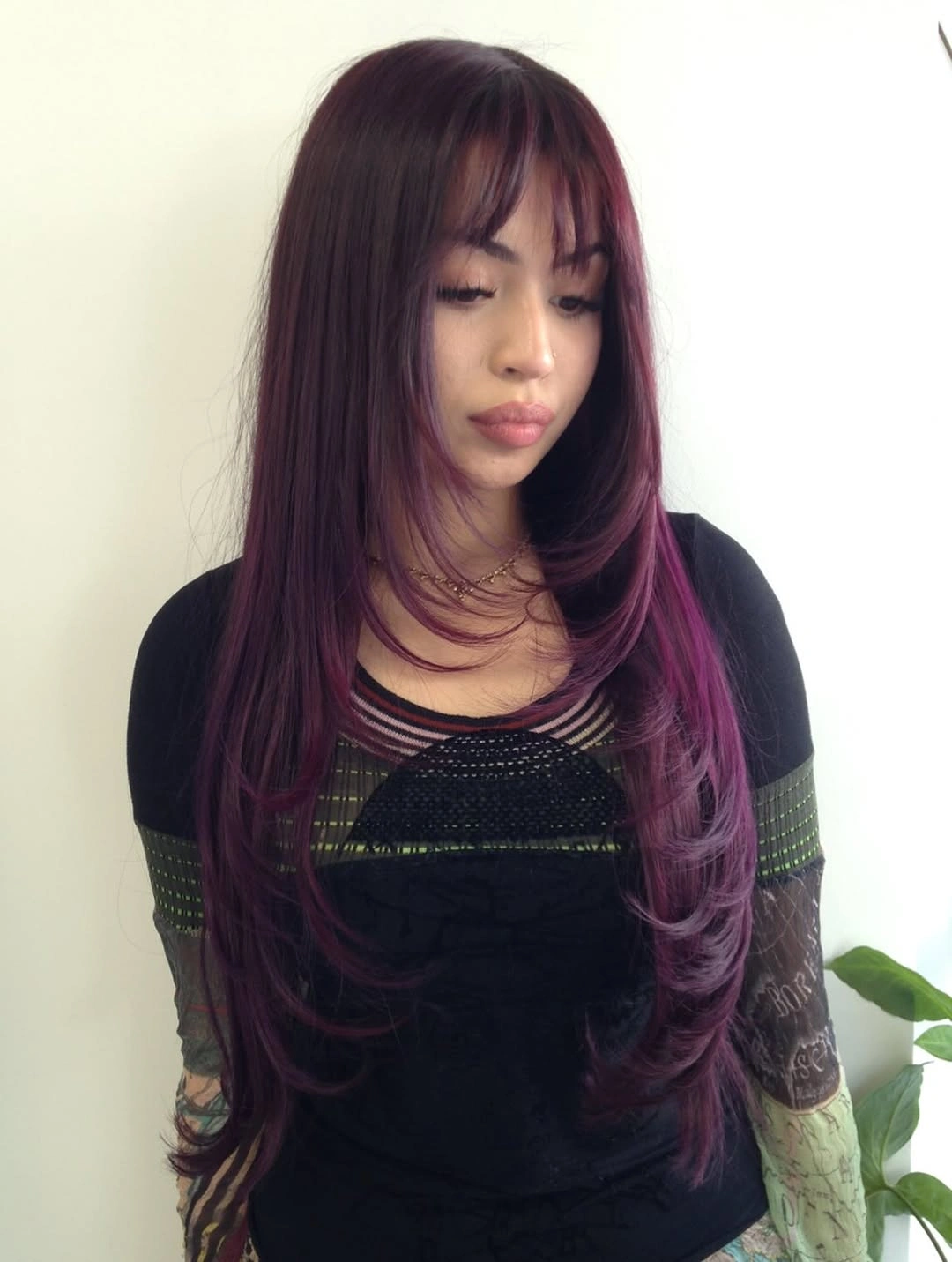
Photo via Instagram
Gentle bending appears near the bottom, but it does not develop into the broad repeated waves seen in more expansive long styles. That restrained lower movement lets the fringe retain its role as the most fragmented part of the silhouette while the burgundy lengths form a cleaner vertical field behind it. Readers can borrow the active-front, quiet-length contrast without treating the exact fringe spacing or color as fixed.
More lower curvature would distribute movement through a larger portion of the hair, while straighter ends would sharpen the contrast with the wispy front. The existing balance works because the detail is concentrated near the top rather than repeated everywhere.
Glossy Black Lengths With Low-Set Waves
The black hair stays smooth and reflective through the upper and middle areas, with a soft central placement guiding the lengths downward before substantial movement begins. Large waves gather much lower in the silhouette, where broad rounded sections expand near the ends. Delaying the strongest curves this far down gives the hairstyle a calm upper line and a noticeably heavier visual rhythm near the perimeter.
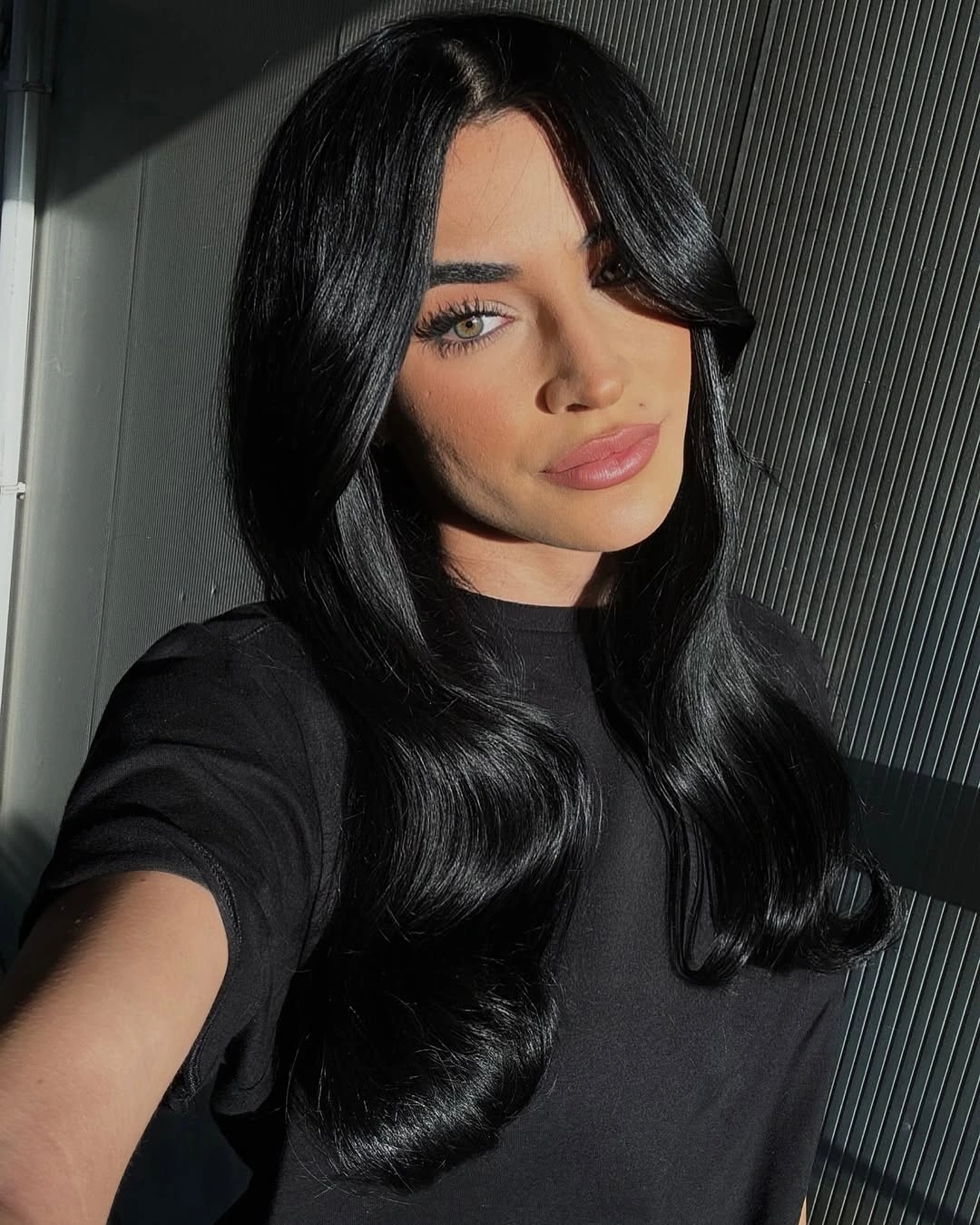
Photo via Instagram
The scale of those lower waves matters because each bend occupies a wide section of hair rather than breaking the surface into many small turns. Against the glossy dark surface, the curves read as continuous sweeping planes, making their size and placement especially visible. A reader can compare this low-set movement with waves that begin closer to the face to see how placement changes the balance without changing the overall medium-long range.
Raising the first substantial wave would spread width through more of the silhouette, while keeping it low preserves the smoother upper column. The broad curve size could also be reduced independently for a quieter lower finish.
Copper Blonde Sections Flow Through S-Waves
From the back, clearly separated copper, blonde, and brown sections travel through loose S-shaped waves, so each color path changes position as the hair bends from side to side. The lighter sections become especially visible where a curve turns outward, while deeper brown and copper areas reappear through neighboring arcs. Movement therefore changes how the color arrangement is read without requiring any claim about how those visible sections were created.
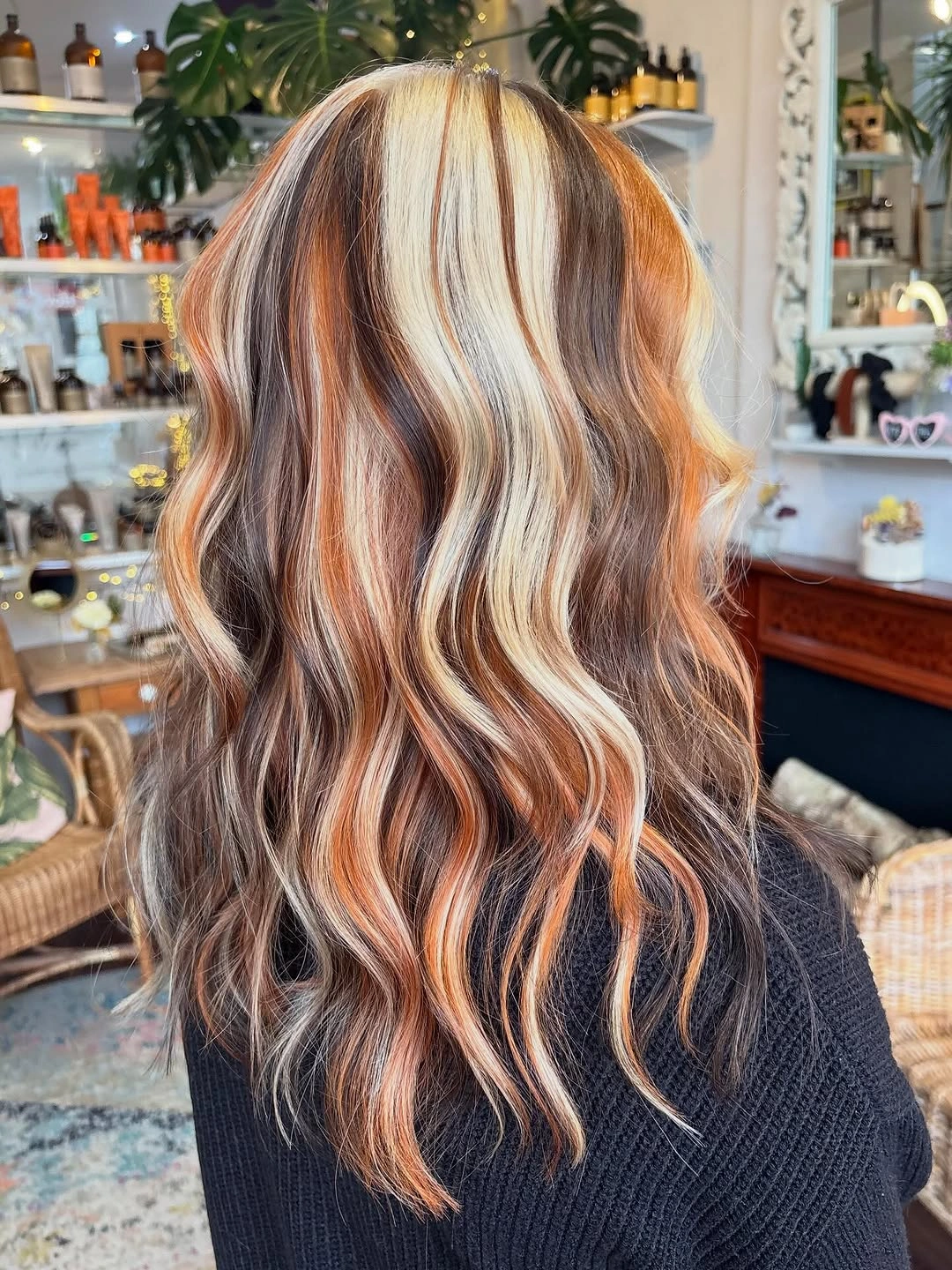
Photo via Instagram
The broad S-waves provide a repeating structure that lets the different tones weave visually through the long silhouette instead of remaining as straight vertical bands. Because the bends are loose rather than tightly repeated, there is enough space to follow individual lighter and darker paths through several direction changes. Readers can treat wave shape and color contrast as separate variables when deciding which part of the effect interests them most.
Straighter lengths would make the color sections read more vertically, while stronger bends would shift those visible paths more frequently across the back. The useful reference is how movement alters the placement of contrast from one level to the next.
Side-Parted Burgundy Waves With Lower Volume
The side part gives the upper section a clear directional bias, with more visible burgundy-brown hair sweeping toward one side before the silhouette widens below. Through the middle lengths, broad smooth waves begin to round outward, and the lower half develops into larger curled sections with substantial visible volume. This creates a progression from directional control above to expansive movement near the bottom.
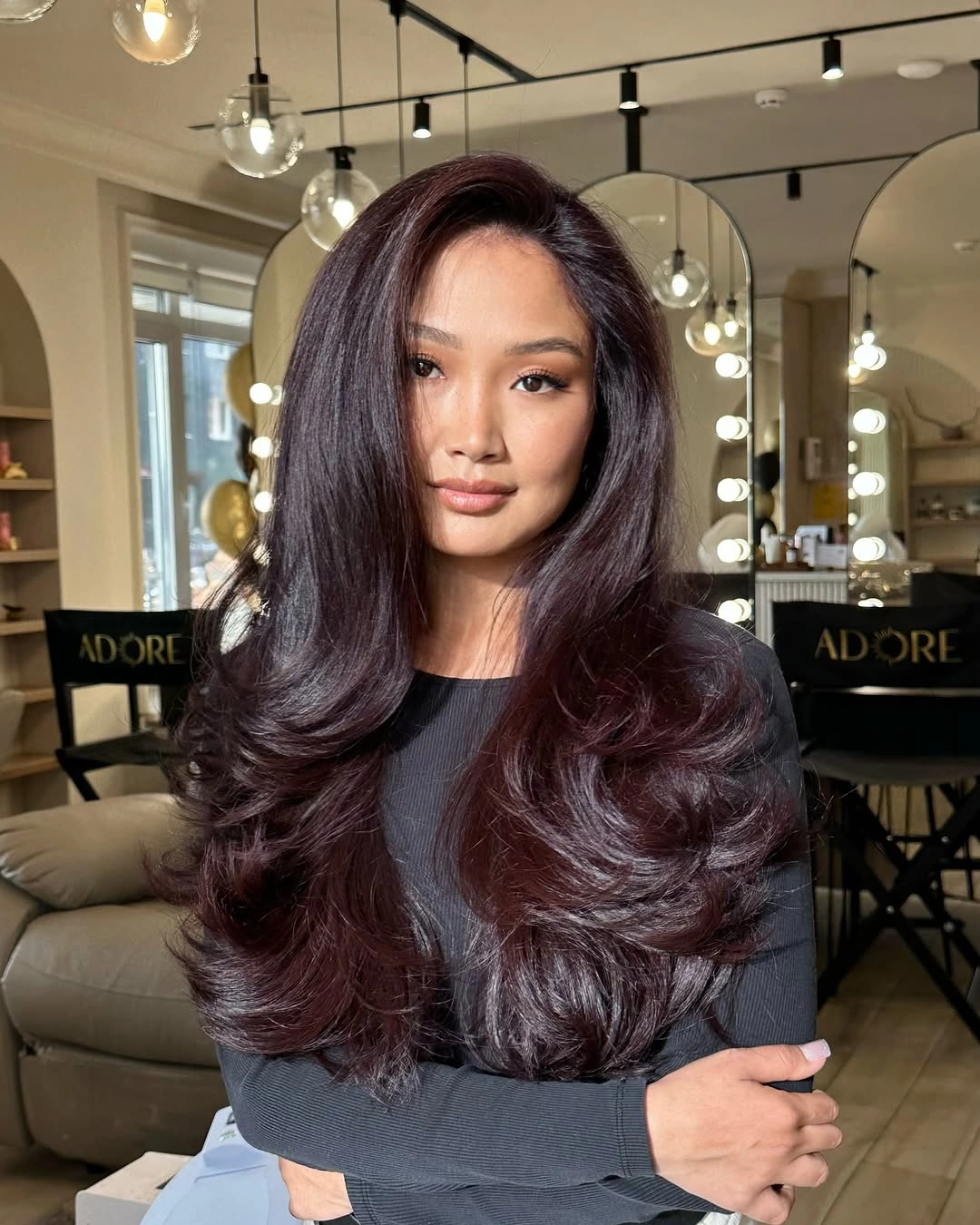
Photo via Instagram
The lower curls carry much of the visual weight because several large rounded sections overlap around the chest while the top remains comparatively close and smooth. That concentration keeps the hairstyle from feeling equally wide from crown to perimeter, and the side-directed upper area adds another layer of asymmetry before the curls broaden both sides. Either the side placement or the concentrated lower movement could be softened while preserving the other.
A less pronounced side direction would make the upper balance more even, while smaller lower curls would reduce the width near the perimeter. Keeping both features strong creates the clearest contrast between a swept upper line and a rounded lower silhouette.
Bright Copper Sweep With Rounded Curled Ends
The bright copper-orange color gives the long hairstyle immediate visual impact, but the strongest structural cue is the side-directed front that sweeps across the forehead before joining the smoother lengths. Most of the body stays controlled and relatively straight, so the large rounded curls at the ends become the clearest change in direction. The black leather jacket provides a dark frame that makes both the color and lower curves stand out more strongly.
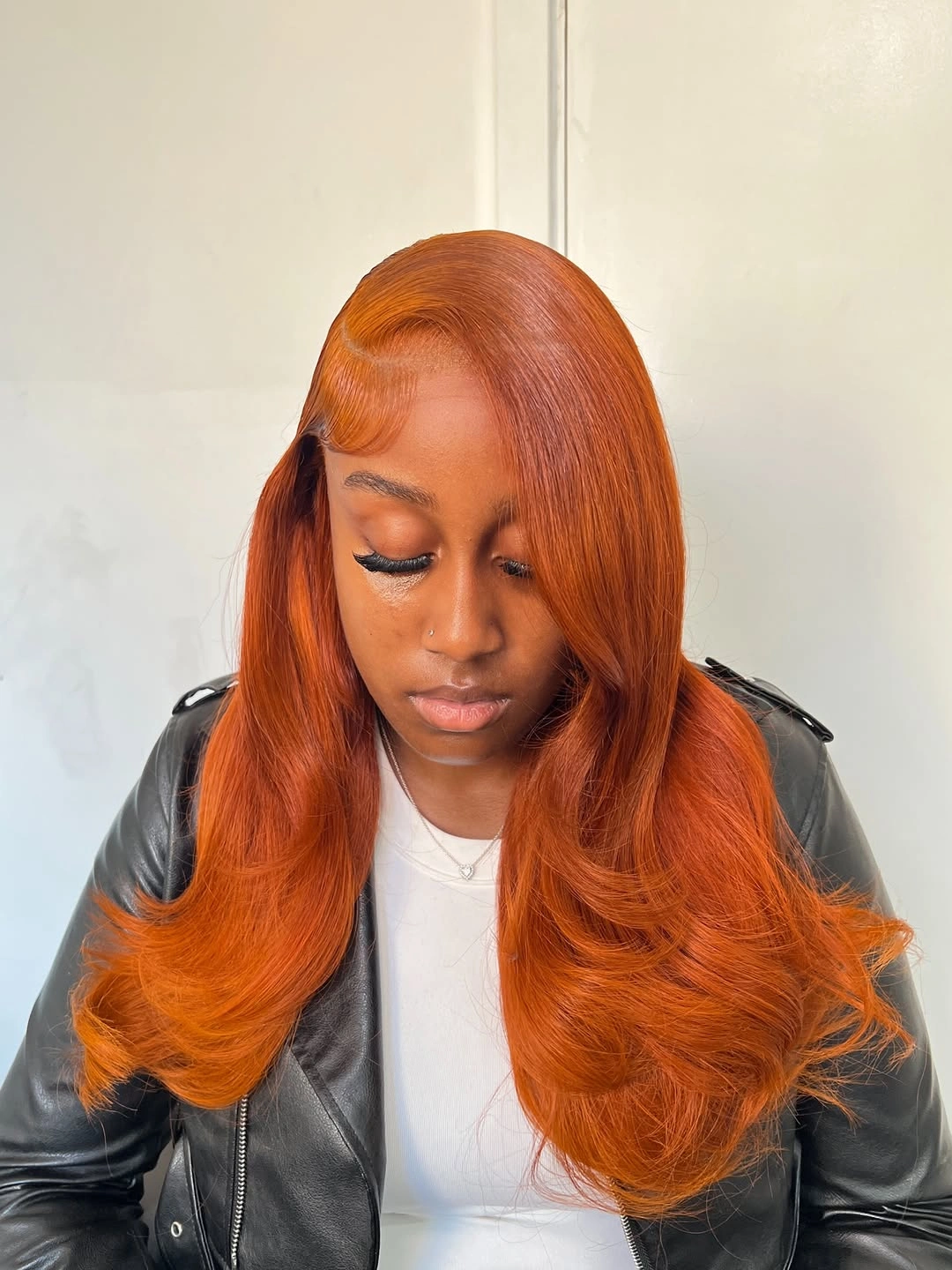
Photo via Instagram
Because the upper and middle sections stay comparatively smooth, the curled ending reads as a separate lower zone rather than part of an all-over wave pattern. The side sweep adds asymmetry near the top, while the rounded ends widen the silhouette near the bottom, creating two distinct points of movement. A reader could keep the vivid color effect while softening either the upper sweep or the lower curl scale.
The useful comparison is between a strongly directed front and a much fuller finish at the ends. Reducing the curl size would make the long shape read straighter, while keeping the lower curves large preserves the stronger bottom emphasis.
Compact Brown Shape With Subtle End Turn
The medium brown hair forms a compact outline that ends around the shoulder-to-collarbone area, with a centered or near-centered division keeping the upper shape balanced. The sides remain mostly straight, and only the lower edges turn slightly, so the silhouette feels restrained rather than heavily waved. Against the black graphic T-shirt, the clean brown perimeter is easy to read without relying on an exact length label.
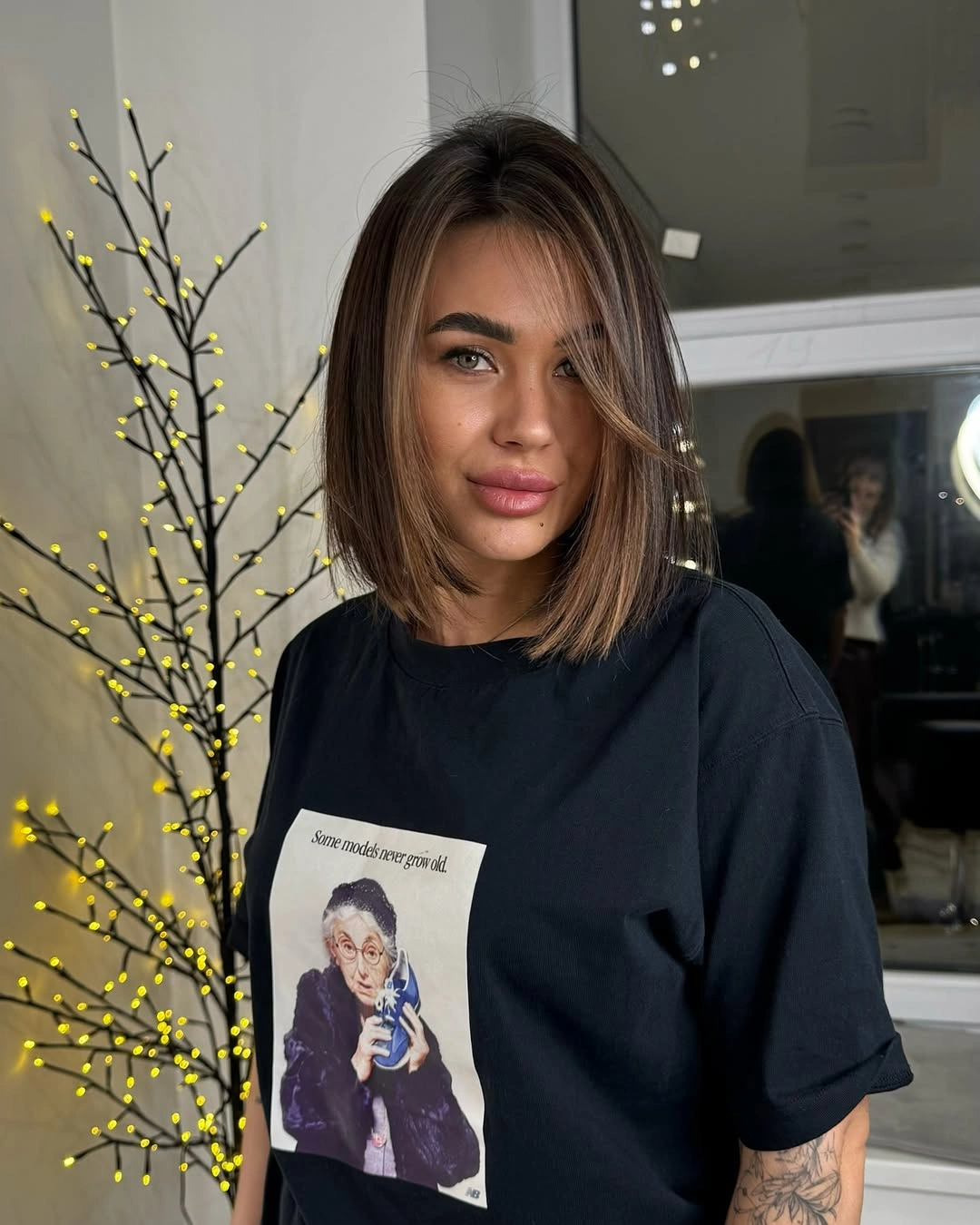
Photo via Instagram
Small changes at the bottom matter more here because the overall shape is shorter and visually simpler than the surrounding long hairstyles. The slight turn at the ends prevents the perimeter from looking completely rigid, yet it does not create a broad curl or a layered wave pattern. A reader can treat that subtle lower movement as the defining choice and keep the rest of the outline quiet.
The compact scale makes this a useful reference for someone comparing straight medium-length shapes with only a hint of movement at the bottom. A stronger turn would make the perimeter more decorative, while straighter ends would emphasize the clean side lines even more.
Long Brown Lengths With Localized Curves
The long medium-brown hair begins from a centered part and falls in smooth, controlled sections, with the front pieces curving gently away before continuing into the main lengths. Most of the surface stays calm and straight, so the localized movement around the front and at the ends remains easy to distinguish. The pink sweater creates a light backdrop that helps the brown outline and inward finish read clearly.
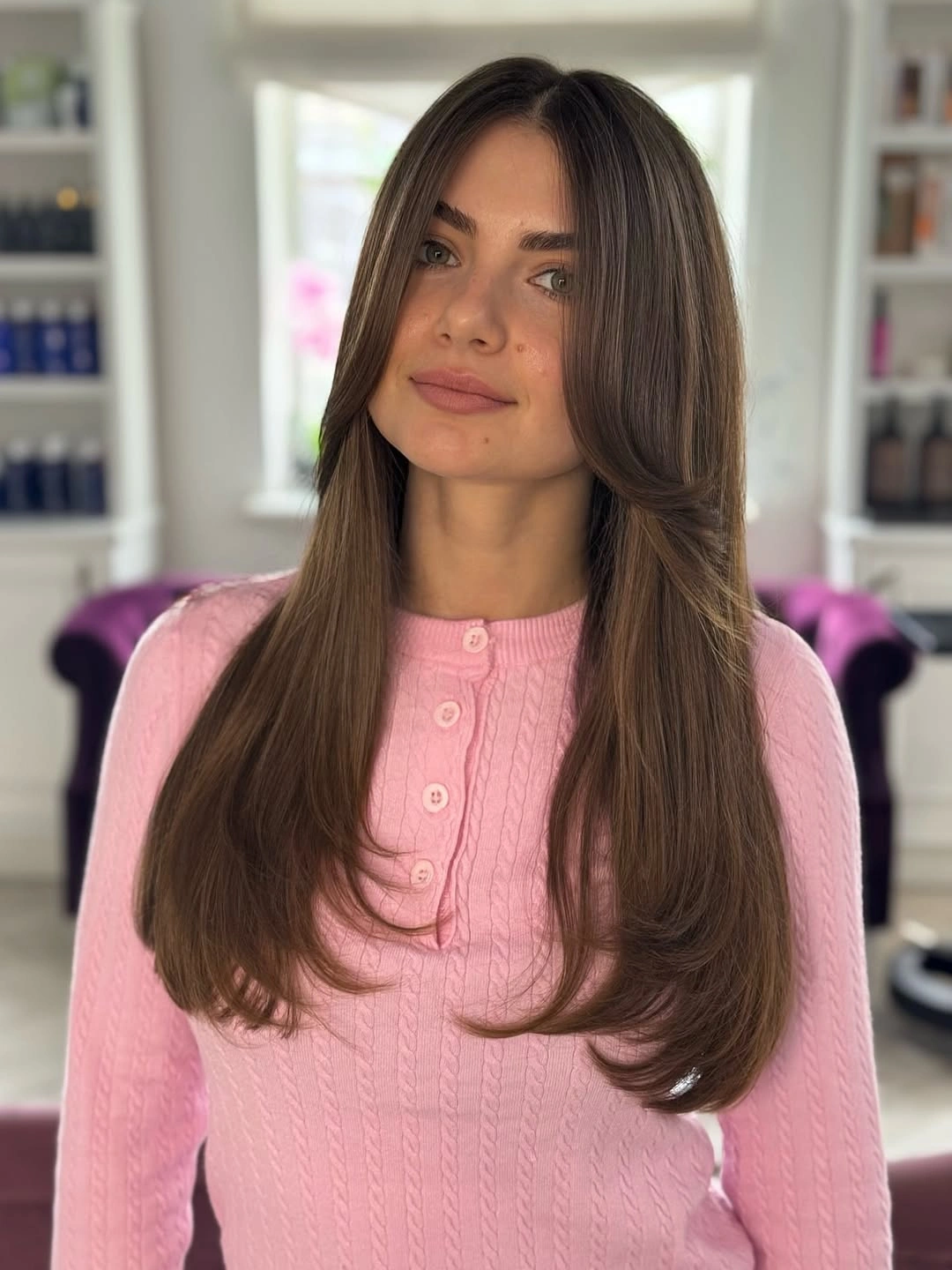
Photo via Instagram
The key idea is that movement is concentrated rather than distributed through the full length. Face-framing sections add a soft directional change near the upper front, while the ends curl inward close to the body, keeping the lower silhouette narrow and controlled instead of expanding into large waves. Readers can separate those two choices and borrow either the front framing or the inward finish on its own.
This long shape shows how a hairstyle can stay visually calm while still using movement in two carefully placed areas. Keeping the central lengths smooth allows the face-framing curves and inward ends to do the shaping without turning the entire silhouette into a wavy style.