
The simple side part braid is the workhorse of hairstyling: it looks intentional with minimal effort, and it works on everything from second-day waves to fresh box braids. This year, the trend leans toward lived-in color and glossy natural texture, with soft face-framing layers and curtain bangs woven into the braid for a modern finish.
This collection of 21 styles covers the full spectrum, from salon-level cornrows to DIY Dutch braids you can do in under ten minutes. Whether your hair is fine and falls flat or you need a style that hides a grow-out line, there is a simple side part braid here that solves it. Expect practical advice on hold time, texture, and upkeep for each look.
Thick Wavy Braids With Side Part Mid-Back
A deep side part splits thick, wavy hair into two distinct sections before the braids start, giving the style a deliberate foundation that random sections cannot match. This works best on hair with natural volume and at least mid-back length, since the braids need enough heft to hold their shape without looking stringy. Ask your stylist for: thick wavy braids, mid-back length, side part. The side view keeps the part line visible, so a boar bristle brush at the roots and a braid balm on the ends are your main tools. A trim every ten to twelve weeks keeps the ends from fraying.
Ash Blonde French Braid With Loose Waves
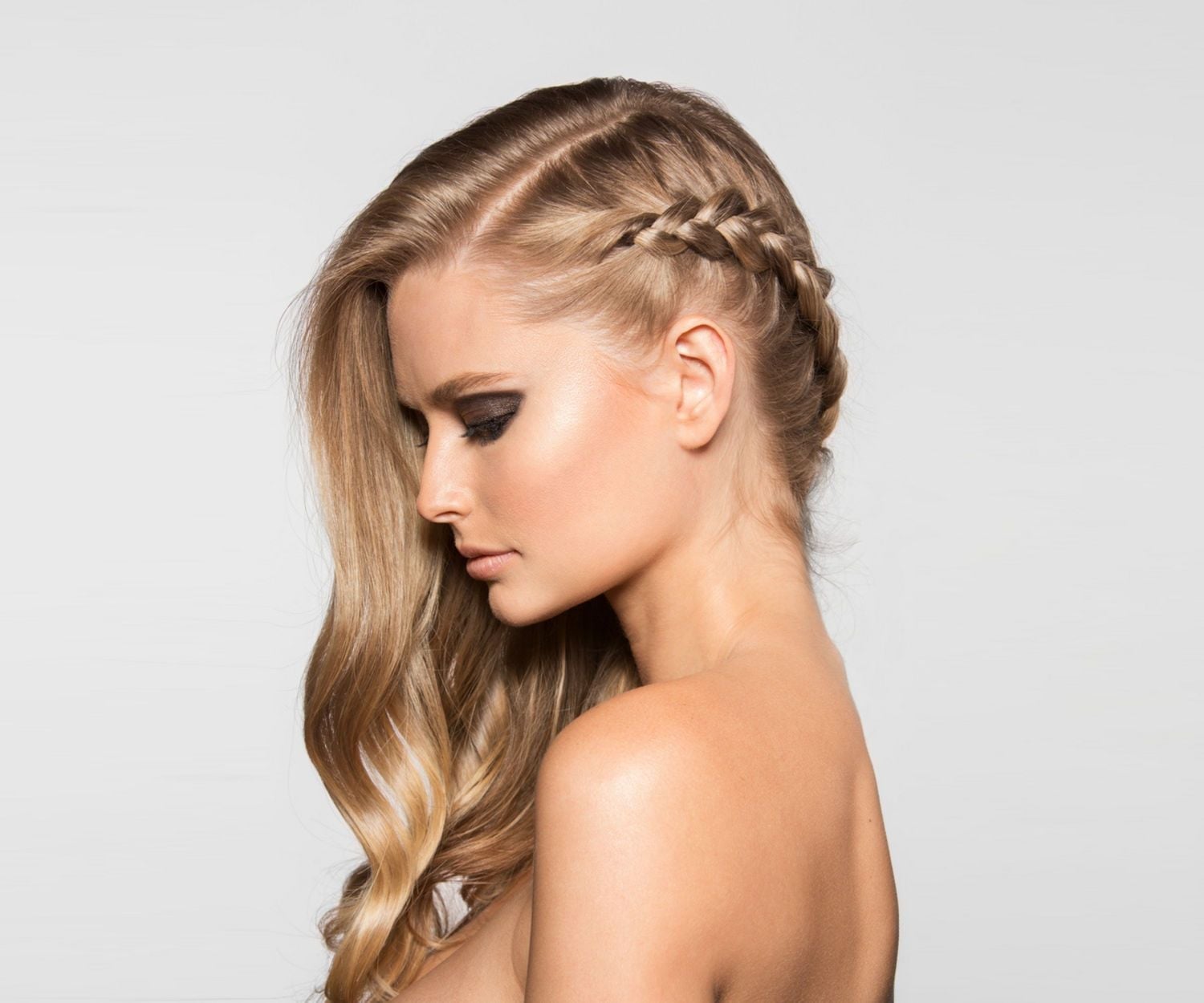
A side part anchors the braid along one side, and the ash blonde with subtle highlights keeps the weave from looking flat. Ask your stylist for: French braid along hairline, transitioning to loose waves, ash blonde. The waves hold better with a dry texture spray, and a daily refresh of the front sections helps it hold until the next wash.
Black Braids With Curly Ends Mid-Back
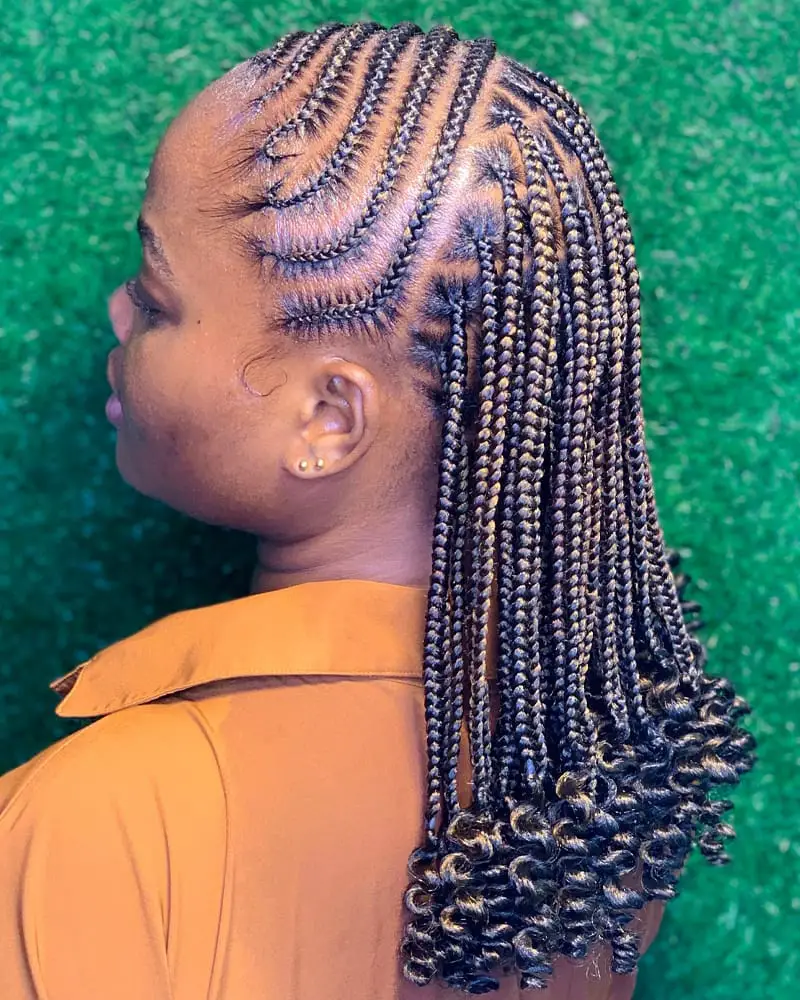
A standard braid ends blunt, but these braids end in tight curls, which gives the whole style a finish that feels more deliberate. It is a look that works well on coily texture that can hold a curl without product overload. Ask your stylist for: mid-back braids with tight curly ends, side part. The curly ends need separate styling attention and can frizz faster than the braided sections above. A curl-defining cream on the ends and a silk scarf at night help the coils stay defined longer.
Box Braids With Cornrow Detail Side Part
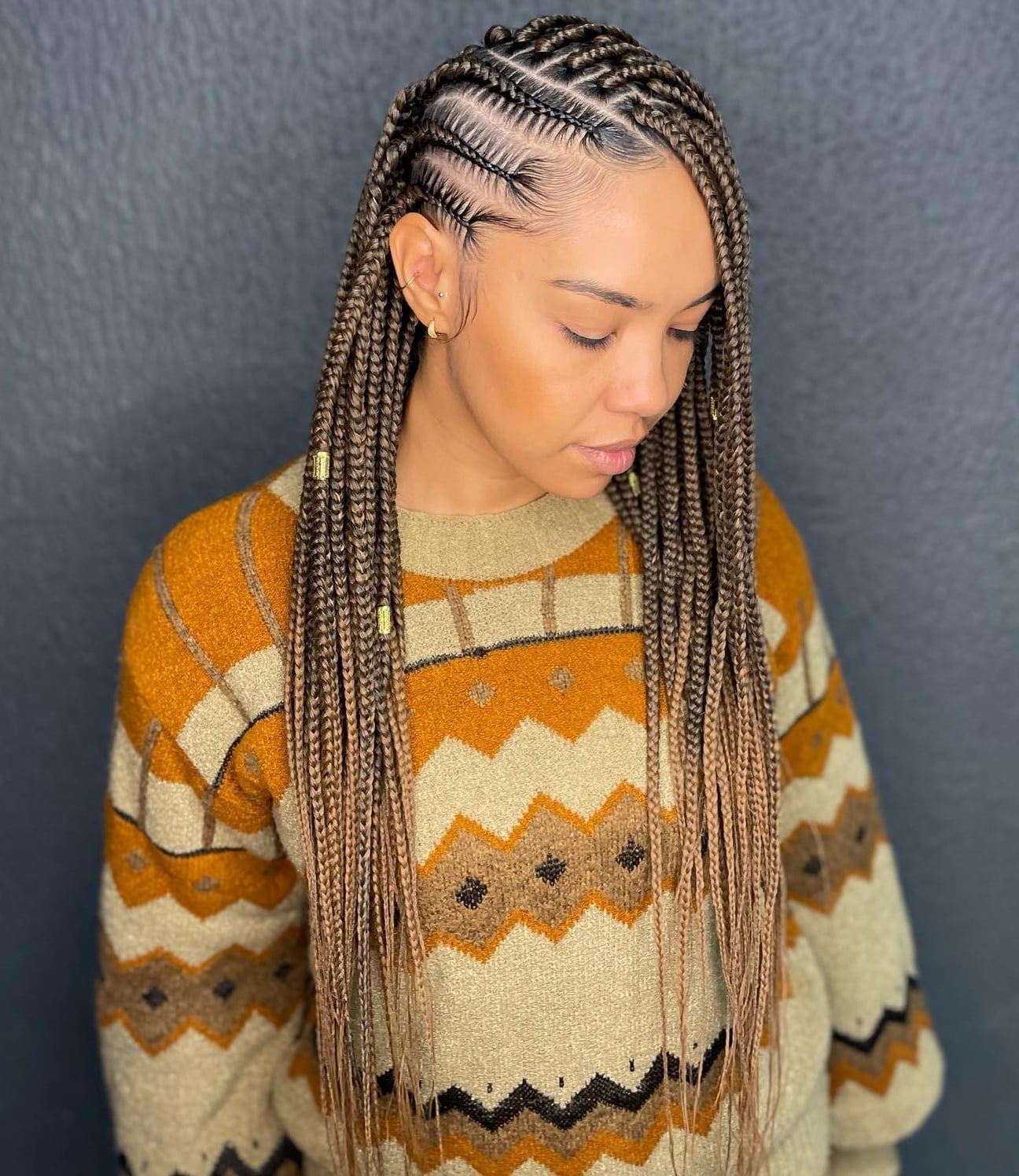
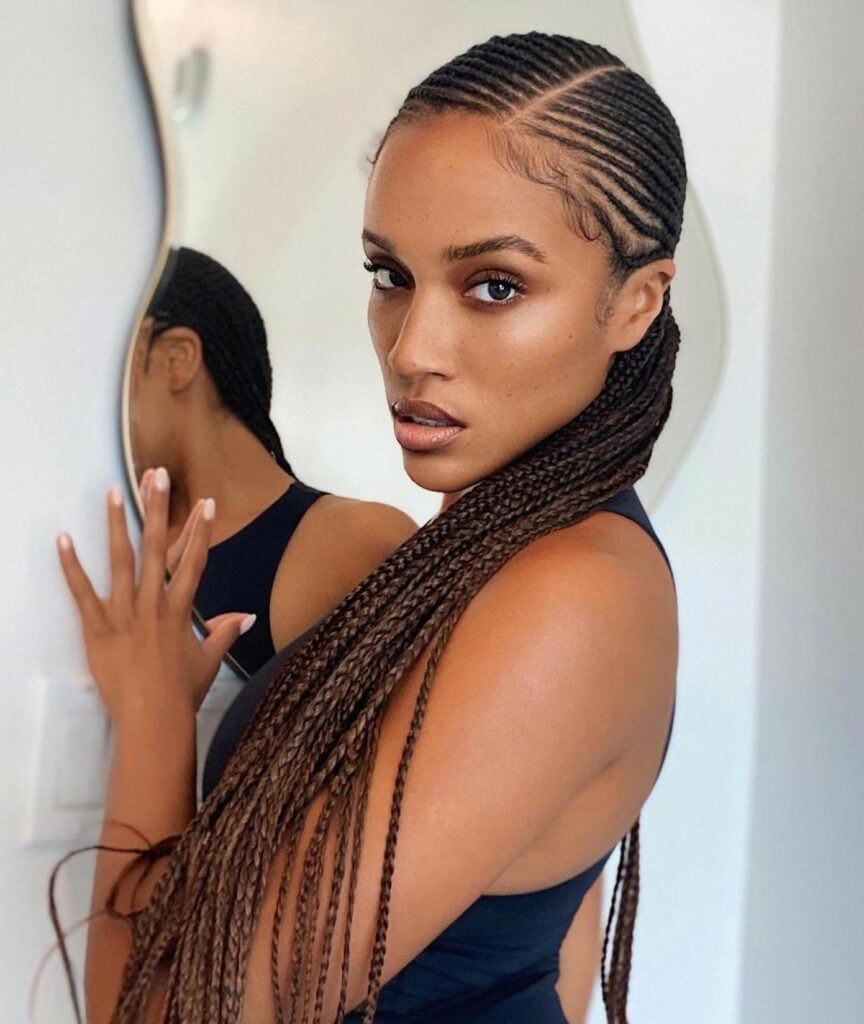
A side part gets more interesting when cornrows trace the hairline before the rest drops into individual box braids. The cornrow detail adds a border that makes the part look built into the design rather than just a line. Ask your stylist for: box braids with cornrow hairline detail, mid-back length. The brown and blonde tones add dimension without changing the braid structure, and the side view keeps the cornrow pattern visible. A scalp serum every few days prevents dryness at the part, and a re-braid visit every eight to ten weeks keeps the roots tidy.
Cornrow Braids With Baby Hairs Dark Brown
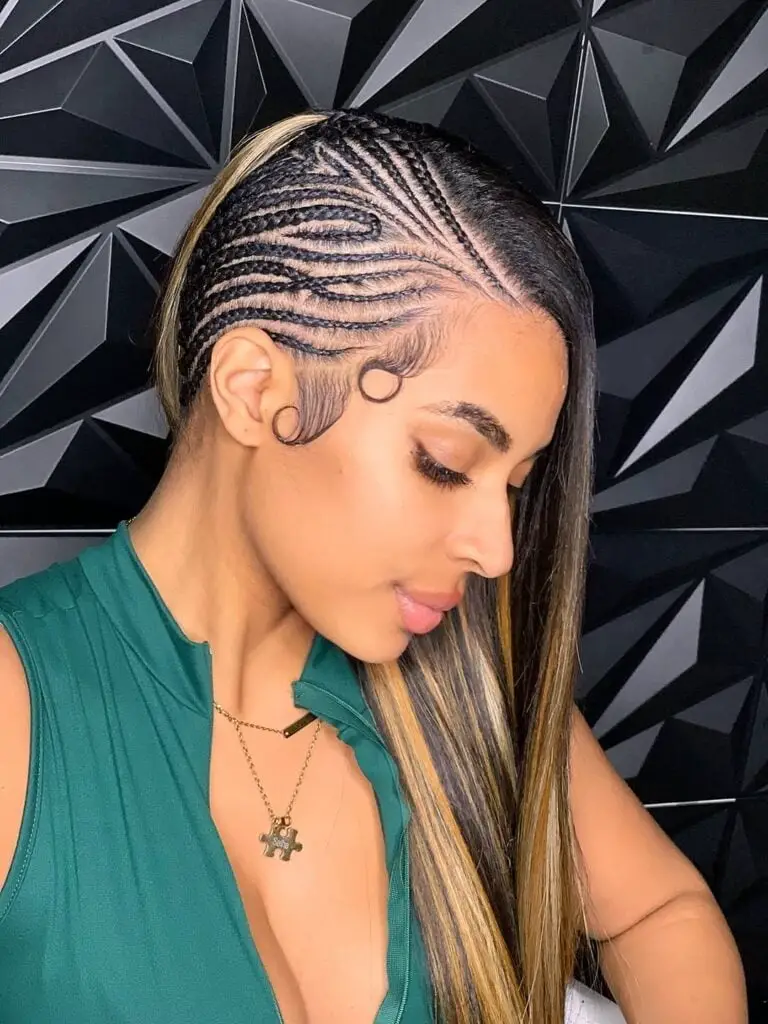
What do you say when you want cornrows that stay neat but still leave room for softness at the edges? Start with the part and the baby hairs. A deep side part lets the cornrows follow the curve of the head, and defined baby hairs along the hairline keep the look from feeling too severe. Ask your stylist for: deep side part with cornrows, long straight hair, defined baby hairs. The hair stays straight, which contrasts with the braided sections and keeps the texture from competing. An edge control gel on the baby hairs holds the shape without flaking, and the cornrows need a re-do every two to three weeks to keep the part crisp.
Fine Black Cornrows With Gold Accents
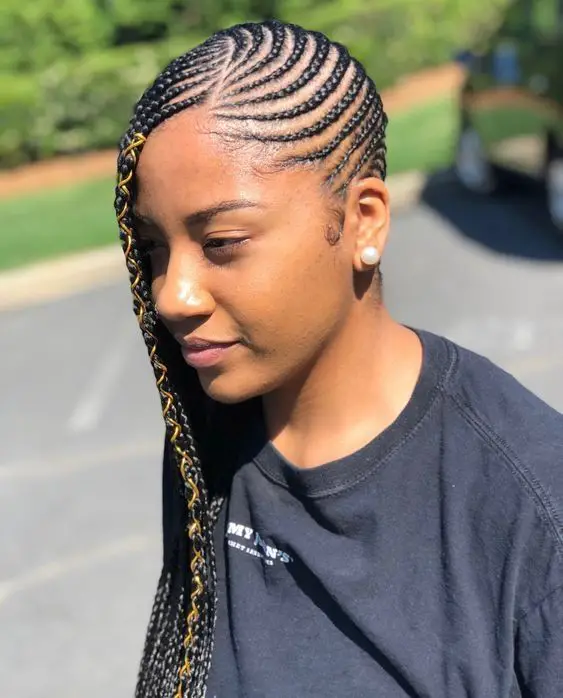
The gold thread woven through these fine black cornrows adds a metallic accent to a neat side-part pattern, creating a jewelry like effect. Fine, straight hair of at least mid-back length holds this structure best; the sleekness is the point. Ask your stylist for: fine black cornrows with gold thread, mid-back length. Secure the gold threads with a small elastic to prevent unraveling, and plan a re-braid every four to six weeks.
DIY Dark Brown Dutch Braid Mid-Back
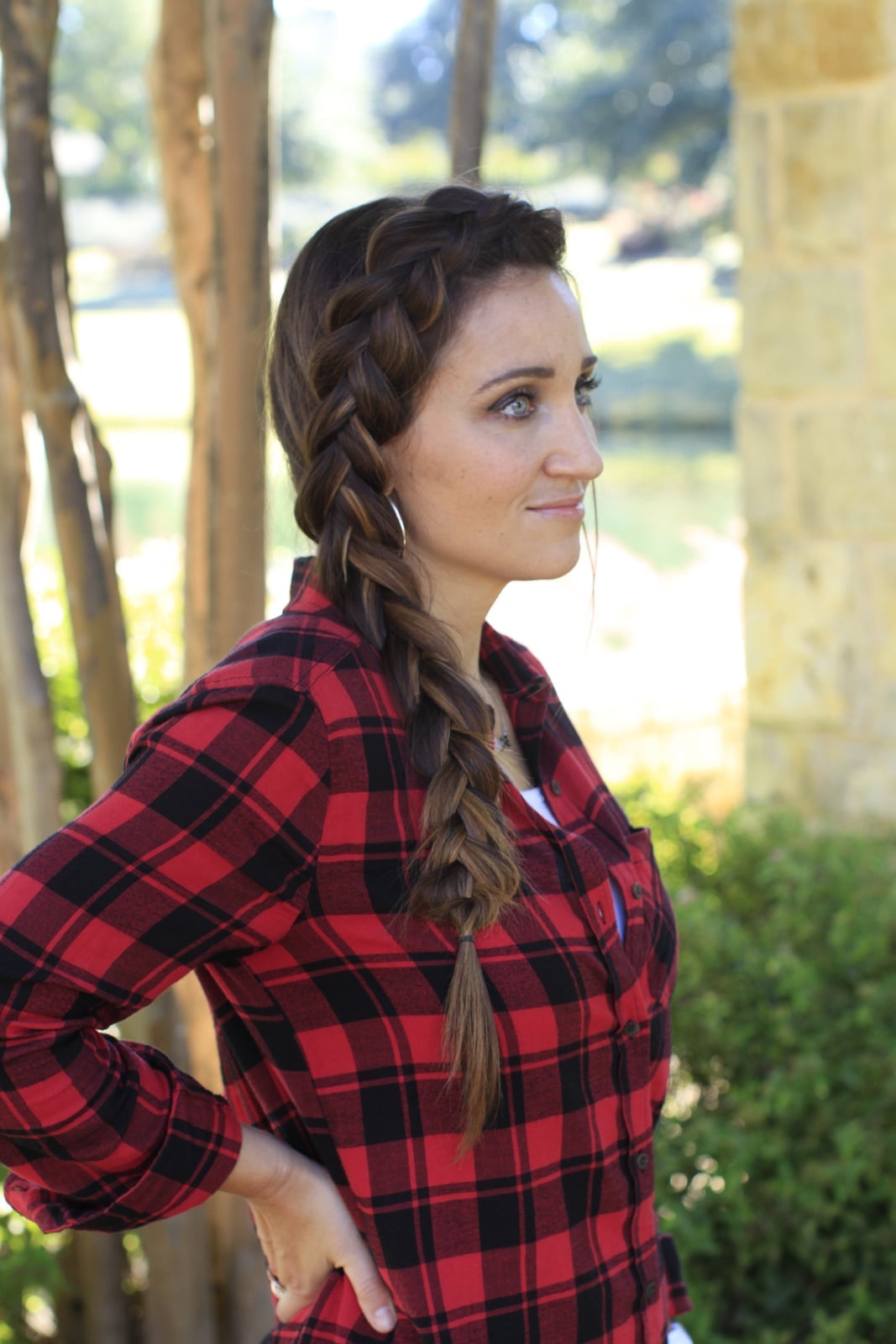
The Dutch braid sits raised above the rest of the head, giving thick, wavy dark brown hair a structure that a standard three-strand braid can’t match. This one starts at a side part and ends mid-back, with subtle layers keeping the tail from looking blunt.
Practice the technique on a friend or a mannequin head before you try it on yourself. Section the hair at the crown, cross the outer strands under the middle one, and repeat. A texturizing spray at the roots gives grip. This is a twenty-minute DIY once you have the motion down, versus an hour in a salon chair.
Collarbone Blonde Braid With Curtain Bangs
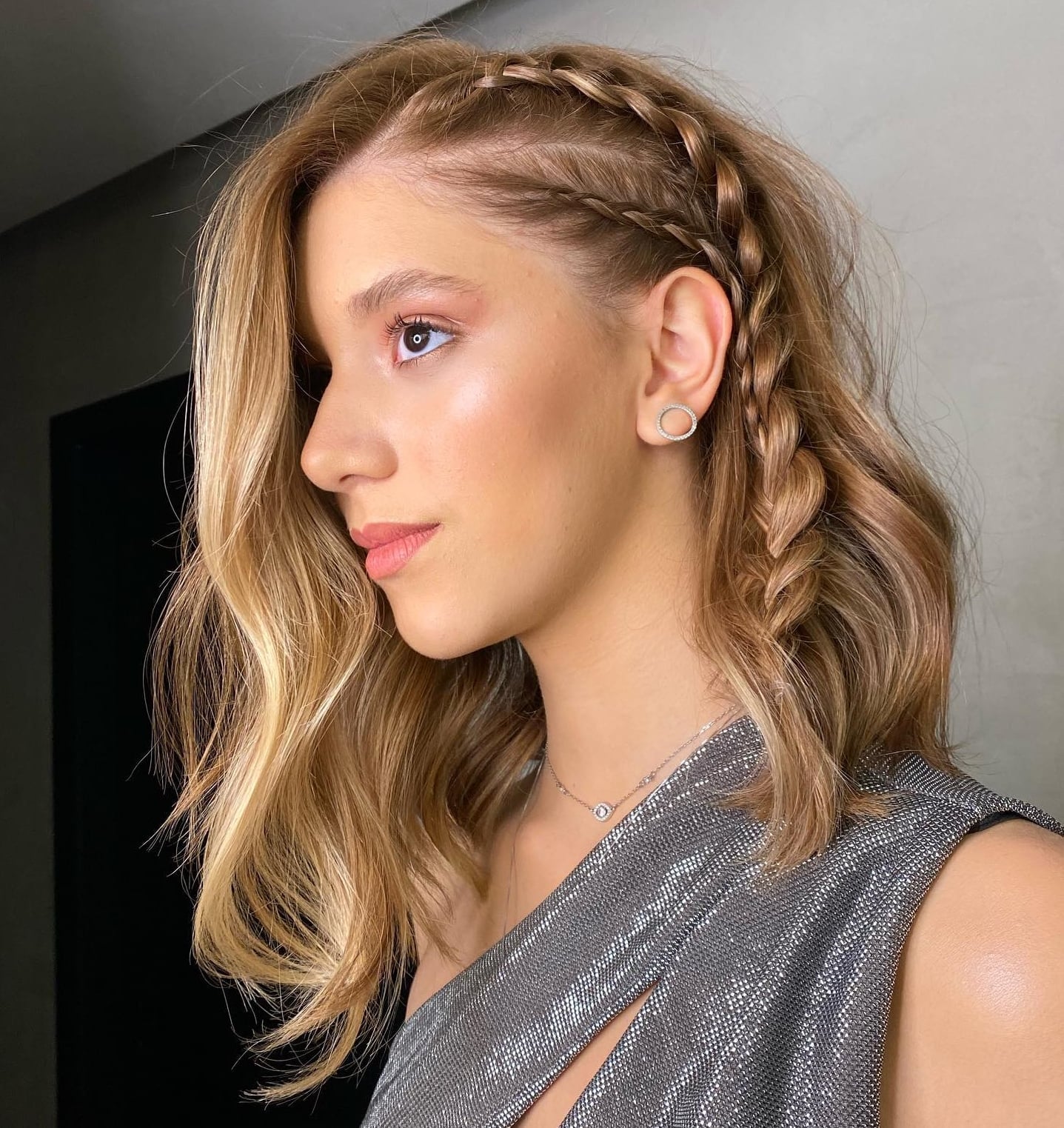
Can a single side braid and loose waves coexist without looking like two different hairstyles? Yes, if the braid stays close to the hairline and the waves are soft. This collarbone-length blonde style with subtle highlights does exactly that, with curtain bangs softening the transition. Ask your stylist for: collarbone length braid with curtain bangs, blonde. Use a flat iron to enhance the waves after braiding, and trim the bangs every four to six weeks to keep them from drifting into your eyes.
Thick Wavy Fishtail Braid Mid-Back
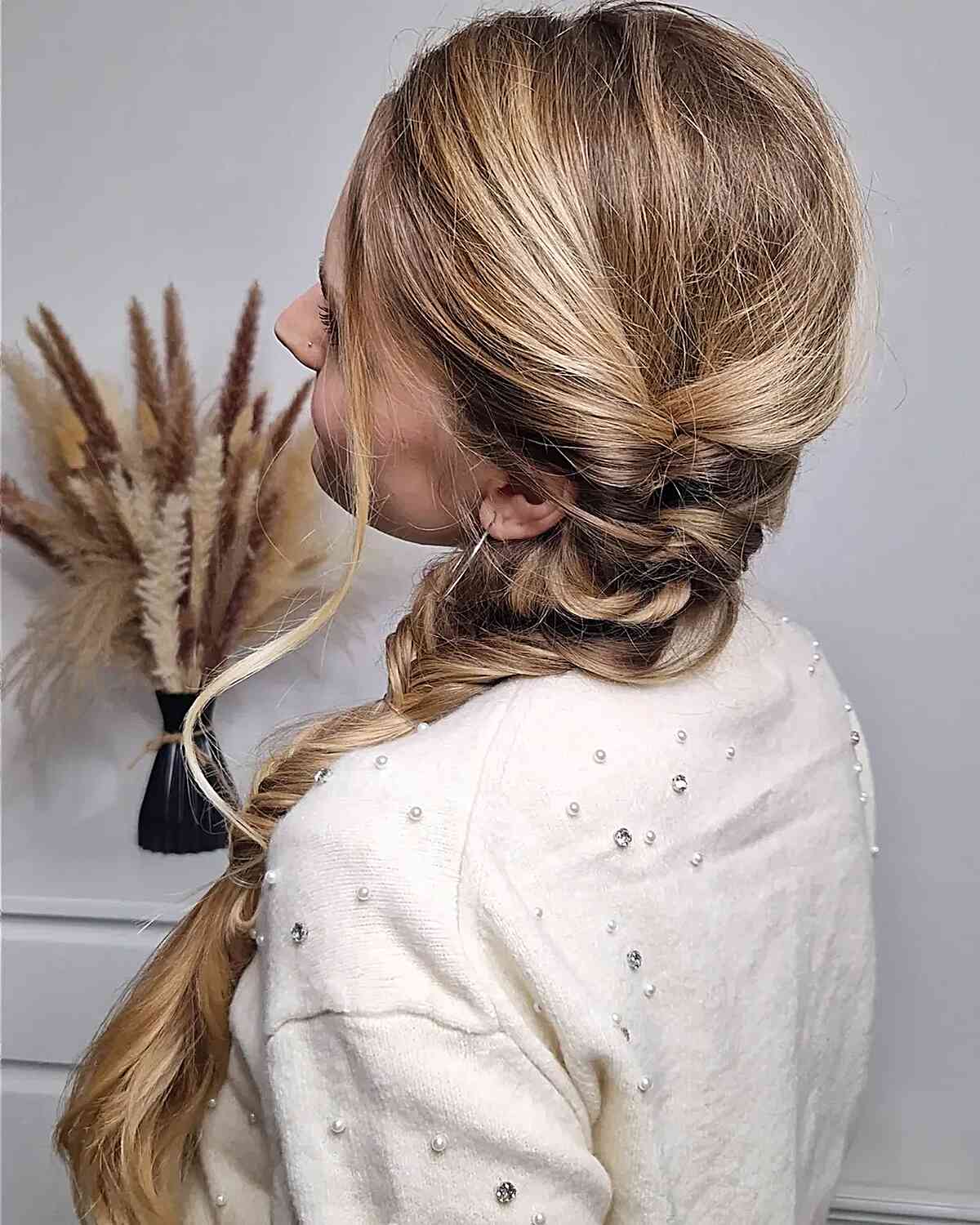
A fishtail braid on thick, wavy hair creates a rope-like texture that looks more complicated than it is. The side part and loose tendrils here keep it from feeling too polished. The mistake most people make is pulling the sections too tight, which flattens the volume. Gently pull apart the finished braid from the bottom up to double its width. The drawback is time: a fishtail takes about twice as long as a regular braid, and the pattern can loosen overnight if not secured well.
DIY Wavy Brown Braid With Side Part

A deep side part and a single braid tucked behind the ear is a styling choice that looks polished with minimal effort. This wavy brown hair with lighter highlights is worn mostly loose, with just one section braided from the hairline down to mid-back.
Start by sweeping your hair to one side and taking a two-inch section from the front. Braid it loosely, then let the rest of your hair fall over it. A clear elastic keeps the braid visible. This is a five-minute DIY that works best on second-day waves, and it keeps the braid defined for a full work day.
Wavy Blonde and Brown Braids Front View
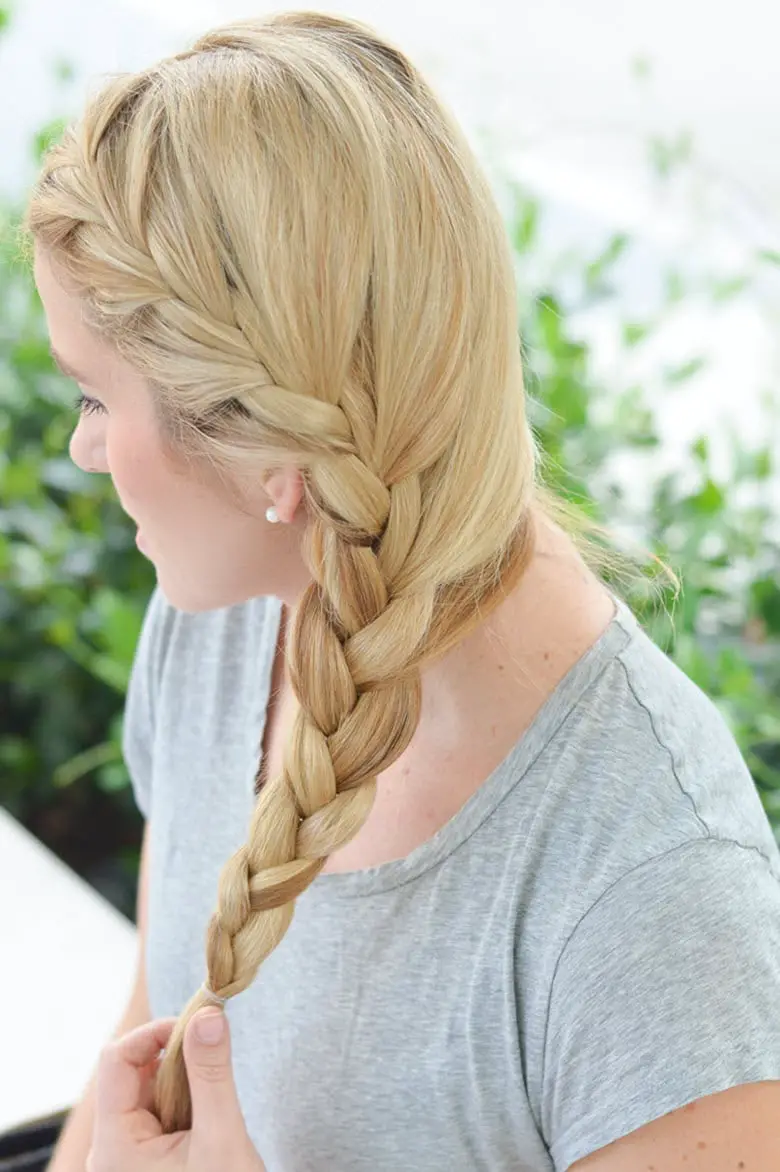
Where a single braid feels too simple, two thick wavy braids with a side part offer the same hold with double the visual weight. It is not a weekend experiment: the mid-back length and the blonde and brown color blend need a salon appointment to get the tension even on both sides. Thick, wavy hair that holds a braid without slipping is the starting point. Ask your stylist for: wavy blonde and brown braids, mid-back length, side part. A finishing spray tames the flyaways that come with wavy texture, and re-braiding every 8-10 weeks keeps the ends fresh. The front view shows the symmetry clearly, which means every strand needs to sit where it was placed.
Collarbone Brown Braid With Side Swept Bang
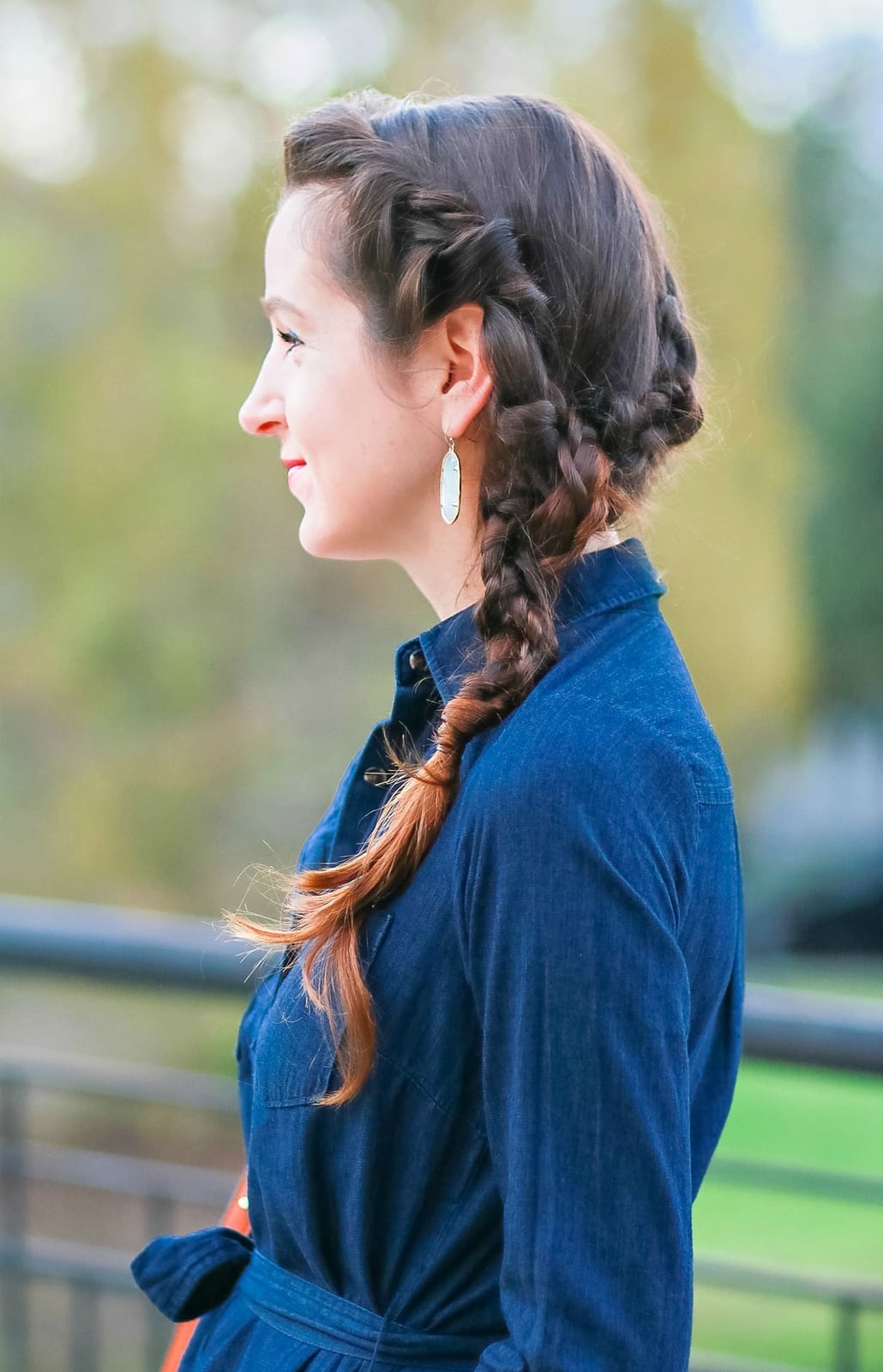
The twist detail running through this collarbone-length braid is the part that catches your eye, but it is also the part that needs attention. Wavy, medium-density hair in brown with blonde highlights holds a side part well, while the side-swept bang softens the line of a square or round face. Ask your stylist for: collarbone length braid with side-swept bang, twist detail. A texturizing spray on the bang keeps volume through the day, and trimming the braid ends monthly prevents the twist from looking frayed. The hold is solid for a casual day, though the twist may loosen by evening without a pin or two.
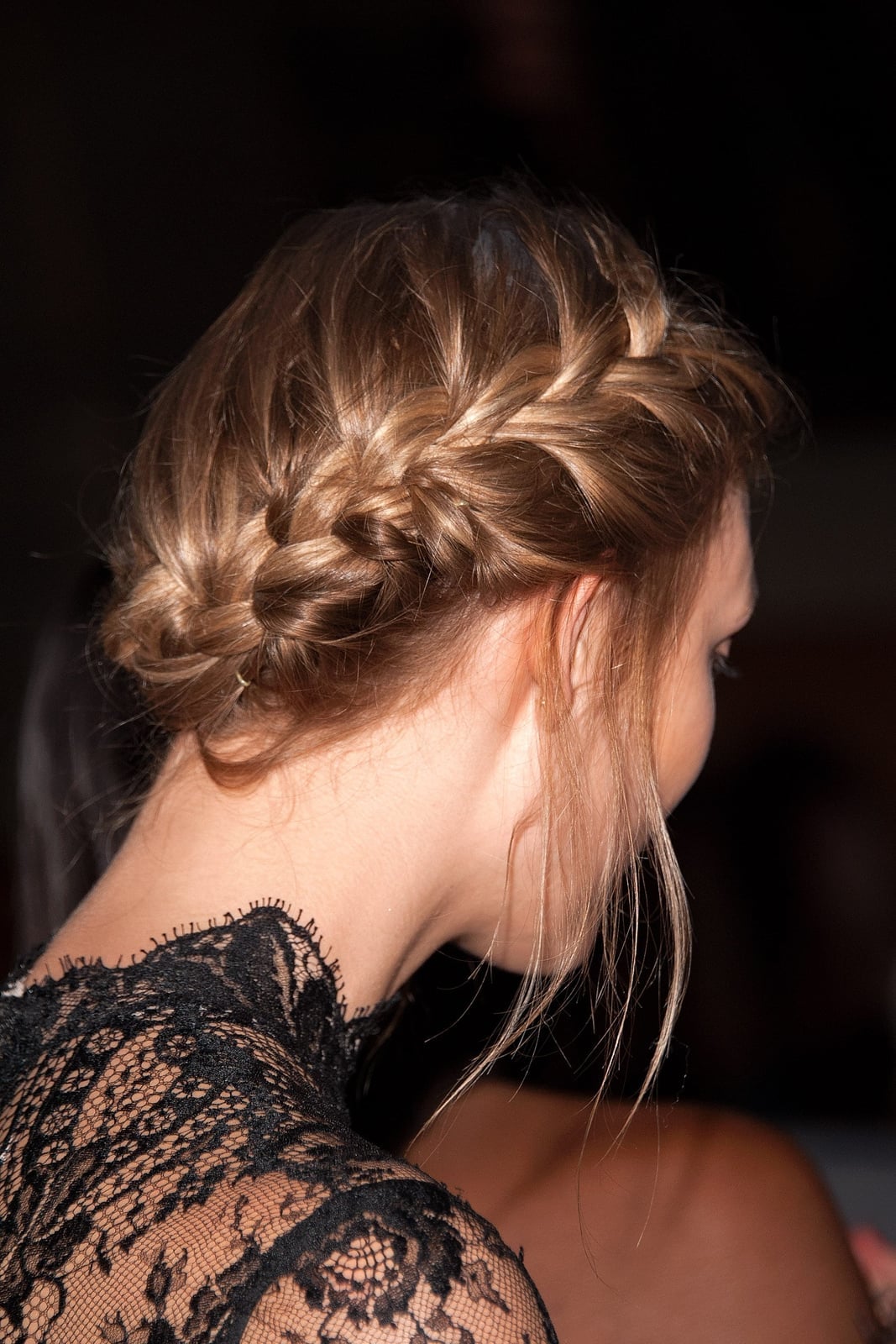
Honey Blonde Balayage Braid Collarbone
A side braid that looks polished without looking stiff starts with warm honey blonde balayage and slightly separated face-framing pieces. Wavy, thick hair gives the braid enough body to look full, while the curtain bangs soften a round or heart-shaped face. Ask your stylist for: collarbone braid with curtain bangs, honey blonde balayage. Use a heat protectant before styling the waves, and trim the bangs every 4-6 weeks so they land at the right spot. It works for a daytime event or a dinner out, and it holds well for several hours without redoing.
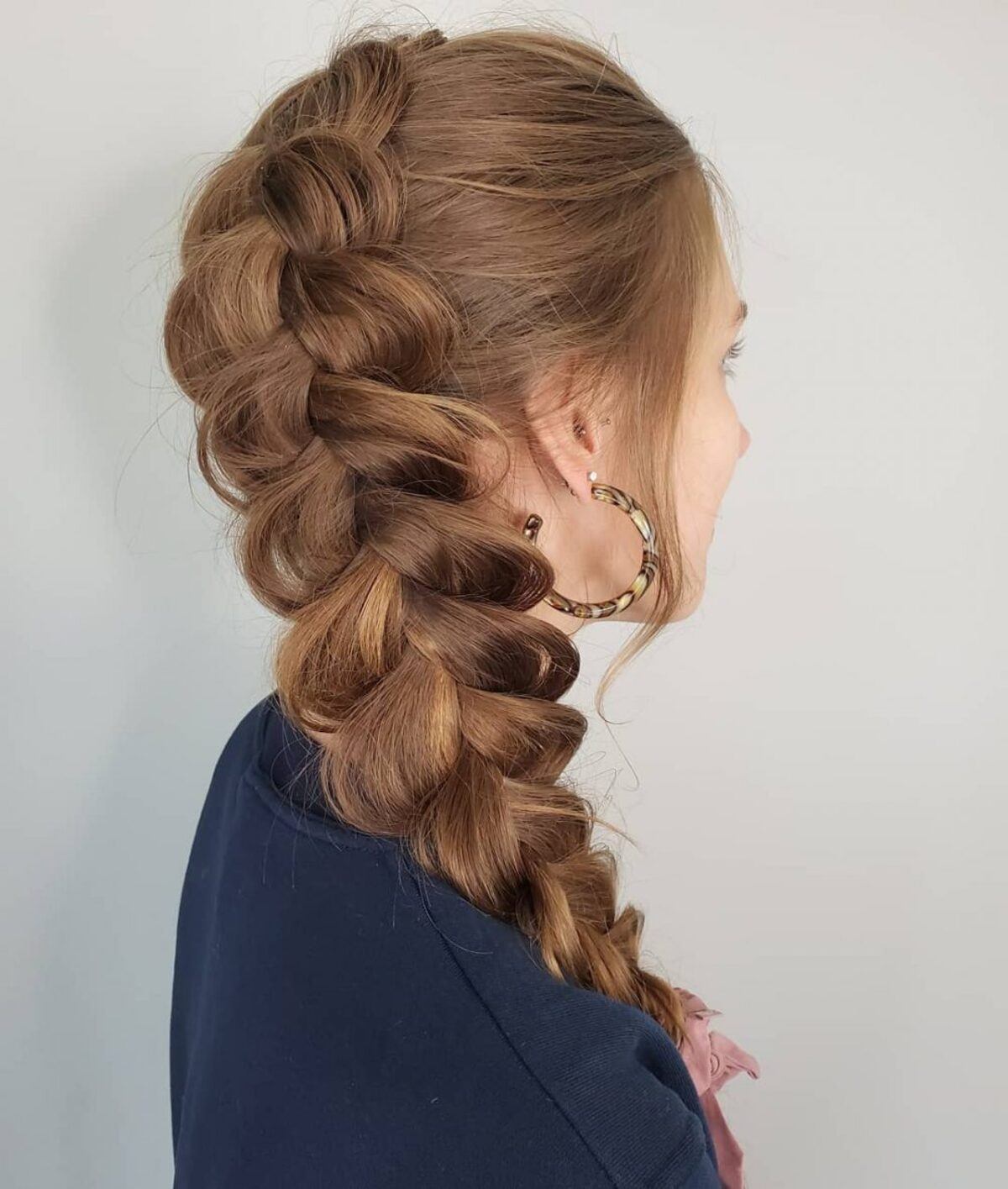
Collarbone Honey Blonde Fishtail Braid, Wavy
The fishtail technique creates a braid that looks intricate without needing a dozen sections. Starting from a side part on wavy, medium-density hair at collarbone length, the honey blonde with lighter highlights shows variation across each strand. Loose pieces left near the face keep it from feeling too precise. This is a salon-level style because even tension on a fishtail takes practice, and the honey blonde color needs a colorist who understands how highlights move within a braid. Ask your stylist for: collarbone fishtail braid, honey blonde, loose strands. Gently pulling apart the braid afterward gives it a fuller, more relaxed finish that holds for a full day.
DIY Red Braid Mid-Back Middle Part

A single braid with a middle part is one of the most DIY-friendly styles, especially on wavy, thick hair at mid-back length. The red color with subtle highlights adds depth that a flat single tone would lack, and the middle part elongates a round face naturally. You do not need a salon for this: section the hair evenly down the center, braid to the ends, and secure with a hair tie that matches the color. Ask your stylist for: DIY single braid, mid-back length, red hair, middle part. It takes about 15 minutes at home versus an hour in a chair. The hold is secure for a full day, though thick hair may need a small elastic near the nape to stop the braid from loosening at the crown.
DIY Mini Braids Headband Brown Blonde
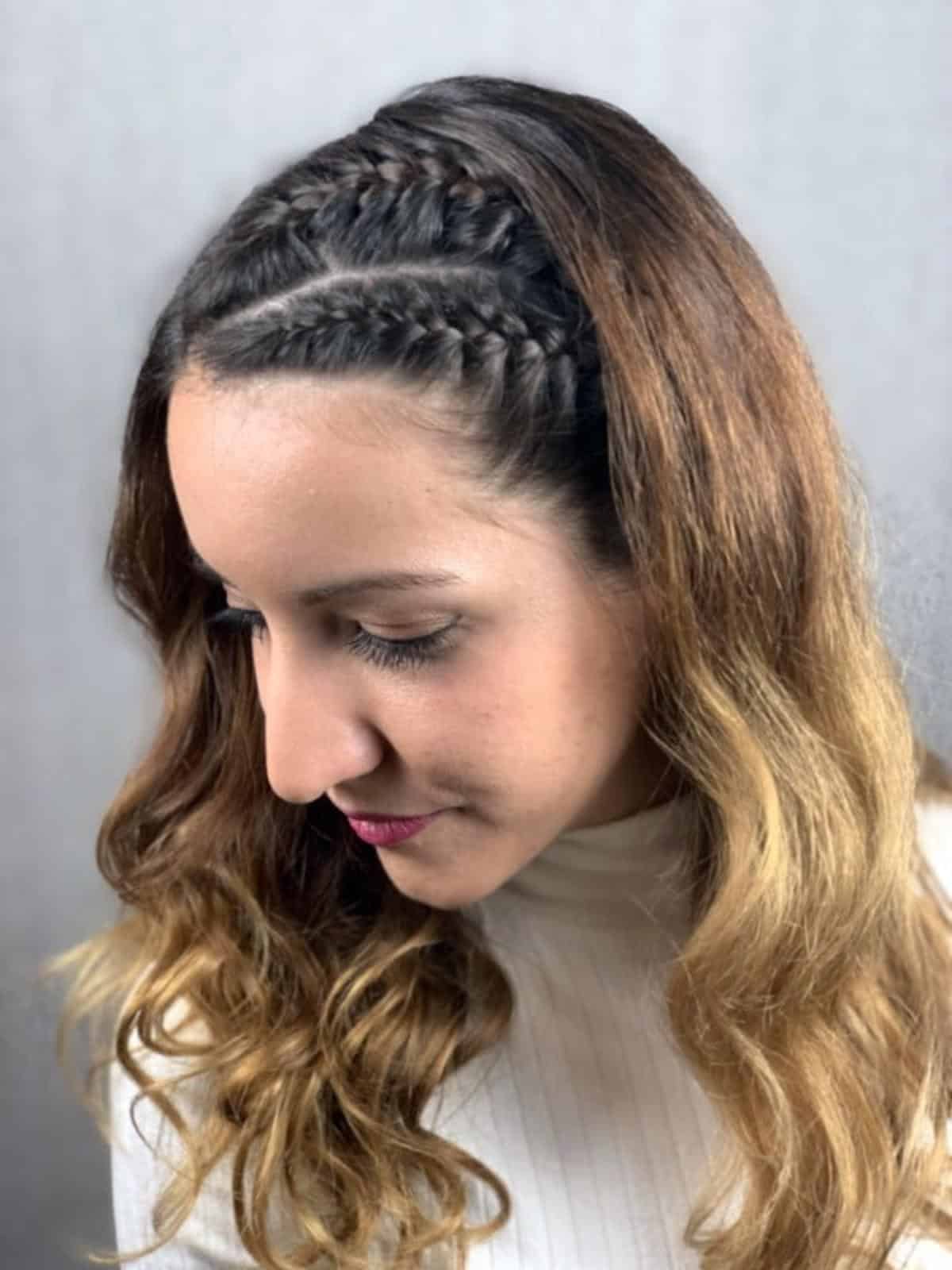
If your hair is thick enough to swallow a regular braid whole, mini braids along the hairline are a smart workaround. These two thin braids create a subtle headband effect on wavy, collarbone-length hair with a middle part and a brown-to-blonde balayage. The look suits most face shapes, though the middle part can emphasize a longer one. Ask your stylist for: DIY mini braids along hairline, collarbone length, brown and blonde. Secure the ends with bobby pins behind each ear, then re-braid roughly once a week to keep the line crisp.
Chunky Fishtail Braid Mid-Back Blonde
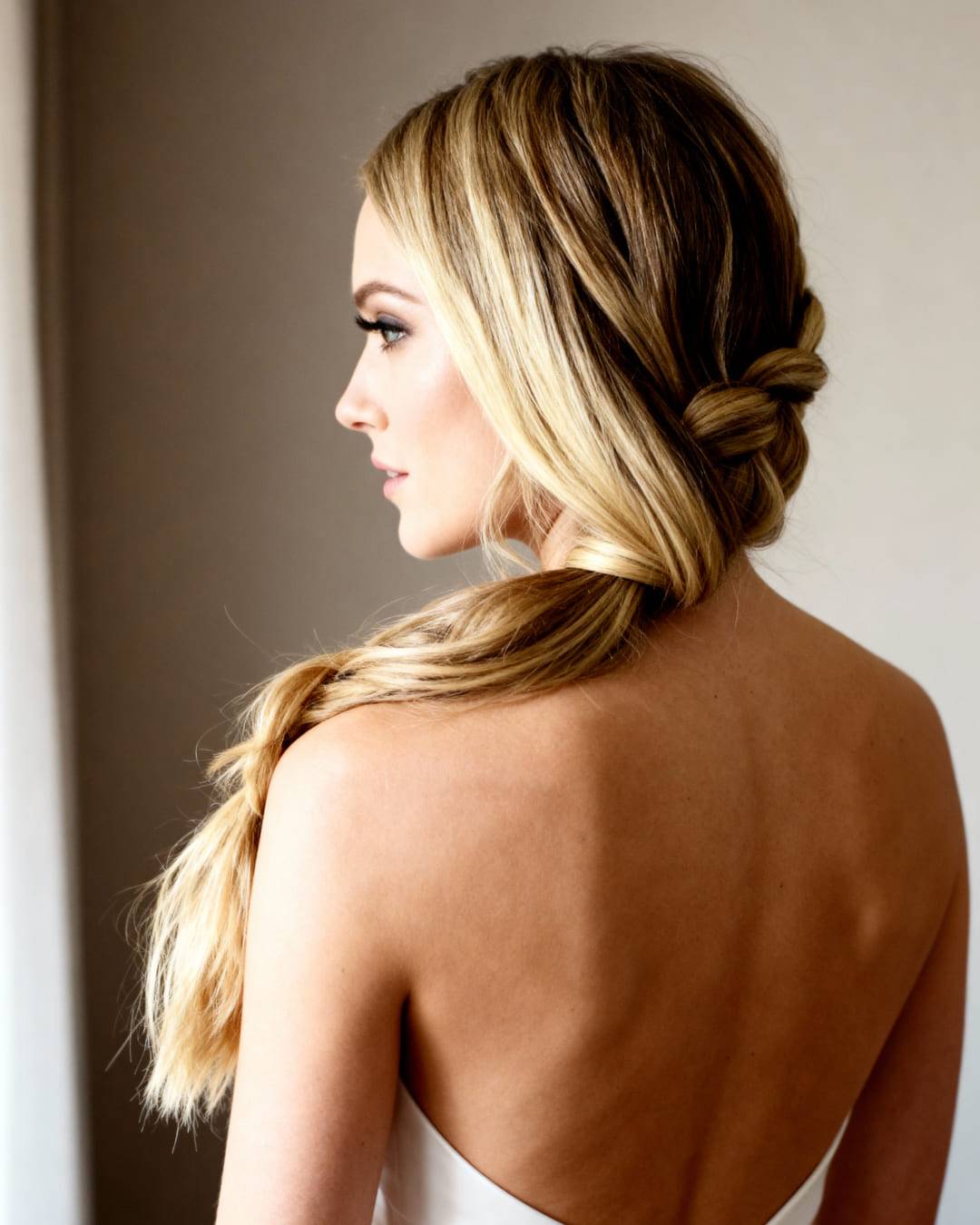
Can a fishtail braid actually read as substantial? Yes, but only if the hair has enough bulk to begin with. This chunky fishtail starts from a side part on thick, wavy, mid-back-length blonde hair with subtle highlights that give each section its own shadow. A side part suits most face shapes, while the braid itself needs salon-level sectioning to stay even. Ask your stylist for: chunky fishtail braid, mid-back length, blonde. The honest downside is that a chunky fishtail loosens faster than a classic three-strand, so leave a few face-framing strands out to soften any slippage.
Strawberry Blonde French Braid Collarbone
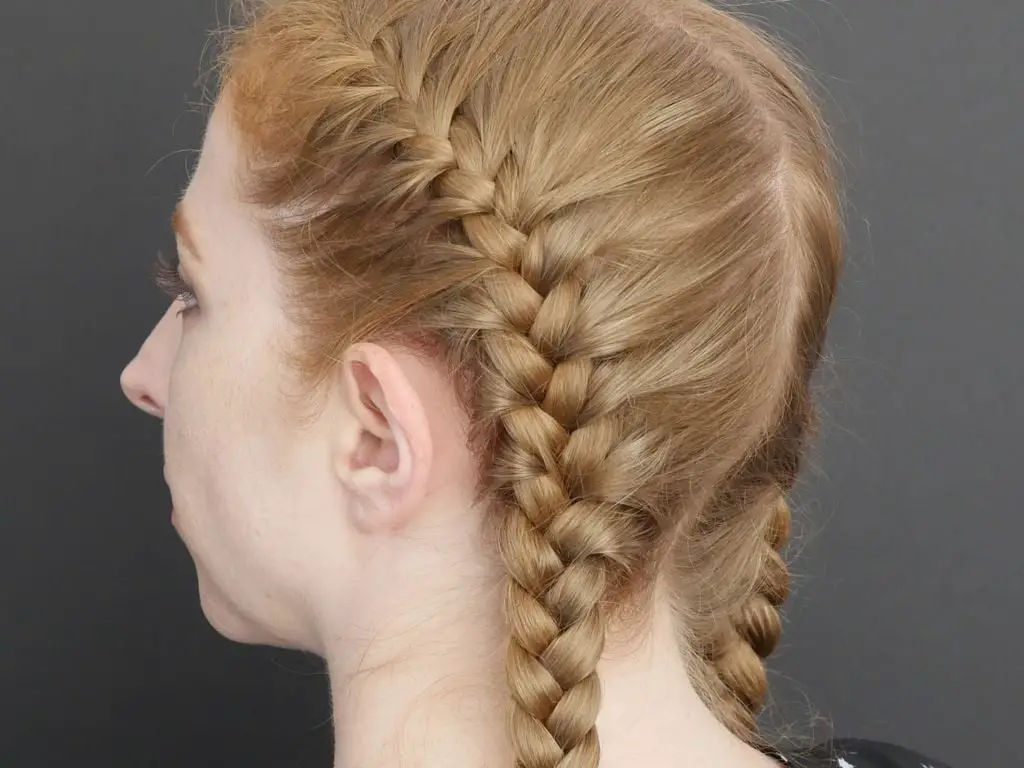
The French braid gets its polished finish from consistent tension, which is easier to achieve on straight, medium-density hair like this collarbone-length strawberry blonde length. The braid begins near the hairline from a deep side part and runs down the side of the head, ending just above the shoulder. Ask your stylist for: collarbone length French braid, strawberry blonde, deep side part. A finishing product on the completed braid keeps flyaways in check, and a re-braid every four to six weeks maintains the clean line.
Loose Side Braid Collarbone Light Brown
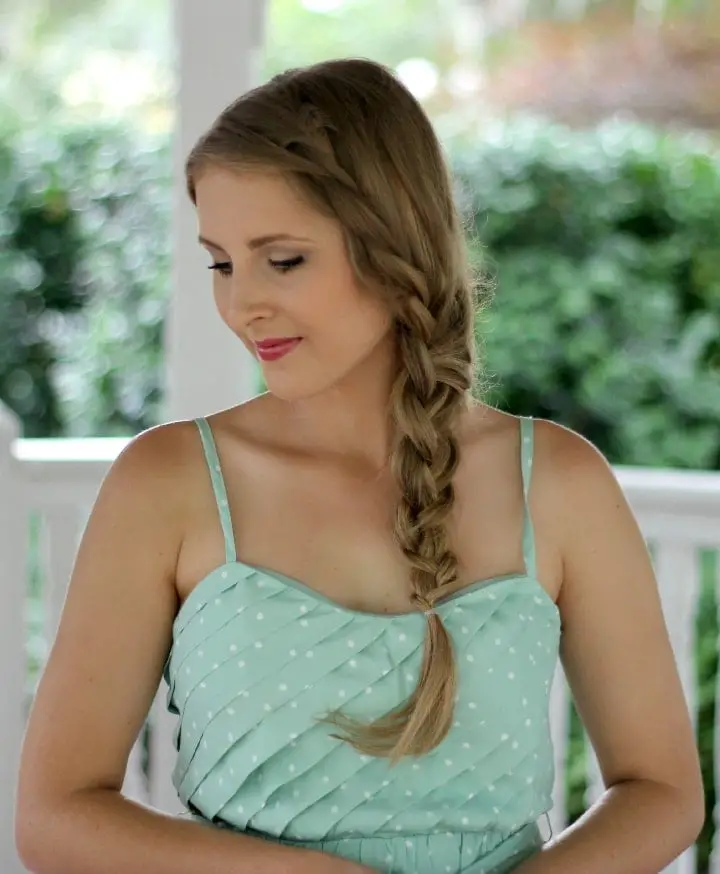
A loose side braid is a reliable five-minute finish, but wavy textures like this light brown, collarbone-length hair with subtle highlights will naturally shift the braid looser over the day. That is the appeal, not a flaw. A side part suits all face shapes, and the casual tension means it holds without pulling. Ask your stylist for: loose side braid, collarbone length, light brown. To maintain the lived-in look, gently tug the braid wider after securing it and re-braid as needed, usually every day or two.
Fine Black Micro Braids Mid-Back Middle Part

Micro braids are one of the few protective styles that actually add visual density to fine, straight hair. This set extends to mid-back length in a true black shade, arranged with a distinct middle part that lets the even sectioning read clearly. The middle part suits most face shapes, though it can feel severe on a round one. Ask your stylist for: fine black micro braids, mid-back length, middle part. A lightweight serum keeps each braid smooth, and a salon re-braid every six to eight weeks prevents the roots from looking untidy.
Flip Over Fulani Braids Side-Swept
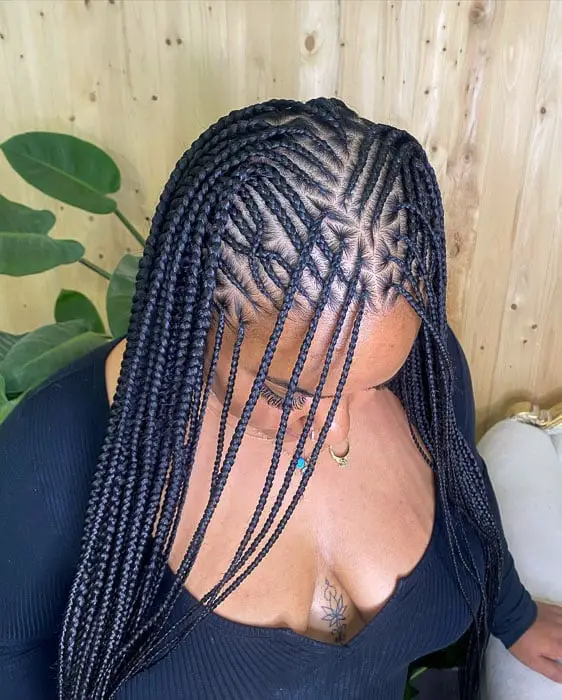
The geometric parting on these Fulani braids uses thin parallel lines that trace the scalp, then the whole weight of the braid flips over one shoulder. That side-swept finish turns a protective style into a silhouette that looks modern. Ask your stylist for flip over Fulani braids, side-swept. The black, mid-back length braids work best on thick, coily texture that can hold the flip without slipping. A braid sheen spray keeps the partings crisp and the lengths glossy between washes. Re-braiding every six to eight weeks maintains the line, but the real payoff is the way the flip moves when you turn your head.
Final Thoughts
For fine hair, opt for styles with smaller braids or cornrows along the hairline to add perceived volume, and consider adding extensions for length. If your hair is thick, a loose side braid with pulled-out face-framing pieces keeps the weight manageable without sacrificing shape.
- For braided styles, ensure your scalp is moisturized to prevent dryness and itching.
- Refresh braids with a light mist of hairspray or braiding sheen to control flyaways.
- When taking down braids, use a detangling spray and a wide-tooth comb to minimize breakage.
- Trim split ends every 6-8 weeks if wearing hair down between braiding appointments.
Master the simple side part braid for effortless style.