
Color names can be useful shorthand, but they rarely tell you how a shade will actually feel once it becomes part of your ordinary surroundings. The same label can seem different beside the clothes you reach for most, under the lamps in your home, or during an ordinary afternoon when nothing is arranged for display. Choosing well means thinking beyond the name and imagining how the color will live with the visual world you move through every day.
A seasonal hair-color decision can begin in winter and still be with you long after the weather that inspired it has changed. That makes it worth considering not only what feels appealing right now, but whether the choice will still make sense when your routines, clothes, and surroundings shift a few months later. A color can start as a seasonal impulse and become a longer-term preference simply because you continue to enjoy living with it.
Cool Blonde Depth With Broad Cream Ribbons
The deeper taupe-gray area at the crown gives this blonde its structure before the curls add any movement. Against that cooler depth, the pale cream and silvery-beige sections look brighter without forcing the whole head toward one flat, nearly white level. That balance suits a cool blonde direction that still keeps visible dimension from the top through the curled lengths.
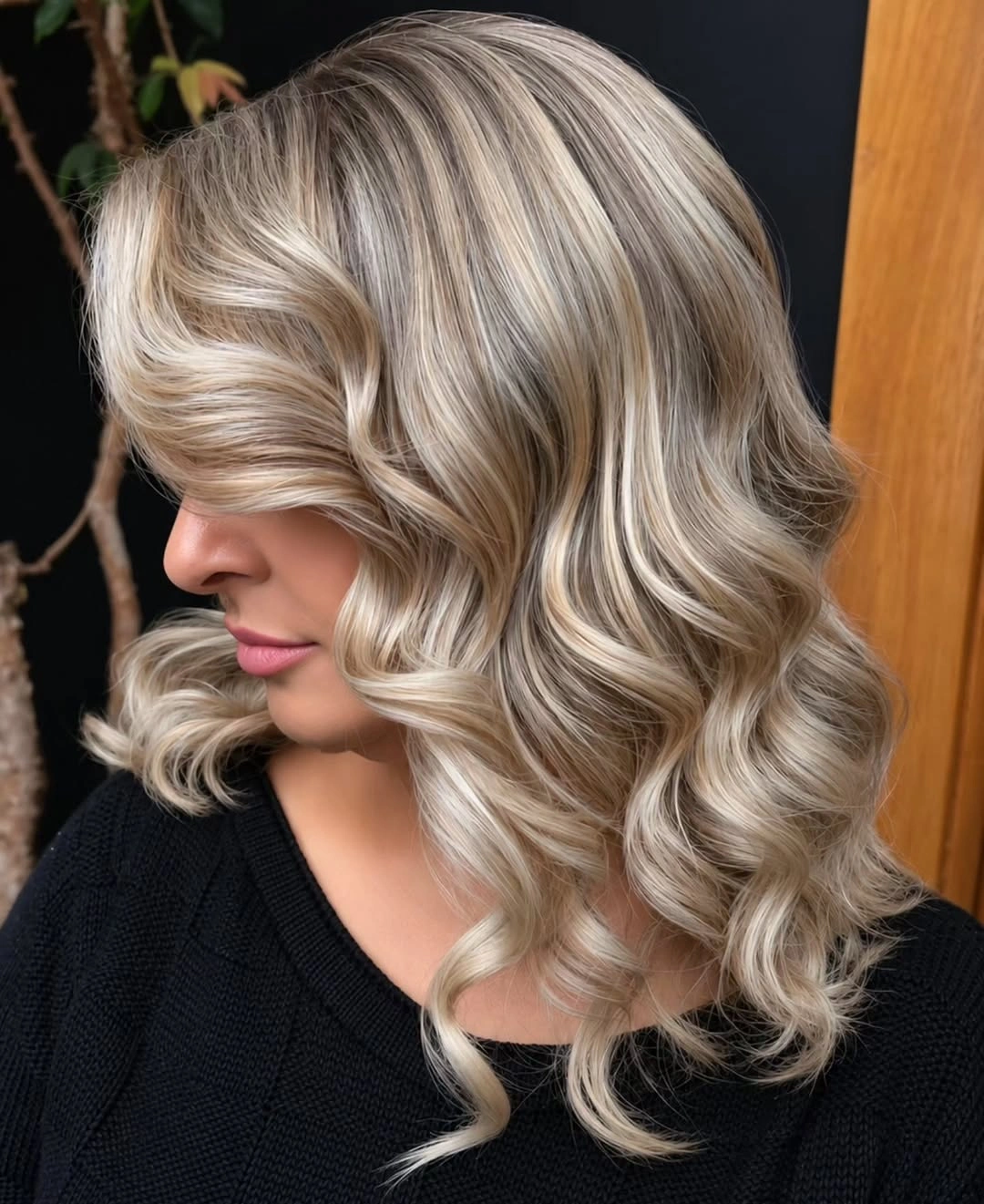
Photo via Instagram
The lighter pieces are broad enough to remain distinct as they travel through the curls, so you can follow individual cream and silver-beige bands instead of seeing only a cloud of tiny streaks. Their width gives the color a more deliberate rhythm, while the darker spaces between them keep each pale section legible rather than letting all the light areas merge together.
Cool beige, soft silver, and cream can sit together without collapsing into a single grayish blonde. Here, the slight differences between those pale tones make the curls look layered in color even where the overall brightness stays high.
Warm Beige Blonde With Fine Golden Variation
Warm blonde can hold plenty of dimension without relying on a dramatic dark-to-light break. In this long layered color, beige-golden blonde stays dominant while slightly lighter and deeper strands sit close enough in value to keep the overall effect blended. It is a useful model for warm winter blonde hair color when you want brightness to feel gradual rather than sharply separated.
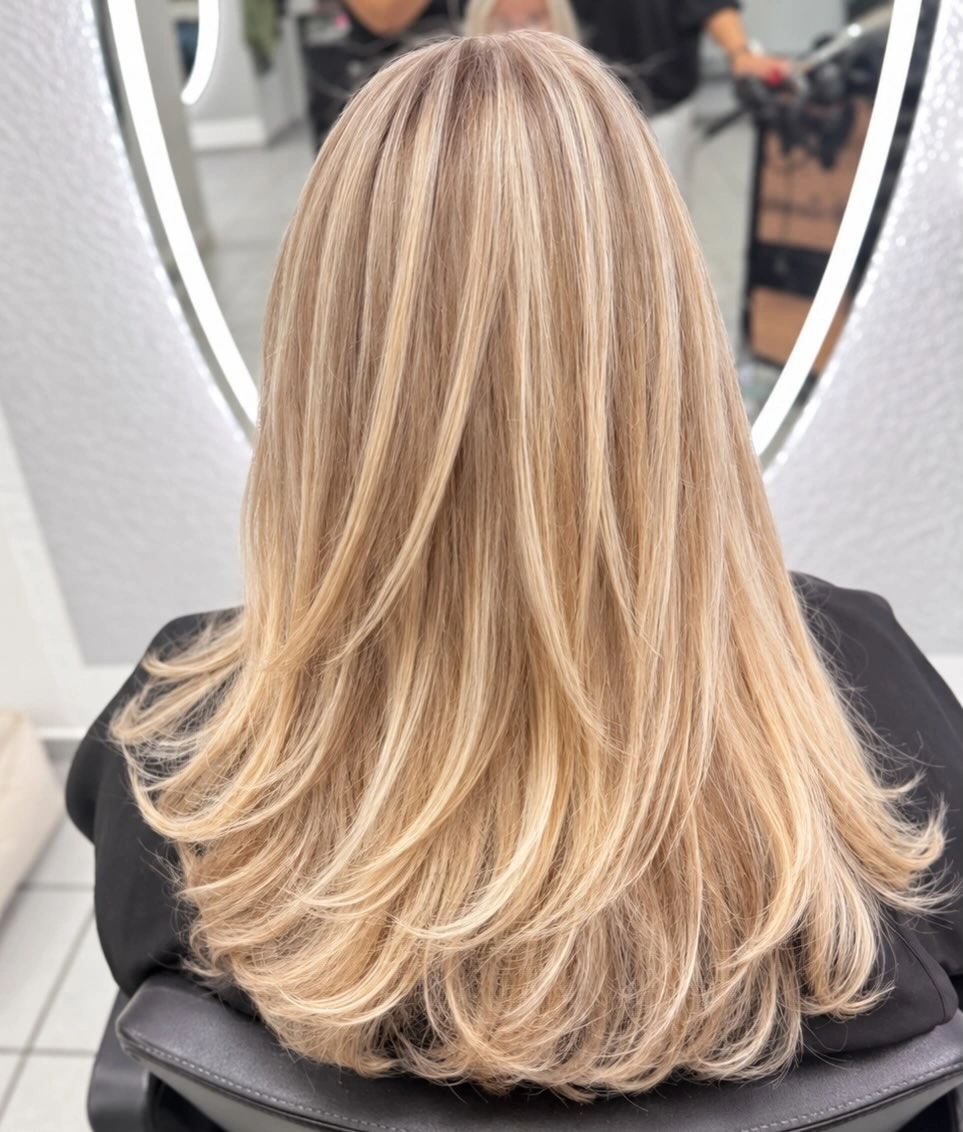
Photo via Instagram
The fine vertical variation matters because no single light ribbon takes over the surface. Instead, narrow pale strands repeat through the warmer beige base, creating a soft pattern that becomes easier to notice across the long length. That close spacing keeps the blonde luminous while preserving enough tonal difference to stop the color from reading as one solid gold-beige sheet.
The layered ends appear a little brighter, which gives the lower portion extra lift without pushing it toward near-white blonde. That quieter increase in lightness keeps the warm character intact from crown to ends.
Pale Champagne Blonde With Soft Tonal Shifts
A pale blonde does not need a stark root break to avoid looking flat. The crown is only subtly deeper than the champagne-cream lengths, yet that small difference is enough to give the color a gentle starting point before the lighter tone takes over. Because the shift stays restrained, brightness remains the main impression rather than contrast at the roots.
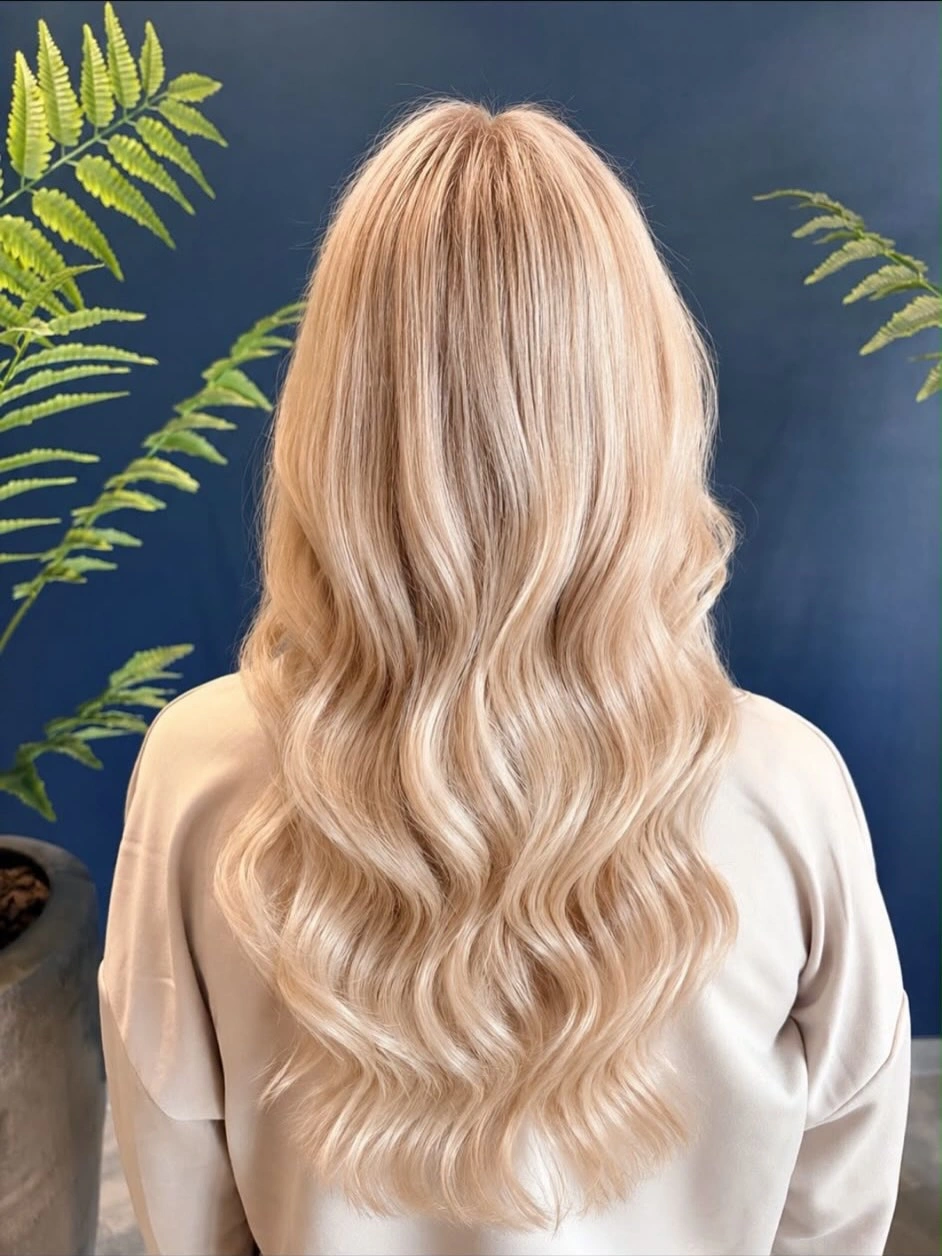
Photo via Instagram
The broad waves make the internal tonal changes easier to read, revealing creamy sections, champagne warmth, and slightly deeper beige areas as the hair bends. None of those shades dominates strongly enough to split the color into obvious bands. The result is dimension built from neighboring tones that stay close in brightness instead of from sharp light-versus-dark separation.
Low contrast gives this blonde a soft, continuous quality while the subtle shade changes keep it from feeling visually blank. It is a good reminder that very light color can still have depth even when the transitions are deliberately quiet.
Soft Beige Blonde on a Short Bob
On a short, smooth bob, small changes in blonde tone have very little room to hide. The softly deeper crown and pale beige lengths create enough separation to make the surface look dimensional, even though the contrast itself is restrained. Because the color sits on such a compact shape, fine shifts in warmth and depth become part of the main visual impression rather than background detail.
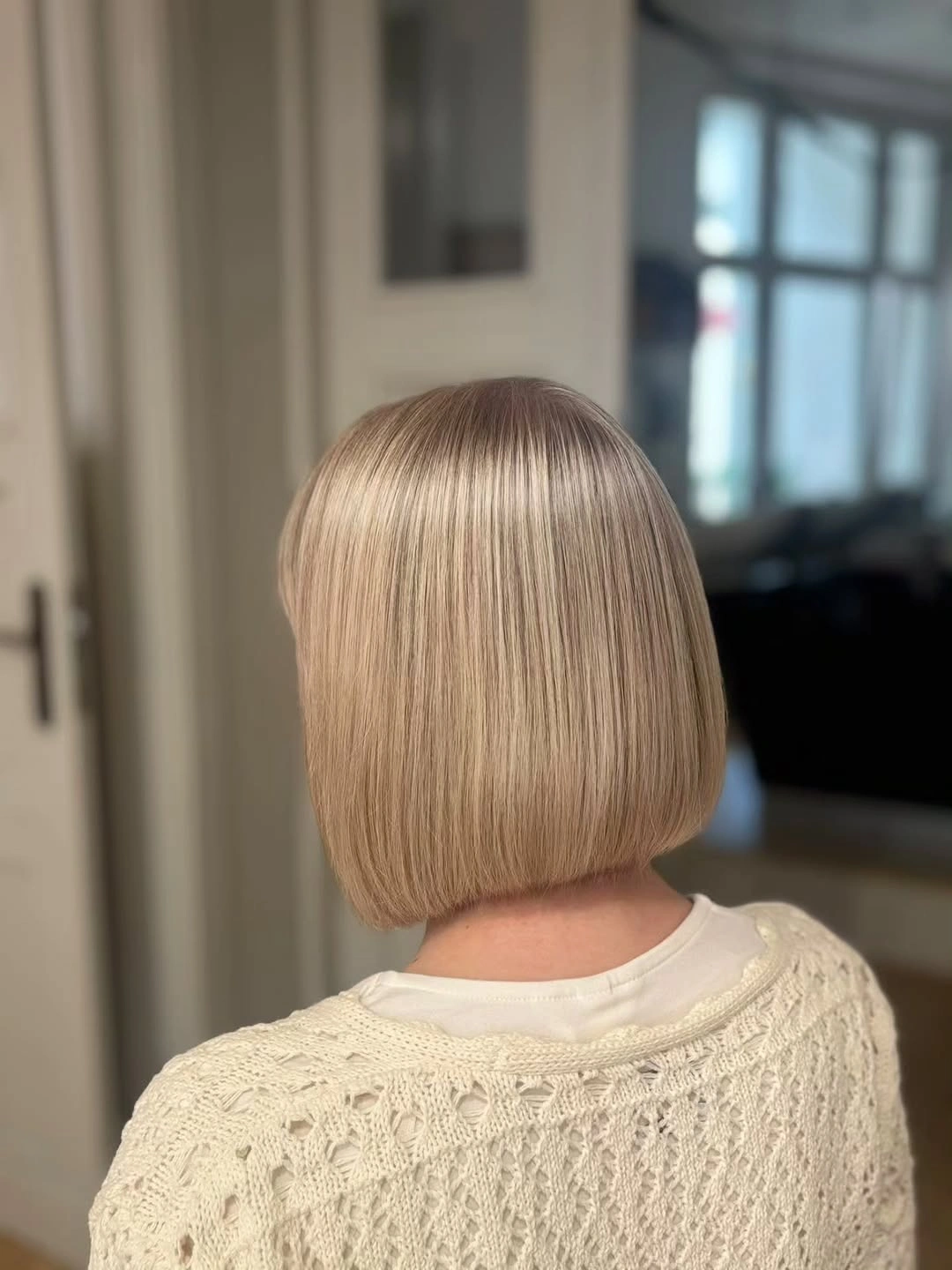
Photo via Instagram
Fine darker and lighter lines run through the beige blonde without turning into bold stripes, which keeps the color calm and evenly distributed. For a short winter blonde bob, that kind of close tonal spacing can be especially effective when you want visible variation without a strong root break or oversized bright pieces. The color stays nuanced while the overall surface remains clean.
The moderate brightness lands between icy white and strongly golden blonde, giving the beige tone room to read clearly. That middle ground makes the subtle neutral-to-warm variation more noticeable than an extreme platinum or honey direction would.
Fine Blonde Ribbons Across Extra-Long Hair
Very long, straight hair gives fine blonde variation enough space to repeat over and over, and that repetition becomes the main source of visual detail here. Narrow cream, beige, and pale-golden lines run through a brighter field without forming a few dominant blocks. Even on the smooth surface, the small tonal changes keep the color from reading as a single uninterrupted shade.
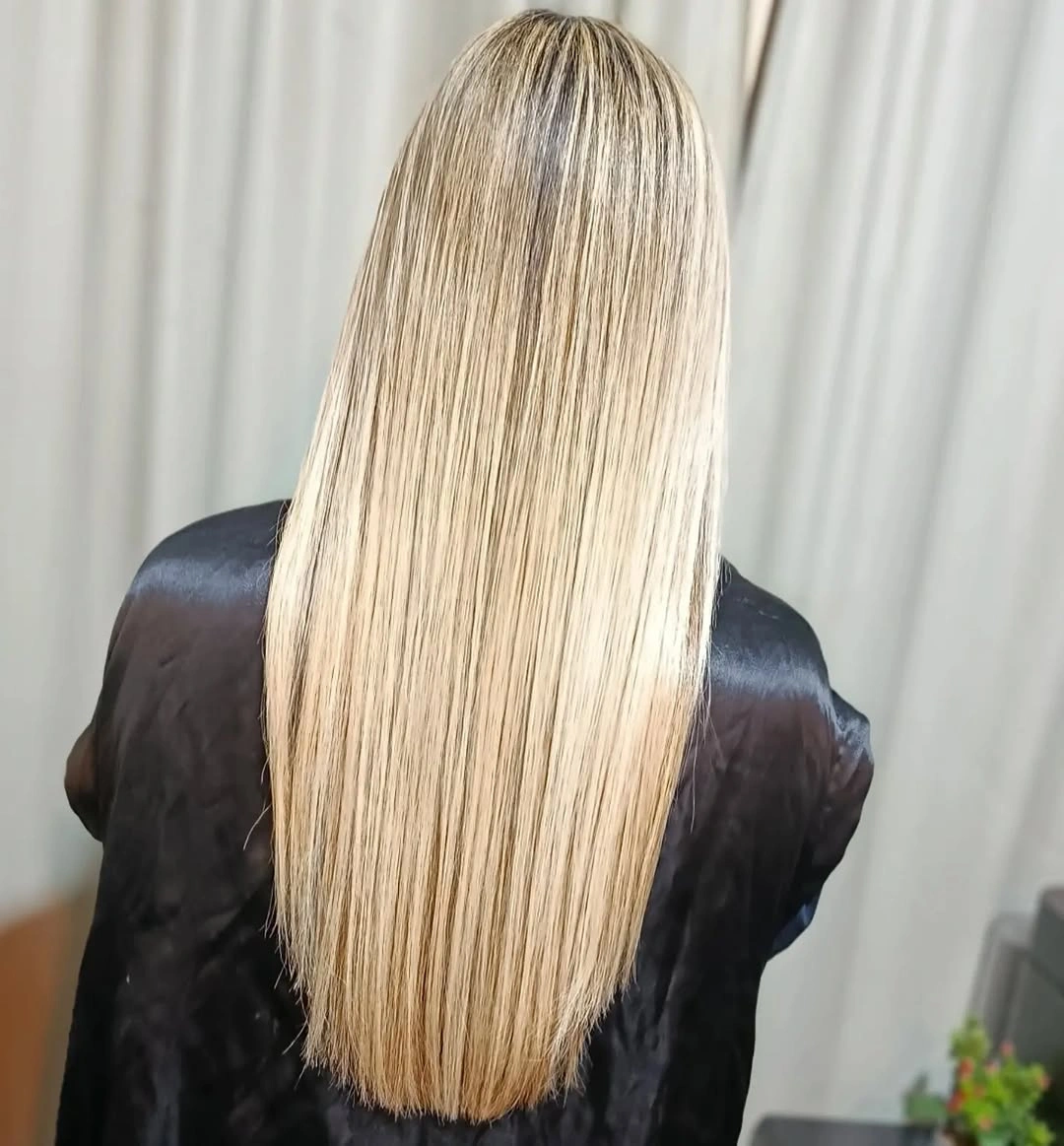
Photo via Instagram
The deeper neutral-ash crown establishes a clear top point, but it does not overwhelm the lighter lengths below it. As the eye moves downward, the blonde remains bright while fine darker and warmer traces continue to break up the surface. That combination lets the root area contribute depth without making the rest of the hair look sharply disconnected from it.
Length changes the way subtle variation registers because the same narrow color shifts can recur many times before reaching the ends. No single ribbon needs to dominate when the interest comes from the cumulative effect of many small differences.
Cool Mushroom-Ash Blonde With Deeper Roots
Cooler blonde does not have to become icy or extremely pale to feel deliberate. Here, the gray-brown root area gives the long mushroom-ash lengths a deeper starting point, so the overall color reads quieter and more grounded than a creamier blonde at a similar level. Most of the hair still looks clearly blonde, but the root depth changes how that brightness is perceived from the top down.
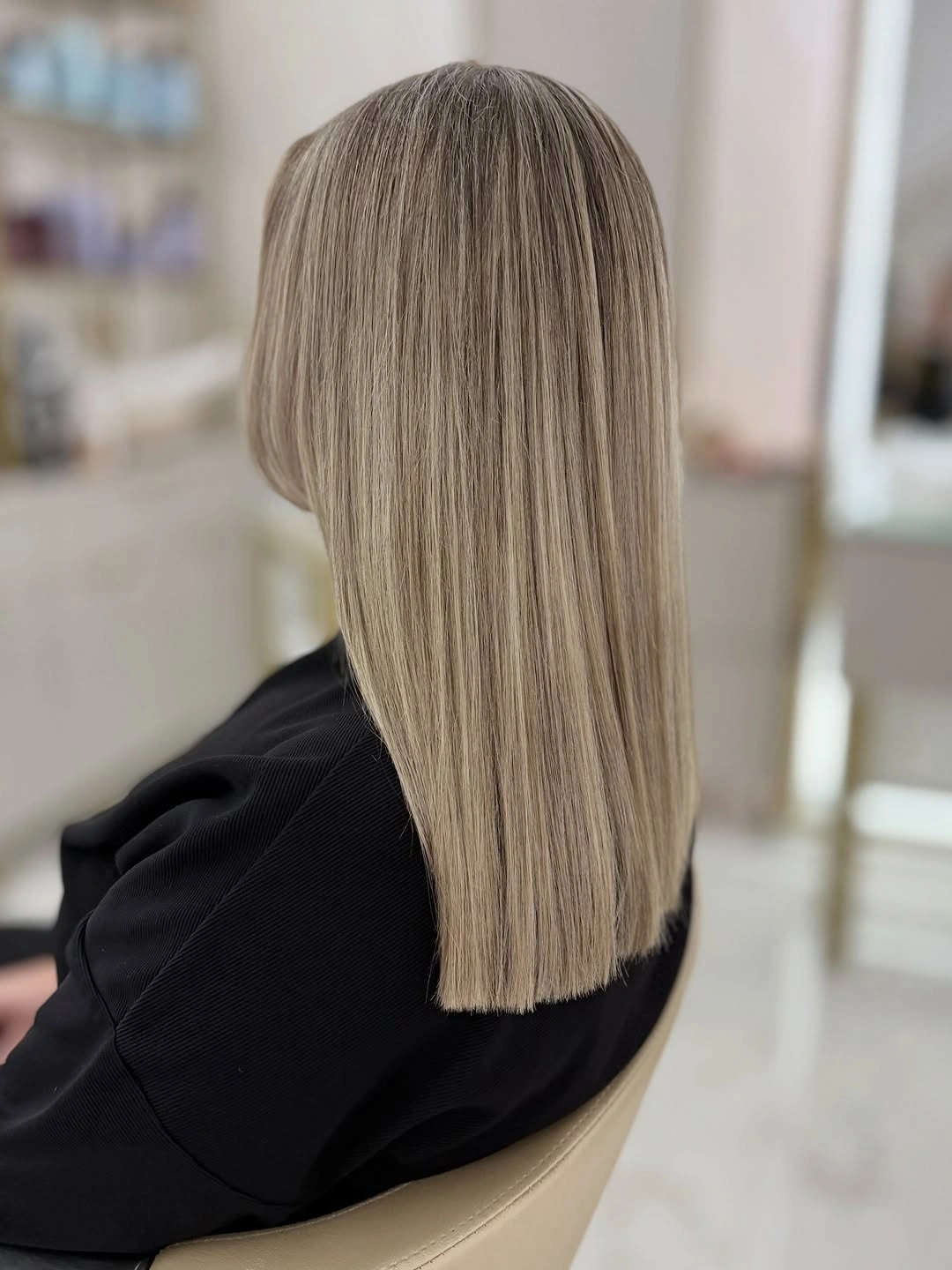
Photo via Instagram
The taupe and ash tones soften the apparent brightness without making the color look flat or overly dark. Fine pale strands continue through the lengths, breaking up the cooler base with narrow flashes of light that are easy to see on the smooth surface. That fine variation is what keeps this darker blonde direction from turning into one solid gray-beige field.
The blunt lower edge makes the narrow tonal lines especially easy to follow as they reach the ends. Their pale repetition gives the cooler base a quiet sense of movement even though the hair itself is styled very straight.
Broad Golden Blonde Ribbons Over Deeper Color
The contrast here is much more graphic because broad golden and creamy ribbons sit against a visibly deeper dark-blonde base. Instead of blending into a fine haze, the lighter bands remain easy to trace as they pass through the curls, so brightness and depth arrive together in nearly equal measure. The result feels dimensional because neither side of the contrast disappears.
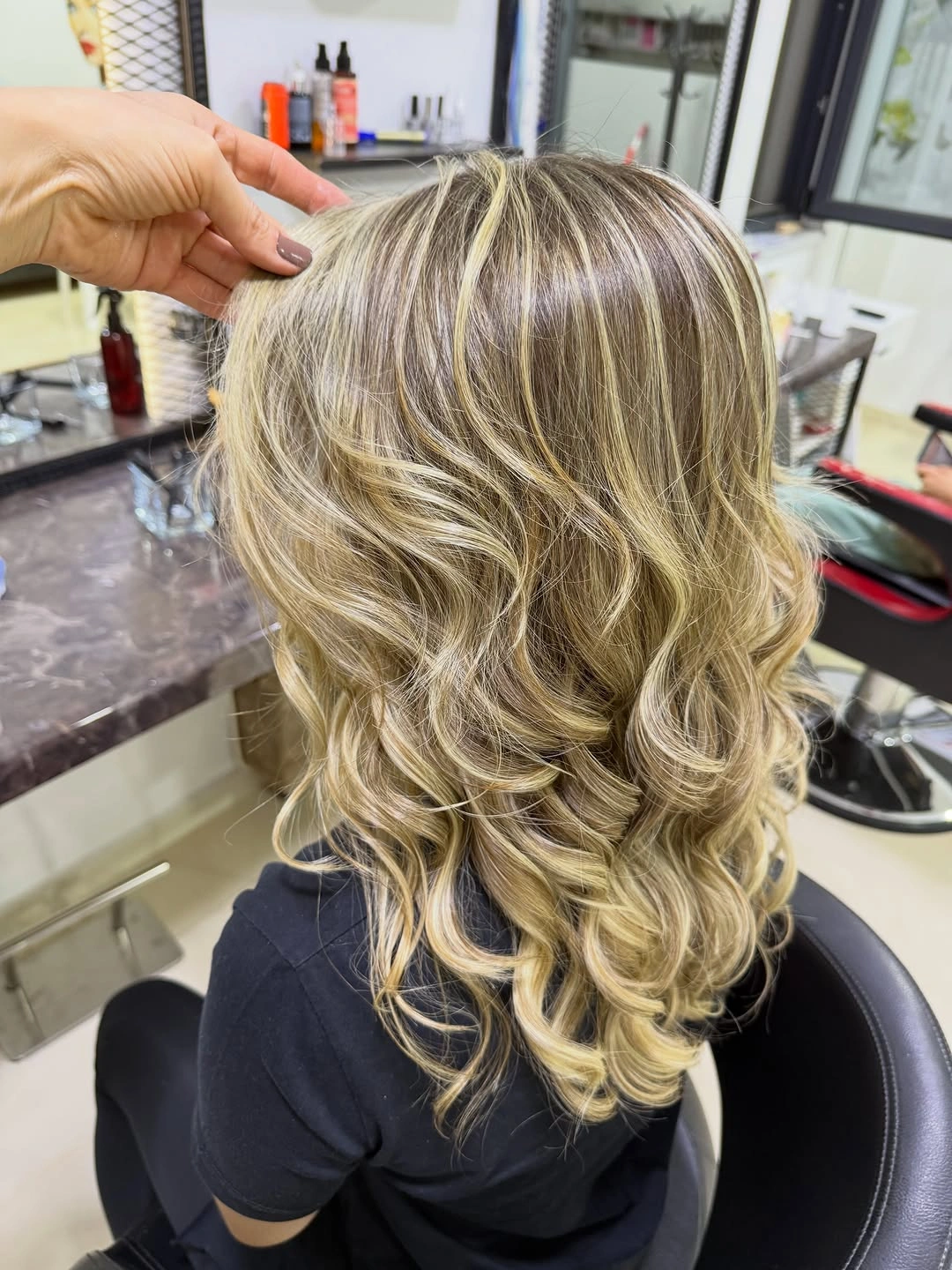
Photo via Instagram
Warmth gives those broad ribbons a different character from silver or ash contrast. Golden blonde, soft cream, and the deeper base create separation without pushing the lightest areas toward white, which lets the color feel rich rather than stark. The curls amplify that spacing by turning the ribbons toward and away from the light at different points.
The darker sections are as visible as the light ones, so the color never becomes mostly pale blonde with a few scattered shadows. That balance gives the curls a clear alternating rhythm of warmth and depth.
Dusty Pink-Lavender Cast on Pale Blonde
A pale blonde can change direction dramatically through tone alone, even when there is very little dark-to-light contrast. This smooth color carries a dusty pink-lavender cast from the crown through the lengths, so the eye notices the muted hue before it notices separate ribbons or a deeper root. The effect is soft and cool without relying on a strong value shift.
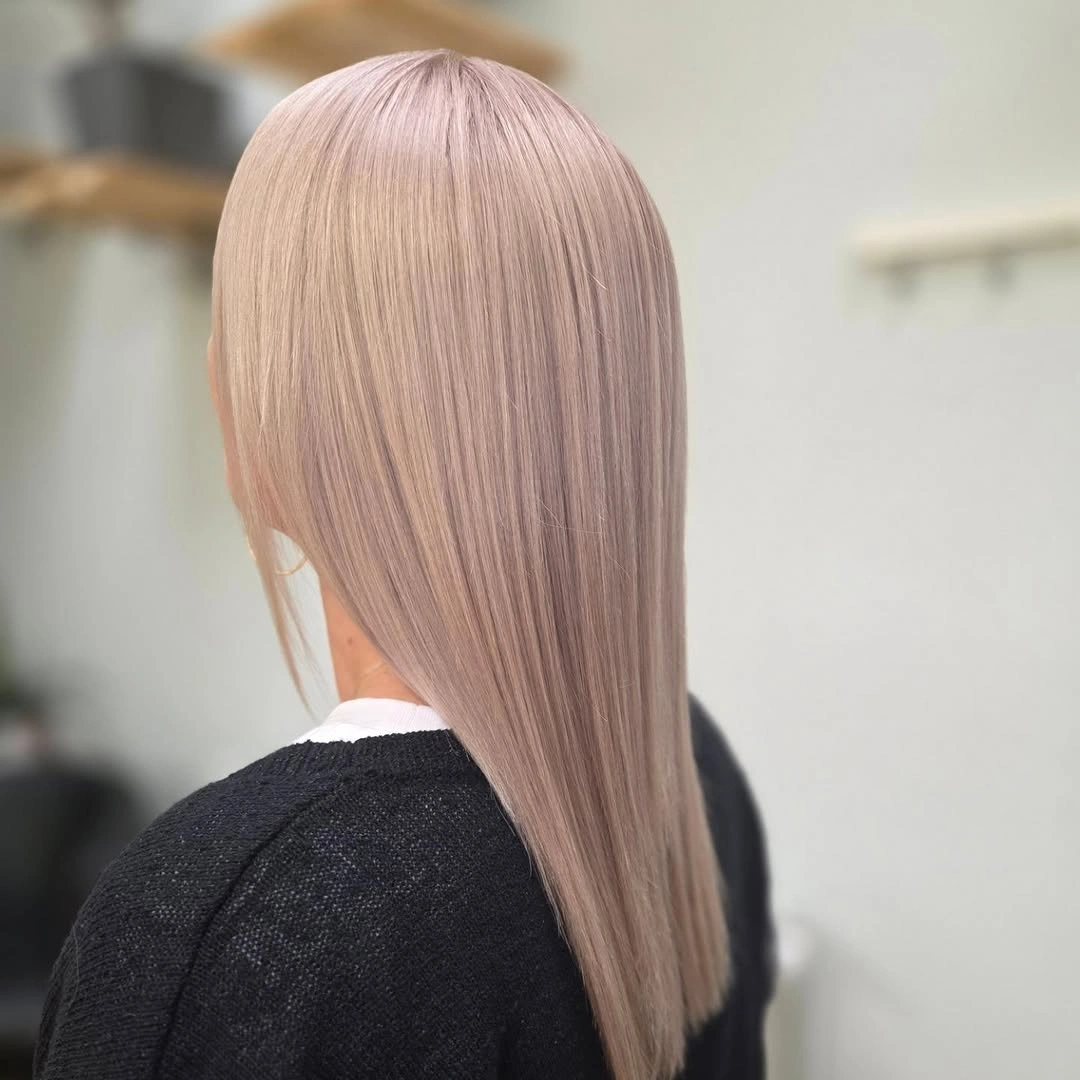
Photo via Instagram
Because the color stays relatively even from top to bottom, placement plays a smaller role than the overall cast. The interest comes from the way the pale blonde seems to move between powdery pink and faint lilac depending on the area, while the brightness remains consistent. That makes the tonal direction itself the defining feature rather than a pattern of light and shadow.
The muted cast separates this color from beige or golden blonde even though the overall lightness remains similar. It shows how strongly the character of pale blonde can shift before darker contrast needs to enter the picture.
Creamy Face Framing Against Neutral Blonde Depth
Brightness is concentrated most clearly around the face, where creamy blonde sections stand apart from the deeper neutral root and softer beige interior. That placement creates an immediate focal point before the eye moves into the longer waves, so the front feels lighter without requiring every strand to reach the same pale level. The contrast is directional rather than evenly distributed.
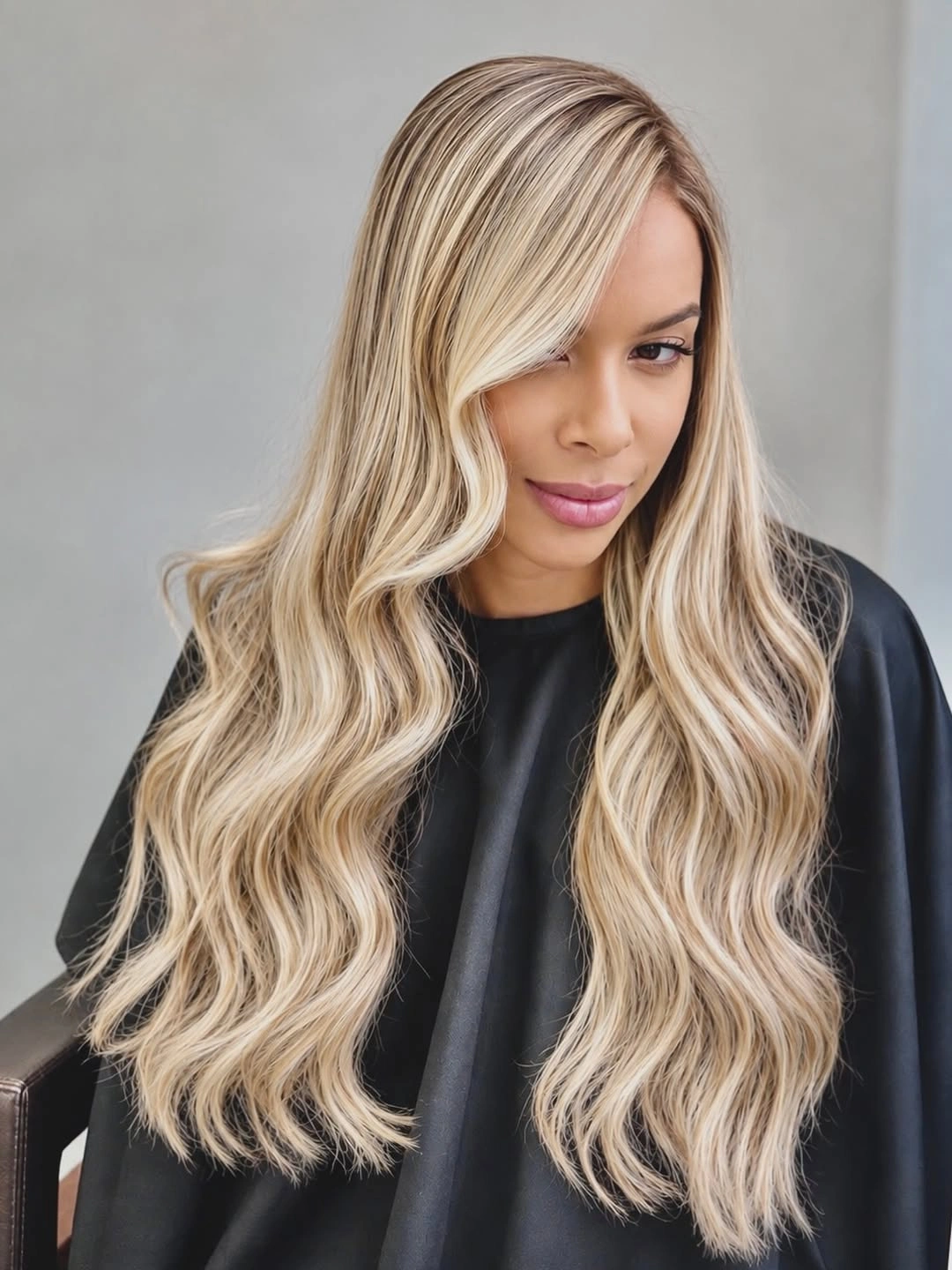
Photo via Instagram
The deeper crown and interior strands are important because they keep the pale framing pieces distinct instead of letting them dissolve into the rest of the blonde. Fine beige and lighter ribbons through the lengths bridge the difference gradually, giving the transition a softer edge. The result is bright near the face but still connected to the more neutral color behind it.
Cream and beige keep the contrast from becoming harsh because the shades remain closely related. The front reads as clearly brighter, yet the surrounding blonde still feels connected rather than abruptly darker.
Near-White Framing With Cool Taupe Root Depth
Near-white blonde at the front sets the strongest visual cue here, even though the crown retains a noticeably deeper cool taupe-gray tone. That contrast makes the pale face-framing sections look even brighter, while the very long lengths stay icy-cream rather than completely white. The color feels high-impact because the brightest areas are concentrated where they are most immediately seen.
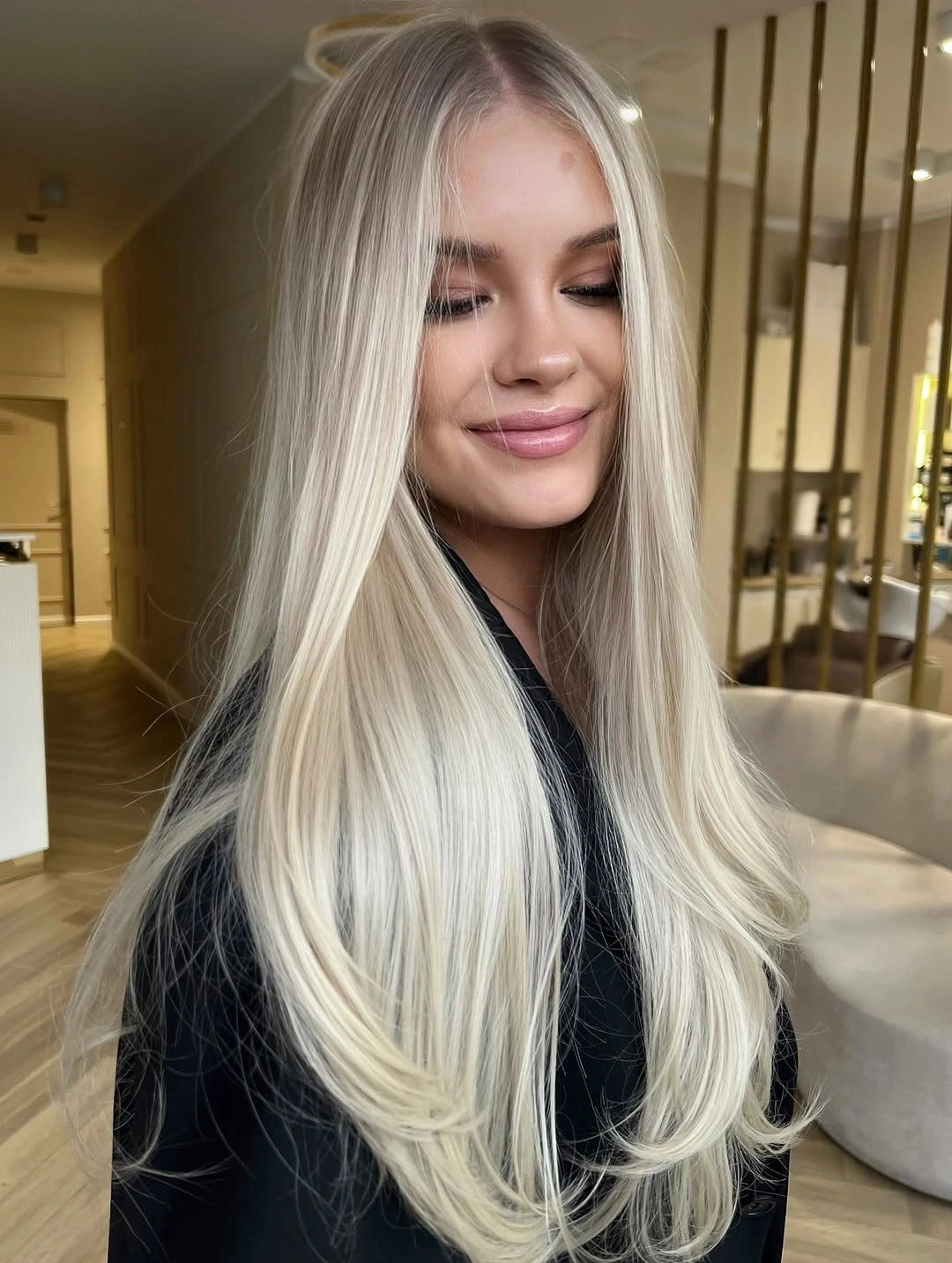
Photo via Instagram
The lengths are softer than the front because faint creamy and gray variation continues through them instead of holding one uniform near-white shade. That subtle internal movement matters on very long hair, where a completely flat pale tone could easily dominate the whole impression. Here, the cool root and slightly varied lengths create enough separation to keep the brightness from becoming visually blank.
The palest pieces sit where they command attention, while the remaining length carries enough cream and gray to look softer. That distribution lets the blonde feel exceptionally bright without erasing every trace of depth.
Silver-White Blonde With Quiet Root Depth
Silver-white blonde creates a very different impression when the color stays almost continuous through the lengths instead of breaking into obvious ribbons. Here, the pale icy field dominates from the upper lengths downward, so the eye reads the overall cool cast before noticing individual shade changes. That restraint gives the blonde a clean, luminous character without requiring strong internal contrast.
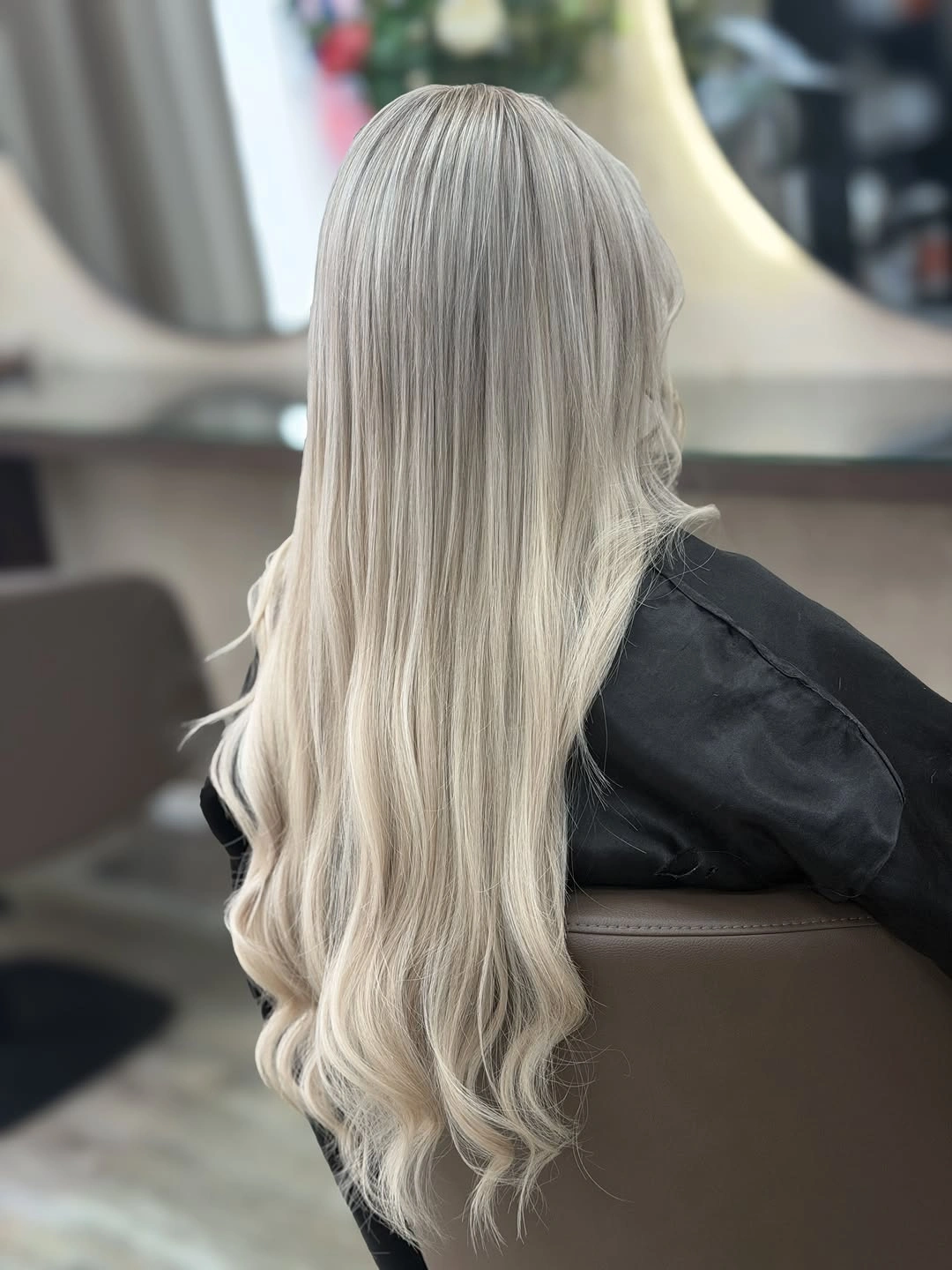
Photo via Instagram
The slightly deeper gray area near the crown matters because it prevents the long pale lengths from appearing completely one-note. Its difference is subtle enough that the transition stays soft, yet it gives the brightest areas a clearer point of comparison. The gentle bend near the ends also reveals small variations in the silver-white tone that are less obvious across the straighter upper section.
The coolness belongs to the full color rather than to a few isolated gray pieces. That broad consistency is what makes this bright winter blonde feel distinctly silver instead of simply very pale.
Creamy Blonde Brightness With Soft Neutral Depth
Pale cream blonde can reach a high level of brightness without taking on the colder silver-white character of an icy palette. The front and upper lengths appear especially luminous, while a small amount of neutral depth near the top keeps the color from looking washed into one continuous pale sheet. The warmth is restrained, but it is enough to give the blonde a softer overall direction.
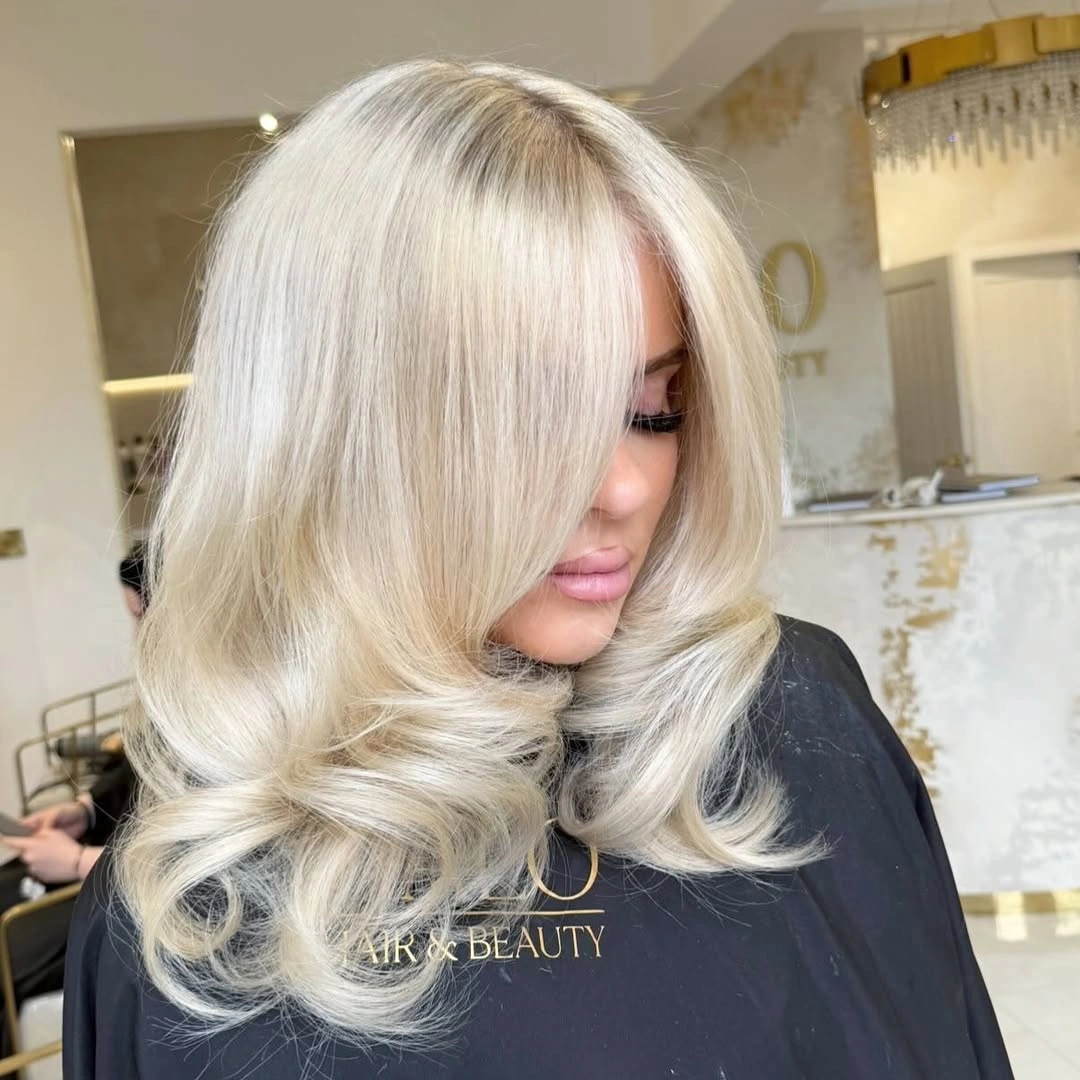
Photo via Instagram
The lower curls turn that creamy color through several angles, which makes slight differences between pale beige, cream, and brighter blonde easier to notice. Because the root transition remains quiet, those variations feel connected instead of segmented into separate bands. On this medium length, the combination gives the color dimension without making dark contrast part of the main statement.
The brightest areas still read as creamy rather than stark white, which is the key distinction here. A little neutral depth keeps that luminosity from becoming visually flat.
Nearly White Blonde on a Blunt Bob
Nearly white blonde becomes especially graphic when very little darker color interrupts the surface. This chin-length bob is covered in a smooth, icy pale tone with only minimal visible root contrast, so the blonde reads as one concentrated field of brightness. The compact length intensifies that effect because there is no long gradient or broad interior depth competing for attention.
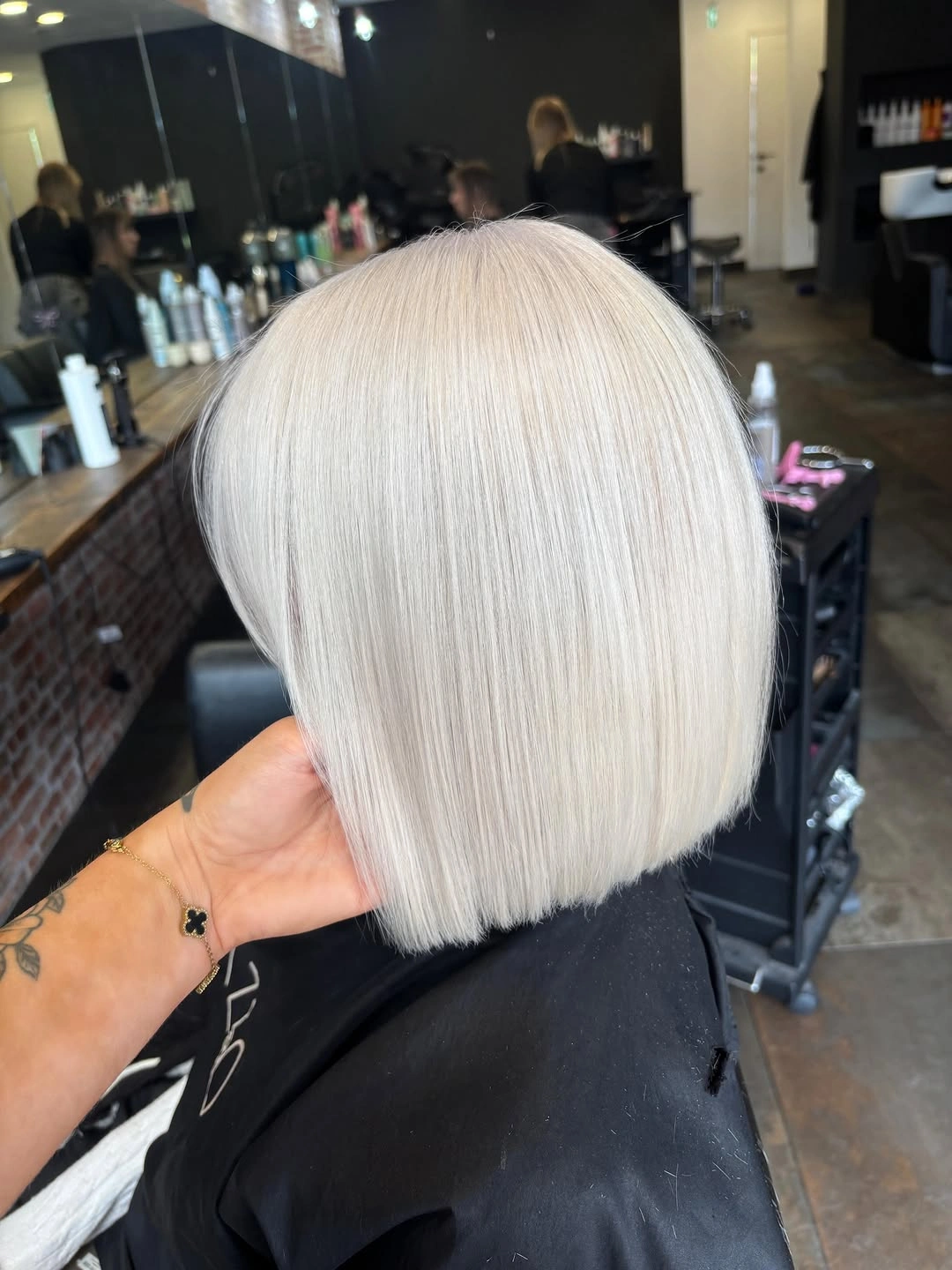
Photo via Instagram
What stands out most is not the bob itself but the degree of tonal uniformity across it. The surface stays cool and exceptionally pale from the crown through the blunt lower edge, with only faint shifts in brightness as the hair curves around the head. That limited variation gives the color a crisp, almost polished visual clarity that differs sharply from ribboned or beige blonde.
Tonal purity is doing most of the work here, and the small amount of visible depth keeps the icy cast uninterrupted. The result is a short cool blonde direction defined more by consistency than by contrast.
Beige-Peach Blonde With Fine Neutral Threads
A light blonde does not need silver or icy undertones to feel refined at this brightness level. This shoulder-length color leans beige with a subtle peach cast, while fine deeper neutral strands give the surface enough definition to avoid looking flat. The warmth remains muted rather than golden, so the overall effect sits comfortably between cool beige and a more obviously warm blonde.
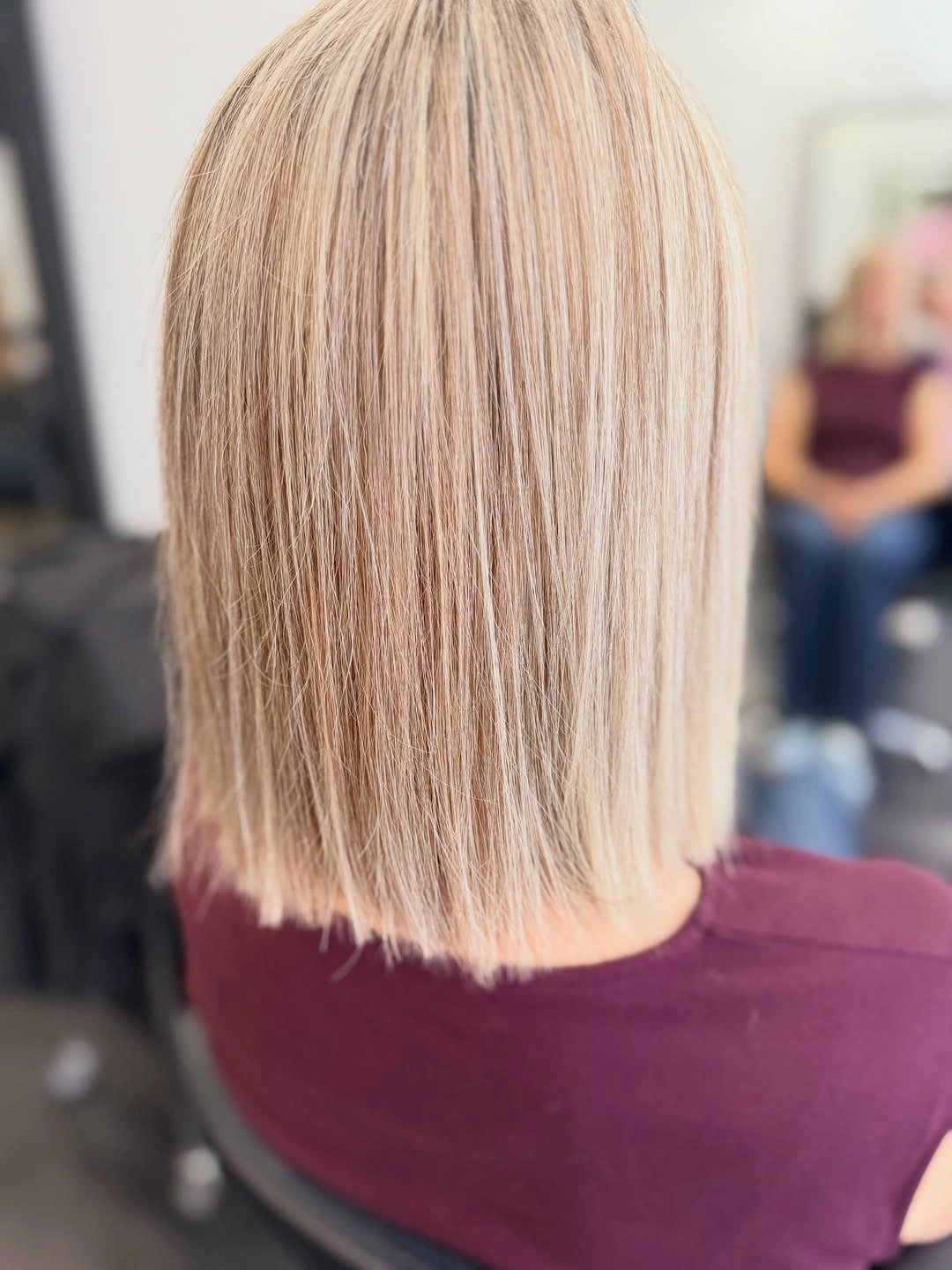
Photo via Instagram
The darker crown and narrow neutral lines are restrained enough that they never turn into pronounced stripes. Instead, they create small changes in value that become noticeable against the smooth, straight surface, especially where the lighter beige-peach tone catches more light. That fine-scale contrast gives the color structure without changing its soft, understated character.
Small shifts in temperature make this blonde feel distinct even though its brightness is close to several cooler examples. The peach-beige cast supplies the difference without needing dramatic depth or near-white ends.
Honey-Beige Blonde From Bangs to Lengths
The warm honey-beige tone runs continuously from the full bangs through the long lengths, so brightness is not reserved for a separate face-framing section. That continuity gives the color a cohesive warm impression before the finer light strands become noticeable. A slightly deeper upper area adds enough variation to keep the long blonde from appearing uniformly bright from the roots downward.
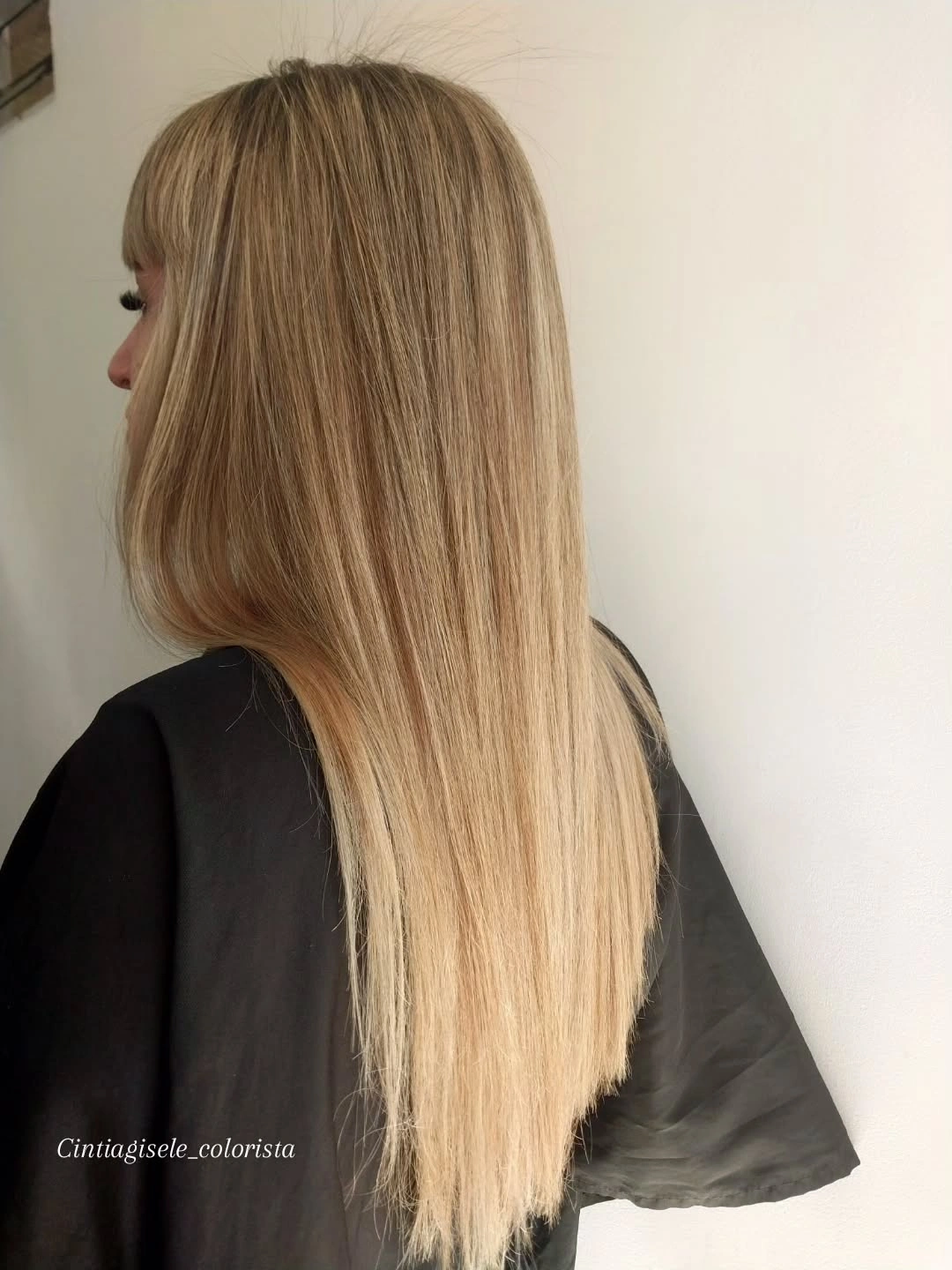
Photo via Instagram
Fine pale strands are threaded through the warmer base rather than grouped into large contrasting sections. Because they stay relatively narrow, they lift the honey-beige color without breaking its overall warmth into obvious light and dark blocks. The result is a softer kind of dimension that remains visible across the straight lengths while letting the warm base stay dominant.
The bangs reinforce the same color family as the rest of the hair instead of introducing a separate brighter zone. That makes the warm blonde feel continuous, with the lighter strands acting as quiet detail rather than the main event.
Muted Rosy-Taupe Blonde With Cool Root Depth
Muted rosy-taupe blonde gives this long, straight color a quieter kind of depth than a silver or cream direction would. The cooler root is visibly deeper, but the lengths do not jump abruptly into pale blonde; instead, the rosy-beige cast softens that shift and slightly lowers the overall sense of brightness. The result feels subdued without becoming dark.
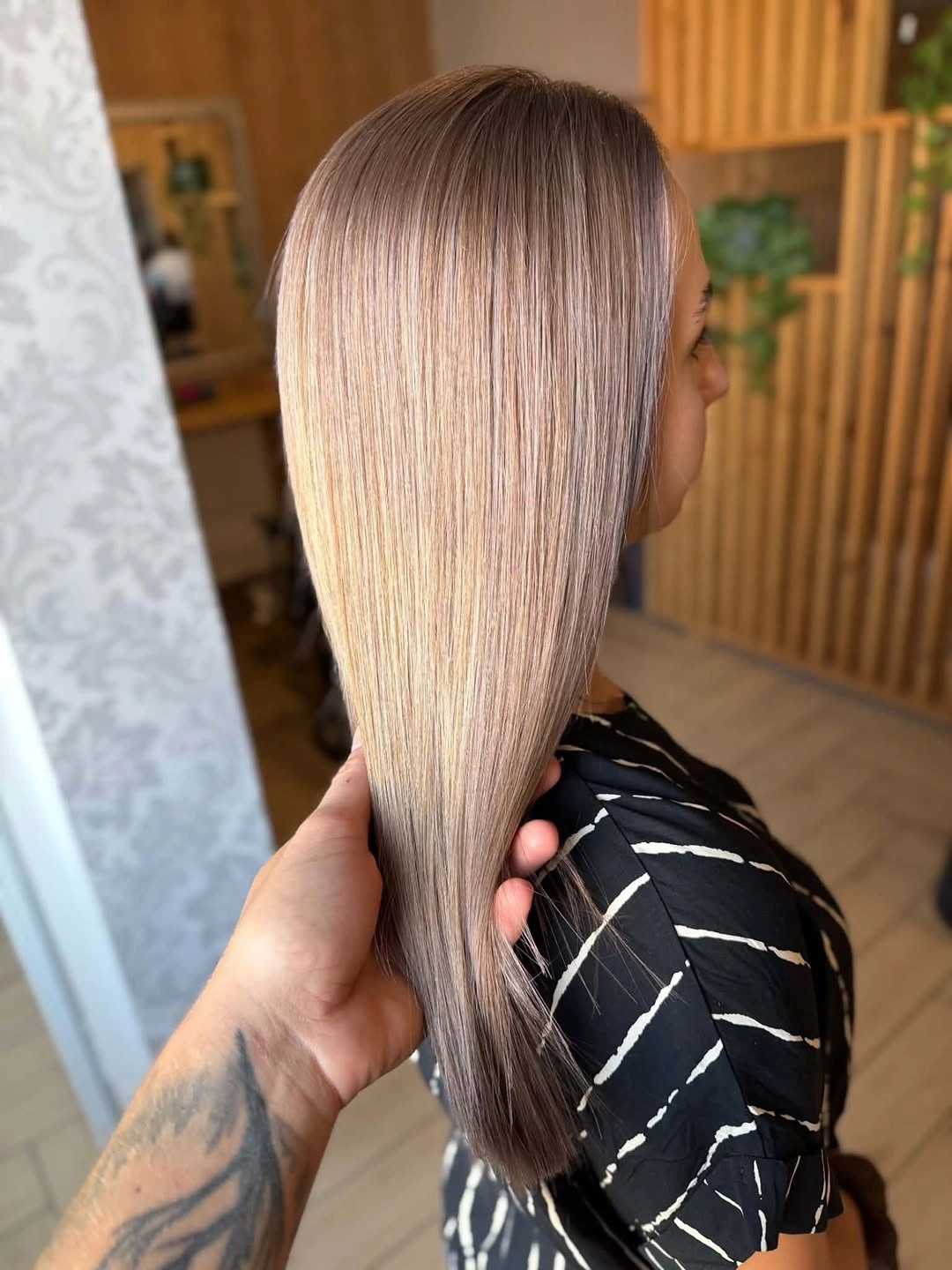
Photo via Instagram
Very fine pale lines travel through the rosy-taupe lengths, adding definition without forming broad contrasting bands. On a smooth surface, those narrow changes are enough to keep the color from looking like one flat mauve-beige sheet, while the deeper root still provides a clear starting point. The dimension comes from close tonal spacing rather than bold separation.
What makes this color distinctive is the way coolness is softened by a muted rosy-beige undertone. It sits apart from icy silver because the cast feels dustier and more blended than metallic or near-white.
Silver-Gray Blonde With Soft Root Contrast
Silver-gray blonde can look crisp without pushing all the way to flat white, and this shoulder-length color shows that middle ground clearly. The root is only a little deeper than the lengths, so the transition stays controlled while the cool cast remains consistent from the center part through the straight ends. That continuity makes the shade feel clean rather than stark.
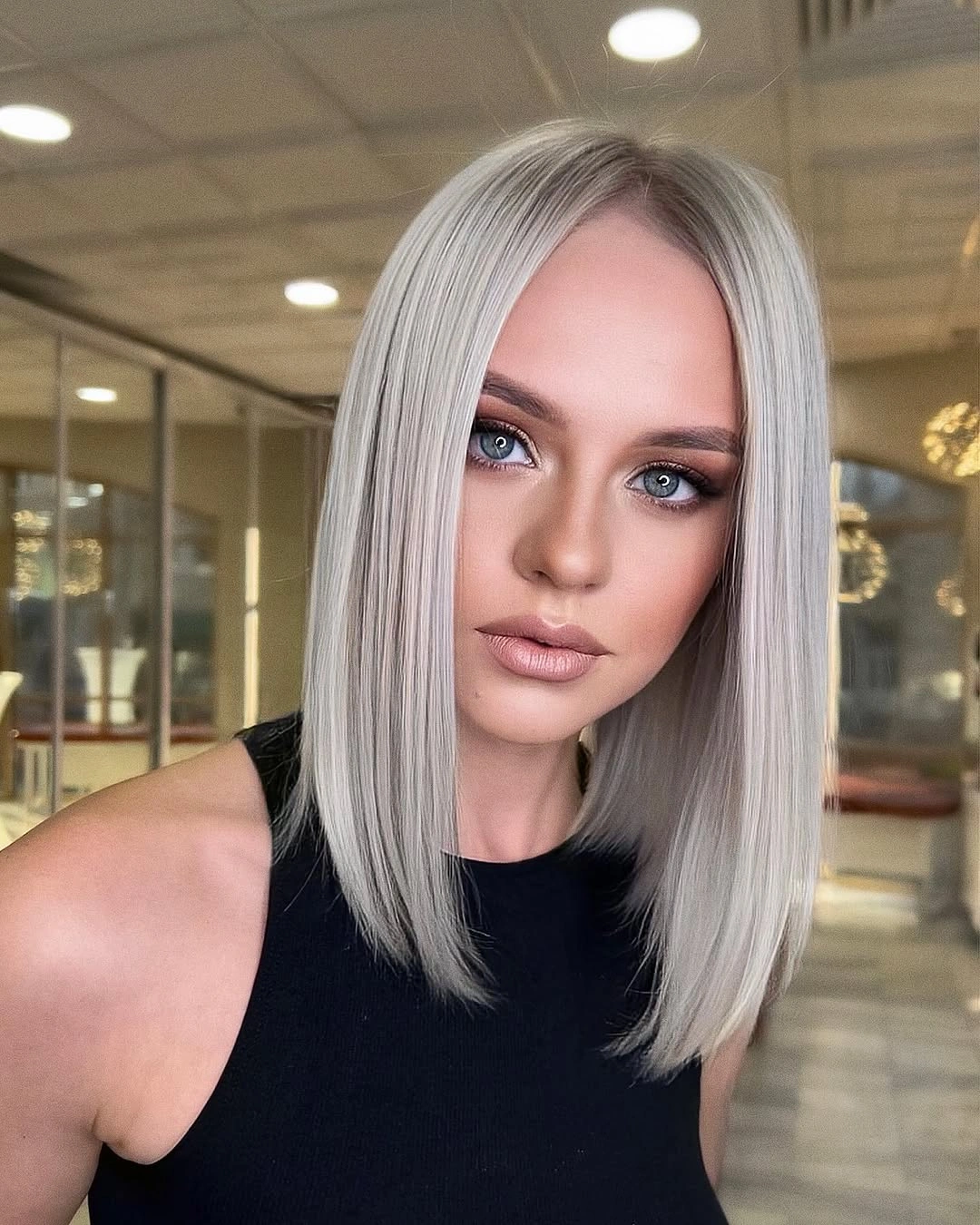
Photo via Instagram
Pale vertical strands around the face introduce just enough variation to keep the silver-gray field from becoming visually static. They are lighter than the crown but close enough in tone to preserve a smooth overall reading, which suits a cool winter blonde hair color when the goal is clarity rather than dramatic contrast. The front gains definition without becoming a separate bright zone.
The restrained root difference is important because it lets the silver tone carry most of the visual weight. Fine brightness near the face adds movement while the overall palette stays cool and even.
Creamy Face Framing With Warm Golden-Beige Depth
The brightest blonde sits around the face, but the rest of this long color stays distinctly warm rather than shifting into an ash palette. Pale creamy framing meets golden-beige depth through the interior and lower waves, so the front looks luminous without depending on a dark root for contrast. That combination gives warmth and brightness equal importance.
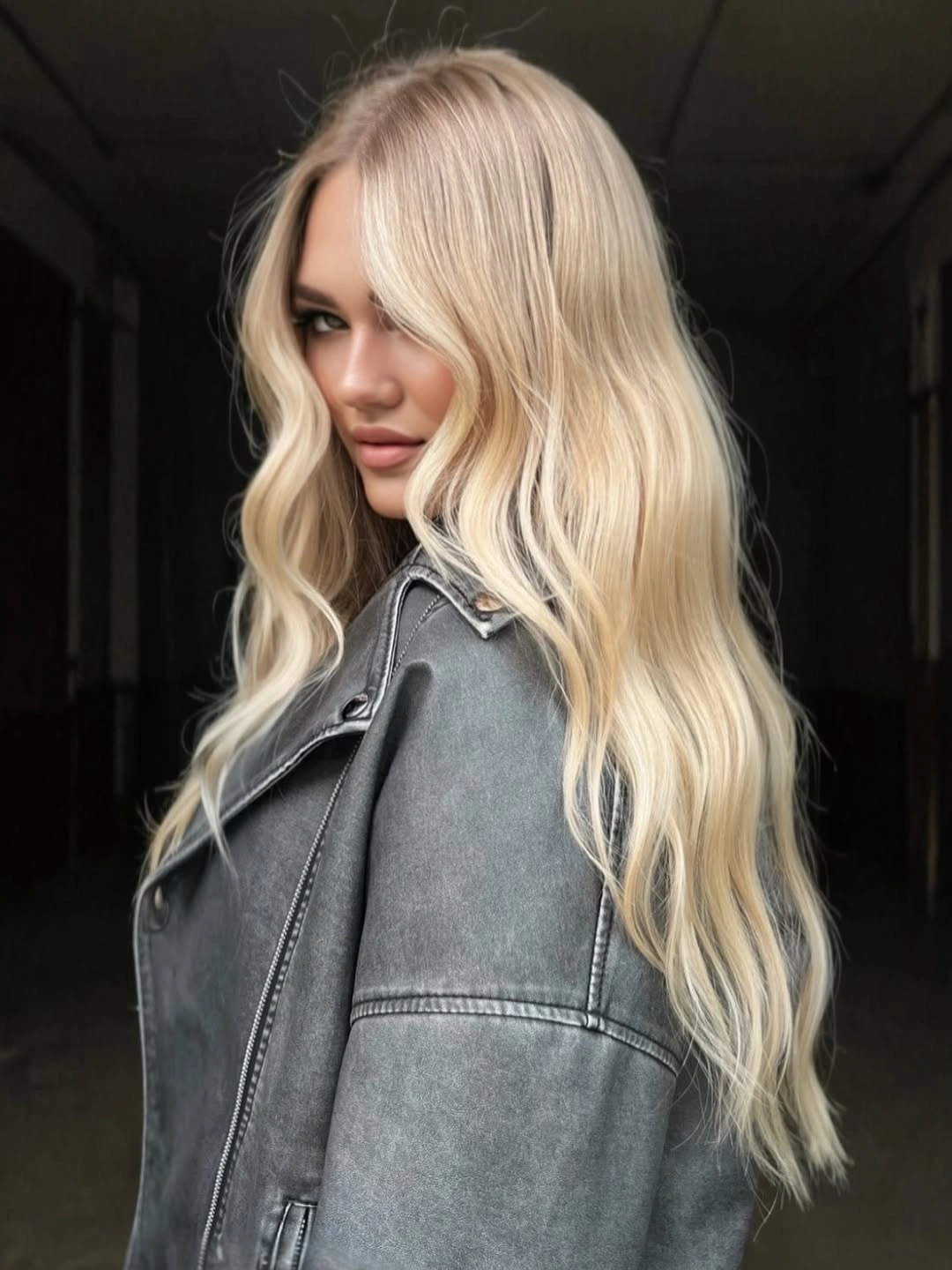
Photo via Instagram
The warmer interior prevents the pale front pieces from feeling detached from the rest of the hair. As the waves move outward, creamy blonde blends into beige-gold sections that are slightly deeper but still clearly light, creating a gradual change in emphasis rather than a sharp border. This is a warm blonde with bright face framing that still reads cohesively from top to ends.
Strong brightness does not have to mean a cool or icy finish. Here, the creamier front and golden-beige interior show how a pale focal point can remain connected to a warmer overall direction.
Pearl-Beige Blonde With a Faint Rosy Cast
Pearl-beige blonde takes on a softer personality here because a faint rosy cast sits over the long, straight lengths. The tone is not as visibly pink as the muted rosy-taupe blonde, yet it is warmer and less steely than a silver-gray direction, which places it in a useful middle zone. A deeper taupe-beige crown gives the pale surface a restrained anchor.
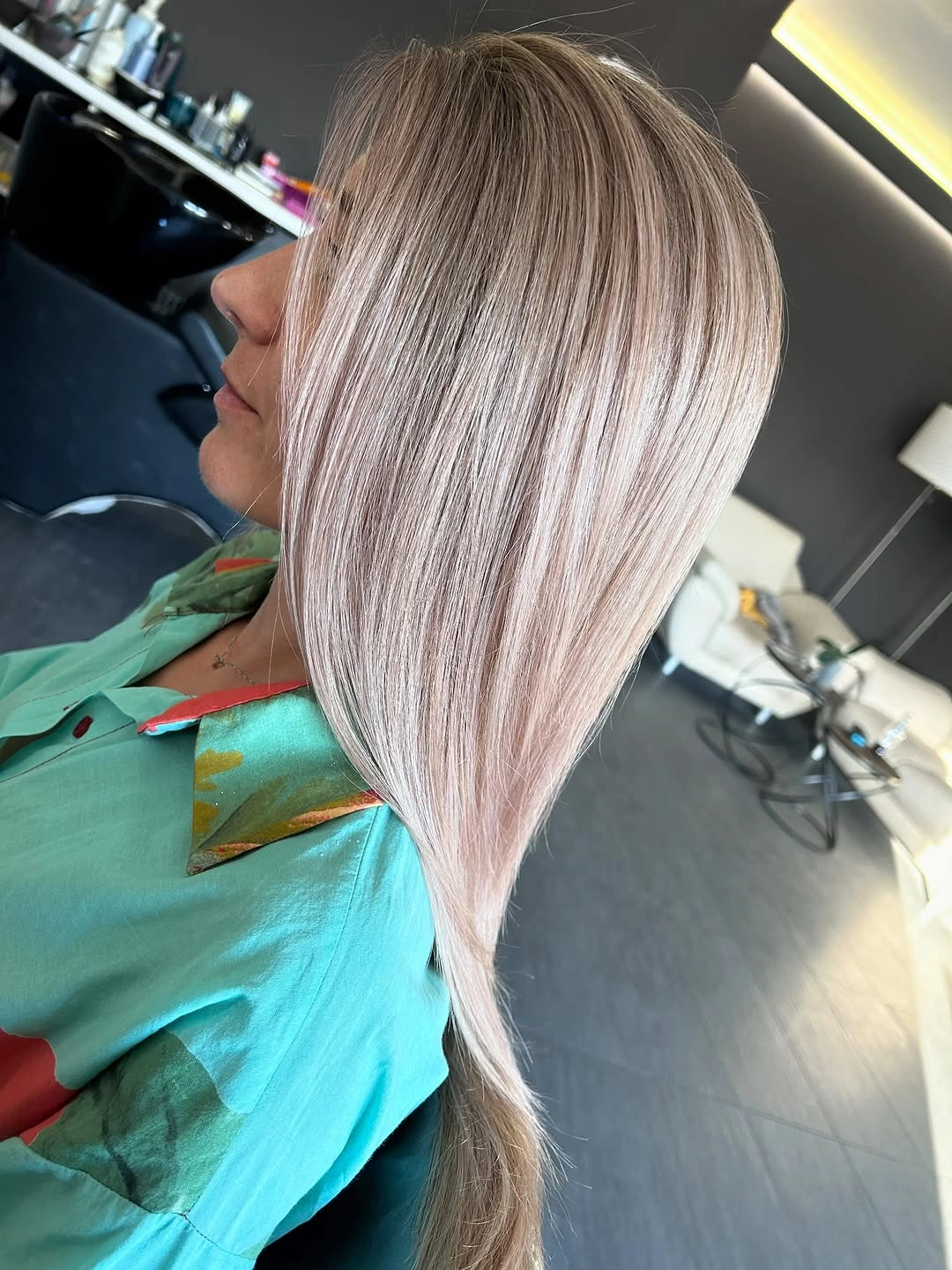
Photo via Instagram
The transition from the darker crown into the lighter lengths stays gentle, with fine vertical shifts instead of broad contrasting ribbons. That subtle variation lets the pearl-beige base remain dominant while the faint blush quality appears as a secondary note, especially where the straight surface catches more light. The color feels nuanced because no single tonal difference has to carry the entire effect.
This is a quieter way to introduce a rosy note into blonde without making pink the main event. The pearl-beige base keeps the color neutral enough to feel balanced, while the blush cast adds a soft departure from conventional beige.
Pale Platinum-Cream Blonde Across Long Waves
Extremely pale platinum-cream covers almost the full length here, so the main impression comes from overall brightness rather than a concentrated face-framing zone. The root is only slightly deeper, which allows the pale color to feel expansive across the long waves instead of beginning with a strong dark-to-light contrast. The result is luminous from a distance as well as up close.
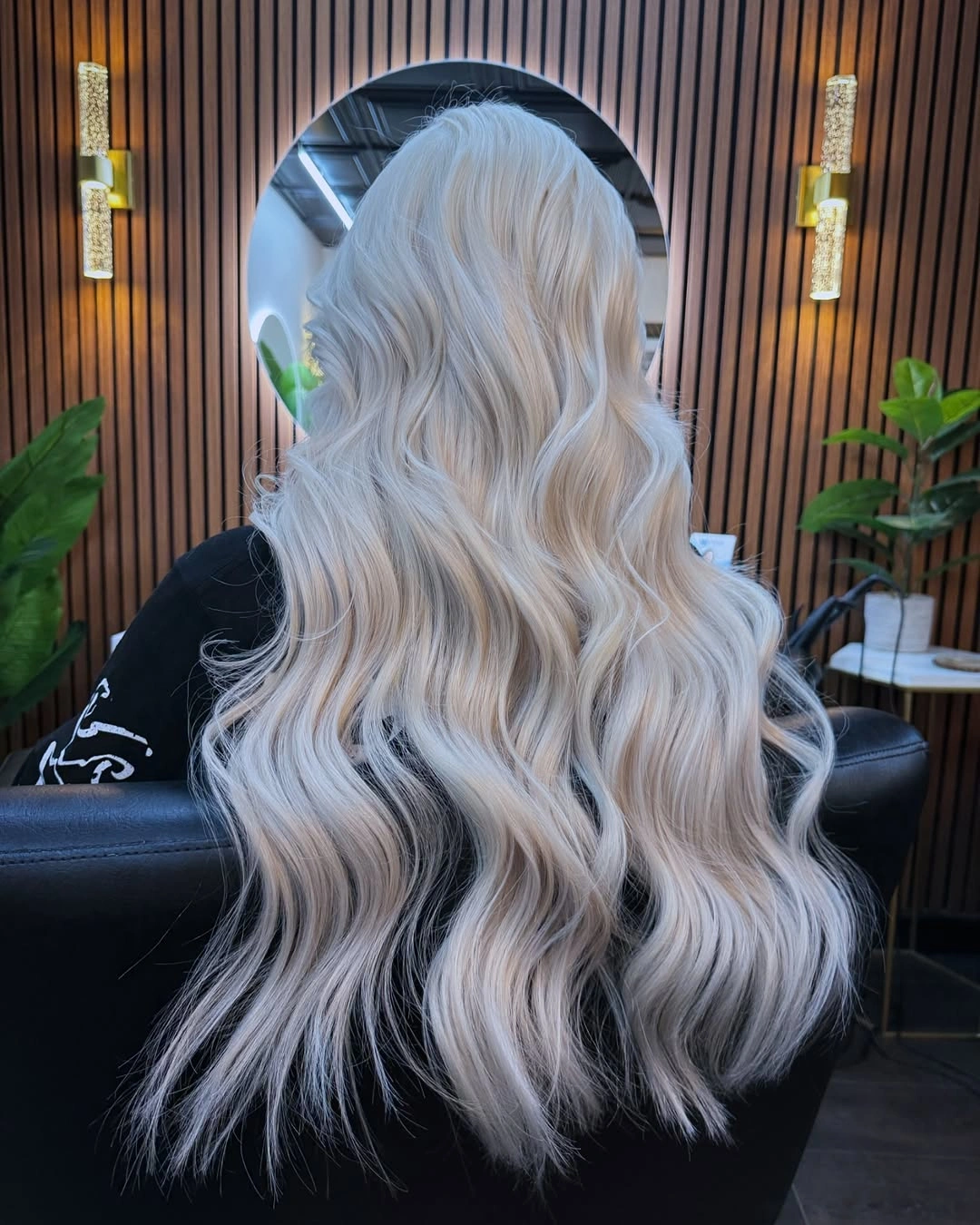
Photo via Instagram
The broad waves reveal small shifts between cooler platinum areas and softer cream sections that would be easy to miss on a perfectly straight surface. Those differences keep the very light blonde from collapsing into one chalky tone, even though the contrast remains minimal. A bright platinum winter blonde can still carry subtle tonal movement when the palette stays this pale.
Limited root contrast keeps attention on the scale of the lightness rather than on a transition at the crown. The cool and creamy variations are slight, but together they give the long pale waves more depth than a completely uniform white would.
Long Beige Blonde With Moderate Root Depth
The sandy-neutral root gives this very long blonde enough depth to define the upper area without creating a severe break from the lengths. Bright beige sections around the front draw attention forward, but they stay close enough to the surrounding color that the effect feels measured rather than stark. Most of the hair remains light, with the deeper crown acting as structure rather than a dominant dark element.
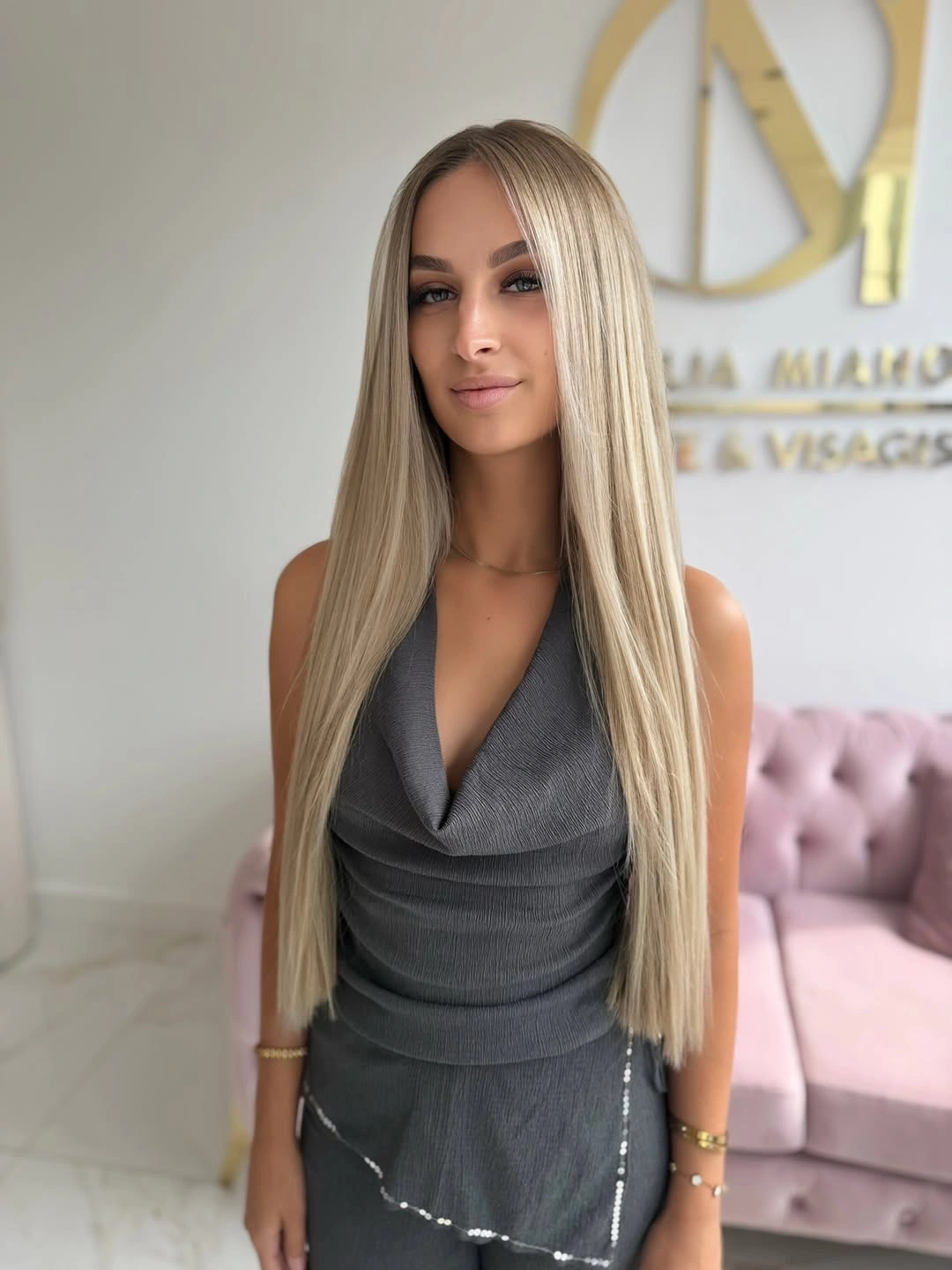
Photo via Instagram
Fine low-contrast variations continue through the straight lengths, so the blonde develops detail through repetition instead of obvious alternating bands. That approach suits such long hair because small beige and lighter shifts can recur many times without making the surface look crowded. The color remains visually calm while still giving the eye more to follow than a completely uniform blonde would.
The emphasis here comes from controlled spacing between sandy depth and brighter beige rather than extreme lightness. The long, straight surface makes those restrained differences easy to read from crown to ends.
Creamy Framing With Sandy-Beige Blonde Depth
Broad creamy sections beside the face bring light to this blonde without pushing the overall color into an icy direction. The center part retains deeper sandy-beige depth, while the surrounding lengths stay warm-neutral and softly luminous. Because those tones belong to the same close beige family, the bright front feels connected to the rest rather than placed against it as a dramatic contrast.
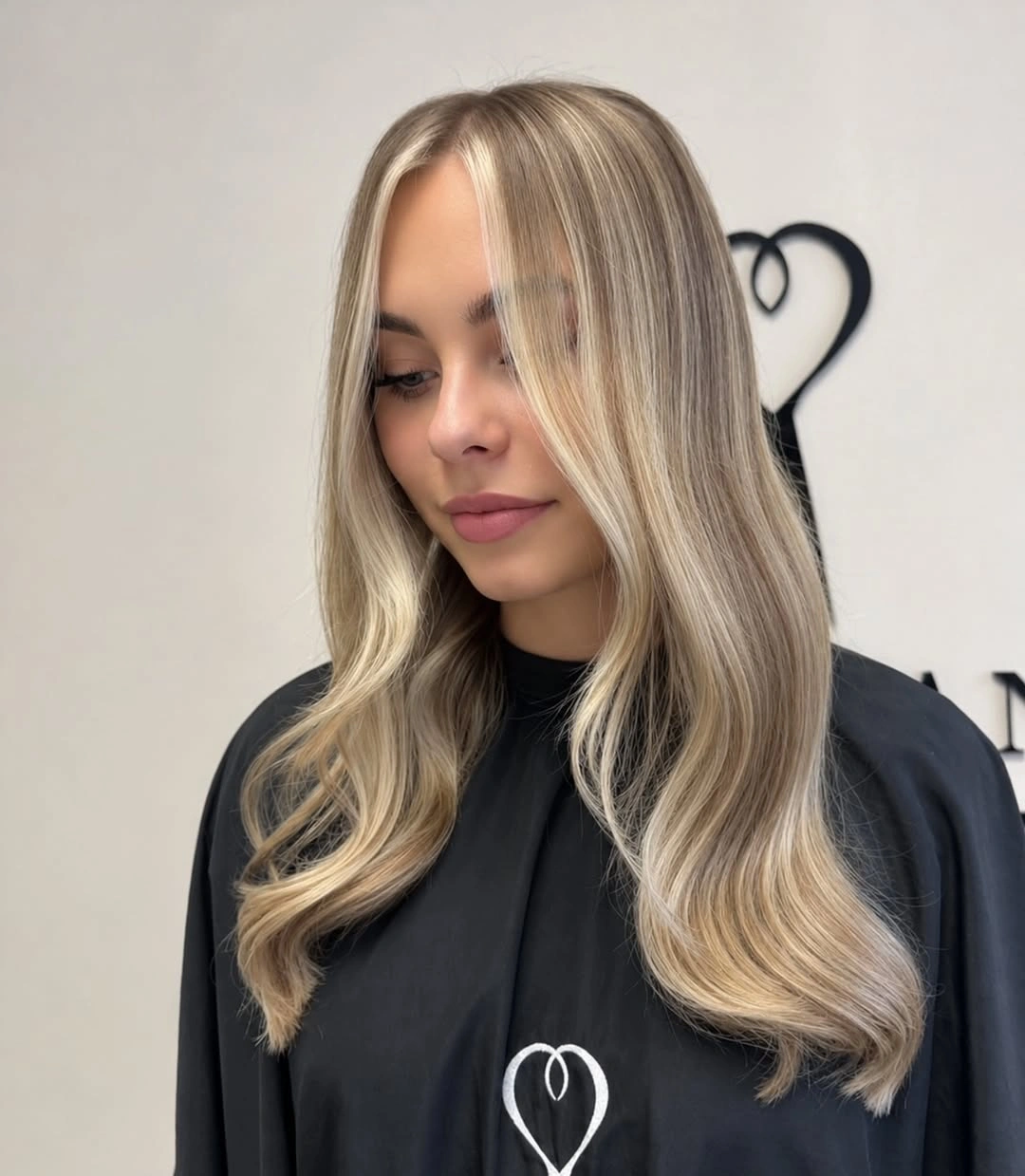
Photo via Instagram
The sandy root provides a gradual bridge into the lighter lengths, and the ends appear a little brighter as the waves curve outward. That progression gives this warm-neutral winter blonde hair color dimension through closely related shades instead of a pronounced dark-versus-light split. Cream, beige, and sandy depth each remain visible, but none overwhelms the others.
The softer framing is what separates this blonde from a near-white front accent. Its creaminess keeps the emphasis bright while preserving the warmer beige character through the rest of the hair.
Ash-Beige Roots Into Pale Creamy Lengths
Deeper ash-beige at the crown creates the clearest starting point, then gradually gives way to pale creamy blonde through the mids and ends. The transition stretches across the visible length instead of changing at one sharp boundary, so the lower hair can become much brighter without looking abruptly detached from the root area. That crown-to-end shift is the main source of contrast.
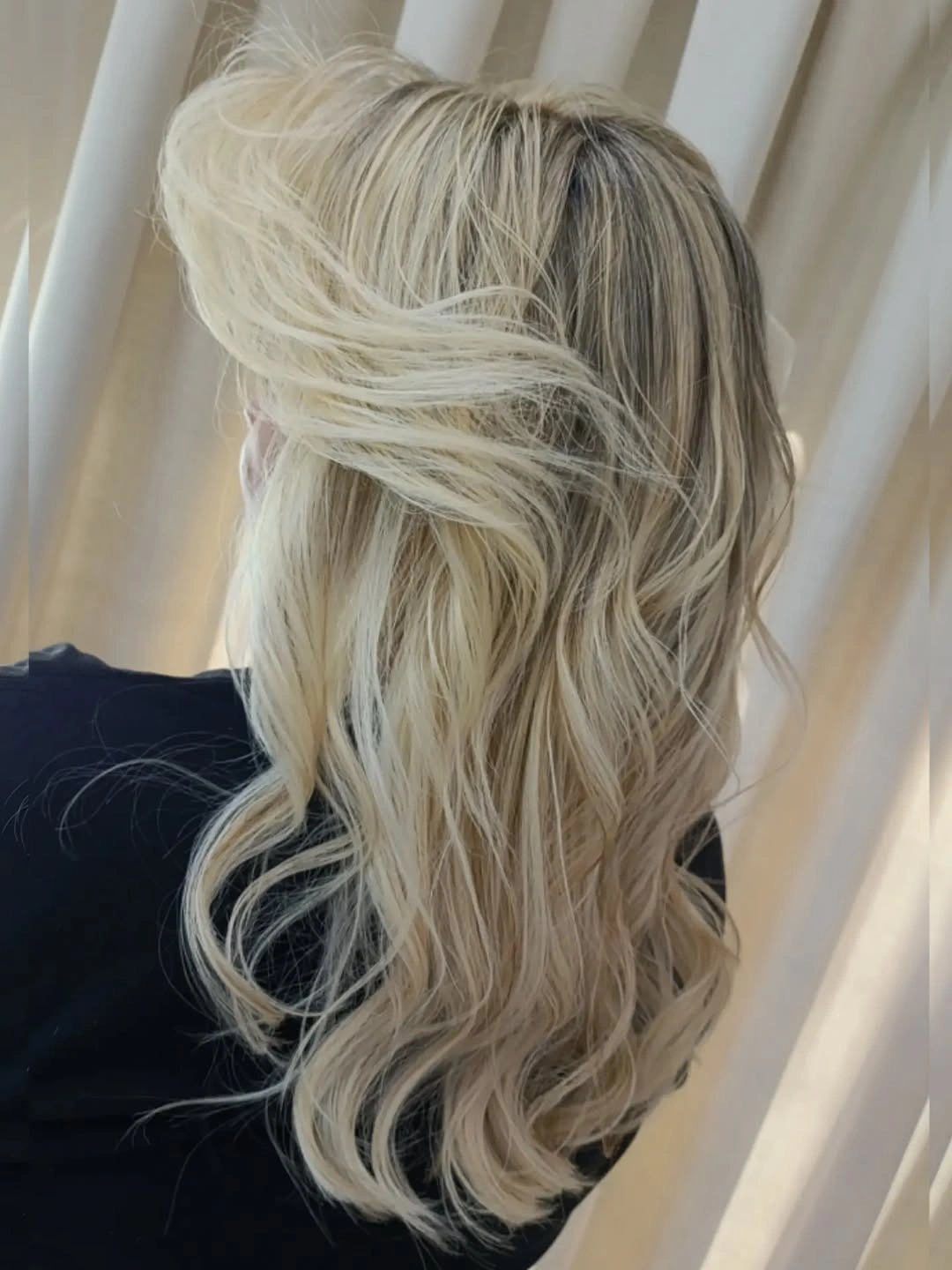
Photo via Instagram
The loose movement exposes irregular pale sections alongside slightly deeper blonde, giving the mids and ends a less uniform pattern than hair built from many fine parallel lines. Some bright pieces become more obvious as they sweep across the surface, while others blend into the creamier base. That uneven distribution adds visual depth without requiring every strand to follow the same light-to-dark spacing.
The strongest idea is the gradual redistribution of depth from the ash-beige crown toward the much paler lower lengths. It gives darker-rooted blonde a clear sense of progression while keeping the visible result centered on color placement rather than an assumed salon technique.