
Winter can make personal style feel more deliberate, offering space to choose something that reflects the mood you want to carry into the season. Thinking about winter hair color for Black women can begin with something simple: what feels expressive, energizing, and genuinely yours. The strongest choice is often the one that feels natural to claim, whether the goal is quiet confidence, a fresh sense of possibility, or simply the pleasure of seeing yourself in a new way.
A seasonal change can be a reason to reconnect with personal taste rather than follow an outside expectation. Hair color can become part of that reset, giving you another way to express confidence, curiosity, softness, boldness, or whatever mood feels right at the moment. What matters most is the sense of recognition that comes when a choice feels intentional, personal, and comfortable enough to become part of how you want to present yourself.
Deep Black Shine With a Side Sweep
This updo shows how dark winter hair colors can rely on outline rather than obvious color variation. The deep black shade gathers into curled loops at the top, while the close side area keeps the lifted shape clean enough for the volume to read. Because the color is so unified, the eye follows the curve of the sweep, the height of the loops, and the shine along the front piece.
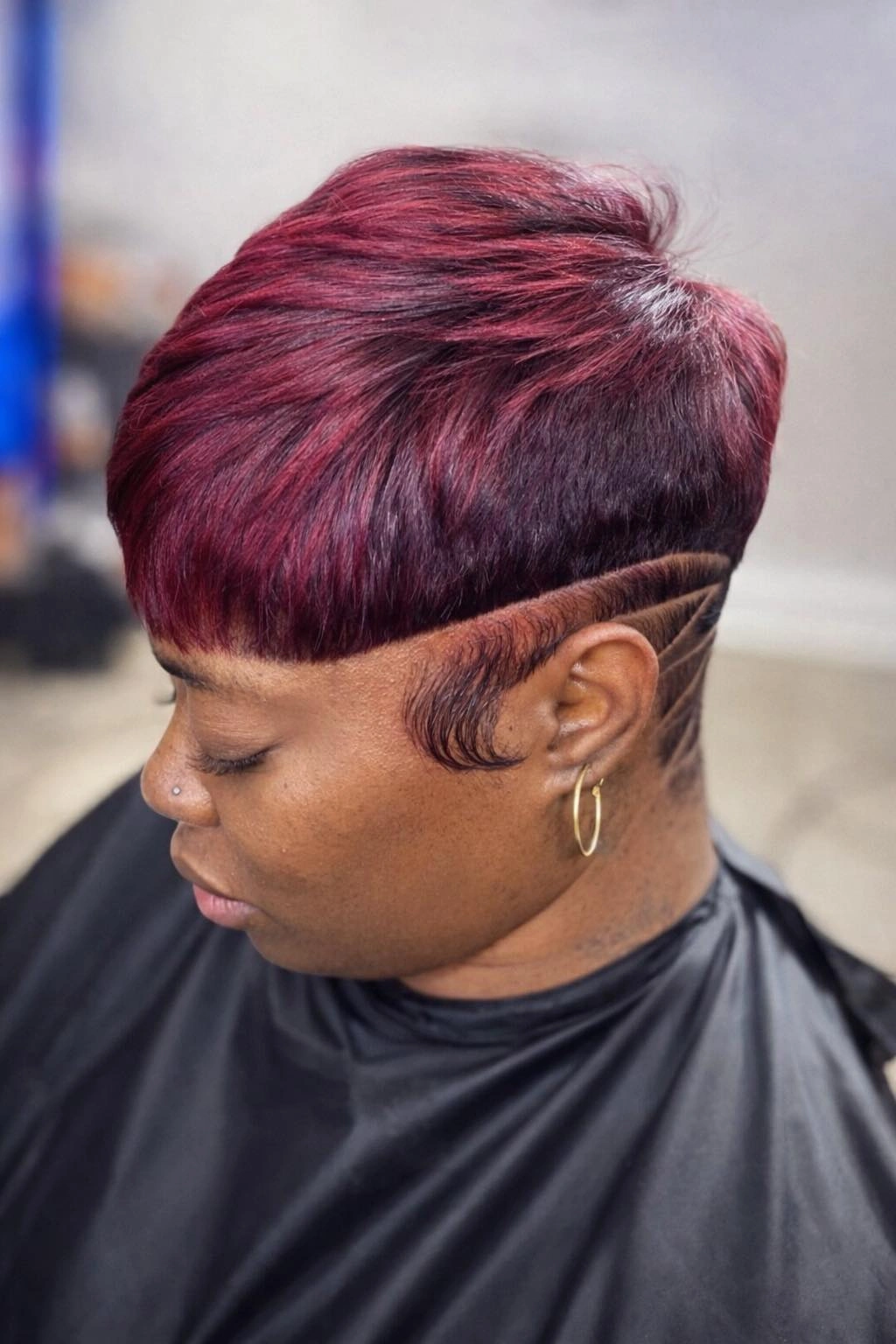
Photo via Instagram
The side-swept section matters because it gives the style an active face frame rather than leaving all of the movement above the crown. It falls across one side with a smooth surface, then loosens near the end, so the dark tone moves between sleek and softly textured. That contrast helps the updo feel intentional even without visible light pieces.
Black is not passive here; it becomes the color that lets every edge and curve show. A reader considering a similarly deep shade could think first about where the silhouette will carry interest – at the crown, through the side sweep, or in the pieces that frame the face.
Honey Ribbons Through Long Brunette Waves
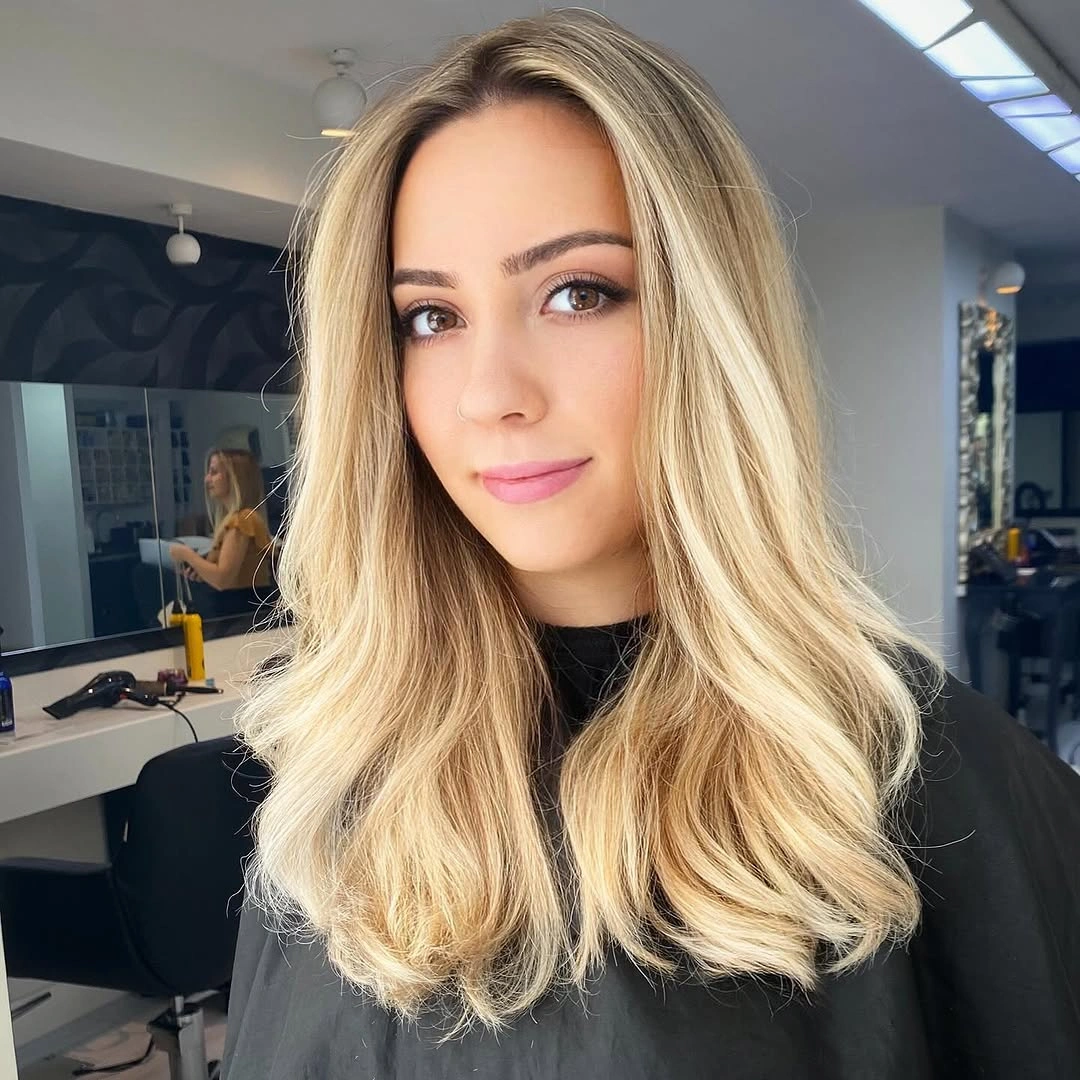
Among winter hair color ideas for Black women, this look makes golden contrast visible without removing the darker base that gives the length depth. The brunette foundation stays present at the roots and between the bends, while honey-blonde ribbons travel through the waves in narrower strokes. That relationship keeps the color from reading as one flat blonde surface.
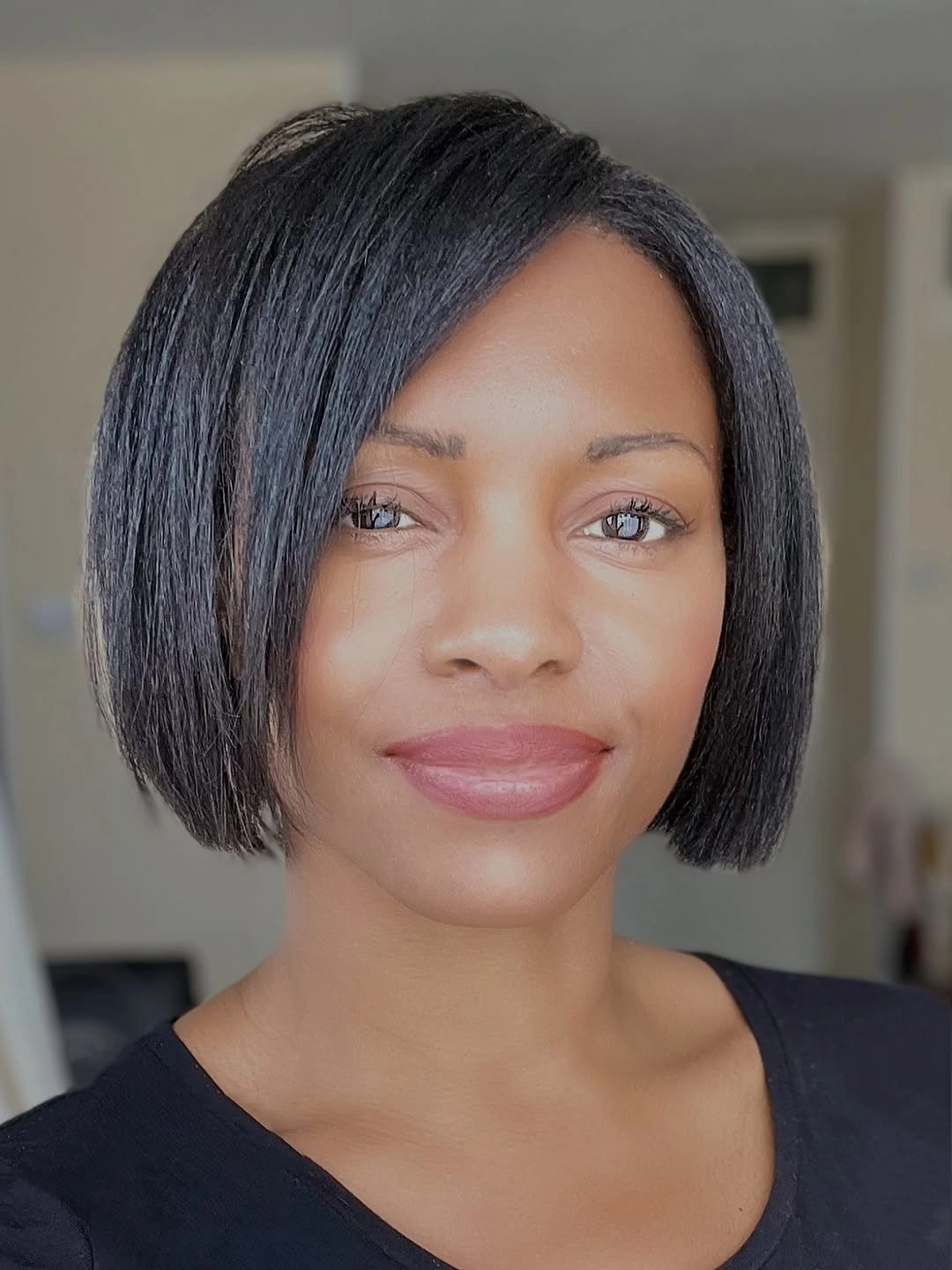
Photo via Instagram
The waves are doing a lot of the color work because each bend exposes a different part of the light-and-dark pattern. Honey pieces catch the curve near the face, then reappear lower through the lengths, so the eye keeps finding brightness in motion. The darker sections between them give the curls visual pauses instead of letting every strand compete.
For readers who want visible lightness, this is a dimensional direction rather than a total shift away from brunette. It suggests that color can feel bright because of where it appears, not only because of how pale it becomes.
Near-Black Curls With a Long Swoop
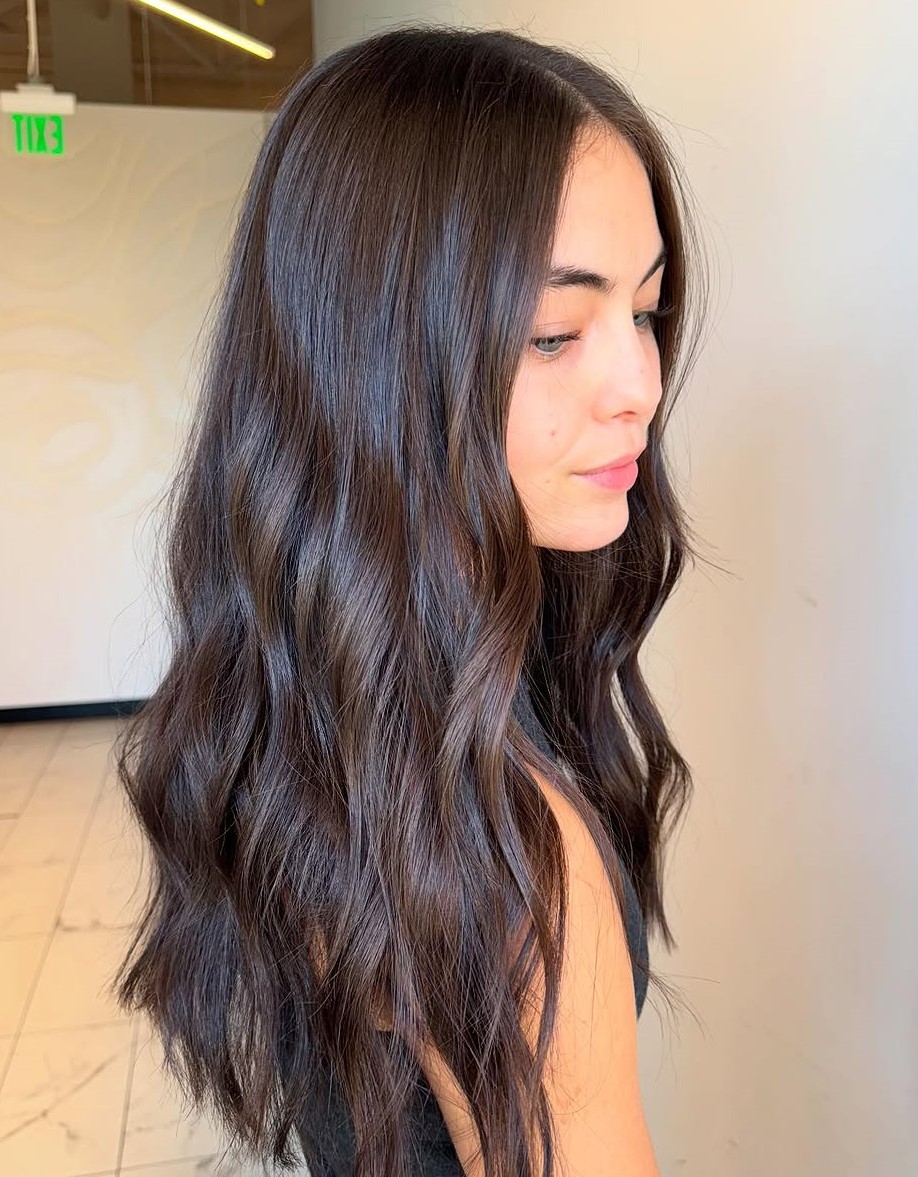
This style treats dark winter hair colors as full shades with their own dimension, not as a plain default. The long near-black curls create a dense field of shadow and shine down the back, and the curl texture makes the shade shift subtly where light hits different surfaces. The result is depth produced by fullness, length, and texture rather than a second color.
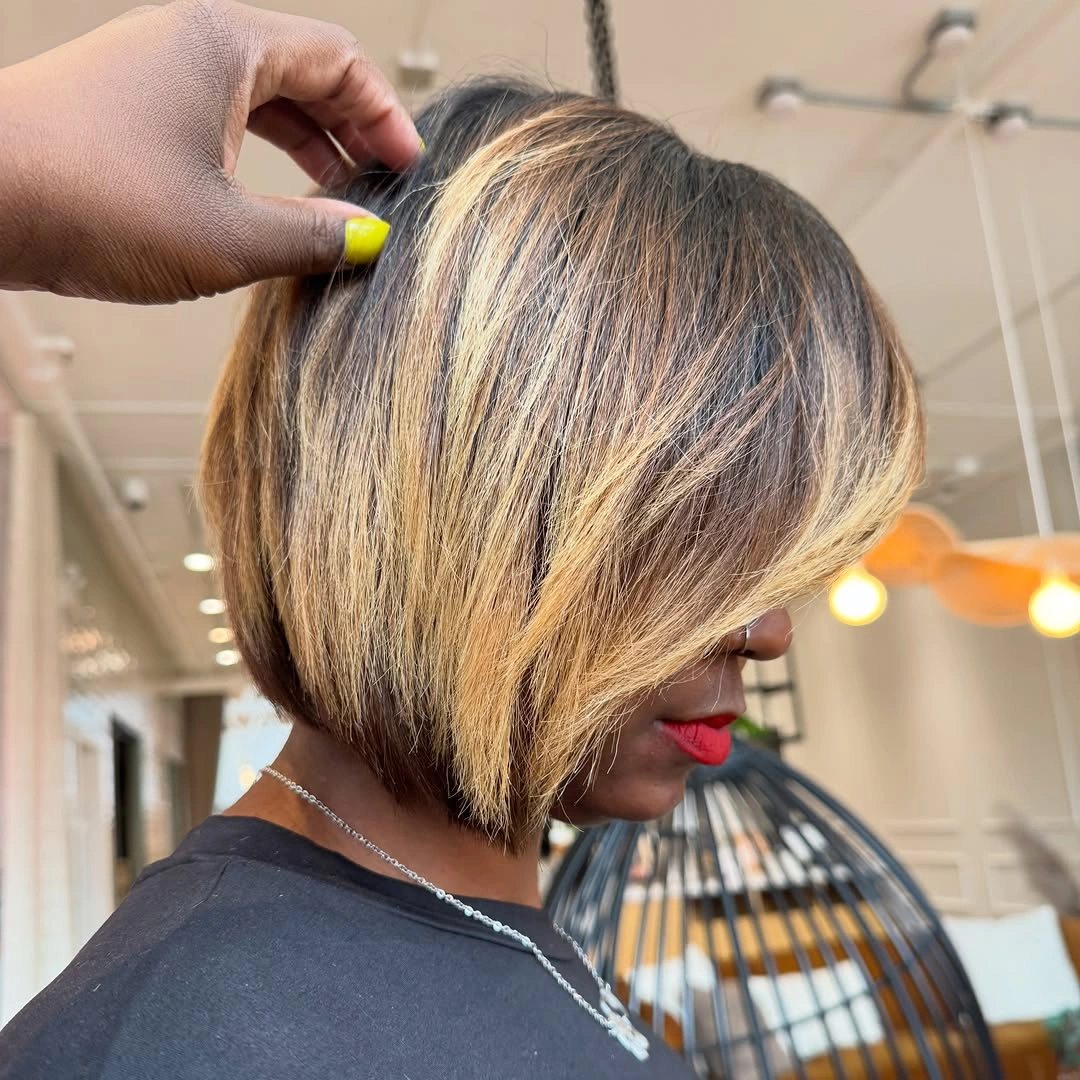
Photo via Instagram
The side-parted swoop gives the front its own rhythm before the eye moves into the longer curl mass. Because the smoother front curve sits against a much denser curl field, the same dark shade reads two ways: sleek at the face and more clouded through the back. That shift keeps the look from feeling visually flat while staying within a restrained color range.
Darkness becomes the whole color decision here, not a background waiting for contrast. A similar direction works best when the shape has enough movement, density, or shine to let a single deep shade keep changing as the head turns.
Center-Parted Curls With Twin High Volume
The center part gives this curly shape a clear axis, and the two high clusters build playful volume on either side of it. Because the color appears dark and consistent, the structure comes from symmetry, rounded curl edges, and the space created around the face. The look shows how a dark shade can feel lively when the curls are arranged with an obvious shape.
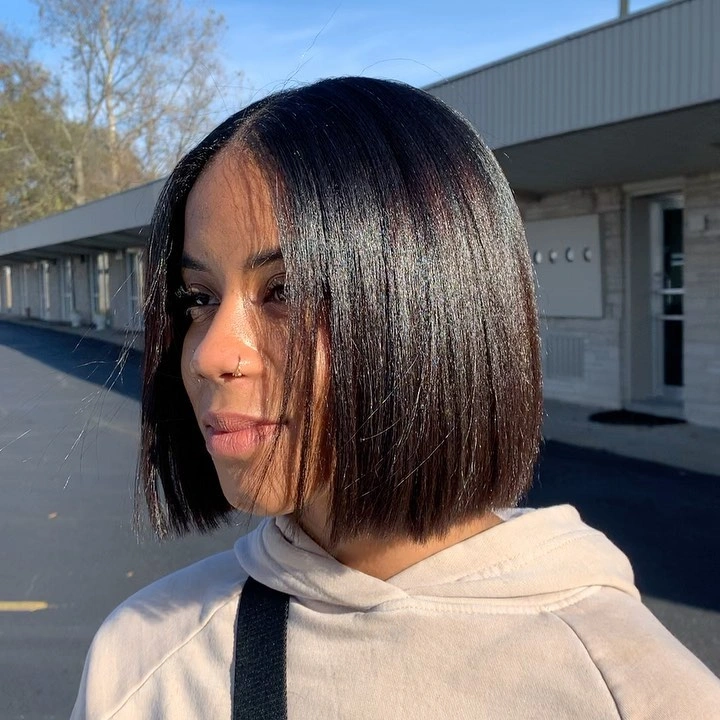
Photo via Instagram
The loose curls at the sides are important because they soften the twin-volume idea before it becomes too strict. They fall away from the higher clusters and add smaller movements around the cheeks and lower edges, so the shape feels balanced rather than overly fixed. The visible effect is less about adding brightness and more about varying curl size and placement.
Here, depth works through surface: some curls catch light, others tuck into shadow, and the dark tone keeps the outline connected. Readers can take from it the idea that symmetry does not have to look severe when the curl surface stays textured and responsive.
Honey-Blonde Braids With Beaded Length
For readers comparing hair color ideas for Black women, these honey-blonde braids show how a light shade can become softer when it is divided into many narrow lines. The color does not sit as one broad panel; it repeats through each braid, letting darker areas near the scalp and between parts give the blonde visible definition. That broken rhythm keeps the length light but not blank.
Photo via Instagram
The center part and neat rows give the shade a built-in structure, because the darker root contrast outlines where the braids begin. As the braids fall forward and over the shoulders, the blonde reads in vertical strands rather than a single block of color. The beads near the ends add small points along that vertical path, so the eye follows the style from the part down through the lengths.
The strongest detail is the way length and color support each other. Instead of relying on brightness alone, the style uses repetition, parting, and small end accents to make honey blonde feel measured and deliberate.
Auburn-Brown Braids With Curled Ends
The square parting gives this auburn-brown braid style a clear visual map before the color even reaches the ends. Each small section repeats the reddish-brown tone in a controlled pattern, so the shade reads as rich and layered rather than flat. The grid at the crown also lets the darker and brighter strands appear organized instead of scattered.
Photo via Instagram
The curled ends change the mood of the color because they gather the auburn tone into a softer, springier finish below the shoulders. Where the upper braids feel linear and precise, the lower curls create small loops of movement that make the reddish-brown shade look more dimensional. That contrast between parting and curl is what keeps the style visually active from top to bottom.
Auburn brown sits between deep brunette and brighter red in a way that feels easy to read on textured lengths. It gives the style a visible color shift without relying on the strongest red possible, which makes the braid pattern and curled finish share the attention.
Purple Curls Over Dark Tapered Sides
This short shape makes purple feel concentrated and sculptural because the color stays mostly in the curled top. Instead of spreading through long lengths, the violet tone gathers where the hair has the most height, bend, and shadow. That compact placement makes it one of the more graphic dark winter hair colors, since the richness comes from depth as much as brightness.
Photo via Instagram
The dark tapered sides sharpen the contrast without making the whole style depend on a hard color split. They frame the purple curls from underneath, so the top reads fuller and more defined while the sides stay close to the head. The curled fringe over the forehead adds another route for the violet tone to move forward, not just upward.
Deep purple works here because it behaves like a dark shade with a visible undertone. Readers drawn to color but not a full-length change could look at this as a lesson in focused placement: put the strongest shade where the shape already has movement.
Burgundy Lengths With Copper-Red Face Pieces
The long burgundy-red lengths read as a textured color field that carries from the crown down over both shoulders. Whether seen as loc-like strands or simply long red lengths, the repeated narrow surfaces give the burgundy base more depth than a flat wash of color would. The shade feels strongest where the darker red gathers through the middle and lower length, letting texture and vertical fall shape the first impression.
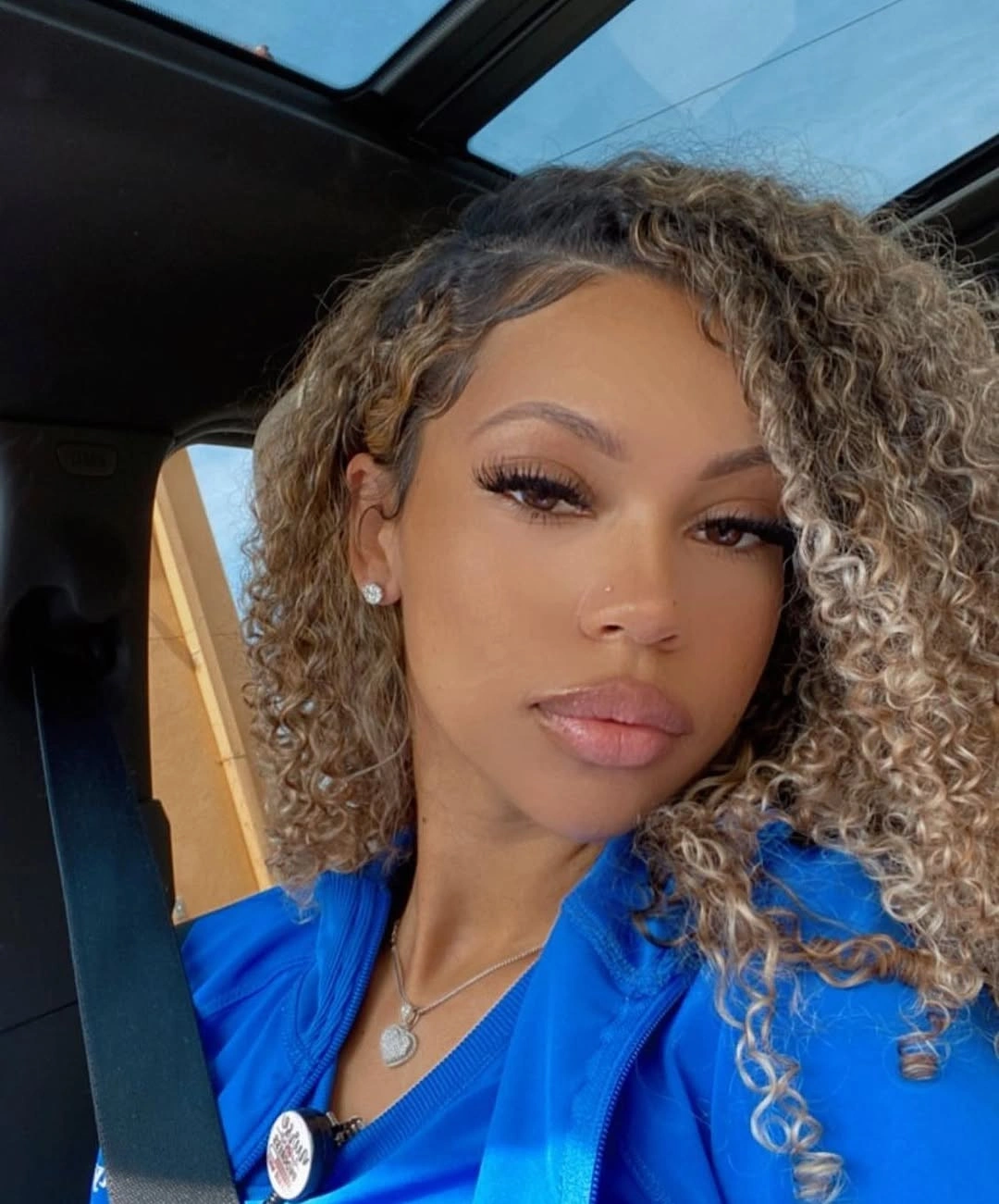
Photo via Instagram
The brighter copper-red pieces near the front change how the color meets the face. They sit closer to the viewer than the deeper burgundy lengths, so the first impression becomes more dimensional than a single red shade. Those lighter front strands also break up the darker red mass and make the color placement feel more directional.
The green top adds a strong color contrast around the hair without defining the hairstyle itself. Against that different surrounding shade, the burgundy and copper tones look even more intentional as a red-family combination with depth, length, and a visible front accent.
Brown Braided Updo With Pale Accent
This braided updo uses warm brown as part of the shape, not just as a surface color. The raised buns, patterned scalp rows, and trailing braids all carry related brown tones, so the eye reads the hairstyle as a sculptural arrangement with color running through every direction. The side profile makes the braid geometry especially clear.
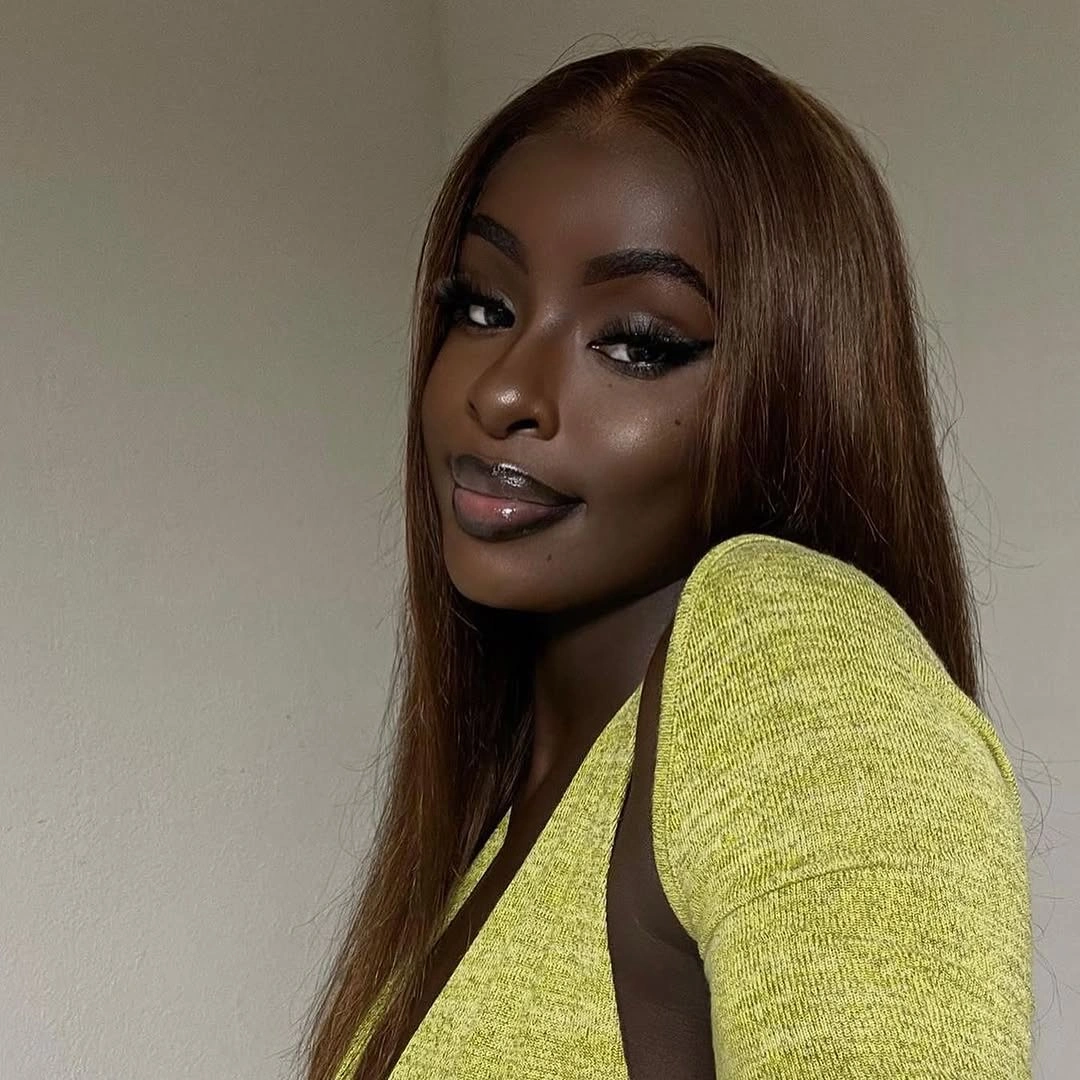
Photo via Instagram
The pale accent braid stands out because it travels as one narrow line through the richer brown pattern. It is not scattered everywhere, so it works like a directional highlight that pulls the eye from the upper braid layout toward the longer pieces below. The beads reinforce that path by adding small visible breaks along the hanging length.
What makes this color placement useful is the way accent and structure are tied together. A single lighter braid can feel deliberate when it follows the movement of the style rather than appearing as an isolated decoration.
Red Curls With Carved Side Lines
The saturated red sits in the curl volume at the top, where the texture gives the color an uneven, lively surface. Some curls look brighter, while others fall into deeper red shadow, so the shade changes as the coils cluster together. The cropped side area below it keeps the red visually concentrated in the part of the style with the most movement.
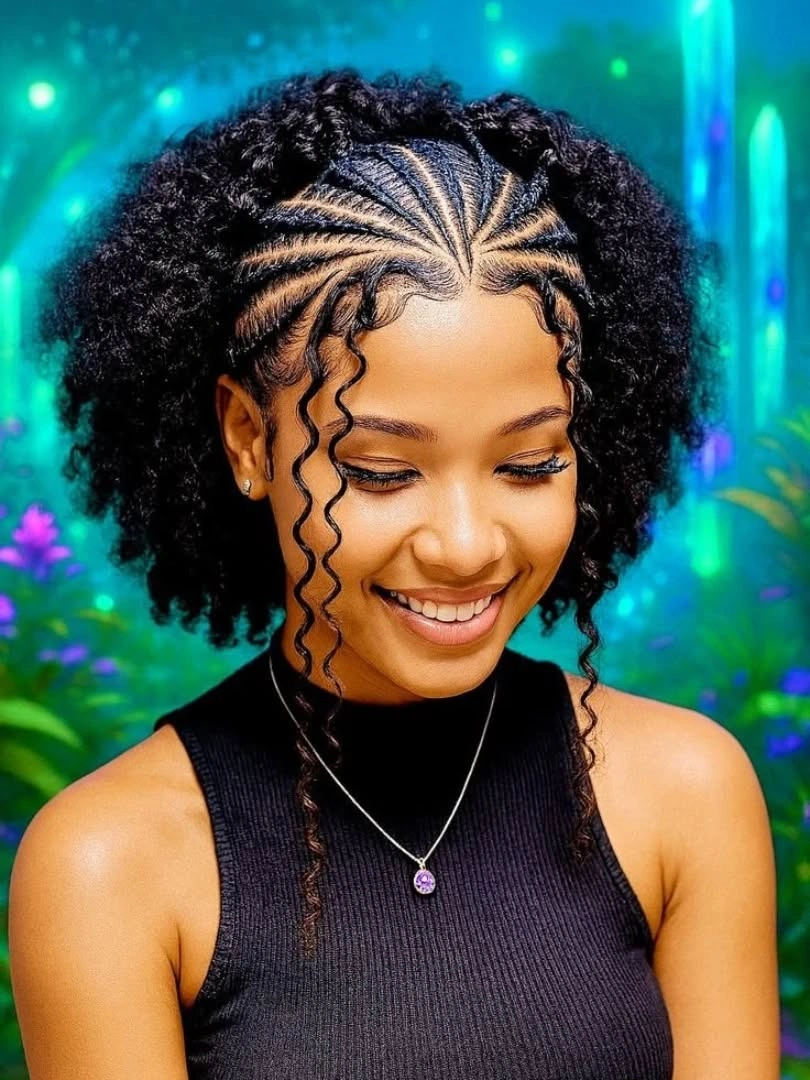
Photo via Instagram
The faded sides and shaved diagonal lines create a clear boundary around the color. Instead of letting the red simply fade into the rest of the haircut, the carved details make the lower area graphic and intentional. The copper-brown tone near the sides also acts as a transition between skin, crop, and the fuller red curl shape above.
This is short-hair color with placement, edge, and drawing power. The effect comes from the relationship between curl density, red saturation, and carved lines, not from the shade alone.
Near-Black Puff With Lifted Coils
This high puff gives dark winter hair colors a strong example of depth built through density and shadow. The near-black shade gathers into lifted coils that do not need lighter pieces to show movement, because the irregular curl outline already creates changes in surface and shape. Small shifts in light across the puff make the color read textured rather than plain.
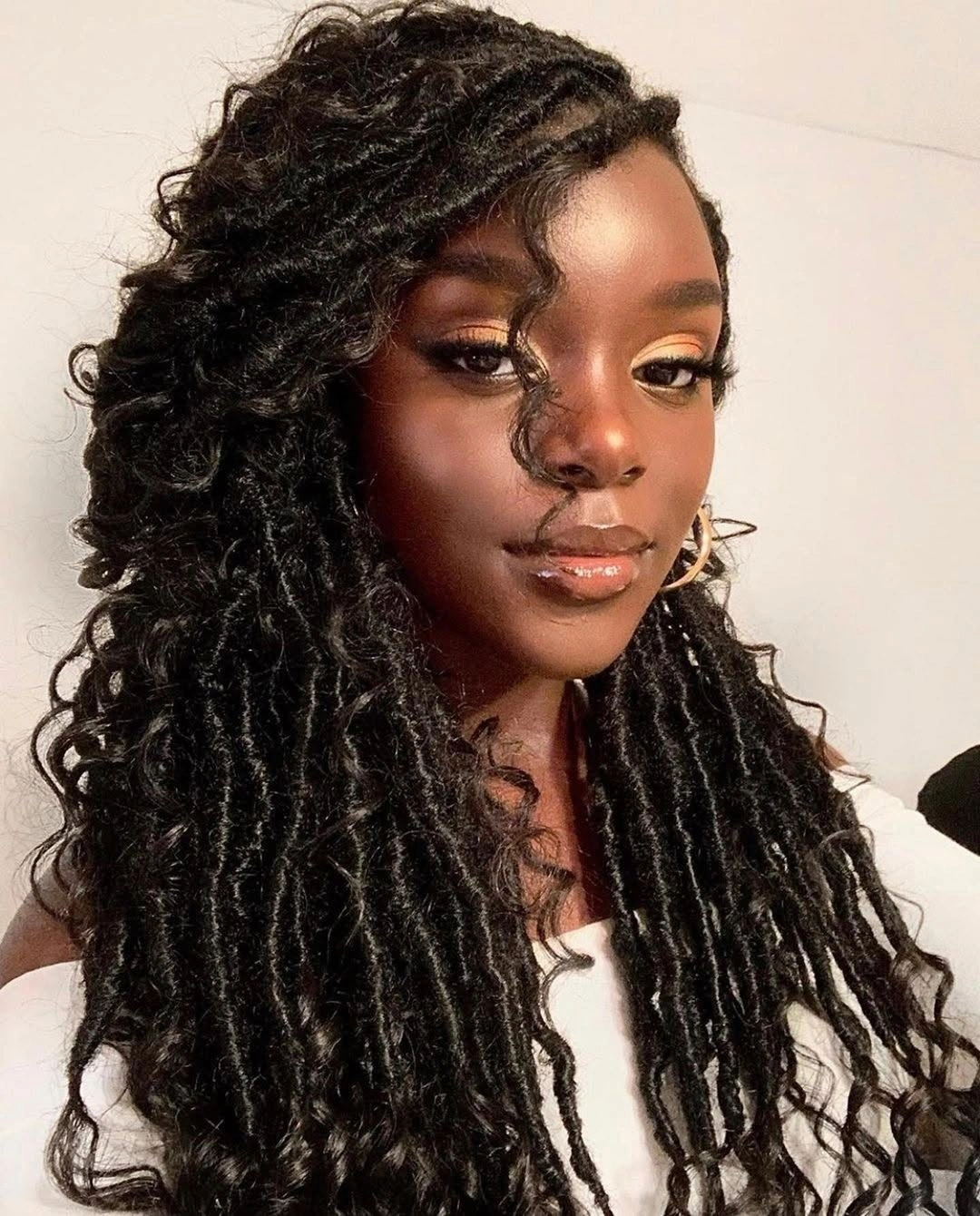
Photo via Instagram
The compact sides help the lifted top feel even more pronounced, creating a clear relationship between the close shape near the head and the fuller volume above. That contrast matters because it lets the eye understand the silhouette before studying individual curls. The color stays unified, but the structure makes the dark tone appear layered through height, edge, and density.
The grounded lesson here is that a deep shade can carry a strong visual identity when the shape has enough architecture. Readers drawn to near-black color can look at volume, outline, and surface texture as the details that make the shade feel intentional.
Honey-Caramel Ribbons Through Layered Waves
This layered style places lighter ribbons where the movement is already visible: through the fringe, across the crown, and down the wave pattern. Among winter hair color ideas for Black women, it shows how blonde and caramel tones can sit inside a darker base without taking over the whole shape. The side-swept front makes the color feel especially directional.
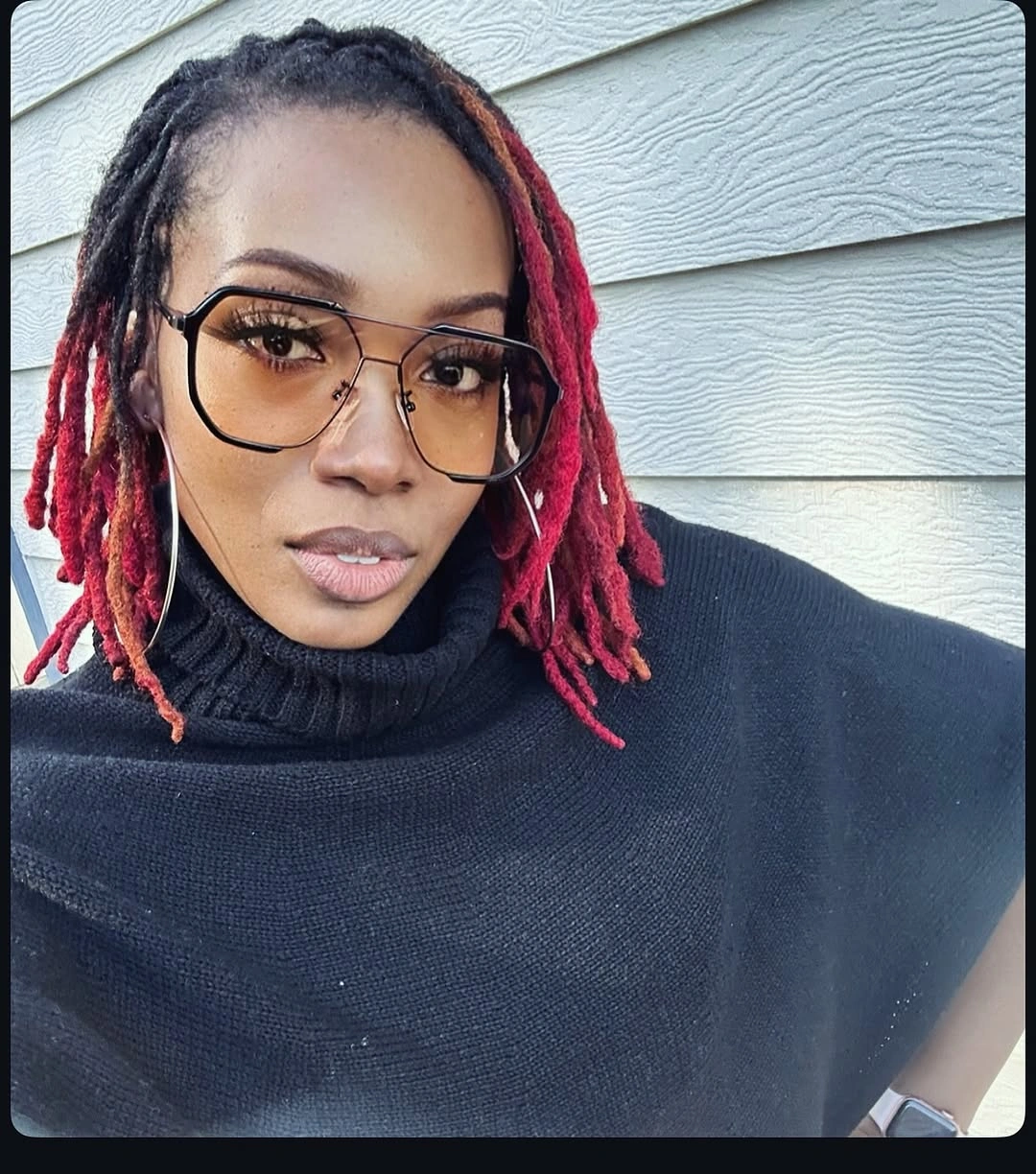
Photo via Instagram
The layered bends create alternating areas of light and shadow, so the honey-caramel pieces appear in waves rather than in a single heavy panel. Some lighter strands curve outward, while darker sections remain between them, giving the length a more dimensional rhythm. The effect is strongest where the fringe folds into the longer pieces and carries the brightness across the top.
This is a useful reading of blonde dimension because the deeper base remains part of the final mood. The lighter pieces add movement and lift, while the dark sections keep the style from losing its layered shape.
Copper-Auburn Layers With Dark Ends
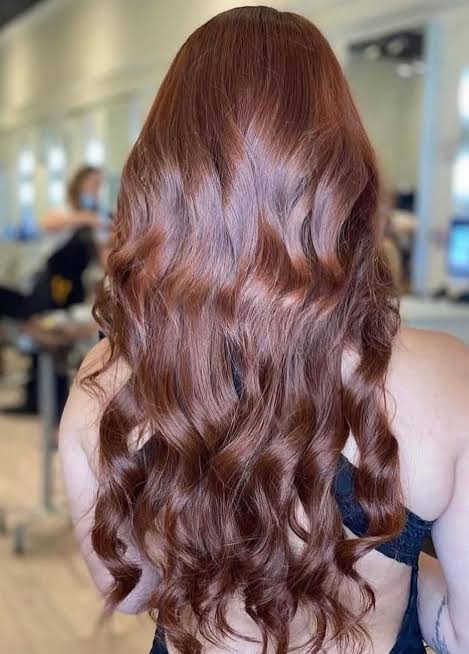
The copper-auburn color sits strongest through the upper layers, where it pulls attention toward the face-framing sweep and the rounded top shape. Because the lower ends remain much darker, the style creates a two-level color story instead of one even shade from root to tip. The warm upper panels look soft, but the darker bottom gives them a clear stopping point.
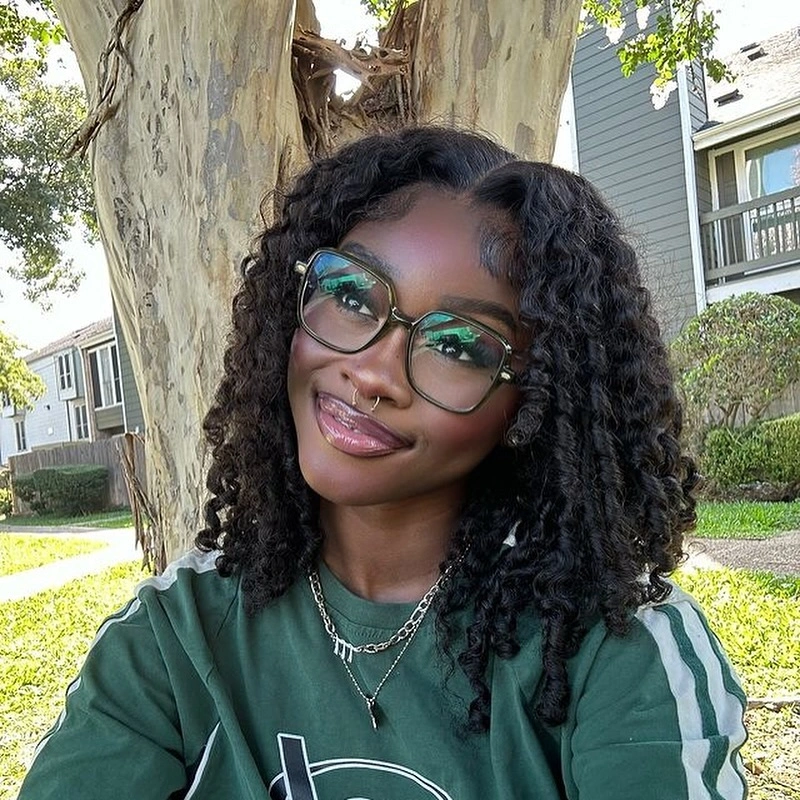
Photo via Instagram
The side-swept layer helps the transition feel less abrupt because the copper tone curves across the front before meeting the deeper ends. That movement lets the eye travel diagonally rather than reading the color as a strict block. The darker lower section also adds edge to the outline, especially where the hair turns under and frames the shoulders.
The nuance is in the placement: warmth lives where the shape opens around the face, while depth stays at the perimeter. A reader considering copper or auburn can use this as a reminder that the darker parts are not secondary when they help define the final silhouette.
Glossy Black Layers With a Sweeping Bang
This short layered bob-like shape makes the side bang the main line of the style. The glossy black shade follows that sweep across the forehead, then breaks into softer movement at the lower edges, so the color reads through direction as much as shine. It is one of the more polished dark winter hair colors because the shape keeps every dark surface purposeful.
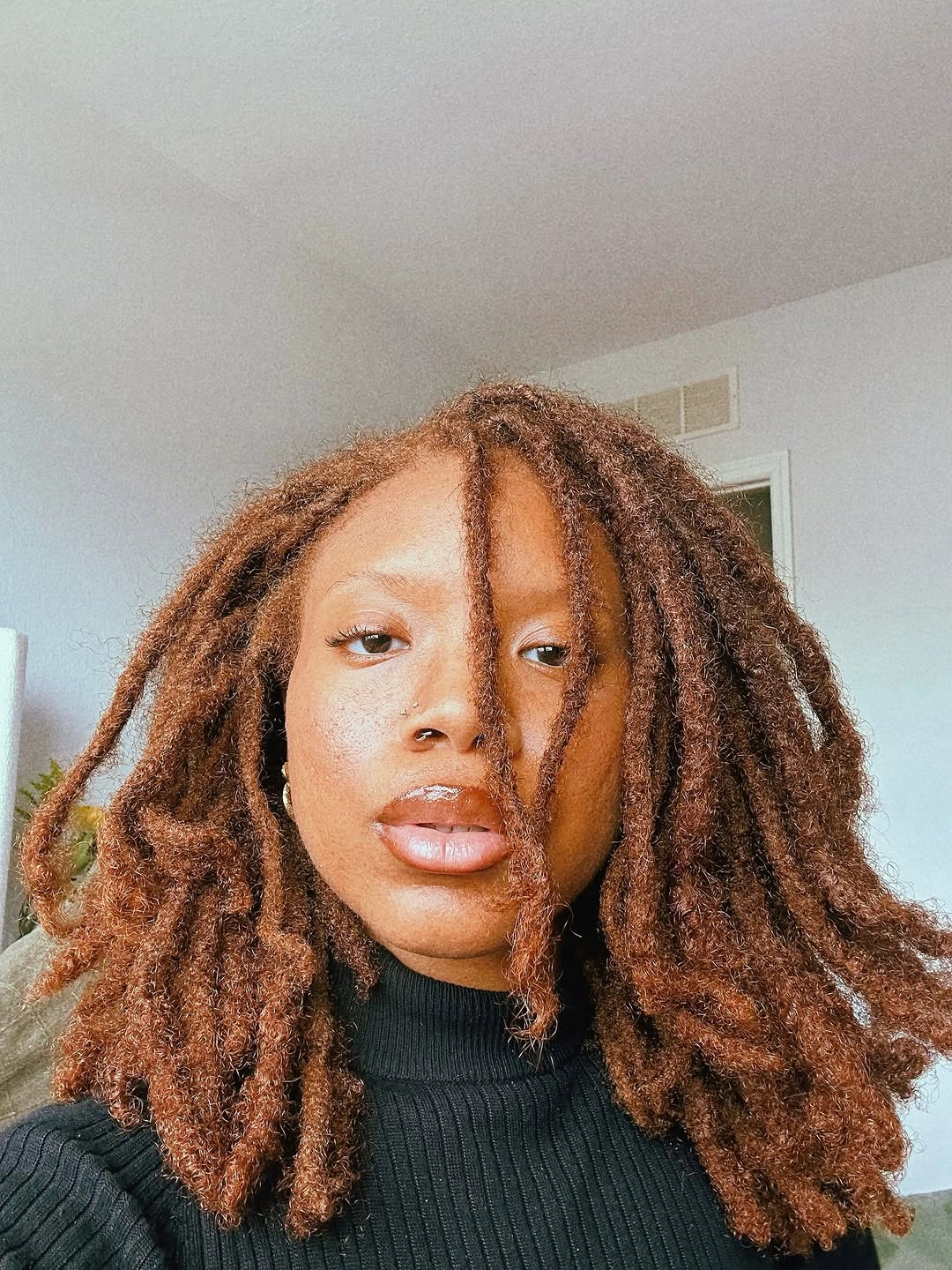
Photo via Instagram
The shorter length gives the black shade a concentrated field, allowing the finish and layered edges to matter more than color variation. Instead of relying on lighter strands, the look uses the smooth top, the curved bang, and the flipped lower pieces to create movement inside one dark palette. That makes the finish feel refined without needing extra contrast.
The strength of this color choice is its restraint. Black feels polished here because the silhouette is edited, the bang is decisive, and the lower layers keep the shape from becoming visually heavy.
Golden-Brown Curls With Blonde Spirals
These highlighted curls show light color distributed through separate spirals rather than gathered into one obvious stripe. The darker base remains visible near the crown and between curls, while the golden-brown and blonde pieces appear inside the rounded curl pattern. For winter hair color ideas for Black women, that placement offers brightness with texture still leading the look.
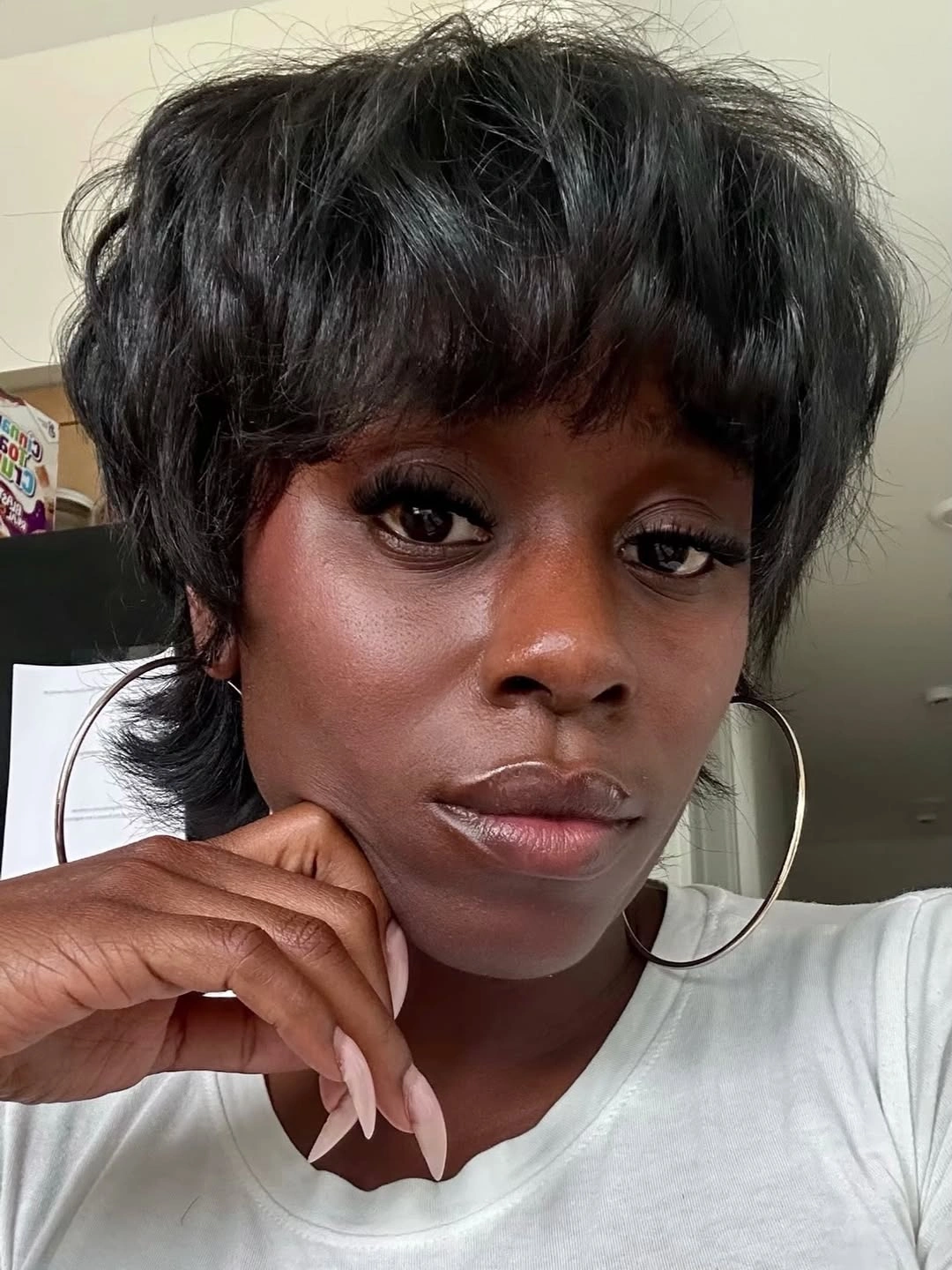
Photo via Instagram
The rounded volume around the face changes how the color reads, because every curl bend catches the lighter pieces a little differently. Some spirals look more blonde at the outer edge, while others keep more brown through the center, creating a varied but connected surface. The color feels active because it follows the curl pattern instead of flattening it.
This look sits between brunette depth and blonde brightness in a way that feels visually balanced. The most useful detail is how the lighter pieces remain tied to curl shape, so the color supports the volume rather than covering it.
Copper-Orange Layers With Dark Lower Ends
From the back, the copper-orange area reads as the dominant upper sheet of color because it covers the crown, upper lengths, and most of the layered surface. The shade is vivid, but the main visual point is placement: it sits high and wide, so the eye understands the color shape before studying individual layers. The straight fall at the top makes the orange field look broad, while the flipped lower pieces keep the edge from feeling static.
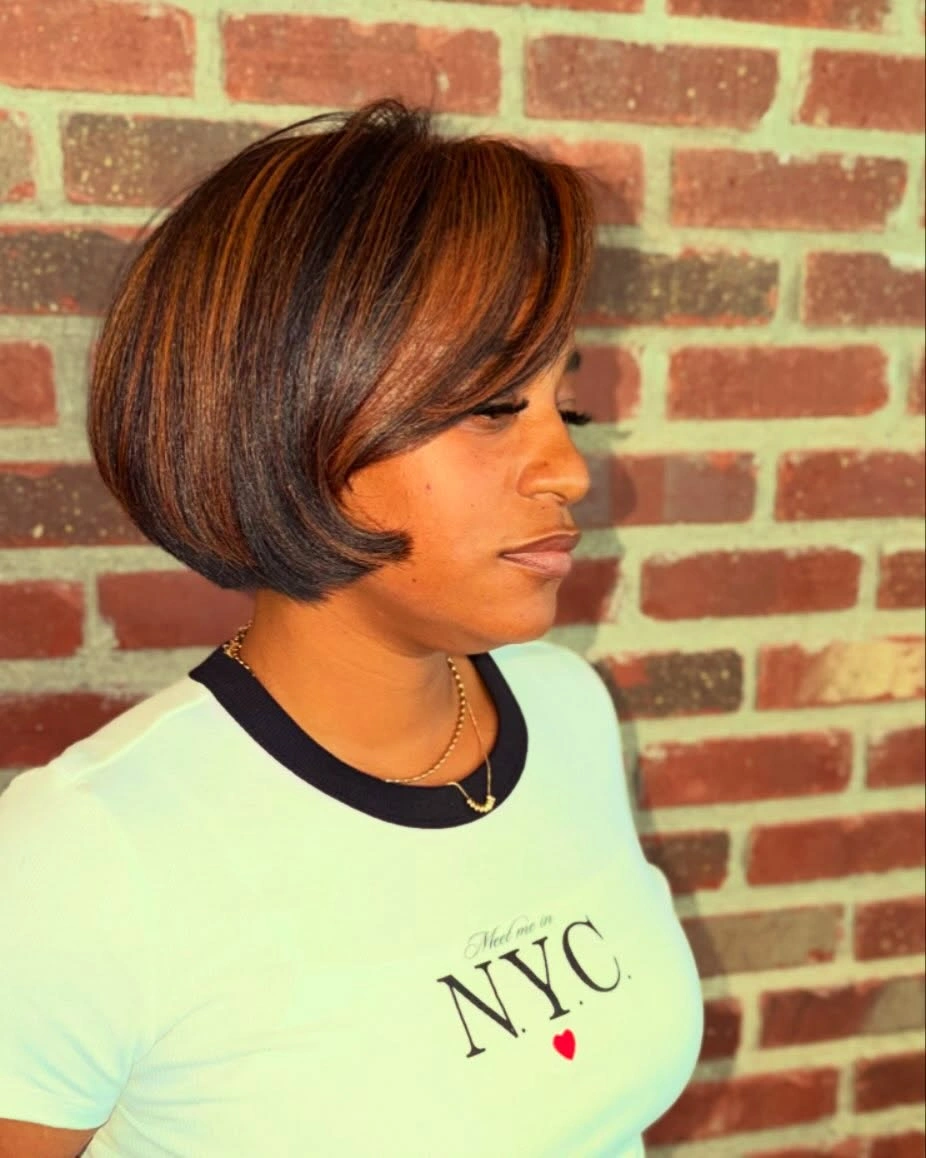
Photo via Instagram
The dark black-brown lower ends create a shadow line that changes the weight of the entire back view. Instead of letting the copper-orange continue uninterrupted to the bottom, the darker underside and perimeter gather around the layered ends and make the color edge more visible. That lower depth gives the style a sharper finish, because the eye can clearly separate the bright upper sheet from the darker final outline.
This is a clear example of color blocking through placement, length, and visible edge. A reader considering a high-contrast direction could use the idea more gently by keeping the lighter panel smaller, or more sharply by letting the dark ends remain just as visible.
Vivid Red Cornrows With Long Waves
The scalp pattern is the first color map here, because the vivid red follows each curved row from the front hairline toward the back. Among winter hair color ideas for Black women, this shows how a saturated shade can make braid geometry easy to read before the loose length becomes the focus. The rows create repeated red arcs, and the clean parts give those arcs a strong sense of direction.
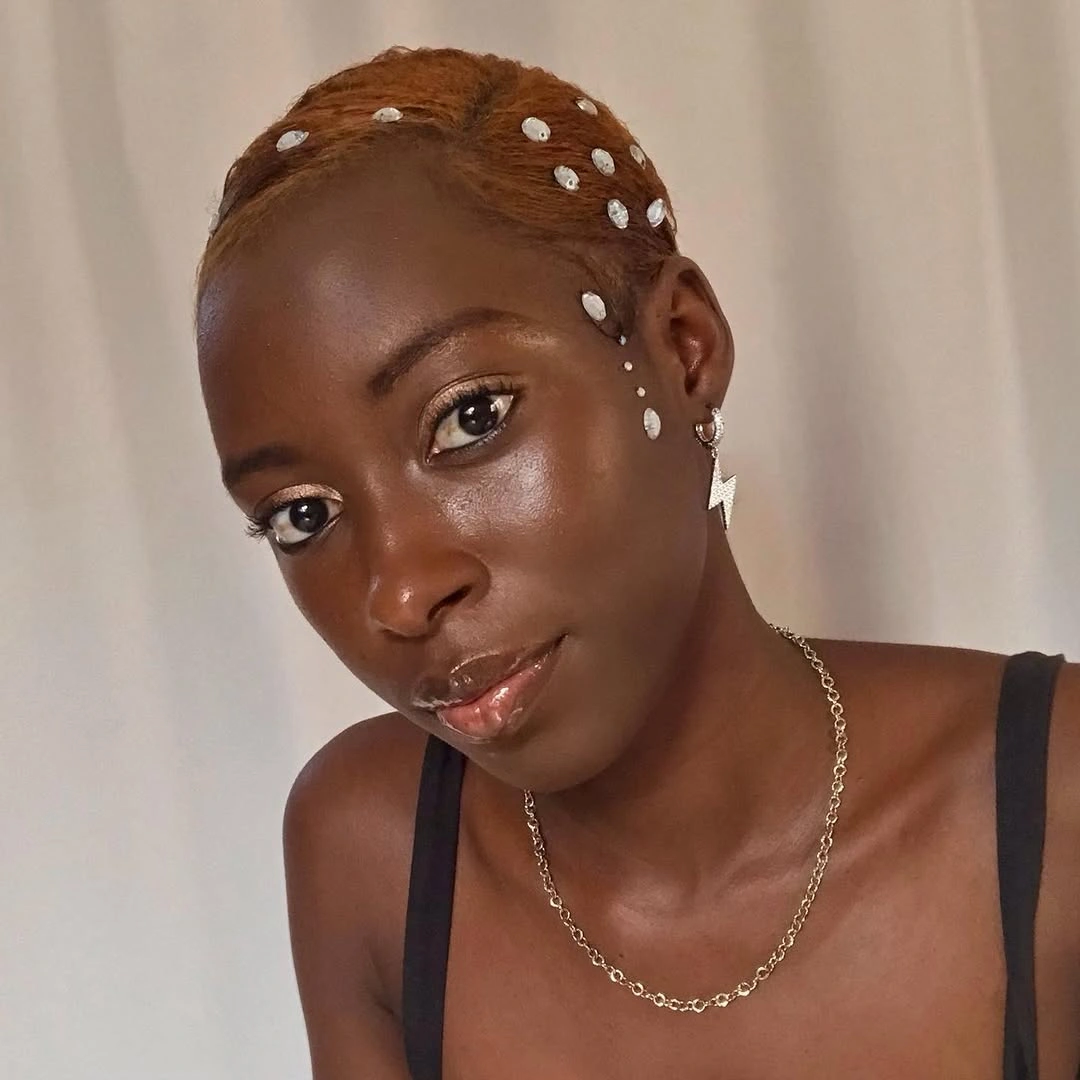
Photo via Instagram
The long red wavy length continues the color impact beyond the braid pattern, so the shade does not stop at the crown. It moves from organized curved rows into freer, rippled ends, changing the visual rhythm while staying in the same red family. The edges near the hairline add another level of precision, making the front look deliberate rather than simply bright.
The useful detail is the relationship between intensity and control. The color has force, but the parting, curved rows, and defined hairline give the eye a clear route through it.
Dark Cornrows With Low Rounded Volume
This pulled-back style gives dark winter hair colors a minimal, graphic reading through direction rather than added contrast. The cornrows move cleanly away from the face, and the near-black tone lets the braid lines appear as tone-on-tone structure. Because the color stays close in value from root to back volume, the eye notices part spacing, curve, and surface first.
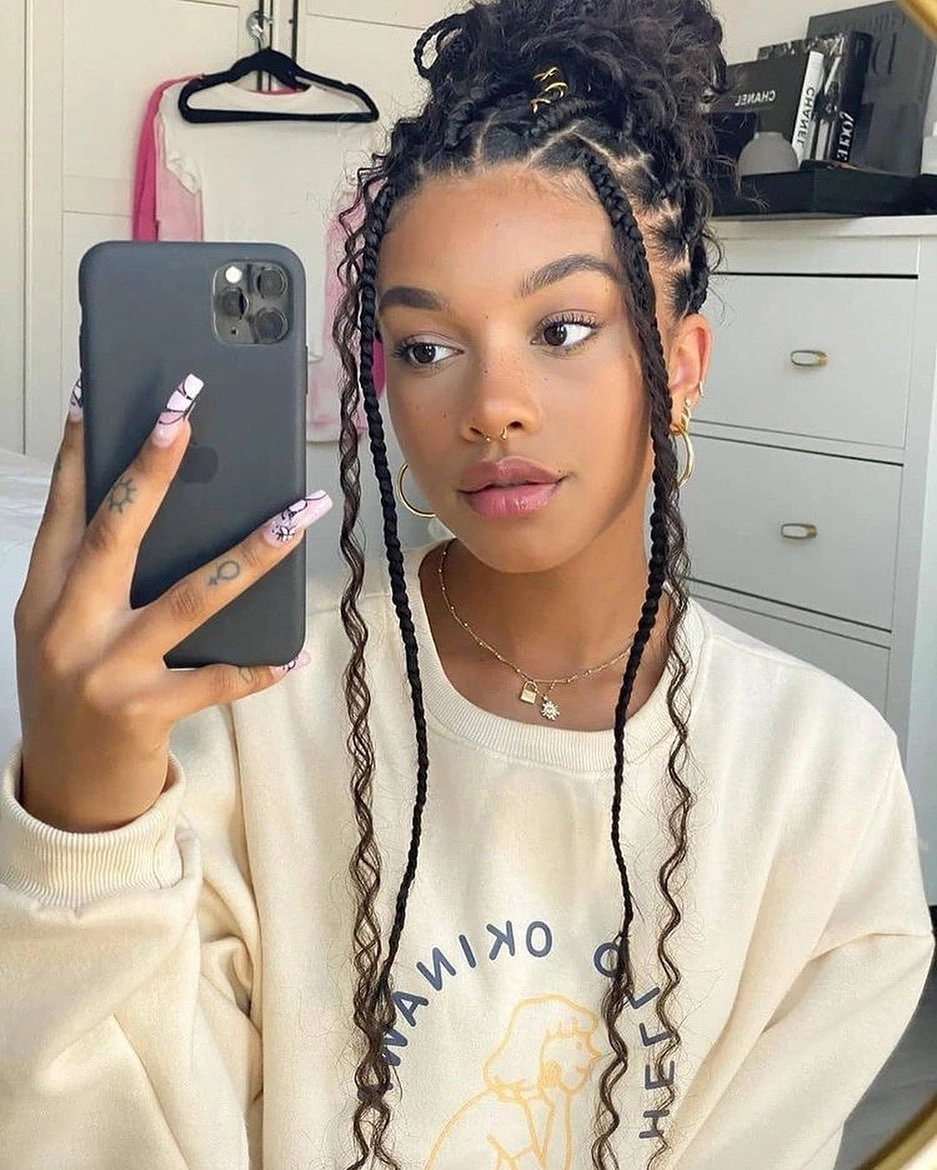
Photo via Instagram
The low rounded bun or puff changes the silhouette by collecting the darker volume at the back instead of building height at the top. That lower placement makes the front rows feel even more controlled, since they lead toward a compact endpoint. The style uses the dark shade to connect every section, from the hairline to the gathered shape behind the head.
Understatement here is not emptiness; it is a decision to let line, direction, and proportion carry the look. A similar dark shade can feel precise when the visible structure is clear enough for small details to matter.
Sleek Black Bob With Blunt Ends
The center part gives this bob a strict visual axis, and the sleek black panels fall evenly on both sides. The color has very little visible variation, so the crispness comes from the smooth surface, the rounded lower edge, and the way the ends sit at a similar length. As dark winter hair colors go, this one depends on reflection, cut line, and symmetry rather than extra tones.
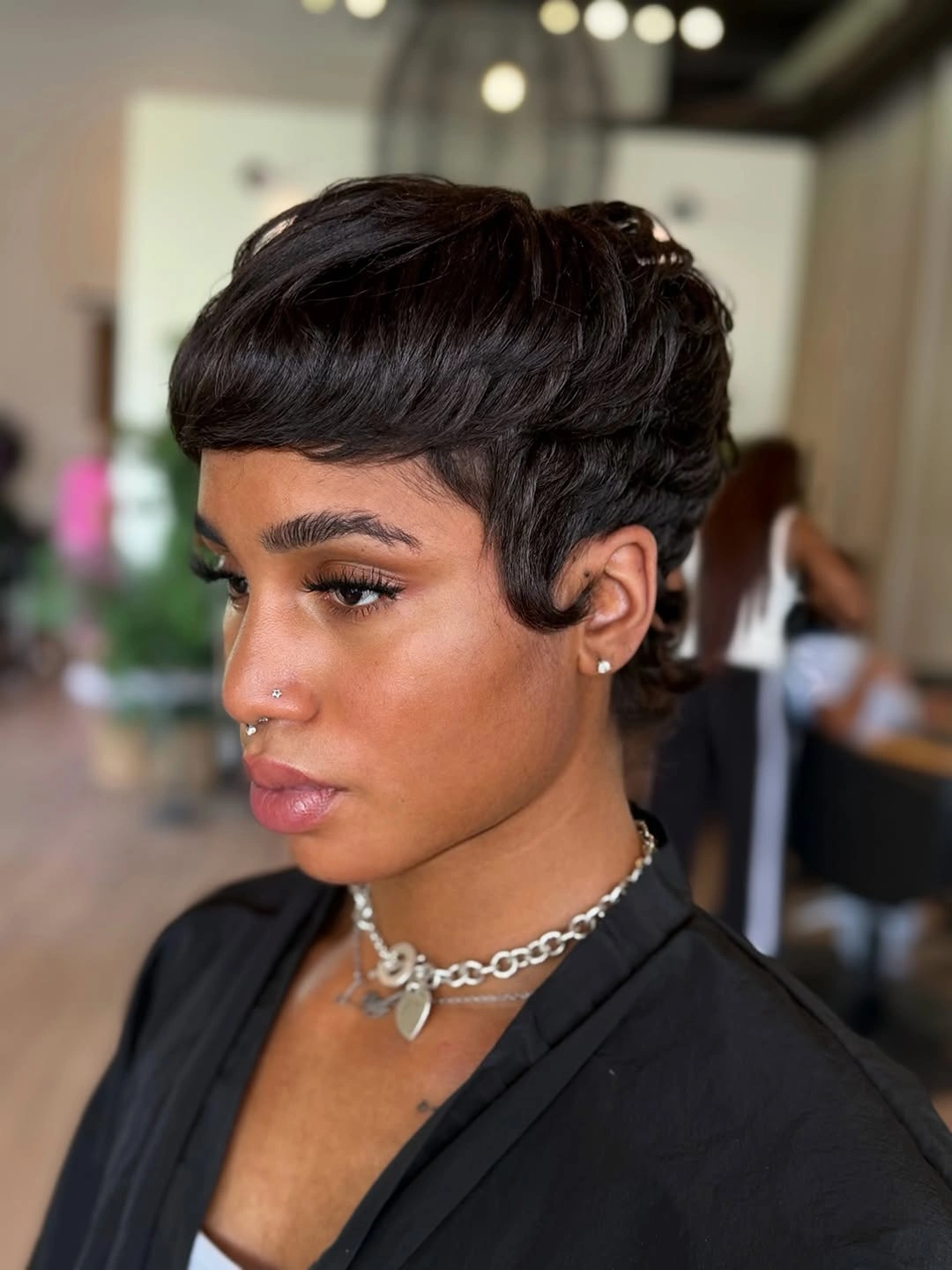
Photo via Instagram
The smooth panels make the black shade look clean and reflective because there are few texture breaks across the surface. Light moves down each side in a controlled way, which makes the blunt ends feel even more important. The rounded shape at the bottom keeps the bob from looking like a flat rectangle, while still preserving a clear edge.
Low color variation can create high visual precision when the outline is this direct. Readers drawn to a single dark shade can look at the part, surface, and end shape as the details that decide whether the result feels crisp.
Copper-Auburn Fringe With Dark Cropped Sides
The copper-auburn color is focused across the top and longer fringe, so the eye moves immediately along the side-swept direction. The shade does not cover every visible area equally; it sits where the hair has length, curve, and face-framing movement. That placement lets the warmer color feel purposeful because it follows the part of the style with the clearest shape.
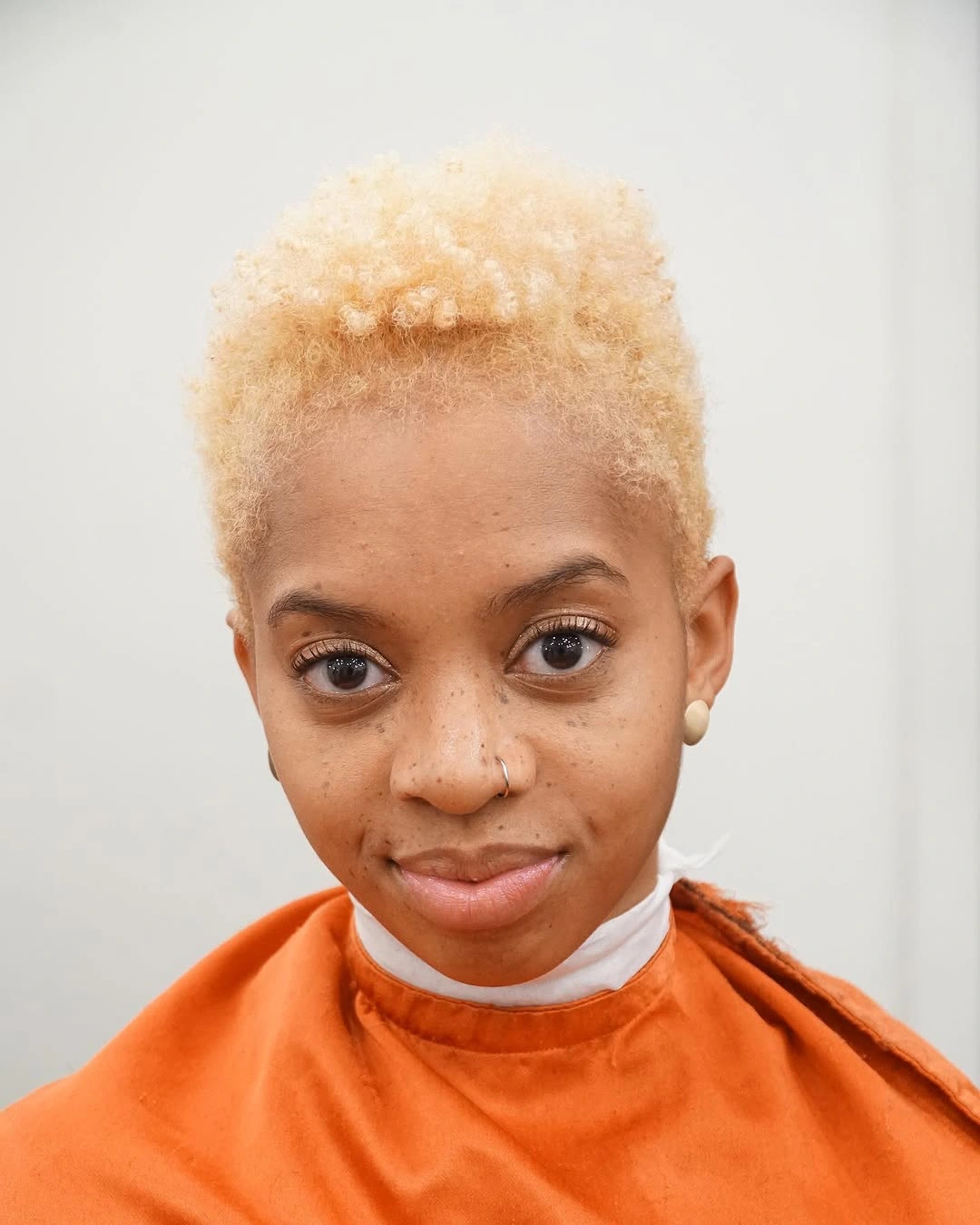
Photo via Instagram
The darker cropped sides define the boundary of the copper-auburn section and keep the top from blending into the whole head shape. They create contrast at the temples and sides, while the longer fringe crosses the forehead with a softer curve. The result is not just a short warm color, but a visible conversation between cropped depth and warmer movement above it.
This color placement feels controlled because the placement is easy to understand. A reader could take from it the idea that copper or auburn can be most effective when it is concentrated where the cut already points the eye.