
What should winter haircuts for plus-size women actually offer if the goal is personal style rather than correction? Winter can make every choice around appearance feel more deliberate, but that does not mean the answer has to become stricter. A haircut can simply be a way to choose the kind of presence, polish, ease, or individuality that feels right to you in the season.
Body size does not create one correct formula for hair, and it should not reduce personal taste to a set of rules about what is supposedly flattering. The more useful standard is whether the result feels like a genuine expression of the person wearing it. That leaves room for restraint, drama, softness, precision, or something harder to categorize without treating any one direction as the default.
A Short Cut With Movement at the Edges
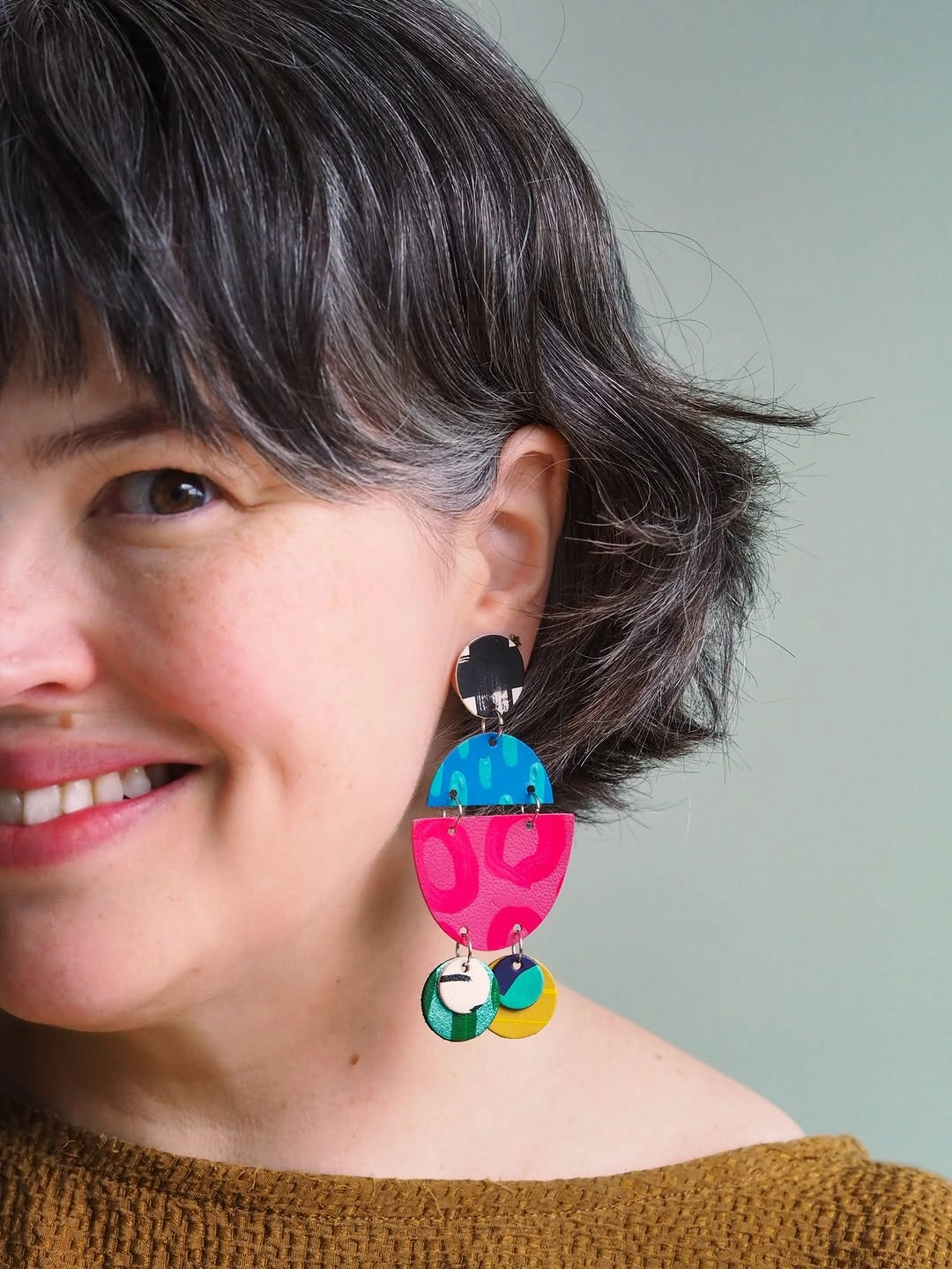
The full fringe gives this short dark cut an immediate front edge, creating a clear horizontal line across the forehead while the rest of the shape stays compact. Rounded volume gathers beside the ear rather than climbing high at the crown, so the haircut feels contained through the center. That makes the small changes at the outer edge matter more.
Photo via Instagram
At the side and nape, several ends turn outward instead of following the rounded body of the cut all the way down. Those flicked pieces interrupt what could otherwise become a very tidy perimeter and give the silhouette a little lift at its boundaries. For someone drawn to short bob haircuts for plus-size women, that edge movement is the detail worth noticing.
I like the contrast between the neat fringe and the less obedient perimeter. A straighter, more geometric finish would give the same general length a much sharper personality.
Straight Length Makes the Center Part Matter
The centered part gives this smooth dark hair a clean starting point, and from there the lengths fall straight down on both sides without a separate fringe line. The upper shape stays close and controlled, so the eye follows the uninterrupted vertical movement rather than looking for obvious layering. That simplicity is what makes the part feel so important.
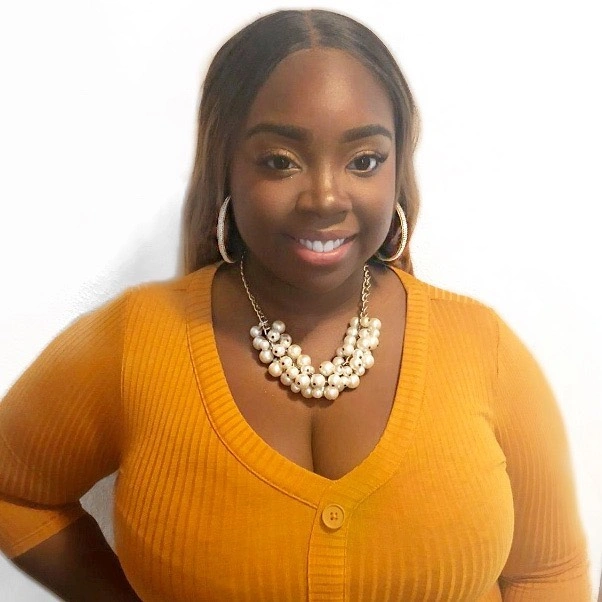
Photo via Instagram
The visible hair continues below the shoulders, but the photograph crops the lowest ends, so the exact finished length is not the useful point here. What can be read clearly is the continuity: straight sections stay close to the head and descend with very little interruption. The result feels calm because the structure is carried by a single long line instead of several competing levels.
There is real appeal in a haircut that does not need visible complexity to feel intentional. Here, the restraint lets the part and the straight fall do almost all of the visual work.
Long Layers Put Movement Below the Shoulders
Seen from the back, this warm-brown hair keeps the upper section comparatively smooth before broader bends begin to develop lower down. The long layers become easiest to read once the hair passes the shoulders, where shorter and longer pieces start separating into distinct curves. The overall length stays substantial even as the lower half becomes more mobile.
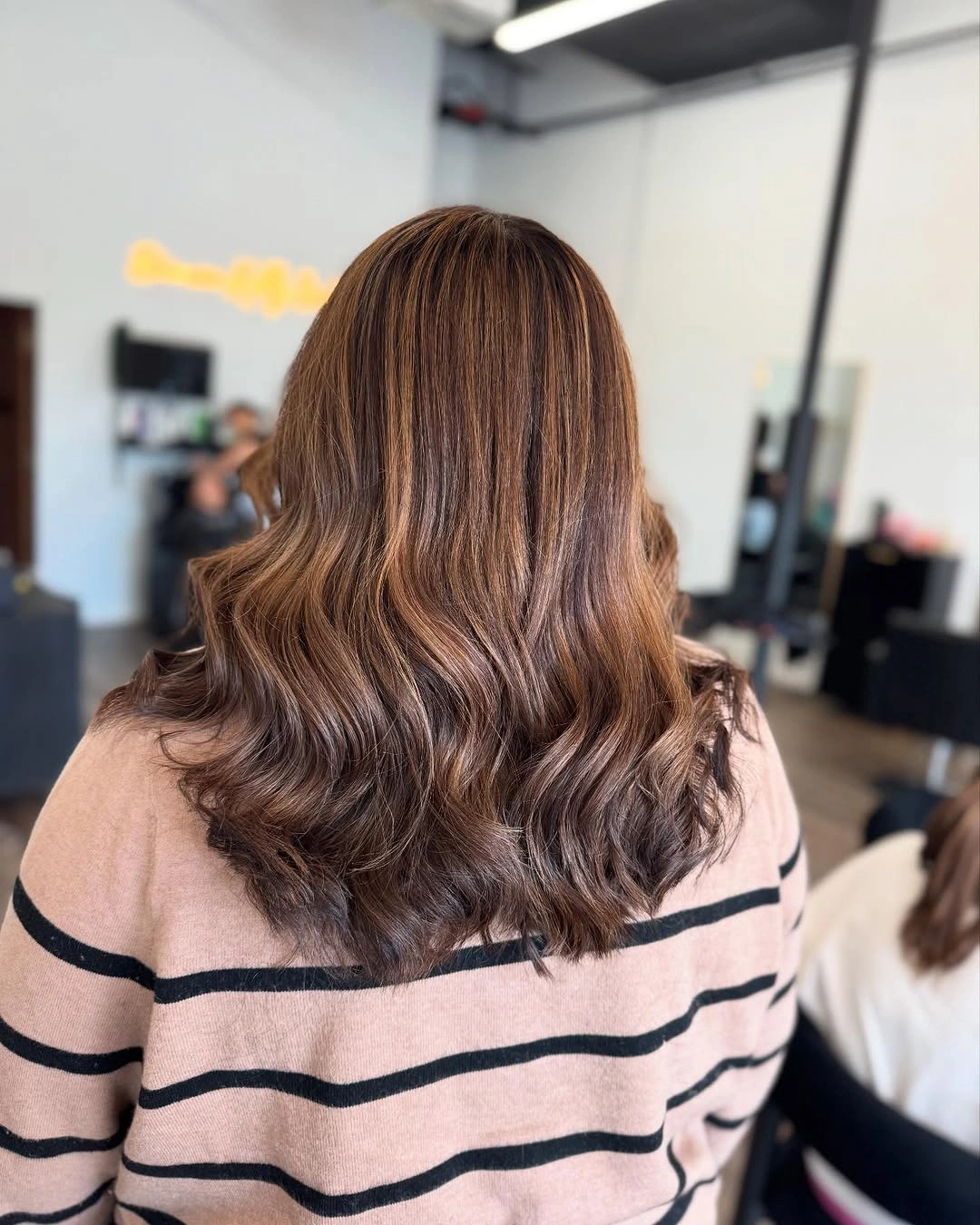
Photo via Instagram
Lighter vertical ribbons help reveal how those layers overlap, because each bend catches the eye at a slightly different point through the lower lengths. The waves open up the perimeter instead of letting the ends collect into one dense line. That relationship between preserved length and visible separation is what gives the haircut its shape.
I like that the crown does not compete for attention here. The movement arrives later, which keeps the long silhouette intact while making the bottom half feel much less static.
Staggered Purple Lengths Change the Front Shape
Shorter purple sections fall over the forehead while much longer braided or twist-like sections continue down past the shoulders, so the change in level is visible immediately. That staggered arrangement creates a lighter front area without reducing the visual impact of the longer sides. The contrast in length is strong enough to shape the whole outline.
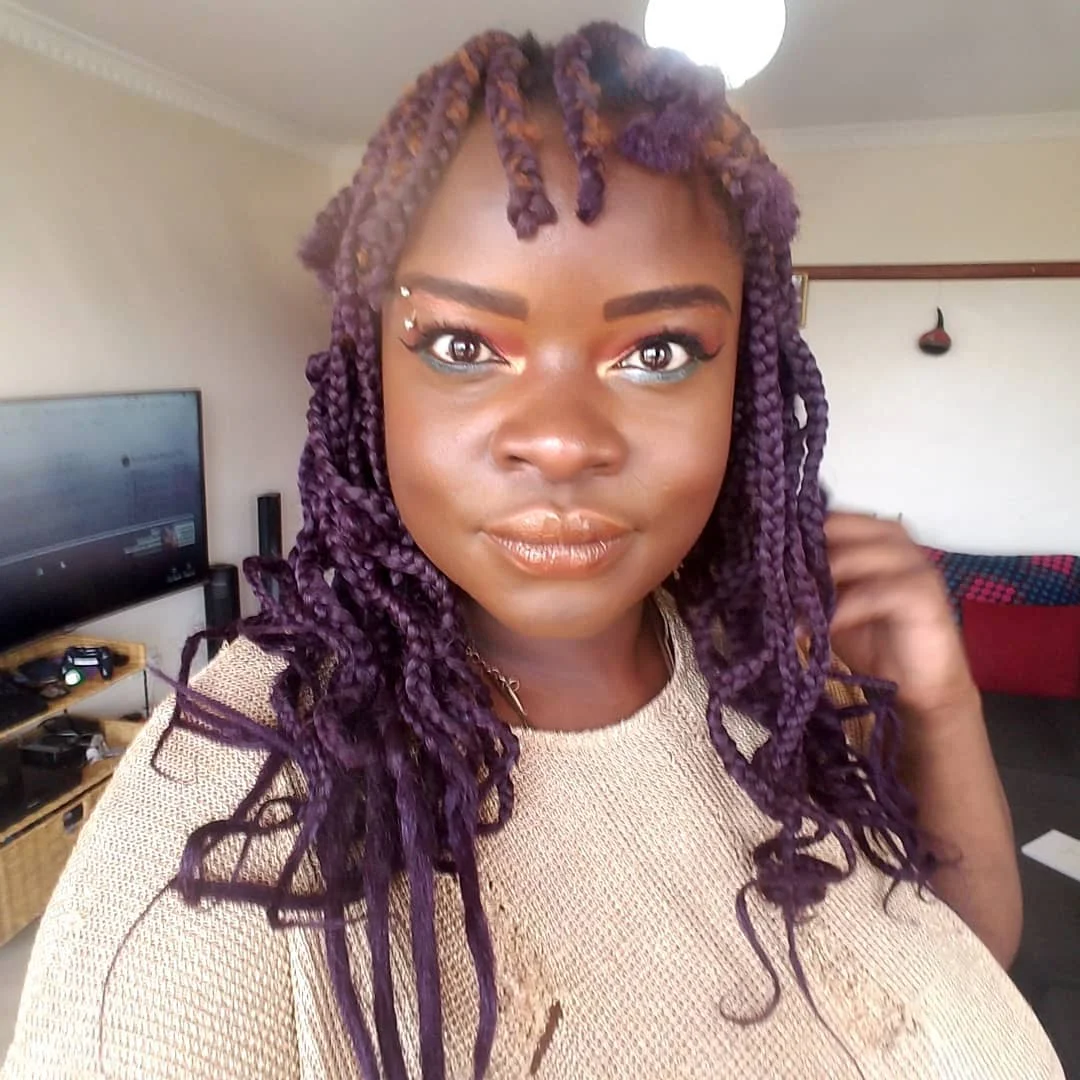
Photo via Instagram
Because the narrow purple sections repeat across the hairstyle, the shifts between shorter and longer pieces are easy to follow from front to side. Some of the lower ends appear looser or curled, which adds another change in direction near the bottom. The useful idea is the visible proportion between the front and the longer surrounding lengths, not a claim about the cut underneath the styling.
This kind of arrangement is useful inspiration if you like a shorter framing effect without giving up substantial length elsewhere. The repeated sections make that proportion feel especially graphic and intentional.
A Side Sweep Gives a Short Bob Direction
The long side-swept front section gives this short brown cut a strong diagonal direction before the eye reaches the lower edge. Most of the shape stays compact around the jaw and nape, so the longer front piece stands out clearly against the shorter base. That contrast gives the bob-length silhouette a sense of movement without making it look busy.
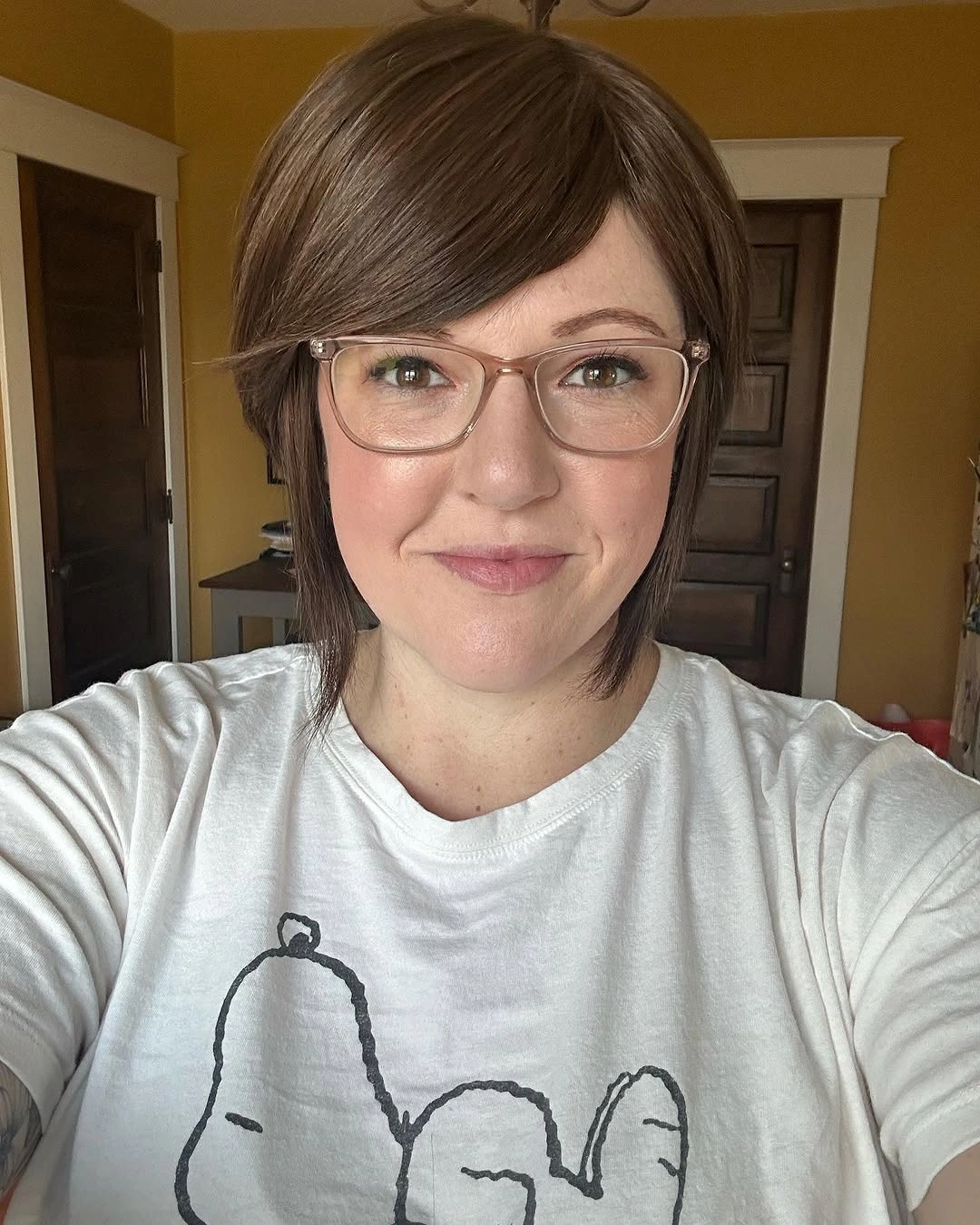
Photo via Instagram
The eyeglass frames add a second visible line across the face, but they remain easy to read because the hair moves diagonally rather than dropping straight over them. The neat lower edge near the jaw and nape keeps the rest of the shape contained, which gives the sweep enough space to stay distinct. That makes this a useful example of haircuts for plus-size women with glasses without turning the frames into a face-shape rule.
I would keep the emphasis on that clean relationship between the frames and the side sweep. The interest comes from spacing and direction, not from prescribing one haircut to anyone who wears glasses.
Choppy Layers Keep This Short Shape Loose
The fringe is what first breaks up the shape here. Instead of forming one solid line across the forehead, it separates into short, uneven pieces that point in slightly different directions, giving the front a deliberately loose finish. That irregularity continues into the crown, so the haircut feels textured and mobile rather than carved into a precise outline.
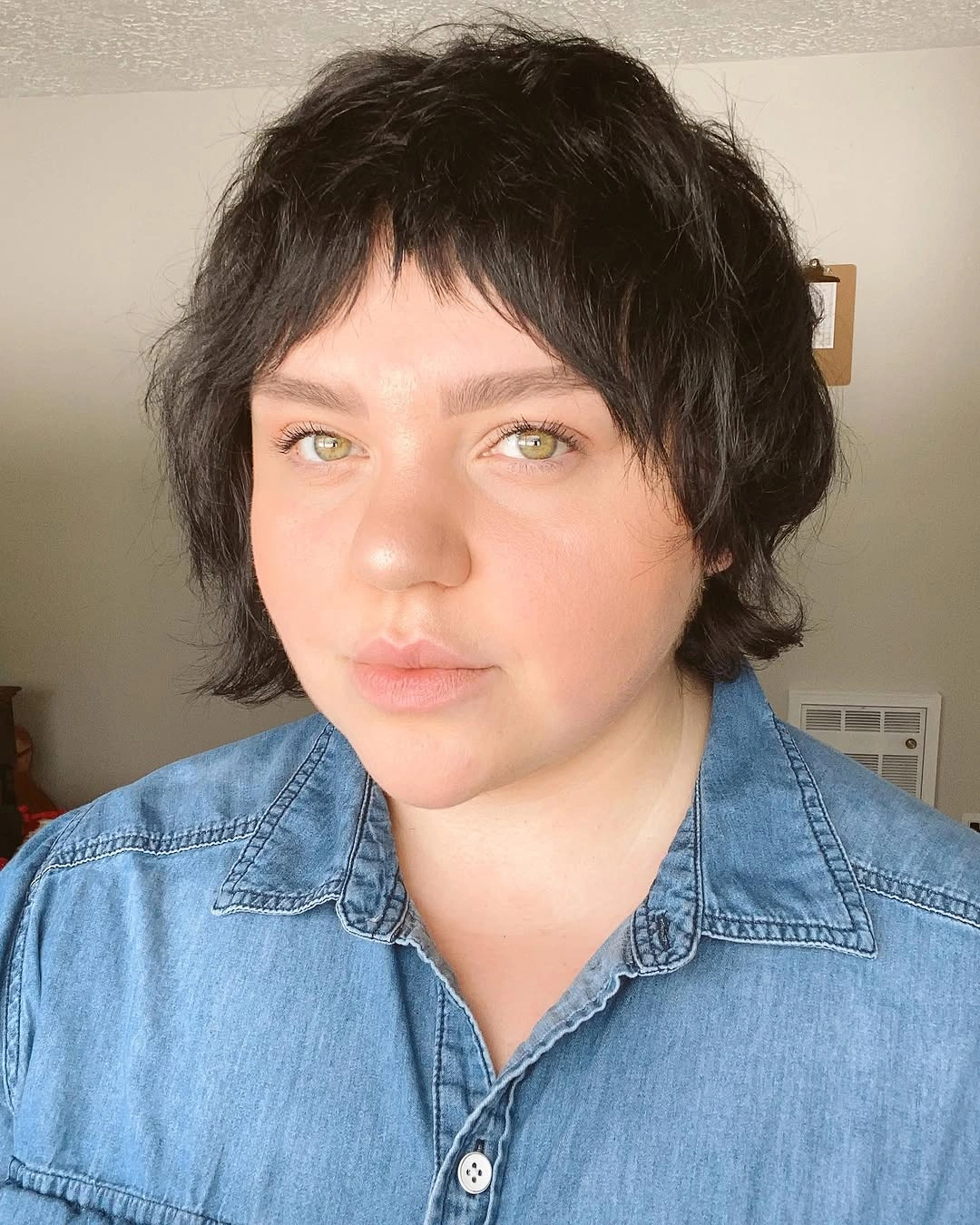
Photo via Instagram
Around the ears and toward the nape, several pieces extend farther than the shortest sections above them. Those small changes in length keep the silhouette from becoming a close crop and give the perimeter a softer, more interrupted edge. It is the kind of in-between proportion that can appeal to someone browsing bixie or pixie-bob inspiration without depending on either label to explain the shape.
I like that the haircut never settles into one perfectly polished boundary. Its character comes from several short lengths meeting at different points, which gives the whole outline a relaxed sense of movement.
Long Waves Begin Low and Build Gradually
The upper section stays comparatively smooth, so the first stronger bends appear farther down the hair instead of competing with the crown. That placement gives the length room to establish itself before the waves become prominent. For wavy haircuts for plus-size women, this is a useful example of texture occupying the lower span while the top remains visually restrained.
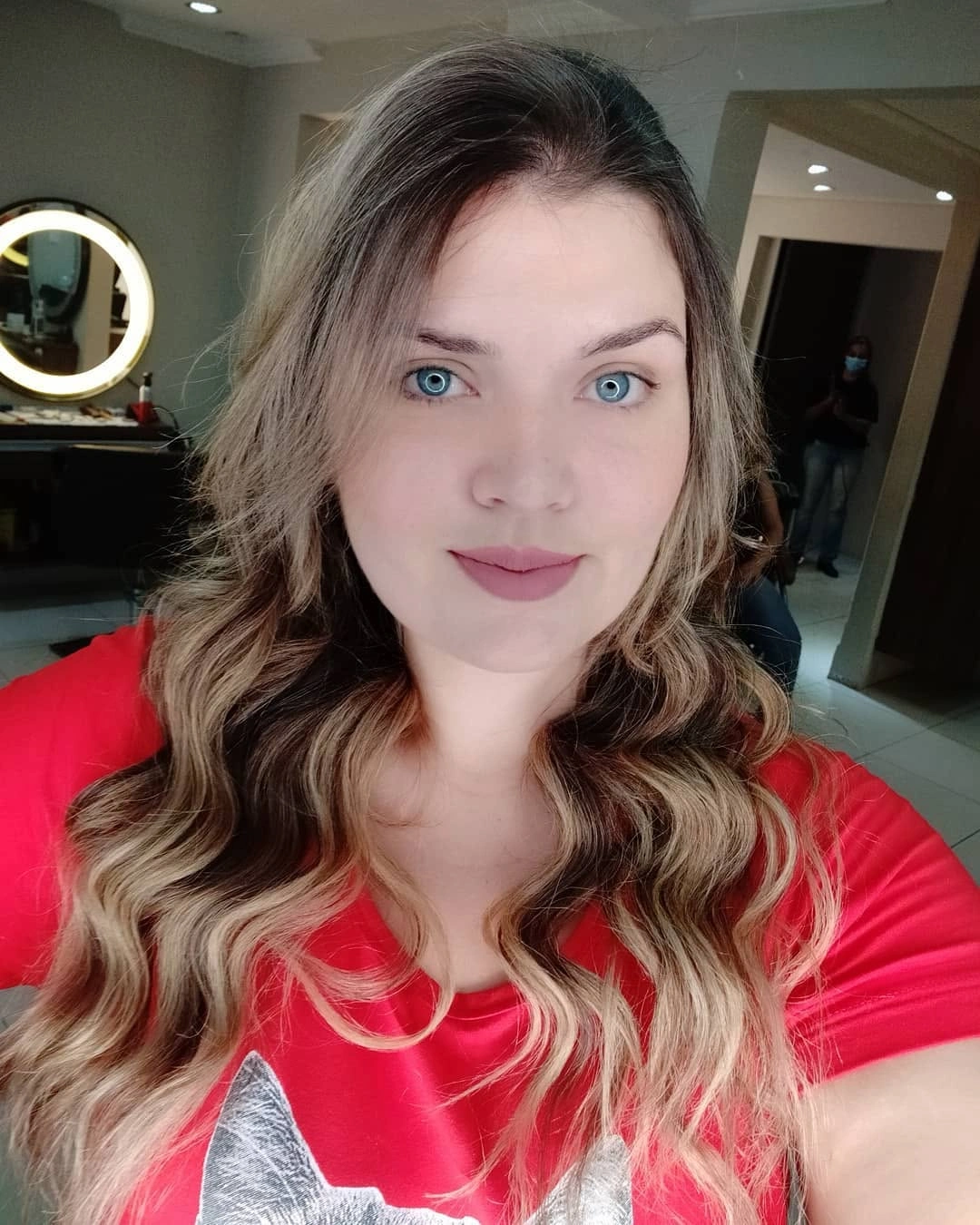
Photo via Instagram
The darker upper color shifts into much lighter ends, and that contrast makes each curve through the lower lengths easier to trace. Individual waves separate more clearly because the changing color follows the same downward path as the movement. The result is not simply “long and wavy”; the relationship between smoother roots, lighter ends, and lower movement creates the real proportion.
There is something especially appealing about letting long hair gather momentum gradually. The waves have enough vertical space to open up instead of being compressed into a short perimeter.
Centered Length Lets the Waves Set the Pace
A centered part gives this long dark-brown shape a balanced starting point, while the upper lengths remain smooth enough to keep that symmetry clear. The hair does not become visibly wavy immediately at the crown. Instead, the bends emerge lower down, which lets the transition from straight fall to broad movement feel gradual rather than abrupt.
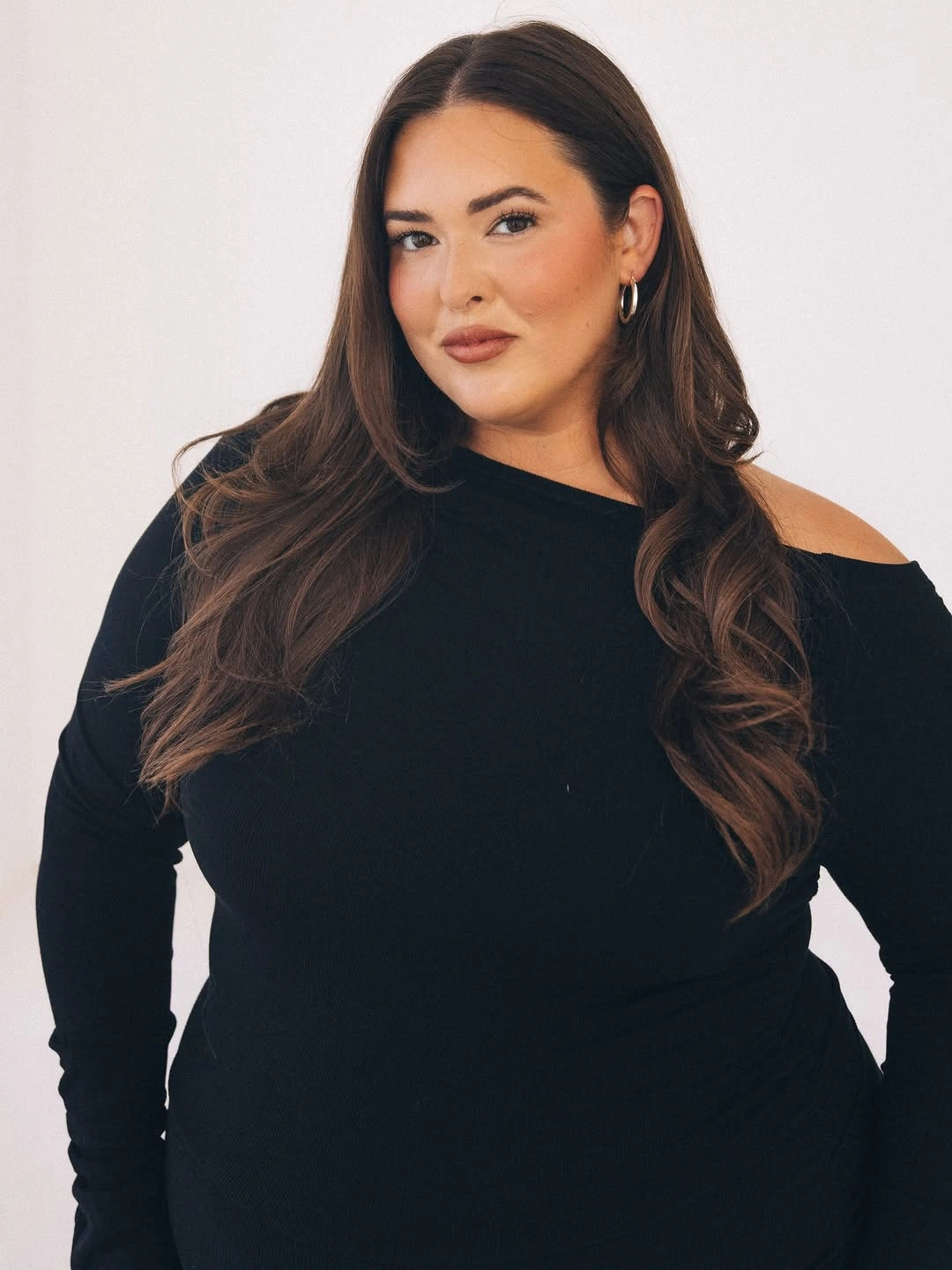
Photo via Instagram
Those larger bends widen the silhouette through the mid-lengths and ends without making the haircut look shorter than it is. Because the brown color remains relatively continuous, there is less visual interruption from contrast, so the eye notices the placement and width of each wave more directly. That makes the geometry of the movement itself the interesting part.
I prefer this kind of long wave when the curves are allowed to stay broad and readable. The smooth upper section gives them space to become the defining feature instead of one texture competing with another.
Split Color Sharpens a Simple Shoulder-Length Cut
The strongest visual event here is the color division, with reddish hair on one side and pale gray on the other meeting near the part. Because that split closely follows the left-right structure of the haircut, the contrast feels unusually graphic. The underlying shape stays much quieter, which prevents the color placement from being lost inside heavy layering or dense texture.
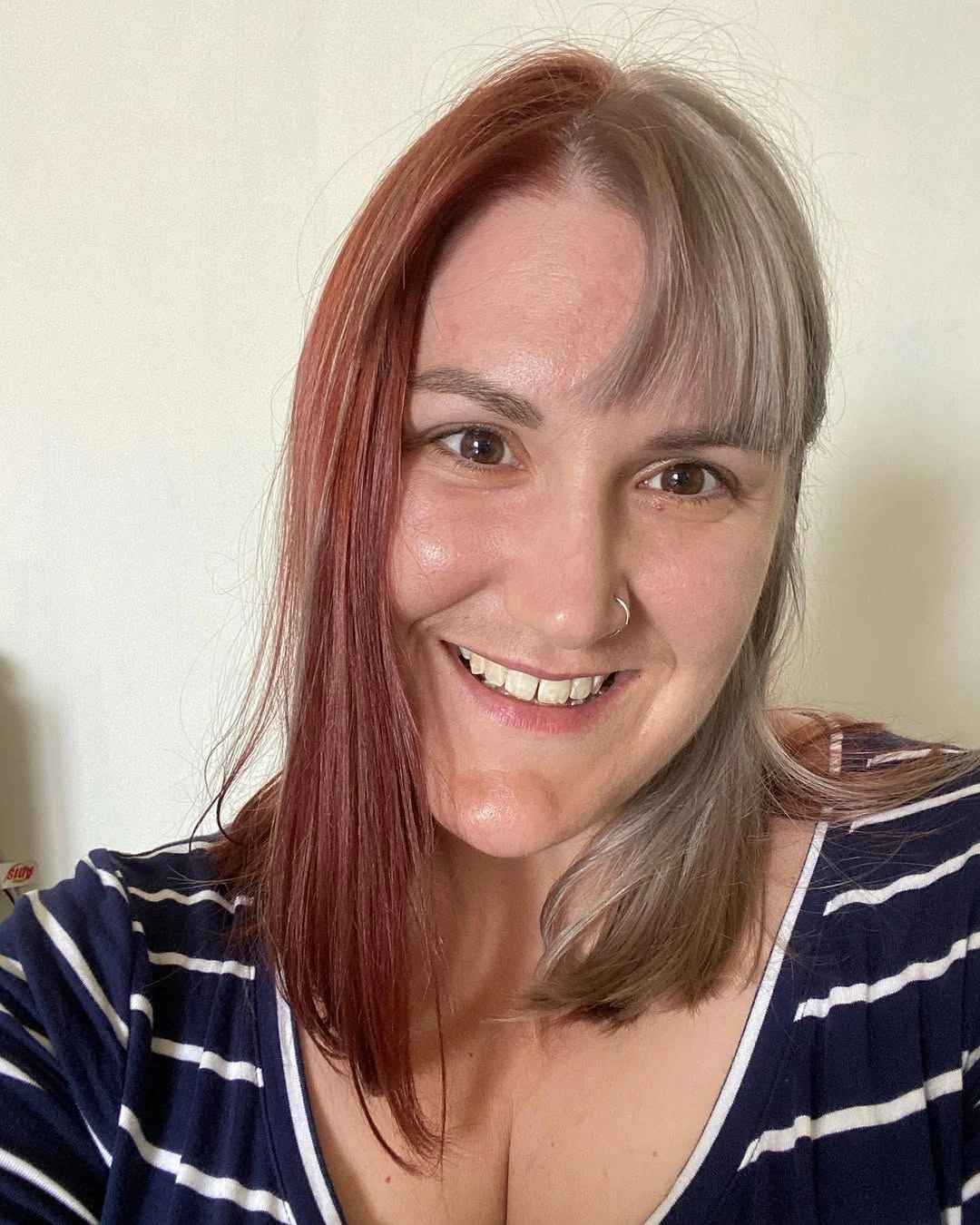
Photo via Instagram
The straight lengths fall to roughly shoulder level and finish in a relatively clean lower contour, so the haircut remains easy to read even with such dramatic color contrast. That restraint matters because it gives the two color fields a stable framework. A more broken perimeter would create a different effect, while this simpler line lets the division remain crisp from the top downward.
The appeal comes from pairing a straightforward medium-length shape with a much more assertive color decision. It proves that a haircut does not need complicated structure to feel visually specific.
A Close Crop Makes Length the Whole Statement
With the hair cut extremely close, the usual distinctions between fringe, side sections, crown layers, and a longer nape almost disappear. There is no separate perimeter treatment asking for attention, so the overall scale of the cut becomes the main visual decision. Among short haircuts for plus-size women, this is a fundamentally different proposition from simply shortening a bob or pixie.
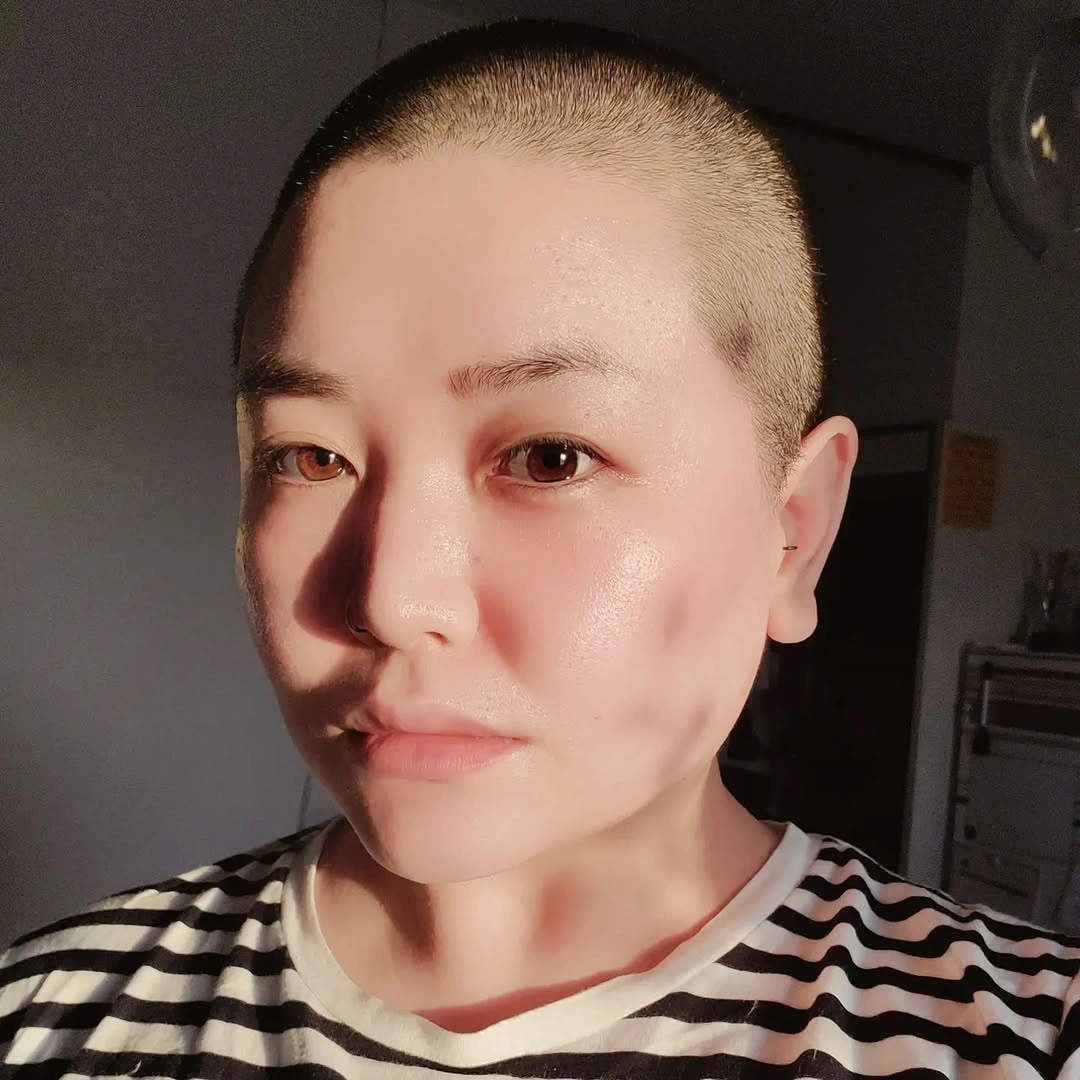
Photo via Instagram
The close length follows the head consistently, which makes the silhouette feel direct and uninterrupted from one area to the next. Nothing at the sides or back extends far enough to create a secondary line, and there are no longer pieces redirecting the eye. That simplicity gives the cut a strong visual clarity without relying on curls, fringe, or visible internal layering.
This is where “short” stops being a single category and starts showing its real range. A close crop creates a different visual language from a pixie or bob because almost all of the interest comes from length itself.
Defined Lower Curls Give Long Layers More Weight
The upper portion of this long highlighted cut stays comparatively smooth before the hair begins separating into tighter curved sections below. That shift matters because it creates a clear point where the silhouette changes from controlled and narrow to fuller and more dimensional. The length remains generous, but the lower half carries most of the visible activity.
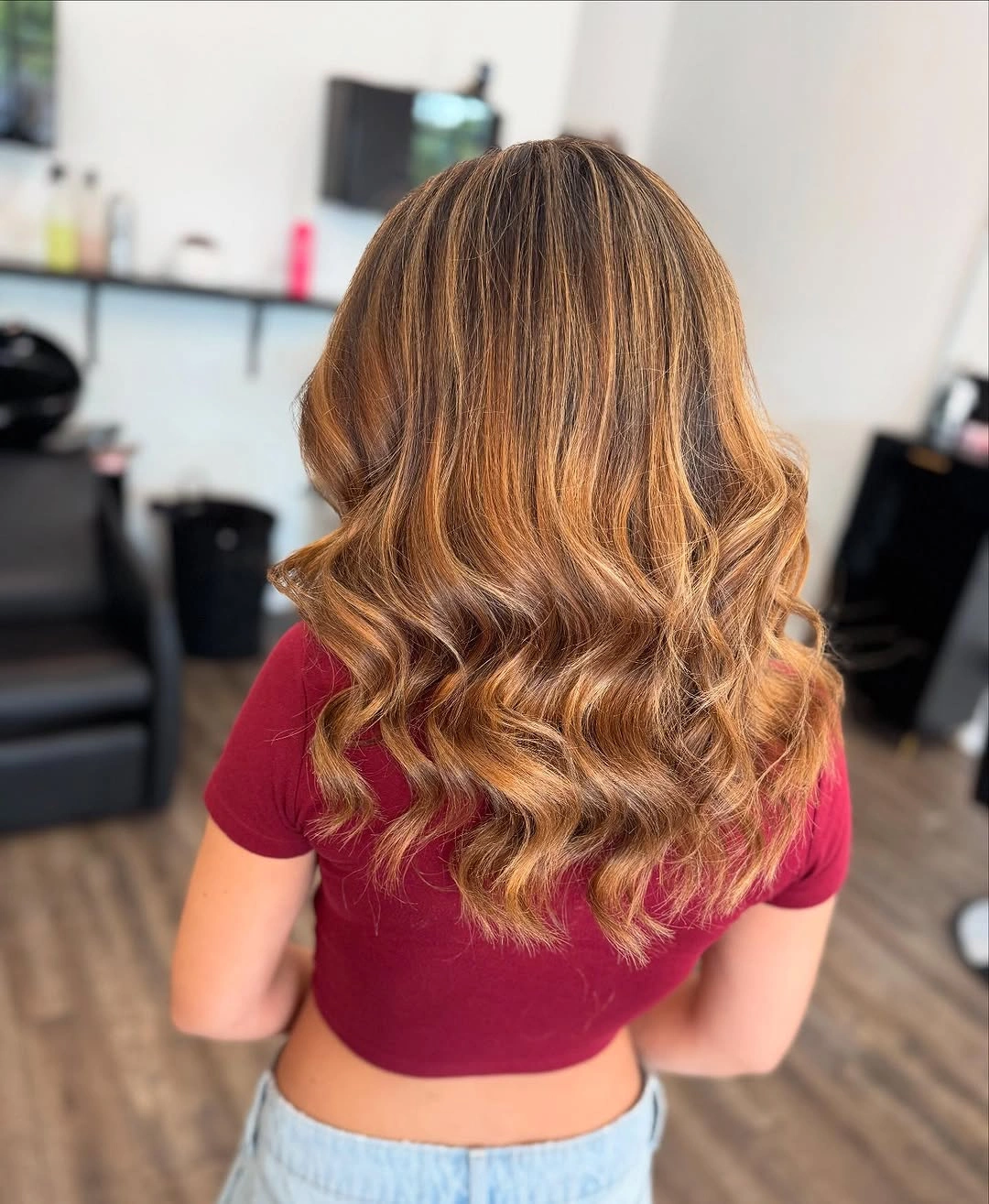
Photo via Instagram
Warm golden ribbons run through the darker base and make the overlapping bends especially easy to follow. As the curls gather toward the ends, shorter and longer pieces sit beside one another instead of collapsing into a single heavy line, giving the bottom a rounder, more layered finish. The color helps reveal that structure without becoming the whole story.
I like the slightly weightier finish these compact lower curls create compared with very broad, loose waves. The shape feels substantial at the ends while the upper section stays relatively composed.
Lifted Layers Make a Short Bob Feel Restless
The most interesting part of this short cut is the amount of lift concentrated through the crown. Individual dark sections rise, separate, and bend in different directions, so the top refuses to settle into a smooth dome. That vertical activity gives the bob-length base a much more restless character than a tidy rounded silhouette would have.
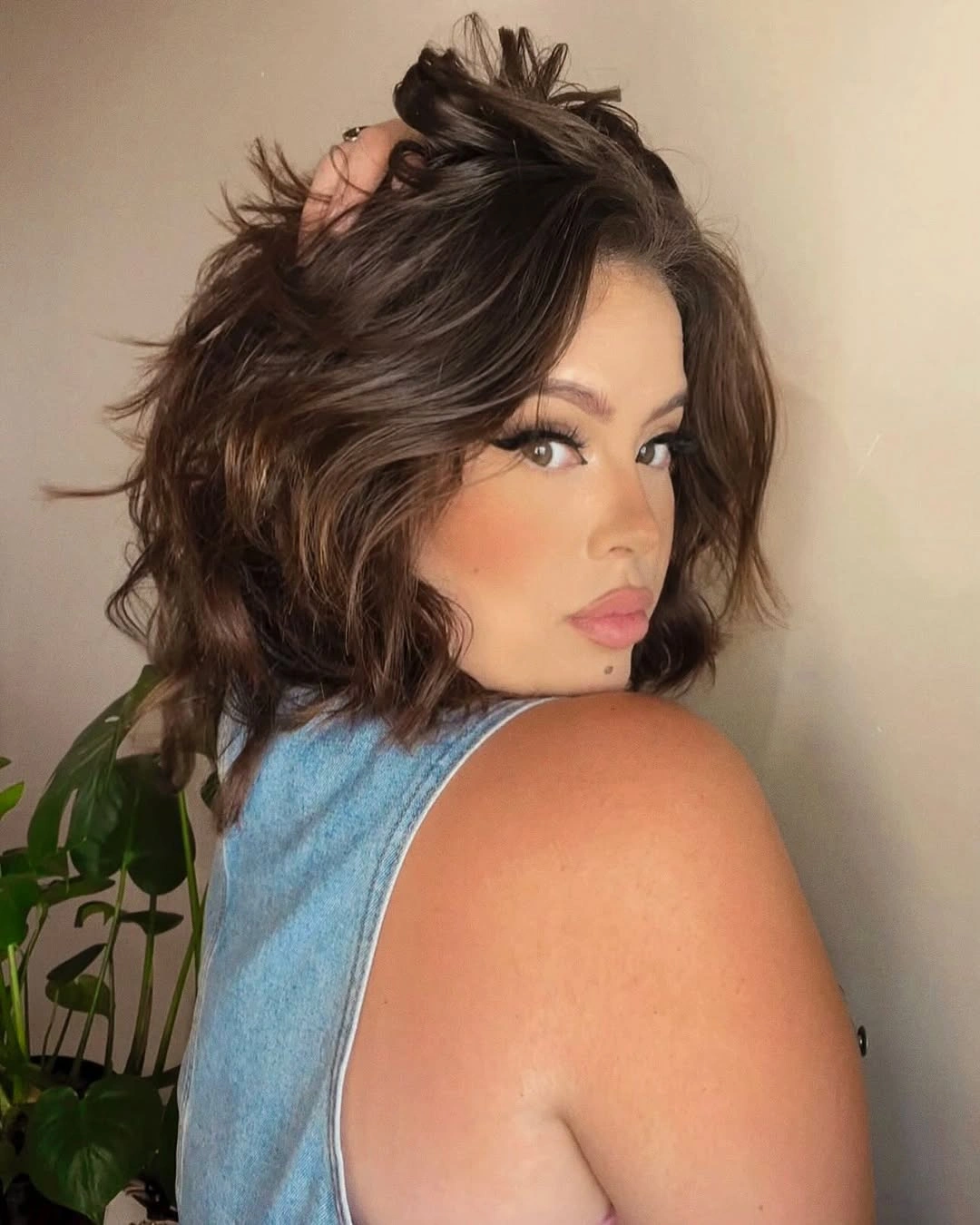
Photo via Instagram
Around the perimeter, flipped and irregular ends send the movement outward at the same time that the upper layers push upward. That two-direction effect is what makes the cut feel so animated, and it is also why wolf-cut inspiration may come to mind even though the exact salon label is not visually certain. The shape itself is the useful reference.
I would keep the irregularity rather than polish every piece into the same curve, because the uneven lift is what gives this haircut its personality. Its appeal is the tension between a recognizable bob-scale base and a top that looks deliberately less controlled.
A Long Sweep Changes This Pixie’s Balance
One closely cropped side makes the short scale of this haircut unmistakable, even though the top carries much more length. That contrast is sharper than it first appears: the side stays compact and close, while the upper section sweeps across the forehead in one broad direction. The result is a pixie shape built around asymmetry rather than uniform shortness.
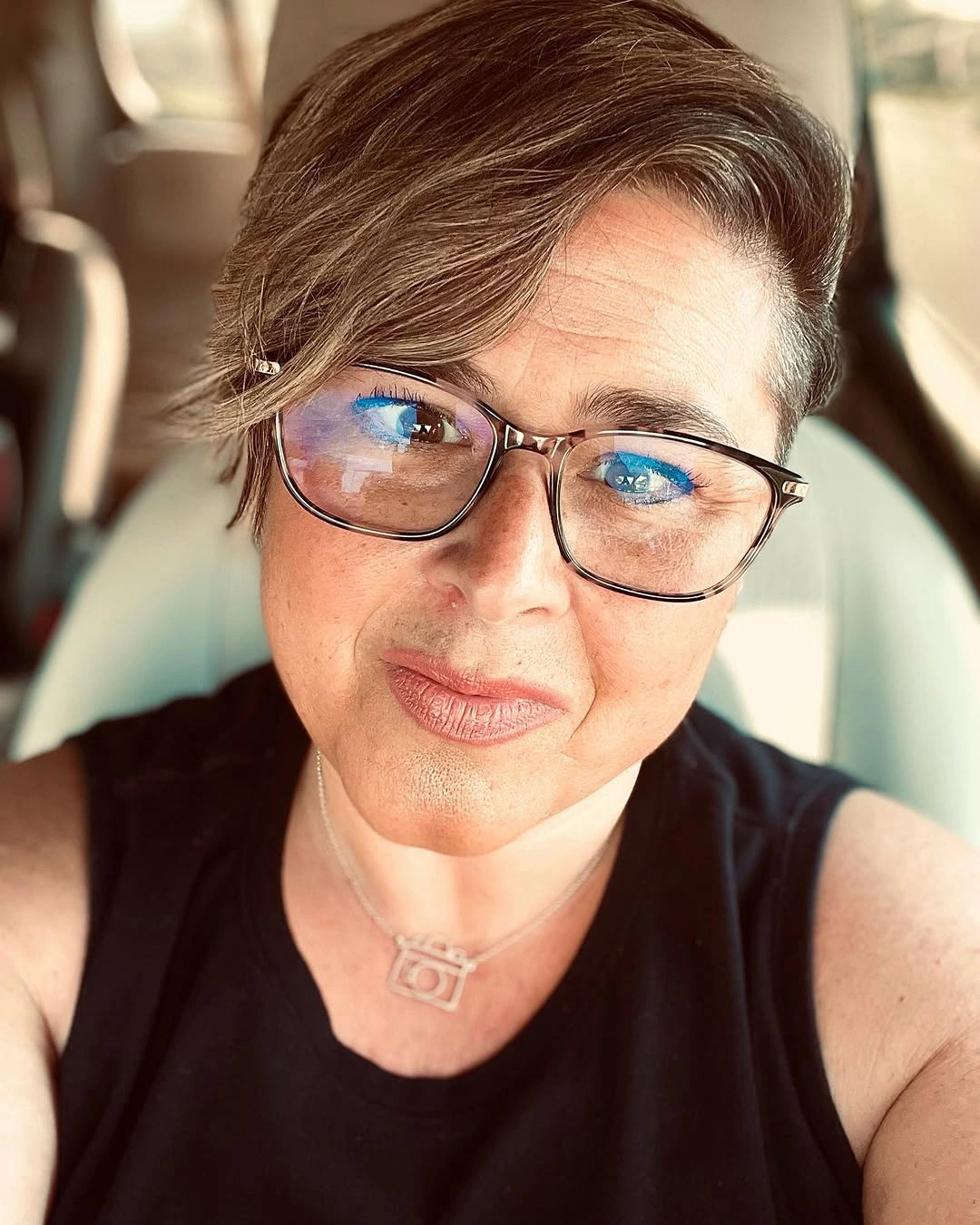
Photo via Instagram
The longer top crosses diagonally and creates movement without needing extra length at the nape or sides. Because the sweep sits above the eyeglass frames instead of covering them completely, both lines remain readable at once: one horizontal around the eyes, one slanting through the hair. That pairing gives the front of the cut a crisp sense of direction.
That long sweep is the part I would protect if this shape were the inspiration, because it gives the cropped side something substantial to play against. The asymmetry feels purposeful rather than incidental.
Loose Texture Carries Through the Full Length
Loose curls and waves appear through much of this light-colored hair, not only at the last few inches. The texture begins high enough to give the sides visible fullness and then continues through the lengths below the shoulders, so the silhouette feels consistently active from upper section to ends. It reads as long textured hair rather than a smooth cut with curled tips.
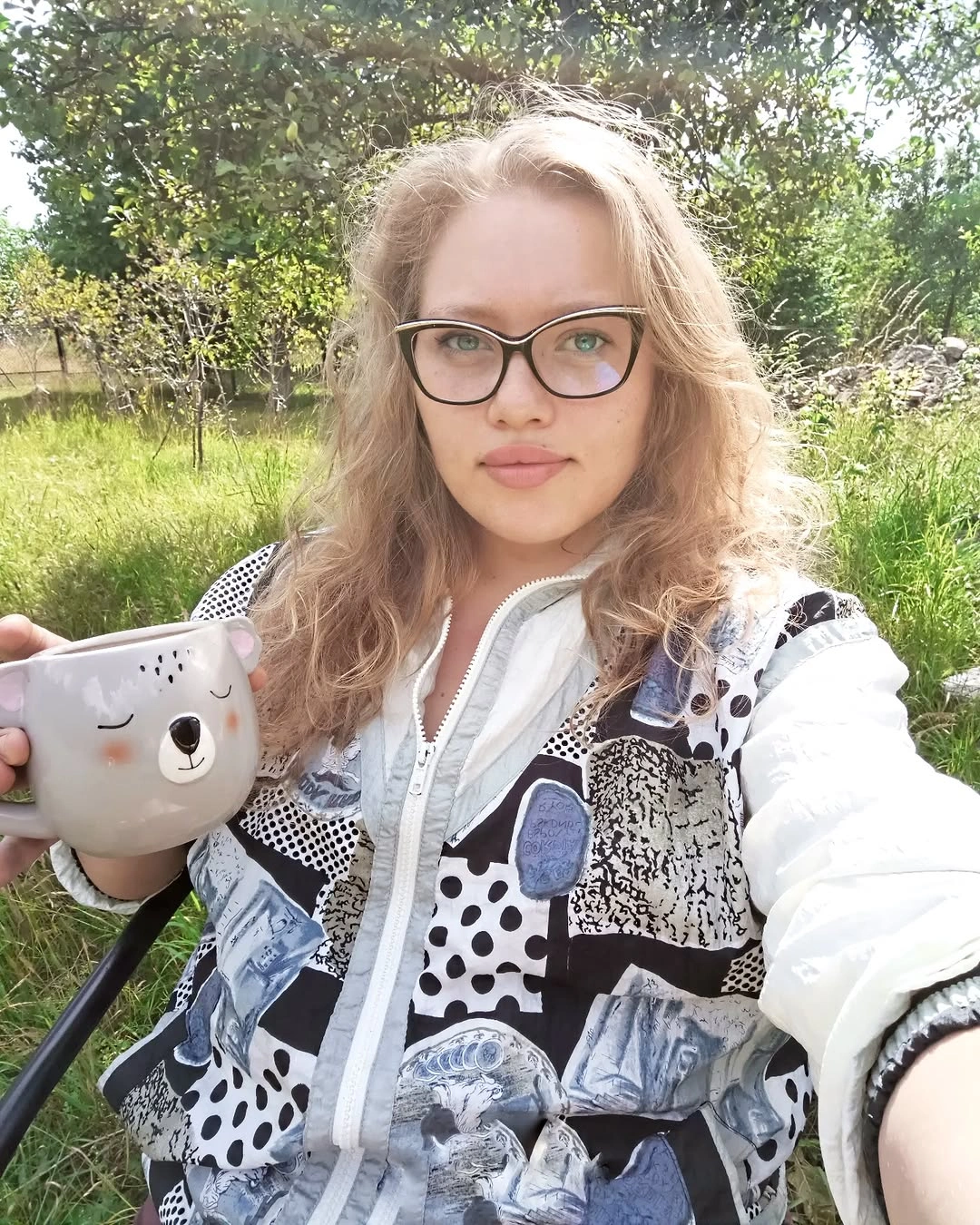
Photo via Instagram
The longer perimeter is important because it lets that side volume expand without turning the shape into a compact curly bob. Several pieces fall well below the shoulders, giving the curls vertical room even as they spread outward around the face and upper body. The visible glasses sit inside that textured outline rather than becoming the feature that dictates the haircut.
I like the way the texture keeps going instead of saving all its movement for the bottom. It gives the length a softer, more continuous rhythm while the frames remain clearly visible within the overall shape.
Concentrated Curls Give Shoulder Length a Strong Finish
This bright red cut changes character around the middle of the length. The crown and upper section lie comparatively smooth, then more defined curls begin to gather and repeat as the hair approaches the shoulders. That transition gives the cut a clear visual sequence, with restraint above and concentrated movement taking over through the lower half.
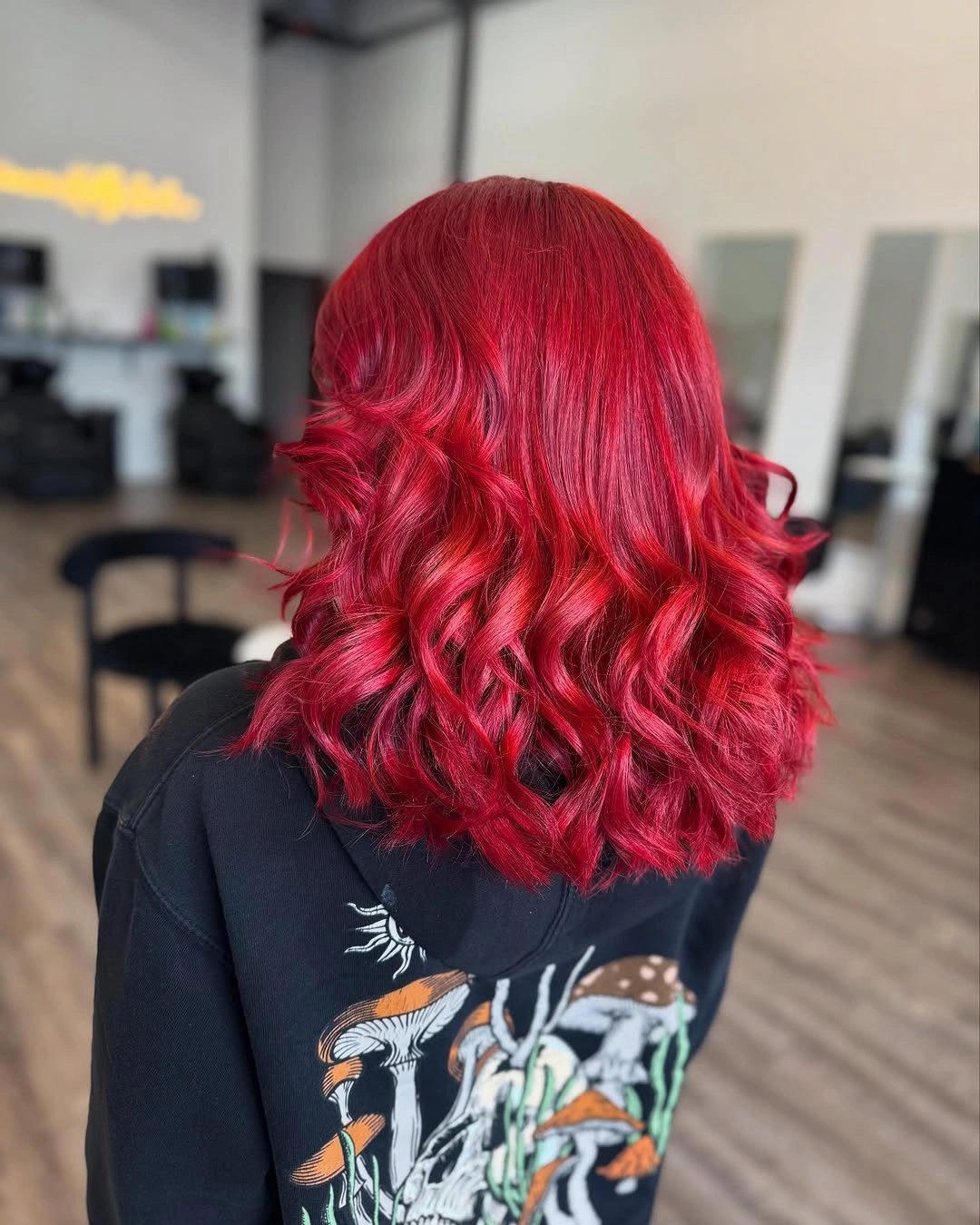
Photo via Instagram
Because the curls stack within a shorter vertical span, they create a denser, more compact finish than similar bends would on hair extending far down the back. The shoulder-area perimeter keeps the curved sections close enough to overlap, so the bottom feels full and energetic without losing the readable outline of a medium-length cut.
I find the concentration of movement more interesting here than an all-over curl pattern would be. The smoother upper section gives the lower curls a distinct starting point, which makes the change in texture part of the haircut’s visual identity.
A Shoulder-Skimming Lob Keeps the Perimeter Clear
The lower edge is what makes this shoulder-skimming cut feel so settled. Seen from the back, the light-brown and blonde lengths stop within a fairly narrow band near the shoulders, so the silhouette reads as deliberate rather than simply grown out. The darker root area adds depth at the top, but the haircut itself is defined by how clearly the length resolves at the bottom.
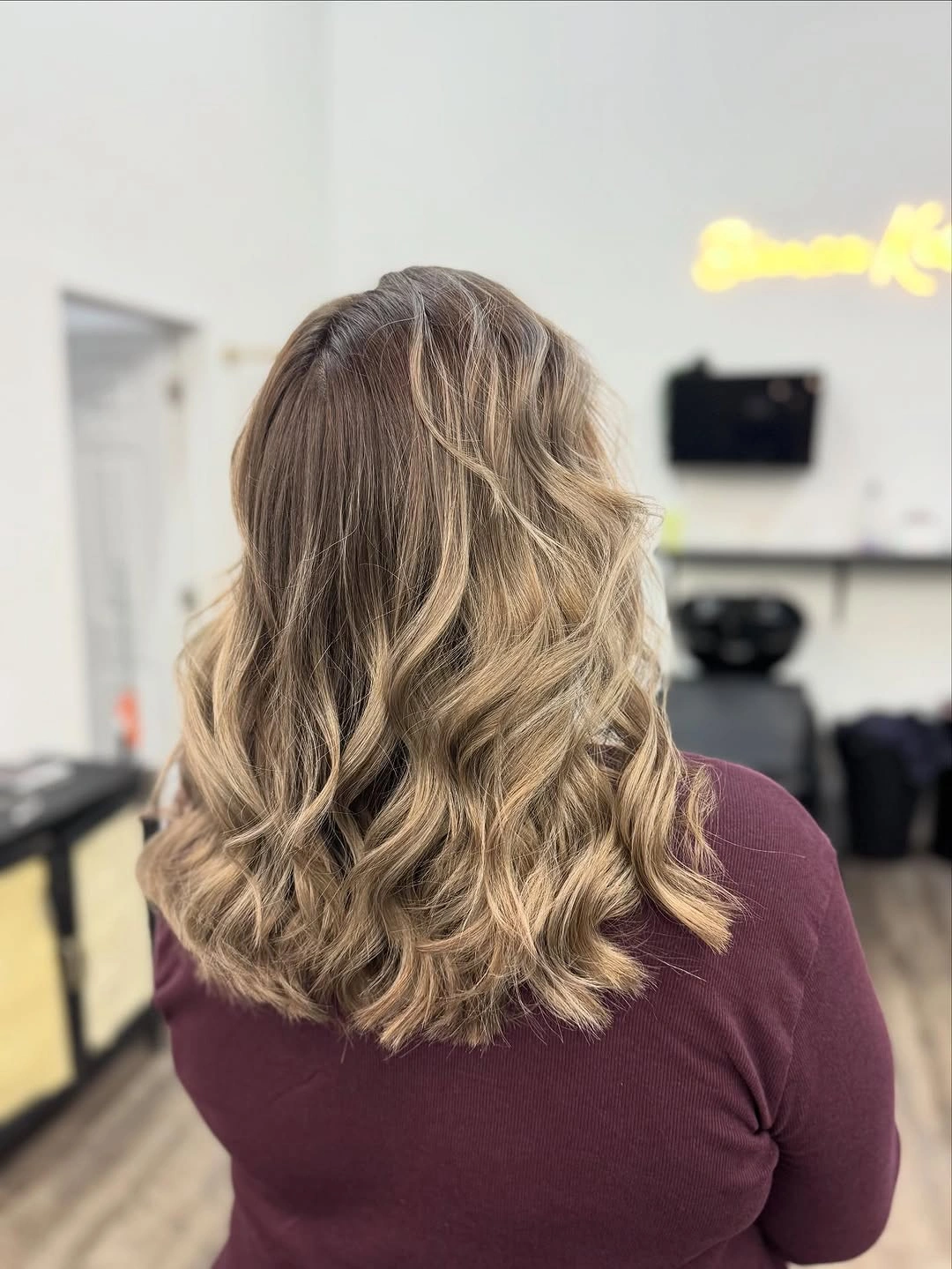
Photo via Instagram
Loose bends move through the mid-lengths and ends without breaking that lower line into a heavily feathered finish. That balance gives a long bob or lob enough motion to avoid stiffness while preserving the compact proportion that separates it from clearly long hair. It is a useful middle ground when you want visible movement without giving up the clean sense of where the cut ends.
I like this length because it lets the perimeter stay legible even when the waves are soft. The haircut feels measured rather than severe, with just enough movement to keep the shoulder-level shape from looking static.
A Side Part Directs Long Pink Waves
The side part changes the balance of this long pink shape before the curls even become the main event. More volume gathers toward one side, while the opposite side opens more quickly around the face, so the silhouette feels directional instead of evenly divided. That asymmetry gives the long length a sense of motion from the top rather than waiting for the lower curls to do all the work.

Photo via Instagram
Large curved sections continue through much of the visible length, and the shift from deeper pink near the top to paler pink below makes their paths unusually easy to follow. The color transition separates individual bends without replacing the haircut as the subject. What stands out is how much horizontal fullness those curves create while the overall length still reads as unmistakably long.
This is one of those cases where abundant texture does not erase the length underneath it. The waves remain broad enough to show direction, so the fullness feels expansive rather than compact.
Curly Fringe Connects the Whole Bob Shape
Short curls across the forehead immediately connect the fringe to the rest of this brown bob. Instead of introducing a smooth or sharply separated front section, the haircut repeats the same curled texture from the brow area through the sides. That continuity gives the shape a rounded, cohesive quality and makes the fringe feel integrated rather than added on afterward.
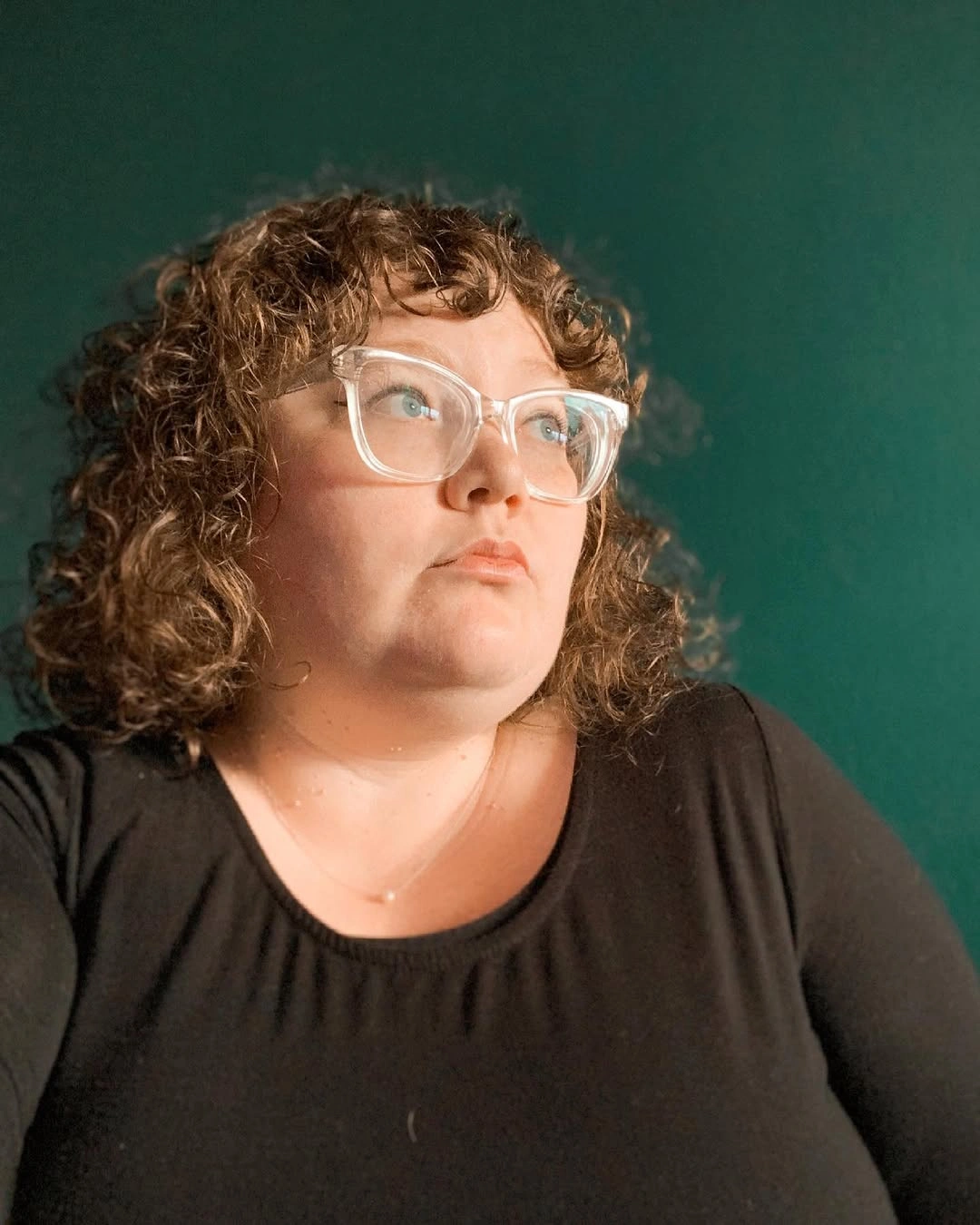
Photo via Instagram
The curls remain dense around the sides and gather into a compact bob-scale perimeter near the shoulders, which gives the silhouette fullness without losing its boundary. The light-colored glasses sit inside that rounded outline rather than interrupting it, so the frames and curls remain visually distinct. For bob haircuts for plus-size women, the useful idea here is the repeated texture linking fringe, sides, and perimeter.
I especially like that the fringe does not need to contrast with the rest of the haircut to have presence. Repeating the curl pattern across the front gives it definition while keeping the whole shape connected.
Blunt Fringe Sets Up a Strong Length Contrast
A dense straight fringe gives this long dark haircut a very clear stopping point at the forehead, while the rest of the hair continues well below the shoulders. That sharp difference in length creates a strong front-to-side contrast without relying on layers or visible waves. The haircut feels graphic because the short horizontal fringe and long vertical lengths are so easy to read against each other.
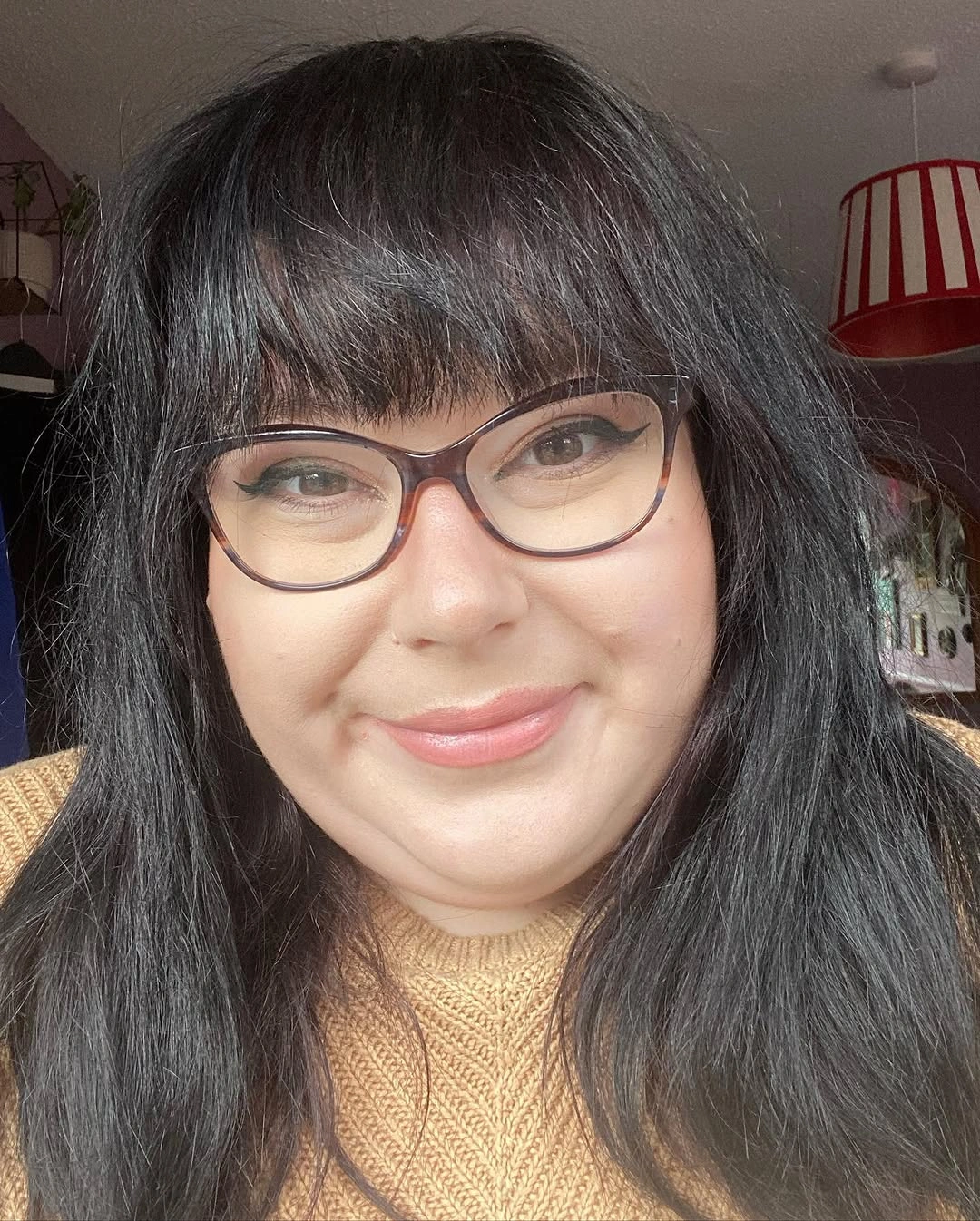
Photo via Instagram
The straight texture keeps that contrast precise: the fringe sits in a compact band above the eyeglass frames, while the side lengths fall smoothly past them with little interruption. Because the frames occupy their own line beneath the fringe, the front has several distinct horizontal and vertical relationships at once. None of them needs to be treated as a rule for face shape to be visually interesting.
What makes this combination memorable is the discipline of the lines. The fringe, frames, and long side sections each keep their own shape instead of dissolving into one another.
Green Front Layers Emphasize a Stepped Silhouette
The green sections at the front make the length changes in this short curly cut unusually easy to see. Compact curls and shorter pieces cluster around the fringe and crown, while darker sections extend farther at the sides and toward the nape. That stepped relationship gives the silhouette its identity, with the upper area reading tighter and the lower perimeter reaching beyond it.
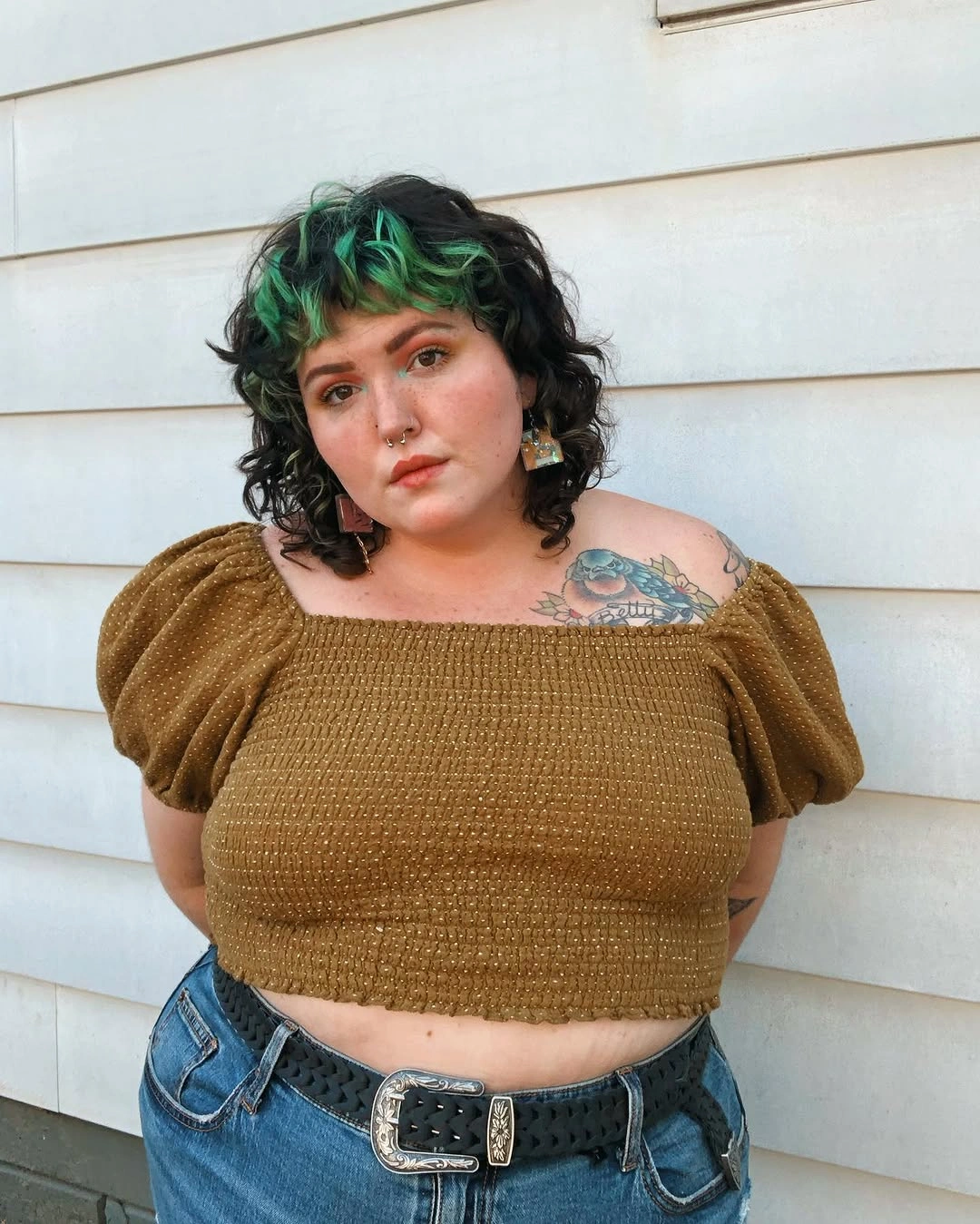
Photo via Instagram
Because the crown stays comparatively short, the longer side and nape pieces create a visible drop rather than an even bob-like edge. The result has a mullet-like or shag-like direction without requiring an exact salon label, and the curl pattern keeps the transitions from looking rigid. The green placement adds emphasis to the upper layers, drawing attention to where the shorter shape begins.
I like the way the color points to the haircut’s structure instead of merely decorating it. The strongest idea is still the contrast between a compact crown and a longer perimeter, which gives this short shape its offbeat rhythm.