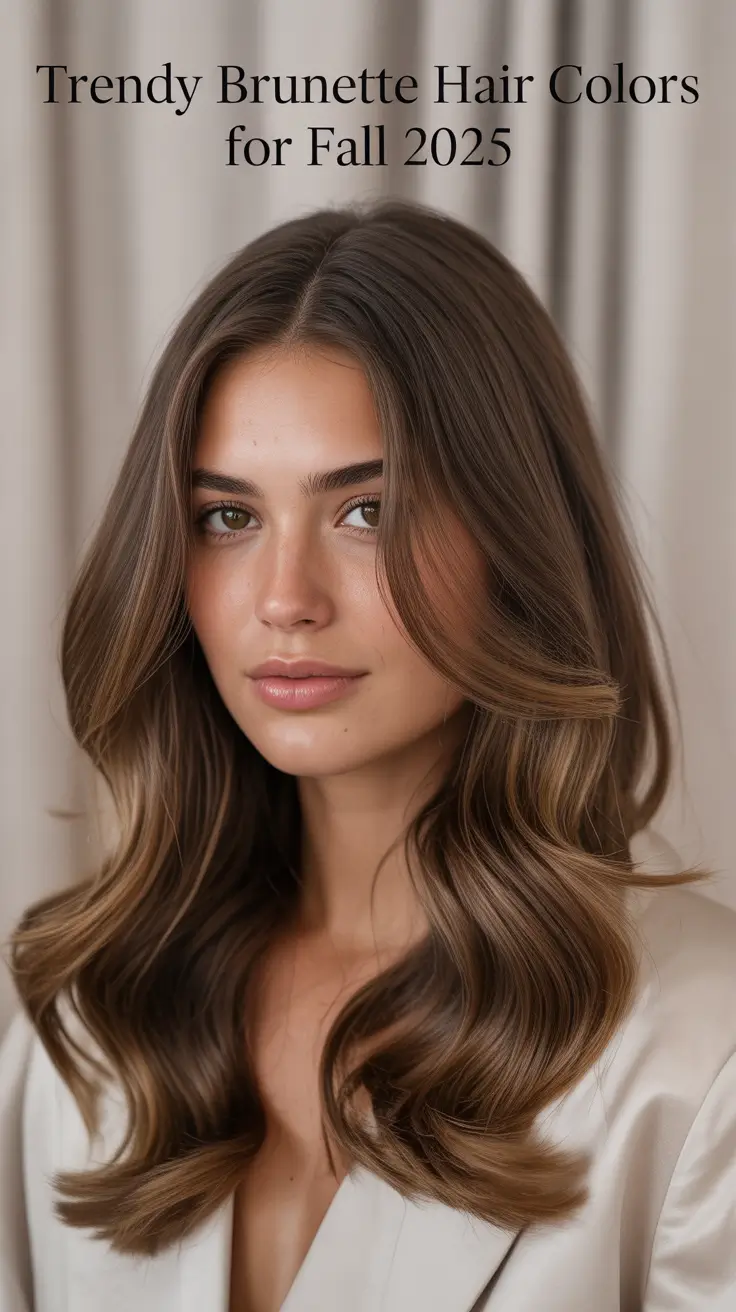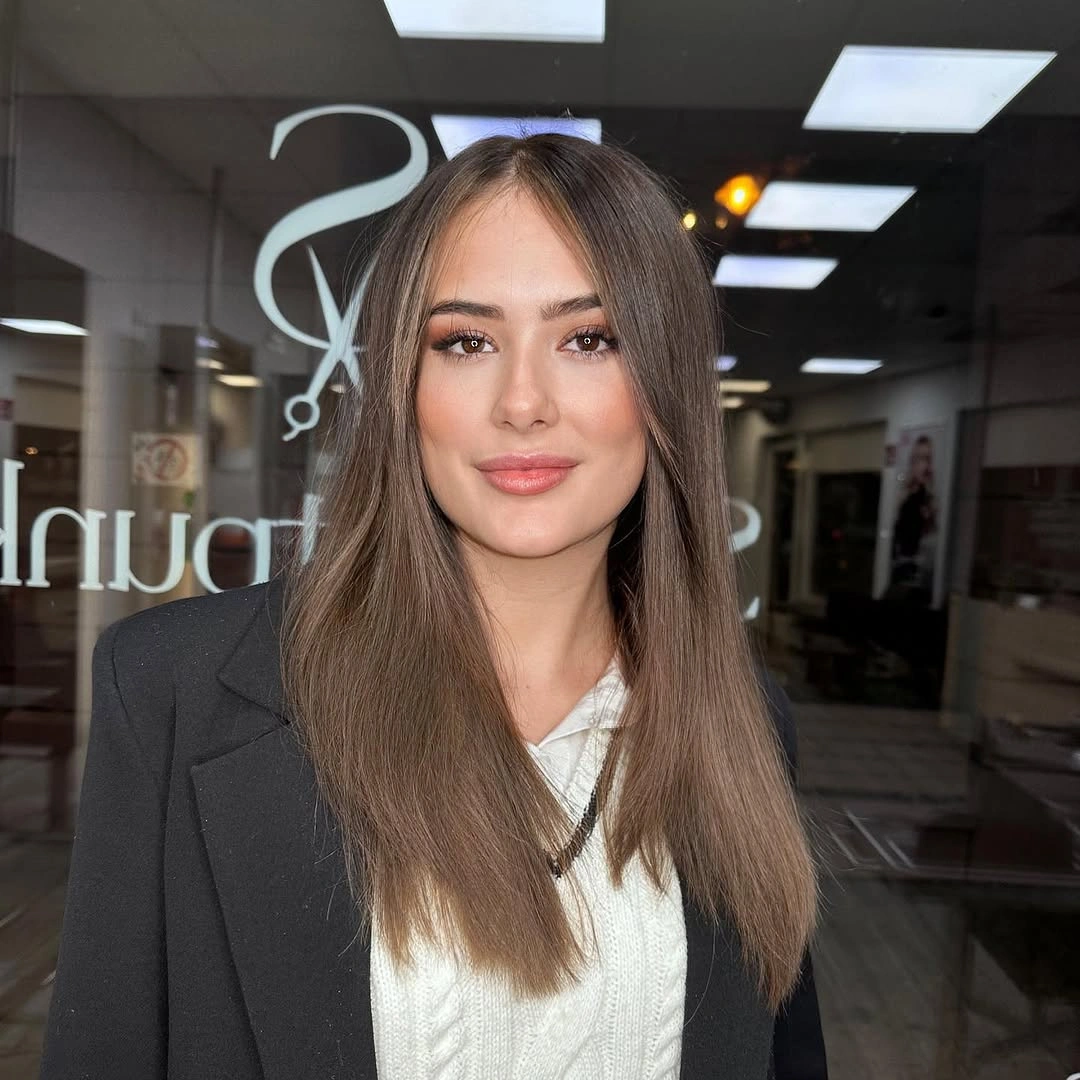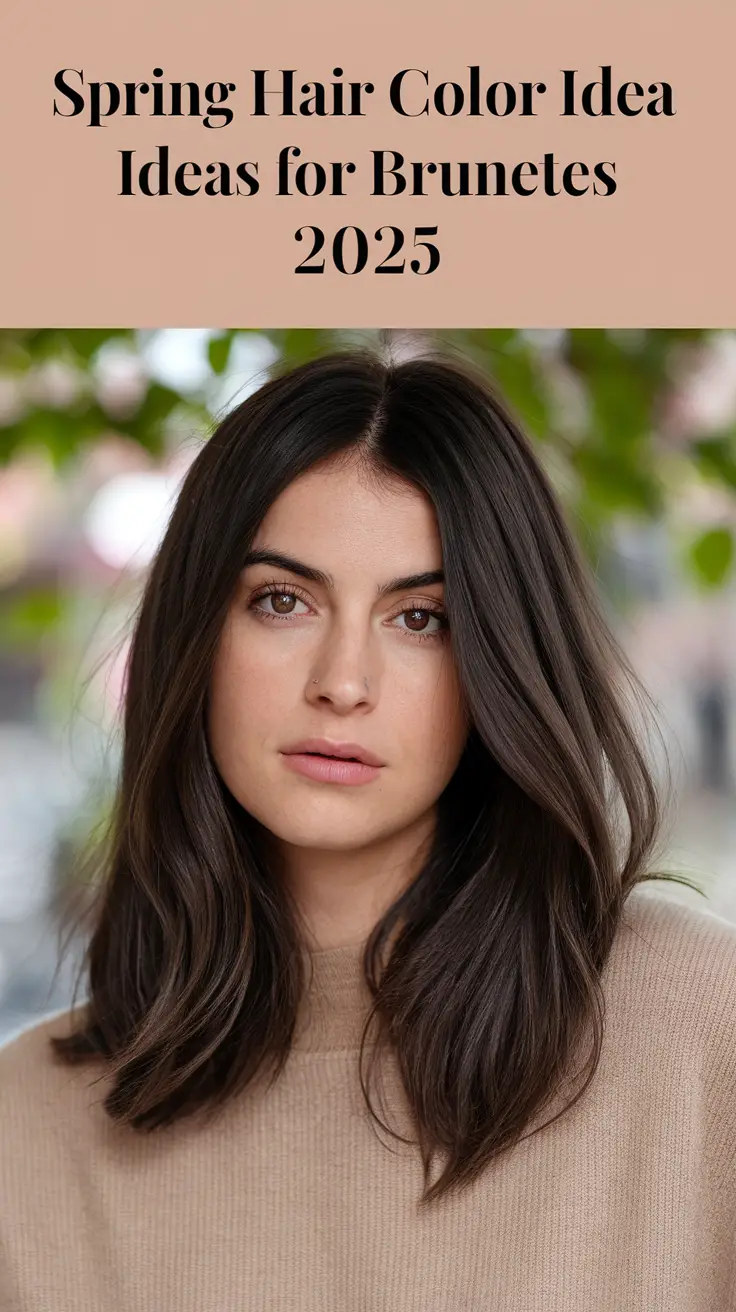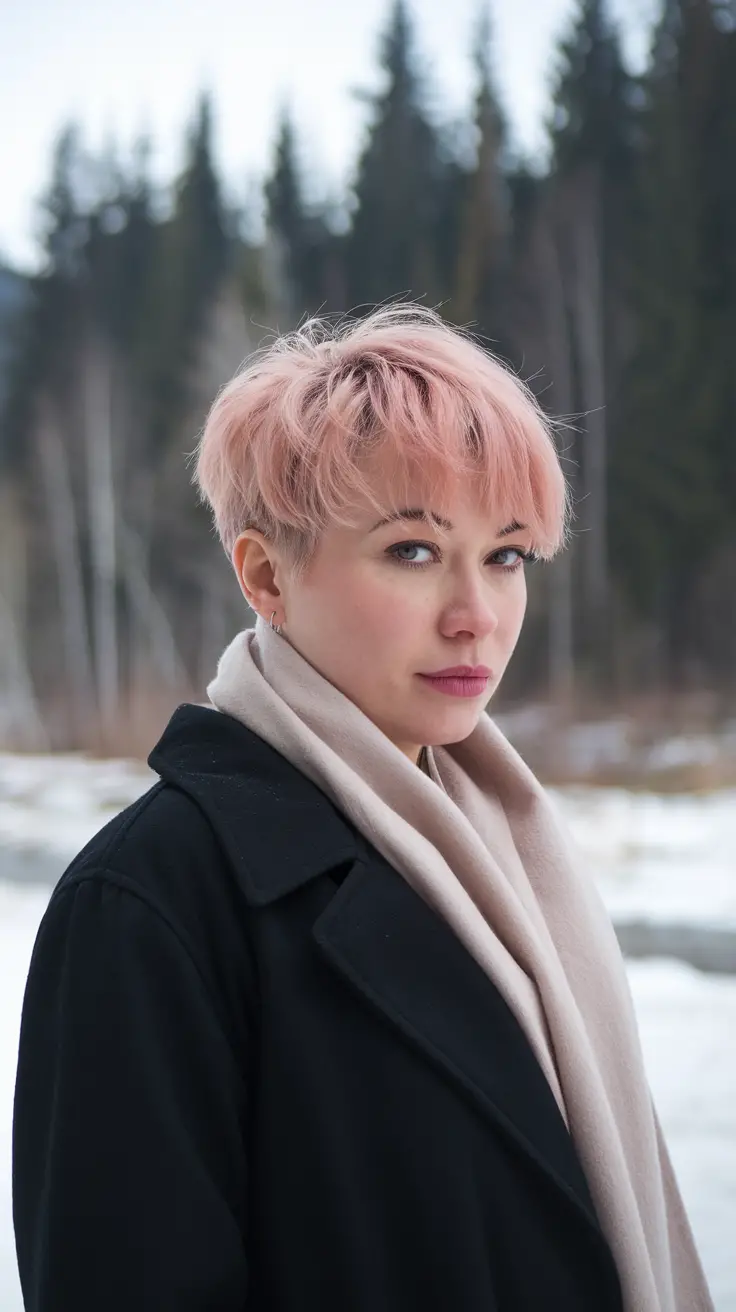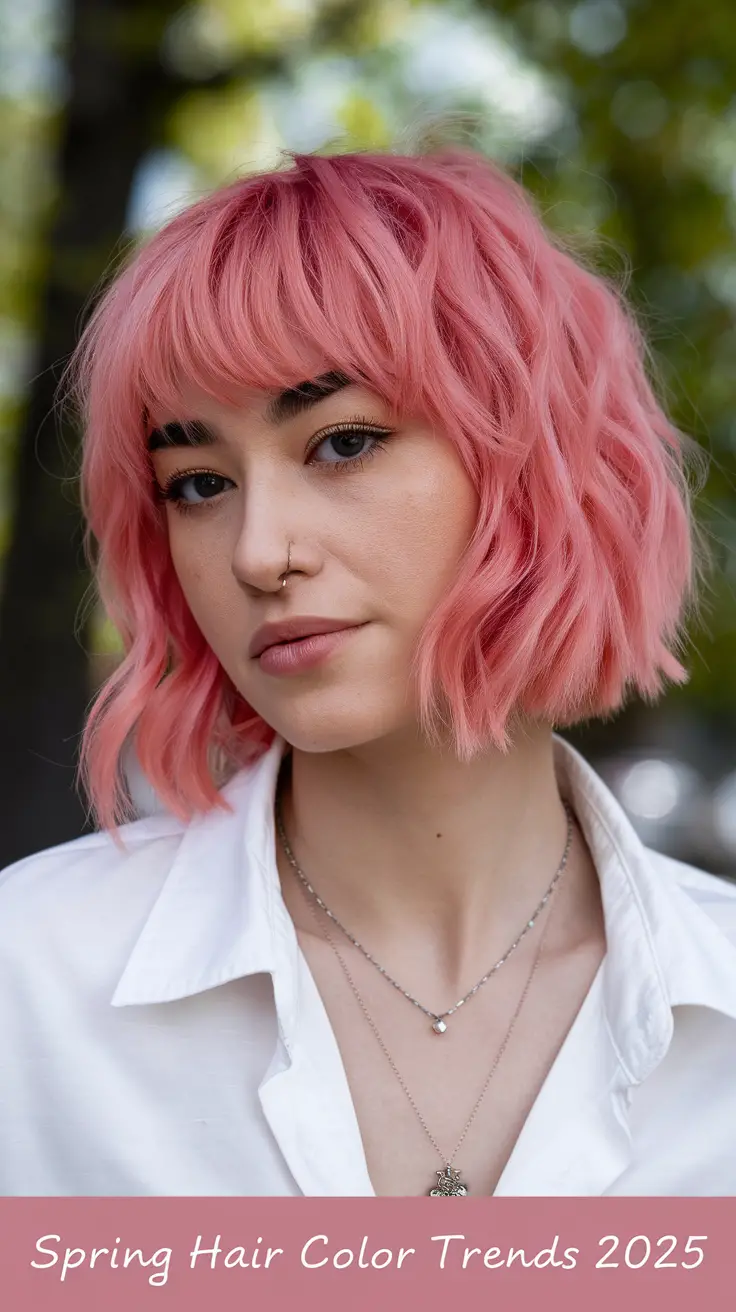

I’ve been noticing this winter that ombre has gotten more subtle, less stripey, more lived-in. I saw three women in one week with dark roots fading to soft ash, and they looked like they hadn’t tried (but they had).
This roundup of 26 Winter Ombre Hair ideas covers the range from low-maintenance grow-out to statement color, from subtle root shadows to bold two-tone transitions. For anyone tired of monthly touch-ups, this is your winter plan. I’ve got fine hair that flattens by 4pm, so I know which ones hold a curl and which leave me with stringy ends. There’s a dark to ash lob that actually stays. And a black to purple that makes me want to be braver.
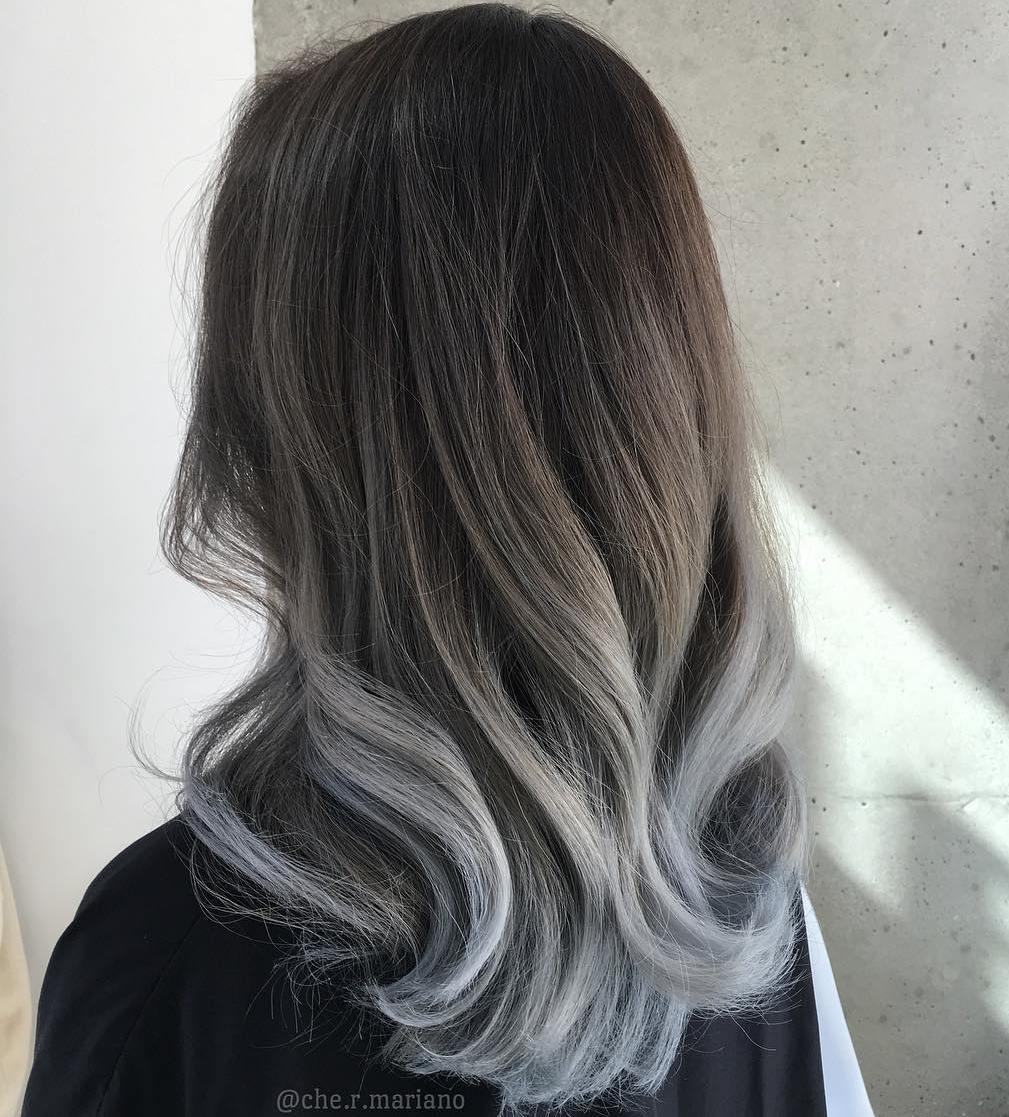
Dark Brown to Ash Grey Lob
The lob hits collarbone, the grey stays dusty, and for three days the ombre looks like it was done yesterday. A dark brown ash grey ombre on wavy medium-density hair wears well because the cool tone hides root grow-out longer than warm shades do. But grey has a schedule: by day five, the ends start pulling beige if you skip the toner. The tone reads best when hair isn fine — ash can flatten. A weekly mask keeps the collarbone ends from feeling brittle. This colour works with the lob’s blunt line, no bangs to maintain. It’s a pragmatic winter ombre: striking but not high-drama.
Dark Blonde to Lighter Blonde Ombre
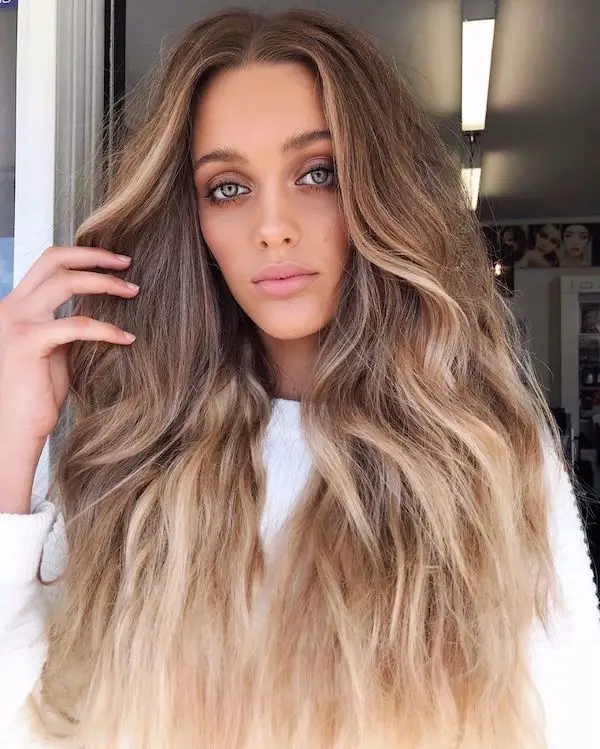
This one earned its place. The dark blonde to light blonde ombre uses a graduated transition that starts around mid-length, so the base stays dark and the ends lift gradually. On thick wavy hair with side-swept bangs, the colour reads as intentional growth, not a grown-out balayage. The tone leans natural — not icy, not caramel, just brighter at the tips.
- Keep the dark blonde base untouched
- Begin lightening at ear level
- Leave the lighter blonde ends dense — do not thin the tips
- Ask for a soft blended ombre, no stripes
- Cut layers to support the transition, not fight it
This is not a bathroom-mirror job; the sectioning matters. But once it’s done, the grow-out is kind. Your roots stay dark, so no urgent touch-ups.
Dramatic Black to Grey Ombre
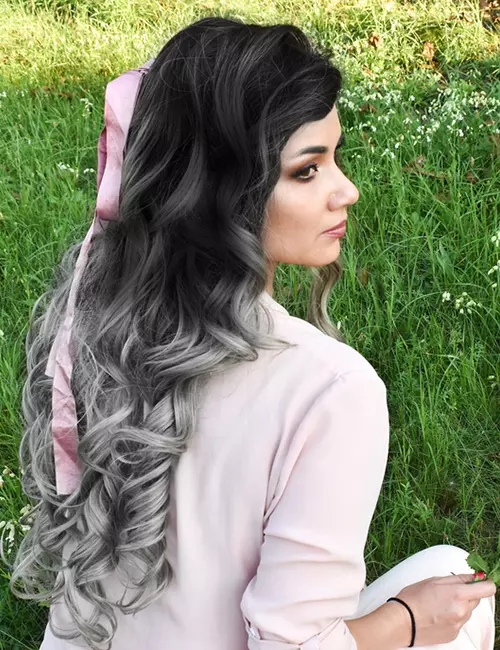
I’ll admit: I was skeptical about grey. Then I saw this black to grey ombre — the dramatic color transition from pitch to ash, on thick wavy hair at mid-back length. The technique cuts the colour mid-length, so the contrast is stark, not blended. That’s the edge. The downside: that stark line means a visible root by week four. The tone is cool but wants regular toning; one skipped wash and the grey pulls brassy. On the plus side, the wavy texture softens the contrast, and no bangs means less daily fuss. This one demands attention and a toner appointment every few weeks.
Dark Brown to Warm Blonde Lob
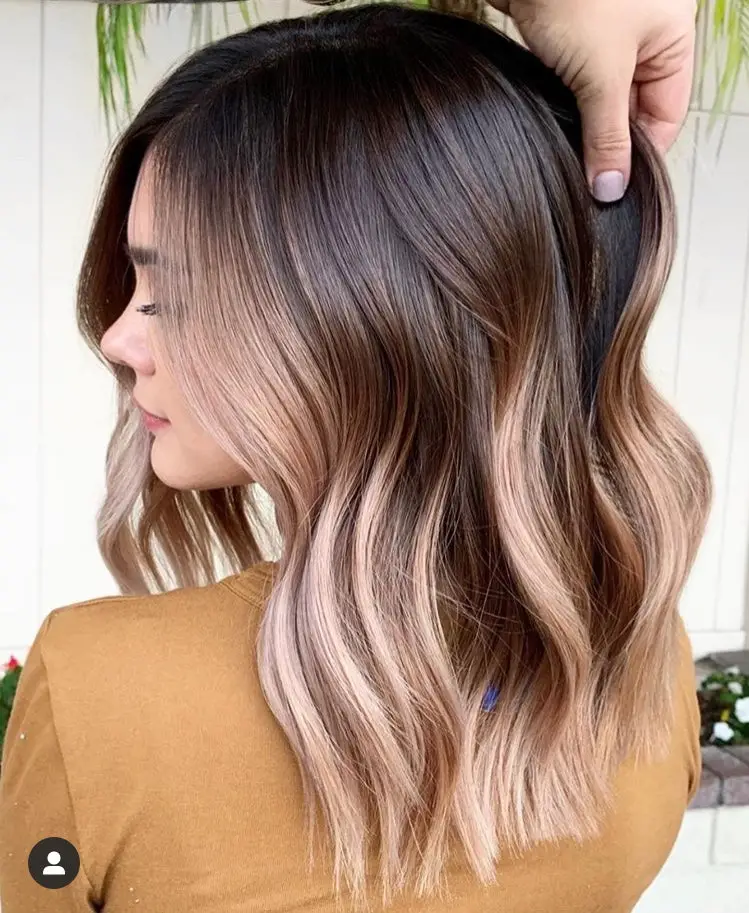
You see her at the cafe and the ends catch the light. That’s the dark brown warm blonde ombre on a collarbone lob with wavy medium-density hair. The tone is warm golden, not brassy, and the technique keeps the dark brown base intact so the grow-out is a non-issue. This suits anyone with warm undertones and medium thickness — fine hair might loose the ombre effect, and too much density could look muddy. It’s a safe winter ombre for those who want warmth without commitment.
Dark Roots to Platinum Bob with Pink
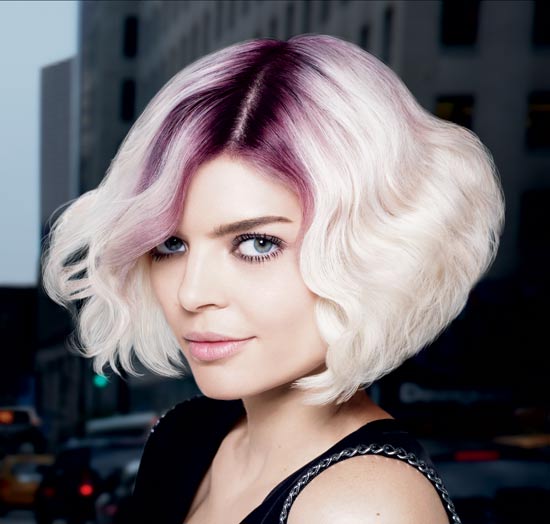
Ever wonder how a platinum blonde bob with pink holds up after day two? The contrast between dark roots and platinum ends with subtle pinkish undertones is striking, but it requires work. Fine, wavy hair shows every toner shift. By day three, the blonde leans yellow. The pink dulls. This is a salon-only colour: the fade line needs a professional touch to keep the ombre clean. Upkeep means a purple shampoo every wash and a toning appointment every five weeks. Fine hair also means less room for brassiness to hide. If you want low-maintenance winter hair, this is not it. But if you can commit to the schedule, the payoff is real.
Dark Brown to Warm Auburn Ombre
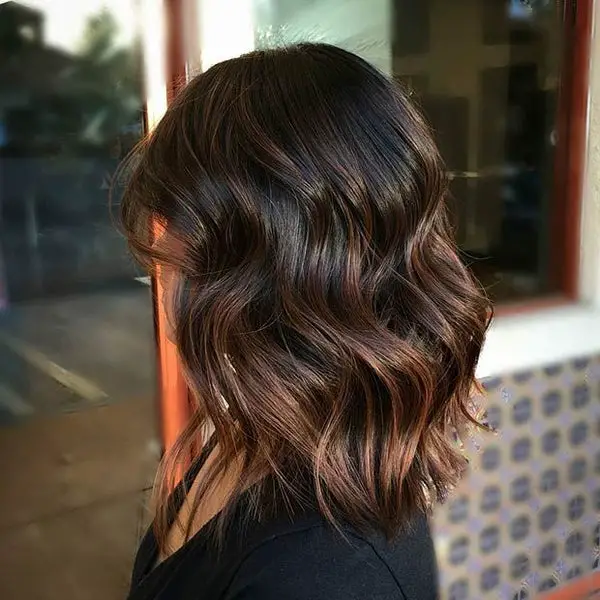
A collarbone lob in dark brown auburn ombre is the kind of winter colour that makes olive and golden undertones glow. The warm auburn tones catch the light and reflect a soft copper. The technique is simple: the stylist lightens the ends a few shades, then glosses over with auburn. Medium density hair holds the colour well because the waves grab the pigment. But if your skin has cool pink undertones, the auburn can look brassy. Stick with a cooler red if that is you. For everyone else, this is the low-commitment way to try red without going all in.
Dark Brown to Bright Red Ombre
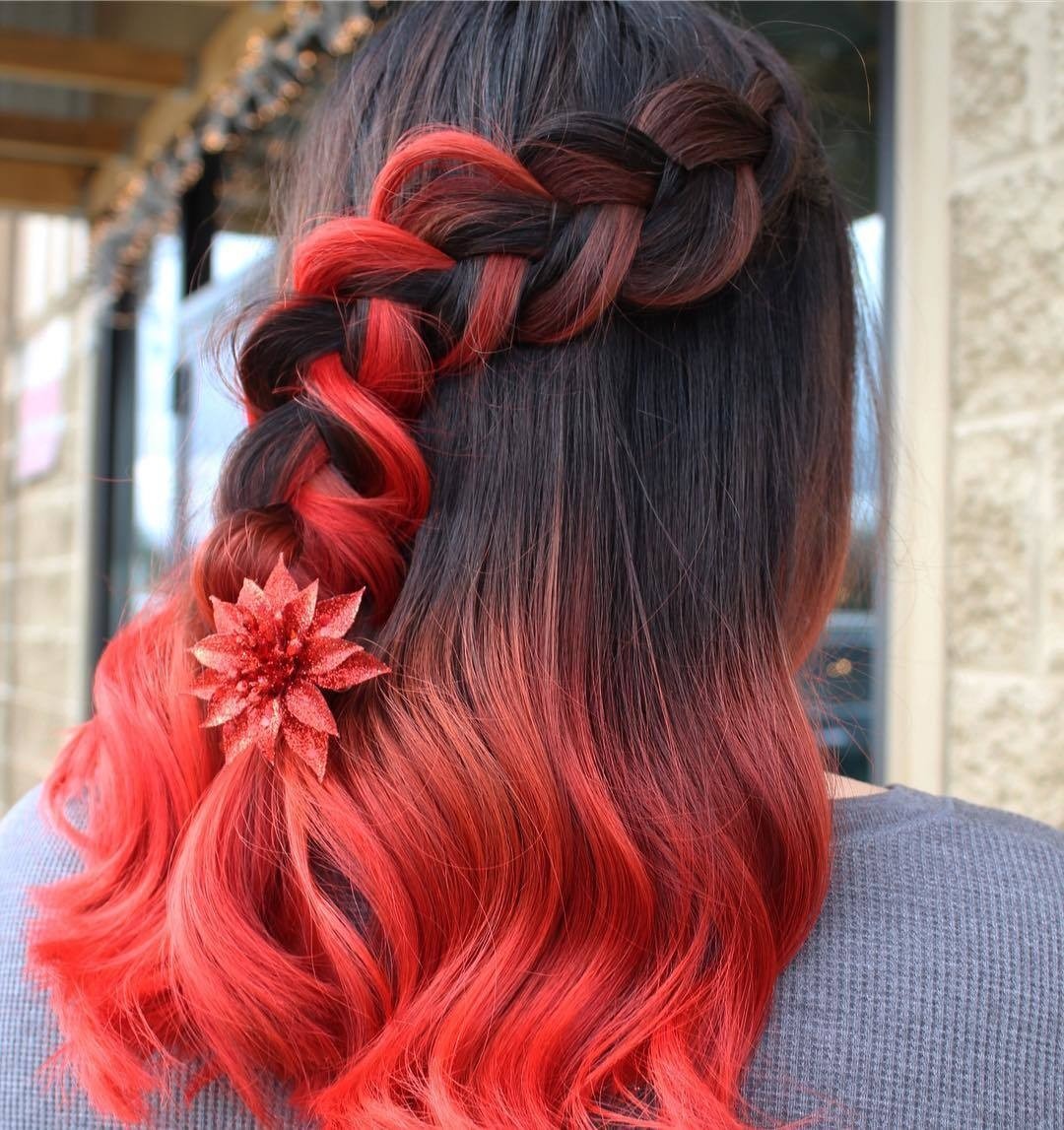
The verdict: this is a technical colour that works best on thick, wavy hair. The dark brown base at the roots transitions to bright red through a hand-painted ombre technique — no foil lines, just blended brush strokes. On mid-back length layered hair, the colour shows in waves and becomes a stripe when braided; the red stands out against the brown, and the side part lets the ombre start asymmetrically.
This is not a bathroom-mirror job. A bright red ombre requires careful lightening and tone balancing to avoid blotchiness or orange warmth. The braided effect relies on the ombre starting at the right point, usually around the shoulders, so the red appears in the woven section. Ask your stylist for a soft balayage transition from dark brown to bright red, and expect a few hours in the chair.
Deep Burgundy Base with Red/Violet
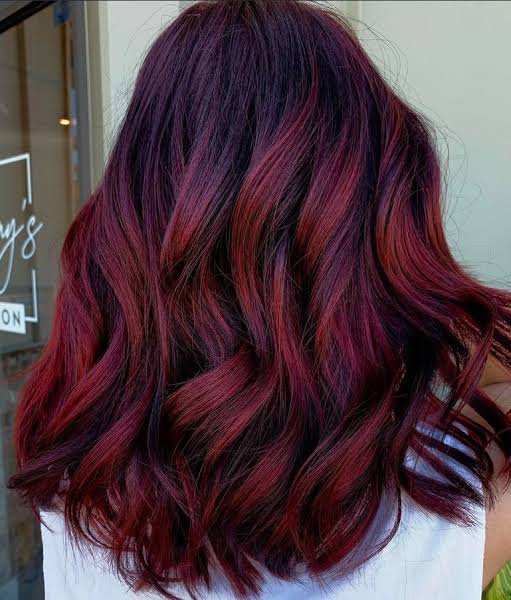
Not sure if deep burgundy works with your skin tone? This colour — burgundy hair with violet undertones — applies a deep burgundy base with lighter red and violet shades through a soft balayage. The shoulder-length layered cut keeps the colour close to the face, so the purple and red tones reflect without washing you out. It’s a winter colour, perfect for holiday parties and cold-weather events when you want richness without black. If your natural colour is already dark, this is a low-maintenance season shift — no major lift needed.
Mid-Back Dark Blonde to Lighter Blonde Highlights
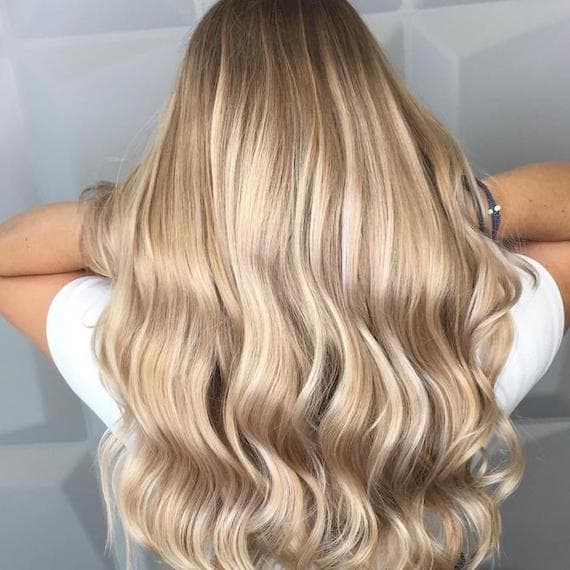
The first week is perfect. By week three, the highlights start melting together, and by week six you can see a faint root line — but it’s soft. That’s the point of this colour: a dark blonde base with lighter blonde highlights applied through a hand-painted balayage that fades without a harsh demarcation. The mid-back length means the highlights travel down, and the wavy texture helps disguise any slight fading. After a month, the contrast dims; the lighter blonde becomes a general brightness rather than individual streaks.
Upkeep is minimal. The highlights are designed to blend with the base, so you can stretch salon visits to 10-12 weeks if you want. A toning shampoo once a week keeps the lighter pieces from yellowing. The grow-out is forgiving; the dark base hides the root for a good few weeks. This is about as low-maintenance as blonde gets.
Ash Blonde Base to Lighter Ash Blonde
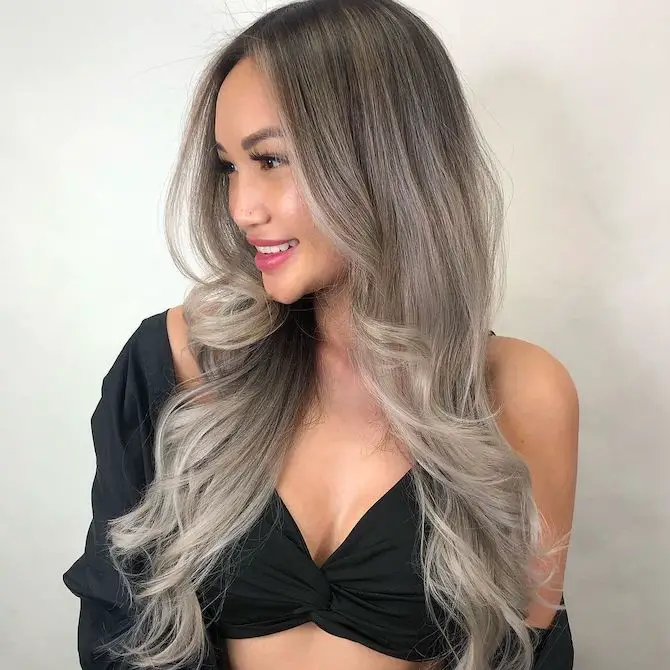
This is the one I book twice a season. The ash blonde ombre starts at collarbone and fades into lighter ash blonde ends. The stylist uses a hand-painted technique, sweeping lighteneer heavvest at the tips. Wavy medium-density texture takes the fade gracefully. Once a week, a purple shampoo keeps the cool tone from warming. That’s the only upkeep.
Dark Brown to Ash Blonde with Curtain Bangs
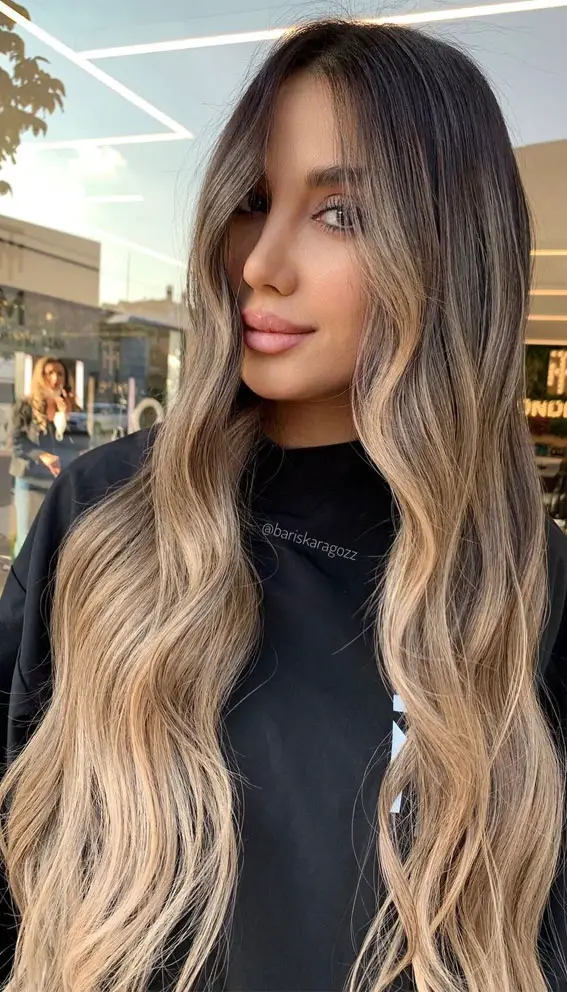
Who can pull off this dark brown ash blonde curtain bangs combo? The curtain bangs soften a round or square jaw. The mel of dark brown into ash blonde ombre draws the eye down. Thick wavy hair gives the bangs body. Fine hair? The bangs separate by noon. Face shapes with sharp angles get softened. A long face might find the bangs overwhelm the proportions. The transition is gradual, high-contrast enough to read but soft enough not to scream.
The bangs hit the cheekbones, the rest falls past the shoulders. The hair is thick and wavy, giving the bangs curve. Without that body, you’d fight them all day. The bangs need a round brush and a cool shot of air every morning. The ash blonde needs toning every few washes. Worth it if you have those 15 minutes.
Dark Blonde to Light Blonde Blowout
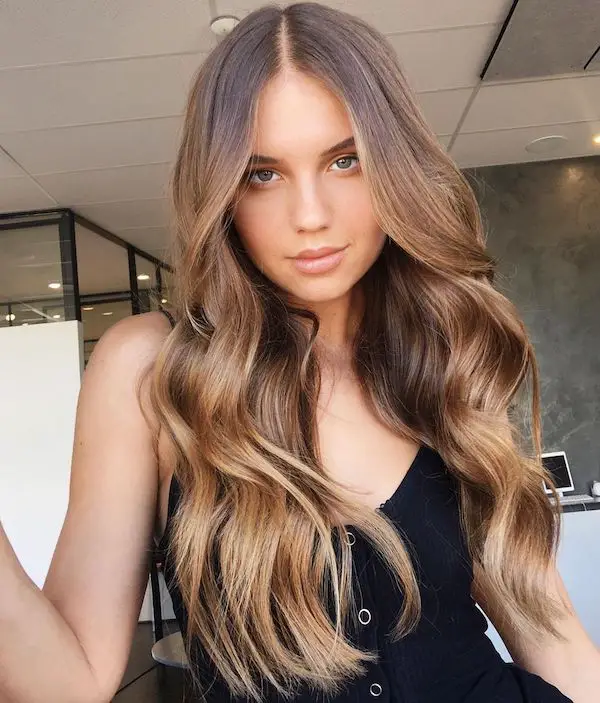
I did not expect the seam to look this smooth. The dark blonde light blonde blowout uses a subtle hand-painted transition. The stylist places lighteeer around the face and at the ends, leaving the crown darker. The lighteeer is applied in a sweeping motion from mid-shaft to ends, then brushed upward to blr the line. The result is a seamless color transition that reads natural, not stripd.
The blowout adds volume and a slight bend. Thick wavy hair helps blend the tones. The color is a salon job. The blowout? That’s doable. A round brush, a concentraor nozle, and a heat protectant. Pull sections forward and down, then cool shot to seal. The blend means you don’t have to be precse with your parrt. Grow-out is forgiving. Six weeks between trims is realisic.
Dark Brown to Honey Blonde Layers
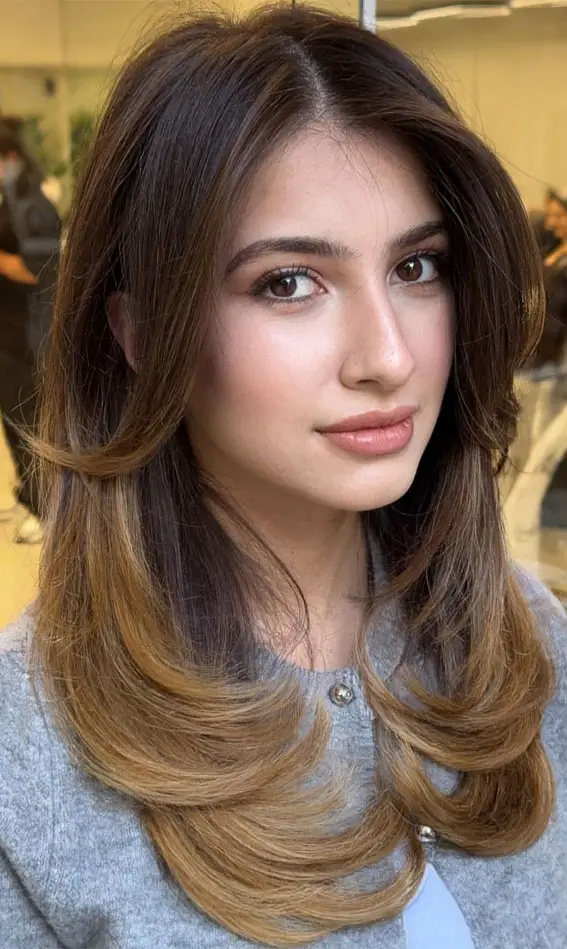
I tried this at home. I would not recommend that. The dark brown honey blonde ombre with face-framing layers looks straighforward. The honey blonde ombre is warm and soft. But the layers collapse if you skip a trim. Every six weeks, you need a shape-up. The wavy texture hides a blunt line if the fade is uneven. Medium density holds a wave for a day. The honest downside: the face-framing layers demand a blow dry with a round brush. Without that, the layers fall into your face.
Mid-Back Dark Blonde to Light Blonde Blowout (Side View)
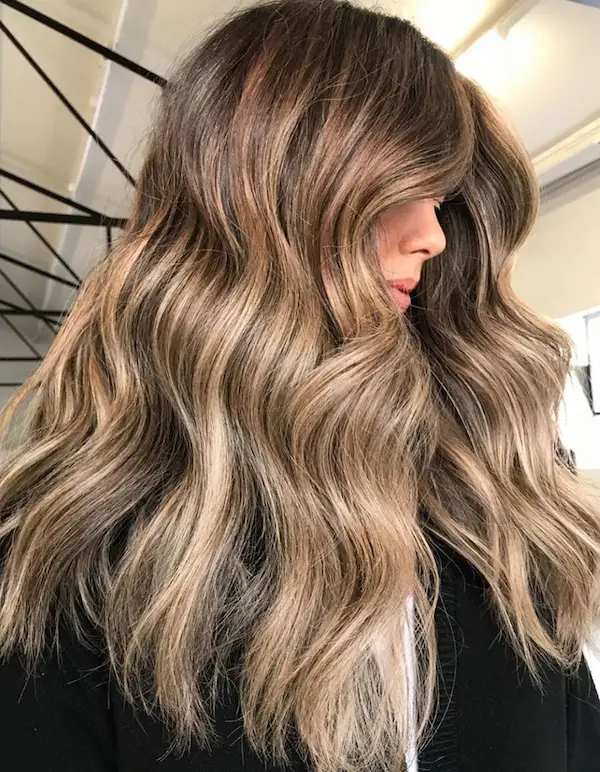
The side view wins. The dark blonde light blonde side view shows a seamless color transition that front views miss. Front-facing ombre often has a hard line where the dark meets the light, but from this angle, the ombre reads like a slow fade. The mid-back length gives the color room to stretch, and the thick, wavy texture breaks up any visible demarcation.
The light blonde ombre starts just below the ears and deepens toward the ends, so the roots stay soft. No harsh stripe here. The blowout adds a polished finish, but the real trick is the seamless color transition. The layers catch the light differently at each level, which is exactly what you want from a winter ombre. If you want a color that doesn’t scream “I got highlights last month,” this side view is the one to show your stylist.
Dark Brown with Multi-Colored Streaks
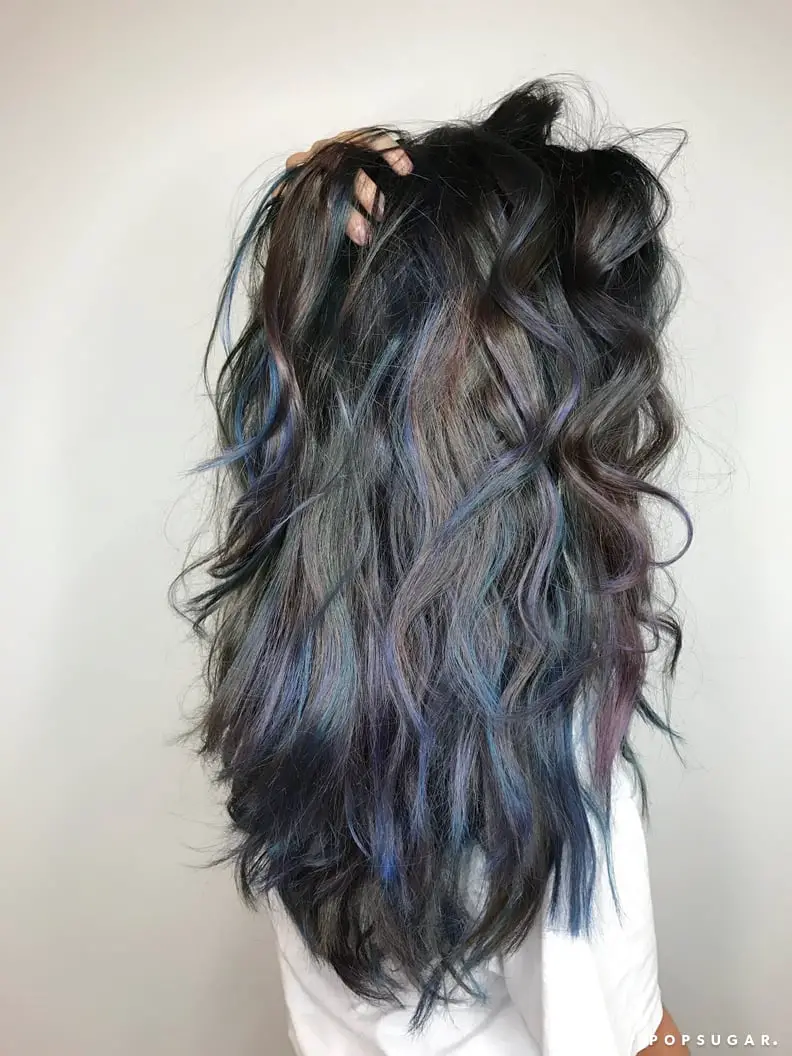
Blue, purple, and grey streaks against dark brown. The dark brown multi color streaks work best on thick, wavy hair because the strands have enough body to hold each color separately. If your hair is fine, the streaks can get lost in the base. The technique involves painting thin sections from mid-length to ends, keeping the roots dark. This is a look for someone who wants to make a statement, not blend in. The multi-colored streaks require a confident hand, but the result is undeniably unique. If you prefer a natural winter ombre, this is not it.
Mid-Back Dark Brown to Ash Blonde Money Piece
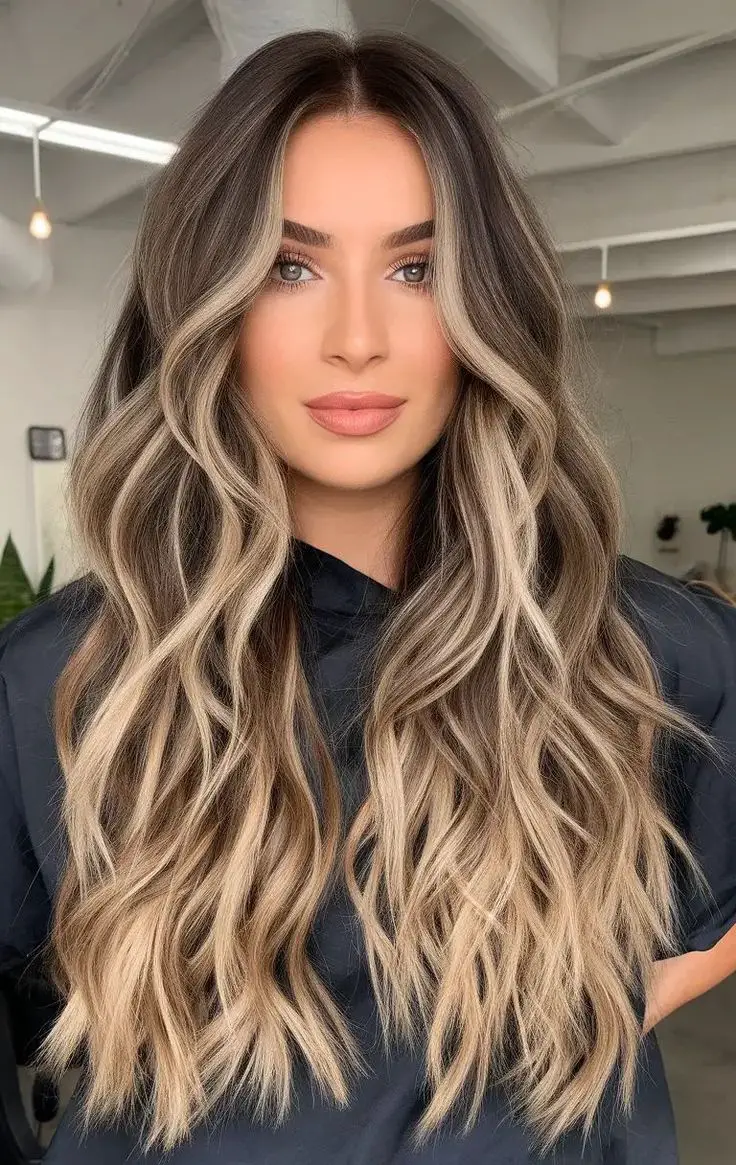
How long does a money piece actually stay bright? The dark brown ash blonde money piece looks incredible on day one, but by week two, the face-framing sections start to yellow. The rest of the ombre holds fine, but those front pieces need a purple shampoo every third wash to keep them cool. The thick, wavy texture helps disguise the grow-out line, but only for so long.
The mid-back length gives the dark base room to blend into the ash blonde ends, so the overall ombre grows out gracefully. But the blonde money piece is the weak link. It shows regrowth faster than the rest, and it picks up warmth from styling tools. By the end of week one, you will notice a slight warmth. By week three, it is brass. If you can commit to a weekly toning routine, this look works. If not, you will be that person with orange streaks around her face.
Dark Brown to Caramel and Blonde — Wavy Hair Viewed From The Back
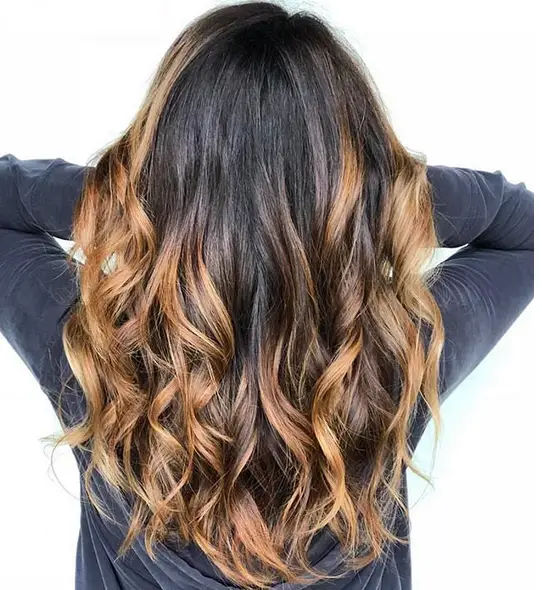
This is the ombre for people who hate the salon. The dark brown caramel blonde ombre starts rich and deep at the roots, then melts into caramel and blonde tones that look like you spent a week in the sun. It flatters warm skin tones best, the kind that tan rather than burn. The mid-back length gives the gradient room to breathe, and the wavy, thick texture catches the light in a way straight hair never could. No bangs, just a middle part that lets the colour do the work.
If your hair is fine or your skin runs cool, skip this one. The warmth will fight you. But if you have thick waves and a tan that sticks around, this is your winter colour. It is not a statement, it is a slow conversation. And it asks almost nothing of you between appointments.
Chin Dark Brown to Blonde Bob
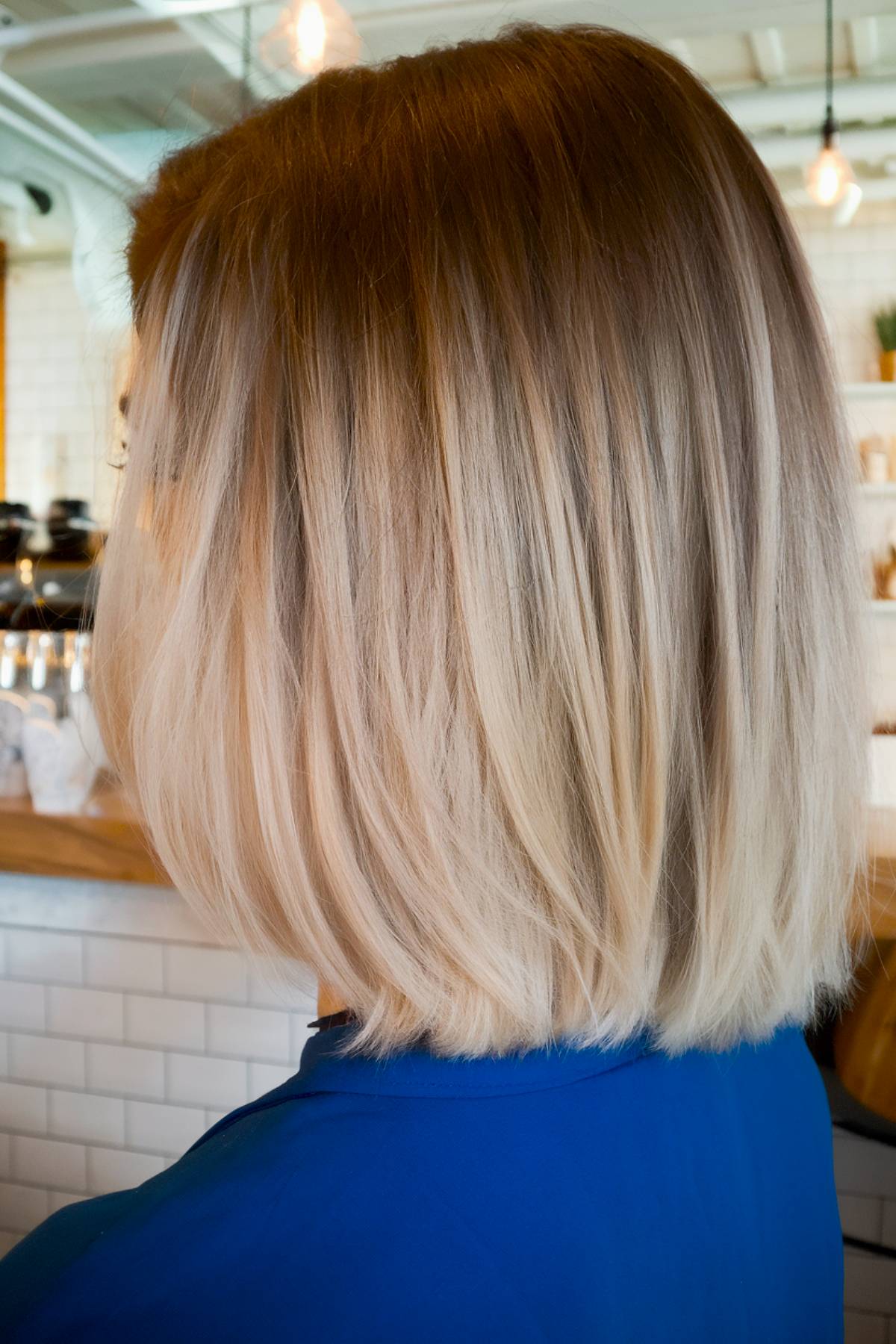
Can you do this at home? No. The dark brown blonde bob ombre requires a salon technique called a seamless melt, where the bright blonde ends are painted in a V-shape around the chin. The bob is blunt at the baseline, so any unevenness shows immediately. The tone is bright, almost platinum at the tips, which means the grow-out line will be visible by week six. The texture is straight to wavy, medium density, which makes the contrast pop. If you try this yourself, you will get a stripe. Book the appointment, bring a photo, and let a professional handle the transition.
Dark Brown to Golden Blonde Balayage
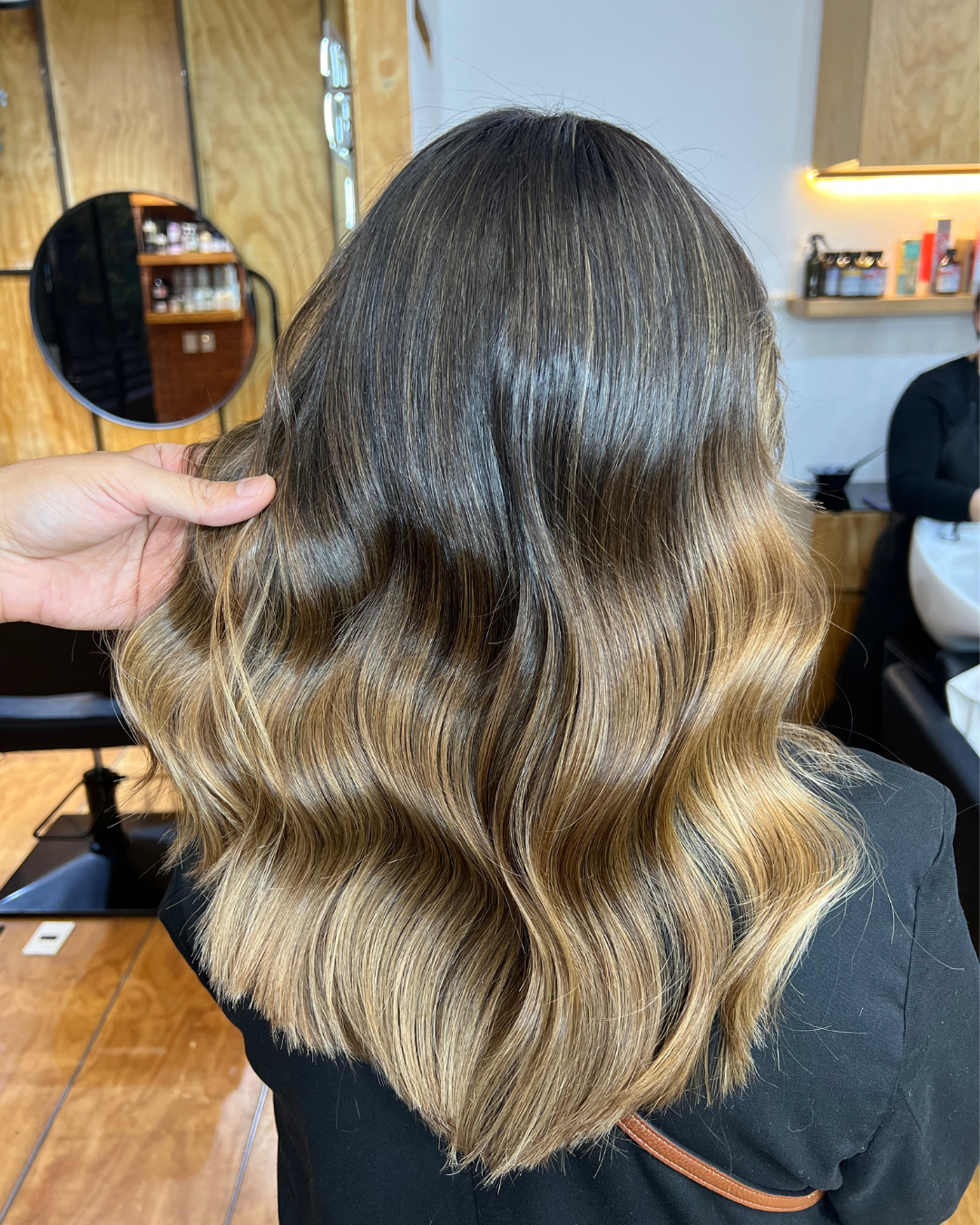
This balayage costs a pretty penny. The dark brown golden blonde balayage takes three hours minimum because the golden blonde highlights are painted freehand through thick, wavy mid-back hair. The base is a rich dark brown, the tone is warm and buttery, and the technique is designed to look like the sun did the work. Here is the honest downside: golden tones fade fast. By week four, they can turn brassy, especially if you use hot tools or hard water. A purple shampoo helps, but it will not save a bad fade. You will need a toning gloss every eight weeks to keep the warmth from going orange. That is the cost of looking this good.
If you are ready to commit to the gloss schedule, this is one of the most flattering ombres for warm skin and thick hair. The mid-back length lets the gradient stretch, and the wavy texture catches every shade of gold. It is not a low-maintenance colour, but it is a beautiful one.
Medium Brown to Ash Blonde Highlights
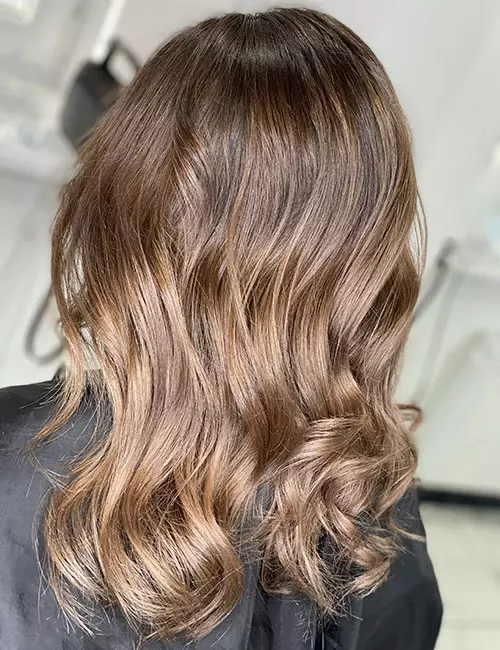
These highlights are for the cool-toned crowd. The medium brown ash blonde highlights start with a neutral brown base, then weave in ash blonde highlights that stay cool and muted. The tone is grey-leaning, not yellow, which means it flatters fair skin with pink undertones and grey or blue eyes. The technique is a fine weaved foil, placed close to the root for a subtle lift rather than a dramatic change. The length is collarbone, the texture is wavy and medium density, and the result is a colour that whispers rather than shouts. If your skin runs warm, these highlights will wash you out. But if you are cool, this is your winter shade.
Loose Waves Dark Brown to Ash Blonde Contrast
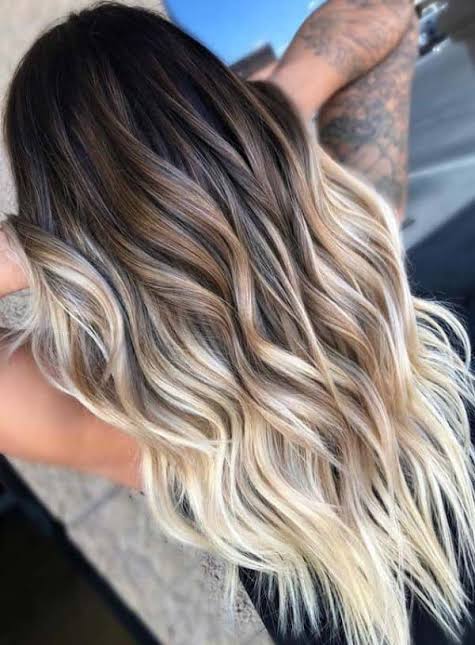
The dark brown ash blonde contrast lands before you register the wave. Ash blonde ends, cool-toned and deliberate, drop from a dark brown base using a soft ombre technique. The hair falls to mid-back in thick loose waves, middle part, side view showing the clean line. Here is what a week does: ash blonde needs a purple shampoo every third wash or the cool tone warms by day ten. I have watched this exact contrast yellow fast without it. The tone stays sharp with effort. A weekly toning rinse keeps the cold finish. Without that step, the contrast reads muddy. Thick, wavy texture holds the shape; fine hair would lose the wave by afternoon. The upkeep is real, but the result is worth the schedule.
Mid-Back Dark Brown to Deep Red Ombre
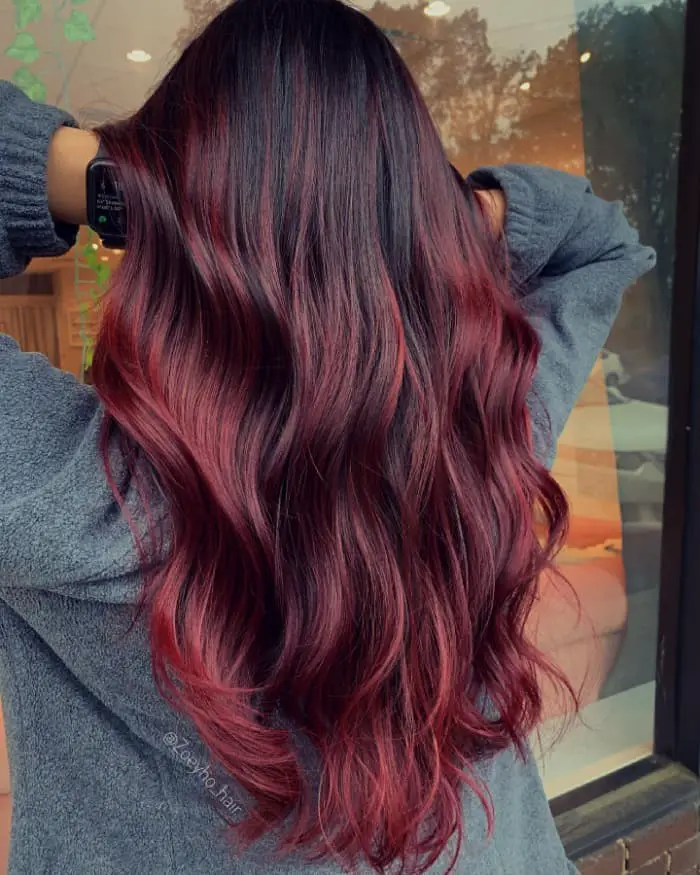
How does a deep red land that rich without bleeding into the dark brown above? The dark brown deep red ombre depends on a clean boundary. The base stays untouched dark brown, while the ends are lifted and packed with a deep red pigment. Mid-back length with long layers gives the color room to fall in loose waves. Thick, wavy texture catches light differently on each wave, so the red shifts from burgundy to wine depending on the angle. The back view shows the transition clearly: dark at the crown, deep red from mid-lengths to ends. This ombre is not subtle; that is the design.
DIY is possible but risky. The technique starts with bleaching the lower half to a pale yellow, then applying a semi-permanent red over the lifted section. No foils, hand-painted sections. The bleach must stop exactly where the red starts, and red is unforgiving with uneven application. A salon will give you a soft gradient with no harsh line. Ask for a dark brown deep red ombre, gradient soft. The red tone fades faster than brown—cold water rinses and color-safe products are non-negotiable. Expect a refresh every six weeks to keep the vibrancy. Hot water will turn it pink by week three.
No Bangs Dark Brown to Golden Blonde Bob
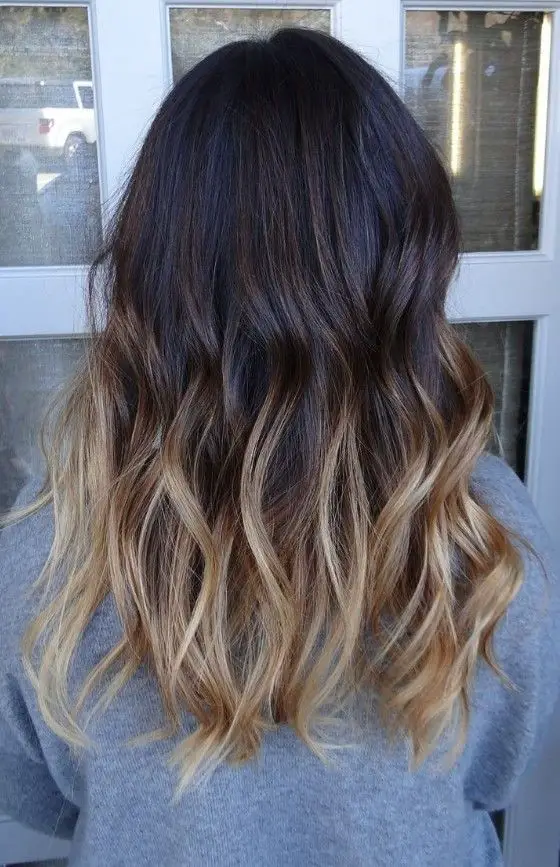
I wanted to like this more than I do. The dark brown golden blonde shoulder length is pretty in a familiar way: dark base, ombre to golden blonde ends, loose waves, medium density. The transition is distinct, which is the appeal. But the line of demarcation shows faster than I expected. Golden blonde ends need regular toning to stay warm, not brassy. The shoulder cut makes the shift compact, so any root growth reads immediately. It is a low-stakes color, but not a low-attention one.
Mid-Back Dark Brown to Caramel and Blonde Blend
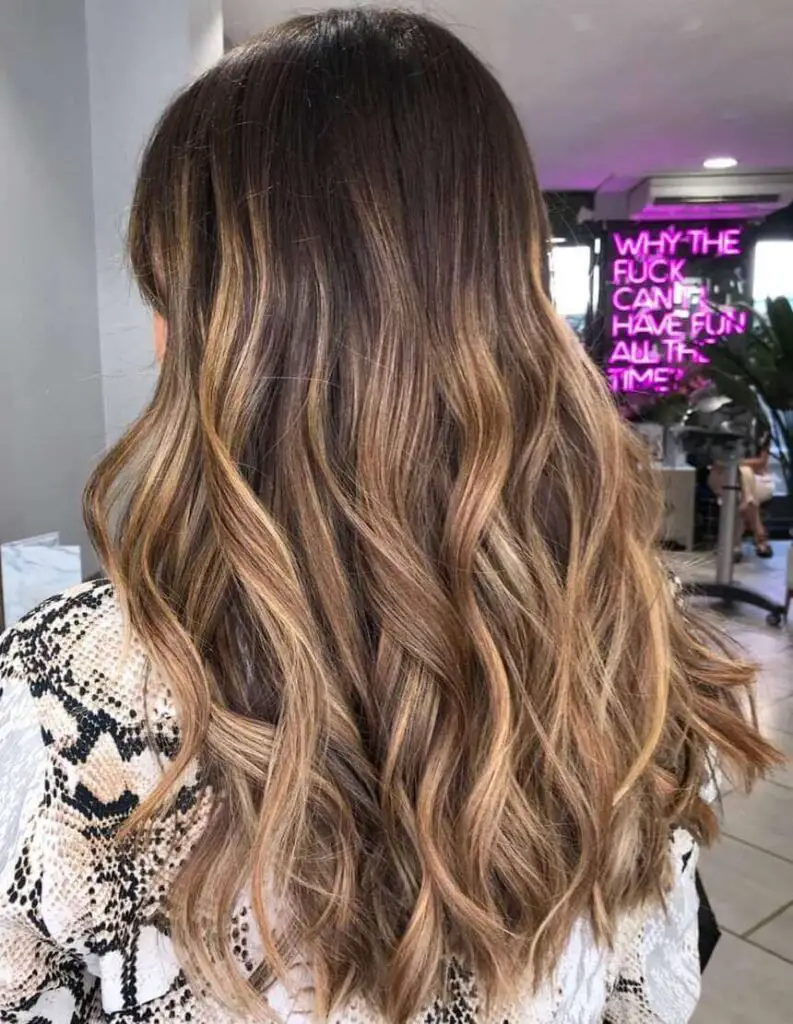
My first thought: how did they get that many tones without a stripe? That is the mistake most people make—they assume a dark brown caramel blonde blend is just two colors painted on. It is actually a series of thin highlights woven through the mid-lengths and ends. The base stays dark brown, the caramel and blonde highlights start low and graduate. Mid-back length with waves lets each tone separate. Thick hair is essential; thin hair would look sparse.
The mistake is letting the highlights start too high. A root shadow keeps the depth at the crown. Ask the stylist to keep the first highlight at least four inches from the scalp. The blend will grow out softer. As for upkeep, this is forgiving. The highlights fade warm, not brassy, so a weekly gloss keeps them vibrant. Wash less often—every other day max—to preserve the tone. The wear is good for six to eight weeks before the roots need a touch-up. Thick, wavy texture holds the wave without product, which helps the highlights catch light.
Dark Brown to Vibrant Purple Ombre
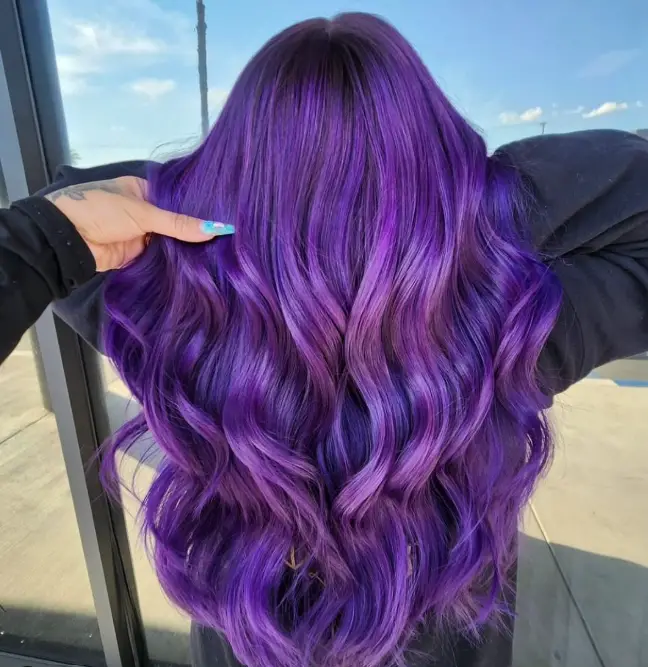
How much time do you have for a colour that demands attention? The dark brown vibrant purple ombre is a full-day commitment: three hours in the chair for the lift and deposit. Long layers on a mid-back length, wavy and thick, carry the colour well because the curls hide uneven fade. The technique is a two-step process—lift the dark brown base, then deposit the vibrant purple tone over the ends. The result is intense but short-lived.
The honest downside: vibrant purple fades fast. Cold water washes are non-negotiable. One hot shower and the tone goes muddy pink. You will need a touch-up every four to six weeks if you want it to stay that saturated. That makes this an every-eight-weeks chair habit, not a set-and-forget colour.
Dark Brown to Ash Blonde Contrast — The Lighting Is Good
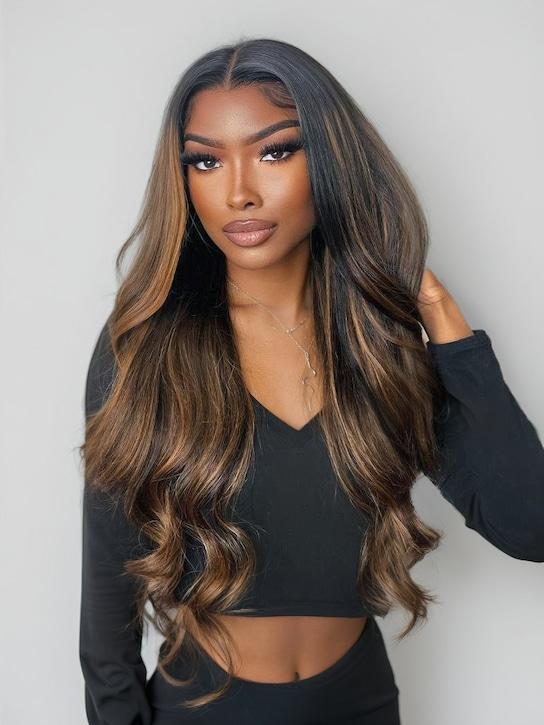
The dark brown ash blonde ombre lands differently than a blended balayage. The ash blonde contrast is sharp and cool, starting bright right below the dark brown base with a clear line of demarcation. On a mid-back length with long layers and wavy, thick texture, the contrast shows best when the hair swings loose. Compared to a soft, diffused ash blonde, this reads as intentional and edgy. The tone stays ashy, not silver, which keeps it wearable for winter. The technique is a traditional ombre line, not a hand-painted melt, so the grow-out will be visible. That is the point.
Final Thoughts
After looking at 38 versions, I see the same thing I saw in that lobby: the best ombre doesn’t shout. Even the purple and green fade softly. That’s the trick. I’m booking a dark brown to ash blonde money piece next week. Some winters call for restraint. This one, maybe a little contrast.