
Balayage remains the color technique that delivers dimension without a harsh regrowth line. For 2027, the trend leans into softer blends and glossier natural textures, with face-framing layers and curtain bangs adding movement to the lived-in finish.
These 23 Classy Balayage Hair ideas span every length from a chin-length bob to mid-back hair, with base shades from ash blonde to dark brown. Whether your hair is fine and needs volume or thick and needs soft blending, there is a version here that keeps the grow-out invisible and the color looking polished.
Mid-Back Length Hair With Medium Brown And Blonde Balayage
A medium brown base with softer blonde pieces woven through it, the kind of balayage that looks like the sun did the work, not a bowl and brush. Thick, wavy hair starting at mid-back length is the natural home for this technique; a middle part can help elongate a round face. Ask your colorist for: medium brown base with blended blonde balayage, loose waves. A texturizing spray at the ends will encourage the wave pattern, and a trim keeps split ends from traveling up those long lengths.
Collarbone Lob With Caramel Balayage
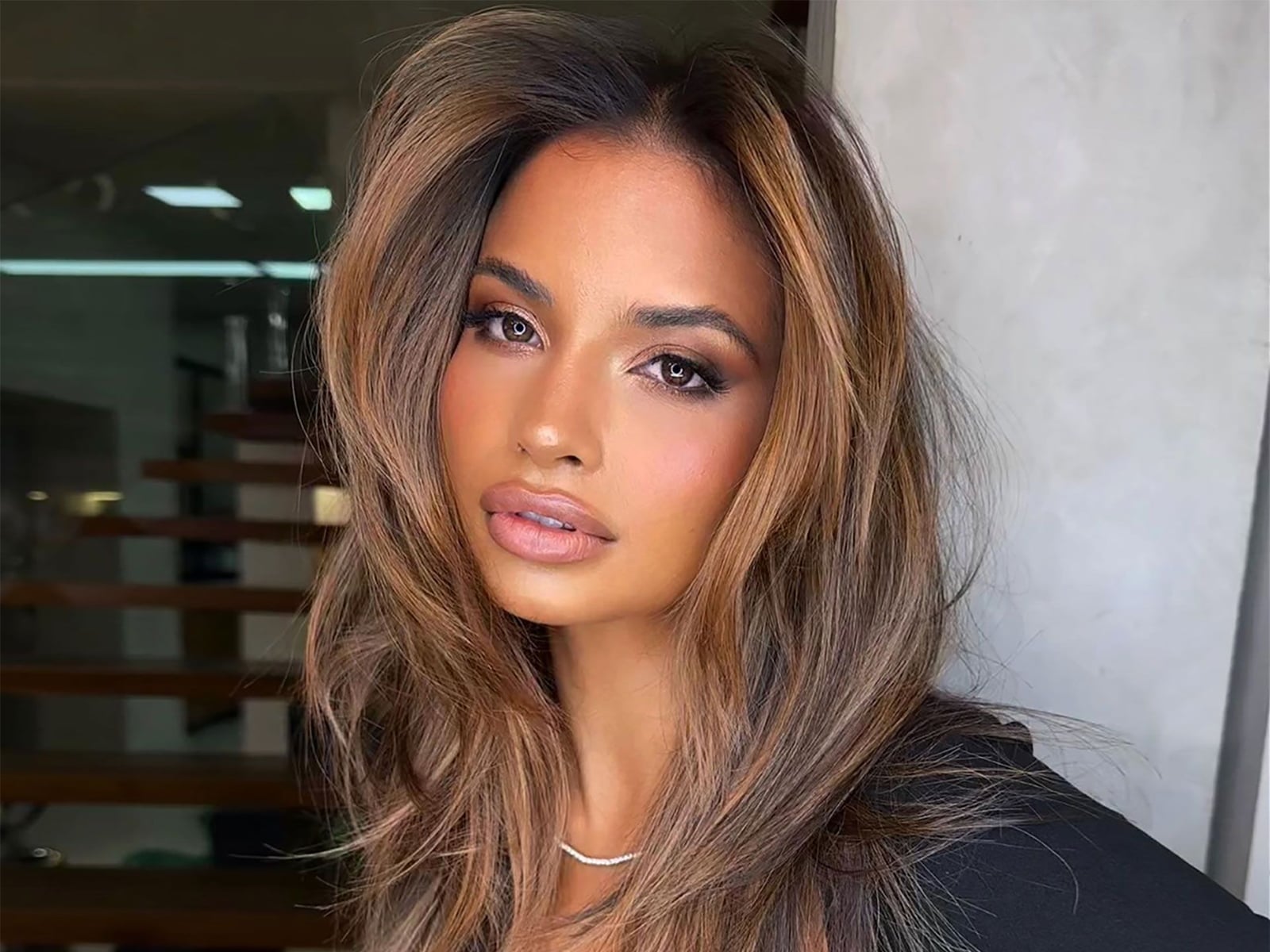
Wondering how to ask for caramel that reads warm without crossing into brassy? Specify caramel balayage on a dark brown base, starting below the roots so the transition stays soft. This collarbone lob with curtain bangs and face-framing layers can soften a square jaw. Ask your colorist for: collarbone lob with dark brown base and caramel balayage, curtain bangs. A large barrel curling iron is enough to shape those loose waves; a trim every six to eight weeks keeps the lob precise.
Shoulder Length With Blonde Money Piece
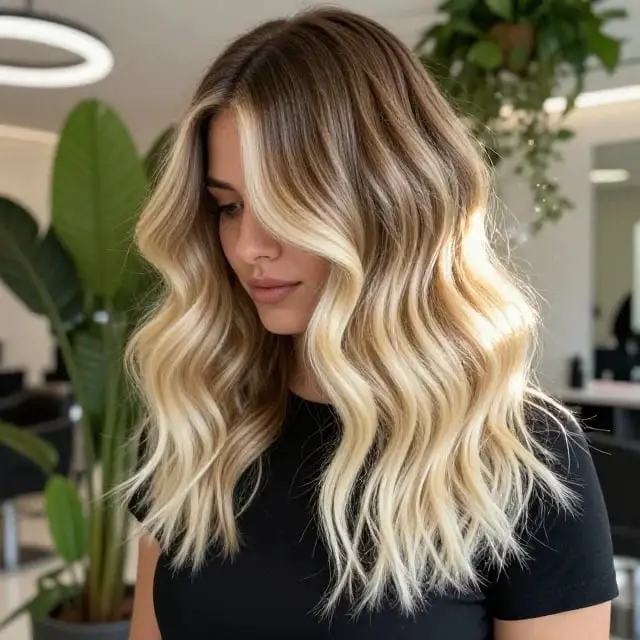
A bright blonde money piece changes the entire face of a balayage: those front sections are painted lighter to catch the eye first, while the back stays darker for contrast. Thick, wavy hair at shoulder length carries the look well, and a middle part keeps the money piece symmetrical. Ask your colorist for: shoulder length with dark brown base, blonde balayage and money piece. A round brush during blow-drying adds the volume this contrast needs to read as polished rather than harsh.
Mid-Back Chocolate Brown With Caramel Balayage
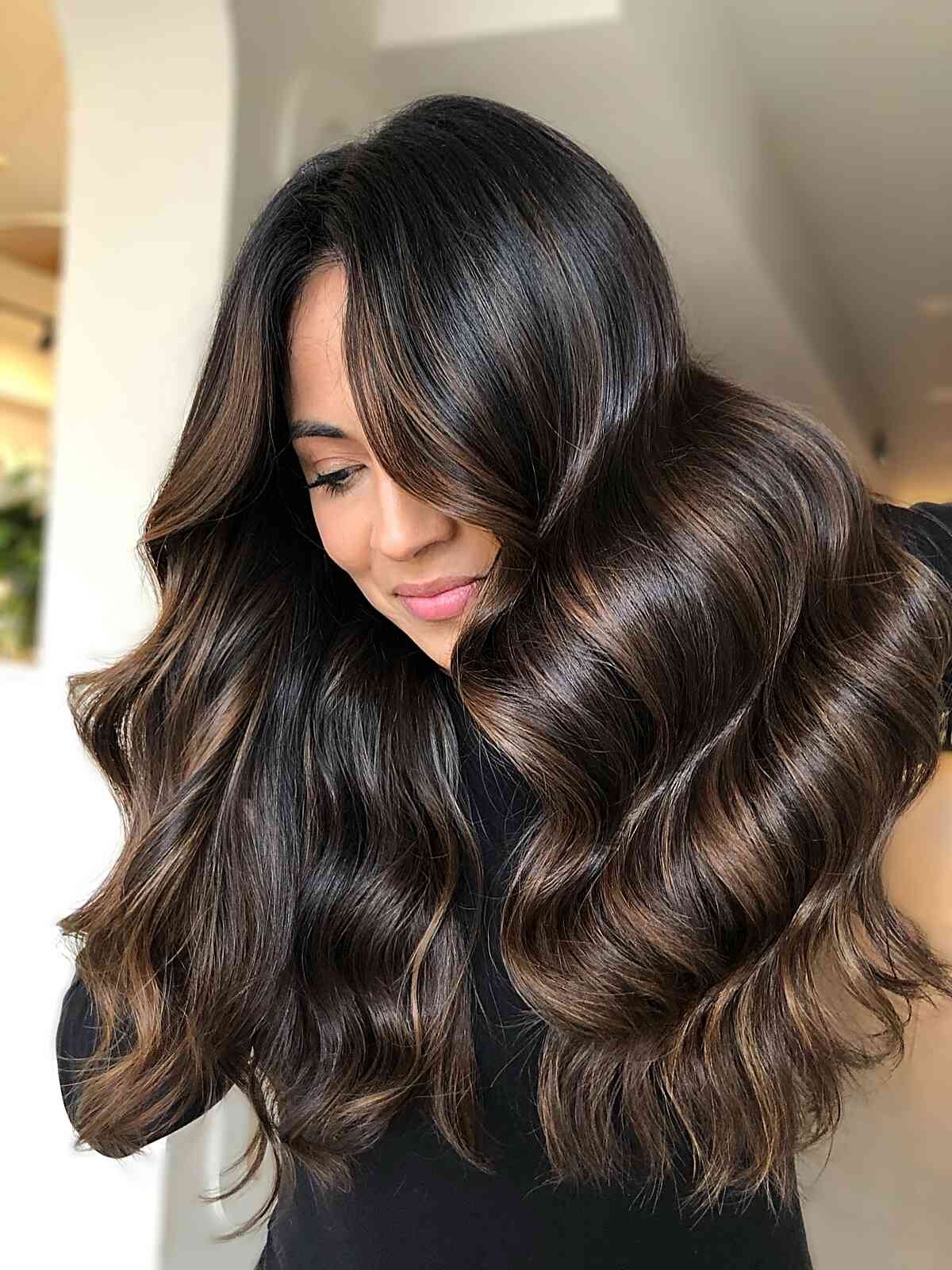
A glossy finish is the difference between caramel balayage that looks expensive and one that looks accidental. This chocolate brown base with subtle caramel pieces relies on shine to make the dimension read clearly, especially on thick, wavy hair at mid-back length. Side-swept bangs add a soft break across the forehead.
Ask your colorist for: mid-back chocolate brown with subtle caramel balayage, side-swept bangs. That gloss requires a smoothing serum after washing, and a deep conditioning treatment every three to four weeks keeps the cuticle flat enough to reflect light.
Collarbone Lob With Brunette Balayage

Think of this as the subtle version of a high-contrast blonde balayage: a brunette base with blonde pieces that add dimension. Curtain bangs and a side part make the collarbone lob work for most face shapes, and the soft layers keep the weight from building at the ends. Ask your colorist for: collarbone lob with brunette base and blonde balayage, curtain bangs. This color works with a wave spray for air drying, but a diffuser on low heat gives more control over the wave pattern.
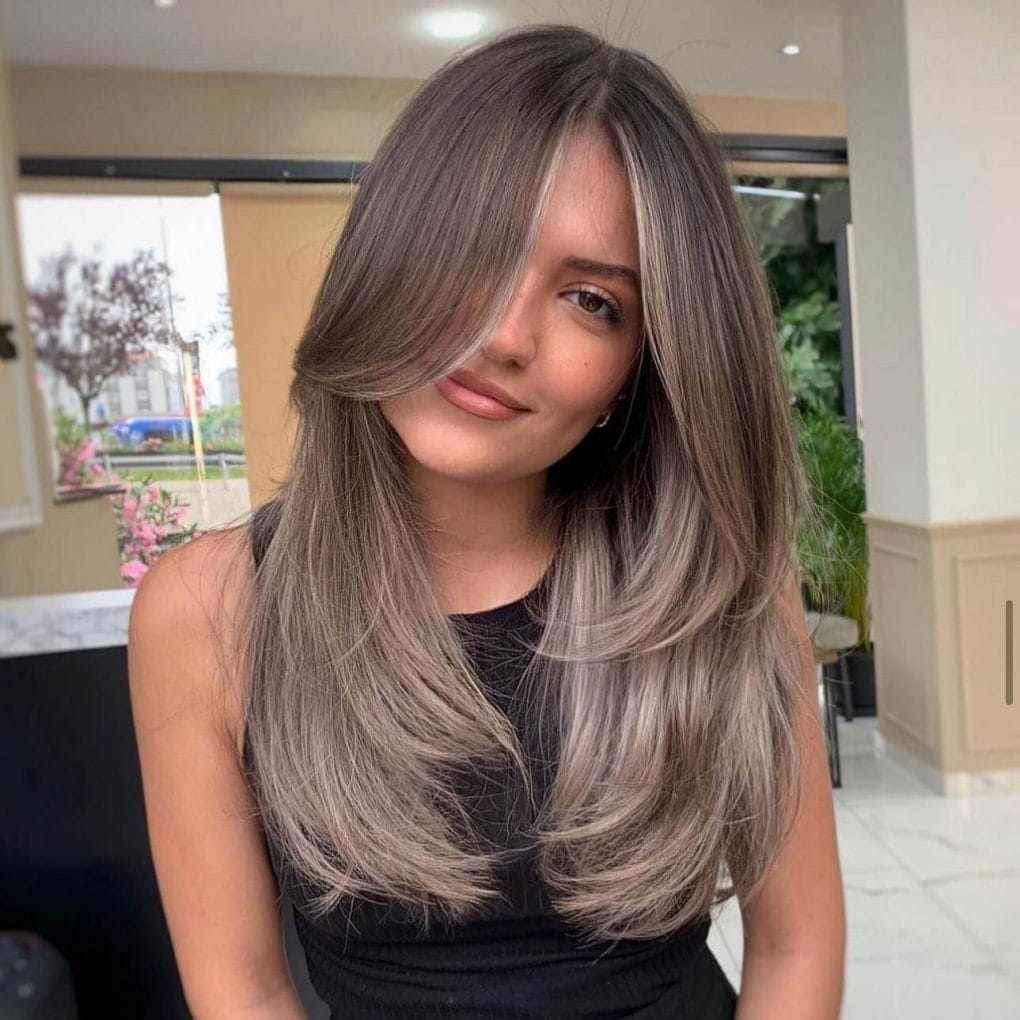
Mid-Back With Ash Blonde Balayage
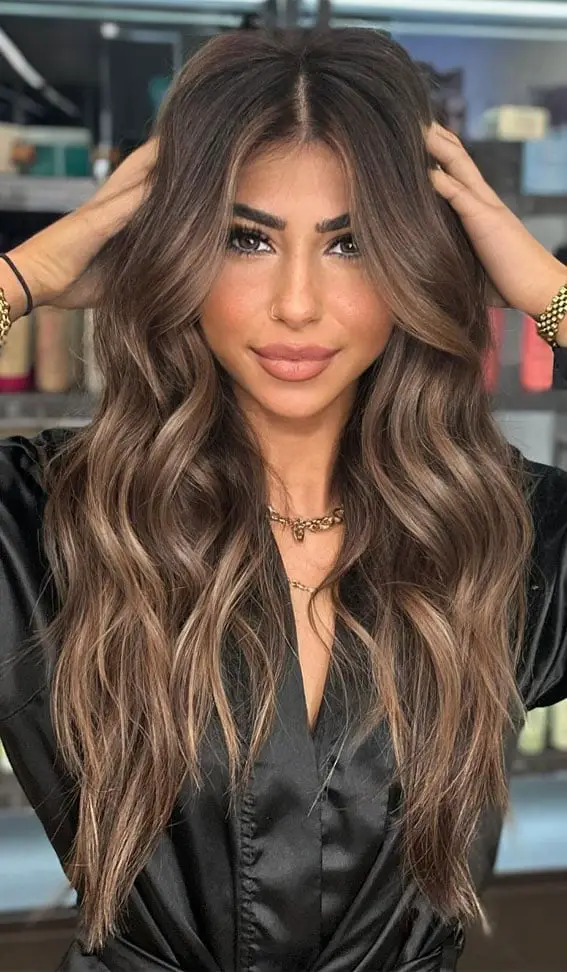
Curtain bangs and long layers give this mid-back length a soft frame, while the medium brown base with ash blonde balayage adds dimension. Thick, wavy hair at this length handles the sweep of the bangs well; the curtain shape also softens square and heart-shaped faces. Ask your colorist for: medium brown base with ash blonde balayage, curtain bangs. A texturizing spray keeps the lived-in feel between washes, and a trim every six to eight weeks preserves the bangs’ shape.
Shoulder Length With Ash Blonde Balayage Blend
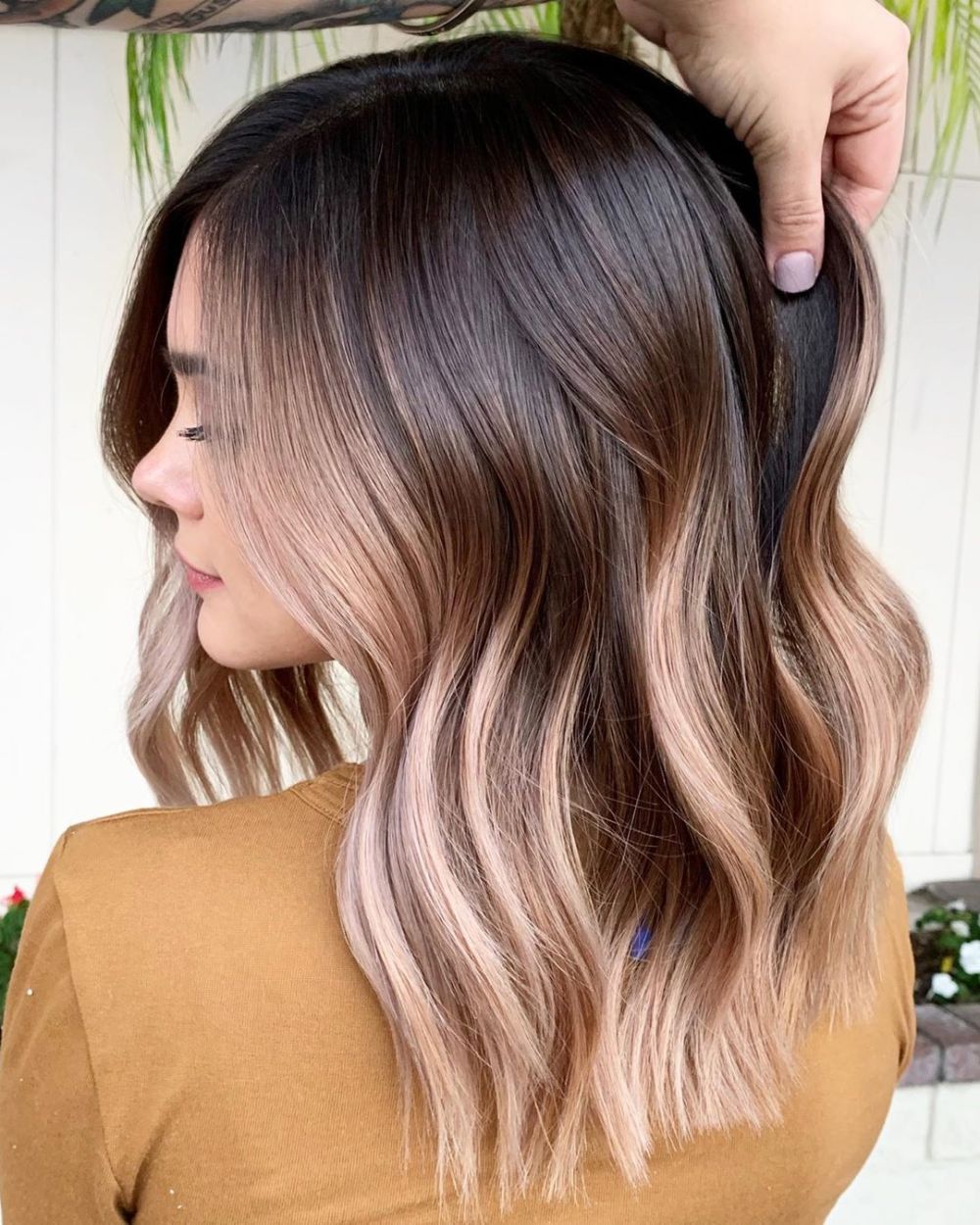
A side part and soft waves make this shoulder-length cut read as polished but not fussy, and the ash blonde balayage blend on a medium brown base is the reason. Medium density, wavy hair gets the most out of the smooth transition, though achieving that seamless blend requires a colorist comfortable with freehand painting. Ask your colorist for: shoulder length with medium brown and ash blonde balayage. Thinner hair may not carry the same depth of dimension.
Collarbone Length Ash Blonde Balayage
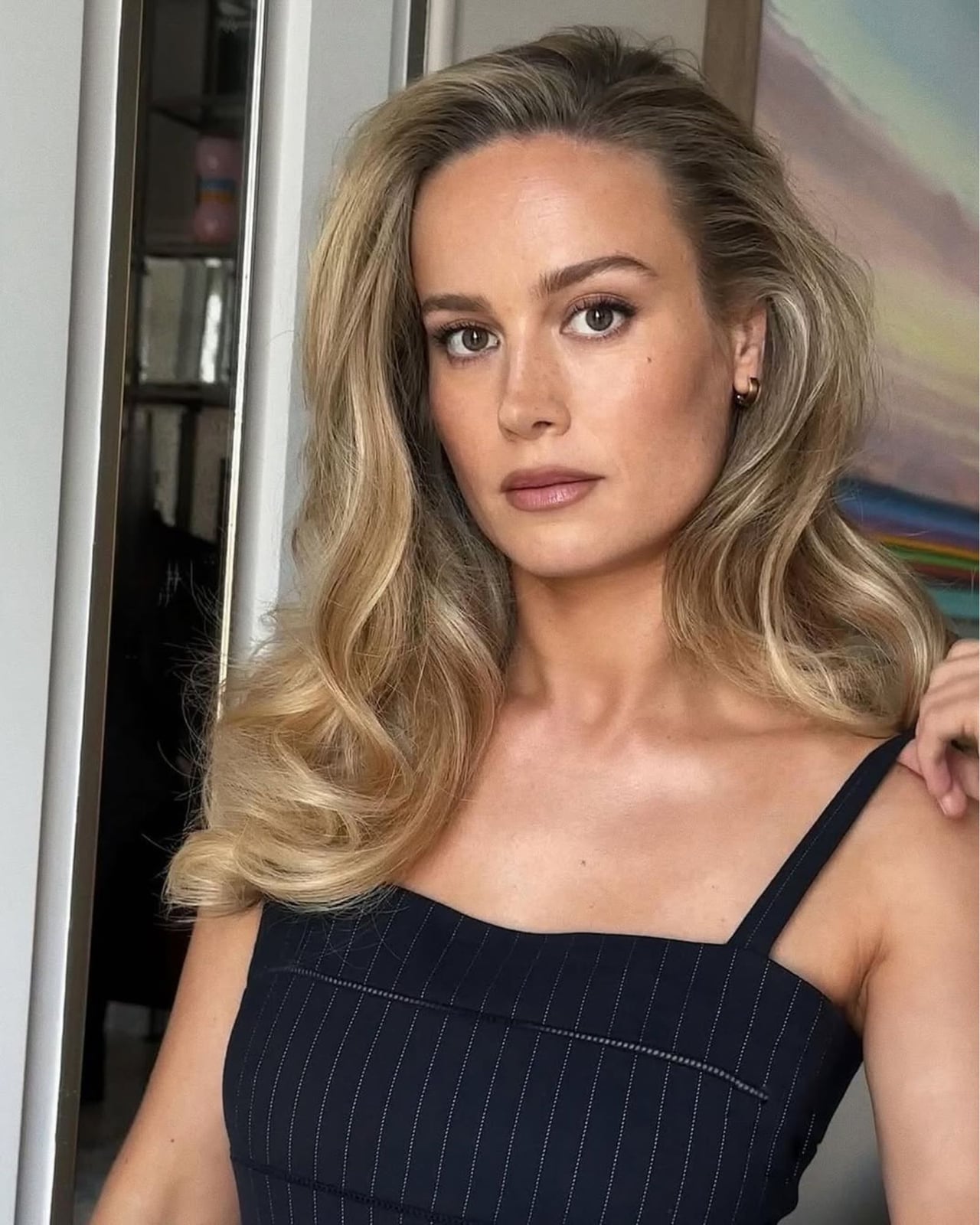
Can ash blonde highlights make a light blonde base feel cooler rather than brassy? Yes, when they are finely blended through the lengths. This collarbone cut on thick, wavy hair uses a middle part that elongates a round face, and the ash tone keeps the brightness from tipping into yellow. Ask your colorist for: light blonde base with finely blended ash blonde balayage. A purple shampoo used every few washes maintains the cool finish.
Mid-Back Dark Blonde With Ash Highlights
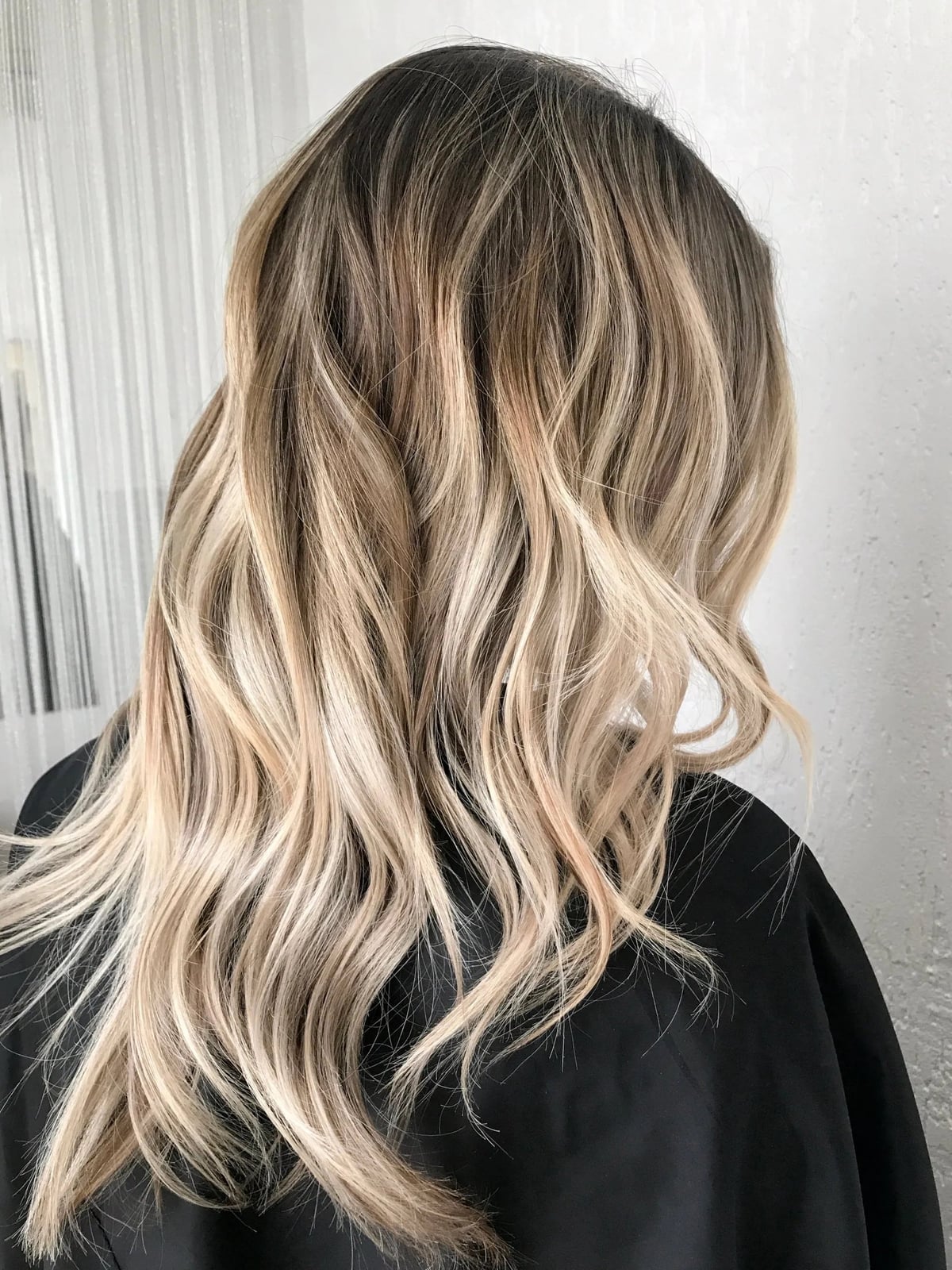
The balayage technique here is applied freehand, painting lighter ash blonde highlights onto a dark blonde base so the grow-out line stays soft. That freehand nature is exactly why this look is tricky to replicate at home: the colorist paints each section by eye, varying the saturation for a natural result. Ask your colorist for: dark blonde base with ash blonde balayage highlights.
An at-home kit tends to deposit color more uniformly, which defeats the purpose. Thick, wavy hair at mid-back length is the ideal canvas, and the middle part works for most face shapes. A salon visit is the realistic route here.
Mid-Back Dark Blonde With Beige Balayage
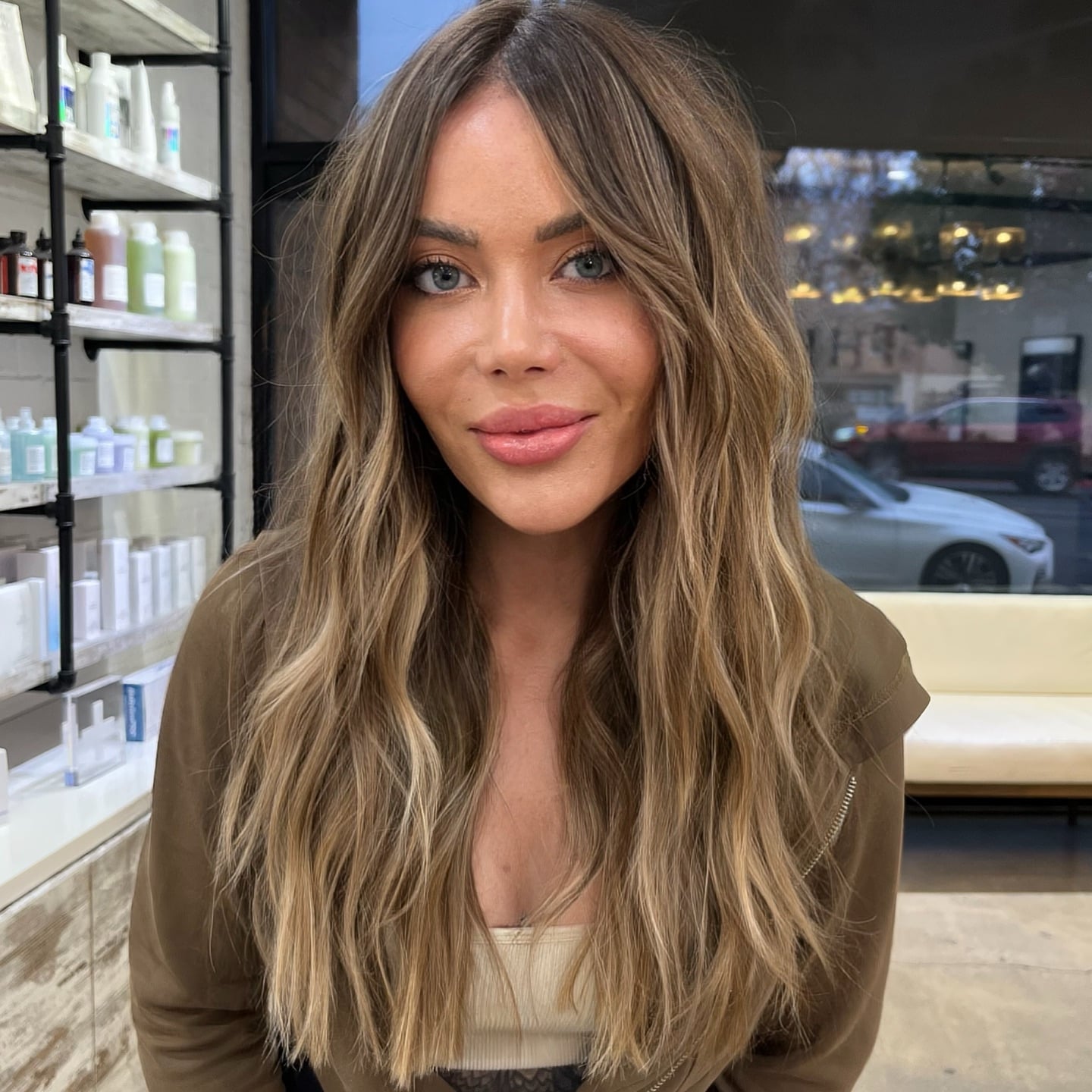
Loose waves are the practical way to show off beige blonde balayage: the bends in the hair catch the lighter pieces and make the dimension read. Face-framing layers at the front add softness, so the dark blonde base does not feel heavy. Ask your colorist for: dark blonde base with beige blonde balayage, face-framing layers. A trim every six to eight weeks keeps the layers from losing their shape, and a texture spray at the ends gives the lived-in finish without extra heat.
Mid-Back Dark Brown With Subtle Caramel Balayage
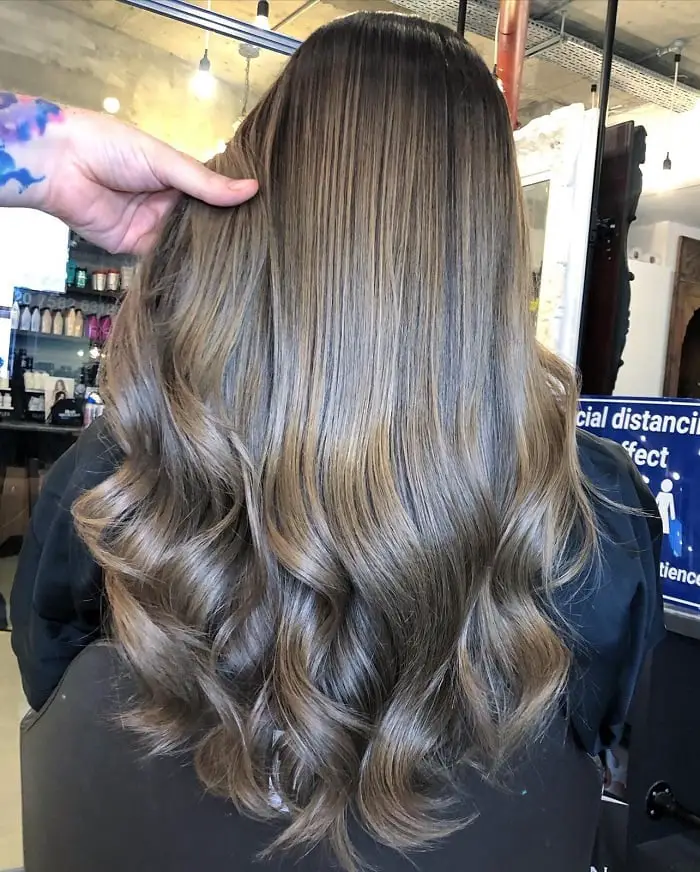
The appeal of a subtle balayage is that it looks barely there, but getting that soft contrast on a dark brown base takes restraint. Thick, straight hair at mid-back length holds a middle part well, which also helps elongate a round face. Ask your colorist for: dark brown base with subtle caramel balayage, straight with soft waves. The common mistake is asking for more lightness until the caramel pieces are too numerous, at which point the blend turns into a stripe. Stick to a few understated tones woven through the ends. A ceramic flat iron creates the smooth finish with soft bends, and a trim every eight to ten weeks keeps the ends healthy. The drawback is that this look requires trust in your colorist’s hand, because the result is deliberately low-contrast.
Shoulder Length Light Brown With Blonde Balayage
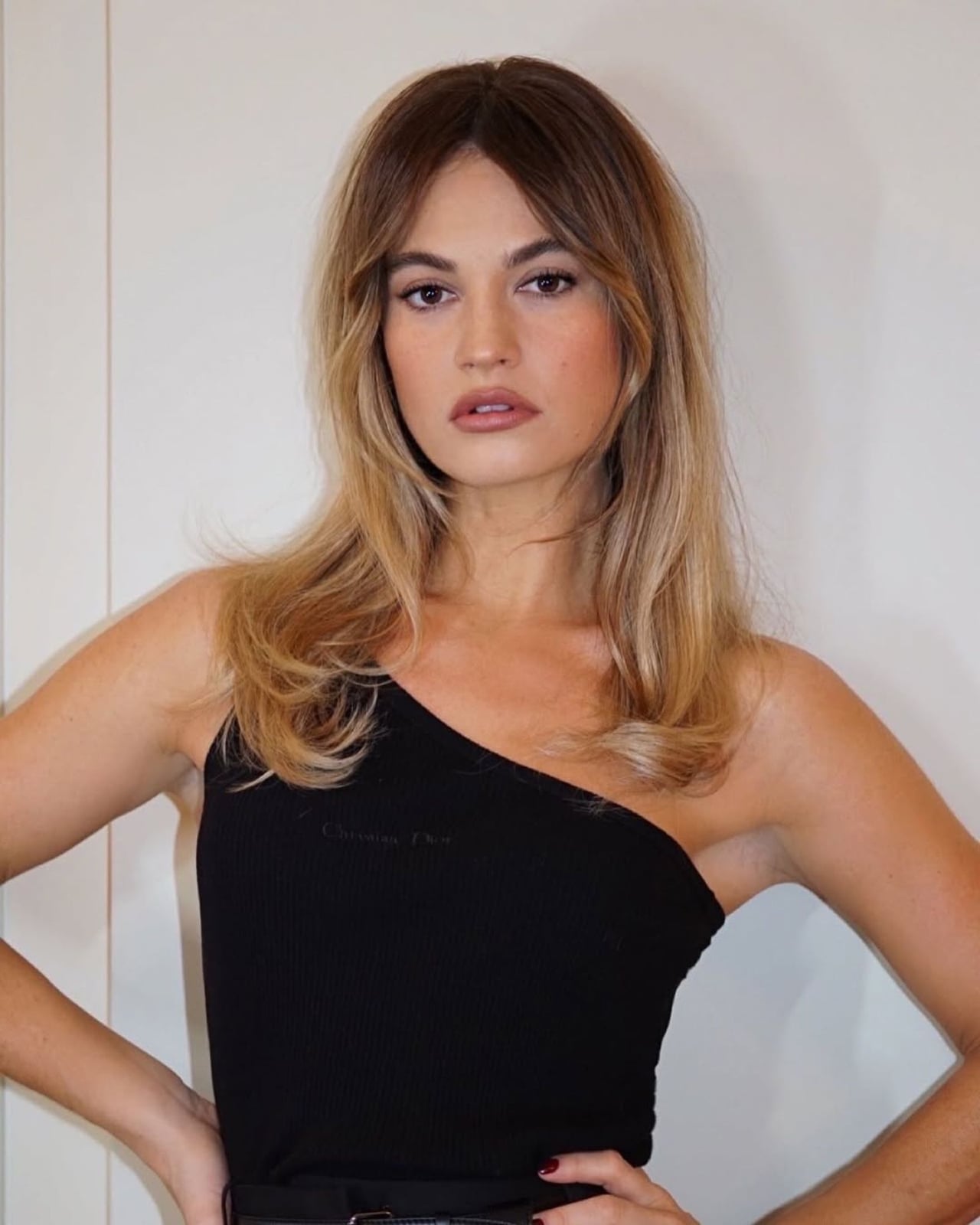
How does a curtain bang work with balayage when the base is light brown? The curtain pieces get painted with the same lightener, so the blonde starts right at the brow and softens toward the ear. This creates a face-framing effect that blends into the color instead of sitting as a separate stripe. Thick, wavy hair at shoulder length supports the volume a curtain bang needs to swing properly, and the soft layers keep the transition seamless. Ask your colorist for: shoulder length light brown with blonde balayage, curtain bangs. A volumizing mousse at the roots and a round brush give the bang its shape, and a trim every six to eight weeks keeps the curtain from grazing the eyes.
Collarbone Lob With Ash Blonde Transition
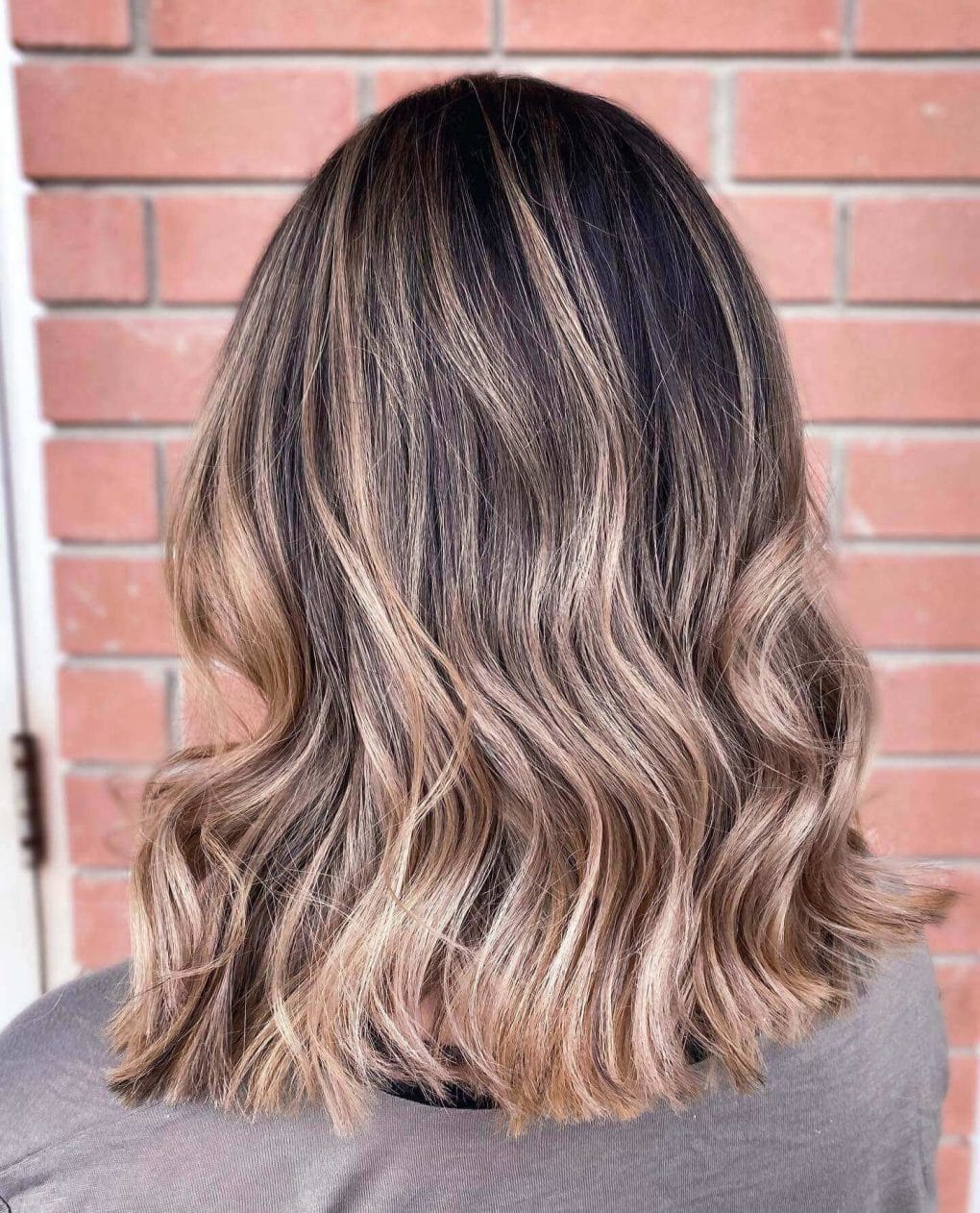
A collarbone lob that moves from dark brown at the roots to ash blonde at the ends works as a transitional color for both spring and autumn, because the cool tone avoids the brassy warmth that can look dated by late summer. Medium-density, wavy hair at this length shows the gradient clearly without the color pooling at the bottom. Ask your colorist for: collarbone lob dark brown with ash blonde balayage transition. A smoothing cream controls any frizz that might obscure the blend, and a trim every six to eight weeks keeps the lob from brushing the shoulders. The ash tone means a purple shampoo every two weeks to keep the blonde from warming up.
Shoulder Length Light Brown With Subtle Blonde and Curtain Bangs
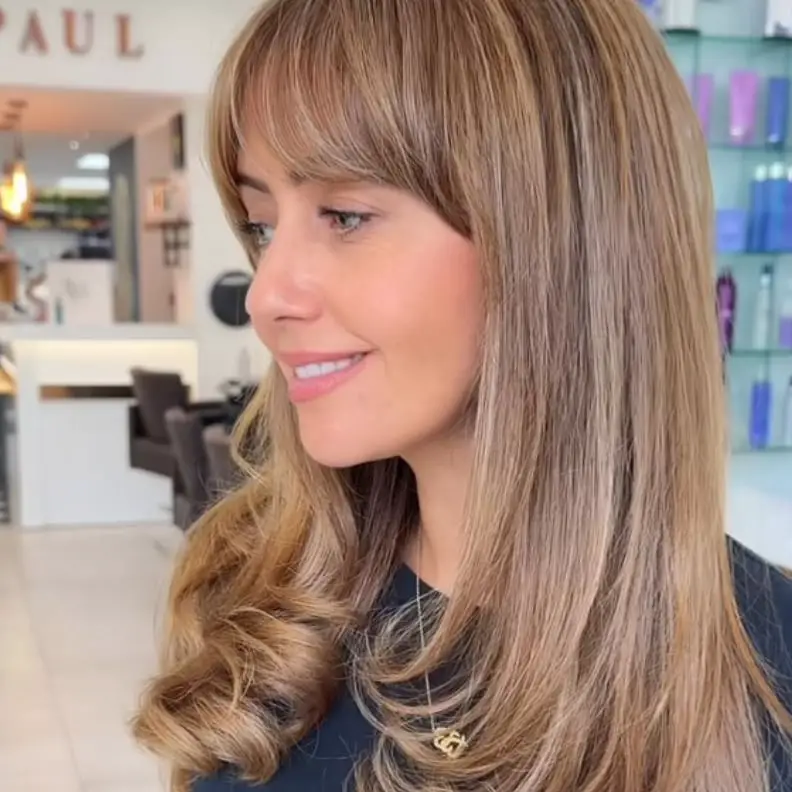
The key detail here is that the blonde is subtle enough to look like a lighter version of the brown, not a separate color. Thick, wavy hair at shoulder length benefits from face-framing layers that start below the chin, so the curtain bang graduates into the length without a hard line. Ask your colorist for: shoulder length light brown with subtle blonde balayage, curtain bangs. This is a salon-leaning color because the subtlety depends on the lightener being painted in thin sections and processed to a low lift. A texturizing paste defines the layers at home, and a trim every six to eight weeks preserves the bang shape. The DIY version would be risky: the margin between subtle and invisible is slim.
Mid-Back Brunette With Caramel Balayage
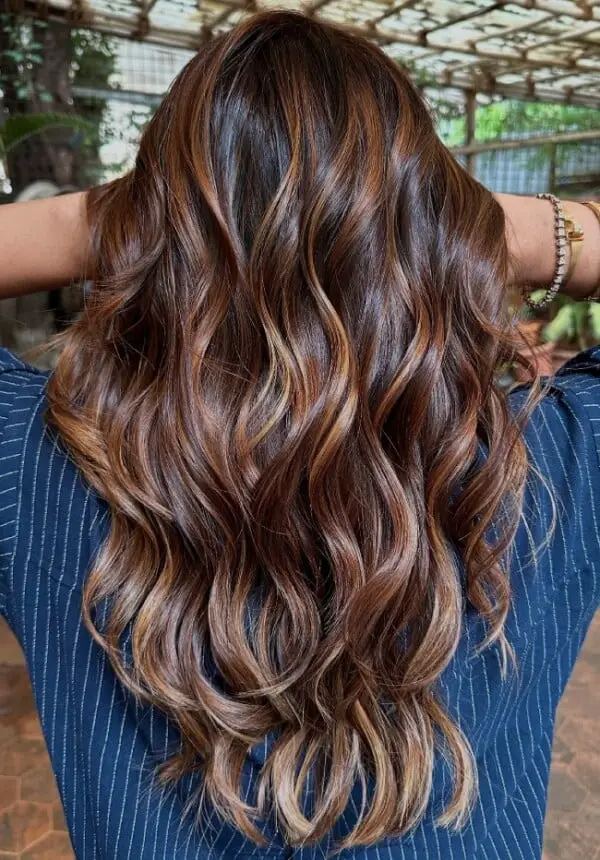
A rich brunette base with caramel balayage highlights is the more dimensional cousin of an all-over color melt, where the caramel is painted in visible sections instead of blurred into the base. Thick, wavy hair at mid-back length lets the caramel strands catch light in the waves, creating a lived-in effect without looking over-processed. Ask your colorist for: rich brunette base with caramel balayage highlights. A leave-in conditioner keeps the wavy texture soft and defined, and a trim every six to eight weeks prevents split ends from dulling the color. The caramel pieces will need a toning appointment every eight to ten weeks to stay warm and not turn brassy.
Collarbone Medium Blonde With Darker Balayage
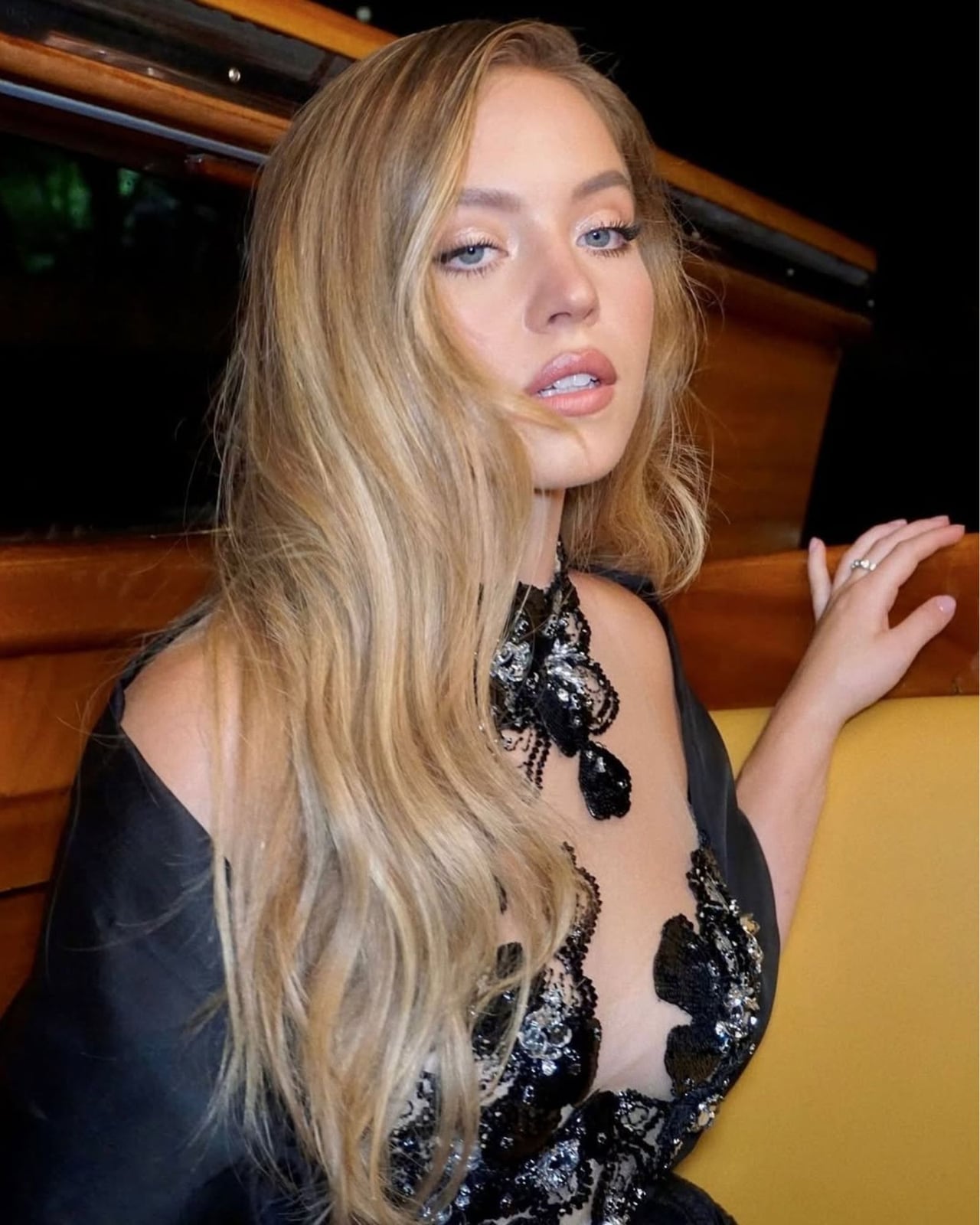
Darker balayage on a medium blonde base is a lower-maintenance take on the trend: the deeper pieces at the ends mean less visible regrowth at the root. This collarbone cut works best with thick, wavy texture, and the face-framing layers and curtain bangs do the job of softening a square jawline without shortening the line of the hair. Ask your colorist for: medium blonde base with darker blonde balayage, curtain bangs. Styling is straightforward: a round brush and a blow-dryer for the bangs, then a volumizing spray at the crown. Plan on a gloss every four to six weeks to keep the base from dulling, and a trim every eight to ten weeks to keep the shape clean.
Chin Length Bob With Subtle Blonde
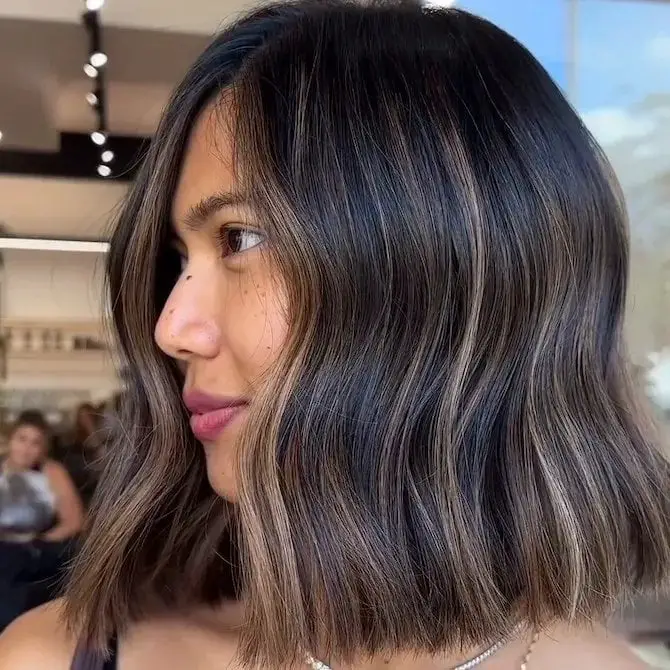
The soft waves shown here are a salon job: a round brush and a blow-dryer, not a texturizing spray and a prayer. Ask your colorist for: chin length bob with dark brown base and subtle blonde balayage, curtain bangs. If you want to DIY the styling, you will need a small-barrel curling iron and some patience, and even then the bangs may need a quick touch-up with a flat iron. A bob this precise needs a trim every four to six weeks.
Collarbone Gray With Silver Balayage
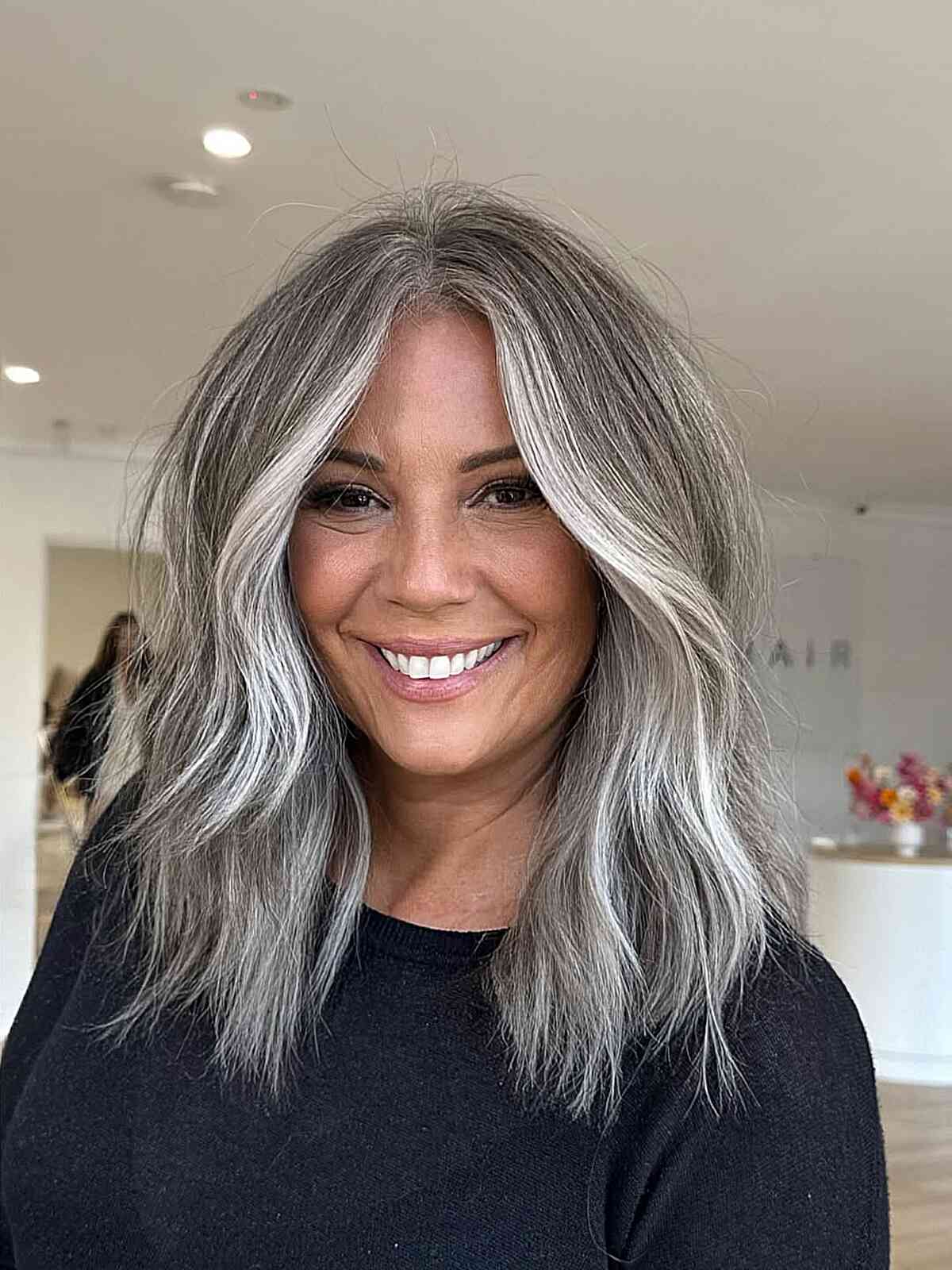
Silver balayage on a gray base is the cool-toned answer to winter color: the contrast creates a deliberate look. This collarbone length with a middle part and soft waves suits medium texture that can handle the lightener without turning brittle. Ask your colorist for: gray base with blonde and silver balayage highlights. The season for this is late fall into winter, when cooler tones feel natural and the lack of sun makes the silver pop. A color-depositing conditioner every other wash keeps the silver from turning brassy, and a toning appointment every six weeks keeps the base from veering muddy.
Mid-Back Blonde Balayage Air Dried
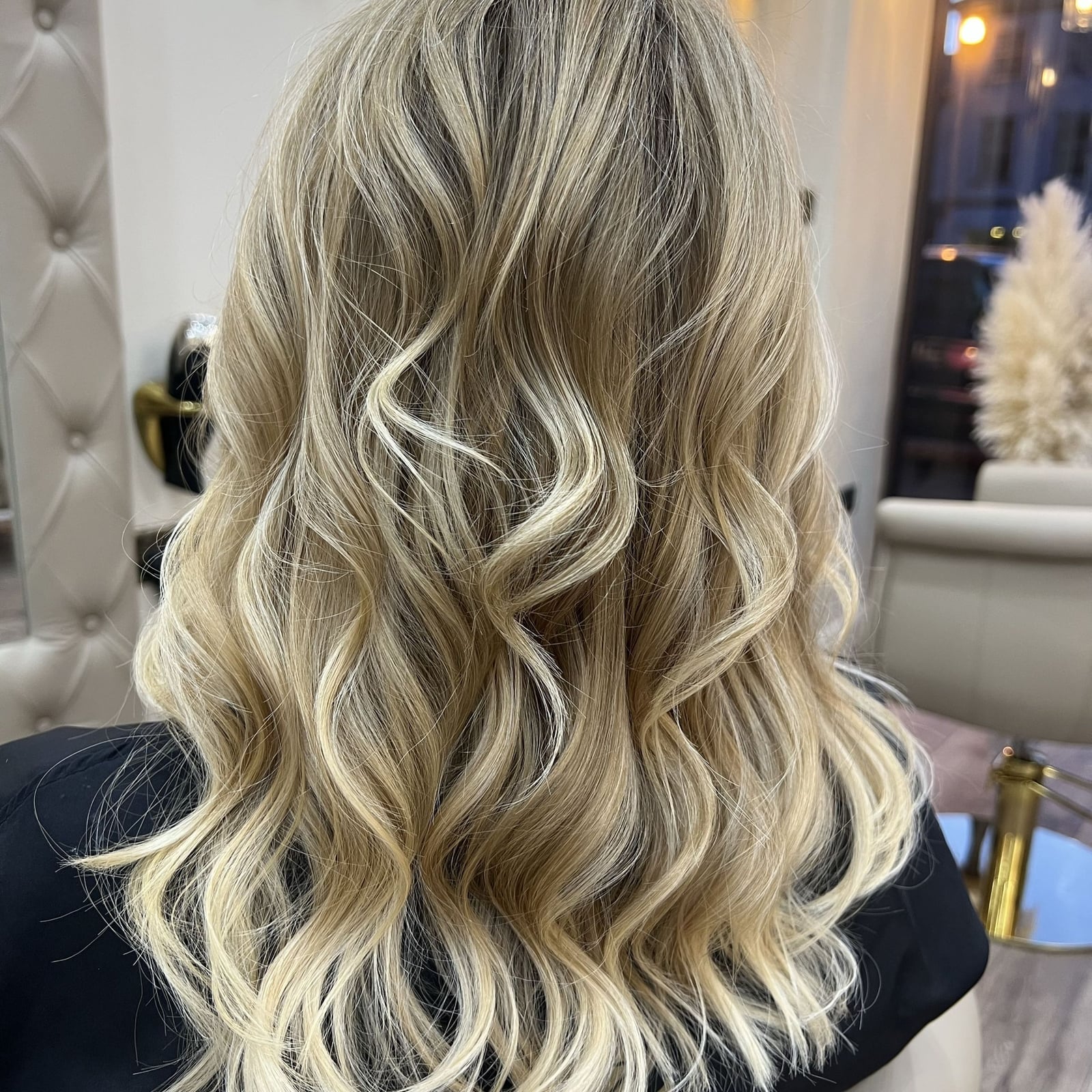
How does balayage actually get that sun-kissed fade from root to tip? The colorist paints the lightener onto the ends in a sweeping motion, leaving the roots untouched, then processes the pieces at different times so the blonde lands in soft, uneven ribbons. This mid-back length with a darker base and lighter blonde ends relies on thick, wavy texture to blur the transition. Ask your colorist for: mid-back blonde balayage, lighter blonde blended into darker base. The result is meant to be air-dried: apply a curl cream to damp hair, scrunch, and walk away. Trims every eight to ten weeks manage ends without losing the color placement.
Mid-Back Medium Brown With Curtain Bangs
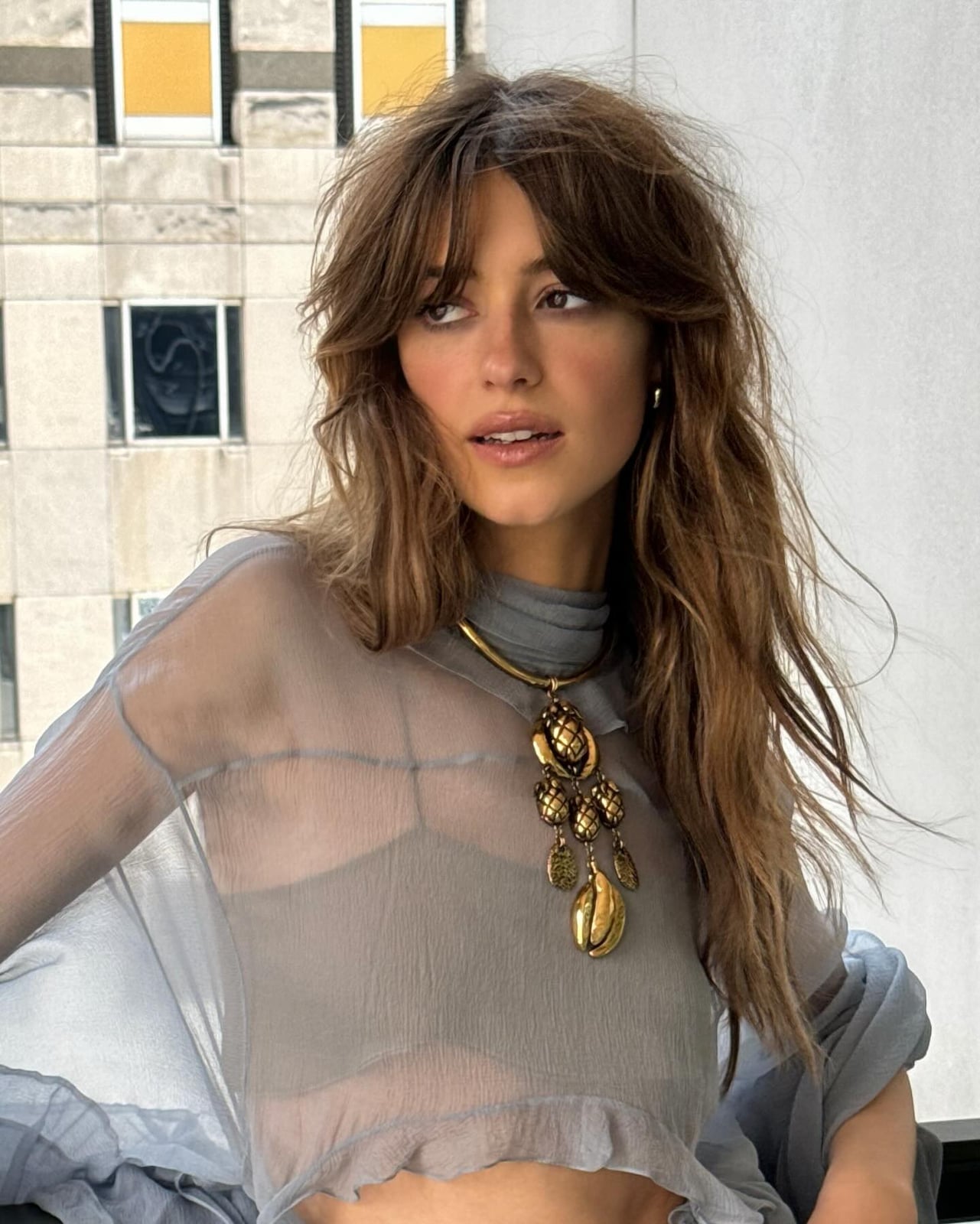
A practical rule for curtain bangs: they need enough texture to sweep to the side without splitting into straight sections. On thick, wavy hair at mid-back length, medium brown with blonde balayage and face-framing layers gives the bangs something to blend into. The soft, blown-out waves shown here rely on a round brush and a medium heat setting to create that bend. Ask your colorist for: mid-back medium brown with blonde balayage, curtain bangs. Square and heart-shaped faces benefit most from the soft framing around the cheekbones. Roots volume can drop by mid-afternoon, so a dry shampoo at the roots helps maintain lift, and a trim every six to eight weeks keeps the bangs at the right length.
Mid-Back Ash Blonde Balayage With Lighter Pieces Blended Throughout
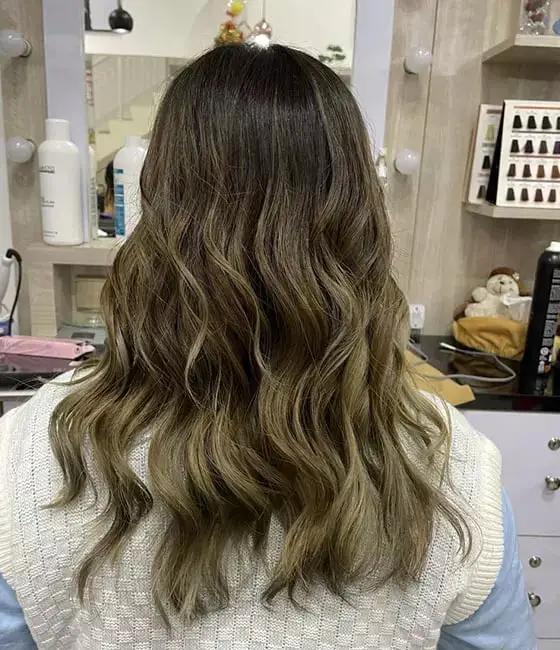
A full-head ash blonde balayage over a darker base reads more like a deliberate color transformation than a quick toner refresh. The lighter pieces are woven through the mid-back waves, creating contrast without a harsh line. Thick, wavy hair at this length carries the dimension well, and a middle part keeps the look balanced. Ask your colorist for: ash blonde balayage over a darker base. A purple shampoo every few washes stops the ash from warming up, and a trim every six to eight weeks keeps the ends clean.
Mid-Back Dark Brown With Warm Tones
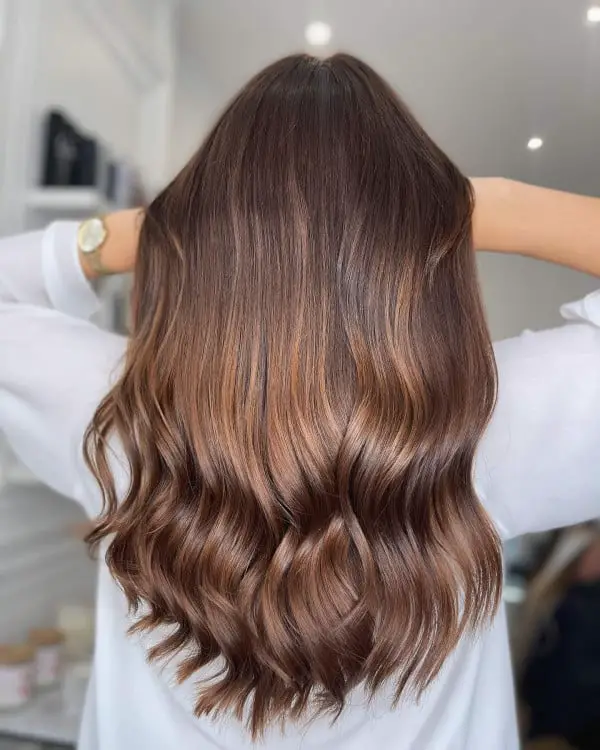
Warm balayage on a dark brown base delivers noticeable dimension without going blonde. The chestnut and copper pieces here are painted through thick, wavy hair at mid-back length, and the middle part lets the color fall evenly down the back.
This is a low-commitment way to add brightness, but warm tones do fade faster than cool ones. A color-depositing conditioner in a copper or chestnut shade keeps the richness between salon visits. Expect a toning appointment every four to six weeks, with a trim every eight. Ask your colorist for: dark brown base with chestnut and copper balayage.
Shoulder Length Light Brown To Dark Blonde, Close-Up Take
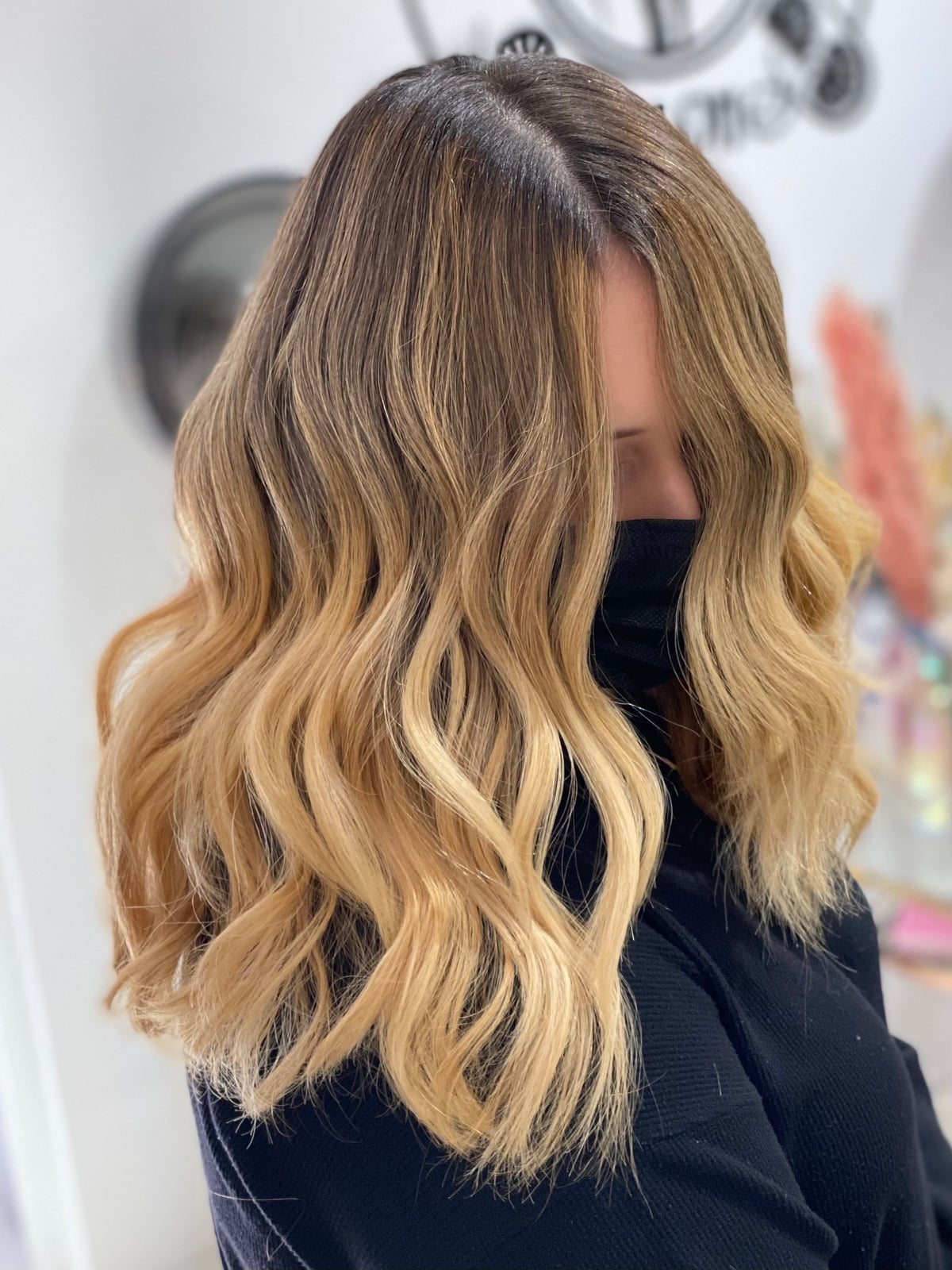
The transition here is subtle but intentional: a light brown base deepens into dark blonde toward the ends, with curtain bangs softening the front. The middle part and shoulder-skimming length make the gradient visible without needing a full back view. Ask your colorist for: shoulder length light brown to dark blonde balayage, curtain bangs. The one drawback is that the contrast is low, so if you want obvious highlights, this is not it. Bring a photo to communicate the exact level of dimension you want.
Final Thoughts
The decision rule for balayage is simple: choose a base shade close to your natural color and let the lighter pieces stay within two to three levels of it. That keeps the blend soft, the grow-out low-maintenance, and the result sophisticated rather than streaky.
- Maintain balayage with toning treatments every 6-8 weeks to prevent brassiness
- Use a color-safe shampoo and conditioner to preserve color vibrancy
- Deep condition hair weekly to keep the balayage blend smooth and healthy
- Schedule trims every 10-12 weeks to maintain the cut’s shape
Classy balayage offers timeless dimension.