
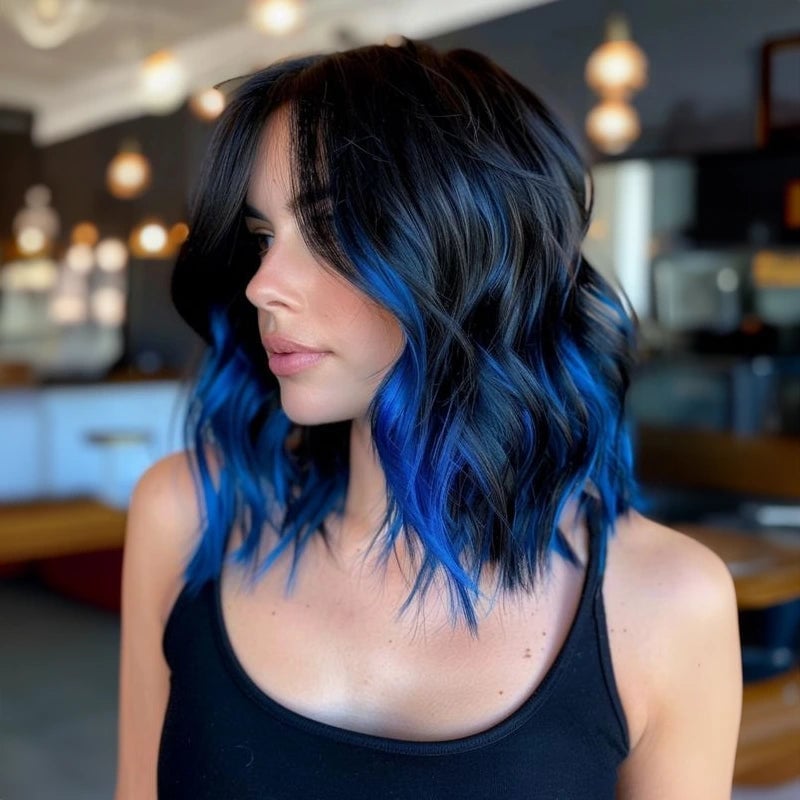
Blue hair has shed its rebellious reputation and settled into something far more refined. The shift toward soft face-framing layers, lived-in color, and glossy natural texture means a blue shade now reads as sophisticated rather than statement-making.
This collection of 34 ideas spans from subtle dark bases with blue highlights to full-on vibrant ombrés, covering chin-length bobs through mid-back lengths. Whether your hair is fine and needs a blunt baseline or you’re managing a visible grow-out line, there’s a Classy Blue Hair Color approach that works with your texture and upkeep preferences.
Chin Length Bob With Bright Blue Face Framing
Ever wondered how to wear blue without committing to an all-over color? A chin-length wavy bob with a dark base and bright blue pieces placed around the face gives you the pop of color where it counts. Medium density hair takes the wave well, and the curtain bangs soften round and heart shapes. Ask your colorist for: chin length wavy bob with bright blue face-framing pieces and curtain bangs. A texturizing spray on the waves and a trim every six weeks keep this cut sharp.
Chin Length Bob With Vibrant Blue Root Melt
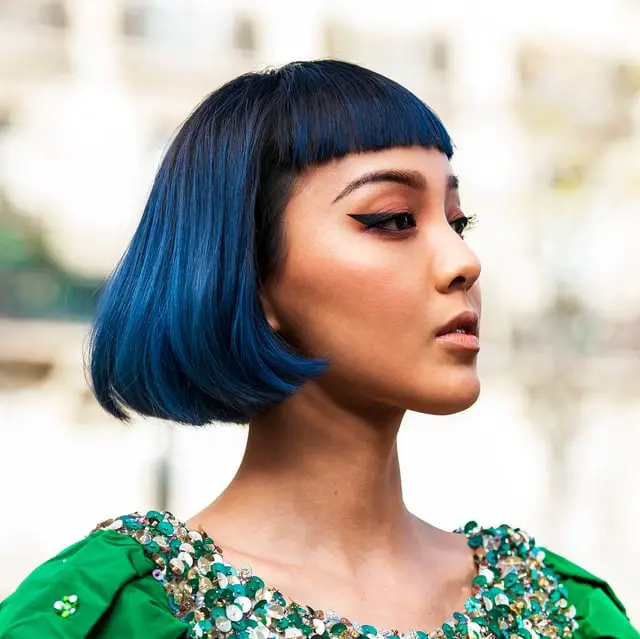
The design here relies on a root melt: darker at the crown, gradually lifting to a lighter blue at the ends. On a chin-length bob with a middle part and micro bangs, the effect is precise and graphic. Thick, straight hair holds the line best, and micro bangs suit oval and long faces. Ask your colorist for: chin length bob with micro bangs and a blue root melt. Apply a heat protectant before straightening; the blunt edge needs a trim every six to eight weeks.
Collarbone Layers In Ash Blue
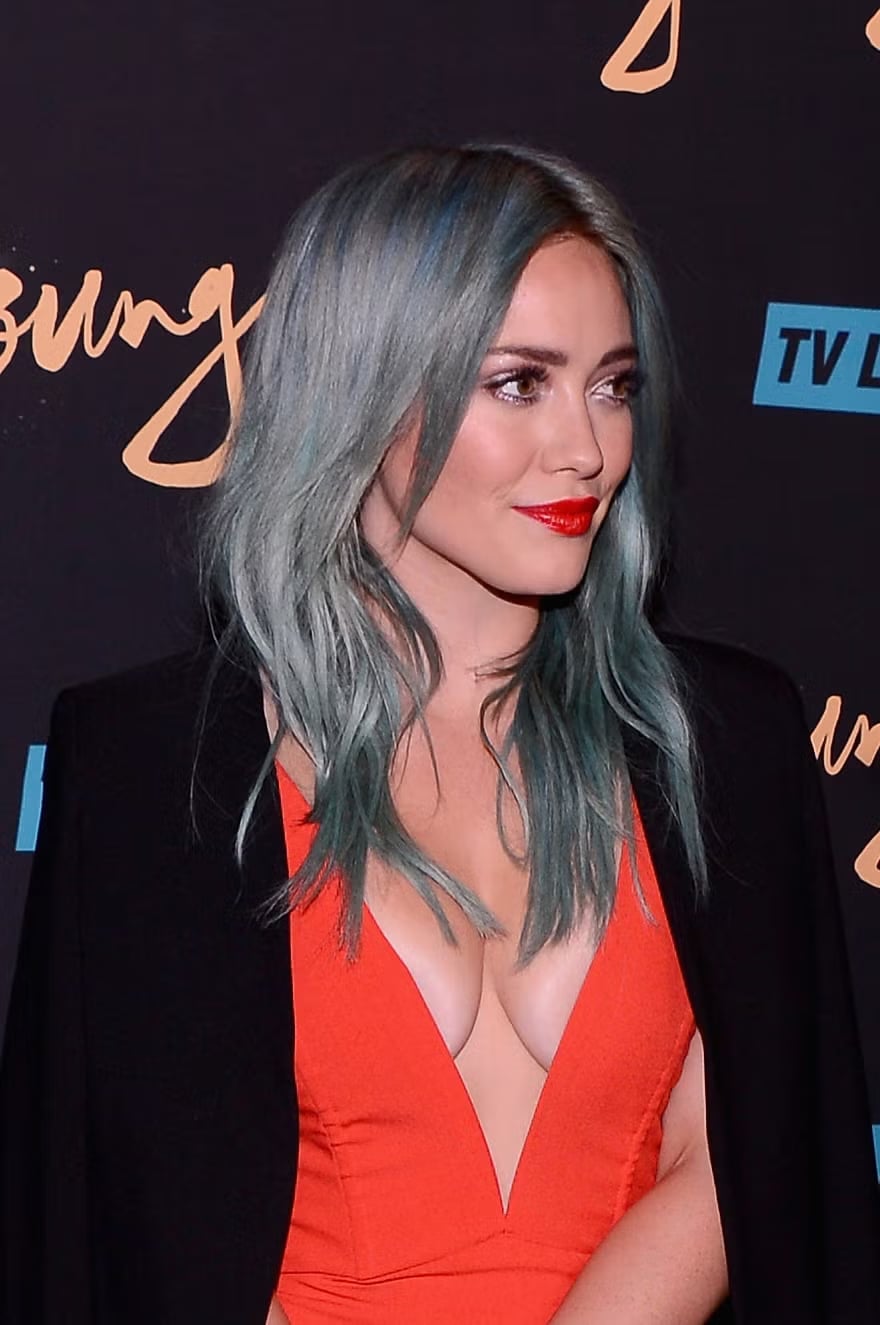
Ash blue sits somewhere between a moody gray and a muted navy, with darker undertones that stop it from reading as costume. The subtle layers in this collarbone-length cut give the loose waves a place to land without losing shape. Medium density hair benefits from the movement, and the soft layers around the jaw work well for square and round faces.
Ask your colorist for: collarbone length layered cut with ash blue color and subtle darker undertones. A texturizing spray adds a lived-in finish, and a toning appointment every six weeks keeps the ash from turning muddy.
Collarbone Waves With Smoky Blue Tone
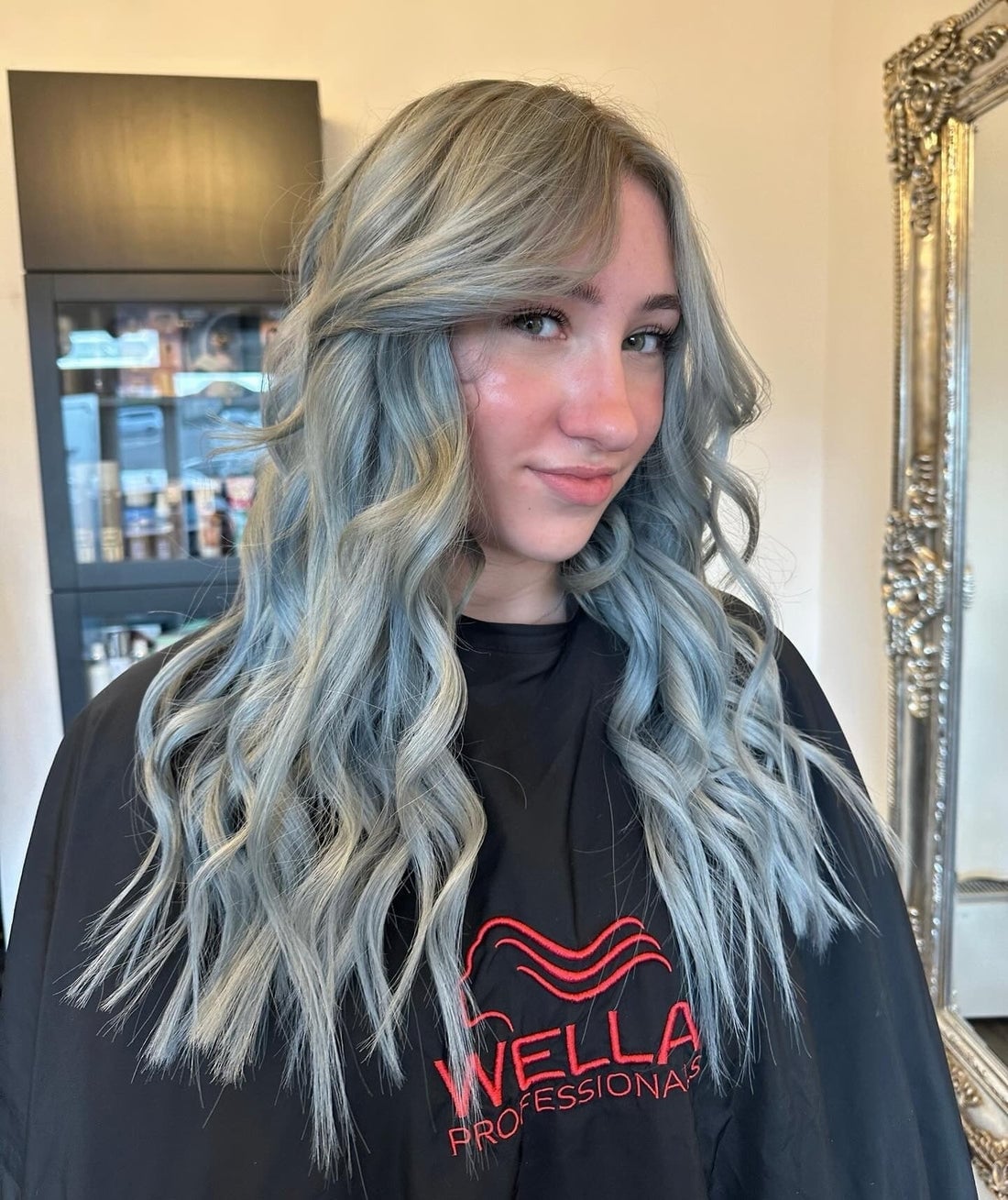
If bright blues feel like too much, smoky blue is the quieter cousin. On fine, wavy collarbone-length hair with face-framing bangs and a side part, the tone reads as a soft wash of color rather than a statement. It is less about contrast and more about a subtle haze. Face-framing bangs suit most face shapes, and the side part adds a little volume on top. Ask your colorist for: collarbone length loose waves with smoky blue color and face-framing bangs. Air dry with a diffuser or scrunch with product; a trim every eight weeks keeps the ends healthy.
Collarbone Lob With Bright Blue Ombré
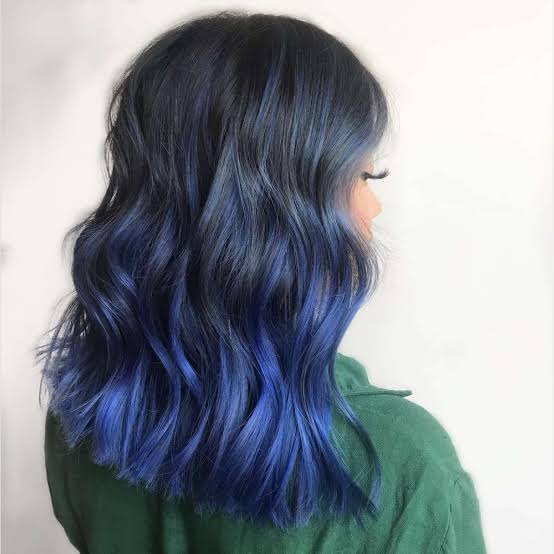
A collarbone lob with a dark base and a bright blue ombré offers a clear separation between the two shades. The transition starts lower down, so the roots stay dark and low-maintenance while the ends get the vivid payoff. The wavy blowout shows off the color shift, and medium density hair holds the wave without losing the ombré line. Oval and square faces suit the lob length.
Ask your colorist for: collarbone lob with dark base and bright blue ombré. A texturizing spray on the ends keeps the wave from falling flat, and washing less often helps the blue last longer between touch-ups.
Collarbone Lob With Teal Blue Ombré, Wavy
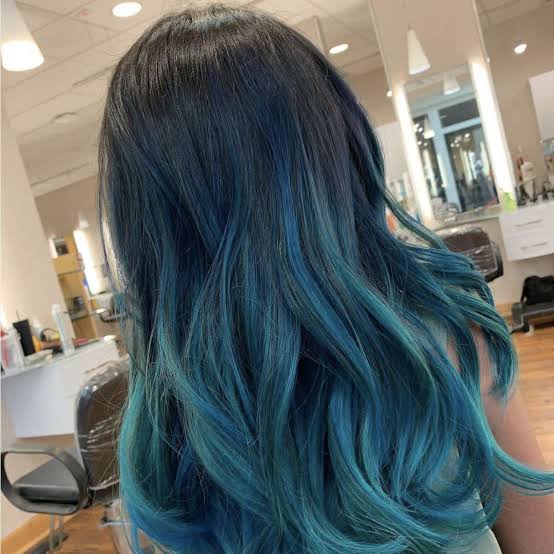
A dark base that fades into teal blue ombré gives this collarbone lob a gradient that feels built for sunnier weather. The wavy blowout and middle parting keep the transition soft rather than striped. Medium density wavy hair starting at collarbone length works best here; the lob also suits most face shapes without needing extra volume at the crown. Ask your colorist for: collarbone lob with dark base and teal blue ombré. A shine serum on the mid-lengths and ends emphasizes the gloss, and a trim every eight weeks stops the ends from losing the shape.
Collarbone Layers With Ash Blue Highlights, Wavy
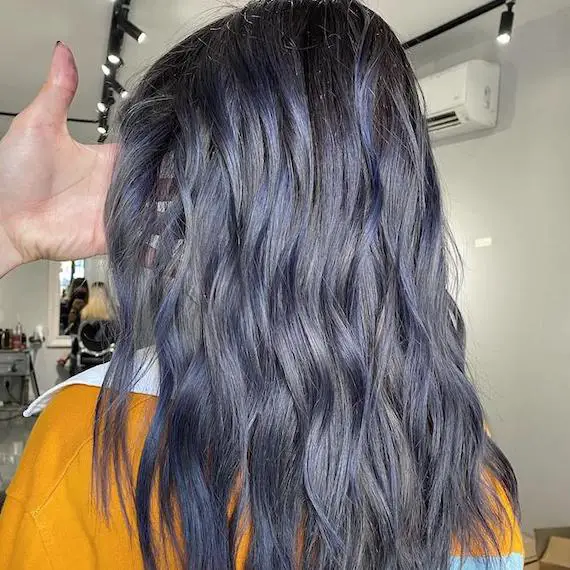
Is it gray or is it blue? That is the whole point of an ash blue base with lighter blue highlights woven through collarbone layers. The ash tone keeps the color muted enough for an office setting, while the highlights add dimension without screaming for attention. Medium textured wavy hair starting at collarbone length holds the layers well, and the movement helps fine hair look fuller. Ask your colorist for: collarbone length layered cut with ash blue base and lighter blue highlights. A purple shampoo used occasionally prevents the ash from drifting warm.
Collarbone Bob With Black Base And Blue Highlights
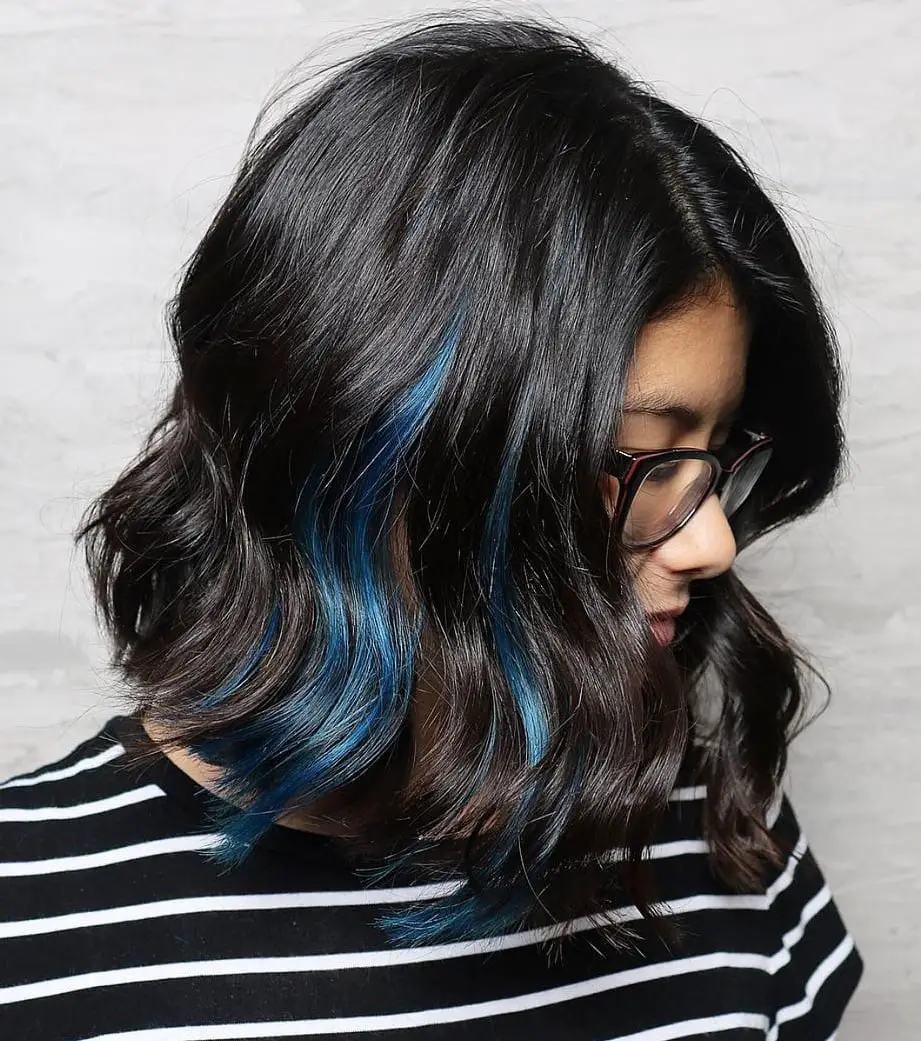
Blue highlights on a black base look different than they do on a lighter canvas. On a collarbone bob with thick wavy texture, the contrast reads as edgy because the dark base absorbs the light and lets only the blue strands show. A black base also means less visible root regrowth than a platinum one, which is a practical advantage if you hate frequent salon visits. This bob with a wavy blowout suits oval and heart-shaped faces especially well. Ask your colorist for: collarbone bob with black base and vibrant blue highlights. A smoothing serum controls the wave frizz, and a blue-tinted conditioner keeps the highlights from fading green.
Collarbone Layers With Blue-Black Base
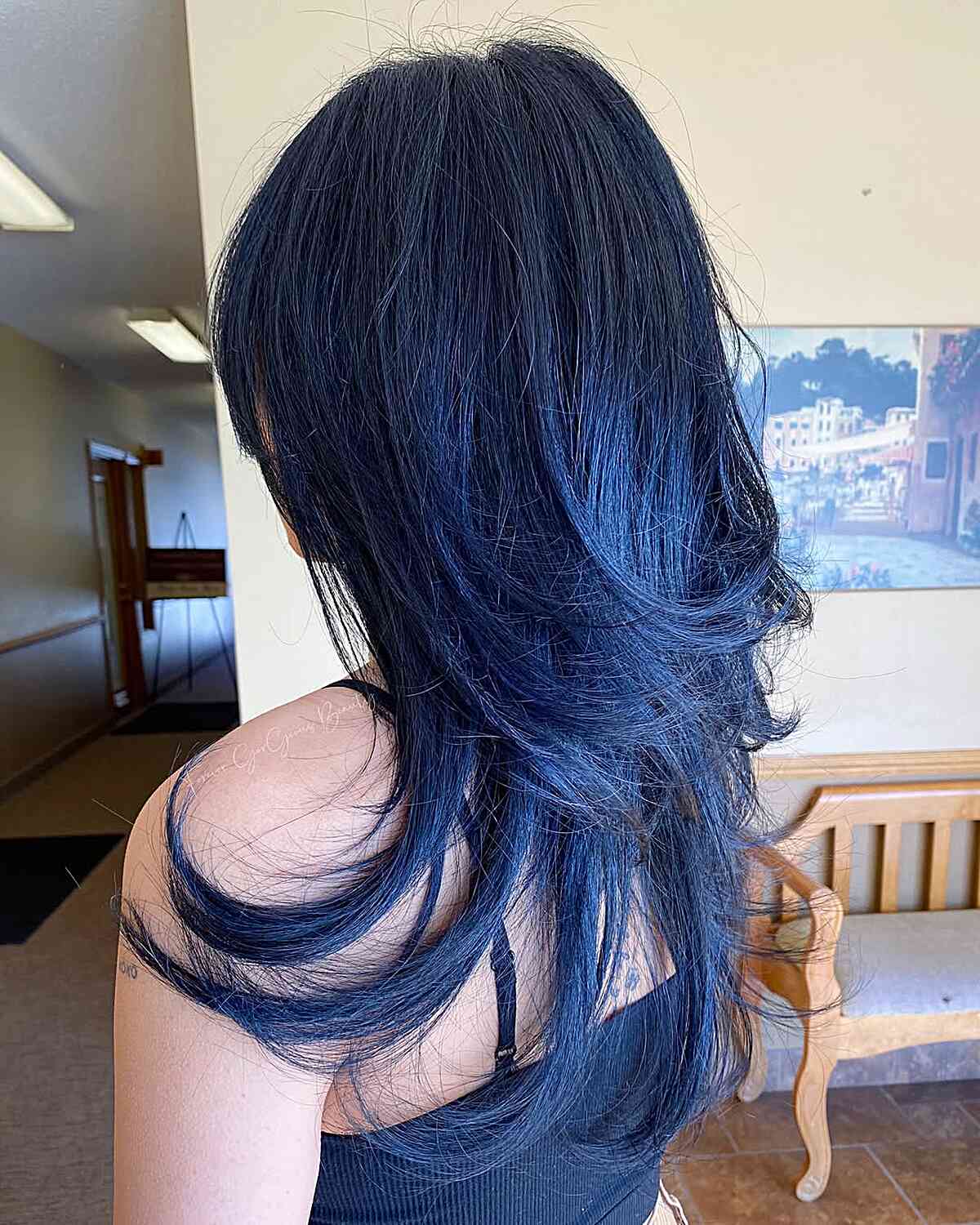
A blue-black base with subtle blue highlights is the technique of using one color family at two depths. The base is nearly black in dim light, then the highlights catch a sheen that reads as blue only when the head turns. Fine straight hair starting at collarbone length benefits from the layers, which add body without requiring much daily effort. Ask your colorist for: collarbone length layered cut with blue-black base and subtle blue highlights. A flat iron with a heat protectant keeps the straight finish crisp, and a trim every six weeks preserves the layered shape.
Collarbone Layers With Dark Blue Highlights
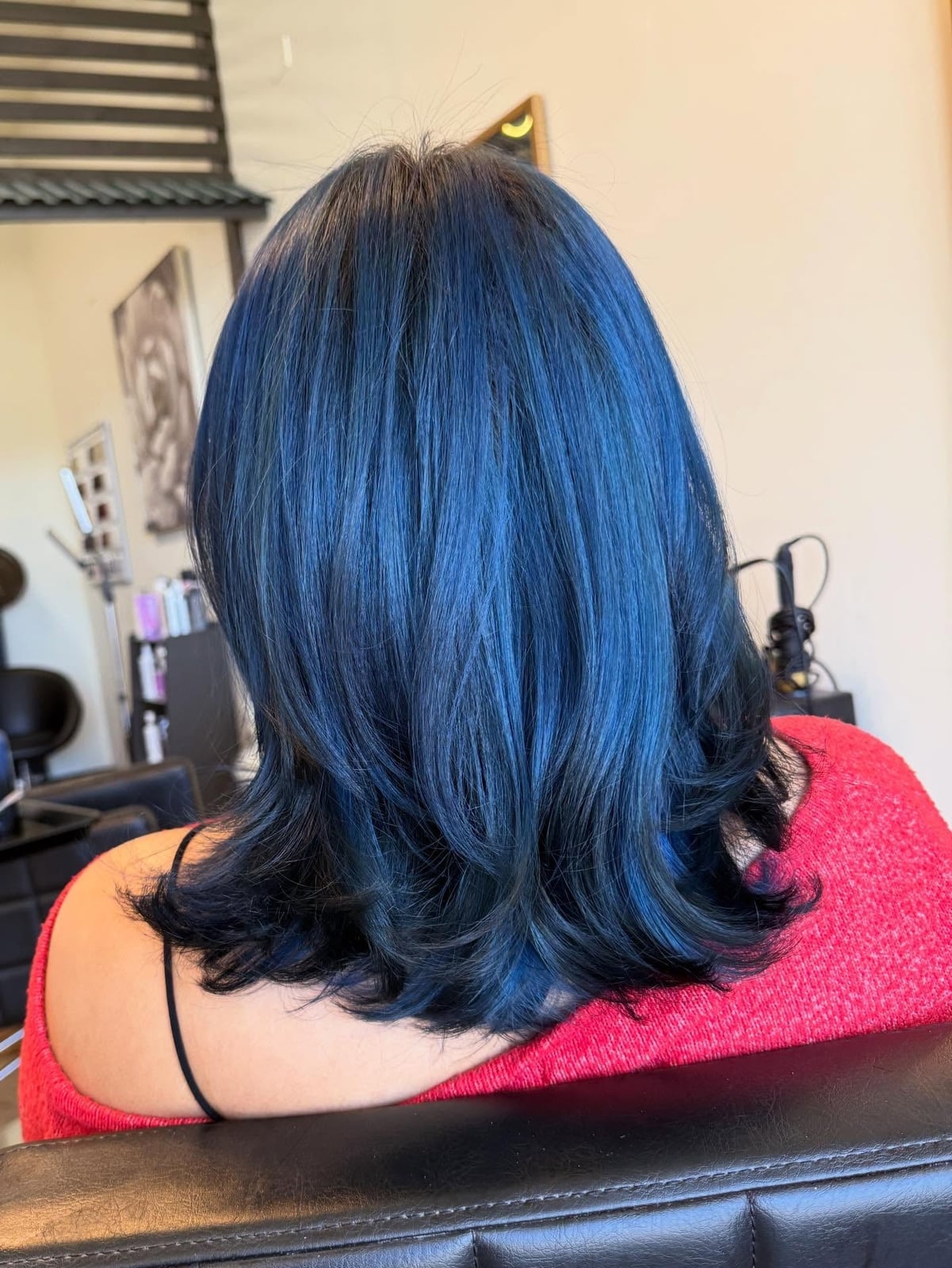
A dark blue base with lighter blue highlights creates depth without the commitment of a pastel or neon shade. The soft layers at collarbone length give fine straight hair enough movement that the highlights look deliberate.
This shade suits anyone who wants a blue tone that still passes as a natural dark color in low light. Ask your colorist for: collarbone length layered cut with dark blue base and lighter blue highlights. A smoothing cream before blow-drying helps the fine texture hold a sleek finish, and a toning appointment every four to six weeks keeps the lighter pieces from turning muddy.
Collarbone Layered Cut With Deep Blue
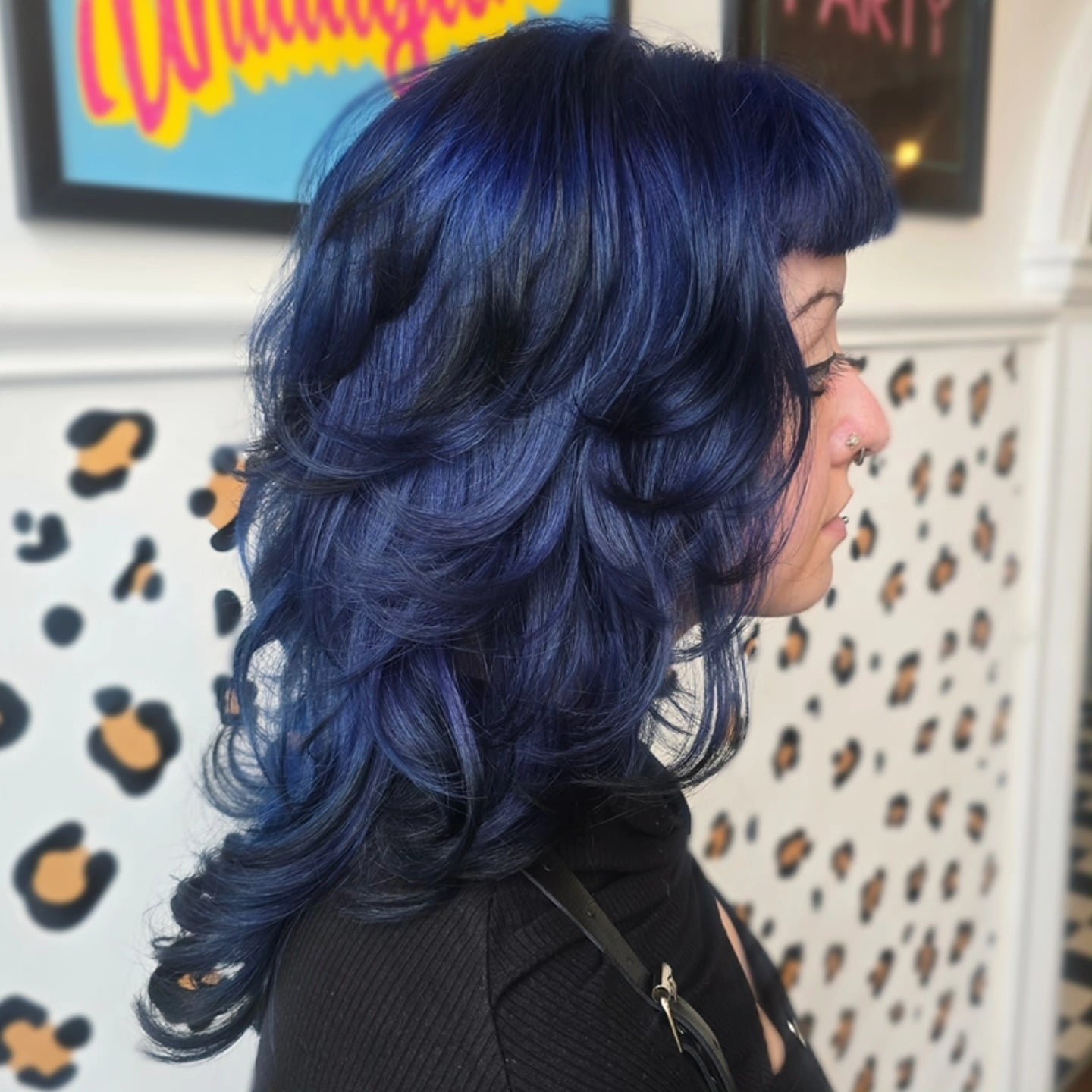
A collarbone-length layered cut gets a serious upgrade with deep blue color and black undertones, finished with micro bangs. The middle parting and wavy blowout give the layers room to move, while the vibrant shade stays sophisticated rather than screaming for attention. Thick, wavy hair starting at collarbone length takes this cut best, and the micro bangs work particularly well for oval face shapes.
Ask your colorist for a collarbone layered cut with deep blue color and micro bangs. Daily styling is straightforward: a texturizing spray through damp waves adds definition without weighing hair down. The micro bangs need trimming every three weeks to keep them precise, and a blue-tinted gloss every four to six weeks prevents the deep shade from shifting toward green.
Shoulder Length Light Blue With Darker Roots
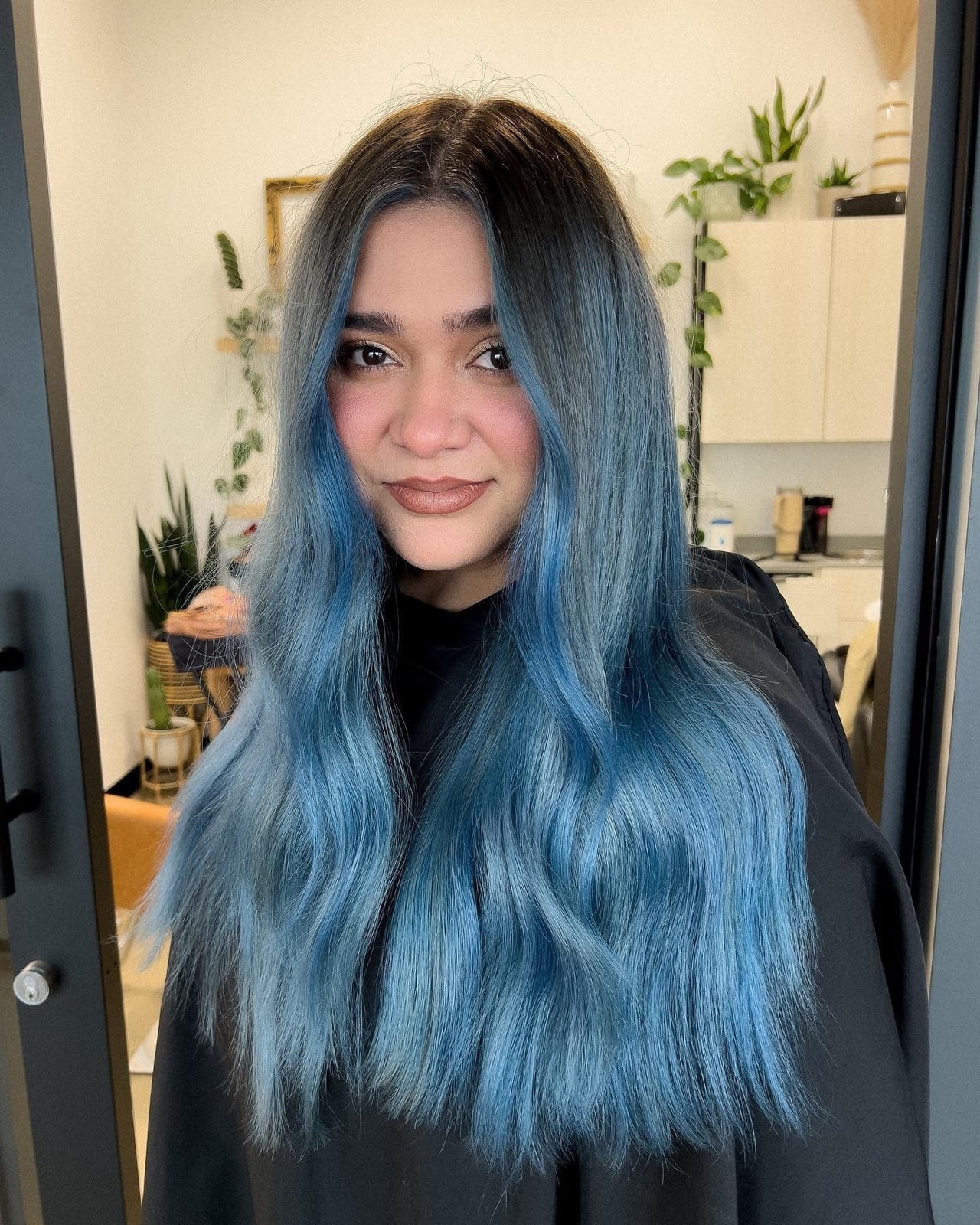
Can light blue hair work for an office job? This collarbone-length wavy blowout with darker roots proves it can. The side bangs and medium texture keep the light blue shade from reading as costume, while the darker root line creates a lived-in grow-out that looks deliberate from day one. Spring and early summer are the natural seasons for this color, when daylight catches the lighter pieces without washing them out. Ask your colorist for shoulder length wavy hair with light blue color and darker roots, side bangs. A root lifter at the crown gives the waves a boost, and a trim every six to eight weeks keeps the shape clean as the color fades gradually.
Shoulder Length Deep Navy Blue
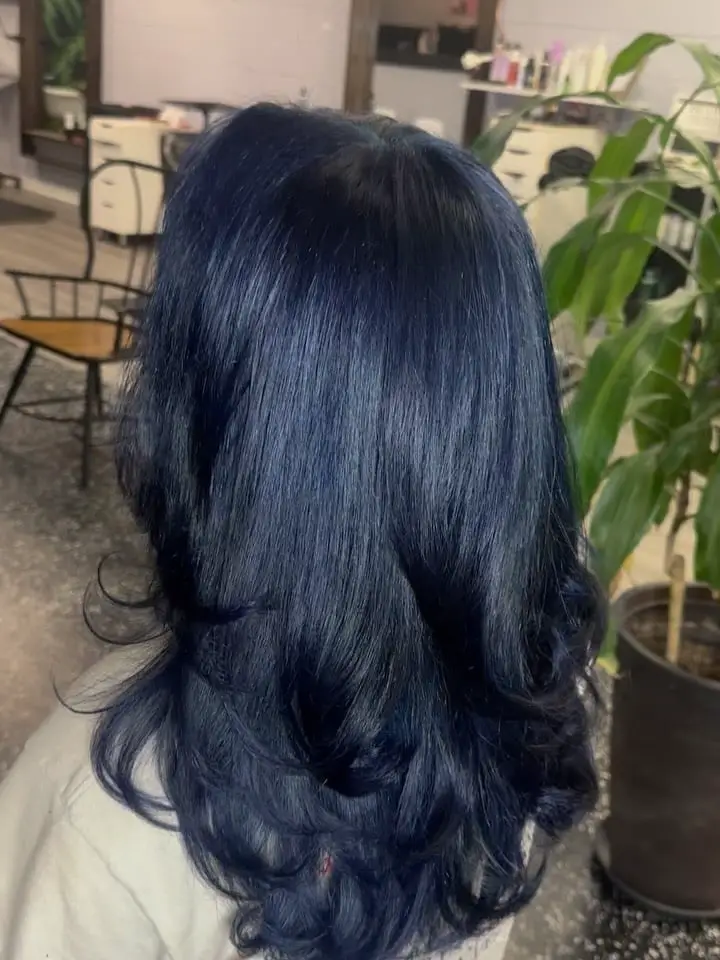
A single shade across shoulder-length layers sounds simple, but deep navy blue with subtle tonal variations reads as expensive rather than elementary. The loose waves let the color catch light at different angles, and the back view shows the richness without any distracting highlights. Medium density wavy hair starting at shoulder length carries this depth well, and the layers add movement where a solid color might feel flat. Ask your colorist for a shoulder length layered cut in deep navy blue. A color-safe shampoo preserves the tone, and a navy-tinted gloss every six weeks keeps the depth from fading into a muddy brown.
Shoulder Length Braided Buns With Light Blue
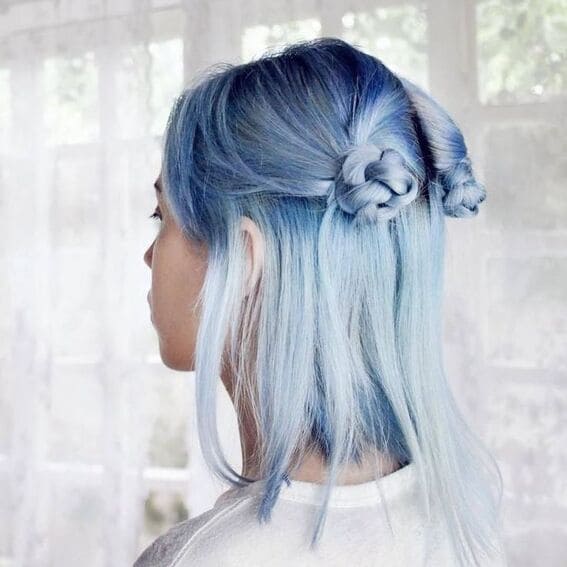
Two braided buns at the crown turn shoulder-length wavy hair with a light blue base and darker blue undertones into a practical updo. The side-swept bangs stay loose to soften the line, and the darker undertones stop the light blue from looking washed out against the braided sections. Medium textured wavy hair starting at shoulder length has enough grip to hold the braids without slipping. Ask your colorist for shoulder length hair styled in double braided buns with light blue color and side bangs. Secure each bun with bobby pins, and a texturizing spray on the braids gives the whole style staying power through a long day.
Mid-Back Layers With Dark Brown And Blue Balayage
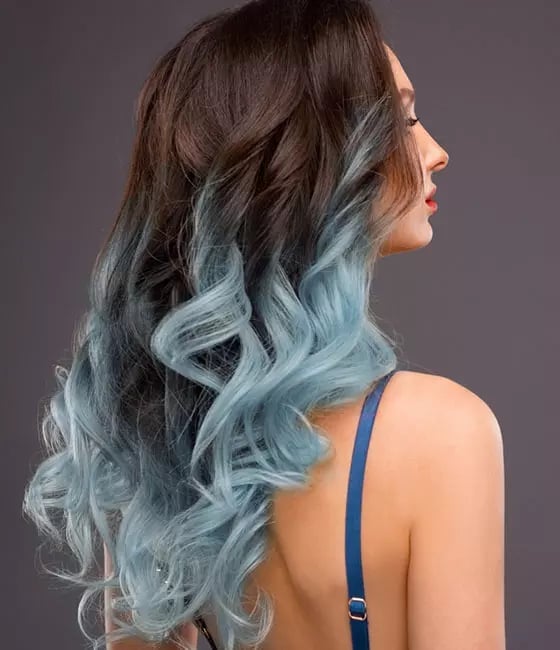
Dark brown base with light blue balayage is a different animal than blue over a platinum base. Where platinum lets blue shout, dark brown makes the same shade read as accent rather than statement. The loose waves on mid-back length layers let the balayage peek through without overwhelming the natural base, and the thick texture keeps the color from looking sparse. Ask your colorist for mid-back length layered hair with dark brown base and light blue balayage. A wide-tooth comb detangles the waves without disrupting the color placement, and a blue-tinted gloss every four to six weeks keeps the ends vivid while the brown base stays low-maintenance.
Mid-Back Long Layers With Blue Balayage
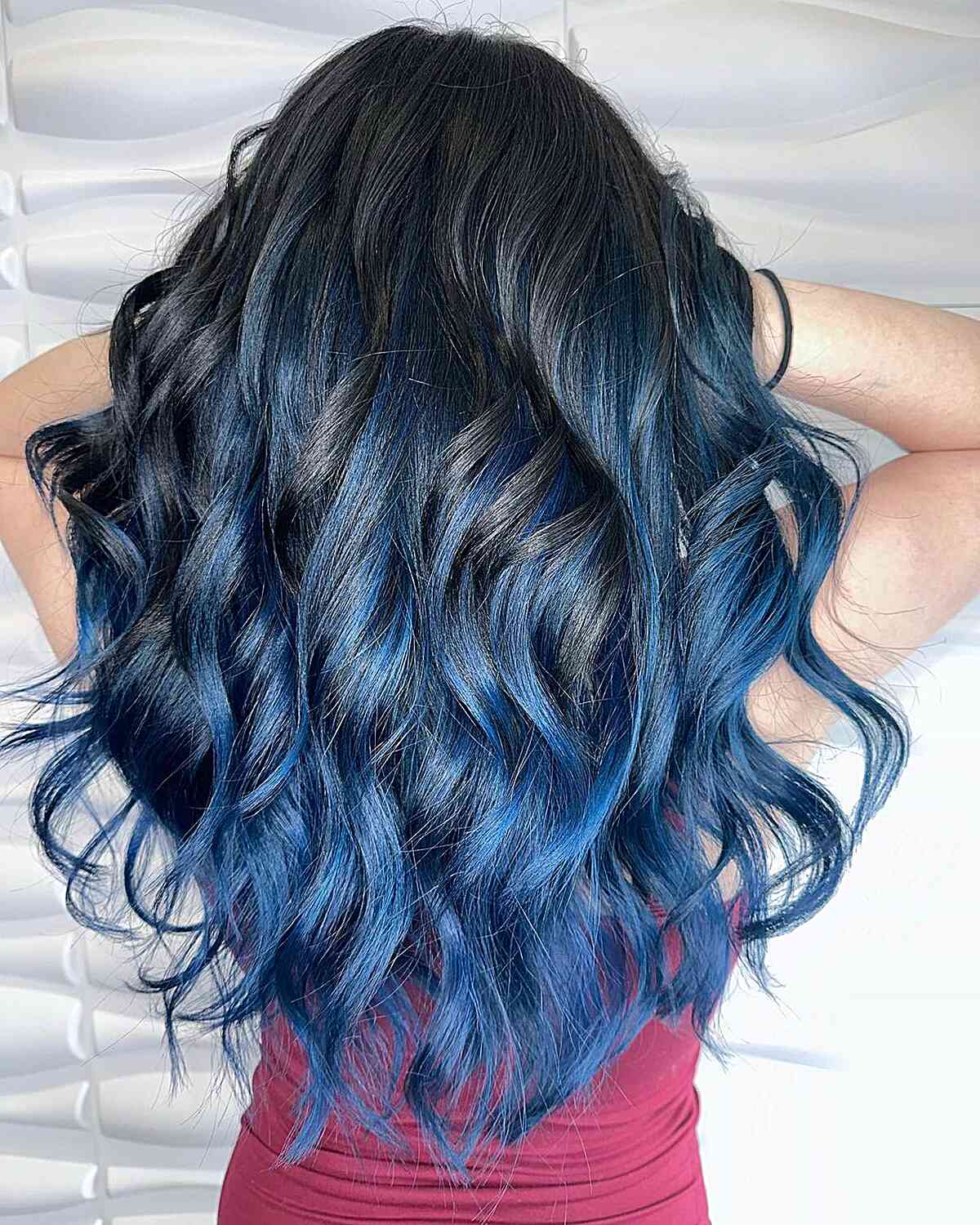
The dark base supports the bright blue balayage as an accent without a full commitment. Long layers keep the mid-back length from feeling heavy, and they give the waves somewhere to move without losing the overall shape. This is a color placement that works with a middle parting, since the brightness concentrates toward the ends and leaves the roots low-maintenance.
Thick, wavy hair at mid-back length works well, as the density holds the color and the texture softens the contrast. Ask your colorist for: mid-back length long layered hair with dark base and bright blue balayage. A sea salt spray helps define the waves, and a trim every ten to twelve weeks keeps the ends clean so the balayage stays the focus.
Mid-Back Long Layers With Vivid Blue Balayage, Close-Up Take
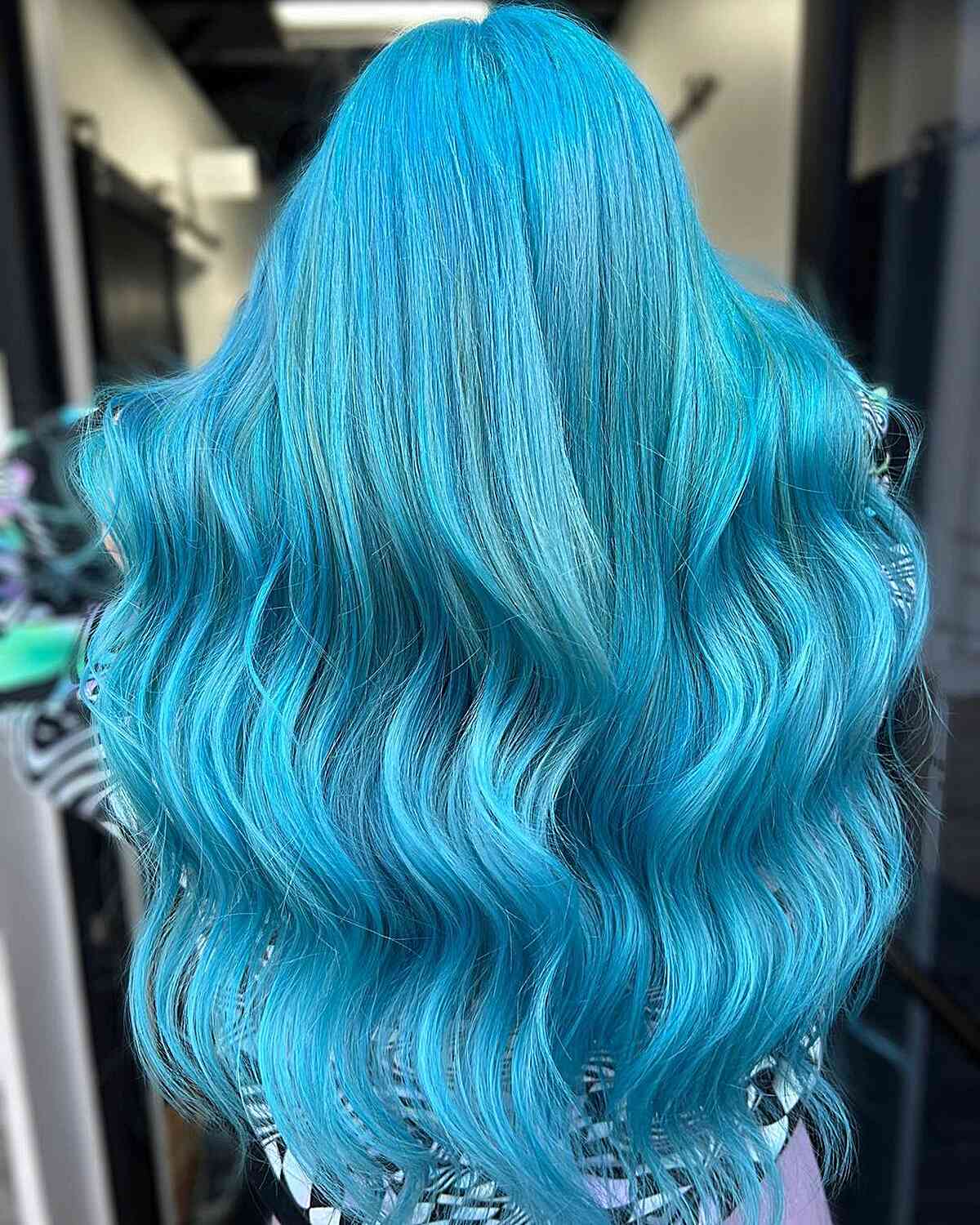
Vivid blue balayage on a dark base is a salon project, not a weekend experiment. Lifting the sections to that brightness takes time, and the lightener has to be placed carefully through the lengths to avoid banding. The payoff is a color that shifts with every wave, which is exactly what makes it worth the chair time.
This suits thick, wavy hair at mid-back length, where the layers can show off the color’s movement. Ask your colorist for: mid-back length long layered hair with dark base and vivid blue balayage. Between appointments, a leave-in conditioner keeps the lengths soft and the color from looking dry. Plan for a touch-up every three months, since the grow-out line is the real tell.
Mid-Back Long Layers With Blue Balayage Texture, Everyday Version
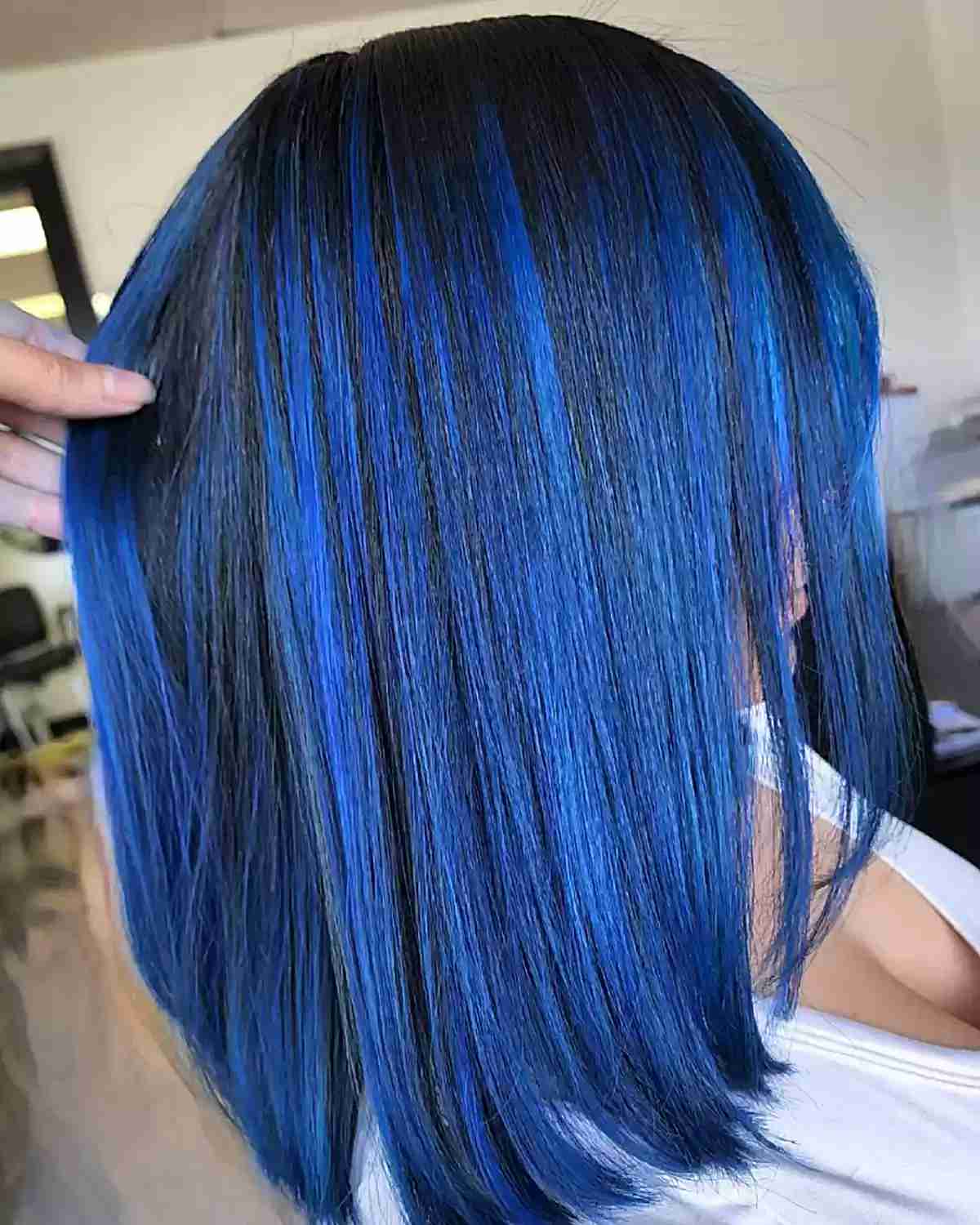
Wondering if blue balayage can survive a regular routine? It can, when the base stays dark and the brightness stays toward the ends. Thick, wavy hair at mid-back length carries this best, since the texture breaks up the color into something that looks lived-in rather than costumed. Ask your colorist for: mid-back length long layered hair with dark base and vibrant blue balayage. Scrunch in a texturizing cream after washing, and book a trim every ten to twelve weeks to keep the layers from tangling.
Mid-Back Straight Cut With Blue Balayage
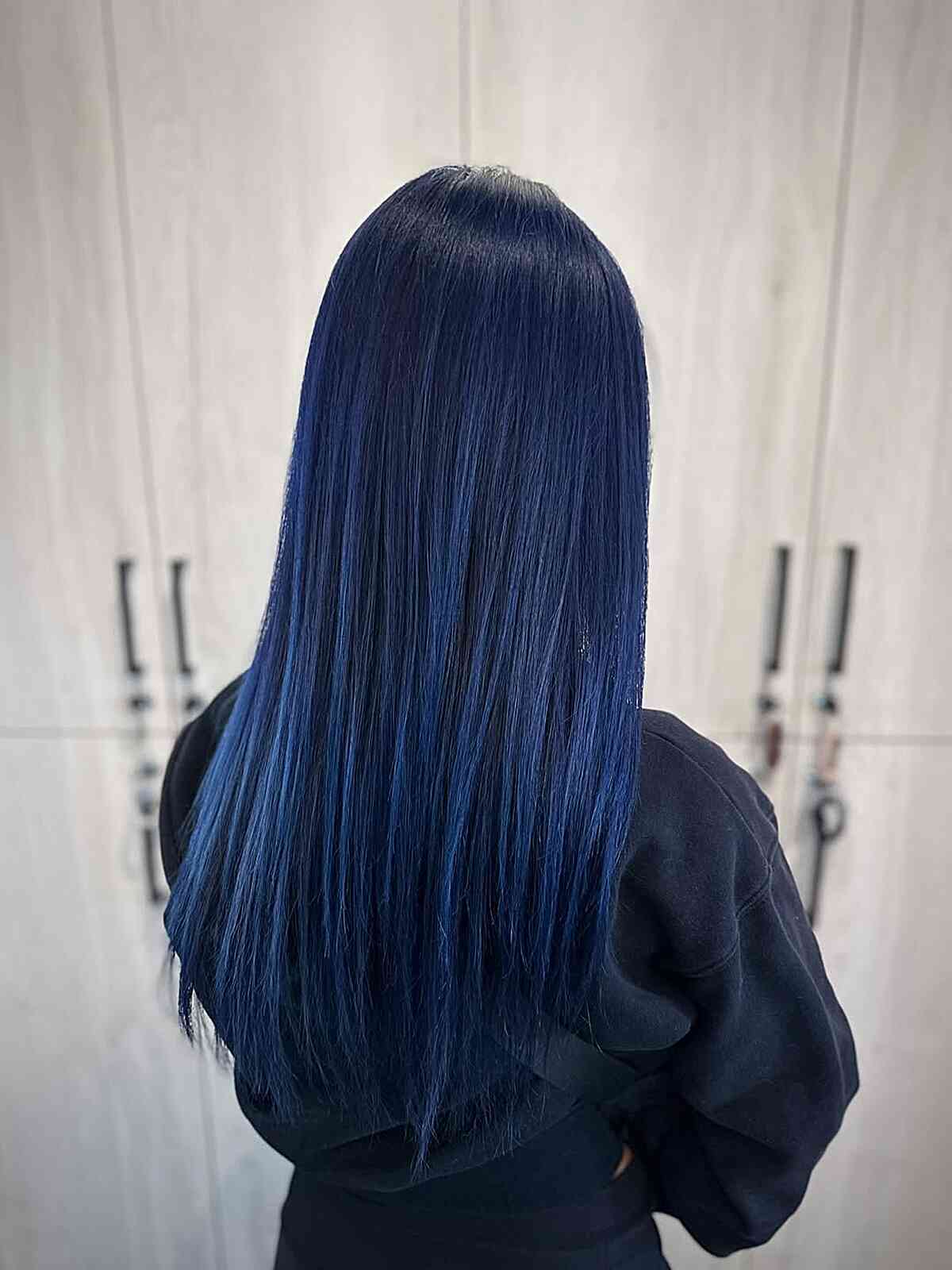
A poker straight finish changes how balayage reads, because there is no wave to blur the line between the dark blue base and the lighter blue ends. The straight cut makes that contrast deliberate, with the color landing in clean vertical sections that catch the light evenly. This is a precise look, and it asks the colorist to place the lightener with the same care the cut demands.
Thick, straight hair starting at mid-back length is what this needs, since finer textures can let a blunt cut look flat. Ask your colorist for: mid-back length straight cut with dark blue base and lighter blue balayage. A flat iron with a heat protectant keeps the glossy finish, and the balayage itself needs refreshing about every three months to maintain the brightness.
Mid-Back Wavy Blowout With Electric Blue Highlights
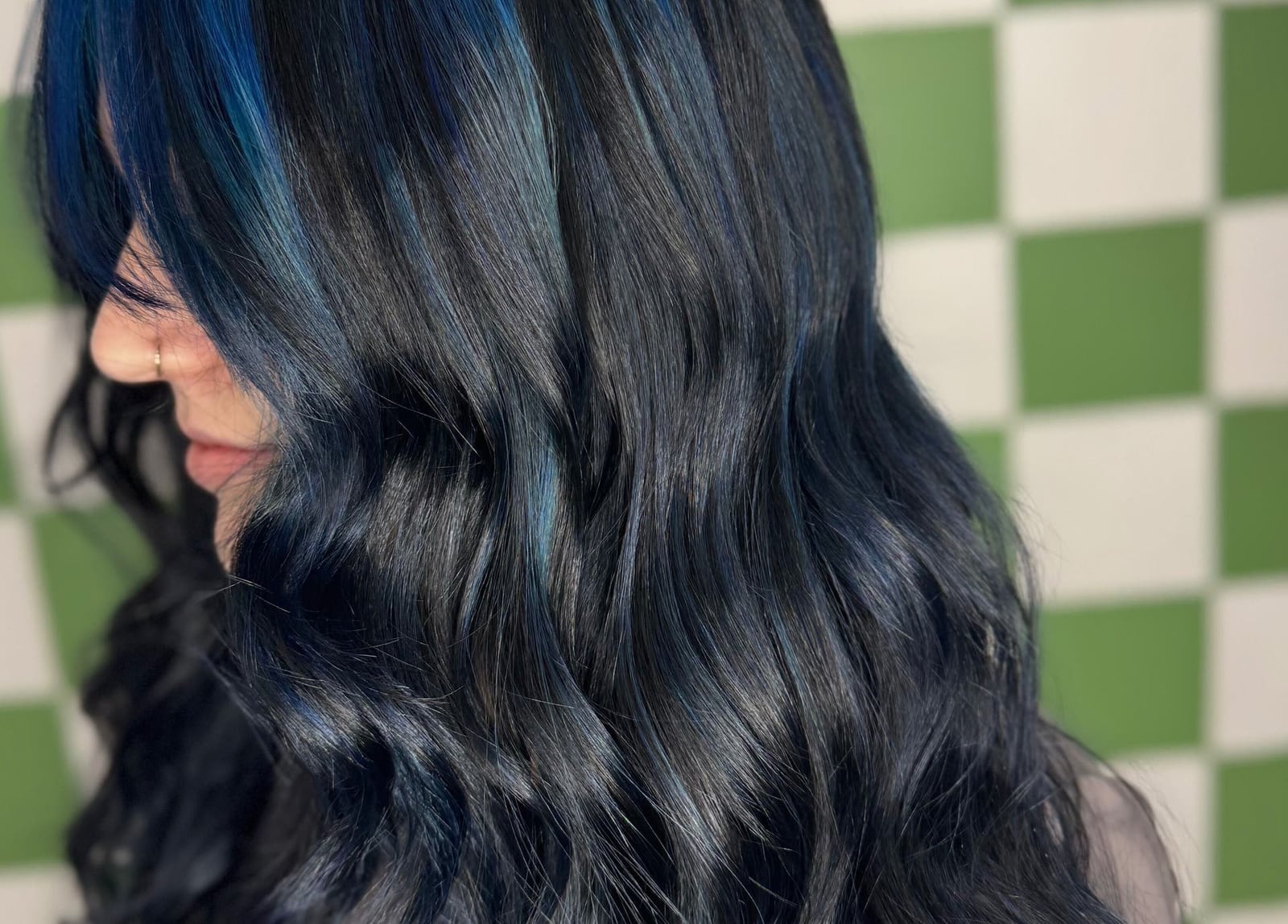
Electric blue highlights woven through a dark base have a way of surfacing only when the hair moves, which makes them a festival-ready choice for summer. The loose waves catch the bright streaks at different angles, so the color shows up in flashes rather than all at once. It is a bold effect, but the dark base keeps it from veering into costume territory.
Thick, wavy hair at mid-back length gives the highlights enough surface to register. Ask your colorist for: mid-back length wavy hair with dark base and electric blue highlights. A texturizing spray adds the definition that keeps the waves from falling flat, and toning every four to six weeks stops the electric blue from shifting green.
Mid-Back Black With Hidden Electric Blue
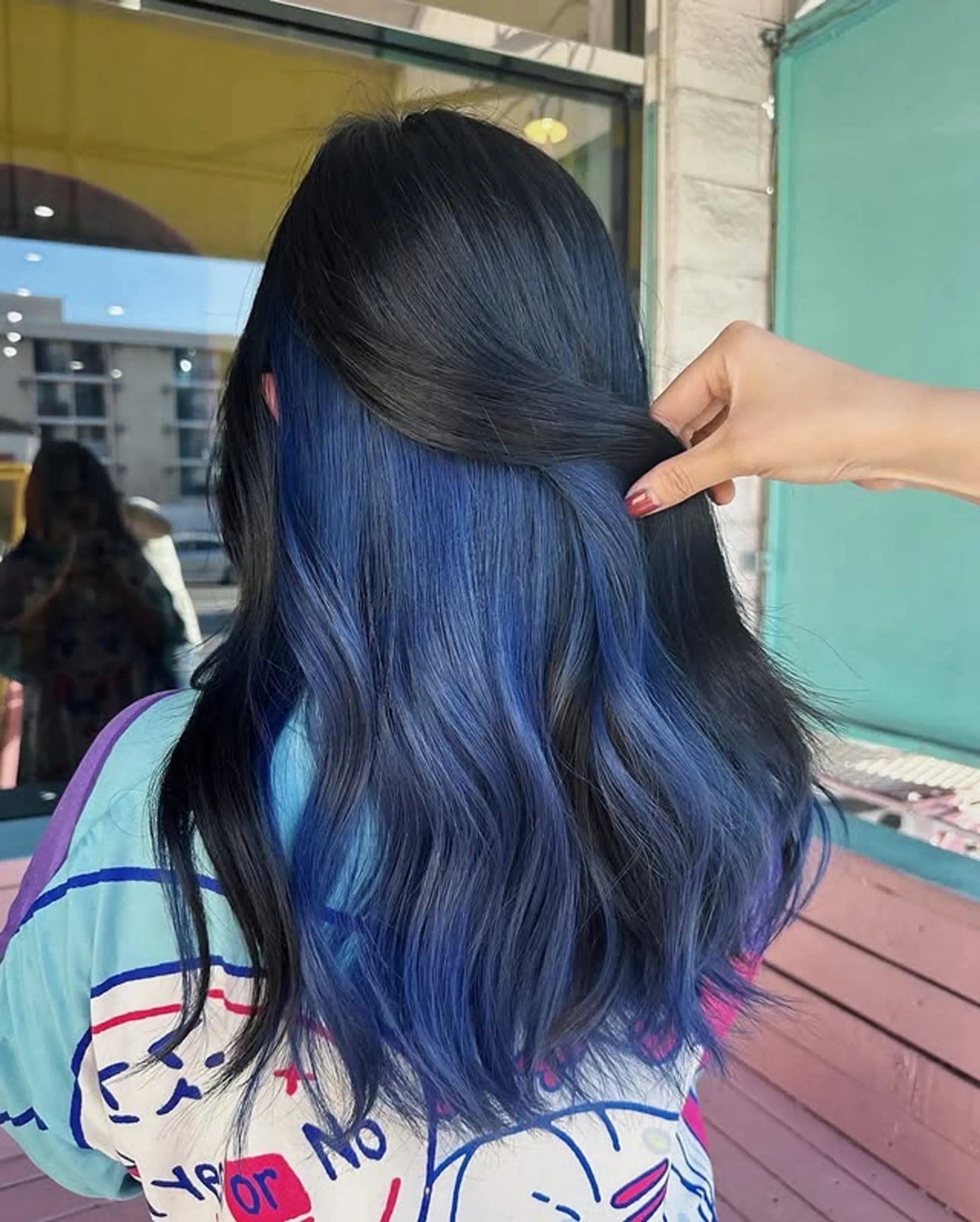
Ever wonder how to get a bold color without committing to all-over blue? Ask your colorist for: mid-back length hair with black overlay and hidden electric blue underneath. This technique places the vibrant shade on the underlayer, so it peeks through when you move or style loose waves. Thick, wavy hair starting at mid-back length handles the contrast best; layers help the blue sections stay visible. The middle parting and back view make the reveal a deliberate surprise, not an accident.
Mid-Back Vibrant Blue With Loose Waves
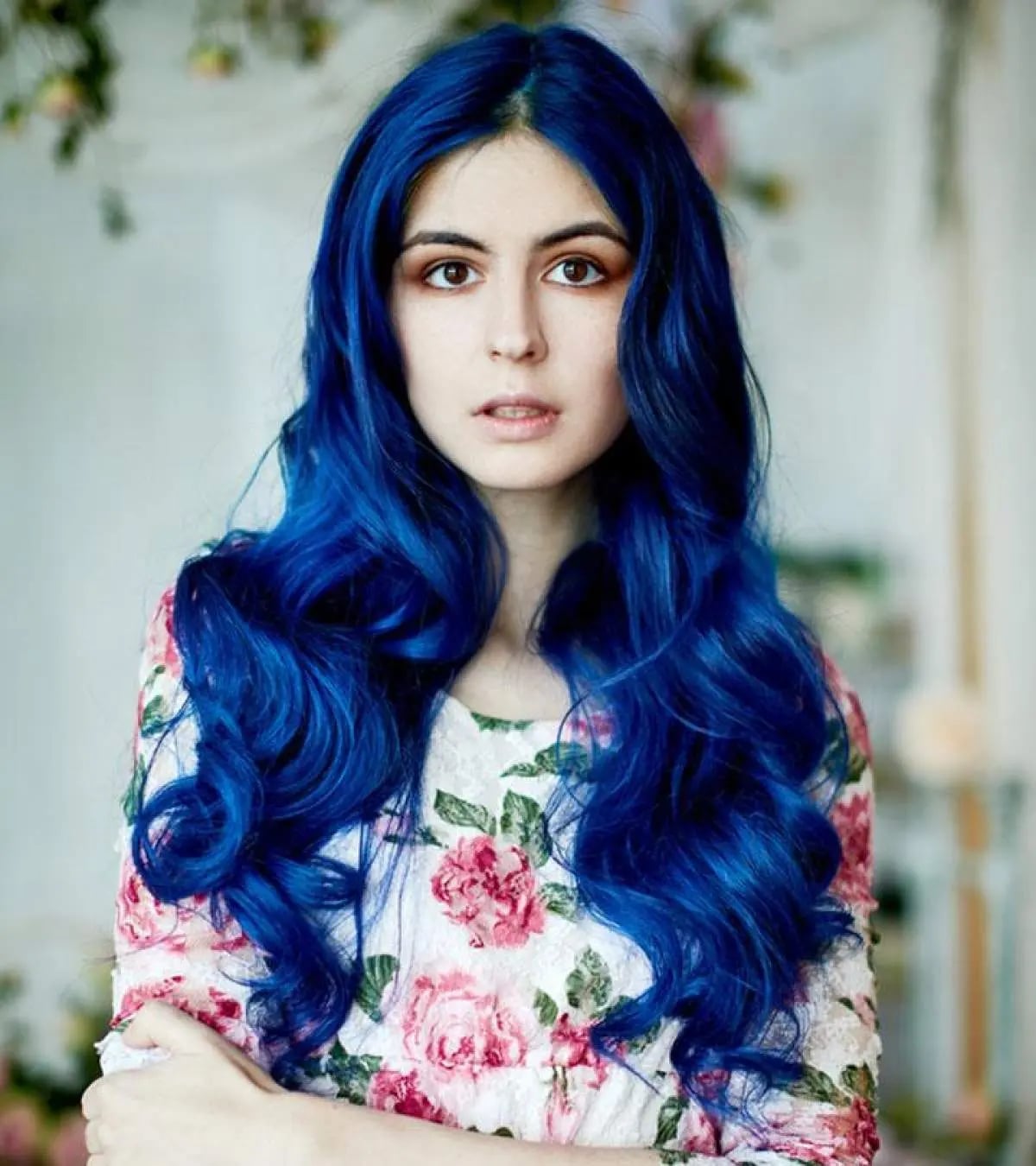
If a muted navy or a dusty slate feels too restrained, this shade is the opposite. A vibrant blue sits somewhere between a jewel tone and a true primary, hitting a saturation that is bold. The mid-back length, thick wavy texture and loose waves give the color enough surface area to show its full intensity.
Ask your colorist for: mid-back length vibrant blue hair styled in loose waves. The effect is less like pastel versions and more playful than a blue-black. Use a diffuser to encourage the natural wave pattern; the color itself provides shine. A toning appointment every four to six weeks keeps the brightness from drifting toward green.
Mid-Back Midnight Blue With Loose Waves, Wavy
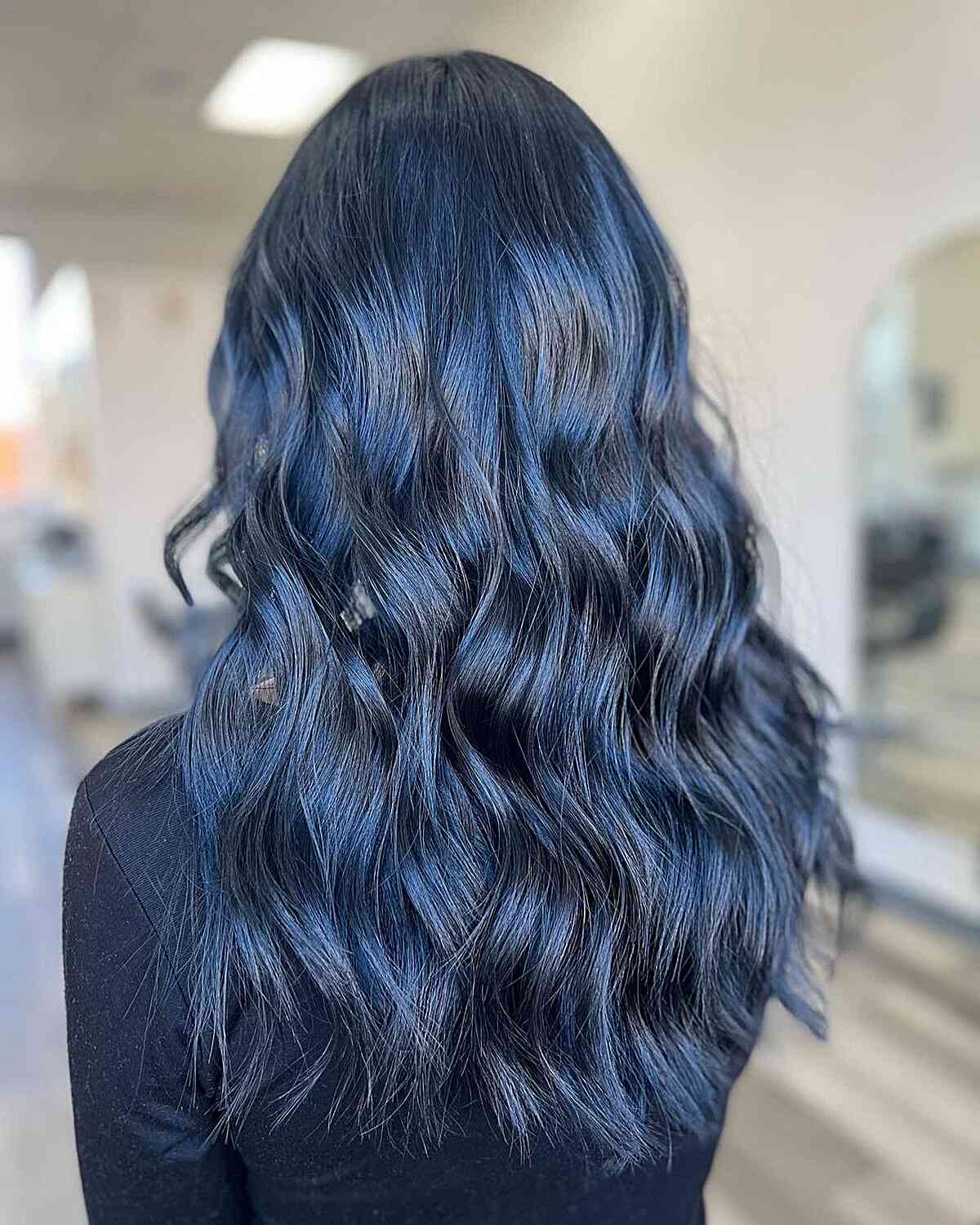
Midnight blue lives in that narrow space between navy and true blue, dark enough to pass for black in low light but unmistakably blue in the sun. The back view of thick, wavy hair at mid-back length shows the color’s depth, with loose waves. Ask your colorist for: mid-back length midnight blue hair styled in loose waves.
The daily reality is that this shade fades gradually, shifting to a softer denim tone over six to eight weeks before it needs refreshing. A color-safe shampoo and cool water help slow that transition. Layers add movement without reducing the color’s impact, and a shine serum keeps the gloss that makes the blue look elegant.
Mid-Back Blue-Black With Loose Waves, Layers
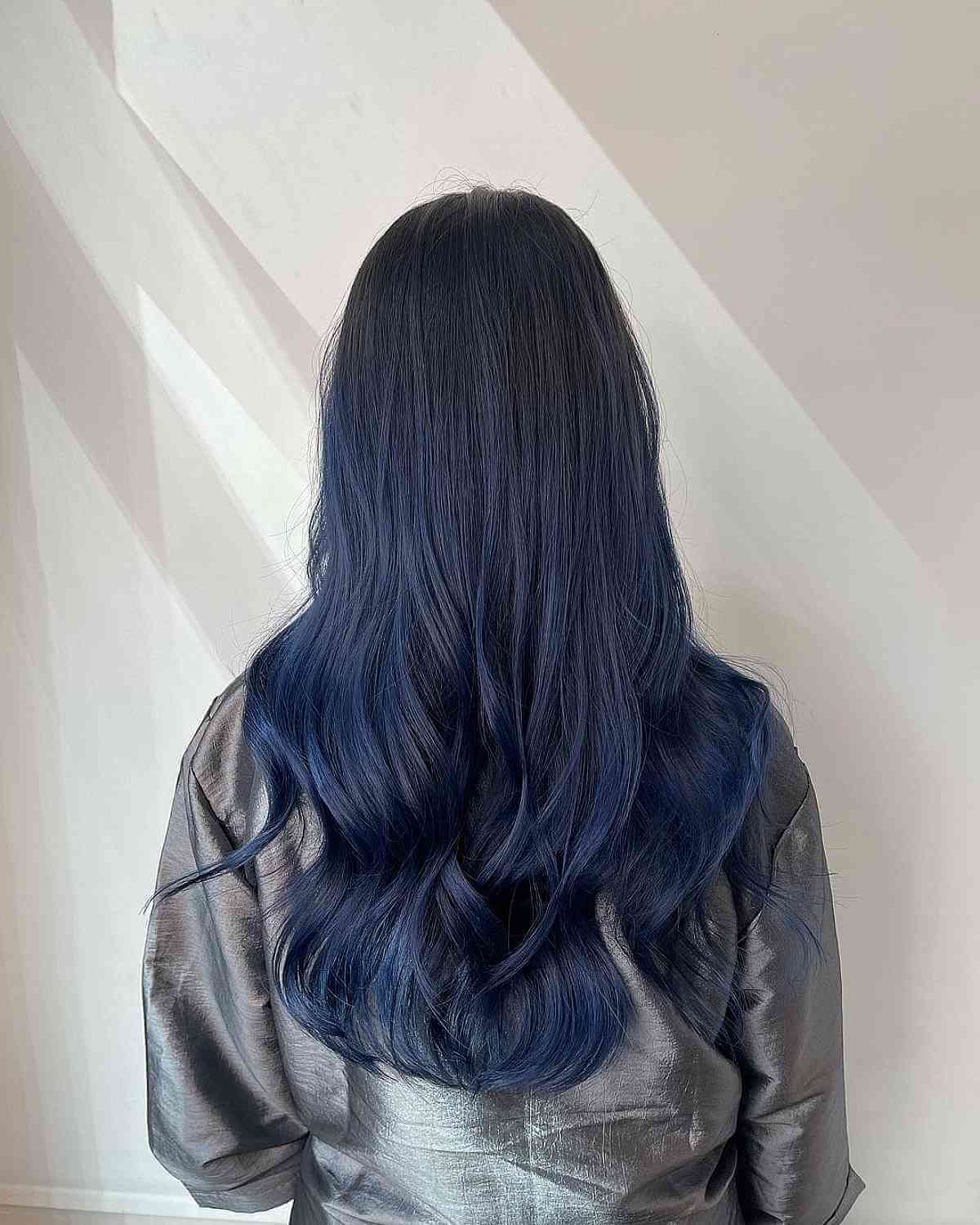
Blue-black is a single-process color, which means it’s a DIY-possible option if you’re comfortable with at-home dye. The trade-off is that it can look flat or simply black in indoor lighting, with the blue undertone only appearing under direct sun or bright overhead light. Ask your colorist for: mid-back length blue-black hair styled in loose waves. Thick, wavy hair starting at mid-back length benefits from layers that prevent the dark shade from weighing down the shape. A blue-tinted gloss every few weeks keeps the undertone visible, or you can accept that this is a subtle choice that reveals itself slowly.
Mid-Back Deep Blue With Lighter Highlights
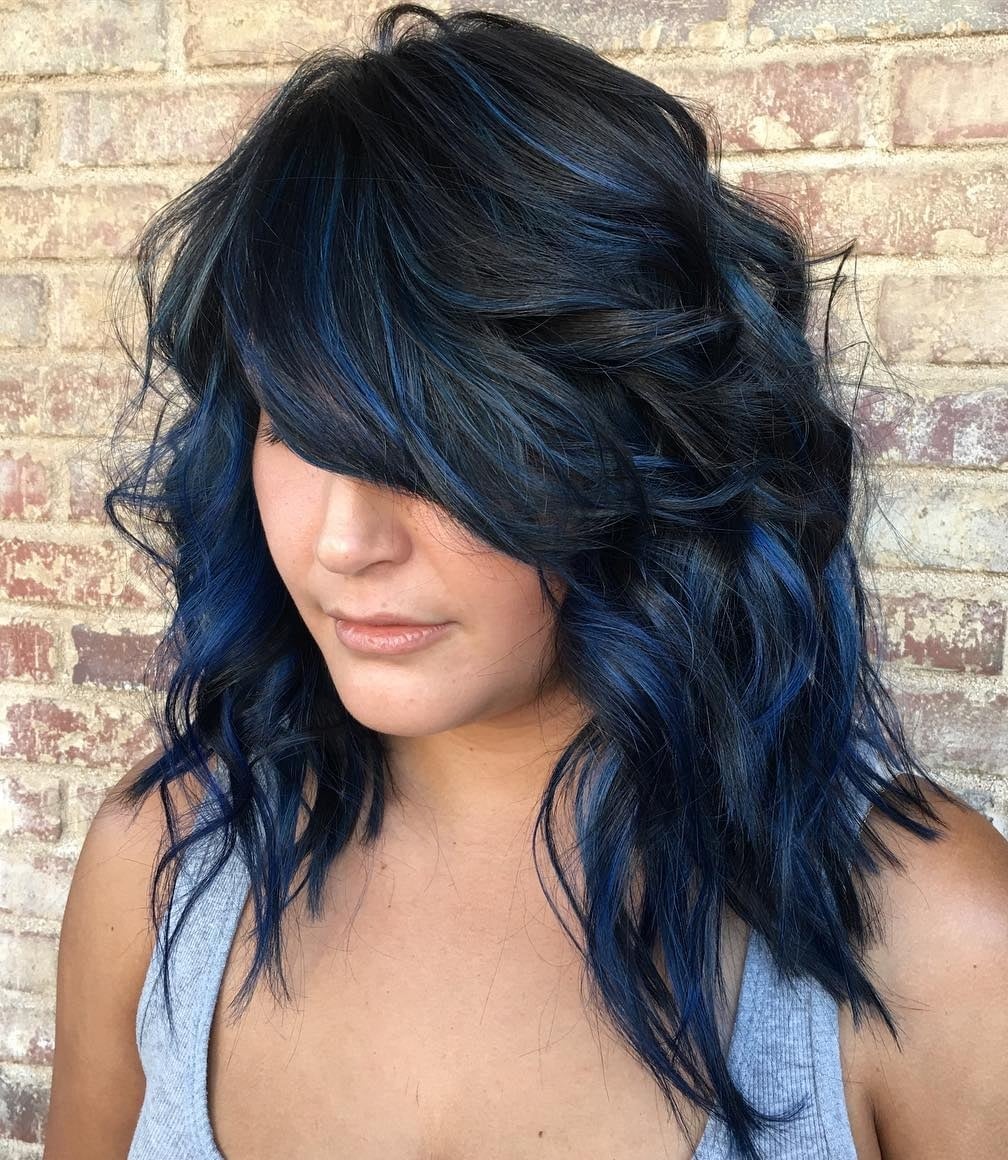
Does a solid deep blue feel too one-note? Adding lighter blue highlights woven through the ends creates dimension without shifting the overall tone. The back view of a wavy blowout shows how the lighter strands catch light differently from the deep blue base, giving the hair a glossy, layered effect. Ask your colorist for: mid-back length deep blue hair with lighter blue highlights.
This technique works best on thick, wavy hair starting at mid-back length, where the highlights have room to spread. The highlights need a toning appointment every four to six weeks to stay cool and avoid turning green, and a shine serum helps maintain the polished finish. Layers enhance the dimensional effect, making the color look intentionally complex.
Mid-Back Blue To Light Blue Ombré
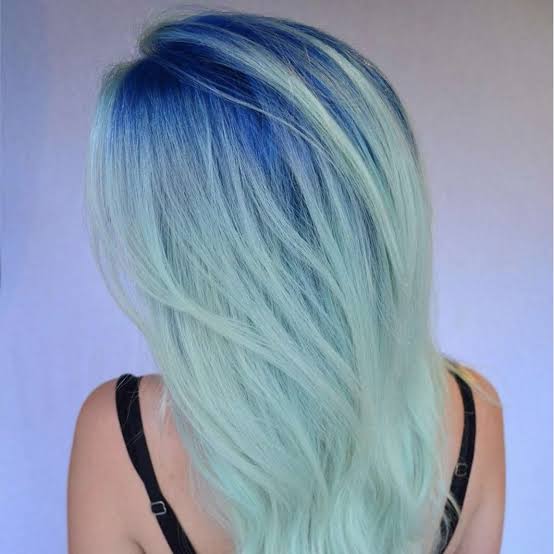
The design is precise: a vibrant blue at the roots that fades into a light pastel blue at the ends, with no hard line between them. This ombré relies on a smooth transition, which means the colorist blends the two shades through the mid-lengths instead of stopping one color and starting another. The loose waves make the gradient appear planned, not accidental.
Ask your colorist for: mid-back length hair with blue to light blue ombré. Thick, wavy hair at mid-back length is a good starting point, and subtle layers give the ombré room to move. A color-safe shampoo helps the pastel ends stay pale, and a trim every ten to twelve weeks keeps the layers from looking straggly.
Mid-Back Pastel Blue To Light Blue Gradient
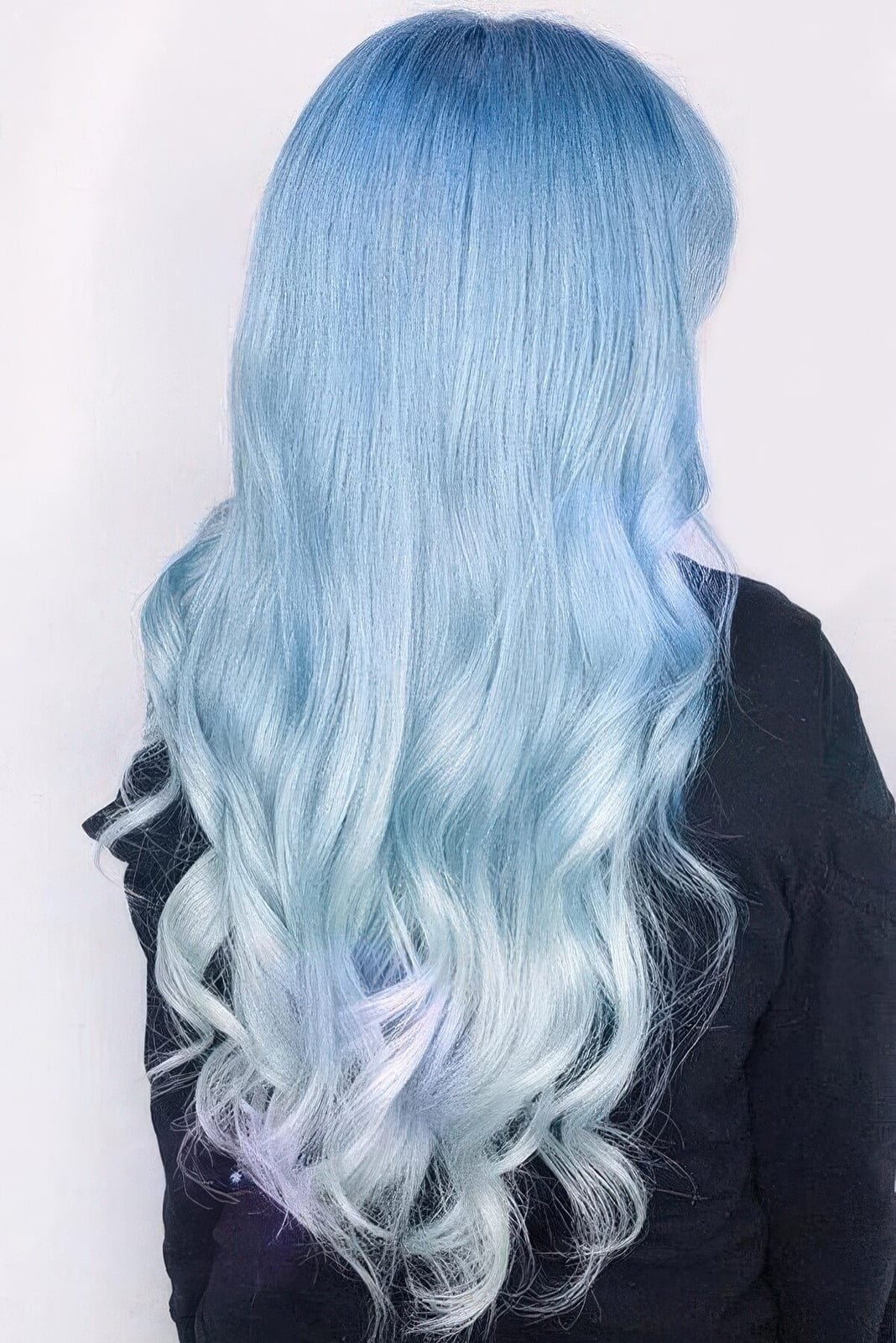
The gradient moves from a delicate pastel blue at the roots to an even lighter blue at the ends, a color combination that lands naturally in spring or summer. The loose waves and middle parting keep the overall impression soft rather than stark. Ask your colorist for: mid-back length hair with pastel blue to light blue gradient. Fine, wavy hair starting at mid-back length carries the lightness well, and a color-depositing conditioner between salon visits keeps the pastel from washing out entirely.
Mid-Back Blue Ombré With Loose Waves, Middle
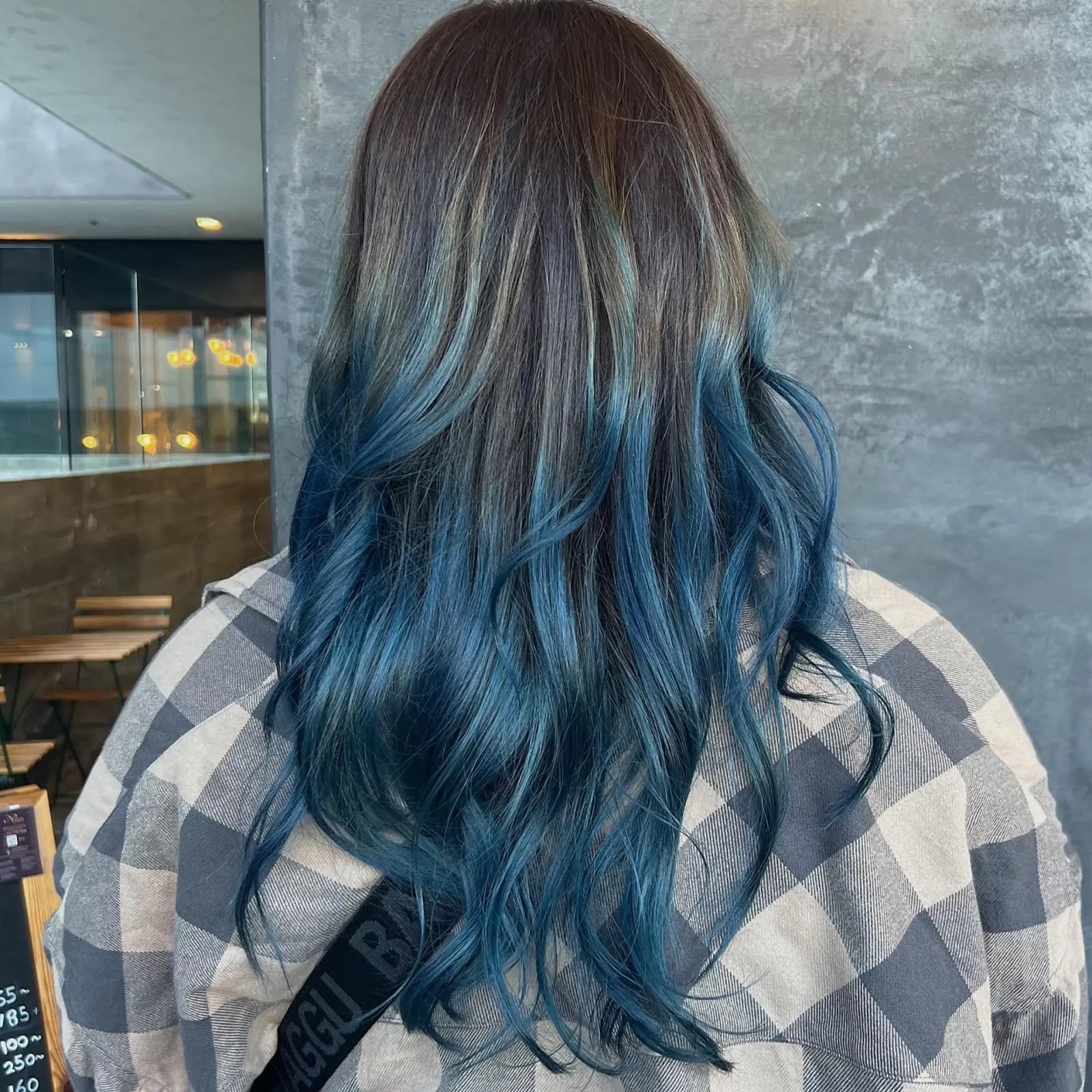
A blue ombré that looks vibrant starts with a darker base at the roots and lets the color intensify toward the ends, exactly as this version does. The darker base anchors the look, while the vibrant blue ends provide the payoff. The loose waves and middle parting keep the effect relaxed.
Ask your colorist for: mid-back length hair with blue ombré. Thick, wavy hair at mid-back length is the best canvas, and layers help the ombré show depth. Air drying with a diffuser preserves the wave pattern, and the ombré itself needs a refresh about every three months as the ends fade.
Mid-Back Layered Royal Blue With Highlights
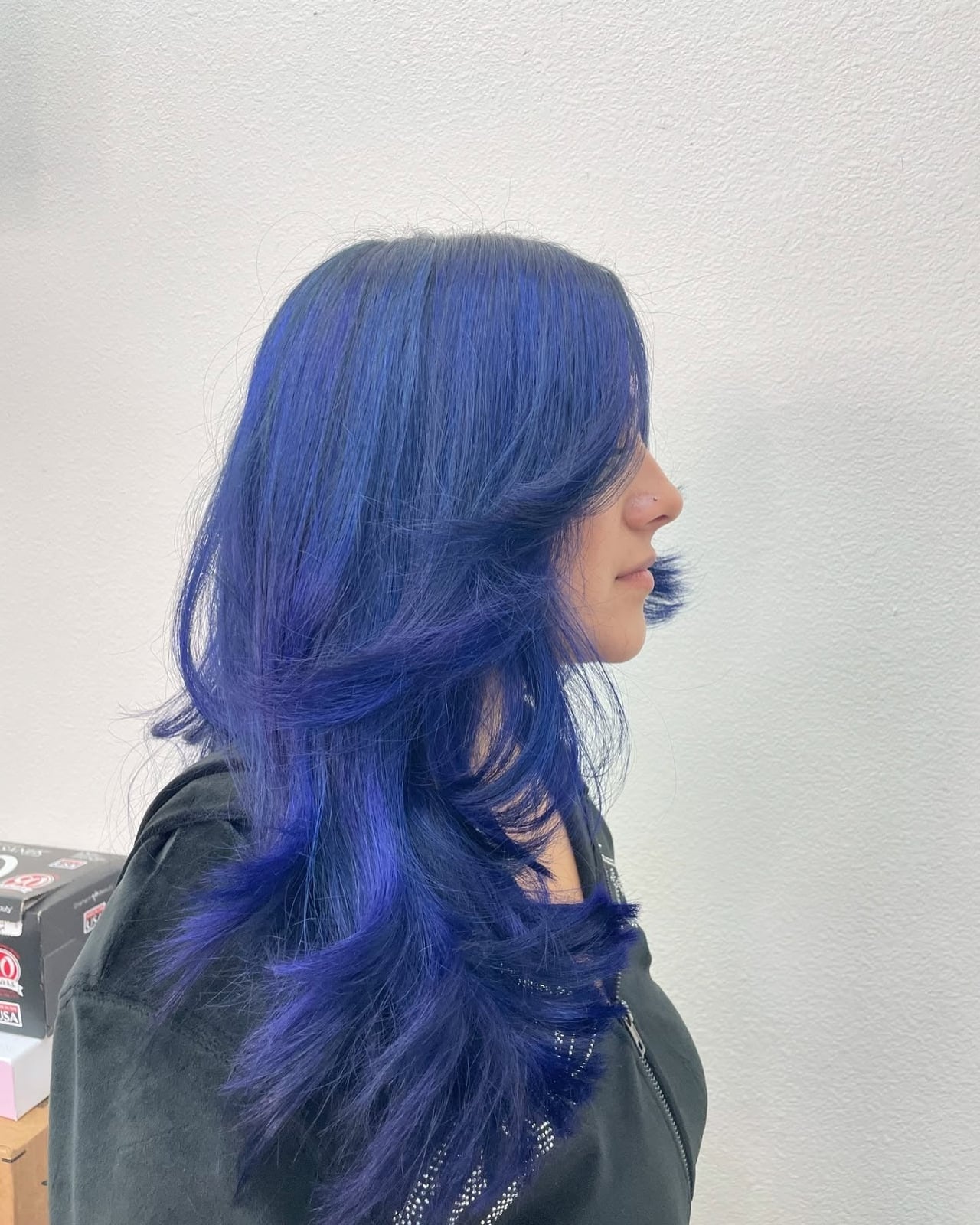
A solid royal blue is striking, but the addition of lighter blue highlights gives this version a dimension that a single shade cannot match. The highlights contrast with the base, which keeps the color from reading as a flat block. The curtain bangs and middle parting frame the face without overwhelming it.
Ask your colorist for: mid-back layered hair in royal blue with lighter blue highlights and curtain bangs. Thick, wavy hair starting at mid-back length holds the highlights well, and the layers prevent the length from feeling heavy. The waves add separation, and the curtain bangs need a trim every four weeks to stay in shape.
Mid-Back Vibrant Blue With Darker Undertones
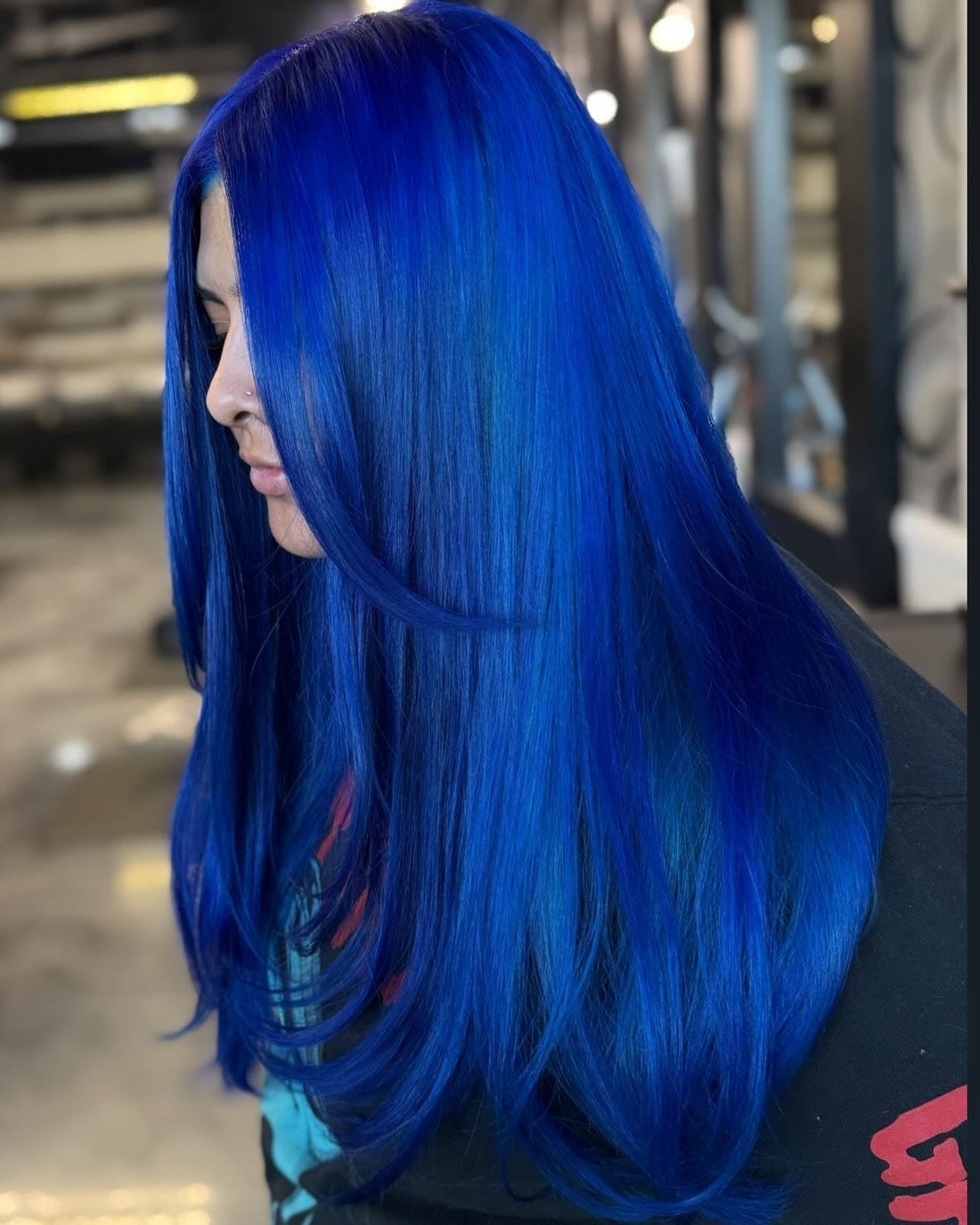
The vibrant blue is the headline, but the darker undertones are what keep it from reading as one-note. Those deeper shades sit beneath the surface, adding a subtle complexity that a single bright color cannot achieve on its own. The blowout styling keeps the finish smooth and polished.
Ask your colorist for: mid-back length layered hair in vibrant blue with darker undertones. Thick, straight hair at mid-back length is the best match, and the layers add shape without sacrificing length. A smoothing serum before blow-drying controls flyaways, and a toning appointment every four to six weeks prevents the vibrant blue from shifting toward green.
Mid-Back Light Blue With Natural Waves
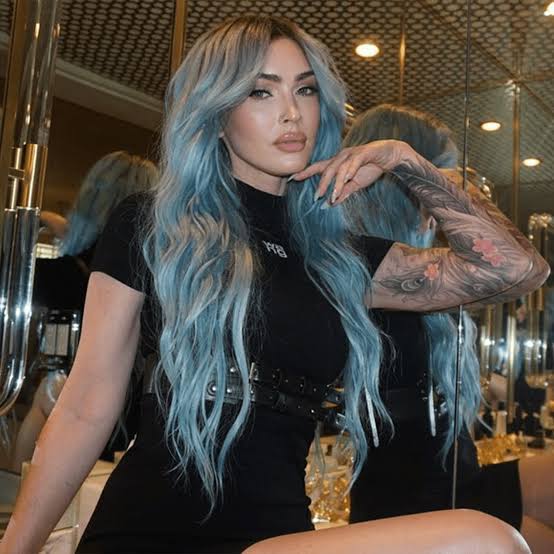
A uniform light blue all the way from root to tip is the kind of color that looks deceptively simple. The mid-back length and thick, wavy texture here give it movement, but achieving that icy shade means lifting your base to a very pale level first. That part is strictly a salon job, expect a multi-step process over several hours.
The trade-off for that airy, natural finish is vigilance: light blue fades fast and pulls green or brassy without regular care. Ask your colorist for: mid-back length uniform light blue hair with natural waves. Thick, wavy hair starting at mid-back length is the ideal starting point; layers keep the solid color from feeling flat. Plan on a toning appointment every four to six weeks and a purple shampoo in your rotation at home.
Mid-Back Dark Brown Base With Light Blue Balayage and Curtain Bangs
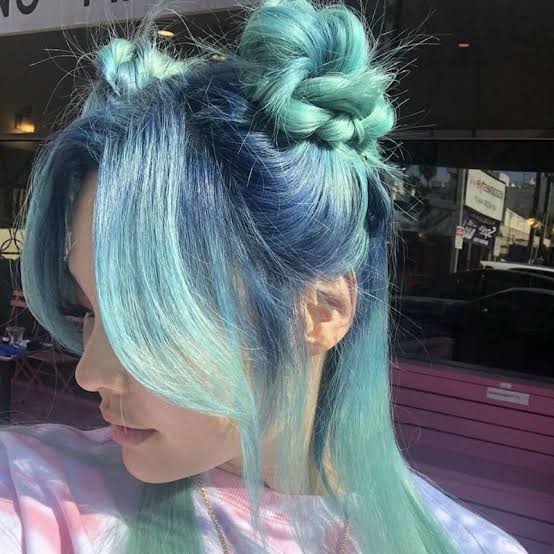
Can a blue and teal ombré actually look understated? When it starts with a dark brown base and fades into lighter tones through the lengths, yes. The two braided buns and curtain bangs keep the whole thing playful, and the middle parting gives symmetry to the color transition.
Ask your colorist for: mid-back length hair with dark brown base and light blue balayage. This works best for fine, wavy hair starting at mid-back length. The fine texture lets the softer teal ends show as a deliberate fade. The balayage refresh falls around every three months. Curtain bangs soften the forehead line and make the buns feel less precious.
Mid-Back Blue And Teal Ombré In Braided Buns
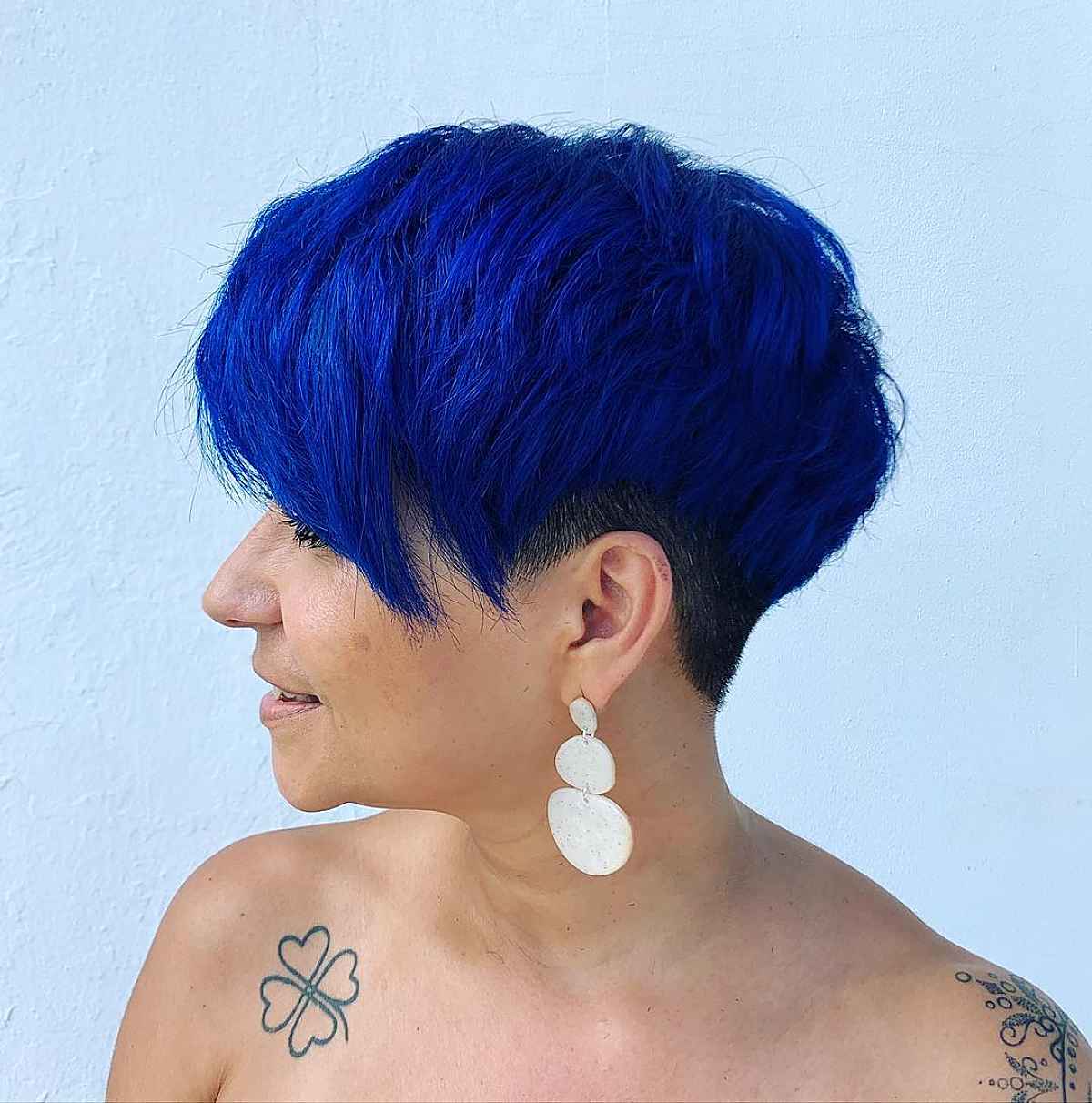
A pixie cut with an undercut is a high-contrast canvas, and a vibrant electric blue takes it further. The side-swept fringe and side parting add asymmetry to the fine, straight texture, making the shape feel deliberate rather than severe. Ask your colorist for: short pixie with undercut and vibrant electric blue. This is a low-maintenance cut with a high-maintenance color. The grow-out is clean, but the tone needs a refresh every three to four weeks to stay that bright.
Mid-Back Layers With Bright Blue Accent Buns
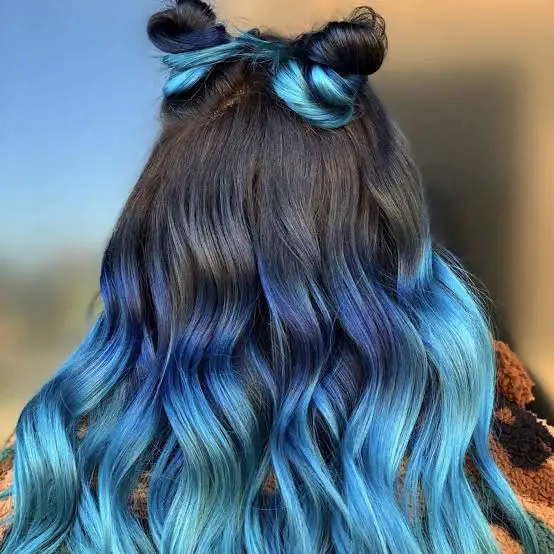
Double buns read as playful by default, but a dark base with bright blue highlights gives them a structured edge. The long layers keep the mid-back length from feeling heavy, and the wavy texture adds grip for the buns to hold their shape. Start with medium density, wavy hair at mid-back length for the best volume.
Ask your colorist for: mid-back length layered hair with dark base and bright blue highlights styled in double buns. The blue pieces act as an accent, so the color commitment is lower than a full head of vivid. This is a festival or casual weekend look, secure each bun with pins and a texture spray for staying power. The long layers mean you can wear it down between updos, and a trim every ten to twelve weeks keeps the shape clean.
Final Thoughts
For a subtle approach, opt for dark bases with blue highlights or balayage. If you’re ready for more impact, consider a deep navy or a vibrant blue ombré, ensuring the base color complements your natural undertones.
- Maintain vibrant blue tones with color-depositing shampoo and conditioner every 2-3 washes.
- Deep condition weekly to combat potential dryness from the bleaching process.
- Use sulfate-free shampoos to prolong color life.
- Rinse with cool water to seal the cuticle and retain color.
- Plan for toning touch-ups every 4-6 weeks to keep the blue bright.
Classy blue hair is about thoughtful application and rich tones.