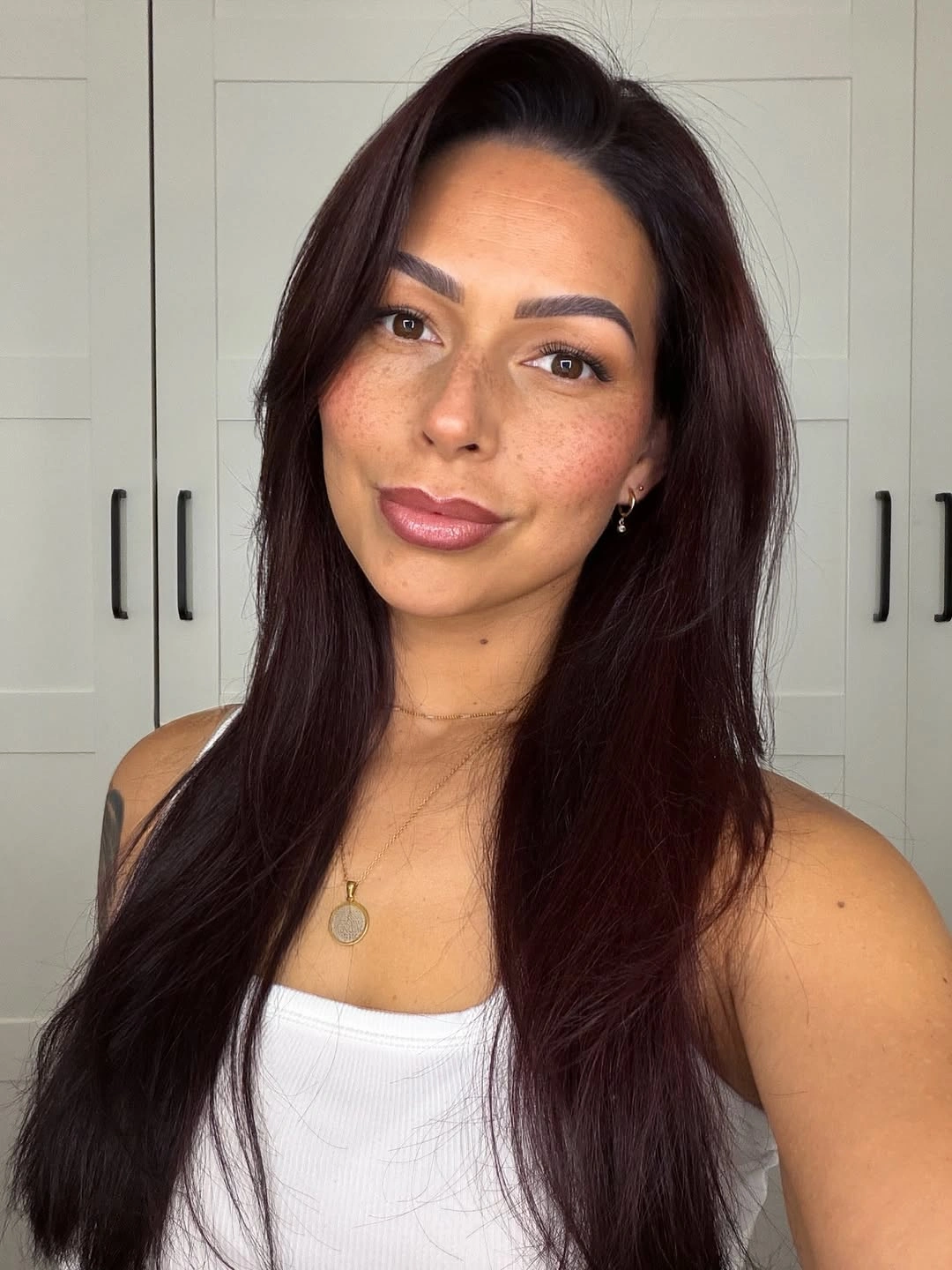

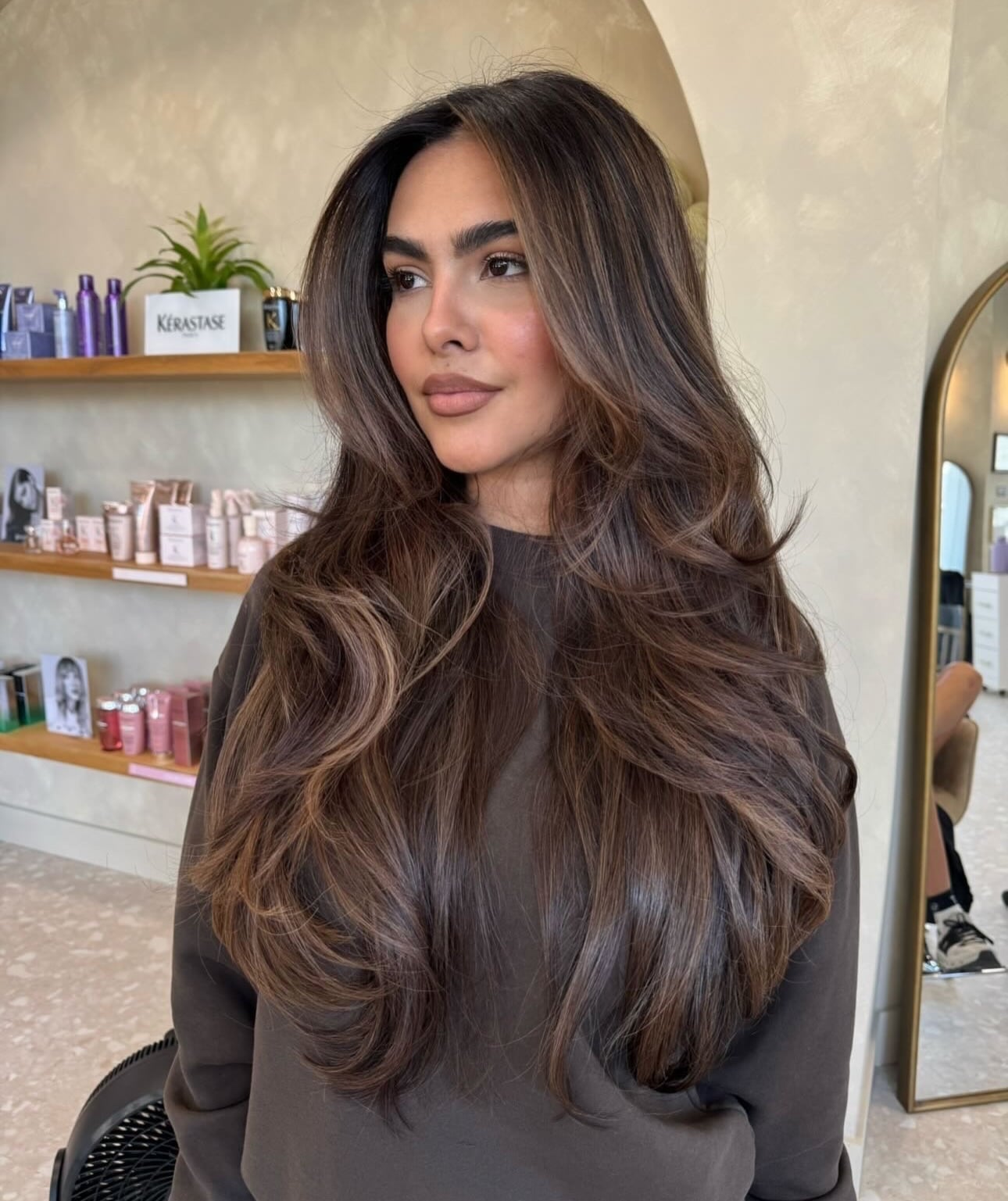
Brown hair gets a dimension upgrade when highlights catch the light instead of fighting it. The current shift favors soft, face-framing placement over uniform streaks, so the color moves with natural texture rather than sitting on top of it.
This collection of 35 Classy Highlights Brown Hair ideas covers subtle lifts and contrasting tones, from shoulder-length cuts to mid-back lengths, straight to wavy textures. A visible grow-out line stops being a problem when highlights are placed to blend, and fine hair gains movement without losing density. The range suits anyone who wants color that works with their base, not against it.
Dark Brown Hair With Subtle Lighter Brown Highlights
This is less about contrast and more about a quiet shift in depth. The lighter brown highlights sit just a shade or two above the dark brown base, so the dimension reads as natural rather than applied. A middle part and mid-back length let the color fan out evenly, and the soft waves catch the light in a way that makes the highlights look like they belong there. Thick, wavy hair of this length is the ideal canvas. Ask your colorist for: dark brown base with subtle lighter brown highlights, soft waves. A smoothing serum worked through damp mid-lengths and ends before blow-drying keeps the finish glossy and the color even.
Dark Brown With Face-Framing Lighter Brown Highlights
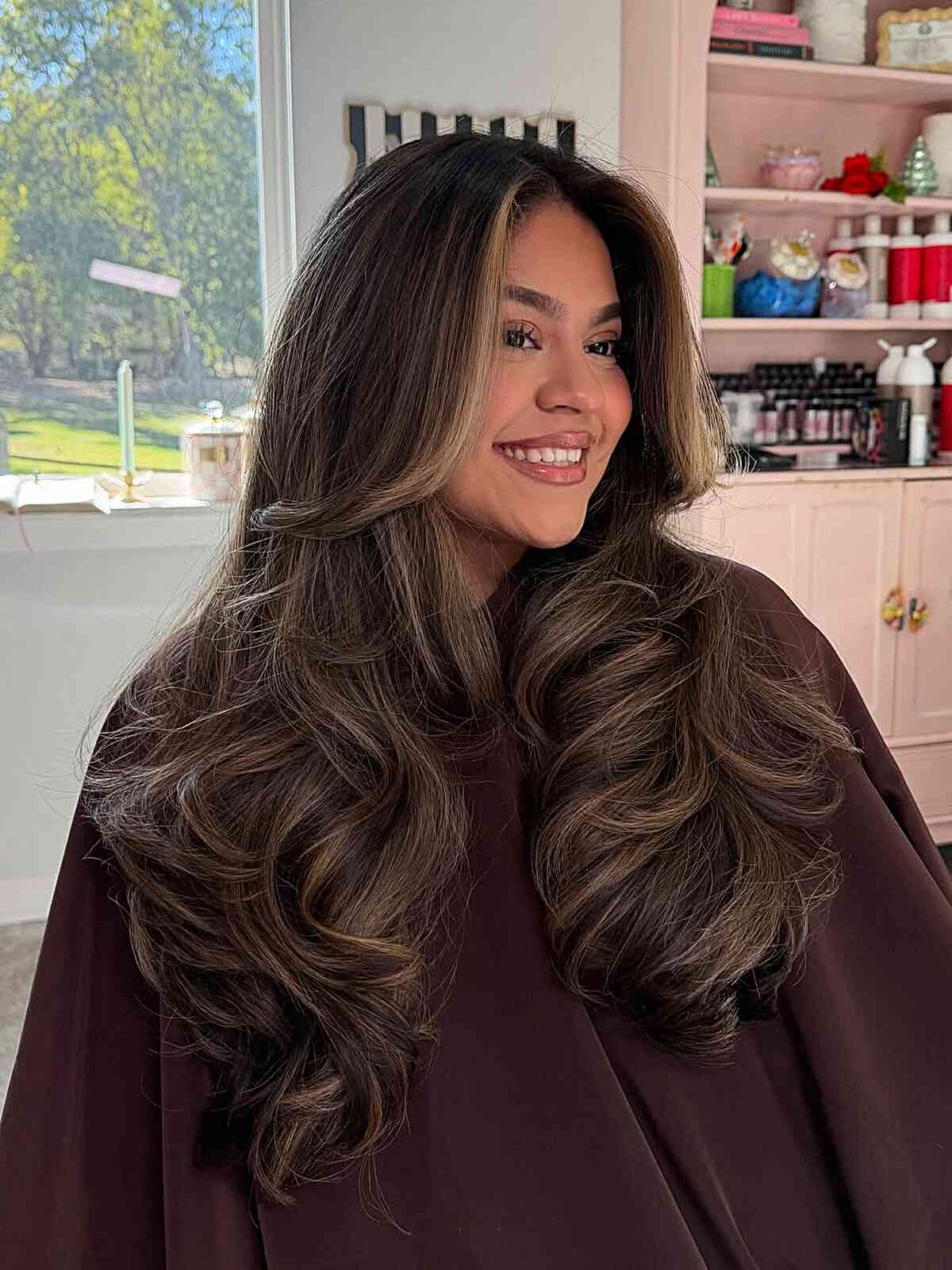
Who actually benefits from highlights that stop around the face? Anyone with a square or oval jawline, because the lighter strands soften the perimeter without committing the whole head to a color shift. The dark brown base stays rich in the back, while the face-framing sections get the lift. Side-parted and blown out with volume at the crown, it has a deliberate polish that reads as a full salon service rather than a grow-out.
Ask your colorist for: dark brown base, lighter brown face-framing highlights, soft waves. A round brush during blow-drying is the tool that makes those face-framing layers curve instead of lie flat. Plan for a toning appointment every eight to ten weeks to keep the lighter pieces from warming up too much.
Dark Brown With Curtain Bangs And Lighter Highlights
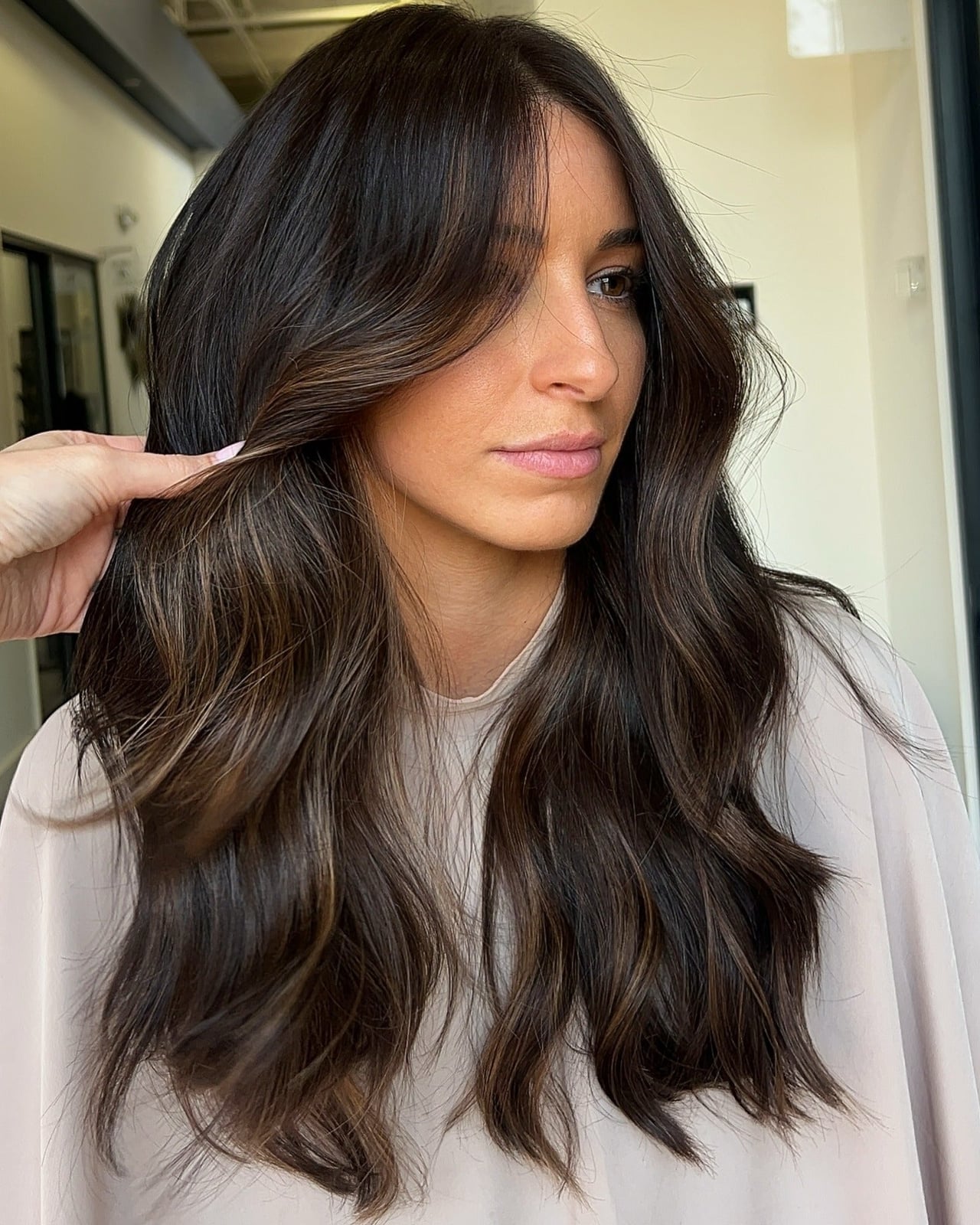
Curtain bangs shift the whole dynamic of dimensional color. Without bangs, the lighter brown highlights spread evenly from root to tip. With curtain bangs, the color gains a focal point at the cheekbone, and the dark brown base looks deeper because the lighter strands are concentrated forward. It is the same technique, different proportion. Thick, wavy hair of mid-back length takes the weight of both the bangs and the layers. Ask your colorist for: dark brown base, subtle lighter brown highlights, curtain bangs. Gently blow-dry the bangs with a medium round brush. No heavy product near the fringe.
Medium Brown With Caramel Highlights And Side Part
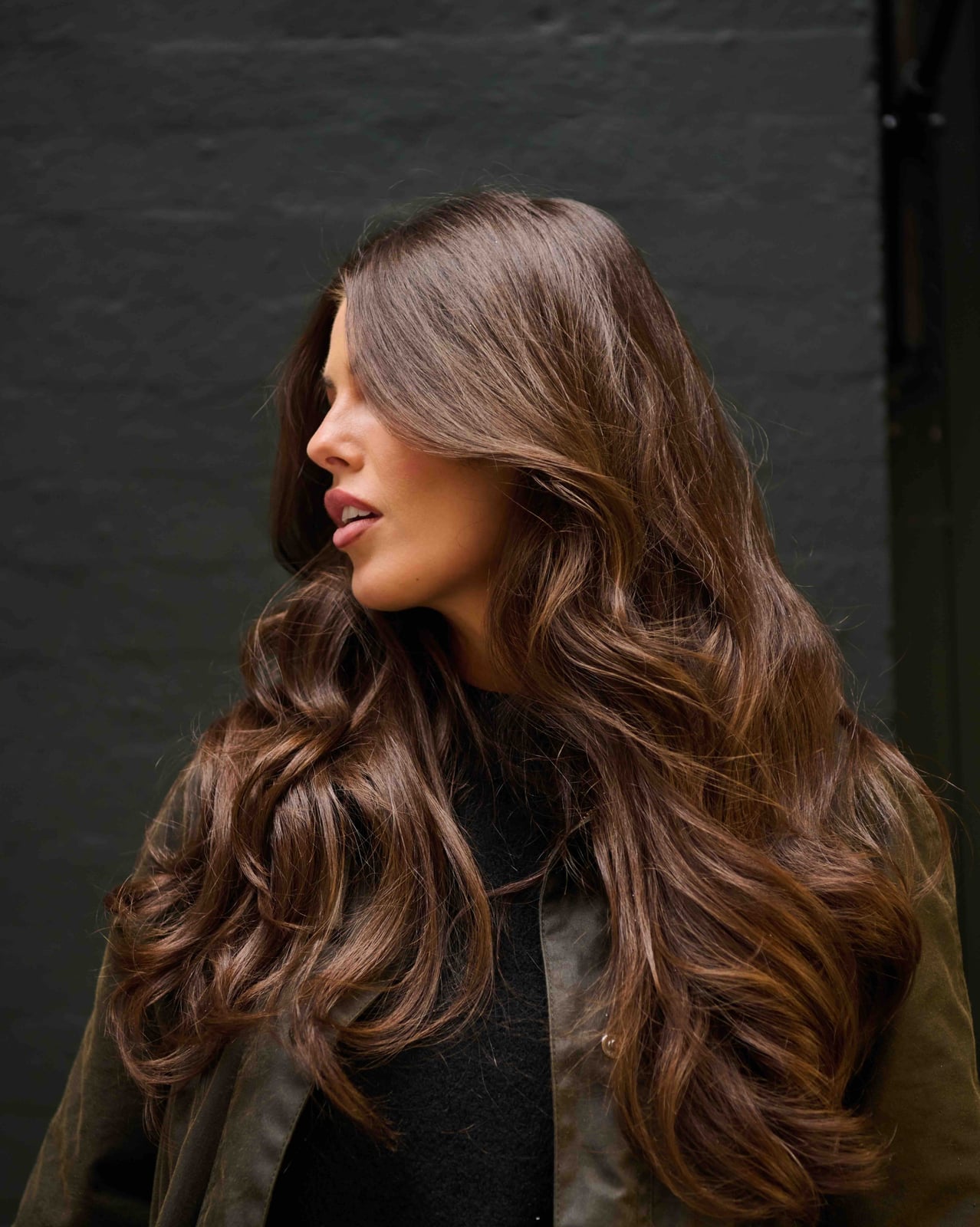
The caramel here is not golden and not copper, but a warm brown that sits close to the medium brown base. A side part changes how the highlights land: instead of a symmetrical frame, the deeper side gets a heavier concentration of caramel, while the lighter side shows more of the base color. It creates the kind of sun-kissed effect that looks accidental but was carefully placed. Long layers keep the weight moving, and the wavy texture lets the caramel settle into the bends rather than the straight stretches.
Ask your colorist for: medium brown base, subtle caramel highlights, loose waves. For a quick volume trick, flip the side part to the opposite side after styling. The change in direction lifts the crown instantly.
Wavy Medium Brown With Caramel Highlights
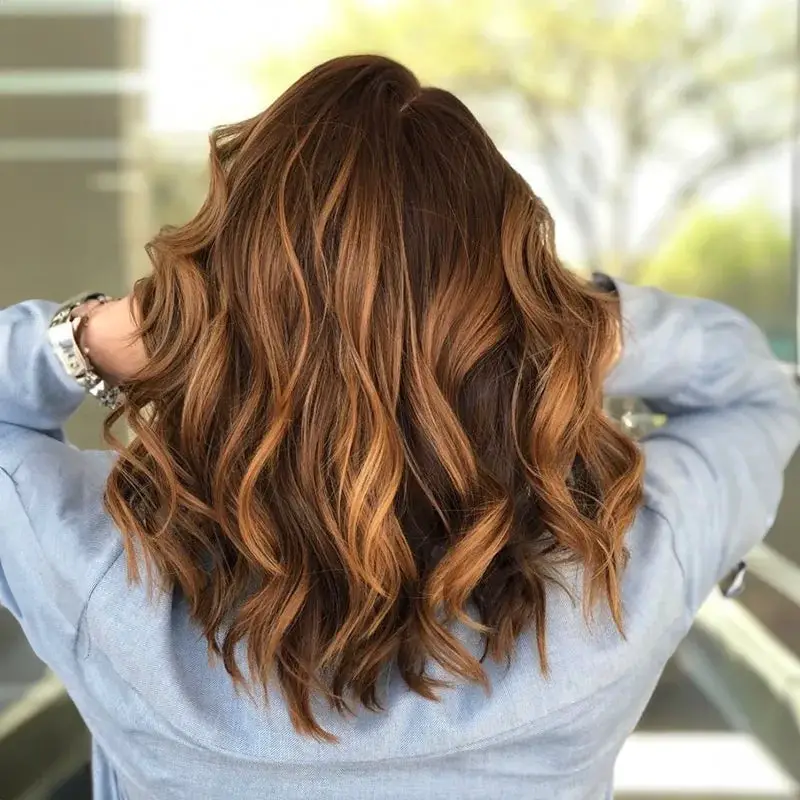
Upkeep on caramel highlights is more about tone than root growth. The medium brown base and caramel pieces are close enough in shade that the grow-out line stays soft for weeks. What drifts is the caramel itself, which can pull brassy after six to eight washes if the water is hard. A cool-toned shampoo used once a week keeps it from oxidizing. Thick, wavy hair of mid-back length benefits from a texturizing spray on dry waves to separate the strands and let each caramel highlight register individually. Ask your colorist for: medium brown base, prominent caramel highlights, wavy blowout. A trim every ten weeks keeps the layers defined.
Dark Brown With Caramel Highlights Loose Waves
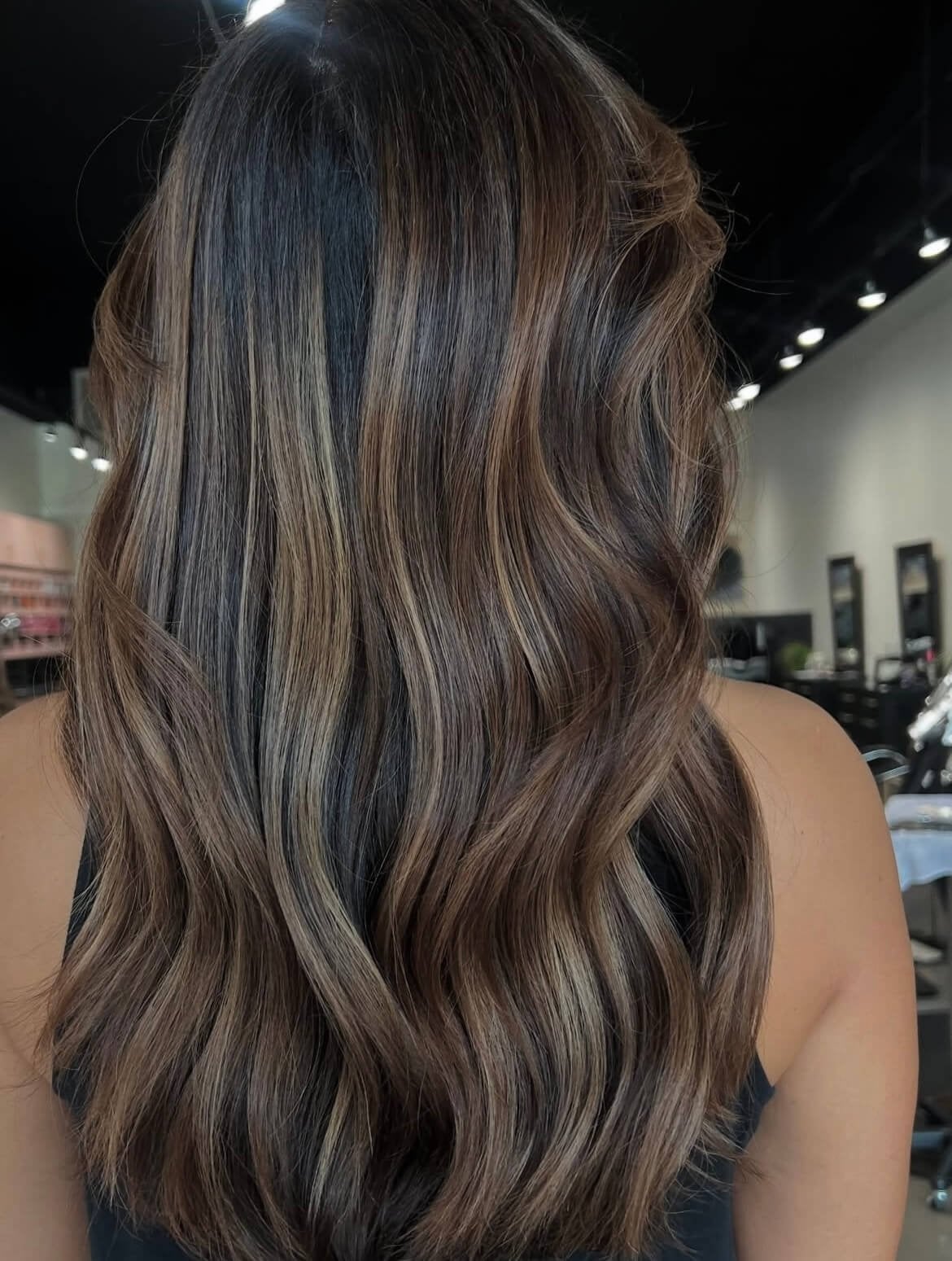
On a mid-back dark brown base, caramel highlights gain depth when they fall into the dips of a wave instead of lying flat. Ask your colorist for: dark brown base, caramel highlights, loose waves. Thick, wavy hair with natural movement holds this style well. The back view makes the technique plain: the lighter pieces peek out from underneath the darker surface, so the color looks layered without being heavy. A trim every eight weeks keeps the shape clean.
Dark Brown Base Rich Caramel Highlights Shine
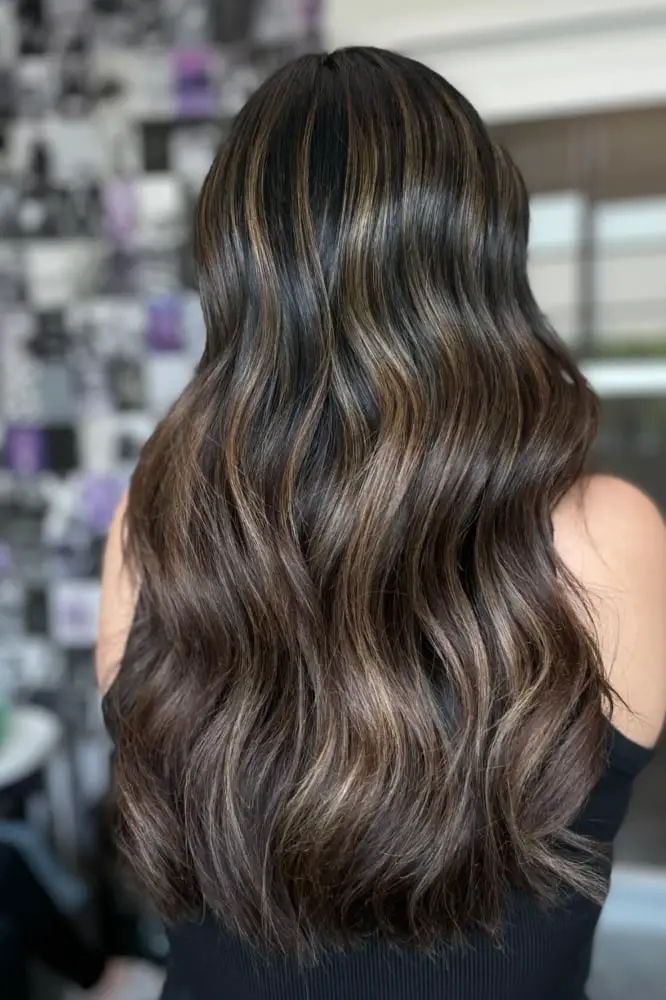
This color offers a deliberate but not loud alternative to high-contrast blonde. The dark brown base stays deep, while rich caramel highlights run through the mid-lengths and ends for a glossy, voluminous effect. Ask your colorist for: dark brown base, rich caramel highlights, voluminous waves. Rich caramel against dark brown needs a toning appointment every six weeks to keep the warmth from turning brassy. A blowout with a round brush gives the high-gloss finish, and that is a salon skill, not a DIY one.
Dark Brown With Warm Brown Highlights
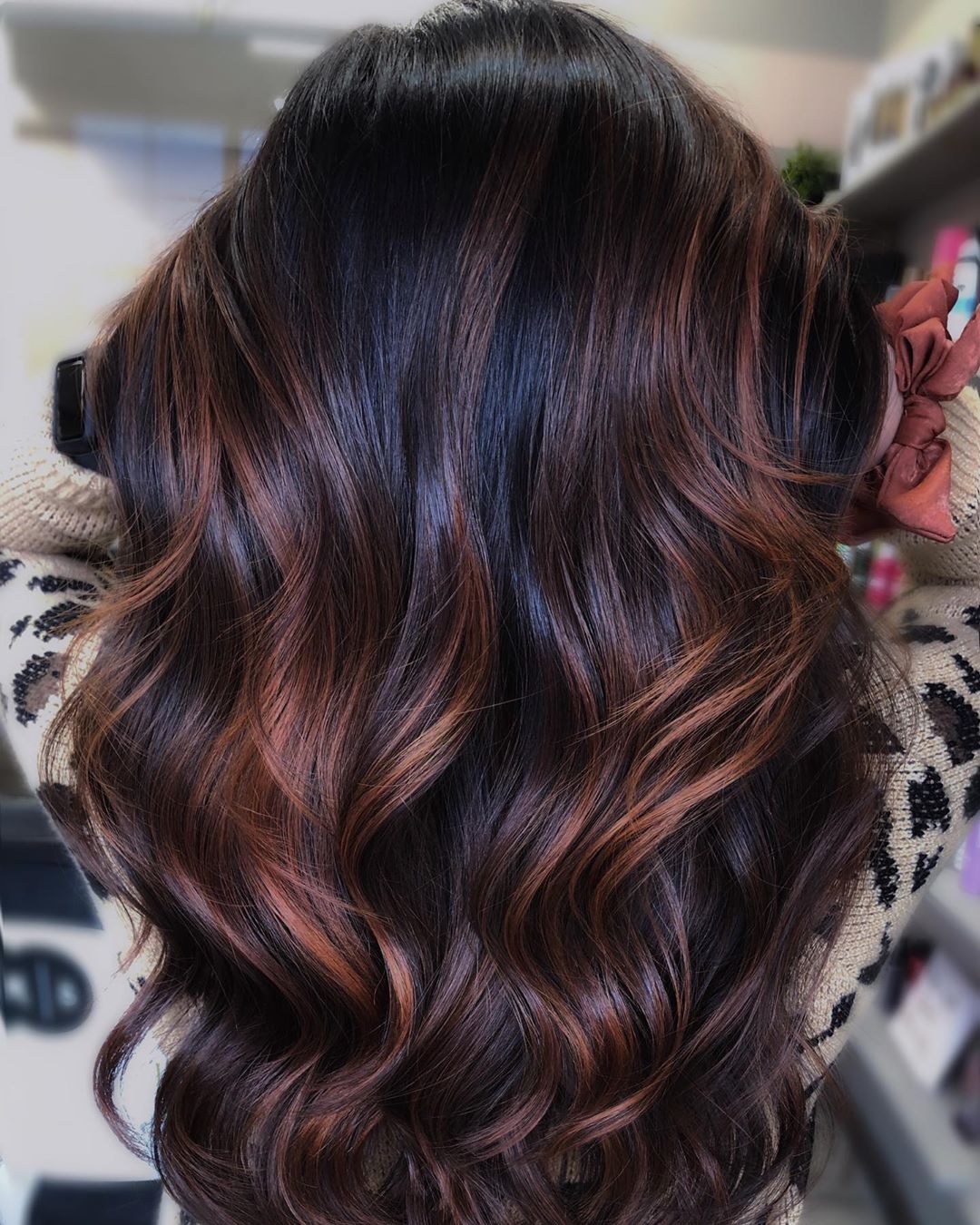
Is there a season when warm brown highlights do not work? They lean into autumn and winter tones without looking like a hairpiece. The dark brown base stays cool enough to ground the color, while the warm brown pieces add dimension that mimics natural sunlight. Ask your colorist for: dark brown base, warm brown highlights, loose waves. Subtle layers let the color spread evenly across thick, wavy hair. A blowout keeps the gloss visible, which is the main reason to choose this over a flat matte finish.
Chocolate Brown With Lighter Brown Highlights
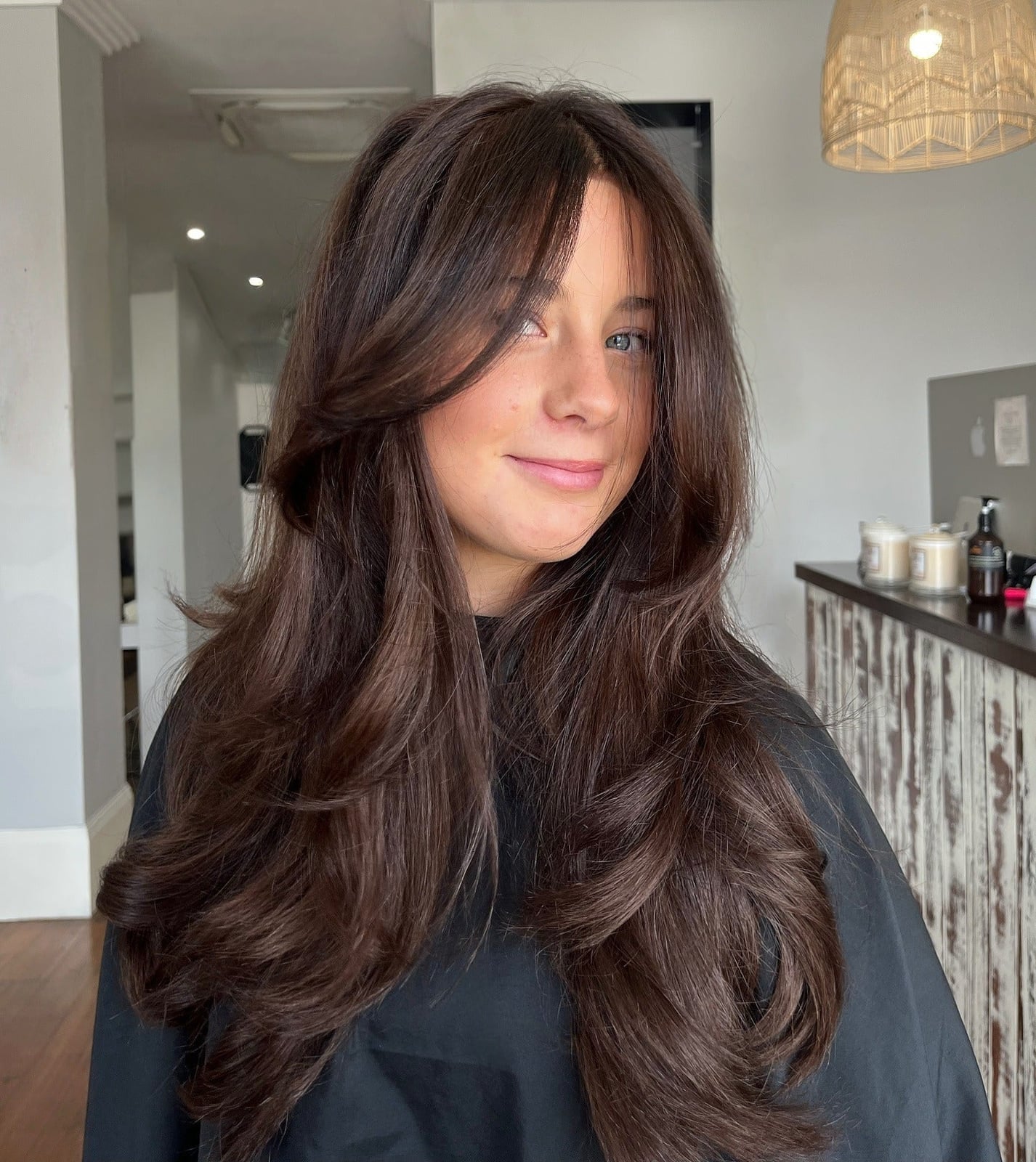
The chocolate brown base is the anchor here, and the lighter brown highlights do not fight it. They sit close enough to the base shade that the overall effect is rich, not streaky. Ask your colorist for: chocolate brown base, subtly blended lighter brown highlights, soft waves. On thick, mid-back hair with a middle parting, the highlights land in the mid-lengths and ends, which keeps the root area low-maintenance. A toning appointment every eight weeks is enough to keep the lighter pieces from pulling warm. The side view shows how the depth holds even in soft wave patterns.
Dark Brown With Lighter Brown Highlights Glossy Finish
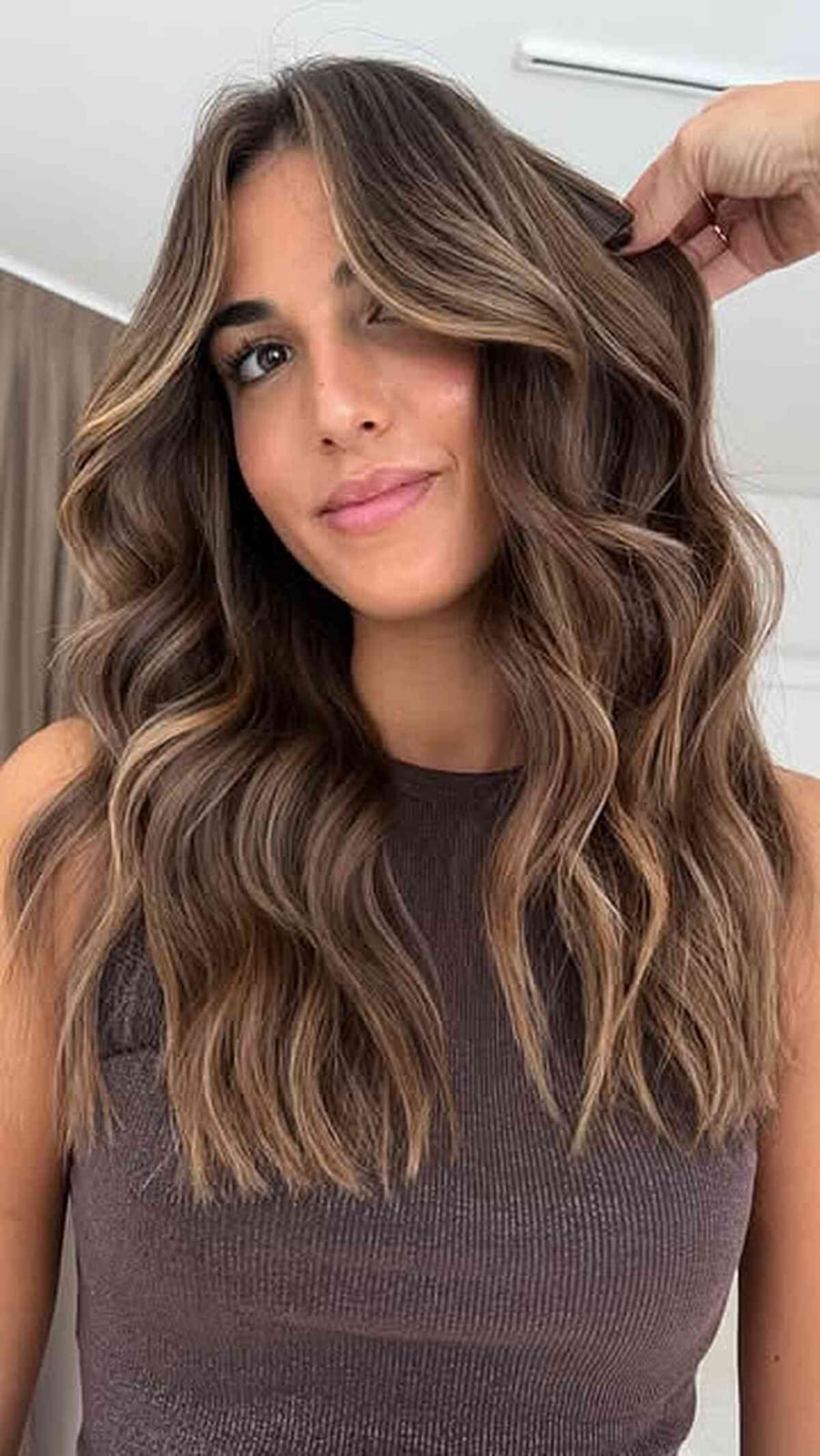
A glossy finish on dark brown hair with lighter brown highlights is not automatic; it requires the right blow-dry technique. The front view shows a middle parting and soft waves that catch light evenly, which is what makes the highlights look dimensional. Ask your colorist for: dark brown base, subtle lighter brown highlights, glossy waves. The upkeep involves a trim every eight weeks and a toning appointment every six weeks to keep the lighter pieces from turning brassy. A leave-in conditioner on damp hair helps maintain the shine between washes.
Shoulder Length Dark Brown With Blonde Highlights
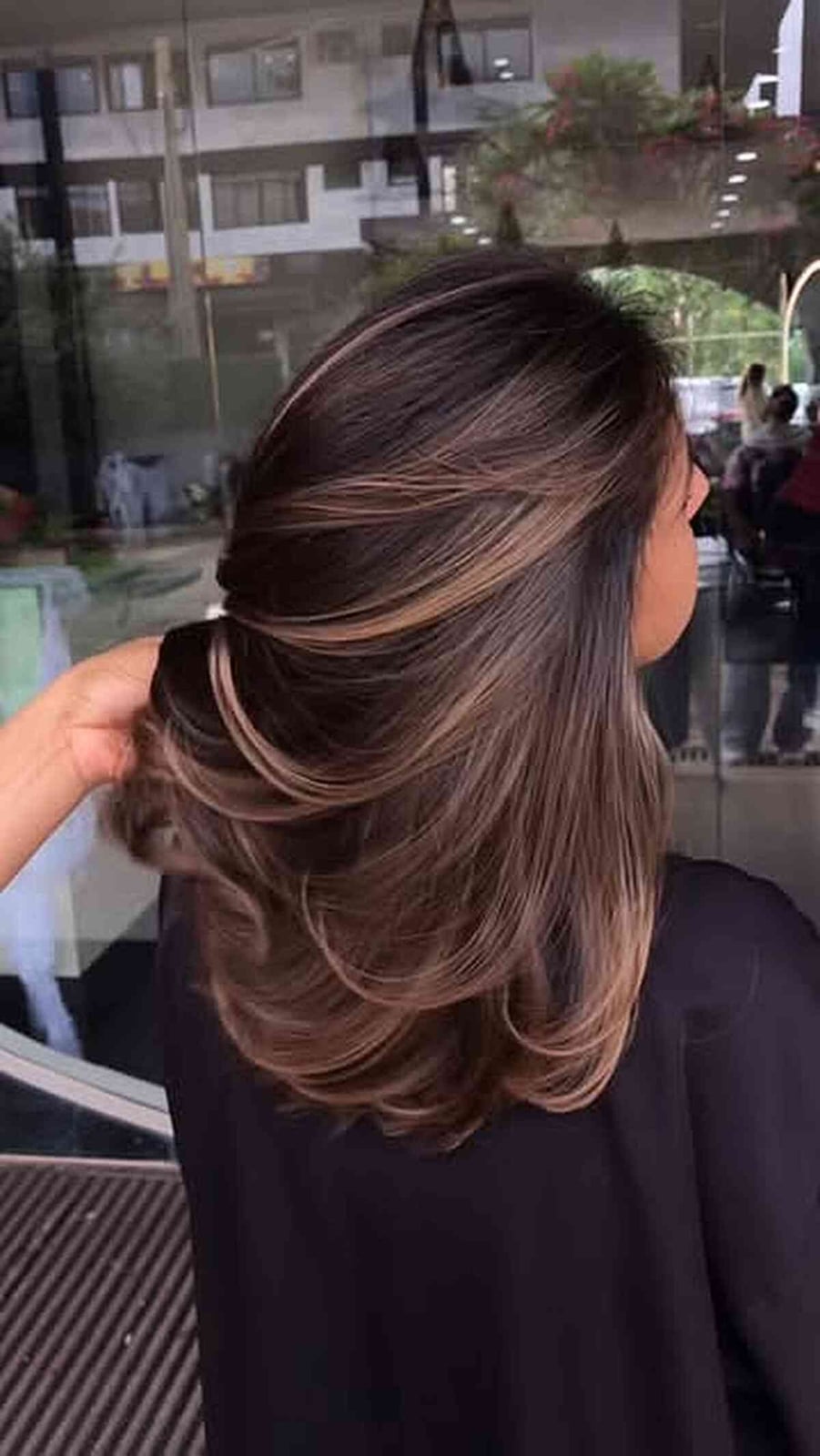
Can a shorter cut still pull off a high-contrast highlight? Yes, when the layers do the work. A shoulder-length cut with a dark brown base and woven blonde highlights looks like a deliberate color choice. The layers catch the lighter pieces near the ends, so the contrast stays visible without needing extreme length. This suits medium to thick textures best: fine hair can handle the same placement but needs a balayage hand to keep the root soft. Ask your colorist for: shoulder length dark brown, blonde highlights, layered cut. A dry texturizing spray lifts the wave pattern so the highlight dimension stays clear.
Collarbone Length Medium Brown Blonde Highlights
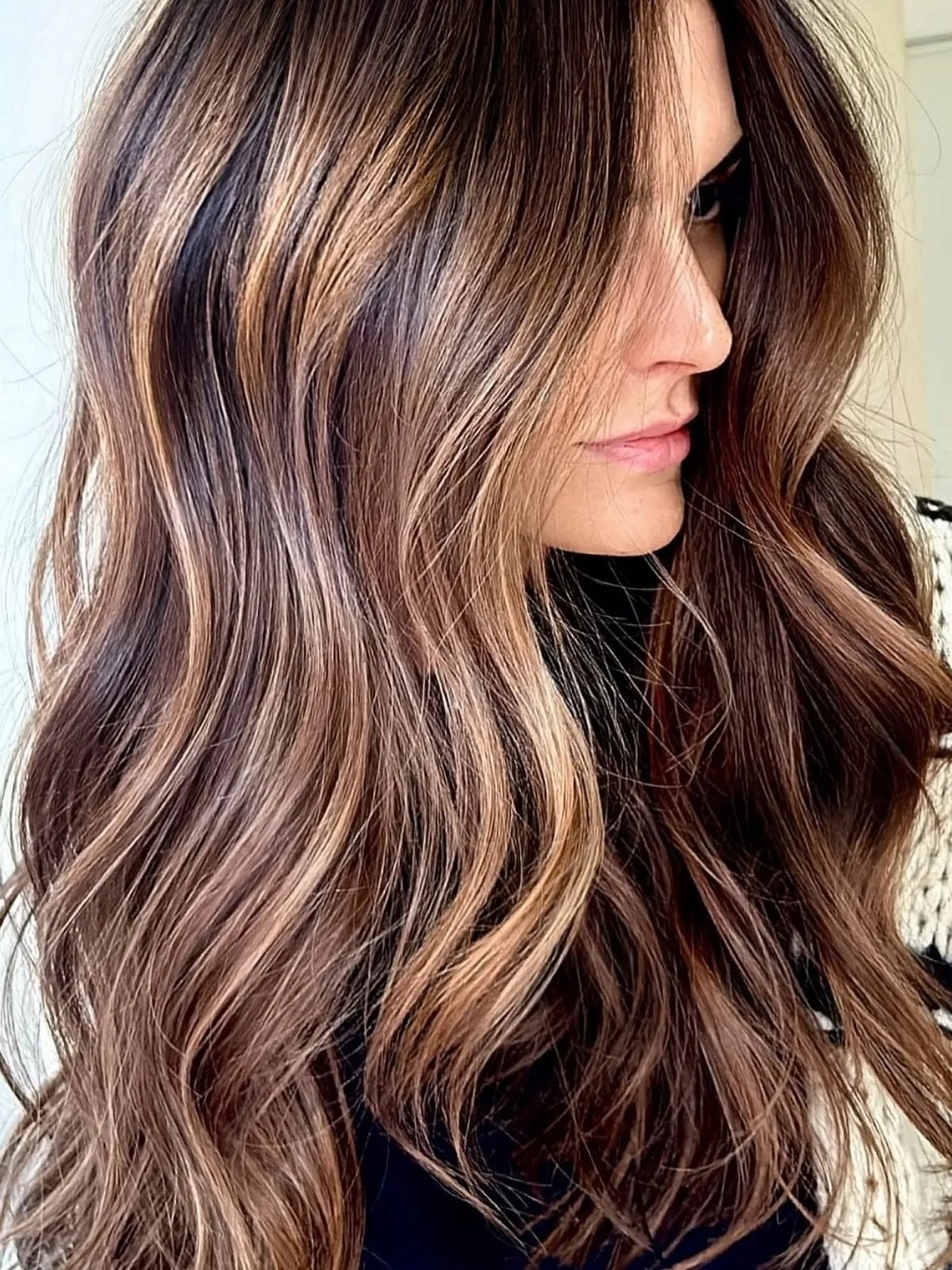
The design here relies on a precise balance: the medium brown base acts as the anchor, and the blonde highlights are painted in fine sections from midshaft to ends. A middle part splits the strands evenly, so each side mirrors the other in placement and tone. This is not a root-to-tip foil job; the colorist leaves the base intact at the scalp for a softer grow-out phase. The collarbone length keeps the shape polished without demanding a trim every four weeks. Ask your colorist for: collarbone length medium brown, blonde highlights, soft waves. A blowout with a round brush seals the gloss and smooths the cuticle, making the blonde pop against the darker base.
Shoulder Length Light Brown Highlights Lowlights
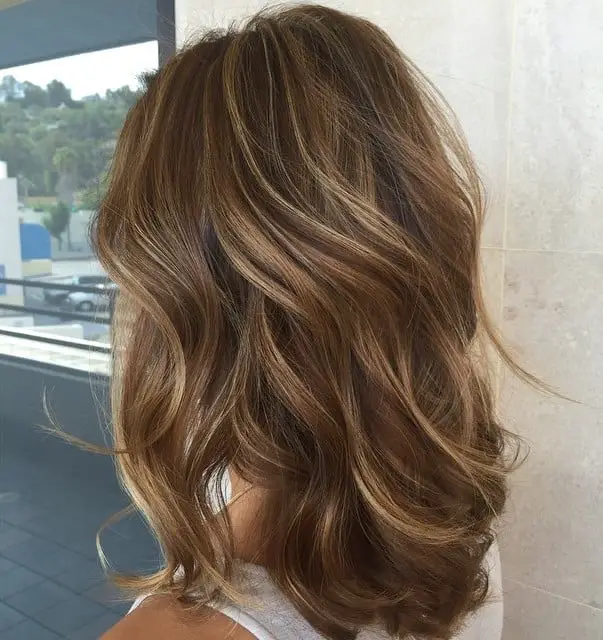
Highlights alone add brightness, but adding lowlights is what gives the color depth. On a light brown base, the blonde highlights lift the mids and ends, while the darker lowlights sit closer to the root area and along the underlayer, creating a natural shadow. The result reads less like a single process and more like a custom weave. This works best on medium textures that hold a wave without product. The shoulder length keeps the layers from swallowing the pattern. Ask your colorist for: shoulder length light brown, blonde highlights and lowlights. A sea salt spray on damp hair encourages the wave to settle around the dimensional color.
Mid-Back Dark Brown Ash Blonde Highlights
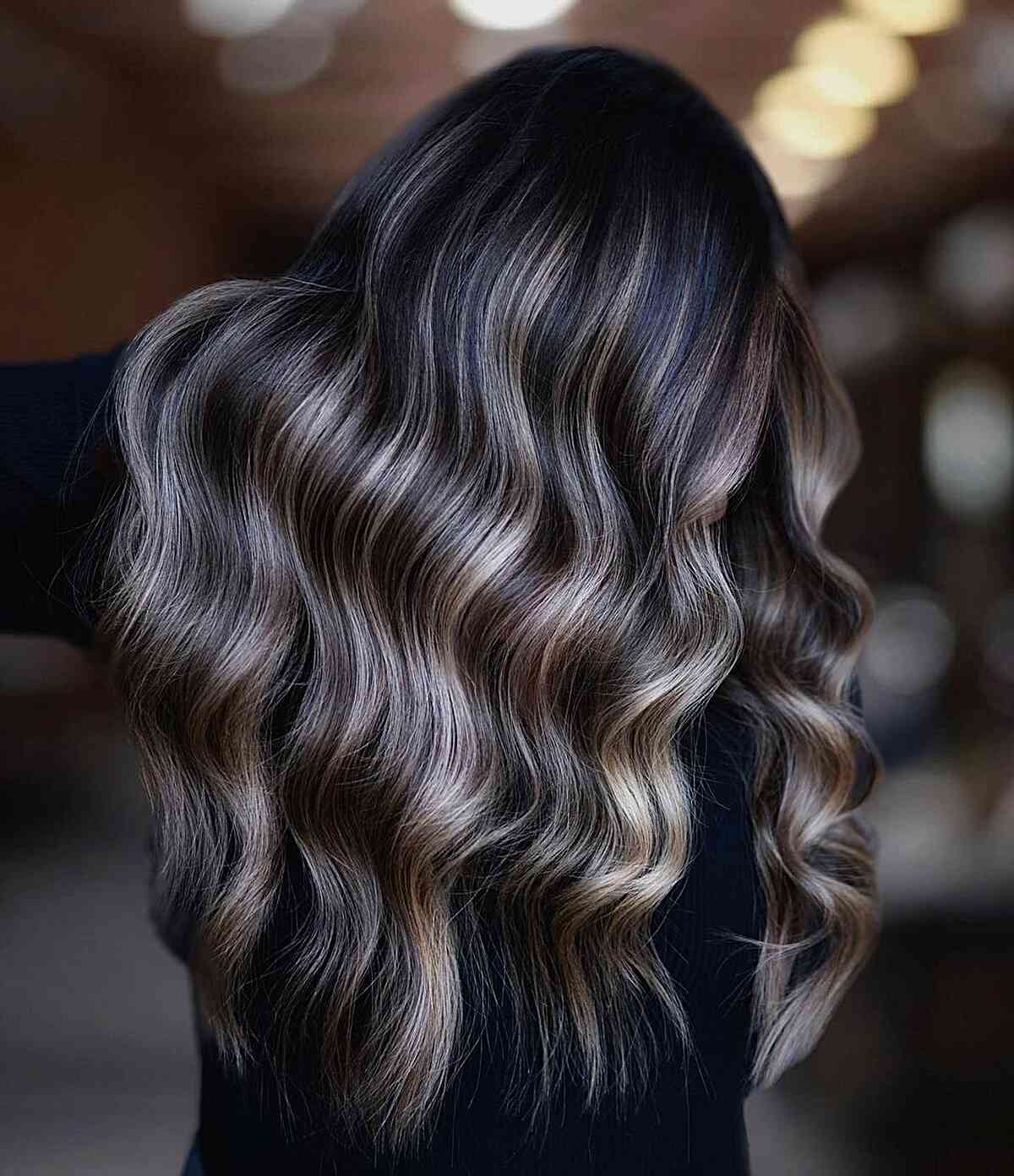
The cool ash tone against a dark brown base is what separates this from a standard caramel blend. The highlights are woven in thin ribbons from the mid-back down, skipping the root area to keep the line soft. The loose waves break up the color sections so the eye moves through the length rather than landing on a single stripe. This is a look that reads best on thick textures, where the density allows the ash pieces to sit visible without being swallowed by the base. Ask your colorist for: dark brown base, ash blonde highlights, loose waves. A purple shampoo used every second wash maintains the cool tone and prevents the ash from warming up over the weeks.
Long Layered Dark Brown Ash Blonde Dimension
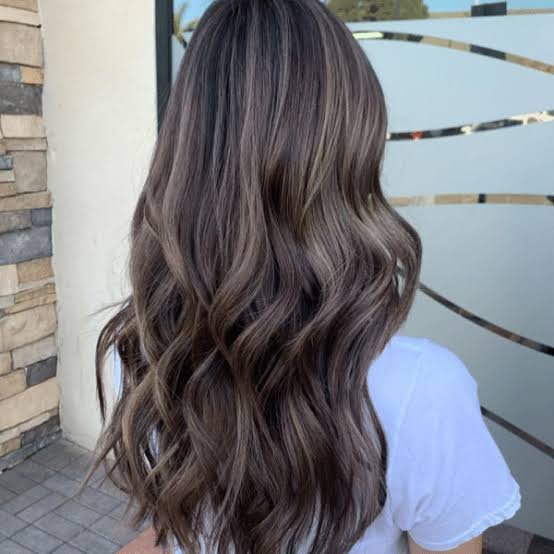
Long hair with a solid dark base can read flat, which is where the long layers and ash blonde highlights come in. The layers remove weight from the lower section, allowing the highlights to wrap around the movement rather than sit stacked on top. A middle parting divides the color evenly, and the wavy blowout softens the transition between the base and the lighter strands. The grow-out phase is forgiving: the ash tone blends into dark brown without a harsh line, so a toning appointment every eight to ten weeks keeps the cool edge. Ask your colorist for: long layered dark brown, ash blonde highlights, wavy curls. A curl cream on damp sections encourages the wave pattern without stiffening the strand.
Dark Brown With Contrasting Blonde Highlights
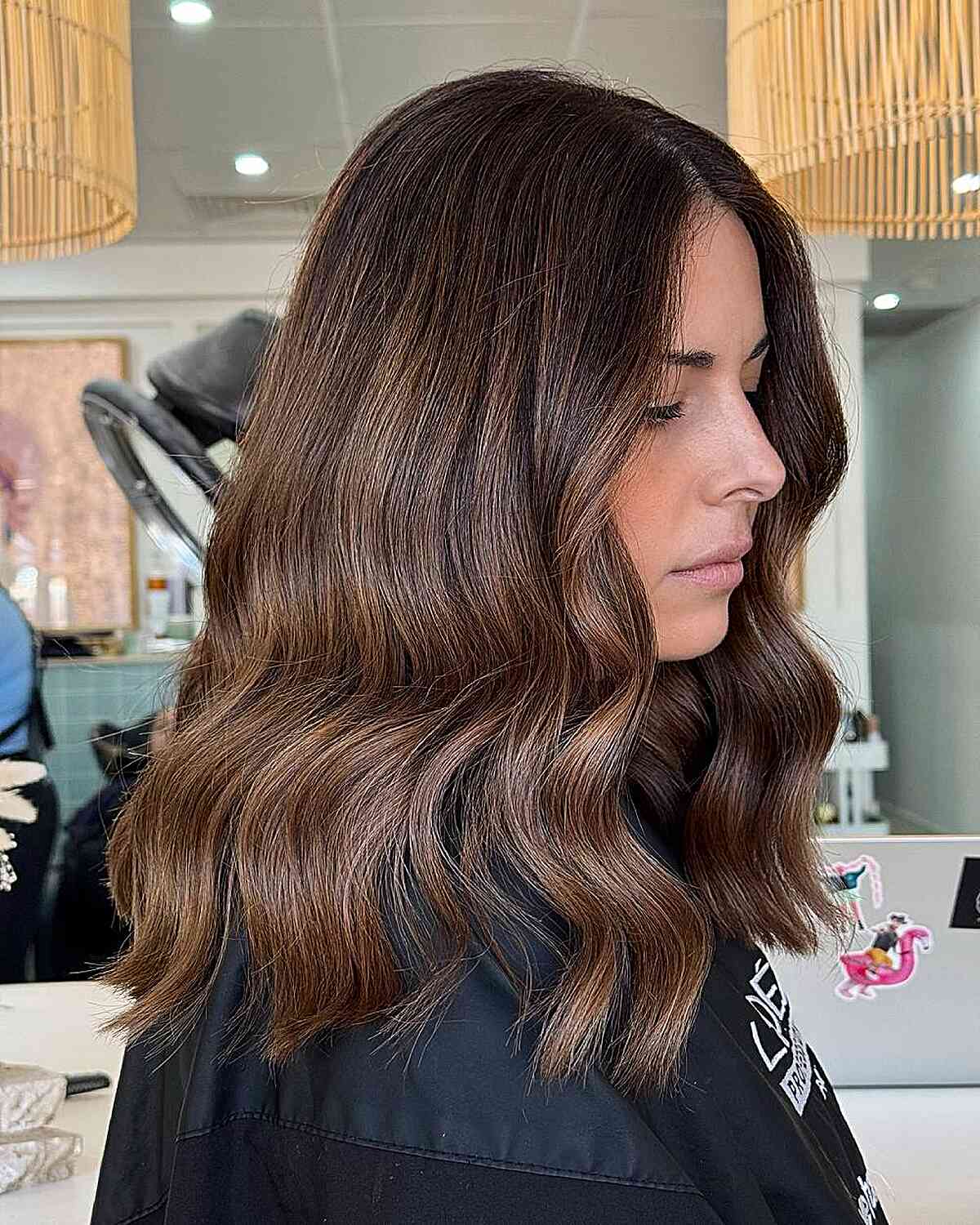
The contrast here is the point. A dark brown base with noticeable blonde highlights creates deliberate separation, and the loose waves keep it from reading as two separate colors. Thick, wavy hair at mid-back length carries this best because the texture breaks up the highlight lines into something that looks more like sunlight than a stripe. Ask your colorist for: dark brown base, noticeable blonde highlights, loose waves. A boar bristle brush smooths flyaways and pulls the gloss forward in about five minutes.
Dark Brown With Face-Framing Blonde Highlights, Mid-Back
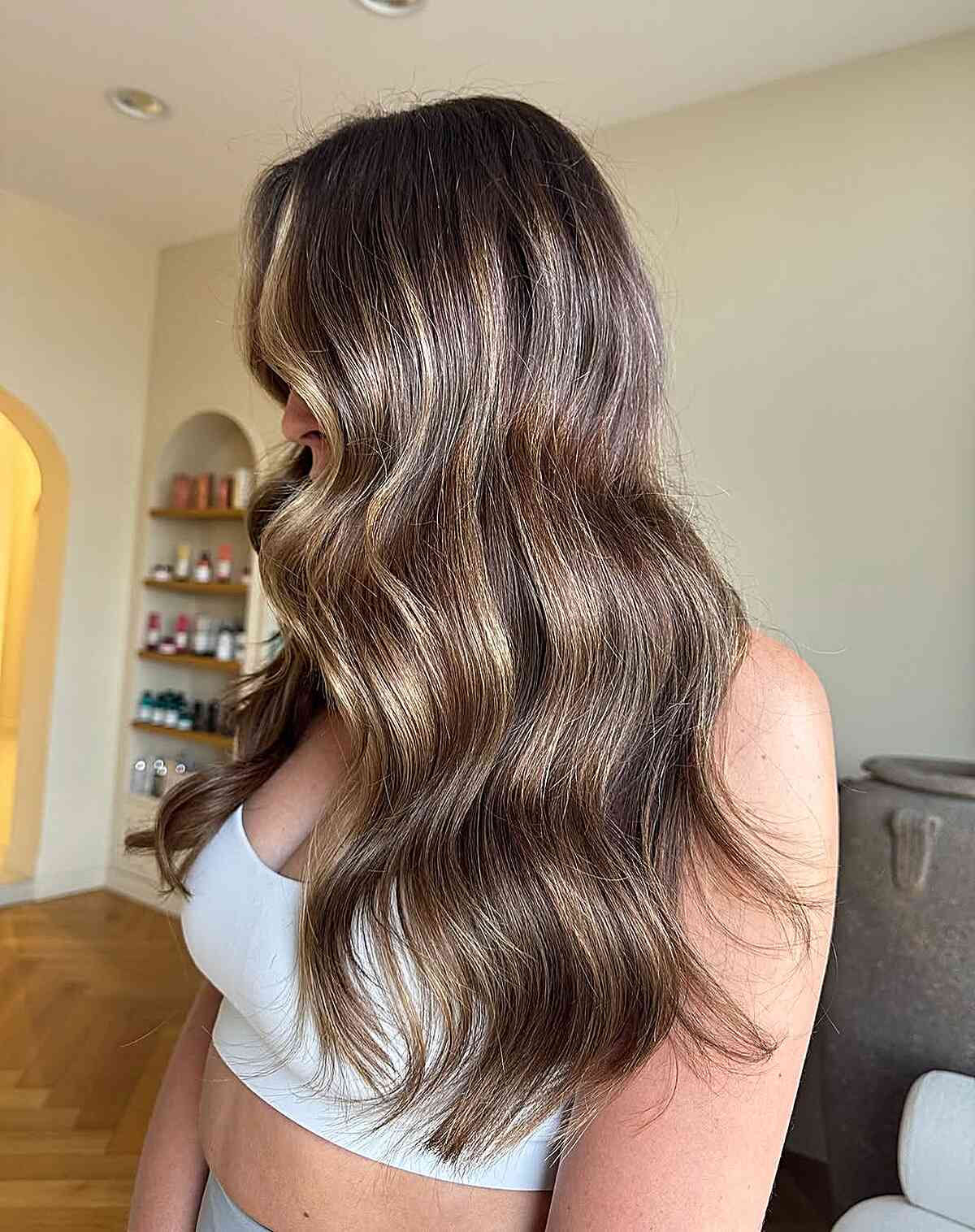
Does the highlight placement actually change how your face reads? Yes, when the lighter pieces sit at the front. These face-framing blonde highlights on a dark brown base draw attention outward and soften the line of a square or angular jaw. The mid-back length and thick, wavy texture give the colorist enough room to weave the lighter pieces through the layers without them disappearing into the rest of the hair.
Ask your colorist for: dark brown base, prominent blonde highlights, face-framing pieces. Apply styling cream to damp hair, focusing on the front sections, and air-dry or diffuse for definition that lasts.
Medium Brown With Striking Blonde Highlights
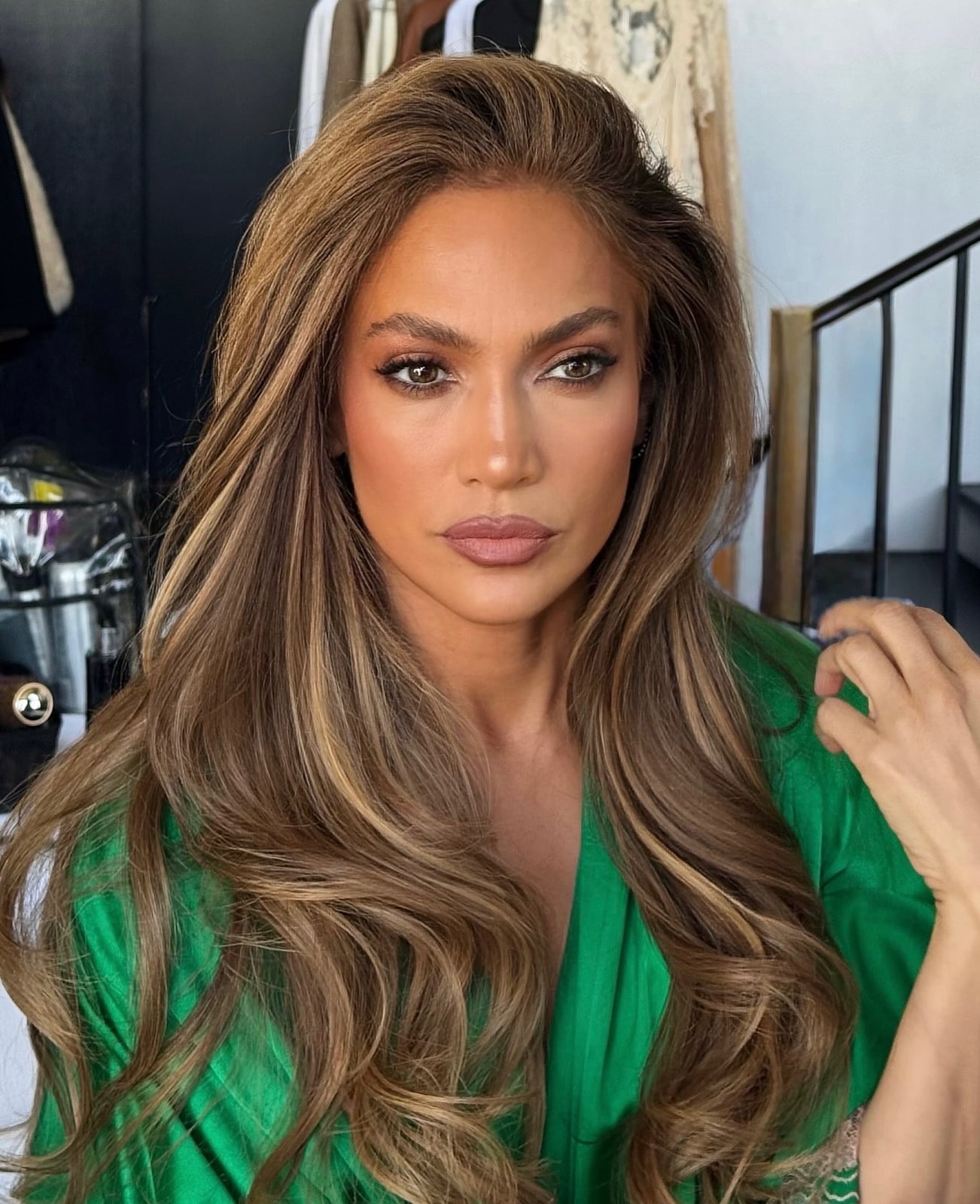
The technique here relies on contrast between a medium brown base and blonde highlights that sit noticeably lighter, not blended into a single tone. A voluminous blowout and loose waves push the dimension forward because the curves catch the light at different angles. Thick, wavy hair at mid-back length holds the shape without deflating. Ask your colorist for: medium brown base, striking blonde highlights, voluminous blowout. A large barrel curling iron creates the bounce in under fifteen minutes.
Collarbone Length Dark Brown Contrast Highlights
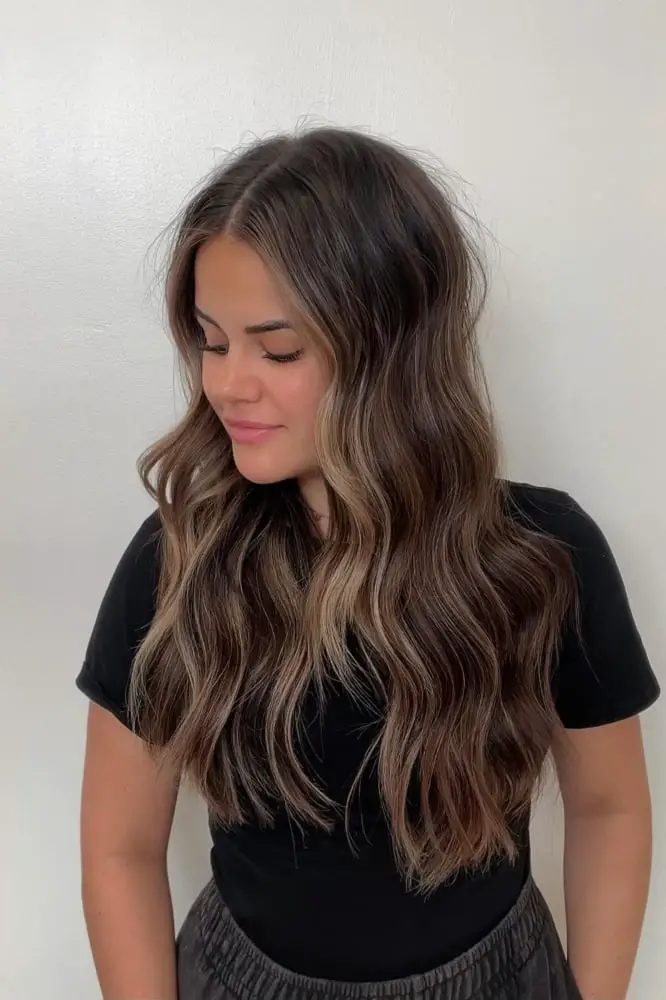
Subtle highlights blend into the base; contrast highlights sit apart from it. This collarbone length keeps the distinction visible because the hair is short enough that the lighter pieces don’t get lost in the length. Dark brown base with distinct lighter brown highlights on thick, wavy texture creates a deliberate look. Ask your colorist for: collarbone length dark brown, distinct lighter brown highlights. Use a texturizing spray on damp hair and scrunch for waves that hold the separation.
Collarbone Light Brown Subtle Blonde Highlights
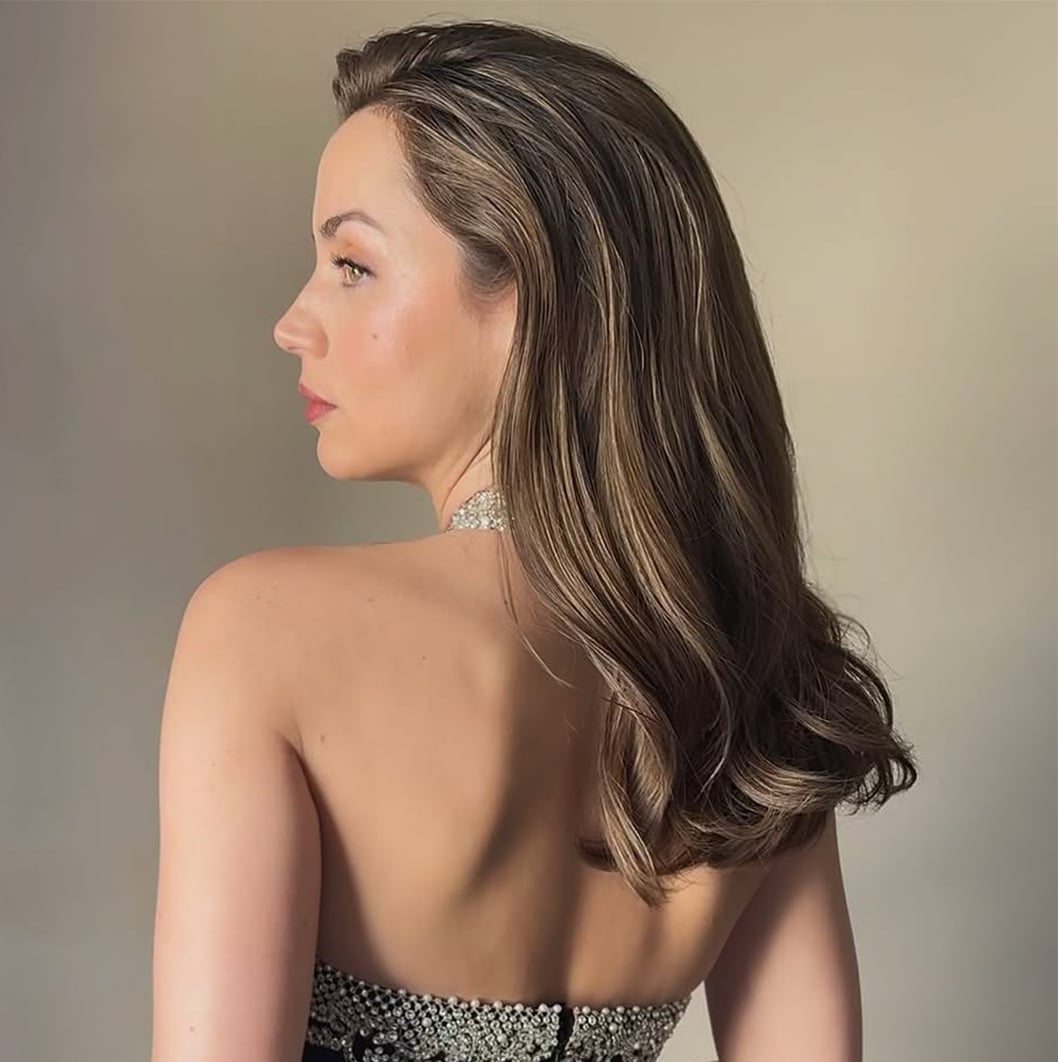
A light brown base with subtle blonde highlights is a low-contrast design, which means the grow-out is soft and the toning schedule is forgiving. The collarbone length and fine, wavy texture benefit from the face-framing layers, which add movement without removing density. The glossy finish comes from the fine texture reflecting light rather than from heavy product.
Ask your colorist for: collarbone length light brown, subtle blonde highlights, face-framing layers. A volumizing mousse at the roots before blow-drying lifts fine hair without weighing it down. Expect a toning appointment every eight to ten weeks.
Shoulder Length Light Brown Blonde Highlights, Wavy
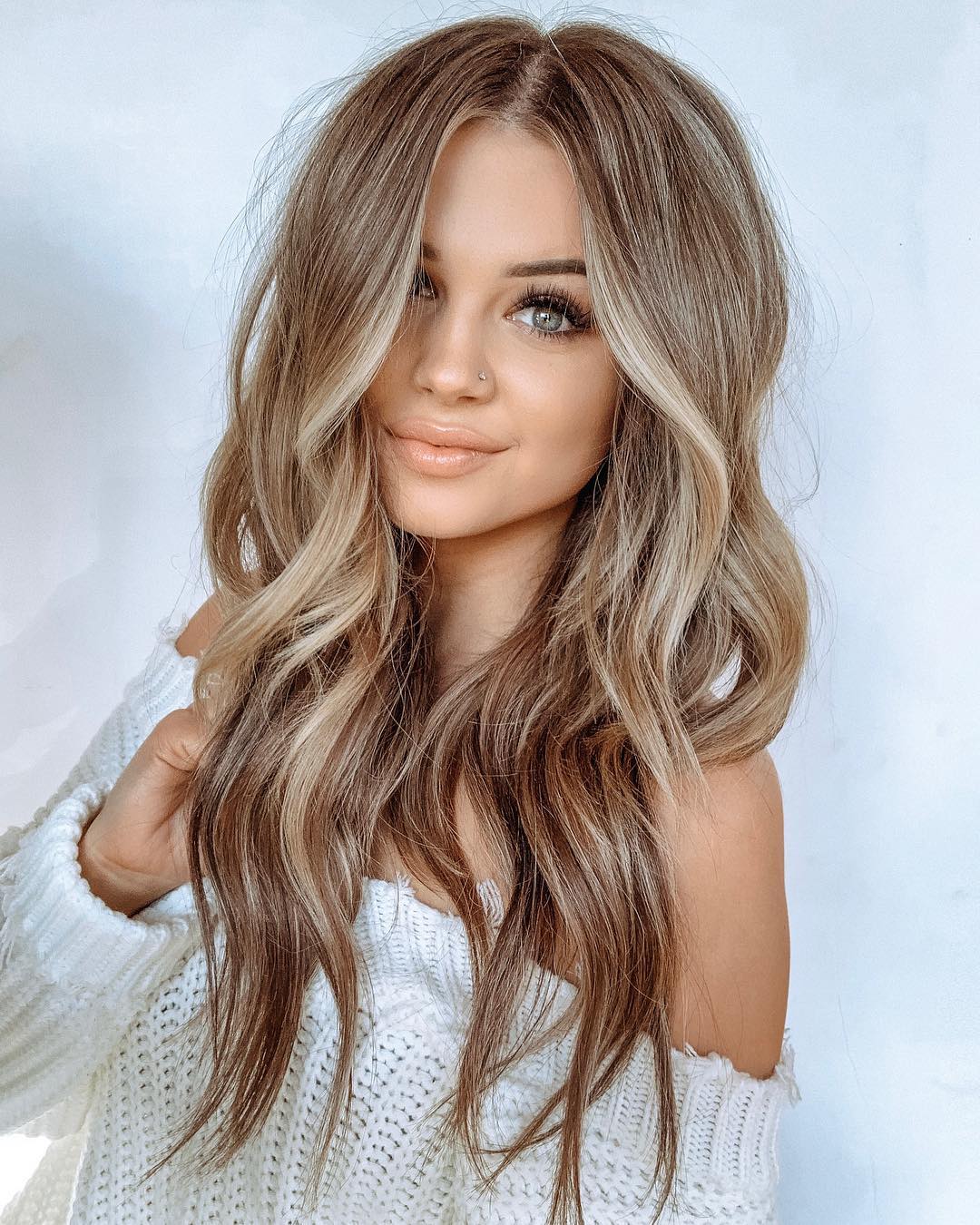
The blonde highlights here are noticeable without being loud, which is a harder balance to strike than it looks. On a light brown base, they read as sun-lightened rather than salon-striped, and the loose waves carry that casual tone through. Fine hair gets a boost from the contrast, since the lighter pieces add depth that a single flat color can’t. Ask your colorist for: shoulder length light brown, noticeable blonde highlights, loose waves. A side part helps lift the roots, so the waves sit with more volume at the crown. This is a low-commitment way to test light brown hair with blonde highlights.
Shoulder Length Brown With Face-Framing Layers
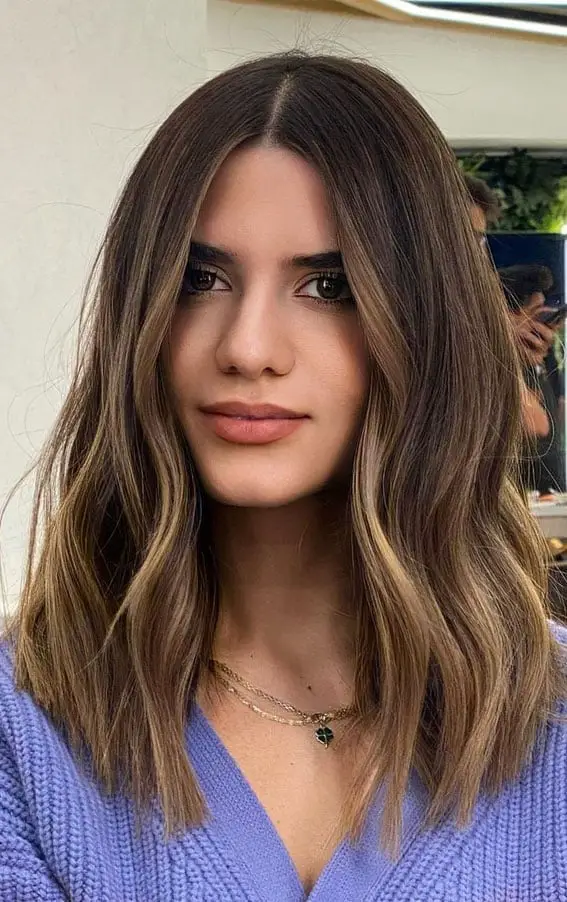
Wondering if a lob works with fine hair? It does, when the layers do the work. The face-framing pieces here are cut to sweep away from the face, which softens a square jawline and gives the illusion of more volume at the sides. Curtain bangs blend into those layers, so there’s no harsh line where the fringe ends. Ask your stylist for: shoulder length lob, curtain bangs, subtle highlights. A flat iron can tuck the ends under in about five minutes, but the subtle lighter brown highlights are what keep the brown base from looking flat. This cut needs a trim every eight weeks to hold its shape.
Collarbone Medium Brown Copper Blonde Highlights, Wavy
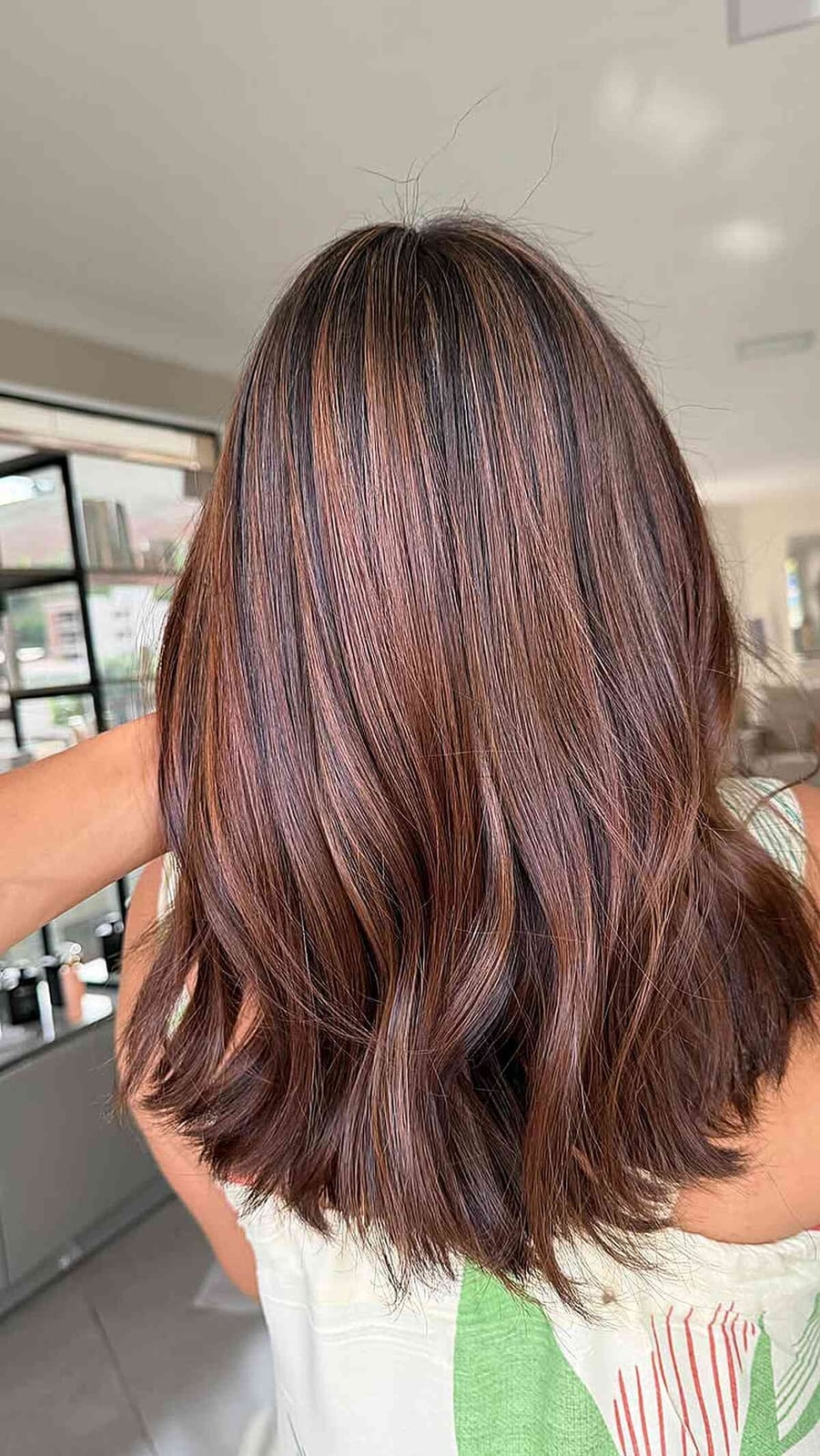
The multi-tonal effect here comes from weaving copper and blonde highlights through a medium brown base, so no single shade dominates. Copper adds warmth, blonde adds brightness, and the two together create a dimension that a single highlight color can’t. The soft waves help the colors catch each other, and the glossy finish keeps it all looking polished. Ask your colorist for: collarbone length medium brown, copper and blonde highlights. This works best on medium-density hair, where the layers have enough body to show off the color shifts. A heat protectant before blow-drying will keep that gloss intact. Expect to refresh the toner every six to eight weeks.
Mid-Back Medium Brown Lighter Brown Highlights
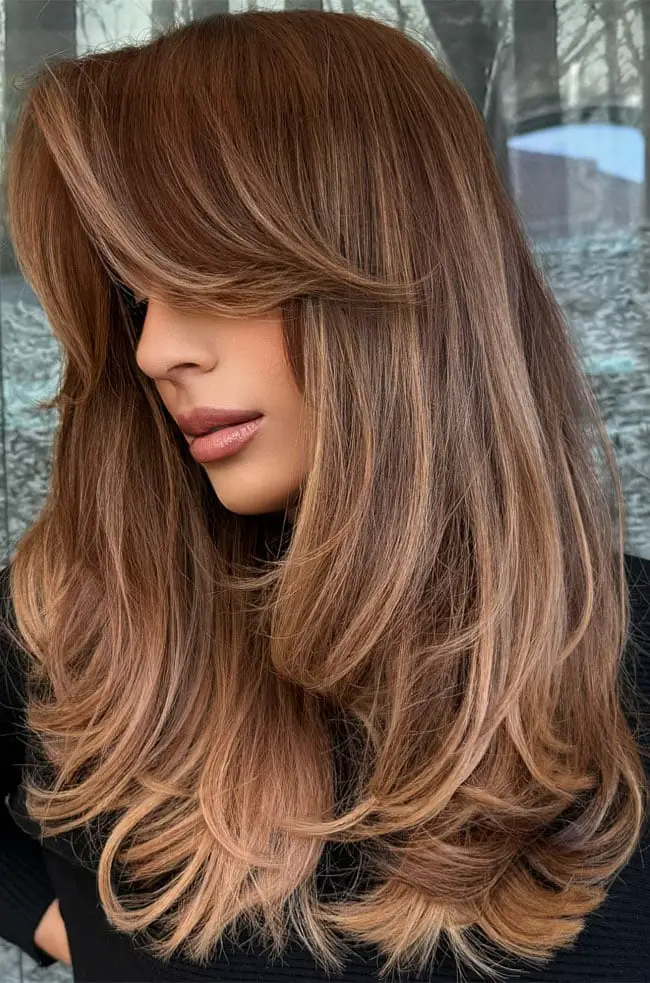
Compared to a version with no bangs, the curtain bangs here change the whole feel. They frame the face and make the lighter brown highlights feel more deliberate, since the lighter pieces start right at the front. The long face-framing layers continue that line down to the mid-back, so the color moves with the hair instead of sitting in blocks. This is a good choice for thick, wavy hair that needs movement without losing length. Ask your colorist for: medium brown base, lighter brown highlights, long face-framing layers. Blow-dry those front pieces with a round brush to keep them sweeping away from the face.
Mid-Back Medium Brown Lighter Blonde Highlights With Curtain Bangs
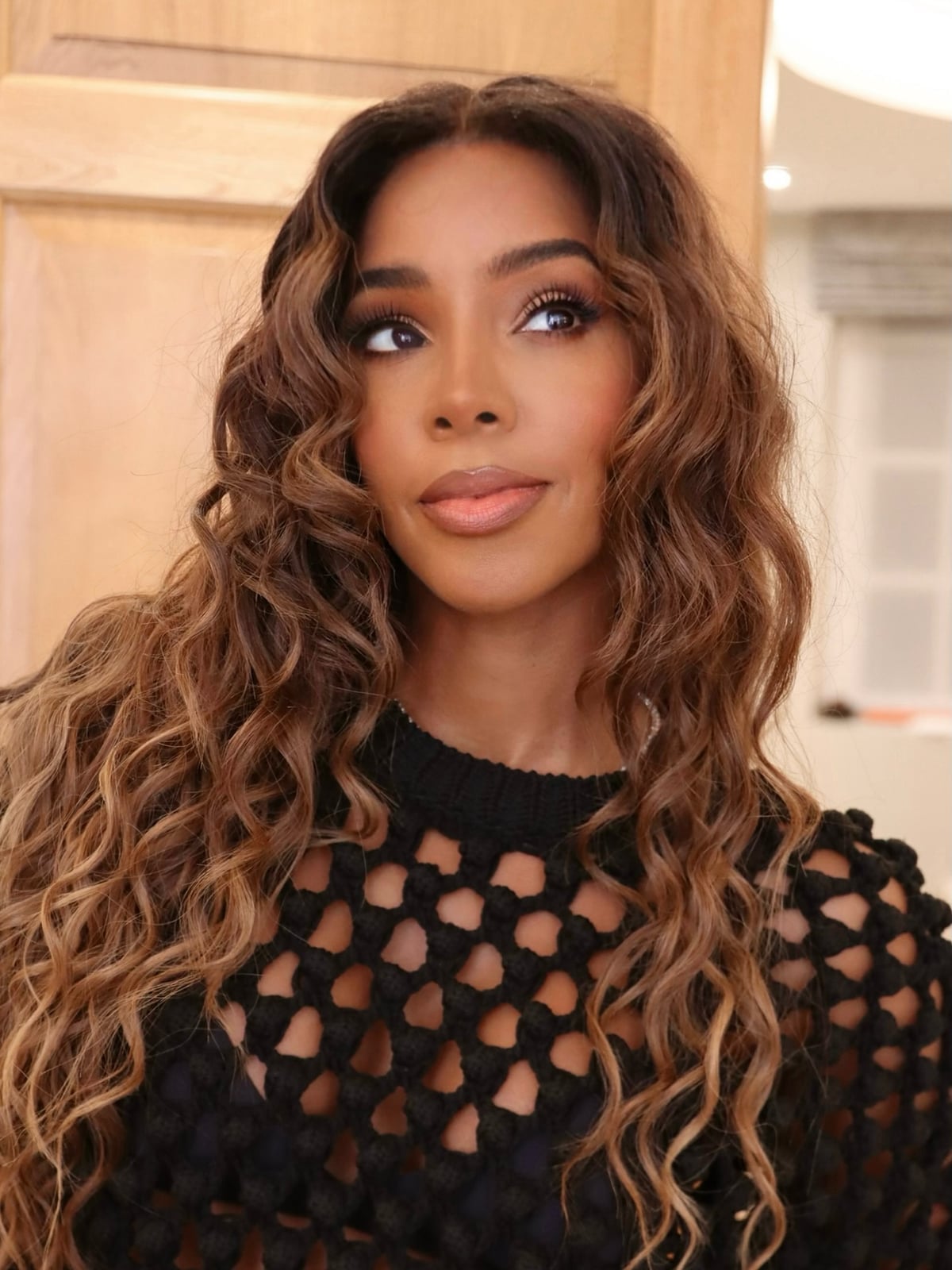
The lighter blonde highlights here are placed to catch the face first, which is the smartest move in the design. They start at the curtain bangs and flow through the face-framing layers, so the brightness lands where you look. On a medium brown base, the blonde reads as warm and sun-lit, not icy or stark. Thick, wavy hair holds these loose waves well, and the curtain bangs soften the transition from fringe to length. Ask your colorist for: medium brown base, lighter blonde highlights, curtain bangs. A texturizing spray on dry hair will keep the waves from falling flat by midday.
Mid-Back Ash Brown Lighter Subtle Highlights
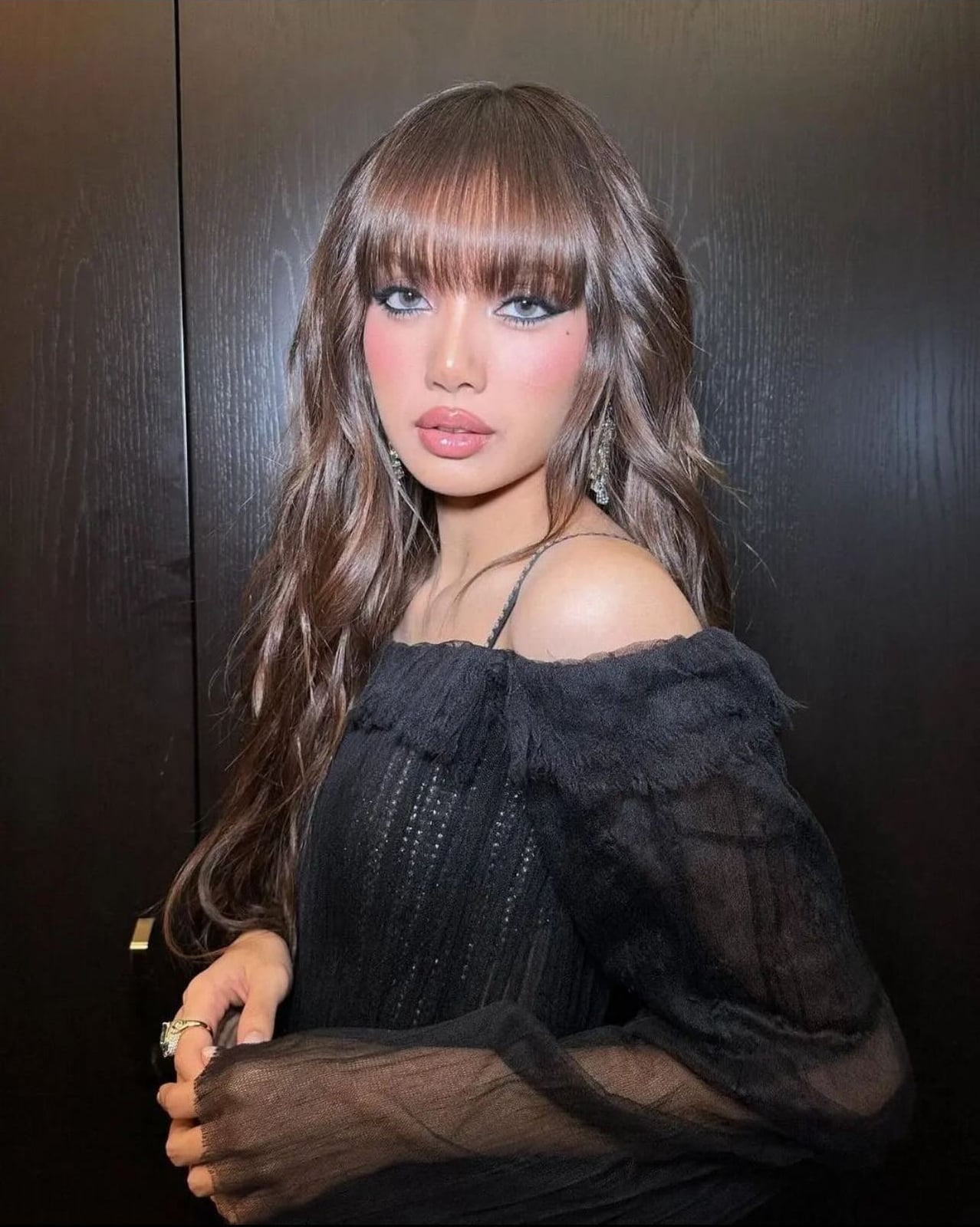
The grow-out on a mid-back ash brown base with lighter, subtle highlights is remarkably forgiving. A root shadow is not necessary here: the few shades between your natural root and the highlight keep the line soft for about eight weeks. A toning appointment every six to eight weeks prevents the ash tone from drifting muddy, but the overall design buys you time.
Thick, wavy hair carries these fine lighter pieces without them disappearing into the base. Curtain bangs soften a square jaw without shortening the face. Ask your colorist for: ash brown base, lighter subtle highlights, curtain bangs. A round brush on the bangs after every wash keeps the sweep where you want it.
Ash Brown Lighter Highlights Face-Framing Layers
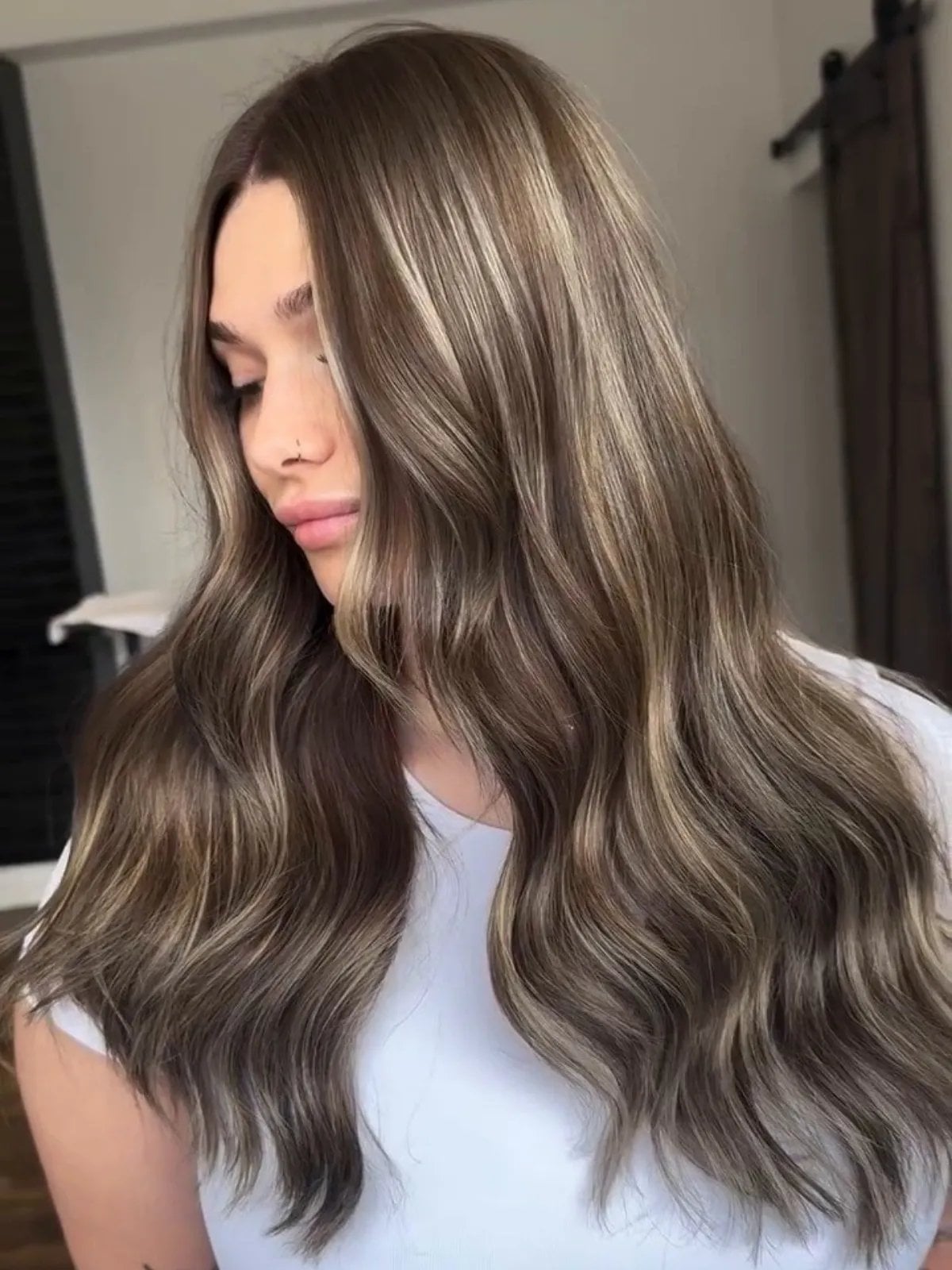
The face-framing layers here start around the cheekbone and graduate toward the collarbone, so the lighter highlights hit exactly where the eye lands first. Ask your colorist for: ash brown base, lighter finely woven highlights, curtain bangs. On thick, wavy hair the layers remove enough weight to encourage the wave pattern without losing density. A smoothing serum on dry hair pulls the gloss forward.
Ash Brown With Cool-Toned Highlights Glossy Waves
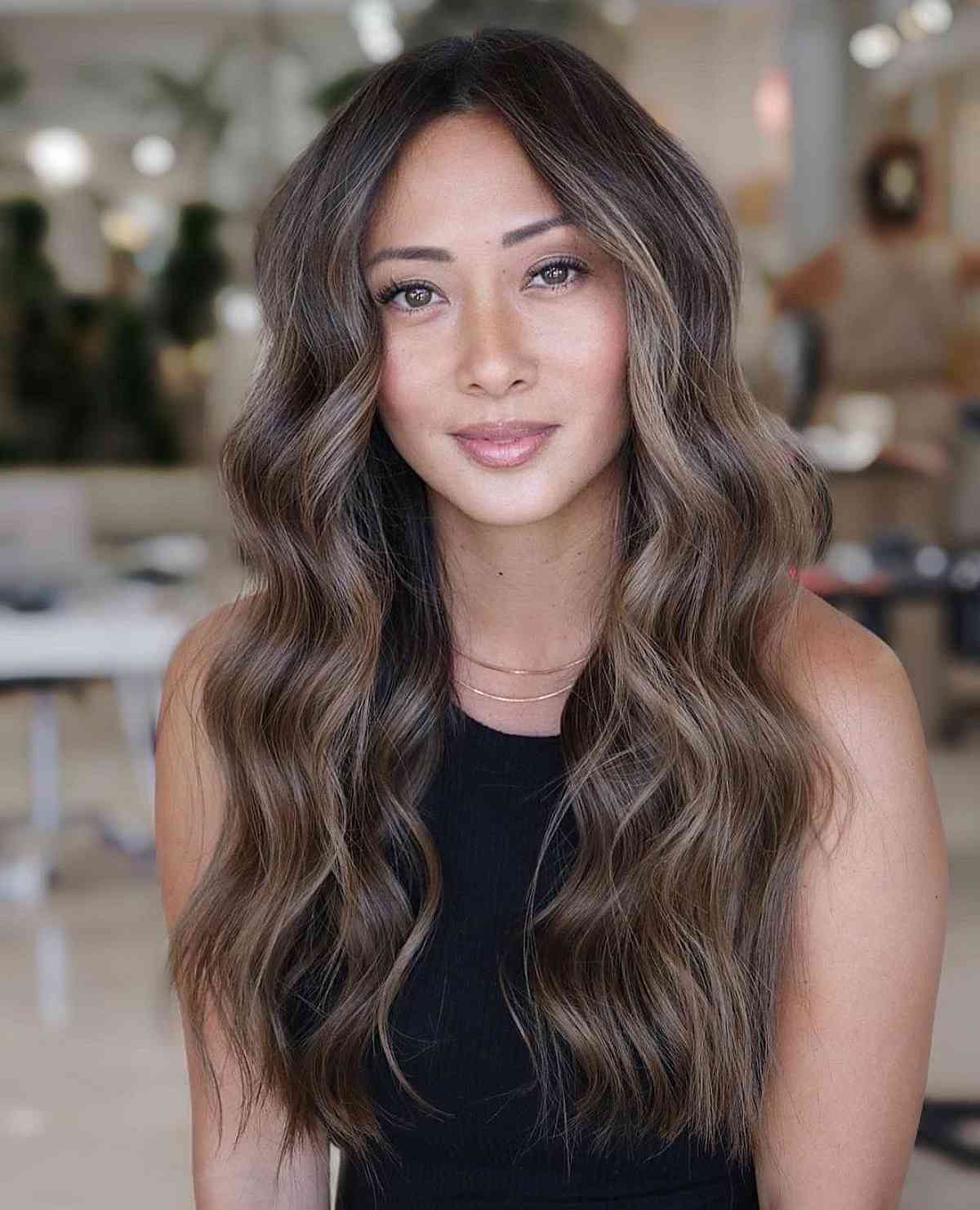
Who does a cool-toned ash brown with lighter highlights actually suit? Anyone whose natural brown leans ashy rather than golden, because the highlights land in the same family. Thick, wavy hair of mid-back length shows the separation between base and highlight best.
Ask your colorist for: ash brown base, lighter cool-toned highlights, curtain bangs. A heat protectant spray before the blowout locks in the gloss. The curtain bangs here are long enough to tuck behind an ear on days you want them out of the way.
Ash Brown Lighter Finely Woven Highlights
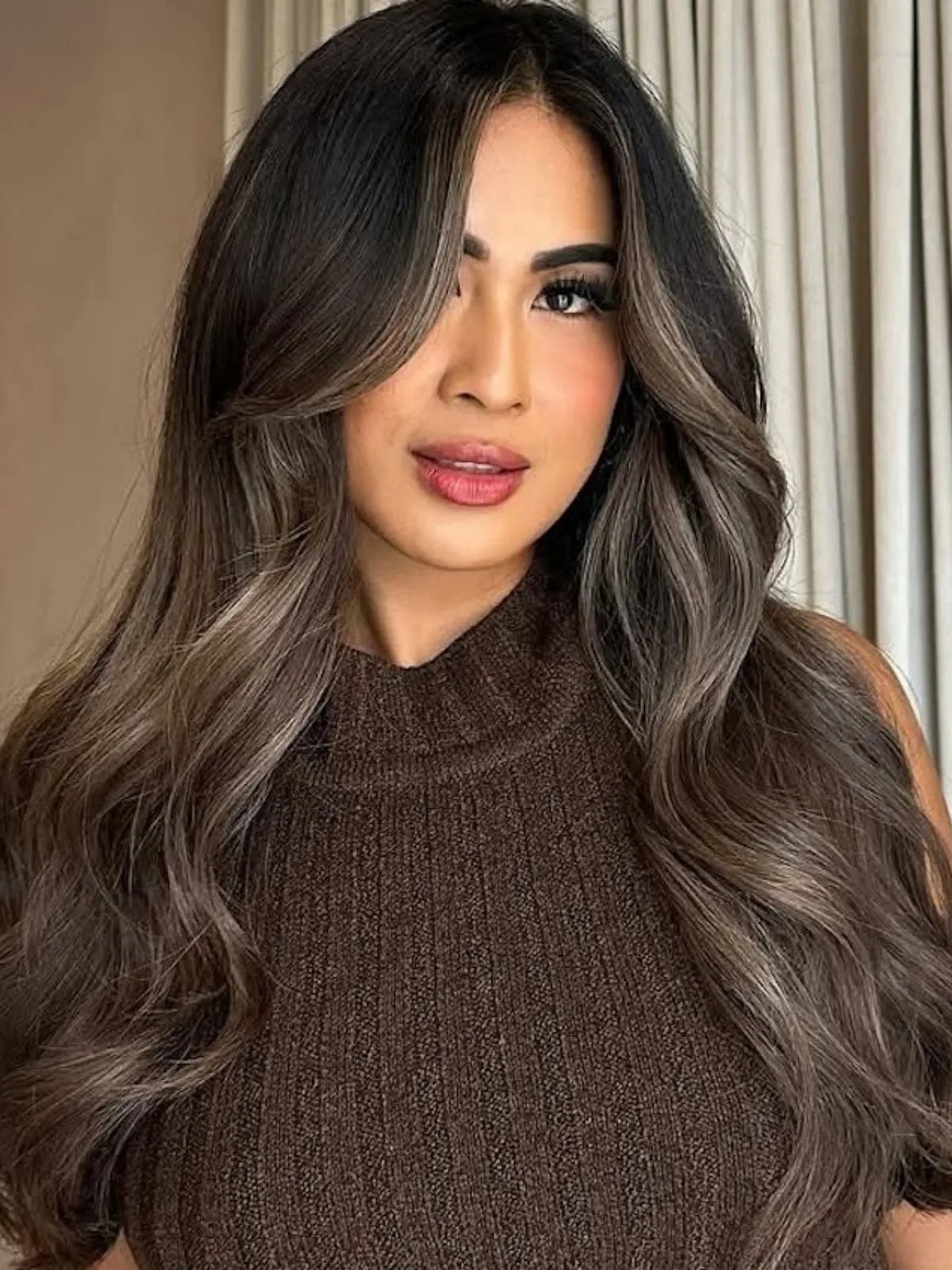
Finely woven highlights mean the colorist takes tiny sections and paints them close to the root, creating a natural grow-out that looks like sun rather than foil. On an ash brown base the lighter pieces read as a soft champagne rather than a sharp blonde. Thick, wavy hair of mid-back length is the ideal canvas: the density hides the parting line while the wave pattern shows the dimension.
Ask your colorist for: ash brown base, lighter finely woven highlights, curtain bangs. Face-framing layers stop at the collarbone, so the lightest pieces sit around the cheek and shoulder. A gloss treatment every eight weeks keeps the ash tone from turning drab.
Dark Brown Subtle Blonde Highlights Curtain Bangs
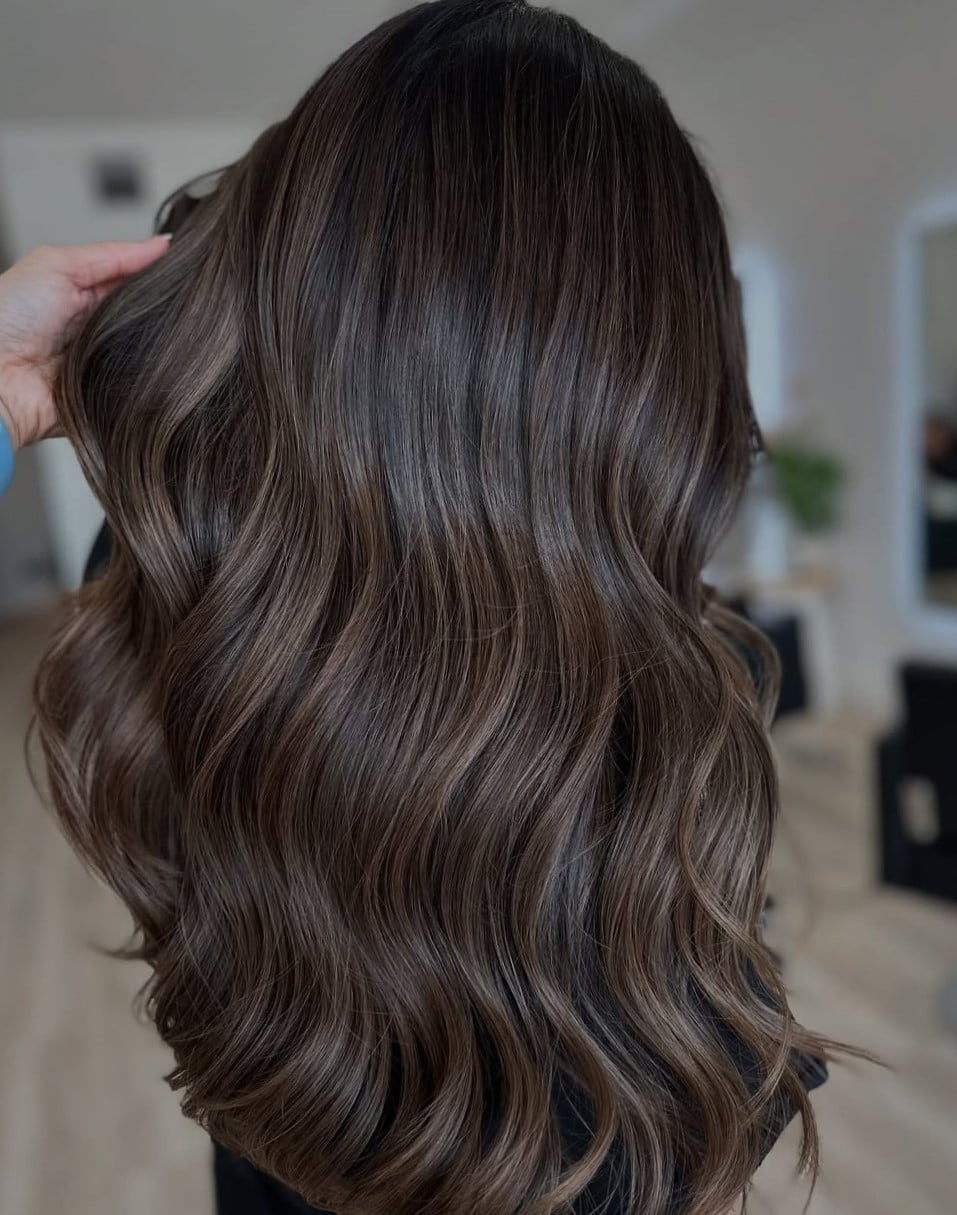
Thick, wavy hair of collarbone length carries this balance well, and the curtain bangs soften the transition from base to highlight. Ask your colorist for: dark brown base, subtle blonde highlights, curtain bangs. It is a more understated alternative to chunky face-framing pieces, and the grow-out is gentler.
Dark Brown Caramel Highlights Face-Framing Layers
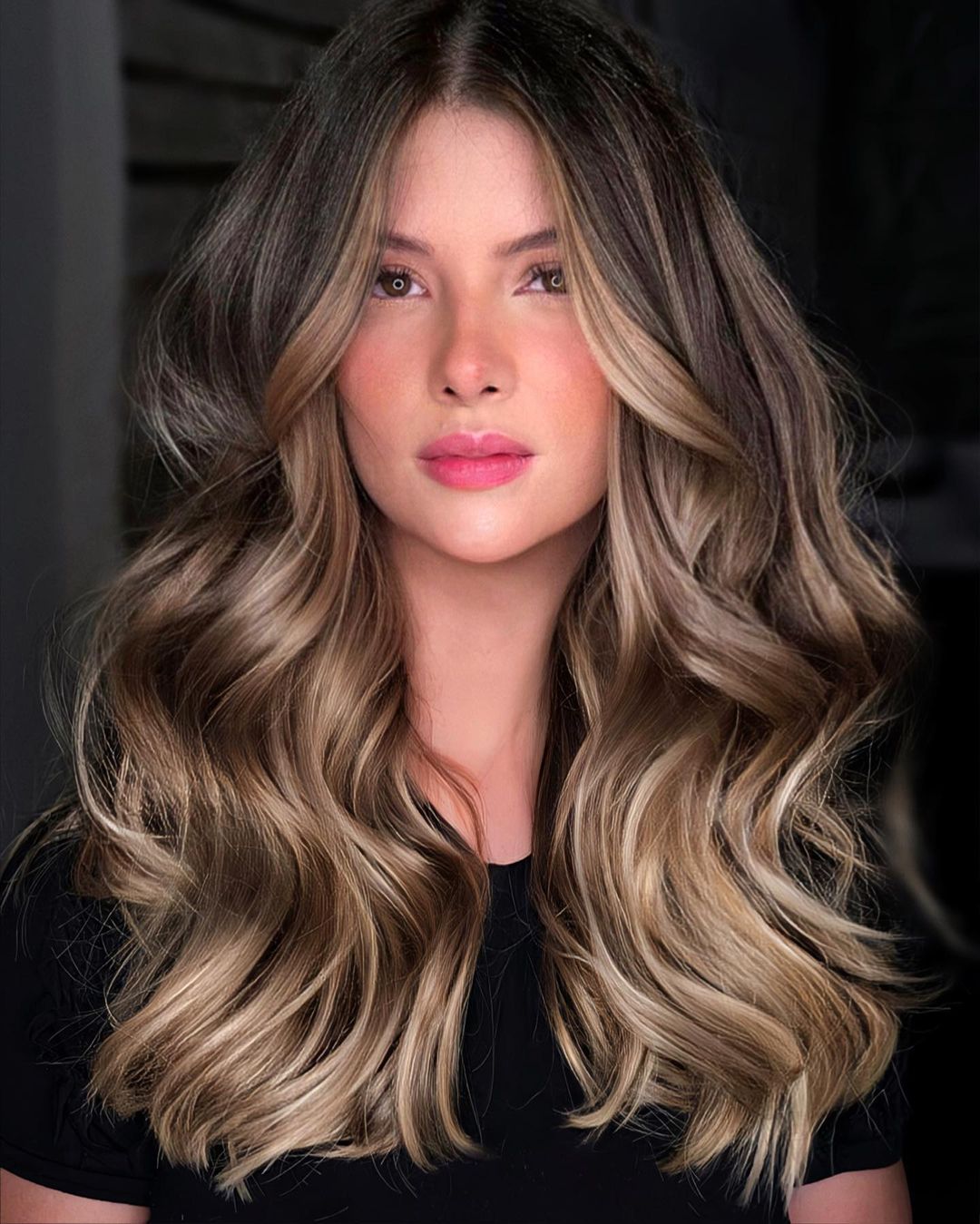
The curtain bangs here do what curtain bangs do best: they pull the caramel highlights forward so the lightest pieces sit right at the cheekbone. On a dark brown base that falls to mid-back, that warm contrast keeps the overall effect soft rather than stripey. Thick, wavy texture holds the shape without a ton of product, and the face-framing layers stop the length from feeling heavy. Ask your colorist for: dark brown base, caramel highlights, face-framing layers. A volumizing mousse at the roots before blow-drying gives the crown the lift a middle part needs to not fall flat by noon.
Dark Brown Lighter Highlights Face-Framing Layers, Wavy
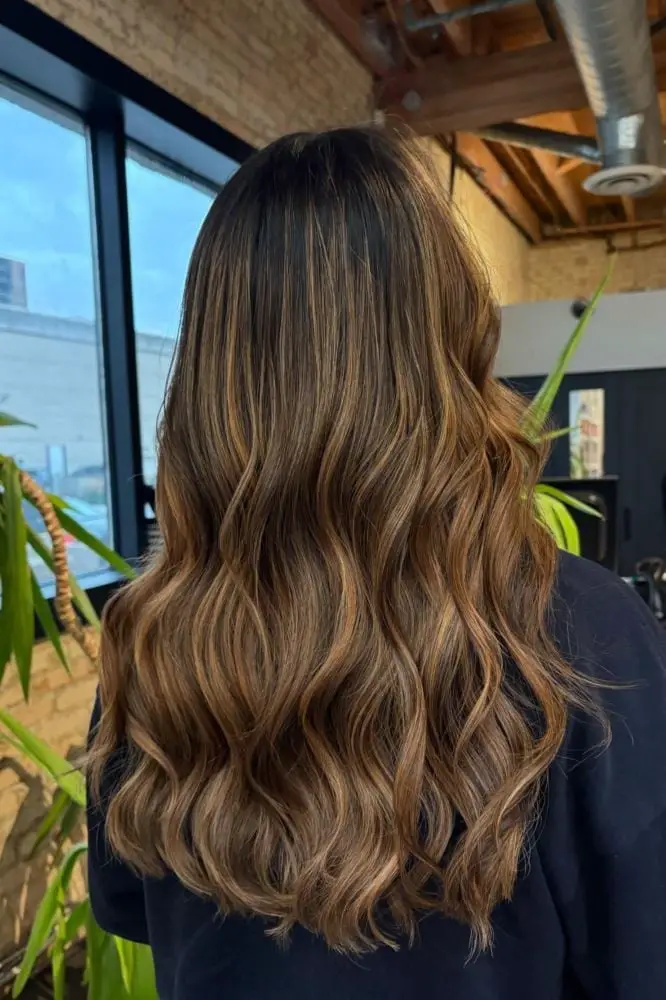
Lighter brown highlights on a dark brown base create a grow-out that looks like a choice, not a mistake. The mid-back length means the dimension has room to travel, and the side view here shows how the placement wraps around the layers. This combination works best on thick, wavy hair because the texture scatters the highlights naturally. Ask your colorist for: dark brown base, subtle lighter brown highlights. Curtain bangs need a trim every four weeks and a quick blow-dry to keep the curve predictable. A toning appointment every eight weeks prevents the lighter pieces from warming up too much.
Dark Brown Lighter Highlights Side Part
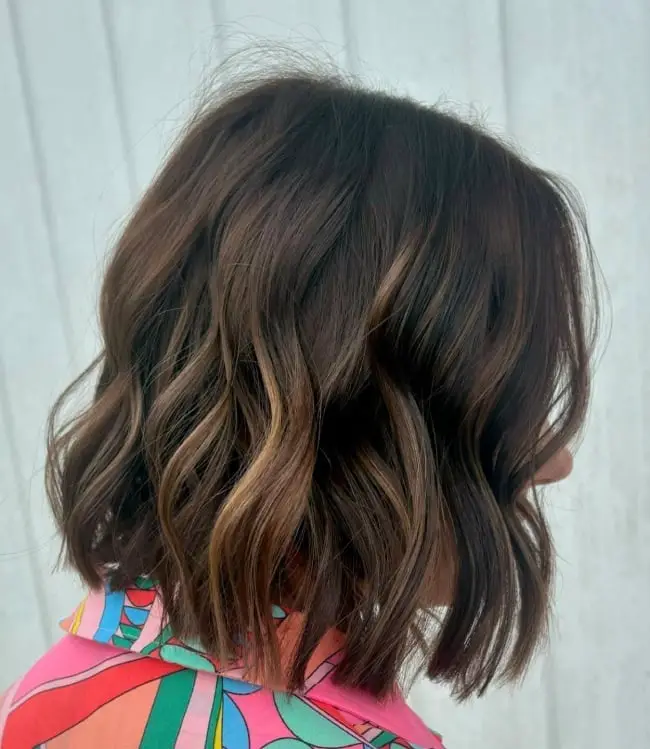
A chin-length bob is a compact canvas, so the highlights here are subtle, not chunky. The dark brown base stays dominant while fine blonde pieces add a little lift at the surface. This is a salon job. The placement needs to be precise so the contrast creates dimension, not regrowth. Ask your colorist for: dark brown base, subtle blonde highlights. A side part on fine, wavy texture gives the bob more volume on one side, which helps the shorter length feel fuller. Dry texture spray keeps the waves separated and the highlights visible.
Deep Brown Numerous Highlights Side Part
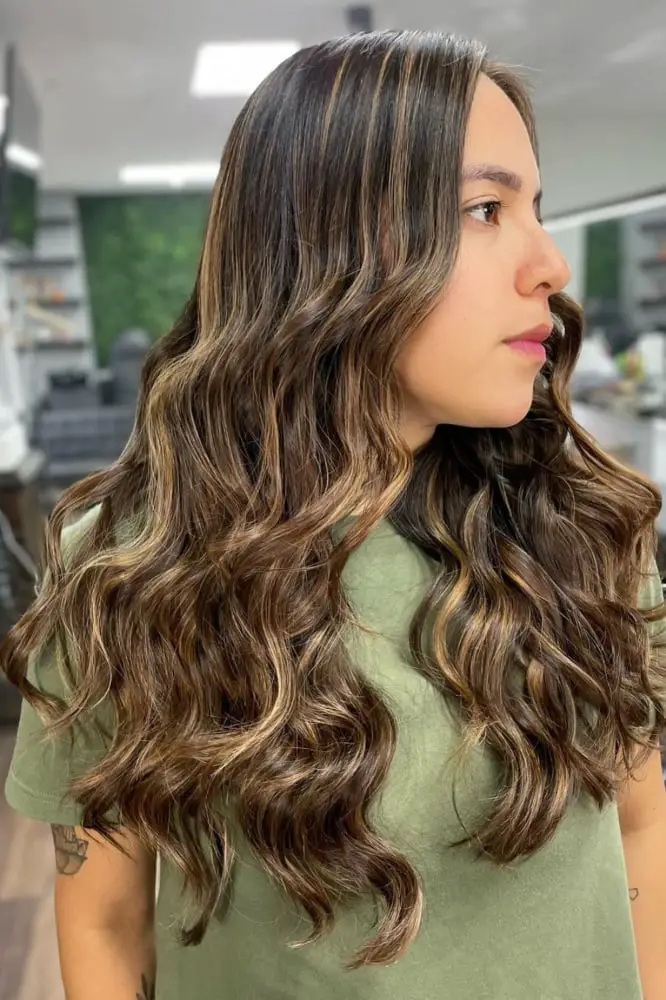
Does thick, wavy hair ever look flat? Not with this many highlights. The deep brown base is broken up by lighter brown and caramel pieces that run through the mid-back length, so the wave pattern reads as layered even before you cut into it. The side part adds lift at the root, which keeps the volume from settling evenly across both sides. Ask your colorist for: deep brown base, numerous lighter brown and caramel highlights. A shine serum on the mid-lengths and ends pulls the dimension together without weighing the waves down.
Mid-Back Brown Caramel Highlights Glossy Waves
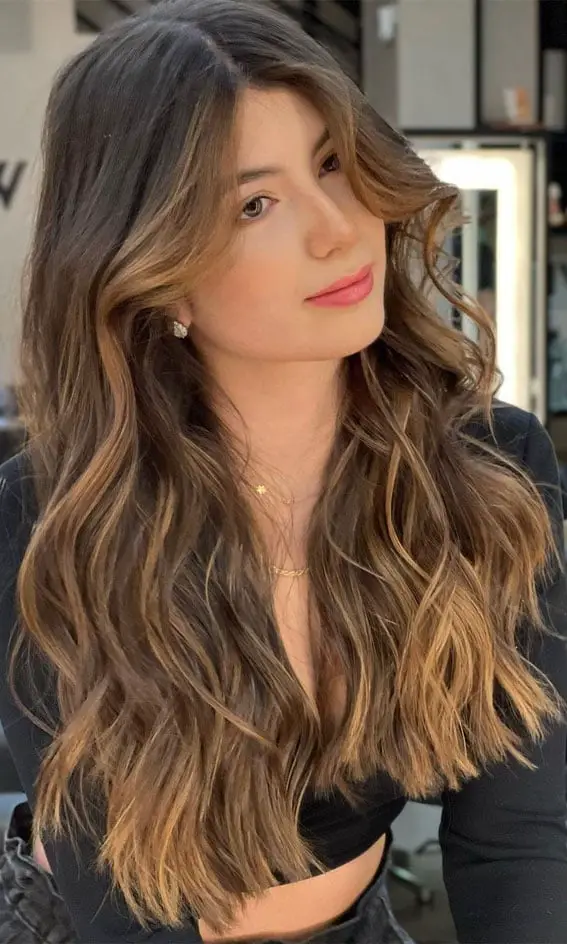
The technique here is about finish as much as color. Caramel highlights on a rich brown base add warmth, but the glossy wave pattern is what makes the light bounce. The back view shows how the layers stack through the mid-back length, with the caramel pieces hitting at different heights to create movement. Ask your colorist for: rich brown base, subtle caramel highlights. A wide-tooth comb on damp hair preserves the wave clumps, and a cool shot of air before the final dry sets the gloss. Thick, wavy texture holds this shape without needing a curling iron.
Final Thoughts
For a subtle, low-maintenance look, opt for highlights that are only one to two shades lighter than your base. For more impact, consider a contrasting tone like ash blonde on dark brown.
- Maintain highlight vibrancy with color-depositing conditioners every 2-3 weeks.
- Schedule salon toning appointments every 6-8 weeks to refresh or neutralize tones.
- Use heat protectant spray before styling to shield hair from damage.
- Wash hair with sulfate-free shampoos to preserve color and moisture.
Find your perfect brown with a touch of light.