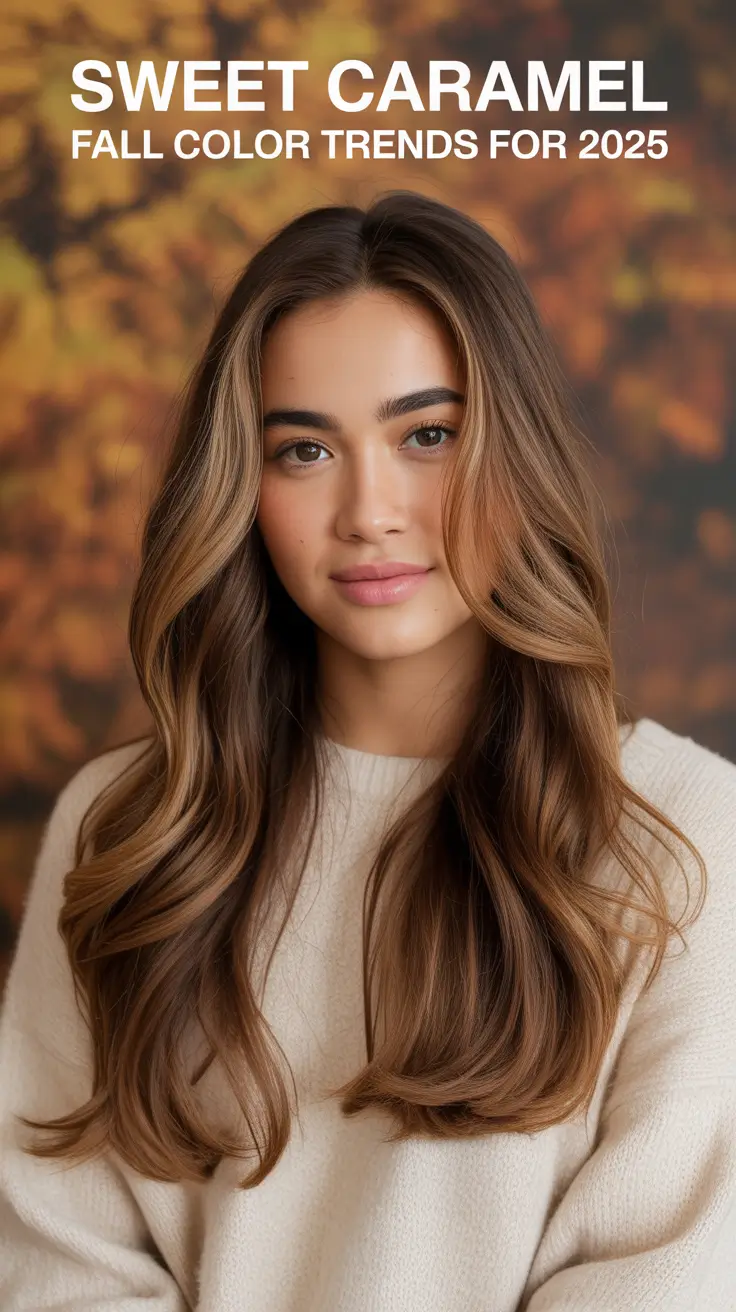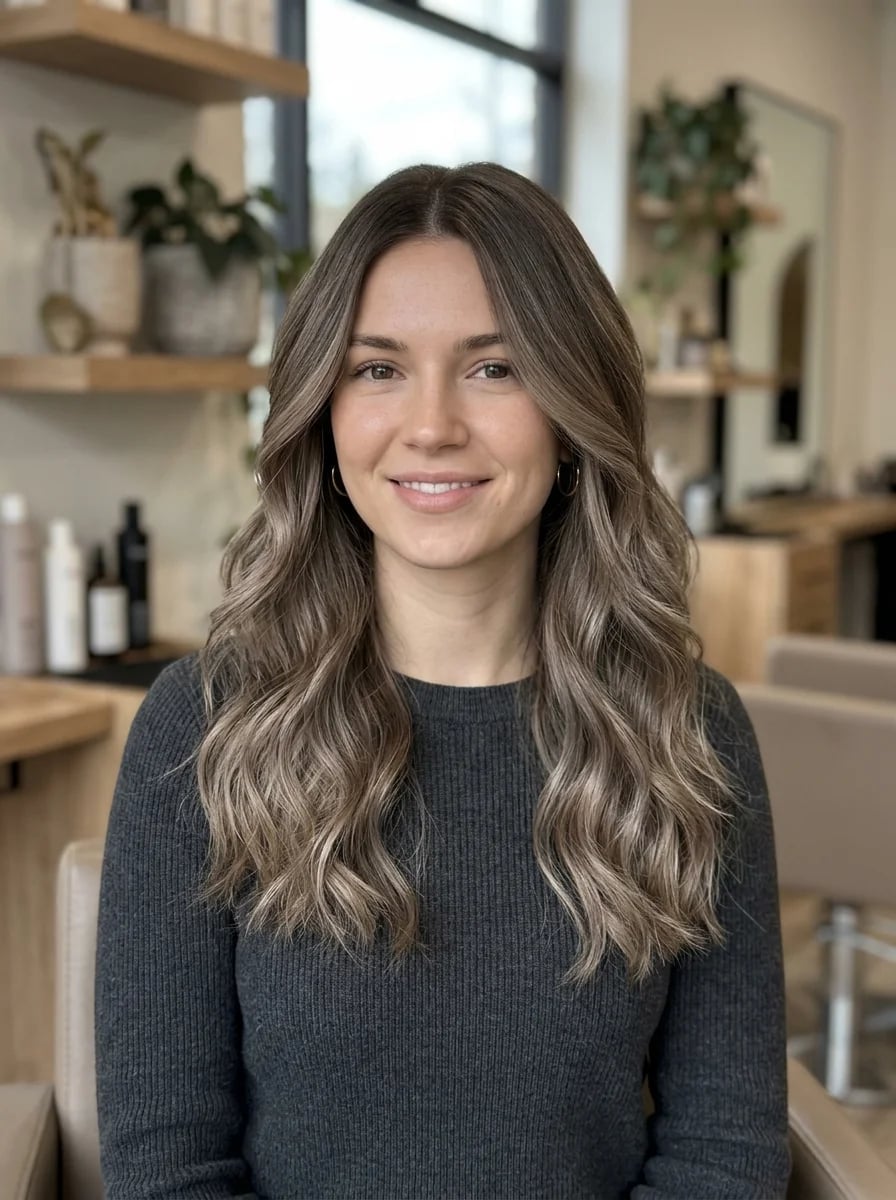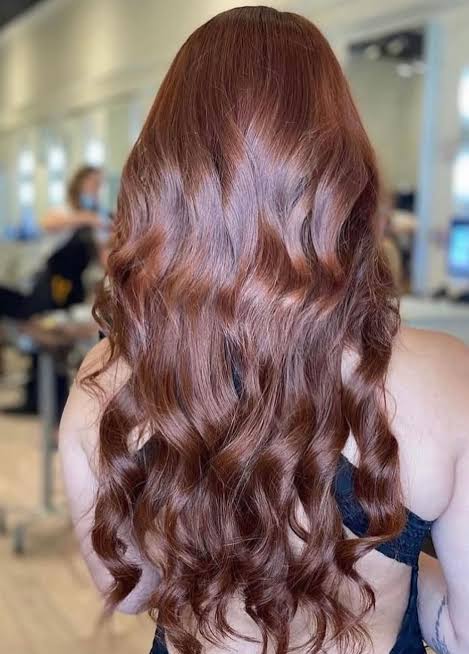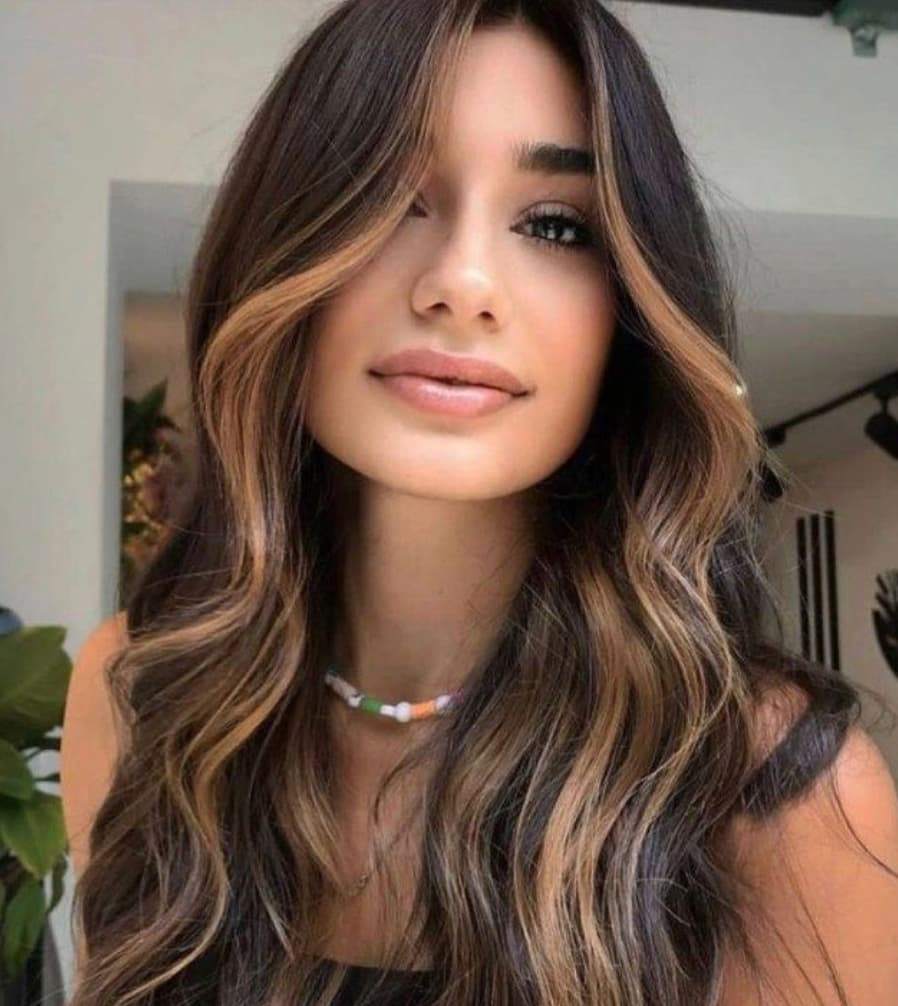

Light brown balayage pairs a deeper base with hand-painted lighter pieces, creating dimension that grows out without a hard line. In 2027, the trend leans toward lived-in color with soft face-framing layers and glossy natural texture, skipping the chunky highlights of past seasons.
This collection gathers 34 Classy Light Brown Balayage ideas across lengths from chin to mid-back, with and without bangs, and tones from ash to honey. It covers low-maintenance options for fine hair that falls flat and higher-contrast blends for those who want more definition, with styling and upkeep advice for each.
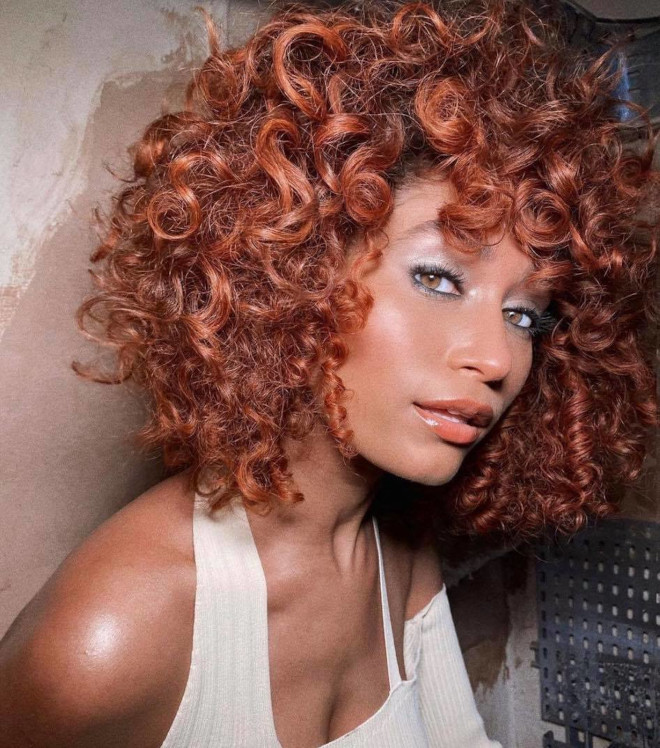
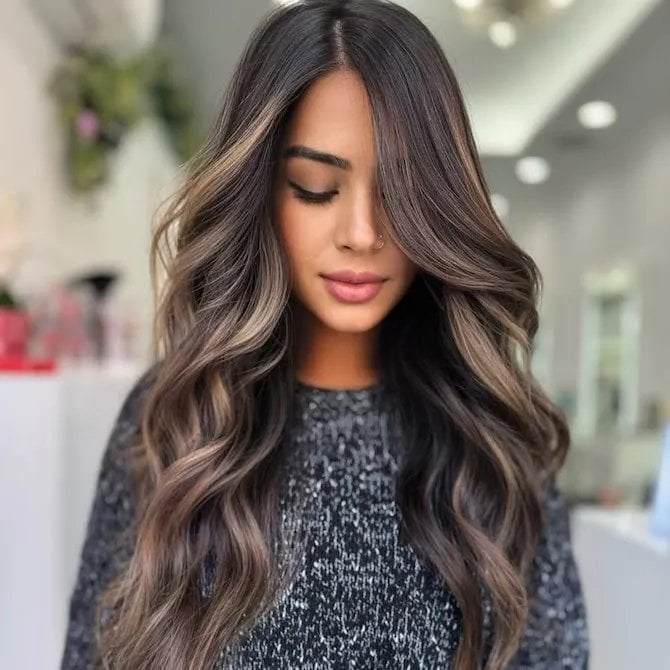
Deep Brown Base With Light and Ash Brown Balayage
A deep brown base gets its dimension from two distinct balayage shades: a light brown for warmth and an ash brown for cool contrast. The ash tones keep the overall effect sophisticated rather than brassy, while the soft waves let the mid-back length layers catch the light at different angles. Thick, wavy hair starting at mid-back carries this best, and the look suits oval, square and heart face shapes. Ask your colorist for: deep brown base with light and ash brown balayage. A large barrel curling iron shapes the waves, and a trim every eight to ten weeks keeps the layers clean.
Light Brown Balayage With Blonde Highlights
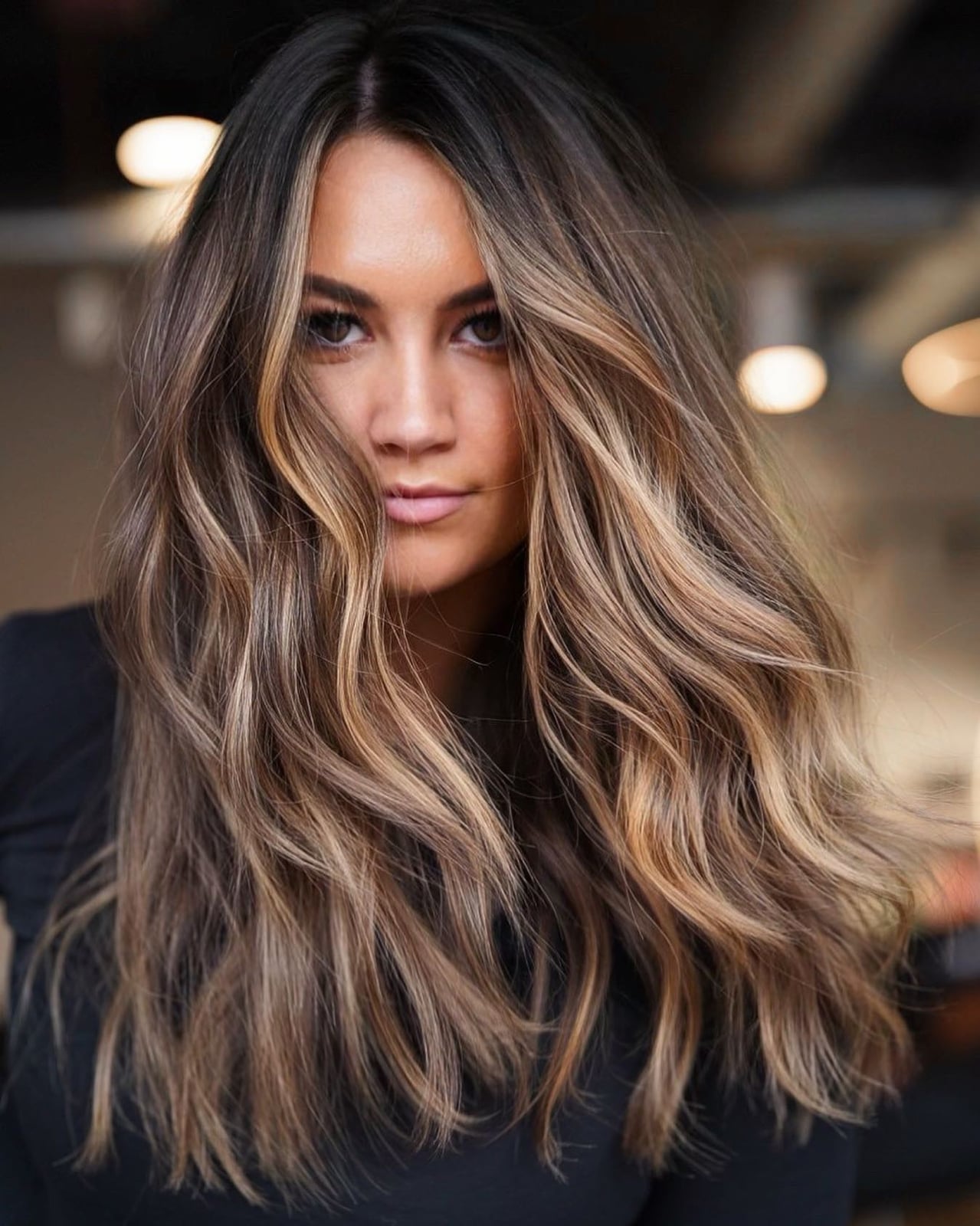
Who actually wears a light brown base with blonde balayage and walks away happy? Anyone with thick, wavy hair at least mid-back who wants noticeable brightness without full-on bleach. The curtain bangs do double duty: they soften round and oblong faces while framing the lighter blonde pieces around the front. Ask your colorist for: light brown base with blonde balayage and curtain bangs.
A texturizing spray on the loose waves adds volume without weighing the mid-back length down. The curtain bangs need a trim every four to six weeks to stay out of your eyes, and a purple shampoo once a week keeps the blonde from turning yellow.
Collarbone Lob With Subtle Light Brown Balayage
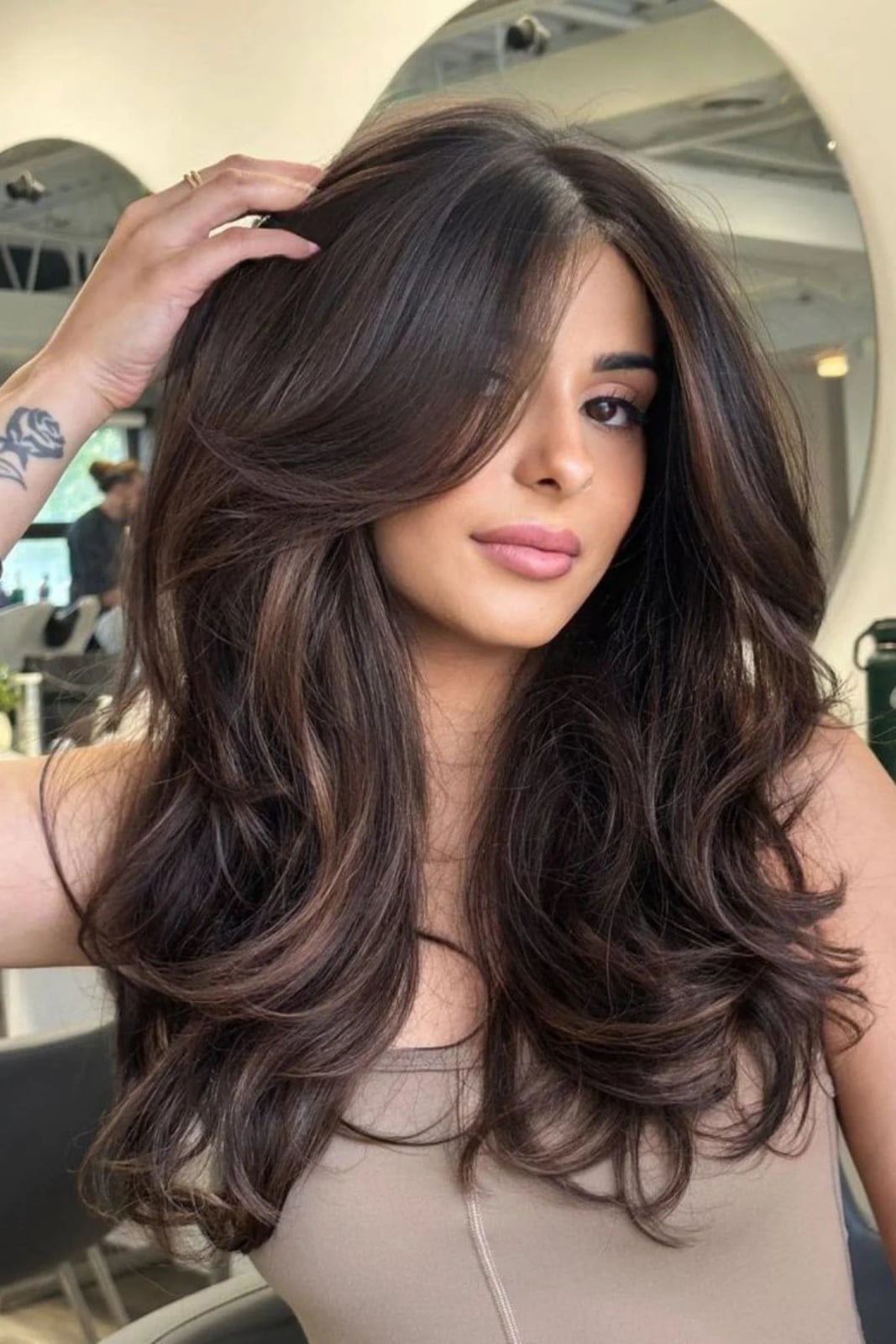
A collarbone lob with subtle light brown balayage sits in a different category than longer styles. The shorter length means less canvas for the color to spread, so the balayage reads as a soft glow rather than a full gradient. That restraint makes it versatile: the medium brown base stays dominant, the light brown pieces add just enough dimension, and the face-framing layers soften square and oval faces. Ask your colorist for: collarbone lob with subtle light brown balayage. The thick, wavy texture here is blow-dried with a round brush to keep the waves defined, and the blunt baseline needs a trim every six to eight weeks.
Dark Brown Base With Subtle Light Brown Balayage
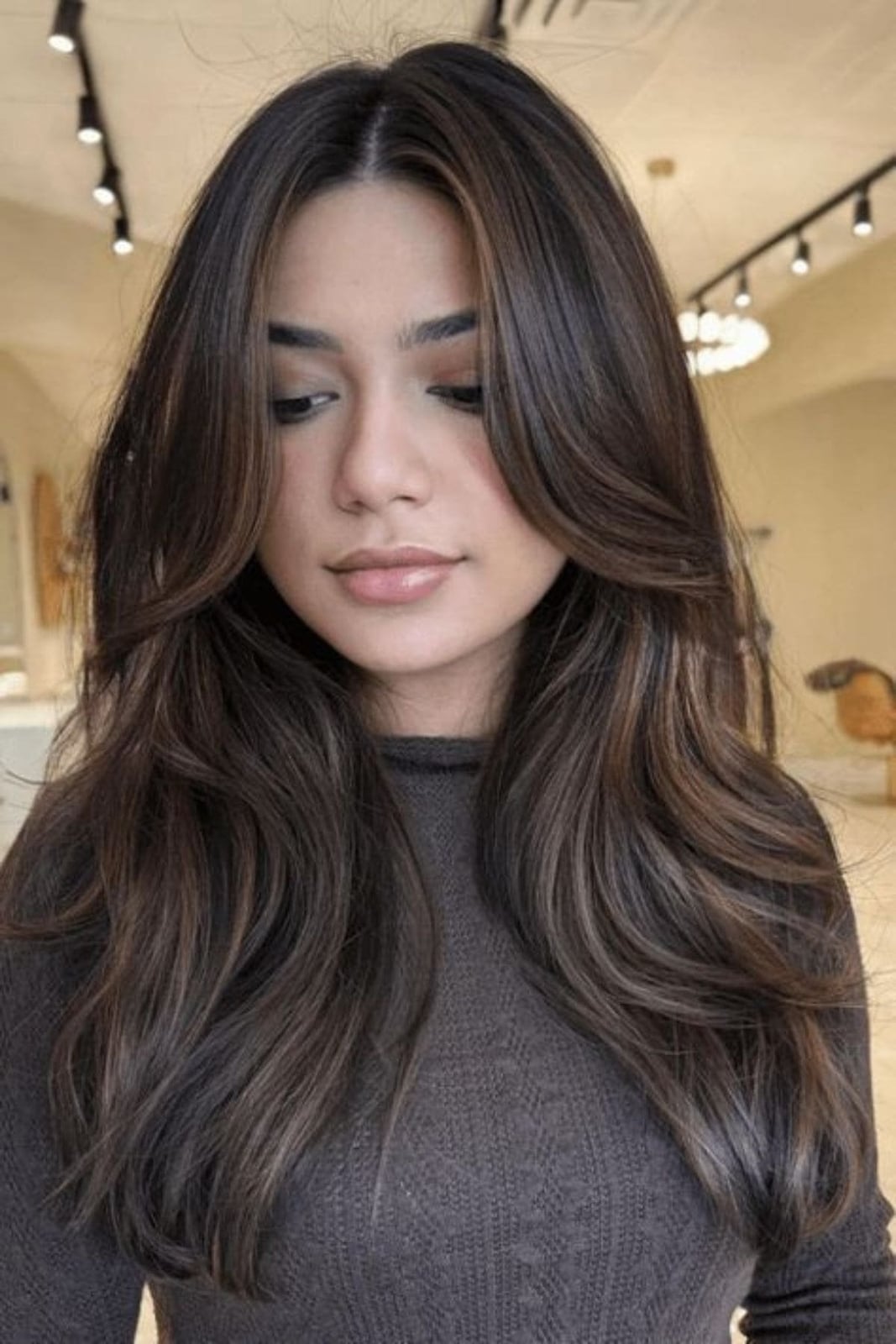
Subtle light brown balayage on a dark brown base grows out with almost no visible line. The colorist places the lighter pieces sparingly, so the regrowth blends into the base instead of announcing itself at the root. That makes this a genuinely low-maintenance option for medium-textured hair at least mid-back length. The face-framing bangs add movement without requiring constant styling, and the soft waves here are air-dried with a texturizing cream.
Ask your colorist for: dark brown base with subtle light brown balayage and face-framing bangs. The bangs need trimming as they grow, roughly every four to six weeks, but the balayage itself can stretch to twelve weeks between appointments.
Medium Brown With Caramel and Blonde Balayage
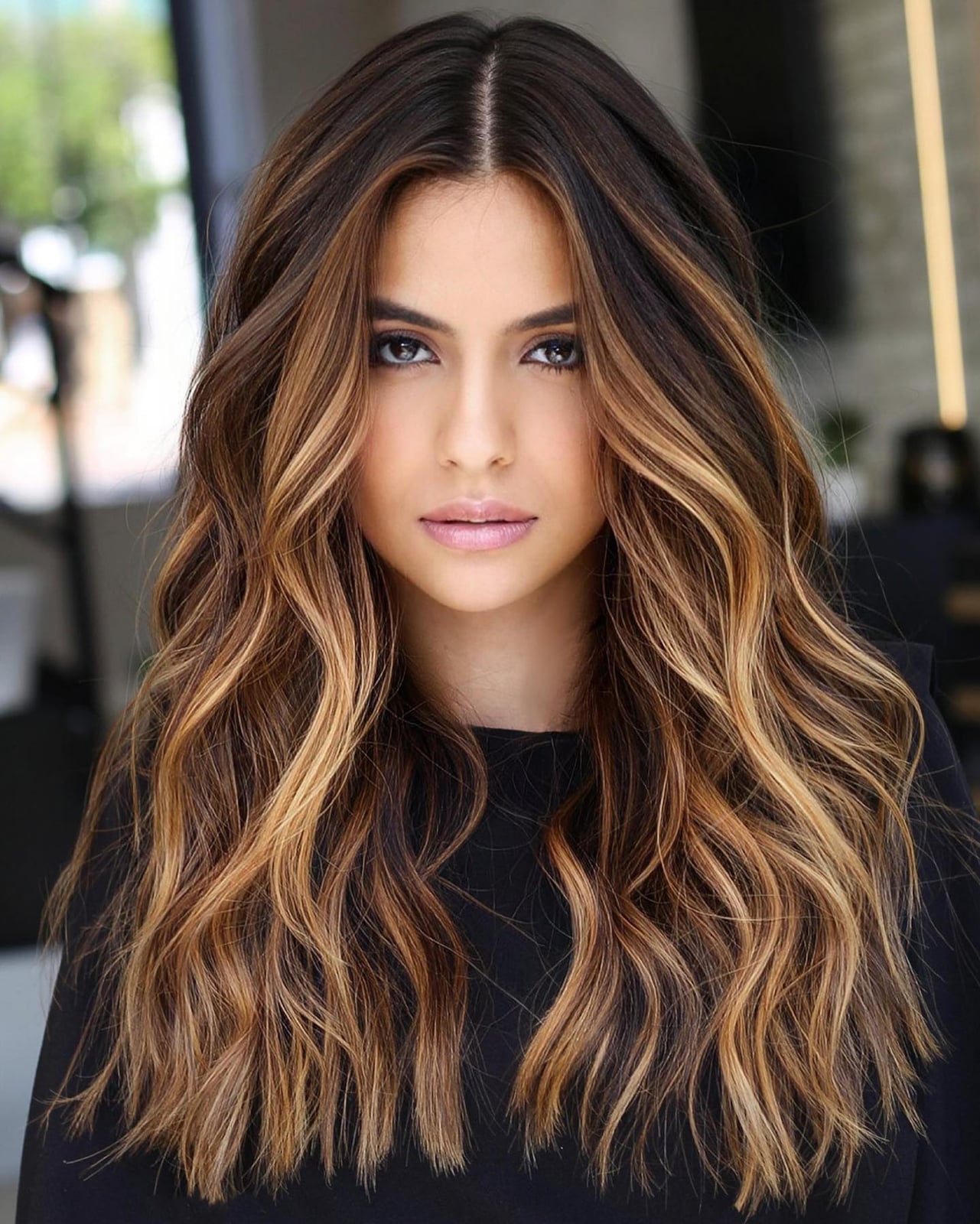
To add warmth and dimension to a medium brown base, ask for caramel and blonde balayage together. The caramel pieces sit close to the root for a seamless transition, and the blonde highlights lift the ends for contrast. The result is a mid-back length look that works for thick, wavy hair and suits oval and heart face shapes. Ask your colorist for: medium brown with caramel and blonde balayage. A sea salt spray on the loose waves emphasizes the texture, and a glossing treatment every six to eight weeks keeps the shine from fading.
Collarbone Light Brown Balayage With Face-Framing Layers
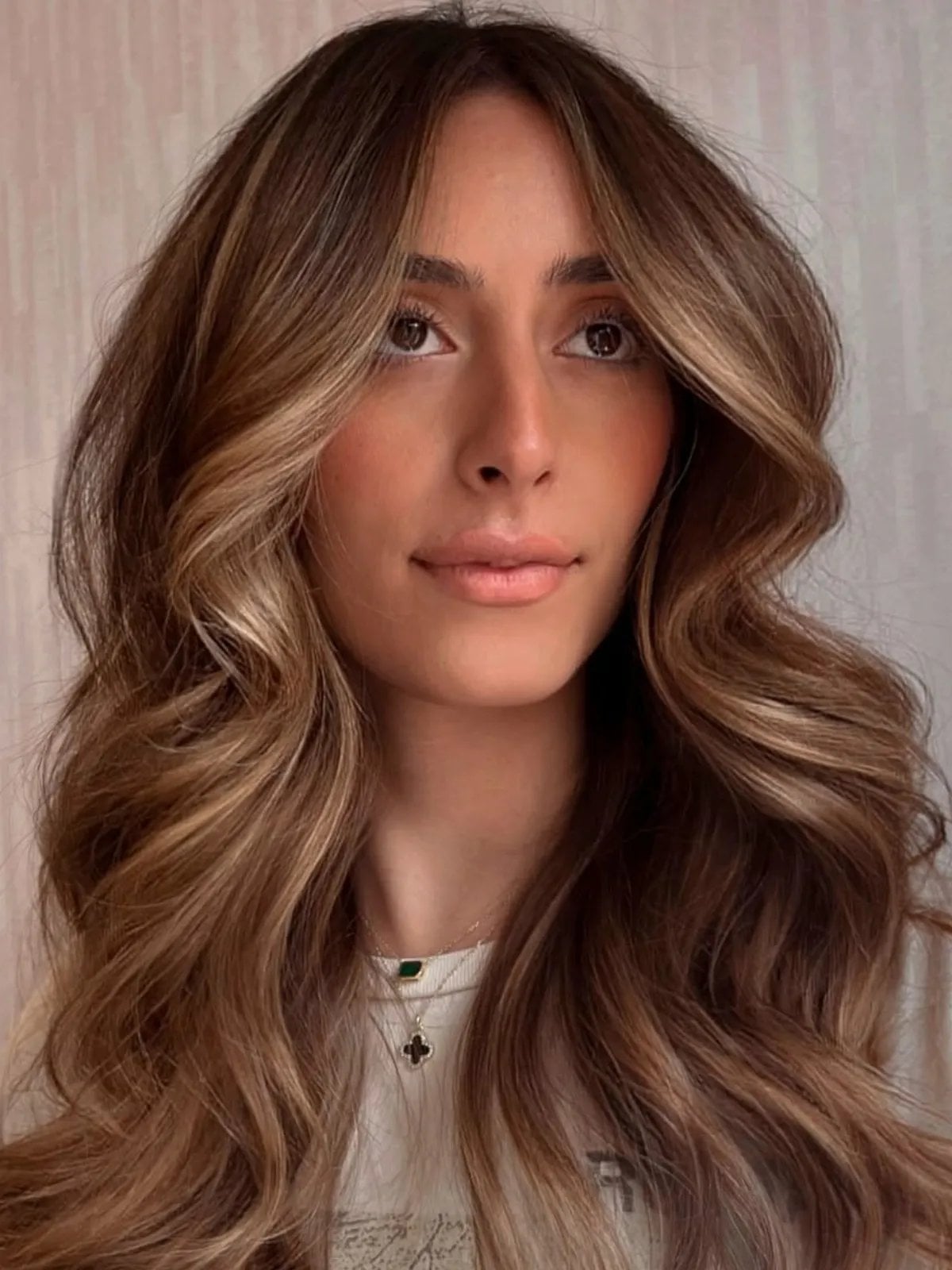
The face-framing layers here do the heavy lifting, drawing the light brown balayage right up to the jawline so the dimension reads even when the hair is tucked behind an ear. Thick, wavy hair at collarbone length gives the layers enough weight to sweep forward without looking stringy, and the curtain bangs soften the transition around the cheekbones. Ask your colorist for: collarbone length light brown balayage with curtain bangs. A round brush and a blow-dryer are all you need to set the volume, and a trim every six to eight weeks keeps the baseline sharp.
Mid-Back Light Brown Balayage With Curtain Bangs
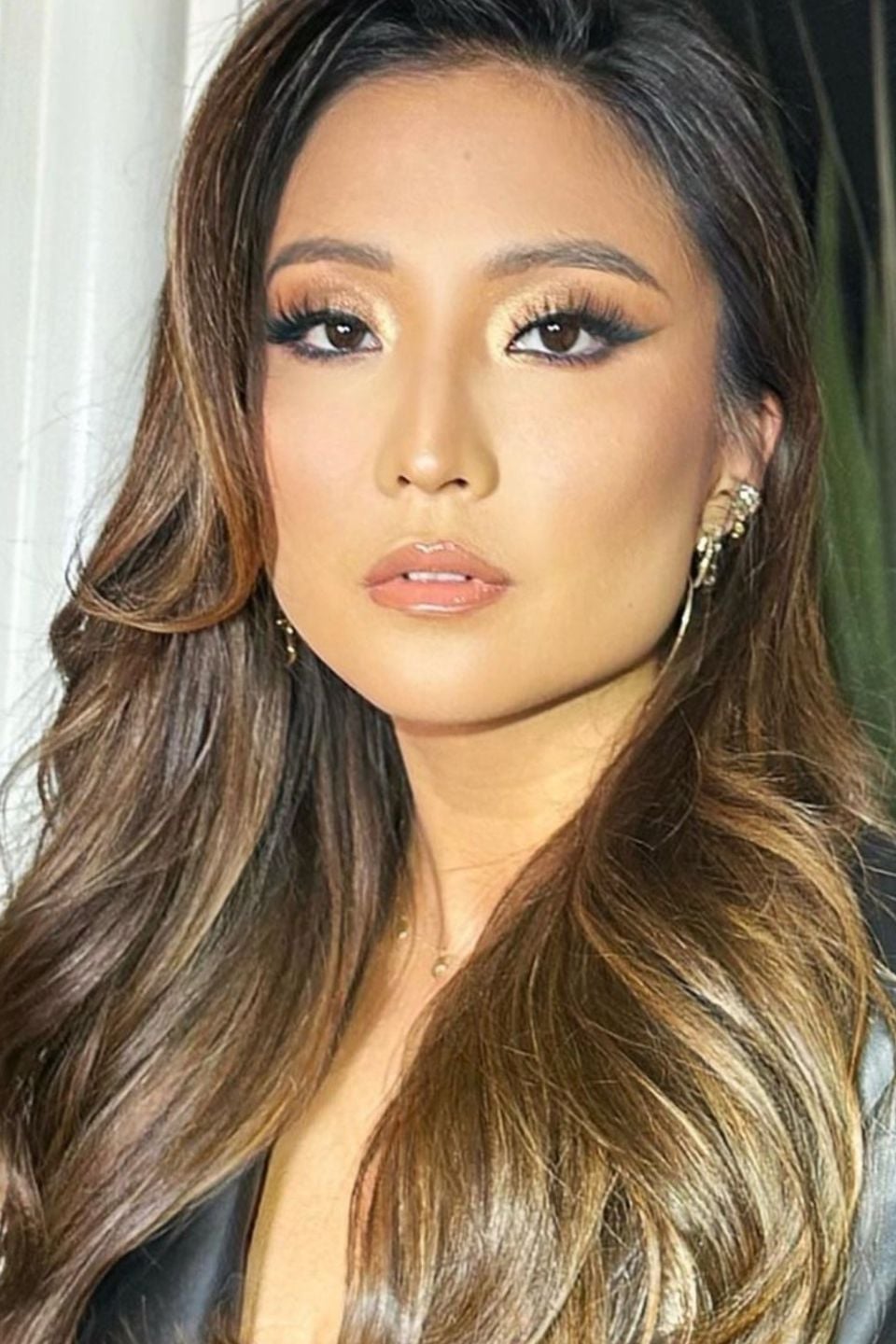
Mid-back length with a blowout and curtain bangs hits a sweet spot between polished and low-key, which is why it works from late summer straight into autumn. The light brown balayage stays subtle enough that grown-out roots look intentional for weeks, and the curtain bangs frame the face without demanding daily heat styling. Ask your colorist for: mid-back light brown balayage with curtain bangs. Thick, wavy texture holds the bend of a blowout longer than fine hair, so a smoothing serum on damp strands is usually enough to maintain the gloss.
Collarbone Light Brown Balayage No Bangs
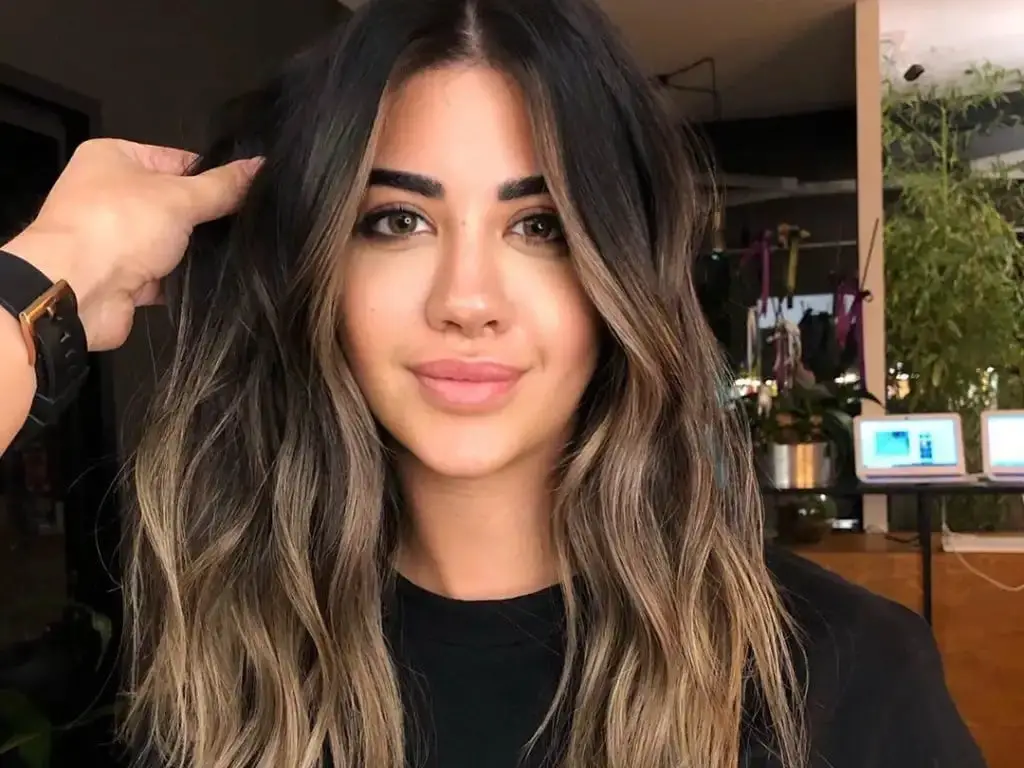
What happens when you skip the bangs on a collarbone-length cut? The face-framing layers still soften the jaw, but the middle part pulls the eye straight down, which can elongate a round face more than a fringed option would. Thick, wavy hair at this length benefits from the absence of bangs because the weight stays evenly distributed, and the light brown balayage reads clearly from root to tip without interruption. Ask your colorist for: collarbone light brown balayage with face-framing layers. A texturizing spray on dry waves adds movement, and a trim every six to eight weeks prevents the ends from feeling heavy.
Mid-Back Medium Brown With Lighter Brown Balayage
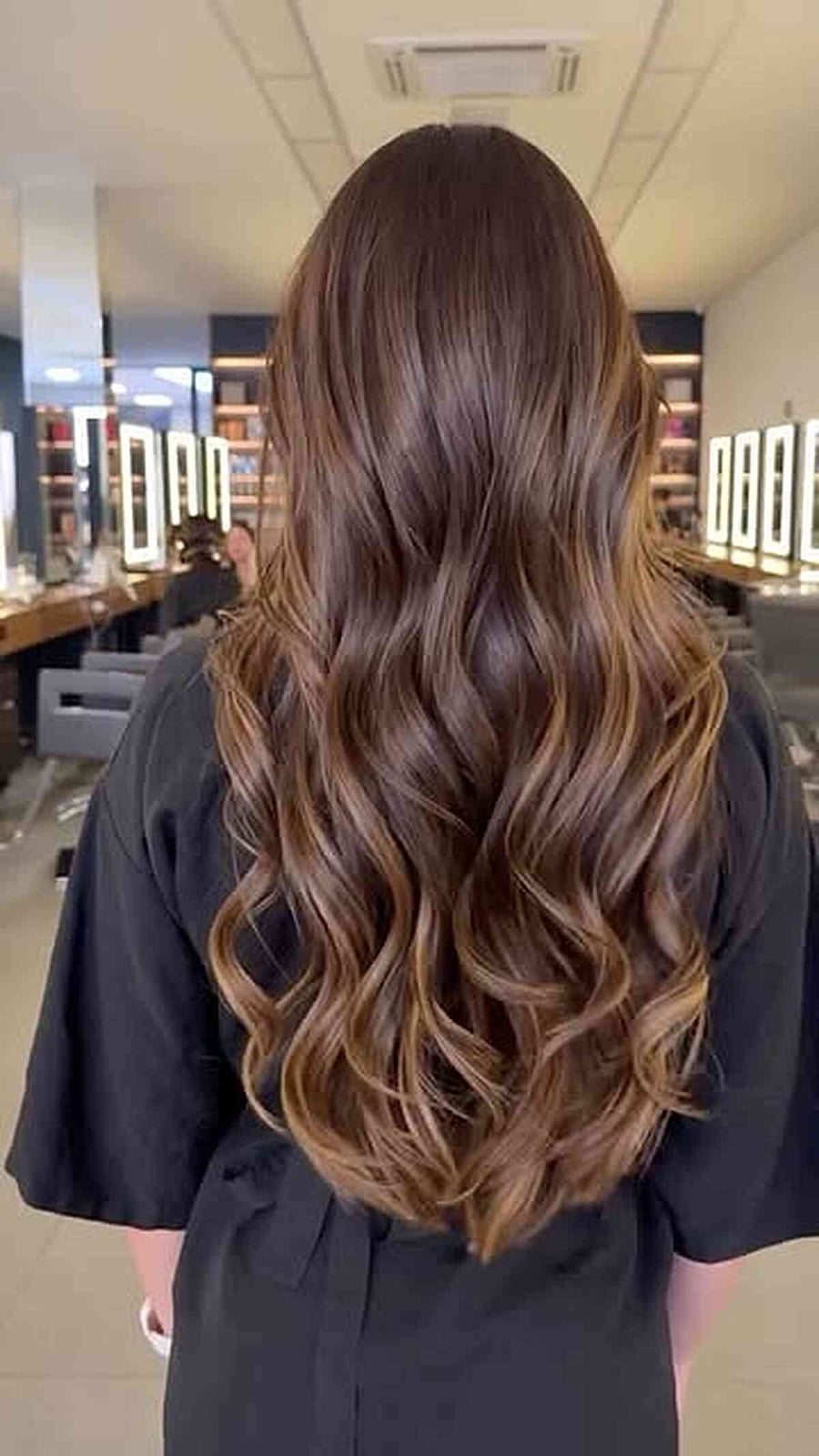
Where a high-contrast balayage announces itself, this one whispers. The medium brown base stays close to natural, and the lighter brown balayage lifts the mid-lengths and ends just enough to catch light without looking striped. Thick, wavy hair at mid-back length lets the seamless blend travel through each wave, and the back view confirms there is no hard line where the color starts. Ask your colorist for: medium brown base with lighter brown balayage. A curl-defining cream and an air-dry or diffuser set the texture, and a trim every eight to ten weeks keeps the ends healthy.
Mid-Back Mushroom Beige Balayage
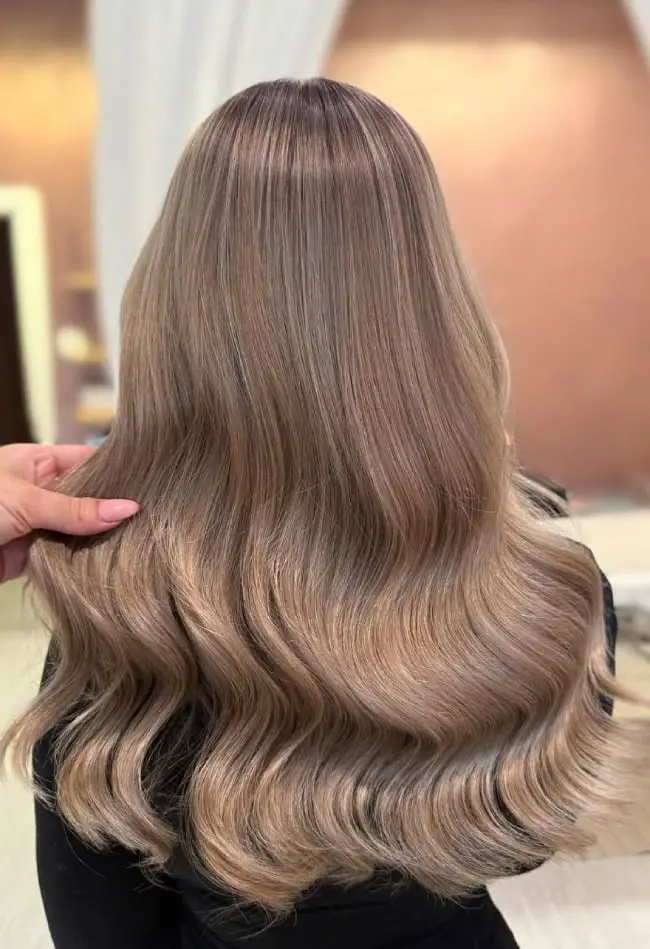
Mushroom beige balayage is a cool-toned take on light brown that reads as taupe in low light and warms up just slightly under direct sun. The long layers here are cut to support Hollywood waves, which means each S-bend gets its own slice of the beige tone instead of one flat stripe. Thick, wavy hair at mid-back length has enough heft to hold those waves for an evening, and the middle part keeps the look symmetrical. Ask your colorist for: mid-back mushroom beige balayage in Hollywood waves. A strong-hold hairspray locks the set, and a trim every eight to ten weeks preserves the shape.
Mid-Back Light Brown Balayage With Seamless Blend
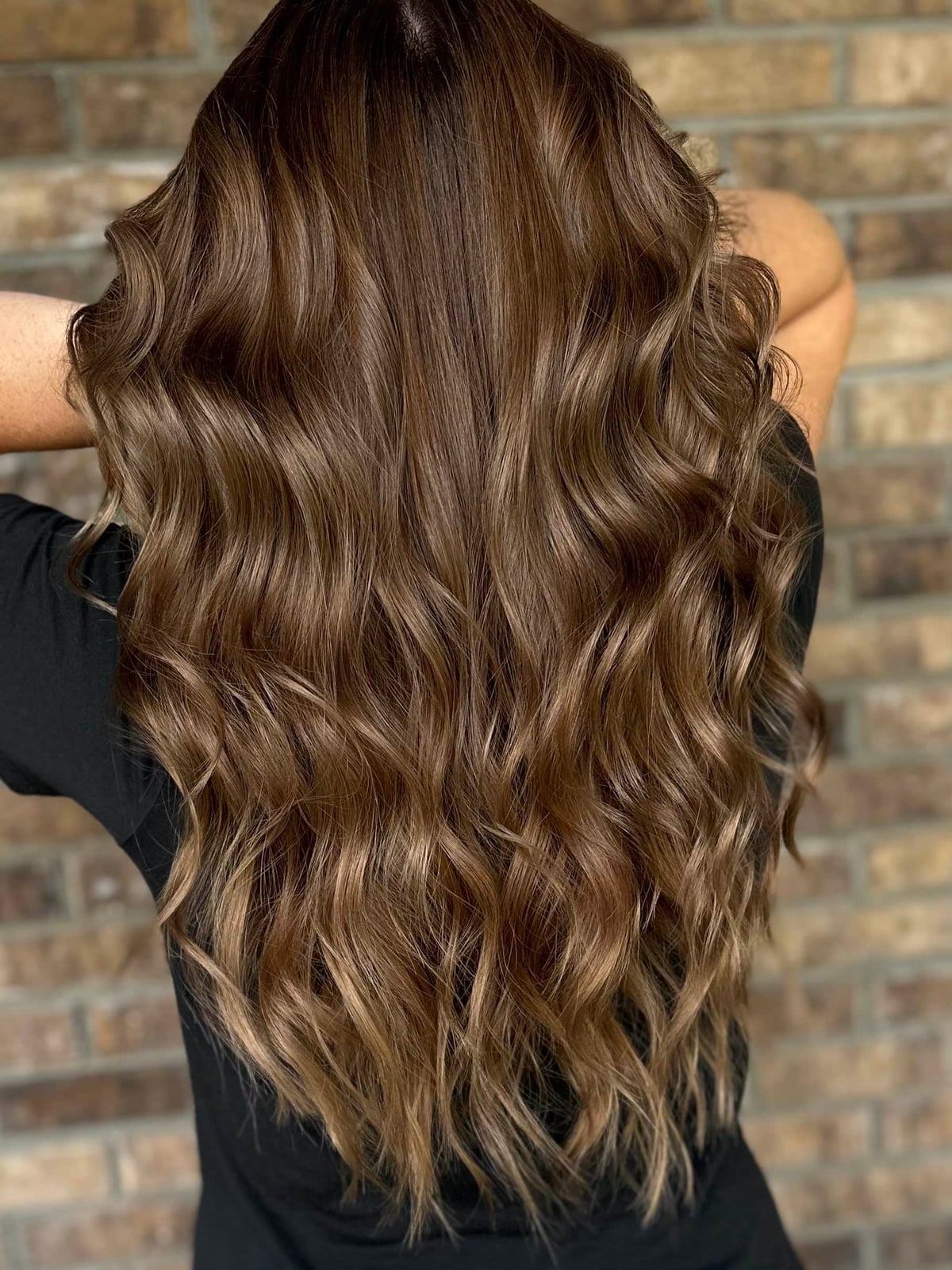
A seamless balayage blend means the lighter pieces melt into the base without a visible line of demarcation. The mid-back length and thick, wavy texture give the color plenty of surface area to show off its dimension. This combination works well for those with oval or heart face shapes, as the loose waves add softness around the jaw.
Ask your colorist for: mid-back light brown balayage with seamless blend. The grow-out is the main selling point here: because the lighter tones start lower and diffuse upward, new growth doesn’t create a harsh contrast. A hydrating serum keeps the ends glossy and the blend looking intentional. Plan for a trim every 8 to 10 weeks to keep the layers from getting straggly, but the color itself can stretch to 12 weeks between appointments.
Mid-Back Light Brown Balayage With Face-Framing Layers
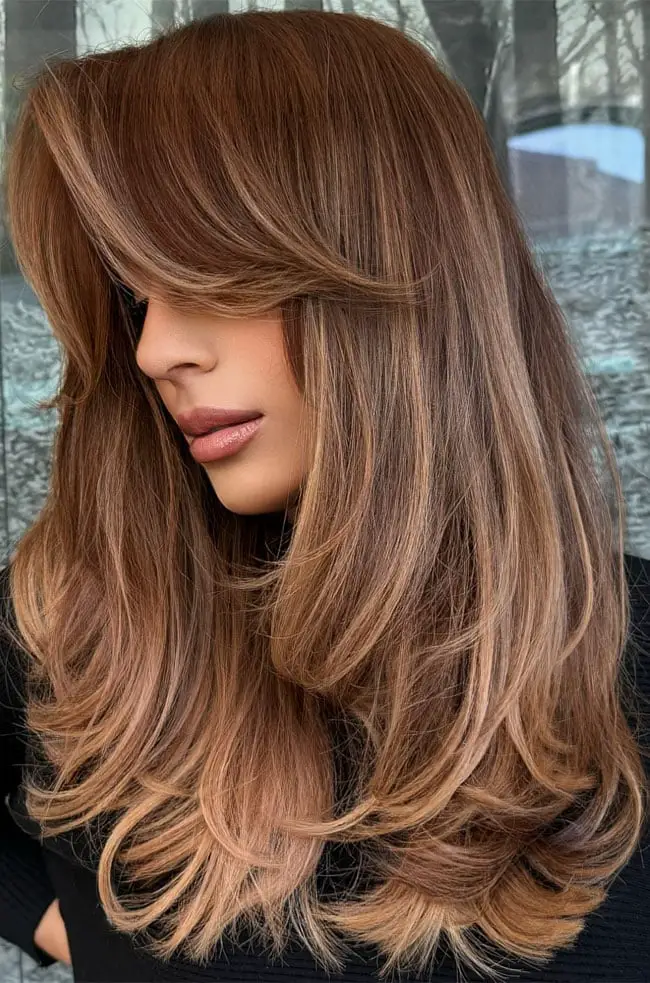
How do you ask for a color that feels both soft and deliberate? Start with the cut. The mid-back length is layered throughout, with curtain bangs that sweep toward the cheekbones, and the light brown balayage is painted to hit those front sections first. A middle parting keeps the face-framing pieces symmetrical. This shape suits round and oblong faces, as the layers add width at the sides. Ask your colorist for: mid-back light brown balayage with face-framing layers. The curtain bangs need a trim every 4 to 6 weeks to stay out of your eyes, but the rest of the length can go 8 weeks between cuts.
Mid-Back Light Brown With Honey Blonde Balayage
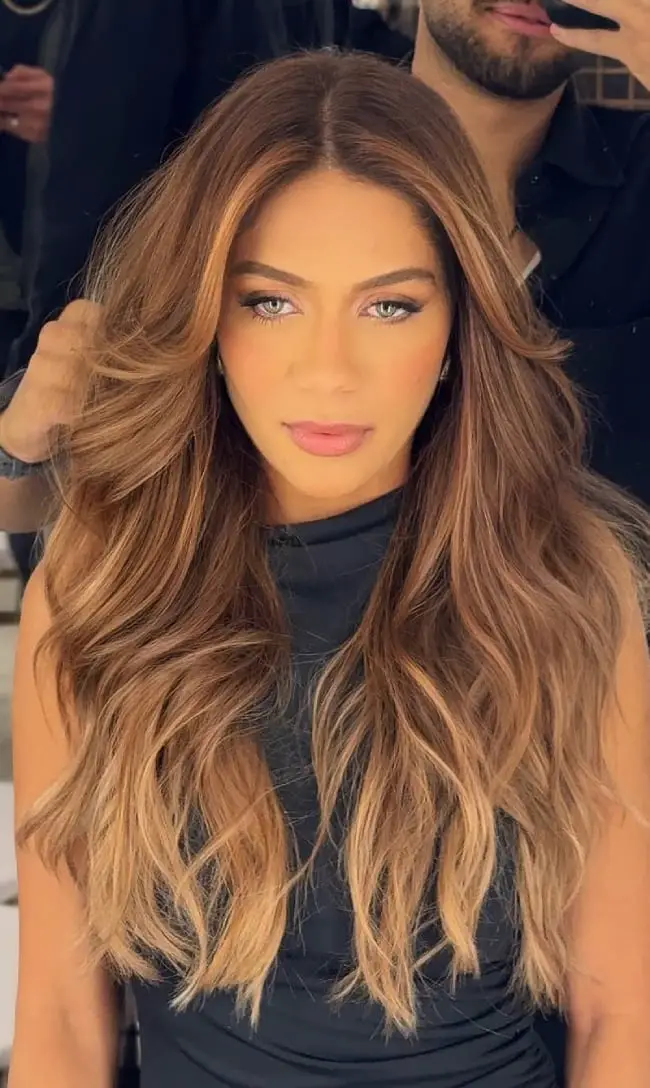
Honey blonde balayage on a light brown base is a warm, high-contrast pairing that reads as naturally sun-lit. The mid-back length and long layers keep the weight moving, while soft waves catch the lighter pieces at every bend. Thick, wavy hair is the ideal canvas here, because the texture prevents the honey tones from looking flat. This combination works best on oval and heart face shapes, as the middle parting and length elongate the face. Ask your colorist for: light brown base with honey blonde balayage. The honey tones do tend to pull warmer over time, so a purple shampoo once a week keeps them from turning brassy between toning appointments.
Medium Brown With Light Brown Balayage Blowout
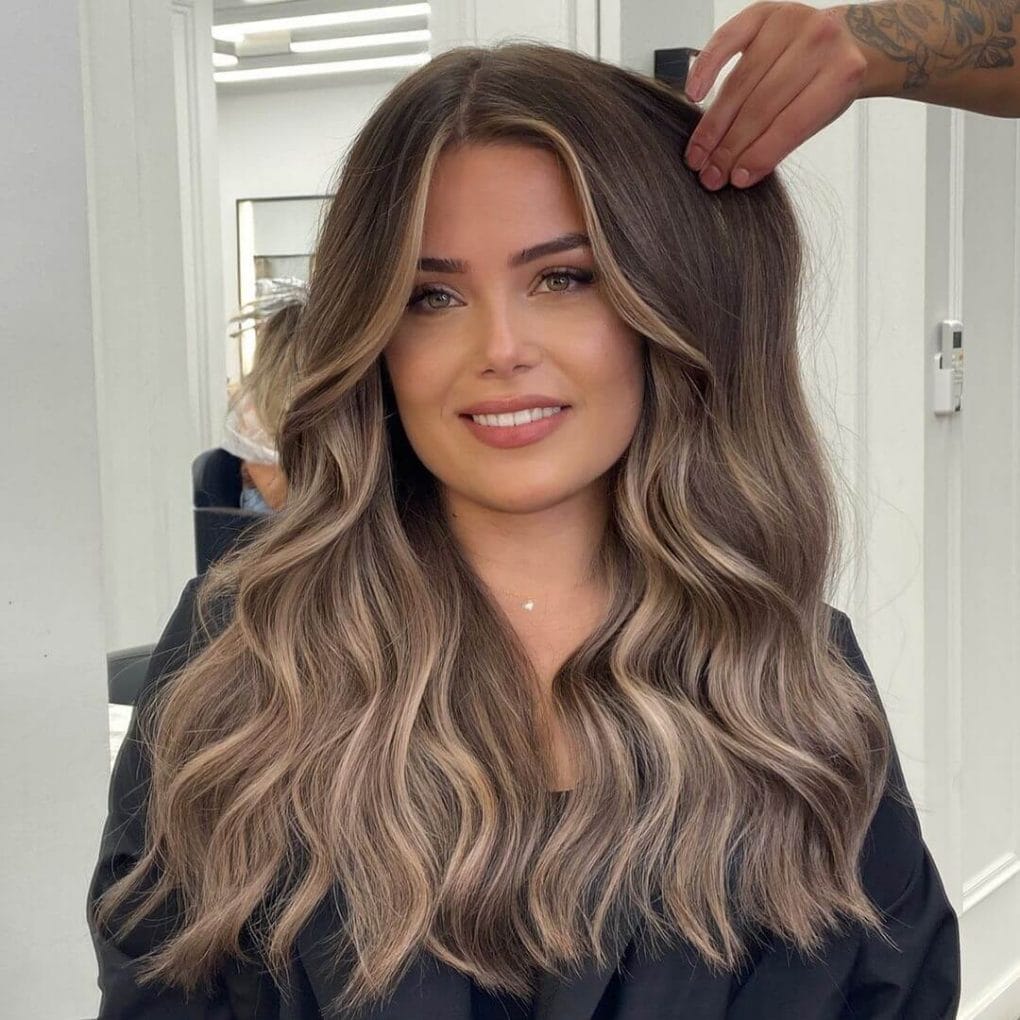
The mistake people make with a medium brown base and light brown balayage is assuming they can replicate the salon blowout at home. The mid-back length, thick texture and face-framing pieces require a round brush and some patience to get that voluminous, bouncy finish. Soft waves complete the look. The balayage is subtle, with the lighter brown woven through the mid-lengths and ends so it blends naturally as it grows. This is best left to a professional, especially for the color placement. Ask your colorist for: medium brown with light brown balayage blowout. A root-lifting spray at the crown and a flexible hold hairspray on the ends will help the shape last through the day.
Chin Length Bob With Light Brown Balayage
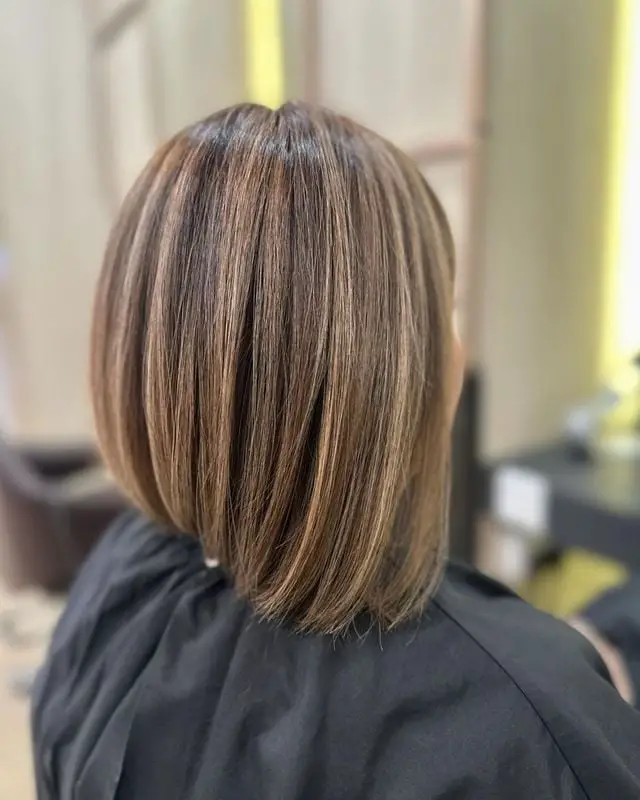
A chin-length bob with a dark brown base and light brown balayage is a clean, polished shape, but the trade-off is visibility. On fine, straight hair, the lighter pieces sit close to the surface and can show every bit of brassiness or fading. The middle part and blunt cut make the color placement especially obvious, so toning appointments every 4 to 6 weeks are non-negotiable. Ask your colorist for: chin length bob with light brown balayage. The bob itself needs a trim every 4 to 6 weeks to keep the line crisp. If you prefer a lower-maintenance grow-out, ask for the balayage to start slightly lower, leaving a darker root area that buys you an extra week or two.
Shoulder Length Light Brown Balayage With Curtain Bangs
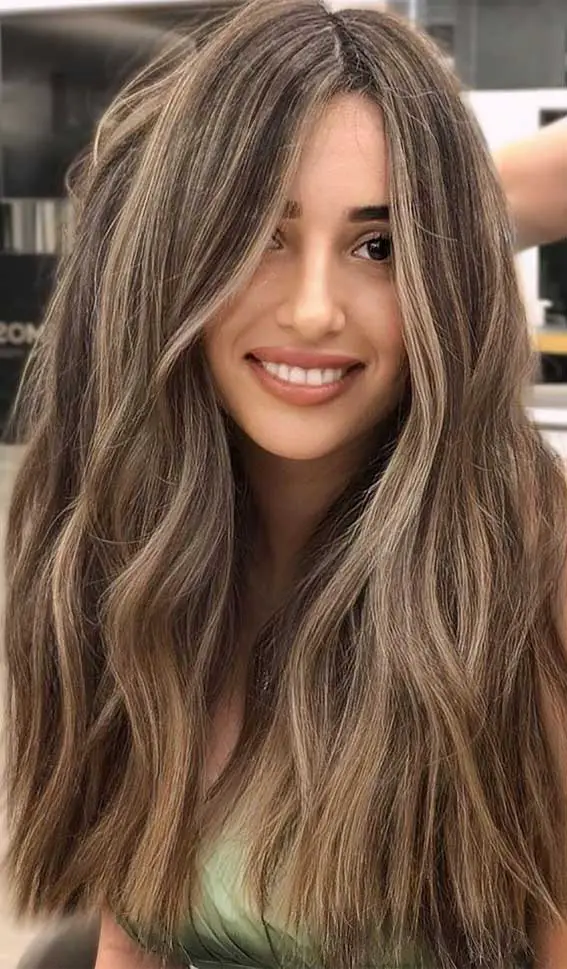
A shoulder-length cut with a middle part and curtain bangs gives light brown balayage room to show off its sun-kissed effect, especially through those face-framing layers. It suits thick, wavy hair that already sits at the shoulder, and the curtain bangs soften round and oblong faces. Ask your colorist for: shoulder length light brown balayage with curtain bangs. The blowout keeps the waves glossy, but the bangs will need a round brush and a few minutes of heat each morning. Plan on trimming the baseline every six to eight weeks, and the curtain bangs every four to six, so the shape stays intentional rather than shaggy.
Collarbone Lob With Caramel Balayage
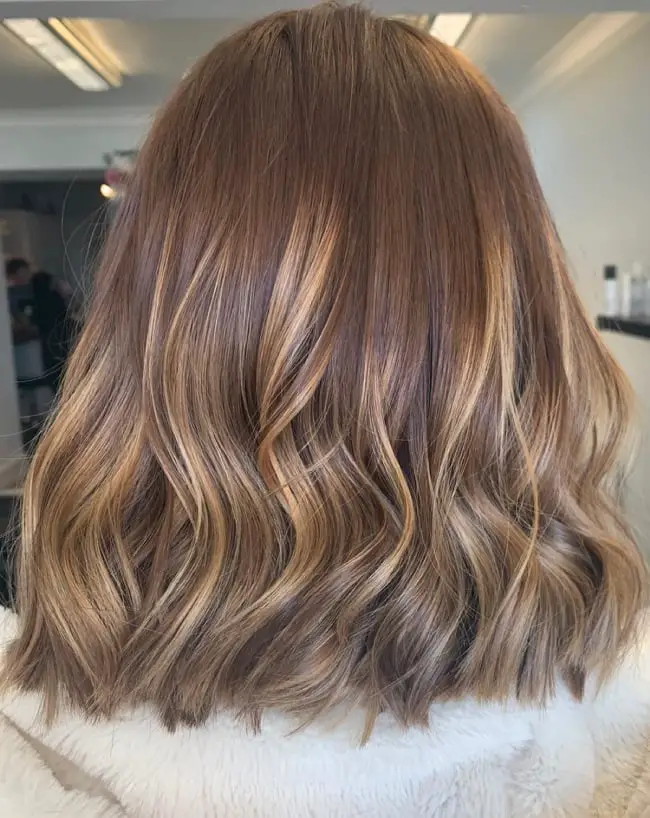
The medium brown base keeps roots low-maintenance, and the soft waves give medium-density hair movement without weighing it down. Ask your colorist for: collarbone lob with caramel balayage. It suits oval and heart face shapes, and the middle part keeps everything balanced. A texturizing spray on damp hair, then a quick diffuser pass, gets you beachy waves in about fifteen minutes. Trim the baseline every six to eight weeks to keep the lob from turning into a grown-out bob.
Dark Brown With Warm Blonde Balayage and Curtain Bangs
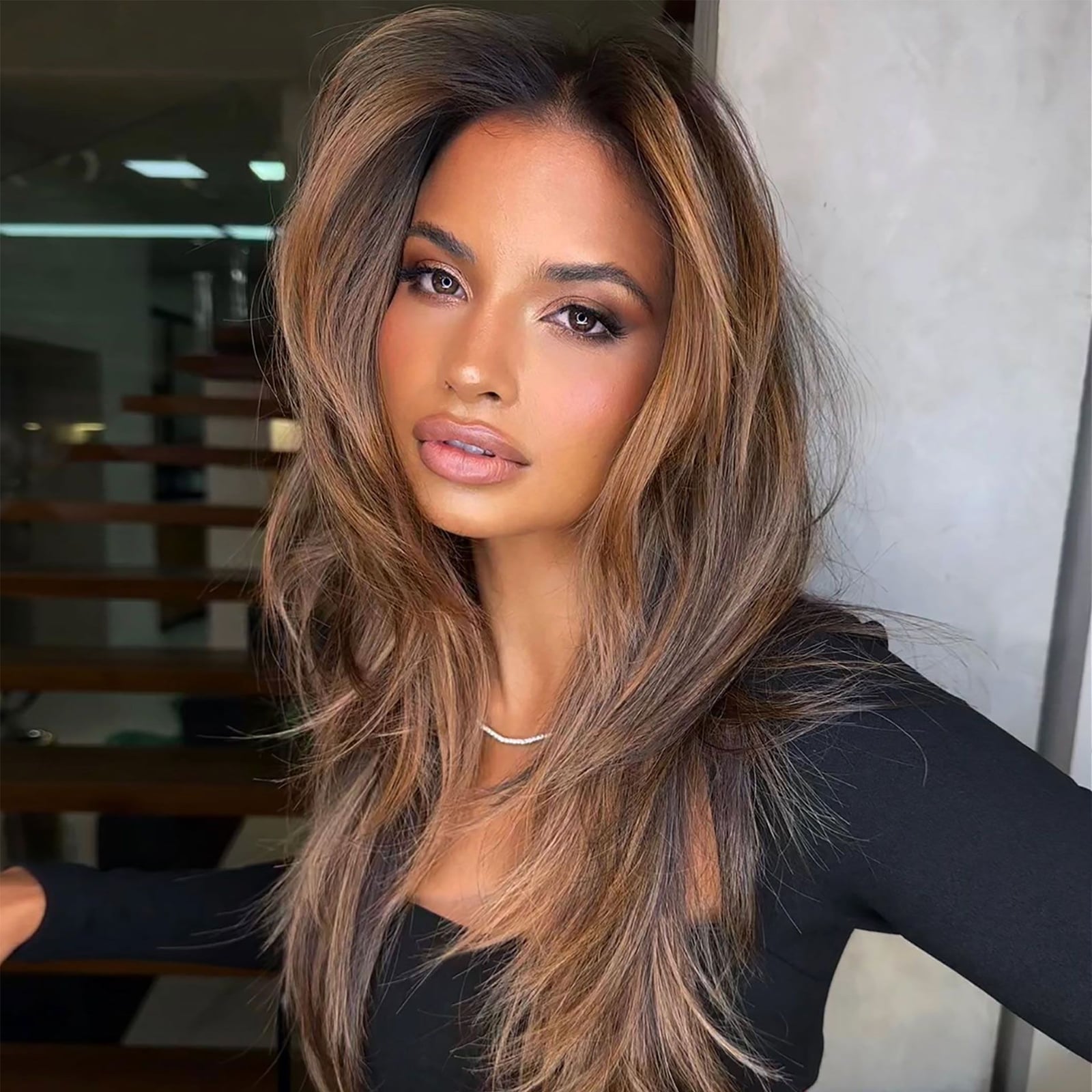
Warm blonde balayage on a dark brown base works by painting the lightest pieces away from the roots, so the depth stays at the crown and the warmth lands mid-length and at the ends. The technique is what keeps it classy: the blonde is woven through thick, wavy hair in soft ribbons, not chunky stripes, and the curtain bangs get their own delicate sweep of color to tie the whole thing together. Ask your colorist for: dark brown base with warm blonde balayage and curtain bangs. It suits thick, wavy hair at least mid-back length, and the curtain bangs soften round and oblong faces. A volumizing mousse and a round-brush blowout give the soft waves their lift. Curtain bangs need a trim every four to six weeks; the balayage itself can stretch to ten or twelve.
Long Dark Brown With Light Brown Balayage
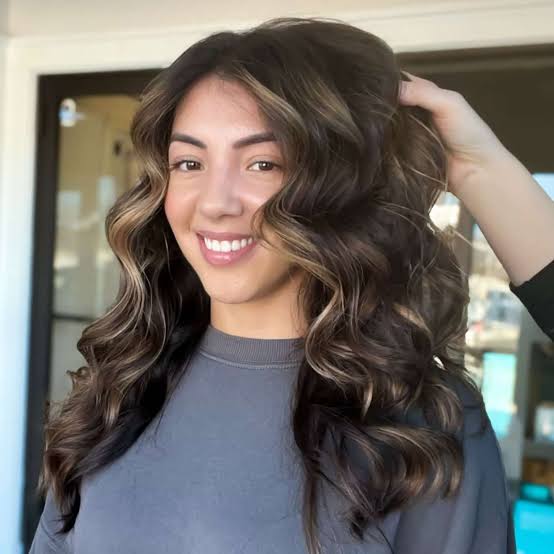
Thinking about light brown balayage on long dark brown hair? It works best if you have thick, wavy hair at least mid-back length, because the length gives the color room to graduate from dark at the roots to lighter at the ends. Face-framing pieces add softness around the jaw, which suits square and oval faces. Ask your colorist for: long dark brown with light brown balayage and face-framing pieces. The voluminous waves are easy to recreate with a curl-defining cream and a diffuser, and the result reads as natural dimension, not obvious highlights. Plan on a trim every eight to ten weeks; the balayage itself can go four months before the grow-out line becomes noticeable.
Long Dark Brown With Light Brown Balayage and Curtain Bangs
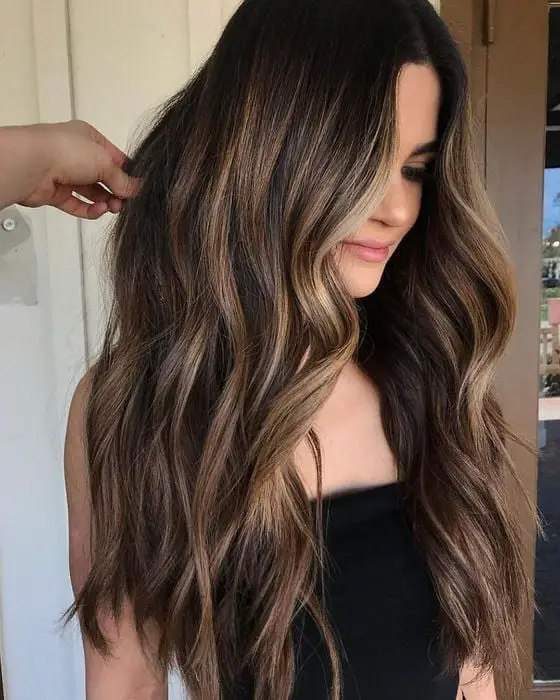
How do you get light brown balayage on long dark brown hair without it looking stripey? You ask for it by placement. The balayage should start a few inches from the roots and intensify through the lengths, so the dark base stays rich at the crown and the light brown adds dimension and brightness as it goes down. The curtain bangs get their own soft sweep of color, framing the face without a hard line. Ask your colorist for: long dark brown with light brown balayage and curtain bangs. This suits thick, wavy hair at least mid-back length, and the curtain bangs work with most face shapes. A texturizing spray gives the loose waves a lived-in feel, and the bangs need a trim every four to six weeks to keep their shape.
Mid-Back Light Brown With Subtle Lighter Brown Balayage, Straight
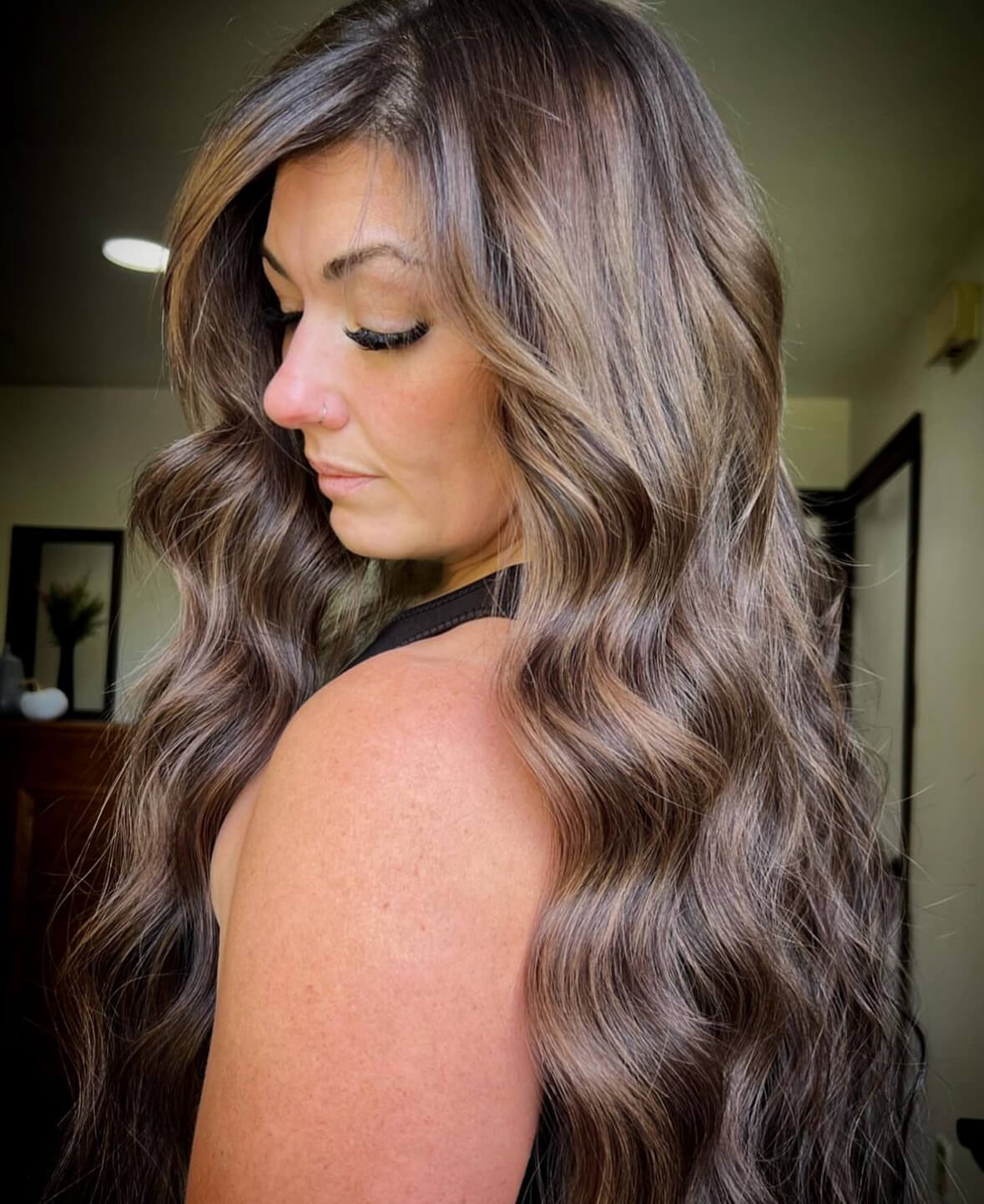
Straight hair shows off a balayage blend better than anything except a blowout. A light brown base with a slightly lighter brown balayage placed through the mids and ends reads as soft dimension rather than obvious highlights. Thick, straight hair at least mid-back length holds the visual weight of this subtle shift. Ask your colorist for: mid-back light brown with subtle lighter brown balayage.
The grow-out is the main selling point. No root line means no urgent toning appointment, just a trim every eight to ten weeks to keep the ends full. A heat protectant and a flat iron are all that is needed to finish the look at home.
Mid-Back Light Brown Balayage Blowout
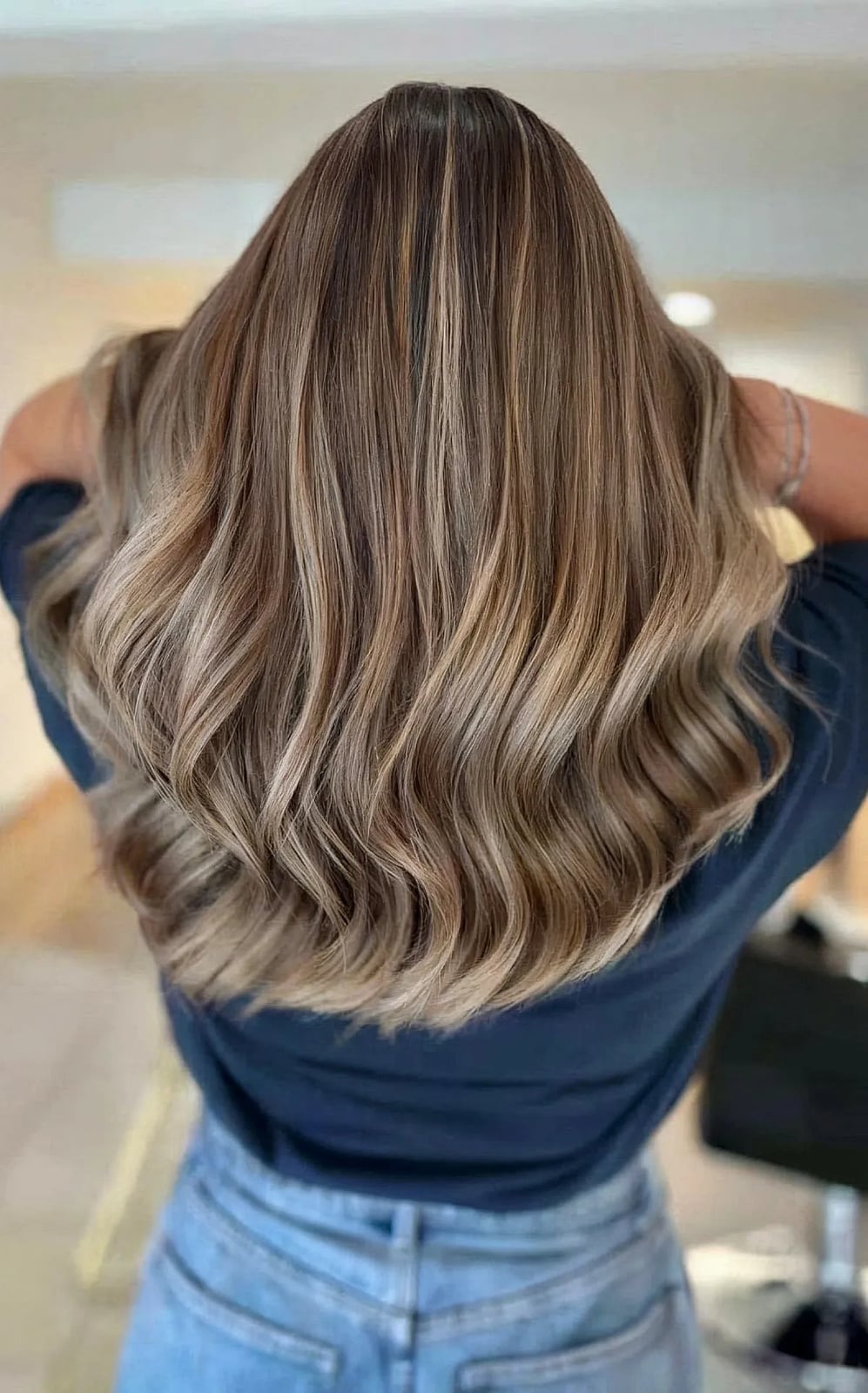
A blowout and balayage are a reliable pair for any season, but fall and winter are where this combination earns its keep. The lighter tones in a mid-back light brown balayage catch low-angle indoor light, while the darker base keeps the look grounded under heavy coats. Thick, wavy hair at least mid-back length provides the volume a blowout needs to read as polished rather than puffy. Ask your colorist for: mid-back light brown balayage blowout. A round brush and a medium heat setting are the tools that make the seamless blend the star.
Dark Brown With Caramel and Light Brown Balayage
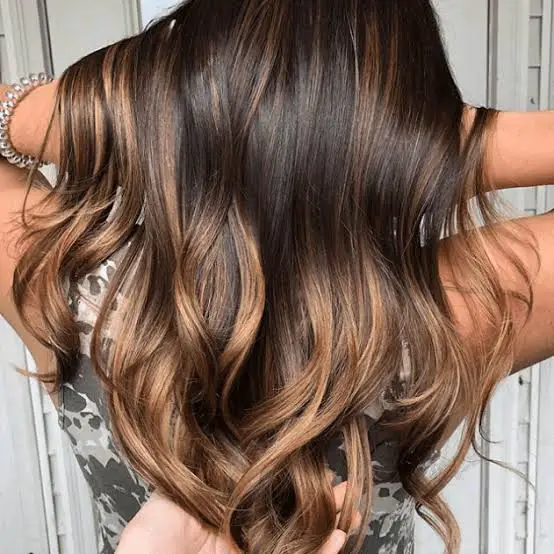
The transition from dark brown at the root to caramel and then light brown at the ends creates a gradient that looks painted, not sectioned. The technique uses a back-combed weave in the mids and a freehand sweep through the ends, so the warm tones sit mostly on the surface and the dark base stays intact underneath. Thick, wavy hair at least mid-back length lets the three tones move separately in loose waves. Ask your colorist for: dark brown base with caramel and light brown balayage. A middle parting keeps the color distribution even on both sides. The effect is dimensional without being busy, which is harder to pull off than it sounds.
Light Brown Balayage With Blonde Highlights and Curtain Bangs
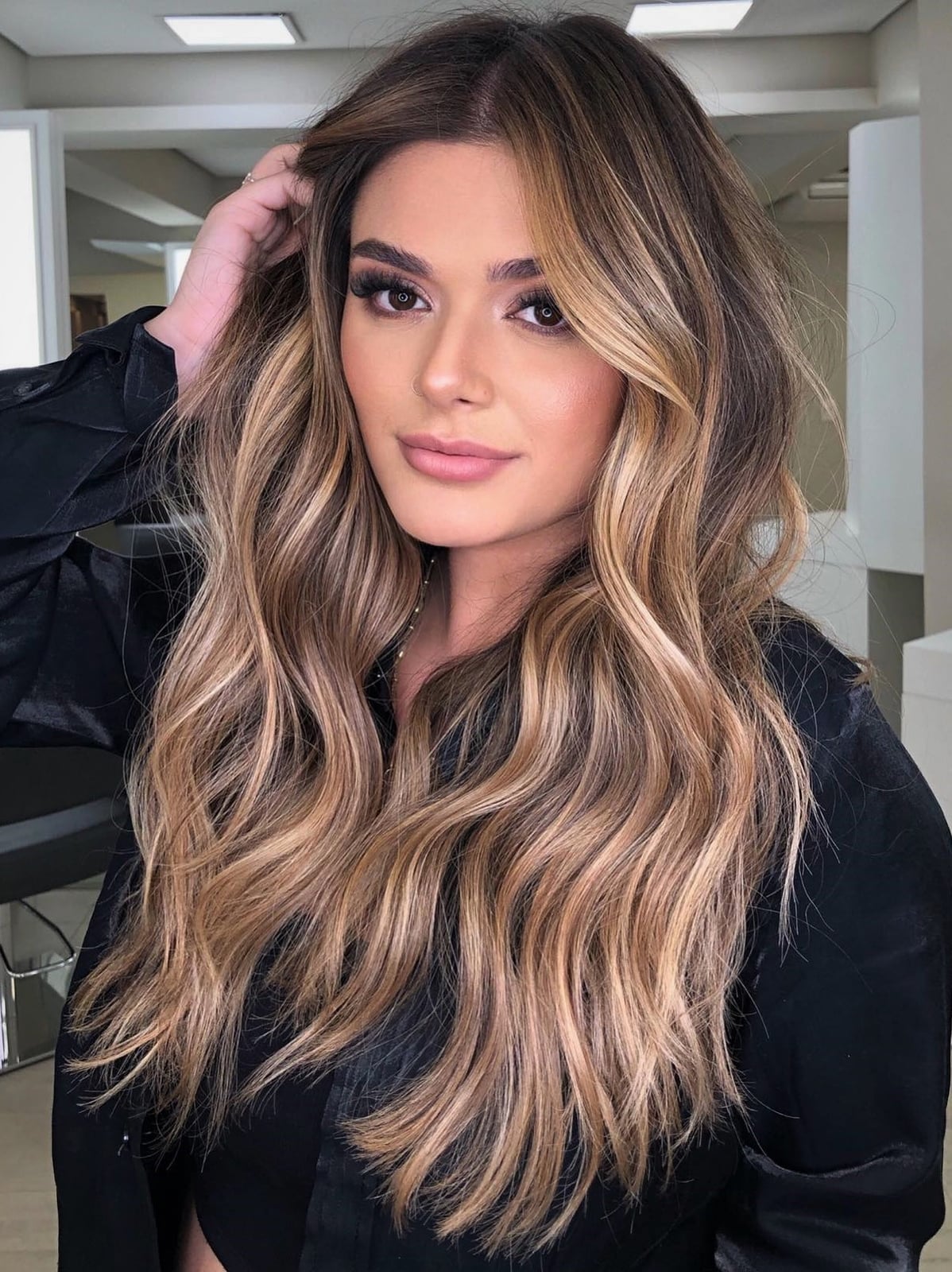
Can curtain bangs and balayage work together without looking like two separate ideas? Yes, when the highlights reach forward into the fringe. A light brown base with blonde balayage highlights that feather into curtain bangs creates a continuous frame around the face rather than a color block at the forehead. Thick, wavy hair at least mid-back length keeps the bangs from collapsing. Curtain bangs soften oblong and round face shapes by breaking up the vertical line. Ask your colorist for: light brown base with blonde balayage and curtain bangs.
Mid-Back Light Brown Balayage Straight Blowout With Long Layers
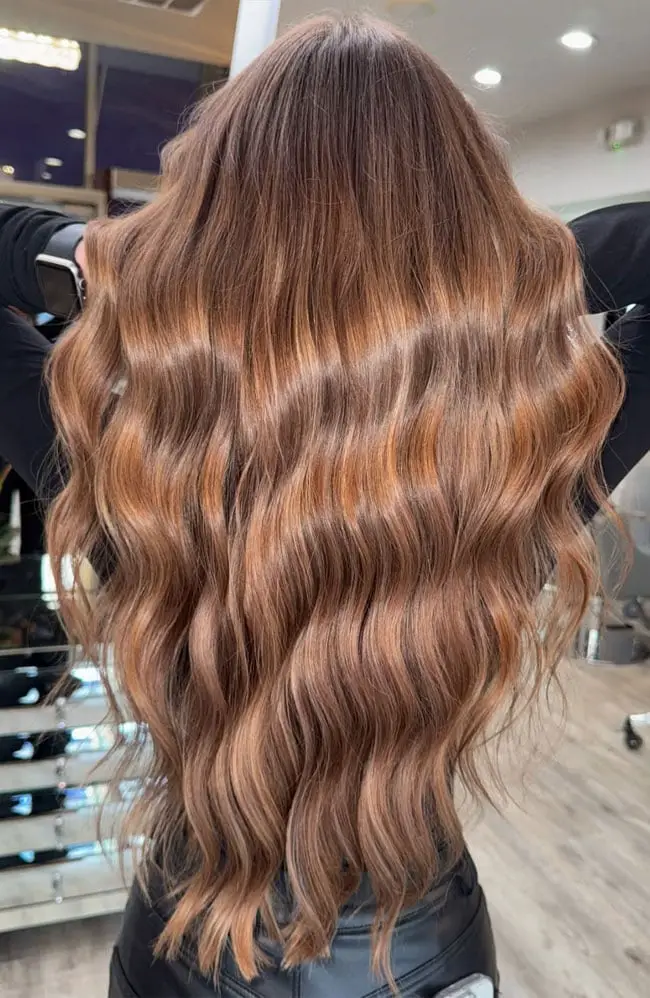
A glossy straight blowout on light brown balayage looks simple but is the most common place a home blow-dry goes wrong. The mistake is uneven tension that creates flyaways, and flyaways on a smooth finish read as damage rather than texture. Long layers at mid-back length reduce bulk without removing the weight that keeps straight hair from flipping out. Thick, straight hair at least mid-back length is the ideal starting point. Ask your colorist for: mid-back light brown balayage in a straight blowout. This is a salon finish, not a DIY one, because the gloss comes from a professional blow-dry technique, not a product.
Dark Blonde With Ash Blonde Balayage
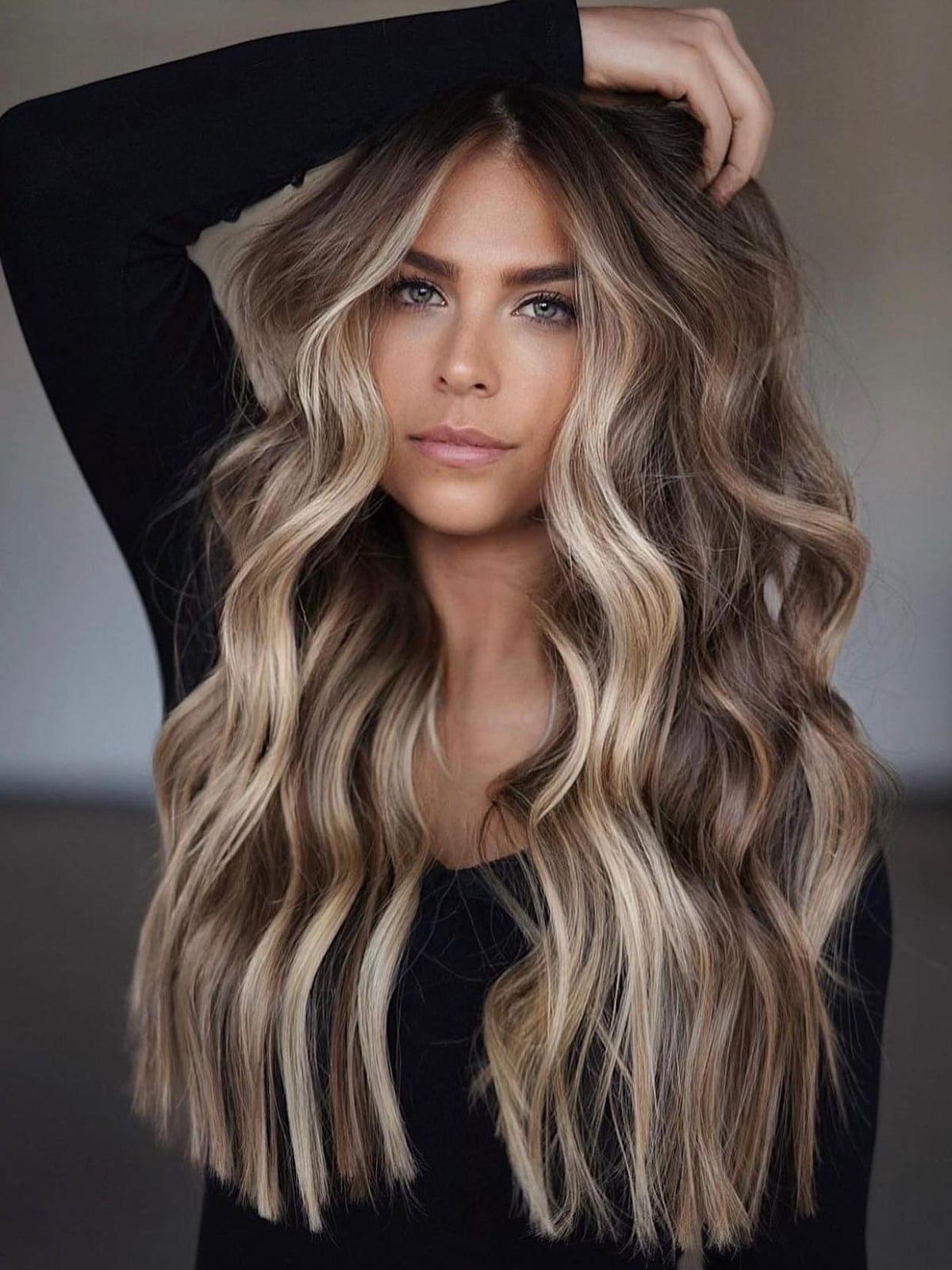
This is a high-contrast design: a dark blonde base with ash blonde balayage, applied to long, thick, wavy hair. The middle parting and loose waves let the lighter pieces sit right where the eye lands. Ash tones fade faster than warm ones, so a purple shampoo is non-negotiable to keep the beige-silver cast from turning brassy. A trim every eight to ten weeks keeps the long layers clean. Ask your colorist for: dark blonde base with ash blonde balayage.
Collarbone Light Brown Balayage With Side Part
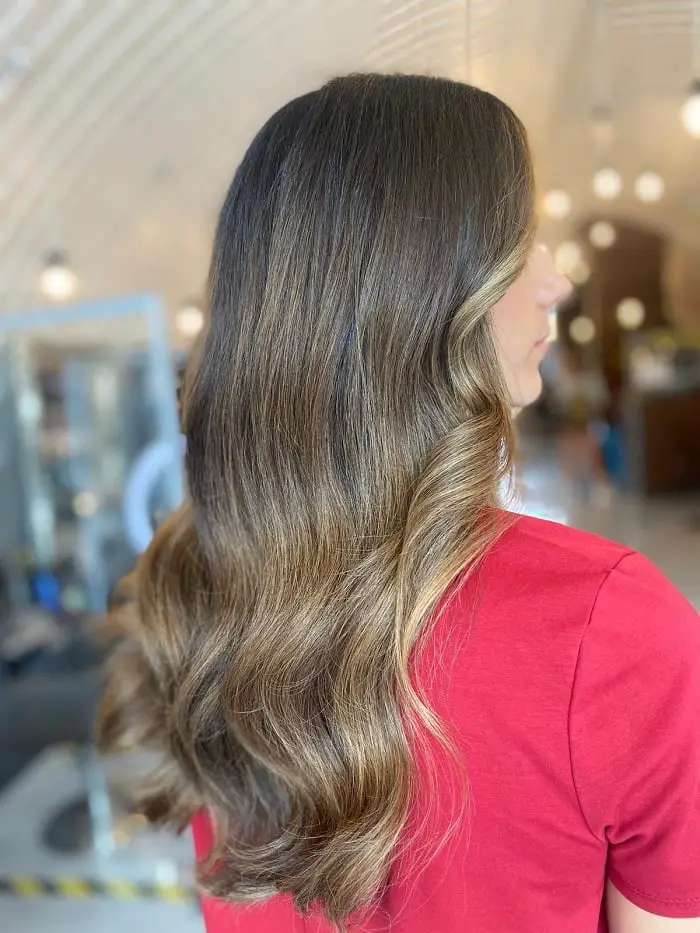
A side part changes how a light brown balayage reads on collarbone-length hair. The darker root area stays on the heavier side, while the lighter ends fall forward on the other, creating a natural contrast that a middle part would split evenly. This works best on thick, wavy hair that holds the part without pinning. A volumizing mousse at the roots and a blow-dry away from the part keep the shape from falling flat by midday. Ask your colorist for: collarbone light brown balayage with side part. A trim every six to eight weeks maintains the weight line.
Mid-Back Light Brown Balayage Blowout With Curtain Bangs, Straight
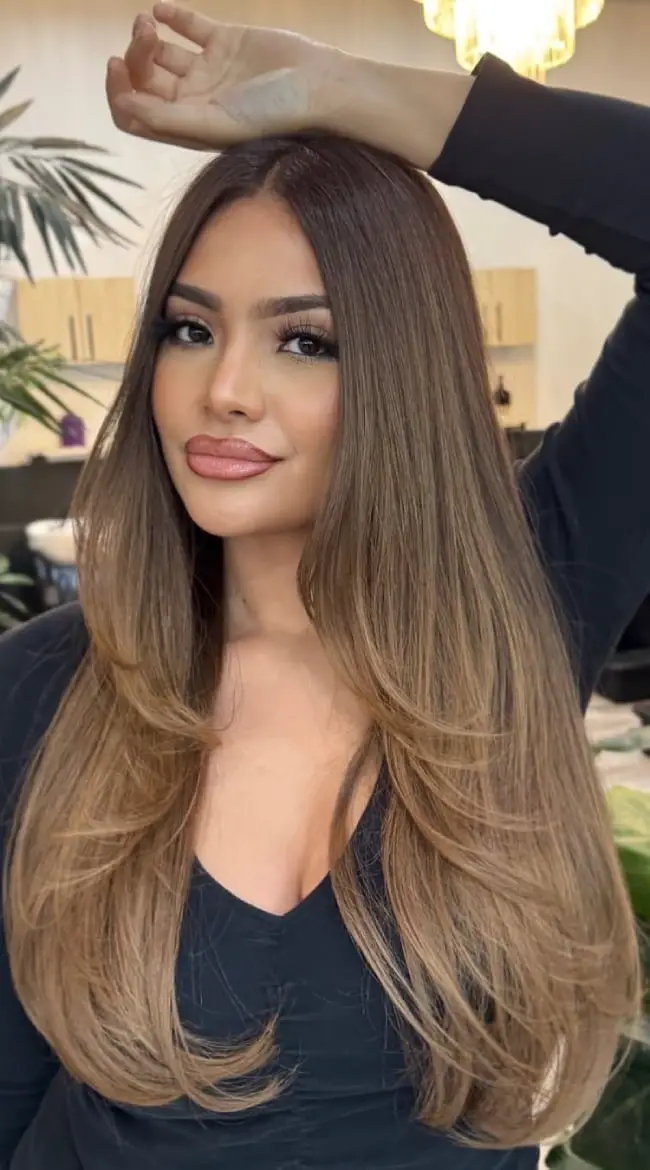
Where a wavy balayage relies on texture to show dimension, this straight blowout with curtain bangs lets the color itself do the work. The mid-back length and fine texture need a smooth, glossy finish so the light brown balayage stands out. A root-lifting spray and a round brush on the bangs give the shape some lift. Ask your stylist for: mid-back light brown balayage with curtain bangs. The bangs need a trim every four to six weeks to stay at the right length.
Collarbone Lob With Light Brown Balayage and Side Bangs
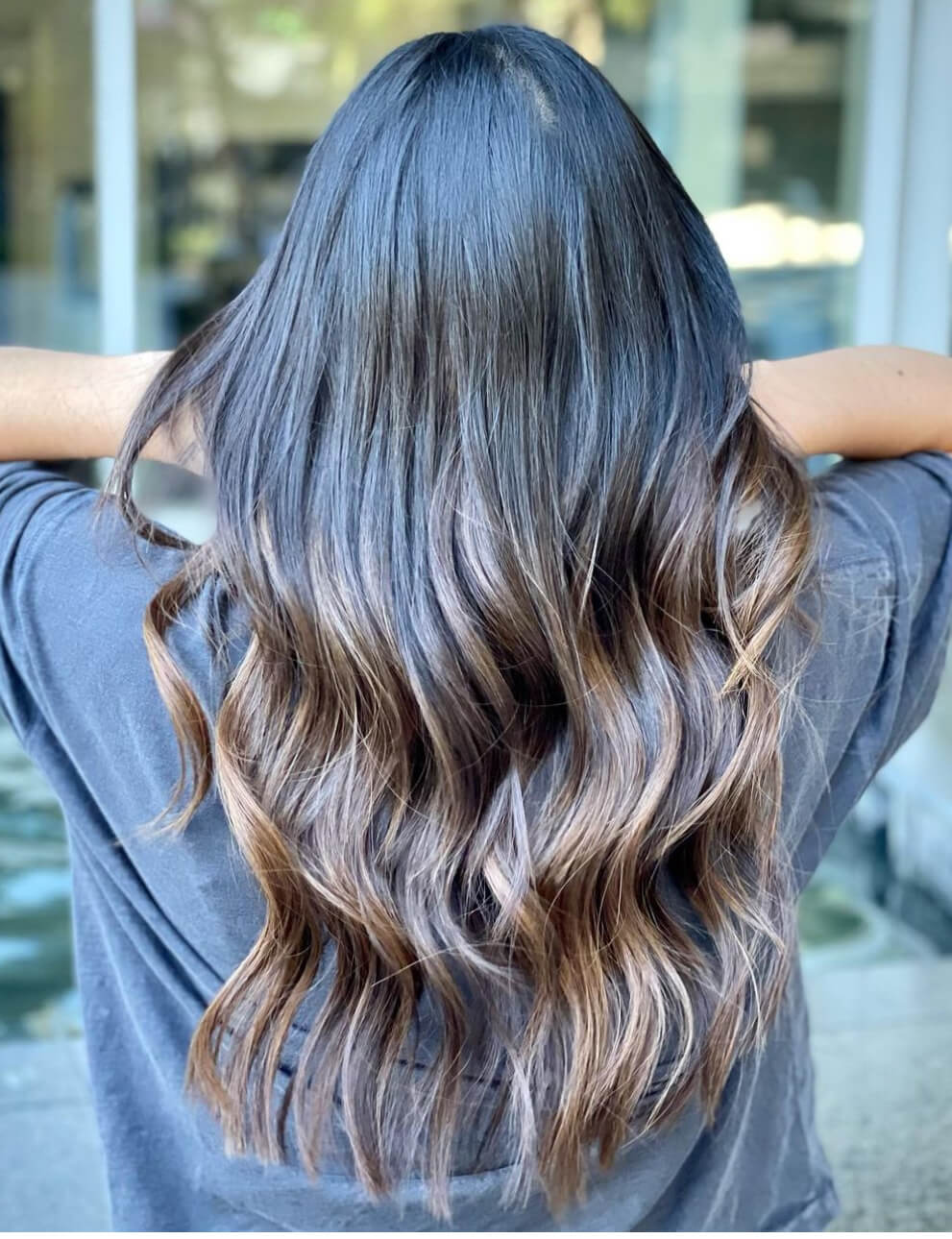
The technique here is about placement: the light brown balayage is painted to wrap around the face, and the side-swept bangs pick up the lightest pieces. On a collarbone-length lob with medium wavy texture, the color appears soft and blended. The side part helps the bangs blend into the cut without a hard line. Ask your colorist for: collarbone lob with light brown balayage and side swept bangs. The baseline needs a trim every six to eight weeks to keep the lob shape clean.
Long Light Brown With Caramel Balayage Highlights
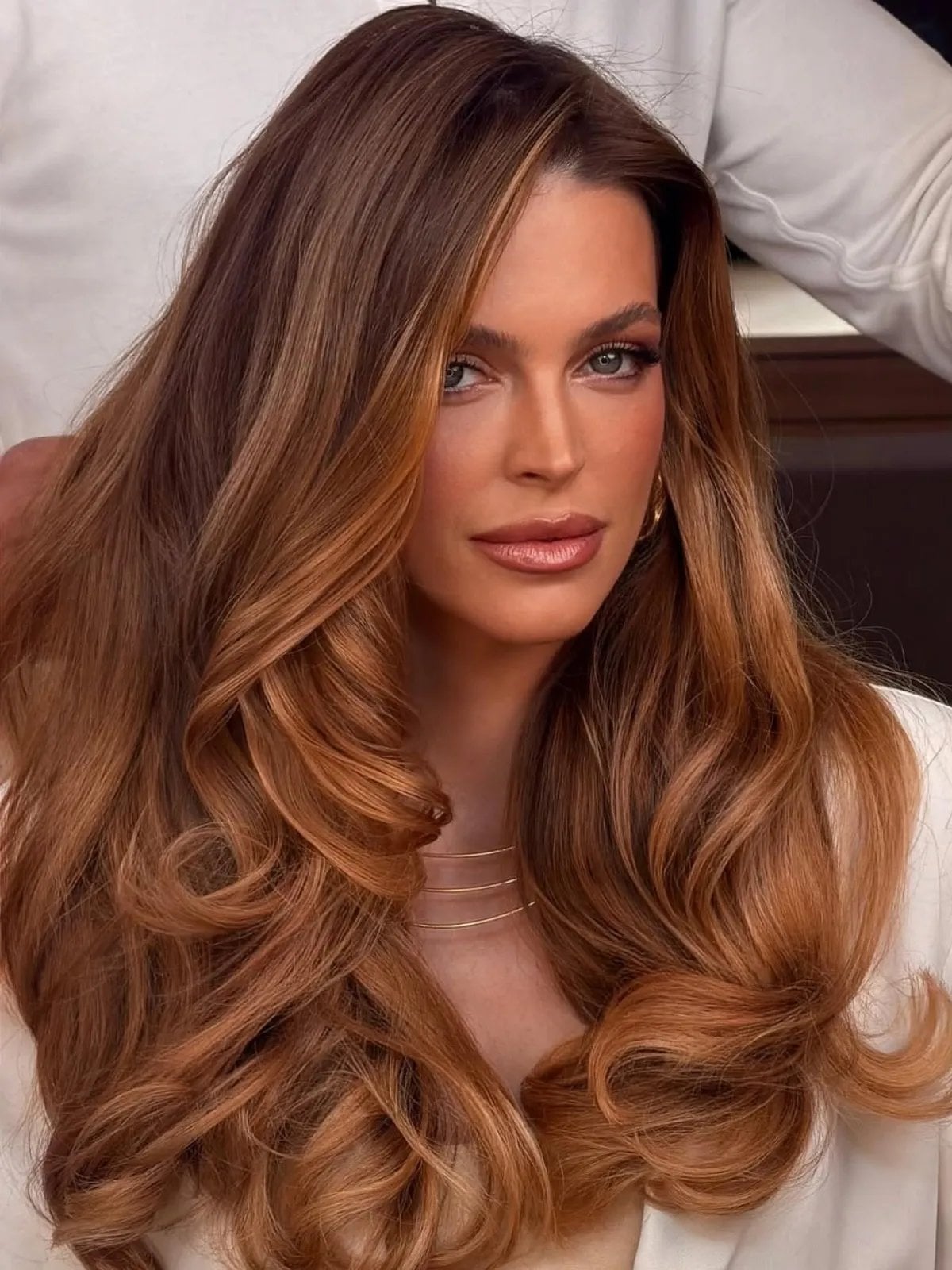
Want caramel balayage that actually shows up on a light brown base? Ask for the highlights to start a few inches from the root and concentrate on the mid-lengths and ends. On long, thick, wavy hair with a middle part and curtain bangs, the caramel pieces create a warm, dimensional effect without looking chunky. A shine serum on the ends keeps the glossy finish the color needs to read as rich rather than dry. Ask your colorist for: long light brown with caramel balayage highlights. A trim every eight to ten weeks preserves the layered shape.
Mid-Back Light Brown Balayage With Textured Waves
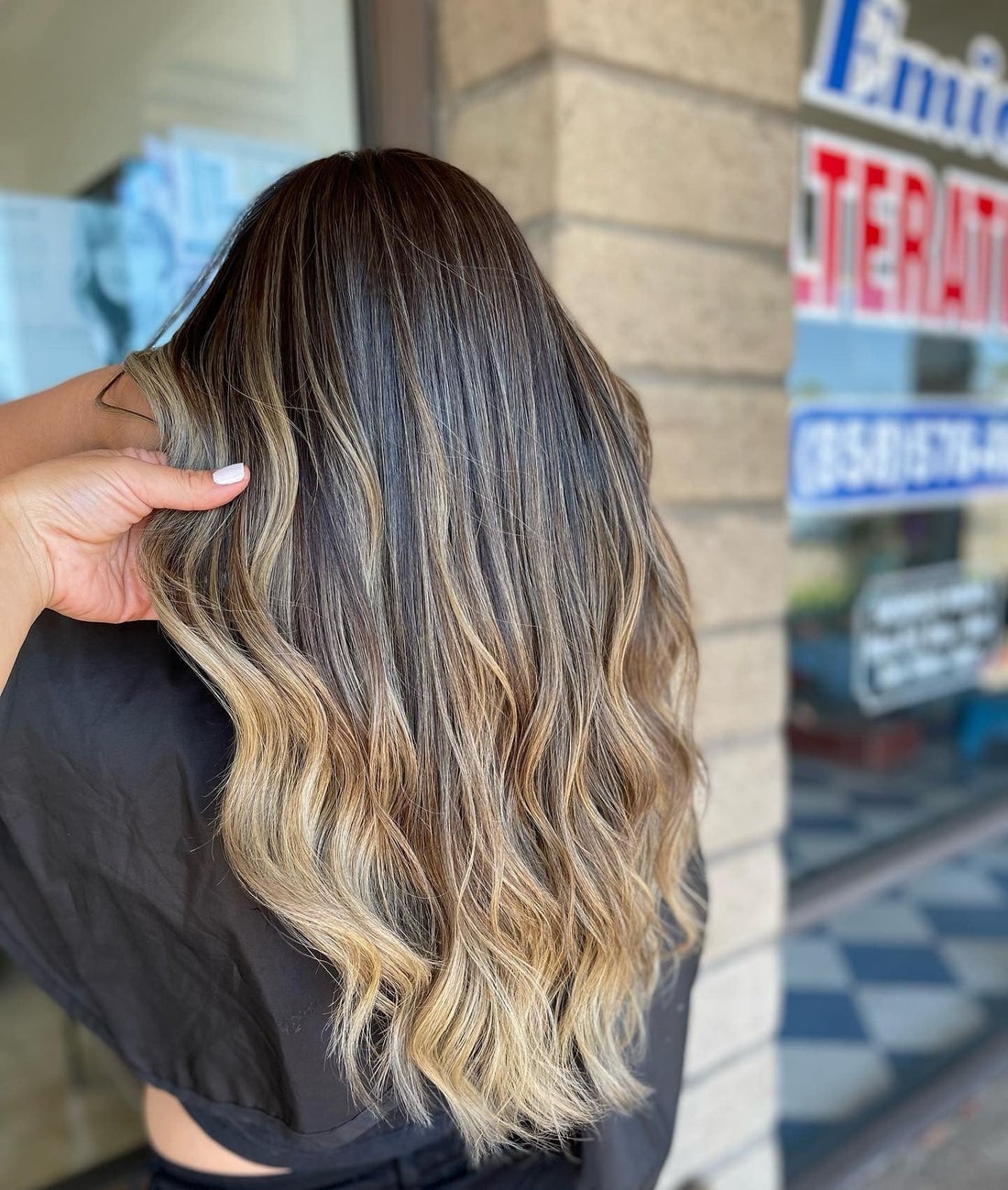
This mid-back balayage is best on thick hair that can hold a wave without deflating by lunch. The light brown strands woven through the base create a voluminous texture that looks deliberate, not windblown. Oval and heart face shapes benefit from the width the waves add at the sides. Ask your colorist for: mid-back light brown balayage with textured waves. A texturizing spray and a quick scrunch give definition in under ten minutes.
The real limitation is density. Fine hair struggles to support this much wave without product weighing it down, and the balayage blend reads as flat on low-density strands. A trim every eight to ten weeks keeps the ends healthy enough to hold the shape.
Mid-Back Light Brown Balayage With Face-Framing Layers, Close-Up Take
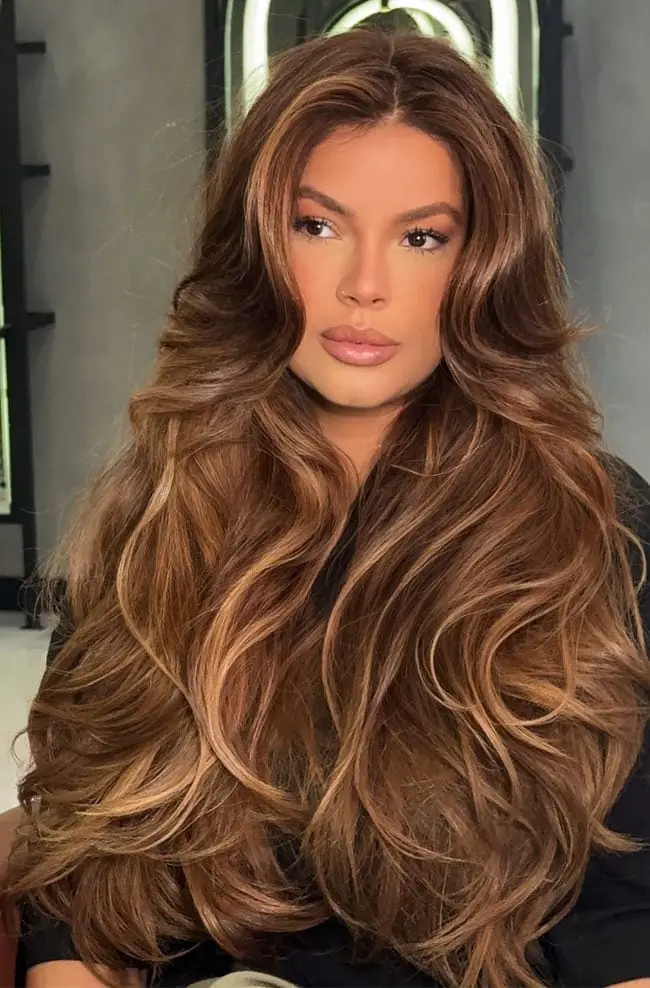
Those long layers and curtain bangs do the heavy lifting here. The face-framing pieces soften the jaw on round and oblong faces, while the middle part keeps the weight centered. Ask your colorist for: mid-back light brown balayage with face-framing layers. A volumizing mousse and a round brush blow-dry give the roots lift that lasts into the evening.
Curtain bangs demand a trim every four to six weeks to stay at the right length. Skip that window and they start landing on your nose, requiring a re-wet and re-dry each morning. The balayage itself needs a toning gloss every eight to twelve weeks to keep the light brown from warming up into a brassy honey tone.
Mid-Back Light Brown Balayage With Loose Waves, Wavy
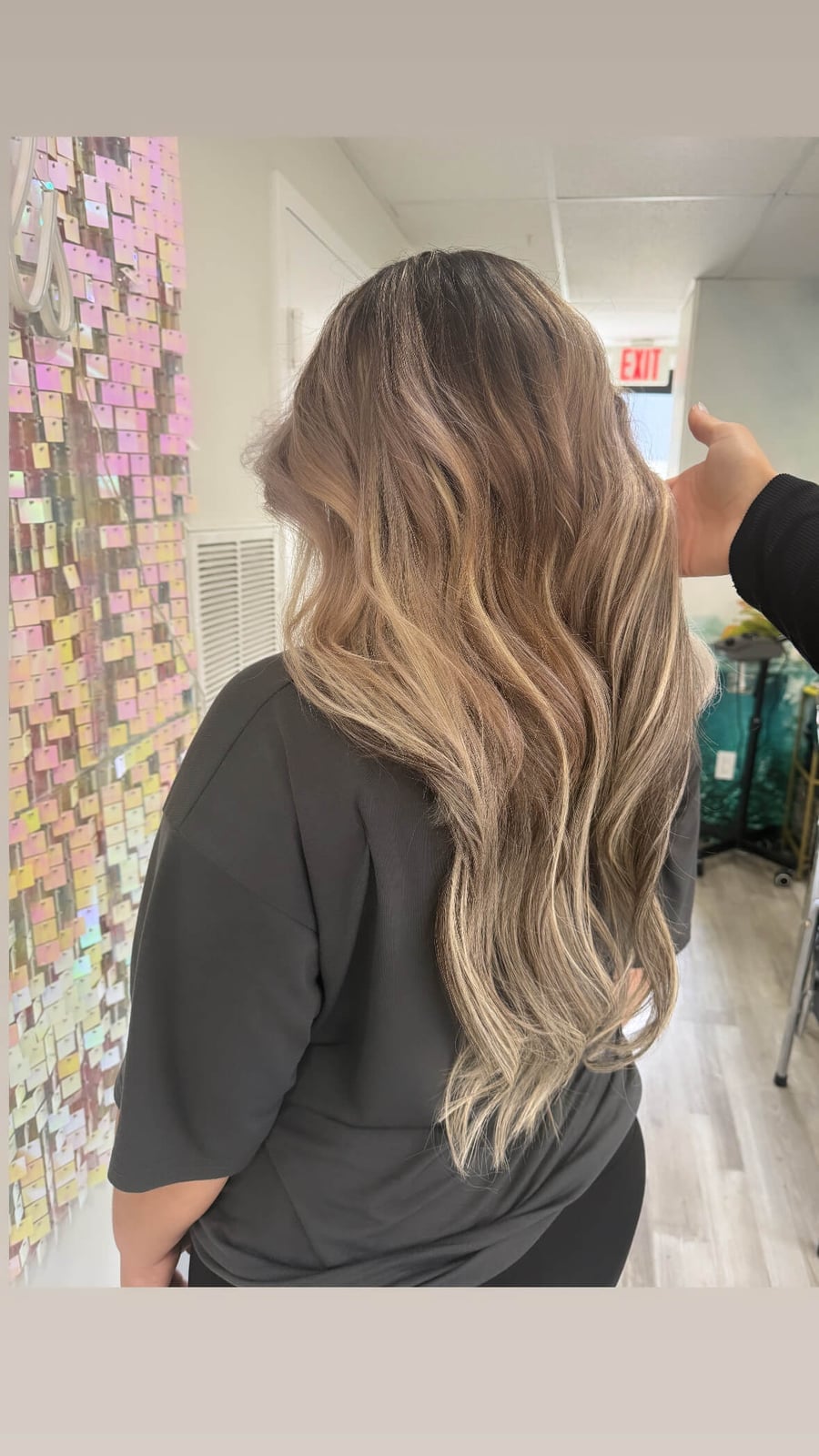
A back view confirms the balayage is the star here. Lighter strands weave through the brown base in a pattern that only a professional hand can place correctly. Ask your colorist for: mid-back light brown balayage with loose waves. Doing this at home means a high risk of uneven sections and patchy lift, especially on thick hair that processes unevenly in foils. The loose wave finish requires a curling wand with a one-inch barrel and a cool shot to hold the shape, adding about twenty minutes to your styling routine. A trim every eight to ten weeks keeps the ends from looking stringy when worn straight.
Collarbone Medium Brown With Light Brown Balayage
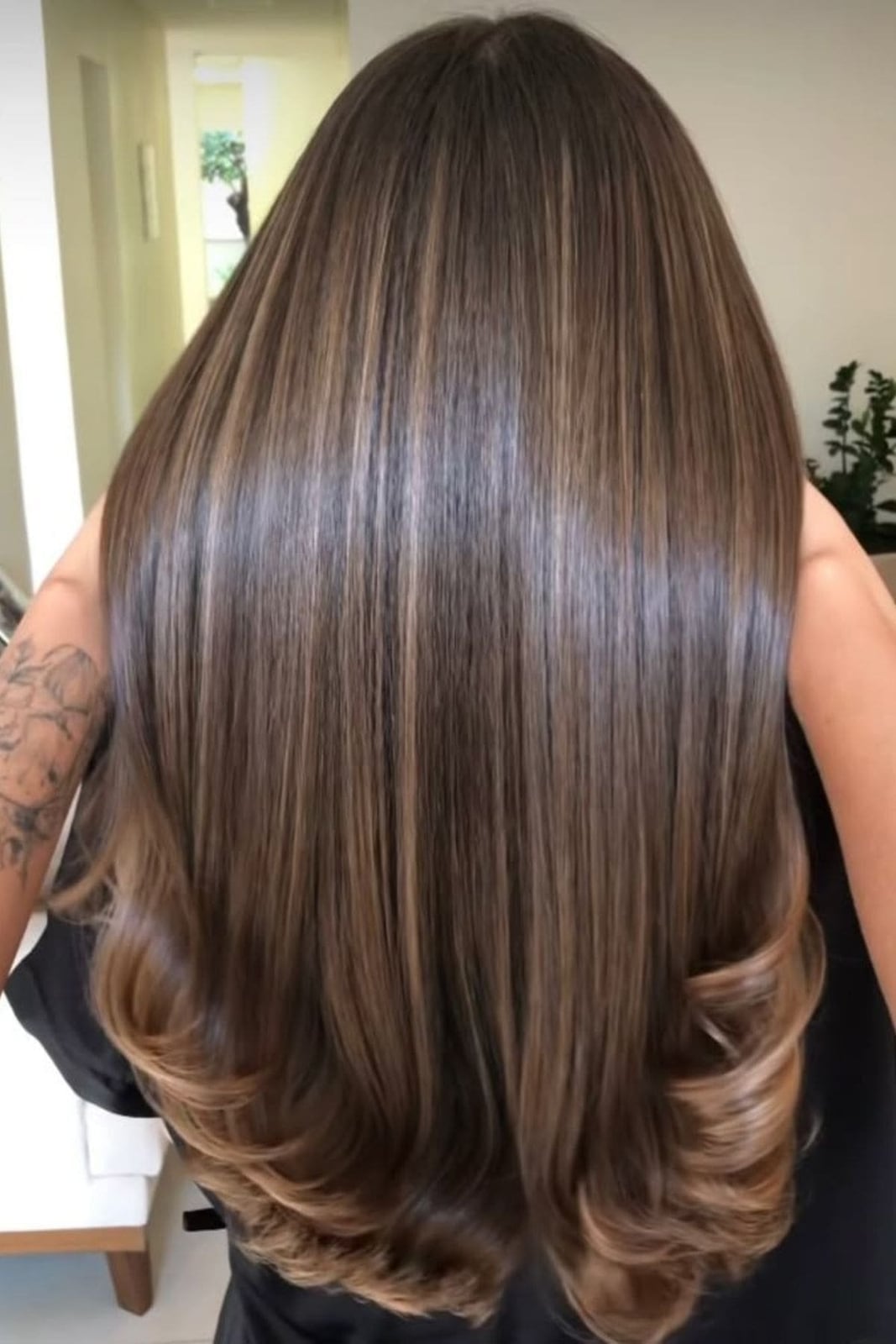
A collarbone cut with face-framing layers and a medium brown base gets subtle lift from light brown balayage pieces around the front. Ask your colorist for: collarbone medium brown with light brown balayage. The face-framing layers are the standout detail, but they come with a catch: they need a trim every six to eight weeks to keep the layers hitting the right spot. Let them go longer and the shortest pieces creep toward chin length, changing the silhouette completely. Thick, wavy hair takes this shape well because the layers have enough weight to sit cleanly against the collarbone without flipping out.
Final Thoughts
For a subtle, low-maintenance look, choose balayage on a darker base with minimal contrast. If you prefer more definition, ask for lighter blonde tones, but make sure your colorist blends them seamlessly. Either way, refresh the tone every 8 to 12 weeks to keep the color lively.
- Refresh balayage tone every 8-12 weeks with a gloss or toner.
- Use color-safe shampoos and conditioners to preserve vibrancy.
- Minimize heat styling to protect colored strands.
- Deep condition weekly to maintain shine and prevent dryness.
Light brown balayage remains a versatile, sophisticated choice.