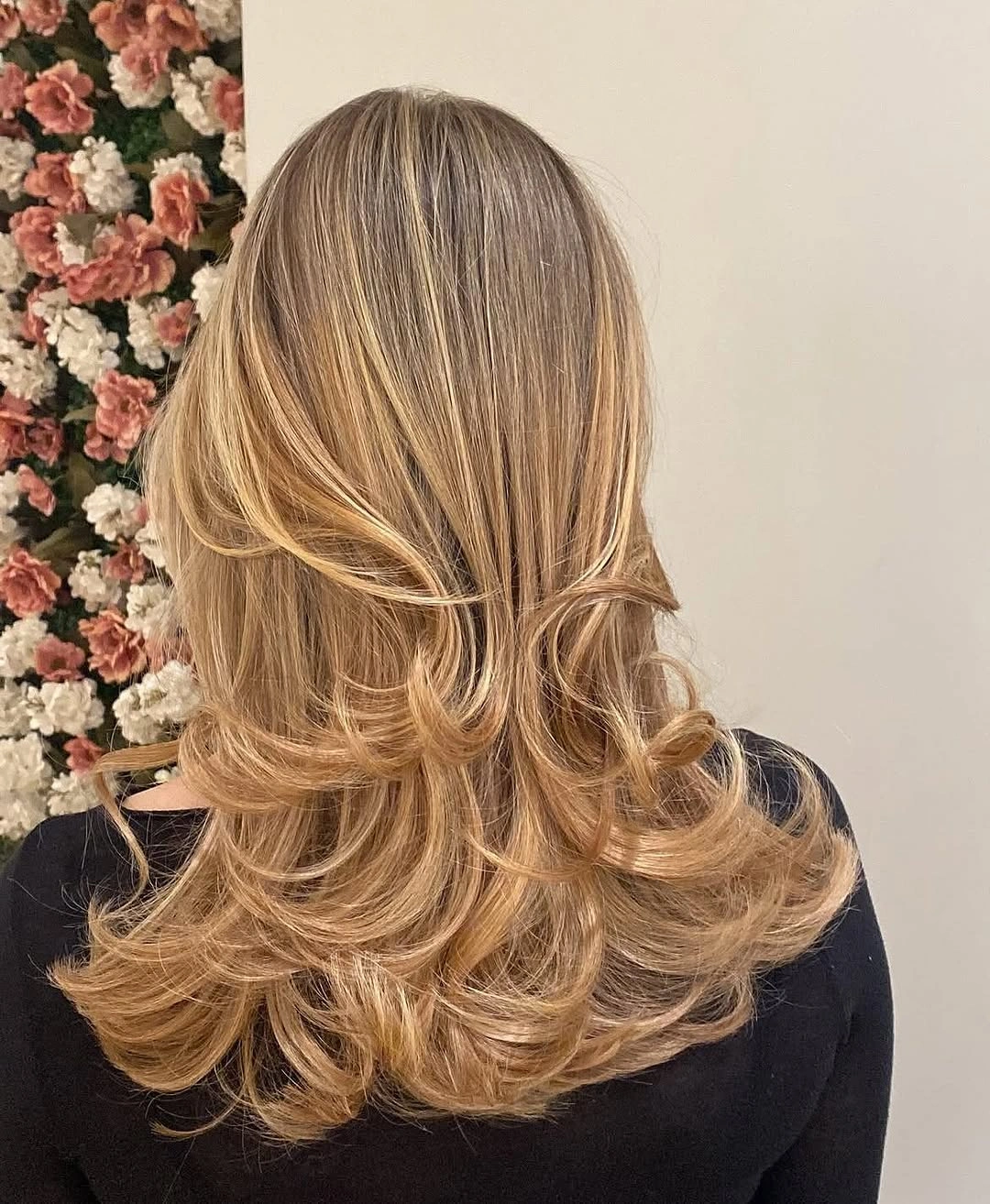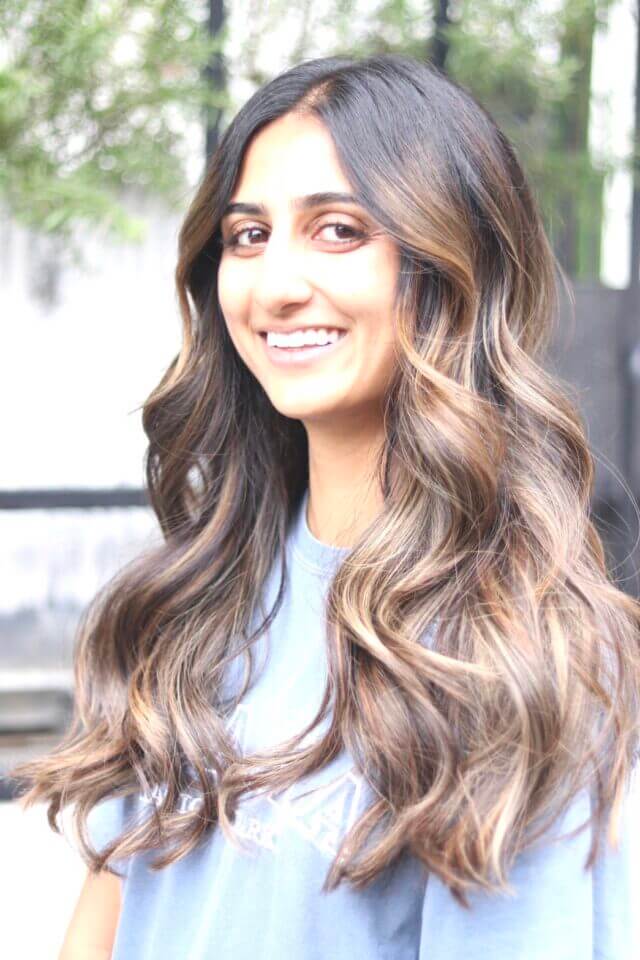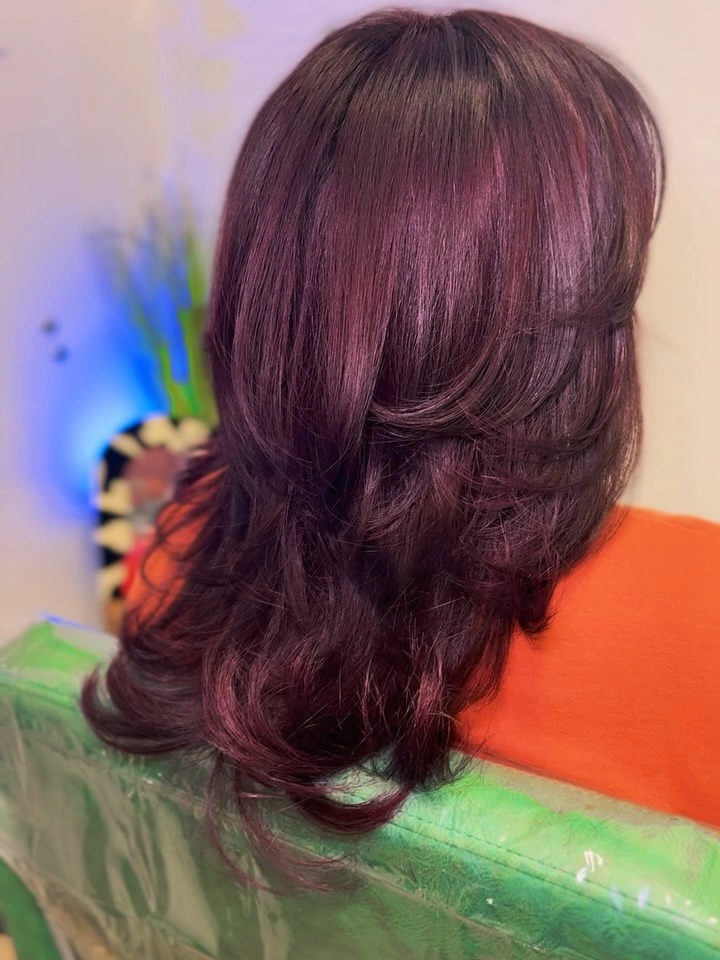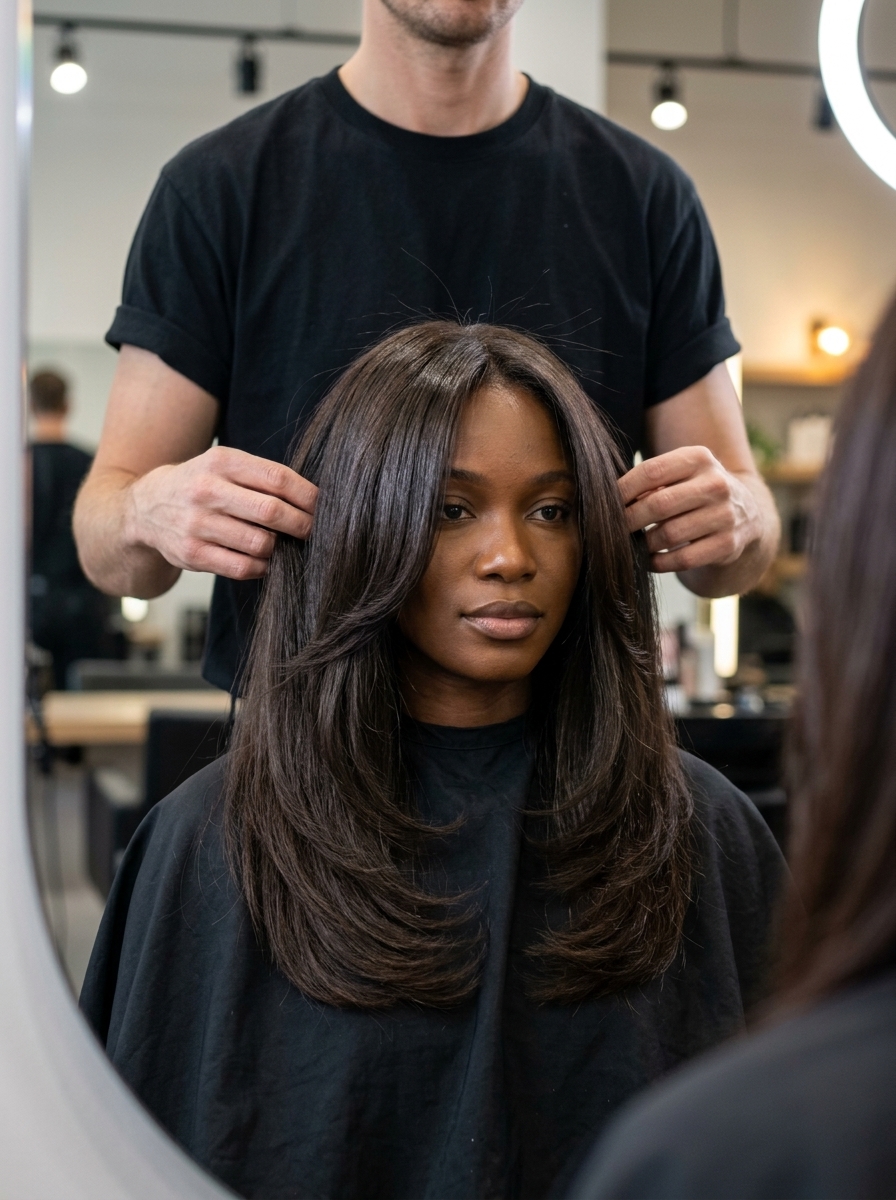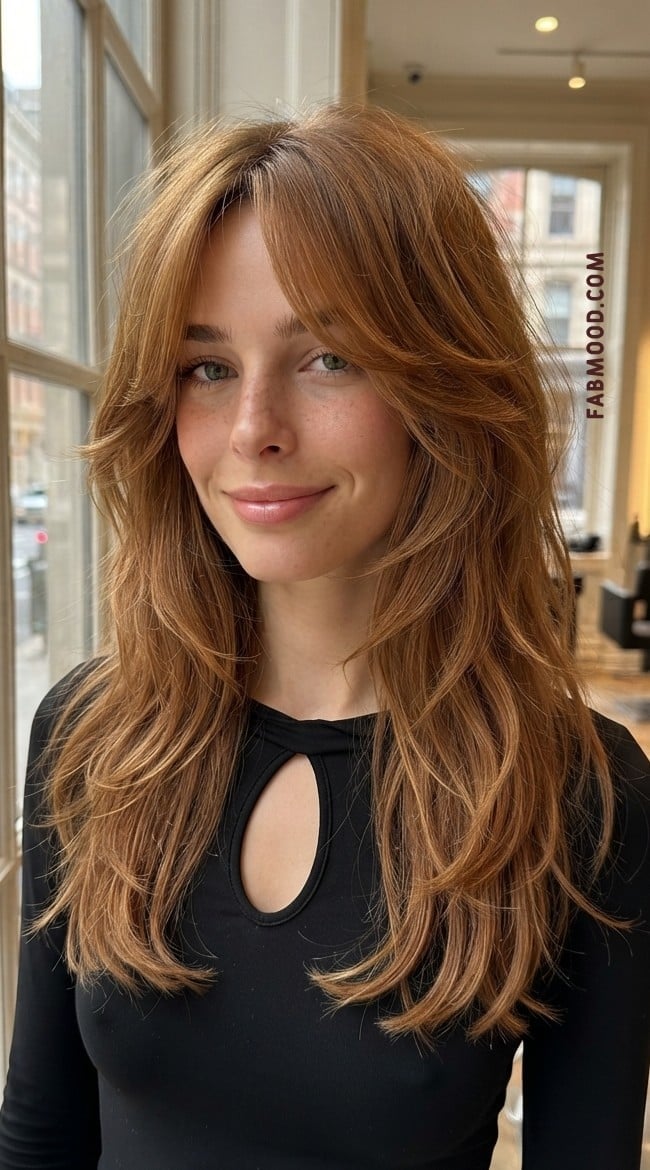

Simple partial highlights add dimension without the commitment of a full head of color. This year, the trend leans toward softer, more blended placements that mimic natural light, especially on lobs and shoulder-length cuts.
This collection of 29 looks covers the range: from subtle caramel ribbons on dark brown bases to brighter blonde face-framing pieces. No matter your base shade or texture, these ideas solve the common struggle of fine hair that falls flat or a visible grow-out line that shows up too soon. Simple partial highlights work with your schedule, not against it.
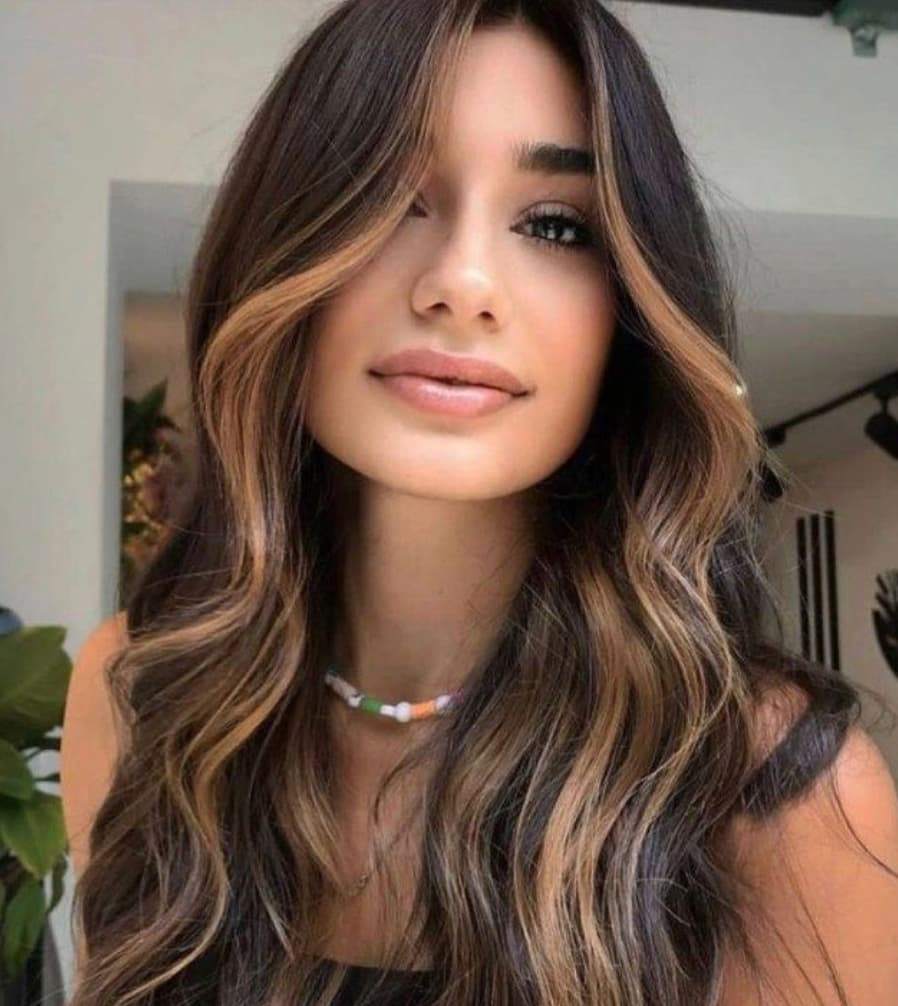
Collarbone Lob With Caramel Partial Highlights
Those caramel ribbons land exactly where they do the most work: around the face, catching the curve of the curtain bangs and the first few inches of the collarbone lob. The dark brown base keeps it grounded, so the payoff is warmth rather than a full-on golden shift. This design flatters medium to thick wavy hair that starts at the collarbone, and the curtain bangs specifically soften round and heart face shapes. Ask your colorist for: collarbone lob, dark brown base with caramel highlights, curtain bangs. A texturizing spray at the mid-lengths enhances the wave pattern, and the baseline needs a trim every six to eight weeks to keep the line clean.
Dark Blonde Collarbone Lob With Lighter Blonde Highlights
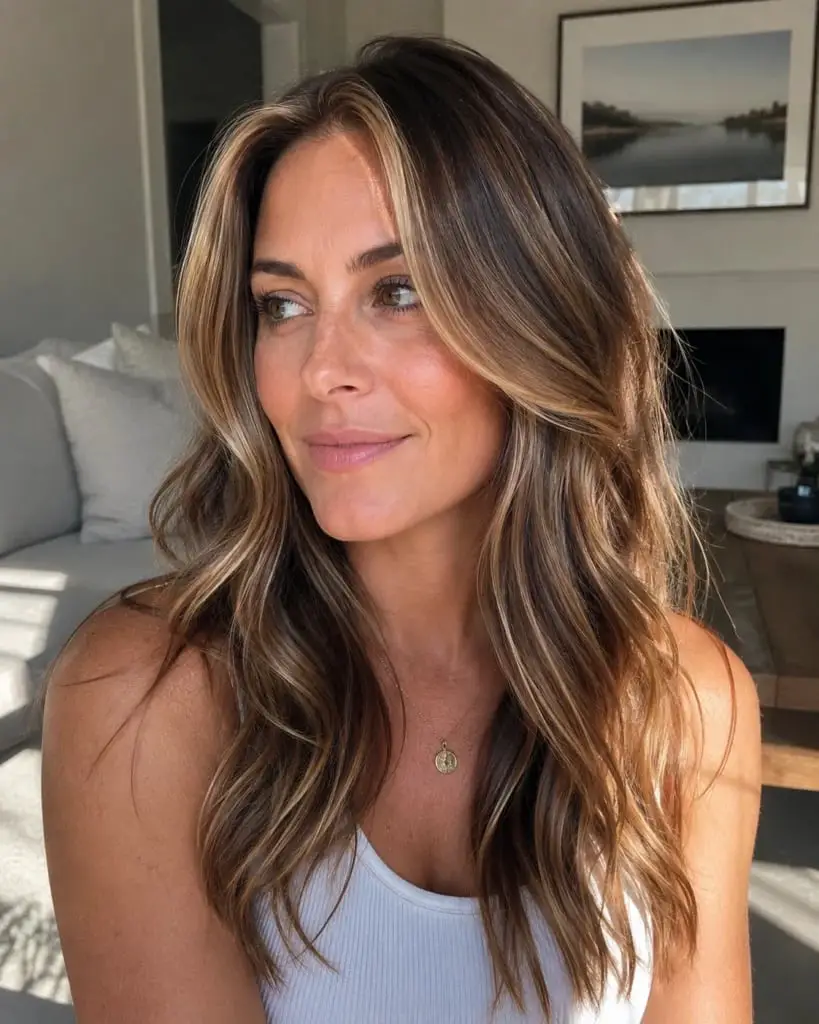
Where a uniform blonde can read flat on a wavy lob, this version keeps the dark blonde base intact and weaves in lighter blonde pieces only where they catch the wave bends. The long layers and curtain bangs prevent the color from feeling scattered, and the middle parting lets the face-framing sections do their job. This look suits medium to thick wavy hair starting at collarbone length, and the curtain bangs flatter round and heart shapes. Ask your colorist for: collarbone lob, dark blonde base, lighter blonde highlights, curtain bangs. A wave-enhancing serum defines the texture, and the toner needs refreshing every eight to ten weeks.
Shoulder Length Lob Ash Blonde Highlights Dark Brown Base
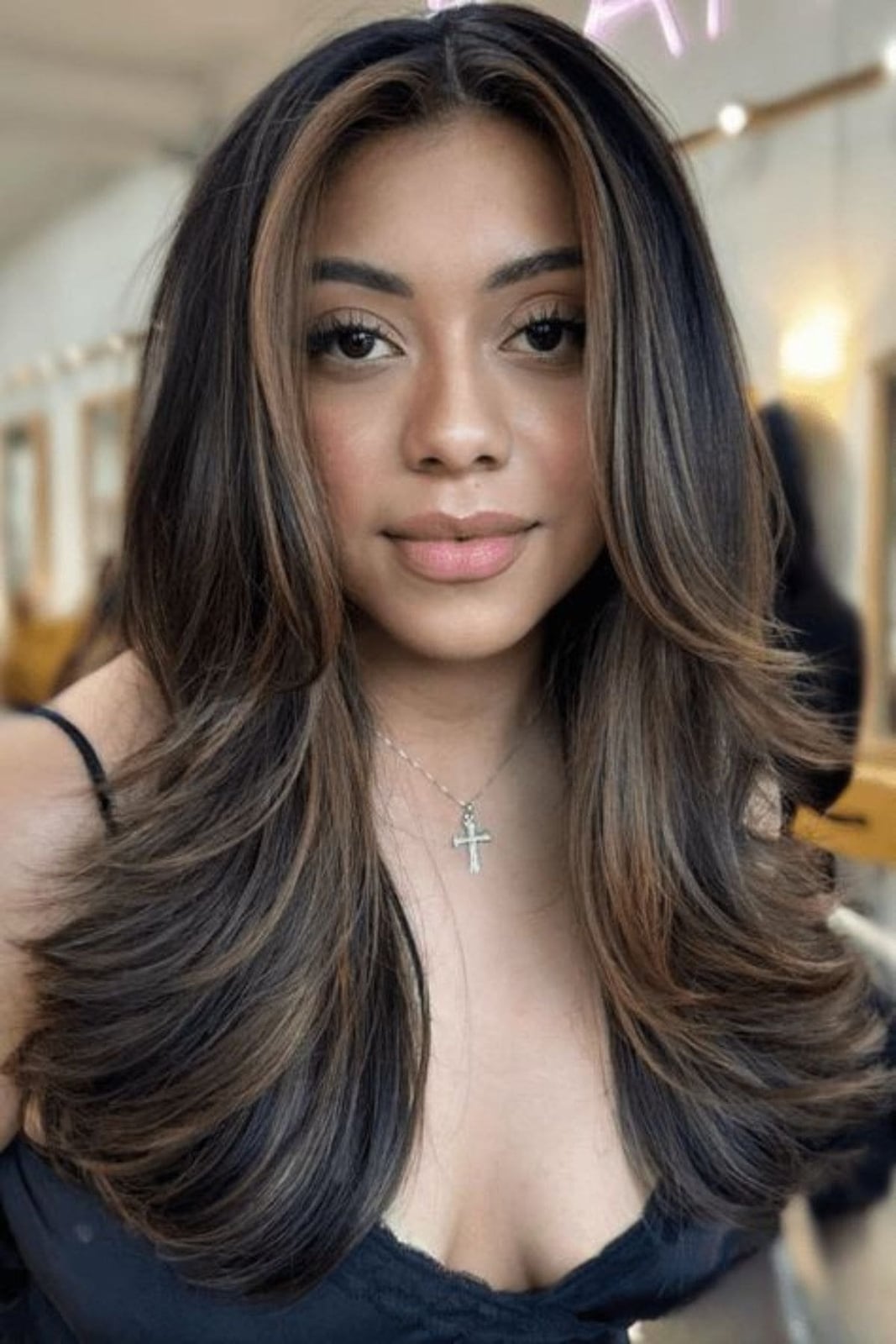
The ash blonde highlights here are placed with restraint: they concentrate around the face and through the lengths without saturating the whole lob. On a dark brown base, the cooler tone reads as depth, not contrast, and the soft curtain bangs tie it together. This works on medium density wavy hair starting at shoulder length, and the curtain bangs soften square and oval faces. Ask your colorist for: shoulder length lob, dark brown base, ash blonde highlights, curtain bangs. A smoothing serum keeps the gloss, and a trim every six to eight weeks maintains the shape.
Dark Brown Collarbone Lob Ash Blonde Highlights
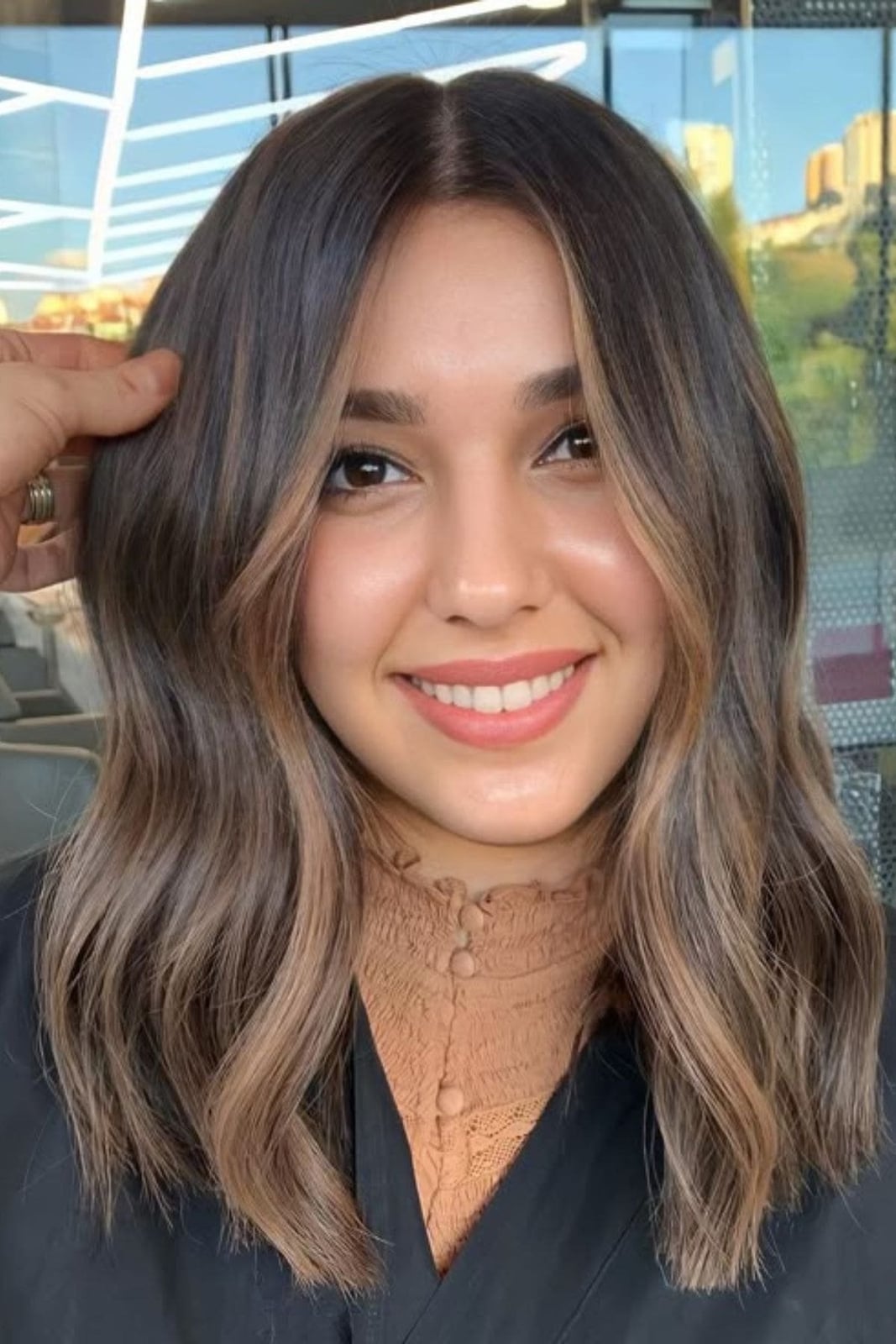
You want ash blonde highlights that don’t turn brassy on a dark brown base, so how do you ask for it? Specify a cool-toned ash, placed as partial face-framing sections and woven through the lengths, not painted on as a full balayage. The collarbone lob with curtain bangs keeps the highlight placement contained and intentional. This suits medium density wavy hair starting at collarbone length, and the curtain bangs soften square and oval faces. Ask your colorist for: collarbone lob, dark brown base, ash blonde highlights, curtain bangs. A smoothing serum adds gloss, and a trim every six to eight weeks keeps the lob precise.
Mid-Back Layers Dark Blonde Highlights Dark Brown Base
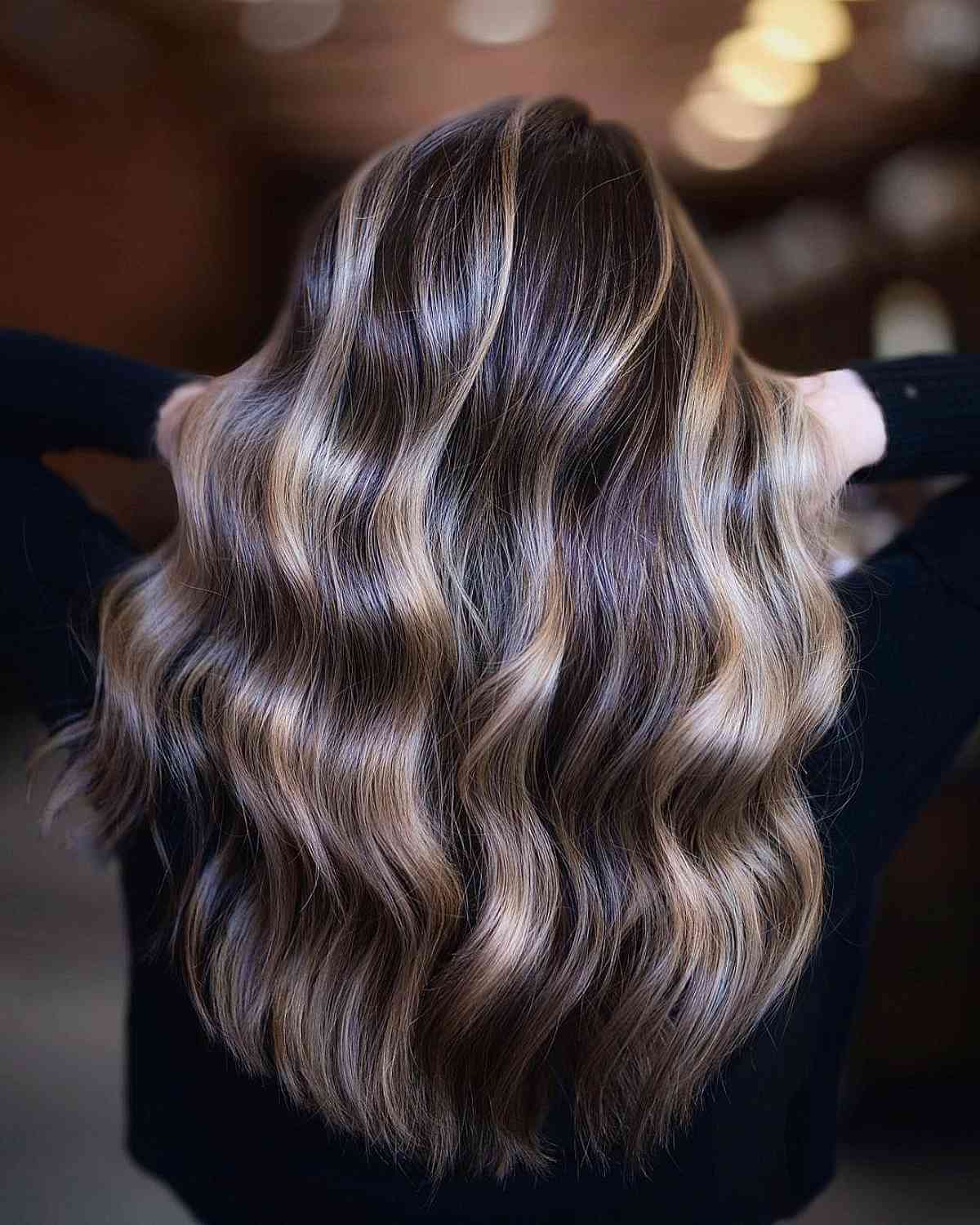
From the back, the dimensional color tells the real story. The dark brown base stays dominant, with lighter blonde highlights woven through the long layers so they read as movement rather than stripes. The middle parting lets the color fall evenly on both sides, and the wavy blowout bends the highlights into soft ribbons.
This approach works on thick wavy hair starting at mid-back, where the long layers add flow without losing density. Ask your colorist for: mid-back length layers, dark brown base, lighter blonde highlights. A heat protectant before blow-drying preserves the wave pattern, and the highlights need a toning appointment every six to eight weeks to stay cool.
Mid-Back Layers Dark Brown Base Blonde Balayage, Close-Up Take
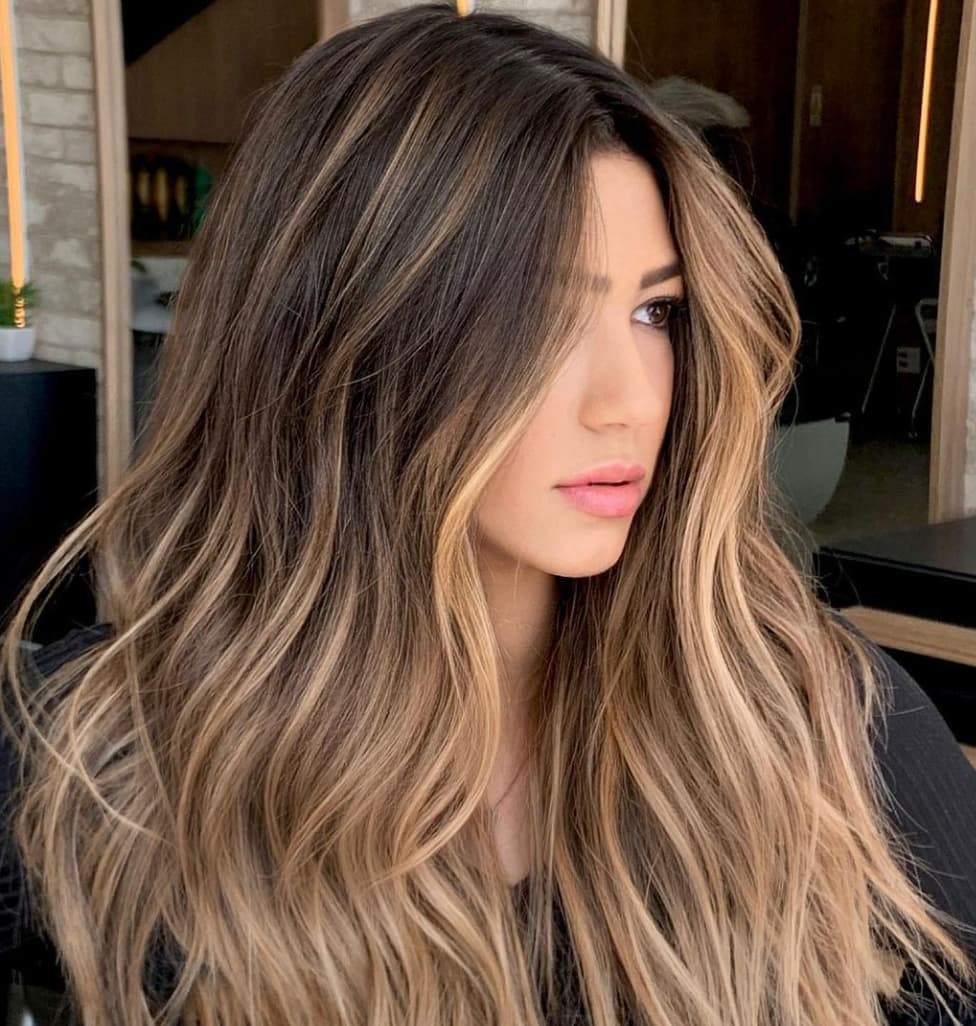
The balayage technique uses a sweeping motion instead of foil-wrapped sections, which is why the blonde pieces graduate from softer near the crown to brighter at the ends. On a dark brown base, the result is a lived-in contrast that grows out without a harsh line. Mid-back length layers give the color room to travel, and a side parting ensures the lighter strands catch light on one side. Thick wavy texture benefits from the extra movement layers provide.
Ask your colorist for: mid-back length layers, dark brown base, blonde balayage. A texturizing spray at the ends keeps the waves from looking too polished. Trims every eight weeks maintain the shape, and a toning appointment every ten weeks keeps the blonde from turning brassy.
Collarbone Layers Dark Brown Subtle Lighter Brown Highlights
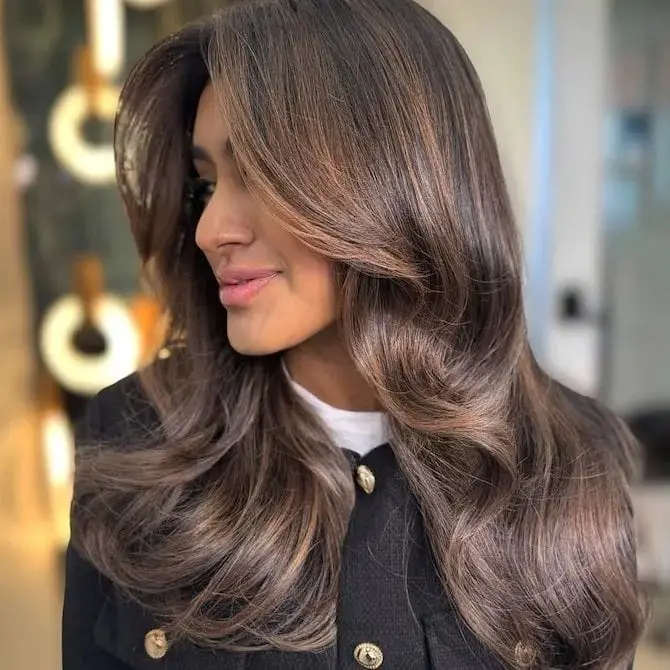
These lighter brown strands are woven close to the part, so the dimension reads as natural instead of stripy. On a dark brown base, subtle lighter brown highlights add gentle brightness without a high-contrast look. The side-swept layers at the collarbone frame the jaw, making this a good choice for medium density hair that needs a lift without losing depth. Wavy texture softens the transition between the two shades. Ask your colorist for: collarbone length layers, dark brown base, subtle lighter brown highlights. A toner every eight to ten weeks prevents the lighter pieces from warming up too much.
Chin Length Bob Dark Brown Caramel Highlights
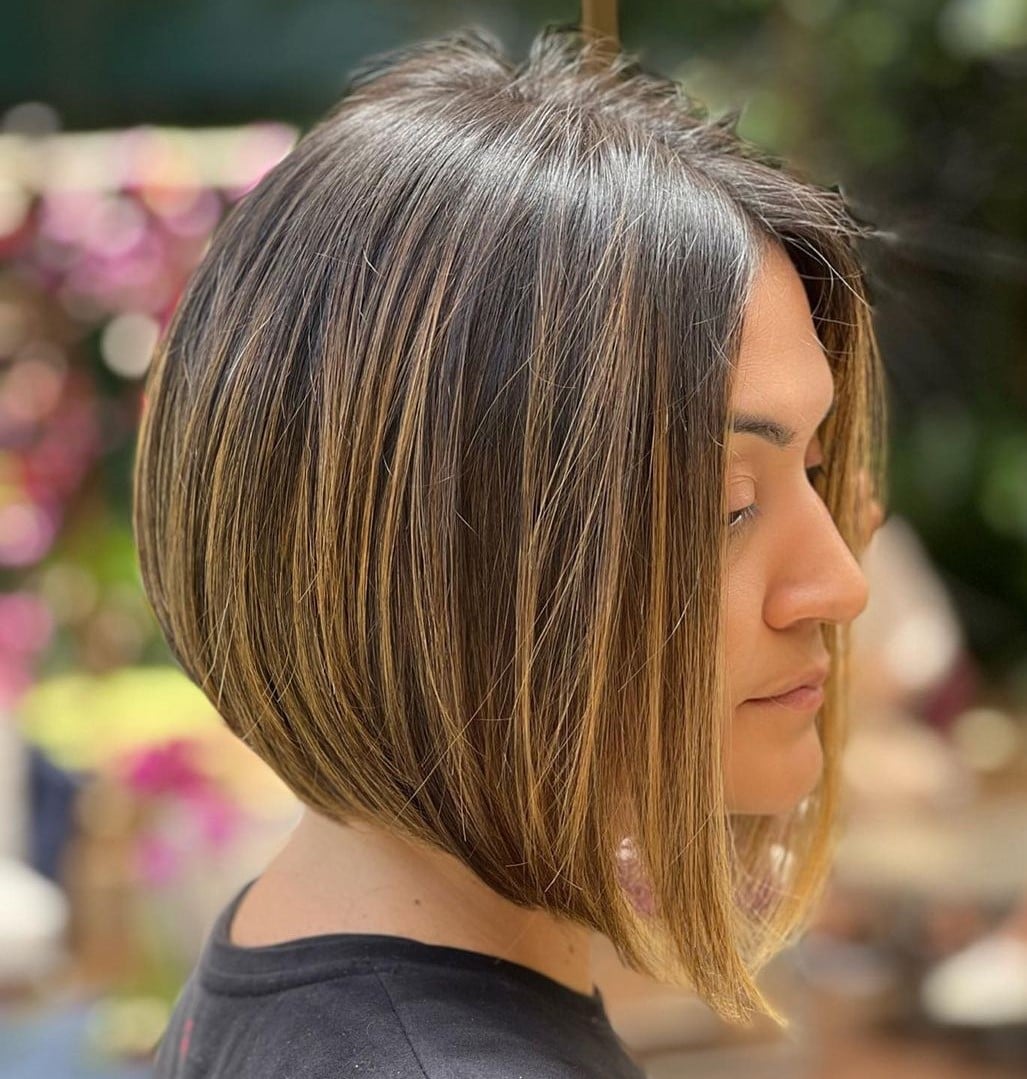
This chin length bob stays sleek with a middle part, and the finely woven caramel highlights add warmth without overwhelming the dark brown base. Straight, fine texture can make the color look flat if the highlights are too subtle, so ask for a few brighter pieces near the face. Ask your colorist for: chin length bob, dark brown base, fine caramel highlights. The bob needs a trim every four to six weeks to keep the line sharp.
Mid-Back Wavy Dark Blonde With Root Shadow
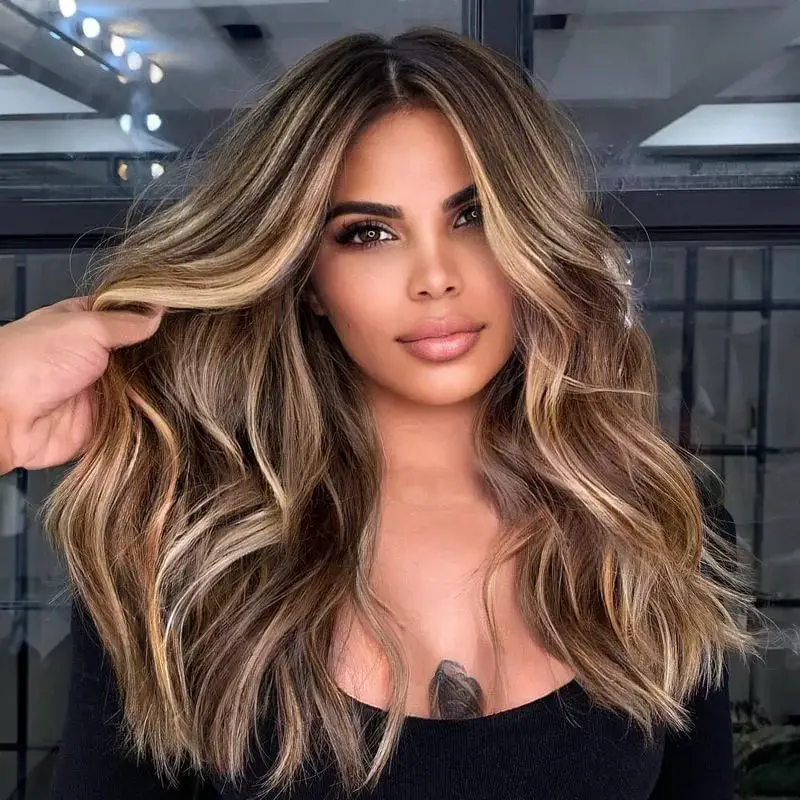
Does a root shadow mean you can skip the salon for months? Not exactly, but it buys you about six weeks of grow-out grace. The darker base at the roots blends into blonde highlights through the mid-lengths and ends, so new growth appears as a natural shadow. Curtain bangs and face-framing layers on thick wavy texture keep the overall look soft and easy to maintain. Ask your colorist for: mid-back length waves, dark blonde with root shadow, curtain bangs. A diffuser on low heat preserves the wave pattern, and trims every six to eight weeks keep the curtain bangs from grazing the eyes.
Chin Length Bob Wavy Caramel Highlights
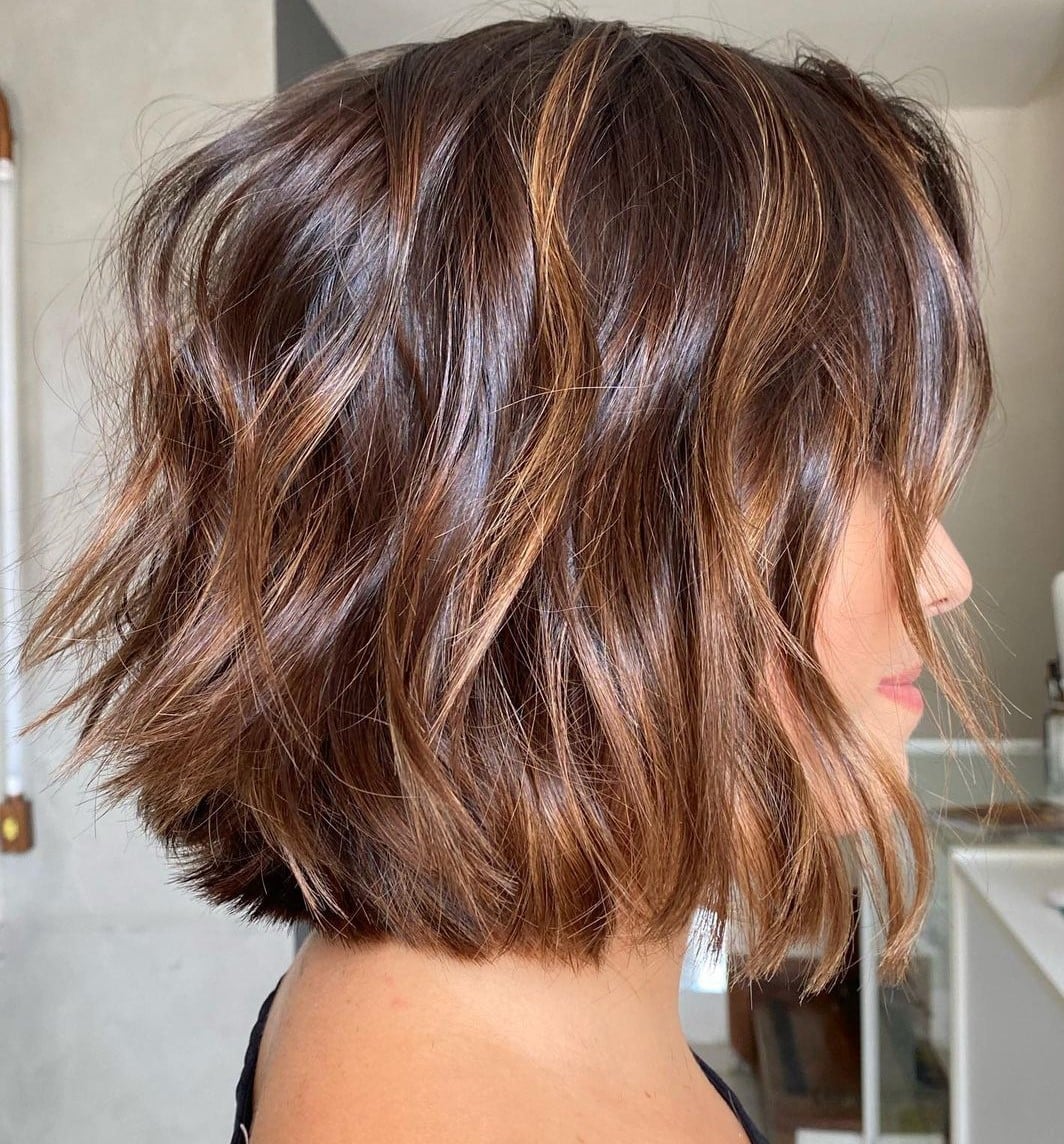
When you want caramel highlights on a bob, the placement matters more than the shade. Face-framing layers let the lighter strands sit right at the cheekbone, which draws attention upward. A chin length bob with a middle parting and wavy texture needs the caramel pieces to be fine enough that they do not look like chunks. Ask your colorist for: chin length bob, dark brown base, caramel highlights, face-framing layers. This is a salon project. The fine foiling takes precision that a DIY kit cannot match. The waves are set with a curling wand, section by section.
Chin Length Bob Brown Base Blonde Highlights
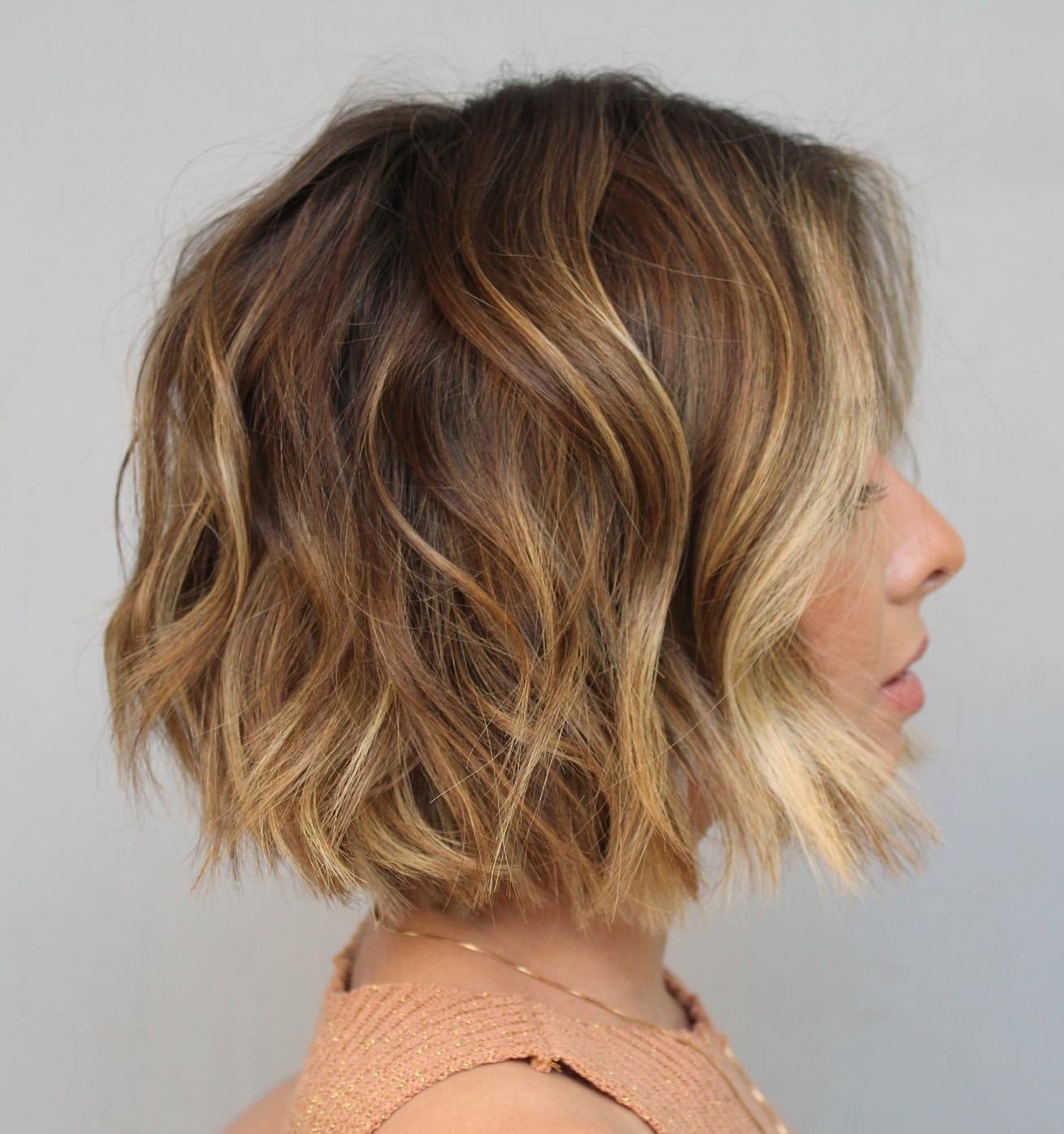
This is not a subtle whisper of dimension. A chin-length bob with a side parting and short bangs gets blonde contrast highlights that land with intention, making every wave read clearly against the brown base. Fine wavy hair at chin length benefits from the side parting, which adds a bit of perceived volume where a blunt line might sit flat. Ask your colorist for: chin length bob, brown base, blonde contrast highlights. A curling wand shapes the loose waves; a trim every four to six weeks keeps the line sharp.
Mid-Back Layers Dark Brown Blonde Face-Framing Highlights, Wavy
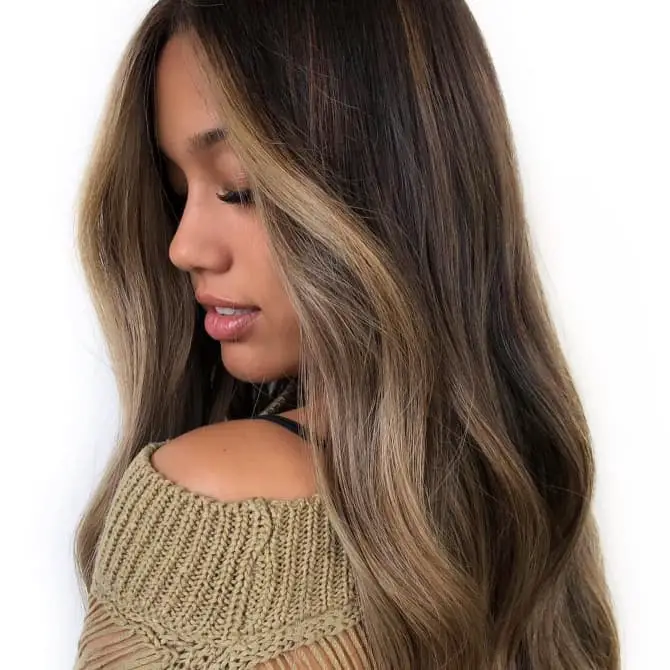
Face-framing highlights are the part of partial color that does the most work. On a mid-back length cut with long layers and a middle part, the dark brown base stays rich in back while blonde pieces wrap forward around the face. The curtain bangs pull the lightness higher, which softens angular features without needing a full head of highlights. Thick wavy hair at this length holds the shape well; the layers prevent the weight from pulling the waves straight.
This genuinely flatters round and square face shapes, since the lighter strands break up the solid line of dark hair along the jaw. If your hair is fine or your face is long, skip the heavy face-framing pieces: they can emphasize length rather than balance it. Ask your colorist for: mid-back length layers, dark brown base, blonde face-framing highlights. A volumizing mousse at the roots helps the blowout hold, and a toner appointment every six to eight weeks keeps the blonde from warming up.
Mid-Back Long Layers Dark Brown Copper and Blonde Highlights, Middle
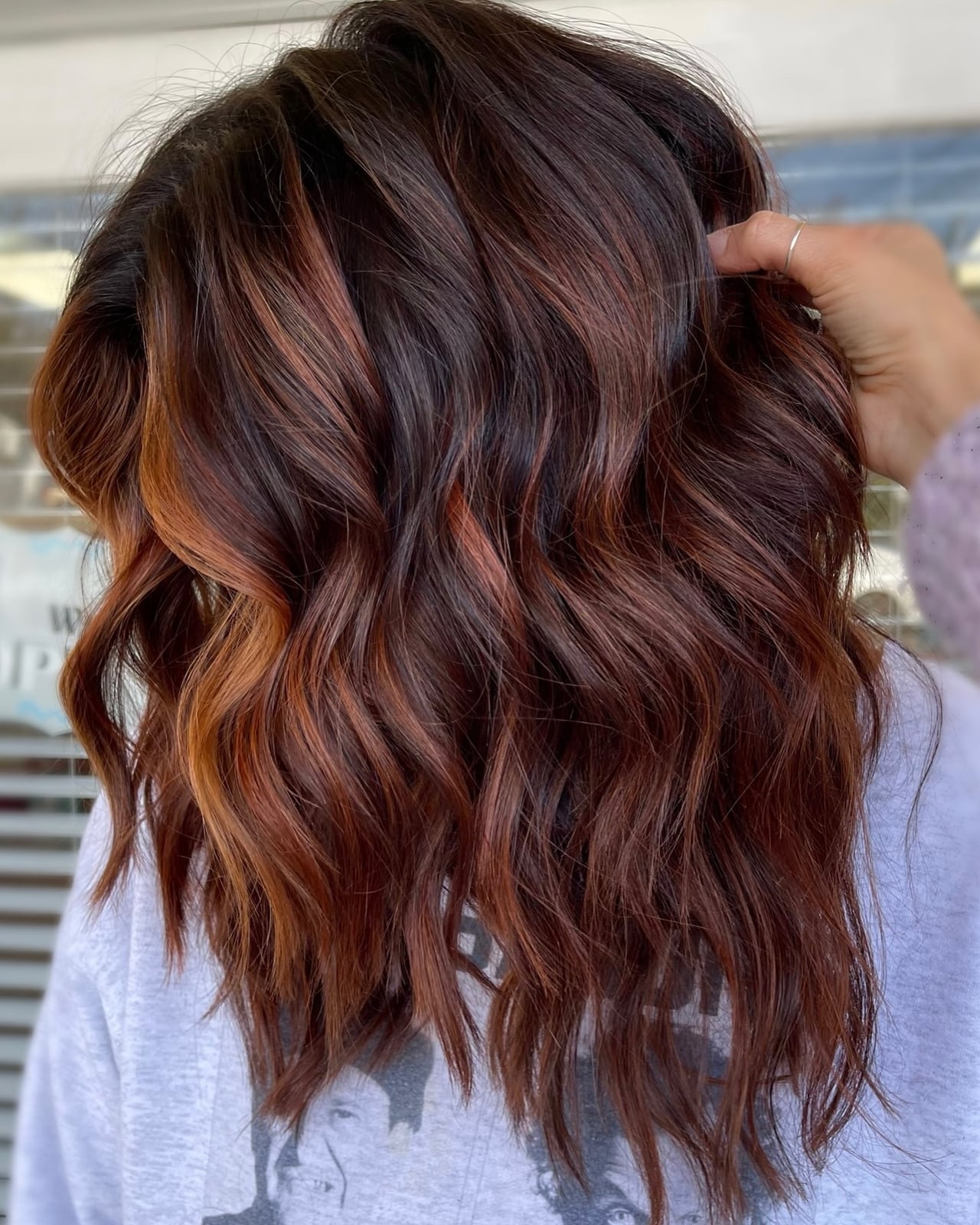
Two highlight colors on one dark brown base sounds complicated, but the technique is straightforward. The colorist weaves fine ribbons of copper and blonde through the mid-back length, keeping them close to the same lightness so they read as a blended shift rather than separate stripes. The middle parting and long layers let both tones fall naturally, creating a dimensional effect that catches light differently with each wave. Thick wavy hair at this length needs the layers to prevent a heavy triangle shape; without them, the weight pulls the wave out near the roots.
Upkeep is a trim every eight weeks to maintain the layer movement and a toning session every six to eight weeks if the copper starts to lean orange. A shine serum on damp hair before air-drying or diffusing brings out the glossy finish the photo shows. Ask your colorist for: mid-back length long layers, dark brown base, copper and blonde highlights.
Mid-Back Dark Brown Lighter Brown Partial Highlights
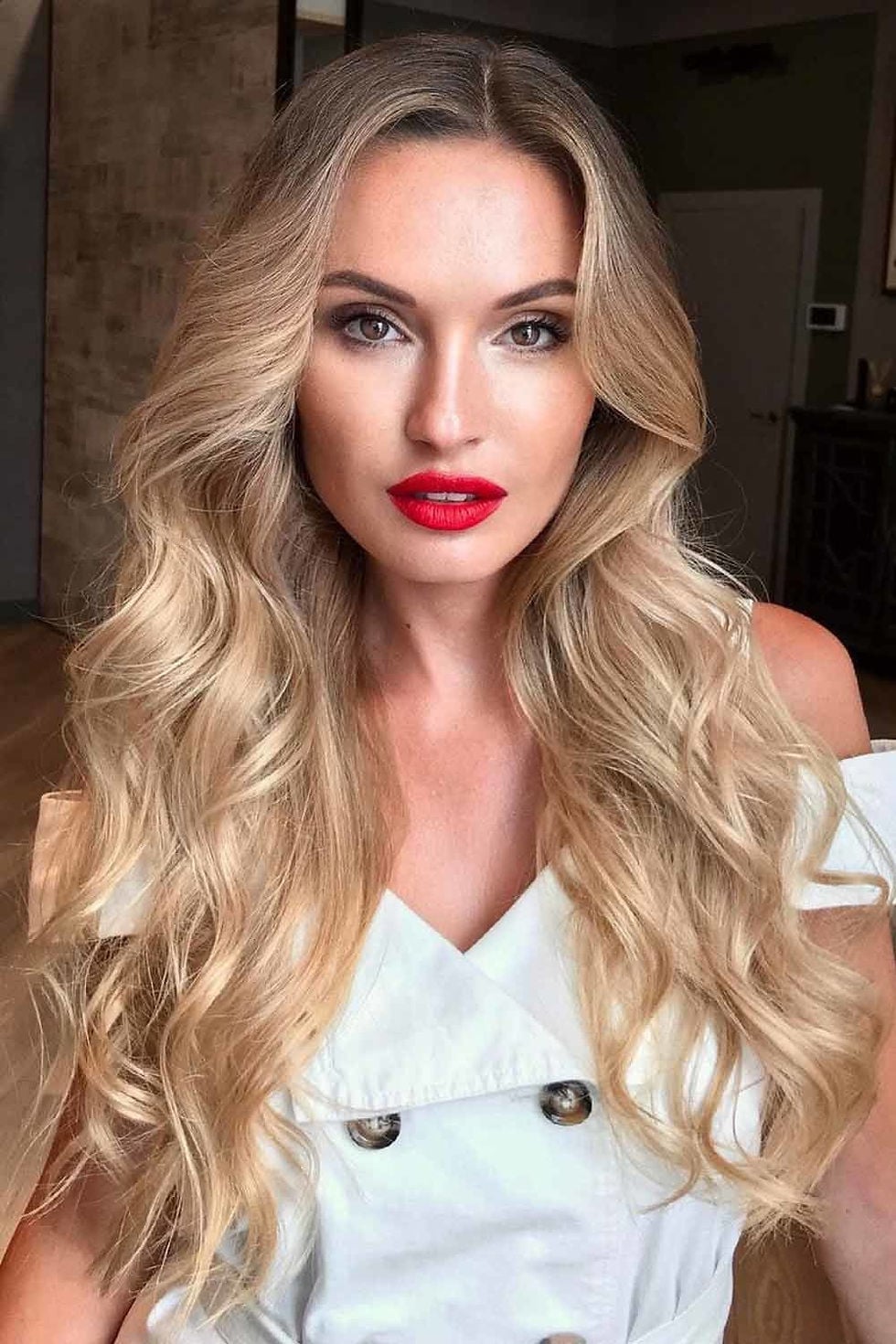
The grow-out phase of partial highlights is where this design proves its worth. The lighter brown pieces sit close enough to the dark brown base that the root line never looks harsh; it just looks like your natural color got a little sun at the ends. Mid-back length hair with a middle parting and loose waves shows the subtle dimension best when the highlights are placed throughout, not just on top. Thick wavy hair at this length can handle the extra lightness without looking thin.
Partial highlights mean less foil time in the chair and a lower contrast grow-out than full highlights. The dimension is quieter, so if you want obvious brightness, this is not the version for you. Ask your colorist for: mid-back length, dark brown base, lighter brown partial highlights. Scrunch with a texturizing spray after air-drying to encourage the waves, and plan a toner appointment every eight to ten weeks to keep the lighter brown from warming up.
Mid-Back Medium Brown Blonde Highlights
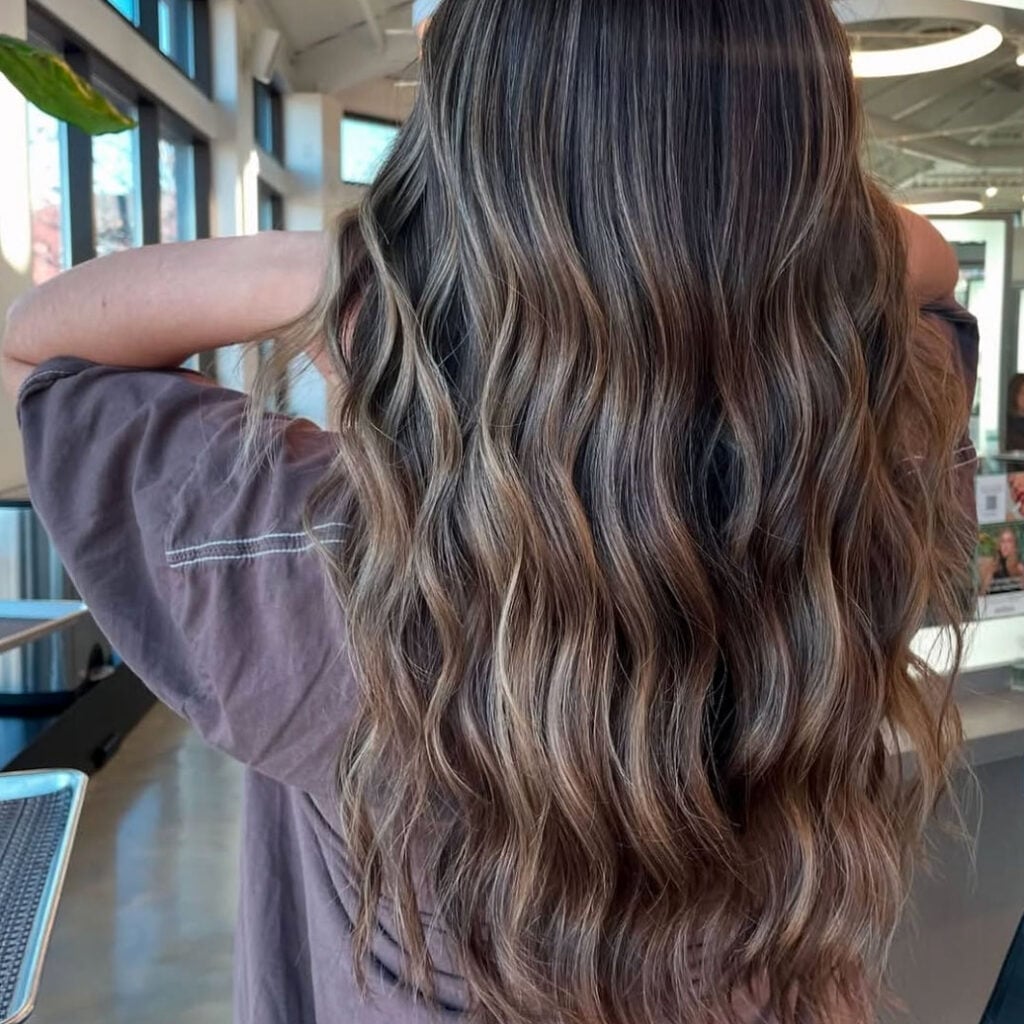
A medium brown base with blonde partial highlights is the color equivalent of turning up the brightness by one notch. The mid-back length with a middle parting and loose waves carries the blonde pieces from root to end, but the placement is strategic: lighter strands are concentrated where the light naturally hits, so the dimension looks deliberate. Thick wavy hair at this length gets a subtle warmth boost without shifting the overall color. Ask your colorist for: mid-back length, medium brown base, blonde partial highlights. A volumizing spray at the roots gives the waves a lift that lasts through the day, and a trim every eight weeks keeps the ends healthy.
Mid-Back Dark Brown Caramel Highlights Wavy Blowout
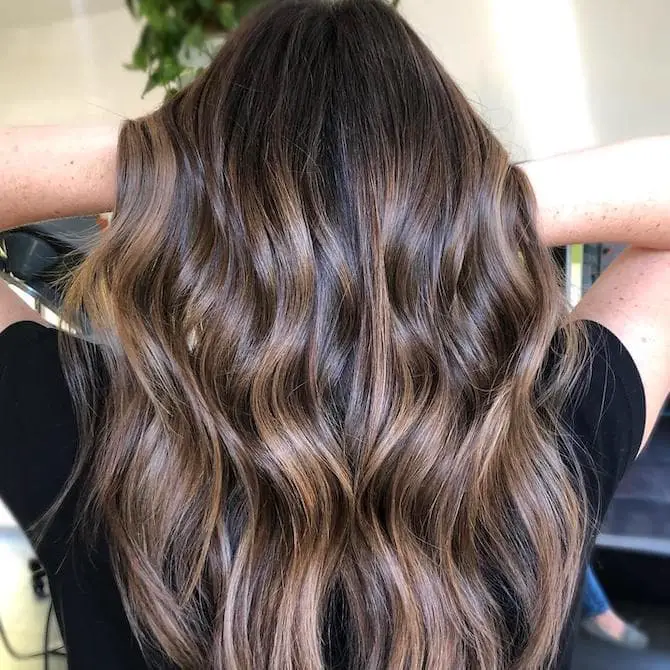
Caramel highlights on a dark brown base work best when they are painted in a graduated pattern, heavier near the ends and sparser at the roots. The mid-back length here gives enough canvas for the caramel to show as dimension. Thick wavy hair starting at mid-back takes the wavy blowout well, with the texture helping the caramel catch light at different angles. Ask your colorist for: mid-back length, dark brown base, caramel partial highlights. A large barrel curling iron creates the loose waves, and a toning appointment every six to eight weeks keeps the caramel from turning brassy.
Collarbone Lob Dark Blonde Ash Blonde Highlights, Close-Up Take
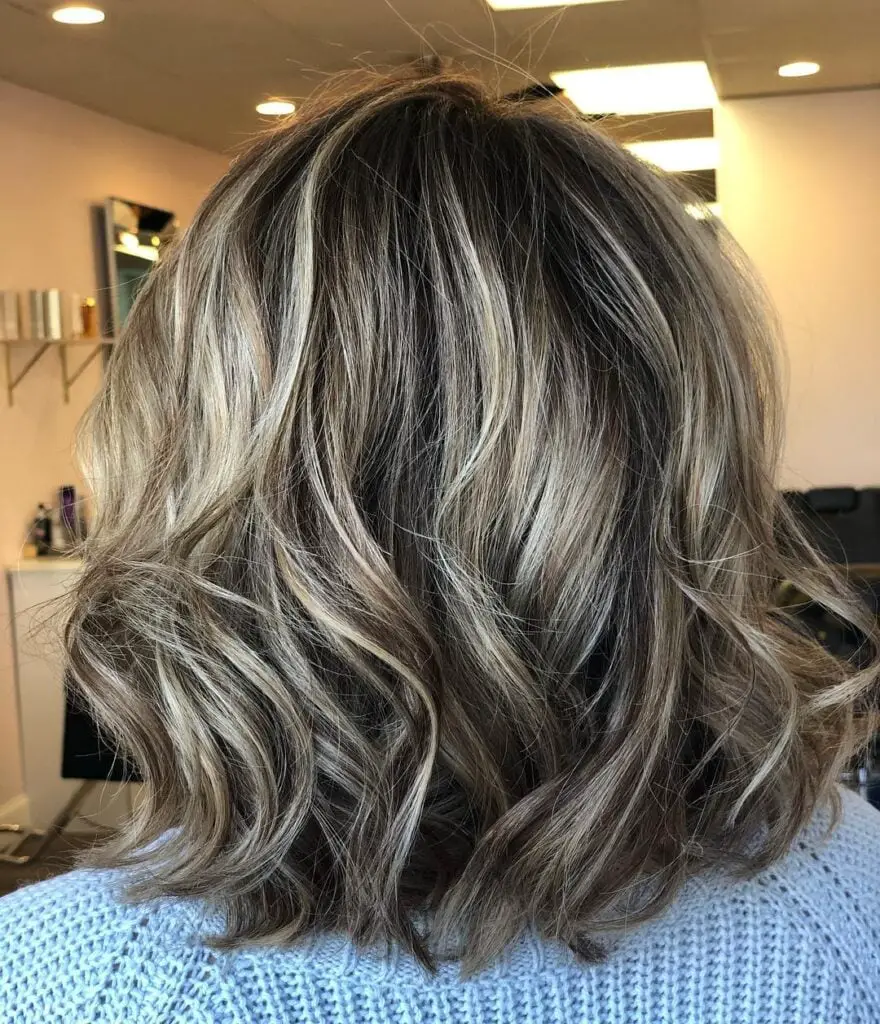
Ash blonde highlights on a dark blonde base read cooler than a honey or caramel version, which is the appeal and the catch. The collarbone lob with a middle part and wavy blowout keeps the ash tones from feeling flat, but ash fades faster than warm tones and can pull brassy between appointments. Medium density wavy hair starting at collarbone handles the contrast well. Ask your colorist for: collarbone lob, dark blonde base, ash blonde highlights. A purple shampoo used weekly extends the coolness, and a trim every six to eight weeks keeps the lob line sharp.
Shoulder Length Dark Brown Caramel Partial Highlights
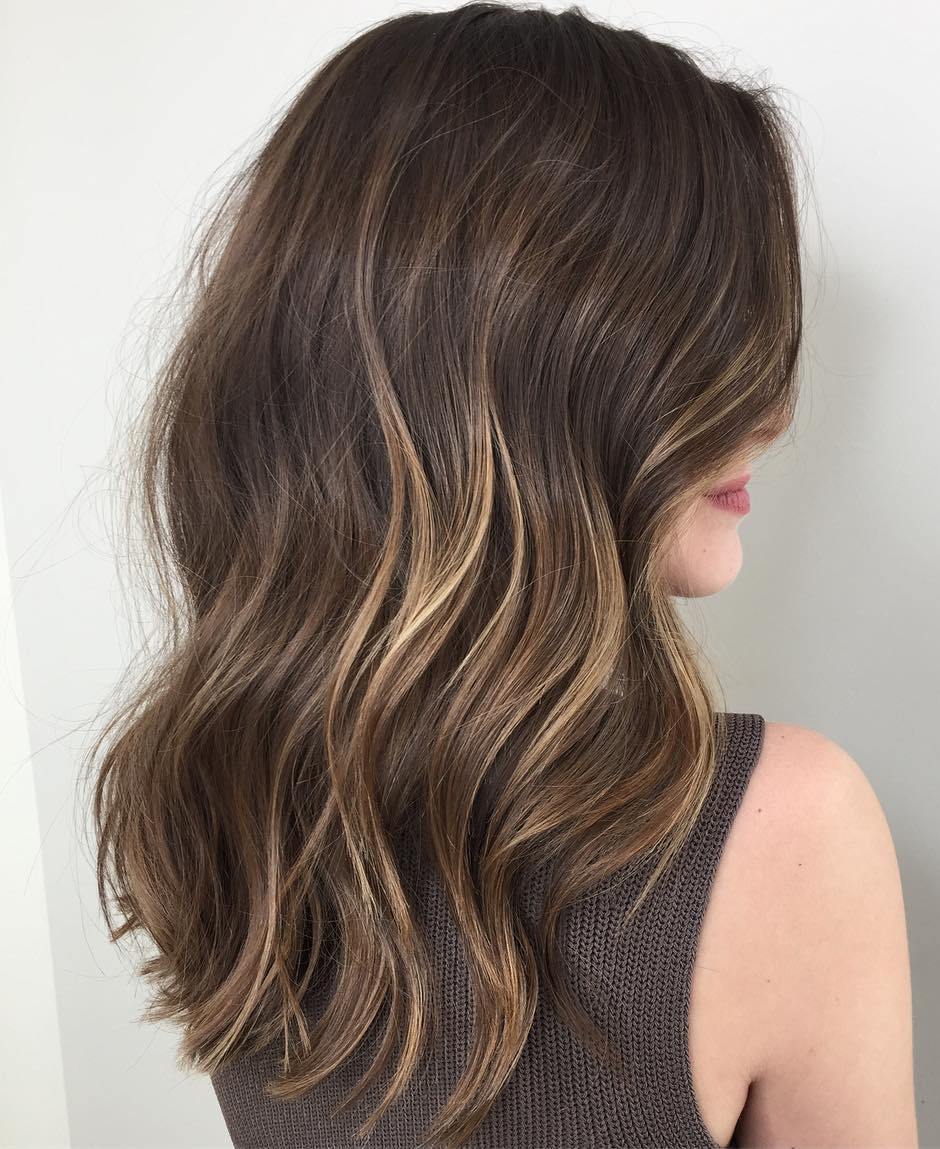
Wondering how to get caramel highlights without them looking like a stripe? Specify partial placement, scattered through the mid-lengths. Shoulder length hair with a dark brown base and caramel partial highlights, styled in loose waves, shows exactly that approach. Medium density wavy hair at shoulder length takes the warmth of caramel without the highlights dominating the base. Ask your colorist for: shoulder length, dark brown base, caramel partial highlights. A texturizing spray adds the lived-in wave.
Collarbone Lob Dark Blonde Lighter Blonde, Office-Safe Version
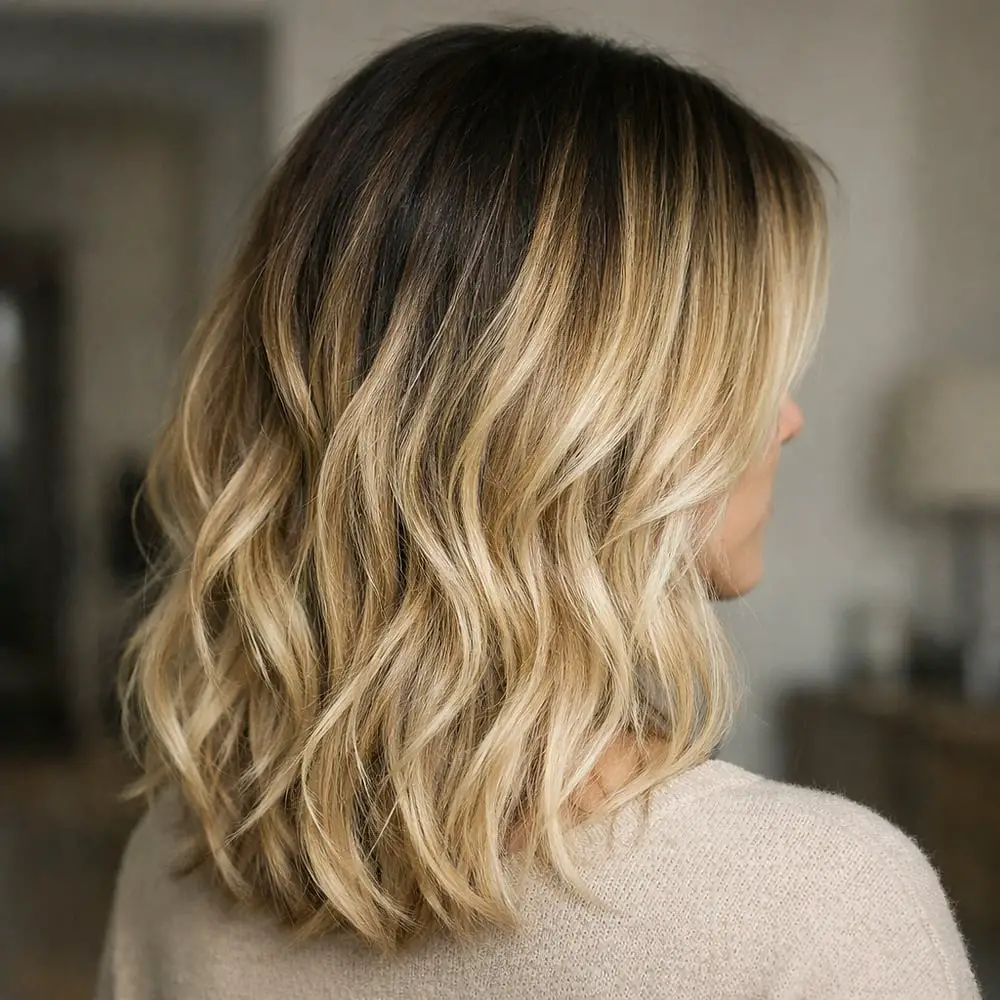
Where bolder blonde highlights lean into contrast, this version keeps the shift subtle by staying within a few levels of the base. The collarbone lob in dark blonde with lighter blonde partial highlights, styled in soft wavy layers, shows a natural lightening effect. Medium density wavy hair starting at collarbone benefits from the side parting, which adds volume at the root. Ask your colorist for: collarbone lob, dark blonde base, lighter blonde partial highlights. A smoothing cream keeps the waves soft, and a trim every six to eight weeks maintains the lob shape.
Collarbone Blonde Base Lighter Blonde Side-Swept Bangs
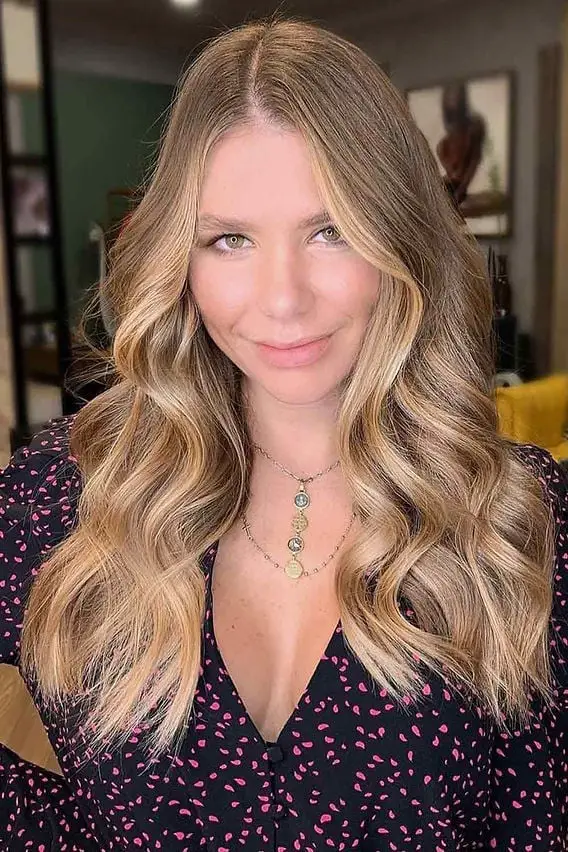
Side-swept bangs and partial highlights draw attention forward without committing to a full change. The collarbone length here pairs a blonde base with lighter blonde highlights, with a middle parting and soft side-swept bangs framing the face without covering it. Medium density wavy hair starting at collarbone gives the bangs enough weight to sweep but not so much they fall flat. Ask your colorist for: collarbone length, blonde base, lighter blonde highlights, side-swept bangs.
Oval and long faces benefit most from the side-swept line, which breaks up vertical length. Use a texturizing spray on the bangs to keep them separated and avoid clumping. A toning appointment every six to eight weeks prevents the blonde from warming into yellow tones.
Collarbone Dark Blonde Ash Blonde Highlights Back View
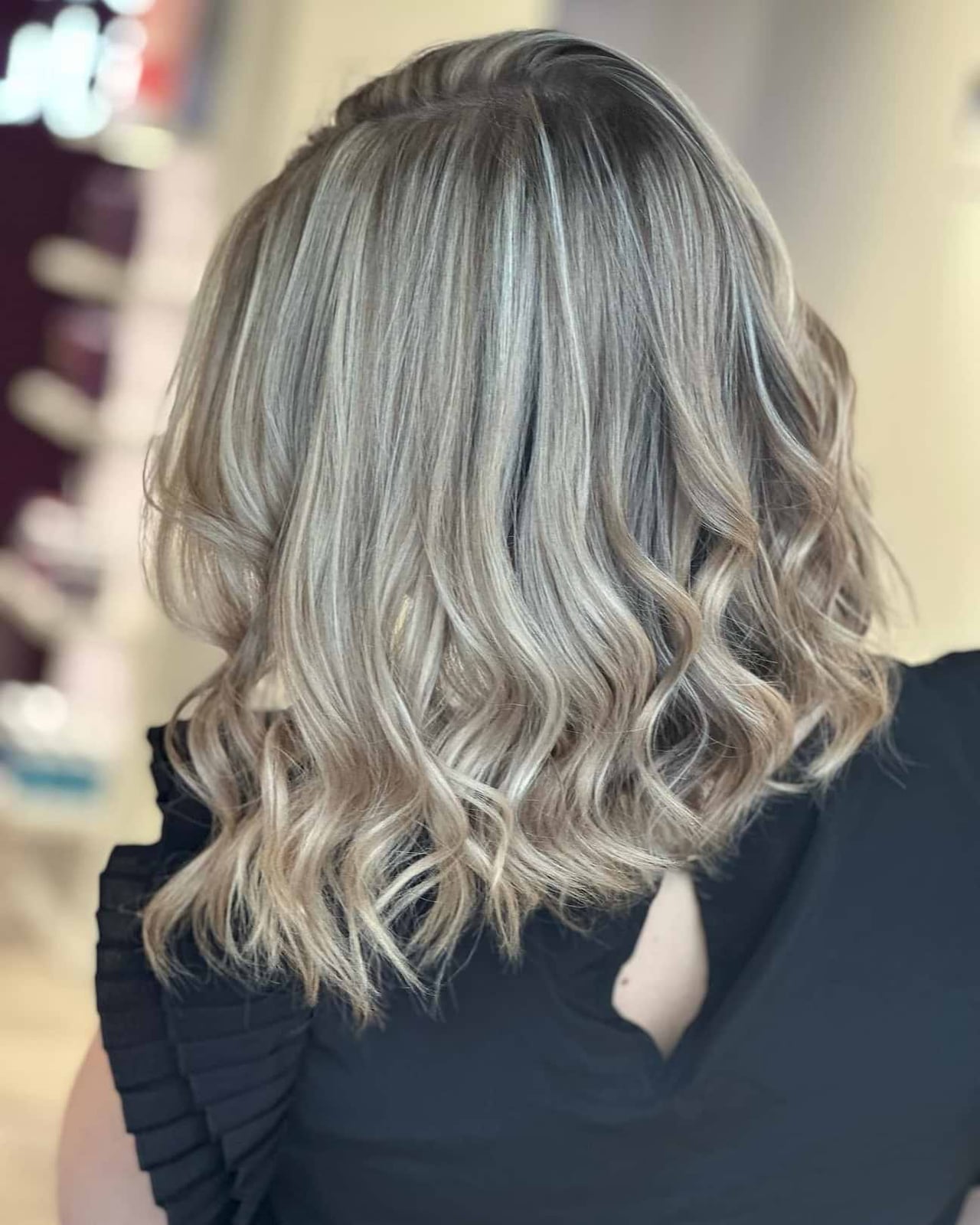
Ash blonde highlights on a dark blonde base are a lesson in cool-toned dimension. From the back, the middle part and collarbone-length layers let the color placement do the work. The wavy blowout gives it a polished finish that holds up through a workday. A purple shampoo every other wash keeps the ash tone from turning brassy. A trim every six to eight weeks maintains the collarbone line. Ask your colorist for: collarbone length, dark blonde base, ash blonde highlights.
Collarbone Dark Blonde Lighter Blonde Curtain Bangs
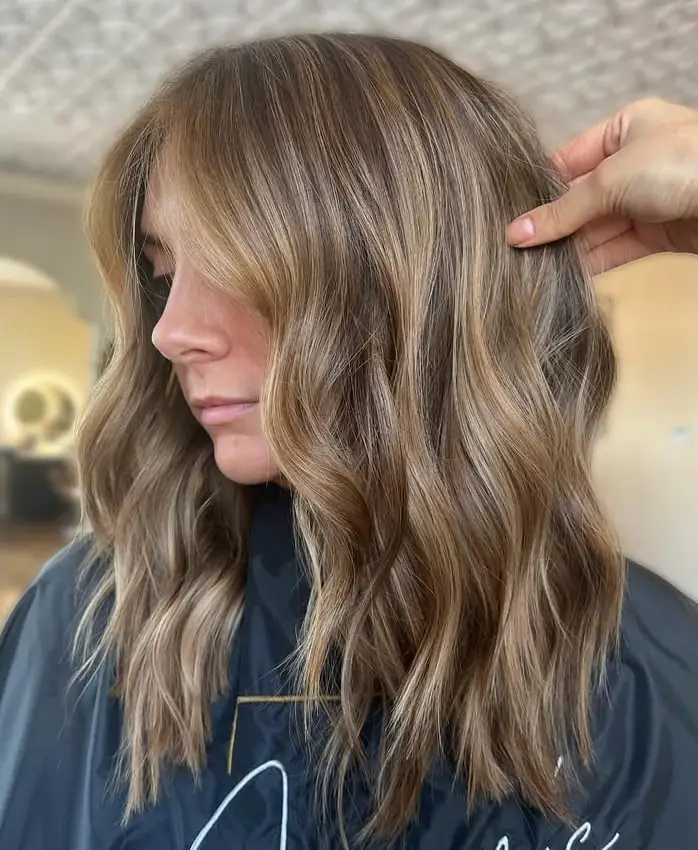
When highlights hit the front sections first, the rest of the head stays subtle. That is the logic behind a dark blonde lob with lighter blonde pieces concentrated around the face. The curtain bangs frame the face without overwhelming the base color. Ask your colorist for: collarbone lob, dark blonde base, lighter blonde highlights, curtain bangs.
The technique uses a partial weave through the crown and face-framing sections, leaving the back untouched. For fine wavy hair, that means less processing time and a softer grow-out. The middle parting splits the bangs evenly, so the lightness looks deliberate.
Dark Blonde Lob Lighter Blonde Face-Framing Layers
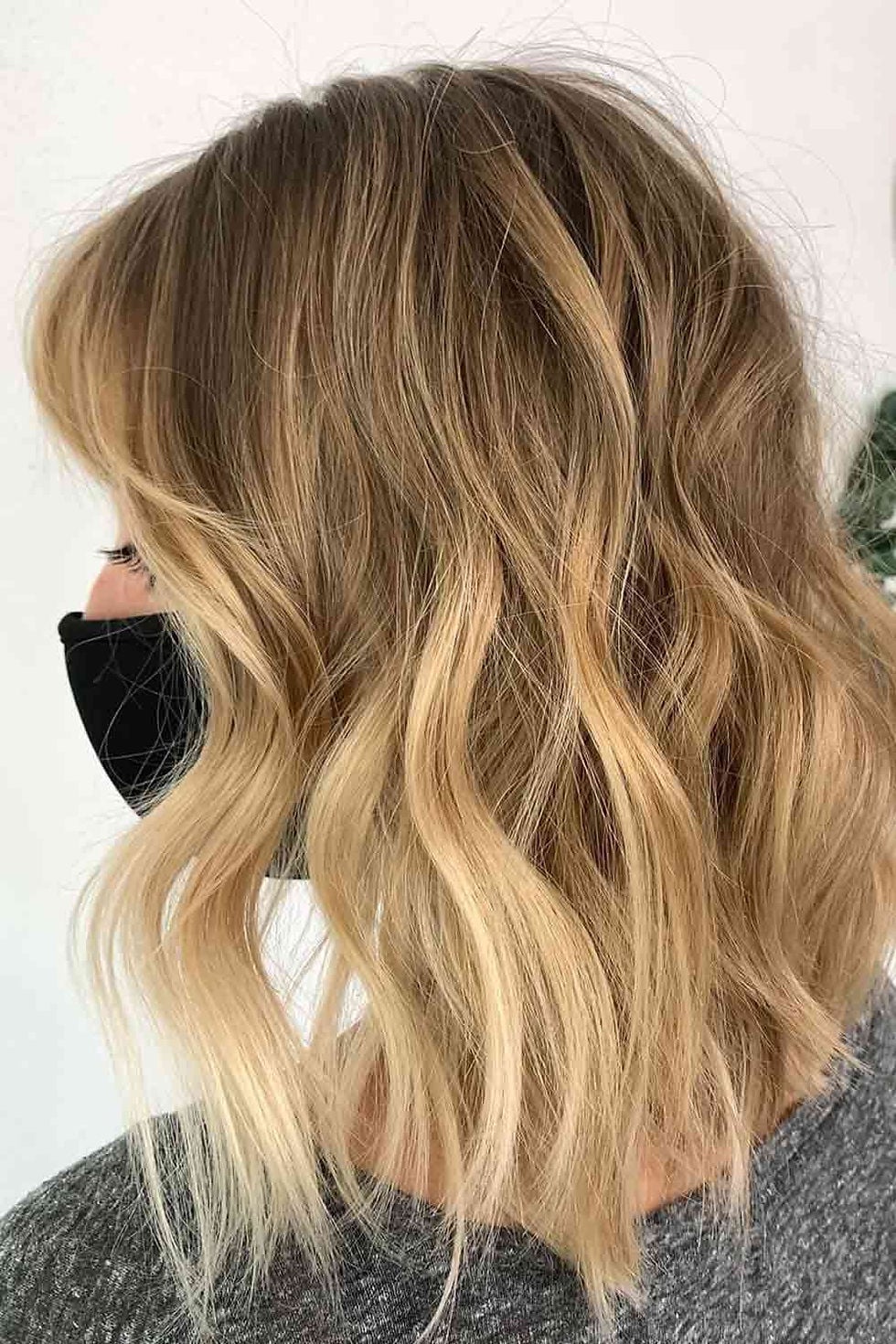
How do you ask for highlights that look like they grew in that way? Start with the cut. A dark blonde lob with curtain bangs and soft face-framing layers gives the colorist a clear roadmap for where the lighter blonde pieces should land. The layers sit around the cheekbones and jaw, so the highlights follow the same path. Ask your colorist for: collarbone lob, dark blonde base, lighter blonde highlights, curtain bangs.
The result is a dimensional front view that fades into a darker, more uniform back. Medium density wavy hair benefits from this approach because the layers prevent the weight from pulling the wave out. A texturizing spray on damp hair, then a quick diffuser pass, and the face-framing highlights do the rest. Curtain bangs soften the transition between the lighter front and darker back.
Mid-Back Long Layers Medium Brown Blonde Highlights, Wavy
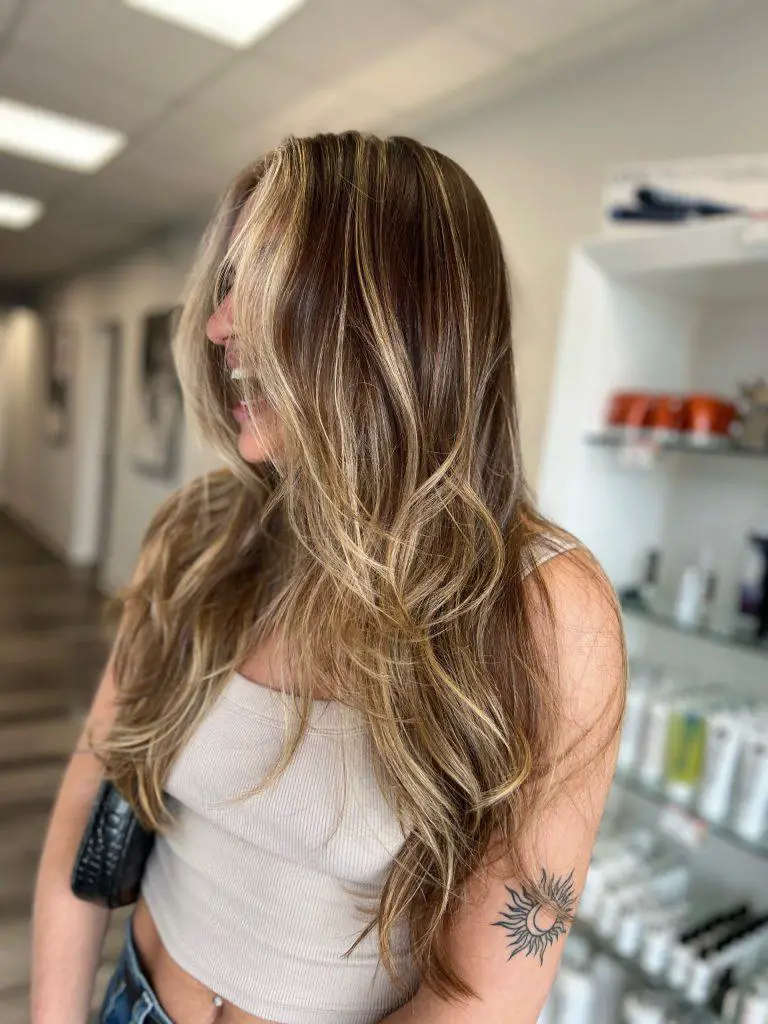
Blonde highlights on a medium brown base can read as subtle or striking, depending on the placement. This version leans into the subtle end of the spectrum. Long layers through mid-back length wavy hair keep the blonde pieces from clustering in one spot, so the dimension looks like a natural sun-lightened effect rather than a salon stripe. A side parting helps the highlights catch light differently on each side. Ask your colorist for: mid-back length long layers, medium brown base, blonde highlights.
Compare it to a full head of chunky highlights, which creates more contrast but also more visible regrowth. This partial approach leaves the under layers darker, so the grow-out line is softer. Thick wavy hair handles the long layers well, since the weight keeps the wave pattern from turning into frizz. A sea salt spray on damp hair enhances the texture without adding product buildup.
Mid-Back Dark Brown Blonde Partial Highlights, Office-Safe Version
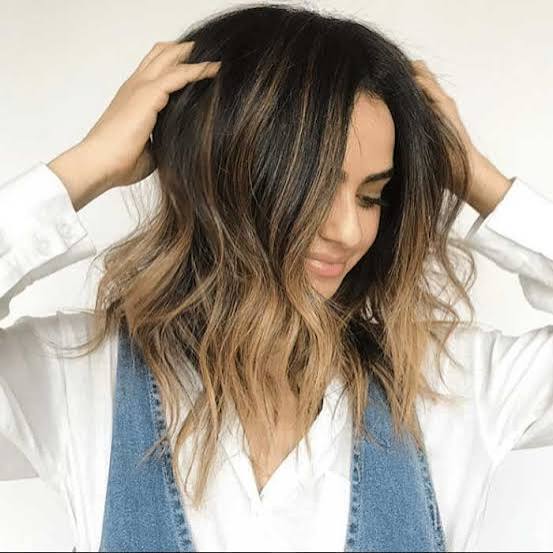
Blonde highlights on a dark brown base create contrast, but the placement determines whether the result is bold or boardroom-ready. Partial highlights, concentrated on the top and face-framing sections, keep the brightness visible without overwhelming the base. The mid-back length and middle part give the color room to breathe. Ask your colorist for: mid-back length, dark brown base, blonde partial highlights.
Collarbone Light Brown Blonde Highlights Side View
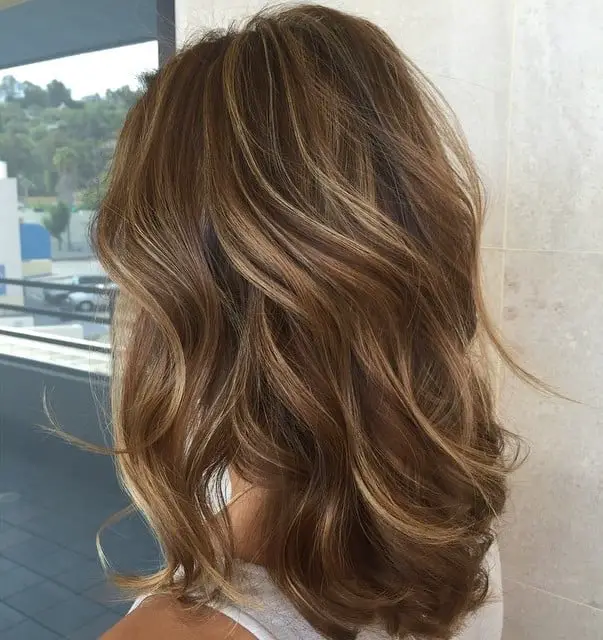
A side view reveals how blonde highlights are placed to catch light as the head turns. The light brown base keeps the overall effect soft, while the blonde pieces land on the top layers and around the face, not packed into every section. That selective placement gives the highlights a controlled, dimensional look. The collarbone length and soft layers give the waves room to move without tangling.
This approach works well on medium density wavy hair starting at collarbone. Ask your colorist for: collarbone length layers, light brown base, blonde partial highlights. A shine serum at the ends keeps the gloss up between washes. Plan a trim every six to eight weeks to preserve the shape.
Mid-Back Dark Brown Lighter Brown Highlights Back View, Close-Up Take
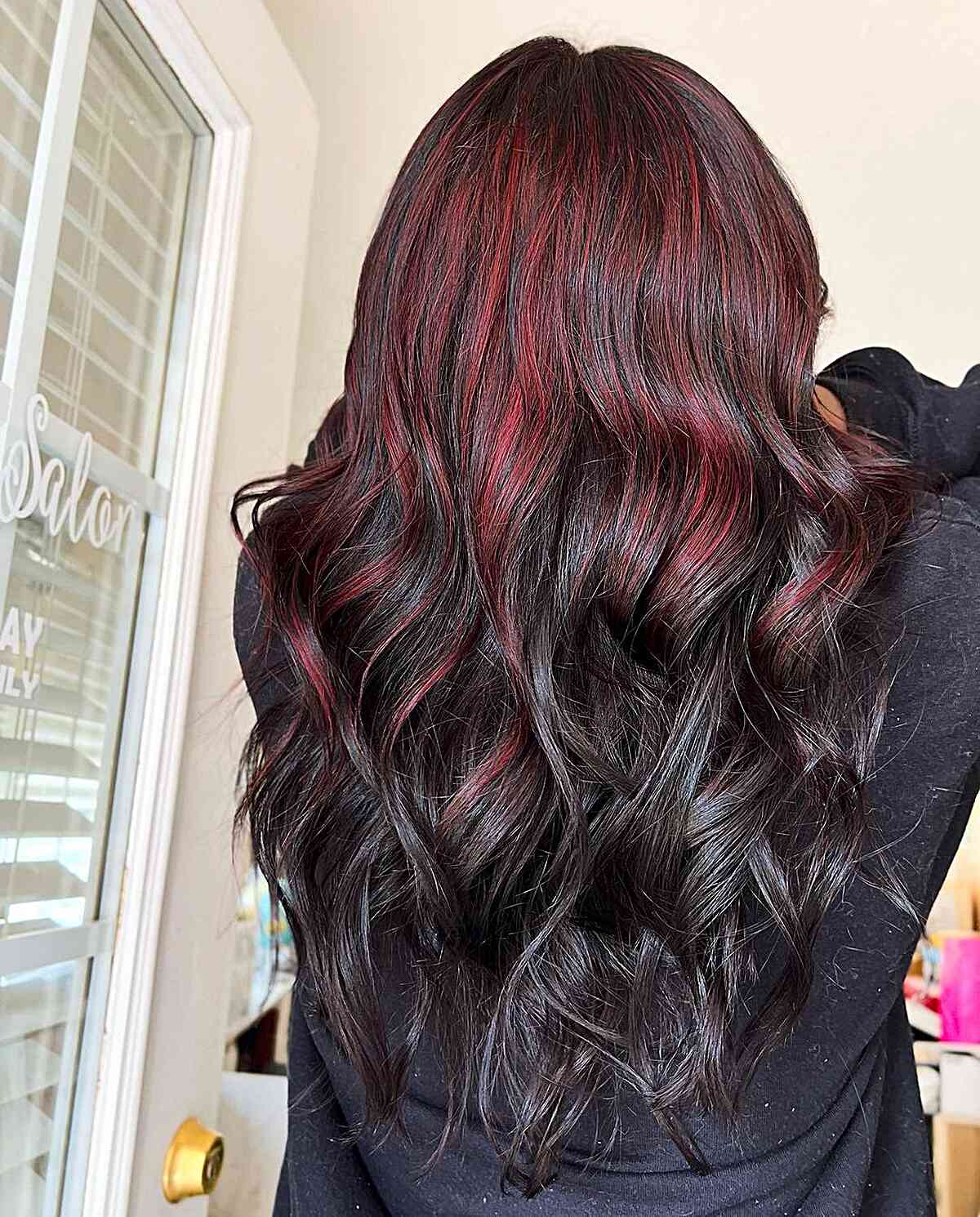
Full highlights on dark brown hair can look too uniform, which is where partial highlights earn their keep. Here the lighter brown pieces are placed on the top crown and scattered through the mid-lengths, leaving the underlayers deep. The back view makes the pattern clear: the dimension is there but subtle. If the placement is too sparse, the highlights can blend into the base and lose their definition entirely.
This is best for thick wavy hair starting at mid-back where the natural volume helps separate the tones. Ask your colorist for: mid-back length, dark brown base, lighter brown partial highlights. A toner appointment every eight to ten weeks keeps the lighter brown from pulling brassy. Anyone wanting a clear contrast should ask for a wider section of highlights instead.
Mid-Back Dark Brown Caramel Highlights, Low-Key Version
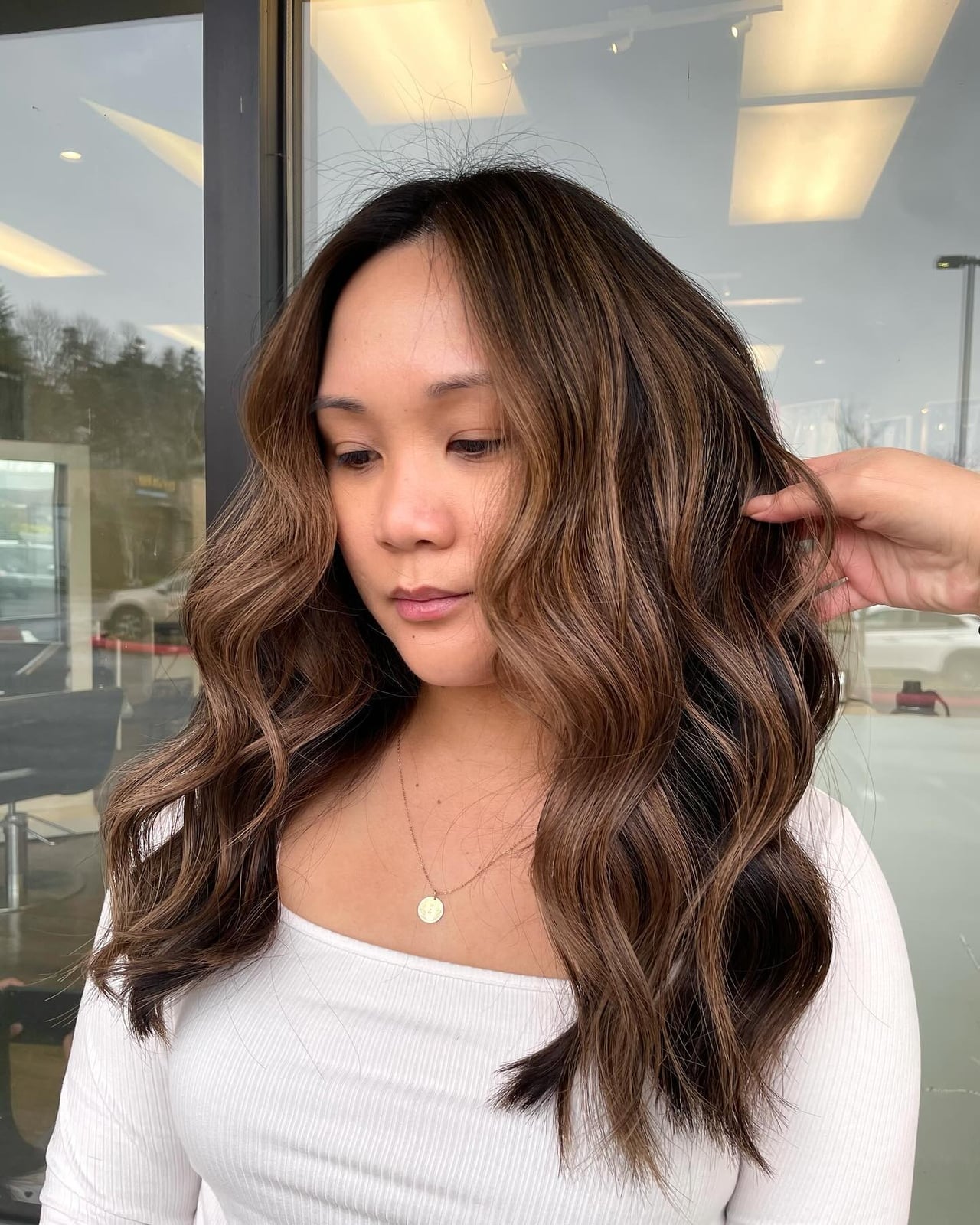
Caramel against dark brown is a warm combination that does not need a full head of highlights to read. The caramel pieces here are concentrated on the top and face-framing sections, so the effect is noticeable without being heavy. The mid-back length and loose waves let the caramel catch light at different points along the hair shaft, which adds depth without a multi-tonal melt. The middle part keeps the distribution balanced.
This suits thick wavy hair starting at mid-back where the caramel has enough base to stand out against. Ask your colorist for: mid-back length, dark brown base, partial caramel highlights. A texturizing spray on damp hair before air-drying gives the waves a lived-in finish. A trim every eight weeks keeps the ends healthy enough to hold the color.
Mid-Back Dark Brown Lighter Brown Highlights
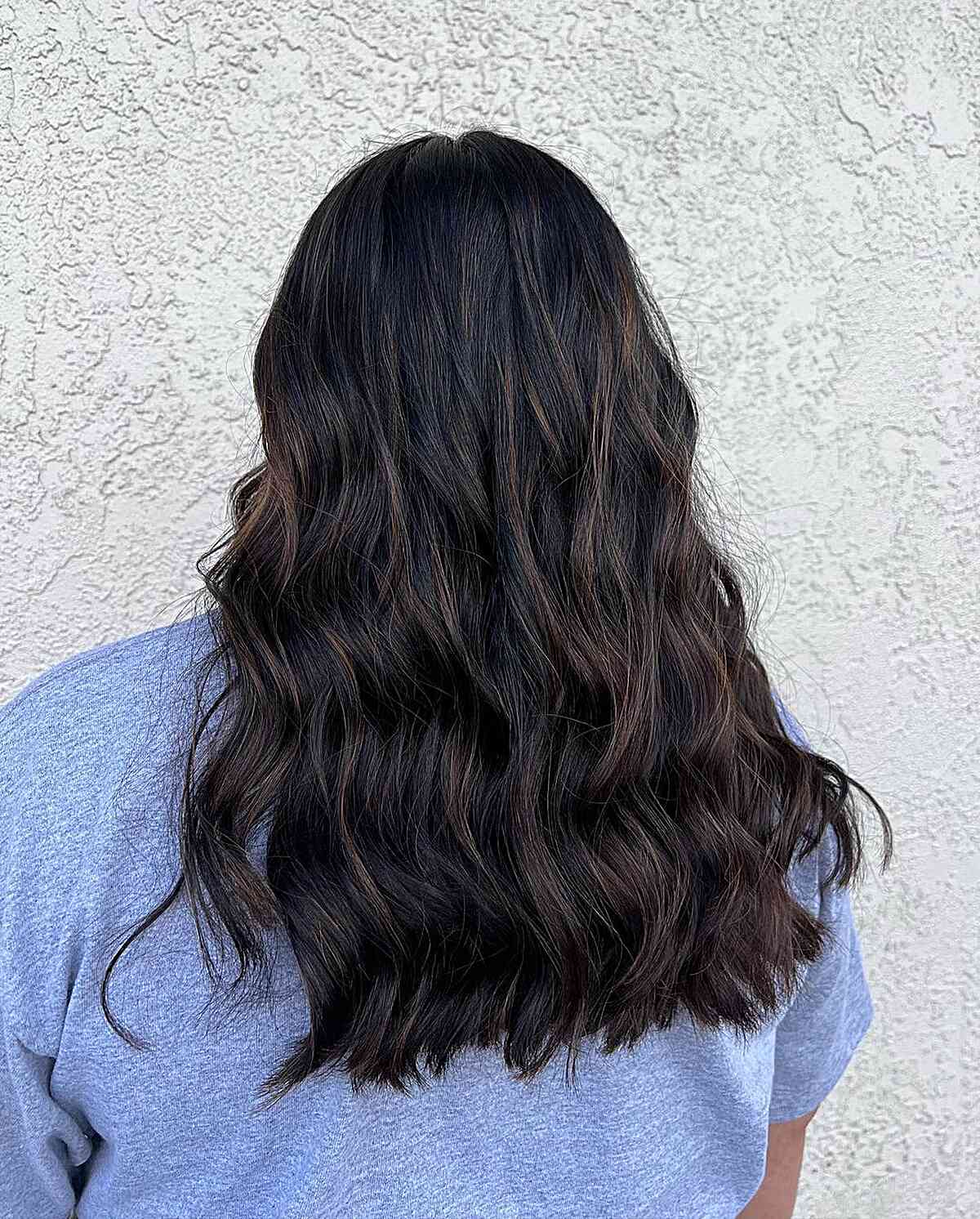
Partial highlights are often sold as low maintenance, but that depends on the gap between the base and the lighter pieces. Here the lighter brown is only a shade or two lighter than the dark brown base, so the grow-out is soft rather than stark. The mid-back length and loose waves help the highlights blend naturally as the hair moves. The back view shows that the color reads as dimensional without obvious bands of lightness.
This is a solid choice for thick wavy hair starting at mid-back that wants a subtle lift. Ask your colorist for: mid-back length, dark brown base, lighter brown partial highlights. Scrunch with a texturizing spray after washing to keep the wave pattern consistent. A toner every eight to ten weeks is enough to maintain the tone, and the grow-out stays wearable for at least three months before the roots need attention.
Final Thoughts
For fine hair, ask for thinner, more spaced-out highlights so the dimension reads without overwhelming the strand. Thicker hair can handle wider sections for a bolder contrast. The right placement makes all the difference.
- Maintain highlights with color-depositing conditioners every 2-3 weeks.
- Schedule touch-up appointments every 8-12 weeks to refresh the color.
- Use a sulfate-free shampoo to preserve color vibrancy.
- Incorporate a deep conditioning treatment weekly to combat dryness.
Partial highlights offer a versatile way to enhance your natural color.