
Under bathroom light, a brunette can look almost one color; near a window, the same hair may reveal copper, mocha, or cooler ribbons along the movement. That change is why the smooth dark lengths and the softer waved examples belong in the same conversation. One relies on a clean silhouette to look rich, while the other lets texture separate the brown into shifting bands that feel more alive when you turn your head.
Before asking for a change, decide whether you are chasing brightness, movement, or a different outline around the face. Fine ribbons will not solve a haircut that feels flat, and a new layer will not automatically create the lighter placement you saved. Bring the reference that matches your real priority, then reduce the length, wave, or contrast until the result still makes sense on an ordinary morning.
Long Dark Brown With Subtle Warm Dimension
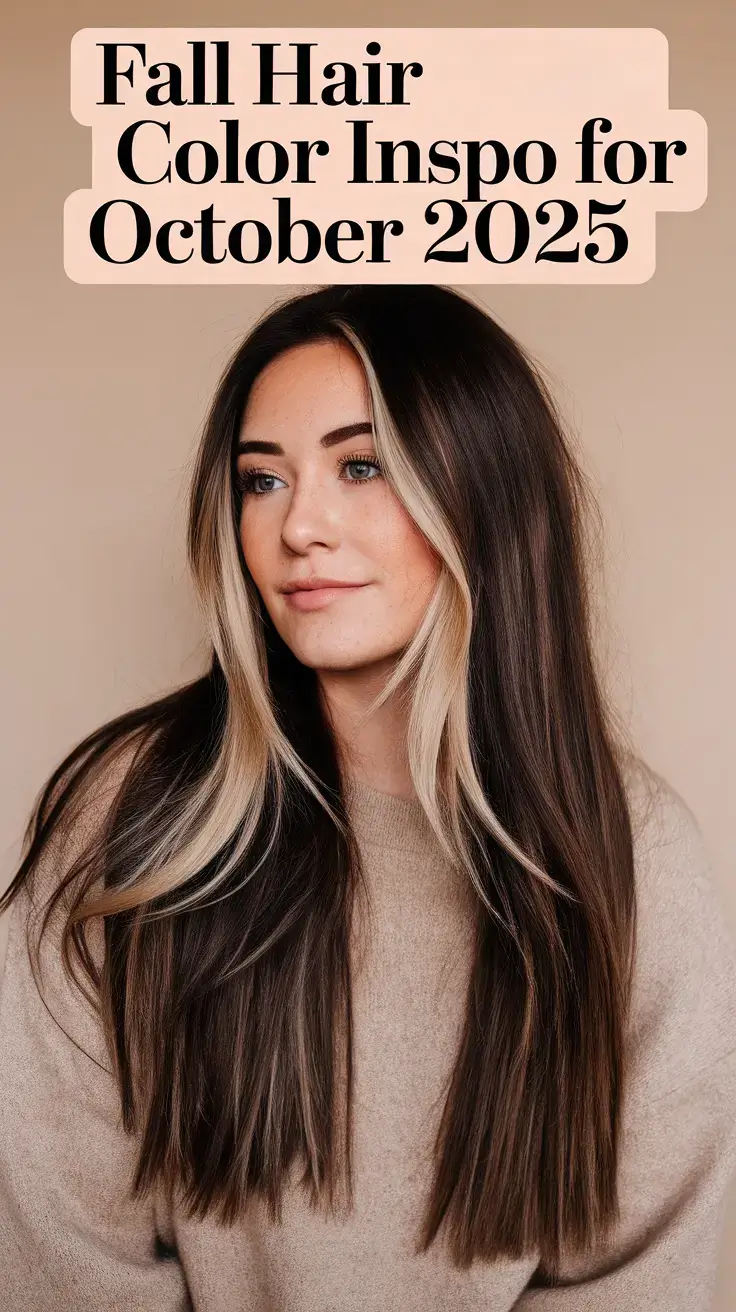
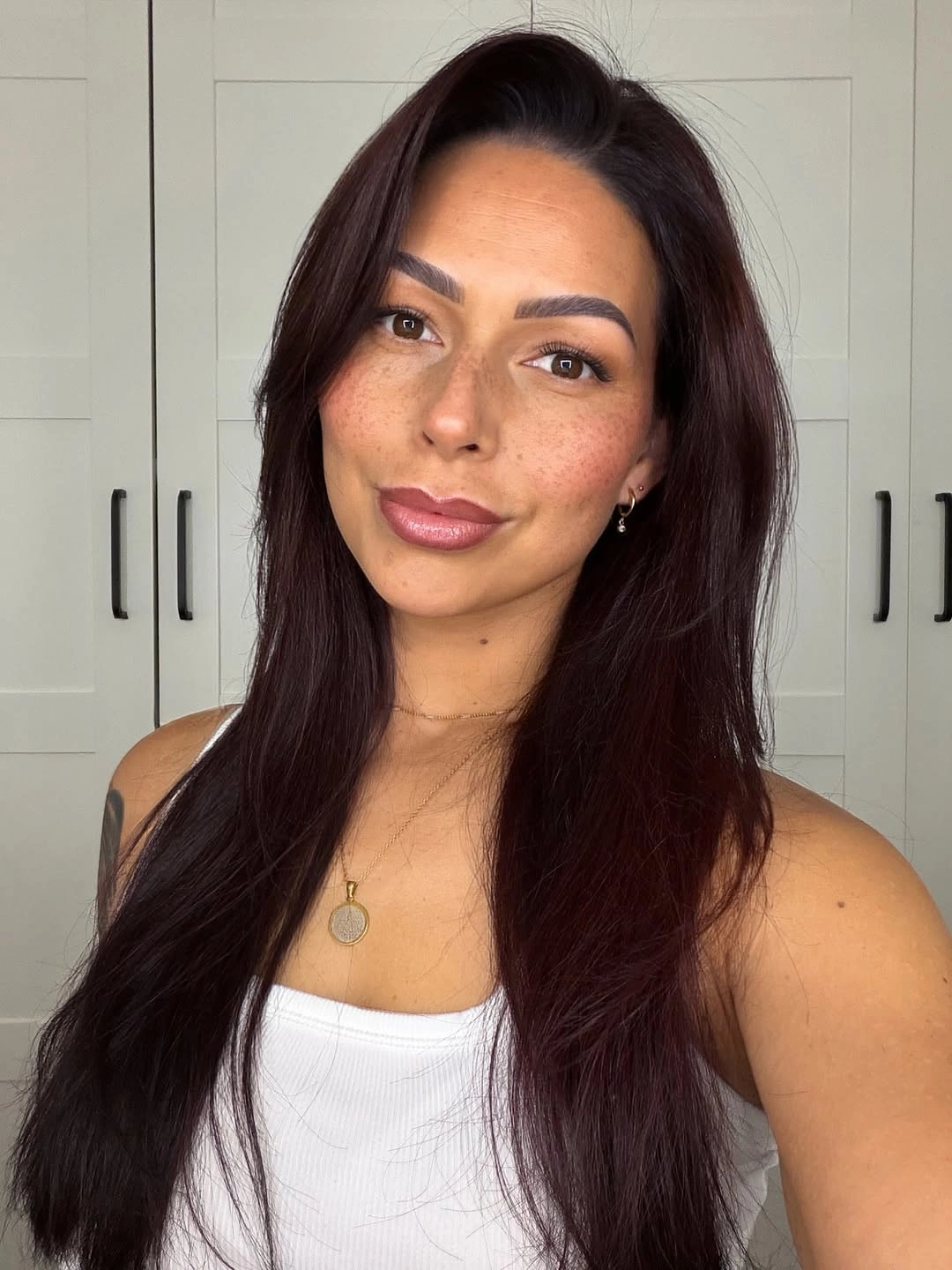
Long dark brown hair gets its interest from subtle warm dimension around the face and through the lower lengths. The center part and smooth surface keep the silhouette quiet, so the brown does not need obvious contrast to look considered. It is the kind of color reference where the placement matters more than a dramatic change, especially when the goal is a richer brunette impression.
This direction suits someone who wants the hair to stay deep but look less uniform in natural light. Ask for warmth that remains blended rather than a bright stripe, and keep the front shape simple if you already rely on a clean center part. The length can be adapted to a shoulder or mid-back cut; the visual idea survives as long as the brown has a gentle shift instead of one flat block.
The smooth finish makes uneven ends easier to notice, and the very long length can take more time to detangle and style. That is the tradeoff for the elegant, uninterrupted surface. If maintenance is a concern, keep the dark base and add only a few face-adjacent lighter pieces, allowing the color to do its quiet work without asking the whole silhouette to change.
Rounded Layers In A Soft Medium Brown
Rounded layers give this medium brown look a soft, shaped silhouette, with the ends curling under rather than falling in a straight line. The color stays close to one warm family, so the movement becomes the defining feature. Seen from the back, the layers create a gentle cascade that makes medium-long hair feel fuller without relying on a sharp cut line.
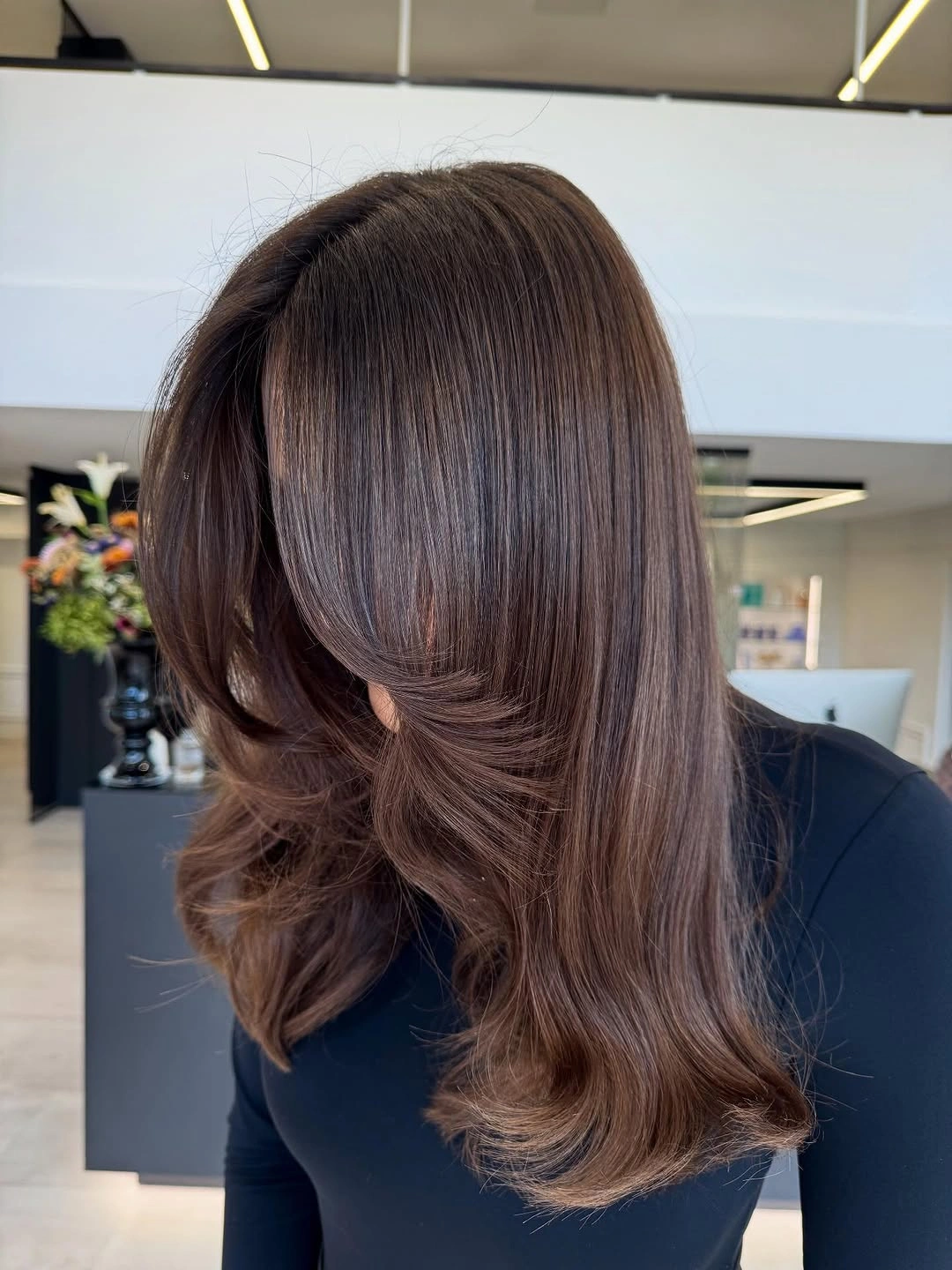
This is a useful reference if you want a brunette update that reads polished even when the color change is modest. The rounded ends work with a center or slightly shifted part, and the shape can be adjusted to sit at the collarbone if the full length feels too demanding. Keep the layers blended rather than choppy when the goal is a soft, classic fall silhouette.
The curled-under finish is more styling-dependent than a blunt one-length cut, so it may not hold the same shape every day. That is the honest limitation, especially in damp weather or on hair that naturally falls straight. Preserve the rounded outline first, then choose how much bend you can realistically recreate; the brown shade alone will not supply the same movement.
Warm Copper Brown In Loose S Waves
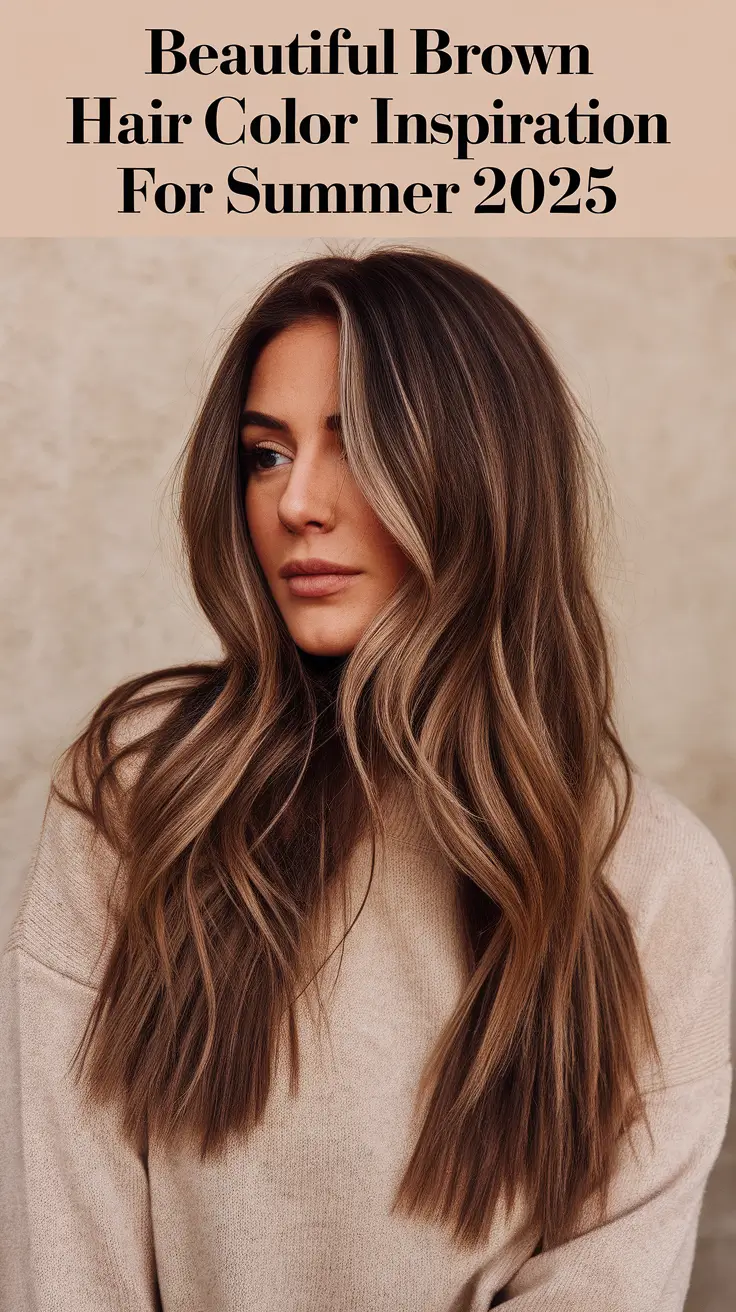
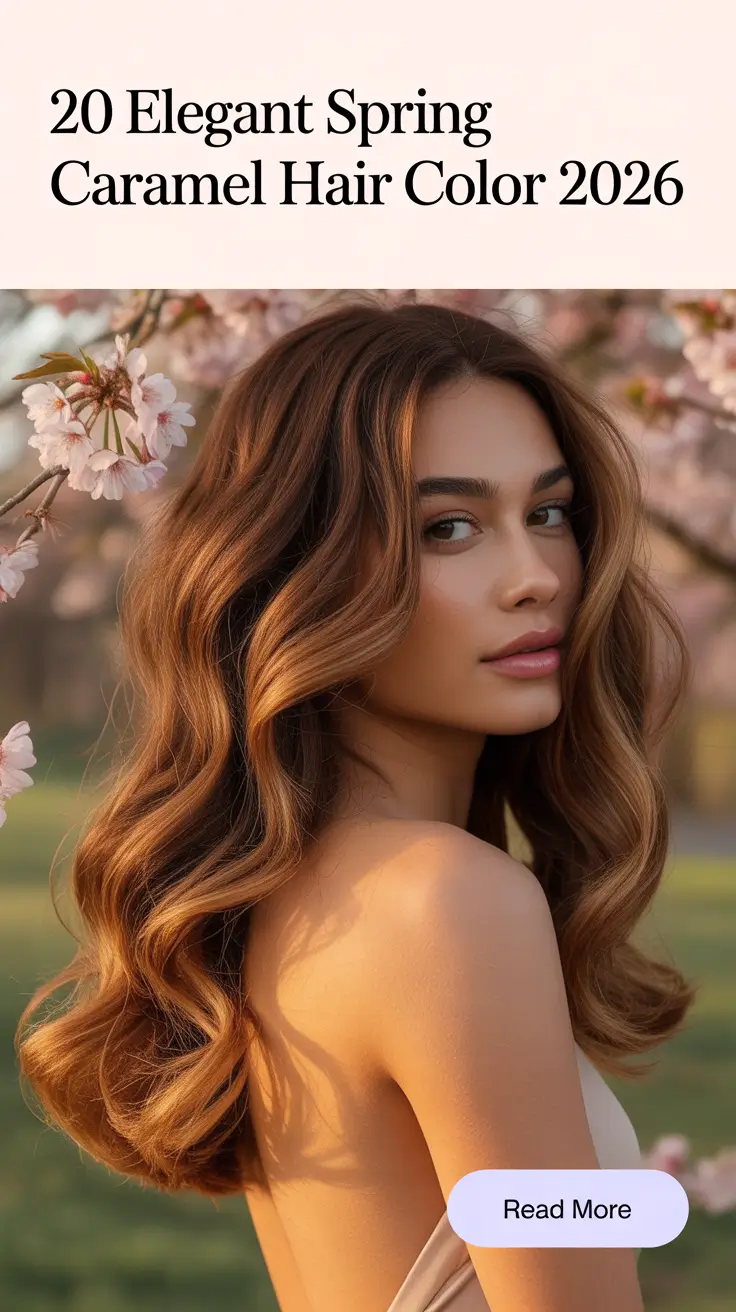
Loose S-shaped waves reveal warm copper brown through a long, flowing silhouette. The color catches along the curves, creating dimension without obvious blocks, and the glossy surface makes the movement easy to see from root to end. The shape feels rich because the wave pattern repeats gently rather than forming tight curls or a stiff finish.
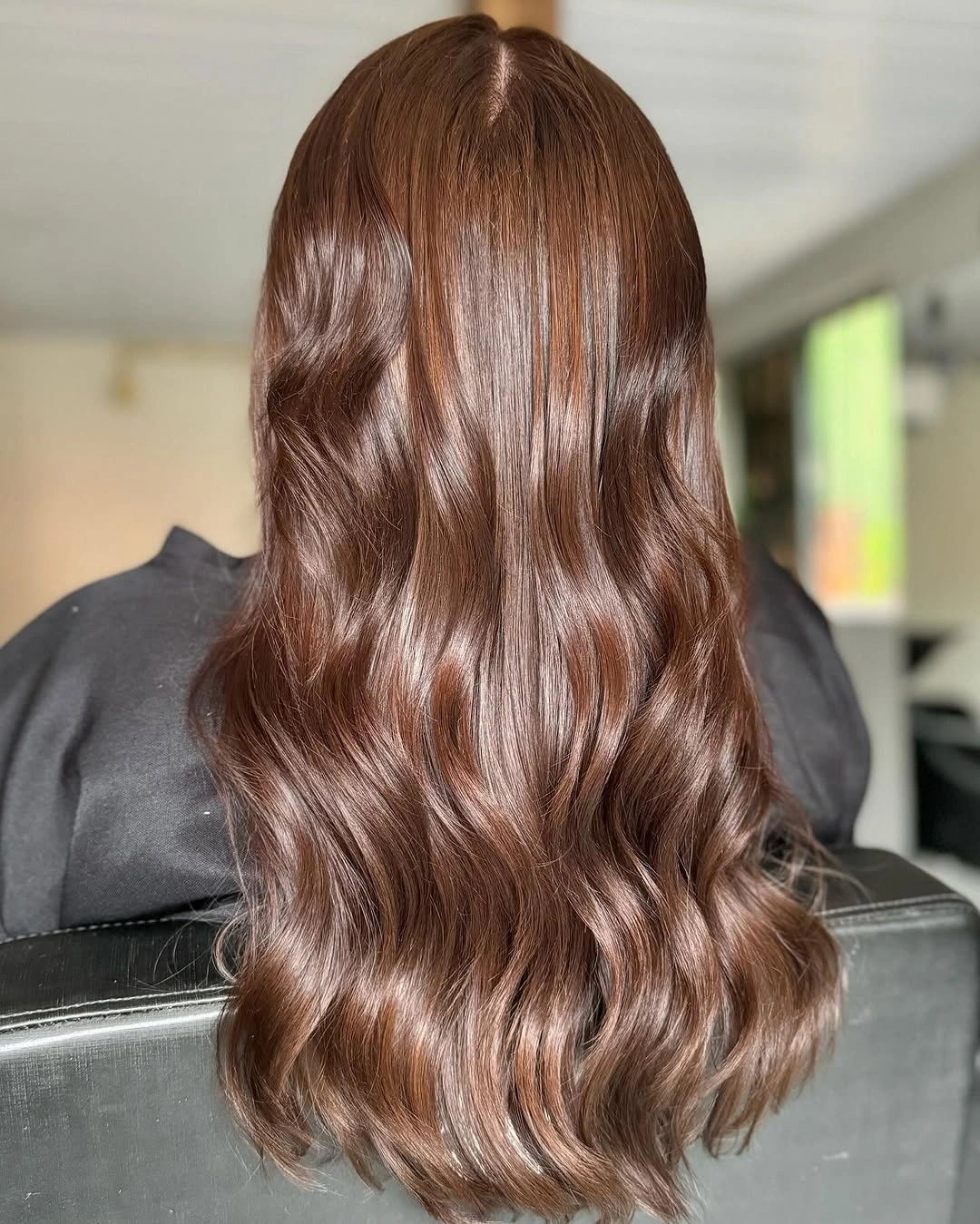
Choose this reference when you want warmth and movement to arrive together. The same idea can be adapted to medium-length hair with broader bends, or to a cooler brown by reducing the copper impression while keeping the wave pattern. A center part leaves the color evenly distributed, while a soft side shift can place more brightness near one cheek without changing the whole style.
The waves are the main commitment here, because a color that looks dimensional in movement may appear quieter when the hair is straight. Long lengths also make detangling and shape retention part of the daily routine. I would treat the warm brown as a flexible palette direction and choose a wave size that matches your actual styling habits, not only the most dramatic version of the reference.
Cool Dark Brown With A Quiet Straight Shape
A cool dark brown shade looks polished here because the long straight shape stays simple and mostly unlayered. The surface has restrained movement at the ends, which lets the cool tone read as deep and composed rather than glossy for its own sake. There are no bright ribbons to interrupt the silhouette, so the clean line becomes the central styling decision.
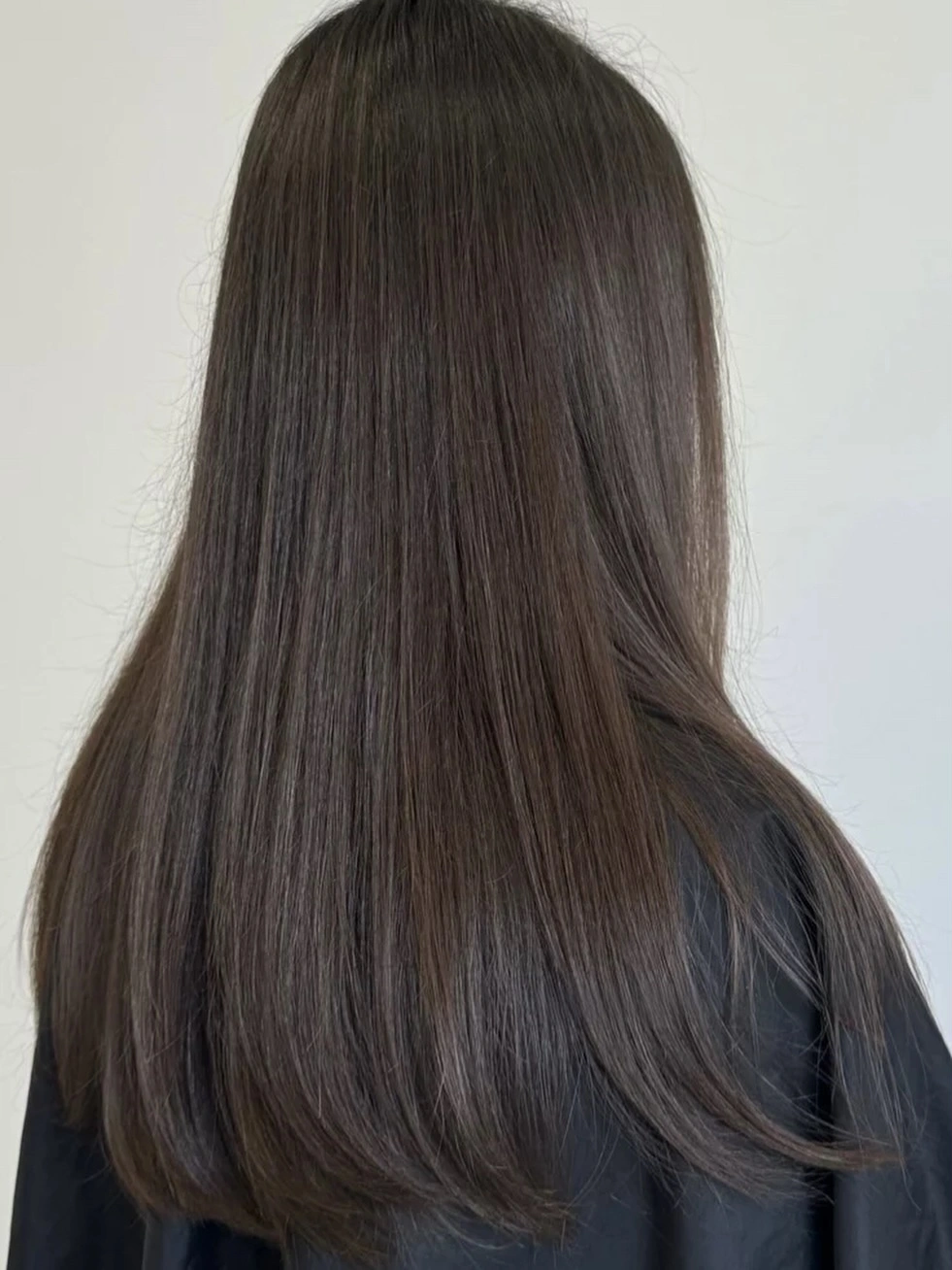
This is a strong option if you want to refine a brunette look without adding visible decoration or wave volume. It can be paired with a center part, a soft side part, or subtle face framing, depending on how much shape you want around the features. If the length is shorter, keep the edge smooth and let the cool brown remain the quiet anchor beside black, gray, or jewel-toned clothing.
The minimalist surface gives less camouflage for uneven ends, dryness, or visible regrowth, and a very straight finish can feel unforgiving when the cut is not balanced. That is the practical tradeoff compared with a wavier, more textured reference. Keep the depth and coolness if you like the mood, but allow a small bend at the ends when a completely straight finish is too high-maintenance.
Very Long Sleek Brunette With Face Framing
Very long dark brown hair stays sleek and center-parted, but soft face-framing pieces stop the length from becoming a single heavy curtain. The deep color and polished surface create a strong vertical line, while the front pieces bring just enough movement to connect the hair to the face. It is a high-impact silhouette built from proportion rather than visible color contrast.
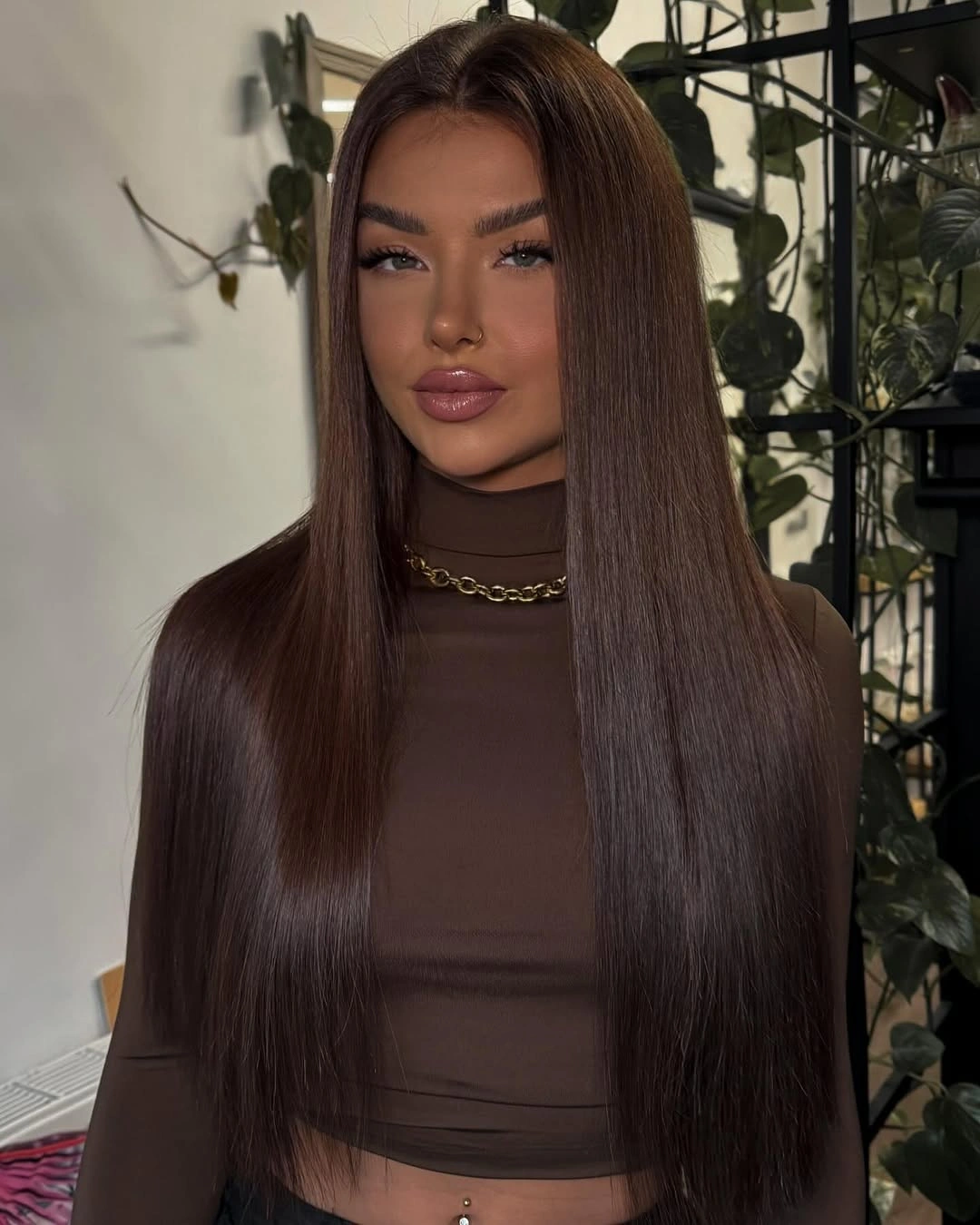
Use this as a reference if you want the drama of long hair without a heavily layered finish. The framing can be shortened to begin near the cheek or jaw, and the overall length can end around the mid-back while preserving the same balance. Keep the base deep and let the front pieces do the softening, especially if you prefer a clean wardrobe in brown, black, or cream.
Very long length is the main limitation, since it takes time to wash, detangle, and keep the ends looking even. The straight surface also highlights every change in texture along the final few inches. If the silhouette appeals but the commitment does not, preserve the center part and face framing on a shorter cut; the shape will remain recognizable without requiring floor-length maintenance.
Medium Warm Brown With Rounded Waves
Soft rounded waves give this medium warm brown look a relaxed sense of volume, while the deeper root area keeps the lengths from looking one-dimensional. The layers are visible through the movement rather than through sharp steps, so the hair feels full without becoming heavily feathered. It is a warm brunette reference that relies on shape to show off the color.
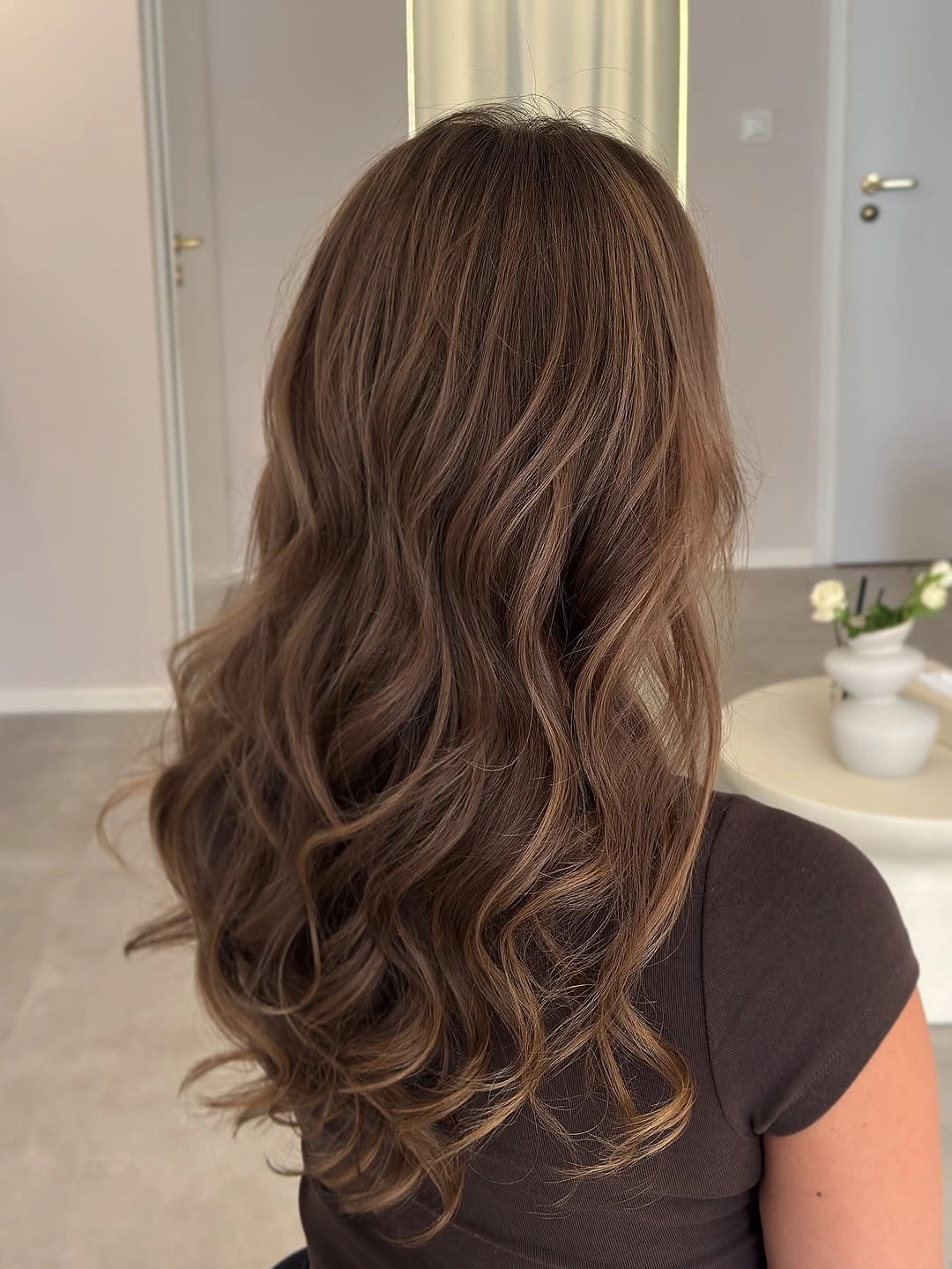
The look can be adapted to a medium cut by keeping the wave broad and letting the shortest layer begin around the cheek or collarbone. If you prefer a calmer result, use a large bend instead of a defined wave and allow the brown to remain the visual focus. This kind of dimension pairs easily with black knits, cream, denim, and warm neutrals.
Rounded waves can lose their shape more quickly than a straight finish, and the lighter movement near the ends may reveal uneven dryness. That does not make the idea impractical; it simply means the cut and styling need to support each other. Keep the layers blended and choose less volume if you want the warm brown to look polished between styling days.
Fine Lighter Ribbons Through A Brown Base
Fine lighter ribbons travel through this long brown base, appearing most clearly around the face and lower lengths. The placement is narrow and dispersed, so the hair remains brunette rather than turning into a high-contrast light style. A soft bend through the surface helps the ribbons catch at different angles and makes the result feel dimensional without a hard stripe.
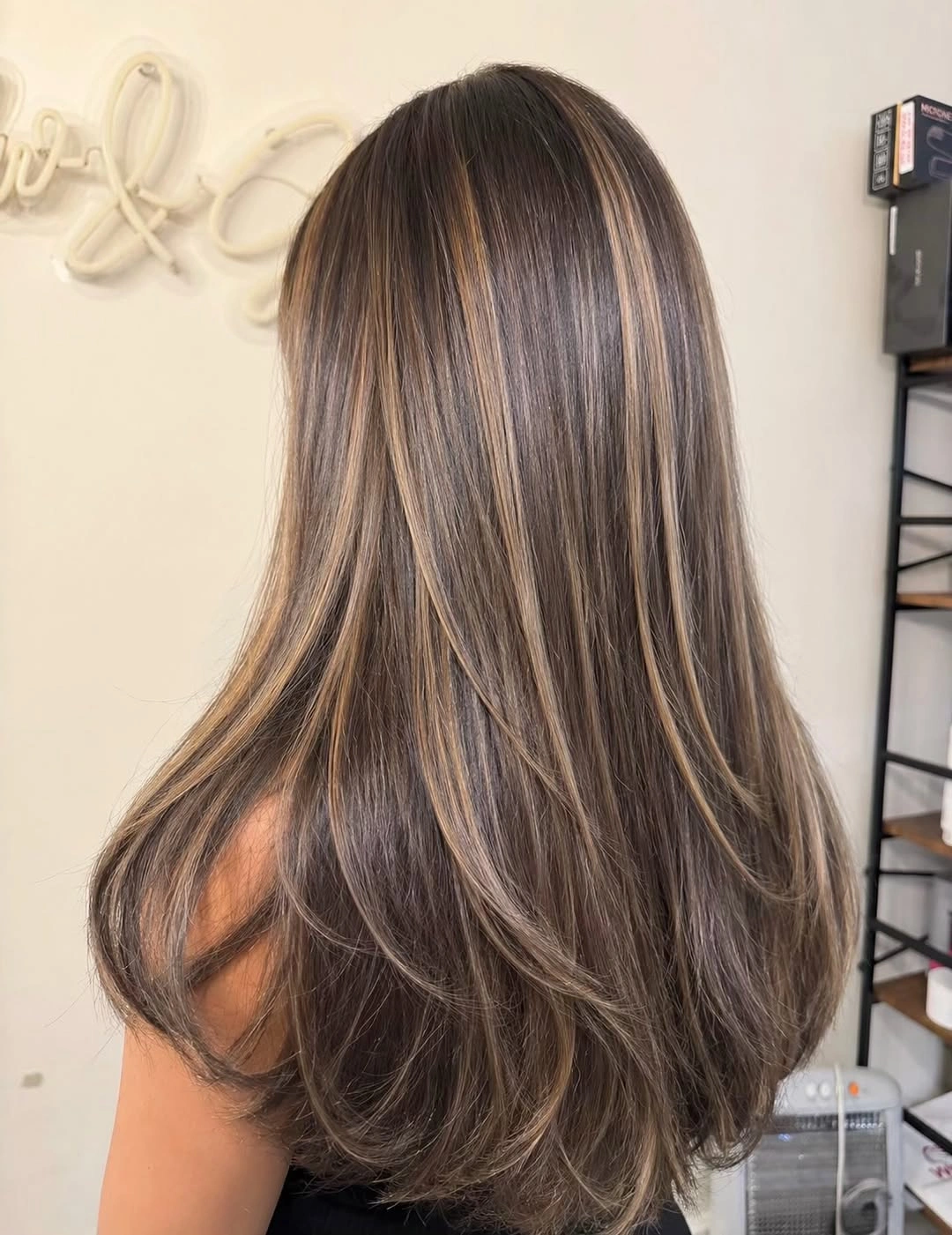
This is the kind of reference to bring when you want brightness that still looks blended from a distance. Ask for the lighter pieces to follow the existing shape rather than forming a uniform band, and consider keeping them subtle near the crown. On a shorter cut, fewer ribbons can create the same effect because the contrast is visible along the front and ends.
The detail-rich color may require more thoughtful upkeep than a single brown shade, especially where the lighter sections meet the natural-looking base. It can also look stronger when the hair is straight and softer when waved. I would keep the ribbons fine and let the brunette remain dominant; the appeal comes from controlled light, not from maximizing contrast.
Soft Brunette Waves With Face-Framing Layers
Broad waves and visible face-framing layers give this long brunette style a soft, balanced outline. The color stays deep enough to feel grounded, while the movement around the cheek and shoulder areas keeps the hair from looking flat. The wave pattern is wide and relaxed, which makes the silhouette feel fuller without reading as tightly curled.
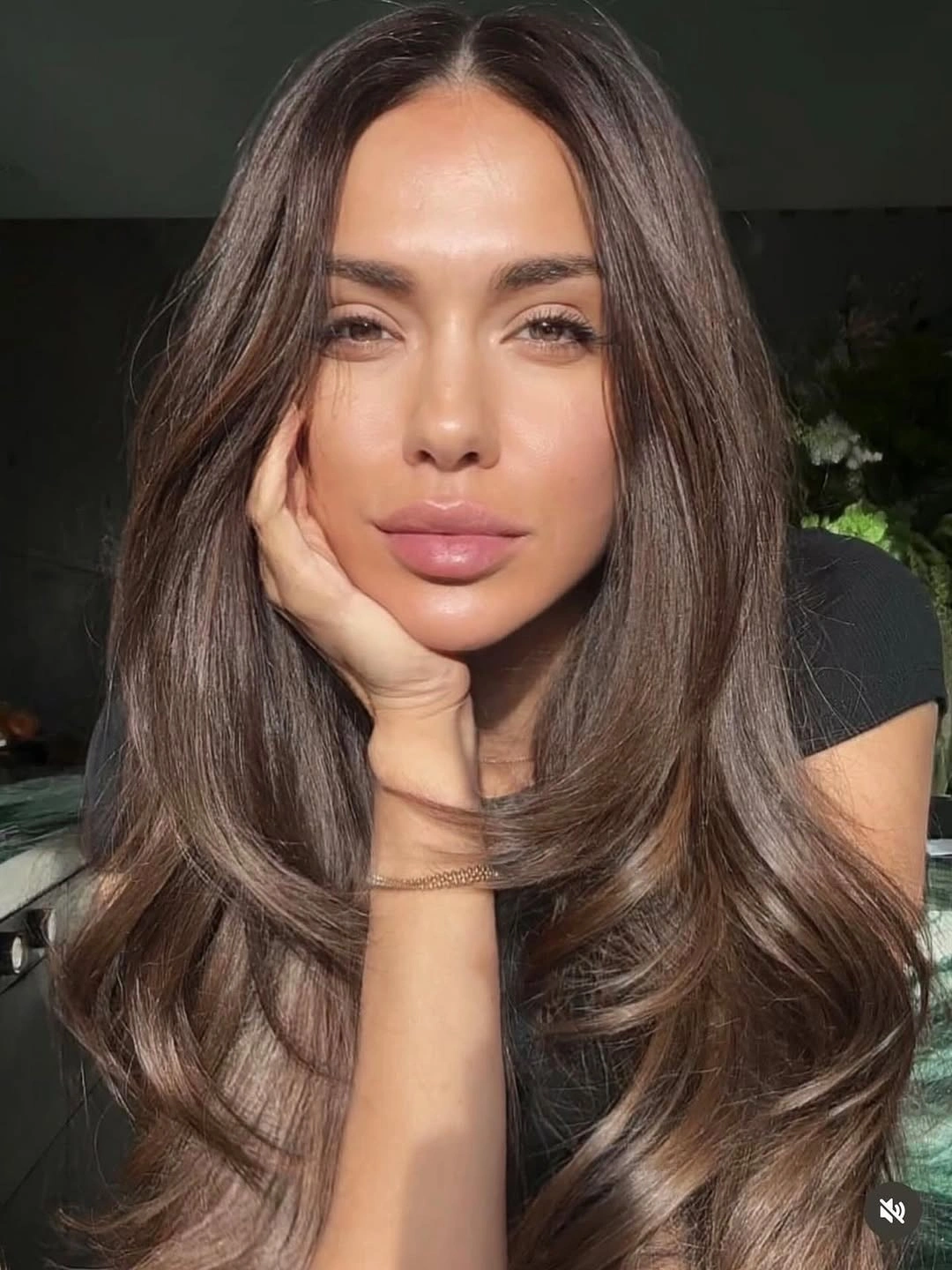
Choose this direction when your priority is shape and movement rather than a dramatic color shift. The front layers can be kept longer for a subtle frame or brought closer to the cheek for more visible lift, and the length can stop at the chest while keeping the same proportions. A center part supports the symmetry, but a soft side part would add a more casual finish.
The style asks for enough length to show the waves, and the face-framing pieces may need separate attention when the rest of the hair is left relaxed. If you want lower maintenance, reduce the number of layers and use a broad bend only at the ends. The deep brunette shade will still look dimensional when the silhouette keeps some movement.
Glossy Medium Brown With Soft Front Pieces
Glossy loose waves make the medium brown shade look rich, while curved front pieces give the face a defined but gentle frame. The hair is not relying on obvious highlights; its depth comes from the way the surface catches light across each bend. The overall silhouette remains long and polished, with enough movement to keep the color from reading as a solid sheet.
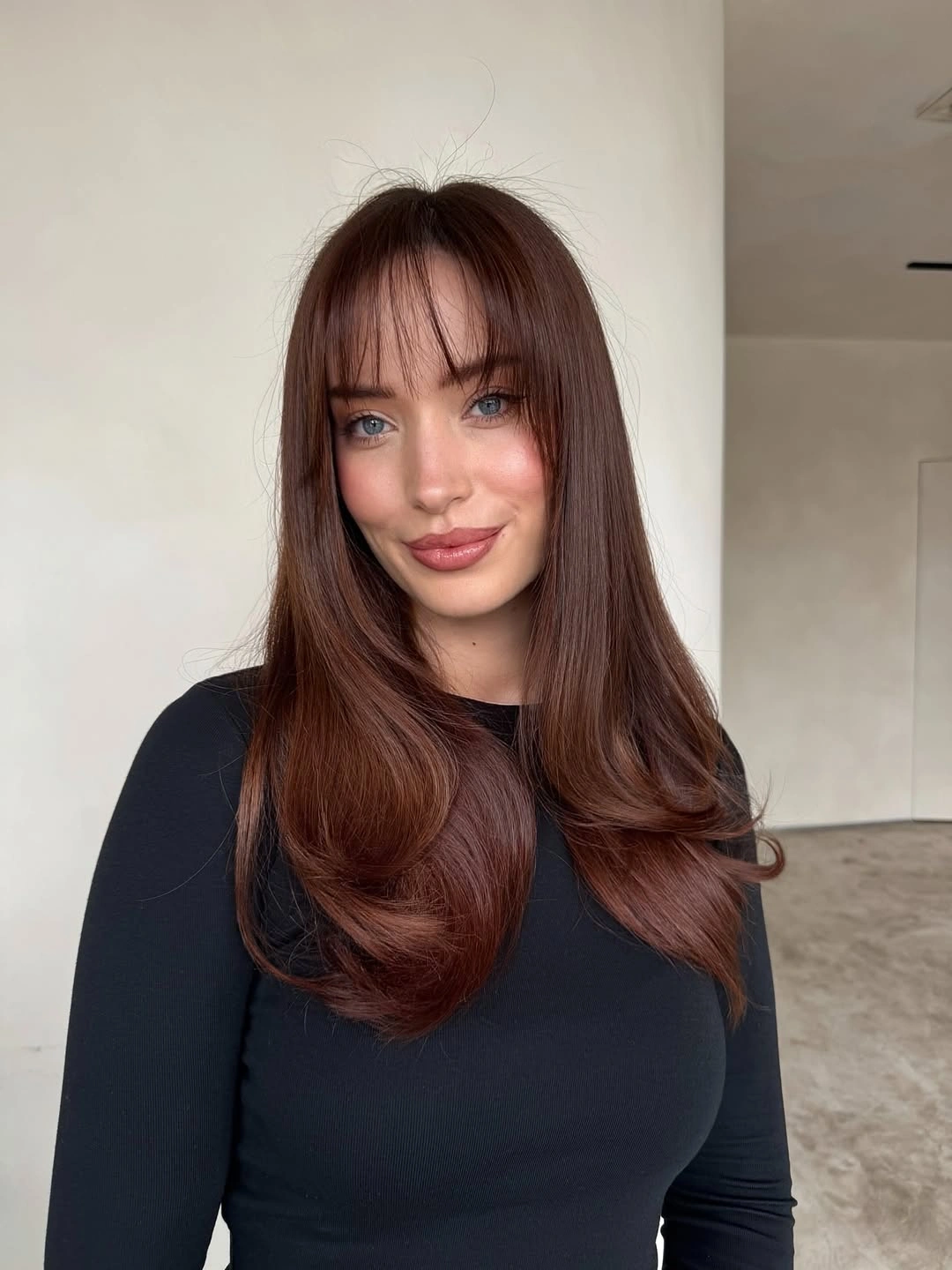
This reference works for someone who wants a noticeable refresh without committing to bright color. Keep the front pieces smooth and let the ends carry the wave, or adapt the same shape to a shoulder-length cut for easier styling. Medium brown is flexible beside black, cream, burgundy, and denim, so the look can shift with the season without feeling tied to one outfit.
Gloss can make the style look finished, but it also exposes roughness and uneven texture when the hair is not lying smoothly. The front pieces should blend into the rest rather than stopping abruptly, which is worth discussing before choosing a strong layer. I would preserve the soft curve and reduce the wave size if you need a more repeatable everyday version.
Reddish Brown With A Full Fringe
Warm reddish brown becomes more expressive when paired with a full fringe and loose waves. The fringe places the strongest shape change at the face, while the longer lengths keep the color visible through a relaxed, feminine silhouette. The tone looks warm without needing a bright red block, and the waves stop it from feeling too severe.
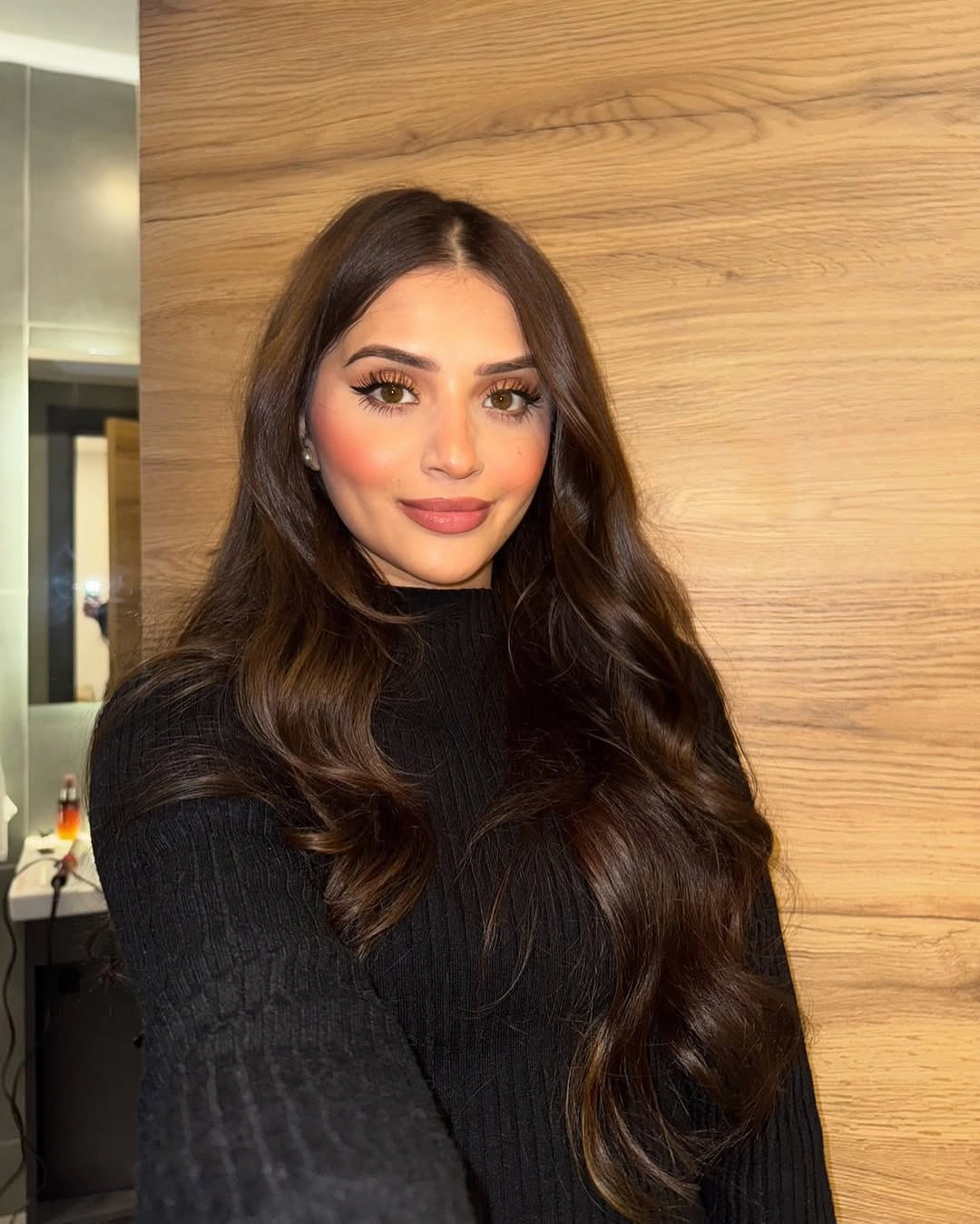
Consider this if you want the update to be visible in the mirror every day rather than only in certain light. The fringe can be softened into longer curtain-like pieces if a full bang feels too committed, and the wave can be widened for a more casual finish. The reddish brown pairs naturally with navy, chocolate, cream, and muted autumn colors.
A full fringe is the biggest practical decision because it changes daily styling and may need more frequent shaping than the length. The warm tone can also look stronger beside some complexions or indoor lighting, so a slightly deeper brown-red may be easier to live with. Keep the color and soften the fringe if you want the mood without the same maintenance demand.
Relaxed Warm Brown Waves For Everyday Wear
Relaxed warm brown waves create an airy everyday silhouette, with a center part and enough looseness that the hair does not look overworked. The color is warm but not sharply contrasted, so the overall impression comes from movement, softness, and the way the lengths fall around the shoulders. It feels casual because the wave is irregular rather than perfectly repeated.
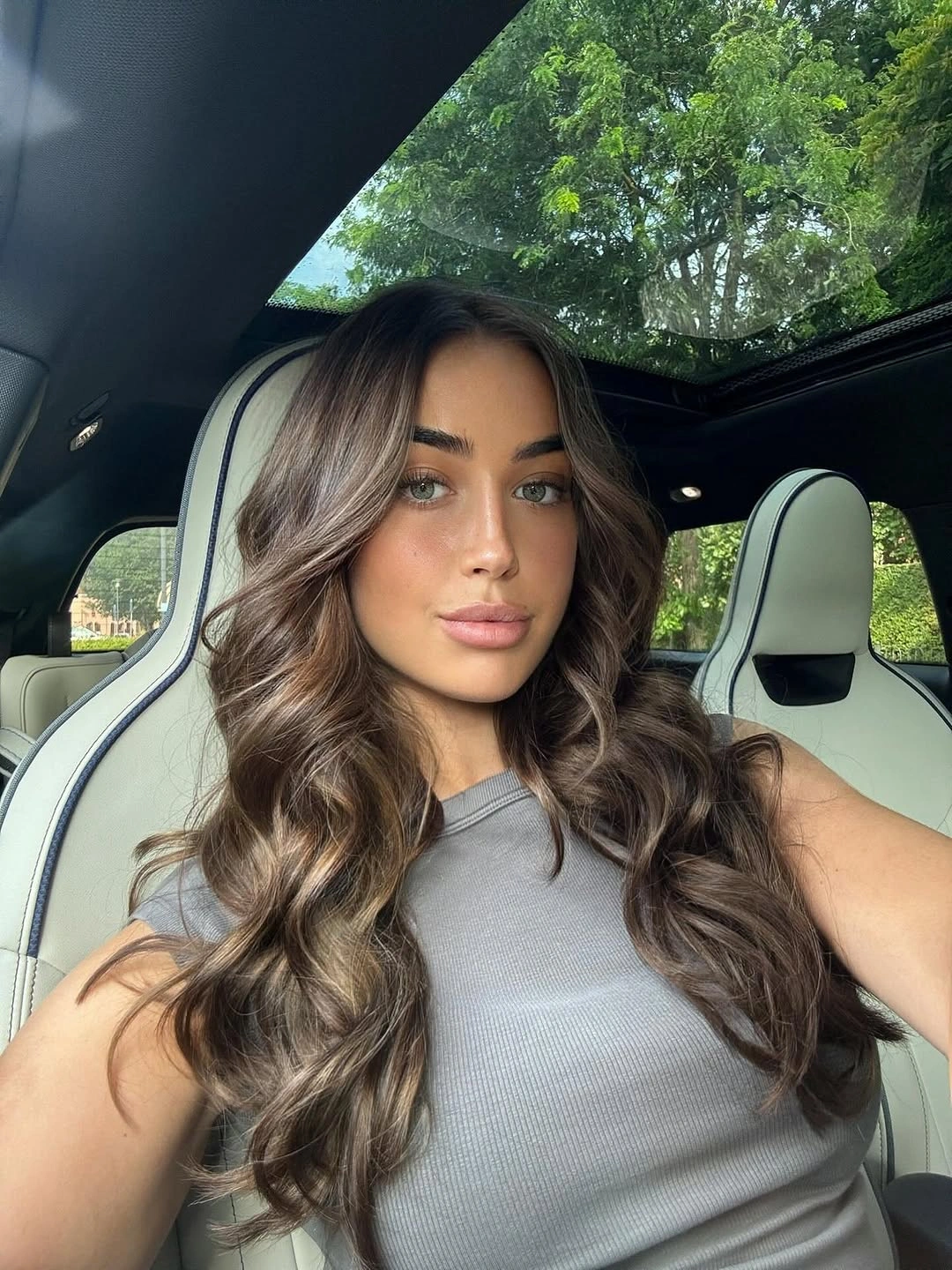
This is a helpful reference when you want a fall brown color that can survive a less formal styling routine. Use a broad bend only through the mid-lengths, leave the ends slightly straighter, and allow the natural part to guide the shape. A medium cut can keep the same relaxed mood while making the hair quicker to refresh between wash days.
An airy finish is less predictable than a polished one, and the loose wave may separate or flatten during the day. That is part of the look, but it means the reference should not be treated as a promise of identical results without styling. Keep the warmth subtle and choose a length that still looks intentional when the waves relax.
Cool Brown Waves With Diffused Ribbons
Cool brown waves carry lighter ribbons through the surface, creating contrast that is diffused rather than arranged in a single obvious band. The movement breaks up the color at different heights, so the hair looks dimensional when it turns. The deeper base remains visible, which keeps the result within a brunette mood even with the lighter pieces.
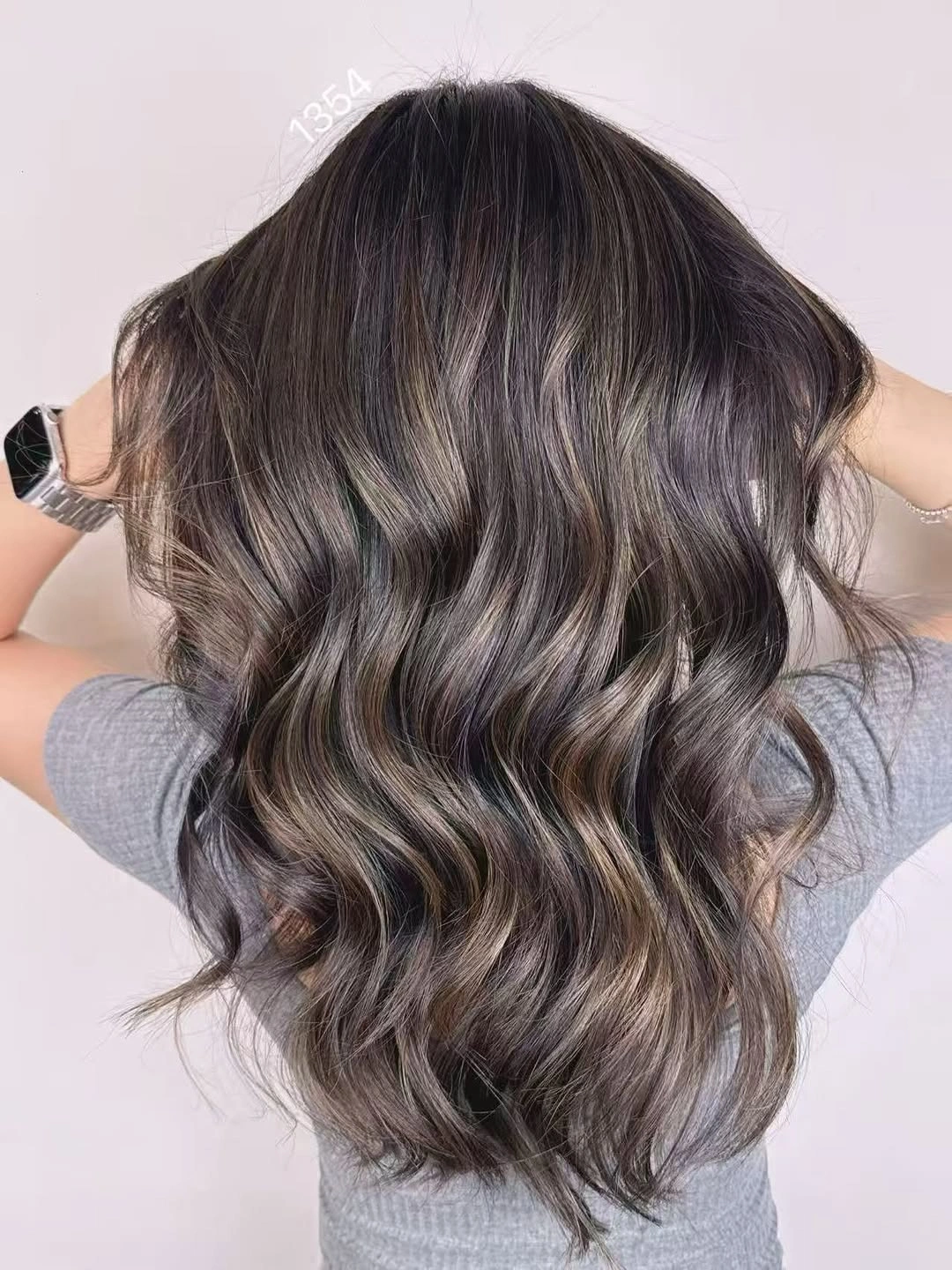
Use this as a reference for a cooler brown update when warm caramel is not the direction you want. Ask for the lighter pieces to stay soft at the root and to follow the existing wave pattern, then decide whether you prefer brightness around the face or more variation through the back. A shorter layered cut can show the same contrast with fewer ribbons.
The mix of cool base and lighter strands creates a more involved color conversation than a single brunette shade, and the contrast may look stronger under bright light. Wavy texture helps blend the transitions, while straight hair may show them more clearly. Keep the ribbons narrow and allow the brown base to dominate if you want the color to age more quietly.
A Short Rounded Bob With Wispy Bangs
A short rounded bob changes the scale of a brown color idea completely. Airy layers build volume around the sides, while wispy bangs open across the forehead instead of creating a heavy line. The medium-dark brown shade stays simple, letting the compact silhouette and soft texture provide the visual interest.
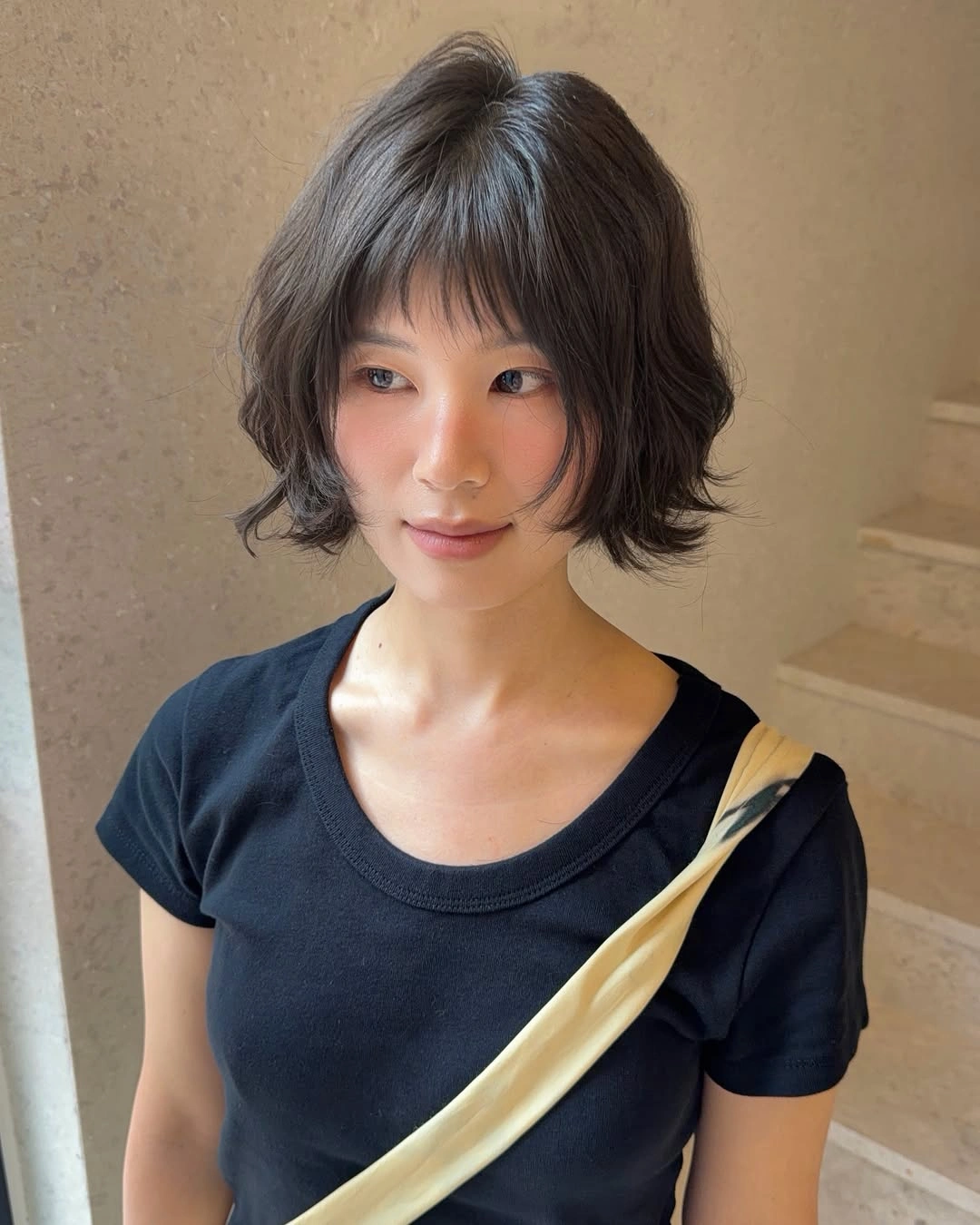
This is a strong choice when you want a clear seasonal reset without chasing lots of color contrast. Keep the bob rounded at the jaw and let the bangs remain piecey, or lengthen the front slightly if you want more flexibility around the face. The shape works with a deep brunette base, a softer chocolate tone, or restrained warm dimension.
Short layers and wispy bangs usually need more frequent shaping than long, forgiving lengths, and the airy volume may require a quick refresh to sit correctly. That is the tradeoff for the lively silhouette. If you want less styling, keep the bob slightly longer and reduce the layering; the brown color will still benefit from the clean, compact outline.
Warm Brown Waves With A Rounded Lower Shape
Broad waves and a rounded lower shape make this warm brown look feel full through the ends. The color catches light across the middle lengths, but the silhouette stays soft rather than sharply layered. The result is a balanced reference for someone who wants visible movement while keeping the overall hair shape generous and uncomplicated.
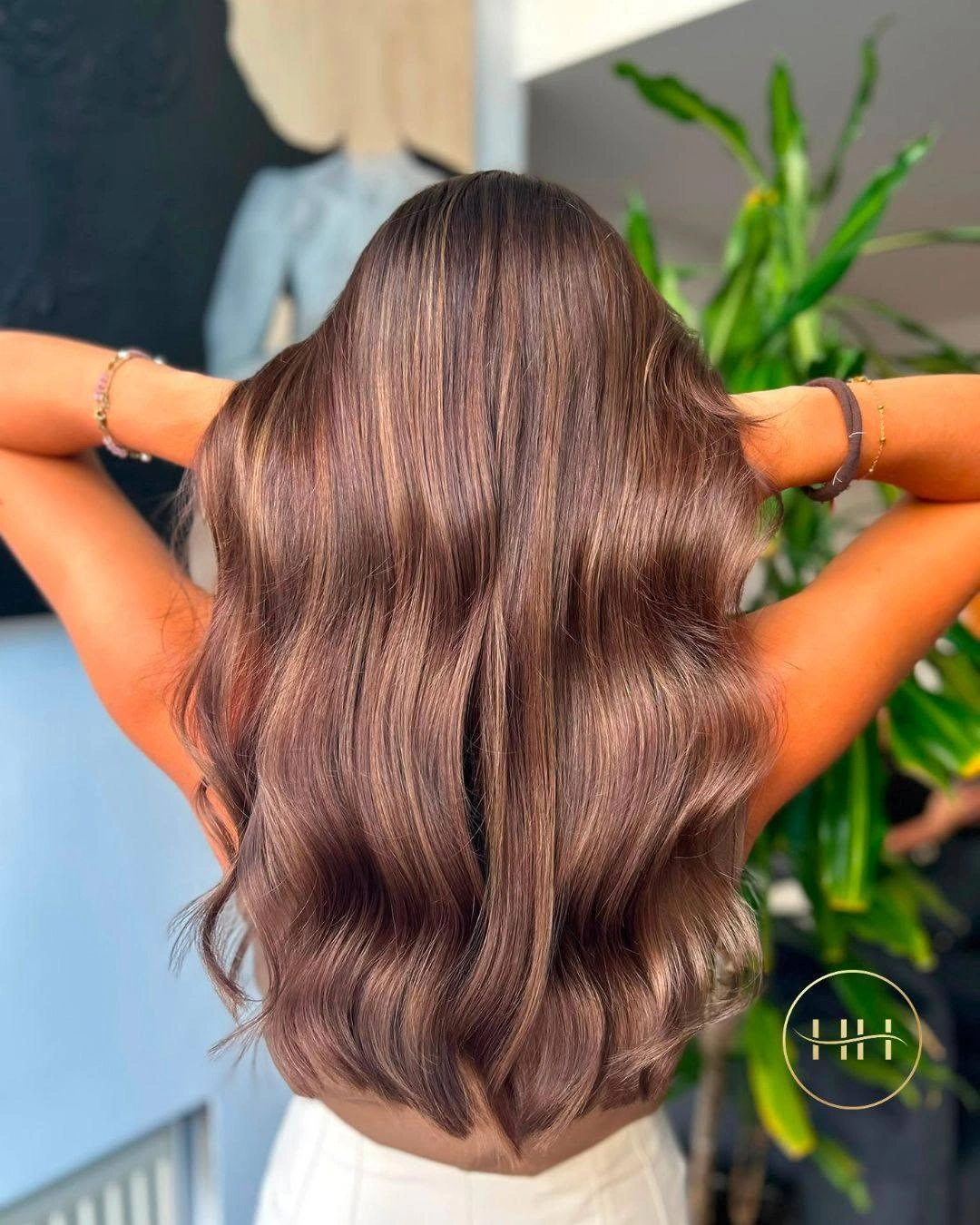
The lower fullness can be adapted to shoulder-length hair by keeping the final layer broad and avoiding a thin, stringy edge. Choose a warmer or more neutral brown depending on your wardrobe, then let the waves carry the dimension. It pairs especially easily with soft knits, dark denim, and cream because the shape has enough presence without extra color drama.
A rounded wave pattern can feel heavy if the ends are over-layered, while too little shaping may make the hair fall flat. The useful compromise is to keep the lower edge substantial and vary the bend through the middle. I would preserve the fullness before adding more highlights, because the silhouette is what makes this brown look feel rich.
Deep Brunette Layers With Soft Flips
Soft flipped movement around the face gives this deep brunette style a distinctly shaped finish. The layers direct the eye outward from the cheeks and then back into the long lengths, so the dark brown base does not feel heavy. The ends are not tightly curled; their gentle direction is enough to make the silhouette look styled.
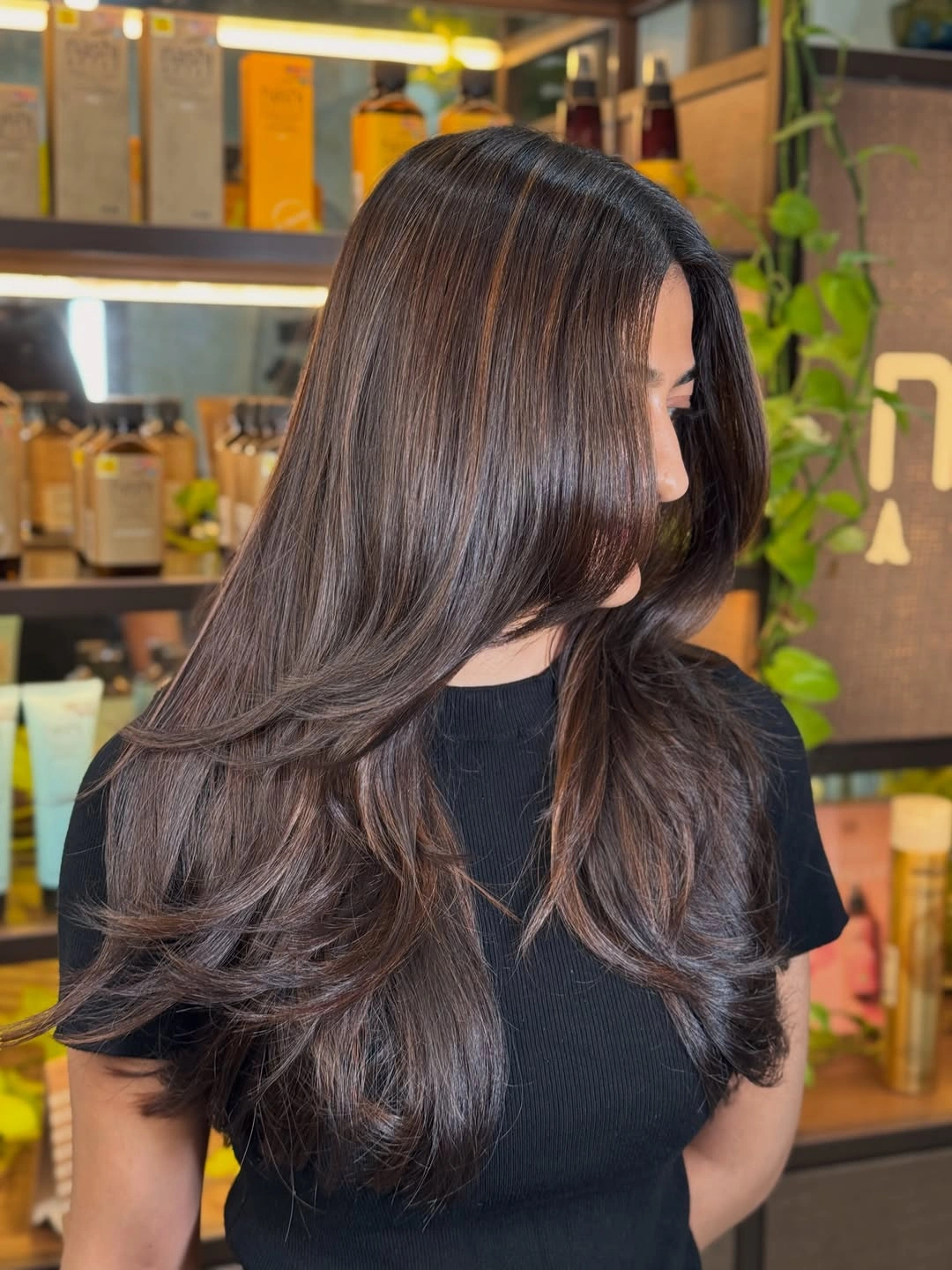
Borrow this idea when you like a dark brown color but want more life around the face. Longer layers can keep the effect understated, while shorter pieces create a stronger retro-inspired frame without requiring a new color. A medium-long cut will still show the flip, especially if the ends are shaped to move away from the face rather than simply trimmed blunt.
The flipped finish may need a little more daily attention than a straight edge, and the shortest layers can become obvious if they are cut too aggressively. That is the main limitation, not the brown shade itself. Keep the layers blended and ask for movement that can also fall softly when you skip heat styling.
A Tousled Brown Bob With Lighter Ends
A short-to-medium dark brown bob feels lighter because the ends shift toward a softer brown and the shape sits slightly tousled around the jaw. The color change is restrained, but it keeps the compact cut from looking like one heavy block. The silhouette has casual movement rather than a sharply polished edge, which gives the brunette a relaxed fall attitude.
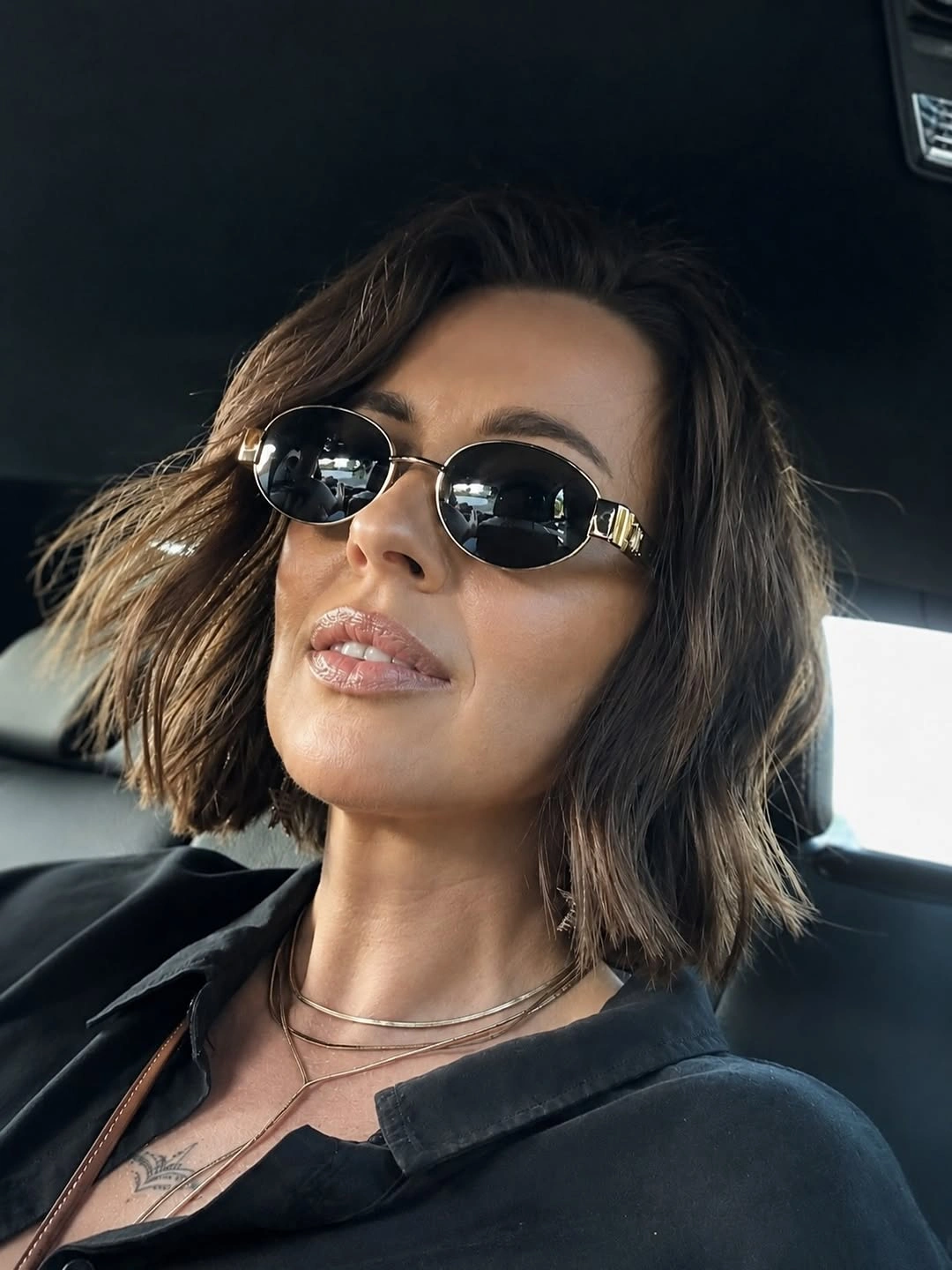
This is a good reference if you want to see some brightness without committing to long highlights. Keep the lighter effect concentrated at the ends, or let it fade into the base more gradually for a quieter result. The bob can sit at the jaw or just below it, and a little bend through the front will keep the shape from feeling too rigid.
Short hair makes uneven growth and changes in the ends more visible, so the color placement should be blended enough to tolerate a little movement. The tousled finish also looks different when brushed straight, which is worth considering before choosing the cut. Preserve the darker root and soften the length if you need a more stable shape between appointments.
Smooth Brown Layers With A Gentle Bend
Smooth medium-long brown hair uses a gentle bend through the ends and soft face framing to create movement without full waves. The color stays in a comfortable medium brown family, so the shape feels polished but not overly formal. The front pieces give the cut direction while the lower lengths remain easy to read as one continuous silhouette.
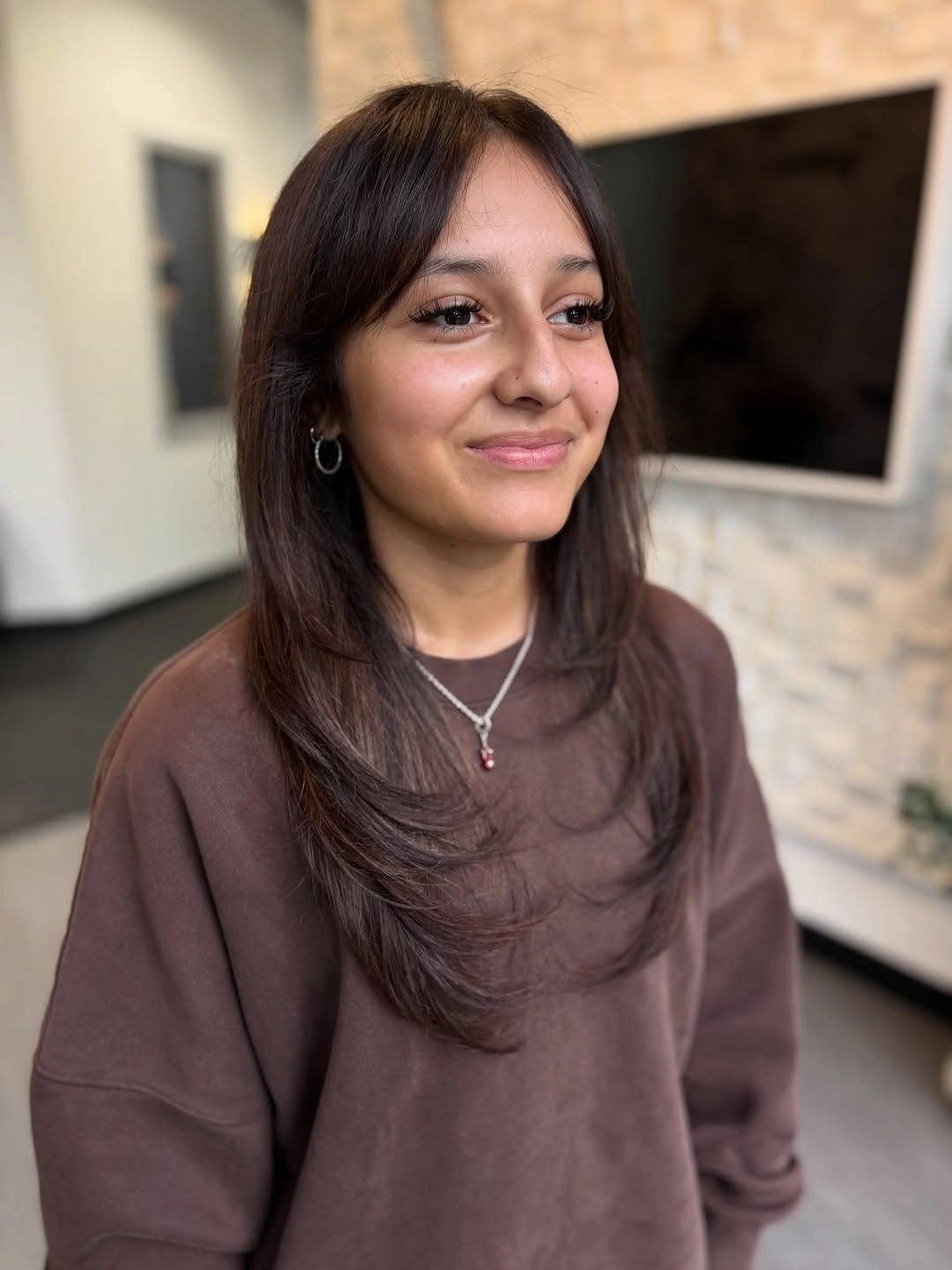
This is a flexible reference for someone who wants a visible haircut refresh but does not want a complicated styling routine. Keep the bend subtle enough to recreate with a quick pass or let it relax naturally, and decide whether the face framing should begin at the cheek, jaw, or collarbone. The same shape works with deeper chocolate or warmer brown color.
A gentle bend can disappear on very straight hair or become stronger on naturally textured hair, so the result depends on the starting pattern. The front layers also need to blend into the length to avoid looking disconnected. I would prioritize the placement of the face frame and let the exact wave level stay adaptable rather than treating the reference as a fixed finish.
Deep Auburn With Lighter Copper Ends
Deep auburn brown looks especially dimensional when lighter copper strands gather toward the ends. The long waves reveal that contrast in motion, while the darker upper lengths keep the color grounded and rich. Because the brightness is concentrated lower down, the look feels like a warm fall shift rather than an all-over change.
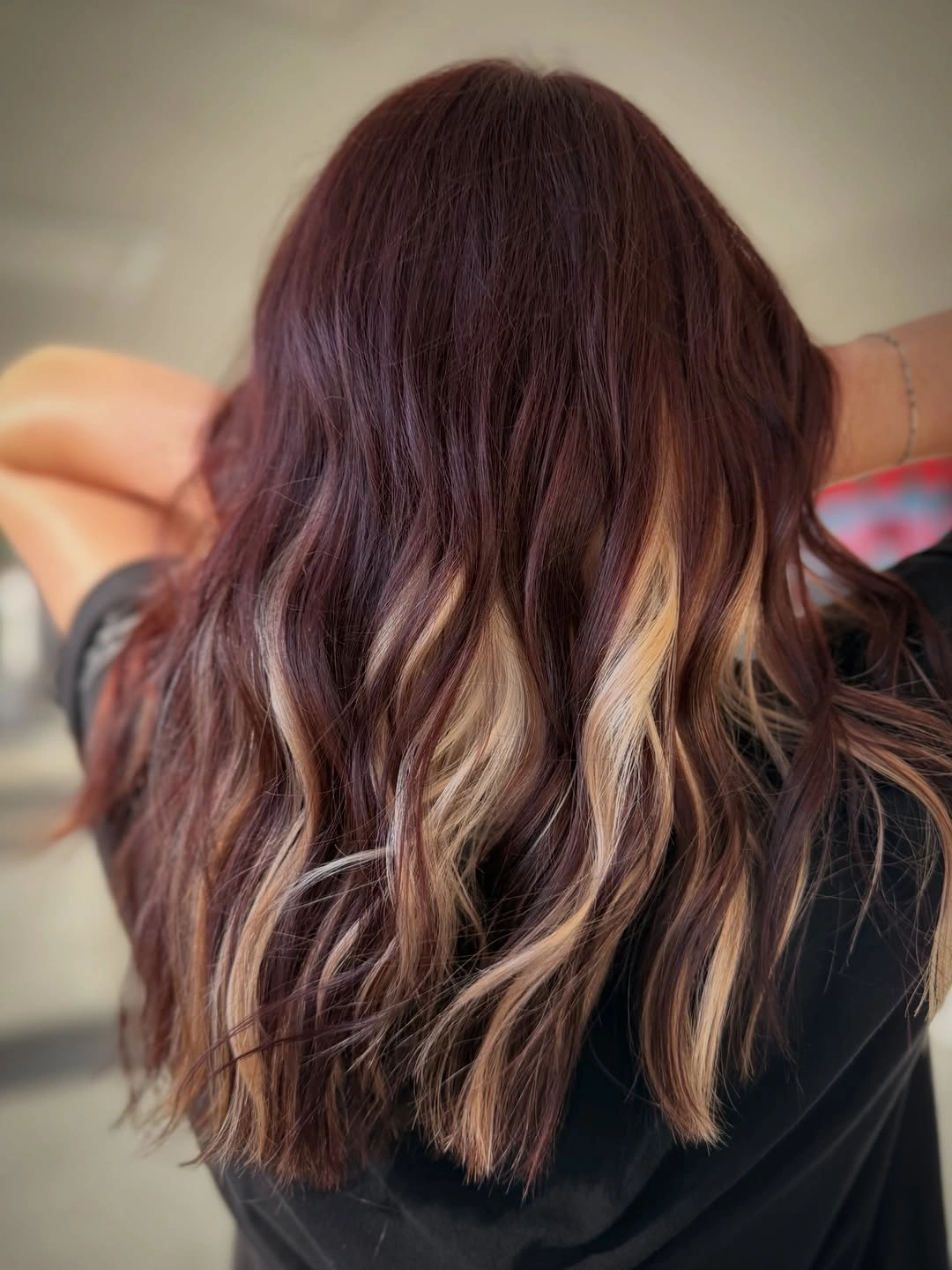
Choose this placement if you want the ends to catch attention while the area around the face stays deeper. The copper can be softened toward chestnut or rust, and the wave can become broader if you prefer less styling. On medium hair, keep the lighter pieces through the bottom third so the same dark-to-warm progression remains visible.
Concentrated lightness at the ends can make uneven or dry tips more noticeable, and the contrast may become stronger as the hair moves. That is the practical point to weigh before choosing a bold copper finish. Keep the upper brown deep and ask for a diffused transition if you want the warmth to look intentional as the style grows.
Cool Brown Ribbons Through Full Waves
Cool gray-brown ribbons move through this long wavy style, creating visible contrast against a darker brown base. The waves give the lighter strands multiple angles, so the hair looks full without needing a larger silhouette. The color story is more dimensional than a single brunette, but the cool tone keeps it from becoming obviously golden.
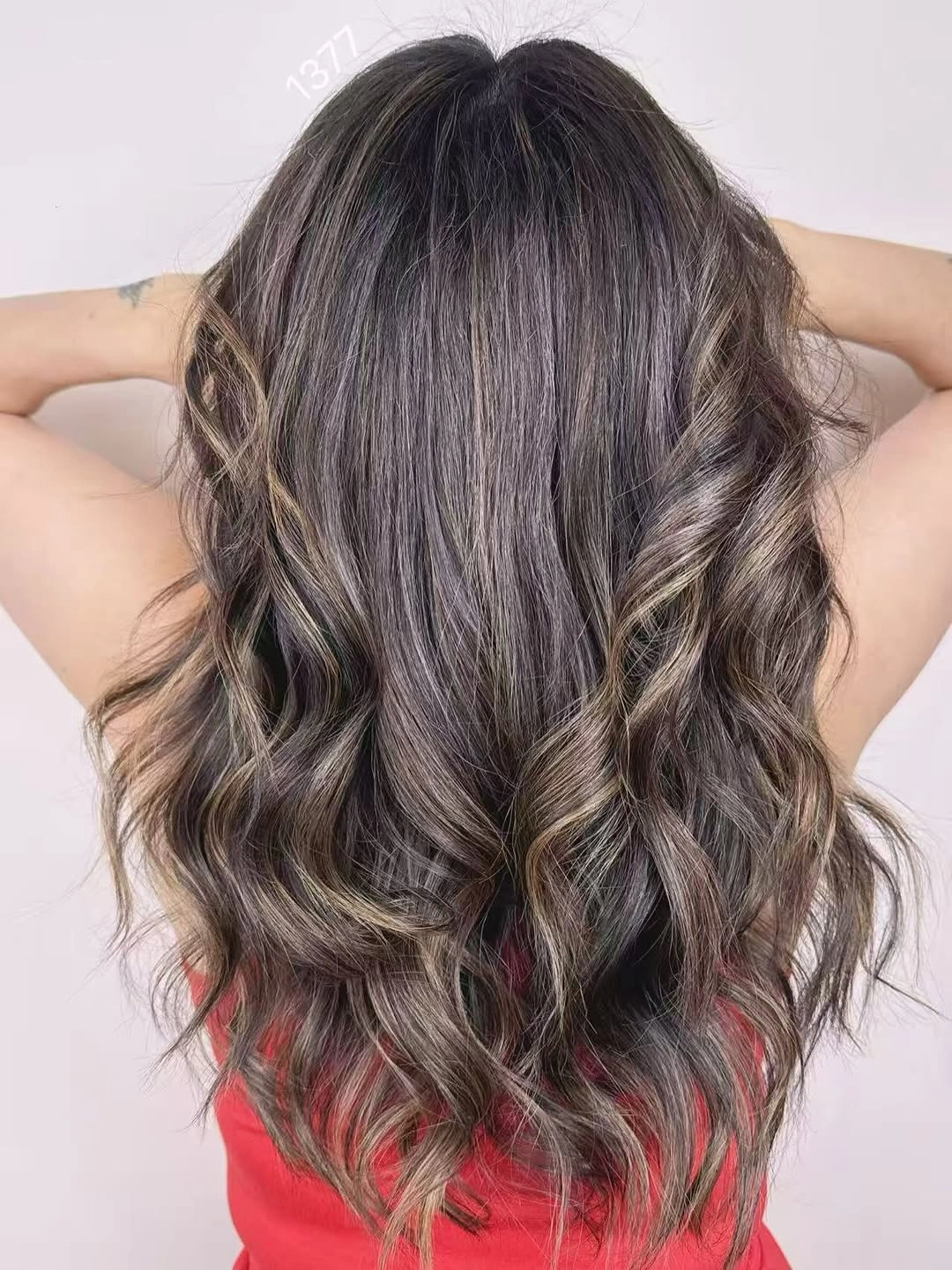
This reference suits someone who wants cooler brightness and a fuller visual effect. Keep the ribbons narrow near the top and allow more variation through the middle lengths, or use fewer pieces on a medium cut to avoid overloading the shape. A soft wave is helpful because it blends the transitions, while a straight finish would make the placement look more graphic.
The cool contrast is likely to need more careful maintenance than an all-over brown, and bright light can make the ribbons look stronger than expected. The hair also needs enough movement for the blend to feel soft. If you prefer lower upkeep, keep the cool tone but place the lighter pieces lower, letting the dark base do more of the work.
Long Straight Dark Chocolate With A U Edge
Long straight dark chocolate hair is defined by a smooth vertical fall and a rounded U-shaped edge at the back. The deep color remains even across the surface, so the lower contour becomes the detail that gives the style polish. There is no visible wave or bright highlight to distract from the clean line, making the result feel calm and deliberate.
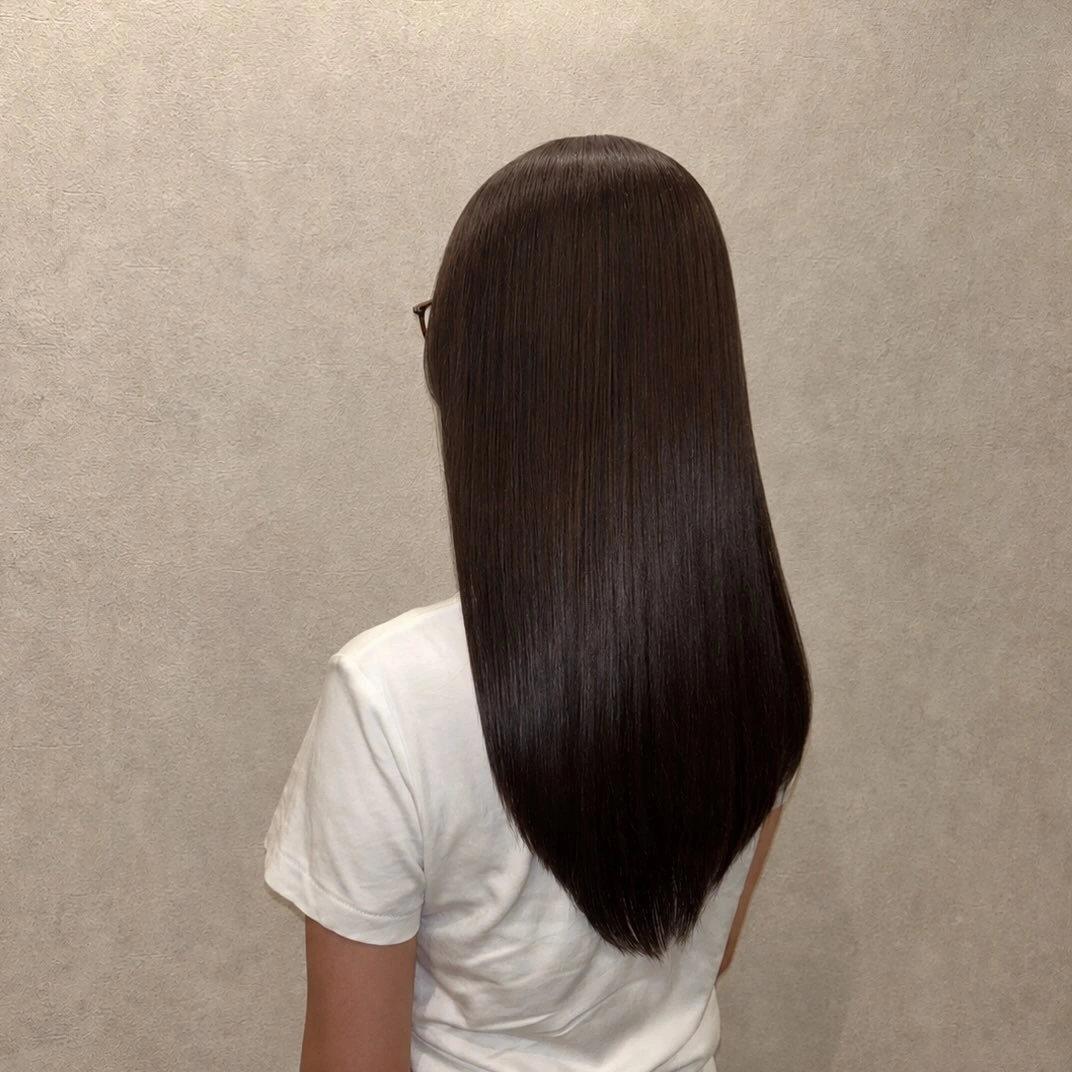
Use this reference if you want the color to look rich through simplicity. The U edge can be softened into a gentle V or trimmed closer to the shoulders, but keeping the line rounded helps long hair avoid looking blunt and heavy. Deep chocolate works easily with black, cream, burgundy, and metallic accessories because it reads as a neutral with depth.
Straight length can reveal split ends, uneven density, or texture changes more quickly than waves, so the shape needs regular attention if you want the same polished surface. The single-color effect is easier to coordinate but gives less visual camouflage. I would shorten the length before adding layers if the ends feel difficult; the clean lower edge is the point of the reference.
Smooth Brown Length With A Rounded Finish
A smooth center part and rounded lower edge give this long brown style a quiet, finished silhouette. Subtle warm dimension is visible through the length without turning into obvious highlights, so the hair remains brunette first. The shape feels controlled because the ends gather into one soft curve rather than breaking into multiple layers.
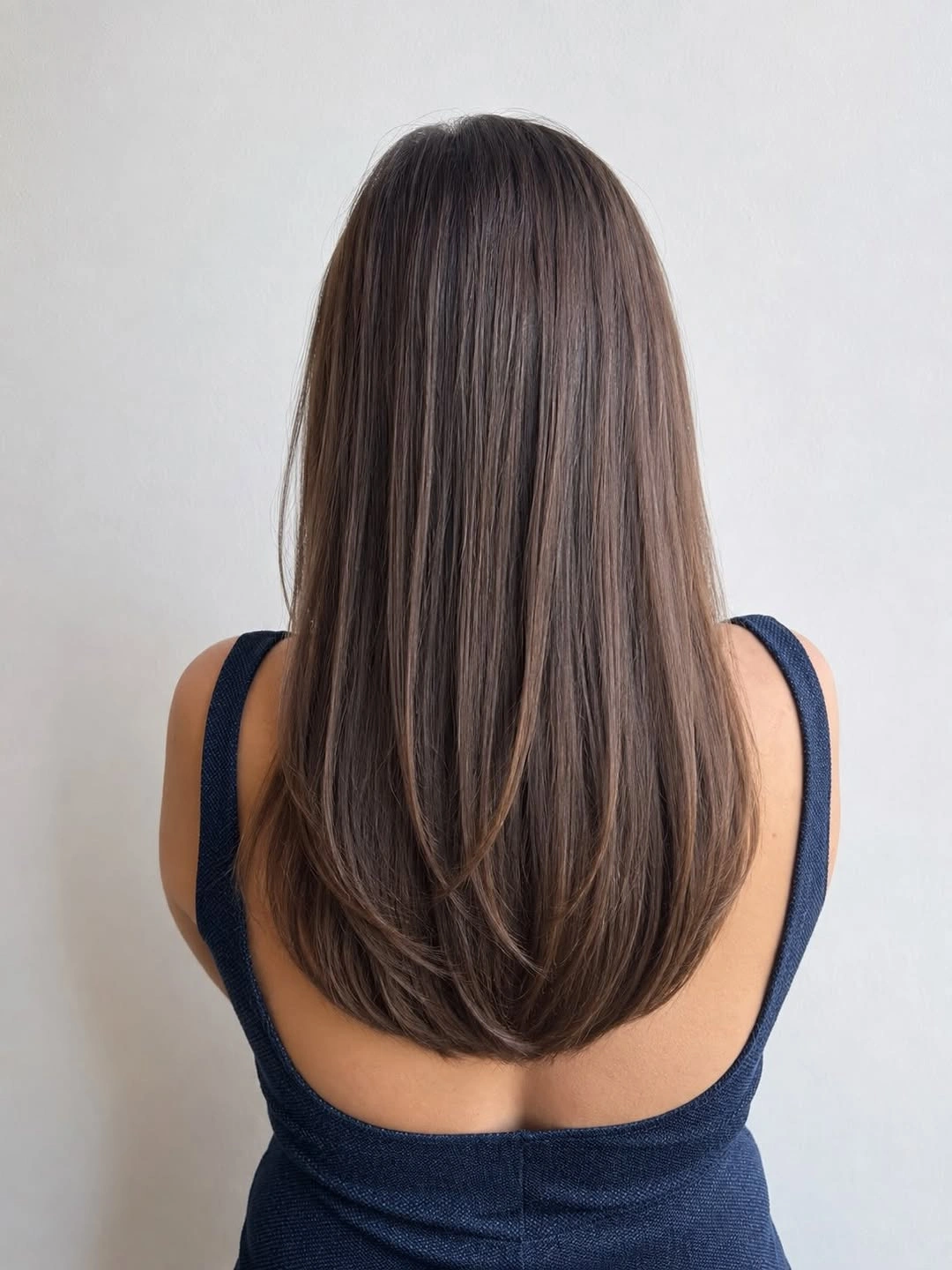
This is a practical reference for someone who wants a small color refinement and a clean shape at the same time. Keep the warm shift gentle, then choose whether the lower edge should sit at mid-back or just below the shoulders. The uncomplicated line pairs well with simple clothes and lets earrings, collars, or a bold lip provide the extra focus.
The smooth finish asks for even ends and can make texture changes obvious, while the long length brings the usual detangling commitment. It may also look flatter when the hair is air-dried without a bend. If you want more movement, add only a slight curve through the final inches rather than layering away the rounded shape that makes the color feel composed.
Very Long Dark Braids With Vertical Texture
Very long dark braids create a completely different reading of a brown hair color board because texture and scale become more important than shine. The braids fall in a dense vertical curtain past the waist, giving the dark brown-black appearance a strong graphic silhouette. The visible detail comes from repetition and length, not from loose waves or scattered highlights.
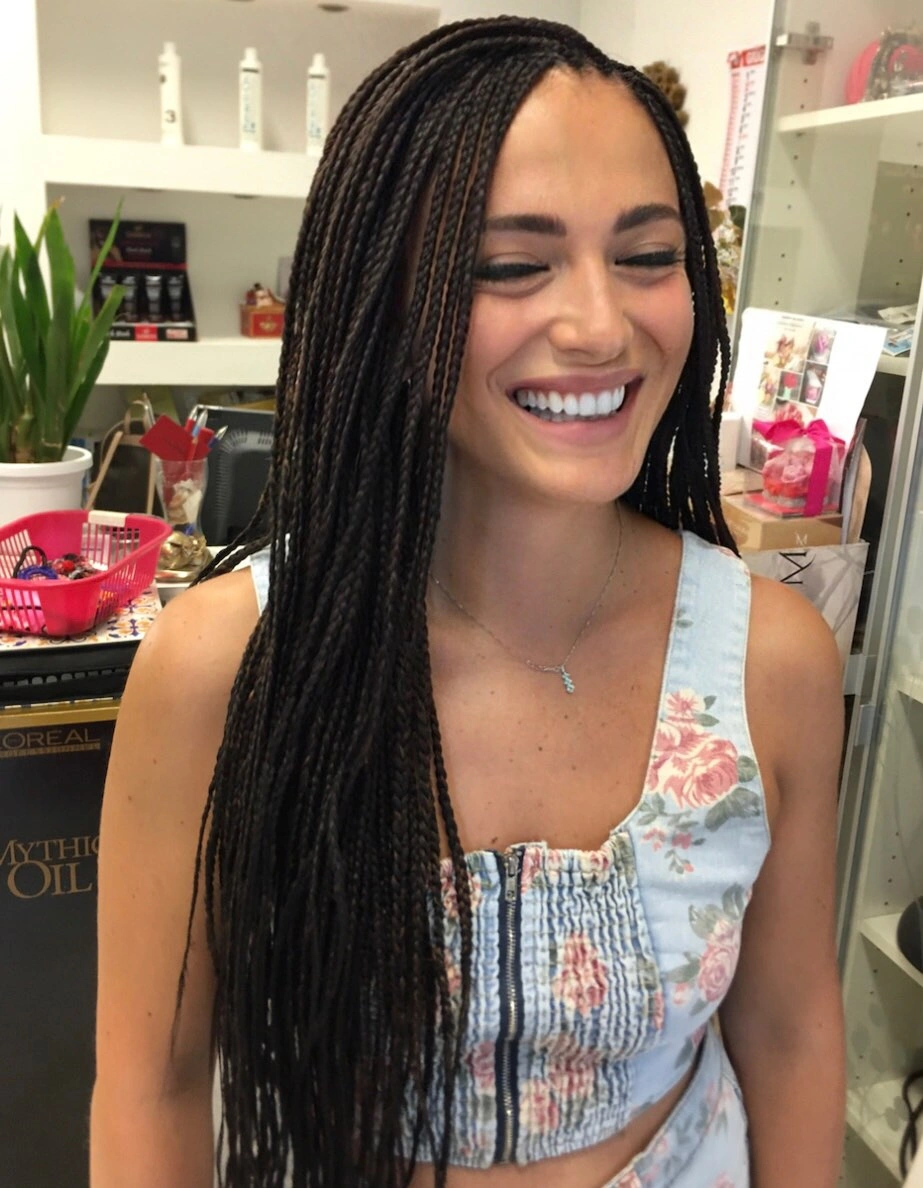
Treat this as a texture and proportion reference rather than a simple shade request. If you want a related idea with a smaller commitment, use shorter braids or a braided section against loose hair, keeping the dark color as the anchor. The vertical line can also be adapted to medium length, but the sense of drama will come from braid density and placement.
The length and construction are the main practical considerations, and the image alone does not prove how the style was created or how long it will last. That uncertainty matters more here than a precise color label. Keep the dark palette and discuss the braid size, amount of hair, and comfortable length separately, so the inspiration remains visually useful without assuming hidden technique.