
Fall nails for pale skin often change character because of one small decision: the thickness of an outline, the gap left around a motif, or the exact place where a dark tip begins. Pale bases and clear contrast make those details easy to notice. A red heart can stay delicate, a black edge can look graphic rather than heavy, and a soft neutral can become the entire point when the shape and finish are kept exact.
Choose the detail you want to carry the manicure before adding anything else. A fine border can lengthen a nail, a metallic patch can interrupt an otherwise quiet surface, and a repeated small mark can connect several colors without requiring a full pattern. That editing approach makes it easier to keep short nails clean, let longer shapes breathe, and adapt a bolder idea without losing the visible feature that made it work.
Burgundy Heart Outlines on Nude Ovals
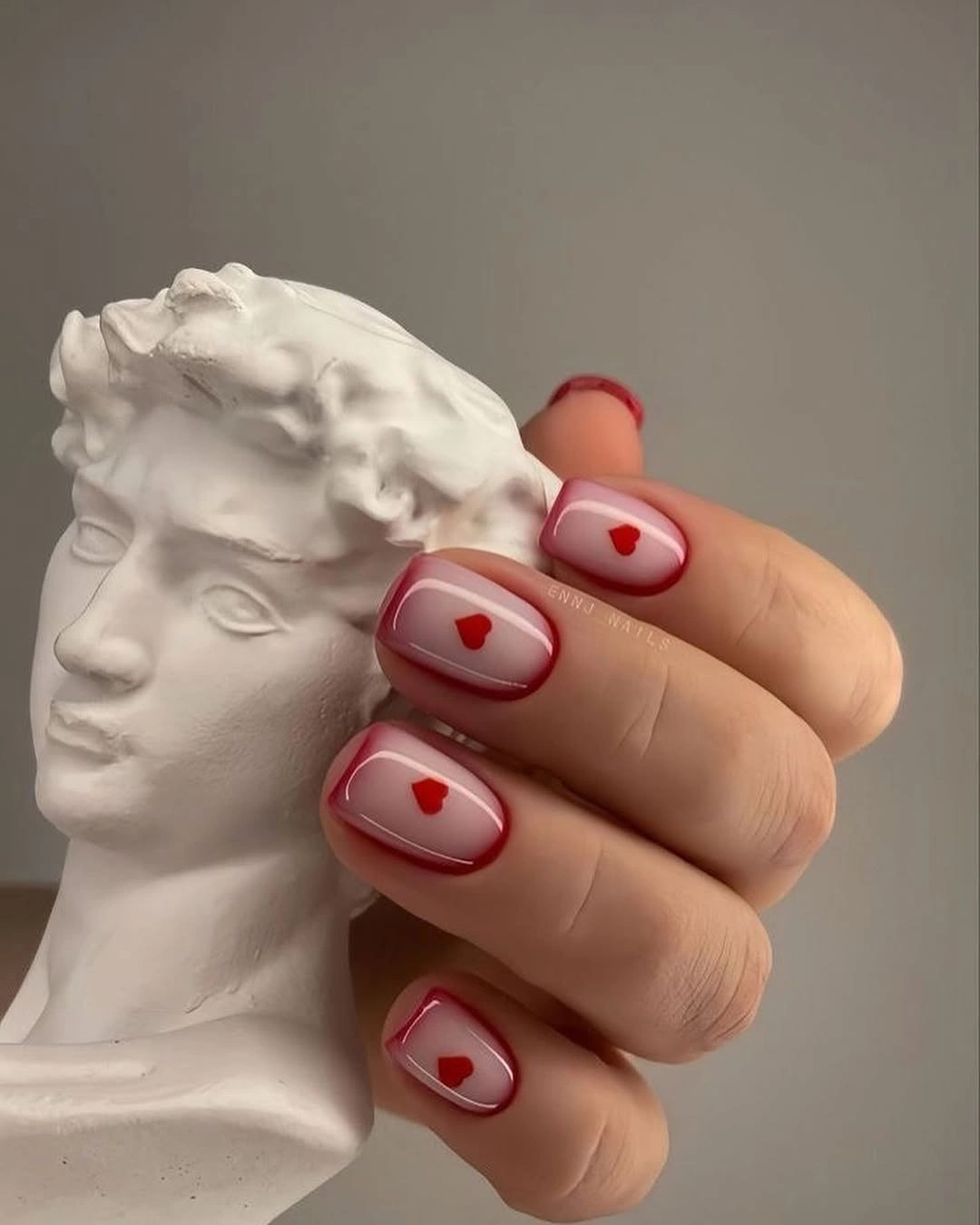
Thin burgundy double outlines travel around short nude-pink oval nails, with a tiny red heart placed inside selected shapes. The important detail is the narrow border: it follows the curved edge instead of closing off the center, so the pale base remains the larger visual field. On pale skin, the nude ground stays soft while the small heart and wine line supply a clear but contained contrast.
The hearts are not doing the heavy lifting alone. Their scale works because the border gives them a frame and the surrounding nail stays mostly uncovered. Moving the burgundy farther inward would make the oval look shorter, while keeping it close to the edge preserves the airy length that lets a compact nail carry a romantic detail without becoming overly sweet.
A simple adjustment would use the heart on one accent nail and repeat only the burgundy outline elsewhere. That retains the precise edge relationship while lowering the amount of motif work, a useful approach for short fall nail designs. If the line is widened, the look will shift toward a dark French effect; if it stays fine, the quiet blush center remains the part that softens the red.
Black Corner French on White Nails
Pale white nails use black angular corners rather than a full curved French tip, with faint silver-looking speckles adding a second, smaller detail. The corners create structure through placement: dark color occupies the edge, but the pointed center remains light. On pale skin, the white base may blend softly into the hand, making the black geometry appear even sharper and more intentional.
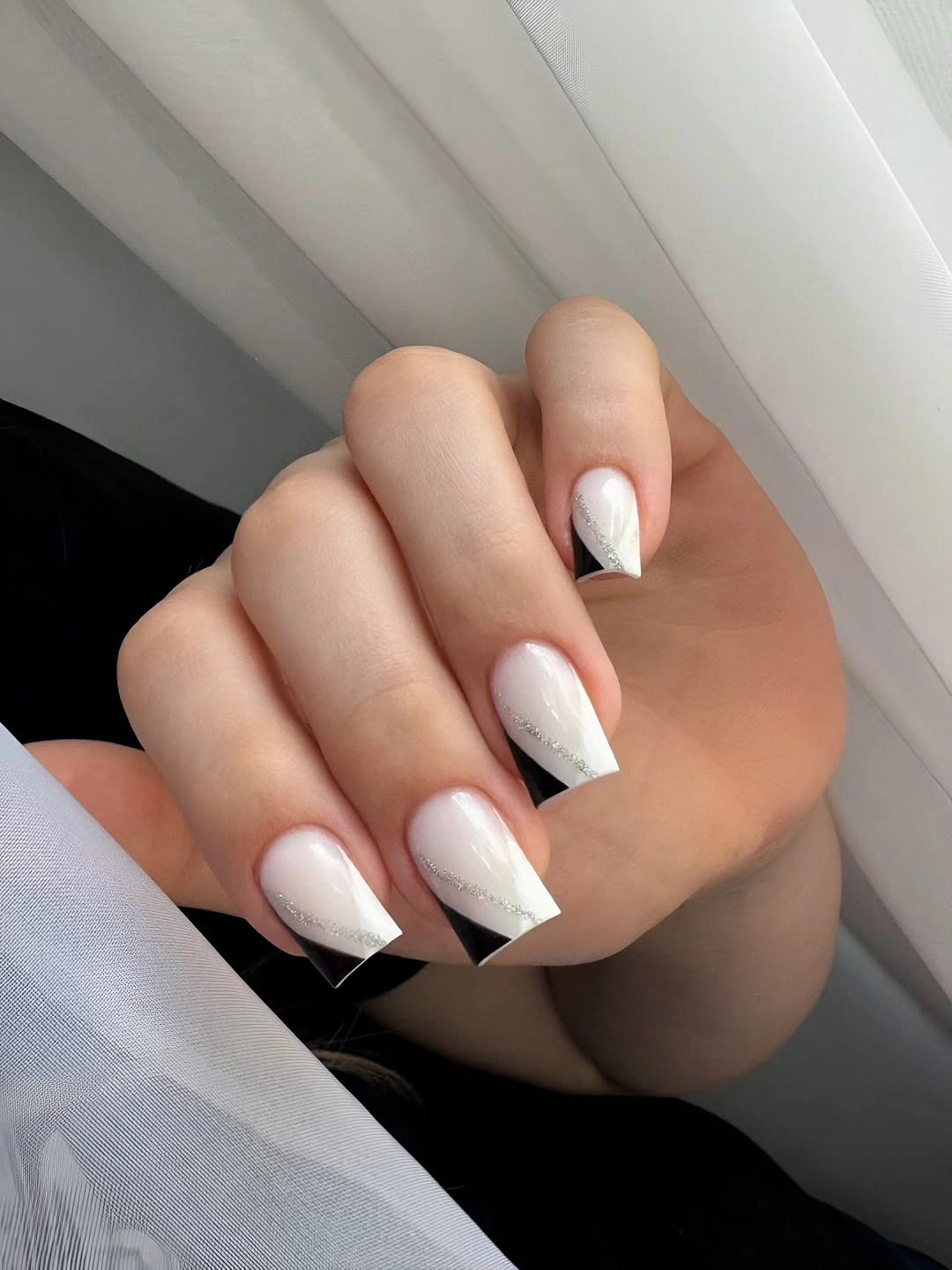
Angle changes the whole impression. A straight black line would cut across the nail, whereas the small diagonal corners guide the eye toward the tip and retain the pointed silhouette. The scattered flecks are useful precisely because they are not another border; they add texture to the white space without competing with the crisp dark shape.
For a shorter nail, keep one black corner rather than mirroring it on both sides. That preserves the graphic cue while leaving more visible base. The fine flecks can be omitted altogether if you want the geometry to feel cleaner, but the contrast between a bright center and concentrated dark edge is the relationship worth maintaining.
Smoky Charcoal Texture on Short Squares
Short square nails are covered in charcoal-black with blurred smoky patches and fine dotted texture. The design is dark, but its edges are deliberately softened, so the surface feels atmospheric rather than flat. Pale skin makes the square silhouette stand out strongly, which is why the low-contrast black pattern matters: it adds depth without introducing a second loud color around the hand.
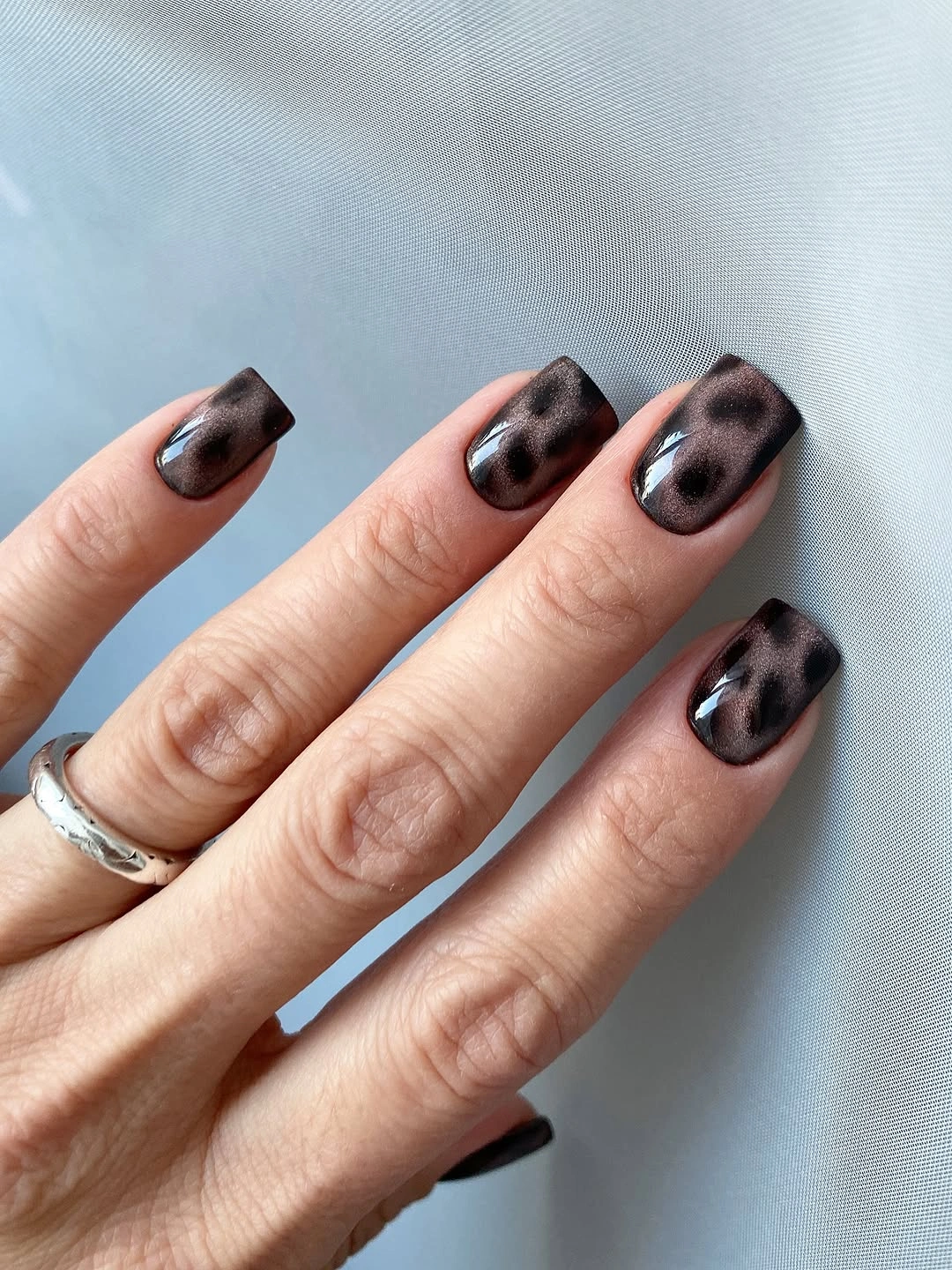
The smallest visible feature is the haze around the darker areas. It stops the pattern from becoming a literal animal print or a rigid graphic grid, keeping the surface more diffuse. That softness is especially useful on short nails, where hard-edged dark shapes can make the entire nail look visually smaller and more compact than it is.
A pared-back version could keep the charcoal base and place a single smoky patch on one or two nails only. Removing some of the dots would make the finish feel more minimal, while sharpening the dark shapes would turn it into a much more graphic statement. The blurred transition, not the exact pattern, is what gives this manicure its quiet depth.
Fine Botanical Lines on Nude Almonds
Long nude almond nails carry black botanical drawings, delicate diagonal strokes, and small dotted additions. Each mark is fine enough that the warm sheer base remains visible between the leaves, allowing the long shape to stay light. On pale skin, that exposed base creates a gentle transition before the black details arrive, so the manicure reads as illustration rather than a dark color block.
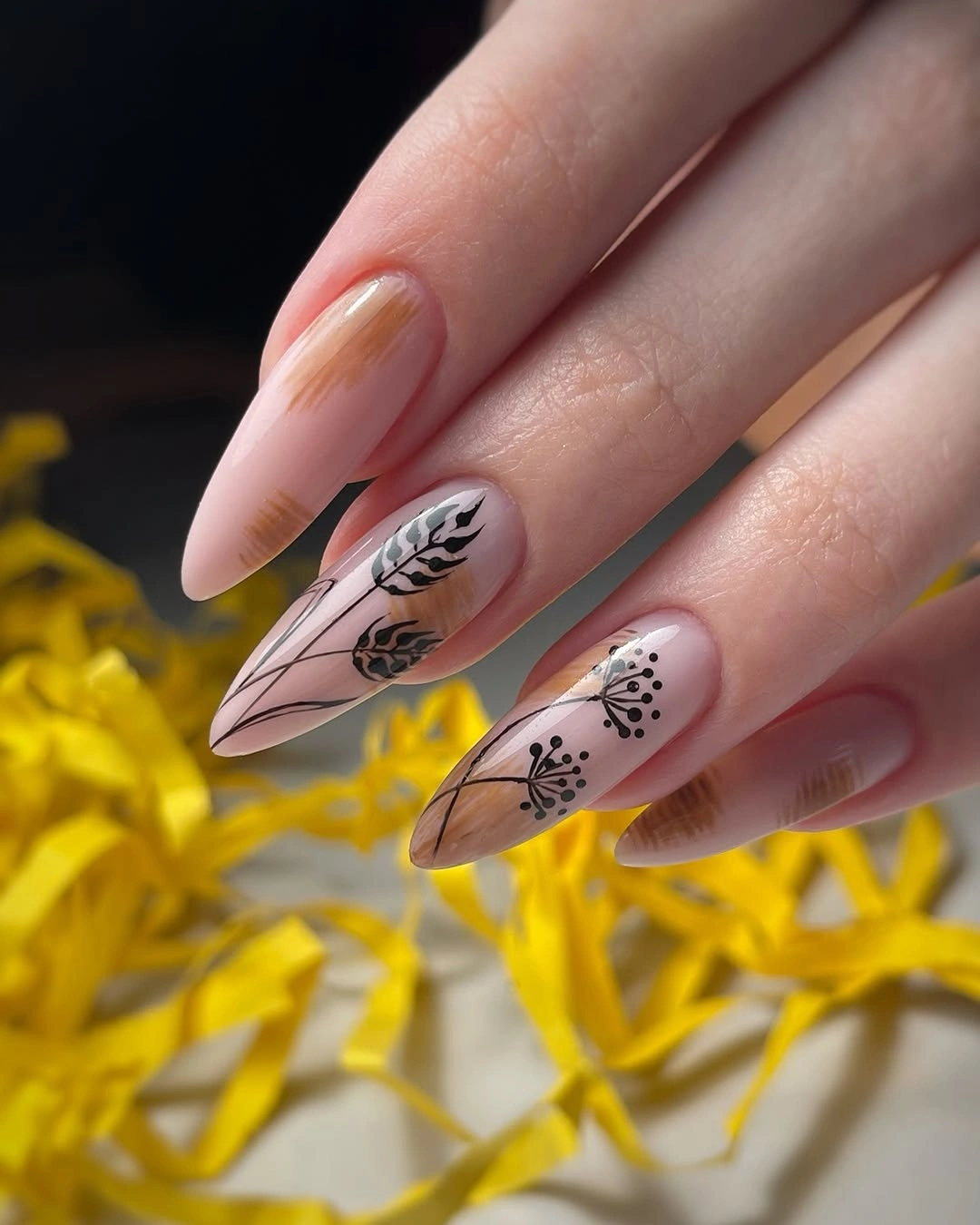
Placement keeps the drawing from becoming crowded. The leaf forms travel along the nail rather than sitting as a heavy centered stamp, and the diagonal lines echo that movement. A close look reveals the small dots, but from a distance the eye first reads the pale almond outline, which is why the detail adds interest without taking control of the whole hand.
To make the design more wearable, keep the botanical drawing on two nails and use a fine black tip or a sheer nude on the rest. Wider leaves would change the balance quickly because they would consume the negative space that makes the line work convincing. The restraint lies in the visible gaps as much as in the black marks themselves.
White Double Waves on Soft Nude
Two slim white waves turn across the tips of medium nude-pink almond nails, leaving most of the base uncovered. The repeated double line is the key detail: it creates more movement than a single French curve but remains lighter than a broad white tip. Pale skin supports the soft base, so the white marks look clean and bright without producing an abrupt dark-to-light contrast.
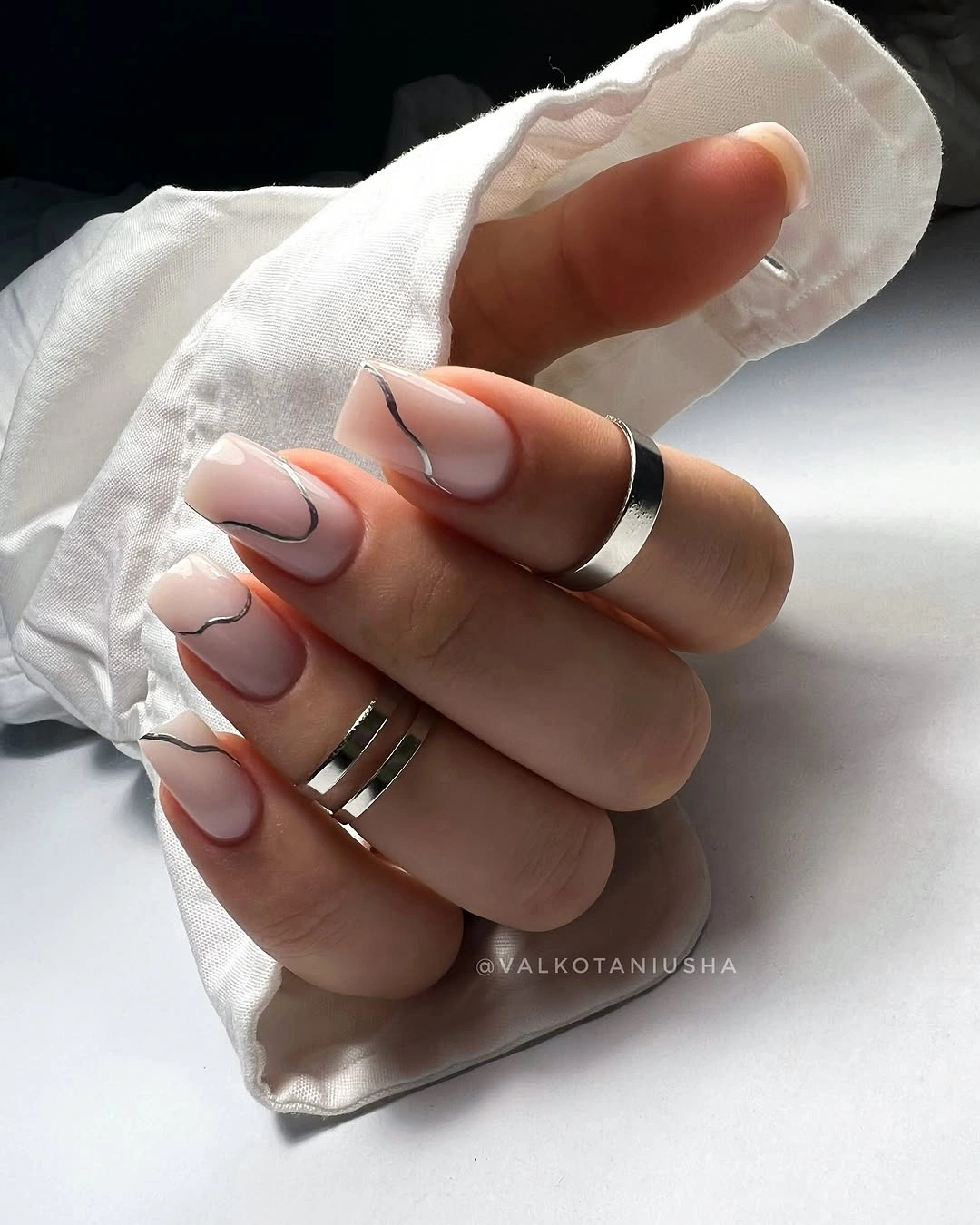
Spacing between the waves is what keeps the design elegant. When the two curves remain separate, the tip has rhythm and the nude center still feels open; when they merge, the effect would become a heavier white block. This is a useful option for anyone who wants a fresh edge detail without committing to tiny florals, glitter, or a full opaque French finish.
On short nails, use one white curve with a generous nude margin. The second line is the first element to remove because the movement will remain even after simplification. Keeping the curve slightly off-center can preserve the organic look, while a perfectly straight repetition would make the delicate wave feel more like a rigid graphic stripe.
Blush Almonds with Irregular Gold Marks
Soft blush almond nails are interrupted by small irregular gold foil-like and pearly-looking areas. The metallic marks are not arranged as full tips or even dots; they appear as broken patches, which makes the surface feel textured without changing the gentle base color. On pale skin, the blush remains close to the hand and lets the warm reflective pieces become quiet points of light.
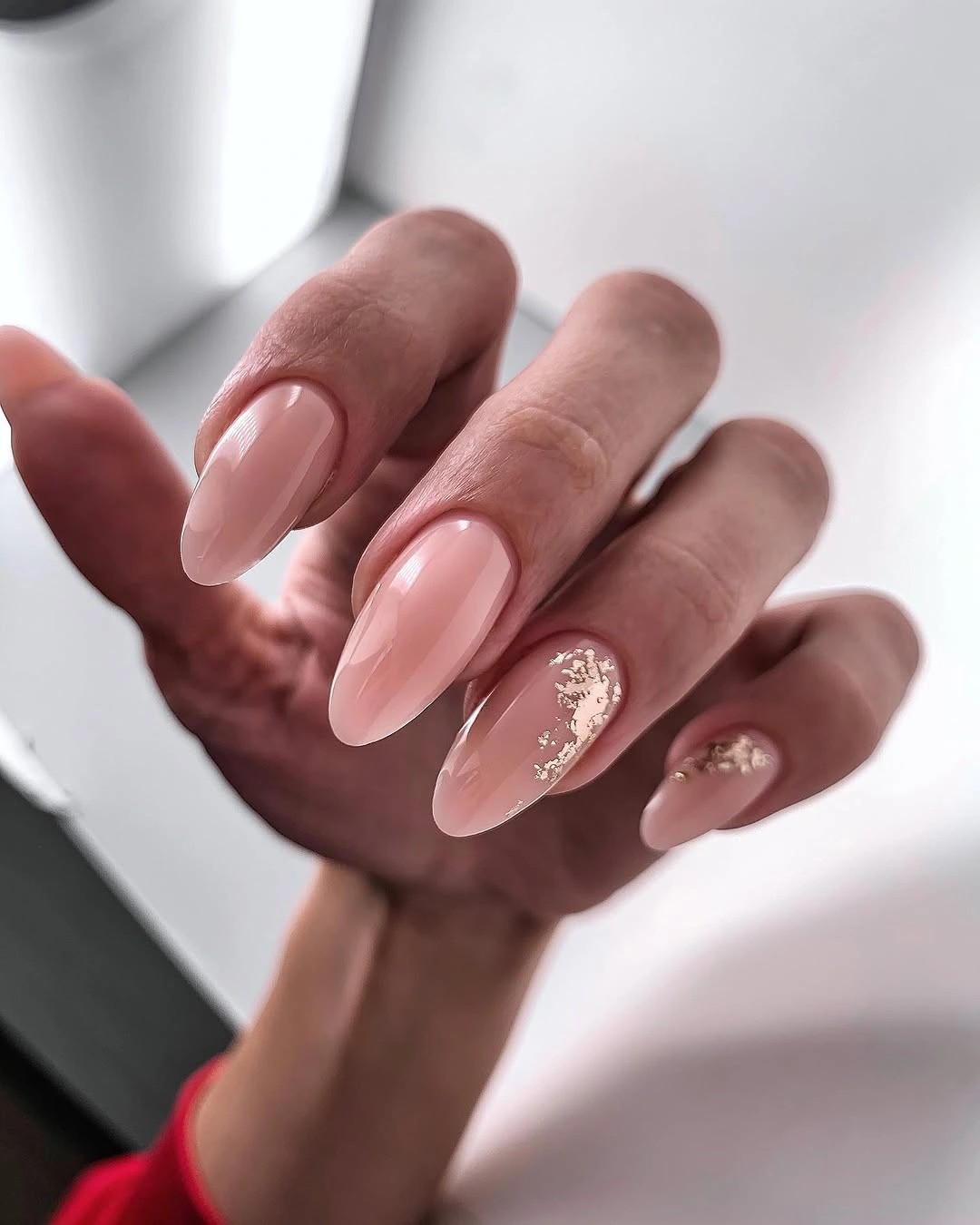
Irregular placement gives the metallic detail a softer rhythm than a symmetrical French line would have. Each gold area catches attention briefly, but the pale ground still fills most of the nail. That proportion matters because it lets the manicure look luminous without relying on a dense glitter finish or a hard color contrast that might overshadow the almond shape.
Move the gold farther from the free edge if you want a more forgiving grow-out pattern, or confine it to one accent nail for a quieter version. A larger metallic patch would become the focal point immediately, while these small breaks act more like surface punctuation. The visible blush space is what keeps the gold from turning the look into a full celebratory design.
Cobalt Squares with Gold Line Details
Saturated cobalt square nails are paired with a white-and-blue accent marked by thin gold lines. The contrasting accent has a different job from the solids: it brings lightness and fine structure, while the cobalt supplies the strongest color weight. Pale skin makes the blue read vividly, so the narrow gold details keep the design from feeling like a simple two-color block.
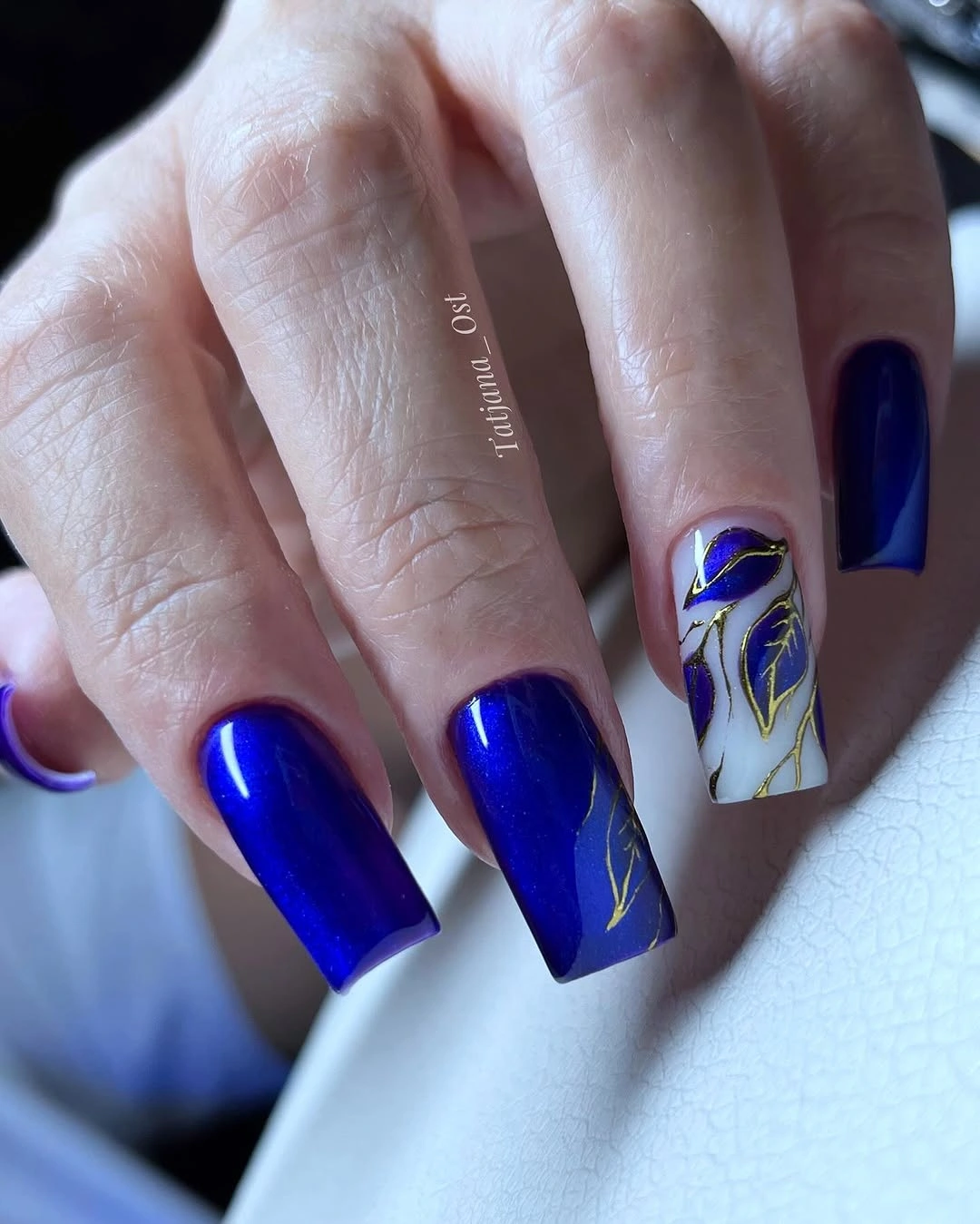
The exact width of the gold lines changes the balance. Thin lines allow the white and blue areas to remain separate and readable; broader gold would compete with the cobalt rather than complement it. The square shape reinforces that graphic clarity by giving every color area a clean outer boundary and preventing the design from becoming too soft or blended.
A controlled adaptation would keep three cobalt nails, one white accent with one gold line, and one neutral nail. That preserves the high-value contrast while making the hand less visually intense. The bright cobalt should remain the largest color field, because the gold line works best as a small directed detail instead of another full surface color.
Burgundy Frames Around Sheer Square Centers
Deep burgundy wraps around the tips and sides of medium square nails, leaving a pale sheer-looking center with a faint dusty-pink sparkle near the curve. The border is the decisive feature: it gives dark color a defined perimeter while allowing the lighter middle to stay open. On pale skin, that contrast makes the square shape crisp without requiring full wine coverage across every nail.
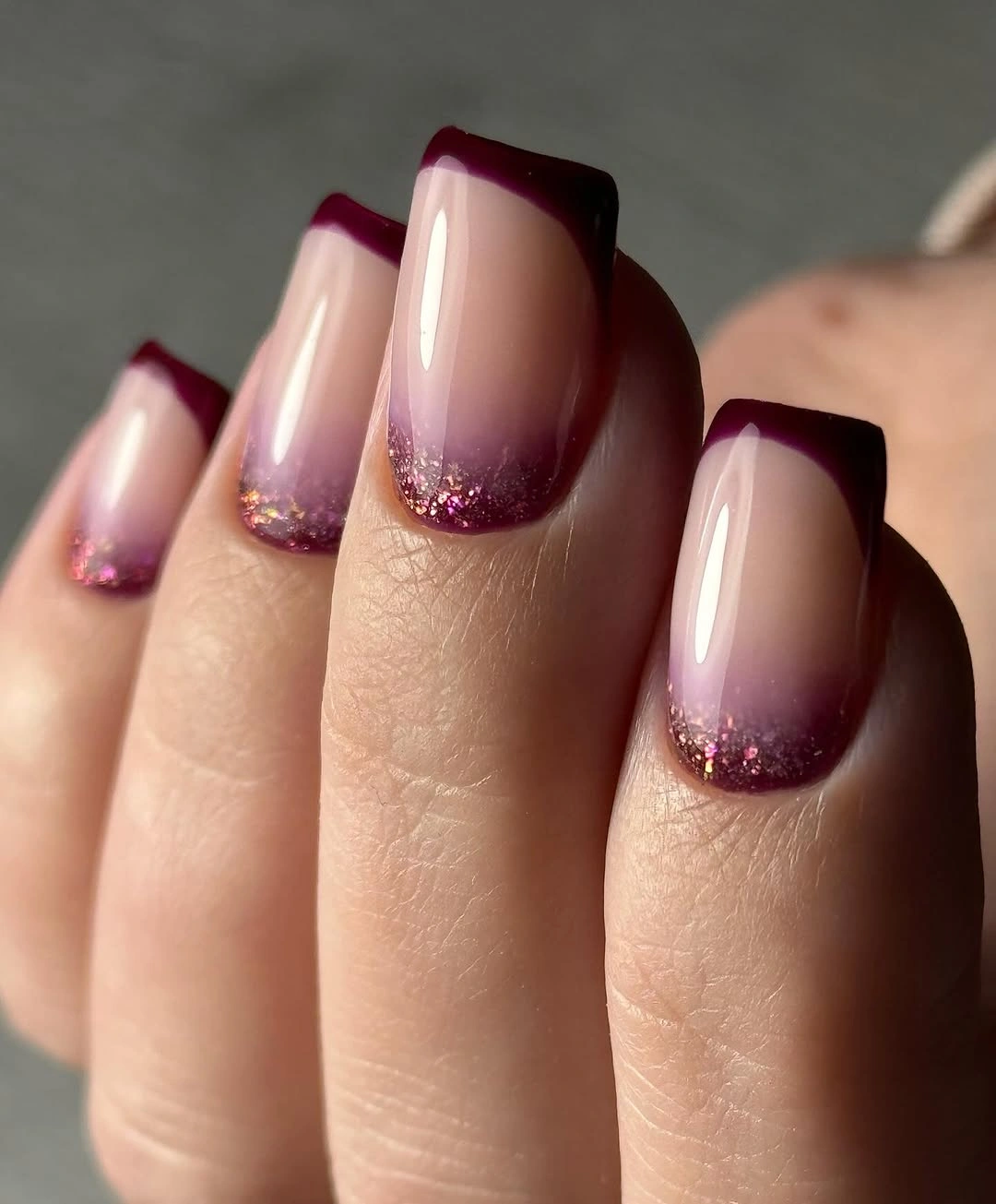
The small gap between border and center prevents the burgundy from feeling too blunt. It creates a framed effect, and the restrained shimmer softens the transition without becoming the main point. A full burgundy square would look much heavier, while the pale interior lets the eye continue along the length of the nail before noticing the dark outline around it.
For a simpler version, place burgundy only along the free edge and leave the sidewalls nude. That one change will make the design read closer to a French tip while preserving its dark-to-light contrast. Keep the sparkle minimal; increasing it would pull attention away from the clean framed edge that gives the manicure its distinctive structure.
Pearly White and Rose Gold Almond Mix
Pearly white, soft nude, dense rose-gold glitter, and one small gem-like detail share long almond nails in a luminous arrangement. The most important contrast is not just color but finish: smooth pale surfaces sit beside a concentrated reflective accent. Pale skin lets the white and nude nails stay gentle near the cuticle, making the warmer glitter appear bright without taking over every finger.
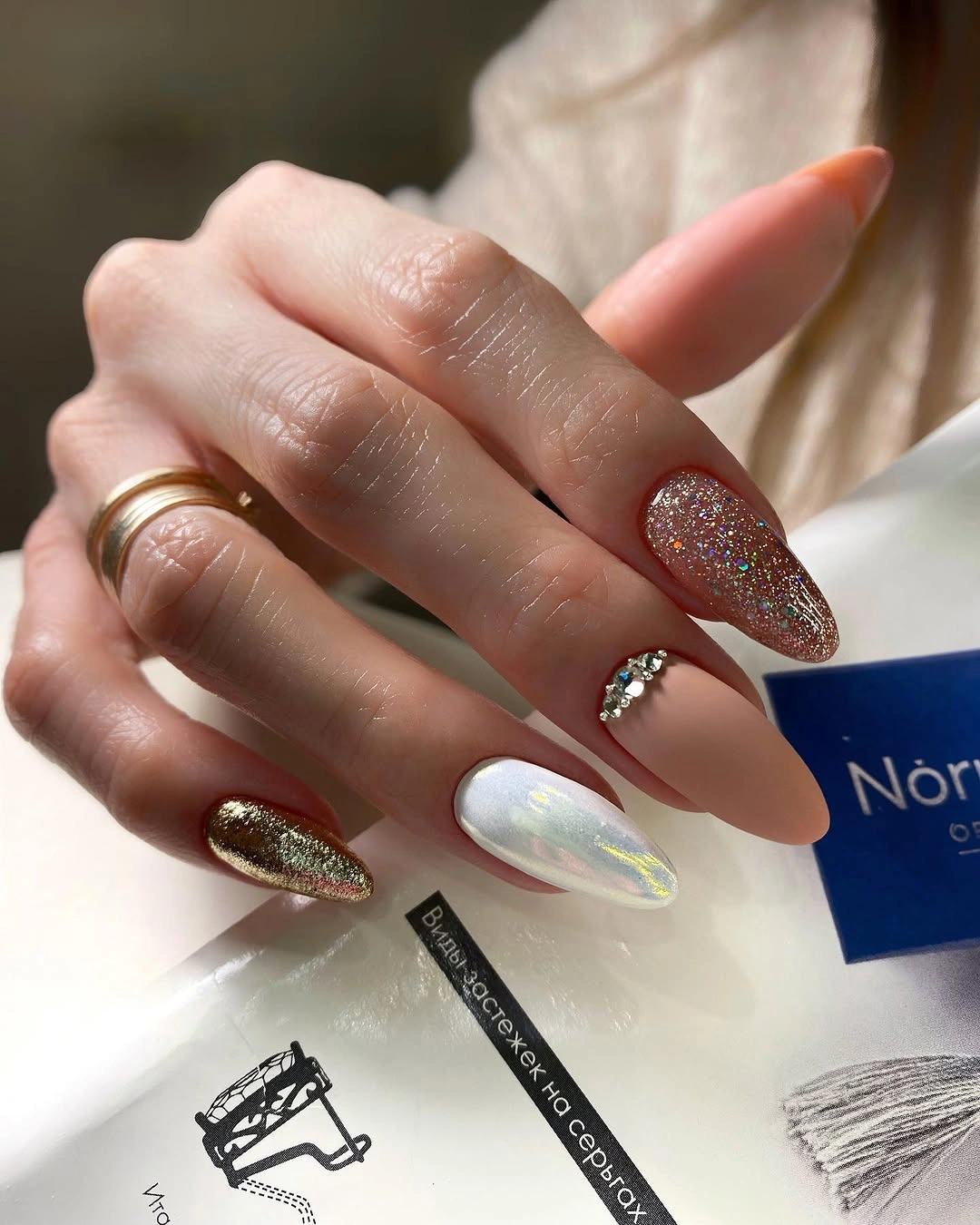
One dense glitter nail can carry more weight than several lightly sparkled nails, which is why the pale companions are essential. They create relief around the warm metallic surface and keep the eye from stopping at the same point on every finger. The small raised accent is also effective because it appears once, adding a precise focal point instead of a repeated embellishment pattern.
For everyday wear, reduce the glitter to one ring-finger accent and replace the gem-like detail with a fine rose-gold line. That keeps the light relationship intact but makes the surface feel less formal. The long almond shape supports the full version well; on short nails, the pale pearly finish alone may provide enough interest without a dense metallic field.
Warm Taupe Brown and Cream Squares
Taupe, deep brown, and creamy off-white alternate across short square nails with no painted motifs. The small differences in undertone are the entire design: brown brings depth, cream adds lift, and taupe connects the two. Against pale skin, the cream nail becomes especially subtle, which makes the darker brown sections feel deliberate but not harsh because the palette stays inside a warm neutral range.
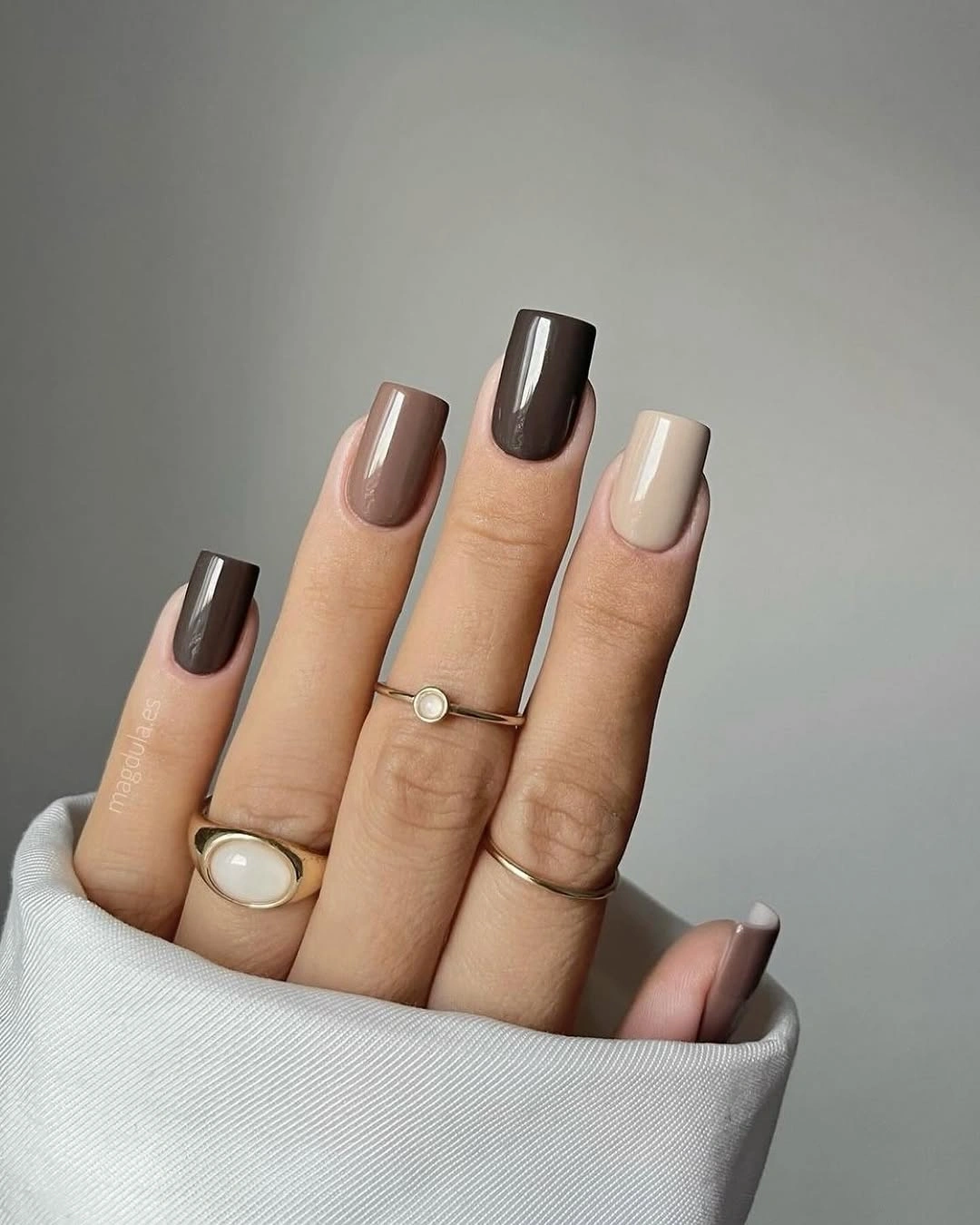
Color order changes the rhythm of mixed solids. Placing taupe between brown and cream prevents the set from splitting into a light side and a dark side, while the uniform glossy finish keeps the three colors visually related. This is a dependable route for fall nails for pale skin when you want variation but prefer the clarity found in fall square nail ideas.
Choose only taupe and cream if you want the quietest version, or add the dark brown as one accent if more depth is needed. The square shape already gives the set a firm outline, so extra line art would not add much. What makes the idea work is the measured warm progression from light to dark, not a complicated decorative layer.
Glossy Black on Compact Rounded Squares
Uniform glossy black covers short rounded-square nails, making the even curve of the edge the main visible detail. A dark solid can feel severe on pale skin, yet the rounded corners soften the contrast and keep the silhouette from looking too sharp. The reflective surface is important because it introduces a narrow highlight that gives the black depth instead of leaving it completely flat.
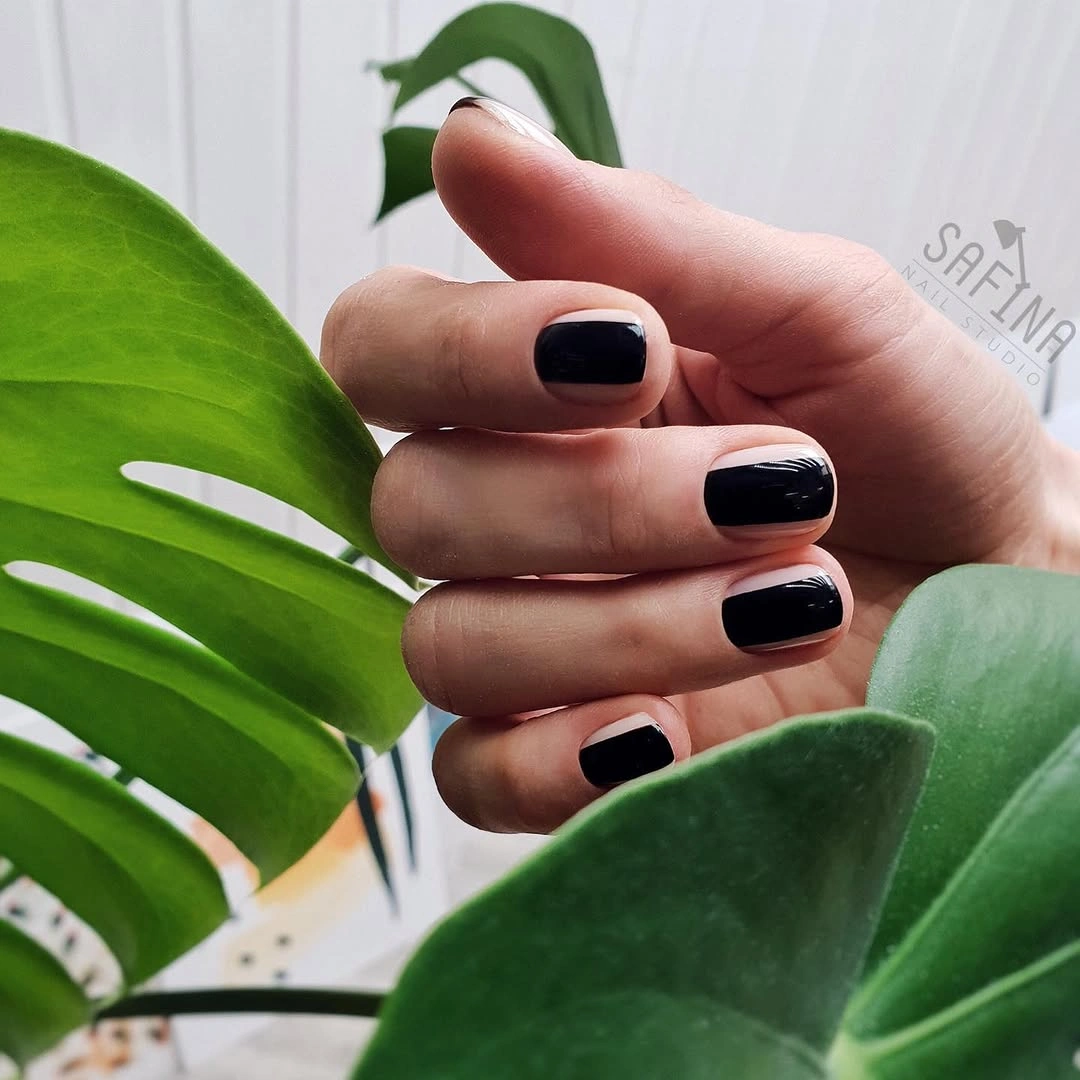
With no pattern to distract the eye, every proportion becomes visible: length, sidewall alignment, and the slight rounding of the corners. That makes this manicure precise in a different way from the detailed designs. The color is bold, but the lack of extra elements can make it feel more composed than a mixed set when the shaping is tidy and the glossy finish stays even.
A softer alternative would keep the black on two nails and pair it with taupe or sheer nude on the others. Removing full coverage changes the contrast immediately, while keeping the black glossy preserves its polished character. Matte black would emphasize texture and absorb more light, making the same compact shape read more dramatic and less reflective.
Muted Sage on Medium Square Nails
Soft muted sage covers medium square nails in a uniform glossy finish. The color is neither very dark nor very bright, so the exact straightness of the square edge becomes more noticeable than a decorative accent would be. On pale skin, the gentle green creates a distinct outline without the abrupt jump of cobalt, black, or scarlet, which makes it a calm seasonal solid.
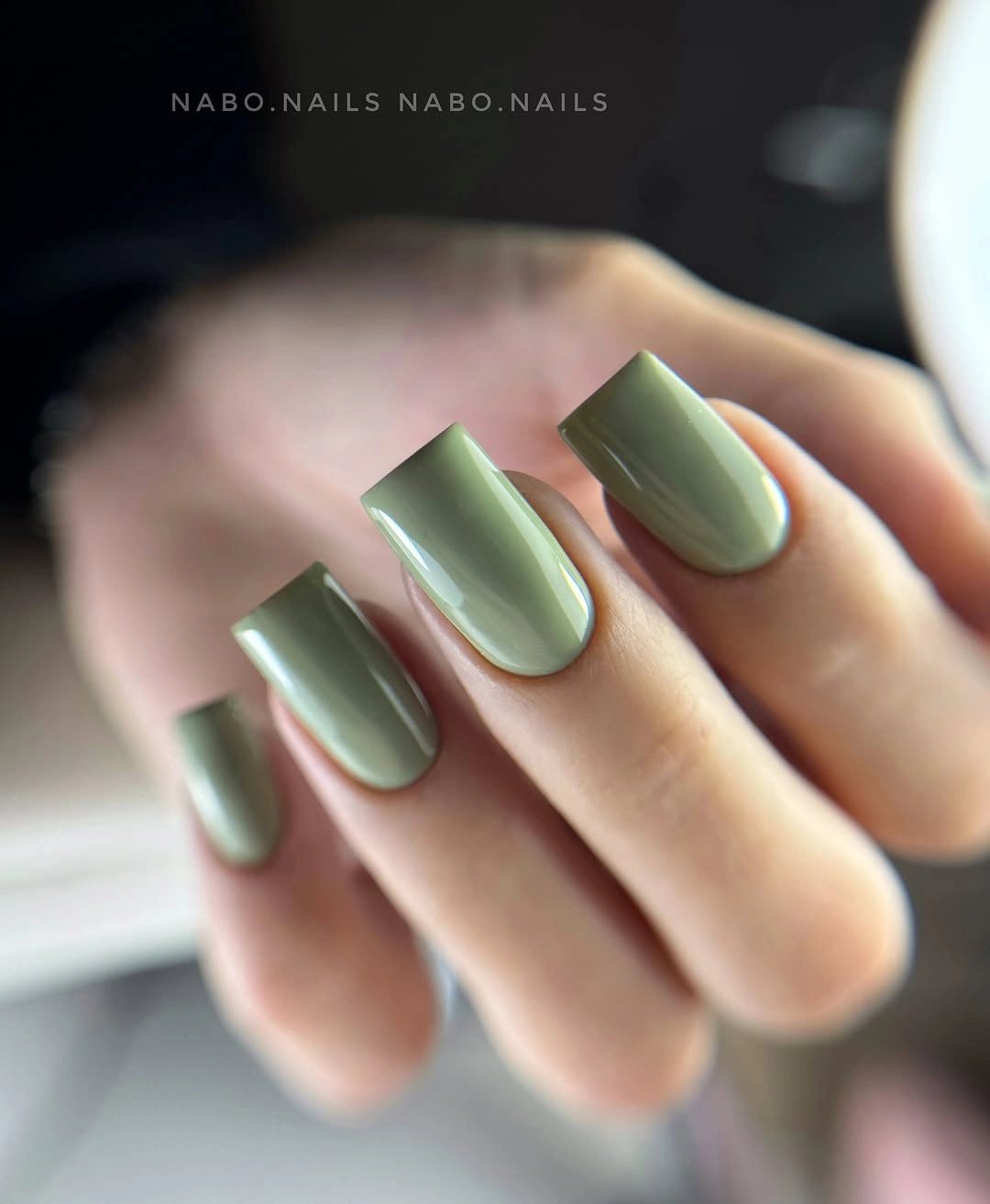
The quality of this manicure comes from restraint. Sage is repeated without interruption, allowing the eye to notice its subdued gray-green cast and the way it sits against the skin. Adding a contrasting leaf or glitter detail would change the focus from color to art; the uninterrupted surface is what lets the muted tone feel thoughtful rather than merely plain.
For a little more variation, change one nail to cream or use a slightly deeper green as an accent, but keep the rest of the hand consistent. The square tip gives the color a practical clarity, so a very long length is not needed. Preserving the clean solid field is more important than adding a motif simply because the palette is quiet.
Bright Red on Clean Square Edges
Clear glossy red covers medium square nails with no added artwork, making saturation and shape equally visible. The small detail that changes the result is the crisp free edge: it gives the bright red a modern, contained quality rather than a softer rounded impression. On pale skin, the contrast is immediate, so the evenly painted surface becomes a deliberate statement without needing glitter or a dark outline.
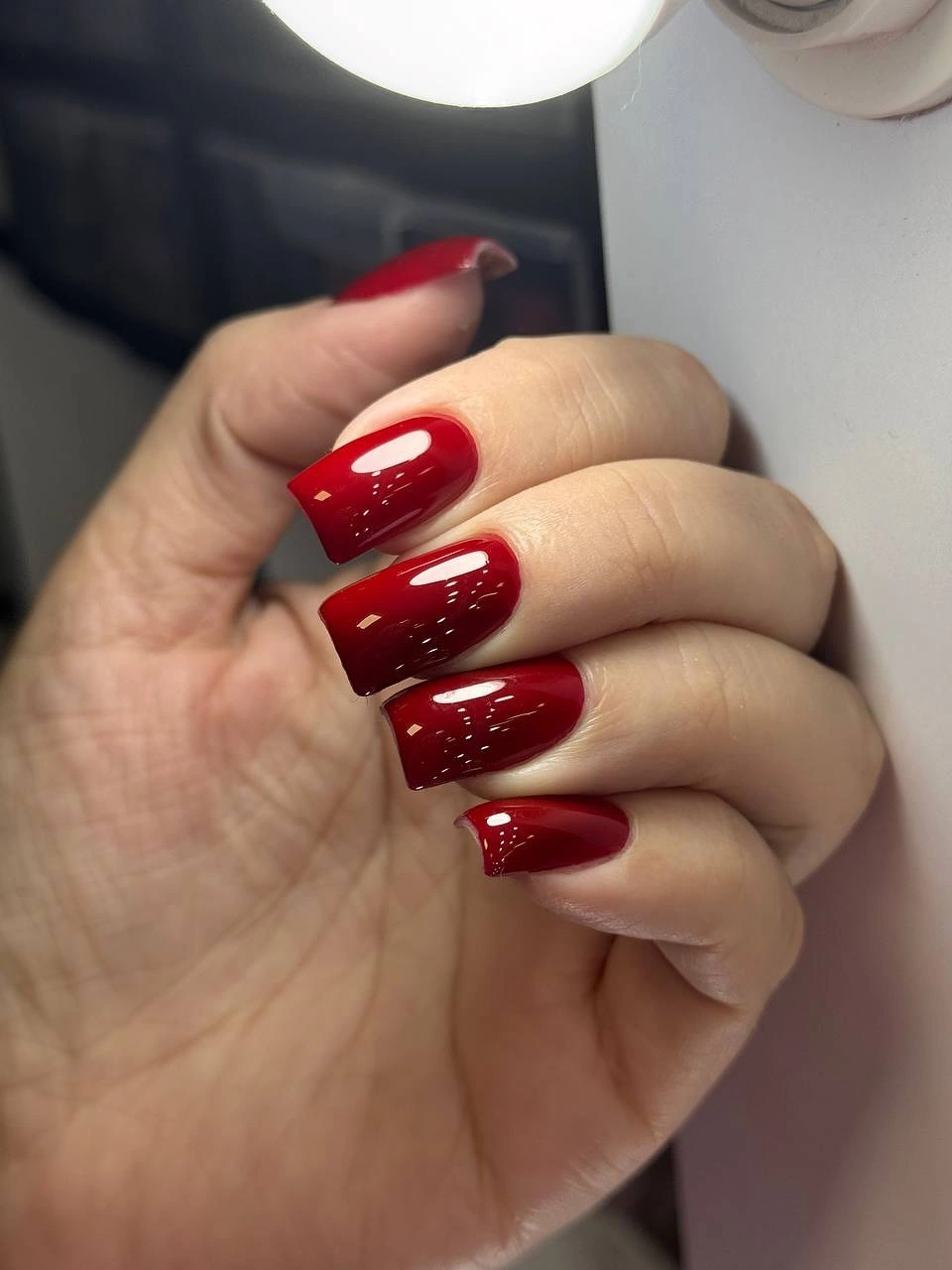
Red works differently when it is allowed to remain uninterrupted. There is no pale base to soften it and no pattern to divide it, which means the gloss has to create all the movement. Light catches along the square curve and makes the saturated color look cleaner, while inconsistent length would be especially noticeable because every nail is telling the same visual story.
A lower-contrast adjustment could move from bright red to brick or wine, but that would change the directness that makes this version strong. For a more detailed option, add one fine white mark on a single nail instead of treating the entire hand as an art surface. The red stays clearest when the square outline remains the main supporting feature.
Black Dotted French on Sheer Almonds
Black dotted areas gather near the tips of long sheer almond nails, joined by tiny white line and leaf-like marks. The dots form texture without becoming a solid dark French edge, so the nude base continues to lengthen the nail visually. On pale skin, the dark speckling creates a clear contrast, but its open spacing keeps the design lighter than a full black tip would appear.
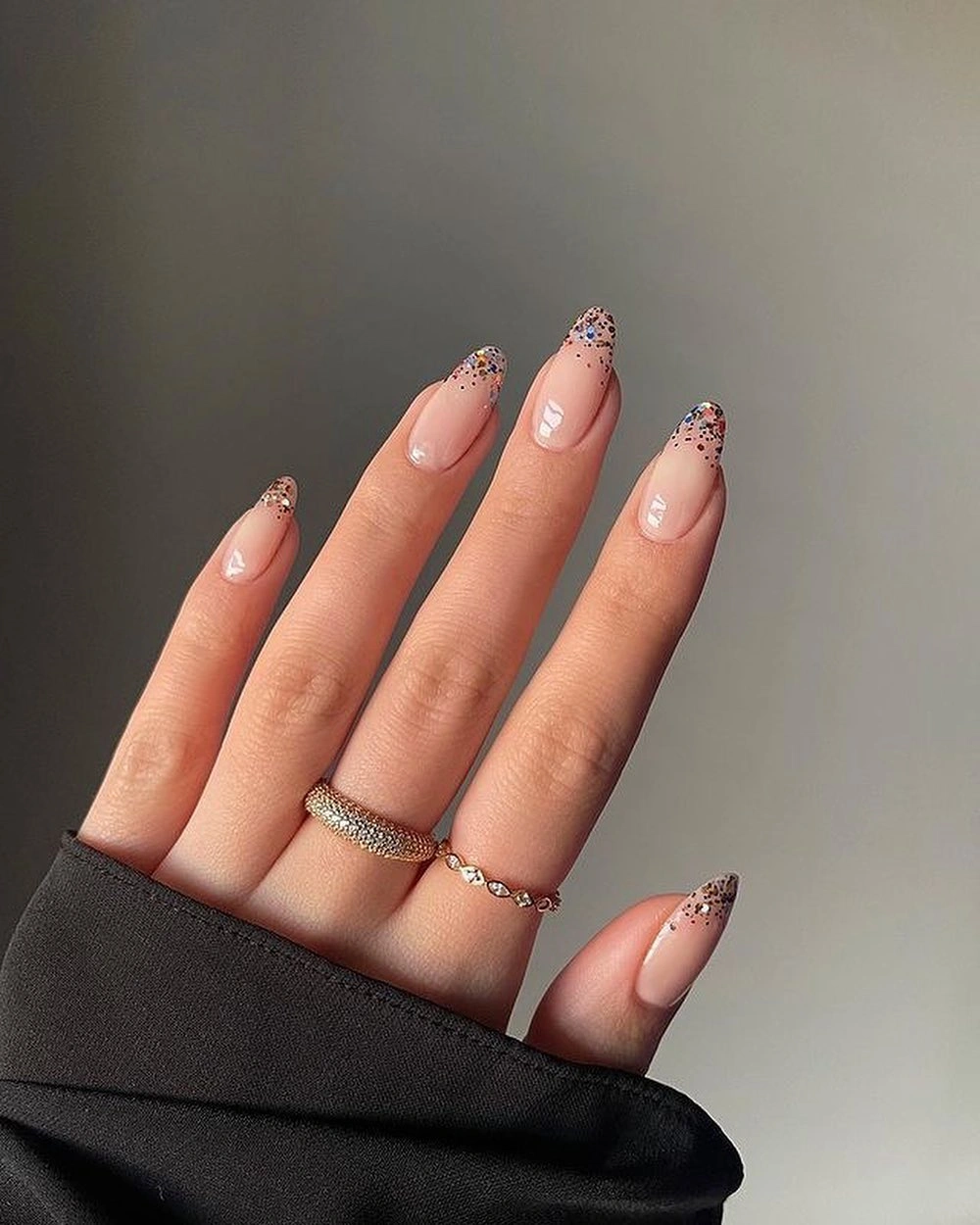
The concentration of dots matters more than their individual shape. Keeping them near the free edge lets the hand retain a calm center, while the small white marks prevent the black from becoming a single flat zone. This is a useful detail-led alternative to a classic French manicure because it offers edge definition while still leaving room for texture and irregularity.
To simplify the design, use dots on two nails and leave the others with a sheer base and one thin black tip. The dotted surface should not climb too far toward the cuticle, or it will reduce the elongated effect of the almond shape. The fine spacing, not a perfectly uniform dot pattern, is what keeps the dark accent airy.
Autumn Botanicals on White Square Tips
Yellow, brown, and green leaf-and-flower motifs sit over long white square nails, with each illustrated area clearly separated by the bright base. White provides maximum contrast for the warm botanical colors, so the fine lines and small shapes remain visible. On pale skin, the white nail can look soft near the cuticle while the painted autumn details carry the richer seasonal information toward the tips.
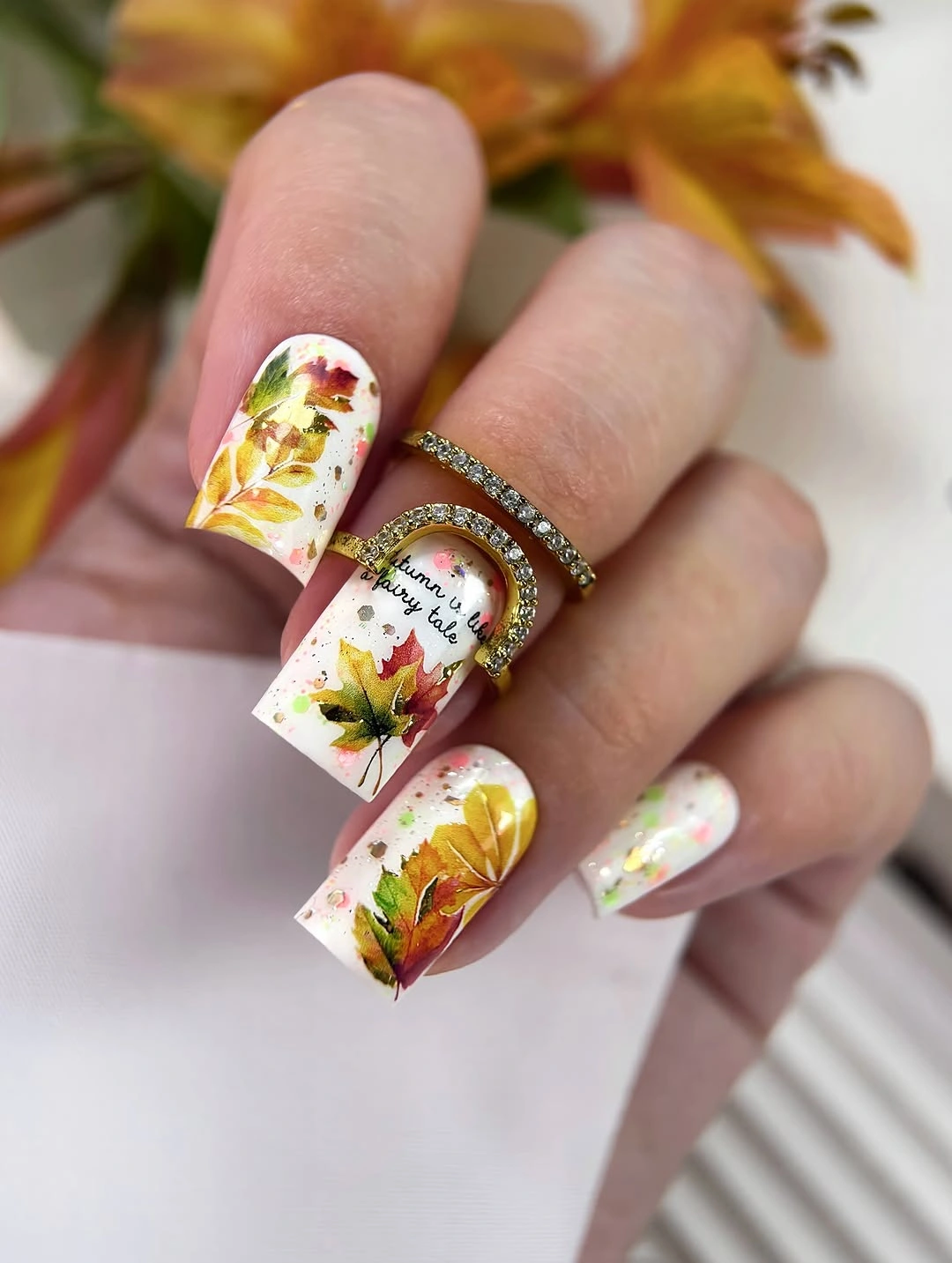
The bright ground is not neutral here; it actively sharpens every small leaf and flower edge. That is why the design can support several colors without becoming muddy. A warm brown base would absorb much of the botanical detail, whereas white lets the yellow, green, and darker outlines remain separate enough to be read as individual placed elements.
For a less ornate version, decorate two white nails and keep the rest plain or add only a small green leaf near one corner. Long squares can hold the full illustrated treatment, but shorter nails need more blank space to preserve the same clarity. The essential detail is the crisp white margin around each colored form.
Pearly Patches with Gold Metallic Breaks
Pale pearly gray-white nails are broken by irregular gold metallic-looking patches on a short rounded-square shape. The patches do not form matching tips, and that unevenness is the point: it gives a quiet base texture and visual interruption without a full painted pattern. On pale skin, the pearly ground stays delicate, allowing the warm gold to appear as a few concentrated flashes rather than a heavy block.
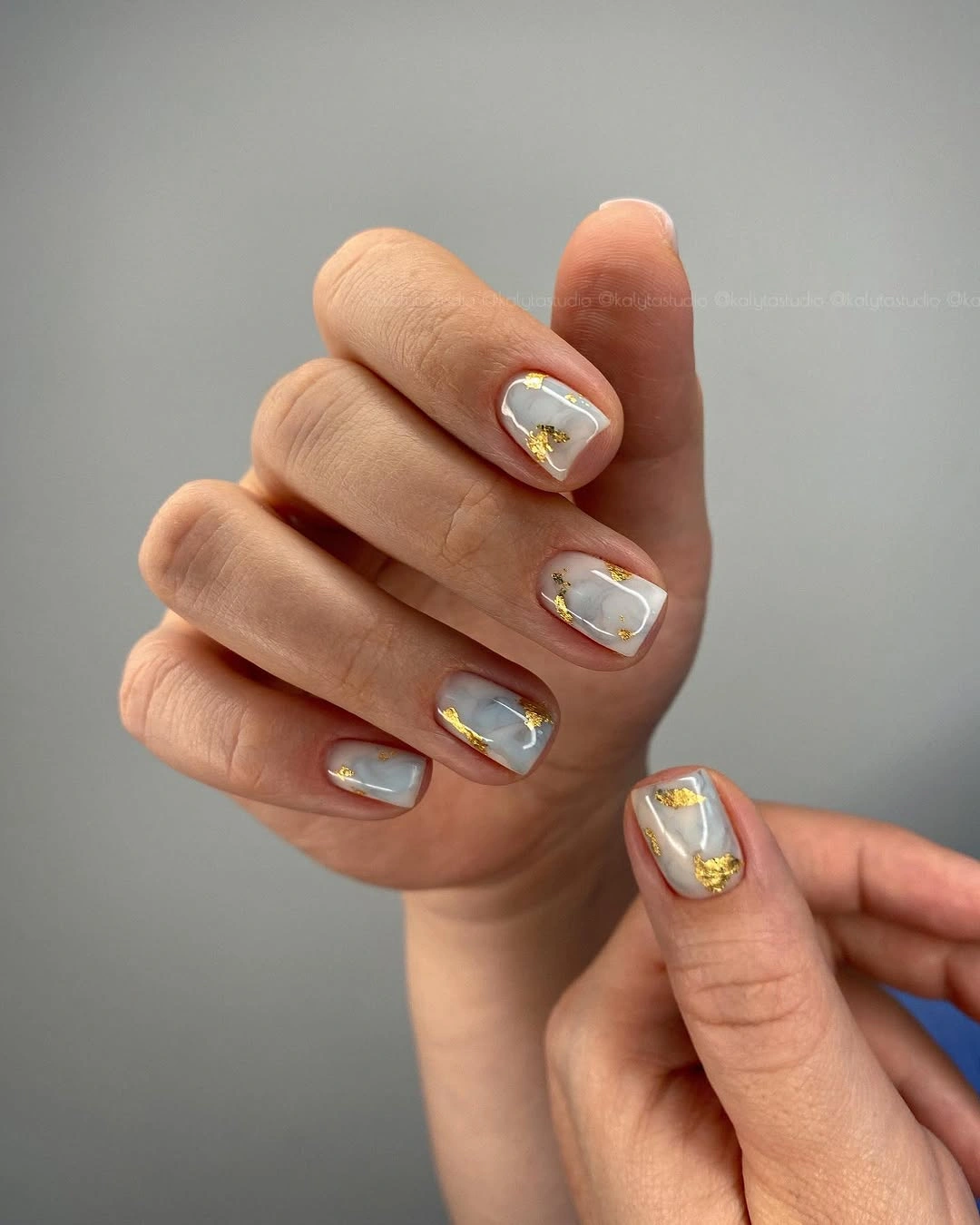
Irregular edges make the metallic areas feel softer than strict geometric foil shapes. Each small break draws attention for a moment, then returns the eye to the light base, creating a rhythm of emphasis and relief. That restraint suits short nails because it adds a surface detail without crowding the compact silhouette with multiple lines, colors, or separate motifs.
Use a single gold patch per nail if you want the pearly finish to remain the dominant impression. Increasing the metallic coverage would turn the manicure warmer and more celebratory, while moving the patches closer to the tip would make the grow-out pattern easier to overlook. The visible pale space is what keeps the irregular gold from taking over.
Glossy Red on Rounded Short Squares
Saturated glossy red appears again on shorter rounded-square nails, but the softened corners change its character. The color still creates a strong contrast against pale skin, yet the less angular outline makes it feel warmer and more compact than the longer square red set. With no extra art, the tiny curve at each corner becomes the detail that keeps the bright color from looking overly strict.
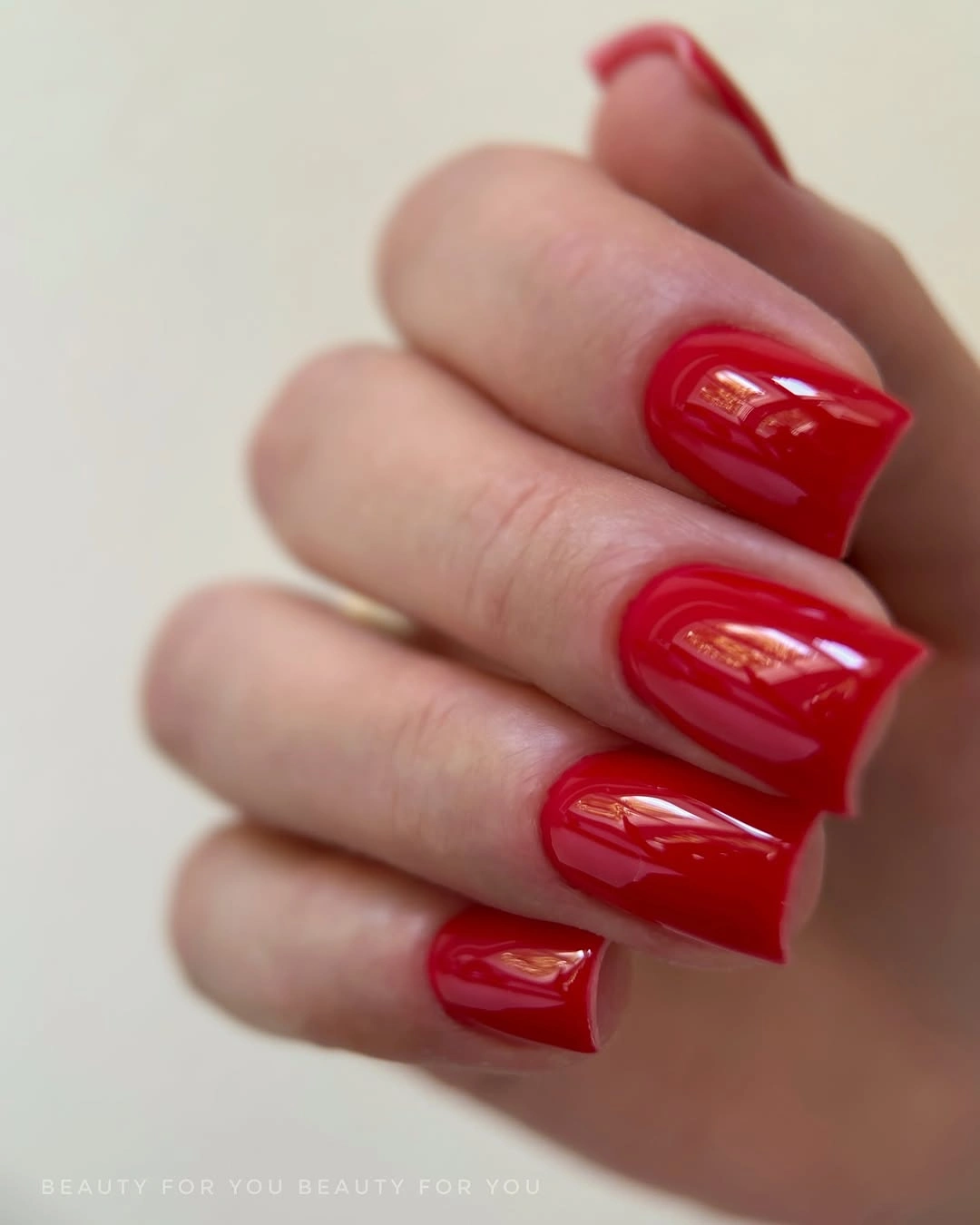
Comparing shapes reveals how little a manicure needs to change to feel different. A sharp square pushes red toward graphic clarity, while a rounded square lets the same saturation look more relaxed and softly framed. The even gloss remains important in both cases, because it gives the solid color a reflective line that keeps the surface from appearing visually dense.
Choose this shape if you want the impact of red without the long, assertive edge of a true square. Any accent would shift focus away from the clean curve, so a simple color is the most useful companion. If a change is needed, make it tonal with a deeper red rather than adding a contrasting pattern that interrupts the compact outline.
Chartreuse Short Nails with Clean Edges
Vivid yellow-green covers short rounded nails in an unbroken glossy finish. The striking detail is not a motif but the clean edge around each nail, which contains a color that could otherwise feel visually unruly. On pale skin, chartreuse appears especially bright, so the simple silhouette and uniform finish give the color a controlled place to sit rather than surrounding it with competing accents.
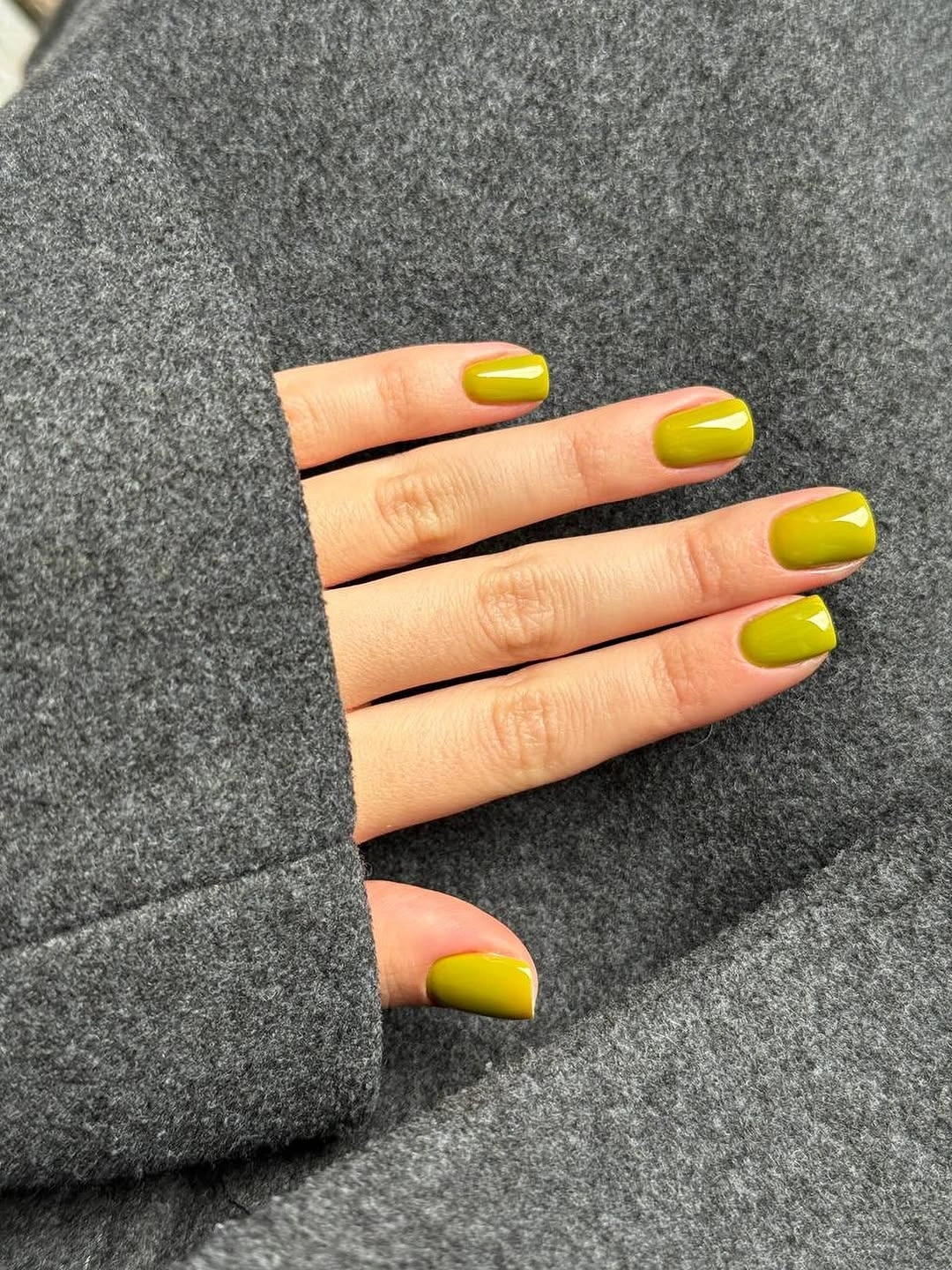
High saturation benefits from editing. Because the color already carries strong contrast, no added glitter, line work, or secondary hue is necessary to make it memorable. The slightly rounded shape softens the intensity at the perimeter, while the glossy finish keeps the yellow-green from looking chalky or flat as it catches light across the curved nail surface.
A subtler route would use chartreuse on two accent nails beside warm nude or muted sage, but the full-color version has a different appeal: it is clear and unapologetic. Keep the nails short if you want the bright shade to feel balanced. More length would make the same color a much larger visual statement and would call for even cleaner shaping.
Sage Leaves with Tiny Gold Flecks
Muted sage solids are paired with pale square nails bearing green leaves, black outlines, and small gold flecks. The most consequential detail is the repeated green: it appears once as a full color and again as leaf work, linking the solid and illustrated nails. Pale skin lets the light base remain visible behind the leaves, so the black outlines do not need to be heavy to define the motifs.
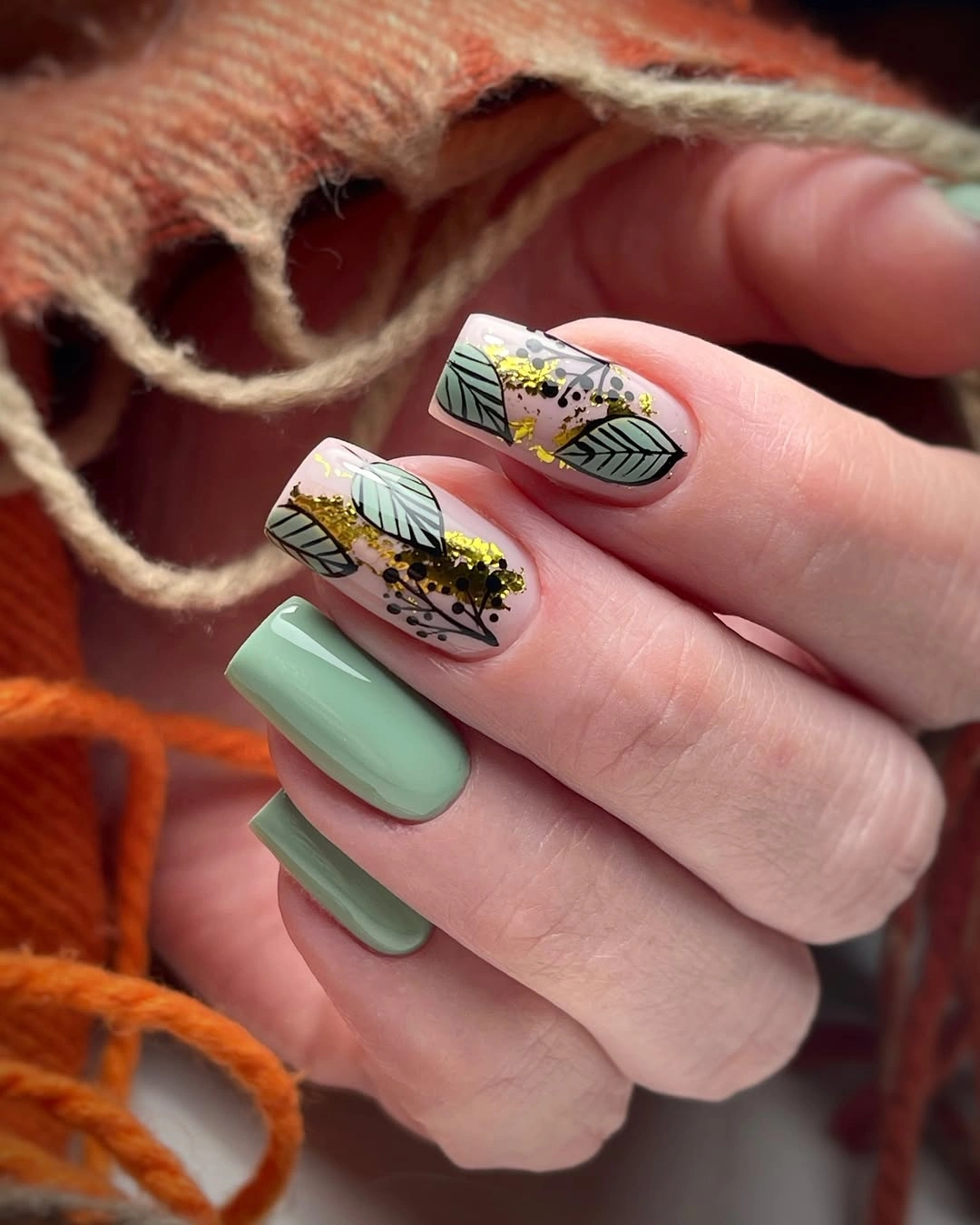
Gold flecks add a third finish, but their small scale keeps them from competing with the botanical drawing. They operate as points of emphasis rather than a full glitter field, giving the eye brief bright rests among the sage and pale surfaces. That careful placement is why the set feels layered without becoming as dense as a fully decorated autumn botanical manicure.
For a simpler hand, use one leaf-art accent, two sage solids, and two pale nails with no gold. Removing the flecks will make the leaves feel more graphic; keeping them will make the finish warmer and slightly more festive. The visual relationship to preserve is sage repeated in both solid and line-art form, not a fixed number of motifs.
Nude Almonds with All Over Leopard Spots
Irregular black and brown leopard-like spots cover nude medium almond nails from base to tip. The nude ground remains visible between the marks, and those gaps are what keep the all-over print from becoming a flat dark surface. On pale skin, the warm base provides a softer transition than white would, while the almond shape stretches the spots into a longer, more fluid pattern.
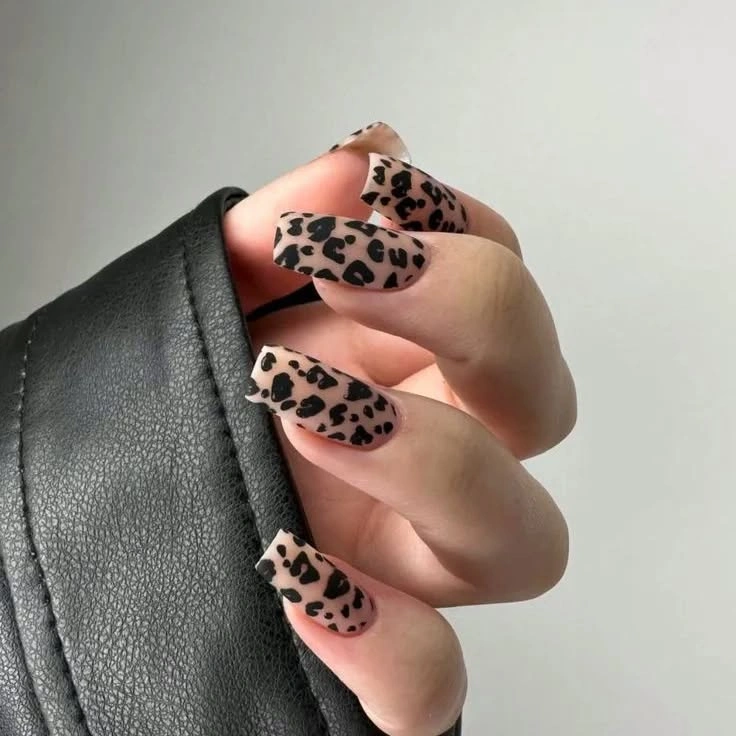
Spot spacing is more important than perfect repetition. Varied sizes and open margins make the print feel lively, while too many identical marks would turn it into a rigid graphic. The brown centers and black edges create depth without another color, letting the nude base continue to function as the calm visual field underneath the more assertive animal-inspired detail.
To reduce the intensity, move the spots to two accent nails and leave the rest nude or brown. That change keeps the same warm contrast but restores more visible space around the hand. The full version succeeds because the almond shape gives each irregular mark a longer path; on a very short nail, a partial tip pattern would preserve the idea more effectively.