Getting dressed in October becomes oddly difficult when every useful layer seems to add another decision. A look can feel right at home yet lose its shape as soon as you add a coat, bag, or practical shoe. The answer is rarely buying a bolder piece; it is noticing which element should set the visual tempo, then letting the rest support it without echoing it too literally.
Start with the question that changes the whole outfit: where should the eye rest first? Once that point is clear, every next choice becomes an adjustment rather than another demand for attention. Keep one element quiet when another carries texture, contrast, or volume, and treat a practical layer as part of the composition instead of an afterthought that arrives at the door.
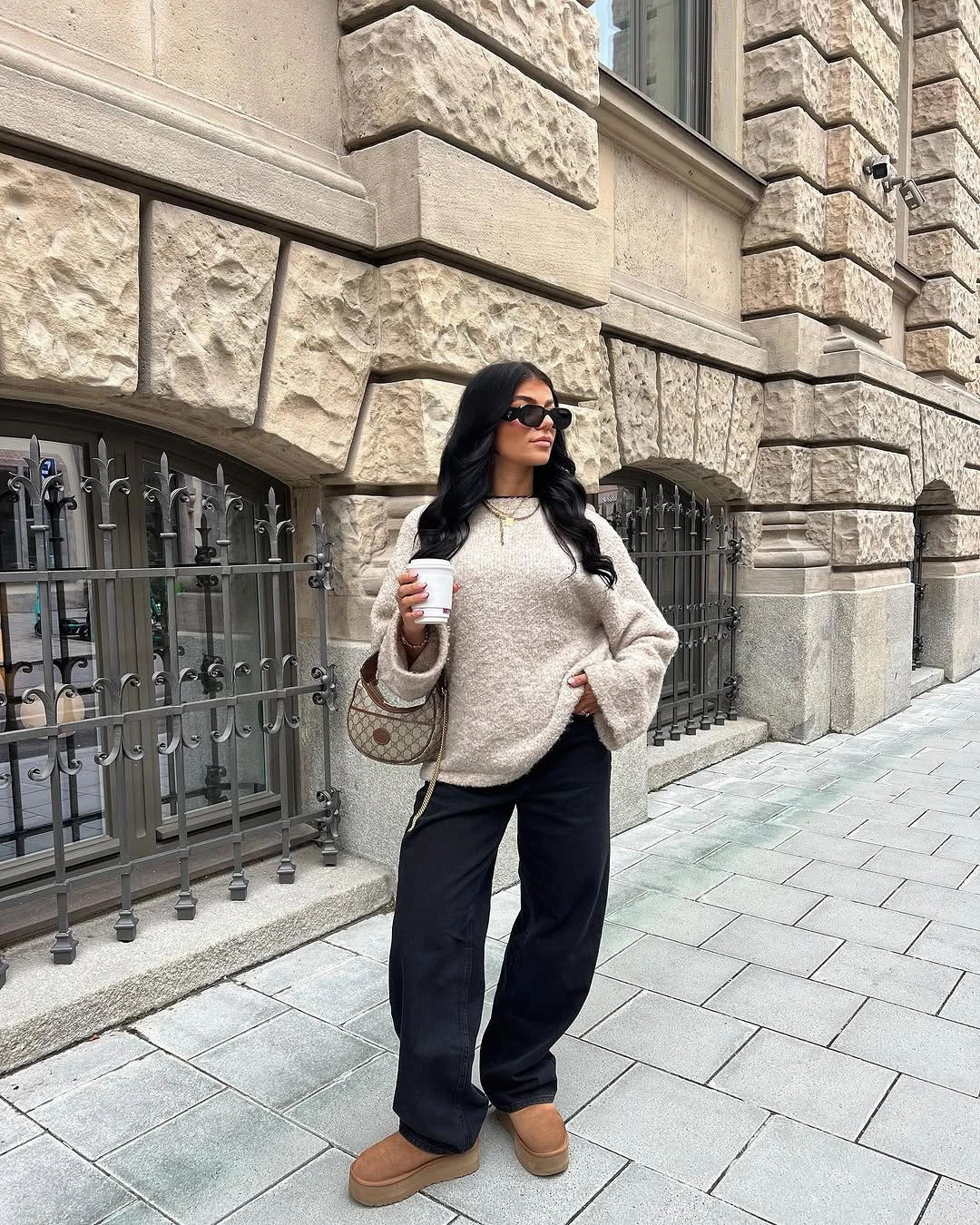
Soft Knit Against Relaxed Black Trousers
The cream textured sweater keeps the upper half light, while the loose black trousers create a grounded, almost column-like lower half. Tan rounded ankle boots soften that contrast instead of making it stark, and the small patterned shoulder bag adds detail near the hand rather than competing with the sweater. It is a useful formula for casual October outfits ideas when comfort matters but the silhouette still needs definition.
The value contrast works because the pale knit occupies one clear block and the dark trousers occupy another, with the boots acting as a warm bridge between them. If you prefer a cleaner finish, choose trousers that sit neatly at the shoe rather than folding heavily at the ankle. A partially tucked front would also reveal more waist without disturbing the relaxed feeling of the knit.
This outfit has generous volume in both the sweater and trousers, so it benefits from keeping the accessories compact and close to the body. A larger tote could make the proportions feel low and wide, whereas a short shoulder bag preserves the vertical line. On a damp day, a sturdier sole would be a practical swap, but the boot should retain a rounded, uncluttered shape.
Blue Shirt and Gray Pleats
A pale blue button shirt, dark knit vest, and gray pleated skirt create a layered outfit with a controlled cool palette. The collar and tie-like detail pull the eye upward, while the skirt’s vertical pleats keep the lower half from becoming visually flat. Dark shoes and a close-fitting shoulder bag repeat the vest’s depth, so the separate pieces read as one deliberate arrangement rather than officewear assembled by habit.
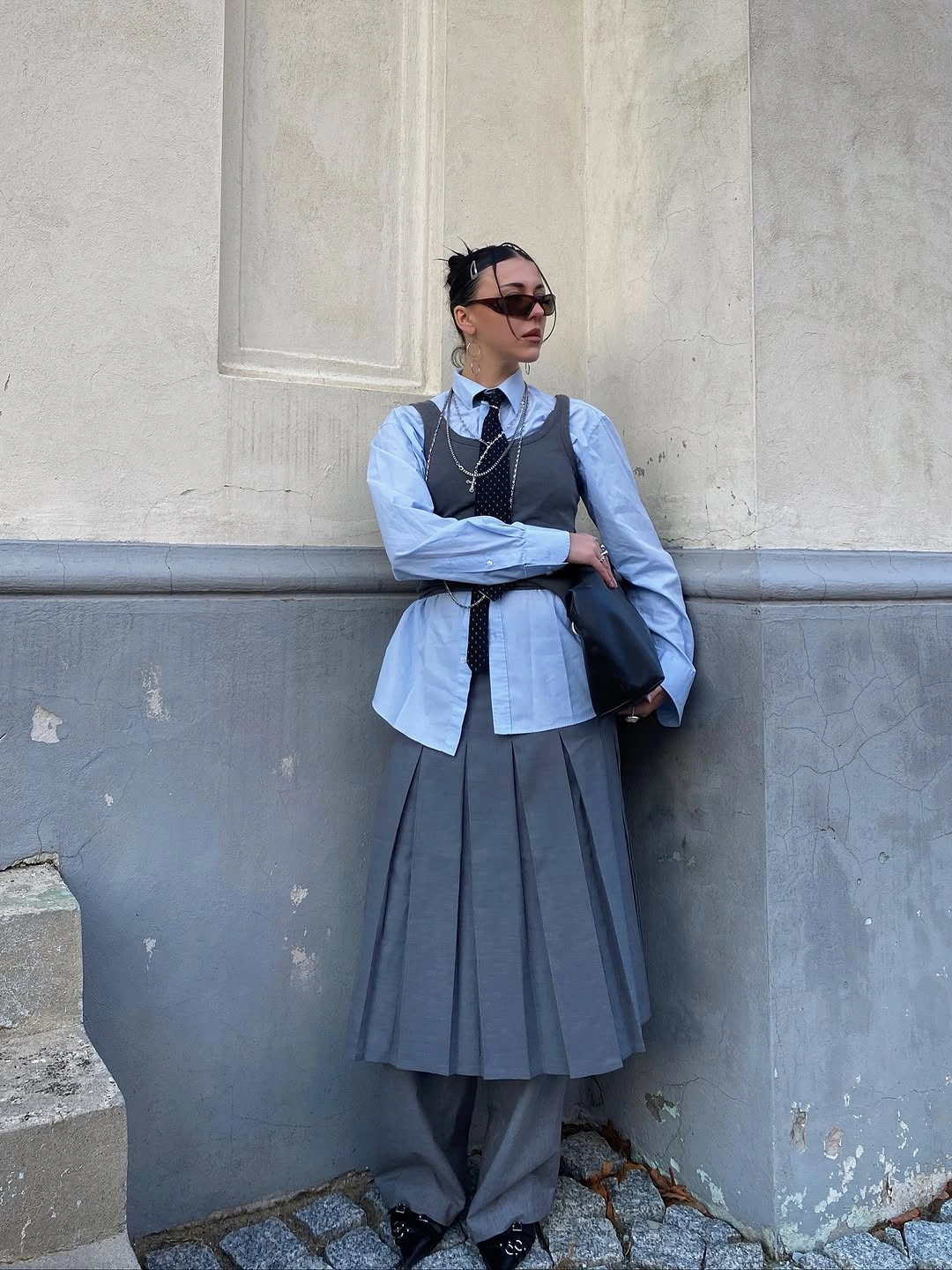
The strongest color move here is restraint: blue appears at the collar and sleeves, then disappears before the gray skirt takes over. That separation makes the pleats easier to notice and prevents the outfit from becoming one long blue-gray field. For a softer version, remove the tie detail and keep a narrow collar visible; for more contrast, use an even darker shoe instead of adding another color.
Layering at the waist can become bulky when the shirt, vest, and skirt all add fabric in the same area. A fitted vest or a shirt with less volume through the body would make the line calmer while preserving the idea. The skirt has enough movement to carry the outfit, so jewelry and bags work best when their scale remains modest and their color stays close to black or charcoal.
Tonally Brown Mini With a Soft Sweater
The brown fuzzy sweater and cocoa mini skirt use close tones, but their different surfaces stop the outfit from looking monotone. The sweater appears airy and textured while the skirt holds a smoother, denser block of color, and the dark brown bag reinforces that warmer direction. The short hem makes the palette feel lively because the upper half is intentionally soft rather than tightly fitted.
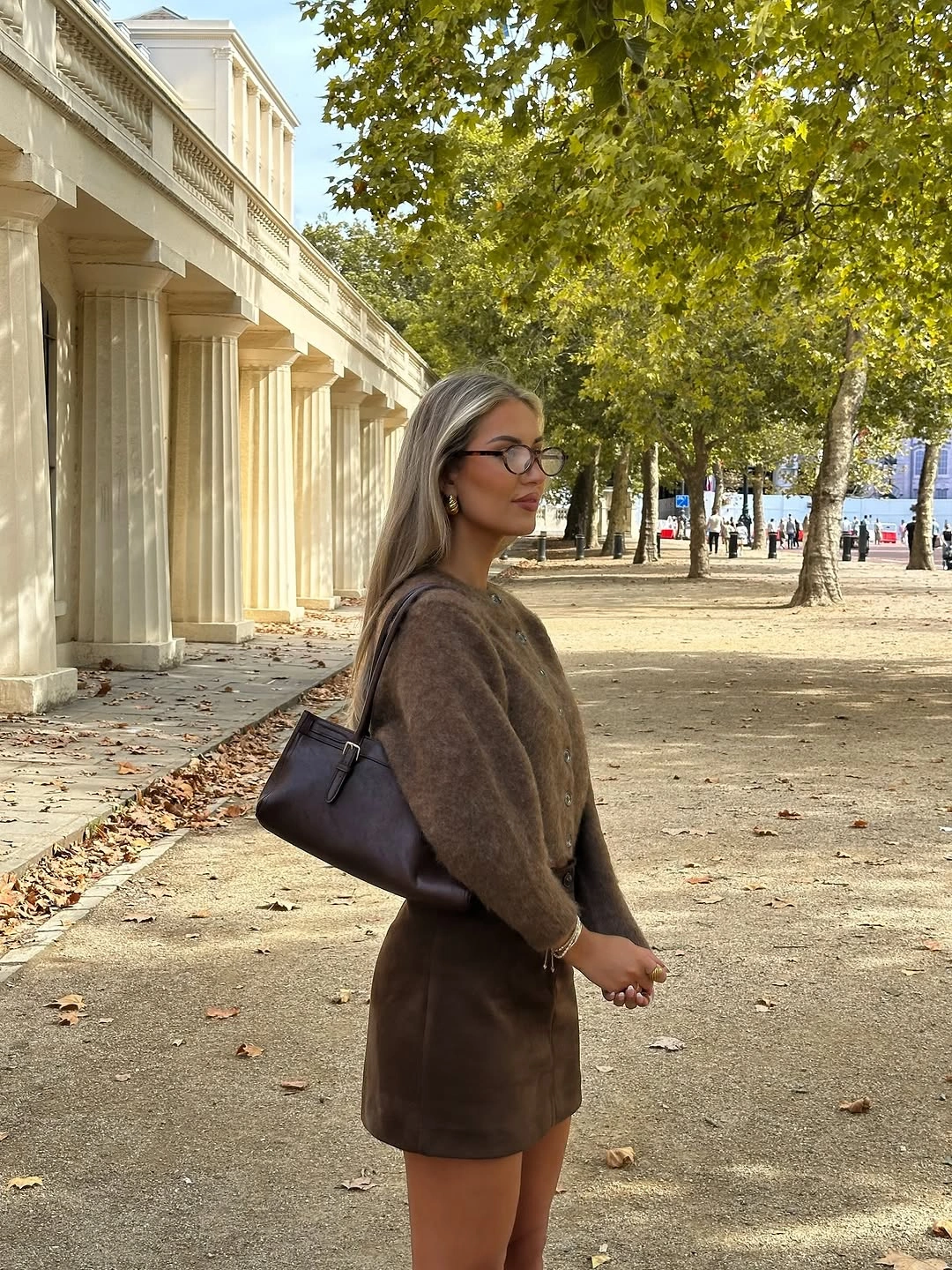
When two brown pieces sit near each other, the useful question is whether their values are separated enough to show a waist and hemline. Here, the deeper skirt gives the sweater a clear stopping point, so the combination does not dissolve into a single mass. A fine belt in a similar dark tone could sharpen that break, although a high-contrast belt would interrupt the gentle tonal effect.
The mini length asks more from the rest of the outfit than a longer skirt would, especially if you want extra coverage or warmth. Knee-high boots, opaque tights, or a longer coat would extend the darker line without changing the brown story. Keep the added layer plain, because the sweater’s surface and the bag already provide enough tactile interest for one look.
Burgundy Blazer Over a Dark Mini
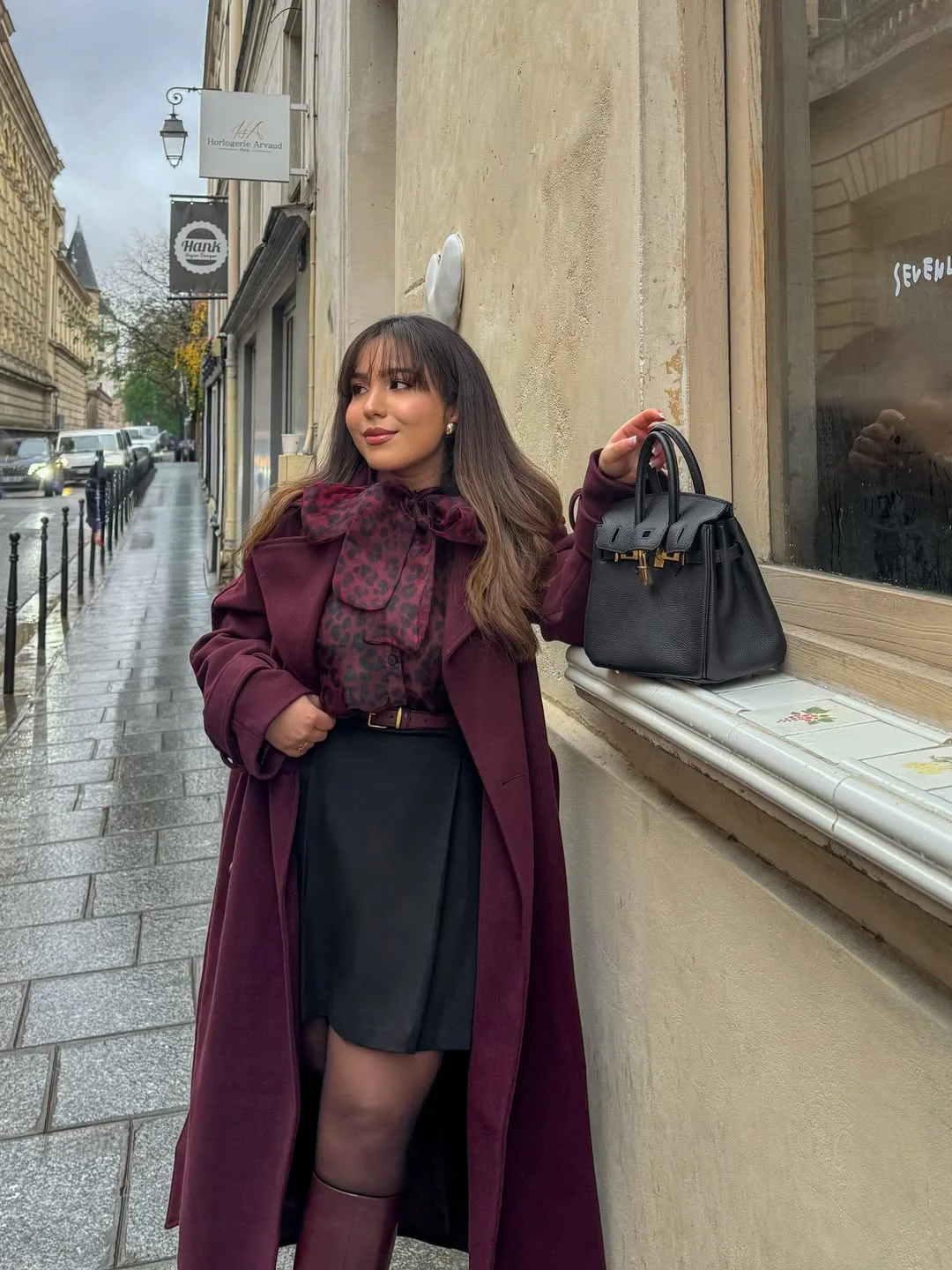
The long burgundy blazer gives a dark short base layer a clear outer frame, which is why the proportions feel intentional instead of abrupt. Its deep red-brown tone is strong enough to carry the outfit’s color, while the black handbag and sheer tights recede. The open front leaves a narrow vertical line through the middle, making the blazer read as structure rather than as a heavy covering.
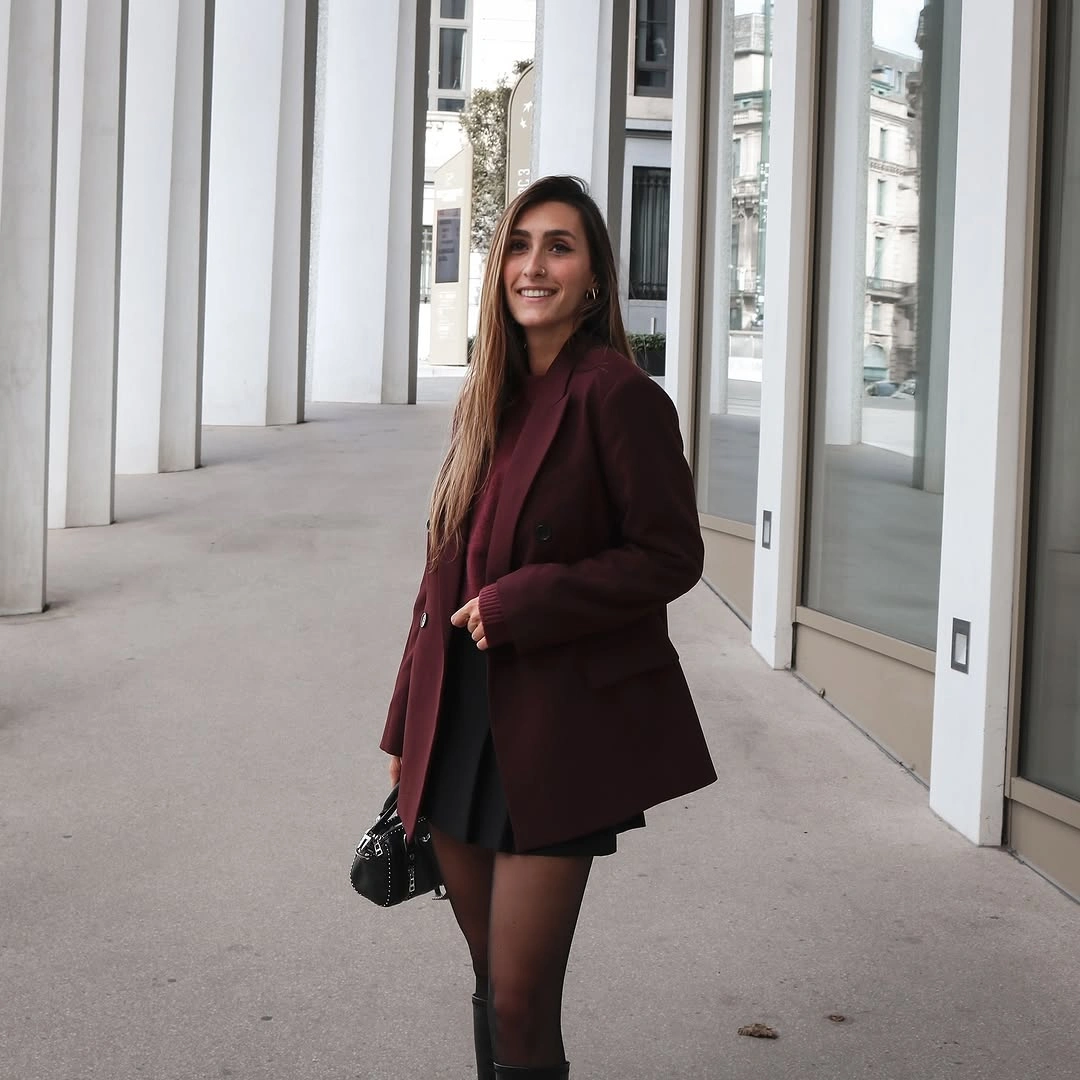
Burgundy is especially effective here because it is richer than black without demanding the brightness of a true red. You could repeat it once in a lip color, scarf, or small bag accent, but repeating it in several large pieces would make the look overly dense. If a lighter result is wanted, a charcoal or stone-gray bag would soften the transition without changing the blazer’s role.
The outfit depends on a visible difference between the blazer length and the short hem beneath it. If the jacket becomes much longer, the leg line can appear compressed; if it becomes shorter, the dark base may take over too quickly. A slim ankle boot or a simple loafer keeps the finish precise, while a very chunky shoe would pull too much weight toward the ground.
Striped Cardigan With Ivory Wide-Leg Denim
The striped cardigan brings red, cream, and brown into the outfit, but the ivory wide-leg jeans keep that pattern from feeling busy. Because the trousers are pale and nearly solid, they act as a calm field beneath the stronger upper layer. The result is a color-led look that still has air around it, with the cardigan doing the expressive work and the denim holding the silhouette open.
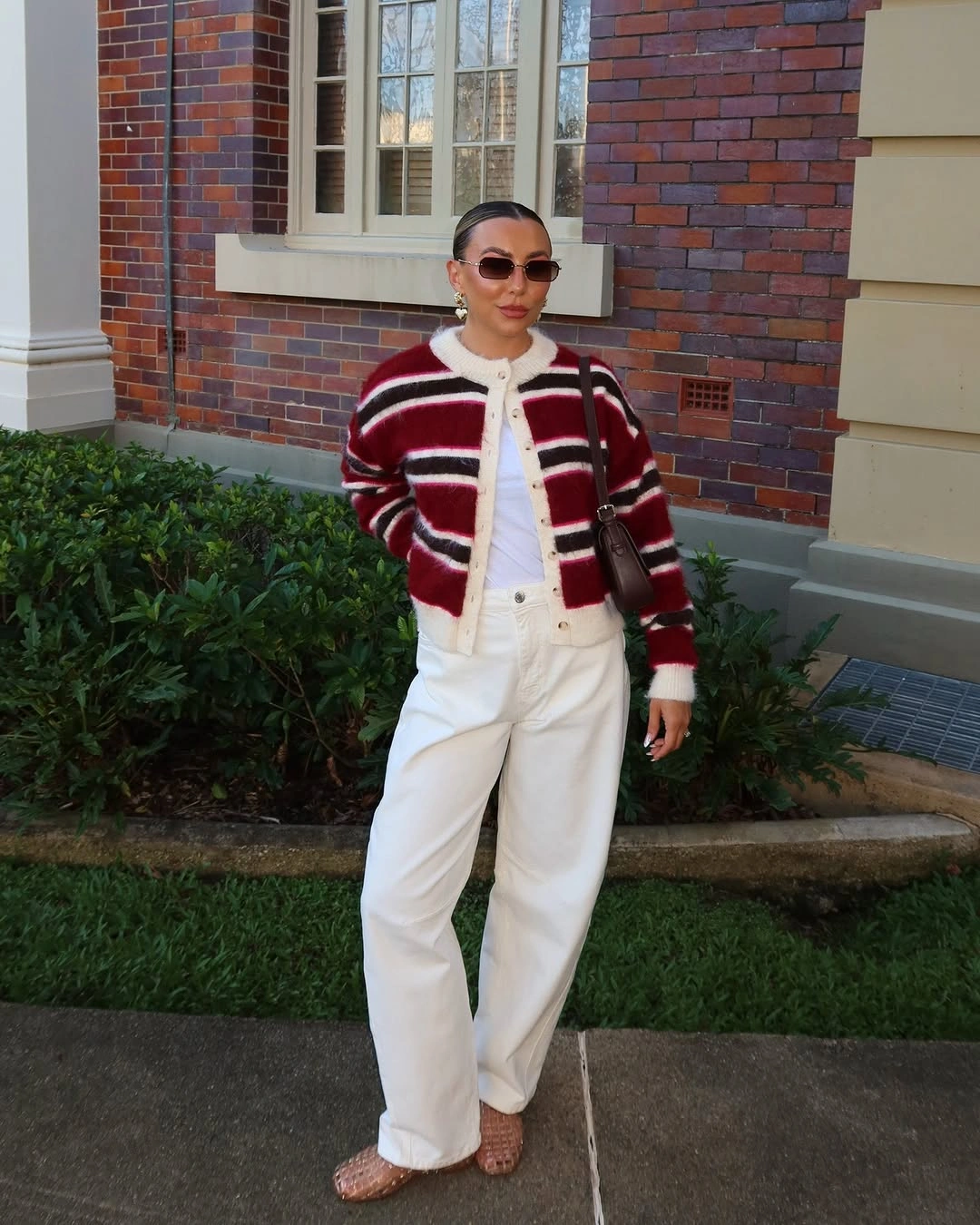
Pattern works best here when its warm tones are not echoed by another large print or highly colored shoe. A neutral sandal, boot, or low sneaker lets the cardigan remain the focal point, while a warm brown bag would connect to the stripes without copying them exactly. If the cardigan were replaced with a plain knit, the outfit would lose much of its contrast and feel noticeably quieter.
Wide ivory denim can show every change in hem length, so the shoe should either disappear cleanly beneath it or create one purposeful edge at the toe. A cropped cardigan helps locate the waist and prevents the wide leg from feeling too broad through the entire body. For more coverage, add a longer neutral coat rather than a second patterned layer, which would scatter the eye.
Tailored Shirt Details With Washed Denim
A white collar and narrow tie detail make the dark jacket and faded gray denim feel more deliberate than a typical jeans-and-jacket pairing. The pointed black boots echo the jacket’s sharper mood, while the roomy black bag keeps the accessories within the same dark family. Washed denim introduces softness and texture, so the outfit has contrast in both color value and dress level without needing bright color.
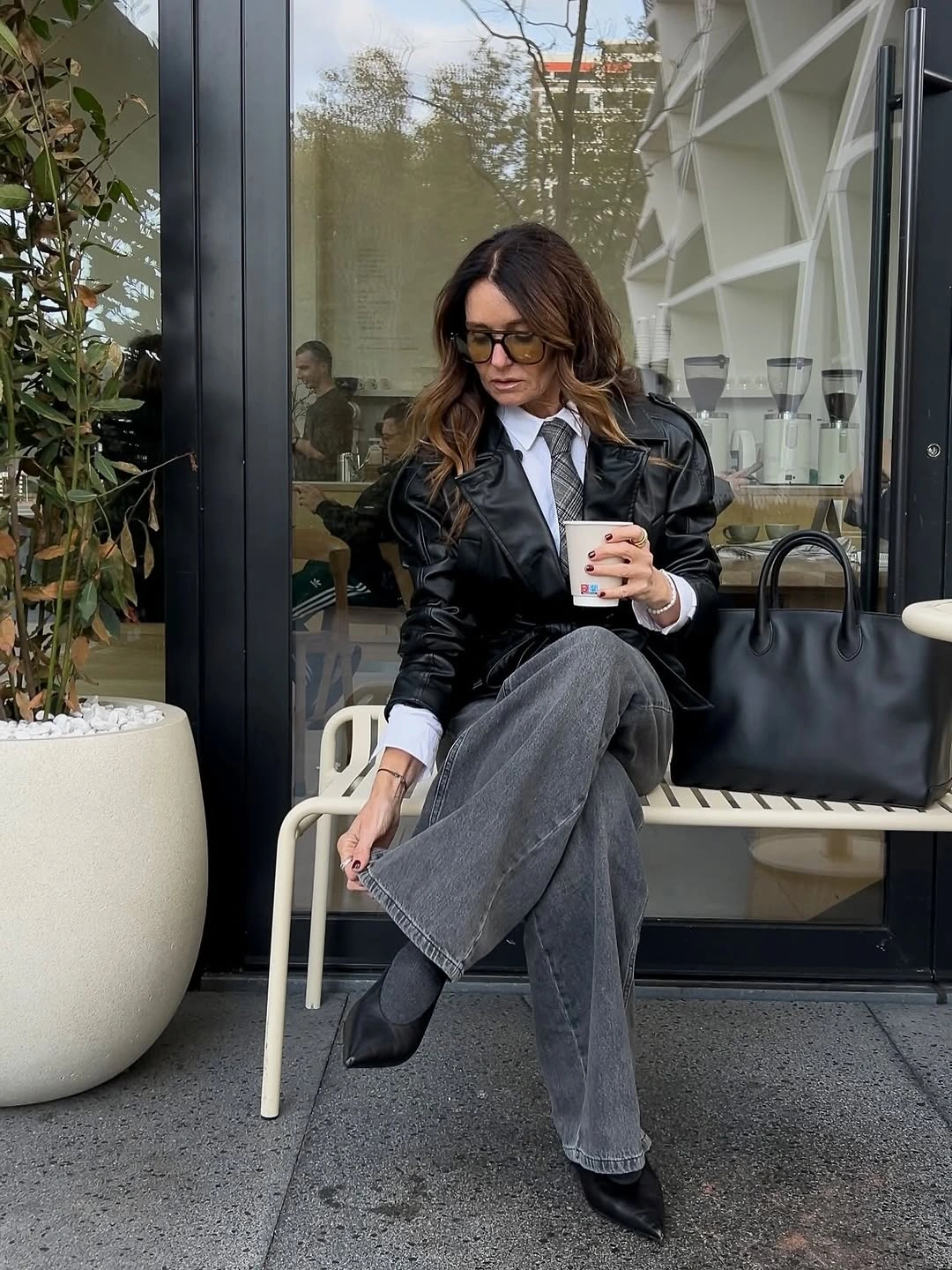
The pale shirt is a small but important visual pause between the jacket and jeans, creating a clean line at the neckline and wrists. If you want to reduce the formal note, skip the tie and let only the collar show, then keep the pointed shoe for structure. Adding a colorful scarf would change the outfit’s focus; the charm lies in how the black, white, and gray elements stay controlled.
Because the jeans are wide and slightly faded, the lower half needs a shoe with a defined toe or heel rather than a soft, round sneaker. That choice prevents the hem from looking heavy and makes the dark jacket feel connected to the ground. The bag is large enough for everyday use, but a smaller version would create an even cleaner balance for a shorter outing.
Textured Brown Coat With a Plaid Layer
The dark brown shaggy coat creates the main silhouette, while the plaid mini layer and pale denim add smaller shifts in pattern and value beneath it. The coat’s texture is substantial, so the checked fabric reads best as a glimpse rather than a second dominant surface. Dark sunglasses and footwear keep the top and bottom visually linked, allowing the mixed layers to feel purposeful instead of crowded.
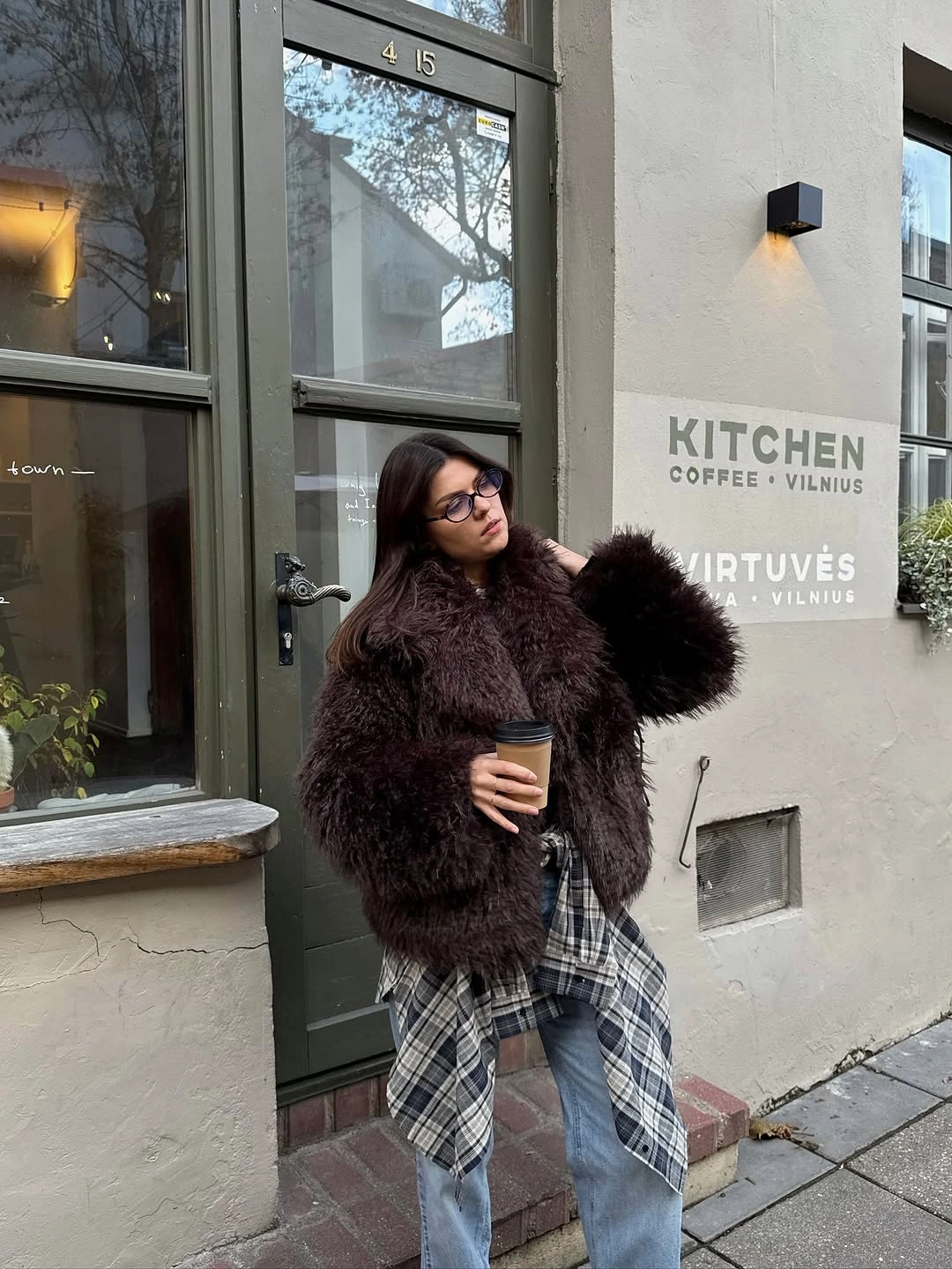
There is already plenty of movement in the coat, which means the color palette benefits from staying close to brown, charcoal, and faded blue. A bright bag would split the eye between too many points, but a black or deep chocolate bag would maintain the depth. For a leaner version, replace the shaggy outer layer with a smoother jacket and let the plaid become more visible.
Textured coats can add width through the shoulders and hips, particularly over a short checked layer. A straighter jean and a narrower boot shaft would keep the outline from becoming too full, while a wider trouser could work only if the coat is left open. The practical tradeoff is warmth versus bulk, so reserve the most voluminous version for days when the outer layer stays on.
Cream Cable Knit With a Short Base
The oversized cream cable cardigan has enough texture to become the outfit’s feature, while the pale shirt hem gives it a crisp lower edge. A dark short base creates contrast under the knit, and the compact shoulder bag keeps the accessories from adding more bulk. This combination shows how a chunky cardigan can look intentional when the layers beneath it are kept simple and visibly separated.
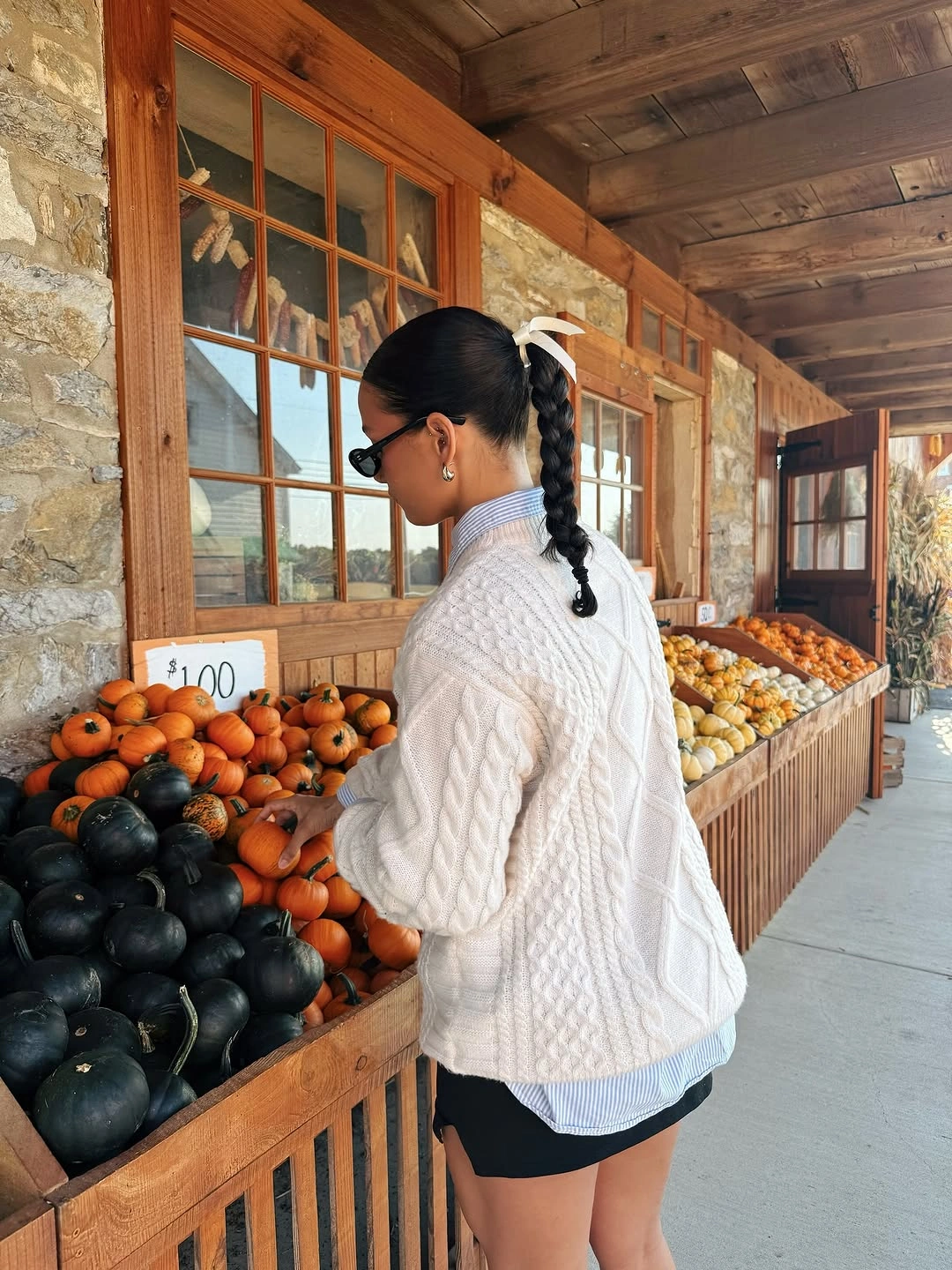
Cream is doing two jobs here: it brightens the upper half and makes the cable pattern easy to read from a distance. The shirt hem prevents the cardigan from ending abruptly at the hips, which is useful when the knit is long and loose. If you prefer a less youthful proportion, switch the short base for a straight skirt or slim trousers in the same dark value.
The cardigan hides much of the waist, so footwear becomes important for restoring a sense of length. A close ankle boot, tall boot, or dark sock-and-loafer combination would connect the short base to the ground more smoothly. Avoid an oversized tote with this volume; a small bag worn high on the shoulder gives the outfit a clearer center and leaves the knit’s texture visible.
Plum Plaid and Deep Berry Accessories
A burgundy beanie, dark knit, plaid mini skirt, broad scarf, and plum socks create a layered outfit built around repeated berry tones. The black ankle boots and dark top provide neutral support, so the color repetition feels deliberate rather than decorative. Each warm accent is placed at a different height, which helps the eye travel through the outfit instead of settling only on the skirt.
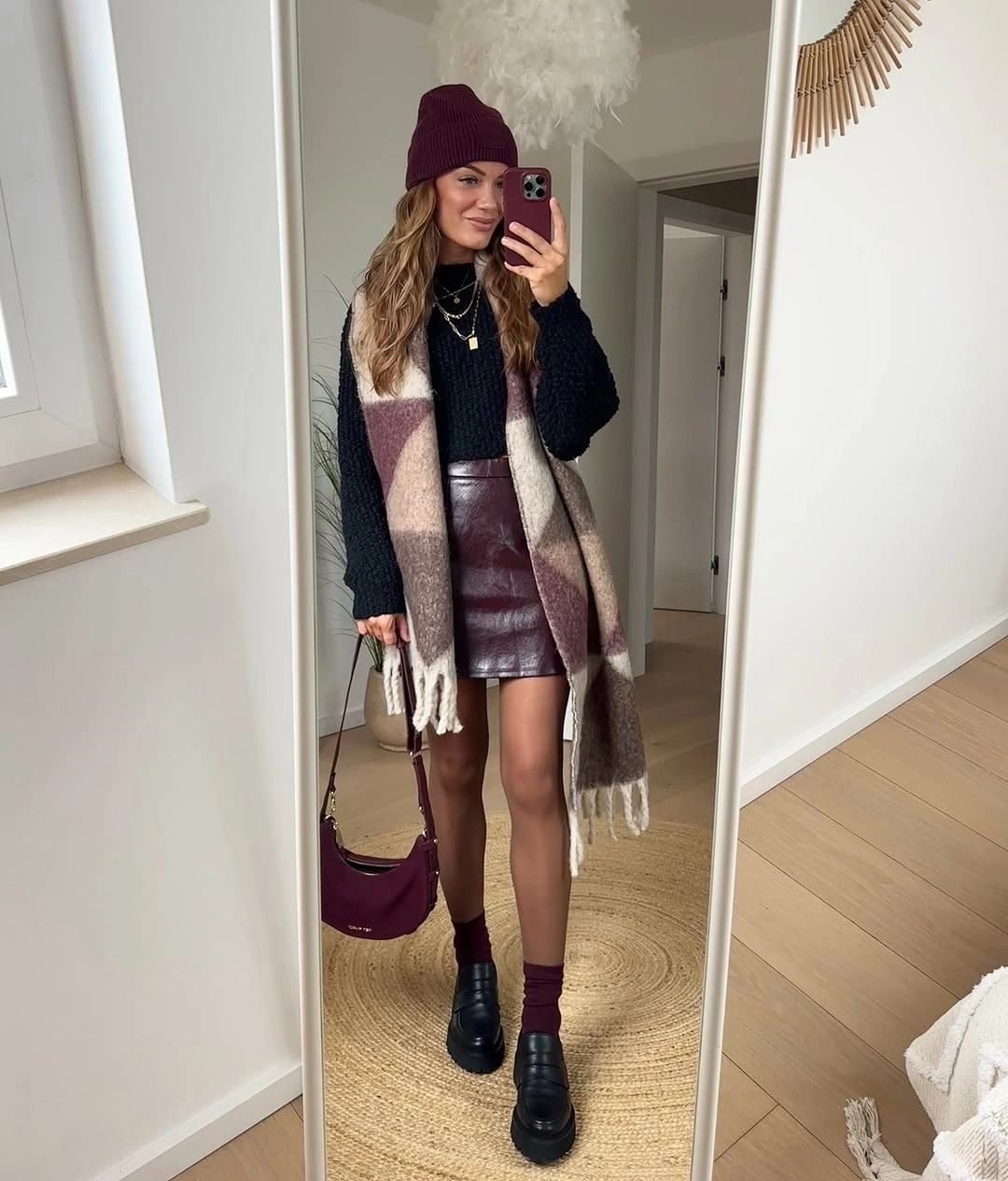
The plum shades do not need to match exactly to work; a slightly different red-brown in the hat, skirt, and bag makes the result more natural. If you want a calmer palette, remove one berry accessory and retain the skirt as the only patterned element. Keeping the boots black is useful because a second colored shoe would compete with the scarf and make the lower half feel too busy.
The scarf adds generous volume near the face, so the neckline and jewelry should stay minimal. A shorter scarf wrap or a smoother knit would be a practical adjustment for windy weather or crowded commutes, when excess fabric can feel cumbersome. The mini skirt still needs a purposeful leg finish, and dark socks plus ankle boots create that link without introducing another unrelated color.
Checked Jacket and Pale Relaxed Jeans
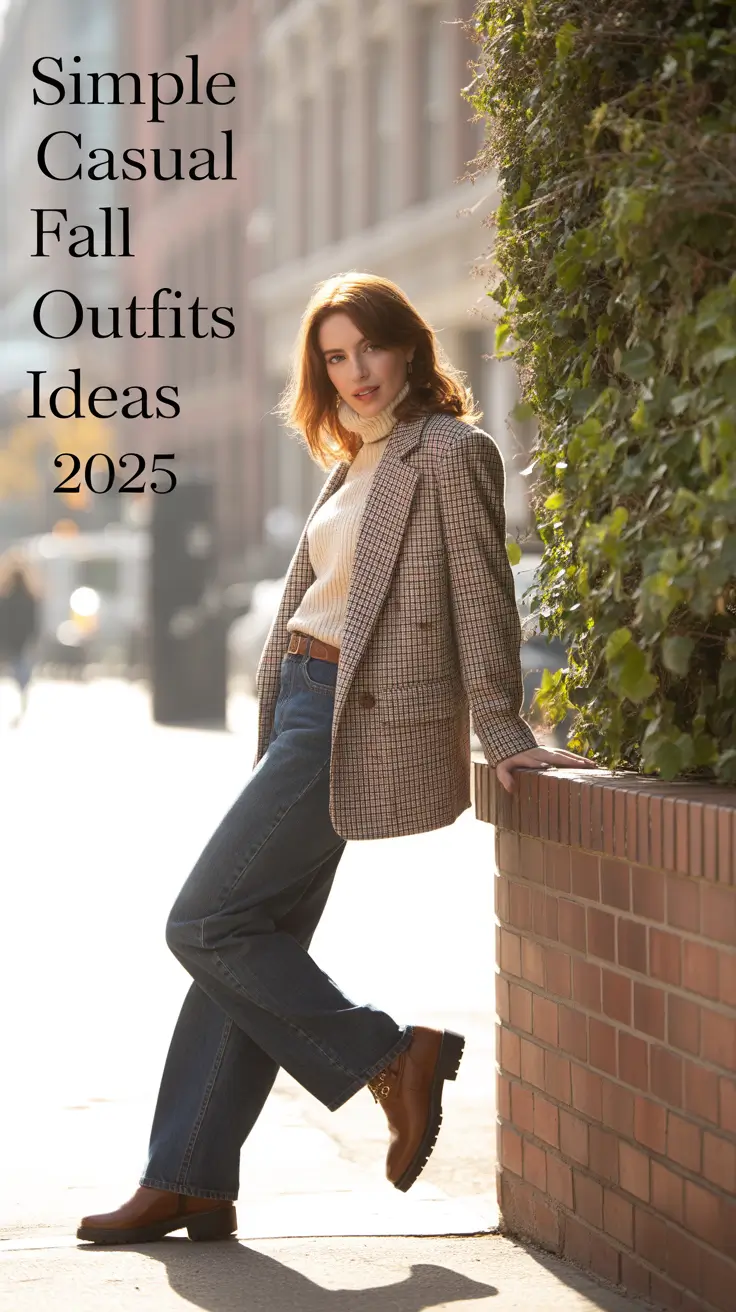
The brown checked jacket gives loose light-blue jeans a compact focal point near the torso. Its smaller pattern is balanced by a dark top and a brown shoulder bag, which repeat the jacket’s deeper tones without matching the check itself. The result is casual but not plain, because the pale denim leaves enough open space for the textured jacket to register clearly.
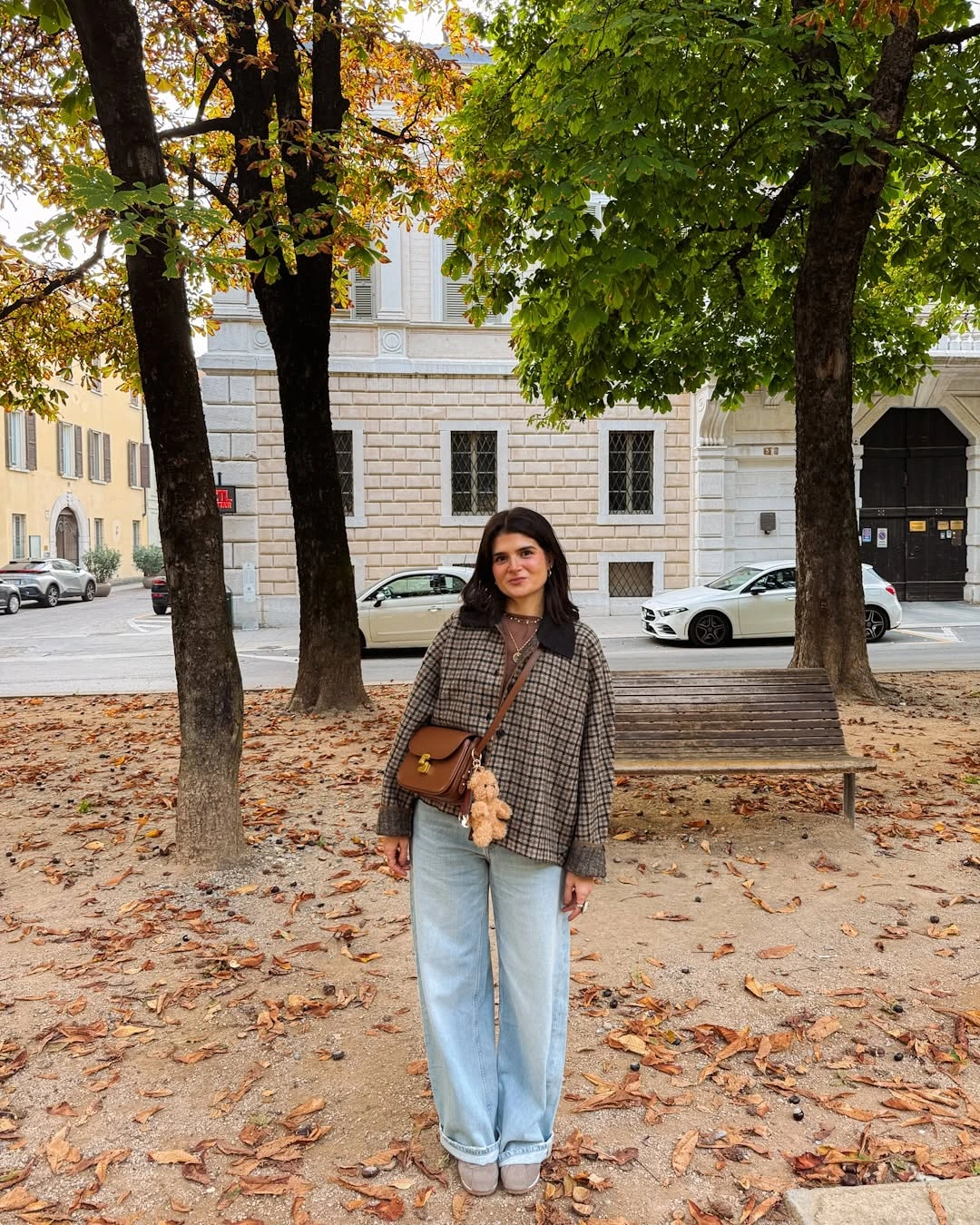
Brown and light blue work well together here because they create a warm-cool contrast without the intensity of black and white. A medium brown boot or loafer would extend the jacket’s warmth down the outfit, while white sneakers would make the denim feel more casual. For an outfit ideas in October variation, a thin turtleneck under the jacket could add coverage without flattening the shape; the site’s September outfit ideas offer another useful starting point for that layered transition.
The jeans have a broad, relaxed leg, so the shorter jacket is doing practical proportion work. A longer blazer could cover the waist and make the lower half look heavier, especially with a large bag. If you want more structure, choose denim with a firmer waistband or show a sliver of the top at the waist instead of adding a belt that competes with the check.
Trench Over a Colorful Striped Knit
The light trench coat acts as a neutral frame for the bright striped sweater, while the taupe midi skirt keeps the color story grounded. White socks and dark Mary Jane shoes add a crisp graphic break at the ankle, echoing the sweater’s playful contrast without adding more hues. The outfit feels layered because every piece has a different job: cover, color, length, or punctuation.
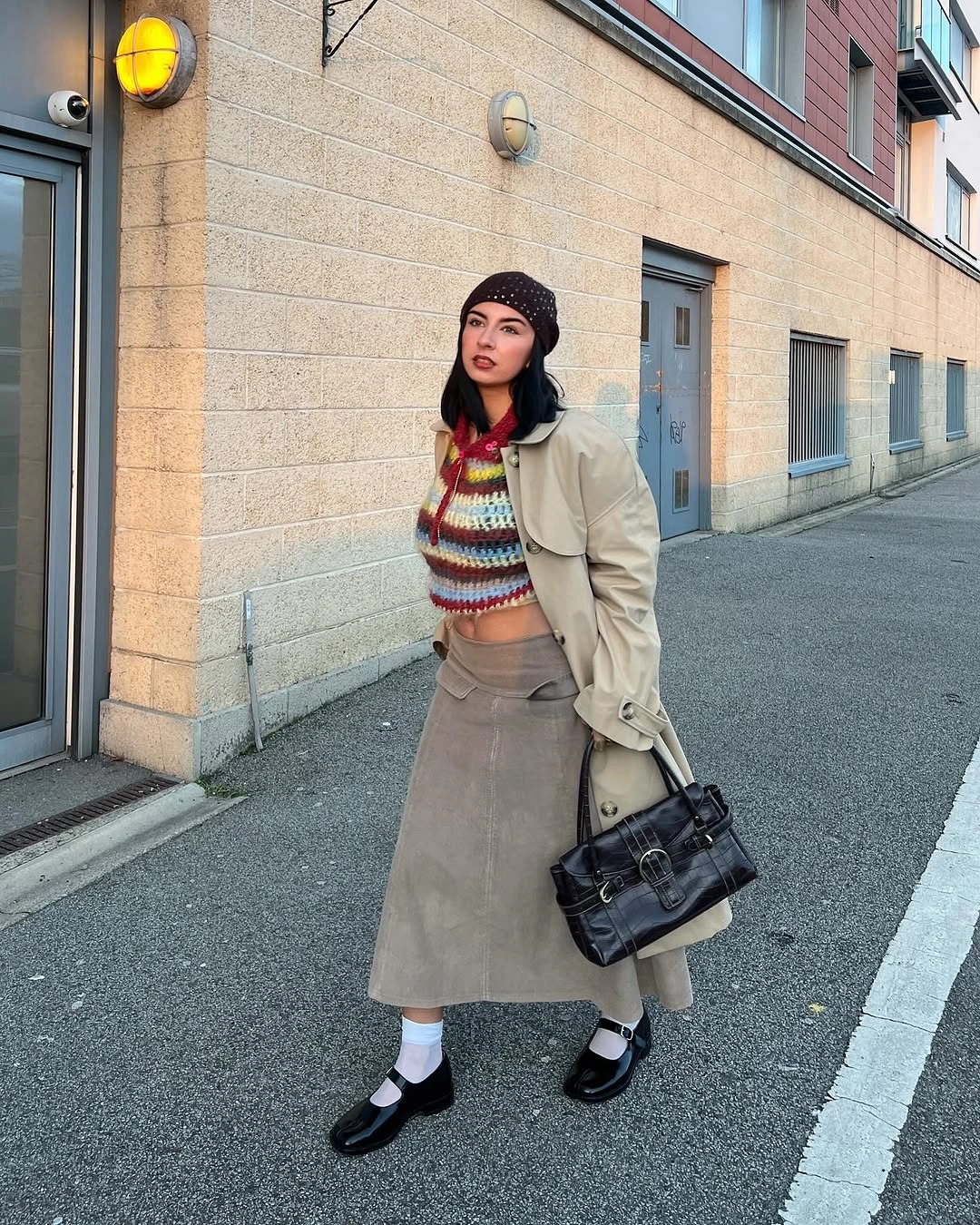
The trench is useful because its pale value gives the striped knit room to stand out rather than burying it under another dark layer. A solid scarf in one sweater color would be enough if extra warmth is needed; a patterned scarf would compete with the stripes. For more drama, deepen the shoe to black, but leave the coat light so the outfit still has a clear top-to-bottom gradient, a principle explored in these trench coat fall outfits.
Several horizontal breaks appear at the coat hem, skirt hem, socks, and shoes, which can shorten the leg line if every piece is high contrast. Matching the socks more closely to the shoe or choosing a slightly longer skirt would create a quieter finish. The Mary Jane shape remains effective because it is compact; a bulky platform would pull attention away from the knit’s color rhythm.
Cable Sweater With a Striped Hem
The cream cable sweater looks lighter and more dimensional because a blue striped shirt extends below it. Beige loose trousers continue the soft neutral range, while the brown cap and bag add two small warm accents. This is an instructive outfit for building layers without relying on many colors: the stripes provide separation, and the accessories simply keep the palette from becoming too pale.
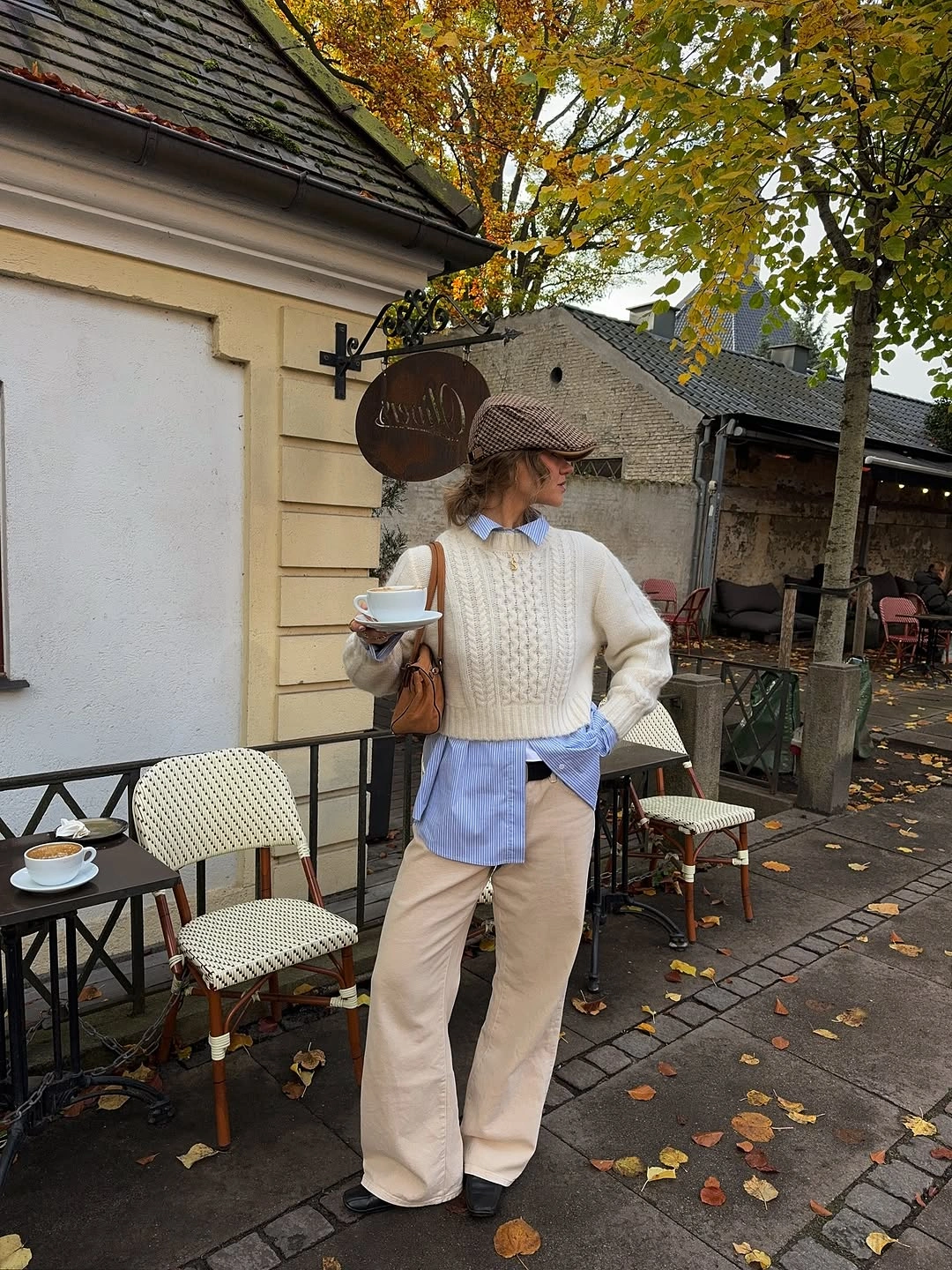
The shirt hem works best when it is clearly visible but not so long that it cuts the body in half. If your sweater is more oversized, choose a shirt with a narrower hem or tuck a small section at the front to keep the waist readable. The blue stripe is enough color on its own, so a neutral shoe lets the pale trousers retain their easy, flowing quality.
Loose trousers and a substantial knit can both add volume, making the cap and bag valuable as small points of contrast rather than as statement pieces. A structured bag in medium brown keeps the warm accent contained, while a darker bag would make the lower half more weighted. For wet sidewalks, choose a closed shoe with a low profile so it does not disrupt the long trouser line.
Black Column With a Wide-Brim Hat
The black wide-brim hat, long buttoned coat, dark trousers, and tall boots form a nearly uninterrupted column of color. That continuity makes the silhouette strong even though the individual pieces are simple, and the umbrella repeats the same graphic shape above the shoulders. The outfit relies on length and texture rather than bright contrast, giving it a dramatic but still practical outerwear-focused character.
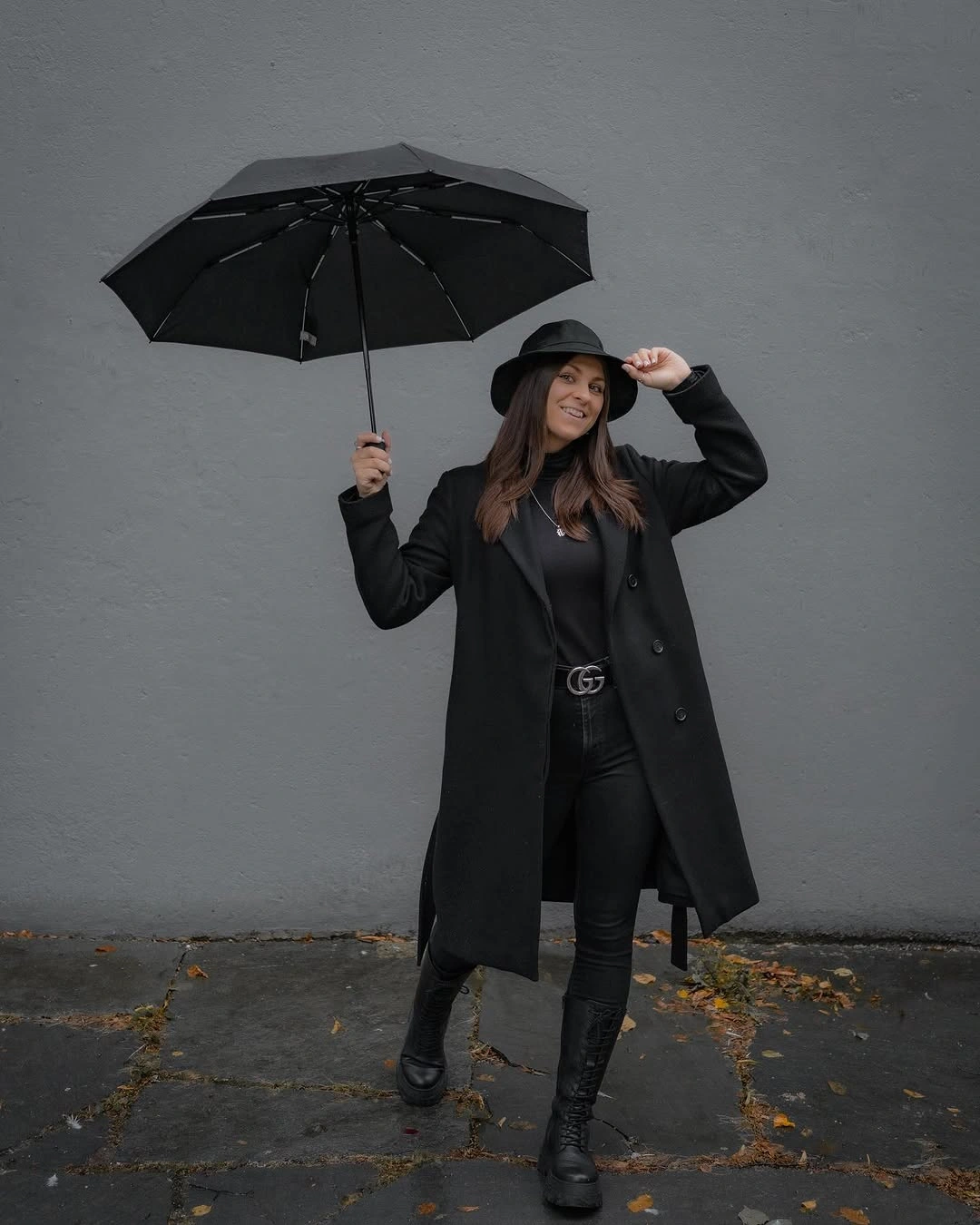
All-black dressing is clearest when the surfaces are allowed to differ, as they do here through the coat, hat, and boots. A small silver earring, buckle, or bag clasp could add a quiet point of light, but a large colorful accessory would break the column’s purpose. If the hat feels too strong for everyday use, a close-fitting knit cap would preserve the dark line with less width at the top.
A long dark coat can obscure the waist and create visual weight, especially when paired with tall boots. Leaving the coat slightly open or choosing a boot with a defined shaft helps retain some movement through the outfit. The tradeoff is weather protection: a fully closed coat is useful in rain, but it makes the look read more formal and asks for simpler pieces underneath.
Gray Knit With Pink Argyle Trousers
The soft gray sweater deliberately steps back so the pink-and-burgundy argyle trousers can carry the outfit’s energy. A burgundy shoulder bag repeats the deepest diamond color, while white sneakers bring a clean, light finish at the hem. Because the top is quiet and slightly loose, the geometric pattern feels playful rather than overly coordinated or costume-like.
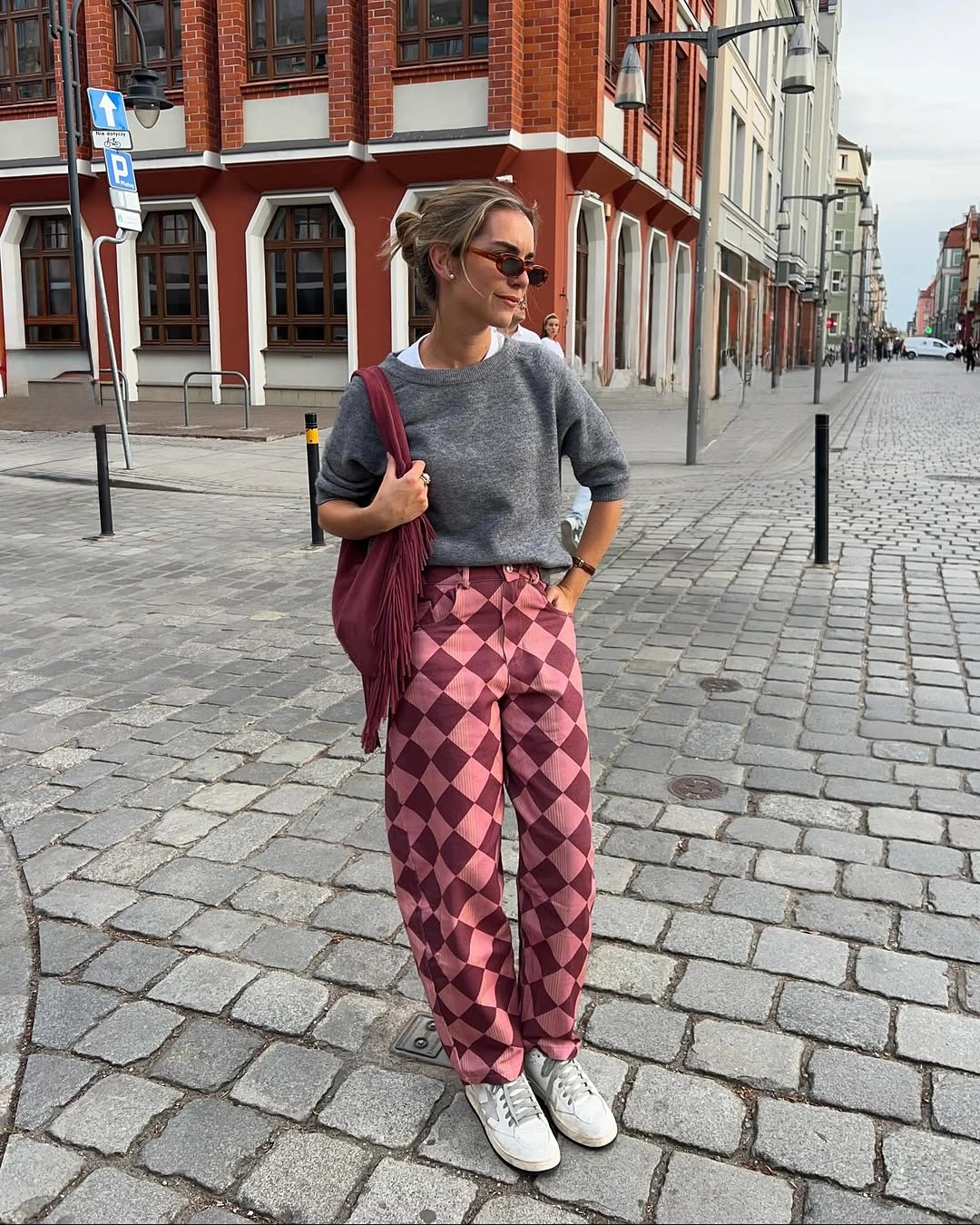
Argyle works best when the other colors around it are either neutral or pulled from the pattern itself. Here, gray functions as a cool neutral, and burgundy becomes a single controlled echo rather than a second outfit theme. For a lower-contrast version, use a taupe or charcoal bag; for a stronger one, choose a darker sneaker but leave the sweater free of competing detail.
The trousers already broaden the lower half visually through their large repeated diamonds, so a relatively simple shoe is important. White sneakers keep the outfit casual and preserve some negative space around the ankle, while heavy boots would make the pattern feel denser. If you add a coat, choose a solid cropped jacket or a straight long layer instead of another print.
Olive Quilting Over Dark Volume
The cropped olive quilted jacket brings shape and a muted outdoor note to the darker, draped lower layer. A navy cap and dark hoodie-like base create depth near the face, while the crossbody bag stays close to the body instead of adding width. The jacket’s shorter length is essential here because it gives the loose black silhouette a clear starting point and keeps the outfit readable.
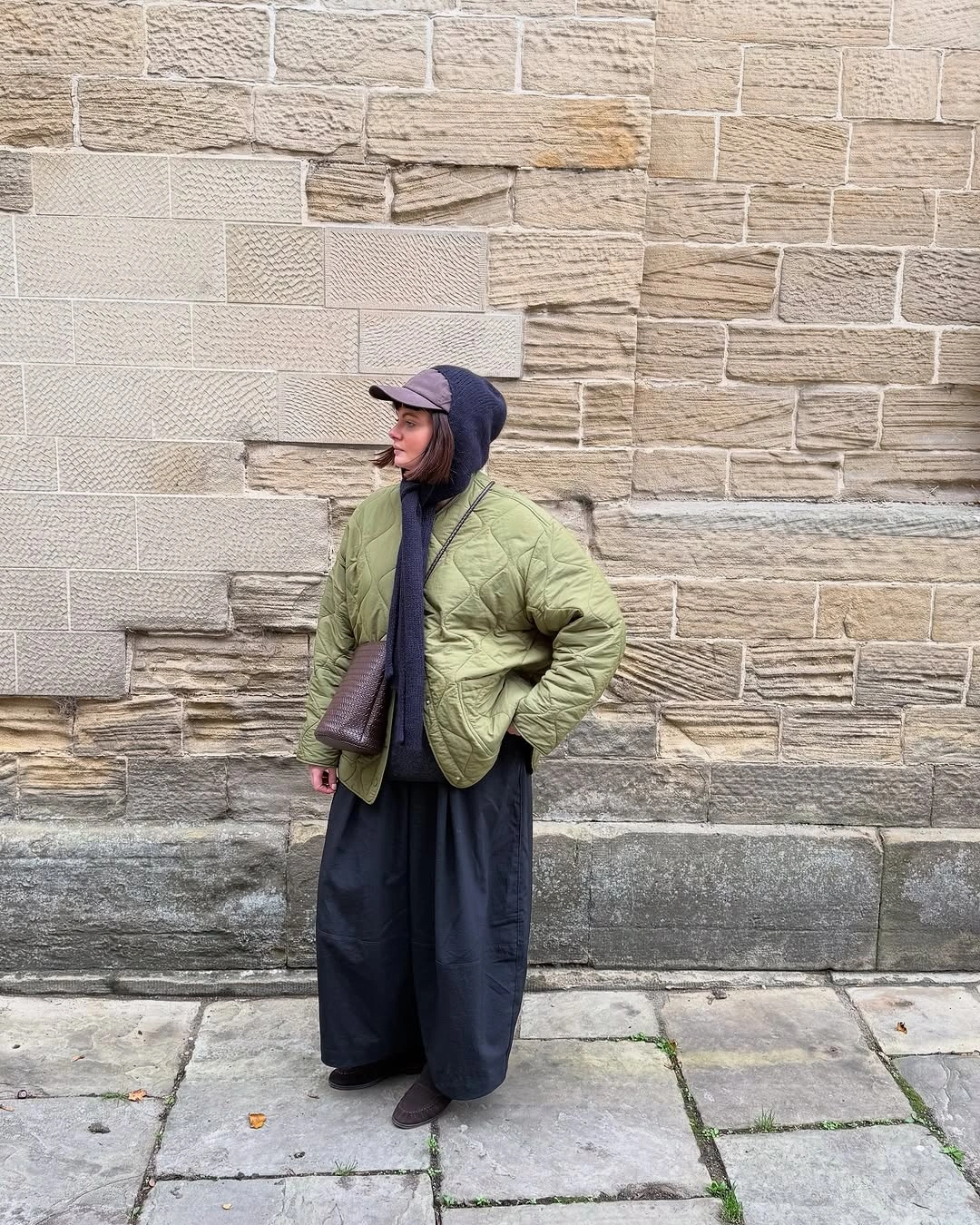
Olive, navy, and black sit close enough in value that the quilting becomes more visible than the color contrast itself. That is useful when you want texture to lead without a bright palette. A lighter tee or scarf could add a small break near the neckline, but adding a vivid color at both the top and shoe would weaken the outfit’s calm, layered direction.
Both the jacket and lower layer have volume, so movement is the main practical consideration. A closer base layer and a shoe with some ankle definition would help on stairs or in wind, while an extra-long sweater could make the proportions too full. The cap is a casual counterweight to the quilted texture, but a smoother hat would make the overall mood feel more polished.
Pale Turtleneck and Fluid Brown Midi
The pale gray turtleneck and deep brown fluid midi skirt create contrast through surface rather than loud color. The sweater appears soft and dense, while the skirt catches light more smoothly and falls in a long, narrow line. Brown heeled mules and a pale tote repeat each end of that conversation, making the outfit feel composed without forcing every accessory into the same shade.
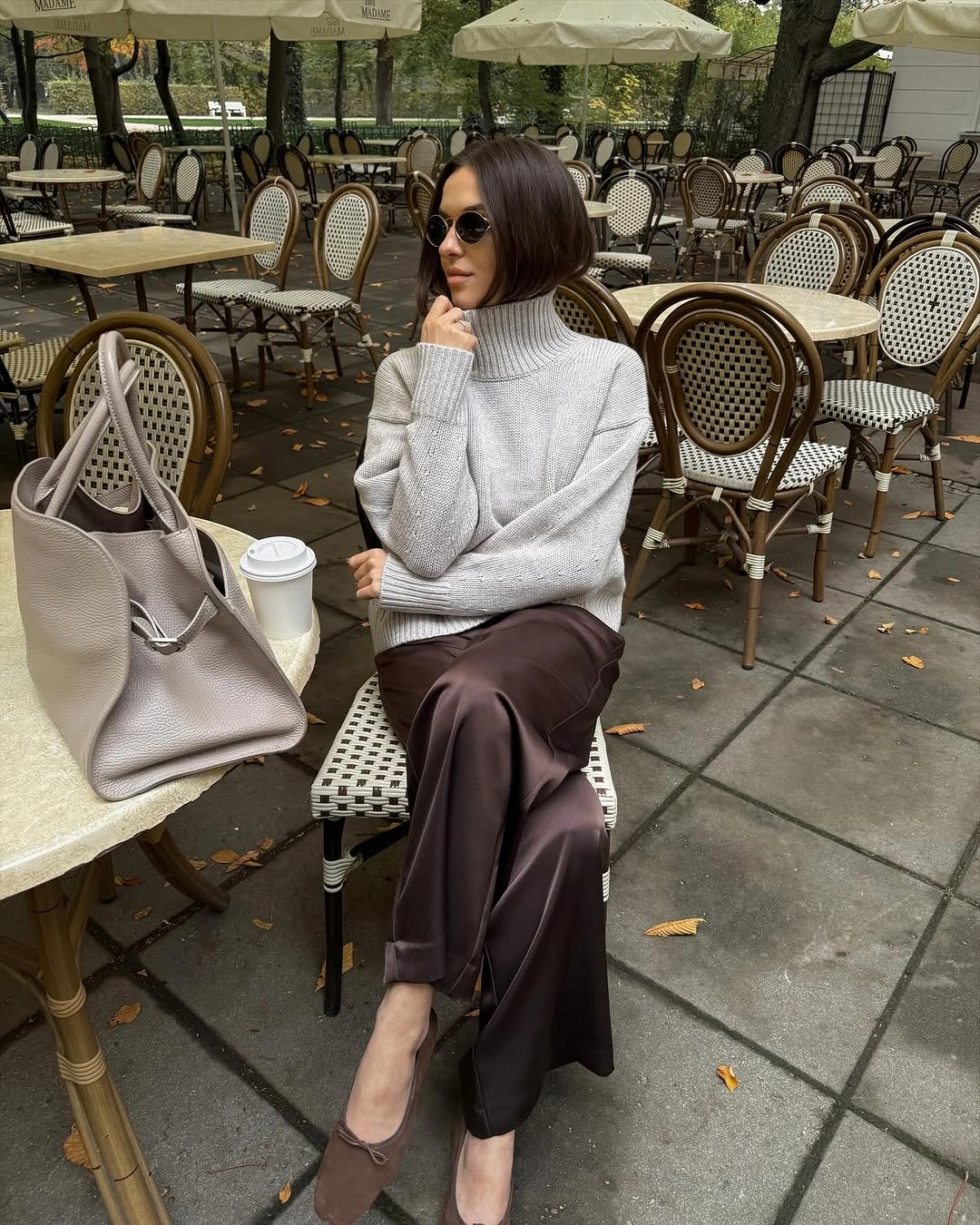
A light top above a dark skirt naturally draws attention toward the shoulders and neckline, which is why the turtleneck’s clean shape matters. If you prefer more waist definition, a front tuck or shorter knit would create a clearer break without losing the soft contrast. A darker bag would be an option, but the pale tote keeps the palette from becoming too concentrated at the bottom.
The skirt’s length gives the outfit elegance, yet it can become impractical with a very bulky sweater or a shoe that catches the hem. A low, narrow mule or slim boot keeps the line moving, especially when walking. For cooler weather, add a cropped jacket in a related brown or charcoal rather than a long coat that would hide the skirt’s surface entirely.
Wine Blazer With Black Short Layers
The wine blazer provides a warm focal point against a black high-neck top, short dark base, sheer tights, and ankle boots. A small belt bag sits near the waist, adding a functional detail without interrupting the long blazer line. The color arrangement is simple but effective: the deep red-brown has room to stand out because everything around it stays nearly black.
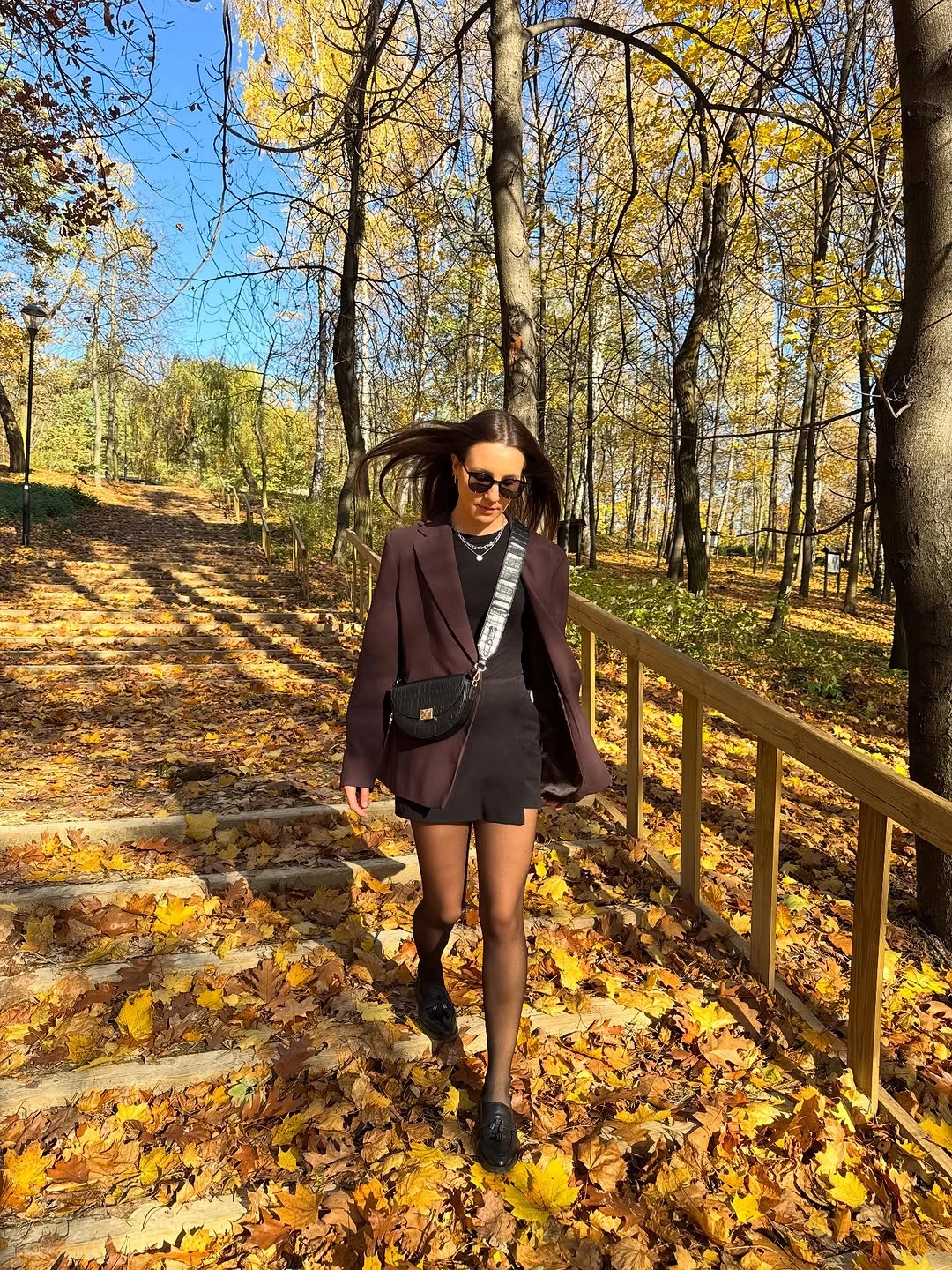
One saturated outer layer is enough to make this outfit feel specific, so the rest of the accessories should support its value rather than compete for attention. A black crossbody or dark boot works well because it blends into the base, while a bright bag would divide the outfit into unrelated sections. If you want more softness, replace the black top with charcoal, not another warm color.
The short hem and dark tights create a strong visual break, which makes boot height important. An ankle boot keeps the look compact, while a knee-high boot would extend the dark line and add more coverage for cooler days. The blazer should stay roomy but not so long that it erases the visible contrast between the jacket, hem, and legs.
Pink Check Cardigan With Chocolate Trousers
The cropped pink-and-brown checked cardigan gives the dark chocolate trousers a clear waist point and a lighter, more playful surface. A pale layer underneath prevents the pattern from sitting directly against the darker pants, while tan flats and a taupe bag keep the accessories low-key. The outfit succeeds because the warm colors are repeated softly, not matched from head to toe.
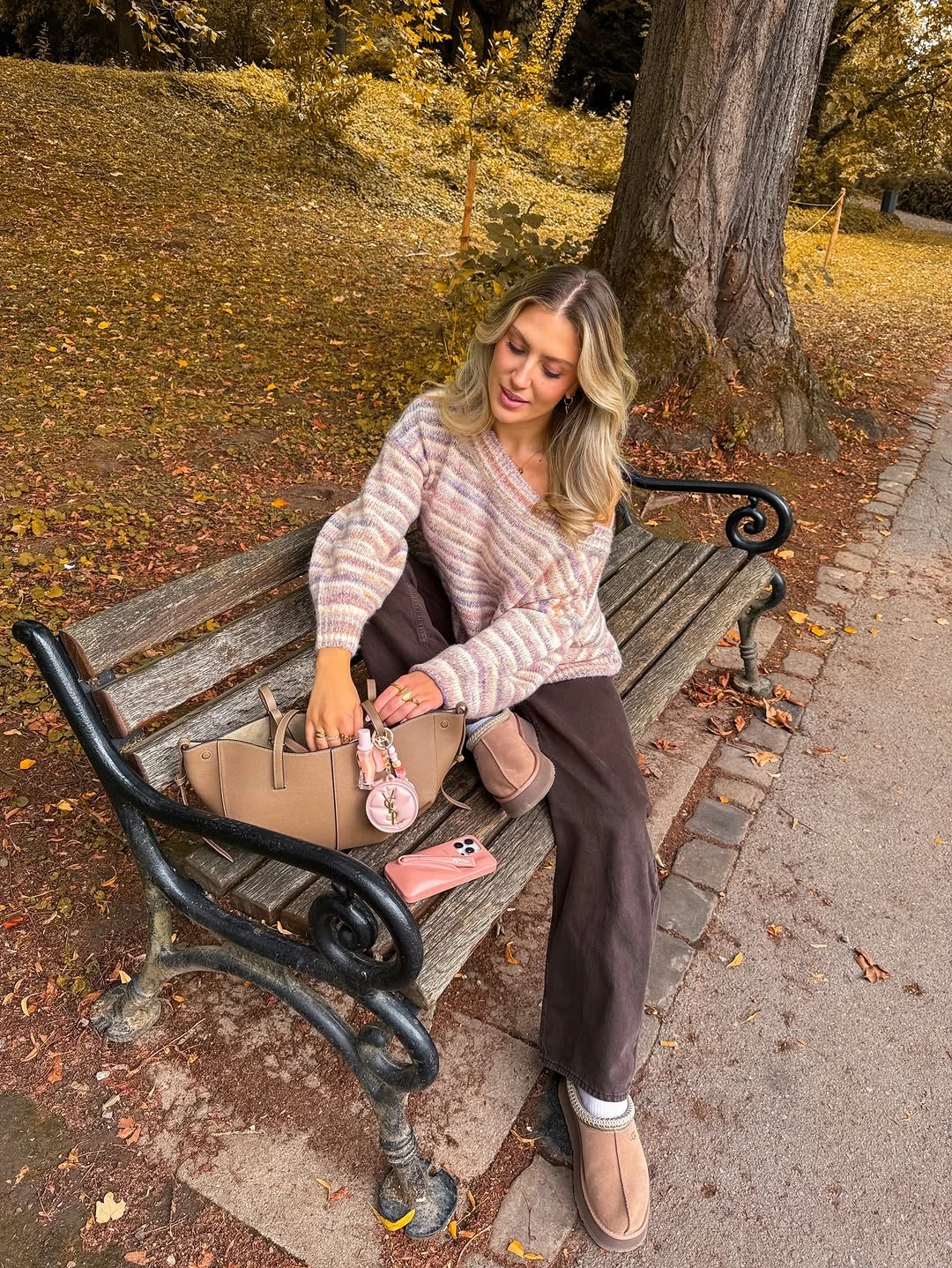
The checked knit contains enough color variation that it needs a calm lower half, and the solid brown trousers provide exactly that. If you wanted a cooler version, a gray bag could reduce the warmth without conflicting with the cardigan. Adding a patterned scarf would be less successful, because the cardigan already establishes the outfit’s rhythm through its small grid.
Cropped knits are useful with high-rise trousers because they define the waist without requiring a tight fit through the torso. The tradeoff is coverage, particularly when sitting or moving, so a slightly longer underlayer can make the combination feel more comfortable. The flat shoe keeps the proportions gentle; a very heavy boot would make the lower half visually more forceful than the cardigan.
Ivory Jacket With Cuffed Blue Denim
The short ivory jacket gives roomy cuffed blue jeans a crisp, bright upper boundary. A white top continues that light value through the center, while the tan handbag and pale pointed shoes bring small warm notes near the hand and foot. The jeans remain the casual anchor, but the pale jacket keeps them from looking too loose or unfinished.
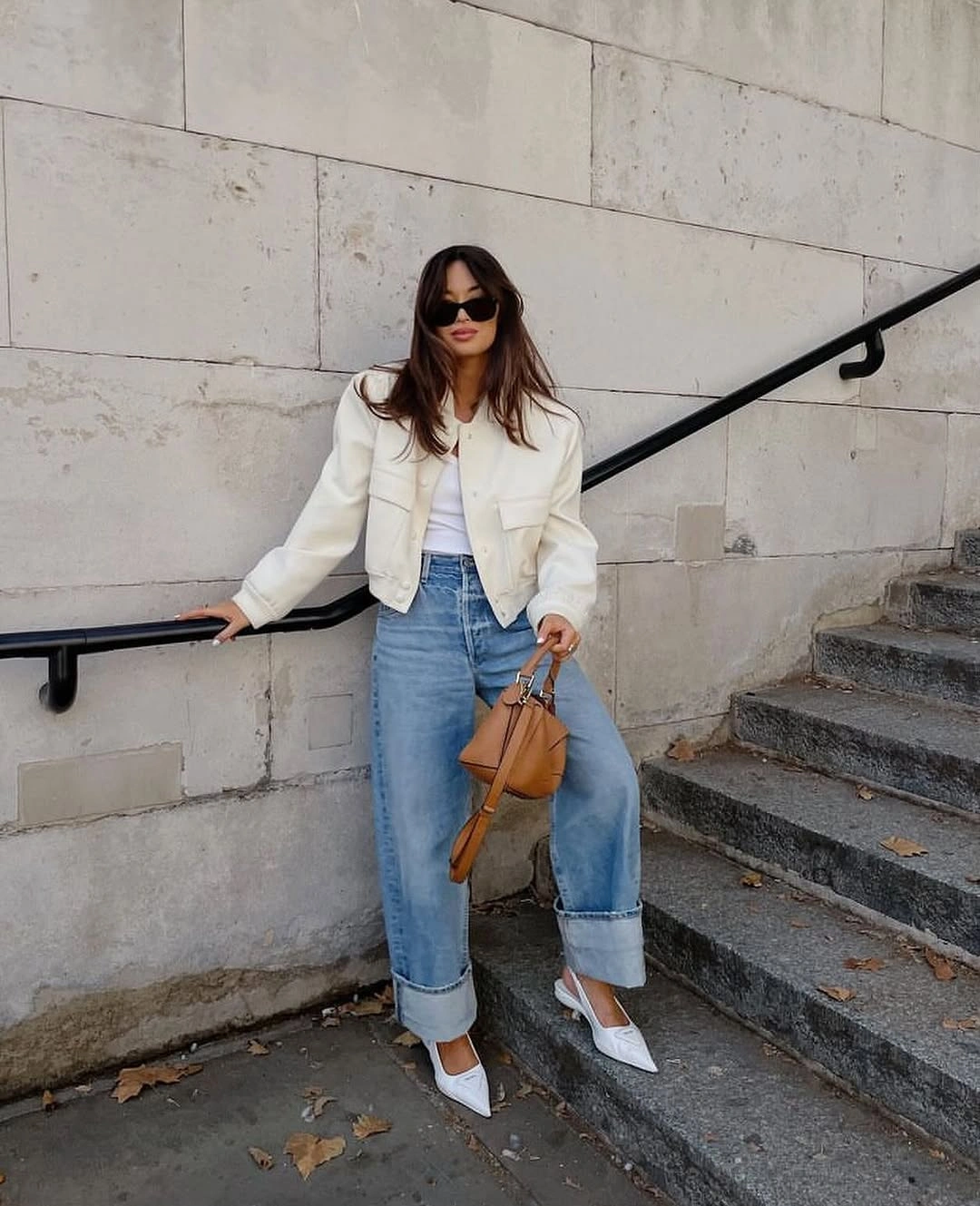
The large denim cuffs add visual width near the ankles, which is why the pointed shoe is such a useful counterbalance. It directs the line forward and gives the hem a more precise ending than a round athletic sneaker would. For more contrast, use a darker shoe in the bag’s tan family; for an airier look, keep the footwear close to ivory.
A cropped jacket can make wide jeans feel more proportional, but it also makes the waist area more visible. Choose a top that sits smoothly beneath it rather than a bulky knit that adds thickness at the center. This outfit would tolerate a longer coat in cool weather, provided the coat has a straight shape and does not hide the clean jacket-to-denim contrast completely; more proportion ideas appear in the site’s wide leg jeans fall outfit guide.
Olive Blazer and Tall Tan Boots
The deep olive blazer and tan knee-high boots create a strong warm-earth contrast around a dark short base layer. The black structured bag repeats the depth of the blazer’s underlayer, leaving the boots to act as the lower focal point. Because the boot shaft is tall and clean, the outfit has a continuous vertical line even though the hem above it is short.
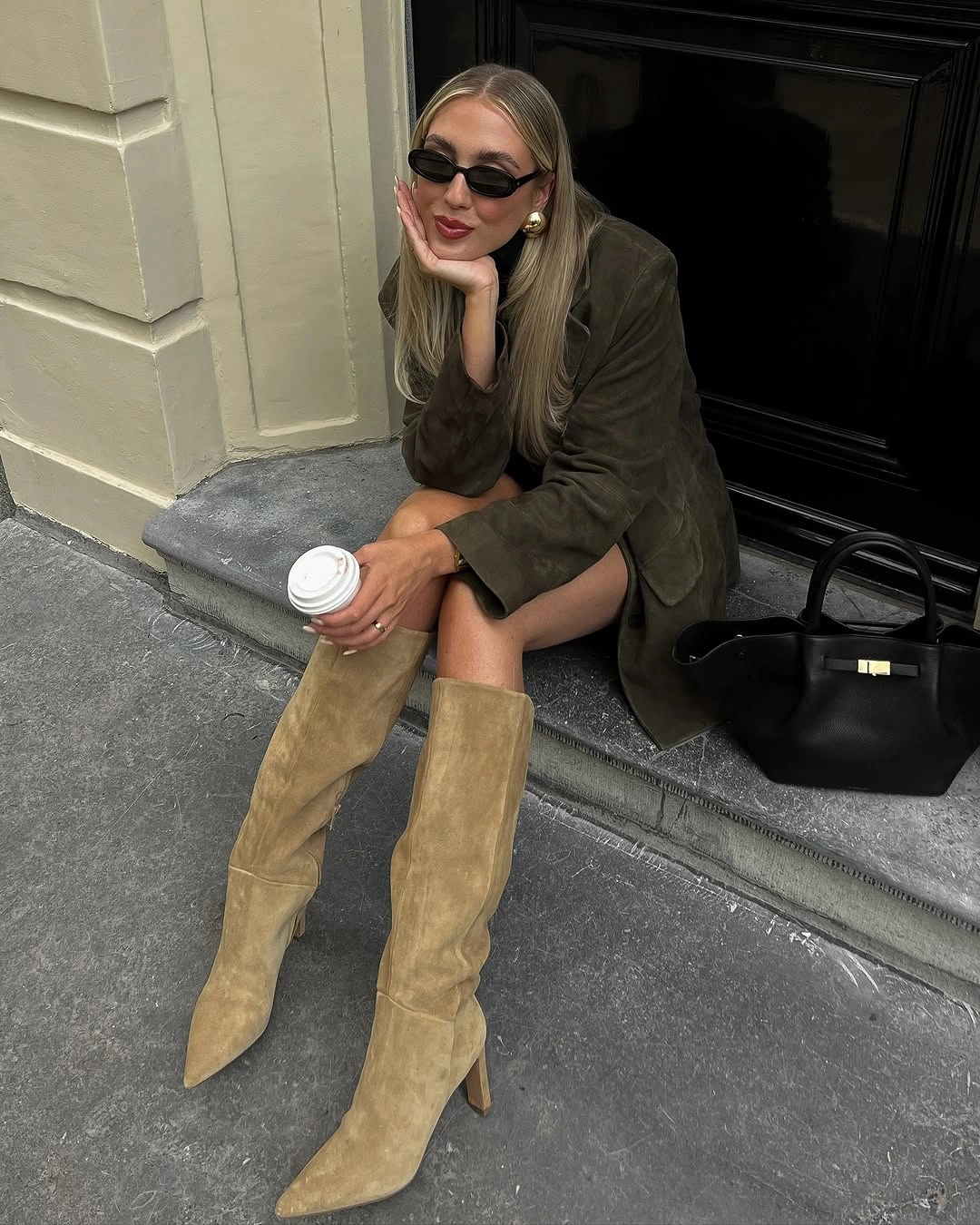
Olive and tan feel related without being identical, so the combination looks richer than a monochrome brown outfit. A small gold-toned detail could fit naturally, but too many warm accessories would make the look visually crowded around the blazer and boots. If you want a cooler alternative, change only the bag to charcoal and leave the boot color as the main warmth.
The boot top needs a clear relationship to the hem for this proportion to work well. A very slouchy sock or a bulky layer at the knee would interrupt the long line that the boots create. For a practical adjustment, a flatter knee-high boot could preserve the color structure, although the pointed heel here contributes a more deliberate, dressier finish.
Sport Stripes Under a Layered Shirt
The black sweatshirt and pale blue collared shirt add a sharp, layered top half to the brown track-style trousers. White side stripes make the trousers visually active, while tan boots repeat their warm base color and keep the lower half from becoming too athletic. The outfit balances casual and tailored cues by letting the shirt collar and hem do the refining rather than adding formal accessories.
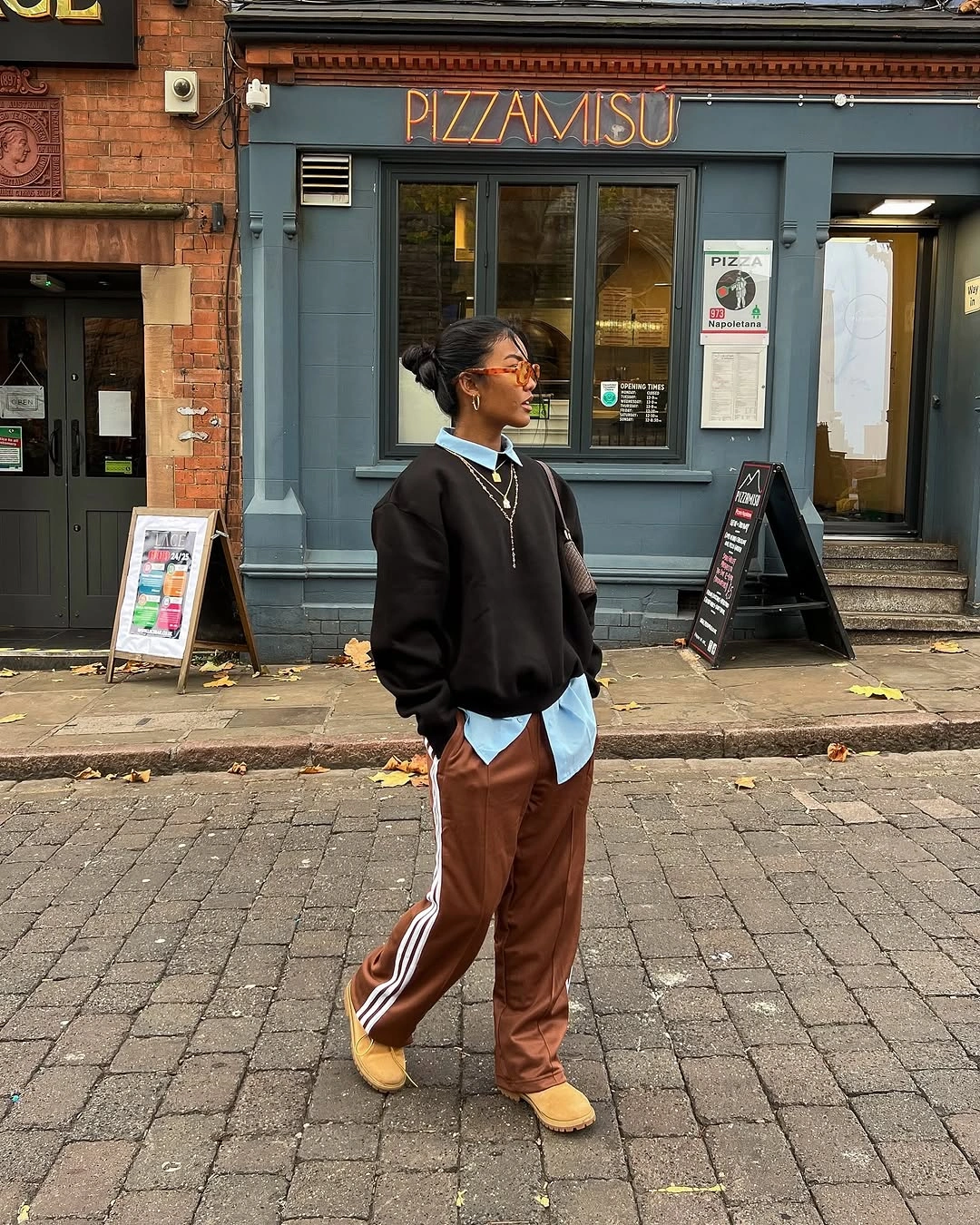
Brown, black, pale blue, and white each appear in a controlled amount, which is why the outfit stays coherent despite its different influences. The blue shirt is a useful cool pause between two darker pieces, and the white stripes echo it from a distance. To make the look quieter, remove the sweatshirt’s extra detail first and keep the shirt-and-trouser relationship intact.
The side stripes naturally pull the eye down the leg, so a boot in the trouser’s brown family gives that line a grounded finish. A bold sneaker could work, but it would turn the outfit more sporty and draw attention away from the collar. Keep bags simple and preferably dark, since a large logo or busy print would compete with the stripe placement.
Panel Hoodie With Loose Cargo Trousers
The navy and red panel hoodie creates two clear color accents above roomy gray cargo trousers, while red sneakers repeat the brighter tone near the ground. A dark cap keeps the upper half compact, so the wide pants do not make the outfit feel shapeless. This look is strongest when the color appears in just a few deliberate places and the cargo fabric is allowed to remain the muted backdrop.
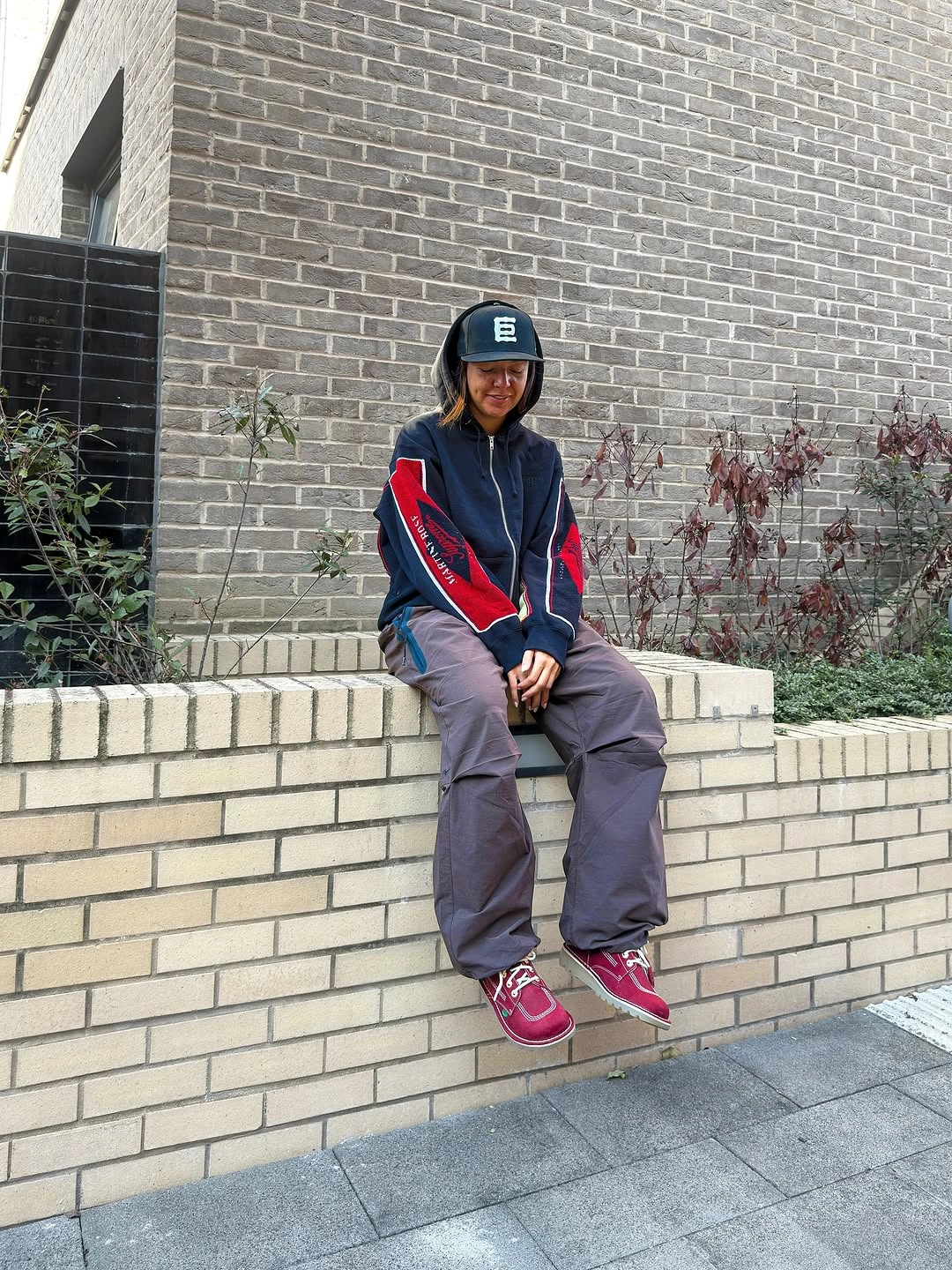
The hoodie and sneakers communicate with each other through red, but the gray trousers prevent that repetition from feeling like a uniform. If you wanted less contrast, choose a darker sneaker with only a small red detail and let the hoodie lead. Adding another bright accessory would be unnecessary, because the panels already organize the eye across the top half of the outfit.
Very loose cargo trousers need some shape at the waist or hem to avoid becoming one oversized block with the hoodie. A slightly shorter top, a partial front tuck, or a more fitted base layer can restore that balance without changing the relaxed mood. The tradeoff is movement and weather: a bulkier layer may be cozy, but it can hide the proportion that makes the outfit feel intentional.